As NuNorthern Soul eases into its second decade, the label welcomes back a familiar face: Benjamin J Smith, a multi-instrumentalist, songwriter, and pro-ducer whose emotive, colourful and atmospheric compositions are the very definition of ‘Balearic’.
Famously, it was Smith’s The Movedrill Projects album that kicked off the NuNorthern Soul story way back in 2012, and he’s periodically returned to the imprint on numerous occasions since. It’s fitting, then, that Smith is stepping up once more, with NuNorthern Soul found-er Phil Cooper selecting to showcase two overlooked gems from his bulging back catalogue.
Both tracks are taken from Smith’s digital-only album Mojave (Vintage Californian Dreams), a set of thor-oughly gorgeous, West Coast-inspired library music compositions smothered in sumptuous strings and in-formed by the artist’s love of jazz-funk, languid jazz-rock and the kind of luscious, sunset-ready soundscapes that defy neat categorization.
Opening proceedings, and sitting on side A of the vinyl release, is the breath-taking ‘Marina Del Rey’, where layered, reverb-laden harmonic vocalisations, twin-kling electric piano improvisations, lazy guitar licks, spacey synth flourishes and sultry strings slowly rise above a toasty bassline and gentle, Latin-tinged beats. Smith cannily adds layers of sound throughout while moving the musical story forwards, leading to a mem-orable, awe-inspiring conclusion.
In contrast, ‘Big Sur’ sees Smith take an imaginary road trip through the driest, dustiest parts of the Cali-fornian countryside. Psychedelic rock style organ mo-tifs, sustained Hammond B-3 chords and glistening West Coast rock guitar solos dance atop a rubbery bassline and intoxicated, loose-limbed drums, with Smith’s eyes-closed vocalisations – drenched in reverb and delay – adding extra layers of aural loveliness. Like ‘Marina Del Rey’, ‘Big Sur’ is a vivid, widescreen con-coction tailor-made for soundtracking films that have yet to be made.
Search:onc phil
After the mind blowing success of Witchcraft's Legend (2012), mastermind Magnus Pelander outdid himself once again with the band's 2016 offering Nucleus. Combining what made it's predecessor the modern classic it quickly became as well as elements of the band's earlier days makes Nucleus a melancholic, raging, fragile, melodic and at times noisy masterpiece filed somewhere between classic rock, doom and ambient music. With a renewed line-up (Rage Widerberg on drums and Tobias Anger on bass) the band sounds more hungry and powerful than ever. In combination with the thrilling, yet very down-to-earth production by Pelander, Philip Gabriel Saxin and Anton Sundell, Nucleus throws you in dreamy sonic landscapes that will mesmerize and haunt you alike. Svart Records are proud to release an official reissue of this album on black and limited green vinyl on May 19th
- A1: Ghosts Of Decay (Album Mix)
- A2: Let's All Make Brutalism (Album Mix)
- A3: You've Heard This One Before (Album Mix)
- A4: (B) Owls In Tesco Bags (Album Mix)
- B1: Open Your Head (Album Mix)
- B2: Harder Times (Album Mix)
- B3: (B) We Never Wanted You (Album Mix)
- B4: 98 Russell Street (Album Mix)
- C1: (We Never Needed This) Fascist Groove Thang (Album Mix)
- C2: Thee Difference Ov Girls (Album Mix)
- C3: Empire Statement Humanoid (Album Mix)
- C4: Circus Ov Daath (Album Mix)
- C5: (B) Let Me Dada (Album Mix)
- D1: This Is Phil Talking (Album Mix)
- D2: Sound Ov Thee Crowd (Album Mix)
- D3: I Dare You (Album Mix)
- D4: Borstal Communications (Album Mix)
Sometimes, things "just happen". For months, we’d been working away on various projects and then, without really thinking about it, The Black EP just happened. It seemingly appeared from nowhere.
We’d been talking about the old days; making music with friends and dodgy kit, renting small practice rooms and using makeshift recording studios. It was such a common thing back then, you could pick a dusty space in a half-derelict building for as little as £25 a month. In those days, the Cabs and Human League had studios with posh-sounding names, but in reality, they were the same old workspaces long abandoned by the industries they were built for. Nevertheless, the grand names made them sound magical.
Sheffield had thousands of these spaces, and some still exist today, but their abundance and low-cost made Sheffield a very active place. Someone was always doing something. They’d exploded onto the scene in a flurry of excitement before disappearing just as quickly.
There’s something about these little mesters (workshops) that we believe lives in the very consciousness of Sheffield. It’s one of the reasons we never really had big scenes like Manchester or Leeds. The Hacienda would've never been built here.
We don’t really do big gangs or have that kind of mentality. We tend to exist in little pockets, often leaving each other alone. It would be 30 years before any member of The Black Dog talked to Cabaret Voltaire. Sure, we’d stood outside their practice room as kids, trying to listen in, but never felt any reason to approach. Sheffield is like that.
Once we had the first two tracks of the Black EP, we set off to see Jon at Do It Theesen, where he manually cut the tracks to an extremely limited set of 7" singles using a vinyl lathe. It just felt right to go back to the old ways; a small gang creating something special in workshops and sheds. There’s something very satisfying about it, a perfect circle, if you will.
We pushed further by adopting old practices, working with one synth per person and limiting the use of our computers. We only stopped short of putting everything on beer crates. It seems like madness these days, but there is raw creativity within these confines. Pretty much every band started this way. Depeche Mode travelled to the studio on the London Underground for their first appearance on Top Of The Pops, all lugging a synth each. That's how we approached the creation of this album; stripped back, raw and minimal - it just felt so right.
And then there’s the competitive element that was influenced when the original Human League split and became Human League MK II and Heaven 17. Both continued to use the same studio to write what became the albums "Dare" and "Penthouse and Pavement". There is something about that drive that is very Sheffield, just making stuff and hoping everything falls into place.
In Sheffield, we do things differently, because that’s how we are built. away on various projects and then, without really thinking about it, The Black EP just happened. It seemingly appeared from nowhere.
In 2012, the two moved to an abandoned funeral home in rural southern Illinois where they founded Rose Raft, an artist residency and analog recording studio. This was done in part to alleviate the financial stress of being an artist in an expensive city, and it has allowed them to remain totally immersed in their craft, not unlike Dead Moon or Low.
“The biggest reason we were motivated to make our own studio is that it was the only conceivable way we could keep things going. We started as a band so trashy and raw and ‘low-fi’ is because that’s what we had access to.” says Jessee. The studio is all analog, and the pair has once again found how to find freedom in constraint, using the limitations of the process to think creatively and to inform their songwriting. Tracked entirely live, the new record celebrates the magic and physicality of analog recording, leaving in raw sounds and charming artifacts, like their dogs Junimo and Joja Cola barking at the tail of the keeper take of “Velvet Cash”.
Glow in the Dark Flowers finds Philip and Jessee reinventing their sound with maturity, grace, and poeticism, but without abandoning the fuzzed out sound and studio adventurousness of their earlier work. The album's intimate opener “Growing Cosmos” is propelled by an unquantized drum machine that stutters in and out of tempo, accompanied by enveloping hard-panned bass guitar. “Still Close To Me” recalls the duo’s effortless and hypnotic pop sensibility that made The Funs such a captivating live band in Chicago’s then thriving DIY scene. The albums closer “When The Leaves Have Fallen”, originally composed for a performance by the artist Lise Haller Baggesen, continually builds on its original theme until the drums drift out and gives way to cascading distorted guitars folding in on each other.
The band's new album represents a new level of their devoted partnership that continually produces raw and beautiful music. Glow in the Dark Flowers is a true representation of their passion and dedication to their drive for creation.
Over the course of a nearly 50 year romantic and creative partnership sound artist Annea Lockwood and the late pioneering electronic composer Ruth Anderson have shared space on a number of significant releases of early electronic and tape music, including Charles Amirkhanian’s trailblazing 1977 anthology of women electronic composers New Music for Electronic and Recorded Media, a 1981 split LP on Opus One, a 1997 CD for Phill Niblock’s XI imprint, and 1998’s Lesbian American Composers compilation on CRI. The couple additionally taught a course on the history of women’s music-making, at Hunter College, called Living Women, Living Music. Throughout their time together, they co-authored a number of Hearing Studies designed for people with no formal musical training, which were collected for a 2021 book publication by Open Space Music. They spent most of their private life between Crompond, NY and the house they built themselves at Flathead Lake, Montana. Although Ruth passed away in 2019, the composers’ dialogue continues today with Tête-à-tête, a collection of unreleased archival and new material spread across an LP and a single-sided 10” record.
It all began with a telephone call. In 1973, Ruth Anderson was seeking a substitute to cover a yearlong sabbatical from her position as the director of the Electronic Music Studio she had founded at Hunter College in New York City. Her friend Pauline Oliveros too was on sabbatical, but recommended Ruth call Annea Lockwood—then living in London—about the post. Already drawn to America by the work of the visionary composers with whom she would soon be labelmates on Lovely Music, Annea jumped at the opportunity and within days of meeting in person the pair were, in her words, “joyously entangled.”
Over the next nine months, while Ruth was living in Hancock, New Hampshire, the couple would speak daily by phone in between visits. Ruth recorded these phone calls and, in 1974, surprised Annea with a cassette containing “Conversations,” a private piece she composed by dexterously collaging fragments of their conversations alongside slowed and throwed snatches of old popular songs: “Yes Sir, That’s My Baby”; “Oh, You Beautiful Doll”; and “Bill Bailey.” The centerpiece of Tête-à-tête, this side of intimate musique concrète extends to its listeners a rare invitation to eavesdrop on the halcyon phenomenon of two people falling in love. Tender and playful throughout, “Conversations” comes to its zenith with a cut-up of relentless laughter of a contagious beauty that is, for once, properly convulsive.
“For Ruth” is Annea’s elegy to her life partner. In 2020, Annea returned to Hancock as well as to Ruth’s resting place at Flathead Lake to make field recordings, which she wove together with further excerpts of the couple’s 1974 conversations for a commission presented as part of the 2021 Counterflows Festival in Glasgow. A consummate field recordist, Annea imbues the simple sounds of church bells, birds, wind, and the bodies of water that permeated her time alongside Ruth with an otherworldly depth and sense of narrative akin to that of her celebrated sound maps of the Hudson, Danube, and Housatonic rivers. An oneiric, subtly tonal evocation of a meeting at the shores of existence.
The collection opens with “Resolutions,” Ruth’s last completed electronic work, from 1984. A meditation for the individual listener composed as the result of her study of Zen, it’s a rigorous, process-driven piece that charts the very slow, smooth descent of a 5th from the octave above middle C down to sub-bass frequencies. Minimalist in execution, yet powerful in effect, it glides by almost imperceptibly, with new tones arriving and hovering or levitating upwards, seemingly out of nowhere. A healing piece, it harnesses the highly focused energy of pure tones as a means to, in Ruth’s words, “further wholeness of self and unity with others.”
Tape transfers by Maggi Payne, master by Giuseppe Ielasi and lacquers cut at Dubplates & Mastering, with domestic photos and liner notes provided by Annea Lockwood.
Since its beginnings, Hypnótica Colectiva has always shown a special interest in the music recorded and released in the city of Detroit.
A place with which we have both a blood and spiritual bond because of what occurred there socially and artistically during the 20th century.
This love led us to become ambassadors of what was happening there on a musical level, holding cultural events to screen documentaries translated into Spanish, as well as a number of themed sets at our events, dedicated motor city sections in our record shop or recently lectures on the history of the city and its music at the Museum of Illustration and Contemporary Art of Valencia (Muvim).
The time has now come to bring all this history, this musical influence, to the editorial section of our label HC records.
Detroit Legacy was born from the idea of capturing these influences on vinyl. Seeking artists from all over the world who share this passion that inspires them to create their music, what we can define as the universal Neo-Detroit.
For this first edition or first volume, the collective has enlisted in its ranks creators affiliated to the label who have shown us in their careers, this influence and this feeling.
Paul Cignol opens the record with Distance. From Dublin he offers us a track of warm sequences inspired by Deep Techno, with deep pads responding to organ keys and a subtle touch of 303.
Mallorcan LLuis Barcelo Sureda is responsible for the second track Funk Station. With a Techno Soul character that we might hear from Detroitish labels like Acacia or producers like Blake Baxter.
A real eminence in Techno is the Catalan Don Alex Martín, who already released in the mid-90s on Monssieur Garnier's label (France Communications). The Barcelona native brings his wealth of experience and wisdom through Megatech, which transports us to the spectrum of Derrick May’s Transmat who, in his day, was nicknamed "The Innovator". This track provides agile sequences of complex syncopated rhythms, combining with a dreamy Michigan style synth.
The anthem of the album comes from Ghent. The sublime Belgian creator, Mariska Neerman, once again makes our hairs stand on end and our hearts melt with a heavenly composition entitled Stellium.
No one interprets Neo-Detroit quite like Mariska, whom we baptise as a sovereign heiress of the genre in the world. If we have to think of an influence for this piece, we go straight to the genius of Detroit, the one and only Jeff Mills, in his most symphonic and harmonic facet of tracks released on his label Axis Records such as "The March", A Universal Voice That Speaks To All That Will Listen or A New Found Sense Of Being.
Some of these songs have been re-interpreted by world class philharmonic orchestras such as the Montpellier Philharmonic Orchestra at the 2005 Blue Potential (Pont Du Garde). Mariska's score in this song fuses organ keys with harmonic layers and violin - favourite instruments of the Detroitian extraterrestrial - with a harmonic result of strength and hope. An authentic anthem of classic emotional Techno.
Old School electro takes centre stage with the Master from Terrassa Ivan Arnau a.k.a. Dark Vektor. In the influence of Juan Atkins (the creator) as Cybotron or Model 500 and later creators who developed this sound like Aux 88. Metaverso Frik is a great recital of a urban poetry created and interpreted by Ivan, to completely devastating effect.
Croatian Bojan Jascur a.k.a. N-TER, closes the vinyl with We Will Emerge, in a exercise of vindication, a common weapon in the context of Detroit music. Raging, trippy electro in the purest style of Cosmic Force or Dynarec.
This first tribute to 8 Mile doesn't end with the vinyl, as 2 digital bonus tracks are included in the release.
We return to Barcelona with Pastin Futon in another sequence of consecutive oscillated rhythms oscillated much like Kevin Saunderson (The Elevator) in his day and the Techno Groove that we know today.
The most robotic touch of the release is the closer with this synthetic jigsaw puzzle of a track with echoes of the 1967 Detroit Riot, the Detroit Rebellion. Again produced by another Barcelona native, The Bandit (Dj Spy / Util Records). The sequences are very reminiscent of Arpanet and Drexciya.
The idea for the cover comes from Motor City itself by Jon Yowell, first cousin of HC records founder and head of HC records David Verdeguer.
Born, raised and a lifelong resident of Detroit, Jon is an enormously talented musician capable of writing lyrics, performing them on the mic and manipulating a number of stringed instruments as well as the drums, where he is a true master.
The cover is a tribute to the formative backgrounds of many of the city's musicians in every sonic trend. Wayne State University in the capital of Michigan.
Founded in 1868, it has offered didactic teaching to many of the city's musicians.
Not all of Detroit's creators went to university, and even less so when talking about Techno, many artists are self-taught or learned in a non-academic way, but it seems to us a good base to begin to highlight the origins of the city's music in a historic building, where those who have the opportunity to learn about music have been and continue to be educated.
The adapted designs are the work of our image manager Dani Requeni.
Mastering by Steve Voidloss at Black Monolith Studios in London (UK).
Tape
"And we"re coming out of dreams / And we"re coming back to dreams" is the first thing you hear Bill say as you remake your acquaintance on YTILAER. Right out the gate, he"s standing in two places at once: meeting up with old friends behind the scenes and encountering them on the record, finding himself coming round the bend and then again as someone else on down the line. Like the character actor he played on Gold Record, writing stories about other people, telling jokes about everyone, and in singing them, becoming the songs. "You do what you"ve got to do / To see the picture" Bill"s got a full band sound going on this one, with him and Matt Kinsey on guitars, Emmett Kelly on bass and backing vocals, Sarah Ann Phillips on B3, piano and backing vocals and Jim White on drums. Jim and Matt sing on one song, too, and some other singers come in, too. Bill plays some synth here and there, and Carl Smith drifts in and out of the picture with his contra alto clarinet, as do Mike St. Clair and Derek Phelps on brass. Somehow in between them all, you might think you hear the distant sound of a steel guitar. And you might - but you might not, too. In this company, Bill continues his journey, tunneling underneath the weathered exterior of what seems to be and into the more nuanced life everything takes on in the dark. With Bill"s voice making the extraordinary leaps and bounds that measure the lives of the songs, the band follow him through passages that seem to invent themselves; other times playing with deeply soulful grooves and/or desperate intensity, as these moments come and go. There"s nothing they can"t do. "I wrote this song in five and forever / I"m writing it right now" Bill sings on "Natural Information" - an admission of the everyday alchemy he"s forever trafficking in. Time passes, triangulating the encounters that went into any one record with two out of any three others, all of it made flesh, new constitution, in our stereo speakers. If every album is its own life, it stands to reason that they"re invariably passing in the night. Cascading images flowing from the stream of consciousness. Turning like pages from the journal, unspeakably personal, then suddenly become tall tales, like a book pulled off the shelf, completely unbound. Headlines flow through. Mirror images, mirthful ones. Bill"s lyrics strain at the lines on the page, not content to separate the printing of the fact from the myth or be confined to ink on paper. They want to fly free. And they do. "I realize now that dreams are real" On YTILAER"s inner sleeve, alongside his lyrics, Bill celebrates the "exhilaration and dread" of cover artist Paul Ryan"s paintings. Paul"s another one met up with again down the road, his indelible cover imagery on Apocalypse and Dream River now an axis of meaning in the Callahanian world - and in the bright colors found in these new images, a parallel to Bill"s recognitions here. "A breath of exquisite air as we come up from drowning", sounds like the desired hope for those hearing the songs of YTILAER.
- A1: Machine Language
- A2: Welcome To Los Angeles
- A3: Spaceways (Ft. Salami Rose Joe Louis)
- A4: Outta Sight
- A5: Aswang
- A6: Kaduwa (Ft. Teebs)
- B1: Far Away (Ft. Chhom Nimol)
- B2: Listen Up
- B3: Flowers (Ft. Salami Rose Joe Louis)
- B4: Fangoria (Ft. Rsi & Joey Viasuso)
- C1: Daku (432 Hz)
- C2: Distance (Ft. Salami Rose Joe Louis)
- D1: Codex (Ft. Mrr) . Lucid (Ft. Phil Nisco)
- D2: Drifter (Ft. The Nois Iv) D3. Brighter Than A Planet Or A Star
Free The Robots intentionally marries various electronica genres into a joyous, machine-like syrup that swims between the currents of deep introspection and the depths of the dance floor. 'Kaduwa' is his most recent manifestation, born out of his travels around the world. Especially inspired by his time between Los Angeles, Barcelona, and the island Siargao in the Philippines, Free The Robots translates his experiences into electronic, jazz-centric and sample based beats with sublime tinges of psych, rock, house, and hip-hop. For the most part, these compositions are blunted, funky, and psychedelic. There are tracks for club nights, tunes for early morning comedowns, and songs that are suitable for both. Once more adding new ripples to his sound, Free The Robots continues to explore new frontiers while keeping the torch burning for the L.A. beat freaks
Sometimes, a change of view can transform a person’s world. On ‘Don’t Come Down’, the artist formerly known as Matt Pond PA can be found with his “shoulder on the concrete” of a pavement, scoping out the world anew. This granular realignment of perspective serves as an open door to the debut album from The Natural Lines. At once clearly Pond’s work yet a huge leap forward in its measured songcraft, melodic immediacy, collaborative detail and wryly questioning lyrics, the result is a gorgeous album of intimate reflections from a relocated, renamed, revivified talent.
Recorded with close collaborators and friends over a period that saw Pond make vital adjustments to his life, its stealth emergence reflects his desire to set a fresh pace for himself and come from somewhere new, somewhere more open.
Now based in Kingston, New York, with his partner and wild dog Willa, Matt explains the album’s gestation thus. “It was something different from the start. I wanted to write as purely as I could. Instead of getting stuck in the ‘tour, write an album, release an album, tour’ cycle, which is not a natural way of writing or living, I wanted to write an album and when it was done I wanted to make sure it was done. I didn’t want this feeling of, ‘Oh, we didn’t have time’, or, ‘I don’t know whether I believe in the songs but it’s coming out anyway.’ I used to be always racing to the finish line, but I’m not anymore.”
For Matt, the call to ring the changes came with the recognition of “a certain nihilism or narcissism” involved in making music. “In some ways, you have to get in your own head and I think I went too far with that, with drinking and shutting people out. In something that I believe is collaborative, it’s not helpful.”
“I quit lying,” he adds. “I checked my harsher tones. I cut my drinking down. I went to therapy and figured out how to stop shouting at cars.”
Car troubles inspire ‘No More Tragedies’, the album’s standout second track, where he wryly details his desire to dampen his twinned impulses to take pictures of license plates blocking his parking space or take bricks to said car windshields. Warming melodies and harmonies soothe his rage, a balance maintained elsewhere on the album.
A need for connection underpins the lilting ‘Alex Bell’, where Matt’s lyrics playfully reference the inventor of the telephone over a plaintive cello and bubbling keyboards – evidence of the album’s carefully nurtured arrangements. With nimble sequencing, ‘My Answer’ follows with a question: do artists really need to get messed-up to create? Matt may not have the answer, he admits, but he articulates the question beautifully, channelling the influence of Blue Öyster Cult’s ‘Don’t Fear The Reaper’ into a song of fleet, melodic electric-folk drive.
Featuring 17-year-old MJ Murphy on misty backing vocals, the softly insistent ‘Don’t Come Down’ is an album centrepiece, detailing a need to see things anew. Like The Flaming Lips writing a classicist piano ballad, the twinkling ‘Artificial Moonlight’ finds Matt writing late at night, illuminated by the lights from streetlamps. Finally, ‘Mahwah’ closes the album on a note of arrival. While Matt Pond PA’s albums emerged from the disconnection of touring and living in vans, Pond is now happily – cruel winters aside – ensconced in Kingston. “I have found a place I love. Mercury Rev lives near here. It is a cool place to be, an artistic, mountainous, wild place to live. So – maybe this is it.”
In the case of The Natural Lines, a sense of arrival suggests itself. For Matt, the album follows two decades’ worth of Matt Pond PA records and soundtrack works. In a career he once described as “a series of benign mistakes,” Matt travelled far, moving from his band’s starting point in Philadelphia to Florida, Oakland and beyond while releasing 14 well-received albums. In 2017, he declared his intent to retire the Matt Pond PA name, though it lived on briefly in the reissue of The State Of Gold and EPs such as Free Fall, a tribute to Philadelphia.
Now, the name change honours his collaborators. Among a revolving cast, one constant presence in his work has been Chris Hansen, who plays guitar, bass, keys, saxophone and vocals on The Natural Lines’ debut. Matt’s partner, Anya Marina, contributes vocals. Other band members number Hilary James (cello/vocals), Kyle Kelly-Yahner (drums), Louie Lino (keys), Sarah Hansen (horns), Sean Hansen (drums/bass), Kat Murphy (vocals) and, also on vocals, MJ Murphy, for whom Matt brims with praise: “She can do anything she wants to musically.”
A heartening rebirth for Pond and his friends, the result also pays warming, witty, reflective and infectious testimony to the value of reconfiguring one’s outlook. “Once I took control of my mind, I could see what I wanted to say more clearly,” says Matt. “Instead of random floods of mania and panic, I felt like I was composed and composing. It has become as simple as reading the words of a sentence in the right order. As small as the pause before I hit ‘send’.” A development, you might say, conducted along the most natural of lines.
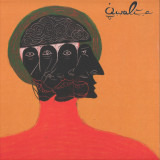
New London based quartet Qwalia, led by drummer Yusuf Ahmed, offer a plethora of influences whilst remaining resolutely itself. Assembled from musicians who play with David Byrne, Joy Crookes, Nubiyan Twist, Frank Ocean, Jordan Rakei, Sampha, Cat Stevens and more; Yusuf is joined by Tal Janes on guitars and vocals, Ben Reed on bass and keyboardist Joseph Costi. Qwalia’s debut album ‘Sound And Reason’ is set for release by Alberts Favourites on 24th March 2023.
The name Qwalia stems from the same sounding word Qualia, a philosophy of mind with the property of being an ineffable experience. Qwalia’s music is an instinctive aural expression of how things seemed in the moment of creation.
In April ‘21, Qwalia spent two days recording completely improvised music at the Fish Factory in North West London. There was no plan or preconceived idea of what the music should sound like or what was going to happen.
“We set up altogether in one room, dimmed the lights, pressed record and just played,” says Yusuf. “We came away with over 13 hours of music, which was consolidated into three albums worth of material. The final record is mainly a result of pulling faders up or down to create space and structure out of what was already there from the live recording. The production process felt akin to a sculptor chipping away excess stone to reveal a statue that was already there, and occasionally putting some makeup on it!”
The band members are Pakistani, Italian, Venezuelan, Jewish and English. A reflection of the fact that cultural categories are infinite; Qwalia’s music unconsciously explores identity, exposing what this can mean. Or perhaps that it doesn’t mean anything at all.
Early support from Mary Anne Hobbs and Gilles Peterson, support to come from Huey Morgan, Cerys Matthews.
Death and Vanilla return with 'Flicker', presenting their unique pop music that defies categorisation. Housed in a beautifully austere post-ironic de-constructed sleeve; 'Flicker' is a modern reflection on these difficult times. World crises notwithstanding, they return reborn, re-arranged and revitalised after assimilating dub reggae, the motorik spirals of Can, the modal meander of Philip Glass and The Cure's dreamier pop sounds; plus the twice removed symphonic ambience of Spiritualized and Talking Heads under heavy manners from Brian Eno. By osmosis their period of transition since 2019's much darker 'Are You A Dreamer?' has hatched new eclectic electronica anthems riddled with melody lines, and layered for lush love. - Forming in Malmö, Sweden, Death And Vanilla gravitated towards vintage musical equipment; from vibraphone, organ and mellotron, to tremolo guitar and Moog synthesisers. Soaking up soundtracks from the 60s and 70s, listening to library music, kosmiche, French Ye-ye pop and 60s psych, Marleen Nilsson, Anders Hansson and Magnus Bodin were fashioned by the city's austere industrial past and flat pack present, and all in the shadow of the Orsesund Bridge that links their dreamworld to mainland Europe and a darker reality. Death And Vanilla at once sound like everything is possible; but nothing else at all. There is a flicker of hope for everyone. - "Deploying vintage instruments in their quest for melancholic utopia." Electronic Sound * "Baroque pop through a dreampop filter." The Guardian Ltd Indie Retail Only Yellow Vinyl LP including DLC!
"And we"re coming out of dreams / And we"re coming back to dreams" is the first thing you hear Bill say as you remake your acquaintance on YTILAER. Right out the gate, he"s standing in two places at once: meeting up with old friends behind the scenes and encountering them on the record, finding himself coming round the bend and then again as someone else on down the line. Like the character actor he played on Gold Record, writing stories about other people, telling jokes about everyone, and in singing them, becoming the songs. "You do what you"ve got to do / To see the picture" Bill"s got a full band sound going on this one, with him and Matt Kinsey on guitars, Emmett Kelly on bass and backing vocals, Sarah Ann Phillips on B3, piano and backing vocals and Jim White on drums. Jim and Matt sing on one song, too, and some other singers come in, too. Bill plays some synth here and there, and Carl Smith drifts in and out of the picture with his contra alto clarinet, as do Mike St. Clair and Derek Phelps on brass. Somehow in between them all, you might think you hear the distant sound of a steel guitar. And you might - but you might not, too. In this company, Bill continues his journey, tunneling underneath the weathered exterior of what seems to be and into the more nuanced life everything takes on in the dark. With Bill"s voice making the extraordinary leaps and bounds that measure the lives of the songs, the band follow him through passages that seem to invent themselves; other times playing with deeply soulful grooves and/or desperate intensity, as these moments come and go. There"s nothing they can"t do. "I wrote this song in five and forever / I"m writing it right now" Bill sings on "Natural Information" - an admission of the everyday alchemy he"s forever trafficking in. Time passes, triangulating the encounters that went into any one record with two out of any three others, all of it made flesh, new constitution, in our stereo speakers. If every album is its own life, it stands to reason that they"re invariably passing in the night. Cascading images flowing from the stream of consciousness. Turning like pages from the journal, unspeakably personal, then suddenly become tall tales, like a book pulled off the shelf, completely unbound. Headlines flow through. Mirror images, mirthful ones. Bill"s lyrics strain at the lines on the page, not content to separate the printing of the fact from the myth or be confined to ink on paper. They want to fly free. And they do. "I realize now that dreams are real" On YTILAER"s inner sleeve, alongside his lyrics, Bill celebrates the "exhilaration and dread" of cover artist Paul Ryan"s paintings. Paul"s another one met up with again down the road, his indelible cover imagery on Apocalypse and Dream River now an axis of meaning in the Callahanian world - and in the bright colors found in these new images, a parallel to Bill"s recognitions here. "A breath of exquisite air as we come up from drowning", sounds like the desired hope for those hearing the songs of YTILAER.
Originally released in 1975 by RCA via its subsidiary Midland International—and recorded at the legendary Sigma Sound Studios in Philadelphia—these two tracks have never since both been released on the same single up until now, appearing once in unison on an acetate reference recording, copies of which have never sold on Discogs and are believed to be in the hands of 4 collectors worldwide.
Touch of Class effortlessly blend together the classic Motor City Sound and Philadelphia’s hard-driving disco groove in one fell swoop, records that sound like they have been produced from both the Gamble and Huff and Dozier playbooks, while retaining a unique register exclusive to the group.
In the wake of their acclaimed comeback album Figures (2020), Aksak Maboul took a playful sideways step to create this total work, a 63-minute, continuous suite of fifteen pieces, which could be described as an experimental audio play. The thread running through Une aventure de VV (Songspiel) is Véronique Vincent"s text, an enigmatic philosophical-poetical tale unfolding through monologues and dialogues, spoken and sung by a series of characters. The music was written & arranged by Marc Hollander and features his characteristic genre-hopping tendencies: strands of electronica, pop, jazz, collage, techno, ambient, improv, krautrock, contemporary classical & systems music are merrily woven together, in the inimitable Aksak Maboul style. The album"s subtitle, Songspiel, highlights its theatrical/musical aspect: the work pays oblique homage to the those experimental radio plays that once emerged from the creative workshops of the BBC, the RTF and the RAI, and especially to those German Hörspiels which, at their best, might combine spoken word, instrumental or electronic music, songs and sonic research. The album features appearances by Alig Fodder, Audrey Ginestet & Benjamin Glibert (Aquaserge), Lætitia Sadier (Stereolab), Blaine L. Reininger (Tuxedomoon), Don The Tiger, and the members of AKsak Maboul"s current live line-up.
If we want to look into the future, we have to start considering the implications more holistically. All too often, science fiction is a dystopian projection of the current era's grimmest realities spiked with pragmatic historical hindsight - but what if instead it was able to reflect our needs, hopes, and dreams? On "SPINE", award-winning Danish composer SØS Gunver Ryberg considers a sustainable alternative, buoyed by interconnectedness, empowerment, and understanding. Channeling her dextrous sound design into advanced, time-bending music that fluctuates through techno, experimental ambient, and soundsystem-vibrating bass music, she maps out an artistic landscape that's futuristic and complex, but never oppressive.
Ryberg is an accomplished producer who's developed her sound over many years, playing concerts and working tirelessly on video game soundtracks, film scores, dance, performance, and multichannel installation pieces. Her first solo album "Entangled" appeared in 2019 on Berlin's esteemed Avian imprint, and was praised for its sensitive approach to noise and abstracted techno, while its EP-length followup "WHYT 030" was nominated for the Nordic Council's prestigious music prize this year. "SPINE" is the inaugural release on Ryberg's own label Arterial, and stands as a thematically dense statement of intent. The label provides a platform to extend Ryberg's artistic goals and reflect not just her world but a world she wants to see develop in the future: somewhere connected and creative, where exploration and free expression is prioritized over genre division and petty compromise.
This philosophy is central to the sounds on "SPINE", which have been carefully sculpted to accurately lay out Ryberg's worldview. Opening track 'Unfolding' presents a sonic ecosystem that flourishes as it spreads itself out, and quivering kick drums vibrate alongside unstable atmospherics. There's the faint fingerprint of Chain Reaction's notional dub techno in there somewhere, but Ryberg interrupts the thought before it can coagulate, assuring the listener that her vision isn't ponderous but playful and optimistic. This mood flickers into view again on the title track 'Spine', as fragmented breaks rumble beneath disorienting synths, faint images of a life we once knew refracted into cosmic beams of light. 'Mirrored Madness' meanwhile is warm, assertive, and optimistic, contrasting skittering cybernetic percussion with dense, enveloping harmonies.
When she pushes rhythm into the background, like on the cinematic 'We tumble on the edges', Ryberg's compositional skill is placed under the microscope. We're presented with the opportunity to examine another dimension of her work, the mystery beneath the stone, hearing saturated, alluring pads infused with hidden harmonies. In these moments, Ryberg implores all of us to consider the environment, asking us to think about the earth's essential nutrients on the dreamy 'Phosphorus Cycle', and what we might do to save ourselves on the delirious 'Where do we go from here'. Ryberg's concern isn't chastising, it's laid out in a warm embrace. The future could still be bright - there's something beautiful in the complexity if you just take the time to look closely.
- A1: Ringa Ringa (The Old Pandemic Folk Song) (Feat. The Mediaeval Baebes)
- A2: Day One (Feat. Dina Ipavic)
- A3: Are You Alive? (Feat. Penelope Isles)
- B1: You Are The Frequency (Feat. The Little Pest)
- B2: The New Abnormal
- C1: Home (Feat. Anna B Savage)
- C2: Dirty Rat
- C3: Requiem For The Pre-Apocalypse
- D1: What A Surprise (Feat. The Little Pest)
- D2: Moon Princess (Feat. Coppe)
White Vinyl[33,24 €]
DOUBLE BLACK LP : 2 x 140 G Black Vinyl , Sleeve & 2 x Heavy Weight Printed Inner with UV Gloss Finish
Legendary electronic music duo Orbital return Early 2023 with new album “Optical Delusion”, the Hartnoll brothers first studio album since 2018’s Monster’s Exist. Recorded in Orbital’s Brighton studio, “Optical Delusion” includes contributions from Sleaford Mods, Penelope Isles, Anna B Savage, The Little Pest, Dina Ipavic, Coppe, and perhaps most surprisingly, The Medieval Baebes.
Earlier this year, Orbital celebrated their storied history with “30 Something” which, unlike other Best Of’s, contains reworks, remakes, remixes and re-imaginings of landmark Orbital tracks including “Chime”, “Belfast”, “Halcyon”, “Satan”, and “The Box”
SHORT BIOG:
“A human being experiences himself, his thoughts and feelings as something separate from the rest of humanity – a kind of optical delusion of his consciousness. This delusion is a kind of prison for us, restricting us to our personal desires and to affection for a few persons nearest to us. Our task must be to free ourselves from this prison…”
You many have seen this quote attributed to Albert Einstein on social media, the archetypal Smartest Guy Ever apparently having an out-of-character religious epiphany. It certainly leapt out at Paul Hartnoll of Orbital who spotted it in Michael Pollan’s 2018 book How to Change Your Mind: What the New Science of Psychedelics Teaches Us About Consciousness, Dying, Addiction, Depression and Transcendence.
“As soon as I saw ‘optical delusion’ I thought Oh hey, that’s the album title,” says Paul. “It just seemed to say so much about how people construct their own realities, how we see patterns that aren’t there, how we see what we want to see.
“But it’s actually a misquote. He never quite said that. In the German original what he’s really saying is that human experience is as relative as physics. Wouldn’t it be good if we could accept that, and find a kind of universal theory of everything for the human race? Then you look at everything from history to art to your Twitter feed and you think yeah, that’s what we’re all trying to do all of the time…”
Hence ‘Optical Delusion’, the tenth original Orbital album and the latest in a burst of renewed post-pandemic creativity for two brothers who’ve stayed at the top of their game longer than anyone from the post-1988 Class of Acid House.
Now with ‘Optical Delusion’ the Hartnolls dig deeper into the unquiet psyche of our increasingly surreal and disordered world. Sketched out partly during lockdown but fully recorded in the uncertain After Times, the album summons up conflicting emotions and sometimes beguiling images from years when the science fiction doomsdays that the Hartnolls watched on TV as kids finally came true. There are mesmeric tracks with names like ‘The New Abnormal’ and ‘Requiem For The Pre-Apocalypse’ and ‘Day One’. But there are also straight-up bangers and ethereal cosmic dreams, abstract sound wars and deeply human songs of separation and loss.
And it all starts with a bang. Lead single ‘Dirty Rat’, an outright Fall-meets-Front-242 class rant with vocals by Sleaford Mods mob orator Jason Williamson, harks right back to the Hartnolls’ days of politicised anarcho-squatpunk. It began as a remix swap (Orbital did the Sleafords’ ‘I Don’t Rate You’) and morphed into a comic, brutal, bass-driven harangue not so much against our rulers but at the petty, mean-spirited, frightened, Mail-reading voters who put them there: the people who are “blaming everyone in hospital/blaming everyone at the bottom of the English Channel/blaming everyone who doesn’t look like a fried animal.”
Also key to the album is opening track ‘Ringa Ringa (The Old Pandemic Folk Song)’ which returns to an Orbital truism, that time always becomes a loop. This chugging, cyclical Orbital groove gives way to an unnerving past-meets-present timeslip fit for ‘Sapphire And Steel’ as goth maenads The Mediaeval Baebes materialise to sing ‘Ring O’Roses’ – the innocent nursery rhyme whose roots are in the Black Death.
“I’ve always liked folk music and mediaeval sounds,” says Paul, himself an occasional Morris dancer. “I had the basis of that track and I wanted to spin it off somehow.” Trawling his archives he stumbled on The Mediaeval Baebes’ version of ‘Ring O’Roses’ “and my hackles just went up. I was like, my God, this is the original pandemic folk song.”
?his being Orbital, there are collaborations galore on the album, the roles once played by Alison Goldfrapp, Lady Leshurr or David Gray now filled by new talents. London singer-songwriter Anna B Savage contributes a compellingly fragile, Anohni-like vocal to ‘Home’, in which nature reclaims the scorched and vacant mega-cities. ‘Day One’ is a pulsing techno track featuring the singer Dina Ipavic. Paul got in touch with her after working on a score for a sculpture show of giant robotic installations by his friend Giles Walker during the pandemic. First Paul cut up his own score and Ipavic’s vocals on the track The Crane, which appears on the deluxe version of the album. Then he thought, Why not work with her for real? The result is school of ‘Belfast’, a bassy dreamscape with vocalised clouds billowing above.
The pensive ‘Are You ?live?’ adds to the Orbital product range of existential questions (‘Are We Here?’, ‘Where Is It Going?’) in collaboration Bella Union signings Penelope Isles, AKA brother and sister act Lily and Jack Wolter. “They’re our studio mates, they work upstairs!” says Paul happily. “And they’ve both got amazing voices.”
But Orbital are Orbital and never far from the dancefloor. “Eventually the more abrasive bits came back into the fold…” ‘You Are The Frequency’, first of two tracks to feature mysterious vocalist The Little Pest, surrounds the listener with warped voices ordering you to the dancefloor (Phil: “we wanted the idea that the music is kind of absorbing you”). And the second, the sinister ‘What A Surprise’, traps you in a paranoid electronic hall of mirrors.
In another nod to Orbital’s resurgent past the cover artwork once again comes from fine art painter John Greenwood, creator of fantastical grotesques for the covers of ‘Snivilisation’, ‘In Sides’ and Orbital’s most recent album, 2018’s ‘Monsters Exist’. Orbital had just had a slick Mark Farrow cover for ‘30 Something’ – this is a return to the overripe and bulbous techno-organic constructions that somehow express Orbital’s own uncontrollably fertile sound.
There are gaps in the future that Orbital are desperate to fill too; there will be tours and festivals and rooms and fields full of people. Those long paralysed months when we had little to look forward to but a Zoom DJ set made Paul and Phil appreciate the things that make life worth living.
- A1: Ringa Ringa (The Old Pandemic Folk Song) (Feat. The Mediaeval Baebes)
- A2: Day One (Feat. Dina Ipavic)
- A3: Are You Alive? (Feat. Penelope Isles)
- B1: You Are The Frequency (Feat. The Little Pest)
- B2: The New Abnormal
- C1: Home (Feat. Anna B Savage)
- C2: Dirty Rat
- C3: Requiem For The Pre-Apocalypse
- D1: What A Surprise (Feat. The Little Pest)
- D2: Moon Princess (Feat. Coppe)
Black Vinyl[31,05 €]
2 x Solid White LP, 5mm spine Sleeve UV Gloss Finish, 2x Heavy Weight Printed Inner Sleeve UV Gloss finish, marketing sticker.
Legendary electronic music duo Orbital return Early 2023 with new album “Optical Delusion”, the Hartnoll brothers first studio album since 2018’s Monster’s Exist. Recorded in Orbital’s Brighton studio, “Optical Delusion” includes contributions from Sleaford Mods, Penelope Isles, Anna B Savage, The Little Pest, Dina Ipavic, Coppe, and perhaps most surprisingly, The Medieval Baebes.
Earlier this year, Orbital celebrated their storied history with “30 Something” which, unlike other Best Of’s, contains reworks, remakes, remixes and re-imaginings of landmark Orbital tracks including “Chime”, “Belfast”, “Halcyon”, “Satan”, and “The Box”
SHORT BIOG:
“A human being experiences himself, his thoughts and feelings as something separate from the rest of humanity – a kind of optical delusion of his consciousness. This delusion is a kind of prison for us, restricting us to our personal desires and to affection for a few persons nearest to us. Our task must be to free ourselves from this prison…”
You many have seen this quote attributed to Albert Einstein on social media, the archetypal Smartest Guy Ever apparently having an out-of-character religious epiphany. It certainly leapt out at Paul Hartnoll of Orbital who spotted it in Michael Pollan’s 2018 book How to Change Your Mind: What the New Science of Psychedelics Teaches Us About Consciousness, Dying, Addiction, Depression and Transcendence.
“As soon as I saw ‘optical delusion’ I thought Oh hey, that’s the album title,” says Paul. “It just seemed to say so much about how people construct their own realities, how we see patterns that aren’t there, how we see what we want to see.
“But it’s actually a misquote. He never quite said that. In the German original what he’s really saying is that human experience is as relative as physics. Wouldn’t it be good if we could accept that, and find a kind of universal theory of everything for the human race? Then you look at everything from history to art to your Twitter feed and you think yeah, that’s what we’re all trying to do all of the time…”
Hence ‘Optical Delusion’, the tenth original Orbital album and the latest in a burst of renewed post-pandemic creativity for two brothers who’ve stayed at the top of their game longer than anyone from the post-1988 Class of Acid House.
Now with ‘Optical Delusion’ the Hartnolls dig deeper into the unquiet psyche of our increasingly surreal and disordered world. Sketched out partly during lockdown but fully recorded in the uncertain After Times, the album summons up conflicting emotions and sometimes beguiling images from years when the science fiction doomsdays that the Hartnolls watched on TV as kids finally came true. There are mesmeric tracks with names like ‘The New Abnormal’ and ‘Requiem For The Pre-Apocalypse’ and ‘Day One’. But there are also straight-up bangers and ethereal cosmic dreams, abstract sound wars and deeply human songs of separation and loss.
And it all starts with a bang. Lead single ‘Dirty Rat’, an outright Fall-meets-Front-242 class rant with vocals by Sleaford Mods mob orator Jason Williamson, harks right back to the Hartnolls’ days of politicised anarcho-squatpunk. It began as a remix swap (Orbital did the Sleafords’ ‘I Don’t Rate You’) and morphed into a comic, brutal, bass-driven harangue not so much against our rulers but at the petty, mean-spirited, frightened, Mail-reading voters who put them there: the people who are “blaming everyone in hospital/blaming everyone at the bottom of the English Channel/blaming everyone who doesn’t look like a fried animal.”
Also key to the album is opening track ‘Ringa Ringa (The Old Pandemic Folk Song)’ which returns to an Orbital truism, that time always becomes a loop. This chugging, cyclical Orbital groove gives way to an unnerving past-meets-present timeslip fit for ‘Sapphire And Steel’ as goth maenads The Mediaeval Baebes materialise to sing ‘Ring O’Roses’ – the innocent nursery rhyme whose roots are in the Black Death.
“I’ve always liked folk music and mediaeval sounds,” says Paul, himself an occasional Morris dancer. “I had the basis of that track and I wanted to spin it off somehow.” Trawling his archives he stumbled on The Mediaeval Baebes’ version of ‘Ring O’Roses’ “and my hackles just went up. I was like, my God, this is the original pandemic folk song.”
?his being Orbital, there are collaborations galore on the album, the roles once played by Alison Goldfrapp, Lady Leshurr or David Gray now filled by new talents. London singer-songwriter Anna B Savage contributes a compellingly fragile, Anohni-like vocal to ‘Home’, in which nature reclaims the scorched and vacant mega-cities. ‘Day One’ is a pulsing techno track featuring the singer Dina Ipavic. Paul got in touch with her after working on a score for a sculpture show of giant robotic installations by his friend Giles Walker during the pandemic. First Paul cut up his own score and Ipavic’s vocals on the track The Crane, which appears on the deluxe version of the album. Then he thought, Why not work with her for real? The result is school of ‘Belfast’, a bassy dreamscape with vocalised clouds billowing above.
The pensive ‘Are You ?live?’ adds to the Orbital product range of existential questions (‘Are We Here?’, ‘Where Is It Going?’) in collaboration Bella Union signings Penelope Isles, AKA brother and sister act Lily and Jack Wolter. “They’re our studio mates, they work upstairs!” says Paul happily. “And they’ve both got amazing voices.”
But Orbital are Orbital and never far from the dancefloor. “Eventually the more abrasive bits came back into the fold…” ‘You Are The Frequency’, first of two tracks to feature mysterious vocalist The Little Pest, surrounds the listener with warped voices ordering you to the dancefloor (Phil: “we wanted the idea that the music is kind of absorbing you”). And the second, the sinister ‘What A Surprise’, traps you in a paranoid electronic hall of mirrors.
In another nod to Orbital’s resurgent past the cover artwork once again comes from fine art painter John Greenwood, creator of fantastical grotesques for the covers of ‘Snivilisation’, ‘In Sides’ and Orbital’s most recent album, 2018’s ‘Monsters Exist’. Orbital had just had a slick Mark Farrow cover for ‘30 Something’ – this is a return to the overripe and bulbous techno-organic constructions that somehow express Orbital’s own uncontrollably fertile sound.
There are gaps in the future that Orbital are desperate to fill too; there will be tours and festivals and rooms and fields full of people. Those long paralysed months when we had little to look forward to but a Zoom DJ set made Paul and Phil appreciate the things that make life worth living.
Within any creative expression about love there's a shared experience, a sentiment hard to articulate but understood through emotion. One of the defining examples of a song that holds such sincerity is 'My Heart Is Broken' by 'The Four Dudes'.
Charles 'Pooky' Russell, the lead singer of 'The Four Dudes' shares his story of a broken heart; his ambition to pursue a life immersed in music is what led Charles to leave his hometown of San Antonio for Houston and in doing so, leaving his lady. Charles' music career began whilst studying at Sam Houston High during the mid-60s. During choir is where he met Reginald Whitaker & Lawrence Alexander, and the trio would go on to establish their first vocal harmony group, 'The Three Dudes'. The Dudes, inspired by groups such as The Cadillacs & The Platters, would gain a strong local following that led to their first single 'Sad Little Boy' & 'I'm Beggin' You' produced & released in 1967 on E.J. Henke's 'Satin' label.
By 1969, 'The Three Dudes' had become 'The Four Dudes' with the addition of Kenneth Ball. The Dudes had made the decision to pursue a full time career with their music and the opportunities available Houston propelled the move. Within the first year 'The Four Dudes' had found themselves a manager, James Davis, whom pieced the vocal group with Houston's own 'The Heavy Accents Band'. The group were gaining notoriety around town, performing several times a week, which led Davis to bring the outfit into the studio to release a single on his independent label, 'Sivad-J'. It was when Davis heard 'My Heart Is Broken' for the first time that they decided this would be the single, and within the same year would be recorded at SugarHill Studios & released as a 7" single.
The sincerity of the song is what serenaded Houston across the airwaves in 69', a staple for George 'Boogaloo' Frazier on his show for KYOK 1590 AM amongst many others. The single became a local hit however, due to the lack of distribution and small pressing, the single barely made it out the city limits. 'The Four Dudes' continued to perform in Houston for 3/4 more years before heading to Philadelphia and forming a group called 'Image'.
For the first time since its 1969 release, 'The Four Dudes' single is once again available through Symphonical Records as a limited 7" pressing. Licensed directly through the Davis family with the approval of Charles Russell.
Gotts Street Park are a proud bunch of throwbacks. The Leeds-based trio - Josh Crocker (bass, production), Tom Henry (keys) and Joe Harris (guitar) - met through various music studies and friendship networks. Individually their tastes are diverse: from North Indian classical to experimental jazz, soul to alternative hip hop but their vision is united: “The idea of doing things live in one room has always been important,” remarks Josh. “That’s how they used to do it. Our identity evolved from that.”
The inception of the collective goes back to around 2012. There have been minor line up tweaks - they currently record with a rotating list of drummers - but the philosophy has stayed the same: an ongoing pursuit to capture the raw, unparalleled vibe that comes from recording music together, usually as one take, sometimes to analogue tape.
That approach is a deliberate call back to the methods made famous by legendary studios like Sun and Stax in Memphis, or FAME and Muscle Shoals in Alabama and their in-house bands. That’s why for years, GSP set up their own studio in a shared house in a tough (but, crucially, affordable) corner of west Leeds, Armley. Gotts Park (historically the home of industrialist Benjamin Gott) was close by - the group’s name was a nod to their local geography but also the fact it sounded like an area plucked straight out of some of their favourite East Coast hip hop releases.
Their work was quickly noticed, and it was from that base where they began working with an eye catching list of collaborators: Rejjie Snow, Kali Uchis, Cosima, Yellow Days, Chester Watson, Greentea Peng and Benny Mails. Tom also played keys in Mabel’s band. Early on, while performing as a band for hire for those artists, they were simultaneously honing their own sound; a deliberately retro “heavy, saturated” atmosphere that married the languid vibe of traditional soul with the pin sharp clarity of contemporary hip hop. Old leanings, sure, but upcycled with their own modern twist. “We’re constantly trying to build a catalogue,” says Tom. “Writing new stuff and sending it out to people.” That’s why after the release of their debut EP, ‘Volume One’, in 2017 the invitations kept coming; most notably from Brits Rising Star award winner Celeste, with whom they recorded two tracks on her debut EP ‘Lately’.
‘Volume Two’ once again features an impressive raft of vocalists - all female - from established names to fresh talent. This time, musically, the overall tone is lighter; less gritty, more optimistic. “It’s definitely not as gloomy,” says Josh. “Still though, there is this kind of dark, mysterious thing that we do a lot that works,” he continues. “Like the song we’ve done with Grand Pax, for example - it’s got that kind of witchy darkness to it. I think if you do a really straight male soul voice, it can be a bit cheesy and sound like you’ve heard it a million times before.”
Their collaborations might be some of the freshest of 2020 but make no mistake: Gotts Street Park are out there looking to create something timeless.