Moana Pozzi in the late 1980s, following in the footsteps of her illustrious colleague Ilona Staller/Cicciolina, made her official singing debut by recording several songs arranged and produced by Jayhorus. The music ended up in several of her films as well as being performed in her hot live shows.
Discographically at the time only a few tracks were released on 7″ and 12″ singles that are now cult collector’s items for fetishists and weird DJs.
At last, Cinedelic has gotten their hands on the original masters, unearthing some unreleased ones as well, producing a luxurious gatefold LP.
Thus we find persuasive, nocturnal and mischievous tracks in perfect nightclub style such as “Amore Tossico”, “Autostop”, “Ultima Notte” and “La Gabbia” side by side with more Dance tracks such as his main hit “Supermacho”, the Dance-Rock “Impulsi Di Sesso” and “Gate One (Aeroplano Telecomandato)” and the Funky “Rocky.”
out of Stock
Last delivered 16 months ago available to reorder, subject to availability
Recorded in 1989 on the remaining ten minutes left at the end of Swiz’s Hell Yes I Cheated reel-to-reel and originally released at the time as a 33 RPM 7-inch, this 2023 release presents a 12-inch 45RPM version remastered by Tim Green with an extra song recovered from the tape archives of Jason Farrell. The brief story of Fury: At some point in 1989, members of Washington DC punk bands Swiz and Ignition formed Fury as a loose experiment with no intentions beyond being a diversion. The band existed for a few months, wrote six songs, and played two shows. Shawn Brown and Chris Thomson switched their musical roles from their regular bands as vocalist and bass player. The eyes-closed leap into those unfamiliar positions imbued the recording its feeling of deranged chaos, while the well-seasoned duo of Jason Farrell and Alex Daniels nailed down each song with the signature agility and power displayed in their more familiar work together. The recording is a vexing listen that sounds like a Neapolitan swirl of Swiz, Void, and the Germs. Was it precision theatre? Or was it a natural step back into a more primitive and comfortable place for four young veterans that just wanted to fill the daily void of existential restlessness? The track “Resurrection” famously made it onto the final Swiz LP. The final track “Last One” got cut off halfway through recording and the band looped and spliced it into a dizzying psychedelic nightmare / masterpiece. The recording has faded into somewhat of an obsurity, a footnote to the larger careers of all of its members. In its time, it was revered by a small cult of obsessives from numerous early ’90s underground punk circles. It notably had a pronounced influence on the emerging Gravity Records scene, where its echoes can be heard on quite a few of the earlier releases. Resurrection is finally getting the deluxe treatment that it deserves after 34 years!
A long-in-the-works project of ours, here comes A Tribe Called Kotori's first foray into full-length territories, as the immensely talented Rampue takes us on a melancholy-riddled ride across his phantasmatic mindscapes. A true sound explorer, deftly steering his ship down the junction of electronica, abstract and balearic-infused prog house, the Berlin-based vibist has us transfixed and elevated throughout the twelve cuts that form the backbone to this lushly textured promenade in sound - at times understatedly euphoric, at others rivetingly exotic.
Of the creative process that lead to 'Bubblebath Trance', Rampue explains "It all started and ended in the same moment: my cherished feline companion, my laptop awash with an unintended bath, and alas, a dearth of backups. The resultant calamity, an echo of chaotic tranquility." Under the generous layer of irony lies some unaltered truth about Rampue's debut long-player for A Tribe Called Kotori: this sense of serenity that goes with stepping into this warm and bubbling primitive chaos of sorts infuses the listening experience far and wide. Distantly emulating the "euphonious strains" of iconic PS1 video games soundtracks from his youth days, the album has us surfing a constant paradox of emotions, wistful but not abandoning itself to sorrow, dynamic yet suspended in some sort of mind-expanding stasis. As if you were looking at the world beneath you in exploded view, conscious of all thing, slowly moving up the many layers of our atmosphere towards uncharted skies.
A paragon of Rampue's most poignant take on classic electronica tropes, 'Harmonie' blazes with a poetic fire that engulfs about everything in its wake. Just figure yourself riding a chocobo across the sand-covered expanse of North Corel (toasting to the FFVII nerds here) as this blasts out in the distance. From this trancey bubblebath emerge lots of musical shades and nuances, from the nicely dubbed-out, brass-heavy coastal jazz of 'Schattenschranz' to the choppy, trip-hop-adjacent future electronics of 'Inside', via the exuberantly joyous mess of faux-organic number 'Tripomatic' and cinematic charisma of 'Ich hasse Sonne' high-flying orchestrations.
Connecting the dots between that trance-indebted ebullience and further downtempo-friendly attraction, 'Verfahren' perhaps encompasses best what 'Bubblebath Trance' is about: gracefully walking the tightrope in-limbo nostalgia-soaked inner movements and a powerful outward thrust, burning to let the feelings ooze out from the shell that holds them.Clad in purely 90s-compatible breaksy motion, 'Salz' is another attempt to reconcile emotional and physical dissonance, like kneading all states - solid, liquid and vaporous - into an impossible mega-vibe of its own; malleable, strong and enveloping in equal measure. Borrowing from two-step and UK garage, 'Take Away' is a definite high in Rampue's master unfolding of musical twists and turns, summoning a Boarder Community-esque atmosphere and clashing it alongside floor-ready footwork motifs to fascinating effect.
An ode to his studio companion, 'Buchla Trip' finds Rampue's exploring his machinic friend's quirky yet soulful array of electronic potentialities - making it sound like a conversation you'd have with R2-D2 in the heart of a Sandcrawler, whereas 'Kajal' beams us up to a fragmented headspace, halfway altered PC-Pop and arps-loaded electronica on amphetamines. Effusive and transporting, the title-track 'Bubblebath Trance' could well figure as the album's no.1 medley in essence: a bountiful lucid dream of dancing forms, colours and sentiments to wrap your head around, confidently drifting from a liminal state of consciousness down the rapids of one's troubled inner workings.
Rounding off the package, the languid ambient finale of 'Die Leiden des hungrigen Fruehstuecks' rubber-stamps the feeling that 'Bubblebath Trance' belongs to that rare category of albums. The ones that mint their own alphabet aside from typical norms and expectations, teaching you the ropes of their new language as it unreels between your ears - real and unreal, elusive to any other meaning than the one your guts and brains will be inclined to give it to, in real time. A crystal-pure object if you will, that shall not reveal its secrets, even after a thousand listens and just as many wowing moments.
out of Stock
Last delivered 2 years ago available to reorder, subject to availability
Odd Holiday are purveyors of a rare breed of hip hop, both anchored in golden-era lyrical dexterousness and aligned to the contemporary movement of minimal soulful production. Their music is deeply emotive, seasoned, and undeniable.
L.I.S.A is the debut release by the semi-nomadic duo consisting of Mattic, a Charlotte, NC native currently residing in France and producer Daylight Robbery! who has one foot in the burgeoning jazz scene of London, UK and the other in the boom bap foundation of Brooklyn, NY. L.I.S.A represents the meeting of two forces who are at the top of their game and supremely comfortable in their craft, merging into something which feels both timeless and brand new.
*BLUE VINYL REPRESS* Started during lockdown by three friends from Leeds, UK who wanted to make some crossover thrash, having been fans of the music for years, Pest Control is the classic story of DIY music straight from a time of crisis. Jack (from Death Metal bruisers Mortuary Spawn) joined soon after the release of the Demo in 2020 and the line up was complete with Pest Control’s first show commencing in their home town the week lockdown ended. Influenced by classic thrash giants such as Metallica, Testament etc. but with a healthy spoonful of crossover like Crumbsuckers, Ludichrist and Municipal Waste, the members grew up with one foot in the Leeds metal and hardcore scenes, taking the best from both worlds. Topping it all off, Leah's powerful vocal reminds one of the great Dawn Crosby from Detente. For the recording of the LP they were joined by Luke on second guitar and now have a permanent second guitarist in the shape of Joe Williams (Big Cheese, Fate) and will be seen touring Europe with the almighty Foreseen, having already played across the UK with Municipal Waste, Eternal Champion and as well as appearances at Outbreak and Wrongside Fests. With this LP the band have truly shown their technical chops from the fast and furious title track to the almost operatic thrash style of The Great Deceiver. There is a fresh range of ideas and most importantly catchy songs for the Crossover Thrash fan to sink their teeth into. Mastered by Arthur Rizk, who knows a thing or two about thrash metal excellence having worked with Power Trip and Fugitive, expect to have your brain well and truly FUMIGATED.
The show, which rolled over the open-air stage of the Greek Theatre night after night in the late summer of 1963, attracted fans as if on a pilgrimage to the mountains of Hollywood. Many who could not get hold of a map climbed the surrounding trees to be able to admire the Calypso man at least from a distance.
Also on the lookout and with sound equipment at the ready were the people of the company RCA, which released the eagerly awaited album the following year. Some of the songs like the wriggling "Zombie Jamboree", "Look Over Yonder" and the wonderfully dripping Schmonzette "Try To Remember" were previously only available as studio versions. Most of the other numbers were brand new and sounded for the first time in a sparkling live atmosphere, which is authentically reproduced on this record.
Here a laugh as a receipt for a casual saying, there a rumble of boards, then again concentrated silence of a spellbound listening audience - something like this only happens on stage.
For Belafonte connoisseurs, these recordings are regarded as the crowning glory of the artistically highly productive phase of the years 1959 to 1963. Of the many good albums, this is one of the best.
Personnel: Harry Belafonte (voc); Howard Roberts (cond); William Eaton (clavietta); Ernest Calabria, Jay Berliner (g); John Cartwright (b); Percy Brice (dr); Ralph MacDonald (perc), choir and orchestra
Close your eyes and merge into Benedikt Frey’s 'Fastlane'. Imagine sitting in the driver’s seat of a an automobile, one with exceptional horsepower and torque, as you stare out the windshield at the red light, warping in fata-morgana a mile down the road. It’s a straight-away, a black top with two lanes, and against your better judgment you decide to floor the gas. No hesitation in your muscle, your ankle or the ball of your foot, which you now realize is some kind of universal pivot, the first point of contact fusing your body with the will of machine. In this moment you’re in awe that you, a human, an animal, grew from pond scum into something so advanced as to engineer this thing, a mechanical beast capable of overwhelming power and exhilaration. But you also feel a seductive dread, an outside force diverting you from caution toward a dangling carrot of curiosity, asking yourself, ‘How far can I take this thing?’ The dread, now a constant, is numbed, equalized by an adverse intoxicating gratification. You feel both sensations in real time, however, rather than take responsibility for yourself, friends, family and innocent bystanders, you cement your foot to the floor and lean your head back. Noise around you fades to mute. Smell the benzene-scented air, feel the wind on your face, the menacing vibration of the vessel you control beneath you and every grain of asphalt under its tires. This mile has now lasted an eternity and you’ve left your body for some objective view, as if watching climax of a film. Past the point of no return, you embrace abandon and lean into fate. The film becomes slow motion, a crawling pace so mesmerizing you convince yourself of an option to eject yourself from this madness, but as you finally let go of your last morsel of fear, you run the red light head-on into the nucleus of a fantastic glistening sculpture of torn metal, glass, oil, broken dreams and heartache. 'Fastlane' may be just drum machines and synthesizers if you’re timid, but listen harder and know the catastrophic reality of existence, a wreckage so gruesome we dare not rubberneck, but afterall it is our nature to stare.
out of Stock
Last delivered 15 months ago available to reorder, subject to availability
Attarazat Addahabia & Faradjallah's album came to us as quite a mystery. Our friends from Radio Martiko got access to the studio archive of the Boussiphone label and a reel labeled “Faradjallah” was among the items they had found there. After listening to the selection of reels they borrowed, Radio Martiko felt it was not a fit for their label and helped us licensing it from Mr. Boussiphone instead. We knew nothing about the band. We just had the reel with the music but very little information. What we knew was that the music was incredible and very unique. Gnawa sounds were combined with funky electronic guitars, very dense layers of percussions and female backing vocals more reminiscent of musical styles further south than Morocco. We started asking around whether anyone knew the band with no immediate success until we asked Tony Day, a musician from Morocco who helped us during our search for Fadoul’s family. His sharp memory came through once again, remembering all the names of the Attarazat Addahabia band members and even how to contact the bands singer and leader Abdelakabir Faradjallah. After visiting him at his home in Casablanca with our Moroccan colleague Sabrina multiple times, he shared his personal story. His father arrived in Casablanca from Aqqa at the age of six and his mother came from Essaouira. Abdelakabir was born in the neighbourhood of Benjdia in 1942. Abdelakabir Faradjallah studied fine arts in Casablanca, graduating in 1962. He also played soccer in the second team of "Jeunesse Societe One". His brother-in-law Ibrahim Sadr worked for one of the biggest football teams of the time in Morocco called "Moroco Sportive Union", which allowed him to travel to France occasionally. While Ibrahim was never part of the band he brought along a few instruments from trips.
Yet the majority of the instruments they could not afford to buy were build by Faradjallah and Abderrazak, Faradjallah's brother who passed away early. For instance they had built a Spanish guitar and a drum made of wood barrel and sheepskin by themselves.During the 1950s Faradjallah was booked as a singer for surprise parties with friends. He started to write his first songs including "L’gnawi" in 1967 and wanted to make people discover Gnawa culture, or maybe rather his take on the culture to be more exact. Faradjallah recalls his first interaction with the genre in the streets of the Dern neighbourhood, where he used to go to elementary school. Gnawa is one of the essential musical genres of Morocco. It combines ritual poetry with traditional dances and music linked with a spiritual foundation. Musically a lot of influences originated from West Africa as well as Sudan. Gnawa is usually played by a selection of specific instruments such as the qaraqab (large iron castanets centrally associated with the music), the hajhouj (a three string lute), guembri loudaâ (a three stringed bass instrument) and the tbel (large drums). People would put shells on their clothes and instruments and use incense at their parties. "Sidi darbo lalla - lala derbo khadem..." came from Gnawa verses Faradjallah used to sing when he was 14. The lyrics tackle a global (im)balance of power and the question of social status in this course. The band Attarazat Addahabia was formed in 1968. The original line-up included 14 members, all from the same family. They played their first small concerts here and there starting in 1969. Later in 1973 they performed bigger shows for instance at the Municipal Theatre followed by the "Al Massira Show" at Velodrome Stadium in downtown Casablanca. Their first album "Al Hadaoui" (the one you are listening to) was recorded at Boussiphone studios in 1972 and was never released before. Nobody seems to remember the exact reason why Boussiphone ended up deciding not to put the album out. The album's title track also served as the basis for Fadoul's "Maktoub Lah", who frequented the same circles as the band for some time.
Their shows sometimes could go as long as 12 hours, starting at 5pm in the afternoon, with an occasional break here and there. In the 1980s the band took a brief break. Faradjallah recalled the reason for that break like this: "Zaki, the bands drummer, had fallen in love with a young girl from Mohammedia. Soon after, he fell very ill. The group members were convinced that the girl had given him ‘s'hor’ (a kind of local Moroccan version of "black magic"). For four years, the whole group stopped playing. It was unthinkable to find another drummer to replace Zaki, even temporarily." So they waited four years for Zaki to "get back on his feet" before going back on stage. Apart from very few gigs here and there Faradjallah stopped playing music in the mid 1990s. Some members from the younger generations formed a new band and still play frequently to this day. Faradjallah runs a television repair shop coupled offerings beverages and snacks in the Belevedere /Ains Sbaa district of Casablanca. While Faradjallah was primarily a musician, he would work for the local cinema and paint their posters for new movies by hand and he designed all artworks and cover posters of the band.
And this eventually led to him participating actively in our first exhibition dealing with Habibi Funk’s work in Dubai 2018. He helped us by creating calligraphic complementations on large photo prints for that show.
Miles Davis created just one studio album with his original sextet: Milestones. And he made every moment count. Pairing with Cannonball Adderley, John Coltrane, Red Garland, Paul Chambers, and Philly Joe Jones, Davis not only laid the groundwork for the modalism that immediately followed but tailored a genuine modern-jazz masterwork laden with performances among the most explosive of his distinguished career. Sandwiched between the more famous 'Round About Midnight and the epochal Kind of Blue, Milestones remains a seminal work of art.
Sourced from the original master tapes and pressed on dead-quiet SuperVinyl, Mobile Fidelity's numbered-edition 180g LP grants each musician their own space amid broad soundstages. Afforded the benefits of a nearly non-existent noise floor and supreme groove definition, this vinyl reissue doubles as a time machine back to the February-March 1958 recording sessions.
Colors, shapes, and dimensions appear in the manner that resembles what you'd glean from behind a studio control room's window. Davis' burnished trumpet is rendered in three-dimensional perspective and seemingly coaxes the band to play with unburdened zest. Coltrane's trademark saxophone teems with lifelike tonality and images with specificity; his solos work in tandem with and against the driving rhythms. Garland's swaggering piano lines? Visualize the keys as he hits full stride, the chords and fills slithering around skeletal frameworks.
Inducted into the Grammy Hall of Fame and selected as a "Core Collection" record by the Penguin Guide to Jazz, Milestones is as famous for its title track – widely considered ground zero for modalism and bolstered by Jones' hallmark "Philly Lick" rim shot – as the players that produced it. The launching pad for many of Davis' improvisational flights, the album teases the explorations Coltrane would soon chase. Davis' own solo work broaches territories that far exceed what he had done in his bop-rooted past. Every song is a highlight.
Take the bravado "Dr. Jackle," featuring a hot-foot pace and bebop strains, or "Sid's Ahead," which continues the album's blues theme while juggling edgy harmonics and inside-out structures. On "Billy Boy," distinguished with an arco bass solo from Chambers, Garland gets a turn in the spotlight and channels the openness practised by one of his heroes, Ahmad Jamal. Even more instructive is the band's reading of Dizzy Gillespie's "Two Bass Hit." Three years removed from the version Davis and company recorded for the trumpeter's Columbia debut, this interpretation demonstrates the extent to which the group had jelled in a relatively short amount of time.
Then there's "Straight, No Chaser," the definitive rendition of Thelonious Monk's signature piece. Coltrane's marbled playing pulls at the tune's borders, Adderley takes liberty with solos, and Davis dances around his mates, at one point quoting "When the Saints Go Marching In" while demonstrating his knowledge of tradition and casting an eye towards the future.
About that future. Garland already had one foot out the door during the Milestones sessions to the extent Davis spells him on "Sid's Ahead." Jones would stick around for a bit longer but soon plot his exit. History proves Davis navigated the changes with visionary aplomb. Yet the chemistry, excitement, and beauty the sextet achieves on Milestones cannot be overstated. This reissue helps put the album in proper perspective – and presents the music the fidelity it deserves.
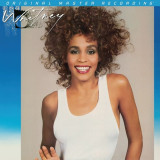
Whitney did more than turn Whitney Houston into a pioneering sensation known around the world by her first name. Originally released in June 1987, the singer's blockbuster sophomore record became the first album by a female artist to debut at No. 1 on the Billboard 200 chart — a position it claimed for a total of 11 weeks en route to selling more than 10 million copies in the U.S. The Diamond platinum effort also contains four No. 1 Hot 100 hits that, when combined with the three chart toppers from her 1985 debut, gave her seven consecutive No. 1 singles — an accomplishment that no other artist has accomplished. Commercially and creatively, Whitney stands on hallowed ground — especially now that the record plays with a sound that puts into perspective just how extraordinary, engaging, and vital Houston's music remains.
Mastered from the original master tapes and pressed on MoFi SuperVinyl at RTI, Mobile Fidelity's 180g 33RPM SuperVinyl LP of Whitney invites listeners to experience the Rock & Roll Hall of Fame inductee's pivotal album in audiophile quality for the very first time. Free of the dynamic limitations and tonal flatness prevalent on prior vinyl and CD pressings, it lets the music breathe and reveals the copious detail, nuance, and texture within the immaculately produced songs. MoFi's SuperVinyl profile offers further advantages in the forms of a nearly inaudible noise floor, dead-quiet surfaces, and superb groove definition.
In addition to featuring extreme clarity and immediacy, this numbered-edition reissue does wonders for the attribute that inspired more than 20 million people around the globe to add Whitney to their record collections: that inimitable voice. Houston's trademark mezzo-soprano — an acrobatic instrument equally capable of taking off on fantastic flights and unwinding for hushed meditations — benefits from the fantastic airiness and transparency afforded by this meticulously restored edition. Whitney has never sounded or looked better. The crossover landmark deserves nothing less.
Issued just two years after Houston's breakthrough debut, Whitney immediately signalled the genre-defying singer's intent to continue to push ahead and expand her palette. Shot by photographer Richard Avedon, the album cover depicts an iconic image of Houston — captured with a gleaming smile, bright eyes, teased-out afro, toned arms, and a right hand that appears to wave a friendly hello — whose active, athletic profile stands in contrast to the extremely formal sit-down shot of her that graces her '85 record. The change is telling: Whitney overflows with unfettered joy, rhythmic vibes, and deep-seated emotions that forever endeared her to the hearts and minds of countless listeners — and which set the standard for the wave after wave of divas that followed in her footsteps.
It's no coincidence that the first track on Whitney is the declarative "I Wanna Dance with Somebody (Who Loves Me)." Like Michael Jackson's "Billie Jean" and Madonna's "Material Girl," the feel-good smash is one of the quintessential '80s gems — a lithe, melodic, celebratory release of pent-up energy and loneliness that glides across club floors, shouts to the rooftops, and shrugs off any concerns about vulnerability or embarrassment. Houston's swooping voice moves in sync with the sleek beats and dipping-and-diving synths. She practically takes her fellow musicians by their hand and leads them in a blissful dance that nobody would dare sidestep. Focusing on Houston's singing — a task made challenging only because of the impossible-to-ignore hooks and grooves — showcases the virtuosic facets of not only her register but her control, discipline, smoothness, and warmth.
That she replicates those feats for the entirety of the nearly 53-minute-long album makes Whitney that much more special. Houston reaches back and channels her childhood gospel training on the R&B-flared "So Emotional"; effortlessly slips into Quiet Storm mode on the duet with her mother, gospel great Cissy Houston, on "I Know Him So Well"; flirts with smooth jazz and collaborates with tenor saxophonist Kenny G on the lush "Just the Lonely Talking Again"; conjures dreamscapes and shadow-boxes with supple funk on a romantic cover of the Isley Brothers' "For the Love of You"; and, for the majestic power ballad "Didn't We Almost Have It All," displays the sky-scraping reach of her vocals amid a grand arrangement made even bigger by Houston's sweeping performance and triumphant finish.
Houston's once-in-a-generation talents weren't lost on the adoring public, radio deejays, or industry experts. In addition to harbouring four No. 1 hits and receiving nominations for four Grammy Awards, Whitney generated another Top 10 success in the guise of the Afro-Cuban-leaning "Love Will Save the Day." The album also netted Houston four American Music Awards; two Billboard Music Awards; back-to-back People's Choice Awards; a Soul Train Award; and various other accolades. It all makes the crux of the Washington Post's July '87 review of the album appear prophetic: "Her voice sounds stronger still and the songs are varied but so consistent she could garner 10 Top 10s out of a field of 11."
That claim still holds true. A brilliant fusion of pop, R&B, smooth jazz, and soul, Whitney is a showstopper – and one of the key reasons Houston is the most-awarded female artist of all time.
Very limited Red Opaque vinyl. Single LP w/ printed inner sleeve + Download card. "a startling balance between chaos and structure, building up gorgeous torrents of sound that land with a crash" - THE NEW YORKER // A terrific blend of hardcore, punk, noise, and yes, pop. - INTERVIEW MAGAZINE // one of 2021's most thrilling listens. - STEREOGUM // What if Andy Warhol was really into Converge and CrossFit? That's the logline, as the now eight-piece band attempts to reflect pop music and pop culture through the heaviest, most swole lens possible. - PITCHFORK Best New Music // The Armed are set to release ULTRAPOP: Live at the Masonic Temple, an incredible live soundtrack from the band's narrative-driven concert film of the same name. The album and film were captured in the opulent chapels, imposing asylum rooms, full-size indoor handball courts, halls (and more) of the mysterious Masonic Temple of Detroit; a 550,000 square foot fortress in the heart of the city. ULTRAPOP: Live at the Masonic features breathtaking, hyperactive performances of tracks off The Armed's break-out album ULTRAPOP, selections from their second LP, Only Love, the CYBERPUNK 2077 single "Night City Aliens" and culminates in the ultimate catharsis with the entire collective converging for the devastating closer "On Jupiter." The Armed's latest album ULTRAPOP, released in April of 2021, received acclaim across the board, gaining the highly coveted Pitchfork Best New Music and praise from The New Yorker Magazine, Vulture, Stereogum, Revolver. AV Club, Fader, Bandcamp, Entertainment Weekly, Interview Magazine, and so much more. Reaching the same extremities of sonic expression as the furthest depths of metal, noise, and otherwise "heavy" counterculture music subgenres, it finds its foundation firmly in pop music and pop culture. A joyous, genderless, post-nihilist, anti-punk, razor-focused take on creating the most intense listening experience possible, and now with ULTRAPOP: Live At The Masonic, the most intense live experience possible.
"Hi there, I'm really happy to present my new EP "Kernel Panic" released on one of my favorite labels "Yuku". I've been discovering a lot of great music and new artists thanks to Yuku and I'm really happy to join the family.
My first release ever was a footwork release 8 years ago, and I wanted to experiment with this 160 bpm vibe again and merge it with a lot of different personal influences. I've been experimenting a lot with crazy polyrhythm sequencers and Euclidean algorithms for this EP. It was a lot of fun but my laptop didn't like it at all. During the whole process, I experimented a huge amount and experienced loads of bugs and laptop freezes, so I decided to dedicate this EP to "Kernel Panics".
It might be the most hybrid EP I've done. You can hear breaks, electro, footwork, grime, percussive, and dub ingredient within. I also had the pleasure to collaborate with the very talented Kenyan rapper, Nah Eeto, for Piga Makofi, and I can't wait to play this one live with her.
I asked my friend Vica Pacheco to create the artwork and she built this psychedelic 3d world based on "the hypnotic and dynamic energy" of the EP.
Big thanks to Yuku for following me into these new areas of experimentation."
- Le Motel
out of Stock
Last delivered 10 months ago available to reorder, subject to availability
A reissue of Jorge Ben's Solta o Pavao, originally released in 1975. Jorge Ben is one of Brazilian music's iconic and best-loved figures. Born Jorge Duilio Lima Menezes in Rio in 1942, he took the stage name, Jorge Ben, in deference to his mother's Ethiopian roots, and later used Jorge Ben Jorge for further distinction. Playing tambourine and singing in a church choir from an early age, Ben began playing in Carnival blocos and was performing in nightclubs as a teen. Signed to Philips in 1963, his "Mas Que Nada" became an instant international sensation that has never waned, despite being sung entirely in Portuguese. Beginning in samba, Ben's openminded approach saw him embrace aspects of bossa nova, the "Jovem Guarda" rock movement of the mid-1960s and the experimental Tropicalia form, the broad palette and diverse influences yielding a number of adventurous and abstruse albums during the 1970s, of which Solta o Pavao is one of the most rated by connoisseurs, though somewhat overlooked in general; its title translates roughly to "Unleash the Peacock" and apparently concerns the outward expression of inner beauty. Against a backdrop of lushly produced samba rock with shades of MPB, highlights include opener "Zagueiro", in which Ben salutes football center-backs in typically playful and poetic language; closing number "Jesualda" is a heady ballad of a chance encounter leading to a girl's social climbing and "Para Ouvir No Radio (Luciana)" a love song with striking flute and string arrangements; Dadi Flavi's bubbling bass and occasional string synths help keep the sound non-standard.
Incredible jazz / prog / folk score to groundbreaking tattoo film by maverick filmmaker. Unreleased until now, so don’t go saying it’s a reissue because it isn’t, but I’m sure some people will because they always do.
John Samson (1946 - 2004) was a truly great documentary maker. He must be as I’ve been obsessed with his work for many years. Educated first at Glasgow School Of Art (circa 1963) and then finally in the art of film making at The National Film And Television School in Beaconsfield - he headed there in its opening year of 1971 having made a short film that got him a scholarship.
It was at the NFTS that Samson met Mike Wallington, who was to become his right hand man and eventual producer; together as a quite brilliant team they made a handful of inspiring, entertaining and hugely prescient films about important, overlooked, unseen and marginal fringes in society. Tattoo (1975) Exploring the rather clandestine world of tattooing in the UK. Dressing For Pleasure (1977) Exploring the rather clandestine world of festish in the UK. Brittania (1979) A film about railway enthusiasts and a steam train restoration.
Arrows (1979) The life of dart player Eric Bristow. Drag Ball (1981) An unreleased film about the annual Porchester Hall Drag Ball. The Skin Horse (1983) BAFTA winning film about The Outsiders Club, a dating agency for disabled people. The subject matter in all films was always unusual for the time, and Samson managed to navigate his way with compassion, interest and subtlety, immersing himself in the chosen scene and producing moving, fascinating and sometimes darkly amusing situations. His documentaries also do not rely on traditional voiceovers, with stories, facts and narrative threads being dictated by the subjects.
I’ve tried for a long time to find the music for a couple of his early films (there was actually an original 7” for Arrows) - so far this is the only unreleased soundtrack I have found. This one was written by Steve Jolliffe, who met Samson at the NFTS. Joliffe was the resident composer and had a room at the college complex where he could work on scores for the fledgling film makers. Jolliffe was and still is a multi-instrumentalist and prolific composer who had met Edgar Froese at the Berlin Konservatorium in the late 1960s and played in an early incarnation of Tangerine Dream. He toured with blues rock outfit Steamhammer, before hanging out at the NFTS, making this recording (and many others) and eventually rejoining Tangerine Dream in the late 1970s. Jolliffe still writes, records and releases today and once i had made contact with him we traced the original Tattoo master tape to a box at his brother’s house. Musically it’s charming, slightly folky, a touch baroque, there’s a whiff of prog too, and it perfectly suited this early documentary about the art and desire of tattoos. I only wish it was longer. But the film is only 16 minutes long. Seek it out if you can. Try and find all the Samson films, they really are a joy.
As well as featuring intimate footage of tattooed people, the film also includes a rare and very early interview with Alan Oversby (better known as Mr Sebastian), a seminal character in the development of tattoos and body modifications worldwide - it was he who eventually was to tattoo and pierce Genesis P-Orridge.
The images for this vinyl release were all found in Mike Wallington’s Tattoo documentary research folder from 1974, and were photos sent in to Mike and John by people who wanted to feature in the film. Most answered an advert in Time Out, and others included people from my home town of Aldershot where tattooist Bill Skuse and his wife, Rusty (the most tattooed woman in Britain at the time, and featured in the film) were based. His parlour was situated at the back of the arcade where we all used to lose all our pocket money in the slot machines.
The Musicians:
Steve Jolliffe - keyboards, flute, sax Geoff Jolliffe - bass guitar Julian Furniss - guitar Mick Kirby - drums
Renowned Danish trumpeter Kasper Tranberg reforms his delicate chord-less trio with Nils Davidsen (bass & cello) and Frands Rifbjerg (drums) for the release of "Nobody"s Heart". Active on the jazz and improv scenes since the early 90s, Tranberg has been described as a player of great heart and purpose. Inspired by the iconic improvisers of our time, the album explores the connection between their instrument, their body and their soul. A collection of eight songs that Tranberg has deemed his favorites of the past few decades, the repertoire ranges from tin pan alley legends Rodgers and Hart, to visionaries like Ornette Coleman, to contemporary Danish singer/songwriter C.V. Jorgensen. On selecting the repertoire, Tranberg says "it was not about surface flash, technique or speed, but I followed my heart, my own footsteps and encounters in the previous 2 or 3 decades". Tranberg, Davidsen & Rifbjerg have been performin together since the early 1990"s, united by their passion for an exploratory and unpredictable playing style. With emphasis on stillness, melody, and texture, the record"s tone is melancholy, peaceful, and restorative. Tranberg"s intimate, warm trumpet sound soars above a bed of fluid bass and drum texture, slowly evolving from miniscule and sparse to dense and chaotic. Egoless, mature, and without flash, it is apparent the ensemble holds listening in high regard The trio seems to breathe as one, with each member aiming to make every note and sound mean something. Capturing the essence of each of the songs and making them undeniably their own, "Nobody"s Heart" is deeply personal, meditative and intricate. "Sometimes something else sings through the room and music - not often, but it"s a great feeling when it happens." - Kasper Tranberg
This July the esteemed scribe, proper DJ, and discreetly deft twiddler Bill Brewster, drops the latest instalment in his ‘After Dark’ series, for Late Night Tales.
A throbbing, louche and leisurely affair, groove is very much at the heart of this freestyle selection, a vibe which Bill de- scribes as “a basement, a red light and a sound system. Or, as the Beastie’s once rapped, slow and low, that is the tempo”.
There’s Hawaiian drum machine bossa balearica from Island Band, percussive afro post punk from Czech jazz singer Jana Koubkova, and breathy-bubbling-dubwise-slap-bass-soul from Debbe& The Code.
There’s also sultry deep house mood music from Lanowa, infectious bouncy jazz funk breaks from Canada High, and Nail’s life affirming re-edit of singer songwriter Gilbert O Sullivan’s electro pop gem ‘So What’.
Bill’s own studio skills are present and correct too, featuring an undulating bassy version of country troubadour Jeb Loy Nichols, reworked along Alex Tepper under their Hotel Motel moniker, and a chugged-up squelchy disco take on Khruang- bin, this time paired with Raj Gupta, as Mang Dynasty.
Chock full of exclusives, tracks are either completely brand new, or available digitally for the first time, whilst others are wallet-rinsing rarities if purchased elsewhere. Whichever way you slice it though, every tune is a highlight, working equally well as standalone nuggets, or within Bill’s fluidly cohesive mix.
Whether he’s taking the roof off a club with his unique selec- tion of deep and tough house music, enchanting a backroom with a genre-bending set of disco, Balearic, rock and hip hop or playing chillout music in a bay in Croatia, Bill Brewster is the man for all occasions.
In a former life, Bill was a punk rocker, a chef and also the co-editor of football magazine When Saturday Comes but has been a record nerd all of his life. He began DJing in the 1980s, but came into his own in the early 1990s, particularly during a two-year stint in New York running DMC’s office, where nights at the Sound Factory and hanging out with Danny Tenaglia gave him the musical grounding you can still hear in his music today.
Bill was also one of the founding residents at Fabric in London, a position he held for five years. There are few still playing regularly today that have his dedication, eclecticism and encyclopedic knowledge of music.
His parallel life is as a writer, and with his long-term part- ner-in-crime Frank Broughton, they have written four books together, including the acclaimed ‘Last Night A DJ Saved My Life’ (latest edition published last July), ‘How To DJ (Prop- erly)’ and ‘The Record Players’.
He has been working in the industry’s fringes for over 40 years including the running of various labels from Twisted UK and Forensic in the ’90s to Disco Sucks and Anorak in the noughties.
He is one of NTS radio’s new residents for 2023 and his ‘Low Life Loves You’ show is available on the first Tuesday of every month.
out of Stock
Last delivered 7 months ago available to reorder, subject to availability
Peter Jefferies, a living legend of New Zealand underground music, from his seminal bands Nocturnal Projections and This Kind Of Punishment, to his collaborative efforts in bands such as Plagal Grind and Two Foot Flame, is perhaps best known for his solo work on masterpieces such as The Last Great Challenge In A Dull World (1990) and Electricity (1994), as well as Elevator Madness (1996). All of these albums came out on vinyl but one of the best was the singular Closed Circuit (2001) which, unfortunately, only came out on compact disc and was somewhat lost to time until now. After Grapefruit released his collection of singles and unreleased songs called Last Ticket Home in 2019, Jefferies mentioned he’d always hoped one of his personal favorite solo albums could someday be heard on vinyl as it was intended. Grapefruit is proud to finally be able to highlight Jefferies’ last album of lyric-based songs by releasing Closed Circuit on vinyl, remastered and with new artwork and insert. This album features all of Jefferies’ signature tense and dark, piano-driven rock and moody balladry, along with themes of personal isolation and domestic ambivalence. It’s a tour-de-force that has remained in the dark too long.
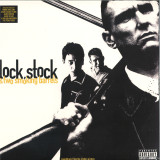
Originally released on Island Records in September 1998, the soundtrack to the box-office smash film, written and directed by Guy Ritchie, quickly became a must-own album, and is frequently cited as one of the best movie soundtracks of all time.
Lock, Stock and Two Smoking Barrels redefined the British gangster film and established Guy Ritchie as one of the greatest directing and writing talents of his generation. Using a frenetic mixture of filmic styles, humour, violence, breakdown of the fourth wall, narration, and vast amounts of swearing, it is hard to imagine a time when this film and its influence was not around. It made a star of the-then unknown Jason Statham, and, amazingly, hard man footballer Vinnie Jones, who as Big Chris, had several scene-stealing moments. Taking his cue from Quentin Tarantino, who had been meticulously curating his film soundtracks since the early 90s, Ritchie made the music to his film tell its own story, complete with memorable snatches of dialogue between many of the tracks.
It offers a beautifully eclectic selection of songs from the preceding three decades, plus then-current artists providing some of their best material, such as Hundred Mile High City by Ocean Colour Scene or E-Z Rollers' drum'n'bass masterpiece Walk This Land. Of the heritage tracks, Dusty Springfield sings her sultry take on Spooky; James Brown appears twice with The Boss and The Payback; The Stooges with I Wanna Be Your Dog, and two versions of Pete Wingfield's masterful one-hit-wonder 18 With A Bullet; in its 1975 original and a contemporary cover by Lewis Taylor and Carleen Anderson. And this is only half of it.
out of Stock
Last delivered 5 months ago available to reorder, subject to availability
Borrowed Tongue is the debut solo album by Korean singer-songwriter Minhwi Lee. It’s a mysterious, strangely compelling thing, an album of rare poetry, and remarkably self-assured. Originally released in November 2016, the album made waves, winning best folk album of 2016 at the 14th Korean Music Awards. Its eight songs, written and predominantly arranged by Lee, don’t reveal their secrets easily, or at first blush; rather, they take their time slowly to unfurl in her listeners’ worlds. There are hints of other music here, from time to time: the intimacy of Stina Nordenstam, perhaps; the gauzy haze of Hope Sandoval, on the blissed-out pop of “Broken Mirror”; there are touches of acid-folk, and ECM jazz, and a slyly filmic approach to songwriting and arrangement that makes every song fit perfectly into the album’s arc.
Lee arrived at her solo music through a complex, circuitous route. After studying musicology in Seoul, she learned her trade, film scoring, in New York and Paris. She also studied classical music, blowing off steam in a wild punk duo, Mukimukimanmansu, who released one album, 2012, on Korean indie label Beatball. Subsequently, Lee has been refining her music, focusing both on her solo songs, and on writing for television series and films; she’s written scores for films by such directors as Sangmoon Lee, Jeongwon Kam, and Wanmin Lee. She also plays in the jazz outfit Cubed, and recently joined doom metal group Gawthrop on bass.
Since its release in 2016, Borrowed Tongue has slowly bewitched listeners with its idiosyncratic arrangements and evocative songwriting. It’s an album that hints at plenty, but refuses to make grand statements, something Lee seems intent to pursue: in correspondence, she’s very clear that she wants these songs to enact a kind of transmutation, to be adopted into the listeners’ lives and exist within their own imaginings. She does, however, offer a few hints to what propels these mercurial songs, explaining, “this album is about a person who again opens their mouth, which was once shut. The album deals with what it means to speak: things that are known but not said, things that should be said but are not, things that cannot be said but nonetheless are.”
This may well explain the curious mood of Borrowed Tongue, the multiple ‘voices’ that inhabit the album; Lee’s singing voice is pliable and mutable, approaching each song as its own diorama and ensuring the song is sung with just the right tone. The arrangements Lee conjures for her songs are all in service to narrative and melody; they appear to her alongside the composition, which is surely why everything here fits together so beautifully. From there, Lee approaches her songs carefully, in deference to their ‘need to be sung’ a certain way. There isn’t a moment wasted: everything on Borrowed Tongue is as it needs to be, whether a melancholy folk song taking to the air, or a psychedelic reverie dreamed into being. It’s a beautiful, poised and confident debut.
out of Stock
Last delivered 3 years ago available to reorder, subject to availability
Habibi Funk is excited to share “Marzipan” - our first full length contemporary release courtesy of Beirut’s multi-instrumental phenom Charif Megarbane, also known as the man behind prolific Cosmic Analog Ensemble. The LP is a journey into Charif’s styling, one he terms “Lebrary”: a vision of Lebanon + Mediterranean expressed through the kaleidoscopic sonics of library music. Drawing from artists that encapsulates the HF sound, such as Ziad Rahbani, Ahmed Malek and Issam Hajali, Charif translates these influences into an LP that is equally at home in ’23. We always wondered why Charif’s music stayed under the radar for so long, that all changes with “Marzipan”.
Charif Megarbane, the staggeringly prolific producer, instrumentalist, and all-around musical mastermind returns with full LP “Marzipan.” Following his previous release of EP “Tayara Warak” in 2022, “Marzipan” is a sonic journey that seeks to capture the full scope of Megarbane’s habitus. As a composer and producer, Megarbane touts hugely versatile, sometimes volatile musicianship — his 100+ catalogue of projects (including legendary groups like the Cosmic Analog Ensemble, Free Association Syndicate, Monumental Detail, etc.) features a huge domain of sonic direction. This collection was previously developed in Megarbane’s own Hisstology label which hosts a wealth of collaborative efforts. Now, Habibi Funk represents Megarbane under his own name. Megarbane finds a sonic through-line in his surrounding soundscapes as he draws on the chaotic energy of the crowded Beirut metropolis (“Souk El Ahad”), the warm atmosphere of the Lebanese countryside (“Chez Mounir”), or the lushness of a Mediterranean beach resort (“Portemilio”). Reflecting the aural composition of his direct surroundings into kaleidoscopic instrumentation provides a unique insight into how one musical phenomenon transposes sight into sound. Habibi Funk is thrilled to share “Marzipan” and finally throttle this under-theradar phenomenon into the solo spotlight. Despite the magnitude of his catalog, Megarbane’s LP sounds as fresh—as resolutely inspired—as a debut record. “Marzipan” continues down the winding path he trod on EP “Tayyara Warak” (released Decmber, 2022) which features solid footing in the hectic city sounds Megarbane hears as home. Despite his obvious musical acumen, Megarbane’s greatest talent seems to be his open ears. In many ways, “Marzipan” is a cartographic feat — it travels and traces a journey across many dimensions (both sonic and physical). Megarbane’s instrumental catalogue is vast: toy glockenspiel, harpsichord, pedal steel, a classic Wurlitzer, et al are used liberally on the record. The resultant sound is as sprawling as the musician’s instrumental dexterity. “Marzipan’s” closing track “Bala 3anouan” can be translated loosely to “without address” — a fitting final word. Despite the entire record being a sincere testament to Megarbane’s environmental approach to music-making, the record is not bound to any particular coordinates, or any particular sound for that matter. The vastness of his influences — beloved artists like Ahmed Malek and Issam Hajali (both Habibi Funk veterans); West African funk deep cuts; European cinematic scores; et al — result in a record of somewhat unparalleled expansiveness. Floating melodies and frantic rhythmic interludes both find natural homes across “Marzipan.” The record is tinged with psychedelic elements—fuzz-drenched guitar, sliding microtonal interludes, hypnotic rhythmic breakdowns. Reflecting on his creative process, Megarbane cites a stream of consciousness approach: “It’s a very spontaneous, playful, and diary-like approach and workflow…I trust my instinct because instinct is based on experience.” Lead single “Souk El Ahad” opens the roll-out with a raucous energy, out June 12. Megarbane abstracts busy city sounds into a psychedelic framework, casting technicolor hues on everyday experience. Following is second single “Pas de Dialogue” out June 23. The track jerks the listener towards a more meditative state with lulling harpsichord and expanding, cinematic sound. “Marzipan” will be available physically and digitally everywhere on July 14, 2023. Be sure to listen for focus track “Chez Mounir” that captures the warmth of community in a joyful, laidback groove.
Uncover greater insight into the world of Charif Megarbane in the booklet accompanying the LP
out of Stock
Last delivered 17 months ago available to reorder, subject to availability
"Released in May 1986 on SST Records and Blast First! in the UK, EVOL was the third studio album by Sonic Youth and showed the first signs of the band transforming their No Wave past into a greater alt-rock sensibility. “EVOL … marks the true departure point of Sonic Youth’s musical evolution,” noted Pitchfork, “In measured increments, Thurston Moore and Lee Ranaldo … bring form to the formless, tune to the tuneless, and with the help of Steve Shelley’s drums…, impose melody and composition on their trademark dissonance.” ""If Daydream Nation is Sonic Youth’s opus, EVOL was crucial research. There’s a directness that makes everything feel close. It is pure tension with little release. The entire record is a shadow." Stereogum likewise praised the album as one, “full of suspense…, the cornerstone Nico-evoking monotone [by Kim Gordon]. ‘In The Kingdom #19,’ featuring Mike Watt on bass and … vocals [by Ranaldo]…, is a harrowing story of a highway wreck over a suitably edgy instrumental backing punctuated by … live firecrackers in the vocal booth.” For Popstache, “EVOL slithers into the unconscious. Once the....detuned melodies and haunting riffs and final whispers of feedback depart from the speakers… the music [leaves] a faded footprint, forever reeling the listener back for another strange trip.” // “The seeds of greatness…” Pitchfork (who placed the album #31 of the Top 100 Albums of The 1980s) // “A near-masterpiece.” Trouser Press // “A stunningly fluent mixture of avant-garde instrumentation and subversions of rock’n’roll.” All Music Guide"
Black Rhythm Revolution! Is the first solo album from the jazz-funk legend Idris Muhammad, a New Orleans-bred rhythm king who successfully made the leap from the finest soulful jazz records of the ’60s to the nastiest fusion funk of the ’70s. Here we catch him literally on the cusp of the two in 1970, with one good foot in the get-down of “Express Yourself” and “Super Bad,” and the other in his own heady excursions into modal rhythm and melody, accompanied by virtuosos Kenny Barron, Ron Carter, Melvin Sparks, who came together for sessions overseen by legendary producer Rudy Van Gelder. This 180-gram reissue of Black Rhythm Revolution! was cut from the original analog tapes by Kevin Gray and pressed at RTI, and comes packaged in a tip-on jacket.
Two of the Bronx’s most skillful emcees have paired up for one of the most promising collaborative albums of 2023. Appropriately titled, Gunz X Bars, the boogie down’s own Cory Gunz and David Bars have joined forces with Respect the Vision (RTV) under the watch of DITC Studios, the label and recording studio akin to one of hip-hop’s most revered crews, comprised of Lord Finesse, Diamond D, Big L, O.C. Fat Joe, Buckwild, Showbiz and A.G. And as you’d expect, the result is top tier lyricism over a soundscape that epitomizes the essence of New York hip-hop. For the past two plus decades, Cory Gunz has made his bones by proving his lyrical prowess time and time again. Son of rapper Peter Gunz (of the famed duo, Lord Tariq and Peter Gunz), it didn’t take long for his talents to be recognized by Lil Wayne, where he appears on his single, “6 Foot 7 Foot” off Tha Carter IV. Gunz also starred in his own befittingly-titled reality show, Son of a Gun (MTV) which documented his journey to fulfill his career in music. David Bars’ trajectory also started at a young age, where he made his name at high school talent shows and industry showcases throughout the city. Releasing his debut project Barcode in 2019, the quick-witted spitter found himself rapping alongside the legendary Fat Joe who appears on the single, “A Star is Born.” However the co-signs weren’t limited by Joey Crack, as the inimitable DJ Premier lent his boom-bap magic to the album cuts, “Beat the Odds” and “Just Like That.” Throughout the project’s eight tracks, Gunz and Bars prove themselves to be both lyrically and sonically compatible. Gunz’ staccato-type flow melds seamlessly with Bars’ smooth delivery. To boot, the production value throughout plays to the strengths of both emcees, with beats provided by So Special, Track Pros, Kofi Cooks and more. It’s no surprise that two of the BX’s most raw and uncut talents would eventually unite, and what better way to join forces than under the auspice of DITC Studios.
Delroy George Wilson (5 October 1948 – 6 March 1995) was a Jamaican ska, rocksteady and reggae singer. Wilson is often regarded as Jamaica's first child star, having first found success as a teenager. His youngest son, Karl "Konan" Wilson, has found success as part of British duo Krept and Konan. His voice matured as he left his teens, around the time of ska's transition to rocksteady and this period in the late 1960s produced many hits including one of the first rocksteady records, "Dancing Mood", "Jerk in Time" (with the Wailers), "Feel Good All Over", "I'm Not a King", "True Believer in Love", "Rain From the Skies", "Conquer Me" and "Riding for a Fall". "Won't You Come Home", a duet with Ken Boothe on a rhythm originally cut by The Conquerors for Sonia Pottinger has become one of the most-versioned Jamaican tracks ever. After leaving Studio One he recorded for other labels, with varying degrees of success, and set up his own short-lived W&C label. He enjoyed success with Bunny Lee in the late 1960s and early 1970s with tracks such as "This Old Heart of Mine", "Footsteps of Another Man", and "Better Must Come". His double A-side "It Hurts"/"Put Yourself in My Place" was a skinhead favourite and narrowly missed UK chart success. He recorded a version of "Run Run", a song he had originally recorded for Dodd, for maverick producer Keith Hudson. Wilson toured the UK and recorded for Trojan Records in 1970.
Following hot in the footsteps of his debut HF release ‘Cocoa Butter’, ‘Off The Grid’ sees Renelle 893 team up with producer Bay29 on a body of work that offers an escape route from the monotonous every day; the duo taking us further and further off the beaten track, marrying moments of purest hedonism with stark reminders that the real world lies in wait, just after sunrise, with no pause button in sight.
Laying the foundations with summer anthem (and lead single) ’Spaghetti’, Renelle wrestles with the fleeting nature of youth, and his topsy turvy relationship with the finer things in life. The dynamic is both gritty and nostalgic as Renelle walks the fine line between Hollywood hedonism and slurry excess, his mood swinging between moments of invincibility and vulnerability, expertly scored by Bay29’s ethereal, bass dripping instrumentals.
Another SE London / Brighton hook up, one of many on the label in recent years, Renelle utilised his late night train rides to-and-from Bay29’s Brighton studio as an opportunity to refine the verses that make up the bones of the project.
Twelve-tracks; six vocal, six instrumental, ‘Off The Grid’ is the first in a series of new works from Renelle 893 & Bay29. A perfect scene-setter for what’s to come.
As Renelle 893 explains… “Off The Grid is about soul searching and figuring out what kind of adult I am looking to be, navigating a world filled with distractions that will do everything to numb the pain as life inevitably passes you by…”
Japanese folk-rock legend Morio Agata stunned fans with this way-outta-left-field dispatch - a synthesizer-laden, new-wave/post-punk classic. Originally released by Osaka’s Vanity Records in 1980 and back on vinyl for the first time in nearly 40 years, this fully authorized reissue has been remastered from the original analog tapes. In tip-on sleeve, with double-sided insert.
50 years ago, Hokkaido-born singer-songwriter Morio Agata released his debut single, Sekishoku Ereji (Red Elegy), an emotive, shuffling piano ballad that (shockingly) sold half a million copies in Japan. While he would never have another Top-40 hit, Agata would spend the next half century issuing a series of idiosyncratic, experimental pop albums. Today, he’s a beloved cult figure, still actively touring and recording in his seventies.
In his first decade as a recording artist, Agata released a stream of classics right out of the gate — Otome No Roman (1972) melded American-styled folk rock with traditional Japanese melodies, Zipangu Boy (1976) was a sprawling, Haruomi Hosono-produced psychedelic opus, and Kimi No Koto Suki Nan Da (1977) saw Agata tackle slick, lightly funky AOR. While this sort of stylistic schizophrenia might sink your average artist, Agata’s singular voice and magnetic charisma elevates everything he touches, and subsumes it all into Morio Agata World — a joyous, playful and frequently unhinged world.
Arguably the biggest left-turn of Agata’s early career, however, came in 1979, when legendary experimental label Vanity Records’ Yuzuru Agi paired Agata with major players from his label’s roster and the Osaka punk scene for an impromptu recording session. An impressive list of musicians took part (SAB, Yukio Fujimoto (Normal Brain), Masahiro Kitada (INU), Taiqui (Ultra Bide), Jun Shinoda (SS), Chie Mukai (Che-Shizu), and others) and even though they all came from different wings of the underground music scene, together they built an arresting, minimalistic bedrock of synthesized and acoustic sounds for Agata to work his magic over. The recording sesssions were tense and it took a while for the collective to find their footing. But the hard work paid off — Norimono Zukan is a masterpiece of ramshackle new wave and droning dirges, topped off with Agata’s unmistakeable croon, at times delicate, other times twisted. It’s a relatively short album, but a deep one, and Mesh-Key is honored to introduce it to a new generation of music fans.
out of Stock
Last delivered 3 years ago available to reorder, subject to availability
Egyptian-Australian DJ/producer moktar announces his second boundary-pushing five track EP, ‘Immigrant’. An expressive and considered journey that combines his Middle Eastern heritage and influential club sounds in one.
‘Immigrant’ sees moktar continue to bring traditional Arabic instrumentation into the club by weaving samples like polyrhythmic drumming and the Arabic Oud into experimental club music which has captured the attention of many tastemakers. Giant Swan, Anz, Tash LC, Raji Rags, Jamie XX, Bonobo, Groove Armada, Hudson Mohawke, Mary Anne Hobbs and Jamz Supernova all championed his highly favoured self-titled EP in 2021, which topped the Australian community radio charts as a number #1 most played alongside the global support it received. The release represented re-learning the value of his Egyptian heritage following racism and stereotyping growing up. ‘Immigrant’ expands on the story.
Debut single ‘Immigrant’ was released in September and served as a backdrop for moktar to air the stories of many as well as his own, told through a chopped vocal sample of Arsenal Football Club’s host and hype man, Frimpon. ‘North Africa’ and ‘Al-Duqqi’ are a homage to moktar’s roots. ‘Crossroads’ represents his need to push himself and grow in life and music, and ‘Send it’ (a term in Australia that means you're about to do something wild) also aims to represent Middle Eastern communities in Bankstown, Sydney.
moktar explains - “Through Immigrant I wanted to highlight the struggle many people all over the world go through to be accepted, while representing the community in Egypt, North Africa and Australia. Fusing Middle Eastern sounds into sounds into my music has been a big part of helping me become proud of who I am. I feel passionate about bringing these sounds to a wider audience in the hope it helps others in the identity struggle feel a sense of pride too”
The EP falls just as moktar’s highly anticipated debut EU tour comes to a close, playing b2b with DJ Plead at Phonox for Yung Singh, Adaptations Festival, Repercussions Festival, Werkhaus Festival, b2b with Mr Scruff at Field Day, Lost Village, Amsterdam for ADE with Kode 9, Rex Club in Paris, and Takseer festival Berlin.
out of Stock
Last delivered 18 months ago available to reorder, subject to availability
Black Duck captures a band already deeply in tune with one another. The three-piece super-group consists of Douglas McCombs, Charles Rumback, and Bill MacKay each has a distinct musical voice that is instantly recognizable, yet blends seamlessly with one another-their time performing together, playing to the moment and reading each other and the spaces they"re in formed a fluency between the trio which allows them to follow each other down winding paths and short tangents alike. McCombs is a founding member of Tortoise, Pullman, and Brokeback and the long-standing bassist for Eleventh Dream Day, an artist whose contribution to the music world can not be overstated. MacKay began releasing records in the early 2000s. He has released several acclaimed solo albums with Drag City as well as a duo album each with Nathan Bowles (Banjo, Black Twig Pickers), and Katinka Kleijn (Cello, Chicago Symphony Orchestra (CSO)), and two beloved records with Ryley Walker. Rumback burst onto the fertile Chicago improvised music scene in the early 2000"s. His fluid technique and expressive playing garnered him much attention. In addition to his solo releases, Rumback has recorded with Ryley Walker, jazz greats such as Jim Baker, James Singleton, and Greg Ward. Black Duck"s debut is a testament to that fluency, an expedition led by three veterans into alluring worlds bathed in myriad splendors. Black Duck is a gallery of sonic tapestries, unbound by any genre constraints. Black Duck redefines what two guitarists and a drummer can do, pieces move from breezy shuffles to stormy blues rumbles to gorgeous textural drones. Playing entirely improvised live sets for years helped develop the trio"s acute senses for one another, knowing precisely how to listen to the others and bolster whatever direction they move in. In the short time the trio have played together, they have performed at Big Ears Festival and alongside acts like Yo La Tengo.
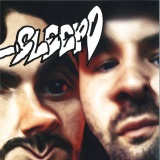
Naarm alchemists Sleep D's revelatory new synthetic 'Electronic Arts' is ready for circulation.
Having released 4 EPs of mind-altering club tackle since 2019's 'Rebel Force', the duo overcome second album syndrome, boiling down their chaos with a more developed sense of songwriting. Never banging one drum, 'Electronic Arts' mirrors the anything goes mania of their DJ sets, tactfully shifting through different sounds and styles. Tempos intensify and decelerate, at times pushing the threshold to 150 bpm from docile canine dreamscapes to full tilt Space Invaders in AR mind games.
Largely built on road tested material from their live performances, the album is a tangible Butter Sessions gathering, busting out the gate with Martian rave initiation Planet Waves, Outdoor System's polyrhythmic beatdown and the Orb-like hero dose affirmations of Sunrise In The Crater (I Exist). While 'Electronic Arts' is otherwise a self-dependent effort, Punch Drunk is brewed ever more potent by the hypnagogic vocals and lucid trumpet cycles of former futsal team member YL Hooi. Their unified energy incidentally manifests a profound matrix of ambient techno, motorik, Don Cherry and Everything But the Girl.
Also touching on apocalyptic doof and minimal, the album is not exclusively peak time with Maryos Syawish and Corey Kikos' specialty curveballs also playing their part. From Village To Empire finds the duo rooting down in Syawish's heritage with a tapestry of purposefully deployed Iraqi and Syrian ethnographic samples and field recordings, dubbed within range of Muslimgauze and On-U Sound. As minimal techno finale Textile trails off into footsteps wandering back to base camp with a satisfied exhale, one wonders where Sleep D's existential pathfinding could possibly take us next?
out of Stock
Last delivered 22 months ago available to reorder, subject to availability
Paperback: 288 pages
Product Dimensions: 12.9 cm x 19.8 cm x 2.3 cm
• A global view of Discovery as a cultural phenomenon, placing the album at the centre of celebrity culture, fan clubs, video, the music business etc., while also examining its profound musical impact.
• An examination of Discovery as a flawed jewel, rather than blatant hagiography, as the album celebrates its 20th anniversary.
• An antidote to the revisionist history about Daft Punk and Discovery, from a journalist who has lived with the idea of Daft Punk for more than 20 years and interviewed the band.
Daft Punk’s Discovery is a record that looked into the future and liked what it saw; an album that predicted the electronic music explosion, YouTube and the end of privacy, while dragging soft rock back into vogue. Discovery was not only one of the best albums of the 2000s, it was one of the most prophetic, the kind of record that makes you wonder: how did they know?
You can draw lines from Discovery to Glass Swords, Kanye West, EDM, Autotune, iTunes, Beyoncé, Guilty Pleasures, social media and more. Discovery's footprints can be found all over the modern world but it also looked back to Daft Punk’s childhood, to Van Halen records, Japanese cartoons and even Johann Sebastian Bach.
Discovery was a record that confounded many fans when it was released in 2001, thanks to its blatant pop hooks and unlikely sonic bricolage. It was a record that was - and still is - widely misunderstood; Discovery’s impact has only become clear with the passing of time, as Daft Punk have been proved right time and time again.
This book is a homage to a fascinating, troubled beast of an album that casts a huge shadow over the 21st Century, as Discovery reaches its 20th anniversary.
“Incredible biography of the most colossal electronic act of our generation, by one of the best music writers of our time. Ben Cardew charts the history of Daft Punk from their humble rock band beginnings, to starting the groundbreaking and genre-defining Roulé records, to achieving stadium status as superhuman robot selectors.” Sinjin Hawke
Fast-rising pianist and producer Yoni Mayraz presents his debut LP ‘Dybbuk Tse!’ revealing the story of a malicious possession that is taking over one’s body and soul.
Dybbuk, known from Jewish folklore, is a malevolent wandering spirit that enters and possesses the body of a living person. It’s a cursed soul of a dead one that wanders tirelessly for sins committed during their life. The most vulnerable victims are the young and the sinful. Possession can be taken literally or as an analogy to the burden that young people carry generations back, which they have no influence on, and which they have to accept. Dybbuk can only be removed by exorcism. The titular ‘Dybbuk Tse!’ is a command to remove the spirit from the possessed body. The album is a story about possession but also about exorcism through music.
Recorded live with his band in a dusty wooden studio, ‘Dybbuk Tse!’ is indeed experimenting with the ‘darker side of things’, but yet with a somewhat lighthearted approach which is so typical of Yoni’s work. He easily combines jazz with the sound of 90’s New York hip hop and raw old school breakbeat. The album interweaves unique Middle Eastern melodies, sophisticated structures and sounds, and beautifully crafted solos played by some of the promising talents on the scene.
London based Israeli born pianist and producer Yoni Mayraz has set foot in the instrumental music scene with his EP ‘Rough Cuts’ released in 2020. Since then, Yoni and his band have been playing major venues and festivals around the world including the legendary Ronnie Scott’s and The Jazz Cafe, to name a few, bringing raw energy to stage with live versions of the studio materials, and stretching the melodies and structures into a Dancefloor-focused take on jazz.
‘Dybbuk Tse!’ album will be released by Astigmatic Records on LP in regular and limited (B1 poster included) editions, as well as on all streaming platforms.
out of Stock
Last delivered 2 years ago available to reorder, subject to availability
“Are we having fun yet? Living in the grey zone”? The Toads ask the question and already know the answer. There’s many a wry smile, often packed with gallows humour, shared on the Melbourne groups’ debut album “In the Wilderness” (out June 9th on Anti Fade and Upset The Rhythm). Navigating the dross of modern life, whilst keeping one foot in a dream is the key to their nervy post-punk scuffle. Featuring members of The Shifters, The Living Eyes and Parsnip you’d be forgiven for guessing what The Toads sound like, but their mordant step and minor-key enchantment makes for an intriguing parry.
The Toads hatched after a short period of domestic readjustment mid-2021. Billy Gardner (guitar) found himself in need of a roof after his home was consumed by fire, and was kindly hosted by friend Stella Rennex (bass). Elsie Retter (drums) was a regular visitor to the house and after seeing Miles Jansen (vocals) tear it up with his other band at the local bowls club, they invited him along to sprinkle his deadpan musings across their fledgling sound. Pretty quickly they hit on their direction; a savvy, snappy lo-fi pop as openhearted as it is brooding.
After playing some formative shows, including a debut at Jerkfest in 2022, The Toads set about recording five songs mid-year for a tentative EP. Realising the songs were too long to fit on a 7”, they booked in another recording session the following September to extend the EP to 12”. Two tracks’ chords structures were fleshed out with new melodies and arrangements, and by this point The Toads were surprised to find they had an album’s worth of material. ‘In The Wilderness’ is a beguiling record, full of twists and turns. It’s arch, resilient, thoughtful and straight-at-your-head catchy to boot.
It’s fitting that the title track “In The Wilderness” draws this record to a close, being the peak of their invention so far. Drums pound and tumbling bass-lines sprint among the crisply stabbing guitar phrases and soaring horns outro. It’s a survivalist epic of hard-worn wisdom, ambling and restless. “I open up the door trying to get all of us through” sings Miles, becoming progressively more dizzy and despondent. There is a sense of toughing it out that never falters though and this is the essence of what The Toads do best. They push onwards into the darkness and keep their appetite, pulling us all into the light.
Laura Poitras’ Oscar-nominated film »All the Beauty and the Bloodshed« is an epic, emotional and interconnected story about internationally renowned artist and activist Nan Goldin. Told through intimate interviews, photography, and footage, central to the story is her personal fight to hold the Sackler family accountable for the opioid crisis. The film cuts to the bone with its incandescent celebration of life and condemnation of those who threaten it. Art and activism are one and the same.
Helping to interweave Goldin’s past and present, multi-disciplinary duo Soundwalk Collective soundtrack her personal and political struggles to sublime effect. The contemporary sonic arts platform of founder and artist Stephan Crasneanscki and producer Simone Merli, the pair work with a rotating constellation of artists and musicians, developing site-and-context-specific sound projects through which to examine conceptual, literary, or artistic themes. And for all the beauty and the bloodshed on show here, the duo strike the balance just right; their compositions in collaboration with Zacharias Falkenberg and Johannes Malfatti producing a trance that oscillates between grace and madness.
Within the score, Crasneanscki draws connections with the life and work of German poet Friedrich Hölderlin, who was removed from society through confinement in institutions. In his last poems, written as fragments while he was plagued by mental illness, Hölderlin renders nature, in all its fragility and ephemerality. Similar themes merge in Laura's portrait of Goldin and serve as an inspiration for the composition of the choral songs and cantus within the soundtrack. Through the repetition of words and the layering of voices, the lyric scansion operates like a language possessed, echoing various styles from sacred music to modern minimalist techniques. The music is characterised by quivering strings and swells, de-tuning and lingering, shifting around the surreal, and creating a spectrum of musical experience. Exerts of Nan’s narration are featured in two of the tracks, her powerful narration offering a more direct approach to the storytelling.
In »All the Beauty and the Bloodshed,« Poitras shows protest is really Goldin’s great artwork: Her entire life had been leading to this moment of passionate expression, an inspired situationist gesture which fused the personal and the political. Art can change the world, which Poitras and Goldin tell us with powerful results. While there are multiple threads in this remarkable portrait which could have carried entire films, the soundtrack provides a sonic identity that helps keep track of proceedings. Utterly unique in their approach, Soundwalk Collective have delivered a gripping and thoughtful score, helping turn Goldin’s personal pain into culture-rattling impact.
The Complex Inbetween is a mesmerising journey inspired by the spirit of krautrock early electronic music and experimental rock. JeGong return with their second full- length album which sees them continue their musical journey inspired by the spirit of krautrock, early electronic music and experimental rock. With The Complex Inbetween Dahm Majuri Cipolla (MONO, Watter) and Reto Ma"der (Sum Of R, Ural Umbo) put a dazzling spin on the timeless music of genre innovators like Can, Faust and Neu!, incorporating noisier and more abrasive elements to create a mental odyssey into the uncanny. Born from the collision of the most unreal moments of Ma"der's free-flowing musical associations with Cipolla's stick-wielding hands, these eight compositions form the duo's own mythical realm after the rhythm has been set. As the cradle of electronic music, krautrock is often viewed by outsiders in terms of the mechanical rather than the human, yet Ma"der and Cipolla manage to uncover a human side that has always been present in the music of their forebears. That driving beat which powers album opener «Come To The Center» was never meant to be called `Motorik', as explains its inventor Klaus Dinger of Neu! in one interview. "It is very much a human beat. I like to call it the endless straight. It's a feeling like a picture." With Cipolla behind the kit the machine becomes human, testifying to the power that rhythm can hold over us as a deeply communal obsession. Like their debut, The Complex Inbetween shows the profound knowledge these two musicians have of their source of inspiration as well as their tremendous skill in applying its principles. With the piece «Night Screaming Moves» JeGong expands their sound with atmospheric drone rock elements. A feedback laden guitar motif surrounds the oscillations of mellotron sounds, behind it pounds a slow motion drum beat that is reminiscent of dragging, shuffling footsteps in the dark of night. Evoking feelings of trench coat wearing film-noir or the cloying darkness of cult 70s horror flicks, «Night Screaming Moves» shows that not only are the duo of Ma"der and Cipolla experienced musicians, but cinephiles and soundtrack lovers with a strong sense for moods and emotions. RIYL Neu!, Cluster, Tangerine Dream, Swans, Mogwai, Sonic Youth, John Zorn Ltd Coloured Vinyl!
Following in the footsteps of his famed brother Madlib, Oh No has become one of the most celebrated independent hip-hop artists of the 21st century. His storied career has included not only rap success but an impressive resume behind the boards, with production credits for Mos Def, Freddie Gibbs, De La Soul, Action Bronson, Talib Kweli, Ab-Soul, and more. An innovator in the art of sampling with a history of exploring diverse source material, Oh No is now back with Good Vibes / Bad Vibes, a new instrumental album deconstructing the work of iconic vibraphonist Roy Ayers. A split collection with two thematically distinct halves, the album is entirely constructed from the early, jazz-centric realm of the Ayers archive. Good Vibes is "light and vibrant, with colorful layers radiating under the sun shine,” Oh No explains, while Bad Vibes contains “dark murky atmospheric tones for the angry moments, those times when it’s necessary to step in the mud.”
From 1989 onwards, Richard was an obsessive collector of house and techno music, frequenting legendary London record shops such as Fat Cat, Silverfish, Trax and Red Records. He took record buying trips to NewYork to find second-hand disco, house and techno 12”s, which were lying around in bargain bins. The selection for this compilation are his own personal favourites from that era.
Back then, electronic dance music was young, innocent and fun; it hadn’t been analysed, theorised and fragmented into the multi-genre industry it is today.
What you hear on this compilation reflects what he was playing at that time; joining the dots between ambient, techno, tribal house, breakbeat and early trance productions from the UK.
Much house and techno from the US, Belgium, Germany and Holland has been well documented, but some of the more obscure British productions are lesser known and need to be showcased.
Hopefully, these tracks will inspire and educate a new generation of electronic music fans who weren’t born then and also trigger some acid flashbacks for the older,ravers as they take a trip down memory lane.
out of Stock
Last delivered 19 months ago available to reorder, subject to availability
The name NxxxxxS (pronounced "N-Five X-S”) sounds like it could be an equation, or a mystery. But to begin to unravel the identity of the French producer who just signed to Because Music and Mad Decent (the label founded by Diplo), you first have to look for clues on YouTube and Soundcloud, where so many underground artists have found a place to hone their craft. In the ten years preceding the release of his second album Short Term Agreement in 2023, NxxxxxS built up a solid reputation for himself in the international vaporwave, vaportrap & phonk scenes. This is no small feat considering he didn’t have any real knowledge of production or composition before deciding to take on these classic genres of “Internet music”.
The Paris native first gained exposure when he started making beats on YouTube, taking his inspiration from American rappers of the blog era - when artists, especially in hip hop, used digital technology to break away from traditional distribution models - like Mac Miller or Odd Future. Building on this initial success, NxxxxxS turned to Soundcloud, an essential platform for music enthusiasts, tastemakers or anyone on the lookout for the sounds of tomorrow.
Following in the footsteps of The Alchemist and other producers of the same ilk, NxxxxxS soon became one of the pioneers of vaporwave and vaportrap music. Featured prominently in modern productions, these styles originated on social media platforms such as Reddit or Tumbler in the 2010’s and are recognisable by their frequent use of commercial samples ranging from the 70’s to the 2000’s (taken from jingles, lounge, jazz or elevator music). Altered, chopped up and slowed down to around 60 to 70 BPM to match hip-hop standards, the music offered a critique or satire of capitalism, consumer society and any culture that grew out of it, most notably yuppies from the 80’s.
NxxxxxS put his own spin on the recipe by creating a new world filled with soaring melodies and countless references to movies and horror scenes, and eventually released his debut album Fujita Scale (a scale used to measure the damage inflicted by tornadoes) in 2014. The album reached a worldwide audience because of its composer’s story and of the secrecy around his French nationality, and even won over unexpected fanbases such as the highly closed off Chinese market. Fujita Scale landed on one of China's streaming platforms, making NxxxxxS an identifiable artist in Asia who went on to tour his album three times across the continent.
NxxxxxS kept the ball rolling, collaborating on a new series of more accessible projects, which aimed to be less niche in terms of the references or sub-genres they tapped into, so he could find a new audience. This led to his first hits, “Synthetic Corporation” - which would also become the name of his label - “Remember Last Summer” and “Formatted Excess”, as well as his most popular track to date, “Playa Shit”, with over 11M streams on Spotify. The upcoming album’s title, Short Term Agreement, is a playful reference to his unyielding desire for independence and productivity, and his eagerness to preserve the personal freedom he turned into strength.
Yet NxxxxxS is never one to refuse support, and he has now joined forces with Because Music & Mad Decent to further establish himself as a producer at the international level - alongside Diplo especially, who is a case in point - so that this understated and ever prolific artist can meet his ambitions of widening his audience and have his name known by all.
And so the tracks on Short Term Agreement serve as the foundation for NxxxxxS' new identity, featuring a rich and diverse array of sounds thanks to the numerous guests involved: London rapper Jeshi - a new British rap phenomenon also freshly signed to Because Music, French rappers 8ruki & Bitsu, Canadian Freddie Dredd and American underground talents Pollari . Avoiding the pitfalls of a compilation-like producer album, NxxxxxS has once again carved out his own style from the modern hip hop rule book.
In other words, NxxxxxS’ constant evolution has brought us this much closer to solving the mystery that is his name.
out of Stock
Last delivered 3 years ago available to reorder, subject to availability
In a world of endless, bottomless content, to find something that stands out from the crowd is a rare thing. But it’s something that 7ebra manage without breaking a sweat. Based in Malmö, twin sisters Inez and Ella Johansson deal in sparkling indie-rock that’s pretty without being soft, sweet without losing its edge and catchy without being cheap. With Inez on guitar and vocals and Ella on keys, organ and Mellotron, their minimal set-up makes a virtue of simplicity – with a sliver of guitar fuzz, and organ lines snaking around stark, striking vocals, augmented by shivering harmonies, they don’t need a lot to make music that’s colourful, kaleidoscopic, and effortlessly original.
7ebra debuted in 2022 with the double-single “I Have A Lot To Say”/ “If I Ask Her”, two helpings of psych-tinged, street-smart rock and roll, and the music scene around them wasn’t slow to notice. They opened for the Future Islands and the Dandy Warhols, were picked out by Apple Music’s Matt Wilkinson as a Hidden Gem of 2022 and were booked for prestigious showcases SXSW and Eurosonic. With a packed schedule of shows across Europe and the UK already planned for 2023, their world looks set to get a lot bigger – something that their debut album Bird Hour makes certain. The record is a warm, elegant introduction to the sound 7ebra have crafted. The songs are full of personality and character, but also retain a little bit of enigma, a sense of keeping something secret to themselves. To unwrap that elusiveness is a daunting task, but one the listener can’t resist leaping into.
Ella and Inez’s parents played in bands as they were growing up, so picking up music was a natural thing for them. The origins of 7ebra start with Inez whiling away the hours playing guitar in her bedroom. “I learned by playing covers by myself in my room”, she says. “Ella didn’t do that as much, but we sometimes played and sang together, country songs”. Eventually she would start writing her own. Ella wasn’t involved originally (“we did play together a few times”, she says, “and it just went to shit laughs. We fought a lot”), and Inez was originally reluctant: “I was a bit unsure whether I wanted to be in a band with my sister. Because you get clumped together all the time, when you’re twins”. But Ella was keen to join, and eventually persuaded Inez to let her join for a show. It went – so well that producer Tore Johansson (The Cardigans, Franz Ferdinand), saw it and asked if they’d like to record with him. That changed things, says Ella: “It made us think there might be something in this music”. As a duo, 7ebra were in flight. “In the end, it’s kind of a nice thing too being sisters in a band”, Inez says. “It doesn’t bother me anymore. It just made sense to play together”.
On the album that they eventually came up with, the talent that caught Johansson’s eye is immediately obvious. Opener “Secretly Bad” has a way of walking along your nerves, an eerie echo of a hymn in Inez’s vocal backed by a swirl of woozy blend of guitars and organ. That’s followed up by “I Like To Pretend”, an easily charming song that has a sleepy brightness about it, like morning sunlight breaking through a window. They take a couple of different genres for a whirl on Bird Hour – they’re tense and snappy on “If I Ask Her”, breezy and cocky on “Lighter Better”, and there’s even a couple of droplets of blues and folk in the mix, in the raw intensity of the emotions in the slower songs, the vulnerability and aching of songs like “Lean” and “Stripey Horsey”. The record has a way of sweeping you along in its mood and tones, fuelled in part by the band’s use of repetition, sometimes fast and fevered, sometimes crawling and hypnotic. The duo’s musical input blends perfectly, with Inez’s guitar and vocals forming the core, and Ella drawing in the detail with keys, organ, and harmonies, to really bring out the vivid nature of the songs. Indie rock that’s melodic and sweet, but with enough shadow mixed in to make it really compelling.
On Bird Hour, what strikes you first about 7ebra’s sound is how fully formed it is, how much they’ve carved out their own sonic territory, perfected by trial and error in the studio with Johansson. “Tore wanted us to try everything possible”, says Ella. “We had moments where things weren’t working. But that was necessary in order to find the good stuff”. 7ebra’s signature might be found in the deft way they deal with emotion – unafraid of being open, but a little too clever to make things too clear cut: “You can’t take yourself that seriously. It’s too emotional to take it seriously, to start hating yourself. But at the same time, it is quite serious”, says Ella. Another trademark is the simplicity – a 7ebra song has just enough to make it work, and nothing more. “I think it was important for me that our voices were at the centre of the songs”, says Inez, “that all the little melodies have their place, and don’t get overwhelmed. With lyrics, I sometimes come up with something, and just feel ‘there’s no need to add more to this’. Sometimes a line works by itself. You don’t have to add a bunch of lyrics”. Finally, the album’s themes are ones that will resonate with most people that have set foot on this planet. “I guess it’s about trying to understand yourself, in relation to others. Just life. ‘Why am I not good at this, why is this thing happening to me, why is this thing so hard, why am I so stupid?’”, laughs Ella.
7ebra haven’t been around for very long – but a handful of songs and their fizzing live shows have stirred up the biggest buzz in Scandinavian music in quite a while. Their debut album justifies it all. It showcases the magic they’re capable of conjuring up, and hints at even more to come in the future. But from where they are right now, they’ve made something very special. Bird Hour takes all that promise and turns it into something concrete, in the form of one of the year’s best rock debuts.
In a world of endless, bottomless content, to find something that stands out from the crowd is a rare thing. But it’s something that 7ebra manage without breaking a sweat. Based in Malmö, twin sisters Inez and Ella Johansson deal in sparkling indie-rock that’s pretty without being soft, sweet without losing its edge and catchy without being cheap. With Inez on guitar and vocals and Ella on keys, organ and Mellotron, their minimal set-up makes a virtue of simplicity – with a sliver of guitar fuzz, and organ lines snaking around stark, striking vocals, augmented by shivering harmonies, they don’t need a lot to make music that’s colourful, kaleidoscopic, and effortlessly original.
7ebra debuted in 2022 with the double-single “I Have A Lot To Say”/ “If I Ask Her”, two helpings of psych-tinged, street-smart rock and roll, and the music scene around them wasn’t slow to notice. They opened for the Future Islands and the Dandy Warhols, were picked out by Apple Music’s Matt Wilkinson as a Hidden Gem of 2022 and were booked for prestigious showcases SXSW and Eurosonic. With a packed schedule of shows across Europe and the UK already planned for 2023, their world looks set to get a lot bigger – something that their debut album Bird Hour makes certain. The record is a warm, elegant introduction to the sound 7ebra have crafted. The songs are full of personality and character, but also retain a little bit of enigma, a sense of keeping something secret to themselves. To unwrap that elusiveness is a daunting task, but one the listener can’t resist leaping into.
Ella and Inez’s parents played in bands as they were growing up, so picking up music was a natural thing for them. The origins of 7ebra start with Inez whiling away the hours playing guitar in her bedroom. “I learned by playing covers by myself in my room”, she says. “Ella didn’t do that as much, but we sometimes played and sang together, country songs”. Eventually she would start writing her own. Ella wasn’t involved originally (“we did play together a few times”, she says, “and it just went to shit laughs. We fought a lot”), and Inez was originally reluctant: “I was a bit unsure whether I wanted to be in a band with my sister. Because you get clumped together all the time, when you’re twins”. But Ella was keen to join, and eventually persuaded Inez to let her join for a show. It went – so well that producer Tore Johansson (The Cardigans, Franz Ferdinand), saw it and asked if they’d like to record with him. That changed things, says Ella: “It made us think there might be something in this music”. As a duo, 7ebra were in flight. “In the end, it’s kind of a nice thing too being sisters in a band”, Inez says. “It doesn’t bother me anymore. It just made sense to play together”.
On the album that they eventually came up with, the talent that caught Johansson’s eye is immediately obvious. Opener “Secretly Bad” has a way of walking along your nerves, an eerie echo of a hymn in Inez’s vocal backed by a swirl of woozy blend of guitars and organ. That’s followed up by “I Like To Pretend”, an easily charming song that has a sleepy brightness about it, like morning sunlight breaking through a window. They take a couple of different genres for a whirl on Bird Hour – they’re tense and snappy on “If I Ask Her”, breezy and cocky on “Lighter Better”, and there’s even a couple of droplets of blues and folk in the mix, in the raw intensity of the emotions in the slower songs, the vulnerability and aching of songs like “Lean” and “Stripey Horsey”. The record has a way of sweeping you along in its mood and tones, fuelled in part by the band’s use of repetition, sometimes fast and fevered, sometimes crawling and hypnotic. The duo’s musical input blends perfectly, with Inez’s guitar and vocals forming the core, and Ella drawing in the detail with keys, organ, and harmonies, to really bring out the vivid nature of the songs. Indie rock that’s melodic and sweet, but with enough shadow mixed in to make it really compelling.
On Bird Hour, what strikes you first about 7ebra’s sound is how fully formed it is, how much they’ve carved out their own sonic territory, perfected by trial and error in the studio with Johansson. “Tore wanted us to try everything possible”, says Ella. “We had moments where things weren’t working. But that was necessary in order to find the good stuff”. 7ebra’s signature might be found in the deft way they deal with emotion – unafraid of being open, but a little too clever to make things too clear cut: “You can’t take yourself that seriously. It’s too emotional to take it seriously, to start hating yourself. But at the same time, it is quite serious”, says Ella. Another trademark is the simplicity – a 7ebra song has just enough to make it work, and nothing more. “I think it was important for me that our voices were at the centre of the songs”, says Inez, “that all the little melodies have their place, and don’t get overwhelmed. With lyrics, I sometimes come up with something, and just feel ‘there’s no need to add more to this’. Sometimes a line works by itself. You don’t have to add a bunch of lyrics”. Finally, the album’s themes are ones that will resonate with most people that have set foot on this planet. “I guess it’s about trying to understand yourself, in relation to others. Just life. ‘Why am I not good at this, why is this thing happening to me, why is this thing so hard, why am I so stupid?’”, laughs Ella.
7ebra haven’t been around for very long – but a handful of songs and their fizzing live shows have stirred up the biggest buzz in Scandinavian music in quite a while. Their debut album justifies it all. It showcases the magic they’re capable of conjuring up, and hints at even more to come in the future. But from where they are right now, they’ve made something very special. Bird Hour takes all that promise and turns it into something concrete, in the form of one of the year’s best rock debuts.
An explorative sonic landscape with the beautifully eclectic sounds of drum and bass at its core, Sustance’s debut album is every bit as thought-out, polished, and innovative as we’ve come to expect from one of drum and bass’ brightest prospects.
Having grown up listening to seminal Shogun albums like Spectrasoul's 'Delay No More' and Icicle's 'Under The Ice', ‘Perceived Connections’ acts as a full circle moment for the producer, who now finds himself following in the footsteps of the artists who profoundly influenced his approach to creating music.
Written between London and Berlin across a twelve-month period, 'Perceived Connections' encapsulates both of the alluring sides of Sustance's sound. In the same fashion that the album's writing process pivoted between two capital cities, Sustance's debut album presents both deep and expressive tracks such as 'I Want You' and 'Sweet Relief', as well as showcasing heavy, sound system-destroying tunes like 'Undercurrent' and 'Ten Ton’.
“The album title comes from the Zen idea that everyone perceives the world through their own perspective. Two people can listen to a record side by side and have totally different experiences. I really liked that idea as music is inherently so subjective. Sustance
Accompanying Sustance on this LP voyage is a plethora of D&B’s hottest talent, with Pola & Bryson, Visages, Flowdan, Strategy, Duskee, T-Man, Catching Cairo & Zara Kershaw all sprinkling their own flavours across the album.
Traversing an array of sounds, styles, and genres throughout, 'Perceived Connections' is nothing short of an exceptional extended body of work from a producer whose razor-tight approach to music has seen him emerge with one of the crispest and most captivating sonic palettes in drum and bass music.
out of Stock
Last delivered 6 months ago available to reorder, subject to availability