It all started with a small party in 2006. Peter Invasion simply wanted to create a home for his band. That small party grew into something bigger, and eventually Riotvan became a record label in 2012 — a home for many different people, all brought together by a shared love for music and art. When Panthera Krause joined the journey in 2017, Riotvan evolved once again, adding a new perspective and another creative force to what it had become. The journey began 240 months ago — or, for those too lazy to do the math, 20 years. A lot has happened since then, but one thing has never changed: the passion. People have come, gone, and stayed. And here we are, celebrating 240 months of Riotvan with our friends, our loved ones, and ourselves. To mark the occasion, we're hitting the road on tour and have put together an extended edition of our Familiar Faces series. It's a colorful collection of music that brings together everything we love and everything that makes sense to us. It couldn't represent the Riotvan spirit any better. We'll definitely see each other somewhere along the way. Here's to the next 240 months.
Is this the greatest US Deep House track of all time? It's certainly a contender and arguably one of Kerri Chandler's finest productions.
A true Deep House classic, "You're In My System" has stood the test of time for more than 25 years, remaining a fixture in sets from the biggest DJs around the world. Now, Kerri Chandler brings this iconic release back to his own label in a deluxe edition featuring both beloved originals and previously unreleased vinyl versions.
Opening the A-side is a brand-new version featuring Mic Murphy, the legendary vocalist and songwriter behind The System, who co-wrote the original "You're In My System." It is followed by Kerri's timeless original mix featuring Troy Denari a staple for many in House music for over 25 years, a record that perfectly encapsulates the soul of house and Kerri’s distinctive sound.
The B-side opens with the previously vinyl-unreleased "623 Deluxe Vocal" featuring Mic Murphy. Driven by Kerri's signature soulful keys, rolling bassline, and expressive synth work, it offers a fresh perspective on a much-loved classic. Completing the package is the stripped-back Instrumental, delivering all the groove and energy of the original without the vocals.
Whether you're a longtime fan or discovering Kerri Chandler for the first time, this is an essential release for DJs, collectors, and House music lovers alike. A record that should never leave your bag!
»Memorial« grew out of Nate Wooley’s work alongside Annea Lockwood recording the Columbia River, and in particular from a visit to Kettle Falls in northern Washington, once one of the river’s great salmon fishing and meeting grounds and a place of enormous importance to the Sinixt and other Indigenous peoples of the Upper Columbia. The falls disappeared from view following the construction of the Grand Coulee Dam in 1940, submerged beneath what is now Lake Roosevelt, yet beneath the still surface of the reservoir, a fast current continues to move across the buried cliffs. That tension between what remains and what can only be recovered through memory runs throughout »Memorial«.
In the essay accompanying the record, Wooley returns repeatedly to the idea of translation: the attempt to carry an experience from one form into another, from river to recording, memory to sound, landscape to music. He moves between Lockwood’s sound maps, John Ashbery’s rain falling on canal machinery, Ravel’s attempts to make water move through a piano, Christian Wolff’s »Stones«, and the Sinixt First Salmon Ceremony, where rocks struck together recall the sound of salmon once moving through the river in their thousands. These translations cannot restore what has been lost; however, they allow us to revisit what remains beneath in another form.
»Memorial« exists as an uncertainty, concerned with the distance between a place and its recording, between an event and what survives of it, and with the way listening itself becomes entangled with memory. Kettle Falls remains submerged, the river constrained and radically altered, but the water continues to move over the old rock beneath the reservoir. »Memorial« tries to listen for that persisting memory.
Pax Nicholas is one of the last living veterans of Fela Kuti’s Africa 70. Born in Accra, Ghana, he joined Africa 70 as conga player and backing vocalist in 1971, appearing on landmark recordings including Lady Shakara.
In 1978, he left Africa 70 at the Berlin Jazz Festival alongside drummer Tony Allen, and settled in Germany, where he built a remarkable second chapter — leading the twelve-piece Afrobeat ensemble Ridimtaksi, collaborating with Finnish jazz maverick Jimi Tenor, and reuniting with the African diaspora in Berlin for Ebo Taylor’s celebrated 2012 album Appia Kwa Bridge released on Strut Records.
In 2009, Daptone Records reissued his 1973 cult classic Na Teef Know De Road of Teef, earning him long-overdue global recognition.
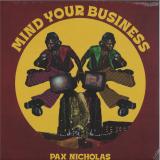
Now signed to Paris-based Afrobeat imprint Comet Records, Pax Nicholas returns with his new single “Mind Your Business” — a heavyweight dancefloor Afrobeat cut built on thundering brass, interlocking percussion and a razor-sharp guitar riff. The release features an exclusive remix by Gabriel Belabbas, producer, DJ and co-founder of Parisian label Positive Future, who recasts Mind Your Business in deep, minimal territory — a sparse, tension-laced groove that channels the hypnotic darkness of Moodyman and Ricardo Villalobos. Stripping the arrangement back to its percussive skeleton, he lets the Afrobeat elements — brass, rhythm, heat — surface and recede like smoke, leaving just enough space for the tension to build and the dancefloor to fall. Slow-burning and devastating on a proper soundsystem.
Forty years of cassette releases, pressed for the first time on vinyl
First of two instalments exploring the previously unreleased sonic archives of one of Poland’s most enigmatic
living artists - with its first volume focused on his deep listening practice and spiritual reverie (recorded 1990–2013)
The last time Andrzej Dudek-Dürer took a banknote bearing the face of the Polish anarchist Jarosław Dąbrowski from his pocket to trade it for a pair of shoes was in 1969. He bought them for 120zł - the equivalent of 100€ today - and never replaced them since then. Only rebuilt them, year after year, drawing a needle and thread through the leather each time it split, closing one wound before the next one opened. It became a ritual of precision, stitching a record of another year into their soles.
That same year, in Wrocław, he arrived at a conclusion that would recalibrate everything that followed. Convinced he was the reincarnation of Albrecht Dürer, he adopted the surname Dudek-Dürer, stopped cutting his hair and began wearing the same garments every day. It was the first ritual of many, though he wouldn't have called it that yet. Look closely enough, over the decades, and it is always the same gesture, returning in different material: hair growing in a single unbroken strand, a needle drawing thread through leather, sitar strings pulled taut across a neck he built with his own hands and magnetic tape spooling forward inside the cassette boxes stacked against his walls.
None of this began in a vacuum. Dudek-Dürer emerged from the Wrocław neo-avant-garde, in a Polish art world where an exhibition could be cancelled overnight by the stroke of a censor's pen. In 1973, his exhibition Auto-crucifixion was shut down by the state, and for a time he found himself blocked from exhibiting his own art at all - the one force in his life that ever came close to cutting the thread.
He seemed to experience it differently. In 1974, after long, patient research into sitar craftsmanship, he built his first prototype with his brother, a knowledgeable luthier. In 1978, in a smoked-out jazz club, he took his first steps into sound recording with the unreleased album Jazz From Underground with his first band. By 1979, recognition started to travel further than he could.
Turning toward Far-Eastern philosophy, meditation and the idea of reincarnation was another language of freedom for him. It was a way of claiming an inner territory the state could not reach, a border it could not close. Mail Art served a parallel function, reaching further out: in a country that restricted travel and expression, sending and receiving art through the postal system became an act of quiet rebellion.
The body, in his understanding, is only an envelope readied for constant transformation. From this came Metaphysical Telepathy: during the years he could not leave Poland, he treated that confinement as a rehearsal room, sending his mind out ahead on the same thread his body would later follow. Living Sculpture grew from the same root with performances of stillness beside static art objects, until the boundary between the object and the man beside it simply dissolved. Camera Meditation extended the same instinct into photography: a shutter click flattening three dimensions into two so that a single instant could be held forever. Inspired by the pioneers of self-portrait photography like Robert Cornelius, he used it to document time itself, and kept explaining to me: "You know. This is not about vanity. This is about observing time passing.”
The isolation did not end suddenly. It ended the way his own philosophy had already predicted it would, from the inside first. Mail Art quietly solved the problem politics couldn't. Correspondence built during years of confinement slowly worked its way through doors the state itself had kept locked. Contacts made through folded paper and stamps became invitations. Ultimately, invitations became passports.
In 1983 he made his first trip outside Poland, to Germany, in search of the audio technology he couldn’t get his hands on before. In 1985, he was invited by the Indian embassy in Poland to give a sitar concert on an instrument he had spent a decade patiently stringing together - half sitar, half tanpura, built from patience and determination. After the collapse of the People's Republic of Poland, the travels kept unspooling: South Korea, then Mexico, then Australia, Canada, New Zealand, Singapore, Japan and the United States - each stop leaving behind its own small knot of tape, tied off and carried home.
In the decades since, recognition arrived at the same unhurried pace: he conducted workshops at UC Berkeley, served as vice-president for artistic affairs of the Union of Polish Art Photographers and the Union of Polish Visual Artists between 2010 and 2014 and received the Bronze Medal for Merit to Culture - Gloria Artis. His visual work gradually entered collections including the National Museums of Warsaw, the Stedelijk Museum, Tate Modern, MoMA and the Venice Biennale. His musical practice, by contrast, never found that kind of room - left to circulate quietly, sharing his cassette tapes directly, waiting for someone willing to follow it further.
It took months before I could find a way to reach Andrzej Dudek-Dürer - his presence online is very close to nonexistent. Surprisingly, LinkedIn turned out to be the only door still open, a faintly absurd irony given everything else about him. I packed the strict minimum for a three-day trip and an empty notebook and made my way to Wrocław. His headquarters sits in the neighbourhood of Grabyszyn: a two-storey pre-war house that has belonged to his family for generations. The man who opened the door was long-haired, long-bearded, in his trademark leather shoes and patched jeans. We sat in his living room, in front of a computer where decades of recordings sat organised in cryptically named files, surrounded by books and objects that had arrived one layer at a time, leaving room for only two chairs in the middle. His shoes sat by the door, rebuilt so many times they had become their own quiet sculpture. Cassette tapes filled boxes against the walls, almost unlabelled, each one a spool of thread holding decades of sound that had never once been asked for, until now.
I listened for hours: meditating in front of strangers on the porch of a Seoul temple until the tourists stopped taking photos and simply waited with him; a stand-off with border guards at the US–Mexico crossing over an instrument they couldn't identify and didn't trust; a session with the Stockhausen family that he still, decades later, describes like it happened last week. All of it interrupted, occasionally, by the smell of soup boiling and fresh bread warming on the ceramic stove. After two days, it felt like being handed the end of a very long thread and asked, gently, to keep following it. I left with a USB drive holding his full discography, signed with his unmistakable signature.
Astral Meditations From A Living Statue is a length of that thread, drawn out from the boxes stacked against his walls - recordings gathered from different rooms, different countries, different decades. This first record breathes slowly: incense-thick, meditative, built for stillness. A cutting-edge séance in outer space where machines learn how to dream.
It begins with the neo-classical improvisations of Andrzej, space-delayed, recorded at Klub Muzyki i Literatury in Wrocław in 2002. 'When..So' opens the curtains with a deep-rooted meditation accompanied by slow-decaying piano figures illuminated by a candle-lit spirit gathering.
Los Angeles, 1990: a dormant villa, a grand piano, the voice of Bonnie Barnett. 'Exception' is captured in a single room, in a single afternoon - voice and keys circling each other, neither one leading, until the silence between the notes starts to feel like the instrument.
'The Meta...' and 'Tired Of...', recorded at Studio Morandi in Ponte Nossa, Italy, in 1992, settle into a sitar drone built entirely from patience - overtones stacking and beating against each other, strung by a man who never once set foot in India. 'Mastery Of...' follows, recorded the same year at Studio Suski in Łomianki, pushing that same hum further still, until pitch dissolves into a spectral reverie. 'Transcendental Sound', from 2000, closes the first record in a slow bath of celestial frequency - better heard beside the shores of the Odra river.
More than fifty years after deciding that a life could become an artwork, Andrzej Dudek-Dürer continues to inhabit that decision. His shoes keep wearing thin against the earth's crust. His hair keeps growing, one strand at a time. His cassette tapes keep spooling in the dark of their boxes.
Now the thread finds its last shape: a single unbroken groove, spiralling inward from the outer edge to the label at the centre. Never cut - the way nothing else in his life ever was. Drop the needle and it will find that groove and follow it, the same way a needle once followed leather, once followed a border it couldn't cross, once followed string into an instrument that didn't exist until he built it. This record is the other end of a thread that has been travelling for fifty years. For the length of both sides, it rests here, in your hands. This is a timeless proof that the Lord of the New Age was never lost."
*Originally pressed in 2021 - this is a brand new master and cut.**
In partnership with Analogue Foundation, Oshu Records is proud to present the exclusive vinyl repress of "Laroyê" in a thick cardboard tip-on gatefold jacket on 2x 180g vinyl.
Acclaimed Hungarian, Berlin-based producer, composer and pianist Àbáse (AKA Szabolcs Bognár) returns, sharing a special, 5 anniversary remaster of his breakthrough project 'Laroyê'. Releasing on Friday 1 May via Bridge The Gap & Oshu Records, this sensitive exploration of Afro-Brazilian culture originally began as an audio diary, documenting Szabolcs’ travels and collaborations in Brazil through a collection of voice memos, fragmented beats, sketches and field recordings. As his journey progressed, and his collaborations and research deepened, the music project started to take on its own life:
"Laroyê evolved through weeks and months of research and collaborations into the album that it is now. That means that all the sessions were done in different apartments, small studios, often with borrowed equipment, which all adds to the character, but makes the creation of a coherent sound a challenge. Benjamin Tierney, Erik Breuer and Analogue Foundation did an incredible job with the mixes and with this new remaster. I truly believe that we are able to hear the tracks in a new light, with even more depth and clarity."
Coming from the West African Yoruban language, Àbáse stands for "collaboration" – a key element of the music perfectly encapsulated on 'Laroyê'. Recorded in Rio de Janeiro and Salvador, Àbáse spent five months working with diverse artists, from young talents to veterans of the Brazilian scene including Letieres Leite, Luciane Dom, Dofono d'Omolu, Afrojazz and more. The album explores the rich heritage of afro-brasilian culture through samba, MPB and Candomblé, mixing these with broken beat, hip hop and afrobeat, creating a contemporary homage to the classic Brazilian sound. Szabolcs shares:
"Despite already leading and managing musical projects that are close to my hearth, I always felt that one day I would like to start a solo project, where I could take full responsibility for the artistic direction and the music would reflect a truly personal vision. In 2017, I decided to take five months to fulfil a childhood dream and travel to Brazil to expand my creative horizon and expose myself to new influences."
An album standout is the bass-heavy, afro-brazilian ‘Agangatolú, which Àbáse describes as "best exemplifying the story and concept of Laroye as a collaborative effort - a research project exploring the rich heritage of Afro Brazilian culture through my own lens." The track features singers and percussion players Jadson Xabla and Gabriel Santana - two artists based out of one of the oldest terreiros (houses of worship) in Bahia, whilst drummer Jorge Dubman is an integral part of one of the most famous afrobeat bands from Salvador IFA. The contributions of one of Szabolcsoldest collaborators - Hungarian flautist Fanni Zahar - also made the track a full-circle moment.
On a quest for cosmic grooves of unity, Àbáses music pulls from an eclectic blend of global reference points, including modal jazz, Hungarian folk, West African, Brazilian, hiphop and underground electronic music. His work has drawn widespread critical acclaim from the likes of MOJO, Songlines, Soulection and The Guardian, and been supported by key tastemakers including Gilles Peterson, Jamz Supernova and BAMBII. As a keyboard player, Szabolcs has also collaborated with the likes of Wayne Snow, Dele Sosimi, Patti Smith, Emmanuel Wilkins, Gulty Simpson and Zeitgeist Freedom Energy Exchange.
'Laroyê' (2026 Remaster) will release on Friday 1st May via Bridge The Gap & Oshu Records.
Twenty-five years after its original release, Markus Guentner's debut album In Moll returns in a special anniversary reissue on Black Knoll Editions, reaffirming its place as one of the defining ambient recordings of the early 21st century.
Released in 2001 during the formative years of Kompakt's influential Pop Ambient series, In Moll emerged from a period of rapid transformation in electronic music. New technologies, expanding digital networks, and shifting creative possibilities allowed artists to imagine entirely new sonic worlds. Amid this fertile landscape, Guentner's music stood apart. Combining delicate melodic fragments, slow-moving harmonies, and a remarkable sense of spatial depth, In Moll introduced a distinct artistic voice whose impact can still be felt a quarter-century later.
The album arrived shortly after Guentner's contributions to the inaugural Pop Ambient compilation, including the now-beloved "Regensburg 1," named after his Bavarian hometown. Those early recordings immediately captured the attention of Kompakt founders Michael Mayer and Wolfgang Voigt. Recalling his first encounter with the music, Mayer describes listening to a demo CDR with Voigt while wandering through Cologne late into the night, replaying the tracks for hours. "We knew that we had found something outrageously beautiful and we wanted the whole world to listen."
Across its running time, In Moll unfolds like a series of dreamlike landscapes, inviting the listener into a world that feels both familiar and strangely other. Bells, hisses, distant textures, and slow-moving bass tones drift through vast expanses of atmosphere while luminous synthesizer washes seem to blur the horizon in a fine digital mist. The album's transportive qualities are matched by a remarkable sense of compositional discipline. Every gesture feels deliberate, every texture carefully placed. Balancing warmth and melancholy with restraint, Guentner created a body of work that rewards both close listening and complete surrender.
Reflecting on the album twenty-five years later, Wolfgang Voigt describes Guentner as "one of the first, but also one of the most important ambient artists" associated with Kompakt, calling his music "an integral, timeless part of the long history of pop ambient." Music critic and former Pitchfork Editor-in-Chief Mark Richardson, who reviewed In Moll upon its original release, similarly noted that the album "marked the arrival of an important new voice," and today regards it as "one of the finest ambient releases of the decade."
The album's influence continues to extend far beyond its original audience. For many listeners, In Moll served as an entry point into a new understanding of what ambient music could be. Black Knoll boss Rafael Anton Irisarri first encountered the album shortly after its release in 2001. "It immediately opened a door to a world of music I didn't know existed," he recalls. "At a time when I was still discovering my own creative voice, Markus showed me entirely new possibilities for what electronic music could communicate." Simply put, "The Sight Below would not have existed without In Moll paving the way."
Far from a historical curiosity, In Moll continues to feel strikingly contemporary. What once sounded futuristic now feels timeless, its patient pacing, attention to detail, and sense of wonder remaining entirely intact. The album's enduring power lies not only in its influence, but in the curiosity it continues to inspire, inviting listeners to step inside its world and lose themselves within it.
To mark its twenty-fifth anniversary, Black Knoll Editions presents the most complete edition of In Moll to date. Newly remastered in full analog by Rafael Anton Irisarri, this expanded release pairs the original album with a newly reworked interpretation by Markus Guentner himself, revisiting the material through the lens of twenty-five years of artistic development. The anniversary edition also features a new visual presentation designed by Guentner, offering a visual counterpart to the album's continued evolution. Together, these recordings and visuals celebrate both the enduring legacy of In Moll and its ability to reveal new dimensions twenty-five years later.
This 25th Anniversary Edition on Black Knoll Editions celebrates a recording whose quiet impact has only grown with time, preserving a work that remains as evocative, singular, and essential today as it was in 2001.
Twenty-five years after its original release, Markus Guentner's debut album In Moll returns in a special anniversary reissue on Black Knoll Editions, reaffirming its place as one of the defining ambient recordings of the early 21st century.
Released in 2001 during the formative years of Kompakt's influential Pop Ambient series, In Moll emerged from a period of rapid transformation in electronic music. New technologies, expanding digital networks, and shifting creative possibilities allowed artists to imagine entirely new sonic worlds. Amid this fertile landscape, Guentner's music stood apart. Combining delicate melodic fragments, slow-moving harmonies, and a remarkable sense of spatial depth, In Moll introduced a distinct artistic voice whose impact can still be felt a quarter-century later.
The album arrived shortly after Guentner's contributions to the inaugural Pop Ambient compilation, including the now-beloved "Regensburg 1," named after his Bavarian hometown. Those early recordings immediately captured the attention of Kompakt founders Michael Mayer and Wolfgang Voigt. Recalling his first encounter with the music, Mayer describes listening to a demo CDR with Voigt while wandering through Cologne late into the night, replaying the tracks for hours. "We knew that we had found something outrageously beautiful and we wanted the whole world to listen."
Across its running time, In Moll unfolds like a series of dreamlike landscapes, inviting the listener into a world that feels both familiar and strangely other. Bells, hisses, distant textures, and slow-moving bass tones drift through vast expanses of atmosphere while luminous synthesizer washes seem to blur the horizon in a fine digital mist. The album's transportive qualities are matched by a remarkable sense of compositional discipline. Every gesture feels deliberate, every texture carefully placed. Balancing warmth and melancholy with restraint, Guentner created a body of work that rewards both close listening and complete surrender.
Reflecting on the album twenty-five years later, Wolfgang Voigt describes Guentner as "one of the first, but also one of the most important ambient artists" associated with Kompakt, calling his music "an integral, timeless part of the long history of pop ambient." Music critic and former Pitchfork Editor-in-Chief Mark Richardson, who reviewed In Moll upon its original release, similarly noted that the album "marked the arrival of an important new voice," and today regards it as "one of the finest ambient releases of the decade."
The album's influence continues to extend far beyond its original audience. For many listeners, In Moll served as an entry point into a new understanding of what ambient music could be. Black Knoll boss Rafael Anton Irisarri first encountered the album shortly after its release in 2001. "It immediately opened a door to a world of music I didn't know existed," he recalls. "At a time when I was still discovering my own creative voice, Markus showed me entirely new possibilities for what electronic music could communicate." Simply put, "The Sight Below would not have existed without In Moll paving the way."
Far from a historical curiosity, In Moll continues to feel strikingly contemporary. What once sounded futuristic now feels timeless, its patient pacing, attention to detail, and sense of wonder remaining entirely intact. The album's enduring power lies not only in its influence, but in the curiosity it continues to inspire, inviting listeners to step inside its world and lose themselves within it.
To mark its twenty-fifth anniversary, Black Knoll Editions presents the most complete edition of In Moll to date. Newly remastered in full analog by Rafael Anton Irisarri, this expanded release pairs the original album with a newly reworked interpretation by Markus Guentner himself, revisiting the material through the lens of twenty-five years of artistic development. The anniversary edition also features a new visual presentation designed by Guentner, offering a visual counterpart to the album's continued evolution. Together, these recordings and visuals celebrate both the enduring legacy of In Moll and its ability to reveal new dimensions twenty-five years later.
This 25th Anniversary Edition on Black Knoll Editions celebrates a recording whose quiet impact has only grown with time, preserving a work that remains as evocative, singular, and essential today as it was in 2001.
When Network Records originally issued “Innovator” in 1991 we knew that the music contained within was timeless. At that time, of course, we had no grasp of how well Derrick’s epic soundscapes would time travel. We christened the collection - “Soundtrack For The Tenth Planet” - because it seemed like the music (and Derrick) had indeed arrived from another world.
The release has been acclaimed as iconic because Derrick, the madcap and maverick philosopher of Detroit Techno, introduced the concept of dance music with a musical and emotional agenda way beyond anything that had come before. Beats with beauty. Literally the strings of life. Where fellow musical geniuses Chic had previously urged everybody to simply "Dance, Dance, Dance" mood alchemist Mayday merged simple yet cerebral dreamscapes with strange and urgent complex dance rhythms and invited us all to Dance And Dream. And in a strange juxtaposed way helped birth the hedonistic Acid House scene with classics “Nude Photo” and “Strings Of Life”
The energy is frenetic, but merged with a new age ambience. The gems collected on this offering were iconic in 1991, now they cause mass hysteria when Derrick turns his one time musical experiments, created in a tiny room in Detroit, and turns them into epic concerts with orchestras and musicians across the globe. “Hand In Hand” existed in 1991 and we wanted to release it then, but it’s taken until now for the complete 13 minute recording to finally meet the world.
It will be revered, because like all of Derrick May’s music it is life affirming. Emotions Electric indeed.
The original “Innovator” release was housed on one single slab of wax. This time around we have expanded it to two discs to make space for “Hand Over Hand” and also so everything elsewhere - masterpieces remastered - can be presented in a complete and superior fashion. Whatever the tweaks, changes and updates etc all these years on, this music still sounds gloriously alien and groundbreaking. But there’s still no Tenth Planet.
"Innovator" remastered by Curvepusher, London 2019. Re-presented by Network Records in conjunction with Derrick May.
We are finally ready to unveil one of the most exciting projects we have worked on in our label's history: a new release by legendary disco project Hudson People, best remembered for their essential classic "Trip to Your Mind" - which just received its anniversary issue on our label!
Now it's time for "Hold On" - a brand-new single featuring several mixes based on an original recording from the late 1980s, with the completely unheard yet incredibly soulful voice of singer Rickey Owens, whom composer and producer Reginald Hudson worked with at the time.
When we first got in touch with Reg Hudson several years ago, we were originally interested in releasing his "Shake It - Make It Loose" album, which he recorded with John Davis (later known as one of the real voices behind Milli Vanilli). While talking about John Davis (RIP) and other great GI singers such as Karl Keaton, Reginald Hudson immediately mentioned Rickey Owens as one of the best singers he had ever worked with.
Of course, we had never heard of him, as none of his music had ever been released. But when Hudson showed us some old demos and sent us the original DAT recordings, we were immediately hooked.
"Hold On" was recorded in or around 1988 with a simple drum machine and keyboard accompaniment - essentially a demo intended to be recorded properly in a better studio. But the vocal performance was simply stunning, complete with beautifully recorded ad-libs. Owens had a truly remarkable, clear voice with an incredible amount of soul. Luckily, Hudson had his old DAT tapes digitized several years ago, so the acapella recordings survived in excellent shape.
We immediately reached out to several producers to create reworks of the track. The 12" EP compiles some of the most club-friendly of these new mixes - but there is more to come…
First up is Thomas Redfern, a senior producer, professional studio musician and keyboardist from London, UK. His version is a catchy, funky yet deep House track that could easily become a favourite on dancefloors around the globe. Redfern also blessed us with a dub mix that takes things even deeper.
But it gets even catchier on side B of the vinyl. Tom Quick sped up the tempo, added filters and delivered a rework that could make fans of Chromeo, Daft Punk, Stardust and any late-'90s French House afficionado go completely nuts. Yes, we mean it! With a fresh twist on the original, the track has a massive club appeal that we hope both DJs and dancers will dig.
The vinyl single is completed by a mix from German legend DJ Friction, whose version is based on synth layers from the Tom Quick mix. Friction added new drums and bass, giving the track the distinctive modern electro boogie funk vibe he is known for. His mix brings to mind classics such as Shannon's "Let the Music Play" and works of Freestyle's Tony Butler.
The vinyl 12" with 4 mixes is released on The Outer Edge's brand-new sublabel, 1st Floor Records, which focuses on more dancefloor-oriented material. More mixes are available digitally and should not be missed.
PR Feedback:
„Killer“ – Gilles Peterson
„Disco, deep house and boogie all in there! Superb!“ – Groove City Radio
„Dope!!“ – DJ Craze
„The boogie mixes are so good!“ – Selvagem
„Awesome and Huge Package“ - Leon El Ray
„Wow, Trip to Your Mind is so good and this is a real grower“ - Ibiza Sonica
„Really liking the Balearic & Redfern Mix, thanks!“ – Mystic Bill
„Both Thomas Redfern mixes are ace!“ – Deeper Shades of House
Trunk Records was started 30 years ago. It quickly established itself as a unique and highly influential label finding the unfound, the unthinkable and the forgotten sounds of the past. Here we celebrate 30 years of the label, by issuing amazing music it has not released yet. Of course we do.
Trunk Records began in 1996. It was the first label to issue non commercial library music to the public. It was the first label to chase, find and issue The Wicker Man soundtrack, the first to issue the sounds of computer keyboards and even announcements from train buffet cars.
Movements like “Hauntology” and “Folk Horror” all began thanks to the music issued by Trunk Records. And here we are, 30 years on, and we think it is time for a 30 years anniversary LP.
Unlike the 25th anniversary double LP, we are not issuing music we have issued before. Instead, here we are issuing music we have not issued before. What better way to sum up such an important and unique label better than continuing where we first began.
Tracks include some unreleased Roger Webb slow sex disco, scatty breakbeat library, psychedelics from Gabo Szabo’s backing group (The Advancement), groovy jazz from Pittsburg (The Silhouettes), Basil Kirchin’s unreleased electronic experimental thing (it is very much “a thing”). Some outsider singing from a hippie who lived in Drop City, a flexi disc selling you the Milton Keynes shopping centre and of course some improvised jazz for children’s dance workshops. And more too. And all on one LP.
Packaging: 2 x Gold-On-Clear Splatter Vinyl, 5mm spine sleeve, 2 x printer inner sleeve, marketing sticker
SHORT BIOG & KEY POINTS
" Goldie's 1995 debut Timeless is often described as one of the greatest dance music albums of all time. As one of the founders of Metalheadz, one of the most influential drum and bass labels, Goldie helped shape the sound of a generation, and a genre that has spanned over 3 decades.
" "Listening to Timeless is like taking an adventure. If the limits of music are the limits of society, then Timeless is going to create new worlds. It's a record that travels from darkness to light across electronic oceans, across streetsoul, ambience and jazz."
" London Records celebrate 30 years of Timeless with limited edition vinyl formats, re-imagining the original white sleeve and putting the album on double vinyl for the first time since '96, with new liner notes from Tim Carr. Remastered audio.
Swiss saxophonist Gilles Torrent may have been initially smitten by the sounds of US jazz giants like Coltrane, Shepp and Sanders, but as he’s developed and matured he’s cast his creative net much wider. After teaching himself the sax at 21 he spent the next 11 years studying the concepts and innovations of Coltrane before moving on to take the next logical step - exploring and soaking up the many styles music from around the world, and incorporating them into his Coltranesque vision of jazz.
Atestament to that workis the opening theme,‘La Longue Traversée Du Désert’whereTorrent directs an impressive ensemble of musicians – known collectively as World Jazz Sound - on a global trip from the plains of Africa to the pastures of England and even the mountains of his homeland Switzerland. Tracks like ‘Osso Varourn Ta Sidhera’, which pairs Beuna Vista-style Cuban rhythms with Grappelli-esque violin, or the transcendental calm of ‘Fridhia Mou’, complete with dainty harp and sultry Indian female vocal part, see the ensemble immersing themselves in the traditions and atmospheres of a panorama of different cultures, joining the dots between them all and gathering them up into one cohesive whole.
From the ancient and traditional – their effortlessly swung take on ‘Scarborough Fair’ for example – to the inspired but unconventional use of yodelling on ‘Chant des Alpes’, eventually giving way to a sensational modalworkout, this is an album full of widescreen freshness, surprises and, above all, the joy of discovery and experimentation. Originally released onCD in 2010, the sheer overwhelming beauty of the music withinhas compelled us at Jazzman to deliver these sanctified sounds onaudiophile standard 180g vinyl, for all to enjoy.
2x180g LPs featuring 8 tracks in total, housed in a single sleeve + download code.
The 2018 album Igor Stravinsky’s The Soldier’s Tale is the adaptation by Roger Waters (co-founder of Pink Floyd) on the 1918 same-titled theatrical work. Waters recorded this version with members of the Bridgehampton Chamber Music Festival at Bridgehampton Presbyterian Church.
The original theatre work is one “to be read, played, and danced” by three actors (the soldier, the devil, and a narrator) and dancers, accompanied by a septet of instruments. The libretto relates the parable of a soldier who trades his fiddle to the devil in return for unlimited economic gain. The music is scored for a septet of violin, double bass, clarinet, bassoon, cornet or trumpet), trombone, and percussion. The libretto is adapted by Roger Waters from the translation by Michael Flanders and Kitty Black, based on the original text by Charles-Ferdinand Ramus.
The Soldier's Tale is available as a limited edition of 1000 individually numbered copies on green vinyl and comes in a gatefold sleeve with linen laminate finish. The vinyl package includes a 4-page booklet with lyrics and pictures.
Almost four decades in the making, Dave Seaman’s very first artist album ‘Mirrorball Sleaze’ has finally been completed and will arrive on Selador on November 6th. Featuring a heady mix of both new and old recordings, all created, revised and / or re-purposed especially for this project, this assemblage represents the best of Dave’s sprawling oeuvre, joining the dots between the some of his most celebrated past glories right up to the present day, where he remains on the frontline of electronic club music. A culmination of a life lived and breathed in the trenches of acid house.
This limited vinyl edition will feature all 11 tracks especially segued together, split into two flowing listening pieces across sides A and B. After a long and storied vocation in music, his own artist album was the one itch Dave has long wanted to scratch. And now, at long last, it has arrived - a sultry, shimmering beauty, by turns deep and euphoric. A career milestone.
Almost four decades in the making, Dave Seaman’s very first artist album ‘Mirrorball Sleaze’ has finally been completed and will arrive on Selador on November 6th. Featuring a heady mix of both new and old recordings, all created, revised and / or re-purposed especially for this project, this assemblage represents the best of Dave’s sprawling oeuvre, joining the dots between the some of his most celebrated past glories right up to the present day, where he remains on the frontline of electronic club music. A culmination of a life lived and breathed in the trenches of acid house.
This limited vinyl edition will feature all 11 tracks especially segued together, split into two flowing listening pieces across sides A and B. After a long and storied vocation in music, his own artist album was the one itch Dave has long wanted to scratch. And now, at long last, it has arrived - a sultry, shimmering beauty, by turns deep and euphoric. A career milestone.
A soaring new chapter unfolds from the forthcoming Elements Of Life album with the release of “Soar,” an uplifting and deeply moving collaboration featuring the incomparable Lisa Fischer. Written by Josh Milan and Louie Vega and produced by 2SoulFusion—Louie Vega and Josh Milan—the song is a powerful testament to resilience, transformation, and the limitless possibilities that emerge when spirit, soul, and music unite.
Built upon a rich tapestry of live musicianship, “Soar” embodies the signature sound that has made Elements Of Life a beloved musical movement around the world. At its core is Lisa Fischer’s breathtaking vocal performance, delivering a message of hope, elevation, and self-discovery with the emotional depth and conviction that have made her one of the most revered voices of her generation.
At the heart of “Soar” is a message of encouragement, resilience, and unconditional support. Through its uplifting lyrics and soaring melody, the song speaks to anyone navigating life's uncertainties while striving to become their fullest self. Lines such as “Clouds hang low, but the sky's still wide” acknowledge the challenges we all face, while the recurring refrain, “I just want you to soar,” serves as a powerful affirmation of faith in another person's journey. Equally moving is the song's central sentiment, “The more you do for you, the better I feel,” expressing a selfless form of love that celebrates growth, healing, and personal fulfillment. Universal in its message yet deeply personal in its spirit, “Soar” reminds us that one of the greatest gifts we can offer is the encouragement to rise, evolve, and embrace our own potential.
The production blends organic instrumentation with sophisticated arrangements, creating a timeless soundscape that feels both expansive and intimate. Multi Grammy Award-winning bassist Christian McBride anchors the composition with his masterful upright bass work, while Josh Milan's lush keyboards, piano, organ, clavinet, and atmospheric textures provide the song's harmonic foundation. Live drums from Tony Cintron and vibrant percussion from Luisito Quintero infuse the track with an irresistible pulse, while Ivan Renta's expressive soprano saxophone solo adds another layer of emotional richness, and a tasteful guitar groove by Sherrod Barnes.
The song's message is elevated further through a powerful vocal ensemble featuring background vocals from Lisa Fischer, Dawn Tallman, Ramona Dunlap, and Lea Lorien, creating moments of communion and uplift that echo the song's central theme of hope, growth, and believing in the possibilities that lie ahead. For Louie Vega and Josh Milan, “Soar” represents another defining moment in their longstanding creative partnership. Through Elements Of Life, they have continually blurred the boundaries between house music, soul, jazz, Latin rhythms, gospel, and global influences, creating music that resonates as deeply on the dance floor as it does in the heart. “Soar” continues that tradition, offering listeners a song that inspires movement, reflection, and renewal.
Recorded at Honeycomb Studios in Pennsylvania and Manhattan Center Studios in New York City, and mixed at Daddy's Workshop in New Jersey, the production benefits from the expertise of recording engineers Yas Inoue & Josh Milan, with final mastering by the Maestro of mastering Herb “Pump” Powers for PM Mastering.
As anticipation builds for the forthcoming Elements Of Life album slated for February 2027, “Soar” offers a powerful glimpse into the project's next evolution— a celebration of musical excellence, spiritual connection, and the enduring power of song to lift us higher.
Immersive, roots-infused dub-reggae power from Jamaica meets heavyweight instrumentation from Denmark on a landmark collaborative album out now via Recall Reality.
Rooted in the rich traditions of classic Jamaican sound yet pulsing with a hypnotic, contemporary organic weight, Signs of the Time brings together the evocative vocal artistry of rising roots talent Azizzi Romeo and the master craftsmanship of Denmark's formidable instrumental 11 piece band Guiding Star Orchestra. Built for sound systems and vinyl purists alike, featuring lush tape saturation, spring reverbs, and spacious dub mixes.
Released on Recall Reality, the album is a masterclass in modern roots reggae and deep dub dynamics. Rather than relying on rigid digital presets, Signs of the Time champions warm analogue textures, sprawling horn arrangements, and rolling basslines that echo the golden age of Studio One, Joe Gibbs, Bunny Lee and Channel One while carving out an entirely fresh, meditative space for the listener.
Azizzi Romeo carries forward a legendary musical lineage as the son of the late roots icon Max Romeo, bringing a captivating blend of spiritual urgency, conscious lyricism, and soulful conviction to the microphone. His delivery cuts straight through the mix, offering profound reflections on modern society, unity, and resilience in a changing world.
Backing him are the Guiding Star Orchestra, renowned for their authentic analog production ethos, deep-crate sensibilities, and musicianship that treats the mixing board as an instrument in its own right. The result is a seamless symbiotic project where every bubbling organ skank, hypnotic drum drop, and reverberating tape delay serves the song's core message.
To bring the record home, producer CHLLNGR spent a week in the spring working alongside UK dub maestro in his London studio - Prince Fatty, who mixed the entire album. Fatty invited legendary drummer Winston "Horseman” Williams into the sessions, and Horseman percussion added the final glue to the record.
Track highlights:
"Signs of the Time": Azizzi is joined by his late father, the legendary Max Romeo, on a prophetic warning of what awaits the world if we don't soon unite in peace and love.
"Thanks and Praises": An anthem of gratitude for everything life brings, and of rising up even when others want to see us fail.
"Jah Jah Disciples": A meditation on following Jah, and the strength that faith gives in the midst of adversity.
Signs of the Time is available now on Vinyl LP and Digital streaming platforms via Recall Reality.
An acclaimed international cast of forward-looking artists – Jan Jelinek, KMRU, Lia Kohl, J. Albert, Laurie Torres, Jefre Cantu-Ledesma, Giuseppe Lelasi, Jung DJ and Smoke Point – remixes/remodels tracks from Arp’s transfixing late 2025 album Drifts for Barcelona-imprint Modern Obscure Music (Actress/ Sakamoto, Merzbow). Reflecting Arp’s stylistically-omnivorous approach, each remixer on Echo–Variations represents a unique corner of the music landscape, from the jazzy ambient glitch of storied German producer Jan Jelinek to the overdrivendrone landscapes of Kenyan ambient auteur KMRU to Smoke Point’s no frills club-tool to the haunted ambience of cellist Lia Kohl’s gorgeous electro-acoustic work. One can hear elements of hauntology, post-rock, minimal techno, glitch, spiritual jazz at play. Arp adds a few alternate mixes and two new tracks for good measure, ambient techno floater “Chlorophyll (1998 Mix)” and perhaps the most surprising of all, the dub techno heater “MMXXVI (Dub Mix).” Heart all together, its classic sounding heart RIYL Touch, Millie Plateaux: Creative,meditative, brain cleansing, thought provoking hauntological futurism.