Clear Vinyl
An album such as this obviously owes a lot to the atmosphere in which it was recorded, which we can imagine was magical. We know it took place in Fromentel, Normandy, in a farm converted into a studio by the producer Jacques Denjean, known for his work with Dionne Warwick or Françoise Hardy as well as having been a member of the Double Six. It was also at Fromentel, that Denjean would record two fantastic albums with Albert Marcoeur. When Emmanuelle Parrenin followed in his footsteps a year later she was in good company: the sound engineer at the studio was her partner and therefore uniquely capable (we imagine) of creating an adequate soundscape for her delicate universe. What is more, five years previously, Bruno Menny, the sound engineer partner, recorded his first and only album, but what an album: in electroacoustic terms we can hear things which make him appear as the spiritual son of his mentor Iannis Xenakis!
What makes Maison Rose unique is exactly this fusion between the two conceptions of Emmanuelle Parrenin and Bruno Menny, creating a perfect marriage of tradition and experimentation. The tradition comes from the songs collected by Emmanuelle Parrenin in rural areas, in a similar vein to the work carried out by Alan Lomax and Shirley Collins. The experimentation is in the sound captured by Bruno Menny, who both arranged and recorded the album. This is not to forget those who came with their guitar (Denis Gasser), or their lyrics (no less a figure than Jean-Claude Vannier). On the one hand we have the humble and non-demonstrative singing, with melodies which remind us of songs we would sing to calm a child's nightmares, and on the other hand a pronounced rhythmic intensity at certain points, such as on "Topaze" where the drums in particular evoke the Motorik of krautrock legends Faust.
A real haven of peace, Maison Rose is enchanting with its aura of mystery and spirituality, with soft, gentle songs which seem both ancestral and futurist. Originally published by Ballon Noir in 1977, this album follows on from other folk marvels such as Le Galant Noyé from the pre-Mélusine period. On the subject of Maison Rose, if we had to risk a few comparisons we would mention Vashti Bunyan, Linda Perhacs, Joanna Newsom, Collie Ryan, Shirley Collins, Trees Community, Sourdeline and Véronique Chalot as those which spring spontaneously to mind. But this is too reductive for the timeless singularity of Emmanuelle Parrenin: because Maison Rose was recorded in 1977, in the midst of the punk revolution.
Cerca:one hand
Tape
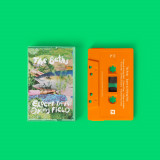
The third LP from the New Zealand quartet houses 12 jewels of tight, guitar-heavy songs that worm their way into your head, an incandescent collision of power-pop and skuzz. With Expert, The Beths wanted to make an album meant to be experienced live, for both the listeners and themselves. They wanted it to be fun -- to hear, to play -- in spite of the prickling anxiety throughout the lyrics, the fear of change and struggle to cope.
Most of Expert was recorded at guitarist Jonathan Pearce’s studio on Karangahape Road in Tāmaki Makaurau, Aotearoa (Auckland, New Zealand) -- and sometimes in the building's cavernous stairwell at 1am -- toward the end of 2021, until they were interrupted by a four-month national lockdown. They traded notes remotely for months, songwriting from afar and fleshing out the arrangements alone, the first time they’d written together in such a way. The following February, The Beths left the country for the first time in more than two years to tour across the US, and simultaneously finish mixing the album on the road. That latter half felt more collaborative, with everyone on-hand to trade notes in real time, until it all culminated in a chaotic three-day studio mad-dash in Los Angeles. There, Expert finally became the record they were hearing in their heads.
Expert is an extension of the same skuzzy palette the band has built across their catalog, pop hooks embedded in incisive indie rock. The album’s title track “Expert In A Dying Field” introduces the thesis for the record: “How does it feel to be an expert in a dying field? How do you know it’s over when you can’t let go?” Stokes asks. “Love is learned over time ‘til you’re an expert in a dying field.”
The rest is a capsule of The Beths’ most electrifying and exciting output, a sonic spectrum: “Your Side” is a forlorn and sincere love song, emotive; while “Silence is Golden,” with its propulsive drum line and stop-start staccato of a guitar line winding up and down, is one of the band’s sharpest and most driving. “When You Know You Know” skews a bit groovier, pure pop and a natural addition to the band’s live set. “Knees Deep” was written last minute, but yields one of the best guitar lines on Expert. There’s a certain chaos across the 12 tracks, the palpable joy of playing music with long-time friends colliding with the raw nerves of pain.
Stokes strings it all together through her singular songwriting lens, earnest and self-effacing, zeroing in on the granules of doubt and how they snowball. Did I do the wrong thing? Or did you? And are we still good people at the end of it? She isn’t interested in villains, but instead interested in just telling the story. That insecurity and thoughtfulness, translated into universality and understanding, has been the guiding light of The Beths’ output since 2016. In the face of pain, there’s no dwelling on internal anguish - instead, through The Beths’ musi
Recorded live in 10 days, with minimal overdubs, Shuttered Dreams is a blast of uncompromising truth reminding us to stay awake when the vultures are circling. The album was mixed by Sean Genockey (Shame, Richard Ashcroft, The Who, Black Crowes).
Margate in March 2021 was a time to test your resolve. If the wind howling round the closed down shops and cafes didn’t send you spinning out of control the out of season coastal melancholy could drag you down as surely as any dead eye mermaid. Add in a murderous virus and a frozen gig scene and it was a time to stay frosty and fight off the demons. Dan had some experience to draw on.
“Instead of baking banana bread or knitting, I decided to upgrade my home studio but after a couple of months of writing it was obvious that the songs needed to breathe as much as I did. They’re all about real people and raw feelings and I felt they wouldn’t get justice by being turned into zeroes and ones so early in life “.
It was decided to record the masters live with his new band featuring Dom Hall (drums), Henry Gabbott (bass) and Freya Warsi (vocals) and engineer friend, Harry Armstrong. Armed only with a Vox Marauder, a skeleton recording studio, and a pad of lyrics, Dan moved in with The Tenants to The Tom Thumb Theatre which like everywhere was closed for business but had just received Arts Council recovery funding and was offering residencies for artists.
“Musically I wanted to try to work within a strict palette of sound, using the same acoustic and electric guitars for every song, and Henry’s Wurlitzer and Mellotron to flesh things out a bit.” Dan explains, “We played all of the songs live, sometimes up to sixty or seventy times until we were happy with a take, we might then add a bit of extra electric, percussion or backing vocals, but what you hear on the record is pretty much what was happening in the room. That makes me feel proud, as all the records I love listening to were made in that way.”
On the occasion of Christian Muthspiel's 60th birthday, In+Out Records is
releasing the album 'Simple Songs' for the first time on vinyl - limited to
999 copies worldwide and personally hand-signed by the jubilarian
Aside from Werner Pirchner's "Himmelblau", the nine duos which Christian
Muthspiel composed especially for this album form a cycle of duets in the mood
set by the first track, "Pas de deux tranquille". Muthspiel is featured on trombone,
piano, e- piano and once even on the recorder, alongside Steve Swallow, whose
distinctive sound on the bass guitar is perfectly suited for this project.
Overdubs, loops and other electronic effects were intentionally avoided in order to
focus on the pure quality of the playing. The underlying principle for all of the
compositions on this album was to keep it simple, both in terms of composition
and sound; to seek refinement in simplicity and to follow the natural, consistent
development of one small musical cell per song. The progression of keys, modes
and tempos from one piece to another also played an important role.
The liner notes to this album are by the Austrian writer Christoph Ransmayr, who
writes very pictorially: "When I hear the Simple Songs that Christian Muthspiel has
composed and then he and his companion Steve Swallow have made twirl and
soar and float, I am sometimes transported to a riverbank in summer, where the
branches of a wild elder tree, stones and grasses become the neck and body of a
bass guitar or the tuning slide and bell of a trombone played with thrilling ease."
Black Truffle is pleased to announce a major archival discovery from the wildest outer fringes of the FMP universe, the Bergisch-Brandenburgisches Quartett’s Live ’82. The Bergisch-Brandenburgisches Quartett (BBQ) was formed in 1980 in Rostock, East Germany, when three of the most radical and riotous members of the West German free music scene—reedist/accordionist Rüdiger Carl, percussionist Sven-Åke Johansson and Hans Reichel on violin and his modified ‘strange guitars’ — first played as a quartet with East German saxophonist Ernst-Ludwig Petrowsky. A rare example of a working band with members from both sides of the wall, during its lifetime the BBQ left only one recorded document, a studio LP on Amiga, the pop and jazz sublabel of the GDR state-run Deutsche Schallplatten Berlin. Neither pure fire music nor orthodox free improvisation, the four members of the BBQ shared an all-embracing aesthetic where quotes and jokes sat comfortably alongside radical extended techniques and sonic experiments. Beautifully recorded at the 1982 Moers festival, the music presented here is a kaleidoscopic demonstration of what Johansson has called the BBQ’s ‘free postmodernism’. Beginning with a fractured landscape of clarinet flourishes from Petrowsky, Johansson’s spacious drums accents, banjo-esque plucks from Reichel’s handmade guitar and the groans and squawks of Carl on cuica, the music lurches between flowing melodicism and stunted locked grooves, settling after a few minutes into a lyrical clarinet and bass clarinet duet accompanied by shimmering guitar chords and some inexplicable percussive rotations. When Petrowksy starts to unfurl long, flowing flute lines accompanied by hand percussion, the music suddenly recalls Don Cherry’s global fusions, but this turn to the folkish quickly takes on a more European character when Carl and Johansson pick up accordions for the first of several comical but oddly moving duets. The more frantic second half of the set takes in a raucous digression into honking R&B, an Ayler-meets-Schlager romp with almost rockish chordal accompaniment from Reichel and an outrageous free jazz blowout with Carl on accordion, not to mention episodes of Johansson’s signature improvised Sprachgesang and antics with his expanded percussion set up, including items such as shoe stretchers and the Berlin yellow pages, which more than once cause the audience to burst into laughter. Arriving in a beautifully designed sleeve with copious archival photographs and flyers from Johansson’s collection and extensive new liner notes from Francis Plagne, Live ’82 is a major historical document that remains both musically challenging and immensely entertaining forty years on.
First thought, best thought. Until the next thought: a guiding principle for No Age in the 16ish years they've been around. Constantly responding to their own streams of consciousness with reductive flexibility, they've taken the basic duo of guitar and drums with vocals WAY farther than anyone listening in halcyon Weirdo Rippers days could have guessed. Expounding on those larval possibilities, they've zig-zagged in serpentine precision, in and out of the teeth of the wringer - ranging outside and back in again, as befits the present thought. And now, six albums into it, these principles have led them to make People Helping People. Composed in their studio of ten years in the "pre pandemic" times, then an eviction from said space, and finished deep in the midst at their new basecamp: Randy's Garage. It starts with an instrumental, too. First counter-intuition, best counter intuition! Nearly five minutes prelude Dean's debut vocal interjection - a zoom in from the upper atmosphere, Randy's guitar clouds pulsing with radiation, paced by spare, percussive accents. When the first song with singing ("Compact Flashes") bounces in on an insane synthetic beat, the only recognizable sound of No Age is a sputtering of enchanted clicks and creaks - muted guitar strings and drumkit rattlings that cycle for a full minute before voice song and snare fall into place. This is the sound of People Helping People: No Age, deep in the lab, scraping available nuclii together to see what new compound they find next. Erasing the starting points, reordering the pieces and beginning anew. It's an everyday mindset - and as the first No Age album recorded entirely by No Agee, People Helping People is a broadcast of entirely lived-in proportions. Side one ricochets expertly back and forth between magisterial instrumentals and sing-song forms cut up on the mixing desk, as with the undeniable hitness of "Plastic (You Want It)", winningly rewired to MIDI-mangled beat squelches. They don't really land on a straight up punk-style riff until it's almost time to flip the side, and even once they've got off on a run of rockers on side B, their aesthetic choices continuously reframe the norms, enhancing their inherent power. People Helping People finds their disparate desires operating in perfect sync; prolegomenic weirdness fused immaculately to classic rock propulsion, transforming the energy pouring out from their hands and feet with electronics. Dean's lyrics are like pieces taken off the belt at the factory and put together into a John Chamberlin-esque sculpture, meant to sit out in the rain. Randy's guitars, collaged into arrangements that reflect, again, boundless curiosity and exquisite restraint. This is People Helping People: unpretentious, suspicious, inviting, confident, left field. The most accurate display of the No Age ethos put to record. Yet!
For EPMmusic's 100th release we're throwing it back to another milestone. Last year, EPM celebrated 20 years in the business of Digital Distribution and Rights Management with a series of vinyl EPs and a compilation on our in-house label. Now we've enlisted Shed, CYRK, Inigo Kennedy and Works of Intent – all artists who we've had the pleasure to work with in the last 2 decades – to remix some of those 'EPM20' tracks.
On the A-side, the highly acclaimed and always uncompromising Shed (one of the many aliases of Berlin's René Pawlowitz) delivers a raw and tribal take on Regis 'Beyond The Reach Of Time'. From one legend to a current Electro phenomenon CYRK, fresh off the back of their collaborative 'Freundschaft' album on Burial Soil turn their hand to Freddie Fresh's 'ProMars' adding their own style of tuff 'lectro funk.
Flip over for one of the UK's Techno warriors, Inigo Kennedy, as the Asymmetric man goes all out on his ominously epic and bass laden remix of 'Io' by Bryan Chapman. To close the EP is UK electronic artist and DJ, Works of Intent (f.k.a. R.O.S.H) with a twisted remix of Paul Mac's 'Nothing Remains' bringing in elements of rave, breaks and sci fi sonics.
"Matasuna Records" returns to Mexico for a third time to dig for rare treasures. They got their hands on a special gem - two obscure Latin/Jazzfunk tunes by a band called "Colorado" from "Mexico City". The songs were released in 1976 on the Mexican label Peerless and the super rare original 7inch is virtually unavailable. Fortunately, the release is finally available for the first time as an official reissue in a remastered edition. An unjustly under-the-radar Latin jazzfunk highlight!
The song "Colorado", named after the band, opens the "A-side" of the single. The hypnotic fender rhodes puts the listener in the right mood right from the start, before the drums and percussion set the rhythm. The horns also add depth and melodiousness before the song takes a turn and reveals its funky side with guitars, synths and bass. A nice guitar solo also reveals the affinity for rock music without losing sight of the vibe of the song or tipping it a different direction. Definitely a fabulous song that comes up with a lot of ideas and inspirations, offering an unexpected richness in the under 3-minute running time.
The "B-side" also continues musically energetic in the same way with "Para Ti". Here, too, you can feel and hear the playfulness and experimentation of these extraordinary musicians. Atmospherically dense passages alternate with quieter phases and solo parts, before the tension rises again and literally explodes. As in the song "Colorado", rhodes, brass, guitars & bass offer a great and varied interplay. The secret highlight, however, might be the drum and percussion parts in the middle of the track, which will surely enchant not only the B-Boys and B-Girls.
Artist info:
The internet, a source of almost endless knowledge, offers no information about the band Colorado. All the more fortunate that one of the band's founding members, "Emilio Espinosa Becerra", provides detailed info for the reissue.
In 1968 the three brothers "Luis", "Francisco" and "Emilio Espinosa Becerra" from Mexico City started to rehearse together to play wellknown rock & pop songs at friends or family parties. At first, they played on Japanese guitars and a Teisco bass borrowed from a school friend. They saved up money to then buy guitar & bass amps and a microphone, which they always had to rent until then. However, the budget was only enough for Mexican replicas of the legendary Fender Bassman and the Fender Super Reverb. Original equipment was simply unaffordable.
Shortly thereafter, more members joined the band. Three musicians from the school band "Tepeyac": "Marco Nieto Bermudez" (trumpet), "Raymundo Mier Garza" (tenor saxophone) and "Alfonso Romero" (trombone). Another classmate named "Carlos Mauricio Fernández Ordóñez", who studied piano, also joined the group. His father had a chemical factory in the United States and helped bring equipment (amplifiers and a Farfisa Fast 5 organ) - hidden in the back of a truck - to Mexico. In the time that followed, more instruments were acquired, including bass and guitars (from Gibson, Rickenbacher and Fender) and microphones (from Shure) for vocals and horns.
With a larger band and new equipment, they played many parties in their district of "Lindavista" in "Mexico City" and neighboring areas from 1970 to 1973, as well as gigs at various festivals and school events. The group's band name at the time was "Sound Core Brass". However, more and more often people with turntables and speakers showed up at parties, which were also able to heat up. The so-called "Sonideros", a sound system culture that was emerging in the 1960s, charged less than a multi-piece live band, so the band's performances declined.
During those years, three other "Espinosa Becerra" family members joined the band: "Jorge Rafael" (trombone), "Sergio Alejandro" (tenor saxophone) and "Felipe de Jesus" (drums and percussion).
A brother of the musicians, "Carlos Espinosa Becerra", studied electrical engineering at the University. Together with another fellow student, he designed and built a 10-channel console with a variety of functions and features that far surpassed the devices available at the time. They also went to the US again to buy JBL speakers & tweeters to build their own sound system. On another trip to Los Angeles, they bought Phase Linear amplifiers, which offered enormous power by the standards of the time and had an extremely low distortion factor. With this equipment they could turn up the volume really loud and noise-free.
This was also the time when they stopped playing music from English bands & youth groups and changed their repertoire completely. They played mambos, chachachas, pasodobles and tangos on special occasions in big ballrooms and halls. Also, every now and then they hired a string quartet of well-known Mexican violinists to provide the musical entertainment at dinner events.
During those years, classmate "Pablo Rached Diaz" joined the band, playing tenor saxophone. Pablo was very active and organized many parties. He was also the one who helped the band to record on the Mexican label "Peerless". So in 1975 they were asked by Peerles Records to record their own songs. They had recorded a total of 12 songs - six of these songs were released on three vinyl singles (45rpm). Most of the songs were composed by "Gustavo Ruiz de Chavez Sr.". The band was asked to adopt a more commercial name, and so they had chosen the band name "Colorado". In the course of the releases, the band made some promotional tours and appeared in shows on "Televisa", the most important television station in Mexico in those years.
Later, several members of "Colorado" graduated and began to pursue regular professions. They didn't stop playing at events, but priority was given to more formal duties and the band was no longer as active as it had been in its heyday.
About 8 years ago, the band got back together to play again. The next generation of musicians also joined the band: two sons, a nephew and a brother-in-law of the original band members. Currently, they are back playing at friends' parties and family gatherings in Mexico City.
Strictly limited-edition 12” vinyl in full colour sleeve
Mercury Prize winner Roni Size is one of the true pioneers of the Drum & Bass / Jungle scene, and one of only a handful of names to transcend the genre to become a real household name. The Roni Size & Reprazent debut studio album 'New Forms' went platinum a staggering five times, which shined a huge spotlight onto what was an underground scene healthily bubbling under the surface.
”'Cold Front' was one of the many dubplates that Roni produced when he was on fire in the mid 90's. 'Locked Down' became an early 2000s Movement Anthem when we were in Bar Rumba, it was sought after by every Jump Up DJ at the time... everybody was trying to sign it." Bryan Gee
Both cuts are a snapshot of Roni's signature sound, a must-have for any fans. The seventh part in this vinyl series, with yet more legends waiting in the wings. These are an absolute essential for vinyl collectors.
Under The Sun is the follow-up to the astonishing Roots and contains yet more absolutely essential Nucleus material. Originally released on Vertigo in 1974, Under The Sun was never re-pressed and of course those original copies are now very tricky to score. Like all the Nucleus records, it’s aged ridiculously well and this Be With re-issue, re-mastered from the original analogue tapes, shows off just why this deserves to be back in press.
Genius trumpeter and visionary composer Ian Carr was one of the most respected British musicians of his era. He was a true pioneer and saw the potential in fusing the worlds of jazz with rock, just as Miles Davis and The Tony Williams Lifetime did in the US. In late 1969, following the demise of the Rendell-Carr quintet, and tiring of British jazz, Carr assembled the legendary Nucleus. Regarding music as a continuous process, Nucleus refused to “recognise rigid boundaries” and worked on delivering what they saw as a “total musical experience”. We can get behind that.
Under bandleader Carr, Nucleus existed as a fluid line-up of inventive, skilled musicians. This constant evolution and revolution was all part of the continuous musical exploration and discovery that took jazz to new levels. And the music has stayed relevant. To steal a line from a recent review of our re-issue of Roots, when it comes to anything Nucleus “it’s basically already hip-hop”.
Under The Sun opens with the crisp, medium tempo “In Procession”. It’s a typically inventive Carr track with layers of dramatic, riff-led themes and repeating brass blasts. Bryan Spring’s “The Addison Trip” is a moody funk piece, with Kieran White guesting on wordless vocals. Roger Sutton contributes some fine bass guitar on this track, particularly the great solo at around the two minute mark. The excellently-named cool, jazzy ballad “Pastoral Graffiti” paints bucolic pictures with its mellow sonics, plaintive horns and Bob Bertles’ flute.
Sutton’s superb, bass-driven “New Life” brings a different dynamic. Horns, guitar and electric piano swirl over the head-nod bass motif and a killer Ken Shaw guitar solo. A false fade out halfway through brings in a new bass riff that’s picked up by the whole ensemble as Carr wah-wah noodles over the top. It’s full-on. The gorgeous, laidback “A Taste of Sarsaparilla” is exactly that - closing out the first side with a cute blast of what is to come over on the killer flip.
The whole of Under The Sun’s second side is a suite of three “Themes” written by Ian Carr. The uptempo first theme “Sarsaparilla” is comfortably one of Nucleus’ best. What would’ve been a cluttered mess in the hands of most is instead an effortless lesson in clarity and zing. Between Geoff Castle’s electric piano solo, the relentless funky drumming and more wild wah-wah trumpet from Carr, Nucleus show you how it’s done.
The languid groove of second theme “Feast Alfresco” is much more typical of “classic” Nucleus and sounds like something that might’ve been on Roots. A Bertles baritone solo and a guitar solo from Shaw weave around the core, serpentine brass theme.
The darker “Rites of Man”, the third and final theme, is a slow build to a solid bass and electric piano riff, shored up by some tricky brass. Carr takes the theme even further and there’s still plenty of room for soloing from all corners of the Nucleus. As usual, the dynamic Sutton/Spring, bass/drums duo is holding down the rhythm for the rest to jam around.
This Be With edition of Under The Sun has been re-mastered from the original Vertigo master tapes, Simon Francis’ mastering working together with Pete Norman’s cut to weave their usual magic with these wonderful recordings. The bleak, rain-dappled cover matches the melancholic vibe of the record and has been restored as the finishing touch to this long overdue re-issue.
Brighton sextet Opus Kink share their debut EP ‘‘Til The Stream Runs Dry’,
via Nice Swan Records (Sports Team, Pip Blom, FUR, English Teacher).
• Partnering up with the cult indie label for their first extended release, the
enigmatic collective - comprised of Angus Rogers, Sam Abbo, Fin Abbo, Jed
Morgans, Jazz Pope and Jack Banjo Courtney - lend a blend a dizzying
array of influences in their ever-evolving enigmatic style, producing an
experimental patchwork of explosive material that’s consistently earned
widespread plaudits since bursting onto the scene.
• With EP lead singles ‘I Love You, Baby’, ‘The Unrepentant Soldier’ and ‘Dog
Stay Down’ attracting praise from all corners of the press landscape (NME,
DIY, So Young, Dork, Clash, Gigwise), not to mention countless BBC 6
Music (Steve Lamacq, Lauran Laverne) spins, the six-piece are clearly
primed for a busy summer.
• Having already ticked off live dates alongside labelmates Malady and
Mandrake Handshake, in addition to a sold-out headliner at London’s
legendary 100 Club last month, the band have a slew of festival appearances
lined up in the months to come, as well as shows with FEET and Bull.
• Detailing their EP, Opus Kink stated: “You may begin by dipping one stained
and rancid toe, but you know that once those waters have been tasted
there’s only one way to go - into the stream, away down the valley like
flotsam and windfall. Here lie six songs of bad love, ill winds, possession,
stagnation and earthly delights.”
• “Horn-fuelled filth-funk, where punk & jazz combine in grimy circumstances” -
NME
• “A land where growled-jazz meets the blues in a showdown to end all
perceptions of genre… Opus Kink have succeeded in turning listeners on
their head” - So Young
• “A frenetic groove-filled glimpse of what’s to come” - DIY
• “Intense blast of guitar pop” - Clash
• “There is a sense that they are still only just beginning to hit their stride” - M
Magazine
Tourdates - August 20 Beautiful Days, September 28 Oslo London, 29 Record
Junkee Sheffield, 30 YES (Pink Room), Manchester.
- 1: Esoteric Manuscript (Remix)
- 2: Info For The Streets
- 3: He Is Dj Hi-Tek
- 4: Karma
- 5: The Vision
- 6: Tunnel Bound
- 7: Nuclear Hip-Hop (Feat. Talib Kweli)
- 8: Anotha Day
- 9: Sacred (Feat. Talib Kweli)
- 10: Peddlers Of Doom
- 11: Millennium
- 12: Babylon The Great
- 13: Peace Infinity (Feat. Talib Kweli)
- 14: Secrets Of The (J Dilla Remix)
- 15: Illuminated Sun Light (Hi-Tek Remix)
- 16: Industry Lies
- 17: No Ordinary Brother
- 18: Cincinnati
Fat Beats in partnership with Space Invadaz is pleased to release the 25 year anniversary edition reissue of Mood’s acclaimed 1997 debut LP, Doom. Originally released on September 23 of 1997, Doom was an important springboard for the careers of Talib Kweli, DJ Hi-Tek, Sunz of Man and Lone Catalysts. The 18 track LP is an artistically experimental album marked by stand out production and lyricism that remains on-point throughout.
Cincinnati rappers Main Flow and Donte kick apocalyptic rhymes that cite sacred scripture, ancient history, and politics. Both their rhyme schemes and chemistry are strong and prove to be equally compatible with DJ Hi-Tek, who made his production debut on this record, composing nine of the album’s 18 tracks, with newcomer Jahson handling the remaining production. Similar to the lyrical pairing, the production duo of Hi-Tek and Jahson are well matched, as they add a sense of darkness and mystery that shrouds the sonic backdrop throughout the album.
Doom is lyrically and sonically an outstanding body of work that stands out as one of the more noteworthy indie rap titles of ’97. In celebration of the 25 year anniversary milestone, this reissue comes equipped with remixes, including the J Dilla Remix for “Secrets of the Sand” which was never before featured on any previous album represses or reissues.
[a] 1 Esoteric Manuscript (Remix) [feat. Micah9]
- A1: Satta Amassa Gana Version
- A2: More Dub Version
- A3: More Dub Version Two
- A4: Love Me Girl Version
- A5: Turn Back The Hands Of Time Version
- A6: Money In My Pocket Version
- B1: Rainy Night In Georgia Version
- B2: God Bless The Children Version
- B3: Love Ja Ja Children Version
- B4: Without Love Version
- B5: Be The One Version
- B6: He Prayed Version
Jetzt nachgepresst! - Eines der ersten Dub Alben überhaupt aus dem Jahre 1972. Mit wegweisenden Versionen zu seinerzeit aktuellen Hits: zu Dennis Browns "Money In My Pocket", The Abyssinians "Satta A Massa Gana" - das Joe Gibbs auch für den Peter Tosh Song "Here Comes The Judge" nutzte (die überfällige Abrechnung mit den europäischen Kolonialmächten), sowie Burning Spears "He Prayed", Big Youths "Joe Frazier" uvm.
Klassiker - nachgepresst und lieferbar! Das Album aus dem Jahr 1982 wird neu aufgelegt und ist wieder erhältlich im originalen Artwork-Design von Tony McDermott und tollen Fotos von Roger Cracknell. Hugh Mundell war ein begnadeter Sänger, der durch die Aufnahmen mit Augustus Pablo und auch durch dieses Album für den Produzenten Henry "Junjo" Lawes für immer in Erinnerung bleiben wird. Doch sein Leben war tragisch kurz, als er im Alter von 21 Jahren am 14. Oktober 1983 erschossen wurde. Die LP "Mundell" wurde im Jahr zuvor bei Channel One aufgenommen und bei King Tubby's von Scientist gemischt. Als Begleitband waren The Roots Radics an Bord (Bass: Errol "Flabba" Holt, Schlagzeug: Style Scott, Lead-Gitarre: Bo Pee Bowen, Rhythmusgitarre: Sowell, Orgel: Winston Wright, Klavier: Gladstone Anderson, Schlagzeug: Skully & Sky Juice, Saxophon: Deadly Headley, Posaune: Nambo Robinson). Die drei Titel "Jacqueline", "Rasta Have The Handle" und "Red, Gold And Green" wurden auch als Basistracks in dem Dub-Klassiker "Wins The World Cup" verwendet.
Der Grammy-nominierte Julian Lennon hatte nicht vor, nach seiner 2011 erschienenen LP Everything Changes ein weiteres Album zu machen, aber mit der Zeit hat sich etwas verändert. Der Künstler erinnerte sich an Songs, die er vor 30 Jahren geschrieben und aufgenommen hatte, und beschloss, die Produktion zu aktualisieren, um die Tracks für die heutige Welt relevanter zu machen. Der kreative Prozess brachte auch neue Musik hervor. Diese Songs aus den letzten drei Jahrzehnten haben sich zu Julians siebtem Studioalbum JUDE entwickelt.
Der Titel des Albums ist eine Anspielung auf den kultigen Beatles-Song "Hey Jude", den Paul McCartney schrieb, um den fünfjährigen Julian nach der Trennung seiner Eltern aufzumuntern. Das Albumcover, ein Foto des jüngeren Ichs des Musikers, begleitet von
McCartneys handgeschriebenem Titel und dem Arrangement des Songs, zeigt, wie Julian sich mit seinerVergangenheit arrangiert hat, während er in die Zukunft blickt. "...wir alle beschäftigen uns immer noch mit einigen der gleichen Fragen, die wir uns vor über 30 Jahren
gestellt haben, bis heute. JUDE zu machen war wirklich eine Reise durch mein Leben und durch all die Fragen, die ich hatte - nicht nur für die Welt, sondern auch für mich selbst. Es ist fast so, als würde ich all diese Jahre später in einen Spiegel schauen."
Reduced with immediate effect from £16.99 to £8.99 while stocks last. Lightnesses Vol. I & II sees Doyle create what we might understand as true ambient music – that is, music intended for the background that wasn’t composed as such but allowed to blossom out of the setting of some rules and parameters, played by sounds he created and then resampled. The deceptively simple, droning pieces are unlike anything Doyle has made before or since. “During their creation I’d often take photographs of the light coming in through the windows of the two houses I lived in during their creation. I’d post these on social media and they became quite popular parts of my output. This music was intended to accompany those visuals. The first volume’s photo is a double exposure of the sun shining in on my notebook and my hand, whereas the photo for the second volume was taken in Joshua Tree Park, California as I saw our tail lights illuminate one of the trees.”
Tape
Spirit Fest is an underground avant-pop supergroup (for those of us that feel the weight of each member’s individual power), made up of Saya and Takashi (Tenniscoats), Markus Acher and Cico Beck (Notwist), and Mat Fowler (Jam Money). They have steadily been crafting and solidifying a beautifully surreal world since their inception in 2016. Their independent artistic selves have been stripped back to their rawest forms, and they then have become a centralized being. The building blocks used are made with materials that have already started to decompose. It’s familiar, but also “kind of off”. Their sounds become a part of our collective consciousness. Spirit Fest is more than a band. It’s an idea that we can all participate in. A spirit we can all conjure. The freedom and space they give is a gift. This is an invitation into a freedom we can all experience. But first, you have to follow suit, rid yourself of your preconceived ideas and become your rawest form.
Moone Records bring you Spirit Fest’s first live album entitled, “Live at Import Export”. Here are some words Markus Acher shared about this show and the tour surrounding it:
“In 2021 Spirit Fest went on a summer tour to Italy which ended at our favourite alternative venue in Munich, called Import Export. Italy had been like heaven, Through mountains and tunnels with a soundtrack by Morricone, Yo La Tengo and Teenage Fanclub we drove from Autogrill to Autogrill and played outdoor-concerts at welcoming places. Although our dear friend Mat, who is an important part of Spirit Fest couldn‘t come, we felt like a real band and there were many evenings, when the moment and the music, the heart and the hand became one. We visited the tower of Pisa and had the best ice-cream. And the food of course! Another drive + another tunnel and then a last concert in Munich. A new song by Saya about Fuchur from the „Never Ending Story“. Saya‘s singing on Takeda No Komoriuta stopped time. So moving. I will never forget this tour and I am happy, there is a recording of the Import-export concert and Caleb from Moone Records made this beautiful tape from it.” - Markus Acher
Recorded live at Import Export, Munich, on June 27, 2021 by Noel Riedel
- A1: Off The Rails
- A2: Ready Player One
- A3: Super Mode
- A4: Fast Travel
- A5: Floating Platforms
- A6: Moon Logic Puzzle
- A7: Sequence Break
- A8: Infinity+1 Blade
- B1: Non-Romanceable Npc
- B2: Bottomless Magazines
- B3: Lethal Lava Land
- B4: Fission Mailed
- B5: The Cutscene Boss
- B6: 11Th Hour Superpower
- B7: Motion Parallax
- B8: Endless Mode
Made in two versions - classic black and limited multicolor vinyl. Limitied Surprise Edition was pressed in 200 copies and has got an OBI.
After a six year hiatus Twardowski returns with his fourth album on U Know Me Records. The newest outing is a retrofuturistic trip to the author's two biggest influences: instrumental hip-hop and… video games. The new album eschews Twardowski's previous synth-heavy style in favor of multiple layers of chopped and mended together samples, topped off by cuts from U Know Me's own jazz guitarist/turntablist Żyńy. The album invokes video games with the track titles, the LP's title being a homage to coin-ops and via the overall sound: wonky, heavily shuffled, almost-out-of-sync rhythms sounding almost as if the tracks were done sampler in one hand gamepad in the other, over a lengthy, laid back gaming/sequencing session. Maybe if a gamepad was a sampler and instrumental hip-hop was a game, "One Coin Clear" could have been its soundtrack.
LP on Black Vinyl. First new album 2018’s Romance. Mastered by Alan Douches. Recommended If You Like: Can, Tortoise, OOIOO, Sonic Youth, Ty Segall, King Gizzard & the Lizard Wizard, Bitchin Bajas, The Cars, Liars. Experimental psych-punk institution Onedia returns with Success, the band’s most guitar-centric, rocking album in decades. Long straddling the gray area between the NYC punk/psych/rock community and the art/experimental world, the music of Oneida is celebrated for its mix of abstract, atmospheric sounds and pulsing, hammering anthems. Success finds the band getting to the core of what makes minimal rock music so good - songs pared back to beat and melody with a limited number of guitar chords. If a song or two gets ripped in half later by a corrosive guitar solo, well, what did you expect? This is Oneida. “Oneida are the rare experimentalists who can hammer away at a riff or idea incessantly and somehow make it really last.”