Durutti Column are still one of the most sought after band of the English post-punk. Since their first album 'The Return Of Durutti Column' (released on Factory in 1980), the guitarist, pianist and composer Vini Reilly has published a series of remarkable albums that filled the gap between new wave and ambient music. Reilly and Bruce Mitchell (who’s been working with such major artists like Simply Red and Rod Stewart) represented the future of the Manchester scene moving forward from the forerunners (Joy Division, A Certain Ratio, etc.) to the new musical heroes (Happy Monday, Stone Roses and the likes).
MATERIALI SONORI invited The Durutti Colurnnat for the first edition of the Greetings Festival in San Giovanni Valdarno in 1985, and build since then a steady relationship with the band. It was precisely Vini Reilly that started the record series 'Greetings' (dedicating to the Belpaese tracks like 'Florence Sunset", "San Giovanni Dawn", 'For Friends In Italy"). Subsequently MATERIALI SONORI dedicated the first cover of the magazine Sonora to Reilly and Mitchell (including a previously unreleased track on the magazine's compact disc)
'Dry' is conceived as a new journey among Vini inventions, through rarefied moods and subterranean streams of sound. The fifteen songs (lasting fifty-five minutes) have been recorded in Manchester in 1990, Vini sits in on guitar and piano, while Mitchell is on electronic and acoustic percussion, other instruments such as the clarinet (played by Zinnia Mitchell-Williams, Bruce's daughter), harmonica, viola and keyboards are also featured on the session. Here, once again, Durutti Column 's music could be defined as half-way between melancholy rock and 'progressive' New Age.
Поиск:one man edit
Все
Marc Rapson is a man of many dimensions. From rocking BBC's Maida Vale and Later with Jools Holland as part of Ben Westbeech's touring band, to releasing stellar re-edits of Marvin Gaye and Sarah Vaughan to the acclaim of Gilles Peterson, Marc has spent the last decade quietly building a following amongst those in the know. Dark vs Light seamlessly blends crunchy, low swung Hip Hop beats with Marc's jazz inflected Fender Rhodes and synth sounds. Not one to be confined to a singular style, Marc also fires up the sampler for tracks such as 'Click Loud', combining surgical chop skills with live instrumentation. Dark vs Light is the product of a mind that grew up on Ahmad Jamal as much as A Tribe Called Quest: the jazz pianist with a passion for raw beats. This first time on double vinyl complete edition includes all tracks from the now out of print EP along side additional bonus cuts from the original sessions featuring MC Replife as well as a dope cover of a classic Roy Ayers track. A great way to help celebrate Futuristica’s 15th year!
- A1: Gil Schneider – Rheingold
- A2: Simonne Jones – Funeral March
- A3: Leo Luchini – Improv A
- A4: Legion Seven – Boy Bye
- B1: Born In Flamez – Love
- B2: Gil Schneider – Walküre Ouvertüre
- B3: P. A. Hülsenbeck – Manipulation
- B4: Leo Luchini – Non-Western Valkyries Theme
- B5: Isa Gt – La Continuacion De La Colonizacion
- B6: Simonne Jones – Ring Motive
- C1: Born In Flamez – Angst
- C2: Ixa – Wv86A
- C3: Simonne Jones – Ride Of The Valkyries
- D1: Isa Gt – Esperando-Me
- D2: Leo Luchini – The Inner Gold Prelude
- D3: P. A. Hülsenbeck – Onda
- D4: Ixa – Giant Storm
- D5: P. A. Hülsenbeck – Strings
The Ring Orchestra is an eight-person effort, a collective coming together to tackle opera and one of the genre’s controversial poster boys. 18 compositions, the artists Born in Flamez, Gil Schneider, Simonne Jones, Leo Luchini, Legion Seven, P.A. Hülsenbeck, Isa GT, and Ixa create a collaborative musical score that uses Richard Wagner’s Der Ring des Nibelungen as the point of departure. Originally, the music was cre-ated for a staging of Der Ring des Nibelungen at Schauspielhaus Zürich, directed by Christopher Rüping and written by Necati Öziri. Far from being an affirmative tribute, the orchestra sets out to decon-struct and break down what Wagner and his opus magnum represent: collaboration over singularity and openness instead of conservative rigidity. The resulting score doesn’t shy away from ambivalence by de-centralizing authorship and encompassing everything from ambient to pop, reggaeton, and a wider vari-ety of non-western musical influences.
A welcome vinyl issue for Matthew Halsall's 2012 masterpiece, Fletcher Moss Park, specially re-mastered for this limited edition release.
Released to critical acclaim and arguably Halsall's most complete recording Fletcher Moss Park is inspired by one of Manchester's most beautiful places. A rambling, multi-tiered park of walkways and dreamy gardens that offers the contemplative Halsall a place of peace and respite from the city, a meditative space to think and write in. The stillness and beauty of the surroundings have steeped into his beautiful compositions for this album. Elegant and sincere, Halsall's compositions draw on his love of spiritual jazz, modern dance music and favour an earthy honestly and direct communication over tricksy arrangements and it is this deceptively simple openness that gives his music such a unique flavor.
Featuring saxophonist Nat Birchall, harpist Rachael Gladwin, pianist Adam Fairhall & Taz Modi, bassist Gavin Barras and drummers Gaz Hughes & Luke Flowers plus a string quartet.
- A1: Green Onions
- A2: Rinky-Dink
- A3: I Got A Woman
- A4: Mo' Onions
- A5: Twist & Shout
- A6: Behave Yourself
- A7: Squint-Eye (Bonus Track)
- B1: Stranger On The Shore
- B2: Lonely Avenue
- B3: One Who Really Loves You
- B4: Can't Sit Down
- B5: A Woman, A Lover, A Friend
- B6: Comin' Home Baby
- B7: Sit Still (The Mar Keys) (The Mar Keys)
60th Anniversary Edition[36,56 €]
Limited coloured marbled vinyl edition of this album Booker T. & the M.G.s formed as the house band for Stax Records and provided playbacks for numerous singers, including Wilson Pickett and Otis Redding. During a - recording break for Billy Lee Riley, 17-yearold keyboardist Booker T. Jones, guitarist Steve Cropper, Lewie Steinberg on bass and Al Jackson Jr. on drums began messing around with a bluesy organ riff. The president of Stax Records, Jim Stewart, was at
the mixing board. He liked what he heard and recorded it. The result: „Green Onions,“ with „Behave Yourself“ as the B-side.
The record became a hit when radio DJ Reuben Washington played it four times in a row, even before the band had a name. The single went to #1 on the US R&B chart, #3 on the pop chart, reached #7 in the UK
and sold over a million copies. The song was listed as one of the 500 greatest songs of all time by Rolling Stone magazine and received a Grammy Hall of Fame Award in 1999. It was followed by the allinstrumental album „Green Onions“, which is now a classic of the era.
The album was included in Robert Dimery‘s 1001 Albums You Must Hear Before You Die. Booker T. & the M.G.s have been called the most influential stylists in modern American music. Until the 2000s, they
played as the house band for countless world stars such as Bob Dylan, Stevie Wonder, Johnny Cash, Eric Clapton, George Harrison, Neil Young and many others.
Deluxe 2LP editions with artwork re-imagined by Ian Anderson of 'The Designers Republic'. "If I could watch any jazz band in the UK, any, I would choose Matthew Halsall's band, just love what he's been doing over the last few years ... It's always high level, spiritual jazz music" - Gilles Peterson BBC Radio 1. Matthew Halsall (*September 11th' 1983, in Manchester, England) is a Worldwide Award winning and MOBO nominated trumpeter, composer, producer and DJ.
Since 2008, Matthew has released seven critically acclaimed studio recordings and has been a key figure in the rise of a new jazz sound in the UK. In addition to his own releases Halsall has collaborated with many DJs and producers, most notably DJ Shadow and Mr. Scruff, and in 2013 Matthew's music was selected by Bonobo for his Late Night Tales compilation. Halsall is also the founder of Gondwana Records, a genre bending independent record label featuring a wealth defining albums by the likes of Portico Quartet, GoGo Penguin, Hania Rani and Mammal Hands. His own rich music draws on the spiritual-jazz of Alice Coltrane and Phaorah Sanders, contemporary electronica and dance music alongside his travels in Japan, the traditional art and music of which, has left a lasting impression on his compositions.
Sending My Love (2008) and Colour Yes (2009) were his first releases and document Halsall's first great bands featuring the likes of flautist Chip Wickham, saxophonist Nat Birchall, harpist Rachael Gladwin, bassist Gavin Barras and drummer Gaz Hughes. Joyful, life-enhancing albums, drawing on UK jazz and spiritual jazz influences but with a decidedly modern bounce, they introduced Halsall's music to the world gathering support from the likes of Gilles Peterson and Jamie Cullum, Mojo, Straight No Chaser and beyond. But Halsall was never completely happy with how the records were presented and as part of Gondwana Records 10th anniversary decided to revisit the recordings, meticulously remixing and remastering them for vinyl and commissioning new artwork from Ian Anderson, one of his favourite designers. These then are the definitive editions of the records. Sending My Love comes complete with the beautiful bonus track This Time, while Colour Yes features the equally striking It's What We Do and Ai.
"I am very proud of these early recordings. They represent the starting point of my musical journey in Manchester and showcase some of the cities finest musicians such as: Nat Birchall, Chip Wickham, Rachael Gladwin, Adam Fairhall, Gavin Barras and Gaz Hughes. They are also the very first recordings my brother and I decided to release on our record label (Gondwana Records). Listening back they sound full of energy and joy and really reflect how I was feeling at that precise moment. But as much as I loved the music, I was never 100 percent happy with the sound of the mixes and mastering. So I decided to go back to the original tapes to remix and remaster them and present them the way I'd always wanted, and along the way we unearthed a couple extra unreleased tracks, which we decided to include as bonus material. Myself and my brother also decided to bring in Ian Anderson of The Designers Republic to re-imagine the artwork and we are super blown away by the results!" Matthew Halsall, Oct 2019.
"Black Truffle proudly presents The Refrain from Melbourne-based artist Francis Plagne, whose growing catalog of collaborative and solo releases range from song-based work to abstract audio collages.
Closely aligned with Plagne's Moss Trumpet LP (released by Penultimate Press in 2018), The Refrain’s two side-long tracks mix sounds of the mundane with the otherworldly; rising, receding and overlapping. The result feels like being led through a series of scenes devoid of context or direction. Furthermore, it’s hard to define the scenes as either inviting or disconcerting, as they’re often both at the same time. As the record progresses sounds reappear and are juxtaposed so as to only hint at the familiar. A hall of mirrors, perhaps?
Completed in 2020 using material recorded from 2012-2020, the record uses tapes of shelved, unfinished, and forgotten projects that featured field recordings from various locations, domestic sounds of plastic bottles, bubble wrap, creaking chairs, voice, and instrumental recordings, including an appearance from crys cole on Casio. These pieces were re-amped, processed and edited, then additional instrumental pieces featuring synths, guitars, plastic saxophone, melodica, and percussion were added, the results shaped into drifting, episodic assemblages.
Although essentially a tape piece, The Refrain presents as a crude, non-idiomatic composition that feels both timeless and transitory. It’s a million miles from the polish and rigour of GRM, perhaps more in line with Jacques Bekaert’s eponymous Igloo LP, or Costin Miereanu’s Luna Cinese. The Refrain could be read as a psychedelic Krapp’s Last Tape; one man’s response to listening through forgotten and discarded tapes, reflecting, reconciling, and forging a new path. A potent tonic for these absurd times."
-- Nick Hamilton, August 2021
During the late 1970s, deejay-turned-producer Jah Thomas played a key role in the emerging dancehall movement, harnessing the Roots Radics at Channel One studio for rough-edged futuristic rhythms that became platforms for songs of everyday life. Junior Keating’s solid debut LP Weekend Lover gathered popular singles such as ‘Watch What You Do,’ which implored upright living, and lovers laments ‘Long Long Time’ and ‘Something Is Bugging Me’; ‘Conquering Lion’ showed that the versatile singer was also adept at deep roots tunes. With a tough mix by Scientist at King Tubby’s studio and additional editing by Bullwackie, this superb offering is of massive appeal to all fans of late roots and foundation dancehall.
- A1: 4 33 (A Tribute To John Cage)
- A2: Late
- A3: Berduxa
- A4: Rain Take
- A5: Todo Naded
- A6: Weddinger Walzer
- B1: In The Making
- B2: Further In The Making
- B3: All Numbers End
- B4: The Idea Machine
- B5: Then Aptterns
- B6: Corn
- B7: New Friend
- C1: Nils Has A New Piano
- C2: Acting
- C3: As A Reminder
- C4: Iced Wood
- C5: Strickleiter
- D1: The Chords
- D2: The Chords Broken Down
- D3: Forgetmenot
- D4: Restive
- D5: Old Friend
F.S.Blumm and Nils Frahm have confirmed details of their fourth collaborative album, 2X1=4, which will be released on September 3, 2021, by LEITER, the new label formed by Frahm and his
manager, Felix Grimm. The seven-track album finds the duo unexpectedly exploring a dub influenced universe, though in truth it’s one already familiar to both. F.S.Blumm, for instance, is
co-founder of Quasi Dub Development, whose 2014 album, Little-Twister vs Stiff-Neck, featured Lady Ann and Lee Scratch Perry, while Frahm’s music – not least 2018’s All Melody – has
occasionally betrayed a fondness for the form’s associated studio techniques, though he concedes wryly that his approach has always been “a little bit more German” than his influences.
F.S.Blumm, a revered mainstay of the German underground for over two decades, and Nils Frahm, who’s enjoyed significant success in recent years with his ground-breaking compositions
for piano and synths, first met in the early 2000s. Frahm was a big fan of Blumm’s 2001 album, Mondkuchen – he refers to his fellow Berlin resident admiringly these days as “a vital brick in the
Berlin Wall” – while Blumm was soon dazzled by Frahm’s studio set up. “Compared to mine,” he says, “it was like a space ship!” Soon they were working together on a variety of projects –
including theatre pieces and animated films – and by 2010 they’d released their first collaborative album, Music For Lovers Music Versus Time. A second, Music For Wobbling Music Versus
Gravity, followed in 2013, and a third, Tag Eins Tag Zwei, in 2016.
2X1=4 is very different to its predecessors, but its final track, ‘Neckrub’, first took shape as they wound up work on Tag Eins Tag Zwei. “We had a certain sound in the back of our heads,”
Blumm recalls, “which was influenced by these 80s rhythm machines, and we suddenly discovered a common love for dub.” Most of the new album, therefore, was initially developed in 2016 during improvisation sessions recorded by Frahm to two-track cassette. “It was like we were running a combine harvester,” Blumm laughs, “so we could write our names on a single grain!”
Afterwards, they worked on editing and overdubs in Frahm’s new studio at Berlin’s legendary Funkhaus. “We kept on making new songs out of these sessions and starting over and over again,” Frahm smiles. “It was a process that was time consuming but really fun.” Not that either of them is eager to claim a purist approach. “I love ending up somewhere where I’m surprised by myself or the machine or the person with whom I’m making music,” Blumm concludes, while
Frahm emphasises that, “None of this is too serious. The record is only as much of a dub record as the ones before are jazz records…”
Stroboscopic Artefacts is proud to present the debut album of Malaysian born Bangkok based artist Wanton Witch.
Born in an isolated community of Borneo Island in 1993 Wanton Witch is a DJ and producer with a hyper-sensitive connection and approach to sound through performance. Coming of age in the relative isolation of island life, it wasn’t until relocating to Bangkok that she was able to access the different communities of musical genres that she would later travel between. With an early taste for trap and hip hop, she began working in the deconstructed club and techno scene where she found her musical voice, beginning her DJ career in 2018. Wanton is also a cofounder and original member of Queer underground creative collective ‘Non Non Non’ that has become a Bangkok nightlife staple.
Being an “outsider” musician and producer with no formal training, it was the fortuitous crossing of paths online that has sparked the creative collaboration between Wanton and label owner and creative director Lucy. Last year Stroboscopic Artefacts celebrated ten years established between experimental and dance floor spectres and this is the first record the label is releasing after one year break, marking the launch of a new chapter for the imprint. It is with releases like the eponymous debut album from Wanton Witch and the support given to emerging artists like her that the imprint continues to forge pathways within the industry.
Featuring 11 tracks, these recordings are the first body of work from the Bangkok producer, and include many different snapshots of electronic music genres from IDM and experimental to hardcore and rave, using caustic electronics to deconstruct traditional track conventions. This collection of cuts read more as a complete soundscape, like listening to a live set. The phrenetic jump from genre to genre, the mixing of diverse sound textures and landscapes reflect Wanton Witch’s own experience navigating a hostile world as a Queer trans woman in Malaysia. The intense energy with which each track is cut together reminds the listener of the nostalgia of mixtapes and a time in life when identity is being constructed.
Wanton Witch has created an album which feels like a reflection of the aggregation that already exists within musical internet sub-cultures and communities. A place where many diverse and contrasting sound palettes, textures, and structures can fit together to create a new different, Queer way of seeing the world.
Following up on Wanton’s LP, label head Lucy will also present an actual full length album named ‘Lucy Plays Wanton Witch’ featuring re-interpretations of the original material in a whole new body of work. This upcoming follow up release will not represent a mere remix edition, but a recreation from scratch and the rebirth of “one into another” so to say. Expect the quintessential Lucy treatment.
Kapingbdi came together in Liberia, West Africa, during the late 1970’s and had their own unique style. This six to seven-piece band played original compositions in a vibrant mix of African Rhythms, Soul, Spiritual Jazz, Funk and Rock. Led by Kojo Samuels on sax, flute and vocals “Born in The Night” presents the essential tracks from their rare studio LPs produced between 1978-1981. The work has been carefully edited and remastered in 2019 for vinyl LP and a 6-Page Digipack CD, which includes two additional recordings. Kapingbdi toured through Europe and the U.S. and were the only Afro funk band to ever come out of Liberia.
Kapingbdi hail from Liberia, West Africa and have their own imitable style. They effortlessly combine traditional African music in a modern mix of Jazz, Funk, Soul and Rock. The band is a fusion of the old and the new.
The word "Kapingbdi" is taken from the Sierra Leone language Mende and means "born in the night". Kojo Samuels was given the name by his Latin teacher whilst attending high school in Freetown, They often meet and debate at night in the city and soon after Kojo is called Kapingbdi. The name serves as a description of his origin. Born In Lagos, Nigeria in 1943. The son of slave children. His mother from Nigeria and father from Sierra Leone who moved the family to Liberia, during the 1950’s.
Kojo has played music for as long as he can remember. He starts with the harmonica and later becomes a drummer and percussionist in his first band at school. During his art studies 1965-1972, he tours Germany and works as an art teacher in the USA. His band Kapingbdi is reorganized five times and consists of up to seven musicians. In a VW-Bulli he drives the group from concert to concert and if the drummer fails, he jumps in himself. Between 1978 and 1981 three Kapingbdi LPs are produced for the independent label Trikont, recorded in Hamburg and Munich. During this creative period, the band plays at festivals in Africa and Europe. In 1984, the band tours the United States and shortly after, they came to an end.
At their best, Kapingbdi would rouse the audience with original compositions like "Human Rights", justice for all, especially for South Africans, and "You Go Go You Go Come". The officials and employees in the government departments have no time for the common man, for any questions such as job search, scholarship or similar, he receives the answer "go, come back tomorrow" and the same thing the following day. Or "Now Is The Time For Cry For Love." Now it is time to scream for love and finally, time for humanity and justice. Despite immense difficulties, the musicians consciously live and work in Africa and are at home in Liberia.
On April 12, 1980, ordinary soldiers and non-commissioned officers organize a coup against the government. This is an attempt to put an end to a policy of exploitation of the Liberian people. Whilst efforts to eradicate poverty, lawlessness and illiteracy are obvious throughout the country, Liberia is still Americanized to a high degree. This is evident, as the radio programs of that time almost exclusively played American disco music. Under these conditions, the people seek a reconnection to their folk music, and Kapingbdi were aware of this. Kojo tried many times to come together with traditional Liberian musicians. This passion takes him north of the country. Meeting and playing with the old hornblowers and playing music on traditional instruments, such as the elephant tusk.
Kapingbdi make high quality tape copies of their own vinyl LPs and patiently try to displace all unauthorized tapes from the domestic "market". Nevertheless, it is hard to make a living through music in Liberia. Kapingbdi, is now celebrated. The radio plays are in abundance, but royalties are not forthcoming. Their musical link is the feeling of Afrobeat and Highlife, which is found in each of the many Kapingbdi pieces. They embody Jazz, which is understood to be the most refined example of black music outside of Africa. In Liberia, Jazz is virtually impossible to hear. Bright shining names such as John Coltrane, Charlie Parker or Miles Davis were widely unknown. Thus, the Black Jazz, including its Back-To-Africa movement of the 60’s and 70‘s, passes by without leaving a trace in Africa itself.
Kojo's claim at the time, was to make African music with the depth, sensitivity and the freedom of the technical level of Jazz. This makes Kapingbdi the torchbeares. The underpaid prophets in small Liberia. It is the passion with which the founder of the band continues to work on their music for years. Tirelessly, stimulating and encouraging his fellow musicians. This is ultimately responsible for the success of Kapingbdi in Liberia itself. The local audience seems to listen to the band in fascinated astonishment. One wonders about the ability to develop as demonstrated by Kapingbdi on the basis of their music. It is African and unusually jazzy, danceable and better than the American disco music heard on the radio.
Rather than chase the money and the job opportunities in Europe, Kapingbdi are firmly rooted in Africa. The musicians live in Monrovia, the capital of Liberia, at the Kabingbdi workshop, located in the Congotown area on the eastern edge of the sprawling city. Kojo works here as a sculptor, painter, batik artist and musician. The sales revenue that his activities generate, gives him the opportunity to support the development of African Jazz music. The highest percentage of funds are from Germany and Kojo’s work ethic is “to work on your own thing“. The stance taken aims to support the welfare of Liberians and Africans. The other musicians of the group live in a second house that is nearby.
For the sake of consistency, Kapingbdi is a full-time band. However, the revenue, from all of the sources, could not keep them afloat. Equally, as important to the group are Kojos's knowledge of traditional African music and his sculpting skills. His knowledge is shared with others at the afternoon workshops. It is here that they discuss new lyrics, engage in political debate and the self-imposed task of improving conditions in Africa. At times the debate became heated, especially during rehearsals. This was regarded as good and integrative, sowing the seeds of innitiative to keep the band together.
From 1980 to 1985 Kojo also opened and ran the club "Panjebota", located on the grounds of the U.S. Consulate in Monrovia. Almost every evening Kapingbdi perform the song "Wrong Curfew Walk", whose lyrics lament the killing of citizens during the curfew imposed by the Liberian government. When the head of state Samuel Doe hears the song, he behaves agressively and forces Kojo to close the "Panjebota". Kojo had already moved on. Soonafter he meets Fela Kuti at the Africa-Festival and plays concerts in Germany with Cecil Taylor's workshop band.
Kapingbdi is for thinking, dreaming, dancing. What they sing about is what they have experienced. Kojo Samuels is 76 years old today and still follows his vocation as a critical musician, artist and activist.
Ekkehart Fleischhammer / Sonorama 2019 (with the help of original press sheets and the memories of Kojo Samuels)
Words have a force of their own: a life generated by their meaning and by the imaginary world they refer to; a power increased by the dynamic interplay with other words. Just put 'Moon' and 'Apollo' together, and you'll be almost inevitably transported to mankind's greatest adventure: the Moon landing and, before that, the space race between the US and USSR, the early missions, and the incredible technological challenges faced at the time by astronauts and engineers.
It is against this imaginative background that beat-maker and bass player Moonbrew and organist and keyboardist Paolo Apollo Negri conceived The LEM Tales project. Their collaboration, too, is the coming together of 'Moon' and 'Apollo', and of their two worlds: a sonic universe where hip hop meets funk, pop merges with jazz, old school interacts with new possibilities, and urban and space blend into something new.
The LEM Tales - Chapter One narrates the space race from the American point of view. This vinyl edition, which includes two exclusive tracks (*) not on the digital release, takes us on a journey from "Project Gemini" - NASA's second human spaceflight program - to "Tranquillity Base" (*) (the site on the Moon where Armstrong and Aldrin landed and walked in July 1969) , through tracks titled "Capsule Communicator" (the individual in the mission control center who maintained communication with the astronauts in space), "EMU" (Extravehicular Mobility Unit, better known as the spacesuit), "Saturn V" (a threestage, liquid-fuelled rocket used between 1967 and 1973), and "Mercury Seven" (*) (the group of seven astronauts chosen for the Mercury Program in 1959).
Inspired by iconic images that are part of our collective visual memory, Moonbrew and Apollo's first collaborative effort tries to provide a contemporary sonic representation of what the past means to us today – and, perhaps, will mean to future generations. It does so through a feast of vintage synthesizers, transistor and tonewheel organs, string machines, electric pianos, tube amplifiers, obscure analogue devices, electric bass, and modern samplers.
An old-school hip hop approach was used in the first stages of writing the album: individual drums hits from old, dusty records were first sampled and then physically played on real instruments to create patterns and build up the rhythm section. Moonbrew then laid down the electric bass grooves and Apollo layered his dreamy, evocative vintage keyboards on top. The result is a combination of different styles, sounds and genres that is fresh, original and contemporary while being clearly influenced by many musical legends of the past.
The LEM Tales - Chapter One is released by Four Flies in partnership with Record Kicks.
After being out of print for years, we present the deluxe 10 year anniversary edition of Harm's Way - Isolation. Expanded over two LPs, packaged in a heavy weight tip-on gatefold LP jacket with UV spot varnish, printed inner sleeves and a gatefold insert. Disc one features a re-master of Isolation by Colin Jordan white Disc two features select tracks remixed & reimagined by Justin Broadrick (Godflesh, Jesu, JK Flesh), Andrew Nolan (Intensive Care, The Endless Blockade), Dylan Walker (Full of Hell, Sore Dream) and Petbrick (Igor Cavalera and Wayne Adams). Recorded in 2011 at Bricktop Studios by Andy Nelson and originally released the summer of that same year, Isolation acted as both a turning point in the sound of Harm’s Way and the foundation of their catalog to come. Elements of Industrial and Electronics expanded the vision of the group as they dove deeper into a metallic sound unheard on their prior releases. This gained the attention of many press outlets including Decibel Magazine, Revolver and Kerrang, as well as tour opportunities with acts such as Nails, Rise and Fall, The Acacia Strain, Terror, Foundation, and many more. After supporting the release of Isolation for two years, Harm’s Way signed to Deathwish Inc to release “Blinded” (2013) and “Rust” (2015) before moving forward to Metal Blade Records for the release of their most recent full length “Posthuman” (2018).
Rare South African Funk/Soul album from 1977 - First vinyl reissue since 1982 - First ever release outside of the African Continent - 180g black vinyl // Harari was a band that was deeply rooted in pan-African politics, the parallel cross-influences of the Black Panther Movement and Black Consciousness. African American soul music and Soweto Soul contributed to the way Harari became purveyors of all the styles we know today as Afro-soul, Afro-pop and Afro-jazz. The Beaters/Harari left behind a body of work that fused traditional African sounds with rock, funk, jazz, soul and psychedelia into a unique and coherent sound. It shows their ability to capture the many genres flying around South Africa during a time of intense political and cultural shifts. The album we are presenting you today (Genesis from 1977) comes swinging right out the gate with a set of six monster anthems, explosive up-tempo jams, gorgeous vocal harmonies and chants, Afro-centric fusions of rock, funk and indigenous influences. The album is packed with mesmerizing drum-grooves, psychedelic improvisations and catchy Afrobeat rhythms. This is a quintessential Harari record that every serious collector or fan needs to have in his collection. Originally released in 1977 on Gallo Records South Africa (and later repressed in 1982 on the same label), Tidal Waves Music now proudly presents the first official reissue of this rare album (original copies tend to go for LARGE amounts on the secondary market_that is if you're lucky enough to come across one). This is also the FIRST time 'Genesis' is being released outside of the African continent. This unique record comes as a deluxe 180g vinyl edition (strictly limited to 500 copies) with obi strip and featuring the original artwork.
- A1: Opening - 03 24
- A2: Call Center - 02 22
- A3: End Love - 00 58
- A4: Sister - 01 39
- A5: Mdma - 01 33
- A6: Paris 13Th - 01 52
- A7: Mother - 01 27
- A8: Arrival - 01 43
- B1: Nora - 02 05
- B2: Humiliation - 1 34
- B3: One Month Later - 02 37
- B4: Camille & Emilie - 01 39
- B5: Emilie Dance - 01 54
- B6: Looks - 01 10
- B7: Porno - 2 40
- B8: Nora & Amber - 2 56
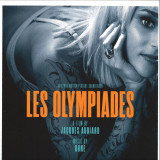
Sixteen musical vignettes of electrifying emotion at the crossroads of ambient, modern synthesizer productions and organic orchestral music experimentation, which tint French director Jacques Audiard's new feature film with the illuminated glow of a whole new generation.
Textextext - (add your write up)
When Jacques Audiard contacted him, Rone was just a few weeks away from receiving the Cesar award for best film score for his very first soundtrack "Night Ride", the highest honor in French film for a composer.
Throughout his career, the French director has been able to surprise his audience by playing on the codes of "genre films", while remaining faithful to the aesthetics of "art film". His cinema is both profound and entertaining, sophisticated and accessible, dark and dreamlike.
"Jacques' cinema is physical, sensual, modern", Rone says about the director, "when he asked me to do the music for Paris, 13th District , I immediately accepted, without seeing any images or reading the script. He is simply one of the greatest contemporary filmmakers."
His new feature film deals with youth in general and their sexuality in particular in a way no one may have done before. The story is based on four young characters and their existential questionings, whose destinies intertwined against the backdrop of the Parisian "Olympiades" high rises in the 13th arrondissement.
But time was already running out, as the film was set to be nominated for *Cannes' Palm D'or* at the rescheduled edition of the festival in July 2021. Between the releases of "Rone & Friends" and his remixes for Agnes Obel, Go Go Penguin and Jehnny Beth (who also plays a role in the film), the producer decided to lock himself away in in his brand-new Isola Studio in Cancale, French Brittany. He also invested in a large screen on which he projected loops of the film and started manipulating his gear. "I had Miles Davis in mind and the way he composed "Ascenseur pour l'échafaud" by improvising with his band while watching excerpts from the film."
After a first conclusive test on three scenes of the film which allowed Rone to showcase the skills he had developed in composition in various musical fields, a relationship of trust developed between the musician and the director, which resulted in over 45 minutes of Rone's music used for the final cut.
"There was a lot of music to be made in a short time, but the talks with Jacques were very stimulating. He had a fairly precise idea of what he wanted, while at the same time, I think, having the desire to be surprised, or even a little shaken up."
If the black and white aesthetic recalls the great hours of the "Nouvelle Vague", Rone´s music gives a new layer to the film which fits resolutely with 2020's zeitgeist.
This second soundtrack by Rone is a sonic urban adventure in itself. As it is used in the film, colouring in the lives of Audiard's protagonists, it will have the same impact on us, the listeners, in our own everyday lives.
- A1: Roberto Musci - Kami Shintai (Lion's Drums Edit)
- A2: Vasilisk - Awakening (Lion's Drums Edit)
- B1: Budi Und Gumbls - Tanz Der Korperlinge (Lion's Drums Edit)
- B2: Freddy Spins - Journey To Middle Earth (Lion's Drums Edit)
- C1: Roberto Musci & Lion's Drums - Alap On Benares
- C2: Manos Tsangaris & Lion's Drums - Crying Tafel
- D1: Tullio De Piscopo - Fastness (Lion's Drums Edit)
- D2: Suzanne Ciani - Paris 1971 (Lion's Drums With Roberto Musci Lost Tapes Remix)
Lion's Drums full length exists as en exploration in multiple dimensions. First by challenging the notion of the album format by presenting a body of work that lies snuggly between remixes, edits and original works and secondly as a means to delve into the transcendent potential of the drum. The album sets the tone by putting these two concepts fully on display with its hypnotic chant, swaying one into ease over the first two songs. In orderly cue folding and unfolding, meditatively through, melodies as muddied pastelle whispers cast over the measured language of the drum. Breaking away from the musing themes of the opening songs we find an ecstatic ritual in "Tanz der Korperlinge" and "Journey to Middle Earth", two distinct varieties but both of the same perennial species. Inky ether seeps back in through the second half of the album with a peak of frenzied tumbling toms and incongruous textures hovering above in the Manos Tsangaris' collaboration "Crying Tafel" and his re-imagining of Tullio De Piscopo's unhinged drum excursion "Fastness". The closing exemplifies the edit/remix/original ethos proposed for this work with Lions Drums drawing from tapes and original material of electronic pioneers Suzanne Ciani and Roberto Musci. Drawing from unreleased music and song sketches by the original artists as well as field recordings from travels & studio sessions made by Roberto Musci & Manos Tsangaris in the 80's and early 90's he constructs a side winding journey through playful textures and ethereal moods.
As funny as it may sound, Anaïs Mitchell has spent the past 15 years in some kind of hell. OK, not actual hell, but the multi-faceted world of Hadestown, a musical project she began in Vermont in 2006 that has grown into a Tony®- and Grammy®-award-winning Broadway phenomenon with touring editions now delighting audiences as far away as South Korea.
“I experienced so much joy working on Hadestown, but it just kept ramping up and up and requiring more and more attention,” Mitchell admits. “I had to become so single-minded and really put blinders on to my other creative life.” As it did for many artists, the COVID-19 pandemic unexpectedly offered Mitchell a blank slate to reconnect with her own music. The result is a new self-titled album made with close collaborators from Bon Iver, The National and her own band Bonny Light Horseman, Mitchell’s first collection of all-new material under her own name since 2012’s Young Man in America.
“I was nine months pregnant when the pandemic reached New York, so we made an 11th hour decision to leave and have the baby in Vermont,” Mitchell recalls. “We left the city and had the baby a week later, and then like everyone, we were in the midst of this unprecedented stillness. It felt like I could see behind me: oh, there’s New York City. There’s Hadestown. There’s my life with just one kid. A certain kind of stress and expectations. In Vermont, we moved onto my family farm and lived in my grandparents’ old house, with a new baby. I’d look at pictures on my phone from a few months earlier and wonder, whose life was that? This record, and the songs that are on it, came out of that time. I got into a flow again that I hadn’t felt in a really long time.”
Dubbed by NPR as “one of the greatest songwriters of her generation,” Mitchell is a master of the worlds of narrative folksong, poetry and balladry. Those talents are evident from the first moments of the new album, as Mitchell narrates what she calls “an unbearably romantic” trip over the Brooklyn Bridge colored by Bon Iver member Michael Lewis’ heartstring-tugging saxophone accompaniment. “Having left New York, I was able to write a love letter to it in a way I never could when I was living there,” she says. “It was like, fuck it. This is how I feel. There is nothing more beautiful than riding over one of the New York bridges at night next to someone who inspires you.”
Produced by Mitchell’s Bonny Light Horseman bandmate Josh Kaufman, the album proceeds to chronicle Mitchell’s reconnection with the Vermont roots that have been so formative in her life and music. “Bright Star” finds her making peace with the idea of being at peace in the familiar setting of her grandparents’ house, while “Revenant” was inspired by paging through a box of journals and letters belonging to herself and her grandmother — “a very pandemic activity,” she says. “That house is literally my happy place. I can picture myself as a kid, in this house, laying on the carpet with a sunbeam coming through the sliding glass door. There’s something about it that is really connected in my mind to my childhood and a very free, imaginative, creative time. “Revenant” has a lot to do with that house and reconnecting with my childhood self.”
Mitchell concedes that she tends “to be someone who thinks it has to be hard in order for it to be good or beautiful,” but that feeling has changed, partly thanks to her deep connection with musicians she’s met through the 37d03d collective established by The National’s Aaron and Bryce Dessner and Bon Iver’s Justin Vernon. During the pandemic, some of those artists participated in a “song a day” writing group — an idea Mitchell says is usually “totally opposite of how I roll. But it really helped me to gain access to some kind of trust and intuition and flow. I began a bunch of these songs while doing that.”
“It unlocked something that allowed me to finish a bunch of songs I’d been sitting on, and feeling a bit paralyzed about how to finish them,” she continues. “Because no one was touring, it’s not like I was playing them for anyone before we were in the studio. In other times, I’ve trotted things out in advance. Here, it was like, here’s all these brand new songs. Let’s discover what they can be. That was really exciting.”
That discovery process took flight at Dreamland Recording Studios outside Woodstock, N.Y., which Mitchell describes as “this weird, janky, beautiful church - it’s my favorite studio in the world.” Kaufman, Lewis and Big Red Machine drummer JT Bates formed a core band around Mitchell, while Aaron Dessner and Thomas Bartlett joined the sessions mid-week on guitar and piano, respectively.
After the appropriate COVID tests came back negative, “it was a pretty extraordinary feeling to hug, kiss and share the same space playing together,” Mitchell says. “We went into that world for a week and didn’t leave the studio for any reason. I felt very safe with all those guys. It was warm and joyful.”
Mitchell says this environment brought out unexpected details in the material, which was recorded almost entirely live together in the room. “Sometimes we tried separating things out, like vocals, but we always ended up back in the room together,” she says. Indeed, after spending the better part of a day recording overdubbed versions of “Little Big Girl” that nobody loved, the musicians gave up and tracked it again live. “We got so frustrated that we went in and I was like, I’m just going to sing this as hard as I fucking can. It felt like that’s what the song wanted to be,” Mitchell says. “It felt like all those songs wanted to be recorded as live as possible.” The exception to the rule was Nico Muhly's arrangements for strings and flute, which were added from New York City afterward.
Mitchell will debut the new material during various headline tours in the U.S. and Europe in 2022, at which she’ll be accompanied by players from the album. On stage, she can’t wait to further hone the sights, sounds and scenes that bring the songs to such vivid life. “I’ve spent a lot of time trying to write in the voice of other characters, especially with Hadestown. It’s fun for me, but these songs are not that,” she says. “Weirdly, they’re all me. The narrator is me. That’s why it felt right to self-title the album. It felt like after so many years of working on telling other stories, now here are some of mine.”
As funny as it may sound, Anaïs Mitchell has spent the past 15 years in some kind of hell. OK, not actual hell, but the multi-faceted world of Hadestown, a musical project she began in Vermont in 2006 that has grown into a Tony®- and Grammy®-award-winning Broadway phenomenon with touring editions now delighting audiences as far away as South Korea.
“I experienced so much joy working on Hadestown, but it just kept ramping up and up and requiring more and more attention,” Mitchell admits. “I had to become so single-minded and really put blinders on to my other creative life.” As it did for many artists, the COVID-19 pandemic unexpectedly offered Mitchell a blank slate to reconnect with her own music. The result is a new self-titled album made with close collaborators from Bon Iver, The National and her own band Bonny Light Horseman, Mitchell’s first collection of all-new material under her own name since 2012’s Young Man in America.
“I was nine months pregnant when the pandemic reached New York, so we made an 11th hour decision to leave and have the baby in Vermont,” Mitchell recalls. “We left the city and had the baby a week later, and then like everyone, we were in the midst of this unprecedented stillness. It felt like I could see behind me: oh, there’s New York City. There’s Hadestown. There’s my life with just one kid. A certain kind of stress and expectations. In Vermont, we moved onto my family farm and lived in my grandparents’ old house, with a new baby. I’d look at pictures on my phone from a few months earlier and wonder, whose life was that? This record, and the songs that are on it, came out of that time. I got into a flow again that I hadn’t felt in a really long time.”
Dubbed by NPR as “one of the greatest songwriters of her generation,” Mitchell is a master of the worlds of narrative folksong, poetry and balladry. Those talents are evident from the first moments of the new album, as Mitchell narrates what she calls “an unbearably romantic” trip over the Brooklyn Bridge colored by Bon Iver member Michael Lewis’ heartstring-tugging saxophone accompaniment. “Having left New York, I was able to write a love letter to it in a way I never could when I was living there,” she says. “It was like, fuck it. This is how I feel. There is nothing more beautiful than riding over one of the New York bridges at night next to someone who inspires you.”
Produced by Mitchell’s Bonny Light Horseman bandmate Josh Kaufman, the album proceeds to chronicle Mitchell’s reconnection with the Vermont roots that have been so formative in her life and music. “Bright Star” finds her making peace with the idea of being at peace in the familiar setting of her grandparents’ house, while “Revenant” was inspired by paging through a box of journals and letters belonging to herself and her grandmother — “a very pandemic activity,” she says. “That house is literally my happy place. I can picture myself as a kid, in this house, laying on the carpet with a sunbeam coming through the sliding glass door. There’s something about it that is really connected in my mind to my childhood and a very free, imaginative, creative time. “Revenant” has a lot to do with that house and reconnecting with my childhood self.”
Mitchell concedes that she tends “to be someone who thinks it has to be hard in order for it to be good or beautiful,” but that feeling has changed, partly thanks to her deep connection with musicians she’s met through the 37d03d collective established by The National’s Aaron and Bryce Dessner and Bon Iver’s Justin Vernon. During the pandemic, some of those artists participated in a “song a day” writing group — an idea Mitchell says is usually “totally opposite of how I roll. But it really helped me to gain access to some kind of trust and intuition and flow. I began a bunch of these songs while doing that.”
“It unlocked something that allowed me to finish a bunch of songs I’d been sitting on, and feeling a bit paralyzed about how to finish them,” she continues. “Because no one was touring, it’s not like I was playing them for anyone before we were in the studio. In other times, I’ve trotted things out in advance. Here, it was like, here’s all these brand new songs. Let’s discover what they can be. That was really exciting.”
That discovery process took flight at Dreamland Recording Studios outside Woodstock, N.Y., which Mitchell describes as “this weird, janky, beautiful church - it’s my favorite studio in the world.” Kaufman, Lewis and Big Red Machine drummer JT Bates formed a core band around Mitchell, while Aaron Dessner and Thomas Bartlett joined the sessions mid-week on guitar and piano, respectively.
After the appropriate COVID tests came back negative, “it was a pretty extraordinary feeling to hug, kiss and share the same space playing together,” Mitchell says. “We went into that world for a week and didn’t leave the studio for any reason. I felt very safe with all those guys. It was warm and joyful.”
Mitchell says this environment brought out unexpected details in the material, which was recorded almost entirely live together in the room. “Sometimes we tried separating things out, like vocals, but we always ended up back in the room together,” she says. Indeed, after spending the better part of a day recording overdubbed versions of “Little Big Girl” that nobody loved, the musicians gave up and tracked it again live. “We got so frustrated that we went in and I was like, I’m just going to sing this as hard as I fucking can. It felt like that’s what the song wanted to be,” Mitchell says. “It felt like all those songs wanted to be recorded as live as possible.” The exception to the rule was Nico Muhly's arrangements for strings and flute, which were added from New York City afterward.
Mitchell will debut the new material during various headline tours in the U.S. and Europe in 2022, at which she’ll be accompanied by players from the album. On stage, she can’t wait to further hone the sights, sounds and scenes that bring the songs to such vivid life. “I’ve spent a lot of time trying to write in the voice of other characters, especially with Hadestown. It’s fun for me, but these songs are not that,” she says. “Weirdly, they’re all me. The narrator is me. That’s why it felt right to self-title the album. It felt like after so many years of working on telling other stories, now here are some of mine.”
- A1: Bite The Hand That Feeds
- A2: Every Time You Go Away
- A3: I’m Gonna Tear Your Playhouse Down
- A4: Standing On The Edge
- B1: Soldier’s Things
- B2: Everything Must Change
- B3: Tomb Of Memories
- B4: One Step Forward
- B5: Hot Fun
- C1: This Means Anything
- C2: I Was In Chains
- C3: I’m Gonna Tear Your Playhouse Down (Extended Mix) (Bonus Track)
- C4: Everything Must Change (Extended Mix) (Bonus Track)
- D1: Give Me My Freedom (Bonus Track)
- D2: Every Time You Go Away (Extended Remix Version) (Bonus Track)
- D3: Tomb Of Memories (12” Mix) (Bonus Track)
- D4: Man In The Iron Mask (Bonus Track)
- D5: Bite The Hand That Feeds (Live At The Hammersmith Odeon) (Bonus Track)
- D6: No Parlez (Live At The Hammersmith Odeon) (Bonus Track)
he British singer Paul Young gained his highest level of commercial success with his second album The Secret Of Association, which featured several hit singles. The album was originally released in 1985 and was certified gold in the US and platinum in the UK, reaching #1 in the UK album charts. The album’s most notable single was his cover of Daryl Hall’s “Every Time You Go Away”, which hit #1 on the US single charts and
#4 in the UK. In addition, the album features “I’m Gonna Tear Your Playhouse Down”, “Everything Must Change” and “Tomb of Memories”, which all charted well.
The Secret Of Association is available as an expanded edition and includes various mixes of the singles, B-sides “Give Me My Freedom” and “Man In The Iron Mask”, and also live versions of “No Parlez” and “Bite The Hand That Feeds”. The album is available as a 2LP limited edition of 2000 individually numbered copies on gold & black marbled vinyl.
Outernational Sounds very proudly Presents The Mallory-Hall Band "Song of Soweto" & "The Last Special".
Limited, fully licensed digital and vinyl reissues of two crucial South African sessions led by Charles Mallory and Al Hall, Jnr., featuring Kirk Lightsey, Marshall Royal, Rudolph Johnson, Billy Brooks and more! Essential companion pieces to Kirk Lightsey’s legendary ‘Habiba’.
Featuring tracks:
Song Of Soweto: Side A – ‘Song of Soweto’, ‘Hamba Samba’; Side B – ‘Cape Town Blues’, ‘Moroka Rock’, ‘The African Night’
The Last Special: Side A - ‘The Last Special’, ‘Princess of Joh’Burg’; Side B - ‘Amafu (Clouds)’, ‘Blue Mabone’
Never released outside South Africa, and out of print since 1974, Outernational Sounds presents two long-lost Johannesburg sessions from the Mallory-Hall Band – an all-star review of West Coast jazz stars who toured apartheid South Africa in the mid-1970s.
Sanifu Al Hall, Jnr. is a musician’s musician. During a storied career stretching across six decades, Hall has recorded with the greats of the music including Freddie Hubbard, Doug Carn, and Johnny Hammond, and leads his own Cosmos Dwellerz Arkestra. But until recent years, the only records on which he had appeared as leader were a brace of rich, funky LPs, Song Of Soweto and The Last Special, issued only in South Africa under the moniker of The Mallory-Hall Band (named for Hall and his co-leader, guitarist Charles Mallory – musical director for Martha Reeves and the Vandellas, Mallory was conductor for Dusty Springfield touring bands, and had worked with John Lee Hooker, Stevie Wonder, and many others). Neither LP had any wider release, and both have remained out of print since 1974. How did a young stalwart of the Los Angeles jazz scene end up in a recording studio in apartheid South Africa?
Al Hall, Jnr. and Charles Mallory had arrived in South Africa as part of the touring band for the singer Lovelace Watkins. Sometimes billed as ‘the Black Sinatra’, the Detroit-born Watkins sang standards and ballroom classics on the Las Vegas circuit. He never made it big in the US, but in his 1970s heyday he was a huge star in southern Africa, and 1974 he hired a jazz big band to accompany him on a tour of South Africa – Hall and Mallory were part of the line-up, alongside Mastersounds bassist Monk Montgomery, pianist Kirk Lightsey, tenorist Rudolph Johnson, drummer Billy Brooks, and Marshall Royal, musical director of the Count Basie band. The tour was a huge success, and during downtime from performing, members of the group managed to independently record no fewer than three albums. Lightsey and Johnson’s stunning Habiba was the first (reissued as Outernational Sounds OTR.013), and it was followed by two crucial sessions led by Hall and Mallory – Song of Soweto and The Last Special, issued on the local IRC imprint.
Visiting apartheid South Africa in 1974 was a controversial choice for any artist. Numerous artistic and cultural bodies around the world had already announced that their members would boycott the country in solidarity with the struggle against apartheid, and working in South Africa was severely frowned on by anti-apartheid activists everywhere. For a Black band, touring the country to play to mostly white audiences could have been seen by many both inside and outside South Africa as a questionable decision. ‘It was a batch of mixed reactions when I choose to visit South Africa whilst apartheid policies were in place,’ Hall recalls. ‘To me the choice was a simple one – “I wanna see for myself!” I also wanted to be a part of breaking down racial barriers, having been down some of the same roads in my own country.’
The albums were recorded by a twelve-piece band at Johannesburg’s Video Sounds Studios in December 1974, and feature the legendary pianist Kirk Lightsey, Black Jazz recording artist Rudolph Johnson, and the rest of the touring band. Both records are superbly arranged slabs of peak 1970s funky big band soul jazz, with tasteful Latin inflections and more than a nod to South Africa’s upful township jazz sound. They are the sonic traces left by a seasoned African American band who were touring South Africa in the depths of the apartheid era, and who immediately moved beyond the segregated hotels and ballrooms to build links with local South African players and audiences.
Never previously available outside South Africa, Outernational Sounds’ new editions of Song of Soweto and The Last Special (alongside our edition of Kirk Lightsey’s Habiba) represents the first time these albums have been in print for nearly fifty years. Fully licensed from Gallo Records and pressed at Pallas in Germany from Gallo’s original masters, they feature new sleeve notes from Francis Gooding (The Wire) based on interviews with Al Hall, Jnr., and a reminiscence from pianist Kirk Lightsey.