Ethno-alternative lo-fi absurdism from the mind of London based multi-instrumentalist & Primordial Soup member, Samuel Huxley. Expect everything from Hindu ceremonial music to dark lounge, post-punk & avant-garde, to Kabuki theatre score & world electronica, any number of which can be found within a single track.
The Romance of Baba Loco is the union of wisdom & madness, eastern mysticism & western folly, absurdism to catch you with yer pantaloons down… Bang bang smash to perennial illumination. Cling clang for funk monkeys. The bejewelled vistas beyond, nihilism be gone… The donkey was not ill-tempered after many blows, on the ass, from the stick. He smiled like a gentleman, and kept on clip cloppin’ towards the promised land…
The Romance of Baba Loco is the latest iteration of a recording project by Samuel Huxley that originally made ambient soundscapes for psychotropics (Paradise Dose). In 2017 Samuel was curating infamous venue and scene of a multitude of glories & horrors, The Five Bells in New Cross, SE London. One of his first acts to play was Primordial Soup, at that time a 3 piece absurdist art rock band. They quickly became friends & began performing semi-improv shows as a 5 piece, and later went on to form Primordial Soup Collective who’s main focus was esoteric experimental theatre & film, and rare multidisciplinary exhibitions.
This changing focus of Soup away from sound provoked Samuel to channel his musical compulsions in to his solo project which had by then ventured far away from ambient soundscapes to shrieking Indian and Moroccan oboes over African & Indian tribal rhythms, with the desire to create the raw lo-fi atmospheres of street music. Gradually guitar styles of South East Asia & Latin America were introduced, leading to backing track solo performances & outrageous live improv freakouts with Craig Deporto (ex-Flamingods) & Luke Bell (Ex-Wild Birds of Britain).
Finally two days before the glorious pandemic lock down, Samuel signed to Faith & Industry, which birthed new moniker “The Romance of Baba Loco” and 3 months worth of ceaseless creation. From the Hindu Ceremonial music of the Shehnai & Nadaswaram to post-punk, absurdism & experimental art, The Romance of Baba Loco finally united two seemingly dissonant sides of his personality in a manner he had not previously achieved. The old material was cast off, and these peculiar fruits of imprisonment, can be found on his first release, “Cling Clang For Funk Monkeys”.
quête:one mind
Dominique Fils-Aim is a JUNO Award winning singer-songwriter from
Montreal who draws inspiration from soul icons of the 40’s and 60’s such as Billie Holiday, Etta James, and Nina Simone.
While her musical roots are grounded in early soul and jazz, her voice transcends contemporary urban soundscapes. Her sophomore record Stay Tuned!
won the 2020 JUNO Award for “Vocal Jazz Album of the Year” as well as the Felix prize for “Best Jazz Album” at the ADISQ Gala.
Her 3rd album THREE LITTLE WORDS is a startlingly self-reflective look at affecting societal change while reminding the listener that it is equality and love which feeds the soul and inspires us to do better. Fils-Aim has a disarmingly literal interpretation of soul music as music that comes from the soul, and the album pays homage to a plethora of musical genres that fed and nurtured her love of lyric-driven jazz and soul music.
Love and loving oneself is the common link throughout, and Fils-Aim is certain that love is the key that will provide us with a path to equality. We need to, and deserve to, fight for the right to love both ourselves and each other.
"Over the years, I have had the absolute pleasure of meeting countless wonderful people in every corner of this beautiful planet, and a lot of times these music enthusiasts have expressed a very similar-sounding story. That our presence – whether it be via a studio recording or our ferocious show – is capable of transporting them to a better place and washing away all earthly worries. Doesn't this sound amazing – especially during these challenging times?"
This gentle voice belongs to the vocalist-guitarist Jonne Järvelä, who happens to be the creative force behind the unique Finnish ensemble KORPIKLAANI. Having experienced multiple triumphant years within the inner circle of folk-influenced heavy metal, Jonne now acknowledges his position as one of the most recognisable artists ever coming from the land of a hundred thousand lakes.
KORPIKLAANI – preceded by Jonne's own project SHAMAANI DUO (1993-1997) and the band SHAMAN (1997-2003) – was founded somewhere deep in the primeval northern forests in 2003. Ten celebrated studio albums, numerous world tours and hundreds of millions of digital streams alongside multiple other releases, have established KORPIKLAANI’s status as one of the leaders of innovative heavy music. For their diehard legion of fans, they are known as Folk Metal Superstars.
"I have always been fascinated by ancient Lappish/Samish culture and the infectious melodies of aged folk songs. However, that's only one side of the coin as I have loved rip-roaring metal since I was a frantic kid looking for some rebellious sounds. My butt was kicked by the likes of MOTÖRHEAD, IRON MAIDEN and JUDAS PRIEST", says Jonne.
"Since the early 2000s, KORPIKLAANI has combined these elements as we have tirelessly attempted to pump new life into the ancient tales of joy and heartbreak, and added the enormous energy of current heavy metal into that folk metal melting pot.We have always been on a mission to create something new and unprecedented."
Here and now, KORPIKLAANI’s fearless journey continues on – and this time, the journey is powered by rather serious subject matter. Their eleventh full-length studio record "Jylhä" (which has no direct translation but can be described as majestic, or wild and rugged in a beautiful way) brings all the well-known and essential ingredients to the table: heavy-duty guitar riffing, rhythmic folk melodies and more.
What about the tales of the wilderness then? The fascinating and miscellaneous tales have always been a crucial part of KORPIKLAANI’s journey within the realms of unspoiled Finnish nature, ancient Scandinavian myths, shamanistic voyages and beyond. "Did I already mention that "Jylhä" offers some new angles?", the singer/guitarist laughs. "Well, lyrically, there are definitely some previously unknown passages – such as fables connected to the infamous Lake Bodom murders in Southern Finland in early 1960s."
KORPIKLAANI’s long-time lyricist Tuomas Keskimäki – the renowned Finnish poet and author, comments: "When I am coming up with narratives, interesting wordplays and other ideas for KORPIKLAANI, I often feel like I am diving into some absorbing fantasy world. I would describe this state of mind as some kind of a deep trance", says Keskimäki.
"As a whole textual piece, "Jylhä" is rather widespread. For example, there are stories about the fragility of life, revealed by using nature metaphors. ‘Miero’ is one of these tales: after all, it's a fact that the lifetime of a human being is just one blink of an eye compared to the eternal aeons of the cosmos."
"On the darker side, there are several murder songs - I wasn't really planning these rather untraditional lyrics, they just happened... One of these is ‘Kiuru’, and that story is inspired by a famous Finnish double homicide case, which took place in the small village of Tulilahti in 1959. In these lyrics, the character called Kiuru – Skylark in English – acts as eyewitness and a prophet, but at the same time, this creature also functions as an allegory of many things... All in all, I am really happy with the lyrics and all these new themes!"
When asked about his current sentiment regarding the new KORPIKLAANI opus "Jylhä", the commander of the forest clan sighs and smiles. "Using "Jylhä" as our solid steppingstone, we are able to reach completely new heights. For me, it's crystal clear that KORPIKLANI has never been better."
It is a fitting album for our dark times, summed up well by the song ‘Huolettomat’ (The Careless). It talks about living in the present moment, alongside a story of joy and celebration. Today is today, tomorrow is uncertain.
MSG is a legendary name. After two phenomenal records under the guise of Michael Schenker Fest, a true guitar hero is returning to his roots. By forming Michael Schenker Group (MSG) back in 1979, Michael Schenker laid the foundations for one of hard rock’s most glorious solo careers of all times. And while nobody expected anything less from a former guitarist for Scorpions and UFO, it’s close to impossible mentioning everything Michael has built over the past 50 years, or the countless people he influenced or played with. This, truly, is the stuff that hard rocking myths are made of.
“I never looked back,” is how Michael dryly sums up an extraordinary career. Due to this mindset, he only realised much later what a huge impact his playing had made on the world of metal and hard rock. Very few guitarists can be cited as a primary influence for the likes of James Hetfield, Kirk Hammett, Dave Mustaine, Dimebag Darrell, Slash or Kerry King. However, to understand Michael Schenker means to understand one primary thing: he’s not here to be worshipped or adored, he’s not here to get rich, he’s here to play. And at 65, he’s doing it with the same swagger, verve and dizzying artistry as always. “I’m still 16 in my head,” he laughs.
Right in time for his 40th anniversary as a solo artist and his 50th birthday as a musician, he resurrects the immortal Michael Schenker Group. “Immortal” is also the name of his new album, recorded by likely the strongest line-up in his long history. Its a lightning bolt of an album that sounds fresh, bloodthirsty and agile. “Immortal” showcases the gargantuan vocal talents of Chilean hard rock prodigy Ronnie Romero (Rainbow), backed by singers Ralf Scheepers (Primal Fear), Joe Lynn Turner (ex-Deep Purple) as well as Schenker’s brother in arms, Michael Voss (Mad Max) who again produced the record alongside Michael Schenker – flawlessly, punchy and at full steam as if their very lives depended on it.
Next to Michael Schenker caressing his iconic black and white Dean Flying V, we hear bass player Barry Sparks (Dokken), keyboard player Steve Mann as well as the three drummers Bodo Schopf, Simon Phillips (ex-Toto) and Brian Tichy (ex-Whitesnake) pumping gallons of fresh blood through the tracks. And that’s not all, keyboard wizard extraordinaire Derek Sherinian (Dream Theater, Black Country Communion) gives the listener a baptism of fire in the blistering, heavy hitting opener “Drilled to Kill”, powered by Ralf Scheepers’ unbelievable vocal tornado.
Michael Schenker doesn’t live to play, he plays to live, and there’s no better way of summing up his relationship to his music than this – now for half a century and counting. The most emblematic representation of this relationship is the monumental closing track “In Search Of The Peace Of Mind”, a new recording of the very first song he ever wrote. “I composed this track in my mother’s kitchen back when I was 15,” he looks back half a century and smiles broadly: “The solo is just so perfect, I wouldn’t change a single note even today. This is the most important song of the last 50 years for me. It’s what started it all.”
When it finally got released in 1972 on the Scorpions’ debut “Lonesome Crow” Schenker had already moved on to UFO. What followed were several decades of pure hard rock ecstasy on and off stage, featuring a rotating cast of stellar players, always pressing the pedal to the metal. Now, in 2020, he reaps what he sowed. Alongside many of his peers, friends and contemporaries, he is celebrating 50 years of hard rock – fittingly with an album that is something like a zeitgeisty reminiscence of everything he’s ever done. The massive midtempo smasher “Don’t Die On Me Now” sees Joe Lynn Turner going all in, Ronnie Romero works his magic in “Knight Of The Dead” while Michael Voss cuts a grand figure before the microphone as well as behind the mixing desk on the furious second single “After The Rain”.
Towering above them all, Michael Schenker and his guitar prove they’re truly and utterly invincible. The celebrated icon pulls out all the stops – including his legendary “howler”, the fabled magnet he’s used on his fingerboard for a while now. And here’s yet another thing that’s just so archetypically Schenker, when bringing up his fiery and dedicated performance on “Immortal” he nonchalantly shrugs it off: “I simply played from the heart, as always.” This, dear Michael, is the understatement of the year – all the more so for a record that is already one of the top contenders for hard rock/metal album of the year.
MSG is a legendary name. After two phenomenal records under the guise of Michael Schenker Fest, a true guitar hero is returning to his roots. By forming Michael Schenker Group (MSG) back in 1979, Michael Schenker laid the foundations for one of hard rock’s most glorious solo careers of all times. And while nobody expected anything less from a former guitarist for Scorpions and UFO, it’s close to impossible mentioning everything Michael has built over the past 50 years, or the countless people he influenced or played with. This, truly, is the stuff that hard rocking myths are made of.
“I never looked back,” is how Michael dryly sums up an extraordinary career. Due to this mindset, he only realised much later what a huge impact his playing had made on the world of metal and hard rock. Very few guitarists can be cited as a primary influence for the likes of James Hetfield, Kirk Hammett, Dave Mustaine, Dimebag Darrell, Slash or Kerry King. However, to understand Michael Schenker means to understand one primary thing: he’s not here to be worshipped or adored, he’s not here to get rich, he’s here to play. And at 65, he’s doing it with the same swagger, verve and dizzying artistry as always. “I’m still 16 in my head,” he laughs.
Right in time for his 40th anniversary as a solo artist and his 50th birthday as a musician, he resurrects the immortal Michael Schenker Group. “Immortal” is also the name of his new album, recorded by likely the strongest line-up in his long history. Its a lightning bolt of an album that sounds fresh, bloodthirsty and agile. “Immortal” showcases the gargantuan vocal talents of Chilean hard rock prodigy Ronnie Romero (Rainbow), backed by singers Ralf Scheepers (Primal Fear), Joe Lynn Turner (ex-Deep Purple) as well as Schenker’s brother in arms, Michael Voss (Mad Max) who again produced the record alongside Michael Schenker – flawlessly, punchy and at full steam as if their very lives depended on it.
Next to Michael Schenker caressing his iconic black and white Dean Flying V, we hear bass player Barry Sparks (Dokken), keyboard player Steve Mann as well as the three drummers Bodo Schopf, Simon Phillips (ex-Toto) and Brian Tichy (ex-Whitesnake) pumping gallons of fresh blood through the tracks. And that’s not all, keyboard wizard extraordinaire Derek Sherinian (Dream Theater, Black Country Communion) gives the listener a baptism of fire in the blistering, heavy hitting opener “Drilled to Kill”, powered by Ralf Scheepers’ unbelievable vocal tornado.
Michael Schenker doesn’t live to play, he plays to live, and there’s no better way of summing up his relationship to his music than this – now for half a century and counting. The most emblematic representation of this relationship is the monumental closing track “In Search Of The Peace Of Mind”, a new recording of the very first song he ever wrote. “I composed this track in my mother’s kitchen back when I was 15,” he looks back half a century and smiles broadly: “The solo is just so perfect, I wouldn’t change a single note even today. This is the most important song of the last 50 years for me. It’s what started it all.”
When it finally got released in 1972 on the Scorpions’ debut “Lonesome Crow” Schenker had already moved on to UFO. What followed were several decades of pure hard rock ecstasy on and off stage, featuring a rotating cast of stellar players, always pressing the pedal to the metal. Now, in 2020, he reaps what he sowed. Alongside many of his peers, friends and contemporaries, he is celebrating 50 years of hard rock – fittingly with an album that is something like a zeitgeisty reminiscence of everything he’s ever done. The massive midtempo smasher “Don’t Die On Me Now” sees Joe Lynn Turner going all in, Ronnie Romero works his magic in “Knight Of The Dead” while Michael Voss cuts a grand figure before the microphone as well as behind the mixing desk on the furious second single “After The Rain”.
Towering above them all, Michael Schenker and his guitar prove they’re truly and utterly invincible. The celebrated icon pulls out all the stops – including his legendary “howler”, the fabled magnet he’s used on his fingerboard for a while now. And here’s yet another thing that’s just so archetypically Schenker, when bringing up his fiery and dedicated performance on “Immortal” he nonchalantly shrugs it off: “I simply played from the heart, as always.” This, dear Michael, is the understatement of the year – all the more so for a record that is already one of the top contenders for hard rock/metal album of the year.
MSG is a legendary name. After two phenomenal records under the guise of Michael Schenker Fest, a true guitar hero is returning to his roots. By forming Michael Schenker Group (MSG) back in 1979, Michael Schenker laid the foundations for one of hard rock’s most glorious solo careers of all times. And while nobody expected anything less from a former guitarist for Scorpions and UFO, it’s close to impossible mentioning everything Michael has built over the past 50 years, or the countless people he influenced or played with. This, truly, is the stuff that hard rocking myths are made of.
“I never looked back,” is how Michael dryly sums up an extraordinary career. Due to this mindset, he only realised much later what a huge impact his playing had made on the world of metal and hard rock. Very few guitarists can be cited as a primary influence for the likes of James Hetfield, Kirk Hammett, Dave Mustaine, Dimebag Darrell, Slash or Kerry King. However, to understand Michael Schenker means to understand one primary thing: he’s not here to be worshipped or adored, he’s not here to get rich, he’s here to play. And at 65, he’s doing it with the same swagger, verve and dizzying artistry as always. “I’m still 16 in my head,” he laughs.
Right in time for his 40th anniversary as a solo artist and his 50th birthday as a musician, he resurrects the immortal Michael Schenker Group. “Immortal” is also the name of his new album, recorded by likely the strongest line-up in his long history. Its a lightning bolt of an album that sounds fresh, bloodthirsty and agile. “Immortal” showcases the gargantuan vocal talents of Chilean hard rock prodigy Ronnie Romero (Rainbow), backed by singers Ralf Scheepers (Primal Fear), Joe Lynn Turner (ex-Deep Purple) as well as Schenker’s brother in arms, Michael Voss (Mad Max) who again produced the record alongside Michael Schenker – flawlessly, punchy and at full steam as if their very lives depended on it.
Next to Michael Schenker caressing his iconic black and white Dean Flying V, we hear bass player Barry Sparks (Dokken), keyboard player Steve Mann as well as the three drummers Bodo Schopf, Simon Phillips (ex-Toto) and Brian Tichy (ex-Whitesnake) pumping gallons of fresh blood through the tracks. And that’s not all, keyboard wizard extraordinaire Derek Sherinian (Dream Theater, Black Country Communion) gives the listener a baptism of fire in the blistering, heavy hitting opener “Drilled to Kill”, powered by Ralf Scheepers’ unbelievable vocal tornado.
Michael Schenker doesn’t live to play, he plays to live, and there’s no better way of summing up his relationship to his music than this – now for half a century and counting. The most emblematic representation of this relationship is the monumental closing track “In Search Of The Peace Of Mind”, a new recording of the very first song he ever wrote. “I composed this track in my mother’s kitchen back when I was 15,” he looks back half a century and smiles broadly: “The solo is just so perfect, I wouldn’t change a single note even today. This is the most important song of the last 50 years for me. It’s what started it all.”
When it finally got released in 1972 on the Scorpions’ debut “Lonesome Crow” Schenker had already moved on to UFO. What followed were several decades of pure hard rock ecstasy on and off stage, featuring a rotating cast of stellar players, always pressing the pedal to the metal. Now, in 2020, he reaps what he sowed. Alongside many of his peers, friends and contemporaries, he is celebrating 50 years of hard rock – fittingly with an album that is something like a zeitgeisty reminiscence of everything he’s ever done. The massive midtempo smasher “Don’t Die On Me Now” sees Joe Lynn Turner going all in, Ronnie Romero works his magic in “Knight Of The Dead” while Michael Voss cuts a grand figure before the microphone as well as behind the mixing desk on the furious second single “After The Rain”.
Towering above them all, Michael Schenker and his guitar prove they’re truly and utterly invincible. The celebrated icon pulls out all the stops – including his legendary “howler”, the fabled magnet he’s used on his fingerboard for a while now. And here’s yet another thing that’s just so archetypically Schenker, when bringing up his fiery and dedicated performance on “Immortal” he nonchalantly shrugs it off: “I simply played from the heart, as always.” This, dear Michael, is the understatement of the year – all the more so for a record that is already one of the top contenders for hard rock/metal album of the year.
Much has changed in the musical life of renowned composer and director John Carpenter since 2016's Lost Themes II. Following the release of that album, he went on his first-ever concert tour, performing material from the Lost Themes albums, as well as music from his classic film scores. He re-recorded many of those classic movie themes for 2017's Anthology album, working alongside son Cody Carpenter and godson Daniel Davies. The following year, he was asked to executive produce and compose the music for the new Halloween movie directed by David Gordon Green, which promptly became the highest-grossing installment in the series. Now, he returns with his first album of non-soundtrack music in nearly five years, Lost Themes III: Alive After Death. Underpinning Carpenter's renaissance as a musician has been his collaboration with Cody Carpenter and Daniel Davies. They've composed and performed as a trio throughout this entire run, on studio albums, on soundtracks, and onstage. Here, the trio reaches a new level of creative mind meld. Richly rendered worlds are built in the interplay between Davies's guitar and the dueling synthesizers played by the Carpenters. "We begin with a theme, a bass line, a pad, something that sounds good and will lead us to the next layer," John says of the trio's process. "We then just keep adding on from there. We understand each other's strengths and weaknesses, how to communicate without words, and the process is easier now than it was in the beginning. We've matured." Whereas the original Lost Themes album came as a pleasant surprise after years of relative silence from Carpenter, the third installment sees him in the midst of a resurgent moment as a cultural force. The 2018 Halloween score gave his music its biggest audience in decades, and the world he releases his new album into is one that has, at long last, given him the credit he deserves as a founding father of modern electronic music.
CLEAR TRANSPARENT VINYL*Grotto’s second record from 2018 is available again as a new 180gr.
vinyl pressing on Stickman Records. Heavy, progressive, psychedelic
instrumental rock for fans of labelmates Elder, Weedpecker and King
Buffalo.
Grotto is an instrumental
three-piece band hailing from
Flanders, Belgium, describing
themselves as “high-energy
pill psychedelia”. Whatever
that means exactly is in the
ears of the beholder, but one
thing is clear - Grotto is a
unique beast in the world of
heavy underground rock.
The foundation of the band
is the same leaden groove
that propels the stoner rock
genre, but Grotto paints with
an entirely different pallet
of colors. Highly melodic
chords and soaring melodies
fill the space between thundering
drums and mammoth
basslines; winding, unconventional
song structures lead
the listener out of their mind
and into the depths of space.
Grotto’s second LP Circle Of
Magi, originally released in
a limited pressing in 2018, is
a magnificent piece of heavy
psychedelic rock. This new
edition on Stickman Records
has been made from newly
cut lacquers and pressed to
transparent 180gr vinyl, looking
and sounding better than
ever before. Includes download
card.
- A1: Today I Sing The Blues
- A2: Love Is The Only Thing
- A3: Won’t Be Long
- A4: Right Now
- A5: Are You Sure
- A6: Maybe I’m A Fool
- A7: Rock-A-Bye Your Baby With A Dixie Melody
- A8: Operation Heartbreak
- B1: I Surrender, Dear
- B2: Rough Lover
- B3: Don’t Cry, Baby
- B4: Without The One You Love
- B5: Try A Little Tenderness
- B6: Just For A Thrill
- B7: Trouble In Mind
- B8: God Bless The Child
A fantastic collection focusing on Aretha Franklin hits from the period 1960-62. That's when she started to gain fame as a unique and powerful singer who later became world-known as the Queen of Soul. A great selection of songs full of all the essential ingredients that will inform the development of Soul, Gospel and R&B. The perfect introduction to the spirit and art of the unforgettable Lady Soul.
On their Night Dreamer debut, Sarathy Korwar and his allstar “UPAJ Collective” gain brand new ground in their mission to rebalance spiritual jazz with authentic Indian classical music. “UPAJ” means “to improvise” inHindi, and recording direct-to-disc at Artone Studios with almost no preconceived directions, they truly capture the “spirit of spontaneous improvisation”, as Sarathy puts it, like never before.
Sarathy Korwar 2020
"Recording in one take, direct-to-disc is a unique scenario to be in. I feel very blessed to be presented this opportunity. I decided very early on that in order to make the best use of this scenario, the music had to be completely improvised and spontaneous. That is the only true way to record within the limitations of one take. No regrets, no mistakes, no fear and no judgement. These were the ideals. In a way, this was about creating a utopian vision of a world I would like to live in. A microcosm of the ideals that I would like to live by, in the recording studio. The vision of going into the studio with this in mind, was more important than the resulting music we created. Process over product.
Before the session we did some collective breathing exercises that I have learnt from my mother (who is a pranayama practitioner/teacher) and Wim Hof. I believe this helps centre the focus of the group and balances the mind, making it most receptive to new sounds and inspiration.
The song So said Said is a tribute to Edward Said. Intimate Enemy, a tip of the hat to the book of the same name by Ashis Nandy (Intimate Enemy: Loss and recovery of self under colonialism). A cover of Flight IC408 by State Of Bengal is on Side B, as I am a massive fan of the band. Elephant Hangover is the imagery that the tune conjures for me personally on listening to it. A beautiful remix by the brilliant Osunlade of So said Said is on side D.
Thank you to the gifted musicians - Al, Tamar, Achuthan and Giuliano for trusting and letting go. I am lucky to spend time with you."
- A1: Palia Itia (Old Willow Tree)
- A2: Echasa Ton Anthropo Mou (I Lost My Loved One)
- A3: Ta Goumara Ki Apidia (Berries And Pears)
- A4: I Efchi Tou Xenitemenou (Immigrant’s Wish)
- A5: Dirminitsa (The Bride’s Dance)
- B1: Miroloi Tis Xenitias (Lament For The Missing Ones)
- B2: Argyrokastritikos Choros Syngathistos (Argyrokast-Ron Dance)
- B3: Pitsirika Katergara (Femme Fatale)
- B4: Gi Ayta Ta Erima Lefta (For The Sake Of The Dam-Ned Money)
- B5: Delvino Kai Tsamouria (Delvino And Tsamouria)
(LP + 12 page booklet) This ancient psychedelic folk with jazzy improvisations from the North West of Greece is unique and will touch your soul so deeply that epirotika aficionados always remember the place and the moment when they got to know this hypnotic and mes-merising music. In a similar way to the music of Alice Coltrane or Mulatu Astatke, it can take you out of the here and now - the pure beauty of the magical epirotika sound can make your mind drift off to otherworldly places.
“The Vale” is in immersive electronic album of dark soundtrack work. It’s the first of several Everyday Dust releases scheduled for Castles in Space in 2021.
Everyday Dust is RJ McConnell. Based in Scotland, RJ ditched piano lessons when he realised I had no interest in being an instrumentalist. Instead he wanted to create his own musical works from the ground up. He goes on, “I was much happier working my way through music theory books on my own and applying my learning to my own music. We had a little home studio when I was a child. My Dad was also a musician and was involved in local amateur theatre where he prepared and operated all the sound cues on reel to reel tape. So from an early age I was messing around with tape machines, making tape loops and recording music. For years I tried to make the most interesting tones I could from a Yamaha home keyboard by passing it through my Dad’s guitar pedals, or recording to tape and playing it back at different speeds etc. My first proper synth was the Roland SH101.” He went on to study music and sound for theatre and worked for many years as a theatre composer before branching into larger events and eventually film and documentary work.
The Vale story starts in 2018. RJ again, “I was brought in as composer for an independent horror short that was being filmed in Istanbul. The film was a vampire movie, very atmospheric and beautifully shot. I was aware of being a Scottish composer on a Turkish film and therefore didn’t want to attempt in any way to make anything that sounded traditionally Turkish. I wanted to represent the idea of these ancient beings who had existed in one of the oldest cities in the world for centuries. I wondered how I could imply this “ancient” world with the instruments I had to hand. I recorded various old metal whistles, which were slowed right down to become eerie arcane horn blasts that sounded like they had come from another time. I also recorded lots of melodica, which was again slowed down to sound like wheezing old harmonium drones. I spent another day recording inside an old piano, plucking individual strings and also hammering them percussively with wooden beaters. Using synthesizers and effects as the “glue” to bring these sounds together I started to work on the cues for the film. I had scored most of the film by the time I heard it was being cancelled. The concept and story had been taken over by a streaming site who wanted to make it into a series - with a drastically different tone and style.
“Later that same year I had worked on a project that incorporated the folklore of a celtic water sprite who kept the waterfalls and streams running smoothly so they could turn the mills of the local village. In return the villagers would bring the water sprite bannocks (Scottish flatbreads) each day. I started to daydream about a darker, Lovecraftian twist on this story. Some Ancient One dwelling in the forests and controlling the water - the very life essence of the village - in return for offerings of the soul. The concept was filed away in the back of my mind for some months.
“The following year I was on a flight to visit my friend in Bodrum. He had been the producer and editor on the original disbanded Vampire film, and I found myself thinking about the project again. I wondered if the sound cue files were still on my laptop, which they were. It had been a year since I’d even heard them. Hearing the eldritch folk-tinged sounds of the whistles and plucked strings my mind instantly returned to the idea of the Lovecraftian folk horror story. I started jotting down notes and musical ideas and by the time I landed in Bodrum I already had the album title - The Vale. Having the album concept and prototype ideas to work with was a huge head start in making the album. Although all of the original cues were so dramatically developed and transformed that they really just served as the initial clay on the wheel.
“I used a Doepfer A100 modular synth to create the animalistic yelps, conches and horns that were improvised over the original cues as a response to the arcane “folk” world of the acoustic instruments. This half-acoustic half-modular landscape was the sonic scene-setter I needed to move onto the composition and musical journey of the album. I composed and developed most of the musical parts on an Oberheim Matrix 6 synthesizer. However all the percussion, rhythmic sequences and ornamental synth sounds were created from improvised modular sessions multitrack recorded. A lot of editing later, the soundtrack to the movie in my mind was finally there.
- A1: Brand New Thing- Part 1
- A2: 3 Days 1 Hour 30 Minutes
- A3: I've Got To Get Back (Country Boy)
- A4: So You Say You Wanna Dance (Workout # 2)
- A5: Stop Lying
- A6: Let Me Build
- B1: Brand New Thing - Part 2
- B2: Soul Galore
- B3: What's Done In The Dark (Will One Day Come To Light)
- B4: I Got My Mind Made Up
- B5: Everything's Gonna Be Fine
- B6: Your Loss, My Gain
• This is the first ever vinyl reissue of ‘Soul Galore’, the 1966 album by the all time great Jackie Wilson
• Featuring 12 Big City Soul masterpieces and classic mod dancers.
• Standouts including ‘Brand New Thing’, ‘So You Say You Wanna Dance’, ‘Stop Lying’ and the title track ‘Soul Galore’
• Jackie Wilson was one of the greatest singers who remained with Brunswick since his early days with a dazzling record of 54 US Hot 100 and 49 R&B single chart entries
• Reissue is on 140g black vinyl with original artwork and printed inner sleeve
Scofield and Metheny. What more needs to be said? A masterpiece meeting of musical minds, these two guitar virtuosos entered the studio in December 1993 with Steve Swallow on bass guitar and Bill Stewart on drums to create one of the greatest jazz guitar albums of all time. Produced by Lee Townsend, I Can See Your House From Here is an 11-track set of Scofield and Metheny originals including Sco’s expansive title track and Pat’s rocking “The Red One” and the stunning ballad “Message To My Friend.”
Repress
Itis hot, it is lit, it is abartik! Only one copy per customer. Outstanding deep and grooving new Abartik. Merci Laurent.
- 1: Prologue: Rain
- 2: A Trail Of Wind And Fire
- 3: Second Born Child
- 4: Tokyo Music Experience
- 5: The Rise And Fall Of The Plague
- 6: Another Year
- 7: Fragments
- 8: The Disappearance Of Dr. Duplicate
- 9: Excerpt Taken From Chapter 3
- 10: Where Is My Dream?
- 11: Part One: The Long Drought
- 12: Part Two: Crossing The Desert
- 13: Epilogue: Big Poisonous Shadows
BLACK vinyl with deluxe origami fold out sleeve & obi strip & DL Card. CD Wallet. The third album from Dutch punk-laced noiseniks adds new maturity and a conceptual feel that pulls the extremes of their sound together. A psyche-fuelled journey into the id punctuated with rhythmic kabuki modal mood swings, thunderstorms, digital beeps, traffic noise, and just plain old beautiful cacophonous reverb-drenched sound when needed. The 'third chapter' refers to the last five years that the Dutch band have spent creating their "difficult" third album. Each song spins a yarn; there are plagues, dreams, wind and fire, 'mythical' characters, and the search for the secret government warehouse. Lead single, Tokyo Music Experience, resonates with a conveyor belt-propelled modal guitar, reflecting the halcyon days of Japanese super-productivity; a mesmerising mantra, infected with news bulletin on-the-hour bleeps underlining its time-sensitive nature; a pristine super-commercial anthem to drive loyalty and reinforce solidarity with the party! Having been described as creating "underground noise with a bracing, warped pop appeal" (Mojo), their new album is a coming-of-age post-classic with a unique worldview - inspired by Van Dyke Parks (Song Cycle) Scott Walker (3 & 4), Moondog (Elpmas), White Noise (An Electric Storm) and Beach Boys (Smile). If their previous effort (Tape Hiss) was their very own sketch of a sketch for an incomplete concept album, a noisy reaction to their previous life, then 'Excerpts From Chapter 3..', with all its interlaced intricacies, is the realisation of their transition from punk-spiked-pop to psyche-pop protagonists. Evolving, testing, infectious...
To anyone who has heard the music of Kikagaku Moyo, it should come as no surprise that the band’s origins lie in hours upon hours of late-night jamming, illuminated by nothing more than the geometric patterns playing behind the band’s eyelids, resulting in a natural, free-floating sound, as of-the-earth as it is intergalactic. It may be surprising that the band sharpened their improvisational skills by busking on the streets of their native Tokyo. It may be surprising that the band’s overall sound may owe as much or more to the Incredible String Band as it does to Acid Mother’s Temple.
But what’s perhaps most surprising about Forest of Lost Children, the band’s face-melting, recorded-ritual sophomore album, is how utterly centered and mature the band sounds, especially given their relatively short lifespan as a band. Boundless though they may be, Kikagaku Moyo here sound anything but lost, their child-like wonder manifested in a confident, courageous exploration of sound. Labels – psychedelic, folk, prog-rock, psychedelic-folk-mixed-with-prog-rock – do little to accurately reflect the spectrum of influences on display, let alone the more impactful realization of completeness in Kikagaku Moyo’s songs.
Easily one of the most shimmering crown-jewels in the rapidly expanding BBiB catalog, look for Kikagaku Moyo and Forest of Lost Children to be found taking shape in the expanded minds of listeners everywhere. - Ryan Muldoon
In his essay ‘The Meaning of My Avant-Garde Hillbilly and Blues Music’, Henry Flynt talks about how his music should be analysed as an intellectual tribute to the music of the autochtone, setting aside plain folk references, but adopting academic insights to mold the music one makes as a folk creature. Much of Flynt’s discourse applies to the music of Glen Steenkiste’s Hellvete. Over the past twenty years he has been thoroughly investigating both the ethnic musical language of various regions as well as the contemporary pioneers that preceded him as a drone musician, internalizing concepts such as e.g. deep listening or just intonation. Casting off any redundant ideas or sounds, and stripping down the focus to develop singular concepts, his working method lead to pieces such as ‘Droomharmonium’, in which he shapes the endless variations on a theme, emphasizing detail and nuance rather than multitude. The Indian harmonium here serves as the main device to worship ancient ghosts and masters, and to preserve a continuum in a tradition that touches both folk and avant-garde culture. The materialisations are sustained tone compositions which become a means of appreciation of the people and cultures that paved the way for forms of mutual escapism. This might well be the core of what Hellvete’s music is about. As much as it is a form of self-entertainment – like folk music in the old days – it also invites the listener to a shared experience of sonic reverie, it is a casual gift to the community.
This is certainly true for the pieces presented on this album. They were first presented in a smoke filled and darkened art space in Ghent, Steenkiste surrounded by only a couple of candles and just enough stage light to see him erratically moving to the rhythm of the piece, occasionally twiddling the knobs of a Doepfer synth that processed the prerecorded harmonium tracks. Unlike most of his other performances this piece embraced the audience in a trance that was similar to that of an old-school rave club. Flynt writes: ‘The music should be intellectually fascinating because the listener can perceive and participate in its rhythmic and melodic intricacies, audacity of organization, etc. At the same time, the music should be kinesthetic, that is, it should encourage dancing.’ ‘Voor Harmonium’ does exactly that; it builds on the artistic ideas that have long been established in Hellvete’s oeuvre, but the ecstatic nature of these pieces merges the usual spiritual transcendence with one of determined physical bliss. It encourages both mind and body to step into the sound, to be enraptured, to celebrate.
An exploratory record that dances across time and genre, guided by fidgety miniatures and jazz inflected collage. Throughout, the band pool together their instrumental chops, moving from fluid and serpentine R&B to meditative, minimalistic piano, evoking a contrast of virtuosity and self-surrender.
While constructed from the inspiration of soul, funk and film music, BÉE mediate those influences having first digested them through the productions of Madlib & the RZA.
A sticker on the sleeve tells us Self Help “combines jazz-funk and mysticism,” a signpost to where its musical and spiritual concerns align. The jazz-funk component translates to arresting hooks in sideways song forms: echoes of Gainsbourg spooled through Azymuth-style Brazilian jazz and punctuated by the whip and snap of Steely Dan. “The Sound Where My Head Was,” the instrumental centrepiece, exemplifies present-wave jazz but also ancient sounds, giving off the mothballed air of a Hiroshi Yoshimura record in a library-music archive.
Self Help’s mysticism emerges in broad and specific ways, denoting not only a search beyond cliché and intellect but also an inquiry into the beat, the spirit, the one will. This isn’t new territory for them: Turnbull—the artist formerly known as Slim Twig, who writes and performs with U.S. Girls and various other Toronto concerns—named the group’s Nature, Man & Woman EP after the Alan Watts book. Building these songs from his drafts over three weekends at Toronto’s Palace Sound studio, the ensemble was free to tap out of the city and into some other place, taking up residence in a collective mind maze. The album produces, in equal measure, familiar surprises and the surprisingly familiar. Intoxicated jazz riffs swerve left at phantom intersections. Rhythms cut loose and tie you in knots. But wired in to each song is a sense of gentle accumulation, making every featherlight flourish weigh a ton. U.S. Girls’ Meg Remy brings serenity to “Sing a Silent Gospel,” and wears its antic melodies lightly. The soul shimmer of “Unity (It’s Up to You)” lets the players pool their R&B chops into something fluid and serpentine while, on guest vocals, the musical performance artist James Baley issues urgent declaratives: “Water must pool, as a rule, before tasted/Or else the water is wasted.” The words throughout the record complement the ensemble music while riffing on the precarious nature of unity itself. Then, closer “Extinct Commune” finds Turnbull deserted at the piano, playing phrases of meditative minimalism taking after the composer Joanna Brouk.
For all the record’s reach, it is these contrasting quiet moments that bring Self Help’s communal spirit into focus. A note on personnel: Badge Époque Ensemble now has a seventh member in Karen Ng, the saxophonist and sometime collaborator of Do Make Say Think, Feist, and others. In BÉE, Ng joins Chris Bezant and Giosuè Rosati, her bandmates in the Andy Shauf live band, as well as U.S. Girls co-conspirators Turnbull and Ed Squires, and other Torontonian cross-pollinators listed below. Guest vocalists across Self Help include Meg Remy, who sings with Dorothea Paas on the opener, James Baley, and Toronto singer-songwriter Jennifer Castle on the remarkable “Just Space for Light.” Words by: Jazz Monroe
Take a much-loved UK soul gem, Loose Ends classic from ‘85 ‘Hangin’ On A String’ and hand it to the godfather of house, Frankie Knuckles to work his unquestionable magic and there was no doubt the result would be a slice of house music heaven. South Street Records unlock the vaults once again, reissuing this melding of transatlantic minds presenting a triple threat that sees both Frankie’s 1992 Club Mix and the elusive Classic Club Reprise sit alongside the Loose Ends Original 12 Inch Mix, on either side of a 12 inch.
Taking the best of London’s soul and coupling it with the heart of Chicago, the master Frankie Knuckles purrs this one out across the highways with a slung-back house interpretation of ‘Hangin’ On A String’. A bumping beat, punchy bass line and effortless percussive touches give the perfect platform for Loose End’s vocal dynamics to provide a power, emotion and sincerity often lacking in modern dance music.
Flip it over to find the Classic Club Reprise - straight up sunset business with Frankie side-lining the vocals to let the instrumentation sing with added trademark flourishes in true spiritual style. Finally, the Original 12 Inch Mix gets a well-deserved inclusion which, back in 1985 was a true game changer bridging a multiplicity of scenes in the UK with its use of drum machines and synthesizers whilst maintaining that pure soul vibe. A track that topped the US Billboard R&B chart, making Loose Ends the first ever British band to do so, it’s a UK soul classic drenched in drum machine hits, soaring synths and crunchy guitar licks that’s infused with an ‘80s electro style and a quintessentially London flavour.
Hailing from the city of Hamilton, outside Ontario, melodic Canadian punk band Teenage Head was formed at Westdale High School in 1975; later, co-founder Frank Kerr became lead singer Frankie Venom, and guitarist Gord Lewis brought in bassist Steve Mahon and
drummer Nick Stipanitz. Major label Epic issued debut singles “Picture My Face” and “Top Down” in 1978, paving the way for acclaimed debut LP, Frantic City; aside from punkish
covers of Eddie Cochrane’s “Somethin’ Else” and Vince Taylor’s “Brand New Cadillac,” power-pop punk originals like “Let’s Shake” and “Infected” helped the disc go gold.
The Master Scratch Band was first break-dance / hip-hop / electro funk band in Yugoslavia in 1984. The band members were Zoran Vracevic, Zoran Jevtic and Milutin Stoisiljevic, previously known as Data and Sizike. Jugoton, the biggest label in Yugoslavia, published Data 7'' and MSB's 'Degout' 12'' with limited edition cassette containing two bonus tracks. Impossible to find on the collectors market, Fox & His Friends team in collaboration with Jugoton / Croatia Records is releasing a full, complete version of the rare "The Breakwar" tape, with tracks "Tonight" and "Pocket" never pressed on vinyl. All tracks are sourced from original studio tapes. With the kind help of Zoran Vracevic on credit list and liner notes, this is now the ultimate Master Scratch Band album, released originally in a year 1984 when break-dance was in the peak of its popularity in Yugoslavia. While Data was synthpop, Sizike mellow synth-disco recorded in private studio, this release is pure breaks and hip-hop electro, done old-school way in one of the best studios in Yugoslavia, Enco Lesic's 'Druga maca' in Belgrade. MSB used impressive electronic gear and were helped by huge list of famous musicians and guests: Duca Markovic from hit-show 'Hit meseca' (Yugoslavian Top Of The Pops); Japanac on bass, Max Vincent of Max & Intro on synths, Dudu Vudu from Du-Du-A, Goranka Matic as photographer and many more. MSB sampling technique and choices are unique: from obscure industrial records to freestyle; from found-sounds to cut-up breaks and even real prank-calls. This is document of time that still sounds fresh and needs to find it's new, young audience of hip-hop history researchers, break-dancers, b-boys, b-girls and DJ's. When you know that it's produced in 1984 Yugoslavia, far away, but actually, so close to its USA & EU brothers and sisters, it's even more mind-boggling. Thanks to Fox & His Friends and Jugoton CR collaboration, this gem is waiting for your freezes, footwork and electric boogie moves. ----- Equipment used: Commodore 64 Computer, Roland MC-4B Microcomposer, Prophet Pro-One, RSF Cobol II Expander, Korg Mono-Poly Synthesizer, PPG Wave 2.3 Synthesizer, PPG Waveterm Computer, Boss DE-200 Digital Delay, Drumtraks Digital Drum Machine, Roland TR-808 Rhythm Composer, Electro Harmonix Vocoder, Linn Drum MKII, Juno 60, SH-101, SVC-350, VP-330 Vocoders, Polysix & MS10, Simmons drum module.
Limited edition cloudy clear vinyl. Combining processed recordings of wind and water with analog synthesizers and chamber orchestra, Elori Kramer's The Blue of Distance is an audio dissertation on the role technology plays in our relationships to geography and nature, unspooling into an examination of memory and longing across seven sections that layer filmic minimalism over churning electronic soundbeds. Half of the suite was written in the Adirondack mountains during summer amid lakes, rivers, and moss-laden forest floors, while the other half was conceived on a frozen Lake Superior island in deep winter, creating a subtextual dialogue between the two extreme settings. Kramer, who was born in 1990 and grew up alongside the internet, uses her music to explore nature in the actual and the virtual world, through direct experience and facsimile alike, focussing and blurring the line between the two. "Looking back at my videos of that summer-- which is where the processed audio came from-- I tried to remember what it had felt like to be there," she recalls, "thinking about questions of reality versus imagination; physical versus digital; and the ways in which memory shifts through our minds and technology." The title The Blue of Distance was derived from Rebecca Solnit's book A Field Guide to Getting Lost, referring to the phenomenon of faraway mountains appearing blue due to light particles getting lost over distance. "If we were to go up to the mountains that appear blue from far away, we would see that they weren't actually that color." she says. "This beauty is made possible because of their distance," much in the same way that the splendor of a lush season is only fully realized in the throes of a bleak one, and the joy of an event can only be felt when it has long since been consigned to remembrance. R.I.Y.L Kaitlyn Aurelia Smith, Philip Glass, Steve Reich, Josiah Steinbrick, Emily Sprague
Stain (1993) is the third album by Living Colour, released after previous albums Vivid MOVLP596 and Time’s Up MOVLP553. The album features a much heavier and aggressive Living Colour, containing elements of thrash metal and industrial music. Produced by Ron “Bad Brains” St. Germain, Living Colour’s Stain showcases the band’s darker side even more, as samples were now added to the sonic mix. Living Colour’s pessimistic viewpoint can be found in tracks such as “Go Away,” “Ignorance Is Bliss,” and “Never Satisfied,” while “Postman” pulls no punches in its depiction of a deranged killer. The explosive “Ausländer” is one of the album’s best tracks, as is the melodic rocker “Leave It Alone” and the superb ballad “Nothingness”. Stain is available as a limited edition on translucent red vinyl. Only 1000, individually numbered copies are available. The package includes an insert with pictures and credits.
Blues singer and harmonica player Brian Knight (1939-2001) is counted as one of the initial members of The Rolling Stones. Co-founder of Brian Jones first band together with Ian Stewart and Dick Taylor (later Pretty Things) among others. Musical disagreement with Jones, who fancied Bo Diddley and Chuck Berry while Knight was a Muddy Waters follower, led to his departure from the group - later to be replaced by Jagger and Richards. He formed his own "Blues By Six" band, frequently with Charlie Watts on drums, and spent the following years touring and playing London clubs. In the seventies he continued with Bradford-Knight Blues Band. Always a high profile act on the English blues circuit Knight has performed with many known artists through the decades, as Rick Wakeman, Peter Green, Paul Jones, Zoot Money, Ronnie Lane, Charie Watts, Chris Farlowe...and many more. After two successful decades of touring and performing he finally got to record his debut in 1981on the independent label PVK Records. The album is a mix of standard blues and rock numbers as traditional "white blues", sometimes reminding of early British R&B from Cyril Davies or Alexis Korner. It features Dick Heckstall-Smith (Colosseum) on sax, Peter Green on guitar and Stones own Charlie Watts on drums
- A1: Samba Negra - Eberebijara
- A2: King Somalie - Monkey 'S Dance
- A3: El Grupo Folclórico - Tamba
- A4: Los Viajeros Siderales - El Campanero
- A5: Rio Latino - Ayu
- B1: Aníbal Velásquez - La Mazamorra Del Diablo
- B2: La Francachela - Mosquita Muerta
- B3: El Grupo Folclórico - Juipiti
- B4: King Somalie - Le Mongui
- C1: El Grupo Folclórico - El Tornillito
- C2: Samba Negra - Long Life Africa
- C3: La Banda Africana - Te Clavo La... Mano
- C4: Myrian Makenwa - El Platano
- D1: El Grupo Folclórico - Tucutru
- D2: Grupo Bola Roja - Caracol
- D3: El Grupo D'abelard - Otro Perro Con Ese Hueso
- D4: Conjunto Barbacoa - Wabali
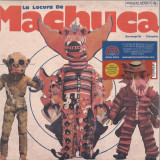
La Locura de Machuca is the story of one man’s bizarre odyssey into Colombia’s coastal music underground, and the wild, hypnotic sounds he helped bring up to the surface.
One night in 1975, a successful tax lawyer named Rafael Machuca had his mind blown in Barranquilla’s ‘Plaza de los Musicos’. Overnight he went from a high ranking position in the Columbian revenue authority to visionary production guru of the newly formed record label that bore his name, Discos Machuca, and for the next six years he devoted his life to releasing some of the strangest, most experimental Afro Psychedelia Cumbias ever produced. La Locura de Machuca is the story of one man’s bizarre odyssey into Colombia’s coastal music underground, and the wild, hypnotic sounds he helped bring up to the surface.
The Colombian music industry was thriving in the mid-seventies, but while homegrown bolero and vallenato tunes were doing well on the charts, it was imported African records that were setting crowds on fire at the picos – the sound-systems that fuelled neighbourhood parties – and wherever those records were played there were always a handful of groups who were inspired to plug traditional Cumbia directly into the electric currents coming from across the Atlantic.
It was these obscure bands, who fused Colombian and African rhythms with the swirling organs and psychedelic guitars of underground rock, that fired Machuca’s imagination. While the label made its money releasing popular hits by legends such as Alejandro Durán and Aníbal Velásquez, that money was poured back into a unique run of experimental releases by fringe artists such as La Banda Africana, King Somalie, Conjunto Barbacoa, and Abelardo Carbono, one of the godfathers of Champeta Criolla.
When Machuca couldn’t find groups to realise his particular vision, he simply created them himself. Drawing on a fearsome roster of musicians associated with the label, he assembled bands that lasted only as long as it took to record an album ,and unleashed the results – complete with arrestingly unusual album covers – under a series of different names such as Samba Negra or El Grupo Folclórico. This unorthodox approach led his longtime recording engineer, Eduardo Dávila, to describes Machuca’s productions as the “B-Movies of Colombian music.”
The story of Doctor Machuca and his eccentric exploits tells of one of Colombia’s most atypical and peculiar record companies; a defining pillar of Afro-Caribbean psychedelia. His productions have come to represent the roots of Champeta and set the pedigree standards for Afro and Costeño avant-garde. The seventeen tracks on La Locura de Machuca, harvested from the darkest, strangest corners of the Discos Machuca catalogue, sound like little else recorded before or since.
Far heavier than their previous record. That’s evident from the get go, as they bash their way through the opening track “Give Me Your Hand,” a rhythm-heavy number fueled by fiery guitar solos, strident vocals, and a hard rocking sound. Yet the band still takes some interesting excursions along the way. “Good Lord,” for instance, encompasses Latin rhythms, a Southern rock segment, space rock passages, and even pop. The Beatles get a nod on “Any Way,” and funk goes psychedelic on “Get One Together”. Still it’s a hard rocking extravaganza. In later years, Charge’s reputation among prog rock fans soared, more so than their self-titled album.
Charge! is available as a limited edition of 1000 individually numbered copies on silver coloured vinyl.
On to my short review. I have to admit that I'm biased in favour of Charles Tolliver. He plays with a combination of strength and sweetness that goes beyond mere language. The fact that he is self -taught is more miraculous. This particular recording has the best sound quality I've ever heard. The clarity is stunning and all the music is magnificent. The recording is so good, one can hear the sound of a musician's fingertips accidentally brushing across the bass strings, for example. Alvin Queen is always brilliant on the drums. This group has a synergy that just goes so deep, it feels like they're reading each others' minds. But I can't recommend this enough. It's some of the best recorded jazz I've ever experienced.
Here in solo instrumental mode, the entire record consists of just one instrument, the pipe organ, and represents absolute liberation of the imagination.All Thoughts Fly radiates a melancholic beauty, and is distinguished by fluid transitions of contrasting elements; calmness and drama, harmony and dissonance, much like the place that inspires the music. About the album Anna explains"there's a sadness and wilderness that inspired me to write this album, also a timelessness. I believe that this park has survived not only due to its beauty but also because of the iconography, it has been liberated from predictable ideas and ideals. The people who built this park truly set their minds and imagination free. All thoughts fly is a homage to this creation, and an effort to articulate the atmosphere and the feelings that this place evokes inside of me. It's a very personal interpretation of a place that I lack the words to describe. I'd like to believe Orsini built this monumental park out of grief for his dead wife, and in my Sacro Bosco I used this story as a core for my own inspiration: love as a foundation for creation."
*repress*
Justin Cudmore returns to the Phonica White shelves with four new tracks, and his long-awaited first full EP since 2017's "Forget It" for The Bunker New York. With the dancefloor seeming far outside our reach right now, 'Train Dance' transports us back to a simpler time lost in the mix.
Across the disc, Cudmore reflects on the sounds and scenes closest to his heart and record bag, flexing his knack for crafting catchy hooks and the kind of ear-worm melodies that helped cement his status as one of house & techno's fast-rising stars. A1 "Train Dance" is his ode to the urban symphony of train cars whirling past his apartment in Brooklyn, with eight minutes of swingy, jacking house built for a sunny afternoon set across the pond at Panorama Bar.
"Club Fetish" shifts to a more introspective, heads-down vibe crafted instead with a dark and sweaty basement in mind. A touch of psych à la classic John Tejada, Cudmore's subtle, squelchy synths rub shoulders with cerebral drums and floating basslines.
The B-side nods to Cudmore's acclaimed acid sound for two deep slow rollers. "Expectation Game" and its no-nonsense 303s chug through a couple of understated breakdowns, while "Realize" was written with a Detroit outdoor patio in mind, with a sleazy acid bassline and cut up vocal groans sounding like Cudmore riffing on a late-night Moodymann jam.
Recorded during a productive time of new beginnings and positive headspace, ‘Train Dance’ comes out during a strange and unclear present for Cudmore and many of his contemporaries in the scene. However given it all, Justin remains excited to share new music and sounds, and hopes to return to the dance floor with everyone again as soon as safely possible.
Artwork as always is supplied by the talented Pedro Carvalho de Almeida
Alfredo "El Inca" Linares is one of the best and most beloved musicians in the history of salsa. Fans love his piano playing because of his authentic Cuban feel and 'swing' combined with progressive arrangements and uncompromising phrasing. "Lo Que Tengo" is full of rock solid dance floor killers and no filler, recorded in 1980 with some of the cream of the crop of contemporary Venezuelan salsa musicians (members of Mango, Madera, El Trabuco Venezolano, Los Dementes, Los Melódicos, Dimensión Latina, Guaco, and La Salsa Mayor) and launched there on the indie label A.L.G. Records as ¡Con Todo!, and then a year later on the much larger Velvet Records with a different cover. This a classic Alfredo Linares album, but with the updated studio sound of 1980s Caracas. With five perfectly paced salsas, one funky cha cha chá, a steamy bolero and a dance-friendly Latin jazz number to top it off, there is something for everybody on this record. Thankfully today's generation can now enjoy this rarity at a fraction of the cost of an original copy. Presented in its original artwork and pressed on 180g vinyl. Good to know: Alfredo "El Inca" Linares is one of the best and most beloved musicians in the history of salsa. Fans love his piano playing because of his authentic Cuban feel and 'swing' combined with progressive arrangements and uncompromising phrasing that puts one in mind of Eddie Palmieri. As a composer, arranger and band-leader Linares is highly respected as well. Ever since the 1960s in Lima Peru when his career began, his records have always been on point, being super tight, sharp, and hard as hell, what salseros call salsa brava con afinque. It's no surprise that Lo Que Tengo is exactly that: full of rock solid dance floor killers and no filler, played with verve and flair. Unlike some of his other records that were patched together from various sessions made in different studios (sometimes even in several countries!), this album has the advantage of being produced, recorded and mixed by Alfredo Linares all in one studio and block of time, and backed by hand-picked seasoned professionals who Linares had already played with, both in the studio and on stage, lending it a consistency and sonic integrity that is excitingly manifest in every groove. The album was recorded in 1980 in Caracas with some of the cream of the crop of contemporary Venezuelan salsa musicians (members of Mango, Madera, El Trabuco Venezolano, Los Dementes, Los Melódicos, Dimensión Latina, Guaco, and La Salsa Mayor) and launched there on the indie label A.L.G. Records as ¡Con Todo!, and then a year later on the much larger Velvet Records with a different cover. The LP was also released in Colombia (INS, 1982) and the US (Gallo, 1984), both editions utilizing the Velvet Records cover. During this time Linares had been in Venezuela for some five years and was under contract with a nightclub in Caracas. Through being on the salsa scene there he became friends with the band Mango and even guested on an album with them in 1976. After the contract was up Linares was a free agent again and he was able to draw on his friendship with Mango and assemble a band to back him, first for the Colombian/Venezuelan production Salsa de Verdad (Fonodisco, 1976) and then again with ¡Con Todo! / Lo Que Tengo. One of the distinctive aspects of Alfredo Linares tunes is the 'break' (la cierre)-there are always plenty of dramatic hand-clapping breakdowns followed by an infectious tumbao (sustained vamp) section that sends shivers up the spine and makes the dancers go crazy. In addition, Linares always lets his musicians stretch out, especially in the percussion section. Again, Lo Que Tengo is no exception: there are so many examples of typical arrangements here that one could call this a classic Alfredo Linares album, but with the updated studio sound of 1980s Caracas, which was awash in petro-dollars at the time and so had the latest equipment and a strong consumer base for the salsa market. The album's title tune (originally credited on the Venezuelan edition as 'Lo que tengo que crear'-'What I Have To Create') is by Mango's timbalero José "Cheo" Navarro and sums up Linares' central career philosophy: the musician lives every day to create music, to spread joy and create a party, without complications, wherever he goes. With five perfectly paced salsas, one funky cha cha chá, a steamy bolero and a dance-friendly Latin jazz number to top it off (note the bluesy piano solo from Linares and the sublime vibes of Mango's Freddy Roldán), there is something for everybody on this record. Thankfully today's generation can now enjoy this rarity at a fraction of the cost of an original copy.
Dutch mainstay Jeroen Search is a true genius of building linear grooves, either subtly breathing or powerfully bouncing. His Figure release following the 2018 LP Monism reflects this aptly once more. Minimalistic, hypnotic loops simply introduce the varied 5-track EP, followed up some by some heavyweight acid-house punchlines.
The flip makes its name, changing course again in order to head deeper for a more heads-down exploration of the bleep-space nebula. Sitting firmly nestled in the center of the record, Magnet Tapes is that endless loop suspended in time and space, slowly working its way into one’s consciousness with every repetition. Search cleverly captures this moment to introduce some sounds beyond the structure of track and loop, challenging our conception of music yet playfully igniting the mind’s imaginations.
Aiming for the finish line, the EP comes to a halt only after another taster of Jeroen Search’s deadpan efficient loop science, effortlessly stacking layers of rhythms for an ultimate straight-up techno workout.
2023 Restock
Within the elusive confines of this film awaits an unreleased album that defies categorisation by a musician who in a different time and space would be revered amongst some of the most important exponents of progressive rock, dark ambient, Krautrock and pioneering synthesiser composition - not to mention sound design and art-house film scores. As a protégé of François Bayle and Luc Ferrari who had studied classical music before immersing himself in found-sound manipulation and oscillators, Alain Pierre quickly became an enthusiastic go-to man for sound sculpture and technical studio proficiency in Belgium’s small film industry.
To the many generations of dedicated fans of the visual work of Philippe Druillet it might seem virtually impossible to adequately “score” the alien, futurist landscapes of the man who many called the “space architect” (on account of his space age reductions of Gothic cathedrals, Art Nouveau, and Indian temples), but once you have heard the sonic reactions of Alain Pierre on this the first-ever dedicated Druillet documentary, Ô Sidarta, complete with his own equivalent sound palette, it will be difficult to “hear” Druillet’s world via any other composer. Despite Druillet’s truly incredible record sleeve designs for projects like cosmic disco ensemble Black Sun, concept albums such as Attention by Jean-Pierre Mirouze (composer of Le Mariage Collectif), Parisian metal bands like Sortilège, gatefold portraits of Jimi Hendrix, later period albums by William Sheller and most relevantly on albums by Igor Wakhévitch (Docteur Faust, 1971) as well as separate releases by both Richard Pinhas and Georges Grünblatt (both from the cosmic prog outfit Heldon), it is fair to say that this criminally unreleased album by Alain Pierre would conjure up the closest synergy between sound and vision that either artist would come close to.
The almost twelve of continuous music that Alain Pierre supplied for Ô Sidarta in 1974 fortunately appears in its entirety, unedited, as it does here for the first time ever away from its original broadcasts. Broadcast on Belgian and French TV that autumn, the film received a warm reception from Druillet fans, prospective film producers and space rock fans lucky enough to catch the short feature.
Throughout his career Alain’s commitment to conceptual music excelled within both cinematic realms as well as with the live arena. Never shying away from the constraints of transporting heavy synthesiser technolog and unpredictable analogue equipment to public spaces, Alain took his self-initiated “live” work very seriously. It was within his lesser-documented performances that you would find the closest sound to the music on Ô Sidarta, proving that the Druillet collaboration was naturalistic and conceptually close to Alain’s personal stylistic agenda. A rare recording of a one-off concert at the Université libre de Bruxelles in October 1976 reveals a very similar set of movements and soundscapes found on Ô Sidarta. This rare artefact has been included on the second side of this record under its original title Notions de physique intérieure (Notions Of Interior Physics) and stands as a perfect companion piece to Ô Sidarta - complete with a very similar “kit list” including the welcome addition of an Arp Sequencer, a Korg Vocoder and a Theremin (a back line whose total would far surpass any stationary studio of the era never mind a live show!).
By looking back at his original composition for one of his very first solo soundtrack commissions, Ô Sidarta, you can hear that back in 1974 Alain had already successfully managed to combine more unlikely musical influences, experimental techniques, and previously unheard soundscapes and studio tricks in to one twelve-minute score than most musicians fail to cram in to a whole discography. But still there is so much music yet to be discovered and Ô Sidarta is just the tip of the iceberg in the middle of a cosmic sea. Much like a character from one of Philippe Druillet’s books, Alain Pierre is a rogue pilot, steering his own ship in to the unknown, uncharted, unnoticed and quite unbelievable.
Flaming Tunes' sole release is perhaps the finest elegy to the '80s home recording ethos that you've never heard. Originally released in 1985 on cassette (with individually hand-colored covers), this self-titled album grew out of the collaboration between childhood friends Gareth Williams and Mary Currie.
Williams is best known as a member of English art-rock band This Heat. After leaving the group in the early '80s, he travelled to India where he studied classical Kathakali dance – an experience that would profoundly shape the music of Flaming Tunes.
In an old Victorian house in South London, the duo recorded during the day while Currie's young son attended school and Williams conducted tape treatments at night. They were joined by various guests including This Heat guitarist Charles Bullen as well as long-term collaborators Martin Harrison and Rick Wilson.
Using whatever instruments they had on hand (clarinet, piano, bells, etc.), Flaming Tunes create lo-fi melodies around simple arrangements, oblique rhythms and densely layered natural sounds. The results are a mesmeric collage of instrumental daydreams and sideways pop songs, floating into one another in a hazy confluence of late '60s Canterbury psych-folk and early Residents experimentation.
All of these beguiling elements converge in a personal manner, quietly insistent in listeners' ears like the blood pulsing in one's veins on a warm summer day.
Today Rozzma announces the ‘Khatar Sayeb’ EP, the artist’s first release for XL Recordings. He kicks off the EP release with ‘Hout’, a track that displays Rozzma’s knack for combining tribal sounds and contemporary urban/street music with a sharp, idiosyncratic flair.
Rozzma is an Egyptian sound artist inspired by the era where sound preceded music – he finds inspiration in the similarities between the wilderness of prehistoric times and modern-day chaos. Having already performed his particular strain of music across the world and at festivals like Sonar and Unsound, Rozzma releases ‘Hout’ into the digital world with an animated video created by the artist’s close friend Mahmoud Shiha.
“Hout is a celebration of beating the odds,” says Rozzma. “It’s about a specific state of mind where one finds comfort in the most extreme and unfortunate circumstances to beat the odds that one could instead fear.”
The EP’s title ‘Khatar Sayeb’ means 'loose danger’. “The release challenges the idea that danger and fear are uncontrollable circumstances,” explains Rozzma. “We cannot fully diminish fear or danger. We can only condition ourselves to believe that safety exists during the absence of fear. It is however more dangerous to deny the uncertainty of danger itself. Danger is a very broad state with infinite circumstances. But it is also infinitely uncertain and mainly linked to luck. We do not control our luck; good or bad. And it is solely luck that dictates danger and safety. It is for that reason that one’s best chances may be to condition themselves to find comfort in danger. Loose danger to be specific.”
Rozzma’s world is one of status quos being challenged, whether that be the real world, the historical world or specifically in the world of music. Rozzma won’t let you settle with what you believe. Everything deserves to be challenged.
Germany’s Jacob Groening is one of those hard to pin down artists working within the space of organic dance music. As a live performer and hybrid DJ, Jacob somehow manages to infuse everything from gypsy to jazz, blues to soul, with distinctly electronic elements. Never one to settle for anything less than unique, his gentle touch and international influences create music that is both sweet and powerful. This sound has already been felt across the likes of Bar 25, teyoyoke, Delicieuse Musique, and his own Kamai Music imprint, and now Jacob
provides the 4th instalment on Amsterdam’s The Gardens of Babylon eponymous label. Jacob’s Leslie Ep is a three-track excursion, Inspired by travels yet constructed in quarantine. It is a testament to the connective power of music through uncertain times, where some dancefloors may be empty, but hearts and minds remain full. Until we meet again, let Jacob’s playful and pulsating Ep satisfy those Communal urges with a journey through sound and culture. Starting this journey, its title track gently swells throughout with subtle chants and hypnotic percussion. Kabir then kicks things up a notch, Bouncing between its own pulsating rhythm and powerful chord progressions. Finally, Iguazu draws direct inspiration from Jacob’s travels through India during times before the world changed. With field audio and local musicians interjected throughout its explorative atmosphere, Iguazu is the perfect representation of Jacob’s distinct style: gentle, shifting, and cultural. If you know The Gardens of Babylon, you know Jacob Groening. His sets from The Dunes of Babylon and ADE’s The Seekers of Light have placed him firmly within family status. Now, with Leslie Ep Jacob Groening joins Geju with his own solo release on the label.
The 3rd release from tINI’s Part Of The Gang Records is here.
This new three-tracker comes courtesy of Barcelona-based Uruguayan producer Jorge Gamarra.
Jorge’s takes influences from Detroit and Chicago, as well as the UK and of course, Montevideo’s electro scene.
Across three cuts we get a selection of future facing productions, composed with a vintage sonic aesthetic imbued with Gamarra’s heady mix of influences.
The track ‘ADE’ is opening the EP with a delightful adventure into the cosmos.
Groaning bass is combined with a menagerie of twinkling sounds, chirps and effects straight from another galaxy.
Next up is ‘MK Ultra’, named after the infamous CIA mind control experiments (“Involves several drugs and electrodes plugged into the brain”).
This one utilises layers of retro instrumentation to take hold of your subconscious and get that body moving uncontrollably...
Finally, ‘DTR’ is 10 minutes of Gamarra demonstrating his production prowess, bringing together groovy bass, sci-fi effects and a catchy earworm, whistling melody…
Leroy Smart the self-proclaimed ‘Don’, carries much respect in the Jamaican musical community. His attacking vocal style gives his lyrics and tunes that extra meaningfulness.
Born in Jamaica and orphaned as a young child, Leroy was sent to Maxfield Park children's home and educated at the famed Alpha Boys School. The school was run by nuns who encouraged musical talent and would provide the world with the cream of Jamaica’s artistic talent. Such legends as Don Drummond, Tommy McCook, Johnny’ Dizzy’ Moore, to name but a few, all learnt their musical trade in this strict environment.
Leroy worked with many Jamaican producers, but seemed to find his feet working with Bunny ’Striker’ Lee. With whom he cut many of his greatest tunes. It is from this period that we have compiled this album. Featuring lost to now dubs to many of his classic tunes, like ' Wreck up my Life’, featured here as ’Dub Wrecker’. ’God Helps the Man’ Help yourself to Dub, Pride and Ambition If I should Dub. Fittest of the Fittest Dub for the Fittest and the title track of this selection his self-affirming Mr Smart Mr Smart in Dub.
These work alongside less known cuts that he also puts his musical stamp on .’No Love’ No Love In Dub. which sees him working over the ‘Zion Gate’ rhythm, made famous by Mr Horace Andy. The ‘My Conversation’ rhythm originally cut by Slim Smith but made into Leroy’s own ‘Jah Jah Forgive them’ For They Know What They Dub. All portrayed in his enviable style.
Such was Mr Leroy Smart’s stature in his homeland Jamaica, that when the ‘One Love’ peace concert line-up was put together for the 22nd of April 1978. The best of Jamaica’s Reggae stars was picked to play alongside Bob Marley & the Wailers. Such greats as Dennis Brown, The Mighty Diamonds, Peter Tosh and Inner Circle were chosen alongside the Don himself, Mr Smart. Whose stage shows were always colourful and to say the least eventful..
Mr Smart has continued to release music during the 80’s & 90’s, most notably with ‘She Just a Draw Card’ & ‘I’m the Don’. But as a set we feel this stands up with the best of them. Hope you enjoy the ride...
Respect Jah Floyd.
'How is it that one of Art Blakey’s greatest albums with the Jazz Messengers is so little known? The 1961 edition of the Messengers included Lee Morgan on trumpet, Wayne Shorter on tenor saxophone, Bobby Timmons on piano, and Jymie Merritt on bass. In February and May of 1961, this group (with pianist Walter Davis Jr sitting in on two tracks) entered Rudy Van Gelder’s studio in New Jersey and proceeded to lay down Roots & Herbs, a brilliant set of six Shorter compositions including the driving hard bop of the title track, the playful “Ping Pong,” and the clever “United.” The album was eventually released in 1970 and deserves a place among Blakey’s finest recordings.
Two great Brunswick sides on one disc, from two of the greatest soul vocalists.
The A side features Tyrone Davis’ version of Clarence Carter’s ‘Slip Away’ from his essential. ‘Can I Change My Mind’ album, which has never previously been available as a single. A mid-tempo toe tapper with a mid-section brass build that’s underpinned by a funky groove.
The flipside cranks up the action with Gene Chandler’s riotous take on James Brown’s anthem ‘There Was A Time’. Worth the entry for the horn stabs alone, it’s an expressive slice of sharp-edged driving funk.
Unbegrenzt is the third in an ongoing series of archival records of the unheard music of Swedish composer Catherine Christer Hennix, co-released by Blank Forms Editions and Empty Editions. It follows Selected Early Keyboard Works and Selections from 100 Models of Hegikan Roku (named the #1 archival release of 2019 by The Wire), in addition to a two-volume collection of Hennix’s writing titled Poësy Matters and Other Matters.
Recorded in February of 1974 and featuring Catherine Christer Hennix (recitation, percussion, and electronics) and Hans Isgren (bowed gong), Hennix’s realization of Karlheinz Stockhausen’s “Unbegrenzt” (German for “unlimited”) from Aus den Sieben Tagen is an elaboration both rigorous and radically different from the canonical 1969 recording issued by Shandar. The collection of 15 text pieces written in Paris during May of 1968, Aus den Sieben Tagen, denies its performers notated direction and instead provides poetic cues that hinge upon Stockhausen’s conception of “intuitive music,” a Eurocentric perspective on improvisation antithetical to the vernacular forms Hennix had engaged with as a young drummer performing in Stockholm jazz clubs with musicians like Bill Barron, Cam Brown, Hans Isgren, Lalle Svenson, Allan Vajda, Bo Wärmell, and many others. While both Hennix and Isgren saw the formal prospect of Aus den Sieben Tagen as a productive development of and beyond La Monte Young’s event scores, she here steadfastly counters his rationalization of intuition with the Principle of Sufficient Reason. (Cf. Brouwer’s Lattice.) Eschewing the busy, conservatory-addled lapses into idiomatic citation of Stockhausen’s 1969 recording, Hennix’s alternative realization of the “Unbegrenzt” score’s instructions to “play a sound with the certainty that you have an infinite amount of time and space” is based on her concept of Infinitary Compositions, the trademark of her ensemble The Deontic Miracle which, at one time, considered adding Stockhausen, La Monte Young and Terry Jennings scores to its repertoire. Taking a mature, minimal iteration of Stockhausen’s compositional method of “moment-forming” to heart, her version’s dark, controlled feedback and amplified bowed gong subtly shift through an immanent sequence of formative moments, step by step. Its bubbling computer noise, percussion, and repeated ominous transient sounds of temple blocks over the bowed gong terminate with the integrated recitation of exotic text fragments from Hevajra Tantra which faithfully take Stockhausen’s score into deeper vistas of the unconscious and a more devastating opening to the unlimited time and space of a dreaming mind.
Audio restoration and mastering by Stephan Mathieu, with an essay by Bill Dietz.
Catherine Christer Hennix (b. 1948) started her creative life playing drums with her older brother Peter, growing up in Sweden where she heard jazz luminaries, such as John Coltrane, Eric Dolphy, Dexter Gordon, Archie Shepp, and Cecil Taylor perform from 1960 to 1967. Directly after high school, Hennix went to work at Stockholm’s pioneering Elektronmusikstudion (EMS), where she developed early tape music, incorporating computer generated speech done at the Royal Technological University (KTH), where she was an undergraduate student. After traveling to New York In 1968, she met artists Dick Higgins and Alison Knowles who invited her to stay at the Something Else Press Town House where she had the opportunity to meet, among others, composers John Cage, James Tenney, and Phil Corner. During the following years she developed fruitful collaborative relationships with many composers in the burgeoning American avant-garde, including, most significantly, Henry Flynt and La Monte Young. Young introduced Hennix to Hindustani raga master Pandit Pran Nath and she would later study intensively under him as his first European disciple. While Hennix continued to make music performing alongside Arthur Russell, Marc Johnson, Henry Flynt, and Arthur Rhames, she also served as a professor of Mathematics and Computer Science at SUNY New Paltz and as a visiting Professor of Logic (at Marvin Minsky’s invitation) at MIT’s Artificial Intelligence Laboratory. In recent years Hennix has led the just-intonation ensemble the Chora(s)san Time-Court Mirage, which has featured musicians Amelia Cuni, Amirtha Kidambi, Chiyoku Szlavnics, Hilary Jeffrey, Amir El-Saffar, Benjamin Duboc and Rozemarie Heggen. She currently resides in Istanbul, Turkey pursuing studies in classical Arabic and Turkish makam.
NAPPYNAPPA and Pat Cain’s Model Home project realigns with Dolo Percussion for SE, their second album on Future Times. A deviation from their self-released run of numerically-titled LPs, SE builds on the impact of REV b/w Flesh - released earlier in 2020 on the label - and shows the Future Times formation of Model Home in full Special Edition mode.
If you’ve been sleeping on Model Home, Nappa and Pat have become a prolific and potent unit of “liberated sound, vision and performance” emblematic of DC’s thriving musical underground community. Self-releasing nearly 20 albums in two years, Pat Cain and Nappa have perfected a sound; a raw expression that is wholly their own. A perfect musical balance attained through intense experimentations in sonic and lyrical imperfection.
Nappa’s blurry-eyed spoken word raps should be recognised alongside the powerful polemics of Moor Mother or the explosive experimentation of Pink Siifu, or fellow DC legend Sir E.U. Nappa is an artist deeply entrenched in the expression of rap but one that recognises there are so many sonic ways in which to frame his state of mind. Which is why the frazzled sound design of Pat Cain has made Model Home such a perfect backdrop for Nappa to express himself. Rap existing in unison with raw electronixxx, dancehall, noise, industrial and whatever else they throw in the mix.
Add the crisply-programmed drums and chaotic FX of Dolo Percussion into the Model Home mix and SE zones into a murky yet richly detailed space that leaves you going “WTF?” multiple times and hammering the repeat button again and again.
Spread over nine tracks, the Model Home trio approach the game from various angles; swerving from the dizzying Bounce triplets and smudged Nappa vox on “Omnipresent Love” to the spacious lyrical interplay n’ woozy moog of “Bag” via the warped Pan Sonic curdle of “Are You Shur?” and the hyper-kynetic rhythmic aerobics of “Topic.”
SE showcases Model Home at their most expressive; plunging deeper into their own weird universe. “Like the seed in the soil,” as Nappa raps on album closer “Cold Gettin’ Dogg.
After a long delay due to his previous powerhouse 'Hypnotised' blowing up the worldwide spot, German maestro Purple Disco Machine finally lets loose the next step in his world dance domination. Every superlative under the sun has been used for this man's talents and he does not disappoint with a return to his updated Italo disco stylings on new single 'Exotica'.
Purple Disco Machine remains at the forefront of world dance music, following a series of remixes for A-list icons Diplo, Dua Lipa, Mark Ronson, Foals, Calvin Harris, Fatboy Slim, Sir Elton John, whilst more recently delivering his stellar cuts of Duke Dumont’s ‘Ocean Drive’, and Lady Gaga and Adriana Grande’s international hit single ‘Rain On Me’.
He now unveils yet another side of his impressive production prowess with new single ‘Exotica’ featuring the Italian electro funk producer Mind Enterprises on vocals, creating an electric club record exploring and playing homage to '80s German and Italian euro disco records that he grew up with.
Based around a replayed sample of 80’s Italo disco classic ‘Void Vision’ by Cyber People, Purple Disco Machine creates a high energy dance-floor heater with a lively modulated vocal. ‘Exotica’ shares its name with the forthcoming studio album, which the artist confirms will feature his playful interpretation of the music of the decade that birthed the Purple Disco Machine sound; Synth Pop, Italo Disco, Electro Funk, Soul, R&B and Boogie.
Certified as one of the most prolific electronic artists of our generation, the Dresden born producer ranks #2 on Beatport’s all-time Top Artists, with his 2013 breakthrough hit ‘My House’ remaining as one of the platform’s best-sellers through to today. With an undeniable midas touch, Purple Disco Machine landed himself in the record books once again in 2018, whilst amassing a stunning 100 million streams across his original ‘Dished (Male Stripper)’, and remixes of Weiss’ ‘Feel My Needs’, and most notably his remix of the seminal ‘Praise You’ by industry icon Fatboy Slim. With a slew of varied releases including hit singles ‘In My Arms’, ‘Body Funk’ and ‘Devil In Me’, the producer’s status was propelled by his debut LP ‘Soulmatic’, earning him critical acclaim across the globe.
Michel Baumann is one of Germany's most respected artists. You probably know him as Soulphiction, his iconic alias Jackmate and head chief of Philpot - a label pushing the sounds of dance music in every possible way since the beginning of 2000.
Now making his debut on the very first release from 18437 Records, after teasing everyone with his recent 12" for Matthew Herbert's Accidental label, Jackmate is back in full swing.
Opening track Modulate Nightdrive is a mind expanding, deep techno affair. Remember when techno had funk and made you sweat? This is it.
Next up is CubanLinx, a percussive machine voodoo exercise. Last but not least, Test Drive shows why Jackmate is still relevant as a producer and worthy of your record collection.
The recipe is simple, a drum machine, a few thick bass notes and whack on some chords - voila - timeless dance music delivered by Michel Baumann.
Label info:
18437 Records is a brand new label by focused on the outer fringes of house and techno.
In these dark times of Covid we still have our music. We have the sounds to soothe us, distract and take our minds away from the chaos and uncertainty.
We can't dance like we used to but we can hear and feel. Our release must be found in another way, we must look within. We find solace and grant ourselves space and time in the music.
Sam McQueen (Indio co-producer with John Beltran, Indigo Aera, Delsin Records, Furthur Electronix) presents his debut album Dreams In Sepia for Mojuba sub label a.r.t.less and hits us with a real time soundscape of the moment, an epic-like document of these times. The rhythms are subtle, sometimes broken, the time structures often complex, this is not primarily dance floor orientated music. These sounds are way more cerebral, for the heads. They reflect perfectly the complexities of life we are experiencing in 2020.
The edges are rounded with occasional strolling bass lines and comfy chords. Slabs of keys and spaced out female vocals like a psychedelic journey that scares you at first yet comforts you soon after. Sam McQueen's mediatory sounds give an overwhelming sense of the moment. The music makes you take time out and listen. Its purposeful manner suggests there are more hours in the day, like time slowing down a pause, like the sun slithering slowly behind the horizon. These are sunset sounds for dark back-rooms.
Daytime or night, it works. This is the soundtrack for the other room, the deeper sounds not designed to make you dance. This music doesn't get in your face, it creeps up and smacks you on the ass. There are elements of early nineties UK Techno, a warmth and delicateness that pervades a distinct lack of four four dance floor in the beat structures, a softer tone throughout than the harder Detroit techno sounds of the same era but still nods and acknowledgements to the D in the layout and way the sounds present themselves. Think John Beltran, Symbols and Instruments, Black Dog or Kirk DeGiorgio, mid 90s Berlin sounds from Basic Channel / Rhythm & Sound, but in lockdown. Music for today's modern lacking landscape. The sounds often familiar, analogue, the drums, hi hats and snares, shimmer, jazz style. They accentuate and push the rest of the elements around them.
?In a bygone era this would be crudely classed as Chill Out music. In 2020 Covid era its about how it makes you feel as you relax and really listen to it. It is about emotion and empathy, a oneness, a new unknown and a deeper train of thought for the listener. Much like 2020, Sam McQueen lays the pieces round the edge of the jigsaw and lets you fill in the rest.
Reissue of this mesmerizing record including an unreleased alternate mix of "Subterranean Zappa Blues". Hypnotic rhythms made of slow minimal beats, industrial textures, intoxicating drones and repetitive voices that seem to merge from dreams. Everything built by two of the most brilliant industrial music minds: Steven Stapleton and Colin Potter.
"This album arrived somewhere after a dream meeting of several individuals, Graham Bond, Joe Meek, Jacques Berrocal and myself. After a few beers and a heated disscussion of puncture repair we all lay down in a circle and point our penises at Venus, telepathic messages are sent out to Colin saying he can use the two golden microphones. He did, and here we are." Steven Stapleton, 17.1.94.
Rock 'n Roll Station began life with Steven Stapleton asking engineer Colin Potter to remix some of the more rhythmic elements of 'Colder Still' from 1992's Thunder Perfect Mind. As Potter gradually warped these sections into weirder and weirder pieces, a new album began to emerge. Potter himself explained it to David Keenan in England’s Hidden Reverse: “What I sometimes did in the studio was to ‘over-use’ effects and processors to totally mutate a piece into something completely different” while Stapleton observed how “it was almost as though telepathic messages were sent over to Colin. We’d started an album together at IC Studio that was never finished. He then sent me some vague mixes, which were just what I had in mind. So, from that basis, I started putting the album together.”
Potter would quickly become a key player in Nurse With Wound’s productions, a position he continues to fulfil to this day. He was first credited as a member on 1992’s Thunder Perfect Mind, a tour-de-force of cold, at times hostile, machined atmospheres, but considers Rock ‘N Roll Station from the following year to still be his favourite.
Building on percussion and drone elements, Stapleton and Potter throw in a huge range of bizarre and atmospheric elements: didgeridoos, chanting voices, and their usual selection of unidentifiable sounds.
Its strong focus on rhythm was erroneously surmised by some as an attempt to join the then rising electronic dance music scene. But it was Stapleton’s recent obsession with the music of ‘King of the Mambo’ Pérez Prado that was beating at the heart of Rock N’ Roll Station’s heady rhythms.
The album’s title alluded to two specifically rock-related stations of influence: the song of the same name by Jac Berrocal, of which a surprisingly straight cover opens the album in homage; and the tragic life of the Sixties British R&B organist Graham Bond who influenced bands such as Deep Purple and Cream. Beset by mental health problems (at one point believing he was the son of Aleister Crowley), Bond died under a train at a Tube station in 1989 and it is this tragic scene that Rock ‘n Roll Station’s closing track, ‘Finsbury Park, May 8th, 1:35 PM (I'll See You In Another World)’, sets in sound.
- A1: Every Day I Have The Blues
- A2: When My Heart Beats Like A Hammer
- A3: Bad Luck Soul
- A4: You've Been An Angel
- A5: Get Out Of Here
- A6: My Sometime Baby
- A7: Good Man Gone Bad
- B1: Someday
- B2: You Done Lost Your Good Thing Now
- B3: You Know I Go For You
- B4: Please Accept My Love
- B5: Lonely
- B6: Days Of Old
- B7: Bad Luck
- C1: 3 O'clock Blues
- C2: Fishin' After Me
- C3: Don't Cry Anymore
- C4: The Woman I Love
- C5: Going Down Slow
- C6: Sweet Little Angel
- C7: I Am
- D1: Bad Case Of Love
- D2: I Wonder
- D3: Mean Ole Frisco
- E1: Sugar Mama
- E2: Things Are Not The Same
- E3: My Reward
- E4: Be Careful With A Fool
- E5: Don't Look Now, But I've Got The Blues
- E6: Walking Dr Bill
- E7: Gonna Miss You Around Here
- F1: Hully Gully Twist
- F2: Lonely Lover's Plea
- F3: Peace Of Mind
- F4: Early In The Morning
- F5: Time To Say Goodbye
- F6: Dark Is The Night (Part 1)
- F7: Partin' Time
- D4: Sweet Sixteen (Part 1)
- D5: Sweet Sixteen (Part 2)
- D6: Worry Worry
- D7: Quit My Baby
This 3LP compilation documents B.B.King's breakthrough years, when, initially signed to the Bihari Brothers' RPM label, he unleashed a torrent of superb recordings that would establish him as the world's most famous blues singer-guitarist. He made scores of remarkable recordings during his career - but the ones on this compilation represent that marvelous moment in time when Riley King and Lucille combined to make their indelible mark on the history of the blues.
The electronic musician and Poker Flat founder's contemplative new studio album takes in minimal house music, moody techno and effervescent breaks across 11 unique tracks. His previous LP Paradise Sold alongside Langenberg was released in 2018 to critical acclaim, and described as "elegantly euphoric" by Mixmag. Never Ending Winding Roads is an entirely solo release however, with much of it produced during the months of enforced isolation due to the coronavirus pandemic. Many of the track titles reflect Steve's headspace during this time, with themes of solitude, contemplation and reflection brought to the fore perhaps more than with any of his previous work. Steve's formative musical years were spent during Germany's techno and acid-house heyday, with his love for a perfect groove as apparent now as it was back then. His DJ skills and a keen, innovative ear led him not down the typical path of the early nineties trance and harder dance scene, but instead towards a fresher, hybrid sound-merging stripped deep house, tweaked out acid and more minimal forms of techno and electronic music: a strand of music he fiercely champions to this day.
"My mindset when making Never Ending Winding Roads was completely different to any other project I have embarked on. I didn't have to tour, and instead could focus 100% on writing music without having the dancefloor as a constant influence. This allowed me creative freedom to explore a range of styles and emotions, and as a result, it is the album I feel most satisfied with to date." says Steve Bug.
With 11 brand new tracks, Never Ending Winding Roads is a meticulously produced and deeply engaging electronic album; one that explores various shades of house, techno and broken beat with Steve's celebrated attention to detail and consummate originality. Album opener Lucid Loops perfectly sets the tone, immediately ensnaring you with a hypnotic, undulating synth line and a faintly menacing undertone thanks to hushed, discordant strings and unnerving vocal stabs. This atmosphere of quiet paranoia permeates many of the tracks on Never Ending Winding Roads, most explicitly in the sinewy groove and sketchy, panic-inducing synth line of Locked Away In My Head.
This album more than perhaps any other in his career sees Steve experimenting with broken-beats, to incredible effect. Tracks like A Conscious Machine and Electro Harmonix are melodic, emotionally-rich cuts: burst of radiant optimism that juxtapose beautifully with the album's darker moments. Elsewhere tracks like Yellow Snake find Steve exploring deep, dubby territory, while album closer Upon Mountains is a cosmic, arpeggiated masterpiece: an 8bit computer game soundtrack reimagined as a poignant electro ballad.
- 1: The Niambi Big Band - Brass Winds
- 2: Brother Yu Sextet - Freedom
- 3: Morton And The Uptights - Montego
- 4: Organic Pulse Ensemble - Attitude
- 5: James Scales & All Stars - Ser-Vi-Tude
- 6: Donn Preston Group - Ghana-Cha!
- 7: Lonnell Dantzler - Bo-Ghana
- 8: Tommy Jones - Egg Nog
- 9: Bohannon Trio - Untitled No 1
- 10: Wayne Powell Octet - Quernemoen
Tramp Records continues their pilgrimage to the soulful fringes of spiritual jazz and progressive rock and funk with their 3rd and 4th volumes of their "Peace Chant, Raw, Deep and Spiritual Jazz" series, and the world could not be more ready.
As we turn together on this tiny blue ball hanging lonely in space, and as we together face existential threats ranging from climate catastrophe, the rise of brutal authoritarian regimes, the breaking of the industrial storm and the imminent collapse of empire, not to mention the raging covid-19 crisis and the continuing racial and social struggles across the globe, we are thrust into a society-wide grand awakening that has been in the making for a very long time. Of course, our musical teachers have trod this path before us, and have worked out solutions to these problems, the songs of the Peace Chant series ring out loud and clear as our ancestors' proof of concept. They say history repeats herself, maybe it's because we weren't listening the first time. Thanks to Tramp Records, we have been granted another opportunity.
Today, the musical and spiritual truths enshrined within the spiritual jazz diaspora seem to be more and more sought-after, and crucial at a time when we as a society seek higher and farther for those bold truths. With each generation, that truth doesn't change, and the artists featured in the series speak those truths along a continuum that ranges from the late-60s up to the present day.
Volume 4, the second LP opens with a gorgeous and lush Wurlitzer-oriented big band piece that among its many treasures also features the 17-year-old visionary-saxophonist-to-be, Steve Coleman in his alleged first recording! The contributions of Brother Yusuf Salim and Bus Brown, figures who should be very familiar to Tramp Records aficionados, are consecrated here with a live recording of Freedom from one of Brother Yu's last public performances. One of the two European contributions to the comp, Attitude, by Organic Pulse 'onesemble', reads like a double entendre, the word "attitude" meaning simultaneously one's disposition or state of mind, and also one's orientation relative to the horizon. The Peace Chant series continues to touch all the sacred meridians: more devotional music with James Scales & All Stars' Ser-Vi-Tude, trance music of non-dominant traditions with Donn Preston Group's Ghana-Cha!, a modal and blue organ trio offering from Tommy Jones, and closing with a rich and righteous ballad, Quernemoen, from the Wayne Powell Octet.
Peace Chant is the center of the mandala, representing the nucleus of the post-bop, modal jazz, avant-garde, transcendental, spiritual, ethnic, and freedom music universe without necessarily suggesting anything immediately identifiable as any of the above. This is the soundtrack to the raising of human consciousness and the salvation of society's very soul.
We give thanks to Tramp Records for leading our thirsty hearts to this rich fountain.
Barry Brown one of reggaes vastly overlooked talents. His militant conscious style has over time lost none of its appeal. Truly one of the sweetest roots vocalists to come out of Jamaica.
Born in 1962, Kingston, Jamaica, he cut his musical teeth working under producer Bunny Lee. Their first release was a track called ‘Girl You’re Always on my Mind’, although a minor hit, Bunny Lee saw his potential and was rewarded with his 1979 cut ‘Step it up Youthman’ which became a hit and has become a roots classic, leading to an album of the same name. The late 70’s was a great period in Barry Brown’s career and its from this period that we have culled this set of tracks. Straight from the master tapes some of his finest moments and some unreleased gems that we believe should be heard. A great set from his timeless 'Trying Youthman' a tail of struggling times in the heart of Kingston Jamaica.
His rastafarian inspired chants 'Stop Them Jah Jah','Give Thanx and Praise','Natty Rootsman' and 'Lead Us Jah’ work alongside socially charged cuts as 'Politician', 'Big Big Pollution' and 'Mr Money Man'. As with all his tales and inspired lyrics they are put across in such a tuneful way that like all the best songs that carry a message can be remembered also through the strength of the song.
As with many of his artists Bunny Lee encouraged him to go into self-production, and after a time spent with producer Linval Thompson ‘Separation’, and Sugar Minott ‘Things & Time’, he did just that and produced his first release ‘Cool Pon Your Corner’ in 1980 followed in 1981 by ‘Problems Get You Down’.
We hope this release will find a place in your collection and remind us of the talent of Mr Barry Brown. If somewhat overlooked, but certainly now not forgotten. Let’s celebrate with the man and go to the blues one more time....
“Easy rider, come and take me higher”. When the world seemingly crumbles around, music can provide an escape few other mediums can. For their debut self-titled LP, Velour effortlessly levitate you above the madness below, each track taking a new turn, cruising over hazy flecked skylines, bustling walkways and bleary eyed bedlam. A trajectory that takes in all of jazz’s vibrancies, blending elements of neo soul, broken beat and hip hop coupled with a much-needed sense of hope across nine deep, soul-searching tracks released via WOLF Music Recordings.
A style and sound taking influence from genres and moods, environments and experiences, Essen-based Velour stretch their legs for this, their first full length album. From the off, they nestle you under their wing with the rustling sax washes of opener ‘CLP’ before diving into an epic slo-mo burner, swooping down into the chaos as singer, Eva Czaya, wistfully narrates the scenes beneath.
Unafraid to shift pace within songs, the likes of ‘Pose’, sauntering from soulful summer groove into woozy late night affair, and ‘Tom's Garage’, that progresses from roadside recounting to grungy basement blowout, finished with a sample of jazz-tinged dusty beats, show that accomplished and adept heads rest on the shoulders of these relative newcomers.
WOLF Music mainstay Mr Fries continues to head up production for Velour, his trademark touch capturing the intimacy of Velour’s sound presenting it in a way that’s considered yet raw - nothing feeling rushed, nor cluttered. A separation and space that gives each element the room it deserves to breathe, with short interludes and skits providing the perfect bridge between tracks, guiding you through smokey jazz bars and twilight whisperings.
Moving through the album, Czaya at points wanders in a serene spoken dialogue, at others letting her voice loose, but always with an ethereal demeanour that comes off with natural ease. One of many highlights, ‘Anthony Davis’ shows off this celestial prowess whilst perfectly embodying Velour’s dream-like escapism. A pent up release of creativity, as moody bass tones mix with deft keys, rolling snares sit behind swirling saxophones.
The journey ends with ‘Luminate’, a transcendent closer laced with space-echoed vocals that reverberate around over-driven Rhodes and feverish drums. Cymbals crash, as modulated synths rise, building and building before easing you off into the night and on your way to a parallel universe.
As a body of work, ‘Velour’ is a shining example of the freedom, energy and enthusiasm of the new school of jazz that’s been captivating minds the world over. An instant on repeat staple - let go, feel the flow, it’s what we need in a time like this.
- A1: Volume (Lp1 Gyrate)
- A2: Feast On My Heart
- A3: Precaution
- A4: Weather Radio
- A5: The Human Body
- A6: Read A Book
- B1: Driving School
- B2: Gravity
- B3: Danger
- B4: Working Is No Problem
- B5: Stop It
- C1: K (Lp2 Chomp)
- C2: Yo-Yo
- C3: Beep
- C4: Italian Movie Theme
- C5: Crazy
- C6: M-Train
- D1: Buzz
- D2: No Clocks
- D3: Reptiles
- D4: Spider
- D5: Gyrate
- D6: Altitude
- E1: The Human Body (Lp3 Razz Tape)
- E4: Working Is No Problem
- E5: Precaution
- E6: Cool
- E7: Functionality
- F1: Efficiency
- F2: Information
- F3: Dub
- F4: Modern Day Fashion Woman (Version 2)
- F5: Danger
- F6: Feast On My Heart (Working Version)
- G1: Untitled (Lp4 Extra)
- G2: Cool
- G3: Dub
- G4: Recent Title
- G5: Danger!! (Danger Remix)
- H1: Crazy (Single Mix)
- H2: Reptiles (Channel One Version)
- H3: No Clocks (Channel One Version)
- H4: Spider (Alternative Mix)
- H5: 3 X 3 (Live)
- H6: Danger Iii (Live)
- E2: Modern Day Fashion Woman (Version 1)
- E3: Read A Book (Instrumental)
In the late-1970s Athens, Georgia was buzzing with a raw but sophisticated music scene. Traditional Southern rock had been the Georgia musical export for years before but the turn of the decade began producing new sounds from bands like the B-52’s, REM and Alt Rock luminaires Pylon.
Before they were a band, Pylon were art-school students at the University of Georgia: four kids invigorated by big ideas about art and creativity and society. However, Pylon were less of a band and more of an art project, which meant they had very specific goals in mind, as well as an expiration date.
While their time together as a band was short lived (1979-1983), Pylon had a lasting influence on the history of rock and roll. Throughout their brief history, they were able to create influential work that would help foster the post-punk and art-rock scene of the early 80s. Artists like R.E.M., Gang of Four, Sonic Youth, Sleater-Kinney, Interpol, Deerhunter and many more claim inspiration from the band.
Their 1979 single ‘Cool’ / ‘Dub’ reached legendary status, with Rolling Stone titling it one of the 100 Greatest Debut Singles Of All Time.
In 1980 the band released their first record, ‘Gyrate’, and began touring across the country in support of the release. The band would soon develop a following across the country and specifically in the bustling music scene in New York City. One of their earliest gigs was opening for the Gang of Four in the Big Apple.
Following the critical acclaim of their debut release, Pylon went back into the studio. They gleefully pulled their songs apart and put them back together in new shapes, revealing a band of self proclaimed nonmusicians who had transformed gradually but noticeably into real musicians. The resulting album, ‘Chomp’, was barely off the press when Pylon were booked to open a run of dates for a hot new Irish band called U2 (after previously playing two arena shows with them in the month leading to the album release). Most bands would have jumped at the opportunity but Pylon were sceptical. At a critical point in the life of Pylon, they opted to become a cult band rather than stretch their defining philosophy too far.
“We fully intended Pylon to be an almost seasonal thing that we were gonna do for a minute and then get on with our lives,” says Curtis Crowe, drummer for the band. “But it just never went away. It still doesn’t go away. There’s a new subterranean class of kids that are coming into this kind of music, and they’re just now discovering Pylon. That blows my mind. We didn’t see that coming.”
New West Records are proud to partner with Pylon to reissue ‘Chomp’ and ‘Gyrate’ back into the masses. Beautifully remastered from the original audio sources and pressed on vinyl (140g) for the first time in over 30 years.
New West Records also present ‘Pylon Box’, a comprehensive look at the band that features the remastered studio LPs ‘Gyrate’ and ‘Chomp’, the 11-song collection ‘Extra’ - which includes rarities and previously unreleased studio and live recordings - and ‘Razz Tape’, Pylon’s first ever recording: a 13-song unreleased session that pre-dates the band’s seminal ‘Cool’ / ‘Dub’ debut.
‘Pylon Box’ also includes a hardbound 200-page full colour book featuring pieces written by the members of R.E.M., Gang of Four, Steve Albini, Corin Tucker and Carrie Brownstein of Sleater-Kinney, Sonic Youth, Interpol, B-52’s, Bradford Cox of Deerhunter, Mission of Burma, Calvin Johnson of Beat Happening and K Records, Anthony DeCurtis, Chris Stamey of the dB’s, Steve Wynn of the Dream Syndicate and many more. Features an extensive essay chronicling the band’s history, with interviews with the surviving members of the band as well as members of R.E.M., B-52’s, Gang of Four, Method Actors and more. It also features never before seen images and artifacts from both the band’s personal archives as well as items now housed at the Special Collections Library at the University of Georgia and the Georgia Museum of Art, UGA.
Wah Wah 45s are proud to present a unique collaboration between the U.K.'s very own Afrobeat Ambassador, Dele Sosimi, and a producer who's been at the forefront of the South London electronic music scene for a decade now, Medlar.
The pair first joined forces five years ago, when Medlar was asked by Dele's label to remix the title track from his last album,You No Fit Touch Am. The result was possibly one of the most popular and cherished remixes to appear on the imprint. The producer's respect for the history of Afrobeat shined through in the mix of course, but it was his ability to finely balance that with his house music instincts whilst adding an infectious groove and classic 80s analogue synths that really stood out.
The track was an instant classic, and it soon became clear that the Afrobeat Ambassador and Peckham producer needed to make some music together. Having never actually met during the remix process, the dating began, and luckily the two were clearly a perfect match.
After some weeks of pinging ideas back and forth, and spending time in the studio together, it became obvious that this project was also something they could take out live. As so it has been, from their modest debut performance in East London last spring, to playing festivals across the UK and beyond. Never the same show twice, their shows are based around a bank of rhythms on MPC which come alive when combined with Dele's vocals and improvisational keyboard explorations, all of which are dubbed out live by Medlar. Their musical journey is always unpredictable, vibrant and often quite surprising!
With this in mind, when picking tracks they'd developed on the road over the last year to take into the studio,Full Moonevolved into what might be best described as a bossa nova meets country & western lounge track, suitable for sipping cocktails to on a beach, or perhaps in your back garden in the current situation!
"This is really great this track. Really great!" Gilles Peterson
The original version of the song dropped earlier this summer and has been championed by both Gilles Peterson and Moses Boyd on BBC 6Music. When it came to remix duties, there was only one production outfit who fitted the bill, and one who the label had been trying to coax a remix out of for a couple of years.
Lars Dales and Maarten Smeets, otherwise known as Detroit Swindle, have been turning out musical, soulful, tropical and always party starting house music for almost a decade now. Wah Wah label boss Dom Servini hooked up with the pair at a European festival a couple of years ago, and ever since has been waiting for the right project to come along that would spark their imagination.
"When we heard the original of 'Full Moon' for the first time, we really felt the retro style with the cr78 drum, the dreamy pads and that almost overly simple synth flute. For us, that really defined the direction of the remix and we looked for a hook that could make those elements pop in a more energetic way. The vocal is also super laid back so we chopped it up a bit to give it some more spice. I think it was when we wrote the chords for our remix that the dubbed out 80's synth vibe really started to take form. It turned out to be a really nice remix for this time of year and hopefully it'll warm some hearts when people hear it." Detroit Swindle
The follow up single,Gúdú Gúdú Kan,in turn received support from Tom Ravenscroft and Gideon Coe on BBC 6Music. It's Dele and Medlar's own take on an Afro-disco stomper. The title refers to the role the snare drum plays and its relationship with Ìyá Ìlù kan, or the kick drum. It's a simple but very effective metaphor for this unique musical collaboration where once again the pair forged a sound that's all their own.
Taking things back to The Shrine by way of a little Bugz style bruk magic, Daz-I-Kue's remix ofGúdú Gúdú Kanrestructures the tune more in the style of a Fela classic, albeit with a broken flavour and layers upon layers of keys galore! In doing so, Daz creates what we think is a sure fire future club classic.
For the first time you can enjoy the full length versions of both of these top class remixes on a single slab of gorgeous wax!
Suzanne Ciani is a true electronic music pioneer. The five Grammy nominated Italian-American neoclassical composer is unquestionably one of the greatest minds that contemporary music has ever witnessed. After an incredible career spanning forty years, Ciani’s accomplishments have become a benchmark when discussing the origins of musical synthesis. For more than four decades she developed a body of work that transcends the music industry, composing for film, video games and famous advertising campaigns that have impacted popular culture. On December 14, 2019, after six years of sound experimentation, Lapsus Festival bid farewell to Barcelona’s Centre for Contemporary Culture. Its final event was entitled 'A Sonic Womb' and was dedicated to the musical roots of the synthesizer, with Suzanne Ciani headlining on the night. Ciani performed an exclusive show accompanied by her modular Buchla 200e synthesizer and enveloped in a specially designed multi-channel sound environment by Intorno Labs. It was a sonic voyage to the very heart of her beloved machine and a tribute to improvisation through an instrument that is said to possess its own soul. Suzanne described the night as ”an improvisation that I began using in the ’70s and continue to use now as raw material. Each performance based on this material has its own expression and one could liken it to jazz." Lapsus Records is therefore extremely honoured to present 'A Sonic Womb: Live Buchla Performance at Lapsus', a unique live recording of this extra special concert.
On December 26th, 2018, Emily Cross received an excited email from a friend: Brian Eno was talking about her band on BBC radio. “At first I didn’t think it was real,” she admits. But then she heard a recording: Eno was praising ‘Black Willow’ from Loma’s self-titled debut. He said he’d had it on repeat.
At the time, a second Loma album seemed unlikely. The band began as a serendipitous collaboration between Cross, the multi-talented musician and recording engineer Dan Duszynski and Shearwater frontman Jonathan Meiburg, who wanted to play a supporting role after years at the microphone. They’d capped a gruelling tour
with a standout performance on a packed beach at Sub Pop’s SPF 30 festival, in which Cross leapt into the crowd and then into the sea, while the band carried on from the stage - an emotional peak that also felt like a natural ending. “It was the biggest audience we’d ever had,” she says. “We thought, why not stop here?” Following the tour, Cross went to rural Mexico to work on visual art and a solo record, while Meiburg began a new Shearwater effort. But after a few months apart
(and Eno’s encouraging words), the trio changed their minds and reconvened at Duszynski’s home in rural Texas, where they began to develop songs that would become ‘Don’t Shy Away’. Loma writes by consensus and, though Cross is always the singer, she, Duszynski and Meiburg often trade instruments. Meiburg compares their process to using an Ouija Board and says the songs revealed themselves slowly, over many months. “Each of us is a very strong flavor,” he says, “but in Loma, nobody wears the crown, so we have to trust each other - and we end up in places none of us would have gone on our own. I think we all wanted to experience that again.” The album that emerged is gently spectacular - a vivid work whose light touch belies
its timely themes of solitude, impermanence and finding light in deep darkness. “Stuck / beneath / a rock,” Cross begins, as if noticing her predicament for the first time. Then she adds: “I begin to see / the beauty in it.” A series of guests contributed to the absorbing soundscapes of ‘Don’t Shy Away’, including touring members Emily Lee (piano, violin) and Matt Schuessler (bass), Flock of Dimes/Wye Oak’s Jenn Wasner and a surprisingly bass-heavy horn section.
And then there’s Brian Eno. Loma invited him to participate in the mantra-like ‘Homing’, which concludes the album and sent him stems to interact with in any way he liked. He never spoke directly with the band but his completed mix arrived via email late one night, without warning and they gathered to listen in the converted bedroom Duszynski uses as a control room. “I was a little worried,” says Cross.
“What if we didn’t like it?” But it was all they’d hoped for: minimal but enveloping, friendly but enigmatic, as much Loma as Eno - a perfect ending to an album about finding a new home inside an old one. “I am somewhere that you know,” Cross sings, above a chorus of her bandmates’ blended voices. “I am right behind your eyes.”
First LP pressing on dark green vinyl.
- A1: Infinite Stress/Stress Infinito (From 'Spasmo')
- A2: First Nebula/Nebulosa Prima (From 'The Seecret/Il Segreto')
- A3: 1970 (From 'The Cat O' Nine Tails/Il Gatto A Nove Code')
- B1: Disgust/Raccapriccio (From 'What Have You Done To Solange?/Cosa Avete Fatto A Solange?')
- B2: Followed/Seguita (From 'Cold Eyes Of Fear/Gli Occhi Freddi Della Paura')
- B3: Lemon Obstinacy/Ostinazione Al Limone (From 'What Have You Done To Solange?/Cosa Avete Fatto A Solange?')
- B4: Glass Dolls/Bambole Di Vetro (From 'Short Night Of Glass Dolls/La Corta Notte Delle Bambole Di Vetro')
- B5: Foolish Suspension/Sospensione Folle (From 'Without Apparent Motive/Senza Movente')
- C1: The Serpent/Il Serpente (From 'Night Flight From Moscow/Il Serpente')
- C2: Infinite Stress/Stress Infinito (#4 - From 'Spasmo')
- C3: Solange's End/Fine Di Solange (From 'What Have You Done To Solange?/Cosa Avete Fatto A Solange?')
- C4: Evanescent/Evanescente (From 'Cold Eyes Of Fear/Gli Occhi Freddi Della Paura')
- C5: Emmetrentatre (From 'Short Night Of Glass Dolls/La Corta Notte Delle Bambole Di Vetro')
- D1: Night Walk/Passeggiata Notturna (From 'The Cat O' Nine Tails/Il Gatto A Nove Code')
- D2: In The Middle Of The Chest/In Pieno Petto (From 'Without Apparent Motive/Senza Movente')
- D3: In The Void/Nel Vuoto (From 'Forbidden Photos Of A Lady Above Suspicion/Le Foto Proibite Di Una Signora Per Bene')
Giallo is the fourth in a series of five double vinyl releases that bring together some of Ennio Morricone’s greatest soundtrack music. Each collection centres on a different movie genre, together they allow the listener to rediscover the unmatched genius of the greatest movie composer of all time. The Maestro. This collection was announced before Ennio Morricone passed away on July 6, 2020. We’ll continue to release the series to honour this great composer.
When we think of 1960’s Italian pulp cinema, the spaghetti western is the genre that comes to mind. However, Italy was responsible for another classic cinematic exploitation movement around the same time, one that is equally as compelling, but less widely recognised. Giallo…
Giallo, meaning ‘yellow’, is the Italian term for crime fiction, it was named after the bright yellow colours of early pulp fiction paperbacks. Film audiences adopted it as the name for a peculiarly Italian sub-genre of thriller cinema that had its heyday in the 1970’s - just as the Spaghetti Western movement was waning. The Giallo can be difficult to define, but essentially it is an Italian crime film that draws from a pool of common themes: stylized murders, amateur sleuths, sleazy glamour, psychological crimes, enigmatic titles and all these themes are underpinned by creepily atmospheric Ennio Morricone music scores. Starting 70 years ago as an arranger for the piece Mamma Bianca, Ennio Morricone is the emperor of scores and soundtracks. Morricone has always been a huge influence for the likes of Hans Zimmer, Danger Mouse, Muse, Metallica and many more musicians. He was one of the most successful composers of all-time, selling over 70 million records and winning dozens of awards.
Giallo is available as a limited edition of 3000 individually numbered copies on “giallo and black marbled” (clear, yellow and black mixed) vinyl. The package includes a 4-page insert with liner notes written by Claudio Fuiano. The gatefold sleeve contains a silver foil spot varnish on the outside and images of iconic movie posters on the inside.
Four new original songs from Nachtbraker with intricate percussion and melodic arrangements. Diving deep into Nachtbraker's wicked mind, each tune has a healthy dose of weirdness.
Title track "Bay Be Blu" tickles the endorphin receptors with its euphoric melodies and 'Stranger Things' atmospheres. The second track leans on soothing warm synths gliding over a dub bass with tight drums. In addition, attentive listeners will hear Nachtbraker's personal field recordings on the beaches of Barceloneta. When the record is flipped one finds herself in "Tangelo Dreams", a mid 90's, Pacific Records inspired jam with a driving baseline. Rounding off the record is "Drip", a track drenched in unconventionalism and oddities.
Mastered and lacquer cut by Simon (The Exchange) Davey.
Favorite Recordings presents an exclusive collaboration between French producer Bruno ‘Patchworks’ Hovart (Voilaaa, Mr President, Taggy Matcher, …) and Australian NYC-based rapper and poet Nelson Dialect. The two artists met two years ago after Nelson’s gig in Lyon and, of course, they discussed and seriously planned to collaborate one day, both having an everliving love for early nineties hip hop. Then came the quarantine and Covid-19 with Patchworks locked in Lyon, Nelson Dialect in NYC: it seemed to be the right time to do it. A few months later and they finally drop Blue Benz, the result of their long distance collaboration, coming as a beautiful 7inch filled with proper Jazz & Soul Hip Hop vibes.
On A side, « Blue Benz » reminds indeed the best feelings of the nineties hip-hop with its infectious slapped bass rhythm and subtle Rhodes chords, all fiiting perfectly with Nelson Dialect’s serious flow!
On B Side, « Jazzy Blue Benz » offers an alternate take on the same groove, focusing more on the electric guitar gentle slides with a more percussive beat and horns arrangements with a proper NYC jazz
feeling.
From Adelaide, Australia, Nelson Dialect now lives in New York working with Bronx label Red Apples 45 started by AG of DITC and Ray West. Making music since he was 16, he has received critical acclaim for his work with producer Must Volkoff and their most recent album Magnetism. Before moving to New York, Nelson toured extensively in Australia supporting some of the biggest international Hip Hop acts including Mobb Deep, Lupe Fiasco, Ghostface Killah, GZA, RZA, Pharoahe Monch and DJ Premier among many more. He just released a new album Opal Mind with French producer NuTone.
In the late-1970s Athens, Georgia was buzzing with a raw but sophisticated music scene. Traditional Southern rock had been the Georgia musical export for years before but the turn of the decade began producing new sounds from bands like the B-52’s, REM and Alt Rock luminaires Pylon.
Before they were a band, Pylon were art-school students at the University of Georgia: four kids invigorated by big ideas about art and creativity and society. However, Pylon were less of a band and more of an art project, which meant they had very specific goals in mind, as well as an expiration date.
While their time together as a band was short lived (1979-1983), Pylon had a lasting influence on the history of rock and roll. Throughout their brief history, they were able to create influential work that would help foster the post-punk and art-rock scene of the early 80s. Artists like R.E.M., Gang of Four, Sonic Youth, Sleater-Kinney, Interpol, Deerhunter and many more claim inspiration from the band.
Their 1979 single ‘Cool’ / ‘Dub’ reached legendary status, with Rolling Stone titling it one of the 100 Greatest Debut Singles Of All Time.
In 1980 the band released their first record, ‘Gyrate’, and began touring across the country in support of the release. The band would soon develop a following across the country and specifically in the bustling music scene in New York City. One of their earliest gigs was opening for the Gang of Four in the Big Apple.
Following the critical acclaim of their debut release, Pylon went back into the studio. They gleefully pulled their songs apart and put them back together in new shapes, revealing a band of self proclaimed nonmusicians who had transformed gradually but noticeably into real musicians. The resulting album, ‘Chomp’, was barely off the press when Pylon were booked to open a run of dates for a hot new Irish band called U2 (after previously playing two arena shows with them in the month leading to the album release). Most bands would have jumped at the opportunity but Pylon were sceptical. At a critical point in the life of Pylon, they opted to become a cult band rather than stretch their defining philosophy too far.
“We fully intended Pylon to be an almost seasonal thing that we were gonna do for a minute and then get on with our lives,” says Curtis Crowe, drummer for the band. “But it just never went away. It still doesn’t go away. There’s a new subterranean class of kids that are coming into this kind of music, and they’re just now discovering Pylon. That blows my mind. We didn’t see that coming.”
New West Records are proud to partner with Pylon to reissue ‘Chomp’ and ‘Gyrate’ back into the masses. Beautifully remastered from the original audio sources and pressed on vinyl (140g) for the first time in over 30 years.
New West Records also present ‘Pylon Box’, a comprehensive look at the band that features the remastered studio LPs ‘Gyrate’ and ‘Chomp’, the 11-song collection ‘Extra’ - which includes rarities and previously unreleased studio and live recordings - and ‘Razz Tape’, Pylon’s first ever recording: a 13-song unreleased session that pre-dates the band’s seminal ‘Cool’ / ‘Dub’ debut.
‘Pylon Box’ also includes a hardbound 200-page full colour book featuring pieces written by the members of R.E.M., Gang of Four, Steve Albini, Corin Tucker and Carrie Brownstein of Sleater-Kinney, Sonic Youth, Interpol, B-52’s, Bradford Cox of Deerhunter, Mission of Burma, Calvin Johnson of Beat Happening and K Records, Anthony DeCurtis, Chris Stamey of the dB’s, Steve Wynn of the Dream Syndicate and many more. Features an extensive essay chronicling the band’s history, with interviews with the surviving members of the band as well as members of R.E.M., B-52’s, Gang of Four, Method Actors and more. It also features never before seen images and artifacts from both the band’s personal archives as well as items now housed at the Special Collections Library at the University of Georgia and the Georgia Museum of Art, UGA.
The 20th anniversary year of Dial Records couldn’t have been more exciting for us so far! After the extraordinary well-received release of Soela’s debut-album Genuine Silk and steady excitement around our ongoing series of digital anniversary compilations, we are more than thrilled to announce the second album release of this our very special year: XDB - Inspiron. As a longtime companion and true inspiration throughout the label’s twenty-year history, Kosta Athanassiadis aka XDB enriched our lives with his brilliant productions in the form of countless 12”s and legendary remixes. His long-overdue full-length debut album Inspiron in hand, we find ourselves unpacking the most beautiful jubilee present we could have ever imagined. For almost three decades now Kosta Athanassiadis aka XDB has been involved in the constantly changing world of dance music. His curiosity and dedication to electronic music spiral deep into the depth of House Music and Techno and where ever he appears he generously shares his unique knowledge in this field with equally dedicated crowds. Whether you follow his bloggish “Tracks I do really LOVE”, a collection of club essentials and a library of taste, or you witness one of his remarkable DJ sets from Panorama Bar to Freerotation Festival - XDB will elevate you to one of those unforgettably magical music moments. In 1993 Kosta Athanassiadis started his DJ career in the medieval hometown of Goettingen. To find what he was really looking for, namely, the newest and most exciting new records he frequently had to leave this picturesque city, that is most popular for inventing the traditional Baumkuchen pastry, but has not been on the maps of music connoisseurs necessarily. Frequent trips to visit records stores and clubs around Germany built a network of likely minded people. Some of his favorite and most thought after record labels of the time like the Chicago imprint Relief, or UK's Mosaic, are still fundamental to his very specific musical taste. By the turn of the century, XDB hosted a series of nights at Goettingen's Eletroosho, where he invited Dial’s own Lawrence and Carsten Jost in 2002- the beginning of a still ongoing friendship. He had established himself as a sought after and internationally active DJ and started his fist endeavors into music production as well. Later on XDB founded his own Label Metrolux and released on iconic labels like Sistrum and Wave to be followed by countless remixes for legends like Aaron Carl, Norm Talley and Patrice Scott. An extraordinary stream of gravity connects both, his productions and DJ sets. Once breaking through a seemingly transparent surface, one get’s lost in the beauty and depth of forms and figures. There’s barely DJs and producers who keep searching for this hidden formula in such a microscopically detailed way to pass a lifetime in House Music and Techno on to the world. XDB's Inspiron embraces this unique approach, filters and develops inspirations in an entirely delicate way, and magically emphasizes the desires of the most dedicated listeners and dancers.
There is definitely something "afro" inspired about this latest EP from Puma & The Dolphin, certainly in comparison to pretty much everything else I've ever heard from him, which includes a great EP on Canadian imprint Chambre Noir and some stellar inclusions on every one of Dj soFa's highly respected "Elsewhere" compilations.
I'm told that while immersed in domestic life during lockdown in Sofia, Bulgaria, the music evolved to take in what was happening at home and saw the inclusion of toy instruments, his own drum playing, the voices of his children playing and even the family parrots whistling and squawking in the background. These random ambient insertions when seen in the context of the hypnotic and percussive rhythms and timbres throughout are oddly reminiscent of the late, great Francis Bebey who, although culturally and physically a million miles removed, was also known for recording much of his work at home and who also featured the voices of his children playing.
In fact, it is as much the music's playfulness and simplicity that give the pieces their distinctive character, at times echoing the repetition and mesmerism of Raymond Scott's "Soothing Sounds For Baby" series. Yet, childrens' music this is not. There is a mysticism and depth on one hand and a willingness to experiment on the other that reminds me of pioneering experimentalist K. Leimer's early Eno-inspired tape outings as well (see "Supermarket" for example).
I asked Puma & The Dolphin's Nikko Names if he could share the story behind how these six tracks came together. He had this to say:
"This collection of pieces were created during a monotone period of my life which I have overlaid with colour: a time in which I surrender to the beauty of home life - watching my kids play, feeding the birds - entwining these sounds of my surroundings amongst the rhythmic layers of these pieces. Playing the drums to remind us of the next circle dance for four. There is something mystic to travel only in your head; a shamanic trip inside the body with no concepts and answers."
"Good stuff ... digging Am Am Am and Supermarket in particular" JD Twitch Optimo Music / Blackest Ever Black / Strut / On-U Sound
"Cool stuff" DJ SoFa Pingipung / Emotional Response / Kalahari Oyster Cult
Society is shaped by its history, stories that have evolved over time and held to be true. Stories of the imagination, stories from the ill-informed, stories conjured by favored subjects, but all loosely wrapped in the truth. Systems such as morals, religion, politics, and a culture are powerful enough to influence the mind of one and the minds of many and therefore direct the evolution of the species. Unseen Forces is a conceptual work that dissects this idea. A collection of four songs cause the listener to re-examine not only what they believed to be real and true but also why. Side A dives head first into testing your belief system by introducing the first stage of influence - Disruption and Experimentation. Introducing a simple question into the belief system that cannot be answered and observing the result. The Disruptor - subtle but powerful making its point with eerie, off center synth lines, and synthesized drums. Driving a wedge between the listener and the comfort of familiarity. Dr. Blowfin's Experiment - a long time and highly revered classic previously released on SID, continues to re-evaluate beliefs with modifications to the original. The question of why is still unanswered. Beliefs are broken and chaos ensues. Side B begins to take direct the chaos with another classic - Crossphaze - injecting live funk and modulated filters with this flexible floor mover previously released on Accelerate. Crossing into another realm unfamiliar to the listener as new beliefs are formed. Deconstructing the Immortals - leaves the listener with no other choice but to eagerly leave their old world behind and everything they know in ruins. This offbeat and mesmerizing anthem makes the question of why unimportant, because the answer is what now.
DOWNFALL is the first album under the name SAITO created by Lena Saito, aka Galcid, and produced by accomplished analog synthesizer guru, Hisashi Saito, aka Lena’s husband. Having descended from a long line of Japanese sword-smiths, the industrial sound of smashing steel is embedded in Lena’s DNA and reflected in her music, however there are also refined, hypnotic tones showing a side with more finesse. The music itself is not scored and is predominantly improvised. Words and vocals are ad libbed as well. Sometimes the machines respond as if through telekinesis, altogether emitting a sound which can be categorized somewhere in the range between modern experimental dance music and something possibly making more sense to enlightened minds a thousand years in the future.
There is a new addition to the forge of talents of Mille Plateaux, a Japanese musician by the name of Saito whose album has been released on the label under the title of Downfall. After a whole series of releases under the signature tag clicks & cuts, there comes out a work, much more suited for a dance hall, that is different in terms of the genre from everything that has been published so far.
Like a bucket of ice-cold water poured over the head, erratic agressive hardcore rhythms pour all over the audience in the first track, interrupted only by grinding noises and minimalistic technogenic clicks.
Downfall won't fail to infect even the most experienced music connaisseur with its out-of-control energy, while offering a wide range of techniques: at times, robotic voices, one second long fragments of looped melodies and many other audio gimmicks.
Lena Saito (that is the author's name) is not afraid of conducting experiments in her chemical laboratory, freely mixing sound reagents without taking any precautions. It feels like, this new chemical substance, that she has been working on so thoroughly, contains quite a long list of ingredients, although its main component is the various rhythm breaks.
The synthesizer part of Red Hammer sounds in the best traditions of the acid style, and the rhythm section is akin to African tribal dances of the future. Downfall is absolutely unrelenting in its concept.
The melody of the composition Nucleosome is a little bit like the melancholic IDM of the 00s, finding itself secondary to the dominating, yet again convoluted rhythmical web meticulously woven by Saito.
This album can be definitely named as a big contender aspiring to start a new golden era of Mille Plateaux, and Saito as the hidden treasure of the label that can challenge even the veterans for the right to be the headliner.
180g black vinyl Star Birth and downloadcode for "Star Birth" and "Star Death". Gatefold.
'Star Birth' is a flung fisherman's net, mighty in scope, irrevocable as looking up from the stone floor of a cathedral – there is space, yet there is profound intimacy from the immediacy of the lyrics, our thoughts rattling around like panicky goldfish. Race has taken aspects of areas
previously explored, and made a quantum leap into the unknowable. With opening track Can't Make This Up, the gauntlet is flung down – 'what is need, what is greed / it's a new crush, the brain trust/ hive mind rewrite rewind/ falsehood streaming'
'Star Birth' is international maverick and music icon Hugo Race's 15th album with his band of True Spirits. It's a double album and the twin album's name is 'Star Death'. Star Birth was recorded during Australia's bushfire summer apocalypse of 2019 and mixed as the 2020 covid-19 pandemic hit. When the stars align it all makes sense, Hugo explains, adding that one oceanic evening while writing the album a bright star exploded right before his eyes, the sign of a sudden end and a new beginning...
Hugo's writes of trials, tribulations, hopes, fears, heartaches, loves, losses, highs and lows – 'everyday I die a little bit more, in a thousand ways I fight my little wars – and he sings with exquisite pathos and depth, like he's singing just for you about the times in which we live –
political disasters, our planet, the absence and the presence of spiritual values, broken promises, cracked hearts and if any of it really matters anyway. With hell raising lyrics like,Expendable, you'd have to wonder if anyone of us will make it through alive – 'hey sister, are
we all expendable? nobody wins, but so many of you think they do / don't try to fool yourself people, deep down you know the truth - everybody gets their one hot shot but no one's bullet proof'. But then The Rapture reminds us that there will always be stars dying in the glory of
new life – 'give us this day comfort and bread / implant in us the living word / empower us with divine love and deliver us from evil / for you are the one true light / the power and the glory / forever /amen'
Hugo's True Spirit deliver a lush, sonic love letter of rock, electronica and dramatic orchestration, based in blues, hypnotic repetition and sonic exhilaration. Michelangelo Russo is a huge part of this atmosphere; his approach to music is that of an artist with a palette of
mysterious implements and machinery, but the entire band and production is incredible from start to finish. Star Birth is 48 minutes of mind expanding, mind blowing, heel tapping tunes, with its sister album 'Star Death', a dub version of remixes that will send you searching for
your own exploding star somewhere in the sky…
- A1: Instant Karma! (We All Shine On) (We All Shine On)
- A2: Cold Turkey
- A3: Isolation
- A4: Power To The People
- B1: Imagine
- B2: Jealous Guy
- B3: Gimme Some Truth
- B4: Come Together (Live)
- B5: #9 Dream
- C1: Mind Games
- C2: Whatever Gets You Thru The Night
- C3: Stand By Me
- C4: (Just Like) Starting Over (Just Like)
- C5: Beautiful Boy (Darling Boy) (Darling Boy)
- D1: Watching The Wheels
- D2: Woman
- D3: Grow Old With Me
- D4: Happy Xmas (War Is Over) (War Is Over)
- D5: Give Peace A Chance
John Winston Ono Lennon would have been 80 on October 9th 2020. In celebration of his life and the incredible pleasure his music has brought to millions in his lifetime, a new Best Of will be released. A multi-format collection, entitled GIMME SOME TRUTH., this set has been personally curated by the Lennon estate and mixes the biggest hits like the classic and timeless “Imagine” with campaigning songs such as “Give Peace A Chance” and the evergreen classics like “Happy Christmas (War Is Over)” and is culled from all of his solo albums including the posthumous “Milk And Honey”.
John Lennon is simply one of the most recognised and respected musicians of the modern era. As one half of perhaps the most successful songwriting partnerships of all time he deserves his place in history. That this partnership was with Paul McCartney in The Beatles means that he is also one of the most successful recording artists in history. With every succeeding generation falling for their genius, their legend continues to grow and they dominate the pop landscape.
Their split in 1970 allowed each of the band members, by now literally some of the most famous people on the planet, to find their own voice as solo artists and to grow beyond the confines of the band. For John Lennon, this meant throwing himself headlong into life with his new wife, Yoko Ono and eventually a new life in New York City.
Being a solo artist meant that he could delve deep within himself and realise music that was both deeply personal and challenging and which sometimes required a commitment from the audience too. His songs during his solo career mixed accessible pop melodies with sometimes stark and heart-rending simplicity and all points inbetween. His lyrics ranged from deep introspection and self-analysis to subjects that were more concerned with politics (of self, of relationships, of the campaign for peace, of the place of mankind as well as global politics). After a first rush of creativity, he took a step back from the limelight to care for his son, Sean, at home in New York, but when he was ready he returned to recording with one of his most successful and impactful albums. Double Fantasy, preceded by the single (Just Like) Starting Over had been released the month before his life was tragically cut short on 8th December 1980. But this album joins the rest of his solo canon as testament to one of the truly great and truly iconoclastic musicians and personalities of the era.
- 1: The Mabon Dawud Quintet - Abeba
- 2: Thomas Meloncon - Ain't Gonna Wait Too Long
- 3: Al Williams Quintet Plus One - Sandance
- 4: Deep Jazz - Mystic Sky
- 5: Sheila Landis - Leigh Ann's Dance
- 6: Sal Nistico - Beautiful Black Casanova
- 7: Roy Hytower - Song Of Deliverance, Pt. 1 (Feat. The Crowd Pleasers)
- 8: Now - Easy Tune For Dancing
From 1963 to 2014: "Peace Chant - raw deep and spiritual jazz" exhibits 51 years of music. A well matched anthology with sounds to dive into, hard rhythms to dance to and vocals to meditate on.
The Tramp Records crew has compiled 8 tracks in nice order and dramaturgy. Some tunes you might have never heard before unless you own one of the rare original vintage vinyl records. Peace Chant is released on two separate LPs with own catalogue numbers and on one CD. Some songs I can't get out of my mind.
These days Mabon Dawud Quintet from Ethiopia is on the trail of Mulatu Astatke. Tramp Records provides the first release of "Abeba" - a funky and stoic track in Amharic mother tongue sung by a high male lamenting voice.
Even more haunting is "Ain't Gonna Wait Too Long" by Thomas Meloncon. The self-taught guitar player recorded this protest song at the age of 20. Voice, guitar, congas and double bass are plenty enough for a heavily pushing song complaining that black man's slavery isn't gone after 400 years. Artist, poet and civil right activist Meloncon (alias Muntu Mwaminifu) wrote and directed theatre and radio plays. His works are collected at Texas Southern University in Houston. "Ain't gonna wait too long" probably is his earliest artistic outing, he just had left school in 1968.
The compilation concludes with a song by Now, a band no one outside Munich might know. "Easy Tune for Dancing" can be found on a record of cultural and concert location Feierwerk form 1990. It really was a surprise to hear the quintet of trumpeter Konstantin Kern and Klaus Pfister on sax playing Afro-Cuban jazz that easily and nonchalant. If Dizzy Gillespie turned up with his bent trumpet and Lalo Schifrin sat in like he did on "Gillespiana Suite" I wouldn't be astonished!
Videosphere, the debut album by Kompakt’s latest signing, the London-based artist Lake Turner (aka Andrew Halford), swoons into focus with “The Sunbird”, a teasing drift of lilting, ambient tones, riding out a submerged piston-pulse rhythm. Across its brief 109 seconds, it manages to traverse evocative terrain – something mythopoetic, something both humble and grandiose, a glimpse of the other behind the sky’s curtain. “I wanted to conjure up something resembling an ancient ceremony or death procession,” Turner nods. “Like a hymn to the surroundings of a faraway hill.” It’s both sky-bound and earthen, a ritual incantation to call in the music of the spheres.
Turner was introduced to the Kompakt family by his sometime collaborator Yannis Philippakis of Foals. He’d previously made music in post-punk and indie groups Great Eskimo Hoax and Trophy Wife, but Videosphere is the first time he’s fully articulated his own vision of electronic music, aside from one limited lathe-cut 12”, 2018’s Prime Mover EP, on Algebra. The lush ambient-disco-techno dreams of Videosphere were constructed and completed in his London studio and at his parents’ arable and sheep farm in Worcestershire, which might help explain the hazy, unhurried pastoralism of the album.
“There was a slight bittersweetness in finishing the record (in Worcestershire) as my parents were in the middle of selling my childhood home,” he sighs, before quipping, “on the plus, I ended up shearing a lot of sheep over the summer.” A student of archaeology and ancient history, Turner is no doubt carefully attuned to the twisting cogs of history and memory, and it’s no surprise that Videosphere has a nostalgic, melancholic cast; much of its beauty rests in the way it tugs, gently, at the heart strings – see the tear-stained cheeks of the lush, dappled “Honeycomb”, or the sweetly sad electro-roundelay of “No Way Back Forever.”
It’s not all drift-dream hypnosis, though – Videosphere is very much grounded in the now. ““No Way Back Forever” is a nod to the linear nature of time,” Turner explains by way of example, “and the tipping point of the world climate crisis that scientists have now declared.” Jayne Powell’s vocals are sent spinning through the song, wound like candyfloss; she takes centre stage on the techno hymnal title track, too. Throughout, there’s a sense of forward movement, despite the life stasis we find ourselves collectively bound by in mid-2020; there’s also a yearning for the communal, for community, that’s captured in the album title, a nod to an object Turner encountered at London’s Geoffrey Museum, “a television set in the shape of a spaceman’s helmet from the 1970s.”
“The vision I loosely had was to make an electronic record that had a communal warmth and almost ceremonial or ritual feel. I wanted to examine the relationship of our archaic minds in the trappings of the modern world,” Turner concludes. “What the Videosphere also symbolizes for me is the oneness of humanity and community, prevailing.”
Eröffnet wird "Videosphere", das Debütalbum von Kompakts jüngstem Signing, dem in London ansässigen Künstler Lake Turner (alias Andrew Halford), mit "The Sunbird" - einem herausfordernden Strom aus Ambient Sounds, die zu schweben scheinen, um sich dann in einen subtilen, maschinellen Rhythmus zu verwandeln. In gerade mal 109 Sekunden gelingt es dem Stück, ein gewaltiges Terrain abzuschreiten - etwas Mythopoetisches, bescheiden und grandios zugleich, gibt uns eine Ahnung davon, was sich hinter dem Himmel verbirgt. "Ich wollte etwas heraufbeschwören, das einer alten Zeremonie oder Totenprozession ähnelt", sagt Turner, "wie eine Hymne an die Umgebung eines weit entfernten Hügels." Himmlisch und irdisch zugleich, eine rituelle Beschwörung von Sphärenmusik.
Der Kompakt Label-Familie wurde Turner von dessen zeitweiligen Mitarbeiter Yannis Philippakis (Foals) vorgestellt. Zuvor hatte er in den Post Punk- und Indie-Bands Great Eskimo Hoax und Trophy Wife gespielt. Bis auf eine limitierte lathe-cut 12", der "Prime Mover EP" auf Algebra von 2018, artikuliert Turner mit "Videosphere" zum ersten Mal seine eigene Vision von elektronischer Musik.
Die üppigen Ambient-Disco-Techno-Träume von "Videosphere" hat Turner in seinem Londoner Studio und auf der Schaffarm seiner Eltern in Worcestershire produziert, was den nebulösen, gemächlichen und beinahe pastoralen Charakter des Albums erklären könnte.
"Es gab einen bittersüßen Moment als ich mit der Platte (in Worcestershire) fertig geworden war, da meine Eltern gerade dabei waren, das Haus meiner Kindheit zu verkaufen", seufzt er, bevor er witzelt, "das Positive war, dass ich im Laufe des Sommers eine Menge Schafe geschoren habe". Als Student der Archäologie und der Geschichte des Altertums ist Turner zweifellos mit den sich unaufhörlich drehenden Rädern der Geschichte und der daran geknüpften Erinnerungen vertraut, und es ist keine Überraschung, dass "Videosphere" einen nostalgischen, melancholischen Einschlag hat; viel von seiner Schönheit liegt in der Art und Weise, wie es einem sanft ans Herz geht - die Tränen benetzten Wangen von "Honeycomb" oder der ambivalente Elektro-Reigen von "No Way Back Forever".
Trotz allem hypnotischen Driften und Träumen - Videosphere ist sehr stark im Jetzt verankert. "`No Way Back Forever`ist eine Anspielung auf die lineare Natur der Zeit", erklärt Turner beispielhaft, "und auf den Wendepunkt der globalen Klimakrise, den Wissenschaftler gerade ausgerufen haben". Jayne Powells Gesang wirbelt dabei wie Zuckerwatte durch den Song und steht auch im Mittelpunkt des technoid hymnischen Titelstücks. Überall ist ein Gefühl der Vorwärtsbewegung zu spüren, trotz der Stagnation, in der wir uns Mitte 2020 kollektiv befinden; trotzdem existiert eine Sehnsucht nach dem Gemeinsamen, nach Gemeinschaft, die im Albumtitel eingefangen ist - eine Referenz an ein Objekt, dem Turner im Londoner Geoffrey-Museum begegnete, "ein Fernsehgerät in Form eines Raumfahrerhelms aus den 1970er Jahren".
„Die lose Vision, die ich hatte, bestand darin, eine elektronische Platte zu machen, die eine soziale Wärme und eine fast zeremonielle oder rituelle Atmosphäre ausstrahlt. Ich wollte die Beziehung unseres archaischen Geistes in den Fallstricken der modernen Welt untersuchen", so Turner abschließend. "Was `Videosphere` für mich auch symbolisiert, ist die Einheit von Menschlichkeit und Gemeinschaft, die am Ende obsiegt".
We are thrilled to welcome a new artist to the Metamorphic roster and it is none other than Italian producer Nicolo Loporchio recording under his Nico Lahs moniker! The prolific Loporchio, hailing from Bari, is one of the most accomplished Italian producers out there with previous releases on Ovum, Poker Flat and Rawax to name a few. Following a five year hiatus during which he focused on his Cosmic Garden alias and started his own vinyl only label Cosmic Rhythm, he drops the Blow Your Mind EP on Metamorphic, 4 spaced out and atmospheric techno tracks that showcase his skills in the studio and match perfectly with the ethos of the label.
Tape / Cassette
As one half of Phantom Horse, his long-serving electronic duo with Ulf Schütte, Niklas Dommaschk co-produces beautifully muted, Kraut-inspired jams that seem to soundtrack fictitious TV ads for wondrous imaginary household appliances, e.g. a calmly efficient, if slightly unsettling kitchen robot with an integrated lava lamp feature.
In contrast, Shapes cuts tracks down to size – nothing here is longer than five-and-a-half minutes. Also, Dommaschk has turned up the treble, the prominence of the higher frequency spectrum adding bite and menace to these deceptively simple synth polyrhythms.
Whereas opening track “Benzin” (German for “Petrol”) manages to conjure the paradoxical image of something or someone meandering with urgency, “Einzeller” (German for “single-celled organism”) channels a John-Carpenter-style pulse, complete with horror sound effects. “Interference” is a truly effective representation of the term, with piercing, but quiet tinnitus frequencies set above a beat as sparse as it is crunchy. “Two Stones”, by contrast, offers a kind of robotic wistfulness whereas closing piece “Energies of the mind” fizzes out like a jumble of toy keyboards attempting to score a science programme - and failing, but instead revealing some much grander emotional truth.
This is the sound of breaking some kind of inner lockdown, of turning inwards and then projecting parts of murky inner shadows outward, as well-defined and sometimes lurid shapes, individually clear, but still in the process of becoming organized into a complete whole. The unfinished is what excites us the most. May the shapes never find their slot in the jigsaw puzzle.
All songs by Niklas Dommaschk
Recorded between 2017 and 2020 in Berlin and Nijmegen
Mastering by Edgar Medina
Artwork by Daniel Castrejón
After being summoned from Ohio to London by Adrian Sherwood, Nick Riggio and Rebecca Magnetic have brought their Midwest musical experience to the South London electronic music scene with a unique creative vision. Fusing elements of techno, post-punk and psychedelic rock they explore spiritual connections and transcendence while Rebecca Magnetic's introspective vocals set against a tough backdrop of Detroit influenced rhythms and vibrations leave you in awe.
Their superb single 'My Future' is a brilliantly cosmic exploration of spaced out and spacious grooves. Crashing hits bring an edgy mood, while lurching drums drag you forwards.
Molten acid synths and the strained and pained vocals from Rebecca add further layers of intrigue to this most adventurous electronic trip.
First to remix is Oosh! man Dan Wainwright, and his version is laced up with sci-fi chords and echoing vocal sounds. The downtempo drum rotations are superbly heavy and trap you in a trance.
Next up, Retroforward is Al Mackenzie's solo remix/music project named after his successful Birmingham night.
Al is one half of Field Of Dreams. His 'No Future' remix is an airy and atmospheric remix that takes the track to the farthest edges of space on smooth, hypnotic grooves and beautifully astral melodies.
Lastly, Richard Sen has already been getting support for his remix from ALFOS man Sean Johnston, and he goes for a superbly rugged yet slow motion chugger that is dubbed out and expansive thanks to the arching guitar riffs that ring out to the heavens above fat-bottomed drums.
Whether experienced on the dance floor or in metaphysical states, this music is medicine for the mind and body.
Reissue of this long lost funky Afrobeat/Reggae classic from 1978
For fans of Fela Kuti, Peter Tosh, Bob Marley, Segun Bucknor
The year is 1978 and one hot thing from the musical underground is Reggae music from Jamaica, the USA or the UK, where most of the acts had musicians of Caribbean descent. Reggae had the groove, the rebel spirit, and the relaxed attitude all in one, to enchant a big part of the world’s inhabitants. And while at least Jamaica as a relatively poor and so-called "Third World“ country proved to spawn Reggae acts of the highest quality, literally nobody dared to look further and dig deeper into the underground except of a few maniacs who were not satisfied with spinning Marley over and over again. And maybe they stumbled over the 1970s Afro Beat sound from countries like Zambia or Nigeria and then got interested. What did they find in the simmering metropolises of this still mysterious continent? Somewhere in Nigeria, they would have certainly caught a glimpse of mind-blowing performances of The Sea Lions, a six-piece group mixing the then hip Reggae and Afro Beat styles to generate fresh and furious music with a hypnotizing atmosphere.
Polyrhythmic beat patterns build the foundation, the utterly fruitful soil for the heartwarming melodies wailed out by the guitars and the commanding vocals with their conjuring charm. Great organ work builds the link between the groove section and the melody instruments. You can imagine what a pleasant experience this band might have been live back in 1978 when their sole album "Free The People“ got released. And this album, of which copies in only good conditions already fetch prices of $450, while nice clean pieces might go up to $1200, lives up to the expectations one might have from watching a live show by the Sea Lions. The sound is vivid, transparent, powerful, and clean enough to make the music a real pleasure listening to, but earthy enough to present nothing but the band going wild here. The songs all have a similar pace, not too fast, but swinging and pulsating to spread their energy to and among the listeners. The melodies are simple but come from the depth of the heart. This feels typical for African 70s music and despite being kind of reduced, these melodies keep haunting you still even hours after the record been taken off the turntable and put back into its sleeve. They bring images of an ever pulsating city by night, warm climate, palm trees, people at the bar, a witches cauldron of sounds, smells, voice, and pictures. And you feel the magic floating through the air while this groove will not let you go so easily.
You can either dance your soul out to this ultimate reissue or you can sit down, listen and let the music tell you a story of the dark corners of the big city, the narrow alleys that lead you into a boiling labyrinth of mystical dreams. And in songs like "You Can Make It If You Try“ you will find the whole magic of the African world, a world so fascinating for us Europeans but still so unapproachable in some ways and dangerous for the weak. Do not try to resist, this is your pleasure. Grab a copy and the Sea Lions will carry you off to their place. I haven’t heard such a killer Afro Beat and Reggae album with songs this exciting and wild in a long time. If you equally love Peter Tosh, Bob Marley, Segun Bucknor, and Fela Kuti, look no further. Here is the spiritual essence of all these great artists merged into one giant act.
- A1: Das Goldene Zeitalter - Don't Give Up Your Smile Today
- A2: Nu Art Quartet - Black Bandit
- A3: John Tinsey - Freedom Excelsior (Part 2)
- A4: Obie Jessie Quartet - Black King
- A5: Walt Bolen - Peace Chant
- B1: Genghis Kyle - Bakit Ba
- B2: Luna Brothers Trio - Mozambique
- B3: Hozan Yamamoto - Spotlight On Sapporo
- B4: The Milestones - Funk
From 1963 to 2014: "Peace Chant - raw deep and spiritual jazz" exhibits 51 years of music. A well matched anthology with sounds to dive into, hard rhythms to dance to and vocals to meditate on.
The Tramp Records crew has compiled 9 tracks in nice order and dramaturgy. Some tunes you might have never heard before unless you own one of the rare original vintage vinyl records. Peace Chant is released on two separate LPs with own catalogue numbers and on one CD. Some songs I can't get out of my mind:
The previously unreleased "Don't Give Up Your Smile Today" is opening the compilation. It's from Das Goldene Zeitalter, a band that didn't survive - but whose members had a huge influence on German jazz, soul, afrobeat and funk within the last years merging into groups like The Poets of Rhythm, The Whitefiled Bros., and The Malcouns. Boris Geiger aka. Bo Baral sings a Pharoah Sanders like tune, his voice deeply resonating, the rhythm section heavily grooving.
After the first three woolly recorded tracks Walt Bolen's "Peace Chant" with its dry and funky sounds with flute, two guitars and percussion is quite a pleasure to listen to. Organ and voice are Bolen's who used to play the keys in San Fernando Valley church when he was a child. "Peace Chant" was recorded for his own Ar-Que label in 1972 and is one of the few cuts with him as a leader. He has played sessions and clubs for years and today he is sitting at the church organ again.
This publication's oldest recording dates back to 1963: "Mozambique" by Luna Brothers Trio, a Caribbean and hypnotic instrumental. For my jazz trained ears it is rather unusual that the güiro (the gherkin played with a stick) is being played throughout the entire song. Heavily laid back cowbell, concas and timbales and the slightly detuned piano are wonderful! "Mozambique" sounds like from another star but its origin is Los Angeles, where the brothers Fred and Ricardo Luna had their night club band. You could imagine a bast skirt strip and at the same time the great Raumpatrouille (Space Patrol) landing on German B&W TV screens in 1966.
Hozan Yamamoto recorded crime jazz with the Japanese bamboo flute shakuhachi. He belonged to Tony Scotts "Music for Zen Meditation" in 1964, played with Ravi Shankar, avant-garde jazz bassist Gary Peacock and appeared at Donaueschingen Festival for contemporary music. Tokio university's open minded lecturer recorded the funky and modal "Spotlight on Sapporo" in 1972.
The 7” is arguably one of the 20th century’s greatest art forms (I’m prepared to argue it anyway). What should have been a disposable format, either as the herald for the altogether more serious LP or the truncated version of the extended 12”, ended up a the perfect expression of modern music - tightened up, fat free and to the point.
At some point during a DJ career that’s lasted pretty much the entirety of his adult life, Boca 45 (aka Bristolian Scott Hendy) eschewed all other formats to choose the 7” as his weapon of choice. Embracing and celebrating the limitations of the format (both in terms of record length and the type of music showcased on discs of that size), Hendy set out on a truly singular path for soundtracking parties the world over. In 2015 Banksy personally requested him to DJ with his 45s at the opening night at his Dismal Land Show, now, in his forty fifth year on Planet Earth, he’s made an album that reflects a life well spent flipping through the racks the world over.
On this album he has collaborated with lots of the people that he has previously worked with over the past 20 plus years recording music.
Vocal collaborations come courtesy of Louis Baker (Soul On Top / Move A Mountain) Emskee (Energy Boost / The Roxy) Sergio Pizzorno from Kasabian (White, Blue & Red) & Gee Ealey who i worked with on Malachai (Lonely)
Part 2 of the compilation series sees the journey evolving, this time with a more upbeat affair. Not much has changed in terms of selection, as we continue to draw inspiration from the wider world, we bring to you the sounds of artists originating from Argentina, Japan, Netherlands, Portugal, Brazil and the UK. Beyond the restrictions of this physical realm, let you ears nourish the mind & soul as they traverse the world for you…
Argentinian resident Silvio Astier introduces us to the record with the aptly named ’Santa Maria del Buen Ayre’ - the former name of his hometown Buenos Aires. Easing us in with a wonderfully atmospheric piece, carefully mixing simple percussion patterns with his own well-crafted luscious guitar work.
Next up, we have Japan native/Berlin resident Kotoe continuing the flow of downtempo sounds that slowly settle us into this compilation. ‘Ondami’ conjures up images of a distant dream… the floating vocals and echoing chimes capable of drifting the listener to a place of blissful escapism.
The tempo is turned up a notch for the last track of side A, provided by UK born folklorica maestro El Buho. Renowned for his love of merging the traditional and natural sounds of South America with modern electronica, ’Swifts’ certainly ticks those boxes with an added touch of dance-floor-ready groove.
Portuguese native duo Oxhala continue to push the sounds on the flip side into heavier territory. ’Earth Spirit’ builds from an amalgamation of stomping tribal drums, hypnotically playful keys and distorted vocals, channeling the listener to our innate primitive spirit - this is one for the body & mind.
Dutch party-starter Mytron’s contribution ’Oil’ provides the fuel for the party as he turns to fast-paced conga rhythms, cowbells and elephant trumpets. These exotic sounds bounce along with ever-persistent energy to create the soundtrack to a hedonistic carnivalesque celebration of all things wild.
If you haven’t already peaked with the previous offering, Brazilian native El Peche wraps things up nicely with track ‘Rastro De Fogo’ (ft. Mari Branco). Tripped out vocals phase in and out as the track is dominated by a tight bassline before delicate keys bring in a softer element to finish.
Even if you don't know her name - you will know her voice. It's 'Melbourne's High Priestess Of Soul' Kylie Auldist's unmistakable vocals on the 2016 global dance hit 'This Girl' by Kungs vs Cookin' on 3 Burners - the track that not only topped almost every pop chart across the planet, featured in many TV shows, adverts and films and social media memes, and has achieved over 1 billion streams & climbing. But of course, that's far from the whole story. Kylie established her enviable reputation as the featured vocalist in the awesome Australian outfits The Bamboos, and Cookin' On 3 Burners, and her fantastically well received solo albums for Tru Thoughts; 'Just Say' (2008), 'Made of Stone' (2009) and 'Still Life' (2012) and 'Family Tree' Freestyle Records (2016). Kylie's brand new album - 'This Is What Happiness Looks Like', her first for Greg Boraman's brand new label Soul Bank Music, further develops the musical approach she began on it's predecessor 'Family Tree' - and is very firmly entrenched on an electro boogie tip, rooted deep in the New York club scene of the early 80's. The opening track 'Everythink' sets out that 1980's electro-boogie sound and then fuses it with the song writing of a classic Wham or Hall & Oates tune - it has an infectious, slinky Moog synth bass line that will lodge itself in people's minds. Kylie's simply stunning vocal performance on this breezy and summery tune will surely make it a future classic. Producers Warren Hunter and Lewis Moody skills in the studio have brought forth many musical highlights on this album, but special mention has to be made for Is It Fun? This is where a brilliant and incredibly infectious composition is further enhanced by some top notch instrumentalists, perfectly executed production, a simply beautiful vocal performance, and results in what should surely end up being an anthemic, brand new 'soul weekender' style classic. Soul boys & girls, funkateers and disco fans won't be able to stop themselves falling deeply for this new collection of tunes, because it's not only a highly original take on a classic sound, but it was conceived, performed and recorded with a genuine passion and love, as Kylie says "Some albums are written fast, some take a long time, some albums experience setbacks, become beset by creative blocks and personal issues, and can generally be a whole lot of hard work which makes you question why you even bothered to start it in the first place - this was not one of those albums - hence the title 'This Is What Happiness Looks Like'!
- A1: Gabahay
- A2: A Habibi Ouajee T'allel Allaiya
- A3: El Medahey
- A4: Bujloudia "Bujloudia Dancing With Aisha Qandisha
- A5: Alalilla "About The Night
- A6: The Middle Of The Night
- A7: Bujloudia
- B1: Jajouka Between The Mountains
- B2: Memories Of My Father
- B3: Mohamed Diha Utalla Fiha (Take Care Of Her Or Leave Her)
- B4: Sbar Yagelbi Sbar
- B5: On Horseback
- B6: Talaha L'badro Alaina
Available on vinyl for the very first time: the 1992 album "Apocalypse Across The Sky" by the legendary MASTER MUSICIANS OF JAJOUKA. Produced by BILL LASWELL, remastered for vinyl by HELMUT ERLER at D&M Berlin and according to Songlines one of the essential recordings of the ensemble.
No matter if you consider the MASTER MUSICIANS OF JAJOUKA a "4,000 year-old rock'n'roll band" (WILLIAM S. BURROUGHS) or even "6,000 years old" (ORNETTE COLEMAN) – without doubt, the music of the ensemble in all its incarnations over the centuries is deeply rooted in Sufi mysticism, paganism and the cult of the goat-god Boujeloud. According to a myth, many centuries ago Boujeloud appeared to a shepherd called Attar, an ancestor of today's ensemble leader BACHIR ATTAR, and till today every year at the end of Ramadan a fire in honour of the goat-god is ignited. This pagan root aside, the music performed in several hour long rituals on traditional instruments like tebel and tariyya (drums), ghaita (a woodwind instrument), lira (flute) and gimbri (stringed instrument) reveals hypnotic, trance-inducing qualities and is considered to have magical and healing properties.
In the 1950's, BRION GYSIN along with PAUL BOWLES were among the first westerners to witness such a ceremony, and it was GYSIN who invited the MASTER MUSICINS OF JAJOUKA to play in his restaurant in Tanger, and who later (in 1967) brought BRIAN JONES to the small village of Jajouka where the ROLLING STONES guitarist recorded the ensemble for what became the first "world music album" and that raised interest in the MASTER MUSICIANS OF JAJOUKA in the western world. Since those days, a wide number of creative minds like WILLIAM S. BURROUGHS, ORNETTE COLEMAN,MARC RIBOT, FLEA, TALVIN SINGH or the ROLLING STONES have worked with THE MASTER MUSICIANS OF JAJOUKA who are now performing regularly outside Morocco.
In 1991, iconic producer BILL LASWELL also embarked on a trip to the small village of just 800 inhabitants in the Rif mountains to record the group for his AXIOM label - "Apocalypse Across The Sky" is, unlike other LASWELL projects that bring together different cultures and genres, a pure document of the ensemble, raw and unpolished but exquisitely recorded, and ranks according to the world music magazine Songlines among the essential recordings of the legendary MASTER MUSICIANS OF JAJOUKA and is now available on vinyl for the very first time!
When we are talking deepunk classics, there are a few top records that come to mind, Salt, Soul Heart Transplant, Carleen & The Groovers, Eddie Bo.. Here we have one of those top echelon soul/funk masterpieces. Recorded at the legendary True Soul studios in Little Rock, AR in 1971 by the Leaders and written by Donell Edwards. The Leaders B side was played in the Early 2000s by DJs like Keb Darge and Ian Wright, weirdly the vocal never quite touched the northern scene probably due to rarity or being too funky for the ears at the time. The is funk royalty though, rare as can be and an excellent 2 sider. Essential.
- LP 1: – Bob Mould - Workbook (1989)
- A1: Sunspots
- A2: Wishing Well
- A3: Heartbreak A Stranger
- A4: See A Little Light
- A5: Poison Years
- A6: Sinners And Their Repentances
- B1: Brasilia Crossed With Trenton
- B2: Compositions For The Young And Old
- B3: Lonely Afternoon
- B4: Dreaming, I Am
- B5: Whichever Way The Wind Blows
- LP 2: – Bob Mould - Blacksheets Of Rain (1990)
- C1: Black Sheets Of Rain
- C2: Stand Guard
- C3: It’s Too Late
- C4: One Good Reason
- C5: Stop Your Crying
- D1: Hanging Tree
- D2: The Last Night
- D3: Hear Me Calling
- D4: Out Of Your Life
- D5: Disappointed
- LP 3: – Sugar – Copper Blue (1992)
- E1: The Act We Act
- E2: A Good Idea
- E3: Changes
- E4: Helpless
- E5: Hoover Dam
- F1: The Slim
- F2: If I Can't Change Your Mind
- F3: Fortune Teller
- F4: Slick
- F5: Man On The Moon
- LP 4: – Sugar – Beaster (1993)
- G1: Come Around
- G2: Tilted
- G3: Judas Cradle
- H1: Jc Auto
- H2: Feeling Better
- H3: Walking Away
- LP 5: – Sugar – File Under: Easy Listening (1994)
- I1: Gift
- I2: Company Book
- I3: Your Favorite Thing
- I4: What You Want It To Be
- I5: Gee Angel
- D6: Sacrifice / Let There Be Peace
- J1: Panama City Motel
- J2: Can't Help You Anymore
- J3: Granny Cool
- J4: Believe What You're Saying
- J5: Explode And Make Up
- LP 6: & 7 – Sugar – Besides (1995)
- K1: Needle Hits E
- K2: If I Can't Change Your Mind (Solo Mix)
- K3: Try Again
- K4: Where Diamonds Are Halos (Live At The Cabaret Metro, 22Nd July 1992)
- K5: Armenia City In The Sky (Live At The Cabaret Metro, 22Nd July 1992)
- L1: Clownmaster
- L2: Anyone (Live At The Cabaret Metro, 22Nd July 1992)
- L3: Jc Auto (Live At The Cabaret Metro, 22Nd July 1992)
- L4: Believe What You're Saying (Campfire Mix)
- L5: Mind Is An Island
- M1: Frustration
- M2: Going Home
- M3: In The Eyes Of My Friends
- M4: And You Tell Me
- N1: If I Can't Change Your Mind (Bbc Radio Session)
- N2: Hoover Dam (Bbc Radio Session)
- N3: The Slim (Bbc Radio Session)
- N4: Where Diamonds Are Halos (Bbc Radio Session)
- LP 8: – Distortion Plus:1989 – 1995
- O1: All Those People Know
- O2: No Water In Hell
- O3: Dying From The Inside Out
- P1: Dio
- P2: Hickory Wind
- P3: Can’t Fight It
- P4: Turning Of The Tide
Demon Records presents Distortion: 1989-1995, the first in a series of four expansive vinyl box sets chronicling the solo career of legendary American musician Bob Mould. Bob Mould’s career began in 1979 with the iconic underground punk group Hüsker Dü before forming the beloved alternative rock band Sugar and releasing numerous critically acclaimed solo albums. Volume one in this new series covers 1989 to 1995, beginning with Mould’s first post Hüsker Dü album Workbook and continuing through to Sugar’s final studio album File Under: Easy Listening.
Each album is presented with brand new artwork designed by illustrator Simon Marchner and pressed on 140g clear vinyl with unique splatter effects.
Includes a 28-page companion booklet featuring: liner notes by journalist Keith Cameron; a foreword by writer and actor Fred Armisen; a tribute from Richard Thompson; lyrics and memorabilia.
Mastered by Jeff Lipton and Maria Rice at Peerless Mastering in Boston.
Featuring an array of bonus tracks including Sugar’s 1995 collection of Bsides and non-album tracks Besides, along with Distortion Plus: 1989-1995 a new and exclusive collection of rarities and collaborations (pressed on clear vinyl).
Continuing to make 2020 their own Tropical Disco are back with four tracks of joyous dancefloor fervour in the shape of Volume 19 of their well loved vinyl series.
The EP see’s a welcome return for the outrageously talented and regular contributor to the label Phased Groove. He is appearing alongside a debut for the equally revered Ziggy Phunk and a welcome return of Vagabundo Club Social on a release which is completed by a dynamite collaboration between Kikko Esse & Emanuele Del Carmine.
This is an EP punctuated by the jazzy flourishes that we have come to love from Tropical Disco which sit perfectly alongside a prodigious selection of disco edged funk.
Phazed Groove’s ‘In Motion’ is the perfect opener for this ever so stylish collection. Its dashing groove packs in everything from subtle guitar licks and disco flutes to gentle keys and an ever so sensual breathless female vocal which has likely beamed in directly from the 70’s. It’s a track which belies its laidback notions and is deceptively energetic. Expect this one to be played everywhere from Miami pool soirees to Mediterranean boat parties in the coming months.
Danish artist Ziggy Phunk has seen his star rise rapidly over the last couple of years on the back of a series of sublime releases. His track here ‘Vibes of Nola’ is as captivating as anything that he has produced to date. Built around some incredible keys its funk infused bassline gives it some genuine dancefloor guile.
Over on the flip Kikko Esse & Emanuele Del Carmine’s ‘Funky Tranky’ brings to mind some of Masters at Works jazzier moments as Nuyorikan Soul. Built round some wonderful live bass guitar playing its layers of sumptuous guitar and brass are a joy.
Closing the EP is an essential Latin-edged dance-floor gem in the shape of ‘Calabao’ from Colombia’s irrepressible Vagabundo Club Social. Acidic bass notes and filtered vocals add the grit here. It’s a track which you can expect to be ubiquitous on in the know dancefloors across the tail end of 2020.
Yet again Topical Disco raises the bar ever higher for contemporary disco.
Support across Mi Soul & House FM.
Songs for dancing, having fun, and vibing out, B. Bravo's latest project, the "Cosmic Mind" EP, brings listeners to the dancefloor by way of a healthy dose of talk-box, retro synths and irresistable boogie grooves.
Los Angeles producer, talk-boxer, remixer, DJ & instrumentalist, B. Bravo, has been flipping interstellar references and laying down galactic beats for over a decade. From 2009's Analog Starship to 2020's Cosmic Mind EP, the funk in him is alive and well. Born in California with roots in Japan, Bravo combines his love for jazz, soul, hip hop and electronics into his own signature sound of swinging grooves, melodic synths and bouncing analog basslines.
Searching for new ways to express himself, Maarten Smeets (one half of Detroit Swindle) has found a new perspective on music in his alter ego “Wanderist”. Here, he shares his unique view on contemporary electronic music with strong influences from dub, electro, techno and ambient in tempo’s that match the intensity, funk and drive of his sound. As Wanderist, he has been writing some of his more abstract work of recent times. His sound is melancholic yet euphoric, using powerful loops and dreamlike melodies to create a dense flow in his compositions. His debut release is signed to Aus music later in 2020 and he has also launched his own label titled ‘Transient Nature’ where his own work will be released along with the work of like-minded artists. With a large catalog of music ready to release and collaborations with various labels planned for 2021, the future is bright for Wanderist.
One of the most influential bands to emerge from the UK’s festival scene, the Ozrics layer ambient and ethereal landscapes with freeform dub trips, incredible rave grooves and psychedelic progressive rock. It is an open exploration of music and the soul.
The band’s last release to feature Merv Pepler and Joie Hinton, who left to form Eat Static, ‘Arborescence’ was the Ozrics’ fifth studio effort in as many years. Soundscape textures remained their focus and their strength, with the now trademark Steve Hillage-esque guitar, gurgling and whirling synths and tight rhythm section all wrapped around rave, techno, African and Middle Eastern influences.
The tracks alternate between the power driven (‘Myriapod’, ‘Shima Koto’, ‘Astro Cortex’), classic Ozric Tentacles space rock (‘Dance of the Loomi’, ‘There’s a Planet Here’, the title track) and those with an ethnic flavour (‘Al-Saloog’).
The powerful music here, embellished by plenty of synth dweedling and strong rhythm patterns, takes the listener of open mind and free spirit to somewhere special. Classic Ozrics then.
‘Arborescence’ will be released on 180g red vinyl as the fourth title in the Ed Wynne remasters series on Kscope.
Cogitate is the first release from NYC local Promoter and an invitation to gaze inward and sit with sound. Borne of hours lost in loops, Promoter calls forth deep, dubby bass rumble, off-kilter rhythms and murky atmospherics, relishing in repetition and evolving subliminally but surely. Disorienting, engaging and engulfing, Cogitate is the 4th release on NYC-based Patience, catching you off guard then inviting you in.
Cogitate offers two cuts from the same cloth - one locked into the grid, the other drifting far above it. Both begin with shards of static cascading over submerged synth stabs - on Cogitate 1.1 a bassline bubbles up from below before a kick drum sneaks in and drops anchor, driving forward a slice of sparse zero gravity dub techno for a zonked out dancefloor in a dream. Cogitate 2.0 offers a pared back version of 1.1, slowed down and stripped of the rhythm section. A gentle brain scrub or a cascade of mind tricks depending on your headspace. Is the sequence evolving or is your perspective on it shifting? Does this sound like something I know or nothing at all? Has this been going for 3 minutes or 3 hours? Is this climax sublime or simply creepy?
Whatever it is, Promoter presents an opportunity to let the mind wander, and offers proof that repetition invites participation. Both cuts simmer in ambiguous emotion, never spelling out what to feel but allowing the listener to be their own trip commander.
Promoter is a new project from a life-long NYC resident, most recently releasing a couple of 12”s under the Image Man moniker, who for the most part would prefer that the music is received on it’s own terms, with a mind wide open.
Cogitate 1.1 was mixed by Mood Hut mixologist CZ Wang. Both tracks were mastered by M. Geddes Gengras.
Following this release will be an extremely limited cassette of material recorded in the same time and (head)space. Keep an ear to the ground for that one.
Patience is an outlet for exploring further beyond the break than usual. Inspired by the music perpetually on rotation at HQ – with E2-E4 representing the format’s high tide mark – each release will be one artist’s deep dive down one inspirational wormhole spread across two sides of vinyl, or two side-long sojourns making full use of a round 12” piece of plastic. Set and forget, zone out to tune in.
Conceived as a loosely-based concept album around the idea of crushes and young love, that dog’s sophomore album Totally Crushed Out! is a touchstone underrated classic in line with of-the-era releases like the Breeders Last Splash and Liz Phair’s Exile in Guyville.
From the Sweet Valley High reminiscent illustrated album cover, to the A minus rating given by the dean Robert Christgau, to the Jenni Konner songwriting credit (long before she was the showrunner for HBO’s Girls) this album is quirky, smart, well-written and most of all...enjoyable.
that dog’s touring behind Totally Crushed Out! found them sharing stages with Foo Fighters, Weezer and Teenage Fanclub, their songs being covered live by Pearl Jam, collaborating with Beck, and the vid for “He’s Kissing Christian” achieving sub-Buzz Bin status on MTV.
This 25th anniversary reissue marks the first EVER vinyl appearance for this album. Showing their attention to detail, Third Man Records sleuths got their hands on the original oil painting used for the front cover art and worked directly from that for all relevant artwork needs.
Caiphus Semenya, AKA Mr Letta Mbulu, is a South African legend, and Listen To The Wind, his iconic debut album, is simply a superb modern-soul/boogie album. It’s also incredibly rare, especially in good condition, so Be With is delighted to present this reissue.
Now a revered composer, musician, and arranger, Caiphus left apartheid South Africa in the 60s for self-imposed exile in Southern California together with his wife, Letta Mbulu. Settling in Los Angeles he started working with the likes of Hugh Masekela and Miriam Makeba and other exiled and semi-exiled South african artists, as well as, of course, his wife Letta.
Caiphus also found himself working with and composing for a broad range of jazz and pop artists, including Lou Rawls, Nina Simone and Cannonball Adderley. His facility with both jazz and African forms served him well. His LA stay was also the beginning of an ongoing collaboration with Quincy Jones, the fruits of which can be tasted in Caiphus’s African compositions for the scores to Roots and Spielberg’s adaptation of The Color Purple.
Given his decades of work behind the scenes, it’s no surprise that it took until 1982 for Caiphus to get around to putting out the first album of his own. But all that experience shows. Listen To The Wind is a deeply impressive synthesis of early 80s US production and instrumentation together with his traditional South African musical roots.
It’s stylistically diverse but the ingredients are never diluted. There are elements of boogie, soul, funk and jazz, all shot through with pan-African flavour, and moving effortlessly from uptempo floor fillers to more meditative, slower soulful tracks. Produced by Caiphus himself, he makes full use of a stellar line up of session musicians including Nathan East, Michael Stanton, Sonny Burke and Paulinho DaCosta. And of course, there are Letta’s show-stopping vocals. To our ears, Listen To The Wind is just one big party, and lord knows we need that more than ever right now.
Opener “Angelina” is one of Caiphus’s most beloved tracks at Be With HQ. It’s a breezy, feel-good SA boogie-funk classic. Harmonic and horn heavy, it sounds as fresh today as it would’ve done in the early 80s. If this one doesn’t make you move, you may need your pulse taking. The drum breakdown alone, a little over halfway through, is sensational.
It’s followed by the gentle reggae lilt of “Play With Fire”. A real melodic slo-mo delight, carried by the tropical vibes and, above all else, by the extraordinary performance of Caiphus himself and his backing singers.
Closing out side one, the spectacular “Umoya” is driven by triumphant horns and slick bass. With its proto-Graceland vibes, we reckon Paul Simon must’ve been listening. Hard. Caiphus trades verses with the unmistakable tones of Letta, and it sounds divine. Yes, it’s as good as anything on Letta’s canonical In The Music… The Village Never Ends. A wide-eyed wonder, made for unity and togetherness, it’s all infectious, smiling faces for nearly nine minutes. But never mind nine, we could party to this for ninety minutes and “Umoya” would leave us re-energised for ninety more.
Elegantly firing up side two is perhaps the album’s best known track. “Without You” is a heavenly slice of modern soul, an end-of-nighter to end them all. Smooth strutting, disco-fied funk with that unmistakably South African sound, it’s just sublime, with those lyrics that keep coming back to smiling faces and community, “without You the sun won’t shine”. Big with the likes of Rush Hour’s Antal, this is aural perfection.
“Ziph’inkomo” is a soul-soothing, swooning epic. Gently building throughout, its final few minutes are genuinely stirring as the backing vocals and instrumentation swell. Jaw-dropping. The irresistible groove of frantic, percussive workout “Gumba Boogie” closes out what must surely be one of the greatest artistic statements of the 1980s. If his friend Quincy wasn’t feverishly taking notes for Thriller, then you could’ve fooled us.
With Simon Francis handling the mastering of this Be With edition, you know it sounds as fantastic as ever. The cover art, as breezy as the music, has been faithfully restored. All that’s missing is you.
A 38 minutes exorcism, dionysac sexyness fueled with romanticism, made of mechanical incantations mixed with spectral vocals of forgotten imaginary tribes, words from a physicist (Incomprehensible Image), and mystical breathings… To remind you that music is demanding your soul and body, fully.
A master irritator, disclosing this talent all the way, down to every chosen title, for the album itself and all of its components (would you put Milk in Water ?). As repetitive or minimalist music may already make some of you feel nervous, it seems more accurate to talk here about primitive music – notwithstanding a non violent anarchism. But those are only words and vain attempts to attach TLT to a region or a family. Neither the burden of classical European music legacy, which eventually lead to pop music, seemed to interfere with his wild mind, and if it is no surprising to hear Bach in German electronic music, there is here a clear statement that you are out of this sirupy prison…
For D.W. is a sorcerer. He’s been empirically learning the speaking of trance with years of touring and experimenting with all kinds of audience and venues, from clubs to museums, from Mongolia to Brazil, from his performances with his bands Kreidler or Toresch to solo ones, sustained by a steady limited set up, as the one used when he’s recording : one MPC, rudimentary synths, few effects and a mixer. No sound engineer on stage as only he knows his secret language… Raw dubmaking, leaning towards hip hop, indubitably underlining here a significant distanciation from his previous industrial inspirations. The bewitchment of this record is operating with no warning from the very first seconds until the last epiphany of Sales Pitch.
He is using his knowledge of techno, psychedelism (Inverted Sea), UK bass (Jumping Dead Leafs), only to bring you out of it. We all tend to be slaves, without even being conscious about it, and a balance must be existing between being a slave and showing off. Mr. Weinrich’s answer is unsettling because it is an utter call to this balance, in our world of black and white and political correctness. There is no morality in music… Don’t expect anything else than an unaccountable liberating immediate experience. Don’t expect any kind of music because you are already in the past or the future… From his recording technique mainly relying on one takes, his adoration of mistakes and jeopardy, to the core essence of repetitive music, it is all here about being in the present. No ears no glasses.
- A1: After Hours (02:57)
- A2: Heaven On Earth (05:09)
- A3: Just Me ’N’ You (05:40)
- A4: She Called Me (04:42)
- A5: Cute As A Button (03:31)
- B1: Love, Love, Love (03:07)
- B2: I’ll Always Be Your Lover (04:11)
- B3: All Strung Out Over You (03:35)
- B4: Not Too Long Ago (04:08)
- B5: Everything I Want I See In You (03:05)
A dramatic, string-drenched epic, James Ralph Bailey’s Just Me ’N’ You has been a sought-after soul masterpiece for decades. A lush suite of beautiful songs, it was conceived as a concept album; a sophisticated paean to love.
Originally released by MAM Records in 1974, Just Me ’N’ You is a breathtaking jazzy soul album. It’s similar in style to Marvin Gaye’s What’s Going On - particularly the performances, orchestrations and chord progressions - but dealing with a different universal subject matter. If What’s Going On was about romance instead of politics, it would sound like this.
Fans of Marvin, Leon Ware, Donny Hathaway, Leroy Hutson and Willie Hutch will love this record. Not as well known - this is definitely an underrated gem - the work of James Ralph Bailey is no less mind-blowing. It’s got to be one of the best soul albums of all time.
The original productions were made on a basic home tape machine and enhanced with strings, rhythmic overdubs and a variety of other instrumentation. These are beautiful arrangements of strings and jazzy horns. Rhythm guitars and bouncy bass serve as the groove foundation, congas provide a Latin feel whilst the vibraphone and harmonica add colour. And then of course there’s JR’s voice.
His style recalls Hathaway, with a delivery akin to Marvin at the time. As he scats and sings, accompanying himself in sweet harmonies, there is still a rawness of pain and longing in his voice, the rawness familiar to all deep soul.
As an album, Just Me ’N’ You is no mere collection of songs. The tender, smooth tunes flow perfectly together into a fluid, single artistic statement. This is one where it’s hard to pick out any standouts. You may have heard the soaring title track before, maybe on Gilles Peterson’s Digs America compilation. The opening track “After Hours” sounds as fresh now as it ever was and segues beautifully into the majestic “Heaven On Earth”. Recorded by Hathaway the previous year, Bailey’s original of “Love Love Love” is incredible and arguably the definitive version. The powerful, dreamy, sax-and-harmony-laced “All Strung Out Over You” has echoes of the Chi-Lites, it’s that good. Goosebumps. And we could go on.
Mastered by Simon Francis, cut by Pete Norman and pressed at Record Industry, this Be With edition of Just Me ’N’ You sounds every bit as brilliant as it should. A joyous celebration of love, this album is perfect in every way. If you don’t already own a copy then now is the time.
The next single on All Nations Records is a tremendous stepper riddim of French dubmaker Higher Meditation now based in Leicester UK. Veteran UK singer Kulture D from the local underground scene rides this rough riddim smoothly, calling out the almighty one to set everyone free. His prayer is still resonating deep in mind when entering the dub version of this track with the help of a subtle melodica line.
Triangulating a slinky signal to a square mile off the Swan River, Glowing Pin bring us ‘Pentagon Palette’, a master blast of frequency adjusted house, swamp stomp and chakra charmers from Australian newcomer Jonus Eric.
Though opening brace ‘The Cult’ and ‘Collect’ made first contact back in 2014, a loose connection between Perth and Hamburg hindered progress before ‘Mirrors’, ‘Emulator’ and ‘Waterfall’ walked across the web in 2019 to round out a dope debut release from this house auteur. Specialising in mind altering sound design and melodic flair, Jonus generates a neon swamp on ‘The Cult’, serving up a psychoactive roller caked in radioactive fuzz and insectile fizz. Thick bass swells and circular marimba make for a hypnotic rhythm, while a shapeshifting vocal and moody keyboard riff drag us back towards terra firma. The paradisiac refrain of ‘Collect’ soon sounds out through the jungle with a euphoric haze,
its sub-tickling bass and acid gurgle riding hyperactive drum programming as the track warps in the humidity. Soaked in serotonin and brisk at 137 BPM, ‘Mirrors’ burns off the mist to offer an airy update on the French Touch template. Though frazzled circuitry and dislocated vox serve this one with a twist, the chiming pianos and bouncy beat are still best enjoyed in a Golf GTI in the summertime. Jonus reaches for the lasers via the restless rhythm and rave sirens of ‘Emulator’, a fresh take on the funky house of the late nineties updated with unexpected breaks, squealing feedback and treated vocals usually found on a Four Set banger.
Next it’s off to the chillout room for ‘Waterfalls’, a fourth-world tone poem describing crystal caves, undiscovered wildlife and a holographic waterfall. Ditching the doof, and letting those colours tesselate, Jonus offers a +2 bump to your mana, before the post punk bassline, growling EBM vocal and off key organs of ‘YR Mind’ combine for a confrontational bonus track, only available in digital format.
Washington collective, The 3 Pieces, privately-pressed Iwishcan William on their own DL Records in 1982. The 12 has Discogs, for one, confused. Is it soul, rap, jazz, go-go, funk, electro, or educational? By nature of its birthplace and date of birth, it`s all of those.
Synths shimmer in harp-like glissando. The bass grumbles, rumbles, machine-made. The beat pops and locks. The whole thing grooving and exuding positivity. One part the cosmic funk of say Cloud One`s Patty Duke. Another, the balearic chug of Will Powers` Adventures In Success. Like Brother D it looks to “agitate, educate, and organize”, and stirs in the sentiments of Razzy`s I Hate Hate. Imagine if the Last Poets jammed with sister Sarah Webster Fabio. Keys parp like car horns, a real trumpet blows a Don Cherry solo, but the track really revolves around its sweet Sesame Street call-and-response chorus:
“I wish love. I can love. I will love. I am love.”
Swiss gentleman DJ and Phantom Island resident, Lexx, produces a killer remix - smoothing out the OG`s jerky edges, upping its sophistication. Making clear the contributions of Lexx` new bubbling electronics. rescuing a clipped guitar, previously lost deep in the mix, and moving the children’s voices to the fore. Ensuring you’ll remember that
““I am” is the glory of a wish come true.”
Idjut Boy Dan Tyler then ties up the package, well he actually kinda sends it out into space - expanding everything in echo. NYC Peech Boys-esque delay. The result is a mind-blowing, psychedelic, almost ambient, Larry Levan-like, Paradise Garage dub. Where fragments of song fly at you from four corners. Trippily pan from left to right. The horn blasts now paying tribute to King Tubby`s Hi-Fi. François Kevorkian going bang!
All carefully mastered with love from the original master tapes by Sam Berdah at The Wall studios.
limited vinyl
The Sweethearts is a project by Tyler Thacker together with Sam Mehran (ex Test Icicles).
Songs were written on a tiny casio between Sam and Zak Mering. Tyler pretty much played all the instruments.
As Tyler explains:
This album was recorded a decade ago underneath a bunkbed in a crowded apartment we shared in Brooklyn. At the time, ‘The Sweethearts’ was just another anonymous moniker among many, intended as a pop-minded musical outlet between primary contributors myself, Zak Mering and Sam Mehran, featuring whatever friends happened to be passing though that day including but not limited to Morgan Whirledge, James Ferraro, Zak Davis, Aaron Frankle, Ian Drennan, Ariel Pink, Ryan Howe.
Like so many of the collaborations from those years, these songs and many more floated to the wayside as we each barreled through various other configurative projects, eventually retired to failing hard drives. But the specter of this specific catalogue always haunted me despite shifting primary focus to painting shortly thereafter. Two years ago in July, the world lost one of its most fearless creators, Sam Mehran , and I lost one of my best friends who oozed melody as effortless as breath.
These songs are letter bombs to adolescence in the information age: reterritorializing the tropes of heteronormative psycho-sexuality proliferated throughout western pop music on top of self-deprecation, heartbreak, disappointment, indulgence, and loss of innocence.
At one point, I caught myself singing harmony to Zak and Sam on a song called ‘Tonight’s the Night’ and it was in that meeting place between the metaphysical and the spirit world, that I finally got to say goodbye to Sam.
The Drumcode founder is measured when it comes to signing music to his own imprint, biding his time till the stars align. His last individual outing was 2015’s ‘Stone Flower’ EP, which included the thrilling label favorite ‘What You Need’.
A succession of classy collaborations followed, linking with DC’s most vital artists highlighted by ‘Your Mind’ with Bart Skils, proclaimed one of the best tracks of the last decade by Mixmag.
An EP that gives a nod to uncertain times, while remaining resolutely positive, ‘No Defeat No Retreat’ was written during Beyer’s fruitful production sessions during lock down. The opening track, ‘Park People’ sets the pace with an energetic, 80’s nu wave creating the track’s spine. Its hypnotic energy stems from a powerful synth riff and vocal sample culminating in a skillfully balanced track that neatly combines the old with the new.
The title track is a study in contrasts, deftly crafting a muted, nagging vocal hook and infectious bass line into a slice of forward-facing, edgy techno.
With its subtle, undulating layers of melody building in the background, it ushers in an understated sense of euphoria, making it a perfect end-of-set mood-maker.
A thrilling return!
- A1: John Coltrane - A Love Supreme - Pt 1 Acknowledgement
- A2: Elvin Jones - Fantazm
- A3: Max Roach - Lonesome Lover
- A4: Yusef Lateef - Sister Mamie
- B1: Freddie Hubbard - The 7Th Day
- B2: Mccoy Tyner - Three Flowers
- C1: Elvin Jones - Half & Half
- C2: Mccoy Tyner - Groove Waltz
- C3: Archie Shepp - Le Matin Des Noire
- D1: Michael White - The Blessing Song
- D2: Alice Coltrane - Turiya & Ramakrishna
- D3: Phil Woods - A Taste Of Honey
- E1: Pharoah Sanders - Hum-Allah-Hum-Allah-Hum-Allah
- E2: John Klemmer - Constant Throb (Part 1)
- F1: Pharoah Sanders - Thembi
- F2: Marion Brown - Maimoun
- F3: Alice Coltrane - Journey In Satchidananda
In our latest chapter of Spiritual Jazz, we return to the source – the Impulse! label, and the monumental influence of its most prominent artist, John Coltrane.
Since the first release in the series back in 2008, we have mapped out the growth of the spiritual sound in jazz. Spiritually energised and politically conscious, the spiritual sound in jazz music is one of the most important currents in the music. Our series has charted the growth of the style from early experiments at Blue Note and Prestige to European excursions, exiled experimentalists, and sounds from across the globe. But whenever you think of spiritual jazz, it's a fair bet that the double exclamation mark and orange and black spine of Impulse quickly comes to mind. Home to John and Alice Coltrane, Pharaoh Sanders, Yusef Lateef, McCoy Tyner and countless other musical pioneers, Impulse! was the most important and forward-thinking jazz label of the 1960s. With the music-first attitude of an independent but the clout of a major, producers Creed Taylor and Bob Thiele made Impulse the defining imprint of a crucial decade. They hand picked the top players of the moment and gave them freedom to record the music they wanted, setting out their stall with a bold slogan – 'The New Wave Of Jazz Is On Impulse!'
Here we dive deep into the Impulse! catalogue, bringing celebrated masterpieces from Alice Coltrane and Pharaoh Sanders into the arena, together with lesser known cuts from Phil Woods and John Klemmer as well as straight-up classics such from Yusef Lateef and Elvin Jones. Fifty years on and the new wave of jazz still sounds fresh, vibrant and as relevant as ever.
A new colossal star rises in the twilight of funky soul jazz as Ernie Hawks releases his debut album "Scorpio Man" on Timmion Records. The impressive trombonist/flutist, is known to hold no punches, when performing live in the ranks of The Soul Investigators. Here he delivers a fierce selection of S.O.U.L. and Cymande flavored instrumentals that also bring to mind some of the finest sample-fodder library music.
The album's name, "Scorpio Man" might come from the stinging and slightly intimidating style Hawks handles the trombone slide, known to pierce the hearts and souls of the ladies in the front row during his live performances. On this album, Ernie rides to battle equipped only with the flute, but this does not mean we will be exposed to some smooth jazz snooze fest. Rather Ernie handles his instrument with muscular rawness at times and moody ambiance at others, sliding with ease into any groove that the extended Soul Investigators band lays down.
"Scorpio Man" is no one trick pony, and the listener will be shifted around from the exhilarating psych funk of "Scorpio Walk" all the way to the airy moods of "Street of Tears". Take a chance with the Scorpio Man, his sting will give you a funky high much better than what they sell in the streets.
Minimal Wave is honored to present a reissue of Jyl's self-titled full-length album from 1984, originally released on Klaus Schulze's Inteam label. Born and raised in California, Jyl travelled to Europe in her twenties to dance and met several talented and like-minded collaborators along the way. She ended up in Germany, and worked with Ingo Werner, Angela Werner, and Klaus Schulze, on what would become one of the most important and forward thinking electronic albums of the time. Shortly after its release, the song "Computer Love" became a mini-hit along with the album's opening track "Mechanic Ballerina". The lyrics of "Silicon Valley" and "Computer Generation" are reflective of the times and have become even more relevant now, 36 years later. The production and song arrangement on the album is immaculate. The synthesizers, drum programming and vocal contributions complement Jyl's voice perfectly. The album contains an incredible depth beyond a regular dance album likely due to the spirit of the people behind it - the list of contributors add to its significance and near-mythological mystery.
Repress!
Wewantsounds presents this reissue of Billy Brooks' much sought-after album 'Windows Of The Mind', released in 1974 on Ray Charles' Crossover Records. It includes one of the most famous samples in hip hop history in the form of 'Fourty Days' which forms the backbone of A Tribe Called Quest's 1990 anthemic "Luck of Lucien". Newly remastered, the reissue comes with original artwork.
Having previously brought together world-renowned Theremin soloist Carolina Eyck and electronic producer Eversines for a specially commissioned collaborative mini album, yeyeh founder Pieter Jansen has now conjured up another unlikely but inspired joint album, this time featuring award-winning free-jazz vocalist Greetje Bijma and leftfield house, techno and ambient producer Oceanic.
The project has its roots in a chance meeting between Jansen and Bijma, a legendary figure on the Dutch jazz scene who in 1990 became the first woman to win the country’s top jazz accolade, the VPRO/Boy Edgar award. Apart from having previously worked with the likes of Anna Homler (aka Breadwoman), Jasper van ’t Hof, Han Bennink, Louis Andriessen and Willem Breuker and her own solo projects, she’s in a league of her own.
Jansen is a big fan of Bijma’s 1996 heavily electronic collaboration with Jasper van’t Hof and Pierre Favre, Freezing Screens, and was with the friend who first introduced him to it when he bumped into Bijma.
Excited to meet someone who had made one of his favourite records, Jansen took the opportunity to ask Bijma if she would be interested in working with young electronic music producers. To Jansen’s delight, Bijma quickly agreed.
Weeks later, Bijma stepped into the studio with Oceanic, a rising star of the Dutch electronic underground whose releases as Oceanic for Nous’klaer Audio and BAKK Plafond revolve around mechanical rhythms, opaque ambient textures, minimalist melodic movements and effervescent electronics. The pair quickly connected on an emotional and musical level, with Bijma taking her cues from Oceanic’s electronic sounds and rhythms, and Oceanic drawing inspiration from Bijma’s dexterous, mind- bending and otherworldly vocalizations.
After two hugely productive days, the cross-generational duo had completed a couple of mesmerizing songs – breathlessly haunting album opener “Swallow a Party” and chilly ambient closer “A Window Drifting” – and recorded several hours or improvisations that Oceanic later edited, layered-up and re-modelled.
The results are little less than spellbinding. The range and versatility of Bijma’s vocalizations is breathtaking, while Oceanic’s music – which cleverly incorporates the free-jazz singer’s vocal notes, tones and proclamations – swings between becalmed beauty and breathless intensity.
Some of the set’s most striking moments are those where Oceanic re-contextualizes Bijma’s varied vocal sounds with the dancefloor in mind. On the pulsating “Technicolour Memories”, up-tempo “Step Snakes” and hypnotic “Never Done”, Bijma’s scat outbursts not only ride Oceanic’s rhythms, but also form part of the densely layered percussion tracks beneath.
Like the release’s more downtempo and ethereal moments, these hybrid organic- synthetic compositions defy easy categorization, offering a unique brand of alien electronic/acoustic musical fusion that lingers long in the memory.
This is the first ever vinyl release of the now defunct Parisian formation None, whom have left very few traces of their recordings apart from a furtive tape appearance; keeping true to their name by favoring the intensity of their live performances to conventional sound fixations. Although only one single recording remained following the band’s dissolution back in 2019, the oddly titled Khneï Khneï Thnacapata Thnacapata is a compelling demonstration in self-restraint as well as one of the very few relics left to cherish of the short lived group. Arranged as a forty minute long movement, the posthumous album swallows us through free improvisation, jazz and post-punk in a composed mayhem that echoes their equally intense live conduct where steadfast drums and far out cassette manipulation meet head-on with troubled saxophone blows, lonesome crippled guitar action and unintelligible vocals in which to lose one’s mind.
- A1: Can't Pay Won't Pay
- A2: Stealing The Future
- A3: Frontline
- A4: Access Denied
- B1: Realignment
- B2: Comin' Over Here (Feat Stewart Lee)
- B3: Human 47 (Feat 47 Soul)
- B4: Mindlock
- C1: Swarm
- C2: Lost In The Shadows
- C3: Youthquake Part 1 - Greta Speaks
- D1: New Alignment
- D2: Frontline Santiago (Feat Ana Tijoux)
- D3: Smash & Grab The Future (Feat Dub Fx)
It was a busy 2019 for Asian Dub Foundation with the long-awaited reissue of their Mercury Prize-nominated 1998 classic Rafi’s Revenge. The reissue garnered ecstatic reviews, all of which agreed that the sound and the message that ADF threw down in 1998 is as relevant now as it was then-perhaps even more so. So it’s timely that in 2020 the band are set to release their 9th album “Access Denied” which finds them as uncompromising as ever. The album showcases ADF in full spectrum mode from the tough Jungle Punk sound of “Stealing The Future” and “Mind-lock” through to the orchestral meditation of “Realignment” and the reggae lament of the title track.
With guestspots from Greta Thunberg, incendiary Palestinian shamstep warriors 47 Soul, Chilean revolt’s rap main figure Ana Tijoux and radical UK comedian Stewart Lee, Asian Dub Foundation continue their sonic opposition to the powers that be and “Access Denied” kicks harder and higher than ever.
Asian Dub Foundation are a genre unto themselves. Their unique combination of tough jungle rhythms, dub bass lines and wild guitar overlaid by references to their South Asian roots and militant high-speed rap has established them as one of the best live bands in the world. During their long and productive career Asian Dub Foundation have shared the stage with the likes of Rage Against The Machine, the Beastie Boys and Primal Scream also collaborating on record with the likes of Radiohead, Sinead O’ Connor, Iggy Pop and Chuck D.
The story began in the early 90’s when ADF formed from a music workshop in East London at the institution which is their spiritual home, Community Music. Their unique beginnings in a music workshop in east London marked out both their sound and their wider educational aspirations, as showed by their early involvements with Roma Youth in Budapest, hooking up with the leg-endary Afro Reggae in the favelas of Rio, and setting up their own education organisation ADF Education (ADFED), not to mention their campaigns on behalf of those suffering miscarriages of justice. Building a solid live reputation in the mid-90’s, particularly in France, they eventually es-tablished themselves as an important worldwide force and particularly as an explosive alterna-tive to the backward-looking obsession with Britpop in the UK.
In addition to their blistering live reputation ADF were one of the first bands to experiment with the now more commonplace live film re-score, beginning with their rapturously-received interpre-tation of the French classic La Haine back in in 2001. They’ve continued to perform said project or nearly two decades, taking in David Bowie’s Meltdown at London’s South Bank and a contro-versial show at the Broadwater Farm Estate, scene of the events that led to the London Riots of 2011.They’ve also rescored George Lucas’ debut THX 1138 (with encouragement from Mr. Lu-cas himself) and they’ve recently revived their explosive live interpretation to the continually rele-vant Battle of Algiers at the Museum of Immigration in Paris.
Through a cascade of field recordings over deep waves of Ambient and Classical meditations, "After Life" by British composer & producer Suplington is a grand yet forbearing course charted through the currents of one's final moments. His second album to chance a curious glance beyond the veil of waking life, "After Life" paints a nautical panorama with a variety of guest appearances, including flutist Nadiya Darling and Brooklyn-based Archie Pelago members, cellist Greg 'Cosmo D' Heffernan and saxophonist Kroba. "After Life" comes on 140 gram black opaque 12" LP with a special sleeve featuring poetic vignettes & track credits in a smooth, glossy jacket featuring a colorful collage by Suplington built from his own photographs taken on the British coast. All records include a card with a one-time use download code.
Along with its sister imprint Fluid Electronics - dedicated to all things more muscularly 4x4 oriented, from house to techno via ambient, Fluid Funk will offer a platform of choice for creators and lovers of soulful house, hip-hop, jazz, funk, disco et al. The goal of the label is to bring a community of like-minded people together, cleared from the complexities that sometimes hamper the good course of the label-artist relationship.
First to grace Fluid Funk's dance floor-ready grooves is Rotterdam-based emerging talent Beau Zwart. Fresh off a choice inaugural sortie on INI Movements that hit the streets a few weeks ago, Beau steps in with his debut 12", "Beyond Two Souls" - an infectiously smooth and solarpowered six-track platter featuring Dutch duo Fouk on remix duty.
Expect lavishly orchestrated cascades of ankle-twisting breaks, prismatic synthwork and summer-flavoured melodies to wrap your ears around as your feet and body give in to the power of that funky bass. Brewing elements of fuzzy pop, pixelated soul and tropicalised rhythms, Beau Zwarts sound takes us on a wildly enjoyable ride across luxuriantly flowered scapes and fluttering cosmic house horizons. Interlaced with sugary Rhodes stabs and 8-bit harmonics a la "Floating Points", Sykes' warm vox intonations shows us the way into a pulsating heart of wonky, bop-infused boogie.
Expanding to further out-there, club-optimised bravura, Fouk's take on the title-track is the kind of track that'll make an impact in the sweatbox as well as in a more cabaret-like setting. Pulling out the weirdo harmonics and left-of-centre jazz aerobatics, "Ixodus" lets its free spirited sense of playfulness take over completely. Flip sides and here's "Marble Book" unbolts the spacious pads and whirling alien riffs as a sturdy sub-bass and gut-churning kicks beat time onto further estranged
dimensions.
A slightly more muscular but thoroughly sensuous workout, "Bustin Out" fuses classical two-step-indebted breaks with lascivious "P-Funk" tropes into one compelling club heater, before the EP's sluggish closer "Illustrate My Way" sends us into orbit for good with its slowed down romanticism and otherworldly piano fantasy.
it's been a while since we decided to open and launch this new project, we were just waiting for the right moment, and maybe we waited too long. or maybe not. we were a little stucked by the indecision of when to put it out, how to contextualize, and all the usual "psychological" practices that one faces before starting a new journey. but ever since we received the masters of this wonderful concentrate of different minds, we have been looking forward to smashing it out. and whether it's the real right time or not, it's now finally here! the true meaning behind this capsule is not so definable in words, perhaps because it is an attempt to look back and forth at the same time, without getting lost in a one concrete definition. but when we got to the tracks, first individually, and then together, it came spontaneous to glimpse something new and unconventional as a whole. we are therefore proud to present another of our musical journeys, this time in certainly more experimental and odd territories. the sounds you hear can definitely be taken as the true manifesto of this new chapter. proto? post? everything in between. ENTER >
Duke about this EP: Ironically one of my very first records was a disco sample in 1990 taken from Queen Samantha. I don’t know exactly what inspired me, but likely coming from the Hip Hop world where everything was looped and sampled brought me to doing the same for house and therefore the disco, funk etc samples for the house stuff. The first techdisco EP was done in 1995. I think there may have been a handful of other house records out that sampled disco tracks at the time. Harvey Mason’s Groovin you comes to mind. Sneak also had done a few, but maybe Pal Joey was one of the originals too that used loops, particularly Dance by Earth People. Joey also came from the Hip Hop world so we likely were inspired by the same style of loops.
The main concept was the idea of fusion. I was heavily into fusion jazz in the early 90s and that is really what spawned the techdisco and techfunk series. A mix between genres that hadn’t really been done before. Not saying I was the first, but I did my best to create a new and distich style.
I did everything myself when it comes to the techdisco series. In 1996 I traveled a lot DJing, in the states but mostly in Europe. I didn’t have time for a resicency at that time like I had prior to me being full time DJ/producer/label owner. I did do some remixes back then, but maybe not as many as I would have thought. Perhaps because people looked at me as having my own label and doing my own thing.
GEN-Y debuts on BAKK with a release that hits every corner. Four refreshing tracks that dabble in familiar styles without a single concern for tradition. Packed with three tracks by GEN-Y solo and one as G.F. together with Paule Perrier. Whether you like acid breaks, snappy electro, dreamy psychedelica or ghetto house with a twist, GEN-Y got you covered. Comes freshly served in screen printed comicly radiant artwork by the BAKK Catharsis Company.
Recumbent Speech, Ezra Feinberg’s second album, opens with a lament. Named for the Robert Frost poem, “Acquainted with the Night” was written during one of the many devastating spectacles of injustice under our current regime. Repeating flutes and synths beam out of a low-end darkness, reflecting a collective sense of loss and alienation. Rising slowly, thickening with guitars and strings, “Acquainted with the Night” lifts off, and so too does the album from there. The second track, “Letter to my Mind,'' features the dynamic interplay of Feinberg's guitar with the loose and playful drumming of Tortoise's John McEntire, both pushing and pulling atop a looping bass figure. "Palms Up" begins with a lockstep pulse recalling early Terry Riley before jumping into an Ashra-like jam with Afrobeat accents. Side B opens with "Ovation," a tryptic with McEntire on drums which sets a wide lens onto a sweeping landscape, with soaring flutes, wordless vocals, and a hypnotic bassline played on a humming fretless that recalls classic ECM jazz-fusion. The piece plunges into an ambient, interior space before reemerging with a guitar solo fried through an old Space Echo effects processor, conjuring lidded Pompeii-era Pink Floyd. The album's title-track finale, "Recumbent Speech," features the magical pedal steel of Chuck Johnson. Unwinding atop a Balearic analog synth pattern, Feinberg stretches textures of Fender Rhodes and acoustic guitar around Johnson’s lyrical steel, with nods to Japanese ambient legend Hiroshi Yoshimura, as well as Cluster & Eno. Recumbent Speech refers to the possibilities, pleasures, fears, and fantasies that occur the moment the noise dies down, when we are recumbent, in repose but still awake, still speaking, and still aware of ourselves as part of the maddening world. Ezra Feinberg is a guitarist, composer, and psychoanalyst living in Jackson Heights, NY. Feinberg was the founding member of the San Francisco psychedelic rock collective Citay, releasing albums on Important Records and Dead Oceans throughout the 2000s. After relocating to NYC, he issued his first solo record, Pentimento and Others, on his imprint Related States and on cassette on Stimulus Progression in 2018. The release, his first since Citay folded in 2012, earned praise from numerous music outlets including Paste Magazine, The Wire, Stereogum, Vice, and Aquarium Drunkard. In recent years, Feinberg has performed and toured near and far with Jefre Cantu-Ledesma, Steve Gunn, Alexander Turnquist, Cruel Diagonals, Daniel Carter, Jonas Reinhardt, Christopher Tignor, Kath Bloom, Robbie Lee, High Aura’d, Glasser, Ava Mendoza, Buck Curran, Real Estate, and many others, and has ongoing studio collaborations with Jefre Cantu-Ledesma and Arp, contributing both guitar and songwriting to the last Arp album Zebra.
Seeing himself as a social commentator, Coops continuously draws inspiration from everything around him and is feeling more inspired than ever. Having signed to the label in 2018 he has already released 2 poignant albums and continues to create at rapid speed.
The 8-track project - which was made in just 4 studio sessions - is unlike Coops’ usual 14+ track albums both he and his fans have become used to. Coops turned the album around in record time to ensure his music was released during this unparalleled time in history. The homegrown beats come from his close friend and long term collaborator Talos who has produced almost all his beats to date.
In the opening track, ‘ Boom Biddy Bye’ Coops doesn’t waste a second in putting his fellow rappers through their paces. A block rapper with no one to please but himself, Coops professes that he barely listens to what other rappers release to ensure they don’t infiltrate and influence his own music. Highly appropriate for these times, title track ‘ Crimes Against Creation ’ is the stand out voice of this generation and his message to the world. ‘W arped perception, thwart connections, they force perfection, then claim the antidotes an injection...’ plays out and we begin to appreciate how the current situation is playing heavily on his mind. As the album progresses we get to see all sides of Coops’ personality with ‘Piss Poor’ reminding us of the raw gritty London lifestyle from which he has risen from, whilst ‘Profile’ demonstrates his softer more promiscuous side as well as touching on themes of fatherhood and online relationships.
Coops’ musical entry point begun by making music with his friends, but it wasn’t until he really looked at himself and the world around him when he decided he needed to go it alone, opening his mind and his solo stream of creativity which hasn’t stopped since. A self-proclaimed hermit he embodies the essence of a true artist and only finds comfort in doing what he loves, not what he is told.
TWR72 opens the EP with 'Ultraviolet', an energetic, club-like cut based in a closed and looped rhythm, with a vibrant, minimalist and industrial vision. The sequencing of his bass - giving him futuristic feelings - and the subtle sound of bells adds attraction to a cut intended to blow up the toughest dance floors.
What Alderaan proposes with 'Lino' is an insider techno journey, introspective by nature, textured and exciting. From a dystopian environment and in loop, all of it has one main idea: moving and touching the listener's mind.
Tuber through 'Second Choice' bets on a predominantly techno cut, as floor-friendly as abstract. Here is a sign of his love for the anabolic and the fierce and for that mentaloid touch that sometimes becomes schizoid.
Albert Van Abbe closes the EP with 'Inguma One', a cut that is an extract from the 'Broken Cymbals' set he recorded for Semantica. It's a dub passage in which he uses granular synthesis to create deep and icy atmospheres, giving rise to complex and escapist textures.
ALTER is proud to present ‘Tendrils’, the first LP release from London based artist & musician Malvern Brume. After gathering some hushed praise from the UK underground for a couple of excellent cassette releases and strong local live performances, ‘Tendrils’ is the first definitive document of the Malvern Brume sound world. His instrumentation and sound sources would be considered familiar staples in the world of “experimental” music, but Salter does an admirable job of making them his own. Comprised of 8 pieces, this is electronic music at its core but a kind that sounds as if it’s being played through fog. Like spores growing on a damp surface. Densely composed and thick with an almost asphyxiating atmosphere - even during the record’s more minimal moments - track titles like ‘Caught In The Exhaust Trails’ and ‘Sunk Into Plastics’ only heighten the tone further.
Salter was originally born in the countryside and since relocated to London, a place he finds “over stimulating in every sense”. Much of ‘Tendrils’ could be taken as a response to the city and a means of equating the two. Camberwell is listed as the location for composition, but field recordings are attributed to rural landmarks. The Rollright Stones on the Oxfordshire / Warwickshire border and Seven Sisters Cliffs by the English Channel are two in case, but despite their picturesque origins Salter renders them into abstract clatter. As if dubbed from the private tape archive of an old eccentric. In addition, synthesised electronic tones hum and buzz, occasionally giving away to strange, slurring sequences that sound like lost transmissions from the radiophonic workshop. Despite the nod to this electronic music institution, it’s lacking the sincere level of esteem that can turn one into a heritage act. There is a strangeness and distant other worldliness to the music that feels unselfconscious and keeps Malvern Brume from being easy to define by contemporary terms.
Salter says the album is defined by movement and the environments that have inspired him over the years. In his own words, “each of these tracks is inspired by a journey or moving through a space, not in a wishy-washy cosmic sense but more as a practical A to B.” With that in mind, ‘Tendrils’ is perfect music for solitary inner-city marshland walks and urban bike rides to forgotten local suburbs.
Two years after he strikingly entered the world stage with Iron, a luminous track with a truly iconic video - Woodkid released The Golden Age, his first ever album, crafted and shaped in the utmost secrecy during the year 2012. While some might have just let the media hype do its work, Woodkid also known as Yoann Lemoine, chose to reverse the rules of the game. Following the release of a second single Run Boy Run, which became a classic in a matter of weeks - with the accompanying video nominated at the prestigious
Grammy Award in 2013, Woodkid decided to bring out his first album. A record with incredible ambition for this young Frenchman who America was already crazy about, picking up the momentum for his rise. The Golden Age is an epic quest, a beautiful and surprising adventure. The foundations of the Woodkid staple are of course all on display : percussions, string and brass arrangements, piano, programming and - of course - this powerful and sensitive voice that delicately runs through the melodies with great magnitude. A few months after its release The Golden Age was certified Platinum and
Woodkid went on to collect the Prize for “Best Live New Act” at the French Music Awards on February 14th 2014. As a multi-talented artist, Woodkid thought out his project with all aspects in mind. Initially working as a video director for the greatest (Lana Del Rey,
Drake and Rihanna), he then directs his own videos and starts creating the visuals and stage-design for his own live performances.
Since then, this gifted all-rounder has continued to explore multiple paths. In 2014 he works alongside contemporary artist JR on an original piece commissioned by the New York City Ballet (JR creating and Woodkid producing the music), takes the artistic reins of Pharrell Williams’ live shows and co-writes an original soundtrack with Hans Zimmer.
In 2015, Nils Frahm performs the soundtrack that Woodkid wrote for a
documentary on Ellis Island, directed by JR with commentaries from Robert De Niro.
The same year, cinematographer Jonas Cuaron (creator of gravity) asks him to write the music for his feature film “Desierto” a gruelling thriller set in the Mexican-American desert. Woodkid comes up with a radical and organic piece halfway between sound-design and film score, released in April 2016. He is to this day one of the most sought-after artists, a visionary and altruistic creator whose modern and powerful body of work continues to shape itself with every new encounter.
Four intergalactic cuts from Natasha Kitty Katt on Ghetto Disco Records.
Kosmic Oscillations
A deeper Kosmic vibe from Natasha, Kosmic Oscillations puts your head in space. Designed to transcend the dancefloor and take your mind on a Kosmic trip.
Larry’s Code
Paying homage to the one and only, Larry Levan, this dancefloor number is guaranteed to set floors alight. With heavy synth use and a funky bassline, this is one to make you move.
Up There?
An upbeat number centered around the idea of UFOs and glitterballs. A feel-good mover that’s out of this world.
Katt Nip
This bizarre, yet wonderful Italo trip has everything from cat sounds to a thumping bassline. Perfect for the dancefloor, this number is sure to turn a few heads and move feet.
Chra is the artist moniker for Austrian Christina Nemec (Bray, Shampoo Boy). SEAMONS is the latest missive in her ongoing exploration of suffocating abstract audio. At once designed and falling apart SEAMONS is rough and crude, a stumbling and staggering electronic expedition where nothing presents itself explicit in intent. It’s a tense obscure record that teases you into it’s peculiar vortex from it’s suggestive nature of exploring the enigma beyond it’s haunted facade.
VICIOUS WATER REGIMES stutters along as an ‘ugly’ mass of grey electronica. CAST(O)RO shines from light from the depths with it’s occasional foray into glistening tones. COLONIA MARINA SERENELLA is a dank squelching backdrop for a dark age. CAST twists tension with flickering electronics chaotic in their perpetual design of order confronting inevitable collapse. LET SHARKS SLEEP is not only a great title but a mind tickling adventure of descending/rising digital dance that builds in intensity with it's relentless repetition. WIDOW WALKS gallops and creaks along a path veiled in whispers. ENGE lunges through time with an air of deep uncertainty. SEAMONS hovers on the outskirts, crawling out of the speakers with endless surprising turns, few of them comfortable.
SEAMONS is progressive ambient, not the kind that makes you escape, but rather one you can't escape from. SEAMONS crawls into the very guts of sound to uncover and unravel the uneasy and unsettling underbelly within.
South London’s Lianne La Havas re-entered our musical consciousness at the end of February with her emotionally stirring soul-gem ‘Bittersweet’. This came in conjunction with an Annie Mac Hottest Record, a mind-blowing live show at the Barbican with the BBC Symphony Orchestra & Jules Buckley and an incredible Colors session – all of which helped put Lianne firmly back on the cultural map for 2020.
‘Lianne La Havas’, Lianne’s third album and her first in five years and is an album of startling beauty and insight—made entirely on her own terms which has been quite a journey. In one sense, geographically: La Havas spent a lot of time moving back and forth between the UK and the States working on writing and exploring her own identity. As a result, ‘Lianne La Havas’ feels spacious and luminous. Its sunbaked sounds recall, in places, the Brazilian singer, songwriter, and guitarist Milton Nascimento (on “Seven Times”). You might also hear the curveball chords of Joni Mitchell and Jaco Pastorious’s jazz explorations (“Green Papaya”), or the puttering drums and inviting warmth of golden-era Al Green (“Read My Mind”). And throughout the record, there’s a sense of empowerment that has its roots in the crisp ‘90s R&B of Destiny’s Child.
New album from the Parisian producer.
Label say:
Because, at La Creme Garcia Club, a private circle of discerning smokers in Barcelona, Blundetto was in heavy rotation in the playlists. So heavy that these people of good taste for legal activity on this side of the Pyrenees yet prohibited from profits, had the idea of becoming the privileged partners of a new album. Without scrutiny, without intervention in the artistic, but with a single watchword: let Blundetto return to his first love of world sound.
The result is a stereo trip illustrated by Mossy Giant's artwork. A trip around the world without leaving your couch.
An offer that cannot be refused.
Ten years had passed since Bad Bad Things; it was the occasion to celebrate this decade by reviving its state of mind. The one who mixes collaborations, atmospheres, and styles. Exiled to the green, in musical autarky from several albums, Blundetto has therefore returned to the rhythm of city life and studios. He has changed his way of operating, opened his repertoire, and invited friends to new titles that he had written for them.
The circle of intimates already present on Bad Bad Things (Hindi Zahra, General Electric, Chico Mann) has widened to include regular accomplices (Biga Ranx) and to extend to artists with whom Blundetto felt an obvious connection (Crime Apple, Leonardo Marques). Guided by this roadmap written by Blundetto, all succeeded in painting with their colors and spreading their musical soul in the project, either taking the rhythmic direction of Brazil, Africa, or Latin America, getting dizzy in Jamaican fumes or chopping at the salient angles of hip hop.
Dive into the new openings of Clément Petit’s arrangements, now more sophisticated than those on which Blundetto evolved, and now capable of bringing an orchestral dimension made of strings and brass, creating a direct opening on the emotions, an automatic generator of images to accompany the soundtrack by the producer Blackjoy.
Whatever the orientation, each guest becomes a unique and essential part while Blundetto remains the common thread, the cement and the final varnish of a musical mosaic called Good Good Things.
The man in the crowd is a wonderer with relaxed habits. In him the course of things and movement of the city is reproduced. The Düsseldorfer Detlef Weinrich is such a man in the crows. Some one who is constantly listening to future winds through rushes of the past. He loves the night for its free will. And his music tells stories about it. You might know him as a member of the band Kreidler. As a solo artist he goes under the name Tolouse Low Trax. And he's already got three Eps and two albums under his belt. His first solo album „Mask Talk“ thrives on a feathery beat frequency and cool new-wave-strength. His recently released piece „Corridor Plateau“, which appeared as a limited edition to accompany the exhibition „Corridor Plateau“ contains percussive electronics and Industrial sounding like its from the second industrial revolution. His third album „Jeidem Fall“, is also not from here. It sounds like music brought down to earth from the heavens. But its a dark cosmos in which there are only fleeting glimpses of light. All eight tracks were composed in a short space of time over the period of just a few months and fit together perfectly atmospherically. With a musical expressiveness that undoubtedly twists your emotions, „Jeidem Fall“ attacks the subconscious and clouds the mind. The drums have more movement that on „Mask Talk“. Along with the constant tapping of drumsticks goes melodical arpeggios dancing dark and dirty. At times longing vocals drift abstractly through the room, as on „Sa Seline“ or „Geo Scan“, without telling any obvious story.
To sound like stylistic cross references from the present and past is all just speculation for nothing on „Jeidem Fall“ really sounds like anything that has gone before. You could compare the dark minimal timbre of the drum computer aesthetic with Craig Leon's first reductive album „Nommos“. There is also a hint of the minimallist industrial of the Spanish band Esplendor Geometrico in the bubbly textures. But Tolouse Low Trax is still looking from the present into the future and filter and filters all his personal preferences through his MPC and his small synth setup to make them come alive here and now in a new way. Again Tolouse Low Trax has created a truly mysteriously vibrating drum computer music which offers hypnotic magic for the shadowy dance floor. Only a little light should illuminate the whole thing and the bodies that move above them should have no fear from threatening percussion which are displaced into a misty trance. A dark swaying shadowy mass, ideal for a journey at the end of the night and all those non-places where longing sleeps and the last romantics dance while getting drunk.
One of Drumcode’s finest, Bart Skils returns for his first solo EP since 2018.
Bart Skils remains one of the label’s most consistent achievers going back to his debut in 2012. Eight original EPs, a stellar remix of Moby ‘Go’ and his now-classic collaboration with Adam Beyer ‘Your Mind’ have entrenched him as a DC treasure. All the while the Dutchman plays a nurturing role with the label’s nu-skool brigade, regularly playing B2B with Layton Giordani and teaming up with Weska for last summer’s ‘Polarize’ two-tracker.
His ninth Drumcode EP ‘Settle In The Sun’ delivers the first productions from his new studio after six months of preparation. The title track was inspired by an extended stay in LA over New Years, channelling the energy of Venice Beach’s vibrant skate culture to create an uplifting, big riff weapon. ‘Tropical Heat’ took influence from Bart’s experiences touring South America, as an evocative vocal sample and rave-kissed melody line run alongside a wicked rolling groove. ‘Shiva Says’ is a peak-time, brain-mangler in the best of ways, driven by a monster synth line that grows and contorts as the track progresses.
- A1: Goldie & The Gingerbreads - Look For Me Baby
- A2: Debbie Williams & The Unwritten Law - Love Seems So Hard To Find
- A3: The Belles - Melvin
- A4: Glenda Collins - Thou Shalt Not Steal
- A5: The Chymes - Quite A Reputation
- A6: The Rums & Coke - Glad All Over
- A7: Sandy Edmonds - Come See Me
- B1: Denise - Boy, What'll You Do Then
- B2: The Chicks - The Rebel Kind
- B3: The Wrongh Black Bag - I Don't Know Why
- B4: The Bea's - Nothig Can Go Wrong
- B5: The Debutantes - We Gotta Get Out Of This Place
- B6: She - Piece Of You
- B7: Girls Take Over - Stardust Come Back
A collection of guitar-wielding all-girl bands, drop-dead female frat rock, garage girls and axe-centric she-pop from the 60s. 14 hot nuggets, each one hand-picked with vinyl lovers in mind.
Features a bevy of genuine all-girl bands – namely Goldie & the Gingerbreads from the environs of New York; the Debutantes from Detroit; Florida’s the Belles; the Rums & Coke and Girls Take Over, both from Wisconsin; and Ace favourites She from California, all of whom give their male counterparts a good run for their money. The Belles, incidentally, released only one record – a killer rendition of Them’s ‘Gloria’, gender-switched as ‘Melvin’ – before drifting apart, never dreaming that copies of the disc would one day change hands for $500 a pop.
Some of the other girls receive help from male colleagues. Glenda Collins, for example, is backed by producer Joe Meek’s favoured house band the Outlaws featuring guitarist Richie Blackmore; Merseyside ex-pat Sandy Edmonds is accompanied by the Pleazers, New Zealand’s answer to the Pretty Things; and teenage trio the Chymes are supported by the Turtles.
Pressed on 180g transparent violet vinyl, with a swanky inner bag sporting a fact-filled 4,000-word track commentary and an array of rare photos.
Compilation and note by Mick Patrick
The Oystercatcher is the first collaborative LP from Cucina Povera (Maria Rossi) and ELS (Edward Simpson)
Recorded in London over two days, hours' worth of improvisations have been edited down to form these six tracks.
A fragile interplay is at work between Maria's drifting vocals and the ominous churn of Edward's modular synth. Each sonic element takes a turn at leading the way.
The opening track 'Mantle' is formed from sparse, monolithic electronics, woven gently with a thread of vocals. In the closing track 'Eon' Maria's voice shepherds spontaneous bursts of sounds, almost Rave-like if order were imposed, through 15 minutes of turmoil and resplendent until the end.
Maria's vocals make their own trails amongst the noise, bringing to mind the the exploratory language from Ursula K. Le Guin's album 'Music and Poetry from the Kesh', recalling the same understated mystery.
The overall effect of this collaboration is a completely unique creation albeit within a recognisable lineage of predecessors.
The artwork reflects the vision of these two artists, collaged together. Both images are from a trip to Helsinki. Edward's photograph of Tulips caught after dark are reviled by a flash. Maria's seemingly abstract drawing is a graphite rubbing taken from a granite slab of a pavement somewhere in Kallio. Together the two images represent two different methods for capturing a city's haptic landscape.
The album moves with a feeling of transience, which is no surprise given that the idea to collaborate was formed in Helsinki, realised in London and edited together in Rotterdam.
The Oystercatcher tells a fragile tale, one that spins out into the unknown. A cold union of voice and machine, still tentative and probing, learning to co-exist. A kind of fundamental shift whereby shared moments have been turned to sound.
The Oystercatcher is a bird that can freely travel between the earth, sea and sky. The motif is taken from a Tove Jansson short story. A dead bird washes ashore, two different versions of events are presented to how the bird came to die. The album feels like two different stories being presented on top of one another but ultimately coming to the same tragic conclusion.
Cucina Povera is Maria Rossi - Vocals
ELS is Edward Simpson - Synthesisers
Recorded in London across two days during the Summer of 2019
Mastered by Russell Haswell
- A1: Shanti Celeste & Saoirse - Solid Maass
- A2: Persian - Morning Sun (Feat Hannah Small)
- A3: Seekers International - Furdamurda
- B1: Ebe - Thinking
- B2: Gideon Jackson - Taj-Mahal
- C1: Perpetual - Awakenings
- C2: Mark Seven - Crank
- C3: Paco Pack - Slap That Bass
- D1: Cari Lekebusch - Output 2
- D2: Pauline Anna Strom - In Flight Suspension
Shanti Celeste is a vibe. She’s got that magic lightness of touch even when things are getting Jacques Cousteau deep or panel beating heavy. This makes her the perfect candidate for the Sound of Love International 3, channelling the spirit of both those after-hours sessions and the more frivolous daytime boat parties. This is serious music for serious music heads but, after all, everyone is still on holiday. It’s linear and cohesive but plays with the emotions -carnivalesque fun, psychedelic flow-states, heads-down rhythm trax, playful skipping garage, and more abstract moments. Deep joy to deep space and back, often in the space of 3 or 4 well-selected records.
There’s a deep musical and personal connection to the festival - as she says of her first time playing at the Beach Bar, “there’s a heavy Bristol crew there and it all feels easy and nice. It was just good
vibes all round”. And she does make it sound easy too, which belies a DJ with some very serious skills and an ear for a killer tune that others might well overlook. And it’s this that makes the 3rd instalment of the Sound of Love International such a joy - a welcome panacea to all of us suffering from the Croatian blues this year.
To which end, we get a cheeky exclusive collaboration between Shanti and her sister-in-arms Saoirse in the shape of ‘Solid Mass’. Persian’s uniquely British paean to the post-rave Sunrise ‘Morning Sun’, cavernous dub runnings outta the Bokeh camp from Seekers International. These are the lift- off tunes, setting the mind-state for the journey ahead.
Things tighten up with cult underground hero Lucas Rodenbush under his E.B.E alias giving us the taught, grooving, dubby tech-house and Gideon Jackson’s ‘Taj Mahal’, crisp, spatial, mystical and criminally slept-on. We go deeper into the night with Perpetual’s Awakenings’, one of those records that is so much more than the sum of its parts. And who knew that Mark Seven was such a dab hand with the dank machine funk? Check 1998’s ‘Crank’ for the skinny. By the time Paco Pack’s rubberised ghetto house reimagining bounces into play it’s GAME OVER.
The final side leaves us with the soft landing - Cari Lekebusch ‘Output 2’ is both pacey and drifting and Pauline Anna Strom’s ‘In-Flight Suspension’ does what it says, whips away the drums and leaves us floating in space. Will we ever touch down?
To overuse a phrase, this compilation arrives in strange times but is a glorious reminder of what brought us all together and will again. The music and dancing under the stars. See you in 2021.
Mr Bongo presents a new and exciting collaborative project with Swedish label Piano Piano Records.
Hearing the Swedish outfit Sven Wunder for the first time is as refreshing as an ice-cold Limoncello after an Italian meal. One of those bands that feel instantly familiar like an old friend, yet simultaneously fresh and new. Straight away we fell in love with their sound and knew we had to work with them.
The Sven Wunder 'Wabi Sabi' 7" is the second collaborative release between Mr Bongo and Piano Piano Records. 'Wabi Sabi' is Sven Wunder’s follow up to the already contemporary cult-classic album 'Doğu Çiçekleri (Eastern Flowers) from 2019. Not one to be complacent and recreate a carbon copy of their previous works, Sven Wunder switched from the psychedelic-Turkish-funk sounds of 'Doğu Çiçekleri' to the Japanese inspired ethereal funk of 'Wabi Sabi'. We have selected the tracks ‘Hanami’ and ‘Shinrinyoko’ for this collector’s edition 7’. Japanese artists such as Hozan Yamamoto, Tadao Sawai, Kazue Sawai, spring to mind, but also David Axelrod and Dorothy Ashby on the beautiful string-led 'Hanami' with it's laid-back funk breaks. 'Shinrinyoku' has a slightly more raw cinematic-funk sound, yet is cushioned with warm strings and tripped-out keys - pure, rare-library music vibes.
We are delighted to be able to release these amazing tracks, cut at the Timmion Records Cutting Lab in Finland.
- A1: Bigger Than Me
- A2: Fun
- A3: Really (Feat Yo Gotti, 2 Chainz, Soulja Boy & Ti)
- A4: Fuck Yo Feelings (Feat Lil Wayne & Chris Brown)
- B1: On One (Feat Ty Dolla Sign & King Marie)
- B2: Married To The Game (Feat French Montana, Sam Hook & Dubb)
- B3: The Purge (Feat Stacy Barth)
- B4: Trouble On My Mind (Feat Dubb Jake & Papa)
- C1: Cellphone (Feat Dubb)
- C2: Best Head Ever (Feat Tyga & Eric Bellinger)
- C3: Or Nah (Feat Too $Hort, Problem, Av & Eric Bellinger)
- C4: Take That (Feat Tyga & Pharaoh Prophet)
- D1: Food For My Stomach (Feat Dubb & Skeme)
- D2: Hit Em Hard (Feat Bobby Shmurda, Skeme & Freddie Gibbs)
- D3: Black On Black (Feat Young Jeezy & Kevin Gates)
Songs for dancing, having fun, and vibing out, B. Bravo's latest project, the "Cosmic Mind" EP, brings listeners to the dancefloor by way of a healthy dose of talk-box, retro synths and irresistable boogie grooves.
Los Angeles producer, talk-boxer, remixer, DJ & instrumentalist, B. Bravo, has been flipping interstellar references and laying down galactic beats for over a decade. From 2009's Analog Starship to 2020's Cosmic Mind EP, the funk in him is alive and well. Born in California with roots in Japan, Bravo combines his love for jazz, soul, hip hop and electronics into his own signature sound of swinging grooves, melodic synths and bouncing analog basslines.
DJ Support and positive Feedback by the likes of
Laurent Garnier, Dixon, Ame, Adriatique, Ian Pooley, Timo Maas, Trikk, Frankey & Sandrino, Sacha, The Drifter, Severino (Horse Meet Disco), Alex Dallas (Zukunft Zürich),
Yør Kultura, Lehar, Denis Horvat, BOG, Echonomist, Fred Everything, Luca Bachetti, Karotte, Roberto Rodriguez…
We're happy to announce the fourth chapter of our sought-after Outbound series which also marks Lossless' second release in 2020. After two extended chapters of Outbound, fully showcasing our labels artist roster, Outbound.4 is a crisp double A-Side affair - featuring two killer Techno workouts courtesy of our French stalwart Anthony George Patrice followed up by two Deep/Dub House delights delivered by Son Dos.
Without a doubt, Berlin based frenchman Anthony George Patrice steadily adjusted and developed his sound to a higher level over the last years. His contribution on Side A - "DBZU (Eine Brücke Zum Übermenschen)" and "Crowned Eagle" exposing new artistic shades and Anthony's ability to take you on a sonic journey and soak you into his rich and driving deeper Techno soundscapes.
Side AA belongs to Son Dos - a creative power plant by two Sweden born men: Barcelona based Marco Gegenheimer and Tapia J. Arriagada living in Malta. The duo already caused a stir with their debut "Children Of Almost" on Outcast Oddity. Marco also released some great music on Studio Barnhus as one half of MLiR!
On our Outbound.4 the guys showcase two amazing cuts originated from fruitful studio jams.
The beautiful "Cala" is hypnotizing us in deep, meditative balearic territories while her powerful brother "Maffio" might have had a little testosterone injection along the way and moves us straight onto the dancefloor. Both tunes are capable to unveil their power outdoors just as much as they will in a sweaty basement!
Son Dos quoting on Anthony George Patrice's tracks:
"These songs sound like a Movie score to us, a soundtrack taking you further and further into an unexplored forest: ...you are on a mission ... chugging drums, haunting strings and rolling percussion guide you... your heartbeat intensifies, with each step that you take...
all of a sudden, the floor underneath you turns into flowing geometrical patterns and you start falling...
a voice tells you "Happiness Is A Miisunderstanding", and the fear you had leaves your mind...you connect yourself with a higher power and realise why you started this mission in the first place"
Anthony George Patrice quoting on Son Dos tracks:
"Lovely balearic yet powerful atmosphere on "Cala"… Head flies and shoes get used. All that you wish for!" ...
"Hands in the air for "Maffio"! Here comes the peaktime booming system. Simple, efficient yet super interesting and deeply rooted dance floor killer. This is ace!
Black Vinyl Edition
The Log and the Leeway follows a 6 year journey of personal exploration and drastic change for Bram Bosteels and his singular Kaboom Karavan universe. What entails is a sound-curiosity of rare format, following a metamorphosis that goes beyond the musical.
Early in the process, Bram was struck by the word/concept of a Leeway : the gradual departure from an intented course due to external influences. Following a boyish fascination for explorers travel journals, logbooks and the far fetched corners of the world, he could not have forseen how fitting of a title he had chosen. Drastically all of a sudden one day, completely unexpectedly, Bram experienced his own father dying in front of him from a rare disease. Shocked and confused by this intense encounter, his perspectives and musical course departed from its original path. But at the same time it was an enlightenment and a necessary influence for him to realise the initial idea and finish this album, started over half a decade before.
The ones familiar with Kaboom Karavan already know that nothing really sounds quite like it. Bram’s musical (and non-musical) universe is of the rare breed that seems to be entirely his own. Self-contained, but never opaque. Quite the opposite actually. Bram never pushes us away, instead, by listening to his music we are given view to a synesthetic wunderkammer of images, places, objects and possibilities. Distant but magnetic, alien but intimately familiar, Kaboom is folk music from another dimension. Listening to The Log and the Leeway is like waking up next to a bonfire in the middle of a swamp wearing somebody else’s clothes: You may not know how you got here, but whatever is happening seems to very directly involve YOU. What will happen?
Note from Erik K Skodvin (Miasmah): All the sounds, fabrics, instrumentation and stories that binds The Log and the Leeway together go far beyond what can be touched up in this simple writeup. As someone who have followed this journey since the beginning, and seen it shift from lighthearted fun to the most crepuscular personal experience, heard the stories behind (almost) every field recording and gone through boundless amounts of clips, visual details, notes, and inspirations – I can only say that it is with great pleasure and certain nostalgia I can present this record in full through Miasmah and close this quite extraordinary chapter. Bram is without doubt the most fascinating person I know. Like I told him in April 2020 during a trying time: “If everything fails, we´ll open a Kaboom Karavan museum” - an idea that might not be as far-fetched as it sounds.
Featuring: Cover painting by John Lurie. 16 page booklet of Musical illustration / collagés by Walter Dhoogh & Erik K Skodvin that more or less connects (or confuses) the dots between the music and stories behind. Mastered by Lupo at Loop-O
We were very surprised at Versatile when we received this file
from flocofloco And we still have very little info on the track that was
there. “On m’a dit…” by Floco Floco is a lo-fi afro-disco stomper hailing straight from the new ghettos created by confinement. Something had to give and we are glad that Floco Floco, whoever he is, has chosen us to ease his lockdown mind: “I’ve been told to stay at home, on WhatsApp all day long, working in the studio, reading books I haven’t read, I hope it won’t be too long, I don’t know if I can hold, smoking weed day & night, like never I have been before”.
Not a message, just a statement. The answer on the track was so good that we decided to come with more versions… We asked our friend Bufiman aka Jan Schulte to put his magic and he came with two
versions. One stellar arpeggio, with no beats but a serious drive as well as an instrumental Disco version. Gilb’r slowed down the whole affair and turned it into a cosmic nonsense vocal reprise, with a different bassline, chords and arrangement. A great summer pack!
For their sophomore album, Chemical Reaction, Galaxians have stripped back the music and pumped up the vocals. Emma Mason's unstoppable voice elevates the group to a fully-formed musical act. This new LP is all about her voice.
Mason's powerhouse vocal on the West End Records-inspired Chemical Reaction beckons you onto the dancefloor. Jed Skinner's bright and breezy synth melodies allow the song to really breathe, whilst Sam Bell's front-and-centre conga groove (straight out of Double Exposure's My Love Is Free) and Matt Woodward's intricate rolls ramp up the track's energy and momentum. The shorter Mama Ghetto Vogue Edit is brought to life by Darren Pritchard, vogue dancer and mother of Manchester's House of Ghetto, who meets a neon wonderland in the electrifying video.
Elsewhere on the album, Heartbreaker champions female empowerment and personal freedom over a pounding boogie groove. It's a tight arrangement which drops into a delay-drenched Levanesque drum break before crescendoing back into a final chorus via one of Skinner's trademark JX-3P synth solos.
On the proto-house funk of Fight For Love, where Emma flexes her vocal chords to jaw-dropping effect, a failing relationship is thrust into the spotlight over a punchy Linn Drum groove. On the silky shuffle of after-hours jam Work It Out, which brings to mind the classic Sly & Robbie Compass Point productions, Emma croons about a lover, her voice cast in a softer, more subdued glow. Heat of the City sizzles with the essence of an urban summer, and is peppered with heart-stopping hand claps.
Third single Horizon sees the band in more reflective low-key mode, and could be their minor hit of the summer. There's some neat drum programming here, intertwined with Woodward's intricate fills and hi-hat playing.
On Not The Money, Mason's vocal shifts to a lower register in the mid-section, bringing to mind Grace Jones at her most commanding.
All in all it's a life-affirming experience, one born out of a sense of community and collaboration. Seven years on from their early explorations Chemical Reaction sees Galaxians retain sight of the principles that make their output, and dance music as a whole, so vital - commonality of experience, singular moments shared by a crowd, and rhythm as the best medicine.
Saturday Night is the debut LP by old friends and collaborators Alex Twomey, Matthew Sullivan, and Sean McCann. Recorded over numerous evenings at the artists’ homes, and completed just before the birth of Matthew’s daughter, Flora. The album became an excuse to spend time with one another as well as perform. As the trio ordered take-out, drank scotch, smoked on patios, laughing off the weight of reality–they stumbled into moments of musical focus.
This album has a prism of fidelities. High and low resolutions press together as the environment blows through the instruments. The woozy, side-long titular track of hesitant cello and pianos opens the record. Quiet music with blemishes and inebriated pauses, breathing an alleviated air. Phrases with failing propellers, teetering between melodic and apathetic. The true speed of their Saturday nights.
Side two opens with “London On My Mind.” Reflecting the other pole, manic cassette treatments duel over Twomey’s placid keyboard, ultimately breaking into a little joke on the piano. “Collection” features guitar by Sullivan, remembered for his thick fog of work under the alias Earn. With Sullivan’s return to the instrument, he is joined by Twomey on upright piano and McCann processing the room in real-time. The brief final work, “Bird,” recalls the style of the group's private press cassettes, The Bird and Charlotte’s Office: poorly-played pleasant-hearted music.
Each edition of the record includes a 20-page photo booklet of stills documenting the recording process.
‘Hypnosis’ was one of Drumcode’s most vital under-the-radar releases of 2019. Its creator, Veerus, returns to the mothership for another top-shelf offering.
The Italian’s career is a brilliant slow burner, releasing EPs sparingly over the course of his 14-year career. There’s a narrative quality to each track too, the artist reveling in a drama-laden call-and-response dynamic. All three cuts from his latest ‘System’ EP are made for big moments.
The title track was created with Amsterdam’s holy rave cauldron the Gashouder in mind, and was completed by Veerus just a few days before ADE last year. Balancing on a knife’s edge between tension and euphoria, the track’s twisted synth lines sent an energy surge through the iconic venue.
‘Year’ is a deadly one-two combo of synapse-searing synths and sharp drums as jagged waves of sound throb with panoramic effect. It was a captivating highlight of Beyer’s set at Amnesia in Milan in February, the final session before the lockdown. ‘Pyramid’ was debuted at Beyer’s Cercle performance last September, sound tracking a blissful post-sunset moment at the Théâtre antique de Lugdunum in Lyon.
While the ongoing global pandemic means our chances to gather and dance beneath deep blue skies are likely to be limited, there’s never been a greater need for warm, positive and life-affirming music. NuNorthern Soul has decided to do its bit by offering up a brand new 'Summer Selections' sampler that’s packed to the rafters with magical musical treats lifted from some of the label’s most potent forthcoming releases.
The EP begins with something rather special from Canadian producer Igor B: a gentle, sunrise-ready soundscape rich in languid hand percussion, bubbly synthesizer lines and glistening guitars. Entitled 'Deep Breath', the track is just one of the many highlights you’ll find on his forthcoming debut album, “Stranded Seaside”.
There’s a similarly tactile and immersive feel to 'Early Morning Ferry' by George Koutalieris, a Greek producer whose debut album 'Stop, Look, Listen' will be released by NuNorthern Soul later in the year. On his contribution to 'Summer Selections Two', Koutalieris wraps lilting, sun-soaked guitar solos and soft-touch electronics around a chunky groove that doffs a cap to the more laidback end of the 1970s West Coast rock spectrum.
Next up, long-time friend of the family Chris Coco delivers a stunning interpretation of 'Dinum', an overlooked neo-classical/ambient fusion track by Faroe Islands-based producer Kristian Blak’s Yggdrasil project. Coco’s simmering, string-drenched re-imagining is featured here as a teaser of NuNorthern Soul’s reissue of the 2014 track in the autumn, which will also feature a mind-blowing 10-minute rework by Mike Salta – an artist who is also featured on 'Summer Selections Two'.
This time round you’ll find Salta collaborating with Mortale on the starry, EP-ending ambient bliss of 'Bells of Burgibba', a deliciously drowsy mixture of twinkling electric piano motifs, chiming lead lines and woozy pads taken from the forthcoming “Celestial Hike EP”. It paddles in similar sonic waters to label boss Phil Cooper’s stretched-out, slo-mo Balearic dub of new signing Faint Waves’ 'Aphrodesia', a teaser of the artist’s “Islands In Time EP” which can be found elsewhere on 'Summer Selections Two'.
No NuNorthern Soul label sampler would be complete without a contribution from BJ Smith, an artist who has been with the imprint from its earliest days. Smith returns to the imprint with another reminder of his uncanny ability to deliver ear-catching cover versions that re-cast classic cuts as loved-up rays of Balearic sunshine. This time round Smith takes us on a huggable shuffle through Prefab Sprout’s 'All the World Loves Lovers', re-imagining it as a future Balearic anthem and a summer 2020 sing-along. It’s not only a sneak peak of what we can expect from 'Dedication to the Greats Volume 3', his first covers collection for nigh on six years, but also a life-affirming highlight of an EP that oozes musical positivity from start to finish.
Creole Soul!" Two words are enough for David Walters to qualify his music. The exclamation point to support radicalism and faith in its purpose.
A lapidary definition behind the doors of which hides the maze of a culture that crosses the oceans, connects continents and islands by an invisible but powerful thread. A deeply ingrained bond that allows Africa, America, Europe, and the Caribbean to converse with each other with a language as universal as music, dance, carnivals, or ceremonies.
Spread on the globe; the different creole cultures find a point of convergence where they are all represented: New York.
In this city, where motivated by his friend photographer JR, he once gave a concert in the street, David Walters decided to set the scene for his new album.
After five years of traveling the world, meeting musicians for the TV show “The New Explorers” (Canal +), it is around this hyperactive city that he chose to shine his Créole Sun. To imbue his music with the state of mind and aesthetics that reigned in the 70s and 80s.
While in 2018, he soloes produced Nola Is Calling (an album recorded in New Orleans with the Creole community of Black Indians, selected by Gilles Peterson in the best of 2019 on BBC 6). That’s with the essential contribution of the musical mastermind Bruno “Patchworks” Hovart (Mr. President, Voilààà Sound System, Da Break ...) that David produced Soleil Kreyol.
More than a musical partner, Patchworks turned out to be the sound engineer David was looking for. The second part of an ideal pair, the one with whom, set on the same frequencies, he wrote, composed, recorded, played all the instruments. Thought all the arrangements, tweaked the details as carried by a continuous breath. Or rather a light. The “Soleil Kréyol” (Creole Sun).
- A1: $1,000,000 War Babies - Hey Little Boy
- A2: The Invaders - I Was A Fool
- A3: D & The Sugar Cane Factory - Fade Sun Fade
- A4: The Shades - Tell Me Not To Hurt
- A5: The Werps - Voodoo Doll
- A6: Female Species - Tale Of My Lost Love
- A7: The Chayns - See It Thru
- B1: Yellow Hair - Somewhere
- B2: The Islanders - King Of The Surf
- B3: The Fastells - So Much
- B4: The Frost - Behind The Closed Doors Of Her Mind
- B5: Bob Kirk & The Word - Summer Winds
- B6: The Weejuns - Ready C'mon Now
- B7: The Shy Guys - Goodbye To You
Ten incredible albums culled from the deepest, weirdest coop of record enthusiasts ever gathered under one banner. We’ve spared no expense packaging these, pairing the idea of the Art of Compilation with living and breathing art, creating little fortune cookies baked in a factory of forgotten dreams. Video games, pyramids, trading cards, matchbooks, mazes, lottery tickets, film canisters, yearbooks, and various other exercises in design absurdity.
The lost yearbook from Louis Wayne Moody High’s graduating class of 1967, chronicling the peaks and valleys of teenage angst, lost loves, and life after summer vacation. Fourteen moody melodies of surf kings, guitar Bettys, talent show psychers, and pre-S.D.S. soft- poppers. Walls of jangly guitars, maudlin organs, and melancholy harmonies deliver the bummer to ring in the summer.
2x12"
Parisian label Another Moon are pleased to announce the imminent release of the second collaborative album by Scott Monteith aka Deadbeat and Paul St Hilaire aka Tikiman entitled 4 Quarters of Love and Modern Lash. When asked about about the album's motivations and production process, Monteith had the following to say: “I first heard Paul's voice back in 1996 when I stumbled upon the first Burial Mix 10 inch in a local shop, and it would be no exaggeration to say it has echoed in my mind ever since. We began working together in 2008, and it's fair to say the experience of performing and learning from him has left an indelible mark on my artistic process and my outlook on life in general. He is possessed of a truly electrifying spirit. I’ve had a folder on my hard drive called “For Tiki” for 14 years now, for those more often than not late night studio moments when I stumble upon a rhythmic or musical phrase and hear that unmistakable voice bubbling up in my mind. When that folder fills up with enough of those little magic moments I know it's time to call him, though strangely enough, he more often than not ends up calling me around those times. Such is his deep universal awareness.” “I wrote the initial sketches for what would eventually become this new album over the course of last year to a large extent as a way of trying to process what I perceived as a creeping darkness and sickness in both my own life and the world in general that desperately needed exorcising. When I received his initial responses I nearly fell off my chair. It goes without saying that Paul is a lyricist and poet second to none, and anyone familiar with his enormous body of work can attest to that. And yet, there was something in these latest pieces that hammered the proverbial nail clean through the wood. They perfectly captured this sense of rising tension, of a world that was getting almost psychedelically weirder and darker by the day, and both held a mirror up to this and offered some much needed release. Little did we know, nor could we possibly have imagined, that by the time the record actually hit the shelves, things would get exponentially weirder and darker still.” “It is my great hope that at some point in the coming months we will be able to get back on the road and share these new pieces with people in a live setting, as performing with Tiki is truly one of my greatest joys, and I think it’s where the fire in our work together truly burns brightest. In the meantime, it is my great hope that these 4 long form meditations might provide a little solace for people in their isolation, be it quietly, eyes closed lying on the coach, or cranked up, full on raving in their living rooms.”
A focal point for the unique punk-funk that was coming together in Bristol as the bridge from the 70s to the 80s arrived, Maximum Joy was formed by Glaxo Babies multi-instrumentalist Tony Wrafter and 18 year old vocalist Janine Rainforth. Soon they drafted in additional Glaxo Babies in the form of drummer Charlie Llewellin and bassist Dan Catsis, along with guitarist John Waddington, fresh from The Pop Group. The group set about making a one-of-a-kind mix of funk, punk, pop, jazz, dub, soul, afrobeat and reggae; creating a brilliant burst of danceable tunes wrapped around elastic basslines and complex percussion, punctuated by melodic horns and stabs of guitar, all of it highlighting Rainforth’s naturally enthusiastic vocal style. They immediately took their place on the rosters of influential labels like Y and 99 with iconic debut single Stretch, as the band had clearly captured something special.
Entering 1982, Kevin Evans had replaced Catsis as Maximum Joy set out to make what would be their only full length LP. Recording at Berry Street and The Lodge with producers Adrian Sherwood (On-U-Sound legend), Dave Hunt (Flying Lizards, Pigbag, This Heat) and Pete Wooliscroft (Kate Bush, Talk Talk, Peter Gabriel, OMD, This Heat) the band would mix practiced grooves with imaginative improvisation. The results were absolutely jaw-dropping.
Station M.X.J.Y. kicks things off with Dancing On My Boomerangand promptly sets forth the blueprint for bands like !!! and The Rapture to capitalize on nearly twenty years later. In fact, those bands can only dream of the mix of driving percussion and spectral shards of guitar that Maximum Joy has clearly already mastered. Do It Todayannounces itself immediately with Rainforth delivering a looping and infectious vocal melody that the others dance around playfully, as handclaps keep the stomping groove intact, leaving a dancehall hit for outer space circling your turntable.
If you ever wondered what it would sound like if ESG and The Slits combined forces, Let It Take You There has the answer for you. Llewellin periodically delivers a cascade of marching band percussion while Waddington’s classic R&B riffs are transformed into a slithering snake trying to keep pace with Evans locked in groove as Rainforth’s singsong vocals are reduced to whispered echoes. They close out side one with the delicious slab of pop that is Searching For A Feeling. Clearly pronouncing the band’s intention to find the positives in a dire time for England, they look to rally those around them to focus on making real change in the face of opposing voices via one of Rainforth’s most delightful deliveries.
Side two sees Wrafter stretching out on Where’s Deke?, showcasing what had already been obvious, as he is the band’s secret weapon, often coloring each tune with his horns, sometimes in several styles just seconds apart. He underlines that feeling with the raucous and bouncy Temple Bomb Twist, before they hit a straight groove in Mouse An’ Me, like a dub infected Train In Vain. Well, if The Clash had ever allowed themselves to properly lose their minds on the dancefloor.
A funky afrobeat flute and guitar battle breaks out (way cooler than it sounds) before Rainforth rallies the troops to not only fill up the disco, but also the surrounding streets in political resistance to Thatcherism via All Wrapped Up. It is entirely genuine and their activism has none of the menace of the others in their scene, but rather a feeling of sharp optimism amongst this danceable masterpiece. It is that optimism that always set Maximum Joy apart, and makes their grooves all the more irresistible today.
Sadly, the upward trajectory of the band was cut short as Rainforth left the group, and soon afterwards seemed to stop making music altogether. The reasoning seemed destined to remain a mystery, until earlier this year when she gave a brave interview to The Guardian where she revealed that an assault by someone in the industry caused her to retreat entirely from music for nearly three decades. Luckily, Janine has embraced music once again, and she refuses to let the magic that was Station M.X.J.Y. be lost as well.
What was it Dorothy said?
A few months back, we released Westcoast Goddess' LPH debut, The Inner Snoopy, a classic house EP reincarnated as one of those giant rainbow-colored lollipops. And that really wasn't enough, so now we have a second four-tracker from the guy, a continuation of the technicolor adventure through nightclubs in the Kingdom of Caring.
Pop it on and feel the sugar rush, feel your pupils dilate, feel your heart race and swell with joy.
Pleamar(Spanish for high tide) is the first collaborative release between Chancha Vía Circuito and El Búho for Wonderwheel Recordings, and stands as one of the most refreshing EP's within the Latin American downtempo electronic genre.
On this release the vision of both artists is united as one. This unity is reflected through "Real Fun, Wow!"'s artwork, presenting an image of a centered eye, reminiscent of historic drawings from tide studies. The representation of Earth, with a central circle surrounded by two ellipsoids that rotate and align in perfect harmony, mirrors the meeting of the two producers, the moment when the seawater reaches its apex andPleamaroccurs.
Like a metamorphosis that - without knowing it - we had been waiting a long time for, the EP reconstructs Pedro and Robin's encounters over the years. It transports us into the history of migrant sounds, the salvaged sound of floral jungles, high mountain forests and the ocean deep. We hear a sonic beauty filled out by deep personal stories - four humble and honest tracks that demonstrate the fusion of these artists and both them and the genre into new territory.
Starting with "Oruga"'s deep ambience, dub atmospheres and space echo reverberations, the album follows this line of reverberated rhythms and relaxed percussion lines throughout, carrying us along with a pulsating, deep, natural tempo. "El Mago Georges", perhaps the Pleamar'sjewel, is bursting with life - impactful depth and perfectly tuned melodies yet tribal and delicate at the same time. "Murga del Viento'' recalls another meeting of these two minds: El Búho's much-loved remix of "Sueño en Paraguay" a beautiful track from Chancha Vía Circuito ("Amansará" 2014). Here the whistle meets the owl from the previous track and the two birds take us a step forward in this collaboration with chords superimposed on a haunting bass. The release ends with "Una Pulgada de Silencio", a track of cosmic synthesizers, trickling water samples and the voice of argentine folk singer Gus Goncalves. Through Pleamar we come to find a much needed peace and clarity hidden beneath the rolling waves, a deep-sound escape to get lost in.
Uniting cosmic tones and lovely notes, unique sound collages and electronic noises, Muzak pour ascenseurs en panne ("Muzak for Broken Lifts"), Brigitte Barbu's first album, explores a dreamy universe, at the crossroads of electronica and the 70s’ post-tune-in/drop-out, echoing shadows of the peculiar doppelgänger; Pépé Bradock. Ça Plane pour Brigitte Barbu…
Resonant guitar notes, odd sounds, electronic hallucinations, and unexpected warm synth layers all gather together in Brigitte Barbu's first enigmatic album. Recorded and mixed during a reclusive one-week residency in a very special studio, under the benevolent cubic radiation of "Our Lady of the Ark of the Covenant,” using a computer, synthesizers, and various string instruments, giving birth to this resolutely unique album. The guitars were sharply disciplined, propelling strings into strange and hypnotic limbos, somewhere between a weightless journey through time and a fresh science lab experiment.
A perky cosmic album running away from rules and gravity.
"I wanted to compose an ethereal abstract Hip-Hop LP" says Brigitte, "with guitar as a brainwashed instrument, mirroring machines and computers, even if surely far from being unplugged". So much for that… With a real introspective dimension, the record stands out for its pure whimsical mood. The artist had strict rules for composing: “Each track is based on the association between a title chosen for its consonances, an open tuning, a random tempo and frequencies chosen for their supposed effects, real or imagined, on the mind, body & soul.” For example: Taro Patch -> Whale -> 93,75 BPM or Dobro -> Bear-> 118,125 BPM, Air Resistance -> Open Em -> Panther-> 480 BPM etc.
Brigitte surgically framed an electro-acoustic compendium, finding its atmospheric mothership… Brigitte Barbu, referring to a special interlude from a vintage release "Escalope de Dingue” (Fool’s Cutlet), explains that Muzak pour Ascenseurs en Panne is in fact a custom tribute to family, friends, triggered cosmonauts, René Clément and the card game where the winner is the bearded monarch nonchalantly stabbing himself in the head. It’s a lot!
The classiest of deep spiritual soul on 45 for the first time. These tracks were previously unreleased until I found Avelino Pitts when working at jazzman a few years back who has since sadly passed away, but we are working with his wife Deborah to keep his wonderful music alive. Ocean of tears was always here to be a vanity project for my love of deep soul and slowys, so when listening to the LP in my car a few months back I was like WTF, why did i never do these on 45? So here we are, two sides of deep and well-produced soul, Rotary Connection comes to mind but it has its own sound. I have done 500 of these only, no repress. End of nighter, warm-up, radio, one to enjoy on your own with a glass of whisky at 2am.
a A1 You Are So Wonderful clip
b B1 Without You clip
The 7th release is a solo EP of Elad Magdasi, label owner and passionate raver.
Elad showcases four different tracks that share his core essence of groove and drive. Each track brings something different to the table. "Free Your Mind" is the trippy rumbly one. "Let's Go" will take you back to love parade times. "Teleport" will send you to space, and "Galactic Tools" is a total acid trip celebration.
Front Left Love.
The third release from Night Dreamer’s essential “Direct-to-Disc” sessions sees an incredible meeting between legendary US saxophonist Gary Bartz and leading UK spiritual jazz ensemble, Maisha, featuring two Bartz classics and three brand new joint songs written by both Bartz & Maisha in close collaboration. Having cut his teeth playing with the likes of Charles Mingus, Max Roach, Art Blakey and finally in 1970, Miles Davis at the peak of his electric period, Gary Bartz became a leading figure of the early-to-mid 70s spiritual jazz movement, releasing a string of ground-breaking albums on legendary NYC jazz label Prestige Records with his NTU Troop, featuring classics such as “Celestial Blues”, “Uhuru Dance” and “I’ve Known Rivers”, before collaborating on Blue Note Records with the Mizell Brothers on the anthemic jazz funk of “Music Is My Sanctuary”. An oeuvre much loved by soul jazzers and hip hop fans alike. Led by drummer Jake Long, Maisha have been central to the UK’s jazz explosion, and have fast become the UK’s most exciting and in-demand young spiritual jazz ensemble, from steller shows at Jazz re:freshed, Total Refreshment Centre & Church of Sound and supporting the Sun Ra Arkestra, to releasing their critically acclaimed debut LP, “There Is A Place” on Gilles Peterson’s Brownswood Recordings in 2018. Theirs is an organic & explosive sound that blends influences from afrobeat and broken beat to Persian music, with a deep love and understanding of jazz, particularly the heritage of spiritual jazz led by titans such as Pharoah Sanders, Alice Coltrane and of course, Gary Bartz. Which makes this collaboration even more special. Bartz was first invited to share a stage with Maisha by Gilles Peterson to headline the inaugural We Out Here festival. Their chemistry was rich and instantaneous, certainly a two-way street, with the young musicians reinvigorating the legend’s performance and wowing the intergenerational festival audience. A European tour followed, including a London Jazz Festival highlight at the Royal Festival Hall, celebrating the 50th anniversary of his album “Another Earth”, originally featuring fellow legends, Pharoah Sanders, Charles Tolliver, Stanley Cowell, and John Coltrane’s own bassist, Reggie Workman. Now the relationship has evolved into a special straight-to-disc recording for Night Dreamer Records, that captures the vitality of their collaboration. Whilst Bartz and Maisha reinvent classic Bartz compositions “Uhuru Sasa” and “Dr Follows Dance”, extending the pieces into long piece improvised grooves, their recording session gave birth to three brand new joint compositions, written the very same day. These include the propulsive “Leta’s Dance” that magically combines the Bartz’ soulful musical lyricism with Maisha’s African-jazz influences, and the organic jazz funk of “Harlem to Haarlem”, featuring a hot solo from guest trumpeter Axel Kaner-Lidstrom of Cykada & Levitation Orchestra fame. Like previous Night Dreamer efforts from afrobeat star Seun Kuti & Egypt 80, and the beautiful
collaboration between Brazilian stars Seu Jorge & Rogê, the album was recorded in Haarlem’s Artone Studio, a stones throw from Amsterdam, in just one-take, straight-to-disc, avoiding postproduction embellishments and retaining the purity of the performance lost in modern recording techniques. This record really is an event, in and of itself, a meeting of talents, minds, generations and zeitgeist moments, captured in a unique and pure manner. The music does not disappoint, as Maisha have been inspired to reach new heights whilst we find Bartz truly reinvigorated, and both artists in tune to the spirit of the other.
2x12"
since long, chilean/swiss producer and dj luciano is a prominent figure in the global electron-ic club music circle. already from a young age on he was exposed to music profoundly, as his father worked as a jukebox repairman and possessed a large record collection.
when he was twelve, his mother gifted him a guitar, that turned luciano shortly into a mem-ber of a school punk rock band. soon after, his passion for electronic music rose. infected by detroit techno and engaged by close friends like producer dandy jack, he started to play rec-ords in local santiago de chile dance clubs and became involved in the minimal techno scene around friends like ricardo villalobos.
when luciano moved back from chile to switzerland in 2000, he established a residency at weetamix club in geneva, started releasing his own productions on labels like mental groove and joining the cocoon team in ibiza to play at the famous monday night at club amnesia.
since then he is a regular on the balearic island, holding residencies at clubs like dc10 or, with his “vagabundos” serial, at ushuaïa. besides playing around the globe with the likes of carl craig, richie hawtin or loco dice, he is releasing groundbreaking minimal techno and house on his label cadenza since 2003, featuring music by artists like nsi, ricardo villalobos, pikaya, reboot, maayan nidam and himself.
his very own music, so far issued on three albums and countless eps, was always ambiguous. there is his club leaning creativity that can dance slightly into pop spheres while never for-getting the power of precise sliced rhythms and subtle bass sensations.
and then there is a calmer luciano, that displays his love for “music to listen at home, done for a spiritual travel, an inner universe and a moment paralyzed in ether”, as he describes it.
on his first ever mule musiq album release “luci neu house”, luciano now delivers meditative journey music full of repetitive patterns that slowly playing tricks on the listeners subcon-sciousness. “i love music that has a dimension more than music designed for the radio or tv format. mu-sic, that is designed to bring you a higher level of energy and creativity.
so, there is no pretentious things in it ... more just sounds and dimension that will lead your head into the fall of jupiter” he reveals about the one-hour long composition “luci neu house”, whose esoteric deepness reminds on the intensely meditative class of his older pro-ductions like “behind my soul” from 2010.
an epic tune cut on vinyl into four 15-minute long pieces, who shift slowly, almost unper-ceived, whilst absorbing the mind of close observers into a micro-sliced world of moving gen-tleness.
maelstrom magnetism against the gravity of time, that also can be found on the additional mule musiq 257 12inch, which functions as a soothing footnote to luciano’s album.
the almost 13 minutes long trip “flags of himalaya” opens with restful percussions that unhur-riedly start to dance with soft string, piano and horn melodies. on the opposite, the nine-minute long “the evasion of the spiritual soldier” grooves laidback with jazzy rhythms and italo leaning melodies.
a perfect tune for slow dance sensations and endless sunset seaside drives. at a total length of almost 90 minutes, all new mule musiq music composed by luciano distributes a mesmer-izing healing spirit, that grounds organically, even if it is totally rooted in the digital, soft-ware driven world of composing music. “check your buddha” tunes, that somehow sound novel during each new listening circle.
Manchester's Lack lands on Livity Sound with the 'Inside' EP following on from recent releases with UK labels Cong Burn and Blank Mind,
This new record distills the Lack aesthetic across four tracks. The title track's pulsating drift channels Chain Reaction and vintage Kode 9; 'Machine Club' brings a thumping deep techno sprawl; whilst the grit laden 'Rrrush and 'Shifter' build and innovate on UK rhythm styles. The 'Inside' EP is a window in to the world of Lack and a major statement of intent from one of the UK's most promising rising producers.
Livity Sound is a label set up by Peverelist in 2011 as a vehicle for a raw and exploratory strain of UK techno, rooted in the heritage of UK dance music and sound system culture. It has since become one of the UK's foremost protagonists for cutting edge underground music.
As Ociya, hardware freaks Tin Man (Johannes Auvinen) and Patricia (Max Ravitz), come together in unholy acid matrimony on a definitive double-album, Powers Of Ten.
We know both sides well. Over a prolific run of records for Acid Test and his own Global A, Auvinen has expounded upon the promise of "Nonneo" (recently named one of Resident Advisor's 2010-19: Tracks Of The Decade), unearthing new, emotional vistas from the Roland TB-303. Ravitz, meanwhile, matches Tin Man in studio ethic, establishing himself as one of North America's hardware masters on records for Ghostly and Opal Tapes.
What we couldn't have predicted is how well the parts merge. Cuts like "Ghost Moons" channel the hazy IDM legacies of the past, while "Hopeful Galaxy" mixes a plaintive Rhodes motif with a hopeful 303 line for the perfect "tears on the dance floor" cut. The track titles on Power Of Ten— a perfect melodic techno LP generously spread across two records—are celestially minded ("Gravity Knots," "Star Scraping") and indeed, the cosmic metaphor is apt or the newly-formed duo. On Powers Of Ten, Tin Man's acid lines rocket through space like brilliant, shooting stars. His signature orchestral acid moments are given the perfect backdrop, the nebula of Patricia's rich atmospherics and melodies.
The album was recorded live to 2 track in Patricia’s studio in New York, no edits.
- A1: Noir
- A2: Des Plumes Dans La Tete
- A3: Au Nombre Des Choses
- A4: Within The Orderly Life
- A5: Le Brasier De Tristesse
- A6: Anthracite
- B1: Pour Les Oiseaux
- B2: The Plot
- B3: Blanche Comme L'infini
- B4: Everything Will Be Fine
- B5: Notre Etrangere
- B6: Beast
- B7: Strangers Forever
- B8: Murmure
- B9: Situation Finale
- B10: Blanc
- B11: For C
- B12: Derniere Etape Avant Le Silence Ii
Active since the late 1990s, Brussels-based Frenchman Sylvain Chauuveau is an unsung pioneer of a now burgeoning scene and was making elegant post-classical compositions years ahead of celebrated current peers like Max Richter, Nils Frahm, Olafur Arnalds, Dustin O’Halloran and Hauschka.
Now reissued in a remastered, first-ever vinyl edition, ‘Simple’ was originally released in 2012 as a CD collection of Sylvain’s works for cinema - a set of out-of-print, rare, and unreleased tracks composed between 1998-2010 that span stark / minimal electronic drones, processed guitar explorations, chamber pieces, solo piano and two 40-piece string orchestra recordings.
Chauveau’s work here sounds as fresh and relevant today as it did back then and its author is long overdue some recognition / reappraisal of his role in helping prepare the ground for today’s scene. His music has been praised by numerous peers - Ryuichi Sakamoto listed ‘Nocturne Impalpable’ as one of his Top 5 records; Hauschka and Peter Broderick have admitted his influence and Jóhann Jóhannsson, Adam Wiltzie (A Winged Victory / Stars Of The Lid) and Fennesz have also praised his work.
“Occupies the twilit area where downbeat, muted experimental electronic music melts into downbeat, muted chamber music” - Pitchfork “One of the most brilliant minds of French Music” - Les
InRocks
For fans of Max Richter, Olafur Arnalds, Nils Frahm, Johann Johannsson, Erik Satie, Arvo Pärt, Labradford, Mogwai, Peter Broderick and Hauschka.
- A1: Fists Of Fury
- A2: Can You Hear Him
- B3: Hub-Tones
- B4: Connections
- C5: Tiffakonkae
- C6: The Invincible Youth
- D7: Testify
- D8: One Of One
- E1: The Space Travelers Lullaby
- E2: Vi Lua Vi Sol
- F1: Street Fighter Mas
- F2: Song For The Fallen
- G1: Journey
- G2: The Psalmnist
- H1: Show Us The Way
- H2: Will You Sing
- I1: The Secret Of Jinsinson
- I2: Will You Love Me Tomorrow
- J1: My Family
- J2: Agents Of Multiverse
- J3: Ooh Child
Kamasi Washington's wide-reaching double album Heaven & Earth arrives on Young Turks. Much like his previous releases, Heaven & Earth once again finds Kamasi setting out to expand the minds and horizons of all who encounter his music. Recorded as a double album, this expanded canvas gives his trademark tones the opportunity to offer a wider than ever before selection of fully immersive, freestyling psychedelic jazz that carries a distinctly spiritual edge.In an instant, Heaven and Earth really burrows deeper into the external cosmos that we were left circling around the edge of with his debut long-player, The Epic (released in 2015 via Flying Lotus's Brainfeeder label), yet it also carries us further into the distance of the deeply cinematic overtones that his debut Young Turks EP, Harmony of Difference pointed us in the direction of. While it is both instantly recognisable as a Kamasi Washington recording, Heaven and Earth's luxurious running time matched with a searching narrative sees Kamasi breaking out of any sounds or scenes he may be associated with, smoothly transcending into new, dynamic and sonically experimental levels and counterpoints of his now widely praised signature sound.
Washington convened his band, The Next Step, as well as members of the long running collective The West Coast Get Down at Henson Studios in Los Angeles to record the 16 tracks on Heaven & Earth. The music was composed, written and arranged by Washington, with new arrangements of jazz and bebop legend Freddie Hubbard's 'Hubtones' and iconic kung fu film theme 'Fists of Fury,' as well as one song by bandmate Ryan Porter. Thundercat, Terrace Martin, Ronald Bruner, Jr., Cameron Graves, Brandon Coleman, Miles Mosley, Patrice Quinn, Tony Austin and many more contribute to the album.Stretching out at two and a half hours of entirely newly recorded music, Kamasi Washington paints a vision of Heaven and Earth that is spread across two sections with eight movements apiece. It sees him wrestling with and attempting to make sense of the meaning of both Heaven and Earth within his mind and his place within the wider universe as a whole, with the Heaven side representing the world Kamasi sees inwardly, the world that is a part of him, while the Earth side represents the world he sees outwardly, the world that he is a part of. An existential experiment with saxophones that's set to take you on a journey that is as widely thrilling as it is deeply searching.
Following her 2019 debut Womanhood, Klein Zage makes a triumphant return with new EP Tip Me Baby One More Time. With plaudits and endorsements from Pitchfork, Resident Advisor, Bradley Zero, DJ Python, Mr. Mitch, Femme Culture and more in tow, she presents a record inspired by her beloved service industry. Her cut-throat lyrics, razor-sharp beats and wry humor carry through from the housey menstruations of Womanhood to Tip Me Baby's anthemic exposé of the server/guest dynamic.
Zage sees the restaurant as club, the service floor as a dance floor - a place for performance one in the same. If the A-side presents Zage 'clocked in', on the B-side, she's 'clocked out' - transporting the listener to the inner workings of her mind with the help of Joey G ii on 'I'm (Almost Certain That I'm) Here’ -- hailed by Tip Me Baby remixer Facta as 'one of my favorite songs this year'.
In light of the impact that the Covid-19 crisis is having on the restaurant industry, all profit from this release will benefit Restaurant Worker's Community Foundation Covid-19 Emergency Relief Fund as well as New York's 'Service Worker's Coalition'. Now more than ever this industry needs you to 'Tip! Baby One More Time'.
Puzzlebox Records Classic Electro / Techno Label Returns. Label owner Keith Tucker aka K-1 is back with his own Brand of Electro Funk with infectious bass lines and unmistakable vocals from one of the genres hardest working artist and label owners.
Over the years Tucker has done it all from visuals for live shows , label art work, dj’ing all over the world to also touring as a founding member of Aux88.
His new release is “Modular World “side A is an electro banger with Tuckers amazing arpeggiator work reminiscent of his great Optic Nerve techno alias. Modular World has a hypnotizing arp and Funky bassline that hits your soul and quickly programs your mind to
dance mode. The haunting Vocal and electronic vocoder work is unmistakable K-1 at his best. Listen to the way he combines his
voices to form his own distinct sound.
Side B. “Schematix” brings this special two track ep to A thunderous boom with a more retro bass styling that shows his programming skills, K-1 is able to manipulate his mixes to showcase his intelligent techno side with the street funk of Detroit. “Schematix” dark sci-fi drone vocals kick off the k-1 mix to get any crowd to run to the dance floor.
ADULT. make a triumphant return after their 2018 album "This Behavior", dubbed "_one of the best records of their career_" by Ryan Lathan of Pop Matters. This chilling continuation takes the form of "Perception is/as/of Deception", an anxiety fueled cyclone of pandemonium that only ADULT. would know how to harness. While "This Behavior" was recorded in the isolated snowcovered woods of northern Michigan, "Perception is/as/of Deception" was given life in a temporary space the duo created by painting their windowless basement entirely black, with the sole intention to deprive their senses, question their perceptions, and witness the resulting ramifications. With over 23 years and a sprawling discography left in their wake, Adam Lee Miller and Nicola Kuperus have spent their entire career as ADULT. obscuring any defined genre or style. With a history as uncanny as ADULT., the pieces that making up "Perception is/as/of Deception" might be perceived as their most punk-infused and introspective work to date. The elements of frustration and apprehension that have consistently woven throughout their material are at full mast, although augmented by a strident and more "head-on" approach. Tracks like "Have I Started at the End" successfully maintain the duo's classic EBM signatures and synthesized aggression, cradled by a suspicious mantra that questions_.what's the point? "Why Always Why" offers a disorienting mutation of the heralded sounds of classic dance music, like a remix that escaped prison and is on the run. The dystopian anthem, "Total Total Damage", comes in full force with an frantic energy which jolts any bystanders to attention, with only the defiant chants of Kuperus' vocals outlining the ever-degenerating state of societal affairs. The dramatically glam synth parts scattered throughout the album, while at times ominous in nature, seem to also act as a merciful reminder that through the journey of "Perception is/as/of Deception", one can still enjoy the chaos. With the rampant sense of emptiness on the minds of many these days, there continues to be few attempts at scoring these common, unfortunate human qualities with pure sincerity. Thankfully, ADULT. has a long-standing reputation for creating the soundtrack for our insecurities, and "Perception is/as/of Deception" further solidifies their apprehensive position.
LTD. GREEN VINYL
ADULT. make a triumphant return after their 2018 album "This Behavior", dubbed "_one of the best records of their career_" by Ryan Lathan of Pop Matters. This chilling continuation takes the form of "Perception is/as/of Deception", an anxiety fueled cyclone of pandemonium that only ADULT. would know how to harness. While "This Behavior" was recorded in the isolated snowcovered woods of northern Michigan, "Perception is/as/of Deception" was given life in a temporary space the duo created by painting their windowless basement entirely black, with the sole intention to deprive their senses, question their perceptions, and witness the resulting ramifications. With over 23 years and a sprawling discography left in their wake, Adam Lee Miller and Nicola Kuperus have spent their entire career as ADULT. obscuring any defined genre or style. With a history as uncanny as ADULT., the pieces that making up "Perception is/as/of Deception" might be perceived as their most punk-infused and introspective work to date. The elements of frustration and apprehension that have consistently woven throughout their material are at full mast, although augmented by a strident and more "head-on" approach. Tracks like "Have I Started at the End" successfully maintain the duo's classic EBM signatures and synthesized aggression, cradled by a suspicious mantra that questions_.what's the point? "Why Always Why" offers a disorienting mutation of the heralded sounds of classic dance music, like a remix that escaped prison and is on the run. The dystopian anthem, "Total Total Damage", comes in full force with an frantic energy which jolts any bystanders to attention, with only the defiant chants of Kuperus' vocals outlining the ever-degenerating state of societal affairs. The dramatically glam synth parts scattered throughout the album, while at times ominous in nature, seem to also act as a merciful reminder that through the journey of "Perception is/as/of Deception", one can still enjoy the chaos. With the rampant sense of emptiness on the minds of many these days, there continues to be few attempts at scoring these common, unfortunate human qualities with pure sincerity. Thankfully, ADULT. has a long-standing reputation for creating the soundtrack for our insecurities, and "Perception is/as/of Deception" further solidifies their apprehensive position.
Portuguese- Italian Producer "Vhycepicks" up where he left off,
once again teaming up with the talentedvocalistYves Paqueton Kraak & Smaak's very own Boogie Angst imprint.
He's already got an impressive list of top DJ fans in the shape of
Pete Tong, Claptone, Gorgon CityandSatin Jackets, and it's no surprise given his clean, pop aesthetics and catchy dancefloor sensibilities.Indeed it has led to releases on some of today's most respected dance labels like Kitsune, Future Disco and Casablanca Sunset.
As well as collaborating on their previous single 'Duran Duran' together, Brazilian born soulful vocalist Yves Paquethas previously collaborated with the likes of Aeroplane,and scored #1 in the Belgian dance charts with The Subs. He provides the perfect foil to Vhyce'sbeats with just the tonic – a melodic toplineall about the good times, having a drink and getting high…
In addition to the original mix there's another special treat as stepping up to provide a stellar remix is none other than PrinsThomas, a true pioneer of 'space disco' and regular bandmate of nu disco royaltyLindstrømin their imaginatively titled project 'Lindstrom & PrinsThomas'.
Yes, he takes his arpsynth lines out for a spin and serves up a prime cut of good time, ethereal, dancefloor fire. With all the hallmarks of his crisp and upbeat spacey productions it's not one to miss out on.
For those who are all about the beats, fear not we got you covered as there's an instrumental safely stowed in there too …
Telfort’s seductive sound returns with three new cruise missiles from the faultless producer. Deep house done with a dazzling expanse, his imaginative and charismatic influence on the genre have previously piqued the attention of the more creative DJs and diggers who’ve dug the producer’s umami-esque palette: intangibly savoury, hard to define but unequivocally tasty.
On his fourth release via the sporadic yet impactful TLFT imprint, the producer retains his playful touch as he delivers three bright, optimistic dancefloor vistas that shimmer and shine like sunbeams off a dappled ocean. “As Though It Were” immediately injects energy and light into our minds and bodies with its candescent bass riff and catchy three note melodies. Synth-strings are arranged with perfection, hinting at a brave New World full of compassion, love and unity; while its driving and buoyant beats urge us into a hips’ n ’shoulders workout comparable to a high-octane gym session.
“It’s A Phase” is as finely crafted a piece of Telfortian house as one can hope for. With a direct and rugged B-line, peppered with light perx and decorated beautifully by one of Telfort’s trademark, textural synth patches. It’s further garnished by a dreamy, weaving lead solo that should draw heartfelt feelings of desire and nostalgia out of all who experience it.
“MSR Dub” completes the session and deep bass plumes and breathy flute melodies give us Big feelings as we floor the speedboat’s accelerator and splash across the rollers and swells at max speed. Achieving a tranquil and calming terminal velocity, time appears to stand still as gorgeous scenery rushes past our eyes. It’s a picturesque and evocative end to the trip which should etch itself into one’s memory hole, full of jubilant and joyous sentiments and overwhelming positivity throughout.
Evoking ambrosial notes and feels throughout, reminiscent of spending life affirming time with top friends in exotic locations and holiday house music splashing in corals. You only live once; ensure it’s spent enjoying tunes like these loaded with carefree abandon. Telfort’s In A Good Place right now…
► One half of duo Lumisokea and persistent sonic explorer ANDREA TAEGGI (Opal Tapes, SM-LL, Type, Präsens Editionen) debuts on OOH-sounds with a new solo album under-the-influence of mushrooms.
► Recorded at Willem-Twee synthesis studios in Holland, Mycorrhiza is a lucid excursion into a new form of 'ritual-computer-music' — gamelan from the future.
►Master + Cut by Helmut Erler, D&M Berlin. Limited Edition of 200, 12" black vinyl housed in gold cardboard sleeve with 'ad-hoc' fluo sticker.
Of course this is not the first album born under-the-influence of mushrooms, but apparentlyTaeggi doesn't take them here as he rather observes the cognitive and intelligent behavior of mycorrhizal fungal roots—one of the great mysteries inhabiting the forest soil, and from which a network of beneficial underground relationships with plants sprouts. Known as Mycelium, this fascinating wood-wide-web very much resembles the intricacy of the human neural system—transporting carbon, water and nutrients from one tree to another. A mutualistic symbiosis that Taeggi similarly establishes with the rather rare arsenal of sound machineries he had access to at Willem-Twee synthesis studios in Holland—a center for experimentation inspired by Berio and Maderna's Studio di Fonologia RAI in 1950s Milan.
In the process of tweaking and feeding electric impulses and sound signals into instruments of the likes of the iconic ARP 2500/2600 and a number of testing/measuring units from the 50/60s—originallynot conceived as musical instruments—Taeggi engages into an exchange of nutrients and information, while abruptly sabotaging un-welcome elements, hence accelerating the sound superhighway towards spectral psychedelic tension—a process he seems to be extremely in control of. Taking a step aside from his usual minimal approach to address more complex structures and augmented mind-sets, Mycorrhiza sounds at times like gamelan from the future: a lucid excursion into a form of "ritual-computer-music" with a conspicuous penchant for detail,alluding to a continuitybetween pseudo-cerimonial and laboratory-like computer music, steering clear from any reference to a specific creed or religion—imagine Stockhausen drinking the Amazonian sacred brew Ayahuasca..
The swarming micro-movements of "Cuttleburrs" multiply in a series of crescendos marked by sudden falls, saturated drums incursions and tense sonic clusters, introducing the more explicit gamelan percussive tones and compositional forms of "Kodama" and "Icaro". Recorded on the ARP 2500, "Mycorrhiza" uses white noise generators, resonant bass and spring reverb to conjure up a magical fungal diorama, which expands into the spooky shadows of skeletons and demons of "Phantasmagoria" and the spectral mystics of "Oculus Cordis"—the Eye of the Spirit — in which Taeggi grapples with the same sine-wave generators that Stockhausen used in his seminal "Studie I" and "Studie II".
UPSIDE DOWN SMILE WAS RECORDED AND PRODUCED BY EWA JUSTKA AND BY SELF-DESIGNED, SELF-MADE, SELFSELFSELF, ODD LOOKING SLIGHTLY DYSFUNCTIONAL SYNTHESISERS AND BY A TRANCE PURPLE KILLER ROLAND JP8080 AND BY HIS BROTHER VIRUS AND SOME OTHER ROLAND BROTHERS NO SISTERS INCLUDED DURING THE TIME WHEN EWA JUSTKA WHO CURRENTLY LIVES IN GLASGOW, GOVANHILL, ALLISON STREET, WHERE RECENTLY HER PASSPORT WAS STOLEN DUE TO THE BURGLARY, WHERE SHE LIVES IN JOY, ALTHOUGH SOMETIMES THE FLOOR GETS WET DUE TO THE LEAKING WINDOWS AND SOMETIMES ONE CAN FIND DEAD PIGEONS LAYING ON THE STAIRCASE BUT IT'S NICE AND COSY AND EWA JUSTKA HIGHLY INFLUENTIAL PERSON IN THE DEEP DARK TRANSISTOR LADDER CIRCUITS LIVES SINCE SHE IS STUDYING PHD AT EDINBURGH COLLEGE OF ART WHERE SHE THINKS A LOT ABOUT IMITATION IN SYNTHESISER DESIGN AND FILTERS AND VCOS AND FORMANTS AND ACID AND HARDCORE MUSIC AND TWIN T FILTERS AND OPERATIONAL AMPLIFIERS AND SHE TURNS KNOBS AND THINKS AND THE UPSIDE DOWN SMILE ALBUM WAS MADE IN THE DEPTH OF THOSE THOUGHTS QUITE OFTEN SAD THOUGHTS UPSIDE DOWN SMILE IS A BIT OF A CYNICAL SMILE BUT AN HONEST SMILE CYNICAL BUT HONEST UPSIDE DOWN SMILE IS A SMILE THROUGH TEARS BUT TEARS OF JOY SCOTTISH JOY UPSIDE DOWN SMILE IS UPSIDE DOWN ACID ONE COULD SAY UPSIDE DOWN SMILE COULD BE INTERPRETED AS A SAD SMILE BUT IT IS A SMILE IN THE END OF THE DAY
Dom (and his Roland s760 sampler) was once described by seminal magazine NME as the “Ridley Scott” of drum and bass. His epic early records helped form the blueprint of the scene today.
Originally releasing on No-U-Turn in 1994 and credited as one of architects of “Tech-step”. Dom was signed by the legendary Moving Shadow label in 1996 where he released 3 solo albums and a plethora of singles becoming their most prolific and influential artist in the history of the label.
Well known for his early alliances with school friends “Optical” and “Matrix”, Dom started his own label DRP (Dom & Roland Productions) in 2006 to collaborate with like-minded artists. Now 15 years in with an enviable roster from “Noisia” to “Amon Tobin” it is now the main home of Dom’s work.
Lost in the Moment is Doms 7th Album. In his own words “I wanted to make an album that gets back to the core of the elements I love about drum and bass. The timelessness of simple tracks! A sense of being lost in the subtlety of evolving soundscapes, rhythms and loops which hint at more complex detail and emotions. These are the things I find harder to find in this era of instant gratification and easily consumable music.”
Dom’s previous album Last refuge of a Scoundrel was signed to Metalheadz in 2016. It sold out on its first day. Mixmag gave it 10/10 and named it album of the year. It was runner up in DJ Magazines “Best of British” category across all genres.
Something is stirring in downtown Tucson. That's no great surprise perhaps: Calexico have been sending out missives from the desert for 20 years now, Giant Sand for even longer than that, and the Green on Red revival is surely overdue. Let us remind ourselves that this isn't a big city in the American sense, but that its hinterland is indeed as big as it gets. For an hour south, Mexico starts. And this is where things get interesting.
Born in Nogales, Arizona, raised in Nogales, Sonora, multi-instrumentalist and band-leader Sergio Mendoza grew up listening to the Mexican regional styles jostling for headspace in a young, music-mad mind - cumbia mainly, but mambo, rancheras and mariachi too. The border is always a fierce arena of exchange, both commercial and cultural, and so there was American music too. At one point 'rock and roll, the classics', as Mendoza himself deadpans, seemed to win out and he stopped playing those 'Latin styles' for a good decade and a half.
The return to those sounds was a strong one in 2012's Mambo Mexicano, co-produced by Mendoza and Joey Burns of Calexico - a band for which Mendoza has become an increasingly integral touring and recording member. While that record had a studied air, tentative in parts (as befits the renewal of an old love affair), ¡Vamos A Guarachar! is another beast entirely: by turns raucous ('Cumbia Volcadora', featuring Mexican electronic pioneer Camilo Lara), tender ('Misterio', surely Salvador Duran's finest moment with the band so far) and plain serious fun, as in 'Contra La Marea' and 'Mapache', it also bears a robust electronic edge, a keen pop sensibility and all the hallmarks of Mendoza's love of 60s rock, with the closing track, 'Shadows of the Mind', sure to be included if anyone decides to update the Nuggets collection for the 21st century. This is roundabout way of saying that it appears to have everything, but never too much of anything. Focused, fierce and beautifully executed by a superbly drilled set of musicians, it is a record that fully matches the band's explosive live performances.
You could, of course, take the trip to Tucson yourself, to the home of this essential set of field recordings. The scene hangs out together, so ... if the stars align and their frantic tour schedules permit, you might see any number of folks from Calexico, Giant Sand or up-and-coming cumbia rockers Xixa deep in conversation somewhere in town with a quiet young man in black. That's Sergio. Right now, in this endless game of Tucson tag, Orkesta Mendoza are IT.
M Parent brings us a soundtrack of American dystopia, one that gives a pointed sonic voice to the bubbling frustrations and anxieties of our time. While American politics play out like a circus on the world stage, M Parent responds to the question of what it means to be American through dirty acid riffs
and eerie electro synth stabs. The album opens up with the title track where a deep voice bellows, “The American Dream was a lie,” setting the stage for what comes next. A warped sense of reality bubbles over in Lose Your Mind, as a wailing electric guitar plays a distorted rendition of the Star Spangled Banner. On the track They Gave You What, a glitched out 808 breakbeat unwinds as
psychedelic paranoia sets in over a stiff melodic hook.
But it’s not all doom and gloom, as it wouldn’t be a complete encapsulation of the American dream without a sense of hope. Balancing the LP out are playful tracks and aural details that keep the American tradition of funk alive. Fucked Acid offers a bright acid track with a funky falsetto synth line.
At the album’s cheeky climax, Electric Snake, a reptilian beast is lured out with 808 toms and beat back by unrelenting snare rolls. Maniacal laughter and an acidic bubbly lead race towards the album’s conclusion in the track Get In. The LP finishes with Groovy, an uplifting track that adds a fragile sense
of optimism.
"Small Worlds" (2004) a is 42-minute composition for improvising sextet by Austrian double bassist, composer and improviser Werner Dafeldecker. The score is written for any instrument and divides the players into two virtual trios whose constellations change every 3 minutes. No restrictions are made regarding material or playing techniques, the only specification is that in each 3-minute trio, one player has the role of the "dynamic leader" which means that no other player within the trio should play louder than the one on that leading position. Apart from that, the only other restriction concerns how pauses are to be made when two players interchange their positions within the trios.
According to Dafeldecker, the object of the piece is to provide a structure that doesn't curtail the qualities of the musicians, yet forces them to listen very closely to each other and make focused decisions about parameters that are often overlooked in completely free improvisation. Especially, the given structure avoids the emergence of certain clichés that are often present in Free Improvisation, while retaining a very high level of openness with regard to how the piece is performed.
The first published recording of "Small Worlds", by Australian ensemble Quiver, was released in 2017 on CDr by Tone List. This LP contains a recording made in 2004 at Taktlos Festival in Basel, Switzerland, that features the line-up that Dafeldecker originally had in mind when he wrote the piece: Burkhard Beins (percussion), Martin Brandlmayr (percussion), Werner Dafeldecker (double bass), Klaus Lang (organ), Michael Moser (cello), and John Tilbury (piano). Partly, this constellation later also played together in the long-running avant-garde group Polwechsel.
Edition of 300 in regular sleeve with three inserts: two featuring an extensive conversation between Werner Dafeldecker and Matthias Haenisch discussing "Small Worlds", Polwechsel and Free Improvisation in general (German and English), the third reproducing the score of the piece.
Franky Rizardo announces the launch of his new label, LTF Records with four-track EP ‘Primrose’. The culmination of a number of years hard work, the Dutch DJ, producer, promoter and now label head proudly presents an outlet for his own music.
Encompassing an immersive feeling of energised focus, involvement and enjoyment of his journey within the industry so far, LTF Records (Listen To Flow) is Franky Rizardo’s new platform to transport its listeners and followers into a flow state of mind.
One of The Netherlands finest exports, Franky Rizardo has established himself as an international touring artist, as well as name renowned within his own country. Being an ever present on Dutch national radio station, SLAM! has provided him with the perfect platform to develop and nurture a label that is crafted with clear intentions and identity. Building a career based on strong philosophies, Franky has consistently aimed to do his own thing, keep everything in perspective and most of all, having fun.
From ingraining himself within the ANTS and elrow camps, to releasing on labels such as Strictly Rhythm, Rejected, Saved and 8Bit, Franky has become a name synonymous with deep driving house music that blurs the lines between Techno and House. The multi-faceted Dutch artist has also represented himself and his brand FLOW, at events such as Tomorrowland, Fabric – London, Shelter – Amsterdam, Amnesia – Ibiza and Soho Garden Dubai, further cementing his status as a one of electronic music’s most dynamic individuals.
Across four-tracks on the ‘Primrose’ EP, Franky focuses his energy firmly on the dancefloor, keeping people locked into his flow state. Opening with ‘Primrose’, the tracks low-end rumbles throughout, supplying the perfect atmosphere to keep the crowd moving. ‘Faze’ offers a wonky blissed out vocal alongside stabbing synth. Whereas ‘DC Terrace’ is a nod to the peak-time movements at Ibiza’s famous club, DC10. Closing the EP ‘Clouds’ provides an energised up-tempo focus track to engage to zone.
The label launches at time when authenticity within the industry is key, Franky continues to focus on his own output, never taking himself too seriously and always keeping full perspective on the task at hand. Inviting you to join him with LTF Records, Franky wants you to enter his flow state.
Substance, the second album by producer Moisture, sets out to deliver an immersive tech-noir fantasy of emotional and physical deconstruction. Inspired in part by William S. Burroughs 1959 novel Naked Lunch, the conceptual narrative of the album follows a humanoid subject through an urban landscape and the exploration of its depravations.
Sampling and filtering sounds from other music, movies and own field recordings, the tapestry of Substance is a three-dimensional world of hard industrial spaces and fluid organic matter. While it's conception is rooted equally in literature and film as well as music, one can draw comparisons in particular to Barry Adamsons 1989 album Moss Side Story, in that it also works as a chronological narrative; the tracks aligning to make a world of its own.
And while Adamson was aiming to create an imaginary soundscape of his native Manchester, the geography of Substance is based on the city of Malmö. Using field recordings from it's city streets, the album paints a rain soaked, neon-clad portrait of the city's hedonistic nightlife.
On the opening "The Marketplace" we are teleported to Bergsgatan at night (the track title a subtle nod towards Eden Ahbez 1960 song of the same name).
This introduction is similar in line with the experience Burroughs once had in 1957 upon entering Malmö for the first and only time, which he details briefly in Naked Lunch: "averted eyes and the cemetery in the middle of town (every town in Sweden seems to be built around a cemetery), and nothing to do in the afternoon (...)"
This image of Malmö portrayed with dread and loathing holds a longstanding narrative tradition over the cultural geography of the town. Yet it is often paired with an image of great promise and bohemian splendor, seemingly a paradox but often perversely intertwined. This duality has always been a vital mindset in the underground music scene of the town and its illegal after hours clubs. Substance is a work steeped in the grayscale prism of techno and its post-industrial fetischism. Yet in picking it apart, one can find elements of everything from post-punk, drum & bass, trip hop and new age.
The theme of depravation that soaks through Burroughs Naked Lunch seems oddly befitting to this side of Malmö (one wonders what the author would have made of it had he stayed longer) Through rhythmic excursions and the exploration of repetition, the tracks of Substance are arranged to convey this self-destructive longing for depravity. Michel Foucault's ideas on limit experiences serves as context for this peculiar form of endeavour, as he puts it: "the point of life which lies as close as possible to the impossibility of living, which lies at the limit or the extreme."
Greece is maybe not the first country that comes to mind when you think of Afrojazz. (Interpret 'Afrodyssey Orchestra' unexpectedly hit the scene some time ago after the release of In the Land of Aou Tila, their debut album — while that first album was going to the hands of the few lucky ones who managed to discover the band back then, Afrodyssey Orchestra were already booking more studio time in order to start working on further recordings.
Three years later, we’re proud to present you 'Under the Sun', with seven new compositions, that reflect the logical evolution, the band has experienced during this time, including some fine-tuning in their line-up. A melange of African polyrhythms, jazz, a scent of the Balkans and a fling with Afrobeat that holds hands with their beginnings — all this devised through the prism of the vast Greek musical universe. It's the - one and only - Greek band out there, playing music influenced by the mother continent!