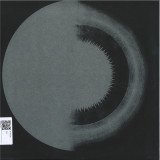
Dark Evergreen VInyl. The odd couple of Kristian Dunn (El Ten Eleven) and Damon Che (Don Caballero) was the result of some clever musical matchmaking by Karl Hofstetter, founder and curator of Joyful Noise Recordings. Karl introduced Dunn and Che via email in April 2023 after Dunn's prolific output outgrew the resources and abilities of his instrumental duo El Ten Eleven. Less than a year later, after countless text messages and song sketches were exchanged, and one fateful meeting at a recording studio was organized, their nascent project's debut record, See You at the Solipsist Convention, was complete. Despite Che's initial unfamiliarity with Dunn's musical output, their personalities bridged any and all gaps_both Che and Dunn share a flair for the comically absurd and musically adventurous, a mindset that shines throughout See You at the Solipsist Convention. Che has become legendary for his calculated polyrhythms and undeniable physicality, while Dunn is known for relentless experimentation and productivity akin to a freight train. Quickly, the unlikely pair transformed into destined collaborators. Scaffolded around eight-string bass, knotty percussion, and intricate syncopation, See You at the Solipsist Convention is a carnival of delights for fans of the post-everything persuasion_uncategorizable yet reverent to the altar of instrumental rock. Beyond all measure, Yesness stands as a testament to the powerful dividends of friendship and collaboration. We are nothing without each other - our partners, our local record store clerks, our neighbors. Music, too, thrives on our entanglements. With twelve tracks, an upcoming tour, and an unexpected friendship stemming from one email, Yesness underscores the brilliant machinery of human connection.
Jan Anderzén - living in Tampere, Finland - is a collage artist making music, quilts, drawings, mosaics, videos and other things. From him, among a few others, sprang the The River of Finland. A stream that shook the European underground for infinity, back from the years 2005 and up. Jan is/was involved in acts like Kemialliset Ystävät, Avarus, Tomutonttu and The Anaksimandros. When in the past some of that River of Finland tasted like a fermented ocean of mycelia - today it tastes different, like sparkling water.
Halki pilvien - transl. Trough the clouds - brings exactly what one expects from the clouds. It is a collection of soft and gentle movements, as playful as a ‘Jan Anderzén type of music’ is always. A collection of patterns that solidify for just a brief moment in time, before sublimating in the back of the mind. This album is in constant motion.
Push play. A warped piano and cartoonish SFX’s might foretell a hyperreal approach to music. Yet while the champion of hyperrealism, Noah Creshevsky, describes his music as being written in a language we already understand (realism) yet in an exaggerated manner (hyper) - I have to add that things on this album do not sound exaggerated at all. Moreover, i have the feeling that somehow on this work, Jan is trying to underwhelm us. In the best possible way. Because clouds float trough and dissolve. Thus instead of hyperrealism, is Jan maybe speaking to us in a certain Serenerealism? Or Mildrealism?
What Jan’s music does have in common with Creshevsky’s is the no rush part. Listening to Halki pilvien makes time non-directional. The music seems to be designed to be played over and over again. This music has no direct impact like one can experience at a punk show, or at a classical music concert. This music is not that one gigantic raincloud covering the world dark. Quite the opposite, it is a pattern of clouds and clearings, floating over the lands. Trough this music a shadow play appears. This music is durable.
And it is when the sounds are at its faintest, that Jan touches the core: in the smallest detail, we find the fullest musical information.
»Nuts of Ay«, the thirteenth album by the Berlin-based electronic pop duo Tarwater (Ronald Lippok and Bernd Jestram), is their first in a decade, since 2014’s »Adrift«. Beautifully poised and smartly dressed, it's an album that draws Tarwater’s various pasts into a high-definition present, while bringing the duo, yet again, into productive dialogue with all kinds of fellow travellers.
Tarwater’s music has always been marked by a hypnotic pop-ness, but that’s particularly evident on »Nuts of Ay«, where a song like »Hideous Kiss« weaves together jangling guitar, pastoral flute, and flittering electronics into a gem-like construction. While the lyrics of »Hideous Kiss« are written by the duo, »Nuts of Ay« also continues a longstanding Tarwater tradition of recasting the words of others in their own mould. This time, their remit is broad: poetry from Derek Jarman (»All Nuns«) and Millner Place (»Trapdoor Spider«); lyrics from Jean Kenbrovin (»I’m Forever Blowing Bubbles«), the late Shane MacGowan (»USA«) and, again, John Lennon (»Everybody Had a Hard Year«).
This cast of found and borrowed lyricists also finds collaborative echo in the guest musicians dotted throughout »Nuts of Ay«. Schneider TM turns up on the lovely, Felt-like »Spirit of Flux«, where guitars channel the tangled reveries of Vini Reilly and Maurice Deebank into lush pop. Carsten Nicolai joins, as Alva Noto, dappling »On Waves and Years« with intimate glitching textures; he also provides the album cover art. Elsewhere, Masha Qrella appears on »Down Comes the Goose«, and actor Lars Rudolph pitches in for »USA«.
It may have been ten years since the album's predecessor, but Lippok and Jestram have kept active with other projects. They’ve collaborated with Masha Qrella, Immersion, and Iggy Pop; worked on radio plays with Kai Grehn, some based on the writing of Nick Cave (»The Sick Bag Song«, featuring Tilda Swinton, Paula Beer and Alexander Fehling) and William S. Burroughs (»The Cat Inside«); and made music for several radio-tatorts (radio plays based on »Tatort«, a long-running German police TV series) by playwright Tom Peuckert.
Both voracious and committed in their creative energies, Jestram and Lippok report back from these experiments with »Nuts of Ay«, one of their most compelling, deeply lustrous, dreamlike albums yet. They say there was no concept for the album, which is surprising, perhaps, given its holistic mood, explaining it »grew together like a coral reef in the studio over a period of several years«. There’s something to be said for letting an album gather and mutate naturally, without an overarching framework in place, and »Nuts of Ay« certainly feels like an unforced collection of material that nonetheless inhabits a similar space, one where guitars twist like driftwood next to amorphous, aqueous electronics, Lippok’s droll yet completely convincing vocal delivery riding songs that pulse and plume with curious, unpredictable rhythms.
But you can also hear elements – submerged but still present – of other music that’s inspired the duo: they’ve drawn some connections for us with psychedelic folk, Bowie in Berlin, Burial, and the film music of Popol Vuh and Krzysztof Komeda. This music shares a strong sense of place – whether in the world, or the mind – and the twelve songs on »Nuts of Ay« have such similar presence; a shared mood, a shared world, a shared sense of the possibilities of what electronic pop music could, and should, be. A bold and brave pop experiment.
Artwork by Carsten Nicolai
Mastering by Bo Kondren, Calyx Berlin
»Trapdoor Spider«, »On Waves and Years« & »Breaking Day«: lyrics by Milner Place
»All Nuns«: lyrics by Derek Jarman
»USA«: lyrics by Shane MacGowan
»Down Comes the Goose«: lyrics from a traditional song
»Forever Blowing Bubbles«: lyrics by Jaan Kenbrovin
»Everybody Had a Hard Year«: lyrics by John Lennon
out of Stock
Last delivered 2 years ago available to reorder, subject to availability
A1 Dharma
Opening the LP in lively fashion, JLM liberally flecks a detailed composition with exquisite breaks cymbals playing a key role in the evolving patterns as the track progresses while heavy layers of synth work forms a substantial atmosphere. Musical and resonant with micro melodies and sprinkles of FX, Dharma encapsulates JLMs everimpressive attention to detail throughout its seven minutes.
A2 Artha
Where to start with Artha Setting the scene immediately with an epic synth intro that whooshes through your mind to prepare you for what is to come, its immediately obvious JLM has crafted a modern day classic here. Crisp Hot Pants breaks drop before we are treated to inspiring, continually developing and rousing melodies with a tuneful 808 bassline playfully dancing below. One to drop any chance you get Artha deserves to be heard.
B1 Moksha
Delightfully clear, characterful percussion introduces Moksha, a dancefloor friendly piece which rolls along beautifully thanks to old school breakbeats seizing the initiative while fluid keys, filtered synths and waves of serene effects punctuate the production. The
kick-light breaks will stay long in the memory as perfect for both the headphones and the discerning dance floor, just as weve come to expect from JLM.
B2 Kama
Taking you back to the early Progression Sessions era with a modern scifi twist reminiscent of your favourite space operatics, Kama will sit effortlessly alongside tracks from those days and now with its simple yet memorable core wind melody, sprawled
across energetic breakbeats and wide layers of synths & pads to a typically appropriate bassline. Another fine example of the evolving diversity in JLMs production with Spatial.
C1 Boundary
Switching things up, JLM treats us to a notably laid back vibe as Boundary is introduced by understated, filtered synth work and explorative kicks before a mellow yet chunky break pattern provides energy to the track. Detailed as ever, a myriad of effects and
samples are introduced and dance around the mix with a wistful complexity, in a track destined to be in your playlist for some time to come.
C2 Hexis
Kicking things off with a filtered DJ friendly beat intro, Hexis soon drops with constant old school jungle synth work and periodical strings alongside rasping, striking breakbeats that drive the track forward with impressive energy. The breaks reverberate in and out of the mix at intervals as JLM toys with the listener at will, creating a tonally unique and vibrant composition very much worthy of our attention.
D1 Ideal Forms
Low pass breaks echo and jostle for position with FX free counterparts early doors in the finely crafted intro to Ideal Forms, slowly developing with a triumphant assortment of keys and synths before a third layer of breaks are added which underpin a detailed, yet never busy, breakbeat landscape. Occasional breakdowns offer respite in a glistening wilderness of comforting melodies and light ambience.
D2 Physis
JLM rounds the album off very much on form with Physis a suitably climactic piece that opens with a detailed array of percussion, synths and effects before superbly programmed breaks take over the mix. An occasional, all encompassing sci fi synth rush
permeates the atmosphere to almost cinematic levels, while a melodic bassline nestles below leaving you with a track (and an album) you will not forget.
Words by Chris Hayes (Spatial / Red Mist)
out of Stock
Last delivered 25 days ago available to reorder, subject to availability
In 2006, Danger Mouse is King Midas of the music world. He has an uncanny knack for creating jagged, dense, frenzied beats and odd, eerie, vivid soundscapes that never compromise the music's natural flow. Meanwhile, rapper and singer Cee-Lo, a veteran of Atlanta's Dirty South scene, has never been one to be constrained by hip-hop conventions, and is a willing partner in adventure. The result is an intrepid psychedelic blend of pop, hip-hop, soul, and rock that consistently challenges and delights. It's no wonder that "Crazy," with its modest riff, irresistible hook, and disarming opening line ("I remember when, I remember, I remember when I lost my mind") became a worldwide Internet sensation a full six months before the official release of St. Elsewhere. But that relatively simple soul-pop gem is the tamest track on this wide-ranging, often dark and introspective collaboration. (In fact, the duo considers Gnarls Barkley to be a wholly new creation, as opposed to a collaboration of existing artists.) "Everybody is somebody, but nobody wants to be themselves," Cee-Lo croons on "Who Cares?" He and Danger Mouse try very hard not to be their old selves as they creatively and confidently break down boundaries, but the brilliant cores of their musical personae--Cee-Lo's eccentric spiritual soul man and Danger's bold sonic explorer--remain. --Marc Greilsamer
Dan Reeder's debut album is finally on vinyl! The packaging includes a gatefold jacket, written by John Prine, with a photo of the original letter explaining the story of how Dan found Oh Boy Records. Also included are credits, photos of Dan's homemade instruments and original artwork. Wowee!
his release marks the first complete album reissue on Canopy. Originally released in Nigeria in 1987, “Oppressor” was executive produced by Myke Moul himself and distributed domestically by EMI Nigeria & Tropic Records.
“Oppressor”, the album, finds the sweet spot between synth reggae, boogie, and euphoric Balearic island vibes.
Written by Myke Moul and arranged in collaboration with reggae star Majek Fashek in Nigeria, it was later re-crafted and recorded in France with a host of French musicians. Most notably the contribution of multi instrumentalist Pierre de St Front added engaging synthesiser parts and electronic drums.
Unfortunately the pressing of the album suffered from inherent technical flaws which adversely affected the sound quality and therefore even those lucky enough to find a copy, will not be able to enjoy it without considerable sonic defects. Therefore this remastered reissue will prove welcome to both collectors and new discoverers.
The titular track “Oppressor” stands out as a mid-tempo synth-reggae-boogie jam espousing the turbulent political times in Nigeria that were present in the late 80s. Elsewhere “Shadows in the Rain” is an instrumental cut displaying a jazz-funk sensibility which was unusual for a Nigerian artist at that time, and reflects Myke’s influences outside his home country. “Heading for the Top” is a boogie dance floor gem that shows the popularity of this genre at the time, as evidenced in many Nigerian releases and still sounds just as vital today. “Rescue us. O! Lord” shows Myke’s great song writing and Pierre’s fine musical skills working in tandem to create a reggae boogie tune, displaying the reggae & ska tendencies that were present in pop music in this era, from artists such as Grace Jones, Sly & Robbie or The Police.
All in all, the album demonstrates something fresh & exciting for Nigerian album reissues, touching down in a reggae fusion direction, with some fuller sounding production aesthetics, making the dynamics full and crisp on sound systems while also well suited to home listening.
out of Stock
Last delivered 22 months ago available to reorder, subject to availability
Peggy Gou’s Gudu Records is proud to present the label’s first ever album, from someone who’s been part of the family since the start: Brain de Palma.
Born in Ukraine, settling as a child in Turin and spending three years in Egypt before settling in his current home of Berlin, Alexei Versino has one hell of a story.
Musically, he’s been around for a decade now, releasing his previous music (solo as Panama Keys, and also as one half of the duo Stump Valley) on labels like Dekmantel, Soul Clap and Off Minor, before settling on Gudu with his Brain de Palma alias. But personally, his relationship to music goes much deeper: as a young child growing up in the former Soviet Union, a lot of European music was banned, so he relied on his well-travelled uncle to bring him back smuggled cassettes of Italo Disco, Depeche Mode, Kraftwerk, Erasure and early DJ mixes – getting an illicit musical education behind closed doors as a child.
He still carries that underground mindset to this day: the press release for his last Gudu EP, Purple Brain, reads: “dedicated to all the ravers, DJs, aficionados who had to go through the lockdowns … a shout out to people who keep on fighting for the underground culture!”. The perfect candidate for Gudu’s first album, then.
Comprising eleven tracks made across the past year, Versino describes Rhythmption as “my redemption through rhythm”, and a tribute to “seeing people enjoying themselves on the dancefloor, that feeling of unity where people become one thing, regardless of their life path or social status.” Opening with the gorgeous ‘Thandolwami’ (featuring South African vocalist Sfiso Atomza), Rhythmption charts a path through sun-drenched Balearic house, stuttering drum work-outs, Italo-inspired synth romps, trancey house and even a touching tribute to his former home of Egypt, taking in every aspect of Versino’s journey to date. After all, it’s not all about the destination, it’s also the sights you see along the way.
out of Stock
Last delivered 9 months ago available to reorder, subject to availability
The making of a maiden album can be a capricious process. One moment of outright musical flow paired with another period of sustained creative struggle are feats experienced by seasoned producers the world over. So when Miraclis was forced to hole away in his makeshift studio - in the midst of a global pandemic - the stage was set for something magical. Now it will see the light of day for the very first time.
Having released two singles on Secret Teachings to critical acclaim already this year, Chilean talent Miraclis will accomplish a milestone achievement in July with the release of his debut album: Origin Of Truth.
Difficult experiences were fundamental to the creation of such work, as were Miraclis’ inherent musical interests. He explains: “Origin Of Truth had its birth during the pandemic. I created it as a way of communicating to myself the sensations and feelings that were spinning around my head at the time. I've always been inspired by Bristol trip hop, as well as classical rock, and these genres definitely contributed to the making of these melancholic tracks. In a way I wanted to fuse all the musical influences that were part of my childhood, up until this point now, so this album really means a lot to me. It was my way of communicating, when there was a lack of social contact and communication itself was hard to come by.”
It's this meditative quality that initially drew Damian Lazarus to the project. “It’s a record that has its roots in electronic music, but it’s a very alternative, very deep, melancholic album. I find it both soothing and stirring at the same time, and that’s a quite interesting juxtaposition in that it feels edgy but delicious at the same time,” says Lazarus. “The fact that this was written in this place surrounded by the most incredible desert landscapes makes this a very important piece of work to me. It doesn’t sit in any particular genre, which is why it feels right for a Secret Teachings release. It hints at so many genres that I as a DJ am quite into, and it feels like a first as it’s unique and unclassifiable. That mystical, esoteric, edgy feel makes this a perfect release for the label.”
Sonnet opens proceedings, with ghostly vocals residing next to raw instrumental elements throughout. Miraclis’ signature guitar riffs soon converge on saddened keys, paving the way for Scienter. It takes the form of an instrument-based, electronic-inspired cut, building slowly before reaching a crescendo midway through via an enrapturing acoustic solo.
Floating Child comes next, brimming with a darker intensity courtesy of broody synth pulses and rhythmic hi-hats, as Shiver arrives next. There’s a rock-leaning sensibility to the piece that gives way to earnest lyrical offerings, opening swiftly into the breakbeat-esque world of Perceptions. Hard-hitting drums act as the focal point, with electric chords adding depth and intrigue, whilst Bright continues in a similarly heartfelt vein.
Introspective pads leave us feeling pensive, ahead of Interstellar taking us on a celestial journey through warped bass tones. Acting as the LP’s penultimate number, it’s a four-and-a-half minute showcase of guitar-based musical goodness and one that perfectly sets the stage for Trapped, a closing saga of suitably emotive proportions.
Miraclis earned his stripes as a DJ under the name Max Clementi in his native Chile, as well as Spain after a stint at the Barcelona SAE Institute. Playing and writing music since his parents gave him his first guitar at age twelve, he found himself inspired by synth wave, electronic pop, trip hop, and psychedelic rock of the ‘80s and ‘90s, drenching himself in music by the likes of Massive Attack, Tricky, Depeche Mode, and Nine Inch Nails. However, it wasn’t until he had to move back to Pucón to take care of his father during the pandemic that he began working on what would become Origin Of Truth.
Serendipity seems to play a large part in Crosstown Rebels’ new label Secret Teachings. Just look at the story of how Damian met Miraclis in the first place. It involved a chance midnight encounter in Pucón, Chile at a woodland campfire after the DJ was locked out of his hotel room. This meeting of minds was the start of a remarkable friendship, where Miraclis invited Lazarus to stay at his house and break bread with his family. The two kept in touch, exchanging music and ideas as a result.
out of Stock
Last delivered 4 years ago available to reorder, subject to availability
Originally released on Robs Records offshoot Pleasure, followed by a repress on Air Trance in 1995 featuring Francesco Farfa & Kiticonti on remix duty, the debut offering from French/UK outfit Prism - aka Pascal Eloy & Grant Wilkinson - ‘Vapour Trails’ EP eventually gets a much needed reissue on Cosmocities this summer, enhanced with a remix from Bliss Inc.
From its initial sortie on the label run by Rob Gretton, former manager of legendary New Wave bands New Order and Joy Division, onto making it to a then en-vogue Italian trance imprint, this record made waves and opened new portals for many lovers of the burgeoning electronic sound, including - years later - Cosmocities head exec himself, holding the special status of being his first ever vinyl record buy. Harder was the path towards that longed-for repress, but with a twist from destiny - after tracking down one half of Prism - Pascal Eloy - to no avail, the label managed to find him through his father, contemporary composer Christian Eloy, plans were set out to release a first EP, ‘Rain’ (2022), and now ‘Vapour Trails’, which comes as the icing on the cake.
A future-facing slice of fast-track trance bound to have ravers melting in XTC thru and thru, the lead single treats us to a deluge of prismatic arps and multi-faceted synthwaves, ushering us into a vivid, mind-expanding kaleidoscope of throbbing colours and propulsive groove; an absolute killer of a tune that’s lost nothing of its frenzied punch. In the hands of Italian duo Farmakit, the track morphs into a further corrosive churner tailored for peak-time rumble in the warehouse with its calibrated mix of acid-drenched bass whorls, hard house bounce and Tangerine Dream vibrations.
Flip sides and here’s ‘O.N.V.I.’ shifting gears towards a more tribal / spiritual kind of uptempo hoodoo, running the gamut wildly from ethereal choirs to warlike drum programming, via sci-fi-indebted cosmicness and proper 303-infused salvos from outer space. New addition to the bunch, the remix from Bliss Inc. treats us to a more focussed parade of jacking house percussions, hi-NRG acid tropes and Afro funk-minded psychedelia, revving up the engines as the room temp rises from hot to sweltering. No surrender
out of Stock
Last delivered 9 days ago available to reorder, subject to availability
Santa Maria Electronics is a new label born in Italy. In the first EP, Giulio Gastaldello, the mind behind the project, tried to best express the key concepts of the label: eclecBcism, alchemy and freedom. These elements are not only present in the musical production, but can be also found in the party series by Santa Maria. The desire to merge various genres of electronic music to achieve a new sonic experience is a formula that has been happily welcomed.
We firmly believe that an artist's vision should always be as broad as possible, and this is why in our future releases, as in this one, we will consistently try to push ourself into having an open mind in order to achieve the best outcome for the listeners, besides the genre.
In more depth, side A of this Ep is opened by a DnB pitched down beat combined with an ethereal techno pad. A2 is instead a fusion of house and trancy elements.
Side B1 track, ‘Collapse’, consists of 2 basslines, synth lines, pads and stabs that come and go for the whole length of the track. B2, by contrast, is a more clubber tune with acid elements, groovy kick-sub combination and a catchy vocal.
out of Stock
Last delivered 20 months ago available to reorder, subject to availability
How wild did things get in 1967? So wild that a label (Audio Fidelity) not particularly known for its hipness put out a record with an insert to send away for “psychedelic ornaments” so you, too, could throw an acid party! And the back cover offered “instructions” referencing everybody from Emmett Grogan of the Diggers to Albert Hofmann, the discoverer of LSD. But perhaps the most amazing thing about this album was that, despite its almost comical (though well- informed) attempt to cash in on the psychedelic craze, How to Blow Your Mind and Have a Freak-Out Party wound up being a charming and even entrancing psych-pop gem of a record, albeit one with its requisite share of Eastern-influenced mumbo-jumbo. For its first-ever American vinyl reissue, we’re pressing up just 500 copies in “orange sunshine” vinyl, complete with the insert (you can try sending it in, but don’t get your hopes up). Groovy, man!
One of the funkiest records ever from Brazilian soul legend Tim Maia - and a set that also has him singing a bit of English language lyrics too! The groove here is that classic Maia blend of Brazilian roots with American funk and soul - echoes of forro or samba in some of the rhythms, mixed with psychedelic touches, and some harder-hitting funky lines too - all in a mindblowing blend that's perfectly topped with Maia's vocals - which are every bit as large and powerful as the man on the cover himself! Tim shifts effortlessly between Portuguese lyrics and American English - the latter of which really showcases his love of American soul on the titles"I Don't Know What To Do With Myself", "Broken Heart", and "I Don't Care". The album also features a version of Marcos Valle's "Preciso Aprender A Ser So", plus the cuts "Meu Pais", "A Festa Do Santo Reis", "Nao Vou Ficar", and "Salve Nossa Senhora" - all wonderful, all the way through!
Die einzige Spur von Kenneth Wright aus Atlanta sind eine Handvoll nicht aufgenommener Songtitel auf BMI, vertreten durch Awares Verlag Act One. Mindestens ein Dutzend seiner Aufnahmen wurden kürzlich in den Tonbandarchiven von Aware gefunden und 'The Souls Of Black Folks' ist die beste davon. Es enthält Kenneths Gesang und eine ebenso beeindruckende unbekannte weibliche Hauptrolle, die dem Projekt noch mehr Mysterium verleiht. Von derselben Quelle des Atlanta-Labels stammt Miss Louistines Interpretation des Sam Dees-Songs 'Extra, Extra'. Ursprünglich von Ben E. King als Albumtitel aufgenommen, war diese druckvollere Version auf einer kürzlich erschienenen 100 Club Anniversary 7inch zu hören und erfreut sich großer Nachfrage.
On this new LP Harry Bertoia shows why he may have been the first industrial musician. Bertoia often referred to his sound sculptures as a "collaboration with industry" and on this LP Bertoia is intentionally creating heavy, rhythmic music he described as "mechanized," "mechanical" and "factory like."
Recorded in 1971, percussion and repetition emulate the pounding rhythms of machinery on this unique pair of conceptual Bertoia compositions. Bertoia utilizes innovative performance techniques to create new sounds unheard in his ouevre. Even in the busy factory of Bertoia's mind, distant stillness rises up as Bertoia exhibits the massive amount of control he possesses over his many looming sculptures.
"Mechanization" is just one of the many sonic directions Bertoia took while composing and recording between the late 1950's and his death in 1978. He documented all of his ideas and directions in notes accompanying the hundreds of tapes discovered in his barn.
Bertoia's recordings are as much a celebration of sustained tones, intervallic relationships, healing vibrations, deep listening and shimmering harmonics as Indian Classical music, singing bowls, The Well Tuned Piano or Benjamin Franklin's glass armonica. Through these rich harmonics and pulsing pure tone, Bertoia was able to more clearly articulate his inner spirit than he could with sculpture alone – a point he made himself many times in interviews.
Harry Bertoia first came into artistic prominence in the late 1930s and his sculptural, ergonomic chairs, produced by Knoll Furniture beginning in 1952, were soon modernist furniture classics. Inspired by the resonant sounds emanating from metals as he worked them and encouraged by his brother Oreste, whose passion was music, Harry restored a fieldstone "Pennsylvania Dutch" barn as the home for this experiment in sounding sculptures which he had begun in the 1950s. Bertoia was an obsessive composer and relentless experimenter, often working late into the night and accumulating hundreds of tapes of his best performances; Oreste, too, would explore and record the sculptures' sounds during his annual visits to his brother's home in rural Pennsylvania.
Learning by experimentation was common for Bertoia and he mastered the art of tape recording, turning the Sonambient barn into a sound studio with four overhead microphones hanging from the rafters in a square formation. He would experiment with overdubbing by performing along to previous recordings, sometimes backwards, constantly improving his methods while also honing his performance skills. Bertoia was a careful editor of his own work and only chosen recordings remained, each with a date and carefully considered observations written on a note included with each tape. Through these pieces of paper a greater logic can be uncovered, a careful approach to composition, ideas, feelings and forms. The story of Sonambient barn collection will slowly be told through the release of recordings from the archive as well as installations and performances built from Bertoia's own recordings, lectures and a book.
Night On Earth records
is an independent structure/label created 20 years ago which deals with
the invisible and the deviant,
the void and the love,
the parallax and the unknown …
we release vinyls and tapes
we organise events
we are you and us
we are nothing and everything
we are oblivion and memory
we are your egotrip’s nightmare
we are your deviancy catharsis
meet us through this double LP which is one cartography of the night on earth vortex across 3 continents and several generations of music freaks and braincrackers
Some Artists missing there (there are too much : RINUS VAN ALEBEEK, SS MYLITTA, SOLAR SKELETONS, THE RADAR THREAT, ÂME DE BOUE, and.. RIPIT !
out of Stock
Last delivered 18 months ago available to reorder, subject to availability
Recital presents a newly unearthed recording of an interview between Sun Ra and composer Charlie Morrow recorded at his New York studio in 1989. This voice-only recording develops more like a kaleidoscopic sermon than any standard interview.
Charlie Morrow recalls:
My 1989 Summer Solstice Celebration featured Sun Ra and his Arkestra. On March 29, 1989, ahead of this historical performance, Sun Ra came to New York to plan the performance and do an interview with me in the Charles Morrow Associates studio. There were members of the Sun Ra Arkestra, some of my team, and a photographer present. Once in the sound studio, Sun Ra wanted to record the discussion. What he says is so much more than anyone expected. I pushed record on the tape recorder, which quietly took it all in.
What Sun Ra recorded is a breathtaking expression of his feelings and strong convictions, illustrated with personal memories and stories. My few questions to him about the upcoming Solstice and about the sun and his thoughts about a dawn event triggered his mind. He launched into a nonstop journey of ricocheting stories and concepts, climaxing when I started jamming with Sun Ra on conch horn. Our duo drives to a climactic peak with explosive conch breath sounds giving line-by-line affirmations to Sun Ra’s points.
The 1989 Summer Solstice event brought together Sun Ra and his constellation of musicians and fans with my large-scale gatherings and work with the New Wilderness Foundation. Here in 2023 and beyond, the events live again. Sean McCann of Recital was drawn to Sun Ra’s words, which inspired the production of this edition. Sun Ra’s words seem to have an even greater resonance in present time. Ra is calling out the turbulence of the bad actions of the righteous and the good actions that an evil man, as he dubs himself, can perform, all the time believing that music has the possibility to bring all humans to a better place.
Charlie Morrow, 2023 / Helsinki, Finland
One-time pressing of 425 copies, includes 12-page booklet with rare photos and full transcription of interview, 24”x18” poster of Sun Ra 1989 Solstice performance photograph
out of Stock
Last delivered 23 months ago available to reorder, subject to availability
Back to ACID and back to meaningful underground vibes and attitude.
Servants Of Struggle unleash their first EP on their own eponymous label with 4 trax of classic Acid House and Techno with a modern twist.
Made up of a shadowy collective of members this gathering of like minds features at least 2 legends of Acid (inc one original Acid House pioneer) but it isn’t about who’s making it, it’s about the sound, the sound of funked up 303’s, dark vocals, thumping kicks and percussion, and tons of attitude.
Already being championed by the likes of Mr C, Colin Dale, Billy Bunter & Blue Peter
out of Stock
Last delivered 7 months ago available to reorder, subject to availability
There is NO LIGHT at the end of this tunnel! BROWN ACID: The Nineteenth Trip fires ten more savage nails deep into the coffin of ‘60s psychedelic idealism. This series is THE premier top dog journey into the rarest and most wasted early local eruptions of heavy rock, unleashed at a time when harsh reality, human nature and disillusionment drove prevailing underground rock glimpses of a ‘better’ world into ever darker selfabsorbed comedowns. Mind expanding ’60s love energies transform into toxic aggression right before your ears! The great thing is that these moves are totally justified, ‘we are all one’ is cosmically good in theory but ‘get it while you can’ ends up perhaps better advice in the light of human history. Both of those angles of awareness can coexist, some of these bands deliver unrelenting sideways positive energy but they aren’t over-thinking it, they are youthfully driven by hunger for life and satisfying the undeniable urges their DNA thrusts upon them. Sonically, the results in the BROWN ACID series never fail to breathe hot and heavy, the guitars kill it every time, the variety of approaches these tracks take keep the scenery shifting into new places. The key element that makes this stuff so potent is that THEY (the bands) are in control. Captured genuinely with no compromise, right out of the gate. No doubt they had ambition with high hopes for the future when they laid down these primal efforts, the fact that they captured their energy so vividly at a moment in time when the only direction imaginable was UP creates a hard hitting life affirming subtext to the proceedings. That is the core energy of blues and rock and roll, dealing with the struggles of existence by flipping a gigantic ‘what the fuck’ high energy bird right in the face of the moronic defective reality these bands were born into. If you take this stuff too ‘seriously’ you are utterly missing the point, it is beyond analysis, it is life itself! No amount of thinking will get you there quicker! BROWN ACID: The Nineteenth Trip is scary... the bottomless pit of deranged vintage heavy rock the series presents continually expands over time... one deadly dose too many and you might be trapped in the bad trip loop forever... enjoy it or lose your mind!
In a world of division, BEÃTFÓØT’s delayed second album is as an invitation to unite at a utopian celebration of life. Originally scheduled for release in October 2023 but postponed due to the ongoing Israel/Palestine war, the intrinsically-political ‘TOO CUTE’ has taken on more prominence than the Tel Aviv duo of Udi Naor and Adi Bronicki could have imagined.
“It's more urgent than ever for us to share this now, even though the album has been ready for a while,” says producer Naor. “BEÃTFÓØT are against any war, and believe that people should talk and not use violence - never,” he adds vehemently. “We feel the pain of Palestinians and Israeli loss of life, and are devastated by it. We hope the war will be finished soon and that peace and prosperity will come soon for both sides.”
While both Naor and vocalist Bronicki have been active in protests, charity work and community efforts over the past year - explicitly against the current government in Israel - such values of peace, acceptance, coexistence, inclusiveness and anti-hate from all sides are further instilled in the songs that form ‘TOO CUTE’.
“We're really trying to highlight that there are people here working tirelessly for a brighter future for our ill kids and our neighbour’s kids,” adds Naor, who is also co-founder of techno duo Red Axes. Having had to flee the country with his family, it’s through music that Naor and Bronicki have found hope.
In light of such conflict, the multi-layered yet sonically-bonkers record also enables escapism, which is needed more now than ever. Following their self-titled 2021 debut (released on DJ Tennis’ label Life and Death), ‘TOO CUTE’ is a refreshingly-ridiculous dark-rave rollercoaster which careers between hard-dance, big-beat, post-punk, techno, hyperpop, country and everything in between.
Things blast off at breakneck speed with the chaotic title track’s hyperpop snares, instantly-catchy lyrics (which feel ominously striking considering the war) and a stadium-ready chorus that erupts into rolling breakbeats, punishing EDM and even a nod to The Bloodhound Gang’s ‘The Magic Touch’. Somehow, we’re just three minutes into the record.
The tongue-in-cheek ‘HEART OF LEAD (TAKE IT OFF)’ still bangs despite its silliness, like if Kero Kero Bonito got in the studio with will.i.am. Later, ‘LEO’S SONG (THE SOCIAL MEDIA GUY)’s wittily satirical one-liners - “I just wanna get high with AI” - come thick and fast amid a barrage of glitches and guitars. ‘SUKC MY DIKC !!!’, meanwhile, pairs flute with pulsing hardstyle beats.
While their first record’s experimental explosion captured the pure carnage and energy of the BEÃTFÓØT universe in a conceptual fashion (though remaining polished in its own way), album two is primed to connect with a bigger audience thanks to its pop melodies, structures and songwriting.
Much of ‘TOO CUTE’ was written while the duo toured Europe for the first time, with rough sketches of tracks created in the moment during their incendiary live shows, and then recorded in planes and cars.
If their first record was a case of testing the vibes, album two is more assured and confident within their sonic world. “In the first album, we stepped into the club, metaphorically, and started making eye contact with everyone to figure out the energy,” Bronicki says. “But, this time round, I already had an idea of the story that I wanted to tell to these random people.”
And what is that story? “Radical silliness, or radical fun – that’s the essence of BEÃTFÓØT,” Naor confirms. “What we really want to do is goof around and have fun, and that brings out something very profound and honest,” he explains. A sense of nostalgic freedom is also at the album’s core, thanks to the removal of adult predetermined social constructs that decide how people should behave or look. “There’s a very honest and positive energy in holding onto your childlike wonder and trying to explore that with others,” Bronicki suggests, adding that “the adult world can be so wrong and angering”.
She feels this relates to both the album’s lyrics and the artistic state of mind that the duo always work to: “the goal is to feed a really thought-out and profound idea, but through a playful spoon,” she says. With this in mind, the recurring theme of ‘TOO CUTE’ stems from the duo’s “radical and lived experience of existing in a place that holds a lot of guilt and fear – because death is so imminent and prevalent in a very confronting way”. This is clearly represented on ‘FOOTYLICIOU$’, on which Bronicki screams “someone’s gonna die tonight!” before emphatically shouting “NOT ME!”
The album title is BEÃTFÓØT’s response to that: “We want to be a celebration of life, and that applies to all lives, of all backgrounds, including animals… that’s our guiding light,” Bronicki says.
“We create in the context of living in a country where the current government’s anti-democratic measures are limiting who is included in the celebration of life. Because different people are always being pushed out and excluded: whether it’s queers, Palestinians or people from different religions.”
BEÃTFÓØT - who have found a home among the LGBTQIA+ community - are fighting back against oppression. “We want everybody to come to the party and celebrate life together,” says Naor, setting out his and Bronicki’s mission… “and our goal is to widen that party as wide as it can go.”
c MANIAC ft. Princess Rani
e WHERE HAVE I BEEN ALL MY LIFE ft. Bugle Boy
c MANIAC ft. Princess Rani
[e] WHERE HAVE I BEEN ALL MY LIFE [ft. Bugle Boy]
[c] MANIAC [ft. Princess Rani]
[e] WHERE HAVE I BEEN ALL MY LIFE [ft. Bugle Boy]
out of Stock
Last delivered 23 months ago available to reorder, subject to availability
One Way Trip to Gaia, Alberta Balsam's debut album, propels listeners into uncharted territory, delivering a futuristic fairytale--a utopian world that serves as a sonic refuge from reality. Building on the electro-IDM foundations of her earlier releases , this record evolves into an odyssey of bass-driven beats, breakbeat rhythms, and dub-infused atmospheres. As her most vocal project to date, the album showcases her ability to merge pop sensibility with otherworldly sound design, all while maintaining that club-ready energy. Limited edition: pressed on a black and silver marbled vinyl. Sleeve design by Timaeus
Matter-of-factly, Lycox exclaims "Yaaahh" right at the beginning. That's an affirmation but in times of distress it can also mean resignation, something like "Yeah, whatever". Lycox says he was only freestyling though. Then the bassline appears. Elastic, expressive, full-bodied. And it's not even present the whole time. He was "trying to develop a new formula for the Kuduro beat."
Songs for the club? Most certainly. Different sensibilities, one same focused mind. Lycox evolves within tradition, he has mastered the groove, the ambience, the right tones. Simply called "Energia", the last track circles above wistfully, menacing but maybe just promising some sort of action. With a few drops one could almost switch over to a parallel universe of old school Trance, a reference that feels as alien here as maybe this track feels to someone for whom the standard Afro House sound represents modern African music.
These songs pile up in a threshold balanced between styles, sensations, maybe in the middle of life itself. Such a concentration of energy is bound to need release and that comes figuratively through details in the music reaching out to receptive ears. "To Bem Loko" explicitly tries to "literally drive everyone crazy on the dancefloor." Once again Lycox provides vocals, as in "Edson no Uige", about a friend who embarked on a trip to the Angolan province of Uige and came back speaking only the local dialect known as lingala. A nod to tradition, very emotional, without compromising complex arrangements. Consequently, we the listeners are kept believing there is still enough space for a bright future. To ears accustomed to Lycox productions the title "Contemporaneo" (opening of side B) reads like a redundancy, then.
Maybe this music can never be quite as massive as other Afro styles. Without sounding pretentious, it avoids simplistic patterns, it demands a bit more mental processing while it certainly aims to loosen the limbs. Universal in vocation, underground at the core, Lycox definitely calls it Batida but for some it is still Ghetto Music. Like DJ Veiga said when describing a previous release for Príncipe, Ghetto is home, though. Lycox adds it is a foundation of personality. "Few in our community will recognize your work when you come from the same environment, but once you establish your reputation outside of the neighbourhood and even outside of the country, people will look at you differently, as if you were a star."
out of Stock
Last delivered 22 months ago available to reorder, subject to availability
Repress! There are very few albums across any genre that stand the test of time better than 93 ‘Til Infinity, the classic debut record from the Hieroglyphics crew’s very own Souls of Mischief. In an era where Gangsta Rap and G-Funk dominated the West Coast Rap scene, Souls broke ground on a completely unique and thoroughly west coast sound. While the Dr. Dre’s and the Snoop Doggs were garnering much of the mainstream attention, Souls were quietly forging a charismatic, critically acclaimed, and cohesively shaped record that when categorized, sounded much closer to A Tribe Called Quest than N.W.A. The sound of their debut is characteristic of the distinct style explored by the collective, including a rhyme scheme based on internal rhyme and beats centered around a live bass and obscure jazz and funk samples.
93 ‘Til Infinity was propelled into success by its title track and lead single, which reached #32 on the Billboard Hot 100. It also featured singles “That’s When Ya Lost” and “Never No More” which also reached the Hot Rap Singles. In 1998, the album was selected as one of The Source’s 100 Best Rap Albums of All Time. Considered by many to be a text book “slept-on” classic Rap record, 93 ‘Til Infinity has only grown better with age. The album simply defines the Hiero golden age with a sound that would later be fine tuned with strong releases from MCs Del The Funkee Homosapien, Casual and Pep Love.
It takes some serious bravado to name your album 93 ‘Til Infinity, but certainly the goal of creating a Hip Hop “classic” must have been on the collective minds of group members A-Plus, Tajai, Opio, and Phesto when recording this landmark moment in Hip Hop history. It’s true, even seventeen years after the album’s initial release many people are still discovering it, and with this re-mastered reissue on double vinyl, fans all over the world will once again discover the brilliance that 93 ‘Til Infinity delivers and will continue to deliver beyond infinity.
out of Stock
Last delivered 2 years ago available to reorder, subject to availability
The Outer Edge is excited to announce the release of an intense and previously undiscovered funk rap / boogie single, featuring two tracks recorded in 1986.
While researching for his book on 80s funk music in Germany, DJ Scientist explored bands from Bavaria that collaborated with GIs. One of these bands is Grand Slam, a group that remains active to this day. The band’s leader, Toby Mayerl, lived near a US Army base in Amberg, where he fell in love with funk after hearing Roger Troutman and Zapp. He soon became part of two groups: Total Control and Grand Slam.
Originally led by guitarist Harry Zawrel, Grand Slam had a “European” funk sound similar to Talking Heads or Level 42. However, in 1985, Mayerl took over the band and merged it with Total Control, a mixed group that included African-American soldiers. From that point on, they shifted towards a heavier funk and soul sound, continuing to work with musicians from the GI community. By late 1986, they had enough material to record their debut album, Make My Day. Although published by the independent label Kerston, the album was only available on cassette, primarily sold at their concerts in early 1987.
DJ Scientist managed to track down an original copy of this ultra-rare tape in the MUZ archive in Nuremberg. "What I heard blew my mind," he said. "The cassette featured seven raw, well-produced funk and soul jams with fantastic arrangements and vocals." As an old-school funk and disco rap collector, he was immediately captivated by the track "Goin' Out," which features GI rapper Calvin E. Flagg. This song evokes the energy of early recorded rap singles from labels like Enjoy or Sugar Hill Records.
On Side B, the second track from the unheard debut album, ‘Don’t Let You Down,’ offers another glimpse of what we've been missing. This uptempo boogie-funk track features lead vocals by Aletha Mcbryde, Calvin E. Flagg, and Oliver Allwardt, along with thrilling synths and a lively brass section - perfect for turning up the volume.
Both tracks have been remastered from the original master tapes, which Toby Mayerl fortunately still had in his archive. The artwork for the release is inspired by original band posters, with the Grand Slam logo taking cues from Bootsy's Rubber Band’s Body Slam! cover from 1982. This limited vinyl pressing is capped at just 350 copies.
out of Stock
Last delivered 23 months ago available to reorder, subject to availability
Next up on Feral Child comes the debut vinyl release from Austin Tx psych outfit NEON LEMON.
Having caught the eye of label head Dom on some cool looking, local Spacemen 3 themed nights’ posters; further digging revealed this incredible, richly melodic, yet deep psychedelic beauty with -seemingly- no home for a release on wax, so it was pretty easy to step in and offer to release it. “Hypnagogic Visions” is a superb, fuzz n’ drone drenched 6 track 10” LP in a sleeve designed by the legendary Jim Franklin (a friend of the band) who famously designed beautiful posters, flyers and gig tickets for the Elevators, Shiva’s Headband and Canned Heat amongst others, in his role as owner of the Vulcan Gas Company, a revered 60s Austin psychedelic club and concert hall. As Ben Siebert from the band explains: “This record was mostly written and recorded in a warehouse space outside of Austin (that no longer exists) called The Inner Chamber. We tried best to capture our live sound in this space, and with most band members in a state of constant turmoil at the time of its recording, this space offered a refuge from our personal lives and a place to transcend reality through creation of this music.” Neon Lemon blends together mind altering psychedelic sounds of the 60's with transcendent space rock of the early 70's. Finding their own balance between free form psychedelia and a mainline of roots rock and roll.
Limited one time 10” pressing, distributed by Forte Music Distribution and available late October 2024.
Fom the Sleevenotes by Paul Murphy: Jazz Room Records:
"I took a trip to the If Music Store, 2nd Floor, above the paint shop and that got me hooked on the sound of COPA SALVO.
"You NEED this!" said Jean-Claude. "They're an amazing and unique Jazzy Combo from Japan!" But at the time I was stuck in some dead end Gulag job getting things together for the launch of a record label idea I'd been working on and the bobs were just not in abundance. Especially in the part of the wallet marked "Japanese Vinyl Import Department". But he gave it a spin and I was pretty much hooked from that day on.
Things soon looked up though and the next sighting of COPA SALVO was on the BBE Records release: A Journey Into Deep Jazz Vol. 3 (Compiled by that very same Jean-Claude!) which featured COPA SALVO - Hasta La Victria Siempre, a pounding piano driven homage to Fidel which incidentally is one of the featured numbers of the album that is soon to be released on Jazz Room Records.
I kept looking for more COPA SALVO as I was really intrigued by the sound they produced and, over a period of time I managed to obtain nearly all of their sparse catalogue. Once Jazz Room Records had started to get established and the release of the Colin Curtis Presents: indigo jam unit compilation had been a success I thought "Time for COPA SALVO to make their Jazz Room debut!"
This Jazz Room Records Compilation will feature their unique and highly original compositions which are an energetic meltdown of Funk, J-Jazz, Afro-Cuban, Boogaloo and range from the Heavy Latin Jazz Vibes of Bolivia 67 to the Kung Fu '70's sound of Tong King Rock with a journey that takes in an Eastern Folktale and a Jump Up Life along the way."
Vocal/Guiro : Tadahiro Masuda
Piano : Eri Konishi
Bass : Hironori Kobayashi
Percussion : Yo Sato
Percussion : Pyon Nakajima
Timbales/Drum : Peach Iwasaki
out of Stock
Last delivered 14 months ago available to reorder, subject to availability
Camelot, the legendary seat of King Arthur's court in Early Middle Ages Britain, was probably not a real place. A corruption of the name of a real Romano-Briton city, the word "Camelot" accumulated symbolic, mythic resonances over centuries, until achieving its present usage as a near-synonym of "utopia." In the mid-20th century alone, Camelot inspired an explosion of representations and appropriations, among them the violent, affectless Arthurian court of Robert Bresson's 1974 film Lancelot du Lac and the absurdist iteration of Monty Python's 1975 Holy Grail, both of which feature armored knights erupting into fountains of blood; the mystical Welsh world of novelist John Cowper Powys's profoundly weird 1951 novel Porius, with its Roman cults, wizards and witches, and wanton giants; and the nationalist nostalgia of President John F. Kennedy's White House. Unsurprisingly there are fewer Camelots in more recent memory. Camelot, Canadian songwriter Jennifer Castle's extraordinary, moving 2024 chronicle of the artist in early middle age, charts a realer, more rooted, and more metaphorical place than the fabled Camelot of the Early Middle Ages (or its myriad depictions), but it too is a space more psychic than physical. In Castle's Camelot, the fantastic interpenetrates the mundane, and the Grail, if there is one, distills everyday experience into art and art into faith, subliming terrestrial concerns into sublime celestial prayers to Mother Nature, and to the unfolding process of perfecting imperfection in one's own nature. Co-produced by Jennifer and longtime collaborator Jeff McMurrich, her seventh record is at once her most monumental and unguarded to date, demonstrating a mastery of rendering her verse and melodies alike with crisply poignant economy. For all their pointedly plainspoken lyrical detail and exhilarating full-band musical flourishes, these songs sound inevitable, eternal as morning devotions. "Back in Camelot," she sings on the lilting, vulnerable title track, "I really learned a lot / circles in the crops and / sky-high geometry." The album opens with a candid admission of sleeping "in the unfinished basement," an embarrassing joke that comes true. But the dreamer is redeemed by dreaming, setting sail in her airborne bed above "sirens and desert deities." If she questions her own agency_whether she is "wishing stones were standing" or just "pissing in the wind"_it does not diminish the ineffable existential jolt of such signs and wonders. This abiding tension between belief and doubt, magic and pragmatism, self and other, sacred and profane, and even, arguably, paganism and monotheism, suffuses these ten songs, which limn an interior landscape shot through with sunstriped shadows of "multi-felt dimensions" both mystical and quotidian. The epic scale and transport of "Camelot," with its swooning strings, gives way dramatically to "Some Friends," an acoustic-guitar-and-vocals meditation in miniature on Janus-faced friends and the lunar and solar temperatures of their promises_"bright and beaming verses" versus hot curses_which recalls her minimalist last album, 2020's achingly intimate Monarch Season. (In a symmetrical sequencing gesture, the penultimate track, the incantatory "Earthsong," bookends the central six with a similarly spare solo performance and coiled chord progression, this time an ambiguous appeal to _ a wounded lover? a wounded saint? our wounded planet?) Those whom "Trust" accuses of treacherous oaths spit through "gilded and golden tooth"_cynics, critics, hypocrites, gurus, scientists, doctors, lovers, government, the so-called entertainment industry_sow uncertainty that can infect the artist, as in "Louis": "What's that dance / and can it be done? What's that song / and can it be sung?" Answering affirmatively are "Lucky #8," an irrepressible ode to dancing as a bulwark against the "tidal pools of pain" and the "theory of collapse," and "Full Moon in Leo," which finds the narrator dancing around the house with a broom, wearing nothing but her underwear and "big hair." But the central question remains: who can we trust, and at what cost faith, in art or angels or otherwise? Castle's confidence in her collaborators is the cornerstone of Camelot. Carl Didur (piano and keys), Evan Cartwright (drums and percussion), and steadfast sideman Mike Smith (bass) comprise a rhythm section of exquisite delicacy and depth. This fundamental trio anchors the airiness of regular backing vocalists Victoria Cheong and Isla Craig and frames the guitars of Castle, McMurrich, and Paul Mortimer (and on "Lucky #8," special guest Cass McCombs). Reprising his decennial role on Castle's beloved 2014 Pink City, Owen Pallett arranged the strings for Estonia's FAMES Skopje Studio Orchestra. On the ravishing country-soul ballad "Blowing Kisses"_Pallett's crowning achievement here, which can be heard in its entirety in the penultimate episode of the third season of FX's The Bear_Jennifer contemplates time and presence, love and prayer_and how songwriting and poetry both manifest and limit all four dimensions: "No words to fumble with / I'm not a beggar to language any longer." Such rare moments of speechlessness_"I'm so fucking honoured," she bluntly proclaims_suggest a state "only a god could come up with." (If Camelot affirms Castle as one of the great song-poets of her generation, she is not immune to the despairing linguistic beggary that plagues all writers.) Camelot evinces a thoroughgoing faith not only in the natural world_including human bodies, which can, miraculously, dance and swim and bleed and embrace and birth_but also in our interpretations of and interventions in it: the "charts and diagrams" of "Lucky #8," a daydreamt billboard on Fairfax Ave. in LA in "Full Moon in Leo," the bloody invocations of the organ-stained "Mary Miracle," and all manner of water worship, rivers in particular. (Notably, Jennifer has worked as a farmer and a doula.) The album ends with "Fractal Canyon"'s repeated, exalted insistence that she's "not alone here." But where is here? The word "utopia" itself constitutes a pun, indicating in its ambiguous first syllable both the Greek "eutopia," or "good-place"_the facet most remembered today_and "outopia," or "no-place," a negative, impossible geography of the mind. Utopia, like its metonym Camelot, is imaginary. Or as fellow Canadian songwriter Neil Young once sang, "Everyone knows this is nowhere." "Can you see how I'd be tempted," Castle asks out of nowhere, held in the mystery, "to pretend I'm not alone and let the memory bend?"
On How It Ends (?), slinky melodies snake through nocturnal atmospherics, drawing you into a world built on poetic, painterly lyricism. Night Crickets, a long-distance groove affair that materialized during the drawn-out days of lockdown, has emerged once again to soundtrack our waking dreams.
David J (Bauhaus, Love & Rockets), Victor DeLorenzo (Violent Femmes) and multi-instrumentalist Darwin Meiners spearhead a loose collective of like-minded creative souls whom, through sheer tenacity and a burning desire to collaborate and create, transcend the restrictions of space and time. Audio files shared from Los Angeles to Milwaukee, from London to the San Francisco Bay, and the ghosts of Candlestick Park shimmer through the fog, coalescing in a glorious ‘gesamtkunstwerk’ that draws from the past, the present and the imagined future.
Declaring Bauhaus, Love And Rockets, and Violent Femmes iconic, foundational bands in the history of alternative music would receive little pushback from those in the know. San Francisco born artist Darwin Meiners is a fan of all three. A chance meeting with David J grew into a friendship, and Darwin not only became a bandmate, but his manager. After reaching out to Victor DeLorenzo through e-mail, Darwin met the Violent Femmes drummer after their set at Coachella. Soon, after the three collaborated on Darwin’s 2014 release Souvenir.
As the pandemic took hold, Darwin was looking for a new project to occupy the lock down time and approached Victor, who was keen to proceed and suggested that David join as well. The musical trust established between these three was immediate and Night Crickets were born. Within weeks a global process was initiated between them, the recordings eventually forming the album, A Free Society.
Following that release, inspired by how well – and quickly – they all worked together, the trio kept up their collaboration. “We are each free to discover musical connections that could only exist in an ideal creative setting” explains Victor. “We are very lucky to have three musicians who write, sing and play various instruments in one trio… our egos seem to melt into one when we face musical decisions, so our expeditions are always filled with pure discovery, humor and drive!”
How It Ends (?) was crafted with the same collaborative spirit as A Free Society. Each member contributed contributed unique elements to spur their collective creativity—whether a drum pattern, a lyrical concept, or a musical idea—and together, they expanded these initial sparks into the finished work. True to their approach, much of what you hear was captured in the first take, reflecting a genuine, unfiltered moment.
The music on the How It Ends (?) is a true evolution of the debut album. It is deeper and darker. Having said that, the dark tone is alleviated by a healthy measure of the buoyant, bouncy and melodic. “Much of the new material is very psychedelic and the contrast between this heavy, dark psychedelia and the more uplifting pop elements puts me in mind of The Beatles’ ‘Revolver’ album to some degree,” tells David J. “The recording process for the new album was exactly the same as the first in that we all recorded remotely, taking turns to share files and reacting spontaneously to the previous track, overdubbing then passing on once again until we all felt that the track was done.”
“While we didn’t start with a specific theme, the album emerged as a contemplative exploration of endings” says Darwin. “It touches on the loss of individuals, the shifting of ideas, and the fragility of systems. Beneath this sense of darkness and finality, however, there are threads of beauty and glimpses of hope. We invite you to immerse yourself in the album and experience the journey we’ve embarked upon.”
. For Fans Of: The Weather Station, Weyes Blood, Adrianne Lenker, Phoebe Bridgers, Joan Shelley, Lana Del Rey, Cass McCombs, Angel Olsen & Neil Young. Camelot, the legendary seat of King Arthur’s court in Early Middle Ages Britain, was probably not a real place. A corruption of the name of a real Romano-Briton city, the word “Camelot” accumulated symbolic, mythic resonances over centuries, until achieving its present usage as a near-synonym of “utopia.” In the mid-20th century alone, Camelot inspired an explosion of representations and appropriations, among them the violent, affectless Arthurian court of Robert Bresson’s 1974 film Lancelot du Lac and the absurdist iteration of Monty Python’s 1975 Holy Grail, both of which feature armoured knights erupting into fountains of blood; the mystical Welsh world of novelist John Cowper Powys’s profoundly weird 1951 novel Porius, with its Roman cults, wizards and witches, and wanton giants; and the nationalist nostalgia of President John F. Kennedy’s White House. Unsurprisingly there are fewer Camelots in more recent memory. Camelot, Canadian songwriter Jennifer Castle’s extraordinary, moving 2024 chronicle of the artist in early middle age, charts a realer, more rooted, and more metaphorical place than the fabled Camelot of the Early Middle Ages (or its myriad depictions), but it too is a space more psychic than physical. In Castle’s Camelot, the fantastic interpenetrates the mundane, and the Grail, if there is one, distills everyday experience into art and art into faith, subliming terrestrial concerns into sublime celestial prayers to Mother Nature, and to the unfolding process of perfecting imperfection in one’s own nature. Co-produced by Jennifer and longtime collaborator Jeff McMurrich, her seventh record is at once her most monumental and unguarded to date, demonstrating a mastery of rendering her verse and melodies alike with crisply poignant economy. For all their pointedly plainspoken lyrical detail and exhilarating full-band musical flourishes, these songs sound inevitable, eternal as morning devotions. “Back in Camelot,” she sings on the lilting, vulnerable title track, “I really learned a lot / circles in the crops and / sky-high geometry.” The album opens with a candid admission of sleeping “in the unfinished basement,” an embarrassing joke that comes true. But the dreamer is redeemed by dreaming, setting sail in her airborne bed above “sirens and desert deities.” If she questions her own agency whether she is “wishing stones were standing” or just “pissing in the wind” it does not diminish the ineffable existential jolt of such signs and wonders. This abiding tension between belief and doubt, magic and pragmatism, self and other, sacred and profane, and even, arguably, paganism and monotheism, suffuses these ten songs, which limn an interior landscape shot through with sunstriped shadows of “multi-felt dimensions” both mystical and quotidian. The epic scale and transport of “Camelot,” with its swooning strings, gives way dramatically to “Some Friends,” an acoustic-guitar-and-vocals meditation in miniature on Janus-faced friends and the lunar and solar temperatures of their promises—“bright and beaming verses” versus hot curses which recalls her minimalist last album, 2020’s achingly intimate Monarch Season. (In a symmetrical sequencing gesture, the penultimate track, the incantatory “Earthsong,” bookends the central six with a similarly spare solo performance and coiled chord progression, this time an ambiguous appeal to … a wounded lover? a wounded saint? our wounded planet?). Those whom “Trust” accuses of treacherous oaths spit through “gilded and golden tooth” cynics, critics, hypocrites, gurus, scientists, doctors, lovers, government, the so-called entertainment industry sow uncertainty that can infect the artist, as in “Louis”: “What’s that dance / and can it be done? What’s that song / and can it be sung?” Answering affirmatively are “Lucky #8,” an irrepressible ode to dancing as a bulwark against the “tidal pools of pain” and the “theory of collapse,” and “Full Moon in Leo,” which finds the narrator dancing around the house with a broom, wearing nothing but her underwear and “big hair.” But the central question remains: who can we trust, and at what cost faith, in art or angels or otherwise? Castle’s confidence in her collaborators is the cornerstone of Camelot. Carl Didur (piano and keys), Evan Cartwright (drums and percussion), and steadfast sideman Mike Smith (bass) comprise a rhythm section of exquisite delicacy and depth. This fundamental trio anchors the airiness of regular backing vocalists Victoria Cheong and Isla Craig and frames the guitars of Castle, McMurrich, and Paul Mortimer (and on “Lucky #8,” special guest Cass McCombs). Reprising his decennial role on Castle’s beloved 2014 Pink City, Owen Pallett arranged the strings for Estonia’s FAMES Skopje Studio Orchestra. On the ravishing country-soul ballad “Blowing Kisses” Pallett’s crowning achievement here, which can be heard in its entirety in the penultimate episode of the third season of FX’s The Bear Jennifer contemplates time and presence, love and prayer and how songwriting and poetry both manifest and limit all four dimensions: “No words to fumble with / I’m not a beggar to language any longer.” Such rare moments of speechlessness “I’m so fucking honoured,” she bluntly proclaims suggest a state “only a god could come up with.” (If Camelot affirms Castle as one of the great song-poets of her generation, she is not immune to the despairing linguistic beggary that plagues all writers.) Camelot evinces a thoroughgoing faith not only in the natural world including human bodies, which can, miraculously, dance and swim and bleed and embrace and birth but also in our interpretations of and interventions in it: the “charts and diagrams” of “Lucky #8,” a daydreamt billboard on Fairfax Ave. in LA in “Full Moon in Leo,” the bloody invocations of the organ-stained “Mary Miracle,” and all manner of water worship, rivers in particular. (Notably, Jennifer has worked as a farmer and a doula.) The album ends with “Fractal Canyon”s repeated, exalted insistence that she’s “not alone here.” But where is here? The word “utopia” itself constitutes a pun, indicating in its ambiguous first syllable both the Greek “eutopia,” or “good-place” the facet most remembered today and “outopia,” or “no-place,” a negative, impossible geography of the mind. Utopia, like its metonym Camelot, is imaginary
based songwriter Henrik Appel returns with third album Shadows. Ranging from freewheeling garage rock to intimate moments, and adding touches of jazz, Shadows is inspired by the likes of Bob Dylan’s Blond on Blonde and The Fall’s Hex Enduction Hour and another step of his continued evolution as a songwriter and artist.
For as long as he’s been a solo artist, Henrik Appel has been in a constant state of evolution. His first album, 2018’s Burning Bodies, was a meticulous construction project, one that came togeth-er over a five-year period and that saw him chronicle, with searing honesty, the slow death of a relationship, with its nine songs written according to a stringent set of self-imposed rules, intend-ed to keep the songwriting minimalist and bare-bones in nature.
His 2021 follow-up, Humanity, represented a remarkable progression of its own. It was born out of a break-up of a different kind, this time with his former bandmates in Stockholm outfit Lion’s Den; piecing together aspects of the vision he’d had in mind for the band’s never-realised second al-bum, he built from them his own sophomore LP, one that took the classic feel of Burning Bodies and imbued it with adventurous new influences, as he began to carve out a genuinely singular sound.
Now, three years on from Humanity, Appel has made another ambitious left turn. Neither of his first two albums were made in complete isolation; on both, he enlisted the production services of Stockholm underground legend Martin ‘Konie’ Ehrencrona, and also collaborated on his lyrics with his partner, Emma Lind. Now, on this thrilling reinvention of a third record, Appel has turned away from perfectionism, placing chief importance instead on making a raw, human record.
The 2015 edition of Winnipeg’s send + receive festival, focussed on rhythm, turned out to be a generative meeting of minds. There, Mark Fell encountered the music of Will Guthrie, a meeting that was eventually to result in the frenetic acoustic drumkit and digital synthesis pairing heard on Infoldings and Diffractions (2020). At the same festival, Limpe Fuchs first heard and appreciated the music of Mark Fell, planting the seed of a collaboration that came to fruition when Fell (along with his son Rian Treanor) visited Fuchs at her home in Peterskirchen, Germany in September 2022. Black Truffle is pleased to announce the release of the results of this extensive session in the audacious form of a triple LP, housing over two hours of music across its six sides. The collaboration might appear unlikely: what common ground could exist between Fuchs, classically trained pianist, legend of improvised music, instrument builder and sound sculptor active since the 1960s, whose group Anima Sound connected the dots between free jazz, krautrock and ritual, and Fell, proponent of radical computer music, known for his bracingly austere productions that twist remnants of club music into algorithmic stutters? For all their seeming disparity in technology, approach and background, the music on Dessogia/Queetch/Fauch makes it immediately evident the pair share a great deal in their essentially percussive approach and ability to, in Fuch’s phrase, ‘establish silence’. Recording at her home studio, Fuchs had the use of her entire array of instruments, found, invented, and traditional, and treats the listener to some that don’t often make their way to concerts, including extensive passages performed (with Gundis Stalleicher) on pieces of wooden parquetry. Alongside metallic, wooden and skin percussion of all kinds, sounded and struck in every conceivable way, we also hear bamboo flute, viola, and Fuchs’ distinctive free-form vocalisations. Fell also stretched himself, with his contributions ranging from characteristically fizzing pitched percussive pops to swarms of sliding tones and abstract digital noise. Showing both remarkable restraint and improvisational freedom, much of the music consists of duets between a single percussion instrument and a distinctive mode of digital sound, often lingering in one timbral-rhythmic space for minutes at a time. Improvisational forward momentum coexists with a free-floating, wandering quality. On opener ‘Dessogia I’, the shimmering almost-gilssandi tones of Fuchs’ enormous set of microtonally tuned metal tubes ripples across Fell’s rubbery pulse, which moves up the frequency spectrum as Fuchs becomes more animated and switches to horn. At some points, as on the metallic chiming tones that open ‘Fauch I’, only the unexpected dynamic behaviour of Fell’s sounds distinguish them from Fuchs’ acoustic instruments. At others, like on ‘Queetch III’, the waves of sliding tones and noise textures are bracingly synthetic, joined by piercing squeaks and scrapes from Fuchs’ metal objects. Epic in scope, immersing the listener in an entirely distinctive world of sounds, and thrillingly bold in its melding of the most ancient musical procedures with cutting edge technologies, Dessogia/Queetch/Fauch is an unexpected major statement from two of the great mavericks of contemporary music.
"You're Under Arrest is a 1985 album recorded by Miles Davis, presenting a mixture of pop covers (including Cyndi Lauper's ""Time After Time"" and Michael Jackson's ""Human Nature""), and original material dealing with politics, racism, pollution and war. It is the first Davis album since On the Corner in 1972 to include electric guitarist John McLaughlin. This version comes as a limited edition of 1500 individually numbered copies on red & clear marbled vinyl."
Rund zwei Jahre nahm Brenk sich Zeit, an "Midnite Ride III" zu feilen und die richtigen Soundbilder für seine musikalische Vision zu finden. Dabei legte er viel Wert auf verspielte Details und einen zeitlosen Sound, der sowohl den Late Night Vibe der ersten beiden Vorgänger fortsetzt als auch Brenks aktuellen Mindset in puncto Soundästhetik widerspiegelt. Auf "Midnite Ride III" fusionieren analoge Synthesizer aus Brenks berüchtigter Vintage-Sammlung mit perfekt platzierten Voice-Samples, die zur Trademark des Midnite Ride Sounds gehören. Als einer der Urväter der Phonk-Bewegung reichert Brenk seine Beats auch diesmal mit der richtigen Dosis aus Phonk-Elementen an und kreiert aus alten und neuen musikalischen Einflüssen ein weiteres Mal einen moody Soundcocktail, der ab der ersten Sekunde in seinen Bann zieht.
Begleitend zum Album-Release wird eine Dokumentation erscheinen, die die Entstehung und die Hintergründe von Brenk Sinatras Midnite Ride Universums beleuchten wird.
Roy Ayers' first album on the Polydor label inaugurates his music's evolution away from the more traditional jazz of his earlier Atlantic LPs toward the infectious, funk-inspired fusion. Although Ubiquity maintains one foot in Ayers' hard bop origins, it favors soulful grooves and sun-kissed textures that flirt openly with commercial tastes. AllMusic reviewer Jason Ankeny rated the album with **** out of five stars, stating that “Several cuts feature the male/female vocals that would become a hallmark of subsequent works by the same group, while mid-tempo instrumentals like ‘Pretty Brown Skin’ and ‘The Painted Desert’ feature evocatively cinematic arrangements and intriguing solos that unfurl like psychedelic freak flags. The crack supporting cast including bassist John Williams, keyboardist Harry Whitaker, and drummer Alphonso Mouzon proves equally effective on high-energy numbers like ‘Can You Dig It’ and the Nat Adderley-penned ‘Hummin' in the Sun,’ which point the way to the mind-expanding funk Ayers would perfect across the sessions to follow. An outstanding record.”
2024 is the year that saw iconic trance-act 2 FLYING STONES resurrect.
Early trance with a capital T
Remixed by trance GRANDmasters M.I.K.E. PUSH and NICO PARISI.
This is without a doubt the hottest group of the year in its genre. Every release is sold out in hours.
2 Flying Stones have gained a massive fanbase in the past 30 years thanks to their iconic hits MAYBE TOMORROW, NUCLEAR JESUS IN PARADISE OF LOVE and A GREAT DAY.
2 of these classics have been remixed by none the less than M.I.K.E. PUSH (known from his classics THE LEGACY, TRANZY STATE OF MIND and UNIVERSAL NATION) and NICO PARISI, one of the biggest names in the Benelux underground trance-scene, part of Aqualord and original author of the 2023 monsterhit METRO (covered by Mau P & Kevin De Vries)
out of Stock
Last delivered 18 months ago available to reorder, subject to availability
DJ Support: Alix Perez, Hybrid Minds, DJ Marky, DJ Krust, Doc Scott, Pola & Bryson, AC Slater, Imanu, Hamdi and more.
1985 Music presents the first edition of 'Fragment' their new various artist series. Featuring familiar faces from the imprint and special guests, this album combines the 1985 Music sound in all forms.
Featuring tracks from label head honcho Alix Perez with the strictly soulful 'Bloomsbury', while New Zealand producer/DJ Headland reworks 'Trust' the anthem from EPROM. Joining the fold GLM, Eijer and Satl make their debut on the imprint while regular artists Visages, Drone, Bredren and Ebb continue to deliver the goods.
Radio support: Charlie Tee BBC Radio 1, Fred V Kiss FM, Mary Anne Hobbes BBC 6 Music, 1985 Music RinseFM show (monthly).
out of Stock
Last delivered 18 days ago available to reorder, subject to availability
Oakland's Naked Roommate have been slinking around the Bay Area lighting up stages, shaking asses & confounding listeners since 2018, when the group - originally just the duo of real-life partners Andy Jordan & Amber Sermeno (both formerly of The World) - self-released a cassette of demos (2018's "Naked Roommate"). Members Michael "Mig" Zamora & Alejandra Alcala (Blues Lawyer) joined soon after to augment the sound & live band with their proper full-length album "Do The Duvet", co-released in September of 2020 via UK label Upset! The Rhythm & Trouble In Mind. 2024 finds the lineup expanded even further to incorporate the horn section of Geoff Saba & Jeanne Oss on tenor & alto saxophones as well as percussion & marimba as the band readies their sophomore effort, the dizzyingly ecstatic "Pass The Loofah" Recorded by members Andy Jordan & Mig Zamora from 2021-2023 as time & restrictions allowed, "Pass The Loofah" retains the wild energy of their debut, but leans into the rhythmic throbs perpetuated by forbears like Kid Creole & The Coconuts, Lizzy Mercier Descloux & ESG; the signature sound of UK's On-U Sound & NYC's 99 Records, but with a decidedly West Coast irreverence & a knack for absurdist exposition. Make no mistake, this is music designed to make your body MOVE & Naked Roommate won't stop until they 've made sure every ass is shook. The band freely incorporates elements of the dancier side of post-punk (think A Certain Ratio or Liquid Liquid) as well as disco, funk, & house music. However, the group's uplifting melodicism belies a deeper subtext, understanding the importance of the sense of community of dance music & the culture surrounding it and leaning into a Neo-socialist lyrical context. Shit is fucked, & we get thru it by helping one another & acknowledging & addressing the failures of disaster Capitalism & tech-bro hegemony (a state the band is all-too familiar with, living in The Bay Area) Take the first single "Bus"; a four-on-the-floor banger & salutary paeon to the ups & downs of the people's transport that throbs & pulses with a late-night sashay (and a bridge that launches the tune into the stratosphere). Elsewhere, "Fight Flight "s funky horn stabs and Sermeno's slinky vocals swoon over Numan-esque synth squiggles that are fortified & funkified toward the dance floor. "Broken Whisper " edges into new territor y for the group, adding a Caribbean flavor a'la Kid Creole or The Specials that punctuates the persistent & synthetic beats underneath. Meanwhile instrumental interludes like "Ducky & Viv", "G-Y pt. 1" & "G-Y pt. 2" oscillate into zones of sci-fi meets soap opera soundtracks, sounding not unlike the electronic experiments of UK industrial pioneers Chris & Cosey. Album closer "I Can't Be Found" might be the album's secret weapon; It 's swooning synth melody & processed vocals recall early Daft Punk or MGMT by way of Derrick Carter & The Au Pairs. It 's a beautiful song; perfect for the late night (or early morning) car ride home from the club. "Pass The Loofah" is released worldwide on October 25th, 2024 via Trouble In Mind Records digitally via most DSPs & on black vinyl & limited "disco ball " silver vinyl.
Limited metallic silver/white "disco ball" splatter vinyl available while supplies last.
Oakland's Naked Roommate have been slinking around the Bay Area lighting up stages, shaking asses & confounding listeners since 2018, when the group - originally just the duo of real-life partners Andy Jordan & Amber Sermeno (both formerly of The World) - self-released a cassette of demos (2018's "Naked Roommate"). Members Michael "Mig" Zamora & Alejandra Alcala (Blues Lawyer) joined soon after to augment the sound & live band with their proper full-length album "Do The Duvet", co-released in September of 2020 via UK label Upset! The Rhythm & Trouble In Mind. 2024 finds the lineup expanded even further to incorporate the horn section of Geoff Saba & Jeanne Oss on tenor & alto saxophones as well as percussion & marimba as the band readies their sophomore effort, the dizzyingly ecstatic "Pass The Loofah" Recorded by members Andy Jordan & Mig Zamora from 2021-2023 as time & restrictions allowed, "Pass The Loofah" retains the wild energy of their debut, but leans into the rhythmic throbs perpetuated by forbears like Kid Creole & The Coconuts, Lizzy Mercier Descloux & ESG; the signature sound of UK's On-U Sound & NYC's 99 Records, but with a decidedly West Coast irreverence & a knack for absurdist exposition. Make no mistake, this is music designed to make your body MOVE & Naked Roommate won't stop until they 've made sure every ass is shook. The band freely incorporates elements of the dancier side of post-punk (think A Certain Ratio or Liquid Liquid) as well as disco, funk, & house music. However, the group's uplifting melodicism belies a deeper subtext, understanding the importance of the sense of community of dance music & the culture surrounding it and leaning into a Neo-socialist lyrical context. Shit is fucked, & we get thru it by helping one another & acknowledging & addressing the failures of disaster Capitalism & tech-bro hegemony (a state the band is all-too familiar with, living in The Bay Area) Take the first single "Bus"; a four-on-the-floor banger & salutary paeon to the ups & downs of the people's transport that throbs & pulses with a late-night sashay (and a bridge that launches the tune into the stratosphere). Elsewhere, "Fight Flight "s funky horn stabs and Sermeno's slinky vocals swoon over Numan-esque synth squiggles that are fortified & funkified toward the dance floor. "Broken Whisper " edges into new territor y for the group, adding a Caribbean flavor a'la Kid Creole or The Specials that punctuates the persistent & synthetic beats underneath. Meanwhile instrumental interludes like "Ducky & Viv", "G-Y pt. 1" & "G-Y pt. 2" oscillate into zones of sci-fi meets soap opera soundtracks, sounding not unlike the electronic experiments of UK industrial pioneers Chris & Cosey. Album closer "I Can't Be Found" might be the album's secret weapon; It 's swooning synth melody & processed vocals recall early Daft Punk or MGMT by way of Derrick Carter & The Au Pairs. It 's a beautiful song; perfect for the late night (or early morning) car ride home from the club. "Pass The Loofah" is released worldwide on October 25th, 2024 via Trouble In Mind Records digitally via most DSPs & on black vinyl & limited "disco ball " silver vinyl.