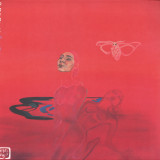
An introduction to our next release that we name DOUBLE JOURNEY.
Featured When we are all truly Free composed by Kuniyuki Takahashi. Taken from the forth coming Translate Pt 2 by Joe Claussell. When we are all Free takes one on a journey into cosmic landscapes and deep though provoking sounds. Residue I Believe by Joaquin Joe Claussell of deep tech house that continues to tap into and express the darker side of Joe Claussell
SORA
It is times such as these that further supports our choice of remedy and why our pursuit to delve deeper into the creative process remains relentless and of profound importance. Due to the unfortunate and dangerous constant overlooking the special gift bestowed upon all of us by the higher power, it calls upon us to continue forward with our mission for productive change which has become ever more crucial to reach. What we're referring to isn't exactly in plain sight for all to see, but obvious enough to those who care to pay attention. However, what has become undeniably apparent to us; is the powerful moving vibration that emits from sound and art and how we connect with them. It is a higher calling that cannot be neither denied nor questioned, and we can only praise the wisdom, truth and love that they bestow upon us. Thoughts like the aforementioned is how and why SORA; an extension of Sacred Rhythm Music & Cosmic Arts, came into existence. Enjoy the Double Journey…
Suche:one of them
- I'm A Ramblin' Man
- Rainy Day Woman
- America
- I May Be Used (But Baby I Ain't Used Up)
- Amanda
- Me And Bobby Mcgee
- Trouble Man
- Mamas Don't Let Your Babies Grow Up To Be Cowboys
- Good Ol' Boys (Theme From Dukes Of Hazard)
- Bob Willis Is Still The King
- Are You Sure Hank Done It This Way
- Suspicious Minds
- Honky Tonk Angels
- Good Hearted Woman
- I've Always Been Crazy
- Luckenbach, Texas (Back To The Basics Of Love)
- I Ain't Living Long Like This
This performance by Waylon Jennings was no April Fool's joke. This was the "new" Waylon, both personally and professionally. He had kicked a 20-year drug habit, split with RCA and signed a new deal with MCA Records. He discovered a passion for songwriting, teamed with legendary producer Jimmy Bowen, and produced some of the best work of his 30-year-plus career. He credited his wife and soul mate, Jessie Colter, for much of his inspiration. This was Waylon's second trip to the ACL stage, but the one that best captures the raw edge and driving urgency that pushed country music way past its Nashville boundaries starting in the mid-1970's. He was described as the leader of the country "Outlaw" movement, which he often dismissed as just another marketing scam, but there's no denying that he turned the music on its head and took it way beyond its rural southern roots. This West Texas boy who worked as a DJ and started his own band at 14, then later played with Buddy Holly, left an indelible mark on the music he loved. He was a class act, this man called Hoss. -Terry Lickona (Producer Austin City Limits®)
In the late 1970’s Athens, Georgia was buzzing with a raw but sophisticated music scene. The turn of
the decade began producing new sounds from bands like the B-52’s, R.E.M. and Art-Rock luminaries,
Pylon. Before they were a band, Pylon were art-school students at the University of Georgia:
invigorated by big ideas about art and creativity. In 1980 the band released its first record, Gyrate and
began touring across the country in support of the release. Following the critical acclaim of Gyrate,
Pylon went back into the studio. They gleefully pulled their songs apart and put them back together in
new shapes, revealing a band of self-proclaimed non-musicians who had transformed gradually but
noticeably into real ones. The resulting album was, Chomp. Now, more than three decades later, both
studio recordings have been remastered from their original audio tapes and are set for release on New
West Records.
In the late 1970’s Athens, Georgia was buzzing with a raw but sophisticated music scene. The turn of the decade began producing new sounds from bands like the B-52’s, R.E.M. and Art-Rock luminaries, Pylon. Before they were a band, Pylon were art-school students at the University of Georgia: invigorated by big ideas about art and creativity. In 1980 the band released its first record, Gyrate and began touring across the country in support of the release. Following the critical acclaim of Gyrate, Pylon went back into the studio. They gleefully pulled their songs apart and put them back together in new shapes, revealing a band of self-proclaimed non-musicians who had transformed gradually but noticeably into real ones. The resulting album was, Chomp. Now, more than three decades later, both studio recordings have been remastered from their original audio tapes and are set for release on New West Records.
10 year anniversary edition of the 6th Baby Woodrose album limited to 500 copies on clear vinyl. All Baby Woodrose albums have a different vibe and with Third Eye Surgery they have made their space rock album. For the first time Lorenzo Woodrose integrates the heavy psych of his side projects Dragontears and Spids Nogenhat with the fine song writing of Baby Woodrose. No matter how much the fuzz guitar is wailing or the echo machine is tripping, there's always a good song hiding beneath the rumble. Several of them clocks in at 6 minutes so there are only 9 songs on Third Eye Surgery. Songs like Nothing is Real and Love Like a Flower have an Eastern flavour thanks to the sitar of Vicki Singh while Just a Ride sounds like a trip to India in more than one way. Even though the central songs on Third Eye Surgery like Waiting for the War, Bullshit Detector and the title song are very spaced out there are also a few tunes that sticks out. Dandelion is a sweet and melancholic psychedelic pop song and is also a duet with Emma Acs while Honalie is a dreamy ballad that makes time stand still. Almost. Third Eye Surgery has been recorded in the Black Tornado studio in Copenhagen and is engineered by Anders "Evil Jebus" Onsberg and produced by Lorenzo Woodrose. The artwork is made by German artist Kiryk Drewinski who has worked with the band several times before and also did the artwork for the demo collection Mindblowing Seeds and Disconnected Flowers released in 2011.
With the exception of Waltz for Matilda, the pieces which make up this album were all composed during the 1980s and early 1990s. However, although some were performed occasionally during this period, they remained unpublished as manuscript notes and were largely forgotten about for some 20 years until Neil rediscovered them in the autumn of 2014, while idly sorting through a box of old manuscripts and musical notes. Their discovery came as a pleasant surprise, and the idea for the album, along with the title, quickly followed.
Bill Evans and Jim Hall had first recorded together in July of 1959, during the making of John Lewis’ LP Odds Against Tomorrow, and the two musicians also participated on Gunther Schuller’s Jazz Abstractions (recorded in December of 1960). However, those were big band albums and had no space at all for any real interaction between the pianist and guitarist. Undercurrent, presenting them as a duet, was their third studio encounter and one of their most rewarding collaborations. 180-GRAM BLUE COLORED VINYL - THE COMPLETE ALBUM + 2 BONUS TRACKS
- A1: Across The Spider-Verse (Intro)
- A2: Spider-Woman (Gwen Stacy)
- A3: Vulture Meets Culture
- A4: Spider-Man 2099 (Miguel O'hara)
- A5: Guggenheim Assemble
- A6: The Right To Remain Silent
- A7: Across The Titles
- A8: My Name Is… Miles Morales
- B1: Back Where It All Started
- B2: Miles Sketchbook
- B3: Under The Clocktower
- B4: Spider-Man India (Pavitr Prabhakar)
- B5: Mumbattan Madness
- B6: Spider-Punk (Hobie Brown)
- B7: Spot Holes 2
- B8: Indian Teamwork
- C1: Welcome To Nueva York (Earth-928)
- C2: Spider Society
- C3: Canon Event
- C4: All Stations - Stop Spiderman
- C5: Nueva York Train Chase
- D1: The Go Home Machine
- D2: Falling Apart
- D3: The Anomaly
- D4: Five Months
- D5: Across The Spider-Verse (Start A Band)
Experience the captivating soundscape from one of 2023’s biggest blockbusters on the Spider-Man: Across the Spider-Verse (Original Score) vinyl. The sequel to 2019’s Oscar-award winning Spider-Man: Into the Spider-Verse broke the global box-office on release, and the critically acclaimed, viral hit-making score is now available on vinyl and CD for the first time.
Academy Award, Golden Globe and BAFTA-nominated composer Daniel Pemberton returns to expand upon the Spider-Verse’s iconic, multi-versal soundscape with a genre-defying score that seamlessly combines a 100-piece orchestra with DJ scratching, operatic vocals, techno beats, punk rock, acid-house-inspired Indian percussion, soaring synth solos, and even…a prominently sampled goose. From the Gwen Stacy’s fan favorite motif to Spider-Man 2099’s internet-breaking theme music, the film and its intricately-woven score is sure to transport you into some wildly unexpected parallel dimensions.
This double vinyl release comes pressed on two white and dark purple marbled LPs, featuring highlights from the score hand-selected by Daniel Pemberton. The package includes a stunning soft-touch gatefold jacket with spot gloss, a double-sided collectable poster and two printed sleeves with custom art – plus, an 8-page art booklet featuring liner notes from Daniel Pemberton and art from the film.
The only one of tenor saxophonist Tina Brooks’ albums as a leader to be released during his too-brief lifetime, 1960’s True Blue is a hard bop masterpiece featuring Brooks’ distinctive compositions performed by an exceptional quintet with Freddie Hubbard on trumpet, Duke Jordan on piano, Sam Jones on bass, and Art Taylor on drums. This Blue Note Classic Vinyl Edition is stereo, all-analog, mastered by Kevin Gray from the original master tapes, and pressed on 180g vinyl at Optimal.
Considered one of the most innovative groups on the Colombian musical circuit in 1973, Columna de Fuego forged its sound by creatively and organically mixing elements of heavy rock with rhythms rooted in the music of the Pacific and Caribbean coasts of the country. Columna de Fuego, the first Colombian rock band to tour outside South America, was the supporting act for Leonor González —La Negra Grande de Colombia— for months and featured members of Los Young Beats, Los Speakers and Siglo Cero. Their only LP, recorded in Spain and released in Colombia only in 1974, was a turning point in the history of Colombian rock, an album full of funk, soul, cumbia and currulao that maintains a fast pace from start to finish. After unsuccessful attempts to establish themselves in Europe, the group parted ways; some members returned to Colombia and others stayed in Europe as part of La Banda Salsa, a vibrant and little mentioned chapter in the history of Latin rock. Roberto Fiorilli, the stand-out drummer of Colombian rock, returned to his native Italy. Over the following five decades, the myth of Columna de Fuego, that wonderful Bogota rock band that dared to experiment with the music of the Colombian coastline, grew. The curiosity of musicians interested in the traditional music and folklore of the coasts since the late 80's, the consequent mixture of different musical genres (modern and roots) at the end of the 20th century and the almost impossible desire of collectors to find a copy of the album or one of the band’s singles, gave it the status it should always have had as a pioneer, milestone and beacon. After remaining unavailable for five decades, we are proud to now present the first-time reissue of this obscure gem with its original artwork, including an insert with notes and rare photos. Sleeve
"The Twits" wurde von der Band im Februar 2023 innerhalb von nur acht Wochen in einem provisorischen Heimstudio auf Mallorca aufgenommen und von Marta Salogni abgemischt. Nach einem Kinderbuch von Roald Dahl benannt, zeigt sich das Songwriting von bar italia in rauen, mystischen, ungebürsteten und gelegentlich düsteren Arrangements. Songs wie "my little tony" mit seinen harten Riffs und dem kathartischen Sound ist ein klassischer Indie-Banger für die große Bühne. In anderen Momenten wagt sich die Band auf bisher unbekanntes Terrain, auf dem sie eine hypnotische Dissonanz ihrer Stimmen schaffen. "Jelsy" zum Beispiel spielt sich wie ein Gespräch zwischen Freunden über wehmütigen, summenden Country-Blues ab, wobei die Stimmen abwechselnd tröstlich, ironisch und hoffnungslos sehnsüchtig sind. Der geschmeidige, langsam brennende Walzer "Twist" besticht durch seine nackte Lyrik und scheint jedes Bandmitglied zu einem individuellen Bekenntnis einzuladen. Während "Tracey Denim" von seinen kompakten 2-3-minütigen Songs lebte, besticht "The Twits" durch seine eher offenen und mitunter uferlosen Kompositionen. "glory-hunter" nimmt z.b. spielerische Wendungen, bevor es an einem völlig anderen Ort endet, als es begonnen hat. Das abschließende "bibs" ist ein seltener Fall, in dem alle drei im Einklang zu hören sind. Eine Prozession geradezu geisterhafter Akkorde mit einer zerreißenden Rückkopplung bildet den Abschluss des Albums. Das im Mai veröffentlichte Matador-Debüt "Tracey Denim" von bar italia wurde schnell zum Gesprächsthema der weltweiten Indieszene. Publikationen wie The Guardian ("eines der Alben des Jahres 2023 bisher"), The Times ("excellent debut album"), The Observer ("Artist To Watch"), NME ("a lasting impression that"s all of their own making"), The Quietus ("endlessly evocative") und Pigeons And Planes ("quickly establishing themselves as one of the most enticing upcoming bands") feierten das Album. Im Juni gaben bar italia ihr Live-Debüt in den USA mit fünf ausverkauften Konzerten in New York sowie vier in Los Angeles und auch ihre Debüt-Show in Berlin war binnen kürzester Zeit ausverkauft. Über einen der New Yorker Auftritte schrieb Brooklyn Vegan: "Live spielt die Band ganz natürlich und großartig auf, mit Songs wie "Punkt", "Changer" und "Nurse!" (...), die Post-Punk der frühen 80er mit Indie-Rock der 90er und einem Hauch Trip-Hop mischen".
‘Double Pink’ is the debut album by And Is Phi (Andrea Isabelle Phillips), a multidisciplinary artist from Norway and the Philippines now based in South East London. ‘Double Pink’ is a nuanced world that draws on colours and texture; with influences of Joni Mitchell and Frank Zappa, 90's R&B and Madlib’s ‘Shades Of Blue’ blending languidly to produce a base for uncovering layers of self, a deep release, and fragile new form.
Written by Andrea and co-produced with Fiona Roberts and Lorenz Okello over a nine month period; ‘Double Pink’ thematically explores the many movements of internal change, speaking from a deep inner voice inside the body. The title track is an invitation to be as unapologetically hungry as you please after a long absence of life giving passion and trust in oneself. ‘White Noise’ is a recovery song playing in your soul the first time you made it back out to the dance floor after a heart break so massive it laid rest to the person you used to be. Songs like ‘Working’ and ‘Staaar’ come from a candid and contemplative aspect. Stages of grief and resilience and wonder and wisdom are all touched upon.
“The album explores metamorphosis, liminal spaces, and the multiple faces of love”, says Andrea. “I mention love as a key ingredient, because anyone who has had to push and pull and hold and yield themselves through great loss and transformation knows it ain’t gonna happen without love. Tough times ask for double love, a stronger heart, something like a double pink”.
Andrea’s story dots between periods spent living in Norway, the Philippines and England - experiencing joy and beauty battling corruption and violence in Manila, DJing in Oslo, losing her sizable record collection in a warehouse fire before making friends and family in the jazz scene in London. Every story needs a scene, a landscape, an environment; all things Andrea visualises when writing songs.
“At my heart I am emotional and imaginative, searching for freedom for my spirit. What grounds it all is coming from a family of storytellers. My father played drums and percussion, he was a great dancer and a true collector and connoisseur of music from everywhere. My wise mother instilled in me a sense of faith and grace”.
Andrea is far from new to the scene, having performed with Steamdown, Emma Jean Thackray, Hector Plimmer, Scrimshire, William Florelle and many more as a valuable and inspiring creative force within the South London music scene. Andrea also created the album’s artwork and music videos: musicality and painting evolved from her initial creative languages of drawing and dance. All aspects are dialects of her common language: singing what can’t be painted and painting what can’t be sung.
New Robohands LP 'Palms' is the fifth album from the London based instrumentalist and producer Andy Baxter. Moving towards different genres and arrangements from his previous albums, 'Palms' features duelling harp parts, tape echo, double bass and draws inspiration from artists such as Dorothy Ashby, Azimuth, Alice Coltrane and Toquinho.
In parts tropical and synth drenched, and in others stripped back and acoustic, 'Palms' is a journey back to saturated analog recordings of the late 60s and 70s, with a subtle modern layer of glitch FX and pitch control experimentation in places. The album makes also reference to classic releases from jazz fusion that feature the legendary Arp Odyssey synthesiser, used by artists such as Herbie Hancock and George Duke.
The seventeen track album features performances from multiple session musicians including Jim Piela on saxophone and Marco Cremaschini on Rhodes, with Baxter taking on drums, guitar, bass, keys and also mixing duties. 'Palms' is a new direction for his project and a record that thematically journeys into modern reinterpretations of jazz, downtempo, acoustic and ambient music.
'soft like steel’ is documenting a personal process; one of understanding, cleansing, re-learning and ultimate re-birth into a version of myself with renewed perceptions, ideas, and an openness to the new. LVRA represents an idealised version of myself - one that I feel like I can almost touch, but in reality is difficult to achieve. It follows my journey in understanding how my morality, principles and opinions have been shaped by the world and people around me - sometimes for the better, and sometimes for the worse. This on-going conversation with myself is a conversation that I hope other people have with themselves too; stepping through the mystical doors of perception, coming into a this unknown universe with me, is choosing the hard way - it is choosing to destroy the comforts of what is familiar, to seek new experiences that allow for greater empathy and understanding of the world and others. Only then do I believe the world can be a more accepting place for all kinds of individuality and differences, and I hope people find safety and acceptance in the music.
New Robohands LP 'Palms' is the fifth album from the London based instrumentalist and producer Andy Baxter. Moving towards different genres and arrangements from his previous albums, 'Palms' features duelling harp parts, tape echo, double bass and draws inspiration from artists such as Dorothy Ashby, Azimuth, Alice Coltrane and Toquinho.
In parts tropical and synth drenched, and in others stripped back and acoustic, 'Palms' is a journey back to saturated analog recordings of the late 60s and 70s, with a subtle modern layer of glitch FX and pitch control experimentation in places. The album makes also reference to classic releases from jazz fusion that feature the legendary Arp Odyssey synthesiser, used by artists such as Herbie Hancock and George Duke.
The seventeen track album features performances from multiple session musicians including Jim Piela on saxophone and Marco Cremaschini on Rhodes, with Baxter taking on drums, guitar, bass, keys and also mixing duties. 'Palms' is a new direction for his project and a record that thematically journeys into modern reinterpretations of jazz, downtempo, acoustic and ambient music.
- El Pirata
- Martha Ya Está
- Cambiemos Ya
- Tempestad
- Tema Para Lilus
- Tranquila Reflexión
- Río Tonto
- Tiempo En El Sol
"For every copy of one of the great and collectible rock albums one finds on Peru's stalwart MAG label, one has a dashed dream about finding Tarkus, one of South America's whispered hard rock holy grails. I've never found one, and I've been looking for the better part of two decades. It's a fiery set of Black Sabbath style jamming and worthy of its praise." - Eothen Alapatt aka Egon (Now Again) The Peruvian-Argentinian band Tarkus was only together for six months and recorded only one album, but the record's unprecedented sound and the limited number of copies released made it legendary for fans of hard rock in Latin America. Recorded under the influenced by the Argentinian groups Almendra, Pappo, Manal and Led Zeppelin and Black Sabbath from the United Kingdom. Details: The only album released by Peruvian band Tarkus (featuring members of Telegraph Avenue), from 1972, is a heavy psych/hard rock masterpiece with echoes of Led Zeppelin, Black Sabbath and Deep Purple. Only a handful of promotional copies were made available at the time of its release, making it for years a true lost classic and one of the rarest records of Latin American rock. Tarkus was born after the 1971 split of Telegraph Avenue, one of the most popular Peruvian bands at the time. TA member Walo Carrillo was joined by Argentinian musicians Guillermo Van Lacke, whom he had met previously in Lima, and 16-year-old Darío Gianella. They got together and started making music very influenced by bands such as Black Sabbath, Led Zeppelin, Cream, Deep Purple_ They immediately developed a heavy, hard rock sound uncommon in Peru, and asked former Telegraph Avenue member Alex Nathanson to join them. They recorded their first album between April and May of 1972 for the MAG record label, which was expecting something closer to Telegraph Avenue and didn't know how to market such a heavy sound. Soon after, guitarist and main composer Darío Gianella decided to leave the band to follow his religious faith, just before they presented their debut LP live. As a result, the band disintegrated without making their official debut and only a few copies of the album were actually distributed. Time has given this LP the significance it rightly deserves as one of the foundations of Latin American hard rock, and Munster is proud to present this new vinyl reissue.
Five groups, one mythical studio - documenting the emergence of a generation!
The initial postulate was simple: five groups, one emblematic studio and 24 hours for each to imagine and record two unreleased tracks with one objective - the will to document a French jazz scene in the midst of renewal.
In these last few years, several innovative currents have shaken up the world of jazz and attracted new fans. They have bubbled up from Los Angeles, impregnated with hip-hop culture (Kamasi Washington, Terrace Martin, Thundercat), or from London, tinged with African rhythms (Nubya Garcia, Kokoroko, Ezra Collective). Meanwhile, in France, a new scene is emerging, carrying with it more of a dancefloor-oriented sound influenced by electronic music - an obvious kinship with the French Touch explosion of the late 90s.
Historically, every movement has been assimilated to a certain neighbourhood, to specific clubs where late at night, young guns stayed up to imagine the jazz of tomorrow - the Cotton Club for the jazz of the 20s, Minton’s Playhouse in Harlem for Be-Bop, the Black Hawk in San Francisco for West Coast jazz, Birdland in New York for Hard-Bop or a lot more recently, the Total Refreshment Centre which has been the playing field for the new London scene.
In Paris too, this new sound is associated with actual venues, places which have allowed these groups to form, create a repertoire and forge an aesthetic - Le Baiser Salé for Monsieur Mâlâ, La Gare/Le Gore for Photon, La Pêche in Montreuil for Ishkero, La Petite Halle for Underground Canopy and also le Duc des Lombards and le 38 Riv’ for Alex Monfort; it’s in a live context that this music will always continue to evolve.
Keeping this “live” spirit, with all its spontaneity, was actually the guiding line for the elaboration of this Studio Pigalle compilation. Each take was recorded in the most organic way possible, bringing all the musicians together in the same room to limit post-production alterations before the final cut was assembled, in just one day, by studio in-house sound engineer, Felix Rémy.
A feeling of urgency permeates a record guided by an artistic production taking care to crystalise the essence of this artistically free-range generation whose childhoods were rocked just as much by Bill Evans and Roy Hargrove as by J Dilla and Jeff Mills. One of the two tracks recorded is geared towards the dancefloor, and the other, more cosmic/ambient gives freer rein to individual interpretation.
There were therefore many possible ways of interpreting these guidelines for the five formations which number among the most distinctive on the current French musical landscape, and the occasion, for some, to rummage through their archives! With Transe (Mbappé) and Da Verdere (Vella), Monsieur
Mâlâ present us with two unreleased tracks issued from the very first rehearsals of the quintet reworked especially for this compilation. “Seen the aesthetic range of this group, it all worked out very naturally in the studio”, recounts keyboardist Nicholas Vella “Recording like they did in the sixties with all the channels live and working with small imperfections was a very interesting task, even when it came to the mix, we had to make do with the takes we had... “
“Our group is very recent, and with this session, in just two tracks, we had the opportunity to present the entirety of our musical universe,” says Photons pianist Gauthier Toux. “All too often, we assimilate this fusion between jazz and dance music to computers and post-production modifications. For “Dessine”, we kept the first take, and we must have recorded just three or four for the other track with more of a techno bent. In one day, we understood that we could play our entire repertoire live, from A to Z”.
“When the Komos label offered me this project, it immediately spoke to me”, remembers Alex Monfort “Straight away, I thought of “Since I Met You”, a track with a nine/four time signature which really is reminiscent of a new- soul groove, but with this extra cosmic vibe! I wrote the words to the chorus and Nina Tonji placed her voice on the track, adding her own verses. For “Tonight”, the up-tempo track, I wanted to head off in more of a hybrid direction inspired by Kaytranada or the Black Radio series by Robert Glasper. A cross-over between jazz and hip-hop which really does represent my world, and I also tried to place vocals centre stage (Emcee Agora)”.
“We truly resonated with the way Antoine Rajon imagined this compilation and the recording session”, confide Warren Dongué and Jérémy Tallon from Underground Canopy. “When arriving in this studio we felt as if we had gone backtothe70s! Inkeepingwiththespiritofthisera,heknewhowtoletus keep our spontaneity, without recording in too many takes, and that’s how we like to work”.
“We managed to adhere to the themes of the compilation without changing our instrumentation, we wanted to remain faithful to the sound of Ishkero on these new compositions and take them somewhere else” – says drummer TaoEhrlich -“Withoutaddinganyelectronics.Thesessionwassupervisedin a truly subtle and benevolent manner. From a human perspective, it was also a wonderful experience”.
Whether turned towards hip-hop, ethnic or electronic music, the artists featured on this Studio Pigalle compilation represent the eclecticism of a new generation in the process of writing the first chapters of its history. Open to experimentation, these artists continue to hold high an immutable love for improvisation and creation in the moment... another definition of the word Jazz!
“A piece of music never truly comes to An end. Revisiting a theme illustrates this idea that life goes on.” These are the words of Wayne Shorter, uttered in 2018 upon the release of Emanon, his final opus. On this record, the octogenarian uses dusky hues to shade in the passions of his youth - drawing and science-fiction, as well as the causes he has defended all his life - the fight against ecological upheaval and structural racism. This sentiment did not fail to resonate with Julien Lourau, who has reached a stage in life where he has begun to look back over certain pages written by the man he has always considered one of the masters of his trade. Five years later, this Parisian native has also chosen to revisit his glory days, offering reworked versions of specific tracks composed by his titular elder throughout the 80s. “When I play this music, I find myself back in my teenage bedroom. These are my standards, and they remind me of autumn in Rambouillet.” At that time, after practising his scales, Julien would also play Dungeons & dragons, and immerse himself in SF as well as heroic fantasy - epic influences which are not without a certain connection to the dreamworlds Shorter conjured up, as another fan of landscapes beyond the grasp of reality.
This album features four themes taken from Atlantis, which came out in 1985, and two from Joy Ryder, released three years later. To these, he has added a composition penned at around the same time for Sportin’ Life, the penultimate LP by Weather Report. This is rounded off by a tune taken
from Native Dancer, the record which, ten years earlier, in 1975, brought together this saxophonist who learnt his trade alongside Art Blakey, before joining Miles’ second quintet, and Brazilian Milton Nascimento.
“Between Native Dancer and Atlantis, Shorter did not release anything under his own name, but he took the time and care to really perfect his writing. Upon his return, he injected a very Brazilian form of subtlety into his compositions, especially rhythmically. And from a harmonic point of view, these themes are extremely sophisticated, and reveal truly singular colours. In fact, he decided to display the score as if it constituted the liner notes of Atlantis.”
Julien Lourau is a fan of every Wayne Shorter era, from his Blue Note days, where Mr Gone defined the bases of a truly unique repertoire, all the way to his final quartet - a reference like no other. He decided to focus on this “highly electric” period, which is not necessarily Shorter’s best known, nor his most widely appreciated - despite being a unanimous reference, Shorter has nonetheless never had a direct descendent. In Lourau’s line of sight there lies a desire to focus on typically South American tonic accents which characterise this repertoire, twinned with the ambition to switch up their actual sound “by attempting to open up onto a production highly influenced by eighties fusion". However, he admits that modifying the structures of these most unique of worlds constituted a fresh challenge. “There’s this labyrinthine harmonic system where you’ve no idea how it holds together, but where it’s actually impossible to touch the slightest element without the whole edifice wavering. It is in fact a very difficult thing to achieve!”
In order to successfully transcribe all this creativity free of obstacles, Julien Lourau once again called upon the help of Mathieu Debordes. From January 2023 onwards, Mathieu endeavoured to break down all the musical elements, on paper, before creating any actual music. The record was therefore constructed on the faith of these scores, without necessarily transiting through a creative residency - just two live gigs, to make sure the setup worked. Besides Mathieu Debordes and his synthesisers, Julien Lourau has assembled an ad hoc team by his side. On the bass, according to the track, we can hear erstwhile companion Sylvain Daniel or a new acolyte on the fretless bass, Joan Eche Puig.
Stéphane Edouard, on percussion, even dives headfirst into an unlikely proto-rap of sorts, on Pearl On The Half Shell (where, on the original version, Bobby McFerrin adjusted his interventions in a rather madcap style). Aesthete and drummer Jim Hart as well as pianist Leo Jassef also figure on this release - both were present on previous project devoted to label
CTI. “At sixteen, I wanted to sound like Michael Brecker rather than Ben Webster - that was equated with modernity in those days”, adds Julien with a smile, as for him, all this rings out a little like a logical next step, a joyful immersion into the fountain of youth. And if, for this record, he plays the soprano more than ever, the saxophone Shorter set in his sights on, he never tries to replicate an unattainable ideal note by note. What would be the point?
“Wayne Shorter is not just a saxophonist’s saxophonist. In fact, I don’t know a single person who has risen to challenge of his solos. I have not done it myself either, but on the other hand, I have retained a lot of his phraseology. His way of approaching the instrument reveals a more evanescent language, a work on colour and shape. Keeping this in mind has allowed me to gravitate towards certain elements, that in hindsight, I find echoes of in my work, even in Groove Gang.” Shorter etches out these phrases, creating a groove within which Lourau had traced subtle punctuation, managing, from a highly written base, to create fresh apertures, promises of a great escape. Emblematic of this standpoint, his regal version of Ponte de Areia, originally a wonderful dialogue between Milton Nascimento and Wayne Shorter. Here, the Frenchman takes liberties with the original melodies, without ever growing distant from the original spirit, extending one section with delicacy, offering a rubato development and then a groove “like a little suite”. Julien Lourau also renews with an accomplice from last century, Magic Malik, who lends his high-pitched vocals to the track. Though they had not recorded together for more than twenty years, the two of them got on as if they had only ceased collaborating yesterday, everything flowed naturally. The track was wrapped up in just one take, much like other themes, such as opener Who Goes There where the flautist deploys smooth, enchanted and smoky wisps.
Fundamentally, reflecting of the sleeve which features a child playing with a ball, image that could symbolise the sun just as much as the moon, Julien Lourau manages to translate the ambiguous candour which characterizes Shorter’s work - solar and crepuscular at the same time, that of a visionary and poet definitively situated outside of all chronology, but with whom Julien shares surprising and ‘timely’ coincidences. Shorter was born August 25, 1933, the same day as Julien’s father, “if we take time zones into account”, and who died on Lourau’s birthday, March 2, 2023. Should we take this as a random fact? Or could we not see here the sign of a destiny connecting the agnostic Frenchman to the man who, as a fervent Buddhist, believed in the transmission of his spiritual flow ?
- A1: String Quartet No. 5 I
- A2: String Quartet No. 5 Ii
- A3: String Quartet No. 5 Iii
- A4: String Quartet No. 5 Iv
- A5: String Quartet No. 5 V
- B1: String Quartet No. 4 (Buczak) I
- B2: String Quartet No. 4 (Buczak) Ii
- B3: String Quartet No. 4 (Buczak) Iii
- C1: String Quartet No. 2 (Company) I
- C2: String Quartet No. 2 (Company) Ii
- C3: String Quartet No. 2 (Company) Iii
- C4: String Quartet No. 2 (Company) Iv
- D1: String Quartet No. 3 (Mishima) 1957 – Award Montage
- D2: String Quartet No. 3 (Mishima) November 25 – Ichigaya
- D3: String Quartet No. 3 (Mishima) 1934 – Grandmother And Kimitake
- D4: String Quartet No. 3 (Mishima) 1962 – Body Building
- D5: String Quartet No. 3 (Mishima) Blood Oath
- D6: String Quartet No. 3 (Mishima) Mishima/Closing
When Kronos plays a piece, they become fellow composers, true collaborators. Without them, we wouldn’t have the kind of string quartet playing that we find around us today. There are two kinds of string quartet playing: the ‘Before Kronos’ and the ‘After Kronos’.” – Philip Glass
‘Kronos Quartet has broken the boundaries of what string quartets can do.’ – New York Times
Nonesuch releases Kronos Quartet’s acclaimed album Kronos Quartet Performs Philip Glass on vinyl for the first time to coincide with Kronos Quartet: Five Decades, a year-long celebration marking the quartet’s 50th anniversary. Originally released in 1995, the album features David Harrington (violin), John Sherba, (violin), Hank Dutt (viola) and Joan Jeanrenaud (cello) performing Quartet No. 2 (Company) (1983), No. 3 (Mishima) (1985), No. 4 (Buczak) (1990), and No. 5 (1991), the first piece Glass wrote especially for Kronos. Recorded at Skywalker Sound in California, the album was produced by Judith Sherman, Kurt Munkacsi and Philip Glass. The cover art features Francesco Clemente’s painting The Four Corners (1985). At the time of the album’s release, the New York Times said, ‘It contains some of Glass's best music since Koyaanisqatsi. His ear for sumptuous string sonorities is undeniable,’ while the Washington Post called it ‘An ideal combination of composer and performers.’ It was a top 10 hit on Billboard’s Top Classical Albums, and spent 12 weeks on Billboard’s Classical chart.
In his original liner note, critic Mark Swed wrote, ‘Glass’ string quartets may contain his most intimate music. They are works through which a very public composer, perhaps the most important opera reformer of our age and a longstanding collaborator in large-scale music theater, holds up a mirror to himself and his way of composing. “In an odd way,” Glass explains, “string quartets have always functioned like that for composers. I don’t really know why, but it’s almost impossible to get away from it. It’s the way composers of the past have thought and that’s no less true for me. It’s almost as if we say we’re going to write a string quartet, we take a deep breath, and we wade in to try to write the most serious, significant piece that we can.” Glass says that as he sat down to write String Quartet No. 5, he had discovered that perhaps not taking a serious tone might be the most serious way to deal with it. “I was thinking that I had really gone beyond the need to write a serious string quartet and that I could write a quartet that is about musicality, which in a certain way is the most serious subject.”’
Glass’ first numbered quartet was written in 1966; however, he did not return to the string quartet medium until 1983, when he provided incidental music for a dramatization of Samuel Beckett’s prose poem, Company. During those 17 years, Glass had formed an ensemble and developed his style in a series of increasingly elaborate pieces for it. String Quartet No. 3 is also adapted to dramatic music, this time from his score to the 1985 Paul Schrader film, Mishima. It was with the music of Mishima that Kronos became associated with Glass, recording the string quartet sections of the soundtrack and subsequently working extensively with the composer on all five of his numbered quartets. Kronos also gave the first concert performances of Company and Mishima. String Quartet No. 4 was composed in remembrance of the artist Brian Buczak, who died of AIDS in 1988.
As Kronos’ anniversary season continues with further concerts around the world, Nonesuch will reissue Black Angels on vinyl on February 16. First released in 1990, the award-winning album includes George Crumb’s title piece, which inspired David Harrington to found the quartet. Called ‘an unusually elevated and searing Vietnam War protest’ by the New York Times, it sets a dark, powerful tone for this collection, which addresses the political/physical/spiritual consequences of war. Also featured are works by Charles Ives, István Márta, Thomas Tallis, and Dmitri Shostakovich. ‘Stylishly packaged, intelligently programmed, superbly recorded and brilliantly performed,’ proclaimed Gramophone. ‘In short, very much the sort of disc we’ve come to expect from the talented and imaginative Kronos Quartet.’ The Evening Standard included it among its ‘100 Definitive Classical Albums of the 20th Century’.
Born in Baltimore, Maryland, in 1937, Philip Glass is a graduate of the University of Chicago and the Juilliard School. By 1974, he had created a large collection of music for The Philip Glass Ensemble. The period culminated in the landmark opera, Einstein on the Beach. Since Einstein, Glass’s repertoire has grown to include music for opera, dance, theatre, orchestra, and film. His scores have received Academy Award nominations (including Kundun and The Hours, as well as Notes on a Scandal) and a Golden Globe (The Truman Show). Recent works include his memoir, Words Without Music, his first Piano Sonata, opera Circus Days and Nights, and Symphony No. 14. Glass received the Praemium Imperiale in 2012, the US National Medal of the Arts from President Barack Obama in 2016, and 41st Kennedy Center Honors in 2018.
Nonesuch’s relationship with Glass began in 1985, with the release of the score for Paul Schrader’s Mishima featuring Kronos Quartet. Over the years other Glass works on Nonesuch have included Einstein on the Beach (1993), Kronos Quartet Performs Philip Glass (1995), Music in Twelve Parts (1996), Glass Box (2008), as well as the soundtracks for Powaqqatsi (1988), Kundun (1997), Koyaanisqatsi (1998), and The Hours (2002), amongst others.
For 50 years, San Francisco’s Kronos Quartet – David Harrington (violin), John Sherba (violin), Hank Dutt (viola), and Paul Wiancko (cello) – has challenged and reimagined what a string quartet can be. Founded at a time when the form was largely centred on long-established, Western European traditions, Kronos has been at the forefront of revolutionizing the string quartet into a living art form that responds to the people and issues of our time. In the process, Kronos has become one of the most celebrated and influential groups of our era, performing thousands of concerts worldwide, releasing more than 70 recordings of extraordinary breadth and creativity, and collaborating with many of the world’s most accomplished composers and performers. Through its nonprofit organization, Kronos Performing Arts Association, Kronos has commissioned more than 1,000 works and arrangements for string quartet – including the Kronos Fifty for the Future library of free, educational repertoire. Kronos has received more than 40 awards, including three Grammy Awards and the Polar Music, Avery Fisher, and Edison Klassiek Oeuvre Prizes.
Kronos is prolific and wide-ranging on recordings. The ensemble’s expansive discography on Nonesuch includes three Grammy-winning albums: Terry Riley’s Sun Rings (2019), Landfall with Laurie Anderson (2018), and Alban Berg’s Lyric Suite featuring soprano Dawn Upshaw (2003); the 40th-anniversary boxed set Kronos Explorer Series; Nuevo (2002), a Grammy- and Latin Grammy–nominated celebration of Mexican culture; Pieces of Africa (1992), a showcase of African-born composers that simultaneously topped Billboard’s Classical and World Music charts; and Folk Songs (2017), Nonesuch’s 50th album with Kronos, which featured Sam Amidon, Olivia Chaney, Rhiannon Giddens, and Natalie Merchant singing traditional folk songs.
and Sebastian Kokus and the prolific Ulf Schütte, the Hamburg-based trio has tirelessly expanded upon its sound and extended its musical style. After 2022’s »S/T« documented the results of their first jam sessions as a newly-founded group, »V.A.« started even more modestly and became an even bigger undertaking. Originally conceived as a small one-off release, it grew into a full record which sees the group embracing dub music, collaborating with Peaking Lights’ Aaron Coyes and inviting other artists—No UFO’s, Seekers International, Coco Em—who reworked select tracks in true dub style. »V.A.« is marked by inconsistency, openness, and heterogeneity in the best sense of those words: ever-changing, constantly surprising and consistently in motion.
The starting point for »V.A.« was a Hamburg concert in December 2022 together with Coyes, who played a solo set as Peaking Lights. On the request of the event organiser, Cloud Management teamed up with him for a jam session after the gig, laying the foundation for a track that the group took to the studio before sending it to Coyes to record vocals for it. Another song quickly followed and even though the band initially intended to release »PST« and »0rten Pitch« as standalone 7” single, they soon decided to have others create versions of the two tunes to round them off in the form of a 12” EP. Once more though, one thing led to another and now »V.A.« collects five original pieces by Cloud Management as well as three—four on the digital version—remixes by other artists.
Collaborating with Leipzig-based Canadian producer No UFO’s, the Canadian Seekers International collective, and Kenyan multi-disciplinary artist Coco Em came about organically. As fans of their friend Konrad Jandavs’ work for labels such as Spectrum Spools, Root Strata and his own Nice Up International, Korf, Kokus and Schütte asked him for a remix and granted him full creative freedom for his take on »PST«. Jandavs also connected them with the prolific Richmond-based soundsystem worshippers, who present their take on the same track on this record as well as a version of »Electric CD.« Also this track appears three times on the record, having been re-rubbed by Emma Mbeki Nzioka, who was introduced to the the trio by its label Altin Village & Mine.
There isn’t really a common thread running through the rough digi-dub of No UFO’s take on »PST«, Seekers International’s traditionally-minded yet infinitely playful dub-psychedelia and Coco Em’s bass-heavy, percussive, pulsating take on »Electric CD.« However, as a group dedicated to staying in flux at all times, Cloud Management ended up embracing the creative differences between their own work and those of their respective collaborators. In calling it »V.A.,« they paid tribute to their somewhat loose, but conceptually consistent concept of giving various artists full creative licence over their own work. Neither a true album in the strict sense of the world nor just a compilation, »V.A.« is actually the essential Cloud Management record: ever-changing, constantly surprising, consistently in motion.