Emotional Rescue and Jamwax come together to present the first of three essential 12's from NY/Jamaican label Capo Disco, all officially licensed and remastered for the first time. The brainchild of reggae vocalist, musician, producer and label owner Glen Adams, the label married disco with his Caribbean roots to perfection. TIP! Born and raised in Jamaica, Adams story is a similar one to the performers of the golden period post-Independence. Initially discovered as a vocalist by Coxsone Dodd, he went on to work with such luminaries as Ken Boothe and Stranger Cole before co-founding The Heptones and working Duke Reid, Bunny Lee and Lloyd Charmers.
As a session organist he worked for The Hippy Boys, The Reggae Boys and later with Lee Perry's The Upsetters. Here he came in to the orbit of The Wailors, touring England with them in the early 70s and with Perry co-wrote Mr Brown. When most of The Upsetters became Marley's rhythm section, Adams stayed with Perry before making the move to Brooklyn in 1975.
There he started Capo Records, running it and it's sub-labels, successfully until the mid-80s. During these later years he ventured in to mixing Reggae with Boogie and Disco rhythms and released just four 12's under Capo Disco as well as recording boogie and hip-hop influenced releases with T Ski Valley and as Glen Adams Affair for SAM and Moonglow Records.
Here then the spotlight is on Adam's nascent disco releases and the series starts with the wonderful, uplifting A Beat For You. Actually appearing on a one off sister-label, Top Secret, this is a beautiful 'Lovers' anthem from Adams over a laidback dub-bass riddim. Backed with a simple instrumental Version, the space and interplay of the keys and guitar over drum and bass is superlative. 'There is a beat in my heart, just for you...just for you.'
quête:one of them
Species Of Fishes was created in 1993 in Moscow during the experimental home sessions of Igor Kolyadny and Vitaly Stern, which resulted in the recording of the Songs Of A Dumb World, a sampledelic album, published on the sublabel of the Dutch Staalplaat - Kormplastics in 1994. It was followed by the album Trip Trap (1996) on the domestic label Exotica, which immediately affirmed Species of Fishes as one of the leading electronic groups in Russia. It is this seminal album that marks the first release of Nina Kraviz's new label GALAXIID.
GALAXIID runs as a sub label of , illuminating the listening side of Nina's musical taste with a focus on experimental, ambient and psychedelia. As with , GALAXIID has a strong connection to art through it's visual identity, with all the cover artworks drawn by psychedelic artists.
Trip Trap was so ahead of its time upon initial release and still sounds modernistic as it is rereleased almost 20 years later. Here, Species Of Fishes explore different genres of electronics, somehow interpreting them and creating their own unique out-of-genre stylistics, marrying different styles such as breaks and experimental in 'Health 100%', electro and ambient in 'Crash Recovery', IDM and techno in 'Bfg9000 vs. Barons Of Hell'. The 10 tracks range from short interludes '(Backspace)' and (Alt+Tab) to more lengthy tracks '(The Web)' and 'Access Depth'.
- A1: Intro
- A2: Love That I'm In (Feat. Andy Cooper)
- A3: Since You've Been Gone
- A4: Entitled To That
- A5: Get Down On You
- A6: Push On
- A7: Main Event (Feat. Andy Cooper)
- B1: Hold You Close
- B2: Buzzsaw (Andy Cooper)
- B3: Allergic Interlude
- B4: It Won't Be Me (Feat. Andy Cooper)
- B5: Funky Feeling
- B6: Remedy (Feat. Dr Syntax)
- B7: Get On The Floor
The Allergies' debut album introduced the world to the way they effortlessly fuse funk, soul, disco, hip-hop and breaks into dancefloor-ready nuggets of ear candy. Taking classic sounds and reshaping for the modern age is the signature that won them plaudits across the globe.
Not ones to rest on their laurels, it hasn't taken long for them to deliver more of the goods on their second full-length album, 'Push On'. As well as taking the successful formula of the first record and expanding on the sound with raw Funk, Psych, Northern Soul, and Boogie influences, The Allergies enlisted two giants of underground Hip-Hop to bless mics on the album as well.
After a hugely successful collaboration on their debut LP, once again the dynamic lyricism and production skills of the inimitable Andy Cooper (Ugly Duckling) are present and correct in this new collection. Besides bringing the party on tracks like 'Main Event', he also settles scores with 'It Won't Be Me', before destroying all-comers on the battle Rap behemoth, 'Buzzsaw'. Also joining in on the action is UK MC veteran, Dr Syntax (The Mouse Outfit, Foreign Beggars) who prescribes some more healthy Hip-Hop advice on the track 'Remedy'.
Other highlights include the vintage Soul stomper, 'Entitled to That', Sixties uptempo groover, 'Hold You Close', and the fantastic little strutter, 'Get Down On You'. All in all it's a brand new set of future classics from your new favourite funky beatmakers, The Allergies.
This grouping of audio recordings is for aural use only. Any emotional content perceived herein is borne of its listener, and is in no way intended by its author. Any sounds resembling speech are not intended to convey meaning.
Several Shades Of The Same Color is Patricia's first album for Spectral Sound — produced in conjunction with his own label Active Cultures.
Tips for listeners: consider the moment in which you exist; pay attention to how these sounds evoke physiological (rather than cognitive) responses. Listeners may find themselves deriving immense physical pleasure from exposure to these sounds. Inability to achieve such pleasure is likely attributable to over-analysis of the aforementioned audio content — or to improper amplification.
Each of Shades' three LPs features suites of tracks that, considered alone, comprise their own distinct, unique worlds. Disc One opens with "I Know The Face, But Not The Name," an unabashedly plaintive trip through classic electro rhythms; flip it over for "The Words Are Only Sounds," a haunting affair for synthesizer and voice. Disc Two's "The Electric Eye is Upon Me" swirls endlessly, while "Shiba Inu Dub" is cut for the floor and coy as its namesake. Disc Three's jackin' "Feel Your Body" will cause you to do just that; "German Friendship" sounds like D.A.F. on dissociatives.
Any emotional associations incurred while listening come at the listener's discretion. Furthermore, the identity of the author and/or their passions regarding the recordings herein shall bear no weight on the listener's experience. This body of work is not intended to generate ideas; rather, its goal is to produce physical sensations in the listener.
Taken altogether, Several Shades Of The Same Color is kaleidoscopic, a multi-faceted techno trip. Listen in full, or listen in part. And if you consider only one of these intermittent listening notes, make it this one: Don't think; just hear.
For our fourth release, we're pleased to welcome The Showfa inside the Excursions kitchen, to cook us up something sizzling for your mind, body & soul. Wielding a nifty set of disco scissors, he's selected the finest of gospel cuts and brought them neatly to the boil, serving up three delectable dishes of hot spiritual gumbo. Soul food of the highest calibre.
Taking us to church straight off the bat, 'Thankful' builds and builds along an infectiously uplifting piano-heavy hook, an edit that bubbles away effortlessly akin to a Moodyman-esque disco groove, perfectly crafted for the dancefloor.
'He'll Answer' drops the tempo and tone to something slower & lower, lending its sound to that of the most proficient beat-masters, incorporating moody synths and haunting strings, in a true future gospel style and pattern.
The last serving on the plate is 'Jus' A Little Talk' - a cheeky flip of a classic that's destined to make the AOR diggers and connoisseurs salivate profusely. This retro yacht rock bumper closes out this joyously ethereal platter perfectly.
Already finding its way into the crates of selectors such as Gilles Peterson, Horse Meat Disco and Patrick Forge, it's also received love in Mixmag and across the airwaves, from NTS to Mi-Soul to Rinse FM.
Another essential Excursion on wax, and one that will never leave the box.
Celebrating the imprint's 10th anniversary, Mike Dehnert returns to his own Fachwerk label with a new full length LP available in 2x12" and digital, following a striking 12" on DJ Koze's Pampa Records at the end of 2016. Across 10 tracks, here Dehnert explores new territory with a restrained and subtle sound while retaining his commanding touch when it comes to creating deep club music. Intro sets the tone of the album, providing an profusion of tidal tones and textures that soak the listener in sound. Before long though, you're listening to the percussive stabs and pensive drums of Between No Words. Here we hear for the first time on the record the subtle but remarkable vocals of Albert Vogt, who returns throughout the LP. Listeners will also be reminded of Dehnert's skill for crafting complex and emotional music with very few elements, which becomes only more evident as this LP opens up. From here Dehnert traverses through dubbed out techno, deep house and downtempo, all with an experimental playfulness and a lightness of touch that only a producer with his talent and raw experience could pull off. The album peaks with the storming Providing Home 2. With swirling, unpredictable arpeggios, hard hitting drums and a sparingly used vocal hook, this is the track that'll ignite ecstasy across dancefloors for years to come. From here, Dehnert quickly cleanses the palette with the beatless Starground, a ringing and pulsing synth piece, pierced by all manner of klangs and bleeps. This perfectly sets up the album's final epic, Laxwax. Another one aimed squarely at the club, but this time it's for darker dancefloors. In stark contrast to its predecessors on the record, this track is insular, hypnotic and raw. Not content to end on such a note, Dehnert provides one last exertion. Outro is bombastic and pounding, with a rave inspired synth line and heavily swung percussion. Topped with cut up and percussive vocals, the track lives up to it's name summing up the LP and adding to it at the same time. This thoughtful record takes elements of modern pop music and extrapolates them with a patience rarely found within the genre itself. Backed by Dehnert's exceptional experience when it comes to producing club music, the result is an album that's simultaneously poppy and experimental, yet fundamentally rooted in techno. It's for that reason that this will surely be such a crossover hit; it has a palette that is broad yet refined, that will undoubtedly reach new ears while appeasing and surprising familiar ones.
The second release of Dilated Pupils on their own platform DPBEATS.! Techy yet classy vibes.! All beats are ready for the club.!
About DP:
Dilated Pupils is a collective group of likeminded friends home-based in the Netherlands. When forces are joined in one of their many studios each individual brings his own influences and styles to the table. Together they share a distinct flavor in productions and raw one-take jam sessions created with the use of analogue machines and often recorded on tape. Each of them have their own solo productions as well as other collaborations, but when united as Dilated Pupils they prefer to be known jointly as one entity with their own unique and distinguished sound. Since 2014 the group has developed an interesting and widespread discography with releases on labels such as Fear of Flying, Sol Asylum, Mode of Expression, Tabla, Music is Art, Dorcas, Make Sense and Mayak
Ltd. to 999 copies, initial copies on black inside milky clear vinyl,
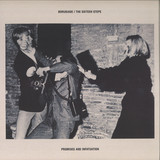
Cititrax present a split EP by two massive talents, Borusiade and The Sixteen Steps. Borusiade, originally from Bucharest, Romania began as a DJ in the early 2000s and then started producing music in 2005. With a background in classical music, she combined her love of raw electronics, obscure themes and melodic lines to create her own signature sound. She has released on the Cómeme label as well as Corresepondent. Infatuation and Confutation are dark, moody and intense tracks that catch you upon first listen. The flip side of the Promises and Infatuation EP features The Sixteen Steps, the brainchild of George Lanham who cut his musical teeth DJing and running events in the south of England. We have been listening to many of his tracks endlessly for a while now. They've also been a highlight of Veronica Vasicka's DJ sets as of late. Signals From The South and Promises On The Run are both immaculately produced, hypnotic, dance floor killers. They are sparse ebm meets smoky warehouse techno, and offer a wonderful contrast to Borusiade's layered emotive tracks that reminisce of an East Village club in the 1980s. Themes of infatuation, appearances, and anonymity appear throughout this EP from the music itself right through to the cover art.
Limited edition vinyl pressing of 999 copies, first 500 copies are pressed on black inside milky clear vinyl (each record is one of a kind), housed in a matte printed sleeve.
Fire in the hole! Luca Agnelli's Etruria Beat hits its 40th release and it's a truly historic affair with two very top remixers : Slam and Truncate! Now seven years deep into the label's innovative techno trip, Etruria has made nurturing exciting new Italian talent one of its key signatures. Bastinov, Dast, Reform, Kaiser, Diego Amura and Toms Due are just some of the progressive creators Etruria have supported over the last two years alone. But for this release it's down to the label bossman himself... And he's made sure it's a deeply Etruscan affair. Released in the wake of his mass-scene-supported 'Metamorphosis' EP and building on a body of work that boasts tastemaker labels such as Soma, Drumcode and Planet Rhythm, Luca lays down two slabs of absolute dynamite that not only bang, but also tie his sound, vision and inspiration back to his deepest roots with rich mythology... 'Voltumna' pays homage to the supreme god of Etruscan people. Not just in name and honour, but also in its powerful dynamic and touching balance of shades thanks to its atmospheric, rhythmic chord. 'Aplu' continues this spiritual theme with a dedication to another Entruscan divinity. An offering to the god of thunder and lightning, once again it lives up to its name with a barbed rolling dynamic that suddenly cracks open into a cosmos of light and emotion before hurling you back into the dark drum drama. Thunderous isn't the half of it. It comes complete with two exceptional remixes of 'Voltumna' by Slam and Truncate. Soma bosses Slam add their signature Glaswegian grit with distorted textures that loop in a hypnotic frenzy while Truncate strips the groove back to a jacking dynamic that becomes progressively bouncier with raw machine funk insistency. Across the originals and remixes there's not a corner in techno that isn't exceptional
- A1: The Cactus Rose Project - Jelly
- A2: Leston Paul - Santa Cruz
- A3: Dancing Fantasy - Voodoo Jammin' (Eros Mix)
- B1: Bandolero - Rêves Noirs (Instrumental)
- B2: Don Carlos - Aqua (Part One)
- B3: Language - Tranquility Bass
- C1: Kamasutra - Sugar Step
- C2: Moodswings - The Jazz Man
- C3: Congarilla - Sacred Tree
- C4: Red Sun - Honey From The Baka
- D1: Coste Apetrea - Hej Där
- D2: Christoph Spendel Group - Forever
- D3: Frank De Wulf - The End
- D4: Cantoma - Gambarra (Unreleased Mix)
Over the years, Phil Mison has become the go-to selector for those looking for Ibiza-themed compilations. None of his previous collections, though, have been quite as personal as Out Of The Blue, a compilation inspired by his first spell behind the decks at the Café Del Mar in 1993 - and the remarkable chain of events leading up to it.
Mison made his first trip to Ibiza in the summer of 1991 and quickly fell in love with the magical music being played by Café Del Mar resident DJ, Jose Padilla. On his return to the UK, Mison began to cultivate his own take on the laidback, open-minded style, recording mix-tapes of Ibiza style chill out' tunes to give to friends.
In November 1992, Mison was hanging out in Tag Records, Soho, when Padilla walked in. He plucked up the courage to speak to the Spaniard because earlier that summer Mison had given one of his friends some tapes to take out to Jose in Ibiza so he wanted to see if he had got them. During the conversation Mison invited him down to his next DJ set at Nicky Holloway's club, the Milk Bar and less than three months later, and clearly impressed by what he'd heard on the tapes, Padilla invited Mison to fill in for him at the Café Del Mar, beginning in April '93.
It's that first trip to DJ in Ibiza - a crazy six-weeks spent dividing his time between spinning records at Café Del Mar, hanging out in Jose Padilla's house in the hills, and meeting some particularly eccentric White Isle residents - that proved the inspiration for Out Of The Blue.
The compilation contains a mixture of records that Mison played in his earliest Ibiza sets, those that remind him of that period, and recent discoveries that boast a similarly warm, loved-up vibe. Mison is at pains to point out that it's not a track-for-track representation of his first sets, but rather a collection inspired by this most momentous of experiences.
As you'd expect from a selector of Phil Mison's standing, Out Of The Blue is an outstanding collection. Some will no doubt hear the influence of his mentor - the man he credits with effectively turning his DJing career around - in the undulating rhythms and new age melodies of Kamasutra's Sugar Step', the meandering synthesizer solos and Spanish language vocals of Congarilla's sublime Sacred Tree', and the lilting flamenco guitars of Gambarra', an unreleased mix from Mison's popular Cantoma project.
Elsewhere, listeners can marvel at the starry ambient bliss of Belgian legend Frank De Wulf's The End', recline to the saucer-eyed fusion jazz of the Christoph Spendel Group, shuffle along to tactile, hard-to-find period deep house from Language, Moodswings and Don Carlos, and marvel at The Cactus Rose Project's ridiculously rare Jelly', a sparkling, disco-era jazz-rock outing partly inspired by the Doobie Brothers' Long Train Running'.
Out Of The Blue may well be a very personal selection of tracks celebrating a moment in time, but it's happily one that we can all enjoy.
Panorama Bar resident Nick Ho¨ppner gets to Work on his second solo album on Ostgut Ton, connecting the territories of House music with the ease of Alt-Pop.
Work as in labor. An axiom that fuels the capitalist system just as the Techno/House scene economy says that one needs to keep oneself busy to make a living. As a musician, things are complicated of course. It's a long way from the romantic idea of creating music simply for the sake of art to becoming a full time musician. Those who have accomplished this feat often find themselves in a professional loop of writing the music, producing it, promoting it (with an info text like this), releasing it and then hopefully selling it. After leaving his full time job as Ostgut Ton's label manager in 2012, Nick Ho¨ppner went fully freelance, focusing on his musically diverse, deep and dynamic DJing in and outside Berghain's Panorama Bar, but more importantly spending more time in the studio. The result was his critically acclaimed debut album Folk (Ostgut Ton, 2015), various 12' releases and remixes, and now his sophomore LP, Work, which, more than ever, lays out his refined production skills and his talent to work the machines until they reveal their inner ghosts: nine new songs that now dodge the dance floor, then fully embrace it.
Work as in body of work. A record is more than the sum of clocked up hours at the studio, but the result of an artistic-creative process. On Work, Ho¨ppner shows his everlasting lust for musical detail, his increasing technical skills and compositional finesse. Work is a very personal, soulful and deep record that breaks through the usual club/dancefloor narrative by documenting Nick's interest for hybrid sounds and combining elements from varying musical genres. Work's lead single 'All By Themselves (My Belle)' is a very atmospheric, intimate and steadily unfurling IDM piece with ethereal synth and vocal pads; on the album it's contrasted by 'Clean Living' with Tram 78, a modern Ho¨ppner club classic: powerful, kick-heavy, muscular, cheerful and uplifting. It's a very personal track resulting from a recent reencounter with an old friend. Having spent countless hours together in Berlin's clubs in ever changing states of mind a decade ago or longer, things have since changed for both towards a more - clean living'. Connecting to this musical vibe 'In My Mind' follows with a slightly darker tone putting emphasis on bassline, percussion and squeaky sound detailing. 'Hole Head' pays tongue-in-cheek homage to Nick's love for UK club music, when a dashing melody of synths and vibraphone is matched with clattering breaks and syncopation. The dubby, mesmerizing 'The Dark Segment' not only impresses with its hypnotic synth figurines, but also by morphing to a shuffling Jazz rhythm towards it's middle part; 'Forced Resonance' uses Oberheim synth brass stabs to dramatic effect; the percussion- and clap-laden 'Fly Your Colours' comes with an irresistible piano melody atop an energetic kick; and finally the album-closing, shuffling but rhythmic, noisy yet bluesy 'Three Is A Charm' featuring the duo Randweg on clarinet, cajo´n and acoustic guitar is a coherent departure heading towards Indie Pop territory. It sees Nick collaborating with acoustic instrumentalists for the first time in his ten-year- spanning Ostgut Ton release catalogue.
Work as in artwork. Staying in line with the Folk album, the visual companion for this record comes from German collage artist Frank Bubenzer. As with the artwork at hand, Bankentsunami, and his other works, Bubenzer cuts up print magazine advertisements and recontextualizes them into new motifs, removing all human depiction from the source material, here as a commentary on the world of business, big money and the banking crisis.
Work as in work it. As a slogan 'work' has always been one of the genre's most utilized paroles, coined and put on wax by pioneers like LNR, Blake Baxter or Steve Poindexter, to name a few. Not only calling for the crowds to get moving on the floor but also to fully express themselves and their unique individuality inside an all embracing environment. A mindset rooted in House Music that has been an integral part of Nick Ho¨ppner's identity as a DJ and producer from the beginning and all through his decade-spanning residency at Panorama Bar. Work it!
Repress
Black vinyl repress
"There was a time when Techno was written with a K; when the music was presented as a song not as a track. It followed a structure - intro, chorus, bridge... These recordings were naive, spontaneous, and raw, that's what made some of them timeless.
Taking inspiration from this period, here is my interpretation. Contemporary Tekno, with a K."
OAKS is the platform where Hector Oaks will release his most personal works. Cut on 45 and with one track per side, this record has been made for DJing.
For our second release we brought back to life African movie soundtrack "Ceddo" - composed by one of our favourite African artists, Manu Dibango. 6 tracks full of Funk. With a great story behind.... now it's getting a full vinyl re-issue!
"The film takes place during the 17th century : period of slave-trading and of the introduction of Christianity and Islam in West Africa. The adherents of these religions all desired and hoped to pack their buildings, mosques or churches,by whatever means necessary. Arms and alcohol began to appear, as well as shoddy godds --- gadgets from another era. Anyone with a rifle tracked down and trated men, women and children. Man became money. After having converted the royal family and government dignitaries, the Imam encounters the refusal of the "Ceddo". For the Ceddo, adhering to Islam or to Catholicism would mean renouncing African spiritualism, giving up being themselves. To accomplish his goals, the Imam usurps the throne with the complicity of the dignitaries --- similar to the coups d'Etat of our days. Combining spiritual and temporal power, the Imam reduces the recalcitrant to slavery in exchange for rifles. He obliges the others by force of arms to accept Islam. Ceddo is a film of reflexion, birnging together bits and pieces of facts and authentic events that took place in a period spanning the centuries up to the present day."
Horse Follows Darkness is the second record by Delia Gonzalez, her follow up to the album In Remembrance'.
The title is taken from a werewolf genre film her 8 year old son Wolfgang had created. At this time, Wolfgang also turned Delia onto a genre of cinema she had always resisted - the American Western.
Delia explains that what she observed was all relevant - the album is based on our personal experience of moving back to America (from Berlin) and the journey that followed. The record is a manifestation of that, and what one creates for themselves under the given circumstances. Coming back to America, I felt like a foreigner and NYC / America felt like the Wild West. Most Westerns from the 1960s to the present have revisionist themes. Many were made by emerging major filmmakers who saw the Western as an opportunity to expand their criticism of American society and values into
a new genre.'
The narrative of the record is one of re-encountering the frontier mentality that shaped the country but somehow never faded. This time as a foreigner. The genre of the Western remains pertinent, many of the same stories of that brutally deromanticised era are still relevant today. America hasn't changed - the cast, times and settings have, but we still hold onto the same ideal.
Horse Follows Darkness is essentially a modern electronic soundtrack for the Revisionist Western. Even the idea for the record cover is inspired by one of the most well known modern Westerns, Robert Altman's McCabe & Mrs Miller.
The album was recorded with Abe Seiferth at Transmitter Park studios, which Delia likens to going to the finest tailor'. Abe became an integral part of the recording, playing guitar and helping to suggest experimenting with different synthesizers, something Delia was keen to do. Delia refers to Abe as a magical and incredibly intuitive collaborator' regarding the sound of the record.
The music that emerged from these recording sessions combines a range of influences - from the compositions of Erik Satie to 'Salon De Musique', the solo piano record by Su Tissue (of the L.A. punk band Suburban Lawns). The record also took on a much different shape and sound with the introduction of the Sequential Circuits Prophet VS, as well as a vintage Korg Poly synth and the Roland SH-101. The golden era Krautrock recordings of bands like Neu!, Cluster & Harmonia were touchstones as well, the repetition, swirling soundscapes and locked-in rhythm tracks.
Never before reissued, this legendary 1968 EMI recording is a revered Indian jazz rarity, a collectors' holy grail. Raga Jazz Style is an original Indian excursion into Indo-jazz fusion. A one-away recording from the almost unknown Bombay jazz scene, it is among the few jazz LPs to hail from the subcontinent.Closely contemporary with the UK-based explorations of Amancio D'Silva, John Mayer and Joe Harriott, Raga Jazz Style takes the melodic, scale-based raga system of Indian classical music and marries it with a swinging jazz rhythm section assembled by Bollywood's most highly acclaimed musical directors, the soundtrack composing duo Shankar Singh and Jaikishan Panchal.Singh and Panchal were a dominant force in Hindi film music from the late 1940s onwards. Shankar had been trained in classical tabla, while Jaikishan was an expert harmonium player. They worked together on well over a hundred films, and their innovative compositions and orchestral scoring revolutionised the music of the nascent Bollywood industry. Central to their sound was regular collaborator Sebastian D'Souza. From 1952 onwards, D'Souza would work on every Shankar Jaikishan soundtrack, eventually becoming Bollywood's most coveted musical arranger.
Originally from Goa, D'Souza had cut his teeth in the dance-band era, arranging and playing with his uncle's jazz bands in Lahore and Quetta. After Partition, he had moved to Bombay to follow the reliable work provided by the film industry, where Goan musicians had become the mainstay of Bollywood's film studio orchestras. Goans were also the core of Bombay's thriving dance-hall and hotel-based jazz scene, with artists including saxophonist Braz Gonsalves, guitarist Amancio D'Silva and trumpeter Chic Chocolate all working in the city during the post-war years.
The team assembled for Raga Jazz Style were drawn from this inventive and forward-thinking milieu. Pianist Lucilla Pacheco, saxophonist Manohari Singh and guitarist Anibal Castro were all fixtures on the Bombay jazz circuit, while drummer Leslie Godinho is reputed to have taught Joe Morello the 5/4 'Take Five' beat when they jammed together during Dave Brubeck's State Department tour of India. To this jazz backbone was added the sitar of Ustad Rais Khan, scion of long line of classical instrumentalists, and nephew of the renowned sitarist Ustad Vilayat Khan. Bombay's jazz modernists had been experimenting with the fusion of ragas and jazz since the 1950s, long before American or British jazz musicians had tuned in to Indian classical music. But very little of this exciting scene was ever captured on record. Raga Jazz Style offers a rare chance to hear the innovative sounds of the Indian jazz scene, as peerless composers Shankar Jaikishan and arranging supremo D'Souza join with veteran Bombay jazzers to explore classical themes in a jazz setting — eleven ragas to a swinging beat!This is a highly impressive inaugural salvo by Outernational Sounds, using original masters and beautifully rendered facsimile artwork, with 180g vinyl pressed at Pallas, in Germany.
Until he was about 20, Texas-born Melvin Sparks was a rhythm & blues guitarist, backing Jackie Wilson, Curtis Mayfield and Marvin Gaye as a member of The Upsetters. But Sparks gave up his seat on The Upsetters' bus in New York City, where a chance introduction to George Benson led him to a place in soul jazz history. Melvin played and recorded with Lou Donaldson, Leon Spencer, Bernard Purdie, Jack McDuff, Jimmy McGriff, Idris Muhammad, Dr. Lonnie Smith, Charles Earland, Grover Washington Jr., Reuben Wilson and so many more. Even during the quietest years of soul-jazz Melvin stayed relevant through hip-hop and r&b, a quick search at WhoSampled turns up more than 150 samples of his funky chicken scratch. And Melvin's legacy is heard in contemporary soul/funk bands like The New Mastersounds, Soulive and The Greyboy Allstars, all of whom he also guested with several times before his early departure from this realm in 2011.
This release documents Melvin's final band just months before his death. Organist Beau Sasser and drummer Bill Carbone had been working with Sparks for several years, and, despite the power dynamic - they were in their early 30s, Melvin an elder-statesmen of the genre - the unit was sharp, relaxed and performed Melvin's music with a jovial spirit. The trio played the Burlington, VT club Nectar's regularly, but this night featured two "onlys." Per the recommendation of Nectar's agent they used the "Grippo Horns," the only time Sparks used a horn section in the last several years of his life, and they allowed a multitrack recording of the show. Both were strong decisions.
The tracks on this album, lovingly mixed by guitarist, producer and Melvin Sparks fan Eddie Roberts, demonstrate that Melvin played as well in the final months of his life as at any time. Sparks counts "Whip! Whop!" off at what he said The Upsetters called a "showtime tempo," and peppers it, as well as most of the album, with quotes from jazz standards, pop songs and cartoon themes, all woven effortlessly into the bebop-funk dialect he helped create. He unfolds amiable melodies, patiently and methodically, through his several-minute lead on "Breezin'." And Sparks is audibly uplifted by the Grippo Horns helping him perform his 1973 arrangement of "Ain't No Woman" for the first time in decades.
The ninth release on the DSR-C series comes from Rhine. A new name with his roots in atmospheric techno steps up for his first solo EP. 'De Storm' opens the account with a loose collage of textured drums and scuffed-up synths. It makes for a bubbly groove that journeys far off into the night while 'De Bron' is more rooted underground, with cavernous echo chambers run through by supple bass synths and icy hi hat trails. Spooky and haunting, its a track to send shivers down your spine. Last of all, 'Het Meer' is a watery affair, with aqueous drips and drops, radiant pads and then more tightly coiled drums brushing up against one another to make for something atmospheric but also nicely driven. All three tracks are characterised by a rather tender and reflective mood that makes them all the more unique.
Undefined is back and extending the legend saga with the highly experienced, creative genius Todd sines.
Todd began creating music in the late 80's, ranging from post-punk and industrial, to techno and house. While digging through his material on Discogs, one can easily notice the great variety of sounds he has developed throughout the years, using multiple aliases like .xtrak and Enhanced.
Todd kicks off this EP with 'Coast', easily recognizable by it's complicated drum patterns, vocal snippets and deepness. Shcaa did an amazing job on the remix as well, using some of Todd's elements to form the core of a true minimal pumper. The breaks are scary as hell and will certainly result in a perfect dark atmosphere on underground dance floors.
On the flipside Todd again shows diversity, as he delivers Throwback and Waves of love. Both of them are house oriented and have energetic acid basslines, fitting together perfectly.
- A1: Bring It Up (Original Mix)
- A2: Bring It Up (Up Mix)
- A4: Bring It Up (Acapella)
- B1: Just Get Up And Dance (Acapella)
- B2: Pupunanny (Acapella)
- B3: Mind Control^(Acapella)
- B4: Funky Heroes (Funkapella)
- B5: Happy (Acapella)
- B6: Bell-E 2 Bell-E (Acapella)
- B7: You Ask For The Moon (Acapella)
- B8: Move Ya Body (Acapella)
Afrika Bambaataa, rapper, producer, DJ from the South Bronx, New York. Afrika Bambaataa is one of the originators of breakbeat djing and is respectfully known as "The Godfather of Zulu Nation" and "Amen Ra of Hip Hop Culture'. In 2007 has been nominated for induction into The Rock Hall Of Fame and in 2008 he has been honored by the Bronx Museum of Arts. Afrika Bambaataa's long career is pointed by many hits and masterpieces such as Reckless, Unity, Just Get Up and Dance and Pupunanny.
Countless collaborations with artists such as UB40, James Brown, Boy George, Leftfield just to name few of them. Afrika Bambaataa has recorded with many labels from Tommy Boy to Capitol Records and Profile but it is with the Italian Label DFC (Expanded Music) that he has releases most of his recordings.
Bring It Up is the new release on DFC LABEL produced by dj/producer Paul Carpenter. This release includes three versions in big room/EDM style along with a mega-mix and a full acapella collection of all previous recordings released by Bambaataa on DFC label. Two lyrics videos come to support the release.
[C}] a3 | Bring It Up (Down Mix)
For all of his life Berlin based musician Drei Farben House has been thrilled by the artistic concepts of repetition and modifying resemblances. Small but precise and perceptible variations of (musical) themes have been fascinating him throughout his life as a lover of dance-infused Pop. The artistic concept of handwriting has been questioned in the world of fine arts with some justification, but Michael Siegle aka Drei Farben House has remained a strong advocate of this artistic principle which in his view has resulted in so many impressive musical expressions in the history of Soul and Disco --reference points which have been particularly important to Siegle's creative work. The album's sleeve shows the 'Doris and Norman Fisher House' in Hatboro (a suburb of Philadelphia) designed by Louis I. Kahn from 1960-1967. Kahn, based in Philadelphia and one of the most influential architects of the twentieth century, was already in his sixties and progressively getting famous around this time for his sensitive combination of concrete and brick in larger scales. The almost spiritual sensibility of his buildings and his poetry of light created deep, fundamental connections between the spaces and their inhabitants. New Release Information "Every building must have . . . its own soul", this famous quote of Kahn can easily be seen in the modest and wonderfully warm Fisher house which consits of two intersecting cubic volumes created from cedar wood - finished at the same time when only twenty miles away the newly founded Sigma Sound Studio recorded the Delfonics first record, installing the basements of Philadelphia Soul which was later leading to Phillysound, Disco and House.