
Disponible
En el almacen y preparando para el envío
Ültimo hace: 17 Días
14,50 €
En el almacen y preparando para el envío

debe ser publicado en 17.10.2025
Destination Unknown is an EP by Unpronounceable born from an archive of sounds collected between 2019 and 2024—sonic fragments that took shape without a predetermined direction guided only by an open idea in constant transformation. The original track conceived as a “destination unknown” composition developed its own independent identity. However precisely because of its fluid and cross-genre nature Unpronounceable chose not to place it within a traditional EP context instead opening it up to a multiplicity of perspectives by inviting five artists to reinterpret it freely without genre constraints.
The result is an EP that unfolds like an alternative map of the same sonic territory where each remix explores a distinct direction transforming Destination Unknown into a multifaceted and ever-evolving experience.
In Carl Finlow’s remix Destination Unknown takes on a strong cinematic and narrative dimension. Inspired by the title Finlow imagines a mysterious journey toward a futuristic dystopian city turning the track into a kind of electro soundtrack—dark yet ironic rich in character and capable of evoking vivid images and motion.
MANASYt pushes the track toward more physical and ritualistic territories focusing on the dark pads and the more oneiric vocal elements of the original. The result is a hypnotic pulsating tribal-industrial reinterpretation where rhythm and sonic material become central intensifying the track’s most visceral qualities.
With Gay Horror the focus shifts to an emotional and narrative dimension. The vocals are deliberately made elusive and undefined while the structure develops through a slow controlled crescendo that recalls the atmospheres of ’90s trip-hop. This version also reflects a long-standing human and artistic relationship conceived as a story that travels through time and reaches the present day.
Kevin Follet adopts a more conceptual approach overturning the perspective of the original track. Rather than working with its main elements he brings the underlying structures to the foreground transforming what usually remains hidden into the core of his reinterpretation. His remix is elegant and deep balancing sound exploration with a strong attention to songwriting.
Closing the EP is GP The Synth Roller with a radical and highly experimental reinterpretation. The track behaves like an unstable system: parameters shift without warning surfaces lose coherence sudden accelerations collide with moments of arrest. There is no resolution only a sonic condition in constant tension eventually condensing into a dark compact mass.
Taken as a whole Destination Unknown is far more than a simple remix collection: it is a collective exploration of the potential of a single composition. Unpronounceable’s original track and the reinterpretations by Carl Finlow MANASYt Gay Horror Kevin Follet and GP The Synth Roller move across electro techno industrial and experimental territories offering six different perspectives from the same starting point. An open journey with no fixed destination where every detour becomes an integral part of the path.
En el almacen y preparando para el envío
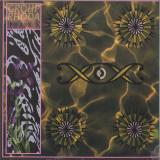
Group Rhoda returns to Dark Entries with Phase 5, a new LP of synthesizer-driven art-pop. An integral member of the West Coast electronic music scene, Mara Barenbaum has been writing, performing, and plunging into oneiric depths as Group Rhoda since 2009. Barenbaum’s songcraft is at once stylistically diffuse and laser-focused, a synesthetic approach that allows her to effortlessly glide between genres and soundworlds while centering her singular poetics. On Phase 5, her fifth LP as Group Rhoda, we find Barenbaum waxing nondualistic. Lines between fairytale and fact, between nature and art, between subject and object all dissolve under contemplation.
The songs on Phase 5 are perpetually in-between states, deftly shifting form at the blink of an eye. With sleight of hand, “Field Tone” transmutes from brooding John Carpenter-esque electro into vocoder-driven space disco. “Dragon Pine” darts from cosmic dub to cybernetic dancehall and back again. The uptempo darkwave-leaning number “Aeolian Crossing” dissolves into the void, like sand falling through one’s fingers, like a retreating wave. The cover artwork for Phase 5 is by Shawn Reed, and features purple lilies and light refracted through water. All songs on this album were mastered by Ruud Lekx. The digital version of Phase 5 will be released via Katabatik, a label and sound system that Barenbaum has had close ties to for the past decade.
En el almacen y preparando para el envío

Die "French Touch Collection" ist eine Doppel-LP-Serie, die der französischen elektronischen Musikszene gewidmet ist. Beeinflusst von neuen Musikgenres wie House, Hip-Hop, Techno und den Rave-Partys, beteiligten sich Mitte der 90er Jahre mehrere französische Produzenten an der Demokratisierung der elektronischen Musik. Ihre Musik, die der britische Journalist Martin James "French Touch" nannte, wurde 1996 zu einem neuen, international bekannten Musikgenre, das sich durch elektronische Produktionen und Musiksamples aus Hip-Hop, Funk oder Disco auszeichnete. Anfang der 2000er Jahre erfand sich die "French Touch"-Szene mit einer neuen Generation ungehemmter Künstler neu, getragen von einem rohen, rocknahen Sound. Die 2010er Jahre brachten eine neue "French Touch"-Welle mit sich, die von der Popmusik beeinflusst war und sich mehr auf Melodien und Oneiric Universes konzentrierte. Dieses neue Werk ist dem House gewidmet, mit Künstlern und Tracks, die zur Entwicklung des "French Touch" beigetragen haben: "Bon voyage"!
En el almacen y preparando para el envío

naive's 20th release epitomizes what the Lisbon-based label, run by Violet, has become cherished for: imaginative yet timeless, soothing yet moody, melodic yet sonic music. Entitled 'Computer Hermetics', this new record is an EP by UrbnMowgli, a fairly new Berlin-based artist who began releasing music in 2020. The opening track, 'Fast Love Life', is a 145 bpm electro-bred, breakbeat-driven emotive dancefloor banger. It features menacing stabs juxtaposed with beautiful pads and acid-drenched arpeggio motifs that lend it a oneiric quality. 'Oracle Algorithm' picks up the 303 spirit and delves into trippier territories, densening the dreamlike, expansive atmosphere while infusing the record with electro-driven grit. Closing side A is 'Warschauer Rush-Hour', a futuristik, high-tempo twisted electro banger that's both tough and playful. 'Immaterial Desires' inaugurates side B--an ode to adventurous drum programming and intricate sound design in the form of a percussion-punctuated curveball belter. 'Digital Dawn' brings it all back home to the heart and closes the record with its deepest, most immersive moment, giving us big bass lines that alchemically converse with angelic bleepy melodies as if soundtracking a soulful sci fi movie that doesn't exist yet.
En el almacen y preparando para el envío

From the mountains to the sea as the region they were born in. Sometimes it's better to listen than to speak. Dmfl post-rock instrumental band deals with dreams and desires through its oneiric and cathartic compositions. Dmfl once again collaborated for their visual representations with the international street artist Millo, whose cover artwork, tuned up and focused on how listening is a way to go deeper into the emotions, descending into the core of the sound.
En el almacen y preparando para el envío

Cristiano Grim produced Parisian multi-instrumentalist DJ SOLANGE for the second release on his sub label FINALE RECORDS.
DJ SOLANGE runs Radio Belleville, certainly themost vivid underground project in Paris not only for the obscurity of the program, because of its location: a deep cave under the classic Belleville neighborhood of Paris, a few steps away from the Cemetery of Pere Lachaise.
The EP has been recorded down to the center of the earth in 2019, right before the fall of the world. A journey into the idiosyncratic bond between dreams and frustration.
Oneiric, evanescent, rough (Fruste in french), dark, claustrophobic, morose, sexy, improv, lost: like a dream, it ends only when you open your eyes.
En el almacen y preparando para el envío

After almost three years of silence OPAQ finally returns with the debut album of STIGMA, Steve Marie's new alias.
Through noticeable releases on Libertine, Better Sound, Philoxenia or more recently on Mahres, Steve Marie has built a reputation of an extensive and very talented producer, he's back with what appears to be his biggest outlet to date. An album at the crossroads of genres with inspirations ranging from synth-pop to EBM and paying homage to the 80's sound. The 11 tracks will not leave anyone indifferent, as much for a gentle listening as for destroying dancefloors.
En el almacen y preparando para el envío

Back In Stock!
The debut collaboration between techno alchemists Ben Klock and Lucy will probably provoke quivers of anticipation before a single note has been heard. After all, both producers have carved out names for themselves as scene innovators at what they do, and both have already proven that they can more than capably work in a duo format without sacrificing an iota of their unique aesthetics: in Lucy's case, there has already been the sublime Zeitgeber pairing with Speedy J., and Klock has joined forces with the likes of Marcel Dettmann to craft some of the more memorable output from the Ostgut Ton label. This new release makes good on each producer's talent for working with epically unfolding tracks, maintaining a strong command of both 'drone' and melodicism, and envisioning sound as a kind of inter-dimensional mass transit. As the record indicates, things can get very interesting when the two working methods superimpose perfectly, but can be just as interesting when the two fall slightly out of phase with one another.
Listeners familiar with the classic kosmische feel will be taken immediately by the opening gambit "Bliss," whose feeling of floating through the coldness of space is accompanied here by nicely warm production values. The bassline that introduces the subsequent track ("War Lullaby") is close to being a continuation of the opener's leitmotif sequence, although with a change in atmosphere that will keep curious ears from turning away too soon: an FX-shrouded voice delivers a monologue at once seductive and foreboding, followed by a confident kick thump with ephemeral trailing clatters in tow. This affective orientation pulses through the whole record well, building up to the second rhythmic track ("Santeria") which is the busiest and most engaging of the bunch. Here a variety of sonic flavorings are ritually thrown into the pot and allowed to simmer - fleeting snatches of conga, phasing zaps and rhythmic ricochets all make for a rich concoction that epitomizes the progress that has been made in techno music within this decade. The closing "A Ghost Love story," like the opener, is a non-'dance' piece, but is no less compelling for that fact: as a foam of white noise pans between the listener's ears, a slurred / pitch-bent refrain conjures the feeling of either entering or exiting from some erotically tinged hypnagogic state.
Speaking of which, the overall impression given off by this record is that of a special kind of reciprocity: that is, of dreams influencing reality and reality feeding back into dreams. The rhythmic intensity of these tracks, at once an indicator of a hard and immediate reality, is regularly complemented by oneiric flourishes that make the partitioning line between these two realms of consciousness less distinct. As the next chapter in the Stroboscopic Artefacts saga, and in the personal journeys of both Ben Klock and Lucy, it will contribute to the ongoing mission of all these parties: giving longtime fans what they want while expanding their consciousness and inquisitiveness.
En el almacen y preparando para el envío

Group Rhoda, the solo project of Mara Barenbaum, returns to Dark Entries with ‘Passing Shades’. An integral member of the Oakland electronic music scene, Barenbaum has been writing, performing, and plunging into oneiric depths as Group Rhoda since 2009. This is the project’s fourth LP, and the third time Barenbaum has collaborated with Dark Entries; previously on the Max & Mara LP ‘Less Ness’ in 2013 and the Group Rhoda LP ‘Wilderless’ in 2017.
Passing Shades is an investigation of the metaphysics of loss and the transitory nature of the material world. But it is not a grim collection; over 8 songs, Group Rhoda diverges through synthesizer-laden symphonics, four-to-the-floor inflections, and cosmic musings. Barenbaum’s striking voice and singular songcraft guide us through this labyrinth. Arpeggiated waltz “Flow” channels wisdom sought through martial arts; “Earthly Ark” sets a Margaret Atwood poem from the God Gardener’s Hymn Book to somber electronics. The vocoded canticle “Nevermore” is dedicated to the memory of a beloved cat. ‘Passing Shades’ is both mystifying and revelatory. Folk forms are echoed only to detour into the alien. Each song functions as both a fragment of a larger puzzle and a koan unto itself.
‘Passing Shades’ was mastered by George Horn at Fantasy Studios. The sleeve was designed by Eloise Leigh, and features a hazy, clouded sky. The back cover uses a photograph by Harry Crofton. A postcard featuring a poem by Barenbaum is included, as well as a digital download.
En el almacen y preparando para el envío

The fifth instalment in the label’s well-established Fluid Files series, this new mosaic of sun-streaked joints summons the voices of faces old and new, sewn together with that similar Chicago-typical, laid-back attitude and a thread of unstoppable funkiness.
Diving first with a slice of velvety, looped out piano house boogie on a solid French filtered house tip, Dutch outfit Fouk lays down a proper enticing number for the late summer hours, packed with elastic bass jack, anthemic stabs and a sun-kissed shimmer straight out a blissed out coastal escape. Label alum Danou P follows up with a further bouncy number, dishing out a seriously infectious mix of acid-abraded bass and warped floor dynamics, ready to knock dancers askew with its lush, synth-flooded hooks and fun-loving, oddball swing.
More on the muscular side of things, Ben Diggins clocks in with the steroid-fueled balearic hoodoo of ‘Mascotte’ - a tune built for the undying after vibes, when the sun begins to rise and the crowd’s levels of serotonin hit a new high. Prismatic and powered-up, Diggins’ track injects any heavy-lidded engine with his own concoction of driving percussion, utopian motifs and fluttering, ambient-leaning harmonics.
Rounding off this four-part sonic journey, Colombian vibist DFRA teams up with Argentinian singer Denise Izaguirre on the heavily Latin jazz-informed, ‘Impulse’. Soulful and oneiric, the song taps in both artists’ musical heritage whilst pushing for new directions through the combined use of electronic and acoustic instruments (congas, trumpet, synths, drum machine…) - contrasting and complementary, shaping an entirely new and singular vision that is drenched in a bittersweet blend of warm melancholy and bracing hopefulness
El artículo no se ha publicado. Tú puedes reservar ahora el artículo y después de ser pagado se te será enviado.
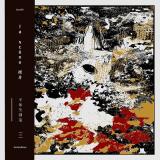
Futaishitsu Souzou is the first vinyl album released by Japanese duo la scène 裸身, a duo of Saya on vocals and bass, and Eiji on guitar. They’ve been an understated but deeply impressive presence on the Japanese underground for the best part of a decade now, having self-released a debut album, Ten No Sekido, in 2018, which saw them co-producing by Atsuo of Boris, who also worked with them on the following year’s Corridor EP. The mystery and magic of their songs, which vibrate in a curious space between psychedelic rock, acid folk and slowcore, is at its strongest on Futaishitsu Souzou.
la scène 裸身 have long been interested in art that’s stripped back to its simplest, most elemental form, much as their name represents the Japanese word ‘rashin’, which means naked body. There is something unadorned about the three songs on Futaishitsu Souzou; Saya’s becalmed, unhurried vocal delivery reflects the gentle intensity of the simple, gem-like chord changes strewn through songs like “Futaishitsu Souzou” itself, and the bittersweet, folkish lament of “Reiyou”, a song inspired by the loss of the band’s friend, Gazelle.
Futaishitsu Souzou is steeped in melancholy, but it is not resigned to this emotional state; there are threads of rebirth and transcendence woven through the album’s three lovely, slowly enveloping, and deeply moving songs. Often, you can hear that transcendence in the soaring, sky- burning guitar playing that cleaves these songs in twain, from guest guitarist Hiroshi Kurosawa (of Asylum). At times, the music here recalls the drift-like psych-rock of the Paisley Underground; elsewhere, it explodes with vibrant intensity, swarming with noise and feedback, that runs alongside similarly delirious examples from the Japanese underground.
And yet, la scène 裸身 is entirely its own thing, a unique, singular vibration, a oneiric manifestation of hermetic visionary art.
debe ser publicado en 18.09.2026

NAIVE020 epitomizes what the Lisbon-based label, run by Violet, has become cherished for: imaginative yet timeless, soothing yet moody, melodic yet sonic music. Entitled 'Computer Hermetics', this new record is an EP by Berlin-based UrbnMowgli.
The opening track, 'Fast Love Life', is a 145 bpm electro-bred, breakbeat-driven emotive dancefloor banger. It features menacing stabs juxtaposed with beautiful pads and acid-drenched arpeggio motifs that lend it a oneiric quality. 'Oracle Algorithm' picks up the 303 spirit and delves into trippier territories, densening the dreamlike, expansive atmosphere while infusing the record with electro-driven grit. Closing side A is 'Warschauer Rush-Hour', a futuristik, high-tempo twisted electro banger that's both tough and playful.
'Immaterial Desires' inaugurates side B—an ode to adventurous drum programming and intricate sound design in the form of a percussion-punctuated curveball belter. 'Digital Dawn' brings it all back home to the heart and closes the record with its deepest, most immersive moment, giving us big bass lines that alchemically converse with angelic bleepy melodies as if soundtracking a soulful sci fi movie that doesn't exist yet.
debe ser publicado en 21.11.2025

After releasing on some of your favorite labels, Paradise City Breakers start their own imprint with a very personal, no-compromise attitude.
The label exists to release timeless work, uninfluenced by the market or by what the audience thinks it wants.
The A-side is strongly influenced by early European club music, with a harder and more ravey attitude that culminates in Destroy the Power, while Dissociazione Jonica takes you on a stripped-down progression.
On the B-side, the sound becomes more modern, while still drawing from vintage influences. If What U Want is tight and enriched by clear melodies, Your Soul opens up a more oneiric dimension.
The first statement of many. Listen closely — the rest will follow
Haga su pedido ahora y le encargaremos el artículo en nuestro proveedor.

Mister Water Wet returns to Soda Gong with "Things Gone and Things Here Still," an album that radically expands the project’s purview while preserving the homespun warmth and oblique tactility that have long defined Iggy Romeu’s work. Where earlier records tilted toward the dusty swing of sample-based beatcraft or spectral minimalist jazz, here Romeu opens the frame to a more ensemble-minded approach, inviting a stellar cast of supporting musicians, including SG alumni Memotone and K. Freund, into the fold.
The result is an album that feels both broader and more intimate, with live instrumentation such as piano, strings, and reeds woven into MWW’s signature lattice of hand percussion, production sleights, and slippery time signatures. Acoustic and electronic textures bend toward each other like plants angling for the same light: bowed strings blur into vaporous pads, brushed drums scatter under riffing guitars, a horn phrase lingers in the same space as a cracked cassette loop.
A tension between decay and presence - the “things gone” and the “things here still” - runs throughout the record. At times, the music evokes a chamber session refracted through waterlogged tape; at others, it recalls the afterimage of a hip-hop instrumental slowed into an oneiric haze. In the world of MWW, memory functions less as nostalgia and more as a living fabric - mutable and resonant. "Things Gone and Things Here Still" finds Iggy Romeu at his most expansive, offering up a generous record of open spaces and porous boundaries.
Haga su pedido ahora y le encargaremos el artículo en nuestro proveedor.

Offthesky (Jason Corder) is experimental-ambient multimedia artist based in Denver, CO. He has been producing music, video art, audio software, and the occasional interactive sound sculpture, for over 20 years. He teaches private courses on generative music and occasionally lectures on various sound design topics at Denver University. He currently is the Audio Director at the Denver based videogame studio Dire Wolf. Over the years, he has worked with labels such as Home Normal, 12k's term, Facture, LAAPS, IIKKI and more. Over the years he has performed at Mutek, Decibel, Communikey and other festivals, sharing the bill with likeminded artists Pole, Matmos, William Basinski, and more.
Haga su pedido ahora y le encargaremos el artículo en nuestro proveedor.

3XL boss and scene hyper-connector Special Guest DJ (aka uon, shy, Caveman LSD) lands on their own label with a debut album of hazed ambient noise and aquatic club anarchitextures, with a patented, heady style bent into new shapes.
For nigh on a decade, Berlin-based American producer, label boss, promoter and DJ Shy has operated at the centre of a scene that's still not fully defined. Their mythical DJ sets, where you're likely to hear precision-tweaked dubstep, dreampop, decelerated rap and dubwise ambient blended into vapour; gives some sense of the vibes at play, and a comb thru their spiderweb of a catalog - as Caveman LSD or uon, as part of Ghostride the Drift, Hoodie, crimeboys, virtualdemonlaxative and Cypher, or as the figurehead of 3XL, Experiences Ltd, xpq? and bblisss labels - further blurs that gist.
They've been caught in the crossfire of Big Ambient, sure, but there's always been something scrappier, sexier and more present going on under the hood. Shy and his network of associates - Huerco, Ulla, Perila, Ben Bondy, Naemi/Exael, Ponteac Streator and Arad Acid, among others - have asserted the interrelatedness of their discrete approaches. So-called "ambient" music doesn't exist in a vacuum, it un-focuses elements that undergird so many more corporeal sounds, and for Shy, their music reflects the druggy, DIY, genre-agnostic ethos of a trans-Atlantic neo-punk underground that exists in some liminal zone between the club, the bedsit and the basement.
Concerned with themes of “anger, sensuality, and dreaming”, the 40 minute roil of ‘Our Fantasy Complex’ frames Special Guest DJ at their most unapologetically oblique and illusive, expanding and contracting between whorls of shoegazing dynamics and extended portions of quasi-speed D&B x dub tech smeared on the mind’s-eye, with a vivid sense of bruised lushness that’s perfused all shy’s work thus far.
Joined by kindred collaborators Ben Bondy, Arad Acid and mu tate, and suspended in agitated bliss by Rashad Becker’s lucid mastering, the results feel out some of 2025’s most considered and distinctive within an amorphous zone that’s become a world unto itself. Ambient music’s fluffier signifiers are swapped out for a sort of sublime tension that, like the sound’s original ‘90s explosion, can be heard to reflect states of altered consciousness - both individual and collective.
Shy's layered, undulating productions are more like the chewed remnants of a thousand mixtapes cooked into a stream-of-consciousness hex. Save for the glistening, zoomed-out parting piece ‘Dream’, it all mostly avoids pretty melodies in favour of a spatio-textural sensuality that wraps us up, sometimes uncomfortably intimately, in shy’s thoughts. That oneiric closer is one of three gritty palate cleansers that swirl around its peaks, where elements of Reese-bass are suspended, writhing below looming atmospheric pressure in ‘How Long Can I Burn?’, emerging charred and flecked with rattled percussion on ‘Yoro (pt I & II)’, as though K-holing thru a blazing summer’s day.
In step with Perila’s notably darker turn of events on her ‘Omnis Festinatio Ex parts Diaboli Est’, album, or the unexpected ferocity of recent Space Afrika live shows, it’s not hard to hear a darkside gravitational pull on this one, where ambient music is no longer just a balm for troubled souls, but also suggestive of humanity’s most frightful odours.
Haga su pedido ahora y le encargaremos el artículo en nuestro proveedor.

8 cuts of minimalist electronic bliss
"Dark Entries calls on Philadelphia experimental duo The Ghostwriters to resurrect their 1981 LP of minimalist mayhem, Objects In Mirrors Are Closer Than They Appear.
The late Buchla maestro Charles Cohen and multi-instrumentalist Jeff Cain joined up in 1971 to craft electroacoustic chaos as Anomali, later renaming themselves The Ghostwriters. Their collaborations with choreographers and visual media artists led to their singular style, straddling improvisation and composition, the oneiric and the immediate.
1981 saw the release of their debut album, Objects In Mirrors Are Closer Than They Appear, a whirling, messy, telepathic slipstream cascading across an imaginary landscape. Recorded in Don Buchla’s childhood home, Objects offers 8 cuts of minimalist electronic bliss, equal parts icy and quirky, with standout cuts including the grooving havoc of “Fix it in the Mix” and the otherworldly hymn “Moon Chant.” These angular pearls will be cherished by fans of John Bender, Ceramic Hello, and all strains of outsider 80s electronics.
Objects In Mirrors Are Closer Than They Appear has been freshly remastered and includes an insert with photos and liner notes. Proceeds from the album will be donated to SOSA (Safe from Online Sex Abuse), a nonprofit that combats online child sex abuse and trafficking"
Haga su pedido ahora y le encargaremos el artículo en nuestro proveedor.

2024 Repress
All in that stark contrast between ethereal spaciousness and steely, martial rhythms out the industrial spectrum, 'Far Field' takes us on a voyage across the board, from breaks-heavy machine stunts to washed-out tapestries, via EBM-laced detours and junglistic maneuvers. Investigating the nexus zone between dance functionality and limitless escapology, it extrapolates both artists' blends to further immersive, hypnotic effect. Taking over the A side, .VRIL gets the ball rolling with 'Lost Together', which sets the tone on a low-slung, nostalgia-drenched note; combining the syncopated swagger of downtempo techno with ambient-oid stasis and static-filled opacity. Like watching an all-metal sun sinking past the blazing skyline. Revving up the engines, 'Fnord' feat. RAeYN conjures up a way more muscular arsenal of big-room-ready wares, from aggro snare salvos to anthemic synth kinetics, through that replicant-hunting kinda vibe. One to have the Saturn rings go hula hoop, with all woofers and brains in the vicinity melting in XTC. Shutting the A side off, 'We Believe' returns to a lighter, more vaporous mindset but sure implements that signature heavy swing of .VRIL, flush with textured kicks and FX-soaked arps. True monster prog swell. Flip it over and there's HVL dishing out a textbook example of his vortical electronic furls with the title-track, 'Far Field' - an oneiric drift that slowly rises from its heavy-lidded slumber, ascending towards bleepin' n bloopin' experimental effervescence as bars fly by. A number bound to hack your body and mind into two distinct facets, and while one dances its way frantically across the ever buzzing space/time continuum, the other shall reach a state of healing calm and transcending ubiquity. Smoothly shuttling us off to the upper layers of the ionosphere, 'Lancet Mxi' clenches it on a trippy note, taxiing us midway zero-G UK bass territories and eerie ambient abstraction. HVL's total, widescreen vision at its most unhindered, all set at expanding your mind to yet uncharted horizons of sound and closing the gap between two distant, estranged galaxies. A fractured headspace to both dance and dream to. *Dressed in a fine piece of artwork courtesy of Daniel M. Diaz, 'RYCL021' comes pressed on 180g audiophile black vinyl for optimal playing and listening experience.
Haga su pedido ahora y le encargaremos el artículo en nuestro proveedor.
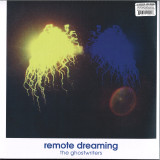
"A landmark in 80s experimental ambient music - previously tape-only, here released for the first time on vinyl, spread across a double LP with five additional tracks, four of which were previously unreleased. Remote Dreaming has been freshly remastered and includes an insert with photos and liner notes.
Dark Entries summons Philadelphia synthesizer scribes The Ghostwriters to rouse their ambient masterwork Remote Dreaming. The late Buchla maestro Charles Cohen and multi-instrumentalist Jeff Cain joined up in 1971 to craft electroacoustic chaos as Anomali, later renaming themselves The Ghostwriters.
Their collaborations with choreographers and visual media artists led to their singular style, straddling improvisation and composition, the oneiric and the immediate. Following their debut album, Objects in Mirrors Are Closer Than They Appear, they were approached by ambient outlet Mu-Pysch. Remote Dreaming would take shape in various studios over nine months. Jeff Cain's instruments on this project included electric and acoustic pianos, the Juno 106 synthesizer, and a Mirage sampler, while Charles Cohen used his signature Buchla 200 Series Electronic Musical Instrument. A stark departure from the tightly wound first LP, Remote Dreaming shows the duo unfurling with soothing pianos and psychoacoustic textures, its somnambulant drones just skirting the edges of the uncanny. Although ignored in its time, Remote Dreaming is now heralded as a landmark in 80s experimental ambient music.
Proceeds will be donated to SOSA (Safe from Online Sex Abuse), a nonprofit that combats online child sex abuse and trafficking"
Haga su pedido ahora y le encargaremos el artículo en nuestro proveedor.

Volume 3 of a set of collaborations between the prolific Argentine polymaths Reynols and the inescapable Acid Mothers Temple. Recorded in Buenos Aries on AMT’s 2017 South American Tour, the music has identifiable sonic elements from both groups but ends up sounding like neither, with a surprising weightlessness that keeps things jammy and psychedelic until the final track’s blustering rock. Taking up most of side 1, “Kicking Air Bricks” has a loose Gong/’70s Euro-classic vibe, with Satoshima Nani getting to swing on the drums in a way that isn’t always part of AMT’s steamroller, while the rest of the gang layers in abstract piano, percussion, glissando guitar, etc. “Multiverse Turtle Reflex” closes the side with a thick drone coda. Side two starts with Miguel Tomasin’s gentle vocal and organ accompaniment on “Smelling Oneiric Asado” before the group gradually gathers momentum with Wolf’s thick bass anchoring layers of clean and loose guitar interplay. “Lemurian Tsunami Inside A Hat” is a thriteen-minute heavy rock epic, with the Reynols’ guitars going head to head with Makota Kawabata’s easily recognized interjections, ramping up into a riffy crescendo.
debe ser publicado en 31.05.2024

An edit-reissue of this gargantuan double cassette released back in 2014 under the Typhonian Highlife moniker, 'H.R. Giger's Studiolo' finds netherworld voyagerSpencer Clark at a particularlybeguiling conjunction of his labyrinthine-esque soundworld. With complete disregard for linear timelines and trajectories, 'H.R. Giger's Studiolo' finds both inspiration in the swiss master's vision and the Cenobite iconographypreviously exploredby Clark on Fourth World Magazine's 'Pinhead in Fantasia'. The CD Head Cenobite picture adorning the cover makes the connection more than apparent.
A sprawling, two and half hour excursion on the tape version, here properly edited down to the wax container, the first two volumes of 'H.R. Giger's Studiolo' are some of Clark's most mystifying recordings. A baroque odyssey through an hermetic maze of alien voices, warping sound effects, oneiric keyboards and a quasi-orchestral sense of space and dynamics, 'H.R. Giger's Studiolo' feels like an hallucinatory fever dream still unlike everything else, either from before or after. Time doesn't apply here, anyway.
Mastered by Rashad Becker
Artwork by Spencer Clark
Haga su pedido ahora y le encargaremos el artículo en nuestro proveedor.

Revision of new beats on the horizon
Every 20 years or so, certain musical movements come full circle. Young musicians are inspired by genres dating back two decades, channelling them through their modern sensibility. The legendary J Dilla’s Donuts album was released in 2006 and instantly marked a starting point for the work of musicians worldwide, laying the foundations especially for the beat scene in Los Angeles. A whole young generation of musicians brought up on the new, instrumental and abstract hip-hop has carried jazz into a new era. The four London-based musicians who make up Uniri have gone one step further by abandoning the idea of a jazz band and "bedroom production" in favour of collective composing, creating a new look at the new-beat aesthetics, framing it as a road novel set in an unspecified time and space.
Uniri translates as ‘one unified dream’ and is the key driving motto of the project conceived by Chiminyo (Cykada, Maisha), the band's founder and head honcho. The project materialised in his private studio, where he invited fellow jazz musicians Amane Tsuganami (Jorja Smith, Maisha), Al Macsween (Nubya Garcia, Gary Bartz, Kefaya) and Luke Wynter (Nubyan Twist, Golden Mean) to spontaneously compose together. Hence, despite this being the band's first album, it wouldn't be right to call them rookies. The result of Uniri's collaborative work is the psychedelic, rhythmic album Infinite Reflections, packed with cosmic and warm synths, which neatly balances hip-hop beat and jazz composition. It's safe to say this music is even more appealing when played live, although it's equally suited to the club dancefloor.
UK Jazz has become a permanent fixture in the London landscape, but also across Europe and the US. Today, the musicians who shape the new wave of jazz are drawing on more and more genres, reducing solo improvisation for the benefit of composition and increasingly drawing on influences from the beat scene. Among such formations are the British NOK Cultural Ensemble, the Polish Błoto, the Belgian ECHT!, and the Dutch Comité Hypnotisé. Uniri is part of this emerging yet already international trend, creating an entirely fresh aesthetic that echoes artists such as Flying Lotus, Samiyam, Dorian Concept, Ras G and Nosaj Things oriented around the Californian 'new beats generation' scene.
The title Infinite Reflections alludes to a phenomenon observable on the open sea or during intercontinental flights. Gazing at the horizon blurs the boundary between the ocean and the sky, forming an infinite palette of blue shades. This inspiration sparked an elusive musical narrative, navigating between a sea voyage and an astral journey, destination unknown.
Haga su pedido ahora y le encargaremos el artículo en nuestro proveedor.

Black Truffle is thrilled to announce a major archival release from legendary American composer and live electronics innovator Richard Teitelbaum, centred around his soundtrack for Suzan Pitt’s cult 1978 animation Asparagus. Best known to some listeners for introducing Europe to the Moog synthesizer as a founding member of Musica Elettronica Viva in Rome, Teitelbaum’s extensive and radically experimental body of work includes collaborative recordings with master improvisers like Anthony Braxton, Andrew Cyrille and George Lewis, intercultural experiments combining electronics with non-Western instruments such as the shakuhachi, works for computer controlled piano, and large-scale multi-media operas. Recorded at York University, Toronto in 1975–1976, ‘Asparagus (European Version)’ sprawls across both sides of the first LP. Discovered by composer Matt Sargent in Teitelbaum’s tape archive, this is a previously unheard major work for Moog modular and Polymoog synthesizers, unique in Teitelbaum’s oeuvre for its lushness and gently melodic quality. The music unfolds slowly, submerging lyrical melodies and burbling arpeggios into uneasy, glacially shifting harmonic swells, the luscious texture thickened with subtle changes of modulation and phase, calling up the shifting layers of Costin Miereanu’s classic Derives or the kosmische Musik tradition more than any academic synthesizer exercise. Teitelbaum incorporated much of this material into his soundtrack for Suzan Pitt’s Asparagus, which receives its first official release here. Asparagus, famously paired with David Lynch’s Eraserhead for a two-year run of midnight screenings at New York’s Waverly Theatre, uses hand-drawn and stop animation to unfurl an oneiric succession of images, beginning with a sequence in which the female protagonist defecates two stalks of asparagus, which multiply and float out of the toilet bowl to form the letters of the title. Teitelbaum’s soundtrack interweaves delicate drifting tones from the ‘European Version’ with contributions from Steve Lacy and Steve Potts on saxophones, George Lewis on trombone and Takehisa Kosugi on violin. Edited closely to the film, even without images the soundtrack proposes a surreal journey through floating synth tones, squealing horns, propulsive arpeggios, distant chatter, and an old-timey waltz. The final side of the set presents a new realisation of Teitelbaum’s text score ‘Threshold Music’, performed at a memorial concert at Roulette, New York in 2022 by Leila Bourreuil (cello), Alvin Curran (sampler and objects), Daniel Fishkin (daxophone), Miguel Frasconi (glass objects) and Matt Sargent (lap steel). The piece asks musicians to match their instrumental volume to that of the sounds of the environment in which they play, sometimes with the addition of recorded environmental sounds, reinforcing frequencies they encounter in listening deeply to their surroundings. Here the players use a field recording taken at Teitelbaum’s home in Bearsville, New York, their long tones and shimmering, glassy textures delicately emerging from the white noise of the location recording. Released with the full approval of both Richard Teitelbaum and Suzan Pitt’s estates, Asparagus is illustrated with striking images from Pitt’s film and accompanied by detailed liner notes by Francis Plagne. These previously unheard pieces shed new light on the work of a key composer in the American experimental tradition, offering up some of Teitelbaum’s most beautiful and engaging music.
Haga su pedido ahora y le encargaremos el artículo en nuestro proveedor.

Part of a (very) loose but somewhat like minded kaleidoscope where one can trace something like a Portuguese hauntology, centred around labels like Russian Library or Prisma Sonora Records, Alexandre Centeio joins Discrepant with the surefire release of 'Panorama'. A multi-instrumentalist and sound artist based in Porto, Centeio - who is also part of Stellarays and The Murmurous Playground - delivers his second album under his own name after 2022's 'Movanta'.
Signalling a departure from the intimate synth driven beautifully soothing landscapes of 'Movanta' while still working within a realm where space and memory play a significant part of both escapism and connection, 'Panorama' opens itself up to a "surrealistic soundscape filled with real and dreamt sound", perfectly illustrated by Ruca Bourbon’s artwork. A sonic fiction conjured from a variety of sources - hand drums, disembodied voices, scraps of unknown realities, skewed loops, oneiric collages, flutes, spectral synths - that float freely between disruption and continuity but within their own internal logic. A very particular and hallucinatory one at that, mind ya. Collapsing notions of time and geography in an aural canvas totally aligned with Discrepant's ethos. 'Panorama' indeed.
debe ser publicado en 16.02.2024
From the rotten bowels of Portland USA crawls out the most hideous death metal unit called Petrification who have cursed mankind with their old school style of filth since 2017. After their Summon Horrendous Void EP (2017) and Hollow of the Void album (2018) Petrification is now ready to release their next full-length opus called Sever Sacred Light via Svart Records. Petrification’s themes may revolve around the cosmic horrors and repugnant themes, but this isn’t your typical nowadays technical progressive metal where the number of notes compensates for the lack of true vision. Sever sacred light delivers eight tracks of crushing doom laden and HEAVY - in the true sense of that word - death metal combining the down tuned caveman mid-tempo riffs of Coffins to Bolt Thrower style grooves spiced with an Autopsy worship. You can also hear the echoes from certain Finnish death metal acts from their most dark past, but (sl)easiest way to describe the Petrification’s blunt to the core delivery is: sick old school death metal for the diehards.
debe ser publicado en 09.02.2024

From the rotten bowels of Portland USA crawls out the most hideous death metal unit called Petrification who have cursed mankind with their old school style of filth since 2017. After their Summon Horrendous Void EP (2017) and Hollow of the Void album (2018) Petrification is now ready to release their next full-length opus called Sever Sacred Light via Svart Records. Petrification’s themes may revolve around the cosmic horrors and repugnant themes, but this isn’t your typical nowadays technical progressive metal where the number of notes compensates for the lack of true vision. Sever sacred light delivers eight tracks of crushing doom laden and HEAVY - in the true sense of that word - death metal combining the down tuned caveman mid-tempo riffs of Coffins to Bolt Thrower style grooves spiced with an Autopsy worship. You can also hear the echoes from certain Finnish death metal acts from their most dark past, but (sl)easiest way to describe the Petrification’s blunt to the core delivery is: sick old school death metal for the diehards.
debe ser publicado en 09.02.2024

“Musica da Discoteca Vol.3” is l’oggetto’s last of three 12” EPs exploring the musical cross-pollination between NY, Chicago, Detroit, and the Italian Riviera. Percussive grooves, ethereal pads, bouncy basslines, sharp stabs, and digital flutes interweave in these 4 new tracks, creating a oneiric trip in the deepest areas of underground house music.
Haga su pedido ahora y le encargaremos el artículo en nuestro proveedor.

Dreams are made and displaced on Mark Fell & Rian Treanor’s oneiric electro-acoustic inception 'Last Exit', borne from long days in the family garden, and assembled into a mesmerising masterpiece of minimalist modal rhythm and atmospheric exploration, into rapt smallsound detailing in breathtaking form. It’s a bit like listening to Virginia Astley’s ‘From Gardens Where We Feel Secure’, with washes of Autechre seeping into the mix from outside.
‘Last Exit…’ originally appeared in a different form as a cassette release for our Documenting Sound series in 2021, and was edited this year by Mark and Rian for this new expanded and altered edition, mastered by Rashad Becker. It renders a painterly,psychedelic, and diaristic depiction of sublime atmospheric tension, occasionally ruptured by their typical, asymmetric rhythm impulses in a form that rudely transcends their respective aesthetics. Across four parts, they kern, juxtapose and diffract synthesised percussion and field recordings into polymetric arrangements riddled with timbral nuance of a highly unpredictable nature.
While patently inflected with nods to Indonesian gamelan, Ugandan folk, Indian Carnatic classical, Morton Feldman-esque minimalism, free jazz improvisation and a sort of rhythmic cubism that speaks to their mutual, voracious listening habits and tastes, the results are arguably without direct compare. Attentive listeners will recognise, however, that ‘Last Exit’ effortlessly transcends their respective styles, achieving a new high watermark of imaginary future-hyperfolk expressed in a sort of personalised but highly relatable meta-musical language.
Seriously, they’re working beyond known conventions here; opening to a sublime frisson of Feldman-esque keys, birdsong and distant car engines, and closing to a combo of just-intoned drone and wafts of distant ballroom music. The 80 minutes in between feel like returning to a dream, with flashes of FM strings dabbed to sloshing rhythms and domestic detritus, tilting into a nervously tentative tension ruptured with abstract dance dynamism and angular free jazz ballistics.
The rejigged recordings also reflect the fidelity of memory recall, expressing an altered perspective on their time spent in the multigenerational family’s Rotherham garden during spring/summer 2020, replete with their mum/grandmother on piano and overheard singing and in convo, but now fraught with a more melancholic, distempered quality that makes for a genuinely unforgettable listening experience. A long-form isolationist fantasy, consider it crucial listening if yr into Robert Ashley's 'Automatic Writing', Graham Lambkin, Autechre or Nuno Canavarro.
debe ser publicado en 29.09.2023

Vol. 2[29,20 €]
Still on and about after years of the most intense crate digging, gem mining, desperate head-scratching and avid schooling, thirsty as ever for the next musical thrill to wrap our ears and brains around, here comes the fruit of our life-long love story with Japanese electronics, Denshi Ongaku No Bigaku Vol. 1 and Vol.2. From the soul-fulfilling first crush felt upon hearing the iconic soundtrack of ‘Merry Christmas Mr. Lawrence’ by Ryuichi Sakamoto onto our release of Inner Science ‘Cosmo Tracks’, through the life-affirming sets of Laurent Garnier at Dijon’s seminal club, l’An-fer, which have at all times nurtured and expanded our taste for Easternmost delicacies, the influence of Japanese music on our vision and endeavours was paramount to the development of our catalogue, whether directly or indirectly.
This first volume gets the ball rolling with a fine assortment of mostly ambient, electronica and deep house-focussed joints. Draped in organic membranes and ASMR-like synth tapestries, K. Inoue’s nu-agey opener ‘Em Paz’ takes us on a ride across the most serene dreamscapes. Jazzing up these lush and oneiric coastal vibes, Gabby & Lopez ‘Drive form the Miracle’ merges a sense of Californian psychedelia with a straight out hard-bop swing. No stranger to our catalogue, Inner Science returns to serve up a crystalline slice of laid-back house on a mystique-imbued tip he holds the secret to. Flip it over and here comes Aquarium with the splendidly immersive ‘Rainy Night in Shibuya’, which very much feels like wandering amidst its neon-upholstered streets and swarming hallways in a bubble of your own.
Naohito Uchiyama treats us to a synth-drenched nocturnal ballad with the ‘80s-inflected vibes of ’Shugetsu’, whereas Keta Ra cuts a path of ethereal sublimation via the mischievously fun and bouncy balearic lounge of ‘equals’. Masterly crafted by Yuu Udagawa, ‘Infinite Possibility’ eases us in a realm where weightless pop and low-slung abstract hip-hop combine to further exhilarating effect. All in harp-driven brittleness and velveteen sub-bass stealth, Noah ‘Gemini - Mysterious Lot’ has us drifting to a lavishly orchestrated headspace, laying down an impressive work on textures and arrangements. All in on the sedated drip-tease flex, Sauce81 ’Sign of Secret Love’ is a blast of freaky hedonism, just as ready to cast its hypnotic spell down the sweatbox as it was upon its original release ten years ago.
Languid jacking house tune ’Tai+Dai’ from Keita Sano blows the winds of discoid luvin’ across the room with its impeccable balance of sharp, glimmering synthwork and driving bass onslaughts from the depths. An odd slice of reshuffled folk music, Waltz ‘Folkesta’ makes for some eerie invitation of sorts, enchanting and spookily haunting in equal measure. Back to a fevered, hip-swaying mindset, Kuniyuki hi-NRG jazz number ‘Free’ is an absolute wonder of piano and drums-driven boogie, cut from the same cloth as some of Blue Note’s finest Cuban jazz classics. Rounding off the package, Japanese legend Ken Ishii’s version of Larry Heard’s house Hall-of-Famer ‘Can You Feel It’ is pure bliss in a can, tailored to turn any crowd into a shapeless cloud of balmy euphoria and universal love, whatever the place or time.
Haga su pedido ahora y le encargaremos el artículo en nuestro proveedor.

Vol. 1[28,53 €]
Still on and about after years of the most intense crate digging, gem mining, desperate head-scratching and avid schooling, thirsty as ever for the next musical thrill to wrap our ears and brains around, here comes the fruit of our life-long love story with Japanese electronics, Denshi Ongaku No Bigaku Vol. 1 and Vol.2. From the soul-fulfilling first crush felt upon hearing the iconic soundtrack of ‘Merry Christmas Mr. Lawrence’ by Ryuichi Sakamoto onto our release of Inner Science ‘Cosmo Tracks’, through the life-affirming sets of Laurent Garnier at Dijon’s seminal club, l’An-fer, which have at all times nurtured and expanded our taste for Easternmost delicacies, the influence of Japanese music on our vision and endeavours was paramount to the development of our catalogue, whether directly or indirectly.
This first volume gets the ball rolling with a fine assortment of mostly ambient, electronica and deep house-focussed joints. Draped in organic membranes and ASMR-like synth tapestries, K. Inoue’s nu-agey opener ‘Em Paz’ takes us on a ride across the most serene dreamscapes. Jazzing up these lush and oneiric coastal vibes, Gabby & Lopez ‘Drive form the Miracle’ merges a sense of Californian psychedelia with a straight out hard-bop swing. No stranger to our catalogue, Inner Science returns to serve up a crystalline slice of laid-back house on a mystique-imbued tip he holds the secret to. Flip it over and here comes Aquarium with the splendidly immersive ‘Rainy Night in Shibuya’, which very much feels like wandering amidst its neon-upholstered streets and swarming hallways in a bubble of your own.
Naohito Uchiyama treats us to a synth-drenched nocturnal ballad with the ‘80s-inflected vibes of ’Shugetsu’, whereas Keta Ra cuts a path of ethereal sublimation via the mischievously fun and bouncy balearic lounge of ‘equals’. Masterly crafted by Yuu Udagawa, ‘Infinite Possibility’ eases us in a realm where weightless pop and low-slung abstract hip-hop combine to further exhilarating effect. All in harp-driven brittleness and velveteen sub-bass stealth, Noah ‘Gemini - Mysterious Lot’ has us drifting to a lavishly orchestrated headspace, laying down an impressive work on textures and arrangements. All in on the sedated drip-tease flex, Sauce81 ’Sign of Secret Love’ is a blast of freaky hedonism, just as ready to cast its hypnotic spell down the sweatbox as it was upon its original release ten years ago.
Languid jacking house tune ’Tai+Dai’ from Keita Sano blows the winds of discoid luvin’ across the room with its impeccable balance of sharp, glimmering synthwork and driving bass onslaughts from the depths. An odd slice of reshuffled folk music, Waltz ‘Folkesta’ makes for some eerie invitation of sorts, enchanting and spookily haunting in equal measure. Back to a fevered, hip-swaying mindset, Kuniyuki hi-NRG jazz number ‘Free’ is an absolute wonder of piano and drums-driven boogie, cut from the same cloth as some of Blue Note’s finest Cuban jazz classics. Rounding off the package, Japanese legend Ken Ishii’s version of Larry Heard’s house Hall-of-Famer ‘Can You Feel It’ is pure bliss in a can, tailored to turn any crowd into a shapeless cloud of balmy euphoria and universal love, whatever the place or time.
Haga su pedido ahora y le encargaremos el artículo en nuestro proveedor.

The album title is an ancient alchemic motto which means "Walk within yourself'' in Latin.
Recorded only and exclusively with electric guitar, the musician explores the threshold of subconscious with heavy drones, fragile soundscapes and haunting melodies, realizing a work between ambient and high-volume drone music. ''Ambula ab intra is an oneiric travel into the depths of the psyche, experiencing the inner path into Self. The outcome is an ethereal work of heavy ambient guitar soundscapes.
debe ser publicado en 01.09.2023

Born out of an indefinite lockdown in 2021, LSS is a joint project from Naarm-based artists JXTPS and Edward Richards. Drawing on their shared love of complex rhythms, melancholic soundscapes and analog hardware, LSS blurs the lines between hypnotic techno, ambient dub and futuristic electro with Oneiric and EVJT, with transformative remixes provided by Sam KDC and Viels.
Haga su pedido ahora y le encargaremos el artículo en nuestro proveedor.

Selected Songs 1997-2003 compiles some of the finest moments in the recording history of Hydroplane, the Melbourne-based indie-pop three-piece that operated alongside The Cat’s Miaow through the second half of the nineties. It’s the third release in what feels, now, like a loosely planned series by World Of Echo, documenting the music made by this group of friends in Melbourne sharehouses (The Cat’s Miaow’s Songs ’94-’98, 2022), or in the case of The Shapiros (Gone By Fall, 2023), while traversing the International Pop Underground.
Hydroplane would be familiar to anyone already following these breadcrumb trails – Andrew Withycombe, Bart Cummings and Kerrie Bolton were the group’s core, all members of The Cat’s Miaow. With Cat’s Miaow drummer Cameron Smith itinerant, having moved to London, the trio used this opportunity to expand their music. It’s a subtle, but important shift. If The Cat’s Miaow was about the perfect, minimalist, two-minute pop song, Hydroplane’s music was far more open-ended, embracing the loops and drones, sampled house-y shuffle beats, the burbling of a Roland Jupiter-4 synth, all of which the trio joined, effortlessly, to their endless capacity for moving, elegant melodicism.
They may have only planned to release one seven-inch single, but the sound Hydroplane created was so bewitching, so compelling, that the project’s lifespan ran for around half a decade, and they ended up releasing three albums, including a self-titled debut recently reissued by Efficient Space, and seven singles. There are all kinds of compelling things happening in the music compiled here – the hazy repetition of the gentler side of Krautrock is in here, somewhere, which also suggests Stereolab at their most intimate and disarmed; the gently drifting guitars, gauzy and oneiric, set the songs adrift and floating, each one lost in its own imagined, distracted world. Songs like “The Love You Bring” set indistinct tonal floats across dance rhythms, in a way not quite heard since My Bloody Valentine’s “Instrumental” – but with the added gift of Bolton’s gorgeous voice.
This loose coalition with dance music, and the quiet experimentalism at the heart of Hydroplane, also gestures towards peers like Hood, Acetate Zero and Other People’s Children, and releases on renegade labels like Wurlitzer Jukebox and Enraptured. Like those groups and labels, The Cat’s Miaow were reconciling independent pop music’s past – sweet melody and melancholy, chiming and droning guitars – with the futures promised by DIY electronics and nascent digitalia, the interface of indie and IDM that led to some of the underground’s most blissful, texturally swoonsome music. All that is here, but also, the poise of the melodies is pure Cat’s Miaow, though, with Bolton’s voice sailing, pacifically, over some of the most pared-down, gorgeous music made during their decade.
It was a time, too, when such music could make waves – “We Crossed The Atlantic”, one of their early singles, was picked up by John Peel, who played it repeatedly on his legendary radio show, the song reaching #13 on his 1997 Festive 50. That the song itself was a cover of a tune by 1960s Australian beatnik-pop-poet Pip Proud felt even more perfect – a group of outsiders paying tribute to another outsider, played on the radio one of the few broadcasters brave and human enough to take a chance on this music. But it was a time where everything was up for grabs, and genres were flowing into each other: folk songs went drone; indie re-discovered noise; ambient pop floated, again, out onto the dancefloor. And while they may have been sequestered away in Melbourne, Australia, Hydroplane felt core to that scene, a quietly driving force.
Compiling material from across their brief but mercurial career, this double album perfectly captures the magic and mystery of Hydroplane’s dreamlike, perfect pop songs.
Haga su pedido ahora y le encargaremos el artículo en nuestro proveedor.

Selected Classics presents a crucially curated cross section of Colorado producer Andrew Dahabrah, aka FOANS’ finest work, sourced from a nearly six-hour self-released vault of tracks posted to his Bandcamp in 2018. Simply called Classics, the sprawling 100-song digital collection was intended as the project’s final offering- a comprehensive culling of the hard drive, after which there’d be “no looking back”.
Fortunately, minds have changed, and FOANS remains extant, but an air of finality and desperation still haunts these tracks, born of bruised emotions and the burnout of working seven days a week “in the middle of nowhere” as an electrician in isolated oil fields. It’s music of hidden hours and private survival, slipstreaming through sleek cybernetic house, gauzy matrix ambience, low-slung dusty jack, and woozy fractal techno. Placeless and weightless, heady and kinetic, Selected Classics distills Dahabrah’s sidewinding inner vision to its swooning fiber optic essence.
debe ser publicado en 07.07.2023

Little Beat More, Do It Youssef, Not a Pub & Un Rêve Nu labels are glad to introduce ÈCH's latest work, a stunning display of musical mastery that will capture your heart and soul.
Led by Heddy Boubaker, the Toulouse-based band has created a sound that defies categorization, blending elements of free jazz and psychedelic afro-latin rhythm, and more to create a truly unique musical experience which they self described as "post-pfunk-afro-voodoo-weird-free-rock".
With 'Au nombre de joie' and 'Le bonheur des uns fait le malheur des autres', the ÈCH make up two little gems of music that take us back to a time when every note, every instrument was carefully thought out, down to the last detail, a time when music was made simply right.
The EP's artwork, created by painter, trumpeter and percussionist Walkind Rodriguez, represents with colors and shapes blending together to create oneiric flames, archetypal symbol of the band's soul, whose name is derived from a Hebrew word meaning 'fire'.
If you love music done with care, of musicians who pour their hearts and souls into every note, then you won't want to miss out on ÈCH's latest release. So sit back, close your eyes, and let the sound wash over you.
Haga su pedido ahora y le encargaremos el artículo en nuestro proveedor.

What would have happened if Michael Dudikoff had gone missing in action, say – in Poland in 1987 – during the harshest freezing spell of the century? Would he have coped under these conditions like John Rambo has in the town of Hope? We shall never find out, but the soundtrack is already there. Latarnik and Cancer G (members of EABS and Błoto) would call this film Zima Stulecia: Minus 30°C.
When Twin Peaks debuted on Polish National Television with its oneiric music by Angelo Badalamenti, Poland could feel as eerie as the series. Seemingly nothing quite matched, but on the other hand, no one was surprised. Growing up in the 1990s inevitably brings back memories of stalls selling a variety of products. You could buy there cleaning products from Germany, some underwear, Haribo jellies and Jacobs coffee, and have access to the "latest" cultural releases, which would be arriving late in Poland. This is where one could obtain pirated copies of cassette tapes and VHS, the labels of which had typewritten film titles that transported kids' fantasies to another world. With such content distribution, many of these kids got their first glimpse of Predator, Terminator, Robocop, as well as Van Damme's stunts in Bloodsport and a plethora of other B action movies, which to this day - like American Ninja - are rerun on TV over and over again. The afterimages of these soundtracks nestled in the heads of Marcin Rak and Marek Pędziwiatr for years and found expression on their debut album.
The music of Zima Stulecia is difficult to label in terms of genre. It oscillates towards melancholic electronic music. For some it will be techno, others will hear elements of house, all accompanied by improvised synth and percussion music.
Zima Stulecia is a duo that was not supposed to have any chance of success. Many years ago, back in 2006, when they were still budding musicians they met for the first time at a jazz workshop. When they found out where they both came from and that they were separated by almost 800 kilometers, despite having great chemistry in playing, they
jokingly said goodbye with the sentence: "it was fun playing together!". They figured they would never meet again. At the time, none of them imagined that in a few years' time in Wrocław they will form one of the most interesting contemporary jazz bands in Poland: EABS and Błoto. On top of that, they were both born in January 1987. The last of the historic "winters of the century" (eng. for "zima stulecia") occurred at that time in Poland, which ultimately determined their name as a band. Minus 30°C album is a recording of the non-verbal workings of these soulmates, and a fruit of a musical collaboration that has lasted for 16 years.
Haga su pedido ahora y le encargaremos el artículo en nuestro proveedor.

Over the course of a nearly 50 year romantic and creative partnership sound artist Annea Lockwood and the late pioneering electronic composer Ruth Anderson have shared space on a number of significant releases of early electronic and tape music, including Charles Amirkhanian’s trailblazing 1977 anthology of women electronic composers New Music for Electronic and Recorded Media, a 1981 split LP on Opus One, a 1997 CD for Phill Niblock’s XI imprint, and 1998’s Lesbian American Composers compilation on CRI. The couple additionally taught a course on the history of women’s music-making, at Hunter College, called Living Women, Living Music. Throughout their time together, they co-authored a number of Hearing Studies designed for people with no formal musical training, which were collected for a 2021 book publication by Open Space Music. They spent most of their private life between Crompond, NY and the house they built themselves at Flathead Lake, Montana. Although Ruth passed away in 2019, the composers’ dialogue continues today with Tête-à-tête, a collection of unreleased archival and new material spread across an LP and a single-sided 10” record.
It all began with a telephone call. In 1973, Ruth Anderson was seeking a substitute to cover a yearlong sabbatical from her position as the director of the Electronic Music Studio she had founded at Hunter College in New York City. Her friend Pauline Oliveros too was on sabbatical, but recommended Ruth call Annea Lockwood—then living in London—about the post. Already drawn to America by the work of the visionary composers with whom she would soon be labelmates on Lovely Music, Annea jumped at the opportunity and within days of meeting in person the pair were, in her words, “joyously entangled.”
Over the next nine months, while Ruth was living in Hancock, New Hampshire, the couple would speak daily by phone in between visits. Ruth recorded these phone calls and, in 1974, surprised Annea with a cassette containing “Conversations,” a private piece she composed by dexterously collaging fragments of their conversations alongside slowed and throwed snatches of old popular songs: “Yes Sir, That’s My Baby”; “Oh, You Beautiful Doll”; and “Bill Bailey.” The centerpiece of Tête-à-tête, this side of intimate musique concrète extends to its listeners a rare invitation to eavesdrop on the halcyon phenomenon of two people falling in love. Tender and playful throughout, “Conversations” comes to its zenith with a cut-up of relentless laughter of a contagious beauty that is, for once, properly convulsive.
“For Ruth” is Annea’s elegy to her life partner. In 2020, Annea returned to Hancock as well as to Ruth’s resting place at Flathead Lake to make field recordings, which she wove together with further excerpts of the couple’s 1974 conversations for a commission presented as part of the 2021 Counterflows Festival in Glasgow. A consummate field recordist, Annea imbues the simple sounds of church bells, birds, wind, and the bodies of water that permeated her time alongside Ruth with an otherworldly depth and sense of narrative akin to that of her celebrated sound maps of the Hudson, Danube, and Housatonic rivers. An oneiric, subtly tonal evocation of a meeting at the shores of existence.
The collection opens with “Resolutions,” Ruth’s last completed electronic work, from 1984. A meditation for the individual listener composed as the result of her study of Zen, it’s a rigorous, process-driven piece that charts the very slow, smooth descent of a 5th from the octave above middle C down to sub-bass frequencies. Minimalist in execution, yet powerful in effect, it glides by almost imperceptibly, with new tones arriving and hovering or levitating upwards, seemingly out of nowhere. A healing piece, it harnesses the highly focused energy of pure tones as a means to, in Ruth’s words, “further wholeness of self and unity with others.”
Tape transfers by Maggi Payne, master by Giuseppe Ielasi and lacquers cut at Dubplates & Mastering, with domestic photos and liner notes provided by Annea Lockwood.
debe ser publicado en 28.04.2023

Rupert Marnie’s debut album “Evocative Rhythm” is a singular object to begin with. Split over two parts, each one working as an individual piece and under seemingly endless configurations when played together on a pair of record players, “Evocative Rhythm” is an elusive piece of musical abstraction you will play a crucial role in shaping, fashioning it as you dabble with it - certainly curious and cautious at first, then manipulating its raw clay more firmly as you envision it with a clearer idea of where to go with it. Or is that just a mirage?
Fruit of geographical meanderings through Hamburg’s tentacular architecture, Rupert Marnie’s maiden full-length effort reflects that of the city’s tonal, rhythmic and harmonic structures in a uniquely vibrant way: dancy and not, ethereal and full-bodied, oneiric and anchored. From field recordings garnered here and there across town, then either truncated, morphed, stretched out beyond recognition via a wide palette of technical means (granular synthesis, time-stretching, use of resonators, delay, reverb, pitch-shifting…), Marnie weaves a narrative that bridges the gap continually betwixt non-formulaic beatless meditation and proper club-focused functionality, plus the countless possible creations that will emerge when combining both sides of the disc to form your own story out the battery of elements at reach.
Evocative Rhythm” is much more than the sum of its parts. A mirage of ambient, techno, electro, whatever style and labels that could be stuck all over it, yet never managing to say a true word of it.
Haga su pedido ahora y le encargaremos el artículo en nuestro proveedor.
