quête:op art

Genres
Tout
The Gist - Interior Windows LP

In the wake of Young Marble Giants’ breakup, two acts were created, with Stuart Moxham taking minimalist, geometric play to extremes while Alison Statton added more warmth and feeling to a similar template, creating something stunning yet based in popular forms. Those two opposing means of forging paths away from one of music’s most astonishingly unique debuts both included Stuart’s brother, Phil. More recently, both have reversed course, with Stuart proving himself a master of classic pop form, with Alison’s work again approaching a modern abstraction of quiet folk music - experimental but accessible. But that’s another tale. With no template to guide him, Stuart’s new music - as The Gist - was regarded as wildly uneven. Stuart admits that he didn’t know which way to go, so perversely, he decided to take all directions at once. The Gist’s original discography stood at a scant 18 songs, yet only seven featured Stuart’s own voice, often in heavily processed and oddly-mixed form. The Gist’s label, Rough Trade, dropped the band. Starting with a critical re-evaluation of The Gist’s sole album Embrace The Herd in an issue of Mojo, the tide begin to turn. Ambience in pop has long enjoyed a cult following, and the nonlinear structure of many of The Gist’s songs have parallels with artists such as Aphex Twin and Seefeel. One song from the era was covered by Etienne Daho in France - sounding rather advanced for French pop at the time, it ended up selling over a million copies and was later covered by Lush and sampled by DJ Koze with Lambchop singer / songwriter Kurt Wagner. Recent discovery of a trove of unreleased recordings show that Stuart had held back an array of excellent material, in demo and completed forms, often in different arrangements. Interior Windows adds 13 new performances or alternate versions to the band’s catalogue, and does the service of making both sides of The Gist’s first 7” 45 (recorded at the same session as the final YMG single) available again, along with their contribution to the NME / Rough Trade cassette compilation C81, and in keeping with The Gist’s tradition, at least one song on which Stuart does not appear

pré-commande17.11.2023

il devrait être publié sur 17.11.2023

24,79
Ella Thompson - Domino LP

-Domino is a spooky, bittersweet collection of cinematic soul cuts influenced by 1970’s ‘Giallo’ film scores layered with luminous vocals.
-Ella Thompson's first solo LP release since Janus (2015).
-Ella is the vocalist from the electro duo GL and formerly frontwoman of The Bamboos.
-Music by Karate Boogaloo aka The Frollen Music Library.
-She will be opening for Lee Fields on his Australian dates in December.
-For fans of Kadhja Bonet, Cleo Sol, Nancy Sinatra, Lady Wray.
Ella Thompson’s Domino is a spooky, bittersweet collection of cinematic soul cuts influenced by 1970s Italian 'Giallo' film scores, with luminous vocals that draw a line between 60s icons like Nancy Sinatra and contemporary soul artists like Kadhja Bonet. Ella’s effortless singing and haunting lyrics paint angular pictures in the moody darkness.
The sparse production is intentionally cinematic, deeply influenced by the music of Italian ‘Giallo’ film scores of the 1970s, particularly by composers like Piero Piccioni but comparable to current artists like Adrian Younge or Bad Bad Not Good in a meditative mood. Minimal but propulsive bass and drums know when to hang back, as they do in the title track and when to step forward as they do in the chugging, deep and funky rhythm section work on the single Never Fight The Way You Feel.
All the instrumentation used in Domino was created by Frollen Music Library, a library music project by the musicians behind Karate Boogaloo, Henry Jenkins, Hudson Whitlock and Darvid Thor, all long-term collaborators and friends of Ella’s.
Ella returned to making music under her own name in 2023 after years of releasing music with her electro-pop duo GL and cult indie band Dorsal Fins. One of Australia’s truly accomplished singers, Ella’s range ranges from art music to cinematic soul, jazz, and pop. In addition to her solo project and bands, she has been a featured artist for numerous acts, most notably deep funk pioneers The Bamboos and Mark Ronson.

pré-commande17.11.2023

il devrait être publié sur 17.11.2023

26,47
TIN FINGERS - ROCK BOTTOM BALLADS LP

Tin Fingers takes on a darker, melancholic direction on their second full album. Felix Machtelinckx' weeping vocals, preaching, searching, and trying to understand God, form the leitmotif. With rich melodies, haunting piano sounds, improvisations, first takes and no overdubs, Tin Fingers is searching for pureness and keeping things human and simple. The band is playing together intuitively, without a computer, without ego, just for the sake of music

The creation of the album was very fluent and spontaneous. Singer Felix wrote the backbones of the songs and the lyrics on acoustic guitar and piano. He wanted to have songs ready in order to be able to record and write arrangements fast. With an eye for details but without overthinking, keeping the ideas fresh. 'I wanted to stay in love with the music.' he explains. 'It needed to go fast, very fast, in just two weeks the entire album was recorded and ready to be mixed.'

In the studio, the band especially focused on picking the right mood rather than playing the right notes.

They were fed up with working on a computer for many hours, overthinking production choices, and adding instruments on top of each other as if they were Lego blocks. This time they decided to work in a more traditional way, going for first takes, jams, and essentially working with analog gear. No computers, no screens, no distractions. Only four humans in a studio trying to make a sound together by keeping things spontaneous and raw. They said goodbye to perfection and worked towards an unfinished product, a snapshot.

Tin Fingers also didn't want to sound like any other artist on this record. They decided not to listen to music during the sessions, and to never express ideas by referencing other bands. Just before the studio session, however, bass player Simen Wouters broke the rules and shared Bonnie 'Prince' Billy's, I See Darkness. Its dark and searching sound ended up inspiring the band unmistakably.

Once the recording was finished, the band decided to keep the volatile rhythm going and asked reputable NYC-based mixer and producer D. James Goodwin to finish the job. Goodwin, known for his analog folk productions with a real American punchy sound but a tender touch, proved the right man for the job. He opened up the songs and kept things poetic, minimal but impressive.

pas en stock

Commandez maintenant et nous commanderons l'article pour vous chez notre fournisseur.

23,49

Last In: 2 years ago
THANDI NTULI/CARLOS NIÑO - RAINBOW REVISITED LP

South African pianist Thandi Ntuli traveled to Los Angeles in 2019, where she recorded this album of bare, explorative piano and voice pieces at a Venice Beach studio with International Anthem artist Carlos Niño in the producer chair. An absolutely stunning, intimate listen, with Ntuli"s prowess as a pianist and singularity as a vocalist on vivid display as much as her fearlessness, vulnerability and adventurousness during occasional experiments with synthesizers and percussion. Niño colors open minimalist soundscapes with overdubbed percussion, cymbals and plants.

pas en stock

Commandez maintenant et nous commanderons l'article pour vous chez notre fournisseur.

22,27

Last In: 2 years ago
Matt Tolfrey - All Shapes And Different Sizes

Matt Tolfrey’s Leftroom imprint makes a triumphant return here with a remix package featuring Mathew Jonson, Silverlining, Maher Daniel and Sakro, all reworking cuts from his 2020 ‘All Shapes And Different Sizes’ LP. Across the past two decades the UK’s Matt Tolfrey has been at the forefront of the underground House and Techno scene, releasing material on many seminal labels in the industry such as REKIDS, Cocoon, Music For Freaks, Crosstown Rebels, mix compilations for fabric and Classic, and of course his very own Leftroom which returns here following its last vinyl release back in 2020 from Detroit’s Norm Talley and Ataxia.

Up first on remix duties is Canadian machine maestro Mathew Jonson who remixes ‘How It’s Gonna Be’ featuring Tim Fuller, offering up his signature twitchy synth work, robust analogue drums and cinematic leads running alongside the original’s hooky vocal lines. Maher Daniel steps up next to remix ‘Feel The Same’, opting for an intricate electro tinged drum workout, wavey subs and hypnotic vocal chants.

London’s Silverlining then reworks ‘Fantasy’ featuring Shaun J. Wright next, diving deeper via a skippy, swinging drum groove, airy dubbed out chords, snaking bass groove and soulful, intricately processed vocal licks. Lastly to round things out, Sakro remixes ‘Under The Skin' featuring Lil Mark, the Mexican artist reshapes the original with his unique drum-led, groove driven style, fusing crisp snares and shuffled percussion, alongside an amalgamation of choppy bass hits, bleepy synths and sweeping atmospherics.

pas en stock

Commandez maintenant et nous commanderons l'article pour vous chez notre fournisseur.

14,24

Derniere entrée: 84 jours
Kronos Quartet - Kronos Quartet Performs Philip Glass LP 2x12"
  • A1: String Quartet No. 5 I
  • A2: String Quartet No. 5 Ii
  • A3: String Quartet No. 5 Iii
  • A4: String Quartet No. 5 Iv
  • A5: String Quartet No. 5 V
  • B1: String Quartet No. 4 (Buczak) I
  • B2: String Quartet No. 4 (Buczak) Ii
  • B3: String Quartet No. 4 (Buczak) Iii
  • C1: String Quartet No. 2 (Company) I
  • C2: String Quartet No. 2 (Company) Ii
  • C3: String Quartet No. 2 (Company) Iii
  • C4: String Quartet No. 2 (Company) Iv
  • D1: String Quartet No. 3 (Mishima) 1957 – Award Montage
  • D2: String Quartet No. 3 (Mishima) November 25 – Ichigaya
  • D3: String Quartet No. 3 (Mishima) 1934 – Grandmother And Kimitake
  • D4: String Quartet No. 3 (Mishima) 1962 – Body Building
  • D5: String Quartet No. 3 (Mishima) Blood Oath
  • D6: String Quartet No. 3 (Mishima) Mishima/Closing

When Kronos plays a piece, they become fellow composers, true collaborators. Without them, we wouldn’t have the kind of string quartet playing that we find around us today. There are two kinds of string quartet playing: the ‘Before Kronos’ and the ‘After Kronos’.” – Philip Glass

‘Kronos Quartet has broken the boundaries of what string quartets can do.’ – New York Times

Nonesuch releases Kronos Quartet’s acclaimed album Kronos Quartet Performs Philip Glass on vinyl for the first time to coincide with Kronos Quartet: Five Decades, a year-long celebration marking the quartet’s 50th anniversary. Originally released in 1995, the album features David Harrington (violin), John Sherba, (violin), Hank Dutt (viola) and Joan Jeanrenaud (cello) performing Quartet No. 2 (Company) (1983), No. 3 (Mishima) (1985), No. 4 (Buczak) (1990), and No. 5 (1991), the first piece Glass wrote especially for Kronos. Recorded at Skywalker Sound in California, the album was produced by Judith Sherman, Kurt Munkacsi and Philip Glass. The cover art features Francesco Clemente’s painting The Four Corners (1985). At the time of the album’s release, the New York Times said, ‘It contains some of Glass's best music since Koyaanisqatsi. His ear for sumptuous string sonorities is undeniable,’ while the Washington Post called it ‘An ideal combination of composer and performers.’ It was a top 10 hit on Billboard’s Top Classical Albums, and spent 12 weeks on Billboard’s Classical chart.


In his original liner note, critic Mark Swed wrote, ‘Glass’ string quartets may contain his most intimate music. They are works through which a very public composer, perhaps the most important opera reformer of our age and a longstanding collaborator in large-scale music theater, holds up a mirror to himself and his way of composing. “In an odd way,” Glass explains, “string quartets have always functioned like that for composers. I don’t really know why, but it’s almost impossible to get away from it. It’s the way composers of the past have thought and that’s no less true for me. It’s almost as if we say we’re going to write a string quartet, we take a deep breath, and we wade in to try to write the most serious, significant piece that we can.” Glass says that as he sat down to write String Quartet No. 5, he had discovered that perhaps not taking a serious tone might be the most serious way to deal with it. “I was thinking that I had really gone beyond the need to write a serious string quartet and that I could write a quartet that is about musicality, which in a certain way is the most serious subject.”’


Glass’ first numbered quartet was written in 1966; however, he did not return to the string quartet medium until 1983, when he provided incidental music for a dramatization of Samuel Beckett’s prose poem, Company. During those 17 years, Glass had formed an ensemble and developed his style in a series of increasingly elaborate pieces for it. String Quartet No. 3 is also adapted to dramatic music, this time from his score to the 1985 Paul Schrader film, Mishima. It was with the music of Mishima that Kronos became associated with Glass, recording the string quartet sections of the soundtrack and subsequently working extensively with the composer on all five of his numbered quartets. Kronos also gave the first concert performances of Company and Mishima. String Quartet No. 4 was composed in remembrance of the artist Brian Buczak, who died of AIDS in 1988.


As Kronos’ anniversary season continues with further concerts around the world, Nonesuch will reissue Black Angels on vinyl on February 16. First released in 1990, the award-winning album includes George Crumb’s title piece, which inspired David Harrington to found the quartet. Called ‘an unusually elevated and searing Vietnam War protest’ by the New York Times, it sets a dark, powerful tone for this collection, which addresses the political/physical/spiritual consequences of war. Also featured are works by Charles Ives, István Márta, Thomas Tallis, and Dmitri Shostakovich. ‘Stylishly packaged, intelligently programmed, superbly recorded and brilliantly performed,’ proclaimed Gramophone. ‘In short, very much the sort of disc we’ve come to expect from the talented and imaginative Kronos Quartet.’ The Evening Standard included it among its ‘100 Definitive Classical Albums of the 20th Century’.


Born in Baltimore, Maryland, in 1937, Philip Glass is a graduate of the University of Chicago and the Juilliard School. By 1974, he had created a large collection of music for The Philip Glass Ensemble. The period culminated in the landmark opera, Einstein on the Beach. Since Einstein, Glass’s repertoire has grown to include music for opera, dance, theatre, orchestra, and film. His scores have received Academy Award nominations (including Kundun and The Hours, as well as Notes on a Scandal) and a Golden Globe (The Truman Show). Recent works include his memoir, Words Without Music, his first Piano Sonata, opera Circus Days and Nights, and Symphony No. 14. Glass received the Praemium Imperiale in 2012, the US National Medal of the Arts from President Barack Obama in 2016, and 41st Kennedy Center Honors in 2018.


Nonesuch’s relationship with Glass began in 1985, with the release of the score for Paul Schrader’s Mishima featuring Kronos Quartet. Over the years other Glass works on Nonesuch have included Einstein on the Beach (1993), Kronos Quartet Performs Philip Glass (1995), Music in Twelve Parts (1996), Glass Box (2008), as well as the soundtracks for Powaqqatsi (1988), Kundun (1997), Koyaanisqatsi (1998), and The Hours (2002), amongst others.


For 50 years, San Francisco’s Kronos Quartet – David Harrington (violin), John Sherba (violin), Hank Dutt (viola), and Paul Wiancko (cello) – has challenged and reimagined what a string quartet can be. Founded at a time when the form was largely centred on long-established, Western European traditions, Kronos has been at the forefront of revolutionizing the string quartet into a living art form that responds to the people and issues of our time. In the process, Kronos has become one of the most celebrated and influential groups of our era, performing thousands of concerts worldwide, releasing more than 70 recordings of extraordinary breadth and creativity, and collaborating with many of the world’s most accomplished composers and performers. Through its nonprofit organization, Kronos Performing Arts Association, Kronos has commissioned more than 1,000 works and arrangements for string quartet – including the Kronos Fifty for the Future library of free, educational repertoire. Kronos has received more than 40 awards, including three Grammy Awards and the Polar Music, Avery Fisher, and Edison Klassiek Oeuvre Prizes.


Kronos is prolific and wide-ranging on recordings. The ensemble’s expansive discography on Nonesuch includes three Grammy-winning albums: Terry Riley’s Sun Rings (2019), Landfall with Laurie Anderson (2018), and Alban Berg’s Lyric Suite featuring soprano Dawn Upshaw (2003); the 40th-anniversary boxed set Kronos Explorer Series; Nuevo (2002), a Grammy- and Latin Grammy–nominated celebration of Mexican culture; Pieces of Africa (1992), a showcase of African-born composers that simultaneously topped Billboard’s Classical and World Music charts; and Folk Songs (2017), Nonesuch’s 50th album with Kronos, which featured Sam Amidon, Olivia Chaney, Rhiannon Giddens, and Natalie Merchant singing traditional folk songs.

pas en stock

Commandez maintenant et nous commanderons l'article pour vous chez notre fournisseur.

39,45

Last In: 2 years ago
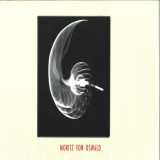
Moritz von Oswald - Silencio LP 2x12"

Moritz Von Oswald

Silencio LP 2x12"

2x12inchTRESOR339LP
Tresor
10.11.2023

What are the differences and similarities between human and artificial sound, between oscillations generated by vocal cords and synthesizer voices, voltage amplified by speakers? On Silencio, his latest album for Tresor Records, Moritz von Oswald works with a 16-voice choir to explore this concept.
Drawing from the ensemble works of long-standing inspirations Edgard Varèse, György Ligeti and Iannis Xenakis, von Oswald and Vocalconsort Berlin delve into the space between sounds, creating a deeply textured collection that shifts between light & ethereal and
dark & dissonant.
As masterfully demonstrated in the early work of von Oswald and Mark Ernestus’ influential Basic Channel project, repetition and reduction are key elements here, much in the tradition of techno and minimalism. The vast dynamism of the human voice adds to the
profound weight of electronics while offering up a rhythmic source and sonic noise palette unexplored in von Oswald’s repertoire. In Silencio, von Oswald dredges a dank murk, pulling clouds over a distant pulse. It hangs, ready to take on new forms.
The compositions were written in von Oswald’s Berlin studio on classic synthesizers, such as the EMS VCS3 & AKS, Prophet V, Oberheim 4-Voice and the Moog Model 15. These abstract recordings were transcribed to sheet music for choir by Berlin-based Finnish composer and pianist, Jarkko Riihimäki and performed by Vocalconsort Berlin in Ölberg church in the city’s Kreuzberg district, only few metres down the road from where Dubplates & Mastering and Hard Wax opened their doors for music enthusiasts for many years so long. The recordings of the choral versions were then incorporated into the synthesized parts of the album and brought into anew electronic context; in Silencio, the focus is not on using one means to imitate the other, but to sonically discuss the tensions and harmonies between the two worlds and create a dialogue between them.
The relationship between von Oswald and Tresor Records goes back thirty years, all the way to Blake Baxter’s Dream Sequence in 1991 - which von Oswald engineered alongside Thomas Fehlmann. The collaboration with Fehlmann lived on, seeing the duo team up as 3MB with Eddie Fowlkes or Juan Atkins. More recently, the Detroit-Berlin connection continued as Juan Atkins & Moritz von Oswald present Borderland.
For von Oswald, Tresor Records and also the participating guest musicians of the choir, this release brings together audiences from other musical areas, cross-pollinating; Silencio is an album that stands for itself beyond the musical genre boundaries.

pas en stock

Commandez maintenant et nous commanderons l'article pour vous chez notre fournisseur.

27,52

Last In: 12 months ago
BRUNO BERLE - NO REINO DOS AFETOS

With a voice of pure gold and a startling sensitivity for heartfelt pop songwriting, on No Reino Dos Afetos (In the Realm of Affections), Berle firmly embraces earnestness, through starry-eyed Brazilian love songs, ambient vignettes, warm, home-cooked beats and gentle strokes of MPB genius.

Maceió, the capital of Brazil’s Alagoas state on its sprawling east-coast, is home to pastel coloured colonial houses, white sand beaches and a brilliant young composer, poet and multi-instrumentalist named Bruno Berle.
With a voice of pure gold and a startling sensitivity for heartfelt pop songwriting, on No Reino Dos Afetos (In the Realm of Affections), Berle firmly embraces earnestness, through starry-eyed Brazilian love songs, ambient vignettes, warm, home-cooked beats and gentle strokes of MPB genius.

“It’s an album that was built from my desire to find beauty”, Berle explains - his simple, graceful words mirroring the graceful simplicity in his music. But amongst the simplicity, the compositions, arrangements and productions on No Reino Dos Afetos tingle with nuance and detail.

On the contemporary R&B inspired lead single “Quero Dizer” - produced by Berle and longtime friend and collaborator Batata Boy - the swirling, lo-fi, kalimba and guitar-fronted beat is turned into a feel-good hit by the ingenuity of Berle’s honey-soaked vocal melody.

Powerfully intimate, “O Nome Do Meu Amor” (My Love’s Name) is a guaranteed tearjerker, with Berle’s stunning voice soaring over gently plucked acoustic guitar and the textural flutter of soft movement, as if we hear him writing the song in the moment.
Drawing upon a close-knit, collaborative scene of Maceió artists and musicians, (of which Berle and Batata Boy are vital members), Berle also recorded some of his friends songs on the album, including João Menezes’ “Até Meu Violao”, the album’s beautifully laid back sunshine soul opener, which has all the charm of early-70s João Donato.

Having cut his teeth in soft-rock group Troco em Bala, and more recently finding himself embedded in both Rio and Sao Paulo’s contemporary music scenes - collaborating with the likes of Ana Frango Eletrico, who took the photo for the album cover - No Reino Dos Afetos is as musically diverse as Bruno himself. It’s hazy indie rock (“É Preciso Ter Amor”), calming ambient and field recording (“Virginia Talk”) as well as Berle’s own take on West African High Life (“Som Nyame”).

Instantly recognisable as a truly special artist, Berle’s character fills every corner of the sound, which is unsurprising considering he played most of the instruments.

pré-commande10.11.2023

il devrait être publié sur 10.11.2023

25,63
DANESHEVSKAYA - LONG IS THE TUNNEL LP

Daneshevskaya (Dawn-eh-shev-sky-uh), the project of New York's Anna Beckerman, writes songs steeped in the folklore of her own personal history. Her artist (and real middle) name comes from her Russian-Jewish great-grandmother, a person whose presence she has always felt although their paths never crossed in real life. Beckerman grew up in a musical family; her father is a music professor, her mother studied opera and her own songs often feel spiritual, less so by any religious connotation and more as a hymn-like, archival record of Beckerman's own past, present and future. Her first release on Winspear, Long is the Tunnel, contemplates how the people you meet impact the pathway you travel. Through songs like the poignant "Somewhere in the Middle," the lilting "Challenger Deep" and the surreal "Big Bird," the EP paints a distinctive collage between traditional songwriting and modern turns of phrase that remain spellbound in the unadulterated luster of self discovery. The seven songs read as both patchwork memories/diary entries and elegies to those in her life. Co-produced by Ruben Radlauer and Hayden Ticehurst of Model/Actriz and Artur Szerejko, the final versions of these initial demos also saw contributions from Lewis Evans of Black Country, New Road (saxophone), Maddy Leshner (keys) and Finnegan Shanahan (violin), adding to the gleaming instrumentation that makes each song sound like a world within itself. Long is the Tunnel is filled with hyperreal imagery that denotes a form of escapism: two of the songs reference birds, which Beckerman describes as about being transfixed by something you can't take your eyes o‑ while also being able to leave at will. Long is the Tunnel prolongs this feeling of being completely immersed: by desire, emotion, and fantasy, though the somber melancholy of her love songs are often more manifestations to her internal self than anyone else.

pré-commande10.11.2023

il devrait être publié sur 10.11.2023

22,06
DANESHEVSKAYA - LONG IS THE TUNNEL LP

Daneshevskaya (Dawn-eh-shev-sky-uh), the project of New York's Anna Beckerman, writes songs steeped in the folklore of her own personal history. Her artist (and real middle) name comes from her Russian-Jewish great-grandmother, a person whose presence she has always felt although their paths never crossed in real life. Beckerman grew up in a musical family; her father is a music professor, her mother studied opera and her own songs often feel spiritual, less so by any religious connotation and more as a hymn-like, archival record of Beckerman's own past, present and future. Her first release on Winspear, Long is the Tunnel, contemplates how the people you meet impact the pathway you travel. Through songs like the poignant "Somewhere in the Middle," the lilting "Challenger Deep" and the surreal "Big Bird," the EP paints a distinctive collage between traditional songwriting and modern turns of phrase that remain spellbound in the unadulterated luster of self discovery. The seven songs read as both patchwork memories/diary entries and elegies to those in her life. Co-produced by Ruben Radlauer and Hayden Ticehurst of Model/Actriz and Artur Szerejko, the final versions of these initial demos also saw contributions from Lewis Evans of Black Country, New Road (saxophone), Maddy Leshner (keys) and Finnegan Shanahan (violin), adding to the gleaming instrumentation that makes each song sound like a world within itself. Long is the Tunnel is filled with hyperreal imagery that denotes a form of escapism: two of the songs reference birds, which Beckerman describes as about being transfixed by something you can't take your eyes o‑ while also being able to leave at will. Long is the Tunnel prolongs this feeling of being completely immersed: by desire, emotion, and fantasy, though the somber melancholy of her love songs are often more manifestations to her internal self than anyone else.

pré-commande10.11.2023

il devrait être publié sur 10.11.2023

22,06
DANESHEVSKAYA - LONG IS THE TUNNEL LP

Daneshevskaya

LONG IS THE TUNNEL LP

CassetteWSPCASS52
Winspear
10.11.2023

Daneshevskaya (Dawn-eh-shev-sky-uh), the project of New York's Anna Beckerman, writes songs steeped in the folklore of her own personal history. Her artist (and real middle) name comes from her Russian-Jewish great-grandmother, a person whose presence she has always felt although their paths never crossed in real life. Beckerman grew up in a musical family; her father is a music professor, her mother studied opera and her own songs often feel spiritual, less so by any religious connotation and more as a hymn-like, archival record of Beckerman's own past, present and future. Her first release on Winspear, Long is the Tunnel, contemplates how the people you meet impact the pathway you travel. Through songs like the poignant "Somewhere in the Middle," the lilting "Challenger Deep" and the surreal "Big Bird," the EP paints a distinctive collage between traditional songwriting and modern turns of phrase that remain spellbound in the unadulterated luster of self discovery. The seven songs read as both patchwork memories/diary entries and elegies to those in her life. Co-produced by Ruben Radlauer and Hayden Ticehurst of Model/Actriz and Artur Szerejko, the final versions of these initial demos also saw contributions from Lewis Evans of Black Country, New Road (saxophone), Maddy Leshner (keys) and Finnegan Shanahan (violin), adding to the gleaming instrumentation that makes each song sound like a world within itself. Long is the Tunnel is filled with hyperreal imagery that denotes a form of escapism: two of the songs reference birds, which Beckerman describes as about being transfixed by something you can't take your eyes o‑ while also being able to leave at will. Long is the Tunnel prolongs this feeling of being completely immersed: by desire, emotion, and fantasy, though the somber melancholy of her love songs are often more manifestations to her internal self than anyone else.

pré-commande10.11.2023

il devrait être publié sur 10.11.2023

22,06
SUNWATCHERS - MUSIC IS VICTORY OVER TIME LP

In the decade or so that hard-working New York quartet Sunwatchers have operated, the group has steadily & subtly refined their sound - a brain-blasting mixture of jazz, psychedelia, krautrock, punk, noise, & Saharan blues - into something that is avant-leaning enough to appeal to the discerning jazz & experimental music fan & weird & wooly enough to get the true heads' toes tapping. "Music Is Victory Over Time" is the band's 5th album, and fourth for Chicago-based Trouble In Mind Records, seeing the long-running lineup of Peter Kerlin (bass guitar), Jim McHugh (guitars), Jason Robira (drums), and Jeff Tobias (alto saxophone and keyboards) in prime form. Album opener "World People" is a classic Sunwatchers number whose title expresses their Anarcho-Internationalist ideology (and the atypically multi-culti make up of their crowds), with an underlying melodic resonance to New Orleans funeral marches à la Albert Ayler _ a triumphant call to arms to all peoples. Live fave "Too Gary"'s gang vocal shout punctuates a motorik rager named for a phrase often uttered by a badass eight year old skateboarder McHugh knew with a speech impediment (it means "that's too scary"). "T.A.S.C." (or "Theme For Anarchist Sports Center") is inspired by Sonny Sharrock's maligned 80's output & sounds exactly like a wrathful, mutant version of a prime-time athletic show theme, replete with the requisite "sitcom ending." The sun- scorched "Foams" - a longform piece intended to depict natural stuff like tides, nightfall, and time slowly passing, ancient, peaceful and slightly gross all at once - practically jumps out of the speakers, its palpable intensity crackling in your eardrums. The title of "Tumulus" might reference an ancient burial mound, but the music itself might be the group's most high-tech song to date, complimented by an arpeggiating sequencer, three different forms of tape delay and an electric saxophone; ecstatic, fiery & deeply spiritual. "There Goes Ol' Ooze" is a smoky creeper that lets Tobias & Kerlin take a walk for a while, with respectful nods to the Stones and Steve Reich. "Song For The Gone" closes out the album, showcasing a sincerely tender moment for the gang, as an expression of love and resolve for dear friends who had recently, tragically died. Its cascading, bluesy melody attuning itself to our own collective unconscious grief. Having the distinct pleasure of being the first band to record in John Dwyer 's new LA-based recording studio Discount Mirrors, "Music Is Victory Over Time" boasts a beefed up sound. The band worked closely with in-house engineer Eric Bauer - facilitator, troubleshooter, sonic obsessive, a legendary freak and a DIY lifer. The band also had full access to the studio's epic armory of gear: amps, axes (it's Dwyer's Eddie Harris model electric sax), synths, a bass guitar once belonging to Klaus Flouride of the Dead Kennedys. Crucial for the sounds and the vibe. The album art was created by Josh MacPhee, the activist artist, author, archivist and founding member of both the radical artist collective Just Seeds and Interference Archive, a public collection of materials from social movements based in Brooklyn. MacPhee's participation in the project works as a statement of Sunwatchers' progressive utopian intentionality, and organically underscores their involvement in revolutionary projects within and without of their hometown. Listening to "Music Is Victory Over Time", Sunwatcher's rebellious spirit & unbridled enthusiasm remain fully intact, but the secret sauce is their infectious irreverence in the face of the horrors of this world. Much of our best cultural commentary is Trojan-horsed to the general public via humor & satire & the band has a knack for lacing the ridiculous with the radical. It's good to have them back. "Music Is Victory Over Time" is released worldwide digitally via most DSPs, on CD, black vinyl & a limited "Sunflare" blue/red splatter vinyl while supplies last.

pré-commande10.11.2023

il devrait être publié sur 10.11.2023

20,97
SUNWATCHERS - MUSIC IS VICTORY OVER TIME LP

In the decade or so that hard-working New York quartet Sunwatchers have operated, the group has steadily & subtly refined their sound - a brain-blasting mixture of jazz, psychedelia, krautrock, punk, noise, & Saharan blues - into something that is avant-leaning enough to appeal to the discerning jazz & experimental music fan & weird & wooly enough to get the true heads' toes tapping. "Music Is Victory Over Time" is the band's 5th album, and fourth for Chicago-based Trouble In Mind Records, seeing the long-running lineup of Peter Kerlin (bass guitar), Jim McHugh (guitars), Jason Robira (drums), and Jeff Tobias (alto saxophone and keyboards) in prime form. Album opener "World People" is a classic Sunwatchers number whose title expresses their Anarcho-Internationalist ideology (and the atypically multi-culti make up of their crowds), with an underlying melodic resonance to New Orleans funeral marches à la Albert Ayler _ a triumphant call to arms to all peoples. Live fave "Too Gary"'s gang vocal shout punctuates a motorik rager named for a phrase often uttered by a badass eight year old skateboarder McHugh knew with a speech impediment (it means "that's too scary"). "T.A.S.C." (or "Theme For Anarchist Sports Center") is inspired by Sonny Sharrock's maligned 80's output & sounds exactly like a wrathful, mutant version of a prime-time athletic show theme, replete with the requisite "sitcom ending." The sun- scorched "Foams" - a longform piece intended to depict natural stuff like tides, nightfall, and time slowly passing, ancient, peaceful and slightly gross all at once - practically jumps out of the speakers, its palpable intensity crackling in your eardrums. The title of "Tumulus" might reference an ancient burial mound, but the music itself might be the group's most high-tech song to date, complimented by an arpeggiating sequencer, three different forms of tape delay and an electric saxophone; ecstatic, fiery & deeply spiritual. "There Goes Ol' Ooze" is a smoky creeper that lets Tobias & Kerlin take a walk for a while, with respectful nods to the Stones and Steve Reich. "Song For The Gone" closes out the album, showcasing a sincerely tender moment for the gang, as an expression of love and resolve for dear friends who had recently, tragically died. Its cascading, bluesy melody attuning itself to our own collective unconscious grief. Having the distinct pleasure of being the first band to record in John Dwyer 's new LA-based recording studio Discount Mirrors, "Music Is Victory Over Time" boasts a beefed up sound. The band worked closely with in-house engineer Eric Bauer - facilitator, troubleshooter, sonic obsessive, a legendary freak and a DIY lifer. The band also had full access to the studio's epic armory of gear: amps, axes (it's Dwyer's Eddie Harris model electric sax), synths, a bass guitar once belonging to Klaus Flouride of the Dead Kennedys. Crucial for the sounds and the vibe. The album art was created by Josh MacPhee, the activist artist, author, archivist and founding member of both the radical artist collective Just Seeds and Interference Archive, a public collection of materials from social movements based in Brooklyn. MacPhee's participation in the project works as a statement of Sunwatchers' progressive utopian intentionality, and organically underscores their involvement in revolutionary projects within and without of their hometown. Listening to "Music Is Victory Over Time", Sunwatcher's rebellious spirit & unbridled enthusiasm remain fully intact, but the secret sauce is their infectious irreverence in the face of the horrors of this world. Much of our best cultural commentary is Trojan-horsed to the general public via humor & satire & the band has a knack for lacing the ridiculous with the radical. It's good to have them back. "Music Is Victory Over Time" is released worldwide digitally via most DSPs, on CD, black vinyl & a limited "Sunflare" blue/red splatter vinyl while supplies last.

pré-commande10.11.2023

il devrait être publié sur 10.11.2023

20,97
Miguel Atwood-Ferguson - Les Jardins Mystiques Vol.1 LP 4x12"

Miguel Atwood-Ferguson lebt in seiner Heimatstadt Los Angeles und ist einer der herausragenden Musiker, Orchestratoren, Arrangeure und Komponisten unserer Zeit. „Les Jardins Mystiques Vol.1“ ist sein lang erwartetes Debütalbum. Es präsentiert uns eine leidenschaftliche Liebeserklärung und ein Reich der schönen Möglichkeiten.

Es gibt eine Fülle von Möglichkeiten, sich Miguel Atwood-Fergusons Musik zu nähern - und es gibt keine Grenzen, wohin sie jemanden führen könnte. Als Komponist, Arrangeur, Multiinstrumentalist und Produzent hat er an mehr als 600 Alben und Soundtracks für genreübergreifende Künstler:innen gearbeitet, darunter Flying Lotus, Thundercat, Anderson .Paak, Mary J. Blige oder Seu Jorge. Seine Klangpalette umfasst Jazz, Klassik, Hiphop, Electronica, Avantgarde, Pop und vieles mehr. Zu seinen gefeierten Live- und Aufnahmeprojekten gehören die innovative orchestrale Neuinterpretation des Repertoires von J Dilla, „Suite For Ma Dukes“ (2009), seine produktiven Werke mit seinem langjährigen Freund und Kollaborateur Carlos Niño, darunter das improvisierte Album, „Chicago Waves“ (2020), auf International Anthem, und seine Gruppen wie das Quartetto Fantastico und das Miguel Atwood-Ferguson Ensemble. „Les Jardins Mystiques“ ist ein Projekt, das Miguel Atwood-Fergusons musikalisches Universum offenlegt und mit anderen teilt. Es hat sich über ein Dutzend Jahre hinweg entwickelt, wurde größtenteils von ihm selbst finanziert und zeigt seine ausgesprochen elegante Musikalität (u. a. auf Geige, Bratsche, Cello und Keyboards) sowie seine freigeistigen Dialoge mit mehr als 50 Instrumentalist:innen. ‚Volume 1‘ ist hierbei bloß der erste Teil eines geplanten Triptychons, das insgesamt ganze zehneinhalb Stunden origineller und erfrischend ausladender Musik umfassen wird. Atwood-Ferguson verband sich mit seinen Gastmusiker:innen auf vielfältige Weise: durch gesellige Studiodialoge, durch Fernkommunikation während der Pandemie und durch die Energie von Live-Auftritten in seiner Heimatstadt, darunter im Del Monte Speakeasy (das herrlich belebende, von einem Klavier begleitete „Dream Dance“) und im Bluewhale (u. a. „Ano Yo“ mit dem temperamentvollen Alt-Saxophon von Devin Daniels und den kosmischen Harmonien von „Cho Oyu“). Bennie Maupin, der legendäre US-Multi-Blasinstrumentalist, zu dessen Repertoire auch Miles Davis' Fusion-Opus „Bitches Brew“ gehört, spielt Bassklarinette auf der hinreißenden Eröffnungsnummer „Kiseki“. Im Laufe seiner illustren Karriere hat Miguel Atwood-Ferguson mit Künstler:innen wie Rihanna, Ray Charles, Lana Del Rey, Lady Gaga, Anderson .Paak, Dr. Dre, Kamasi Washington, Mary J. Blige, will.i. am, Big Boi, Arthur Verocai, Bonobo, Lianne La Havas, Kaytranada, Moses Sumney, Seu Jorge, Common, The Roots, The Cinematic Orchestra, Jamael Dean, Shafiq Husayn, Adrian Younge & Ali Shaheed Muhammad, Carlos Niño, Bilal und viele mehr zusammengearbeitet.

pré-commande10.11.2023

il devrait être publié sur 10.11.2023

60,80
Cloud Management - V.A.

and Sebastian Kokus and the prolific Ulf Schütte, the Hamburg-based trio has tirelessly expanded upon its sound and extended its musical style. After 2022’s »S/T« documented the results of their first jam sessions as a newly-founded group, »V.A.« started even more modestly and became an even bigger undertaking. Originally conceived as a small one-off release, it grew into a full record which sees the group embracing dub music, collaborating with Peaking Lights’ Aaron Coyes and inviting other artists—No UFO’s, Seekers International, Coco Em—who reworked select tracks in true dub style. »V.A.« is marked by inconsistency, openness, and heterogeneity in the best sense of those words: ever-changing, constantly surprising and consistently in motion.

The starting point for »V.A.« was a Hamburg concert in December 2022 together with Coyes, who played a solo set as Peaking Lights. On the request of the event organiser, Cloud Management teamed up with him for a jam session after the gig, laying the foundation for a track that the group took to the studio before sending it to Coyes to record vocals for it. Another song quickly followed and even though the band initially intended to release »PST« and »0rten Pitch« as standalone 7” single, they soon decided to have others create versions of the two tunes to round them off in the form of a 12” EP. Once more though, one thing led to another and now »V.A.« collects five original pieces by Cloud Management as well as three—four on the digital version—remixes by other artists.

Collaborating with Leipzig-based Canadian producer No UFO’s, the Canadian Seekers International collective, and Kenyan multi-disciplinary artist Coco Em came about organically. As fans of their friend Konrad Jandavs’ work for labels such as Spectrum Spools, Root Strata and his own Nice Up International, Korf, Kokus and Schütte asked him for a remix and granted him full creative freedom for his take on »PST«. Jandavs also connected them with the prolific Richmond-based soundsystem worshippers, who present their take on the same track on this record as well as a version of »Electric CD.« Also this track appears three times on the record, having been re-rubbed by Emma Mbeki Nzioka, who was introduced to the the trio by its label Altin Village & Mine.

There isn’t really a common thread running through the rough digi-dub of No UFO’s take on »PST«, Seekers International’s traditionally-minded yet infinitely playful dub-psychedelia and Coco Em’s bass-heavy, percussive, pulsating take on »Electric CD.« However, as a group dedicated to staying in flux at all times, Cloud Management ended up embracing the creative differences between their own work and those of their respective collaborators. In calling it »V.A.,« they paid tribute to their somewhat loose, but conceptually consistent concept of giving various artists full creative licence over their own work. Neither a true album in the strict sense of the world nor just a compilation, »V.A.« is actually the essential Cloud Management record: ever-changing, constantly surprising, consistently in motion.

pré-commande10.11.2023

il devrait être publié sur 10.11.2023

25,42
Ustad Zia Mohiuddin Dagar - Vrindavan 1982 (2x12")

Black Truffle is thrilled to present a previously unheard performance by rudra veena master Ustad Zia Mohiuddin Dagar, recorded in the North Indian city of Vrindavan at the Druhpad Samaroh festival in 1982. Z.M. Dagar was a nineteenth-generation descendant of the Dagar family of musicians, famed for their profoundly meditative approach to the tradition of Hindustani court music. Perhaps the most revered members of the family were the brothers Mohinuddin and Aminuddin Dagar, who played a key role in reawakening interest in dhrupad in the mid-20th century. The great exponents of the tradition from whom Z.M. Dagar descended were all singers, and dhrupad is essentially vocal music. However, as Z.M. Dagar explained, the veena family of instruments plays an important role in the education and practice of dhrupad singers, especially as an aid to mastering the fine microtonal nuances of pitch essential to the genre. Introduced as a child by his father to the rudra veena, a large and low-pitched veena amplified by two enormous gourds, Z.M. Dagar became the first modern dhrupad musician to perform with it as an instrumental soloist, giving his first recital at the age of 16. Devoted to the instrument throughout his life, he made innovations to its design and materials, as well as introducing novel techniques (such as playing without the use of the traditional wire plectrum, resulting in the remarkable warmth of his tone). In the great Dagar family tradition, his approach to the various ragas that make up the dhrupad repertoire was stately, slow, and considered, with a great emphasis on the alap, the heavily improvised exposition section. True to form, in this recording of Dagar performing the night raga Yaman Kalyan, the alap section stretches out to more than forty minutes of slow-motion bliss, a frozen tanpura drone hovering above Dagar’s gracefully bent notes and elegantly twisting phrases. In the alap’s first half, Dagar’s figures are so intently focused on the lower reaches of the rudra veena’s range that they register more as shudders and moans than melodic patterns. As the performance continues, he slowly climbs in pitch, though continuing with the same intent focus on the articulation of single notes and subtle microtonal variations. This leads to the jod section of the performance, which, though still accompanied only by the tanpura, gradually takes on a more rhythmic character. Developing almost imperceptibly over the course of nearly thirty minutes, the jod moves from the stillness of the opening alap to a rapid pulse that announces the closing section of the piece, where Dagar is joined by Shrikant Mishra on the pakhawaj (a double headed hand drum). Where many performers use the final section of the raga as an exercise in unrestrained virtuosity, Dagar and Mishra subtly weave a web of finely shifting accents and hypnotic melodic variations, bringing the recording to a fitting conclusion while remaining within the meditative space occupied by the performance as a whole. Adorned with beautiful archival photographs of Dagar taken by Swedish percussion legend Bengt Berger and accompanied by detailed notes from Bradford Bailey, Vrindavan 1982 is a stunning document of music unmatched in its patient focus and mysterious emotional depth. .

pas en stock

Commandez maintenant et nous commanderons l'article pour vous chez notre fournisseur.

27,69

Last In: 21 months ago
Milford Graves - Bäbi

Milford Graves

Bäbi

12inchSV196LP
SUPERIOR VIADUCT
10.11.2023
 
3

By the early '70s, Milford Graves had more or less stopped gigging. Having learned his lesson the hard way in multiple-night runs like a legendary Slugs' residency with Albert Ayler, he knew that the level of energy that he put out during a performance would be difficult to sustain over the long haul. A concert was a kind of absolute ritual for him, after which he would be totally spent, emotionally and physically. Graves rarely left anything on the table. Any musical performance was an opportunity to present an amalgamated version of all the things he had learned. He was an innovator and a teacher at his core, and the concert venue was one of his first classroom settings.

In March 1976, Verna Gillis invited Graves to perform on WBAI's Free Music Store radio show. For the date, he chose to present a trio lineup which he had been occasionally playing – featuring two saxophonists who were dedicated to the drummer's vision. Hugh Glover is almost exclusively known for his work with Graves, while Arthur Doyle would gain exposure later for an obscure record that he made two years later, Alabama Feeling, which would become a highly collectable item among free jazz enthusiasts.

Originally released in 1977, Bäbi remains one of Graves' most seminal recordings. The music played by the trio was ecstatic. Extreme energy music, buoyant and joyful. It relied on Graves' new way of approaching the drum kit, in which he had opened up the bottoms of his skin-slackened toms and eliminated the snare. Graves' art was always unblemished by commercial interests, and this album is its finest mission statement.

pré-commande10.11.2023

il devrait être publié sur 10.11.2023

28,53
Julien Lourau - Crianças ⏤ The Music of Wayne Shorter LP

“A piece of music never truly comes to An end. Revisiting a theme illustrates this idea that life goes on.” These are the words of Wayne Shorter, uttered in 2018 upon the release of Emanon, his final opus. On this record, the octogenarian uses dusky hues to shade in the passions of his youth - drawing and science-fiction, as well as the causes he has defended all his life - the fight against ecological upheaval and structural racism. This sentiment did not fail to resonate with Julien Lourau, who has reached a stage in life where he has begun to look back over certain pages written by the man he has always considered one of the masters of his trade. Five years later, this Parisian native has also chosen to revisit his glory days, offering reworked versions of specific tracks composed by his titular elder throughout the 80s. “When I play this music, I find myself back in my teenage bedroom. These are my standards, and they remind me of autumn in Rambouillet.” At that time, after practising his scales, Julien would also play Dungeons & dragons, and immerse himself in SF as well as heroic fantasy - epic influences which are not without a certain connection to the dreamworlds Shorter conjured up, as another fan of landscapes beyond the grasp of reality.

This album features four themes taken from Atlantis, which came out in 1985, and two from Joy Ryder, released three years later. To these, he has added a composition penned at around the same time for Sportin’ Life, the penultimate LP by Weather Report. This is rounded off by a tune taken

from Native Dancer, the record which, ten years earlier, in 1975, brought together this saxophonist who learnt his trade alongside Art Blakey, before joining Miles’ second quintet, and Brazilian Milton Nascimento.

“Between Native Dancer and Atlantis, Shorter did not release anything under his own name, but he took the time and care to really perfect his writing. Upon his return, he injected a very Brazilian form of subtlety into his compositions, especially rhythmically. And from a harmonic point of view, these themes are extremely sophisticated, and reveal truly singular colours. In fact, he decided to display the score as if it constituted the liner notes of Atlantis.”

Julien Lourau is a fan of every Wayne Shorter era, from his Blue Note days, where Mr Gone defined the bases of a truly unique repertoire, all the way to his final quartet - a reference like no other. He decided to focus on this “highly electric” period, which is not necessarily Shorter’s best known, nor his most widely appreciated - despite being a unanimous reference, Shorter has nonetheless never had a direct descendent. In Lourau’s line of sight there lies a desire to focus on typically South American tonic accents which characterise this repertoire, twinned with the ambition to switch up their actual sound “by attempting to open up onto a production highly influenced by eighties fusion". However, he admits that modifying the structures of these most unique of worlds constituted a fresh challenge. “There’s this labyrinthine harmonic system where you’ve no idea how it holds together, but where it’s actually impossible to touch the slightest element without the whole edifice wavering. It is in fact a very difficult thing to achieve!”

In order to successfully transcribe all this creativity free of obstacles, Julien Lourau once again called upon the help of Mathieu Debordes. From January 2023 onwards, Mathieu endeavoured to break down all the musical elements, on paper, before creating any actual music. The record was therefore constructed on the faith of these scores, without necessarily transiting through a creative residency - just two live gigs, to make sure the setup worked. Besides Mathieu Debordes and his synthesisers, Julien Lourau has assembled an ad hoc team by his side. On the bass, according to the track, we can hear erstwhile companion Sylvain Daniel or a new acolyte on the fretless bass, Joan Eche Puig.

Stéphane Edouard, on percussion, even dives headfirst into an unlikely proto-rap of sorts, on Pearl On The Half Shell (where, on the original version, Bobby McFerrin adjusted his interventions in a rather madcap style). Aesthete and drummer Jim Hart as well as pianist Leo Jassef also figure on this release - both were present on previous project devoted to label

CTI. “At sixteen, I wanted to sound like Michael Brecker rather than Ben Webster - that was equated with modernity in those days”, adds Julien with a smile, as for him, all this rings out a little like a logical next step, a joyful immersion into the fountain of youth. And if, for this record, he plays the soprano more than ever, the saxophone Shorter set in his sights on, he never tries to replicate an unattainable ideal note by note. What would be the point?

“Wayne Shorter is not just a saxophonist’s saxophonist. In fact, I don’t know a single person who has risen to challenge of his solos. I have not done it myself either, but on the other hand, I have retained a lot of his phraseology. His way of approaching the instrument reveals a more evanescent language, a work on colour and shape. Keeping this in mind has allowed me to gravitate towards certain elements, that in hindsight, I find echoes of in my work, even in Groove Gang.” Shorter etches out these phrases, creating a groove within which Lourau had traced subtle punctuation, managing, from a highly written base, to create fresh apertures, promises of a great escape. Emblematic of this standpoint, his regal version of Ponte de Areia, originally a wonderful dialogue between Milton Nascimento and Wayne Shorter. Here, the Frenchman takes liberties with the original melodies, without ever growing distant from the original spirit, extending one section with delicacy, offering a rubato development and then a groove “like a little suite”. Julien Lourau also renews with an accomplice from last century, Magic Malik, who lends his high-pitched vocals to the track. Though they had not recorded together for more than twenty years, the two of them got on as if they had only ceased collaborating yesterday, everything flowed naturally. The track was wrapped up in just one take, much like other themes, such as opener Who Goes There where the flautist deploys smooth, enchanted and smoky wisps.

Fundamentally, reflecting of the sleeve which features a child playing with a ball, image that could symbolise the sun just as much as the moon, Julien Lourau manages to translate the ambiguous candour which characterizes Shorter’s work - solar and crepuscular at the same time, that of a visionary and poet definitively situated outside of all chronology, but with whom Julien shares surprising and ‘timely’ coincidences. Shorter was born August 25, 1933, the same day as Julien’s father, “if we take time zones into account”, and who died on Lourau’s birthday, March 2, 2023. Should we take this as a random fact? Or could we not see here the sign of a destiny connecting the agnostic Frenchman to the man who, as a fervent Buddhist, believed in the transmission of his spiritual flow ?

pré-commande10.11.2023

il devrait être publié sur 10.11.2023

20,97
Various - Studio Pigalle LP 2x12"

Various

Studio Pigalle LP 2x12"

2x12inchKOS021LP
Komos
10.11.2023

Five groups, one mythical studio - documenting the emergence of a generation!

The initial postulate was simple: five groups, one emblematic studio and 24 hours for each to imagine and record two unreleased tracks with one objective - the will to document a French jazz scene in the midst of renewal.

In these last few years, several innovative currents have shaken up the world of jazz and attracted new fans. They have bubbled up from Los Angeles, impregnated with hip-hop culture (Kamasi Washington, Terrace Martin, Thundercat), or from London, tinged with African rhythms (Nubya Garcia, Kokoroko, Ezra Collective). Meanwhile, in France, a new scene is emerging, carrying with it more of a dancefloor-oriented sound influenced by electronic music - an obvious kinship with the French Touch explosion of the late 90s.

Historically, every movement has been assimilated to a certain neighbourhood, to specific clubs where late at night, young guns stayed up to imagine the jazz of tomorrow - the Cotton Club for the jazz of the 20s, Minton’s Playhouse in Harlem for Be-Bop, the Black Hawk in San Francisco for West Coast jazz, Birdland in New York for Hard-Bop or a lot more recently, the Total Refreshment Centre which has been the playing field for the new London scene.

In Paris too, this new sound is associated with actual venues, places which have allowed these groups to form, create a repertoire and forge an aesthetic - Le Baiser Salé for Monsieur Mâlâ, La Gare/Le Gore for Photon, La Pêche in Montreuil for Ishkero, La Petite Halle for Underground Canopy and also le Duc des Lombards and le 38 Riv’ for Alex Monfort; it’s in a live context that this music will always continue to evolve.

Keeping this “live” spirit, with all its spontaneity, was actually the guiding line for the elaboration of this Studio Pigalle compilation. Each take was recorded in the most organic way possible, bringing all the musicians together in the same room to limit post-production alterations before the final cut was assembled, in just one day, by studio in-house sound engineer, Felix Rémy.

A feeling of urgency permeates a record guided by an artistic production taking care to crystalise the essence of this artistically free-range generation whose childhoods were rocked just as much by Bill Evans and Roy Hargrove as by J Dilla and Jeff Mills. One of the two tracks recorded is geared towards the dancefloor, and the other, more cosmic/ambient gives freer rein to individual interpretation.

There were therefore many possible ways of interpreting these guidelines for the five formations which number among the most distinctive on the current French musical landscape, and the occasion, for some, to rummage through their archives! With Transe (Mbappé) and Da Verdere (Vella), Monsieur

Mâlâ present us with two unreleased tracks issued from the very first rehearsals of the quintet reworked especially for this compilation. “Seen the aesthetic range of this group, it all worked out very naturally in the studio”, recounts keyboardist Nicholas Vella “Recording like they did in the sixties with all the channels live and working with small imperfections was a very interesting task, even when it came to the mix, we had to make do with the takes we had... “

“Our group is very recent, and with this session, in just two tracks, we had the opportunity to present the entirety of our musical universe,” says Photons pianist Gauthier Toux. “All too often, we assimilate this fusion between jazz and dance music to computers and post-production modifications. For “Dessine”, we kept the first take, and we must have recorded just three or four for the other track with more of a techno bent. In one day, we understood that we could play our entire repertoire live, from A to Z”.

“When the Komos label offered me this project, it immediately spoke to me”, remembers Alex Monfort “Straight away, I thought of “Since I Met You”, a track with a nine/four time signature which really is reminiscent of a new- soul groove, but with this extra cosmic vibe! I wrote the words to the chorus and Nina Tonji placed her voice on the track, adding her own verses. For “Tonight”, the up-tempo track, I wanted to head off in more of a hybrid direction inspired by Kaytranada or the Black Radio series by Robert Glasper. A cross-over between jazz and hip-hop which really does represent my world, and I also tried to place vocals centre stage (Emcee Agora)”.

“We truly resonated with the way Antoine Rajon imagined this compilation and the recording session”, confide Warren Dongué and Jérémy Tallon from Underground Canopy. “When arriving in this studio we felt as if we had gone backtothe70s! Inkeepingwiththespiritofthisera,heknewhowtoletus keep our spontaneity, without recording in too many takes, and that’s how we like to work”.

“We managed to adhere to the themes of the compilation without changing our instrumentation, we wanted to remain faithful to the sound of Ishkero on these new compositions and take them somewhere else” – says drummer TaoEhrlich -“Withoutaddinganyelectronics.Thesessionwassupervisedin a truly subtle and benevolent manner. From a human perspective, it was also a wonderful experience”.

Whether turned towards hip-hop, ethnic or electronic music, the artists featured on this Studio Pigalle compilation represent the eclecticism of a new generation in the process of writing the first chapters of its history. Open to experimentation, these artists continue to hold high an immutable love for improvisation and creation in the moment... another definition of the word Jazz!

pré-commande10.11.2023

il devrait être publié sur 10.11.2023

31,05
Articles par page:
N/ABPM
Vinyl