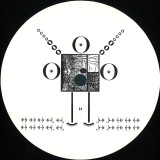
Next up in our Cuban Classics series, one of the jewels of record label Areito’s extensive and sought-after catalogue. Ricardo Eddy Martinez’s Expreso Ritmico from 1978 is a prized album fusing funk, disco, and orchestrated influences with Afro-Cuban percussion, Latin breaks, and lush vocal harmonies.
Whilst maintaining its distinctive Cuban identity, Expreso Ritmico is one of the more American / Western-influenced Cuban titles of the time drawing inspiration from jazz funk, disco, and library music. The album was directed, written, and orchestrated by keyboardist and drummer Ricardo Eddy Martinez, who was also the mastermind behind the orchestration of the Los Reyes 73 album (that was recently reissued by Mr Bongo). Martinez would later go on to work with international musicians and singers such as Gloria Estefan, José Feliciano, Chick Corea, and many more, whilst also working as a sound engineer in the US.
Produced by Adolfo Pichardo, who worked on much of Areito’s output, Expreso Ritmico is packed with gold. The opening title track carries a loose, breezy Latin-disco-funk vibe that breaks into a brilliant Afro-Cuban workout. ‘Que La Tristeza Se Fue’ was expertly sampled and looped by Jazzanova on their 2008 song ‘Look What You Are Doing To Me, featuring Phonte from the hip hop group Little Brother. Elsewhere, ‘Tambo Iya’ has an Afro-funk, Soul Makossa-esque groove, while tracks such as ‘Te Quedas’, ‘Mi Conga Es La Que Es’ and ‘La 132’ run with a heavy pulsating Latin-funk sound. Head to the sultry psych funk of ‘Este Tumbao’ for a spacey journey that blends and morphs through genres.
Pure class as always from Gal Costa! The record is her first after the immediate Tropicalia years, and it's a stunning blend of styles that seems to draw heavily from changes going on in the American rock scene at the time. The core of the music is still steeped in Brazilian elements – but there's a lot of influences coming into play on the album, like bluesy rock phrasing, showy nostalgia-heavy arrangements, psychedelic production elements, and some of the baroque orchestrations that would show up on Gal's later albums in the 70s.
Carly Simon’s quietly intense sophomore album comes across like an assertive notice nailed to a telephone pole for all to see. Bold, personal, and autobiographical, Anticipation announces the arrival of an artist who won’t back down. While Simon stands her ground on her eponymous debut, she elevates her passion and persona to heightened levels throughout this gold-certified record, dealing in private matters related to love, relationships, and desire. At times, Simon is nothing short of primal. She reflects on the difficulties of retaining your own identity while also giving yourself to a partner. Simon’s connection to her folk roots would never be stronger.
Sourced from the original master tapes, strictly limited to 3,000 numbered copies, pressed at Fidelity Record Pressing in California, and housed in a Stoughton gatefold jacket, Mobile Fidelity’s 180g 45RPM 2LP set of Anticipation lays bare the rich tapestries afforded by the spare blend of soft guitars, mellow orchestration, and dreamy melodies. Audiophiles and record collectors, take note: This is the first time Anticipation has been available on 45RPM. The wider grooves and dead-quiet surfaces prove extremely rewarding.
The rhythmic framework anchored by session pro Andy Newmark’s drumming sounds dynamic and balanced, with songs benefiting from a focused midrange and taut low-end. Simon’s attachment to and investment in each lyric is made evident by way of the intimate, hushed atmospherics and expansive responsiveness. And just as Simon’s vocals feel more transparent and direct, so, too, do the supporting choral arrangements.
Released before the singer-songwriter movement reached full bloom, Anticipation remains remarkable for the high-quality songwriting and Simon’s gutsy stance. The album cover — depicting the vocalist holding the gates at Queen Mary’s Garden in Regent’s Park and seemingly defying anyone to take her on — serves as a metaphor for the content within.
Known for having relationships with high-profile partners, Simon was heavily involved with Cat Stevens leading up to the recording of Anticipation. She draws from her experiences to craft tunes that resonate because of their honesty, realism, and strength. Few of those moments are better known than the Top 20 title track, which Simon composed in just 15 minutes as she waited for Stevens to pick her up for a date. Imbued with the nervousness, tension, and excitement that accompany the moments when a romance could go either way, the Grammy-nominated song presages the feminist-minded vulnerability and burning longing that informs a majority of the record.
On the soulful “Legend in Your Own Time,” also inspired by Stevens, Simon harnesses yearning as a conduit to feel-good paradise. Deemed by Rolling Stone an “absolute clincher, an awesome description of the psychic ravages of gone-nuts, know-nothing love,” her cover of Kris Kristofferson’s “I’ve Got to Have You” moans with no-holds-barred desire and breathtaking sensuality.
For all the wanting Simon pursues on Anticipation, her way of staying in control — vocally and personally — make the record a courageous statement of contemporary femininity. For further evidence, look to the bossa nova of “Summer’s Coming Around Again,” somber “Share the End,” soothing “Three Days,” and sincere “Julie Through the Glass,” a tribute to her young niece.
Simon would achieve international fame with her next album, No Secrets. Yet as this definitive reissue shows, Anticipation suggests the rest of the world was just a little late catching up to her.
In 2023, Kraków-based composer Martyna Basta and Los Angeles-based sound artist claire rousay were invited to Poland by Unsound for a short residency, where they spent a few days trading ideas and concepts, and brainstorming their first collaboration. Initially motivated to create lengthy, expansive pieces together, they also ended up experimenting with shorter vignettes, and ‘hotel room’ expresses these two extremes, featuring three long-form tracks and three brief, euphoric songs. “It wasn’t something we specifically planned,” explains Basta. “It just unfolded that way.” The most important stage of the process, however, was the period that followed the residency, when rousay and Basta began working on their sketches in isolation, trading drafts and sculpting the sounds independently before rousay handled the final mixdown. In the comfort of their own bedrooms, they were better able to reflect their individual creative routines, organically reaching a junction where their music felt truly unified. Even while they were in Poland, the duo joked that it might have been easier if they’d been holed up in separate rooms emailing each other.
Both artists have had an energetic few years: after steadily building a reputation for her diaristic and candid concrète experiments, rousay signed to Thrill Jockey in 2023, releasing the acclaimed ‘sentiment’, ‘a little death’ and the more eaze collaboration ‘no floor’; Basta, meanwhile, followed up 2023’s hallucinatory ‘Slowly Forgetting, Barely Remembering’ and her debut for Belgium’s Stroom imprint, ‘Diaries Beneath Fragile Glass’ with a studio album on !K7’s 7K sublabel: ‘Winged in Collapse’. The title of their collaboration reflects rousay and Basta’s hectic touring schedules in the wake of these releases, the constant feeling of displacement and the emotions that emerge when the environment is in flux. “I know we aren’t the only musicians traveling and creating work at the same time,” says rousay, “but being able to speak about that experience and all the things that come with it was comforting.” And the music itself, assembled from hypnagogic field recordings, spectral voices, electronics and filtered instrumental improvisations, sounds bewitchingly unmoored, not tied to a specific location but hovering around the uncanny space in-between.
Scratchy ASMR sounds introduce us to the opening track ‘zoom’, initially obscuring the duo’s elegiac harmonies. They are careful to let the various elements evolve at their own pace, with the fictile guitar drones melting into the foreground while Basta’s dissociated whispers and rousay’s illusory synths pick out the subtlest subliminal shades. It all builds to the piece’s dramatic third act, when layered chords ring out like organ blasts, enveloping the negative space. The shorter, more anxiety-provoking ‘denim’ is remarkably divergent, a dismantled folk memory pieced together from skeletal piano notes, vaporous choral echoes, haunting string plucks and pulsating feedback. Where the music aligns is in the mood itself, capturing a feeling that’s neither completely abstract nor fully referential. Not ambient exactly, ‘hotel room’ is a suite of soundscapes that gesture towards structure while repeatedly folding in on themselves.
On ‘Lost and Found’, wordless Autotuned ad-libs spiral around delicate guitar plucks and washing waves, coalescing into a faded Polaroid of opiated Americana, and on ‘Where Are You Now’, operatic squeals and corroded orchestral scrapes are juxtaposed with nauseous low-end tones. Evaporating until only industrial whirrs and music box chimes remain, the latter encapsulates the entire album’s chilling liminality, smudging saturated voices with casual electro-acoustic interjections before it erupts abruptly, transforming into a dense, pitch-skewed hymn. ‘hotel room’ plays like a surreal travelogue, teasing listeners with airy familiarities as it humidifies dry, awkward spaces. More a labyrinth of catacombs than a single, fixed chamber, it’s Escher-like – cryptic and seductive – and decked out with personal asides and intimate details that reward the most patient, curious listeners.
A counterculture movement united by an expansive, experimental and deeply soulful sensibility, Japan’s rebel protest music challenged the status quo and changed the country’s music industry in the process.
The birth of Japan’s nascent acid folk scene was rooted in the messy and invigorating political climate of the late 1960s. It is a story of Dadaists, communists, pharmacists and cult leaders, led by a young generation of upstart students, artists and dreamers hellbent on turning their world upside down.
Born on the campuses of Tokyo, Kyoto and Osaka, and centred around newly formed independent label and left-wing stronghold URC, this uniquely Japanese form of folk expression provided an outlet for musicians who were tired of aping Western sounds and instead found ways to sing in Japanese and integrate traditional forms in new ways.
At the forefront of this movement was Yellow Magic Orchestra’s Haroumi Hosono, a polymath innovator whose band Happy End released the first Japanese language rock album, and whose influence would go on to be felt across Japanese music for decades. Alongside, and informed by the Kansai scene’s Takashi Nishioka and Happy End collaborator Ken Narita, they experimented with cadences and accents of the Japanese language to open the door for others to experiment with their own forms of psychedelic folk too.
Some, like Nishioka, were more inspired by Dadaism than drugs, while others, like Kazuhisa Okubo, would ultimately find work as a chemist, having founded two further folk groups that flirted with varying levels of success. Obstinately uncommercial, relentlessly creative, the music featured on Time Capsule’s Nippon Acid Folk represents a broad church of influences.
Perhaps the wildest addition to this congregation however was Hiroki Tamaki, a classically-trained violinist and committed iconoclast, whose synth-prog odysseys hinted at his obsession with the divine. Subsumed by the teachings of Bhagwan Shree Rajneesh, he penned an album in praise of the infamous religious leader of which two superbly mind-bending tracks are featured on this compilation.
Charting the decade from 1970 to 1980 as the dreams of political and spiritual liberation seeded in the ‘60s turned to dust, Nippon Acid Folk surveys a little explored corner of Japanese music history, but one which ultimately laid the foundations for an independent music industry, launching the careers of Hosono and others in the process.
Nippon Acid Folk 1970-1980 is pressed on 12” vinyl and represents the start of Time Capsule’s deep dive into Japan’s rich history of folk and psychedelic soul music.
Limitiertes Silber mit schwarzem Splatter Vinyl im Klappcover! Ein leeres Fotoalbum. Instinktiv blätterst du jede Seite durch, ob sich nicht doch irgendwo ein Fetzen deiner Erinnerungen, deiner Vergangenheit findet. Doch die Fotos sind längst herausgerissen oder verloren gegangen. Und doch spürst du etwas. Auf jeder Seite, die du aufschlägst, eröffnen sich Welten. Gedanken und Gedenken an Vergangenes macht sich in dir breit. Das Gefühl von Vergänglichkeit unterdrückst du, jetzt und hier ist alles ewig und für immer. Und mit geschlossenen Augen blätterst du weiter und fliegst an Orte, die wie Relikte aus deinem Leben aus der Landschaft emporragen. Es sind deine Orte und nur das Gedenken hält sie lebendig. "Memorial", ist das fünfte Album von RUSSIAN CIRCLES und balanciert von Metal beeinflusste Sounds mit nuancierten orchestralen Elementen. In den zwei Jahren nach der Veröffentlichung von ,Empros" war das Trio aus Chicago fast unaufhörlich weltweit auf Tour und traf dabei auf viele härtere Bands, deren Musik unnötig kompliziert schien. "Also machten wir uns auf, eine unkomplizierte, geradlinige, intensive, heavy Platte aufzunehmen" so Cook. "Unbewusst strebten wir nach dunkleren und düstereren Klängen. Wir wollten weg von der offenen Aufdringlichkeit." Auf der Suche nach dem optimierten Sound konzentrierte sich das Trio auf jeden einzelnen Song mit seinen eigenen emotionalen und musikalischen Eigenschaften. Und so fühlt sich "Memorial" fast so an, als würde man die Stufen der Trauer erklimmen und wieder hinabsteigen. Das Konzept wird durch die clevere Struktur des Albums unterstützt, da es an der gleichen Stelle endet in der es beginnt, und natürlich durch den Auftritt der Gastsängerin CHELSEA WOLFE, die mit ihrem ergreifend düsteren Gesang im abschließenden Titeltrack dem Album das angemessene Ende verleiht. Bis zu einem gewissen Grad sind die monolithischen, nebeneinander existierenden Stimmungen auf "Memorial" die Reaktion der Band auf die Verbreitung und den Einfluss der iPod Kultur und wie diese die Songwriting-Prozesse von Bands neuerdings beeinflusst. Heutzutage versuchen viele Musiker aus unvereinbaren Elementen einen Sound-Brei zusammenzurühren und die Ergebnisse klingen so ungenießbar, wie eine Mahlzeit nach Kochen mit verbundenen Augen. RUSSIAN CIRCLES hingegen umgehen klug und geschickt die Fallen der Genre Verschmelzung. "Ich möchte Bands mit einer breiten Palette hören," sagt Cook, "aber sie sollte diese seltsame Balance zwischen Bandbreite und Weite finden. Wir wollten ein Album mit mehr extremen Höhen und Tiefen. Ich hoffe, dass wir damit durchkommen, eine schizophrene Platte gemacht zu haben."
Mogwai release this new 30-year, career-spanning compilation. As with their debut single ‘Tuner’ in 1996, Happy Tears is being released via the band’s self-owned and run record label Rock Action Records, also celebrating its 30 year anniversary. The album features the physical release of the incredible dream-come-true pairing of Mogwai and Iggy Pop with the single “Underground”. Happy Tears also features highlights from across the band’s discography, including a previous digital only single and a special new re-working of a Mogwai classic, titled ‘Brand New Paths to Helicon 1,’ featuring the Budapest Art Orchestra, and orchestrated by Adam Wiltzie
(A Winged Victory For The Sullen, Stars Of The Lid).
• The DLP features 13 tracks on one artwork matching black and one yellow vinyl.
Mogwai release this new 30-year, career-spanning compilation. As with their debut single ‘Tuner’ in 1996, Happy Tears is being released via the band’s self-owned and run record label Rock Action Records, also celebrating its 30 year anniversary. The album features the physical release of the incredible dream-come-true pairing of Mogwai and Iggy Pop with the single “Underground”. Happy Tears also features highlights from across the band’s discography, including a previous digital only single and a special new re-working of a Mogwai classic, titled ‘Brand New Paths to Helicon 1,’ featuring the Budapest Art Orchestra, and orchestrated by Adam Wiltzie
(A Winged Victory For The Sullen, Stars Of The Lid).
• The DLP features 13 tracks on one artwork matching black and one yellow vinyl.
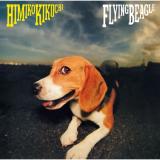
One of Japan’s most world-renowned female keyboardists, Himiko Kikuchi released "Flying Beagle" in 1987, and this classic album now returns on vinyl. Having collaborated with artists such as Takuro Yoshida and Junko Ohashi, and performed as a member of prestigious bands like Nobuo Hara’s Sharps & Flats and Minoya Central Station, Kikuchi — along with guitarist Masatsugu Matsumoto — became a key figure in Japan’s live fusion scene. From the 1980s onward, she consistently released solo albums, including several recorded overseas, establishing herself as a legend in the crossover and fusion genres.
Featuring Kikuchi (piano, keyboards, synthesizer, organ), Matsumoto (guitar), Akira Okazawa (bass), Naoki Watanabe (bass), Katsuo Okamoto (drums), Yasushi Ichihara (drums), Yuichi Tokashiki (drums), Keiichi Ishibashi (bass), Yoshikazu Kishi (trumpet), Kenji Yoshida (trumpet, flugelhorn), Michio Kaguwada (trombone), Jake H. Concepcion (alto saxophone, flute), Hirofumi Kinjo (tenor saxophone, flute), Masamichi Takano (baritone saxophone), and Yoshinori Nomimi (percussion), the album assembles top-tier musicians — including members from Spectrum, AB’S, Yuji Ohno’s You & The Explosion Band, and Toshiyuki Miyama’s Inner Galaxy Orchestra.
A masterpiece of Japanese fusion, reissued as a 180g heavyweight, limited-edition analog pressing. Originally released on October 21, 1987.
The Signum Recordings label celebrates its 30th-year anniversary with a limited edition 7" single of 200 copies on green vinyl. The title track, "Fire Them Liars", presents a powerful fusion of leftfield ambient electronics, urban beats, orchestral strings and guitarsounds. Vocals and lyrics are provided by label founder Maarten van der Vleuten. The Bside, titled "The Story Of Nuffsy Nuff", is exclusive to this 7" release. Musically quite unexpected with its postpunk/psychedelic rock-influenced sound, on which Maarten plays drums (and some sparse vocals). The release includes a hand-stamped inner sleeve with a download code and sleeve featuring the lyrics.
Second album of french incendiary fake big band Parasite Jazz. A krautrock, jazz-non-jazz, experimental album recorded along four seasons by three musicians (Alex Larsen, Tamara Goukassova & Théo Delaunay) from the french fringes ; members of Succhiamo, Diagonale des Yeux, Simple Music Experience, Violent Quand on Aime ... featuring Radio Hito, Kyle Knapp (Deliluh) & Hochiwah.
—
After its first release in 2023, the tiny big band Parasite Jazz brings its public iterations to fruition with “♫”, a testament to an alternate reality, matured voyaging across France over the span of four seasons.
It sees the music flee through exuberant forests and steep troglodytes ; a parallel genre movie with a soundtrack of diluvian rhythms, mocking chants, jazz noir and voodoo accidents. In this shifting, autonomous world, the elastic orchestra—whose members Radio Hito, Valentin Noiret, Kyle Knapp, and Hochiwah keep on appearing and disappearing—plays for nocturnal secrets and feverish cavalcades.
Two rare recordings from the archives of legendary producer Richard Hewson.
Rising Star (Cosmix) began life in 1984 as a vocal single performed by Debbie Sharp. Hewson reworked the original track into a percussive cosmic disco interpretation, aptly titled the “Cosmix”, experimenting with his newly acquired Bel Delay effects unit, which became central to his studio explorations at the time.
Deep Song dates back even further, to the late-70s Richard Hewson Orchestra period - the creative blueprint that would later evolve into Hewson’s cult studio project, The RAH Band. Written, produced and assembled by Hewson in his home studio before additional strings and vocals were layered in, the track was inspired by his deep admiration for Miles Davis, particularly the landmark album Kind of Blue. Deep Song was originally released as a B-side under a mysterious alias in 1979.
“Dancing is immediate. It happens in infinitely small blips of the present, strung together one into the next, direct and spontaneous. And as each moment fades out of the present and into the past, these blips coalesce and ferment and refract into memory.
Play is the first album from Sam Hall’s new project, Spinbeat. Sam has previously released glitch-inflected bedroom pop under the name Ghost Orchard, putting out albums on Orchid Tapes and Winspear. Spinbeat comes with a turn towards rawer sounds and something like the dancefloor.
The tracks on Play linger in the space between music for dancing and music for listening. They are the memory of a dancefloor- sounds, feelings, moments of darkness and color. In contrast with other recent music to come out of the dubby post-club zone, Play is marked by its lightness and warmth. Fragile, intimate moments come bubbling up from underneath the surface, glimmering in plain view for a moment before sinking back into the fog. These pockets of earnestness lend depth and substance to the mystique of the murkier stretches.
Dance music for post-rave romance, for August haze, for the frogs in the pond out behind the warehouse party.
Featuring Sarathy Korwar, Dudú Kouate, Marysia Osu and more
French-born, London-based composer and musician Pascal Bideau aka Akusmi announces his second full-length Terra Incognita, an album of intrepid sonic exploration that delights in the sensation of being somewhere you've never been before. The listener is invited to experience seven faraway sonic imaginariums, as global and spiritual jazz are fused with modern electronics and life affirming minimalism into a hypnotic, polyrhythmic odyssey.
The album's rich multilayered sound world features contributions from tabla virtuoso Sarathy Korwar, Senegalese musician Dudú Kouate adds an array of percussions, ngoni and flutes and Levitation Orchesta's Marysia Osu brings harp and flutes. Following Akusmi's widely acclaimed debut album Fleeting Future (2022) which was supported by The Guardian, The Quietus, MOJO , Gilles Peterson, Mary Anne Hobbs etc, this time, the sound palette for Terra Incognita is more vibrant, earthy and abundant, drawing inspiration from the radiating optimism and high-energy sources heard in Afrobeat, Highlife and Electronic Afro-pop music, sounding looser, free and primarily interested in raw sensations
The Ron Trent Collection Vol. 1 launches the long-awaited return of the legendary Nite Grooves label, revisiting the deep house roots that helped define the sound of New York’s underground scene.
Kicking off the relaunch with house pioneer Ron Trent, this first volume brings together a selection of his productions and aliases from the label, including New African Orchestra, Lost Tymeez and USG.
With deep rhythms, rich percussion and hypnotic grooves, these tracks showcase the musical depth and spiritual house sound that has made Ron Trent one of the genre’s most respected producers.
As the first release in the relaunched Nite Grooves catalogue, this collection offers strong appeal for both deep house DJs and collectors of classic New York house.
A strong opening chapter for the return of Nite Grooves and an essential addition for stores supporting deep and soulful house.
LP,180, 2018 REISSUE - REMASTERED FROM ORIGINAL TAPES, CAREFULLY REPRODUCED ORIGINAL ART
The two sides of 1973's Big Business / Wind of Change are mainly the work of thegreat Keith Mansfeld but there's a killer cameo each from Alan Hawkshaw and David Snell to help deliver a thematic suite, diverse in mood, applicable to dramatic and environmental situations'. A Be With favourite and truly one for the heads.
The Big Business of side A is all the work of Keith Mansfeld. It's heavy on the suspense and features the vital Hot Property', an insistent groove so good that Madlib sampled it to lace the ace Long Awaited' by Lootpack with Dilated Peoples.
Sleeping Giant 1' is a more feshed out version of the equally-dazzling Fatal Error', evoking the orchestral magic of David Axelrod. Indeed, it conjures images of Diamond D falling over himself in the early-to-mid 90s to loop its intoxicatingly
eerie soundscape. Complete with guitar flls that recall Paris, Texas-era Ry Cooder, you need this record for this piece alone.
The horn-and-fute-led "Tycoon" is a head-nodder and "Power Complex" has some fantastic percussion. Other highlights include the breezy glide of Whistle Stop Tour' and its sister groove Clean Air.'
Over on Side B is the more expansive Wind Of Change, which includes the David Snell and the Alan Hawkshaw contributions. But these ain't no fller. Snell's shufing International Flight' sounds like a smooth Dorothy Ashby track tossed from the heavens. Hawkshaw's Road And Rail' is about as luxurious and strung-
out as the great man gets and it might just be the highlight of this whole set.
Not to be outdone, if Mansfeld's Balance Of Power' doesn't make you feel like king of the world then you must be playing it wrong. Oh, and did we mention World In Action'!
As with all ten re-issues, the audio for Big Business / Wind of Change comes from the original analogue tapes and has been remastered for vinyl by Be With regularSimon Francis. We've taken the same care with the sleeves, handing the reproduction duties over to Richard Robinson, the current custodian of KPM's
brand identity.