Contemporary pianist and composer James Heather announces his
second album, ‘Invisible Forces’, via Ahead of Our Time, Ninja Tune
founders Coldcut’s first record label.
An album influenced by the sensibility of electronic, ambient, orchestral
and post-rock music but channelled through solo piano and Heather’s
classical and jazz grounding.
With regards to his “superb” (Crack Magazine) and “masterful”
(Electronic Sound, Dummy) debut, ‘Stories From Far Away On Piano’,
the songs are grander, deeper and broader in emotional range and are
developed through a series of improvisation techniques. Heather
describes it as ‘pulse music’, with each track performed in a single take
and with their roots in this live improvisation, often honed on the road
where he moves between tender to more propulsive, trance-inducing
dynamics.
For fans of Jean-Michel Blais, Sarah Davachi, John Carroll Kirby, Otto A.
Totland, Ólafur Arnalds, Nils Frahm, The Cinematic Orchestra.
CD in slipcase with printed inner.
140g violet vinyl with holofoil detail sleeve.
“The sound Heather makes is captivating.” - Electronic Sound
“Masterful contemporary piano.” - Dummy
“A remarkable piece of music that yields more secrets the more it’s
played” - Clash
Featured in Coldcut’s ambient compilation ‘@0’ alongside Suzanne
Ciani, Ryuichi Sakamoto, Kaitlyn Aurelia Smith, Helena Hauff, Skee
Mask, Julianna Barwick, Steve Roach, Laraaji and Mira Calix.
Notable supporters of Heather’s music include James Lavelle (UNKLE),
Nils Frahm, Cillian Murphy, Flying Lotus’ Brainfeeder (via the live
session he did for them in 2021), The Cinematic Orchestra, The Bug,
Leandro Taub, Actress, Bicep, Martyn and Tim Noakes (Dazed).
James has collaborated with the likes of Dawn Richard, Coldcut,
Mumdance and Roger Robinson (King Midas Sound).
Limited to 750 copies.
Pressed on Blue Vinyl.
Includes postcard and poster.
Formed in post-Postcard Glasgow as Popgun, Kevin McDermott (vocals/ guitar), Davie McCormick (drums), and Ross Drummond (bass/vocals) were joined by Roddy Johnson (guitar/vocals). In 1983, they changed their name to The Suede Crocodiles and released ‘Stop the Rain’ on the NoStrings label.
Single of the Week in both NME and Melody Maker, this jagged-edged, spiky pop-punk single caught the ear of many. The Suede Crocodiles went on to tour the UK with Nick Heyward.
The band split before releasing their second single, ‘Paint Yourself A Rainbow’ with songwriter and lead vocalist Kevin McDermott going on to form the Kevin McDermott Orchestra and having a successful solo career.
out of Stock
Last delivered 4 years ago available to reorder, subject to availability
“They were so solid. They meant what they said, they did what they did… here’s two guys, a guitar player and a harmonica player, and they could make it sound like a whole orchestra.” – Taj Mahal
“It was perfect. What else can you say?” – Ry Cooder
Nearly sixty years after they first played together, Ry Cooder and Taj Mahal, longtime friends and collaborators, reunite with an album of music from two Piedmont blues masters who have inspired them all their lives: GET ON BOARD: THE SONGS OF SONNY TERRY & BROWNIE MCGHEE, on Nonesuch Records.
With Taj Mahal on vocals, harmonica, guitar, and piano and Cooder on vocals, guitar, mandolin, and banjo – joined by Joachim Cooder on drums and bass – the duo recorded eleven songs drawn from recordings and live performances by Terry and McGhee, who they both first heard as teenagers in California.
Explaining where Terry and McGhee took him musically, Cooder says, “Down the road, away from Santa Monica. Where everything was good. ‘I have got to get out of here,’ was all I could think. What do you do, fourteen, eighteen years old? I was trapped. But that first record, Get on Board, the 10” on Folkways, was so wonderful, I could understand the guitar playing.”
Taj Mahal adds, “I started hearing them when I was about nineteen, and I wanted to go to these coffee houses, ‘cause I heard that these old guys were playing. I knew that there was a river out there somewhere that I could get into, and once I got in it, I’d be all right. They brought the whole package for me.”
Taj Mahal and Ry Cooder originally joined forces in 1965, forming The Rising Sons when Cooder was just seventeen. The band was signed to Columbia Records but an album was not released and the group disbanded a year later. The 1960s recording sessions, widely bootlegged, were finally issued officially in 1992. GET ON BOARD is Taj Mahal and Ry Cooder’s first recording together since then.
Harmonica player Sonny Terry and guitarist Brownie McGhee, both originally from the southeastern United States, had active solo careers as well as collaborating with some of the most celebrated musicians of their time. But they were best known for their forty-five-year partnership, which began in 1939 and included mesmerising live performances around the world and numerous acclaimed recordings.
Their Piedmont blues style became popular during the folk music revival of the 1940s and ’50s, centered in New York City’s flourishing club scene for jazz, boogie-woogie, blues and folk music. Terry and McGhee traveled in the same circles as Woody Guthrie, Pete Seeger, Leadbelly, and Josh White, among others in a rich mix of writers, actors and musicians. As a new generation emerging in the 1960’s drew inspiration from folk and blues, Terry and McGhee toured the world as the foremost exponents of the acoustic music of the Piedmont. They were named National Heritage Fellows in 1982 in recognition of their distinctive musical contributions and accomplishments.
“You got the south on steroids, when you got the music of the south, the culture of the south, the beauty of the south, through Brownie and Sonny,” Taj Mahal says. He describes McGhee as a “solid rhythm player. To really play behind the harp like that. He would set stuff up. He wasn’t making many notes. Sonny had all the notes, running around. But Brownie, he laid it down.” Cooder adds: “This thing of squeezing the thumb and first finger and a little bit of the second finger, which I still do. I’d forgotten where it came from. That’s what Brownie did. I saw him do that and said, ‘I think I can do that.’”
Taj Mahal calls Terry “a wizard harmonica player”. Cooder says, “Sonny had incredible rhythm for one thing. Making sounds with his voice and the harmonica so you couldn’t tell quite which was which. He was good at that.”
“We’ve been doing this a while,” Cooder says. “Perhaps we’ve earned the right to bring it back. Taj Mahal concludes. “We’re now the guys that we aspired toward when we were starting out. Here we are now… old timers. What a great opportunity, to really come full circle.”
Roger Eno ist ein britischer Komponist und Musiker, dessen unverwechselbarer Stil als Aufnahmekünstler Kultstatus erlangt hat. Letztes Jahr gab er sein Debüt bei der Deutschen Grammophon mit Mixing Colours, seinem ersten Duo-Album mit seinem Bruder Brian, das mit großem Erfolg veröffentlicht wurde. Nun erscheint Rogers neuestes Soloalbum, The Turning Year, am 22. April 2022 beim Yellow Label.
The Turning Year erlaubt es dem Hörer, durch Roger Enos Spiegel zu blicken, gefüllt mit Einblicken in pastorale Szenen und frei fließenden, berührenden Kompositionen. Diese Stücke werden von Eno als Pianist exquisit umgesetzt und von einigen der besten Orchesterspieler Berlins begleitet. Mit einer Mischung aus neuen Kompositionen und bereits vorhandener Musik bietet das Album eine umfassende Präsentation des Solowerks des Komponisten. ”The Turning Year ist wie eine Sammlung von Kurzgeschichten oder
Fotografien einzelner Szenen, von denen jede ihren eigenen Charakter hat, aber irgendwie eng mit den anderen zusammenhängt”, erklärt Eno. ”Beim Anhören musste ich darüber nachdenken, wie wir unser
Leben in Facetten leben, wie wir flüchtige Blicke erhaschen, wie wir durch unser Leben gehen, wie wir die Jahreswende wahrnehmen.”
LP, 150 copies with screen printed artwork Behind Teahouse Radio is Pär Boström… a Swedish ambient musician, visual artist, label/publishing house owner. Together with his sister (also musical partner in crime) he runs the label/publishing house Hypnagoga Press. Most of his music projects are released on this label. But his work has also already found its way to well known labels such as Cyclic Law and Cryo Chamber. Teahouse Radio is one of the many projects by Pär Boström and most lo-fi and to my ears the most melancholy… and thus fitting Vrystaete very well… In 2018 the debut album (and only album so far) “Her Quiet Garden” was released on CD in an edition of 100 copies on Hypnagoga Press. Here (and below) you have a really nice video on the process of the music and artwork being created… The songs themselves were composed from 2004 onwards with intervals and recorded in a few days during late summer 2016. This 2LP vinyl edition of “Her Quiet Garden” captures the delicate, fragile and minimalist soundscapes very well… and features three additional pieces from the same sessions which were never released before… Expect acoustic instruments that are blended with electronic equipment, forming a sombre ambient music of tinkling tape loops and humming pedal drones… like Gurdjieff meets Eno in some sort of way… And… it is also a very personal album and any listener who sits back and pays true attention will witness and experience this. This is what the musician himself says about the album: An album about summer houses and winter towers, about the changing of weather. How one feeling changes to another. The loss of a loved cat. A real garden becoming an imaginary garden. Depression as a pond. Years of therapy and music as the main counterpoint. About escapism. Psychoses. A giant who walked in and out of the world, decorating it nicely. An aural tale. Half in water, another half in the northern woods. Childhood through nostalgic binoculars. A wardrobe to another place, a gentle knock on the door in the oak tree.
out of Stock
Last delivered 3 years ago available to reorder, subject to availability
Extraordinary musical talent returns with a deeply textured third outing on Blu Mar Ten Music.
Having made serious waves with the release of his debut album "Coeur Calme" in 2014 and the incredible 2016 follow up album "Zawadi", Kimyan Law steers his sound in a darker, more introspective direction with the twelve heavily themed set-pieces of his new album, "Yonda".
The album title, "Yonda", homophonically flits between a location in Kimyan Law's native Congo and definitions of something situated at a distance but still visible, foreshadowing the artist's move away from his typical uplifting palette into less playful territory.
While previous work seemed to be a personal exploration of joy-tinged melancholy, "Yonda", feels much more sober and pensive, infected with external events. In conversation with Kimyan Law the artist described one piece ("Krieg") as his "portrait of war", with the music moving through phases of violence, silence, panic, redemption and peace. Ever the allegorist, Kimyan Law relates themes of conflict and war not just to obvious geopolitics but also to his own physical struggles, and even an obsessive battle with the music itself, ("Yonda" has been more than three years in the making). In 2017 the artist wrote, "I've reached a point where I couldn't sleep because it bothered me so much... I have found myself unable to make any music except for Krieg".
An accomplished drummer in his own right, Kimyan Law's intricate rhythmic sensibility is the lifeblood that runs throughout the album, incorporating ever more outlandish sources of percussion recorded from his natural surroundings and filtered through technology.
"Yonda's opener, "Jaardin", is deceptively gentle, with off-kilter rhythms and pianos providing fertile ground for Elyn's delicate singing before the whole piece careens off into what can only be described as orchestral proto-jungle territory. It soon becomes apparent that this placid introduction is misleading, with subsequent tracks fluctuating between pounding tribal beats ("Arboreal Epitone" / "Kin"), chilling orchestration ("Byo" / "Krieg") and rehabilitated jungle forms ("Seven Ant Foley"). A constant mix of light and dark, futuristic yet primitive atmosphere hangs over the album, with waves of luscious synths and deeply musical string arrangements lovingly cloaked over the razor-sharp drum work.
Unusual conceptual themes litter "Yonda"; "Dor Rhythm" is about a Dung Beetle's journey, "Lampion" is about paper lanterns, "Nova" is about plant growth while "Kilele" is a song about peace, featuring Kimyan Law's own vocals in a new language he created himself, conjuring memories of Cocteau Twin's Liz Fraser.
While "Yonda" contains moments of incontestable beauty it can often be a difficult listen, an illustration of an anxious mind yearning for peace. An obsessive and intricate musician, Kimyan Law's use of African percussion, finely honed polyrhythmic patterns and celestial sprinklings of keys melded with slabs of sub-bass power and sheer energy makes for an intoxicating listen. As ever, Kimyan Law has delivered a profoundly serious piece of work that expands the vocabulary of his genre. Despite the darkness saturating the work, a soft light still breaks through the window. It is the east, and Kimyan Law is the sun.
out of Stock
Last delivered 3 years ago available to reorder, subject to availability
achyon Audio partner and artist Paradaux brings you the label’s eighth installment TAC008 the Fleeting Glory EP. The four-track release presents some hard-hitting functional and engaging beats with strong support from Los Angeles USA techno powerhouse Drumcell who contributes a scintillating remix of the records title track.
Side A begins with another of Paradaux’s gems in Fleeting Glory (A1). This title track is impeccably orchestrated and strikes a hard-to-find balance between being dancefloor-friendly driving and creative and heady with its synth work.
Drumcell brings his distinct sound and mesmerizing groove to the EP in Fleeting Glory (Drumcell Mutation) (A2). Engaging and unique drum patterns guide the listener through an expansive soundscape that tweaks the ears and pointedly reforms the core elements of the original retaining the strong mood.
Side B Mover (B1) continues the glory immediately with a strong trippy 303-oriented dive into the realm of drum-driven sci-fi techno. Leave no interstellar prisoners.
The last full track on the EP Pulsar (B2) finishes the record with Paradaux's strong and distinct desert techno acid vibe as it envelopes the listener with grimy and building synth work and broken and loopy percussive elements and noise manipulation.
The record is capped off with a vinyl locked groove from the National Aeronautics and Space Administration’s (NASA) audio collection Haquindar (B3) capturing a mission control audio test countdown from the Apollo moon mission’s Capsule Communicator.
Kailus Echo and IGC for life.
out of Stock
Last delivered 4 years ago available to reorder, subject to availability
"Long hailed as the audiophile's label, Mercury Living Presence represents an important milestone in the history of classical recording. Since they were first released, Mercury Living Presence LP records have been collected and coveted and 70 years after the label’s first release — Mussorgsky’s Pictures at an Exhibition, with Rafael Kubelík conducting the Chicago Symphony Orchestra — Mercury continues to be admired for the quality of its artistry and recordings: all celebrated for their sheer vividness of sound. This audiophile series sources the original first-generation master tapes. New HD transfers were made at Abbey Road Studios. Master files, including new 3-to-2 mixes for stereo titles, were produced by Thomas Fine, son of the original producer and recording engineer for the majority of Mercury Living Presence titles.
Long considered a benchmark performance and recording, the Mercury Living Presence technique perfectly suits the rich, complex musical textures of Saint-Saens' masterwork. Recorded in Ford Auditorium, Detroit, October 12, 1957, with a Schoeps M201 microphone in the center and Neumann KM-56's on the left and right sides."
"Long hailed as the audiophile's label, Mercury Living Presence represents an important milestone in the history of classical recording. Since they were first released, Mercury Living Presence LP records have been collected and coveted and 70 years after the label’s first release — Mussorgsky’s Pictures at an Exhibition, with Rafael Kubelík conducting the Chicago Symphony Orchestra — Mercury continues to be admired for the quality of its artistry and recordings: all celebrated for their sheer vividness of sound. This audiophile series sources the original first-generation master tapes. New HD transfers were made at Abbey Road Studios. Master files, including new 3-to-2 mixes for stereo titles, were produced by Thomas Fine, son of the original producer and recording engineer for the majority of Mercury Living Presence titles.
An early favorite with audiophiles, this delightful and passionate album of Spanish and Latin American themed compositions will test the best modern-day playback systems. Recorded in the Eastman Theater, Rochester NY, March 25, 1957 with a Schoeps M201 microphone in the center and Neumann KM-56's on the left and right sides."
"Long hailed as the audiophile's label, Mercury Living Presence represents an important milestone in the history of classical recording. Since they were first released, Mercury Living Presence LP records have been collected and coveted and 70 years after the label’s first release — Mussorgsky’s Pictures at an Exhibition, with Rafael Kubelík conducting the Chicago Symphony Orchestra — Mercury continues to be admired for the quality of its artistry and recordings: all celebrated for their sheer vividness of sound. This audiophile series sources the original first-generation master tapes. New HD transfers were made at Abbey Road Studios. Master files, including new 3-to-2 mixes for stereo titles, were produced by Thomas Fine, son of the original producer and recording engineer for the majority of Mercury Living Presence titles.
Mid-century Modern music, rich in dynamics and orchestral textures. The Wayne Peterson piece was commissioned and received its performance and recording debut by Dorati's Minneapolis band. Bloch recorded April 17, 1960; Peterson recorded April 21, 1959. Both recordings were made in Northrop Auditorium, Minneapolis MN, using three Schoeps M201 microphones."
The underground music scene in Asia has experimented a notorious rise in the last years, Taiwan, Indonesia, Thailand or South Korea are more inside the radar than ever, contributing actively with amazing djs and super talented producers; creating an effervescence subculture where to keep an eye on.
Multifaceted producer Mogwaa is not an stranger anymore, awarded in 2021 with best electronic album of the year in South Korea, his versatility and skills have found a place in labels as "Klasse Records", "Spring Theory" or Sound Metaphors' "Bless You" among others.
We are glad to present one of the most awaited records on MM Discos; “Del Mar” is a bliss of fresh air, a story about all this little things that make us dream everyday. “The Sea” as the main actor of the movie orchested by Mogwaa and supported by crackles, waves and little islands where to get lost in.
out of Stock
Last delivered 4 years ago available to reorder, subject to availability
"Long hailed as the audiophile's label, Mercury Living Presence represents an important milestone in the history of classical recording. Since they were first released, Mercury Living Presence LP records have been collected and coveted and 70 years after the label’s first release — Mussorgsky’s Pictures at an Exhibition, with Rafael Kubelík conducting the Chicago Symphony Orchestra — Mercury continues to be admired for the quality of its artistry and recordings: all celebrated for their sheer vividness of sound. This audiophile series sources the original first-generation master tapes. New HD transfers were made at Abbey Road Studios. Master files, including new 3-to-2 mixes for stereo titles, were produced by Thomas Fine, son of the original producer and recording engineer for the majority of Mercury Living Presence titles.
Originally released in 1964, this first LP of Starker's legendary Bach Suites recordings for Mercury met immediate acclaim and encouraged Starker and the recording team to wax the other four Suites. All six Suites were released together in a 1966 box set. Recorded April 15 and 17, 1963, in Fine Recording Ballroom Studio A, New York City, using three Schoeps M201 microphones.."
"Long hailed as the audiophile's label, Mercury Living Presence represents an important milestone in the history of classical recording. Since they were first released, Mercury Living Presence LP records have been collected and coveted and 70 years after the label’s first release — Mussorgsky’s Pictures at an Exhibition, with Rafael Kubelík conducting the Chicago Symphony Orchestra — Mercury continues to be admired for the quality of its artistry and recordings: all celebrated for their sheer vividness of sound. This audiophile series sources the original first-generation master tapes. New HD transfers were made at Abbey Road Studios. Master files, including new 3-to-2 mixes for stereo titles, were produced by Thomas Fine, son of the original producer and recording engineer for the majority of Mercury Living Presence titles.
Janis's virtuoso recording, originally released on CD in 1994, finally gets its vinyl due. Recorded in Fine Recording Ballroom Studio A, September 25-29, 1961 with three Schoeps M201 microphones."
FLAPAAaaam!!! the first snare roll leaves no doubt: this is a dub album, reminiscing the pioneers of the genre like King Tubby, Lee "Scratch" Perry and Scientist and of course, it's a tribute to the revolutionary music of Bob Marley and the Wailers. The original record from which these dubs derive - "Bob" by Kapelle So&So feat. Cpt. Yossarian - was recorded in 2020, the year of Bob Marley's 75th birthday. Due to the strict lockdown all the tracks were recorded separately - which perfectly qualifies them for a dub rework. The musicians involved took great care to dig deeply into the original music, absorbing every note of the Wailers' recordings and translating it to their own instrument. But at this point we leave common paths, because what would be Aston Barrett's electric bass turns out to be a tuba and his brother Carly's distinguished bassdrum sound resurges on an old leather suitcase. We are talking of a traditional bavarian folk band (trumpet, cornet, tuba, accordion, guitar, drums) playing Bob Marley's sacred music. Simultaneously seriously sticking to the original score and adding color to the music by the masterful use of their rather uncommon instruments. What sounds like an impossible -almost blasphemous- endeavour actually sounds pretty neat and leads to the next big venture: A dub album paying tribute to the music of Bob Marley and the Wailers. The dub versions naturally lead on the abstract that was introduced by the uncommon orchestration by muting or emphasizing single instruments and sending them into the sonic orbit. The melody itself is almost completely left out. Nevertheless one never loses one's orientation since the defining elements of the songs alternate skillfully, vanishing in clouds of reverb, losing themselves in echo feedbacks and then popping up again, guiding us through the song. Despite being focused mainly on bass and drums you will catch yourself singing along Marley's part more than once thereby proving the profound impact of this divine music on our souls and our common musical knowledge. Bob Marley in Dub is the abstract of an abstract and still manages to transport the heart and soul inherent of the music. With all due respect to the original, Cpt. Yossarian manages to illuminate nuances of the material yet unheard and takes us on a trip through his conception of this otherwise well known material. Following the tradition of the before mentioned mentors of dub music he uses his mixing desk, a couple of studio effects and whatever odd sounding kids toys to present us with his approach to a musical genre that defined so many styles of music that followed.
out of Stock
Last delivered 4 years ago available to reorder, subject to availability
Die Essenz der epischen John Williams-Orchestrierungen für die ersten drei Filme der 'Indiana Jones' Kinosaga aus 1981-1984-1989, die von George Lucas geschaffen und von Steven Spielberg inszeniert wurde. 16 Aufnahmen, eingespielt von den weltberühmten Prager Philharmonikern, inklusive des über die Filmreihe hinaus bekannten Themas 'The Raiders March' als Opener. Gatefold-Auflage auf rotem Doppelvinyl.
Originally released in 2002 in partnership with NME to celebrate their 50th anniversary and 50 years since NME printed the first ever singles chart in the UK. 1 Love saw the cream of British artists come together to pick their favourite number one to cover. Having appeared on the 1995 HELP album, Oasis continued their support of War Child with an acoustic rendition of Slade’s Christmas classic ‘Merry Xmas Everybody’. Stereophonics chose ‘Nothing Compares 2 U’ with Kelly Jones’s gravelly vocal complementing this stripped back version of the track written by Prince, performed by The Family and taken to number one by Sinead O’Connor in 1990.
out of Stock
Last delivered 4 years ago available to reorder, subject to availability
By far the most unexpected hit record of 2011 was the 29th and final studio album from an 89 year-old Doris Day. My Heart hit the charts in the U.S. and went all the way up to #9 in the U.K., triumphantly capping a legendary singing and acting career. But this record and its chart success was, if you’ll excuse the pun, no mere sentimental journey. The heart of My Heart is a series of songs recorded by Doris in the mid-‘80s as background for scenes featuring her with various animals on the Doris Day’s Best Friends television show, many of
them written by her son, Terry Melcher, whose production credits, of course, include The Byrds and Beach Boys. Melcher also lends a bravura vocal turn to “Happy Endings” and is the subject of a heartfelt preamble by Doris on “My Buddy.” And without question Terry’s influence lay behind her superb, jaunty cover of the Lovin’ Spoonful’s “Daydream.” In short, My Heart was a touching, tuneful love letter from Doris to her deceased son; and now, in honor of her centennial, we’re bringing it to LP for the first time, remastered for vinyl by Mike
MIlchner at Sonic Vision, and pressed in green vinyl complete with an insert featuring liner notes. A beautiful record from a beautiful lady.
Reissue of the Count Basie Orchestra's 1970 album 'High Voltage',
arranged by Chico O'Farrill and featuring Eddie "Lockjaw" Davis, Cecil
Payne, Joe Newman, Freddie Green and Harold Jones among others
When in January, 1970 Count Basie entered the studio with his 17-piece big band
to record 'High Voltage', he ushered in the last full decade as bandleader of his
Orchestra. The Orchestra had left its imprint on the sixties by recording with the
likes of Frank Sinatra and Ella Fitzgerald. There would be more great albums with
star vocalists in the seventies, but the band's purely instrumental works, which
had begun in 1965, would also continue. Back then Basie had engaged acclaimed
Cuban composer/arranger Chico O'Farrill to arrange the music for such concept
albums as "Basie Meets Bond" and "Basie's Beatle Bag", transforming them into
crossover gems.
On 'High Voltage' O'Farrill demonstrates his affinity to Basie's big band sound, this
time with a repertoire of standards. For this album, Basie specifically chose
pieces the band had never recorded in their more than 30-year existence. This is
saying something, since the band covers such an impressive span of jazz history,
from the beginning of the swing era to the bop-influenced bands of the 50's on
through to the present album.
The Count's new drummer Harold Jones propels Fred Fisher's "Chicago" with a
tremendous drive. The Rogers and Hart classic "Have You Met Miss Jones"
features beguilingly dense deep- register horn lines and an almost languorous
piano, and Eric Dixon's tasty flute solo spices up "The Lady Is A Tramp". With its
smoky sophistication, Eddie Lockjaw Davis' Tenor dominates "Bewitched",
whereas guest trumpeter Joe Newman's muted tongue-in-cheek solo highlights
"Day In Day Out". Of course, Basie himself also steps forward: for instance, on the
Fats Waller-like intro to "I'm Getting Sentimental Over You", and with the playful
grace notes on "If I Were A Bell"." Reminiscent of the Las Vegas shows the band
performed with Frank Sinatra, "Get Me To The Church On Time" is also a
masterful dialogue between the horn sections.
Second release of the new "Live At Fabrik Hamburg" series on Jazzline in
cooperation with the legendary venue and NDR Kultur - is this previously
unreleased concert from jazz great Gil Evans with a 16-strong all-star
cast from 1986
It will be released as a double CD in a three-piece digipak and as a triple LP in a
triple gatefold cover that includes detailed liner notes by Michael Laages. By the
1980s, the Gil Evans Orchestra's repertoire had developed into a distinctive blend
of Jimi Hendrix melodies, the band members' own compositions and occasional
references to Gil's older recordings. This concert in Hamburg contained four
songs by Hendrix, with only one ("Up From The Skies") being part of an original
studio album. The regular performances in Europe meant that the audience of the
band was getting younger and was also well acquainted with rock music.
A year and a half after this performance, Gil Evans passed away. He will rightly be
remembered forever for the brilliant albums he recorded with Miles Davis and
under his own name. In reality, however, he lived three quite contrasting musical
lives. As was the case with his Monday evening concerts in New York's Sweet
Basil, this Hamburg performance is a reminder of the lively late phase of Gil
Evans. Here a great all- star ensemble played an outstanding concert of eight
pieces in over two hours.
... The Original Release of 'TJJA-10023' was on the 25th July, in 1992. Score by 'Joe Hisaishi', Album including 23 tracks. Theme song “The Time Of The Cherries” Ending song “Once In A While, Let’s Talk About The Old Days” / Vocal: Tokiko Kato. ... Committed to acoustic sound, this album was recorded by full orchestra of 70 people.
"Marvin Gaye's Trouble Man adapted and conducted by Low Res"
Marvin Gaye was extremely proud of his pioneering film score for the “blaxploitation” film “Trouble Man”. In 1982, he commented:
“The "Trouble Man" film score was one of my loveliest projects and one of the great sleepers of all our time. I'll probably be dead and gone before I get the probable acclaim from the "Trouble Man" album, musical track, that I feel I should get. And put to a symphony, if someone took my album and did a symphony on it, I think it would be quite interesting.”
American musician Daniel Zelonky (AKA “Low Res”) had been captivated by this record for decades. Given the opportunity to recreate and conduct the entire film score live with a 36 piece orchestra at Voohuit, a beautiful classical venue in Gent, Belgium he set about meeting this daunting challenge: to be faithful to the feeling of the original and yet to create something "new", to expand upon certain elementts in a formal way, no "jamming" on the themes.
After a very successful performance, the resulting recordings were augmented in studio with additional instrumentation, and with the vocals of Blackwolf, singer of the late, lamented "Kings Go Forth" (Luaka Bop Records).
We think that the crate-digging denizens of the original soundtrack, and the curious Marvin Gaye fans alike will find much to enjoy in this 50th Anniversary tribute to Marvin's Blaxploitation masterpiece!
Das zweite, vielversprechende Album der norwegischen 8 Mann-Band ist ein Mix aus orchestralem Pop, Klassik und Progressive Rock! Definitiv eine der ersten Überraschungen in 2021 und unbedingt empfehlenswert für Progressive- und Artrock-Fans!
"Es gibt Platten, die sich nicht anstrengen müssen, um überlegen zu klingen. Gleichzeitig lassen Meer die Frage offen, warum sie nicht längst die Tore zum Prog-Olymp weit aufgestoßen haben (…) Vielmehr liefert er den Beweis, dass großformatige Streicherarrangements nicht gleich nach größenwahnsinnigen Muse oder avantgardistischen Radiohead klingen müssen. Auf dem Mittelweg gehen Drama und Cleverness Hand in Hand. Die Gefahr, Songs zu zerdenken und wegen der akademischen Schule, durch die alle Mitglieder von Meer gegangen sind, den Hörer zu überfordern, umschiffen die Bandgründer Johanne und Knut Kippersund als Songwriter mit Pop-Sensibilität." (VISIONS)
'Playing House' erscheint nun als limitierte Vinyl-Neuauflage in rotem Vinyl.
Der aus Los Angeles stammende Produzent/Songwriter Chris Adams aka PENDANT veröffentlicht auf Saddle Creek sein zweites Album HARP, ein üppiges Werk, das 90er Rave-Sounds mit Hip-Hop, Shoegaze und Pop kombiniert. Da er im Lockdown keinen Zugang zu seiner traditionellen Gitarre hatte, gab es für den langjährigen Fan elektronischer Clubmusik plötzlich keinen guten Grund mehr, sich nicht in die beatlastige, synthiegetränkte Welt zu wagen und HARP auf eine eher impressionistische, frei assoziative Weise zu skizzieren.
Nach den Erfolgen der 3LP- (schwarzes Vinyl) und 4LP-Ausgaben (farbiges Vinyl) - jeweils mit 33 Tracks - erscheint nun mit der LP 'The Greatest Harry Potter Film Music Collection' die Essenz der Filmserien-Soundtracks mit den 11 besten Tracks von John Williams (der zwei Oscar-Nominierungen für die Reihe erhielt), Patrick Doyle, Nicholas Hooper und Alexandre Desplat, eingespielt von den weltberühmten Prager Philharmonikern. Schwarzes Vinyl.
Seabear return with a new album. After a hiatus of 12 years - the bands most 'recent' LP dates back to 2010 - the much loved Icelandic collective presents »In Another Life«, a mesmerizing collection of songs, oscillating between indie pop and classic singer-songwriter material.
Sometimes, a long break is all it takes. Seabear, the band featuring the talents of Guðbjörg Hlín Guðmundsdóttir, Halldór Ragnarsson, Kjartan Bragi Bjarnason, Örn Ingi Ágústsson, Sindri Már Sigfússon (aka Sin Fang) and Sóley Stefánsdóttir (aka Sóley), did exactly that. Producing an album takes up a lot of energy. You do promotion, you tour quite a bit and afterwards you... well, you just do different things. "We had all focussed on other projects", Kjartan Bragi explains. "Solo careers, playing with other projects, other forms of art, working 'normal' jobs to make a living etc. It's nice to finally come together again with old friends and make music." During the break, music has been an integral part of the members’ daily lives. Sóley started a remarkable solo career (she just released her fourth solo-album), as did Sindri, under the name of Sin Fang, while Guðbjörg worked with Sigur Rós. However, all this was made possible by the disarming folk music of their 2007 debut LP »The Ghost That Carried Us Away«.
"We stayed in touch all along", adds Sindri. "During dinners etc. one question came up again and again: What would Seabear sound like today? After accomplishing so much together, we were indeed thinking a lot about the past, how it all began. This is what sparked the reunion and is also reflected in the lyrics, resurrecting our youth, hopes and dreams."
Now, in 2022, the band is ready to set a mark in the musical landscape once again – with 11 new songs coming straight from the heart, aimed at all who value emotions, the warmth and intimacy of songwriting, big yet subtle soundscapes, capturing the smallest tones and feelings.
"We have all matured on our different paths apart. It's exciting to make something new", says Kjartan. "We are 6 friends coming together again 10 years later to make songs and have fun doing it. We are now in a more relaxed environment to compose the music."
The songs on »In Another Life« sound and come across like a musical diary of sorts. A diary found by accident, split across 11 records, without any further info and all details scratched out. There is just the music to speak for itself. Even if you are familiar with Seabear's previous music: the opener »Parade« will make you wonder who came up with this wonderful tune, full of assuring harmonies, delicate melodies and compositional surprises. Seabear once more are delivering the perfect soundtrack for all kinds of emotional states. With driving yet subtle drums, intimate, yet fleeting vocals and lyrics, an orchestral sense of production, emphasizing small details rather than counting on the big "studio bang". An approach which came naturally: "The album reflects our relaxed attitude when it comes to recording and exchanging ideas."
»In Another Life« indeed feels like the start of a new chapter. Full of hope. And hopefully, all Seabear fans won't have to wait as long anymore in the future.
out of Stock
Last delivered 4 years ago available to reorder, subject to availability
Kadi Yombo, published in 1989, is the most successful album in the quest for a fusion between tradition and modernity in Bwiti harp music of the Tsogho people of Gabon. Combining beating rattles with a layer of synthesizers, Papé Nziengui blends in a contrapuntal dialogue characteristic of harp playing: male song in appeal and female choir in response, male voice of the musical arc and rhythms of female worship. But above all it’s Tsogho ritual music and modern studio orchestration. The result is an initiatory itinerary of 10 musical pieces which are all milestones likely to be simultaneously listened to, danced, meditated on, and soon acclaimed. In the years since, Nziengui has traveled he world from Lagos to Paris, from Tokyo to Cordoba, from Brussels to Mexico City to become a true icon, the emblem of Gabonese music.
Like Bob Dylan, "electrifying" folk and Bob Marley mixing rock with reggae, some purists have criticized Nziengui for having distorted the music of harp by imposing a cross with modern instruments. They even went so far as to claim that Nziengui was just an average harpist covering his shortcomings with stunts that were only good for impressing neophytes; like playing a harp placed upside down behind his back or playing two or three harps simultaneously. Sincere convictions or venomous defamations, in any case, Nziengui never gave in to such attacks, imposing himself on the contrary to pay homage to the elders (Yves Mouenga, Jean Honoré Miabé, Vickoss Ekondo) while instructing the maximum of young people. He is thus the promoter of many young talents, the most prominent of which is certainly his nephew Jean Pierre Mingongué. In a conservative society where the sacred is confused with secrecy, exposing the mysteries of Bwiti in broad daylight can be punished by exclusion or even execution.
Papé Nziengui has always claimed that he faces such risks because he never felt enslaved to a community that governs his life, that regulates his conduct, that has a right of censorship over his activities. Like Ravi Shankar, the famous sitarist, Papé Nziengui is a man of rupture but also of openness, a transmitter of culture. As proof, he has established himself in Libreville, Gabo’s capital, as the main harpist for sessions and concerts, accompanying the greatest national artists (Akendengué, Rompavè, Annie-Flore Batchiellilys, Les Champs sur la Lowé, etc.) as well as foreign artists (Papa Wemba, Manu Dibango, Kassav', Toups Bebey, etc.). In 1988, he was the first harpist to release an album in the form of a cassette produced by the French Cultural Center (Papé Nziengui, Chants et Musiques Tsogho). At the same time, he created his own group (Bovenga), combining traditional music instruments (musical bow, drums, various percussion instruments, etc.) in the framework of a true national orchestra, which gave the first concert and the first tours of a traditional music that was both modern and dynamic, thus "democratizing" the harp, to the dismay of certain purists.
On the other hand, in modern music, dominated by the logic of profit or even commercialism, artistic creation must often be adjusted for a specific audience based on reason rather than heart. But instead of allowing himself to be distorted, Papé Nziengui has always tried to produce music that is not a caricature, worthy in its expression as in its content, of the sacredness and transcendence of the music of the Origins. This is what makes Nziengui not only the musician, but the man someone whose age hasn’t altered any of his freshness or authenticity
Kadi Yombo, published in 1989, is the most successful album in the quest for a fusion between tradition and modernity in Bwiti harp music of the Tsogho people of Gabon. Combining beating rattles with a layer of synthesizers, Papé Nziengui blends in a contrapuntal dialogue characteristic of harp playing: male song in appeal and female choir in response, male voice of the musical arc and rhythms of female worship. But above all it’s Tsogho ritual music and modern studio orchestration. The result is an initiatory itinerary of 10 musical pieces which are all milestones likely to be simultaneously listened to, danced, meditated on, and soon acclaimed. In the years since, Nziengui has traveled he world from Lagos to Paris, from Tokyo to Cordoba, from Brussels to Mexico City to become a true icon, the emblem of Gabonese music.
Like Bob Dylan, "electrifying" folk and Bob Marley mixing rock with reggae, some purists have criticized Nziengui for having distorted the music of harp by imposing a cross with modern instruments. They even went so far as to claim that Nziengui was just an average harpist covering his shortcomings with stunts that were only good for impressing neophytes; like playing a harp placed upside down behind his back or playing two or three harps simultaneously. Sincere convictions or venomous defamations, in any case, Nziengui never gave in to such attacks, imposing himself on the contrary to pay homage to the elders (Yves Mouenga, Jean Honoré Miabé, Vickoss Ekondo) while instructing the maximum of young people. He is thus the promoter of many young talents, the most prominent of which is certainly his nephew Jean Pierre Mingongué. In a conservative society where the sacred is confused with secrecy, exposing the mysteries of Bwiti in broad daylight can be punished by exclusion or even execution.
Papé Nziengui has always claimed that he faces such risks because he never felt enslaved to a community that governs his life, that regulates his conduct, that has a right of censorship over his activities. Like Ravi Shankar, the famous sitarist, Papé Nziengui is a man of rupture but also of openness, a transmitter of culture. As proof, he has established himself in Libreville, Gabo’s capital, as the main harpist for sessions and concerts, accompanying the greatest national artists (Akendengué, Rompavè, Annie-Flore Batchiellilys, Les Champs sur la Lowé, etc.) as well as foreign artists (Papa Wemba, Manu Dibango, Kassav', Toups Bebey, etc.). In 1988, he was the first harpist to release an album in the form of a cassette produced by the French Cultural Center (Papé Nziengui, Chants et Musiques Tsogho). At the same time, he created his own group (Bovenga), combining traditional music instruments (musical bow, drums, various percussion instruments, etc.) in the framework of a true national orchestra, which gave the first concert and the first tours of a traditional music that was both modern and dynamic, thus "democratizing" the harp, to the dismay of certain purists.
On the other hand, in modern music, dominated by the logic of profit or even commercialism, artistic creation must often be adjusted for a specific audience based on reason rather than heart. But instead of allowing himself to be distorted, Papé Nziengui has always tried to produce music that is not a caricature, worthy in its expression as in its content, of the sacredness and transcendence of the music of the Origins. This is what makes Nziengui not only the musician, but the man someone whose age hasn’t altered any of his freshness or authenticity
Der aus Los Angeles stammende Produzent/Songwriter Chris Adams aka PENDANT veröffentlicht auf Saddle Creek sein zweites Album HARP, ein üppiges Werk, das 90er Rave-Sounds mit Hip-Hop, Shoegaze und Pop kombiniert. Da er im Lockdown keinen Zugang zu seiner traditionellen Gitarre hatte, gab es für den langjährigen Fan elektronischer Clubmusik plötzlich keinen guten Grund mehr, sich nicht in die beatlastige, synthiegetränkte Welt zu wagen und HARP auf eine eher impressionistische, frei assoziative Weise zu skizzieren.
Kadi Yombo, published in 1989, is the most successful album in the quest for a fusion between tradition and modernity in Bwiti harp music of the Tsogho people of Gabon. Combining beating rattles with a layer of synthesizers, Papé Nziengui blends in a contrapuntal dialogue characteristic of harp playing: male song in appeal and female choir in response, male voice of the musical arc and rhythms of female worship. But above all it’s Tsogho ritual music and modern studio orchestration. The result is an initiatory itinerary of 10 musical pieces which are all milestones likely to be simultaneously listened to, danced, meditated on, and soon acclaimed. In the years since, Nziengui has traveled he world from Lagos to Paris, from Tokyo to Cordoba, from Brussels to Mexico City to become a true icon, the emblem of Gabonese music.
Like Bob Dylan, "electrifying" folk and Bob Marley mixing rock with reggae, some purists have criticized Nziengui for having distorted the music of harp by imposing a cross with modern instruments. They even went so far as to claim that Nziengui was just an average harpist covering his shortcomings with stunts that were only good for impressing neophytes; like playing a harp placed upside down behind his back or playing two or three harps simultaneously. Sincere convictions or venomous defamations, in any case, Nziengui never gave in to such attacks, imposing himself on the contrary to pay homage to the elders (Yves Mouenga, Jean Honoré Miabé, Vickoss Ekondo) while instructing the maximum of young people. He is thus the promoter of many young talents, the most prominent of which is certainly his nephew Jean Pierre Mingongué. In a conservative society where the sacred is confused with secrecy, exposing the mysteries of Bwiti in broad daylight can be punished by exclusion or even execution.
Papé Nziengui has always claimed that he faces such risks because he never felt enslaved to a community that governs his life, that regulates his conduct, that has a right of censorship over his activities. Like Ravi Shankar, the famous sitarist, Papé Nziengui is a man of rupture but also of openness, a transmitter of culture. As proof, he has established himself in Libreville, Gabo’s capital, as the main harpist for sessions and concerts, accompanying the greatest national artists (Akendengué, Rompavè, Annie-Flore Batchiellilys, Les Champs sur la Lowé, etc.) as well as foreign artists (Papa Wemba, Manu Dibango, Kassav', Toups Bebey, etc.). In 1988, he was the first harpist to release an album in the form of a cassette produced by the French Cultural Center (Papé Nziengui, Chants et Musiques Tsogho). At the same time, he created his own group (Bovenga), combining traditional music instruments (musical bow, drums, various percussion instruments, etc.) in the framework of a true national orchestra, which gave the first concert and the first tours of a traditional music that was both modern and dynamic, thus "democratizing" the harp, to the dismay of certain purists.
On the other hand, in modern music, dominated by the logic of profit or even commercialism, artistic creation must often be adjusted for a specific audience based on reason rather than heart. But instead of allowing himself to be distorted, Papé Nziengui has always tried to produce music that is not a caricature, worthy in its expression as in its content, of the sacredness and transcendence of the music of the Origins. This is what makes Nziengui not only the musician, but the man someone whose age hasn’t altered any of his freshness or authenticity
- The complete 1967 Film Score by Akira Ifukube - "Element X" Radioactive Green Colored Vinyl - New artwork by Ross Murray - 12" x 12" Art Print - Heavyweight Gatefold Packaging with Matte Finish // Prepare to plunge into panic with Waxwork Records' release of KING KONG ESCAPES Original Motion Picture Score by Akira Ifukube (Godzilla, Mothra vs. Godzilla, War of the Gargantuas, & more) Directed by the king of kaiju, Ishiro Honda, KING KONG ESCAPES follows evil genius, Dr. Hu, on his mission to manipulate Kong into retrieving radioactive Element X from the North Pole. The film stars Rhodes Reason, Linda Miller, Mie Hama, & Akira Takarada. Waxwork Records is honored to release the complete original film score by Akira Ifukube (Godzilla 1954, Mothra Vs. Godzilla, Destroy All Monsters, and many others) as a deluxe vinyl album officially for the first time outside of Japan. Enjoy the dynamic orchestrations that range from tranquility to combat as King Kong fights monsters and the wicked influence of Dr. Hu. We are thrilled to present the official King Kong Escapes score with 180 gram "Element X" colored vinyl, deluxe packaging, new artwork by Ross Murray, heavyweight gatefold jackets with matte coating, a 12"x12" art print, and more!
Toy Matinee had a short but celebrated career with their only album, the 1990 eponymous self-titled album. Their sound featured an array of influences, including progressive rock and pop. The band was founded by Patrick Leonard and Guy Pratt, who became friends after working on Madonna’s album True Blue. They added vocalist Kevin Gilbert, drummer Brian MacLeod and guitarist Tim Pierce to the band. The album was produced by Bill Bottrell, who also collaborated with Michael Jackson, Madonna and Electric Light Orchestra amongst others. The album was received well with the tracks “The Ballad Of Jenny Ledge” and “Last Plane Out” receiving wide play on rock radio stations.
Toy Matinee is available as a limited edition of 1000 individually numbered copies on blue coloured vinyl.
180g LP + 10" im Gatefold mit Thermographie, bedruckten Innenhüllen und Download Coupon. GY!BE kehrt mit einem weiteren Soundtrack für unsere Zeit zurück, wie ihn nur dieses unnachahmliche und ehrwürdige Ensemble schmieden kann. Das neue Album besteht aus zwei fesselnden, 20-minütigen, LP-Seiten füllenden Epen aus lärmgetränktem Breitwand-Post-Rock, während die beiden begleitenden 6-minütigen Stücke der 10" die Band aus Kanada in ihrer verheerendsten, eindringlichsten und elegischsten Form zeigen. Unerbittliches Tuckern blüht auf, während einige der hochfliegenden, brennenden Melodien der Band inmitten von Geigen- und Basskontrapunkt abprallen und zusammenlaufen. Field Recordings und aufgewühlte, halb-improvisierte Passagen umrahmen diese inbrünstigen Epen. Ergreifende Atmosphären, geräuschhafte Orchestrierung, Drone, hypnotische Swingtime-Crescendos, unaufhaltsam geschichtete Türme aus verzerrtem Klargesang: STATE'S END verkörpert jede geliebte Facette der Band. Fünfundzwanzig Jahre später ist dieses neue Album so vital, mitreißend, zeitgemäß und unerbittlich wie jedes andere in der geschichtsträchtigen Diskographie von Godspeed You! Black Emperor. So wie STATE'S END die ganze Bandbreite der klanglichen Trademarks von Godspeed vereint, so umspannt auch das Album-Artwork die gesamte visuelle Geschichte der Band: die körnige, monochromatische Fotografie der letzten Veröffentlichungen findet ihren Weg auf die Innenhüllen, während das Klappcover auf die ikonischen Grafiken früherer Klassiker wie Slow Riot For New Zero Kanada und Lift Your Skinny Fists Like Antennas To Heaven zurückgreift. STATE'S END ist mit Illustrationen von William Schmiechen versehen, wobei die Taijitu-Blumen auf der Vorderseite und die Tränengaskanister auf der Rückseite des Covers in erhabener, thermografischer, schwarzer Tinte auf dem Doppelvinyl-Albumcover abgebildet sind. Das leuchtende Kreuz von Godspeeds Debütalbum F#A#INFINITY taucht auch auf der Innenseite des Klappdeckels wieder auf, als wiederkehrende Hommage an das elektrifizierte Hügelkreuz in der Heimatstadt der Band in Montreal. STATE'S END wurde im Oktober 2020 in Montreal im Homebase-Studio der Gruppe, Thee Mighty Hotel2Tango, von Jace Lasek aufgenommen und abgemischt, dem altgedienten und preisgekrönten Indie-Produzenten (und Mitbegründer von The Besnard Lakes), der mit Godspeed bei dieser Aufnahme zum ersten Mal zusammenarbeitet. Danke fürs Zuhören. UNSERE SEITE MUSS GEWINNEN. (R.I.P. D.H.) ENG audiophile 180gLP + 10" in gatefold jacket with thermography, colour flood interior, artworked inners, DL card. GYBE returns with another soundtrack for our times, like only this inimitable and venerable ensemble can forge. As the heretical impudence of the anarcho-punk title implies, Godspeed harnesses some particularly raw power, spittle and grit across two riveting 20-minute side-length trajectories of noise-drenched widescreen post-rock: inexorable chug blossoms into blown-out twang, as some of the band's most soaring, searing melodies ricochet and converge amidst violin and bassline counterpoint. Field recordings and roiling semi-improvised passages frame these fervent epics, and two shorter self-contained 6-minute pieces find the band at its most devastatingly beautiful, haunting and elegiac. Poignant atmospherics, noisedrenched orchestration, drone, hypnotic swingtime crescendos, inexorably-layered towers of distorted clarion sound: STATE'S END encapsulates every beloved facet of the band. Twenty-five years on, this new album is as vital, stirring, timely and implacable as any in Godspeed You! Black Emperor's storied discography. Just as STATE'S END summons the gamut of Godspeed's constituent sonic trademarks, so the album artwork spans the entirety of the band's visual history: the grainy monochromatic photography of recent releases finds its way onto the inner sleeves, while the gatefold cover art harkens back to the iconic graphics of earlier classic records like Slow Riot For New Zero Kanada and Lift Your Skinny Fists Like Antennas To Heaven. STATE'S END features illustrations by William Schmiechen, with the front cover taijitu flowers and back cover tear gas canisters rendered in raised thermographic black ink on the double-vinyl album jacket. The illuminated cross from Godspeed's debut F#A#8 also makes a reappearance on the inside gatefold drawing, in recurrent homage to the electrified hilltop landmark crucifix of the band's Montreal hometown. STATE'S END was recorded and mixed in Montreal in October 2020 at the group's homebase studio Thee Mighty Hotel2Tango by Jace Lasek, the veteran awardwinning indie producer (and co-founder of The Besnard Lakes) who works with Godspeed for the first time on this recording. Thanks for listening. OUR SIDE HAS TO WIN. (R.I.P. D.H.)
out of Stock
Last delivered 22 months ago available to reorder, subject to availability
180g Coloured Vinyl Series Contains New Specially Prepared Liner Notes By Penguin Guide To Jazz Writer Brian Morton And By Paris’
Prestigious Jazz Magazine. Quincy Jones Big Band Bossa Nova + 2 Bonus Tracks (Yellow Vinyl) “Almost every track here is a small classic that you’re bound to have heard somewhere, without realising what it was. “Manha de Carnaval”, Luiz Bonf‘s peerless melody, is another that surfaces constantly in movies and behind commercials. Likewise, Jobim’s “One Note Samba”, which varies the metre and changes the pace most effectively. Jones recognised that he had something that could change the metre and flavour of almost any piece. “On the Street Where You Live” loses its slightly plonking sentimentality and turns into a celebration of community. “A Taste of Honey” acquires a new and exotic quality.” Penguin Guide to Jazz “There are few albums more enchanting than this one, which finds the perfect balance, among other things, to make everything swing, and to make us dance better. And you’ll be amazed to hear the voices of Roland Kirk, Paul Gonsalves, Jim Hall and Clark Terry. Yes, all of them are here.” Jazz Magazine Personnel: featuring Clark Terry (trumpet) Phil Woods (alto sax), Paul Gonsalves (tenor sax), Rahsaan Roland Kirk (Stritch, alto sax), Lalo Schifrin (piano), Jim Hall (guitar), Chris White (bass), Rudy Collins (drums), Jos Paula, Carlos “Bala” G
mez, Jack Del R o (percussion), Quincy Jones (conductor). Recorded in New York, August 13 & September 4-12, 1962. *BONUS TRACKS: Quincy Jones and His Orchestra. Similar personnel as Big Band Bossa Nova, also including Rahsaan Roland Kirk (flute, tenor sax, Stritch). New York, June 15, 1962. Original session produced by Quincy Jones. Originally issued in 1962 on the Mercury single 72012
b a2 | Boogie Bossa Nova Aka Boogie Stop Shuffle
out of Stock
Last delivered 3 years ago available to reorder, subject to availability
The Accra-born pianist and frontman only released a few albums in small quantities, yet two of them are among the most sought-after records from 70's Africa. This was the first.
So what do we know After learning his craft in Benin and playing with the likes of Orchestre Poly-Rythmo de Cotonou, ROB returned to Accra to write his own material and find a sound.
Hooked on the driving funk and raw soul of stars such as James Brown and Otis Redding, he would often imitate his heroes on his father's piano during school holidays.
The title track sets the pace with a JBs-like rhythm, ROB almost shamanic with his sparse yet commanding vocal. The organ and wah-wah guitar spin us out before those imperious horns bring us back in.
And what better way to close this set than with 'More', swept up in a call and response between Rob and his backing singers as a 'Blow Your Head' synth flares and the brass blasts. Good times guaranteed.
As the man himself says, 'Funky music is in my blood. What you hear is the coming out of my mind.' No one sounds like Rob, because there is no one like Rob.
out of Stock
Last delivered 4 years ago available to reorder, subject to availability
Travel the universe with the best tracks from Avatar, Blade Runner, Gravity, Interstellar, Star Wars, The Fifth Element, The Hitchhiker’s Guide to the Galaxy and The Mandalorian
John Williams composed some of the greatest film scores of all time. His soundtracks for the Star Wars films are legendary. The Imperial March, included in this album, is one of the best known symphonic themes ever, it is also a prime example of classical music influencing film music as the composition draws from Chopin’s Marche funèbre and Holst’s The Planets.
I See You from Avatar was nominated for Best Original Song at the 67th Golden Globes, it was originally performed by Leona Lewis. In this performance Tuva Semmingsen inspires with a soulful interpretation of the song.
Concert orchestration is based on the original orchestration of the film soundtracks
The double vinyl includes the best tracks of Galaxymphony I & II
Die junge Britin Hannah Peel ist eine hochtalentierte und erstaunlich vielseitige bildende Künstlerin und Emmy-nominierte Komponistin elektronischer Musik, moderner symphonischer Musik sowie von Film- und TV-Musik. „The Unfolding“ ist ihre außergewöhnliche Zusammenarbeit mit dem Paraorchestra, einem in Bristol ansässigen Orchester professioneller behinderter und nicht behinderter Musiker, die über einen Zeitraum von drei Jahren entstand.
Das Ergebnis ist eine stimmungsvolle, zukunftsweisende Mischung analoger und digitaler Klänge, die einen über die Grenzen von elektronischer Musik, Jazz und Klassik hinweg tragen.
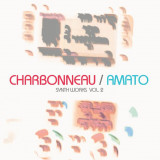
Montreal duo Mathieu Charbonneau (Avec Pas d'Casque, Organ Mood) and Pietro
Amato (Bell Orchestre, The Luyas) put melody and mood front and centre on this
second volume of luxuriant, immersive synth music. Like a humanist balm amidst
the ongoing wave of conceptronica, the pieces that comprise Synth Works Vol 2
were captured organically, live off the floor, on the eve of the pandemic. Recalling
elements of 70s kosmische and environmental musics, the collection finds the
longtime collaborators roving uncharted territory, ever mindful of their fellow
passengers.
Possessing one of the most distinctive and recognizable voices on the planet, former Men at Work frontman Colin Hay faces down struggle, loss and the existential questions about mortality on 'Now And Evermore', his first collection of new material since the 2016 release of Fierce Mercy
Written and recorded in Hay's adopted hometown of Los Angeles and at Compass Sound Studio in Nashville, the collection is a defiantly joyful celebration of life and love, one that insists on finding silver linings and reasons to smile through the challenges of recent times. That's not to say the record deludes itself about the realities of our modern world, but rather that it consistently chooses to respond to pain with beauty and doubt with wonder. The music on the new album
brims with fanciful melodies and lush orchestration. Hay's performances are likewise animated and full of life, drawing on vintage pop charm, pub rock muscle, and folk sincerity to forge a sound that's at once playful and profound, clever and compassionate, whimsical and earnest.
The Brkn Record is a new project led and produced by Jake Ferguson, the co-founder and bass player for the UK's foundational deep jazz outfit the Heliocentrics. With fellow Heliocentrics co-founder and legendary drummer Malcolm Catto, Ferguson has been a regular collaborator with globally recognised artists including Archie Shepp, Mulatu Astatke, Melvin Van Peebles, Orlando Julius and many others. The Architecture of Oppression Part 1 represents Ferguson's debut as a bandleader and orchestrator, and manifests as a committed and soulful response to ongoing and systemic anti-black racism, social oppression and state violence both at home in London and across the globe. Combining poetry, testimony and song with rich and cinematic backdrops, Ferguson has produced a sui generis sound that conjures flavours of Arthur Verocai, Ennio Morricone, classic library productions, Madlib-style deep-jazz beat science, and psychedelic soul. With bandmate Malcolm Catto on drums, Ferguson draws on their long years of collaborative experience in the Heliocentrics to build an album of striking texture and depth.
The Brkn Record is a new project led and produced by Jake Ferguson, the co-founder and bass player for the UK's foundational deep jazz outfit the Heliocentrics. With fellow Heliocentrics co-founder and legendary drummer Malcolm Catto, Ferguson has been a regular collaborator with globally recognised artists including Archie Shepp, Mulatu Astatke, Melvin Van Peebles, Orlando Julius and many others. The Architecture of Oppression Part 1 represents Ferguson's debut as a bandleader and orchestrator, and manifests as a committed and soulful response to ongoing and systemic anti-black racism, social oppression and state violence both at home in London and across the globe. Combining poetry, testimony and song with rich and cinematic backdrops, Ferguson has produced a sui generis sound that conjures flavours of Arthur Verocai, Ennio Morricone, classic library productions, Madlib-style deep-jazz beat science, and psychedelic soul. With bandmate Malcolm Catto on drums, Ferguson draws on their long years of collaborative experience in the Heliocentrics to build an album of striking texture and depth.