Genre: Electronic, World (Arabic). 180gram vinyl includes 12'x24' art print poster + 320kbps DL card. RIYL: Matar Mohammad, Pauline Oliveros, Nadah El Shazly, Lucrecia Dalt, Chino Amobi, Sote, Arca, Fatima Al Qadiri, Tacita Dean, Stan Brakhage. Jerusalem In My Heart (JIMH) returns with Daqa'iq Tudaiq, the third full-length album from the Montréal-Beirut contemporary Arabic audio-visual duo, following the acclaimed 2015 release If He Dies, If If I f If If If (ye ar-end li sts at The Wire (#39), The Quietus (#24) and A C loser Listen (Top 10), among other accolades).
Featuring voice, electronics, buzuk and other instrumentation from composer-producer Radwan Ghazi Moumneh (Matana Roberts, Suuns, Big Brave) and abetted by the 16mm analog film work of Charles-André Coderre in live performance, JIMH continues to expand the horizons of its profound conceptual and aesthetic engagement with Arabic/Middle-Eastern traditions. Daqa'i q Tudaiq translates as 'minutes that bother/oppress/harass'—which presumably needs no further explanation—and features two distinct album sides of music. Side One realizes a long-held dream of Moumneh's to record a modern orchestral version of the popular Egyptian classic 'Ya Garat Al Wadi' by the legendary composer Mohammad Abdel Wahab. JIMH assembled a 15-piece orchestra in Beirut, enlisting the celebrated Montréal-Cairo composer Sam Shalabi (Land Of Kush) as arranger and musical director for the session. Anchored by the stately hypnotic pace of mallet and percussion instruments (riq, santur, derbakeh, kanun), the piece unfolds with lush, languid, reverb-drenched manoeuvrings through virtuosic Maqam shifts (Oriental scales). Moumneh's melismatic lead vocals and electronic production sensibility pay homage to the genre's documented historical recording traditions, while pushing things subtly and respectfully into new territories of sonic distortion and noised, artefact-laden transmission.
The song's original title (with lyrics penned in 1928 by the poet Ahmad Shawqi) translates as 'Oh Neighbour Of The Valley', but JIMH takes a different line from the original lyric as the new title for its orchestral-electronic re-interpretation. 'Wa Ta'atalat Loughat Al Kalam' (' The Language Of Speech Has Broke Down') is an expression of wordless love and transcendent communication between two lovers' eyes in Shawqi's poem; JIMH re-titles the song with this line, exploding the sentiment with more complexity, tragedy and socio-political meaning - also prefiguring the formal aesthetic ruptures JIMH bring to the piece itself. Love in a time of politics, politics in a world conspiring against love, and the specificity of Arab diasporic experience in our brutish 21st century. Side Two comprises four tracks of non-ensemble 'solo' material by Moumneh which push rupture and decomposition/recomposition of tradition further into avant-garde territory - voice, buzuk and electronics take the lead on a suite of emotive and evocative songs, including the percussive loopdriven instrumental 'Bein Ithnein' ('Between Two' ) and the stunningly unsettling processed vocal track 'Thahab, Mish Roujou', Thahab' ('(The Act Of) Departing, Not Returning, Departing'). Daqa'iq Tudaiq is a masterful, mesmerizing artistic statement and confirms Jerusalem In My Heart as one of the most engaged and forward-looking avant-Arabic projects at work in contemporary music today. Thanks for listening.
quête:orchestral
- A1: Ikarie Xb-1
- A2: Surveillance On Standby-Alpha Centauri
- A3: A Small Stone In Space
- A4: Sunflower For A New Star
- A5: The Backwoods Of The Universe
- A6: Silver Ball (Vera In Cameo)
- A7: E.v.a. Will Teach You
- B1: The Tigers Breath
- B2: The Dark Star
- B3: Do Not Eat The Fruit
- B4: The Awakening
- B5: Voyage To The End (Of The Universe)
- B6: The White Planet
Liška, the Czechoslovakian word for fox. Beguiling in its beauty, cunning in it's charm. Said to be one of the most intelligent animals on the planet its global family consists of thirty-seven varieties; all of them recognised, respected and feared for their persuasive, creative, resourceful and elusive nature. The Liška we will talk about today is no exception to these hereditary rules and within the grooves of this record Finders Keepers present an 'elusive' musical artefact that best exemplifies every facet of this composer's animal namesake.
Had he not been born in the small Bohemian town of Smecno in the early 1920s the story of The Fantastic Mr. Liška might have well taken a different course. Alternatively, fettered by the hampers of communism, this lifelong resident of Czechoslovakia would never quite find his seat at the same table as the likes of John Barry, Ennio Morricone, Michael Nyman and Stanley Myers, nor drop enough phonographic breadcrumbs to track his legacy. But having waited patiently behind the borders of the wider landscapes of international cinema, Liška's musical brood, spanning multiple stylistic decades and generations, has now started to walk proudly amongst his would-be, latter-day compeers. In an era where music lovers have almost become immune to adjectives like 'lost', 'rare' and 'unreleased' in a climate where previously lesser-known off-kilter master composers such as Vannier, Kirchin and Axelrod have become widely revered, it is perhaps the perfect time for discerning listeners to advance above the feeding trough and seek out this truly pioneering and revolutionary Eastern European composer. Rivalled only by the likes of Krzysztof Komeda and Andrzej Korzynski in Poland, alongside Alexandr Gradsky in Russia, and often splitting workloads with fellow Czech composers like Luboš Fišer, Zdenek Liska's filmography of over almost 300 fully formed movie scores virtually eclipses the achievements of these socialist era luminaries. Respected unanimously in both Czech and Slovakian by studio bosses, producers, directors and actors alike Liška is widely known for his ability to take the existing energy in a reel of film and literally change the polarity to suit his own interpretation while maintaining the full support from his 'client' who would in-turn end up working under this composer's creative direction. Not only was Liška a genius of emotive orchestral and coral composition, his grasp on small group arrangements and intimate, minimal scores set him above the competition. By utilising primitive sample techniques by 'looping' a films existing ambient noise, or rearranging found sounds and dialog into subtle melodic arrangements, Liška would independently develop his own techniques which had simultaneously become known in Paris as musique concre`te. It is a direct extension of these experiments that saw Liška also draw parallels with Walter Branchi (Ennio Morricone's main electronic sidekick) in Italy as well as Daphne Oram in the UK, making Liška a relatively untravelled pioneer of early electronic composition and sound design due to his unlikely global environment. Imprisoned, preserved or reserved; time has been kind to Liška's music.
Jonny Rock is somewhat of a sorcerer, an omnipresent eye that gathers secret ingredients from far and wide—old school House oddities, hypnotic melodies of the Orient, the furthest reaches of Disco, the easy pace of Turkish psychedelic funk—fusing it all into his own shrouded code, a string of immaterial messages, both subliminal and lucid, that highlight his eccentric sense of storytelling and nuance. He imbues a sense of familiarity in his music, implying history that might not be studied but still feels learned, a quality inherent to productions born from a vast catalog of influence (and the inseparable sample material). Jonny conjures euphoric acid flashbacks, herds of crowds through Istanbul alleys, the misty morning residue from raves of yore, orchestral winds blown across the Aegean riviera, and he manages to concentrate their essence into singular details such as a snare drum. Both sides of his eternally-awaited ESP debut lean toward his dark arts—'Tye Die Techno' drives a relentless hard-edged drum kit that could throw an otherwise self-respecting Goth into a heated breakdance battle, while the title track and theme, 'Ode To A Happening On Earth,' plays with the imagery of ritual, fantasy and role-playing—but throughout this malevolent stew, there is a sustained hint of the artist's playful nature. No matter how murky the trip becomes, Jonny is always there, a light at the end of the tunnel, with a big hug to reassure that everyone will be OK. He is one clever bastard—if you know, you know.
Nirosta Steel is a sometime alias of Steven Hall. Musician and survivor of the `80s NYC`s art melting pot. Everybody Sing dances like Steven`s long-term collaborator and lost-way-too-early friend, Arthur Russell. As he forced irresistible, idiosyncratic, Disco-Not-Disco, out of the Ingram Brothers. Riding low rumbling bass. Phased guitar, country picking, flickering in and out of the mix. Strings, choir boy falsetto, and blue yodel, cutting through its delay-drenched, dance floor delirium.
L.A.`s Cole Medina delivers two reworks. His Heavy Disco take is intro`d by cowbell and synth swirls. Cymbals crashing like sampled surf. With Stratocaster microtones, and echoes of the original, washing over an electronically, re-imagined B-line and trip-py sequences.
Cole`s Knuckles Tribute sets poignant piano and gated orchestral euphoria against a classic Def Mix groove. Revealing the song in epiphany. Clarifying the lyric`s call for unity. Where singing your troubles away is a analogy for strength in adversity. Everybody hurts sometimes. In that, we are united. Eventually heading towards its own disorientating climax. Comin` at ya from all sides.
Mind Fair`s version goes in for some tribal thumping. Stripping the track down, before building it back up. Its big kick blowing bins like a hyped heart pumping within a giant's chest. Chicken scratches dropping in between its colossal 'lub dub', and Coati Mundi-meets-Jah Wobble-like Punk Funk..
Juxta Position returns to his own Failsafe imprint with 4 post-modern techno pieces, exploring minimalist themes performed on more traditional sound sources, relying on pure sequencing rather than patch programming to convey moods and atmospheres.
Opener "Five Four Piano" recalls the work of modern classical composers such as Steve Reich, but reengineers the aesthetic to fit on techno dancefloors.
Likewise, "Orchestral Manouvers" continues this theme, whilst introducing a Millsian twist, and "Icicles" takes the idea even further into more looped techno territory.
E.P. Closer "Crisp Cold" concludes the record, with a cinematic and serious tone and almost gothic sensibility.
Four tracks which are a break from the usual, expected timbres of contemporary techno.
Last February, We Had The Delightful Surprise To See Dominique Dalcan On The Victoires De La Musique Stage (main French Musical Award). The Elegant Singer Received The Award For The Best Electronic Album For His Project Temperance, An Album In English Full Of Reliefs, Dense And Splendid. We Are Delighted To See Today That Dominique Publishes A Second Volume Of Temperance. The First Albums Of Dominique Dalcan Came Out In The Early 90's, Especially On The Belgian Label Crammed Discs. He Is Considered One Of The Ambassadors Of The New French Pop, Combining Electronic And Orchestral Arrangements. At The Same Time, Under The Name Of Snooze, He Immerses Himself In Electronic Music And Creates Soundtracks For Cinema And Contemporary Art. In 2013, He Switched To The English Language And Adopted A New Artistic Identity: Temperance.
The Project Moves Away Freely From The Format Of The Song To Dive Into A Vast Electronic Palette. In Temperance 2, We Hear Contemporary R & B Ballads Full Of Artificial Strings, Collisions Of Textures, Even Balinese Sounds But Nothing That Never Steals The Show With Dominique's Voice And Lyrics. The Temperance Repertoire Addresses The Confusion Of The Human World And A Wild Nature. There Is Also A Question Of Fusional Love With Pop And Soul Songs. This Gives An Album That Rushes Against Each Other Joy, Fury, Despair, Desire Or Pleasure, Without Them Ever Contradicting Each Other, And That Moderates With Art And Temperance, In Short.
- A1: A Winter In Los Angeles Feat. Private Agenda
- A2: Trust The Direction Of The Wind Feat. Peaking Lights
- A3: Feel Live
- B1: Villaggio Paradiso (On Acid)
- B2: I Promise
- B3: Geometric Crystal Spaces
- C1: Endless Change
- C2: Raving At The Acropolis
- C3: Fare Spazio
- D1: Properties Of Distance
- D2: Floating Room Feat. Fort Romeau
- D3: Two Weeks Later Feat. Kim Anh
The body never lies. Every dance is a graph of the heart. Nothing is more revealing than movement.
These are the words of Martha Graham, one of the greatest American dancers and choreographers of the 20th century. Massimiliano Pagliara might as well have them tattooed on his chest, close to his heart, being an accomplished dancer, too. He has studied contemporary dance in Milan and Berlin, and went on to dedicate his life to transforming experience into movement, be it musical, physical, or spiritual. Massimilano's message is clear: Don't stand still. Don't keep looking back. Know where you are coming from, but don't remain petrified by the past. Take a chance at Endless Change, instead. Move on! Just like Massimilano did.
Stemming from Lecce province, an area at the south-eastern-most tip of Italy, Massimilano has been based in Berlin for several years where he's been one of the main forces behind recombining the city's hardboiled techno scene with an often overlooked sensibility for the soft and the tender. Call it underground disco passion. Massimilano's last and sophomore album, With One Another, released in 2014, was about celebrating the joy of human encounters and in parts seemed like a big get-together with like-minded artists and friends (among them nd_baumecker, Lee Douglas, and Credit 00). The record quickly hit the number one spot in Groove magazine's album chart - and its creator hit the road.
Besides his busy DJ schedule and far from the usual club circuit routines, Massimilano dedicated himself to intense travelling and exploring the world anew. 'I felt like I have lived more than ever,' he states. 'Getting to discover all these beautiful places around the world and meeting so many lovely interesting people, has inspired me in many different ways. I feel enriched.'
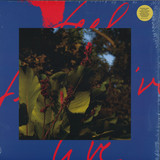
The result of these experiences is Feel Live, Massimiliano's third full-length endeavour. It was recorded in several intimate, sometimes improvised studio settings between Los Angeles, Portland, and Massimiliano's homebase in Berlin as well as at airports and on intercontinental flights high up in the sky. Featuring vocals by Private Agenda, Peaking Lights, Kim Anh and instrumental contributions by Fort Romeau, Tim K, and Jules Etienne, Feel Live is Massimilano's most playful and imaginative work to date. It's as emotional as sensual, as vibrant as the first ray of light after a thunderstorm has cleared the air.
Is it awkward or odd to call this record jazzy Presumptuous to pinpoint its spacial, almost orchestral qualities Unfair on the ruling Cosmic powers to highlight its aspirations of founding a new land of Balearic Harmonia and getting down at a huge fertility rite with electro enthusiasts and house lovers Not one bit. Feel Live is pure grandeur and elegance. It feels like an eternal movement.
Martha Graham has dedicated her whole life to dancing. 'It's permitting life to use you in a very intense way,' she said. 'Sometimes it is not pleasant. Sometimes it is fearful. But nevertheless it is inevitable.' Massimilano couldn't agree more. His advice when facing the inevitable: 'Live what you are feeling, feel what you are experiencing, good or bad, it is an experience.'
Itiberê Zwarg is an award-winning Brazilian bassist and the longest-serving member of Hermeto Pascoal's ground-breaking ensemble 'O Grupo'. Since their first meeting in 1977, the two have been closely collaborating to create a unique musical language: a genre-defying polyharmonic, polyrhythmic music, now widely studied by musicians and musicologists alike, known as 'Universal Music'.
Back in 2001, Itiberê led a workshop at Villa Lobos School of Music, with twenty-nine of Rio de Janeiro's most exceptionally talented young musicians. Employing the principles of Universal Music alongside his long-held belief in the powers of listening and intuition, Itiberê composed and arranged in real time, transcribing the improvisations of the prodigious orchestra while allowing the players total freedom to experiment. The result was Pedra do Espia, an Amazonian orchestral masterpiece which is as difficult to categorise as it is fun to listen to.
Named after the beachside viewing point which translates as 'Spy's Rock', where Itiberê would sit as a child, daydreaming and gazing out over the Brazilian coast, the record harnesses the pure creativity of youth and nature, creating a magical sense of innocence amongst the striking compositions and astonishing musicianship.
- A1: Keith Mansfield - Tycoon
- A2: Keith Mansfield - Hot Property
- A3: Keith Mansfield - Whistle Stop Tour
- A4: Keith Mansfield - Power Complex
- A5: Keith Mansfield - Research Establishment
- A6: Keith Mansfield - Clean Air
- A7: Keith Mansfield - Fatal Error
- A8: Keith Mansfield - Sleeping Giant 1
- A9: Keith Mansfield - Sleeping Giant 2
- B1: Keith Mansfield - World In Action
- B2: Keith Mansfield - World In Action (Composite)
- B3: Keith Mansfield - Balance Of Power
- B4: Keith Mansfield - Motorail Express
- B5: Alan Hawkshaw - Road And Rail
- B6: David Snell (2) - International Flight
- B7: Keith Mansfield - Quality Fair
- B8: Keith Mansfield - Summer Location
LP,180, 2018 REISSUE - REMASTERED FROM ORIGINAL TAPES, CAREFULLY REPRODUCED ORIGINAL ART
The two sides of 1973's Big Business / Wind of Change are mainly the work of thegreat Keith Mansfeld but there's a killer cameo each from Alan Hawkshaw and David Snell to help deliver a thematic suite, diverse in mood, applicable to dramatic and environmental situations'. A Be With favourite and truly one for the heads.
The Big Business of side A is all the work of Keith Mansfeld. It's heavy on the suspense and features the vital Hot Property', an insistent groove so good that Madlib sampled it to lace the ace Long Awaited' by Lootpack with Dilated Peoples.
Sleeping Giant 1' is a more feshed out version of the equally-dazzling Fatal Error', evoking the orchestral magic of David Axelrod. Indeed, it conjures images of Diamond D falling over himself in the early-to-mid 90s to loop its intoxicatingly
eerie soundscape. Complete with guitar flls that recall Paris, Texas-era Ry Cooder, you need this record for this piece alone.
The horn-and-fute-led "Tycoon" is a head-nodder and "Power Complex" has some fantastic percussion. Other highlights include the breezy glide of Whistle Stop Tour' and its sister groove Clean Air.'
Over on Side B is the more expansive Wind Of Change, which includes the David Snell and the Alan Hawkshaw contributions. But these ain't no fller. Snell's shufing International Flight' sounds like a smooth Dorothy Ashby track tossed from the heavens. Hawkshaw's Road And Rail' is about as luxurious and strung-
out as the great man gets and it might just be the highlight of this whole set.
Not to be outdone, if Mansfeld's Balance Of Power' doesn't make you feel like king of the world then you must be playing it wrong. Oh, and did we mention World In Action'!
As with all ten re-issues, the audio for Big Business / Wind of Change comes from the original analogue tapes and has been remastered for vinyl by Be With regularSimon Francis. We've taken the same care with the sleeves, handing the reproduction duties over to Richard Robinson, the current custodian of KPM's
brand identity.
Blackfilm is an anonymous Hungarian artist who introduced himself with his self-titled debut in 2008, sold out in a few months and later reissued on both CD and vinyl format via Denovali in 2010. His debut has garnered widespread attention - "Evolving from downtempo electronic music to orchestral paroxysms and, insanely, passing from down-pitched nothingness to frozen urban landscapes, it becomes inevitable to resist." / "Dark and brooding, Blackfilm envelopes you like a thick fog creeping off a cooling swampland." (Headphone Commute) - and is still a classic.
Since then, he has relocated to London and released the collaboration master-piece - Along the Corridors' with Italy's heavy dub producer Eraldo Bernocchi in 2010. After eight years of silence Denovali now proudly presents his second solo album - Zero One Seven', in line with a re-issue of - Along the Corridors' on vinyl for the first time.
On - Zero One Seven', Blackfilm merges tracks spanning across drum and bass, dub and electronic. The sounds on the album are built from the ideas on the original Blackfilm - S/T' and - Along the Corridors' and progress to a sound built on new ground mixing modern production techniques and influences while at times referencing the Blackfilm sound we know from his previous releases.
The album maintains a consistent focus on atmospherics, beats and heavy bass ranging from darker dub and drum and bass influences to vocal tracks and complex ambient soundscapes. Production wise, the familiar Blackfilm style incorporating the use of synthetic sounds mixed with samples enables the album to create an intriguing, shifting atmosphere as the album progresses. A dystopian journey through haunting vocals, hypnotic drum patterns and complex sound design.
The spiritual and uplifting music of Clifford White is highlighted with two of his most sought after songs, taken from his 1989 album The Lifespring, and presented here in a special extended 12" for the first time. Starting in music production at just 15, White could be described as a protegee, however his take is that they were part of a music journey that continues today. With a centre found in electronic music and spirituality, his progress, from simple home use 4-track stereo to working in professional 16-tracks studios was swift, but matched by a deeper appreciation, greater confidence and wider palette of music styles. Utilising his love of early samplers, his first use of the Akai S612 to accompany and expand his keyboard recordings saw continued development from his debut album at just 17 with Ascension (1985), to the follow up Spring Fantasy (1987) and on to The Lifespring (1989). A small review in the local paper literally led to a knock at the door and offer of a deal from the Start (State Of The Art ) label to record his next album. With a subsequent advance, professional studio equipment was hired and out of these sessions his sound expanded to include ambient, orchestral, synth pop and even ballads. From this both Lifestream and Rain Trek emerged. With a love of Jean Michel Jarre's Oxygene in mind, Lifestream's smooth beginning soon gives way to the pulse of an arpeggio driven groove. Aiming for "relaxation with an edge", the track has become a secret play for the more Balearic minded DJ in the decades since and now sees the LP trade for dizzying sums. However, the original is achingly brief, gracefully fading as part of the album's journey. Here though, with DJs and collectors in mind, White returns to the song to craft a specially extended version that completes the song and will be appreciated at sunsets across the globe. Seeking to take the music and listener to another place, Rain Trek took White's interest in Sci-Fi and the mystic powers of water to a rightful conclusion. The healing nature of his music is apparent, the mystery, yearning and travelling, all emotions evident, but with a kick that will grace the more enlightened dance.
- A1: Orlando
- A2: Saint
- A3: Take Your Time
- A4: Hope Feat. Puff Daddy & Teishi
- B1: Jewelry
- B2: Family Feat. Janet Mock
- B3: Charcoal Baby
- B4: Vulture Baby
- C1: Chewing Gum Feat. Feat. A$Ap Rocky & Project Pat
- C2: Holy Will Feat. Ian Isiah
- C3: Dagenham Dream
- C4: Nappy Wonder
- D1: Runnin' Feat. Georgia Anne Muldrow
- D2: Out Of Your League Feat. Steve Lacy
- D3: Minetta Creek
- D4: Smoke
Producer, multi-instrumentalist, composer, songwriter and vocalist Devonté Hynes returns with his fourth album as Blood Orange, Negro Swan, released on Domino on August 24, 2018.
Raised in England, Hynes started out as a teenage punk in the UK band Test Icicles before releasing two orchestral acoustic pop records as Lightspeed Champion. In 2011, he released Coastal Grooves, the first of three solo albums under the moniker Blood Orange. His last album, Freetown Sound, was released to critical acclaim in 2016, and saw Hynes defined as one of the foremost musical voices of his time, receiving comparisons to the likes of Kendrick Lamar and D'Angelo for his own searing and soothing personal document of life as a black man in America. He has collaborated with Solange Knowles, Skepta, fka twigs, Carly Rae Jepsen, A$AP Rocky, Charlotte Gainsbourg, Blondie, and many other artists, and was recently one of four artists invited to the Kennedy Center to perform alongside Philip Glass. In addition to his production work, he scored the film Palo Alto, directed by Gia Coppola.
Negro Swan was written and produced by Hynes. Says Hynes:
'My newest album is an exploration into my own and many types of black depression, an honest look at the corners of black existence, and the ongoing anxieties of queer/people of color. A reach back into childhood and modern traumas, and the things we do to get through it all. The underlying thread through each piece on the album is the idea of HOPE, and the lights we can try to turn on within ourselves with a hopefully positive outcome of helping others out of their darkness.'
Tommy Rawson releases are sporadic but always high quality. As a former member of the Souled duo who ran the excellent Fresh Minute label - he's been around the more tropical end of UK house and broken beat for many years and this, his first full release for Bergerac ushers forth a new level in his sound. This whole record is a masterclass in post bruk, forward thinking, shining, bright UK dance music. Unmatched in emotion and vibes. Deep Blue is quite simply the sound of the summer. Sun drenched, euphoric and soaring. Broken but not broken, 4/4 but not quite housey. Jazzy, soulful....yeah.... It was the highlight of Red Rack'ems Olive Grove closing set at Love International last year when it provided the most halcyon of moments. Live trumpet from Vicky Flint and a whole bag of vibes from Tommy Rawson. This is a classic. Trust. Past Tense is a super tropical African tinged house stomper which shows Tommys love of sunshine vibes once more with acres of space, insistent chants, dubby pianos and a tinge of Jungle roller bass.
The final track Into The Future takes us into almost Blade Runner-esque orchestral emotion but with a kind of Balearic feel tucked in there too. Beautiful, lilting, emotional memories. You can feel so much love in this track.Such a special record. Buy it. Love it. Treasure it.
Robotron is the machine formerly known as Xinner. This is its first offering for the ESP Institute. Side A's Dream Resonator is an idiosyncratic network — dexterous machine drum/percussion programming, an ebb and flow of floating arpeggios, syncopated counter-melodies and a hail of stabbing stringscontinually diffusing into ethereal vapor — all stacked into an (aptly-named) orchestral anthem. Side B's Ice takes a similar approach with arrangement, each instrument carving out its place in the track's mechanics for a glorious convergence of patterns, but, where side A proves optimistic, here we sense a more menacing undercurrent, an austerity powerfully articulated through towering kicks and claps so compressed they fill up every dark corner of negative space. Indeed, Robotron has an innate command for building and calibrating robust systems, but beneath this calculated veil we find the remnant human behavior of Xinner. These two songs will whisper loudly but scream quietly.
* Sheffield-based Subaltern resident Taiko returns to the imprint with a stunning selection of four distinctively grimy pieces of sub-bass science, proving once again his original take on the 140 bass realm.
A. Trenches
Introducing his unique style once again with a fresh twist, Taiko delivers relentless earth-shattering bass waves in 'Trenches', which graces the A side of the release. Bells, strings and dark synths set the mood for a precisely executed wall of bass, complimented by subtle vocal work.
B1. Raid
Dramatic orchestral strings and horns set the stage for the grim reaper that is 'Raid' - leading into a dark and roaring synth that accentuates the laid back bass-line. Sure to shake every system it is unleashed on, the track keeps evolving and luring the listener ever deeper into a maze of darkness. You can run but you can't hide...
B2. Mana Pool
'Mana Pool' adds a more psychedelic and subtle edge to the release. Synth loaded parts play in exchange with carefully laid out harmonic synth lines complementing the tasteful bass-lines, while remaining the raw edge of the release.
The full-length debut by Julie Carpenter's Joshua Tree, California ambient orchestral project Less Bells emerged from the drama and desolation of its high desert origins.
She cites certain compositions as being 'specifically inspired by August monsoons rolling in over the mountains, others by clear, starry nights.' Utilizing an array of electronic and acoustic instruments, including cello, Optigan, violin, voice, and modular synth, Solifuge conflates not only the solitude and refuge of its title but also intimacy and grandeur, fragility and force, 'building from austerity to wild overgrowth.'
She speaks of a creative process involving cut-ups and rearranging, mapping a melody for strings only to transpose it to synth, or refashioning a rigid classical piece as stream of consciousness soundscape. Carpenter's versatility and embrace of flux fills these songs with a living, breathing quality, restrained but responsive, adapting to shifting conditions and emotions beneath the surface.
"INTERSCOPE RELEASES ORIGINAL SOUNDTRACK TO NETFLIX SERIES 13 REASONS WHY (SEASON 2) OUT MAY 18THSOUNDTRACK FEATURES NEW MUSIC FROM SELENA GOMEZ BACK TO YOU' AVAILABLE TODAYSOUNDTRACK ALSO INCLUDES NEW SONGS FROM ONEREPUBLIC FEATURING LOGIC, BILLIE EILISH FEATURING KHALID, YUNGBLUD FEATURING CHARLOTTE LAWRENCE, AND LORD HURON FEATURING PHOEBE BRIDGERS. In addition to new music from Gomez, the 13 Reasons Why soundtrack includes new songs from OneRepublic featuring Logic ( Start Again'), Billie Eilish featuring Khalid ( lovely'), YUNGBLUD featuring Charlotte Lawrence ( Falling Skies'), Lord Huron featuring Phoebe Bridgers (a new version of The NightWe Met'), and Colouring ( Time'). Like its predecessor, the soundtrack also features a mix of '80s New Wave favorites, including classics from New Order, Echo & The Bunnymen, Orchestral Manoeuvres In The Dark, Tears For Fears, and Siouxsie and the Banshees."
- A1: Emad Youssef - Al Bareedo Ana (The One I Love)
- A2: Abdel El Aziz Al Mubarak - Ma Kunta Aarif Yarait (I Wish I Had Known)
- B1: Kamal Tarbas - Min Ozzalna Seebak Seeb (Forget Those That Divide Us)
- B2: Madjzoub Ounsa - Arraid Arraid Ya Ahal (Love, Love Family)
- B3: Khojali Osman - Malo Law Safeetna Inta (What If You Resolve What's Between Us)
- C1: Zaidan Ibrahim - Ma Hammak Azabna (You Don't Care About My Suffering) (Live)
- C2: Saied Khalifa - Igd Allooli (The Pearl Necklace)
- C3: Taj Makki - Ma Aarfeen Nagool Shino! (We Don't Know What To Say!)
- D1: Hanan Bulu Bulu - Alamy Wa Shagiya (My Pain And Suffering) (Live)
- D2: Abdelmoniem Ekhaldi - Droob A Shoag (Paths To Love)
- D3: Samira Dunia - Galbi La Tahwa Tani (My Heart, Don't Fall In Love Again)
- E1: Mohammed Wardi - Al Sourah (The Photo)
- E2: Abdullah Abdelkader - Al Zaman Zamanak (It's Your Time)
- F1: Mustafa Modawi & Ibrahim El Hassan - Al Wilaid Al Daif (The Youth Who Came As A Guest)
- F2: Ibrahim El Kashif - Elhabeeb Wain (Where Is My Sweetheart)
- F3: Mohammed Wardi - Al Mursal (The Messenger)
In Sudan, the political and cultural are inseparable. In 1989, a coup brought a hardline religious government to power. Music was violently condemned. Many musicians and artists were persecuted, tortured, forced to flee into exile — and even murdered, ending one of the most beloved music eras in all of Africa and largely denying Sudan's gifted instrumentalists, singers, and poets, from strutting their creative heritage on the global stage.
What came before in a special era that protected and promoted the arts was one of the richest music scenes anywhere in the world. Although Sudanese styles are endlessly diverse, this compilation celebrates the golden sound of the capital, Khartoum. Each chapter of the cosmopolitan city's tumultuous musical story is covered through 16 tracks: from the hypnotic violin and accordion-driven orchestral music of the 1970s that captured the ears and hearts of Africa and the Arabic-speaking world, to the synthesizer and drum machine music of the 1980s, and the music produced in exile in the 1990s. The deep kicks of tum tum and Nubian rhythms keep the sound infectious.
Sudan of old had music everywhere: roving sound systems and ubiquitous bands and orchestras kept Khartoum's sharply dressed youth on their feet. Live music was integral to cultural life, producing a catalog of concert recordings. In small arenas and large outdoor venues, musical royalty of the day built Khartoum's reputation as ground zero for innovation and technique that inspired a continent.
Musicians in Ethiopia and Somalia frequently point to Sudan's biggest golden era stars as idols. Mention Mohammed Wardi — a legendary Sudanese singer and activist akin to Fela Kuti in stature and impact in his music and politics — and they often look to the heavens. A popular story is of one man from Mali who walked for three months across the Sahel to Sudan because the father of the woman he wanted to marry would only allow it if he got him a signed cassette from Wardi himself. Saied Khalifa is said to be the one of the few singers to make Ethiopian emperor Haile Selassie smile.
Such is the stature of Sudanese singers and the reputation of Sudanese music, particularly in the "Sudanic Belt," a cultural zone that stretches from Djibouti all the way west to Mauritania, covering much of the Sahara and the Sahel, lands where Sudanese artists are household names and Sudanese poems are regularly used as lyrics until today to produce the latest hits. Sudanese cassettes often sold more in Cameroon and Nigeria than at home.
But years of anti-music sentiment have made recordings in Sudan difficult to source. Ostinato's team traveled to Ethiopia, Somalia, Djibouti, and Egypt in search of the timeless cultural artifacts that hold the story of one of Africa's most mesmerizing cultures. That these cassette tape and vinyl recordings were mainly found in Sudan's neighbors is a testament to Sudanese music's widespread appeal.
With our Sudanese partner and co-compiler Tamador Sheikh Eldin Gibreel, a once famous poet and actress in '70s Khartoum, Ostinato's fifth album, following our Grammy-nominated "Sweet As Broken Dates," revives the enchanting harmonies, haunting melodies, and relentless rhythms of Sudan's brightest years, fully restored, remastered and packaged luxuriously in a triple LP gatefold and double CD bookcase to match the regal repute of Sudanese music.
A 20,000-word liner note booklet gives voice to the singers silenced by an oppressive regime.
Take a sail down the Blue and White Nile as they pass through Khartoum, carrying with them an ancient history and a never-ending stream of poems and songs. It takes two Niles to sing a melody.
The final chapter in the story of Gurrumul, the highest selling Indigenous musician of all time and an Australian icon, is now written with the release of 'Djarimirri (Child of the Rainbow)'. Over four years in the making and completed just weeks before his passing in 2017, the album is an astounding achievement of music. It presents traditional songs and harmonised chants from Gurrumul's traditional Yolngu life with dynamic and hypnotic orchestral arrangements in a blend of the highest forms of both his culture and our western orchestral culture.
- Direct from Spain and totally lost in time the orchestra Enterprise was a great blend of the ''Disco Orchestral'' and ''Space Disco'' styles.
- Amazing project, wisely conducted by Josep Llobell Oliver, a Spanish keyboard player, composer, engineer and producer.
- Enterprise was the perfect soundtrack to your space trip, that dancing hidden treasure you always wanted to discover.
- Remastered reissue includes pictures and linernotes by Dr. Vinilo (Madmua Records).
#funk #soul #spacedisco #cosmicdisco #josepllobell #oliversplanet #spanishgrooves
In 1975 he was commissioned by the label's artistic director to produce a studio album with a hefty budget. It was his first company and he named it after the intergalactic ship Enterprise. He assigned the bands logo (inspired by the musical group Chicago) to a friend-musician and selected the tracks: Barry White, Chick Corea, the everlasting Beatles, sonidos calientes and other well-known hits, all played by Llobell along with the labels other musicians, all on payroll thanks to Belter. Javier Cubedo, Enrique Tudela, Gabriel Martinez, Kitflus, Ricard Roda, etc. all gave their best on a magnificent first album that would be followed by 3 more, one per year, all including original compositions by the group along with international hits that are currently part of our countries wonderful music library, even though they still haven't received all the recognition they deserve, Garcia Segura, Santisteban, Calderón, Pepe Nieto, José Solà, Manolo Gas, Adolfo Waitzman and Algueró, Ramón Farrán, Miguel Ramos, Albert Peter, Jaume Cristau, Josep Llobell and many others, published albums in the 70's.
Josep has been inexhaustible, for many years he has influenced the career of soloists and bands, modernizing their sound, Manolo Escobar, Peret, Junco, arrangements and productions for Marfil, Bachelli, Ana Reverte, even great artists from 'La Movida' and rock music like Burning or El Último de la Fila.