During a month living with the Wampís in the Amazon Rainforest, Aboutface and the Wampís community collaboratively captured field recordings, music instrumentation and traditional Wampis Nampets – ancient songs sung from the perspective of animals living in their rainforest environment.
These recordings then informed 4 improvised performances to articulate the story of the 4 Nampet songs from within each animal's habitat, to depict nature and culture as inseparable, and to propose that humanity is not exclusive to humans but a multinaturalist characteristic available to all living organisms.
This is the first project of its kind in Wampís history and contains sound recordings of biodiversity that no longer exist due to deforestation.
Indigenous-managed Amazonian rainforests sequester around 340 million tonnes of CO₂ each year—equivalent to the UK’s annual fossil fuel emissions. In stark contrast, non-Indigenous-controlled forests have become sources of carbon emissions, therefore accelerating our global climate crises. Among the vital custodians of these precious ecosystems are the Wampís people, who protect 1.3 m ha of precious rainforest territory currently being decimated by mining for gold. This devastating practice is currently decimating Wampís territory, destroying their river habitats, leaving toxic methylmercury pollution that strips all biodiversity, contaminates the food chain, and causes widespread harm.
100% of all sales revenues from this release will directly go to the Wampís to protect their rainforest territory, to fund Wampís-led eco-initiatives against illegal mining, alongside ways to preserve Wampís cultural heritage– embedded in their songs, art and crafts, central to their conservation of their territory called The Iña Wampisti Nunke: A system of life that encompasses reciprocal relationships between humans, plants, animals, and spirits, central to the harmony of all its multi-dimensional ecology– which they term Tarimat Pujut.
For more project information, a short essay is provided alongside a nonstop-listening version of the album as part of the free Bandcamp download with every LP.
Credits
Nampet songs
Kutir, Wancha and Pinchichi by Elizabeth Huampankit Najamtai.
Manchi by Fernando Ijisam Tsakim.
Acoustic Percussion by Wampís band Guayabita
Fernando Ijisam Tsakim, Edilberto Ijisam Tello, Larry Tello Huampankit, Jose Luis Cahuata Pipa, Tedy Tello Cahuata, Heyner Tello Cahuata, Eli Artista Antonio, Never Tello Huampankit
Violin by Taro.
Peruvian bamboo quena, classical flute, acoustic guitar, electronics, composition and arrangement by Aboutface.
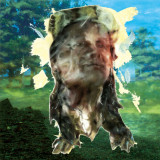
Original portrait painting of Fernando Ijisam Tsakim by Nyran Loomcal.
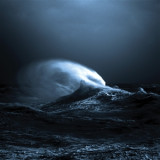
All other artworks, analogue photography and design by Aboutface.
Rainforest field recordings identified and collected by The Wampís of Guayabal and Aboutface.
Germany's iconic deep funk collective digs into a new soundscape: "A Higher Frequency" was recorded with a nine-piece live to tape at legendary MPS studio in the Black Forest, adding an airy, jazzy flavour to their trademark raw and breaks-heavy funk. Ten tracks full of spiritual grooves, soulful themes, loose funkiness and organic interplay, captured with state-of-the-art 1960s gear in a super-vibey room - but the title A Higher Frequency is not just about the pristine analogue sound quality of the recording, it is also a reference to a trancendant wavelength where minds meet and music connects.
Together with long-time friends and collaborators Daniel Kimaz on flute and Guillame Métenier, who worked his magic on the studio's historic Bösendörfer grand piano and Hammond organ, the group spent a week in the Black Forest, with full focus on the mission to capture the live energy and togetherness of the ensemble.
The result is an album bursting with positive energy and power, rooted in a universal funk groove with excursions into many colourful branches like outernational, cinematic, soulful jazz, psychedelic & disco.
The common thread is a propulsive, driving-forward feel: "Open The Gate" welcomes us with hard-hitting breakbeats and dramatic crime brass, followed by the cool groovin' piano-led soul jazz of "Get Loose", while "Spinning" takes us on a ride through cinematic horn choruses and folky-psych flute and guitars. "Back And Better" is Nichola Richards' time to shine, laying her sweet vocals over the sparse hiphop-infused soul beat to tell a comeback story. "Sweet Company" is a lighthearted uptempo tune inspired by TV and library themes of the 1960s. The swampy groove of "Sparks Of Joy" best reflects the fun of the band playing together and "Phantom Power" combines a trademark Mocambo breakin' theme with an unusual instrument, an electric phin from Thailand – a nod to the many so-called "world music jazz" recordings that the MPS studio gave birth to. On "Can't Stop This Fire", soul singer Carlton Jumel Smith from New York City takes over the mic as a special guest and brings the house down with a heavy funk delivery. "When We Roll" builds another highlight where bouncy drums play off disco-jazz horn themes and finally, the gospel-flavoured cine-soul epic "Homebound" drives it all home.
The vinyl record comes in a limited first edition in hand-made tip-on sleeve.
Reissue der gefeierten 2017er LP "All My Circles Run" von Sarah Davachi, die ursprünglich in limitierter Kleinstauflage auf dem Label Students Of Decay aus Cincinnati erschien. Die Suite aus fünf extended Teilen für Strings, Stimme, Orgel und Klavier - laut Pitchfork "irgendwo zwischen dem Bewussten und dem Unbewussten, kaum fassbar und dennoch unzweifelhaft anwesend" - wurden in Godspeed You! Black Emperors analogem Studio Hotel2Tango in Montreal aufgenommen. Dabei wurde Davachi von der Sopranistin Camille Hesketh, Jessica Holmes (am Cello) und Jessica Mosson (an der Violine) begleitet. Neuauflage auf schwarzem Vinyl in gefütterter Innenhülle.
Howdy punkè rocke fans, welcome to FORCED COMMUNAL EXISTENCE - the wonderful and frightening world of ALIEN NOSEJOB’s EP’s & singles. Anti Fade and Agitated Records are teaming together to bring you a paint stripping, mind altering, rare collection of EP and compilation tracks recorded in various Australian bedrooms and garages between 2017 and 2022. The sound of goofy obnoxiousness will soon be permeating your bedroom airwaves and perforating your eardrums. Kicking off this long player is an EP that was recorded by Billy from Anti Fade in his childhood bedroom in July 2017. The songs came to fruition while AUSMUTEANTS were on tour in Japan 2016.
There was a lot of ‘WALLABY BEAT’ / ‘MURDER PUNK’ being played in the background while seeing the sites of Mount Fuji and ‘Bar Fuck Yeah’. In between shows Jake was organising the release of DANNY GRAHAM and PLASTIC AND THE EP’S records on the label he co-ran XEROX MUSIC. Both artists played parts in the sound and ethos of the PANEL BEAT EP. The goal was to make the songs sound unapologetically Australian without pretending to be something they’re not. There’s no fake accents or songs about VB and mullets. Instead, there’s songs about every day struggles, like dealing with fickle fashion followers, having too many fucking records, playing PlayStation, resentment and manipulation.
500 copies were pressed and self released, with a photo slipped inside each copy at random. Next is THE DEATH OF THE VINYL BOOM which was self recorded in a shed in November 2017. This is the only Alien Nosejob release (besides this comp, smartarse) to feature a cover - Flyblown by Adelaidean arty weirdo band JACKSON ZUMDISH. The idea behind this EP was to incorporate the simplicity and scrappiness of the late 70’s DIY Australian sound, but give them the complicated structures of prog songs. Scum stats - 500 copies, self released. Several copies were smeared with Jake’s blood and had smashed pieces of vinyl glued to the front cover.
Now we have a cover of the DEAD KENNEDYS. The conspiracy theorist wet dream Government Flu. Recorded September 2020 during lockdown in one-man-band with a tape recorder fashion for a 20 minute unedited ‘live set’ video where all instruments were played one by one, sung and mixed in the space of a couple of hours. The HC45 7” was recorded at the same time as a disco 12” maxi, which I hear were originally meant to come out on the same day. Shit happens I guess? This EP came out in Feb 2020 and sounds somewhere between early GANG GREEN, DIE KREUZEN and the BEASTIE BOYS old bullshit. Self recorded on a 4 track with a broken pinch roller. Lyrically this thing is cynical and choc-a-bloc full of satire and hate. A year later a sequel was recorded the same way, on the same machine.
No fucking disco this time though. Cold Bare Facts is the most recent recording on this comp. Self recorded in Jake‘s bedroom 2022 It has the same mid paced tempo as DYS or SSD when they’re at their slowest (pre-Boston Curse, of course!). Both songs take a stinky shit on the Australian state police. 300 copies. Finishing the record is a cover by THE AINTS. Originally written by ED KUEPPER for THE SAINTS Eternally Yours album, but it sounded too similar to Lost and Found. Originally released on ‘ALTA’ cassette compilation during the lockdown. FORCED COMMUNAL EXISTENCE binds this mouthful of releases into one neat package from June 6th, 2025. Catch the ALIEN NOSEJOB band on tour in Europe & UK from June 13 - July 2nd, 2025.
Howdy punkè rocke fans, welcome to FORCED COMMUNAL EXISTENCE - the wonderful and frightening world of ALIEN NOSEJOB’s EP’s & singles. Anti Fade and Agitated Records are teaming together to bring you a paint stripping, mind altering, rare collection of EP and compilation tracks recorded in various Australian bedrooms and garages between 2017 and 2022. The sound of goofy obnoxiousness will soon be permeating your bedroom airwaves and perforating your eardrums. Kicking off this long player is an EP that was recorded by Billy from Anti Fade in his childhood bedroom in July 2017. The songs came to fruition while AUSMUTEANTS were on tour in Japan 2016.
There was a lot of ‘WALLABY BEAT’ / ‘MURDER PUNK’ being played in the background while seeing the sites of Mount Fuji and ‘Bar Fuck Yeah’. In between shows Jake was organising the release of DANNY GRAHAM and PLASTIC AND THE EP’S records on the label he co-ran XEROX MUSIC. Both artists played parts in the sound and ethos of the PANEL BEAT EP. The goal was to make the songs sound unapologetically Australian without pretending to be something they’re not. There’s no fake accents or songs about VB and mullets. Instead, there’s songs about every day struggles, like dealing with fickle fashion followers, having too many fucking records, playing PlayStation, resentment and manipulation.
500 copies were pressed and self released, with a photo slipped inside each copy at random. Next is THE DEATH OF THE VINYL BOOM which was self recorded in a shed in November 2017. This is the only Alien Nosejob release (besides this comp, smartarse) to feature a cover - Flyblown by Adelaidean arty weirdo band JACKSON ZUMDISH. The idea behind this EP was to incorporate the simplicity and scrappiness of the late 70’s DIY Australian sound, but give them the complicated structures of prog songs. Scum stats - 500 copies, self released. Several copies were smeared with Jake’s blood and had smashed pieces of vinyl glued to the front cover.
Now we have a cover of the DEAD KENNEDYS. The conspiracy theorist wet dream Government Flu. Recorded September 2020 during lockdown in one-man-band with a tape recorder fashion for a 20 minute unedited ‘live set’ video where all instruments were played one by one, sung and mixed in the space of a couple of hours. The HC45 7” was recorded at the same time as a disco 12” maxi, which I hear were originally meant to come out on the same day. Shit happens I guess? This EP came out in Feb 2020 and sounds somewhere between early GANG GREEN, DIE KREUZEN and the BEASTIE BOYS old bullshit. Self recorded on a 4 track with a broken pinch roller. Lyrically this thing is cynical and choc-a-bloc full of satire and hate. A year later a sequel was recorded the same way, on the same machine.
No fucking disco this time though. Cold Bare Facts is the most recent recording on this comp. Self recorded in Jake‘s bedroom 2022 It has the same mid paced tempo as DYS or SSD when they’re at their slowest (pre-Boston Curse, of course!). Both songs take a stinky shit on the Australian state police. 300 copies. Finishing the record is a cover by THE AINTS. Originally written by ED KUEPPER for THE SAINTS Eternally Yours album, but it sounded too similar to Lost and Found. Originally released on ‘ALTA’ cassette compilation during the lockdown. FORCED COMMUNAL EXISTENCE binds this mouthful of releases into one neat package from June 6th, 2025. Catch the ALIEN NOSEJOB band on tour in Europe & UK from June 13 - July 2nd, 2025.
The Ottawa composer/performer and head of Black Bough Records plays every instrument on his CST debut: an accessibly avant-garde work of dark/ambient modern chamber music. Mark Molnar has been a linchpin of the Ottawa experimental music scene for over two decades, spanning contemporary classical, electroacoustic, industrial/noise, and improv. As a string player in a wide range of projects, an organizer and curator of innumerable shows, and via his own avantgarde label Black Bough Records, Molnar's unflagging contributions to independent music culture in Canada's capital city have been significant. EXO is his Constellation debut: a remarkable and bracing suite of post-classical composition on which Molnar plays every instrument. Meticulously self-recorded, primarily with strings, harp, and piano, EXO balances thematic melodicism, polytonality, and dissonance across three elegiac pieces of exquisitely expressive dynamism. This is exacting modern chamber music that blends formal and harmonic complexity with a solemn emotive sensibility accessible to a broad audience. Listeners that yearn for some edge and disquietude in a landscape of often all-too-approachable post-classical music should find EXO eminently worth their time and attention. While Molnar is a highly trained string player, and studied music under Aubrey Wolfe, microtonality with James Tenney, and composition with R. Murray Schafer, his trajectory has been entirely and intentionally outside the academy, signalling a socio-artistic commitment to DIY culture, forged from an early passion for the sonic worlds of post-hardcore, post-punk, no-wave, free improv, power electronics, and other independent/underground musics. His classically-informed works have been described as "tense currents of musical modernism invigorated with punk's raw vitality." EXO carries an undercurrent influenced by dark industrial and ambient metal in particular, with microphones purposely placed to pick up the low-end frequencies of the piano body, and of a bass drum positioned as a resonant skin in the acoustic space; an electroacoustic strategy organically meshed to the crisply defined and pristinely recorded pointillisms and polychords of strings, harp, and piano, which feed into this noisefloor of crepuscular sub-bass disquietude and decay. It's a production aesthetic that lends EXO a distinct undertow of tension and feeling, a sort of roiling maximalism where the chamber instrumentation traces arcs and waves of form and flow as if drawn from a dark, impervious ocean below. It also reinforces the profound hermeticism of Molnar's process, as a forbiddingly solitary creative act of immersion and navigation. The album artwork, featuring semiabstract stills of the sea by British photographer Ed Allen, further reifies this metaphor. The album's opening piece 'Sub Luna' (and its shortest at 8 minutes) showcases Molnar's adeptness at naturalistic and flowing complexity: tight cascades of climbing and descending chordal clusters hold their polytonal densities for various durations, yielding to more clarified harmonic suspensions and motifs, as melodic themes led primarily by violins in the higher registers provide a fractured lyricism. Molnar says: "the opening and closing figures of this piece act as opposing shorelines; the shorelines provide a reliable expression of range and key signature, and the tides come in and swallow them up, the motion of a body that addresses the relationship between states of lucidity and melodic figures." On 'Terre Sacer' everything happens in soupier waters, as a slow and doleful theme, anchored by grinding bass notes, circles in a gyre of dark resonances, until glistening strings gradually ascend to enrobe a plaintive and gently harrowing single-voiced ostinato over the composition's final third. Molnar's drone, ambient, minimalist, and goth-industrial influences are on display here. Side Two of EXO features the 18-minute multi-movement 'pallida Mors' (pale death): a waterfall of heterophony introduces dense chordal movements where strings are recorded and mixed to evoke pipe organ, in the album's most overtly dissonant and (anti)liturgical sequence. This gives way to ever more open and fragile spaces, before a resurgence of dark clusters and noise treatments introduces a final repeating piano coda, shrouded in devastated bass resonance, settling into what Molnar calls "a meditative hollow." Constellation is honoured to release this work by Mark Molnar, a longtime fellow-traveler whose selfless and boundlessly generous activities as an independent arts enabler sometimes obscure his own accomplished and uncompromising artistry. We trust EXO can help shed some much deserved light on this fine composer. Thanks for listening.
Debuting on Life In Patterns, Sera J presents his EP "Chapter One". This release marks the beginning of a new chapter, characterized by more organic sounds and landscapes. Each track possesses its unique character, yet together they create a harmonious record perfect for the dance floor.
out of Stock
Last delivered 4 months ago available to reorder, subject to availability
"Throughout all my time as a musician and producer, ever since Jack the Tab, I've been focused on developing a single idea: Blending psychedelic sounds and effects with rhythm." Richard Norris, Strange Things Are Happening White Rabbit 2024
Over the past few years Eskimo Recordings have invited some of the best crate diggers around to curate compilations that don't just reveal the hidden contents of their record bags but something about themselves too. Now, following in the footsteps of the likes of Bill Brewster and Psychemagik, producer, musician, DJ, writer and more, Richard Norris, takes us on a globetrotting psychedelic journey with the epic 42 track collection, Mr Norris Changes Brains.
For over forty years Richard has played a part in many of the UK's most important music subcultures. Whether sharing stages with the likes of Tracey Thorn as a pubescent punk in St. Albans, or running freakbeat nights in Liverpool and working at the pioneering psychedelic label Bam Caruso, co-producing the UK's first acid house inspired LP with Throbbing Gristle's Genesis P. Orridge or riding the wave of creativity that the second summer of love unleashed all the way to the Top of the Pop studios as The Grid, Richard's career has continually seen him work to expand both his own and the public's musical horizons.
With Mr Norris Changes Brains it's the most recent part of his mercurial career that he's focused on. Drawing inspiration from his post 2006 adventures as one half of Beyond the Wizard's Sleeve, alongside Trash's Erol Alkan, this compilation shows how a more connected world has blown the dust off a paradoxically sometimes straightjacketed scene. The result is a dizzyingly wide-ranging collection that explores the further out there reaches of worldwide psychedelia and dancefloor mayhem.
"A lot of these tracks are fairly recent discoveries, things that I've discovered from around the time I started working with Erol and going right up to today," Richard explains. "Whether that's from going out to play and finding new records in places like Istanbul or just connecting with people online from all around the world. Psych can sometimes be a sort of narrow-minded field, with everything having to sit in its specific niche, but more and more people are open to new sounds and that's allowed for a much broader selection."
Despite their disparate origins what does unite these tracks is that they aren't just there to zone out to on a bean bag as projections of swirling coloured oils and psychedelic patterns wash over you. Mr Norris may change brains but his DJ sets also move feet, and whether it's their killer guitar riffs, oscillating synths floor shaking drums or soulful Hammond organs these are all cuts that from festival tents to underground clubs have proven time and time again to get people dancing.
"With a lot of these tracks there's a kind of fun element in them," says Richard. "It's still psychedelia, but they've also got these solid, funky grooves. They sound phenomenal on the dancefloor and as much as these records might excite old psych heads, this compilation is also for a new generation out there who might have never heard anything like this before and, just like when I was 18 and heard The 13th Floor Elevators for the first time, think 'Oh, my God, what on earth is this and more importantly what else is out there?'"
out of Stock
Last delivered 16 months ago available to reorder, subject to availability
The stunning debut album by Peki Momés is back in store after selling out the first edition in a few weeks! This 2nd pressing has a different label design. Featuring twelve outstanding original tunes. Turkish psychedelic, global disco and outernational!
Peki Momés is a Turkish artist living in Germany - who only started to record music by accident in 2024. Blessed with style and intuition rather than formal education, her fresh and uncompromisingly authentic approach to music took hearts and ears by storm.
Ever since her debut 45 on Mocambo Records, Peki Momés has become a little sensation in and outside the organic groove scene: turntablist DJ Koco played doubles of "Göc Mevsimi" in his set, Iggy Pop announced "Rüya" on his "Iggy Confidential" show on BBC and the second vinyl single surprised everyone with a mesmerizing cover of Marco Valle's much loved "Estrelar" in the turkish language. Both records sold out quickly and are in the bags of tastemakers like Coco Maria.
Peki Momés' music is an eclectic mix of sounds from the global underground, tastefully crafted by producer Dustin Braun and a troupe of ridiculously talented jazz musicians. Dirty disco, fuzzy funk, anatolian rare grooves, experimental synth, library music and japanese city pop all blend naturally with her distinct vocals to create a unique ethereal outernational sound that is all her own.
Once dubbed as 'turkish discodelic', Peki's songs have a dreamlike, enchanted and psychedelic quality and instantly take the listener on a journey. In a poetic way, she approaches topics like "dreams and a naive fear of losing or not fulfilling them" or expresses "worries about our weary world and call for solidarity from all" - always with an outlook of hope. You do not have to speak turkish to understand - the message is transported by a universal language.
With her debut album, Peki Momés is now telling her full story. Displaying a young Peki on the cover, the artwork hints at the freshness and enthusiasm of the project. We should consider ourselves lucky that Peki chose to disrespect rules in favor of self-empowerment and made this wonderful longplayer that you never knew you needed.
This novelty album, released in 1966 during the height of the Batman & Robin craze, was initially credited to the "The Sensational Guitars of Dan and Dale" and featured an album full of tracks based on the popular TV show like "The Batman Theme Song", "The Penguin Chase", and "The Batcave". The album is entirely instrumental, except for someone singing "Batmaaaan!" in the theme song. But the interesting thing about this album, and what makes it an absolute cult gem, are the musicians who are behind it all: basically a joint collaboration between Sun Ra's Arkestra and Danny Kalb's Blues Project (one of the first psychedelic rock bands as well as one of the world's first jam bands). "Dan and Dale" were actually blues guitarist Danny Kalb and Steve Katz (later of Blood, Sweat & Tears) on dueling guitars, while Sun Ra and Al Kooper take over organ duties (a Hammond B-3) and members of Ra's Arkestra play sax.
In an ever-expanding musical universe, Azymuth have long existed as a celestial giant, drawing countless artists, musicians and followers into their orbit. Marking fifty years since their 1975 debut album Azimuth, their new album Marca Passo proves that the band’s alchemic brew of Brazilian jazz-funk and cosmic samba soul remains as vital as ever, as the group honours the profound legacy of their departed founders.
Recorded in Rio de Janeiro, Marca Passo is the first full-length release since the passing of founding drummer Ivan "Mamão" Conti in 2023, following the earlier loss of keyboardist José Roberto Bertrami in 2012. Alex Malheiros, the sole remaining original member, sees his stewardship of the band’s musical legacy as his spiritual duty. He is joined by the equally devoted Kiko Continentino (Milton Nascimento, Djavan) on keyboards, who has been with the group since 2016, and new recruit Renato Massa (Marcos Valle, Ed Motta) on drums.
Yet since their earliest recorded music, Azymuth have always been far greater than the sum of their parts. The "three-man orchestra’s" unmistakable sound is rooted in Brazil's MPB studio scene of the 1970s and early 1980s—a time when artists blended traditional Brazilian rhythms with global jazz, rock, and emerging psychedelic and progressive elements. Marca Passo continues this legacy, seamlessly fusing Brazilian musical traditions with global influences while showcasing the exceptional musicianship that powers Azymuth's distinctive, multi-dimensional sound.
The album is produced by studio mastermind Daniel Maunick, responsible for Azymuth’s two previous studio albums, Fênix in 2016 and Aurora in 2011. Daniel’s credits also include albums by Marcos Valle, Sabrina Malheiros and Terry Callier. Azymuth also invited Daniel’s father, British jazz-funk royalty Jean Paul “Bluey” Maunick, of Incognito, to play guitar on a new version of Azymuth’s eighties classic “Last Summer In Rio”, in tribute to the song’s composer, José Roberto Bertrami. Equally, “Samba Pro Mamao” is a new composition dedicated to Azymuth’s beloved original drummer, Ivan “Mamão” Conti.
Produced, Engineered, Mixed & Arranged by Daniel Maunick
Co-Produced & Arranged by Alex Malheiros
Executive Producer: Joe Davis
Recorded by:
Daniel Maunick & Leonardo Vieira @ Estúdio Nos Trilhos, Santa Teresa, Rio, Brazil
Daniel Maunick & Amadeu Signorelli @ Sigstudio, Niterói, Rio, Brazil
Daniel Maunick & Alex Malheiros @ Estúdio Basslab, Piratininga, Rio, Brazil
Mixed by Daniel Maunick @ The Sugar Shack, Carluke, Scotland
Artwork & Design: Tyler Askew
out of Stock
Last delivered 7 months ago available to reorder, subject to availability
Morning Stone is Pacific nostalgia. Now based in Mohkintsis territory on the Eastern side of the Rocky Mountains, Benoit Guimond, under his moniker Angel Science, draws us into his early life in Vancouver. That coast is still home, and his conifer-covered memories have been shaped into the organic textures of this record. Waving filtrations, archival recordings, rewinding spins and ethereal pads signal a return to the stones, sand and organic beach drift of the Pacific Northwest. Environmental rhythm and free-flowing flourishes reveal a musician in the core of his memory, at the forefront of an ever-evolving sonic journey.
Guimond has rapidly become a standout figure in Canada’s underground dance scene, celebrated for his subtle grooves and esoteric soundscapes with releases on PHTM, Echolocations, PPRZ and more. While he’s often linked to techno, Morning Stone reveals a softer, slower side that pushes through any previously held genres he has been confined to. The euphoria of Madrugada, the deep and hypnotic energy that reverberates in tracks Cee Dub and Shale, alongside the ambient textures of Alborz, all come together to strike a specifically pacific balance between the blissful and the raw. It offers a refreshing growth and a hit of balearic beyond conventional techno, while retaining the depth and edge that encapsulate a signature style.
Elena Colombi approved material!
Tondiue “Yesssssss”
out of Stock
Last delivered 14 months ago available to reorder, subject to availability
Federsen’s Alt Dub continues with its third release this May, the ‘Artist Series’ focused VA features cuts from cv313, Taction, Hidden Sequence and Fletcher.
Based out of San Francisco, Federsen and his Alt Dub imprint are known as purveyors of all things raw and intricate in the world of Dub Techno, holding the beacon and championing the sound, introducing new artists and featuring highly respected figures from the scene also. This new various artist package promotes exactly that.
Taking the lead is the widely revered cv313, the Detroit based dub powerhouse delivers his signature sound with ‘Spectral Vector’ via hazy field recordings, textural noise, modulating percussion and spiralling dub echoes all subtly nuanced throughout its nine minute duration. Sydney’s Taction then offers up ‘Caesious’, employing trickling water sounds, ethereal, expansive pads, pulsating subs and reduced percussion.
Opening the B-Side is Hidden Sequence’s ‘Azteca’, picking up the energy levels courtesy of swinging organic percussion, bubbling echoes, reverberated stab sequencing and oscillating resonant synth flutters. Fletcher’s ‘A Distant Place’ then rounds out the release, an eight and a half minute excursion through soft, dream like chimes, twitchy synth tones, a heavily swung rhythm section and subtly nuanced structure.
out of Stock
Last delivered 15 months ago available to reorder, subject to availability
Moom Sound are delighted to present a 3 track EP of timeless Chicago house tinged tracks from the maestro Stefan Braatz; ‘Timeless Altitudes’.
Omnipresent on the Berlin scene, Stefan began DJing and producing in the 90’s, and is passionate about working in the analogue space with physical instruments – drum machines and synths – rather than computers.
Alongside friends, he organised underground parties on old demolition sites, as well as playing at legendary Berlin events like Tresor, Globus and Stellwerk.
With breakout releases on Nu Groove, King Street and Poker Flat, there are very few discerning parties that haven’t danced to Stefans beat.
“Timeless Altitudes” drops v soon on Moom Sound and it’s definitely one for the house heads.
out of Stock
Last delivered 6 months ago available to reorder, subject to availability
Corrosiv, the sophomore album from Orchestroll, reveals the duo at their most mature and vulnerable. Originally conceived as a reflection on hybridity and bastardization, the album deploys New Age and ambient compositional tropes as a launchpad, exposing their trite sanctity to the realities of corrosion. Having come of age in the 1970s and 1980s, the New Age movement perdures today as a domain of contradictions; its promise of transcendence riddled with the very commercialized dogma from which its adherents claim to flee. Healing modalities such as reiki, crystal therapy, and sound baths are simultaneously pathways to solace and sites of exploitation; their sonic counterparts—ethereal synth pads, shimmering textures, celestial drones—claim to facilitate meditation and enlightenment while devolving into empty signifiers of vitality. With Corrosiv, Orchestroll displays neither reverence nor disdain toward New Age: they exhume it instead, revealing the saccharine effervescence and commodified murk undergirding its aesthetics. The result is intoxicating—disquieting.
Born from a two-week residency at EMS Studios and expanded through a performance at MUTEK Montreal’s 25th anniversary, Corrosiv has since outgrown its original conceptual nucleus, taking on a broader scope. Its inquiry into New Age ideology’s voided rhetoric and aesthetic mysticism now informs a broader interrogation of cultural mediocrity, anti-authoritarianism, gatekeeping, music industry toxicity, and the crumbling edifice of late capitalism and techno-feudalism—all the mechanisms by which meaning is stripped from ceremony, and once-potent forms of knowledge are subsumed into the machinery of economic extraction, severed from their original essence, and transformed into hollow simulacra. Corrosiv distills these themes through a loose narrative: a soul, fixated on wellness as dictated by cosmetic economism, becomes ensnared in an endless afterlife, unable to transcend and shed its dilapidated consciousness.
Framed as an act of audio dissolution, the album thus engages in an alchemical process, whereby complex waveshaping, morphing synthesis, and distortion enact a ritual of fragmentation. There is also friction: between the rigid, mechanical imposition of systematized order and the untamed, chaotic force of organic metamorphosis. Here corrosion and confinement are not solely conceptual motifs; they are enacted in real time, sculpting the album’s terrain. Scraping, tarnishing, degradation—the languid wear of form and substance—become instruments in their own right: buffing as abrasion, entrapment as transformation, corrosion as a means of reconfiguration. The ‘protagonist,’ if there must be one, is the listener, caught within the throes of structural determinism and the potential for emancipation, unable to pass into something greater as the specters of collapsed futures accumulate in the margins.
Corrosiv extends its reach through collaborations with familiar voices: Heith (PAN), VISIO (Haunter), Femminielli (Drowned by Locals), Habib Bardi (Interzone), and Jiyoung Wi (Enmossed, Psychic Liberation, Doyenne) each leave their imprint on its sprawling landscape. At 1h16m, it is a procession, dense with earworms that burrow into the listener’s unconscious.
Misshapen, broken-down metals leach copper into blood, acid reflux burning through the core. Psyche disaggregates into cosmic turmoil, drifting between planes—tongue on rustline, gullet laced with solvent hymns, molars unlatching, bitcrushed to marrowspill. A spasm of brine, ferrous scripture, venomtext blooming in leaden rivulets, cartilage smoldering in phosphor decomposition, synapses drowning in a quicksilver choir. Crest of bile, churning ore, breath clotting into arsenic mist, vein-thread cinched, a corrosive gospel, limb by limb, oxidized to silence.
Ultimately, as the music exhales its final breath, its residue refuses to dissipate—and stillness alone remains. There are no conclusions here—no resolution, no collapse—only the slow drift outward of a vessel unmoored, lost in the sea of symbolic souring. Corrosiv sings the song of a world barren of prophecy, littered with aesthetic detritus. Whether this magic has been transfigured or simply worn away is unclear: the last breath dissipates, but the oxidation does not stop. The silence, too, will decay.
Conceptualized, composed, performed, recorded, mixed, engineered and produced by Jesse Osborne-Lanthier, and Asaël Richard-Robitaille in 2023 and 2024 at Elektron Musik Studion (EMS) - Stockholm, Sweden and Landsc8pe Studio - Montréal, QC, Canada.
Artwork by Jesse Osborne-Lanthier.
Mastered by Stephan Mathieu @ Schwebung Mastering.
Ukrainian composer Katarina Gryvul presents her third LP, SPOMYN, on Subtext. SPOMYN ('recollection') is an exploration of memory’s fragile, fragmented nature, revealing how it shapes the core of who we are. Each track is a fragment — a flicker of something lost, distorted, or forgotten — brought to life through unmediated emotion, acting as an invocation of continuity, connecting us to those who came before us and the fleeting moments of their existence that still resonate within us, and become elements in the lattice of our own selves. Gryvul’s corrupted choral pop compositions, augmented with full frequency electronic and organic experimentation, characterize SPOMYN’s uncanny and chimeric sound. Much like the blurred edges of memory itself, SPOMYN resists resolution, inviting listeners to disintegrate into worlds that linger in shadow and evoke the beauty of the unknowable.
Following her last LP Tysha (‘silence'), released in early 2022 on the Ukrainian imprint Standard Deviation, SPOMYN finds itself in a changed and fractured world in which the urgency to maintain a clear remembrance of the past in the face of erasure and misinformation is ever increasing.
Katarina Gryvul explores the simultaneously fixed and fluid nature of collective and personal narratives by filtering the remembrances of her cultural and musical experience through an idiosyncratic and intuitive approach to music production. The result is aggressively iconoclastic while holding dear the essence of the traditions she has inherited. Katarina Gryvul is a classically trained composer, violinist, and music producer. She blends concept of holophony with avant-garde techniques to develop distinct soundscapes through instruments, voice, analog synths and spatial audio.
Mastered by Matthew Lutthans at The Mastering Lab from flat copies of the original U.K. and U.S. analogue master tapes Third studio album featured advanced studio recording techniques Featuring original U.S. tracklisting with bonus track "Alive And Well And Living In" from U.K. release Plated and pressed at Quality Record Pressings Gatefold old-style tip-on jacket by Stoughton Printing Jethro Tull's 1970 classic Benefit was their third studio album in as many years, following the successes of This Was (1968) and Stand Up (1969). For Benefit, Ian Anderson (flute, guitars, vocals), Martin Barre (guitars), Glenn Cornick (bass), and Clive Bunker (drums) were joined by John Evan on piano and organ.
Evan would go on to play on all of Jethro Tull's albums throughout the '70s. It was also the last to include Cornick, who was fired from the band upon completion of touring for the album. Recorded at Morgan Studios, where the band recorded Stand Up, the album featured more advanced studio techniques, such as a backward-recorded flute on "With You There To Help Me" and a sped-up guitar on "Play In Time." Frontman Ian Anderson said Evan had changed the band's style: "John has added a new dimension musically and I can write more freely now.
In fact anything is possible with him at the keyboard." Compared to Stand Up, although containing a similar mix of bluesy hard-rockers and melodic acoustic numbers, Benefit had, as Ian Anderson put it, a "harder, slightly darker feel" compared to previous material. The eclectic fusion of folk, rock, and progressive elements creates a sonic tapestry unlike any other. Anderson's virtuosic flute playing intertwines with Barre's electrifying guitar work, weaving intricate melodies that transport listeners to a world of introspection and imagination. From the hauntingly beautiful "With You There to Help Me" to the whimsical energy of "To Cry You a Song," each track invites exploration of both the inner self and the world beyond.
This Analogue Productions 45 RPM release, plated and pressed at Quality Record Pressings, gives this historic album the rich sonic presentation it deserves. The dead-quiet double-LP, with the music spread over four sides of vinyl, reduces distortion and high frequency loss as the wider-spaced grooves let your stereo cartridge track more accurately. Benefit stands as a testament to Jethro Tull's pioneering spirit, pushing the boundaries of musical expression and leaving an indelible mark on the landscape of rock music. This reissue is clean, balanced and richly detailed, the way an Analogue Productions reissue should sound.
All Demilich demo material plus recordings from 2006 in a snappy double LP package. Compiled together with the band, this is the ultimate Demilich demo compilation. In the late days of the early life of death metal in the early nineties, the death metal "community" had strayed from an appreciation of the majestic possibilities of sound, and were making a mundane product instead. They wanted the most "brutal" sound so the largest crowd could hear it, consider themselves "extreme," and go back to work with a hangover. This made the music escape its tiny audience, but killed off exploration as well. In addition, it was defensive and under-confident, feeling its chops lagged behind the rock, blues and jazz genres. Stagnation struck even as the genre accelerated. Enter the dark horse, Demilich. These inventive Finns reintroduced amazement at the possibilities of music. Where most people look at a forest and see wood for sale, a death metal fan after Demilich sees an intricate organism in itself, with the smallest details corresponding to the broadest concepts. The labyrinthine riffs of Demilich corresponded to a worldview that saw the connection between details as a design, and a design as conferring a purpose to life, cycling between birth and death as it spelled out the cryptic intricacies of ancient mysteries.
All Demilich demo material plus recordings from 2006 in a snappy double LP package. Compiled together with the band, this is the ultimate Demilich demo compilation. In the late days of the early life of death metal in the early nineties, the death metal "community" had strayed from an appreciation of the majestic possibilities of sound, and were making a mundane product instead. They wanted the most "brutal" sound so the largest crowd could hear it, consider themselves "extreme," and go back to work with a hangover. This made the music escape its tiny audience, but killed off exploration as well. In addition, it was defensive and under-confident, feeling its chops lagged behind the rock, blues and jazz genres. Stagnation struck even as the genre accelerated. Enter the dark horse, Demilich. These inventive Finns reintroduced amazement at the possibilities of music. Where most people look at a forest and see wood for sale, a death metal fan after Demilich sees an intricate organism in itself, with the smallest details corresponding to the broadest concepts. The labyrinthine riffs of Demilich corresponded to a worldview that saw the connection between details as a design, and a design as conferring a purpose to life, cycling between birth and death as it spelled out the cryptic intricacies of ancient mysteries.
This authorised vinyl reissue of the ultimate Finnish death metal cult LP comes with the original cover art and all the lyrics. In the late days of the early life of death metal in the early nineties, the death metal "community" had strayed from an appreciation of the majestic possibilities of sound, and were making a mundane product instead. They wanted the most "brutal" sound so the largest crowd could hear it, consider themselves "extreme," and go back to work with a hangover. This made the music escape its tiny audience, but killed off exploration as well. In addition, it was defensive and under-confident, feeling its chops lagged behind the rock, blues and jazz genres. Stagnation struck even as the genre accelerated. Enter the dark horse, Demilich. These inventive Finns reintroduced amazement at the possibilities of music. Where most people look at a forest and see wood for sale, a death metal fan after Demilich sees an intricate organism in itself, with the smallest details corresponding to the broadest concepts. The labyrinthine riffs of Demilich corresponded to a worldview that saw the connection between details as a design, and a design as conferring a purpose to life, cycling between birth and death as it spelled out the cryptic intricacies of ancient mysteries. Demilich was like finding a submerged city, or discovering a new path through the mountains, or even confronting a glowering enemy on the open plain. It brought risk, uncertainty, ambiguity and a sense of sublime beauty back to death metal, pulling it away from the slump in which it treated itself as a hammer and every listener as a nail.
This authorised vinyl reissue of the ultimate Finnish death metal cult LP comes with the original cover art and all the lyrics. In the late days of the early life of death metal in the early nineties, the death metal "community" had strayed from an appreciation of the majestic possibilities of sound, and were making a mundane product instead. They wanted the most "brutal" sound so the largest crowd could hear it, consider themselves "extreme," and go back to work with a hangover. This made the music escape its tiny audience, but killed off exploration as well. In addition, it was defensive and under-confident, feeling its chops lagged behind the rock, blues and jazz genres. Stagnation struck even as the genre accelerated. Enter the dark horse, Demilich. These inventive Finns reintroduced amazement at the possibilities of music. Where most people look at a forest and see wood for sale, a death metal fan after Demilich sees an intricate organism in itself, with the smallest details corresponding to the broadest concepts. The labyrinthine riffs of Demilich corresponded to a worldview that saw the connection between details as a design, and a design as conferring a purpose to life, cycling between birth and death as it spelled out the cryptic intricacies of ancient mysteries. Demilich was like finding a submerged city, or discovering a new path through the mountains, or even confronting a glowering enemy on the open plain. It brought risk, uncertainty, ambiguity and a sense of sublime beauty back to death metal, pulling it away from the slump in which it treated itself as a hammer and every listener as a nail.
"How do I know if my cat likes me?" ist die erste Zusammenarbeit der Organisten Ellen Arkbro und Hampus Lindwall mit der bildenden Künstlerin Hanne Lippard, eine existenzielle Meditation über die leeren Weiten unseres automatisierten Alltags. Das Stück entstand während Arkbro und Lippards Residenz 2023 im La Becque in La Tour-de-Peilz, Schweiz, Das Album persifliert die lähmende Ästhetik des Geschäftslebens, von der Warteschleifenmusik bis zum Onlinebanking. "How do I know if my cat likes me?" führt die Linie von Roberts Ashley von Roberts Ashley und Barry fort und hämmert auf die Klänge der Sprache ein, bis sie alle Bedeutungen durch angenehm betäubende Wiederholungen verdrängen. Die Platte zu hören ist, als würde man ein Captcha wieder und wieder lösen bis alle Zeichen zu Hieroglyphen verschwimmen, oder man findet sich in einem tautologischen Kundendienst-Argument verstrickt, nur dass man, nachdem man in der Sackgasse des Unsinns gelandet ist, eine unerwartete transzendente Schönheit findet, in der die Sprache von der reinen Funktion zur reinen Ästhetik umschlägt und vor Möglichkeiten schimmert. Selbst subtile Brüche in lyrischen oder musikalischen Mustern können eine grundlegende Veränderung in der Welt des Songs auslösen. Auf der gesamten Platte begründen strenger Formalismus und Minimalismus eine Erzählung. ,The Long Goodbye" stellt sich einen quälenden Dialog zwischen Bekannten vor, die sich nicht höflich voneinander lösen können: ,It's my pleasure!", stöhnt Lippard, die sich selbst antwortet: "Pleasure is all mine! / See you soon! / See you next time! / See you then!". Obwohl die Zeilen immer wieder dieselben wenigen Abschiedsworte wiederholen, akkumuliert sich eine geheimnisvolle Kausalität in den winzigen Variationen, die einen erzählerischen Bogen kreieren, weniger für die Figuren des Liedes, sondern für den Zuhörer, der sich mit Verzweiflung, nihilistischem Humor oder tiefer Dankbarkeit über die Fähigkeit der Kunst konfrontiert sieht. An anderer Stelle, als ,Modern Spanking" sich frei assoziierend von der Phrase "Online-Banking" in Richtung "breathing down your neck banking" und ,sexy but bankrupt banking" wandelt, wird eine ganze Welt oberflächlicher Vergnügungen ins Blickfeld gerückt. Während minimalistische Bewegungen in der Musik und der bildenden Kunst eine gewisse Situiertheit des Blicks fördern, erinnert ,Modern Spanking" an den glatten, reibungslosen Minimalismus eines gehobenen Einkaufszentrums: eine Menge wahlloser Passanten, die sich zwischen Sex und Geld, Fantasie und Realität, zerstreuter Aufmerksamkeit und intensiver Ablenkung befinden. In einer Welt wie dieser ist der Unterschied zwischen Bankgeschäften und Prügelstrafe zu vernachlässigen.
SoiSong ist das helle, atemberaubende und kurzlebige Projekt, das 2007 von Ivan Pavlov (CoH) und Peter ,Sleazy" Christopherson (von Coil) gegründet wurde. Das Duo kombinierte Pavlovs kompromisslos visuelle digitale Ästhetik mit Sleazys dekadenter, düsterer und skurriler Herangehensweise an die Kreation. Die beiden benannten das Projekt nach dem thailändischen Wort für `zwei' (Song) sowie nach den schäbigen Rotlichtvierteln ("düstere Soi / Gasse") von Bangkok. Gemeinsam entwickelten sie eine einzigartige, elegante, aber eher kryptische Musiksprache. Das Debütalbum "xAj3z" von SoiSong ist eine digitale Referenz an den Jazz: scheinbar akustische, überschäumende, Grenzen sprengende, digitale Unterhaltung, in der Lichtstrahlen und tropische Hitze mit Nullen und Einsen unterlegt sind. Das Album ist ein definierendes Statement und ein Wegweiser für die Möglichkeiten in der (damals) entstehenden Musiklandschaft der späten 2000er. Ohne den Wunsch, kommerziell zu sein, war SoiSong nicht an die Konventionen einer einfach zu definierenden Verschlagwortung verpflichtet, und in ihrem eigenen, ,neuen, noch nicht kategorisierbaren Genre", wobei "xAj3z" ein Meisterwerk ist. "xAj3z" mischt frei Musikstile und kombiniert verschiedene Ansätze des Musizierens: Künstliche Vokalisten werden von echten Drums begleitet, Jazz-Noir-Arrangements treffen auf die zarte Melodik der Südsee, und Computer werden warm und organisch zum Klingen gebracht. Das Album zeigt keine offensichtliche Genre-Definition und zielt darauf ab, mit dem Hörer auf höchster emotionaler Intensität zu kommunizieren, oft lyrisch, manchmal dunkel, manchmal amüsant und sogar erhebend.
SoiSong ist das helle, atemberaubende und kurzlebige Projekt, das 2007 von Ivan Pavlov (CoH) und Peter ,Sleazy" Christopherson (von Coil) gegründet wurde. Das Duo kombinierte Pavlovs kompromisslos visuelle digitale Ästhetik mit Sleazys dekadenter, düsterer und skurriler Herangehensweise an die Kreation. Die beiden benannten das Projekt nach dem thailändischen Wort für `zwei' (Song) sowie nach den schäbigen Rotlichtvierteln ("düstere Soi / Gasse") von Bangkok. Gemeinsam entwickelten sie eine einzigartige, elegante, aber eher kryptische Musiksprache. Das Debütalbum "xAj3z" von SoiSong ist eine digitale Referenz an den Jazz: scheinbar akustische, überschäumende, Grenzen sprengende, digitale Unterhaltung, in der Lichtstrahlen und tropische Hitze mit Nullen und Einsen unterlegt sind. Das Album ist ein definierendes Statement und ein Wegweiser für die Möglichkeiten in der (damals) entstehenden Musiklandschaft der späten 2000er. Ohne den Wunsch, kommerziell zu sein, war SoiSong nicht an die Konventionen einer einfach zu definierenden Verschlagwortung verpflichtet, und in ihrem eigenen, ,neuen, noch nicht kategorisierbaren Genre", wobei "xAj3z" ein Meisterwerk ist. "xAj3z" mischt frei Musikstile und kombiniert verschiedene Ansätze des Musizierens: Künstliche Vokalisten werden von echten Drums begleitet, Jazz-Noir-Arrangements treffen auf die zarte Melodik der Südsee, und Computer werden warm und organisch zum Klingen gebracht. Das Album zeigt keine offensichtliche Genre-Definition und zielt darauf ab, mit dem Hörer auf höchster emotionaler Intensität zu kommunizieren, oft lyrisch, manchmal dunkel, manchmal amüsant und sogar erhebend.
Drei Jahre nach der Veröffentlichung ihres Debütalbums "caroline" kommt jetzt ihr neues Album "caroline 2". Die Gruppe verbrachte 18 Monate mit verschiedenen Schreibsessions in Großbritannien, wobei die Aufnahmen hauptsächlich in den Big Jelly Studios in Ramsgate stattfanden. Produziert wurde das Album von Jasper Llewellyn, Casper Hughes, Mike O"Malley und Syd Kemp, gemischt von Jason Agel und gemastert von Heba Kadry. Das neue Album "caroline 2" beginnt mit einer lauten Gitarre, die den Sound und gleichsam die Marschroute für das neue Album vorgibt. Dabei gibt sich der Klangkosmos von caroline weiterhin als unergründlich. Voller euphorischer Tiefen und musikalischer Fallstricke, die einen zurück auf einen gemütlichen Soundteppich ziehen. Und dennoch klingt auch das neue unverkennbar nach der Band, die man nicht in Schubladen stecken kann. In gewisser Weise macht das zweite Album von caroline somit da weiter, wo sein Vorgänger aufgehört hat - das grandiose, selbstbetitelte Debüt von 2022 endete mit "Natural death", auf dem sie ebenfalls die Möglichkeiten von hypnotischen Gitarrenmustern erkundeten -, aber in vielen anderen Bereichen betreten sie Neuland. Das Ergebnis ist ein Album von außerordentlicher Tragweite, auf dem das Organische und das Künstliche, das Raue und das Schöne, das Ursprüngliche und das Verschwommene aufeinanderprallen und sich miteinander verbinden.
Fit for Consequences: Original Recordings, 1984–1987 is the first ever archival release from Repetition Repetition, the “two-man electric minimalist band” consisting of Ruben Garcia and Steve Caton hailing from Los Angeles in the mid 1980’s. Repetition Repetition’s unique blend of cosmic art-rock minimalism / maximalism was self-released across a series of cassettes produced in micro editions, and while garnering the attention and participation of luminaries such as Harold Budd, remained under the radar during the band’s existence. Fit for Consequences: Original Recordings, 1984–1987 collects select material from across the duo’s catalog.
It was over a plate of Mexican breakfast food when Ruben Garcia and Steve Caton first told Harold Budd of Repetition Repetition and the worlds they intended to explore by respective way of synthesizers and guitars --- a rendezvous instigated by the former’s fan mail to the legendary composer. If the upstarts entered this restaurant from a one-way street of admiration, they would leave with not only Budd’s interest but, sometime later, a blessing in the wake of many hours shared by the three in Garcia’s Los Angeles home recording studio: “This is going to be difficult, but God help them, I think they’re great,” noted Budd in a USC lecture in 1985. Now several degrees removed from prior rock music aspirations, the real game was afoot.
Between 1984 and 1988, Repetition Repetition operated within something akin to the underground of the experimental underground, although even that designation perhaps overstates the case. The duo’s sparse output consisted of three cassettes self-released on Garcia’s Third Stone Music label: Repetition Repetition (1985), Lakeland (1987), and The Machinist (1987). Their songs would also be included during this period on Trance Port Tapes’ vital scene-scanning compilations assembled by A Produce. Live performances occurred with similar infrequency, but Garcia and Caton counted converts in quality over quantity, numbering among them the aforementioned Budd, a Chambers Brother, and, judging by a memorably drop-jawed reaction following a rare Repetition Repetition gig, Jackson Browne.
Likewise, critical support materialized in the form of KCRW deejays Brent Wilcox and Dean Suzuki, whose steady airplay positioned Repetition Repetition’s music amidst fearless company like Jon Hassell, Hiroshi Yoshimura, and Richard Horowitz. Yet, to hear fellow Trance Port featured players like Tom Recchion and Bruce Licher of Savage Republic tell it, Garcia and Caton moved as ghosts --- a notion more vexingly endorsed by the silence of record companies that failed to come knocking --- and therein lies an overarching truth to the work itself.
Journey to the heart of Repetition Repetition and one discovers a collective ear impossibly attuned to the hypnotic possibilities of stylistic convergence, the resulting music possessed of seamless multimodalities which beckon to a glimmering plane of the disembodied. Where Caton sought his artistic fixes at an intersection of popular genres, Garcia zoned in on the sonically spare, drawing from the same wellspring as the Enos and Rileys of his personal avant-garde pantheon, and in their coming together the two tapped into a deeper cosmic source. Synthetic walls of keyboard sound in forever states of reprise met waves of shimmering --- and at times even punishing --- guitar in reply, their soundscapes hovering convincingly between, as suggested in fittingly dualistic fashion in a press kit assembled by Garcia, such disparate sensations as bird flight in one song and oil drilling in the next.
But don’t call it a push-pull dynamic, as this was a creative partnership founded upon fluidity and organicism by way of, naturally, repetition. In contrast to, say, the Bressonian ideal of repetitive motion as a great stripping away, the concept in the hands of Garcia and Caton equated to ascendancy via continuous unfolding, a maximal route to minimalism. To be sure, their recording philosophy morphed over the course of the act’s short history, and what started as a process defined by consistent in-person interplay developed into a more isolated method formulated by Garcia, who eventually took to his own one-man bedroom-studio sessions in order to fully chart any and all potential ostinato-loaded paths which he could travel down, the Tascam-captured resonances subsequently provided to Caton as blueprints from which to take flight himself, adding layer upon layer of steel to the proceedings.
If the practice and execution changed, however, the evidence certainly didn’t rest in the results: The seamlessness remained, and, despite the brevity of their time together, so has Repetition Repetition. With this finely calibrated collection of songs in Fit for Consequences: Original Recordings, 1984–1987, Freedom To Spend sees to it that the private worlds of Garcia and Caton can now be visited by all rather than just the count-‘em-on-both-hands lucky few whose musical endeavors or collector vocations carried them into this once-distant dimension.
Repetition Repetition’s Fit for Consequences: Original Recordings, 1984–1987 will be released on Freedom To Spend in vinyl and digital editions on May 30, 2025. The collection includes extensive liner notes from Bill Perrine, and wil be offered alongside Over & Over, a supplemental collection of music available exclusively as a mail order cassette from Freedom To Spend and RVNG Intl.
In an ever-expanding musical universe, Azymuth have long existed as a celestial giant, drawing countless artists, musicians and followers into their orbit. Marking fifty years since their 1975 debut album Azimuth, their new album Marca Passo proves that the band’s alchemic brew of Brazilian jazz-funk and cosmic samba soul remains as vital as ever, as the group honours the profound legacy of their departed founders.
Recorded in Rio de Janeiro, Marca Passo is the first full-length release since the passing of founding drummer Ivan "Mamão" Conti in 2023, following the earlier loss of keyboardist José Roberto Bertrami in 2012. Alex Malheiros, the sole remaining original member, sees his stewardship of the band’s musical legacy as his spiritual duty. He is joined by the equally devoted Kiko Continentino (Milton Nascimento, Djavan) on keyboards, who has been with the group since 2016, and new recruit Renato Massa (Marcos Valle, Ed Motta) on drums.
Yet since their earliest recorded music, Azymuth have always been far greater than the sum of their parts. The "three-man orchestra’s" unmistakable sound is rooted in Brazil's MPB studio scene of the 1970s and early 1980s—a time when artists blended traditional Brazilian rhythms with global jazz, rock, and emerging psychedelic and progressive elements. Marca Passo continues this legacy, seamlessly fusing Brazilian musical traditions with global influences while showcasing the exceptional musicianship that powers Azymuth's distinctive, multi-dimensional sound.
The album is produced by studio mastermind Daniel Maunick, responsible for Azymuth’s two previous studio albums, Fênix in 2016 and Aurora in 2011. Daniel’s credits also include albums by Marcos Valle, Sabrina Malheiros and Terry Callier. Azymuth also invited Daniel’s father, British jazz-funk royalty Jean Paul “Bluey” Maunick, of Incognito, to play guitar on a new version of Azymuth’s eighties classic “Last Summer In Rio”, in tribute to the song’s composer, José Roberto Bertrami. Equally, “Samba Pro Mamao” is a new composition dedicated to Azymuth’s beloved original drummer, Ivan “Mamão” Conti.
Produced, Engineered, Mixed & Arranged by Daniel Maunick
Co-Produced & Arranged by Alex Malheiros
Executive Producer: Joe Davis
Recorded by:
Daniel Maunick & Leonardo Vieira @ Estúdio Nos Trilhos, Santa Teresa, Rio, Brazil
Daniel Maunick & Amadeu Signorelli @ Sigstudio, Niterói, Rio, Brazil
Daniel Maunick & Alex Malheiros @ Estúdio Basslab, Piratininga, Rio, Brazil
Mixed by Daniel Maunick @ The Sugar Shack, Carluke, Scotland
Crack the coffers, Oh Sees have spawned another frothy album of head-destroying psych-epics to grok and rock out to. Notice the fresh dollop of organ and keyboard prowess courtesy of Memory Of A Cut Off Head-alum and noted key-stabber Tom Dolas, while the Paul Quattrone / Dan Rincon drum-corps polyrhythmic pulse continues to astound and pound in equal measure, buttressed by the nimble fingered bottom end of Sir Tim Hellman the Brave and the shred-heaven fret frying of John Dwyer, whilst Lady Brigid Dawson again graces the wax with her harmonic gifts. Aside from the familiar psych-scorch familiar to soggy pit denizens the world over, there’s a fresh heavy-prog vibe that fits like a worn-in jean jacket comfortably among hairpin metal turns and the familiar but no less horns-worthy guitar fireworks Dwyer’s made his calling card. Perhaps the most notable thing about Smote Reverser is the artistic restlessness underpinning its flights of fancy. Dwyer refuses to repeat himself and for someone with such a hectic release schedule, that stretching of aesthetic borders and omnivorous appetite seems all the more superhuman!
In his sixth and latest album “New African Orleans”, released by ENJA and Yellow Bird, bass guitarist and composer Alune Wade explores the multiple junctions between his native West African rhythms, the Afrobeat and juju rhythms from Lagos and the brass band repertoire immortalized in New Orleans. “I’m exploring a world that goes from my roots to the lost branches on the other side of the Atlantic,” explains the musician from Senegal. He has whittled down around 50 compositions – both original and standards - to a dozen which Alune recorded in Paris, Dakar, Lagos and New Orleans. “The idea first came to me during the Jazz à Gorée festival I organized back in 2014,” he explains. “It had me reflect on the notion of reversing the musical trip most people take from the United States to the African continent. I wanted to set out westward and begin a musical conversation with the best artists, both in Nigeria and the US.”
To achieve this, Wade has invited top artists from both sides of the Atlantic, including the Nigerian talking drummer Olaore Muyiwa Ayandeji, the percussionist Weedie Braimah and the jazz drummer Herlin Riley from New Orleans. The musical inspirations are equally transatlantic, ranging from Dr. John to Manu Dibango and Charlie Parker. But the 45-year-old also pays homage to his father who was a brass band star in his native Senegal back in the Sixties.
BACKGROUND
We only have a partial idea of the birth and remarkable development of the music born of the transatlantic slave trade. From Malinke ballads to Cuban son, from call-and-response patterns to field hollers and hip-hop, Yoruba rhythms to Argentinian tango, from Angolan percussions to the New Orleans brass band sounds… all have roots in Africa and a shackled migration that lasted four centuries. No more so than Congo Square in the Louisiana capital. In 2024, we mark the 300th anniversary of the implementation of the Code Noir which “gave enslaved Africans Sundays off to dance”. A drop in the ocean, but one which shows the importance of culture as a lifebuoy against this barbaric trade. As the Guadeloupian writer Daniel Maximin once claimed: “Our music guided us from the scream to the song, from dragging our chains to dancing.”
Not much is known about De Frank Kakra - let alone his birth name or where he is today. A few liner notes scattered across his records give a glimpse of his career as a backing vocalist and percussionist on the Ghanaian highlife scene of the 1970s, notably with Vis-A-Vis, K. Frimpong's band (Cubano Fiestas). He later formed his own bands, The Professionals and The Diggit Ways, alongside Sammy Copper, recording throughout West Africa. His recordings have now been unearthed, remastered and compiled in a triple LP anthology of his musical works. Although much remains unknown, RastaPastaRecords' goal is to ascertain several discoveries made about his life during the production of this record and to continue the research. "Call Me Frank" is a funky take on 1970s highlife set to a vintage Afro - rock fusion that evokes a time when West African dance floors vibrated with raw energy and relentless groove. "Psychedelic Man" is a full dive into the De Frank Kakra sound. With its hypnotic guitar riffs, cosmic organs and head- nodding drum rhythms, this infectious anthem will plunge you into a state of nostalgic psychedelia.
Hailing from the southwest side of Detroit, Michigan, Dusty Rose Gang makes music that sounds like a celebratory summer evening with friends on the beach of the city’s crown jewel, Belle Isle. The band’s feel-good rock & roll rests its laurels alongside many of the city’s musical heavyweights, bringing a swagger and heft present in the best of the MC5 and the Stooges, while balancing the subtle tones and attitude found in prime-era Sabbath, Queen, Jimi Hendrix and the Flower Travellin’ Band. It should be no surprise that the band’s songwriter, Dusty Rose, haunted the same high school halls as the MC5 at Lincoln Park High, as much of the attitude, poise and spirit can be found on the band’s A-One From Day One long player debut for the legendary Riding Easy Records. The songs shimmer and shake, shredding through solo after solo, while packing just enough hazy 70’s influence to make it sound like Dusty Rose Gang has been here all along. This is Detroit rock n’ roll made by lifers for lifers, the no-bullshit real deal that the Motor City has been breathing since before Gene Simmons coined the term “Detroit Rock City." A-One From Day One was produced and recorded by Warren Defever at Free Party Bar, Hamtramck and mastered at Third Man Mastering. Engineered by Cam Frank. The album was recorded with Brett Donlon (bass), J. Rowe (drums, percussion), Kara Meister (backing vocals), and Warren Defever (mellotron, organ). The current line-up of Dusty Rose Gang features Dusty Rose (guitar, vocals), Brett Donlon (bass), Blake Hill (drums) and Josh Budiongan (guitar).
'The greatest man that came from Jamaica and changed the whole beat from Ska to Rock Steady was Lyn Taitt.He was from Trinidad but Bryon Lee did bring him come to Jamaica as an organist but he started playing guitar and the rest is history! We should call him Rock Steady...Its Lyn Taitt as he was the man! He played lead guitar and Ska at the same time'...Bunny Lee
Rock Steady only lasted for a brief period from 1966 to 1968,but its significance to the subsequent development of Jamaican music is incalculable and it would go on to shape each successive musical movement over the next four decades.
Deejays,Digital and Dance hall all stepped to the tune and pace of rhythms whose origins were grounded in the Rock Steady beat and it is impossible to ever overstate its importance...or its beauty
out of Stock
Last delivered 2 years ago available to reorder, subject to availability
WOW. Daniel O'Sullivan's transcendent new album, Eros, is one of the greatest things we've ever heard. A simply stunning song cycle of hypnotic, experimental contemporary chamber music composed for a 14-piece ensemble. Combining minimalism, complex syncopation, detailed acoustic textures, weird intervals and samurai precision, this record will elegantly blow your mind. When Daniel first sent us this, he pitched it as “Liquid Swords meets Michael Nyman”. Trust us, he wasn't wrong. A "unique hybrid orchestral music", it presents a confluence of Daniel's longstanding fixations; indeed, there's elements of Nyman, Antonio Carlos Jobim, Magma, Aaron Copland and RZA. But this is wholly O'Sullivan's. Originally commissioned for the Sonoton Music Library in Munich, Eros now receives a deluxe vinyl release courtesy of Be With Records, bringing this meticulously crafted work to a wider audience. Limited to just 500 copies for the world, these are gonna fly.
An English composer and multi-instrumentalist, Daniel O'Sullivan’s career has been marked by versatility and innovation. In addition to his work with Sonoton, he has composed extensively for the legendary KPM music library, contributing to its storied legacy of production music. As a deep virtuoso and collaborator, O'Sullivan has also played in a number of influential projects, including Ulver, Sunn O))), This Is Not This Heat, Grumbling Fur and Miracle (with Steve Moore), leaving an indelible mark on the contemporary experimental music landscape.
O’Sullivan’s first foray into classically informed chamber music, Eros is a culmination of his long-standing fixations and expansive musical influences. The album features arrangements that are as detailed as they are emotionally resonant, showcasing his unparalleled ear for intervals and mastery of counterpoint. The music brims with complex rhythmic syncopation and a sensitivity to texture and space, resulting in a soundscape that is both intoxicating and dauntingly precise.
Recorded June 2023 and February 2024, in Brussels, London and Carmarthenshire, Wales, Eros features members of Echo Collective (Neil Leiter and Margaret Hermant), Thighpaulsandra (from seminal post-industrial band Coil), and jazz pioneer Oren Marshall. Daniel's sonic weapons of choice, in his own inimitable words, were "Big Bad Drum, Pee Anne Oh, Low End Brass, Willowy Winds & Samurai Strings." You get the picture. As a cyclical suite, this is a record that really needs to be heard in its entitreity, from start to finish, to truly appreciate the genius at work here.
A jaw-dropping statement of intent, the minimalist "Golden Verses" sets the tone with its complex cue which has your neck snapping right when it feels like it needs to. Listen and you'll understand. A syncopated tangle of sharp strings, crunchy bass, drums percussion and bright piano and mallets vie for position with French horn and woodwind melody in the most compelling and unexpected ways. Quite simply, it's one of the finest album openers I've ever heard. It's followed by the atmospheric rippling minimalism of "Lyre Lyre", a gorgeous gem with shimmering chimes, bright melody, human percussion and syncopated pizzicato strings. It kinda comes on like a less-abstract Boards Of Canada, bursting with typical wonderment. The piano and string-drenched "Dolorous Stroke" effortlessly builds its warm, pastoral orchestration with flowing piano arpeggio, steadfast drums, expressive string quartet, rich low brass, woodwind and lyrical flute. Just sublime.
The insistent frenetic propulsion of "Plain Paper" is utterly beguiling, featuring a determined string motif, urgent drums and percussion, driving low brass and breathless, energetic flute. The haunting, interweaving string arpeggios that propel "Grapes Draped" presents a claustrophobic minimalism for chaos and darkness, with growling low woodwind and brass, spiky harpsichord, skittering flutes and tight drums. Up next, "Xanix Annum" is a stately minimalist waltz with expressive lyrical string quartet and delicate woodwind, anchored by drums and percussion. "Painting Rose" is a bouncy stop-start track with angular syncopated strings and a piano pulse underneath bright harpsichord and flutes. "Rotunda Garden" presents ethereal textural minimalism for landscapes and reflection with flowing string arpeggios, warm, low woodwind drones, floating choir and cymbal swells. Closing out this extraordinary side of music, the glowing, flowing minimalism of "Flowry Orb" features urgent organ, piano and woodwind arpeggios, half-time drums with shimmering cymbals, a soaring, beautiful violin solo and hypnotic vocal chant.
Side 2 opens with "Theia Mania" a determinedly off-kilter, angular track featuring low wind, brass and drum stomp in dialogue with lively string trio, woodwind and solo horn. The light, airy minimalism of "Painting Percy" is built around an interplay of rhythmic motifs for piano, low brass, bassoon, fluttering flutes, urgent strings, drums and percussion whilst "For Archetypes" is a delicate, gently syncopated chamber cue for nostalgia, nature, reflection and moments of calm, with steady piano motif, intimate woodwind and French horn, and warm, graceful strings. The urgent Ars Memoriae is a propulsive march for progress, processes and industry, underpinned by driving tuba, with determined strings, resolute drums, and vivid, expressive flute, clarinet and French horn.
The syncopated energetic minimalism of "Mirrored Seven" presents layers of melodic and cyclical piano, drums, low brass, harp, flute and strings. "Pure Ornament" follows, a slowly evolving chamber cue with flowing clarinet, string and harp arpeggio, plodding tuba and percussion, fluttering flute and graceful, lyrical solos. Stunning! Up next, "Brave Boy" moves from its tender, warm, lullaby-like intro with lyrical flute, clarinet and strings before opening into a playful backend driven by a bouncy tuba riff and syncopated piano, woodwind, string trio, and drums and percussion. Rounding out this astonishing piece, "Waxen Waned" is a warm, pastoral chamber cue with light lyrical woodwind, tender French horn and subtly pulsing string trio.
The album's title is a reference to Plato’s conception of Eros, which is more than romantic or physical desire. It is a dynamic and creative force that drives individuals to seek perfection whether in art, relationships, philosophy or the pursuit of truth. Wholly appropriate, here, we think. When asked what his influences were in making this astounding record, he answered thusly: "Non-musical: Householding, Pythagoras, Goethe, Grail romances, Hermeticism, Doctrine of Signatures (Parcelsus, Bohme, Pliny), Eric Rohmer, John Stezaker, Yasujiro Ozu. Musical: Duke Ellington (late suites), Smile-era Brian, early RZA, Wagner (Parsifal Overture), Magma, Mancini, Axelrod, YMO, Hildegard, Nyman, Penguin Cafe Orchestra, Jobim (Stone Flower), Alessandro Alessandroni, Tavener, Moondog, Orthodox Music, Secular Music." That's some pretty deep shit. Makes you want to dive in, no?
Mastering for this vinyl edition was overseen by Be With regular Simon Francis, and it was cut by the esteemed Cicely Balston at Abbey Road Studios to be pressed in the Netherlands by Record Industry. Truly, Eros is a work of extraordinary depth and sophistication. It invites listeners to immerse themselves in its intricate layers, to lose themselves in its hypnotic rhythms, and to marvel at the precision of its execution. With this release, O’Sullivan reaffirms his position as one of the most inventive and uncompromising voices in contemporary music. Do. Not. Sleep.
Mit 'Stand Together' kehrt Aloe Blacc eindrucksvoll zurück - ein Album voller Soul, Hoffnung und Haltung. Der US-amerikanische Sänger, der mit Songs wie 'I Need a Dollar' und dem Welthit 'Wake Me Up' (mit Avicii) internationale Bekanntheit erlangte, zeigt sich auf seinem neuen Werk gereift und zugleich so relevant wie nie.
'Stand Together' ist eine musikalische Hommage an Menschlichkeit, Empowerment und gesellschaftlichen Zusammenhalt. Jeder Track ist inspiriert von einer Organisation oder Bewegung für sozialen Wandel - getragen von Aloe Blaccs unverwechselbarer Stimme und seinem Gespür für mitreißende, zeitlose Melodien.
This new album celebrates 10 years of activity by the quartet House of Echo!
Wallsdown II: Beyond Cyborgs, tECHnO Inside Us is the second part of a trilogy, following Wallsdown, released in 2020. This new repertoire, half organic, half electronic, questions the relationship between man and machine and the digital worlds of today and tomorrow. It confronts electronics and artificial intelligence with the acoustic quartet, which, throughout the album, enter into osmosis, reverse their roles, and merge.
Brooklyn-based musician and producer Eliot Lipp has spent the last two decades crafting a signature sound that fuses hip-hop, synthwave, glitch, and electro. His breakthrough came in 2004 when Prefuse 73 released his debut album on Eastern Developments, a then-subsidiary of Warp Records. Since then, he has built an extensive discography across influential independent labels like Hefty Records, Mush Records, Pretty Lights Music, Young Heavy Souls, and his own Old Tacoma Records. Lipp's music, described by Billboard as "funky and experimental, crunchy and distorted, romantic, thoughtful, and all around playful," blends vintage and modern influences, with Kaltblut Magazine noting his inspiration from "sci-fi soundtracks and '70s and BDs funk" to create "weird, high-definition, melodic beats." His work has been featured by Bandcamp, Magnetic, XLR8R, and major radio stations like BBC Radio 6, KEXP, and KCRW. A seasoned performer, Lipp has toured extensively for over 15 years, playing in cities like New York, Los Angeles, Seattle, and Denver, as well as major festivals such as Electric Forest, Forecastle, and SXSW. With a career rooted in both classic beat-making and forward-thinking electronic production, Eliot Lipp remains a vital force in the independent music scene.
On his first release with Bastard Jazz, veteran Brooklyn producer Eliot Lipp delivers Kona, a bright blend of guitar samples, breakbeats, and his signature Korg MS-20 synth lines, evoking the feeling of kicking back on a beach at sunset. The beat hits hard from the start, but as the track unfolds, it eases into a more laid-back, summery vibe. Lipp's signature fusion of retro synth textures and crisp modern rhythms shines through, capturing an effortless, sun-soaked energy perfect for a night drive or a rooftop party. The B-side, Silver Bass, takes a different approach—starting with live drums, electric bass, and a groovy guitar and piano arrangement before morphing into a futuristic, digitally sequenced version of itself. With dueling saxophone and Moog melodies weaving between organic and electronic elements, the track transforms into a breezy electro jam that feels both nostalgic and forward-thinking, solidifying Lipp's ability to craft timeless, genre-blending sounds.
Midnight Blue Vinyl. Kelly Finnigan has teamed up with soul music legend Renaldo Domino for his next 45, out May 23rd via Colemine Records. The A-track 'Keep Me In Mind' is a catchy, straight-down-the-middle soul tune in the classic dual male duo style of Sam & Dave, Eddie & Ernie, and Bob & Gene. Featuring organ and classic horn stabs, Kelly and Renaldo's voices blend harmoniously and make for a killer cut. The B-side, 'Let Me Count The Reasons,' is a track from Kelly's critically acclaimed new LP 'A Lover Was Born.' Slower in tempo and full of love and heart, the tune is a masterclass in romantic soulful sounds.
out of Stock
Last delivered 16 months ago available to reorder, subject to availability
The Ramones were punks before punk rock was even invented. With their catchy, sing-along tunes, iconic hair styles and outfits, Joey, Dee Dee, Johnny and Tommy rewrote rock history and are now, as part of the first wave of US punk, firmly considered part of the subcultural world heritage. In the DUB-cultural world, on the other hand, their footprint has been pretty slim, particularly if one considers their stomping, three-chord songs, instantly recognizable chants (“Gabba gabba hey!”) and laconic humour. There are a few reggae and Latin versions of their songs online, but never before have the Ramones been honoured with an entire album in early reggae style…until now, bang on time for the band's 50th anniversary in 2024. The label Echo Beach, a bit of a specialist for missions such as these with a string of releases including “Bad Brains in Dub”, “Dubby Stardust”, got together with André Meyer (production, bass) and Manougazou (production, guitar). Both were part of the 2008 Echo Beach New Wave/Dub project DubXanne and were involved in the production and subsequent live shows. Also back in the team is keyboarder and DubXanne mastermind Guido Craveiro, who plays Hammond organ and piano on half of the tracks. The other two additions to the core team are singer and all-round instrumentalist Sebastian Sturm and drummer Raul Pfeffer. Together they homed in on the 11 most iconic Ramones three-minute-singalongs, including "Blitzkrieg Bop", "I Wanna Be Sedated", "Pet Sematary" and "Rock'n'Roll Highschool", and treated them to a reggae make-over. The whole process was kicked off by a slightly off-beat question (reggae music does that to you): What if Joey, Johnny, Tommy and Dee Dee had gotten together not in NYC, but in Kingston? And then stepped up to the mic alongside local singing and deejay greats? In musical terms the answer is surprisingly plausible and the line-up is sensational, even for a label like Echo Beach with its unrivalled connections. From up-and-coming youngsters to living legends, everyone is included, albeit with a focus on the elder statemen and stateswomen: the vast majority of the guests are over 60 and look back on deeply impressive careers! The artists come from Jamaica, the USA, the UK and Germany. All contributed one or two songs, and all of them tackle the songs in pairs with infectiously good humour, transforming legendary punk rock bangers into unpredictable dub tracks. Ramones’ classics such as "Blitzkrieg Bop" with its trademark battle cry "Hey! Ho! Let's Go!", "Sheena Is A Punkrocker" and "The KKK Took My Baby Away" are slowed down and underpinned with roots and rocksteady riddims. It almost goes without saying that the lyrics have been adapted to everyday Jamaican life with a great deal of fun and creativity. And amidst all the icons of early reggae, the Ramones also make an appearance: in the opening track "Pinhead", for example, we learn that the Ramones did actually listen to reggae and had even been planning a reggae album. Features guest vocals from Susan Cadogan, Ranking Joe, Ranking Ann, Prince Alla, Welton Irie, U Brown, Earl Sixteen, Dennis Alcapone and more
We are pleased to present again this wonderful and highly sought-after album, born from a promotional campaign by the U.S. Army to encourage recruitment. The recording perfectly captures the spirit of young America through songs written by Sly Stone, Curtis Mayfield, Funkadelic, and Burt Bacharach (via Isaac Hayes, of course). High-level soul and funk performed by brilliant anonymous musicians. Virtually impossible to find in its original edition, we are now reissuing it once again thanks to a collaboration with Now Again. Pressed on 180g vinyl. Often, the most prized records by collectors hold unexpected stories. When they also feature incredibly high musical quality and only a few original copies are available, they become the holy grails of collecting. This is the case with this album, recorded by American soldiers stationed in Germany in the early 70s. During the Vietnam War, the U.S. Army organized a band competition among its soldiers. The winners would record a promotional album that would be distributed for free to encourage enlistment during such a turbulent time. The result was a double LP shared between the bands SOAP and East of Underground. Although East of Underground's repertoire consists of covers of soul and funk hits, the quality is surprisingly high: raw guitars, crushing drums, brilliant vocal harmonies... The result perfectly captures the spirit of young America through songs written by Sly Stone, Curtis Mayfield, Funkadelic, and Burt Bacharach (via Isaac Hayes, of course). High-level soul and funk performed by anonymous musicians whose final fate has yet to be confirmed. When the label Now Again tried to reconstruct the story of East of Underground, they only managed to contact one of its members after digging through documents in the New York Library and collaborating with the U.S. Army. We are now pleased to present this wonderful and highly sought-after album once again, a surprising case where the covers rival the originals, creating a unique recording that justifies its immense appeal among collectors.