Jump Salty contains the first songs by Pinhead Gunpowder, recorded
thirty years ago but sounding just as fresh today. This compilation
of singles and compilation tracks is back on vinyl for the first
time in over a decade! Originally a CD-only release on Lookout!
Records, this has been re-cut at 45rpm for the first time and comes
on limited indie-exclusive translucent gold vinyl! Sonically this LP
is a confluence of the bands from which members Aaron Cometbus
(Crimpshrine, Cleveland Bound Death Sentence, Sweet Baby), Billie
Joe Armstrong (Green Day, The Longshot), Sarah Kirsch (Fuel,
Baader Brains, Mothercountry Motherfuckers), and Bill Schneider
(Monsula, Uranium 9 Volt, Dead Sound) hail from.
Needless to remark the importance of Max Roach in the evolution of modern Jazz drumming. Let's just say that back In the mid Forties the young Roach has performed in most of Charlie Parker's recordings
including the legendary Savoy sessions, a crucial step in the history of Jazz recording. Recorded in NY between 1957 and 1958 and originally released on Emarcy label this is Roach's first official tribute to
Charlie Parker. This is also Roach's first pianoless group, a formula which will become a trademark in his later career. Here Roach displays a strong line up featuring Kenny Dorham on trumpet, George Coleman or Hank Mobley on tenor sax, and Nelson Boyd or George Marrow on bass. The tracklist includes six highly inventive versions of Parker's classic Bop tunes such as "Yardbird Suite", Confirmation", "Ko-Ko", "Billie's Bounce", "Apres-vous", and "Parker's Mood". What else?
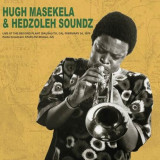
Hugh Masekela, live at The Record Plant on 24th February 1974. This legendary South African-born trumpeter became a major star when he appeared at the Monterey Pop Festival in June 1967, and he had a smash hit with Grazing In The Grass the following year. This superb set was originally broadcast on KSAN-FM, and captures him at his infectious best.
Jack Nitzsche, a close collaborator of master producer Phil Spector, was an American musician, arranger and film music composer who worked extensively as keyboard player with high caliber rock stars like the Rolling Stones and Neil Young, among others. "The Lonely Surfer" originally released on Reprise records in 1963 was the first album under his own name. An all instrumental mix of Surf aesthetic and
eclectic orchestral arrangements featuring great West Coast based studio musicians such as guitarist Tommy Tedesco, drummer Hal Blaine and pianist Leon Russell. A golden summer classic full of surfing
sounds and vibes that can be easily summed up in one word: Timeless.
Formerly of the legendary band Liquid Liquid, Dennis Young is proud to announce his new vinyl recording titled ‘Open Roads.’
The new record is a proud testament of Young’s talent and ability to expand the boundaries of his music, excelling in all facets. The vocal acoustic recording consists of 14 new and original tracks, accompanied by cello/viola and bass guitar.
The exciting new recording shows that Dennis Young isn’t able to be locked into any boundary, and is continuing to surprise new listeners whilst satisfying his current audience with the sounds they have grown to adore, and embrace.
Best known as the marimba player and percussionist for Liquid Liquid, Dennis Young is a self-taught musician who started his music journey at a young age, picking up drums first – which led him to other instruments, later on.
Liquid Liquid was an American no wave and dance-punk group that only lasted 3 years, but released many legendary hits like ‘Cavern’ and ‘Optimo’ which have granted the band a cult-like status within music history. Originated in New York in 1980, the quartet consisted of members Sal Principato, Scott Hartley, Dennis Young, and Richard McGuire.
Dennis Young believes ‘Open Roads’ will become one of your favourite albums as it easy to consume in one sitting, whilst being intoxicating enough to draw you back in for continuous listens.
everything one needs to know about this album: a misshapen,
CHUD-like figure wanders in a graveyard bearing a cross,
while a mutated fish flops in a polluted ditch and a clutch
of factories belch their smoke above it all. The message of
the illustration is not to frighten or warn, but to celebrate
and admire.
Originally released in January of 1984, Disease Is Relative
is an unapologetic and wholesale embrace of death,
disease, and dystopia, with liberal doses of absurdism
and an unrelenting devotion to anything unexpected,
chromatic, or evil sounding. Sporting influences as
diverse as no wave, death rock, funk, post-punk, hardcore,
metal, and prog rock, this music somehow happened in the
midst of a first wave hardcore scene, before there was a
“post-” to be “post” of. Less surprising is that this happened
in Cleveland, which also inspired a desire to recreate the
feeling of the city’s post-industrial desolation in sound.
There’s also some epic screaming and crazy guitar playing.
The album features three songwriters (brothers Andrew
& Chris Marec, Robert Griffin), who also divide guitar,
bass, and vocals equally between themselves here.
Drummer Bruce Allen is the secret weapon, and provides
a clue to what a young Bill Bruford might have done in a
band like this. And yet, beyond all odds, the end result is
cohesive, cathartic, and utterly idiomatic. The distinct vibe
of the album, and its sheer quantity of killer riffs, songs
and performances have made it an album that people have
championed over time, while others have come to know it
through the interwebs as a result.
everything one needs to know about this album: a misshapen,
CHUD-like figure wanders in a graveyard bearing a cross,
while a mutated fish flops in a polluted ditch and a clutch
of factories belch their smoke above it all. The message of
the illustration is not to frighten or warn, but to celebrate
and admire.
Originally released in January of 1984, Disease Is Relative
is an unapologetic and wholesale embrace of death,
disease, and dystopia, with liberal doses of absurdism
and an unrelenting devotion to anything unexpected,
chromatic, or evil sounding. Sporting influences as
diverse as no wave, death rock, funk, post-punk, hardcore,
metal, and prog rock, this music somehow happened in the
midst of a first wave hardcore scene, before there was a
“post-” to be “post” of. Less surprising is that this happened
in Cleveland, which also inspired a desire to recreate the
feeling of the city’s post-industrial desolation in sound.
There’s also some epic screaming and crazy guitar playing.
The album features three songwriters (brothers Andrew
& Chris Marec, Robert Griffin), who also divide guitar,
bass, and vocals equally between themselves here.
Drummer Bruce Allen is the secret weapon, and provides
a clue to what a young Bill Bruford might have done in a
band like this. And yet, beyond all odds, the end result is
cohesive, cathartic, and utterly idiomatic. The distinct vibe
of the album, and its sheer quantity of killer riffs, songs
and performances have made it an album that people have
championed over time, while others have come to know it
through the interwebs as a result.
Julien Sénélas, Jérôme Vassereau and Soia present a new version of In C, Terry Riley's seminal work : a musical interpretation with two modular synthesizers (11 oscillators) and a graphic interpretation of the original score (53 shapes). Composed in 1964 by Terry Riley, In C is considered as the founding work of the minimalist movement. Like the 11 acoustic instruments that can be heard on the most famous version recorded in 1968, 11 oscillators from two modular synthesizers are used here. The illustrator and visual artist Soia has created an alphabet of shapes, which represents each of the 53 musical cells that make up In C. A visual and electronic reinterpretation of this evolving composition, among the most accessible and generous of contemporary music.
Toronto’s infamous psychedelic multimedia collective, Intersystems, make a surprise return with a new full-length LP, #IV. Coming via Waveshaper Media, #IV is Intersystems’ first new material since 1968! Intersystems’ pioneering avant/electronic music sounded positively alien in the 1960s, and more than 50 years later, this latest body of work sounds just as otherworldly.
When they arrived on the scene in the late 1960s, Intersystems stood out from their peers. Comprised of architect Dik Zander, light sculptor Michael Hayden, poet Blake Parker, and musician John Mills-Cockell (of Syrinx, Kensington Market and more), the group mounted groundbreaking pan-sensory events and released a trilogy of defiantly disorienting records.
Where more conventional purveyors of sonic psychedelia were content with fuzztone guitar and orientalist tropes, Intersystems managed to approximate the full psychedelic experience in all its euphoric wonder and terror. Initially wrangling homespun gadgetry, feverishly spliced-together tapes, and mutant beat poetry, Intersystems were also among the very first to deploy a Moog Synthesizer; their Moog modular system was the first to be imported into Canada. Intersystems’ three vinyl LP recordings, meanwhile, justifiably became coveted collector's items given their scarce quantity and singular unsettling vision.
The reissue of Intersystems’ full discography in 2015 prompted acclaim from a number of major outlets. Among them, PopMatters hailed the set as "one of those great lost recordings (three of 'em actually) that comes from the lysergic era..." Mills-Cockell’s work in Syrinx has also been reissued to great acclaim in recent years.
Fifty-plus years after their 1968 album Free Psychedelic Poster Inside, Hayden and Mills-Cockell decided to revive the long-dormant project with a series of sessions at Hamilton's storied Grant Avenue Studio. The resultant music remains remarkably congruent with the project's original vision while clearly emerging from the present moment. With original poet/lyricist Blake Parker now deceased, Hayden and Mills-Cockell made the counterintuitive (yet strangely apt) decision to render Parker's words electronically. As the computer-synthesized voice alternates between an eerily life-like delivery and slurred cybernetic faltering, it brings a new dystopian tint to the group's anxious surrealism. Taking cues from its predecessor, Free Psychedelic Poster Inside, a modular Moog Synthesizer system is the primary instrument, yet here it offers a dynamic blend of different sonorities: barbed wire basslines, Subotnickesque chirping, gestural plumes of colour and percussive filigree.
While the group cut their teeth in the 1960s, make no mistake these new Intersystems recordings aren't a “comeback" or an attempt to rehash the "good old days". What one hears instead is the sound of Mills-Cockell and Hayden re-energizing the project, bringing with them the myriad experience they’ve accumulated in the intervening 50 years. These aural concoctions—no less perplexing than their 1960s predecessors—build upon the Intersystems foundation but very decidedly reside in the present moment, reminding listeners of just how forward-looking this group was in the first place.
Pixey grew up in the sleepy but picturesque village Parbold, Lancashire before moving to Liverpool for school and remaining there to this day. Now signed to Chess Club - a label famed for breaking new talent, where recent exciting signings include AlfieTempleman and Phoebe Green, and past successes include Jungle, Wolf Alice and Easy Life - Pixey is making more waves than ever before. ‘Just Move’ drew attention from BBC Radio 1 DJs Jack Saunders (who made Pixey one of his Next Wave artists) and Huw Stephens amongst many other admirers like Radio X’s John Kennedy who added the band to the X-Posure playlist at the station in October. Pixey has also featured as the cover artist of Spotify’s Indie Brandneu (GER) and Peach editorial playlists, and wasamongst the artists named in major annual tips lists, the Dork HYPE List and the NME 100.
New single ‘Electric Dream’ - with its accompanying video by Thomas Davies - combines cavernous drum machines and dreamy pop melodies with a signature dance stomp. Speaking about new single, Pixey explains: “‘Electric Dream’ was originally written as a piano ballad but after finishing the lyrics I felt the song worked as a dance track. I wrote it to make sense ofbeing locked in with nothing to rely on but technology. The verses are all of my anxieties that come with that - like trying to simulate humanity digitally and what kind of a future that would be - but the choruses are about the imperfections of real life that technology and AI can’t give us.”
Debut EP Free To Live In Colour was written, recorded and produced in Pixey’s bedroom in Liverpool - with additional production added by frequent Gorillaz and Jamie T collaborator James Dring - and draws inspiration from genres like hardcore breakbeat and
dream pop. Pixey says: “I wanted a collection of tracks which gave a quick snapshot into me and my brain - where I’m from, where I want to be and what I’m thinking about. I hope people can take something meaningful from it or simply have a dance.”
Pixey first discovered music as a toddler - she remembers not even being able to walk yet but desperate to sing and dance to Queen - before discovering the likes of Kate Bush, Björk, and George Harrison, whose classic songwriting struck a chord with her in her youth. The catalyst for Pixey’s musical coming of age however, was a near fatal viral illness suffered in early 2016 which hospitalised her, she says: “When I thought I was going to die I thought of all the things I wish I’d done and music was the first thing I thought of. As soon as I started recovering I started learning to record and produce.” She taught herself Ableton production software before mastering guitar and eventually drums and bass after her previous (and current) boyfriend(s) left their instruments lying around to prove she could learn it quicker and play it better.
Once able to carve out her own sound, Pixey turned to The Verve, The Prodigy and De La Soul for sonic inspiration, adding: “I particularly like the idea of using samples/making my own riffs sound like samples which was heavily inspired by the De La Soul album 3 Feet High and Rising. Starting out initially though Grimes was a huge catalyst when I realized she wrote, recorded &produced herself.” Her prolific and unusual songwriting style stems from an original riff or beat, with further layers added as she records and produces, and lyrics being added last - the process taking only a day or two.
With Free To Live In Colour and a whole arsenal of further material being readied on her new label home, Chess Club, Pixey is primed for big things in 2021 and beyond.
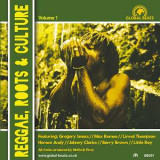
If some of these titles look familiar, it’s because they’re among the most majestic roots and culture songs ever recorded, and by singers whose credentials are beyond question. All tracks feature the original artists and even the actual seventies’ vocal in some cases, but the rhythms have been recreated with today’s sound-systems in mind and are heard at their very best when roaring out of giant speaker boxes, greeted by a forest of raisedhands and with a deejay at the mic.
Producers Mafia & Fluxy include reggae legends Bunny “Striker” Lee and Fat Man among their mentors, and their mastery both in the studio and on stage is unrivalled outside of Jamaica. The way these two brothers play dub will make the hairs on the back of your neck stand up whilst the messages in songs like Every Tongue Shall Tell, Declaration Of Rights, No Peace and Fittest Of The Fittest are relevant as ever but then the music on this album isn’t dated, and is reggae, roots and culture for the ages.
Can was founded in 1968 by Irmin Schmidt, Holger
Czukay, Michael Karoli and Jaki Liebezeit who
formed a group which would utilise and transcend
all boundaries of ethnic, electronic experimental
and modern classical music.
This classic album of tracks was recorded at the
beginning of Can’s life and features original
vocalist Malcolm Mooney.
‘Thief’ is now a rejuvenated Can classic having
been covered by Radiohead and since then
discovered by a new generation of fans.
Can’s powerful influence has never diminished and
their indelible mark is apparent in the bands who
freely acknowledge their importance - from
Portishead, James Murphy, New Order, Factory
Floor, Public Image Ltd, Mogwai, Kanye West and
Radiohead - as well as across other disciplines
such as visual art and literature.
“Can are impossible to classify and it’s impossible
to ignore their seismic influence on so many
diverse musical paths” - Richard Hawley
“Can are the most revolutionary band ever” -
Stephen Morris (New Order)
Now available on pink vinyl with digital download
code.
2021 Reissue of the classic Junior Kimbrough "First Recordings" release from Big Legal Mess / Fat Possum. First time on 12" vinyl with two additional takes from the original sessions.
Re-press of the 2018 LP on green vinyl
In many ways Insecure Men - the band led by the fiercely talented songwriter and musician Saul Adamczewski and his schoolmate and stabilising influence, Ben Romans-Hopcraft - are the polar opposite of the Fat White Family. Whereas sleaze-mired, country-influenced, drug-crazed garage punks the Fat Whites are a “celebration of everything that is wrong in life”, Insecure Men, who blend together exotica, easy listening, lounge and timeless pop music, are, by comparison at least, the last word in wholesomeness. The band originally formed in 2015 in the cramped confines of The Queens Head pub, Stockwell, in the Fat White Family’s notorious South London ‘practice space’. Saul recorded all of the songs he wrote at The Queens Head onto tape at Sean Lennon’s studio in upstate New York. This tape, recorded on his own in a corridor onto an ancient Tascam while in a foul mood with his mates, essentially became Insecure Men’s self-titled debut album as more layers were dubbed over the top until nothing of the original demos remained. Saul lists some of the influences on their sound, mentioning the exotica of Arthur Lyman, the early electronic pop of Perrey and Kingsley, the supreme smoothness of The Carpenters, the songwriting chops of Harry Nilsson and the hypnagogic uncanniness conjured up by David Lynch, describing what they do as “pretty music with a dark underbelly to it”.
Following the release of their brand new fifth studio album ‘The Absolute Universe’, progressive rock supergroup Transatlantic are pleased to reissue their much-loved debut album ‘SMPTe’ on Gatefold 180g 2LP + CD + LP-booklet. Originally released in 2000, this album saw Neal Morse, Mike Portnoy, Roine Stolt & Pete Trewavas coming together for the very first time, to craft what AllMusic called a “progressive rock masterpiece”, laying the foundation for the epic music that would be created by these four musicians over the next 20 years.
Dalida's career never ceases to deliver its share of surprises, and in 2021, her song "Dans La Ville Endormie »" was chosen to appear in the soundtrack of the next James Bond “No Time To Die" . Dalida said "Beautiful melodies never die" and she was right. This original selection of songs now deserve to go from shadow to light on the back of the huge exposure from the film. Reviews and Ads – L’Echo and London Macadam
Critically acclaimed debut studio album by American soul/R&B singer. Originally released digitally/CD in 2019 by Keep Cool Records via RCA. The album was broken up into two EP's, part of a series to lead up to his debut album. The album received a nomination for Best R&B Album at the 62nd Grammy Awards, while the album's lead single "Roll Some Mo" received nominations for Best R&B Song and Best R&B Performance. Album cut "Real Games" received a nomination in the Best Traditional R&B Performance category. To mark the album's first anniversary, a deluxe edition of 'Painted' was released digitally in May 2020 including new mixes and alternative versions of previously released songs as well as four new tracks. Here the album is available phisically for the first time, as a double LP. Specialist marketing activity.
Still just shy of legal US drinking age, GRAMMY®-winning Atlanta hard rock juggernaut Mastodon turns 20 this year! Celebrating two decades together, the group will unleash a rarities collection, Medium Rarities, which includes among the many rare highlights an unreleased track “Fallen Torches,” recorded in 2019.
The band explains, “‘Fallen Torches’ is an unreleased track from Mastodon that will appear for the first time on Medium Rarities. This classic Mastodon track was recorded in Atlanta in 2019, originally planned to be released in support of a European tour, the track was delayed so the band could focus on the release of Stairway to Nick John, a tribute to their late, long time manager Nick John, with proceeds going to the Hirshberg Foundation for Pancreatic Cancer Research in his honour. ‘Fallen Torches’ is written by Mastodon and features guest vocals by longtime friend and collaborator Scott Kelly from the band Neurosis.”
Medium Rarities presents a bevy of classic covers, soundtrack contributions, instrumentals, B-sides, and live recordings on one complete package for the very first time. Among an eclectic array of covers, the musicians tackle “A Commotion” by Feist, “A Spoonful Weighs A Ton” by The Flaming Lips, and “Orion” by Metallica. It also features soundtrack cuts such as “White Walker” Game of Thrones and “Cut You Up With A Linoleum Knife” [Aqua Teen Hunger Force]. Meanwhile, they get under the hood with instrumental versions of “Asleep in the Deep,” “Toe To Toes,” “Jaguar God,” and “Halloween.”
Another new Mastodon track “Rufus Lives” will be included in the forthcoming Orion Pictures film Bill & Ted Face The Music, expected to be released in September 2020. Written, performed and produced by the band and recorded in their hometown of Atlanta, the track will also appear exclusively on the film’s official soundtrack album. Further details to be revealed shortly.
The anniversary celebration only continues. At the moment, Mastodon are hard at work on their anxiously awaited ninth full-length and first record since the GRAMMY® Award-winning Emperor of Sand in 2017.
After two UK #1 albums, 2 million album sales and an array of international acclaim, you might’ve thought you knew what to expect from Royal Blood. Those preconceptions were shattered when they released ‘Trouble’s Coming’ last summer. Hitting a melting pot of fiery rock riffs and danceable beats, they delivered something fresh, unexpected and yet entirely in tune with what they’d forged their reputation with.
The reaction was phenomenal, with highlights including 20 million streams, a premiere as Annie Mac’s Hottest Record and a run on Radio 1’s A-list and earned alternative radio support and media attention across the globe. In short, Royal Blood are primed to be bigger than ever before. That feat is set to be realised when they release their eagerly anticipated third album ‘Typhoons’ on April 30th via Warner Records.
When Mike Kerr and Ben Thatcher sat down to talk about making a new album, they knew what they wanted to achieve. It involved a conscious return to their roots, back when they had made music that was influenced by Daft Punk, Justice, and Philippe Zdar of Cassius. It also called for a similar back-to-basics approach to what had made their self-titled debut album so thrilling, visceral and original.
“We sort of stumbled on this sound, and it was immediately fun to play,” recalls Kerr. “That’s what sparked the creativity on the new album, the chasing of that feeling. It’s weird, though - if you think back to ‘Figure it Out’, it kind of contains the embryo of this album. We realised that we didn’t have to completely destroy what we’d created so far; we just had to shift it, change it. On paper, it’s a small reinvention. But when you hear it, it sounds so fresh.”
Those traits pulsate throughout the new single and title track. Kerr’s spiralling bass riff casts an hypnotic allure as it grows in intensity, while his vocals switch at will between a raw rock roar and a soulful falsetto. It’s underpinned by Thatcher’s thundering beats, his taut rhythms infused with groove-laden hi-hats.
After setting the tone with ‘Trouble’s Coming’, the album opens in breathless, take-no-prisoners style with the fierce metallic grooves of ‘Who Needs Friends’ hitting an early visceral peak. Royal Blood further reference their fresh array of influences by deploying vocodered vocals on ‘Million & One’ before dynamically switching between the biggest contrasts of their sound with ‘Limbo’. Already a fan favourite having been a regular during the duo’s 2019 shows, ‘Boilermaker’ lives up to its reputation and is more than matched by ‘Mad Visions’, which evokes a hyper-aggressive Prince. It ends with a final surprise in the shape of the stark piano ballad ‘All We Have Is Now’, a vulnerable and revealing reminder to live in the moment.
That song’s unguarded sentiments gives the album a redemptive finale. Whether directly or allusively, the album focuses on exploring the flipside of success that they’ve experienced. It comes from the realisation that success is much more complicated than it seems and that having the time to regain perspective is a precious commodity which becomes ever more elusive. The situation called for reflection and change, which Kerr addressed in Las Vegas. He downed an espresso martini and declared it to be his last drink, and soon discovered that his new-found sobriety would have a positive impact upon his creativity and life as a whole.
That new approach manifested itself in the duo’s decision to produce the majority of ‘Typhoons’ themselves. ‘Boilermaker’ was produced by Queens of the Stone Age frontman Josh Homme, the two bands having first connected when Royal Blood supported them on a huge North American tour. Meanwhile, the multiple Grammy Award winner Paul Epworth produced ‘Who Needs Friends’ and contributed additional production to ‘Trouble’s Coming’.
After two UK #1 albums, 2 million album sales and an array of international acclaim, you might’ve thought you knew what to expect from Royal Blood. Those preconceptions were shattered when they released ‘Trouble’s Coming’ last summer. Hitting a melting pot of fiery rock riffs and danceable beats, they delivered something fresh, unexpected and yet entirely in tune with what they’d forged their reputation with.
The reaction was phenomenal, with highlights including 20 million streams, a premiere as Annie Mac’s Hottest Record and a run on Radio 1’s A-list and earned alternative radio support and media attention across the globe. In short, Royal Blood are primed to be bigger than ever before. That feat is set to be realised when they release their eagerly anticipated third album ‘Typhoons’ on April 30th via Warner Records.
When Mike Kerr and Ben Thatcher sat down to talk about making a new album, they knew what they wanted to achieve. It involved a conscious return to their roots, back when they had made music that was influenced by Daft Punk, Justice, and Philippe Zdar of Cassius. It also called for a similar back-to-basics approach to what had made their self-titled debut album so thrilling, visceral and original.
“We sort of stumbled on this sound, and it was immediately fun to play,” recalls Kerr. “That’s what sparked the creativity on the new album, the chasing of that feeling. It’s weird, though - if you think back to ‘Figure it Out’, it kind of contains the embryo of this album. We realised that we didn’t have to completely destroy what we’d created so far; we just had to shift it, change it. On paper, it’s a small reinvention. But when you hear it, it sounds so fresh.”
Those traits pulsate throughout the new single and title track. Kerr’s spiralling bass riff casts an hypnotic allure as it grows in intensity, while his vocals switch at will between a raw rock roar and a soulful falsetto. It’s underpinned by Thatcher’s thundering beats, his taut rhythms infused with groove-laden hi-hats.
After setting the tone with ‘Trouble’s Coming’, the album opens in breathless, take-no-prisoners style with the fierce metallic grooves of ‘Who Needs Friends’ hitting an early visceral peak. Royal Blood further reference their fresh array of influences by deploying vocodered vocals on ‘Million & One’ before dynamically switching between the biggest contrasts of their sound with ‘Limbo’. Already a fan favourite having been a regular during the duo’s 2019 shows, ‘Boilermaker’ lives up to its reputation and is more than matched by ‘Mad Visions’, which evokes a hyper-aggressive Prince. It ends with a final surprise in the shape of the stark piano ballad ‘All We Have Is Now’, a vulnerable and revealing reminder to live in the moment.
That song’s unguarded sentiments gives the album a redemptive finale. Whether directly or allusively, the album focuses on exploring the flipside of success that they’ve experienced. It comes from the realisation that success is much more complicated than it seems and that having the time to regain perspective is a precious commodity which becomes ever more elusive. The situation called for reflection and change, which Kerr addressed in Las Vegas. He downed an espresso martini and declared it to be his last drink, and soon discovered that his new-found sobriety would have a positive impact upon his creativity and life as a whole.
That new approach manifested itself in the duo’s decision to produce the majority of ‘Typhoons’ themselves. ‘Boilermaker’ was produced by Queens of the Stone Age frontman Josh Homme, the two bands having first connected when Royal Blood supported them on a huge North American tour. Meanwhile, the multiple Grammy Award winner Paul Epworth produced ‘Who Needs Friends’ and contributed additional production to ‘Trouble’s Coming’.
Serj Tankian is the vocalist of iconic much loved metal band System Of A Down
2020, The Year Of Our Pandemic: A year of social unrest, police violence and a monumental US election. The year of COVID-19 and its mounting death toll. A massive explosion and mass death in Lebanon. Political upheaval in Belarus. A spiraling world economy. Global protests. If ever a stage was set for new music from Serj Tankian, this is it.
With his trademark eclecticism and one-of-a-kind vocal style, Serj delivers, Elasticity, a five song EP that run the gamut from hard-driving, electronically enhanced anthems like the title track to rallying cries for his beloved Armenia (“Electric Yerevan”) to the tongue-in-cheek political mash-up of “Your Mom.” Elasticity is comprised of songs originally intended for System Of A Down. But it didn’t quite work out that way.
The EP will delight fans of System who have waited a long time for new music. Alongside the release of the EP, Serj will release the documentary ‘Truth To Power’ which he directed himself and is released in conjunction with Oscilloscope Laboratories and Live Nation. The documentary features music from the EP and there are comarketing initiatives in place with the film company.
After appearing on the label's Time Is Now Allstars compilation, Bristol's own Wilfy D makes his second appearance with Shall Not Fade, adding to their new Time Is Now White label series. The young garage star serves up the smooth and soulful two-step he is known for, plus two killer remixes from Time Is Now family DJ Crisps and Soul Mass Transit System.
"Garage Tools" opens out the EP with staccato sampling and a rumbling sub bass wobble dominating the track, the most headsy on the record while "All About U (3am Mix)" takes on a gentler vibe. Using luscious vocal chops and glimmering synths, Wilfy D creates a kind of garage love song, delicate and soothing. He kicks things up a notch on "Know U Like It", a slice of speed garage that grooves along to an earworm melody.
On the B-side Wilfy D's original "Midnight Shift", a clean classic noughties garage sound palette, is reimagined twice by DJ Crisps and then Soul Mass Transit System. DJ Crisps gives the track a drum and bass edge replete with teeth-gritting sub bass power; Soul Mass close out the record with a dirty up-tempo remix perfect for a soundsystem.
out of Stock
Last delivered 3 years ago available to reorder, subject to availability
“Some tracks chime and soar like Coldplay. Others are just a post-rock whimper away from Radiohead... Marillion deserve a fair hearing.” UNCUT
Marillion formed in 1979 and have sold over 15 million albums worldwide.
Rightly regarded as legends of progressive rock, the band have also continued to evolve and have been keen to embrace the possibilities of the internet, using innovative ways to interact with listeners resulting in an incredibly loyal legion of fans around the world.
‘Somewhere Else’ was Marillion’s fourteenth album and was originally released in 2007. Following on from the success of the previous album ‘Marbles’, which spawned two hit singles, ‘Somewhere Else’ gave the band their first UK top 30 album in ten years.
This new Kscope mid-price CD edition of ‘Somewhere Else’ is presented in four panel digi-pack packaging complete with a 12-page booklet. And 140gm 2LP edition of ‘Somewhere Else’ is presented in gatefold sleeve and features three bonus tracks recorded live on the 15th and 16th June 2007 at the Forum in London.
2 LP Reissue From Prog Pioneers Remastered And Printed On Vinyl For The First Time Tangerine Dream have been a fundamental influence on electronic music since Edgar Froese founded the band in West Berlin in 1967. Providing the groundwork for multiple electronic music genres including ambient and electronica,
inspiring musicians & other art forms.
The group have received seven Grammy nominations, written over 100 studio albums & were led by Froese, who developed an instantly recognisable synthbased instrumental music based on a meditative musical experience that came to prominence in the 70’s and 80’s.
‘Chandra: The Phantom Ferry Part 1’ consists of nine tracks, based on a breathtaking science fiction manuscript found in 1977 in a military camp in Greenland, the album is largely a conceptual work completely composed and performed by Edgar Froese.
Presented on vinyl for the first time, the album has been lovingly remastered by Harald Pairits especially for vinyl and repackaged using the original design in association with Bianca Froese-Acquaye.
‘Chandra: The Phantom Ferry Part 1’ is released on 2 LP via Kscope on 30th April 2021.
Originally released in 1961 on Prestige label, this album stands as one of Steve Lacy's earliest Monk's music explorations. A reflective journey through the visionary world of the high priest of Bop
featuring the great Don Cherry on trumpet, the solid Carl Brown on bass and the marvelous Billy Higgins on drums. An historical studio session based on a Monk/Ellington split track list including four Monk's compositions and two lesser known Ellington pieces. After sixty years, it's still pure joy, listening to the soprano sax master matching with Cherry's harmolodic pocket trumpet.
Musical composition, design and sound production carried out at the INA grm Studios (Paris) in 1993/95
Original audio recordings in the Drôme and the Mont Ventoux areas
Voice: Hélène Bettencourt
Vocal occurrences: Frédéric Malenfer, Bruno Roche, Lionel Marchetti
Bass clarinet (for processing): Jean Andréo
Micro-climat (1989/90), 21'33
Micro-climat is the first movement of the Sirrus cycle (Micro-climat, Passerelle, Sirrus) composed in 1989/90
Musical composition, sound design and production, audio recordings in 1989/90 at the CFMI studios in Lyon (Lumière University, Lyon 2)
"I wonder if my fascination for clouds (without being an obsession) may have risen at the end of the 80s as, whilst composing Micro-climat, I would regularly wander between the Vercors mountains and the high plateaus of the Monts du Forez discovering, through my eyes, body, breath, active observation and walk, that natural forms when constantly changing and yet swollen with a unity of matter (in this instance, water) open one up to a deep, fundamental breath and a clear field for the mind. The sky and its forces: our ally.
A model for a natural music which, although fixed, as in musique concrète (a rule of the genre), moreover on a recording tape, will remain charged with such a poetic quality that (isn't it its role or rather its reality?) it will ensure a perpetual renewal for our senses, so as to reach another idea of the world, far more open and richer than what we could have imagined."
Lionel Marchetti, 2011
Lionel Marchetti is a major figure of the "third generation" of concrète musicians, a term he values. Listening to these works, imbued with poetry and traversed by micro-narratives, one can indeed retrieve the original concrète spirit, the one that draws from the sonic world, with ears wide open, so as to extract a fertile, rich and multiple substance then shaped and conveyed towards a formal and musical abstraction. Lionel Marchetti has mastered this process, but his real distinctive feature is a truly unique talent for setting climates (as one sets traps) and keeping us on constant alert. The two pieces in this record perfectly illustrate the entrancing dimension of Lionel Marchetti's music, whose charm leads us, through each successive listening, to become voluntary captives so as to better liberate ourselves.
François Bonnet, Paris, 2020
out of Stock
Last delivered 5 years ago available to reorder, subject to availability
While Joe Henderson seemed to arrive fully formed on his auspicious 1963 debut Page One, the album was really a showcase for the transcendent collaboration between the tenor saxophonist and trumpeter Kenny Dorham who would form a potent frontline team on numerous mid-60s Blue Note classics. Page One opens with a pair of indelible Dorham compositions (“Blue Bossa” and “La Mesha”), with the balance of the six-song set penned by Henderson including his enduring theme “Recorda-Me.” Dazzling performances by pianist McCoy Tyner, bassist Butch Warren, and drummer Pete La Roca further elevate this album making it one of the crown jewels of the Blue Note catalog. This Blue Note Classic Vinyl Edition is all-analog, mastered by Kevin Gray from the original master tapes, and pressed on 180g vinyl at Optimal.
out of Stock
Last delivered 4 years ago available to reorder, subject to availability
The 'Abroad EP' catalogues a period of time spent travelling Japan in the spring of 2019. Throughout the course of the month-long trip, Rudy carried around a portable recorder, capturing various sounds that caught his ear. That collection of found sounds would eventually become the foundation for the EP, each track utilizing a handful of different recordings ranging from bird calls in Tokyo's Yoyogi Park, to windchimes in the coastal town of Kawazu. The EP took a full year of patient, daily work to complete, during which time Rudy invited a diverse group of collaborators in to help finish the songs. Throughout the recording process, harp, saxophone, and violin parts were added to create a unique blend of organic and electronic sounds.
POSY is the recording name of Rudy Klobas, Portland-based producer and multi-instrumentalist with a unique sound that intersects jazz, R&B, and electronic music. Originally trained on classical guitar, POSY gradually taught himself piano, bass, and drums and began writing and recording his first songs on a four-track cassette recorder. POSY's music is lush and densely layered, but maintains an element of simplicity that ultimately leaves one feeling relaxed, nostalgic, and hopeful all at the same time.
out of Stock
Last delivered 4 years ago available to reorder, subject to availability
Minimal Wave presents ‘Recordings 1980-1982’ (MW077), a triple 7” box set by pioneering south Florida synth-punk band Futurisk, in honor of their 40th anniversary. Founded by Jeremy Kolosine in 1978, Futurisk recorded many songs and performed live throughout the early 1980s. Though they had released two 7”s that sold out, had a legendary live show, and even some videos, by 1984 Futurisk was history. Eventually, the main core of Futurisk would be the Jeremy Kolosine, Richard Hess, and Jack Howard line-up though much happened leading up to this point.
In 1979, the teenage Jeremy Kolosine won studio time and money in a competition with his drum-machine-triggered guitar-synth act called ‘Clark Humphrey & Futurisk’. He decided to form a band around the name to record a more punk release titled The Sound of Futurism 1980 / Army Now. It was an ambivalent anti-war anthem with Jack Howard on drums, Frank Lardino on synth, and Kolosine on vocals and guitar synth. Many live shows ensued with the line-up which included Jeff Marcus on bass and Vinnie Scrimenti on drums but in 1981 a rift between the band caused them to part ways. They continued for a bit as ‘Radio Berlin’ (no relation to the Vancouver act) and Kolosine, who had gotten absorbed in a new analog synthesizer with sequencer continued as Futurisk.
He recruited synthesist and recording engineer Richard Hess who had a myriad collection of Moogs, Oberhieims, and CATs. Jack Howard returned on drums and syn-drums and the lineup for the Player Piano EP was cast. The EP, like the live show, was a strange blend of punk, minimalist, and disco-influenced electro-pop, with drum machine triggered synths and often frantic real drums all led by Kolosine’s schizophrenic Bowie / Ferry / Foxx adulations. It was recorded by Richard Hess and the band in the rooms of a friend’s house. The drum sound, recorded in a bathroom, rocks, even today. Reportedly, Futurisk may have been the first synth-punk band in the American South, and their 1981 track ‘Push Me Pull You (Pt. 2)’ was an early pre- ‘Rockit’ excursion into electro-funk.
The ‘Recordings 1980-1982’ box set includes three 7”s, an Army Now (1982) Flexi 5” x 7” postcard, and a 16-page full-color booklet featuring unpublished photographs of the band, the history of the band, and an interview with founder Jeremy Kolosine. The three 7”s are The Sound of Futurism 1980 / Army Now which includes an unreleased track from the same session, the Player Piano five-song 7” EP from 1982, and the Ocean Sound 7”, which has not been released in this format until now. All three 7”s are remastered, pressed on heavyweight 70-gram vinyl, and housed in heavy color printed matte sleeves featuring the band’s original artwork. The box is case wrapped and depicts an early illustration of the band printed in black on white with a spot gloss. Limited edition of 600 copies.
out of Stock
Last delivered 46 days ago available to reorder, subject to availability
Liam Bailey follows up his 'Ekundayo' album with this heavy hitting remix 7" featuring two absolute legends. The A side is a remix of Champion featuring Black Thought of The Roots. Black Thought kills the first verse finding the pocket over the Leon Michels produced reggae banger designed to bust up woofers and blow out dance floors. Liam and Thought combine to sing praises to a woman worthy of all the admiration they can muster, and in doing so, they take what was already a classic to another level. The B side is straight from the far flung corners of outer space. Producer Leon Michels strips down and revamps the album cut Ugly Truth, making room for the most special of guests, the one and only, Mr. Lee "Scratch" Perry. The Upsetter switches between singing and talking, one minute proclaiming his powers and the next playing with the title of the original tune. Some proper Lee Perry business alongside the already unstoppable chemistry of Liam Bailey and Leon Michels...An absolute Big Crown Surehot.
out of Stock
Last delivered 5 years ago available to reorder, subject to availability
With their 25th anniversary celebrations well underway, Hospital Records are bringing their esteemed ‘Classic Symptoms’ series into 2021 with four stellar selections.
The fifteenth edition will be the first to celebrate the label’s milestone achievement by shining the spotlight on some of the original versions of tracks from the highly anticipated ‘H25PITAL’ compilation set to be released on 26th March 2021. Expect an eclectic mix of sound supplied by Netsky, SKC & Bratwa, Hugh Hardie and Q-Project pressed to an extremely exclusive vinyl run.
An undeniable anthem which has cemented itself in the hearts of countless drum & bass lovers, Netsky’s ‘Memory Lane’ marked his first release on Hospital Records and is the perfect starter for ‘Classic Symptoms 15’. Opening the ‘Sick Music 2’ compilation which originally came out in 2010, ‘Memory Lane’ is now approaching its 11th year in circulation.
“It was an exciting time, I had been sending demos through AIM to Hospital for some time, hoping something would get picked up.” - Netsky
Hailing from Hungary, SKC & Bratwa’s nostalgic ‘Heart Of Love’ follows. First seeing the light of day as part of the ‘Weapons Of Mass Creation’ compilation in 2004, this one will take you on a funk-infused liquid trip back to the days of the original Hospital loungecore sound.
Bringing things back to the future, Hugh Hardie’s soulful slammer ‘Tearing Me Apart (feat. Kyan)’ provides ‘Classic Symptoms 15’ with alluring groove and, of course, that infamous double bass melody. Initially released on the ‘Hospital: We Are 18’ compilation back in 2013, it’s safe to say this one is timeless.
Sending it way back to 2006, Q-Project steps up with the title track of his 2006 ‘Computer Love’ electro-infused smasher. Rugged breaks and future-retro synthesis, this one sounds just as good now as it did back then.
Don’t sleep on securing your extremely limited press of four Hospital classics.
This one is for the serious collectors - once they’re gone, they’re gone.
out of Stock
Last delivered 18 months ago available to reorder, subject to availability
New York Hip Hop revolutionaries Ced-Gee, Kool Keith, Moe Luv and T.R. Love, known as Ultramagnetic Mc’s dropped their seminal debut album Critical Beatdown in 1988. Immediately grabbing the attention and pushing the boundaries of hip hop into new horizons, it was hailed as a masterpiece by the underground. Influential hip hop magazines The Source and Hip Hop Connection both listed Critical Beatdown in their Top 100 charts, naming it one of the best 100 hip hop albums ever. The 1986 single “Ego Trippin” is one of the first tracks to use the SP1200 drum machine (programmed by producer Ced-Gee), and the SP1200 would later become the golden standard for many hip hop producers. This expanded edition features not only the original album with the 15 tracks, it also includes 6 bonus tracks: the original 12” versions of “Funky”, “Bait”, “A Chorus Line” featuring Tim Dog, “Mentally Mad” plus “Traveling At The Speed Of Thought (Hip House Club Mix)” and “Ego Trippin (Bonus Beats)” coupled for the first time ever on vinyl. It also contains a 4 page booklet with interviews, rare photos and liner notes written by Angus Batey, the author of Rhyming and Stealing: A History Of The Beastie Boys and a writer for Hip Hop Connection and Mojo magazine.
This first pressing also comes with an exclusive photograph of Ultramagnetic Mc’s on thick cardboard. The timeless classic Critical Beatdown is available as a limited edition of 2000 individually numbered copies on yellow vinyl.
Sdban Records will reissue parts of the library serie 'A Special Radio ~ TV Record' released on the Belgian based Selection Records between 1976 and 1981 on vinyl. Sdban Records teams up with publisher Hans Kusters wo recently bought this catalog. Nonetheless, the first release will be a contemporary adaptation of the original concept by composer Reinhard Vanbergen (Das Pop, Rheinzand).
When Hans Kusters heard some music of Reinhard Vanbergen on the radio, he started dreaming of a new chapter. When asking Reinhard if he would be interested, Reinhard gladly accepted after finding out that one of the original composers from the Selection series, Rene Costy, had a very similar background, being a Belgian violinist and composer. It seemed like a perfect fit.
While respecting the concept of the past, Reinhard tried to give the record a modern touch, by simulating 10 geometric shapes, using immersive audio. With headphones on, you can detect the geometric shapes that move around your head in a little dance of their own. The mix of vintage and modern synths are an homage to the past while trying to give it something new and bring the concept into modern times. The new album, Selection 19 - Geometric Shapes opens the door to a new special radio and TV-records series, to continue in the same spirit from the past, but with an eye for the future.
"We want to make people feel good about things that we feel terrible about." says David Brewis, who has co-led the band Field Music with his brother Peter since 2004. It's a statement which seems particularly fitting to their latest album, Flat White Moon released on 23 April via Memphis Industries. Sporadic sessions for the album began in late 2019 at the pair's studio in Sunderland, slotted between rehearsals and touring. The initial recordings pushed a looser performance aspect to the fore, inspired by some of their very first musical loves; Free, Fleetwood Mac, Led Zeppelin and The Beatles; old tapes and LPs pilfered from their parents' shelves. But a balance between performance and construction has always been an essential part of Field Music. By March 2020, recording had already begun for most of the album's tracks and, with touring for Making A New World winding down, Peter and David were ready to plough on and finish the record. The playfulness that's evident in much of Flat White Moon's music became a way to offset the darkness and the sadness of many of the lyrics. Much of the album is plainly about loss and grief, and also about the guilt and isolation which comes with that. Those personal upheavals are apparent on songs like Out of the Frame, where the loss of a loved one is felt more deeply because they can't be found in photographs and compounded by the suspicion that you caused their absence, or on When You Last Heard From a Linda, which details the confusion of being unable to penetrate a best friend's loneliness in the darkest of circumstances. Some songs are more impressionistic. Orion From The Streets combines Studio Ghibli, a documentary about Cary Grant and an excess of wine to become a hallucinogenic treatise on memory and guilt.. Others, such as Not When You're In Love, are more descriptive. Here, the narrator guides us through slide-projected scenes, questioning the ideas and semantics of 'love' as well the reliability of his own memory. The result is a generous record of bounteous musical ideas, in many ways Field Music's most immediately gratifying to date.
"We want to make people feel good about things that we feel terrible about." says David Brewis, who has co-led the band Field Music with his brother Peter since 2004. It's a statement which seems particularly fitting to their latest album, Flat White Moon released on 23 April via Memphis Industries. Sporadic sessions for the album began in late 2019 at the pair's studio in Sunderland, slotted between rehearsals and touring. The initial recordings pushed a looser performance aspect to the fore, inspired by some of their very first musical loves; Free, Fleetwood Mac, Led Zeppelin and The Beatles; old tapes and LPs pilfered from their parents' shelves. But a balance between performance and construction has always been an essential part of Field Music. By March 2020, recording had already begun for most of the album's tracks and, with touring for Making A New World winding down, Peter and David were ready to plough on and finish the record. The playfulness that's evident in much of Flat White Moon's music became a way to offset the darkness and the sadness of many of the lyrics. Much of the album is plainly about loss and grief, and also about the guilt and isolation which comes with that. Those personal upheavals are apparent on songs like Out of the Frame, where the loss of a loved one is felt more deeply because they can't be found in photographs and compounded by the suspicion that you caused their absence, or on When You Last Heard From a Linda, which details the confusion of being unable to penetrate a best friend's loneliness in the darkest of circumstances. Some songs are more impressionistic. Orion From The Streets combines Studio Ghibli, a documentary about Cary Grant and an excess of wine to become a hallucinogenic treatise on memory and guilt.. Others, such as Not When You're In Love, are more descriptive. Here, the narrator guides us through slide-projected scenes, questioning the ideas and semantics of 'love' as well the reliability of his own memory. The result is a generous record of bounteous musical ideas, in many ways Field Music's most immediately gratifying to date.
In a career spanning 45 years, Leo Sayer has sold more than 80 MILLION records worldwide. ‘Thunder In My Heart’ is Leo Sayer’s 5th album, originally released in 1977, reaching #8 in UK Albums Chart and features the hit ‘Thunder In My Heart’, which was remixed in 2005 and reached #1 in February 2006. This was the second of three albums that Leo recorded in Los Angeles, with legendary and in- demand producer Richard Perry and marked a departure from his early albums. Richard Perry brought in a variety of songwriters and collaborators to work on the projects with Leo; it was a venerable Who’s Who of the record industry. Leo Sayer has overseen his entire reissue programme and from reading the reviews from many of his sold-out concerts, he remains one of the UK's great singer / songwriters and performers of all time.
out of Stock
Last delivered 5 years ago available to reorder, subject to availability
Following recent super-deluxe editions and multi-format releases of classic Who albums – ‘My Generation’, ‘Tommy’ and ‘Quadrophenia’, and the success of ‘Live at Fillmore’, we follow with The Who Sell Out – this set shaping up to be the most superlative of all…!!
Released in December 1967 – the album reflected a remarkable year in popular culture. As well as being forever immortalised as the moment when the counterculture and the ‘Love Generation’ went global, 1967 produced tremendous musical upheavals as “pop” metamorphosed to “rock”.
Originally planned by Pete Townshend and the band’s managers, as a loose concept album including jingles and commercials linking the songs styled as a Radio London broadcast – born out of necessity as the band’s managers wanted a new album and there weren’t enough songs.
The original plan was to sell advertising space on the album – Jaguar cars, Coca-Cola etc. The jingles pay tribute to the pirate radio stations and expose the myths of ‘pop-culture’ and mock consumer society – way ahead of their time…
The homage to pop-art is evident in both the advertising jingles and the iconic sleeve design – created by David King (art director at the Sunday Times) and Roger Law (who invented Spitting Image) producing four giant images for each band member – Odorono deodorant, Medac spot cream, Charles Atlas and Heinz baked beans (Roger apparently caught pneumonia from sitting in the cold beans for too long).
Photography by renowned portrait photographer David Montgomery (rare out-takes included)
The album is a bold depiction of the period in which it was made – the tail-end of the ‘swinging-60s’ meets pop-art mixed with psychedelia and straight-ahead pop craft. It’s glorious blend of classic powerful Who instrumentation, melodic harmonies, satirical lyrical imagery crystallised for what was only the group’s third album – the ambition and scope is unrivalled by the Who, or any others from that period.
Within the bold concept, were a batch of fabulous and diverse songs – I Can See for Miles (a Top Ten hit) is a Who classic, Rael, a Townshend ‘mini-opera’ with musical motifs that reappeared in Tommy and the psychedelic blast of Armenia City in the Sky and Relax are among the very best material of the 1960s.
One of the most extraordinary albums of any era – it’s The Who’s last ‘pop’ album. Two years later came Tommy – a double concept album about a deaf, dumb and blind kid…
“We were hoping to get free Jaguars. We got fifty tins of free Baked Beans”
Vomito Negro is the mythical EBM-industrial act formed in Belgium in 1983. The band has a vast discography that started with a self-titled EP in 1985 and continued with diverse releases on renowned labels like KK Records, Antler-Subway and more recently on Out of Line and Scanner.
Vomito Negro’s musical approach, essentially based on the European “Industrialist” tradition, takes a different angle on every record with synthesized psychodramas that range from danceable to contemplative, from instrumental and ambient to voice-ridden and brutal.
The new album “Entitled” was created with unreleased tracks from the early 80’s. All songs were re-arranged and re-recorded by Gin Devo at his own studio, “The Lab”, with the use of original vintage hardware synthesizers, sequencers and drum machines.
out of Stock
Last delivered 5 years ago available to reorder, subject to availability