Original Wild Apache legend Junior Cat unleashes a rapid-fire lyrical assault on those who fail to respect the foundations and culture of real dancehall music. See di Bobo Dread shows the cat is still in fine form, riding the depth-charger bassline of Naram's Feline riddim with gruff finesse.
The mysterious Reverend Danny Dread descend from the mist-shrouded hills of the Jamaican hinterland to deliver a sermon to all dibby dibby soundboys who run their mouths. Originally cut as a dubplate on a riddim engineered from the DNA of an obscure early 90s Jammys cut, Chatty Mouth Defeat makes it clear it's not wise to ramp with the Colonel.
DJ Support: The Shapeshifters, Riva Starr, Mousse T., Michael Gray, Dr. Packer, Richard Earnshaw
Serge Funk having made a recent name for himself as a wonderkid for disco- and funky-house versions. A re-editor for the diggers as opposed to the baitheads, 'Groovy Theme' and 'Cherry Bomb' are utter bangers devoid of much relation to their originals (indeed, there's no way of telling what the samples are without a record buyers' knowledge), in large part thanks to their working into beat-centric structures that drown out the vocals in favour of kick slappage and gut-punchage. Rhythm over theme; keeping things vibey, felt.
We are thrilled to announce the highly anticipated re-issue of Ash Ra Tempel's legendary 5th Studio Album "Starring Rosi" in our "50th Anniversary Edition". Originally released in 1973, this seminal work remains a cornerstone of the Krautrock and "Kosmische" movement, blending psychedelic rock, ambient soundscapes, and early electronics into a transcendent auditory experience.
The Album has been recorded by Manuel Göttsching in it´s entity, with additional help to come from Producer Dieter Diercks playing bass, percussion, Drummer Harald Grosskopf and of course Rosemarie "Rosi" Müller.
"Starring Rosi" is an essential piece of their continuation of blending cosmic psychedelia, ambient textures, and avant-garde electronic experimentation. Originally released in 1973, this album marked a significant departure for the band, featuring Rosi Müller, who added a lyrical and vocal dimension to the band's typically instrumental soundscapes & Manuel Göttsching background singing.
To many technically Ash Ra Tempel last, yet most accessible, release, although there was the soundtrack to Philippe Garrel´s movie "Le Berceau de Cristal" and there might be some further previously unreleased, music to come out later.
Album Background:
*Starring Rosi* stands out in Ash Ra Tempel's discography for its lighter, more accessible sound, balancing the band's signature cosmic explorations with melodic structures and poetic lyrics.
It marks an unique chapter in Ash Ra Tempel's discography, featuring the ethereal vocals of Rosi Müller alongside Manuel Göttsching's visionary guitar work. The album is a sonic journey that takes listeners through seven distinct tracks, each showcasing Manuel Göttschings pioneering approach to music.
From the dreamy opening track "Laughter Loving" to the meditative "Day-Dream" and the atmospheric "Interplay of Forces," songs that illustrate the band's evolution from their earlier, more intense and improvisational albums, showcasing a more reflective and introspective side .
"The Fairy Dance" is delving into the mystical and meditative, transporting listeners to a dreamlike state.
While "Schizo" sounds like a continuation of the best moments of the previous Ash Ra Tempel records, is the last track "Bring Me Up" an Up-tempo Song that features Manuel as well on vocals.
"Starring Rosi" captivates with its blend of cosmic improvisation and melodic beauty.
Reissue Details:
This reissue of *Starring Rosi* has been introduced and overseen by Manuel Göttsching still, and finalised by his Family exactly to his standards, in which the meticulous approach to his work lives on.
An updated 2024 recut carefully commissioned by Schnittselle in Berlin (who also signs responsible for the previous ART Reissues, likewise, the 2016 E2 E4 Anniversary Edition ensure the warm depth sound while bringing out the rich textures and nuances, all of the original recordings. The reissue is available on 180-gram Black vinyl and a Limited Edition in transparent Pearl Sunrise Vinyl.
Both vinyl editions comes with a replica of the original Vinyl Artwork including it´s original Backside.
The Limited Edition also includes a Poster of the alternate Backside, used later on the CD Editions showing Rosi and Manuel improvising during studio sessions. Also included are prints of previously unreleased Original "The Fairy Dance" Music and "Schizo" Composition Sheets handwritten by Manuel
out of Stock
Last delivered 19 months ago available to reorder, subject to availability
We are thrilled to announce the highly anticipated re-issue of Ash Ra Tempel's legendary 5th Studio Album "Starring Rosi" in our "50th Anniversary Edition". Originally released in 1973, this seminal work remains a cornerstone of the Krautrock and "Kosmische" movement, blending psychedelic rock, ambient soundscapes, and early electronics into a transcendent auditory experience.
The Album has been recorded by Manuel Göttsching in it´s entity, with additional help to come from Producer Dieter Diercks playing bass, percussion, Drummer Harald Grosskopf and of course Rosemarie "Rosi" Müller.
"Starring Rosi" is an essential piece of their continuation of blending cosmic psychedelia, ambient textures, and avant-garde electronic experimentation. Originally released in 1973, this album marked a significant departure for the band, featuring Rosi Müller, who added a lyrical and vocal dimension to the band's typically instrumental soundscapes & Manuel Göttsching background singing.
To many technically Ash Ra Tempel last, yet most accessible, release, although there was the soundtrack to Philippe Garrel´s movie "Le Berceau de Cristal" and there might be some further previously unreleased, music to come out later.
Album Background:
*Starring Rosi* stands out in Ash Ra Tempel's discography for its lighter, more accessible sound, balancing the band's signature cosmic explorations with melodic structures and poetic lyrics.
It marks an unique chapter in Ash Ra Tempel's discography, featuring the ethereal vocals of Rosi Müller alongside Manuel Göttsching's visionary guitar work. The album is a sonic journey that takes listeners through seven distinct tracks, each showcasing Manuel Göttschings pioneering approach to music.
From the dreamy opening track "Laughter Loving" to the meditative "Day-Dream" and the atmospheric "Interplay of Forces," songs that illustrate the band's evolution from their earlier, more intense and improvisational albums, showcasing a more reflective and introspective side .
"The Fairy Dance" is delving into the mystical and meditative, transporting listeners to a dreamlike state.
While "Schizo" sounds like a continuation of the best moments of the previous Ash Ra Tempel records, is the last track "Bring Me Up" an Up-tempo Song that features Manuel as well on vocals.
"Starring Rosi" captivates with its blend of cosmic improvisation and melodic beauty.
Reissue Details:
This reissue of *Starring Rosi* has been introduced and overseen by Manuel Göttsching still, and finalised by his Family exactly to his standards, in which the meticulous approach to his work lives on.
An updated 2024 recut carefully commissioned by Schnittselle in Berlin (who also signs responsible for the previous ART Reissues, likewise, the 2016 E2 E4 Anniversary Edition ensure the warm depth sound while bringing out the rich textures and nuances, all of the original recordings. The reissue is available on 180-gram Black vinyl and a Limited Edition in transparent Pearl Sunrise Vinyl.
Both vinyl editions comes with a replica of the original Vinyl Artwork including it´s original Backside.
The Limited Edition also includes a Poster of the alternate Backside, used later on the CD Editions showing Rosi and Manuel improvising during studio sessions. Also included are prints of previously unreleased Original "The Fairy Dance" Music and "Schizo" Composition Sheets handwritten by Manuel
out of Stock
Last delivered 17 months ago available to reorder, subject to availability
"Las últimas composiciones de Violeta Parra" as originally released in 1966, with remastered sound from the original tapes artwork. This is the best Chilean album of all time according to Rolling Stone magazine. It contains the latest compositions by Violeta Parra, including her global hit 'Gracias a la vida'. It was recorded for RCA Víctor at the end of 1966, despite the artist had signed a deal with EMI Odeon and released her previous albums on this label. After spending some time in Europe, Violeta Parra was back in Chile and wanted to record her most recent songs, filled with lyrics inspired by personal life's disappointments and social topics. The album contains great songs such as 'Run Run se fue pa'l Norte', 'Maldigo del alto cielo', 'Rin del angelito' and the global hit 'Gracias a la vida'. This is the very last album released while Violeta Parra was still alive as she would kill herself only four months later, in February 1967. In 1974 a new version of the album was released featuring string arrangements by Chilean composer Nino García and new artwork, a full-color illustration based on the black and white photo of the original album cover. This became the most popular version of the album available in decades. The ownership of the original master tapes has been the subject of judicial disputes since the late 1990s and until very recent times, which explains the difficulty in having access to the original work, as originally conceived, throughout this period.
Originally released in 1973 Virtuoso is the 10th album from jazz guitarist Joe Pass, and widely considered his best. Featuring the Pass original “Blues for Alican” along with standards including “’Round Midnight,” the album features Pass playing solo throughout. This new edition of the album is released as part of the Original Jazz Classics Series and is pressed on 180-gram vinyl at RTI with all-analogue mastering from the original tapes at Cohearent Audio and presented in Stoughton Tip-On Jacket.
Released in 1957 on Prestige Records, Walkin’ features a collection of songs that were originally released in 1954. With Davis on trumpet and as band leader, the recordings also feature Horace Silver, Lucky Thompson, J.J. Johnson, Percy Heath and Kenny Clarke. This new edition of the album is released as part of the Original Jazz Classics Series on 180-gram vinyl pressed at RTI with all-analogue mastering from the original tapes at Cohearent Audio and a Stoughton Tip-On Jacket.
Released in 1955 on Prestige Records, The Musings of Miles is the first 12” LP from legendary trumpet player Miles Davis. With Davis as bandleader, other players include Red Garland (piano), Oscar Pettiford (bass) and Philly Joe Jones (drums). This new edition of the album is released as part of the Original Jazz Classics Series on 180-gram vinyl pressed at RTI with all-analogue mastering from the original tapes at Cohearent Audio and a Stoughton Tip-On Jacket.
The EP opens with CRYMEs original mix of HOLD ON, a track driven by a weighty low-end, saturated rhythms, and hypnotic vocals. Cinthie's remix brings her soulful house touch, layering choppy stabs, airy strings, and a bouncy bass hook. Obscure Shape then takes the track into techno territory with a robust drum workout and dubbed-out fragments of the original keys and vocals.
On the flip side, Lydia Eisenblatters remix highlights crisp breaks, gritty rave stabs, and pulsing subs. Volpe closes out the release with an ethereal dub techno rework, featuring spiralling echoes, a groovy bassline, and heavily shuffled percussion.
out of Stock
Last delivered 14 months ago available to reorder, subject to availability
"Has there ever been music that so much represents the fact that electronic sound exists between the dead and the living?" - by Chihei Hatakeyama. The ultimate improbient that pursues the original human way of dealing with sound, imagining the very sounds that emerged from people's activities long ago. This is the first vinyl release of a 2007 masterpiece by KEN IKEDA, known for his collaborations with computer music pioneer CARL STONE, DAVID TOOP a leading figure in the British experimental music scene, and Japanese jazz saxophonist AKIRA SAKATA. KEN IKEDA is a musician and artist who emits primitive and original electronic sounds, known for "DAM," a collaboration with CARL STONE, recorded inside a huge dam approximately 40 meters high and deep, and works on the label "ROOM40" run by Australian composer LAWRENCE ENGLISH. Remastered by Chihei Hatakeyama, a leading figure in the ambient to drone scene.
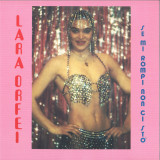
Lara Orfei was part of the Italia Orfei circus and entertainment family dynasty who often had forays into the realm of the record industry and Se Mi Rompi Non Ci Sto is one of the outcomes of that. However, these ventures weren’t always commercially successful as is the case with this record which of course has led to the an original copy becoming very difficult and expensive to acquire. However, it most certainly can be considered an artistic success - with Lara Orfei’s strange, otherworldly voice melted perfectly with the track’s cosmic electronics - which are also able to stand alone and shine through in the Instrumental version on the B-side. Having been released on seven inch, we are more than happy to bring this cult classic of Italo Disco onto 12 inch format for your enjoyment with the inclusion of extended edit by Castro to further facilitate dancefloor transcendence.
out of Stock
Last delivered 16 months ago available to reorder, subject to availability
ascha Funke is creating a long overdue monument to an almost forgotten cultural artefact of the GDR: the ‘Germina Speeder’ was the only skateboard made in East Germany before reunification and was launched in 1986. It was produced by VEB Schokoladen-Verarbeitungsmaschinen (a state-owned chocolate processing machine factory) in Wernigerode and was therefore affectionately known as the ‘chocolate board’. However, it was hardly suitable for actual skateboarding due to technical inadequacies. It is not known whether Sascha himself owned such a board, but the tracks on the ‘Germina Speeder’ EP definitely roll better than the original. The opener ‘Blaupunkt’ breathes the euphoric spirit of the legendary Berlin club ‘E-Werk’, while the title track would have been more at home at the ‘Dubmission’ parties in the Turbine. Sascha leaves the 90s behind with radiant positivism; ‘Bo Knows’ sounds more like a 2000s open air at Café Schönbrunn. The EP closes with ‘Mastermind’, a high-octane psy-proghouse banger that, like all four tracks, quotes the past but still has both feet on today’s dance floors. Or rather, is dancing. 4:1 for love!
Sascha Funke setzt einem nahezu vergessenen Kulturgut der DDR ein längst überfälliges Denkmal: Der “Germina Speeder” war vor der Wende das einzige in Ostdeutschland hergestellte Skateboard und kam im Jahre 1986 auf den Markt. Es war ein Erzeugnis des VEB Schokoladen-Verarbeitungsmaschinen aus Wernigerode und wurde daher liebevoll auch als “Schoko-Board” bezeichnet. Zum eigentlichen Skateboardfahren war es allerdings aufgrund von technischen Unzulänglichkeiten kaum zu gebrauchen. Ob Sascha selbst ein solches Board besaß ist nicht überliefert, aber die Tracks auf der “Germina Speeder” EP rollen allemal besser als das Original. Der Opener “Blaupunkt” atmet den euphorischen Geist des legendären Berliner Clubs “E-Werk”, während der Titeltrack eher bei den “Dubmission” Parties in der Turbine gelaufen wäre. Mit strahlendem Positivismus verlässt Sascha die 90er; “Bo Knows” klingt eher nach einem 2000er Open Air am Café Schönbrunn im Volkspark Friedrichshain. Die EP schließt mit “Mastermind”, einem hochoktanigen Psy-Proghouse Knaller, der wie alle vier Tracks zwar das Vergangene zitiert, aber dennoch mit beiden Füßen auf den Tanzflächen von heute steht. Beziehungsweise tanzt. 4:1 für die Liebe!
out of Stock
Last delivered 7 months ago available to reorder, subject to availability
Mutant, in partnership with Studio Ponoc, are proud to present the soundtrack to their latest animated film The Imaginary, now streaming on Netflix worldwide.
From the studio that brought you Mary and The Witch’s Flower (2017) and Modest Heroes (2019) comes a new sweeping and epic animated feature film based on the novel by A.F. Harrold. Studio Ponoc’s The Imaginary tells the story of Rudger, the made-up and invisible friend of young Amanda, through his eyes as he traverses the magical liminal spaces that Imaginaries inhabit, the dangers they face, and their adventures.
The original score is full of genre swings and poignant beauty. Bouncing from imaginary Yeti attacks, to Venetian Banquets, and Submarine battles, all while deftly navigating joy, and grief and everything in between - Kenji Tamai & agehasprings take us all on a journey that helps us find our imaginations again.
The anthemic closing track of the film, "Nothing's Impossible", written and performed by A Great Big World featuring Rachel Platten. We are proud to present it for the first time in any physical form.
This limited edition release features original artwork by Tom Whalen (continuing his Studio Ponoc series from Mary and the Witch's Flower), and pressed on 2x 140 gram "Zin-Zan Eyes" color vinyl
Disco-boogie benchmark release from the West End deep vaults. Mixed by Larry Levan this is a bonafide classic from the era.
Originally released in 1981 - this release has been digitally remastered for 2015 and releases in conjunction with the West End rights holders.
"My heart beats for the one I love"
At last, another chance to get a classic soul masterpiece on 7” vinyl, even if you can score an original copy for about £800.
Timeless Legend were Jackie Hogg, Allen B. Burney, Donald Harmon, and Michael Harmon from Columbus, Ohio. Their music is among the most elusive on the rare funk/soul scene with the 7” of “I Was Born To Love You” a huge crossover club. Few have actually ever set eyes on this album either, and those who own one have paid £2,000 for the privilege.
Tapper Zukie's 'Black Man' album originally came out in 1978 as a Jamaican only release on Tapper's' Stars imprint. Long deleted it has become a classic in Mr Zukie's vast cannon of musical biscuits and is well overdue this worldwide release for the first time.
Tapper Zukie (b1956. David Sinclair, Kingston, Jamaica) was raised in the rough and tough West Kingston area of Jamaica, between the districts of Trench Town and Greenwich Farm. Living pretty much on the streets from an early age, the youths including the young Tapper had no choice but to fall into the hands of the Political Parties that controlled various ghetto areas of the town. Music seemed like the only way out of a life of crime and gang culture. A path that Tapper Zukie found by the mid 1970's was establishing himself as a named star on the DJ Roots circuit. Back home in Jamaica he was also getting a name for his production work for other local singers such as Prince Allah and the group Knowledge. To release these productions and his own material in Jamaica, Tapper started up his own label called Stars. It's this label that saw the initial release of this album 'Black Man'. A great collection of Tapper tunes such as his biblical cut 'My God Is Real', 'Revolution' and the tile track of this collection 'Black Man' and some work overs of some of his felloe Jamaican Artists like 'Poor Man Problem' a work over of Johnny Clarke's ' Blood Dunza' and also Mr Clarke's Leggo Violence'. 'Yaga Yaga' re working Horace Andy's and Tapper's big hit 'Natty Dread ah She Want'. 'Gather Them' a reworking of Knowledge's tune of the same name with the help from bands like Jah Wisdom and Delroy Fielding. A great collection of tunes and reworkings that we hope will find a wider audience with this release.
For the CD issue of this release we had added Tapper's 'Liberation Struggle', 'Get Ready', 'Prophesy' and 'Fire Bun' tracks from Tapper Zukie's back catalogue that seem to sit well and follow the theme and meanings of the 'Black Man' album.
out of Stock
Last delivered 4 years ago available to reorder, subject to availability
2019 Repress of one of the most outstanding records in the history of german avantpop/punk. Originally released 1981 on the legendary ZickZack label, the debut LP by Freiwillige Selbstkontrolle soon reached cult status and became one of the most important NDW / german postpunk releases ever. Active since today (and right now working on their 13th longplayer) F.S.K. were one of John Peel's all time favourites and actually did more Peel Sessions than any other band - besides The Fall, of course. Comes with extensive liner notes by NDW-historiograph Frank Apunkt Schneider (in german).
Running Back’s Double Copy subsidiary for house music history returns with four musical masterpieces from Chicago, London and an international cast from Italy on its first various artist sampler.
Originally released on Roy Davis Jr.’s Undaground Therapy outlet, Destination Heaven by the enigmatic Earth Boys project delivers a piece of cloud-nine-deep-house that was a staple at Frankfurt’s Wild Pitch Club and during the early days of its successor Robert Johnson. Produced by Cloudy Eyes and Cole Brooks, we unfortunately have never heard from the duo again. Luckily, Family of Few have been a little bit more productive. Also known as Mind Readers, Kevin Elliot and Billy ‚Jack“ Williams produced some of the more tender moments on Detroits 430 West label. Intervoles is amongst the most peculiar and catchy tracks that slow-burning dance floors can hope for.
The flip side turns the attention to the conclusions that Europe drew from its US-role-models. Released in 1992 on Rena Records with the involvement of New York’s JoVonn (a distinct genius of deep grooves himself), the keyboard skills of Pierre Audetat and the production work of I. Betti, M. Clemente and W. Brown, Dummy Head is one of a kind. Swirly echoes, dubby textures and a heavy bass line mate on the Edit Mix of I Have Been Wanting You to create one of the very first examples of fully formed dub-house.
Similar pioneering properties can be ascribed to the work of Rob Mello. We don’t have enough room here to list all his merits, but rest assured that the UK’s house scene wouldn’t be the same without him (Luxury Service Records, Classic et al). Under the Karim guise, Mello delivered a unique stroke of genius. Distilling the essence of deep house, while looking far into the future, In My Mind is many things at once: broken beat, electro, house with embracing chords, and – if you will – a warm-up banger. and does, what all the tracks in here do: turning heads then, turning heads now. Hardcore Deep House!
out of Stock
Last delivered 6 months ago available to reorder, subject to availability
Carrying the torch of psychedelic cumbia, with a healthy dose
of surf guitar and Amazonian dancefloor flourishes from Peru
and Brazil alike, Fiesta en la Jungla by Los Dexter’s de Uchiza
is the first release from the newly formed London-label Ritmo
del Barrio. Originally released in 1982, it captures the finest
cumbia being made in Peru at the time, decked out with
frenetic surf-rock guitar riffs, rhythms floating on crisp
cumbia percussion and occasionally punctuated by carimbó
breakdowns native to the Pará region of north-eastern Brazil.
The album is filled with energy, a gem that was always
intended to animate any dancefloor. Peruvian cumbia came to national attention in the late 60s
through the recordings of Juaneco y su Combo, Los Destellos
and Los Wembler’s de Iquitos, but it’s had many revivals, and
Fiesta en la Jungla arrived when the style was going through a
major transition. In 1977, a passenger plane carrying most of
the members of Juaneco y su Combo crashed, killing everyone
on board. In 1980, Los Destellos retired, and Los Wembler’s
released their tenth and final record, they were ready for a
break. This left a big void in Peruvian music. Wasting no time,
Los Dexter’s Emerson Ruiz Mosquera took the opportunity and
gave his band new life, filling the band’s ranks with young and
energetic musicians who were hungry for success. He built the
new band around a solid base of dexterous guitars, a dynamite
rhythm section, and added oodles of percussion and an electric
organ, giving them a powerful psychedelic sound that called
back to the sounds of the original chichamasters, but added a
new sheen. Along with bands like Los Shapis and Los Walkers
de Huánuco, Peruvian cumbia was reborn as chicha in the
1980s, and was now the sound of Peru’s barrios up and down
the country.
Based in the city of Uchiza, on the edges of the Amazon basin,
Los Dexter’s were uniquely located in central Peru, closer to the
largest urban centres of the country than Amazonian outposts
like Pucallpa or Iquitos, and therefore better positioned to
travel to the furthest reaches of the country with ease. In a
sense, Los Dexter’s were a bridge between the Amazon and the
rest of Peru, a bridge over which the sounds of Amazonian
cumbia could travel to the rest of the country on their way to
becoming one of the most ubiquitous elements of Peru’s musical
identity. Fiesta en la Jungla represents Los Dexter’s in their third
iteration. Led by Emerson Ruiz Mosquera, who was just a
young boy in 1970 when his older brother founded the group
with four of his friends, the ensemble by the time of Fiesta en la
Jungla included Orlando Abad on the timbales and lead vocals,
Lucho Bendezú on lead guitar, Javier Quiroz as second
guitarist, Alejandro Almeira on bass, Rufino Bustamante on
keyboard, Ramon Siu on bongos and bells, Ivan Rios on conga,
and Emerson as musical director and composer. Remarkably,
most of the group’s members helped to write at least one
track, Los Dexter’s were a collective endeavour.
Reissued on vinyl for the first time by Ritmo del Barrio, this
record is essential for any collector of Peruvian cumbia.
Showcasing the unique sound of Los Dexter’s, it carries hits
like “Fuga en la Selva” and “El Shiringuero”, which are sure to
set any dancefloor on fire, combined with slower, carimbó-
infused cumbias like “Fiesta en la Jungla,”and “Agua de
Cachilde.” Its closing track, “Tragedia en Uchiza'', is a key
piece of local history and tells of the flooding of the
Chontayacu River in 1982, a mortal tragedy that affected
thousands of people. Despite the subject matter, the album
maintains a joyful vibe throughout, with high energy riffs and
irresistible rhythms, contrasted with terse love ballads, like “A
Jhenny.” It is both a piece of musical history, and a sure-fire
tool for the dance floor.
Los Dexter’s became a fixture of festivals and celebrations in
the provinces of San Martin and Huánuco, and from expanded
across the country, taking Amazonian cumbia from the
Peruvian Amazon, to the heights of the Peruvian sierra, the
coastal plains, and the capital city of Lima.
Muireann Bradley is a young blues, ragtime, roots and folk guitarist and singer based in Ballybofey in County Donegal Ireland. “This is my first album. Most of these tunes were originally recorded by the great blues men and women who were making records from the 1920s and 1930s right up in some cases to the early 1970s. I have also found inspiration for the renditions recorded here in the playing of some of the musicians who began recording this music in the 1960s and later, and who in some cases learned at the feet of the greats. Many of these guitarists played pivotal roles in the 1960s blues revival and subsequent “rediscovery” of many of the greats of country blues. I grew up steeped in these old blues in the hills overlooking the valley of the River Finn just outside the town of Ballybofey in County Donegal. My father would play this music constantly at home and wherever we went in the car and talk about it endlessly whether anyone was listening or not, telling stories about the lives of these musicians as if they were legend, mythology or the evening news. My father could of course play all this stuff on guitar, I remember watching him when I was very young and thinking “I want to be able to do that”. When I was nine he agreed to teach me and bought me my first little travel guitar. I worked hard to learn how to play but as time wore on I seemed to have less and less time to practice as I became more and more invested in the combat sports I was regularly training and competing in. Then in March 2020 the first Covid lockdowns happened and all contact sports were shut down. I was lost for a while but soon found my way back to the guitar. I was now listening, playing and practicing with a new intensity and focus. In a very serious moment, I wrote out a list of tunes I was going to learn. The first tune on that list was Blind Blake’s “Police Dog Blues”. I’m not sure now how long it took to get that arrangement together but when it was ready we videoed me performing it and posted it on YouTube. It ended up getting a lot of attention, I remember my parents being quite shocked and soon after that Josh Rosenthal got in touch… and here we are! Each individual track on this album was recorded live in the studio and represents one entire take with me singing and backing myself up on guitar simultaneously. Most are either first or second takes. Nothing has been added or taken away, no overdubs or modern recording tricks of any kind have been used at all so at least in some respects this album has been recorded in the same way as those classics of the 1920s and 1930s
(Limited edition to 500 copies, remastered audio, pressed and printed in Indonesia) The 13 tracks contained in this compilation “Begadang: Soneta Group Best Songs, 1975-1980” are some the most innovative music that came out of Indonesia’s music scene in the 1970s, tunes that has cemented Rhoma Irama’s status as the king of the genre.
Dangdut is the biggest musical genre in Indonesia. Dangdut, onomatopoetic name from the sound of hand drums used in this type of music, is what reggae to Jamaicans, country to Americans or skiffle to mid 20th century British people. And in this genre of dang dut, the name Rhoma Irama looms large. He is until today the undisputable king of dangdut and his role as pioneer of the music is already in the history book. In fact, there's one book documenting the outsized role of Rhoma in establishing dangdut as the father of this music. The book is aptly titled Dangdut Story, written by Pittsburgh University music professor Andrew N. Weintraub.
Among Indonesian fans of dangdut, there’s this one misconceptions that dangdut music is that it is an indigenous art form from Indonesia and that it constitutes an amalgamation of local, traditional music of this Southeast Asian nation, with Malay music being the most prominent feature in the mix.
Dangdut pioneer Rhoma Irama is among the first to reject this assertion. “Dangdut music may have originated in Deli (in North Sumatra) but then got the influences from the West and India”, he said.
Indeed, most of Rhoma’s well-known compositions may have been influenced by Indian tunes but some of his best quality works owed much to the West.
Rhoma had long found home in Western pop music. In the early 1960s, after honing his guitar playing skill, Rhoma set up his first band Gayhand to play the tunes of The Beatles, Paul Anka and Tom Jones. In 1972, Rhoma won best singer title in a Southeast Asia singing competition in Singapore playing Tom Jones “I Who Have Nothing.”
Yet, nothing changed Rhoma’s fortune in the music industry, to a point where he decided to leave pop and switched to playing Orkes Melayu (Malay Orchestra) music, first with Orkes Melayu Purnama and later with Soneta Group.
His career soon took off with Soneta, especially after he introduced what ethnomusicologist William H. Frederick considered as “theatre”, through which Rhoma borrows many elements from stage performances of British and American rock bands. These elements, kitsch and pomp, he liberally adopted and became an inseparable part of dangdut itself; tight pants, long hair, platform shoes, glitter and glamour which would not be out of place in Elton John and David Bowie stage show.
And this is actually the contradiction of Rhoma’s brand of Malay music. “One might legitimately ask how imaginative, not to say bizarre, costuming and dancing with abandon could be related to some of the objectives of Rhoma has set for himself and soneta group”, Frederick wrote on his seminal work on the singer, Rhoma Irama and the Dangdut Style: Aspects of Contemporary Indonesian Popular Culture, published in 1982.
From technical point of view, Rhoma not only replaced the acoustic elements from Melayu Music with electric instruments but also created new synthetic sounds that has never been attempted before in Indonesia’s music industry.
Detractors like to point out how much he was indebted to Deep Purple, but a closer inspection reveals how he in fact had mined his influences even deeper.
Notice how Rhoma reproduced funk, which is all the rage in early 1970s, in the song “Santai” (Relax), this album’s closer or “Credit Title (Instrumentalia)” which opens this Darah Muda (Young Blood) soundtrack. The rubbery bass lines that open both songs can easily find home in any Sly and the Family Stone’s or Isaac Hayes’ tunes from that era. Other highlights of the song is the funky guitar licks and the droning Hammond a la George Clinton that stabs deep in the record groove. In the guitar solo, you can also hear the bark of George Harrison’s licks from “Taxman”.
The 13 tracks contained in this compilation “Begadang: Soneta Group Best Songs, 1975-1980” are some the most innovative music that came out of Indonesia’s music scene in the 1970s, tunes that has cemented Rhoma Irama’s status as the king of the genre. Only 500 copies were pressed for this compilation.
Der Soundtrack von 'KNEECAP', mit Musik von der Band sowie Bicep, Fontaines DC und Orbital, ist als Doppel-LP im Gatefold-Design auf farbigem Vinyl erhältlich. Er enthält auch Filmmusik von Michael ‘Mikey J’ Asante MBE und Ausschnitte aus den Dialogen des Films.
- Ltd. Col. 2LP: (LP1 Orange / LP2 Green Vinyl)
out of Stock
Last delivered 19 months ago available to reorder, subject to availability
US-Thrash-Metal-Klassiker aus dem Jahr 1987 wird neu aufgelegt, erstmals auf CD, remastered und mit einem zusätzlichen, unveröffentlichten Track
von den Originalaufnahmen!Wenn es um Diskussionen über klassischen Thrash geht, ist es ehrlich gesagt gar nicht so selten, dass E-X-Es Debüt
„Stricken By Might“ hin und wieder erwähnt wird. Wenn ein Album so viel Metallic Steel in sich trägt, können wir definitiv verstehen, warum viele
Fans dieses Album lieben. E-X-E steckten mitten in der Thrash-Explosion fest, ein wenig zu spät für die „No Rules“-Veröffentlichungen von 1985 wie
das Debüt von Agent Steel, und das war vor den frühen 90ern, als es schien, als müsse jeder eine perfekte Produktion haben. Verstehen Sie uns nicht
falsch, auch wenn wir Alben wie „Victims Of Deception“ von Heathen oder „By Inheritance“ von Artillery lieben, sehnen wir uns oft nach ein wenig
Rohheit, einer amateurhaften Note, die sagt, dass diese Jungs einfach nur Spaß haben. Das Debüt von E-X-E erfüllt all diese Kriterien mit Sicherheit.
The award-winning film Vengeance Is Mine, All Others Pay Cash (2021) is romantic drama set in a working-class neighbourhood of Indonesia’s West Java. Although the story was set in the 1980s, the film’s music director Dave Lumenta doesn’t really want to use music from that period. He doesn’t want to automatically go with dangdut, the musical genre, a mix of Malay, Indian and modern pop music, the music of choice for majority Indonesia’s working class. He simply doesn’t want the film to be stuck in the time setting and the social class. The scoring is richer, not only was it inspired by dangdut, but it was also inspired by rock as well. In order for his imagination to be free of that time and social context, he decides to make music that was based on the characters, otherwise known as leitmotif.
Lumenta is interested in vulnerability, because it is something that the audience can find in the main character Ajo Kawir, an impotent who is unable to have an erection. Another main character Iteung is someone who is very liberal in terms of her sexuality, but she also struggles with an issue as well, which is their issues, a traumatic past. The film successfully portrays the clash of these two characters. And from identifying these two characters, the composer creates a melody or leitmotif that represents each character. The use of analogue instruments is also consistent with the film’s spirit, which is also shot using analogue camera. Lumenta created the music using acoustic instruments, such as the recorder, along with other sounds from an analogue synthesizer.
The sound produced may not be perfect, just like the are grainy quality of an analogue film, due to limitation of the medium. But it is precisely due to that limitation that the eyes and ears are compelled to watch and listen actively; we must squint to catch something more perfect, or listen closely to filter out imperfections in the sound. Consuming art created with analogue tools requires a different method of listening, watching, and working process.
1970s New York: determined to emerge from his powerful father's shadow and make a name for himself in Manhattan real estate, aspiring mogul Donald Trump is in the earliest days of his career when he encounters the man who will become one of the most important figures in his life: political fixer Roy M. Cohn. Seeing promise in young Donald, the influential attorney--who secured espionage convictions against Julius and Ethel Rosenberg and investigated suspected Communists alongside Senator Joseph McCarthy--teaches his new acolyte how to amass wealth and power through deception, intimidation, and media manipulation. The rest is history.
Am 28. Februar 2025 machen Stereolab sieben Studioalben erneut als 2LP-Formate erhältlich. Diese verwenden dieselben Remaster wie die erweiterten Vinylausgaben von 2019, die von Bo Kondren bei Calyx Mastering von den Original-1/2-Zoll-Bändern unter der Aufsicht von Tim Gane (Stereolab) geschnitten wurden, jedoch ohne das Bonusmaterial der 3LP-Versionen (die inzwischen eingestellt wurden). Die Idee dahinter besteht darin, Fans und Läden kostengünstigere Formate dieser begehrten Alben zur Verfügung zu stellen. Jede Platte wird im 5 mm dicken Cover mit bedruckten Innenhüllen und einer schützenden PVC-Aussentasche geliefert.
Die Alben:
1. Transient Random-Noise Bursts With Announcements (1993)
2. Mars Audiac Quintet (1994)
3. Emperor Tomato Ketchup (1996)
4. Dots And Loops (1997)
5. Cobra And Phases Group Play Voltage In The Milky Night (1999)
6. Sound-Dust (2001)
7. Margerine Eclipse (2004)
Am 28. Februar 2025 machen Stereolab sieben Studioalben erneut als 2LP-Formate erhältlich. Diese verwenden dieselben Remaster wie die erweiterten Vinylausgaben von 2019, die von Bo Kondren bei Calyx Mastering von den Original-1/2-Zoll-Bändern unter der Aufsicht von Tim Gane (Stereolab) geschnitten wurden, jedoch ohne das Bonusmaterial der 3LP-Versionen (die inzwischen eingestellt wurden). Die Idee dahinter besteht darin, Fans und Läden kostengünstigere Formate dieser begehrten Alben zur Verfügung zu stellen. Jede Platte wird im 5 mm dicken Cover mit bedruckten Innenhüllen und einer schützenden PVC-Aussentasche geliefert.
Die Alben:
1. Transient Random-Noise Bursts With Announcements (1993)
2. Mars Audiac Quintet (1994)
3. Emperor Tomato Ketchup (1996)
4. Dots And Loops (1997)
5. Cobra And Phases Group Play Voltage In The Milky Night (1999)
6. Sound-Dust (2001)
7. Margerine Eclipse (2004)
Am 28. Februar 2025 machen Stereolab sieben Studioalben erneut als 2LP-Formate erhältlich. Diese verwenden dieselben Remaster wie die erweiterten Vinylausgaben von 2019, die von Bo Kondren bei Calyx Mastering von den Original-1/2-Zoll-Bändern unter der Aufsicht von Tim Gane (Stereolab) geschnitten wurden, jedoch ohne das Bonusmaterial der 3LP-Versionen (die inzwischen eingestellt wurden). Die Idee dahinter besteht darin, Fans und Läden kostengünstigere Formate dieser begehrten Alben zur Verfügung zu stellen. Jede Platte wird im 5 mm dicken Cover mit bedruckten Innenhüllen und einer schützenden PVC-Aussentasche geliefert.
Die Alben:
1. Transient Random-Noise Bursts With Announcements (1993)
2. Mars Audiac Quintet (1994)
3. Emperor Tomato Ketchup (1996)
4. Dots And Loops (1997)
5. Cobra And Phases Group Play Voltage In The Milky Night (1999)
6. Sound-Dust (2001)
7. Margerine Eclipse (2004)
Am 28. Februar 2025 machen Stereolab sieben Studioalben erneut als 2LP-Formate erhältlich. Diese verwenden dieselben Remaster wie die erweiterten Vinylausgaben von 2019, die von Bo Kondren bei Calyx Mastering von den Original-1/2-Zoll-Bändern unter der Aufsicht von Tim Gane (Stereolab) geschnitten wurden, jedoch ohne das Bonusmaterial der 3LP-Versionen (die inzwischen eingestellt wurden). Die Idee dahinter besteht darin, Fans und Läden kostengünstigere Formate dieser begehrten Alben zur Verfügung zu stellen. Jede Platte wird im 5 mm dicken Cover mit bedruckten Innenhüllen und einer schützenden PVC-Aussentasche geliefert.
Die Alben:
1. Transient Random-Noise Bursts With Announcements (1993)
2. Mars Audiac Quintet (1994)
3. Emperor Tomato Ketchup (1996)
4. Dots And Loops (1997)
5. Cobra And Phases Group Play Voltage In The Milky Night (1999)
6. Sound-Dust (2001)
7. Margerine Eclipse (2004)
Am 28. Februar 2025 machen Stereolab sieben Studioalben erneut als 2LP-Formate erhältlich. Diese verwenden dieselben Remaster wie die erweiterten Vinylausgaben von 2019, die von Bo Kondren bei Calyx Mastering von den Original-1/2-Zoll-Bändern unter der Aufsicht von Tim Gane (Stereolab) geschnitten wurden, jedoch ohne das Bonusmaterial der 3LP-Versionen (die inzwischen eingestellt wurden). Die Idee dahinter besteht darin, Fans und Läden kostengünstigere Formate dieser begehrten Alben zur Verfügung zu stellen. Jede Platte wird im 5 mm dicken Cover mit bedruckten Innenhüllen und einer schützenden PVC-Aussentasche geliefert.
Die Alben:
1. Transient Random-Noise Bursts With Announcements (1993)
2. Mars Audiac Quintet (1994)
3. Emperor Tomato Ketchup (1996)
4. Dots And Loops (1997)
5. Cobra And Phases Group Play Voltage In The Milky Night (1999)
6. Sound-Dust (2001)
7. Margerine Eclipse (2004)
The first-ever vinyl reissue of 1988’s I Wanna Have Some Fun, perennial pop icon and pin-up Samantha Fox’s third album. The only British female solo artist to score three Top Ten hits on both sides of the Atlantic in the 1980s, Samantha made her name as the nation’s favourite Page Three girl before launching an enviable music career.
I Wanna Have Some Fun features Sam’s irresistible Stock/Aitken/Waterman-produced cover of Dusty Springfield’s ‘I Only Wanna Be With You’ (#16 UK, #31 US) the gold-certified, Full Force-helmed title track (#8 US) and the acidinflected club favourite ‘Love House’ (#32 UK). Samantha’s most danceable, transatlantic and eclectic set so far, I Wanna Have Some Fun reached #46 in the UK and #37 in the US, giving her a third consecutive gold certification. Pressed on striking transparent red vinyl with black and yellow splatters to complement the original aesthetic, this edition boasts painstakingly rebuilt artwork and a newly designed inner bag featuring full lyrics.
A strictly limitededition picture disc is also available. I Wanna Have Some Fun is reissued alongside Samantha’s 1986 debut, Touch Me, and her eponymous 1987 sophomore album.
The first-ever vinyl reissue of 1988’s I Wanna Have Some Fun, perennial pop icon and pin-up Samantha Fox’s third album. The only British female solo artist to score three Top Ten hits on both sides of the Atlantic in the 1980s, Samantha made her name as the nation’s favourite Page Three girl before launching an enviable music career.
I Wanna Have Some Fun features Sam’s irresistible Stock/Aitken/Waterman-produced cover of Dusty Springfield’s ‘I Only Wanna Be With You’ (#16 UK, #31 US) the gold-certified, Full Force-helmed title track (#8 US) and the acidinflected club favourite ‘Love House’ (#32 UK). Samantha’s most danceable, transatlantic and eclectic set so far, I Wanna Have Some Fun reached #46 in the UK and #37 in the US, giving her a third consecutive gold certification. Pressed on striking transparent red vinyl with black and yellow splatters to complement the original aesthetic, this edition boasts painstakingly rebuilt artwork and a newly designed inner bag featuring full lyrics.
A strictly limitededition picture disc is also available. I Wanna Have Some Fun is reissued alongside Samantha’s 1986 debut, Touch Me, and her eponymous 1987 sophomore album.
Mannequin Records proudly presents the debut release from Children Of The Night, a dynamic duo whose music is rooted in cinematic soundscapes. The project brings together Mexican techno producer Alejandro Barba, also known as Dellarge, and French documentary/film producer Pierre Labret, forging a distinctive creative partnership. Their collaboration masterfully combines dark, atmospheric elements with driving electronic rhythms, drawing heavily from the worlds of classic horror and psychological thrillers. The result is a collection of soundscapes that are as eerie as they are captivating, creating an immersive and haunting listening experience.
This album stands as an unconventional horror soundtrack for a film that never came to be—a tribute to the legendary Spanish filmmaker Jess Franco, known for his prolific work in the exploitation and horror genres. Born out of the quiet chaos of the pandemic, this project was originally intended to accompany a slasher film that was halted due to financial constraints. Despite the film’s cancellation, the duo pressed forward, turning the unfinished narrative into an imaginative auditory experience. The soundtrack will serve not only as a homage to Franco but also as a nod to Juan Mendez, better known by his alias Silent Servant, whose dark, minimalist electronic productions have left a deep mark on the underground music scene.
Dellarge and Labret’s creative process is shaped by an eclectic array of inspirations, pulling from both literature and cinema. They’ve cited films such as Franco’s "Paroxismus," "Gritos," and "Faceless" as vital to their sonic direction, as well as the eerie black-and-white imagery of F.W. Murnau's "Nosferatu." Additionally, the duo draws on the disturbing psychological tension of Stephen King’s "Carrie" and "Misery," and the surreal dystopian world of Stanislaw Lem's "Congreso de Futurología." The giallo horror aesthetics of Dario Argento's "Deep Red" also serve as a significant influence, merging surreal visuals with nerve-racking, visceral soundtracks—elements mirrored in Dellarge and Labret's own compositions.
The LP is not only rich with atmospheric storytelling but also boasts a range of remarkable remixes by prominent artists in the electronic music scene. Contributions from Alessandro Adriani, David Carretta, Legowelt, and Broken English Club inject new life into the original tracks, offering reinterpretations that span from industrial techno to Italo disco, further enhancing the project’s depth and versatility. Each remix complements the overarching horror theme while adding a modern, avant-garde twist to the duo’s work.
This debut album promises to be more than just a musical release—it's a vivid exploration of the horror genre through sound, creating a sensory experience that brings forgotten films, unrealized visions, and nightmarish stories to life through music. As the lines between fiction and reality blur, Dellarge and Labret invite listeners into a world where the echoes of lost films can finally be heard.
out of Stock
Last delivered 19 months ago available to reorder, subject to availability
Neu remasterte Reissue des zweiten Studioalbums der australischen Indierock-Band Birds Of Tokyo als Picture Disc. "Universes" (2008) mit den Singles "Broken Bones" und "Silhouettic" verhalf der Band erstmals zu ihrer heutigen Stadiongrösse. Von der Original-LP existierte bislang nur eine limitierte 300er Vinylauflage. Die Picture Disc kommt im Stanzcover samt doppelseitiger
Einlage, die fast haargenau dem Originalcover nachempfunden ist
Soul Jazz Records' Studio One Showcase 45 features a roll call of classic Studio One
reggae legends including Horace Andy, Cornell Campbell, Bob Marley and The
Wailers, Jackie Mittoo, The Heptones, The Skatalites and more – seminal reggae
artists who all launched their careers at the legendary Studio One label.
The album was previously only ever released as a long-deleted limited-edition
seven-inch box set for Record Store Day. This album has now been expanded into a
super double-vinyl album edition as well as first time on CD, with both featuring a
massive eight bonus tracks of wicked Studio One classics and rarities. The album
also comes with newly commissioned sleeve and track notes by Noel Hawks.
Featuring seminal cuts like Bob Marley and The Wailer's original version of 'One
Love', Freddie McGregor's take on the classic 'Beat Down Babylon', Judah Eskender
Tafari's re-version of 'Danger In Your Eyes' plus more from The Skatalites, Lone
Ranger, Johnny Osbourne and more!
Behind Pumuky are brothers Jaír and Noé Ramírez, originally from Icod de los Vinos, a small town in northern Tenerife, in the Canary Islands.
For two decades, despite a tumultuous journey with multiple lineup changes and the challenges of island life, they have managed to build an extensive and highly personal discography with labels such as Jabalina, WeAreWolves, as well as Keroxen. In 2025, they release a new chapter in their story: their 5th album titled No sueltes lo Efímero (Don't Let Go of the Ephemeral).
It has been 10 years since they released a full-length album, though they were never idle during this time. In this interim, they released an EP titled Castillo Interior (Keroxen 2020), which Bandcamp described as "In intricately sculpted songs that are utterly hypnotising, the Ramírez brothers explore the border of dreams & reality" Bandcamp / New & Notable Oct 19, 2020. The EP was later remixed by artists like Xiu Xiu and Dntel (Jimmy Tamborello of The Postal Service). During this period, they also collaborated with Elinor Almenara of VVV Trippin'you on the single Metahackeo (Keroxen 2022), part of the new wave of dark music that emerged after the pandemic years.
Pumuky also have an extensive live history, having played in Europe and Latin America, with appearances at major festivals such as Primavera Sound, WOMAD, and the Mexican NRMAL.
No sueltes lo efímero will be released on February 28 through Keroxen, a collective that, in addition to being a platform and label for the best of the Canary Islands' underground scene, organises a small, unique music festival inside a giant abandoned kerosene tank in Santa Cruz de Tenerife—an event that has already garnered praise worldwide.
The album was recorded at La Mina Studios (Granada, Spain) with Raúl Pérez, one of the most respected producers in the Spanish music scene, and then mastered by Rafal Anton Irisarri, a key figure in the ambient world who also appreciates the power of guitars.
In No sueltes lo efímero, Pumuky return to their signature sound, although they have never completely abandoned it: an abrasive slowcore with controlled crescendos and raw, unfiltered lyrics, sometimes bordering on the intensity of dirty shoegaze, at other times leaning into dream-pop passages, but always with the unique stamp that has characterised them from the start.
A rare breed, difficult to categorise, Pumuky write songs as if performing escape tricks.
green trax vol. 2 is the second collection on trip of classic material from steve o'sullivan's green label, originally recorded between 1996 and 2005.
these tracks capture steve's unique approach to minimal techno, heavily influenced by the innovative sounds of robert hood, jeff mills, and terrence dixon.
recorded live in one take directly from the machines, this collection embodies raw, unpolished energy - a tribute to the spontaneity of studio experimentation. several of the tracks included were previously released on green and recontextualised for trip.
out of Stock
Last delivered 4 months ago available to reorder, subject to availability