Los Angeles independent label Minky Records is issuing
two crucial, hitherto unheard slices of music recorded in the
’80s by the late L.A. punk rock legend Jeffrey Lee Pierce
and his band The Gun Club.
On June 12, the company will release an exclusive single
version of the Pierce original “Bad Indian” and a cover
of Jody Reynolds’ “Fire of Love.” This Minky 45 will be
accompanied by an even more impressive vault discovery:
Soulsuckers On Parade, a full-length 1984 Pierce solo
recording drawn from an abortive session for the cowpunk
compilation album Don’t Shoot, first released by Zippo
Records in the U.K. The vocalist is supported by an allstar
unit comprising guitarist Dave Alvin, drummer Bill
Bateman, and the late pianist Gene Taylor, then of the hot
L.A. roots combo The Blasters, and bassist Jack Waterson
of Green On Red; Chris D. (Chris Desjardins, who also
produced the date) and The Gun Club’s Kid Congo Powers
guest on background vocals.
Featuring covers of songs originated by Willie Nelson,
Big Joe Turner, and Creedence Clearwater Revival, a wacky,
profane blues Pierce improvisation called “New Way of
Walkin’’, and a rampaging, demented seventeen-minute
original, “Walkin’ Down the Street (Doin’ My Thing)”,
the album will be issued as a limited edition Kelly-green
vinyl LP on Record Store Day (June 12), and an unlimited
expanded CD package (with studio chatter and improvised
vocals and jams) on the same day.
This very special reissue celebrates the 21st anniversary of the release of Argentinian Juana Molina’s breakthrough album ‘Segundo’ in 2000.
It has been remastered from the original tapes, and augmented with a rich 32-page booklet recounting the eventful start of Juana’s musical career, and containing numerous notes, anecdotes, original drawings and previously unreleased pictures.
Contributors to the booklet include Bruce Springsteen’s producer Ron Aniello, Domino Recording’s Laurence Bell and David Byrne who, when he discovered the album, immediately invited Juana to open for him on his 2003 US tour.
‘Segundo’ started Juana Molina’s international trajectory as a musician. After dropping a highly-successful career as a TV comedian, she turned to music making. Regretting signing with a major company, who got her to record an over-produced debut album, she resolved to find her own direction in music.
The result was ‘Segundo’ that took 4 years to make involving sessions in Argentina and the USA.
Segundo’ finally came out on a small label in Argentina in 2000, found its way to Japan where it spectacularly took off, and was eventually picked up by the Domino label in 2003. Its reception set Juana Molina on course for performing around the globe, garnering a large, devoted fan base, and going on to record five more extraordinary studio albums.
out of Stock
Last delivered 5 years ago available to reorder, subject to availability
The time is now right for the Witch Doctor to put a spell on us with two sparkling soul songs that were originally released on WD Records in 1977 with 'How Can I Win Your Love' and 'All I Know, I Love You'. Witch Doctor originally pressed up 100 promotional copies to give away free at his concerts. As far as we're aware there's only two known copies these days in circulation, although we're aware that there could be more.
When we first heard 'How Can I Win Your Love' and 'All I Know, I Love You' the first thing that came into our mind was the similarity with the mid 70s Betty Wright sound. It all made sense when the Witch Doctor confirmed that he used two session musicians from Betty Wrights backing band of the time to record the songs . The Miami sound is clearly evident in both songs.
out of Stock
Last delivered 5 years ago available to reorder, subject to availability
- Available for the First Time on Vinyl - Deluxe Old Style Tip-On Gatefold Packaging with 180 Gram - "Yellow Raincoat with Blood Red Splatter" Colored Vinyl - Insert with Liner Notes and Original 1976 Recording Session photography // Waxwork Records is thrilled to present the debut release of ALICE, SWEET ALICE Original Motion Picture Soundtrack by Stephen Lawrence. Alice, Sweet Alice is a 1976 American Slasher-Horror film directed by Alfred Sole and starring Brooke Shields in her film debut. Set in 1961 New Jersey, the film focuses on a troubled adolescent girl who becomes the suspect in the brutal murder of her younger sister at her first communion, as well as in a series of unsolved stabbings that follow. In the years since its release, Alice, Sweet Alice has gained a cult following and is considered a contemporary classic of the slasher sub-genre in critical circles. It has also been the focus of scholarship in the areas of horror film studies, particularly regarding its depictions of Roman Catholicism, child emotional neglect, and the disintegration of the American nuclear family. The film's chilling score was composed by Stephen Lawrence. Lawrence is an American composer that has scored more than 300 songs and musical cues for Sesame Street, resulting in three Emmy Awards for Outstanding Achievement in Music Direction and Composition. The music of Alice, Sweet Alice features heavy usage of dissonant strings, repetitive keys, church organ, and motifs that segue from eerily mischievous and playful to dread-inducing and utterly haunting. Available for the very first time in any format, the complete soundtrack to Alice, Sweet Alice comes available on 180 gram "Yellow Rain Coat with Blood Red Splatter", deluxe packaging with new artwork by Steven Reeves, old-style tip-on gatefold jackets, a heavyweight insert, exclusive composer liner notes, and original recording session photography.
“Any other singer can sing a love song and the audience will think about lovers lost and found. When I sing a love song it is a metaphor for the yearning of a subjugated people to be free.”
Miriam Makeba’s ‘Keep Me In Mind’ was her last album for Reprise and reflected major changes in both her own personal life and politically within the USA. After becoming a national star globally following the success of ‘Pata Pata’ in 1967, she had fallen out publicly with her mentor and ‘Big Brother’, Harry Belafonte. Makeba made the decision to return to Africa following an invitation from President Sékou Touré of Guinea. In Conakry, Makeba met Stokely Carmichael, President of civil rights organisation the SNCC and they would later marry. “With the Vietnam War, the student protests and the riots in the ghettos, everyone is scared,” Makeba said. “Everyone is afraid that there will be a great black uprising.” Makeba’s concerts were widely cancelled and both her and Carmichael were followed relentlessly by the FBI.
Reprise also terminated her contract but brought in producer Lewis Merenstein for her final recording for the label, best known for his work with Van Morrison on ‘Astral Weeks’. Merenstein suggested two Van songs for Makeba to cover, ‘Brand New Day’ from the ‘Moondance’ sessions and ‘I Shall Sing’ and further songs were added to reflect both the political climate and Makeba’s own memories including Stephen Stills’ ‘For What It’s Worth’ and Lennon & McCartney’s wistful ‘In My Life’. New compositions by Makeba and her daughter Bongi included ‘Lumumba’, a personal tribute to Congolese independence leader, Patrice Lumumba. Reflective of the times, the album is infused with a palpable despair but, as in all of her music, a quiet determination still shines through.
This new reissue of ‘Keep Me In Mind’ is presented in its original artwork and features rare photos and new extensive liner notes by Francis Gooding of The Wire. Remastered from the original tapes by The Carvery.
- Definitive edition of Miriam Makeba’s final album for Reprise in 1970
- Remastered by The Carvery from original reel to reel tapes
- 1LP and 1CD feature brand new sleeve notes by Francis Gooding of The Wire + rare photos
Lotus Wash drops his debut album on LBD Sounds, bringing a whole load of fresh material which came out from his experience as a session musician, and performing his experimental live sets around the Czech Republic. He connects the dots between classically trained musician and modular synth-head, working in Prague's DIY shop and creative community Noise Kitchen. The album spans across 6 original tracks of pure analogue bliss and live ideas, alongside three remixes from his closest allies, local producers Oliver Torr, Vision of 1994, and Hrtl.
The Field Theory was created during a period of deep fascination with quantum physics, with the tracks being conceptually and aesthetically inspired by some of its phenomena. Acoustically, it's mostly a slow and dark affair, with Lotus Wash only letting the light in very briefly when the sun is young (Magnetic Moment), keeping the shutter firmly closed for the rest of the record. His music does not rely on banging beats to drive it, instead letting intense grooves do the job from deep underground, just like on earth-shattering album opener Vacuum Fluctuation. He masters his craft of building atmosphere, a skill learnt during multiple collaborations with various Czech theatres. Of course, he lets the steam out occasionally, and always with devastating effect (Higgs Field, Casimir Force), but mostly choses to keep it capped, humming and hissing. When the sky clears, he opts for a minimalistic and hypnotic approach, only to disturb this peace with a killer bassline in one of the album's highlights – Spooky Action in A Distance – later re-imagined and re-electrified by Oliver Torr. Standard Model is anything but your standard techno, while Hrtl's remix of Magic Moment flirts with techno too, but on a dubbier and brighter side. Bringing the album to a close is Vision of 1994's downtempo take on the same track, finally letting you breathe out.
Green yellow red splatter vinyl
Into the Future’ is the ninth studio album by the American hardcore punk band Bad Brains, which was originally released on November 20, 2012 on Megaforce Records.
t is a tribute dedication to Adam Yauch of the Beastie Boys, a longtime friend of he band who died of cancer six months before its release, and produced their previous album ‘Build a Nation’
This “Into The Future’ vinyl reissue is on green, yellow and red splatter vinyl in gatefold packaging featuring cover art by Shepard Fairey, a street artist who became widely known with his Barrack Obama “Hope” poster used in his 2008 campaign. His work has been included in many contemporary art museums luding the Victoria and Albert Museum in London.
Billy Harper is one of the great tenor saxophonists in the post-Coltrane mold. Originally from Houston, TX and with a degree from the venerable University of North Texas College of Music, Harper emerged on the New York City jazz scene in the late 1960s performing with Art Blakey, Max Roach, Lee Morgan and others. Known for his soulful and propulsive tone, Harper was already a highly regarded and prolific session man before the release of his debut album as a leader on the cult favorite Strata-East label in 1973.
Recorded in 1975, Black Saint was the second album for Billy Harper as bandleader and is the most acclaimed and fully realized of his long career. The inaugural release of the Italian label Black Saint – to which the album lent its name – is comprised entirely of Harper compositions; the peaceful and subdued opener “Dance, Eternal Spirits, Dance!,” the swinging and fiery “Croquet Ballet” and the side-long epic “Call Of The Wild And Peaceful Heart.” Harper’s group features trumpeter Virgil Jones - a graduate of Roland Kirk’s mid-60s groups and session player for McCoy Tyner, Charles Tolliver and others - along with Joe Bonner on piano, David Friesen on bass and Malcom Pinson on drums.
Black Saint is too melodic and swinging to be free jazz but too forward-thinking to be described as modal post-bop; Harper’s advanced compositional sense and galvanic tenor work make this an album of pure fire music. This is a beautiful album back into print on its original format for the first time in over 40 years.
Reissue on vinyl of the 2006 collection of PJ Harvey sessions with the late BBC Radio 1 DJ John Peel, spanning recordings from the start of her career in 1991 up to 2004. Reissue is faithful to the original recording and package, with cutting by Jason Mitchell at Loud Mastering under the guidance of longtime PJ Harvey producer John Parish.
out of Stock
Last delivered 5 years ago available to reorder, subject to availability
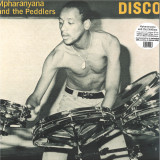
Kalita are proud to announce the first ever official re-release of Mpharanyana & The Peddler's 1979 South African disco and funk recordings 'Disco' and 'Freak Out With Botsotso', backed by a devastating extended edit of 'Disco' courtesy of Amsterdam-based DJ and producer Jamie 3:26. Cut on a loud 12" single and accompanied by an extended edit of 'Disco' courtesy of Jamie 3:26, this truly is another no-brainer from the Kalita camp.
Born on 15th November 1949 in Kattlehong, South Africa, Jacob ‘Mpharanyana’ Radebe was one of South Africa’s greatest ever musicians, releasing a canon of legendary soul, jazz and disco albums before his untimely death in August 1979 at the age of just twenty-nine.
Here, Kalita select his highly sought-after disco and funk recordings ‘Disco’ and ‘Freak Out With Botsotso’, both selected from his 1979 invisible final album, ‘Hela Ngwanana’, re-releasing them for the first time in forty years. Including Paul Simon and Herbie Hancock session musician Bakithi Kumalo on bass and Themba Mokena of Dick Khoza ‘Chapita’ fame on lead guitar, the recordings feature some of the country’s top contemporary musicians joining forces to glorious effect.
With the original album currently fetching eye-watering prices on the rare occasion that they turn up for sale, the time is now ripe to share this masterpiece with the world once more.
out of Stock
Last delivered 6 months ago available to reorder, subject to availability
A new title in the series of full-album reissues that Vampisoul (co-produced in collaboration with Little Butterfly Records) is releasing as a valuable addition to the largely acclaimed compilation “América Invertida”, focusing on the obscure leftfield pop and experimental folk scene from ‘80s Uruguay, making some of these elusive and essential albums available again.
Hugo Jasa aimed to merge the glamour of the 80s (drum machines and Yamaha DX7 and Roland D50 synthesizers command the timbre of the album) with Uruguayan Afro-candombe sound in his songs. A deep bench of national talent, as Eduardo Mateo, Hugo Fattoruso, Jorge Galemire or Mariana Ingold, took part in these sessions. The album was originally released in 1990 with a single pressing of 300 copies, and then recently rediscovered by new generation of DJs, musicians and hardcore record collectors around the world thanks to the internet, reaching a cult status and becoming a top want.
Hugo Jasa’s “Estados de ánimo” is reissued here for the first time, in its original artwork with an extra OBI and including an insert with liner notes by Uruguayan music writer Andrés Torrón.
out of Stock
Last delivered 2 years ago available to reorder, subject to availability
Following on from their ‘Insect-Talk’ 12”, O Yuki Conjugate return to Utter for the vinyl version of their most recent album ‘Sleepwalker’.
‘Sleepwalker’ documents O Yuki Conjugate’s 2017-2019 live shows but also doubles as the soundtrack to a film of the same name by founder member Andrew Hulme. The music and images were conceived together and the resulting album comprises 10 tracks taken from 24 live performances in nine countries across Europe. ‘Sleepwalker’ captures OYC’s current musical direction, a blend of plangent keyboards, abstract guitars and electronic rhythms, presented in OYC’s inimical style.
Originally released in 2019 on CD by German label Auf Abwegen, ‘Sleepwalker’ is finally available in vinyl form complete with three additional live studio recordings from OYC’s ‘Flesh and Bones’ NTS session of the same year.
The album features a contribution from musician and actor Keeley Forsyth on ‘Eyelids Burn’ (courtesy of Leaf Records). It was mixed and mastered by Nurse With Wound’s Colin Potter and then transferred and cut by Helmut Erler at Dubplates & Mastering.
The sleeve houses a 16 page 10”x10” size booklet displaying images and text from the ‘Sleepwalker’ film, a special 12”x12” tour insert plus codes to download the album and view the film.
out of Stock
Last delivered 83 days ago available to reorder, subject to availability
Originally released as a 12” single in 1982, ‘Every Brother Ain’t A Brother’ was the final record from Brooklyn multi-instrumentalist and producer Freddie Thompson’s Panaché band. Built around a fully cleared sampled bassline from ‘The Message’ by Grandmaster Flash & The Furious Five, ‘Every Brother Ain’t A Brother’ plays out like a summertime stroll through New York in the early 80s. The streets are full of excitement, but as the lyrics, written by vocalist Denise Williams (not to be confused with Deniece Williams of ‘Let’s Hear It For The Boy’ fame) make it clear, they’re dangerous as well.
Thirty-nine years later, Isle of Jura is proud to present the first official 12” reissue of ‘Every Brother Ain’t A Brother’. A cult classic from the disco-rap era, the reissue includes the original vocal and instrumental versions of ‘Every Brother Ain’t A Brother’ plus a Jura Soundsystem special version with additional live percussion.
Originally made up of Freddie, his wife, the singer Debra Thompson and keyboardist Douglas Glover, Panaché formed at the behest of a local disco DJ, Carl Nelson. In the wake of Chic’s early singles, Carl felt a French name would give Freddie a competitive edge. “He explained it to us that it was a French word for style and elegance. Panaché, a step above chic,” Freddie reflects.
Business minded, Freddie formed his own label, Roché Records and joined SIRMA - The Small Independent Music Manufacturers Association. “It was very hard for the independent manufacturers to get airplay and distribution at the time, so we all came together,” he remembers. Through SIRMA, Freddie met Joe and Sylvia Robinson from Sugar Hill Records, who several years later, let him sample ‘The Message’ for ‘Every Brother Ain’t A Brother’.
In 1979, Panaché scored some radioplay when they covered ‘Not On The Outside’ by ‘60s D.C R&B group The Moments. Emboldened, they brought onboard backing vocalists and recorded their only album. This Is Panache saw the band blurring the boundaries between soul, jazz-funk and disco and become a sought after collectible.
By 1982, Debra had stepped back, and one of Panaché’s backing singers was center stage, Denise Williams. “Denise was good with writing poetry,” says Freddie. "She had one called ‘Every Brother Ain’t A Brother’. It was about the unrest that was going on in the city at the time. I thought I could do something with that.”
After releasing ‘Every Brother Ain’t A Brother’ in 1982, Panaché quietly moved from center stage to behind the scenes. Over the last thirty-nine years, Freddie has continued to work in the music industry as a session musician and producer. “As soon as we stopped trying to become stars as Panaché, we became busy working in the industry,” Freddie laughs.
out of Stock
Last delivered 4 years ago available to reorder, subject to availability
Limited 3 track 7” Pressed on Half & Half Blue/Clear vinyl Includes postcard and poster
Part of the Optic Sevens 3.0 Reissue Series
The Servants debut originally released in 1986 on Head Records is backed here with Loggerheads, that was recorded during the same session as the A side and a track that David Westlake has always wanted to appear on 7”. The second track on the B side is a previously unreleased version of the A side that was recorded in 1985. Produced by Adrian Borland, who also plays keyboards on the track.
Strut present the definitive edition of a 1977 classic, Plunky & Oneness OfJuju's 'Make A Change' album featuring the international hit 'Every WayBut Loose' and five previously unheard studio takes. Recorded at Omega studios in Maryland, the album marked a transition forthe band with lead vocalist Jackie Eka-Ete recording her last sessions withPlunky and Virtania Tillery taking over lead vocal duties. "'Make A Change'was always designed as a slightly more commercial entry in our discography," says Plunky. "We approached the sessions in the same way that we had approached all of our music since the early '70s. We played extended jams because we would always find something within those explorations. The songs had enough organic qualities to be considered R&B and enough rhythm to be Afro funk." After catching fire in Washington DC clubs through local record pools, the dancefloor favourite 'Every Way But Loose' famously became an anthem for Larry Levan at New York's Paradise Garage, kick-starting international success for the track. Other album cuts like funk workout 'Higher' and the wistful stepper 'Always Have To Say Goodbye' have remained staples among soulful DJs worldwide. "The songs and lyrics on this album have come back around full circle," continues Plunky. "With songs like '(Family Tree) Make A Change' and 'Every Way But Loose', we don't have tochange one word for them to be relevant all these years later. The positive messages are universal and timeless." This definitive edition of 'Make A Change' features the full original album alongside five previously unheard studio takes, all remastered by TheCarvery from the original tapes. Bonus tracks include extended studio versions of 'Every Way But Loose' and 'Always Have To Say Goodbye'and a previously unheard version of 'Time'. Package features brand newliner notes by bandleader Plunky Branch.
out of Stock
Last delivered 4 years ago available to reorder, subject to availability
Limited edition to 500 copies vinyl + 16 pages comic.
Record Kicks presents the reissue of the rare and in-demand Calibro 35 EP Dalla Bovisa a Brooklyn on vinyl. The EP includes an original Calibro 35's comic and is limited to 500 copies, which makes it an instant collector's item.
Originally recorded in 2012 in Brooklyn during the sessions for their third studio album Any Resemblance, Dalla Bovisa a Brooklyn (literally 'from Milan's district Bovisa to Brooklyn') came out in that same year as a limited edition 10". The EP contained an original comic by Italian gurus Gianfranco Enrietto and Marco Philopat that tells, between reality and fiction, the experience of Calibro 35 in the Big Apple. Rapidly gone out of stock, the original copies are rare to find and change hands for big money amongst record collectors and Calibro fans. Following the re-release of the first 3 Calibro 35 studio albums, now also Dalla Bovisa A Brooklyn sees the light again on the superior 12" format that includes a restored colored version of the original 16 pages comic. From the opening "Broccolino funk" to the last track, the 6 minutes of the afro-funk winner "Bushwick, Nigeria", on the six tracks on the EP the band sounds as groovy as ever, serving another funk-filled journey, full of fuzz guitars, distorted organs and brooding bass lines.
Active since 2008, Calibro 35 enjoy a worldwide reputation as one of the coolest independent bands around. During their thirteen-year career, they were sampled by Dr. Dre on his Compton album, Jay-Z, The Child of lov & Damon Albarn; they shared stages worldwide with the likes of Roy Ayers, Muse, Sun Ra Arkestra, Sharon Jones, Thundercat and Headhunters and as unique musicians they collaborated with, amongst others, PJ Harvey, Mike Patton, John Parish, Stewart Copeland and Nic Cester (The Jet). Described by Rolling Stone magazine as "the most fascinating, retro-maniac and genuine thing that happened to Italy in the last years", Calibro 35 now count on a number of aficionadosin every corner of the planet.
out of Stock
Last delivered 5 years ago available to reorder, subject to availability
Chicago blues exponent George “Buddy” Guy released multiple albums with renowned vocalist Junior Wells. One of those albums is this live acoustic album, Last Time Around: Live at Legends. The sessions were recorded in 1993 at Buddy’s world-famous Chicago blues mecca Legends. It features acoustic renditions of songs like “She’s Alright”, “I’ve Been There”, “Hoochie Coochie Man” and “Key To The Highway”. Originally recorded in 1993, the album was released in 1998, the same year that Wells passed away. It is now available on vinyl for the very first time.
Wah Wah 45s make a welcome return to the world of re-issues. Having started out over two decades ago releasing dance floor funk from Benny Poole, Cheyenne Fowler and The Googie Rene Combo, and later re-releasing obscure Kompa-funk from Haitian pianist Henri Pierre Noel, they now turn their attention to an overlooked early 90s acoustic soul gem.
About thirty years ago, music teacher and budding producer Alex Boyesen found himself working as part of the Haringey Music Workshop - a community programme and outreach project funded by the local council in Haringey, North London (coincidentally the area in which the Wah Wah head office is now based!).
"Anyone could come and get lessons for free - ranging from piano, sax, guitar, drums, bass, singing and workshops including choral, jazz band and more." Alex Boyesen
It was during that time that Alex came across a young Sam Edwards.
"One day I went into one of the rehearsal rooms and there, by herself, was this girl playing a piano and singing. It was the most incredible voice I had ever heard."
Before long, the pair were playing all over London as a duo with Alex on guitar and Sam on vocals.
"Sam had never had professional training, she was simply an utter natural."
The Haringey Music workshop was connected with other projects in the borough, in particular a community project called the Selby Centre. Here they ran training programs for young people and one of these was a music business course. The idea was that they found an artist, recorded them and then promoted them. One way or the other they ended up picking Alex and Sam to be on their roster.
"My good friend Nixon Rosembert was brought in to oversee the recordings and they hired the Islington Music Workshop to do the recording. We got musicians from the Haringey Music Workshop to play on the sessions and spent a day recording two songs -American CarsandLife. The training workshop had created a label called Progression Music and out the record went."
Three decades later and out of the blue Alex started to get interest again in the record he'd almost forgotten about all those years ago. It had become something of a sought after gem on Discogs, and there seemed to be an interest in that 'acoustic soul' sound once again.
"I got three people asking if they could re-release it and finally here we are with Wah Wah 45s doing the business after all these years."
It was Hospital Records and Wah Wah 45s founder, Chris Goss, who first brought the idea of releasing this record to the table.
"This is a really special record for me, picked up 30 years ago, from a young James Lavelle at Honest Jon's in Ladbroke Grove. Sam Edwards would go on to perform and write songs with North London's Izit, the acid jazz collective fronted by Tony Colman - with whom I have built a music company, these past 25 years. Alex Boyeson worked with Tony at the Haringey Arts Project, who produced a one-off vinyl release of Alex's two compositions back in 1991. Thanks to Alex and Tony, we have been able to clean-up the original audio, uncover photos and lyric sheets to present, with real love and affection, these two lost gems from a bygone era." Chris Goss, Feb 2021.
The project was then expanded by Dom Servini, who got heavy disco legend Ashley Beedle and co-label owner and erstwhile producer Adam Scrimshire in to take on remix duties.
"When approached by Dom Servini to reworkAmerican CarsI had no idea about the history of the original song. After a good listen myself and studio partner Darren Morris set to work and all I can say that it was a lovely experience keeping the vibe of the original but giving it a spaced out feel in true Afrikanz On Marz fashion." Ashley Beedle, Feb 2021.
"Remixing without multi-tracks always brings a bunch of challenges, getting the balance between the bass and drums in the original and what you want to do with your own version. The song really dictates certain things to you.
But it was such a pleasure to explore that with this beautiful song and vocal performance. So many ways to approach it. I just wanted to draw out more of the melancholy in the original and make it an absorbing experience." Adam Scrimshire, Feb 2021.
Perhaps the last word should be given to Alex himself, who's very much enjoying the new lease of life that his music with Sam is getting.
"As I write this we are trying to locate her, she's somewhere singing something, that's all she ever did. Thanks for being part of my life Sam and I am so glad that this small bit of that time is being remembered." Alex Boyesen, Feb 2021.
out of Stock
Last delivered 5 years ago available to reorder, subject to availability
Toronto’s infamous psychedelic multimedia collective, Intersystems, make a surprise return with a new full-length LP, #IV. Coming via Waveshaper Media, #IV is Intersystems’ first new material since 1968! Intersystems’ pioneering avant/electronic music sounded positively alien in the 1960s, and more than 50 years later, this latest body of work sounds just as otherworldly.
When they arrived on the scene in the late 1960s, Intersystems stood out from their peers. Comprised of architect Dik Zander, light sculptor Michael Hayden, poet Blake Parker, and musician John Mills-Cockell (of Syrinx, Kensington Market and more), the group mounted groundbreaking pan-sensory events and released a trilogy of defiantly disorienting records.
Where more conventional purveyors of sonic psychedelia were content with fuzztone guitar and orientalist tropes, Intersystems managed to approximate the full psychedelic experience in all its euphoric wonder and terror. Initially wrangling homespun gadgetry, feverishly spliced-together tapes, and mutant beat poetry, Intersystems were also among the very first to deploy a Moog Synthesizer; their Moog modular system was the first to be imported into Canada. Intersystems’ three vinyl LP recordings, meanwhile, justifiably became coveted collector's items given their scarce quantity and singular unsettling vision.
The reissue of Intersystems’ full discography in 2015 prompted acclaim from a number of major outlets. Among them, PopMatters hailed the set as "one of those great lost recordings (three of 'em actually) that comes from the lysergic era..." Mills-Cockell’s work in Syrinx has also been reissued to great acclaim in recent years.
Fifty-plus years after their 1968 album Free Psychedelic Poster Inside, Hayden and Mills-Cockell decided to revive the long-dormant project with a series of sessions at Hamilton's storied Grant Avenue Studio. The resultant music remains remarkably congruent with the project's original vision while clearly emerging from the present moment. With original poet/lyricist Blake Parker now deceased, Hayden and Mills-Cockell made the counterintuitive (yet strangely apt) decision to render Parker's words electronically. As the computer-synthesized voice alternates between an eerily life-like delivery and slurred cybernetic faltering, it brings a new dystopian tint to the group's anxious surrealism. Taking cues from its predecessor, Free Psychedelic Poster Inside, a modular Moog Synthesizer system is the primary instrument, yet here it offers a dynamic blend of different sonorities: barbed wire basslines, Subotnickesque chirping, gestural plumes of colour and percussive filigree.
While the group cut their teeth in the 1960s, make no mistake these new Intersystems recordings aren't a “comeback" or an attempt to rehash the "good old days". What one hears instead is the sound of Mills-Cockell and Hayden re-energizing the project, bringing with them the myriad experience they’ve accumulated in the intervening 50 years. These aural concoctions—no less perplexing than their 1960s predecessors—build upon the Intersystems foundation but very decidedly reside in the present moment, reminding listeners of just how forward-looking this group was in the first place.
“Is that what you wanted, Alfred?” we hear in Miles Davis’ unmistakable rasp at the end of “One for Daddy-O,” making it clear that the legendary (and assertive) trumpeter was not just playing the role of sideman on Somethin’ Else, the sole Blue Note album by Cannonball Adderley.
The alto saxophonist was a member of Davis’ band at the time and the depth of their musical camaraderie lifts this session up to rarefied heights throughout, from the breath-taking performance of “Autumn Leaves” that opens the album to the thrilling call-and-response theme of the title track. Pianist Hank Jones, bassist Sam Jones, and drummer Art Blakey round out the quintet on this timeless classic.
This Blue Note Classic Vinyl Edition is all-analog, mastered by Kevin Gray from the original master tapes, and pressed on 180g vinyl at Optimal.
out of Stock
Last delivered 4 years ago available to reorder, subject to availability
Needless to remark the importance of Max Roach in the evolution of modern Jazz drumming. Let's just say that back In the mid Forties the young Roach has performed in most of Charlie Parker's recordings
including the legendary Savoy sessions, a crucial step in the history of Jazz recording. Recorded in NY between 1957 and 1958 and originally released on Emarcy label this is Roach's first official tribute to
Charlie Parker. This is also Roach's first pianoless group, a formula which will become a trademark in his later career. Here Roach displays a strong line up featuring Kenny Dorham on trumpet, George Coleman or Hank Mobley on tenor sax, and Nelson Boyd or George Marrow on bass. The tracklist includes six highly inventive versions of Parker's classic Bop tunes such as "Yardbird Suite", Confirmation", "Ko-Ko", "Billie's Bounce", "Apres-vous", and "Parker's Mood". What else?
2021 Reissue of the classic Junior Kimbrough "First Recordings" release from Big Legal Mess / Fat Possum. First time on 12" vinyl with two additional takes from the original sessions.
Originally released in 1961 on Prestige label, this album stands as one of Steve Lacy's earliest Monk's music explorations. A reflective journey through the visionary world of the high priest of Bop
featuring the great Don Cherry on trumpet, the solid Carl Brown on bass and the marvelous Billy Higgins on drums. An historical studio session based on a Monk/Ellington split track list including four Monk's compositions and two lesser known Ellington pieces. After sixty years, it's still pure joy, listening to the soprano sax master matching with Cherry's harmolodic pocket trumpet.
Minimal Wave presents ‘Recordings 1980-1982’ (MW077), a triple 7” box set by pioneering south Florida synth-punk band Futurisk, in honor of their 40th anniversary. Founded by Jeremy Kolosine in 1978, Futurisk recorded many songs and performed live throughout the early 1980s. Though they had released two 7”s that sold out, had a legendary live show, and even some videos, by 1984 Futurisk was history. Eventually, the main core of Futurisk would be the Jeremy Kolosine, Richard Hess, and Jack Howard line-up though much happened leading up to this point.
In 1979, the teenage Jeremy Kolosine won studio time and money in a competition with his drum-machine-triggered guitar-synth act called ‘Clark Humphrey & Futurisk’. He decided to form a band around the name to record a more punk release titled The Sound of Futurism 1980 / Army Now. It was an ambivalent anti-war anthem with Jack Howard on drums, Frank Lardino on synth, and Kolosine on vocals and guitar synth. Many live shows ensued with the line-up which included Jeff Marcus on bass and Vinnie Scrimenti on drums but in 1981 a rift between the band caused them to part ways. They continued for a bit as ‘Radio Berlin’ (no relation to the Vancouver act) and Kolosine, who had gotten absorbed in a new analog synthesizer with sequencer continued as Futurisk.
He recruited synthesist and recording engineer Richard Hess who had a myriad collection of Moogs, Oberhieims, and CATs. Jack Howard returned on drums and syn-drums and the lineup for the Player Piano EP was cast. The EP, like the live show, was a strange blend of punk, minimalist, and disco-influenced electro-pop, with drum machine triggered synths and often frantic real drums all led by Kolosine’s schizophrenic Bowie / Ferry / Foxx adulations. It was recorded by Richard Hess and the band in the rooms of a friend’s house. The drum sound, recorded in a bathroom, rocks, even today. Reportedly, Futurisk may have been the first synth-punk band in the American South, and their 1981 track ‘Push Me Pull You (Pt. 2)’ was an early pre- ‘Rockit’ excursion into electro-funk.
The ‘Recordings 1980-1982’ box set includes three 7”s, an Army Now (1982) Flexi 5” x 7” postcard, and a 16-page full-color booklet featuring unpublished photographs of the band, the history of the band, and an interview with founder Jeremy Kolosine. The three 7”s are The Sound of Futurism 1980 / Army Now which includes an unreleased track from the same session, the Player Piano five-song 7” EP from 1982, and the Ocean Sound 7”, which has not been released in this format until now. All three 7”s are remastered, pressed on heavyweight 70-gram vinyl, and housed in heavy color printed matte sleeves featuring the band’s original artwork. The box is case wrapped and depicts an early illustration of the band printed in black on white with a spot gloss. Limited edition of 600 copies.
out of Stock
Last delivered 43 days ago available to reorder, subject to availability
Tenor saxophonist Barney Wilen was not quite 21 years old at the time of this meeting with Milt Jackson, Percy Heath, and Kenny Clarke, three veterans of the Modern Jazz Quartet. But the young man is surprising mature and confident throughout the session, interpreting several of Django Reinhardt's compositions, along with a few by his French contemporaries and a pair of his own works. What's surprising about this session is the rare opportunity to hear Jackson exclusively as a pianist, as his playing is a bit more reserved than on vibes. The leader digs into his rhythm section's element with his original "B.B.B. (Bag's Barney Blues)", giving them a full chorus before making a convincing statement himself. The quartet's fluid arrangement of Thelonious Monk's "Epistrophy" swings. Percussionist Gana M'Bow is added for both "Swing 39" and "Minor Swing" to add an exotic touch. Barney Wilen easily holds his own on his first major meeting on a record date with major American jazz stars.
Miles Davis recruited Wilen for his European tour dates at this time (1957), a measure of Davis’s estimation of the young Barney.
LEGENDARY SESSION ! FIRST TIME EVER ON VINYL AND CUT DIRECTLY FROM THE ORIGINAL MASTER TAPES WITH NO DIGITAL PROCESS WHATSOEVER!!!
TIP ON SLEEVE PRINTED JUST LIKE THE OLD NIMBUS LP’s FROM THE 70’s and 80’s… BRAND NEW ARTWORK FROM ORIGINAL SESSION PHOTOS AND LINER NOTES BY Mark Weber
At long last…On Vinyl…From original tapes. 3/5ths of the Quintet that recorded "‘the Giant is Awakened’ LP in 1969…this album sat unreleased for 20+ years before it saw a small run on cd (with poor mastering the early 2000’s), now, 40 years after it was recorded, finally released in the original format it was intended for….This LP sounds fresh and amazing…if you’ve only heard the cd, you’ve not truly heard this lost gem in its full glory. edition of 500
Born in Mississippi in 1937 and beginning to play the saxophone at 14, Billie Harris relocated to Los Angeles in 1965 after a 4 year stint in the Air Force, becoming one of the great, unsung forces of underground jazz in the city for many years (he later relocated to the Mojave Desert, where, at last record, he still plays in a church band). A Venice Beach street musician and longtime member of the Pan Afrikan Peoples Arkestra - you can hear him playing on Live at I.U.C.C. and Flight 17, as well as Jesse Sharps Quintet & P.A.P.A.’s Sharps and Flats (reissued in 2018) - he was also director of the AZZ IZZ jazz club in Venice Beach during the 70s.
On April 29 and May 3, 1980, Harris entered the studio, backed by Horace Tapscott on piano, David Bryant on bass, Daa’oud Woods on percussion, and Everett Brown Jr on drums, recording, over those two days what was to be his only outing as a leader. Once heard, the tragic lack of further material can’t be ignored. It is a truly stunning piece of work, even more surprising for the fact that it sat unreleased for over 20 years, only to be released as a small, poorly mastered edition on CD during the early 2000’s. Now, finally appearing very first time on the format and label for which it was intended, 40 years after it was recorded, we can hear this lost gem in all its glory.
Harris was 43 years old at the time of the Nimbus West sessions that resulted in I Want Some Water, and the power and experience of his playing, honed over three decades, shows in full force. The band is equally imbued with power, sensitivity, and experience. Tapscott, Bryant, and Brown’s working partnership goes back to 1969, when they recorded Tapscott’s debut as a leader, The Giant Is Awakened. In quintet’s hands, channeling the heavy modal relationships pioneered by Coltrane, heavy spiritual groove lock and unfurl, threaded by the release via incredibly forward-thinking improvisation.
Like so much of the work that came out of the Pan Afrikan Peoples Arkestra scene, I Want Some Water has a giant sound, each track long in length, building slowly over time toward towering heights that leave the listener immersed in one of the greatest treasures of spiritual jazz that almost nobody ever heard. Rhythmic, rollicking, and tonally inspired, the joyous interplay of the band goes deep, locked in, and challenging the predictable path, while making nods to numerous, discreet traditions of music.
As far as reissues go, Nimbus’ first ever vinyl pressing of Harris’ I Want Some Water is about as good as it gets. Not only does it deliver some of the best music we’ve heard all year, but it takes huge steps toward allowing a crucial artist to be celebrated in a way that he’s always deserved.
Cut directly from the original master tapes, featuring brand new artwork from the original sessions and liner notes from Mark Weber, and issued in a limited edition of 500 copies, it’s an absolute must that can’t be missed.
out of Stock
Last delivered 5 years ago available to reorder, subject to availability
Honeyed harmonies form a girl group turntable turnover! Sugar-dusted girl group confections concocted on impulse of three Staten Island girls who just wanted the attention of some high school boys!
This poly-vinyl pastry collects all the Candy And The Kisses soulful Scepter sides and some originally unissued bonbons! The Scepter Sessions collects them all on LP for the first time, pressed on sweet colored vinyl!
Far Out Recordings is delighted to present Mora!, and for the first time ever on vinyl Mora! II. Mexican-American percussionist and former member of the Sun Ra Arkestra, Francisco Mora Catlett originally recorded and released his debut solo LP as a private press in 1987, but the sequel he recorded over the course of the next few years with an expanded Detroit jazz brass section was shelved for decades to follow. A pan-American melting pot of hypnotic afro-cuban rhythms, frenetic batucadas and fiery sambas, Mora I & II are holy grails of latin jazz, masterminded by an unsung hero of the genre.
Born in Washington DC, 1947, Francisco Mora Jr is the eldest child of two highly prominent Mexican artists, Francisco Mora Sr and Elizabeth Catlett, to whom this project was dedicated. Being born into a mixed heritage bohemian family provided Mora Jr with what he called a “creative, progressive, and healthy arts environment”, building the foundations for a fascinating career journey ahead. Mora grew up in Mexico City where he began working as a session musician for Capitol Records in 1968, before moving to study at Berklee Music College in Boston, MA in 1970. Once he’d completed his studies in 1973, he very briefly returned to Mexico City with the best intentions of cultivating an avant-garde movement in the city, but when the Sun Ra Arkestra came to perform, Mora ended up leaving with the band to tour the world for the next seven years, a decent innings within a group famous for its constantly evolving line up.
Settling in Detroit after his years with the Arkestra, Francisco set to work on his self-titled debut, gathering an ensemble of musicians that included keyboardist Kenny Cox, founder of the legendary Strata Records, esteemed bassist Rodney Whitaker of the Roy Hargrove Quintet and percussionists Jerome Le Duff, Alberto Nacif, and Emile Borde. The album openly embraces and unites the broad spectrum of improvisation, rhythm, and jazz that has thrived throughout the American continents for centuries. In Mora’s own words the album intended to “manifest the African heritage presence in the American continent.” Epitomising this outlook, album opener ‘Afra Jum’ deploys a melody based on Haitian, African and Native American motifs, which is expanded upon by the soulful excellence of the Detroit veterans Cox and Whitaker, amidst a backdrop of afro-cuban inspired percussion.
The sequel Mora II was recorded shortly after with an expanded line up that included trumpet legend Marcus Belgrave, famed for his work with Ray Charles, Charles Mingus, Hank Crawford, Eddie Russ and Wendell Harrison. Continuing the concept of the first album, the follow up moves deeper into South America with the samba jazz dance belter ‘Amazona’, led by the rich vocals of Francisco’s wife Teresa Mora. The ‘Afra Jum’ concept is further explored, with the original motifs beefed up by the additional horns, and interspersions of Sun Ra inspired rumbling free improvisations. This follow up album remained shelved until 2005, when Mora put it out as a now obscure CD titled River Drum, but only now has it been given the high quality vinyl treatment it so deserves, presented as the sequel to Mora! as originally intended.
Through the 90s and into the the 21st century Mora would continue his Pan-American explorations, moving toward a more electronic afro-futurist direction as part of Detroit techno pioneer Carl Craig’s Innerzone Orchestra. Mora also worked with Carl Craig, moog synth wizard Craig Taborn, and his former Arkestra colleague, the legendary Marshall Allen, to form the Innerzone Orchestra spin-off Outerzone, released in 2007 on Premier Cru Records. Mora I & II will be out as two vinyl LPs, CD and digitally 16th April 2021.
out of Stock
Last delivered 5 years ago available to reorder, subject to availability
• Clydie King established her reputation as a session singer for the Rolling Stones, Dylan, Ray Charles and Humble Pie. A respected soul singer with gospel roots and an edge of rock
• Originally released in 1973, this album is reissued on vinyl for the first time
• Highlights include ‘Don’t Hold Back’ and ‘Loneliness’
• Pressed on 140g black vinyl with original artwork and printed inner sleeve
The Young Gods’s classic debut album to be reissued on vinyl including a previously unreleased John Peel Session.
On 9th April 2021, Two Gentlemen will release a first vinyl reissue of The Young Gods’s 1987 studio album ‘The Young Gods’. Released in April 1987 on Organik and Wax Trax! Records, this sample-based record produced by Roli Mosimann is much more than
an album, it is a phenomenon - a musical revolution which appears as a milestone in the alternative music scene. Hailed by international critics, The Young Gods received a unique attention from the British music press:
‘A firestorm, a total, catastrophic sweep across the scattered fragments of rock history and rock dilapidation, “The Young Gods” used sampling not out of some nostalgic sense of mischief but to whip up everything into a hurricane of charcoal. The ultimate in technology to release the most determindely savage sound of the year. We repeat this is the future.’ — Melody Maker, Best Album of 1987
The Young Gods 1987 reissue album was remastered from the original recordings and is being released on 140 gram heavyweight vinyl.
Compilation of all the recordings by this legendary punk band prior to their LPs: the sessions for their single 'Mucha Policía', taken for the first time in 27 years from the original tapes, which has unearthed two studio recordings unissued until now; plus rehearsals, demos and live recordings. Completely remastered. A furious, noholds-barred sonic account of a period of immense changes for Spain and the Basque Country. The origins of the most important Spanish punk group, regarded as one of the essential bands of the genre all over the Spanish speaking world.It was a time when the walls were teeming with socio-political proclamations, where the hammer and sickle - alongside the illegal Ikurriña (the flag of the Basque Country) - were the most widely used symbols. A time of general strikes and protests on the streets that often ended in an ugly manner. A time also of smoky joints, where huge speakers played loud rock and there were dreams of strawberry fields. In Santurtzi, on the left bank of the Nervión estuary, a unique band was born: ESKORBUTO. Iosu Expósito and Jualma Suarez lived in working class neighbourhoods that had grown fast. Both Kabiezes and Mamariga were, in the 50s, mainly rural areas of Santurtzi. In the 60s, industrialization and rampant development transformed them into urban areas without any investment in urbanism. Some elements for the alchemy led to the explosion: intelligent young guys who were nevertheless incapable of adhering to school discipline, a country in full swing towards freedom after 40 years of dictatorship. It was a context very familiar with the turbulence of the "Basque conflict", with neighbours seduced by the "armed fight" and the "liberation of Euskal Herria", with the question of "identity" constantly present, traumatic episodes of killings, tortures and imprisonments .One day at the end of the 70s they decided to start a band. The first period of Eskorbuto's life, before the damage done by the needle became noticeable, was incredibly fruitful. They soon found a rehearsal space, thanks to their first drummer ("Gu"), and there the first songs were born: 'Enterrado vivo', 'Busco en la basura', 'Éste es el porvenir', 'Mucha policía, poca diversión'. It was a period of line-up changes. Iñaki Laiseka played bass for them, and that role was also taken by "Seni" and "Garlopa", two precursors of "left bank" punk. Later on they found Paco Galán, who also came from a similar neighbourhood to theirs (Repélega, in Portugalete). Paco always was the necessary engine, the piece around which the rest revolved, which guaranteed continuity. His drumming also added an apparently chaotic element to the already unbridled guitar melodies and visionary texts, halfway between dirty realism and Edgar Allan Poe's nightmares. These recordings are taken from those early times of excitement and vertigo, of journeys to Madrid under a train's seat and endless trips up and down the left bank looking for "someone that I've heard is selling an amp". Now the Reina Sofía Museum exhibits their "Impuesto Revolucionario" LP and there's no Spanish speaking country without legions of fans.
Captivating, ethereal and majestic, Mammal Hands (saxophonist Jordan Smart, pianist Nick Smart and drummer and percussionist Jesse Barrett) has carved out a refreshingly original sound from a disparate array of influences: drawing on spiritual jazz, north Indian, folk and classical music to create something inimitably their own. Hailing from Norwich, one of Britain's most isolated and most easterly cities, they have forged their own path away from the musical mainstream and their unique sound grew out of long improvised rehearsals. All three members contibute equally to the writing process: one that favours the creation of a powerful group dynamic over individual solos. Their records are entrancing and beautiful affairs, while their hypnotic live shows have seen them hailed as one of the most exciting bands in Europe as they push their unique line-up to the outer limits of its possibilities.
Shadow Work is their third album and the first they have self-produced. Recorded at 80 Hertz Studios, Gondwana Records home from home in Manchester, it is the result of 18 months of intensive touring and mammoth writing sessions. The energy from their exhilarating live performances has fed into the writing process and yet there is a quiet reflective side to this album, giving it an expanded emotional range that draws the listener deep into Mammal Hand's sound world. One that builds on the sound of their previous recordings, Animalia and the beautiful Floa, but is wider than ever, with the use of prepared piano strings, more prominent effects and field recordings all adding to the band's most ambitious and accomplished album to date. The striking artwork is by Daniel Halsall and reflects the organic, natural influences underpinning the band's music alongside a darker, modern minimalism.
out of Stock
Last delivered 5 years ago available to reorder, subject to availability
This highly collectible LP from 1974 is a nonstop salsa dura party album from start to finish, comparable with any of New York's finest like Ray Barretto and Willie Colón from the same era, but with its own unique sound and joyful vibe. Includes the anthems 'Mi Nuevo Ritmo' and 'Alma y Sentimiento/ Soul and Feeling' recorded at different sessions in Colombia and Peru. Presented in its original artwork and pressed on 180g vinyl. The highly collectible LP Alfredo Linares Y Su Salsa Star "Mi Nuevo Ritmo" (1974) is a nonstop salsa dura party album from start to finish, comparable with any of New York's finest like Ray Barretto and Willie Colón from the same era, but with its own unique swinging sound and bright, crisp, joyful vibe. There are plenty of straight up Cuban-roots based salsa tunes, plus some Latin jazz and Latin soul and a bolero. Trumpets, hand claps, loud cowbell, and vigorous vocals all make for a great listen and an even better dance experience. As the track 'La Música Brava' proclaims, "Yo no quiero que pare la música brava!" (I don't want the badass music to stop!). The record is actually a patchwork of different recording sessions made in Peru and Colombia, featuring differing studio sound and musician lineups. Linares had just returned to his adopted home of Medellín from a period spent in Peru and was looking for a record deal. He had brought master tapes with four songs recorded in Lima and was shopping them around in the hopes of securing an album contract. Linares also cut some Colombian sessions which feature Roy "Tayrona" Betancourt as well as Henry Castro and Enrique Fabián. Unfortunately, neither Discos Fuentes nor Sonolux or Codiscos were interested. At that time, vinyl for making records was scarce and over-priced due to the petroleum crisis and hence the labels were reluctant to try out a new artist. "There was nothing to be done. The only company that had vinyl stock was INS. So I did the business with them even though they didn't have a known name in Colombia. The strength of that album made them rather famous." The song 'Mambo Rock' (with 'Estricto Guaguancó' on the B side) came out on a 45rpm record in 1974, and, as Linares recounts it, "two months later the sale was at a very high level. So, partly out of gratitude, I started producing for them. It is from there that my other records and the AfroINS albums came." Unfortunately the master tapes to the LP were lost or destroyed, as with all INS releases, so the best possible vinyl sources and audio restoration has been used for this deluxe reissue.
out of Stock
Last delivered 5 years ago available to reorder, subject to availability
Former member of Rodolfo Alchourrón and Gato Barbieri's bands, Cevasco's first solo effort is a combination of fusion jazz with a pinch of unexpected Brazilian flavours and electronic sounds that now, more than 30 years after the original release of the album, still evoke a refreshing feel of modernity in the same vein as many other experimental Argentine and Uruguayan artists from the same era. Includes guest appearances from artists such as Litto Nebbia or Ruben Rada. Reissued on vinyl for the first time, including insert with liner notes and previously unseen photos. Details: Few musicians can boast of having played with "the greatest" without some eyebrows to be raised. The bass of Adalberto Cevasco has been heard in multiple concerts and recording sessions of artists as diverse as the Spanish divas Rocío Jurado and Isabel Pantoja, tango genius Astor Piazzolla or the cream of the Argentine jazz scene -from Pocho Lapouble, Gustavo Kerestezachi, Rubén López Furst or Andrés Boiarsky to the great Gato Barbieri- With the latter, as part of a dream band that included artists like Nana Vasconcelos as well as other Argentines such as Lapouble or Domingo Cura, he recorded two fundamental pieces in the Impulse! label catalogue in sessions held in Argentina and Los Angeles and also toured across various countries. The daily sold-out shows at the Regina Theater in Buenos Aires and their overwhelming performance at Montreux Festival are still well remembered. It is therefore out of question that Adalberto Cevasco belongs to that top-level league of musicians whose talent has also contributed to enhance those who accompany them. The history of this album begins with an encounter. Adalberto Cevasco joins Rodolfo Alchurrón's jazz-funk project Sanata y Clarificación as bassist and meets Litto Nebbia, who is invited to sing along. Some years on, when Nebbia's Melopea record company was developing, he would receive a cassette with a collection of demos recorded by Cevasco over the years. Some of the songs dated back to 1981 while others were made well into the decade and included such outstanding collaborations as that of the Uruguayan Rubén Rada, whom Adalberto Cevasco had met playing in a group of fusion candombe called Candonga. In addition to producing the complete album, Nebbia would also collaborate in a special way in one of the most outstanding tracks (Reencuentros Nº2) by adding to Cevasco's fusion jazz some unexpected Brazilian flavours and electronic sounds that now, more than 30 years after the original release of the album, they still evoke a refreshing feel of modernity. As the Argentine press of the moment highlighted, it'd seem as if the influences received and developed by the bassist during his career as a freelance musician - from post-Piazzolla tango to proyección folclórica (a movement of revision and modernization of the Argentinian musical roots) - had been added to their superb rhythmic work in this album. "Pájaros Eléctricos" was never presented live and has remained as the only published work by Cevasco as a soloist since the date of its release.
out of Stock
Last delivered 5 years ago available to reorder, subject to availability
Legendary Sun Ra bassist Ronnie Boykins (1935 1980) stepped out on his own for his first and only release as a leader on The Will Come, Is Now. He was invited by ESP in 1964 to record his own album, and in February 1974, he told ESP that he was finally ready, and the session took place later that month. This recording not only features Boykins's solid abilities as a bassist, including his marvelous arco work, but also his talents as a composer and arranger. In addition, one is treated to an all natural bass sound, a rare sound during this particular era of jazz history. In septet format, Boykinss' six originals create a variety of moods and textures that not only evoke the music of Sun Ra but also reflect Boykins's own sensibilities as an artist. Original pressings, made just before ESP Disk' went on hiatus for forty years and thus less common than other ESP LPs, often go for upwards of $150. This limited edition of 500 is on black 180 gram vinyl and features the original artwork.
“It was my wish to cool things down a bit,” says David Helbock. The
Austrian-born pianist has formed a new trio with guitarist Arne
Jansen and trumpeter Sebastian Studnitzky and it is clear when he
talks about it how far he has already moved on since his previous
group: “In the Random Control Trio we had a lot of instruments on
the stage, there was a lot of changing from one instrument to
another… and a lot of notes.” And the new group? “It is more about
emotions. And emotions are the most important thing in music.”
There are other differences too. Whereas Helbock’s previous groups
have consisted of musicians from his native Austria, he has now lived
in Berlin for five years, and ‘The New Cool’ presents his first group
formed with players who have also adopted Berlin as their home city.
With Arne Jansen, originally from Kiel, what appeals to Helbock is
that “he is such an unselfish player, very centred and very calm - and
subtle too. With him it’s all about the music.” Studnitzky is originally
from the Black Forest and Helbock liked “his style of playing with that
very airy sound” and the fact the range of timbres and moods he
creates with just one effects device. And how does it work in the
trio? “All three of us are melody players, but we are all capable of
holding back and giving space to the others.”
It would be wrong, however, to see the elegiac feel of much of this
album as a response to the pandemic. Helbock and producer Siggi
Loch were having “a productive and fruitful discussion” about these
ideas a full year before the recording sessions took place at the Emil
Berliner studios in August 2020. Loch has a fascination for the way
cool jazz “turned the wheel around” to connect with a wide audience
and references and connections with the cool jazz movement are
scattered throughout this album. It is also the very first time that
Helbock has included a tune by his teacher for over a decade,
American pianist Peter Madsen, who toured extensively with Stan
Getz and also taught Maria Schneider.
Helbock has been inspired by the innovations and concepts of Lennie
Tristano and his sense of affinity with the Chicago-born genius runs
deep. Tristano once decreed that “the jazz musician’s function is to
feel.” Helbock, Jansen and Studnitzky have taken that maxim to their
hearts.
LP pressed on 180g vinyl with digital download included.
It has occasionally been assumed that Henry Grimes got this December 28, 1965 recording date as a reward for his long service in the avant-garde of jazz. Having already honed his musical conception with a varied range of players, from Benny Goodman and Arnett Cobb to Lee Morgan, Gerry Mulligan, and Sonny Rollins to McCoy Tyner, Steve Lacy, Albert Ayler (including ESP 1020, Spirits Rejoice), Don Cherry, and Cecil Taylor (to name just a few), the service was certainly there, but he got this gig fully on his merits. For The Call Grimes teamed with highly original clarinetist Perry Robinson (as label owner Bernard Stollman has noted, "a virtuoso who merits far wider recognition...and this recording reflects both of their contributions, in equal measure") and stalwart drummer/ESP-Disk' regular Tom Price. As a bassist, Grimes's melodic style is well up to the task of being co-equal voice with a horn, resulting in a thoughtful and texturally rewarding LP with a level of quality far above the rote sideman session cliche, and far away from equally clichéd ideas of unrelentingly full-bore free jazz. It offers the sound of three excellent musicians listening to each other and responding superbly. The Juilliard-trained Grimes appeared on six other ESP LPs besides those already mentioned. He retired at some point after the last of them, 1967's Marzette Watts LP, and went so far off the scene that it was rumored that he had died. Happily, that was not the case, and he reemerged in 2003, moved back to New York, and returned to his prolific ways until illness slowed him down and then took him from us earlier this year (2020).
"“Antidepressant”, originally released in 2006, is Lloyd Cole’s follow-up album to the critically acclaimed “Music In A Foreign Language”. It is a vivid album, recorded entirely by Cole himself, yet sounding like the production of a full band – a drastic change from the stripped-down sound of “Music In A Foreign Language”. Above all reigns Cole’s characteristic voice with his distinguished lyricism, ranging from the heartfelt to the sarcastic, which established him as one of the most articulate songwriters of the post-punk era. From the upbeat Bluesrock of the title track to the Country-esque “Travelling Light”, Antidepressant is a confident album with an impressive range.
It is finally available on vinyl for the first time ever via earMUSIC, including a bonus 7” Single featuring ‘Coattails’, a song recorded during the original album sessions which never made it onto the tracklist. Truly a collector’s item that no fan of the British pop-poet would want to miss."
Little do we know about Moondance, in fact when these tracks just showed up in the inbox one day, we said "Moon who?".
All we got was a link to a dropbox folder with three tracks signed Moondance.
One thing is for sure though, the music peaks volumes and that is why we didn't hesitate to sign all three of them.
The title track, 'Never Found Love' comes in two different shapes. While the original is a colourful, rich, and jazzy piano driven house track with a vocal to tie it all together, the Amen Mix is an off-kilter dub inspired version, it sounds like something straight out of a Innerzone Orchestra jam session
Moondance's own theme, 'The Moon Dance (2020)' sounds like the perfect blend between house and techno, carefully dipped into a pot with equal parts of forward thinking Detroit style and organic house.
out of Stock
Last delivered 4 years ago available to reorder, subject to availability
In the late ‘80s, a wave of British musicians raised on ‘70s UK pop, Caribbean sound system culture, reggae, lovers rock and Motown/Philly soul music fell in love with synthesisers, drum machines and 8-track recorders. The street soul generation had arrived.
Originally released as a white label 12” in 1989, ‘You’ve Gone’ is the sole release from Bassline, the studio project of Southeast London-raised musician Tony Henry, not to be confused with Tony Henry from Manchester jazz-funk/R&B band 52nd Street. Featuring the singer Lorraine Chambers, it’s one of the true jewels of the UK Street Soul scene. As Lorraine’s heartsick soul vocal glides over sunrise synths, dusty drums, elegant electric piano figures and a reggae indebted bassline, ‘You’ve Gone’ captures the optimism and strength of the era perfectly.
‘You’ve Gone’ was championed by Choice FM UK (now Capital XTRA), Kiss FM, and DJ Trevor Nelson. Tony went from selling white labels out the trunk to booking in Live PAs for Lorraine with London sound systems like Rampage and up north in the street soul loving cities of Manchester and Birmingham. “When Lorraine did PAs up there, she went out on stage like she was Beyoncé.”
The son of a Jamaican father and an English mother, Tony grew up around the London sound system scene. He taught himself bass guitar, keyboards, and production, before playing in the reggae band Chakwanza (Swahili for “the first”). In Chakwanza, Tony rubbed shoulders with Aswad, Barry Boom, Steel Pulse, Maxi Priest, Gregory Issacs, Dennis Brown, Ghettotone and Saxon Sound, before focusing on a career in banking over music. “Music was my first love, but it couldn’t have afforded me the sort of level of - let’s be blunt and pragmatic about it - financial success that would have allowed me to support my family.”
Outside of office hours, Tony continued to work on music at home, sometimes serving as a session bassist with local bands. In the late 80s, a work colleague mentioned her sister Lorraine Chambers was a singer. Tony and Lorraine recorded “You’ve Gone” over two sessions. “Lorraine went into the booth, put her headphones on and got into the song. My daughter turned to me and said, ‘Daddy, she can really sing!’”
Despite the success of ‘You’ve Gone’, they never recorded together again. “The world changed, and for me, it changed as well. My younger kids were born, and work started getting more intense. I got a bit more successful and was living a mad, kind of crazy life.”
Thirty-two years on, ‘You’ve Gone’ finally receives an official reissue comprising the lauded original mix, an alternate version and Tony’s Back to Bass-ics remix. Fittingly, in recent months, Tony and Lorraine have re-connected in the studio writing new material.
out of Stock
Last delivered 6 months ago available to reorder, subject to availability