S Transporter is Izaak S and Ryan Spencer, a pan-American duo of exact origins unknown. With roots spanning from Detroit to San Francisco, the project is somewhere around four years old, though no one remembers exactly when it started. The songs were initially demoed in Ryan's bedroom and promptly forgotten about in the chaotic whirl of both members’ efforts in other music projects, DJing, and party-throwing ventures until Ryan played them at his weekly, Monday Is The New Monday (co-founded with PGS' Ben & Zach). Immediately, the songs burst with new life into our ears, and we excitedly requested to hear more. In a tale every creative can relate to, Ryan simply didn't know if they were any good. We found them extraordinary.
What followed were several months of additional recording sessions in a collective effort to finalize the tracks, done at Ryan's apartment in Southwest Detroit, Izaak's in SF, and the Portage Garage in Hamtramck. Bay area DIY underground luminary Anya Ghiorzi joined the group and contributed her vocal talents to the songs, which began to exhibit a sound representative of the genre-collisions featured at MITNM– from krautrock and boogie to trance, acid, and house– in a way other PGS releases have hinted at, but have not fully expressed until now.
S Transporter is the name of the EP, the project, and all four songs. A maximalist sound with a minimalist presentation, naming the songs - so many years after their inception - would, perhaps, take away from the feeling that struck all three of us the first time we heard them on a club-grade sound system.
Izaak S and Anya Ghiorzi are San Francisco residents, musicians, and DJs in the Loveshadow dance collective.
Ryan Spencer is a Detroit resident, DJ, co-founder of Monday Is The New Monday, and is a member of Freakish Pleasures.
"S Transporter 1"
Uptempo, backspin-laden electro/acid with a winding 303 bassline that reveals itself slowly over the pulsing breakbeat backbone. Immersive, haunting and enchanting.
"S Transporter 2"
Downtempo electro. Slap bass. Heavy boogie. Sensual vocals reminiscent of early Chris N Cosey carry you through this industrial funk heater. Heavy synth lines and rhythmic grooving guitar that is club-ready for dance floors of all kinds.
"S Transporter 3"
A fast paced, percussion forward adventure with balaphone melodies and bending synth pads. Spoken words guide the journey, arriving at a movement inducing Juno ascension that dances into a calm end.
"S Transporter 4"
Encompassing the seemingly disjointed, individualistic styles of S Transporter 1-3, ‘4’ combines elements of the entire release into one final gesture. ‘4’ could be Byrne/Eno ("Regiment"), but it's something else - the product of decades of dance music history, distilled by two musicians & DJs into one song.
credits
releases July 19, 2019
PGS 010
S Transporter
"S Transporter"
EP
2015-2019
Written, Mixed and Produced by Izaak S & Ryan Spencer
Vocals by Anya
Bass on “2” by Lucas De Leon Turner
Percussion & additional production on "3" by Shigeto
Percussion on “3” by Julian Spradlin
Mastered by Josh Bonati at Bonati Mastering
Recorded at Izaak's apartment in San Francisco, Ryan's apartment in Southwest Detroit and the Portage Garage
Records Pressed at Archer Record Pressing, Detroit, MI
Design by Will
MMXVIX
Search:origins sound
- A1: Sly And The Family Stone - I Can’t Turn You Loose
- A2: Sly - For Real
- A3: Freddie And The Stone Souls – Lsd
- A4: Sly And The Family Stone - Life Of Fortune And Fame
- A5: Sly, Freddie & Rose - You Really Got Me
- A6: Freddie And The Stone Souls - Something About You
- A7: The Heavenly Tones - He’s Alright
- B1: Sly And The Family Stone - Man Does Not Live
- B2: Sly And The Family Stone - I Ain’t Got Nobody (For Real)
- B3: Freddie And The Stone Souls – Superfunk
- B4: Sly And The Family Stone - Take My Advice
- B5: Rose - These Boots Are Made For Walkin’
- B6: Freddie And The Stone Souls - Ain’t Too Proud To Beg
- B7: The Heavenly Tones - Lord Do Something For Me
orange vinyl edition[32,35 €]
SLY & THE FAMILY STONE: One of the most innovative groups popular music has ever known, the band that instigated a musical revolution! Black and white, male, and female, SLY & THE FAMILY STONE were the first- and still the most significant - integrated combo in the history of popular music.
Founded in November 1966 by Sly Stone by merging The Stoners with his brother Freddie’s Stone Souls, this new sound was a unique and unprecedented fusion of Soul, Funk, Rock, R&B and Psychedelia. Sly himself was a master musician who wrote, arranged, and produced all the group’s material, fashioning ingenious musical arrangements with a blend of syncopated rhythm, pop melody, lowdown funk and unorthodox harmony.
And he chose the best players in the San Francisco Bay Area to implement this outrageous musical vision. With the compilation STONE SOUL we are focusing upon their rarely heard roots and the earliest examples of the style that would take the music world by storm. This fascinating set includes the complete recordings of FREDDIE AND THE STONE SOULS, early solo experiments by SLY and ROSE STONE, the very first SLY AND THE FAMILY STONE studio session that predates their signing with Epic Records, and the tremendous 1968 demo ‘Man Does Not Live’. Also featured are the gospel sounds of THE HEAVENLY TONES, whose members would provide vocal backgrounds on multiple Family Stone albums and later become known as Little Sister.
So Ride the Rhythm and let the music take your mind
- A1: Sly And The Family Stone - I Can’t Turn You Loose
- A2: Sly - For Real
- A3: Freddie And The Stone Souls – Lsd
- A4: Sly And The Family Stone - Life Of Fortune And Fame
- A5: Sly, Freddie & Rose - You Really Got Me
- A6: Freddie And The Stone Souls - Something About You
- A7: The Heavenly Tones - He’s Alright
- B1: Sly And The Family Stone - Man Does Not Live
- B2: Sly And The Family Stone - I Ain’t Got Nobody (For Real)
- B3: Freddie And The Stone Souls – Superfunk
- B4: Sly And The Family Stone - Take My Advice
- B5: Rose - These Boots Are Made For Walkin’
- B6: Freddie And The Stone Souls - Ain’t Too Proud To Beg
- B7: The Heavenly Tones - Lord Do Something For Me
black vinyl edition[28,15 €]
SLY & THE FAMILY STONE: One of the most innovative groups popular music has ever known, the band that instigated a musical revolution! Black and white, male, and female, SLY & THE FAMILY STONE were the first- and still the most significant - integrated combo in the history of popular music.
Founded in November 1966 by Sly Stone by merging The Stoners with his brother Freddie’s Stone Souls, this new sound was a unique and unprecedented fusion of Soul, Funk, Rock, R&B and Psychedelia. Sly himself was a master musician who wrote, arranged, and produced all the group’s material, fashioning ingenious musical arrangements with a blend of syncopated rhythm, pop melody, lowdown funk and unorthodox harmony.
And he chose the best players in the San Francisco Bay Area to implement this outrageous musical vision. With the compilation STONE SOUL we are focusing upon their rarely heard roots and the earliest examples of the style that would take the music world by storm. This fascinating set includes the complete recordings of FREDDIE AND THE STONE SOULS, early solo experiments by SLY and ROSE STONE, the very first SLY AND THE FAMILY STONE studio session that predates their signing with Epic Records, and the tremendous 1968 demo ‘Man Does Not Live’. Also featured are the gospel sounds of THE HEAVENLY TONES, whose members would provide vocal backgrounds on multiple Family Stone albums and later become known as Little Sister.
So Ride the Rhythm and let the music take your mind
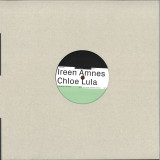
Tresor is proud to present the debut split 12" from Chloe Lula and Ireen Amnes. Meeting in the darker, harder-edged side of the Berlin techno scene in 2019, the pair have regularly collaborated and performed together, but Synergy marks the first time they've shared a record sleeve. Amnes describes Synergy as "the world we built while thinking about our journey as friends and the connection we share as people and artists," and while the record highlights their relationship and shared influences, it also showcases how each has grown into their respective lane.
Amnes' tracks lean into significantly more distorted territory, characterized by a dense fog of grainy pads punctured by sharp, expertly-programmed percussion. On "Our Bodies," these fragments are sculpted into driving hardware gear, replete with distant vocals and acidic squelches, where "Fragments of Desire" makes space for a more somber attitude, descending into murky, psychedelic electro.
In counterpoint to Amnes' deep atmospherics, Lula's contributions are driven by intricate sound design and a focus on dancefloor
impact. Taking cues from Regis and the Birmingham techno sound, she reins in the distortion of 2021's Errant Bodies for aufnahme + wiedergabe in favor of rolling techno and breakbeat-inspired rhythms that nod to her EBM influences. Making use of the extra space, she builds tension through heaving, textured basslines and crescendos of noise, and on EP closer "Event Horizon," she carves through the beat with her own metallic vocals.
Synergy includes a digital bonus track from each artist. Lula's sees her pushing deeper into finely-tooled techno territory, her drums at a swift, driving gallop, surrounded by ominous swaths of reverb. In contrast, Amnes crafts a gritty warehouse trip, sharpening the angles of her drums and detuning her synths until they sound bent and alien. Complete with the EP's physical cuts, these tracks are a testament to how the pair can simultaneously complement and contrast with each other, departing from their shared sonic origins and ending up in wildly dierent destinations.
Hailing from the seaside communities surrounding Enoshima, a small island located 50 km southwest of Tokyo, Maya Ongaku is a ragtag collective of local musicians whose brand of earthy psychedelia transcends widely beyond the roots of their inner souls. The name derives not from any kind of ancient civilization, but rather a neologism defined as the imagined view outside one’s field of vision. The band—currently a trio of Tsutomu Sonoda, Ryota Takano, and Shoei Ikeda—finds sanctuary at the Ace General Store, a beachy vintage shop and salon-like space just hidden from sight from the bustling, touristy riverside Subana Street. Between discussions on music and art, curating the vinyl section and manning the register, and chatting up with locals young and old, the members find time to jam and record their spontaneous ideas in the studio tucked away in the back. It’s in this unlikely setting where Maya Ongaku finds its origins, the culmination of what Sonoda describes as 自然発生 (shizen hassei), meaning spontaneous generation, or the supposed production of living organisms from nonliving matter.
Approach to Anima, the group’s debut album released on Guruguru Brain, finds Maya Ongaku building a foundational groove while tapping into their innermost psyche. Sonoda’s malleable guitar and vocals, Takano’s sinuous bass lines, Ikeda’s floating woodwinds, and a sprinkling of delicate percussion—all coalesce into an aural experience that’s assertive yet abstract, calm but unsettling. The slow building, sax-laden “Approach” serves as an introduction to Maya Ongaku’s world, while the appropriately-named “Water Dream” floats its way toward the gentle finale of “Pillow Song.” It’s a concise distillation of their many interests and influences, from Neo-Dada and Fluxus, to where contemporary art intersects with the development of modern recording technology in the ‘60s and ‘70s.
As the title suggests, Approach to Anima is not intended to be a terminus; it’s merely the beginning of an exploration. The three childhood friends that comprise Maya Ongaku are always looking beyond the confines of the idyllic but rapidly gentrifying enclave of their beloved Enoshima. Feeding off of the energy that still radiates from the triumphant, decade-long journey of their label bosses’ band Kikagaku Moyo, who rose to global prominence from scrappy beginnings busking on the streets of Takadanobaba, they hope to go wherever inspiration takes them, to anywhere around the globe where their music can find a home.
Ultimately, Maya Ongaku’s uninhibited world-building will make it possible for us to see the unseen, expand the possibilities of the naked eye—all through the unbridled vibrancy of their music.
- A1: Daytime Tv (Rainy Miller Remix)
- A2: It’s Hard To Get To Know You (Space Afrika Ambiv)
- B1: Pigeon Flesh (Mobbs' Butcher Mix)
- B2: Love Like An Abscess (Aho Ssan Remix)
- C1: Nervous Energy (Teresa Winter Remix)
- C2: I Was Born By The Sea (Morgane Polanski Remix)
- D1: I Was Born By The Sea (Fila Brazillia Remix)
- D2: Dream About Yourself (Bonus)
Richie Culver had been waiting his whole life to record I was born by the sea. His debut album immediately and messily inscribed the artist into the canon of outsider music and experimental electronics, serving both as an arresting statement of intent and a painful reckoning with the difficult path that lead up to it, stealing one last glance back at a place he always knew he had to escape. Between grim lamentations, faded memories and anxiety attacks, all told with searing honesty and disarming openness, I was born by the sea excavates a space for hope, finding Culver digging through Humberside silt to find a world weary optimism, the raw material from which his visual and sound art is shaped. For this collection of expansions and inversions, Culver invites a collection of kindred spirits, contemporary inspirations and old heroes to wade into the salt water of his formative years spent living for impromptu raves and afterparties, connecting vivid memories of his birth place of Withernsea to artists hailing from as nearby as Preston and Bridlington, further afield, from Manchester and London, Berlin and Paris, before returning back to Hull, to where it all began.
For some, responding to I was born by the sea means diving even deeper into the record’s furthest reaches. Space Afrika clear away the pummelling loops of noise from ‘It’s hard to get to know you,’ revealing a cool and cavernous expanse in its wake. Distant chatter, previously heard as though through thin, plasterboard walls, now echoes from outside the maddening claustrophobia of the original’s Sisyphean sonics, illuminated as a dense storm cloud suspended amidst a more open scene, washed clean by a lighter rain, allowing the tender heart of the track to beat clear. London producer MOBBS stretches out ‘Pigeon Flesh’ into an epic, 10-minute, cold-sweat spiral, strung-out tension wrung from disconnected phone tones twisted in unexpected directions, snatches of Culver’s voice turned inside-out and deep fried bass threatening to tip the track over into oblivion, the build-and-release of a nervous breakdown experienced in real time. In an act of subversive self-reflection, Morgane Polanski switches one kind of ennui for another in her adaption of ‘I was born by the sea,’ swapping the sea for the city, English seaside towns in January for summer evenings in Paris and flashing lighthouses and sparkling oil rigs for the Eiffel Tower and the traffic around L’Arc de Triomphe. Even Culver finds time to revisit ‘Dream About Yourself,’ a track taken from his EP Post Traumatic Fantasy, breathing new words into its glacial drift, the half-remembered testimony of a shut-in: Woke up in the evening / Pray for me / Don’t trust anyone / Pray for algorithm. Reframed in a more melancholy light, the track’s reverberant keys even more clearly evoke a mournful nostalgia, fresh pain felt in old wounds.
Others find a parallel universe in Culver’s visceral world building. Rainy Miller flips the script with a scorched, avant-drill rework of ‘Daytime TV’, threading puncturing hi-hats and queasy low-end surge through the track’s steady ambient cascade, invoking the irresistible Preston beat magic of Miller’s own essential debut album, Desquamation. Aho Ssan melts away the crystalline textures of ‘Love Like an Abscess’ with the ominous crackle of a nascent fire, building through swathes of organic Max/MSP squelch and brittle, nails-down-chalkboard scrape, swelling and metastasising the original to spill over Culver’s desperate hymn to corporeal desire, at once flesh and not. Teresa Winter transports us an hour up the coast from Withernsea to her native Bridlington, replacing the sea wall of synthesis on ‘Nervous Energy’ with muffled ASMR murk and fever dream whispers, transforming Culver’s unflinching observations into a haunting call-and-response, filling in the blanks with her own eerie utterances, a fleeting conversation with a ghost. In a touching victory lap, Fila Brazillia, eccentric stalwarts of beloved ‘90s trip hop imprint Pork Recordings, whose performances at Hull institution The Lamp convinced a young Culver of the necessity to make his mark on club culture, resurface for their first remix in 20 years. Steve Cobby and David McSherry lead a low-slung, heartfelt stroll back through a suite of tracks from I was born by the sea, tracing a full circle saunter from Culver’s origins to his current musical practice, the sounds of his present repurposed by the sound of his youth. In a gesture that reflects the emotional complexity of the project, Fila Brazillia find joy at the end of Culver’s troubled reflection, picking out an undeniable groove in the stasis of feeling trapped in your hometown. Underlining Hull’s vital musical legacy, from Baby Mammoth to Throbbing Gristle, Cobby and McSherry demonstrate that, though there are certainly storms, by the sea there is also sun and through the fog, if you listen, you can hear a singular sound, a sound now carried by Richie Culver.
Participant is a record label and creative studio run by William Markarian-Martin and Richie Culver
- 1: Home
- 2: Prana 10:9
- 3: Holy 0:58
- 4: Amok
- 5: Open
- 6: Game Over
When I first heard Natalie Rose LeBrecht's time-suspending, air-ionizing music, more than twenty years ago, I thought "this kid is on to something." She's been proving that thought right ever since. Her recordings, from the teenage 4-track tapes she made as Greenpot Bluepot to the recent albums under her own name, have been fascinating dispatches from her progressively deeper dives into her gorgeous, weird, wildly idiomatic aesthetic. Holy Prana Open Game is a jewel of intensely personal cosmic music, created through a remarkable process of openness, craftiness, addition and subtraction. It belongs to a tradition of albums that document a rich, meditative sound as it rises up to join the world outside its creators' minds: Alice Coltrane's Universal Consciousness, Harmonia's Musik von Harmonia, Philip Glass's North Star, Talk Talk's Laughing Stock.
"Meditative" is specifically the idea here: Holy Prana Open Game had its origins in the fourteen days LeBrecht spent silently meditating in her home's small music room in the summer of 2019. "I came out of that bursting with the will to create new music," she says, and she created it sound-first. LeBrecht taught herself to program an analog synthesizer's timbres from scratch, and built a new set of glacial, heady compositions out of them, eventually singing to accompany the keyboard parts she was playing.
Then she closed her eyes at her computer, "let my mind be clear and open, imagined light pouring down through me, and began auto-writing to my memory of the music playing through my mind. Most of the lyrics emerged this way, and then I used my conscious mind to refine them a bit at the end." One other song came along with LeBrecht's new pieces, a cover that seems wildly unlikely from the outside and makes total sense in its context: it's a version of Atoms for Peace's "Amok" (which had been created by improvisation and editing, too), mutated into her own idiolect.
In early March of 2020, LeBrecht recorded Holy Prana Open Game's analog synth parts with Martin Bisi at his studio in Brooklyn--and then the world shut down. As you may have gathered, LeBrecht is very much a spiritual, head-in-the-stars type. She is also extremely hardcore, and if making the art she wants to make means doing things the hard way, she cracks her knuckles and gets down to it. Within weeks, she had taught herself how to record, mix and edit with a digital audio workstation. She recorded her vocal parts (sometimes multi-tracked into a radiant choir) at home, assembled a rough mix of the album, and sent it off to her collaborators.
LeBrecht spent some years studying with and assisting La Monte Young and Marian Zazeela at their legendary sound-and-light installation, the Dream House. As with their work, her singular, precisely focused vision is shored up by its openness to artistic voices beyond her own. For Holy Prana Open Game, she worked with the Australian guitarist Mick Turner and drummer Jim White (both of Dirty Three, the Tren Brothers and innumerable other projects), as well as woodwind player David Lackner, a longtime presence on her recordings.
Turner and White have been playing together in one context or another since 1985; in the summer of 2020, they were only blocks from each other in Melbourne, Australia, whose strict lockdown meant they couldn't meet up to record together. So both of them, as well as Lackner, recorded their improvisational additions to LeBrecht's rough mixes individually, often without hearing each other's contributions. "I had asked them to play as much as they could on each track," she says, "and told them that I would edit it all down in post, so I had a lot of source material of theirs to work with."
LeBrecht arranged and edited the recordings from all four of their homes to flow together like breath across the duration of her suite. Prana, one of the album's central conceits, is in fact the Sanskrit word for breath, with the connotation of the breath of life. Like LeBrecht's music, prana flows at its own pace, and demands stillness to take in fully--but it's also subtly playful and surprising, a force that can be as light as air or as immersive as the atmosphere itself.
- A1: Carlycore - La Showcera
- A2: Moro - Xbow
- A3: Pv5000 - Piloto De Fuga
- A4: Chassseur666 - Gade Douvan
- B1: Fiesta En El Vacío - Ay Ay
- B2: Tayhana - Rafagas De Poppers En El Dj Booth
- B3: Anita Kirppis - No Es Vivir
- C1: Caona X Dj Lxn - Metamorfosis
- C2: Eslabrava - Si Tu Eres
- C3: Ven3Mo - Tormenta Silenciosa
- C4: Parzubanil - Enciende
- D1: Vica Pacheco - Cerrito
- D2: Abssys - Peróxido
- D3: Hada Muerta - Quiero Regalarle
Latincore is a musical journey that begins with this compilation. latincore is a virtual club. latincore is an attempt to reflect with artists whose origins share the same soil.
This compilation brings together 14 sound propositions, offering a snapshot of a latinx, political, migrant and diasporic underground scene. Curated by Marion Stucky Callañaupa and Juan José Moreno Izquierdo.
'Insight Into Mind And Space' is the latest full length project from techno producer and label owner 30drop. It's a 10 track collection compiled out tracks previously released on Jeff Mills' Axis imprint in digital formats. The original albums 'Soroban' and 'Photosynthetic Zone Manifesto' have been released in the years 2020 and 2021 and will now be available on vinyl in a limited edition for the first time. The compiled album includes pieces that, like the mind, evolve as a consequence of each other in an orderly way. Starting with the early origins represented by the track 'Dunkelblau' with which the album begins, going through 'Accepting The Future', which represent the complexity reached by the human brain. 'Insight Into Mind And Space' portrays those hypothetical and alternative molecular combinations in the form of songs. Exposed to different chemical elements, gravitational and environmental conditions, dormant genes and signaling pathways are activated and uncannily combined. And just like the molecular events, sounds are combined in different ways, whether simple or complex, to create songs that provide an artistic vision to that scientific concept that opens a hypothesis to other types of intelligence that are far from human and that could exist in the vast out there. About 30drop. In his formative years, the artist responsible for 30drop discovered new synthetic and electronic sounds that would later influence his work. From the year 1996, his activity as a DJ powered his link with music, focused on Detroit Techno and Techno sounds that held the transgressive references of Birmingham, UK. These impressions saw 30drop magnetize toward an industrial, experimental, noise-based sound, particularly in the mid-2000s. After a creative pause, 2014 brought his new project, '30drop', at this time his label 30D Records of which he is the Manager and joint A&R with Angel Molina, was also born. The conceptual part of this project has been done in collaboration and with the supervision of Meritxell Rosell, PhD in biochemistry and molecular biology.
- 1: Secretly Bad 03:08
- 2: I Like To Pretend 0:53
- 3: Rude Body 02:57
- 4: If I Ask Her 02:18
- 5: Stripey Horsey 03
- 6: Lean 03:2
- 7: I Have A Lot To Say 03:09
- 8: Born To Care 03:00
- 9: Done With The Day 03:30
- 10: Lighter Better 03:12
- 11: Wakey Wakey 01:57
PURPLE VINYL[22,65 €]
In a world of endless, bottomless content, to find something that stands out from the crowd is a rare thing. But it’s something that 7ebra manage without breaking a sweat. Based in Malmö, twin sisters Inez and Ella Johansson deal in sparkling indie-rock that’s pretty without being soft, sweet without losing its edge and catchy without being cheap. With Inez on guitar and vocals and Ella on keys, organ and Mellotron, their minimal set-up makes a virtue of simplicity – with a sliver of guitar fuzz, and organ lines snaking around stark, striking vocals, augmented by shivering harmonies, they don’t need a lot to make music that’s colourful, kaleidoscopic, and effortlessly original.
7ebra debuted in 2022 with the double-single “I Have A Lot To Say”/ “If I Ask Her”, two helpings of psych-tinged, street-smart rock and roll, and the music scene around them wasn’t slow to notice. They opened for the Future Islands and the Dandy Warhols, were picked out by Apple Music’s Matt Wilkinson as a Hidden Gem of 2022 and were booked for prestigious showcases SXSW and Eurosonic. With a packed schedule of shows across Europe and the UK already planned for 2023, their world looks set to get a lot bigger – something that their debut album Bird Hour makes certain. The record is a warm, elegant introduction to the sound 7ebra have crafted. The songs are full of personality and character, but also retain a little bit of enigma, a sense of keeping something secret to themselves. To unwrap that elusiveness is a daunting task, but one the listener can’t resist leaping into.
Ella and Inez’s parents played in bands as they were growing up, so picking up music was a natural thing for them. The origins of 7ebra start with Inez whiling away the hours playing guitar in her bedroom. “I learned by playing covers by myself in my room”, she says. “Ella didn’t do that as much, but we sometimes played and sang together, country songs”. Eventually she would start writing her own. Ella wasn’t involved originally (“we did play together a few times”, she says, “and it just went to shit laughs. We fought a lot”), and Inez was originally reluctant: “I was a bit unsure whether I wanted to be in a band with my sister. Because you get clumped together all the time, when you’re twins”. But Ella was keen to join, and eventually persuaded Inez to let her join for a show. It went – so well that producer Tore Johansson (The Cardigans, Franz Ferdinand), saw it and asked if they’d like to record with him. That changed things, says Ella: “It made us think there might be something in this music”. As a duo, 7ebra were in flight. “In the end, it’s kind of a nice thing too being sisters in a band”, Inez says. “It doesn’t bother me anymore. It just made sense to play together”.
On the album that they eventually came up with, the talent that caught Johansson’s eye is immediately obvious. Opener “Secretly Bad” has a way of walking along your nerves, an eerie echo of a hymn in Inez’s vocal backed by a swirl of woozy blend of guitars and organ. That’s followed up by “I Like To Pretend”, an easily charming song that has a sleepy brightness about it, like morning sunlight breaking through a window. They take a couple of different genres for a whirl on Bird Hour – they’re tense and snappy on “If I Ask Her”, breezy and cocky on “Lighter Better”, and there’s even a couple of droplets of blues and folk in the mix, in the raw intensity of the emotions in the slower songs, the vulnerability and aching of songs like “Lean” and “Stripey Horsey”. The record has a way of sweeping you along in its mood and tones, fuelled in part by the band’s use of repetition, sometimes fast and fevered, sometimes crawling and hypnotic. The duo’s musical input blends perfectly, with Inez’s guitar and vocals forming the core, and Ella drawing in the detail with keys, organ, and harmonies, to really bring out the vivid nature of the songs. Indie rock that’s melodic and sweet, but with enough shadow mixed in to make it really compelling.
On Bird Hour, what strikes you first about 7ebra’s sound is how fully formed it is, how much they’ve carved out their own sonic territory, perfected by trial and error in the studio with Johansson. “Tore wanted us to try everything possible”, says Ella. “We had moments where things weren’t working. But that was necessary in order to find the good stuff”. 7ebra’s signature might be found in the deft way they deal with emotion – unafraid of being open, but a little too clever to make things too clear cut: “You can’t take yourself that seriously. It’s too emotional to take it seriously, to start hating yourself. But at the same time, it is quite serious”, says Ella. Another trademark is the simplicity – a 7ebra song has just enough to make it work, and nothing more. “I think it was important for me that our voices were at the centre of the songs”, says Inez, “that all the little melodies have their place, and don’t get overwhelmed. With lyrics, I sometimes come up with something, and just feel ‘there’s no need to add more to this’. Sometimes a line works by itself. You don’t have to add a bunch of lyrics”. Finally, the album’s themes are ones that will resonate with most people that have set foot on this planet. “I guess it’s about trying to understand yourself, in relation to others. Just life. ‘Why am I not good at this, why is this thing happening to me, why is this thing so hard, why am I so stupid?’”, laughs Ella.
7ebra haven’t been around for very long – but a handful of songs and their fizzing live shows have stirred up the biggest buzz in Scandinavian music in quite a while. Their debut album justifies it all. It showcases the magic they’re capable of conjuring up, and hints at even more to come in the future. But from where they are right now, they’ve made something very special. Bird Hour takes all that promise and turns it into something concrete, in the form of one of the year’s best rock debuts.
In a world of endless, bottomless content, to find something that stands out from the crowd is a rare thing. But it’s something that 7ebra manage without breaking a sweat. Based in Malmö, twin sisters Inez and Ella Johansson deal in sparkling indie-rock that’s pretty without being soft, sweet without losing its edge and catchy without being cheap. With Inez on guitar and vocals and Ella on keys, organ and Mellotron, their minimal set-up makes a virtue of simplicity – with a sliver of guitar fuzz, and organ lines snaking around stark, striking vocals, augmented by shivering harmonies, they don’t need a lot to make music that’s colourful, kaleidoscopic, and effortlessly original.
7ebra debuted in 2022 with the double-single “I Have A Lot To Say”/ “If I Ask Her”, two helpings of psych-tinged, street-smart rock and roll, and the music scene around them wasn’t slow to notice. They opened for the Future Islands and the Dandy Warhols, were picked out by Apple Music’s Matt Wilkinson as a Hidden Gem of 2022 and were booked for prestigious showcases SXSW and Eurosonic. With a packed schedule of shows across Europe and the UK already planned for 2023, their world looks set to get a lot bigger – something that their debut album Bird Hour makes certain. The record is a warm, elegant introduction to the sound 7ebra have crafted. The songs are full of personality and character, but also retain a little bit of enigma, a sense of keeping something secret to themselves. To unwrap that elusiveness is a daunting task, but one the listener can’t resist leaping into.
Ella and Inez’s parents played in bands as they were growing up, so picking up music was a natural thing for them. The origins of 7ebra start with Inez whiling away the hours playing guitar in her bedroom. “I learned by playing covers by myself in my room”, she says. “Ella didn’t do that as much, but we sometimes played and sang together, country songs”. Eventually she would start writing her own. Ella wasn’t involved originally (“we did play together a few times”, she says, “and it just went to shit laughs. We fought a lot”), and Inez was originally reluctant: “I was a bit unsure whether I wanted to be in a band with my sister. Because you get clumped together all the time, when you’re twins”. But Ella was keen to join, and eventually persuaded Inez to let her join for a show. It went – so well that producer Tore Johansson (The Cardigans, Franz Ferdinand), saw it and asked if they’d like to record with him. That changed things, says Ella: “It made us think there might be something in this music”. As a duo, 7ebra were in flight. “In the end, it’s kind of a nice thing too being sisters in a band”, Inez says. “It doesn’t bother me anymore. It just made sense to play together”.
On the album that they eventually came up with, the talent that caught Johansson’s eye is immediately obvious. Opener “Secretly Bad” has a way of walking along your nerves, an eerie echo of a hymn in Inez’s vocal backed by a swirl of woozy blend of guitars and organ. That’s followed up by “I Like To Pretend”, an easily charming song that has a sleepy brightness about it, like morning sunlight breaking through a window. They take a couple of different genres for a whirl on Bird Hour – they’re tense and snappy on “If I Ask Her”, breezy and cocky on “Lighter Better”, and there’s even a couple of droplets of blues and folk in the mix, in the raw intensity of the emotions in the slower songs, the vulnerability and aching of songs like “Lean” and “Stripey Horsey”. The record has a way of sweeping you along in its mood and tones, fuelled in part by the band’s use of repetition, sometimes fast and fevered, sometimes crawling and hypnotic. The duo’s musical input blends perfectly, with Inez’s guitar and vocals forming the core, and Ella drawing in the detail with keys, organ, and harmonies, to really bring out the vivid nature of the songs. Indie rock that’s melodic and sweet, but with enough shadow mixed in to make it really compelling.
On Bird Hour, what strikes you first about 7ebra’s sound is how fully formed it is, how much they’ve carved out their own sonic territory, perfected by trial and error in the studio with Johansson. “Tore wanted us to try everything possible”, says Ella. “We had moments where things weren’t working. But that was necessary in order to find the good stuff”. 7ebra’s signature might be found in the deft way they deal with emotion – unafraid of being open, but a little too clever to make things too clear cut: “You can’t take yourself that seriously. It’s too emotional to take it seriously, to start hating yourself. But at the same time, it is quite serious”, says Ella. Another trademark is the simplicity – a 7ebra song has just enough to make it work, and nothing more. “I think it was important for me that our voices were at the centre of the songs”, says Inez, “that all the little melodies have their place, and don’t get overwhelmed. With lyrics, I sometimes come up with something, and just feel ‘there’s no need to add more to this’. Sometimes a line works by itself. You don’t have to add a bunch of lyrics”. Finally, the album’s themes are ones that will resonate with most people that have set foot on this planet. “I guess it’s about trying to understand yourself, in relation to others. Just life. ‘Why am I not good at this, why is this thing happening to me, why is this thing so hard, why am I so stupid?’”, laughs Ella.
7ebra haven’t been around for very long – but a handful of songs and their fizzing live shows have stirred up the biggest buzz in Scandinavian music in quite a while. Their debut album justifies it all. It showcases the magic they’re capable of conjuring up, and hints at even more to come in the future. But from where they are right now, they’ve made something very special. Bird Hour takes all that promise and turns it into something concrete, in the form of one of the year’s best rock debuts.
Jimmy LaValle’s The Album Leaf has spun from solo outlet to full band and back in its nearly 25 years. His acclaimed catalog spans releases for labels such as Sub Pop, City Slang, Relapse, and others. He also composes music for film and television, scoring over 20 projects (narrative features, documentaries, and TV series) since 2009. The cinematic sensibilities of The Album Leaf were present from the beginning. His 1999 debut introduced the start of a signature sound: melodic and meditative electro-organic soundscapes constructed with guitar, percussion, Rhodes, and field recordings.
His seventh full-length LP, and first since 2016, arrives in 2023 via Vancouver’s Nettwerk Records. FUTURE FALLING finds LaValle working with an array of musicians, shaping slightly darker, more spacious, and synth-driven songs with contributions from Bat For Lashes, Kimbra, and many others.
The music registers a shade darker and more synth-driven than most moments in his acclaimed catalog, a bridge between shadowy, cerebral terrain and dreamy precision pop, where softly percussive frameworks meet shimmering sound design and emotive instrumentation.
LaValle sees the construction of FUTURE FALLING as less conventional than past work. Contributions were done remotely with a “throw everything at it” mindset, making LaValle the arranger of layers from all over: drums, synths, horns, violins, voice, and more. LaValle created a pastiche of these layers and elements; in some cases even moving vocal takes to new tracks entirely. Without the in-the-room dynamics, he had more time to experiment, adding and subtracting ad infinitum.
The album opens on “PROLOGUE,” an evocative, slow-building instrumental that rides a pattern into a symphonic sea of static. Keys and horns glide atop the rhythmic pulse of “DUST COLLECTS,” setting the contemplative scene for “AFTERGLOW,” the record’s most pop-minded performance. Here Kimbra, the Grammy-winning New Zealand singer-songwriter, renders a striking recollection of past love as percussive elements shimmer and swirl.
A plaintive piano line moves throughout “Cycles 19.9” encircled by light ambient washes, both a valley between two peaks and a powerful composition in its own right. “Future Falling” follows; with origins tracing back to 2015, the track embodies the full sonic journey LaValle has taken. All the hallmarks of The Album Leaf — melodic builds, vivid sprawl, tonal shape-shifting — assemble to a blissful finish.
For the next stretch, “Cycles” begins with a uneasy Rhodes loop that builds and erupts into a wall of texture paving its way into “Give In,” where LaValle models a movement that begins subtle and measured before curving up with skyward, percussive bursts (“Stride”) and settling back down to the album’s back-half centerpiece, “Near” featuring the acclaimed English artist Natasha Khan aka Bat For Lashes. “Do you feel me near?” she sings into a mist of widescreen synths and soothing, distant drum beats as if searching through the dark.
The Last Kingdom is a British historical fiction TV series based on novels called The Saxon Stories by author Bernard Cornwell (originally aired on BBC 2 & BBC America). John Lunn's music possesses a unique voice that spans a wide spectrum of musical styles. Classically trained, yet contemporary in attitude, he combines a highly intelligent and sensitive approach with a sound that always hits at the emotional heart of a piece. He is probably best known for scoring the hugely successfuldrama Downton Abbey, for which he has received two Primetime Emmy Awards, as well as a BAFTA nomination.
Eivør often envisions the dramatic landscape of her Nordic homeland, a remote archipelago known as the Faroe Islands. “It can be very harsh and very gentle at the same time, and when I sing, I see that wildness and softness blended together”. Now based in Copenhagen, Eivør brings that stark contrast to a darkly textured, yet brightly melodic sound centred on her captivating vocals. While her origins lie in Faroese folk singing, Eivør's most recent output reveals her fascination with the infinite possibilities of electronic music. Along with earning comparisons to Kate Bush in the pages of MOJO, Eivør's otherworldly ingenuity has led to her role in co-composing the soundtrack to the BBC/Netflix flagship series The Last Kingdom.
After the pandemic hit, and the people of the world grew wary and
suspicious of one another, Iguana Death Cult, one of Europe's most
exciting rock exports, became more than just a band to its members--it became therapy - "I think for the first ten times we went to jam," says guitarist/vocalist Tobias Opschoor, speaking about the making of the new album Echo Palace, "we just drank wine and talked about it for hours--and then were like, 'OK, I have to go because I have to work tomorrow.
Taking place at frontman Jeroen Reek's apartment in Rotterdam, these
gatherings slowly shifted from talking about this surreal chapter of their lives--the days of quiet streets and cramped buildings--to making music about it.
Armed with the talents of Justin Boer on bass and Arjen van Opstal on drums, and tapping the keys work Jimmy de Kok for the first time on album, the band took their trademark melodic garage-rock style and expanded it to make it vibier and looser, with each member contributing ideas to develop the sound palette in full. When it came time to record the album, the band headed to PAF Studio in
Rotterdam, and subsequently it was mixed by Joo- Joo Ashworth (Sasami, Dummy) at Studio 22 in Los Angeles and mastered by Dave Cooley (Tame Impala, Yves Tumor).
The album is a big swing, stretching Iguana Death Cult beyond its garage rock origins and taking them to a new realm. The end result of Echo Palace is an appropriately worldly album from a group breaking past the confines of its home country.
"Dutch band Iguana Death Cult's rip- roaring melodies are built to jettison far beyond their homebase of Rotterdam." - FADER
"Frenetic, intense sonic assaults, they turn psych punk into astonishingly concise three-dimensional documents." - CLASH
The Hippo Sound System is a collective formed in 2018 by Bristol UK’s notorious ‘samba junglist’ DJ Hiphoppapotamus.
"Origins" is their long-awaited debut album!
Touring the festival scene across the UK and Europe their explosive live performances have earned them a well trusted reputation for blowing up dancefloors, moving feet and uplifting souls! Their tracks have been featured on BBC Radio 1, BBC Radio 1Xtra, BBC Radio 6 by Jeremiah Asiamiah, Don Letts and Craig Charles. Don Letts also included their track “Into The Jungle” on his “Best of 2020” round up.
Fusing their favourite elements of world music and sound system culture, they explore new possibilities between musical cultures, fusing ancestral rhythms with modern dance music.
Percussive rhythms and heavy bass drive this vibe train as this Hippo and his percussionist/production partner, Munki, draw influence from all over, Including Afro/Latin/world music, Jazz, Hip Hop, House, Breaks, Dub, Drum and Bass & Jungle for their productions. The result? A uniquely high energy and psychedelic global bass sound – complete with the flair of live musicians and the exciting builds and drops of bass music!
Passionate about collaboration with both their recordings and performances, they often call
upon guest features from artists such as K.O.G, Franz Von, Simo Lagnawi (Electric Jalaba), MC Spyda, Dr Syntax and many more. With almost no tempo untouched from 70-180BPM, they’re an extremely eclectic and versatile band that can customise sets for most stages and occasions.
VE ABOULKHEIR - 22/12/2017 GUILIN SYNTHETIC DAYDREAM (2021)
22/12/2017 Guilin Synthetic Daydream is a perceptual trap. Inspired by an experience of intense perceptive disorientation while crossing a market in China, Eve Aboulkheir reinstantiates, in the field of sounds, the swirling and anamorphic universe of thwarted perceptions, surrounding multitudes and shifted sensations. She thus constructs a dreamlike and artificial universe, suspended and hyperactive, which is both an electronic vortex sucking us in and a mechanical ballet developing its arabesques around us, caught and fascinated by these volutes of sound that fracture like a kaleidoscope in which our eyes-ears are immersed. 22/12/2017 Guilin Synthetic Daydream approaches the musical form in the most direct way possible, i.e. through its effects and its empire on our sensorium.
(fr) 22/12/2017 Guilin Synthetic Daydream est un piège à perception. S’inspirant justement d’une expérience de désorientation perceptive intense lors de la traversée d’un marché, en Chine, Eve Aboulkheir réinstancie, dans le champ sonore, l’univers tourbillonnant et anamorphique des perceptions déjouées, des multitudes environnantes, des sensations décalibrées. Elle construit ainsi un univers onirique et artificiel, suspendu et hyperactif, à la fois vortex électronique nous aspirant et ballet mécanique développant ses arabesques autour de nous, piégés et fascinés par ces volutes de sons qui se fractalisent comme un kaléidoscope dans lequel sont plongés nos yeux-oreilles. 22/12/2017 Guilin Synthetic Daydream aborde la forme musicale de la manière la plus directe qui soit, c’est-à-dire à travers ses effets et son empire sur notre sensorium.
LASSE MARHAUG - HOW TO AVOID ANTS (2020)
Using concrète techniques to collect, transform and assemble sounds of various origins (sounds of tree branches, leaves, but also guitars or synthesizers), Lasse Marhaug elaborates a dense and subterranean work, which unfolds through the multiple dimensions induced by the great diversity of its sound material. There is a labyrinthine feeling in this work, a feeling that is better understood when the inspiration for the title of the piece How to avoid ants is revealed, a very practical and then poetic undertaking, that of avoiding the anthills lining the path to the forest camp in the kindergarten to which his little girl, who was then frightened of insects, was going. It is such an activity of circumvention, diversion and byways that Lasse Marhaug uses to create an exploratory and evasive music.
(fr) Utilisant les techniques concrètes pour collecter, transformer et assembler des sons d’origines variés (sons de branches, de feuillages, mais aussi de guitares ou de synthétiseurs), Lasse Marhaug élabore une œuvre dense et souterraine, qui se déploie au travers des multiples dimensions induites par la grande diversité du matériau sonore. Il y a un sentiment labyrinthique dans cette œuvre, sentiment qu’on comprend mieux lorsque se dévoile l’inspiration du titre de la pièce How to avoid ants, entreprise très pratique et devenue poétique, celle d’éviter les fourmilières jalonnant le chemin vers le camp forestier du jardin d’enfant dans lequel se rendait sa petite fille, alors effrayée par les insectes. C’est une telle activité de contournement, de déroute et de chemins de traverse qu’emprunte Lasse Marhaug pour créer une musique exploratoire et évasive.
Since its beginnings, Hypnótica Colectiva has always shown a special interest in the music recorded and released in the city of Detroit.
A place with which we have both a blood and spiritual bond because of what occurred there socially and artistically during the 20th century.
This love led us to become ambassadors of what was happening there on a musical level, holding cultural events to screen documentaries translated into Spanish, as well as a number of themed sets at our events, dedicated motor city sections in our record shop or recently lectures on the history of the city and its music at the Museum of Illustration and Contemporary Art of Valencia (Muvim).
The time has now come to bring all this history, this musical influence, to the editorial section of our label HC records.
Detroit Legacy was born from the idea of capturing these influences on vinyl. Seeking artists from all over the world who share this passion that inspires them to create their music, what we can define as the universal Neo-Detroit.
For this first edition or first volume, the collective has enlisted in its ranks creators affiliated to the label who have shown us in their careers, this influence and this feeling.
Paul Cignol opens the record with Distance. From Dublin he offers us a track of warm sequences inspired by Deep Techno, with deep pads responding to organ keys and a subtle touch of 303.
Mallorcan LLuis Barcelo Sureda is responsible for the second track Funk Station. With a Techno Soul character that we might hear from Detroitish labels like Acacia or producers like Blake Baxter.
A real eminence in Techno is the Catalan Don Alex Martín, who already released in the mid-90s on Monssieur Garnier's label (France Communications). The Barcelona native brings his wealth of experience and wisdom through Megatech, which transports us to the spectrum of Derrick May’s Transmat who, in his day, was nicknamed "The Innovator". This track provides agile sequences of complex syncopated rhythms, combining with a dreamy Michigan style synth.
The anthem of the album comes from Ghent. The sublime Belgian creator, Mariska Neerman, once again makes our hairs stand on end and our hearts melt with a heavenly composition entitled Stellium.
No one interprets Neo-Detroit quite like Mariska, whom we baptise as a sovereign heiress of the genre in the world. If we have to think of an influence for this piece, we go straight to the genius of Detroit, the one and only Jeff Mills, in his most symphonic and harmonic facet of tracks released on his label Axis Records such as "The March", A Universal Voice That Speaks To All That Will Listen or A New Found Sense Of Being.
Some of these songs have been re-interpreted by world class philharmonic orchestras such as the Montpellier Philharmonic Orchestra at the 2005 Blue Potential (Pont Du Garde). Mariska's score in this song fuses organ keys with harmonic layers and violin - favourite instruments of the Detroitian extraterrestrial - with a harmonic result of strength and hope. An authentic anthem of classic emotional Techno.
Old School electro takes centre stage with the Master from Terrassa Ivan Arnau a.k.a. Dark Vektor. In the influence of Juan Atkins (the creator) as Cybotron or Model 500 and later creators who developed this sound like Aux 88. Metaverso Frik is a great recital of a urban poetry created and interpreted by Ivan, to completely devastating effect.
Croatian Bojan Jascur a.k.a. N-TER, closes the vinyl with We Will Emerge, in a exercise of vindication, a common weapon in the context of Detroit music. Raging, trippy electro in the purest style of Cosmic Force or Dynarec.
This first tribute to 8 Mile doesn't end with the vinyl, as 2 digital bonus tracks are included in the release.
We return to Barcelona with Pastin Futon in another sequence of consecutive oscillated rhythms oscillated much like Kevin Saunderson (The Elevator) in his day and the Techno Groove that we know today.
The most robotic touch of the release is the closer with this synthetic jigsaw puzzle of a track with echoes of the 1967 Detroit Riot, the Detroit Rebellion. Again produced by another Barcelona native, The Bandit (Dj Spy / Util Records). The sequences are very reminiscent of Arpanet and Drexciya.
The idea for the cover comes from Motor City itself by Jon Yowell, first cousin of HC records founder and head of HC records David Verdeguer.
Born, raised and a lifelong resident of Detroit, Jon is an enormously talented musician capable of writing lyrics, performing them on the mic and manipulating a number of stringed instruments as well as the drums, where he is a true master.
The cover is a tribute to the formative backgrounds of many of the city's musicians in every sonic trend. Wayne State University in the capital of Michigan.
Founded in 1868, it has offered didactic teaching to many of the city's musicians.
Not all of Detroit's creators went to university, and even less so when talking about Techno, many artists are self-taught or learned in a non-academic way, but it seems to us a good base to begin to highlight the origins of the city's music in a historic building, where those who have the opportunity to learn about music have been and continue to be educated.
The adapted designs are the work of our image manager Dani Requeni.
Mastering by Steve Voidloss at Black Monolith Studios in London (UK).
Edition OF 500 copies, Comes with insert and download code.
An album that sounds like The Menahan Street Band playing in a tropical jungle, at dawn, right at the point when the first rays of sunlight penetrate the dark depths of the forest. During the 2022 summer of natural disasters, under an unprecedented heatwave, and haunted by news reports of ancient relics, sunken ships, and hunger stones resurfacing as rivers dried-up all-over Europe, Amsterdam based multi-instrumentalist producer Alex Figueira started to hear uncanny metallic vibrations And eerie melodies of untraceable origins, day and night. He recalls nightmares of winged creatures inside timeless structures of Escherian architectures playing cosmic instruments amidst tropical storms
and acid rains. As the visions came more often, his wife reported that he babbled during his sleep about South American demon Yurupari. Soon, Alex found himself in a sleepless state and decided to cleanse the studio, with hallowed rites and
the intense burning of Palo Santo. After almost burning the studio down, he turned to his neighbourhood’s most experienced psychic, seeking answers. He was told there were “cosmic entities” trying to manifest a message “too complex for us to understand in this dimension” and the only way he could find peace was to deliver those messages in a decipherable form. It was then he decided to transmute his hallucinations into music, an all-or-nothing cathartic solution.
Alex entered a feverish dream, fuelled by the kaleidoscopic motion of the cosmos, ancient meteor showers, and visions of forgotten interstellar South American gods. He remembers very little of the work, but the outcome is this record. Entirely composed, recorded, produced, and mixed in a frenetic nine-day studio stint.
How the experts describe it:
”Just when outernational vinyl vampires thought they had it all sewn up, the metronomic makeshift
magician known as Alex Figueira unravels the entire fabric of your record collection to expose a gaping
hole where PUNKUMBIA and Transplant-Tropicalia should be. Reducing an expansive palette of
influences to a recipe that tastes wildly exotic but comfortably over-familiar, Alex’s roles as both
scavenger and chef, bookend a whole ensemble of other highly adept musical personalities in between.
Discover this record NOW, or wait until all your friends (or enemies) recommend it to you later.”
Andy Votel (Finders Keepers)
“Incendiary, lysergic takes on South American and Caribbean music from one of the scene's truly
authentic and eccentric producers. You can always count on Venezuelan-born, Amsterdam-based,
multi-instrumentalist, music-fanatic Alex Figueira to surprise and innovate, whilst consistently keeping it
true and real. The former Fumaça Preta drummer & front-man's debut solo album does not disappoint!”
Miles Cleret (Soundway)
“The one man band Alex Figueira comes through with some major flavors on this one. Cumbia beats and
psychedelic elements with that Latin touch of soul & Funk!”
Kenny Dope (Masters at Work)
“I really respect Alex Figueira’s DIY ethos. From running his own little funky recordstore to running his
own label and making his own music by playing every instrument himself. I was already a fan of the song
“Aprende” which he released on 7 inch and with“Mentallogenic” he takes it a step further in that same
vibe. From songs like “La Culebra” making use of a vocoder in his typical latin sound to songs like
“Serious” playing with rhythmic changes and topping it off with some synth flavors. A lovely and fun
album”.
Antal (Rush Hour).
Drop a needle on Psyché's debut double-sider – the debut album is out on May 19th – and you'll see visions, or rather Mediterranean visions, be they of waves of heat shimmering above dunes of sand, or of women dancing around a bonfire on a rocky plain, or of bushy cliffs overlooking emerald-green and turquoise sea. The name Psyché is of course ancient Greek for 'soul' or 'mind',signifying the band's love of psychedelic funk, but also the wide range of Mediterranean influences – from Southern Europe to the Balkan Peninsula, and from Anatolia to the Maghreb – that provide an endless source of inspiration for their hypnotic sound and minimalist style.
Psyché members Marcello Giannini (Guru, Nu Genea, Slivovitz), Andrea De Fazio (Parbleu, Nu Genea, Funkin Machine) and Paolo Petrella (Nu Genea) have been active in the Naples music scene for almost two decades, most notably during the first wave of the new Neapolitan Power movement (Slivovitz, Revenaz Quartet). Over the years they have often crossed paths and collaborated on side projects in various genres (math-rock duo Arduo and, more recently, Italo-disco duo Fratelli Malibu), before working together as the rhythm section of Nu Genea's live band. Following their first tour with Nu Genea in 2018, they started Psyché with the intent of exploring more minimalist styles and making musicwith just a few elements.
A unique combination of psychedelia, groove and improvisation, the music of Psyché goes back to the roots of our future; it evokes visions of a mythical past, blending centuries-old music traditions and mixing them with modern genres. Like a warm Mediterranean breeze, it travels across lands, seas and eras, distilling essential rhythms and cosmic pulsations.
"Cumbia Mahàre", on side A of the 7-inch, dives deep into the origins of rhythm, drawing us into the movements of an imaginary ritual dance (the term mahàre was used in Southern Italian dialects to indicate witches). Through the interplay between minimal synths and exhilarating rhythmic patterns of drums, percussion, guitar and bass, Psyché take a fresh and bold approach to contemporary afrobeat and cumbia fusion.
"Ophis", on side B, is a mesmeric blend of African, Balkan and Turkish rhythms and sounds. Ethereal vocalizations and warm, hypnotic bass lines combine with psychedelic riffs and haunting melodies on guitar to evoke ancient cultures whose spiritslithers like a snake across the dunes of a sun-scorched desert.
Eric D. Johnson rarely lingers at one location too long. As a kid growing up in the Midwest, Johnson's family moved around a lot, but it wasn't until he became a touring musician years later that motion became a central part of his identity. That transient lifestyle stoked an enduring reverence for the world he watched pass by through a van window. A sense of place is a unifying theme he's revisited with Fruit Bats throughout its many lives. From the project's origins in the late '90s as a vehicle for Johnson's lo-fi tinkering to the more sonically ambitious work of recent years, Fruit Bats has often showcased love songs where people and locations meld into one. It's a loose song structure that navigates what he calls "the geography of the heart." "The songs exist in a world that you can sort of travel from one to another," says Johnson. "There are roads and rivers between these songs." Those pathways extend straight through the newest Fruit Bats album, aptly titled A River Running to Your Heart . Self-produced by Johnson_a first for Fruit Bats_with Jeremy Harris at Panoramic House just north of San Francisco, it's Fruit Bats' tenth full-length release and one that finds the project in the middle of a creative resurgence. After two decades of making music, hard-earned emotional maturity has seeped into Johnson's songs, resulting in a more complex sound that's connected with audiences like no other previous version of Fruit Bats. A River Running to Your Heart represents the fullest realization of that creative vision to date. It's a sonically diverse effort that largely explores the importance of what it means to be home, both physically and spiritually. And while that might seem like a peculiar focus for an artist who's constantly in motion, for Fruit Bats, home can take many forms_from the obvious to the obscure. Lead single "Rushin' River Valley" is a self-propelled love song written about Johnson's wife that clings to the borrowed imagery of the place where she grew up in northern California. Then, there's the gentle and unfussy acoustic ballad "We Used to Live Here," which looks back to a time of youthful promise and cheap rent. But the wistful "It All Comes Back" is perhaps the most stunning and surprising track on the album, Johnson's production skills on full display. Built upon intricate layers of synths, keyboards, and guitars, it's a pitch-perfect blend of tone and lyricism that taps into our shared apprehensions and hopes for a post-pandemic life. "We lost some time / But we can make it back / Let's take it easy on ourselves, okay?" sings a world-weary but ultimately reassuring Johnson in the song's opening lines. It's the kind of performance that makes you hope Fruit Bats stays in this one place, at least for a little while longer.