
In Stock
Disponibile in Stock e pronto per la spedizione
Last In: 11 months ago
12,19 €
Disponibile in Stock e pronto per la spedizione

Sub Oscillator AKA Russ Gabriel has been part of the UK dance music scene since 1992, spanning everything from Breakbeat, Hardcore, Techno, Electro, House, Acid, Broken Beat and Ambient. But his first releases were under the guise of Sub Oscillator, releasing 3 EPs during 1992.
This is EP 2 that was originally released on Stu J’s Adrenalin Recordings out of Southampton and was dropped frequently at the legendary Madisons club in Bournemouth, where Stu was the resident DJ.
The most collectable of the 3 EPs under this name, it brings together the sounds of the hardcore rave scene, breakbeat and even some proper hardstyle Euro techno vibes too.
Ordina ora e ordineremo l'articolo per te presso il nostro fornitore.

»Informations of Death« is a key single from the proto-ebm Florence band Neon, their 1980 official debut with an early duo line-up comprised of Marcello Michelotti and Stefano Gasparinetti. The single is now released on double vinyl, accompanied by a 1979 live performance, recorded at the legendary Bananamoon Club in Florence.
dovrebbe essere pubblicato su 15.04.2022

Next up on Magic Feet is a release by Dark Strands.
Tony's first release came via the first Magic Feet label sampler. Since then his releases have caught the attention of a number of acclaimed DJ's, with Daniel Avery citing one of Tonys tracks as one of the best he had heard last year.
This is Tonys first full vinyl release and shows exactly what he is capable of.
The title track 'Return Of The Oscillator' has had people running to the booth every time its been played from London to Croatia, as well as being fully road tested at ALFOS by Sean Johnston who also provides a superb remix under his Hardway Bros guise.
The second track 'Galactic' slows the pace down and is perfect for those warm up sets.
Ordina ora e ordineremo l'articolo per te presso il nostro fornitore.
DJ and producer David Holmes is welcomed to the Late Night Tales fraternity with an evocative collection of personal songs and music, peppered with exclusive new material and rare gems. By now, I think we all know David Holmes, right There's acid house Holmes, with bone-rattling Chicago jams and Detroit destroyers, break-digger Holmes responsible for the grittily shaking 'Let's Get Killed' and seminal Essential Mix compilation (which brought Sixto Rodriguez to people's attention, and then there's soundtrack Holmes. His most enduring and vital source of musical inspiration - cinema - plugged into David's rst solo record 'This Film's Crap, Let's Slash the Seats' and inspired 2000's 'Bow Down to the Exit Sign', created as the soundtrack to a not-yet-made movie. Ofcial soundtracks have been bountiful, including scores for Soderbergh's Out Of Sight and Ocean's trilogy, '71, Hunger and Good Vibrations. In a series of personal songs sung by himself, David's last solo album 'The Holy Pictures' explored inuences of La Düsseldorf, The Jesus and Mary Chain and early Brian Eno. His Unloved collaboration with Keefus Ciancia and Jade Vincent then took us on a musical journey full of raw 60s pop-noir, psychedelia and French Ye Ye with a contemporary twist. Somehow he's also found time to produce records by Primal Scream and Jon Spencer Blues Explosion. Unsurprisingly, for someone au fait with matters cinematic, this Late Night Tales conjures up its own mindmovies. It's not only packed with the judiciously selected nuggets for which his mixes are noted but also stuffed with original material, including collaborations with BP Fallon and Jon Hopkins and an amazing new reading of 10cc's 'I'm Not In Love' by Holmes-produced Song Sung. In fact, there's a Celtic thread running through the whole journey with Stephen Rea's reading of an extract from Seamus Heaney's AENEID BOOK VI - Elsewhere Anchises. Among the other gems included here are David Crosby's lush 'Orleans', Buddy Holly's celestial 'Love Is Strange' and the Children Of Sunshine's 'It's A Long Way To Heaven'. David Holmes loves music. It's a way of expressing the sometimes inexpressible or the inconsolable, a questing desire to nd out just what is over the next hill. It's no surprise to learn he's a keen walker. Always on the move, headphones on, lost in some reverie or piece of music, the soundtrack to his life, the stuff that feeds his imagination. I walk a lot. It's amazing for listening to music: your phone or your emails aren't going and you're just in the forest listening to music. It's so intimate. Anyway, I was listening to the KLF's Chill Out album, which still sounds amazing, but it triggered an idea with concrete sounds through travelling and movement. And one of the things I was trying to do was to use this idea not just break up the moods but also as a metaphor for moving through life and arriving in different destinations or arriving at different stages in different parts of your life. Memory, Love, Living, Family, Friendship, Healing, Death and The Afterworld are some of the themes I wanted to explore within this record. Although these strong themes and tracks are personal to me, I also wanted it to be a great listen that was unpredictable yet had a seamless ow - a journey that was personal to me yet to the listener a great compilation of music that they may or may not have heard before. I hope I've succeeded in the later.' David Holmes 2016
Ordina ora e ordineremo l'articolo per te presso il nostro fornitore.

Trees Speak is an experimental rock band that transcend mainstream influences by incorporating elements of Avant-garde, Neo-psychedelic, Minimalism, art and electronic - along with violin-bowed guitar, Theremin and a glut of effects pedals, and it's an ear-bending rush of lush soundscapes.
Trees Speak - as much a sound laboratory as a rock and roll band - is the musical venture of acclaimed visual artist and musician Daniel Martin Diaz (formerly of Blind Divine and Crystal Radio). For the debut double-LP Trees Speak is joined by Michael Glidewell (Black Sun Ensemble), Gabriel Sullivan (XIXA, Giant Sand), Connor Gallaher (Myrrors & Cobra Family Picnic), Damian Diaz (Human Error), and Julius Schlosburg (Jeron White Acoustic Trio). The studio itself should also take top billing, because in the tradition of krautrockers Can and Bitches Brew-era Miles Davis, the band takes its winding, incandescent motoric rock and roll improvisations and edits them into coherent compositions using the mixing desk after recording. And that's where the sound lab half of the equation appears. The end result is flowing and droning ambient proto-punk reminiscent of fellow travelers NEU!, Stereolab,
Our intention is to create music with an unrehearsed minimalist approach performing simple beats, riffs, and sequences that take one inward. We attempt to create a sonic environment to set one's mind free and to become aware of the nuances of tone, melody, and structure. We organize our recording equipment with the same approach, in a transparent manner. Our recorded performances are never rehearsed. Our belief is that a brilliant rehearsal is a lost opportunity to capture a magical moment. We are chasing the mystery of music and tone. We let the musical performance sculpt its own destiny and create imperfect perfection. Our tool of creation is the anxiety one feels when they are unrehearsed or prepared for a performance. We believe this approach brings us closer to the authentic self. The result is genuine music without an agenda that captures the unfiltered spirit.
- Trees Speak
The music was recorded live in one room with no overdubs or repairs, only using edits to create arrangements. All tracks were written over a 5 day period at Sacred Machine Studio and Dust & Stone Studio.
dovrebbe essere pubblicato su 29.10.2021

With brand new interest in beats and rhythm once again coming into play, Puzzlebox label owner, Keith (K-1) Tucker, has now decided to revise and revisit the music from his catalog as "Puzzlebox Classics." The very first release is a valued gem of an EP called, "Atomaton", featuring:
"Nemesis" - An instant classic, which brings on Tucker's signature Electro/Techno beats (Aux88), a tough as nails funky bassline, and his trademark eerie strings. Robo-vocals recall us to remember that "The future of the electro movement is upon us"... Believe it.
"Oscillator (bonus beats)" - Brings us the perfect beat, a dramatic bassline, and swinging percussion attitude to the fold.
Sure to be a hit with new ears as well as "heads" from its mid-90's release. Additionally brought to popularity in Detroit by WGRP TV's, "The New Dance Show", as a favorite go-to party recording. Made with the intent of DJ's, by a DJ.
"(Techno) On My Mind" - Mind-bending arps and clicky pecussion shoot this off-world thumper into overdrive for your ears. While the relentless hard snare battles for attention against a triggered piece of electrofunk provided by a 'K-1' bassline, weaving itself around anything constant in the tune, listeners are guaranteed transport to a realm within an alternate universe and the urge to move their feet. A mental-mover, indeed.
#thetimeisnow
#getthisenjoythis'AUX QUADRANT' for what it is.
Ordina ora e ordineremo l'articolo per te presso il nostro fornitore.

It gives me the greatest honour to finally be able to announce the release of this amazing triple vinyl masterpiece by log(m) and Laraaji on Invisible, Inc.
It's been over a decade since Laraaji first joined forces with log(m) in their Canadian studio in early 2007. In those ten years the trio recorded many hours of music. Over time these recordings, beginning essentially as live jams, were polished, dissected, processed, re-arranged and then finely and painstakingly distilled down to the 105 minutes of music that now form this album, which finally reached completion just earlier this year. The wait has been more than worth it.
The Onrush Of Eternity is a melding of minds like no other. Ever the pioneer of experimental ambience, Laraaji's signature hammered dulcimer, zither, mbira, auto harp, sruthi drone box and of course his exceedingly positive vibes are here combined with log(m)'s unique vision of gronky hi-tech psychedelic space dub. The resultant voyage into deeply meditative ambience and trance-inducing dub is as unexpected an outcome as it is a bona fide "Eureka" moment. It sounds neither like log(m) OR Laraaji....but of course like both. It is one of those rare collaborations that is, without a doubt, even greater than the sum of its already great parts.
Log(m) started making waves in the early '90s as Legion Of Green Men with their visually striking 12"s, complete with eternal opuscules (locked grooves) and mathematically inspired titles, all lovingly issued on their own Post Contemporary imprint. These deservedly got the attention of Richie Hawtin who promptly asked the duo for an album on his own classic Plus 8 Records. 20+ years later and the music (much like their name) has morphed into something more sophisticated: even more complex, atmospheric and deeper than ever.
Laraaji's reputation of course precedes him: he first came to wider attention when Brian Eno released his "Day Of Radiance" as part 3 of his Ambient Series in 1980. Since then, Laraaji has released over 40 albums, yet his stellar path seems still to be on the ascendant - a recent landmark being the 2017 "Sun" series of albums for the wonderful All Saints' Records.
This unique triple LP in tri-fold sleeve is limited to 200 copies on coloured vinyl and 300 copies on black vinyl featuring ten of log(m)'s signature eternal opuscules and cryptic engravings on all three discs.
Ordina ora e ordineremo l'articolo per te presso il nostro fornitore.

Paneadores, it's about time !!
Here you have, the snippets of our third release. This time VCO join us with one track. We want to say; as many paths in life, music it's a way to express ourselves. Therefore, this time we want dedicate this vinyl with all our love, to Charliemoon.
Ordina ora e ordineremo l'articolo per te presso il nostro fornitore.

Ordina ora e ordineremo l'articolo per te presso il nostro fornitore.

Starting in 1990 recording for Sheffield label Ozone records under the name of Panic with a release called Voices Of Energy, which was then licensed to Buzz in Belgium, Buzz 001, Buzz then went on to release classics by Carl Craig and Derrick May. He set up his own label in the same year Solid Groove Records. The label had 30 vinyl releases over thirteen years and tracks were licensed by Derrick May, Terry Francis, Pete Tong, Adam X, and Carl Cox.As well as this he ran another four other label's, Textures, Dark, DOT, and Cheap Knob Gags.
Ordina ora e ordineremo l'articolo per te presso il nostro fornitore.
The sun sat high above the desert outside Joshua Tree on October 17, 2024, baking the rocks and shrubbery outside the Farrington Observatory as a small group of invited guests ventured up a steep path towards the telescope. Kyle Simon, the artist and printmaker who founded the Observatory, was standing outside the print studio sat below the towering cylindrical building, greeting friends alongside his wife Sarah and lifelong friend Brian Weitz, the musician widely known as Geologist of Animal Collective. Simon and Weitz had spent the previous day testing and retesting a system that would transform the light of the oncoming full moon captured by the gigantic telescope into a signal that would modulate the control voltage of Weitz’s modular synthesizer. As the sun dipped below the horizon line, the audience gathered on a small wooden patio surrounded by speakers while Weitz readied himself behind the array of patches and knobs. Simon addressed the group, presenting the history of The Sirens, the sonic exploration of the night sky’s mystical and scientific significance about to unfold.
The music conjured under the Hunter’s Moon that night is now documented on this first official release of The Sirens, which was conceived by Simon and Weitz as a recurring performance piece and sound installation. Over a decade ago, Simon began immersing himself in literature on humanity’s sonic relationship to the celestial realm, including Homer’s Odyssey, Plato’s “Spindle of Necessity, ” Kepler’s Harmonices Mundi, and the field of astroseismology. He fitted homemade telescopes with photodiodes and optical sensors to make the images audible, finding latent patterns in the noisy sonic signals he began receiving from the stars. With Weitz, the process expanded as the signal was routed through an analog amplifier and set to modulate the pitch, filter, and other elements of his synthesizer. Together they developed a system of improvisation, with Simon adjusting the telescope to change the intensity of the light based on its relationship with the moon’s position (imagine a theremin player moving their hands in subtle, meaningful motion), and Weitz responding to that input in real time: bending it, amplifying it, or letting it stand on its own. The duo debuted the piece at the Integretron in Joshua Tree in 2018, providing a crucial proof of concept for the performance at Farrington featured here.
The first thing the listener hears on The Sirens is the opening of Farrington Observatory, the cranking of motor and metal. As the lens of the telescope is exposed to the evening air, a wavering drone emerges from the synthesizer, flickering at the margins, the tuning of the oscillators adjusting to the rapidly cooling desert air. The piece progresses and the drone becomes a luminous, spherical constant, bathing the listener in pure tone as Weitz draws out harmonically ambiguous melodies that spiral upwards. Electronics crackle and convulse, coalescing into dense dissonance before widening out into an open octave. Just as the moon orbits the Earth and the stars shift as the planet rotates, so each sonic element appears in flux, interrelationships slowly forming and falling away. Divided into two parts, The Sirens flows as a continuous conversation between the artists and the starlight completing its thousand-year journey across the galaxy.
The Sirens belongs primarily to a lineage beyond music: of sea captains navigating by looking skyward, of astrophysicists studying the formation of the Milky Way, of the modern myths of werewolves, of the stories embedded in constellations. As Simon writes in the album’s extensive liner notes, “These stories and explorations reveal a collective yearning to become conscious of our connection to the universe, our deep-seated desire to understand how we fit into it all.” This music underscores the history of the night sky as the place where poetry and science find common ground, where exploration hinges on the imagination. Driven by curiosity and ingenuity, Weitz and Simon look up and wonder.
dovrebbe essere pubblicato su 16.10.2026
Elypsia Records presents A Future Tribe, the new album from Italian electronic music producers CEM3340 & 2030. Rooted in the formative language of electro and early techno, A Future Tribe channels the past through a lens very much focused on the future. Across the album, analogue warmth, machine-driven funk, synthetic textures and futuristic atmospheres come together in a sound that channels the pioneering spirit of early Detroit while remaining unmistakably connected to the present. For CEM3340 and 2030, machines are not simply tools, they are central to the creative process. Both producers have spent years immersed in the culture of electronic hardware. They've been carefully building and refining their own approach to production through an extensive collection of synthesisers, drum machines, sequencers and studio equipment. Based in Bari, southern Italy, their work reflects a deep fascination with the physicality of electronic music: oscillators, circuitry, voltage, rhythm and the unpredictable character of machines programmed and played with a human touch. That philosophy is deeply embedded in A Future Tribe. Rather than treating the early years of techno as a museum piece, CEM3340 & 2030 approach its foundational ideas as a living language - one that can be stripped back, re-translated and taken somewhere new. The influence of Detroit's first generation of electronic innovators is unmistakable. There are echoes of the futuristic electro and techno pioneered by artists including Juan Atkins and his contemporaries, where funk, science fiction, machines and the possibilities of tomorrow became part of a new musical vocabulary. It is an approach that has already earned the duo recognition within that lineage. Their previous Machines Awake EP, released through Atkins' Metroplex Records, was described as paying homage to the classic foundations of the genre while pushing them into new territory. Juan himself gave the release his sonic approval. But A Future Tribe is not an exercise in retro-futurism for its own sake. The album comes from two producers who understand the history, have the hardware to explore it and, crucially, are interested in what happens when those influences are given space to evolve. The result is electronic music that is full of funk, groove and a kind of nostalgia that is pure and intentional without being a pastiche. Together, they make music that is rooted in one simple truth: machines can't come to life without human creativity.
dovrebbe essere pubblicato su 27.11.2026

ALERT: BIG 90s ITALIAN RAVE COMP - a lot of very in demand tunes on here.
Navigators
Franco Falsini and the Interactive Test Universe
There are musicians who follow their time.
And then there are those who seem to move along a different trajectory—like navigators crossing sonic eras without ever truly belonging to any one of them. The story of Franco Falsini belongs to the latter. It is a story that begins long before raves, before techno, before the word “electronic” had even become a recognizable musical genre. A story that moves across continents, technologies, and sonic visions, eventually arriving at a small creative laboratory born in Italy in the early 1990s: Interactive Test. This compilation is a fragment of that universe. But as often happens with the hidden histories of music, understanding it requires going back. Far back.
The Beginning: Machines, Tape and Space
In the late 1960s Franco Falsini leaves Italy and moves to the United States. It is not merely a geographical journey—it is also a journey into a new idea of music. At the time, synthesizers are only just emerging from research laboratories. Multitrack tape recorders allow musicians to build entire sonic worlds on their own. Technology is still far from standardized: every studio is almost an experimental workshop. In Virginia, Falsini builds one of his own. Among cables, oscillators, electric guitars and reels of magnetic tape, a kind of music begins to take shape that resembles nothing else being made at the time. It is not simply rock, and it is not yet truly electronic. It moves somewhere in the space between the two. Out of these explorations emerges Sensations' Fix, the project through which Falsini releases a series of albums during the 1970s. Records that seem to come from a parallel dimension: cosmic landscapes, electronically treated guitars, synthesizers drifting like satellites. Many years later those albums would be rediscovered as visionary works. But at the time they were simply the result of relentless curiosity. A curiosity that would never fade.
The City That Never Sleeps
In the 1980s Falsini’s trajectory leads him to New York. The city is a sonic organism in constant transformation. In its clubs and recording studios something entirely new is beginning to take shape: music built from drum machines, sequencers, and samplers, created for the body before the living room. It is the dawn of modern dance culture. Falsini works as a sound engineer, producer and experimenter. From close range he observes electronic music transforming into a global language. Machines become more accessible, computers begin entering studios, and rhythm takes on an increasingly central role. Yet even in this phase Falsini does not simply follow what is happening. He absorbs. Observes. Reimagines. When he eventually returns to Italy, he brings back not only technical experience but also a clear vision: the conviction that electronic music is an open space, a territory still waiting to be explored.
Tuscany, Early 1990s
At the beginning of the 1990s something is happening in Italy as well. In clubs, abandoned industrial warehouses and clandestine parties, a new scene is beginning to form. It is rave culture: a spontaneous movement bringing together DJs, producers and listeners in a collective experience driven by rhythm, technology, and creative freedom. It is within this context that Franco Falsini, together with his brother Riccardo, creates Interactive Test.
The name almost sounds like a scientific experiment. In many ways, it is. Interactive Test does not emerge as a traditional record label. It begins as a laboratory—a place where ideas, sounds and musical identities can be tested and explored. Around the Falsini studio in Tuscany a small constellation of artists and DJs begins to gather, helping to shape the sound of Italy’s emerging electronic scene. Among them are Andrea Giuditta, Francesco Farfa, Gabry Fasano, Roby Mastelloni, Roby J and many others. Each brings a different musical sensibility. But they all share the same intuition: electronic music is not a genre. It is a language.
The Laboratory of Identities
One of the most fascinating aspects of the Interactive Test universe is its constant play with identity. Franco Falsini releases music under several different names: Open Space, Youth Wave, Agent Fylfoyt, Man Myth Magic. These are not simply pseudonyms.
They are different sonic perspectives, as if each project were a window opening onto a parallel musical universe. Open Space, for example, explores more atmospheric and visionary territories. Youth Wave moves between electronic groove and club-oriented rhythms. Other projects experiment with digital psychedelia or hypnotic techno textures. Interactive Test becomes something more than a label. it becomes an ecosystem.
Domestic Machines, Infinite Worlds
Looking back today at the technology used in those productions, one might almost smile. Many tracks were created on Amiga computers, MIDI sequencers and analog synthesizers wired together in home studios—tools that appear modest when compared to today’s digital possibilities.
Yet precisely these limitations became a creative force. Every sound had to be built, shaped and reinvented. Sequences developed slowly, almost like living organisms. The tracks did not always follow traditional dance music structures; often they felt like genuine sonic journeys. Music built from space.
A Hidden Constellation
Many of the records released by Interactive Test in the 1990s remained for years almost invisible objects, circulating quietly among DJs, collectors, and devoted listeners. Yet it is precisely this underground existence that helped preserve them. Listening again today, one perceives something rare: the feeling of music that does not fully belong to its own time. Music suspended between different eras. Perhaps because it comes from a vision that both precedes and transcends trends.
Continuing the Journey
Looking at Franco Falsini’s entire path—from the electronic psychedelia of Sensations’ Fix to the rave culture of the 1990s—a surprisingly coherent line emerges.
A line defined by exploration.
Each project, each pseudonym, each record appears as a new route within the same great sonic voyage.
Interactive Test was one of its stations.
A laboratory.
A community.
A creative platform.
This compilation gathers some of its traces.
Not as a simple archive of the past, but as a map of a musical territory that continues to expand even today.
Like all true sonic explorations.
Disponibile in Stock e pronto per la spedizione

Disponibile in Stock e pronto per la spedizione

After a series of successful outings alongside sidekicks Ofofo and Zongamin, studio wizard MYTRON turns in his debut solo full-length for Multi Culti World Records. With contributions on Invisible Inc, Calypso, Bongo Joe, Kalahari Oyster Cult, LYO, Codek Records and Earthly Measures, Mytron has carved out a name for himself in a carefully-curated left-field quadrant of the indie-dance galaxy. Tuning his oscillators to myriad sounds — from dub and disco to krautrock — the London-based producer perhaps most notably channels the pristine compositional style of Kraftwerk. While most apparent in the use of vocoder, there’s a consistent efficiency of arrangement that recalls the man-machine in effervescent, idealistic fashion. Mytron manages to keep it simple, funky and musical — whimsical tunes that bop along with analog grit, wilderness, and wonk. There’s a warmth and wit that shine through every synth line, an understated confidence that speaks of years spent tangled in wires and waveforms, with an inclusive sonic eclecticism that flattens hierarchies between genres, geographies, and generations. Each influence is invited to the table, treated not as pastiche but invited to dine and dance in a space where kosmische dub disco and Afro rhythms can coexist without borders. The sleeve design echoes this philosophy: video-feedback patterns hinting at our modern screens, both portals and filters — coloured, distorted intermediaries through which we perceive the world. In the trippiest sense, the record is both reflection and refraction — a sonic mirror held up to an interconnected, glitchy reality. Tailored equally for DJ use and home-listening head trip, the album is meticulous, mischievous and merry.
BanBanTonTon review:
On Mytron’s debut long-player for Multi Culti groovy 21st Century leftfield house gear collides with Daniele Baldelli and Beppe Loda’s hugely influential `80s afro / cosmic. The 9 tracks are chunky, chugging and full of funky, funny noises. Old school B-lines mixing with eccentric electronics. Spinning, spiralling sounds.
Sugar is an electro-pop, vocoder confection, cut from the same sonic cloth as cult classics like Codek’s Tam Tam. Created from tough trap drums, splashing effects and a mutant Giorgio Moroder bass arpeggio. The title track, Propellor, pits Kraftwerk-esque hardware harmonised vocals against a bongo loop and a whistling hook. Playground has simian shrieks surround tumbling tom-toms. Highway Maintenance adds kosmische synths to a dance of woodblocks and buzzing bottom end. Keep On Dubbing is an organ-led, clip clopping percussive canter.
Tracks such as Speaker Can Talk, shot through with disco lasers blasts and recalling Curt Cress’ Dschung Tek, also lift the tempo up, but the bulk of the music here is a mid-tempo, techno drum circle. Squelchy sequences gurgling in and out of programmed percussion. On Quasar, spiky acid edges in and slowly takes over.
Key references that come to mind are Baldelli’s own turn-of-the-2000s Cosmic Sound Project productions, and Wolf Müller’s scene shaking sides on Themes For Great Cites, from around a decade later.
Disponibile in Stock e pronto per la spedizione

Repress.
Opik follow up their debut ‘Feel Yourself’ release on Pork Recordings from 1992 with more gold from the archives. Featuring two unreleased gems in ‘Lovekraft’ and ‘Oscillator’ backed with a special 15 minute version of ‘Travelling Without Moving’, originally featured on the cult ‘Feed Your Head’ compilation.
Disponibile in Stock e pronto per la spedizione
2025 REPRESS ON TRANSPARENT GREEN VINYL
Compiled by Philip King “And then came the rise of synth pop : blokes with dodgy haircuts hunched over keyboard-operated machines stuffed with wires and do-it-yourself tone oscillators making sounds like a brood of geese passing gas in a wind tunnel. Whoopee! This is the way the ‘70s ended : not with a blood-curdling bang bang but with a cheap, synthesized, emasculating whimper.” NICK KENT, NME. All The Young Droids: Junkshop Synth Pop 1978-1985 is a new compilation that charts the underbelly of the epoch-defining sound of the synthesiser in 80s popular music. Compiled by Philip King (previously seen compiling All The Young Droogs, Glitterbest and Boobs - The Junkshop Glam Discotheque), the music here connects the dots between DIY synth enthusiasts grappling with new, cheap synthesisers at the tail-end of punk and wannabe, jobbing songwriters enthral to the new music pioneered by Gary Numan, Depeche Mode and Daniel Miller’s Mute Records. Featuring rare tracks of auto-didactic progressive pop music, proto-techno punk, shoot-for-the-stars-land-in-the-gutter chart flops and heralded, underground synth classics, School Daze paints a picture of beautiful failure. Complete with extensive sleeve notes written by King and never before seen imagery, all 24 tracks were remastered by RPM in-house engineer Simon Murphy, many from vinyl copies due to lost master tapes. The story told on All The Young Droids is one of the dawning opportunity presented by both the emergence to the market of cheaper analog synthesisers and the distribution networks plus indie labels that exploded with the advent of punk music in 1976. While the music that sprouted out all over the globe in the wake of these factors was decried as fake, plastic, a refutation of punk’s guitar-led revolution, it’s telling that much of the music on All The Young Droids.. was created in bedrooms, ramshackle studios and home-made set ups with often borrowed equipment. In the era of record labels jumping to capitalise on the success of The Sex Pistols, The Clash (both on major labels, of course) these artists struggled to stand out from a new gold-rush with next to no budget or PR team. With radio and labels desperate for the new Yazoo, what resulted was a testament to necessity being the mother of invention. At the time, the synthesiser was the music of the future, a shiny new machine that could paint like an orchestra with a single finger and a 4-track. In the hands of Manchester avant-pranksters Gerry & The Holograms it’s a pulsing, sardonic weapon.. the only instrument on the Messthetics classic lampooning of New Wave fashion. In Hamburg, a 16 year old Andreas Dorau used it to write and record (with his female classmates on vocals) a global smash in Fred Vom Jupiter (later licensed to Mute Records). The hard-to-find English version (Fred From Jupiter, natch) is included here. Many artists with alreadystoried careers caught the bug and recorded synthesiser-fuelled peons to space, computers, the future and, of course, love-interests. Harry Kakoulli, late of Squeeze, recorded a solo album in 1979 that included the incredible power-synth-pop smash-that-never-smashed I’m On A Rocket. Similarly, Ian North of Neo and American Power Pop stalwarts Milk ’n’ Cookies bought a Korg MS20 and used a tape machine to record We’re Not Lonely, an absolute lost-classic of minimal synth pop. We’re Not Lonely also features on the Junkshop Synth Pop sampler 7” twinned with John Howard unreleased track You Will See, released April 12th 2025. There are plenty of compilation debuts in evidence. Sole Sister were a mysterious trio who were featured on the Scaling Triangles compilation of female-fronted, queer-adjacent post-punk / underground music that also featured The Petticoats. Selwin Image were from San Francisco and featured members of the recently defunct power pop/punk group The Pushups. Their stupidly catchy The Unknown fizzes with New Wave energy - think XTC to Sparks but remains unreleased until now. Dream Unit’s A Drop In The Ocean is an early synth wave cut, positively teaming with Joy Division instrumentation, previously only released on a long-forgotten and super rare, self-released EP. Incandescent Luminaire’s Famous Names belies an archetypal struggle of a small-town trying to make it in a cruel industry but is a thrilling New Romantic-Synth Wave cross over with a OMD gloominess that’s a joy to hear. Feminist Minimal Wave track I Am A Time Bomb by performance artist Peta Lilly and Michael Chance is a revelation destined for new found cult status. It was released on 7” and lost until now. The flipside to the subterranean, never-made-it synth pop mentioned above are the ambitious, even fruity attempts at success that have a perennial elegance to their confidence. New Jersey-ite Billy London (real name Ed Barth) tried to cash in on the synth boom with Woman, released by a major label, a lurching new wave track built on the Louie Louie rhythm and a wonderfully camp Lou Reedstyle sleazy vocal before exploding in the synthesised chorus. The song bombed but with a chorus like this, you have to wonder why? Ex-Glitter Band member John Springate’s My Life is truly epic, with doomed chord progressions and massive sounding drums turning into at least 3 different songs in the course of the track. Before you wonder what’s going on the song resolves with a glorious return to the main refrain. The dry-ice-dressed dance floor is well catered for too. Design’s Premonition and Vision’s Lucifer’s Friend are stone-cold minimal synth bangers, well loved but given a new lease of life here. The Warlord’s The Ultimate Warlord was released in 1978, a homespun proto Hi NRG banger that was later re-recorded by The Immortals in Canada who had a club hit with it. One-man- band Disco Volante’s No Motion was re-issued by Synth wave label Medical in 2012 but makes its first vinyl compilation appearance here. Close your eyes and you can imagine what Lawrence of Felt would have sounded like with some cheap Korgs a little earlier in his career. Gibraltar-based trio The Microbes imagined a computer programming people to dance - how prescient - and ended up with a propulsive, robo-funk track with splendid rubbery bass playing over a tectonic drum machine. Previously picked up by Belgian label Stroom TV, Dee Jay Bert & Eagle’s heavily Euro-accented I Am Your Master demands the listener to “come to paradise!” In a frankly terrifying manner. All The Young Droids is the first compilation to peel away from the narrative that dour, Minimal Synth and Cold Wave were the only musical children of the first rush of synth pop. Philip King and School Daze Records describe a much more complicated world: along with the austere, Brutalist children of Daniel Miller (who produced Alan Burnham’s Bowie-Low-influenced Science Fiction here) was a plethora of desperate cash-ins, accidental mainstream hits, ambitious pop dramas and major label punts that went nowhere. Crucially, the compilation blurs the line between junk and treasure. What if the two things are interchangeable. What if it’s all science fiction?
Disponibile in Stock e pronto per la spedizione

Xadenx Records returns with its second release from Uruguayan producer Lanzieri. Known for his uncompromising sound, Lanzieri delivers a heavy blend of warped electro, murky techno, and traces of hypnotic trance. These tracks rise with weight and intent—driving forward with cold precision and raw pressure.
Disponibile in Stock e pronto per la spedizione

Berlin-based Italian DJ / producer TRENT returns with 1000 Flashbacks, a retro-facing 4-track EP fit for the chuggy cosmic underground. Known for his vital role in the legendary Cocktail d'Amore scene and his deep-digging sets at Oscillator, Trent channels a rich set of influences and potent nostalgia into four fresh cuts: Gimme Something opens the record with vocal euphoria and funked-out bassline powered disco. Cin Cin is a cheeky toast to Italo-mania, bubbling with percussion seduction. Shiva Boom brings tribal acid hypnosis to downtempo spirit-chug. Down to Oz closes the EP in a hazy groove topped with anthemic melodic line.
Disponibile in Stock e pronto per la spedizione
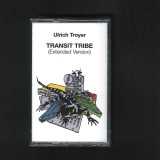
12"[23,49 €]
Ulrich Troyer has been producing music now solidly for over twenty years within a largely genre free framework, but whilst navigating forms such as avant-garde, techno, leftfield, field recording, electronica, glitch and ambient it is the aesthetics of dub that guide his creative direction. Not really recognisable in an orthodox form as remixed versions of roots reggae songs but in the way sonics are manipulated with space, the application and layering of delay, reverb and echo that fixes his output well within the scope of what might be called futurist dub.
The nearest comparisons to his new album TRANSIT TRIBE can only be established by a synthesis of some of the more adventurous explorations in modern music such as African Head Charge, Jon Hassell, Pole (Stefan Betke), Bill Laswell or even Miles Davis; featuring a diverse selection of artists and friends not only from Vienna and environs but also from around the world, sounds are not so much fused but allowed to float along the continuous flowing tide of warm waves of bass.
Rather than to allow the names of Ulrich Troyer's collaborators be merely listed in the album credits, what they bring to this joyful affair needs to be outlined, albeit briefly: Co-producer credits go to Osman Murat Ertel from Istanbul, who employed a variation on the old foolproof Nick Lowe method for checking out the impact quality of his own sound productions by playing tracks through his car sound system speakers!
Murat is a member of the electro-psych-folk group Baba Zula where he plays electric saz, oscillators and theremin and played a key part in the creative development of the album. Mamadou Diabate, the balafon master originally from Burkina Faso and now resident in Vienna, has developed his own unique technique of playing solos that replicate the sound of three instruments playing in unison; however the multi-talented Mamadou is engaged here on singing and playing the talking drum. From South Tyrol Reinhilde Gamper is a member of the experimental trio Greifer who are bringing the sound of the zither into the twenty-first century using new playing techniques and electronic gadgets. Susanna Gartmayer is an Austrian composer and bass clarinetist specialising in improv and multimedia sound research. Diggory Kenrick has been engaged with creating new dub fusions and also re-energising classic rocksteady and roots reggae classics, renowned for his interventions on flute. Didi Kern is an electronic dance musician and drummer from Vienna with a focus on free improvised music. Hamidou Koita, a singer and multi-instrumentalist, is from a traditional Griot family in Burkina Faso but now resident in Vienna and a regular musical partner of Mamadou Diabate playing drums and calabash. Austrian Lukas Lauermann is both a studio and live musician playing cello, also working on electronic sound design and writing string arrangements. He has recorded extensively and appeared on stage with both Mark Lanegan and Hans-Joachim Roedelius. Martin Mallaun is a Tyrol-born specialist in both the development of the zither in modern music and also as a researcher in the effects of climate change on the vegetation of Alpine ecosystems. Mystica Tribe is the musical alias of Tokyo-based dub/techno producer Taka (Takafumi) Noda. He collaborated with Vienna's own Vegetable Orchestra on 2020's "Transplants (Mystica Tribe Version)". After studying classical percussion Flip Philipp is now a jazz vibraphone player and member of the Vienna Symphony Orchestra. Wolfgang Pfistermüller is a member of the Vienna Trombone Quartet and the developer of the incredible bass-trombone Aurora with its uniquely warm and resonant sound. Roger Robinson is a renowned British poet, winner of many contemporary poetry prizes and member of the experimental music group King Midas Sound. Kwame Yeboah is a Ghanaian born UK based keyboard wizard who tours regularly with Yusuf / Cat Stevens, Ms. Dynamite and Pat Thomas.
So contained on the album is an astonishing mix of musicians and instruments: sounds of cowbells recorded in the South Tyrolean alps processed by modular synthesizers and heavy analogue bass synths combined with instruments such as zither, bass-zither, electro saz, flute, talking drum, trombone, cello, vibraphone, marimba, djembe, contra-alto clarinet, melodica, Farfisa - all bound together by organic live-drums and dub effects.
Liner notes by Steve Barker
Disponibile in Stock e pronto per la spedizione

Final release from our Prozpektiva label for this year and we are pleased to introduce a new dynamic duo from Siegen, SameSame to the ranks. With only one full vinyl release to date to their name via TC80's Sequalog imprint, the guys serve up a bustling, breaky no nonsense powerjam 4-tracker for us here.
Disponibile in Stock e pronto per la spedizione

Cassette[14,92 €]
Ulrich Troyer has been producing music now solidly for over twenty years within a largely genre free framework, but whilst navigating forms such as avant-garde, techno, leftfield, field recording, electronica, glitch and ambient it is the aesthetics of dub that guide his creative direction. Not really recognisable in an orthodox form as remixed versions of roots reggae songs but in the way sonics are manipulated with space, the application and layering of delay, reverb and echo that fixes his output well within the scope of what might be called futurist dub.
The nearest comparisons to his new album TRANSIT TRIBE can only be established by a synthesis of some of the more adventurous explorations in modern music such as African Head Charge, Jon Hassell, Pole (Stefan Betke), Bill Laswell or even Miles Davis; featuring a diverse selection of artists and friends not only from Vienna and environs but also from around the world, sounds are not so much fused but allowed to float along the continuous flowing tide of warm waves of bass.
Rather than to allow the names of Ulrich Troyer's collaborators be merely listed in the album credits, what they bring to this joyful affair needs to be outlined, albeit briefly: Co-producer credits go to Osman Murat Ertel from Istanbul, who employed a variation on the old foolproof Nick Lowe method for checking out the impact quality of his own sound productions by playing tracks through his car sound system speakers!
Murat is a member of the electro-psych-folk group Baba Zula where he plays electric saz, oscillators and theremin and played a key part in the creative development of the album. Mamadou Diabate, the balafon master originally from Burkina Faso and now resident in Vienna, has developed his own unique technique of playing solos that replicate the sound of three instruments playing in unison; however the multi-talented Mamadou is engaged here on singing and playing the talking drum. From South Tyrol Reinhilde Gamper is a member of the experimental trio Greifer who are bringing the sound of the zither into the twenty-first century using new playing techniques and electronic gadgets. Susanna Gartmayer is an Austrian composer and bass clarinetist specialising in improv and multimedia sound research. Diggory Kenrick has been engaged with creating new dub fusions and also re-energising classic rocksteady and roots reggae classics, renowned for his interventions on flute. Didi Kern is an electronic dance musician and drummer from Vienna with a focus on free improvised music. Hamidou Koita, a singer and multi-instrumentalist, is from a traditional Griot family in Burkina Faso but now resident in Vienna and a regular musical partner of Mamadou Diabate playing drums and calabash. Austrian Lukas Lauermann is both a studio and live musician playing cello, also working on electronic sound design and writing string arrangements. He has recorded extensively and appeared on stage with both Mark Lanegan and Hans-Joachim Roedelius. Martin Mallaun is a Tyrol-born specialist in both the development of the zither in modern music and also as a researcher in the effects of climate change on the vegetation of Alpine ecosystems. After studying classical percussion Flip Philipp is now a jazz vibraphone player and member of the Vienna Symphony Orchestra. Wolfgang Pfistermüller is a member of the Vienna Trombone Quartet and the developer of the incredible bass-trombone Aurora with its uniquely warm and resonant sound. Roger Robinson is a renowned British poet, winner of many contemporary poetry prizes and member of the experimental music group King Midas Sound. Kwame Yeboah is a Ghanaian born UK based keyboard wizard who tours regularly with Yusuf / Cat Stevens, Ms. Dynamite and Pat Thomas.
So contained on the album is an astonishing mix of musicians and instruments: sounds of cowbells recorded in the South Tyrolean alps processed by modular synthesizers and heavy analogue bass synths combined with instruments such as zither, bass-zither, electro saz, flute, talking drum, trombone, cello, marimba, djembe, contra-alto clarinet, Farfisa - all bound together by organic live-drums and dub effects.
Disponibile in Stock e pronto per la spedizione

Heavyweight special-effect 12" vinyl (three colors, marbled) with two-sided printed information insert about the album. Mastered and lacquer cut by Stefan Betke (Scape Mastering).
Taevalaotus delivers his second album "Ringlus" ("Circulation") as the second release from Estonian based Taevas Records label, comprised of five original tracks plus a remix from Octal Industries.
In a way, everything eventually returns to its starting point. With everything in constant movement, departure and arrival are nothing more than the beginning and the end of a circle. "Ringlus" as an album wanders along the path of its creator's fantasy. No third-party samples are used, the music's fabric is woven from original, natural sounds such as analog oscillators, vibrations of bass guitar strings, sonic echoes of nature, and cracking of the ice recorded underwater. The tracks contain sound and field recordings from the years 2013 to 2017 that were almost forgotten but then rediscovered from Studio Master 468 archive tapes. The aim was to circulate without taking notice of time and to create soundscapes with original resonance, structure and flow that serve as an antidote to contemporary rushed consumerism.
Hardware used: Alesis A6 Andromeda, Dave Smith Instruments Evolver, Elektron Analog Rytm, Yamaha electric bass, Tibetan singing bowls, wooden drum, Otari MTR-12, Drawmer 1974. 1973 & 1978, various analog effect pedals, scientific hydrophone in ice lake, Konka hand made ("organ-pipes") long distance microphone and portable Sony pcm-d50 in the field recordings.
Disponibile in Stock e pronto per la spedizione

This concept album, recorded between 2020 and 2023, compiles electronic experiments based on analog synthesizers and hardware sequencers. The focus was made on generative patterns and oscillators wave shaping, resulting in long and repetitive pieces, each being the result of a constrain intrinsic to vintage hardware.
Disponibile in Stock e pronto per la spedizione
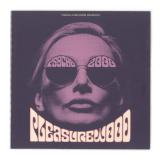
Psycho 2000 - A dark but funky theme that begins with an occulting Italian echo-oscillator drone that is soon followed by pulsating bass and breakbeat drums, leads to tremolo guitars, an ostinato on electric mandolas, strings climbing eloquent ladders, otherworldly electronics, and a cinematic finale.
An evocation of a parade of wooden nutcracker soldiers elaborately dressed in gold-trimmed black uniforms down a wide avenue decorated with mardi gras beads and animal skulls upon golden cobblestones toward a tornado spiralling out purple-hued glissandos and curlicues of elephant smoke.
White Spiritual - Head nod action, the twinkling of a late 60’s Vox Continental II with sickly transistors, the noodling matrix of an intergalactic telephone exchange carried on a bed of bouncy bass with a firm backbeat.
The Johnny Guitar Watson-esque bite and sting of a ‘67 Teisco guitar preludes slabs of unison dark brown moog and organ giving way to the dance of fingers over the black naturals and white sharps of the Continental II.
Disponibile in Stock e pronto per la spedizione

11 track album by Patrick Cowley. Perhaps one of the most revolutionary and influential people in the cannon of disco music, Cowley created his own brand of Hi-NRG dance music coined 'The San Francisco Sound.' By the mid-70ies, Patrick's synthesizer skills landed him a job composing and producing songs for disco superstar Sylvester such as 'You Make Me Feel (Mighty Real)', 'Dance Disco Heat' and 'Stars.' This helped Patrick obtain more work as a remixer and producer. Of particular note was his 18-minute long remix of Donna Summer's 'I Feel Love'. By 1981 Patrick released a string of dance 12inch singles, like 'Menergy' and 'Megatron Man', creating the soundtrack for a generation. Prior to his passing on November 12, 1982, he recorded two more Hi-NRG hits, 'Do You Wanna Funk' for Sylvester and 'Right On Target' for Paul Parker. In 1981 Patrick was contacted by John Coletti, owner of famed gay porn company Fox Studio in Los Angeles. John had heard about Patrick's music from the legendary Sylvester and proposed he write music for his films. Patrick jumped on this offer and sent reels of his college compositions from the 70s to John in LA. Coletti then used a variable speed oscillator to adjust the pitch and speed of Patrick's songs in-sync with the film scene. 'School Daze' is a collection of Cowley's instrumental songs recorded between 1973 and 1981 found in the Fox Studio vaults. Influenced by Tomita, Wendy Carlos and Giorgio Moroder, Patrick forged an electronic sound from his collection of synthesizers, modified guitars and self-constructed equipment. The listener enters a world of dark forbidden vices, introspective and reflective of Patrick's time spent in the bathhouses of San Francisco. The songs on 'School Daze' range from sparse prototechno to high octane funk to somber post-punk to musique concrete, revealing the depth of Cowley's unique talent.
Disponibile in Stock e pronto per la spedizione

Two years after the premiere of his debut "Komorebi", Daniel Szlajnda returns with his second album "Order In Chaos", which will be released on November 8 by U Know Me Records. The starting point for "Order In Chaos" was the assumption that even the most complex system consists of simple elements. Even in chaos, order and repeatability can be encountered, and each complex phenomenon can be broken down into a series of smaller, easier to observe. This idea also translated into the way the album was composed. In "Order In Chaos", Szlajnda consciously rejects all the elements that can distract the listener, focusing on the search for beauty in an economical and ascetic sound and hypnotizing repetitiveness. The album was recorded entirely on a modular synthesizer designed around the Sputnik Modular Dual Oscillator, a construction based on Don Buchla's designs from the 1970s.
Disponibile in Stock e pronto per la spedizione

"Formed in 1967 as a psychedelic electronic duo featuring Dan Taylor on drums and Simeon on a homemade synthesizer consisting of 12 oscillators (and an assortment of sound filters, telegraph keys, radio parts, lab gear and a variety of second hand electronic junk), Silver Apples quickly gained a reputation as New York's leading underground musical expression. Their pulsating rhythmic beats with the use of electronics laid the groundwork for what would become 'Krautrock'. Silver Apples was released in 1968 and still remains an innovative and revolutionary album. Their highly influential sound has influenced countless bands from Stereolab, Beastie Boys, Blur and more. 'Silver Apples... a beautiful and mysterious artifact.' - New York Times.
Sales points
- New 24 bit /96 kHz transfer taken from the original master tapes.
- Limited Blue Sky Colored Vinyl
- First Reissue from Original Tapes
- Currently Touring in the US and Europe
- 'Oscillations' featured in Pitchforks Top 200 songs from the 60's.
dovrebbe essere pubblicato su 18.09.2026

In December 2025, I performed alongside Asmus Tietchens and Jetzmann at the final Hörbar Ausklang Festival. This cassette was produced for that occasion. It contains preliminary studies for my live modular synthesiser performance.
The tape wasn't sold on the night, and its release ended up being postponed until now. At one point I had almost forgotten that I had even produced it. Now it's finally here—but what does that change?
Side A features a 24-minute piece titled Aber Was Ändert Das? (What Does That Change?)
Aber Was ändert Das? – Two oscillators coupled via a comparator and routed through a filter bank form the foundation of this piece. Eight filters within the bank are modulated by a synchronised octal triangle wave. Over time, the modulation gradually unfolds like an abanico (fan), shifting into different patterns. The impulses slowly dissolve into noise. A looping voice tape is added to the texture, and the piece concludes with a melody of comb-filtered sine tones.
Side B presents several variations and adjustments of a self-generative patch.
Quantitative Unbestimmbarkeit I-V (Quantitative Indeterminacy I–IV) – At the core of these pieces is a source of uncertainty and three function generators programmed in mutual feedback. The tonal material is derived from a wave-folded sine wave, a noise source, and a pinged state-variable filter. This type of self-generative patch is commonly known as a Krell patch.
The edition is limited to 50 copies. Release day will be the August 7th, 2026.
The title Miszellen Band is derived from the term Miszelle (plural: Miszellen), which refers to a short informative text or brief scholarly essay, often published in academic journals or collected volumes under a "Miscellanea" section. The word originates from the Latin miscella, meaning "mixed things". Such texts typically explore highly specific subjects without the scope or depth of a full-length study. They often consist of etymological notes, addenda to previously published work, concise discussions, or small discoveries from archives.
dovrebbe essere pubblicato su 07.08.2026

When ELEH's debut "Floating Frequencies/Intuitive Synthesis I" was originally released it was praised as a powerful piece of new electronic minimalism. Twenty years later the artist's legacy has grown while ELEH continues to hypnotize new listeners with time stopping music. Critics, fans and neurologists have praised the music of ELEH as aiding attention and focus while seeming to slow time. Eleh's slow change drones are a state of flow hypnotizing listeners into meditative focus.
From the original packaging, "Pure Sound. Pure Volume. Pure Analog. Dedicated To La Monte Young"
ELEH began in 1999 as an exploration of analog synthesis, emphasizing low frequency difference tones and other resonant acoustic phenomena. ELEH highlights the physical presence of sound as it has been inspired by the physical world. There is also something ‘cathedral-like’ and cosmos-inducing in the sound constructed by ELEH.
This audiophile quality presentation of ELEH's debut album was mastered by Tom Eaton at Sounds And Substance and manufactured at Optimal in Germany for the lowest possible noise floor and the highest analog resolution. Packaged using a 5th color metallic shimmer ink on solid black board stock.
"Nuances of sound turn symphonic." New York Times
“ELEH’s sounds move by stealth and are sculpted from the world rather than from ego. Eleh is not a personality; Eleh is an idea about sound. ELEH forces you to contemplate the cosmos and your place in it. “ Gramophone
"ELEH demonstrates how a single amplified gesture delivered just so can reveal the inner workings of an entire cosmos." Tony Herrington/Wire
“Floating Frequencies/Intuitive Synthesis more than lives up to the mythic status that ELEH has ascended to. “ Brainwashed
"ELEH's music electrifies whatever space it engages. With the flip of a switch, it exposes the ways in which all space is, potentially, electric." ~ Frieze
dovrebbe essere pubblicato su 31.07.2026

NU-S3RVO Vol. 2 is the second compilation released by NU-S3RVO. In this release, we continue our exploration of the sounds of modern East Asia, shifting our focus toward female creators within the local scene. This album features works from seven producers based in Beijing, Shanghai, Hong Kong, Guangzhou, and Chengdu, spanning genres from Ambient and Bass to IDM and Techno.
The juxtaposition of “Eastern” and “Female” is not intended to annotate a specific identity, but rather to present an entirely autonomous field. For too long, the “East” has been constructed as a feminine, mysterious, and sensory-indulgent mirror of the “Other.” Such aesthetic norms act not only as gendered shackles but as extensions of colonial logic, forcing both women and the East to share a fate of being “spectacularized” for the gaze. Electronic music, as a creative medium, derives its radical freedom precisely from its departure from this destiny of “spectacle.” It represents the oscillator’s transcendence of physical acoustics and functions as a liberatory technology, offering creators a sanctuary to dismantle traditional constraints and reconstruct the self. In fact, since the inception of modern sound, women have been at the very core of inventing and defining the technologies, interfaces, and expressive techniques of the craft.
Stripping away the romanticized and semioticized cultural shells, each local artist in this compilation is a master of diverse technical crafts. Through their unique logic and emotional resonance, we aim to establish a decentralized acoustic language within the fissures of modern civilization.
Ordina ora e ordineremo l'articolo per te presso il nostro fornitore.

This reissue marks the creation of Silver Apples Foundation, which is both a non profit organisation and new imprint whose mission is to honour the legacy wishes of Simeon Coxe to preserve the memory of Silver Apples by promoting electronic music and the setting up of an electronic music scholarship fund. This release will be followed later in the year with the long awaited Silver Apples biography, ‘Electronic Evocations', by music journalist and writer Kris Needs. This version of Oscillations was the last ever recording by Simeon at his ChickenCoop studio in Fairhope Alabama in 2019 and captures how he liked to play it live. Backed with the late Andrew Weatherall's remix of The Edge of Wonder, taken from Silver Apples last ever album Clinging to a Dream. The sleeve art features an Oscillator drawn by Simeon in 2014, while the back cover uses the original Silver Apples logo. But to make this release extra special it comes with a Silver Apples slipmat, featuring the iconic Apples logo
dovrebbe essere pubblicato su 22.05.2026

Steig ein in die neueste Mega-Firma von Seattle, Telehealth. Sind sie Rebellen, die mit Synth-Punk/New Wave die Grundlagen unserer techno-kapitalistischen Hölle untergraben wollen? Oder sind sie Unternehmer, die Marken aufbauen, um die Märkte zu stören und die Massen auszunehmen? Der einzige Weg, das rauszufinden, ist, ihr Debütalbum für Seattles älteste Mega-Firma, Sub Pop Records, zu kaufen. Green World Image folgt auf eine ausgedehnte US-Tournee, ein selbst veröffentlichtes Album und eine knackige 7"-Single aus dem Sub Pop Singles Club aus dem Jahr 2023. Für Fans von B-52s, Water From Your Eyes, Devo und Snooper. Die Kalshi-App ist ein ,Prognosemarkt für den Handel mit der Zukunft", eine Plattform, auf der Leute auf das Ergebnis von fast jedem realen Ereignis wetten können - von der Genauigkeit der Wettervorhersage bis hin zur Frage, ob in Gaza offiziell eine Hungersnot ausgerufen wird oder nicht. Als der Mitbegründer der Plattform, Tarek Mansour, Ende 2025 als offizieller Wett-Partner zu CNN kam, meinte er nach dem Deal: ,Die langfristige Vision ist, alles zu finanzieren und aus jeder Meinungsverschiedenheit einen handelbaren Vermögenswert zu machen." Telehealth wurde in dem chancenreichen Umfeld des Post-COVID-Seattle als skalierbares Musik-Startup mit ähnlichen Zielen gegründet. Das Unternehmen wurde 2022 von dem Ehepaar und Glücksspielbegeisterten Alexander Attitude (Synthesizer/Gesang/Gitarre) und Kendra Cox (Synthesizer/Gesang) gegründet, zu denen sich die langjährigen Mitarbeiter Ian McCutcheon (Schlagzeug), John O'Connor (Bass) und Dillon Sturtevant (Gitarre) gegründet. Die Gruppe will alle Meinungsverschiedenheiten darüber, wie die chaotische lokale ,Musikszene" weitergehen soll, zu Geld machen. Kann man DIY sein und gleichzeitig eine gute Suchmaschinenoptimierung haben? Kann man progressives kulturelles Ansehen und bares Geld gleichzeitig verdienen? Ist Kunst, die durch ,Kulturförderungen" der Tech-Industrie finanziert wird, irgendwie langweilig, authentisch gorpcore (junge Männer leben laut der New York Times den ,Quarter-Zip-Lifestyle") oder ironischerweise punkig? Für Telehealth ist die Antwort auf diese Fragen nicht ja oder nein, sondern eher eine unerschlossene Lücke im Musikmarkt, die auf eine Band wartet, die visionär und verrückt genug ist, auf die Verbreitung zu setzen. Produziert von Trevor Spencer, Green World Image, ist das zweite Album von Telehealth (nach dem Debütalbum Content Oscillator und einer Veröffentlichung des Sub Pop Singles Club, beide aus dem Jahr 2023) und sein Börsengang mit den Angel-Investoren Sub Pop ein vertikal integriertes Kunstwerk für die Post-Grunge-, Post-Flanell-Seattleiter und Konsumenten auf der ganzen Welt, die ebenfalls bereit sind, ihre eigene Leidenschaft für Musik zu finanzieren. Das traumainformierte, ergebnisorientierte und äußerst tanzbare Weirdo-Punk-Album ist inspiriert von Attitudes Zeit als ehemaliger Architekt in einer Climate PledgedÖ-Stadt, die mit ihrem Netzwerk aus effizient zonierten 5-über-1-Gebäuden die Kunst der ,Green World"-Architektur perfektioniert hat. Der PNW-Post-Punk von Telehealth schafft ähnliche architektonische Räume, in denen sich die glänzenden, futuristischen, techno-industriellen Rhythmen und Synthesizer des Seattle der Bezos-Ära mit dem rohen, unabhängigen Underground-Sound vermischen, den die Stadt aus kulturellen und Marketinggründen liebevoll bewahrt. Das Ergebnis? Stell dir XTC, REM und YMO vor, mit einem stärkeren Fokus auf ROI. Stell dir The B-52s vor, aber B2B. Stell dir einen intelligenteren Brainiac, einen transhumanen Gary Numan oder einen terminalen Online-Pylon vor. Endlich eine Band mit so vielfältigen Talenten, dass sie sowohl in deinem Keller als auch in den Amazon Spheres spielen kann.
[a] 1[USER ONBOARDING SEQUENCE]
dovrebbe essere pubblicato su 15.05.2026
dovrebbe essere pubblicato su 10.04.2026

Carlos Giffoni reconnects with Thurston Moore for two sides of loose-limbed axe noise, oscillator worship and hard-phased, Spacemen 3-style feedback.
Giffoni’s been on a roll recently. Since the No Fun founder returned to the scene with »Vain¡, a genius set of synth mutations that appeared in iDEAL back in 2018, he’s been slowly ramping up the activity, dropping the celestial »Dream Walker« on Stephen O’Malley’s Ideologic Organ in 2024 and following it with »Pendulum«, a bumper compendium of collaborations, just a few weeks back. For those who remember Giffoni’s first trip round the block, he was always able to hold his own chopping it up in person, not just by mail.
Just scrub through his early catalog and you’ll see collabs with Nels Cline and Chris Corsano, Merzbow, Jim O’Rourke and Lasse Marhaug, and of course, Thurston Moore. The two rekindle their thing on »IGUANA’« picking up where 2001’s fabled »4 Guitars Live« performance left off. Here, Giffoni straddles a tabletop synth and FX while Moore attacks his signature Jazzmaster with a drumstick and a screwdriver – vibes fully intact.
Moore is on blistering form, sounding as if he’s taken a step back to refresh his approach since the early ‘00s when he could be spotted moonlighting on any number of basement-adjacent noise sides. Sawing at his strings and turning the guitar into a shrieking resonator, he leaves only faint vapours of the classic Sonic Youth sound as opiating accents on his animalistic wails and rumbles. On the opening half, his whammy – assisted shreds are balanced out by Giffoni’s off-world whirrs and airlocked vibrations, building a dense wall of noise towards an unexpectedly elegiac conclusion. At some point, Giffoni’s rasping churr transforms into a simmering shudder and Moore’s into hymnal drones – squint a bit and you could almost call it pretty.
Of course, they ramp things up on the flip, dissolving the melancholia with smokey white noise and twangy, post-Derek Bailey chimes that Giffoni accompanies with aggy oscillations. Like every great taped noise set, the recording quality is crucial - »IGUANA« was captured from the pit by Guillermo Hernandez Avendano, the dad of Lia Miranda who provides the cover photo. It’s that kinda show.
dovrebbe essere pubblicato su 10.04.2026
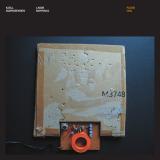
Some years ago, Kjell Bjørgeengen and Keith Rowe attempted to convert video signals into sound by setting up Rowe’s pickups next to an old CRT monitor, turning its magnetic field into a sound generator. Rowe further developed the system with David Jones at Alfred University, slimming down the setup using a copper coil, a circuit board, a video input, and a telephone pickup. Jones named it the »Flood Coil«, and it’s that instrument you can see on the album’s front cover and that lies at the core of these recordings, made without any physical live input from the artists themselves. In essence, it’s generative music in its purest form.
Bjørgeengen’s video feed is generated by oscillators, then routed into Marhaug’s pedals and then back into the Flood Coil, so any visual shifts alter the sound, and any modification to the sound changes the video. The duo have played this setup live many times, but for this studio version they left the system to do its thing without any intervention for two minutes at a time before moving onto the next idea. They recorded hours and hours using this process and then selected 18 highlights for this album, extracting harsh noise, power electronics, lulling feedback drone, and peculiar rhythmic snippets to show the scope of their technique.
A wall of growling, hi-octane Pulse Demon-style noise opens the set, gradually exposing us to more asymmetric textures, shifting through unstable repetitions that transform Merzbow’s metal-inspired screams into »Aaltopiiri«-era rhythmic noise. It’s remarkable, actually, how much Marhaug and Bjørgeengen can squeeze from the system, chancing on shivering, lower-case chugs and pops, galloping drums, soundsystem subs, and grinding blast beats that sound like Napalm Death’s »Scum« piped through a broken amp stack. It ain’t pretty, but noise/industrial freaks will revel in the fierce delights inside.
dovrebbe essere pubblicato su 10.04.2026

Clear Vinyl[32,98 €]
A journey into the raw and visceral origins: from the demo sessions mixed by Steve Albini to the night of the very first secret show on December 20th, 1988. In the heart of Chicago, Geordie and Martin Atkins turned frustration and distance into pure creative energy, recording the now-legendary "Black Cassette" demos at Albini"s house. Distorted, menacing bass lines, unruly oscillators, and Albini running endlessly up and down the stairs between the basement drum room and the pantry control room defined a sound that was brutally direct and uncompromising. The first interactions with the Yamaha drum machine foreshadowed elements that would later shape parts of the album. Those sessions sparked essential ideas, while the future studio - purchased from Steve and moved to Wabash Ave - would soon become the core of Invisible Records and Killing Joke"s operations. On the other side, a truly rare document: excerpts from Atkins"s very first show with the band, at Burberries in Birmingham on December 20th, 1988. In a small, mirror-lined club filled with tension, adrenaline, and inevitable collisions with the walls, Extremities, The Fanatic, Intravenous, and The Beautiful Dead were performed publicly for the first time. It was the night when everything ignited: the blast beat still in its embryonic stage, the controlled fury Geordie demanded - "can you go a bit more Moonie on it?" - and above all Jaz"s theatrical yet strikingly genuine laughter. Not just joy, but a declaration: a giant "fuck off" to the doubters and a prelude of what was about to come. A raw, essential, indispensable testimony: the birth of an era.
dovrebbe essere pubblicato su 13.03.2026

A journey into the raw and visceral origins: from the demo sessions mixed by Steve Albini to the night of the very first secret show on December 20th, 1988. In the heart of Chicago, Geordie and Martin Atkins turned frustration and distance into pure creative energy, recording the now-legendary "Black Cassette" demos at Albini"s house. Distorted, menacing bass lines, unruly oscillators, and Albini running endlessly up and down the stairs between the basement drum room and the pantry control room defined a sound that was brutally direct and uncompromising. The first interactions with the Yamaha drum machine foreshadowed elements that would later shape parts of the album. Those sessions sparked essential ideas, while the future studio - purchased from Steve and moved to Wabash Ave - would soon become the core of Invisible Records and Killing Joke"s operations. On the other side, a truly rare document: excerpts from Atkins"s very first show with the band, at Burberries in Birmingham on December 20th, 1988. In a small, mirror-lined club filled with tension, adrenaline, and inevitable collisions with the walls, Extremities, The Fanatic, Intravenous, and The Beautiful Dead were performed publicly for the first time. It was the night when everything ignited: the blast beat still in its embryonic stage, the controlled fury Geordie demanded - "can you go a bit more Moonie on it?" - and above all Jaz"s theatrical yet strikingly genuine laughter. Not just joy, but a declaration: a giant "fuck off" to the doubters and a prelude of what was about to come. A raw, essential, indispensable testimony: the birth of an era.
dovrebbe essere pubblicato su 13.03.2026

FRQNCY LDN, the new project from Alex Lavery and James Ford (producer du jour and one half of Simian Mobile Disco), are releasing their debut album ‘The White Edition’ on 5 September via PRAH Recordings. Alongside the news of their debut album, the duo are sharing the first taste in ‘Matthias’ Wajd’, which they describe as “a rousing, instrumental piece from the middle of the set where the whole ensemble became balanced providing moments where Raven played violin with haunting yet uplifting melodies within the cavernous reverb of the church. Interestingly, at this moment, most of the audience who had been laying down rose to watch the performance like a gig, like an awakening.”
Initially conceived as a live project with earlier performances at churches in London and at Glastonbury, FRQNCY LDN’s music is a mix of strings, gongs, oscillators, FX, and spoken word, and the result is a musical experience unlike any other. Now that immersive magic has been captured on their debut release through Prah Recordings.
The music that FRQNCY LDN are releasing as their debut album is from an extraordinary live take from a performance at St Matthias Church in Stoke Newington last year, and thanks in no small part to the serendipitous bunch of musicians they assembled: composer and violinist Raven Bush, clarinettist Arun Ghosh, cellist Satin Beige Chousmer, and harpist Chloe Chousmer-Kerr. Alongside Lavery and Ford and assisted by engineer Animesh Ravel, they were able to capture the music to a world class level.
FRQNCY LDN has its roots in a supermoon that occurred three summers ago, after the hottest day of the year. Two of Lavery’s friends gave a sound bath that evening. “I’m not overly into astronomy or anything but the experience was nuts,” he says. “I had to find out what had just happened. What felt like forty minutes was actually two and a half hours. We were all out. It was so profound that I was hooked.”
He immediately signed up for a sound therapy course where he learned about what he calls a “brain hack” to meditation. “The thing about sound therapy is there’s a lot that’s meditation-based, and I find meditation really difficult. I’ve got a very busy brain. What was alluring about this process of sound immersion, a sound bath, whatever you want to call it, is it’s basically a hack to making your brain get into a meditative state.”
FRQNCY LDN’s early shows crystallised their ideas into a project, and Lavery brought poet Nikita Gill on board as a vocalist. “One of the first poems she gave to me, ‘Unwitches’ was in response to me explaining that I’d love this project to be perceived as something anyone could access. It’s not just for the sound meditation or the yoga, or the mushroom crowd. No one should be turned off by connotations from where the music comes from, I love music but I’d never be into that because it’s too woo-woo. Nikita said she’d had this poem for a long time but she’d never found the right home for it.”
And in an increasingly busy and fraught world, the need to tune out for an hour or so, and maybe tune in to something more profound, is only going to get bigger.
dovrebbe essere pubblicato su 20.02.2026
