quête:osi
In their 50th anniversary year, pioneering godfathers of Afro-beat, Osibisa reached out to global icon, Louie Vega, to bring a fresh collaboration to their new release, ‘Yo Luv Is Betta’, taken from their 2021 studio album ‘New Dawn’. Vega instantly pulled in right-hand-man, Josh Milan (keyboardist and co-remixer) and together they brought justice to this mighty track, with The Celebration Mix & Expansions NYC Dub release coming January 14, 2022 at all Digital Outlets and on February 11, 2022 on Vinyl.
Written by Osibisa front man, Gregg Kofi Brown, the track was inspired by the passing of Afrobeat legendary drummer, Tony Allen, and features vocals from Ghanaian vocalist, Ssue. Steeped in voluptuously rich vocals, ‘Yo Luv Is Betta’ serves-up a delicious melodic cocktail of afro-beats, flecked with jazz undertones and big-band instrumentals. The remix combines a joy-ride of Afrobeat and Afro / Brazilian house beats & bass groove, sparkled with scintillating sitars, re-arranged horn stabs and the metal tines of a Fender Rhodes.
The Celebration mix and the Expansions NYC Dub is a classic Vega/Milan hot biscuit for dancers worldwide.
- 1: Shadow (Forte)
- 2: Dagger (Forte)
- 3: Eternal Golden Monk (Forte)
- 4: Benblåst (Forte)
- 5: Östpeppar (Forte)
- 6: Traces (Forte)
- 7: Phobon Nika (Forte)
- 8: Måsstadens Nationalsång (Forte)
- 9: When No One Walks With You (Forte)
- 10: All These Feelings (Forte)
- 11: Nojja (Forte)
- 12: Deceit (Forte)
- 13: The Lone Deranger (Forte)
With a decade between releases, VILDHJARTA remain as inscrutable and as close to anonymity as a band can be. Their down-tuned, staccato riffs and pulverizing grooves are the sound of music stripped to its essence. Formed in 2005 in Hudiksvall, Sweden, VILDHJARTA has become an institution of omission. From their origins, they were unafraid to embrace the untraditional. Since dropping a minute of new live music in 2016, the band's focus has almost entirely been on the new album, “måsstaden under vatten” that was finally released October 15th, 2021, with drummer and now noted producer, Buster Odeholm (also known for his work with Born of Osiris, Shadow of Intent and guitar for Humanity’s Last Breath amongst others) heavily involved in the production, mixing and mastering of the music. While working on “måsstaden under vatten” the band also revamped their two first releases. Buster Odeholm comments: "Before I joined VILDHJARTA they were my favourite band. However, I always felt the production could be a lot better and serve the songs a lot more. After joining I asked for the files from those albums to be able to try my own approach. I’ve re-programmed/produced bass and drums from scratch. For producing the drums on ‘Thousands of Evils (forte)’ I got some help from Chris George from Sworn In. I've also remixed and remastered both albums. This has been going on a long time and a lot of remixing has been done as the years have gone by, but now it’s finally time to release it.". Don’t miss the chance to check out classic VILDHJARTA tunes in all their up to date glory, now entitled ”måsstaden (forte)” and “Thousands of Evils (forte)”. Both are available as Ltd. Gatefold marbled LP, Ltd. CD Edition and Digital Album.
- 1: Unidentified Members Of The Royal Drums Ensemble (Mujaguzo) - Mujaguzo
- 2: Erusana Lutwana & Budo African Music Club - Ffe Basajja Ba Kabaka
- 3: Albert Bisaso Ssempeke & Band As The Lyres, Fiddles, And Drums Ensemble (Abadongo) - Akasozi Bamunanika Keyagaza
- 4: Kopolyano Kyobe & Band As The Xylophone And Drums Ensemble (Abantamiivu) Ssematimba Ne Kikwabanga
- 5: Unidentified Members Of The Royal Flutes And Drums Ensemble (Abalere) - Akwana Omwami Tagayala
- 6: Evaristo Muyinda - Sewaswa Kazala Balongo
- 7: Maria Nanemba Muyinda - Twaliraana Mayumba Emmeeme Tezaalirana
- 8: Evaristo Muyinda - Twabonabona
- 9: Unidentified Members Of The Royal Trumpets Band (Abakondere) - Bagabye Mukwenda Owange Talina Nnaku
- 10: Kalema Hassan Katipa & Band - Byananyinimu
- 11: Unidentified Members Of The Royal Big Xylophone Ensemble (Abakadinda) - Bandaba Okulya Etoke Bampita Mulamu Dala
- 12: Temutewo Mukasa, Royal Harpist (Omulanga) - Okwagala Omulungi Kwesengereza
- 13: Unidentified Members Of The Royal Drum-Chime Ensemble (Abatenga) - Kifwe Kze Kya
- 14: Semuwemba George William - Kubikira Amadinda
- 15: Semuwemba George William & Sekindi John - Emirembe Ngalo
- 16: Albert Ssempeke - Omusango Gw’abalere
- 17: John Ssempeke & Sebuufu Steven - Osiibye Otyano
From its founding in the late 14th century, the kingdom of Buganda has been celebrated through sound and nurtured a rich musical tradition in its royal court. Coming from across the kingdom, musicians would take turns in the palace to sound drums, xylophones, flutes, lyres, and more to praise and honour the existence of the kingship. In recent years however, the tradition has been more difficult to maintain, especially since 1966 where there was a violent attack on the palace that abruptly abolished the kingdom and during which royal musicians fled or were killed. And while the kingdom was re-established in 1993 as a cultural institution, many of the remaining musicians had since chosen to sideline their skills to deal with the issues of their day to day lives, the practice of the royal tradition waning in popularity, especially with younger listeners and players. But all is not lost. Scattered across the kingdom, a motivated team of older veterans and attentive young players are still keeping the tradition alive. Offering a transversal glimpse into the past and the present, "Buganda Royal Music Revival" collects recordings made in between the late 1940s and 1966 illustrating the older generation's skills, and presents them alongside recent recordings featuring old and young musicians who still carry on this musical tradition, some even performing for the current king, Muwenda Mutebi II. The later were made during the shooting of the 2019 documentary "Buganda Royal Music Revival" that presents through a film what this album conveys through sounds: a packed dive into a century-old tradition. The music displayed here is diverse and vibrant, presenting a variety of styles and highlighting instruments that illustrate the depth and sophistication that stemmed from the royal court experience of Buganda. As a starter, the album opens with 'Mujaguzo'. Often translated as 'The Drums of the Kingship', the mujaguzo is a crucial ensemble for the cultural tradition, made from drums collected by the kingdom throughout its long history and numbering around 100 drums (historical records suggest there were at some point over 300). They are the vitality of the kingship packaged into sound. From here, we're introduced deeper to an array of instruments and textures, like the buzzing Bugandan lyre (endongo) by contemporary royal player Albert Bisaso Ssempeke, the resonant akadinda xylophone with its 21 large wooden keys, Temutewo Mukasa's restless praise sung with his harp (ennanga), the hand-made gourd trumpet (amakondere), the entenga "drum-chime" and its core set of 12 drums tuned like the amadinda xylophone, or the tightly intertwined melodies of the flutes ensemble (abalere). With the music, the hissing and swishing sounds of old tapes reminds at times the listener of the long process, from the original recording to its archival digitization, that allows the talent of past musicians to still vibrate nowadays. This rousing selection of music and moods is a unique and all too rare exploration of sounds that celebrates the common history of generations of musicians, and the question remains open as to how this rich cultural tradition will shape and be shaped by the upcoming Bugandan future, and what engagement it will trigger among audiences within, but also beyond, the kingdom of Buganda.
- 1: Lavender Haze
- 2: Brännmärkt
- 3: När De Du Älskar Kommer Tillbaka Från De Döda
- 4: Den Helige Anden
- 5: Passage Noir
- 6: Kaos 2
- 7: Toxin
- 8: Måsstadens Nationalsång (Under Vatten)
- 9: Heartsmear
- 1: Vagabond
- 2: Sunset Sunrise
- 3: Sunset Sunrise Sunset Sunrise
- 4: Mitt Trötta Hjarta
- 5: Penny Royal Poison
- 6: Detta Drömmars Sköte En Slöja Till Ormars Näste
- 7: Phantom Assassin
- 8: Paaradiso
With a decade between releases, VILDHJARTA remain as inscrutable and as close to anonymity as a band can be. VILDHJARTA's down-tuned, staccato riffs and pulverizing grooves are the sound of music stripped to its essence. Yet, the Swedish collective’s long-awaited album, måsstaden under vatten, is far more than a recitation of djent values. Clocking in at 80 minutes, it thematically picks up where the dark Swedish fable of 2011’s Måsstaden left off and delivers on the promise that record hinted at. Tracks like the recently released “när de du älskar kommer tillbaka från de döda” (“When the Ones You Love Return From the Dead.”) suggest a newfound subtlety and sophistication amidst the bombast and beauty in the breakdown.
Since dropping a minute of new live music in 2016, the band's focus has almost entirely been on the new album with drummer and now noted producer, Buster Odeholm (Born of Osiris, Shadow of Intent, Humanity’s Last Breath) heavily involved in the production, mixing and mastering of the music. Visual artist Rickard Westman, who did art for VILDHJARTA's debut as well as their Thousands of Evils EP in 2013, has also returned to the equation to reprise his disturbing visual iconography. Says the band: “Art happens when art happens.”
The sound of music is rarely this challenging, unforgettable and worth the wait.
Born Of Osiris' return with their 6th studio album, "Angel Or Alien”!
- Pre-orders launching w/ music video for "Angel Or Alien”
- Release day focus track is "Poster Child" w/ music video
- Launching vinyl and CD at D2C and Retail
- Confirmed Revolver and Newbury Comics vinyl variants
- "White Nile" from the album was released on 3/18 w/ a music video
The harrowing follow up to 2019's 'Kingdom of Lies', OSIAH's new album LOSS is the sound of a band truly perfecting their craft. Masterful tech collides with punishing Deathcore, cementing the band's reputation as one of the most fearsome live acts in Death Metal today.
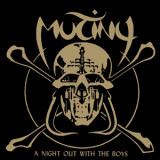
- Rare P-Funk album from 1983 - Funkadelic/Parliament All-Star Line-Up - First ever vinyl reissue - Comes with a repro of the original insert - 180g Black Vinyl Edition - Limited to 500 copies, comes with obi strip // Jerome "Bigfoot" Brailey is an American drummer who started performing in the early 1970s with several R&B groups from the likes of The Unifics, The Chambers Brothers and The Five Stairsteps where he developed his unique style and finesse on drums. Later in 1975 he joined George Clinton's P-Funk collective and has appeared on many of Parliament & Funkadelic's most popular recordings (some of which he also co-wrote). Brailey played on classic albums like `Mothership Connection' and `One Nation Under A Groove'. Samples from that body of work (and his drum arrangements) have since then appeared on hundreds of hip hop and contemporary R&B songs by renowned artists such as Kendrick Lamar and Childish Gambino. Jerome Brailey is a member of the Rock and Roll Hall of Fame (inducted in 1997) and part of their `50 greatest drummers in the Hall' list (stating that his drum style kept Parliament-Funkadelic rooted in the old-school `James Brown-style funk')_next to this achievement, he was proclaimed by Rolling Stone as one of the `100 Greatest Drummers of All Time' for his steady kick drum, shifty hi-hat action and intricately unpredictable snare patterns. Brailey earned numerous Gold and Platinum records with the P-Funk Organization and has worked as a session drummer for many talented artists such as Herbie Hancock, Buddy Miles, Snoop Dogg and Pharoah Sanders. George Clinton's funk empire was not without its disagreements and Jerome Brailey's `Mutiny' project was a direct result of just such a disagreement (as well as one of the more notable offshoots of the P-Funk axis). Mutiny performed in a style not far removed from the classic P-Funk style and with a lot of emphasis on the dual lead guitar work, but what makes them unique compared to their contemporaries is that at times their recordings also emit a darker, more sinister feeling. Besides Brailey on drums (and on most of the lead vocals) Mutiny featured a funk-alumni line-up and released three amazing and collectible albums: `Mutiny On The Mammaship' (CBS, 1979), `Funk Plus The One' (Columbia, 1980) and `A Night Out With the Boys' (J. Romeo, 1983)_these were followed by two comeback albums: `Aftershock' (Rykodisc 1995) and `Funk Road' (Catbone, 2013). The `Mutiny' album we are proudly presenting you today (A Night Out With The Boys) is an underrated gem made by musicians who defined the funk scene of the '70s and '80s! Featuring an all-star line-up that includes Rodney Curtis (Fred Wesley, Maceo Parker), Michael Hampton (Funkadelic-Parliament, Deee-Lite), Kenni Hairston (Cameo) and Maceo Bond of Osiris/Afrika Bambaataa fame! `A Night Out With The Boys' has it all: Jerome's trademark drumbeats, funky bass grooves, driving riffs accented by stinging synth parts, slow spacey (and prominently featured) guitars, top-notch lead vocals and chants that recall Sly Stone's "Loose Booty". The whole album is a hot dance jam with crisp percussion_an extremely infectious, locked-in-the-pocket bass-heavy monster-funk-bomb that any serious self-respecting funk fanatic must have in his/her collection!
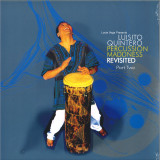
Grammy award winner & multi grammy nominated Luisito Quintero grew up with the Latin American and African tradition of percussion. His father is just as much a percussionist as his uncle Carlos Nene Quintero and his cousin Roberto Quintero . He became a member of the Orquesta Simfonica de Venezuela , but soon appeared with ensembles such as Grupo Guaco and El Trabuco
Venezolano and toured with Oscar D'León .
He then moved to New York, where he initially worked with Latin jazz musicians such as Willie Colón , Eddie Palmieri , Tito Puente and Celia Cruz . He then turned to the fusion of jazz, funk, salsa and African music and performed with George Benson , Herbie Hancock , Ravi Coltrane and Toshiko Akiyoshi , but also with pop musicians such as Gloria Estefan and Marc Anthony .
Vega Records are proud to present his new vinyl release “Percussion Maddness Revisited” Part Two. From the Osibisa remake by Luisito Quintero “Music For Gong Gong” to collaborations with the Great Richard Bona, Latin Jazz legend Hilton Ruiz and Salsa Veterans Jose Mangual and Milton Cardona, you can see the caliber of musicians that make up this timeless piece. For the afrohouse heads you have the new track “Yemaya” Featuring Nina Rodriguez remixed by Afrohouse King Manoo. Prepare for the sonic fun with vinyl pressings by Optimal !!
Percussions Maddness Revisited Part Two Double Vinyl Set out soon at a vinyl store near you !!!
LSD (lysergic acid diethylamide), is a hallucinogenic chemical compound, first synthesized in 1938. Upon its introduction into popular culture in the 1960’s it quickly shifted not only the mind of the artist but also the person experiencing the art.
Hip-Hop artist Cambatta is known for his thought provoking and psychedelic-inspired rhyme techniques. His newest album entitled, “LSD”, is just as the title insinuates- mind-bending and consciousness-shifting. This album was created throughout four years of psychedelic usage and reality-based life changing events. This process has made the album a duality of both real and surreal interpretations.
The album’s title is also an acronym for “Lunar Solar Duality,” alluding to the album’s dichotomy of light and dark conceptualizations and countless other polarizing and multi-entendre-latent compositions. Whether you have ever experienced LSD or not, this album is sure to impact anyone receptive and perceptive enough to take a dose.
This is the 1973 solo album by Ghanaian percussionist Anthony Kwaku Bah, who was given the nickname „Reebop“ by American
jazz legend Dizzie Gillespie. He passed away early at the age of 39 in Stockholm in 1983, but before made himself a name for his
works with UK 70s rock heroes TRAFFIC and German Krautrockers CAN, amongst others. If you might expect here the prototypical
Afro Beat and Afro Rock you mostly know from British bands, you will be surprised that this is only one part of the deal. Yes, there
are African elements to be found, buried somewhere in this boiling cauldron where polyrhythmic grooves are the base for jazz
improvisations by the brass section, that range from naughty swing and bebop, to freaked out free jazz and enchanting soul jazz
the way it was popular in the late 60s. The arrangements are utterly lush with so much going on here in every aspect that you
would get lost if there was no trace of melody to be discovered, but there they are and they tell you fantastic stories of exotic
places that only exist in your wildest dreams. Kwaku Bah’s rhythm patterns grab you by the horns and pull you into a world of
their own. Hypnotical, irresistible, hot and vivid. The tunes combine jazz, soul, funk and each one is constructed like a self –
contained story. One could imagine these tunes being used as library music for 70s movies from action to romance. All pieces
though are characterized by the constantly pulsating rhythm. To avoid drifting into the field of insubstantial disco dance music,
the performances witnessed here were executed with the highest possible emotional intensity and dedication. Lay back, close
your eyes and float away on a raft of sound upon the wild river of grooves and melodies. Some haunting Exotica jazz passages
with a typical „jungle“ feel get thrown in for the good measure. There are even vocals in an African language hard to identify,
which create and even more mysterious atmosphere. This is just an introduction part of another powerful speed funk groover but
the vocals stay and make this a clear standout track. Saxophone and guitars seem to have a duel here. You will not sit still while
having this tune „Iphonohimine“ coming down on you like a thunderstorm. Blues, Afro Beat, Psychedelic Rock, Funk, it can all be
found in here and the band goes wild into an everlasting improvisation that deprives you of your breath. Can this record get even better? Do not ask, just enjoy what comes next. If you think that some melodies by the giant brass section sound a bit too catchy
just reach out beyond these harmony lines and find yourself in a thicket of grooves, pulsations, bits and pieces of melody with a
dense, sultry atmosphere. Some smaller parts might make you think of cruise ship big bands and white suits, but everybody will
soon drop these and dance in their underwear for the hot blooded power funk base of the tune called „Africa“, which will take
over one’s soul and set it on fire. So clean, so nice and so filthy and dangerous at the same time, this album is a masterpiece of it’s
style. The exciting and very sensual funk rock of „Lovin‘ you baby“ with crazy fuzz guitars and a dark and haunting approach is
another reason to kneel down when you put this record onto your turntable. Great clean lead guitars give it a latin garage rock
edge Carlos Santana would commit serious crimes for. If you love bands like OSIBISA, Eric Burden & WAR, GINGER BAKER
AIRFORCE, SANTANA, Miles Davis, all around 1969 to 1973, this is what you always wanted to listen to. Grab your copy now.
- A1: Pezulu (Way Up) (Way Up)
- A2: Thulula (Fill It Up) (Fill It Up)
- A3: Kuthwasi Hlobo (Spring) (Spring)
- A4: Half Moon
- A5: Yini Njalo (Stick Around) (Stick Around)
- B1: Kwa Thula (Thula's Place) (Thula's Place)
- B2: Joe's Jika (Joe's Groove) (Joe's Groove)
- B3: Nobomvu (Red Head) (Red Head)
- B4: Qonqoza (Knock) (Knock)
- B5: Phola (Cool It!) (Cool It!)
- C1: Pezulu (Extended Take)
- C2: Pezulu (Alternate Take)
- C3: Studio Interlude
- C4: Half Moon
- D1: Izulu Liyaduduma
- D2: Sibuyile (Take 1)
- D3: Sibuyile (Take 2)
- D4: Church Mouse
- D5: Untitled (Andromeda) (Andromeda)
Pressure Cooker South African Township Jazz and Mbaqanga
• Dudu Pukwana’s 1968 debut album, recorded in London, released only in South Africa.
• A second album of mostly unreleased 1969 recordings featuring Richard Thompson, Simon Nicol, Joe Mogotsi, Chris McGregor, Mongezi Feza, Louis Moholo, members of Osibisa, and others.
• Originally produced by Joe Boyd.
• Re-mastered audio, double gatefold album, heavyweight 180g vinyl.
- A1: Ndolo Embe Mulema - Eko
- A2: More And More (Ye-Male) - J M. Tim And Foty
- A3: Ngigna Loko - Ngalle Jojo
- A4: Ndomo - Jude Bondeze
- A5: You - Vicky Edimo
- B1: Kosa Mba - Jk Mandengue
- B2: Be Yourself (And Don't Let Nobody) - Akwassa
- B3: My Native Land - Mike Kounou
- B4: Black Soul - Airto Fogo
- B5: Njonjo Mukambe - Francois Misse Ngoh
Once more we're ready to take flight on Africa Airways, for this sixth journey we're taking you above 5280 feet and laying on the funk.
The flight opens with the punchy horns, afro rhythms & groovy bass of Eko Roosevelt's "Ndolo Embe Mulema". Keeping the tempo high we usher in fellow Cameroonians JM Tim & Foty for another punch of brass with the funky "More And More (Ye-Male)". We stay in Cameroon with Ngalle Jojo, here he lays down another funktastic bass heavy stomper with "Ngigna Loko". Jude Bondeze hails from Bangui, Central African Republic and is probably best known for his more traditional Tene Sango album... but his debut 1981 release saw him in a very funky mood indeed!
Next up, Nigerian Vicky Edimo gets his thumb out and lays down some glorious slabs of deep funk... along with a rather splendid bass solo! JK Mandengue played bass off & on for the British Afrobeat band "Osibisa", playing on the uber funky "Super Fly TNT" Motion Picture Soundtrack album.. Certainly putting him on a path to the Wahahwah'tastic "Kosa Mba" taken from his 1979 self-titled album.
Slow percussive classic raw street funk from Nigeria's Akwassa, who's line up is the same as "Heads Funk Band", are up next. Another outing for Vicky Edimo on this 1978 beauty from Mike Kounou. Also on guitar duties for Mike Kounou is Francois Amadou Corea, who's funky chops can be heard on "Ngigna Loko" & "Njonjo Mukambe".
Hi-Octane funk from Airto Fogo, percussion, rhodes & horns aplenty on this 1974 instrumental cut "Black Soul". As we prepare to start our decent Francois Misse Ngoh drops in some filth with this 1980 bass face monster "Njonjo Mukambe"... head nodding isn't essential, but it's best to brace yourself for impact.
Your next Africa Airways departure will be ready for boarding soon,
so keep your passports at the ready!
2x12"
Having made initial waves on Cold Recordings and Osiris, Eric Baldwin returns now to Tectonic to release his eponymous album ’Cocktail Party Effect’, bringing his South London roots to Berlin for an all-weekender, under strobe lights.
Drawn by his appetite for powerful rhythmical forms and inspired by the likes of Daphne Oram, The Residents and Captain Beefheart - Eric takes uses background in sound design, knowledge of hacking VST software and adapted spring reverbs and other hardware, to create a truly unique vision of contemporary electronic music. It sits somewhere between Jeff Mills, Aphex Twin & Squarepusher - held together by a connective UK Bass Music spinal chord. A weird but intriguing beast.
We open the track with Japanese cocktail recipes, before moving into the only vocal track of the album, ‘Talking To Bricks’ featuring Bristol vocalist Redders on fine form - charged with disjointed energy and run ragged across a technologically charged dancehall style beat. The LP progresses through the rolling breaks and bleeps of ‘For The Memory Exchange’, into an IDM side-step in the shape of ‘Brutalism’, moving into the gentle, beautiful flickering glitches of ‘PDA’, before we get to the hyperactive twitching alien charge of ‘War On Codex’.
Taking a leap in another direction, we reach ‘Cause For Bad Shelving’, which sounds a bit like Squarepusher when he was on late 90s, immaculate form - taking the tempo up a few notches, while building melancholy. ‘Lack Of Wrong Format’ then gives us a moment to breathe, before diving into ‘Deerhorn’ which brings us right back to the dancefloor. Things are then turned inside out with the jittery wonder of ‘I Get It (Lost Banknote)’, redirected via the industrial clangs of ‘Low_Rise’, before rounding off our sonic adventure with the ponderous tones of ‘Loner’ - which leave you glowing and drifting off into space.
A bold album that’s just brim with a strong sense of originality, direction and grand narrative. From international dancefloors to post-clubbing ear-worms, Cocktail Party Effect is just getting started and you’ll be hearing his name more and more now.
'Control Voltage Project' is a long running project of Alper Maral & Mert Topel; Alper Maral is one of the most significant sound discoverers around Turkey through auditory and academical researches he has made about experimental electronic music.
Mert Topel is a versatile musician, one of the most important keyboardist for many artists in popular music in Turkey. He has released his first solo album “Serendipity” in 2017.
Control Voltage Project is named after the electric signals which are used for the interactions between various physical sound layers. Recordings of CVP -first album from the duo- was finished in 2005, and released in 2015 on “Müzik Hayvanı” as free download on web.
The album is making its roots through an endless sound pool that created by synthesizers, vocoders and tape recorders such as KORG MS 20, YAMAHA Motif 8, PROPHET 5 and TASCAM MS 16 which have characterized by different styles and times.
The duo’s 12 track album is a complete adventure from abstract
and fragile moments to groovy but spooky sounds.
Control Voltage Project is finally released on vinyl via Müstesna Records.
- A1: Haruna Ishola & His Apala Group - Ewure Ile Komoyi Ode
- A2: Adebukonla Ajao & Her Group - Aboyin Ile
- A3: Rapheal Ajide & His Apala Group - Adura Fun Osiwowo
- A4: Haruna Ishola & His Apala Group - Orin To Mo Gbon Wa
- A5: Ra Tikalosoro & His Group - Agilinti Lomu
- B1: Adebukonla Ajao & Her Group - Abd Alawiye
- B2: Haruna Ishola & His Apala Group - Asa Ko Gbodo Wole Gbeiyele
- B3: Adeleke Aremu & His Group - Egbe Arowolo
- B4: Haruna Ishola & His Apala Group - Rufai Baolgun
- B5: Ra Tikalosoro & His Group - Kiniun Kuro Leran Amu Sere
- C1: Haruna Ishola & His Apala Group - S Aka
- C2: Adebukonla Ajao & Her Group - Lekele Bale
- C3: Kasumu Adio & His Apala Group - Odale Ore
- C4: Ayisatu Alabi & Her Group - Oko Lolomo
- D1: Jimoh Agbejo Bo Ogun & His Group - Oriki Ibeji
- D2: Ayisatu Alabi & Her Group - Omo Olobi
- D3: Rapheal Ajide & His Apala Group - Orin Aje
- D4: Adebukonla Ajao & Her Group - Sunday Babayemi
Soul Jazz Records new ‘Apala: Apala Groups in Nigeria 1964-69’ is the first ever collection of Apala music ever to be released outside of Nigeria. The album focusses on a wide selection of recordings made in Nigeria in the 1960's, a time when Apala music was at the height of its popularity. Apala is a deeply rhythmical, hypnotic and powerful
musical style that combines the striking nasal-style vocals and traditions of Islamic music, the Agidigbo (thumb piano), and the equally powerful drumming and percussion rhythms and
techniques of the Yoruba of Nigeria.
The most significant figure in Apala music is undoubtedly Haruna Ishola who features throughout this album. Ishola holds an almost mythological status in his role as populariser of Apala music in
Nigeria. Ishola’s singing was believed to be so powerful that, without proper restraint, it could kill the recipient of his music.
Apala is a popular music that also functioned as a form of cultural resistance – Apala music involved no western instrumentation and is sung in the Yoruba language, its aesthetic an implicit cultural
rejection of the British Empire’s colonial rule over Nigeria which lasted from 1901 until independence in 1960. Apala music was popular and widely accepted in Nigeria due to its philosophical and profound
lyrical content alongside the complex rhythmic patterns of this heavily percussive style, which highlighted many of the percussion instruments of south-west Nigeria.
He's one of a number of popular urban styles of music that came out of Nigeria in the 20th century and sits alongside the more well-known (in the West) styles of Fuji, Highlife, Juju and Afrobeat. Of these modern forms Apala remains perhaps the most ‘roots’ style (sometimes described as ‘neo-traditional’) due to the authenticity of its sound. It has similar Islamic roots to other neo-traditional styles of Nigeria – including Waka and Sakara – examples of which are also
included on this collection contextualising the music of Apala.
These recordings were originally made and released locally by Decca and EMI Records as well as a variety of independent labels in Nigeria and have never been released outside of the country before. Soul Jazz Records are releasing this album as a deluxe double gatefold vinyl (download code), CD, slipcase and booklet, both containing full text and photography.
“Osondi owendi. What is cherished by some is despised by others. One man’s meat is another man’s poison. Different strokes for different folks. To each their own. Osondi owendi.
It’s a conventional aphorism in the Igbo language but if you utter the word “osondi owendi” in Nigeria today, the first thing that comes to anybody’s mind is the cucumber-cool highlife music maestro Chief Stephen Osita Osadebe and his legendary album that takes its name from the adage. Released in 1984, Osondi Owendi was instantly received as Osadebe’s magnum opus, the crowning event of an exalted career stretching back to the early years of highlife’s emergence as Nigeria’s predominant popular music.
Stephen Osadebe first appeared on the music scene in 1958 as a spry, twenty-two year-old vocalist in the Empire Rhythm Skies Orchestra, directed by bandleader Steven Amechi. With his dapper suits, urbane Nat King Cole-influenced vocal stylings and jaunty, uptempo, calypso-scented dance tunes, he personified the frisky spirit and anxious aspirations of a young, educated generation that had come of age in the wake of the Second World War, in a Nigeria that was rapidly shaking off British colonization and marching towards an independent future. 1959 would be the year that he truly made his mark in the business with his debut solo single “Lagos Life Na So So Enjoyment.” A giddy exhortation of the music, sex, fun and freedom availed by life in the big city, the song became a sensation and an anthem, and Stephen Osadebe became the leader of his own popular dance band, the Nigerian Sound Makers.
Osadebe would ride this wave of acclaim through most of the nineteen sixties, but a change in direction would be called for at the dawn of the seventies. As Nigeria emerged from a devastating civil war, so did a new generation of youth inspired by rock and funk, confrontational sounds reflective of a more violent, less idealistic era. All of the sudden, the idioms of the post-WWII dance orchestras that nurtured Osadebe’s cohort seemed quaint, the stuff of nostalgia. Osadebe needed to evolve to respond to the new tumultuous, turned-up times.
His response? He cooled it down.
Abetted by a new crop of fire-blooded young players, Osadebe slowed his music to a mellow, meditative tempo, brought forward the lumbering, Afro Cuban-accented bass and percussion, from the rockers he borrowed searing lead lines on the electric guitar. Over this musical bedrock, doesn’t so much as sing as he dreamily muses, coos, sighs aphorisms, words of wisdom and inspiration. “When one listens to my music, all I say appears meaningful,” Osadebe explained his lyrical approach, “at times they are in the form of proverbs which provoke much thought afterwards.” The result is a blend that is both rollicking and soothingly languid. Osadebe christened the style Oyolima—a tranquil, otherworldly state of total relaxation and pleasure. Osondi Owendi represents oyolima at its finest, and possibly Nigerian highlife in epitome.
Osondi owendi. What is cherished by some is despised by others. In some way, the album’s title constitutes a paradox. Because Osondi Owendi is a record that it’s almost impossible to imagine being despised by anybody."
(Limited edition of 300 copies on clear & black marbled vinyl with full printed sleeve and textured coloured printed insert)
This is the 1st vinyl release on a quiet RIOT, an independent electronic music label based in Scotland.
Following his Interferenza cassette for Osiris Music, Berlin-based sound artist Adam Winchester returns with a new body of work that sees him embracing ever more forthright rhythms while adhering to his established lines of sonic enquiry.
With roots in the Bristol dubstep scene and a long-standing partnership with Christopher Jarman in Dot Product, Winchester has spent the past few years investigating alternative methods of sound generation that deal in hidden electromagnetic frequencies and spectral tones found lurking in circuitry. Bringing these extremities back to a more structured focus, Muutto is a highly personal work that captures the period of transition as he moved from Bristol to Berlin.
While the finely sculpted tonality and artful distortion of his recent work is plain to hear throughout, Muutto is also grounded in arrangement and melody, weaving a tangible narrative that pivots around steely rhythmic architecture, nodding to his roots in club music without expressing anything explicitly 'dancefloor.' Even at its most physical, as on the weighted march of 'Hold,' the emphasis is on atmosphere and mood, no matter how heavy the drums fall. In the distant murmurs of pads and poignant vocal threads, the bittersweet emotional backdrop to the record comes through in abundance.
There's space afforded for the more avant-garde tendencies in Winchester's music too. 'Metaphors' is caked in guttural feedback that comes on like a particularly noisy Albini studio session strapped to a chassis of the swampiest blues rock lurch you're likely to hear all year.
In its needlepoint detail, broad scope of sound palettes and potent expression, Muutto is an accomplished offering, but more significant is the way these facets are bound together by immediacy and form that transcend the freeform experimentation many of Winchester's traits are drawn from.
'a quiet RIOT' is an electronic music label based in Livingston, Scotland orchestrated by Nomad and is the sub-label of the highly renowned 'RIOT Radio Records.'
Since 20th February 2015, Nomad has run his own very successful fortnightly internet techno radio show called the "RIOT Radio Show.' Each show has a resident warm up set then a further hour with a wicked guest, the majority of whom are among the world's top electronic artists. The show gets thousands of listeners on each transmission with every set recorded exclusively for it. You will not hear them anywhere else.
A hoard of very well-known and simply stunning acts always feature on the show along with a whole host of very talented local music makers.
This was the build up to the record label being launched in April 2016 that will show-case major acts and amazing local talent.
In 2015, Freestyle Records re-issued the groundbreaking 'African Party' album by the somewhat mysterious figure of Ginger (George Folunsho) Johnson. Recorded in 1967, nearly 20 years after he first arrived in post war London and immediately began performing and recording with London jazz stalwarts Ronnie Scott and Pete King.
Credited by those in the know (including Giles Peterson, Louie Vega, Fela Kuti's drummer Tony Allen & writer David Toop) as the godfather of afrobeat, Ginger and his group, The African Messengers enjoyed a varied career as the go to afro-cuban percussion group for recording sessions in the UK, working with Georgie Fame, Osibisa, Madeleine Bell and Quincy Jones - as well as acting us mentor to a young Fela Kuti and members of Cymande who cut their teeth as members of his ensemble. They also performed at The Royal Variety Performance, Ginger's music featured in the James Bond film 'Live & Let Die' and Ginger himself appears on screen drumming in the Hammer Films cult classic 'She', and famously performed with The Rolling Stones in Hyde Park in 1969.
Aside from 'African Party', and several Hi Life singles released on the Melodisc label in the 50's, it was thought that there were no further recordings by this hugely influential musician . Eventually, prompted by the attention afforded the Freestyle re-issues - Ginger's son Dennis Dee Mac Johnson was contacted by Uchenna Ikonne, a renowned African music collector, who told him he had discovered one rather battered original copy of a 45 single, released in the mid 70's on the short lived 'Afrodesia' label,
For Record Store Day 2019, Freestyle are proud to release the 2 tracks on a fresh vinyl 45. 'Witchdoctor' is not the track of the same name on African Party, but it and 'Nawa' (written by Dizzy Gillespie cohort Chano Pozo) demonstrate a musical progression as funk had stamped it's indelible footprint on Ginger's music along with afro-cuban rhythms and jazz.
Thanks to Claudio Passavanti at Doctor Mix Studios in London, who has done quite an amazing restoration and re-mastering job on this long lost music.
"Torino" is SONAR's sophomore album. Once again music was produced by Lukasz Stachurko, pianist Artur Boguslawski and drummer Rafal Dutkiewicz with beautiful vocal from Lena Osinska. With this4
album SONAR would like to make you dance.
It's been just a year and a half since the release of SONAR's debut 'Petle'. The band returns with an album of 11 premiere songs! Among which you can hear Lena singing in English for the first time. SONAR's collaboration with US-based singer Miles Bonny and rapper from Chicago - Squair Blaq presents that distance is not an obstacle to
create good music.
Several people are responsible for the lyrics -Mateusz Holak, Wanda Berger, Arek Sitarz (Ras) and Lena.
Michal "Eprom" Baj was responsible for mix and mastering. Karolina Zajaczkowska designed the cover and made all the photos. Album also features incredible hand-painted artwork from Zbiok Czajkowski.
CD and digital verison was released on March 2018 and received great response:
SONAR "Hidden Garden" (official video http://youtu.be/KCg8bkQ0bHE more than 590k views)
SONAR "Face The Sun" (official video http://youtu.be/ji9x1rxlhi4 more than 660k views)
The vinyl version was released on 180g black vinyl with printed inner sleeve. 300 copies only.
Fresh from touring with Hugh Masekela ( The Boy's Doin' It'), Gboyega Adelaja goes into the lab to drop heavy keyboard science on his Moog and Fender Rhodes. Its Joe Sample meets the Afro Funk of BLO. With names like Jake Sollo on guitars, Mike Odumusu (BLO, Osibisa) on bass guitar and Gasper Lawal on percussion. This is a top quality, Afro-Funk, all-stars affair that shines from the inspired interventions, masterly arrangements to the sublime production.
.
Additional Notes:
I was already following Hugh Masekela when I met him, he was an outstanding musician and I knew of his collaboration with
Hedzoleh, that band brought him nearer to many of us, because he was playing authentic African melodies with the Hedzoleh
sound which was mostly percussion oriented. Yes I knew about Hugh's music before I met him. Infact when we started playing
together, he insisted that I stay with him in our three bedroom apartment, other members of the band had their own apartments,
but Hugh and myself shared the same 3 bedroom apartment'.
We were touring, under Casablanca owned by Neil Boggart, we toured as professional musicians, flying to our gigs. There was
a time when we were touring with George Clinton and Parliament Funkadelic we had two luxury buses deployed for our use.
We made many friends where ever we went to play, we met many big and popular musicians who came to watch our shows, the
Spinners came to see us in Detroit, we met Wayne Shorter of Weather Report, Freddie Hubbard, we played a gig with Herbie
Hancock at the Carnegie Hall New York City, we toured almost all the 50 States of the US.'
Ghanaian music legend Ebo Taylor returns with perhaps his finest album to date.
But don't take our word for it. That's coming straight from the man himself.
And he should know after more than 60 years in the business.
The 81-year-old composer, arranger, guitarist and vocalist has been a key figure in the evolving afro-funk sound since the Seventies, working with the likes of Apagya Show Band, CK Mann and Pat Thomas.
Famously, he rubbed shoulders with Fela Kuti while studying in London in the Sixties, before going on to lead the Ghana Black Star Band (featuring Osei and Sol Amarfio from Osibisa) and later the Uhuru Dance Band back in Ghana. Like Fela, he is always pushing forward, constantly reconceptualising his sound and
attuning it for a new generation. Part teacher, part messenger.
Listen to Yen Ara and you will not only hear the high-energy afrobeat, sweet highlife, jazz and konkoma influences that he's famous for. There is also a disco pulse and hard-hitting percussive edge to the tracks, which were produced by Justin Adams (Tinariwen, Rachid Taha, Robert Plant) and recorded in the live room at Electric Monkey Studio in Amsterdam. An Ebo Taylor for these times, you might say.
His group, the Saltpond City Band, are all handpicked local musicians featuring two of his sons. An appropriate line-up on an album whose titles means we'.
And they are on fine form, ripping through tracks such as 'Krumandey' (a surefire party starter) and 'Mind Your Own Business' (a simple message delivered over a frenetic drum rhythm).
Elsewhere, 'Aboa Kyirbin' will please fans of tough afrobeat grooves, while Taylor could well be inciting a riot at his next gig with 'Mumudey Mumudey', We hear him calling for 'preshaaah' and leading us into a call and response as the trumpet takes us higher. And the lift of those horns on 'Ankoma'm' evokes some
of his finest work such as 'Love & Death' and 'Come Along', the latter recorded with the Pelikans and featured on a recent Mr Bongo reissue.
After heating up with Sign Bit Zero's second release with Wosto and label boss Kilian Krings, Sign Bit Zero is now continuing with some edits by Murray CY, the label honcho of Contort Yourself.
The next release contains strictly rough tape material of old and forgotten cassettes from the eighties with a wide range from weird obscurites to strongly distorted material. Listen!
This ep represents a further manifestation of sound-expression over sound-design. Each track has it's own characteristics. It's a symbiotic EP which combines vintage analogue gear with live digital effects; everything is done in a moment - manipulating things that you can't calculate but feel. This live combination is really important that the listener will subconsciously get a psychedelic and emotional bound to electronic music - resembling genres like Krautrock. Do what you want, it's the only law - It's a sentence very dear to the whole Les Points collective and with this boundery it's no surprise that Audino & Barbir have collaboration featured. Dilettantes on the rise!
Tresor Records proudly presents the second chapter in Mønic's musical journey on the label.
Head of Osiris Music, Mønic is an accomplished producer whose style can be defined as raw yet exceptionally refined, allowing for a certain industrial inspiration to ooze from his exquisite sound design.
'Four Sides Of Truth' opens a conversation between pristenely defined low frequencies and an infinity of fleeting, chirping synth layers. This discussion will continue throughout the record, taking additional drums into the exchange and swirling into 'Point To The Sun' in full panning effect.
On the other side, lower frequencies undoubtedly take over and win the argument in 'Self Doubt Is Worthless'. UK-based Kamikaze Space Programme contributes with a revisited version of 'Morse', initially released on the Parsons Hill EP. Preserving the abrasive textures of the original, KSP dramatically raises the track's thrilling factor.
Ebo Taylor is one of Ghana's fnest producer/arrangers. Taylor was heavily infuental in the unique sound that emerged from the country in the 70's; a combinaton of traditonal Ghanaian with Af-
ro-beat, jazz, and funk rhythms.
He worked with bands including Stargazers Band, Broadway Dance Band, Black Star Highlife Band (with Teddy Osei and Sol Amarfo who later joined Osibisa), Apagya Show Band and fellow musicians C.K. Mann, Gyedu-Blay Ambolley and the legendary Pat Thomas.
2016 see's Ebo celebrate his 80th birthday - stll touring! - and we are very proud to release two of his stand-out, classic albums - MY LOVE AND MUSIC and TWER NYAME, following on from the EBO TAYLORand CONFLICT re-issues.
MY LOVE AND MUSIC was originally released in 1975 on Gapophone Records, George Prah's label, hailing from Ghana. Only available in very limited quantty (reportedly 500 copies) due to the musical.
Tresor is proud to welcome Mønic to its catalogue.
Head of Osiris Music, Mønic is an accomplished producer based in the United Kingdom. His style can be dened as raw yet exceptionally rened, allowing for a certain industrial
inspiration to ooze from his productions and outstanding sound design.
'Parsons Hill' opens with tumultuous percussions that continue to escalate throughout the track as an eerie looming synth dances above the kicks.
Alternatively, 'Morse' reveals another side of the artist with a more serene attitude. Here, static passes through a magnetic eld with a constant palpitating bass. 'Hollow Victory' opens with thunderous clangs and a urry of ominous chimes that echo through the darkness swirling above a pulsating heartbeat.