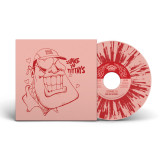
Sasu Ripatti presents the fourth volume in his "Dancefloor Classics" series with five 10" releases coming throughout 2023. Music for imaginary dancefloors, released on Ripatti's own label "Rajaton".
”Look up, into the light” she said, while the camera shutter clicked. ”Like this? Does it look holy?” His neck felt stiff. Her reply: ”Yes, just like that. What do you mean holy? Like religious? ”No, more like trying to look very far, somewhere beyond what we can see.” ”Okay, stand still, I’m going to come close to you now. The light hits your face great.” click, click, click.
He noticed her fingernails. They were not polished. Natural. Even somewhat rugged, as if something wore out the fingers slightly. What had these hands held besides the camera? What made the edges of her fingernails drift off?
He thought it’s weird to look straight into the camera. The photographer had closed her left eye, the one not looking into the lens. Then it opened, she looked up, perusing the surroundings, then she closed her eye again, then looked up, closed, looking up, very quickly. It all seemed very professional. Maybe she calculated the light, making sure it’s close to perfect. ”What will these photos look like?” – the thought popped into his head briefly. It was liberating to think it wouldn’t matter.
”What’s that song playing?” he asked. ”Wait a sec, Ol’ Dirty Bastard?” she replied. ”Oh yeah, right. But the sample?” ”Hey, could you look up again, like that. No, lower.”
New directions: ”Look out from the window, turn left.” ”My left or yours?” ”Yours, I always try to think from the direction of my model.” How professional! This is a good shoot, so natural. Should I worry about how the photos look like? No, I don’t want to. His thoughts bounced around. What would the story be like? It’s a big newspaper, everyone will read it. Maybe someone drinks coffee and eats a stroopwafel while they do it. Will they place the waffle on top of the mug for a brief while, so that it gets hot and the syrup melts a little? Then it feels wet, and you can bend the cookie.
She broke his train of thought off midway through: ”Now turn right, but look left, and slightly up, but don’t turn your face right.” ”Umm, like this? Sounds like a set of pilates instructions.” she laughed ”You do pilates?” ”Yeah, it’s hard sometimes. Have you tried?” ”No”, she said. ”I’m not good for sports that are done in groups.” ”Yeah, but in pilates you can just be inside your mind, drowning in your private thoughts.”
”What are you thinking in pilates?” she asked, taking more photos. ”Well, mostly just which way is right. And which left.” click, click.
Q&A with Sasu Ripatti:
1) Tell us something about the EP series ”Dancefloor Classics”, what’s the idea and what can we expect?
I’ve been slowly writing these sort of dance music pieces and finally curated them together for a conceptual release. I like to create music for a dancefloor that exists only in my imagination and doesn’t try to suck up to the standardized reality.
2) Your vinyl format is 10” which is quite special (as opposed to LP / 12”). Why did you choose it?
It’s my favourite format, absolutely. The size is perfect, and you can make it sound really good @ 45 rpm. And you still can make great artwork.
3) You seem interested in sampling/repurposing, what does it mean to you as an artist to approach something already existing from a new angle? How does the source material inform you about the approach to take?
I guess i could flip it around and just say I’ve outgrown synths or electronic sounds to a great extend, and having gotten rid off all my synths already good while ago I’ve used samples as my main source material a lot. It’s obvious on this series that i’ve sampled existing music, but I also sample instruments and things in the studio and resample my own library that I have built over the years, it’s quite large. To me the end result matters, not so much how I get there. Once I have something on my keyboard and play around, it’s all an instrument, though with sampling other music it becomes a really interesting and complex one as you’re possibly playing rhythm, but also harmonic content and maybe hooks or whatever, all at once.
I never sample premeditadedly, like listening to records and looking for that mindblowing 3 sec part. I just throw the cards in the air and see what lands where, just full intuition and hopefully zero mind involved, playing tons of stuff, trying things, just recording hours of stuff. Then comes the interesting part to listen to hours of mostly crazy stuff and finding that mindblowing 3 sec part.
4) What is your relationship with the dancefloor (conceptually and/or in experiences / as a performer)?
Very complicated. I have never really felt comfortable on a dancefloor but have always wanted to. There’s something in club music, in theory, that really speaks to me. It has never really materialized for me – speaking mainly from a performer’s point of view who goes to check on a dancefloor for a moment after a concert. I never have DJ’d or felt much interest towards it. But again, I love the idea and concept of DJing. As well as producing music for imaginary DJs. Lately, as in the past 10+ years, I haven’t even performed in any sort of club spaces. So my relationship to the dancefloor is quite removed and reduced, but there’s quite a bit of passion and interest left.
All tracks composed and produced by Sasu Ripatti.
Artwork & photography by Marc Hohmann.
Mastering by Stephan Mathieu for Schwebung Mastering.
Vinyl cut by SST Brueggemann.
Publishing by WARP Music Ltd.
quête:other form
Dame Area's highly anticipated fourth studio album, "Toda la verdad sobre Dame Area" ("The Whole Truth about Dame Area"), a collaboration with the renowned labels Mannequin Records and Humo Records.
Formed in 2017 within the vibrant underground scene of Barcelona's Màgia Roja club, Dame Area comprises the Italian-Catalan duo Silvia Konstance and Viktor Lux Crux. They fuse industrial-tribal polyrhythms with minimalist synth basslines, drawing profound inspiration from avant-garde masters such as Esplendor Geometrico, Throbbing Gristle, Suicide, Einstürzende Neubauten, Can, Coil, Swans, Big Black, and Wolf Eyes.
This record represents a new phase in Dame Area's discography. It's a big step up in terms of sound, composition and ideas. This record it's the perfect representation of what they have been playing live the last three years and what most people know them for. Also it serves as a companion piece to 2022’s Toda la mentira sobre Dame Area ("All The Lies About Dame Area"), which had a stronger focus on melody, while this latest record is more aggressive and industrial-influenced, with a greater emphasis on percussion.
Tracks like the Suicide-influenced "Si no es hoy cuando es" and "Sempre Cambiare" are an onslaught of industrialism and experimentalism—formidable, volatile, and unpredictable avant-garde subversion. Silvia explains, "One of our biggest influences is doing what our influences wouldn't do. We're more into dynamics and structures atypical of electronic music, with changes in time signatures, starts and stops, and dynamics more typical of rock music. We use any musical idea from any genre. Some songs on the album are based on flamenco rhythms, others influenced by '60s experimental pop, heavy metal, or contemporary electronic music."
The confrontational "Vengo dall'aldilà" accelerates with heavy percussion, while "Tu me hiciste creer" builds into a rhythmic, transcendent noise of yelled vocals and hypnotic beats. Viktor adds, "This song took us more time to complete than any other we have recorded. It was a very organic process, evolving slowly from some instrumental percussive stuff we were doing live. Then we started using feedback as a rhythmic element (through a metallic sheet), and this was the first song where we incorporated this element, typical of noise-rock and experimental rock."
Elsewhere, "Esto Es Nuestro Ruido" represents a manic, eclectic form of contemporary industrial music, post-punk, and EBM. Silvia notes, "It's the first album we recorded outside a studio. Although we've been playing live with metallic percussion and floor tom from the very start, in the studio, with some exceptions, it was mostly sample-based until now. On Toda la verdad sobre Dame Area, all drums and almost all metallic percussion have been recorded live."
With a growing reputation as one of the best live bands around since their inception, Dame Area has toured extensively across Europe, performing at renowned festivals like Atonal, CTM, Nuits Sonores, Dour, and Fusion, as well as legendary clubs such as Berghain, Tresor, Apolo, and Spook Factory.
Recorded at Sol de Sants Studios and Estudio Hermetic between August and November 2023
Silvia Konstance: vocals, synths, percussions, electronics, production
Viktor L. Crux: synths, drums, percussions, electronics, production
Mixing and additional production by Guillermo Sánchez Rojo
Mastering by Paul Mac at Hardgroove Mastering
Designed by Leo Sousa
Photography by Fabio Calabretta
Photo concept by Dame Area
Senking and DYL team up again after first collaborating for a track on 2020’s »Uniformity Of Nature« EP that also featured different solo productions by the two producers. »Diving Saucer Attack« is the first full-length record by the German artist and his Romanian collaborator, released through the Berlin-based Karaoke Kalk label, home to the former’s work for more than a quarter of a century. The six pieces, two of which were produced individually, both showcase the duo’s shared interests for dub-heavy, adventurous electronic music while also emphasising the productive friction generated by the subtle differences between their respective approaches.
Cluj-Napoca-based DYL, real name Eduard Costea, cites his colleague Jens Massel’s work and especially his »Ping« EP—released in 1999 through Karaoke Kalk—as a crucial point of reference for his own development. »He’s one of the producers who inspired me to start making music,« he says. Massel was already familiar with his partner’s eclectic productions when he was approached by him with the idea of collaborating for a piece in 2020. They didn’t stop there, as Massel explains »It went very well and ever since we’ve been sending each sounds and tracks.« As their first joint album, »Diving Saucer Attack« documents the multi-faceted results of this on-going process.
The album opens with a track in true Senking style. Throbbing bass frequencies, haunting synth melodies and carefully placed rhythmic elements form a slow, but driving groove. Before DYL’s »a7r380R« introduces the listener to his anthemic take on IDM, the collaborative second track »2024« showcases how well their respective philosophies complement one another: the two create a detailed soundscape in which an intricate interplay of percussive elements and melodies can unfold. The title track transforms rattling drums and growling bass sounds into a laid-back, spooky trip-hop tune with a live-jazz feel, while »Astral Project« sees the duo venture into the uncanny regions of dub techno. »Not Just Numbers« closes on an even more sombre note—a fitting closing statement to an album full of twists and turns.
»Diving Saucer Attack« is a special album on more than the musical level. Massel released his first records under different guises such as Fumble, Kandis, and Senking through Karaoke Kalk between 1997 and 2001, after which he focused on his work as Senking, putting out a string of iconic albums through raster-noton, among others. 23 years after his last Senking LP for Karaoke Kalk, 2001’s »Silencer,« his return is as non-nostalgic as you’d expect it from such a forward-thinking producer: together with DYL, he continues to explore the possibilities and outer limits of electronic music in an intergenerational dialogue.
Repress!
This EP is delicately melodic and fluid that even in its short four tracks shows a producer with different bows to their arrow. Intro is a laid back, downtempo affair with vocal samples punctuating the track’s pared down synths and gently propulsive beats.
Contrast that with Engang, which sees Jos Ma chisel all other elements away and put trust in the groove and urgency of its percussive elements. It’s something he echoes in Like Honey, although here the bright stabs of keys provide a welcome interjection - as does the chopped-up vocals that offer a further counterpoint to its kwaito-reminiscent shuffle. It is perhaps here that his respect and love of central and southern Africa’s dance forms is presented at its most bare.
The EP finishes with Mongo’s Dance, so-called after the Cuban Mongo Santamaria and driven forward by a chopped-up pachanga rhythm taken from one of the pioneering percussionist’s tracks. He then adorns it with wavy synths and flutes, each intertwining over the top as though engaged in ritual with one another. It’s a euphoric, slightly delirious end to an EP that puts Jos Ma firmly in Mas O Menos’ “neither here nor there” camp – a producer who simply follows his instincts and revels in the enthrallingly wandering music it throws up.
Italy's tastiest jazz-funk band is back to what they do best, sharing dreamy summer vibes with this new 2-tracker.
Cannelé is a smooth, sun-drenched tribute to this sweet product of the Bordeaux terroir, that doublebass player and former Saint-Émilion employee Fabio Bordignon knows so well. Beautiful string arrangements come to sublimate the track with a highly cinematic feel.
On the other side is the final studio version of QMQS (Quando mai, quando sempre), which is an old italian expression to qualify people that only appear rarely, and always at the same specific occasions. This uplifting disco tune first appeared in its demo and live versions on previous releases Gusto di Luce and Live at Bolle Nardini, and has finally been re-recorded in a clean and groovy dress to be pressed on this 7inch record.
Analog Mutants consist of Phill Most Chill on the vocals, DJ Snafu of Bankrupt Europeans fame on production and the inimitable DJ Grazzhoppa on the cuts.
Vocals: Phill Most Chill
Phill Most Chill grew up in Conecticut half hour away from Boogie Down Bronx and by the late 80s had already established himself in the hip hop scene, having released a very strongly received (and eventually highly collectible fetching amounts in the high three digits) single (On Tempo Jack/ That Girl), the preccedent setting left field Baritone Tiplove releases and writing for the seminal Rap Sheet magazine. The Arcahaelogists' Classics and Soulman's World of Beats tape series and column further established him as an elite beatmaker and sample collector, with highly acclaimed producers seeking him out to purchase records in conventions. The random rap craze brought renewed attention to Phill Most's releases in the late 90s, leading to reissues of On Tempo, the release of previously unissued Baritone Tiplove records, his return with the Lo-Fi EP, and then the highly influential Fast Rap EP on Nobody Buys Records which led to a flurry of funky uptempo releases across the globe again. The interest in Phill Most records over the whole 2010s was rabid, with further releases produced by Bankrupt Europeans, Mr. Fantastic and Chris Read flying off the shelves, and two full length albums produced by 90s stalwarts Paul Nice and DJ Format, as well as the recent Jorun-PMC album being now considered classics in the boom bap scene. Having now signed with Chuck D's Spitslam label, Phill Most continues his journey in stepping all over MC conventions, and these first two Analog Mutants release are a perfect example of this.
Produced by DJ Snafu
DJ Snafu has been part of the Bankrupt Europeans crew since 2004, co-founding Nobody Buys Records in 2012 with the other two Bankrupt Euros members. Huge collector of vinyl from the 50s ad 60s primarily, and with an interest in modular production, FM synthesis and marrying modern techniques with the love of sampling old records, the Analog Mutants project is his first without the Bankrupt Euros crew. Having produced among others for Chill Rob G on his seminal return to music with the classic Tell 'Em on the Chilled Not Frozen EP, Roc Marciano on the Goodfelons label, DITC legend AG on The 21st Day and Chicago legend MC Juice's return to vinyl after 15 years, this is Snafu's first whole album to produce since Rise of Demigodz' debut album The Cornerstone in 2006 (released in 2013). Snafu shows he's honed his skills and developed an even crazier side to his production in the 5 year that passed between the last Bankrupt Euros project and the Analog Mutants album and the first three Analog Mutants singles are a sign of things to come in the post Bankrupt Euros years.
Scratches: DJ Grazzhoppa
DJ Grazzhoppa got infected in 1983 with the hip hop virus, demolishing local DJs and winning the European DMC Championships in 1991, and taking 3rd place in the ITF World Championships in 1998! His unique and immediately recognizable style was first heard on Blade's legendary 12” Clear The Way, and caught so many ears that the list of MCs and producers who queued up to work with him is seemingly endless. From MF Doom, Ruste Juxx, Guilty Simpson and Cage to Necro, Keith Murray, Big Daddy Kane, Kool G Rap and of course the Bankrupt Europeans projects with Phill Most Chill, MC Juice and Chill Rob G! This is a short list of a page of credits spanning over 4 pages long- if you have hip hop records, Grazzhoppa is already in your collection!
Analog Mutants consist of Phill Most Chill on the vocals, DJ Snafu of Bankrupt Europeans fame on production and the inimitable DJ Grazzhoppa on the cuts.
Vocals: Phill Most Chill
Phill Most Chill grew up in Conecticut half hour away from Boogie Down Bronx and by the late 80s had already established himself in the hip hop scene, having released a very strongly received (and eventually highly collectible fetching amounts in the high three digits) single (On Tempo Jack/ That Girl), the preccedent setting left field Baritone Tiplove releases and writing for the seminal Rap Sheet magazine. The Arcahaelogists' Classics and Soulman's World of Beats tape series and column further established him as an elite beatmaker and sample collector, with highly acclaimed producers seeking him out to purchase records in conventions. The random rap craze brought renewed attention to Phill Most's releases in the late 90s, leading to reissues of On Tempo, the release of previously unissued Baritone Tiplove records, his return with the Lo-Fi EP, and then the highly influential Fast Rap EP on Nobody Buys Records which led to a flurry of funky uptempo releases across the globe again. The interest in Phill Most records over the whole 2010s was rabid, with further releases produced by Bankrupt Europeans, Mr. Fantastic and Chris Read flying off the shelves, and two full length albums produced by 90s stalwarts Paul Nice and DJ Format, as well as the recent Jorun-PMC album being now considered classics in the boom bap scene. Having now signed with Chuck D's Spitslam label, Phill Most continues his journey in stepping all over MC conventions, and these first two Analog Mutants release are a perfect example of this.
Produced by DJ Snafu
DJ Snafu has been part of the Bankrupt Europeans crew since 2004, co-founding Nobody Buys Records in 2012 with the other two Bankrupt Euros members. Huge collector of vinyl from the 50s ad 60s primarily, and with an interest in modular production, FM synthesis and marrying modern techniques with the love of sampling old records, the Analog Mutants project is his first without the Bankrupt Euros crew. Having produced among others for Chill Rob G on his seminal return to music with the classic Tell 'Em on the Chilled Not Frozen EP, Roc Marciano on the Goodfelons label, DITC legend AG on The 21st Day and Chicago legend MC Juice's return to vinyl after 15 years, this is Snafu's first whole album to produce since Rise of Demigodz' debut album The Cornerstone in 2006 (released in 2013). Snafu shows he's honed his skills and developed an even crazier side to his production in the 5 year that passed between the last Bankrupt Euros project and the Analog Mutants album and the first three Analog Mutants singles are a sign of things to come in the post Bankrupt Euros years.
Scratches: DJ Grazzhoppa
DJ Grazzhoppa got infected in 1983 with the hip hop virus, demolishing local DJs and winning the European DMC Championships in 1991, and taking 3rd place in the ITF World Championships in 1998! His unique and immediately recognizable style was first heard on Blade's legendary 12” Clear The Way, and caught so many ears that the list of MCs and producers who queued up to work with him is seemingly endless. From MF Doom, Ruste Juxx, Guilty Simpson and Cage to Necro, Keith Murray, Big Daddy Kane, Kool G Rap and of course the Bankrupt Europeans projects with Phill Most Chill, MC Juice and Chill Rob G! This is a short list of a page of credits spanning over 4 pages long- if you have hip hop records, Grazzhoppa is already in your collection!
Analog Mutants consist of Phill Most Chill on the vocals, DJ Snafu of Bankrupt Europeans fame on production and the inimitable DJ Grazzhoppa on the cuts.
Vocals: Phill Most Chill
Phill Most Chill grew up in Conecticut half hour away from Boogie Down Bronx and by the late 80s had already established himself in the hip hop scene, having released a very strongly received (and eventually highly collectible fetching amounts in the high three digits) single (On Tempo Jack/ That Girl), the preccedent setting left field Baritone Tiplove releases and writing for the seminal Rap Sheet magazine. The Arcahaelogists' Classics and Soulman's World of Beats tape series and column further established him as an elite beatmaker and sample collector, with highly acclaimed producers seeking him out to purchase records in conventions. The random rap craze brought renewed attention to Phill Most's releases in the late 90s, leading to reissues of On Tempo, the release of previously unissued Baritone Tiplove records, his return with the Lo-Fi EP, and then the highly influential Fast Rap EP on Nobody Buys Records which led to a flurry of funky uptempo releases across the globe again. The interest in Phill Most records over the whole 2010s was rabid, with further releases produced by Bankrupt Europeans, Mr. Fantastic and Chris Read flying off the shelves, and two full length albums produced by 90s stalwarts Paul Nice and DJ Format, as well as the recent Jorun-PMC album being now considered classics in the boom bap scene. Having now signed with Chuck D's Spitslam label, Phill Most continues his journey in stepping all over MC conventions, and these first two Analog Mutants release are a perfect example of this.
Produced by DJ Snafu
DJ Snafu has been part of the Bankrupt Europeans crew since 2004, co-founding Nobody Buys Records in 2012 with the other two Bankrupt Euros members. Huge collector of vinyl from the 50s ad 60s primarily, and with an interest in modular production, FM synthesis and marrying modern techniques with the love of sampling old records, the Analog Mutants project is his first without the Bankrupt Euros crew. Having produced among others for Chill Rob G on his seminal return to music with the classic Tell 'Em on the Chilled Not Frozen EP, Roc Marciano on the Goodfelons label, DITC legend AG on The 21st Day and Chicago legend MC Juice's return to vinyl after 15 years, this is Snafu's first whole album to produce since Rise of Demigodz' debut album The Cornerstone in 2006 (released in 2013). Snafu shows he's honed his skills and developed an even crazier side to his production in the 5 year that passed between the last Bankrupt Euros project and the Analog Mutants album and the first three Analog Mutants singles are a sign of things to come in the post Bankrupt Euros years.
Scratches: DJ Grazzhoppa
DJ Grazzhoppa got infected in 1983 with the hip hop virus, demolishing local DJs and winning the European DMC Championships in 1991, and taking 3rd place in the ITF World Championships in 1998! His unique and immediately recognizable style was first heard on Blade's legendary 12” Clear The Way, and caught so many ears that the list of MCs and producers who queued up to work with him is seemingly endless. From MF Doom, Ruste Juxx, Guilty Simpson and Cage to Necro, Keith Murray, Big Daddy Kane, Kool G Rap and of course the Bankrupt Europeans projects with Phill Most Chill, MC Juice and Chill Rob G! This is a short list of a page of credits spanning over 4 pages long- if you have hip hop records, Grazzhoppa is already in your collection!
Inside Automatic Popular Music there are two people sitting in a room, their backs to each other. One plays a piano with no particular attention to detail and tuning of the instrument, and another, sitting behind him, claps his hands on his own legs. They do not see each other, they never look at each other, they can only listen to each other, look around. The room is large enough, it is daytime, there are four windows through which enough light enters to illuminate the objects and furniture with objects on them. October, the temperature is great and outside the window there are many people and all these people are dancing to the music of another record.
Automatic Popular Music was recorded and mixed by Nicola Ratti between July and December 2023. The tracks consist almost entirely of sounds generated by automatisms programmed on modular synthesisers. These are combined with tape loops on which fragments of both acoustic and digital pianos are engraved, generating tracks that are structured on repetitiveness in both their rhythmic and harmonic components. The adjective 'popular' is in this case the result of the other adjective 'automatic' since the machine has been entrusted with the task of generating the melodic patterns and harmonic structures of the tracks on the disc.
Automatic Popular Music is the first release by LL, a curatorial and editorial platform based in Milano and formed by artists and curators.
Composed, recorded and mixed by Nicola Ratti between July and December 2023. Mastered by Giuseppe Ielasi. Cover photo by Cédrick Eymenier.
From Cape Town to Cairo, and now to fans, stages and screens around the world, PJ Morton shares his newest album, fully made in the motherland. Cape Town to Cairo is a collection of songs that he created in 30 days throughout 4 countries in Africa — South Africa, Nigeria, Ghana and Egypt. Described as the best trip of his life, this transformative journey began as just the seed of an idea last fall, but instantly grew into his most sonically-sprawling and immediately-inspired record to date. With no music, lyrics or preconceptions, he stepped foot onto the continent with two thoughts: a wild dream to write and record his next LP in less than a month, and a mission to immerse himself in as many different cultures, stories and communities as he could.
Surrounded by featured collaborators like Fireboy DML, Mádé Kuti, Asa, Ndabo Zulu, and Soweto Spiritual Singers, as well as additional producers including P.Priime and The Cavemen., his own live band and local musicians, PJ Morton used music as his common language. Always his greatest way of communicating, he expressed his feelings and experiences of Africa through songs he and others were forming together on the spot, side-by-side in different studios, cities and towns for the very first time. None of the tracks were written before he arrived or after he left, and the arrangements showcase both the countries’ native genres as well as the innate, stylistic instincts that have made Morton a 5x GRAMMY-winner and 20x GRAMMY-nominee, whether it be his soul, R&B and gospel roots, or the pop prowess he has further honed as a member of Maroon 5.
“When you’ve been in music as long as I have, you’re constantly looking for inspiration,” says PJ Morton. “And you’re looking for the things that made you want to do it in the first place. I’ve made albums every type of way you can think, so I wanted to try something I hadn’t done before. As a Black American who had never been to South or West Africa, I knew there was something there waiting for me. So I put a little pressure on myself to make a full record in a month, but I also said, ‘If I’m gonna go to Africa, I want to see Africa.’ We made music, but we also formed connections. We made new friends, and this is just the start.”
ESSENCE adds, "This trip is not just a physical move, it's a spiritual return…The soul of Africa pulses through every note he plays and every word he sings,” and VIBE adds that “the multi-faceted artist is fully embracing a new phase in his life.” Cape Town to Cairo marks PJ Morton’s first album since 2022’s Watch The Sun, which featured collaborations with Stevie Wonder, Nas, JoJo, Wale, Jill Scott, Alex Isley and more. Since then, Morton has become the first Black composer to write an original song for a Disney attraction, having just finished making the music for Tiana's Bayou Adventure, opening on June 28th, 2024 at Disney World and Fall 2024 at Disneyland. He also won his latest GRAMMY earlier this year, worked with Samara Joy on “Why I’m Here” for Regina King’s Netflix film Shirley, and landed a cover of his song “Don’t Let Go” as the soundtrack to Apple’s iPhone 15 commercial.
PJ Morton recently returned from headlining his debut shows in Asia, New Zealand and Australia, and announced an extensive Cape Town to Cairo Tour for North America summer and fall 2024. Following iconic performances at New Orleans Jazz Fest, The Kennedy Center, Roots Picnic and Newport Jazz Fest, Morton will embark on a run of more than 25 dates across the country, including New York City’s Beacon Theatre, Chicago’s Chicago Theatre, Nashville’s Ryman Auditorium, Los Angeles’ The Wiltern, and dozens of others.
On the heels of his headline tour and Maroon 5’s Las Vegas residency, PJ Morton will publish a life-spanning new book titled Saturday Night, Sunday Morning. The memoir sees him recounting and reflecting upon a trailblazing path that continues to defy expectations and straddle the tensions of music and faith, race and culture, expression and identity. As the son of two pastors and gospel artists, Morton grew up grounded by the sound of the Church, but soon found himself drawn to R&B, pop and soul, writing songs that the industry, his family and community struggled to understand. In the face of mounting pressure, rejection and constant miscategorization, he committed himself to a steadfast path of independence: making music on his own terms, launching his own record label, joining one of the biggest bands in the world while staying true to his New Orleans roots. The risks he took paid off, and through his transformation from preacher's kid to the busiest man in showbiz – performing everywhere from his local congregation to the Super Bowl, collaborating with everyone from his father to Stevie Wonder, Erykah Badu, Jon Batiste and Lil Wayne – he hopes to encourage readers and listeners to overcome obstacles as they seek their dreams.
Black Vinyl. In Rumi's poem A Great Wagon he writes of a place of total acceptance. "Out beyond ideas of wrongdoing and rightdoing, there is a field. I'll meet you there," It is a boundless, liminal space where we can release the judgments we make and carry of ourselves, and the comparisons to others. When we think of this field, there is a sense of tranquility that only comes when we are undisturbed by the shadow self and see existence as neither bright nor dim, white nor black. But as lead singer Greg Bertens explains, arriving there is a whole different story. "This is a poem I've returned to over the years, and I love the idea of this place, but getting there is life's journey." Bertens adds "I think the longing for and elusiveness of this field is a recurring theme in our music." Field is enveloped by themes of regret, disconnection and frustration but with the space to understand that these feelings are a natural part of the struggle between reconciling the inner and outer self. The Los Angeles/San Francisco-based group have been indie shoegaze stalwarts since their formation in 2001. After two decades and a handful of line-up changes, their extensive discography presents a dynamically textural, lush psychedelic rock that has featured guest appearances by members of Pavement, My Bloody Valentine, and Snow Patrol, among others. 2021's LP We Weren't Here (Sonic Ritual) was hailed for its dense instrumental blanket, where unrelenting hi-hats and heavy kicks exist alongside dreamy drone guitar. This propulsive nature permeates Field, as members Bertens, Noël Brydebell (vocals), Nyles Lannon (guitar), Jason Ruck (synths), Justin LaBo (bass), and Adam Wade (drums) produce a kaleidoscopic sonic landscape. Patient, sprawling instrumentation builds a foundation in which Bertens' themes of endurance, perseverance and clarity can bloom with a considered poise. As a lyricist who writes in response to the instrumental arrangements, rather than a focus on a specific theme or person, Field is a testament to Film School's ability to create in the moment, and to showcase the magic that stems from when we are truly present. With over two decades in the industry, Field cements Film School as a distinct, dominant force in the shoegaze scene. Soaked in an emotionally open, imaginative atmosphere, the album is both singular and expansive, and leaves the door open for a constantly evolving interpretation. Film School have never confined themselves to the rigidity of specifics, and it's on Field that they urge us to look beyond the binary of certainty, and to take a second look.
Tahiti 80, the cult French group, is back with a tenth album entitled Hello Hello.
Since their formation in Rouen in the 90s, Tahiti 80 have built a substantial discography, collaborating with artists such as Cornelius, Tore Johansson, Adam Schlesinger and Richard Swift. The indie pop quintet offers us today twelve irresistible and captivating songs on a solar tenth album. With its welcoming title, Hello Hello presents itself as a desire to merge the spontaneity of live performances with the chemistry of a band working in the studio. Xavier Boyer, lead singer and songwriter, explains: “We felt a slight frustration with our previous album, Here With You, released in 2022. The pandemic had forced us to record separately at home. When we realized our new demos were going in this live direction, we looked for the perfect place to capture that spirit."
It is at the Paraphernalia studio, located in the French countryside, that the members of Tahiti 80, including in addition to the singer, Pedro Resende, Médéric Gontier, Raphaël Léger and Hadrien Grange, perfected their musical interactions for ten days during the summer 2023. Integrated very early in the process, Stéphane Laporte, aka Domotic, brought his distinctive experimental touch to the arrangements and production. The vocals and additional synthesizers were then finalized between Paris, Rouen and Montpellier in the fall
The twelve songs that make up Hello Hello form a homogeneous suite, highlighting the creativity, diversity and maturity of a group which has just celebrated twenty-five years of career. Opening the album, “Every Little Thing” subtly mixes shoegaze guitars and synth pop. It’s also one of the rare Tahiti 80 tracks that keeps the same chords from start to finish. The singer confides: “It was an exercise in minimalism, with the constraint of finding varied vocal melodies revolving around the same chords. Singing the line ‘I Love Every Little Thing About Us’ made me realize that it could also be about us as a group.” The title song also plays the simplicity card with Boyer’s unique timbre, complemented by a drum machine passed through a tape echo and a catchy recorder theme – proof that years of practice of this instrument in French schools was not in vain!
The other distinctive trend is Brazilian: “Lose My Head”, “Soft Echo” or “Poison Flower” each display tropicalist attributes: swaying rhythms, rounded bass, soft guitars, all enhanced by a reverberated sound treatment. “From Caetano Veloso to Tim Bernardes, there is a unique way,” notes the vocalist, “of linking rhythm and melody that has always inspired us.”
However, the Tahiti 80 touch is not being put aside. “About Us”, sung by guitarist Médéric Gontier who can also be heard on “1+1” and “Anyway”, marks a return to the roots of indie pop. An impression confirmed by the hit “Vertigo” and its signature all in major sevenths supported by the elastic groove of bassist Pedro Resende. The song which sounds like a quick return trip between late 70s California and Tokyo City Pop, will find its place after “Crush!” and “Heartbeat” in the Rouennais’ songbook. Xavier Boyer concludes: “ if we manage to surprise ourselves, it will also work for the listener. but when you reach the tenth album, you must also manage to renew ourselves without denying ourselves what we did previously.”
With their innovative and unique approach to indie pop, their timeless melodies and their sophisticated productions, Tahiti 80 has never ceased to resonate with fans around the world. Their latest collection, Hello Hello, should easily consolidate their status as a singular group and esteemed personalities on the international music scene.
On this new album 'BEEFKAT', Skordatura, Jozef Dumoulin and Mâäk find each other in a rough embrace of energy and raw expression, averse to compromise and with an unbridled passion that encompasses everything beautiful and ugly.
SKORDATURA
With undulating rhythms, sharp injections, angular grooves, snippets of humour and an unreal sound
sometimes reminiscentof the intergalactic funk of Battles, Skordatura conjures up a simmering pot of ideas. Fender Rhodes wizard Jozef Dumoulin provides additional fireworks as the fourth newly enlisted Skordaturian.
JOZEF DUMOULIN
Belgian pianist Jozef Dumoulin redefined the Fender Rhodes keyboard thanks to his contemporary, eclectic, and highly personal approach to the instrument. Besides his own projects, he is also a much sought-after sidekick on the jazz and improvised music circuit. Jozef currently lives in Paris.
MÂÄK
Formed more than 20 years ago as a fascinating jazz ensemble, it has now become a versatile collective with international ramifications. With Mâäk, the ever-adventurous Laurent Blondiau, Jeroen Van Herzeele, Michel Massot and Grégoire Tirtiaux form one of the most exciting avant-garde jazz bands in Belgium.
Skinshape (aka Will Dorey) releases his ninth studio album titled Another Side Of Skinshape on 27th September via Lewis Recordings. As the album title suggests, Dorey’s latest body of work is somewhat unlike anything in his prior discography. However, there is always a consistent Skinshape thread which pulsates throughout all of his music - a kind of sonic dreamscape which echoes a mystical nostalgia for a sun dappled afternoon.
Taking inspiration from childhood memories, Ethiopian rhythms, and even calls to prayer, Another Side Of Skinshape gained access to the most esoteric corners of Dorey’s mind. Whilst ‘It’s About Time’ and ‘Ananda’ display a slightly more synthesised palette than we typically hear of a Skinshape tune, singles ‘Stornoway’ and ‘Lady Sun’ (which features the hazy soul vocals of West London’s Hollie Cook) replicate the same lifeblood heard on albums Nostalgia, or Craterellus Tubaeformis.
Speaking on the album, Dorey says “Some songs pay homage to the 90s whilst others the 60s and 70s. Yet you may not perceive all of these in the form that they are presented. In any case I hope that the album is enjoyable and will fit casually into the flow of your day.”
Whilst making this album, Dorey experimented with various keyboards and drum machines, which are at times layered over the excellent drumming of Thomas Blunt, who played live onto tape. Blunt is well versed in the Skinshape vernacular, also being part of Dorey’s live band. Indeed, Another Side Of Skinshape is due for release just before a run of UK and US live dates, which will be the first time the band has ever hit the open road.
Dorey is a former member of the band Palace, has played Glastonbury, BBC Maida Vale and Shepherd’s Bush Empire to name a few. Skinshape’s ‘I Didn’t Know’ has streamed over 50 million times. He is proudly from Swanage, Dorest.
For fans of Khruangbin, El Michels Affair, Tame Impala and Ezra Collective. Genre: Psych/Funk/Jazz/Breakbeat/Indie. Taken from the forthcoming Lewis Recordings album ‘Another Side of Skinshape’. Will Dorey aka Skinshape is a former member of the band Palace, has played Glastonbury, BBC Maida Vale and Shepherds Bush Empire, to name a few. His ‘I Didn’t Know’ has streamed over 50 million times. Taking inspiration from childhood memories, Ethiopian rhythms, and even calls to prayer, Another Side Of Skinshape gained access to the most esoteric corners of Dorey’s mind. ‘Stornoway’ replicates the same lifeblood heard on albums Nostalgia, or Craterellus Tubaeformis. Speaking on the album, Dorey says “Some songs pay homage to the 90s whilst others the 60s and 70s. Yet you may not perceive all of these in the form that they are presented. In any case I hope that the album is enjoyable and will fit casually into the flow of your day.” Another Side Of Skinshape is due for release just before a run of UK and US live dates, which will be the first time the band has ever hit the open road
- Pacific (Twig Harper Remix)
- Two Forms Moving (Twig Harper Remix)
- The Scout Is Here (Twig Harper Remix)
- Black Tea (Twig Harper Remix)
- Companion Rises (Twig Harper Remix)
- The 101 (Twig Harper Remix)
- Haunted And Known (Twig Harper Remix)
- Mark Yourself (Twig Harper Remix)
- Worn Down To The Light (Twig Harper Remix)
6OOA"s 2020 opus is reunmanaged by sound composer Twig Harper, whose unlimited brief takes this REMIX places no other remix record could dare to go. In the process, it affords the wizard of Six Organs, Ben Chasny, the chance to re-present the record in a form as insane as the world into which the record was - and is - headed. A soundtrack to California chaos, done two ways, sometimes at the same time! RIYL: Electronic, New Age, Modern Classical
- A1: The King & Eye (Feat Dmc Of Run Dmc)
- A2: Czarwyn's Theory Of People Getting Loose (Feat Kendra Morris)
- A3: Mando Calrissian
- A4: Doom Unto Others
- B1: Jason & The Czargonaut (Feat Del The Funky Homosapien)
- B2: Break In The Action
- B3: A Name To The Face
- B4: This Is Canon Now
- B5: So Strange (Feat Godforbid Of Thd)
- B6: Young World
Superhero? Supervillain? Super WHAT? CZARFACE & MF DOOM's newest team-up record Super What? is, much like the Avengers' arch-enemy Thanos...inevitable (and all-powerful!).
The icon MF DOOM unleashes his wizardry and wordplay throughout the record, while CZARFACE (bolstered by the legendary Wu-Tang Clan's Inspectah Deck and Esoteric) slash through each of the Czar-Keys' produced tracks as the team raises the bar on their previous LP, Czarface meets Metalface (2018). Featuring golden-age superhero DMC (of RUN-DMC) and Hieroglyphics' leader Del The Funky Homosapien, with art by longtime CZARFACE co-creator Lamour Supreme, this album will bring all
the thrills of a cosmic summer blockbuster.
Recorded and slated for an early 2020 release, and paused while COVID raged, this collaboration of masked men is finally finding its way to you on all formats.
The fertility of the Cuban music scene in the 1970s was rich and blooming. FA-5’s self-titled album from 1976 is a perfect example of the energy and vitality emanating from the country’s musicians and marks the next release in Mr Bongo’s Cuban Classics series. A unique musical fusion that encompasses Latin rock, funk, soul, disco and Afro-Cuban rhythms to form a diverse and alluring album.
The exquisite, funk-fuelled opener, 'Muevete Con Las Fuerzas Del Corazon', is maybe the most-known song on the album. It is a super catchy cut powered by a dynamite bassline, joy-filled horn playing and splashes of drum breaks that will ignite any dancefloor.
The record surfs through genres as it progresses. 'Di Tu Que Haras Sin Mi’ and 'Paso Sin Mas' lean back with a West Latin rock / AOR flavour to their grooves. Elsewhere, the dreamy, cosmic, Balearic-tinged 'El Blue' and fuzzy funk-rock breaks of 'Pero Lo Cierto Es Que No Quise Mas' further show the breadth of styles at play on the LP. Another big highlight on the album is the Latin, disco-funk sounds of 'Casa De Ladrillo', which morphs into a cover version of the Commodores 'Brick House'. The result is a superb alternative take on a much-loved classic.
Released on the state-owned Areito Records, the album was directed by Nestor Caballero, who arranged the songs alongside Aneiro Taño and Osvaldo Caraballoso. The prolific Tony Taño produced the album with the recording courtesy of Tony Lopez who worked with Juan Pablo Torres, Los Reyes 73, Grupo Los Yoyi, Raúl Gómez and many other Cuban greats that we have featured in the Cuban Series.
A fabulous, under-the-radar classic, that will enrich any collection.
crys cole returns to Black Truffle with Making Conversation, her third solo release for the label. After the intimate song-like constructions of Other Meetings (BT096), Making Conversation documents a different facet of cole’s work, presenting three rigorously conceptualised commissioned pieces, each of which extend her signature approach to highly amplified small sounds into new directions.
The side-long title piece is a stereo version of an 8-channel sound installation exhibited in 2023 at the Tabakalera Art Center in Donostia / San Sebastian, Spain. The piece uses a multitude of instrumental, vocal, concrete and electronic sounds to evoke the soundscapes cole encountered during nocturnal listening session in Bali, Indonesia in 2018 and 2019. In this world of night sounds, she explains, she ‘observed the complex interplay between amphibian, lizard, bird and insect communication, domestic animals (roosters, dogs), man-made sounds (airplanes, vehicles, conversations and evening activities) and sounds that were difficult to place’. Drawing on field recordings as memory aids (but including none in the finished piece), cole’s piece uncannily reproduces the spatiality and pacing of environmental sound without attempting strictly to replicate it. We hear insect-like twittering and birdsong fragments, resonant thuds and distant roars, furtive crunches and taps, muffled breath and metallic scrapes. While at times it can be difficult to imagine the source of these sounds, at other points they are clearly instrumental or electronic in origin; in its placement and layering, though, the whole assemblage suggests the glorious, unthinking richness of a non-musical sound environment. Suggesting at once the electronic gardens of Rolf Julius and the little instrument expanses of classic AACM, the piece is a brilliant enactment of the Cagean drive to ‘imitate nature in her manner of operation’.
‘Valid ForeverrRrrRRrrr… (pt. 1)’ began as cole’s contribution to an Issue Project Room commission to realise a score from Alison Knowles and Annea Lockwood’s Women's Work, a 1975 collection of text and conceptual scores by women artists and composers. cole’s piece begins from Beth Anderson’s Valid for Life, a complex arrangement of the letter R in various typefaces. Where the composer suggests a realisation on a trio of acoustic instruments (playing rolls with velvet beaters), cole translates the piece into her characteristic sound and object language as a trio of rolling sounds on ‘two large similar paper things and one 5-pin bowling ball’. Rolling from one side of the stereo field to the other, the bowling ball’s uneven movement is the heart of this immersive textural array, created with the simplest materials, which generates phantom sensations of pitch and phasing effects solely through amplified friction.
On ‘Valid ForeverrRrrRRrrr… (pt. 2)’, cole makes a first foray in translating her signature approach into conventional instrumental sounds, here in the form of a transcription for MIDI percussion ensemble. The result is refreshingly puzzling, comparable perhaps only to the sparsest moments of Keiji Haino’s classic “C’est parfait…” Accompanied with extensive liner notes, photographic documentation and a download code, Making Conversation is an exciting next step in cole’s work, extending her signature concerns in new sonic and conceptual directions.
What an unbelievable record. From the wild cover to the iconic breakbeats, Roots from Ian Carr’s Nucleus is one of the dopest albums we know. This is seriously thick, funky-prog jazz-rock heaven. Originally released on Vertigo in 1973, other than a couple of versions at the time for other territories, Roots was never re-pressed since so it’s gone on to become another one of those impossible to find records.
Maybe it was a little too out there for the time, but it’s aged very, very well indeed and this Be With re-issue, re-mastered from the original analogue tapes, shows off just why this deserves to be back in press.
Genius trumpeter and visionary composer Ian Carr was one of the most respected British musicians of his era. He was a true pioneer and saw the potential in fusing the worlds of jazz with rock, just as Miles Davis and The Tony Williams Lifetime did in the US. In late 1969, following the demise of the Rendell-Carr quintet, and tiring of British jazz, Carr assembled the legendary Nucleus. Regarding music as a continuous process, Nucleus refused to “recognise rigid boundaries” and worked on delivering what they saw as a “total musical experience”. We can get behind that.
Under bandleader Carr, Nucleus existed as a fluid line-up of inventive, skilled musicians. This constant evolution and revolution was all part of the continuous musical exploration and discovery that took jazz to new levels.
Working together with producer Fritz Fryer and engineer Roger Wake, the seven compositions by Carr, Brian Smith and Dave MacRae that make up Roots flirt with perfection, and Nucleus at that time made up of the cream of 1970s UK jazz with Brian Smith on tenor saxophones and flutes, Dave MacRae on piano and electric piano, Jocelyn Pitchen on guitar, Roger Sutton on bass, both Clive Thacker and Aureo De Souza on drums and percussion, Joy Yates delivering the vocals and of course Carr on trumpet.
The spellbinding title track immediately renders the album indispensable. Riding the illest of loping breakbeats, “Roots” is low-slung, doped-out heist-funk. An absolute monster. If it sounds familiar then that’s likely down to it being sampled by Madlib for Lootpack and Quasimoto’s “Loop Digga”, as well as by a whole host of beat manipulators. “Roots” conjures prime instrumental hip-hop / beat music, only 20 years ahead of its time. Truly, these are the roots. Through sinuous bass, twinkling keys and a hypnotic guitar riff, a smoky brass motif weaves its way into a gloriously deep haze around Carr’s solos. “Roots” is over 9 minutes long, but there’s not a single wasted second, not surprising given that this is a condensed version of an originally 40 minute long commissioned composition.
The soothing vocal fusion delight of “Images” follows. Meticulously constructed, with gorgeous flute work from Brian Smith, with Joy Yates’ silky vocals and Dave MacRae’s Rhodes never sounding better. The cool, driving “Caliban” closes out the first side. Originally the third movement in a four part commission to celebrate Shakespeare’s birthday it stands up on its own, all robust rhythms and blended brass. Keyboard colour and Carr’s trumpet are splashed across the funk drums and basslines (and there’s even some bamboo flute). This really is fusion: the elements of jazz and rock coming together in beautifully synthesis.
Side two opens in riotous fashion with the short, thrilling samba of “Wapatiti”. Next up, “Capricorn” forms a smoothed-out, jazzy constellation. Mellow and dreamy, its twinkling percussion and languid horns slowly build the vibe before head-nod drums and a killer bassline enter the fray. With a distinct heaviness that Black Sabbath would’ve envied, “Odokamona” is a venomous slice of riff-soaked jazz metal (yes, you read that right), elevated by Carr’s wah-wah horns.
The album closes with MacRae’s exceptionally cosmic “Southern Roots and Celebration”. Very much in conversation with Weather Report, it opens as a languorous, spiritual jazz of chiming keys and serene guitar that turns slowly, gorgeously into a mid-paced, brass-laced banger. It’s another sure-fire party starter and the sound of the band having a righteous blast, building an ecstatic chaos that ends with Yates screaming.
And of course we need to talk about Keith Davis’ cover for Roots. Perhaps the coolest record cover of all time? Certainly one of the most bonkers. Just your run-of-the-mill high-gloss, acid-tinged airbrush dystopian/utopian living-room party scene. Consider this your chemical flashback trigger warning.
Front-and-centre the hip-to-death green robot holds court with their giant ball of yellow barbwire wool, hooked up to… something(?) being teased out from under the stairs (probably best not to ask). A thoroughly zoned-out, long-legged Pop Art party-goer lounges half-plugged in to the painting behind her as a pair of legs flail into shot from the the top of the stairs opposite. We won’t even begin to guess what the chap’s up to in the middle, but the view out of the windows is rather nice, and someone’s already got the hoover out ready to tidy up. All of the Nucleus sleeves are something special, but this particular one? Crikey.
This Be With edition of Roots has been re-mastered from the original Vertigo master tapes, Simon Francis’ mastering working together with Pete Norman’s cut to weave their usual magic with these wonderful recordings. The crazy cover has been restored at Be With HQ as the finishing touch to this long overdue re-issue.