First-ever reissue of the 1988 album. Gatefold LP includes new and restored artwork and a chapbook, featuring forty-eight pages of lyrics, essays, photographs, and Gordon's extraordinary drawings for each song. The Choctaw, Assiniboine, and Texan poet, journalist, visual artist, American Indian Movement activist, and musician Roxy Gordon (First Coyote Boy) (1945-2000) was above all a storyteller, known primarily as a writer of inimitable style and unvarnished candor, whose wide-ranging work encompassed poetry, short fiction, essays, memoirs, journalism, and criticism. Over the course of his career he recorded six albums, wrote six books, and published hundreds of shorter texts in outlets ranging from Rolling Stone and The Village Voice to the Coleman Chronicle and Democrat-Voice, in addition to founding and operating, with his wife Judy Gordon, Wowapi Press and the underground country music journal Picking Up the Tempo. Along the way he cultivated close friendships with fellow Texan songwriters such as Lubbockites Terry Allen, Butch Hancock, and Tommy X. Hancock, as well as Ray Wylie Hubbard, Billy Joe Shaver, and, most famously, Townes Van Zandt, whom he called his brother. Although his work covered a vast array of topics exploring strata personal, local, global, and cosmic alike, Gordon's primary subject as a writer, musician, and visual artist was always American Indian culture, specifically the ways it collided and coexisted with European American culture in the South and West-and within the context of his own life and braided identity. The ten songs on Crazy Horse Never Died, his first officially released and distributed album, were recorded in Dallas in 1988. "Songs" is perhaps an imprecise taxonomy for what Roxy captured on this and his other albums, all of which remain out of print or were released in instantly obscure limited editions of homebrew cassettes and CD-R's. (Paradise of Bachelors plans to reissue remastered, expanded editions of his catalog; Crazy Horse is the first.) He only occasionally attempted to sing, and his musical recordings are primarily corollaries of, and vehicles for, his poems. His sharp West Texan drawl, tinged by formative years of reservation living in Montana and unmistakable once you hear it-high, lonesome, flat, and cold-blooded as a bare rusty blade-instead patiently unfurls in skewed sheets of anecdotal verse and discursive narrative rants. Although Gordon's music at times incorporated powwow style drumming, fiddling, or unaccompanied ballad singing, the majority of it hews to an idiosyncratic spoken word style, accompanied by atmospheric, sometimes synth-damaged country-rock that skirts ambient textures and postpunk deconstructions. His songs are essentially recitations over backing tracks of finger picked guitars, rubbery washtub bass, and buzzing, oscillating keyboards. On the stark yellow and red jacket of Crazy Horse, which he designed himself, Gordon describes these recordings as innately ambivalent in terms of form, content, and identity: These are poems and/or songs about the American West, white and Indian. My life has been Indian and/or white. Maybe there's not a lot of difference-maybe. I guess that's mostly according to which white person or which Indian you're talking about. That's probably what this album's about. Crazy Horse Never Died comprises songs that span the personal and political arcs of his writing practice and the poles of his native and white ancestries.
Поиск:other form
Все
Anarcho Punk was the one sub-genre of Punk that emerged in isolation from the rock & roll establishment. During its pioneering days of the early 1980s it thrived in opposition to the music industry, existing as a fiercely underground alternative to the bands, labels and venues of the commercialised mainstream Punk scene. It continues to do so. Anarcho Punk represented one of the last truly underground and autonomous music movements ever witnessed and remains a movement that has never sold out and has never gone away.
The major differentiation between the Anarcho Punk acts and the more traditional Punk outfits was that for the former, albeit often more due to musical limitation than intent, the message was more important than the music. Standard song structures were often dispersed with in favour of a relentless lyrical polemic accompanied by a similarly uncompromising aural assault. As the scene grew, so did the diversity of records that emerged under the Anarcho Punk umbrella: from D & V (drums & vocals) to the proto-EBM synth-pop of Belfast’s one-man Hit Parade and the Dadaist Beefheart hybrid of The Cravats. In later days the two biggest acts of the scene, Flux of Pink Indians and Crass themselves, both released LPs which had more in common with improv Jazz than hardcore punk.
The resounding victory of Anarcho Punk is that it is now a the unifying soundtrack to a culture of resistance that spans Scotland to Indonesia and remains without compromise. It is still as removed from mainstream music and oppositional to conventional culture as it was over forty years ago and shows no sign of changing. Quite the opposite: the more popular Anarcho Punk becomes the less it has to engage with the music establishment and the more control it can enjoy. In 2023, that message remains as uncompromising as ever.
This is a double vinyl retrospective compilation of some of the most radical music ever made, a musical force that changed lives. Covering the years 1979 - 86 and including classic tracks from Crass, Poison Girls, Flux Of Pink Indians, The Mob, Zounds, Annie Anxiety, The Ex, ATV plus 10 more, all newly remastered by iconic Punk mastering engineer Daniel Husayn. It has been lovingly compiled by JD Twitch and Anarcho legend Chris Low and was ten years in the making. There are also a couple of previously unreleased mixes included. It comes as a high quality double vinyl pressing, and has a full colour sleeve with back and front images designed by the legendary Gee Vaucher. It also comes with a 6 page fold out poster on one side with detailed sleeve notes, recollections and essays on the other side.
The compilation is a fundraiser for Faslane Peace Camp. Not so far from Glasgow Faslane Naval Base is home to Britain's abhorrent Trident nuclear missiles. The camp has been there, protesting since 1982 and is still active to this day. We hope in our lifetime we will see those missiles leave Scottish soil. We have so much respect for those who have dedicated their lives to protesting these weapons and it seemed an obvious choice that the proceeds from this release should go to help them, and the Scottish Campaign for Nuclear Disarmament.
Trace is a masterclass in sound design. Alison Chesley"s formidable skill as a cellist and composer ground the compositions with rich organic sounds of cello and bow. Will Thomas"s equally deft hand-manipulated electronics, and keyboards create potent frameworks that bolster the sense of mystery and searching across the album. Chesley and Thomas"s unique voices as composers remain discernable and present throughout the album, but Trace is a celebration of the connection of collaboration with an acute sense of details and the power they convey. On Trace, the duo utilizes timbre, tone, and dynamics as essential tools in crafting stunning emotive narratives. Together, the duo wields sound with inquisitive aplomb, burrowing into each other"s sonic aesthetics and unearthing irrefutable beauty. Chesley is an unparalleled cellist and composer who has been making boundaryless music for nearly three decades under the moniker Helen Money. From her work in Verbow to her solo releases, extending to her work as a highly sought-after collaborator with Jarboe, Bob Mould, Steve Albini, Neurosis, and many more, Chesley has remained a singular voice and a pioneer in expanding the scope and perception of the cello. Will Thomas is an active composer for commercials, TV, and film (GvsE, CSI, The Haunted Swordsman). He has also contributed to several of Helen Money"s solo albums and an ongoing collaboration with Roger Eno.
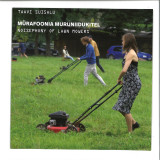
Taavi Suisalu is an Estonian media artist particularly interested into complex and adventurous sounds, field recordings and harsh audio emergencies, organized under the form of symphony or as a result of performative interactions.
In 2014 Suisalu received the Young Estonian Artist Prize as curator of Project of In-existent Villages, an articulate exhibition full of installations and site-specific sound performances. The use of peripheral spaces and the crossovers, sometimes extremely creative, of human interactions, data, sounds and technologies, are recurring in the works of Suisalu, whose subjective perspective unconventionally investigates different social and cultural phenomena. He is always attracted by the different forms of technologies. It can be an old seismograph he reconstructs to record the underground vibrations of a volcano, or, it can be some 3D models he uses to analyze a grain of soil coming from the ancient Pompei. The results of the researches would lead to the installations. The whole set of data is often the premise of a narration, a datafiction, as in the case of the signals recorded from some abandoned satellites, who are later presented with a speed set by the position of other satellites gravitating above the gallery hosting the event.
“Noisephony of Lawn Mowers" was originally composed in 2013, but it was unreleased until now, when Staalplaat, a fundamental label for its unusual experimental connections and for the sound events performed in unconventional spaces, decided to publish it. It's a score for lawnmowers, whose making is given to a conductor and executed by a group of artists. Suisalu reminds us that historically, lawn has been a symbol of power and wealth as it required substantial upkeep and unused land. Today, it still indicates wealth, but is mainly maintained by the owners themselves. This puts us in a schizophrenic situation where we strive to be privileged by taking the role of the servants.
“Silver Meets Ted” is the other track included in the selection. It's a recording of over ten minutes, whose trend cryptically moves on and with some unsettling minimal tolls, always more metallic. Some deaf beats follow, and then we have a splash of water and some slightly hinted neighs, chirps, different spills of liquid, more intense and measured, clackings and vibrations, some hardly identifiable frequencies and again a series of punctuated metal bells. The work by Taavi Suisalu stands out as a calibrated combination of mathematical coherence and elements of surprise, automatized and causal processes, some small oblique utopias, that work well together by improving highly subjective resources and create some slightly unsettling final results.
- A1: Okay
- A2: Eventide
- A3: Sterling
- A4: Dotted Lines
- A5: In My Head
- B1: Crop Circles
- B2: Portrait
- B3: It Happened Last Morning
- B4: Thanxiety
- B5: September Fools' Day
- C1: Talk Talk
- C2: Watercolors
- C3: Holding My Breath
- C4: Still Life
- C5: After Tears
- D1: Positive Space
- D2: Bigger Pictures
- D3: Truth & Nail
- D4: Sculpting With Fire
- D5: Alright (Okay Reprise)
In den 25 Jahren ihres Bestehens haben Atmosphere ein Vermächtnis aufgebaut, das Ehrlichkeit, Demut und Verletzlichkeit in den Vordergrund ihrer Musik stellt. Das aus Minneapolis stammende Alt-Rap-Duo prägte mit Songs über das Leben, die Liebe, Stress und Rückschläge den Begriff "Emo Rap", lange bevor der Ausdruck zum Genre-Tag wurde. Nach Zusammenarbeit mit u.a. Rick Rubin, El-P ("Run The Jewels"), Tom Waits und Tunde Adebimpe ("TV on the Radio") ist "So Many Other Realities Exist Simultaneously" das 13. Studioalbum von Rapper Slug und Produzent Ant. Das Album erforscht unterschiedliche Formen der Paranoia. Inspiriert ist es vom allgemeinen Unwohlsein einer pandemiemüden Gesellschaft voller ziviler Unruhen. Das Cover stammt vom renommierten bildenden New Yorker Künstler Michael Alan Alien.
The »Icol Diston« compilation, released in 2002 on DIN, comprised the three first EPs released by Uwe Zahn under his Arovane moniker. Following up on vinyl reissues of his path-breaking debut album »Atol Scrap« as well as 2000’s »Tides,« the German Keplar label finally makes »Icol Diston« available in its entirety on vinyl for the first time in a remastered version with new artwork. This expansive reissue sheds a new light on Zahn’s first two outings as a producer on the »I.O.« and »Icol Diston« EPs on Torsten ›T++‹ Pröfrock’s legendary label as well as highlighting his radical inventiveness as a remixer with the two renditions of Pröfrock-produced material offered on »AMX.« Taken together, these musically complex and emotionally rich electronic compositions form the prologue to an artistic story like none other while also documenting a very specific era in cultural history.
The energy running through Berlin and its boundaryless electronic music scene at the end of the 1990s is reflected by and refined through these eleven tracks. »There was an overwhelming dynamic of liberation reverberating through the city—through the clubs, the arts, the people,« says Zahn today. At this early stage in his career, he had a head full of ideas and slowly started filling up his studio with samplers, synthesizers, and sequencers to put them into practice. »I would compose percussive structures in my mind during long metro rides and record them once I was back at the studio as well as composing melodies spontaneously on my sequencer.« The Yamaha QY700 would become his sketchbook that allowed him to experiment with different patterns, creating polymetric figures out of discrete musical elements.
Zahn’s sessions, recorded live in stereo and straight to DAT, resulted in two very different EPs of original material. His debut »I.O.« showcases a playful and gentle, albeit dubby and at times moody aesthetic. The four tracks are exercises in sonic worldbuilding, creating vast spaces and filling them with a plethora of intertwining melodies and rhythms. Its successor »Icol Diston« drew on similar parameters, but painted a very different picture in terms of atmosphere and mood. »Berlin’s history felt still so tangible and yet somewhat ghostly during the 1990s, and it is a reflection of all that,« explains Zahn. »The weight of its past, starting with World War II up to the end of the GDR, clashed with an atmosphere of departure, a new zest for life among the people in the city.« It is perhaps no surprise then that the five tracks put a firmer focus on beats, at times even approximating techno or electro grooves despite never eschewing the complexity that is so central to Zahn’s work.
The »AMX« EP features two remixes of tracks originally produced by Pröfrock under two different guises. »Außen vor« had been released under his Dynamo moniker and was reworked by Zahn after having been introduced to his label owner’s Studio 440 sampler, sequencer and drum machine. By leaving the groove at the core of the original track mostly intact but infusing it with more dub as well as anthemic synth drones, Zahn gave it more depth both sonically and emotionally. With his remix of »No. 8,« released under Pröfrock’s tongue-in-cheek pseudonym Various Artists, Zahn followed a more radical approach which led him even deeper into dub territory. »I used a relatively short sample as the tonal foundation and then added an incredibly deep bass and percussive elements,« he explains. Widely different from the original version, it perfectly translated the spirit of this singular masterpiece into another stylistic idiom.
The »Icol Diston« compilation is imbued with a forward-thinking spirit that remains exhilarating until today. It captures the sound of one unique artist, but also electronic music during that time more broadly. This is the sound of opening a new chapter, the willingness to venture into the unknown.
All tracks composed and recorded by Uwe Zahn in 1998/99.
D1 is a remix based on the track by Dynamo. D2 is a remix based on the track by Various Artists.
Originally released on three 12inches by DIN in 1998/99 and on CD in 2002.
Remaster and cut by Kassian Troyer @ D&M.
Cover art by Jim Kühnel based on a photograph by Uwe Zahn.
Text by Kristoffer Cornils.
- A1: No Silence (With Vok)
- A2: Speed Of Light (With Dave Thomas Junior)
- A3: Take Me Home (With Mor & Grandfather Machine)
- B1: American Boy (With Asbjorn)
- B2: Chaos (With Run Rivers)
- B3: Matriarch (With Red Dragons)
- B4: Under Pressure (With Olan)
- C1: 4/15/10 11:15 Am - Volcano
- C2: Thank You For Being With Us
- C3: Equal (With Asbjorn)
- C4: Midnight (With Alison May)
- D1: Dna (With Run Rivers)
- D2: Greater Chances (With Olan)
- D3: On Tape
- E1: I Would (With Alison May & Grandfather Machine)
- E2: Break The Rules (With Kaleena Zanders)
- E3: Let Go
- F1: What Is Real (With Vok)
- F2: If You Loop It, They Will Come
- F3: Pulse (With Olan)
Introducing ‘Duality’, the new double album from Andrew Bayer. Two musical threads weave through the collected works of Andrew Bayer. One thread gave us the downtempo masterclass of 2013’s ‘If It Were You We’d Never Leave’ and the brilliant 'In My Last Life' LP. The other thread produced arena-sized anthems like 2014’s ‘Once Lydian’, his epic 'Super Human' with Asbjørn and the club remix project 'In My Next Life'. From the introspective to the explosive, these records are our community’s shared soundtrack: we’ve all got a favourite Andrew Bayer record. But they have come in so many forms and styles. It leaves us asking the question, who exactly is Andrew Bayer? It’s a question he’s asked himself. “Since day one, I have always struggled with how to present myself. I love making these experimental home listening albums of electronica and indie sounds, but I also love DJing and making trance bangers. On my last album I had to remix the album in full after it was released to make the worlds fit. This time around I wanted to capture all the breadth, depth and tension within that duality under one single project” - Andrew Bayer ‘Duality’ brings these two creative threads together under one album for the first time since his debut album 'It's Artificial'. Crafted over three years, Bayer is joined by an eclectic cast of collaborators old and new. ‘Duality’ pt. 1 explores Bayer’s passion for downtempo and indie-pop, while ‘Duality’ pt. 2 takes on his forward-thinking trance and progressive sond. Both are tied by Bayer's unique vision, a shared sensibility and same group of collaborators. Today, you can hear a sample from each side: ‘Equal’ (with Asbjørn), and ‘Midnight’ (with Alison May). ‘Duality’ is the true follow up to my first album ‘It’s Artificial’. It is by far my most raw and honest work, and I can’t wait to celebrate the album around the world with you all on tour” - Andrew Bayer
Unreleased but perfectly formed "hidden" album, recorded in 1989-90 by Nuno Rebelo on the wake of his "Sagração Do Mês De Maio" double LP (composed in 1988 as soundtrack to the third Manobras de Maio fashion event in Lisbon). The tracks convey a sense of investigative curiosity regarding computer composition and they sound wonderfully artificial. Titles as "Moon OK", "Tiny Space Ships" or "Dança Das Creaturas Elásticas" ("Elastic Creatures Dance") embody this idea of otherworldness, a kind of music actually coming from another place, composed and played by elastic creatures. It displays the functional qualities of Library Music, illustrating playful as much as moody and dense moments. In this way the album comes across as a soundtrack for moving images, sure, but with unusual framing and sharp angles. A unique object in the Portuguese avantgarde, keeping its distance from Academia but also from contemporary independent releases ("Plux Quba" by Nuno Canavarro comes to mind). António Duarte's 2019 mastering enhances this collection of music liberated from the archives of one of the most brilliant, active and challenging musicians of his generation.
Nuno Rebelo was born in 1960, graduated in Architecture, founded Street Kids and Mler Ife Dada, played in the "transitional" line up of GNR in 1982. His creativity expanded into improvised music. Performances and recordings with other musicians multiplied. He composed music for theatre, dance, jingles and, on an almost contradictory scale to his underground credentials, soundtracks for the Expo 98 and Porto 2001 mega events.
“Improvisações Cristalizadas” by Nuno Rebelo:
Short electronic pieces composed in 1989-90 using the Atari 1040ST computer with Steinberg Pro24 Software, Two Yamaha Sound Modules (TX81ZX and TG55) and Ensoniq Mirage Sampler with keyboard. The composition method for each piece evolved from a short improvisation on the Mirage keyboard, recorded in MIDI to the computer. Counterpoint permutations (inversion, reversion, inverted reversion, transpositions) were then applied through the software, distributing the variations of the initial improvisation by other timbres. No other musical material was used.
Constantly evolving and adapting his sound, Shackleton has releases
spanning labels such as Honest Jon’s, Perlon and his own imprints, Skull Disco (co-founded with Appleblim) and Woe to the Septic Heart!.
Shackleton now finds a home for a brand new project on the Barcelona-based, Modern Obscure Music.
Undoubtedly Shackleton, but taking the meditative aspects of his sound to a new plane, The Purge of Tomorrow, is an alias born to transmit a less dancefloor-orientated experience to whomever is ready to receive it.
‘The Other Side of Devastation’ is an investigation into a novel form of
deepness. Adverse to the reductive label of ‘Ambient’, these tracks are spawned from a live performance context. The essence was to create an immersive encounter where listeners are called on to actively unburden their mind of unnecessary thoughts. Staying true to the trance elements that Shackleton is renowned for, this EP is not dependent on traditional structures or a linear narrative.
‘Time Moving’ presents itself through a journey of disquieted moments and contemplative states. Hypnotic strings provided by Kathy Alberici construct pastoral phrases that mesh with the larger looming drones,
culminating to conjure a daydream-like energy. Following on, ‘Waves’
twists through various forms, awash with cascading vocal splices and
soothing murmurs contrasted with rousing sub pressure.
Reflective and sometimes provocative, as an artist who resents the
pigeon-holes of genre, The Purge of Tomorrow presents an exciting new direction for Shackleton. Bursting-at-the-seams with emotional
complexity as to echo the woes of the human condition, this EP is
steeped in feelings of forgone events doomed to be replicated.
Ghost Producer aka Badawi (aka Raz Mesinai aka Bilal ibn Yakub al-Badawi) is a prolific producer and artist who has been on the forefront of underground experimental jazz and electronic music scenes around the world for over thirty years, with a catalog of albums on labels as ROIR, Asphodel and Tzadik under various monikers dating back to the late 1980s.
Ghost Producer released his first albums starting in the late 80’s under the monikers Psy Co. and Ruff Riddim Productions, selling his cassette tapes in NYC. He produced, on average, at least one album per week since 1988 until today. One of the twenty or so monikers was Badawi, later being signed to ROIR Records and releasing the seminal experimental dub, punk albums »Bedouin Sound Clash« and later »The Heretic of Ether« on Asphodel. Spending time as a child between Occupied Jerusalem, the West Bank (Balata) and New York City (Rock Steady Park) during the height of the B-Boy era in the 70s and 80s informed Ghost Producer’s singular sound of heavy driving Sufi rhythms, sonic experiments, percussion, piano playing and sound design which has connected him to a wide variety of artists ranging from Maryanne Amacher to John Zorn, to added elements of darkness to music by such artists as Hanz Zimmer (Black Hawk Down) and rappers Danny Brown (Pneumonia) and Skepta and Double D (Don) among many others.
At age 14, Ghost Producer was discovered by visionary jazz and rock musician, Juma Sultan (Jimi Hendrix) whom later trusted Ghost Producer with producing the archive of over 2000 hours from recordings from »Studio We« and the Free Jazz Loft Movement in NYC in the 60s and 70s. As a composer, he has worked with Kronos Quartet and has had premiers at Carnegie Hall (Cross Fader, The Echo of Decay) and Lincoln Center (String Quartet For Four Turntables). In addition, Ghost Producer has released several albums on John Zorn’s Tzadik label, where he explored producing to the books of Franz Kafka (Before The Law, Resurrections for Goat Skin, Cyborg Acoustics)
As a composer for film, he coined the term »score design» to describe his work in conceiving and producing scores for films with particularly demanding needs, working on such films as A Late Quartet (director Yaron Zilberman composer: Angelo Badalamenti), The Fountain, Black Swan and The Wrestler (Darren Aronofsky/Clint Mansel), Black Hawk Down (Ridley Scott/Hans Zimmer) and many more. In 2014, he was awarded as a fellow in the Sundance Composers Lab.
In 2015, Ghost Producer formed the Underground Producers Alliance, a unique program for developing producers, performers and composers, with co-founders Scotty Hard (Wu Tang Clan, Medeski Martin and Wood, De La Soul), HPrizm aka High Priest (Anti Pop Consortium), Honeychild Coleman (the 1865, The Slits) and Prince Paul (Jungle Brothers, De La Soul), where Ghost Producer produces entire albums with student participation in his master course.
This album, »The Book of Jinn«, is one of many productions done within the course, featuring players/mentors Juma Sultan (percussion), Chandenie (voice) and Shahzad Ismaily (electric bass), with additional student participation from Adam Culbert and Jonah Sollins (aka Goodnight 1500) on synths and percussion as well, then all remixed and rearranged by Badawi into what you hear here, The Book of Jinn.
Elza Soares’ 34th studio album and her first to feature previously unrecorded material exclusively composed for her. Over a sprawl of distorted guitars, squalling horns, taught strings and electronic shards, samba is savaged by rock ‘n’ roll, free-jazz, noise and other experimental music forms as Elza tackles the burning issues of 21st century Brazil: racism, domestic violence, sex and drug addiction.
A true legend of Brazilian music Elza has an incredible musical oeuvre that stretches back over seven decades mixing samba with jazz, soul, funk, hip hop and electronica. Her life-story is a rags-to-riches-to-rags rollercoaster of triumphs and tragedies that has made her a voice for Brazil’s repressed female, black, gay and working-class populations.
Edmony Krater grew up on the side of Morne Rouge in Sainte-Rose, north of Guadeloupe. His mother sang in church, but Edmony was drawn to the sound of Gwo Ka, which was frowned upon but very present in ceremonies or funeral vigils.
As both a fashion designer for the theater and a musician (percussion, trumpet, vocals) in the group Gwakasonné, formed by Robert Oumaou and Georges Troupé, Edmony left Guadeloupe in 1983 to settle in mainland France just after recording their first album.
Upon his arrival in Paris, with the desire to give his own version of Gwo Ka, he founded the group Zepiss with Eddy Lebouin, Freddy Tisseur, Philippe Augusty, and Rico Toto and immediately recorded a first album, Natibel.
In a singular way, Natibel perpetuates Gwo Ka Modèn, a movement initiated by the iconic jazz guitarist Gérard Lockel, who was the first to theorize and politicize this music previously transmitted only orally. In just six tracks, Natibel combines the sophistication and roughness of its root music, as Gwo Ka combines an intense rhythmic section with intoxicating melodies.
In the tradition of other Gwo Ka musicians who took the music further such as Guy Conquet, Fabriano Fuzion, Gwakasonné, Erick Cosaque, and above all legendary drummer Marcel Lollia aka Vélo, Edmony Krater and his group Zepiss have contributed to preserving its heritage and bringing an obvious touch of modernity.
In the Detmold area (Westphalia, Germany), there wasn‘t much going on for metal fans in the first half of the eighties. Fortunately, the members of two bands met in 1982 in a chip shop and recognized their common preference for hard music by their long hair, leather jackets and moustaches, which were good manners at that time. In this moment SACRAFICE were born, who subsequently became local heroes - of course influenced by the NWOBHM that was just spilling over into Germany, but also by the usual suspects like Black Sabbath, Deep Purple, Rainbow or Kiss, as well as Judas Priest and the early Accept.
Two unusual choices were made at once: In the spirit of Def Leppard or Led Zeppelin, the band name was deliberately changed - i.e. NOT Sacrifice, but Sacrafice. And they decided not to make the typical demo tape, but a 12“ EP on their own. This one is called „The First Experience WIth The Unknown“ and can be bought here and now on Discogs for 120 Euro and more used.... But already the book „Heavy Metal Made In Germany“, which was published in the nineties via Iron Pages, lists the record as „Top German Metal Rarity“.
No wonder, because the quite aggressive heavy rock and metal knows how to please even today - or maybe especially today - and reminds us of the upbeat mood of the German metal scene in the first
half of the eighties. This is also true for the three live tracks, which have been elaborately restored in days of work.
Another house number are the tracks of the follow-up band TranQuilL
(that‘s right, that‘s the correct spelling). The mostly overlong songs can be classified as heavy prog. Due to various circumstances these pearls remained (as good as) unreleased. Again, a lot of time and work was invested in restoring and mastering these private studio recordings (there are six long TranQuill songs on the CD version, while there was only room for two tracks on the LP, without losing sound quality).
As always, the printed inlay contains liner notes (actual interview with a former band member). Photos and other illustrations.
The CD version of the Golden Core re-release has already received very good reviews in Rock Hard and Good Times, among others!
Never one to pull inventive punches, Left Coast electronic music producer Dave Aju reassembled this notorious cast of characters for a remarkably fitting album package made during one of the most strange times our world has ever faced in the throes of the COVID-19 pandemic. While things were essentially shutdown, reopened, cycle-repeat worldwide, and every other species in mother nature's kingdom temporarily rejoiced while humans remained still in their caves, Aju and The Invisible Art Trio, his formidable if not-seen-in-a-minute musical team behind such underground anthems as "Be Like the Sun", went to work in the final days of the glorious G-Son studios in Atwater Village LA to record this LP.
Indeed, the same four/five walls and vocal booth that saw the Beastie's iconic Check Your Head and Hello Nasty come to life, became the birthplace of Glossolalia, Aju's fifth studio album and appropriately impressive seven-song set. As always, myriad musical styles and influences are strung together and boldly combined here, to the degree that drawing comparisons or attempting genre references feels futile. There are, however, clear visceral expressions of political provocation, hope and anger, fear and joy laid over twisted yet dedicated grooves in a lockdown era where Aju's imaginary collective dance floor feels in the temporary absence thereof and bizarro sixth-world unification strategy of recording every song's lyrics in complete non-languages aka total gibberish, feels right at home. Even the vocal guests join in the literal chant here, granting us diverse spell-casting and sensual nonsensical lyrical lines over tech-funk mother lodes, before closing the otherworldly proceedings with a powerful grand finale tribute to the US of A's proud boys-in-blue in the wake of George Floyd's very public assassination.
Equal parts timely anti-establishment and uplifting call-to-action, Glossolalia serves as a decidedly coarse yet crucial reminder of the possibilities in collaborative and devoted noise-making, booty-shaking, and alternative world-building during greater global disarray - beyond stylistic, nationalistic, and linguistic dividing lines. An overtly universal and unifying message liberating us from any fixed cultural identities and thus differences, to instead just focus on how the music delivers and we physically respond, together, as the foundation. Perhaps also an inspired response to the talking heads in every corner of the world's media, spewing useless and politically-tainted mouth data at us amidst these turbulent times.
Multi-Award winning, hugely influential musician Feist returns with Multitudes, her sixth solo album and first since 2017’s Pleasure.
Multitudes was produced by Feist with longtime collaborators Robbie Lackritz (The Weather Station, Bahamas, Robbie Robertson) and Mocky (Jamie Lidell, Vulfpeck, Kelela). Blake Mills (Bob Dylan, Fiona Apple, Perfume Genius) and Joseph Lorge came in to mix, with Mills as a co-producer in the final stages.
Multitudes took shape soon after the birth of her daughter and sudden death of her father, a back-to-back convergence of life-altering events that left the Canadian singer/songwriter with “Nothing performative in me anymore.” As she cleansed her songwriting of any tendency to obscure unwanted truths, Feist slowly made her way toward a batch of songs rooted in a raw and potent realism which is touched with otherworldly beauty.
Largely written and workshopped during an intensely communal experimental show of the same name through 2021 and 2022, the songs on Multitudes developed in parallel with and were deeply influenced by the mutuality of the unconventional experience. The production, developed by Feist with legendary designer Rob Sinclair (David Byrne’s American Utopia, Peter Gabriel, Tame Impala) was formulated to bring people together as they re-emerged from lockdown while providing an outlet for connection between artist, art, and community.
Tom Zé and Faust collide in Domenico Lancellotti's "machine samba"
Domenico Lancellotti's SRAMBA reaches back to the roots of samba whilst completely revamping its blueprint, indoctrinating guitar and percussion-led rhythms with analogue synthesisers, courtesy of album producer Ricardo Dias Gomes.
The majority of SRAMBA was recorded over two months in The Cave - Domenico's home studio in Lisbon, the city both Brazilian ex-pats reside in, where the arrival of a couple of Russian-designed synths purchased by Ricardo influenced the direction of their initial experimentation: "Ricardo had these instruments, modular machines" remembers Domenico, "and I had my guitar, some percussion instruments. On the first day we started making sounds and recording them, and songs started to appear, sambas started to appear."
The son of a renowned samba songwriter, at home Domenico would watch his father play and compose. At parties, the adults would hand his father a tamborim (a small tambourine) and ask him to play along. "I grew up inside samba, it's my roots", he says. "For me, everything is samba, I bring it into whatever style of music I am making".
Domenico and Ricardo instantly saw how the synthesisers were not at odds with the sambas they were playing, instead they had a similar sound to its typical percussion instruments (ganza, repinique, surdo, tarol). What's more, they saw a connection with roots samba, the samba that existed before bossa nova and samba jazz came along. This was rhythmic samba, with grooves that could go on ad infinitum. "It's samba de clave, geometrically structured" says Domenico. "It's ostinato samba", adds Ricardo.
"Diga" is a great example of what their proposal is capable of, as what begins as a glitchy machine whirring into action soon turns into a glorious samba in which the gurgles and scratchy beats coming from the analogue equipment only add to the arrangement. Likewise, on "Tá Brabo" it's an aching melody from one of the synths that gives the guitar rhythm its needed counterpoint, and shows how the duo's greatest accomplishment is not in invention alone, but in creating a great samba album. It's an album that can go from the opening track "Ere" with its reverberant bass thud, mantra-like vocals and staccato rhythms to the string-accompanied "Nada Sera de Outra Maneira", a swooning samba that pays tribute to the Brazilian ensemble Tamba Trio, who along with Tom Zé's Estudando O Samba, Domenico names as the biggest influence on their treatment of samba.
Other important reference points are made clear on "Um Abraço No Faust". One of three instrumentals on the album its title riffs off a JoãoGilberto song, "Um Abraço no Bonfá", but whereas JoãoGilberto was giving a hug (um abraço) to bossa nova guitarist Luiz Bonfá, Domenico and Ricardo are giving theirs to the German avant-gardists Faust. "Quem Samba", with its horn section and dramatic melody give a whiff of Domenico's Italian ancestry, while "Descomunal" is devoid of rhythm whatsoever, guest vocalist Tori singing over a bed of electronic drums, cello and swirling synths, that highlights the duo's unwillingness to stick to a particular formula.
Both Domenico Lancellotti and Ricardo Dias Gomes are revered names within Brazilian music over the past 20 years. As a member of the +2's, with Moreno Veloso and Kassin, Domenico released a trio of albums on Luaka Bop in the early 00s that pioneered a new Rio samba sound with elements of funk and psychedelia. With Veloso and Kassin he would later form Orquestra Imperial, a big band intent on reviving ballroom (gafieira) samba, and that has worked with guest vocalists such as Seu Jorge, Elza Soares and Ed Motta. SRAMBA is his fourth solo album. Multi-instrumentalist Ricardo Dias Gomes first came to notice as a member of Caetano Veloso's band Cê which helped reinvigorate Caetano's career with a sound influenced by British new wave. As well as collaborations with Lucas Santtana, Negro Leo and Thiago Nassif, and work with his own group Do Amor, he has released a series of acclaimed solo albums that reveal a restless music-maker.
SRAMBA is a glorious showcase of the duo's style, uniting Domenico's playful lyrics and rhythmic, samba-rooted songs with with Ricardo's assured accompaniment of unorthodox textures and instrumentations. It may be a new language for samba, machine samba (samba de máquina), but as Domenico says, "samba da máquina is samba".
Tresor Records is fortunate enough to be sitting on a catalogue of past releases that no other label in electronic music would turn down. Three of the finest in this collection were contributed by Surgeon; 'Basictonalvocabulary', 'Balance' and 'Force + Form' all originally came out on the Berlin institution between 1997 and 1999.
Surgeon's inimitable combination of Detroit techno and post-industrial sounds emanating from his Britishhomeland found its fullest expression in these masterful trio of releases on Tresor.
Tresor Records have decided that its high time to give these seminal albums another airing, and will present each in a staggered series of 2LP represses throughout the year.
'Force + Form' is the last chapter of this re-issue series, centered around Surgeon and represents a turn- ing point both in the artist's career as well as for the history of techno music.
Tresor.117 was remastered in 2015 by Matt Colton at Alchemy Mastering, London.
- A1: Erstes Kapitel (Verschliffen)
- A2: Zweites Kapitel (Ruckartig)
- A3: Drittes Kapitel (Ungesagt, Dann Vergessen)
- A4: Viertes Kapitel (Bewusstseinsfrei)
- B1: Fünftes Kapitel (Kreuzweis)
- B2: Sechstes Kapitel (Herausgewunden)
- B3: Siebentes Kapitel (Verflochten)
- B4: Letztes Kapitel (Halb Vermutet, Halb Gesehen)
11th album by the one-of-a-kind collective: psychedelia and free form jazz (not jazz) trigger a sophisticated excursion into weird textures with drastic turns. Dislocated dense music full of secret connections!
Kammerflimmer Kollektief – "Schemen"
Before reason prevails, invoked by those who want everything to remain as it is, Kammerflimmer Kollektief disrupts the established supply chains of sound. It seeks more interesting ways to assemble them. Trusting in this, because of the fact that every sound that still comes out of a guitar, a bass, a harmonium, drums and electronic devices has already been taken into the common mangle of meaning anyway. Enough of all that. Here, nothing is explained. Here we speak in schemes. Polished and jerky.
The images that Kammerflimmer Kollektief conjures up therefore happen not in the focus of consciousness, but rather in its outer realms. In those to which one does not give one's full attention at the moment, but which are nevertheless perceived. For example, when a leaf falls from the ground back up to the tree in the corner of your eye, and for an instant you think this is possible, before you realize it was a small bird flying into the tree; it is in just such irritating moments between perception and realization that the art of the Kollektief also unfolds. On "Schemen", familiar fragments float gently around their core – a Fender Rhodes tone, a bass figure, a guitar motif, a masterful drum shuffle, a moment of icy stasis borrowed from the harmonium playing of Christa 'Nico' Päffgen. Triggering brief associations, they slowly rush off in other directions through free jazz-informed editing work, whereupon such zones can also arise in which perception has a few tricks ready and earlier experience suddenly breaks into the now in a completely different way. Half suspected, half seen.
Half-music like Can from Cologne – also masters of improvised editing – sometimes produced a few decades ago in their in-between moments. The first minutes of "Future Days" for example, which fade in gently, sketch a barely graspable figure emerging from all directions of the room. Kammerflimmer Kollektief also engages in similarly open moments of development. Loosely, it eludes the first formative impressions, keeping itself ready for moments that do not follow any logic of appointment. This looseness in handling makes Kammerflimmer Kollektief so fluidly audible, even when dissonant peaks and free playing arise. What Karlheinz Stockhausen is to Can's understanding of composition, the recordings of The Cocoon are to Kammerflimmer Kollektief. The Cocoon, a meeting of garage psychedelics from the Hannover area with free jazzers from the Galaxie Dream Band, whose album "While The Recording Engineer Sleeps", recorded in 1985 in unguarded moments, operates in a very similar way with decentralized perceptual ambivalences and only appeared more or less secretly four years later on Wilhelm Reich Schallspeicher. Other traces of "Schemen" lead to the debut album of Quicksilver Messenger Service. The guitars of Gary Duncan and John Cipollina, which refer to themselves in an unforced manner, are instructions to let go. They don't want to be traced in every note as a solo, but they give their music a sense that the essential takes place off center, in the mutual and intuitive gift of loving attentions. Consciousness-free.
Loving turns like the little guitar phrase that, like a kind of leitmotif, is repeatedly ghosting more or less unchanged through all of the Kammerflimmer Kollektief albums. A Coricidin induced, very catchy slide idea filtered out of ancient Æther, which – who knows – maybe even centuries ago found its way from somewhere to America – the old, the eerie – and from there wafted on through the ages to southern Germany, to a smoky studio in the Upper Rhine lowlands. A memory of which even the memory no longer knows what it once reminded. Unsaid, then forgotten.
In Kammerflimmer Kollektief you will also find a friend of slowly building, unhurried music, which probably would have been appreciated by the old Franz Mesmer, who 200 years ago, after tranquilizing treatments, sometimes used to play for his patients ambient melodies on the enormous glass harmonica. However, in order not to surrender completely to the flow of one's own life energy, as Mesmer had in mind with his therapies, Kammerflimmer Kollektief occasionally adds hectic tensions, gently embraced by the droning of a sine wave generator, as if a trance could briefly refesh. This old analog sine wave generator is new in the Kammerflimmer assortment of sounds. So, the art of the Kollektief likes to dock occasionally in modern times, yet with the past in mind. Mental states begin to flicker between imagination and certainty, between culture-bound art expression and coincidences: A cawing and scraping can always just be a cawing and scraping with Kammerflimmer Kollektief, the way Andy Warhol's mushroom eater just eats a mushroom.
Heike Aumüller's cover works, which illustrate all the Kammerflimmer Kollektief albums, additionally act as amplifiers of unexplained refractions. Her style consists of eye-corner art that remains so, even when looked at directly. Her shots remain disquieting because they do not jolt themselves into a reassuring order, even in retrospect. Rather than evading the fear that arises when looking at them by trying to impose some irrational rhyme or reason, that fear must simply be endured. This strategy of endurance is equally applicable to the music. The trick is to let parts be parts without compulsively seeking delusional patterns that lull us into a false sense of security and in doing so, possibly delude ourselves. In this context, freedom means not having to anxiously attach a fantasized superior meaning to everything. "Schemen" has an conspiracy disintegrating effect.
b A2 Zweites Kapitel (ruckartig) [feat. Heike Aumüller]
When David Drucker of Painted Faces begins to write and record, every dumb sign, bad horror movie, seemingly innocuous turn of phrase, petty embarrassment, transcendent joke, and musical
influence are drawn together like iron filings to a magnet.
What results is a document of a particular point in time for the artist. There are infectiously haunting hooks and raw atonal passages, cheap synths (and as time goes on less cheap ones), simple but effective chords, ramshackle percussion (a plastic toy maraca passed among audience members that refuses to die), and a host of other elements that all add up to something very special and deeply personal.
It’s a portrait of the artist as a freak.
On his latest album, Normal Street, the story continues. The title track opens with a nebulous cloud of beeps and squeals which slowly give way to more solid melodic form. Drucker, always searching for ever
freakier and liberated pastures, walks a particularly unique line between unpredictably risky experimentation and skillful songcraft. It’s this interplay hat makes Painted Faces truly original and exciting.
What “works” is totally relative, and through his long honed practice of trying things, he has created his own sonic vocabulary.
Normal Street is a fractured collection of songs, sounds, ideas, sometimes brief and other times delicately sustained; its stream of consciousness mischievousness bringing to mind Zappa and the
Mothers filtered through the angst of bedroom pop and tape label minimalism.
Los Angeles based pianist, producer, and songwriter John Carroll Kirby traveled to Pietrasanta, Italy in the summer of 2018 on a self-imposed writing trip. During his stay he composed Tuscany, a two side-long solo piano exploration of this particular geographical envelope, a place where nature is shaped into form.
Kirby would cycle 12 kilometers each day to Cascata di Malbacco, a waterfall with jade pools and silver stone, and the inspiration for Side A of Tuscany. His own Cascata di Malbacco tumbles and shimmers along the piano as a gorgeous eighteen-minute-long improvised piece, some of it polished and some moments left raw.
On a ride to Sant’Anna, twenty-something kilometers away, Kirby took a wrong turn and got lost among the hills, where he encountered several monuments memorializing the victims of the Sant’Anna di Stazzema massacre. The dark history of an abandoned mill house served as the inspiration for the album’s haunting Side B, a eulogy for all of those forgotten by time.
Although Side A is inspired by the natural beauty of a waterfall, and Side B by the cruelty that people can inflict upon others, both pieces revolve around the same seven-note bassline. The idea Kirby is iterating on is the realization that darkness exists inside light, and vice versa; Tuscany is an inquiry into this duality and its consequences.
John Carroll Kirby has recently released records on Leaving Records, Outside Insight and Pinchy & Friends. In the studio and on the road, he’s produced and/or played with Connan Mockasin, Blood Orange, Sebastian Tellier, Shabazz Palaces and Solange.
He recently signed to Stones Throw Records.
Patience is a new outlet for exploring further beyond the break than usual. Inspired by the music perpetually on rotation at HQ – with E2-E4 representing the format’s high tide mark – each release will be one artist’s deep dive down one inspirational wormhole spread across two sides of vinyl, or two side-long sojourns making full use of a round 12” piece of plastic. Set and forget, zone out to tune in.