quête:otherwise

Genres
Tout
Arbilla - Unborn Life LP 2x12"

Arbilla

Unborn Life LP 2x12"

2x12inchACQR02
Acquit
10.10.2024

Acquit Records are setting out on an ambitious one, presenting their latest foray into vinyl releasing with this incredible new LP from Arbilla. Both label and artist move incredibly low-key, but unearthing the info was worth it. Arbilla aka. Phil Robertson and his own adjacent imprint, Xistence Records, follows up prior greats such as the 'Movement' EP with this full-length, which takes after Detroit techno and catapults it to ever further cosmic reaches. Zooming out to the macro-point of galaxy filaments and Bootes Voids, we begin with the brukky opus '3500 Miles Away From Detroit' before seguing into the percussive workouts of 'Brighter Swallow' and 'Mecca'. A real sense of expanse is given off from the otherwise raw and up-close analogue sound; the cosmos is, of course, airtight.

En stock

Disponible en stock et prêt pour l'expédition

Last In: 18 months ago
36,93 €
AMAS X Konstantin Kost - Odessa (EP)

how do we live in times when nothing seems safe, how do we listen to music when rockets and bullets make the air scream, how do we produce music when the building with our studio is simply no longer there?

over the last 2 years, AMAS and KONSTANTIN KOST have been trying to produce a techno EP across the borders of the war in ukraine. KONSTANTIN KOST was never able to leave ukraine for this, while we were able to move freely through europe.

this ambivalence is part of this album, it is part of every note and every line of the poems that can be heard here. we all associate techno with bass-heavy and dancing through the night, but ODESSA is more, it is a journey without being able to travel, an experience without being able to experience, an escape without being able to escape and a life without really being able to live ...

neither AMAS was able to travel to odessa during this time, nor KONSTANTIN KOST to europe, neither was able to experience the other personally. however, the exchange of music and lyrics has built up a relationship to a country at war, as well as to its people, musicians, women and children.

while we were dealing with our everyday problems in germany, the situation in ODESSA became increasingly confusing. the constant fear of being drafted and producing videos and images for the album at the same time were extremely ambivalent moments.

how do you deal with your counterpart in such moments and what do you say to someone in a situation that we can hardly imagine? we often talked about friends simply disappearing and corrupt officials and soldiers embezzling money and in the next sentence it was straight back to the vinyl production. these conversations were very rational and at the same time extremely surreal.

this EP is not meant to be a political EP, it is meant to be a human album and to take away the feeling of powerlessness from the people who were and are involved. this production and its music is a triumph over the destructive and dark side of war, it is meant to show that art is boundless and that people are connected all over the world even in the darkest times.

in the first track RED GLOW our guest TANYA (musician and djane from Odessa) stoically repeats the words LOVE and FEAR, followed by the words: “i meet you with red glow, in your eyes i quickly dissolve!” the track is part of everyday life, everywhere you meet this red glow and yet everything has to flow on and yet people still live and dance ...

in NIGHTCALL we walk through the streets and follow the call of darkness. the words “through the night” are used here repetitively like a percussion. but the highs and lows also give us hope and the belief that we will wake up again tomorrow and start a new day. in the dark there is always light, which must be preserved and found.
OLD KINGS is also the title of the poem we have written, based on the poem OZYMANDIAS by percy bysshe shelley. OLD KINGS determine our times and our political systems, seemingly unteachable old men hold the world in a stranglehold and it seems as if there are an infinite number of them. yet we continue to fight against these people, we cannot and do not want to do otherwise ...

in TALK TO GOD, KONSTANTIN KOST reads from the well-known ukrainian poem “a cloud floating behind the sun” by TARAS SHEVCHENKO, a famous ukrainian poet and writer. he is considered the founder of modern ukrainian literature and, in part, of the ukrainian language. it is about red fields, the fog and its darkness, as well as the sea and the calmness of the heart in nature, the longing for peace and peace with god.

in addition to poetry and music, all photographs and videos are original recordings by KONSTANTIN KOST of his city ODESSA. although we cannot visit each other, we still share strong visual impressions of a city that, in all its beauty and resilience, will hopefully soon be open to the world again. the cover is therefore also a picture of the port of odessa, a place where people and goods from all parts oft he world will soon be able to sail in and out again.

En stock

Disponible en stock et prêt pour l'expédition

Last In: 19 months ago
13,03 €
Laskfar Vortok - Erbsat Esrhosc

Laskfar Vortok

Erbsat Esrhosc

12inchRAVE4EVAR008
RAVE4EVAR
19.07.2024

Los Angeles-based video artist and producer Laskfar Vortok makes his first appearance in the EVAR catalogue with "Erbsat Esrhosc." An unusual title that reflects the artist's interest in the bizarre, whether he's making music or producing videos and visuals, "Erbsat Esrhosc" bristles with erratic patterns, anarchic atmospheres and glitchy soundscapes. The Mexican-born talent explores ideas based on the hypothetical concept of a planetwide city, otherwise known as an ecumenopolis, weaving such ideas against a cinematic backdrop, nodding to his long-running love for cinema. Across the five-track EP, he also draws inspiration from the heated and hectic energy of L.A, where he's resided most of his life.

Produced in memoriam of Michael Gregory Harrison, aka Bad Timing, and following a period of introspection and creative and personal challenges, Laskfar Vortok began work on "Erbsat Esrhosc" in 2018. The EP honours Michael's brilliance as an artist and a friend;the title being an anagram of a phrase that they shared between them.

"Eclipse" opens the EP on a haunting note. A spidery melody and chilling pads punctuate the witchy soundscape before syncopated sequences collide with snafued textures, signifying a sharp left turn into breakcore. With its nebulous atmosphere, this track offers the first glimpse into the concept of an ecumenopolis. On "Hyperdrive", frenetic percussion dominates while zappy noises and a doomsday melody slink in and out of earshot. Bursts of broken wub exacerbate the uneasy mood while cinematic, almost ethereal chords twinkle in the background.

"Base" offers a moment to recover one's brain cells after the nosedive into the near future. A lugging kickdrum and broken, woody percussions swirl around the troposphere while creepy pads convey a sinister aura. "Mutation" catapults us back into chaos with claustrophobic polyrhythmic structures, smatterings of kickdrums, and a sporadic mad-scientist-type synthline, adding a jittery layer. An unexpectedly orchestral outro completes the bizarre nature of the track.

Closing out on "Send Off", Laskfar Vortok blends freezing-cold chords with snaggy synth notes and a tangle of drum constellations tied up with a gossamer melody and splattered across an eerie terrain.

Using Bitwig Studio, orcλ, TidalCycles and Renoise as his modus operandi, Laskfar Vortok produces a trip that intrigues but disturbs, serving a shimmering yet terrifying squint into a technoid-led utopia. And we're only just getting started.

En stock

Disponible en stock et prêt pour l'expédition

Last In: 2 years ago
20,97 €
Jasmine Guffond - Alien Intelligence

Through the medium of a distinctly synthesised, sustained ambience, seasoned artist and composer Jasmine Guffond arrives on OOH to explore the tension between technology and human creativity in an increasingly ambiguous playing field.

Alien Intelligence came into being during Guffond's residency at fabled Parisian institution GRM in 2021. While learning how to generate sound and make music with the in-house Serge modular synthesiser, the Australian artist noticed the typical role of human input for machine output was being subverted by the behaviour of certain electronic elements, which came to exercise their own influences on the direction of the music.

Taking this idea one step further, Guffond proceeded to explore the programming environment MaxMSP, a customisable interface which allowed her to blur the lines between human input and machine directives even further. Across the three extended pieces which make up Alien Intelligence you can hear the results of Guffond's inquisitive approach as she coaxed the machines into bringing their own ideas to bear on the music.

The tension inherent in this thematic duality is mirrored by the contrast between glacial ambience and chaotic interference across the album. On 'Serge & Maxine Variation One' the presiding mood is a slow and patient one, as undulating waveforms rich with harmonic overtones spill out over one another across 10 minutes. The track's latter passage, driven by steadily intensifying oscillations, is then interrupted with an unexpected flurry of pitch shifting. This kind of complex technical movement features more prominently at the start of 'Serge & Maxine Variation Three', which then gradually shifts into a gentler ebb and flow of rising and falling frequencies.

Angled slightly differently and residing on the B side of the album, 15-minute quiet epic 'Serge & Maxine Variation Two' bookends a louder passage of synth work with serene, sustained notes that ring out a sort of hymnal melody. Throughout, the movement in the music evolves in subtly modulating, hypnotic, ways, but there are also unexpected turns or melodic diversions which feel much more incongruous. In its closing stretch, the notes dart around more freely as though played by hand, but it's hard to be sure whether these shifts in the otherwise delicate tonal music were a human conceit or a programming by-product. In the end, the two inputs logically become one.

As Guffond says herself, "More-than-human logics emerge, a kind of alien intelligence that questions an assumed central position of human subjectivity in socio-technical assemblages and considers the philosophical, socio-political and cultural implications beyond music practice in an increasingly technologically mediated world."

As AI creeps into art as much as other aspects of modern life, Guffond applies her playful instinct to the theme of these works by re-considering machine intelligence as 'alien', crediting its contributions with a more robust yet enigmatic identity in the creative process, leading to an end result which is far from artificial.

►Mastered by Giuseppe Ielasi, cover art by Ilan Katin, layout by incepBOY, photo by Camille Blake, words by Oli Warwick

En stock

Disponible en stock et prêt pour l'expédition

Last In: 4 months ago
23,11 €
SUCHI - Ghungroo

Suchi

Ghungroo

12inchK7437EP
!K7 Records
11.03.2024

Suchi’s bouncy, airy productions are so organically deft that they almost belie the complexity that exists within. Prior to her !K7 debut the Oslo-born, London-bred, Delhiinfluenced DJ and producer found herself in a period of creative stagnation, while attempting to rediscover her own voice through production. After going back to the drawing board again and again she resolved to let go of overthinking, eschew the process, and let experimentation lead the way, revisiting some simmering sketches and work in new ways.

Ghungroo EP is the result of this reset, and rediscovers Suchi’s sense of playfulness through different production styles. It’s pressed on eco-friendly vinyl, PVR free and 100% recycled. “Ghungroo” is a homage to Suchi’s early years, and named for the small metallic bells strung around the ankles of classical Indian dancers. The track is equal parts cosmic, bassy and wavy, with a downwards bassline that plumbs the depths of low frequencies. The memory of early music passions emerges as the same melodic loop undresses and redresses in different guises - between breezy pads, glowing chimes and euphoric bells.

“Blåmerke” means bruise in Suchi’s native Norweigan tongue, and it leads heavily with double-time polyrhythmic drums, ravey rhythms and percussive bubbles popping. Triplets of synth stabs are artfully deployed with reverb and warped, stretched pads, bringing a whimsical twist to a track that is otherwise a tough-edged stomper. “Bottlepop” loosens up the tempo for a funky house framework, foregrounded by a big melodic synth riff. The track’s hookiness is enhanced by its old-school school feel, with distorted whistles and evocative pads. “Blåmerke” is then given a rework by Sam Goku who was chosen for his euphoric, dusty-sounding club tracks that hit hard; in his care the remix provides exactly that, via throbbing, shimmering, deep trippiness

En stock

Disponible en stock et prêt pour l'expédition

Derniere entrée: 54 jours
15,08 €
DOROTHY CARTER - WAILLEE WAILLEE LP

Dorothy Carter

WAILLEE WAILLEE LP

12inchPF012 / PJ008
PALTO FLATS
20.12.2023

Reverse board tip on with silver pantone print. The first ever reissue of Dorothy Carter's 1978 folk/psych/drone masterpiece. A truly unique album in Dorothy's catalog of otherwise traditional psaltery folk music, Waillee Waillee's essence sits in the confluence of Dorothy's mastery of the dulcimer; its shimmering notes fully enmeshed with the tremulous, cavernous drones of Bob Rutman's bowed steel cello. The core of this album, Dorothy's only with a full band, lies in the contradiction of traditional psych-folk idioms and the minimal avant-garde, referencing Henry Flynt and Laraaji as much as Karen Dalton. This LP version includes 12 page booklet with unpublished manuscripts, drawings, photographs, and songbooks of the songs from the album, as well as extended liner notes from friends and family of Dorothy Carter, including notable musicians such as Laraaji, Bob Rutman, and Alexander Hacke (of Einstürzende Neubauten). Drops soon - a joint release between Palto Flats & Putojefe Records.

Dorothy Carter was many things - a virtuoso player, storyteller, historian of Celtic and Appalachian folk music, avid lifelong busker, avant-garde musician, and itinerant troubadour, laying a framework for music that existed both within and outside of standard folk idioms - never better represented than on her 1978 masterwork, Waillee Waillee. Underscored by Bob Rutman’s cavernous bowing of the steel cello, the richness of Waillee Waillee’s sound produces an album unlike any other in her discography. In particular, its two side-ending pieces, “Summer Rhapsody” and “Tree of Life,’’ glide with the shimmering filigree of hammered dulcimer and Dorothy Carter’s ephemeral voice floating over Rutman’s droning buzz of the steel cello. The elements of these two tracks suggest something akin to a transcendental Appalachian raga or whirling cosmic folk music, an effortless combination that serves to add additional substance to the remaining tracks on the album.

The title track is one of her most enduring compositions, often performed in stripped down versions throughout her career, and one of her sole recordings featuring a full band, with the contrapuntal interplay of tremulous flute, vibrating steel cello, bass and drums. Lyrically and tonally, her voice would never sound as stirring and refi ned as on this, her most outwardly accessible song.

She counted musical colleagues as diverse as Constance Demby, Einstürzende Neubauten and Laraaji, as well as her lifelong artistic partner and friend Bob Rutman, whose imprint is felt throughout the grooves of this record. The master tapes for this recording were fortuitously discovered in Rutman’s Berlin studio, many, many years later. As recounted in Laraaji’s contribution to the liner notes, Dorothy was “someone who really influenced my early zither exploration and vocabulary and inspired my shift toward hammered zither performance and recording,” after encountering him busking on the sidewalk one day in the 1970s. Later, when living in Berlin in the early 1990s, Dorothy would begin work on manuscripts detailing the history of the dulcimer family and providing extensive sheet music, selected material of which is reproduced in the twelve page booklet included with this release. Dorothy would find later success touring and performing in the late 90s with the ensemble Mediæval Bæbes, which she led with British musician Katherine Blake, playing a prominent role on their first four albums.

En stock

Disponible en stock et prêt pour l'expédition

Last In: 17 months ago
25,42 €
GAZAEBAL - TALK: SELECTED ELECTRONICS FROM Y2K SOUTH-KOREA LP

Korean artist and musician Jin Won Lee (이진원), otherwise known as Gazaebal, began his career in New York. Working as a sound engineer, alongside such illustrious artists as the Wu-Tang Clan and Janet Jackson, led him to develop a keen ear for dexterous audio design, melodic flair and catchy rhythm. But his true interest lay in uncovering the unique textures and synthetic qualities of electronic music. From the late 1990s to the early 2000s, Gazaebal focused on developing himself as a producer, synergising a uniquely potent take on club music, releasing three albums and appearing on numerous collaborations.

An established figure in the realm of contemporary art, Jin Won Lee is well-known for his hybrid, highly technological practice. In 2008, together with Jang Jaeho, he formed The Tacit Group, a collective for computer-coded art. Presenting works that manipulate audio and visuals in real-time through programming, the group has performed at the FAMS Choice selection, Lincoln Center in New York, at the Seoul branch of the Museum of Contemporary Art and the Sejong Center for the Performing Arts, among many others. As a solo practitioner, he initiated in 2023, a project that examines sound as abstracted vibration. brings together Jin Won Lee’s decades long investigations into sonic experimentation and the physicality of noise.

Outside the avant-garde, Gazaebal has enjoyed mainstream success, collaborating with Big Hit Productions founder and BTS songwriter Mr. "Hitman" Bang on remixes and arrangements for K-POP albums. They also formed the two-man group Banana Girl, with Gazaebal focusing on composition while Bang handled vocals, achieving a big hit with their 2000s track ‘Butt.’

Another crucial figure in Gazaebal’s life is his wife Nine who operates as his agent and business partner. Initially released in 1999 on Nine’s independent imprint dmstrax, the titular track ‘Talk’ first appeared on techno@kr, a compilation CD of Korean electronica. Together, they co-founded G Records, which was partly absorbed into Bighit Entertainment in 2005. Appearing as the inaugural record on Bighit, the original version of 'And So On' – featuring Bang’s vocal production – was not available for re-release due to licensing difficulties. But thankfully the multitrack was well preserved. Utilising these components, Nawon Ha (AKA Korean-but-Amsterdam-based artist Naone) re-imagines the song for Betonska Records.

A combination of un- and self-released material, Talk is an album that firmly belongs to the millennium while sounding utterly outside of space and time. A cosmic trance trip that draws on rock’s steely drive, wiggy acid basslines and warbling dub, the record is presented as a mix-friendly mini-album, with the 6 tracks ideally tailored to DJ-level quality and loudness. As much suited to the psychedelic rave scene of yesteryear as they are to present-day dancefloors, Gazaebal’s productions are defined by his idiosyncrasies. Melding the sheen of tight production and pop sensibilities with a flagrant DIY spirit, his music assuages the high-commercialism of the 2000s, resulting in a style that’s as definitely punchy as it is precise

En stock

Disponible en stock et prêt pour l'expédition

Derniere entrée: 49 jours
13,66 €
CRUISE LENTO & VECTREX - SLAAPPLAATJE LP

It all started with waiting music for the city of Ghent information telephone line.


City composer Fulco Ottervanger (Cruise Lento) envisioned a music in which waiting time would serve as an invitation to stillness and presence. Long-term friend and producer Lieven Van Pée (Vectrex) turned out to be the ideal companion.


However, the music was never used, yet it had not missed its magical effect. The two gentlemen were now determined to make a full ambient album in which silence would play a leading role, both intuitive as well as elaborated down to the smallest unit of time... An additional approach was to make music to lull their newborn sons to sleep. With melodies simple, sounds sweet and silences deep.

Inspiration came from Haruomi Hosono's 1984 obscure classic Watering a flower, Eric Satie's Vexations and how could it be otherwise, John Cage's 3'44. What these progressive yet universal compositions have in common is a refinement of repetition and both a soothing and stimulating character.


As a listener you can't help but dive into the silence and experience an certain sweetness. The ideal record to rest to, to wake up to and enter a wider field.

En stock

Disponible en stock et prêt pour l'expédition

Last In: 3 years ago
19,96 €
Various - A-Sides Vol. 11 - Pt 4

Drumcode’s beloved A-Sides compilation makes a welcome return after a two-year absence, with a mammoth 25-track feast covering every shade of the techno spectrum split across seven, 12 inch parts. The project was devised in 2012 as a way of showcasing the wealth of strong material Adam Beyer receives each year, which due to Drumcode’s busy release schedule, might not otherwise find a home on the label. Since then, it’s grown to become an essential fixture on the techno release schedule and a marker for where the genre stands in any given year.

For part four, Nicolas Taboada cranks the dial on ‘Circles’ melding breakbeats with modulated vocal samples and underlying techno power, as BEC hits with ‘Vibration’ a ferocious, siren signalling rocket.

On the flip, Avision’s ‘Find Myself’ leads listeners into a state of hypnosis with warped vocal refrains, storming kicks and rising synths. Closing out the EP Cosmic Boys unleash a robot wielding, trance flavoured whirlwind.

En stock

Disponible en stock et prêt pour l'expédition

Derniere entrée: 26 jours
13,87 €
Aiden Francis - Plastic Fantasy EP

Holly Lester’s Duality Trax Label has quickly become synonymous for its blend of future facing sonics and mind-warping melodies, served together with a healthy dose of nostalgia. A label just as focused on making dancefloor destroyers as it is exploring left-leaning, personal projects, it’s within this duality where the label has found its success, never afraid to shy away from b side oddities or tracks edging more towards good-old-fashioned-fun.

DUALITY5 steers towards the latter, with Manchester based DJ & producer Aiden Francis providing the serotonin on tap with three lively dancefloor cuts, including a huge remix from Italy’s Matisa. Aiden had a big 2022, releasing music on Magic Carpet, Gestalt and beloved music platform and label Houseum, solidifying himself as one to watch in the euphoric unity of house, trance and techno.

Title track ‘Plastic Fantasy’ is the star of the show, a suitably sassy roller that places everyone's favorite blonde icon front left of the speakers. Subtle old school strings contrast with alien electronics, providing familiarity in an otherwise unfamiliar world. A bubble-gum vocal then rolls in cheekily over a driving bassline and dynamic percussion - used in a way I’m not sure the original creators had in mind. ‘Future Proof’ meanwhile demonstrates Aidens’ knack for contemporary progressive house music. With warm pads, swirling sonic textures and moments of blissful euphoria, it’s energetic enough to move a dancefloor, but gentle enough for home listening too.

The record comes to a close with ‘Aquamarine’, with Aiden opting in favour of free flowing breakbeats and mind expanding synths, together radiating a feeling of warmth and hope for days to come. Italian DJ and producer Matisa is on hand to round the EP off with a bass-heavy rendition of ‘Plastic Fantasy’ a no-holds-barred speed garage licked stomper, with the power to lure smokers back inside the club with their feet firmly planted on the dancefloor.

En stock

Disponible en stock et prêt pour l'expédition

Last In: 5 months ago
11,30 €
TOMASHEVSKY - REJECTED EP

Drawing from a strong history of electronic influence, Tomashevsky has created his own underworld of foreboding techno. We enter this EP with Incoherent, which exudes ominous sounds - reminiscent of murky radar blips that may be heard deep underwater in the metallic bowels of a submarine. Bubbling electronic delays remain adjoined to these metronomic blips and oer lateral, spontaneous movement around an otherwise sturdy song structure. Jittery melodies scatter nervously under lead elements, remaining disjointed and resulting in increased energy and a darkened excitement.

As we move through the EP, we face ups and downs, both in tempo and mood. Leading on from the first, Rollback is destabilizing, energetic and mean in all the right ways. Wobbling low ends open into a mood of uncertainty, held in place only by the stability of the drums. Rollback suits a peak-time club atmosphere thanks to the gritty synth leads and fast-paced feel.

Ending with the two tracks on the B-side, Tomashevsky still seeks to surprise. Rejected seems to be a distant relative of the Incoherent, following the synthetic blip structure but allowing snares and other percussions to build more prominently. Finally, we arrive at the closing track which marks itself as more obscure. Leaning on kick drum patterns initially reminiscent of electro/breaks, the use of half-time tempo gives a change of pace and a platform for a slightly different song structure and mixing potential.

Mesmeric and entrancing, these songs give any DJ or listener to chance to turn mind chatter o and lock into a hypnotic groove. Drawing on classically techno foundations, Tomashevsky has tipped his hat to the founders of the genre whilst adding his own flavour and subtle techniques that make this EP shine.

En stock

Disponible en stock et prêt pour l'expédition

Last In: 11 months ago
13,24 €
Julien Gasc - Re Eff LP

Julien Gasc

Re Eff LP

12inchCD002
Corps Double
16.09.2022

Originally Re Eff (pronounced Ri Èf) was a bunch of texts. One hundred and fifty pages that Julien Gasc wrote by trying his hand at the art of cut-up: a literary and political act of counter-fiction based on William Burroughs’s method. It was also Julien Gasc’s response to the isolation of 2020, while he was seeking refuge in the Southwest of France, with time as far as the eye could see, and a piano.

For a long while, it hadn’t been about songs, but about expressing the indescribable by cutting randomly from books and his own notes, attempting to fleetingly strike a balance, find a beauty, a happy accident. Incidentally, it was almost by accident, while recycling a piece that he’d composed for steel guitar pedal, that Julien Gasc sketched the first draft of “Ce soir les bouteilles dansent” (“Tonight the Bottles Are Dancing”). This was combined with a version of “Rosario Bléfari”, recorded on an inexpensive Casio synthesizer. These were Re Eff’s baby steps.

While everything was at a standstill, in stasis, Julien Gasc wanted to send a group message to some friends, to his family, a message from a confinee to those who weren’t answering, friend or foe, imaginary or otherwise. It was this collective recipient that he nicknamed Re Eff. The name comes from “re” (re-) and “effacer” (erase), words found during a cut-up and transformed into ri èf for added euphony, like a facetious grief (grievance, reproach in French) without the “g”.

Like its title, a kind of serious joke, the album is one long interplay between humour and gravitas, sense and nonsense, shadow and light, aiming to fully describe feelings in terms of their ambiguous and contradictory elements.

Through a return to regular piano practice, calm recovered at a holiday resort town, and literary experimentations, to which he added transcribed dreams, as in “La scie de la vision modern” (“The Saw of Modern Vision”), Julien Gasc composed ten demos on his computer. These demos were then rerecorded at Syd Kemp’s Haha Sound studio in London, in December 2021. The mix was completed there again, in February 2022, by Syd and Julian.

Play to play and write to write, those are the keywords of Re Eff, in which memories are freely combined (“À travers le regard de l’indienne” / “Through the Amazon’s Eyes”), the theme of enclosure and passion (“Amour velours” / “Velvet Love”), melodrama ("Délivrance"), and romantic novella (“Tout ne peut pas nécessairement donner quelque chose” / “Not Everything Leads to Something”). Music resolutely oriented towards the piano, towards bold and filmic harmonic movements that make a successful form of lyrical poetry possible. Because all in all, by singing about current events – his own and those of the world – in an elegiac tone, like bards, Julien Gasc was gradually transformed from pop singer into poet.

En stock

Disponible en stock et prêt pour l'expédition

Last In: 4 years ago
11,77 €
Magou - Who Is Magou? LP 2x12"

Magou

Who Is Magou? LP 2x12"

2x12inchTOYT134
TOY TONICS
17.06.2022

Who is Magou? All we know is that, 2 years ago, Toy Tonics released a 12” EP that created a little buzz on this artist without a face and social media.
The only clue is that Magou is allegedly a mysterious side-project by an otherwise well-known Italian music maker, producer and dj.
Who cares about fame? This one is all about the music, so Toy Tonics is now back with a sassy 2LP release of Magou's full album.

En stock

Disponible en stock et prêt pour l'expédition

18,45 €
TEODROS MAKONNEN - Teodros Makonnen With His Organ LP 2x12"

Some recordings herald the future in ways that are impossible to see in real time. Teodros Makonnen With His Organ (ቴዎድሮስ መኮንን ከኦርጋኑ ጋር), by the artist Teodros Makonnen, also known as Teddy Mak, is one of those. Today, electronic sounds, synthesizers, and digital production are taken for granted in Ethiopian music, but in the early 1980s, they were novelties that polarized opinion. Even to this day, the story of Teodros Makonnen’s legacy has never been properly told. He played a decisive role in defining the sound of the digital era of Ethiopian music that emerged in the 1980s and beyond, both as a keyboard player and as a producer, songwriter, performer, and sound designer.

Ethiopian music was at a crossroads in the early 1980s. Much like music in the rest of the world, technology and automation heralded either a quantum leap in musical development or the annihilation of musicianship, depending on who you’d ask. The changes were incremental nonetheless, but with the benefit of hindsight one can clearly see that the changes meant different things in different contexts. Drum machines and electric organs came to replace many hotel bands because, all of a sudden, one musician could control drums, melody, and accompaniment. Teodros was one of the first musicians in Ethiopia to explore the possibilities this opened up.

Teodros’ father, Captain Makonnen Beri, was a chief pilot at Ethiopian Airlines and a music enthusiast at that. This would prove important to his development, as Makonnen brought back a piano from Germany, which would lead to the first steps in Teodros’ long musical career. Captain Makonnen’s work as Head of Flight Operations and as a pilot exposed him to the wider world that was far from commonplace for most Ethiopians. In a house where music captivated the whole family, the piano gave Teodros’ talent an outlet. Not only was a piano at home rare in Ethiopian households, his father also brought an Indian teacher to their home to teach Teodros and his brother, Captain Samuel Makonnen, music theory (solfeggio or ear training) and piano. Teodros and his youngest brother, the late great Dereje, a member of both the legendary Ibex Band and the Ethiopian reggae group Dallol, took up music from that point onward, with Teodros beginning to develop his proficiency at the age of eight. His father encouraged him to practice tirelessly at home, and Teodros later received musical schooling at the German School in Addis Ababa.

His obvious talent led to studies and formal education at the Yared School of Music, followed by continued studies in American jazz at Northern Virginia Community College in Virginia. Teodros cut his teeth professionally in his mid-teens, not only as a keyboardist, but also as an arranger for the Wabi Shebelle and Dahlak bands in the 1970s. He mastered electronic sequencing early, rising to prominence through the midnight recording sessions held during the military curfew. The pressures imposed by the curfew required precise and disciplined recordings, and Teodros delivered just that. This, in turn, led to collaborations with iconic artists such as Mulatu Astatke, Aster Aweke, Menelik Wossenachew, Tilahun Gessesse, Mahmoud Ahmed, and Alemayehu Eshete.

In those days, he sat in as a keyboardist with the Dahlak Band when Dawit Yifru took a hiatus to study in Russia, and also with the Ethiostar Band. He secured a residency at the Wabi Shebelle Hotel with the Shebele Band, together with Zelalem Tadese (drums), later succeeded by Elias Bekele, Mulugeta Hailu (bass), Teferi ‘Bibisha’ Mengesha (guitar), Kumelachew G/Selassie (trumpet), and Teshome Deneke (saxophone). A friendly competition developed between the bands associated with the Ras Hotel (the Ibex Band), Ghion Hotel (the Dahlak Band), and Wabi Shebelle Hotel (the Shebele Band). The music scene at Wabi Shebelle saw teenagers commanding the spotlight in an industry otherwise dominated by musicians of an older generation.

At the Wabi Shebelle Hotel, Teodros met a diplomat from Saudi Arabia and later visited him at his home in Addis Ababa, a meeting that had unexpected musical consequences. The man owned a Yamaha double-deck keyboard. That evening, they recorded Teodros Makonnen With His Organ (ቴዎድሮስ መኮንን ከኦርጋኑ ጋር) in one take. This recording, a cornerstone in the early digital sound of Ethiopian music, came about almost by chance, simply because Teodros got the opportunity. Traditional Ethiopian songs were cast in a wholly electronic style.

Once freed from backing duties, Teodros’ keyboards could explore dreamlike soundscapes that took Ethiopian music in new directions. Even though the cassette contained well-known Ethiopian songs, they were given highly original arrangements, performed on an electric organ with drum machine backing and rhythm patterns that left the listener with suggestive, lingering sounds. “Libesh Kabashen” (also known as “Anchi Bale Game”) and “Odu Gol Golesa” wrap you in the very stuff that dreams are made of.

Originally released on cassette only, this recording exudes a mystique that surpasses even some of the most obscure Ethiopian recordings of the day. It remained more or less unknown outside of Ethiopia until now. Some of the tracks, like “Addis Fikir,” are permeated with an almost naive buoyancy, free-floating sounds that lost contact with the ground the moment they were conceived. Others, like “Meche New Hageren Yemayew” and “Lelitu Alnega Alegn,” carry a moodier, quirkier timbre, with pulsating rhythms in the background. Yet even the darker pieces contain an unmistakable wave, something essentially Ethiopian. If most recordings of Teodros’s contemporaries at the time were teeming with atmosphere, his songs seem instead at home in the stratosphere, almost ethereal. Some of the music here could be filed under “lullabies,” were it not for the recurring, almost brooding feeling that engulfs the listener on the aforementioned tracks. You could easily be forgiven for drifting into a blissful haze as the music washes over you.

Up to the advent of electronic music production, Ethiopia was totally dominated by big bands on the one hand, and small groups on the other. The former were tied to large institutions such as the military, the latter emerged from the entertainment industry, in hotel bars and nightclubs. These groups were commercially driven, and bands ultimately had to foster a mercenary approach to employment, albeit not to the passion for music. In the light of this, Teodros’ musical legacy can be seen in two ways. On the one hand, he is a key player in Ethiopian music from the 1970s onwards, leaving an indelible mark through hundreds of compositions and arrangements, including soundtracks for numerous documentary films and advertisements for different companies. On the other hand, the way he and others employed electronics brought Ethiopian music onto a fork in the road.

The replacement of traditional instruments with electronic equipment was seen as impending doom by some. Others, like Teodros, saw new avenues for performance, production, and creativity. Just as later producers like Abegasu Shiota of Admas, Teodros was a trailblazer who opened paths that it took Ethiopian music as a whole more than a decade to rush into. The hotel scene had already been pushed toward electronic music by financial necessity and cost-cutting. Today’s revived global interest in Ethiopian music from the seventies and eighties, alongside a broader resurgence, has changed the reasons for using digital means of music production. They have become tools for musical dreaming. This is where the dreaming began.

pas en stock

Commandez maintenant et nous commanderons l'article pour vous chez notre fournisseur.

Derniere entrée: 7 jours
24,16 €
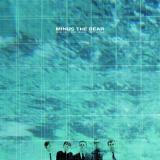
Minus the Bear - Bands Like It When You Yell “YAR!” At Them LP
  • A1: Spritz!!! Spritz!!!
  • A2: Women We Haven’t Met Yet
  • A3: You’re Some Sort of Big, Fat, Smart-Bug, Aren’t You?
  • B1: Drop It Like It’s Hot
  • B2: I Lost All My Money at the Cock Fights (Demo)

There was an immediate buzz surrounding This Is What I Know About Being Gigantic, the 2001 debut EP by Seattle indie phenomenon Minus the Bear. It wasn’t the kind of viral interest that translated into a string of sold-out tour dates, but it meant that the tuned-in crowd eagerly anticipated their next move. To help stir up the excitement for their first proper full-length, the band followed up Gigantic with a promo CD featuring two tracks from their upcoming album, a short instrumental interlude, an exclusive new song, and a demo version of another album track. Packaged in a cardboard slipcase, it was the kind of cheaply manufactured promotional item that could be handed out for free at shows or thrown in as a bonus in online orders—a relic of the final years of the CD age before the advent of the iPod and mp3. The sampler CD was christened Bands Like It When You Yell “YAR!” At Them in a nod to the upcoming album Highly Refined Pirates.

While these kinds of promotional items typically had an ephemeral existence, filed away in some neglected binder of CDs or tossed out during one of the many apartment-to-apartment moves of the band’s principal demographic of urban twentysomethings, Bands Like It When You Yell “YAR!” At Them had a curiously persistent presence. Perhaps it was because it was packaged more like a proper EP than a sampler. It certainly helped that it was a free release, meaning anyone who came to a show likely walked away from the evening with the cardboard slipcase tucked in their jacket pocket. It’s also noteworthy that the EP showcased three songs from the back half of Highly Refined Pirates rather than the album’s live staples and fan favorites from side A. Whatever the combination of factors at play, “YAR!” took on a life of its own and was ultimately re-packaged in a jewel case and sold as a proper EP in 2004 in the wake of Highly Refined Pirates’ success. And now in 2026, it’s getting its first proper release on vinyl.

Opening with the driving beat, chirping guitars, and funky low-end of “Spritz!!! Spritz!!!,” Bands Like It When You Yell “YAR!” At Them quickly cements Minus the Bear’s foundation of sophisticated revelry, a spirit further emphasized in the Highly Refined Pirates title choice. Part of the Bear’s lore involves them playing their first show three days after 9/11, and just as New York City’s indie rock scene took a sharp turn towards nightclub debauchery and a rejection of ‘90s rock’s dour fatalism in the wake of the World Trade Center tragedy, so did the Bear turn away from the Seattle’s scene’s penchant for gloom and angst towards a cerebral after-hours pop sound. The inclusion of “Women We Haven’t Met Yet” helped elevate what could have otherwise been seen as an album deep cut into a lead track. The fact that these first two songs essentially served as preview singles over future Pirates hits like “Monkey!!!Knife!!!Fight!!!” and “Absinthe Party At The Fly Honey Warehouse” speaks to the high quality of every song the band cranked out in their early years. The EP’s exclusive track “Drop It Like It’s Hot” presaged Snoop Dogg’s mega-hit single of the same name by two years, but whereas Snoop leaned into restrained minimalism, the Bear unleashes some of their fiercest work here, building off of interwoven riffs and electronic layers to a climax of stabbing guitars and hollered vocals. Much like Nirvana’s Hormoaning EP, Minus the Bear’s Bands Like It When You Yell “YAR!” At Them was initially more of a marketing gimmick than a proper release, but given the popularity of the pivotal studio albums that stemmed from the same recording sessions, these extended plays serve as compelling companion pieces that have earned a special spot in their respective fanbases’ hearts. Suicide Squeeze is proud to offer Bands Like It When You Yell “YAR!” At Them on vinyl on September 18, 2026, nearly 25 years after the band’s first show.

Remastered for vinyl by Bernie Grundman with lacquers cut at 45rpm, this limited edition pressing of 1000 copies on Puget Sound-colored vinyl helps document and preserve the exciting early years of one of American indie rock’s most beloved acts.

pré-commande18.09.2026

il devrait être publié sur 18.09.2026

22,65 €
Geoff Farina - fff (2x12")

Geoff Farina

fff (2x12")

2x12inchNUMLP235
Numero Group
11.09.2026

Geoff Farina’s Southern Records tenure was not just about Karate. His late-90s guitar-and-vocal solo output included
the bedroom-recorded Usonian Dream Sequence that echoed The Secret Stars’ intimate lo-fi sentiments, Reverse Eclipse that rode the more delicate fringes of Unsolved-era Karate, and the single Steely Dan, a paean to a contemporaneous guilty pleasure. FFF collects all three long-out- of-print releases here on vinyl for the first time, fastidiously packaged and punctu- ated with Farina’s written reflections on their making.

pré-commande11.09.2026

il devrait être publié sur 11.09.2026

29,83 €
Geoff Farina - fff (2x12")

Geoff Farina

fff (2x12")

2x12inchNUMPC2235
Numero Group
11.09.2026
  • 1: As You Are Right
  • 2: $48
  • 3: The Most Recent Imaginary
  • 4: Car
  • 5: The United States
  • 6: Not About A Birthday
  • 7: Usonian Dream Sequence
  • 8: The Same Way
  • 9: Eventually
  • 10: Midlantic Schemes
  • 11: For Now
  • 12: Dries
  • 13: Window Seats
  • Reverse Eclipse
  • 1: Special Diamonds
  • 2: The Left-Handed
  • 3: Fire 4:51
  • 4: Henningsen Or Hemingway
  • 5: Gravity
  • 6: Pordenone Plaster
  • 7: Soon In Tents
  • 8: The Rights Way
  • 9: Only Yellows
  • 10: The Dianne Eraser
  • 11: Olive Or Otherwise
  • 12: One Percent
  • 13: Fixable
  • 14: Bonus Track- Steely Dan
également disponible

Black Vinyl[29,83 €]


Geoff Farina’s Southern Records tenure was not just about Karate. His late-90s guitar-and-vocal solo output included
the bedroom-recorded Usonian Dream Sequence that echoed The Secret Stars’ intimate lo-fi sentiments, Reverse Eclipse that rode the more delicate fringes of Unsolved-era Karate, and the single Steely Dan, a paean to a contemporaneous guilty pleasure. FFF collects all three long-out- of-print releases here on vinyl for the first time, fastidiously packaged and punctu- ated with Farina’s written reflections on their making.

pré-commande11.09.2026

il devrait être publié sur 11.09.2026

32,35 €
Hannah Cole - Switchbacks LP
  • 1: Switchbacks
  • 2: MMA
  • 3: Pitcher
  • 4: Give
  • 5: Mechanical Bull
  • 6: Dancing
  • 7: 100 Bucks
  • 8: Shooting Star
  • 9: Mosquito Hawk
  • 10: Every New Day

On her debut album Switchbacks, Nashville-based artist Hannah Cole finds inspiration in the image of the switchbacks – sinuous twists in the road that obscure what's ahead. For a young artist making her way in the music industry, it's a powerful image: we can't really know what's ahead for us but – as Cole has learned – you should honk your horn to tell the world you're coming, and otherwise just enjoy the ride. Melding shoegaze and alternative rock with infectious pop melodies and strains of 90s nostalgia, Switchbacks is a commentary on the pursuit of success and how to protect the pure joy and love that lives at our core.

Across the ten tracks of Switchbacks, Cole swings her gaze at many unsettling aspects of the scramble toward success. Lead single "MMA" explores the ugly side of the music industry through the image of Las Vegas. On the brightly off-kilter "Give," she sings, "I feel like I've become an actor, / A TV pastor / climbing up a topless ladder," explaining that "the pursuit of success can feel like buying lottery tickets all the time for money that you'll never see." "Mechanical Bull" seethes with rage as Cole grapples with being seen as just the "girlfriend" in music settings and not being perceived as an equal to her partner, while on "Pitcher," she's paralysed in the face of wanting to achieve perfection. Later, she shrugs off the need to impress on "100 Bucks," reminding herself that she's enough for the people she loves.

Switchbacks is not only a finely-crafted debut album but also a deeply human artifact, tracing an arc that blazes like a comet to the height of ambition and then leaves you in the shimmer of self-acceptance and contentment. "Success is a moment that comes and goes," Cole concludes, "but I think the joy and experience that comes with making music is something I can take with me forever."

pré-commande04.09.2026

il devrait être publié sur 04.09.2026

40,97 €
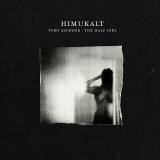
Himukalt - Torn Asunder: The Half Girl

Power Electronics, for the most part, stays within its lanes of transgressive misanthropy, with a blackened explosiveness of tortured psyches and nightmarish reflections for the darkest facets of the human condition. Since Whitehouse introduced the phrase, concept, and framework to Power Electronics, its authorship has been primarily male. But within the past decade or so, a diverse web of voices - female, feminist, non-binary, queer - has thrust the PE aesthetic beyond that of the tortured male artist. As such, the notion that Power Electronics is synonymous with true crime worship, political ugliness, degraded sexual fantasies, and misogynistic perspectives has been somewhat dispelled (though many still pursue such ignoble agendas).

Enter Ester Kärkkäinen. For close to a decade now, she has developed her own voice, tread her own path, and exorcised her own demons in her unique take on Power Electronics, recording as Himukalt. A Power Electronics album based on the collapse of a relationship is probably not as uncommon as one might think. The sexual violence portrayed through Power Electronics may very well have had its origins in the heartbroken, scorned, or otherwise romantically mistreated. Kärkkäinen gives us two very different perspectives on these themes through two rather different sounding records. There is Last Wish from the plague year of 2020, and there is Torn Asunder: The Half Girl, recorded in 2019. Where the 2020 record is a long-form fever dream of the erotic gone horribly wrong and turned morally questionable, Torn Asunder is the more fractured, yet more concise extrapolation of Kärkkäinen's anger, horror, confusion, and depression from the end of a sexless relationship. She nakedly reveals a psyche that has been shattered, scarred, and broken as she alternates between deadpanned proclamations and barked sermons amidst the harrowing articulation of heavy industrial electronics, laced with shrill feedback tones, disjointed rhythms, and harsh noise outbursts. Torn Asunder stands as a significant milestone in Himukalt's catalogue, but remains one her most rarely heard documents given it was originally published as part of Helen Scarsdale's instantly out of print, 10 cassette On Corrosion boxset. With this vinyl reissue, Torn Asunder can get a proper re-evaluation as one of her strongest works.

Hailing from Las Vegas, Himukalt began in 2016 as a vehicle for Kärkkäinen's noise constructs and crude programming that found references to Puce Mary, Anenzephalia, and Atrax Morgue’s Mörder Machine. Since then, she has maintained a manic schedule with releases for Tesco Organisation, Cloister Recordings, Old Europa Cafe and her own EK Verlag. With the release of Torn Asunder, Helen Scarsdale terminates the mission for the On Corrosion reissue campaign.

pré-commande07.08.2026

il devrait être publié sur 07.08.2026

23,32 €
Various - Lonely Man's Dream LP

Lonely Man's Dream marks a milestone for Forager Records: our tenth release, and perhaps our most personal. More than a compilation, it is a self-portrait. A reflection of the musical obsessions, late-night discoveries, and restless digging that have defined this label from our first record to this latest one.

Spanning the dreamy psychedelic folk of the 1970s to the cool shimmer of 1980s synth pop, Lonely Man's Dream traces a decade of curatorial wandering. Eleven artists. Eleven songs. Each one rare, obscure, or otherwise lost to the margins of music history. Among them, two tracks surface here for the very first time: “Never Say Goodbye” by Cocktails and Dreams, a synth pop transmission from Norway, luminous and weightless as the skies on the cover. “True Love” by Keith Jones, a drum machine backed demo that pulses with a late night intimacy.

What unites these songs across genre and era is the same quality we have always chased; a transporting ache, the sound of someone searching, or the feeling of a memory you can't quite place. Like every record before it, this one asks nothing of you but your full attention and an open ear.

Ten releases in, we are still looking for the same thing we started with. We hope you feel it too.

* Featuring a selection of songs sourced from rare records of the 70s & 80s reissued for the first time.
* Includes 2 unreleased songs from the 80s
* Original artwork by Eric Thompson
* Very limited initial first pressing

pas en stock

Commandez maintenant et nous commanderons l'article pour vous chez notre fournisseur.

Derniere entrée: 55 jours
28,53 €
Roman Flügel - Solutions

MAR 004 continues the evolving catalogue of Moozikeh Analog Room, a label imprint emerging from the broader Analog Room ecosystem. Over time, Analog Room has developed into distributed creative structure spanning, bridging club culture, archival releases, and experimental instrument design. MAR 004 extends this trajectory, reinforcing the label’s position as a long-form documentation platform for contemporary electronic music practices rooted in both regional and international dialogue.

From The Label:
"The relationship with Roman Flugel started with us listening to his music and be fascinated by the simplicity but bold sound. The sound design and the story telling was inline with how we enjoyed music. After inviting Roman for a few times to perform at Analog Room, the relationship led to the point that when it was time for us to think of the MAR releases, we could not miss on asking Roman to join the label and the rest is what you are going to experience with this thick, deep and rhythmic EP that represents what the world need at the moment, some SOLUTIONS. Analog Room has always tried to bypass the issues in the South West Asia region through music and art and show how we are all the same and connected."

From Roman:
"My record for Analog Room is essentially a long-term project that was sparked by multiple invitations to the Analog Room club in Dubai over the course of several years. The club held a special place for me—a sanctuary for the underground music scene in a city otherwise defined by a very different ethos. I am delighted to now be part of the Analog Room label family. The record blends various moods and directions within my personal musical landscape, and "Solutions," in particular, has created euphoric moments during my DJ sets over the past few months."

pas en stock

Commandez maintenant et nous commanderons l'article pour vous chez notre fournisseur.

Derniere entrée: 13 jours
17,23 €
NAT BIRCHALL QUARTET - Path Of Enlightenment LP
  • A1: Red, Gold & Green
  • A2: Amenhotep
  • A3: Path of Enlightenment
  • B1: Menat
  • B2: Visitation of the Spirits
  • B3: Sphesihle

Some words from Nat about the music – “For this recording I composed some songs using more “exotic” (for want of a better word) modes,
which I have always meant to explore in more depth but never really got around to very much. The first song for instance, Red, Gold & Green, uses an Ethiopian scale.
The title comes from the colours of the Ethiopian flag, which is also symbolic in Rastafari so has a kind of double meaning, like a lot of my songs.The title track, Path of Enlightenment, uses several modes,
starting in a major key then moving to the Phrygian mode, then to a minor key. The piano solo is in a 28 bar minor blues form. Menat is based on a mode of the Byzantine scale,
I’m not sure if it has a particular name or not. Amenhotep was the name of several Egyptian pharaohs,
Amenhotep IV being the original given name of Akhenaten.When I was writing this song it put me in mind of my song, Akhenaten, simply because they are both in 5/4 time,
so I decided to give this one a pharaonic name too. Spheshile is a Zulu word (and sometimes name) that means “beautiful gift”, the title was suggested by a friend from South Africa.
All this means nothing of course if the music doesn’t tell a story, I think the unfamiliar modes allowed us to speak of interesting things that may not have come to us otherwise.
Finally, I chose to use the quartet format for this recording because it occurred to me that it tends to make for a more cohesive group sound, and it had been a while since we recorded this way.”

pas en stock

Commandez maintenant et nous commanderons l'article pour vous chez notre fournisseur.

Derniere entrée: 82 jours
27,94 €
Him & Earl - Falling Backwards LP

Him & Earl

Falling Backwards LP

12inchWAHLP038
Wah Wah 45s
26.06.2026
  • 01: Away
  • 02: Falling Backwards
  • 03: Better Days (feat. Liz Ikamba)
  • 04: Bottled Up
  • 05: Open Road
  • 06: Preside
  • 07: Inside
  • 08: Shadow Overhead
  • 09: Blindside
  • 10: Around Again
  • 11: You Can Only Know

‘Falling Backwards’ is the debut album from Him & Earl via Wah Wah 45s, serving up a mystic brew of desert blues, English folk, Americana and stirring southern soul, with tentacles stretching out into psychedelia and prog, across 11 hot and hazy tracks.

Singer-songwriter Olly Him and DJ, producer and composer Wyndham Earl both have deeply-dug roots in the south coast of England, with the former making his name as a solo artist before exploring his soulful folk/prog sound with a number of live acts, and the latter collaborating on albums and sharing stages with Bonobo, Khruangbin, Alice Russell and TM Juke, having remixes released by Tru Thoughts and Mr Bongo Records and releasing his solo projects on his Time Spun imprint.

The pair first met in 2015 when Wyndham produced some songs for now defunct hypnotic Afro-folk outfit Creatures Of The Deep, of which Olly was a founder member. They instantly clicked, but after the group broke up it was a few years before serendipity brought them back together; a chance encounter at a gig saw them begin hatching plans to make a full album under the name Him & Earl with Olly writing the songs and Wyndham arranging and producing the project.

After so long floating in the creative ether, the connective power of these songs has been strikingly immediate. The debut Him & Earl live show in early 2026, before any tracks had even come out, blew Olly and Wyndham’s expectations out of the water as their five-piece band found themselves toe-to-toe with a sellout crowd – a sweaty room full of happy music fans, on an otherwise bleak January night, throwing shapes to live percussion showdowns, losing themselves in psychedelic guitar and bass wig-outs, and singing along to choruses they’d never heard a note of before.

Since then, the first two singles “Bottled Up” and “Away” have had high profile airplay from the likes of BBC 6 Music’s Huw Stephens and Cerys Matthews, and Radio X’s John Kennedy, adding to widespread tastemaker and specialist support around the world, as excitement builds for the album.The LP’s introspective and philosophical lyrics are brought to life by a sonorous yet strangely uplifting sound palette that morphs by stealth into a darkly propulsive, psychedelic and bluesy trip.

Opening song “Away” taps straight into a key theme of the record – journeying, in both a physical and mental sense, and the quest to move on and embrace the unknown – and its sunny guitars, trumpet and violin barely even hint at the tumultuous sonic adventure that’s set to unfold. A stronger indication comes in the title track,“Falling Backwards”, as its elegant web of staccato finger-picked hook, fluid piano melodies and strings unfurls into a six-minute exploration of what Olly describes as “going through every day normality while feeling close to chaos and like things could fall apart at any moment… when there is a myriad of different things holding everything together and if one thing goes wrong everything can fall apart around it.”


“Better Days” swiftly restores a sense of upbeat calm, with lively Kora and Afrobeat-inspired guitar licks, atmospheric trumpet and a harmony-clad mantra of hope on the horizon; the folky “Bottled Up” continues that blissful notion with undulating finger-picked guitar, earthy clarinet counter-melodies and celestial murmurations of delicately plucked strings. The magnetic pull toward more mysterious horizons comes via the dusty twang of Wild West-esque guitars on “Open Road”, a nomadic journey of self-discovery through spacious sonic plains embellished with eerie flickers of flute and clarinet. This leftward turn gathers pace in the trancelike

psych-prog depths of “Preside”, an instrumental cut at the album’s pivotal halfway point. Hypnotic, guttural desert blues-infused riffs on “Inside” channel the feeling of a psychedelic or spiritual trip where, in Olly’s words, “something clicks and you understand things on a different level – it makes you see inside yourself and see things in a different way.” “Shadow overhead” brings a lighter touch to a darker subject – the feeling of paranoia and being locked away from the world – drawn from Olly’s own experience and also his years of working in and around mental health.

Exuberant horns lend hope to loosely looping suspense on “Blindside” (about being caught out by the unexpected, and searching for something to see or hear to pick you up again) and then mesh with urgent strings, low-slung guitars and subterranean bass on “Around Again”, which explores the modern fight to stay afloat amid the endless churn of information and distractions. Still plumbing the bassy, bluesy depths of this journey into the psyche, “You Can Only Know” is a dreamlike revelation about finding someone or something that helps to make sense of the world. Luminescent synths duck and weave, while a rock-solid bass riff is tracked by a soul-soothing four-part “hey hey” harmony, reassuring as a glowing lamp in the window at the end of a life-changing trip.

pré-commande26.06.2026

il devrait être publié sur 26.06.2026

25,17 €
Vilhelm Bromander + Fredrik Rasten - Astral Twins

Maybe it was inevitable that Vilhelm Bromander and Fredrik Rasten would find each other. A symbiotic musical alliance of suggestive combinatory magic that stretches back to the interstitial two day space that separates their dates of birth and manifests here as the movement between ‘perfect’ or ‘just’ intonation and the ragged, psychoactive energy of the slippages from and towards that togetherness that render otherwise simple patterns or generally understood repetitions as wildly other and alive.

Astral Twins shares ‘twin’ works by each composer. The patiently unfolding real time retuning of Fredrik Rasten’s guitars on the a-side’s Sojourns and Vilhelm Bromander’s quickened steps and spry looping melodies on the flip’s Partially Dancing.

Both artists have history of going deep into the aesthetic and acoustic impact of intonation (how you think about what is ‘in tune’). Where their first LP (...for some reason that escapes us, 2019, Differ Records) shared a gorgeous set of sustained tone colour fields, this time they lean more explicitly into the folk music traditions of Scandinavia and further afield, whilst echoing the zoned minimalist atmosphere of Arthur Russell’s classic Instrumentals.

Recorded up close and in real time at Fylkingen’s soon-to-be-abandoned temporary location in Stockholm’s southern suburb of Bredäng, Astral Twins sings with the possibility that one plus one can equal more than two.

Fredrik Rasten:
 Sojourns explores the live retuning of guitar and double bass in a sequence of just intonation harmonies. A guitar ostinato runs throughout the piece where the retuning becomes an integral part of the composition. The slow pace reveals every detail in the transition from one harmonic arpeggio to another — how interfering waves emerge and disappear as the tonal interactions settle in electric clarity. The double bass shadows the guitar's process and comments with occasional pizzicato tones and register jumps, at times providing a low foundation for the sound and sometimes soaring together with the guitar. This is music that is deeply listening; experimental and at the same time humbly inviting many kinds of being with sound.

Vilhelm Bromander: 
As the title suggests, this song has a partially dancing character. The title also has a double meaning with reference to the partials and harmonics that dance together. The basic idea was to write music in just intonation that instead of being drone-based is reminiscent of a lightly dancing folk music, where the joyous feeling of just being in the music — “musicking" — is allowed to lead the way.

The double bass plays repeated overtone double stops in an open harmonic progression with subtle modulations that is inspired in equal parts by Steve Lacy's persistent repetition of phrases as east-asian khaen music. The guitars and mandolin have a freer role, with plucked retuned strings that enhance the bass's modulations and provide forward movement. The music invites to both melodic and spectral listening, suddenly halting so that other focal points can reveal themselves. For example, a chord sequence suddenly transitions to a more spectral part where Fredrik is playing a bowed guitar with a chain, several plucking guitars, voices, and pitch pipes. I wanted to make something ‘orchestral’ with just two people and no overdubs: a dance of overtones and open resonant strings, where we seamlessly take turns standing in the foreground.

pré-commande29.05.2026

il devrait être publié sur 29.05.2026

24,79 €
Alien Rave - AURA

Alien Rave

AURA

12inchARBVIN003
Alien Rave Beats
29.05.2026

...Three years ago, we had our first contact with this mysterious being from another galaxy, and since then it has been spreading its AURA and relentless sound to everyone it has encountered. We don't really know where this is all heading, but a strange force pushes us to keep moving forward, spreading the sonic message of ALIEN RAVE in plastic format until it decides otherwise. We have no choice; the expansion continues...

pas en stock

Commandez maintenant et nous commanderons l'article pour vous chez notre fournisseur.

Derniere entrée: 85 jours
14,08 €
HANIA RANI - SENTIMENTAL VALUE

Recorded between the iconic Abbey Road and Polish Radio studios, Hania Rani"s original music for Joachim Trier"s Cannes and Golden Globe winning, Oscar and Bafta nominated "Sentimental Value" is a deeply intuitive collaboration, composed before a single frame was edited. For Hania Rani composing for the most recent film by Joachim Trier was nothing less than a true joy and a real artistic adventure. As she explains: "It doesn"t happen often that I"m asked to work on a film by a director whose work I know so well and which resonates with me so naturally. What I understood while working with such an intriguing mind and intelligent artist as Joachim is that the role of a film composer is to wander along with the director, hand in hand, rather than follow one another. The collaboration should be a partnership - evenly balanced and able to invigorate people on both ends - otherwise it will always feel superficial, imposed, and timid".

pas en stock

Commandez maintenant et nous commanderons l'article pour vous chez notre fournisseur.

Derniere entrée: 70 jours
24,33 €
Martin Brugger - The Shell (LP)

Martin Brugger

The Shell (LP)

12inchSQM015
Squama
22.05.2026

He knew now that this was the only way with life. He knew now that fear and pleasure go together like the nut and the shell. - Vicki Baum, Grand Hotel (1929)

Five years after his debut Music For Video Stores (2020), Squama co-founder Martin Brugger is back on the label with his new album The Shell.
It's an introspective record on which field recordings, noisy synths and lo-fi folk guitars yield contemplative emotions with a veiled dream-pop sensibility, the sparse instrumentation and an eerie atmosphere mirroring the quarrels of the inner self.
Otherwise created in solitude in his Munich studio, the record features two contributions from label mate Lilian Mikorey (aka PILLBERT).

pré-commande22.05.2026

il devrait être publié sur 22.05.2026

22,65 €
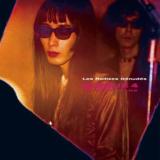
LES RALLIZES DENUDES - DISQUE 4 -’76 STUDIO ET LIVE-

Les Rallizes Dénudés returns with Disque 4 -’76 Studio et Live-, the latest in the ongoing series of official archival releases from the celebrated Japanese underground band.

In 1991, Les Rallizes Dénudés released what would become the only official albums issued during the band’s lifetime: ’67-’69 STUDIO et LIVE, MIZUTANI / Les Rallizes Dénudés, and ’77 LIVE. What no one knew at the time was that Takashi Mizutani was already deep into preparing another record.

Disque 4 reconstructs the track list Mizutani had put together for that fourth album. This includes the single “White Awakening," recorded in 1976 at the studio in Takadanobaba BIG BOX as part of the sessions that would become known among collectors as the “Virgin Demos.” Production and mastering of this archival release were handled once again by Makoto Kubota, assembling the album from the masters left behind by Mizutani, utilizing newly discovered tapes as additional sources.

Prepared by Mizutani using a variety of formats, including U-Matic, open reel, and DAT, the tracks were originally labeled with working titles such as “Disque 4” and “Record No. 4,” indicating that Mizutani intended them for inclusion on a possible fourth album. The recordings were taken primarily from studio sessions that all seemed to have taken place around 1976, which aligns with the claim that Mizutani himself once made that “there exists an album of studio recordings made with the same members as ‘77 LIVE.” His notes also suggest an attempt to sequence the tracks as a vinyl LP, splitting them into A and B sides. It's not hard to imagine that in the era of CDs in the early 1990s, an album on analog LP would have been an extremely difficult sell. Thus, the “Fourth Album” had become another lost piece of the intricate Rallizes myth.

Les Rallizes Dénudés may be notorious for the colossal volume and extended song lengths in their live settings. But this work, centered around studio recordings and condensed onto a single LP record, transcends the common impression of the band’s aggressive flood of noise. Instead, the “lyricism” at its core emerges with striking clarity. And needless to say, this is precisely the charm of the Rallizes that continues to captivate fans worldwide today.

pas en stock

Commandez maintenant et nous commanderons l'article pour vous chez notre fournisseur.

Last In: 4 months ago
29,20 €
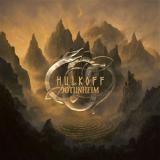
HULKOFF - JOTUNHEIM LP 2x12"
  • 1: TILL JOTUNHEIM
  • 2: DET GAMLA BLODET
  • 3: THRYM
  • 4: LOKE
  • 5: BLóDUGHADDA
  • 6: JÄTTARNA
  • 7: SURTR
  • 8: UR GINNUNGAGAP
  • 9: SIGURD
  • 10: NORDSTJÄRNAN
  • 1: TO JOTUNHEIM
  • 2: THE OLD BLOOD
  • 3: THRYM
  • 4: LOKE
  • 5: BLóDUGHADDA
  • 6: THE GIANTS
  • 7: SURTR
  • 8: OUT OF GINNUNGAGAP
  • 9: SIGURD
  • 10: NORTHSTAR

On May 15, HULKOFF returns with his fifth studio album; Jotunheim - a towering new chapter that bends space and time, and throws you back to the very darkest void where the nordic sagas began - Etunaheimar. The first spiritual landscape known in the blood-memory of Fennoscandia, today referred to as Jotunheim - the realm of Giants. Founded by the former frontman of Raubtier, HULKOFF has dominated Swedish charts with multiple #1 releases, including Pansarfolk (2020), Ragnarök (2021), and Hersir (2023). As with some of the previous releases, HULKOFF once again drops a double album. With 20 tracks split across two discs -one in Swedish, one in English- the album invites the world into the frostbitten heart of the North, expanding the saga without loosing its roots. With Jotunheim, HULKOFF delivers what has become his hallmark: iron-hard riffs over folky melodies and thunderous drums. Often described as "Music for the Viking hearted", Jotunheim once again presents the established HULKOFF sound - Metal refined and enhanced by the primal organic sound from Talharpa and violin - wood, horsehair and steel. A symbiosis that is adding an earthy, ritualistic texture to the otherwise dark and heavy sonic landscape.

pré-commande15.05.2026

il devrait être publié sur 15.05.2026

32,98 €
Joshua Idehen - I Know You're Hurting, Everyone Is Hurting, Everyone Is Trying... LP

Lately, it feels like the world is one endless bad news cycle. Joshua Idehen isn’t here to pretend otherwise – but on the spoken word artist’s new album, I Know You’re Hurting, Everyone Is Hurting, Everyone Is Trying, You Have Got To Try, he provides a phenomenal sonic, poetic space. Made with his creative partner, musician Ludvig Parment, the album (out 6 March 2026) is an urgent but transcendent collection that holds you through it all, filled with grief, euphoria and hope.

I Know You’re Hurting… comes after the virality of Idehen’s track Mum Does The Washing, a wry and whipsmart poem examining how the world works (which started life as a Twitter thread), set to Parment’s spacious beats. The song has seen the pair propelled beyond Idehen’s wildest dreams this past year.

Across the album, that means uplifting choirs, cozy samples and exuberant, sometimes house-tinged beats. “I am personally drawn to music that transports you to a place, or scene or mindset,” says Parment. This is topped with ruminative musings on morality and human connection; about the longer loves in life – like friendships, family – that sustain us. These come from Idehen and Parment, along with a host of friends and collaborators, including writers Leone Ross and Charlotte Manning, and vocalist Amanda Bergman, to help expand on the topics of the record without sounding preachy. Similarly, there are musical guests including saxophonist Pete Fraser and Shabaka Hutchings on flute, each helping to imbue the album with a rich warmth.

pas en stock

Commandez maintenant et nous commanderons l'article pour vous chez notre fournisseur.

Last In: 4 months ago
28,99 €
Laurel Halo - Midnight Zone (Original Soundtrack to the Film by Julian Charrière) LP

Laurel Halo returns with an album of original soundtrack music, composed for the film Midnight Zone by visual artist Julian Charrière. Following the path of a drifting Fresnel lighthouse lens as it descends through the Clarion-Clipperton Fracture Zone — a remote abyssal plain in the Pacific Ocean, rich in rare metals and increasingly targeted for deep-sea mining — the film traces a descent into one of Earth’s last untouched ecosystems.


Charrière’s film reveals the deep not as void, but as a luminous biome teeming with fragile life: bioluminescent creatures, swirling schools of fish, and elusive predators. The suspended lens becomes an abyssal campfire, attracting species caught in the tides of uncertainty, their futures hanging in the balance.


Echoing this tension, Halo’s compositions evoke a sensory freefall, where gravity falters and light and sound flicker in uncertain rhythms. Midnight Zone is a sonic drift through the space between what we seek to extract, fail to understand, and must protect.


Halo’s score evokes the life that exists beyond our physical airbound capacity. The material features long, subtle passages of electro-acoustic ambient, drone and sound design, slowly flowing and unfolding with rich detail. The music, composed largely on a Montage 8 synthesizer and Yamaha TransAcoustic piano at the Yamaha studios in New York City, possesses an uncanny quality: that of synthetic waveforms being amplified and sung through the stringboard of the physical body of the TransAcoustic piano. Combined with stacks of violin and viol da gamba, the music on Midnight Zone possesses trace elements of a human hand in an otherwise sunken landscape. Patient, submerged, and alive. The album will be the third on Halo’s imprint, Awe.


The film is central to Charrière’s current solo exhibition Midnight Zone. The exhibition engages with underwater ecologies, exploring the complexity of water as an elemental medium affected by anthropogenic degradation. Reflecting upon its flow and materiality, profundity and politics, its mundane and sacral dimensions, the solo show acts as a kaleidoscope, inviting us to dive deep.

pas en stock

Commandez maintenant et nous commanderons l'article pour vous chez notre fournisseur.

Last In: 4 months ago
24,79 €
Flaer - Preludes LP

Flaer

Preludes LP

12inchODA01FT
ODDA Recordings
24.04.2026

Artist and multi-instrumentalist Flaer looks to the landscape to explore pastoral melancholy on debut release, Preludes. It is released in a second edition black vinyl, with an alternate cover artwork.

Ensconced in his family home in rural Leicestershire in the early months of 2020, painter and musician Realf Heygate (b. 1994) picked up his childhood cello for the first time in several years and began to play. Setting himself parameters to only record onto 4-track tape with acoustic instruments – cello, piano and acoustic guitar – he assembled a suite of instrumental compositions that form the basis of Preludes, his debut album as Flaer and the inaugural release on Odda Recordings.

Channelling the tension and unease between the pastoral idyll of the English countryside and the darkness which lurks beneath the surface, the mini-album draws inspiration from the analogue aesthetic of 1970s folk horror films, weaving field recordings of birdsong, church bells and the natural environment into chimerical melodies that reflect on Heygate’s childhood experiences of rural England.

“It was really important not to isolate the sound from its environment,” he explains, describing the compositional and recording process as “site-specific”. Developed over a series of intuitive musical enquiries, the mini-album’s uncanny quality emerges from combining raw demo takes with overdubs of almost orchestral grandeur.

Heygate points to the final track as indicative of the work as a whole: “‘Follow’ really is the mantra for the release and embodies the practical approach I was taking to music making: not to force the music but see where it takes you.”

As a painter, Heygate’s practice takes artefacts through sequences of reproduction that embrace the fluctuating materiality of the copy. Since obtaining a degree in Fine Art from Central Saint Martins in 2017, he has exhibited solo at Peter von Kant and Springseason galleries in London, and has participated in group shows at Saatchi Gallery, Cob Gallery and Senesi Contemporanea.

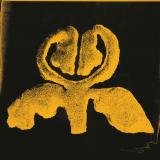
Describing his artistic practice as one of self-erasure, music instead provides Heygate with a more personal and autobiographical outlet. Where the two worlds combine is on Preludes’ striking artwork, which features paintings of 13th century stone carvings from the font of the church in the town where he grew up.

Speaking to a time where people were connected to the land in a more profound way, each symbol is assigned to a track on the album, which Heygate likens to giving them a title.

“To add that one juxtaposition might open a whole new interpretation or language that might be hard to find otherwise,” he explains.“Over time it might reveal itself to you, which is why I'm excited about it being released. To throw them out there and see what comes of it.”

pré-commande24.04.2026

il devrait être publié sur 24.04.2026

24,58 €
Various - Digging Central Asia: Musical Archaeology Along the Silk Road LP

Death Is Not The End collaborate with Uzbek label Maqom Soul to deliver an LP counterpart to last year's mixtape of the same title, compiling specially picked & fully licensed individual belters from the ex-soviet studios of Central Asian republics between 1978 and 1989 - incl. Uzbek, Tajik, Kurdish & Uyghur artists pulling traditional folk motifs together with pop & rock and psych elements.

"These recordings do not form a smooth or coherent history. They feel more like a sequence of discoveries made at different moments and in different circumstances. Songs and instrumental pieces that once lived inside specific contexts radio broadcasts, philharmonic programs, touring routes now sit side by side, revealing hidden connections as well as clear fractures between them.

Nasiba Abdullaeva appears here as a voice from the end of an era. Trained within a conservatory system, she worked inside the format of the Soviet pop song while filling it with melodic logic that did not come from Moscow or Leningrad. Her voice is soft and sustained, shaped by Eastern melisma, and it never functions as decoration. Even in tightly structured songs there is a sense of resistance, an effort to preserve a musical language rooted in Uzbek tradition rather than fully adapted to an all Union standard.

The ensemble Sintez, later renamed Navo, represents a different path. Beginning as a student rock group, the band was gradually absorbed into the official VIA system with all its limitations and compromises. Yet it was precisely within those boundaries that Sintez and Navo developed a recognizable sound. Electric guitars and jazz rock harmonies do not overpower the folk material but remain in tension with it. Their recordings feel like negotiations between what the musicians wanted to play and what they were allowed to perform.

The Tajik ensemble Gulshan reflects an institutional approach carried to a high professional level. Formed under television and radio structures, the group treated folk material almost as a written score. Carefully constructed arrangements, close attention to orchestration, and restrained use of pop techniques define their sound. There is less spontaneity here, but a strong sense of discipline and structure, where national melody becomes part of a carefully controlled sonic framework.

Koma Wetan occupies a very different space. Formed in the 1970s, this Kurdish rock group approached poetry and folklore as tools of cultural assertion. Their psychedelic rock never feels like a stylistic borrowing. Instead it functions as a contemporary vessel for language and themes that might otherwise have remained unheard. Even today these recordings sound fragile and stubborn at the same time.

The Uyghur ensemble Yashlik, closely connected to a musical drama theatre, operated somewhere between stage performance and popular music. Their songs are built on folk melodies but shaped for wide audiences. What emerges is a constant attempt to preserve the recognizability of Uyghur musical identity without freezing it in a folkloric frame. Yashlik's music exists in a state of balance between representation and development.

Digging Central Asia does not attempt to establish hierarchies or offer a single wayof listening. Names and dates matter less than the sound itself. Tape noise, abrupt transitions, and unexpected timbres remain part of the material rather than flaws to be corrected. This music existed at the crossroads of multiple routes geographic, cultural, and ideological. Heard today in a new context, it no longer feels peripheral. Instead it stands as a reminder that the history of popular music is far more fragmented, layered, and polyphonic than it is usually allowed to be."

pas en stock

Commandez maintenant et nous commanderons l'article pour vous chez notre fournisseur.

22,48 €
MELVINS - Freak Puke LP

MELVINS

Freak Puke LP

12inchIPCLPC1287
Ipecac Recordings
17.04.2026

`Freak Puke' (2012) saw Melvins Lite_featuring Buzz Osborne, Dale Crover, and upright-bass virtuoso Trevor Dunn_offering a leaner, more nimble twist on the band's heavy-rock sound. The use of acoustic bass lends an elastic, jazz-tinged punch to otherwise sludgy riffs, while the songwriting remains both off-kilter and surprisingly tuneful, further proving the group's capacity for reinvention.

pré-commande17.04.2026

il devrait être publié sur 17.04.2026

26,01 €
Sara Wual / Flabaire / Paul Cut / Mayan - Transnationality EP

Conscious and intentional. The Transnationality EP marks the first release of TEMAS Records, fully composed and mixed between Paris and Lisbon, featuring artists from both countries: Paul Cut (FR), Flabaire (FR), Sara Wual (PT) and Mayan (PT). Within the spectrum of House Music, each artist captured a selection of oldschool aesthetics using gear from different eras. The intention is to praise the references that shaped their path as artists, where they find beauty. Mastered by DJ Steaw at Rutilance Lab Paris. TEMAS Records is an independent music label founded by Sara Wual, Paul Cut and Cíntia Aguiar Pinto. The label prioritizes a slower release schedule for a more sustainable music industry, with only 1 vinyl record release per year. The albums are mindfully produced in Portugal through the use of recycled vinyl left-overs, that otherwise would go to waste. Funded by the European Union via Goethe-Institut.

pas en stock

Commandez maintenant et nous commanderons l'article pour vous chez notre fournisseur.

Derniere entrée: 29 jours
13,87 €
Tara Clerkin Trio - On The Turning Ground

Bristol's Tara Clerkin Trio return to World of Echo and the EP format for a five song collection of quixotic, emotional redolence. But do not mistake their absence for inertia. If their musical output has been a little sparse during those in-between years, limited to a few solo ventures and an astonishing ten minute long piece as a trio, their time has otherwise been richly spent: continuous writing and recording, extensive live performances across Europe and Japan, a cultivation of local and more far-flung artistic connections (musical and otherwise), and a monthly NTS show that, through the voice of others, speaks most obviously to their own unorthodox interests. It's the conflux of that winding activity that leads indirectly to On The Turning Ground, 26 minutes of probing, thoughtful composition that draws from no one specific source. Their inspirations might be centreless, but the trio still possess a very obvious anchor in the form of their hometown. Bristol stands as a city of multitudes, heterogenous and vibrant in such a way as to allow it to renew and remake time and again. Tara Clerkin Trio drink from that same well, duly reflecting a rich musical heritage built on fwd-facing electronic subcultures and experimental urges.

As such, On The Turning Ground finds them subject to their own subtle internal evolution, the pervasive sense that you've caught them mid-bloom, on their way to becoming but never anything but themselves. The two instrumental pieces that bookend the EP stand as a perfect case in point, displaying an increasing mastery of compositional space. Pensive and restrained, 'Brigstow' and 'Once Around' both emanate an interstitial quality that's not so much after- as in-between-hours, miniature dub-folk symphonies held together by the kind of tacit understanding that remains the preserve of only the closest of family units. If those two tracks are shaped by a sense of shifting temporality, then the three vocal-led pieces that comprise the record's core feel like a gentle ossifying of aesthetic into something approaching their own unique form of avant-pop. 'Pop' is, of course, a broadly subjective concept, but there's no avoiding the overt sparkling melodicism of songs like 'Marble Walls' and 'The Turning Ground', undeniable re-directions of that late 90s impulse to bend pop sensibilities into off-centre terrain, to render the familiar new again. This is what Tara Clerkin Trio do, gently pulling the ground from under your feet, turning you to face something you'd not quite seen before. To view the world as they do: sideways, sometimes, all of the time.

pas en stock

Commandez maintenant et nous commanderons l'article pour vous chez notre fournisseur.

Last In: 2 years ago
19,75 €
Broadside - Nowhere, at Last LP

Broadside

Nowhere, at Last LP

12inchTHRILL031LPV3
Thriller Records
10.04.2026

Broadside has never been a band to stay in one place for too long—musically or otherwise. The Richmond, Virginia-based band has spent the past decade carving out their own space in the pop rock scene. Drawing influence from The Killers, AFI, Kings of Leon, and Taking Back Sunday, their sound seamlessly fuses nostalgic rock energy with a fresh, modern edge. Their evolution has been nothing short of remarkable, taking them from underground favorites to genre staples, all while embracing the idea that growth and change are not just inevitable but necessary. With Oliver Baxxter (vocals), Domenic Reid (guitar), and Patrick Diaz (bass/backup vocals) at the helm, Broadside has built a career on crafting music that feels both deeply personal and universally relatable.

Their last full-length album, Hotel Bleu, served as a bold chapter in their story, using the transient nature of hotel stays as a metaphor for self-reflection, fleeting moments, and personal reinvention. The album marked a significant milestone in their career, amassing over 100 million streams and standing as their boldest, brightest, and most ambitious work to date. Now, as they prepare to enter their next era, the band is gearing up to release their most dynamic music yet, continuing to evolve while staying true to the energy and authenticity that first captivated listeners.

pré-commande10.04.2026

il devrait être publié sur 10.04.2026

21,81 €
Broadside - Nowhere, at Last LP

Broadside

Nowhere, at Last LP

12inchTHRILL031LPV2
Thriller Records
10.04.2026

Broadside has never been a band to stay in one place for too long—musically or otherwise. The Richmond, Virginia-based band has spent the past decade carving out their own space in the pop rock scene. Drawing influence from The Killers, AFI, Kings of Leon, and Taking Back Sunday, their sound seamlessly fuses nostalgic rock energy with a fresh, modern edge. Their evolution has been nothing short of remarkable, taking them from underground favorites to genre staples, all while embracing the idea that growth and change are not just inevitable but necessary.

With Oliver Baxxter (vocals), Domenic Reid (guitar), and Patrick Diaz (bass/backup vocals) at the helm, Broadside has built a career on crafting music that feels both deeply personal and universally relatable. Their last full-length album, Hotel Bleu, served as a bold chapter in their story, using the transient nature of hotel stays as a metaphor for self-reflection, fleeting moments, and personal reinvention. The album marked a significant milestone in their career, amassing over 100 million streams and standing as their boldest, brightest, and most ambitious work to date. Now, as they prepare to enter their next era, the band is gearing up to release their most dynamic music yet, continuing to evolve while staying true to the energy and authenticity that first captivated listeners.

pré-commande10.04.2026

il devrait être publié sur 10.04.2026

21,81 €
Guilty Razors - Complete Recordings 1977 - 1978

UILTY RAZORS, BONA FIDE PUNKS.


Writings on the topic that go off in all directions, mind-numbing lectures given by academics, and testimonies, most of them heavily doctored, from those who “lived through that era”: so many people today fantasize about the early days of punk in our country… This blessed moment when no one had yet thought of flaunting a ridiculous green mohawk, taking Sid Vicious as a hero, or – even worse – making the so-called alternative scene both festive and boorish. There was no such thing in 1976 or 1977, when it wasn’t easy to get hold of the first 45s by the Pistols or the Clash. Few people were aware of what was happening on the fringes of the fringes at the time. Malcolm McLaren was virtually unknown, and having short hair made you seem strange. Who knew then that rock music, which had taken a very bad turn since the early 1970s, would once again become an essential element of liberation? That, thanks to short and fast songs, it would once again rediscover that primitive, social side that was so hated by older generations? Who knew that, besides a few loners who read the music press (it was even better if they read it in English) and frequented the right record stores? Many of these formed bands, because it was impossible to do otherwise. We quickly went from listening to the Velvet Underground to trying to play the Stooges’ intros. It’s a somewhat collective story, even though there weren’t many people to start it.
The Guilty Razors were among those who took part in this initial upheaval in Paris. They were far from being the worst. They had something special and even released a single that was well above the national average. They also had enough songs to fill an album, the one you’re holding. In everyone’s opinion, they were definitely not among the punk impostors that followed in their wake. They were, at least, genuine and credible.

Guilty Razors, Parisian punk band (1975-1978). To understand something about their somewhat linear but very energetic sound, we might need to talk about the context in which it was born and, more broadly, recall the boredom (a theme that would become capital in punk songs) coupled with the desire to blow everything off, which were the basis for the formation of bands playing a rejuvenated rock music ; about the passion for a few records by the Kinks or the early Who, by the Stooges, by the Velvet mostly, which set you apart from the crowd.
And of course, we should remember this new wave, which was promoted by a few articles in the specialized press and some cutting-edge record stores, coming from New York or London, whose small but powerful influence could be felt in Paris and in a handful of isolated places in the provinces, lulled to sleep by so many appalling things, from Tangerine Dream to President Giscard d’Estaing...
In 1975-76, French music was, as almost always, in a sorry state ; it was still dominated by Johnny Hallyday and Sylvie Vartan. Local rock music was also rather bleak, apart from Bijou and Little Bob who tried to revive this small scene with poorly sound-engineered gigs played to almost no one.
In the working class suburbs at the time, it was mainly hard rock music played to 11 that helped people forget about their gruelling shifts at the factory. Here and there, on the outskirts of major cities, you still could find a few rockers with sideburns wearing black armbands since the death of Gene Vincent, but it wasn’t a proper mass movement, just a source of real danger to anyone they came across who wasn't like them. In August 1976, a festival unlike any other took place in Mont-de-Marsan – the First European Punk Festival as the poster said – with almost as many people on stage as in the audience. Yet, on that day, a quasi historical event happened, when, under the blazing afternoon sun, a band of unknowns called The Damned made an unprecedented noise in the arena, reminiscent of the chaotic Stooges in their early adolescence. They were the first genuine punk band to perform in our country: from then on, anything was possible, almost anything seemed permissible.

It makes sense that the four+1 members of Guilty Razors, who initially amplified acoustic guitars with crappy tape recorder microphones, would adopt punk music (pronounced paink in French) naturally and instinctively, since it combines liberating noise with speed of execution and – crucially – a very healthy sense of rebellion (the protesters of May 1968 proclaimed, and it was even a slogan, that they weren’t against old people, but against what had made them grow old. In the mid-1970s, it seemed normal and obvious that old people should now ALSO be targeted!!!).
At the time, the desire to fight back, and break down authority and apathy, was either red or black, often taking the form of leafleting, tumultuous general assemblies in the schoolyard, and massive or shabby demonstrations, most of the time overflowing with an exciting vitality that sometimes turned into fights with the riot police. Indeed, soon after the end of the Vietnam War and following Pinochet’s coup in Chile, all over France, Trotskyist and anarcho-libertarian fervour was firmly entrenched among parts of the educated youth population, who were equally rebellious and troublemakers whenever they had the chance. It should also be noted that when the single "Anarchy in the UK" was first heard, even though not many of us had access to it, both the title and its explosive sound immediately resonated with some of those troublemakers crying out for ANARCHY!!! Meanwhile, the left-wing majority still equated punks with reckless young neo-Nazis. Of course, the widely circulated photos in the mainstream press of Siouxsie Sioux with her swastikas didn’t necessarily help to win over the theorists of the Great Revolution. It took Joe Strummer to introduce The Clash as an anti-racist, anti-fascist and anti-ignorance band for the rejection of old-school revolutionaries to fade a little.

The Lycée Jean-Baptiste Say at Porte d’Auteuil, despite being located in the very posh and very exclusive 16th arrondissement of Paris, didn’t escape these "committed" upheavals, which doubled as the perfect outlet for the less timid members of this generation.
“Back then, politics were fun,” says Tristam Nada, who studied there and went on to become Guilty Razors’ frontman. “Jean-Baptiste was the leftist high-school in the neighbourhood. When the far right guys from the GUD came down there, the Communist League guys from elsewhere helped us fight them off.”
Anything that could challenge authority was fair game and of course, strikes for just about any reason would lead to increasingly frequent truancy (with a definitive farewell to education that would soon follow). Tristam Nada spent his 10th and 11th unfinished grades with José Perez, who had come from Spain, where his father, a janitor, had been sentenced to death by Franco. “José steered my tastes towards solid acts such as The Who. Like most teenagers, I had previously absorbed just about everything that came my way, from Yes to Led Zeppelin to Genesis. I was exploring… And then one day, he told me that he and his brother Carlos wanted to start a rock band.” The Perez brothers already played guitar. “Of course, they were Spanish!”, jokes their singer. “Then, somewhat reluctantly, José took up the bass and we were soon joined by Jano – who called himself Jano Homicid – who took up the rhythm guitar.” Several drummers would later join this core of not easily intimidated young guys who didn’t let adversity get the better of them.

The first rehearsals of the newly named Guilty Razors took place in the bedroom of a Perez aunt. There, the three rookies tried to cover a few standards, songs that often were an integral part of their lives. During a first, short gig, in front of a bewildered audience of tough old-school rockers, they launched into a clunky version of the Velvet Underground's “Heroin”. Challenge or recklessness? A bit of both, probably… And then, step by step, their limited repertoire expanded as they decided to write their own songs, sung in a not always very accurate or academic English, but who cared about proper grammar or the right vocabulary, since what truly mattered was to make the words sound as good as possible while playing very, very fast music? And spitting out those words in a language that left no doubt as to what it conveyed mattered as well.
Trying their hand a the kind of rock music disliked by most of the neighbourhood, making noise, being fiercely provocative: they still belonged to a tiny clique who, at this very moment, had chosen to impose this difference. And there were very few places in France or elsewhere, where one could witness the first stirrings of something that wasn’t a trend yet, let alone a movement.

In the provinces, in late 1976 or early 1977, there couldn’t be more than thirty record stores that were a bit more discerning than average, where you could hear this new kind of short-haired rock music called “punk”. The old clientele, who previously had no problem coming in to buy the latest McCartney or Aerosmith LP, now felt a little less comfortable there…
In Paris, these enlightened places were quite rare and often located nex to what would become the Forum des Halles, a big shopping mall. Between three aging sex workers, a couple of second-hand clothes shops, sellers of hippie paraphernalia and small fashion designers, the good word was loudly spread in two pioneering places – propagators of what was still only a new underground movement. Historically, the first one was the Open Market, a kind of poorly, but tastefully stocked cave. Speakers blasted out the sound of sixties garage bands from the Nuggets compilation (a crucial reference for José Perez) or the badly dressed English kids of Eddie and the Hot Rods. This black-painted den was opened a few years earlier by Marc Zermati, a character who wasn’t always in a sunny disposition, but always quite radical in his (good) choices and his opinions. He founded the independent label Skydog and was one of the promoters of the Mont-de-Marsan punk festivals. Not far from there was Harry Cover, another store more in tune with the new New York scene, which was amply covered in the house fanzine, Rock News (even though it was in it that the photos of the Sex Pistols were first published in France).
It was a favorite hang-out of the Perez brothers and Tristam Nada, as the latter explained. “It’s at Harry Cover’s that we first heard the Pistols and Clash’s 45s, and after that, we decided to start writing our first songs. If they could do it, so could we!”
The sonic shocks that were “Anarchy in the UK”, “White Riot” or the Buzzcocks’s EP, “Spiral Scratch” – which Guilty Razors' sound is reminiscent of – were soon to be amplified by an unparalleled visual shock. In April 1977, right after the release of their first LP, The Clash performed at the Palais des Glaces in Paris, during a punk night organised by Marc Zermati. For many who were there, it was the gig of a lifetime…
Of course, Guilty Razors and Tristam were in the audience: “That concert was fabulous… We Parisian punks were almost all dressed in black and white, with white shirts, skinny leather ties, bikers jackets or light jackets, etc. The Clash, on the other hand, wore colourful clothes. Well, the next day, at the Gibus, you’d spot everyone who had been at this concert, but they weren’t wearing anything black, they were all wearing colours.”

It makes sense to mention the Gibus club, as Guilty Razors often played there (sometimes in front of a hostile audience). It was also the only place in Paris that regularly scheduled new Parisian or Anglo-Saxon acts, such as Generation X, Siouxsie and the Banshees, the Slits, and Johnny Thunders who would become a kind of messed-up mascot for the venue. A little later, in 1978, the Rose Bonbon – formerly the Nashville – also attracted nightly owls in search of electric thrills… In 1977, the iconic but not necessarily excellent Asphalt Jungle often played at the Gibus, sometimes sharing the bill with Metal Urbain, the only band whose aura would later transcend the French borders (“I saw them as the French Sex Pistols,” said Geoff Travis, head of their British label Rough Trade). Already established in this small scene, Metal Urbain helped the young and restless Guilty Razors who had just arrived. Guitarist for Metal Urbain Hermann Schwartz remembers it: “They were younger than us, we were a bit like their mentors even if it’s too strong a word… At least they were credible. We thought they were good, and they had good songs which reminded of the Buzzcocks that I liked a lot. But at some point, they started hanging out with the Hells Angels. That’s when we stopped following them.”

The break-up was mutual, since, Guilty Razors, for their part, were shocked when they saw a fringe element of the audience at Metal Urbain concerts who repeatedly shouted “Sieg Heil” and gave Nazi salutes. These provocations, even still minor (the bulk of the skinhead crowd would later make their presence felt during concerts), weren’t really to the liking of the Perez brothers, whose anti-fascist convictions were firmly rooted. Some things are non-negotiable.
A few months earlier (in July 1978), Guilty Razors had nevertheless opened very successfully for Metal Urbain at the Bus Palladium, a more traditonally old-school rock night-club. But, as was sometimes the case back then, the night turned into a mass brawl when suburban rockers came to “beat up punks”.

Back then, Parisian nights weren’t always sweet and serene.

So, after opening as best as they could for The Jam (their sound having been ruined by the PA system), our local heroes were – once again – met outside by a horde of greasers out to get them. “Thankfully,” says Tristam, “we were with our roadies, motorless bikers who acted as a protective barrier. We were chased in the neighbouring streets and the whole thing ended in front of a bar, with the owner coming out with a rifle…”
Although Tristam and the Perez brothers narrowly escaped various, potentially bloody, incidents, they weren’t completely innocent of wrongdoing either. They still find amusing their mugging of two strangers in the street for example (“We were broke and we simply wanted to buy tickets for the Heartbreakers concert that night,” says Tristam). It so happened that their victims were two key figures in the rock business at the time: radio presenter Alain Manneval and music publisher Philippe Constantin. They filed a complaint and sought monetary compensation, but somehow the band’s manager, the skilful but very controversial Alexis, managed to get the complaint withdrawn and Guilty Razors ended up signing with Constantin with a substantial advance.

They also signed with Polydor and the label released in 1978 their only three-track 45, featuring “I Don't Wanna be A Rich”, “Hurts and Noises” and “Provocate” (songs that exuded perpetual rebellion and an unquenchable desire for “class” confrontation). It was a very good record, but due to a lack of promotion (radio stations didn’t play French artists singing in English), it didn’t sell very well. Only 800 copies were allegedly sold and the rest of the stock was pulped… Initially, the three tracks were to be included on a LP that never came to be, since they were dropped by Polydor (“Let’s say we sometimes caused a ruckus in their offices!” laughs Tristam.) In order to perfect the long-awaited LP, the band recorded demos of other tracks. There was a cover of Pink Floyd's “Lucifer Sam” from the Syd Barrett era – proof of an enduring love for the sixties’ greats –, “Wake Up” a hangover tale and “Bad Heart” about the Baader-Meinhof gang, whose actions had a profound impact on the era and on a generation seeking extreme dissent... On the album you’re now discovering, you can also hear five previously unreleased tracks recorded a bit later during an extended and freezing stay in Madrid, in a makeshift studio with the invaluable help of a drummer also acting as sound engineer. He was both an enthusiastic old hippie and a proper whizz at sound engineering. Here too, certain influences from the fifties and sixties (Link Wray, the Troggs) are more than obvious in the band’s music.

Shortly after a final stormy and rather barbaric (on the audience’s side) “Punk night” at the Olympia in June 1978, Tristam left the band ; his bandmates continued without him for a short while.

But like most pioneering punk bands of the era, Guilty Razors eventually split up for good after three years (besides once in Spain, they’d only played in Paris). The reason for ceasing business activities were more or less the same for everyone: there were no venues outside one’s small circuit to play this kind of rock music, which was still frightening, unknown, or of little interest to most people. The chances of recording an LP were virtually null, since major labels were only signing unoriginal but reassuring sub-Téléphone clones, and the smaller ones were only interested in progressive rock or French chanson for youth clubs. And what about self-production? No one in our small safety-pinned world had thought about it yet. There wasn’t enough money to embark on that sort of venture anyway.

So yes, the early days of punk in France were truly No Future!

pas en stock

Commandez maintenant et nous commanderons l'article pour vous chez notre fournisseur.

Last In: 5 months ago
21,43 €
Articles par page:

Language

N/ABPM
Vinyl