Twisted and irreverent, The Rabbits combined ear-splitting guitar shrapnel with one of punk’s greatest-ever snot-nosed vocalists. With hints of PIL or Chrome, but beamed in from a parallel dimension and filtered through the warped lens of visionary loner Syoichi Miyazawa. First-ever vinyl release, fully remastered from the band’s original early ’80s cassette releases, and housed in a sturdy tip-on sleeve. Includes a double-sided, printed insert. Edition of 500
Singer-songwriter Syoichi Miyazawa’s tale is a confounding one.
He grew up in a small town in Yamagata Prefecture (in northern Japan), loved Dylan and The Beatles, and had very little exposure to, or interest in, underground music. And yet, shortly after 24-year-old Miyazawa arrived in Tokyo in 1978, he began performing solo shows at tiny clubs in the city, singing and playing guitar. His performances quicky devolved from brisk acoustic jaunts to lengthy, heavy dirges sung in a snot-nosed wail over a blown-out electric guitar detuned to produce a kind of sonic sludge.
At one of his earliest gigs, a mutual friend introduced him to Endo Michiro, who would soon become the legendary front man of Japanese punk icons The Stalin. It turned out Miyazawa and Endo had attended Yamagata University at the same time just a few years earlier, but hadn’t known each other at school. In Tokyo, they became fast friends, moved into the same apartment building, and for years were inseparable. Endo played guitar and drums on Miyazawa’s debut release, the “Christ Was Born in a Stable” flexi disc. But while Endo was social and outgoing, Miyazawa preferred to be alone, avoiding concerts unless he was performing.
Despite these antisocial tendencies, Miyazawa came to despise playing solo. In 1982, an eccentric high school student named Chika introduced herself at one of Miyazawa’s gigs, and Miyazawa asked if she’d play bass. She agreed and drafted two of her friends to play second guitar and drums. The Rabbits were born.
Miyazawa wrote the tunes, and had a clear vision for the group, but struggled to get the sound he wanted from the other members. His second guitarist was more of a fusion player, and Miyazawa took great pains to get him to tone down the shredding. The group quickly went through multiple line-up changes. Frustrated with the sound of their first proper recording (self-released as the “X1(x)” cassette), Miyazawa spent a full year mixing their second cassette, “Winter Songs,” on his own.
The hard work paid off — the sound of “Winter Songs” is striking, and unlike anything the band’s peers produced. There’s liberal use of delay on the vocals, giving the music a psychedelic feel, but the guitars are caustic, cutting through the mix like metal shrapnel. The rhythm section seems on the verge of teetering out of control throughout, an overdriven and pummeling current below abrasive slabs of guitar and vocals. Even at their most aggressive, though, The Rabbits had strong pop sensibilities, complete with cooing backing vocals and the occasional harmonica solo. Miyazawa delivers his borderline nonsensical lyrics with equal amounts of menace and gaiety, consistently riding that fine line as only a natural oddball can. At times, the band sounds like a distant cousin of PiL, Chrome or The Homosexuals, but beamed in from a parallel dimension and filtered through Miyazawa’s warped lens.
Although The Rabbits briskly sold all 500 copies of the "Winter Songs" tape, live audiences at the time seemed dumbfounded by the group, and would stare at them in silence. After two years together, The Rabbits called it quits in 1984.
When asked if any of the many legendary groups (Les Rallizes Desnudes, G.I.S.M., etc.) he shared stages with left an impression, Miyazawa recently revealed that he always left the venue as soon as he finished performing, so he never caught any of the other bands…
All of which is to say —
The Rabbits are one of the great punk bands of the early ’80s, but their leader had no interest in the punk scene and always thought he was making “normal” music. They rubbed shoulders with a slew of notable groups of the era, and their singer was best friends with arguably the most famous Japanese punk of all time, but Miyazawa shunned fraternization and purposefully distanced himself from his peers.
Could this be why so few underground music fans are familiar with the group, even in Japan? Why they seem to have been written out of the official history of Japanese punk? One can never know for sure, but Mesh-Key hopes to remedy this travesty by offering this compilation, the first-ever official LP by The Rabbits, to a new generation of punk and psychedelic music connoisseurs.
credits

Buscar:oto
Léonore Boulanger studied drama, experimental jazz improvisation and Persian music in Paris. Her music reflects her wide interest in African folk and in composers such as George Crumb, Teiji Ito, Harry Partch and singer Meredith Monk. For their fifth album, "Un lièvre était un très cher baiser " Léonore Boulanger & Jean-Daniel Botta with percussionist Laurent Sériès compose and decompose a set of fragments of the outsider art poetry of Ernst Herbeck from Gugging center in Austria. Small formats for the movement, singed in german as in a Kindergarten Krautrock: imaginary folk, music boxes, r'n'b medievalism, motets and futuristic madrigals set up like hopscotches, Byzantine mathematics. UK Tour Dates: Oct 20th CANTERBURY Free Range Oct 21st BIRMINGHAM The Edge (with Judy Brush) Oct 22nd HAY-ON-WYE The Old Electric Shop Oct 23rd LONDON (Léo) Cafe Oto Oct 24th LONDON (Howie) Kennington Cafe Oct 26th MANCHESTER Talleyrand Oct 27th SHIPLEY Triangle Oct 28th NEWCASTLE Cumberland Arms (with Nev Clay) Oct 29th EDINBURGH Settlements Project Oct 30th LIVERPOOL Invisible Wind Factory.
Promise & Illusion is the first LP from Ecka Mordecai, following the release of her solo Critique + Prosper on Takuroku in 2020. Cello, voice, horsehair harp, violin and field recordings combine to spin narrative melody, rich intimacy and melancholic landscapes. Composed around an exploration of la charnière (from the French ‘hinge’), Promise & Illusion begins with the sound of footsteps and a door opening and closing repeatedly, unsure whether to let us into the mysterious interior beyond. We are reminded of the house of Penny Slinger in An Exorcism, an abandoned mansion of gothic hallways and inky corridors. “woe are we” twists violin and voice together into the sort of tension and high drama heard in “The Executioner” - Henning Christiansen’s soundtracks made for the films of his partner Ursula Reuter Christiansen in the 1970’s. Then things begin to soften, almost despite themselves. Distortion on ‘a unit has no unity’ can’t quite smother a rising tune on warped harp. The cello on ‘indigos’ - its voice pizzicato with a velvety sustain - brings comfort and clarity. Mordecai hums a line, feeling out the edges of a song in an intimate release of tension. We are across the threshold - into a romantic sort of nocturnal gloom that feels somewhat out of place in London’s experimental music scene. Trained on viola da gamba as part of a renaissance youth group in the historic midland town of Stafford, Mordecai went on to study performance art in Brighton, later graduating in sound art in London. She performed with David Toop and Rie Nakajima as part of Allan Kaprow’s Yard at the Hepworth Gallery, as well as performing scores by Yoko Ono and George Brecht solo at White Cube Gallery as part of Christian Marclay’s Liquids exhibition. Later, various moves across the north of England found her working with Andrew Chalk and Tom James Scott (forming the trio CIRCÆA), Miles Whittaker (of Demdike Stare) and performing alongside free improvisers. A myriad of influences have crossed her path, her work slowly taking shape across music concrète, improvisation and performance art. A more recent recording with Valerio Tricoli as ‘Mordecoli’ made during the development of Promise & Illusion found its final form as a cassette - a collage of sustained tones, ominous atmospheres and brief 4th wall dissolving vocal interaction. With both CIRCÆA and Mordecoli, Mordecai deals with landscapes - playing with the imaginary over the real and using improvisation as a useful way to dream. On Promise & Illusion, Mordecai sharpens her focus and pivots toward the interior over the exterior - the landscape becoming a personal, psychological one - both comforting and strange. Tracks 4, 5, 7 & 10 recorded and mixed by Adam Matschulat in December 2020. All others recorded and mixed by Ecka Mordecai. Mastered by Shaun Crook at Lockdown Studios, London. Artwork by Ecka Mordecai. Layout by Zofia Sobota.

Track list: 1 la charnière I 2 woe are we 3 a unit has no unity 4 indigos 5 study of a flame 6 la charnière II 7 promise & illusion 8 hush now you say 9 tempera 10 mistakes & continue
experiment in markmarking and sound, as a kind of writing by ear - metallic, brushed, wooden - lines imprinted and pressed circular. The record takes its name from the discarded title of the several-hundred-page draft of Clarice Lispector’s eventual 96-page novel Água Viva. Devoid of characters or plot, Água Viva appears always in suspension between the interior and exterior and impression and expression. Weird and formless (like the jellyfish ‘agua viva’ translates to in Portuguese) Lispector’s text deals less in the cerebral or the knowable realms of words and more in the unknowable moment of experience. Its joy is found in its looseness, its meaning found in its lack of definition. Loud Object began as six sides of violin improvisations, four of them abandoned and the last of them added to or processed using samplers in moments Steiger calls ‘wells’ - gaps or dips in the recording which could be filled or poured into. The process of filling up and taking away, of repeating and multiplying, of building tension between the finite and the lost - all wrestle with actualisation. Which line will be drawn? In the liner notes for the LP, Evie Scarlett Ward writes, “The record holds loss.” Though the lines are fixed, its contents are fluid - forty minutes filled in and manipulated, before time moves on. Steiger’s relentless rearranging of convention means no two of his live shows are the same, and his decade-plus involvement in London’s free improvisation scene constantly surprises. Loud Object is no exception. Recorded on the 12th, 13th and 14th February 2021 by Daniel Blumberg. Produced by Billy Steiger. Mixed by Billy Steiger and Shaun Crook. Mastered by Giuseppe Ielasi. Artwork by Billy Steiger. Layout by Oli Barrett. Liner notes by Evie Scarlett Ward.
While she might be best known as an improviser (most notably in the Spontaneous Music Ensemble, the Feminist Improvising Group and more recently with the likes of Les Diaboliques), Maggie Nicols’ talents stretch into song, dance, poetry, performance and composition. When Cafe OTO was shut over lockdown we invited her to follow up the wonderful solo ‘Creative Contradiction’ with some time spent singing alone at the piano. ‘Are You Ready?’ comprises an LP of songs and a 2CD edition which includes a companion disk of freely improvised meditations entitled, ‘Whatever Arises.’ Songs - seemingly contradictory to the practices of free improvisation - have been a vital part in Nicols’ relationship to music. It was singing bebop with pianist Dennis Rose which nurtured and challenged Nicols, allowing her to develop her own skills and sound amongst a repertoire of standards sung in clubs and pubs. Singing alongside Julie Tippetts in Centipede showed her how heady experimentation could be woven into composition, and a more recent gig with pianist Steve Lodder played out ‘The Maggie Nicols Songbook.’ Are You Ready? recalls Nicols’ own compositions from memory, working out tunes and turning them over. New routes down old paths form in moments of improvisation and all wrong turns are played out with joyous discovery. What John Stevens dubbed Maggie's “ability to find the ‘rhythmelodic’” meets a willingness to be understood and to understand. Solo at the piano, Nicols is still firmly rooted in the collective however - “Sans Papiers” sets the words of poet Vicky Scrivener to tune; a story of migration and struggle which is as important to Nicols as the songs her mother wrote. Such an intimate recording of her own compositions came with a certain amount of reflection and anxiety - best confronted with time spent freely improvising. ‘Whatever Arises’ - a companion disk to the ‘Songs’ - is a meditation of sorts, a process of ‘following the energy’ which has its roots in John Stevens’ work. “Improvisation gives the confidence to compose,” Nicols told us in an interview about some of her archival tapes, and here the two are as important as each other. Beginning with breath and repetition, ‘Whatever Arises’ allows Nicols’ to find new voices, accompanied by the piano and over dubbings of her tap shoes on the concrete floor. Brilliantly she is able to share her moments of discovery with the listener, finding comfort in vulnerability. Whilst rooted in Stevens’ work, Nicols’ improvisational techniques also remind us of Pauline Oliveros’ Sonic Meditations. They are what has allowed Nicols to find her own sound, to ‘teach herself to fly.’ They have allowed Nicols to grow and share and to be able to keep close the songs that mean so much to her, now shared with us. Recorded at Cafe OTO on July 15th, 16th and 17th 2021 by Shaun Crook. Mixed by Shaun Crook. Mastered by Sean McCann. Artwork by Annalisa Colombara. Lettering by Rosella Garavaglia. Layout by Maja Larrson. ‘Slow Within The Urgency’ inspired by mindfulness teacher Jeff Warren. Original poem ‘Sans Papiers’ by Vicky Scrivener. Original poem ‘You Darkness’ by Rainer Maria Rilke. Music and lyrics to ‘Music Is The Healing Force of The Universe’ by Mary Maria Parks.
Low Company presents Yuta Matsumura’s Red Ribbon, a sequence of introspective, lavishly melodic dream-songs and amphibian atmospheres recorded in scattered periods over 2018-21. Having played in bands like Low Life, M.O.B. and Orion, and the duo Jay & Yuta (with Jay Cruikshank), Red Ribbon is Matsumura’s first solo outing, and represents a conscious effort to move away from guitar-based songwriting. He composed its nine tracks mostly on piano - layering vocals, bass, keyboards, flute (courtesy of Maeve Parker), violin/cello (Laurence Quinn) and clacking drumbox rhythms into dynamic, dubwise avant-pop structures which are supple and spacious but fizzing with detail and vivid inner life. The laconic 4/4 pulse, heat-warped synth-tones and haunting vaporous melodica of opener ‘Box Garden’ set the tone: its surreal psychedelic patternings barely concealing a deep sting of longing and regret. The cryptic lyrics suggest chance encounters, hidden logic, missed opportunities, fatalism, serendipity. A city submerged: everyone else paused mid-movement, while you’re allowed to swim free and fish-like through the streets, over the rooftops...‘Tangled Orchid’ is a tense night-drive through dry desert heat and into the unknown, running away from your old life, chased down by dust-devils of half-baked schemes and abandoned plans, while ‘Myth Machine’ drops the tempo and something mind-altering, guiding us on a tripped-out dub-disco scuba among alien flora and fauna, a world of impossible shapes and sensations. At which point, the mood of the album decisively shifts, firstly with ‘Sake No Otoh’, sung in Japanese by Haruka Sato: an instant-classic, breathtakingly intimate lover's lament that sounds like it got lost on its way to heaven and is now doomed to orbit the earth forever. The songs that follow continue in this more confessional, imploring mode. As if the travelling's done, the baggage has been cast off, and we’ve arrived at our destination, where the real process of rebirth and repair can begin. The music’s textures become less overtly dubby and electronic, with more of an organic, earthy, chamber-pop/avant-folk feel, at once sad and hopeful-sounding. Three songs in particular bear the influence of Eno’s 70s work (and its mutant bedsit offspring Lifetones, Flaming Tunes, etc): ‘‘E. Potential’, where baroquely chorused vocals - half-agonised, half-beatific - teeter on top of simple oscillating piano loops, and the stately, dawntreading ballads ‘Tabula Rasa’ and ‘No Sleep For Birds’. The bulk of the album was made prior to lockdowns and all of that; its themes of reset, self-examination, the need to f**k it all off and take spiritual stock, are timeless. Though they perhaps have a more bittersweet resonance now the world has returned pretty much to how it was, only worse. Track list: 1. Box Garden 2. Tangled Orchid 3. Myth Machine 4. Red Ribbon 5. Soko No Ato 6. Tabula Rasa 7. E. Potential 8. No Sleep For Birds 9. Zookeeper's Trial
At the crossroads of ritual, industrial, and electronic music, there exists a niche where many experimenters are blurring the lines between genres. Among them are the three members of Nze Nze (UVB76 and Sacred Lodge). Summoning sequenced machines, digital samplers, and multi-effects, they make instrumentals collide with guttural vocals and warrior tales from Fangs mythologies (the vernacular language of Central Africa), arranging it all to create hybrid, unclassifiable, and disorienting pieces.
The fundamentals of radical electronic music are there, but the production is on the level of the great free-jazz records, allowing it to claim a heritage far beyond modern-day offerings.
- 1: Por La Mañana
- 2: Oda A La Gente Mediocre
- 3: Hay Un Extraño Esperando En La Puerta
- 4: Si La Guerra Es Buen Negocio, Invierte En Tus Hijos
- 5: Reflejos De Olla
- 6: Historia De Un Loto Que Floreci En Otoño
- 7: Niños
- 8: No Como Antes
- 9: La Banda Le Hace Ud. Caer En Cuenta Que
- 10: Nosotros, Nuestra Arcadia, Nuestra Hermanita Pequeña
- 11: Un Sueño MGico
- 12: Psalmo Siglo Xx, Era De La DestrucciN
Last album recorded by Colombian rock pioneers Los Speakers in 1968 after leaving behind its affinity with yéyé and go-go music. One of the most brilliantly whacked-out psych LPs to emerge from South America. Originally self-released on their own Producciones Kris label, this is an almost impossible to find cult record. Officially reissued for the first time. By 1968, Colombian rock had left behind its affinity with yéyé and go-go music. In Medellín, Discos Fuentes had terminated its contract with Los Yetis, whose farewell record "Olvídate" set a strong anti-establishment tone. While the fire of protest that had spread rapidly among students in Paris was dying out, young people in Bogotá voiced their discontent. Aware of the effervescent political climate across the world, Los Speakers wrote their last record between June and September of the convulsive year of 1968. In order to give shape to these new songs they needed a space where they could experiment freely with sound. The music historian and critic and sound engineer, Manuel Drezner, made a providential appearance and offered the innovative Ingeson studios to the trio under one condition: that his company's name was included in the title of the record. For four months, Rodrigo, Manuel and Roberto created a record that was completely different to anything on the Colombian rock scene at that time. Los Speakers used cutting-edge equipment to record and mix "El maravilloso mundo de Ingeson", It was the first time local musicians had access to a multichannel mixing desk where they could experiment with all kinds of bold sound effects. The silences between songs were replaced with brief intervals of sound including the noise of a train running over a passer-by, a bomb exploding_ Although it's often labelled a conceptual record, the four compositions that each of the band members contribute reveal different aesthetic personalities. From the strong influence of Renaissance and Baroque poetry and music to the virulent social critique and pacifist statements, suffused with religiosity and mysticism. Armed with the demo tape, Los Speakers presented the project to CBS, Philips, Sonolux and Bambuco. The labels' verdict was unanimous: not very commercial and very costly. The group reacted to this negative response by pooling their personal savings, inventing a fictious record label called Kris and released the record just as they had imagined it. This led to the creation of a graphic concept unheard of in Colombia: the record included a booklet containing photos, texts and illustrations. Although there was a big media roll out, which included TV appearances and features in newspapers and magazines, as predicted the album was a commercial failure_ "El maravilloso mundo de Ingesón" is one of the most brilliantly whacked-out psych LPs to emerge from South America.
Eric Dolphy's final studio album is hailed as one of the finest examples of mid-'60s post bop. Its reputation is purely one of backwards significance. Dolphy, having recorded the album in February 1964, was in Europe less than six weeks later and his all-too-brief life ended less than two months after that. Though likely he never held a copy in his hands or heard any critical opinion of it, it marked his last flurry of original compositions and is considered his apex. It is fascinating to consider whether he would had moved past or away from the album in 1965, had he lived.
Though Dolphy should not be considered an avant-garde musician by the term's most common definitions, most interpretations of Out To Lunch have been done by players working squarely in that area. So it is with this album, the most ambitious in its recreation of the five-tune disc (with one original added to the final "Straight Up and Down, extending the piece to almost thirty minutes). All five compositions from the original quintet LP are revisited in the same order, the record sleeve even duplicates the old album jacket, down to the typeface and black-and-blue color scheme, although a photo taken by Daidō Moriyama inside Tokyo's massive (and massively busy) Shinjuku railway station replaces the Dolphy's album's enigmatic "Will Be Back" sign, whose clock hands indicated no conventional time of expected return.
Otomo Yoshihide first came to international prominence in the 1990s as the leader of the experimental rock group Ground Zero, and has since worked in a variety of contexts, ranging from free improvisation to noise, jazz, avant-garde and contemporary classical. The always surprising and sometimes confounding turntablist, sound artist, onkyo improviser and now avant jazzer heading up a 15-piece aggregation of Japanese and European experimentalists. Who better to grapple with Dolphy's legacy -- so idiosyncratic in its day and yet so influential to creative improvisers who followed -- than a musician with his own singular take on how sounds can be organized in the jazz realm over 40 years later and half a world away? In other words don't expect the conventional from Otomo any more than you would from Dolphy himself. That's not to say that recognizable themes ("Hat and Beard," "Out to Lunch," "Straight Up and Down") don't appear, or that individual players -- including Alfred Harth on bass clarinet bursting into the mix and leaping across the instrument's tonal range in a way that recalls the master himself -- don't carry forward echoes from the past in the spirit of a sincere and heartfelt homage.
However, a good deal of the time all bets are off; in addition to the usual brass, reeds, bass, and drums (and of course a bit of vibraphone, here played by Takara Kumiko in far less prominent role than that of Bobby Hutcherson) are such sonic paraphernalia as sine waves, contact mike, no-input mixing board, and, of course, "computer." (Otomo himself plays skronky electric guitar.) From composition to composition and even during episodes within compositions, the band takes radically different approaches. There are blasts of free jazz energy not too far removed from the Peter Brötzmann Tentet, an impression reinforced by the presence of spluttering wildman Mats Gustafsson on baritone sax. Not surprisingly and often in contrast with the Dolphy original, the music is dense and filled to overflowing with sounds -- sometimes due to fundamental reworkings in structure rather than just the larger size of the ensemble. The middle section of "Something Sweet, Something Tender" somewhat belies the original's title with elongated howls and cries from the horns over slo-mo bass, drums, and electronic noise poised somewhere between dirge and drone, and the sudden explosion of punk-ish rock energy in the following "Gazzelloni" is a startling contrast.
At times, the feeling is that of listening to the original Out To Lunch while a séance is going on to contact Dolphy's ghost, with supernatural sounds swirling around the stereo. The effect is disconcerting, as is the post-apocalyptic cloud hanging over the arrangements, but it makes the effort more than an unnecessary tribute album. Instead, Dolphy is transported into the 21st Century and allowed to romp through modern developments in music. An inspiring concept and an album that will stretch the boundaries of anyone who comes into contact with it.
David Sylvian describes his 2nd solo album for his own Samadhisound label as being: “A modern kind of chamber music. Intimate, dynamic, emotive, democratic, economical”. Recorded in London, Vienna and Tokyo, the 8 songs and 1 instrumental on ‘Manafon’ bring together “the world’s leading improvisors, and innovators, artists who explore free improvisation, space-specific performance and live electronics” including Evan Parker, Keith Rowe, Christian Fennesz, Sachiko M, Otomo Yoshihide, John Tilbury and members of Polwechsel. This is the first time on 180gram vinyl for this 2LP set
Since his introduction in the 60’s, Roger Damawuzan has lit stages on fire, whether it be with The Rickers Orchestra or with The Melo-Togo Orchestra (taking home 2nd place for the first National Festival of Tologese Music). His first 7" vinyl Wait For Me is a holy grail for diggers all around the world. It was such a hit that Togolese music is and will forever be stamped by Roger Damawuzan. He was principal in introducing Gazo, Akpesse and Kamou rhythms to modern day soul music. Relentless and unstoppable, Roger Damawuzan is now making a comeback with a heavy funk 7 inch!
This release contains an unreleased single from the album Seda , which will be available on October 14th 2022. Such a force of nature, this album could have been only captured, if not mastered, by one studio. Such mission was accomplished by the legendary studio OTODI (Office Togolese of Disks) by utilizing solely analog equipment to translate and to breath all of Damawuzan’s soul into this album. Roger Damawuzan could have been supported by only one group. Led by Peter Solo, the members of the Vaudou Game and Lomé’s most talented musicians are at Damawuzan’s disposal for this new soul DJ friendly vinyl.
- A1: Silas - Intro
- A2: Tullia Benedicta - Instinct To Run Away
- A3: Ōtone - Helices
- B1: Nnamael - Destructive Obedience
- B2: Lesser Of Feat Pierre Berge-Cia - All Your Nightmares Are Obscured
- C1: Fluid - Transmission
- C2: Hybral - Disruptive Power
- D1: Bermind - Queen Control
- D2: Metaraph - Internal Flight
- D3: 3Sbat - Danse Macabre
SUBVERTED's second double vinyl release "The Collective Impact" features ten non-binary, trans and female identifying artists, presenting their craft in the field of industrial techno. From ambient to raw and impactful beats, ethereal atmospheres and fast hard hitting sounds, listeners are invited to a hopeful journey and a fight for a more just society.
"Full recording of one of the most engaging and beguiling Late Junction live sessions we’ve ever heard - the one off first meeting between Korean multi-instrumentalist Park Jiha and writer and performer Roy Claire Potter.
It’s an unlikely pairing which works from the first breath. Park Jiha plays the saenghwang, a Korean mouth organ which she blows in long multiphonics to set pace for Potter’s words. They unfurl a scene slowly in front of you, rich and focused, shifting your field of vision and drawing you in, elsewhere. It’s impossible not to follow, not to look for where they point. When the piri sounds for a flooded town on the B side, the water flows between your own feet; Potter’s words a sometimes frightening hörspiel in scouse.
Though the details are fine, the space each artist gives one another and their instruments, their language, is given to the listener in turn. A careful melody picks out a route for words with no fixed meaning, a body with no fixed direction, and we are invited to listen and see a kind of music made visible in its inference. A truly very special record we are very proud to share.
—
Influenced by linguistics and performance theory, Roy Claire Potter makes performance, text, drawing, installation and film, and oen collaborates with musicians and sound artists to make audio for music festivals and radio. Across the wide range of their practice, Roy tells stories built from fragmented, intense images that depict moving bodies or domestic scenes and architectural settings. Roy’s interest in subtext and narrative sequencing is felt in the way they use fast-paced talking or reading speeds, and restricted or partial views of space. Complicated social or group dynamics, and the aftermath of violent events are common themes in Roy’s work and are usually treated with a dark, sometimes wilful humour.
Park Jiha creates exploratory music rooted in traditional Korean instrumental performance. To this session she brings three instruments: a Korean hammered dulcimer called a yanggeum, a saenghwang which is an instrument made of 24 slender bamboo pipes attached to a bowl and played like a harmonica and a double-reed bamboo flute called a piri, which sounds similar to an oboe.
—
Recorded and mixed on: 30 January 2020 by Rob Winter, Pete Smith and Andy Rushton at Maida Vale Studios, London for “Late Junction - Roy Claire Potter and Park Jiha in session”. Produced by Rebecca Gaskell, Katie Callin and Alannah Chance at Reduced Listening for BBC Radio 3."
Tape
Charlemagne Palestine (born Charles Martin ni 1947 in Brooklyn, New York) wrote intense, ritualistic music in the 1970s, intended by the composer to rub against audiences' expectations of what is beautiful and meaningful in music. A composer-performer, he always performed his own works as soloist. His earliest works were compositions for carillon and electronic drones, and he is best known for his intensely performed piano works. He also performs as a vocalist. Palestine's performance style is ritualistic; he generally surrounds himself (and his piano) with stuffed animals, smokes large numbers of kretek (Indonesian clove cigarettes) and drinks cognac.
Oren Ambarchi (born 1969 in Australia) is a composer and multi-instrumentalist with longstanding interests in transcending conventional instrumental approaches. His work focuses mainly on the exploration of the guitar, "re-routing the instrument into a zone of alien abstraction where it's no longer easily identifiable as itself. Instead, it's a laboratory for extended sonic investigation". (The Wire, UK).
Oren Ambarchi's works are hesitant and tense extended songforms located in the cracks between several schools: modern electronics and processing; laminal improvisation and minimalism; hushed, pensive songwriting; the deceptive simplicity and temporal suspensions of composers such as Morton Feldman and Alvin Lucier; and the physicality of rock music, slowed down and stripped back to its bare bones, abstracted and replaced with pure signal.
From the late 90's his experiments in guitar abstraction and extended technique have led to a more personal and unique sound-world incorporating a broader palette of instruments and sensibilities. On releases such as Grapes From The Estate and In The Pendulum's Embrace Ambarchi has employed glass harmonica, strings, bells, piano, drums and percussion, creating fragile textures as light as air which tenuously coexist with the deep, wall-shaking bass tones derived from his guitar.
Ambarchi works with simple constructs and parameters; exploring one idea over an extended duration and patiently teasing every nuance and implication from each texture; the phenomena of sum and difference tones; carefully tended arrangements that unravel gently; unprepossessing melodies that slowly work their way through various permutations; resulting in an otherworldly, cumulative impact of patiently unfolding compositions.
Ambarchi has performed and recorded with a diverse array of artists such as Fennesz, Otomo Yoshihide, Pimmon, Keiji Haino, John Zorn, Rizili, Voice Crack, Jim O'Rourke, Keith Rowe, Phill Niblock, Dave Grohl, Gunter Muller, Evan Parker, z'ev, Toshimaru Nakamura, Peter Rehberg, Merzbow, Kassel Jaeger, Anthony Pateras, Crys Cole, Giuseppe Ielasi, Judith Hamann, Sunn 0))), James Rushford, Stephen O'Malley and many more.
For 10 years together with Robbie Avenaim, Ambarchi was the co-organiser of the What Is Music? festival, Australia's premier annual showcase of local and international experimental music. Ambarchi now curates the Maximum Arousal series at The Toff In Town in Melbourne and has recently co-produced an Australian television series on experimental music called Subsonics. Ambarchi co-curated the sound program for the 2008 Yokohama Triennale. Ambarchi has released numerous recordings for international labels such as Touch, Southern Lord, Table Of The Elements and Tzadik.
Belgian drummer Eric Thielemans is one of the most idiosyncratic figures in Belgian music, someone who not only demonstrates that special musicians always seek out (and find) their own place, but above all that they always remain students of the art of questioning and listening. No musician better illustrates the difference between playing music and playing with music than percussionist Eric Thielemans. He gets to the heart of the matter with an at times extremely minimalist approach, but on the other hand he frequently relies on a range of objects beyond the regular drum kit: a drum placed on its side, a bicycle wheel with a bow, hands and the body.
Tape
Charlemagne Palestine (born Charles Martin ni 1947 in Brooklyn, New York) wrote intense, ritualistic music in the 1970s, intended by the composer to rub against audiences' expectations of what is beautiful and meaningful in music. A composer-performer, he always performed his own works as soloist. His earliest works were compositions for carillon and electronic drones, and he is best known for his intensely performed piano works. He also performs as a vocalist. Palestine's performance style is ritualistic; he generally surrounds himself (and his piano) with stuffed animals, smokes large numbers of kretek (Indonesian clove cigarettes) and drinks cognac.
Oren Ambarchi (born 1969 in Australia) is a composer and multi-instrumentalist with longstanding interests in transcending conventional instrumental approaches. His work focuses mainly on the exploration of the guitar, "re-routing the instrument into a zone of alien abstraction where it's no longer easily identifiable as itself. Instead, it's a laboratory for extended sonic investigation". (The Wire, UK).
Oren Ambarchi's works are hesitant and tense extended songforms located in the cracks between several schools: modern electronics and processing; laminal improvisation and minimalism; hushed, pensive songwriting; the deceptive simplicity and temporal suspensions of composers such as Morton Feldman and Alvin Lucier; and the physicality of rock music, slowed down and stripped back to its bare bones, abstracted and replaced with pure signal.
From the late 90's his experiments in guitar abstraction and extended technique have led to a more personal and unique sound-world incorporating a broader palette of instruments and sensibilities. On releases such as Grapes From The Estate and In The Pendulum's Embrace Ambarchi has employed glass harmonica, strings, bells, piano, drums and percussion, creating fragile textures as light as air which tenuously coexist with the deep, wall-shaking bass tones derived from his guitar.
Ambarchi works with simple constructs and parameters; exploring one idea over an extended duration and patiently teasing every nuance and implication from each texture; the phenomena of sum and difference tones; carefully tended arrangements that unravel gently; unprepossessing melodies that slowly work their way through various permutations; resulting in an otherworldly, cumulative impact of patiently unfolding compositions.
Ambarchi has performed and recorded with a diverse array of artists such as Fennesz, Otomo Yoshihide, Pimmon, Keiji Haino, John Zorn, Rizili, Voice Crack, Jim O'Rourke, Keith Rowe, Phill Niblock, Dave Grohl, Gunter Muller, Evan Parker, z'ev, Toshimaru Nakamura, Peter Rehberg, Merzbow, Kassel Jaeger, Anthony Pateras, Crys Cole, Giuseppe Ielasi, Judith Hamann, Sunn 0))), James Rushford, Stephen O'Malley and many more.
For 10 years together with Robbie Avenaim, Ambarchi was the co-organiser of the What Is Music? festival, Australia's premier annual showcase of local and international experimental music. Ambarchi now curates the Maximum Arousal series at The Toff In Town in Melbourne and has recently co-produced an Australian television series on experimental music called Subsonics. Ambarchi co-curated the sound program for the 2008 Yokohama Triennale. Ambarchi has released numerous recordings for international labels such as Touch, Southern Lord, Table Of The Elements and Tzadik.
Belgian drummer Eric Thielemans is one of the most idiosyncratic figures in Belgian music, someone who not only demonstrates that special musicians always seek out (and find) their own place, but above all that they always remain students of the art of questioning and listening. No musician better illustrates the difference between playing music and playing with music than percussionist Eric Thielemans. He gets to the heart of the matter with an at times extremely minimalist approach, but on the other hand he frequently relies on a range of objects beyond the regular drum kit: a drum placed on its side, a bicycle wheel with a bow, hands and the body.
Dieser Teil der Magnetic Eye's Redux Series ist einem der Meilensteine der Grunge-Ära gewidmet: Eine Reihe von Künstlern aus dem Doom- und Stoner-Underground interpretieren Alice in Chains' Dirt neu, einen vertonten Alptraum über Drogenabhängigkeit und innere Finsternis.
Ähnlichkeiten zwischen Grunge und der Entwicklung des Stoner Sludge Metal lassen sich besonders deutlich auf diesen Meilenstein zurückführen, der den kulturellen Wandel vom geistlosen Hair Metal zu roherem, dreckigerem und authentischerem Stoff in den frühen 1990ern endgültig machte, woraus dann der vorherrschende Stil populärer harter Musik wurde.
Dirt Redux bietet den gesamten Albumklassiker von Anfang bis Ende in Form von Coverversionen und Überarbeitungen durch Szene-Schwergewichte und Aufsteiger wie Khemmis, Thou, -(16)-, Howling Giant, Forming The Void, The Otolith (ex-SubRosa) und weiteren.
Parallel Traces of the Jewel Voice by dj sniff is a project that takes inspiration from historical narratives and personal memories constructed around The Jewel Voice Broadcast (Gyokuon Hoso) that took place on 15th August 1945. Contrary to common belief, Emperor Hirohito did not speak live on air to announce the surrender of Japan on this day. Instead, two lathe-cut discs with his recorded voice were skilfully mixed and played by NHK engineer Shizuto Haruna. Haruna’s proto-DJ/turntablist performance was heard not only in Japan but also throughout the colonized territories in Asia, marking the end of World War II and Japanese rule.
Interested in these aspects which often have been overlooked within the Japanese narratives of this historical event, dj sniff conducted research in both Taiwan and Japan. Over the course of 3 years he collected various materials that include; interviews and field recordings, audio samples extracted from phonograph discs and recordings sessions with improvising musicians, and a re-reading of the Imperial Rescript on Surrender in Chinese. These were used to compose two compositions that are paired differently depending on their distribution format.
The vinyl release is a multi-sided disc with two parallel grooves cut on one side, which in effect plays a different composition depending on where the stylus is cued. The other side has no audio but features two silkscreened lines that refer to how Haruna played the original lathe-cut discs. For the digital release, each composition is independently assigned to the left and right channel and is heard simultaneously.
Additionally, an extensive text written by dj sniff accompanies this release. Sniff uncovers technical details of the recording and broadcasting of the emperor’s voice that took place over 75 years ago. He also reflects on his encounters with the elderly community in Taiwan who spoke fluent Japanese and shared their personal stories after listening together to records from their childhood.
DJ Sniff – Biography
dj sniff (Takuro Mizuta Lippit) is a musician, curator, and educator. His work builds upon a distinct practice that combines DJing, instrument design, and free improvisation. His collaborations include Evan Parker, Otomo Yoshihide, Paul Hubweber, Tarek Atoui, Senyawa, and Ken Ueno.
He was the Artistic Director of STEIM in Amsterdam between 2007 to 2012 and a Visiting Assistant Professor at the School of Creative Media, City University Hong Kong between 2012 to 2017. He is now based in Tokyo where he is the Co-Director of AMF (Asian Meeting Festival) and teaches at Kyoto Seika University.
Tape
Lucia H. Chung is a Taiwanese experimental artist based in London. She performs and releases music under the alias 'en creux'.
Under this alias, Lucia is interested in the underlying structures of what we call noise and is examining the effects of human interventions into its complex web of tones. Repetition and chance operations are fundamental to Lucia‘s music. It is not built on the dionysian maximalism and symbolic harshness of lots of noise artists; catharsis is not reached via an explosion of sound, but via concentration on sound phenomena and small changes, which, not unlike some minimal disco night your usual mind-altering drone ritual, sucks you in more with every tiny alteration. This music is as intense as it is sensitive.
„The Liberated Mind“, in Lucia‘s own words, „is a sort of split release between two no-input configurations“. For „Wyldside“, she tuned two different feedback mixers with identical routings as close possible, as much as tuning is possible at all on these highly volatile instruments. „The two channels naturally phased in and out from each other. I guess the process was actually akin to Steve Reich's tape techniques on Come Out and It's Gonna Rain. The whole release extrapolated from that point onwards...“ Finding and replicating similar routings/settings on no input mixing desks is the nightmare of every control freak and a task doomed to failure, but in letting go and embracing these failures, patterns emerge. And thanks to Lucia‘s careful work, these patterns become hypnotic as she carves out the essence of each feedback loop, or, as she puts it: „Actually, I did remember the setting for the final track „Earthrise“, but for whatever reasons, I just cannot reproduce the sounds and it's forever lost (at least for this point in time, maybe when the conditions are primed again for the machine, the same sounds will emerge again...). I guess that's really the essences of improvised NIMB setup. Every single sound was the effect of the previous iteration and the cause of the next iteration... (Wait... isn't it just like a Blockchain? Ha!)“
A collection of no-input studio sessions improvised with Mackie 1202-VLZ Pro, TAPCO MIX260FX, MXR Phase 90 and Electro-Harmonix Bad Stone Phase Shifter. All tracks recorded live, no overdubs. Recorded in London in February 2020. Mastered by causeandcondition
Lucia also works as independent curator, producer and broadcaster at Happened. Check out Lucia‘s other albums on Hard Return, Falt and SM-LL.
"Two Duos" is pressed from cellist Okkyung Lee's most recent OTO Residency; the first side a duo with Jérôme Noetinger on Revox B77 and the second with Nadia Ratsimandresy on Ondes Martenot. Cut together, the two meetings seem to raise three cellos in the search for expressive voice: the cello, its magnetic reproduction, and the dual controls of the machine invented to expand on its musical qualities. On the A side Noetinger's opening tape hiss establishes a current; an electrical partner who gives Lee room to slide across and stretch out. Progressively the cello is returned, duplicated and manipulated with increased velocity and distortion. Noetinger draws out the full extent of Lee's extended technique; rewinding strands of Lee's horse hair and transmuting her percussive attacks into shuddering echos, before letting his own concrete interjections spin the duo's sonic tussle into an almost romantic daydream. On side B the ondes (invented by French cellist and wartime radio operator Maurice Eugene Louis Martenot and so loved by Bernard Parmegiani, Varese and Messiaen) seems shaken from classical tradition and those long, drawn out horrorscapes it has come to be associated with. In a duel with Lee, Ratsimandresy grasps the ondes' extraordinary capacity for dexterity, nuance and speed, hounding Lee's cello in a bid to drive her instrument out of the past and into the future. Two fantastic pairings and a testament to the freshness with which Lee and her collaborators continue to work with their instruments. Okkyung Lee / cello. Jérôme Noetinger / Revox B77. Nadia Ratsimandresy / ondes Martenot. Recorded live at Cafe OTO on. Mixed and mastered by Lasse Marhaug. Design by Maja Larrson.
Multi-instrumentalist UMUT ÇAĞLAR (KONSTRUKT, KARKHANA), former BABA ZULA-drummer FAHRETTIN AYKUT and the Finnish saxophone player / shakuhachi specialist JONE TAKAMAKI join forces in a stunning improvised live set that blends Free Jazz with East-Asian ZEN-sounds.
The idea for "Myth Of The Drum. Urban Transformation" dates from an art exhibition in Istanbul 2017 where FAHRETTIN AYKUT exhibited an installation called "Urvban Transformation" that combined painting and music, dealing with the relation of humankind and earth which is symbolized through a tree put upside-down.. AYKUT, former drummer in the Turkish group BABA ZULA and these days a well-known architect in Turkey, asked his longtime friend UMUT CAGLAR, multi-instrumentalist in KONSTRUKT and KARKHANA, to join for an actual performance … CAGLAR on his side was in touch with JONE TAKAMAKI who has been a central figure of the Finnish Free Jazz / Avantgarde scene since the 1970s. His album "Universal Mind" (1982) is a sought-after collector's item of European Spiritual Jazz, he was a member of the group ROOMMUSHKLAHN (with RAOUL BJÖRKENHEIM a.o.) and in 1991 he joined the ECM signed Finnish jazz/rock/improv collective KRAKATAU, founded and run by RAOUL BJÖRKENHEIM, and last but not least TAKAMAKI received the first ever Pekka Pöyry Award. Besides being deeply rooted in jazz, he is also a specialist in Japanese shakuhachi and hocchiku flute playing which makes this adhoc-trio so extraordinary: repetitive drumming, shamanistic throat sounds and plenty of string and reed instruments, a constant ebb and flow of sounds and energy … neither pure jazz nor world music but a blend of both, forming a fascinating third! Meditative in its continuously pulsating rhythm, cathartic in the moments of sonic outbursts …
A few months after the Istanbul art fair performance, the trio (augmented to a quartet by ALAN WILKINSON) played 2 showsatLondon's Cafe OTO and gossip has it saying that THURSTON MOORE who attended the show confessed afterwards that he was very touched emotionally.
Credits:
All Music by Fahrettin Aykut/Umut Çağlar/Jone Takamäki.
A Konstrukt Joint.
Jone Takamäki: tenor saxophone, ney, shakuhachi, clarinet.
Umut Çağlar: guimbri, kalimba, gralla, zurna, mey, flutes.
Fahrettin Aykut: electronic percussion; drums, cymbals.
Recorded live at BantMag. Havuz/Bina in Istanbul (October 3rd, 2017) through a Tascam portable recorder.
Produced by Umut Çağlar.
Mastered & cut by Anne Traegert at D&M, Berlin
A Colourful Storm presents Tangerine, a collection of songs by Reiko and Tori Kudo. Recorded at Village Hototoguiss, Japan, in 2011 and 2012 and Cafe Oto, London, in 2009, Tangerine is the result of over thirty years of improvisation and intimacy between Reiko Kudo and Tori Kudo (Maher Shalal Hash Baz, Fushitsusha, Noise, Ché-SHIZU). Their live performances would welcome local musicians, neighbourhood children, friends and passersby on stage while in the studio, they have been joined by Ikuro Takahashi (LSD March) and Takashi Ueno (Tenniscoats), releasing on indie labels such as Geographic and K. A touchstone of contemporary Japanese folk minimalism and significantly the last recorded appearance of the duo. Originally released on CD by Hyotan in 2013 and presented for the first time on vinyl by A Colourful Storm. Full-colour sleeve with insert, postcard and lyrics in Japanese and English.
Bonobo veröffentlicht sein neues Album ‘Fragments’ auf Ninja Tune mit Gastfeatures von Jamila Woods, Joji, Kadhja Bonet, Jordan Rakei & weiteren!
Mit „Fragments“ veröffentlicht Bonobo alias Simon Green die emotional intensivste Platte die er je produziert hat - keine Überraschung also, dass er es auch als sein Opus Magnum betrachtet. Auf dem Album sind Jamila Woods, Joji, Kadhja Bonet, Jordan Rakei, O'Flynn und Miguel Atwood-Ferguson zu hören. Das Album entstand zunächst aus Ideenfragmenten und Experimenten und wurde schließlich in einem Ausbruch von Kreativität zusammengefügt, der sowohl durch Zusammenarbeit als auch durch Greens Flucht in die Wildnis befeuert wurde.
Als einer der größten Namen in der Dance-Musik kann Green auf drei Grammy-Nominierungen und 2 Millionen verkaufte Tickets für die Tour zu seinem 2017er Album, „Migration“, zurückblicken. „Migration“ war ein Top-Ten-Album in mehreren Ländern, ein Top-Five-Album in Großbritannien, erreichte Platz 11 der deutschen Albumcharts und war Billboards Dance-Album Nummer eins in den USA. Außerdem ist er ein beliebter Mainstage-Performer bei den größten Musikfestivals der Welt. „Fragments“ ist eine Serie von zwölf klanglichen Bekenntnissen, die einige der härtesten und tanzbarsten Grooves enthalten, die Green je geschaffen hat. Die Balladen sind perfekt platziert. sie fangen eine Welt im Wandel ein und glühen vor Hoffnung. Die Ideen herauszukitzeln, erforderte anfangs einige harte Arbeit. Der ständig auf Tournee befindliche Green arbeitet am besten, wenn er in Bewegung ist, folglich zwang ihn der weltweite Stillstand zum persönlichen Stillstand.
LTD Edition!
Bonobo veröffentlicht sein neues Album ‘Fragments’ auf Ninja Tune mit Gastfeatures von Jamila Woods, Joji, Kadhja Bonet, Jordan Rakei & weiteren!
Mit „Fragments“ veröffentlicht Bonobo alias Simon Green die emotional intensivste Platte die er je produziert hat - keine Überraschung also, dass er es auch als sein Opus Magnum betrachtet. Auf dem Album sind Jamila Woods, Joji, Kadhja Bonet, Jordan Rakei, O'Flynn und Miguel Atwood-Ferguson zu hören. Das Album entstand zunächst aus Ideenfragmenten und Experimenten und wurde schließlich in einem Ausbruch von Kreativität zusammengefügt, der sowohl durch Zusammenarbeit als auch durch Greens Flucht in die Wildnis befeuert wurde.
Als einer der größten Namen in der Dance-Musik kann Green auf drei Grammy-Nominierungen und 2 Millionen verkaufte Tickets für die Tour zu seinem 2017er Album, „Migration“, zurückblicken. „Migration“ war ein Top-Ten-Album in mehreren Ländern, ein Top-Five-Album in Großbritannien, erreichte Platz 11 der deutschen Albumcharts und war Billboards Dance-Album Nummer eins in den USA. Außerdem ist er ein beliebter Mainstage-Performer bei den größten Musikfestivals der Welt. „Fragments“ ist eine Serie von zwölf klanglichen Bekenntnissen, die einige der härtesten und tanzbarsten Grooves enthalten, die Green je geschaffen hat. Die Balladen sind perfekt platziert. sie fangen eine Welt im Wandel ein und glühen vor Hoffnung. Die Ideen herauszukitzeln, erforderte anfangs einige harte Arbeit. Der ständig auf Tournee befindliche Green arbeitet am besten, wenn er in Bewegung ist, folglich zwang ihn der weltweite Stillstand zum persönlichen Stillstand.
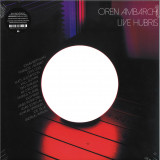
Black Truffle is pleased to announce Live Hubris, documenting the hypnotic and electrifying live performance of Oren Ambarchi’s 2016 LP Hubris by a fifteen-strong band at London’s Café Oto. Over three days in May 2019, Oto toasted Oren Ambarchi at 50/Black Truffle at 10 with Ambarchi and a large group of close friends and collaborators in a series of performances that interspersed existing projects with new collective endeavours, culminating with this: fourteen members of the extended Black Truffle family together on stage, joined by one special virtual guest, to translate the intricately studio-constructed layers of Hubris into a muscular live band workout.
Operating with only the bare minimum of pre-gig preparation after the planned afternoon rehearsal had to be wrapped up prematurely due to noise complaints, the gargantuan group lurches into motion with a 21-minute rendition of ‘Hubris Part 1’, powered by the pulsating electronics of Konrad Sprenger (the ‘ringmaster’ at the ensemble’s core) and no less than seven electric guitars spinning a web of intricately interlocking palm-muted polyrhythms. The layers of closely related but metrically distinct lines create ripples of shifting accents, flickering changes in emphasis that ricochet along the endless central pulse. Gradually building in density, this motorik continuum becomes the backdrop for the haunting tones of Eiko Ishibashi’s processed flute and an extended feature from long-distance guest Jim O’Rourke on guitar synth.
After the brief interlude of the second part, where Albert Marcoeur-esque guitar arpeggios accompany a halting attempt at phone conversation, the full ensemble gears up for the epic side-long rendition of ‘Hubris Part 3’. Now joined by the astonishing triple drum line-up of Joe Talia, Will Guthrie and Andreas Werliin, the layered pulse of the opening piece becomes a burning funk-fusion groove. Beginning on a medium simmer, the ensemble initially stick to its pulsating one-note mantra, over which Ambarchi unfurls a beautiful example of his signature shimmering Leslie-toned guitar harmonics, eventually joined by Ishibashi’s flute and some brooding, distorted dissonance from Julia Reidy’s guitar. Building steadily for the first nine minutes, the heat then rises dramatically with a first, gloriously loose chord change: with the all drummers now rolling and tumbling like a twice-cloned Jack DeJohnette circa 1970, Mats Gustafsson enters on baritone, his tortured roars and shrieks driving the band to peaks of insane intensity. Finally, the exhausted ensemble drops out, leaving only the jagged, skittering fuzz of Ambarchi’s guitar, brought to an abrupt conclusion at the command of crys cole. Arriving on hot pink vinyl with artwork by Lasse Marhaug and an extensive selection of live photos by Ivan Weiss and Fabio Lugaro, Live Hubris brings this ambitious and outrageous evening of music to the safety of the home stereo.
Bill Thompson is a sound artist and composer. His work is concerned with various aspects of perception and embodied presence. Using found objects, field recordings, repurposed electronics and digital media, his installations encourage active attention to each moment. He applies this same strategy within his compositions which often include sustained tones, densely layered textures and indeterminate or improvised structures.
Although trained as a guitarist, Thompson has worked primarily with live electronics for 20 years. In 2016, he returned to guitar (by Moog) combined with miscellaneous tabletop devices, found objects, flashing lights and the occasional vibrator.
His work has been released on Ash International, Burning Harpsichord Records, Mikroton Records, State Sanctioned Records, and/Oar, Autumn Leaves, Phonography and several compilations. Notable recent performances and installations include the Venice Biennal (2020/21), Pauline Oliveros Tribute (Café Oto 2018), Intraspect Concert 2018, Edinburgh Fringe (2016-2018), NAWR 2017, Sonic Atlas 2017, Organ Reframed 2016 (Installation), What Remains Festival 2016, Sound Festival 2016.
"Black Earth Tongue" is based on material composed when working on the project Mushroom! with the contemporary dance group In the Making for the Edinburgh Fringe Festival 2016. Track titles are taken from (mis)translations of Japanese or Latin names for various fungi.
Hey!Tonal was the first album by Hey!Tonal, a project helmed by the
guitarists, multi-instrumentalists and sound designers Mitch Cheney
(Rumah Sakit, Sweep the Leg Johnny) and Alan Mills (Chiisai-oto).
Released in 2009 French label Africantape on CD only it has now been remastered by Carl Saff and pressed to vinyl for the first time. 2LP white vinyl, gatefold sleeve with poster and aluminium outer sleeve.
Cheney initially conceived it as a project to be named “Drummers’ Perspectives”, and that working title sums up its ethos. He became inspired to write
melodies based on the drumbeat being the starting point of the composition.
A fortunate meeting with Alan Mills meant collaborator was now involved with
this rhythmic and melodic building blocks.
The basic concept for their compositional process stemmed from Cheney’s experience with television editing.
They manipulated all the catalogued sounds as if they were visual elements.
The result of this unusual approach is a striking record, full of delicate incongruities hidden in the music; happy accidents were meticulously given purpose
during mixing, malleable drums and guitars intertwined with a myriad of improvised and shaped sounds.
The overall impression is of some oblique explanation to an unsolved mystery
and should be manna from heaven to anyone who dug the first Battles EP’s.
Summer was conceived as an entry point for Sonae to access and wrestle with difficult themes, to engage with them authentically, artfully, personally. It was also the starting point for a collaborative audio-visual project with video artist Jennifer Trees (the confronting multimedia installation that premiers in September 2021 at Stadtgarten, Cologne).
Summer articulates these ideas using the unique musical and sonic language that Sonae has been developing across previous releases. The expressive textures and tender melodics of 2015’s Far Away is Right Around the Corner; the atmospheric noise and brute unease of 2018’s I Started Wearing Black; the vicious edges of her 2019 remix-tape Music For People Who Shave Their Heads. Summer is haunted by blistered cellos and spectral string drones, the elegant and emotive movement around diatonic harmonies that echo the classicism and bucolic themes of Vivaldi’s The Four Seasons (1775). Like Vivaldi, Sonae’s work is programmatic, presenting a progressive, intensifying narrative and suggesting aural phenomena of the natural world - buzzing insects, breaking rocks, waves crashing, dust and heat rising - and characterising the seasonal spirit as capricious, volatile and punishing. In these ways, Summer is related to pastoral traditions of European classicism, evoking the aura of doomed and dust-blown gothic grandiosity. It also has feet firmly planted within the lean, sound worlds of underground techno - pulsating four-on-the-floor beats with deep, vibrational sine-wave sub kicks; elegantly bleak, distorted atmospherics that straddle the uncanny space between corrosion and euphoria. The result is a visceral and poetic listening experience. Original, highly affecting, fully engaging body, mind and soul. (…)
Sonae’s music evokes imagination, provokes emotion, and disrupts and defies expectations. She explores the edges and intensities of experience, creating audible and embodied sensations that suggest the physical, atmospheric, and psychological effects of global warming on a living organism. We feel the fatigue, the slowness, sweatiness, dizziness, the sensations of uncomfortable warmth and burning; the atmospheres are hazy, dark and heavy, articulations are brutish and tactile, crunchy and sharp; there is restlessness and resignation, desolation and awe.
Summer is not a warning. It is not an explanation or an argument. It offers no answers. Summer simply holds up a mirror and asks us to experience and behold both the beauty and the brutality of our present reality. It is a work of protest, grief and hope, and it functions as a space for the listener to reckon with these truths and sensations for themselves. (Leah Kardos, London, June 2021)
Sonae (Sonia Güttler) is a German electronic producer and DJ, based in Cologne. Her acclaimed debut album was released in 2015 with Monika Enterprise (Berlin) followed on the same label with her second album in 2018 : ‘’I Started Wearing Black’’. Her Third album ‘’Music For People Who Shave Their Heads’’ has been released in 2019 with bit-phalanx (London).
Sonae plays live solo and with the label collective Monika Werkstatt at places like Institut Für Zukunft (Leipzig), Meakusma Festival (Eupen), Ausland (Berlin), Pop Kultur Festival (Berlin), Fusion Festival (Germany), Uh-Fest (Budapest), Cafe Oto (London), 23rpm Festival (London) The Cube (Bristol) and more on the same bill with Squarepusher, Plaid, Darkstar, Kyoka, Frank Bretschneider, Tim Exile.
The latest entry in the ongoing series of exciting collaborations sees the Turkish free form ensemble KONSTRUKT live on stage with THURSTON MOORE.
# 5 in the continuing series of KONSTRUKT collaborations on KARL is a live document of the concert by the Turkish freeform group with THURSTON MOORE. KONSTRUKT, the Istanbul based free jazz / freeform group founded and led by UMUT ÇAĞLAR and KORHAN FUTACI, are known for their openness to and interest in collaborations – and regularly meet up and perform with new partners that range from JOE McPHEE, WILLIAM PARKER, AKIRA SAKATA, MARSHALL ALLEN, EVAN PARKER, ALEXANDER HAWKINS, KEN VANDERMARK or OTOMO YOSHIHIDE. This latest release sees the quartet join forces with one of the indie rock icons: THURSTON MOORE, who besides his decade-long main band SONIC YOUTH always found time and inspiration for solo projects and collaborations of different kinds.
"Turkish Belly", recorded live at SalonIKSV in Istanbul in february last year, is as adventurous and daring as one will expect from such a pairing and a highly rewarding experience for the fans of KONSTRUKT and those of MOORE alike.
[a] 01: Yapayalnız (Gezerler Sokaklarda) [Live] [feat. Thurston Moore]
[b] 02: Sis (Live) [feat. Thurston Moore]
[c] 03: Kurtadam, Pt. I (Live) [feat. Thurston Moore]
[d] 04: Kurtadam, Pt. II (Live) [feat. Thurston Moore]
[e] 05: Zor (Live) [feat. Thurston Moore]
[f] 06: Uğultular (Live) [feat. Thurston Moore]
- 01: Seki Taneko - Akemi&Apos;S Poems
- 02: Kusunoki Shigeo - Longing For The Shadow
- 03: Yayoi Tanaka - Sad Gull
- 04: Akasaka Koume - Please Forgive Me
- 05: Ichimaru - If You Go Down The Tenryū
- 06: Mitsuko Nemoto - Cosmos Elegy
- 07: Ichirō Fujiyama - Tokyo Daughter
- 08: Chiyako Sato - Skyscraper
- 09: Yayoi Tanaka - The Dream Is Short Lived
- 10: Ichirō Fujiyama &Amp; Masao Koga - Is Sake Tears Or Sighs?
- 11: Otomaru - Yoneyama Sanri
- 12: Hamako Watanabe - I Don&Apos;T Forget
- 13: Akasaka Koume - Asama Smoke
- 14: Yoshio Tabata - Farewell Ship
- 15: Ichirō Fujiyama - Farewell Youth
- 16: Kouta Katsutaro - Stand Up Tomorrow
DEATH043LP[11,56 €]
Emerging during the early stages of the recording industry in Japan, the ryūkōka style adopted western classical, blues & jazz elements into traditional and classical Japanese music.
This collection of 1920s & 30s ryūkōka recordings follows on from the Kouta Katsutaro tape we put out a couple of years back, and further captures the hauntingly unique sound of a cultural merging that was starting to reflect itself via popular song, ahead of the widespread influence of western pop music during post-war US occupation.
Originally released digitally in August 2020 and supported by DJ Stingray, Martin Gore (Depeche Mode), Manni Dee, Rommek and Tapefeed, OBSCUUR is thrilled to present the vinyl issue of Catartsis & Ōtone's split EP "Mechanical Gesture". Catartsis and Ōtone explore, both in their collaborative and respective work, a wide spectrum of electronic and electroacoustic music with the practices of field recording and attentive listening at the core of their creative process. Inspired by musique concrete and electroacoustic sonic manipulations, they combine and alter sounds from the real, from their surroundings and from found (mainly metallic) objects. Stemming from this approach, they engage in rhythmical and textural research to elaborate a - peculiar, acousmatic and almost tangible - percussive and club-oriented music. With "Mechanical Gesture" Catartsis & Ōtone bring us an EP that is the very definition of the word "groove" while investigating rhythms and timbres from various mechanical apparatuses. Press, slice and carve your way through this assortment, it's guaranteed to get you moving.
RIYL MELVINS/GOATSNAKE/NEUROSIS/ASCEND
Asclepius comprises two long-form tracks, “Healing The Ouroboros” and ‘Dahlia Rides the Firebird’, the latter is based on an old traditional Greek tune. With some members majoring in classics/philosophy, music/composition and studying ethnomusicology - classic mythology has always been a key reference point for the themes of their music. That the new record is named after the god of healing and medicine and arriving at this moment in time is coincidence, as the band comments, “It felt like we needed healing even before this pandemic hit.”
The line-up on Asclepius represents the core of Iceburn through the early formative years. Iceburn, later the Iceburn Collective, initially existed from 1990 to 2001. Later reuniting in 2007 with this current lineup again at the core. The band's initial output slowly evolved from hardcore and metal to free improvisation and noise, The 10 year arc saw the band following their own path and becoming more and more obscure as they got deeper into unknown musical worlds. By 2000 the cycle seemed complete and Iceburn did their final tour in Europe 2001. In 2007 this early core crew reunited to play a local anniversary show focused on the earliest material. Every few years since they would get together for another 'reunion' until that word became more of a joke, it was clear the band was back, getting together every week, and working on new material.
ICEBURN LINE UP:
Joseph 'Chubba' Smith - drums, founding member of Iceburn from 1990-'93 then 2007-present
James Holder - guitar, was also a founding member from '90-'95 and '07 to present
Cache Tolman - bass, '91-97 off and on, and '07 to present
Gentry Densley - guitar and vocals, 1990 to present
Asclepius was recorded and engineered by Andy Patterson (SubRosa, INVDRS, Insect Ark, and The Otolith) a collaborator also for Gentry's other band's Eagle Twin and Ascend.
Marcus Schmickler's music is designed for multi-channel sound projections and references German electronic music tradition, spectral music, experimentalism as well as 1990s club music. His artistic practice explores avant-garde trajectories in electronic music composition, formal systems, sonification and psychoacoustics. EMEGO 296 features two new major works from this audacious sound explorer.
Sky Dice / Mapping the Studio premiered at Donaueschinger Tage fur Neue Musik 10.20.2018 having being commissioned by SWR and realized at the Experimentalstudio (EXP) in Freiburg. This is a work for ARP 2500, Publison DHM89B, Publison Infernal Machine and Computer. Taking cues from Bruce Nauman's Mapping the Studio I (Fat Chance John Cage) (2001) the piece draws a fragmented acoustic map of the SWR facility itself; the studio serves as a source-model for the sonic display of historical signal flow graphs. Various acoustic and psychoacoustic effects come into play including the Larsen effect, as well as Style Transfer and Topological Sonification. The result is a daring and dizzying display of disorientating audio. Sound moves in most unusual ways, rising and falling simultaneously, appearing and disappearing like apparitions, nothing here behaves in expected ways. To paraphrase Albert Einstein's now famous quote regarding quantum mechanics, this is spooky audio at a distance.
Fortuna Ribbon is a selection of sonic material that emerged from a research based on how DPOAEs (Distortion Product Otoacoustic Emission) can be designed in the context of musical frameworks, augmenting the compositional pallets in regard to spatial hearing. In this manifestation, the materials are presented without context. The resulting emissions from the ear that are excited in varying ways from the 6 examples on display here. Playback in undisturbed acoustic environments is recommended at >82 dB/A.
Schmickler's ongoing investigation of sound matter conjures impossible audio that delight's in the extremity of form and resulting effects on the listener. Schmickler's audio invocations explore the capabilities of contemporary technology resulting in dizzying new worlds of sound.
Thanks to the Experimentalstudio crew, Detlef Heusinger, Björn Gottstein, Julian Rohrhuber and Peter Rehberg.
** 12” LP edition of 300 copies with cover artwork and booklet featuring illustrations by Ettore Tripodi ** In September 2019 Alessandro Bosetti was invited by fellow composer and curator Riccardo La Foresta to create a new work for a newly created ensemble as part of a residency program hosted by Centro Musica in Modena, Italy. The very first encounter took place on Skype – kind of a prediction of the forthcoming physically distanced pandemic times. The first, straight-to-the-point question Bosetti posed to each musician was to tell him the history of their life. The materials collected in the interviews subsequently underwent a process of anonymization, selection and cut-up in order to create the imaginary autobiography of Didone, a genderless character on whom Bosetti composed a combinatory poem in 84 aphorisms, six of which have been translated into music. The ensemble consists of extremely different musical profiles: the contemporary soprano Giulia Zaniboni, minimalist banjo and acoustic guitar player Glauco Salvo, and four musicians with a jazz background such as guitarist Luca Perciballi, drummers Andrea Grillini and Simone Sferruzza, and saxophonist Dan Kinzelman (also part of Hobby Horse trio and long-time collaborator of Enrico Rava). Some of the stylistic features of Bosetti’s project Trophies (along with Kenta Nagai and Tony Buck) can be detected here and there. Persistent repetitions, mesmerizing sonic masses and extended, oblique melodic lines are here led by the clear and precise voice of soprano Giulia Zaniboni.
The voice is at the heart of this work: the textual fragments of the autobiographies are filtered through Zaniboni’s contemporary vocality, while informing the instrumental writing as well. Themes and textures unveil traces of words or sentences; fragments of biographies are embedded in the intricate instrumental dialogue between the two drummers. A final layer was added by Ettore Tripodi, a unique and out-of-time visual artist who imagined Didone in a series of illustrations accompanying the poem. "Didone" is a work about the reconfiguration and recombination of identities, where every specific sense of belonging melts into an indistinct swarming of possibilities.
Alessandro Bosetti is a Marseille-based composer and sound artist with a particular interest in the musicality of language and in the voice, conceived as an autonomous object and an instrument of expression. His works enact a dialogue between language, voice and sound within complex tonal and formal constructions, often crossed by oblique irony. He builds surprising devices, often linked to the radio medium and to a tireless reflection on the relationships between music and language, questioning aesthetic categories and listening postures.
His work has been shown in reference venues such as the GRM / Présences Electronique festival in Paris, Roulette and The Stone in New York, Café OTO in London, the Liquid Architecture Festival in Melbourne and Sydney, the Serralves Museum in Porto and the San Francisco Electronic Music Festival. His music is released by labels such as Errant Bodies Press, Holidays Records, Rossbin, Sedimental, Unsounds, Monotype, Weird Ear Records.
On February 27, 2018, Chris Forsyth & The Solar Motel Band (comprised, in this iteration, of long-time SMB bassist Peter Kerlin and Kerlin’s Sunwatchers battery mate Jason Robira on drums) were close to wrapping up an 18-date tour of the EU and UK with a two-set, one hour and 45 minute show at Cafe OTO, London’s premier venue for adventurous music. Highlights of that show are included in this live release, RARE DREAMS: SOLAR LIVE 2.27.18, recorded before a packed house seated mere feet from the band’s amplifiers. These recordings reveal a band that is clearly in high spirits and high gear, operating with an expansive, improvisatory fleetness that allows them to stretch the material to almost ludicrous extremes and then let it to snap back to some semblance of form while somehow seemingly never wasting a note, a beat, a gesture. The four tracks included here comprise material culled from (at the time) the two most recent Solar Motel Band records DREAMING IN THE NON-DREAM (No Quarter, 2017) and THE RARITY OF EXPERIENCE (No Quarter, 2016) plus covers of two Neil Young songs - the autobiographical plaint “Don’t Be Denied,” lyrically relocated by Forsyth from Young's Canada and Hollywood to the more personally relevant geography of New Jersey and Philadelphia, and encore “Barstool Blues” (they’d run out of material to play, so another Neil Young tune it was). While the covers establish Forsyth’s basis, serving as an homage to Young and the quest for self-realization, the long tracks’ jams showcase the trance-inducing power of the Solar Motel Band as a performing entity. Kerlin’s gymnastically propulsive bass playing locks in with Robira’s relentless thud, each serving as counterpoint to some of the most blistering guitar work of Forsyth’s career. The telepathically dynamic interplay of the trio explodes with whiplash intensity across the 15-plus minute takes of “Dreaming In The Non-Dream” and “The First 10 Minutes of Cocksucker Blues,” each song’s structure serving as a framework for extended lava flows of energy. At one point late in the “Dreaming” jam, Forsyth unplugs the jack from his guitar, dragging it across the strings and lashing the body of his single-pickup “parts" Esquire, producing a desiccated barrage of percussive static. This is music beyond the notes; it is an expression of pure electric ecstasy, a simultaneous negation and celebration of rock music’s (indeed all musics’) essential energy. In contrast to the expansive but meticulously detailed guitar arrangements of his recordings, here Forsyth’s unhinged live guitar sound positively roars with a barely restrained vocal intensity, from liquid melodic lines to gnarled blasts of free jazz scree, to pulsating lead/rhythm vamping. I’ve had the pleasure of witnessing this band up close for a number of years now and I can authoritatively attest that while every show is different, when the SMB is running down a steep hill at full speed (as on these takes), they become a single leaderless vibrating sonic tornado, possibly beyond the control and logic of the players themselves, picking up listeners along the way and taking them along for the ride straight into a solar furnace of sound. - Jerome Onfront, Philadelphia
Rich in musical associations yet utterly singular in its voice, joyous with an inner tranquility, the music of Natural Information Society is unlike any other being made today. Their sixth album in eleven years for eremite records, descension (Out of Our Constrictions) is the first to be recorded live, featuring a set from London’s Cafe OTO with veteran English free-improv great Evan Parker, & the first to feature just one extended composition. The 75-minute performance, inspired by the galvanizing presence of Parker, is a sustained bacchanalia of collective ecstasy. You could call it their party album.
This was the second time Parker played with NIS. Joshua Abrams: “Both times we played compositions with Evan in mind. I don’t tell Evan anything. He’s a free agent.”
The music is focused & malleable, energized & even-keeled, drawing on concepts of ensemble playing common to musics from many locations & eras without any one specific aesthetic realization completely defining it.
“The rhythms that Mikel plays are not an exact reference to Chicago house, but that’s in there,” Abrams says. “I like to take a cyclic view of music history, can we take that four-on-the-floor, & consider how it connects to swing-era music? Can we articulate a through line? I dee-jayed for years in Chicago & lessons I learned from playing records for dancing inform how I think about the group’s music. The listener can make connections to aspects of soul music, electronic music, minimalism, traditional folk musics, & other musics of the diaspora as well. It’s about these aspects coming together. I don’t need to mimic something, I need to embody it to get to the spirit, to get to the living thing.”
For jazz fans, the sound of Parker’s soprano & Jason Stein’s bass clarinet might evoke Coltrane & Dolphy, even though they didn’t necessarily set out to do that & they play with complete individuality. Abrams sees a bridge to the historical precedent, too. “Since we first met in the 1990s, one of the things that Evan and I connected on was Coltrane’s music,” he says. “I hoped that we would tap into that sound world intuitively. In this case, I think that level of evocation adds another layer of depth, versus a layer of reference.”
Indeed, this is a performance in which the connections among the ensemble & the creative tension between improvisation and composition build into a complex mesh of associations & interactions. While the band confines itself to the territory mapped out by Abrams’ composition, they are remarkably attentive & responsive, making adjustments to Parker’s improvisations. When Parker’s intricate patterns of notes interweave with the band, the parts reinforce one another & the music rockets upward. Sometimes, Parker’s lines are cradled by the group’s gentle pulse & an unearthly lyrical balance is struck.
Drummer Mikel Patrick Avery is locked-in, playing with hellacious long-form discipline, feel & responsiveness. Jason Stein’s animated, vocalized bass clarinet weaves in & out with Lisa Alvarado’s harmonium to state the piece’s thematic material; the pulsing tremolo on the harmonium brings a Spacemen 3 vibe to the party. Abrams ties together melody & rhythm on guimbri, a presence that leads without seeming to. Like his bandmates, he shifts modes of playing frequently, improvising & then returning to the composed structure.
“As specific as the composition is, the goal is to internalize it & mix it up,” Abrams says. “The idea is to get so comfortable that we can make spontaneous changes, find new routes of activity, stasis & byways every gig. It’s like a web we’re spinning. If someone makes a move, we all aim to be aware of it, make room for it. Experiencing & listening is what it’s about, & Evan supercharges that.”
& “supercharged” is the word for this album. With Parker further opening up their music, descension (Out of Our Constrictions) is the sound of Natural Information Society growing both more disciplined and freer, one of the great bands of its time on a deep run.
Aguirre edition: Mastered by Helge Sten, Audio Virus, Oslo. Lacquers by Dubplates & Mastering. Liner Notes by Theaster Gates. LPs pressed on premium audiophile-quality vinyl at Pallas Records. US 2xLP edition available thru Eremite records.
Tape
After tapes on Steep Gloss and Cruel Nature, we are happy that Stuttgart-based collective Zebularin join the OM family with their new release “Hermetic Topography“.
The album, a product of weekly recording sessions between March and July 2020, just when the pandemic slowed a bit down, might be the closest approach to what communal experiences sounded throughout 2020. It‘s a bold design of how collective improvisation can work in the post-covid era.
The first minute of „Budenzauber“ sets the tone for the whole record. Synth waveforms get joined by a drumset, both settling into a vivid conversation between digital noise and analog free jazz, finding a shared rhythm for this journey.
Daniel Vujanic, known to some from his recordings with Höhlenmusk Ensemble, Ixtar or E Jugend and the driving force behind Zebularin, had this urge to layer electro-acoustic solo material, synths, prerecorded audio meditations, without bending the sounds into detailed harmonic structures, but to build up dense, morphing atmospheres. In came Daniel Kartmann, a combatant in many of Vujanic‘s musical endeavours, his percussions, wind instruments and some deep musical talk - from obscure black metal to brazilian psychedelica, from Scott Walker to Gustav Mahler. The duo laid down basic tracks, kept arrangements vague, creating a perfect environment for a range of other players and instruments to walk in: piano, woodwinds, electronics, ebowed guitars and a vibraphone. The resulting record is a tender, affectionate take on jazz and electroacoustic composition. One can hear the routine of the involved cast as well as the fun, deep listening and correspondence that took place; even though this album was not recorded live in big-band-style, musical ideas interlock on an intuitive level and complement each other.
Take „Peljuga“ as a perfect example, a loosened jazz improv reminding of The Notwist‘s more psychic enhanced moments, which blends into a conversation between a contact mic and heavily manipulated synths and turns into a minimalist piano composition, which melds into a climactic peak and is interrupted only to rise again. And as complex as this description sounds, as uplifting is the actual song. Or the album‘s last track, „Holmen“, which starts out as an underwater ambient piece and evolves pretty organically into cosmic power electronics.
Despite its name and the Heideggerian flair of some song titles, „Hermetic Topography“ is all but hermetic. It‘s rich in musical colours without melting into a quagmire of maximalist noise. It‘s sophisticated but never top-heavy. It might be one of your favourite tapes of 2021.
Tape Works Vol. 2 is the second album from the UK's leading musique concrète ensemble, Langham Research Centre, on Nonclassical. This album presents recent substantial pieces that contrast with the shorter pieces found on Tape Works Vol. 1 (2017) which showcased some of the group's earliest tape experiments. This album features 'Dinotique', commissioned for Café Oto's Stereo Spasms festival in 2019, a celebration of the work of the late French composer Luc Ferrari to mark his 90th birthday.
Langham Research Centre - Felix Carey, Iain Chambers, Philip Tagney and Robert Worby - make experimental music using resources and ideas that, until recently, were considered obsolete, redundant or outdated. Their music is made using tape recorders, cassette machines, shortwave radios and specialist devices found in recording studios. Their inspiration and enthusiasm is driven by the soundworlds produced by maverick composers working in the middle of the 20th century. The four members met at the BBC, where they all work in production. Their music has received significant radio airplay on BBC Radio 3 and more.
The album will be featured along with an interview with the group in the February 2021 issue of Electronic Sound Magazine.
Tape Works Vol. 2 is the second album from the UK's leading musique concrète ensemble, Langham Research Centre, on Nonclassical. This album presents recent substantial pieces that contrast with the shorter pieces found on Tape Works Vol. 1 (2017) which showcased some of the group's earliest tape experiments. This album features 'Dinotique', commissioned for Café Oto's Stereo Spasms festival in 2019, a celebration of the work of the late French composer Luc Ferrari to mark his 90th birthday.
Langham Research Centre - Felix Carey, Iain Chambers, Philip Tagney and Robert Worby - make experimental music using resources and ideas that, until recently, were considered obsolete, redundant or outdated. Their music is made using tape recorders, cassette machines, shortwave radios and specialist devices found in recording studios. Their inspiration and enthusiasm is driven by the soundworlds produced by maverick composers working in the middle of the 20th century. The four members met at the BBC, where they all work in production. Their music has received significant radio airplay on BBC Radio 3 and more.
The album will be featured along with an interview with the group in the February 2021 issue of Electronic Sound Magazine.
Originally recorded and released in 1980, "Six of One" beautifully captures the detail in Evan Parker's high frequency split tones for which he is now perhaps better known. Five years on from "Saxophone Solos" and with circular breathing and polyphonics well worn into his live performances, Parker's experimentations here produce sustained passages of brilliant flight. Set into the echoes and resonances of St Judes On The Hill church, the results are stunning. "The recital commences with a split tone line of twining sine waves that expand and contract in telepathic collusion. Pitch dynamics narrow and redefine themselves more emphatically on the second piece where sliding legato rivulets born of Parker's compartmentalized tonguing create the sonic semblance of up to three separate voices emanating from the single reed speech center. It's a feat he's accomplished innumerable times since, but every fresh hearing never fails to open an aperture into a style of improvisatory expression that is at once wholly alien and intensely mesmerizing. There's also something strangely subterranean about the flood of sounds, like the rush percolating water through an underground aquifer system enroute to unknown tributaries. The third piece trades tightly braided tones for leaner and more linear phrases, but a vaporous trail of phantom notes still clings to the central line. And so it goes, with the illusion of repetition guiding the momentum, though Parker never explicitly repeats himself." - Derek Taylor, All About Jazz Transferred from the original master tapes at Abbey Road Studios and released in an edition of 500.