Rayko the Spanish Disco Producer and DJ extraordinaire has been busy in his Madrid based Studio burning the midnight oil to deliver Vadillo Vice Volume two.
Four reworked funk fuelled bass heavy cuts, tried and tested by the man himself on dancefloors across the globe and due to be released on vinyl only later in the year.
Deeply rooted in the golden era of the 70s and 80s, Rayko’s influences are masterfully interpreted and transformed into modern day dancefloor bombs, and are a key signature sound of his long established label Rare Wiri (Since 2008) an outlet for his productions alongside other likeminded artists such as Daniele Baldelli, Man Parrish, Gazeebo, Ilija Rudman, Ichisan, Spirit Catcher, Mushrooms Project, Eric Duncan among many others.
out of Stock
Last delivered 88 days ago available to reorder, subject to availability
Massive reworking in a killer Digi style of Jah Screechy’s 1984 classic Walk & Skank. Widely known for the SL2 sampling ‘On A Ragga Tip’. This one rerecorded and blessed by the man himself.
DJ Support:
-Sub Dub
-Outlook
out of Stock
Last delivered 2 years ago available to reorder, subject to availability
Bristolian producer Claude Cooper returns with hot new single ‘Stay A While’, inspired by the vinyl discoveries made from months of digging and cataloguing the bulging inventory of Bedminster’s Friendly Records record shop.
‘Stay A While’ introduces some delightful twists to Cooper’s psychedelic-funk sound. Blurring the lines between sampling and performance, lush string flourishes are sliced with 6Ts girl-group vocals and rollicking piano chords resulting in a dreamy, end of night, lights up anthem in-the-making. The track is backed with the insistent ‘Dance Tonight’, a ragged bass-boogie surf-rocker that doesn’t take no for an answer.
Cooper’s irrepressible debut album ‘Myriad Sounds' (Jan ‘22) caught the attention of the UK's press and radio alike. Mojo's four star review described it as “Bristol’s beat scene backdrops late night jams”, Uncut enjoyed the "rugged psych-funk romp" and Louder than War declared "it’s vital and vibrant and exactly what we need to kick start the year”. BBC radio DJs including Cerys Matthews, Gideon Coe, Huw Stephens, Jamie Cullum, Lauren Laverne, Stuart Maconie, Tom Ravenscroft rinsed the singles, with Huey Morgan inviting Cooper to contribute a Block Party Mix for his show.
Bonus round 'More Myriad Sounds' (Apr ‘23) added Brooklyn vocalist Brain Fog to the melange with a bounty of pyretic vocal performances. DJ Mag called it “A fierce, kaleidoscopic trip” while Bandcamp Daily said “This album of cross-genre influences is as likely to get it included in any number of best-of columns, with the theme of serious fun as their common element”.
Behind the release is Friendly Records, the best little record shop in Bristol and now a burgeoning record label. Opened by Tom Friend on North Street in 2016, it’s gone on to become a hub of the local musical community. As well as Claude Cooper, the label has reissued two of Alison Cotton’s albums, 'The Twenty-Three Views' by outernational ambient jazz project Floating World Pictures, and Christian Madden & The Enemy Chorus’s organ heavy ‘The Extra Weight’.
Claude Cooper will return with a new album on Friendly Recordings this year.
out of Stock
Last delivered 2 years ago available to reorder, subject to availability
Enigmatic Mancunian Act AnD brings a dynamic and raw take on modern techno in his dj sets. He maintains always strong analogue production ethics and showcase this in his heavy hitting live show. Alongside production work that takes in everything from techno to electronica to hip hop with the uncompromising AnD attitude towards sound design.Always expect the unexpected!!!” Embracing the shadowy outskirts of techno, AnD’s covert productions on his own selftitled white label series looks to push them even further into their own brand of sonic destruction. In doing so AnD follow in the footsteps of UK luminaries Surgeon, Regis, James Ruskin and The Black Dog by continuing to shape a genuine and unflinching vision of techno. – credits All music by AnD Mastering by Joe Farr
out of Stock
Last delivered 2 years ago available to reorder, subject to availability
The Spellbound EP serves as a profound exploration into GIDEÖN's artistic soul. Commencing with politically charged tracks, "Study War No More" on side A is an acid-garage hybrid rallying support for emergency aid in Gaza. On side B, the euphoric "Marcus Garvey" urges a reconsideration of the life and teachings of the Jamaican activist. "Spellbound" delves into an ultra-deep meditation on black magic, while "Hora De Bailar" transforms into a Latin sleaze-fest, embodying the label's steadfast commitment to militant queer Deep House.
GIDEÖN describes the EP as a faithful representation of his worldview, stating, "Two of the tracks were written to soundtrack the struggles of our time. Both 'Study War No More' and 'Marcus Garvey' are pieces of music created to motivate, elevate, activate, and educate the dance floors of today in preparation for the struggles immediately before us. I see music as a weapon, a weapon in our dance music community’s arsenal that we can use to lubricate, incentivize change around us."
In addition to the politically charged tracks, the EP features two deeper, sleazier offerings that vividly capture the essence of underground queer dance floors and darkrooms. These tracks resonate with GIDEÖN's experiences at renowned clubs like Bassiani in Tbilisi, K41 in Kyiv, Berghain in Berlin, Basement in New York, and Adonis in London.
GIDEÖN boldly declares, "I set out to do EXACTLY what the global religious right-wing extremists are so opposed to: the PROMOTION of homosexuality." This sentiment underscores the EP's mission to advocate for diversity in the face of opposition.
out of Stock
Last delivered 2 years ago available to reorder, subject to availability
our Flies' 45s series continues to pay tribute to the golden age of Italian film music, this time with the first 7-inch release ever of two super-groovy themes from Gianni Marchetti's soundrack to Milano: il clan dei calabresi (known in English as The Last Desperate Hours), a 1974 poliziottesco film directed by Giorgio Stegani.
"M2", on side A, is a re-versioning of a timeless classic – Quincy Jones' "Ironside" theme – where the punch of funk comes to the fore and is fused with the acid sound of early 70s Italian prog rock. This combination of jazz-funk and prog rock is found also in "M3", on side B, which weaves a tapestry of powerful horns and gently weeping guitarover a driving, funk-blues bass line.
A must-have for lovers of rare grooves and poliziottesco films! But don't wait around, it's a limited edition!
out of Stock
Last delivered 2 years ago available to reorder, subject to availability
RAWAX proudly welcomes Mark Ambrose to the artist family!
We are ver y happy to present you "Cat Groove" which came out originally on Mark's own label called CRAYON as first release in 1997.
This re-mastered beauty will be soon available on winyl again!
out of Stock
Last delivered 5 months ago available to reorder, subject to availability
Optimo (Espacio) started life as a weekly club night. It was born at The Sub Club in Glasgow on a wet, windy, wintry November Sunday night in 1997. Run by JD Twitch and partner in crime Jonnie Wilkes. Optimo was a reaction against what felt like an increasingly conservative musical soundtrack in clubs here at that time. Clubland felt as if it had become very bland and a bit too serious; it was the era of the dawn of the Superstar DJ. Clubs often felt like bastions of male energy. It seemed dance music and culture was going somewhere far, far away from where it was meant to be. The notion of fun had got lost.
It was no longer the world they had devoted ten years of their lives to already, and lots of their friends felt the same. When the opportunity came up to do a Sunday night at The Sub Club it felt like the perfect opportunity to rip it all up and start again. So they did. There was nothing in the city (or possibly anywhere) like it. As the club believed wholeheartedly in what they were doing, there was no pressure from The Sub Club to fill the club. So, they embraced the freedom. Groups of people who had never been in the same room at the same time before came together. A community of kindred spirits started to emerge.
Word spread, slowly. Lots of people checked it out. Many loved it, some hated it. The core of the Optimo idea was to embrace music they loved that might work on the dancefloor from whatever era or genre they thought felt right. It might not seem very radical now but at that time it was revolutionary.
After about a year and a half, the club went from having 100 people attending most nights to suddenly one week having 500 people turn up. It was very weird. It was as if a collective light bulb went off in people’s heads in Glasgow. From that week on, until the very last weekly Sunday night at the Sub Club, in 2010, over a decade later, it was packed.
There were 550 Sunday Optimo nights. A LOT of music was played. So, what was the music? People often find it hard to pin down exactly what Optimo is. This has been a positive but also a negative as we live in a world where people want easily defined “brand identities”. The simplest definition of the music played is “music for dancing”, which of course is a very broad definition. Even better than trying to define it in words, we have these 2 volumes of music that give a hint of what that might be.
This is not a “Best of Optimo” or a “Greatest Hits of Optimo” compilation. For people who come to, or used to come to the nights there are of course “Greatest Hits”. But, over such a long timespan they are “hits” belonging to a certain moment in time and space. Someone who came to Optimo in 1997 would have a completely different notion of the big tracks at the club to someone coming in 2003, or 2010, or today. This compilation is just a snap shot missing several genres that might make up the DNA of Optimo. There is though a broad sweep through lots of music Optimo loves, that they believe is amazing. Music that they know will rock a dancefloor, that they have played between 1997 and 2023. Of course Optimo nights were not all about rocking the dancefloor. The first hour was always a time for them to play music they loved that often was far removed from the dance. Side 1, Volume 1 of this compilation is the kind of music one might hear at the very start of an Optimo night.
Optimo have always loved a good slogan. The most long lived, and fitting Optimo slogan is "We Love Your Ears", which is in essence what it is all about to them.
out of Stock
Last delivered 2 years ago available to reorder, subject to availability
Optimo (Espacio) started life as a weekly club night. It was born at The Sub Club in Glasgow on a wet, windy, wintry November Sunday night in 1997. Run by JD Twitch and partner in crime Jonnie Wilkes. Optimo was a reaction against what felt like an increasingly conservative musical soundtrack in clubs here at that time. Clubland felt as if it had become very bland and a bit too serious; it was the era of the dawn of the Superstar DJ. Clubs often felt like bastions of male energy. It seemed dance music and culture was going somewhere far, far away from where it was meant to be. The notion of fun had got lost.
It was no longer the world they had devoted ten years of their lives to already, and lots of their friends felt the same. When the opportunity came up to do a Sunday night at The Sub Club it felt like the perfect opportunity to rip it all up and start again. So they did. There was nothing in the city (or possibly anywhere) like it. As the club believed wholeheartedly in what they were doing, there was no pressure from The Sub Club to fill the club. So, they embraced the freedom. Groups of people who had never been in the same room at the same time before came together. A community of kindred spirits started to emerge.
Word spread, slowly. Lots of people checked it out. Many loved it, some hated it. The core of the Optimo idea was to embrace music they loved that might work on the dancefloor from whatever era or genre they thought felt right. It might not seem very radical now but at that time it was revolutionary.
After about a year and a half, the club went from having 100 people attending most nights to suddenly one week having 500 people turn up. It was very weird. It was as if a collective light bulb went off in people’s heads in Glasgow. From that week on, until the very last weekly Sunday night at the Sub Club, in 2010, over a decade later, it was packed.
There were 550 Sunday Optimo nights. A LOT of music was played. So, what was the music? People often find it hard to pin down exactly what Optimo is. This has been a positive but also a negative as we live in a world where people want easily defined “brand identities”. The simplest definition of the music played is “music for dancing”, which of course is a very broad definition. Even better than trying to define it in words, we have these 2 volumes of music that give a hint of what that might be.
This is not a “Best of Optimo” or a “Greatest Hits of Optimo” compilation. For people who come to, or used to come to the nights there are of course “Greatest Hits”. But, over such a long timespan they are “hits” belonging to a certain moment in time and space. Someone who came to Optimo in 1997 would have a completely different notion of the big tracks at the club to someone coming in 2003, or 2010, or today. This compilation is just a snap shot missing several genres that might make up the DNA of Optimo. There is though a broad sweep through lots of music Optimo loves, that they believe is amazing. Music that they know will rock a dancefloor, that they have played between 1997 and 2023. Of course Optimo nights were not all about rocking the dancefloor. The first hour was always a time for them to play music they loved that often was far removed from the dance. Side 1, Volume 1 of this compilation is the kind of music one might hear at the very start of an Optimo night.
Optimo have always loved a good slogan. The most long lived, and fitting Optimo slogan is "We Love Your Ears", which is in essence what it is all about to them.
out of Stock
Last delivered 11 months ago available to reorder, subject to availability
Daniel Land's new album, "Out of Season", is his most ambitious record to date, a series of reflections on history, memory, and post-Brexit Britain, which was inspired by his return to the landscapes of his youth – the rugged, underpopulated west coast of Somerset. The album was written and partly recorded in Daniel’s studio in a static caravan, overlooking the coast, during the period when the UK was tearing itself apart over its relationship to Europe. "I didn't set out to write about Brexit", Daniel says, "I have a kind of horror of political music. But I couldn’t escape the atmosphere of the time – this strange, distorted version of ‘Englishness’ in the national psyche. I’ve always been interested in memory and nostalgia; Brexit illustrates the dangers of taking seductive, possibly false memories at face value”. Songs like “White Chalk”, “Island of Ghosts”, and the album’s title track, represent a series of attempts to reclaim an older, more peculiar idea of England which, Daniel says has been “Lost in the nationalist mythmaking of the past decades” – the island of misfits and outsiders exemplified by the works of Derek Jarman, for example, whom Daniel was rediscovering while working on the album. “I must have read 'Modern Nature' ten times over the years”, Daniel says. “What I love about Jarman is that he had a deep, abiding love for England, but it was a very complicated, critical and a very queer kind of love. That was very much my mood, going into the making of this album”. Like Jarman’s work, "Out of Season" probes national identity whilst also displaying resolutely queer themes throughout. Daniel’s voice – once described by The Guardian as "The spawn of Elizabeth Fraser and Anthony Hegarty” – is less heavily reverbed than before, bringing to the fore his often-confessional lyrics, inspired by the frankness of modern queer poets like Andrew McMillan, Seán Hewitt, and Ocean Vuong. A lyrical highlight is the gorgeous “Southern Soul”, a deceptively straightforward recounting of a decades-old hookup with a closeted guy from his hometown which, Daniel says, “Serves as a metaphor for everything I’m talking about in the album”. And in keeping with the album’s nods to the heroes of gay literature, Daniel’s self-styling of the album as a “Dream Pop Album on National Themes” deliberately references the full title of Tony Kushner’s era-defining play "Angels in America", whose central character is namechecked in the hook-laden “Lemon Boy” – a song which must surely stand as Daniel’s most deliciously pop moment yet. Lauded by Mark Radcliffe, Guy Garvey, Tom Robinson, and many others, Daniel Land makes music that, in the words of BBC Radio 1, "You can't help but think the late John Peel would have loved".
Los Angeles wordsmith Pawz One teams up with German producer DJ Dister on the collaborative album "Watch & Learn" via Below System Records.
"Watch & Learn" captures scenarios of street life, hustling and paranoia all painted over well-crafted production. Pawz One has come off a string of recent releases that have sharpened his song writing ability while Dister has produced various projects expanding his diverse sound.
For Pawz One "Watch & Learn" has given him a chance to speak on topics that were close to heart having lost friends and family to the streets and prison as well as serving time himself. DJ Dister showcases a wide range of production that combines a classic sound with progressive elements.
The first single "World Champion" moves listeners with the energetic track fused with a dash of reggae and Pawz's combination of punchlines and wordplay. On the follow up single "Out Here", Pawz One and Guilty Simpson lay out the often ignored rules of the streets over a sinister soundtrack. "No Contest" is the last single pitting Akrobatik and Pawz One against all challengers. Next to Guilty Simpson and Akrobatik, other guest appearances by Napoleon Da Legend and Space Honey.
"Watch & Learn" provides a blend of vivid storytelling and melodic beats giving audiences of Hip-Hop something to add to of their collections.
The Sex featuring members of Mercenary God and No Suicide. A mixture of different elements with a rock substrate for an uncategorized result. Another Post-Punk gem from the 80's Italian North-Eastern scene.
My adventure buddies? The silent, enigmatic Patti, former singer of the mysterious No Suicide, and the young, faithful Chris, a passionate Police fan, we met on the battlefield and he immediately became my brother. For him, learning to play the bass was a way to get close to Sting, in other words, just one step below Paradise. Patti instead played keyboards as an extension of her mysterious and glacial presence, so still and distant that the audience sometimes wondered if she was real. And then there was my fixation for the drum machine, a futuristic device which could transform the drumming sweat into an invisible, yet physical, dreamlike pulsation. A particular combination of characters and a special astral conjunction, that’s what you need to get a nucleus source of sonic emotions, and in some ways this is what we were. You could clearly feel it during the concerts. When at the end of ‘81 My Mercenary God lost their drummer and had to disband, I felt clearly that the music had already changed.
Our old 70’s rock ‘n’ roll sound was no longer representative of the day. We were like some sort of yesterday’s newspaper. Thus I Sex was born (later The Sex). According to Freudian thought that sees sexual instinct as the driving force behind every (creative or destructive) human act. And in fact we immediately started creating, destroying, assembling and deconstructing our sound. Suddenly “tomorrow became now”. It was an outburst of creative independence in the form of homemade cassettes put together with makeshift tools, at least until the arrival of the legendary 4 track recorder. I was 19 years old, Chris was only 17. Nothing more than kids after all. Yet we were already veterans, veterans of a lost war. Wise, naive, disillusioned dreamers, everything and the opposite of everything. But, above all, we were totally devoted to our creative delirium up to the point of losing touch with reality, crossing limits, breaking down barriers and almost bordering on madness. Perhaps we were just too involved, especially if in relationship with what we could receive in return. We always spread our energies as if there was no future. We unconsciously felt that we had to live in the moment, now or never, and in retrospect it really was like that, and this is why these songs exist now. Songs created with the intent to tell an inner universe that is, now as then, far from any convention.
The Umbrellas are four renegade romantics crafting irresistible indie pop hymns. The band's self-titled 2021 debut album became a breakout moment, winning critical praise and sparking an international tour. Follow-up LP 'Fairweather Friend' goes a step further - absorbing the sonic attack of their live shows, it balances this with studio finesse, allowing the San Francisco four-piece to become the band they've always aspired to be. It's a record overflowing with highlights. The candyfloss melodies of introductory track 'Three Cheers!' are matched to an impactful percussive punch; 'Say What You Mean' finds The Umbrellas working with total confidence, letting the song ride out to its chiming conclusion, four voices working in precision. 'When You Find Out' offers rotating notes of guitar punctuated by a vocal that pushes past angst to accept a world full of hope. A lean 10 track affair, it grasps towards beatific pop while fuelled by a sense of risk, and the precision that comes from long months on the road. Allowing their live dynamic to bleed out on tape, The Umbrellas are at once more physical and yet also more controlled on their new album. It's also a record of ambition. Taking their time over each note, the four-piece have strengthened their songwriting, adding depth and assurance while unlocking their potential. Some bonds last a lifetime - The Umbrellas are ready to capture your heart. RIYL: Orange Juice, Sarah Records, early Creation, Mary Chain, C86, Lush
What Do We Do Now is the fifth solo studio LP recorded by J Mascis since 1996. This is obviously not a very aggressive release schedule, but when you figure in the live albums, guest spots, and records done with his various other bands (Dinosaur Jr., The Fog, Heavy Blanket, Witch, Sweet Apple, and so on), well, to paraphrase Lou Reed, "J's week beats your year." What Do We Do Now began to come together during the waning days of the Pandemic. Utilizing his own Bisquiteen Studio, J started working on writing a series of tunes on acoustic with a different dynamic than the stuff he creates for Dino. "When I'm writing for the band," he says, "I'm always trying to think of doing things Lou and Murph would fit into. For myself, I'm thinking more about what I can do with just an acoustic guitar, even for the leads. Of course, this time, I added full drums and electric leads, although the rhythm parts are still all acoustic. Usually, I try to do the solo stuff more simply so I can play it by myself, but I really wanted to add the drums. Once that started, everything else just fell into place. So it ended up sounding a lot more like a band record. I dunno why I did that exactly, but it's just what happened." Two guest musicians are playing this time out; Western Mass local Ken Mauri (of the B52s) plays piano on several tracks. Since J himself has some experience with keys, when asked why he needed a hired gun, he says, "Ken is great, and he plays all the keys. I tried playing some keyboards on the first Fog album, but I'm really only comfortable playing the white notes, so it's kind of limiting. laughs Nowadays, I could just turn the pitch on a mini Mellotron to play different sounds, but black keys just seem hard. For whatever reason, I just like banging on the white ones. Seems like it's harder to figure out how to stretch your fingers around the other ones." Mauri has no such qualms and plays all the keys very damn well. He sounds especially great on "I Can't Find You," where he is Jack Nitzsche to J's Neil Young, creating one of the album's loveliest tunes. The other guest musician, Matthew "Doc" Dunn, is also prominent on this track. Dunn's steel guitar manages to both widen and soften the musical edges of the music, giving it a full classicist profile. Dunn is an Ontario-based polymath who J met through Matt Valentine. After J played on Doc's great 2022 Sub Pop single, "Your Feel," he figured it was time for payback. Both Dunn and Mauri add beautifully to the songs here, helping to transform them from acoustic sketches into full-blown post-core power ballads. What Do We Do Now is the finest set of solo tunes J has yet penned, and the way they're presented is just about perfect. Asked if he would be touring to support the album, J says he'll be doing some weekend dates, but he probably won't be putting a band together. And I'm sure these songs will sound great solo and acoustic, but the arrangements on this album are truly great and put a cool, different spin on Mascis' instantly Recognizable approach to making music. So, what do we do now? Not sure. But apparently, what J does is to make one of his most killer records ever. Hats off to him. - Byron Coley
What Do We Do Now is the fifth solo studio LP recorded by J Mascis since 1996. This is obviously not a very aggressive release schedule, but when you figure in the live albums, guest spots, and records done with his various other bands (Dinosaur Jr., The Fog, Heavy Blanket, Witch, Sweet Apple, and so on), well, to paraphrase Lou Reed, "J's week beats your year." What Do We Do Now began to come together during the waning days of the Pandemic. Utilizing his own Bisquiteen Studio, J started working on writing a series of tunes on acoustic with a different dynamic than the stuff he creates for Dino. "When I'm writing for the band," he says, "I'm always trying to think of doing things Lou and Murph would fit into. For myself, I'm thinking more about what I can do with just an acoustic guitar, even for the leads. Of course, this time, I added full drums and electric leads, although the rhythm parts are still all acoustic. Usually, I try to do the solo stuff more simply so I can play it by myself, but I really wanted to add the drums. Once that started, everything else just fell into place. So it ended up sounding a lot more like a band record. I dunno why I did that exactly, but it's just what happened." Two guest musicians are playing this time out; Western Mass local Ken Mauri (of the B52s) plays piano on several tracks. Since J himself has some experience with keys, when asked why he needed a hired gun, he says, "Ken is great, and he plays all the keys. I tried playing some keyboards on the first Fog album, but I'm really only comfortable playing the white notes, so it's kind of limiting. laughs Nowadays, I could just turn the pitch on a mini Mellotron to play different sounds, but black keys just seem hard. For whatever reason, I just like banging on the white ones. Seems like it's harder to figure out how to stretch your fingers around the other ones." Mauri has no such qualms and plays all the keys very damn well. He sounds especially great on "I Can't Find You," where he is Jack Nitzsche to J's Neil Young, creating one of the album's loveliest tunes. The other guest musician, Matthew "Doc" Dunn, is also prominent on this track. Dunn's steel guitar manages to both widen and soften the musical edges of the music, giving it a full classicist profile. Dunn is an Ontario-based polymath who J met through Matt Valentine. After J played on Doc's great 2022 Sub Pop single, "Your Feel," he figured it was time for payback. Both Dunn and Mauri add beautifully to the songs here, helping to transform them from acoustic sketches into full-blown post-core power ballads. What Do We Do Now is the finest set of solo tunes J has yet penned, and the way they're presented is just about perfect. Asked if he would be touring to support the album, J says he'll be doing some weekend dates, but he probably won't be putting a band together. And I'm sure these songs will sound great solo and acoustic, but the arrangements on this album are truly great and put a cool, different spin on Mascis' instantly Recognizable approach to making music. So, what do we do now? Not sure. But apparently, what J does is to make one of his most killer records ever. Hats off to him. - Byron Coley
toechter is an all-female trio operating from Berlin. toechter’s 2nd full-length album »Epic Wonder« sees its classically trained members blend elaborate string arrangements with ethereal indie pop and delicate rhythms. Katrine Grarup Elbo, Lisa Marie Vogel and Marie-Claire Schlameus exclusively use analogue sound sources (such as violin, viola, cello, and their voices), which were then electronically processed.
Named after the Greek god of the wind, toechters 2022 album »Zephyr« exhaled deeply with concurrently invigorating and confusing sounds. »Epic Wonder«, their second album, was created in the spring and summer of 2023. Playing with forms and contours, the music sounds like the awakening of something new. One seems to be listening to an ongoing conversation, an exchange about what music could be, where it wants to go and how it contributes to our view of life. It all rests on a simple premise:
»Every sound you hear in our universe comes from us. The string trio is the core of toechter, the starting point of all our work.«
Those looking for new worlds of sound can find them in the work of this classically- trained musicians. Whether they add voices or percussive instruments, sample the sounds, or manipulate them electronically; ultimately they are exploring the string trio's place in a world shaped by the digital.
»Prelude« opens the album, seemingly a conversation, yet not only between humans. We catch the word ›love‹ which soon morphs into pure sound images, while a violin theme tentatively takes over. Is it the dawning of a new day? The chorus of sound transforms into a fascinating rhythmic figure, creating a club-like experience that fades out in delicate structures. A perpetual transformation.
According to toechter, »Epic Wonder« is all about making connections. Connections between people, animals, plants, fungi, rocks, soils, oceans, ice caps, stars, and planets. One imagines oneself in a folk-pop song of the 60s, or even blown around by Morricone's desert wind:
»The world as we see it is in desperate need for a deeper understanding; for compassion, for empathy. We have to understand that we are all part of the same organism. Epic Wonder is a dream, a wish, a longing for kinship between all species that share the world - all that is alive.«
The acoustic throbbing and knocking in »Sea Of Serenity« makes you think of encounters with mythical creatures or planetary oceanography; and out of the mechanically clacking groove of »Shift Souls« a gentle, but steady movement awakens with voices that seem to sound from the depths of the sea. Everything is in flux, floating in and out of dimensions and elements.
The album ends with »Mercury«, spherically elegant and almost science fiction-like. Here, a pizzicato melody leads us back to the baroque, simultaneously representing a detail of intertwined sonic worlds, while the steady, housy baseline develops its driving theme.
»Creating the music for the album, we allowed ourselves to waft away with the aspiration that connections are possible. Sometimes dwelling on subtle, yet marveling phenomena like the evening fog covering a valley on Midsummer, sometimes on grandiose splendors like the genesis of mountains or the birth of a child - letting interactions and encounters with other beings float through the musical universe as drips of emotional perceptivity.«
For the visual manifestation of »Epic Wonder«, toechter has engaged with Finish up-and-coming lens-based artist Aino Kontinen. Her work will grace both the cover art of the album and accompany the first single and video as an ephemeral tale in motion.
These long awaited tracks finally hit vinyl. Out of Body has to be a candidate for greatest intro in drum & bass and Lazerstorm is a killer slice of dancefloor atmospherics.
out of Stock
Last delivered 18 months ago available to reorder, subject to availability
What a collection of talent on this rarity from the Brunswick label— production by disco maestro Tony Valor, arrangements by Chi-Soul legend Eugene Record, and mix by the great Tom Moulton. Not to mention instrumental accompaniment from Valor’s highly esteemed Tony Valor Sounds Orchestra...no wonder this 1976 release is deemed a stone-cold proto-disco classic across the globe (it’s been reissued on CD in Japan multiple times).
For its first vinyl reissue, we’re giving it the Real Gone treatment, with a new remastering for vinyl by Mike Milchner at Sonic Vision, and a clear with blue, green, and pink swirl (to match the cover art) pressing limited to 900 copies (note: check out the version of the Chi-Lites’ “Stoned Out of My Mind” for instant soul salvation).
Now-Again Records presents catalog-wide reissues of Latin music propellant Joe Bataan’s legendary Ghetto Records. Next up in the series - Joseph “Candido” RodrÌguez - Candido was mentored by Tito Punete, and his debut features a fantastic mix of fiery Salsa, Latin Jazz and Sweet Latin Soul. Ghetto Records was Joe Bataan’s way to get over on “The Man” and out of the ‘hood, a bold move by an artist looking for independence and creative control in an industry that had exploited his talents and treated him like chattel. As Bataan puts it today, “Ghetto Records was part of my journey, a stepping stone to everything else that I’ve done. I learned enough that it enabled me to get out of the box with my thinking, it showed me how to deal with adversity.” Like many dreams and schemes born of the street, this one was audacious, perhaps even reckless to a fault. Hatched from desperation yet full of hope Ghetto Records came crashing down shortly after its inception. The seven albums in its discography languished out of print - until now. These are the definitive reissues of these albums, licensed from Joe Bataan, with his oversight and input into a 16 page oversize book by Pablo Yglesias that details Bataan’s larger-than-imagination life and his little Latin label that could.
The deep and swinging groove is what makes Buddy Guy’s Slippin’ In so wonderful. The album earned Guy the Grammy Award for Best Contemporary Blues Album. Slippin’ In was produced and engineered by the great Eddie Kramer, who manned the board for Jimi Hendrix and many others. Guy finds his way back to the blues, with some incredible electric guitar sounds. He was backed by a stellar cast of musicians that included Stevie Ray Vaughan band mates Tommy Shannon, Reese Wynans, and Chris Layton. Some absolute blues classics and up-tempo rockers found their way to Buddy’s tracklist. He uses the blues in such a fantastic way that everything turns out to be positive. Just listen and you’ll hear what the master of blues is doing.
From the Dolls-meets-the-devil opening title track to the desperate Sister Lovers-adjacent finale "The Findings," The Interrogator is thirteen vibrant, crackling, scary and hilarious songs which taken together represent nothing less than a thorough and thrilling moral inventory of our decadent and depraved times. Following up and doubling down on the themes of last year's lionized cult favorite For Executive Meeting, Elizabeth Nelson has authored an album as politically potent and pointedly hilarious as antecedents like The Mekons' Rock `n' Roll and Neil Young's On the Beach and wed it to the sound of ZZ Top's Eliminator. As writers like Rob Sheffield and Robert Christgau have known for years, Elizabeth Nelson has been one of our very best songwriters for going on a decade. On the charged anthem "Bad Day for the Group Chat" she reassesses the current state of affairs: "I have bested all my peers.
"Along with Black Flag and the Circle Jerks, Fear helped define the sound and style of L.A. hardcore. Even though they formed during the first wave of punk in 1977, they didn’t put out an album until five years later, titled The Record. They used their music to piss off everyone around them, and they achieved that goal with flying colors on this debut album. It remains a punk classic to this day and Record Collector’s Mark Rigby called it “probably the most exciting and impressive, one-dimensional, ill-mannered, distasteful, odious ‘hate’ record ever made.” The album only spawned one single, “I Love Livin in the City”, but includes many more gems, including “We Destroy the Family”, “Let’s Have a War”, and “Beef Boloney”. The Record is available as a limited edition of 1500 individually numbered copies on translucent magenta coloured vinyl."
The acclaimed Cleveland-born saxophonist Joe Lovano came to Blue Note Records in 1990 and over the next 25 years became one of the most recorded artists in the label’s history, building a formidable and far-ranging catalog that explored the full breadth of his artistry. Recorded in September 1997, Trio Fascination: Edition One stands out as one of the more remarkable sessions in Lovano’s discography with the saxophonist joining forces with two all-time legends—bassist Dave Holland and drummer Elvin Jones—in a spare trio setting that finds these three masters conversing freely. Throughout Lovano can be heard on tenor, soprano, alto, and straight alto saxophones, as well as alto clarinet, and the set consists of nine creative Lovano originals including the pulsing opener “New York Fascination,” the spacious “Sanctuary Park,” the Sam Rivers tribute “Studio Rivbea,” and a stunning rendition of the lone standard “Ghost of a Chance.” This Tone Poet Vinyl Edition marks the album’s first-ever release on vinyl.
The Tone Poet Audiophile Vinyl Reissue Series was born out of Blue Note President Don Was’ admiration for the exceptional audiophile Blue Note LP reissues presented by Music Matters. Was brought Joe Harley, a.k.a. the “Tone Poet,” on board to curate and supervise a series of reissues from the Blue Note family of labels.
Extreme attention to detail has been paid to getting these right in every conceivable way, from the jacket graphics and printing quality to superior LP mastering (direct from the master tapes) by Kevin Gray to superb 180g audiophile LP pressings by Record Technology Inc. Every aspect of these Tone Poet releases is done to the highest possible standard. It means that you will never find a superior version. This is IT.
This stereo Tone Poet Vinyl Edition was produced by Joe Harley, mastered by Kevin Gray (Cohearent Audio) from the original analog master tapes, pressed on 180g vinyl at Record Technology Inc. (RTI), and packaged in a deluxe gatefold tip-on jacket.
Dwell into The Outside Agency's mechanical mind - an enclosed sphere through which soundwaves and hard-hitting beats bend and deform to the automatic articulations of the machinery that is their 'Machine Visions' EP. Feel the tracks' grinding bass wrench open your inner-spirits and guide you to an elevated sense of mechanical completeness!
out of Stock
Last delivered 2 years ago available to reorder, subject to availability
4 10 is the fourth full length album from Superlynx, recorded in 2022 and released in September 2023 as they celebrate their 10th anniversary as a band.
Jamming has always been important to Superlynx in addition to songwriting. This time all the music on the album was created through jamming sessions where the music that came out of it lead the way and turned into these songs.
The focus on 4 10 is imagination, dreams, connection and an open view. Here Superlynx further explores fuzzed out heavy psych, improvisation and the depths of dreams and surrelism.
Sylvain Chauveau's debut album "Le livre noir du capitalisme" is a melancholic milestone – and a precursor of what later would become the Modern Classical genre. With his release in 2000, Chauveau created a landmark of contemporary electronic music, parallel to the first releases of Jóhann Jóhannsson and Max Richter.
Inspired by John Cage's reflections on silence and Mark Hollis' solo album of the same name, on "Le livre noir du capitalisme" Chauveau assembles contemplative, repetitive piano and string arrangements with electronic sound layers and discreet field recordings to create an other-worldly but seductive Musique Noir. Midway between ambient, jazz and post-rock, Chauveau lays out a new paradigm of electro-acoustic music that functions as much atmospherically as compositionally, and whose parameters keep the boundaries between academic and non-academic music dissolved to this day.
Originally released on the small French experimental label Noise Museum in 2000, the album got reissued by Type Records in 2008 with the English title “The Black Book of Capitalism”. Being out of print for a while, Sonic Pieces now rereleases the classic with its original French title, plus new remastering by Loop-O and in an ultra-limited, handmade edition with black bookcloth cover on both CD and vinyl.
1000 miles away from the beating musical hearts of Rio and São Paulo in the late ‘70s, the Brazilian city of Belém gave rise to a little-known record label called Erla - Estudio Rauland. Though not prolific in its output, the label made up for it in quality and experimental offerings, with several records on the label now becoming sought-after pieces among collectors. One such release is the sublime four-track psych, MPB, rock EP by singer-songwriter Jarbas Mariz.
They say never judge a book by its cover, though on this occasion you pretty much can. The wonderful tripped-out ‘70s artwork by Baby is a sure-fire indication of the music lying within. Though the EP was recorded in ‘77, it clearly gained inspiration from the psychedelic hippy idols of the previous decade and could easily have been a soundtrack to an acid trip scene in an obscure Brazilian movie.
Low-fi and quirky, there are moments of beauty and splendour but also hints of darkness; with a sublime balance of music and styles throughout. At points Jarbas will have you drifting through a folk flute daydream, the next moment a growling, psych-distorted guitar breaks and parts the calm. An ability to make those elements blend cohesively is where Jarbas’ true brilliance shines through.
Jarbas played, and still plays, with some of the key figures in Brazil's musical underground. Guilherme Coutinho (whose Guilherme Coutinho - E O Grupo Stalo album from ‘78 was also re-issued on Mr Bongo) features on electric piano for this release, with fans of his work being able to pick out his tones and playing style. Elsewhere, Jarbas also collaborated with the late great Lula Côrtes on the 'Bom Shankar Bolenath' album from 1988 and 'Rosa De Sange' from 1980. He was a member of the wonderful Cátia de França band and is a regular in the legendary Tom Zé group.
'Transas Do Futuro' is a special record and one we are honoured to be reissuing.
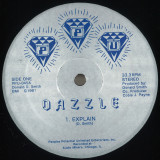
Dazzle rolled deep. Very deep. In the 1980s, it wasn't unusual for the Milwaukee-based group to show up at various Midwest night clubs in a caravan of 30-40 cars and vans. Their live following was hard won over a career that spanned 20+ years, many line up changes, and a handful of project names. Friends, family, and fans made the journey with them weekend after weekend, a testimony to both the musical prowess of the group and the tight-knit community that they emerged from.
Donald Smith, band leader, was there the whole time - joined by many of his siblings and friends - first as founder of the Ghetto Players, a early 70's nine-piece which also included siblings Michael, Ronald, and Charles. They played hard funk in the style of early Kool and the Gang, and although they sadly left no recordings, the strength of their live act managed to catch the eye of local Milwaukee R&B music entrepreneur Cobie Joe Payne. Cobie had made a couple of records locally in the early/mid 70s as a singer, including the impossibly weird and amazing rare afro-blues-funk 45 "Sweet Thing", but had never enjoyed national success. When the Ghetto Players disbanded in the early-mid 70s, Donald soon put together a new group, C on the Funk (the 'C' referring to lead vocalist and sibling Charles), under Payne's tutelage. Sister Lorrie Smith came in as the drummer, the line-up being fleshed out by brothers David and Melvin Johnson, and friend Robert Mitchell. After a few years as a strictly live attraction, they drove to Chicago and produced a single, "In the Disco" / "A Place" for Payne's small record label Sweet Thang Records in 1980. Lacking the financial backing needed to supply the local R&B disk jockey's "promotional fees" , this single sadly languished in obscurity, gathering dust inside the local tavern jukeboxes and manilla promo envelopes that comprised Payne's DIY distribution network.
C on the Funk were traveling the Mid West extensively at this point, and making some important friends on the road. Ike Wiley Jr. of the Dazz Band/Kinsman Dazz took particular interest and the band was re-christened Dazzle, partially as a tie-in with Dazz, partially to embrace the new sounds that would distinguish the 70s disco scene from what record collectors and DJs would now refer to as the "Boogie" era. There no doubt was a stigma attached to the word "Disco" as the eighties began, and as we see in this collection C On the Funk's "In the Disco" is remixed and transformed into the psychedelic synth instrumental of Dazzle's "Disco's Out", a title which embodies both the next-step approach Smith and company were pushing for, and humorously comments on the state of black dance music in the early 1980s. The Dazzle recording, done in Chicago in 1982, updated the sound and featured an expanded line up, most notably a second synth player (Charles Washington), and a percussionist/second lead vocalist (Greg McDonald). The added synth textures and deep percussive grooves give the Dazzle recordings an elegant late night vibe that resonate just as well in a good pair of headphones as they do on the dance floor. The trance inducing cough syrup-warble of "Explain" may best exemplify this here. Sadly, a pressing flaw in the 12" halted production and promotion, and the EP and the songs within were lost to the ages. The group, having done a much better line in the live music business, followed that path instead all the way to the early 90s. --bio provided by andy noble
out of Stock
Last delivered 2 years ago available to reorder, subject to availability
THE 2016 RELEASE OF SUPREME SICKNESS FROM THE US GORE LEGENDS
Skull Grinder was originally released in 2016, and contained 7 new tracks of gut-wrenching death metal delivered in the unmistakable Autopsy way, from members Chris Reifert, Eric Cutler, Danny Coralles & Joe Trevisano.
Recorded once more at Fantasy Studios in Berkeley, California, with Adam Munoz, Skull Grinder perfectly captures the rancid essence of Autopsy in all its savage glory, with a suitably dirty and organic sound mixed with brutal riffs, resulting in a slab of perfect and relentless horror.
“Musically, it's just what you'd expect from us; no style changes, wimp outs, sell outs, settling down or caving in. Add to that acknowledgement of the obvious, some of Wes Benscoter's sickest art yet to (dis)grace the cover, and you have a new sledgehammer to the bowels with no apologies offered whatsoever.”
One of the early breed of US death metal acts, Autopsy formed in 1987 in San Francisco, and released 4 albums on Peaceville Records - beginning with the classic debut Severed Survival in 1989 - before disbanding in 1995, with members going on to form Abscess. Autopsy triumphantly and officially returned from the grave after a 15 year hiatus with the 2010 EP, The Tomb Within. This was followed by the release of the band's fifth studio album, Macabre Eternal in 2011, to great acclaim.
"Blackmarket Seminar", an album by Kazi and it's entirely produced by Madlib. Guest features by Madlib, MED, Wildchild, Declaime (Dudley Perkins) and Oh No. The album was recorded in 1996, remastered in 2016 and now available on CD and all digital platforms.
Message from Kazi:
We recorded this album in the wee hours at CDP studios back in '96. It was pretty much me, Madlib and Declaime in the lab when this album was recorded.
I learned so much from Lib cadence, rhyme patterns, timing and how to dig for records. What some people don't know is this cat actually took the time to show me how to make beats. I must say working with Lib was an amazing experience. The "Blackmarket Seminar" is a very raw and dark album. We came up with "Black Market" because at the time we were doing Hip Hop that nobody else was doing and to us you could only get it on the "Black Market". When you first play the album you'll hear characters on a skit in search of the black market seminar. We really tried to make it seem like the characters were outside walking around looking for it.
We recorded a new video for the song "To Be Lost" as it is about MCs selling out to remain in the game and still makes perfect sense in the present day.
Roberto Agosta, or just Agosta as he likes to be called, is a Sicilian DJ and producer from Catania active all along the eastern coast of Sicily, a place that proved to be a soulful place and a training ground for a long career, making him an excellent music selector and a reference point in the spread of alternative music.
A soundtrack music enthusiast since he was a child, now a vinyl "serial gathere", Agosta has always put his vast knowledge at the service of a very personal sound that sums many different music styles and contaminations, simple and profound but straightforward and direct at the same time.
Agosta’s eponymous album, released on LP, CD and digital formats, was conceived during the Covid-19 lockdown, thanks to the precious collaboration of friend DJ and producer Massimo Napoli aka Galathea, with whom Roberto has already started another project called AN-AN that will produce a new record for Space Echo at the end of 2022.
This record highlights a typical chill-out aesthetic, thanks to its trip-hop and ambient rhythms and atmospheres, while a deeper exploration reveals the psychedelic essence of the entire work, a daring and exciting journey in the most primitive Sicily, and the energy that sustains all of its ten tracks.
Much of their author and his lifestyle - mainly based on meditation, the search for spiritual elevation, the relationship with nature and the regaining of contact with those particular places and with the people who live there - is revealed by those tracks that constitute a soundtrack for this spiritual but also extremely physical journey.
The song titles are, in fact, intrinsically linked to Roberto’s real life: the Gorna and Ilice mountains at the foot of Etna, the Carricante vineyard and its excellent wine, Unna, Three Chestnuts, Varanni, Don Alfio, Lady G. Each of them represents a pleasant and dreamlike narration and the escape from the complex dynamics of a city like Catania, among echoes of the most dreamy Pink Floyd, the softer side of ’70s krautrock, but also the Massive Attack and Tricky’s Bristol scene.
There’s also an excellent choice of synthesizers and overdubbed guitars, thanks to the talent of the multifaceted musician and producer Salvo Bruno Dub, and of Manuela Amalfitano, Loredana Poidomani and Deran Obika’s voices.
Agosta is an introspective, deep work with a cinematic vocation, perfectly rooted in the territory where it took shape, among sunny landscapes, lush with vegetation but also deserted and arid lands. From Sicily to the cosmos... enjoy!
out of Stock
Last delivered 2 years ago available to reorder, subject to availability
A known entity to the most attentive and adventurous of black metal fans, with Valonielu ORANSSI PAZUZU offers a vibrant, colorful cataclysm of psych, space rock, and black metal that cannot be easily categorized as any one particular genre or any single influence. At once celestial and boundless yet malevolently grim and harsh, Valonielu is certain to elevate ORANSSI PAZUZU to new levels of importance within the modern music scene. ORANSSI PAZUZU’s previous album Kosmonument was received with great critical acclaim as a brilliant album by a band developing into something all their own. On Valonielu, the band has sharpened their songcraft into a more succinct and salient statement, formidably invoking ’90s-era Darkthrone yet boldly reaching further out into the multiverse of the psych and experimental side they have always inhabited. From the beginning chainsaw riff of album opener “Vino Verso” (“Askew Sprout”) to the climactic, world-downfall of final track “Ympyra On Viiva Tomussa” (“A Circle Is A Line In The Dust”), ORANSSI PAZUZU masterfully establish a cosmology all their own. Recorded at Orgone Studios in London and produced by Jaime Gomez Arellano (Ulver, Gates of Slumber, Hexvessel…), Oranssi Pazuzu’s third album Valonielu will be released in Europe by Svart Records and in North America by 20 Buck Spin.
out of Stock
Last delivered 2 years ago available to reorder, subject to availability
In 2013 Finland’s Oranssi Pazuzu issued their ‘Valonielu’ LP, an album of timeless creative immensity that was met with ubiquitous praise throughout the world, and solidified the band’s position as one of the most forward-thinking and interesting metal bands. Now Oranssi Pazuzu returns with the follow-up album and fourth overall, the mind-bending masterwork ‘Värähtelijä’. Oranssi Pazuzu, since birth, has never been satisfied to stick with a formula. Each album has seen the band expand upon its previous incarnation and then, like a supernova, blow it up and transform again into something recognizable but completely new. ‘Värähtelijä’ continues in this vein, giving the band much more room to diverge and explore the vast regions of hypnotic progressive psychedelia and the nebulous outer limits of Scandinavian black metal. Songs explode with radiant ultraviolet color and plunge into the deep black darkness of innermost consciousness. If ‘Valonielu’ was the creation of a universe, ‘Värähtelijä’ is the magnification and expansion of its infinite boundaries. Not meant for genre purists, Oranssi Pazuzu are on a trip all their own; modern electric pioneers on an expedition to unlock the keys to the hidden spaces all around and inside us.
out of Stock
Last delivered 2 years ago available to reorder, subject to availability
We Jazz launches a new magazine bringing together contributors from such sources as Pitchfork, WIRE, Downbeat, The Quietus, Jazzwise, Deutschlandfunk Kultur, etc. Altering its title according to each issue's lead story, the first 128-page edition of the publication is entitled "World Galaxy" in connection to the cover story about Alice Coltrane written by US author Ashley Kahn. Other writers for the first issue include Phil Freeman, Debra Richards, Stewart Smith, Daniel Spicer, Peter Margasak, Andreas Müller, Matti Nives, Christian Adofo, Samy Ben Redjeb, 4AD's US Label Manager Nabil Ayers, plus more.
Topics in addition to the Alice Coltrane lead in include Sun Ra in Egypt, Scatter label profile, John Corbett, vinyl production in 2021, free jazz hero Alan Braufman, Finnish guitarist Raoul Björkenheim's jazz photos from 1976-77, a collection of European modern jazz posters, Oiro Pena, records / books / design, etc.
"We wanted to create a quality magazine with top content and a very organic feeling," says the magazine's co-editor and AD / graphic designer Matti Nives. "To us that means inviting some of our favourite writers to come up with ideas about topics they would like to cover, and linking up with great local illustrators and photographers. We hope that the end result would differ from other prints out there and provide fresh ideas in relation to the music we love."
Going forward, the English-language We Jazz Magazine is planned to be published twice a year.
We Jazz follows the success of the sold out debut issue of their new magazine with issue number 2 (Fall 2021), entitled “Pursuance”. The cover story by Ashley Kahn features John Coltrane in connection to the new release “A Love Supreme – Live In Seattle”. Other inspiring stories on music include Irreversible Entanglements by Daniel Spicer, Ben Lamar Gay by Stewart Smith, Linda Fredriksson by Arttu Tolonen, Marshall Allen by David Mittleman, French Caribbean Music by Markus Karlqvist, Pablo Held by HT Nuotio, record reviews, book reviews, plus more. This is a magazine put together by a quality cast of writers and illustrators/photographers with references such as The Wire, The Quietus, Pitchfork, Jazzwise, etc. All content is original and exclusive to this edition.
Rizzwax returns again for solo release number 3 by JJ Fortune. 4 Dancefloor tracks designed to tear open air venues apart. If you're into Organs, Open hats, Big kicks, Electro, Techno, human claps, snappy snares, Spooked out themes and all things haunted, this is a must hear. As always, limited vinyl only and no repress.
out of Stock
Last delivered 18 months ago available to reorder, subject to availability