Hailing from the seaside communities surrounding Enoshima, a small island located 50 km southwest of Tokyo, Maya Ongaku is a ragtag collective of local musicians whose brand of earthy psychedelia transcends widely beyond the roots of their inner souls. The name derives not from any kind of ancient civilization, but rather a neologism defined as the imagined view outside one’s field of vision. The band—currently a trio of Tsutomu Sonoda, Ryota Takano, and Shoei Ikeda—finds sanctuary at the Ace General Store, a beachy vintage shop and salon-like space just hidden from sight from the bustling, touristy riverside Subana Street. Between discussions on music and art, curating the vinyl section and manning the register, and chatting up with locals young and old, the members find time to jam and record their spontaneous ideas in the studio tucked away in the back. It’s in this unlikely setting where Maya Ongaku finds its origins, the culmination of what Sonoda describes as 自然発生 (shizen hassei), meaning spontaneous generation, or the supposed production of living organisms from nonliving matter.
Approach to Anima, the group’s debut album released on Guruguru Brain, finds Maya Ongaku building a foundational groove while tapping into their innermost psyche. Sonoda’s malleable guitar and vocals, Takano’s sinuous bass lines, Ikeda’s floating woodwinds, and a sprinkling of delicate percussion—all coalesce into an aural experience that’s assertive yet abstract, calm but unsettling. The slow building, sax-laden “Approach” serves as an introduction to Maya Ongaku’s world, while the appropriately-named “Water Dream” floats its way toward the gentle finale of “Pillow Song.” It’s a concise distillation of their many interests and influences, from Neo-Dada and Fluxus, to where contemporary art intersects with the development of modern recording technology in the ‘60s and ‘70s.
As the title suggests, Approach to Anima is not intended to be a terminus; it’s merely the beginning of an exploration. The three childhood friends that comprise Maya Ongaku are always looking beyond the confines of the idyllic but rapidly gentrifying enclave of their beloved Enoshima. Feeding off of the energy that still radiates from the triumphant, decade-long journey of their label bosses’ band Kikagaku Moyo, who rose to global prominence from scrappy beginnings busking on the streets of Takadanobaba, they hope to go wherever inspiration takes them, to anywhere around the globe where their music can find a home.
Ultimately, Maya Ongaku’s uninhibited world-building will make it possible for us to see the unseen, expand the possibilities of the naked eye—all through the unbridled vibrancy of their music.
out of Stock
Last delivered 87 days ago available to reorder, subject to availability
The turbocharged Boosted EP from Washington DC's Jackson Ryland drops in Peach Discs. Inspired by the multi-faceted work of hyper-prolific producers such as Paul Johnson, Heiko Laux, K-Hand, Aubrey & Cari Lekebusch, Boosted's four tracks highlight the various layers that make up Jackson's sound, and confirm him as a thrilling and versatile producer whose deep understanding of dance music's history informs his firmly present approach to production.
Recorded between 2018 and 2022, Boosted splits the difference between the booming drums and trippy synth patterns of "Glass Cut" and "Hyp Gruuv," and the complex, evolving textures of "Boosted" and "Lip," the latter representing a side not often heard in Jackson's output to date. Taken as a whole, the EP fits into the long lineage of DC-based music - one defined by an effortless flexibility to flip between emotions while never forsaking the groove.
This is the 2nd release of the year on Shanti Celeste and Gramrcy's Peach Discs.
out of Stock
Last delivered 2 years ago available to reorder, subject to availability
Bollywood rarities handpicked and remastered on a double LP release with laminate gatefold and multi-layered flower petal foldout. Featuring rare, overlooked or not-previously-on-vinyl music from Bappi Lahiri, R. D. Burman, Ilaiyaraaja, Kalyanji-Anandji, Anand Milind, Raamlaxman and Kirti Anuraag released between 1982 and 1986. Mastered for and cut to vinyl by multi Grammy-nominated Frank Merritt at his mastering studio The Carvery.
Naya Beat is incredibly proud to present the first in our series of ‘Awaaz’ (‘sound’ in Hindi) archival projects focused on uncovering the sounds of 1980s Bollywood Original Soundtrack Recordings (OSTs). Series 1 focuses exclusively on the musical output of CBS Gramophone Records & Tapes (India) Ltd. Active during India’s peak disco era – a time when synthesisers and drum machines became a mainstay in Indian popular music – CBS India became a home for established composers to be experimental, up-and-coming composers to get their start, B-movie soundtracks, and straight-to-VHS releases.
Expertly curated by Naya Beat co-founders Turbotito and Ragz, who were given unprecedented access to the original label archives, this compilation is not just a collection of four-to-the-floor Bollywood disco (although there are plenty of those). ‘Awaaz’ is designed to take listeners on a musical journey that includes everything from leftfield electronic and mood music to outrageous proto house.
Be it classic and hard to find cuts like Ilaiyaraaja's "Aye Zindagi Gale Lagaa Le" and “Mere Jaisi Mehbooba” (Bappi Lahiri’s Hindi remake of Herbie Hancock's “Rockit”), or the instrumental mood music of Kirti Anuraag’s VHS movie soundtracks, to the proto house of Raamlaxman’s “Dil Gadbad Jhala” and Kalyanji-Anandji’s “Aage Bhi Dushman,” or the synth and guitar drenched breakdance madness of R. D. Burman’s “Dekho Idhar Jano Jigar,” the music on this compilation captures the output of a label that was unique as it was unconventional.
An homage to the genre, every detail in this stunning release has been lovingly crafted. From the laminate cover to the absolutely incredible foldout, to the cut-out and collage design, to the font type and layout, there are countless authentic details and nods to classic Bollywood releases of the era. As much of the album has been made in India as is possible. The sleeves have been handmade in New Delhi. The liner notes have been compiled by music archivist Nishant Mittal (aka Digging In India).
out of Stock
Last delivered 3 years ago available to reorder, subject to availability
Coming straight outta Salerno's vibrant music scene, "Amo' / Voce 'e Notte" is the first 7" single from female rap duo Zetas. Released by DJ's Choice, a partner label of Four Flies Records, it contains two songs produced bybeatmaker, rapper and producer Tonico 70, a true veteran of Southern Italian hip hop.
Both young millennials, rappers Annarella and Miriade were exposed to the world of underground hip-hop from an early age, jamming, freestyling and listening to different music than their peers. Active as a duo since 2019, they're now making their official debut with this 7", which will be followed byan album at the end of September.
The A-side track "Amo'", which is about the overuse and loss of meaning of the word 'love' (amo' translates as 'luv'), makes their intentions clear. Zetas rap in the exuberant dialect and slang of their native city of Salerno, while their sound looks back to the '90s through a contemporary lens. Raw rhymes are delivered with an urgent flow over a beat that, rather than boom-bap nostalgia, is a modern take on classic production styles. The result is a happy medium between old school and fresh – one where the melody of dialect rap and rhymes blends wonderfully with the rhythms of funk, soul and reggae.
"Voce 'e notte", on side B, has a different mood, but the same approach. Here, Zetas weave wistful verses tinged with disillusionment and toughness on top of Tonico 70's 808-led beat, paying tribute to a classic Neapolitan song also titled "Voce 'e Notte". The result is a rap serenade that transforms and reimagines the Neapolitan song tradition through today's sensibility and, of course, through hip hop.
out of Stock
Last delivered 3 years ago available to reorder, subject to availability
What’s happening in the streets? This right here, a celebrated engineer Yas Inoue and Dj Takaya Nagase come together in the studio and rework the Voltage Brothers rare groove jam “Happening In the Streets” with a cleverly put together edit with filters, effects and sonically tweaking it to perfection. They've created a perfect dance floor masterpiece already championed by Louie Vega, Joe Claussell, Spinna, Mike Dunn, and Rich Medina. This choon has everyone in anticipation for it’s release.
Japanese sound engineer Yas Inoue, based in New York began his career in the world renowned Maw Studios in the late 90s and has engineered for producers such as Masters At Work, Patrick Adams, Leroy Burgess, and Randy Muller contributing to the creation of various New York house and disco hits.
Takaya Nagase, a New York based Japanese Dj started as an A&R for Japanese record label Soundmen On Wax. He learned and studied under the great David Mancuso of the Loft Party NYC and later held his own Joy parties along with other Loft members. Having had regular gigs at Club Shelter from 2006 to 2007 and at Club Output from 2017 until the closing in 2019, he built his dj chops and now currently djs at New York City's top venues such as Le Bain, Good Room and Nowadays along with monthly shows on the famed Lot Radio in Brooklyn.
Together they are Domo Domo and with their first project on Vega Records they are on their way to becoming New York household names in the dance music industry. Look out for “Happening In The Streets” coming soon at all digital and streaming outlets with vinyl releases on 12” and 7”. Lookout everyone, this one’s a sure HIT!!!
out of Stock
Last delivered 6 days ago available to reorder, subject to availability
“20 years ago, I dreamed a dream of creating a family of like-minded, crazy individuals from all corners of the planet. That dream was Crosstown Rebels. Over these years, I have forged beautiful friendships, discovered very talented artists and tried my best to help, advise and support some of the most colourful characters in dance music. It’s been 20 years of madness, magic and music. Now it’s been distilled into our own book to mark this milestone. I’m honestly surprised at how much I remembered!” - Damian Lazarus
For 20 years Crosstown Rebels has forged a path as one of the world’s leading electronic music labels.
Established in 2003, Damian Lazarus’ label manifesto has not changed. Discovering and nurturing new talent has always been the beating heart of the label, with a mission to soundtrack the future of the dancefloor and beyond. Introducing the world to the likes of Jamie Jones, Seth Troxler, Maceo Plex and Art Department was just the beginning. Today the roster is gloriously international, showcasing the truly global scene that Crosstown has shaped over the years.
Of course, there’s the parties too. The early Slash & Burn and Rebel Rave parties paved the way for Damian to create two of the world’s most cherished experiences, Get Lost and Day Zero, and in turn setting a benchmark for electronic music events worldwide.
Now the Crosstown Rebels story is told in a new 240 page book. 20 years of madness, magic and music. Starting right back before the beginning and taking us through to the present day, acclaimed electronic music writer Joe Muggs dives into the label’s history, interviewing Damian at length and revealing Crosstown’s story as never told before. The book brings together countless unseen photographs and artwork taken from the last two decades. It tells the story of how the dance underground battled and triumphed. This is a unique publication, not only for fans of Crosstown Rebels and Damian Lazarus, but also for anyone with an interest in independent label culture and the evolution of dance music over the last 20 years.
- Deluxe 240 page book
- Limited edition with only 400 copies on public sale
- De-bossed hardback cover, printed on FSC® certified papers, with alternating paper stocks, book ribbon and G.F. Smith endpapers
- Foreword by Pete Tong MBE
- Comprehensive label discography
- Printed in the UK by PurePrint, the first CarbonNeutral® printer in the world
Obsessive tekno/grime experiment from London's lostdomain producer Leeway following the great great Krevet EP. Very compatible with ~160 BPM hardtek/trance. Grainy desaturated claustrophobic sound progressing to full, crisp and dreamy with alien salival textures...
Whole album varies on two or three circling themes. Super zoney and subdued and spiritual but then jumps right out of the speakers with violence.
out of Stock
Last delivered 3 years ago available to reorder, subject to availability
Toronto-based Soul/R&B artist Aphrose is back and ready to release her soulful,long-anticipated single, "Good Love" from her upcoming 7" vinyl release on LRK Records.
A dreamy, evocative slow jam that is sure to make you feel like you've been transported back to the heyday of the 70s, "Good Love" features Aphrose's undeniable vocal prowess supported by layers of bass, drums, string synths,percussion, and luxurious vocal harmonies.Drawing inspiration from the late Teddy Pendergrass, early MJ, and the sounds of the 70s Soul era, Aphrose and her production team SafeSpaceship Music (Scott McCannell, Chino DeVilla & Ben Macdonald) crafted this deep-cut soul classic that drenches you in lush vocals and string synths, met by undulating bass and drum sounds.Aphrose was inspired to write about experiencing that "good love" that surpasses all barriers, even theself-sabotaging ones we put up to protect ourselves. "Good Love" also features Kyla Charter-one of Toronto's most brilliant artists- on background vocals,as well as Ben Macdonald on tenor saxophone, which is the cherry on top.
Yaya to be announced soon..
Releases July 7, 2023
Currently in the UK soul chart at number 14
Got to number one on The Grenada Soul Chart
Played on all the soul stations , starpoint radio, solar radio, misoul etc Played on national Italian Radio Capital by Massimo OldaniNational Spanish radio show "Como Lo Oyes" on Radio 3,
"Sounds So beautiful" blog featured "Good Love" by Aphrose on the front page
PREMIERED in "Canadian Beats"
Spun on cbc on afterdark by Odario Williams
out of Stock
Last delivered 3 years ago available to reorder, subject to availability
R&B SOUL STEPPER THAT HAS FEEL GOOD SUMMER VIBES
IN EVERY NOTE. WILL BEE DOES AN OUTSTANDING
PERFORMANCE ON VOCALS AND TIGHT PRODUCTION FROM
LEE AND MATT MAKE THIS A ESSENTIAL.
out of Stock
Last delivered 3 years ago available to reorder, subject to availability
Antonin Appaix's songs oscillate between pop, acoustic experimentation and electronic ballads. After "???????????", his first EP released in April 2020 on Cracki Records, the singer from Marseilles returns with "????????".
A debut album of soft, hybrid, organic and strange productions, somewhere between Miel de Montagne, Domenique Dumont and Sébastien Tellier, evoking childhood, friendship, adventure, the intoxication of the deep and the wounds of the heart.
out of Stock
Last delivered 3 years ago available to reorder, subject to availability
The legendary Ultramagnetic MC touches down in London for a one-away collab with We Are The Horsemen, featuring the one and only Kaidi Tatham.
What you sayin’, Kool Keith...? Enter your spaceship for a transatlantic meeting of minds as the legendary Kool Keith links up with We Are The Horsemen (Outernational Sounds head honcho Harvinder Singh Nagi and producer Sub One) and the great Kaidi Tatham for a future-jazz flavoured trip through the great MC’s London adventures.
Kool Keith needs no introduction to hip-hop heads worldwide. As one of the greatest MCs ever to touch the mic, Keith has never stopped innovating and progressing. From his days in the seminal 1980s Bronx unit Ultramagnetic MCs, through his pioneering development of new conceptual characters and styles in the 1990s (Big Willie Smith, Dr. Octagon, Dr. Dooom, Black Elvis), to his continuous run of radically independent recordings in the 2000s and beyond, Kool Keith defines rap longevity and artistic originality. No one else in hip hop has a comparable record of continuous reinvention, conceptual boldness, and stylistic panache.
And after four decades in rap, Keith is still one of the hardest working rappers in the game, perpetually seeking new sounds to spit on and new collaborators from across the musical spectrum. Fresh off the acclaim for his new Black Elvis 2 release, the protean MC has touched down on Outernational Sounds for a unique collab with We Are The Horsemen and Kaidi Tatham. ‘London Is The Place’ finds Keith riding the Horsemen’s atmospheric, break-toughened riddim and reaching back in time to drop kaleidoscopic, stream-of-consciousness impressions of the Ultramagnetic MCs infamous 1989 tour, before flashing forward to the present in order to namecheck Honest Jons Records, saxophone star Nubiya Garcia and master keyboardist and broken beat pioneer Kaidi Tatham, who contributes trademark jazz keys and bruk steez to the AA side remix. The 12” is closed out by a third version, the Horsemen’s own Kool Jazz Mix, bringing see- sawing organ stabs and a neck-snapping Ultra-sampling hook.
Kool Keith, Kaidi Tatham and We Are The Horsemen, taking it higher and overcoming the pressure with ‘music so progressive’, to quote Keith himself! Limited press – don’t sleep on this one!!
out of Stock
Last delivered 2 years ago available to reorder, subject to availability
Cable Ties are a fierce, tense rock’n’roll trio. They take the three-minute punk burner and stretch it past breaking point to deliver smouldering feminist anthems. Post-punk and garage rock hammered together by a relentless rhythmic pulse. Jenny McKechnie channels her struggles into songs that resonate deeply, giving voice to feelings often buried in modern life. Shauna Boyle and Nick Brown are a rhythm section anchored in Stooges primitivism, relentlessly hammering out a bedrock for McKechnie’s guitar pyrotechnics and vocal wallop. Three friends summoning a rhythmic tide to deliver anthems that turn latent anxieties into a rallying cry.
The band has been committed to an inclusive feminist and political outlook since its inception in 2015, exploring issues of gendered violence, colonialism, and sexual assault. The band members have been involved in benefit shows, organized DIY festivals, and volunteer with Girls Rock!, a not-for-profit organization that aims to empower female, trans, and gender non-binary youth in music.
Cable Ties are dedicated to their local community and independent networks, and to playing diverse and inclusive shows. They have toured Australia a number of times and have developed into a lean and efficient touring band who deliver powerful and meaningful shows. Their debut self-titled album, released in 2017 on Poison City Records, was a Triple J feature album and album of the week on 3RRR, with strong support nationally from community radio. They have also self released three 7” singles which have all sold out. The debut album is on its third vinyl pressing.
The band toured UK/Europe in 2017 supporting Jen Cloher, and played Punk’d Festival in Berlin. They returned to the UK in May 2019 to play The Great Escape and shows with Tropical Fuck Storm and Amyl & the Sniffers. In Australia they played Bigsound 2018 and festivals such as the national Laneway Festival tour in 2018, Boogie Festival 2018, The Plot 2017, and Meredith Music Festival in 2016. Cable Ties have supported artists such as Joan Jett, The Kills, Camp Cope, and Cash Savage. They won Best Hard Rock Act at the 2017 National Live Music Awards and were nominated in five categories. They won the Corner Music Award in 2017, have been nominated for eight Age Music Victoria awards, and were longlisted for The Australian Music Prize 2017.
Third in a trilogy of LPs of Library Music miniatures from composer and multi-instrumentalist Daniel O’Sullivan (Æthenor, Ulver, This is Not This Heat, etc) following 2020’s Electric Māyā and 2021’s Fourth Density. For heads, the term “Library Music” in 2021 might evoke dodgy Italian gray market LPs and crate diggers hunting for “funky breaks” - but London’s venerable KPM Music is working with groundbreakers like Daniel to open up new avenues for composers to experiment. The 15 tracks on “The Physic Garden” are fully-formed and orchestrated compositions, which would be highlights on anyone’s LP, never mind as incidental music. Of the music, Dan says: “The Physic Garden is an album of diverse instrumentals inspired by a swathe of verdant vistas from manicured gardens and follies to urban common land, overgrown and forgotten. Convalescent memories in the shape of psychedelic auditory botanics.”
Key tracks include the droning acoustic folk of the title song; the Canterbury-esque rolling horn and woodwind melody of “Return the Heart” (with expert drum kit from Frank Byng); The prog-ish odd meter interlude “Buttercup Tea”; The quiet ambience and delicate melody of “Dusty Feather:”; and the Eno-like drift of “Vapourer Larvae.”
“Library music. Akasha. Here you accept that music behaves like a thing to accentuate another thing, seemingly unrelated. A beautiful, shining blankness. Not passive. An opportunity to wade. A brief encounter with an open-ended destiny. As in, you never know who or what it will be partnered with. With library music the emphasis tends to be on functionality and less on sonic self-portraiture. So it compels you to be concise, like what is the function of this work? The distance is liberating. It’s less “What Am I? and more “What Is This?”. It compels you to be brief, each little cell is a world of its own in an assemblage of miniatures all vibrating in their collective identity. Then there is the occult nature of library music which is fetishized by many for its ability to induce time travel, often to send us back to some televisual memory. However, despite its broad-brush strokes, the library can be so profoundly alien, especially when experienced independently of the televisual realm; an unruly chimera of genre mutations, compositional curiosities and the deepest wallpaper you ever laid ears on. Perhaps the observances of library music can help unshackle us from our artistic insecurities and delusions, where one is drawn to the shape of music as a whole instrument unto itself; as a vehicle carrying our intention and consisting of everything we have to give at that moment; so things that are seemingly unrelated are ultimately connected.” – Daniel O’Sullivan
Born of a thousand nights lost in a surrender to stillness and contemplation, In The Air is Anna St. Louis’ second full length album and her most considered work yet. St. Louis’ debut If Only There Was a River seemed to emerge fully formed out of the recesses of her mind; a gritty, mesmerizing affair, filled with jagged edges and ghostly apparitions. The type of record that announces a new voice; one haunted by what has come before.
But this time, St. Louis is no longer concerned with what could have been and sets her sights to exploring what could be. It’s an outlook on the world that was formed when her immediate one was small. The intervening years since her last album found St. Louis in a small one-bedroom cabin in the middle of the woods of upstate New York with a new love and time to think of what she wanted to express with her music. For weeks on end, the only trips she took were to and from her job as the front desk clerk at a nearby hotel. The previous years she had spent on tour and performing constantly in the venues of Los Angeles felt like they had occurred in another lifetime.
“It really compelled me to surrender to the unknown,” she says. And in this surrender, she found liberation. St. Louis is more self-assured, open-hearted and ready to say what she wants. St. Louis describes the writing period as one of a slow harvest; a fertile time but one that required a newfound patience. Instead of documenting her first thoughts, she spent more time with each song, going deeper with the themes and ideas she wanted to express.
This slower approach also guided the sonic textures of the album. Working with producer Jarvis Taveniere (Purple Mountains, Woods) in two extended recording sessions in Los Angeles in 2021, St. Louis used the studio in a previously unexplored way, opening up her songs to more experimentation featuring brighter tones and a more orchestral sound to accompany her new perspective. To that end, she was aided by a cast of friends and collaborators including Jess Williamson, Kacey Johansing, Oliver Hill (Kevin Morby, Vagabon) on strings, Alex Fischel (Spoon) on piano, Josh Adams on drums (Bedouine, Tim Heidecker) and Keven Lareau (Cut Worms, Hand Habits).
In the Air has the sound of a joyous consideration of the present moment; a quiet morning revealing a new snowfall outside, steam coming from the kettle, just before it whistles, St. Louis with her guitar, staring out the window, with a few free hours before work. She’s reflecting on the scene in front of her, imagining the times yet to come. You can hear it; she’s a long way from the noisy bars of Los Angeles, the rigors of the road. As she intones in “Rest”: “You spend your whole life believing in the chase. And then you realize that being somewhere doesn’t matter like it used to.” She doesn’t need a river to carry her anymore ... She’s in the air.
It is also one of only five sessions led by Little as a band leader before his premature death at the age of 23 in 1961. The fact that this is only Little's third outing as a leader is further testament to the talents of this young artist. Arguably, the seven original compositions here might be more widely known today had his life not been so tragically cut short.
Little is mostly known for this association with Max Roach, who he began playing with as early as 1955. But it was not until 1958 that he officially joined Roach's outfit and began recording with him. Little made 8 albums with Roach between 1958 and 1961. And it is Roach's
ground breaking We Insist! album that is the precursor to the Out Front sessions, as this is where Little's talents fully caught the attention of Candid Records' A&R and producer Nat Hentoff.
Whitelands follow their acclaimed single ‘Setting Sun’ – which saw the London-based band added to the BBC Radio 6 Music playlist – with their first ever vinyl release, an EP of reworkings, which is released as a limited edition orange vinyl 10” on June 23.Simply titled Remixes, the EP features two reworkings of ‘Setting Sun’ by dreampop legends A.R. Kane – the short Initiation Dub and the epic Hero Remix, which comes in three parts, titled Departure, Initiation and Return and takes the song to some unexpected and exciting new places.“Whitelands came up in conversation three times in a week,” explains A.R. Kane’s Rudy Tambala of how he got to know the band and came to remix them. “Two times is coincidence, three times is a conspiracy, so I reached out to them on social media, and we started chatting. They’re cool, like baby Kanes. ‘Setting Sun’ was close to my heart, reminding me of ‘Fools Gold’ meets Slowdive versus Frank Ocean. Anyway, I heard several approaches in my head, so I thought, ‘Fuck it, let’s do ’em all’. “I knew I wanted to take a prog approach: Marvin Gaye’s What’s Going On, Pink Floyd’s The Dark Side Of The Moon, Sasha’s Involver2, Coltrane’s A Love Supreme, Frank Ocean’s Blond, etc. Even my own sixty nine. It’s that seamless drift from one part into the next, stretching the idea until it ruptures, creating space for a new way of perceiving; this has the first inklings of hive mind, telepathy, in a musical form; you dissolve into it as it dissolves into you. A fundamental dreampop construction and aim, whereby subject and object become one. Ahem. “As the extended mix took shape it suggested to me the three components of The Hero’s Journey, hence the titles. The three-minute pop song was determined by the technical limitations of the 7” vinyl single. Digital has obliterated that. The perfect dreampop song has no time limit. ‘Setting Sun’ A.R. Kane Hero Remix is timely.” Alongside Rudy’s reworkings is an equally dazzling drum’n’bass take on last year’s single ‘How It Feels’ by the band’s guitarist Michael in his howdogirlssleep guise.
Graham Lambkin (of Shadow Ring fame) returns with a long awaited epic double LP, Aphorisms, his first major solo outing since Community (Kye, 2016). Recorded mostly during the early winter months of 2022, in post-pandemic New York and post-Brexit London, Aphorisms assembles the sonic detritus of daily life into hauntingly intimate aural soundscapes. Made between Lambkin's residence in East London and Blank Forms in New York, Aphorisms superimposes the two spaces onto one another creating an imaginary stage where his musical dramas unfold. A transatlantic mediation on the rooms where Lambkin has lived and worked, Aphorisms summons up hallucinatory vistas by way of the composer’s collage technique, layering field recordings, piano, guitar, percussion, vocal fragments, and repurposed elements on top of one another in double, triple, and quadruple exposures. Like the Shadow Ring’s Lindus (Swill Radio, 2001) recorded between Folkestone and Miami Aphorisms ruminates on estrangement and displacement, catching Lambkin as he returns to London after two decades of living in the States, in his words, “leaving home to return home.” Aphorisms continues Lambkin’s synthetic-naturalist approach to sound-making, twisting disparate and unique elements together to create the sensation of a coherent sonic space. At the heart of his practice is the illusion of form, whereby Lambkin combines sonic elements, documenting the moment that they coalesce into music only to disintegrate back into incidental sound. The album is centered around two pianos, one in New York and one in London, sounding together as if through the ether, creating a spectral atmosphere that Lambkin fills with melodic snippets, fragments of songs, spoken-word musings, and guttural barks or “the animal purity of voice,” as he has it. The superimposition of the two spaces is maximized in the album's closing titular track, where, much like on earlier works such as Salmon Run (Kye, 2007) and Softly Softly Copy Copy (Kye, 2009) fragments of familiar melodies float through the mix as though being played from afar. Aphorisms is Lambkin at his best, extending methodologies only hinted at previously and taking his now-idiosyncratic mission statement to a new chapter.
Bound to Be is Power POP veering from muscular rock songs to languid pop confessionals, from stunning atmospherics to raw intimacy. Corvair is a husband/wife duo from Portland, Oregon. Threading together 70’s pop, 80’s synth rock and 90’s indie rock, with influences from Berlin-era Bowie to Blondie, Lee and Nancy to the Breeders, Corvair’s evocative power pop is timeless and resonant. The duo’s second album, Bound to Be, veers from muscular rock songs to languid pop confessionals, from stunning atmospherics to raw intimacy, held together by sharp lyrics and potent imagery. Naubert and Larimer have previously recorded or performed on more than twenty albums. Larimer’s musical mainstay was the garage pop band Eux Autres, broadly hailed as a “veritable cult classic” band and radio-debuted by the late John Peel. Naubert is a longtime fixture of the Northwest rock community, having played in vital bands such as Tube Top, Pop Sickle, The Service Providers, and the critically-lauded Ruston Mire, since 1995. Bound to Be is the duo’s second album and will be released in June 2023 on Paper Walls and the cult indie pop label Where It’s At is Where You Are records out of London, UK. It features Larimer and Naubert on vocals and instruments, along with Northwest powerhouse drummer Mike Musburger (Fastbacks, The Posies).
Five years after the release of their last studio album, legendary UK musical institution, Soft Machine, return with a brand new CD/LP,
Other Doors. Boasting new material and two numbers drawn from their extensive historical repertoire, Other Doors finds the band on their usual fiery form.
Featuring John Etheridge (guitars), Theo Travis, (saxes, flutes, Fender Rhodes piano, electronics), Fred Thelonious Baker (Fretless bass),
John Marshall (drums), Other Doors also features two guest appearances from long-serving bassist Roy Babbington, who retired from the band in 2021.
Other Doors was recorded at Temple Music Studios, a facility owned by the late Jon Hiseman during July and August 2022.
It’s a location of which the band is particularly fond, explains John Etheridge. “Working at Jon Hiseman’s studio was special,
especially with Ru Lemer who is a brilliant engineer. He’s fantastically quick and that’s very good as we record mainly live in the studio. It’s come out really well and I think it sounds great.”
On Other Doors they’ve revisited the very first album, originally released in 1968, to include Kevin Ayers ‘Joy Of A Toy. Fred Baker, makes his studio debut with Soft Machine.
A well-known figure on the Canterbury Scene not only is he the perfect choice for the group but he’s also is a long-term fan of the repertoire.
“The way I look at it is that this is all great music which we’re continuing to preserve and keep alive as we play it but also we’re adding to it all the time,” he explains.
The idea for revisiting the number was Theo Travis’ he says and has been part of the band’s live setlist for a while.
The album also contains Penny Hitch, a track originally heard on 1973’s Soft Machine Seven.
If the album ushers in a new member in the shape of Fred Baker, it also acts as a fond farewell to drummer John Marshall, who joined Soft Machine midway through the recording of 1972’s Fifth.
At the age of 81 Marshall has decided to retire making Other Doors his final studio album with the group. “I’ve known John since 1975 when I first joined Soft Machine and of course,
we’ve worked through the years together intermittently ever since. His drumming always meant a lot to me,” says Etheridge.
“We worked over three days in the studio and John played great. It sounds terrific.”
Indeed, Marshall is on whip-cracking form throughout the album bringing his trademark musicality and decisive presence.
With Other Doors, he brings his distinguished career to a rousing conclusion.
Intense, celebratory, and consistently impressive. Other Doors is the sound of a group determined to press forwards with an
integrity and sense of purpose that’s quintessentially and definitively Soft Machine.
One of Japan’s most riveting artists follows that KAKUHAN mindmelt from last year (our number 5 album, 2022) with an engrossing suite of wild field recordings and polymetric percussion featuring a whole raft of additional players weaving drums, wind and brass instruments, cello and electronics into a bewildering Acousmatic matrix. Highly recommended listening if you’re into Marginal Consort, Beatrice Dillon, Will Guthrie, Mark Fell, François Bayle.
Having made his mark on these pages over the last few years with appearances as part of Japan’s cult entities Goat and YPY, Koshiro Hino’s turn last year as KAKUHAN took things to a whole other level with an album that felt like some alchemical mix of elements borrowed from Autechre, Photek, Arthur Russell and Mica Levi - a complete stylistic futureshock that worked as well in the club as it did fuelling extended flights of the imagination.
For 2023, Hino takes us into a completely different headspace, assembling a cast of 11 players - the mighty Joe Talia and KAKUHAN’s other half Yuki Nakagawa among them - for a suite of untamed field recordings, clanging percussion, brass and synthesis that are about as far removed from the diaristic ambient de jour as you could possibly imagine. Instead, the ensemble conjure vibrant sound ecologies teeming with detail, mirroring the natural world and communal traditions to form shapeshifting, organismic soundworlds.
‘Geist II’ was written for 20 speakers, referencing François Bayle’s acousmatic music and David Tudor’s electro-acoustic environments. It paints a richly detailed scene of a nocturnal rainforest, replete with avian hoots and a skin-crawling patina of insectoid chatter that moves around the soundfield, stealthily growing in density with a more “musical” presence of super low end drone and drums converging form the peripheries to a ritualistic climax. In the second part, focus shifts to remarkably pure percussion-like tropical rain, invaded by swarms of scuttling and winged invertebrates that give way to a water music-like polymetric slosh, resolving to ringing tones and more mellifluous gestures that hark back to GRM’s most poetic, romantic urges.
It's a deeply psychedelic experience that harmonises tiny electronic fluctuations with bird calls and scraped, resonant drones that phase in-and-out of the mix. It's sound you can practically chew, and another crucial despatch from the contemporary Japanese avant-garde.
Curious, he bid on the item and ended up winning it for a few dollars. Upon investigation, the simple and intuitive nature of its interface appealed to him, especially in comparison to the dense 'menus within menus' design of contemporary DAWs, and he soon began to seek out other programs from this 'first wave' of music software development. The result of over a year of study, experimentation, and creation (often involving direct correspondence with the software creators themselves), 'Universal Synthesizer Interface' is Roos's homage to this early era of algorithmic music making.
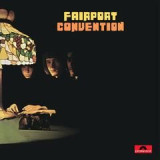
These records contain some of the most storied names not just in British, but world music. From a bunch of school friends setting out to be 'the British Jefferson Airplane', over the course of their first quartet of releases, the group metamorphosed into the leading exponents of British folk rock. In the way American folk and blues had looked back to gospel songs and spirituals, Fairport mined a seam a traditional English folk song, and then combined them with rock rhythms to create something ground- breaking and quickly emulated.
For many, this is the first time the considerable talents of Richard Thompson, Sandy Denny, Ashley Hutchings, Ian Matthews, Dave Swarbrick and Dave Mattacks would have been heard on record.
From a bunch of school friends setting out to be 'the British Jefferson Airplane', over the course of their first quartet of releases, the group metamorphosed into the leading exponents of British folk rock. In the way American folk and blues had looked back to gospel songs and spirituals, Fairport mined a seam a traditional English folk song, and then combined them with rock rhythms to create something ground-breaking and quickly emulated.
With absolute electricity at every turn as well as the rough 'n' ready charisma of frontwoman Stacey Savage, Savage Master strutted and surged with a power and poise redolent of early '80s US metal. Uniquely, the hooded Louisville quintet put a concertedly occult spin on everything, making them stand out amongst all those trying to reignite a 'Metal Massacre'. Swift and succinct were the eight songs
across the half- hour 'Mask of the Devil'; for however much "star power" was already here early on, Savage Master knew that heavy metal ultimately lived or died on the strength of songs - and they were just beginning to realize their massive potential.
Revised and remastered edition of Joe Henderson's 1987 album 'An Evening With Joe Henderson' with two bonus tracks from the same.
"Saxophonist Joe Henderson has been described as one of the great chord change players of jazz history, and this aspect of his playing, that had its roots in bebop and Sonny Rollins' approach to improvisation, is very apparent in the repertoire of songs he chose to play that night, each piece with interesting chord changes beginning with Thelonious ' Monk's Ask Me Now'. Although Henderson's style grew out of Rollins' sense of phrasing, rhythmically Henderson was a lot looser and built on Rollins's style to create his own approach to improvisation."
"Hits & Pieces" showcases the band's most recent single releases, including "RATA-TATA", "Superlove", and "Diggin' It". Meanwhile, "Live at l'Olympia" captures some moments of the band's sold- out show in Paris, complete with a thrilling cover of Lenny Kravitz's "Are You Gonna Go My Way" featuring supporting act KO KO MO. With its stunning visual design and great energy, this vinyl is a must-have for any Royal Republic fan. So don't hesitate - add it to your collection today and experience the best of this incredible band!
Lewis Taylor's legendary magnum opus: The Lost Album. "Now you're talking. That's my favourite LT album. Unlike all of the others, there isn't anything about it that embarrasses me." Straight from the genius's mouth. What can we say about this? Well, it's the most requested record ever at Be With Towers. The Lost Album was the intended follow-up to his first album but Island rejected it for fear of "confusing" the marketplace and its conception of Lewis as a soul artist. Their loss. It's a breezy sunset masterpiece.
The genesis of this incredible record needs unpicking a bit. Lewis stopped promoting the first album after a year and went home to record a completely different record that was the most un-R&B album you could probably ever hear: "I pushed in such an extreme direction the other way with what eventually became The Lost Album. It was a knee-jerk reaction to a perceived ‘trapped in R&B’ feeling I was going through at the time. Some people around me were in favour of it and others weren’t. In the end I think I lost confidence in it and did Lewis II instead." We did at least get Lewis II, which is a remarkable album, and he kept Island happy...for a bit. Not long after, Lewis was dropped. And what was to become The Lost Album could've been...er...lost. Forever.
Thankfully, however, Lewis and longtime partner Sabina Smyth revisited those scrapped demo tracks in 2003. They decided to re-arrange, re-record and then self-release them. So it was that the brand new version of The Lost Album finally dropped in late 2004. It's sheer perfection, and we don't say that lightly. The Lost Album was a fully 50/50 collaboration between Lewis and Smyth. As well as production, Sabina did a lot more writing on it, from the melody to "Listen Here" to the chord sequence for "Let's Hope Nobody Finds Us." Thankfully, Sabina is credited this time around.
No, it's not straight up "soul music" in the vein of his previous work. Yet, in its perfectly formed suite of one dozen songs, The Lost Album is dripping in soul. It's so warm, so effervescent and so alive with possibilities. It features deep, fresh imprints on well-loved, accessible sounds. It's a proper 70s style double album. Just one listen and the musical influences on The Lost Album are fairly self-explanatory, as Lewis recently told us, but it's always nice to hear that, in case we were in any doubt, he was definitely channeling Love, Yes, Brian Wilson, CSN, Laura Nyro and, of course, Todd Rundgren. The influences don't end there: "I’m particularly fond of my bass playing on that album, there’s a lot of Chris Squire going on which is cool."
Deep orchestral opener "Lost" is a sublime, harp-laced, string drenched gem, a cinematic, melancholic Axelrod-esque mini-epic that simply beguiles. Written by Smyth, it evokes Donny Hathaway's celestial "I Love The Lord, He Heard My Cry" from Extensions Of A Man. The only problem is the brief 90 seconds running time. It segues into the classic Brian Wilson-meets-power-pop-rock splendour of "Listen Here" which, with its outstanding extended harp-licked beatless intro, sounds like the younger cousin to Boston's "More Than A Feeling". We then drift into the ringing guitars of classic 70s rock anthem "Hide Your Heart Away". It's Lewis's personal favourite, "especially the multi-tracked guitar solo – I was listening to Boston at the time, which was fun." A-ha!
A new version of the heart-stopping, shoulda-been-a-massive-pop-hit "Send Me An Angel" opens Side B before the arrival of, in Lewis's completely correct words, "the clear standout, "Leader of the Band"; the perfect distillation of everything that album was trying to achieve." Soaring, piano-led Rundgren-esque power pop that makes the hairs on the back of your next stand on end. Truly, otherworldly. This is pure pop for now (and then) people. The simple jangly brilliance meets experimental prog-rock of "Yeah" sounds like simultaneously like prime CSNY and late 90s Radiohead (if they'd had a slightly more accessible bent and could write better tunes).
Oh, you wish The Beach Boys had continued writing amazing songs beyond Holland? Well, allow us to point you in the direction of the downlifting stunner "Please Help Me If You Can" and the warm textures and brilliant atmospherics of goosebump-inducer "Let’s Hope Nobody Finds Us". Words can't really describe the sheer beauty of these songs. So we'll stop trying. Just listen. Listen, listen, listen. Closing out this remarkable side of music, the accidentally Balearic "New Morning" should be blasting out at every sunrise set in Ibiza, this summer and forevermore.
The final side opens with the vaguely Beatlesey "Say I Love You". It's just classic, soaring pop-rock songwriting and should strictly be canonical. It's that good. The sassy, Stonesy swagger of "See My Way" injects enough rock'n'roll attitude to compensate for the rest of record's peace-loving, AOR sun-dappled vibe whilst album closer, "One More Mystery", emerging out of the rubble of the previous track, comes on initially like a Baroque-Pop George Harrison before piling crunching drums and screeching guitar solos atop the dreamy harmonies til close.
When asked what it means to have these records available on vinyl for the first time, Lewis is in no doubt: "It’s great and it’s really nice to be able to offer fans a different listening experience. There’s a whole other dimension with vinyl that taps into that whole nostalgia thing, well for me anyway. Something about the physical aspect of pulling it out of the sleeve and putting it on, it does tend to make you feel like you’re more engaged."
Lewis was adamant that he wanted all new artwork for The Lost Album vinyl sleeve and his brief was just the sort of classic tropical-beach-at-sunset you’d want to see on the front of a record that sounds like this. On the finished sleeve, the beach at sunset is just where we start out, before heading up through the painterly clouds and heading out into the stars. And yes, the lettering is a definite subtle nod to all those in-between-period Beach Boys bootlegs we all love. Simon Francis's sensitive mastering combines with Cicely Balston's precise cut for Alchemy at AIR Studios so the album sounds appropriately outstanding. The immaculate Record Industry double LP pressing will ensure this previously lost masterpiece stays forever found.
out of Stock
Last delivered 3 years ago available to reorder, subject to availability
Blue Lake is the musical moniker of American born, Copenhagen based multidisciplinary artist and musician Jason Dungan, who signs to the Tonal Union imprint for the release of his new longform album ‘Sun Arcs’. It follows 2022’s release ‘Stikling’, earning a nomination for ‘Album of the Year’ at the Danish Music Awards plus warm praise from The Hum blog and musicians and DJs alike including Jack Rollo (Time is Away/NTS) and Carla dal Forno. A self taught player, Dungan began freely experimenting with self-built multi-string instruments, preferring to build his own hybrid 48-string zither and working in the realms of left-field ambient music, off kilter folk and improvised acoustic minimalism.
The starting point of ‘Sun Arcs’ saw Jason travel for a week alone to Andersabo, a cabin set in the idyllic Swedish woods just outside of Unnaryd, known also as the music project, festival and residency space which has been run by Dungan since 2016, hosting artists like Sofie Birch, Johan Carøe and Ellen Arkbro. Whilst writing 1-2 pieces per day, a conscious decision was made to leave behind everyday distractions and shut out the outside world to instead focus on the natural passage of time as Dungan recalls: “My only sense of time came from these daily walks out in the woods with my dog, and an awareness of the sun’s path as it moved across the sky each day.”
The album’s immersive world unfolds with the opener ‘Dallas’, an ode to his home state and a musical synthesis of these two disparate spaces (Texas and Denmark), the touchstones of Dungan’s life. A folk-esque single acoustic builds to a flowing arrangement of clarinets, organ and cello drones coupled with percussion. ‘Green-Yellow Field’ chimes in as the first of two solo oriented zither recordings twinned with the dreamlike title track ‘Sun Arcs’, both densely rich as cascading and overlapping harmonic tones resound. ‘Bloom’ emerges with a krautrock psyche before an eruption of cello drones, slide guitar and free-ranging zither playing, ushering in the anticipation of spring. With half of the recordings conceived in Andersabo, Jason returned to Copenhagen to form the album's centre piece ‘Rain Cycle’ which features a tempered Roland drum machine alongside shifting zither improvisations. ‘Writing’ explores the shimmering harp-like qualities of sweeping playing figurations with Dungan mapping out adjusted tuning “zones” on the zither for unconventional but creatively liberating effects. ‘Fur’ captures the feeling of openness and the momentum of time, seeing Dungan perform waves of solo clarinet, often in one takes and embellished with textural drones, a zither solo, and layers of guitar. ‘Wavelength’ the album's closer is fondly inspired by the film works of Michael Snow and Don Cherry’s seminal live album ‘Blue Lake’ (1974), as it builds out from a drone-generated zither chord and features an alto recorder solo. Dungan found a deep connection to Cherry’s stripped back performance ethos, focusing on the core beauty of minimal instrumentation creating a genre-less meeting between folk and jazz. A dialogue is formed between the solo and the bandlike performances, interlinked in a geographical duality with all finding a sense of commonplace as musical sketches of visited landscapes. The bountiful instrumentation ebbs and flows as further layers emerge with Dungan constructing his material much like an artist would, recording and reviewing, adding and subtracting.
Musically it portrays a form of double life led by an American-identifying person living in Scandinavia, and a new found presence in Denmark, seeking out underdeveloped marshlands and barren stretches of beach adrift from other rhythms and distractions. Highlighting their individual and potent importance Dungan concludes: “Both places feel like “me”, I think on some level the music is always some kind of self-portrait.” ‘Sun Arcs’ depicts the intricate balance of nature’s cycles and the paths outlined by the seasons, from a winter dormancy to a warm sun drenched scene. The album scales new glorying heights and further defines Dungan’s musical narrative, inhabiting a unique space in left-field, improvised and experimental music, borning his most accomplished compositions to date. A singular and visionary expression, drawing on an array of instruments and sound worlds with a renewed sense of joy and discovery.
The album's rich tapestry was mixed by Jeff Zeigler (Laraaji, Mary Lattimore, Kurt Vile /Steve Gunn) and mastered by Stephan Mathieu (Kali Malone, KMRU, Félicia Atkinson).
out of Stock
Last delivered 3 years ago available to reorder, subject to availability
Far Out Recordings proudly presents Hermeto Pascoal’s remarkable self-titled debut album. Recorded in 1970 at A&R studios in New York, the album features certified North American titans including Ron Carter, Hubert Laws, Joe Farrel and Googie Coppola, and Brazilian stars Airto Moreira and Flora Purim (who also produced the album).
While it was Hermeto’s first album released under his own name, he had spent the decade or so prior making a name for himself in Brazil and internationally as a composer, arranger and instrumentalist with groups including Sambrassa Trio, Quarteto Novo and Brazilian Octopus, before going on to work with (amongst countless others) Edu Lobo, Antonio Carlos Jobim, Donald Byrd, Airto Moreira and Miles Davis, who allegedly called Hermeto “one of the most important musicians on the planet”.
With Hermeto’s otherworldly orchestral arrangements, ghostly vocal performances from Flora Purim and Googie Coppola, and the inimitable drumming and percussion stylings of Airto Moreira, Hermeto easily rivals some of the oft-celebrated MPB albums of the early 1970s, sitting somewhere between the string-heavy magic of Arthur Verocai’s 1972 debut and the unplacable early experimentalism of Pedro Santos’ 1968 album Krishnanda.
With his phenomenal natural musical genius and a ceaseless sense of creative freedom, Hermeto is widely known for using unconventional objects to make music. In the album’s sleeve notes, Airto highlights the track “Velório (Mourning)” explaining how Heremto filled 36 apple juice bottles with different amounts of water and tuned them to precise pitches in order to create the beguiling harmonies heard.
The reissue of Hermeto Pascoal’s Hermeto, follow’s Far Out’s recent unveiling of a previously unheard Hermeto Pascoal live concert Planetario da Gavea from 1981, and 2017’s release of Hermeto Pascoal’s lost 1976 studio album: Viajando Com O Som.
Hermeto will be available on vinyl LP and CD from the 20th May 2022 via Far Out Recordings.
Marc Richter aka Black To Comm released his debut record 20 years ago. In 2023 he is still busy releasing music under various disguises and is currently signed to the Thrill Jockey label. To celebrate this anniversary his own Cellule 75 label is re-releasing some classic out-of-print vinyl albums that originally came out on the defunct Type and De Stijl labels. The LP will feature a full-colour printed inner sleeve exclusive to this edition.
In 2009 the Type Recordings label run by John Twells had just released seminal records by Grouper, Jóhann Jóhannsson and Yellow Swans when they signed Richter and put out his breakthrough Alphabet 1968 album. The LP sold out within two weeks, receiving a glowing full-page review in The Wire Magazine by the late Mark Fisher (later reprinted in his book Ghosts Of My Life), was selected for Boomkat's Top 10 releases of the year (alongside debut albums by Leyland Kirby, Demdike Stare and Oneohtrix Point Never) and was greeted with universal praise in the underground blog network as well as established magazines such as The New Yorker and Pitchfork.
The music itself played with the notion of nostalgia without being nostalgic itself. It's the sound of half-remembered dreams, a surreal distorted vision of the past, an aural polaroid of long forgotten musics, a ghostly voice from a non-existent era.
From the original Type one-sheet:
"The mission statement for Alphabet 1968 was to write an album of "songs" for want of a better word. Short tracks which represented genre points, the milestones which stuck in Richter's mind when he thought back to his favorite records. What we arrive at is a breathtaking 10-track album which, over the course of 45 minutes, explores world music, techno, noise, avant-garde, ambient music and even exotica. Each track is linked with a loose thread of radio static or environmental sound, dragging you through the album, as if tuning in to a stray broadcast or a particularly adventurous mix. Richter has pieced the album together from hours of recordings made at his studio with home made gamelan, small instruments and loops gathered from a collection of ancient vinyl and 78 records. The scope of the album is admirable, but ignoring this, it is simply a shockingly arresting collection of experimental oddities, with references ranging from Moondog to Basic Channel by way of Bernard Herrmann. It's not hard to fall in love with Alphabet 1968, far harder would be to place exactly where the record should fit into your collection."
Mark Fisher in The Wire:
"But what if we were to take Richter's provocation seriously - what would a song without a singer be like? What would it be like, that is to say, if objects themselves could sing? It’s a question that connects fairy tales with cybernetics, and listening to Alphabet 1968, I’m reminded of a filmic space in which magic and mechanism meet: JF Sebastian’s apartment in Blade Runner. The tracks on the LP are crafted with the same minute attention to detail that the genetic designer and toymaker brought to his miniature automata, with their bizarre mixture of the clockwork and the computerised, the antique and the ultramodern, the playful and the sinister. Richter’s musical pieces have been built from similarly heterogeneous materials - record crackle, shortwave radio, glockenspiels, all manner of samples, mostly of acoustic instruments. ….. JF Sebastian's apartment was itself an update of older spaces in which science and sorcery co-existed: the workshops of ETA Hoffmann's inventor-magicians, or of Pinocchio's creator, Geppetto. I think, too, of Auguste Villiers de l'Isle-Adam's astonishing 1886 tale The Future Eve in which Edison, using the expertise he has recently acquired from inventing the phonograph, sets himself the task of constructing an artificial woman. But if there are songs here, they are sung by the gramophone and other recording and playback machines. Richter so successfully effaces himself as author that it is as if he has snuck into a room and recorded the objects as they played (to) themselves. Rather than simply automating his music, as in the case of Pierre Bastien and his mechanical machines, Richter makes us feel that he has merely recorded the unlife of objects. ….. Indeed, the impression of things winding down is persistent on Alphabet 1968. Entropy has not been excluded from Richter's enchanted soundworld. It feels as if the magic is always about to wear off, that the enchanted objects will slip back into the inanimate again at any moment."
A year on from 'Good Evening', the critically acclaimed collaborative album with Verb T & his
stellar contribution to Ocean Wisdom's UK TOP 40 'Wizville' album, producer Pitch 92 is
ready to show off his new works to the world, as he enters a new stage in his career and begins
to spread his wings as a solo artist. Known for his soulful sound, inspired by the likes of
Madlib, Pete Rock & J Dilla, Pitch 92 has carved out his own unique style and pulled out all the
stops for his debut release on High Focus Records.
Entitled 'Lost In Space', this new EP is a perfectly balanced mix of vocal and instrumental
tracks showcasing the raw talent of the Manchester based producer. Pitch 92 has assembled a
healthy roster of artists to work alongside, ranging from UK Hip Hop royalty to up & coming US
artists as well as accomplished musicians.
Spanning from UK Hip Hop favourites such as Jehst & Verb T, to new faces such as K S R ,
Sparkz and Doctor Outer as well as hooking up with Sony Music's Ashely Henry, one of the
UK's most accomplished jazz pianists as heard on 'One Handed' - Pitch 92, armed with his
trusty MPC, expertly provides the perfect backdrop to accommodate each of his guests, as well
as putting forward instrumentals that stand out as masterpieces in their own right, Pitch 92
applies finesse and the ability of a veteran producer, despite only being 26 years old - One
listen of lead single 'Lost In Space' featuring Jehst and Confucius MC is all you need to
confirm that we are indeed listening to a master at work.
In short, 'Lost In Space' is a production masterclass and serves as the perfect introduction to
the Pitch 92 sound, of which you will be hearing more and more, guaranteed.
Lewis II was the follow up to Lewis Taylor's epochal, self-titled debut album. It was initially released in 2000 and this double LP release, its first ever vinyl edition, has been heavily anticipated for nearly a quarter of a century. It's often years before most listeners catch up with an album's breathtaking vision and devastating execution, and so it has proved with Lewis II; it stands up exceptionally well today.
After Island rejected Lewis Taylor's second release (later released as The Lost Album), he returned to the studio to record Lewis II. Less esoteric than Lewis Taylor, Lewis II is a more polished, sophisticated funk and mature uptempo soul than the dark psych-soul of his debut. The production, whilst slicker, is a bit tougher, with more crisp, R&B-flavoured grooves and head-nod beats and more bass pumping up his voice. The vocal intensity present on album number one doesn't abate. Indeed, as Lewis himself noted, "my voice is better on Lewis II and the vocals are high in the mix."
The moody funk of "Party" sounds like a mad blend of Riot-era Sly Stone and Brian Wilson. It rides a stuttering drum machine groove with acapella harmony vocals arriving halfway through to stay for the duration. "My Aching Heart", with its clean, slick, late 90s R&B drums, could surely have been a single. Perhaps Lewis's idiosyncratic melodies would've been too challenging for the charts. Lewis *had hoped* "You Make Me Wanna" would be a single but the dank, organ-drenched groove, coupled with the growling eroticism of Lewis's vocals would've, again, made this beyond the pale for most mainstream music fans. Somewhat incongruous acidic synths and bleeps give way to a laconic summertime groove on breezy highlight "The Way You Done Me", all funky acoustic guitars and stunning, good-time vocals. Sumptuous ballad "Satisfied", a real fan favourite, marries unusual instrumentation with classic soul-ballad structure and closes with a monster guitar solo which almost out-Princes Prince in its gritty melodicism, set against sweeping strings of real majesty. Prog-Funk-Rock!
The dubbed-out, spaced-out "Never Gonna Be My Woman" is the closest the album comes to classic D’Angeloesque neo-soul, with echoes of the esoteric funk featured across Maxwell's contemporaneous Embrya. But what follows is on some next level business. As Lewis's biggest fan, Geoffrey Scull, noted, "the "I'm On The Floor" / "Lewis II" / "Into You" song cycle stacks up against any other consecutive 15 minutes of recorded music, ever!" And who are we to argue with that? These could've been hits for Justin Timberlake during his fascinating Timbaland-collaborating days, such is the sonic and textural pop experimentation at play here. The extraordinary title track sounds like an outtake from Marvin Gaye’s Trouble Man and spends its last third as a searingly dark piano-led psychedelic-guitar-crunching soul instrumental. Just astounding. And then. AND THEN! The way it segues into, er, "Into You" is just straight up genius. Goosebumps galore on this one, no words can describe its celestial brilliance. Just kick back and be beguiled by the "Let me come on over again" refrain that ornately adorns its sensational coda. Phew.
The swoonsome, lovelorn ballad "Blue Eyes", apparently written in the spirit of Marvin’s "Vulnerable", is a lush, slow swinger with some gorgeous noir touches. To close, Lewis completely retools Jeff Buckley’s beloved, beautiful "Everybody Here Wants You" and, while talking some liberties, even manages to surpass the original. Yes, really! With soaring, fiery vocals set against icy piano and psychedelic guitars, Lewis recasts Buckley's effort as dramatic, ethereal soul.
When it came to translating the original CD booklet into a 12 inch LP sleeve, thanks to some suggestions from Cally Callomon (head of Island’s art department, who designed all the sleeves for Lewis’s two Island albums and their singles) and his trusting us with his “Lewis Taylor” folder full of various negatives, test prints and whatever else he was able to salvage from the old Island art department, we’ve gotten pretty close to what the original LP sleeve would’ve looked like if it existed. Simon Francis’s vinyl mastering, presents the eleven tracks over a double LP so, as ever, the record sounds outstandingly good. The records have been cut by Cicely Balston at Air Studios and pressed at Record Industry.
out of Stock
Last delivered 3 years ago available to reorder, subject to availability
Phi-Psonics is a meditative, deeply soulful immersive jazz group from
Los Angeles, led by bassist Seth Ford-Young and featuring Sylvain
Carton on woodwinds, Mitchell Yoshida on electric piano, and Josh
Collazo on drums. Their deeply soulful music draws on jazz and
classical influences together with Ford-Young’s own musical
experiences, relationships, and his introduction to spirituality, yoga and philosophy at a young age, along the way they create something
uniquely their own, beautiful landscapes for your thoughts to roam
within.
Octava is their second album and like the Cradle before it’s emotional,
introspective, and unusual approach to spiritual jazz offers us a
beautiful space for uplifting contemplation and wields a quiet power to create a spiritually inspiring world of timeless, warm melodies and
instrumental exploration for the deep listener. Originally from
Washington DC area, Ford-Young moved to California in the early 90s
and fell in love with the deep sounds of the upright bass and the music of Charles Mingus, John and Alice Coltrane, and Duke Ellington along with Bach, Chopin, Pärt, and Satie. He immersed himself deeply in music and keen to learn combined intense personal study with
collaborations, tours, and recordings with artists such as Tom Waits,
Beats Antique, and John Vanderslice. In 2010 he moved from the SanFrancisco Bay area to the Los Angeles hills and continued his
explorations and although Phi-Psonics music has been described as
spiritual jazz, or deep immersive listening music but this is music for
fans of Radiohead and The Invisible as well as fans of Alice Coltrane
and Pharaoh Sanders.
The album opens with Invocation as we embark on our journey. The
repeated melody at the end feels ancient but also contains an energy
that is driving forward. An Offering is a humble but beautiful tune full of texture and colour. We Walk in the Gardens of Our Ancestors shows clear eyed reverence for those who came before us as we walk through their gardens. Green Dreams is a tender, gentle love song to Seth’s wife.Where We've Been Is a group improvisation centered around the drums. Lunar Reflections is a romantic ode to nature that draws inspiration from where Seth lives a green oasis within the sprawling cityscapes of LA. Becoming draws on memories of the dark days of 2020 but this was a period that was also full of beauty and light and this song elevates and uplifts us. Finally New You offers hope of change
Applaus für GRAVEYARD, die mit „Lights Out“ nicht nur die Erwartungen erfüllt, sondern diese sogar noch übertroffen haben, denn auch wenn man sich für „Goliath“ als Single-Auskoppelung entschieden hat, auch jede andere Nummer hätte sich diesen Status verdient. Kurzum: Mit „Lights Out“ machen die Burschen klar, dass alle Spots auf sie gerichtet werden müssen! Zweifarbige Neuauflage!
A kind of hush pervades throughout Standards Vol VI, the latest release by The National Jazz Trio of Scotland, the ironically named project helmed by Falkirk’s musical polymath, Bill Wells, that is neither a trio, nor a jazz band. If this collection of ten covers probably comes closest to the latter in its late night renditions of actual standards, the presence of long-term NJToS member and collaborator Aby Vulliamy as the record’s lone vocalist adds to its solitary air. This follows Standards Vol IV (2018), which featured fellow NJToS co-founder Kate Sugden as primary vocalist, while Gerard Black, a member of the group since 2016, took centre stage in similar fashion on Standards Vol V (2019). Wells has long been a fan of Vulliamy, both of her work as a viola player with numerous collaborators, and as a singer.
Vulliamy played viola on Everything’s Getting Older, Wells’ 2011 collaboration with Arab Strap vocalist Aidan Moffat. Wells went on to play melodica on Vulliamy’s solo record, Spin Cycle, released on Karaoke Kalk in 2018. With the intent of producing the saddest heartbreak record ever made, Wells sourced a back catalogue of miniature epics, reinterpreting each tale of everyday yearning to make a canon of melancholy loungecore designed for nights in alone, if not always lonely. Beyond the concept of isolation behind Standards Vol VI, practical concerns added to the affair, with Wells recording backing tracks at home in Glasgow, while Vulliamy added her voice from her home in Yorkshire. The result on Standards Vol VI is a thing of quiet beauty that sees Wells and Vulliamy reimagine a panoply of pop classics in their own aloof sounding image.
Shades of Margo Guryan and Claudine Longet abound in Vulliamy’s delivery over Wells’ woozy, low-slung guitar and piano, with samples culled from a session with Teenage Fanclub’s Norman Blake. Little electronic percussive clicks and hisses lend things an even more otherworldly air on a record bookended by opener, Donovan’s proto hippy classic, Catch the Wind, and Dixieland miniature, Careless Love. The eight points in between take in a first half led by The Beatles’ normally jaunty We Can Work it Out, flipping the loveable mop-tops’ perky optimism for something more soul searching. This is followed by I Wish You Love, Albert Beach’s English language version of French songwriter Charles Trenet’s evergreen, Que reste-t-il de nos amours. The Bee Gees lost classic, To Love Somebody, is up next, with more impossible to answer questions coming in Why Can’t I?
The latter is a Rodgers and Hart composition that first appeared in the duo’s 1930 Broadway musical, Spring is Here, in which the show’s two heroines commiserate each other over their shared loneliness. Wells stumbled on the song in a tatty Rodgers and Hart songbook, which, like its subjects, had been left on the shelf before he and Vulliamy brought it in from the cold. The second half of Standards Vol VI leads with Matchmaker, Matchmaker, Jerry Bock and Sheldon Harnick’s much covered evocation of a pre dating app era from their 1964 hit musical, Fiddler on the Roof. This is followed by Billy Rose and Dave Dreyer’s showbiz staple (with Al Jolson also taking a credit), Me and My Shadow. While made famous by showbiz double acts ranging from Frank and Sammy to Robbie and Jonathan, here it flies decidedly solo. Johnny Mercer and Hoagy Carmichael’s Skylark comes next, a song inspired by Mercer’s yearning for Judy Garland. We hear ya, bub. The most downbeat take on Bacharach and David’s The Look of Love you’re ever likely to hear comes next, ushering in the short farewell of Careless Love, before the lights are turned out forever. Yeah, well. Whatever gets you through the night…
Selected by Jim O’Rourke for his Tone Glow list of 25 albums that “never got their due”, Org was founded in the early 90’s by Espen Jensen and Kjetil D Brandsdal who would later go on to variously record as Elektrodiesel, Noxagt and Ultralyd in the swirl of the highly active Norwegian underground. “Org" was the only album the pair recorded as a duo, pressed in a meagre edition of just over 100 copies which disappeared almost as soon as they were made, lodged in the memory of the select few who have managed to hear it in the years since.
Made up of three long tracks, the near 20-minute ‘001’ opens the album with an extended organ zone-out matched with scraping factory machinery saturated into a dense cloud of harmonic fuzz. There's something transcendental about the sound that intersects with microtonal Alice Coltrane (particularly the unfairly maligned organ-only edition of "Turiya Sings"), as well as Pauline Oliveros and Ramleh. It’s music that pulls you in subconsciously; before you know it, you're fixating on the uncomfortable grind of metal on metal, buried mechanical rhythms and liturgical organ vamps that wind between industrial cacophony and sacred ritual music. For its last few seconds, we go into a full death metal tearout that fades out before it takes full flight, a glorious wtf.
‘002’ connects between minimalist drone styles and shoegaze, distorting fuzzed organ into pliable, dreamlike warbles that end up sounding like Kevin Shields' ‘Loveless’-era glides, or even Sunn O))) at their most devotional. Never losing the numbing overdriven mettle, its a piece that sounds spiritually entwined with Matthew Bower's Skullflower - a minimalist re-reading of high-contrast guitar music that takes all the psychoacoustic power and none of the annoying posturing.
For ‘003’, subaqueous organ is joined by synth and drum machine, sounding like the inspirational spark for Religious Knives' screwed 'n chopped cosmic psychedelia. The choice of sounds links it to Antena's foundational electro samba recordings too, but the overwhelming drone - a constant on all three compositions - connects the music to minimalist spirituals that have simmered beneath the DIY/avant garde for decades.
‘Org’ sits heavy on the nerves with overproof levels of mulched amp worship and ungodly, palms-down organ chords and wheezing, bezonked lines of melodic thought. 25 years out of sight and marinading in the archives, with the benefit of hindsight we can better understand the role these sounds played in the development of music in the contemporary sphere. It’s an important piece of the puzzle, one that makes valuable connections that, over time, have looked progressively more faint.
In the centre of deep space we tune in to the radio broadcasts from an old Class T interstellar spaceship. The emissions endlessly resonate the frequencies of the seventeenth release on the label HC Records by one of the titans of the Valencian scene, The Lost Boys, new pseudonym of the DJ and producer Raszia.
With releases on labels such as Bass Agenda, Subsist or Hxagrm Records, the artist mesmerises our senses with the Exiles of Mars Ep, available in both double vinyl and digital.
Syncopated rhythms are the protagonists across four original tracks together
with remixes by four electro legends: Boris Divider, Estrato Aurora, Dark Vektor, and Filmmaker.
The EP’s first cut is a remix of "Wall Of Bricks" by the legendary Boris Divider, which gives the track an air of crystalline, synthetic and cosmic sound, very much in line with his latest works on the Generative Operations series. Next, we find the original version, where the kick drums are heavier, the synths and basses more colourful and the acid sequences take centre stage in an odyssey of sidereal intensity.
On the record’s flip side, a feeling of overwhelming melancholy takes root in our soul. Valencian Estrato Aurora mentally transports us to the mysterious red sand of Mars in a precise exercise in symphonic minimalism with his remix of "Exiles of Mars", which mutates the original idea with velvety pads, synths and a slow and rapturous hypnotism that sinks us to unfathomable depths.
The Lost Boys' original concept on B2 is a combination of Miami Bass-style breaks and a demonic mantra-like main synth line, backed by what seems like an infinity of pearly effects and secondary melodies, pushing the track towards a crescendo punctuated by a dry and sharp snare.
The second disc’s opener "Bust My Moves" is a masterclass in deconstruction and reconstruction by Dark Vektor with his "Electro Escuadrón Remix”. The genius from Terrassa provides powerful lyrics loaded with a message about the modern rise of the 808 movement. We return to the original Lost Boys version on C2, a futuristic martial discourse takes shape with combating breaks combined with rave chords and brief episodes of respite, almost dreamlike, in the middle and end of the track’s exciting development.
On the D side, rough frequencies verging on distortion materialise through our ship's speakers as we pick up the Colombian Filmmaker’s remix of "Data Recovery For Brains". A psychotronic final appetiser that combines harshness and elegance in the use of the rolling kick drums and saturation of the sound, it is without a doubt the ideal soundtrack to narrate the collision of two galaxies. The closing of the EP features the original track, in which The Lost Boys show us his most mental and lysergic side as the track progresses along a slow and comforting broken rhythm, made dynamic by clever use of diverse acid sequences and clairvoyant stellar melodies.
The complete artistic experience is enhanced in all dimensions with accompanying artwork by
Daniel Requeni and videos elaborated by Frank-F.
Mastering as usual by Steve Voidloss at Black Monolith Studios in London (UK).
out of Stock
Last delivered 3 years ago available to reorder, subject to availability
OVERVIEW:
Lip Filler is a project we’ve become so involved in that it’s basically completely taken over our lives. We’ve put every part of ourselves into the music that we write. It’s a projection of our living situation, how we’ve all changed as people over the past few years, and a reflection on the human aspect of us growing up in our flat together. What started out as a bunch of housemates pissing about in their living room getting noise complaints, has turned into something we are all so invested in and excited for.