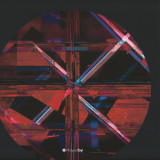
Luke's Anger (real name Luke Sanger) delivers his first outing on Love Love, Ceiling Walker. Sanger is a relentlessly interesting hero of the underground, probably best known as a techno and electro producer and an active player in the live experimental techno scene across Europe, notably including multiple appearances at Berghain/PanoramaBar. Based out of Norwich, UK, Luke has put out a plethora of banging records for two decades in styles from across the rave spectrum on some of our favourite record labels like Tigerbeat6, Don't and Sneaker Social Club, as well as an increasing amount of more ambient-leaning releases under his real name in recent years. Recognised as a true techno stalwart, Luke has received support from the likes of Surgeon, Dave Clarke, The Advent and Jerome Hill.
This EP fits firmly into the 'banging' camp - more than a nod to classic stateside sci-fi electro stylings as well as UK dance music's bleep techno bass foundations, this is popping, caustic, mechanical phunk expertly engineered to make you shake and wiggle. Particle Swarm kicks the EP off with strung-out synth chirps and plenty of latex squelch before moving onto the bounciest number, Threshold Rider, with buoyant bassline droplets poking through a solid 808 framework. On the flipside, title track Ceiling Walker utilises rushing crescendos and fluttering analogue rhythms to keep the dancefloor in rapture while closer, Silicon Boogie, achieves maximum levels of funk by aptly juxtaposing digi vocal snippets against square wave bass.
out of Stock
Last delivered 7 months ago available to reorder, subject to availability
Norman Westberg (guitar), Giridhar Udupa (ghatam, konnakol, khanjira, percussion) and Jacek Mazurkiewicz (double bass, electronics)An extraordinary meeting of three artists from three different musical worlds and three different continents. Norman Westberg (ex-Swans) and Jacek Mazurkiewicz have already released one album together "First Man In The Moon" in 2021 (published by the Swiss label Hallow Ground).In the new project, they are accompanied by Giridhar Udupa, an Indian master of ghatam (a clay percussion instrument that looks like a jug). The album will feature 3 long trance compositions, referring to ambient, krautrock, free jazz and Indian music.Jacek Mazurkiewicz describes the creation of this album as follows:"I met Norman Westberg while supporting the Swans tour in Poland as 3FoNIA. A few years later, during Norman's tour with Gira, we recorded a duet.The trio session took place similarly to the previous duet session during Norman's solo concert in Warsaw on the Swans tour.Recorded with Adam Toczko, a quick meeting on a day off from work.I invited Giridhar Udupa to the trio, whom I had met earlier during the period when I co-founded the band Limboski. I once invited Wacek Zimpel to play a few concerts with Giridhar. Wacek later created Saagara and I was wondering about some unusual musical context in which I would find myself with Giridhar. I was looking for an interesting sound configuration, but also a cultural one, with a different approach to creating music. I got the impression that for both Norman and Giridhar it was a fairly fresh meeting, not obvious. And on the other hand, ordinary - everyone did their own thing."Detroit guitarist Norman Westberg moved to New York in 1980 and became a part of the experimental music scene that was experiencing its golden age. Westberg himself became a permanent fixture when he joined the iconic avant-rock band Swans in 1983, and was the only member other than frontman Michael Gira to play with them for most of the band's run, both until their 1997 disbandment and his return in 2010. Westberg has also been involved with other legendary New York noise-rock acts, including Jim Thirlwell's Foetus and the post-Swans Heroine Sheiks, in which he played with Cows frontman Shannon Selberg; and in 2014, he joined the noise-rock supergroup Hidden Rifles, whose members included Mike Watt of Minutemen and Mark Shippy of U.S. Maple. Westberg's solo compositions, most often for solo guitar and a set of effects, draw on drone and post-minimalism, bringing to mind dark ambient passages from Swans albums.Giridhar Udupa is an extremely valued teacher and world-renowned artist, an Indian master of ghatam (a clay percussion instrument that looks like a jug). He was born into a family with long musical traditions. He began learning to play at the age of four, guided by his father. At the age of twelve, he already had his first performances behind him. He currently gives concerts alongside the greatest masters. He has received many prestigious awards. He performs in the USA, Spain, Canada, France, Switzerland, Germany, Oman and Kuwait. Giridhar Udupa is a member of the band of the Indian vocalist Bombay Jayashri, nominated for an Oscar for the best song for the film Life of Pi. He is one of the founders of the Layatharanga band. He also plays virtuoso other traditional instruments of South India, such as mridangam and kanjira, and is excellent at using the konnakol technique (a type of rhythmic vocalization).For three decades, the artist has been a global ambassador and icon of Carnatic music. He is the founder of The Udupa Foundation, a charity organization established in 2015 to promote Indian music, performing arts and culture. He has participated in recording dozens of albums. He is also well-known in our country thanks to his cooperation with Polish performers, which resulted in excellent artistic effects, such as the famous Indialucia - Michał Czachowski's group / project or the Saagara formation, led by Wacław Zimpel. Udupa also played on the album Lechoechoplexita, released by Leszek Hefi Wiśniewski, and on the album of the band Layatharanga, released in our country.Jacek Mazurkiewicz is interested in music in the broad sense. He puts his sounds together based on emotional impressions and pulse. Combining acoustics with electronics, he is constantly looking for a new sound. Solo as 3FoNIA, in a duet with Mikołaj Trzaska or Tomek Dąbrowski, the JMB trio with Wojtek Jachna and Jacek Buhl, in the Modular String Trio quartet, the Afrobeat quintet Faso Tamala are just some of his musical incarnations. With Patryk Zakrocki, as part of an audio mission, he massaged hundreds of pairs of ears in the Inner Ear Massage Office. He also deals with sound design, composing and producing music for films and theatre performances. He collaborated with many Polish and foreign artists.
Very few bands manage to last decades, and for the ones that do, it's often easy to settle down and get a little too comfortable. But there's nothing comfortable about Devourer, the explosive new album from Cursive. The iconic Omaha group is known for their intensity, ambition, and execution, and has spent 30 years creating a bold discography that's defined as much by its cathartic sound as its weighty, challenging lyrical themes. And Devourer is as daring as ever. Full of intense and incisive songs, the album proves exactly why Cursive have been so influential and enduring-and why they remain so vital today.In the years since their 1995 formation, Cursive developed into one of the most important groups to emerge from the late-'90s/early `00s moment when the lines between indie rock and post-hardcore began blurring into something altogether new. Albums like Domestica (2000) and The Ugly Organ (2003) became essential touchstones whose echoes can still be heard in new bands today. Devourer, as an expansive new double-album, examines humanity's bottomless capacity for consumption through a series of songs that act like vignettes, driven by frontman Tim Kasher's never-ending appetite for both taking in and creating art."I am obsessive about consuming the arts," he explains. "Music, film, literature. I've come to recognize that I devour all of these art forms then, in turn, create my own versions of these things and spew them out onto the world. It's positive; you're part of an ecosystem. But I quickly recognized that the term, `Devourer,' may also embody something gnarly, sinister." Fans have come to expect such heady topics from Cursive, but Devourer sets a new standard.While Cursive's music hasn't gotten any more comfortable, perhaps its being released into a world that's at least a little more shaped in their image. Devourer sounds urgent and fresh, the work of a band still experimenting, still hungering to find new creative heights. On album highlight "Consumers," the protagonist bemoans, "I saw our future and I want to go back." But Cursive are only moving forward.
Hermon Mehari and Tony Tixier first met in 2010, in their early twenties, in a club on Paris's Rue des Lombards for a concert with saxophonist Rodolphe Lauretta. Over the next decade, the two musicians took opposite paths, while continuing to collaborate on two continents. The American trumpeter moved to France to discover European culture and the world cultures that coexist there, while the Parisian pianist of Martinican origin spent several years in the USA, immersing himself in the roots of jazz and Afro-American music.
In June 2024, the two musicians, who had been working for fifteen years on numerous albums and collaborations, and whose musical understanding had continued to be forged in clubs, festivals, and on recordings, met again for a duet at the TOC-TOC festival in the Puisaye region, where Antoine Rajon was a collaborator. Enthusiastic about the idea, the artistic director of the KOMOS label invited them back to his home in this corner of Burgundy to record this Fender Rhodes/trumpet formula. He called on sound engineer Christian Hierro, who traveled with his mobile studio for the album recording, then mixed and produced the master in his studio in Lyon, using the best analog equipment and his expert ear.
At dusk on November 12, 2024, the duo played eight tracks in a single, direct take on a 33-minute magnetic tape.
Four unusual cover versions were carefully chosen. "Maimoun" is a composition emblematic of pianist Stanley Cowell's style, also recorded by Marion Brown. George Duke's "The Black Messiah" was captured live by Cannonball Adderley's band on an album of the same name but has never been released as a studio version. "Hello To The Wind" was created by Bobby Hutcherson in 1969, sung by Eugene McDaniels. Finally, "Laini," dedicated by the great Martinican pianist Marius Cultier to one of his daughters, is a mazurka dear to Tony's heart.
Each of the musicians also contributed a composition: Hermon with "This Is Our Fantasy," written especially for the session, and Tony with "Poem For The Oppressed," a moving composition with an explicit title. Lastly, the duo improvised two tracks, without repetition, in mutual symbiosis and echo.
SOUL SONG captures a moment without enhancement, transformation, or additives, far removed from contemporary virtual technologies.
Co-directed with Maxime Daoud (Ojard), this 7th opus was written and composed with passion and recorded with an outstanding team of musicians. The message of Barbara Carlotti's new album is direct and essential: "Cherish your future!" It is an invitation to welcome the unknown, to view our destinies with tenderness, to strive toward the future while taking care of our style, to counter life's setbacks, to chase the green ray, and to reinvent love. The goal is to liberate expression, heal the wounds of the past, articulate desire with elegance and humor, and let ourselves be moved by fleeting yet eternal joys, the sight of the ocean, or the infinite beauty of a singing voice that fills us with hope and strength in an outpouring of freedom.
"Vilhelm Bromander Unfolding Orchestra returns with Jorden vi ärvde (""The Earth We Inherited""), the follow-up to their acclaimed 2023 debut, In This Forever Unfolding Moment. Set for release on April 25, 2025, the album deepens Bromander’s unique fusion of cosmic jazz, free jazz, folk music and Indian classical traditions while carrying a powerful message about environmental and social responsibility.
Bromander composed this work as both a dedication to his children and a reflection on humanity’s role as caretakers of the planet. “The album is an attempt to spread light, beauty, hope, and resistance while acknowledging the gravity of our times,” he explains. “Right-wing forces are rising, wars continue, and climate disasters escalate. How do we find the strength and hope to change?”
The music balances urgency with a deep trust in humanity. Bromander’s meticulous arrangements, performed by an all-star ensemble, offer moments of both fiery resistance and serene contemplation. Tracks like “Jorden vi ärvde, den skall oss också ärvas” unfold patiently, blending vibrant improvisations with lush orchestration. The evocative ballad “Erde”, with stunning solos by pianist Alex Zethson and the bass-player himself, nods to Charlie Haden’s Liberation Music Orchestra, while “For Dewey” pays tribute to the elastic interplay of Keith Jarrett’s legendary quartet, high-lighting the fire-y saxophone playing of Elin Forkelid. The closing piece, “Calliope,” channels Indian classical influences, with harp evoking a swarmandal’s shimmering resonance.
With Jorden vi ärvde, Bromander expands his artistic vision, weaving together intricate compositions with a passionate call to action. The result is an album that doesn’t just demand to be heard—it invites listeners to reflect, feel, and, ultimately, act."
Die Modern Folk-Künstlerin Jensen McRae hat das Veröffentlichungsdatum ihres mit Spannung erwarteten zweiten Albums „I Don't Know How But They Found Me!“ bekannt gegeben, das am 25. April über Dead Oceans erscheinen wird. Zusammen mit der Ankündigung hat sie auch ihre neueste Single und das Video „Praying For Your Downfall“ veröffentlicht, ein Meisterwerk der Offenheit, das Witz und Charme verbindet, während McRae darüber nachdenkt, wie sie den Drang nach Rache an jemandem, der ihr das Herz gebrochen hat, loslassen kann.
Jensen McRae - Praying For Your Downfall (Official Video)
Vor dem Hintergrund von Herzschmerz, Selbstfindung und der Komplexität der Liebe ist „I Don't Know How But They Found Me!“ eine mutige Entwicklung für die junge Künstlerin. Das elf Titel umfassende Album, das in North Carolina mit Brad Cook (Waxahatchee, Bon Iver) aufgenommen wurde und an dem Nathan Stocker (Hippo Campus), Matthew McCaughan (Bon Iver) und ihr Bruder Holden McRae mitgewirkt haben, ist eine lebendige Sammlung von Songs, die von messerscharfen Texten und zeitlosen Pop-Melodien getragen werden. McRaes Stimme ist so vielseitig wie ihr Songwriting - mal flüsternd und strukturiert, dann wieder klar und hell. Es ist eine Stimme, die sowohl den Herzschmerz des Verlassenwerdens als auch die Stärke des Verlassens verkörpert.
Von Anfang an haben sich die Fans in Jensen McRae verliebt, für ihre scharfsinnigen, aufrüttelnden und klarsichtigen Songs. Ihr Songwriting ist verletzlich, ja, aber es ist auch stark, weil es sich nicht zurückhält. „I Don't Know How But They Found Me!“ zeigt McRaes Entwicklung von einer vielversprechenden jungen Künstlerin zu einer echten Songwriterin und Star. „Die tiefgreifendsten Entscheidungen meines Lebens“, sagt McRae, “haben sich oft wie Dinge angefühlt, die ich getan habe, bevor ich dazu bereit war, und in die ich hineinwachsen musste.“ „I Don't Know How But They Found Me!“ handelt davon, was folgt, wenn man dem widerstanden hat, von dem man dachte, dass es einen vernichten würde. Es geht darum, seine Grenzen kennenzulernen und zu erfahren, wozu man fähig ist. „Ich verband mich mit dem Gedanken, dass ich leicht unter dem Gewicht dessen, was mir widerfahren ist, hätte zusammenbrechen können, aber ich tat es nicht. Ich wusste es nicht einmal“, sagt sie, ‚aber ich war die ganze Zeit kugelsicher“. Jensen McRae ist in L.A. geboren und aufgewachsen und hat fast ihr ganzes Leben lang Musik studiert und gemacht. In der High School nahm sie am Grammy Camp teil und schloss ihr Studium an der USC Thornton School of Music mit einem Abschluss in Popular Music ab. McRaes Debütalbum „Are You Happy Now?“ schrieb sie größtenteils im Alter von 21 Jahren und war der erste Schritt zum Aufbau einer treuen Fangemeinde. „Are You Happy Now?“ navigiert die Identität von ihren tiefsten Grundlagen - dem Leben als junge, gemischtrassige schwarze und jüdische Frau - bis hin zu ihren persönlichsten Überlegungen - vertraue ich dir, vertraue ich mir selbst. McRaes Vertrauen in sich selbst hat sich mehrfach bestätigt, zuletzt und vielleicht am bekanntesten in Form des Songs „Massachusetts“. McRae postete eine Solo-Strophe und einen Refrain, kaum mehr als ein Stück eines Demos, und es fing Feuer im Internet. Covers, Duette und eine Lawine neuer Fans folgten, und McRae krönte den Moment mit einer fertigen Version und einer sommerlangen Tournee als Support von Noah Kahan. „I Don't Know How But They Found Me!“ nimmt McRaes mittlerweile beachtliche Fähigkeiten auf und macht sie massentauglich. „Savannah“ ist ein Song für alle, die schon lange dabei sind. Der pulsierende, an Country angelehnte Song erinnert sofort an das Beste von Phoebe Bridgers, wobei McRae in einem akrobatischen Flüsterton über einer federleichten akustischen Gitarre singt. Wenn „Savannah“ sein Crescendo erreicht, wird klar, dass McRae eine Künstlerin mit einer ganz eigenen Kraft ist, wenn sich Klavier und Gitarre überlagern und McRae eine Reihe bissiger Anklagen mit Schärfe und Überzeugung vorträgt: "You swore you'd raise our kids to end up just like you / well you're a false prophet / and that's a goddamn promise." Währenddessen ist „Let Me Be Wrong“ eine echte Hymne, eine beschwingte Ode an die Ablehnung von Perfektionismus. Wiederum auf einem einfachen Gesang und einer Akustikgitarre aufbauend, steigert sich „Let Me Be Wrong“ Schritt für Schritt in seinem Trotz; die Gitarren schichten sich, das Schlagzeug nimmt das Tempo auf, und McRae macht Platz für die Fehler aller. Wenn McRae knurrt „fuck those girls got everything“, ist das ein Schlag voller Kraft und Verletzlichkeit, der darum bettelt, unisono so laut wie möglich gebrüllt zu werden. Der ungewöhnliche Titel ihres zweiten Albums? Er stammt aus einer Zeile in McRaes Lieblingsfilm „Zurück in die Zukunft“. Ein Hauptdarsteller überlebt einen Kugelhagel, und dieses Bild hat McRae sehr beeindruckt. „Ich habe mich mit dem Gedanken angefreundet, dass ich leicht unter dem Gewicht dessen, was mir passiert ist, hätte zusammenbrechen können, aber das habe ich nicht. Ich wusste es nicht einmal“, sagt McRae, “aber ich war die ganze Zeit über kugelsicher.“
Taba voices a subtle yet surprising shift for the Japanese musician and producer Satomimagae. Observing and absorbing the fleeting scenes and sounds of life flowing outside of her home studio, Taba unfolds as a series of vignettes that document the personal and the universal. Satomi sings beyond herself in an orbit of souls and systems known and unknown, seen and unseen, in the present and in the strange flux of memory, leaving linear songwriting to rest for circuitous stories expanded and expansive in tone and texture. Following the logic of taba, a Japanese term for a bunch, bundle or grouping together of different things, the album is assembled as a loose collection of short stories. Shapeshifting into something like a poet-narrator, Satomi casts her writer's eye to the often perplexing shapes that form from quotidian events and exchanges defining our increasingly alienated age. Where Satomi's last full-length, 2021's Hanazono, bloomed from the lush soil of a private inner sphere, the bird's eye of Taba searches to place the artist_somewhere, somehow_within a wider, wilder world. Collaborations with other artists and musicians close to Satomi's universe further elevate the album's sweeping sonics. Synthesizer lines from Norio, who also helps define the album's visual identity through photo and video, enliven the tender ballad "Kodama." The bell-like Rhodes piano ringing in and around Satomi's guitar on "Dottsu" is played by Akhira Sano, who created the cover art for her 2021 Colloid EP. Yuya Shito's clarinet was the missing puzzle piece that completed "Spells," and it was also Yuya who mixed Taba with an ear for its organic textures and elegantly frayed edges, giving utterance to a distinctly different energy than Satomi's earlier expressions. The tonal and rhythmic play that lay the foundation of these songs also animates a colorful palette of melodic gestures, noisy resonances and pointed moments captured by Satomi's close-at-hand recorder. While Taba is still carried by the innate intimacy that has defined Satomi's music to date, these songs channel her newly spacious and inquisitive songwriting approach, unlocking unusual layers in the process. Some are subsumed in the speculative poetics of sound design, while others peer through the window of bedroom pop. Gathering imagistic reflections, tracing vast ideations and quietly lingering in humble moments, Taba connects vivid lines between the individual and the collective, the constructed and the cosmic, the articulated and the felt. Satomi's sonic tales gain an eloquent coherence by the simple fact of existing in conversation, humming a harmony of parts that buzzes with the tangled circuitry of a life in motion. Taba is the fifth album from Japanese musician, songwriter and dream traveler Satomimagae, following her 2021 album Hanazono and the 2023 reissue of her debut album Awa, both for RVNG Intl. On Taba, Satomimagae leaves linear songwriting to rest for circuitous stories expanded and expansive in tone and texture, unfolding as a series of vignettes that document both the personal and the universal. Some of the songs on Taba feature intimate moments captured on Satomi's hand recorder, poetic moments of sound design animated by tonal and rhythmic bedroom pop foundations. As with Hanazono, Taba's album artwork features a wooden block print by Satomi's sister, the artist Natsumi Magae.
Nocturnes 2 was created at the initiative of the label Midnight Special Records. We invited artists to write music for a new planet, a new world, and then to come and record it in our studio.
With this album, we aim to offer you a journey across different celestial bodies, each designed by the selected artists who participated in this project.
The album is also a tribute to Joe Meek's work I Hear a New Word, recognized for its innovative approach to production and its sound explorations.
We recommend listening to this album when you are calm, or wish to be.
Vilhelm Hasselgren is a Gothenburg-based producer and DJ with a focus on Jungle and productions that move between 160-170 bpm. Vilhelm focuses a lot on complex rhythms and ambient soundscapes and takes inspiration from both older and modern Jungle, as well as other electronic acts such as Basic Channel, Mala, Skee Mask and Arkajo. Vilhelm tries to create soundscapes that move between different musical starting points.
He has previously released on Rezonant Body, Canape Records, Bukva Sound and Of Paradise Records. Also has an upcoming EP releasing on Bukva as well as a V.A on Western Lore. In 2025, Vilhelm also has a residency at London-based Subtle Radio.
Vilhelms words:
Central Line EP is an EP that I'd myself consider to be my debut EP. The tracks were created within a two-and a half year span, with some tracks being re-worked and replaced. Later ending up with the final track-list, which I am very happy in how it ended up in the end. One of the tracks that were later added onto the EP being 1000 a co-production with my brother Einar (Local Arms), which we spontaneously recorded at our parents house over a weekend.
I mostly start from percussion, onto bass and later melody in my productions. The title track "Central Line" was started when I lived in Brighton for half a year, together with Theo Soderlund (Theomega). The Eski sample is a bit tricky one, but wanted to experiment with it, further I chopped an Amen and a Think break with an idea to create a pretty simple rhythm that could leave the riff to speak for itself. Even though the tracks were created within a pretty long span of time, I feel like they portray a sound that I want to further explore and produce at this point. Also Arcne adding a monster remix of Central Line that has been getting lot of love. Could not be happier to release it on Bukva Sound which prior releases I think really captivate a sound that has been really inspiring throughout the process.
out of Stock
Last delivered 2 days ago available to reorder, subject to availability
Northern soul is in the news again, as once more this most resilient of dance floor cults is discovered by a new generation. For four decades now Ace Records has been a natural home for the music and using that experience we are bringing you our first ever all classics collection of some of the scene's greatest hits. All on one LP.
The recordings featured on this release are tried and tested, often in the hot forge of the scene's earliest day, when new discoveries were coming thick and fast, and only the strong survived. These did.
So we have 14 tracks which filled floors in Wigan, Blackpool, Cleethorpes, London's 100 Club and many other legendary venues. From West Coast Mirwood and Kent/ Modern label classics by Jackie Lee, Bobby Garrett, Mary Love and Danny Monday, to the big City Chicago soul of Darrow Fletcher via the super rare recordings by Rita & The Tiaras and Little Ann, which are now accepted standards of the scene.
This is an album for the beginner, those who want to know what all the fuss is about, or those older hands who just want to relive some exceptional memories.
With the Do For You EP, Fossar embarks on a deeply personal yet universal journey that’s as adventurous as our label’s name - Zissou. Known for his beautifully textured releases on Fuck Reality and Feuilleton, Fossar delivers a five-track exploration into the highs and lows of forging your own path. Each track reflects a different shade of the journey - passion, doubt, euphoria, and self-discovery, all woven together through Fossar’s signature warm basslines, hypnotic melodies, and crisp, driving rhythms.
More than just an EP, Do For You is a soundtrack for the summer, a call to take charge, and a reminder that the true adventure lies within. The path isn’t always clear, but the music is here to guide you.
out of Stock
Last delivered 16 months ago available to reorder, subject to availability
We are thrilled to announce the Playedby020 vinyl compilation, a special edition celebrating Playedby's 10th anniversary. This exclusive collection features 20 notable tracks from renowned international producers. As we mark a decade of musical innovation and passion, the Playedby020 compilation showcases the diverse and cutting-edge sounds that have defined our journey. Join us in celebrating ten years of incredible music with this limited edition vinyl box, a must-have for any electronic music aficionado or committed collector. Thank you for being part of our journey—here's to many more years of musical excellence!
out of Stock
Last delivered 8 months ago available to reorder, subject to availability
Big new release by Peter Van Hoesen! Continuing his exploration of intricate techno systems, their effect and direct perimeter of action, Peter van Hoesen turns in his newest four-track piece, ‘Prime Directive’: a fascinating dive into the artist’s shape-shifting headspace and inner creative chaos.
Fuelled on a furnace-hot mix of abstract-leaning immersion and hi-octane rhythmic thrust, ‘Prime Directive’ looks at contemporary techno from the angle of experimentation and intuitive abandon. The result comes in the form of four distinct movements, each carving out their own logic and associated behaviour out an endless pool of potentialities. Here comes chaology unfolding in all its unadulterated, visceral glory.
‘Definition by Absence’ breaks the trip in to the sound of a faux-random symphony: its train-like swing and fiery bass seesaw coalesce through an elliptic fluttering of sorts, iterative and not, patterns moving in and out of synchronicity as van Hoesen applies more or less pressure on both ends. All in gusty in-your-face-ness, ‘Variables Edit 1’ whirls and swirls like an ominous vengeance of nature; Its puncturing kicks and whistling menace set against stellar winds and rabid machinery on the prowl for its next victim.
An even more unsettling piece of disjointedly arrhythmic, anti-club music for the dance floor, ‘Prime Directive’ will have you zoning out like a bad dream, flush with metronome-faced monsters and molten clocks hanging from dead trees. ‘Morphology’ could be PVH’s attempt at giving his concepts a carnal carcass to hold onto. Here, rhythm becomes somewhat less erratic, offering his 360-degree vision more melodic surface and actual room for dispersion. One to keep the boundaries pushed and status-quo challenged, this is techno at its most entrancingly bold and fearless.
*This new four-track epic from Peter van Hoesen comes draped in a fine piece of artwork courtesy of Atact, and pressed according to our standards in 180g audiophile quality so you get to experience the Belgian master's chiselled sound design in all its glory.
out of Stock
Last delivered 3 months ago available to reorder, subject to availability
For their second album 'The Foel Tower', Quade holed up in an old stone barn in the cradle of a Welsh mountain valley.
The valley was a stark and windswept backdrop with little daylight, as the band would huddle around crackling fires each evening. “There was very much a feeling of being on the complete fringes of society,” the band says. “The last vestiges of settlement before the unrelenting barren moors that loomed over us.”
It was an environment that would shape the band – a Bristol four piece made up of Barney Matthews, Leo Fini, Matt Griffiths and Tom Connolly – and the record they have made. It’s an album that is as dreamy as it is melancholic, and as quiet and tender as it is forceful and potent – gliding across genres like winds blowing over those wide-spanning Welsh hills – to arrive at something the band half-jokingly, yet somewhat accurately, describe as “doomer sad boy, ambient-dub, folk, experimental post-rock.”
Quade is a band but it’s also a very close-knit group that have been friends since childhood who use this musical vehicle for interpersonal explorations and connections. “We’ve individually experienced a lot of difficulty over the last several years and Quade has represented a space to shelter from these,” the band says. “This means we often communicate extensively with each other about the issues affecting us individually and collectively. These conversations and concerns are central to The Foel Tower.”
In many ways, the making of this record – or any Quade record – goes way deeper than the simple writing, construction and recording of music. It is a profoundly deep and meaningful experience. “A key theme of the album relates to why we connect with specific places in the way that we do,” the group says. “We often remove ourselves to isolated valleys, sheltered from some of the painful personal struggles that we have experienced as a band. These become spaces in which we collectively purge ourselves of some of these difficulties hoping to make Quade a physical and emotional place of solace. This album celebrates these places that we’ve been able to retreat to and recuperate.”
It is a deep, dense record that is stuffed with musical, cinematic and literary influences – from Ursula La Guin and Cormac MacCarthy through to RS Thomas and Yeats – but despite the heavy, introspective and anxious nature of some of the material, it is also a record that is remarkably deft, agile and considered.
Made with producer Jack Ogborne and mixer Larry ‘Bruce’ McCarthy, there is a pleasing duality to the final sound of the record. One that feels fragile and intimate but also powerful and forceful, as introspective as it is expansive, and a record that is as detailed and textured as it is wide open and spacious.
The album title also pays homage to the place that shaped it so greatly. Within this remote Welsh valley stands the Foel Tower, a stone structure filled with valves and cylinders that can raise and lower the level of the reservoir to draw off water. Which it can then send as far as 70 miles to Birmingham. However, in the late 1800s this land was occupied by local farmers and families in the hundreds until the British Government acquired the land, cleared the valleys, and promptly displaced them in order to begin serving the vastly expanding industrial English city. The band dug into the history and politics of this and wove it into the themes they were already thinking about, using what the Foel Tower stands for as something of a contemporary metaphor. “This tension was something that we wanted to explore without the haughty judgement of our more metropolitan lifestyles,” they say. “And to explore how this specifically relates to ourselves: how can we envisage a genuinely ecological future for ourselves – one that is accessible, affordable and in harmony with endangered rural practices.”
What makes The Foel Tower such an incredible record is that it feels born of a time, place and situation that only existed in that very moment. It’s a snapshot of those 10 days spent in rural Wales and all the feelings and anxieties the band were experiencing at that specific time, magically caught on tape. “The album very much feels tied to this valley for us and the conversations and experiences we shared there,” they say. “It brings up a great deal of poignancy for us, an emblem of some fleeting respite from the strains we all have to experience. But there’s also deep sadness knowing how transient these moments are – in fact, there’s just a great deal of sadness in this album. But it’s also a record that while personal, resigned, and emotionally burdened, is ultimately hopeful.”
out of Stock
Last delivered 17 months ago available to reorder, subject to availability
Olof Dreijer signals a return to the dancefloor with the 'Rosa Rugosa EP', presented via UK label Hessle Audio. Lead track 'Rosa Rugosa' combines dreamy vibes and rubbery sounds with Olof's signature ear-worm synthlines, sitting comfortably alongside the label's extensive catalogue with a bassline that tears and splinters on the verge of breaking apart. Picked by Pitchfork as their 'Best New Track', it's found its way into the tracklists of some of the most respected and adventurous DJs throughout the Summer.
Complementing the title track, 'Camelia' dials up the emotional intensity with gliding leads soaring throughout the breakdown while 'Cassia' completes the EP with painterly splashes of colourful pads and gentle hand claps keeping the pulse. From his club focused work as Oni Ayhun, to his membership of the Swedish electronic pop group The Knife, Olof's music has always found ways to expand our ideas of what's possible in both instrumental electronic and pop music production, with an approach that is as inclusive and colourful as it is experimental.
out of Stock
Last delivered 11 months ago available to reorder, subject to availability
Following the epic and potent album 'Blood' recently released on Infinite Machine; Shanghai-based producer Laughing Ears alights on Hemlock with a killer three track EP.
Losing Track
Dense with pin-sharp atmospherics and gentle intertwined melodies, this lush piece evokes 90's IDM breakbeat and trance and propels them into far away realms.
Bite the Bullet
Bleeps and homespun breakbeats dance into the night on this quirky workout, keeping us on our toes with unhinged edits and a twisted breakdown.
Breakaway The rudest cut on the EP, Breakaway lamps up the pressure for a full sub bass rinse out riding on loose but fully loaded drums.
Through our many years of playing together on many stages across the globe, we have been able to share our Carolina roots with lots of people. But our tradition really doesn’t live on the stage; it lives on a back porch of Mebane, in a living room in Morganton and in countless other places wherever a musician might find themselves. We wanted to revisit the sounds, places, and textures at the beginning of our musical journey together and to share that experience with y’all. The rain, the cicadas, and thunder become part of the band, grounding us and the music firmly in the long narrative of the place we call home
By the mid-1970s, trumpeter Dennis Mpale was a consummate musician with an auspicious resume that located him at all the key turning points in the evolution of modern South African jazz. In his mid-20s, he led the trumpet section of Chris McGregor’s Castle Lager Big Band and participated in the ensemble’s landmark 1963 album Jazz/The African Sound. 1968 saw him recording I Remember Nick with The Soul Giants, which joined a wave of notable late-1960s releases, including The Mankunku Quartet’s Yakhal' Inkomo and The Chris Schilder Quintet’s Spring, that ignited the ambitions of South African jazz artists and producers in the 1970s. In 1975, Mpale co-founded the “rock jazz” ensemble Roots, inaugurating the era of jazz fusion in South Africa and opening the door for Pacific Express and Spirits Rejoice.
By 1977, Mpale had earned the right to an album of his own and, having participated in the 1975 recording of Abdullah Ibrahim’s African Herbs, turned to producer Rashid Vally of the As-Shams/The Sun label for his solo debut. Vally financed the project and seized an opportunity to license it to the local subsidiary of a major international label. As such, Our Boys Are Doing It was issued in South Africa on the Mercury label in 1977. Featuring saxophone heavyweight Kippie Moketsi, the album was a response to the global direction taken by trumpeter Hugh Masekela on The Boy's Doin' It in 1975. In contrast, seeped in the bump jive style of popular urban township music, Our Boys Are Doing It was a manifesto for an authentic, exuberant, homegrown variety of South African jazz.
Cool Up Records presents Music is the Right Way, their latest 7-inch vinyl release. A unique featuring of two soulful singers of the label, Paulinho and Payoh SoulRebel. In this song, these tasteful singers show their skills with determination, resulting a positive song with a crafted result.
Music is the Right way bring a strong message about the importance of music in our lives. Paulinho invites Payoh to join this wonderful tribute to music and how important is to be creative and express your feelings through music. Cool Up provides a Deep Roots track with a solid one drop, sweet vocal harmonies and interesting piano arrangements.
As usual, this release includes a notable dub version on the B-side, highlighting Cool Up's cleverly produced work, resulting in a great final product.
The design is another example of Mr. John Vanilla's unmatched skill. It keeps the look of the earlier singles and shows off his great work again.
Certainly, Reggae collectors will enjoy Music is the Right Way. It's the eight 7-inch release from Cool Up Records, which keeps active releasing music on vinyl.
Rhiannon Giddens reunites with her former Carolina Chocolate Drops bandmate Justin Robinson on What Did the Blackbird Say to the Crow, an album of North Carolina fiddle and banjo music. Produced by Giddens and Joseph "joebass" DeJarnette, the album features Giddens on banjo and Robinson on fiddle, with the duo playing eighteen of their favourite North Carolina tunes: a mix of instrumentals and tunes with words.
Many were learned from their late mentor, the legendary North Carolina Piedmont musician Joe Thompson; one is from another musical hero, the late Etta Baker, from whom they also learned by listening to recordings of her playing. Giddens and Robinson recorded the album outdoors and on location at Thompson’s and Baker’s North Carolina homes, as well as the former plantation Mill Prong House. They were accompanied by the sounds of nature, including two different broods of cicadas, which had not emerged simultaneously since 1803, creating a true once-in-a-lifetime soundscape. The duo, along with four other string musicians including the multi-instrumentalist Dirk Powell, will embark on the Rhiannon Giddens & The Old-Time Revue North America tour in April.
“With the assaults on reality going on in the world today, we wanted to offer another kind of record, like walking back onto a gravel or dirt road while a stampede goes the other way,” Giddens says. “With the cicada choir, this record could’ve only happened at a certain time in the last 120 years. We doubled down on place, time, realness, and old-fashioned front porch music. It’s a reminder that another way exists, with music made for your community’s enjoyment and for dancing–not solely for commercial purposes.
“What is the role of music in our society?” she wonders. “How do we de-couple it from unfettered capitalism, where music is a product and musicians are incidental? How do we use the tools and system that we have been bequeathed in a way that reminds us of other ways of being?” Robinson adds, "Recording this album felt like being back in the saddle. Just this time Joe is not here, and his fiddle is under my chin. The album is about home, the cicadas, the storms, the music, and the people who make it feel like home."
Thompson was one of the last musicians of his era and his community to carry on the southern Black string band tradition. He played a crucial role in the lives of Giddens and Robinson, who, along with their Carolina Chocolate Drops bandmate Dom Flemons, spent their formative years learning from Thompson in traditional apprentice/mentor relationships. His influence has guided all of their artistic journeys as well as their mission to keep the legacy of the Black string band tradition alive.
In further tribute to Giddens’ North Carolina roots, What Did the Blackbird Say to the Crow will arrive just a week before Biscuits & Banjos, the inaugural edition of her first festival, which highlights the deep roots and enduring legacy of Black music, art, and culture while fostering community and storytelling. The sold-out festival will feature a much-anticipated Carolina Chocolate Drops reunion, their first performance together in more than a decade.
How does one approach the morning after a party for the end of the world? This is a question which Mamuthones had to ask themselves, in the wake of their last album for Rocket, 2018's Fear On The Corner. Nonetheless, from the aftermath of this uncertain period has risen the still more flourishing realm of From Word To Flesh - a colourful and multi-faceted creation very much befitting the outsider spirit of Rocket's new Black Hole imprint. “I believe that with this album a circle has been closed” reflects Mamuthones mainman Alessio Gastaldello. “We returned to the atmosphere of the first Mamuthones albums with the skills acquired throughout the journey, with new sounds and with new creative processes. I would say that what remains constant – and at the core of our music – is the obsessive rhythms and the search for a sonic rituality: this is for certain our trademark”. This is clear right from the curtain raiser 'Burn From Inside', which beams the emotive approach of the band through the shamanic prism of Coil's Ape Of Naples. From there, hypnotic repetition marries to abstract abrasion and mournful laments with equal finesse, as redolent of the spiritual zest of Popol Vuh and Ash Ra Tempel as the gnostic folk of Six Organs Of Admittance. Elsewhere, 'A Symmetry Of Faith' summons a union of post-punk and psychically charged folk aligned with the recent work of Bristol's Beak. The Sardinian ritual of the Mamuthones – in which sinister masked figures weighed down with cattle bells conduct a ceremonial procession to ward off evil forces - has gone on for some two thousand years, and it may be that these ghoulish avatars are engaged in a celebration of the endless cycles of death and rebirth, fortifying spirits for a new epoch. Amidst the chaos and tumult of the 2020s, the band of this name has undergone just such a change themselves, and ‘From Word To Flesh’ is the fruit of their struggle. As Alessio says “With this album I think the Mamuthones have never been so unmediated, so naked: all masks gone”
“Egypt’s “official” popular music throughout much of the 20th Century was a complex form of art song steeped in tradition, well-loved by the middle and upper classes, and even accommodating to certain non-Arabic influences. It was highly structured by professional musicians working an established industry centered in the capitol, Cairo. However, far from the bustling cosmopolitan center of Cairo, north and northwest, in towns like Tanta and Alexandria and extending across the Saharan Desert to the Libyan border, dozens of fully marginalized artists were developing a raw, hybrid shaabi/al-musiqa al-shabiya style of music, supported by smaller upstart, independent labels, including the short-lived but deeply resonant Bourini Records. Launched in the late 1960s in Benghazi, Libya, Astuanat al-Bourini اسطوانات البوريني (Bourini Records) published some 40 to 50 titles from 1968 to 1975. Bourini released 7-inch 45 RPM singles by 15 artists, all but one of them Egyptian, igniting brief careers for Alexandrian singer Sheikh Amin Abdel Qader and the blind Bedouin legend Abu Bakr Abdel Aziz (aka Abu Abab). The tracks compiled here comprise a full range of styles covered by the label, while highlighting some of its most gobsmacking moments, from Basis Rahouma’s beastly transformation into a growling and barking man-lion by the end of “Yana Alla Nafsa Masouda,” to Reem Kamal’s hopeful-if-bitter handclapping party pivot “Baed Al Yas Yjini,” which descends into an almost Velvet Underground outro-groove of nihilistic dissonance. All the tracks on this compilation were laid down in stark divergence from the mainstream Egyptian popular music topography of heightened emotions buoyed by lush arrangements. The contrast is most evident in Mahmoud al-Sandidi’s “Ana Mish Hafwatak,” wherein his voice weaves heavily but deftly through a constant accordion drone, and Abu Abab’s “Al Bint al Libya,” a sparse, slow-burning lament with minimal percussion, violin, and Abab’s nephew Hamed Abdel Muna'im Mursi on lyre. Whereas the Egyptian mainstream was aspirational, attempting to reflect Egyptian culture at its most refined, the performances captured by Bourini were manifestations of everyday life lived by the mostly otherwise ignored masses. More than half century old, this music has lost none of its urgency, presence, or relevance. We hear these artists as if they’d just joined us in our living room, and not on a stage decades ago surrounded by tens of thousands of long-forgotten acolytes.
Almost Like You Could ignites its art punk fire with Lucy Alexander proclaiming, “Everyone wants something to talk about / But not a minute to spare, so be brief.” Not surprising from a song that’s 1:54 (‘Higher’), but the raw honesty in her lyrics ring far after the music ends. Alexander, along with bandmate Luke Cartledge, place the propulsive power of their beliefs at the core of their debut full-length album, and their guiding motivation towards social justice is as fierce as it is welcoming. “Living as part of the queer community, and being queer myself, leads me towards supporting every person’s truth,” Alexander says. Scrounge’s songs skip to a fast beat, electrifying the entire album with a sense of empowerment. Their approach is OG punk: they make music for their peers and themselves. Only now, with a world of connections possible, they’re able to open arms wide for a far-reaching embrace. Alexander’s rich vocals give their sound its central force, anchoring the songs with confessional lines (“If this is the pinnacle, then I need a miracle/ Cause everyone’s laughing at me,” “There’s not much left/ this corpse I have to keep/ Above board.”). They sing about economic inequality, political corruption, environmental destruction, and collective change. “We’re inspired by those around us, and we write about what we care about. Art has always existed for us as a means of catharsis, a way of expressing something we might not be able to otherwise, and we hope our music can be that for other people too,” says Alexander. “I think I’ve actually written a filthy banger,” she states while re-listening to “Buzz/Cut”, a grunge-honoring hammer of a song that takes a journey from disappointment, to self-realization, to release. Alexander and Cartledge’s gratification in making an album they’re proud of mirrors the empowerment conveyed in their lyrics. A follow-up to debut mini-album Sugar, Daddy (Fierce Panda, 2022), Almost Like You Could came together over 18 months, in between “teaching, touring, graduation, and a wedding”, as Lucy explains, for the band always has a handful of shows coming up. It’s a strange outcome for a duo who first bonded over their mutual love of SOPHIE. “She radicalized the structure of sound, and revealed herself through it,” Cartledge explains. “That was a massive inspiration when we started playing together, stripping everything away to open up new possibilities as artists and as people." Having already toured Europe and the States, Scrounge is preparing to be on the road throughout 2025. In a world where the idea of true community is ephemeral, Lucy and Luke seek to foster it everywhere they play. And their belief in change is ultimately buoyed by hope. “I know that it’s never been this good,” they sing.
Following the success of last year’s Walks - their first album of completely original compositions - Group Listening release a new 12” vinyl of Tell Everyone Everything via PRAH Recordings.
The title track and artwork are informed by decay, expiration and musical renewal.
“The title comes from a music festival that happened a few years back in Bristol. A really small DIY festival, called Tell Everyone Everything. I really liked the title - so I stole it. The name stuck in my mind as something very open and positive - a radical action. It could be taken as a proposal for progressive change, or a revolutionary art manifesto,” explains Paul Jones.
“The cover art is a photo that I took a long time ago somewhere on a beach in Sir Benfro (Pembrokeshire). The colours are all weird because it was taken on a very expired roll of Kodachrome. It’s sort of eerie. The bucket and spade had just been left there. It was one of the last ever rolls of Kodachrome to be processed, I snuck it into the developers on the last month they were still open, just before the very last processing plant was shut down forever.”
The release features remixes by both Ancient Plastix (who the duo toured with in 2024) and Loggsplitter. The band were delighted with the results: “I loved watching Ancient Plastix every night and was thrilled when he agreed to remix our song. It turned out great too”, says Stephen. Of the Loggsplitter remix Paul says: “It’s like a hot blast of compressed air travelling across the downs from a ravers airhorn. Lush”
This is the northeast calling, with songs of stillness, reflection, renewal, defiance, hope, classic melodies and, at certain perfectly judged moments, furniture-shifting riffs. With a powerful album shaped by pandemic-era loss (of momentum, and of a band member), and by the wins brought by what singer/songwriter/guitarist Adam Hope describes as a “weight lifted off my shoulders”. With a fresh, front-footed, fired-up approach that owes everything to a band returning to their roots in Wallsend and Newcastle – and, for the first time, making their music entirely on their own independent terms: self-produced and self-confident. “The Big Sad: an album born from the ashes of dark times but representing a beacon of light for the future. An album of honesty and purity, one that our current fanbase sonically may not be expecting. The sound of a band that got tired of slamming on the fuzz pedal to tick the ‘rock’ box and dares to try something new, dares to shock, dares to be great.
R&B duo THEY. — songwriter Drew Love and producer Dante Jones — have developed a smooth, future-facing sound for nearly a decade. In the early days, it was simple; two artists aligning on an appreciation for '90s R&B, new jack swing, and the height of soul-sampling hip-hop. Jones making beats and Love on the lines, a basic, balanced, and open-ended setup, free from major label expectations (which they'd feel on their 2017 breakout Nü Religion: Hyena) and high-profile collaborations (explored on 2018's Fireside, 2020's The Amanda Tape, and 2023's Nü Moon). They're proud of every stop along their story, while hindsight and a fresh perspective after signing to Secretly-affiliate label drink sum wtr have afforded them some distance to reflect on where THEY. goes next. The answer is LOVE.JONES. Here the duo exudes a whole new energy by reasserting their artistry in its most potent and pure form, just Love and Jones, making straight-fire, love-making music indebted to the golden neo-soul era that gave us the namesake 1997 film. “Forget the features, forget bringing in the big producers and writers. It's really just a return to our original dynamic," says Jones. Refined and reinvented, THEY. have arrived at their boldest work, a stacked, high-energy collection celebrating Black art, culture, and "the intense feelings of Black love."
Jess Sah Bi is well-known as half of the legendary duo Jess Sah Bi & Peter One who brought homegrown Country-Americana to the West African masses with their smash debut Our Garden Needs Its Flowers in the mid-1980s. Touring stadiums and reaching listeners worldwide, their music has racked up millions of spins on YouTube and remains imprinted in the hearts of Ivorians of a certain age. ATFA reissued their album in 2018, garnering critical acclaim from publications including Pitchfork and Rolling Stone and reaching a new generation of listeners outside Ivory Coast (Cote d'Ivoire). Sometime in the early 90s, Die Sahbi - or Jesse, as he known to friends-became gravely ill with an unknown ailment and almost died. He visited various doctors and all kinds of religious healers and nothing helped. One day he went down to an Evangelical Christian revival in his neighborhood. They prayed over him and he was delivered. He says, "Their prayers helped chase out whatever demons and unhealthy spirits were inside me. After that my illness went away. When I went to the United States a few months later on an exchange program I wanted to make music to thank God because I was saved." He recorded an album of music praising God in order to honor a promise he made to himself at the depths of his desperation in the hospital. The album Jesus-Christ Ne Deçoit Pas Jesus Christ Does Not Let Us Down came out in 1991 and sold around 3000 cassettes in Ivory Coast. The master tape was lost along the way so the recording has never been on digital platforms until now. Jesse didn't have much time to record while visiting South Carolina, hence the relatively short album, 6 songs including two reprises for filler. A local pastor connected him with a studio and some American musicians (Robert Fortner and Gary Davis) to help. They added acoustic guitar, percussion and keyboard accompaniment to Jesse's soaring French and Gouro vocals, harmonica and finger-picked acoustic. The resulting recording is deeply soothing and contemplative music that perfectly compliments the songs already embraced by millions. But he had to find the rest of the studio expenses-$600 total-which he secured drawing cartoons for UNICEF. Jesse is Ivory Coast's first political cartoonist, a vocation for which he was widely celebrated at the time. It also made him a few enemies which lead to him leaving the country permanently a few years later. Jesus-Christ Ne Deçoit Pas is Jess Sah Bi's first and only gospel album. Fortunately, fans responded with enthusiasm: widespread radio airplay and concerts followed, along with a growing solo profile in the country. The first big gospel artists in Ivory Coast were the duo Mathieu et Constance, who emerged in 1989. There was a bigger gospel music movement in English-speaking counties like Ghana and Nigeria (Christians make up roughly 40% of the population in Ivory Coast, slightly less than Muslims). Jesse didn't have any intention of working in Christian music but he realized, "You don't make music to make money-you want to send a message." In the years since Jesus-Christ's release, gospel music in Ivory Coast has grown to become a key part of music culture in the country. Spiritual music appears in community actives across the public and private spectrum from religious gatherings and parties to television broadcasts and music festivals. And, as it has evolved and indigenized locally, gospel music has picked up elements of traditional Ivorian music, reggae and soul. The album ultimately precipitated the demise of the duo, who were soon separated geographically as Peter One relocated to Nashville. He went on to become a nurse and release a successful solo album on Verve following the ATFA collaboration. Nowadays Jesse lives in the Bay Area and continues to record and perform music wherever and whenever he has the chance. He is publishing a new book of humorous cartoons in 2025 and his most recent album Never Give Up came out in 2020
out of Stock
Last delivered 18 months ago available to reorder, subject to availability
H.D. Reliquary is the first eponymous release from Ben Shirken a.k.a. Ex Wiish, and finds him returning home to his own label, 29 Speedway. The songs sparked during sessions with close collaborators - across 11 pieces, artists such as Pavel Milyakov, MIZU, Dorothy Carlos, Kevin Eichenberger and Muein breathe personality into the record. H.D.R. coaxes beauty from a serrated, raw, yet subdued palette drawn from improvised recordings of trumpet, violin, upright bass, cello, and modular synthesis.
The title references the hard drive as a sacred container for relics, contemplating how digitally archived fragments of one’s existence can burn eternally after death. Archives, and in this case recordings, splinter and warp. Some distort what they contain. Some vanish, and others are eternally preserved, immune to deletion. Your information on these digital drives becomes archival shrapnel, the music that survives the remnants of collaboration. Pieces of recordings were fed into a series of proprietary neural networks, generating MIDI information and audio that reacted to on-the-fly soloing, imaginary sessions between players and algorithms invented posthumously (in post).
Shirken will release H.D. Reliquary alongside a sound installation on April 11. Where his prior work was geared towards dissociation, H.D. Reliquary invites us to contemplate how our tools for understanding and containing the world fundamentally alter our relationship with it. He has performed in spaces such as The New Museum, Pioneer Works, Public Records and Nowadays in New York City; Dripping Music And Arts Festival in New Jersey; La Station in Paris; and Cafe Oto in London.
out of Stock
Last delivered 18 months ago available to reorder, subject to availability
Techno tastemaker Enrico Sangiuliano returns to his influential NINETOZERO label with his bold new Transcendence EP featuring two very different but equally powerful sounds; one track is to dance to, the other one to listen to.
This new release caps off an impressive year for the Italian underground icon. Coming just a couple of months after his Interconnection EP and a packed season of headline shows, it marks yet another subtle evolution of his always hard-to-classify sound. The EP is a collaboration with psychedelic trance pioneers GMS, who have been making their mark since the 90s. The award-winning pair have had their music used in a trio of Tony Scott movies and have dropped several vital albums and EPs.
“GMS and I met many years ago in their studio in Ibiza and spontaneously cemented our relationship through our passion for sound”, says Enrico Sangiuliano. “They are a pillar of psytrance, and collaborating with them to interpret the concept of Transcendence was the perfect way for us to finally merge our creative visions. With this release, we transcend our individual musical paths to create something entirely new. We explore the theme of elevation, challenging ourselves to move beyond the tangible. Here, music becomes a portal, expanding consciousness and providing an escape from material reality. Together, we shaped our sounds to build an immersive experience, with a guiding voice to lead you through it. Transcendence is an invitation to let go, release mental constructs, and flow with the sound. It's a journey into a timeless realm where what you feel and who you are become one. To transcend is to connect with your deepest self—and beyond.”
Superb opener 'Transcendence' is a sleek and futuristic soundscape with dynamic drums that take you up amongst the stars. The smeared pads bring a cosmic atmosphere, the lush arps layer in plenty of trance-tinged emotion, and smart spoken words add a cinematic feel to this most escapist track. 'The Inner World' is then a suspenseful two-minute synthscape with wise spoken words that muse on inner strength. It is a rousing piece of emotional electronic grandeur.
The Transcendence EP is another strong statement from the forward-looking creative mind of Enrico Sangiuliano.
out of Stock
Last delivered 26 days ago available to reorder, subject to availability
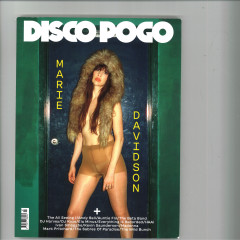
Our Spring/Summer ‘25 issue features a deep dive on Madonna’s New York nightclub roots and her links with the dancefloor ever since plus a rare interview and photo shoot in LA with DJ Harvey and our third cover is the super cool Marie Davidson.
Plus we have features on Auntie Flo, Pan Amsterdam, Ela Minus, Tryouts, Mark Pritchard & Thom Yorke, DJ Koze, Andy Bell, Everything Is Recorded, The Sabres of Paradise, The Wild Bunch, Kevin Saunderson, HAAi and lots more.
184 pages of quality music journalism by the world’s best music writers plus beautiful photography and design in a glossy print magazine.
Issue 6 is completely sold out and we expect this issue to do the same so please order asap to secure copies.
”Operation Timeframe” is a fusion of styles between two artists who have made waves in their careers: Franco Falsini and Saverio Celestri. On one side, we have a pioneer of electronic music; on the other, the product of years of evolution.
Franco has a rich musical history and a diverse array of influences: starting from progressive rock and arriving at electro-pop, he approached electronic music with a substantial musical background. After founding and participating in various bands across the United States and England, he collaborated with the renowned record label Polydoor. In the early 1990s, he combined his skills as a guitarist and producer, beginning to perform worldwide. In track A2, “A Molecular Affair,” you can clearly hear this blend, which transports us back a few decades and lets us savor a gem deeply rooted in a quality-rich past.
Saverio also had an initial approach to electronic music partly rooted in rock, though more toward alternative rock. Moving to Berlin at a young age, he developed his sense of electronic music in a city teeming with inspiration. Here, he combined his background in electronic, pop, and rock to create brilliant tracks that captivate dance floors worldwide with his Electro, EBM, Synth-Pop, and more. With the B1 track “Veleno,” Saverio follows in the footsteps of his friend Franco, closing the album with “Traveling,” a track structured in Synth Pop, enhanced by the crystal-clear voice of Brazilian artist Lourene.
This is a record that focuses on that frame in which the two artists perfectly align their past and future, projecting it directly into the present, as only two geniuses can.
out of Stock
Last delivered 15 months ago available to reorder, subject to availability
Exclusive collection of the Jamaican reggae singer and DJ.: all the tracks are from the Clement Bushay production in the years between 1974 and 1979 and nener released on a single vinyl. “Born in Clarendon, Jamaica on December 3rd, 1951, Prince Jazzbo, also known as Linval Roy Carter, burst into the music scene with his hit "Every Nigger is a Winner" and followed it up with "Step Forward Youth." These songs catapulted him to international fame, leading to a successful world tour.
Upon arriving in the UK, Prince Jazzbo connected with me, that I was already making waves with artists like Louisa Mark, Owen Gray, Tappa Zukie and Zabandis. This partnership led to a fruitful collaboration, and I am excited to share some of the incredible music that came out of our work together. I hope you enjoy it.” (Clement Bushay, November 2024)
On Katelyn Clark and Mitch Renaud's »Ouroboros,« astronomical and astrological phenomena, concepts and symbols such as the Great Year or the Eternal Return serve as the starting points for sonic explorations and experimentations. Focusing on a uniquely tempered range of frequencies, from low-enddrone rumbles to airy pipe swirls, the duo develops a minimalist and highly evocative sonic universe on their debut album for Hallow Ground.
Working as composers, improvisers and curators in Canada's vibrant experimental and early music scenes, Clark and Renaud began developing »Ouroboros« through extensive improvisation with a reduced setup. Clark, who has worked extensively with historical keyboards since her studies in Amsterdam and Siena, played a small pipe organ modeled after a 14th-century instrument while Renaud brought a modular synthesizer and his interest in feedback systems to the collaboration. Later, the duo further refined their artistic dialog and the sonic interactions of the two instruments through the shared space of a two day recording session in Vancouver. Subtle crackling, acoustic beating and other (psycho-)acoustic effects in five pieces document this encounter, giving the music a profound physicality while hinting at the bodily presence of the two collaborators.
Just as the cyclicality of natural phenomena or the repetition of planetary movements is both a scientific fact and of the cultural imaginary, the sound worlds of »Ouroboros« are fundamentally rooted in time and space while transgressing the idea of a »here and now« through their conceptual links to geological and planetary time. The interplay of portative organ and modular synthesizer, which merge fluidly and in ever-changing ways, leads to a kind of circularity, a timelessness, a no-time. At the same time, the movements and subtle changes undermine the idea of repetition in the negative sense. After all, the Eternal Return, as Gilles Deleuze writes in regard to Nietzsche, is not the return of the same but a repetition of repetition. The only constant is change, the production of new intensities, of new forms of life – and of new frequencies.
Doomed Utility is the debut album by Alex Wang, a bass-heavy, noisy, and abstract work that blends industrial and club music into an unsettling soundscape.
Sound existed before there were human ears to hear it—ancient and eternal, as silence itself. In the first few hundred thousand years after our cosmos was born, a deep hum traveled through a plasma of hot particles, eventually finding its way into our machines. Now, computers weave a web of sound around us, abstracting from meaning, pleasure, or melody, crafting disharmonies that dig into us raw.
In Doomed Utility, that primordial hum resurfaces—fractured, raw, and discordant—pulling us into rhythms of exhaustion, exhilaration, and annihilation.
This is a sound that doesn’t merely enter us; it claims us. It lingers, waits—hungry. It tears through cognition and rips through bodies. We may have no obvious use for it, but it has a use for us.
Computer sound perpetuates itself through our ears, our thoughts, and our human culture. It recalls all things, binds all things, moves all things. We are its resources, its vessels for messages not yet decoded, and for purposes yet unknown.
An exclusive 7" re-release of this psychedelic funk ballad from Tulsa's "Outback" Band. As featured on Now-Again's 'More Loving On The Flipside' compilation, "Strangers (In Our Homeland)" epitomises the expression of social & political change during an era of psychedlia infused music. In partnership with the two surviving members of Outback, both Symphonical & Now-Again are proud to showcase the voice of independent artists.
----------
The origin of "Outback" dates back to the late 50s, a five-piece blues outfit named "Little Lo and the Rest of Us" included music educator & bass guitarist Edward "Cha-Cha" Cherry, saxophonists Eugene "Buggy" Roach & James "Flab" Farley whom, alongside drummer Roscoe J. Dabney III "Roach", Ronnie Wilson on trumpet, guitarists Roy "Rochester" Walker & Michael Collins, would form The Magnificent Seven, the house band for Tulsa's 'Rose Room'.
Alumni of Booker T. Washington High School, The Magnificent Seven influenced & set the standard for the Tulsa sound, as demonstrated through their only single, recorded in 1966, the two part 'Pluck-A-Pluck'. 'The Sevenettes', the groups' female vocal trio, included the rotation of Lena Luckey Wilson, Gwendolyn French, Rose Brewer Lewis, Jeanetta Williams & Maxayn. The Magnificent Seven, led by "Cha-Cha", toured nationally throughout the 60s with their infectious, raw R&B sound, and were the platform for many of Tulsa's talent including Ronnie & Charlie Wilson who would later create the GAP Band.
Roscoe J. Dabney III, the first Black Panther to establish the Tulsa chapter in 1969 known as the NCCF (National Committee to Combat Fascism), proposed the name change to "Outback" in the early 70s. Their sound & formation was changing from R&B to Psychedelic, from the grit to the phase, epitomised by their unique line-up of having two bassists playing simultaneously, both Reggie Cherry & "Chilly" Willie Lewis, the musical foundation to their only recorded single, "Strangers (In Our Homeland)" & "Reggie's Thang".
Song writer & band affiliate, Maurice Pope, produced the lyrics to "Strangers (In Our Homeland)" and handed over the musical attributes to Willie Lewis & Outback to convey his message, as sung by Lena Luckey Wilson. Dabney recalls the song is based on religious scriptures, whilst highlighting the parallel of Black slavery in the U.S.
"Reggie's Thang", written by Dabney's cousin, bassist Reggie Cherry, provides a psychedelic instrumental, a sound which Lena recalls is what set apart Outback from other Tulsa groups. As well as playing clubs, the seated shows provided an environment for the group to showcase their musicianship to those who wanted to be immersed & listen.
Their single, released on Empathy, was recorded in 1972, and are the only known recordings by Outback. Recorded live onto 8-track at a studio located at on East Pine St in the heart of Tulsa's Black community, an independent & unknown studio located on a strip mall.
The Outback members who recorded are:
Lena Luckey Wilson - Vocals
Roscoe J. Dabney III "Roach" - Drums
"Chilly" Willie Lewis - Bass
Reggie Cherry - Bass
Edward "Cha-Cha" Cherry - Keys
Joyce Daws - Trumpet
Roy Walker "Rochester" - Guitar
Robert Luckey "Uncle Bobby"- Percussion
Fredy Berry "Freddy" - Tenor Sax
Band leader & group manager: Edward "Cha-Cha" Cherry
Booking Agent: Ernie Fields Sr.
In 1973 whilst performing in Ft. Worth, TX, Buck Ram approached Willie Lewis backstage and invited him to join The Platters, Lewis accepted. Supposedly, a recording deal was offered to Outback in exchange, which never happened.
The group continued in various formations after Lewis left, however as an integral member, the feeling never equalled their original form and soon after dissolved.
Leon Russell approached Lena Lucky Wilson in 1974 to go on tour with the GAP Band as their backing singer, upon returning Tulsa Lena moved to Los Angeles to pursue her musical career with Leon & Mary Russell amongst various others.
Dabney continued music and became a TV producer & director in 1976.
The only surviving members of Outback today are Lena Luckey Wilson & Roscoe J. Dabney III.
It all started as a lockdown project in 2020 with Gary and myself exchanging ideas down the ether which grew into a body of work that we were excited to take further. We continued with the online process and enlisted some musicians we knew to fill in the gaps. Initially, this featured Jake Telford on sax and flute who is also credited with co-writing Morphology and Natural Law and Andre Espeut vocalist also credited with co-writing Stand Up & Fight, One Family and Wake Up To The Day. As restrictions lifted we were able to get some drummers into the studio: Filippo Galli (tracks 1 & 2) and George Addison-Atkinson (tracks 3-9). Other musicians featured are Kevin Davy, trumpet on Breaking Through Time, Gianluca Chiarella guitar solo on Morphology and Mohammed Nazam guitar on One Family.
In terms of previous experience, Simon was a member of Mamas Gun in their very early days before concentrating on a business career but has actively played with musicians from the north London music scene since the late 90’s. Gary played on the dance mix of Lazy by David Byrne produced by DJ Mark Wilkinson, played for Funkshy (Tansay Omar project), played in Charlotte Kelly’s band (from Soul II Soul) and was resident bassist at the Iceni club in the 90’s.
It’s long been our dream to have our own project featuring original compositions and dedicated to the style of music we love, our routes being the jazz funk and acid jazz scenes from the 70’s, 80’s and 90’s. We now have the opportunity to try and realise this dream and feel your label would be a perfect fit for us as it echoes and promotes those same musical influences.
After months of developing elaborate acoustic guitar versions of the songs for what he at first intended to be a solo acoustic guitar album, a burst of inspiration hit and he rearranged the music for electric guitar, where he has long been at home with his two decades of work as composer and bandleader for morphing avant-prog outfit Ahleuchatistas. What Parish ended up with are arrangements in his intuitive, intense, and intimate style, more directly aligned with his flagship electric band. While acoustic guitar produces resonance through tactile manipulation, the electric guitar harnesses the flow of electricity, allowing Parish to cut a more urgent and colorful slice through our historical moment with these haunting melodies which were first formed under the most ruthless of working conditions, defiantly affirming the creative human spirit's ability to burst forth from any circumstances.
After months of developing elaborate acoustic guitar versions of the songs for what he at first intended to be a solo acoustic guitar album, a burst of inspiration hit and he rearranged the music for electric guitar, where he has long been at home with his two decades of work as composer and bandleader for morphing avant-prog outfit Ahleuchatistas. What Parish ended up with are arrangements in his intuitive, intense, and intimate style, more directly aligned with his flagship electric band. While acoustic guitar produces resonance through tactile manipulation, the electric guitar harnesses the flow of electricity, allowing Parish to cut a more urgent and colorful slice through our historical moment with these haunting melodies which were first formed under the most ruthless of working conditions, defiantly affirming the creative human spirit's ability to burst forth from any circumstances.