Announcing the debut album from one of London’s most electrifying acts, New Regency Orchestra. An 18-piece Afro-Cuban big band, inspired by the musical melting pot of NYC in the 1950s, but with the punch and power of a whole host of London’s best Latin and jazz musicians. Blowing new life into these compositions, the album is a reimagining of some of the finest music from that golden era. From early 1950s René Hernandez and Tito Puente, through to the 1970s salsa of Rafael Labasta and Orlando Marin, produced and performed with fresh fire.
NRO is the brainchild of its artistic director, and the man behind Total Refreshment Centre and Church of Sound, Lex Blondin. Through a long-held passion for jazz, Lex discovered the explosive Afro-Cuban rhythms of mid-1940s NYC via the godfather of Afro-Cuban jazz, Mario Bauzá. A time when two musical worlds collided in a fusion of creativity and energy, jazz luminaries like Dizzy Gillespie and Charlie Parker joining forces with Cuban greats like Machito and Chano Pozo. This vibrant sound was music to dance to and found a home at The New York Palladium, a formative space of freedom and expression that was key to the scene’s development.
Although dance-focussed in their makeup, those early recordings are not often heard in modern club environments and Lex dreamt of retelling their story with a contemporary dynamism. A slice of serendipity followed, as a slot at a new festival opened up and Lex jumped at the chance to make this idea a reality, an 18-piece big band breathing new life into these beloved songs.
Enlisting the expertise of some of the capital’s finest talent, Lex and co-captain Andy Wood, of Como No fame, put together a world-class line-up of talent. Bringing in Eliane Correa as musical director and bandleader, a fluid and interchanging 18-piece band was formed.
The album itself is a hand-picked selection of timeless Afro-Cuban jazz classics, reimagined with NRO’s unbridled energy. It contains ten incredible instrumental tracks including 'Pregon' with its anthemic horn stabs and the addictive head nod bounce of 'Mambo Rama', alongside two scorching vocal numbers in 'Papa Boco' and 'Labasta Llego'. Coupling a heavyweight rhythm section with a wall of horns, they provide a fresh spin on songs from Tito Puente and Chico O'Farrill, René Hernandez through to Rafael Labasta.
“Some of the tunes like Tito Puente’s ‘Mambo Rama’ and ‘Scarlet Mambo’ might sound like they went to a gym as extra drums and bass synth were added to them whilst the tune ‘Sahib & Tito’ is a mix of Tito’s ‘Mambo Buda’ and Sahib Shihab’s ‘Nus’. Our intention is to be both respectful to the innovators and inventors of this incredible music and to pay our dues, but also to add something special from London where the city’s new jazz scene connects with its Latin American musicians and the musical influences around us.”
This pure collective joy, shared experience and music you can’t help but move to.
The Intercommunal Free Dance Music Orchestra was created in 1971 by French free jazz pianist legend, François Tusques. Free Jazz, was also the name of the 1965 recording Tusques made along with and other Michel Portal, François Jeanneau, Bernard Vitet, Beb Guérin and Charles Saudrais. Six years later, in 1971 Tusques would go ahead of free jazz.
Wondering if free jazz wasn’t a bit of a dead end together with Barney Wilen (Le Nouveau Jazz) or even solo (Piano Dazibao and Dazibao N°2), Tusques formed the Inter Communal Free Dance Music Orchestra, an association under the banner of which the different communities of the country would come together and compose, quite simply. If at first the structure was made up of professional musicians from the jazz scene it would rapidly seek out talent in the lively world of the MPF (Musique Populaire Française).French Popular Music, ndlt
Compiling extracts from concerts given between 1976 and 1978, L’Inter Communal demonstrate the “social function” which inhabited free jazz and popular music at the time calling upon Spanish singer Carlos Andreu along with Michel Marre, Jo Maka, Adolf Winkler and Jean Méreu. Andreu, claimed Tusques, was a griot “who created of new genre of popular song improvised with our music, based on events going on at the time”.
L’Inter Communal can start the festivities: on “Blues pour Miguel Enriquez”, it is first Thelonious Monk who is invoked in an homage to one of the leading figures of the Chilean revolution, and a victim of Pinochet. The circumstances may be serious, the music, though, is not. The musicians light a bonfire to bring together on the same frequency France and Spain, the Americas and Africa: “L’heure est à la lutte” (the time to fight is here ndlt), is the new song offered by the l’Intercommunal Free Dance Music Orchestra... As if proof were needed that their music is still more than timely!
"The new avant-garde isn't about creating something that doesn't yet exist, it's about abandoning and confusing rigid genres. I want to open up, in order to both abolish and reconstruct the musical past." — Noémi Büchi
Noémi Büchi's album 'Does It Still Matter' completes a series of releases whose titles - 'Matière', 'Matter', and 'Does It Still Matter' - place the physicality of music in the center of attention. Büchi's specific sound structures and aesthetic choices question the state of materiality in a world that is becoming more and more fluid and intangible.
From 'Matière' to 'Matter', Büchi subtly transferred from a focus on substance to questioning the enigmatic core of
being, passing from a noun to a verb, and from a single word to an inquiry. 'Does It Still Matter' weighs in on the importance of questioning. Her pieces juxtapose multi-layered analog synthesizer textures, crystal clear sounds and almost brutalistic noises, while they unfold in compositional structures akin to pop songs. Driven by an orchestra of myriad parts, her music creates transcendent intonations that resonate deeply with the listeners' bodies. A daring blend of complexity and accessibility are molded into captivating sound sculptures that challenge and intrigue listeners alike.
Deviating from conventional time divisions, 'Does It Still Matter' immerses listeners in a discordant succession of elements, and guides them towards an eternal present that erases the past with each new revelation, while maintaining it through recurring themes that serve as intimate memories. Büchi's electronic maximalism questions our linear perception of time, offering a glimpse into a world where the past, present, and future converge into a singular moment. Her avant-garde approach rejects predictability, inviting listeners to immerse themselves fully in the present. Everything starts anew at any given instant. Each musical idea exists for one precise moment, rendering the future unpredictable.
'Does It Still Matter' unfolds against a backdrop of collective disaster and biocidal urgency, challenging the very essence of time. Büchi explains: "The world appears to have gone mad. It's all but impossible to reflect on the meaning of avant-garde in music, considering the future in this sepulchral kind of stability of the human condition." Her compositions resonate like an infernal machine, questioning the instantaneous dissipation of everything. Finally, echoes and fragments of sounds remain, haunting memories like ghostly companions.
'Does It Still Matter' is an immersive experience that invites listeners to contemplate the impermanence of our world and the enduring power of sound.
Sugaray Rayford is a man with a message and a larger than life personality and voice to deliver it
Working with producer, songwriter Eric Corne for the past 3 albums, the soul-blues powerhouse has crafted an incendiary sound and narrative, combining classic soul melodies and funky R & B grooves with raw blues power.
The pair's first collaboration, 'Somebody Save Me', earned Rayford a 2020 Grammy nomination. Later that year he took home Blues Music Awards for 'Soul Blues Male Artist' and 'B.B. King Entertainer of the Year.' Rayford's follow up In Too Deep won a plethora of awards including the Blues Music Award for 'Soul Blues Album of the Year'.
His new release is entitled 'Human Decency'. The title track is a simple reminder that our similarities are stronger than our differences and in the end, there is no black or white or left or right, there are only hearts and minds.
About the leadoff single, "Run For Cover" a song that takes no prisoners, Q Magazine declares, "The bluesey soul of Rayford comes on full steam with this powerhouse single."
"We're calling people on their bullshit but we're having fun with them. That's my way. I'm gonna tell it to you straight but with love in my heart. I always bring some suga with the salt!" says Sugaray, bellowing with laughter.
An all-star cast lent their talents to the album, including guitarist Rick Holmstrom and singer Saundra Williams who are both from Mavis Staples's band, along with bassist Taras Prodaniuk (Lucinda Williams, Merle Haggard).
The creation of our first EP by Waking Dreams, takes us on a sonic journey spanning the spectra of house, disco, electro, and minimal. This EP is more than music: it's a tribute to the eternal influence of art in our lives.
Each track is a vivid expression of Ageless's unique vision, collaborating with the great Alexander Skancke, capturing the essence of an awakening dream.
From hypnotic rhythms to enveloping melodies, "A Waking Dream" invites you to immerse yourself in a world where music is the storyteller
out of Stock
Last delivered 4 months ago available to reorder, subject to availability
The title "Duality" resonated with me deeply as it reflects the inner conflict I often experience. There are moments when I feel fearless and self-assured, contrasted sharply by times when self-doubt creeps in and I question my worth. Sometimes, I cling tightly to my actions, determined to shape my destiny, while at other times, I surrender to the flow of life. I think we all fight these internal battles of duality every day, trying to determine which side we want to nurture, which parts we want to let go of and forgive, and which pieces come from our soul and which pieces were imposed on us. In my pursuit to bring this concept to life, I curated two distinct styles of music for each side of the album. Through the music, I aimed to evoke a sense of magic, for I think that at the core of our internal conflicts lies the enchanting paradox of being humans with boundless potential living, in a mortal world constrained by constructs like money, laws, and societal hierarchies. Over the past few years, I've embarked on a journey of self-discovery, delving into the magical facets of myself—my intuition, my capacity to love—and it was during this exploration that I crafted this album.
Die Komfortzone seiner eigenen Band zu verlassen, um sich auf neue musikalische Pfade zu begeben, erfordert Mut. Daran sollte es MARCO GLÜHMANN als Sänger einer der erfolgreichsten deutschen Artrock-Bands SYLVAN nicht mangeln, da er es ja gewohnt ist, ganz vorne im Rampenlicht zu stehen. Es spricht für seine enorme Kreativität, eine längere Schaffenspause seiner Haupt-Band zu nutzen, um sich ohne die notwendigen Kompromisse, Vorgaben und Beschränkungen seiner Mitstreiter neu auszuprobieren. Herausgekommen ist ein fantastisches Album, das voller Energie und Esprit steckt und irgendwo zwischen Rock, Artrock und anspruchsvoller Popmusik wandelt. Nachdem seine SYLVAN-Bandkollegen Volker Söhl und Johnny Beck letztes Jahr das Projekt VIOLENT JASPER vorstellten, darf man nun auf das Werk "A Fragile Present" ihres Frontmanns gespannt sein!
Speziell die erste Single "My eyes are wide open" hat Marco nicht nur in kürzester Zeit geschrieben, sondern auch die Lyrics sind geblieben. "Die Textstelle 'Lay your head on me, oh my little boy' bereitet mir immer noch Gänsehaut, da ich mir hier mich und meinen Sohn vorstelle und die Liebe, die Kurzweiligkeit des Moments, aber auch Verantwortung spüre, ihn in diese Welt zu ‚schicken'." so der Künstler weiter. Dass gerade dieser Song von keinem geringeren als MARILLION-Gitarrist STEVE ROTHEREY veredelt wurde, einem von Marcos musikalischen Helden, setzt ein ganz besonderes Ausrufezeichen.
Apropos Musiker, das Line-up liest sich wie ein "Who is who" der Artrock-/Progressive-Rock-Szene: neben dem bereits erwähnten STEVE ROTHERY gibt auch BILLY SHEERWOOD von YES ein Gastspiel: er steuerte die Chöre bei "Hear Our Voice" in allerbester YES-Manier bei. RPWL-Gitarrist KALLE WALLNER spielt die meisten Gitarren auf dem Album und war nicht nur als Co-Produzent, sondern auch als Arrangeur maßgeblich beteiligt. Natürlich gibt sich SYLVAN-Gitarrist JOHNNY BECK die Ehre und die Rhythmusgruppe besteht aus Drummer TOMMY EBERHARDT und dem Bassisten MARKUS GRÜTZNER (RPWL). All das wurde aufgenommen, gemischt und produziert von RPWL-Mastermind YOGI LANG in den Farm-Studios, der zudem noch einige Keyboards beigesteuert hat.
"A Fragile Present" ist ein wahres "Bilderbuch"-Album, das man sich schöner nicht wünschen könnte. Tolle und einprägsame Melodien, die einen nicht mehr loslassen, hochemotionale Musik und grandiose Musiker. All das will einen das Album wieder und wieder genießen lassen.
Line-Up:
Marco Glühmann - vocals, keyboards, guitars
Steve Rothery (Marillion) - guitar on "My eyes are wide open"
Billy Sheerwood (YES) - choir on "Hear our voice"
Kalle Wallner (RPWL) - guitars
Johnny Beck (Sylvan) - guitars
Yogi Lang (RPWL) - keyboards
Markus Grützner (RPWL) - bass
Tommy Eberhardt - drums
Die Presse meint:
eclipsed 8.5/10 - ALBUM DES MONATS: "Insgesamt ein wunderbares Album und Beispiel für gelungene Kooperation."
Piranha/Start: "Von dieser Progrock-Basis aus wagt Glühmann den Schritt in Richtung intelligenten Mainstream-rocks: Songs wie "For A While" oder "Reach Out" würden ins Programm der Rockpop-Sender passen, die noch 80s-Rock wie "Boys Of Sum-mer" oder "Kayleigh" in ihrer Playlist haben."
Rock Hard 7.5/10: "…eine ohrenfreundliche Progrock-Scheibe… die etwas straighter und rockiger daherkommt als die Sylvan-Platten. Die stilistische Ausrichtung kann überzeugen, und kompositorisch ist auch alles im deutlich grünen Bereich."
Good Times: "Bei solchen Cracks versteht es sich von selbst, dass mit A FRAGILE PRESENT ein lupenreines - äußerst lyrisches - Prog-Rock-Werk entstanden ist."
In March 2023, @ turned heads with their debut album Mind Palace Music that utilized an array of acoustic instrumentation and densely layered harmonies, like the great outsider folk records of the 60s and 70s and placed it in a modern setting. If Mind Palace Music was @ playing on story mode, their new EP Are You There God? It’s Me, @ is the darker, stranger side quest.
Mind Palace Music was written in very specific circumstances. The band was formed while they were confined to their homes during quarantine — Victoria Rose in Philadelphia and Stone Filipczak in Baltimore — exchanging musical sketches over iMessage and email. Even though the world has opened back up and they’ve been able to play together live, this EP was again created remotely while in their respective cities. What did change, however, was the production.
Are You There God? It’s Me, @ is @’s foray into electronic music — consisting primarily of software instrumentation (with the occasional flute, guitar or bass part sprinkled in). The band’s experience producing in this style was minimal, but they found the new process to be a rewarding exercise allowing them to explore new textures and structures made possible by computer music. Where their previous acoustic recordings had a looser and more human feel, these new songs allowed them to experiment with autotune and quantized beats. Rose was able to resurrect her passion for classical choir by singing and recording a capella vocal arrangements to be incorporated into Filipczak’s instrumentals.
Across five songs, @ call upon a higher power, as the title suggests, in search of fulfillment. While they try to remain hopeful, daily suffering casts doubt on whether that high power even exists. On “Soul Hole,” overtop an autotuned vocal loop and hyper-pop-esque production, Rose repeats “I’m going to the soul hole and I’m never coming back,” hoping to leave behind the material world and the desires that comes with it. “Webcrawler,” named after the pioneering search engine, might be considered Are You There God?’s epic. @ sees their search for meaning in life akin to how search engines pull together data from all over the internet to find answers. The music itself is even reminiscent of dial-up internet connection, with droning keys and machine-like drum programming until overheating and erupting into chaos, in the form of heavy-metal shredding, only to cool down again back on a loading screen.
While the band confesses the departure from their usual sound may only be temporary, it’s an exciting listen full of twists and turns that surprised even themselves. “We’re both really dramatic in our musical sensibilities and don’t shy away from ridiculous choices,” Rose recalls, “which can really be exaggerated when working mostly with electronic sounds.” Full of soul searching and sonic experimentation, Are You There God? It’s Me, @ is an encapsulating spiritual saga for the digital age.
"Nonesuch Records releases Rectangles and Circumstance, an album of ten songs co-written and performed by Caroline Shaw and Sō Percussion. The album follows their 2021 Grammy Award–winning Nonesuch debut, Narrow Sea, and their first record as a band, 2021’s Let the Soil Play Its Simple Part, with Shaw on vocals backed by Sō – Eric Cha-Beach, Josh Quillen, Adam Sliwinski, and Jason Treuting. Grammy-winning engineer Jonathan Low (The National, Taylor Swift) co-produced with them on both Let the Soil… and Rectangles and Circumstance. Sō and Shaw’s upcoming performances will be announced soon.
Sliwinski says in the new album’s liner notes, “After a few years of touring Let the Soil Play Its Simple Part together, with a pandemic in between, we came to record our second album, Rectangles and Circumstance, as a road-tested band who knew each other’s strengths, weaknesses, and tendencies intimately.” He continues, “Most of the songs started with instrumental pieces or fragments of pieces from Jason or Eric.
“As both a songwriter and a classical composer, Caroline is accustomed to writing lyrics as well as setting them. Going over texts with her is like working on music: I collect a handful of poems and send them over to her, waiting to see if anything catches her interest, then I modify my search based on her feedback,” Sliwinski says. “For this album, Caroline, Eric, and I sourced a group of nineteenth-century poems that shaped its expressive mode and ended up using verses by Christina Rosetti, Emily Brontë, Emily Dickinson, Gertrude Stein, and William Blake … The lyrics on this album by members of the band contain wordplay that explores the same profound feelings explored by Blake and Dickinson.”
Caroline Shaw is a musician who moves among roles, genres, and mediums, trying to imagine a world of sound that has never been heard before but has always existed. She is the recipient of the 2013 Pulitzer Prize in Music, several Grammy awards, an honorary doctorate from Yale, and a Thomas J. Watson Fellowship. She has worked with a range of artists including Rosalía, Renée Fleming, and Yo-Yo Ma, and she has contributed music to films and TV series including Fleishman Is in Trouble, Bombshell, Yellowjackets, Maid, Dark, and Beyoncé’s Homecoming. In addition to her albums with Sō, Nonesuch has released her two Grammy-winning albums Orange (2019) and Evergreen (2022), both of which feature Attacca Quartet. ‘Two-Step’, the first of Shaw’s songs with Ringdown, her duo with Danni Lee, to be released on Nonesuch is available now.
For twenty years and counting, Sō Percussion has redefined chamber music for the twenty-first century through an “exhilarating blend of precision and anarchy, rigor and bedlam” (New Yorker). Their commitment to the creation and amplification of new work, and their extraordinary powers of perception and communication, have made them trusted partners for composers including David Lang, Julia Wolfe, Nathalie Joachim, Bryce Dessner, Dan Trueman, Kendall K. Williams, Angélica Negrón, Shodekeh Talifero, claire rousay, Leilehua Lanzilotti, Bora Yoon, Olivier Tarpaga, and many others. Sō has recorded more than twenty-five albums, including a performance of Steve Reich’s Mallet Quartet on the Nonesuch record WTC 9/11. Its members are the Edward T. Cone performers-in-residence at Princeton University. Sō Percussion’s educational and community work includes the Sō Laboratories concert series and the Sō Percussion Summer Institute, an intensive two-week chamber music seminar for percussionists and composers.
"
One can hardly imagine the genre-busting, culture-crossing musical magic of Outkast, Prince, Erykah Badu, Rick James, The Roots, or even the early Red Hot Chili Peppers without the influence of R&B pioneer Betty Davis. Her style of raw and revelatory punk-funk defies any notions that women can’t be visionaries in the worlds of rock and pop. In recent years, rappers from Ice Cube to Talib Kweli to Ludacris have rhymed over her intensely strong but sensual music.
There is one testimonial about Betty Davis that is universal: she was a woman ahead of her time. In our contemporary moment, this may not be as self-evident as it was thirty years ago – we live in an age that’s been profoundly changed by flamboyant flaunting of female sexuality: from Parlet to Madonna, Lil Kim to Kelis. Yet, back in 1973 when Betty Davis first showed up in her silver go-go boots, dazzling smile and towering Afro, who could you possibly have compared her to? Marva Whitney had the voice but not the independence. Labelle wouldn’t get sexy with their “Lady Marmalade” for another year while Millie Jackson wasn’t Feelin’ Bitchy until 1977. Even Tina Turner, the most obvious predecessor to Betty’s fierce style wasn’t completely out of Ike’s shadow until later in the decade.
Ms. Davis’s unique story, still sadly mostly unknown, is unlike any other in popular music. Betty wrote the song “Uptown” for the Chambers Brothers before marrying Miles Davis in the late ’60s, influencing him with psychedelic rock, and introducing him to Jimi Hendrix — personally inspiring the classic album Bitches Brew.
But her songwriting ability was way ahead of its time as well. Betty not only wrote every song she ever recorded and produced every album after her first, but the young woman penned the tunes that got The Commodores signed to Motown. The Detroit label soon came calling, pitching a Motown songwriting deal, which Betty turned down. Motown wanted to own everything. Heading to the UK, Marc Bolan of T. Rex urged the creative dynamo to start writing for herself. A common thread throughout Betty’s career would be her unbending Do-It-Yourself ethic, which made her quickly turn down anyone who didn’t fit with the vision. She would eventually say no to Eric Clapton as her album producer, seeing him as too banal.
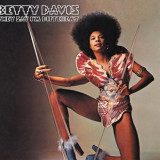
Her 1974 sophomore album They Say I’m Different features a worthy-of-framing futuristic cover challenging David Bowie’s science fiction funk with real rocking soul-fire, kicked off with the savagely sexual “Shoo-B-Doop and Cop Him” (later sampled by Ice Cube). Her follow up is full of classic cuts like “Don’t Call Her No Tramp” and the hilarious, hard, deep funk of “He Was A Big Freak.”
With Pere Ubu on hiatus since 1982’s excellent ‘Song Of The Bailing Man’, David Thomas had recorded a` much-praised solo album and the band had now signed to a major label. In a period of rampant world commercialism, what would happen next? Another crucial era for the band unravelled, Pere Ubu’s journey charted new undulating territory and so began a three-album escapade that retooled our understanding of what pop music is. “Solid as the band can be, it's also likely to dissolve songs from the bottom up. For all Pere Ubu's uncertainty, the band isn't arbitrary; its music has the off-the-wall unity of a Marx Brothers routine,” said Jon Pareles of The New York Times. In 1991, ‘Worlds In Collision’ became “the most atmospheric, carefully sculpted recording in the band's 13-album catalog.” (Tom Moon, Spin).
Earth Tongue, the brainchild of guitarist Gussie Larkin and drummer Ezra Simons, present their second full-length album Great Haunting. The duo, known for their heavy flavor of fuzz-soaked psychedelic rock, are also pleased to unveil their signing to In The Red Records. Earth Tongue’s partnership with In The Red stems from a run of shows supporting the legendary Ty Segall throughout New Zealand. Larkin explains: “Ty’s band Fuzz was a significant influence for our sound early on. Ezra and I saw them play live in London about nine years ago, long before Earth Tongue existed. We absorbed a lot of music at that time, and in fact many of the bands we saw released records via In The Red.” Great Haunting sees the duo draw inspiration from the eerie depths of ’70s and ’80s horror cinema, delivering a sonic concoction of dark and primitive songs with thick layers of fuzz and punchy, compressed drums. The album was engineered by Jonathan Pearce from The Beths at his studio on Karangahape road in Auckland. The ascent of Earth Tongue is testament to their dedication and hard work. They’ve toured relentlessly across Europe and scored support slots for acts like IDLES and Queens Of The Stone Age. They’re consistently selling out headline shows and have featured on festival lineups throughout Aotearoa and Australia. Having just spent last week shredding SXSW, they tour America and then, in May, hit Europe/UK, playing DESERT FEST in London on 18th May!! Amongst a huge EU tour.
The next release in the Mr Bongo Cuban Classics series, is one of Juan Pablo Torres' most-known and loved albums, the iconic Super Son from 1977. A wonderful record of tripped-out rumbas, psych-Afro-Latin funk and quirky orchestrated tracks with a big band horn section courtesy of Torres’ band, Algo Nuevo.
As well as being the director of Algo Nuevo and Cuban all-star ensemble Estrellas De Areito, the trombonist, bandleader, arranger and producer also released a wealth of albums under his own name predominately on the state-owned imprint Areito/EGREM.
Post-revolution, there was a contrast in Cuba’s musical world. State censorship was at play, but professional musicians were on the government payroll which gave them an artistic freedom. Experimentation emanated in the ‘70s and ‘80s and Super Son is a prime example of that. ‘Y Que Bien' kicks off the album taking you down a tripped-out, cosmic rabbithole, psych guitars and skat vocals opening up into a joyful funk groove laced with jazzy Afro-Cuban horns stabs. Tracks such as 'Pastel En Descarga' seem to come out of nowhere and are completely unique. Fuzzed-up guitar lines and percussion lay the groundwork, with those jubilant horns adding to the energy of this forever building track.
Elsewhere, there’s the ‘70s TV theme-tune feeling of 'Con Aji Guaguao', a playful funk number that boils and bubbles with blistering trombone playing by Torres. Or ‘Son A Propulsión' and ‘Son Riendo’, two more brilliant examples of psychedelic funk, wrapped up in a blanket of Afro-Cuban rhythms. The former sweeping you up in rushes of wind as trumpets, trombones and distorted guitars trade off, the latter, an intergalactic fiesta of tradition and exploration.
Super Son is up there as one of the funkiest Cuban records around, a playful fusion of ideas from a producer, player and group on fine form and, for us, one of our favourite gems to come out of Cuba in this period. A sheer masterpiece.
out of Stock
Last delivered 2 years ago available to reorder, subject to availability
The Gloss is the second album from Cola. From their inception Cola have expanded on the d.i.y. ethic of the Dischord and SST eras, creating potent sounds from a minimal palette of drums/bass/guitar and lacing their songs with winsome one-liners and societal commentary. What’s another word for commentary? Gloss, apparently. Never basic, the lyrics reward repeated listening for deeper meanings. David Berman’s poetry-via-garage light pennings are an inspiration, as equally so are the lighter side of UK first-wave New Wave and the Dunedin sound. The results are in the pudding: at times sparse and poetic, at others a thrilling, hook-laden good time, as with the cheeky romantic sketch of a one-night stand that is so overflowing with innuendo-cum-journalism talk that it almost teeters over into self-parody. But the results are the right combination of lightheartedness and sincerity. Romanticism is never far from laughter, and equally never far from righteous anger in the music of Cola: “Pulling quotes now in the dark/Our outlook is restrained/Your tongue might weaken to be-fit your smile/Til nothing ill remains.” ‘nuff said. It's an album bursting with energy and wit and ideas–filled to the margins.
"Irish singer, songwriter, multi-instrumentalist, and producer, James Vincent McMorrow, returns to the fore with his seventh full-length album Wide open, horses, out June 14th, 2024.
Wide open, horses is a candid snapshot of everything that has brought James to this point. The album signifies a retaking of his own narrative, a freeing self-acceptance, and a rebuilding of both his sense of self and his connection to music. Singles “Stay Cool”, “Never Gone” and “Give up” offer a first taste of what fans can expect, leaning further into the introspective and sincere indie-folk sound of his earlier material, whilst incorporating elements of his more explorative later releases.
A unique and particularly special artist project, Wide open, horses was initially performed live having booked two nights at The National Concert Hall in Dublin, where he recorded a handful of lo-fi demos, practiced the material for a week, and then hit the stage prior to ever recording a single song. Phones weren’t allowed, but James recorded it to “see what worked and what didn’t work.”
James has beckoned listeners to open their minds and hearts since his emergence in 2010. Along the way, he gathered over 1 billion streams across an expansive catalog. Among many standouts, “Higher Love” went BPI Gold in the UK and ARIA platinum in Australia. His cover of Chris Isaak’s “Wicked Game” soundtracked the trailer for Season Six of HBO’s Game of Thrones and generated over 130 million Spotify streams on its Live At Killkenny Arts Festival version. Toppling charts, 2016’s “We Move” notably debuted at #1 in Ireland. At the same time, he lent his voice to “Hype” from Drake’s multiplatinum blockbuster Views, “I’m In Love” from Kygo’s Cloud Nine, and “Run Away” from dvsn’s Morning After, among others. Meanwhile, he’s sold-out tours on multiple continents, even packing the world-famous Sydney Opera House twice."
Originally released in 1990, Royal Trux's 'Twin Infinitives' is being re-issued in all its (yet to be translated) alien glory, by Fire Records. A dismantled overture that sprawls out over two records, an avant-garde masterpiece that was the spark for Drag City Records and generations of new sound seeking musicians. Hailed in the same immortal breath as Beefheart's 'Trout Mask Replica', the Velvets' at their frenzied peak and Ornette Coleman at his most avant-garde, the duo of Pussy Galore's Neil "Michael" Hagerty and Jennifer Herrema recorded 'Twin Infinitives' while imbibing all kinds of mind-altering substances to create an inadvertent blueprint for what the duo was building with moog's, guitars and melodicas to name a few ingredients. It is the legendary second album from the masters of the genre mashup - long before "genre mashups" even existed. Arguably, the term "mashup" was coined to describe what Trux, as they subconsciously scrolled through the radio stations of their lives. The album's chaotic sound and offbeat construction laid the foundations for a string of Royal Trux albums that spiralled between genres, tunings, and noise. Through the 90s they would re-invent the rock 'n' roll ethic, straddle alien surf music, re-align boogie rock, not to mention 80s hair metal, and confound critics by their wildly meandering and courageous rites of passage. Remastered as part of a career spanning catalogue deal with Fire Records. The infamous and influential duo of Jennifer Herrema and Neil Hagerty will be delving into the archive with a comprehensive reissue series, unearthing the vaults and revisiting what made them such a compelling benchmark for their contemporaries and imitators. Reawakening their prolific output within a new monochrome vinyl series covering 1988-1993, they begin with their seminal deconstructed rock masterpiece Twin Infinitives. "Sounding like a subway ride inside a television inside an earthquake inside the end of the world and a pounding death rhythm of apocalyptic now." Pitchfork Ltd Double Silver Vinyl, Monochrome edition artwork, DL card.
We are proud to introduce you our next and tenth release on which we have been working for more than a year.
This release is intended to be the soundtrack to an experimental short film/ballet we are currently working on.
This 9-tracks VA is a journey through different visions of music production, but all unique, bold, passionate — the order of the tracklist is designed to follow the story of the short film.
On the vinyl side it will be a 12” 140g double disc with inner sleeves and printed outer sleeve pressed at Vinyl de Paris (100 copies limited edition).
My Back Was A Bridge For You To Cross, ANOHNI"s sixth studio album, expresses a world view by shape-shifting through a broad range of subject matter. Through a personal lens, ANOHNI addresses loss of loved ones, inequality, alienation, acceptance, cruelty, ecocide, devastation wrought by Abrahamic theologies, Future Feminism, and the possibility that we might yet transform our ways of thinking, our spiritual ideas, our societal structures, and our relationships with the rest of nature. On her first full album since 2016"s HOPELESSNESS, she explains the creative process was painstaking, yet also inspired, joyful, and intimate, a renewal and a renaming of her response to the world as she sees it. "Some of these songs respond to global and environmental concerns first voiced in popular music over 50 years ago." ANOHNI"s approach since her last record has shifted from someone tasked with challenging global denial, to an artist seeking to support others on the front lines. "I learned with HOPELESSNESS that I can provide a soundtrack that might fortify people in their work, in their activism, in their dreaming and decision-making. I can sing of an awareness that makes others feel less alone, people for whom the frank articulation of these frightening times is not a source of discomfort but a cause for identification and relief. On "It Must Change," ANOHNI soulfully describes systems in collapse with a note of compassion for humanity: "The truth is I always thought you were beautiful in your own way // That"s why this is so sad." ANOHNI"s voice is sensual and smoothed, selectively reaching to the edges of what it can contain. "We"re not getting out of here // No one"s getting out of here // This is our world," she murmurs. A portrait of legendary human rights activist Marsha P. Johnson taken by Alvin Baltrop features on the cover, reflecting a 25-year relationship with the memory of Johnson that ANOHNI has held space for in the presentation of her own work. Elsewhere, the album artwork states "IT"S TIME TO FEEL WHAT"S REALLY HAPPENING". In some ways it feels as if she is reaching across her life"s expression, and has found a moment of unique composure, wearing her long exploration of disarming intensity, with the maturity of a painter carefully choosing her colors. "I want the work to be useful, to help others move through these conversations we are now facing, to move with dignity and resilience through this bitter dawning."
out of Stock
Last delivered 2 years ago available to reorder, subject to availability
Folly Group become the first band on Ninja Tune imprint Technicolour
(Elkka, Sofia Kourtesis, VTSS) with their new EP ‘Human and Kind’.
The four-piece of Sean Harper, Louis Milburn, Kai Akinde-Hummel and Tom Doherty formed in the tumultuous melting-pot of the London musical circuit. They released their debut EP ‘Awake and Hungry’ last year, receiving wide acclaim for their electronic infused post-punk sound and furiously brilliant live shows, landing coveted slots at Pitchfork Music Festival, in NME’s 100 Artists On The Rise and a co-sign from IDLES’ singer Joe Talbot.
Speaking about the EP, Folly Group said: “Where ‘Awake and Hungry’
doubled as a diary of the band’s formative months and encapsulation of our live show, ‘Human and Kind’ is a projection of our ambition, and our desire to push ourselves through what we might previously have
perceived as the ceiling of possibility for four players.”
For fans of Black Country, New Road, Squid, Yard Act, Black Midi, Dry Cleaning, Shame, Do Nothing.
140g crystal clear vinyl in 12” sleeve with spine and printed inner, plus
digital download code. Pressed sustainably within a 99% circular
environment at Deepgrooves.
“Every track is so good. They haven’t released anything that isn’t
amazing.” - Joe Talbot (IDLES, speaking on BBC 6 Music)
“thriving in well-crafted chaos.” - NME
“brilliant, experimental jungle rock” - i
“Give me that post-punk syncopation any day of the week” - Lauren
Laverne, who has made the band’s last three singles (including ‘I Raise You…’) her While You Were Sleeping Track Of The Day.
Headline UK Tour starting 31 March, taking in London, Bristol,
Manchester, Leeds, Birmingham, Nottingham, Margate, Newcastle,
Southampton, Milton Keynes and more.
out of Stock
Last delivered 2 years ago available to reorder, subject to availability
Defected welcomes one of Chicago house’s founding fathers Marshall Jefferson into the illustrious list of House Masters with this exclusive wax release. An artist that has successfully navigated major cross-over success while retaining utmost respect from the inner circle of electronic music’s underground, Marshall has been behind countless seminal records over his five-decade career. Now a selection of the very best tracks from his new House Masters compilation appear together on vinyl for the very first time, showcasing the impressive output of this house pioneer from his most well-known solo records, to major production credits, key remixes and the underground gems still favoured by selectors today.
Cutting his teeth as a producer for Chicago’s Universal Recording Studios, Marshall was one of the most active DJ and producers on the Windy City’s music scene during the 1980’s house music boom. Working under a plethora of aliases such as Virgo, Jungle Wonz, Truth and On The House, as well as producing for names such as CeCe Rogers, Curtis McClain and Evelyn "Champagne" King, Marshall’s status as a bona fide house music luminary is well documented.
‘Defected presents House Masters - Marshall Jefferson’ is an all-encompassing guide to his tremendous career. A trailblazer and genre-defining artist, Defected is honoured to welcome Marshall into the House Masters Hall of Fame with this very special vinyl compilation.
out of Stock
Last delivered 6 months ago available to reorder, subject to availability
'Quintela', the debut album by Carme López, a performer, teacher and researcher of traditional oral music from Galicia, is a new experimental work for Galician bagpipe. Influenced by the approach of composers like Éliane Radigue or Pauline Oliveros, the Spanish composer creates slowly modulating sound environments, and stretches the sonic the possibilities of the bagpipe to its absolute limit. 'Quintela' is structured in four movements, plus a prologue and an epilogue, which serve as a link to the contemporary language of the instrument.
The bagpipe is strongly tied to traditional musics; its use in different genres and musical contexts is extremely limited and unimaginative. 'Quintela' brings it to a wholly unknown field, decontextualising the bagpipe in order to elevate a personal approach, and leaving behind its male-dominated past (in which it relates to ideas of prestige, dominance or carries even sexual connotations). López expertly demonstrates its grandeur and breadth; the music on 'Quintela' ranges from barely audible sounds of air passing through the hide bag through rhythmical use of its reeds to all-encompassing drones with complex harmonic structures and vibrant overtones.
The narrative arc focuses on the composer's past, its people and places, and could be conceived as a journey in and of itself. A homage to those in our memories, but also a step into the unknown, 'Quintela' is an ambitious, graceful and captivating debut.
A home, a house, has countless frequencies. Each room, each corner feels different. Swings differently. And as you grow older, you realize which corner is yours. But yeah, it takes time…
It certainly marks the end of an era when the house one called home as a kid no longer exists. This home, it was the starting point of so many journeys. Of one big, ongoing journey. And so it feels good, soothing, reassuring to at least return to a spot nearby – to that (proverbial) hill from where you can see it. Feel the vibe that made you.
Andi Haberl’s debut solo album as Sun is sort of dedicated to that house. It’s a journey leading to that hill overlooking everything that made him. It’s not about nostalgia, not about actually returning to a specific place. Instead, it’s about finding a personal frequency, an overlapping of sounds and samples, an open space that mirrors and extends whatever frequencies felt right at different points in time.
“To me, the results feel like Gold Panda/Four Tet meets Steve Reich meets Krautrock meets film scores. I just really wanted to create moods that touch me – and ideally others, too.”
Talking about his first solo album, Haberl recalls many stages: early compositions that ended up on Alien Ensemble’s albums, early DIY/home studio/multi-instrumentalist inspirations (Le Millipede), new technologies that came and went, even a set of wildly convincing arrangements (done with Cico Beck’s crucial input) that ultimately became stepping stones for yet another round of DIY takes. “It was a long, recurring process, and the songs went through so many different versions,” he says, talking about phases of growth (“I added more and more equipment over time”) and pruning, “cleaning up my music a bit.” Tending towards instruments that open up space, and slowly falling in love with sampling, he certainly didn’t rush things once it was time for interior design decisions ;)
“During this whole process I got to learn so much about my own taste, how I prefer to listen to the pieces, which musical elements really matter to me… and what my own voice is. For example, that acoustic elements are most important to me: the banjo, piano, drums, my voice, glockenspiel, trumpet, melodica. Anything that opens up some space.”
Every journey begins with a search: “Missing” with its plucked chords opens like a sunrise over pastoral plains, gently leading the way towards the intricate, playful explosion that occurs once a certain amount of energy (“Sun”) hits dirt and other surfaces: things grow, clot and curdle into new shapes, like new buds; layers of sound move forward, drenched in Spring’s new light. Relying on samples to ask for precipitation (“Rain On Me”), robotic “Low” goes from barren to bass-heavy after its midway shift in pace, full of loops plucked from the shade.
Towards the album’s midpoint, things are suddenly reversed: “Cluster” has that backwards pull, you can’t tell what’s what, yet everything is perfectly locked in, as the pace increases once again. And before the title song shimmers with densified cheering (to eventually stand tall like early Lymbyc Systym), “Beside Me” swipes you off your feet with its booming bass drum. The beat returns once again (“Daydream”), full of searching voices underneath, and at “Dawnday,” we can finally catch a melancholy view of the house. Voices hum. It’s the score moment of the album. Everything makes sense now. A happy end of sorts?
“I want to take people on a journey. A personal journey, too, because when my parents split up and sold the house I grew up in, I felt a bit like the ground had fallen out from under my feet. But I have dedicated the album title and the accompanying piece to this house… so I can keep it in good memory.”
“I Can See Our House From Here” has been a long time coming. It’s been a long journey. Homeward-bound. Leading to a place that’s really Haberl’s – his sound. His frequencies.
Known as a long-time member of The Notwist and various other bands/projects (Alien Ensemble, AMEO, jersey, Ditty etc.), Berlin-based drummer/composer Andi Haberl has also worked with My Brightest Diamond, Till Brönner, Owen Pallet, and Kurt Rosenwinkel, to name a few. “I Can See Our House From Here” is his first solo offering.
‘Empires into Sand’ is the first album of new material from Normil Hawaiians in 40 years. The group first refined their sound during the early 80s, hitting on a pastoral experimentalism that drew on ambient drone, motorik impulse and post-punk pep.
‘Empires into Sand’ came together in the familiar manner of their original three albums, with improvisation and nuance informing the blueprint of the tracks. It was with the official release of this last record ‘Return of the Ranters’ (originally recorded in 1984/85, but then unconsciously shelved) in 2015 by Upset The Rhythm that led to the group reconnecting with the intention of playing music together again. Normil Hawaiians played a launch show for that ‘lost album’ and followed that up with more concerts, including an appearance at Supernormal, a residency at the Edinburgh Festival, gigs at Cafe OTO. They were even chosen by Richard Dawson to perform with him in London.
Throughout this time, Normil Hawaiians revisited their original songs for live performance. However for a group always so interested in evolving their sound, it came as no surprise that they shirked at the idea of a faithful retread. The band pushed their songs into new inventive dimensions, still progressive at core, but now imbued with a cosmic uncanny. A cinematic approach that was always quietly present has come to the fore. The quaint weirdness of folk song, the humanity of communal practice and the group’s ecological mindedness have all found a place in Normil Hawaiians’ current sound world.
When Normil Hawaiians write and record music they prefer to gather in a remote location and live together for a while, such is their communal ethos. Being far-flung across the UK, the Family Hawaii (numbering seven key members) decided to encamp to Tayinloan, a small village on the west coast of the Kintyre peninsula in Scotland. They set up their own studio in an isolated, windswept house overlooking the sea and started the tape rolling. Noel Blanden from the band explains the process neatly: “we set up and began playing, slowly and patiently, allowing the music to take its own shape based on where we were staying and our ongoing friendship. We recorded for days, capturing everything. A lot of new and rich ideas began to emerge”.
Normil Hawaiians took their time to develop these threads at their own pace, allowing songs to mutate and settle over months. Simon Marchant deftly produced and recorded the album whilst also performing in the band, this marked the first time the band had total control of their own sound. The last few years has seen the band reconvene in Herne Bay, Faversham, London and Leith to record new parts, constantly responding to the changing form of these quietly spectral songs of defiance.
‘Empires into Sand’ incorporates samples from old rehearsals and live music into the new finished pieces, this is in continuum with their previous records. Snippets of sound from the static of short wave radio and satellite transmissions also embellish the work. In fact the whole album is stitched together with interludes, creating an acutely immersive 45 minutes. ‘Exiles’ opens the album amid swirling atmospheres, synth flights and recordings of Vilnis Egle (father of Zinta Egle from the band) retelling his experience of fleeing his home in Latvia during Soviet occupation in 1942. George Bikandy also features on this track talking about his flight from Syria in 2014. ‘Ghosts of Ballochroy’ is a winding river of a song featuring a lively discourse in Scots courtesy of Rodney Relax. There’s a commitment to truth telling present across this hopeful album populated with angels, incoming tides, long shadows and the rose-washed sun. “From our broken windscreen, we feel the breeze” soars Guy Smith triumphantly over the driving beat of ‘Waterfalls : Bedford 330’. ‘Big City Sky’ flutters and sparkles with rapid synth runs, tape-looped drums and Jimmy Miller’s commanding vocal. With ‘In The Stone’ Zinta’s melody is deliberately jagged and blunt, exaggerated by octave-layered vocals and interjections from Guy.
This is thought-provoking, boundary-bothering music. Honest in intent, a solidarity of vision. The album’s title is derived from a poem by band member Mark Tyler, who sadly passed away during the recording process and the transience of life is felt heavily throughout. Noel best coins the group’s wish for the album: “we wanted to create an album that acknowledges our history and also reflects who we are today. We remained true to ourselves and we wanted to make something beautiful without removing the edges.” ‘Empires into Sand’ certainly does that, it’s an echo from the past, an echo from the future.
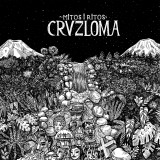
Mitos & Ritos, the debut EP by the Ecuadorian group Cruzloma, consolidates in its six songs a spirit of promoting traditional rhythms in contemporary styles, a process of reinvention and self-discovery in homage to the indigenous peoples of the Ecuadorian jungle and the riches of ceremonial music all in a mix featuring electronica, global bass and dembow. The hostile times humanity is going through have awoken a need to get back to our roots, reclaim ancestral knowledge, and question where the excessive exploitation of natural resources has led us. We have heeded that urgent call to care for everything that seems unlimited but which is increasingly scarce. And so we have looked to the past to understand our relationship with what surrounds us and establish a dialogue between the past, the present and the uncertain idea of the future. Applied to music, this has aroused the interest of artists and producers who use the rich folklore and traditions of Latin America to replicate that dialogue between what was and what will be. With this in mind, Mitos & Ritos ("Myths and Rites"), the debut EP by the Ecuadorian group Cruzloma, consolidates in its six songs a spirit of promoting traditional rhythms in contemporary styles, a process of reinvention and self-discovery in homage to the indigenous peoples of the Ecuadorian jungle and the riches of ceremonial music, based around the bambuco style from Esmeraldas on the northern coast, and the bomba del chota and the san juanito from Imbabura province. On this EP there are also sacred prayers of the Shuar nation, called Ujaj and Anets, including ceremonies like the taking of ayahuasca and of the tzan tza, all in a mix featuring electronica, global bass and dembow. It is a journey into mysticism, the jungle and the dancefloor, reflecting a search for musical identity that is at once contemporary and futurist.
"Remembering is not the opposite of forgetting," Casey MQ sings at the start of Later that day, the day before, or the day before that, his new LP and Ghostly International debut. It's a phrase fittingly misremembered from something the LA-based, Canadian-born composer came upon as he spiraled into unconscious and subconscious-led writing sessions at the piano. Casey's known for his 2020 breakthrough release babycasey, which gave voice to songs seen through the lens of childhood, various film score work and collaborations with artists such as Oklou (who returns here), Eartheater, and Vagabon. His gifts as a producer and songwriter are rooted in textural world-building and the excavation of personal truth. With Later that day... he questions what is true entirely, understanding our mind's tendency to bend and project onto pictures of the past. Across vivid, baroque pop balladry, Casey MQ reorients his recording project and point of view under the notion that memories are malleable. All the joy, pain, love, and loss housed within remembrance is open to interpretation and deconstruction, which he does deftly, with curiosity and complete artistic freedom. "It's a memory album," Casey puts it simply, winding up for the deeper unpacking, "and it might be a breakup album, too_there are more questions than answers." Engaging his dreams and sitting with sheet music at his newly acquired piano, he looked to new and old inspirations including the works of Claude Debussy, Joni Mitchell, and Joe Hisaishi's beloved Studio Ghibli film scores. "Since I was young, I always wanted to write a piano album." babycasey's studied electronic sound isn't wholly abandoned on Later that day... instead, it comes through like an atmosphere, giving Casey's more spacious, minimal arrangements a distinct luster and sheen. The textures and tones shift from song to song as if mirroring the way our minds constantly recontextualize, remember, and forget. Cathartic opener "Grey Gardens" _ its title derived from a dream abstractly related to the Toronto restaurant, but not the 1975 film, which he cites as another coincidental false memory _ presents the record's plaintive, haunted feeling. "Even if not reading into lyrics, sonically I wanted it to feel like you're being pulled into a universe. Not fantasy or otherworldly per se, something more tangible, of the body and mind," Casey says. "Hearing it back, I realized this track was the key to unlocking it." His tender falsetto hovers above ambient washes and echoed keys, each word falling carefully in the crevices. "Asleep At The Wheel" unfolds on arpeggiated synth before a burst of symphonic color; the synth returns inverted to harmonize with the outro, "I love a car crash, I love a story, I love a memory, I swear it's real..." Casey leans into digital imagination on the warm, introspective "Me I Think I Found It." Subdued, stuttered percussion underscores the singer as he cycles through pixelated imagery _ screenshots, smiles, streetlights _ searching for higher meaning through love. Built on ascendent chord distortions, "Dying Til I'm Born" gives the record one of its boldest pulses of emotion. The back half stretches out; "Is This Only Water" is sparse and foggy, "Baby Voice" is intimate and desperate for something to remain. "Words For Love" grooves on guitar, and "Tennisman9" aches in heartbreak. French musician Marylou Mayniel, aka Oklou, appears as the collection's only guest for the closing duet, "The Make Believe," a bright and buoyant send-off that gives Later that day... both a sense of resolve and cyclical-motion. "We are young, under the sun," they sing together, a parting image brimming with lightness.
"Remembering is not the opposite of forgetting," Casey MQ sings at the start of Later that day, the day before, or the day before that, his new LP and Ghostly International debut. It's a phrase fittingly misremembered from something the LA-based, Canadian-born composer came upon as he spiraled into unconscious and subconscious-led writing sessions at the piano. Casey's known for his 2020 breakthrough release babycasey, which gave voice to songs seen through the lens of childhood, various film score work and collaborations with artists such as Oklou (who returns here), Eartheater, and Vagabon. His gifts as a producer and songwriter are rooted in textural world-building and the excavation of personal truth. With Later that day... he questions what is true entirely, understanding our mind's tendency to bend and project onto pictures of the past. Across vivid, baroque pop balladry, Casey MQ reorients his recording project and point of view under the notion that memories are malleable. All the joy, pain, love, and loss housed within remembrance is open to interpretation and deconstruction, which he does deftly, with curiosity and complete artistic freedom. "It's a memory album," Casey puts it simply, winding up for the deeper unpacking, "and it might be a breakup album, too_there are more questions than answers." Engaging his dreams and sitting with sheet music at his newly acquired piano, he looked to new and old inspirations including the works of Claude Debussy, Joni Mitchell, and Joe Hisaishi's beloved Studio Ghibli film scores. "Since I was young, I always wanted to write a piano album." babycasey's studied electronic sound isn't wholly abandoned on Later that day... instead, it comes through like an atmosphere, giving Casey's more spacious, minimal arrangements a distinct luster and sheen. The textures and tones shift from song to song as if mirroring the way our minds constantly recontextualize, remember, and forget. Cathartic opener "Grey Gardens" _ its title derived from a dream abstractly related to the Toronto restaurant, but not the 1975 film, which he cites as another coincidental false memory _ presents the record's plaintive, haunted feeling. "Even if not reading into lyrics, sonically I wanted it to feel like you're being pulled into a universe. Not fantasy or otherworldly per se, something more tangible, of the body and mind," Casey says. "Hearing it back, I realized this track was the key to unlocking it." His tender falsetto hovers above ambient washes and echoed keys, each word falling carefully in the crevices. "Asleep At The Wheel" unfolds on arpeggiated synth before a burst of symphonic color; the synth returns inverted to harmonize with the outro, "I love a car crash, I love a story, I love a memory, I swear it's real..." Casey leans into digital imagination on the warm, introspective "Me I Think I Found It." Subdued, stuttered percussion underscores the singer as he cycles through pixelated imagery _ screenshots, smiles, streetlights _ searching for higher meaning through love. Built on ascendent chord distortions, "Dying Til I'm Born" gives the record one of its boldest pulses of emotion. The back half stretches out; "Is This Only Water" is sparse and foggy, "Baby Voice" is intimate and desperate for something to remain. "Words For Love" grooves on guitar, and "Tennisman9" aches in heartbreak. French musician Marylou Mayniel, aka Oklou, appears as the collection's only guest for the closing duet, "The Make Believe," a bright and buoyant send-off that gives Later that day... both a sense of resolve and cyclical-motion. "We are young, under the sun," they sing together, a parting image brimming with lightness.
Needle Mythology, the label founded by music writer, author and broadcaster Pete Paphides, is thrilled to announce the signing of the eagerly anticipated debut album by London singer-songwriter and renowned DJ Iraina Mancini. Iraina’s singular pop vision will be known to regular listeners of 6 Music, where her singles ‘Undo The Blue’, ‘Deep End’, ‘Shotgun’ and ‘Do It (You Stole The Rhythm)’ have all been enthusiastically embraced. Iraina's obsession with music stretches back into her early childhood, much of which was spent absorbing her parents’ collection of old 45s, in particular her dad’s Northern Soul records – an alternative education which meant that, by her early 20s, she was a familiar presence in the DJ booth at many discerning London club nights. Her love of French ye-ye, British freakbeat, Brazilian bossa nova, soul, and Turkish psych will be well-known to regular listeners of her Soho Radio show. Having always sung from a young age, Iraina embarked on a string of collaborators such as Jagz Kooner (Sabres Of Paradise), Sunglasses For Jaws (Miles Kane) and Simon Dine (Paul Weller, Noonday Underground) which truly saw her find her metier as a songwriter, conjuring melodies that stand shoulder to shoulder alongside her impeccable influences. Iraina describes her first single for Needle Mythology ‘Cannonball’ as “a celebration of that moment when you meet someone you really fall for and it knocks you for six. It can be a bit scary, but you’ve just got to go with what your intuition is telling you.” Written with Simon Dine, the vertiginous heart-in-mouth abandon of the song perfectly mirrors the circumstances that brought it into being. Iraina cites Jacqueline Taïeb’s 1967 single 7h du Matin as an early inspiration for the song: “There’s such a great energy about that song. Her vocal is amazing and all those stops and starts that grab your attention.” “This is an artist I absolutely love, one of our rising stars at 6Music.“ Lauren Laverne BBC 6Music “Iraina seizes on the best aspects of the past, blurring those impeccable 60s and 70s influences with a touch of modernity.” Clash “Full of femme fatale poise and swooning chanteuse flourishes.” The Times
Words And Music" ist eine 3xLP-Box mit dem Werk der im Jahr 2021 verstorbenen Sängerin und Songwriterin MARGO GURYAN. Als Zeugin von Revolutionen in Jazz und Pop hat sich GURYAN ihren Platz im Pantheon der Songwriter verdient. Dass sie jahrzehntelang weitgehend unbekannt war, liegt nicht an zerstörten Träumen, sondern an ihren eigenen Entscheidungen und Prioritäten. Von den bescheidenen Anfängen über die Höhepunkte ihres barocken Pop-Meisterwerks "Take A Picture" von 1968 und die gesammelten Demos bis hin zur jüngsten viralen Verbreitung von "Why Do I Cry" - das Boxset "Words And Music" fängt die gesamte Karriere von GURYAN ein, einschließlich 16 bisher unveröffentlichter Aufnahmen und einem 32-seitigen Booklet, das ihre ganze Geschichte erzählt. Produziert wurde die Box von ihrem Stiefsohn Jonathan Rosner, ihrem Freund und Historiker Geoffrey Weiss und den Numero Group-Mitarbeitern Douglas Mcgowan, Rob Sevier und Ken Shipley. Alle Tracks wurden von Jessica Thompson neu gemastert. In ihrer Blütezeit veröffentlichte GURYAN nur ein einziges Album: "Take A Picture" von 1968. Da MARGO jedoch kein Interesse daran hatte, aufzutreten, zu touren und für ihr Werk zu werben, wurde das Album damals kaum beachtet. Dennoch wurde die Platte in den 1990er Jahren zu einem begehrten Kultobjekt. Eine neue Generation von Hörer*innen lernte ihre Arbeit kennen, als "Take A Picture" im Jahr 2000 neu aufgelegt wurde. Kurz darauf folgten die gesammelten Demos, eine unglaubliche Zusammenstellung von ausgegrabenen alternativen Aufnahmen und neu veröffentlichten Songs, die MARGO selbst betreut hat. GURYANs Leben war in den dazwischen liegenden Jahren weiterhin von Musik erfüllt; sie wurde Musiklehrerin, schrieb weiterhin Songs und pflegte Freundschaften mit einem wachsenden Kreis von Anhängern. Die Geschichte von MARGO GURYAN ist die einer Frau, die von klein auf in die Tiefe ging und nie Angst vor Veränderungen hatte. Ihr Gespür für Ton, Phrasierungen, Spannung, Präsenz und Texte, die treffen, machen ihren Namen heute zu einem Synonym für ausgefeiltes Songhandwerk und die unnachahmliche Coolness der 1960er Jahre. Ihr Einfallsreichtum und ihre Technik stellen sie in die Tradition von Kammer-Pop-Ikonen wie Brian Wilson und Burt Bacharach, während die bittersüße Offenheit in ihren Beschreibungen des Frauseins einen Mittelweg zwischen Carole Kings Pop-Fabrik und der Singer-Songwriter-Ära aufzeigt. Aber die unaufdringliche Strenge von MARGOs künstlerischer Stimme ist ganz ihre eigene.
Plasma Color Vinyl. 'The way Bloomsday's Iris James Garrison writes songs feels like somewhere between a mirror and a memory. Spacious, full-bodied folk songs, they are an ode to things that are good no matter how small; they sometimes feel like the ghost of a Mary Oliver poem. Bloomsday's new record, 'Heart of the Artichoke', is a relic of unfettered creativity and community. They recount the miracles of the mundane, the memories that become sacred, an ode to all that is holy: nightswimming, songs plucked from the ether, the ways friendship can endure. Like earlier Bloomsday songs, the work here is threaded with warmth; it's simmering, crisp and deeply human, an encapsulation of the present moment. Recorded across 10 days in June 2023 in upstate New York at duo Babehoven's studio and co-produced by Babehoven's Ryan Albert, with mixing by Henry Stoehr of Slow Pulp. The record was built out with a wideranging group of collaborators, including inventive drumming from Andrew Stevens (Lomelda, Hovvdy), Alex Harwood, Richard Orofino, Babehoven's Maya Bon, Hannah Pruzinsky (h.pruz, Sister.), and Chris Daley. It was an insulated and collaborative experience: all family dinners on the back porch, bonfires, feeling a full sense of joy, of friendship, of purity in the artistic self. Collaboration is an integral part of Bloomsday's musical process. Garrison is malleable in the studio, their songwriting generous and spacious. But in listening to the record, there's a sense that Garrison leaves room for the players, for the listener; for songs to find the shapes they're meant to take. Garrison's role as maestro is crucial, singular - it's a collaborative, exploratory spirit harnessed by Garrison's intuition, and by an honest commitment to carve out creative space for play, to delve into what's known - or pushing past that, into unknown. "The ghosts of the past still come up and haunt me," Garrison says, "but I sit in what I have and see it. All of these songs are about loved ones, about personal struggles with getting out of my head and being present." Heart of the Artichoke was written from a healed, matured place - written in a moment of safety from chaos. It's a prayer for the present, an appreciation of tenderness and what happens once we give ourselves the space to really see, and really feel - becoming free and whole - an ode to the way healing allows us to bloom.
'The way Bloomsday's Iris James Garrison writes songs feels like somewhere between a mirror and a memory. Spacious, full-bodied folk songs, they are an ode to things that are good no matter how small; they sometimes feel like the ghost of a Mary Oliver poem. Bloomsday's new record, 'Heart of the Artichoke', is a relic of unfettered creativity and community. They recount the miracles of the mundane, the memories that become sacred, an ode to all that is holy: nightswimming, songs plucked from the ether, the ways friendship can endure. Like earlier Bloomsday songs, the work here is threaded with warmth; it's simmering, crisp and deeply human, an encapsulation of the present moment. Recorded across 10 days in June 2023 in upstate New York at duo Babehoven's studio and co-produced by Babehoven's Ryan Albert, with mixing by Henry Stoehr of Slow Pulp. The record was built out with a wideranging group of collaborators, including inventive drumming from Andrew Stevens (Lomelda, Hovvdy), Alex Harwood, Richard Orofino, Babehoven's Maya Bon, Hannah Pruzinsky (h.pruz, Sister.), and Chris Daley. It was an insulated and collaborative experience: all family dinners on the back porch, bonfires, feeling a full sense of joy, of friendship, of purity in the artistic self. Collaboration is an integral part of Bloomsday's musical process. Garrison is malleable in the studio, their songwriting generous and spacious. But in listening to the record, there's a sense that Garrison leaves room for the players, for the listener; for songs to find the shapes they're meant to take. Garrison's role as maestro is crucial, singular - it's a collaborative, exploratory spirit harnessed by Garrison's intuition, and by an honest commitment to carve out creative space for play, to delve into what's known - or pushing past that, into unknown. "The ghosts of the past still come up and haunt me," Garrison says, "but I sit in what I have and see it. All of these songs are about loved ones, about personal struggles with getting out of my head and being present." Heart of the Artichoke was written from a healed, matured place - written in a moment of safety from chaos. It's a prayer for the present, an appreciation of tenderness and what happens once we give ourselves the space to really see, and really feel - becoming free and whole - an ode to the way healing allows us to bloom.
Drei Jahre nach ihrem morbiden Manifest "Limbo", einer bitteren Abrechnung mit der Pandemie und ihren bestialischen Folgen, kehrt Wave-Alchemist Ronny Moorings zurück. Im Gepäck hat er einen schwarzen Blumenstrauß aus Trauergesängen für eine kranke neue Welt, Elegien für einen neuen Status quo, mit dem wir alle leben müssen.
Auch 40 Jahre nach ihrer Gründung sind CLAN OF XYMOX ein Leuchtfeuer tragischer Eleganz und düsterer Tristesse. Sie sind die unbestrittene, unangefochtene Speerspitze einer Szene, die zuletzt überraschend die Aufmerksamkeit einer viel jüngeren Generation auf sich gezogen hat, die ihre Angst und ihren Schmerz durch Musik wie diese ausdrücken will. Gerne doch! "Exodus" zeugt von diesem Ausnahmestatus und führt das Feld der prosaischen Trauer mit zehn neuen Hymnen von erlesener Nachtschwere an. Das Besteck, welches Ronny Moorings benutzt, mag noch dasselbe sein; das Ergebnis ist ein weiteres Meisterwerk voller sehnsüchtiger Melodien, weltabgewandten Vocals aus den Tiefen der Erde, hallenden Gitarren und hypnotischen Drums, die die Phantome in uns allen zum Mitternachtsschmaus einladen.
Wir tanzen direkt in den Abgrund, will uns dieses Album sagen. Aber wenigstens tanzen wir noch. Denn wenn es nichts mehr gibt, an das man sich wenden kann, wenn alle Hoffnung verloren scheint und die Welt uns unter Fluten biblischen Ausmaßes begräbt, bleibt manchmal nur noch, sich der Musik hinzugeben. Diesem fesselnden Exodus in Richtung Katharsis. Vielleicht ist das der Grund, warum "Exodus" einige der düstersten und niedergeschlagensten Stücke enthält, die Ronny Moorings seit vielen Jahren geschrieben hat. Vielleicht ist das der Grund, warum diese Platte mit den besten Veröffentlichungen von THE CURE mithalten kann. Weil die Zeiten, in denen wir leben, ihn dazu gezwungen haben. Weil es einfach keinen anderen Weg gibt, als all seinen Kummer, seine Wut und seinen Weltschmerz in seine klagende Musik einfließen zu lassen. Nicht, weil die Welt danach eine bessere sein wird. Sondern weil es für ihn die einzige Möglichkeit ist, mit dem brutalen Wahnsinn, den wir Alltag nennen, fertig zu werden.
"Exodus" ist kein Album für Träumer. Es ist aber auch kein Albtraum - trotz der Schatten, die unter der Oberfläche brüten. Es ist ein Tor für all jene, die die Dunkelheit unserer Tage anerkennen und sich dennoch weigern, aufzugeben. Lasst uns also diese nächtlichen Wiegenlieder gemeinsam singen und tanzen, solange wir noch einen Boden dafür haben. Denn das ist alles, was wir im Moment tun können.
Drei Jahre nach ihrem morbiden Manifest "Limbo", einer bitteren Abrechnung mit der Pandemie und ihren bestialischen Folgen, kehrt Wave-Alchemist Ronny Moorings zurück. Im Gepäck hat er einen schwarzen Blumenstrauß aus Trauergesängen für eine kranke neue Welt, Elegien für einen neuen Status quo, mit dem wir alle leben müssen.
Auch 40 Jahre nach ihrer Gründung sind CLAN OF XYMOX ein Leuchtfeuer tragischer Eleganz und düsterer Tristesse. Sie sind die unbestrittene, unangefochtene Speerspitze einer Szene, die zuletzt überraschend die Aufmerksamkeit einer viel jüngeren Generation auf sich gezogen hat, die ihre Angst und ihren Schmerz durch Musik wie diese ausdrücken will. Gerne doch! "Exodus" zeugt von diesem Ausnahmestatus und führt das Feld der prosaischen Trauer mit zehn neuen Hymnen von erlesener Nachtschwere an. Das Besteck, welches Ronny Moorings benutzt, mag noch dasselbe sein; das Ergebnis ist ein weiteres Meisterwerk voller sehnsüchtiger Melodien, weltabgewandten Vocals aus den Tiefen der Erde, hallenden Gitarren und hypnotischen Drums, die die Phantome in uns allen zum Mitternachtsschmaus einladen.
Wir tanzen direkt in den Abgrund, will uns dieses Album sagen. Aber wenigstens tanzen wir noch. Denn wenn es nichts mehr gibt, an das man sich wenden kann, wenn alle Hoffnung verloren scheint und die Welt uns unter Fluten biblischen Ausmaßes begräbt, bleibt manchmal nur noch, sich der Musik hinzugeben. Diesem fesselnden Exodus in Richtung Katharsis. Vielleicht ist das der Grund, warum "Exodus" einige der düstersten und niedergeschlagensten Stücke enthält, die Ronny Moorings seit vielen Jahren geschrieben hat. Vielleicht ist das der Grund, warum diese Platte mit den besten Veröffentlichungen von THE CURE mithalten kann. Weil die Zeiten, in denen wir leben, ihn dazu gezwungen haben. Weil es einfach keinen anderen Weg gibt, als all seinen Kummer, seine Wut und seinen Weltschmerz in seine klagende Musik einfließen zu lassen. Nicht, weil die Welt danach eine bessere sein wird. Sondern weil es für ihn die einzige Möglichkeit ist, mit dem brutalen Wahnsinn, den wir Alltag nennen, fertig zu werden.
"Exodus" ist kein Album für Träumer. Es ist aber auch kein Albtraum - trotz der Schatten, die unter der Oberfläche brüten. Es ist ein Tor für all jene, die die Dunkelheit unserer Tage anerkennen und sich dennoch weigern, aufzugeben. Lasst uns also diese nächtlichen Wiegenlieder gemeinsam singen und tanzen, solange wir noch einen Boden dafür haben. Denn das ist alles, was wir im Moment tun können.
A1 - Polaris
Going all in to open the EP with a truly stand out 2-step roller, ASC crafts a distinctly energetic vibe with Polaris, featuring an intricate old school break seldom heard in drum & bass - packed with high-end detail and a glorious raw energy. With long radiant pad work, a classic jumpy 808 bassline and a stunning, reverberating female vocal sample whooshing and panning across the mix, Polaris will instantly become a favourite in your setlist.
A2 - Things Left Unsaid
Opening with an intriguing fusion of suspenseful keys and deliciously crisp bongos that each play a key role throughout, Things Left Unsaid asks the listener questions of yesteryear in a varied odyssey filled with a myriad of echoed vocal samples, horns and effects, set to a break-laden beat pattern that hops along with kicks and snares each snatching the attention. A calmer vibe from ASC that still packs a punch.
AA1 - Temple Bell
A thumping, spirited beat pattern with rapid kicks and metallic snares provide a visceral aural onslaught as the aptly-named Temple Bell blends our imperious breaks with darkly, epic tolls radiating through a vast ornate hall of resonance -suitably reverberating alongside a backdrop of synchronic atmospherics. Heavily EQ'd vocal samples colour the mix to complete a weighty musical collage.
AA2 - Contrast
Beginning with a flurry of cow bells in a vibrant, expertly edited take on the classic Circles break, ASC serves up a delightfully laid back yet danceable piece with Contrast. Space FX, swirling pads and a mellow, memorable key melody overlay a beautiful mosaic of calm as the continued thrust of the break drives a constant energy to the track, perfectly capturing the ethos of Spatial and closing another immense EP
Words by Chris Hayes Spatial/Red Mist
out of Stock
Last delivered 2 years ago available to reorder, subject to availability
Sect have a lot on their minds. With the release of their brand new single, New Low and the promise of Plagues Upon Plagues, the follow up full-length to 2019’s Blood of the Beasts, Sect explore the intersection of issues which have cascaded over us for the last five years, the “plagues” of the title referring to the literal pandemic, and the metaphorical plague of the political state and the rise of fascism.
Comprised of an international cast of stellar musicians, who cut their teeth in a formative moment of political, cynical, antagonistic extremes, Sect unites Scott Crouse (Earth Crisis, Tooth & Claw) & Jimmy Chang (Undying, Catharsis) - guitars, Steve Hart (Day of Suffering, Mania For Conquest) - bass, Andy Hurley (Fall Out Boy, Racetraitor) - drums and Chris Colohan (Cursed, Unwell) - vocals. They released No Cure For Death in 2017 and Blood of the Beasts in 2019.
Plagues Upon Plagues opens with the bereft waves of “No Uncertain Terms”, a side of the band we haven’t seen before. Vocalist Chris Colohan describes this album as “a funeral rather than a trial”, the activism of previous releases fading to sorrow and grief.
Lead single New Low follows with the advent of marching drums, a funereal procession for the world we hoped to build. There’s frantic horror on the album too, with the track “Drowning in Sorrows” taking a look at the ways in which we numb ourselves as a society. “#ForeverHome” is a bitterly angry track about how people used animals for both narcissistic virtue signalling and one-way comfort in the pandemic, and abandoned them en masse just as selfishly when social life came back. Speaking to their straight-edge principles and how that continues to feed into their songwriting, Chris says, “the only kind of straight edge songs I’m interested in writing are dynamic ones that address human realities that you don’t have to be straight edge to engage with.”
On Plagues Upon Plagues, Sect pierce through the veil of complacency, forcing listeners to confront uncomfortable truths about the fragility of our world. The band wields their sonic arsenal like a prophetic warning and with raw vocals and uncompromising lyrics, they confront the harsh realities of existence in these tumultuous times. As society teeters on the brink of chaos, Sect's cold hard statement resonates with an urgency that cannot be ignored.
You remember this 1994 album... it’s the one with the hit song “Need You Around,” which was “around” pretty much everywhere back then, including in the movie Clueless (for that matter, “Lucky Day” from this album was in Tommy Boy, “Mrs. You & Me” was in Angus, and “Gotta Know Right Now” in Boys). That led to the Popes opening for acts like Morrissey, whose voice lead singer and songwriter Josh Caterer— one of three Caterer brothers in the band—rather echoes (Moz himself proclaimed this album “extraordinary, the most lovable thing I’d heard in years”). If you like power pop hooks with heart, look no further...our release comes in pink & white “sunburn” vinyl to honor the front cover photo (put a shirt on, man!) inside a gatefold jacket.
INEX016 takes you on a magical journey through the mellow realm of house music. Veteran Eddie C delivers a disco-infused belter that will make your hips shake. Tilman presents a juicy nu-groove track that transports you back to May 1st, 1992. Making his wax debut, Julius Renner offers a soulful voyage to the peak of the dance floor. Toomy Disco, a newcomer on InEx aswell, delivers a shuffling and groovy bomb, pondering the future of DJs. Ron Brown collaborates on a deep, almost Latin-spiced organ track with moments of melancholy and hope. Lastly, Meeshoo touches our souls with strings and disco excellence.
out of Stock
Last delivered 76 days ago available to reorder, subject to availability
Named "one of Europe"s most versatile and curious players" by Downbeat Magazine, Polish trumpeter Tomasz Dabrowski returns with the sophomore album from his internationally acclaimed septet. Following their eponymous 2022 debut, the ensemble proudly presents "Better",set to release on March 29th on April Records. With an atypical lineup featuring the cream of the crop of the Polish and Scandinavian contemporary improvisation scenes,"Better" captures the edge and energy of a live performance extended and elevated by the use of electronic instruments and textures. Drawing the listener in with its refined sense of space and pace, the record sees the septet navigate their way through Dabroski"s open compositional ideas, passing melodic structures around the ensemble and evolving through ethereal ambient soundscapes, scorching solos and adventurous cacophonies of collective improvisation. Drawing on a year"s worth of experience performing extensively together as an ensemble, the level of intensive listening, interactivity and trust within the group enables each instrumentalist to fearlessly contribute their voice. "Every track has a unique twist. "Upright" plays with form. "Bonzer", the use of instrumentation. "Hale & Hearty" explores textures." A testament to the ensemble"s commitment to artistic growth and creative evolution, "Better"reminds us to consider what we all can and should strive for. It"s an inspiring message that manifests in the music and radiates through every aspect of life. "We should all strive to do better. To be better versions of ourselves and observe how it resonates within and in those around us," Dabrowski says.
out of Stock
Last delivered 2 years ago available to reorder, subject to availability
Starting out in 2001 to tie up some loose ends from our regulars, SPEICHER has since become a guarantee for vanguard dance sounds from all over the planet, allowing KOMPAKT to invite and support electronic artists that comfortably inhabit both the delicate and the more deliberate ends of the electronic music spectrum. For SPEICHER 81, Amsterdam-based DJ and producer PATRICE BÄUMEL presents two adventurous minimal epics with decidedly mind-bending propensities.
As a long-running resident DJ at Amsterdam's renowned Trouw club, PATRICE BÄUMEL certainly knows how to draw in a crowd, having proven his skillful approach to hypnotic techno time and time again, as an impeccable host as well as an internationally acclaimed guest DJ in the world's leading venues. Just as his DJ sets, Patrice likes to infuse his own music with raw energy and a sense for sonic adventure - MILE HIGH GANG serves as a perfect example for his credo, underpinning its vibrant synth sequences with a meticulously crafted - and intensely propelling - beat.
The true mind bender, however, arrives with the flipside's aptly named VERTIGO, a deceptively simple, yet unstoppable son of a pitch shifter, cutting its way through spiralling serpentines in dizzying heights. Never one to let himself get bogged down by genre markers or scene compliancy, PATRICE BÄUMEL commutes between electronic factions with ease: he caters to a purist crowd as well as those in dire need of sonic surprises, giving both daydreamers and nighthawks something to rock out about.
out of Stock
Last delivered 24 days ago available to reorder, subject to availability
Straight in the wake of their eponymous debut LP released on the label back in 2016, Weval return to Kompakt this year with their sophomore album, 'The Weight', breaking their pop-mellow, nostalgia-friendly facet further out in the open as they arrive "at this place again were everything felt spontaneous, new and exciting, like we had in the beginning". Orbiting around that ever luminous yet wistful melodic halo that surrounds their music, this second full-length effort sweeps an extra-wide and languidly woven palette of emotions and moods, making for a uniquely ambitious and generously coloured mosaic of sound. If the recording sessions "often started grumpy and emotionless" by Harm and Merijn's own admission, the pair was "surprised by the joy it gave us, which can be compared to the emotions we felt back in the first days of making music together"; subsequently reconnecting with that fresh, naïve feeling of "absolute creative freedom" they were after. The album is also the fruit of a whole new working process for them - more playful and unpredictable - which saw them switch from "guitars lying around to piano, onto our own synths and the most cheap quirky toys synths you can imagine", and involved "recording all of our own samples, voice and almost every instrument out of the box - which for us was a totally new way of working". "We've always wanted a narrative for the album, and finding the right order perhaps took the most effort" they explain; "we felt anxious, felt insanely positive, felt heartbroken again, felt in love again, and there was death, and even suicide around us. It was quite chaotic. As a whole, 'The Weight' breathes with that transformative richness, free of limits and rules, except perhaps to "do quick and not think too much". Amidst this collection of songs and instrumentals that live by Weval's singularly positive take on music - one that can "lift you up, and make you feel hopeful without being necessarily straight out 'happy'" as they define it, the title-track and lead single stays true to the duo's dynamic approach, putting on a fine balance of floor and dream inducing adaptability that sound engineer David Wrench (Frank Ocean, The XX, FKA Twigs, Caribou… etc.) subtly made palpable. There's heavy showers of funk drops pouring from endless bars of thunderstorm clouds and laid-back riffs beating a restrained poolside-party kind of pulse, but also sensual vocals rising from beneath the sheets and rueful polaroid-filtered ambiences to soundtrack all possible moments in life - from the most euphoric to those when music seems the only viable healing potion. More on the post-KLF, BoC-inflected electronica side of things, 'Are You Even Real' takes its listener for a round-trip across the star-studded dome and beyond, before songs like 'Someday' and 'Same Little Thing' head back down to a state of pulsating, earthly organicity, tense and mercurial as get. An arpeggiated slice of piano-strewn kosmische, 'Heaven' is another invitation to an epic-scale odyssey from the inner-spheres into the distant fringes of the outer-world. Weightless and airy, yet texturally dense and widely magnetic overall, Weval second LP is a synthesis of the duo's multi-angle take on electronics: blissed-out, heartening and infinitely free.
Nur zweieinhalb Jahre nach der Veröffentlichung ihres selbstbetitelten Debutalbums finden sich WEVAL zurück "an jenem Ort, an dem sich alles spontan, neu und aufregend anfühlt - so wie als wir anfingen zusammen Musik zu schreiben". An diesem Ort entstand "The Weight", ihr zweiter Longplayer, auf dem Weval sich ganz den Pop-verliebten, Nostalgie-freundlichen Facetten ihres Sounds öffnen. Stetig um den sehnsuchtsvollen Strahlenkranz ihrer Melodien tanzend, legt diese Platte noch vielschichtigere, mit feinster Präzision gewobene Gefühlswelten frei.
Obwohl die Aufnahmesessions nach eigenem Bekunden oftmals "miesepetrig und emotionsarm" begannen, so war das Duo überrascht darüber, wie schnell sich bei der Arbeit jene Freude einstellte, die sie aus ihren künstlerischen Anfangstagen kannten, eine Woge des frischen, naiven Gefühls der "absoluten kreativen Freiheit". Dieses Album ist die Frucht eines verspielteren und unvorhersehbareren Arbeitsprozesses innerhalb der Band, in welchem alles zum Einsatz kam, was ihnen in die Finger kam - von der ollen Gitarre, die in der Studioecke stand, über ein Piano und den bandeigenen Sythesizern und den sonderbarsten Spielzeuginstrumenten, die man sich vorstellen kann. All dies sowie zahlreiche Vocalaufnahmen dienten als alleinige Samplequelle - "was für uns eine völlig neue Arbeitsweise war". "Es war uns wichtig für das Album den perfekten Erzählbogen zu spannen. Die richtige Reihenfolge zu finden war ein extrem aufwendiger Vorgang", erklären Harm und Merjin. "Uns war bange, wir fühlten uns total selbstsicher, uns zerbrach das Herz und wir verliebten uns erneut. Wir waren sogar von Tod und Selbstmord umgeben. Alles war Chaos. Insgesamt atmet "The Weight" die Reichhaltigkeit dieser sich ständig verändernden Gefühlslagen, frei von Einschränkungen und Regeln - außer vielleicht "mach es schnell und zerdenke die Dinge nicht." Inmitten dieser Ansammlung von Songs und Instrumentals, die aus Wevals einzigartiger, von Zuversicht geprägter Herangehensweise entstanden sind - "Musik, die dich hochzieht und Hoffnung spendet, ohne dich notwendigerweise happy zu machen. Der Titeltrack "The Weight" steht exemplarisch für Wevals ambivalenten Ansatz, die feine Balance zwischen Dancefloor und Traumzuständen, perfekt in Szene gesetzt von Soundengineer David Wrench (Frank Ocean, The XX, FKA Twigs, Caribou… etc.).
Der schwer aus gewaltigen Gewitterwolken tropfende Funk, die eine verhaltene Poolparty suggerierenden Riffs, die sinnlichen, geisterhaften Vocals und ein verwaschenes Ambiente, das wie ein Album alter Polaroidaufnahmen alle erdenklichen Momente des Lebens festhält - von den euphorischsten bis hin zu jenen, in denen Musik der einzige Trank ist, der Linderung verheißt. Das post-KLF und Boards of Canada evozierende "Are You Even Real" führt den Hörer auf einen imaginären Flug ins Sternenzelt, während organisch-klingende Songs wie "Someday" oder "Same Little Thing" wie Quecksilber am Boden haften. "Heaven" ist eines jener "kosmische" Stücke mit wilden Arpeggios und Pianosprengseln, die Weval in den vergangenen zwei Jahren zu einer Live-Sensation werden liessen. Wevals Musik ist schwerelos und luftig, aber gleichermassen von dichter Struktur und von einer magnetischen Anziehungskraft. Ihr zweites Album "The Weight" ist eine Synthese aus dem multi-perspektivischem, kaleidoskopischen Verständnis von elektronischer Musik: Herzerwärmend, alles umschmeichelnd und unendlich frei.
out of Stock
Last delivered 7 months ago available to reorder, subject to availability
WARM4 is Ecler's newest rotary analogue mixer, inspired by New York's Paradise Garage, described by François
Kevorkian as the "temple of music" and whose influence has significantly shaped some of today's best clubs.
Designed and manufactured in our Barcelona facilities, WARM4 is a mixer that keeps in mind the classic Ecler mixers structure, with completely redesigned circuitry and mechanics. This goes from the new PCB board that further improves noise level and dynamic range, to the front-plate screw potentiometers, carefully handassembled by our production team.
Keeping alive its innovative spirit since the first A4 mixer in 1971, Ecler introduces a dj tool never included in a mixer before: an analogue subharmonic synthesizer. Inspired by the original device installed in the Paradise Garage booth, we have created our own circuit that allows the subharmonic generator to be tuned to different frequencies so that the dj can adapt it according to the recorded song and the features of the sound system.
In WARM4 you will also find the 4th order Isolator filter already included in WARM2, as well as 4 mixing channels, 3-band full EQ cut per channel and Alps metal shaft high quality potentiometers. Using your favourite external effects module has never been easier.
WARM4 offers you the opportunity to send the PRE/POST fader signal, as well as regulate and pre-listening to the amount of effects return.
WARM4 is specially designed for sound systems capable of reproducing this type of subsonic frequencies, clubs, festivals and events where subwoofers are of vital importance. Bring to your audience an unprecedented experience on the dancefloor and a different way of feeling the music.
Der WARM4 ist Eclers neuester analoger Rotationsmixer, inspiriert von der New Yorker Paradise Garage, die von François Kevorkian als "Tempel der Musik" bezeichnete und dessen Einfluss einige der besten Clubs von heute maßgeblich geprägt hat.
Der WARM4 wurde von ECLER Werk in Barcelona entwickelt und hergestellt und ist ein Mixer, der die klassische Struktur der Ecler-Mixer beibehält.
Ecler-Mixer erinnert, mit völlig neu gestalteten Schaltkreisen und Mechanik. Angefangen bei der neuen Platine, die den die den Rauschpegel und den Dynamikbereich weiter verbessert, bis hin zu den Schraubpotentiometern an der Frontplatte, die von unserem Produktionsteam sorgfältig von Hand montiert werden.
Produktionsteam.
Unter Beibehaltung des Innovationsgeistes, den Ecler seit dem ersten A4-Mischpult im Jahr 1971 an den Tag legt, stellt das Unternehmen ein DJ-Tool vor, das noch nie in einem Mischpult enthalten war.
Eingebaut ist: ein analoger subharmonischer Synthesizer. Inspiriert von dem Originalgerät, das in der Paradise Garage Kabine installiert war, hat ECLER eine eigene Schaltung entwickelt, welche es erlaubt, den Subharmonischen Generator auf verschiedene Frequenzen einzustellen, so dass der DJ ihn je nach dem aufgenommenen Song und den Eigenschaften des Soundsystems anpassen kann.
Im WARM4 finden Sie auch das Isolator-Filter 4. Ordnung, das bereits in WARM2 enthalten ist, sowie 4 Mischkanäle, 3-Band-Full-EQ-Cut pro Kanal und hochwertige Alps-Potentiometer mit Metallschafft. Die Verwendung Ihres bevorzugten externen Effektmodul war noch nie so einfach.
Der WARM4 bietet Ihnen die Möglichkeit, dass PRE/POST-Fadersignal zu senden, sowie sowie die Menge des Effekt-Returns zu regulieren und vor hören zu können.
Der WARM4 wurde speziell für Beschallungsanlagen entwickelt, welche in der Lage sind, diese Art von Unterschallfrequenzen wiederzugeben, für Clubs, Festivals und Veranstaltungen, bei denen Subwoofer von entscheidender Bedeutung sind. Bringen
Sie Ihrem Publikum ein noch nie dagewesenes Erlebnis
auf dem Dancefloor und eine andere Art, die Musik zu spüren.
PRODUCT OVERVIEW
WARM4 is a professional four channel analogue rotary DJ mixer, designed and manufactured by ECLER in Barcelona.
Featuring 4 phono/line channels, 2 MIC inputs, classic sharp filters and a 4th order Isolator. WARM4 includes an unique feature, an Analogue Subharmonic Synthesizer selectable per channel, specially designed to generate and reinforce ultra-low frequencies.
KEY FEATURES
• 4 Mixing channels.
• 4 PHONO inputs.
• 4 LINE inputs.
• 2 MICRO inputs.
• Master Output on XLR and RCA connectors.
• Booth Output on XLR and RCA connectors.
• Headphone Monitor Output on 6.3mm J ack and 3.5mm
mini-jack.
• 3 band isolator full cut EQ.
• 3 band isolator (300Hz and 4KHz, -∞ /+12dB, 4th order
24dB/oct ).
• Analogue Subharmonic Synthesizer for sub-bass
frequency reinforcement selectable per channel.
• Maximum Output without distortion: 21dBV (23dBu).
• FX Send control and Pre/Post fader selector per channel.
• FX Return control and PFL.
• Alps metal shaft high quality potentiometers.
• Mechanized from a solid block of aluminum knob, without
visible screw. Ecler Unique design.
• Wooden side panels included.
APPLICATIONS
• Night Clubs
• DJ s studios
• Itinerant DJ performances
WARM4
AUDIO PERFORMANCES
Inputs
Number of Inputs LINE 4 Stereo Unbalanced Inputs
PHONO 4 Stereo Unbalanced Inputs
MICRO 2 Mono Balanced Inputs
FX RETURN 1 Stereo Unbalanced Input
Connectors type LINE 1-2-3-4 RCA STEREO
PHONO 1-2-3-4 RCA STEREO
MICRO 3 XLR3-F
MICRO 4 Combo XLR3F-6.3mm TRS BAL
FX RETURN RCA STEREO
Inputs Sensitivity nom/Impedance LINE 0dBV/50kΩ
PHONO -40dBV/50kΩ
MICRO -50dBV/>1kΩ
FX RETURN 0dBV/>6kΩ
Performances
Frequency Response LINE 10Hz÷30kHz -1dB
MICRO 10Hz÷25kHz -1dB
PHONO RIAA ±0.5dB
FX RETURN 10Hz÷50kHz -1dB
THD+N LINE 75dB @ 1kHz
Signal Noise Ratio LINE >105dB
MICRO >90dB
PHONO >100dB
FX RETURN >110dB
Trim control INPUTS 1-2-3-4 ± 15dB
Tone control Inputs 1-2-3-4 BASS +10/-30dB
MID +10/-25dB
TREBLE +10/-30dB
Tone control Isolator BASS +12/-70dB
MID +12/-40dB
TREBLE +12/-70dB
Tone Filter cut frequency at -6dB
(slope 12dB/oct)
BASS
MID
200Hz
200Hz÷6.8kHz
TREBLE 6.8kHz
Isolator cut frequency at -6dB
(slope 24dB/oct)
BASS
MID
300Hz÷4kHz
TREBLE 4kHz
Analogue Subharmonic Synthesizer Input selective filter 50÷120Hz
Harmonics
synthesis
25÷60Hz
Max Output level +12dBV
Number of Outputs HOUSE 1 Stereo Balanced Outputs
1 Stereo Unbalanced Outputs
BOOTH 1 Stereo Balanced Outputs
1 Stereo Unbalanced Outputs
HEADPHONE 2 Stereo Unbalanced Outputs
FX SEND 1 Stereo Unbalanced
REC 1 Stereo Unbalanced
Connectors Type HOUSE XLR3-M STEREO
RCA STEREO
BOOTH XLR3-M STEREO
RCA STEREO
HEADPHONE J ack Stereo 6.3mm
J ack Stereo 3.5mm
FX SEND RCA STEREO
REC RCA STEREO
Outputs Level/Minimum Load HOUSE (BAL) 0dBV/600Ω 1V *(+12dB 4V)
HOUSE (UNBAL) 0dBV/2.2kΩ 1V *(+12dB 4V)
BOOTH (BAL) 0dBV/2.2kΩ 1V *(+12dB 4V)
BOOTH (UNBAL) 0dBV/2.2kΩ 1V *(+12dB 4V)
REC 0dBV/10kΩ
HEADPHONES 200mΩ/200Ω THD 1%
FX SEND 0dBV/2.2kΩ
Max Undistorted Output Level HOUSE (Electr.BAL) 21dBV (23dBu)
BOOTH (Electr.BAL) 21dBV (23dBu)
HOUSE (UNBAL) 21dBV (23dBu)
BOOTH (UNBAL) 21dBV (23dBu)
MISCELLANEOUS
Control Mode Rotary with Alps Blue Velvet Potentiometers and Alps RK09L
potentiometers
Phantom Voltage 18VDC/5mA Max (Default ON)
Input VU-Meter LED 12 segments (-38dBV ÷ +10dBV)
House-Mix-Booth VU-Meter LED 12 segments (-30dBV ÷ +20dBV)
Subharmonic Output VU-Meter LED 3 Segments (-20dBV / 0dBV / +4dBV)
ELECTRICAL
Power Supply Internal
AC Mains Voltage 90-264VAC 47-63Hz
AC Main Connector 15A IEC inlet connector
Rated power consumption 39 VA
PHYSICAL
Operating Temperature -5˚C ÷ 45˚C / 23˚F ÷ 113˚F
Operating Humidity 20 - 90% RH (no condensation)
Storage Temperature -10°C ÷ 50˚C / 14°F ÷ 122˚F
Storage Humidity 1kΩ
FX RETURN: 0 dBV / >6kΩ
LEISTUNG:
—
Frequenzgang:
LINE: 10Hz÷30kHz -1dB
MIKRO: 10Hz÷25kHz -1dB
PHONO: RIAA ±0.5dB
FX RETURN: 10Hz÷50kHz -1dB
THD+N:
LINE: 75dB bei 1kHz
Signal-Rausch-Verhältnis:
LINE: >105dB
MIKRO: >90dB
PHONO: >100dB
FX RETURN: >110dB
Trim-Steuerung / Klangregelung für Eingänge 1-2-3-4:
EINGÄNGE 1-2-3-4: ±15dB
BASS: +10/-30dB
MITTE: +10/-25dB
HÖHEN: +10/-30dB
Trim-Steuerung / Klangregelung für den Isolator:
BASS: +12/-70dB
MITTE: +12/-40dB
HÖHEN: +12/-70dB
Klangfilter Cut-Frequenz bei -6dB (Flankensteilheit 12dB/Okt):
BASS: 200Hz
MITTE: 200Hz÷6.8kHz
HÖHEN: 6.8kHz
Isolator Cut-Frequenz bei -6dB (Flankensteilheit 24dB/Okt):
BASS: 300Hz÷4kHz
MITTE:
HÖHEN: 4kHz
Analoger Subharmonics-Synthesizer:
Selektiver Filter für den Eingang: 50÷120Hz
Harmonics-Synthese: 25÷60Hz
Maximaler Ausgangspegel: +12dBV
AUSGÄNGE:
—
Anzahl der Ausgänge:
HOUSE: 1 Stereo symmetrische Ausgänge / 1 Stereo unsymmetrische Ausgänge
BOOTH: 1 Stereo symmetrische Ausgänge / 1 Stereo unsymmetrische Ausgänge
KOPFHÖRER: 2 Stereo unsymmetrische Ausgänge
FX SEND: 1 Stereo unsymmetrischer Ausgang
REC: 1 Stereo unsymmetrischer Ausgang
Anschlusstypen:
HOUSE: XLR3-M STEREO / RCS STEREO
BOOTH: XLR3-M STEREO / RCS STEREO
KOPFHÖRER: Klinke Stereo 6.3mm / Klinke Stereo 3.5mm
FX SEND: RCS STEREO
REC: RCS STEREO
Ausgangspegel / Minimale Last:
HOUSE (symmetrisch): 0dBV/600Ω 1V *(+12dB 4V)
HOUSE (unsymmetrisch): 0dBV/2.2kΩ 1V *(+12dB 4V)
BOOTH (symmetrisch): 0dBV/2.2kΩ 1V *(+12dB 4V)
BOOTH (unsymmetrisch): 0dBV/2.2kΩ 1V *(+12dB 4V)
REC: 0dBV/10kΩ
KOPFHÖRER: 200mΩ/200Ω THD 1%
FX SEND: 0dBV/2.2kΩ
Maximaler unverzerrter Ausgangspegel:
HOUSE (elektrisch symmetrisch): 21dBV (23dBu)
BOOTH (elektrisch symmetrisch): 21dBV (23dBu)
HOUSE (unsymmetrisch): 21dBV (23dBu)
BOOTH (unsymmetrisch): 21dBV (23dBu)
ELEKTRISCH
Stromversorgung: Intern
AC-Netzspannung: 90-264VAC 47-63Hz
AC-Netzstecker: 15A IEC-Einlassstecker
Nennleistungsaufnahme: 39 VA
SONSTIGES
Steuerungsmodus: Rotary mit Alps Blue Velvet Potentiometern und Alps RK09L
Potentiometern
Phantomspeisung: 18VDC/5mA max (Standardmäßig EIN)
Eingang-VU-Meter: LED 12 Segmente (-38dBV ÷ +10dBV)
House-Mix-Booth VU-Meter: LED 12 Segmente (-30dBV ÷ +20dBV)
Subharmonics Ausgangs-VU-Meter: LED 3 Segmente (-20dBV / 0dBV / +4dBV)
PHYSIKALISCH
Betriebstemperatur: -5˚C ÷ 45˚C
Betriebsfeuchtigkeit: 20 - 90% RH (keine Kondensation)
Lagertemperatur: -10°C ÷ 50˚C
Lagerfeuchtigkeit: <90% RH (keine Kondensation)
Installationsmöglichkeiten: Tisch- oder Rackmontage mit optionalen Zubehörteilen
Im Lieferumfang enthaltenes Zubehör: IEC-Kabel EU
Abmessungen (BxHxT): 34,0 x 8,1 x 37,2 cm
Gewicht: 5,32 kg
Versandabmessungen (BxHxT): 49,5 x 17,5 x 43,5 cm
Versandgewicht: 6,74 kg