Faith Discipline presents on the same release two of the proposals that best define its identity as a recording project. Two artists, or two bands, or a band and an artist, who coincide in some of their qualities and who also perfectly represent the sound line that the label has pursued since it was launched in 2015. German Army and Group have a lot in common, but their personalities are also unique, as are the objectives that influence their work.
German Army and Group coincide in several ways, both operate from anonymity and their approach to music production is also very similar. The style and sound of German Army and Group is mainly based on extreme and lo-fi treatments, and their music can be categorised as tribal, industrial, ethnic or experimental. However, German Army adds to their style a series of moral principles, as the project is based on a vindictive nature with continuous messages and appeals to the population and the rulers, the health of our planet is in extreme danger and with it the life and dignity of the underprivileged.
out of Stock
Last delivered 3 years ago available to reorder, subject to availability
After the success of their previous "Get Mine/I'm Gone" 7" vinyl 45 release LRK Records is proud to announce the digital single follow up by Bella Brown & The Jealous Lovers!!
Bella Brown & The Jealous Lovers are a Los Angeles based, transplanted fromChicago, unit that specializes in 60s/70s soul and funk. The band is fronted by the dynamically charismatic Bella Brown. A fiery female lead singer that is a mixture of Tina Turner and Sharon Jones, with a persona that is reminiscent of the empowered female
leads of 70s Blaxploitation films. Backed by the musicianship of The Jealous Lovers they form a unit that expertly expresses a uniquely modern interpretation of the traditionalsoul and funk genres.
Their new single "What Will You Leave Behind" exemplifies this
ideal. The track is a heartfelt call to action in these times of failed humanity and injustice. A Motown influenced message of hope that features sympathetic vocals, supportive horns, and a funky twist that asks us to create a better future by considering the effects of our present.
Look for "What Will You Leave Behind" March 3rd, 2023 on all streaming platforms, and stay tuned for an announcement from LRK Records regarding "What Will You Leave Behind" and a future Bella Brown & The Jealous Lovers 7" vinyl 45 released!
out of Stock
Last delivered 3 years ago available to reorder, subject to availability
**Debut album from former 'Eighties Matchbox B Line Disaster' front man Guy McKnight's new band.** **ORANGE MARBLE COLOURED VINYL - VERY LIMITED!!** The DSM IV’s debut album, “NEW AGE PARANOIA,” is an impressive collection of stories, beats, guitars, and noise. The album seamlessly weaves together sobering but dream-filled songs that explore the ways in which our collective minds are influenced by mass media, entertainment industries, and social media. Formed by Guy McKnight of critically acclaimed and cult favourite The Eighties Matchbox B-Line Disaster. The DSM IV has a dark sound that blends noise-rock, synth-pop and industrial, that delivers a unique musical experience. Their music is cacophonous and epic, featuring rich textures and melodic hooks that keep listeners captivated. The band’s powerful soundscapes, combined with their thought-provoking lyrics, create a mesmerizing atmosphere that both entertains and encourages introspection. The album prompts important questions about our society, such as what’s driving the normalization of a narcissistic culture that prioritizes personal desires over altruism. It delves into the ways in which technology, social media, and mass media shape our collective psyche and affect our relationships with ourselves and each other. The DSM IV’s music offers a timely and compelling commentary on these issues. The DSM IV is a band that creates music with a powerful message that resonates with people who feel that a kinder world is possible. Their songs are both nasty and nice, reflective and entertaining. With “NEW AGE PARANOIA,” The DSM IV has crafted an album that will captivate and inspire listeners, while also prompting deeper reflection on our society’s values and priorities.
For his new album, Without People, Donovan Woods explains: “Anything but protest music feels out of place right now. In the middle of a pandemic, as the truth of our environmental devastation sinks in, in the thick of protests reshaping our thoughts on policing and crystallizing the reality of white supremacy at work in all corners of our society, it feels silly to write about relationships. I was thinking about that when the title “Without People” came to me. It made me think about the intrusion of real life, other people’s needs and opinions into our internal worlds. It made me think about life as a series of lessons that all seem to be about learning to cope without people you love. And it made me think about how beautiful the world could be without us, and how we’re perhaps the first generation to consider that notion as a real possibility.”
Following on from the Bergisch-Brandenburgisches Quartett’s anarchic Live ’82 (BT095), Black Truffle continues its deep dive into the archives of legendary drummer/accordionist/photographer/composer/conceptual prankster Sven-Åke Johansson with Scheisse ’71. Recorded in November 1971 during the Berliner Jazztage at a heavy-hitting concert that also included the Spontaneous Music Ensemble and groups led by Peter Brötzmann, Manfred Schoof, and Masahiko Sato, Scheisse ’71 is the only document of a wild, otherwise unrecorded quintet featuring Johansson on drums, accordion and oboe d’amore, legendary free jazz vocalist Jeanne Lee, her husband Gunter Hampel on vibes, flute and bass clarinet, live electronics pioneer Michael Waisvisz on modified Putney (VCS 3) synthesizer, and the unknown Freddy Gosseye on electric bass. Part of a festival centred on giants of jazz like Duke Ellignton and Dizzy Gillespie, the radical performance shocked its audience, who can be heard heckling and yelling abuse at points, including the titular exclamation of ‘Scheiße!’ Clocking at just over half an hour and recorded in raw but detailed stereo by Johansson himself, the music burns with intensity while also making room for spacious passages and frequent dynamic movement. Beginning with Lee’s voice, Hampel on flute and Johansson on oboe d’amore in a bird-like game of call and response, the unexpected entry of Waisvisz’s tortured, squelching synth bursts prompts the first of many changes in energy and instrumentation, as Gosseye’s busy, roving bass enters and Johansson moves to the kit, his swinging cymbal work and juddering toms extending the approach of Sunny Murray or early Milford Graves. The presence of synthesizer, electric bass, and Lee’s highly amplified voice moves the quintet away from conventional free jazz textures, at times pushing into zones of abstract free sound reminiscent of what groups like MEV, AMM or Johansson’s MND were exploring in the same years. But the energy and joyful melodicism of the music keep it rooted in the tradition of American fire music and its European inheritors. Capable of changing gears in an instant from ferocious blow outs to fragile tapestries of chiming vibes and fizzing synth, the music finds space for Lee’s post-bop free scat (which integrates shrieks and howls just as a post-Ayler saxophonist might), Gosseye’s virtuosic bass runs (a rare attempt to apply the classic free jazz style of players like Alan Silva or Henry Grimes to the electric instrument), Johansson’s folkish accordion interjections, and even a sustained passage of unison bass clarinet and electric bass riffing in its second half. Special mention should be made of Waisvisz’s Putney performance, one of the earliest documents of this under-recorded instrument inventor and player, here playing a major role in giving the music its wildly exploratory, primordial air, his buzzing glissandi and bubbling filter sweeps at times howling like a distressed monkey. Arriving in an austerely stylish sleeve with beautiful black and white photographs by Johansson, Scheisse ’71 is an essential recording that adds yet another layer to our appreciation of this golden era of radical free music.
out of Stock
Last delivered 3 years ago available to reorder, subject to availability
In the KID BE KID superhero universe, the fact that she is not only a singer but also a virtuoso pianist goes without saying. So much talent in one person would hardly be bearable if KID BE KID wasn't, above all, such a lovable funky freak!
"Naked Times! No More Lies! Here I am strippin' straight in front of your eyes," she chants in a futuristic dress with a gigantic shoulder width, and in the video clip she skillfully oscillates between the authenticity of her live performance and the complete unreality of the production.
Musically, it sounds like a finely curated neo-soul record collection pushed through a 2030s cyber-sound AI. Except that with KID BE KID, the beats don't come from the hard drive, but from her body: Human Beat Boxing. So hip-hop community members are welcome to nod their heads here.
In the 10 songs contained on "Truly A Live Goal But No Ice Cream" KID BE KID reflects on our existence between Internet publicity and Home Sweet Home, in which the mere start of the day can become a regular challenge! KID BE KID arms herself against the personified time and gives it an ultimatum: "Don't you dare not be better than last year!". As a result, everything in her life as well as musically finally takes a turn for the better...
KID BE KID has been touring Europe almost non-stop since last summer, has been recording vocals for Netflix ("Rumsspringa") and, in her remaining free time, has been hanging out in the young Berlin jazz and abstract beats scene.
All these influences can now be heard on her fantastic new album, where KID BE KID seems extremely determined to make the world a little bit better with her art:
"We are here for a reason, Move! Be the better Move!", she challenges herself and us in her song "Move" and of course: KID BE KID is a movement we are only too happy to join in 2023.
She has been a celebrated sensation for years for her live performances anyway, so it's no wonder that she is only too happy to make fun of all the boring online productions, including bloated self-marketing in her lyrics: "You'll have to post 5 times a week, at least 5 videos and one pic, if not your audience won't grow".
But since we have all become little self-marketing monsters with the desire for constant virtual pats on the back, KID BE KID directs this criticism primarily at herself: "Of course: For love everybody seeks, But it makes me sick, to do so, too" it also says in the song ("News Feed").
Well, when this album comes out in June, the ice cream parlors should finally be open again in real life. Walking there, with KID BE KID on the AirPods, we make a few jumps of joy! Because, honestly? This is really so incredibly good.
Warmongers run the newspapers, the daily podcasts, the social media feeds. Capital creates and harvests our despair. Cultural heroes are as money-mad as bankers, standing on corpses, wearing diamonds. The songs of this age are hopeless. In this world of lies, Spider Bite celebrate truth: raw, ragged, and full of brave energy, bravely dreaming of possible futures in the immediate and active now, in this exact and ever active present: after the flood, in the ruins of love.
Spider Bite is the sound of Daniel Romano (The Outfit, Ancient Shapes, Attack In Black), Ian Romano (Daniel Romano’s Outfit, Career Suicide) and Steven Lambke (Constantines) returning to their roots in the thriving pit of DIY punk with a perspective, skill, and energy that can only be gained from long experience in music, art, and stubborn cultural creation. Spider Bite began in the depths of the first COVID-19 lockdown, a world poised between protests and rebellions, when a fearful silence held its breath, twitching the curtains, and strange imaginations ran unleashed through dark streets. Long-time collaborators Daniel Romano and Steven Lambke, who together established the artist run record label You’ve Changed Records in 2009, and monster drummer Ian Romano chose this moment to indulge their shared love of energetic street punk, releasing the self-titled debut as a Bandcamp-only release in May 2020. The album was enthusiastically embraced and even cracked the best of lists on some of the more adventurous independent music blogs.
But still. Time passes. More wars. More storms. More ruin caused by greed. Spider Bite reconvened in the spring of 2022, recording The Rainbow and The Dove, an album that assembles the wisdom teachings of punk elders into a passionate rejection of settler-colonialism, environmental racism, and the general exploitation of the world by monarchs and resource extraction companies. Every moment is historical. Spider Bite celebrate a continuity of protest and refusal, and the communal joy of loud energy. Animated by a surprising humor and immense instrumental power, Spider Bite create a vibrant portrait of living in violent times.
Donovan Woods’ album is a study in contrasts, as one would expect from its name: Both Ways. That push-and-pull, especially in relationships, has long been Woods’ stock in trade. As the lead track of Both Ways, “Good Lover” unfolds with acoustic instruments and Woods’ quietly compelling delivery -- not what a listener might expect from the title alone. That masterful perspective has led to nominations for the Polaris Prize and the Juno Awards. In addition, his single “What Kind of Love Is That?” climbed to No. 1 on the CBC Top 20 Chart, while his catalog has accrued over 45 million streams. Woods is also a notable songwriter in Nashville with credits by Billy Currington, Charles Kelley, Tim McGraw and Charlie Worsham. NPR Music stated, "There are very few writers who can make you laugh and break your heart in the same song.” No Depression noted that Woods’ style is “as fresh and captivating as any out there.” Asked if he writes differently for himself than he does for other artists, Woods replies, “I used to think that there was a difference. I know now there's no difference. You just try to write the best thing. Everything I wrote where I said, ‘This is mine and I’m going to put it out’ – every song like that gets recorded by somebody else. I know now that I just try and write a song that I would want to do.”
Wah Wah 45s hail the much anticipated return of one of their most beloved artists. Way back in 2006, the label first unleashed the anthemic "Modern Sleepover" by two man, smooth music loving outfit Talc. The song - an ode to a tortured love affair between a computer and its owner - with its shades of Zapp, Steely Dan and The Doobie Brothers - found favour with Djs and tastemakers from across the board from Bill Brewster to Gilles Peterson. Such was the cult status of the tune, that it spawned a sequel, naturally entitled "Modern Sleepover Pt.2: Robot's Return" which has recently had something of a renaissance thanks to an inclusion by legendary Detroit DJ and producer Moodymann on his "DJ Kicks" compilation.
Sixteen years and two albums later, and having seemingly put the project to bed for good, Talc (much like the robot) return for one final and very special release. This brand new 12", as well as featuring the sought after "Modern Sleepover" pairing together on vinyl for the first time, also includes the rarely heard Michel Legrand cover "De Gui Ding", previously only available in Japan (where Talc enjoyed a huge underground fanbase) as well as two stunning remixes from our old friend, The Reflex.
The Frenchman was the obvious choice to rework Legrand's 1964 camp jazz classic, and on his first mix delivers an uplifting disco friendly, vocal led take that should raise a few smiles on the dancefloor. His second mix is more of a late night affair with more of a deep, dubbier, house feel. Something for everyone then on this essential release, complete with gorgeous artwork from our award winning in-house designer Animisiewasz.
out of Stock
Last delivered 2 years ago available to reorder, subject to availability
As the siren’s song echoes out of systems worldwide, perhaps we are (re)turning to the liquid age of dance; with natural ephemera such as moss, sentiments for ecology such as swamps, and mercurial aspects of water all absorbing the aesthetic forefront. A return to nature, a deep dive under the lily pads. Here Marijn with her debut EP guides our plunge, a trip previously taken via her podcasts on Kulture Lab, where you can also find her previously released music.
Whispers from the ethereal plane drift around the headspace, a rumble in the distance of sound traversing the water, voices to guide and to keep you from floating too far from the line. Audio hallucinations are aplenty when submerged, a serenity of space, yet distant growls assure that peace is not always 2 be found. The melancholia within the daydream, the pang of loss caught in reflections, internal and from the water, with the lily pads floating above as a guiding entity, an anchor, something to hold. Under the lily pads we rumble.
On the flip everyone’s fav casual breaks n rave hooligan Luca Lozano asks the recurring thought within dance music, a question we quest, yet rarely want the answer. Abstraction via squeaks and tweaks, you better bop your bleepin’ head to this 1.
‘Leave A Message’ leaves the tranquil waters disturbed and rippling to the outer edges, providing jumps for the lily pads to ride on the incoming tide, with the ebb and flow making way for a storm surge. Aka big beats are the best, a notion the directly honest final track ‘Made (Drums)’ follows, bringing a twisted jack attack logic to a deranged assembly of samples, a manic orchestra of tumbling drums who have conspired to freak out, albeit with cute bubbles underneath to revel in the allure of sonic mania.
out of Stock
Last delivered 2 years ago available to reorder, subject to availability
Svart Records are ecstatic to present the first ever vinyl edition of the Mad Juana debut album Skin Of My Teeth. Limited to 500 copies and including a bonus CD with 5 home demos. Mad Juana were Sam Yaffa (Hanoi Rocks) and Karmen Guy, and Skin Of My Teeth will see the light of day for the first time since 1997. After the years spent as the bassist for Hanoi Rocks and Demolition 23, Yaffa began to search for new musical enthusiasm by exploring a wide range of different genres of music, while learning to play numerous new instruments. Mad Juana allowed him to step outside his comfort zone and redefine himself as a musician. “Re-mastered, the record will get a new life in the spring of 2023. The album that was created 27 years ago is still one of my favorite records. Written and created with my ex-wife Karmen Guy, the album is an inspired celebration of limitless musical joy, which combines rock'n'roll, punk, experimental music, a little bit of ethno and whatever came to our minds in the creative process" says Yaffa. Mad Juana's Skin of My Teeth was born in two countries and broke musical boundaries. “The album was first recorded at our home studio in the small Mallorcan village of Montuiri in Spain and finished at the late Hombre Laitinen's studio in Tikkurila, Finland. The album that also featured the percussion maestro, Affe Forsman was a turning point for me personally in creating music and my approach to it. All the rules and habits of making music learned previously were tossed aside, and a door to a new musical world was kicked wide open with a big boot", Yaffa describes the making of the album and continues excitedly, ”Re-mastered and with Svart's great album packaging, the album will hopefully reach the ears and eyes of those who might not have even known about its existence. I'm going to blast the vinyl to 11 as soon as I get my hands on it!".
(Whirring Marvels In) Consensus Reality is the new album by Eluvium - the renowned moniker of prolific modern composer, Matthew Robert Cooper . Taking initial inspirations from T.S. Eliot 's The Waste Land and Richard Brautigan 's All Watched Over By Machines Of Loving Grace , (Whirring Marvels) inherently deals both with humankind's need for meaning, and the emergence of algorithms reflecting the feedback loops of humankind's interactions with machines themselves.
This complicated relationship that we have with technology, automations, and algorithms - and the influence they in turn have on shaping our image of the world - is the mechanized heart and soul of an album that almost instantly establishes itself as a peak in Eluvium 's inimitable catalog.
During the writing process for (Whirring Marvels In) Consensus Reality , Cooper began experiencing shoulder and arm pain that rendered his left arm increasingly debilitated. This inspired new compositional methods that blended varying degrees of electronic automations with traditional songwriting. Lyrical themes were built using algorithms to cull content from a notebook filled with years of scribbled thoughts, poems, considerations, conspiracies, scientific notions, and notes on the spirit of existence.
Employing musicians from all around the world - including members of the American Contemporary Music Ensemble ( ACME ), Golden Retriever, and the entire Budapest Scoring Orchestra - much of the music was conducted and recorded remotely via teleconference during the global COVID lockdowns of 2020 and 2021. This approach to composing served as an unintended but serendipitous challenge for an album inspired by the complicated convenience of technology.
(Whirring Marvels In) Consensus Reality blends an ornate combination of ingredients to construct a narrative of our dynamic invention; technological advancement; loneliness and isolationism; and unchecked idealism in a world of never-ending growth. The resulting hope that somehow emerges is itself a marvel of innovation and inspiration.
out of Stock
Last delivered 3 years ago available to reorder, subject to availability
Svart Records proudly presents Sonny Rollins with the Heikki Sarmanto trio, in an extremely rare live performance at Finland Festival in the summer of 1972. Available for the first time, fifty years after it was initially recorded, this incredible show features Sarmanto on the Fender Rhodes electric piano, his brother Pekka Sarmanto on bass and Esko Rosnell on drums. Legend of American Jazz, “Saxophone Colossus” Sonny Rollins hand picked Heikki Sarmanto and his Finnish trio for this night of improvisation and mutual respect that culminated in years of collaboration after. The music conjured throughout this live extravaganza is everything a Jazz aficionado could have hoped for, with extensive improvisations and incredible soloing by the musicians. Two standards and one original by Rollins, which last between sixteen and twenty-four minutes, illustrate both the quartet’s vibe and supreme virtuosity. Taking place at the magnificent Finlandia Hall, an architectural marvel, which was completed only a few months earlier, and recorded by the YLE (The Finnish Broadcasting Company), this legendary concert has been expertly mastered by Pauli Saastamoinen at the infamous Finnvox Studios in 2022 to perfectly highlight the magic that was in the air all those years ago. Rollins seems to be especially in high spirits throughout the show and his powerful and expressive playing, full of humor, is simply marvelous. He even manages to quote some hints of Jean Sibelius’ “Finlandia” tone poem as a tribute to the venue. Through our tireless efforts at Svart Records to preserve our musical culture, you can now be re-introduced to an important piece in the jigsaw of Finnish Jazz history, immortalised on double vinyl gatefold and CD and both limited to only 1000 copies.
Colin McCann didn't pick up a guitar for nearly ten years. The Northern-California-based songwriter, previously performing under Long Dog Bird, had been creating music with longtime friend and collaborator Brian Gossman for much of their adult lives with early-00s Baltimore-based band Wilderness. So what would cause such a stagnant period? And how could McCann find his way back to the joy that music had once so easily conjured? The answer was to go back to the very beginning, where the kinetic forces that urged McCann to make music in the first place could emerge once again. But first, he had to make space in his internal world; a kind of silence where he could hear the exhale of his past, and the blossoming of a new song. That blossoming would soon become the first songs for McCann's latest project Vulture Feather. The band's debut album Liminal Fields exists on an intangible plane: a crack in the concrete, a gauze between worlds. For as long as McCann can recall, he's been using music as a vehicle to try and connect with an underlying, indescribable nature that only the sonic world seems to be able to reach. "There's a feeling of ecstasy that comes when one merges with music," he says. "It's what calls us all back again and again to listen, to sing, and to play." McCann had been striving to reach this outlying environment throughout his career, often stretching in ways that eventually came to negatively impact his life, and his health. The wake up call came when McCann suffered a near-death experience, eerily predicted by a friend through a dream she had had almost a year earlier. Newly awoken to the beauty of being alive, McCann strove to slow down, to listen to the inherent nature in all living things, and to rediscover our mutual connectivity. He stopped playing and listening to music, and instead soaked himself in the cacophony of silence. Then without any epiphany or grand catalyst, something urged McCann to pick up a guitar again. Ideas flowed more naturally than ever, and he soon realized that the liminal space he had been searching for was there all along--he only had to listen. McCann tentatively reached out to Gossman to collaborate and the friends found themselves once again jamming together, in an off-grid quonset hut where they now practice. "It was like no time had passed," McCann says. "That feeling of ecstatic joy, of forgetting your own name, came flooding back." They were soon joined by another old friend, Eric Fiscus, who completed Vulture Feather on drums.
"Sunrise On Slaughter Beach" ist Clutch’s 13. Studioalbum, das im September 2022 veröffentlicht wurde. Es ist eine knallharte Zusammenfassung all dessen, was die Band großartig macht, und ein weiterer großer Sprung nach vorne in Richtung Langlebigkeit der Karriere.
Die hier vorliegende, limitierte Veröffentlichung besteht aus sechs hand gepressten 7" Vinyl jeweils in eigens hergestellten Jacken und hat drei zusätzliche Bonustracks: “Boogeyman Blues”, “Arts & Crafts”, und “Railroad Daisies”. Alle drei Songs wurden während der Aufnahmen von "Sunrise on Slaughter Beach" eingespielt. Ein 8-seitiges Booklet und eine 7" Plattenspieler Matte runden das Paket aus. Das Album wurde im The Magpie Cage Recording Studio, Baltimore, MD, von dem Grammy-nominierten Tom Dalgety (Ghost, Royal Blood, Pixies) produziert und gemischt, mit zusätzlicher Technik von J Robbins (Jawbreaker, Against Me!, The Sword).
'In Thy Domain' is a concept album and audio-visual work by British artist Fred Mann. The 12-track, double-vinyl album is a cinematic voyage tracking the evolution of mankind, key themes of human advancement, technology, life after AI, and beyond.
The album traverses multiple genres - including ambient, electronica, broken-beat techno, and experimental drone - to create an immersive musical experience that mirrors the dynamism of human evolution.
The work aligns with the latest scientific knowledge, drawing inspiration from the tipping points of human civilization and the defining timelines that have shaped our species. The music is complemented by a series of artworks and scrapbook images, visible in the vinyl gatefold, which symbolize each track and its corresponding era.
Many of the tracks feature additional production, synthesizers, flute and clarinet by Chris Taylor (Grizzly Bear / Warp), and additional production and drum programming by Inland (Ed Davenport / Counterchange).
Fred Mann premiered ‘In Thy Domain’ live in Prague, October 2019, alongside Alessandro Cortini for Dietl Archive x Polygon.
The album version comes presented on heavyweight double vinyl in a gatefold sleeve designed by the artist himself.
out of Stock
Last delivered 11 months ago available to reorder, subject to availability
A pivotal record for contemporary times; bright, free, adamant, optimistic. Brain Worms is RVG's fullest, most pristine album yet. All throughout Brain Worms, it's apparent that this is a band in very fine form. Album opener 'Common Ground' sets the tone for what's to come; a shiny, thrilling, punch of an album, with all the beloved RVG hallmarks. Vager's voice is unfiltered and commanding as ever when delivering her clever, not-quite-ironic lyrics. Here, though, those lyrics feel so much less resigned to yearning, and so much more defiant and joyous. 'Tambourine' is the only Covid song Vager wrote when "trying not to write Covid songs", and it's a painfully honest portrait of grieving mid-isolation. 'Brain Worms' tells the all-too-familiar story of a person falling down the internet rabbit hole and finding comfort in conspiracies. 'Nothing Really Changes' is a keys-heavy new wave-ish thing, while closer 'Tropic of Cancer' sparkles with Vager's self-assured new manifesto: I know what I'm like, and I know how I get. If you think I'm strange, you ain't seen nothin' yet. Bloxham, Nolte, and Wallace are flawlessly adept in bringing Vager's songwriting to life. Recorded in London at Snap Studios with James Trevascus (Nick Cave & Warren Ellis, PJ Harvey), all ten tracks surge with lush sounds and clear intentions and the magic of an acoustic guitar once owned by Kate Bush, given to her by Tears for Fears (who, legend has it, wrote 'Everybody Wants to Rule the World' on it). Between the four bandmates lead singer and guitarist Vager, guitarist Reuben Bloxham, drummer Marc Nolte and bassist Isabele Wallace this is the most confident they've ever felt in RVG. They've moved past their influences, pushed themselves, and tried new things. And they have made a record they can, by all accounts, call their best. "Brain Worms feels like the antithesis to what a post-pandemic record could easily be. For a band who were already writing music about being reclusive "we were depressed and not going outside on our first two albums" the enforced isolation and time to think gave Vager space to write about anything she wanted. And, it turned out, she was ready to write about acceptance. "If we could only make one more album, it would be this one," says Vager. "Easily one of the most vital bands on the Aussie scene today" Rolling Stone "A calling card for outsiders... dynamic and vital post-punk" The Guardian
A warm rain in August, the cool feeling of soft ice cream on the lips, golden light and tender smiles. The sweet scent of strawberries, people laughing in the backyard and autumn is already in the air. This is how the music of Bionda e Lupo feels. Joy and melancholy, warmth and goosebumps – that is “La Deutsche Vita”.
Six summers – ten songs for the double album by the Berlin couple. Lively German lyrics allowing us to immerse ourselves in the world of Gertalo, as we surf on synths in the New German Wave and refresh ourselves with a splash of cheeky Schlager pop.
The private pressing, only available on heavy vinyl, enchants with its lavish presentation. In the colorful gatefold, with a huge sticker, you will not only discover artistically designed inner sleeves with all of the lyrics, but also a greeting card and a secret little surprise.
Limited to 300 copies, “La Deutsche Vita” is sinfully sweet seduction for lovers and fetishists of the black gold. Hmm … delicious!
out of Stock
Last delivered 3 years ago available to reorder, subject to availability
In a world of endless, bottomless content, to find something that stands out from the crowd is a rare thing. But it’s something that 7ebra manage without breaking a sweat. Based in Malmö, twin sisters Inez and Ella Johansson deal in sparkling indie-rock that’s pretty without being soft, sweet without losing its edge and catchy without being cheap. With Inez on guitar and vocals and Ella on keys, organ and Mellotron, their minimal set-up makes a virtue of simplicity – with a sliver of guitar fuzz, and organ lines snaking around stark, striking vocals, augmented by shivering harmonies, they don’t need a lot to make music that’s colourful, kaleidoscopic, and effortlessly original.
7ebra debuted in 2022 with the double-single “I Have A Lot To Say”/ “If I Ask Her”, two helpings of psych-tinged, street-smart rock and roll, and the music scene around them wasn’t slow to notice. They opened for the Future Islands and the Dandy Warhols, were picked out by Apple Music’s Matt Wilkinson as a Hidden Gem of 2022 and were booked for prestigious showcases SXSW and Eurosonic. With a packed schedule of shows across Europe and the UK already planned for 2023, their world looks set to get a lot bigger – something that their debut album Bird Hour makes certain. The record is a warm, elegant introduction to the sound 7ebra have crafted. The songs are full of personality and character, but also retain a little bit of enigma, a sense of keeping something secret to themselves. To unwrap that elusiveness is a daunting task, but one the listener can’t resist leaping into.
Ella and Inez’s parents played in bands as they were growing up, so picking up music was a natural thing for them. The origins of 7ebra start with Inez whiling away the hours playing guitar in her bedroom. “I learned by playing covers by myself in my room”, she says. “Ella didn’t do that as much, but we sometimes played and sang together, country songs”. Eventually she would start writing her own. Ella wasn’t involved originally (“we did play together a few times”, she says, “and it just went to shit laughs. We fought a lot”), and Inez was originally reluctant: “I was a bit unsure whether I wanted to be in a band with my sister. Because you get clumped together all the time, when you’re twins”. But Ella was keen to join, and eventually persuaded Inez to let her join for a show. It went – so well that producer Tore Johansson (The Cardigans, Franz Ferdinand), saw it and asked if they’d like to record with him. That changed things, says Ella: “It made us think there might be something in this music”. As a duo, 7ebra were in flight. “In the end, it’s kind of a nice thing too being sisters in a band”, Inez says. “It doesn’t bother me anymore. It just made sense to play together”.
On the album that they eventually came up with, the talent that caught Johansson’s eye is immediately obvious. Opener “Secretly Bad” has a way of walking along your nerves, an eerie echo of a hymn in Inez’s vocal backed by a swirl of woozy blend of guitars and organ. That’s followed up by “I Like To Pretend”, an easily charming song that has a sleepy brightness about it, like morning sunlight breaking through a window. They take a couple of different genres for a whirl on Bird Hour – they’re tense and snappy on “If I Ask Her”, breezy and cocky on “Lighter Better”, and there’s even a couple of droplets of blues and folk in the mix, in the raw intensity of the emotions in the slower songs, the vulnerability and aching of songs like “Lean” and “Stripey Horsey”. The record has a way of sweeping you along in its mood and tones, fuelled in part by the band’s use of repetition, sometimes fast and fevered, sometimes crawling and hypnotic. The duo’s musical input blends perfectly, with Inez’s guitar and vocals forming the core, and Ella drawing in the detail with keys, organ, and harmonies, to really bring out the vivid nature of the songs. Indie rock that’s melodic and sweet, but with enough shadow mixed in to make it really compelling.
On Bird Hour, what strikes you first about 7ebra’s sound is how fully formed it is, how much they’ve carved out their own sonic territory, perfected by trial and error in the studio with Johansson. “Tore wanted us to try everything possible”, says Ella. “We had moments where things weren’t working. But that was necessary in order to find the good stuff”. 7ebra’s signature might be found in the deft way they deal with emotion – unafraid of being open, but a little too clever to make things too clear cut: “You can’t take yourself that seriously. It’s too emotional to take it seriously, to start hating yourself. But at the same time, it is quite serious”, says Ella. Another trademark is the simplicity – a 7ebra song has just enough to make it work, and nothing more. “I think it was important for me that our voices were at the centre of the songs”, says Inez, “that all the little melodies have their place, and don’t get overwhelmed. With lyrics, I sometimes come up with something, and just feel ‘there’s no need to add more to this’. Sometimes a line works by itself. You don’t have to add a bunch of lyrics”. Finally, the album’s themes are ones that will resonate with most people that have set foot on this planet. “I guess it’s about trying to understand yourself, in relation to others. Just life. ‘Why am I not good at this, why is this thing happening to me, why is this thing so hard, why am I so stupid?’”, laughs Ella.
7ebra haven’t been around for very long – but a handful of songs and their fizzing live shows have stirred up the biggest buzz in Scandinavian music in quite a while. Their debut album justifies it all. It showcases the magic they’re capable of conjuring up, and hints at even more to come in the future. But from where they are right now, they’ve made something very special. Bird Hour takes all that promise and turns it into something concrete, in the form of one of the year’s best rock debuts.
First time reissue of mega rare 1972 psych-folk album from Venezuela.
180g LP.
One of the most obscure records ever released in Venezuela that was originally distributed in tiny quantities as a promo-only album.
A magic blend of protest songwriting, with a strong environmentalist statement, and folky pop with psych ingredients —such as the use of sitar sounds— recorded by the collective of artists “Una Luz”, and “El Zigui” who was once described as the local Bob Dylan.
The late ‘60s was a short period of time, long enough to turn the world upside down.
Music, paying attention to the ancient Greeks who said that changes in society are also reflected in it, also undergoes violent transformations in its structure. The turbulent joy of rock and roll and twist gives way to the meditative sounds of the waves of the sea contained in surf to finally welcome music of soft and delicate harmonies with songs full of references in their lyrics to the state of society and their relationships with the environment.
On the other hand, in Venezuela, although the expansive wave of May 68 had not reached it, a certain degree of dissatisfaction began to be perceived, especially through the music of a singer-songwriter from the countryside of Venezuela known as Ali Primera, El Cantor del Pueblo. Thanks to a scholarship from the German government, he studied for a few years in that country, and it was there that he recorded his first album, with songs whose lyrics reflect the essence of authors such as Bob Dylan and Atahualpa Yupanqui. And Ali Primera becomes one of the greatest influences of our artist: El Zigui.
Guillermo Sánchez Corao —known as El Zigui for some strange reason— was born in the Venezuelan city of Maracay, capital of the State of Aragua, on January 13, 1948. From a very young age he began to study guitar playing and, already in his teens, we can find him as part of the duo El Zigui & Franklin together with Franklin Laudelino Mejías, another young man with a great musical pedigree.
It is during his bohemian phase as a troubadour, in the surroundings of the Ateneo de Caracas, when his music caught the attention of producer Mario Tepedino, the most important youth music producer at the time. Mario takes him to his TV show “2001 Juvenil”. With the incorporation of other musicians such as Rubén "Micho" Correa —who would later become a great arranger and record producer— he created the group El Zigui y Una Luz, which would later be joined by musicians such as Carlos "Nene" Quintero and Alfredo Padilla, members of the amazing Grupo Pan. Later on, another outstanding singer would also join Una Luz: Guillermo Carrasco.
With this formation they made it into a recording studio in 1972 where they managed to record, in just 30 hours, a long-playing album of which only 60 copies were pressed and has therefore gained cult status among collectors. As expected, the strong content of the lyrics was not supported by the media, making the promotion of the album impossible to accomplish. However, it was with the help of Mario Tepedino that they made it to television, with appearances on “2001 Juvenil” and “Antesala Lunar”, a show that was especially produced for the broadcast of the arrival of man on the Moon.
That was probably one of the main reasons for El Zigui to move to Canada and then France until 1978 when he returns to Venezuela. He would then join bands like Xabañón, Fogón and De Vuelta al Futuro, a 12-member super group. The former members of Una Luz had become well known musicians in the country, especially Guillermo Carrasco who was one of the greatest ballad artists in the ‘80s and targeted by the biggest record companies at the time. El Zigui died in a traffic accident on June 22, 1999. If he had lived through these crazy times... where would he have gone?
KNTXT signs hotly-tipped techno artist Indira Paganotto for a new EP that showcases her unique sound across four compelling tracks.
Indira's father was a DJ in the iconic Goa scene in India in the 90s, so she grew up surrounded by colourful, emotive techno and psytrance. She has brought that to her own DJ sets and productions ever since she moved to Madrid to pursue her career. Now Indira is coming out with her best EP to date.
“I got to know Indira Paganotto when we opened up for demo submissions earlier this year,'' says KNTXT label boss Charlotte de Witte. “She immediately caught my attention with her unique take on psy/techno music. It feels very good to have her on board and I'm curious to see what the future holds for her.”
Indira adds, "I understand music as a state of trance where each track develops a journey and a story. Himalaya EP is the reflection of everything I learned since my childhood until today, the heritage and passion for Psytrance, the experiences in India, the connection with nature, as well as the feeling of freedom and strength like the gallop of a horse, the synths of Goa music, the love and the truth, which is what fills my life. Thank you Charlotte for understanding my language in such a true way. Ours is a real connection in such a sincere mental embrace, and I am proud to be part of your KNTXT family and to be able to show everyone who I am."
The EP ́s opening track, 'Takeshi', is a slick techno roller that is rippled with psychedelic melodies and bright acid lines. They bleep and squeak up top to create a hypnotic effect as the drums march on. 'Sultans Of Mountains' contains intense psychedelic synths waning about the mix. The drums are stripped back and urgent, and crashing hits and smart filters bring real tension as this one unfolds in an arresting fashion. On the other hand, 'Himalaya' has a deep and sleek techno atmosphere where astral pads and heavenly vocal coos make for a cinematic sound that will cast a real spell on the crowd. Last, but certainly not least we have the edgy and heavily textured 'Cobra' with its unrelenting drums, slapping hits and futuristic, psytrance-tinged melodies all designed to mess with your mind.
This is an EP packed with fresh techno, straight from the breakout star Indira Paganotto.
out of Stock
Last delivered 3 months ago available to reorder, subject to availability
On their sixth studio album "Wanderer", THE INTERSPHERE show with
enormous variety how far the search for innovative sounds can take a
band in the classic rock line-up
The figurehead for modern rock music pursues the approach to electronic
elements with bravura. THE INTERSPHERE 2023 stand for maximum musical
curiosity and a spirit of discovery that could not better depict the ambivalence of
our time. In the lyrics on "Wanderer", singer Christoph Hessler alternates between
personal introspection and a socio- politically alert power of observation - the
work of THE INTERSPHERE is also inconceivable without this perspective. THE
INTERSPHERE don't shy away from the big hook line or dramatic harmony arcs in
their border crossings to post rock, metal and pop. Thus, the quartet remains
internationally on par with acts like Biffy Clyro, Royal Blood and Thrice in every
respect.
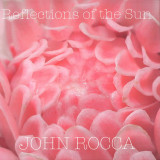
Reflections of the Sun is a collection of new music that see JOHN ROCCA experiment with a more laid back side to his musical personality. John is best know in Jazz Funk circles for his 1980s self funded, self produced and self released Brit Funk classic 'Southern Freeez', and as the band Freeez's founder.
"The melancholic suburban soul of ‘Southern Freeez’ never gets tired for me....an album that has remained at the top of my Brit Funk pile!" - GILLES PETERSON
Much of the album is also somewhat reflective. A personal and emotional reflection on John's life - the tracks a nod to John's varied musical pasts. Sounds, a pondering upon his collection of global influences and his life experiences over the years; Genre, the pulse of today, societal, musical or otherwise - but not easy to place as is John's character; Lyrics, the present dilemmas we face as humanity, whilst reflecting on our own private and deepest human feelings, of life and, of love in all its wonderous forms.
Musically, the 'Reflections of the Sun' album casts a glimpse back to Rocca's Brit Funk roots growing up amongst 1970s classic Jazz Funk and Soul, while also blending inspiration from his 1980-90s electronic influences topped off with everything else he has seen and heard on his life travels since then.
Giving a nod to John's own past while bringing Reflections of the Sun up to date was completed by adding elements of London's re-surgent and vibrant jazz scene. Not so different from John’s own early days jamming with Freeez, he is accompanied on all the album's tracks by his two young nephews and highly respected jazz musicians, Benjamin Rocca on keyboards and Joel Rocca on Saxophone. The two youngsters are known on the current London Jazz scene as the "Rocca Brothers".
The album's title track, "Reflections of the Sun" refers to how humanity, gorging on the sunshine that brings life to everything, also has a tendency to reflect the hellishness of the sun itself. Comparing our self-destructive nature with our planet's volumes of un-ending beauty.
Initial support for various tracks has come via radio plays on UK stations such as JazzFM, Jazz Funk & Soul Radio (JFSR), Soul Groove Radio and Solar (amongst others).
out of Stock
Last delivered 13 months ago available to reorder, subject to availability
How does one properly introduce an epochal record? Perhaps by unequivocally stating that it is the best-selling jazz album in history. Or by affirming that, every year, it sells tens of thousands of copies more than five decades after its original release. There's also the matter of its status as the most-referenced, and arguably, most important, jazz recording of all-time. And the Dream Team line-up of Miles Davis, Cannonball Adderley, John Coltrane, Bill Evans, Wynton Kelly, Paul Chambers, and Jimmy Cobb. Yes, Kind of Blue is utterly inimitable.
In its three-decade-plus history, Mobile Fidelity has never been prouder to have the honour of handling efforts as important as Davis' key recordings. It's why the our engineers took every available measure to transport listeners to the March and April 1959 sessions that parlayed modal jazz into mainstream language. The blueprint for melodic improvisation and vamping, Kind of Blue simplifies tonal organization and chordal progression into an eminently beautiful, introspective tapestry stitched with swinging poetry, mellifluous soloing, compositional lyricism, transcendental harmonies, and group interplay of the highest calibre.
While no one has ever completely identified the magic behind the record's allure – the otherworldly nature is part of its inherent charm – much of the success lies with the band members. Davis intentionally hand-picked these musicians to comprise this particular cast, with everyone from former foil Evans to blues maestro Kelly to percussive genius Cobb interacting and reacting with peerless skill.
An audiophile favourite from the day it was issued, Kind of Blue takes on nirvanic sonic proportions via Mobile Fidelity's reissue. The expressive warmth, imaging clarity, frequency extension, and window-on-the-world breadth afforded by this new edition places music lovers right in the studio with the sextet. Close your eyes and, no matter how many times you may have heard it before, your experience will parallel that of the players that recorded these gems. Everyone shares in the excitement of not knowing what will happen and, as the music begins to lie out in front of you, you'll feel as if you've been whisked away to a jazz holy land. Quintessential.
Erik K Skodvin's alter persona “Svarte Greiner” re-appears with another chapter in his “zen music for disturbed souls” series, channeling both spiritual distress and meditation in a live recording from the bunkers of a bombed out brewery.
The first piece, entitled “Devolving Trust” is recorded live in the bunkers of Schneider Brewery in Berlin, 2018. Erik explains : “I was invited to use the vast old cellars located underneath the site for a performance / installation. Wet and hollow with a dark past and long reverb, it was a perfect location to channel a cello and electro-acoustic improvisation in the spirit of my two long-form, meditative albums Black Tie & Moss Garden. As a 30 minute piece, it was left looping in the room for hours after it ended as an echo of the performance, allowing people to walk around and soak up the sounds and empty hallways alone.
I am usually not into the idea of releasing a live recording, as there are so many factors that are lost in the translation from being present and listening to it in another space. The eyes, ears and body can often see beyond small mistakes once a live performance unfolds in front of you. The details are usually lost in translating it to a pure recording. I made an exception for this as I feel it translates the live feeling in a way I like. Very personal and full of small mistakes it creates its own life. Also, as an improvisation, I am very happy with it, and have been listening to it on and off since a few years. With this in mind I decided I want it to be another document in my ongoing series of longform, atmospheric pieces following the aforementioned two albums.
The second track simply called “Devolve” is mostly constructed out of fragments from the performance as a sort of minimal, reversed echo, further tunnelling into the unknown. These pieces has given me calmness, reflection and escape from the madness escalating outside of our doors. I hope it can do the same for you”.
out of Stock
Last delivered 12 months ago available to reorder, subject to availability
Romano, bassist Jean-François Jenny-Clark and pianist Joachim Kühn.
They hadn’t rehearsed anything, as if entering the studio to record an
album without any plan was something normal. The musicians were
obviously very used to playing with each other, as the five tracks on
Our Meanings And Our Feelings seem to flow perfectly without any
hint of improvisation. The zokra, an oriental clarinet that Michel Portal
plays on “Walking through the land” and “Dear old Morocco” brings a
singular touch to this album. This singularity is transcended by
Joachim Kühn’s ability to easily go from the piano to the saxophone
alto, from supporting to soloing, before playing the bells, then the
tambourine, opening the soundscape. Our Meanings And Our
Feelings may not be the first French free jazz record – as it was
preceded by the fantastic Free Jazz by François Tusques, released in
1965 and on which Michel Portal plays as well - but it remains one of
the most important. Its incredible outburst of sounds and melodies is
completely free yet never turns into cacophony. 44 years after its
release, it is still urgent to listen to Our Meanings And Our Feelings
and what these five talented musicians had to tell us.
On June 27th, 1969, Michel Portal pushed the door of the Pathé
Marconi studios. With him were drummers Jacques Thollot and Aldo
n this Second Edition of eli.sound we bring you High-End Music with the Best exponent of Our Catalog in this moment, This time Our Happy House Side our Leader Son of Elita releases a Party Deep House with many changes of analog Synthesizers and pads chords and so on close Side A with a Incredible Argentinian Collaboration Trentz & Cajal induce to wear out all your Sneakers with a very emotional Fast Groove.
A Roman Side dresses up by hosting one of the best Romanian Exponents the great Direkt already known by all in the Underground environment releases a track with Experimental Minimalistic Trends and Organic Groove, to close our Project SOEm launches Breakbeat cut with Arpeggios and Organic Synthesizers. We assure you that this LP cannot missing from your Selection.
out of Stock
Last delivered 14 months ago available to reorder, subject to availability
With this release TAL delves deep into the very beginnings of Düsseldorf's post punk scene of the early 1980s. STUMM was the duo of Detlef Funder and Bernd Sevens who both would become pivotal figures in the tape underground movement of West-Germany, when they launched the SDV label in 1986. Individually they went on to produce boundary defying works as Konrad Kraft and Seventh Day respectively.
The material on this album was recorded by Funder and Sevens quite casually in 1980 in a rehearsal studio in the centre of Düsseldorf. Right from the beginning the two young musicians incorporated the atmosphere of the space in order to document the process of their sound experiments on a 4-track tape machine. For those recording sessions, which are now released for the first time ever on vinyl and download, Funder and Sevens managed to get their hands on a very rudimentary set of equipment consisting of merely a Korg MS 20 synth, a Roland CR 78 drum machine, a few electronic effects and a drum kit. The urgent and rough sound of the recordings imbues their production with a characteristic and era-specific edge that's hard to imitate today. Spontaneity and understatement were key elements in the brief creative period of STUMM. The recordings still have a uniquely dizzying quality and are somewhat of a basic blueprint for a lot of industrial/techno and post punk which was about to loom in all corners of the world. These tracks are also a testament to the vivid spark of a period in time that would soon be radically changed through the rise of digital technology.
Bernd Sevens: “Around 1980 there was a great musical awakening. Punk, New Wave, Industrial and of course Dub Reggae -- the electronic music blew us away. Everything we heard influenced us. Back then, cassette tapes were cheap and easily available. We could record our ideas on the spot and then copy and distribute the tapes. That's how it started. Giving it a go, experimenting, trial and error. The music you hear on the record was spontaneous and had no concept. Our collaboration was also not intended to be a permanent project. You could say we were dilettantes setting out on our journey, making it up as we went along. It felt like a beginning.”
Foyer Red’s debut LP, Yarn the Hours Away, plays out as a collection of short stories, each with its environment and protagonist(s) meticulously crafted by the band, with lead singer, vocalist, and clarinetist Elana Riordan at the helm. Foyer Red’s debut EP, Zigzag Wombat, showcased their playfully chaotic arrangements, which bridge art-punk, math rock, and sweetly sung indie with a dash of the zoomies.
The band synthesizes their homespun take on magical realist indie rock that was centered on their EP with their varied musical influences; taking cues from the otherworldly melodies of Cate Le Bon, Yucky Duster’s jangle-filled crayon rock, and the organized chaos of Deerhoof’s iconic polyrhythms. The songs that makeup Yarn the Hours Away are fantastical, surrealist stories that hinge on contemporary, post-digital life.
The lead single “Etc” captures this dynamic perfectly. Anchored by Eric Jaso’s hypnotizing bass line, the song unfolds with off-kilter call-and-response vocals between Riordan and Kristina Moore, their stilted deliveries bouncing around the mix. The track is searching but discontent with the algorithmic and claustrophobic realities of daily life: singer/guitarist Mitch Myers throws the song for a loop singing, “gathering information / will set you free once you’ve reached / 37 percent / of the database.” While there’s paranoia and cynicism undergirding the lyrics, the song itself is a thrilling and playful listen.
The songs on Yarn the Hours Away are uniformly exciting and compelling; each track feels distinct and sometimes even in direct conflict. The peppy opener “Plumbers Unite!” belies its themes of gamification of our daily lives and delves into the science fiction and fantasy songwriting of Foyer Red’s debut EP. Centered around a relentless rhythm section, their dueling vocals never abate; Moore and Riordan’s honey-sweet but getting more frantic as the song progresses, while Myers’ erratic talk-singing culminates in one final frustrated scream. Juxtapose this with “Gorgeous,” a lovely song about Riordan and drummer Marco Ocampo’s relationship that sees the band slowing their pace into a blissful sway. Riordan coos and sighs over the track while recalling “Marco-isms”; botched colloquialisms that Ocampo uses.
“Gorgeous” shares little in common with “Pocket,” a loose lamentation on late capitalism that touches on time travel and human evolution. Moore and Riordan’s exclamations are chopped up and used as rhythm instruments, layered over the intricately frenetic guitars of Myers and Moore. Foyer Red thrives on these extremes and contradictions. Where their first release was self-recorded, this LP found them in Figure8 Studios with a deadline. “It was really liberating,” says Jaso. “We're all just kind of throwing in our own voices and challenging each other to make the songs better.”
Yarn the Hours Away comes from a lyric on the closer “Toy Wagon.” The song that first marked the time Moore and the rest of the band worked together, a promising spark of a thrilling collaboration to come. “It harkens back to all of us coming together and spending the hours together in music,” says Moore. “There are few moments where you get to relax and exhale,” adds Riordan. “It's what happened when the five of us got together and started writing. We just wrote all of these out there songs and we didn't see a reason to dial that back. Its natural form is in its chaos and layered craziness.”
Brussels-based producer Sagat’s highly anticipated debut album ‘Silver Lining’ lands on Vlek Records. Sagat takes us on a deep dive into a dense sonic universe: It’s bass music viewed from multiple vantage points, an explorative zoom onto contemporary dance music’s broad ranging cadences, paradoxically viewed from a distance. Silver lining bathes in cluttering rhythms that hover over corroded thumping grooves. Poly chrome synths emerge dramatically, interlocking with oddly timed techno syncopations. Yet all tracks are held together by firm, dubbed out beat repetitions and slabs of sub bass, not without a melodic sense of drama. Sagat’s disintegrated sound-design stands in between musical dichotomies, at once spaced-out, disorienting and emotive, but also explorative, colourful and full of tension. Moving, yet statuesquely standing idle. Silver Lining is an album longing for the dancefloor, but also about disconnection from it: A highly personal presentation of this producers’ singular take on bass oriented club music. From our standing point we love to see how Sagat’s music keeps evolving, toying with contemporary club music’s specific tropes, unbound by its normativeness. Silver lining is an album rich in contrast that works for personal listening experience as well as for the adventurous DJ with one foot firmly on the dancefloor, the other somewhere way out there.
Lime green (yellowish?) vinyl LP Finnish noise rock duo NYOS deliver a clairvoyant Celebration of the present, written at a time when that present was shimmering just like the feathers of the cover art courtesy of animal photographer Zac Herr. Combining the danceable grooves of Battles with Sonic Youth - infused noise bursts and the yearning electric melodies of And So I Watch You From Afar, Celebration is a defiantly joyful, loud, and festive affair. A promising cure for the drudgery of the times we live in. Recorded by Brooke in his own Tonehaven Recording Studio, Celebration is the latest testament to the undeniable synergy these musicians have built over the past seven years. With the material largely written before the advent of corona, Celebration is a reflection of life before lockdown, filled to the brim with infectious grooves and glaring melodies. "We tried for something upbeat this time to contrast the times," explains Tom Brooke about the recording process, which in turn did take place during pandemic life. "We always love it when people can move to our music, so a big focus for the record was to embrace the dance vibe and go for it." This collection of eight colourful, jarring tracks is rife with small nods to dance music throughout the world. Take a song like "Light" with its complex syncopated drum pattern that recalls the Amen Break so typical for drum and bass music, but listen closely and the song reveals an off-beat skank that flips over into experimental reggae territory. Similarly, a track like "Tucano" recalls the experimental IDM of Bristol-based producer Vessel, while "Gold Vulcan" offsets a gnarly gyrating guitar riff with Latin- American and oriental melodies. The attention to detail on Celebration is phenomenal. The album contains some of the band's most layered compositions to date, but it is also the first NYOS record to feature improvised live recordings, the aptly named "First Take" as well as the celestial "Cloudberry". These musical sketches show two musicians at the apex of their connectedness. Every time that one of them appears to be taking a somewhat questionable turn, you'll find yourself carefully and respectfully readjusting your own interpretation of the song's intention - and what NYOS are all about.
Degrees of Freedom is a Canadian musical group founded in 1984 in Montreal by Janet Cadman (vocals and percussion), Martin Chartrand (bass, guitar, rhythm programming and vocals) and David Curtis (keyboards, vocals, and percussion). Established as a 5-piece New Wave cover band, Degrees of Freedom evolved into its classic quartet configuration following the departure of the original guitarist and drummer, and the subsequent enlistment of Santino Mastrocola on drums. With this lineup change came a new musical mission: the writing, recording and live presentation of original material only. Since Santino's withdrawal from the band in 1988, Degrees of Freedom has carried on as a trio in the studio while augmenting concert performances with additional musicians. In February 1985, Degrees of Freedom performed at the newly formed S.O.S. (Save Our Songwriters) Club in Montreal. Like other participants in the S.O.S. project, Degrees of Freedom was rewarded with studio time to record some of its own songs. One of these, "August is an Angel" was selected to close out the locally produced 1985 band anthology album "Listen - A Faze Compilation of Montreal Music." The next year, a new track "In This Room," was included in the follow-up release "Listen 2." Both songs, with four newly recorded works, were issued in 1988 as Degrees of Freedom's eponymous sole vinyl release, informally known as the “China” album. In 2015, the music of Degrees of Freedom experienced a renaissance thanks to a new generation of club DJs, traditional and internet-based radio hosts, vinyl disc collectors, and other aficionados of synth-based music. Local and international recognition has come in the form of record sales to fans in Canada as well as in the USA, Germany, Scotland, England, Ireland, Belgium, The Netherlands, France, Spain, Lithuania, Sweden, Bulgaria, Australia, Vietnam, and Japan. Responding to the resurgence of interest, Degrees of Freedom has twice re-issued the disc (2017 and 2019). Today, with eyes on the future and the past, Janet, Martin and David continue to collaborate on new material including the songs, "Metal Flesh" and "Be This Way" both accessible on the band's YouTube channel.
out of Stock
Last delivered 3 months ago available to reorder, subject to availability
Nucleus's Elastic Rock is undisputedly a milestone in Jazz-Rock. A beautiful and vital debut album, it was first released on Vertigo in 1970. Original copies are now very tricky to score and, like all the Nucleus records, it’s aged ridiculously well. This Be With re-issue, re-mastered from the original analogue tapes, shows off just why this deserves to be back in press.
Genius trumpeter and visionary composer Ian Carr was one of the most respected British musicians of his era. He was a true pioneer and saw the potential in fusing the worlds of jazz with rock, just as Miles Davis and The Tony Williams Lifetime did in the US. In late 1969, following the demise of the Rendell-Carr quintet, and tiring of British jazz, Carr assembled the legendary Nucleus. Regarding music as a continuous process, Nucleus refused to “recognise rigid boundaries” and worked on delivering what they saw as a “total musical experience”. We can get behind that.
Under bandleader Carr, Nucleus existed as a fluid line-up of inventive, skilled musicians. This constant evolution and revolution was all part of the continuous musical exploration and discovery that took jazz to new levels. And the music has kept relevant. To steal a line from a review of our re-issue of Roots, when it comes to anything Nucleus “it’s basically already hip-hop”.
The very title Elastic Rock could be regarded as the group's MO, describing a melting point between their rock and jazz impulses. Indeed, housed in a memorable gatefold jacket designed by Roger Dean, the die cut molten teardrop shape on the front sleeve opens to reveal a fiery volcanic crater. On the back, Dean's drawing has Carr with saxophonist Brian Smith, guitarist Chris Spedding, drummer John Marshall, bassist Jeff Clyne and sax, oboe and pianist Karl Jenkins in a circle, the central core of a movement and the basis for its activity.
Recorded over four days in January 1970, Elastic Rock didn't sound like any other British jazz album. Exploding out the gate, "1916" opens with Marshall's frantic pounding before melancholic horns enter. The smooth title track, "Elastic Rock" is just a gorgeous electric blues track. Light drums, gentle melodic horns, piano and a solid bassline serve as the perfect bed for Spedding's graceful bluesy guitar melodies. The serene "Striation", a Clyne and Spedding collaboration, is led by bowed bass and is the epitome of calm before the late night laid back vibe of "Taranaki" breezes along sweetly and smoothly with great trumpet and tenor.
The truly emotional "Twisted Track" is elegant with horns, while guitar is gently played with drums and bass. Initially deeply soothing, it gradually builds with various solos and duets. "Crude Blues (Part 1)" features an excellent oboe part by Jenkins with laconic guitar helping out. "Part 2" is livelier, with a heavy backbeat and great wind parts. "1916 (Battle Of Boogaloo)" features a steady bassline and great call and response parts from the horn section.
The highly-charged centrepiece of the record, the mesmeric epic "Torrid Zone" features an hypnotic bassline and hi-hat with some of the ensemble's best soloing. Brilliantly encapsulating the jazz fusion aesthetic so desired by the group, the rhythm section is rock-influenced but magically retains a laid-back jazz vibe. Just perfection. Spacey jazz in the style of In a Silent Way, the semi-ambient "Stonescape" features smooth, muted brass, warm, smokey keys and a barely-there rhythm section. Heavenly.
The bubbling, fragile restraint of "Earth Mother" partially utilises the "Torrid Zone" bassline but takes the energy in a different direction with Marshall's frenetic drumming and Spedding's unpredictable riffing. Next comes the very idiosyncratic drum solo track by Marshall in the appropriately-titled "Speaking for Myself, Personally, in My Own Opinion, I Think." The album closes with the raucous "Persephones Jive", a track that ends the album frantically, riotously, just as it began.
This Be With edition of Elastic Rock has been re-mastered from the original Vertigo master tapes, Simon Francis’ mastering working together with Cicely Balston's cut at AIR Studios to weave their usual magic with these wonderful recordings. The stunning die-cut gatefold sleeve has been restored in all its molten glory.
out of Stock
Last delivered 3 years ago available to reorder, subject to availability
Their masterpiece? With breaks for dayyyyyys and an almost ambient, heavy jazz atmosphere throughout, *this* is the apex of British jazz-rock fusion. We'll Talk About It Later was first released on Vertigo in 1971 and original copies are now very tricky to score. Like all the Nucleus records, it’s aged ridiculously well and this Be With re-issue, re-mastered from the original analogue tapes, shows off just why this deserves to be back in press.
Genius trumpeter and visionary composer Ian Carr was one of the most respected British musicians of his era. He was a true pioneer and saw the potential in fusing the worlds of jazz with rock, just as Miles Davis and The Tony Williams Lifetime did in the US. In late 1969, following the demise of the Rendell-Carr quintet, and tiring of British jazz, Carr assembled the legendary Nucleus. Regarding music as a continuous process, Nucleus refused to “recognise rigid boundaries” and worked on delivering what they saw as a “total musical experience”. We can get behind that.
Under bandleader Carr, Nucleus existed as a fluid line-up of inventive, skilled musicians. This constant evolution and revolution was all part of the continuous musical exploration and discovery that took jazz to new levels. And the music has kept relevant. To steal a line from a review of our re-issue of Roots, when it comes to anything Nucleus “it’s basically already hip-hop”.
We'll Talk About It Later is arguably Nucleus's best album. Not only that, it's in the top 5 of all fusion albums. By the time Nucleus entered Trident Studios in September 1970 to record Elastic Rock's successor, they had already won a best group award at the Montreux Jazz Festival. Once again presented in a Roger Dean designed die-cut gatefold sleeve it continued to demonstrate the chemistry and interplay that worked so brilliantly on Elastic Rock; Carr's sumptuous trumpet and flügelhorn lines, Karl Jenkins's funk-filled electric keyboards, Chris Spedding's wah-wah guitar, Brian Smith's sax and the rhythmic foundation of drummer John Marshall and bassist Jeff Clyne.
The group work and insane musicianship Nucleus were famed for is in evidence from the off. The intensely funky "Song for the Bearded Lady" is absolute FIRE, blasting out the speakers to leave listeners floored. Counterpoint riffing segues into a spacious groove and a Carr trumpet solo demonstrating the influence of electric Miles from the period. The stop-start funk of "Sun Child" would appeal to Soft Machine devotees whilst the genuinely touching "Lullaby for a Lonely Child" is a lovely downtempo ballad. Featuring an understated, reflective horn line from Carr and Smith and atmospheric, shimmering bouzouki from Spedding, there's an exotic flavour which contributes to the bliss. The ominous, sleazy title track retains a swaggering menace and is not the only track to lend a sort of heavy stoner rock atmosphere. The guitars and bass are deep and low throughout, conjuring heavy psych moments to go with the actual jazz and even funk. To say this album was in conversation with Bitches Brew would not be overstating the sheer brain-frying brilliance.
The Weather Report-adjacent "Oasis" opens Side B, a colossal track featuring nearly 10 minutes of steadily building melodic horns, keys and choppy guitar riffs. So ace, it could easily go on for another 10. Mesmeric. Spedding adds unique vocals to the undeniable groove of "Ballad of Joe Pimp" whilst saxophonist Smith's duet with drummer Marshall at the conclusion of "Easter 1916" - inspired by the Yeats poem about the Irish nationalist uprising in Dublin - adopts the wildness of the most incendiary free jazz.
This Be With edition of We'll Talk About It Later has been re-mastered from the original Vertigo master tapes, Simon Francis’ mastering working together with Cicely Balston's cut at AIR Studios to weave their usual magic with these wonderful recordings. The stunning die-cut sleeve has been restored with the original gatefold window pane depicting the Irish uprising in 1916. Incredible, timeless, guaranteed spine-chills.
out of Stock
Last delivered 3 years ago available to reorder, subject to availability
What a record! The outstanding Solar Plexus, the much-loved third album from Ian Carr and Nucleus, was first released on Vertigo in 1971. Inevitably, original copies are now very tricky to score and, like all the Nucleus records, it’s aged ridiculously well. This Be With re-issue, re-mastered from the original analogue tapes, shows off just why this deserves to be back in press.
Genius trumpeter and visionary composer Ian Carr was one of the most respected British musicians of his era. He was a true pioneer and saw the potential in fusing the worlds of jazz with rock, just as Miles Davis and The Tony Williams Lifetime did in the US. In late 1969, following the demise of the Rendell-Carr quintet, and tiring of British jazz, Carr assembled the legendary Nucleus. Regarding music as a continuous process, Nucleus refused to “recognise rigid boundaries” and worked on delivering what they saw as a “total musical experience”. We can get behind that.
Under bandleader Carr, Nucleus existed as a fluid line-up of inventive, skilled musicians. This constant evolution and revolution was all part of the continuous musical exploration and discovery that took jazz to new levels. And the music has kept relevant. To steal a line from a review of our re-issue of Roots, when it comes to anything Nucleus “it’s basically already hip-hop”.
We'll let Ian describe this one: "I wrote Solar Plexus' last year with the help of an Arts Council grant. It is based on two short themes which are stated at the beginning (Elements I & I1). The first theme is angular and has a slow, crab-like movement: the second theme is direct, simple and diatonic. CHANGING TIME and SPIRIT LEVEL explore the first theme and BEDROCK DEADLOCK and TORSO explore the second one. SNAKEHIPS DREAM tries to fuse both themes. (The title is a reference to the famous dancer 'Snakehips' Johnson)."
Solar Plexus features the same lineup as Elastic Rock and We'll Talk About It Later, but they're augmented by six guests, three of which play brass. Carr himself had almost full control of the writing and it does feel very different to the previous albums. It's more of a jazz record loosely based on a rock foundation rather than jazz fusion jamming.
The haunting synth-and-bass soundscape "Elements I and II" opens the album in dramatic, experimental fashion. It gives way to the bright, funky feel-good jazz of "Changing Times". An elegant onslaught of horns, courtesy of guests Kenny Wheeler and Harry Beckett, ride a solid groove for the duration. How the brass refrains have eluded samplers is beyond us. The melancholic "Bedrock Deadlock" features the brooding majesty of Jenkins' oboe and Clyne's mournful, skittering double bass. Wah wah guitar, drums and funky percussion then take over before the horns ride us out over frenetic beats. The dark, angular "Spirit Level" is a real highlight, by turns harmonic and beautiful then dissonant and wayward. Wonky jazz with no apparent structure or melodic bones. Regardless, it represents a great showcase for each virtuoso performer.
The breezy soul of "Torso" feels like a breath of fresh air, skipping along in the uptempo style with guitar, horns, drums and bass. A track which truly sounds scintillating, featuring sax solos, fantastic propulsive interplay from all the group around the halfway stage before Marshall gets his chance to really shine in closing out with a polyrhythmic drum solo. Final track "Snakehips' Dream" stretches cooly out over 15 minutes to round out a spellbinding album. An epic, suave groove, it's a relaxing piece with warm electric keys, laconic guitar and languorous horns. Truly sophisticated soulful jazz. An absolute masterclass. We could easily listen to this all day long.
This Be With edition of Solar Plexus has been re-mastered from the original Vertigo master tapes, Simon Francis’ mastering working together with Cicely Balston's cut at AIR Studios to weave their usual magic with these wonderful recordings. The stunning gatefold sleeve has been restored to complete this sensational package.
out of Stock
Last delivered 3 years ago available to reorder, subject to availability
The distinctive rolling grooves, growling basslines and blasting horns of Snakehips Etcetera combined to present Nucleus's most energetic record. First released on Vertigo in 1975, original copies of Snakehips Etcetera are now very tricky to score. Like all the Nucleus records, it’s aged ridiculously well and this Be With re-issue, re-mastered from the original analogue tapes, shows off just why this deserves to be back in press.
Genius trumpeter and visionary composer Ian Carr was one of the most respected British musicians of his era. He was a true pioneer and saw the potential in fusing the worlds of jazz with rock, just as Miles Davis and The Tony Williams Lifetime did in the US. In late 1969, following the demise of the Rendell-Carr quintet, and tiring of British jazz, Carr assembled the legendary Nucleus. Regarding music as a continuous process, Nucleus refused to “recognise rigid boundaries” and worked on delivering what they saw as a “total musical experience”. We can get behind that.
Under bandleader Carr, Nucleus existed as a fluid line-up of inventive, skilled musicians. This constant evolution and revolution was all part of the continuous musical exploration and discovery that took jazz to new levels. And the music has kept relevant. To steal a line from a review of our re-issue of Roots, when it comes to anything Nucleus “it’s basically already hip-hop”
With all restraint out the window, 1975's pimped-up Snakehips Etcetera is the outrageous - in both cover art and sound - follow-up to the brooding Under The Sun. It's perhaps not one for the jazz purists! It finds Nucleus pared down to a core group of six, with Carr, Bob Bertles (sax), Ken Shaw (guitar), Geoff Castle (keys), Roger Sutton (bass) and Roger Sellers (drums) comprising the collective. Snakehips Etcetera reflects a period where the compositions start to become a little more direct and less-cerebral in comparison to some of Nucleus' previous releases. And why would we begrudge them some fun? This one rocks, swings and funks with no little soul. And more than a little jazzy sleaze. Clearly, they were having a good time.
The album has a real live, jamming feel to it, no surprise given the extent to which they were touring at the time. The band is tight and grooving throughout, none more so than on Bob Bertles's effervescent opener, "Rat’s Bag". So darn funky it stings, it's an infectious gem full of punchy clean lines over a killer bassline from Sutton. The thick, driving jazz-rock of "Alive And Kicking" is exactly that. It has a very improvisational feel, but an inspired one at that and features a wailing guitar solo from Ken Shaw that simply slays. The funky "Rachel’s Tune" is amazing, bringing you back to Canterbury days with its fuzzed-out organ solos to close out Side A.
Opening up Side B, the cool psychedelic title track unfolds slowly and sensually over its ten-plus minutes. A stoned soul stew of sorts, each member of the crew gets their chance to shine over Sellers's steady drums. The melodic funk fusion of "Pussyfoot" pairs Carr with Bertles on ace solo flute for a bright, springy melody. This one really gleams over shuffling drums. Changing the pace to close out this memorable set, the particularly cool "Heyday" is a reflective, sober tune which reinforces the sumptuous Nucleus palette, the acoustic guitar and bass high in the mix to make the neck snap, the horns elegantly blasting to help you swoon.
This Be With edition of Snakehips Etcetera has been re-mastered from the original Vertigo master tapes, Simon Francis’ mastering working together with Cicely Balston's cut at AIR Studios to weave their usual magic with these wonderful recordings. The striking, lascivious sleeve has been restored in all its seductive/ridiculous beauty.
out of Stock
Last delivered 3 years ago available to reorder, subject to availability
Since the release of Surprise Chef's 2022 album, Education & Recreation, they have been touring across the US, Europe, and Australia selling out shows and cementing themselves as a force to be reckoned with. Releasing three albums and a string of successful 7" singles since 2019, their output is nothing short of prolific and they show no signs of slowing down with the announcement of their new Friendship EP. Friendship is a six song 12" EP recorded during the Education & Recreation sessions that stands as "a humble monument to the most crucial principle of our band: that the love we share for one another is, at all times, the most important thing". Surprise Chef holed up for a marathon of a recording session and laid down more tracks than would fit on an album. Here now, we dig in the vault from those sessions and share some absolute gems. The EP opens with "Rosemary Hemphill", a nod to David Axelrod that takes the listener through a myriad of musical changes and moods in proper cinematic soul fashion. "Friendship Theme" is a bouncy and energetic number with an infectious and driving clavinet topline that is sure to move dancefloors around the globe. "Over The Moon" is pure mood music that puts Surprise Chef's restraint and tasteful use of space front and center while "Spiky Boi" is a frantic upbeat number drenched in percussion and keyboards. SC have a heavy touring schedule for the rest of 2023 and will be finishing up the recording of their next album which is due out in 2024 in between runs. UK shows: May 29 Pink Room - Manchester, May 30 Village Underground – London. Also Available From Surprise Chef: Money Music 7", Education & Recreation LP / CD, Velodrome7”
"As I write these notes sitting on my balcony in July 2022, it has been more than 9 years since the release of my debut album and more than 11years since it was recorded, the time since has been a personally tumultuous period of twists and turns - retreat, reflection, realization, reassessment, therapy, triumph, trial and error - entangled in a decade-long creative block that had me questioning whether
I would ever be able to compose again and though I felt there was so much I wanted and needed to say, I felt I had lost my voice, or perhaps never had one in the first place. A constant knot had grown tighter and tighter within me over time, but I did not understand what had created it or how it might be undone. In 2018, shaken awake by the collision of two transients, I suddenly saw in a new light old
patterns whose familiar presences I realized I had felt for much of my life, but had until then never seen for what they were. Following a third, I finally found the humility to surrender, and as I began re- examining and confronting myself, I slowly started to discover new answers - and new questions to ask.
Then the Covid-19 pandemic happened, and the world stopped. Like so many of us caught in the new eerie calm, I retreated into inner spaces. I began revisiting sketches of ideas I had accumulated over the years, and finally, very, very slowly, new music started to come. " - Jussi Reijonen.
"Electrifying and deeply resonant, monumental and profoundly personal, Reijonen's five- movement suite is a beautifully crafted, remarkable journey of sound and emotion performed by a knockout nine-piece ensemble." - Monarch
"He's written one hell of a piece." - The Arts Fuse
"On this remarkable and ambitious new recording, Reijonen delivers an epic transcultural suite that feels as deeply personal as it is expansive and farreaching." - All About Jazz "a remarkable sophomore album" -The Boston Globe
"This is an album meticulously pulled together into a dense fabric of diverse musical threads. It merits repeated listening; with each fresh listen, the richness of Reijonen's intercultural vocabulary becomes more apparent." London Jazz News
"Even in our present jazz moment, when the art form is worldwide and vital, albums that come as complete surprises are relatively rare. Three seconds Kolme Toista is a stunner." Jazz Times
"Three seconds Kolme Toista is spellbinding from beginning to end, and full of virtuoso performances." All About Jazz
On this second delivery of Uruguayan Sound, Mephis presents us with two like-minded producers with a love for machines and their sound.
On the A side we have Elias Sternin, with his particular nostalgic, mysterious and trance-inducing sound. The EP opens up with Wah Wah y Phaser, evoking the feeling of a spaceship lifting off, into the big Other. Bass rolls into the stratosphere, whilst sharp and poignant synths push us past the space rubble that surrounds our planet. The second Track is a proper mood work, landing us in an uncharted yet familiar alien landscape. You can breathe the mystery in, whilst closing your eyes and embracing the unknown.
On the B side we continue travelling through a path of esoteric and questioning vibes. Artesano Titer delivers an ominous mind trip with Science to Music, an utterly mesmerising soundscape to question yourself and your Umwelt. Closing off the EP, we have White Rabbit, a profoundly narcotic trip to the centre of our own perception. Slides, breaks, smooth lines and an acidic bass that spiral down to the core of the self.
Detective of Perspective; Need to try and get a bigger eye, Open wide.
out of Stock
Last delivered 7 months ago available to reorder, subject to availability