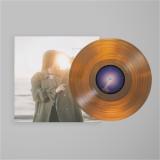
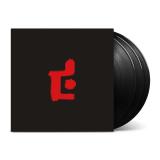
Jeder Künstler muss seine eigene Stimme finden. Gia Margaret fand sich selbst erst, als sie ihre Stimme verlor. Aufgrund einer Stimmbandverletzung, die sie jahrelang am Singen hinderte, entwickelte sie andere musikalische Ausdrucksformen und meisterte die Grammatik einer komplexen, heimeligen Form der Ambient-Musik, die von Ernest Hood begründet und von The Books perfektioniert wurde. Angeführt von sanften Klaviermelodien, die wie Atem auf Glas hauchen, jetzt, da ihre physische Stimme geheilt und ihre künstlerische Stimme geschliffen ist, schließt sich der Kreis mit Singing, ihrem ersten Gesangsalbum seit There's Always Glimmer aus dem Jahr 2018. Die Musik auf Singing zeugt von derselben Sensibilität für Details, die sie in ihrer Stille entwickelt hat. ,Es gab eine Zeit, in der ich wirklich nicht wusste, ob ich jemals wieder singen würde. Als ich dann geheilt war, stand ich unter großem innerem Druck, stark zurückzukommen", sagt Margaret. ,Ich wusste nicht mehr, wer ich war. Es fühlte sich an, als würde ich neu anfangen und mich wieder mit diesen sehr alten, alten Teilen meiner selbst verbinden." Dieses Gefühl der Vermischung von Entfremdung und Wiederentdeckung ist auf dem gesamten Album spürbar. Im Opener ,Everyone Around Me Dancing" beobachtet sie eine Party von den Seitenlinien aus und ist sich bewusst, wie ihr Körper sie von gemeinschaftlicher Freude abhält, ihr aber gleichzeitig neue Wege der Selbsterkenntnis eröffnet. Ausgeschlossen von der Szene ist sie ,näher am Boden, am Planeten". In ,Alive Inside" ist sie so weit entfernt von der Quelle, dass sie zu jedem betet, der sie hören könnte (,ein Gott, ein verstorbener Freund, ein Geist"). Wenn ihre Stimme anschwillt, scheint sie in einem Netz aus Verzerrungen gefangen zu sein; es ist, als würde sie in ihrem Streben die Grenzen des Sagbaren ausloten. Der Entstehungsprozess von ,Singing" war ein Prozess des Lernens, jedem dieser Gefühle zu vertrauen. Das Album wurde teilweise in London mit Guy Sigsworth von Frou Frou aufgenommen, der Margaret dabei half, die Vielzahl ihrer Ideen für ,Good Friend" zu vereinen, einem Highlight des Albums, das unter anderem gregorianische Gesänge von ILA und Turntable-Scratches enthält . David Bazan und Amy Millan sind ebenfalls zu hören, ebenso wie Kurt Vile und Sean Carey, während Margarets langjähriger Kollaborateur Doug Saltzman einen Großteil des Albums spielt und co-produziert. Deb Talan, ehemals Mitglied von The Weepies, steuert ihre Stimme, ihr Klavier und ihre Gitarre zum abschließenden und definitiven Statement des Albums ,E-Motion" bei. Gia Margaret singt stets. Jede Note dieses Albums singt ein warmes Requiem für ihr vergangenes Ich; jede Ebene singt ihr zukünftiges Ich ins Leben. Auf dem gesamten Album wendet sie die Lektionen der Sprachlosigkeit an - die quasi-rationalen Wege, auf denen wir kommunizieren, ohne zu kommunizieren, die Art und Weise, wie formlose Klänge wie ein Skalpell zum Kern der Dinge vordringen können - auf ihre eigene künstlerische Stimme.
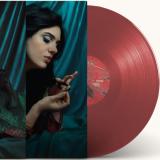
Julia Cumming’s solo debut Julia opens with an unadorned declaration of independence: her voice and a piano uniting for a liberating proclamation of self that rejects doubt, misogyny, and the notion of being “too much.” Julia unlocks a creative door years in the making for the New York–born multi-instrumentalist and Sunflower Bean bassist, culminating after nearly two decades of bands, releases, labels, and relentless touring. As Sunflower Bean’s Headful of Sugar era ended in 2023, Cumming decamped to Los Angeles, where a two-year, deeply healing collaboration with producer Brian Robert Jones — her “second artistic puberty” — took shape. Drawing freely from formative influences: Burt Bacharach, Carole King, Joni Mitchell, Carly Simon, and Brian Wilson. Julia emerges as a joyful, anti-cool coming-out: a celebration of the dorks, the misfits, and the enduring truth of being enough.
Julia Cumming’s solo debut Julia opens with an unadorned declaration of independence: her voice and a piano uniting for a liberating proclamation of self that rejects doubt, misogyny, and the notion of being “too much.” Julia unlocks a creative door years in the making for the New York–born multi-instrumentalist and Sunflower Bean bassist, culminating after nearly two decades of bands, releases, labels, and relentless touring. As Sunflower Bean’s Headful of Sugar era ended in 2023, Cumming decamped to Los Angeles, where a two-year, deeply healing collaboration with producer Brian Robert Jones — her “second artistic puberty” — took shape. Drawing freely from formative influences: Burt Bacharach, Carole King, Joni Mitchell, Carly Simon, and Brian Wilson. Julia emerges as a joyful, anti-cool coming-out: a celebration of the dorks, the misfits, and the enduring truth of being enough.
Artist and multi-instrumentalist Flaer looks to the landscape to explore pastoral melancholy on debut release, Preludes. It is released in a second edition black vinyl, with an alternate cover artwork.
Ensconced in his family home in rural Leicestershire in the early months of 2020, painter and musician Realf Heygate (b. 1994) picked up his childhood cello for the first time in several years and began to play. Setting himself parameters to only record onto 4-track tape with acoustic instruments – cello, piano and acoustic guitar – he assembled a suite of instrumental compositions that form the basis of Preludes, his debut album as Flaer and the inaugural release on Odda Recordings.
Channelling the tension and unease between the pastoral idyll of the English countryside and the darkness which lurks beneath the surface, the mini-album draws inspiration from the analogue aesthetic of 1970s folk horror films, weaving field recordings of birdsong, church bells and the natural environment into chimerical melodies that reflect on Heygate’s childhood experiences of rural England.
“It was really important not to isolate the sound from its environment,” he explains, describing the compositional and recording process as “site-specific”. Developed over a series of intuitive musical enquiries, the mini-album’s uncanny quality emerges from combining raw demo takes with overdubs of almost orchestral grandeur.
Heygate points to the final track as indicative of the work as a whole: “‘Follow’ really is the mantra for the release and embodies the practical approach I was taking to music making: not to force the music but see where it takes you.”
As a painter, Heygate’s practice takes artefacts through sequences of reproduction that embrace the fluctuating materiality of the copy. Since obtaining a degree in Fine Art from Central Saint Martins in 2017, he has exhibited solo at Peter von Kant and Springseason galleries in London, and has participated in group shows at Saatchi Gallery, Cob Gallery and Senesi Contemporanea.
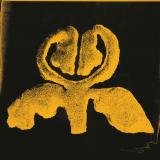
Describing his artistic practice as one of self-erasure, music instead provides Heygate with a more personal and autobiographical outlet. Where the two worlds combine is on Preludes’ striking artwork, which features paintings of 13th century stone carvings from the font of the church in the town where he grew up.
Speaking to a time where people were connected to the land in a more profound way, each symbol is assigned to a track on the album, which Heygate likens to giving them a title.
“To add that one juxtaposition might open a whole new interpretation or language that might be hard to find otherwise,” he explains.“Over time it might reveal itself to you, which is why I'm excited about it being released. To throw them out there and see what comes of it.”
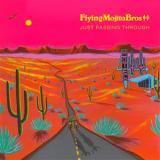
Das erste Album mit Originalmusik von den englischen Künstlern Flying Mojito Bros., die total auf Americana und Dance-Musik stehen. FMB hat dank seines einzigartigen Stils, der als Desert Disco und Outlaw House bezeichnet wird - ein neu definierter Americana-Sound, der von Poolside-Vibes bis zur Tanzfläche reicht -, eine wachsende Fangemeinde in den USA gewonnen. Das Album bietet eine hochkarätige Besetzung mit Künstlern wie Scott Hirsch, Will Worden und Rob Chaney (weitere werden noch bekannt gegeben!) und hat die Unterstützung von einflussreichen Persönlichkeiten wie Diplo, Phish, Pretty Lights, BBC 6 Music und KEXP erhalten. Just Passing Through zeigt die Entwicklung von FMB und kombiniert ihre charakteristischen Re-Edits und Remixe mit Live-Band-Aufnahmen. Es ist ein mutiger Schritt in ihrer Karriere, bei dem sie von den 1970er Jahren inspirierten Rock und elektronische Rhythmen mit Kollaborationen von Top-Musikern wie Shawn Lee (Young Gun Silver Fox), Joe Harvey-Whyte (The Hanging Stars) und Joe Stoddart (ABBA Voyage) verbinden. Dieses Album markiert ein neues Kapitel in der kreativen Reise von FMB und fängt ihre Erkundung der neu definierten Americana und den interkulturellen Rock-Austausch zwischen den USA und Großbritannien ein.
Einar Solberg (Leprous) kehrt mit "Vox Occulta" zurück, seinem zweiten Projekt unter eigenem Namen und einem kühnen, schweren und symphonischen Statement, das in Zusammenarbeit mit dem begehrten Norwegian Radio Orchestra aufgenommen wurde. Solberg will sich als einer der epischsten Charaktere der experimentellen Musik etablieren: "Ich möchte als der cineastische Mensch im Prog gesehen werden", erklärt er. "Ich möchte das vollständig für mich beanspruchen. Dies ist ein sehr cineastisches Album, und genau das war mein Ziel."
"Stella Mortua", der Eröffnungstrack von "Vox Occulta", spiegelt diese klare Vision wider. Solberg singt zu klassischen Streichern, bevor sich eindringliche E-Gitarren-Akkorde hinzugesellen und der Sänger sich durch einen majestätischen Refrain kämpft. Von da an hat jeder Song seinen eigenen Charakter - "Medulla" betont sein gewaltiges, metallisches Riff und "Grex" ist eine fast 12-minütige Odyssee.
"Vox Occulta" wurde von Solberg und David Castillo co-produziert, der für seine Arbeit mit Opeth, Katatonia, Amorphis und anderen bekannt ist. Auf dem Album sind Schlagzeuger Keli Guðj\u00F3nsson (Agent Fresco), Violinist Chris Baum (Bent Knee), Gitarrist Pierre Danel (Novelists) und Bassist Jed Lingat sowie John Browne (Monuments) und Ben Levin (ex-Bent Knee) zu hören. Adam Noble, ehemaliges Mitglied von Biffy Clyro, war für den Mix verantwortlich.
"Vox Occulta" wird als limitierte CD-Digipak- und Gatefold-Weiß/Schwarz-2LP-Version sowie digital erhältlich sein..
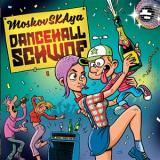
Zehn Jahre war es still um moskovSKAya - jetzt sind die Ska-Veteranen zurück. Die 9-köpfige Band steht für schnellen Ska mit markanten Bläser-Riffs, treibenden Rhythmen und einer explosiven Live-Energie. Mit Elementen von Polka bis Punk, von Reggea bis Jazz bringen sie ihr Live Publikum in Clubs oder bei großen Open Airs zum Tanzen...schwitzen garantiert! Bei unzähligen Auftritten, auch als Support von z.B. Bob Geldof, Manfred Mann oder The Specials haben sie das unter Beweis gestellt. Dabei stehen moskovSKAya weder für Mainstream, noch für Rebellion, sondern für Verbundenheit und der gemeinsamen Leidenschaft für die Musik, das Miteinander und dem unbeschreiblichen Gefühl, wenn auf und vor der Bühne alles zusammenpasst: die Baseline groovt, Gitarre und Orgel schwingen im Offbeat und die Bläser schieben nach vorne, bis das ganze Publikum mit dem Sänger um die Wette springt. Nun bringt die 1989 gegründete Band mit "Dancehall Schwof" ihr sechstes Studioalbum, das bei Sunny Bastards Records erscheint. Und moskovSKAya stellen mit den zehn Songs unter Beweis, dass sie nichts von ihrer Sound-Vielfalt und ihren knackigen Bläserriffs verloren haben...treibender Offbeat, musikalische Präzision, Charakter und ungebremste Spielfreude. Ska, wie er heute klingen muss - lebendig, auf den Punkt und jenseits von Nostalgie. Absolute 'Must-Dance' Anspieltipps wären unter Anderem 'Night Train', 'Let You Down', 'Eso Es' oder 'Only Once'. Hier bleibt kein Bein ruhig, Kopf und Körper wollen zwangsläufig in Bewegung gehen. Und wer damit nicht bis zum nächsten Live Auftritt der Band warten möchte, dem sei dieses Album klar ans Herz gelegt!
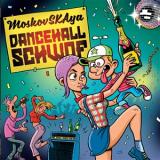
Zehn Jahre war es still um moskovSKAya - jetzt sind die Ska-Veteranen zurück. Die 9-köpfige Band steht für schnellen Ska mit markanten Bläser-Riffs, treibenden Rhythmen und einer explosiven Live-Energie. Mit Elementen von Polka bis Punk, von Reggea bis Jazz bringen sie ihr Live Publikum in Clubs oder bei großen Open Airs zum Tanzen...schwitzen garantiert! Bei unzähligen Auftritten, auch als Support von z.B. Bob Geldof, Manfred Mann oder The Specials haben sie das unter Beweis gestellt. Dabei stehen moskovSKAya weder für Mainstream, noch für Rebellion, sondern für Verbundenheit und der gemeinsamen Leidenschaft für die Musik, das Miteinander und dem unbeschreiblichen Gefühl, wenn auf und vor der Bühne alles zusammenpasst: die Baseline groovt, Gitarre und Orgel schwingen im Offbeat und die Bläser schieben nach vorne, bis das ganze Publikum mit dem Sänger um die Wette springt. Nun bringt die 1989 gegründete Band mit "Dancehall Schwof" ihr sechstes Studioalbum, das bei Sunny Bastards Records erscheint. Und moskovSKAya stellen mit den zehn Songs unter Beweis, dass sie nichts von ihrer Sound-Vielfalt und ihren knackigen Bläserriffs verloren haben...treibender Offbeat, musikalische Präzision, Charakter und ungebremste Spielfreude. Ska, wie er heute klingen muss - lebendig, auf den Punkt und jenseits von Nostalgie. Absolute 'Must-Dance' Anspieltipps wären unter Anderem 'Night Train', 'Let You Down', 'Eso Es' oder 'Only Once'. Hier bleibt kein Bein ruhig, Kopf und Körper wollen zwangsläufig in Bewegung gehen. Und wer damit nicht bis zum nächsten Live Auftritt der Band warten möchte, dem sei dieses Album klar ans Herz gelegt!
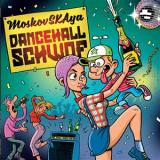
Zehn Jahre war es still um moskovSKAya - jetzt sind die Ska-Veteranen zurück. Die 9-köpfige Band steht für schnellen Ska mit markanten Bläser-Riffs, treibenden Rhythmen und einer explosiven Live-Energie. Mit Elementen von Polka bis Punk, von Reggea bis Jazz bringen sie ihr Live Publikum in Clubs oder bei großen Open Airs zum Tanzen...schwitzen garantiert! Bei unzähligen Auftritten, auch als Support von z.B. Bob Geldof, Manfred Mann oder The Specials haben sie das unter Beweis gestellt. Dabei stehen moskovSKAya weder für Mainstream, noch für Rebellion, sondern für Verbundenheit und der gemeinsamen Leidenschaft für die Musik, das Miteinander und dem unbeschreiblichen Gefühl, wenn auf und vor der Bühne alles zusammenpasst: die Baseline groovt, Gitarre und Orgel schwingen im Offbeat und die Bläser schieben nach vorne, bis das ganze Publikum mit dem Sänger um die Wette springt. Nun bringt die 1989 gegründete Band mit "Dancehall Schwof" ihr sechstes Studioalbum, das bei Sunny Bastards Records erscheint. Und moskovSKAya stellen mit den zehn Songs unter Beweis, dass sie nichts von ihrer Sound-Vielfalt und ihren knackigen Bläserriffs verloren haben...treibender Offbeat, musikalische Präzision, Charakter und ungebremste Spielfreude. Ska, wie er heute klingen muss - lebendig, auf den Punkt und jenseits von Nostalgie. Absolute 'Must-Dance' Anspieltipps wären unter Anderem 'Night Train', 'Let You Down', 'Eso Es' oder 'Only Once'. Hier bleibt kein Bein ruhig, Kopf und Körper wollen zwangsläufig in Bewegung gehen. Und wer damit nicht bis zum nächsten Live Auftritt der Band warten möchte, dem sei dieses Album klar ans Herz gelegt!
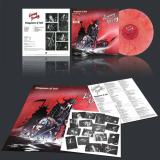
When asked about the founding fathers of German thrash metal, band names such as Kreator, Sodom, and Destruction come to mind. Perhaps even Tankard. The name Living Death is usually not among them. There is a simple reason for this. Similar to the Swiss band Hellhammer, Living Death from Velbert were simply a tad too extreme for most fans and the press. Thorsten “Toto” Bergmann's truly shrill vocals and the poor production of the first two (legendary) albums did not make it easy for the public to adequately assess the band's musical significance. Living Death was founded in 1981 by the two Kelch brothers, Reiner on guitar and Dieter on bass. In the early days, guest drummer Eric sat behind the drums. The line-up was completed by Frank Fricke on second guitar and the aforementioned singer Thorsten “Toto” Bergmann. Living Death recorded their first demo with three tracks in 1981, which earned them a deal with the Belgian label Mausoleum Records. A year later, their debut album “Vengeance of Hell” was released, which actually suffered from its very thin (and treble-heavy) production (in 1985, the record was re-released as a remix – with slightly improved results). However, the below-average production should not obscure the fact that “Vengeance of Hell” offers a few timeless thrash metal classics with “My Victim,” “Heavy Metal Hurricane,” “Hellpike,” and the title track “Vengeance of Hell.” The raw, unpolished sound of Living Death sounds more contemporary than ever today, 30 years after its initial release. This only proves that it took the music world three decades to catch up with Living Death.
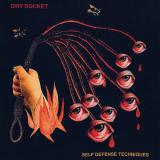
Dry Socket is a politically charged hardcore band from Portland, Oregon, known for blistering performances and emotionally uncompromising songwriting. Rooted in the raw aggression of classic hardcore, their sound channels the urgency of early Ceremony, G.L.O.S.S., and Negative Approach while carving out a distinctly modern, inclusive space within the genre, one where anger, grief, and survival are not just themes, but lived realities.
Their music confronts systems of violence, coercion, and control with unflinching honesty, creating room to be unapologetically furious, vulnerable, and alive at the same time. Every riff lands like a strike; every lyric feels torn from experience rather than abstraction.
Since forming, Dry Socket has toured extensively across the U.S., Europe, and Mexico, sharing stages with Gorilla Biscuits, The Hope Conspiracy, Torso, and more.
Their latest record, Self Defense Techniques, centers on survival under constant pressure. Inspired by the practice of dehorning rhinos to protect them from poachers, removing a vital part of the animal in order to keep it alive, the album examines the compromises people are forced to make to endure a hostile world. Horns are tools for protection, communication, care, and identity. To survive, so many of us are taught to remove our own.
Across the record, Dry Socket interrogates life inside systems that demand silence, obedience, and self-erasure. Songs wrestle with exhaustion, spiritual betrayal, and economic violence, oscillating between fury and grief. Self Defense Techniques isn’t about triumph, it’s about endurance, documenting the cost of staying alive while refusing the lie that softness is weakness or that silence is peace
Few artists can make chaos sound this fun. Steel Beans, the self-titled album from the genre-bending one-man band, is a wild ride through rock, funk, jazz, and whatever else happens to cross the radar of Everett, WA’s Jeremy DeBardi — the multi-instrumentalist and mad scientist behind it all. Known for his jaw-dropping live performances where he sings, shreds guitar, and drums at the same time, Steel Beans brings that same unfiltered energy to tape, capturing the spirit of a garage jam gone cosmic.
The album moves effortlessly from fuzzed-out psych-rock to greasy funk breakdowns and tongue-in-cheek lyricism, mixing humor and virtuosity in equal measure. It’s unpredictable, unpolished in all the right ways, and full of personality — the kind of record that feels alive because it’s never trying to be perfect. Steel Beans isn’t just an album; it’s a reminder that music can still be weird, raw, fun, and ridiculously entertaining. Whether you’re hearing him for the first time or you’ve already seen the madness live, this album is the perfect introduction to the wild world of Steel Beans.
out of Stock
Last delivered 5 months ago available to reorder, subject to availability
La Peste war Bostons erste echte Punkband und hat die Lücke zwischen der einflussreichen Proto-Punk-Szene der Stadt in den 1970er Jahren und dem College-Rock und Hardcore-Punk der 1980er und 1990er Jahre gefüllt. Diese Sammlung will die ganze Geschichte von La Peste erzählen und zeigt die unveröffentlichten Studio- und Loft-Aufnahmen der Band zusammen mit den beiden offiziell veröffentlichten Tracks. Diese Tracks stammen aus der Studio-Session, aus der die 7"-Single ,Better Off Dead" (die einzige offizielle Aufnahme der Band) hervorging, aus ihrer Session mit Ric Ocasek von The Cars aus dem Jahr 1978, aus einer Session in den Electro Acoustic Studios aus dem Jahr 1978 und aus 4-Spur-Loft-Aufnahmen, die 1977 von den Bostoner Punks Billy Dafodil und Dave Cola gemacht wurden. ,Wenn du dir ,I Don't Know Right From Wrong" anhörst, wage ich zu behaupten, dass du nicht mehr aufhören kannst, sobald du angefangen hast - stell dir vor, diese Songs wären verfügbar gewesen, als La Peste sie aufgenommen hat. Stell dir vor, die atomaren Songs dieses Trios hätten aus den Plattenläden und Autoradios in ganz Boston, an der gesamten Ostküste und in ganz Amerika gedröhnt. Ich habe kaum Zweifel, dass genau das passiert wäre, wenn diese Musik Ende der 70er Jahre auf Platte erschienen wäre. Stattdessen müssen wir uns damit begnügen, sie jetzt zu hören - und wow, was für ein Trostpreis! Alles auf diesem Album kommt aus den Lautsprechern geflogen, macht Spaß, ist intensiv und so voller kaum zu bändigender Energie, dass man sich fühlt, als hätte man sich gerade Koffein gespritzt. Johnny Angels Beschreibung von La Peste als ,Black Sabbath meets Wire" trifft jetzt voll ins Schwarze: große, fette, dreckige Riffs zu einem umwerfenden Beat. Zwischen Peter Daytons feuriger Gitarre und seinen kehligen Schreien, Mark Andreassons tiefem Bass und Roger Tripps kraftvollen Drums gibt es in ,I Don't Know Right From Wrong" so viel Klanggewalt, dass der Typ in der Maxell-Werbung dagegen wie eingeschlafen wirkt" - Marc Masters
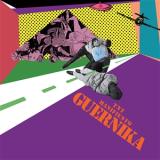
Reissue of the essential album by Granada's TNT. "Manifiesto Guernika" is an essential piece of Spanish punk & post-punk history, originally released in 1983 by the legendary DRO label. One of the pillars and most important records of Spanish punk, "Manifiesto Guernika" remains a fresh, powerful and intense classic of the genre. An exciting mix of '77 punk, post-punk and "Combat Rock"-era Clash with smart and profound lyrics that elevated them to cult status. Original artwork & insert and extra fold out insert.
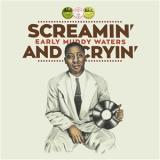
The Definitive Origins of the Chicago Electric Blues. Witness the birth of a legend. This essential collection captures Muddy Waters at the most pivotal moment of his career: the transition from a Mississippi Delta traveler to the "King of Chicago Blues." Muddy Waters was an ambitious young man who saw little future in Mississippi. In 1943, he headed for the bright lights, big city of Chicago, where he soon connected with blues giant Big Bill Broonzy, who began featuring Muddy as an opening act at his club dates. Within a year, Muddy had switched to electric guitar and formed his first blues combo, quickly becoming an established figure on Chicago's club scene. In 1947, Muddy came to the attention of the fledgling Aristocrat Records, just as Leonard Chess-then running a nightclub called the Macomba Lounge-invested in the company. Working frequently with pianist Sunnyland Slim, Muddy recorded a split session with him for Aristocrat in December 1947. This collection begins there: eight Aristocrat 78 rpm releases (sixteen sides), recorded between 1948 and 1950 and presented here in chronological order of release. Just three years later, Leonard and his brother Phil Chess would buy out Aristocrat's remaining partners and rename the label Chess Records-ushering in a new era of Chicago blues that would reverberate around the world. Includes extensive liner notes by Muddy Waters expert Fred Rothwell.
Enter Shikari melden sich mit ihrem bisher ambitioniertesten und emotionalsten Album zurück: "Lose Your Self", das achte Studioalbum der Band, erscheint überraschend und besticht durch eine furchtlose Verschmelzung von Post-Hardcore-Intensität, elektronischen Experimenten und politisch engagierten Texten. Aufbauend auf ihrem UK-Nr.1-Album "A Kiss For The Whole World" (2023) und mit einem noch stärkeren Fokus auf cineastische, club-beeinflusste Klangwelten, präsentiert "Lose Your Self" eine Band, die die Grenzen des Heavy-Sounds immer wieder neu definiert. Das Album wird mit Headliner-Arena-Shows in Großbritannien und Europa sowie Konzerten in Nordamerika und Australien unterstützt. Der Guardian verlieh der Tournee 2024 vier Sterne und bezeichnete das audiovisuelle Spektakel als "den Beginn des größten Kapitels von Enter Shikari".
Shrunken Elvis ist ein Trio aus Nashville, bestehend aus Spencer Cullum, Sean Thompson und Rich Ruth - drei erfahrenen Musikern, die ihre Liebe zu genreübergreifender Instrumentalmusik verbindet. Die Gruppe entstand aus langen Autofahrten durch Europa, Winter-Jam-Sessions und dem gemeinsamen Bestreben, Musik eher aus dem Bauch heraus als aus Ambitionen heraus zu machen. Cullum, ein in East London geborener Pedal-Steel-Gitarrist, spielte bereits mit Angel Olsen, Lambchop, Miranda Lambert und Billy Strings gespielt und zwei Solo-Folk-Psych-LPs bei Full Time Hobby veröffentlicht. Thompson kam mit Gnarwhal und Promised Land Sound in der DIY-Szene von Nashville groß heraus und tourte später mit Margo Price und Skyway Man. Ruth schafft unter dem Namen Rich Ruth (Third Man Records) immersive Soloarbeiten, die spirituellen Jazz, Ambient und Post-Rock miteinander verbinden. Ihre Anfänge gehen auf eine Europatournee im Jahr 2022 zurück, die sie im Rahmen von Cullums Soloalbum unternahmen. Mit einem kompakten Setup aus Gitarren, Pedal Steel und Synthesizern in einem VW Passat zusammengepfercht, begannen sie unterwegs zu komponieren - und entwickelten eine gemeinsame musikalische Sprache, die sie in ihre Wintersessions in Nashville mitnahmen. Sie nahmen in einem Studio in einem Schuppen um einen Heizstrahler herum auf und fingen den Geist dieser Reisen mit Spontaneität und Vertrauen ein. Ihr Debütalbum zielt nicht darauf ab, individuelle Fähigkeiten in den Vordergrund zu stellen, sondern die Instrumente zu etwas völlig Neuem verschmelzen zu lassen. Mit der Einstellung ,keine Ziele, nur Ideen" schufen sie Musik, die sich ungezwungen, explorativ und lebendig anfühlt. Verwurzelt in den Traditionen von Kosmischer Musik, Jazz-Fusion, Elektronik und Ambient, lässt sich Shrunken Elvis von Alice Coltrane, Michael Rother, Pat Metheny, Ashra und KLF inspirieren lassen - zusammen mit visuellen Einflüssen wie ECM-Albumcovern und den Filmen von Kurosawa und Bergman. Gemischt von Jake Davis (William Tyler) und mit Artwork von Max Kinghorn-Mills (Hollow Hand) ist ihr Debüt ein leise drängendes, zutiefst kollaboratives Album - Musik, die ohne Erwartungen entstanden ist, aber voller Absicht.
out of Stock
Last delivered 6 months ago available to reorder, subject to availability
With Dispersion, Loom & Thread return to the volatile architecture of the expanded piano trio - and quietly fracture it from within.
Daniel Klein (drums), Tobias Fröhlich (double bass) and Tom Schneider (keys, sampler) remain the sole agents on stage and in the final recording. The triangle holds. And yet, the field has expanded. For their second studio album, the trio fed their improvisations with the timbral signatures of guest saxophone and vibraphone players - not just as additional voices to be featured, but also as material to be absorbed, atomized and redistributed. The result is not augmentation but thorough refraction.
Where the debut album explored the recursive labyrinth of Schneider's live sampling of his own piano, Dispersion introduces an external grain into the feedback system. Breath and metal. Reed turbulence and struck resonance. The trio sampled extended improvisations by saxophone and vibes players: Victor Fox, Asger Nissen, Volker Heuken, and L&T's own Daniel Klein; dissected their attacks, overtones and decay curves, and integrated these fragments into the trio's internal circuitry. What emerges is a play of presences without bodies - instrumental ghosts circulating through the dense weave of rhythm and keys.
At first, one might hear the familiar relational tension: Klein's polyrhythmic elasticity interlocking with Fröhlich's tensile double bass figurations, Schneider poised at the hinge between tonal field and percussive impulse. But soon, the surface splinters - again. A vibraphone shimmer appears, yet no mallets are visible. A reed multiphonic surges through the texture, bending space between bass and drums. These events are neither quotations nor overlays; they are redistributed energies, dispersed across the trio's grammar. A digital multidimensional interplay ensues.
If the first album unfolded as a two-tiered game - live phrase and sampled reflection - Dispersion adds a further axis. The sampled materials from other improvisers are stripped of their erstwhile two-way interaction and reconstituted as malleable particles. Signifier detached from origin, resonance detached from gesture. The trio navigates a constantly shifting topology in which acoustic memory and electronic manipulation are indistinguishable.
Crucially, the album never abandons the physical urgency of three musicians reacting in real time. The additional timbral layers do not thicken the texture into opacity; rather, they introduce stark points and arrows of diffraction. Density opens into prismatic clarity. Lines splinter and regroup. What seems like a quartet or quintet collapses back into three bodies negotiating an expanded field.
Dispersion is not about addition but about distribution - of agency, of timbre, of temporal perspective. It is an album in which the trio setting becomes a site of multiplicity without surrendering its immediacy. A dissolution not only of the divide between present experience and memory, but between inside and outside, self and other.
Three musicians. Countless vectors. A music that fractures in order to cohere.
CREDITS:
Tom Schneider: piano & sampler
Tobi Fröhlich: double bass
Daniel Klein: drums & percussion
sample sources:
Victor Fox: tenor saxophone
Asger Nissen: alto saxophone
Volker Heuken: vibes
Daniel Klein: vibes
Recorded by Martin Dressler at Bauer Studios, Ludwigsburg.
Mixed & mastered by Martin Ruch.
Artwork by Viet Hoa Le.
out of Stock
Last delivered 6 months ago available to reorder, subject to availability
»Music for Shared Rooms« is B. Fleischmann’s eleventh solo album and his first since 2018. It is also not an album, or at least not in the conventional sense of the word. These 16 instrumental pieces provide a kaleidoscopic glimpse of a forward-thinking musician at home in many different musical worlds, including experimental and abstract music, pop and more classically-minded compositional forms. These pieces were culled from an archive of roughly 600 compositions for theatre pieces and films written throughout the past twelve years. The Österreichischer Filmpreis-awarded composer, however, aimed for more than simply documenting his extensive work in and with different media. To do so, he edited and re-mixed the individual recordings for this release, taking them out of their contexts and reworking them for an audience who can experience them in a different setting. »Music for Shared Rooms« makes it possible for its listeners to engage with the sounds and to fill the spaces they open up with their own imagination.
Roughly speaking, music for theatre or film can serve two functions: it either takes the lead, or underscores what is happening on stage or screen. The marvelous thing about these pieces is that they manage to do both. Fleischmann’s work as a prolific producer has always drawn on contrasts, at times combining pop sentiment with rigid experimentation, the seemingly naive with the intricate and complex. This approach also marks the tracks collected here: bringing together acoustic elements and electronic sounds, at times working with conventional structures but always de- and re-contextualising them, Fleischmann constructs a vivid dramaturgy out of discrete singular compositions, letting them interact across the record.
Take, for example, the opener »Träumerei« and the following »Brenne«: after the soothing acoustic sounds of the former, the latter quickly picks up speed with hard-hitting drum machine rhythms. It’s a stark contrast sonically and stylistically, however both tracks are tied together by a certain harmonic sensibility. This sort of dramaturgical interconnectedness of varied musical materials is the thread that runs through »Music for Shared Rooms«. A droney piece for string instruments like »Sehnsucht« is followed by a trip-hop beat, before »Schock« lives up to its title with skittering beats and piercing high frequencies. The differences between the pieces may be striking, but the progression from one to the other is subtle. It goes on like this through different moods and tempos. There’s soothing-yet-eerie piano pieces like the »Für Elise«-inspired »Der Lärmkrieg«, gentle house grooves, joyful synthesizer excursions and, finally, »Die Erde ist mir fremd geworden«, a collage of abstract textures and concrete sounds.
All these pieces create distinct situations through the juxtaposition of diverse musical elements, but are also bound together by a single vision. Writing music for theatre pieces or film requires a composer and his pieces to engage with people and their movements in space, which is exactly what Fleischmann offers on this record. He breaks down the fourth wall and invites his listeners into his world, a wide-ranging musical panorama. »Music for Shared Rooms« is indeed not an album in the conventional sense of the word, but more like a photo album in which each page opens up a new space to get lost in; recreates different scenes in which you can immerse yourself. These are shared rooms indeed.
out of Stock
Last delivered 6 months ago available to reorder, subject to availability
oma totem returns to Hivern Discs with the second EP in the exercicis ritmics series, volum 2. the EP features five tracks plus two digital bonus tracks, offering an extended deep dive into percussion, exploring accelerated and even more intricate rhythms. available as a limited edition with an outer sleeve printed at l'Anacronica, as well as a standard edition including an inner sleeve and inlay. artwork by juns castella mastered by dubplates mastering distributed via clone
out of Stock
Last delivered 5 months ago available to reorder, subject to availability
oma totem returns to Hivern Discs with the second EP in the exercicis ritmics series, volum 2. the EP features five tracks plus two digital bonus tracks, offering an extended deep dive into percussion, exploring accelerated and even more intricate rhythms. available as a limited edition with an outer sleeve printed at l'Anacronica, as well as a standard edition including an inner sleeve and inlay. artwork by juns castella mastered by dubplates mastering distributed via clone
out of Stock
Last delivered 4 months ago available to reorder, subject to availability
Writings on the topic that go off in all directions, mind-numbing lectures given by academics, and testimonies, most of them heavily doctored, from those who “lived through that era”: so many people today fantasize about the early days of punk in our country… This blessed moment when no one had yet thought of flaunting a ridiculous green mohawk, taking Sid Vicious as a hero, or – even worse – making the so-called alternative scene both festive and boorish. There was no such thing in 1976 or 1977, when it wasn’t easy to get hold of the first 45s by the Pistols or the Clash. Few people were aware of what was happening on the fringes of the fringes at the time. Malcolm McLaren was virtually unknown, and having short hair made you seem strange. Who knew then that rock music, which had taken a very bad turn since the early 1970s, would once again become an essential element of liberation? That, thanks to short and fast songs, it would once again rediscover that primitive, social side that was so hated by older generations? Who knew that, besides a few loners who read the music press (it was even better if they read it in English) and frequented the right record stores? Many of these formed bands, because it was impossible to do otherwise. We quickly went from listening to the Velvet Underground to trying to play the Stooges’ intros. It’s a somewhat collective story, even though there weren’t many people to start it.
The Guilty Razors were among those who took part in this initial upheaval in Paris. They were far from being the worst. They had something special and even released a single that was well above the national average. They also had enough songs to fill an album, the one you’re holding. In everyone’s opinion, they were definitely not among the punk impostors that followed in their wake. They were, at least, genuine and credible.
Guilty Razors, Parisian punk band (1975-1978). To understand something about their somewhat linear but very energetic sound, we might need to talk about the context in which it was born and, more broadly, recall the boredom (a theme that would become capital in punk songs) coupled with the desire to blow everything off, which were the basis for the formation of bands playing a rejuvenated rock music ; about the passion for a few records by the Kinks or the early Who, by the Stooges, by the Velvet mostly, which set you apart from the crowd.
And of course, we should remember this new wave, which was promoted by a few articles in the specialized press and some cutting-edge record stores, coming from New York or London, whose small but powerful influence could be felt in Paris and in a handful of isolated places in the provinces, lulled to sleep by so many appalling things, from Tangerine Dream to President Giscard d’Estaing...
In 1975-76, French music was, as almost always, in a sorry state ; it was still dominated by Johnny Hallyday and Sylvie Vartan. Local rock music was also rather bleak, apart from Bijou and Little Bob who tried to revive this small scene with poorly sound-engineered gigs played to almost no one.
In the working class suburbs at the time, it was mainly hard rock music played to 11 that helped people forget about their gruelling shifts at the factory. Here and there, on the outskirts of major cities, you still could find a few rockers with sideburns wearing black armbands since the death of Gene Vincent, but it wasn’t a proper mass movement, just a source of real danger to anyone they came across who wasn't like them. In August 1976, a festival unlike any other took place in Mont-de-Marsan – the First European Punk Festival as the poster said – with almost as many people on stage as in the audience. Yet, on that day, a quasi historical event happened, when, under the blazing afternoon sun, a band of unknowns called The Damned made an unprecedented noise in the arena, reminiscent of the chaotic Stooges in their early adolescence. They were the first genuine punk band to perform in our country: from then on, anything was possible, almost anything seemed permissible.
It makes sense that the four+1 members of Guilty Razors, who initially amplified acoustic guitars with crappy tape recorder microphones, would adopt punk music (pronounced paink in French) naturally and instinctively, since it combines liberating noise with speed of execution and – crucially – a very healthy sense of rebellion (the protesters of May 1968 proclaimed, and it was even a slogan, that they weren’t against old people, but against what had made them grow old. In the mid-1970s, it seemed normal and obvious that old people should now ALSO be targeted!!!).
At the time, the desire to fight back, and break down authority and apathy, was either red or black, often taking the form of leafleting, tumultuous general assemblies in the schoolyard, and massive or shabby demonstrations, most of the time overflowing with an exciting vitality that sometimes turned into fights with the riot police. Indeed, soon after the end of the Vietnam War and following Pinochet’s coup in Chile, all over France, Trotskyist and anarcho-libertarian fervour was firmly entrenched among parts of the educated youth population, who were equally rebellious and troublemakers whenever they had the chance. It should also be noted that when the single "Anarchy in the UK" was first heard, even though not many of us had access to it, both the title and its explosive sound immediately resonated with some of those troublemakers crying out for ANARCHY!!! Meanwhile, the left-wing majority still equated punks with reckless young neo-Nazis. Of course, the widely circulated photos in the mainstream press of Siouxsie Sioux with her swastikas didn’t necessarily help to win over the theorists of the Great Revolution. It took Joe Strummer to introduce The Clash as an anti-racist, anti-fascist and anti-ignorance band for the rejection of old-school revolutionaries to fade a little.
The Lycée Jean-Baptiste Say at Porte d’Auteuil, despite being located in the very posh and very exclusive 16th arrondissement of Paris, didn’t escape these "committed" upheavals, which doubled as the perfect outlet for the less timid members of this generation.
“Back then, politics were fun,” says Tristam Nada, who studied there and went on to become Guilty Razors’ frontman. “Jean-Baptiste was the leftist high-school in the neighbourhood. When the far right guys from the GUD came down there, the Communist League guys from elsewhere helped us fight them off.”
Anything that could challenge authority was fair game and of course, strikes for just about any reason would lead to increasingly frequent truancy (with a definitive farewell to education that would soon follow). Tristam Nada spent his 10th and 11th unfinished grades with José Perez, who had come from Spain, where his father, a janitor, had been sentenced to death by Franco. “José steered my tastes towards solid acts such as The Who. Like most teenagers, I had previously absorbed just about everything that came my way, from Yes to Led Zeppelin to Genesis. I was exploring… And then one day, he told me that he and his brother Carlos wanted to start a rock band.” The Perez brothers already played guitar. “Of course, they were Spanish!”, jokes their singer. “Then, somewhat reluctantly, José took up the bass and we were soon joined by Jano – who called himself Jano Homicid – who took up the rhythm guitar.” Several drummers would later join this core of not easily intimidated young guys who didn’t let adversity get the better of them.
The first rehearsals of the newly named Guilty Razors took place in the bedroom of a Perez aunt. There, the three rookies tried to cover a few standards, songs that often were an integral part of their lives. During a first, short gig, in front of a bewildered audience of tough old-school rockers, they launched into a clunky version of the Velvet Underground's “Heroin”. Challenge or recklessness? A bit of both, probably… And then, step by step, their limited repertoire expanded as they decided to write their own songs, sung in a not always very accurate or academic English, but who cared about proper grammar or the right vocabulary, since what truly mattered was to make the words sound as good as possible while playing very, very fast music? And spitting out those words in a language that left no doubt as to what it conveyed mattered as well.
Trying their hand a the kind of rock music disliked by most of the neighbourhood, making noise, being fiercely provocative: they still belonged to a tiny clique who, at this very moment, had chosen to impose this difference. And there were very few places in France or elsewhere, where one could witness the first stirrings of something that wasn’t a trend yet, let alone a movement.
In the provinces, in late 1976 or early 1977, there couldn’t be more than thirty record stores that were a bit more discerning than average, where you could hear this new kind of short-haired rock music called “punk”. The old clientele, who previously had no problem coming in to buy the latest McCartney or Aerosmith LP, now felt a little less comfortable there…
In Paris, these enlightened places were quite rare and often located nex to what would become the Forum des Halles, a big shopping mall. Between three aging sex workers, a couple of second-hand clothes shops, sellers of hippie paraphernalia and small fashion designers, the good word was loudly spread in two pioneering places – propagators of what was still only a new underground movement. Historically, the first one was the Open Market, a kind of poorly, but tastefully stocked cave. Speakers blasted out the sound of sixties garage bands from the Nuggets compilation (a crucial reference for José Perez) or the badly dressed English kids of Eddie and the Hot Rods. This black-painted den was opened a few years earlier by Marc Zermati, a character who wasn’t always in a sunny disposition, but always quite radical in his (good) choices and his opinions. He founded the independent label Skydog and was one of the promoters of the Mont-de-Marsan punk festivals. Not far from there was Harry Cover, another store more in tune with the new New York scene, which was amply covered in the house fanzine, Rock News (even though it was in it that the photos of the Sex Pistols were first published in France).
It was a favorite hang-out of the Perez brothers and Tristam Nada, as the latter explained. “It’s at Harry Cover’s that we first heard the Pistols and Clash’s 45s, and after that, we decided to start writing our first songs. If they could do it, so could we!”
The sonic shocks that were “Anarchy in the UK”, “White Riot” or the Buzzcocks’s EP, “Spiral Scratch” – which Guilty Razors' sound is reminiscent of – were soon to be amplified by an unparalleled visual shock. In April 1977, right after the release of their first LP, The Clash performed at the Palais des Glaces in Paris, during a punk night organised by Marc Zermati. For many who were there, it was the gig of a lifetime…
Of course, Guilty Razors and Tristam were in the audience: “That concert was fabulous… We Parisian punks were almost all dressed in black and white, with white shirts, skinny leather ties, bikers jackets or light jackets, etc. The Clash, on the other hand, wore colourful clothes. Well, the next day, at the Gibus, you’d spot everyone who had been at this concert, but they weren’t wearing anything black, they were all wearing colours.”
It makes sense to mention the Gibus club, as Guilty Razors often played there (sometimes in front of a hostile audience). It was also the only place in Paris that regularly scheduled new Parisian or Anglo-Saxon acts, such as Generation X, Siouxsie and the Banshees, the Slits, and Johnny Thunders who would become a kind of messed-up mascot for the venue. A little later, in 1978, the Rose Bonbon – formerly the Nashville – also attracted nightly owls in search of electric thrills… In 1977, the iconic but not necessarily excellent Asphalt Jungle often played at the Gibus, sometimes sharing the bill with Metal Urbain, the only band whose aura would later transcend the French borders (“I saw them as the French Sex Pistols,” said Geoff Travis, head of their British label Rough Trade). Already established in this small scene, Metal Urbain helped the young and restless Guilty Razors who had just arrived. Guitarist for Metal Urbain Hermann Schwartz remembers it: “They were younger than us, we were a bit like their mentors even if it’s too strong a word… At least they were credible. We thought they were good, and they had good songs which reminded of the Buzzcocks that I liked a lot. But at some point, they started hanging out with the Hells Angels. That’s when we stopped following them.”
The break-up was mutual, since, Guilty Razors, for their part, were shocked when they saw a fringe element of the audience at Metal Urbain concerts who repeatedly shouted “Sieg Heil” and gave Nazi salutes. These provocations, even still minor (the bulk of the skinhead crowd would later make their presence felt during concerts), weren’t really to the liking of the Perez brothers, whose anti-fascist convictions were firmly rooted. Some things are non-negotiable.
A few months earlier (in July 1978), Guilty Razors had nevertheless opened very successfully for Metal Urbain at the Bus Palladium, a more traditonally old-school rock night-club. But, as was sometimes the case back then, the night turned into a mass brawl when suburban rockers came to “beat up punks”.
Back then, Parisian nights weren’t always sweet and serene.
So, after opening as best as they could for The Jam (their sound having been ruined by the PA system), our local heroes were – once again – met outside by a horde of greasers out to get them. “Thankfully,” says Tristam, “we were with our roadies, motorless bikers who acted as a protective barrier. We were chased in the neighbouring streets and the whole thing ended in front of a bar, with the owner coming out with a rifle…”
Although Tristam and the Perez brothers narrowly escaped various, potentially bloody, incidents, they weren’t completely innocent of wrongdoing either. They still find amusing their mugging of two strangers in the street for example (“We were broke and we simply wanted to buy tickets for the Heartbreakers concert that night,” says Tristam). It so happened that their victims were two key figures in the rock business at the time: radio presenter Alain Manneval and music publisher Philippe Constantin. They filed a complaint and sought monetary compensation, but somehow the band’s manager, the skilful but very controversial Alexis, managed to get the complaint withdrawn and Guilty Razors ended up signing with Constantin with a substantial advance.
They also signed with Polydor and the label released in 1978 their only three-track 45, featuring “I Don't Wanna be A Rich”, “Hurts and Noises” and “Provocate” (songs that exuded perpetual rebellion and an unquenchable desire for “class” confrontation). It was a very good record, but due to a lack of promotion (radio stations didn’t play French artists singing in English), it didn’t sell very well. Only 800 copies were allegedly sold and the rest of the stock was pulped… Initially, the three tracks were to be included on a LP that never came to be, since they were dropped by Polydor (“Let’s say we sometimes caused a ruckus in their offices!” laughs Tristam.) In order to perfect the long-awaited LP, the band recorded demos of other tracks. There was a cover of Pink Floyd's “Lucifer Sam” from the Syd Barrett era – proof of an enduring love for the sixties’ greats –, “Wake Up” a hangover tale and “Bad Heart” about the Baader-Meinhof gang, whose actions had a profound impact on the era and on a generation seeking extreme dissent... On the album you’re now discovering, you can also hear five previously unreleased tracks recorded a bit later during an extended and freezing stay in Madrid, in a makeshift studio with the invaluable help of a drummer also acting as sound engineer. He was both an enthusiastic old hippie and a proper whizz at sound engineering. Here too, certain influences from the fifties and sixties (Link Wray, the Troggs) are more than obvious in the band’s music.
Shortly after a final stormy and rather barbaric (on the audience’s side) “Punk night” at the Olympia in June 1978, Tristam left the band ; his bandmates continued without him for a short while.
But like most pioneering punk bands of the era, Guilty Razors eventually split up for good after three years (besides once in Spain, they’d only played in Paris). The reason for ceasing business activities were more or less the same for everyone: there were no venues outside one’s small circuit to play this kind of rock music, which was still frightening, unknown, or of little interest to most people. The chances of recording an LP were virtually null, since major labels were only signing unoriginal but reassuring sub-Téléphone clones, and the smaller ones were only interested in progressive rock or French chanson for youth clubs. And what about self-production? No one in our small safety-pinned world had thought about it yet. There wasn’t enough money to embark on that sort of venture anyway.
So yes, the early days of punk in France were truly No Future!
out of Stock
Last delivered 6 months ago available to reorder, subject to availability
Killer Groove Records proudly presents "Keep Your Step", the explosive comeback by Italian rock steady & early reggae ambassadors The Appetizers, a soulful celebration of reggae's timeless spirit.
"Keep Your Step" marks the band's much-awaited return, landing April 10th on limited edition LP, CD digipack and digital format featuring two exclusive bonus tracks.
The Appetizers deliver a masterclass in roots reggae music with their highly anticipated second studio album, bridging Jamaica's golden age with contemporary relevance. "Keep Your Step" is a heartfelt sonic journey where the band blends rocksteady and early reggae with funk and soul influences to create a sound that's both genuine and refreshingly modern.
The fourteen tracks move fluidly between infectious dancefloor fillers and socially conscious lyrics. From the laid-back swing of "Feel Like Dancing" to the hypnotic rhythm of "Thicker Than Water", the band demonstrates their versatility while remaining true to the roots of Jamaican sound. "A Message from The Meters" pays tribute to the legendary funk pioneers, while the instrumental "Catch This" and "Make It Reggay" highlight the band's musical prowess and the deep connections between reggae and funk.
Meanwhile, tracks like "Fussy Girl" and "Behind My Shoulders" explore love's complexities with humor and soul. The album's heart lies in its social consciousness. "Cool and Deadly", "The Life", "Stormy Weather" and the album title track "Keep Your Step" tell stories of perseverance through life's struggles.
With the hopeful anthem "We Shall Overcome," The Appetizers deliver a timely message about genuine human connection in a social media-dominated era. The digital edition closes with "Get Some Rollin'" and "Swing and Sway," rounding out the journey with two additional gems.
"Keep Your Step" pays homage to Jamaican music legends, from Jackie Mittoo and Tommy McCook to Toots & the Maytals, while carving out The Appetizers' own distinctive sound. This is a groove made for both the dance floor and the soul, proving that reggae's power to inspire, unite, and uplift remains as vital as ever.
The production stays true to The Appetizers' signature sound: organic tones, deep groove, and that live-room vibe you only get when real musicians are locked in together. Luca Monza and Claudio Mambrini, the band's core members, handled the artistic production. Mastering came courtesy of the great JJ Golden (Black Pumas, Sharon Jones & The Dap-Kings, Jr. Thomas & The Volcanos, The Frightnrs) at Golden Mastering in Ventura, California. JJ is one of the most trusted engineers working in this sound, ensuring every ounce of warmth and authenticity came through.
The Appetizers are a rocksteady and early reggae band formed in Milan in 2020 by musicians deeply embedded in the Italian and international reggae scene. Musicians from different paths united by a shared vision: recreating that vintage Caribbean and American sound with authenticity, respect and a forward-thinking edge.
Drawing inspiration from Jamaica's golden era and channeling the soul of Delroy Wilson, Alton Ellis, the early Wailers, and The Upsetters, The Appetizers carry forward the essence of bass culture with a pure, fully organic approach.
Their debut album Listen Up! (2022), released via Belgian imprint Badasonic Records (home to The Slackers, The Aggrolites, David Hillyard & Victor Rice), featured ten original tracks and a dub cut by Victor Rice. Distributed across Europe, the UK, the US, and Japan, it quickly earned international recognition among reggae connoisseurs and selectors worldwide.
Following extensive touring, including shows with The Slackers, Black Uhuru, Skip Marley, and more, the band returned to the studio to record "Keep Your Step", their second album produced by Killer Groove Records. Here the band expands its musical language, weaving together the spirit of historic Jamaican labels like Studio One and Treasure Isle with '60s funk, arriving at a warm, organic, and timeless sound: soul, Jamaican roots, and modern sensibility in perfect balance. Their lyrics explore heartbreak, social issues, and reflections on life and music, performed with dedication and respect for tradition while always pushing forward.
If you're into The Skatalites, The Ethiopians, and those classic Caribbean rhythms, this one's for you.
Kicking off a new concept for Palinoia, I'm presenting a previously unreleased Donato Dozzy track that I first heard in his infamous "DDKH" mix from many moons ago. I regularly harassed Dozzy about this in hopes he had plans for it, but after almost a decade of being questioned he told me to just put it out myself, provided I was doing a track for the B-side.
Knowing full well I couldn't make anything nearly as gorgeous as Donato's underwater techno groover here, I decided to go for something a bit more upbeat and party friendly, all the while as wiggly as the masters' contribution.
out of Stock
Last delivered 53 days ago available to reorder, subject to availability
Broadside has never been a band to stay in one place for too long—musically or otherwise. The Richmond, Virginia-based band has spent the past decade carving out their own space in the pop rock scene. Drawing influence from The Killers, AFI, Kings of Leon, and Taking Back Sunday, their sound seamlessly fuses nostalgic rock energy with a fresh, modern edge. Their evolution has been nothing short of remarkable, taking them from underground favorites to genre staples, all while embracing the idea that growth and change are not just inevitable but necessary. With Oliver Baxxter (vocals), Domenic Reid (guitar), and Patrick Diaz (bass/backup vocals) at the helm, Broadside has built a career on crafting music that feels both deeply personal and universally relatable.
Their last full-length album, Hotel Bleu, served as a bold chapter in their story, using the transient nature of hotel stays as a metaphor for self-reflection, fleeting moments, and personal reinvention. The album marked a significant milestone in their career, amassing over 100 million streams and standing as their boldest, brightest, and most ambitious work to date. Now, as they prepare to enter their next era, the band is gearing up to release their most dynamic music yet, continuing to evolve while staying true to the energy and authenticity that first captivated listeners.
Broadside has never been a band to stay in one place for too long—musically or otherwise. The Richmond, Virginia-based band has spent the past decade carving out their own space in the pop rock scene. Drawing influence from The Killers, AFI, Kings of Leon, and Taking Back Sunday, their sound seamlessly fuses nostalgic rock energy with a fresh, modern edge. Their evolution has been nothing short of remarkable, taking them from underground favorites to genre staples, all while embracing the idea that growth and change are not just inevitable but necessary.
With Oliver Baxxter (vocals), Domenic Reid (guitar), and Patrick Diaz (bass/backup vocals) at the helm, Broadside has built a career on crafting music that feels both deeply personal and universally relatable. Their last full-length album, Hotel Bleu, served as a bold chapter in their story, using the transient nature of hotel stays as a metaphor for self-reflection, fleeting moments, and personal reinvention. The album marked a significant milestone in their career, amassing over 100 million streams and standing as their boldest, brightest, and most ambitious work to date. Now, as they prepare to enter their next era, the band is gearing up to release their most dynamic music yet, continuing to evolve while staying true to the energy and authenticity that first captivated listeners.
Jessie Ware returns with her new album ‘Superbloom’ – the crescendo of her latest era – out 10th April via Island EMI Records.
Superbloom’ erupts into a glittering rush of Studio 54-inflected groove-pop. Expanding Ware’s increasingly euphoric body of work as she explores our shared craving for touch, pleasure, intimacy and connection.
The album features recent single ‘I Could Get Used To This’, hailed as her “ultimate entry into divahood” and the first track to fully capture the record’s assured, expansive spirit, carried by cascading strings and a sense of full-bodied release
The sibling duo behind the music on Graceful Degradation — organ and drums, nothing more, nothing less — carve out a sound that feels unmistakably organic in a world drifting steadily toward the synthetic. Their interplay is entirely live, subtle in its details yet dynamic in its momentum, built on the kind of instinctive communication only brothers can share.
The music is fully instrumental, unfolding in a borderland where dreamy retro pop dissolves into the hazy textures of shoegaze and the unruly pulse of noisy, electronic leaning jazz. It’s a sonic world that feels both familiar and elusive, nostalgic yet inherently restless. Melodies shimmer and blur, rhythms swell and contract, and the space between the notes becomes as expressive as the notes themselves.
What emerges is a sound that resists easy categorization: warm but unpredictable, intimate yet expansive, grounded in the physicality of two musicians performing in real time. The organ breathes like a living organism, shifting from soft focus ambience to swirling, saturated harmonics, while the drums move with a fluid, human elasticity — sometimes whisper quiet, sometimes erupting with raw, kinetic force.
In this in between terrain, the duo has always found its identity and its freedom. Their music doesn’t chase perfection; it chases presence. It embraces imperfection, celebrates spontaneity, and insists on staying alive in a landscape where so much is becoming weightless and automated.
This is instrumental music with a pulse: subtle, dynamic, and unmistakably human.
Born into a musical family Al Manfredi started writing songs when he was child. As a teenager in 1965, he formed the Nuts & Bolts in the small beach town of San Clemente, California. Inspired by the Kinks, the Beatles and the Byrds, the group separated themselves from the pack by also performing original material written by Manfredi and band mate Mike Ingram. In late 1966 they changed their name to the Lost & Found and relocated to Phoenix, Arizona, where they cut a rare single, “Don’t Move Girl” b/w “To Catch the Sun,” which now commands high coin from ‘60s garage collectors. When they returned to San Clemente in early 1967 their music had taken a more psychedelic direction. The Lost & Found were riding high that year, until tragedy struck. Ingram was found hanged under suspicious circumstances and soon after Lost & Found drummer Mike Ryer died of cancer at the age of 19. Heartbroken, Manfredi gave up on the band scene completely and moved to Garden Grove to teach at his family’s music store. But alone, behind closed doors, he kept writing songs and working on his music, recording hours of tapes, often tracking all the instruments himself. In 1973 he chose six of his best songs, some of them written back in the Lost & Found days, and had them custom-pressed as an LP. Only a handful of copies were pressed, and most of these were sent out to various record companies in the hope of landing a deal. Despite the outstanding quality of the music, there were no takers. But decades later, collectors discovered the Al Manfredi album and hailed it a West Coast rock masterpiece. In his Acid Archives book, Patrick Lundborg called its discovery a deus ex machina and compared it to David Crosby’s first solo album and Hawaii-era Merrell Fankhauser, “not just the acutely captured mellowness, but the self-confidence and the talent.”This little-known West Coast rock masterpiece was rediscovered and celebrated by Acid Archives founder Patrick Lundborg and others around the time that Manfredi died in 1995. This version of the album, overseen by Manfredi’s son Exile, and with Manfredi’s story told by Ugly Things’ founder Mike Stax, presents the complete package of an incredible lost and found artist. Contains the album, as originally issued, on side A with unreleased music on side B.
A cocktail of rebellious queer vocal fragments, deceptive percussive granules and swaying hammered vibrations, upsammy and Valentina Magaletti's first collaboration trembles with suspense. The seeds of 'Seismo' were sown following a commission from Amsterdam's Rijksmuseum to soundtrack an exhibition of work from the Museum Boijmans van Beuningen in Rotterdam and the duo didn't want to approach their collaboration flippantly. So, wandering the museum's maze of rooms, they recorded various improvised percussive sounds with their arsenal of microphones, using the space to inform various rhythms and textures that were sculpted later into electroacoustic vignettes. This was just the starting point, though; as Magaletti and upsammy began performing together, the project evolved and 'Seismo' began to take shape. The duo had struck on a salient aesthetic concept, using mostly digital and acoustic mallet instruments to blur the boundary between their roles and create friction between the synthetic and the authentic. And the finished record is a phantasmagoric push-and-pull between its various conflicting elements: harmony and dissonance, randomness and predictability, openness and constraint. 'Seismo' isn't the first time that upsammy has studied her environment in search of revelation. On her acclaimed second album, 2024's 'Germ in a Population of Buildings', the Amsterdam-based DJ, producer and multidisciplinary artist erected her complex, unorthodox rhythms and eerie melodies around a modernist frame of field recordings collected in various cityscapes, countering heavyweight basslines with subtle, microscopic sounds. London-based Italian vanguard Magaletti, meanwhile, has applied her unique logic to innumerable projects at this point, working with everyone from batida icon Nídia and hardcore-dub outfit Moin to French writer Fanny Chiarello and British bass scientist Shackleton. For years she's approached the drums with criticism, attempting to challenge any preconceptions, something that's most visible on 2020's 'A Queer Anthology of Drums'. And both artists' thoughtful perspectives are welded together seamlessly on 'Seismo', a dizzying suite of eight eccentric statements that's fragile but never insecure, gauzy but not indistinct. An unnerving sense of space characterizes 'It Comes to an End' as Magaletti's in situ improvisations herald for upsammy's microscopic glitches and chiming pitch-bent melodies. It's almost unbalancing to witness the track's impossible dimensionality, the interplay between reverberant marimba hits and bone-dry synths, or percussion that's been recorded and processed in consciously different settings. A new architecture emerges in the sound itself that the two artists scan and explore meticulously, testing its boundaries with undulating hybridized rhythms on the invigorating 'Superimposed' and offsetting the powdery drums with liquified smacks and alien voices. The duo's vibrations are knotted with piano flourishes on 'Hyperlocalize', balanced with artificial clanks and clangs that disappear into the track's sonorous atmosphere, replaced by whispers and half-hallucinated insectoid chirps. 'Seismo' is an album that feeds off the energy generated by its juxtapositions: the tension and anticipation that's melted by rapid, hyperactive movement and the finely drawn rhythms disrupted by a layer of indistinct, barely perceptible microsounds. It's a collaboration that sounds like two minds challenging each other but not wrestling, each peering from their own distinct vantage point and imagining a third landscape shaped by optimistic, queer vibrations.
out of Stock
Last delivered 5 months ago available to reorder, subject to availability
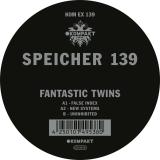
“It’s been on my wishlist for a while that the incredibly talented Julienne Dessagne does a techno EP for us,” Michael Mayer says. You can hear why, straight up, on Speicher 139, as Dessagne’s project Fantastic Twins is finally let loose on Kompakt’s storied series. The key words: psychedelic acid trax. “False Index” is peeled back to core: a fearsome rhythm, with an endlessly helixing synth pattern twisting around your skull, crinkling like cellophane and warping like burnt plastic, while Dessagne’s Sprechstimme floats above everything – detached but effortlessly perceptive. “New Systems” is a new kind of Europe Endless – hypnotic and lush, its deep drones pinpricked by sonar bleep. “Uninhibited” is catchy in a way that only Dessagne can make possible, its vocal tattoo burnt into your mind as it echoes through massive architectures, tones dropping from scaffold and splashing at your feet as glitch-work burrows its way up through the floor, directly into your earholes. Uninhibited? Everything here’s simultaneously under control, all under the watchful, guiding eye of Dessagne, and playfully, wildly out of control, little arrangements of phenomena let loose to build new worlds. Organised chaos, and chaotic organisation.
„Es stand schon seit einiger Zeit auf meiner Wunschliste, dass die unglaublich talentierte Julienne Dessagne eine Techno-EP für uns produziert“, sagt Michael Mayer. Auf Speicher 139 kann man sofort hören, warum, denn Dessagnes Projekt Fantastic Twins erscheint endlich in der legendären Serie von Kompakt. Die Schlüsselwörter: psychedelische Acid-Trax. „False Index“ ist auf das Wesentliche reduziert: ein furchteinflößender Rhythmus mit einem sich endlos windenden Synth-Pattern, das sich um den Schädel dreht, wie Zellophan knistert und sich wie verbranntes Plastik verzieht, während Dessagnes Sprechstimme über allem schwebt – distanziert, aber mühelos wahrnehmbar. „New Systems“ ist eine neue Art von Europa Endlos – hypnotisch und üppig, seine tiefen Drones von Sonar-Pieptönen durchbrochen. „Uninhibited“ ist eingängig auf eine Weise, wie es nur Dessagne möglich macht, ihre Stimme brennt sich in dein Gedächtnis ein, während sie durch massive Architekturen hallt, Töne fallen vom Gerüst und spritzen an deinen Füßen, während sich Glitch-Work seinen Weg durch den Boden bahnt, direkt in deine Ohren. Hemmungslos? Hier ist alles gleichzeitig unter Kontrolle, alles unter dem wachsamen, leitenden Blick von Dessagne, und spielerisch, wild außer Kontrolle, lassen sich kleine Arrangements von Phänomenen los, um neue Welten zu erschaffen. Organisiertes Chaos und chaotische Organisation.
out of Stock
Last delivered 37 days ago available to reorder, subject to availability
Building upon the striking elegance of their first collaboration, Tobias Freund and Shun Watanabe reunite as Tobias. Doltz. for another extended excursion into designer electronica with a warm, dubby glow at its centre. Their first album Versus arrived on Delsin in early 2025 as a result of a chance meeting at Eden Festival the year before. The spark of inspiration led quickly to a complete and coherent first body of work, and the same can be said for its prompt, equally inspired follow-up. Dealing in the gentle hum of digitally sculpted ambience and needlepoint micro-pulses, Freund and Watanabe evoke the experimental spirit and mellow immersion of golden-era clicks n' cuts techno. While that early 00s phenomenon sometimes cracked around the edges of its DSP limitations, here a rich and porous sound world blooms out from the crisply defined structure of each track. At times the palette opens up to more organic sound matter, and there is ample space for full-bodied synths to ratchet down the rhythm, but a strong digital core of granular processing and exacting sound design form the bedrock of the album's subtle, sublime sound. Even though its calm demeanour radiates an instant charm, like all great electronica Frontiers Of Science is an album of hidden depths to be absorbed steadily over subsequent trips.
out of Stock
Last delivered 6 months ago available to reorder, subject to availability
Heavyweight psychedelic improvisers EarthBall are back with their third and most monstrous record to date: ‘Outside Over There’, released on Upset The Rhythm (Nov 7th). Born from the haunted basements of Nanaimo, Canada, the quintet thrives on spontaneity, shaping improvisation into jagged hallucinations and ecstatic eruptions.
Recorded live-off-the-floor in 2024 in Jeremy, Izzy, and Kellen’s basement, and mixed by drummer John Brennan, ‘Outside Over There’ is an album that feels both summoned and inevitable. Each track lands with uncanny purpose, as if uncovered rather than written.
The opener, 100%, features a cameo from comedian and English icon Stewart Lee, who lent his blessing for the band to use a fragment of his stand-up. The album was mastered by John Dieterich (Deerhoof), with liner text contributed by longtime comrade John Olson (Wolf Eyes). Olson describes the album in his unmistakable style:
“This eight-track odyssey unfolds like a dreamscape, where whispered incantations brush against the shadowy fringes of the cosmos, and wild, Cézanne-inspired rock anthems erupt like geysers of color in the midst of a western warm and wet rain storm… culminating in the sprawling eleven minute masterpiece, ‘And The Music Shall Untune The Sky,’ aptly dubbed the Earth Crusher. A creation so utterly deconstructed and intertwined with the pulse of nature itself that if AI was called upon to conceive ‘Outside Over There’ anew, it would just spit back, “F.U. in Tree Font”. An enchanting invitation for even the flat-earthers to join the circle, if only just a little.”
EarthBall’s trajectory has been relentless. Their 2024 album ‘It’s Yours’ was praised by The Quietus as “fully aggressive and fully life-affirming,” and by The Wire as "a boisterous mind-melting album”. The band’s live double set LP ‘Actual Earth Music Vol. 1 & 2’ (2025) captured blistering performances: a performance opening for Wolf Eyes at the Fox Cabaret, and a Café OTO improvised throw-down featuring Chris Corsano and Steve Beresford. These releases on their own confirm them as one of Canada’s most vital experimental exports, not to mention the impressive self-released discography on their Bandcamp. The band’s reach has stretched far beyond their west coast roots with a UK tour May 2024, plus this past June, EarthBall closed Montreal’s Suoni Per Il Popolo Festival alongside Pulitzer Prize-winning composer Raven Chacon. This November they will perform at Le Guess Who? Festival in Utrecht, with a European tour to follow (tour dates below). Outside of EarthBall, each member carries their own torch. Jeremy Van Wyck, founding member of the legendary Shearing Pinx, has toured extensively, released over 100 records, and has been a vital force in the Vancouver and West Coast underground for the past 25 years. He and Isabel Ford (Izzy) play together not only in EarthBall, but also in Psychedelic Dirt, Shearing Pinx, Behaviours, and Crotch.
John Brennan collaborates widely, including recently with Endlings (Raven Chacon and John Dieterich), Evichen (Victoria Shen), Francesco Fonassi, Plan Your Future (with Greg Saunier of Deerhoof), Brennan/Corsano duo and Physics with John Dieterich. Kellen Maclaughlin performs with KVMP and Ora Corgan, while saxophonist Liam Murphy is a west coast staple, playing with the best across Vancouver Island and the mainland. On three of the tracks of ‘Outside Over There’, the band is joined by their comrade Justin Patterson, who also plays with Brennan in the duo Modale. This cross-pollination fuels EarthBall’s sound - a collective improvisation, psychically overdriven, and grinding into bloom.
Outside Over There’ is more than an album though, it is a ritual, a gathering of sound at the forest’s edge; where feedback, saxophone screams, and ecstatic vocals dissolve the boundary between chaos and clarity. EarthBall invite you into their circle, to share in the joyful terror of spontaneous creation. ‘Outside Over There’ will be released on November 7th through Upset The Rhythm digitally and as a limited blue-in-black vinyl LP.
DOODSESKADER clearly haven’t had enough of redefining boundaries – they’ve only just gotten started. Tim De Gieter and Sigfried Burroughs return on April 3rd, 2026 with their third full-length album, The Change Is Me, a rollercoaster that can only be described as the unstable lovechild between witch house, hip-hop, industrial dream pop, and stadium rock that can’t decide if it wants to watch the world burn or shout from the rooftops that we need to save it. Their combination of grungy 90s melodies with distorted synths, sludgy bass, hard tuned vocals, rapping, singing, and explosions of undiluted rage at the current state of the world leave you wondering just exactly what it was you smoked last night, and if it was too much or not enough. The Change Is Me is an album that grabs you by the arm and asks if you’re ready to go on a grand adventure, then pulls you into its chaos before you can say “yes” or “no.”
Tim and Sigfried aren’t just breaking the boundaries between genres; they’re breaking out of their own Year cycle, a path they had laid out for themselves at the band’s inception in 2020. Up until now, the duo had set out to document their “journey to getting better” through writing one album each year: Year Zero (2020), Year One (2022), and most recently Year Two (2024). After spending eight months throughout 2024 and 2025 writing, recording, producing and mixing Year Three, the band scrapped the finished record entirely. Playing shows while simultaneously navigating the process of mixing Year Three created a sort of disconnect – the people that they were when they wrote that record and the people that playing shows made them become were no longer one and the same. “We’re people with faults and strengths, and we realized we needed to accept it. That’s equal parts bleak and liberating. If you’re so focused on self-improvement, you can’t even applaud yourself for how far you’ve come,” the band explains. “This project is meant to be a document of us and of the human condition, not a self-improvement handbook designed to keep us all stuck on what may or may not have happened to us or because of us in the past.”
DOODSESKADER chose instead to embark anew on a week-long creative journey in Tim’s own Much Luv Studio with one goal in mind: to make an album that captures who they are right now. Finally writing everything together in the same room for the first time in years, the process of bringing "The Change Is Me" to life was captured by Diana Lungu in their latest documentary, "Now I Know You See Me", out December 2nd, 2025.
"The Change Is Me" marks the beginning of DOODSESKADER’s shift into a more positive era, both musically and conceptually. Over the course of the 40-minute record we hear the two friends unite in a fight against a world that grows more and more disappointing, a concept made crystal clear in tracks like “Celebrity Culture Simp Farm,” “It Keeps On Stinging,” and of course the album’s epic closer “Suffering In Technicolor.” While their previous albums saw them trying to outrun their pasts and arrive at a better version of themselves, here the search for some external or internal revelation that will “make them better” is no more. It’s been replaced by the realization that change isn’t something we force: it’s gradual, and more importantly, it’s something that’s already there – we just need to reach out and accept it.
The band’s live appearances over the last several years have been instrumental in shaping their ideology. On stage is where the duo find connection; not only with the audience, but also with each other. Their sold-out release shows at Ancienne Belgique (2022) and VierNulVier (2024) have proven that they are one of Belgium’s must-see acts. Abroad, their energy has translated into a month-long EU/UK tour with French band Alcest in 2024, as well as appearances at festivals such as Roadburn Festival (NL), Eurosonic (NL), Hellfest (FR), Mystic Fest (PL), Jera On Air (NL), ArcTanGent (UK), Fluff Fest (CZ) and more.
"The Change Is Me" is out April 3rd, 2026 on DOODSESKADER’s own label, 45 Records.
‘Distracted’ is Thundercat’s fifth studio album, featuring contributions from an incredible cast of friends including A$AP Rocky, WILLOW, Tame Impala, Lil Yachty, Channel Tres, and a long awaited collaboration with the dearly departed Mac Miller. The record was primarily created in close collaboration with a new creative partner – the super-producer Greg Kurstin – plus Flying Lotus, Kenny Beats (Kenneth Blume) and The Lemon Twigs. In the six years since his GRAMMY-winning album ‘It Is What It Is’, Thundercat’s star has risen: playing stadiums worldwide with Red Hot Chilli Peppers with Flea naming Thundercat “the best bass player on the planet”; performing live with A$AP Rocky, Steve Lacy, Tame Impala, Gorillaz, Silk Sonic, Erykah Badu, Spinal Tap, Yo Gabba Gabba; collaborating with Haim, Smino, Kaytranada, Kamasi Washington and Justice. He also branched out into acting with a role in Star Wars: The Book of Boba Fett. His warm, playful presence is never too far away, and life’s all the more enlivened by it.
Hip Hop’s golden era constituent, Queens’ native, the godfather of Mafioso rap, legendary and influential emcee, Kool G Rap, broke out in the late 80s and early 90s as one half of the duo with DJ Polo. Together, Kool G Rap and DJ Polo released three undisputed classic albums; beginning with their debut album, Road To The Riches (1989), Wanted: Dead or Alive (1990) and Live and Let Die (1992).
Simultaneously, G Rap and DJ Polo gained notoriety as members of the Juice Crew, whose noteworthy membership includes DJ Marley Marl, Big Daddy Kane, Masta Ace and Roxanne Shante At the height of hip-hop’s golden age, The Juice Crew was the definition of innovative and not only influenced the culture as a whole (style, lyricism, creativity), but also impressed the importance of style, substance and technique upon the next wave of street ambassadors.
After a successful run with DJ Polo and the Juice Crew, G Rap embarked on a solo-career, with his solo debut, 4, 5, 6, (1995), which was preceded by Roots of Evil (1998) and The Giancana Story (2002). Since then, we’ve only been intermittingly blessed by bodies of work from the Kool Genius Of Rap; Half a Klip (2008), Riches, Royalty, Respect (2011), Return Of The Don (2017) and Son Of G Rap with 38 Spesh (2018).
Now, the recent National Hip-Hop Museum inductee returns with his first solo-album in
five-years with Last Of A Dying Breed, entirely produced by Domingo, which features collaborations with AZ, NEMS, Vado, 38 Spesh, Royal Flush and Big Daddy Kane; with production supplied by Domingo. Kool G Rap’s "Last Of A Dying Breed" is now available on limited edition vinyl, digipack CD and cassette.
Talulah’s Tape is the debut offering from magnetic Midwest-jangle collective Good Flying Birds. Across a patchwork mixtape of stripped-down home recordings that span the independent-guitar spectrum, the band delivers colorful, intricate pop songs perched between the immediacy of DIY punk and the intimate sweetness of twee. Breakbeats, memes, and noise glue everything together, making the album feel as chronically online as it is timeless.
Originally released on cassette in January 2025 by Midwest-punk legend Martin Meyers’s Rotten Apple label, the tape sold more than 300 copies in under a month and quickly became an out-of-print and coveted item. Meyers called it “certified catnip for popheads.” Now, with a refined track list and a fresh master from Greg Obis, Talulah’s Tape returns on LP and CD via Carpark and Smoking Room in October 2025.
While production and approach vary, a through-line of sensitive self-contemplation rests on bright, scrappy guitars and hyperactive melodic bass. Opener “Down on Me” rides a buoyant bass line while jangling guitars frame reflections on overcoming trauma: “I see you in the mirror every time I cry / I hear your voice every time I try.” Next, the guitars trade twinkling counter-melodies on “I Care for You,” pairing sugary, lovestruck lyrics with effervescent strums: “You catch me when I fall / You build me up so tall.”
The rosy grin occasionally twists into a wicked smirk. “Dynamic” warns, “You used to paint the face, but now you’re just the clown,” while “Glass” asks, “Is it lonely at the top when everyone follows the trend, and you hold the pen?” Both tracks brim with sparkling guitar interplay. By the closing, nearly five-minute “Last Straw,” Good Flying Birds stand far beyond conventional indie-pop or 4-track punk, unveiling a roller-coaster of unpredictable changes, vocal harmonies, and instrumental cross-talk.
Altogether, Talulah’s Tape is a pastel-yellow, candy-coated shell filled with thoughtful juxtapositions and melodic experiments. Standing on the same ground as idiosyncratic songwriters like Connie Converse and Daniel Johnston, Good Flying Birds find sweetness in sadness, tear stains on a colorful flower-print couch. Simultaneously, it’s packed with the scratchy guitars and vibrant rhythms of Scottish guitar groups like The Pastels, Orange Juice, and Josef K. It’s a tremendous opening statement from a band just getting started.
Demonic cults getting you down? New Blood Interactive and Laced Records'll help you survive 'til dawn with the soundtrack vinyl for the gloriously gory, critically-acclaimed shooter DUSK.
Few were as perfectly poised as Andrew Hulshult to soundtrack a white-knuckle ride through rural America's satanic underbelly. His atmospheric metal talents were brought to bear on the Rise of the Triad reboot, and later on Quake Champions and Doom Eternal: The Ancient Gods.
The music for DUSK strikes a perfect balance between playful nods to FPS and metal genre conventions, and a distinctive, heavy sound that's recognisably Hulshult.Running all manner of instruments through gnarly pedal chains, he sculpts melodies that soar above churning industrial rhythms. Corrosive ambient soundscapes build a sense of unease before erupting into wrecking-ball grooves and skull-crushing riffs.
Tracks have been selected and sequenced by the composer, and specially remastered for vinyl.
Welcome to the world of Edward Blankman, a retired dentist who wrote elegant, minimalist jazz in obscurity circa 1970. At least that’s the story.
In truth, Edward Blankman’s Cape Cod Cottage is the 2021 concept album from Echo Park composer Brendan Eder.
A tender, wistful follow up to 2020’s To Mix With Time, the Cape Cod Cottage sound evokes the spirit of Erik Satie, Miles Davis with Gil Evans, and Stevie Wonder, balanced with the accessibility of 1960s lounge-exotica. Eder’s characteristic arrangements are crafted to reflect the past, without losing the innovative quality of his modern ear.
Eder created Blankman’s story to channel his own grief, with bittersweet tenderness. Read the liner notes, and you’ll be transported to the quiet shores of Cape Cod, where a lonely retiree mourns his late wife, Natalie, with walks in nature and evenings at his Wurlitzer.
The story is brought to life with a meticulously crafted package sporting classic liner notes, faux 1970s photographs documenting Edward with the musicians (taken during the actual session), a make-believe jazz label, and a commissioned oil painting of Edward’s cottage. Eder spent over a year rendering the compositions and charts according to his vision.
Eder brought together a dream line up with a ton of chemistry for the project; drummer Christian Euman (Jacob Collier), saxophonist Josh Johnson (Jeff Parker, Leon Bridges), and bassist Alex Boneham (Billy Childs), who all studied together at the Hancock Institute of Jazz. Rounding out the group is flutist Sarah Robinson, a recurring player in Eder’s ensemble, and Edward Blankman (Brendan) on the Wurlitzer.
The cast was booked for a single date with coveted engineer Michael Harris (Kamasi Washington, Angel Olsen, Fleet Foxes) at famed Electro-Vox Recording Studios. To create realism for Edward’s story, the charts were purposefully withheld from the musicians until they arrived at the studio. The result is an authentic and natural performance delivered by players at the top of their game, captured on pristine vintage equipment including the legendary Neve-8028 console.
out of Stock
Last delivered 6 months ago available to reorder, subject to availability
"Tapping into a shared affinity for early trance – as in short for transcendental – Function and Nastia Reigel come together on Dekmantel with ‘Devocion’. Bridging the past and the future, this partnership draws deeply on brooding, melancholic early-90s sounds and supercharges it with the immensity of modern techno.
The project began when Nastia Reigel shared a series of discoveries with David ‘Function’ Sumner – records rooted in the rave-leaning edge of the era, spanning labels like R&S, FAX and EXperimental. He responded that this was precisely the music he had been absorbing while coming up in the thick of New York’s club and rave scenes and beginning his journey into DJing. The excited exchange of deep digs around this niche of dance music history naturally led to a conversation about collaborating on music in this vein, and Devocion is the result.
Familiar genre touchstones are everywhere, from the plaintive bleeps and understated breakbeat roll of 'Eternity' through the sad-eyed arpeggios strafing on the edges of 'Reverence' and on to 'Flowstate's blue-hued acid lines and 'Orion's sky-scraping gated pads. But Reigel and Sumner deploy these strongly coded elements with poise, feeding into a richly rendered production that feels anything but old-school. The emotive streak is wielded with care, spelling out the mood without losing the steely, shadowy sensibility that tracks through their respective catalogues.
In a perfect demonstration of honouring the past while embracing the present, Devocion EP lands as a distinctive artistic statement on its own terms."