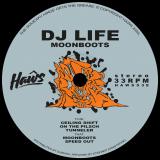
Weight meets wriggle on DJ Life's five-tracker for Haŵs, and oh boy is it hefty. Gritty basslines get right under the skin, swinging drums sit deep in the pocket, and skippy FX keep things light on their feet. A murky, moody streak runs through the record, with an electric tension giving even the loosest grooves a touch of menace. Fat low end and a restless edge, with enough bite to leave a mark. Serious tackle with a wicked sense of swing, primed for the dancefloor. Use at your own peril, you’ve been warned!
Formed in 1969, Soul Media set out with a clear mission to fuse jazz and rock. That approach took a decisive next step with In The Groove, recorded in 1973. Here, the sharpness of jazz is brought to the forefront, rock elements are dissolved and refined to give a cutting edge, and funk is injected to add drive, elasticity, and physical force. The result is a body of music that transcends existing genre labels—jazz-rock, jazz-funk, or fusion—and stands instead as something simply, undeniably cool: strong yet sophisticated.
This album is often described as Soul Media’s response to The Crusaders, a band that saxophonist Jiro Inagaki was paying close attention to at the time. The aim hit its mark. With In The Groove, Soul Media acquired a “refined black feeling”, setting them firmly on the path toward their ultimate destination: Funky Stuff.
LILDAVE215 is a proud Philly representative who channels funk, soul and acid jazz into his delicious take on disco. For this new outing on the young but already promising Sweet Breeze Sound label, he kicks off with 'Music Takes Me' which rides on slinky drums that slide irresistibly on nice dusty cymbals and has funky riffs down low. The vocals add simple but effective colour that adds to the feel-good nature. 'Carnaval Del Tiempo' is more Latin influenced, with prickly percussion and big vocals, even bigger drums and sax energy all added for when the sun shines down hot.
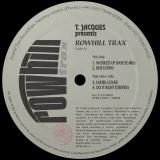
T. Jacques presents ‘Rowhill Trax’: - four cuts of straight-up house music, drawing on the raw sound of the ’90s and early ’00s. Heavy low-end, swinging rhythms and resonating chords run throughout, keeping things stripped back and firmly focused on the dancefloor.
Opening with ‘Worked Up (House Mix)’, a high-energy groove of filtered chords and analogue drum programming, followed by ‘Rub Down’, built around slamming, hard-hitting drums and a low-slung bassline.
Over on the B-side, ‘Under Cover’ settles into a heavy swing with big drums, low sub and classic house chords, while ‘Do It Right (Deeper)’ closes things out with a deeper sound, warm chords and swinging drums.
On the 9th instalment of MAXIMILIAN’s vinyl-only MIKROKOSMOS EP series, he returns with two atmospheric tracks: speedy Deep House and spaced-out Acid House. It’s time to squeeze the Roland TB-303 once again with our boy MAXIMILIAN, delivering two tracks that move from raw acid basslines and hypnotic grooves to deep, atmospheric territory.
Some records suggest another version of themselves.
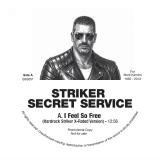
STRIKER SECRET SERVICE is an anonymous white-label series built around that possibility.
For SSS001, Hardrock Striker takes “I Feel So Free” into different territory. Across twelve minutes, the track is dismantled and rebuilt around the pulse of late-'70s electronic disco: sequenced bass, repetition, tension and gradual release. Familiar elements remain, but the arrangement opens out, the machinery takes over and the vocal slowly becomes part of the rhythm itself.
On the reverse, the full instrumental reveals the machinery underneath : an extended DJ tool built for long blends, layering and late-night sets.
Pressed on heavyweight 180g Milky White vinyl, housed in a clear poly sleeve with the STRIKER SECRET SERVICE sticker.
UK pals Andy Riley and Laurence Ritchie have been Drop Music mainstays since before the turn of the millennium. They put out a veritable ton of house music and this EP first dropped back in 2004, but has long been ripe for a reissue. 'Already' sits somewhere between tech, new jack swing and deep house and is assembled from chopped-up samples, jazzy stabs and a rigid mix of drums that all get held together with a warm, swinging groove. 'Amber Gambler' on the flip is another collage made from distinctive patches - gun shots, MJ vocals, crashing hits, wiggy synths, minimal percussion and bursts of synth strings. The result is a busy, characterful groove that never stops grabbing your attention.
Anselmo & Benjamin, three originals and two remixes. House from the more minimal side, says the label, and the label's word is mamazing. Creedence opens, then comes back in Magnanime's remix. Do It closes out side A. Flip for Chilanga, original first, then Sabliv's remix. Deep house and tech house in the tags, minimal in the spine. Stripped back, nothing for show. Lean.
It’s time for the seventh edition, and oh boy do we have a special one for you. Close friend, fellow Lisbon resident and incredibly talented musician Oliver.r delivers for club tracks that perfectly balance fun, emotional depth and heads down moods.
Bizarre Trax co-founder, Felon5 member and everyone's favourite financial advisor; Raynerfromfinance; this fella only does things properly.
We’re very proud to put this one out into the ether!
M&M (Mathieu & Max Jacobson) debut on Who’s Who Recordings with Stars, a versatile four-track, vinyl-only EP featuring a remix by Harry Wills. The title track opens the A-side with smooth chords, trippy synths, and a hypnotic four-on-the-floor groove, followed by Wills’ rework, which injects a punchier, upbeat blend of deep jackin' and progressive house. On the flip, Compound takes a psychedelic, after-hours route with winding synths and evolving layers, before Le Pump closes things out as a direct club weapon driven by pumping rhythms, sharp percussion, and rolling arpeggiators. Covering everything from deep late-night sessions to peak-hour selections, it’s a dynamic addition to the catalogue.
Originally dropped in 2016 on Aiwo Rec., Forum's self-titled EP became one of those secret weapons whispered about in after-hours corners. It's a hazy blend of dusty drum machines, rolling 303s and dreamy breaks that bottled the spirit of Germany's late-night underground at the height of the so-called "outsider house" wave. Now back via WARNING, this reissue keeps everything intact, from the tropical drift of 'Yucatan' to the sheer groove hypnosis of 'Space Train.' It's an EP that moves between house, breakbeat and sunrise euphoria with a knowing hand. A modern cult classic reborn.
His sophomore LP for Limousine Dream, Secrets, is his most expansive and refined to date. Borrowing from after-hours techno, tech house, minimal, and deep house, Secrets is a tour de force of the outer fringes of house music. Wallace leans into the darker hours of the night and the tracks are heavier and headier, but still imbued with his trademark funk. Across 8 hi-definition nuggets, Wallace crafts bespoke bangers for the sound systems of the world’s best clubs.
The Doobie Brothers faced a serious predicament as they prepared to record Takin’ It to the Streets. That the group navigated a potentially serious personnel problem that would’ve tanked lesser bands and scored its fourth straight Top 10 album — while again expanding its range — speaks to the collective’s chemistry, broad-mindedness, and songwriting abilities. Known as the effort on which vocalist-keyboardist Michael McDonald makes his debut, the 1976 set stands as an all-encompassing representation of the various styles the Doobie Brothers explored during their heyday.
Sourced from the original analog master tapes, mastered by engineer Krieg Wunderlich, pressed at Fidelity Record Pressing in California, and housed in a Stoughton gatefold jacket, Mobile Fidelity’s numbered-edition 180g 45RPM 2LP presents Takin’ It to the Streets in definitive sound. Given the luxurious room of a 45RPM version for the first time and benefiting from the wider grooves, the music unfolds amid large soundstages replete with ultra-quiet backgrounds, big dynamics, and accurate imaging. By then a key component of the Doobie Brothers' success, Ted Templeman’s production is brought to light with stellar clarity and definition.
As is the case on Mobile Fidelity's four other acclaimed Doobie Brothers 45RPM reissues, myriad facets that help make Takin’ It to the Streets timeless, natural, and organic — minimal overdubs, voices that realistically rise and fall, notes that properly carry and decay, warm tones, bass lines that pop with color, well-placed percussive accents, defined separation between the players — emerge with incredible presence, openness, and fullness. Nothing is overdone or out of place. No small feat given Templeman and company didn't know how everything would unfold when they first met up in Southern California.
Confronted with a change in plans by co-founder Tom Johnston, whose contributions to the band up to that point in its career identified him as an indispensable member, the Doobie Brothers were thrown for a loop when he curtailed pre-planning work and retreated home to deal with ongoing health problems. Thankfully, Jeff "Skunk" Baxter, the group's newest full-time recruit, had a possible solution in his former fellow Steely Dan colleague McDonald. The singer-keyboardist had already sat in with the Doobie Brothers on their recent tour. So, why not give it a shot?
McDonald's prodigious talents notwithstanding, he couldn't technically replace Johnston. For starters: McDonald's soulful timbre bore little resemblance to Johnston's grittier voice. And McDonald played keyboards, not guitar. No wonder Templeman initially expressed reservations. He also knew the Doobie Brothers needed additional material before they could consider wrapping the record. Yet the skepticism began to dissipate on the first day of the sessions. Still waiting for second drummer Keith Knudsen, the band gathered in the studio with former roadie Bobby LaKind on congas and Little Feat drummer Richie Hayward for a live run through "Wheels of Fortune." The instrumental parts of that take landed on the record. Johnston would even return to share the lead vocal duties with Patrick Simmons.
Those magical results, and the experience of hearing McDonald woodshed the title track at the piano, turned Templeman into a believer and cheerleader. Spurred by their veteran producer's encouragement and McDonald's ideas for songs, the Doobie Brothers embraced new directions just as they did after their debut LP and on subsequent efforts with orchestral and horn treatments. The latter return on Takin’ It to the Streets courtesy of the five-piece Memphis Horns. Yet outside of viola accompaniment on "Losin' End," string elements step aside in favor of McDonald's pianos, synthesizers, and clavinet. And, on five cuts, lead singing.
As the new face of the band, McDonald ended up crafting all or portions of four tunes. His fingerprints are all over two of the singles, including the jazzy, blue-eyed-soul delight “It Keeps You Runnin’” and irresistibly melodic title track, which cracked the Top 15 and became one of the Doobie Brothers’ signature numbers. He and Baxter’s penchant for smoothness, and a precursor to the band’s coming transition into rhythmically oriented yacht rock, informs the brassy sway of “Carry Me Away.”
Further enriched by Tiran Porter’s gorgeous, time-signature-shifting ballad “For Someone Special,” Simmons’ peppy, spring-loaded “8th Avenue Shuffle,” and Johnston’s “Turn It Loose” — the move-your-feet boogie serving as kind of apt farewell to the band’s prior rock ‘n’ roll sound — Takin’ It to the Streets spun uncertainty into gold. Altered yet unbowed, the Doobie Brothers once again offered countless listeners “the best kind of remedy” with feel-good music that holds up amid any era.
Devo Marries Gritty Guitars with Expansive Keyboard Canvasses on Duty Now for the Future:
Transitional Album Furthers the Band’s Satirical Stance, Includes Cover of “Secret Agent Man”
Hear the 1979 Record in Audiophile-Grade Sound and at 45RPM for the First Time:
Mobile Fidelity’s Numbered-Edition 180g 45RPM 2LP Set
Benefits from Enhanced Definition and Presence
1/4” / 15 IPS Dolby A analogue master to DSD 256 to analogue console to lathe
“Pop music needs a big enema.” Devo created Duty Now for the Future with that mission statement, relayed to the press by co-founding bassist/vocalist Gerald Casale, in mind. Though unfairly pegged by some as an example of the common sophomore slump, the record spurred the group’s interest in electronic instrumentation, extended its penchant for biting social satire, and contained another transformative cover song in the form of “Secret Agent Man.” Above all, the 1979 work proved the Ohio pranksters were anything but a joke even if they would have to wait one more year until for their mainstream breakthrough.
Sourced from the original master tapes, mastered by engineer Krieg Wunderlich, pressed at Fidelity Record Pressing in California, and housed in a Stoughton gatefold jacket, Mobile Fidelity's numbered-edition 180g 45RPM 2LP set presents Duty Now for the Future in audiophile-grade sound. Benefitting from the extra groove space on this first-ever 45RPM version, it plays with enhanced definition, deep-black backgrounds, and ultra-quiet surfaces.
Though certain band members later expressed regret with some of his decisions, the merits of Ken Scott’s production emerge like never before. A lurking edginess serves as a signpost in Devo’s progression before it fully embraced keyboards as a primary tool. Guitars possess punch and grit and, along with the crisp arrangements, are sharpened with an ear toward accuracy and vibrancy. It all helps give Duty Now for the Future a direct immediacy that answers the complaints of listeners who felt the affair too processed or sterilized.
Notably, a majority of the material here stems from the same grab bag of songs Devo banked before Warner Bros. signed it to a deal. The album marks a capstone to Phase One of a career that for all intents and purposes began in 1973. And just like many of the group’s performances of that era, Duty Now for the Future remains just as famous for the critical disdain it inspired as the music itself. A vicious review in Rolling Stone — the very publication that a few decades later would trumpet the band as one of the most important of its age — ended with the writer offering to send readers shards of the LP he planned on smashing to bits.
Perhaps he just needed to experience this new-wave effort with the restored sound that makes everything now feel so explosive and urgent. Whatever the case, the songs hold up and, amid a contemporary period which gives increasing license to artificial intelligence and behemoth conglomerates, seem more apt than ever before.
Consider “Blockhead,” which skewers the predictable appearances and numb-to-the-world actions of a rule follower. Or the similarly themed “Clockout,” an uptempo ditty whose thumbing-its-nose bravado and sardonic lyrics send up corporate culture with an irresistible smirk. As for the wiry, hard-hitting urgency of “Wiggly World” and Mark Mothersbaugh’s loud declaration that “They say the fittest shall survive/Yet the unfit may live”: Evidence these art-school rabble-rousers still had some punk fury to flush out of their system. And the sincere allure of the charged power pop and wishful circumstances of “The Day My Baby Gave Me a Surprize” cannot be denied.
To point to an interesting bit of history that makes Duty Now for the Future all the more intriguing, particularly for the most committed Spuds, more than half its tracks were selected for Greatest Misses — a 1990 anthology that celebrates lesser-known cuts and functions as a rejoinder to a hits compilation from the same year. (The only track from the 1979 album to make the “hits” disc: “Smart Patrol/Mr. DNA.”)
Indeed, tunes like the riff-driven albeit controversial “Pink Pussycat,” atmospherically twitching “S.I.B. (Swelling Itching Brain),” and ceremonial instrumental “Devo Corporate Anthem” may lack the catchy appeal and all-together coherence of what follows on the group’s third and most commercially successful effort, Freedom of Choice. Yet in order to get there, to de-evolve if you will, the band needed the smorgasbord that is Duty Now for the Future.
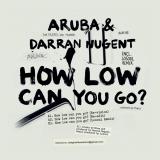
Almost 25 years after its original release, "How Low Can You Go?" by Darran Nugent under his Aruba alias remains a dancefloor weapon for underground DJ’s. The track has endured as one of Nugent's most sought-after productions and as one Discogs user noted “in my opinion - one of the best basslines, presses directly on the chest”.
Over the years, it has been championed by some of electronic music's most respected selectors, including Jamie Jones (featured in his legendary Time Warp set), tINI featured on her Cocoon Ibiza Compilation), Traumer, who featured the track in his set for the Resident Advisor, Chaos In The CBD, Mr. G, Laurent Garnier, Lee Burridge etc.
For this re-release Darran has completely re-recorded the original, refining it for more modern DJ systems. A tasty re-edit fills out the A side with a pulsating hi-hats that twist and turn the energy but remains true to the original.
Legendary German producer Losoul delivers the goods for the remix on the B Side with ten minutes of deep, dark hypnotic magic for fans of pure minimal done right.
Le Ceez is one of those OG Chicago House heads that we all know, admire and respect. As a kid, he was soaked in a huge serving of WGCI and WBMX, learning the chops with a mad famous house music cousin and religiously studying Ron Hardy and Frankie Knuckles’ edits.
He’s done a few things out there, but nothing beats his edits, his DJ skills, and his knowledge. Maybe you’ve heard similar tunes before, but don’t be fooled—this is the real deal to all of us who know a thing or two in the Windy City. So, here at Stilove4music, we stick together around Le Ceez and are proud to share his first batch of disco goodies.
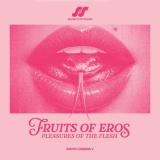
Secrets Of Sound slip into electronic erotica with this new and steamy compilation of after-hours disco and sexually charged sounds. Both originals and tasteful reinterpretations of classic tunes from Kylie Minogue, Amanda Lear, La Tour and Enigma feature on this most intimate collection. There is blissed out depth from Ed Temple, Italo melodic flair from Lipelis and sultry vocal allure on System Olympia's 'Signal Your Love.' Elsewhere, Jorja Chalmers casts you adrift on a new age Balearic life raft and Gareth Anton Averill & Sobrenadar closes with the shimmering 80s nostalgia of 'Paris.' Steamy indeed.
Younger Than Me announces his debut full length "The Golden Age Of Love", to be released on 90's Wax this coming March 2024. The record is the perfect example of the breadth of his irrepressible and unique sound. Featuring collaborations with Massimiliano Pagliara, Brame & Hamo and Pablo Bozzi. The artist is an Italian native known for a modern interpretation of '90s club music' - a dynamic blend of Progressive House, Trance, EBM, Breakbeat, and Techno ideas. This first album is a love letter to a deep-rooted passion for the idiosyncrasies of rave culture and the crossover points with contemporary electronic music.
Younger Than Me, an artistic project by Francesco Mingrino that is steeped in the nostalgia of ‘90s rave, yet not at all trapped in that past. A project that has cemented a special place in the electronic music scene with a string of records on labels like Bordello A Parigi, Amsterdam-Utrecht based platform XXX, Rotterdam’s Bar and Jennifer Cardini’s Dischi Autunno. To this point Francesco has pushed his fun yet forceful sound, with many releases on his own 90's Wax, and collaborations with people like Skatebård, Francesco Farfa, Timothy Clerkin and Curses (as Y2C).
"The Golden Age Of Love" as a package is curated in Younger Than Me's characteristic style. Opening with "Long Life Death", a track that sets the stage with a cinematic soundscape in a classic Carpenter vibe. Picking up the tempo "Zarathustra Dance" takes you right into the golden age itself, its low slung beat and carefully sequenced lead line pushes an ever building tension designed to crack any dancefloor. The track with Massimiliano Pagliara, "Eternal Sunshine Of Solitary Mind", is one of the highlights, perfectly building around a catchy lead with tight arpeggio and sequenced acid. Leading us into the 2nd half of the record "Sadness Is The Only Way To Happiness" is a proto-trance beast, inspired by that period in the early 90s when Trance was less bright lights and big stages and more dark rooms and smoke filled spaces, an ever building progressive run of haunting vocals, rave stabs and rolling bass.
Whilst YTM is at home presenting dancefloor focussed material, we see him explore the other side too, with "Memory Is A Clock" like the earlier "Vortix", he ditches the 4x4 for breakbeat territory. Whilst the bass keeps the solid metronome you would expect, "Memory Is A Clock" is a track that takes a few moments, contemplative melody and trademark arpeggios take the lead. When it comes to the other collaborations on the record, the appearance of Brame And Hamo on "Raver's Heart Is A Mess" sees them lean into the Progressive nature both artists love so much. Then Pablo Bozzi lends his own unique outlook to "We Don't Know The Way, We Just Stay" in one of the standout tracks, epitomising Younger Than Me’s ability to create profound experiences.
The album concludes with "Music Will Never Stop, Heartbeat Will Never Fade, Party Will Never End", less of a title and more of a personal philosophy – the perpetual essence of rave culture and its timeless impact on music. A rhythmic belter, juxtaposed with incendiary synth-lines and staple catchy sequence work, finishing the record with one of the true highpoints. In addition the release also features four digital bonus tracks, including "The Other Face Of Loneliness" and a Prog Dance Reshape of one of the records more eclectic cuts "Zarathustra Dance" all offering an extended exploration into the creative landscape YTM inhabits.
"The Golden Age Of Love" is a debut album that ticks all the boxes; it's a celebration of a bygone era through the lens of the contemporary. Younger Than Me stands as a testament to the enduring spirit and evolving nature of the music that began in the ‘90s rave scene, with an LP that pushes Love, Progression and Fun to the forefront.
DJ Support from Luke Una, Colleen 'Cosmo Murphy' and Greg Wilson.
Two bona fide classic 70s cuts reworked for now.
‘Papa Stoned’, Ian Ossia’s driving take on one of disco’s seminal tracks, the Norman Whitfield masterpiece, ‘Papa Was A Rolling Stone’ by The Temptations, relentlessly hammers the groove home, leaving the dance floor no option but total surrender.
‘Dream A Dream’ sees a 1994 Ian Dewhirst re-edit of the glorious ‘Dreaming A Dream’ by Crown Heights Affair respectfully retouched by Ché & Matica, who bring the beats into time, overdub additional elements and create a DJ friendly intro/outro for what is an essential update.
Dal Platinum returns to the Toxic Funk series with another double-sided serving of funky breakbeat gold, once again proving why he remains one of the most creative beat craftsmen in the global Nu Funk scene. Following up on his previous Toxic Funk outing, the Danish groove specialist delivers two fresh cuts packed with soulful samples, neck-snapping drums and irresistible dancefloor flavor.
Leading the charge on the A-side, Shave the Lords blends tight funk breaks, slick edits and classic party-rocking energy into a heavyweight groove designed for DJs and crate diggers alike. Flip the vinyl over and Good Shines takes things deeper with infectious basslines, uplifting vibes and a raw funky swagger that perfectly captures the spirit of the Toxic Funk series. Both tracks carry Dal Platinum’s unmistakable signature style — playful, soulful and built to move crowds.
This 7” release marks yet another essential chapter in the Toxic Funk legacy, delivering timeless grooves for funk lovers, breakbeat heads and vinyl collectors around the world. Toxic Funk Vol. 22 is ready to bring the heat straight to your turntable — so don’t sleep on this limited 45 before it disappears into the crates of DJs worldwide!
Presenting the eighth edition of the Bizarre Trax wax series and the second solo outing from bare-knuckle beatmaker B.Love. A Shape You Can Feel EP marks a subtle but deliberate evolution in the producer's sound. While the groove-led, funk-infused records that first put his name on the map are still woven into his DNA, this latest four-tracker strips things back in favour of a more understated, headsdown approach. Leaner drums, weightier low-end and hypnotic arrangements take centre stage, with each cut built for long blends and late-night dancefloors. Across four rolling club weapons, B.Love explores a deeper, more refined sonic palette without losing the character that's become synonymous with his productions. Chopped vocal fragments, unmistakable sample work and crisp, polished percussion remain at the core, but are now delivered with greater restraint, allowing space, tension and groove to do the heavy lifting. Designed for selectors who favour subtlety over spectacle, A Shape You Can Feel EP is a confident statement from an artist continuing to carve out his own lane; proof that sometimes the smallest shifts leave the biggest impression
Earlier in the year, Washington, D.C-based Sol Power Allstars launched the Sweet Breeze Sound imprint, seemingly as a vehicle for oddball re-edits and nostalgic, sample-rich productions. Handling side A on release number three in San Fran's King Most, who crafts a hybrid 80s electro/proto-house jam out of echoing electronics, bobdypopping beats, and all manner of effects-laden samples (including a wealth from InDeep classic 'Last Night a DJ Saved My Life' ). Over on side B, Sol Power's own Marc Meistro takes over, laying down his own sparse, lo-fi, analogue-rich tribute to electro-era synth disco that once again nods to a variety of cult classics from the early 1980s.
The gold standard edit masters at Scruniversal have decided to refocus somewhere away from their usual Brazilian sound for this latest 7". It finds the crew heading to Africa and digging deep for new grooves, with Tony Lavrutz, Scruscru & Dwaal coming correct. 'Afrika Bambaataa' kicks the record off with a laid back Afro-tinged broken beats with a sunny disposition and plenty of bright melodies that wouldn't sound out of place in a Nightmares on Wax set. On the flip side joint, 'Zulu Jam" the drums cut more deep with organic percussion scattered up top next to expressive flutes. Perfect summer vibes.
20:20 Vision has been defining the house underground for decades now, and much of its earlier material remains as revealing as its newer output. A case in point is this reissue of the rare Echo Beach release. Founder Ralph Lawson and his old pal Carl Finlow's recordings from The Farm in the Rhubarb Triangle retain a warmth and analogue weight that contemporary production struggles to replicate - all hands-on-deck live passes through drum machines, synths and outboard desks, the process audible in every groove. The discovery of unreleased cut 'Blues Dimensions', which was rescued from corrupted DATs, is the real find here: rasping Moog bass, P-Funk refrain and heavy Rhodes that sounds anything but archival. Top drawer excavation.
We bring a definite label favorite Eddie Leader from Huddersfield, whose label Hudd Traxx is based out of Manchester UK.
Excellent timing on the Need To Pivot EP as it’s kicking off Eddie’s 20 Years of Hudd Traxx Summer Tour!
The title track “Need To Pivot” starts off with an ode to Chicago House in form of a funky, swinging, banger laced over the top with clever spoken words from a voice any dance floor will surely recognize!
For those wanting more banger and less words, we included the “Need To Pivot” Dub version on A2.
The flip side drops the vibe back to what we come to love from Eddie! Deep driving baselines and synth based goodness for both B Side cuts on “Close To You” and “Listen To Me”.
Damage Code is the result of the convergence of two long-standing figures from the underground industrial and EBM scene: Carlos Grabstein (89s✝) and Ben Bunzen (Hammershøi). Released in partnership with Miseria records, their first collaboration unfolds through proto-industrial sequences, oppressive atmospheres, repetitive structures, and distorted transmissions, all wrapped in body-driven percussion that pulls the listener into a controlled state of sensory overload. Harsh yet precise, ritualistic yet futuristic, the record advances with relentless intensity while maintaining a raw, physical energy throughout. Somewhere between the diseased electronics of Front Line Assembly and the primitive industrial tension of Esplendor Geométrico, Digital Slave channels a sound that is both confrontational and hypnotic. With “Digital Slave”, Damage Code opens a new portal into industrial body music: dense, punishing, and engineered to trap the mind inside its circuitry. Presented in ONE-OFF truly limited edition of 300 copies lacquered pressed on 180 gr. high quality solid BLACK vinyl. All tracks have been specially remastered and mastered for vinyl by Daniel Hallhuber at Young and Cold Studios (Germany).
Brighter Discs opens with its first release from label founders Kamma & Masalo. Born out of Brighter Days, the duo’s long running party series since 2014. A colourful get together where generations mix freely, DJ legends share space with new voices, and the dancefloor is treated as common ground. Brighter Discs carries this same spirit into recorded form, a natural continuation following the Brighter Days compilation previously released on Rush Hour.
Brighter Discs starts things off with ‘Can’t Fake The Feeling’, built around the original vocal by Renee Mohannon, taken from the 1989 release produced by house music pioneer Joe Smooth. The vocal is fully cleared and officially licensed, with everything surrounding it newly written and produced, resulting in a club track that honours the emotional core of the original vocal while giving it new space to shine.
The ‘Club Mix’ unfolds with immediate lift, a classic yet upfront house energy carried by Kamma & Masalo’s elevating instrumentation moving in lockstep with Renee Mohannon’s vocal. A pure club track celebrating dance music to the fullest.
On the flip you will find K&M’s ‘Unity Dub’, a darker, percussion driven workout that strips things back and presents the track in a different light. A twilight version that highlights the duo’s versatility and deep dancefloor understanding.
Kamma & Masalo have tested both cuts extensively while touring, from sun soaked festival stages to esoteric club spaces. Each version has been shaped in real rooms and refined on the road, ensuring the tracks are heard in their best possible form.
All produced with care and free-spirited party energy, Brighter Discs 001 marks the beginning!
Key To World Peace is the third release by Prophetic Justice Ministry - aka Australian musician Sam Perry. An atmospheric, cinematic album that belies a striking pop songwriting nous at its core, its conductor Prophetic Justice Ministry is at the centre of a new wave of creative, rule-bending Melbourne artists. Romantic, smudged and hazy, Perry emerges from behind a wall of
half-light with a clutch of earworms and affecting emotions.
Recorded in home studios in Belgrade (Serbia), Christchurch (New Zealand) and Melbourne (Australia) over the course of three years, Key To World Peace offers a dichotomy in approach. Shifting on a dime between ambient, filmic washes of sound and more traditional song structures, the approach feels natural, casually acid-tipped and emotionally revealing. While Perry’s
distinctive keys and production melding with melody is evidenced in Melbourne group Who Cares?, as Prophetic Justice Ministry there’s a heightened sense of mystery and space being used.
Swirling in a psychedelic fog with dry iced chords falling down like melting stars, the album pulses with an ominous, distorted intro that sculpts air into blocks of sound before Psyop offers a glimpse through the gloom at the artist navigating through crushed, shoe-gazing chords, singing a consolation into an abandoned building. Side A’s more abstract tone veers from industrial tracks (T-A) to pastoral, impressionistic pieces (Trance) before album highlight Life’s A Party showcases the effortless, classic songwriting lurking in Prophetic Justice Ministry. Built on the tension between the upbeat lyrics and suppressed, rich delivery, the song lopes on an alluring loop with acoustic guitars and Perry’s voice walking a tightrope between irony and sincerity. The song blooms into a bright burst of light, almost inducing synesthesia in the listener and reminding a little of The Beta Band’s most outre and catchy moments.
Opening Side B, Naked Shine’s scintillating guitar is punctuated by a sub bass swell that offsets the yearning vocal performance. With palpable sensitivity the song is shepherded into short, atmospheric passages before Love Drum’s direct delivery: Perry’s vocal and guitar, dancing over a hint of distortion feels like Syd Barrett at his most casually brilliant. Carrying on the tradition of a single cover on every Prophetic Justice Ministry release, here Lana Del Rey’s Mariner’s Apartment Complex is given a stripped back but faithful treatment. With a sound that feels like a hushed, Chris Isaak classic it’s testament to Perry’s own compositions that the cover doesn’t outshine the rest of the album. Album closer and single Spirit House Party combines a classic chord progression with Perry’s double-tracked vocal into a murky but brilliantly catchy chorus. While nowhere near as lush in its production, there’s something in the atmosphere of Prophetic Justice Ministry’s vocal sitting in the mix just so that reminds us of The Electric Prunes’ Holy Are You-era work with David Axelrod.
Key To World Peace flits between displaying a spectrum of blurred emotional resonance in its instrumental passages and vulnerability in the shape of raw, melodic songwriting. With his first release outside of Australia and vinyl debut, Sam Perry’s Prophetic Justice Ministry is a beguiling dance in and out shadows.
Two years after Return of the Boom Bap, KRS-One returned with his self-titled second solo album and again enlisted the beat-making excellence of DJ Premier as well as Showbiz, Diamond D and others behind the boards. Lead single 'MC's Act Like They Don't Know' is a stone cold classic that still gets heavy rotation and exemplifies One's lyrical heft. It is backed up by gems like 'Represent The Real Hip-Hop' featuring Das EFX, while Premier strikes again on the state-of-hip-hop anthem 'Rappers R. N. Dainja,' and 'De Automatic' delivers straight boom bap alongside Fat Joe. Political and social commentary runs deep on 'R.E.A.L.I.TY.' and 'Free Mumia' with Channel Live, while 'Wannabemceez' with Mad Lion keeps the sucker-MC disses coming.
Our previous remix-EP of Ness' classic album "Flesh Of The Gods" was, for various reasons, a long and slow process. When Ness himself suggested us to ask Vladw for a contribution we finally had a good reason to reach out to a long time favorite @ the Navigare HQ. Although located, literally, on the other side of the planet, his deep, driving and breezy productions ring true to our, slightly northern, musical vision. So we are not surprised that his excellent remix of "Transilient" is, already, one of the most celebrated tracks in our half decade long history. We asked for more, and finally we are able to present three brand new originals, seeded, watered and harvested with a Navigarean intent. Three highly functional pieces, aimed at focused dancefloors underneath open skies, balancing the beautiful and lush with the edgy and slightly twisted. Although being our first ever collaboration, any Navigare listener would understand that Luigi Tozzi has played a huge role for us on our path. Since his first releases with Hypnus we've listened carefully, on repeat, for a dozen years by now. A guiding light for our scene, always curious, always pioneering, yet always on point. His remix of "Drya" takes the harmonix of the original, adds a monstrous bassline and - trust us on this one - that massive clap will cause a mass frisson on the dancefloor. Trust Navigare Audio...
Renascent' marks the long-awaited return of legendary Manchester outfit The Durutti Column, their first new studio album in over fifteen years, produced by Keir Stewart.
Around the guitar work of Vini Reilly, the album plays between sonic atmospherics and structure: warm ambient washes, piano, beats and guest vocal turns by a new generation (Caoilfhionn Rose on " Agonistes" and Lucas Elliot on CD bonus track "All they See is Fire ).
Both contemporary and otherworldly, and with a swathe of new champions citing the band as an influence (Blood Orange, Harry Styles, The Avalanches, Mark William Lewis), 'Renascent' is a timely and vital rebirth for The Durutti Column.
Artwork by long-time collaborators 8vo (who have worked with the band on many of their releases) and have joined forces again for this project
There’s no direct English translation for the word “hiraeth”. In the Welsh language, it describes a form of longing for an intangible something, somewhere or someone that no longer exists. Sofie Birch and Antonina Nowacka draw on the concept to guide their second collaborative album, a suite of vulnerable, open-hearted improvisations and reflections that attempt to grasp an image of the past that’s chimeric, dissolving almost as soon as it materializes. The duo’s process follows the same distant beacon; unlike Languoria, their critically acclaimed debut, Hiraeth is, at heart, an acoustic record, informed by in-person improvisations with voices and string instruments that gesture to an era before computers, AI and DAWs. It’s just as lush, but Hiraeth is warmer and more muted than its predecessor.
Nowacka and Birch conceived the album in the wake of a slew of collaborative live concerts, spurred on by serendipitous improvisations and an interest in paring down their setup. Unsound arranged a retreat in Sokołowsko, an idyllic village nestled in the verdant hills of Southern Poland, close to the Czech border. Sokołowsko surrounds a large ruined sanatorium that’s rumored to have inspired Thomas Mann’s 1924 novel The Magic Mountain, and has long been a magnet for artists. The two took the opportunity to rethink their approach completely, arriving with just a guitar, a zither and a portable Nagra reel-to-reel machine. Recording directly to tape, they sketched out ideas with just their voices and instruments, reflecting their surroundings without being distracted or mediated by modern technology.
“We wanted to get away from screens as much as possible,” says Birch, “to bring to the world something vulnerable and honest. Without advance preparation, every day we went out into the open air, finding places to sit, during sunset or the midday sun. We discovered new tunings on our instruments, picked up a melody, and started the machine, playing over
and over till we got a take.” In the autumn, they met again in a Copenhagen studio, sparingly and carefully layering old synths and organs to add more depth without muddying the mix.
Both Nowacka and Birch sing throughout, their voices threading the acoustic instruments and tangling with each other, almost becoming one. But it’s the environment of Sokołowsko, “the birds and the light, even the wind playing against the harps,” that’s woven into the music’s lining. Affected by time spent meditating and in nature, as well as the fact that Birch was pregnant whilst recording, the album feels alive and remarkably present. Even the sound quality of the tape machine gives Hiraeth a tactile, organic quality, as Nowacka puts it, “like being in a warm bath.”
They still have the raw recordings from Sokołowsko on old reels, physical souvenirs of their time spent making music in a “habitat for intuitive songs, a little ecosystem, alive and spirited.” The outmoded gear and remote setting helped the duo disengage from the modern world for a few moments and imagine an existence that’s been lost to time and nominal progress. With digital technology receding into the background, Nowacka and Birch had space to make “intuitive connections with frequencies and people,” as Birch explains. Hiraeth is a testament not to nostalgia, but to the power of kinship.
Innate launched out of Bristol in 2018 as an extension of a well-respected blog run by Owain K, and is now one of the more cultured outlets in the realm of advanced techno. This ninth 12" heads across the Irish Sea for a split EP featuring top heads Eddie Reynolds aka TR One and Americhord. The former goes first with the snappy drums and reverberating bass twangs of 'We Lost An Hour' before 'I'm Alone' zones out into more widescreen and far-sighted deep techno laced with malleable acid lines. Americhord then keeps it deep with the interplanetary 'Parallax', a supple, comforting cocoon of synth and bass warmth before flipping into kicking electro territory on 'Sub Level'. Proper classy tackle.
LAURA GREENE, from Cleveland, Ohio, has enjoyed a long and successful career in the entertainment industry. She started out as stage actress before becoming a singer in the lucrative TV and radio jingle business. She has also modelled for many press campaigns and regularly appeared on TV chat shows. In 1968 she had a role in the film For Love Of Ivy with Sidney Poitier and a year later co-starred in the satire Putney Swope directed by Robert Downey Sr. It seems fitting that her 1967 non-hit 'Moonlight Music And You' finally found commercial success in 2003 when featured on a KFC TV advert. PEGGY MARCH was born Margaret Annemarie Battavio in 1948 and, although having a prolific recording career, is rememberred mainly for her million-selling 'I Will Follow Him'. Here we feature her Northern Soul waxing for RCA in 1968 that packed the dance floor at Wigan Casino a decade later!
Scorn project is based on a groove. Mike Harrys choosed one name for that. Just like he choosed Quoit for another groove he has (well the same on 45...)