Season Two continues with its fifth edition - a shift south this time, from KiF's English hedgerows to the island of Lutruwita, Tasmania, and the work of Soda Lite.
A gooseberry plant took root in the sand between the bricks of Alex's back patio - nutrient-deficient leaves and all - and fruited regardless. That's most of the appeal: "I'm drawn to species that survive in the interstices of human industrialisation." The husk itself carries the same idea, shielding the berry until it's ready to be let go.
Past Soda Lite records - Earthbound, Aqua Solar Cura, Vale & Stone - built outward from field recordings first. Here that flipped: you can't field-record a plant, only the noise around it, so only two tracks (Vibrant Matter and An Sí Gaoithe) carry field sound at all. The rest came from narrowing to a single species instead of the wider non-human world, and "trying to create and replicate sound and energy on the level of the plant and its perceptive world."
Two more things worth knowing. ‘Bryn Celli Ddu’ takes its name from a Neolithic burial chamber in Wales, aligned so the summer solstice sunlight reaches its back wall - the sun turning up again as its own recurring character. And ‘An Sí Gaoithe (Return)’ is a reworking of a Vale & Stone title, old fragments reprocessed into something new - "a bit like composting."
Soda Lite is the recording project of Alex Last, a gardener and composer working from Lutruwita on unceded Palawa land. Their music moves through field recordings gathered directly from the island's own biomes - coastline, forest, alkaline lake bed - alongside slow, warbling synth work, built less as backdrop than as document: proof of a specific place, at a specific time, being listened to closely. Past records have taken their titles and themes from geology and land relationships as often as botany - Aqua Solar Cura, Earthbound, Vale & Stone - so a plant with its own mineral-adjacent etymology (soda, found in dried alkaline lakebeds; lite, from the Greek for stone) suits the pairing.
IGNEA explores nostalgia on their upcoming album, Monumental (October 23, 2026, via Napalm Records). The Ukrainian four-piece navigates through unique facets of the past—from the grandeur and ambition of Cold War space dreams to the melancholy of urban decay and forgotten modernist structures, all the way to the emotional weight of personal and collective memory. All lyrics on Monumental were written by vocalist Helle Bohdanova. Mixing and mastering were handled by Grammy Award-nominated producer Jacob Hansen (DELAIN, Amaranthe, Volbeat, Amon Amarth, Arch Enemy, and more). Monumental is IGNEA’s second full-length that was written during the full-scale war in Ukraine. The recording process mostly took place in the winter of 2025-2026, during icy temperatures and long power outages in Kyiv.
With his last three records all landing within a calendar year (2024-25), enigmatic Swedish producer Civilistjävel! (aka Tomas Bodén) is on a hot streak of releases, his singular vision increasingly ambitious and expansive. There are few artists working at this level so consistently right now, reinventing, revising and continually developing their language. Following on from 2025’s radically re-worked ‘Versions’ (of Mayssa Jallad’s ‘Marjaa…’), Bodén returns to break further fresh ground with his new album, ‘Älvgång’. Featuring contributions from Soccer Committee, Carrier and guest (aka Jabu’s Jasmine Butt), ‘Älvgång’ foregrounds a more brittle and insistent rhythm-based sound, whilst comprising his most broad-ranging collection of material to date.
‘Älvgång’ grew out of a series of sketches made from late ‘24 and throughout the whole of ‘25 at Stockholm’s renowned EMS Studios, which gave Boden free rein to its extensive collection of vintage analogue equipment and rare modular synthesizers such as the Serge and Buchla systems. As a loose framework of tracks began to take shape, so did a reflection of sorts, on family and foundations, underpinned or influenced by sounds that drifted into Tomas consciousness around this time - ancient Swedish pastoral music, Georgian lithurgical chants, gongs, chimes. An idea settled into place, a dedication to his Grandfather, as the earlier release Fyra Platser (tr. ‘Four Places’) was to his Grandmother. Älvgång is grounded with the sense of time and place of an old family photograph, with the tracks over each side bearing one of two names that are more or less the same location - Strinne was the old name for a this loose collection of villages. These days it is more commonly known as Bjärtrå. Metaphorically speaking, the river runs through both.
Civilistjävel! conjures so many adjectives and descriptors, ‘glacial’ and ‘ambient’ frequently among them - but while not altogether untrue, such terms belie the tension and drama so often present in Tomas’ music. Listening to ‘Älvgång’ is not a passive experience. The eight tracks here feel like a patchwork of memories that bathe in the same ethereal, otherworldly glow of Tarkovsky’s polaroids’.
The machine pulses that dominate this landscape are reigned in and tempered by a human hand; lithe, untethered coils, breathing in and out. ‘Strinne Ett’ sets out with purpose, sensing awe and wonder through the murk, but as the final tone unfurls like a question mark, another chapter begins, unfolding/building like a Tarjei Vesaas novel. These lyrical, abstract miniatures combine to reveal a wider context, fragile humanity standing alone against nature.
Guest appearances on Civilistjävel! records have become a regular occurrence (including recent collaborations with Mayssa Jallad, Laila Sakini, Cucina Povera, Thomas Bush, Eldon + Withdrawn), but are used sparingly and with increasing precision. On ‘Strinne Tre’ Mariska Baars’ (Soccer Committee) voice feels like a balm, a clearing. But as her simple, three-word incantation drifts further into fog, the meaning changes, and her words seem to curdle. Carrier’s beats widen the parameters on ‘Strinne Fyra’, a skittering promise that builds tension then refuses to release it; all false starts, Photek gongs, and trinkling modulars. Jabu’s Jasmine Butt pulls all the threads together for the final track, Thomas Tallis’ ghost walking over offset machine impulses, that work against their own symmetry.
Side two begins inquisitively, scanning bleached, alien surroundings, its sparse pads recalling Aphex Twin’s ‘Selected Ambient works Vol 2’. 'Bjärtrå Två’ picks up the baton from ' Strinne Fyra’ with a ruptured Simmons SDS200 analogue drum synth set free from its shackles, the rhythm eventually slotting into the spaces that were hiding in plain sight. What follows seems like an epiphany; ‘Bjärtrå Tre’ is achingly beautiful, a euphoric, winding ascent that leads to devotional plainsong. ‘Bjärtrå Fyra‘s final unheralded shift feels both tragic and haunting.
No Home is the new album by Lane Hartley, releasing October 23rd 2026 on Royal Oakie Records. Produced in collaboration with David Hartley of The War On Drugs & Adam McDaniel (Animal Collective, Angel Olsen, Geologist), the album was recorded at Drop of Sun Studios in Asheville and features contributions from North Carolina’s tight knit music community–including Mary Lattimore, Seth Kaufman of Floating Action & Dream Sitch, David Hartley, Jack Victor Johnson, and more.
After recording his debut album Naming Horses, Lane left Los Angeles and returned home to the Carolinas, eventually landing in Asheville. It wasn’t too long until the songs started flowing and Lane found himself reaching out to Adam McDaniel at Drop of Sun Studios–a vaunted space that’s been at the heart of indie-rock the past few years, bringing to life recent albums from MJ Lenderman, Wednesday, Fust, and more. McDaniel introduced Lane to David Hartley, and what originally started with discussions to record one song quickly turned into a plan to track a whole album live with a six piece band. Once in the studio, co-producer McDaniel encouraged the group to lean on intuition–“All of the players on this record really brought it to life in such a cosmic way. They instilled so much childlike wonder and fun into the making of the album. It inspired me to keep going” says Lane.
Lyrically the album is a collection of vignettes about people who’ve become alienated from their deepest desires of connection, belonging, intimacy, and autonomy–inspired both by Lane’s own life and the lives of people he’s loved. The unique character of the album emerged when Lane made the decision to pair the dark lyrical content with bright & lush arrangements, inspired by Gene Clark’s No Other, Neil Young’s After the Gold Rush, and Amen Dunes’ Love. In Lane’s words, “The content of the songs got way darker, and my reaction was to make the songs catchier, and to lean harder into the music that influenced me. I wanted each song to feel like a room in a haunted house, with a beautiful garden growing outside”.
Album opener “I Am Not Ashamed” was inspired by the anti-memoir of actress Barbara Peyton, a 1950’s Hollywood starlet who met an untimely end; “It’s about knowing that whatever you’ve done to survive, you still deserve love” says Lane. “Mother” pairs lyrics about ancestral trauma with the sunshine-pop influence of Colin Blunstone, featuring backing vocals from Lane’s sister Barrett Hartley. “It's about coming to terms with the fact that the people meant to protect us are dealing with their own trauma…”
Meanwhile, “All Of This Is Yours” and “Tone Poem” form the spiritual center of the album, an attempt to transmute anger & pain to bittersweet acceptance in the wake of a breakup. “I feel like on the surface this is essentially a breakup album, a lot of these songs are about mourning the end of a relationship and reflecting on what went down. I was falling in love and getting my heart broken, then waking up and driving across the country and doing it all over again.” “Love Is Not A Song” was inspired by Margo Guryan’s Love Songs, pairing bright piano with playful lyrics about an old man who’s been beaten down by life but still believes his greatest love is yet to come. Last but not least, title track “No Home” sums up the album’s key theme of alienation, “It all goes back to this feeling of wanting to belong to someone or somewhere, wanting to belong in your own body.”
Original, Oliver Lieb, M.I.K.E. Push, Moon Project, DJ Taucher remix
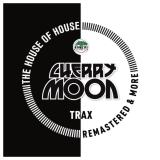
The iconic electronic music masterpiece “The House Of House” by Cherrymoon Trax is set to make an electrifying return to the scene. Originally introduced in 1994, this timeless classic, helmed by the talented trio Axel Stephenson, Yves Deruyter, and Franky Kloeck, has been revitalized in a new remastered wax format.
The eagerly awaited 2 x 12" double vinyl features mixes that have never graced vinyl before, alongside the cherished original and other mixes that have left an indelible mark over the years. As an added treat, collectors will also find the inclusion of the original tracks “Let There Be House” and “Conflictation.”
This exclusive edition is strictly limited to just 500 copies worldwide and features a unique Inside Out cut, pressed on stunning Starlight vinyl — a distinctive black colour with vibrant coloured speckles. The striking vinyl perfectly complements the sleeve, making this a truly special collector’s edition.
But this release marks more than just a return to the past. “The House Of House” also introduces a new upcoming single featuring the return of Axel Stephenson, bringing a legendary name from the original Cherrymoon Trax era back into the spotlight.
Brace yourselves for the resurgence of a true electronic music masterpiece — and the beginning of an exciting new chapter. Only 500 copies available — once they’re gone, they’re gone.
‘Unfindable Ring', out October 23 on Bayonet Records, is an adventurer’s epic. The arc of the journey, like any good Spirited Away or Neverending Story, lands its wide-traveled protagonist right back at home before bedtime. Grumpy, like many great hero tricksters before him, has always been a project of juxtaposition: upbeat radio-ready hits whose buoyant, goofy hooks belie the dark thoughts they describe. Much of this, Schmitt acknowledges, owes its due to the matter-of-fact morbidity of the trans experience in America. It’s from these experiences—personal, romantic, political, and existential—that the tale of ‘Unfindable Ring’ unfolds.
Ambition and play have always defined the Grumpy sound. Late last year, the Fader praised their “demented, hooky” EP, “Piebald,” whose innovative fuzz-pop confections earned them coverage in NPR and the New York Times. Stereogum heralded them as “wonderfully weird,” and Paste designated them “the best of what’s next.”” Through boisterous collaborations with the likes of Sidney Gish and Claire Rousay, they’ve effortlessly ingratiated themselves with the titans of DIY, and, more recently, Schmitt has become an unlikely favored collaborator of chart-topping country giant Zach Bryan, who named his new record––which prominently features Schmitt’s harmonies–– conspicuously, ‘With Heaven On Top.’
In Grumpy, Heaven Schmitt is joined by Anya Good, Ellie Long (Kid Lake), Austin Arnold, Diego Clare (D.A. Crimson), and Lane Rodgers, who each contribute to every step of the process—engineering and recording, mixing, drafting artwork, producing, and making music videos. A kind of interdisciplinary thieves’ guild, the project, while once Schmitt’s solo eponym, is a labor of communal love.
“We are living these happy lives, and there are people we come across who don’t know us at all who want us to die,” Schmitt, explains. Often the visibility of the joy itself is what prompts the vitriol––“I’m so happy I could die,” Schmitt belts over and over on the chorus (a familiar figure of speech, sure, but one which, upon any scrutiny, shows Schmitt’s hand in the macabre.) A middle finger to fate, Good started asking, “What are you going to do with your One Beautiful Life?” Grumpy is going to keep playing, touring, searching, finding.
We worked closely with surviving members of The Nerves, Paul Collins and Peter Case along with Jack Lee's daughter Cynthia to bring The Nerves - Best Collection to you.
Unlike previous releases that often relied on secondary copies or rips from vinyl and CDs, we were able to locate the original source recordings and have Warren Defever master/remaster them at Third Man Mastering in Detroit for this release. This is what makes this record so special—it features the definitive versions of these tracks as they were originally intended, some have not been heard since the day they were recorded. We hope you enjoy it.
We worked closely with surviving members of The Nerves, Paul Collins and Peter Case along with Jack Lee's daughter Cynthia to bring The Nerves - Best Collection to you.
Unlike previous releases that often relied on secondary copies or rips from vinyl and CDs, we were able to locate the original source recordings and have Warren Defever master/remaster them at Third Man Mastering in Detroit for this release. This is what makes this record so special—it features the definitive versions of these tracks as they were originally intended, some have not been heard since the day they were recorded. We hope you enjoy it.
‘Finally’, the forthcoming new record from Catz ’n Dogz, belongs to the latter.
There are albums you listen to, and there are albums you live with. ‘Finally’, the forthcoming new record from Catz ’n Dogz, belongs to the latter.
Across sixteen tracks, Voitek and Greg have created their most creatively ambitious and emotionally open work to date. An album about relationships, friendship and the people and places that shape us. At its heart is a simple idea: music should make you feel something, and sometimes the most meaningful moments are the quiet ones when you finally have time to yourself.
Finally is rooted in the emotional contradictions that make memories so powerful. Inspired by classic American Folk and Soul, its songs are happy and nostalgic; hopeful without pretending that the past doesn’t exist. There is melancholy inside the euphoria and warmth inside the sadness, a constant interplay between looking back and moving forward.
The album begins with the soulful breakbeat glow of 'We’re Gonna Be Alright' featuring Ajii, before moving through the smoky jazz and piano-led intimacy of 'Dance For You' with Miller Blue and the bass-driven energy of 'Sun Goes Down' featuring Charlotte Haining. Closing with the reflective 'Miss You' featuring Mateusz Krautwurst, the record takes in a rich cast of vocalists, musicians and producers, alongside a series of deeply personal Catz ’n Dogz solo productions.
Those collaborations are central to Finally. The album is, in many ways, a celebration of the creative friendships Voitek and Greg have built throughout their journey. Relationships that have allowed them to step outside their comfort zone and rethink what their music can be.
Written and recorded between Madrid, New York, Warsaw and the road, the album finds the duo placing renewed emphasis on songwriting, chord progressions and musical craft. Rather than simply chasing the next track, they took the time to learn, experiment and create something with a sense of permanence.
This is an album for driving without a destination. For watching the sun go down. For remembering somebody you haven’t thought about in years. For those rare stretches of time when there is nowhere else you need to be.
Early DJ Support: Massimiliano Pagliara, Paranoid London, Logan Fisher, Terry Farley, James Holroyd, Rocky (X Press 2), Francois K, Marcel Vogel, Sean Johnston, Austin Ato, Ron Basejam, Richard Rogers, Oliver Dollar, Crazy P and many more
Creating an international name for itself over the past decade as a sample pack label, Samples From Mars made its inevitable venture into the music world originally as a home for founder Teddy Stuart’s work. Long before making samples, Stuart garnered credits working as a grammy-nominated recording engineer in the hip hop world, and DJing / producing with Justin Strauss as A/JUS/TED, for labels such as DFA, Domino Records and Southern Fried Records. Now the label is set to release a variety of genres - house, disco, techno, ambient, all with a vintage tinge and a focus on high quality, analog production.
Enter Salt Queen. Visual artist and musician Magali van Caloen together with Samples From Mars founder, Teddy Stuart. Based in New York, the duo combine hardware dance aesthetics with dry, salty takes on familiar club moments into music that sits somewhere between funny, raw and unpredictable.
Salt Queen’s debut ‘ARE U OK’ is an acid-laced, deadpan spoken word track with an opening line that snaps any room to attention. A disorienting club encounter unfolds over Italo-inflected 808s and a relentless 303 bassline. There are no chords and no melodies - just a skeletal groove and an intimate voice circling the dancefloor. Drifting between concern and provocation, the vocal runs through cliché club conversations before destabilizing completely into a siren-laden crash out. The ‘Freak Nasty Club Mix’ ditches the plot and lets the hardware breathe, with a thick SH-101 bassline anchoring the first half before a sudden switch into an unrelenting acid pattern that refuses to settle. Two versions of the same wild night out.
Trixie Whitley returns with 'Folded Time', her first full-length album in seven years and one of her most adventurous and rhythmically driven records to date. Written largely at the kitchen table of her Brooklyn apartment and recorded between Brussels, New York and Montréal, the nine-track album finds Whitley moving freely between rock, soul, R&B and more experimental territory.
Rhythm sits at the heart of 'Folded Time'. Whitley plays drums, bass, guitar and piano herself, with her love of polyrhythms running throughout the record. Heavy, slow-moving drums turn opener 'Carry' into a mantra, 'Fascinating and Fun' grew out of studio improvisation, while on 'Carnaval' Whitley and Cem Misirlioglu face each other behind two drum kits for what she calls a "drum rave". Her unmistakable voice remains at the centre, moving just as easily between restraint and raw power.
Across the album, Whitley looks at motherhood, womanhood, heartbreak, desire and forgiveness, and at how the past continues to shape who we become. It is a record about taking stock without standing still: instinctive and physical, but full of detail.
For its second outing, Sonum invites Matteo Point, whose Acid People EP expands the label's catalogue with four cuts navigating the space between acid house, progressive textures and analogue-driven club music.
The title track, "Acid People," sets the tone with tightly wound 303 sequences, sparse drums and a hypnotic sense of momentum, landing somewhere between functional peak-time tool and late-night trip. "Fresh Morgen" follows with a rolling low end before gradually unfolding into darker, more melodic territory, recalling the subtle tension of late-'90s European underground records.
On the B-side, "Musika Progressiva" revisits progressive house without falling into nostalgia, reshaping familiar motifs through a contemporary lens while maintaining its analogue warmth. Closing cut "Vvvaneggg" shifts towards Detroit-inspired rhythms and understated machine funk, offering a stripped-back groove built for patient selectors.
Across four tracks, Matteo Point delivers a collection that feels both immediate and enduring—club-focused without sacrificing character. With Acid People EP, Sonum continues to carve out its own space, championing records that draw equally from the past and the future of underground dance music.
“The Long Transition From Death To Wisdom” marks a new chapter in Dmitry’s evolving sonic world – a contemplative, slow‑burning journey through grief, memory, and the quiet emergence of clarity. Rooted in a brooding fusion of shoegaze, goth, and darkwave, the album drifts through washed out guitars, spectral synths, and poignant vocals – its emotional landscape suspended between sadness and awakening. On vocal duties is Dmitry’s longtime collaborator Valeria Simonova, whose presence deepens the album’s atmosphere. Each track feels like a step forward in the ritual of becoming aware of one’s own existence, moving through silence and ancient memories toward a sense of spiritual renewal.
The album opens with the mysticism and layered metaphors of “Liar,” before descending into the ancient, biblical presence of “Serpent Queen.” Midway, “Zenith” rises with shimmering synths and steady, triumphant percussion, while “Echoes of Yesterday” lingers in celestial melancholy, dissolving the boundary between remembrance and insight. The Bside begins with “The Other Side of Life,” a threshold into a quieter, more reflective space, followed by the meditative, ritual like ambience of “Shrine of Ruins.” Closing track “Cold” offers a final exhale from the fading realm of the past – an acceptance shaped by distance, time, and the erosion of old wounds.
An array of musicians contributed to the recoding of the album: Mathys Dubois (No One Is Innocent, exBlack Strobe), Loïc Maurin (M83), Victor Sologub (Deadушки, Странные Игры), Alexander Titov (Кино, Аквариум), Ben Easton (Deary), and others. The album was mastered at Abbey Road Studios by Miles Showell.
Timeless – yet always fresh: Regardless of the whims of the pop business, Planet Yello has been making its rounds for almost fifty years, repeatedly whisking us away to a world where past and future greet each other and James Bond joins forces with the Man in the Moon, Dionysus and Philip K. Dick.
"To the future, through the past"—with their fifteenth studio album, "Time Lab," Dieter Meier and Boris Blank put this maxim into practice more vividly than ever. Blank meticulously crafts his imaginary soundtracks from fresh samples and found objects from his own archive, which has accumulated a vast collection of sonic fragments, riffs, and motifs over nearly fifty years of creative work. Meier immerses himself in these parallel soundscapes, discovering within them his romantic tales of robbers, mysterious night creatures, and Dadaist wordplay. Essentially, every Yello track is both ancient and brand new at the same time. This principle is perfectly illustrated by the first single, "Around the Sun." It's based on a dormant Meier recording that was cut at the last minute from the selection for "Claro Que Si" (1981). Blank gave Meier's sonorous voice a fresh sonic makeover – the result is an elegant and flexible, thoroughly Yello-esque combination of past and present, romantic wanderlust and driving percussion. "Break Out" also plays with stylistic elements that can be traced back to Yello's earliest days: a dangerously prowling bass riff, fiery percussion, and storyteller Meier in hypnotic top form.
Time begins where it ends, or vice versa. Or, as Boris Blank says: "Yello's music doesn't really know time."
Houston’s premier street griot is stepping into his most profound chapter yet with his highly anticipated upcoming album, O.Y.N. Throughout a decorated career that spans over 1.2 billion global streams and a fiercely loyal fanbase, Maxo Kream—born Emekwane Ogugua Biosah, Jr.—has established himself as one of rap’s most authentic, uncompromising storytellers. From the raw trenches of Alief to the critically acclaimed triumphs of Punken, Brandon Banks, Weight of the World, and his triumphant 2024 independent pivot Personification, Maxo has long been celebrated by Pitchfork, NPR, and Complex for his cinematic, hyper-detailed world-building. Now, O.Y.N. finds the Houston icon turning his gaze inward, pairing his signature Texas grit with an expansive, global perspective that redefines his artistic boundaries.
If his previous work was about Maxo taking full creative control as an independent force, O.Y.N. is about him uncovering who he is at his core. Following the passing of his father, Maxo found himself searching deeper for his family origins, leading to a pivotal moment of artistic and personal rebirth. For the first time in his life, Maxo traveled to Lagos, Nigeria, anchoring his new music in a profound celebration of his Nigerian heritage. The emotional centerpiece of this journey is the JPEGMAFIA-produced single “Time Out,” an introspective track that moves away from the frantic energy of his past releases to offer a stripped-back look at love, loss, and legacy. Featuring a heavy, resonant drum presence on the outro, the song’s accompanying music video was filmed on location in Lagos, capturing Maxo navigating his ancestral roots in real-time.
While O.Y.N. reaches new emotional depths, it doesn't sacrifice the hard-hitting, volatile street persona that made Maxo a star. The album expertly balances soul-baring vulnerability with cutting-edge hip-hop experimentation, showcasing elite chemistry with some of the genre's most forward-thinking visionaries. Look no further than “Fake Jeezy,” a collaborative explosion featuring Denzel Curry and masterminded by JPEGMAFIA. The track is a masterclass in industrial chaos, combining sharp lyricism and early-2000s trap imagery with cold, surreal visual aesthetics. This duality highlights Maxo's unique positioning in the culture as a trusted street general who can effortlessly trade bars with rap's avant-garde elite.
From his early days flipping Kendrick Lamar's “Rigamortis” to sharing marquee tracks with the likes of A$AP Rocky, Travis Scott, and Tyler, The Creator on hits like “Big Persona,” “Cracc Era,” and “Cracc At 15,” Maxo Kream has always been a rapper's rapper. O.Y.N. represents the ultimate synthesis of this incredible journey. It is an album born from the soil of Alief but elevated by the spirit of Lagos—a raw, beautiful, and heavy-hitting testament to an artist who has survived his past, honored his losses, and fully embraced his destiny.
Following her foundational role in the early years of The Fall, and then the searing post punk of The Blue Orchids, as well as several tours serving as a backing group for Velvet Underground chanteuse Nico, Una Baines found herself starting 1985 without a band. Drafting together members of the all-female Beyond The Glass, and compatriots associated with her past projects, she entered the studio with a clutch of songs and a willingness to experiment. Separating the sides into “waxing”, for the more traditional songs, and “waning”, where the structures become looser and varied, the resulting album was the sole release on her Taboo Records and seemed quickly lost to time, but feels shockingly current in both feminist content, and freak folk execution.
It is a collection of influences that would emerge decades later in the wyrd folk movement, and Furia is not out of place at an intersection of Devendra Banhart and Meg Baird, but there was absolutely nothing like it in 1986. Upon release, Mark E. Smith famously likened it to Third Ear Band, having to dip back to 1970 for a touchstone. Songs like “Bridget of Ireland” could be traditional ballads from decades past, while “No Romance” is a lo-fi new wave hit waiting to happen. “Sheila/Beats My Heart” fashions The Velvet Underground as a feminist protest band, and “Ritual” plays out like all of the Motown girl groups banding together to tell the world that they don’t need a boyfriend to solve all of their problems. It all draws on sources that are so familiar, yet turns them upside down in a celebratory fashion. Is it freak folk? Pagan punk? Pastoral drone? It is all of that and so much more. It is the sound of a woman, and an artist, truly finding her voice, and it is both magical and compelling.
“Remarkably prescient and weirdly beautiful record. A creative, challenging and memorable companion, with a distinct voice and identity of its own: in turn playful, political and experimental. It's highly recommended.” – The Quietus
WHIMM formed around the shadowy heart of the Toronto post-punk underground over a decade ago. The partnership between Mounir Al Shami and Andrew Matthews has emitted sporadic musical shards over time, while slowly evolving into something so much bigger than its beginnings. Ideas seep out of every corner of No Promotion, showcasing a burning desire to explore and challenge while delivering very direct sonic offerings. The result is an album that feels as if you took the entire Coil discography and smashed it into pieces, assembling these precious songs from the fragments. Or as if Vangelis beckoned Section 25 to the studio in hopes of recording the score to a seedy film. The resulting LP is in a state of flux – equal parts motion and decay.
Patrick Flegel, of Cindy Lee, welcomed Al Shami and Matthews into REALISTIK Studios in Montreal to engineer half of the tracks for the album, including lending guitar to the opening track "Five in Decline." That influence is evident early on, as the first three songs are taken from those sessions. "Five in Decline" throbs and barks before racing through the hallways closing in around it. "Another Labour" slows to a spidery waltz as anxious melodies call out to one another. "Returnal" pulses, floats through the night sky and haunts you forever. "Rye" carves a percussive pathway toward similar travellers like Terry Riley and Jon Hassell, before the lament of "A Death Remembered" forms the perfect midpoint for the record. A slow build countered by twitching drums and blanketed by organs recorded at Metropolitan United Church in Toronto, it feels like emotion right on the edge of resolve.
"Rhymes of December" screeches through on a solitary train under the towering cityscape as the flickering lights blur past, its doors opening to the candlelit altar of "After the Last Sky" (those beautiful organs again) with an operatic swirl. "K'20" throws you into a claustrophobic and chaotic cab ride (Who is talking? Are those sirens?) until you finally find the quiet of the early morning, waiting at the window for the sun to join you once again as the first notes of "No Promotion" are delicately plucked. The final song from the Flegel sessions, it is over eight minutes of contemplative beauty. A restless heart that is ready to rest. Closing with a final apparition in the key of The Caretaker, "After the Last Sky (Reprise)" is a return to melody when words lose all meaning.
Al Shami and Matthews weave their lyrics throughout, words describing a search for lucidity, and of reactions and reflections. Al Shami – speaking from the Palestinian diaspora – ruminates on displacement, both personal and collective. His journey from having "been without a land and I can still see clearly" in "Rhymes of December" to a more defiant "we will be back again, no matter how it ends or where we've been" in "Returnal" takes a very insular turn on No Promotion. That sense of alienation pulls at the very center of a relationship when land and circumstances separate: "And after our last breath, all that's left in me is our flesh and fears, your last words would swim for years, you'll never find a home in me." Hearts on the outskirts that know the direction.
New York-based Japanese jazz and electronic music polymath Takuya Nakamura presents his debut album Shape The Future - almost 35 years into his storied musical journey.
An expansive double album, the album’s first LP documents a spellbinding live performance by Nakamura recorded at fabric. A hybrid set combining DJing, live electronics, vocals, and trumpet, the set also features studio versions of special collaborations with Shigeto, Currency Audio and Tim Reaper. The second LP complements the first by assembling studio recordings of select album tracks. Altogether the two volumes make for a definitive display of Nakamura’s exceptional musicianship across jazz, DnB, jungle, broken beat, deep techno and more.
Across his career, Nakamura has played Brazilian music, merengue, salsa and straight-ahead jazz. He’s opened for Sun Ra Arkestra, performed with David Byrne, Laurie Anderson, Lee “Scratch” Perry, Wu-Tang Clan, and Arto Lindsay, appeared on sessions with Terry Riley, ASAP Rocky, Goldie, and TV On The Radio, and remixed the likes of Quincy Jones, Sun Ra, Billie Holiday, and The Streets. He’s also played under director and playwright Robert Wilson.
Although the musical past and present of the Tokyo-born, New York-based DJ and trumpet player is undoubtedly eclectic, Nakamura is abidingly steeped in the sounds of jazz and jungle. This’ll be obvious to casual observers who may have seen any viral videos of him. But there’s more to this. The depth of Nakamura’s engagement with these kinds of music, the way they’ve made him into the person he is, the decades-long path they’ve taken him on; to now arrive at the summit of a solo album is all truly remarkable. Shape The Future resonates with every chapter in this story.
In high school, Nakamura’s friends started listening to jazz and jazz fusion, which piqued his interest, especially when they started going to clubs to see it live, where they managed to see US legends like Sonny Rollins play. Eventually he began to play jazz every day and his musical skill emerged early. He soon became obsessed with getting closer to the source of this music, which led to his studies at the New England Conservatory of Music in Boston with George Russell, an influential figure who had taught Miles Davis and John Coltrane. Nakamura drank it in: not only the technical aspects but the sense of a direct connection to “a music culture where Russell and his friends changed harmony forever. I wanted to know how that was possible!”.
This was a radical experience in itself, but then another revolution happened for Nakamura. He was playing in a venue called The Western Front, near Boston and discovered that the elderly owner had his own soundsystem and was playing what was then - in 1992 - only just becoming known as jungle. This was as freeing a musical revelation as his proximity to the giants of jazz was, and in that instant the two things fused. He understood that using technology to fill a dancehall with sound and a jazz musician’s reflexes are all working to the same ends: “You’re always making decisions,” he says, “but it doesn’t have to be really difficult. It’s the truth of the frequencies, and how they’re affecting people’s minds.”
From that moment on, his life path was set. Moving to New York City, he sought out jungle and its offshoot sounds wherever he could find them, gigging and collaborating relentlessly, and gradually developing his own live and hybrid live/DJ shows. Through regular appearances at New York fixtures Zebulon and CBGBs, and continual shows elsewhere in the city, Nakamura developed his live performance and DJing and it was in these environments that he gradually weaved together his twin loves without compromising either, building an international reputation in the process.
It’s only fitting then that his first album, almost 35 years after he first found his musical direction, should be a live one: a window into this never-ending process. Even here, he had to be persuaded that he should make a record. A member of the fabric team got turned on to his music after their daughter saw him play. Of course, as a jungle lover, Nakamura knew fabric – which has a special place in the history of jungle and drum’n’bass – and “had wanted to play there since I was very young.” You can hear the club in the record: this isn’t just a live show, in keeping with his jungle roots, it’s Nakamura duetting with the soundsystem, and you can feel how the emotions in the room would have ebbed and flowed.
This dynamic translates to a transfixing record. Setting the tone with lushly textured ambient and reverberant jazz, Nakamura segues into cinematic breakbeat and stellar fusion, infusing it all with intoxicating low end and hypnotic rhythms. The LP’s midway point locks into mesmeric percussion heightened by resonant echoes of piano and trumpet. There’s an endless pull to this music. Nakamura adjusts the levels for maximum impact throughout, and the overall effect begins to evoke some harmonious hybrid between a jazz ensemble, a classic Metalheadz 12” and a Theo Parrish DJ set. His electric form continues through surreal jazz, intricate electronics and rolling sub-bass velocity, right up to the subtly devastating final cover of Peter Gabriel and Kate Bush’s ‘Don’t Give Up’, with Nakamura’s fragile vocal sitting in the heart of a huge sound.
From Tokyo jazz nights to formative studies and encounters in Boston to his artistic development in New York, Nakamura reaches another milestone with his monumental debut album. It’s a release that happened just the way a Takuya Nakamura record should. In the same way his instincts led him to musical revelations, taking his own sweet time has led him to make one of the most extraordinary debut albums imaginable, all executed in his own singular style. In Nakamura’s world, the universe finds a way.
Repress of since last 2025 sold out box set. Ltd edition Gold vinyl, 4 X 140g LP Box set, 24pp booklet, DL card. or Ltd edition 4xCD Bookback. Trees classic albums, beautifully packaged as a four-disc anniversary edition includes 12" book with liner notes from founder member David Costa and comedian Stewart Lee - Features two new discs of alternate mixes, early demos, BBC session tracks and 2018 live recordings in London - Includes lost demos of 'Polly On The Shore' and 'Streets Of Derry' It's now over fifty years since Trees' formation and, although 'Acid Folk' has now become a sub-category in the lexicon of record dealers and music critics, and although founder member David Costa feels the original noughties reissue helped consolidate a gathering wave of curiosity, they themselves remain in the shadows. Earth's new Trees collection brings together both albums adding shiny alternate mixes of key tracks along with a selection of radio sessions and demos, all sounding brighter and cleaner than ever before. Trees first album, 'The Garden of Jane Delawney' (1970) snuggles nicely into contemporary nu-folkies' idea of the genre, and shares some of the pastoral-whimsy that characterised The Incredible String Band or Donovan, offset by some stunning interpretations of traditional material and Bias' own songs, which were somehow part of the tradition Trees had adopted. Readings of 'Lady Margaret', 'Glasgerion' and the old standard 'She Moved Thro' The Fair', and the extended fade of the group's own 'Road', presage the explosive instrumental duelling that would come to characterise the follow up album, 'On The Shore'. There's a definite shift between the records, the second being darker and more ambivalent. Here Trees don't tell you what to think. You're left to formulate your own response to this odd, opaque music. The 'Streets of Derry' session version leans into the brain vibrating drone-groove they somehow found at the traditional tune's centre. 'Polly On The Shore', another traditional tune, is one of the definitive moments of English folk rock. This special expansive collector's edition celebrates the bands 50th anniversary. "A beautiful hybrid, Trees found a unique space between intimate folk and freewheeling psychedelia. Musically ambitious yet brilliantly balanced, they have left an enduring legacy for those lucky enough to be in on the secret" - Edd Gibson, Friendly Fires
EPILOGUE is the culmination of more than four decades of music-making by Japanese composer, producer and multi-instrumentalist Ken-ichiro Isoda, an album in which environmental sound, electronics, contemporary classical composition and memory converge into a deeply personal late-career statement. Isoda moved through video-game music, film composition, classical production, Okinawan music, television and collaborative projects, continually developing an approach in which acoustic instrumentation, field recordings and electronics could coexist naturally.
His collaborative album Interwoven with aus, released through WRWTFWW, further demonstrated the openness of a musical philosophy Isoda describes as being rooted in fluctuation, imperfection and organic movement.
EPILOGUE brings those threads together while refusing to function simply as a retrospective. The album consists largely of older compositions that Isoda has returned to, reconstructed and reinterpreted from the perspective of the present.
Opening track “TANEKOMA” refers to the Izu Robin, a rare bird native to Hachijō-jima, the volcanic island where Isoda lives. Its song, recorded by Isoda in the mountains, becomes part of the composition itself. Placed at the beginning of the album, “TANEKOMA” becomes both document and prayer.
Elsewhere, “Circulation 2” develops from a work created around the relationship between forest, sea and the movement of water. Flutist Dogen Kinowaki replaces Isoda’s original piano melody with a performance that gives the piece a distinctly Japanese sense of place. Kinowaki also appears on a newly reimagined version of “Beach of the Pliocene”, one of Isoda’s most recognised compositions.“STEPS”, first composed for film in 2008, looks back toward the electronica of that period. For this definitive version, Tsutomu Sonoda of maya ongaku provides vocals, bringing new emotional and lyrical depth to a piece Isoda had wanted to properly complete for more than a decade.
The title track from Isoda’s 1991 New Age album “Yume no Sazanami” is similarly reconsidered. Originally recorded with a small chamber orchestra, the new arrangement replaces elements of the harp and cello with layers of nylon-string guitar performed by Tatsuro Murakami. Perhaps the album’s clearest meeting point between past and present is “WATERWAYS.”The mysterious European ambient artist Aiko Takahashi, transforming an abandoned demo into what is simultaneously the oldest and newest work on the album.
“A Flowering Tree,” written for film in 2013, is reconstructed around multi-tracked flute performances by Dogen Kinowaki. Isoda carries that association into his own arrangement, allowing the piece to function as another quiet meditation on memory, loss and hope.
The album closes with “EPILOGUE” —less a grand conclusion than a moment of acceptance. Isoda chose it as the album’s title piece to hold what he describes as the complex emotions that accompany the twilight of a life spent making music. EPILOGUE is not simply a look back. It is the sound of older music continuing to move, change and breathe in the present: a lifetime of ideas distilled into Isoda’s own form of pure music, shaped by memory, collaboration, nature and the world immediately outside his home on Hachijō-jima.