Generally regarded as the first true 'new age' record, Steve Halpern's 1975 private press LP has long been in demand by collectors. In particular, the very first pressing of the album included an extraordinary long-form jazz funk track called 'Something for Every Body Suite' that was removed from subsequent versions. Eating Standing is proud to reissue Halpern's classic long-lost original version of the album, officially licensed from Halpern himself that includes this heavy groove-laden masterpiece. This is the very first ever full reissue of the first press album with full reproduction of the artwork. Original copies cost over $700 (assuming you can even find one) but now this incredible landmark album is available once more to enjoy. "Reissued for the very first time since 1975 in its original format and track listing, a legendary album that is considered a game-changer in music. Steve Halpern's landmark album 'Christening For Listening (A Soundtrack For Every Body)' is considered by many to be a crucial and defining album that pointed the way ahead. Predating the ambient/experimental work of Brian Eno, Steve Hillage and even Mort Garson's 'Plantasia', Steve Halpern's 'Christening For Listening' was the first album to explore what became known as 'new age' or ambient music, exploring the effect of tones and rhythms on the human body and mind as well as plants and other organisms. Originally issued as a private pressing in 1975, the very first issue of this album had an extraordinary extended jazz funk track on the B side, a DJ/Samplers delight – DJ Gaslamp Killer is a huge fan. This track, 'Something For Every Body Suite', was never included on any of the subsequent represses making the very first pressing incredibly rare and almost impossible to find. It's reissued here for the very first time, with full repro of the original artwork plus a Q&A by Tony Higgins with Steven Halpern himself.
Possessing lyrics heavily focused on political and social justice, inspired heavily by West Coast gang culture and Islam, Da Lench Mob made waves throughout the hip-hop scene when they first appeared on the track "Rolling With Da Lench Mob", off Ice Cube's famed 1990 solo record AmeriKKKa's Most Wanted. Initially, the titular "Lench Mob" of the track namesake referred to Ice Cube as well as the other participating rappers, but J-Dee, Shorty, and T-Bone would adopt the name for their own in time. Their standout appearance on the Ice Cube track would earn the trio critical interest, (as well as shout-outs on Ice Cube's 1991 follow-up Death Certificate) and generate palpable anticipation for a studio album of their own. Guerillas In Tha Mist, their 1992 debut record, was recorded in the wake of the Rodney King riots, taking its name from infamous comments made during the riots. The record was uncompromising and confrontational in its depictions of urban decay and an unjust system wreaking havoc on an economically disadvantaged Black population. It was starkly realistic (bordering on abrasive) in the content of tracks like the armed revolution-advocating "Freedom Got An A.K.", the kill-your-idols style of "You And Your Heroes", and the anti-pusher anthem "All On My Nut Sac." These harsh manifestos were made all the more smooth via Ice Cube's jazzy G-funk and Bomb Squad-influenced production, which sampled heavily from classic songs by Parliament, Kool & The Gang, The Incredible Bongo Band, and even Vangelis. Cube himself would make guest appearances throughout the record, as well as an appearance by B-Real of Cypress Hill on the track "Ain't Got No Class." Guerillas In Tha Mist was a Billboard success upon its release, reaching #24 on the Billboard 200, and rendering rap radio hits out of its title track and "Freedom Got An A.K.", but Da Lench Mob would fall into obscurity over the years, eventually going their separate ways after creative differences, financial rifts, and the life conviction of rapper J-Dee for suspected murder in 1993. Despite their loss of commercial fortunes, Guerillas In Tha Mist would develop a strong reputation as an unheralded gem among hip-hop heads, and would be considered one of the great lesser-known releases of the era among critics (in 2018 Complex would declare the title track as one of the 100 Best L.A. Rap Songs). Decades after its initial release, and in tribute to the memory of Da Lench Mob member Shorty, who passed in 2019, Get On Down now presents an exclusive LP reissue of Guerillas In Tha Mist, which previously was only released officially on wax in Europe. The LP is pressed on a deluxe Green and Orange Splatter-colored vinyl, and features remastered audio and a painstakingly recreated full color jacket.
The Official “Forever” Versions of Less Than Jake’s first full lenght album, Pezcore and Losing Streak are here! There have not been many pressings of "Pezcore" over the career of Less Than Jake. Now, with a fresh look to the classic "Pezcore" art, this special 30th anniversary version will celebrate the history of this seminal album for years to come.
Sam Amidon is a singer and multi-instrumentalist (banjo, guitar, fiddle). New album, Salt River finds Amidon reinterpreting and regenerating 10 familiar pieces of music that he has collected together over time, ranging from traditional English shanty Golden Willow Tree to Lou Reed's Big Sky. It was recorded in collaboration with saxophonist and producer Sam Gendel. Sam has released 7 acclaimed albums plus collaborated with The National, Bon Iver, Beth Orton, Marc Ribot & The Blind Boys of Alabama.
Free jazz poetry by a spry, 85 year old Joe McPhee, adapting his renowned improvised practice to words - juxtaposed with Mats Gustafson’s sparing brass and electric gestures. It’s an utterly timeless and transfixing salvo, another shiny notch for Smalltown Supersound’s Le Jazz Non Series.
As a common ligature to the OG free jazz scene of ‘60s NYC, with formative binds to its European offshoots and the experimental avant garde, Joe McPhee is a true force of nature who has represented jazz at its freest over a remarkable lifetime. In duo with Swedish free jazz and noise standard bearer Mats Gustafson, he upends expectations with an astonishingly vivid and upfront example of his enduring contribution to freely improvised music. In 11 parts he variously reflects on everything from the neon sleaze and scuzz of NYC to contemporary US politicians and laugh out loud imitations of his previous sparring partners such as Peter Brötzmann, with a head-slapping immediacy that leaves you reeling, spellbound.
McPhee’s flow of rare, organic cadence, ranging from urgent to contemplative and dreamlike, is blessed with a unique turn-of-phrase that surely mirrors his decades of instrumental work. Gustafsson, meanwhile, dextrously takes up the mantle with a multi-instrumental spectrum of sounds, leaving McPhee unbound and able to float and sting on the mic. There’s obvious wisdom in his perceptively penetrative observations, as derived from a rich cultural life well spent, but also a playful naivety and levity in his ability to veer from almost melodic speech to explosive aggression and a knowing, bathetic wit. It’s perhaps hard to believe that McPhee only started incorporating and performing spoken word in his work in the past ten years, a half century since his declaration of “What Time Is It‽” announced his arrival on a legendary debut ‘Nation Time’ (1971), ushering in one of free jazz’s most singular characters in the process.
Oscillating between discordant reflections on life as a touring musician, set to Gustafsson’s skronk and culminating in a snort-worthy imitation of Peter Brötzmann’s gruff German accent, on ‘Short Pieces’ or the glowering growl and noise exhortations of ‘Guitar’, he evokes a more sweetly consonant calm in ‘When I Grow Up’ and eerie threat of ‘The Dreams Book’, and viscerality of ‘Disco Death’, where Gustafson’s tonal versatility comes into hugely mutable play, whilst McPhee’s extraordinary, unaffected voice is a constant. It’s perhaps McPhee’s balance of cool measuredness and wellspring of barbed energies that allows us, at least, to get the most out of this one; not stifling with mannered or manicured enunciation that can trigger certain icks; keeping close to the nature of spoken word in a way that avoids cliche and becomes inherently critical of it within his purposeful, non-hesitant clarity and unflinching approach.
Alternate versions of tracks from Marc Mac's Def Radio Album. The album marks the return of Marc Mac's long-running Visioneers project. As ever with Visioneers, this record reimagines the default stock of hip-hop's best-stocked jukebox, often beginning from scratch focusing on a central sample used in the original Hip Hop song, to either recontextualise a classic or come up with a new song; whatever the case, the key hallmark of a Visioneers is its live instrumentation, with flaunts a *gauche et droite* mastery over hip-hop's laggard swing.
a A1: What It Mean (Battle Cut) 45
out of Stock
Last delivered 19 months ago available to reorder, subject to availability
South-London, British-Bengali musician Tara Lily shares her debut album 'Speak In The Dark'. The LP is about "speaking your truth" and combines alternative R&B, jazz, electronica and traditional Indian sounds into a unique fusion. The record, produced by Dom Valentino, features American jazz trumpeter Theo Croker, UK rapper Surya Sen, and Archy Marshall (aka King Krule) on guitar.
Growing up in Peckham as part of a British Bengali family has given Tara Lily a unique perspective on music and global culture. She has spent her life absorbing a multitude of sounds and genres from her surroundings, ranging from electronica to jazz and RnB to traditional Bengali folk music. From training at the Trinity Laban Conservatoire of Music (where she studied jazz piano and voice) to learning Indian classical music and being the first act signed to Motown Records UK. Tara is a musical anomaly.
Debut album from South-London, British-Bengali musician and rising star Tara Lily, featuring American trumpeter Theo Croker & UK rapper Surya Sen
LP produced by Dom Valentino with additional contributions from Bad Sounds, Jaz Lee, Archy Marshall, Chiranjeeb Chakraborty, Akash Parekar, Mei Kerby, Ian Stratford
European Tour supporting JP Cooper (1st week of October, 2024)
UK Tour w/ Juabi - Manchester, Barbican (London) - Sept 2024
Artwork by Jay Vaz (Dreaming Vinyl)
"No Way Out" video shot in association with The North Face in the Himalayas, Nepal. Directed by Siddanth Ghosh
Press support - The Guardian, Evening Standard - "One to watch", Wonderland, ID, Notion, Clash
Radio support - 'Double Time' was track of the week on BBC Radio 1, other spots plays - BBC 6Music, Jazz FM (playlisting), BBC Asian Network, NTS
Recipient of the FAC x Amazon Music - Step Up Fund
Tours - UK, India (Echos Of Earth / Vh1 Supersonic festival / Jazz
Weekender), Nepal, Bangkok, Hong Kong, EU
Festivals - Glastonbury (3 sets - BBC introducing - Televised / Leftfield B2B Billy Bragg / PRS), We Out Here, Shambala, Daytimer Dialled In, Wilderness, Cross The Tracks
Career highlights - SHAKTI JAZZ NTS show, joined King Krule on stage at Apollo Theatre and supported RAYE at the Royal Albert Hall, Jazz Cafe w/ Mahalia, playing live on TV on BBC2 (The Kia Oval)
Scanning Backwards, Phase Fatale’s second full-length album originally released on Berghain’s in-house label Ostgut Ton in 2020 is now reissued via his label BITE on limited edition pink marble vinyl after being long sold out and sought after. Using the connection between weaponized sound and psychological manipulation as a conceptual foundation, Hayden Payne explores the ways in which music – and sub frequencies in particular – are used to influence thinking and to synchronize emotions and behavior: from military technology to sound systems and the physicality and sexuality of queer techno culture.
Known for his innovative post-punk takes of dance music as featured on EPs for unterton and Ostgut Ton, the Berghain resident draws on his background as both a guitarist and sound engineer to create a heady mix of broken rhythms, noise-, and shoegaze-inflected techno, often at slower tempos. The result is music with space and pace to expand, highlighting the intense rushes of frequencies found in both sonic warfare and functional dance music. Over eight tracks named after a combination of historical and fictional narratives from literature and science fiction, Payne’s rhythmic excursions explore different manifestations of sound as power – specifically within the context of seeing Berghain as an instrument itself. This is also reflected in the album artwork, taken from an early flyer for the SNAX party series and an obvious ode to the fetishization of power dynamics.
In his own words: “All tracks on the album, no matter the style, were tailored to sound a certain way in Berghain – something I figured out through years of dancing in the middle of the floor, DJing as a resident and investigating what frequencies really penetrate the body. This includes speech and high-frequency, brain-penetrating instrumentation and drilling textures that I had not utilized so often before, but which I think also have an effect on thought and memory. It’s especially true in a space where gay and fetish roots combine with music in unexpected ways, almost in a cultish manner. A musical and physical deprogramming and reprogramming, psychic driving and de-patterning, the erasing and replacing of memories.”
Ultimately, Scanning Backwards surveys not only the manipulative properties of electronic music (mantras, loops, subliminal messages) but also how rhythm facilitates both moving and thinking in synchrony; a pulse of coordinated sound- and brainwaves.
out of Stock
Last delivered 80 days ago available to reorder, subject to availability
1st November saw the release of THE CURE's critically acclaimed album, 'SONGS OF A LOST WORLD,' the band’s first new studio record in 16 years and their first #1 album in the UK since 1992.
The night of the album's unveiling, The Cure performed it in full to 3000 fans at Troxy London and to more than a million on a free global stream.
The stunning live performance entitled 'SONGS OF A LIVE WORLD : TROXY LONDON MMXXlV’ will be released on the 14th Feb on vinyl on Fiction/Polydor, with all The Cure's royalties benefitting War Child and this will be opened up to Indie stores.
Initially formed in 1978, The Cure has sold over 30 million albums worldwide, headlined the Glastonbury festival four times and been inducted into the Rock And Roll Hall of Fame in 2019. They are considered to be one of the most influential bands to ever come out of the UK.
'SONGS OF A LOST WORLD' was written and arranged by Robert Smith, produced and mixed by Robert Smith & Paul Corkett and performed by The Cure - Robert Smith: Voice / guitar / 6string bass / keyboard, Simon Gallup: Bass, Jason Cooper: Drums / percussion, Roger O'Donnell: Keyboard, Reeves Gabrels: Guitar.
'SONGS OF A LIVE WORLD : TROXY LONDON MMXXlV’ includes Perry Bamonte: Guitar / 6string bass / keyboard.
out of Stock
Last delivered 20 months ago available to reorder, subject to availability
New Omar S alert! The FXHE label boss wastes no time in dropping heat this New Year as he once again hooks up with vocalist Desire for this latest house gem. Up first is 'Something Real', in the classic Omar S mould of laying down a deep, heartfelt drum line and then topping it with a mad emotive vocal hook that is filled with r&b goodness and joined by the most subtle cosmic chord motifs. 'Hard Leaf Rag' follows next, so raw it will make your ears tickle with its busted drums and serrated stabs. Then flip it over for 'Conant Leaf Rag', which pairs warbling synth sounds with dusty hi-hats and tight kicks for a nice, full mind and body workout.
out of Stock
Last delivered 7 months ago available to reorder, subject to availability
Jesse Hackett returns with another unclassifiable co-mingling of genres, this time made in collaboration with Durban-based gqom trio Phelimuncasi. The group met up in Nyege Nyege's Kampala studio last year, spending three days engineering a sequence of tracks that turned the acts' respective sounds inside out, stretching urgent vocals over mutating backdrops of time stretched electronic drums, saturated noise and unstable synths.We last heard from Hackett on last year's chilling 'Shadow Swamps', a chilly, surrealist blast of disembodied folk and vintage electronics that added a cinematic twist to industrial music. Phelimuncasi meanwhile followed their acclaimed debut with the enormous 'Ama Gogela', asserting their dominance with tight, dancefloor-fwd, hook-led jams produced by some of the scene's most important beatmakers. In collaboration, both Metal Preyers and Phelimuncasi materialized a few worlds outside their comfort zones, with the Durban trio's words frothing from Hackett's marshy productions like echoes from another universe.Opening track 'Gidigidi ka Makhelwane' erupts in a fizz of beatbox percussion that loops noisily alongside Makan Nana, Khera and Malathon's stirring vocals, delivered in their local isiZulu tongue. Hackett's process is relatively restrained, offering Phelimuncasi the space to work their rousing magic unimpeded and adding punctuation where necessary. But when he takes more of a destructive role, it's just as impressive: on 'Gqom slowgen Chant', he corrupts his rhythm into a ritualistic pulse, letting the trio's words melt into metallic clicks and nauseous atmospheres.Elsewhere on 'Mgiligi wableka', Phelimuncasi's words create a rousing rhythm against a low-n-slow gqom thud from Hackett, and on 'Coffin Roller' he brings to mind '80s video nasty soundtracks, toying with analog synth sequences against Makan Nana, Khera and Malathon's distant chants. 'Like A Corpse' might be the album's most hollowed-out banger, turning the beat into a chopped 'n screwed drag that scrapes clamorously against Phelimuncasi's gurgling raps. Needless to say, there's nothing else like this.Jesse Hackett returns with another unclassifiable co-mingling of genres, this time made in collaboration with Durban-based gqom trio Phelimuncasi. The group met up in Nyege Nyege's Kampala studio last year, spending three days engineering a sequence of tracks that turned the acts' respective sounds inside out, stretching urgent vocals over mutating backdrops of time stretched electronic drums, saturated noise and unstable synths.We last heard from Hackett on last year's chilling 'Shadow Swamps', a chilly, surrealist blast of disembodied folk and vintage electronics that added a cinematic twist to industrial music. Phelimuncasi meanwhile followed their acclaimed debut with the enormous 'Ama Gogela', asserting their dominance with tight, dancefloor-fwd, hook-led jams produced by some of the scene's most important beatmakers. In collaboration, both Metal Preyers and Phelimuncasi materialized a few worlds outside their comfort zones, with the Durban trio's words frothing from Hackett's marshy productions like echoes from another universe.Opening track 'Gidigidi ka Makhelwane' erupts in a fizz of beatbox percussion that loops noisily alongside Makan Nana, Khera and Malathon's stirring vocals, delivered in their local isiZulu tongue. Hackett's process is relatively restrained, offering Phelimuncasi the space to work their rousing magic unimpeded and adding punctuation where necessary. But when he takes more of a destructive role, it's just as impressive: on 'Gqom slowgen Chant', he corrupts his rhythm into a ritualistic pulse, letting the trio's words melt into metallic clicks and nauseous atmospheres.Elsewhere on 'Mgiligi wableka', Phelimuncasi's words create a rousing rhythm against a low-n-slow gqom thud from Hackett, and on 'Coffin Roller' he brings to mind '80s video nasty soundtracks, toying with analog synth sequences against Makan Nana, Khera and Malathon's distant chants. 'Like A Corpse' might be the album's most hollowed-out banger, turning the beat into a chopped 'n screwed drag that scrapes clamorously against Phelimuncasi's gurgling raps. Needless to say, there's nothing else like this.
out of Stock
Last delivered 17 months ago available to reorder, subject to availability
In Todmorden, the oddly-named market border town in West Yorkshire with a habit for embracing the weird and wonderful, a burst of sunshine is a precious thing. Through the thick of Winter, through every season in fact, the town’s folk are used to the wind and rain, fog and mist. As much a part of the town as the trademark deep valley it sits in, here the lay of the land invites the weather in, just as it does the many musicians, artists, and unique characters that have come to call the place home over the centuries.
Bridget Hayden is one such soul who found a home among these hills. The experimental musician, who invites the ghosts in for the classic folk songs that make up her stunning new album, knows only too well about such weather, how rare and treasured the breaks from it are. Her favourite thing to do in the valley, she says, is “to make the most of every tiny minute of sunshine.”
Such aspirations nearly derailed the recording of Cold Blows the Rain, her new eight-song collection released via the Todmorden- based label Basin Rock. Having hired the town’s Oddfellow’s Hall to record these new songs in the late summer of 2022, Hayden says the weather was so good she ended up basking in every second of it, only moving inside to begin recording when the sun was setting, working deep into the night to make up the time.
There’s a good chance, however, that it had to be this way. The songs that make up Cold Blows the Rain are not made for the sunlight. They come, instead, wrapped in mist and coated with drizzle, those elements shaping the album as much as the voice and the instruments held within, as real but ambiguous as the ghosts that linger in the shadows. The sound of the dark valley floor.
Mostly centred around meditative and experimental improvisation, Bridget’s work to-date has seen her spend more than two decades recording and performing on the underground music scene. She’s also toured internationally both as a solo artist and as part of bands such as Schisms and The Telescopes, while working on various side-projects with the likes of Folklore Tapes.
For all of this sonic exploration, so much of her work has been formed around elements of traditional folk aesthetics and, over time, she began to piece together a collection of reinterpreted traditional songs that she absorbed as a child from her mother: through The Dubliners and Muddy Waters, to Bessie Smith and The Leadbelly Songbook. Harvesting her love for Nina Simone, Karen Dalton, Margaret Barry, and more, Bridget takes these traditional songs and transforms them into something uniquely evocative
"It goes back to the womb,” Bridget says of that connection. “I would not call it a memory as it is so deep within my blood and bones. My mum was the source, she sang all the time, as part of life. So it was a very lulling and natural introduction. It seemed common to hear her singing – unbeknownst to her – in time with a raindrop dripping at the window,” Bridget continues. “I’ve always wanted to do a folk record as I love these songs so much. It comes much more naturally to me to sing other people’s words, especially when they’re as beautiful as these old verses.”
Underpinned by waves of analogue reverb, and led by Bridget’s stirring and weather-beaten voice, the songs on Cold Blows the Rain drift and crawl like low heavy clouds on flat-top hills, shaped by the land. The backdrop is equally as arresting, all subtle gloom cast in shadow, a gentle but pronounced swirling of textures, crafted from harmonium and violin courtesy of The Apparitions (Sam Mcloughlin and Dan Bridgewood-Hill).
“The weather speaks the most eloquently about human loss,” Bridget says, articulating such sentiments. “It’s good to feel enveloped by something so much vaster than ourselves. The rain and the tears all become one.”
out of Stock
Last delivered 20 months ago available to reorder, subject to availability
Hidden Harmony presents the first full-length LP from Estonian composer and keyboardist Volodja Brodsky. The six compositions on 'Whispering Ln.' were entirely recorded during Brodsky's trip to the USA in 2018-2019 and showcased his passion for the transformative power of minimalism as an art form. The follow-up to his keyboard duties on psych funk/rare groove Estonian outfits Estrada Orchestra, Centre El Muusa, Misha Panfilov Septet, on ‘Whispering Ln’ Brodsky reinventing himself as a minimalism evangelist in his own right. From space age pop shimmering sonatas to the monolithic drone/overtone hypnotics, Brodsky created an ascetic yet complex sonic landscape where less is more.
"During this period, I was deeply engaged in the study of this art form. The compositions are meticulously distilled to their most primitive form, crafting an immersive experience that beckons to embark on a journey into the very core of emotions and thoughts. Every pause and each meticulously chosen sound within the album serves a purpose, orchestrating a delicate interplay between simplicity and depth. I hope this music carries you to a place of introspection and serenity, where you may discover the profound beauty within the plainness of life" – Volodja Brodsky
out of Stock
Last delivered 16 months ago available to reorder, subject to availability
Emmanuel Mario returns to Karaoke Kalk with his third album under his Astrobal moniker for the Berlin-based imprint. »L’uomo e la natura« (»Man and Nature«) sees the prolific drummer and producer, who has worked with artists such as Laetitia Sadier and label mate Pink Shabab, take a different musical route than before. The French electronic music composer pays homage to the spirit of library music while also making concessions to different strains of pop and even classical music. With only two of the ten songs putting words to the music, »L’uomo e la natura« is a masterful exercise in the evocation of atmospheres: expressing much while saying very little outright—show, don’t tell.
The album was born out of a desire to push the envelope. »I wanted to make music that was both pop and ambitious in its chord progressions as well as surprising in its construction,« explains the Paris-based artist. Taking inspiration from library music artists such as Alessandro Alessandroni or Bruno Nicolai as well as the more cosmic strains of electronic instrumental music, he strove »to create a soundtrack that would immediately bring to mind outer space.« The first of the three singles released ahead of the full album, »L’abeille pourpre,« captures this spirit with funky rhythms and an overjoyed interplay of different melodies, all tied together by wordless yet terminally catchy vocals.
The second single, »Miami 2064,« traverses through many different moods in its six-minute run-time: Starting off as neo-noir synth-wave piece, it then proceeds to pay its dues to the masters of the cosmic music tradition such as Tangerine Dream or, of course, Jean-Michel Jarre before slowly descending back to Earth with guitars and dreamy synthetic vocals, playfully punctuated by a plethora of wistful melodies. It is the perfect encapsulation of the open-ended approach Mario follows throughout the entire album, taking full creative licence in regards to songwriting and arrangements. »I wanted to surprise myself,« he shrugs. He succeeded.
»L’uomo e la natura« rewards multiple listens not only emotionally, but also intellectually. »I also wanted to talk about politics and ecology, because it’s impossible not to,« Mario notes. Some of the track titles express this more openly than others and the two title tracks sung by Mario and Nina Savary use French and Italian lyrics, respectively. However, as a whole the album leaves things open to interpretation. Does »The End of Capitalism« sound elegiac or triumphant? And what do you actually make of this musical vision of the Floridian metropolis, whose mere existence is threatened by climate change already today, four decades from now? Mario doesn’t necessarily answer these questions—he doesn’t tell, he shows.
out of Stock
Last delivered 9 months ago available to reorder, subject to availability
The influence of the UK’s Steel City on electronic music is well documented and undisputed and continues to push the envelope with key figures such as Winston Hazel (Forgemasters, The Step), DJ Parrot/Crooked Man, Richard Benson (RAC, SWAG, Altern 8), Chris Duckenfield (RAC, Popular Peoples Front, SWAG, All Ears Distribution), a thriving underground club scene and the likes of Synaptic Voyager reinforcing the city’s rich musical legacy.
Matt White and Paul Baines have been making off-kilter, emotive, late night electronic jams since meeting in the early 90’s and while life took them on different paths for a while, they have recently blown the thick layer of dust from their synths and drum machines and got busy in the studio to create some amazing new music which draws influence from that classic UK techno sound which played such an important part in the development of dance music culture around the world. With recent releases on Frame Of Mind, Acquit and Telomere Plastic the duo are clearly on a roll, wearing the heritage of their city on their sleeve and delivering what can only be described as heartfelt, authentic machine music made with love and soul.
From the opening beats of lead track Dawn Till Dusk we are drawn in to another place which feels comfortably familiar yet organic, fluid and loose in a way that tugs on the heartstrings. A million miles from cookie-cutter tech house, this is two guys in a bedroom studio, digging deep on hardware machines to create a sound to get completely lost in. Lonely Promontory takes things deeper still with immersive pads, taught electro beats and blissed-out melodic lines which give just hint of optimism and recall those beloved sounds of B12, Redcell and Likemind.
Flipping over we have Stellar Engine which goes a littler heavier on the beats and bass whilst still retaining a floating quality, once again highlighting the hardware jam workflow that Synaptic Voyager utilise in their studio. Once Exposed takes us back to those heady days of the early 90’s when techno, house and ambient electronics combined to create a heady blend of deep atmospherics and driving beats which could work on both dance floors and car stereos alike. Rounding off the EP we have Cognitive Network which goes for a straighter four on the floor techno groove and a killer bassline to lose yourself in. These recordings were delivered to the label in unedited long form (some tracks totalling 15 minutes or more in length!) which Jimpster lovingly edited into the versions which you hear on this release.
out of Stock
Last delivered 19 months ago available to reorder, subject to availability
We are glad to introduce you to our new full length album, sound designed and arranged by Spanish duo Crime as Service. Their musical output has always been solid and consistent, always offering diverse visions on techno sound.
For this particular work they have explored the deepest side of their sound palette, starting with the beatless intro Unlocked, made of subtle drones and field recordings.
Next track is Altered Circuits, a bass heavy groove on the first bars soon followed by mechanical components colliding with atmospheres and micro drone. A combination of pressure and deepness.
Shadow Crew follows with a continuous sequence over a shuffled beat, the usual textures appear on top of the main synth line spicing the mood, until bleeps and asymmetrical components complete the equation.
Zombie Botnet changes the mood drastically, adrenaline goes up and new sonic components add hypnosis to the overall feel as the track goes by.
Second slice of plastic opens with Lazarus Group, intense and dark with super effected synth lines running through the stereo field wisely.
Darknet Operation, as the title suggests, is opaque and gray but also liquid with water samples appearing randomly along the arrangement. The groove behind is relentless and effective, one more time mixing intensity with mindfulness.
Unknown Exploits shares similar feelings as the previous one, a combination of tension and sonic details.
Closing the release, Deconstructed Blockchain, aimed directly for the dancefloor with a psychedelic approach on the main sound, constantly mutating and evolving as the minutes go.
A solid collection of well-crafted techno tunes, aside from tendencies and hype, made to last.
out of Stock
Last delivered 18 months ago available to reorder, subject to availability
So 2020 was going to be the year of Van Weezer -- the big riffs rock album Weezer made as an homage to the metal bands they loved growing up -- until, thanks to the global pandemic, it suddenly wasn't. The entire time, however, Weezer frontman Rivers Cuomo was busy at the piano, writing a very different album that referenced another vital musical touchstone of his youth: The Beach Boys' Pet Sounds.
Throughout the summer of Covid-19, he and the band -- along with a 38 piece orchestra -- chipped away at masked recording sessions until the record was complete. The result is an album called OK Human -- a cheeky nod to Radiohead's technophobic future-trip OK Computer, but sounding nothing at all like that record. Taking the listener bit by bit through parts of Cuomo's every day, it's a Technicolor symphonic spree that meditates on how over-and-under-connected we all are, particularly in a year where we can see each other with greater ease, but actually can't physically be near each other at all.
OK Human is also packed to the brim with some of the best, most personal songs Cuomo has written in the last decade, all of which shine brighter and bolder with splashes of string and horn arrangements courtesy of album producer Jake Sinclair and arranger Rob Mathes. It's hard to imagine any other band who came up in the alt haze of the 90s creating a simply perfect orchestral pop album, but that is exactly what Weezer's done; OK Human is a testament to the excellent, enduring melodies Cuomo has written since Weezer's inception, and the ones he continues to write today.
out of Stock
Last delivered 20 months ago available to reorder, subject to availability
Swiss DJ and composer Dexter Troy has made a name for himself with notable productions on labels such as King Street Sounds, Groove Culture, and Mood Funk Records, alongside iconic artists like Kerri Chandler, Dennis Ferrer, Masters At Work, Satoshi Fumi and Dimitri From Paris.
For over 15 years, he has shared his passion for electronic music in bars, clubs, and festivals in Switzerland and abroad. His rich and diverse musical universe draws from multiple influences :house, funk, disco, all enhanced with a touch of electro-techno.
out of Stock
Last delivered 13 months ago available to reorder, subject to availability
Volume 1 of this expertly curated project of 90s Italian House - put together by Don Carlos.
If Paradise was half as nice… by Fabio De Luca.
Googling “paradise house”, the first results to pop up are an endless list of European b&b’s with whitewashed lime façades, all of them promising “…an unmatched travel experience a few steps from the sea”. Next, a little further down, are the institutional websites of a few select semi-luxury retirement homes (no photos shown, but lots of stock images of smiling nurses with reassuring looks). To find the “paradise house” we’re after, we have to scroll even further down. Much further down.
It feels like yesterday, and at the same time it seems like a million years ago. The Eighties had just ended, and it was still unclear what to expect from the Nineties. Mobile phones that were not the size of a briefcase and did not cost as much as a car? A frightening economic crisis? The guitar-rock revival?! Certainly, the best place to observe that moment of transition was the dancefloor. Truly epochal transformations were happening there. From America, within a short distance one from the other, two revolutionary new musical styles had arrived: the first one sounded a bit like an “on a budget” version of the best Seventies disco-music – Philly sound made with a set of piano-bar keyboards! – the other was even more sparse, futuristic and extraterrestrial. It was a music with a quite distinct “physical” component, which at the same time, to be fully grasped, seemed to call for the knotty theories of certain French post-modern philosophers: Gilles Deleuze, Félix Guattari, Paul Virilio... Both those genres – we would learn shortly after – were born in the black communities of Chicago and Detroit, although listening to those vinyl 12” (often wrapped in generic white covers, and with little indication in the label) you could not easily guess whether behind them there was a black boy from somewhere in the Usa, or a girl from Berlin, or a pale kid from a Cornish coastal town.
Quickly, similar sounds began to show up from all corners of Europe. A thousand variations of the same intuition: leaner, less lean, happier, slightly less intoxicated, more broken, slower, faster, much faster... Boom! From the dancefloors – the London ones at least, whose chronicles we eagerly read every month in the pages of The Face and i-D – came tales of a new generation of clubbers who had completely stopped “dressing up” to go dancing; of hot tempered hooligans bursting into tears and hugging everyone under the strobe lights as the notes of Strings of Life rose up through the fumes of dry ice (certain “smiling” pills were also involved, sure). At this point, however, we must move on to Switzerland.
In Switzerland, in the quiet and diligent town of Lugano, between the 1980s and 1990s there was a club called “Morandi”. Its hot night was on Wednesdays, when the audience also came from Milan, Como, Varese and Zurich. Legend goes that, one night, none less than Prince and Sheila E were spotted hiding among the sofas, on a day-off of the Italian dates of the Nude Tour… The Wednesday resident and superstar was an Italian dj with an exotic name: Don Carlos. The soundtrack he devised was a mixture of Chicago, Detroit, the most progressive R&B and certain forgotten classics of old disco music: practically, what the Paradise Garage in New York might have sounded like had it not closed in 1987. In between, Don Carlos also managed to squeeze in some tracks he had worked on in his studio on Lago Maggiore. One in particular: a track that was rather slow compared to the BPM in fashion at the time, but which was a perfect bridge between house and R&B. The title was Alone: Don Carlos would explain years later that it had to be intended both in the English meaning of “by itself” and like the Italian word meaning “halo”. That wasn’t the only double entendre about the song, anyway. Its own very deep nature was, indeed, double. On the one hand, Alone was built around an angelic keyboard pattern and a romantic piano riff that took you straight to heaven; on the other, it showcased enough electronic squelches (plus a sax part that sounded like it had been dissolved by acid rain) to pigeonhole the tune into the “junk modernity” section, aka the hallmark of all the most innovative sounds of the time: music that sounded like it was hand-crafted from the scraps of glittering overground pop.
No one knows who was the first to call it “paradise house”, nor when it happened. Alternative definitions on the same topic one happened to hear included “ambient house”, “dream house”, “Mediterranean progressive”… but of course none were as good (and alluring) as “paradise house”. What is certain is that such inclination for sounds that were in equal measure angelic and neurotic, romantic and unaffective, quickly became the trademark of the second generation of Italian house. Music that seemed shyly equidistant from all the rhythmic and electronic revolutions that had happened up to that moment (“Music perfectly adept at going nowhere slowly” as noted by English journalist Craig McLean in a legendary field report for Blah Blah Blah magazine). Music that to a inattentive ear might have sounded as anonymous as a snapshot of a random group of passers-by at 10AM in the centre of any major city, but perfectly described the (slow) awakening in the real world after the universal love binge of the so-called Second Summer of Love.
For a brief but unforgettable season, in Italy “paradise house” was the official soundtrack of interminable weekends spent inside the car, darting from one club to another, cutting the peninsula from North to centre, from East to West coast in pursuit of the latest after-hours disco, trading kilometres per hour with beats per minute: practically, a new New Year’s Eve every Friday and Saturday night. This too was no small transformation, as well as a shock for an adult Italy that was encountering for the first time – thanks to its sons and daughters – the wild side of industrial modernity. The clubbers of the so-called “fuoriorario” scene were the balls gone mad in the pinball machine most feared by newspapers, magazines and TV pundits. What they did each and every weekend, apart from going crazy to the sound of the current white labels, was linking distant geographical points and non-places (thank you Marc Augé!) – old dance halls, farmhouses and business centres – transformed for one night into house music heaven. As Marco D’Eramo wrote in his 1995 essay on Chicago, Il maiale e il grattacielo: “Four-wheeled capitalism distorts our age-old image of the city, it allows the suburbs to be connected to each other, whereas before they were connected only by the centre (…) It makes possible a metropolitan area without a metropolis, without a city centre, without downtown. The periphery is no longer a periphery of any centre, but is self-centred”.
“Paradise house” perfectly understood all of this and turned it into a sort of cyber-blues that didn’t even need words, and unexpectedly brought back a drop of melancholic (post?)-humanity within a world that by then – as we would wholly realise in the decades to come – was fully inhuman and heartless. A world where we were all alone, and surrounded by a sinister yellowish halo, like a neon at the end of its life cycle. But, for one night at least, happy.
out of Stock
Last delivered 83 days ago available to reorder, subject to availability
Overthink Records - 010 Waveratio 618 - “Bramosia delle cose vietate” (4-Track EP) The 10th release on Overthink Records marks a pivotal moment, delivered by Italian producer Waveratio 618. Following his standout contribution to the label’s Split Series, he returns with a thrilling 4-track EP that blurs the lines between Techno and EBM. Crafted entirely from live jam sessions, this EP exudes raw energy and unfiltered creativity. Each track captures the immediacy and spontaneity of these jams, translating hardware explorations into music brimming with tension and drive. Waveratio 618’s intricate interplay of analog warmth and digital waveforms results in a collection equally suited for shadowy dancefloors and introspective listening. A defining release for both the artist and Overthink Records. Gear Used: Yocto Composer, Kawai R-50, Erica Synth Bass Drum, SH-09, Alpha Juno, Cs2x, Blofeld, BitBox Micro, Td3-Mo.
out of Stock
Last delivered 3 months ago available to reorder, subject to availability
Beaten To Death’s brutal and innovative sound is somewhat melodic, in a strange way, and that’s why their sound is often called ‘melodic grindcore’; an oxymoronic definition, some might even say a moronic definition, but still the definition that best applies to this Norwegian quintet’s music. Beaten To Death consists of members from Insense, Tsjuder, The Cumshots, Gothminister and She Said Destroy and have won fans over globally for their energetic, strangely melodic and innovative approach to grindcore. With their combination of hysterical blast beats, meaty grooves, double guitar twang attack, asshole-of-god-earthquake bass and tongue in cheek lyrical approach to the shittiness of life, Beaten To Death have dug out their very own little niche in the music world. Their new sixth album “Sunrise Over Rigor Mortis” was recorded and mixed by Tommy Hjelm, and the amazing artwork is once again by William Hay. Since their last album from 2021, all the band members have aged horribly, and this is also the theme of the album. The positive thing about getting closer to the grave, is that profound grindcore poetry comes much easier than when the member were still carefree youngster, frolicking in the Norwegian forests…
Recorded in 1997, Mountain Top features the commanding vocals of Tony Roots, backed by the legendary Firehouse Crew and produced by the visionary Fada Waz (Clifton Carnegie). This record’s release was driven by the people, evidenced and encouraged by the countless wheel-ups and sing-alongs during King Original’s international tour dates over the last three years whenever this seminal recording was dropped in the set.
Tony Roots, known for his cultural and spiritual themes, delivers a powerful vocal performance, reminding us that life’s most important journey is overcoming obstacles to find ‘Jah Love on the Mountain Top.’ This message is as relevant in today’s fast-paced, easy-come-easy-go consumer culture as it was when recorded three decades ago.
The Firehouse Crew renowned for their work with iconic acts like Luciano and Sizzla—shine brightly on this riddim, with the MPC drum machine-centered sound of 90s Jamaican roots reggae. An up-tempo 4/4 steppers beat layered with rich analogue textures and soulful instrumentation defines this timeless recording.
The first of many collaborations between Studio 55, Before Zero Records, and Footsie, the King Original legacy continues into the future, honouring the enduring contributions of Fada Waz and his collaborators.
Clifton Carnegie aka Ras Wazair aka Fada Waz - Clifton Carnegie, known as Ras Wazair, founded King Original Sound System in 1973, establishing it as East London’s foremost reggae sound. Operating under his Studio 55 moniker, he collaborated with legends like Johnny Osbourne, Barry Brown, Michael Prophet, Cornell Campbell, and Frankie Paul through imprints such as Original Sounds, Studio 55, and Original International. A mentor to many of the UK’s top sound systems and a key figure in London’s RasTafari community, Ras Wazair’s connections with prominent Jamaican artists, bands, and producers like Fattis Burrell ensured that Jamaican music remained an influential force in the UK sound system scene.
King Original Founded in 1973 by Fada Waz, King Original Sound System shaped East London’s reggae scene for over two decades. Fada Waz and his son Footsie—a UK Grime pioneer who in later years expanded the legacy through his KO LP series and sold-out King Original mixed-genre events at London’s top venues—worked together until Footsie assumed full control following Fada Waz’s passing in 2021. Having worked with artists such as Dizzee Rascal, Arctic Monkeys, The Prodigy, D-Double E, Wiley, and Skepta, Footsie’s dedication to King Original has reinvigorated the legacy that underpins all UK bass music—the reggae sound system. Joining Footsie is his brother, Wazair’s last born Ras D also Jah Model, and long-time collaborator Sir Spyro, producer of two UK number-one hits with Stormzy and son of UK reggae stalwart Nerious Joseph. Armed with cutting-edge QSS sound system technology, King Original continues to set trends, shaping the future of UK bass music.
Tony Roots Hailing from Manchester, Jamaica, in the 1980s, Tony Roots emerged alongside iconic figures like Garnet Silk and Tony Rebel. While his peers remained in Jamaica, Tony moved to the UK, where he went on to release ten albums and numerous singles, including hits like Grow Your Natty Dread Locks and Hola Zion. A steadfast champion of Rastafari, Tony has collaborated with legends such as the Firehouse Crew, earning worldwide respect and a devoted following within both the reggae community and the UK sound system scene.
The Firehouse Crew Formed in 1986, The Firehouse Crew became a cornerstone of the 1990s roots-reggae revival. Initially associated with King Tubby’s Firehouse label before establishing their own, the band rose to prominence through collaborations with producer Philip “Fattis” Burrell at Xterminator Records. Their contributions to timeless albums like Luciano’s Where There is Life highlight their extraordinary musicianship. Over the years, The Firehouse Crew has backed iconic artists such as Sizzla, Buju Banton, and Beres Hammond, cementing their legacy as masters of roots reggae.
out of Stock
Last delivered 18 months ago available to reorder, subject to availability
Member from the Monom, Robbert kept the label alive by changing his name into Sensory Overload since 2000 (SO08). On in this record he showed up some of his best Electro tracks. 1 Techno and 2 Breakz. Notice the second one (B1) is a live exerpt that we'll try to get on a complete version as a CD soon...
out of Stock
Last delivered 19 months ago available to reorder, subject to availability
Bonding over their disillusionment with exhausting world tours and the relentlessness of the music industry, David Bardon, Oscar Robertson and Olivier Huband formed Sunglasses For Jaws in 2017.
Over the course of their albums, they have collaborated with Clementine Brown (Penguin Café Orchestra), Miles Kane (Last Shadow Puppets) & Rosetta Carr (Alabaster Deplume). Hailing from London, this band takes you on a unique musical journey, skilfully blending the lounge, experimental and groovy influences of the 70s with a contemporary twist that leaves plenty to the imagination.
Attention space cadets!
Following last year's much lauded Kaliyuga Express debut 'Warriors & Masters', Nolla (Finnish psych/space rockers) & Mike Vest (Maximalist guitar guru, Bong, Blown Out, Drunk In Hell, Artifacts & Uranium, Modoki, Tomoyuki Trio, Mienakunaru etc) combine their visions once again and explore dark futuristic mindscapes.
They set their sights to the looming eons and gaze through an occult lens. Inspired by classic space rock, driving hypnotic krautrock and bleak synth soundscapes.
The ground was laid in improvised Nolla sessions and further ascended with gloomy prophecies and lyrical explorations by Ilkka and Otto. With Ohto’s assertive drums and Teemu's solid guitars the canvas was set for Mike to paint his transcendent multilayered guitars.
Bleak and overbearing sights are explored, but the future holds a speck of hope if you are prepared to embrace the darkness.
For fans of: Hawkwind, Can, Sun Dial, Bevis Frond, Space Rock, Krautrock etc.
Otto Juutilainen - Vocals, Synth, Lyrics, Mix, Mastering, Ilkka Vekka - Bass, Electronics, Lyrics, Art, Mike Vest - Guitar, Teemu Vilmunen - Guitar, Ohto Pallas - Drums
Recorded in Finland & the United Kingdom Winter/Spring 2024
The duality of "man" is a subject that has been explored in art for centuries, from writings of the Bible to Descartes, all the way up to filmmakers like Lynch, Cronenberg, & Carpenter. Who is your "true self" & what do they want? With their sixth studio album "Wish Defense" (again for longtime home Trouble In Mind Records), Chicago trio FACS take a good, long look in the mirror to face themselves. The return of original member Jonathan Van Herik - who stepped away from the group just before their debut album "Negative Houses" was released in 2018 - replacing longtime bassist Alianna Kalaba brings renewed vigor & a marked angularity from the band's more recent output. The songs still hit hard, but the approach is sideways - the roles have changed since Van Herik's original tenure & his previous time with Case & powerhouse drummer Noah Leger in Disappears; now on bass, Van Herik was originally the group's guitar player and features on the debut, while current guitarist Brian Case played bass. This role reversal has helped the band's dynamic, offering up a different musical perspective than before, now revisiting the trio's long-going collaboration with some distance and time. Case notes that the lyrics on "Wish Defense" revolve around doppelgängers or "doubles", tackling the idea of facing yourself and observing your ideas and motivations. Look no further than the album's title track; "Enter the mirror / Double walker / An intimate / Wish defense / Is it real? / You beside me / The detail / Terrifying / Abject self / Your grief / A public / Performance". Case lays out the entire album's theme in one stanza; Are your actions & emotions your true self? Or are they a performative aspect of that "other" person you put forward? Case says that ultimately the sentiment is "_don't let the bastards get you down, there's something beyond this moment, like hope - but not in the naive belief that ultimately people are good". "Wish Defense"s artwork is also a subtle reference to "Negative Houses"' art, returning to that album's black & white starkness & minimalism. The album's checkerboards everywhere are offset reflections of themselves, mirrored with the album's lyrics printed front & center on the cover. Everything is out in the open. A final note; "Wish Defense" is the last album engineered by Steve Albini. Two days were recorded at Electrical Audio in early May of 2024 before Steve's untimely passing, with renowned engineer & friend Sanford Parker stepping in to finish the session 24 hours later, tracking the last bits of vocals and overdubs. Longtime collaborator John Congleton mixed the album as Albini would have; in Electrical Audio's A room, off the tape, using Albini's notes about the session.
The duality of "man" is a subject that has been explored in art for centuries, from writings of the Bible to Descartes, all the way up to filmmakers like Lynch, Cronenberg, & Carpenter. Who is your "true self" & what do they want? With their sixth studio album "Wish Defense" (again for longtime home Trouble In Mind Records), Chicago trio FACS take a good, long look in the mirror to face themselves. The return of original member Jonathan Van Herik - who stepped away from the group just before their debut album "Negative Houses" was released in 2018 - replacing longtime bassist Alianna Kalaba brings renewed vigor & a marked angularity from the band's more recent output. The songs still hit hard, but the approach is sideways - the roles have changed since Van Herik's original tenure & his previous time with Case & powerhouse drummer Noah Leger in Disappears; now on bass, Van Herik was originally the group's guitar player and features on the debut, while current guitarist Brian Case played bass. This role reversal has helped the band's dynamic, offering up a different musical perspective than before, now revisiting the trio's long-going collaboration with some distance and time. Case notes that the lyrics on "Wish Defense" revolve around doppelgängers or "doubles", tackling the idea of facing yourself and observing your ideas and motivations. Look no further than the album's title track; "Enter the mirror / Double walker / An intimate / Wish defense / Is it real? / You beside me / The detail / Terrifying / Abject self / Your grief / A public / Performance". Case lays out the entire album's theme in one stanza; Are your actions & emotions your true self? Or are they a performative aspect of that "other" person you put forward? Case says that ultimately the sentiment is "_don't let the bastards get you down, there's something beyond this moment, like hope - but not in the naive belief that ultimately people are good". "Wish Defense"s artwork is also a subtle reference to "Negative Houses"' art, returning to that album's black & white starkness & minimalism. The album's checkerboards everywhere are offset reflections of themselves, mirrored with the album's lyrics printed front & center on the cover. Everything is out in the open. A final note; "Wish Defense" is the last album engineered by Steve Albini. Two days were recorded at Electrical Audio in early May of 2024 before Steve's untimely passing, with renowned engineer & friend Sanford Parker stepping in to finish the session 24 hours later, tracking the last bits of vocals and overdubs. Longtime collaborator John Congleton mixed the album as Albini would have; in Electrical Audio's A room, off the tape, using Albini's notes about the session.
The duality of "man" is a subject that has been explored in art for centuries, from writings of the Bible to Descartes, all the way up to filmmakers like Lynch, Cronenberg, & Carpenter. Who is your "true self" & what do they want? With their sixth studio album "Wish Defense" (again for longtime home Trouble In Mind Records), Chicago trio FACS take a good, long look in the mirror to face themselves. The return of original member Jonathan Van Herik - who stepped away from the group just before their debut album "Negative Houses" was released in 2018 - replacing longtime bassist Alianna Kalaba brings renewed vigor & a marked angularity from the band's more recent output. The songs still hit hard, but the approach is sideways - the roles have changed since Van Herik's original tenure & his previous time with Case & powerhouse drummer Noah Leger in Disappears; now on bass, Van Herik was originally the group's guitar player and features on the debut, while current guitarist Brian Case played bass. This role reversal has helped the band's dynamic, offering up a different musical perspective than before, now revisiting the trio's long-going collaboration with some distance and time. Case notes that the lyrics on "Wish Defense" revolve around doppelgängers or "doubles", tackling the idea of facing yourself and observing your ideas and motivations. Look no further than the album's title track; "Enter the mirror / Double walker / An intimate / Wish defense / Is it real? / You beside me / The detail / Terrifying / Abject self / Your grief / A public / Performance". Case lays out the entire album's theme in one stanza; Are your actions & emotions your true self? Or are they a performative aspect of that "other" person you put forward? Case says that ultimately the sentiment is "_don't let the bastards get you down, there's something beyond this moment, like hope - but not in the naive belief that ultimately people are good". "Wish Defense"s artwork is also a subtle reference to "Negative Houses"' art, returning to that album's black & white starkness & minimalism. The album's checkerboards everywhere are offset reflections of themselves, mirrored with the album's lyrics printed front & center on the cover. Everything is out in the open. A final note; "Wish Defense" is the last album engineered by Steve Albini. Two days were recorded at Electrical Audio in early May of 2024 before Steve's untimely passing, with renowned engineer & friend Sanford Parker stepping in to finish the session 24 hours later, tracking the last bits of vocals and overdubs. Longtime collaborator John Congleton mixed the album as Albini would have; in Electrical Audio's A room, off the tape, using Albini's notes about the session.
Bakermat’s upcoming album, Grace Note, is a heartfelt tribute to the powerful connection between House music and Gospel. Celebrating the joy and spiritual essence of these genres, the album invites listeners to rediscover the magic of the dancefloor, where Bakermat's music has fostered moments of joy and connection for over a decade.
Drink Ring Jesus, the second album from Nashville based singer-songwriter Simmons was originally released in 2006 during a period of vast political and social change in America. Post 9/11 the age-old battle between good and evil, God versus Satan if you want to get personal, once again eased into view agitating hearts and minds. Like all songwriters with just their art to carve themselves a foothold in a world becoming less identifiable, Simmons produced an album that is both intimate and deeply inquisitive yet, like all the great folk records, its universal themes of hope, redemption, pain and despair will resonate with all who hear it.
Nearly twenty years on from its initial release Drink Ring Jesus feels as relevant now as it did then. From the opening lines of the title track Simmons is clearly caught in a time of intense personal reflection. It’s not an unusual pathway to tread for songwriters and artists alike, indeed many have fell by its wayside over the years, yet here our narrator is both looking for a way through and calling on something deeper than just instinct for guidance. We are right on the frontline, characters battling on the very precipice of sanctuary or sacrifice on the likes Time To Pay and Devil’s Work Is Never Done, before literally scavenging a ticket to Hope Station on the evocative Next Stop Redemption. There isn’t a moment where you feel Simmons is taking the easy way out or shying from titanic confrontation. Anything but. It’s in the no-mans land where these songs impact the most, at the very alchemy where despair turns to optimism or defeat.
Rauelsson's third solo album for Sonic Pieces focuses on simplicity and minimalism. It recalibrates his love for ambient with an austere approach that conjures an atmosphere of silence and solitude. On Niu, the artist has traded his craft for shimmering layers of sound clusters and electronic editing in favor of a predominantly raw and acoustic recording.
Recorded primarily in Sofia and Berlin and mixed at Saal 3 of Funkhaus Berlin, Niu presents a 9-song journey that includes orchestral compositions, delicate synth miniatures, and sparse brass and woodwind drones with room for spoken word and a hint of psychedelic noir fable. The result is an album that, despite the eclectic choice of instrumentation, paints a landscape of spiritual clarity; an album that without being typically classical, still feels like a classical album. Three themes vary across the 9 pieces, starting with the purely orchestral "Prelude No. 7" before moving on to airy synth bass arpeggio and pedal steel. With more changing instruments, Raúl next takes us into a fairytale flute composition with guest flutist Heather Woods Broderick and brass vibrations by the trio Zinc & Copper. Finally, Katrine Grarup Elbo recites a poem by Raúl, ending the piece on a somber but beautiful note. The rest of the album continues in this vein, creating a unique sound that surprises the listener at every turn. Niu is a real departure from the artist's previous works in both scope and musicality. Everything was recorded without overdubs and with only minimal editing, trying to preserve the feeling of music coming from a room where musicians play live. Overall, this is music that finds comfort in movement as much as in pause and silence; music in which tenderness and tension exist in the same gesture.
The album also follows a certain mysticism with its poetic interludes, alternate track lists and titles like "Podium Of Riddles", "A Keyhole-Shaped Island" and "Ceramic Swallows, Set Of 3". Perhaps, given enough time, a hidden meaning or a new perception will be revealed. Niu is also set to be expanded into an art book, containing poems and photographs by Raúl, as well as an exhibition. Perhaps the key lies somewhere in there.
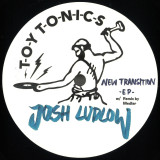
Here comes a first EP by Josh Ludlow for Toy Tonics. Mastermind of Make a Dance aka M.A.D. records. London’s best kept secret (or not so secret anymore) of new underground dance weapons that are played by everybody who counts in the scene.
Josh delivers a hot 4 -tracker that will move people on dance-floors worldwide. Combining 1990es filterhouse influences, 2000’s indie dance and some of the edgy contemporary funk moods that are lighting up clubs these days. The post - techno generation likes it funky and Josh delivers. Fitting perfectly with the vibe of Toy Tonics this EP will find a lot of friends. In fact Josh knows how things work.
Josh Ludlow has been steadily honing his craft over the past 15 years. Starting out releasing Drum & Bass under the ‘Squash!’ moniker in the late 2000’s whilst also playing drums in bands. The former gave way to live touring and it was only in 2020 when Josh resurfaced with some new electronic music.
The impetus for releasing this new material was when Josh Ludlow & Ben Lewis formed there beloved project ‘Make A Dance’ (which then went on to establish the imprint) M.A.D. Records during the pandemic.
Since then M.A.D have made a big impact on the underground scene, become regulars at places such as Fabric, Heidegluhen, Gottwood and gained DJ support of propel such as Laurent Garnier, Optimo, Palms Trax and Peggy Gou and across BBC Radio1 and regularly Cover show’s on NTS for Long Running Host’s Moxie and Apiento.
This is just the beginning.
out of Stock
Last delivered 6 months ago available to reorder, subject to availability
Seattle's Chastity Belt and Austin's Holy Wave split a dreamy 7-inch for Suicide Squeeze Records. Chastity Belt's offering, "That Guy," rings with the band's signature laid-back-yet-precise style. Jangly, intricate guitarwork plays off easy rhythms; an upbeat tranquility buoys wistful riffs. The lyrics are honest and introspective as Julia Shapiro admits to being "that kind of guy"_the type who just wants to feel alive, despite the pull of screentime, and the tendency to hold onto something until the life has been sucked out of it. "Maybe quitting is okay, but I don't like giving things away," she sings, backed by warm vocal harmonies. "I'd rather hold on for too long, until all the feeling's gone." For their side, Holy Wave contribute the lush and hypnotic slow burner "Time Crisis Too." Smears of warped synth over meticulous percussion and guitar form a dense tapestry of sound; melodic vibraphone perfects the cinematic nostalgia while the lyrics lament the too-hurried passage of time. Microdoses of experimentation tucked into the layers_seaside waves, swells of distortion, a disembodied second vocal_add intrigue and enhance the vibe.
Four years after "The Watchful Eye Of The Stars", Adrian Crowley returns with a new John Parish-produced album "Measure of Joy" to be released on the brand new label Valley of Eyes Records. This is album 10 for Crowley: an achievement number and maybe even a career high, but the music doesn"t bother with that. They are just great songs. Crowley is a songwriter and a poet. Here, also, he is in the company of John Parish, who is always more than a producer. "Measure of Joy" is a nocturnal album. Not in the usual commonplace sense of dark and moody though it can be. The night is present in the sounds that can only be noticed when most things rest. In the lost transmission and the ghost lips that talk on the phone over sleepy jazz.
The Ocelots are twin brothers Ashley and Brandon Watson from Wexford, now residing in Leipzig, Germany. Building on the folk-rock essence of their debut, the duo are excited to announce the release of their highly anticipated second album, Everything, When Said Slowly, set for February 2025. This album unveils a richer, more expansive sound, masterfully produced by long-time collaborators Cillian and Lorcan Byrne (Ailbhe Reddy, Susan O'Neill). The narrative woven throughout the album explores themes of Irish migration, the perception of time, love, and the simple joys of cycling. "The title: Everything, When Said Slowly" is a response from an old Irish man's perspective on people leaving our hometown of Wexford over the years past. He said it was a very long time since they left, but not much time if you said it fast. I found it wonderful and profound, but also deeply moving and fitting for the album's sentiment. How time flies or drags depending on what you're experiencing, especially when it's time in a place you said goodbye to."
Craig Clouse (Shit And Shine, Todd)
King Coffey (Butthole Surfers)
Nate Cross (Marriage, Water Damage)
Limited edition 300 only white vinyl LP housed in full colour outer sleeve with hype sticker, and polylined inner bag. Non-Returnable.
In the Spring of 2024, Texas trio USA/Mexico crossed the pond for only the second time, playing just three shows in three days, taking in Geneva, Paris and London. This album is the result.
A brutal, dirge fest recorded live in Paris.
No song titles, just slabs of hellish noise.
Co release with US label 12XU who will be handling the release over in North America (different pressing plant/different colour vinyl)
Latest recordings by Cluster Lizard – an interdisciplinary mixed media project by two Ukrainian artists Dmytro Fedorenko and Kateryna Zavoloka, based in Berlin.
In previous centuries, Ukrainian warriors invented an audacious macabre ritual called Herts, a courageous death dance. Before the battle, a few ruthless Cossacks would leave their ranks to perform a mocking dance right in front of their enemy lines, laughing and shouting insulting indecencies at them. Herts, a mixture of laughter and death, was a psychic attack to crumble and degrade the enemy soldiers' morale.