The Afro National Band Was Formed In Freetown, Sierra Leone In 1972. Their Inspirational Leader, Sulay Abu Bakarr Accompanied By His Wife Patricia And Ayo Roy Macauley Split From The Sabanoh Jazz Band To Form Their New Group. They Skillfully Merged Highlife And Jazz Sounds With A Deep Knowledge Of West African Sounds. Growing To Become One Of The Premiere Bands To Emerge From Sierra Leone They Not Only Defined The Sound Of The Country For A Generation But Also Crafted Some Of The Country's Most Popular And Memorable Songs (for Example Sonjo Which Is Included On This Collection).
The Band Toured Extensively Throughout Africa And Europe In The 70s (working With The Giant Of Sierra Leone Music Akie Deen In The Process). Towards The End Of The 70s The Band Departed Sierra Leone, Sulay And His Wife Moving To Maryland In The Us And Other Members Moving To London.
Our Collection Focuses On Possibly Not The Best Known Songs Of The Band But The Tracks Which Have The Rhythms To Move The Dance Floor. We Open With The Foot Tapping "jokenge" And Its Driving Shuffle Beat, Swirling Organ And Percussive Guitar Lines. "push Am Forward" Takes A Afro-psychadelic Turn With Its Hypnotic Rhythms And Driving Distorted Guitar. "mr Who You Be" Is A Cover Of The Fela Kuti Track, Doing It Fine Justice. "gowa" Highlights The Vocal Prowess Of The Band, As Dose The Ever Popular "sonjo" (the Version Featured Here Is A Rare Alternate Recording).
"money Palava" Opens Up Side Two With Its Infectious Highlife Beat And Hooky Vocals. "money Nor Bataya" Highlights The Bands First Use Of Synthesizers. "mother In Law" Sweeps Up Back To Free Town 1973 With Its Clever Vocal. "set My Soul On Fire" Is A Bonus Track Which Brings In The International Flavour Of The Band.
The Afro National Band Continues In Various Guises To This Day, With Sulay And Patricia Acting As The Proud And Talismanic Figures For A Whole Generation Of Sierra Leonean Music.
Cerca:p leone
Polish producer CYD joins the ever impressive E-Missions with six leftfield cuts in 'Disassemble Yourself' EP.
Launching in New York last year, the first three E-Missions releases came from co-founders P.Leone and Caiazzo. Since then the label has relocated to Berlin, developing its roster throughout 2018 with quality releases coming from Tred and Rush Plus that further cemented the label's growing reputation as one of the most interesting labels to emerge in recent years. Joining the roster now, CYD aka Karol Kazmierzewski has been making music under various aliases for the best part of two decades and has developed a versatile yet distinct sound as a result.
Swelling synths and grainy effects open the release in 'A Warmness You Can't Touch' before moving into the downtempo beats and scintillating melodies of 'Halcyon Dreams'. Up next, 'One Winged' ups the energy with crashing percussion, twisted effects and serene female vocals, making way for a layered composition complete with echoing atmospherics titled 'Hidden In The Forest'. With its dystopian aesthetic, 'Initiation' is the most ominous on the package, whilst 'Not So Shallow' incorporates chopped samples and quivering chords for a hypnotic conclusion.
- A1: La Tuna Club (S. Mantequilla' Font)
- A2: Azul Trompeta (S. Mantequilla' Font)
- A3: Whisky Jazz (S. Mantequilla' Font)
- A4: Jamboree (S. Mantequilla' Font)
- A5: Blue Note (S. Mantequilla' Font)
- A6: Full De Ases (S. Mantequilla' Font)
- B1: Moanin' (Timmons)
- B2: Not Problem (Marray)
- B3: Blues 3/4 (S. Mantequilla' Font)
- B4: Atmosfera (S. Mantequilla' Font)
- B5: Vat 69 (S. Mantequilla' Font)
- B6: Balada (S. Mantequilla' Font)
Salvador Font studied violin, clarinet, composition and harmony at the Conservatori Municipal de Barcelona, but very soon started to gain notoriety as a saxophonist in the rich jazz scene of 1940s Barcelona. Font would soon be playing tenor sax and clarinet in the Orquesta Gran Casino. He was in his early twenties and his hot swing technique was already praised through the citiy's scene, he would grow to be considered the best saxophonist in Spain by playing in many orchestras and combos, among them: José Puertas', Antonio Vilá's Virgina, Bonet de San Pedro's band, Pierre Michel, El Lirio Campestre, Los Marios, Luis Rovira y su orquesta, Orquesta brasileña Fon-Fon, Jaime Camino, Los Embajadores, Italo Leone's... With these and others, Font toured constantly, visiting many countries and even staying on some for long seasons: Mexico, Morocco, Switzerland, Egypt... Hungarian violinst of Turkish ancestry Kurt Dogan gave him the "Mantequilla" surname - he felt "Mantequilla" (which means "butter") fit Font's mellow yet swinging improvisation style.
Mantequilla y su conjunto
In the early sixties, "Mantequilla" had the chance to lead his own combo, Mantequilla y su conjunto, with which he was to record the three splendid EPs that are compiled on the present album. All these 7" have become elusive collector pieces in the record market, with sellers demanding from 200 to as much as 950 euros per copy.
In 1961 "Mantequilla" was at his best moment, his gigs at the Jamboree Jazz Cava had brought him back to the first line of Barcelona's jazzmen after he had been working abroad for a long time, and was approached by the Belter label to record an EP. On the sessions he was accompanied by Manolo Mercedes on trumpet, Pedro Ferré on piano, Rafael Lizandra on double bass and Rafael Verdura on Drums. The material chosen for the disc were four original compositions by Salvador Font which had a high West Coast flavour all over: "La Tuna Club", "Whisky Jazz" and "Jamboree" named after famous jazz clubs and "Azul Trompeta", dedicated to Manolo Mercedes.
In late 1962, after spending some time in Madrid working as members of the Italo Leone combo, "Mantequilla" and pianist Manuel Gas came back to Barcelona for the recording of the second "Mantequilla" EP, also on Belter. We find again Manolo Mercedes on trumpet, Pedro Ferré on piano and Rafael Lizandra on double bass, the drummer this time was José Farreras. Another news is that Manuel Gas also sat on piano and vibraphone. The songs chosen for the occasion were two tunes from the Art Blakey Jazz Messengers repertoire: Bobby Timmons' classic "Moanin'" and the Jacques Marray track "No Problem" from the soundtrack of the Les liaisons dangereuses film (mispelled "Not Problem" on the sleeve and label), plus the Salvador Font penned "Blue Note" and "Full de ases" - on "Full de ases" "Mantequilla" trades his sax for the violin, which he also mastered under high influence from Stephane Grapelli. The record was released on Belter in early 1963 and showed "Mantequilla" adding a certain aggressivity to his sound, in a soloist style which has been compared to that of tenor saxophonists Barney Wilen or Benny Golson.
1965 was the year of release of Mantequilla y su conjunto's third EP, now on the Discophon label. Mercedes and Farreras are again present in the recording sessions, joined by Ricardo Miralles on piano and Enrique Ponsa on double bass. Four original Font compositions make up the fantastic EP: "Blues 3/4", "Atmósfera", "Vat 69" and "Balada".
There would be a further EP on Belter, released in 1971 as Mantequilla Group it was a cash-in operation to take some redits of the ye-yé discothèque phenomenon, it gets quite afar in style from the jazz works of Mantequilla y su conjunto, so we just left it aside for the present edition.
"Mantequilla"'s career would continue, in 1968 he would settle in Majorca and form a swing band with Bonet de San Pedro and Manuel Bolao. He played in local orquestras and also with first class world acts like Gerry Mulligan, Tete Montoliu, Errol Gardner, a.o. He was even approached by Henry Mancini to play sax on The Pink Panther Theme in a gig Mancini did with his orchestra in Palma de Mallorca in 1975, He also joined his son Salvador Font (a demanded drummer himself who has played with Máquina!, Orquestra Mirasol, Música Urbana, Gary Burton Quartet, Georgie Fame, and many others) and his peers Carles Benavent, Emili Baleriola, Josep Mas 'Kitflus' and Jordi Bonell with whom he recorded his acclaimed "Mantequilla" album in 1987.
Now, for the first time ever, the legendary three ultra rare and imposible to find EPs by Mantequilla y su conjunto are compiled in a lavish vinyl LP with remastered sound, featuring liner notes and photos and a fantastic period inspired, three backflaped, front laminated sleeve. It is a stricly limited edition of only 500 copies and they are expected to sell out very soon, do not miss your chance of getting yours - it may be the last chance of chasing the Mantequilla sound on vinyl at a reasonable price!
l
Washington DC's Rush Plus drop four superb techno cuts entitled 'The Sweat EP' on P.Leone and Caiazzo's E-Missions imprint.
Having dropped three quality releases on their own eponymous label, Rush Plus continue to turn heads with their imaginative productions, gaining support from the upper echelons of techno with names like Rodhad, Ben Klock, DJ Spider, Ben Sims, Slam, Answer Code Request, DJ Deep and many more getting behind them. Following up a release on Ambivalent's Valence Records, they now join P.Leone and Caiazzo's rapidly rising E-Missions imprint.
'Megabust' initiates the package with twisted sci-fi synths and syncopated drums whilst rattling metallic elements operate throughout. Intricate hits of percussion are soon followed by rumbling bass in 'Rebirth' as the track gradually becomes more and more twisted using filtered effects and soaring pads, making way for the shuffling 'Sweat' with its menacing stabs and echoing voices. Finally, the package concludes with 'Slow Release' - a high-octane and ominous roller.
The sun does not move. The sun has never seen a shadow. - Leonardo da Vinci
Paul and Alessio of Possible Futures believe that some essential fractions in the history of music need to be transmitted in new ways to budding generations. As we seek to bring together a new educational system around contemporary music, we urge anyone with homologous intentions to get in touch.
Over the last 15 years, Possible Futures have been witnesses to the wildest fauna and flora the great nocturnal jungle has to o er.
Possible Futures source their inspiration from the many shades of color that co-exist between black and white on the great designer's palette.
It is through their open and eclectic selections that Possible Futures turn the dancefloor into spaces of self-discovery and musical trance-en-dance.
Possible Futures believe that the eternal act of dancing is one of the most active form of contemplation. Facing our own selves in the mirror of movement, we realize that we indeed are reflections of one another at all times. Compassion forms and in turns gives way to kindness and love.
For this third record, Argentinean expert producer Leonel returns with two long pieces of poetry. Releasing on June 15th, this third edition in the Possible Futures catalog bridge spring into summer in a most gracious manner.
We Cherish Harmony, PF
Nubian Quadrant EP sees Dutch producer Philou reaching for that sweet spot between Afro and Electro to produce three pulsing new tracks for Byrd Out. As Philou says, "All good music ultimately comes from Africa", and true to his African roots, the EP was part recorded in Malawi. With his tracks being picked up by the likes of Erol Alkan and Eats Everything, this EP is sure to provide the rhythmic backdrop to the summer. If you imagine the driving force of Fela Kuti matched with the acid sqwelch of Phuture, you're part of the way there. It's dancefloor sunshine on vinyl. Mastered by the legendary Noel Summerville, artwork by G.S-L Studio.
Biog: Philou Louzolo, a vibrant human being showcasing a diverse sound: born and raised in between the forests and the salty ocean breeze of Southern Zeeland (The Netherlands). Blessed with deeply rooted ties to the townships of Sierra Leone, the jungle surrounding the Congo river and Nigeria - where the birth of Fela Kuti's Afrobeat took place - his music sounds like Pan-African propaganda packed with sounds from urbanized cities, the Sahara and Africa's many jungles. He's been making waves with a Mixtape for the Feel My Bicep guys (it's #84), and getting airtime on BBC Radio 6 with Erol Alkan, and on BBC Radio 1 with Eats Everything, and playing Resident Advisor's GAIN stage at DGTL in Amsterdam in March, and playing at Morocco's boundary-pushing Altas Electronic festival later this year.
A multi-platform production that explores the overlap between the digital and the organic through field recordings of Inuit throat singing may sound, on surface level, to be something that is a rather niche. However, Zoe Mc Pherson's exploration of this world on String Figures is a deeply rhythmic, immersive and forward-thinking piece of electronic- leaning music that remains just as danceable as it does experimental.
The album is fundamentally one of duality, exploring the traditional and the contemporary, organic and electronic, audio and visual, history and the future. Rooted in this duality is also a core theme around string being one of the most ancient and playful art forms and the seemingly infinite possibilities it offers in terms of shapes, structures and figures lines up with this as a trans-global art project. One that over time will involve video art, choreography, 3D motion design, macro film, instrumental and electronic sound. Although for now is being presented through an AV performance, films and a record with Mc Pherson collaborating with director Alessandra Leone.!
Over the seven tracks (which are laid out as chapters) the record explores glitchy electronics, dub-tinged grooves, polyrhythms, and a huge array of instruments that takes in quiet blasts of atonal sax alongside wonky synths. This of course cross-pollinates with the throat singing and experimental field recordings to create an utterly inimitable sonic sphere. For Mc Pherson it's about mixing worlds, histories and timeframes and she uses a 1991 quote from Laurie Spiegel to hit home how she has elaborated upon this original thought of history and future overlapping. 'Folk music is considered anonymous common property in a culture and that's what a lot of computer music and other kinds of music data may end up becoming.' However, there's also a purer reason for the exploration of these worlds and colliding them together. 'Basically I thought that electronic music that is only digital is a bit boring and as I'm connected to jazz music for many reasons, I wanted it to sound organic: real instrumentation, field recordings.'
To progress towards a civilization which does not unconsciously perpetuate or aggravate inequality and poverty, we need to accept our many differences. For those who prefer uniformity or others who would rather avoid proximity, the celebration of diversity might sound ridiculous.
A certain measure of discomfort is required to reach compassion. But peace through diversity is no prophet's fantasy. It is no harder to imagine than the magical fact that we are alive right now.
The eternal act of dancing is one of the most active form of contemplation. Facing our own selves in the mirror of movement, we realize that we indeed are reflections of one another at all times. What will our own actions and thoughts feed around us
With over 30 years of combined dancefloor experience, Possible Futures have been witnesses to the wildest fauna and flora the great nocturnal jungle has to offer.
Sourcing their inspiration from the many shades of color that co-exist between black and white, it is through the open and eclectic selections of inspired and devoted luminaries that Possible Futures have found their manyfold sound: Frankie Knuckles, Larry Heard, Francois K, Carl Craig, Moritz von Oswald, DJ Harvey, Theo Parrish, Chez Damier, Ron Trent, DJ Deep or Moodymann, amongst so many others, have dedicated their lives to the flourishing of diversity on the dancefloor.
While the minds of Possible Futures float in the air with their bodies rotating behind the turntables, their feet are steadily rooted in reality, enabling their musical knowledge to unfold beyond the night. Through their own record label, Possible Futures share their therapeutic musical blends.
The first two cuts come from the grooves of Argentine old hand Leonel, a family friend of long date. 'Antares' and 'Bunda' drag their dusty trails across different genres, to be enjoyed at 45 rotations per minute. Curative properties guaranteed.
New York native Caiazzo releases 'The Devotion' on his and P.Leone's E-Missions imprint featuring three dusky techno tracks and a remix from White Material co-founder Young Male.
Much like P.Leone, Caiazzo's debut release (entitled 'The Dredge') landed on Work Them Records; Spencer Parker's label that's featured names such as Radio Slave, Rodhad, DJ Richard and Ryan Elliot. Launching E-Missions earlier this year, the pair continue their high quality output by following up two releases from P.Leone with three uncompromising original cuts from Caiazzo himself.
Rolling percussion drives '917 (Sportmixxx)' whilst intoxicating drones operate throughout, making way for 'Lifeform' with its layers of thick synthesised sounds that build on top of a relentless drum composition with subtle but effective transitions. 'Godbody' offers a stripped back approach to techno with an intricate percussive composition that allows a deep low-end and a hypnotic perc to take control.
Finally, White Material label boss Young Male provides his take on 'Godbody' where bass hits combine with haunting atmospheres and warped rhythms, closing the release with style.
Although this wasn't directed by but Sergio Leone, but by the less known Giulio Petroni, "Tepepa" is one of the best films in the spaghetti western genre, thanks to a perfect synopsis - even if as set in the 'abused' Mexican Revolution of the early '900 - to a trio of exceptional actors and, finally, to Ennio Morricone's soundtrack. The protagonists are in fact the immovable doctor John Steiner, the histrionic revolutionary Tomas Milian and the massive Colonel Orson Welles, a unique and practically unrepeatable combination, however directed in a 'leone-ish' way by Petroni, who often focuses on large panoramas and close-ups on the character's faces. As always, Morricone means quality: for "Tepepa" the Maestro creates a memorable soundtrack, dominated by strings and, curiously, by the acoustic guitar! Reissued several times on CD, this album has awaited for a vinyl reprint for 35 long years! When the film was premiered in the theatres (1969) just a the single 45rpm "Viva la Revolucion / In Mexico I would like" had been released, both songs are of course included here, the second of which is sung by Christy (stage name of Mary Cristina Brancucci) in a very felt and compelling way.
Muyei Power or Orchestre Muyei (muyei means 'our country') was one of the top dance bands of the1970s in Sierra Leone. Soundway Records' first collection of music from this West African country ('Muyei Power: Sierra Leone in 1970s USA') is an album of rock-infused, 'afro' music from a group that traveled the world throughout the mid 1970s. Fusing elements of electric Congolese and Nigerian music with fast, syncopated, uptempo modernised arrangements of traditional music, Muyei Power produced a series of unique single-only releases that have been unavailable for 35 years. The rare recordings featured here are a glimpse of a dynamic and powerful band at the very height of its powers.
Even though lyrically Orchestre Muyei focused on traditional themes and songs, the arrangements and formulation of the instrumental side of things still very much reflected the mixed nature of urban Sierra Leone music, exemplified by a small collection of bands that also included Afro National, Sabanoh 75 and Super Combo.
For the early part of 1970s the band toured extensively throughout Sierra Leone, Liberia and Côte d'Ivoire before making a handful of 45s in local TV and radio studios. The recordings featured here however come from a period of touring the college circuit in California during late 1975 and early 1976. Later that year, as they played the colleges of the east coast, they gave the tracks to the owner of the African Record Centre in Brooklyn, New York. He initially released two of them on his in-house Makossa Records label as 7-inch 45rpm singles in 1976. The tracks from 1975/6 were then not heard of again until 1979/80 when the African Record Centre released many of them on a series of Makossa Records 12's that sounded far superior than the records that had been released a few years earlier.
Orchestre Muyei Power finally split up in 1979 leaving no proper album releases and only a handful of recordings for us to enjoy all these years later.
Argentina's Unlock Recordings present the third and final instalment in their 'Collaborations' series featuring Deep Mariano, One + 1 & Camilo Gil, Funk E & Bodeler and Ronan Portela.With the previous 'Collaborations' featuring Barem, Jorge Savoretti, Franco Cinelli and Leonel Castillo, Unlock's established ntourage of producers are well known for their distinguishable stripped back approach to house and techno. At the helm of the imprint is Gonzalo Solimano - former 'Mr. X' at Red Bull Music Academy and stalwart within Argentina's thriving scene. Each vinyl release is accompanied by artwork designed by Argentinian graphic talent Gisela Faure.GET SLOW founder Deep Mariano begins the release with 'From Machines To Jungle', a percussive roller fuelled by a sultry bassline and hypnotising atmospherics. One + 1 and Camilo Gil then demonstrate intricate drums and looped pads as subtle vocal samples mutter in 'Bitch Call' before Funk E & Bodeler introduce glitchy nuances and trippy atmospherics in 'Playa Den Bolsa'. Tying things together, Buenos Aires' Ronan Portela incorporates a little more thud whilst soothing synths operate in 'Changing Minds'
- A1: Il Tempo Dello Spirito 2:25
- A2: Festività 2:00
- A3: Giubileo 1:50
- A4: Ave Maria 2:32
- A5: Gloria In Excelsis Deo 1:52
- A6: Pellegrinaggio 2:17
- A7: Salmo Gregoriano 2:00
- A8: Le Novizie 1:36
- A9: Il Peccato 2:25
- B1: Elevazione 1:50
- B2: Concilio 2:37
- B3: Black Allelujah 2:31
- B4: Funzione 2:14
- B5: Messa Solenne 3:05
- B6: Messa Solenne (Vers. Raccolta) 2:27
- B7: Presenza Di Dio 1:25
- B8: Deposizione 1:57
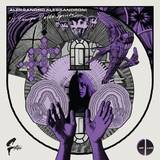
Amongst the first bunch of this new label releases, we couldn't miss a tribute to one of the greatest masters of libraries recordings, Alessandro Alessandroni, born in 1925. In his long career Alessandroni has published lots of soundtracks - and we mean lots of - and for this he's considered a real star of Italian music. As a friend, and close collaborator of Ennio Morricone, he's remembered as "the whistle man" for his fundamental contribution to the immortal scores of Sergio Leone's movies. His class allowed him to range between genres and atmospheres, from beat to avant-garde, from funky to abstract compositions, always reaching and keeping the highest quality. This is immediately clear in "Il Tempo Dello Spirito", originally published in 1971 for the meritorious Flirt label. It's an album full of sacred music, gospel and spiritual, yet capable of personal flashes that make it interesting, particular and unique. Simple church songs In some cases it may seems so - titles as Ave Maria, Gloria In Excelsis Deo, Pellegrinaggio or Messa Solenne do not leave much room for doubt and interpretations - but Alessandroni is able to astonish even in extreme cases like this.
Following the soothing 'Landscapes Of The Future' compilation, featuring selected ambient works by Argentina's nest (Jonas Kopp, Gustavo Lamas, Leonel Castillo...)
GREENER RECORDS is proud to present its rst split EP, with label boss ANDRES ZACCO and brother in soul FRANCO CINELLI.
GREENER RECORDS was founded in January 2008 by Andrés Zacco. The label is the channel through which Andres expresses his vision about techno music. It was also created for the purpose of bringing together his close family of fellow artists who share a similar style and approach to music: Lucas Mari, Franco Cinelli, Leonel Castillo or Lineas De Nazca.