This is one of the most obscure singles ever released in Venezuela in the 60s. It followed the global triumph of The Beatles that made the wave of beat groups get bigger and bigger and lots of new bands emerged, some of which would last while others would definitively go into oblivion, and a small number of them would leave at least one recording that today is considered a highly valuable collector's item. This is the case of The Pets. The band's only album, released in 1967, shows perfectly what the influences of the Venezuelan nueva ola (new wave) scene were at the time, including versions of The Doors, Beatles, Rolling Stones, Paul Revere & The Riders_ as well as the outstanding original 'El entierro de un hombre rico que murió de hambre', one of the finest garage tunes to emerge from Latin America that was also released as a 7" single. Their stunning take on The Doors' 'Hello, I Love You' takes the B side of this mega scarce 45. A garage DJs favorite! First time 45 reissue, audios remastered from the original master tapes.
Following his 2019 debut on the label with Amphibious / Lucid Dreams, Bristol-based producer Drone returns to System Music for another exploration into the darker corners of sonic frequencies and low end pressure.
Entitled Flooded EP, this is Drone’s biggest project to date and features 4 original, epic tracks accompanied by an incredible remix from SP:MC. The EP kicks off with 20k, an introduction laden with off-kilter, haunting eeriness and pulsating bass and percussion. Next up is Entropy, a truly ethereal track. Spatially beautiful yet isolating and cold. The title track, Flooded, is a monster of a track which intimidates and excites with eyes down and gun fingers raised. Rounding off the body of work is Fear which hits hard with crisp drum patterns and a throbbing bassline, almost evoking a sense of nostalgia, tying it in seamlessly with a typically electrifying remix from SP:MC
out of Stock
Last delivered 14 months ago available to reorder, subject to availability
Probably the finest work of Hector Rivera - Latin soul at it’s best. A non-stop
boogaloo party that never lets up with plenty of cha-cha and funky grooves.
• Two tracks taken from Hector Rivera’s debut album “At The Party with Hector Rivera”
originally released in 1966 on Barry Records.
• Remastered by Phil Kinrade and presented in a 7” Discobag sleeve.
• Part of the Demon Records Singles Club.
out of Stock
Last delivered 3 years ago available to reorder, subject to availability
"Different Talking", das sechste und bisher beste Album der vierköpfigen New Yorker Indie-Rock-Band Frankie Cosmos, scheint über Zeit und Raum hinweg zu existieren, so wie wir alle es irgendwie tun. Es ist eine Sammlung von Fragmenten und Erinnerungen, erinnerten Orten und neu interpretierten Gefühlen, die sich zu einem leuchtenden, summenden Ganzen zusammenfügen: eine robuste, weltgewandte Indie-Rock-Platte über das Altern und den Lauf der Zeit, die es dennoch schafft, sich hochaktuell zu fühlen. Die Sängerin, Gitarristin und Songschreiberin von Frankie Cosmos, Greta Kline, gilt seit langem als eine der gewandtesten und notwendigsten Autorinnen zeitgenössischer Indie-Musik, doch auf "Different Talking" werden ihre Texte etwas weicher, und der schräge Zynismus, der die letzten Alben prägte, weicht nun einer Anerkennung der großartigen und notwendigen Fehlbarkeit des menschlichen Gehirns und Herzens. "Different Talking" als Rückkehr zur alten Form oder zumindest zur üppigen Direktheit früherer Frankie Cosmos-Platten zu bezeichnen, wäre unhöflich, aber auch völlig falsch: Wie "Different Talking" deutlich macht, kann man nie mehr zu der Bequemlichkeit und dem Mut seiner frühen Zwanziger zurückkehren, aber diese Person lebt irgendwie immer in einem, egal wie sehr man sich verändert. Bei Different Talking geht es darum, diese Person zu finden, sie zu ehren und von ihr zu lernen. "Ein großer Teil des Albums handelt davon, erwachsen zu werden und herauszufinden, wie man sich selbst erkennt - wie zum Beispiel: 'Was ist ein Weitermachen?'", sagt Kline. "Wie kommen wir weiter, wenn wir süchtig nach einem Kreislauf sind, der uns in unserer Vergangenheit verfolgt? Das Schreiben von Songs ist nur ein Weg, um das zu überwinden". Kline ist seit ihren späten Teenagerjahren ein fester Bestandteil des amerikanischen Indie-Undergrounds. Ihre zahlreichen Bandcamp-Veröffentlichungen und ihr Debüt bei dem Indie-Label Zentropy aus dem Jahr 2014 führten dazu, dass sie als "Poet laureate of New York City DIY" bezeichnet wurde. Ein solches Etikett ist eine Menge für junge Schultern, aber es ist schwer zu leugnen, dass sie einen einzigartigen Einfluss auf die zeitgenössische Popmusik hatte. Wenn die Vorstellung, dass eine junge Frau in ihrem Schlafzimmer einen Synthesizer in die Hand nimmt, ein paar Songs ins Internet stellt und schnell zum Superstar wird, heute gang und gäbe ist, dann liegt das daran, dass Kline und ihre Kolleginnen das (weibliche) DIY-Genie normalisiert und verherrlicht haben, lange bevor sie in den Marketingbüros der Major-Labels an die Pinnwände geheftet wurden. Seitdem hat sich viel verändert: Nachdem Frankie Cosmos in den letzten zehn Jahren eine Handvoll verschiedener Permutationen durchlaufen hat, besteht die Band heute aus vier Mitgliedern: Greta Kline, Alex Bailey, Katie Von Schleicher und Hugo Stanley. Kline ist die einzige Konstante, aber Stanley, Bailey und Von Schleicher sind wichtige Mitstreiter, und es wäre falsch, die Namen "Greta Kline" und "Frankie Cosmos" synonym zu verwenden. Kline ist nach wie vor die primäre Songschreiberin, und die Musik auf "Different Talking" wurde von der Band als Ganzes arrangiert, aber dies ist das erste Album, das von der Band selbst aufgenommen und selbst produziert wurde. Nicht zufällig fühlt es sich wie eine reinere, destilliertere Aufnahme an. "Es fühlt sich an wie die beste Version von dem, was ich machen wollte, seit ich ein Teenager war", sagt Kline. "Obwohl dies in einem Wohnzimmer aufgenommen wurde, ist es so originalgetreu wie alles, was wir im Studio gemacht haben."
"Different Talking", das sechste und bisher beste Album der vierköpfigen New Yorker Indie-Rock-Band Frankie Cosmos, scheint über Zeit und Raum hinweg zu existieren, so wie wir alle es irgendwie tun. Es ist eine Sammlung von Fragmenten und Erinnerungen, erinnerten Orten und neu interpretierten Gefühlen, die sich zu einem leuchtenden, summenden Ganzen zusammenfügen: eine robuste, weltgewandte Indie-Rock-Platte über das Altern und den Lauf der Zeit, die es dennoch schafft, sich hochaktuell zu fühlen. Die Sängerin, Gitarristin und Songschreiberin von Frankie Cosmos, Greta Kline, gilt seit langem als eine der gewandtesten und notwendigsten Autorinnen zeitgenössischer Indie-Musik, doch auf "Different Talking" werden ihre Texte etwas weicher, und der schräge Zynismus, der die letzten Alben prägte, weicht nun einer Anerkennung der großartigen und notwendigen Fehlbarkeit des menschlichen Gehirns und Herzens. "Different Talking" als Rückkehr zur alten Form oder zumindest zur üppigen Direktheit früherer Frankie Cosmos-Platten zu bezeichnen, wäre unhöflich, aber auch völlig falsch: Wie "Different Talking" deutlich macht, kann man nie mehr zu der Bequemlichkeit und dem Mut seiner frühen Zwanziger zurückkehren, aber diese Person lebt irgendwie immer in einem, egal wie sehr man sich verändert. Bei Different Talking geht es darum, diese Person zu finden, sie zu ehren und von ihr zu lernen. "Ein großer Teil des Albums handelt davon, erwachsen zu werden und herauszufinden, wie man sich selbst erkennt - wie zum Beispiel: 'Was ist ein Weitermachen?'", sagt Kline. "Wie kommen wir weiter, wenn wir süchtig nach einem Kreislauf sind, der uns in unserer Vergangenheit verfolgt? Das Schreiben von Songs ist nur ein Weg, um das zu überwinden". Kline ist seit ihren späten Teenagerjahren ein fester Bestandteil des amerikanischen Indie-Undergrounds. Ihre zahlreichen Bandcamp-Veröffentlichungen und ihr Debüt bei dem Indie-Label Zentropy aus dem Jahr 2014 führten dazu, dass sie als "Poet laureate of New York City DIY" bezeichnet wurde. Ein solches Etikett ist eine Menge für junge Schultern, aber es ist schwer zu leugnen, dass sie einen einzigartigen Einfluss auf die zeitgenössische Popmusik hatte. Wenn die Vorstellung, dass eine junge Frau in ihrem Schlafzimmer einen Synthesizer in die Hand nimmt, ein paar Songs ins Internet stellt und schnell zum Superstar wird, heute gang und gäbe ist, dann liegt das daran, dass Kline und ihre Kolleginnen das (weibliche) DIY-Genie normalisiert und verherrlicht haben, lange bevor sie in den Marketingbüros der Major-Labels an die Pinnwände geheftet wurden. Seitdem hat sich viel verändert: Nachdem Frankie Cosmos in den letzten zehn Jahren eine Handvoll verschiedener Permutationen durchlaufen hat, besteht die Band heute aus vier Mitgliedern: Greta Kline, Alex Bailey, Katie Von Schleicher und Hugo Stanley. Kline ist die einzige Konstante, aber Stanley, Bailey und Von Schleicher sind wichtige Mitstreiter, und es wäre falsch, die Namen "Greta Kline" und "Frankie Cosmos" synonym zu verwenden. Kline ist nach wie vor die primäre Songschreiberin, und die Musik auf "Different Talking" wurde von der Band als Ganzes arrangiert, aber dies ist das erste Album, das von der Band selbst aufgenommen und selbst produziert wurde. Nicht zufällig fühlt es sich wie eine reinere, destilliertere Aufnahme an. "Es fühlt sich an wie die beste Version von dem, was ich machen wollte, seit ich ein Teenager war", sagt Kline. "Obwohl dies in einem Wohnzimmer aufgenommen wurde, ist es so originalgetreu wie alles, was wir im Studio gemacht haben."
Wewantsounds is delighted to reissue another Warda classic from the 70s, We Malo, originally recorded in 1975 by the legendary Arabic Diva who has sampled by Jay-Z and J Dilla. The album blends traditional Arabic music with 1970s grooves, showcasing Warda's distinct vocal style. She is accompanied by a full-sized orchestra, updating the classy traditional sound with modern instruments (electric guitar, organ). We Malo was penned by composer Baligh Hamdi. This reissue features newly remastered audio, original cassette artwork and a two-page insert with a new introduction by Mario Choueiry from the Institut du Monde Arabe
New Traditions is a collection of pipe music, electronic music, mouth music and folk music from five emerging and prominent Scottish artists.
It started in Sutherland with a recording of The Waters of Kylesku. “Do you learn any Gaelic at the school?” asks Hamish Henderson of Christine Stewart. “No,” she answers. “That’s a shame,” he responds, “Isn’t it?” she says. Then she sings. Her voice is of the peat itself, grown from the earth as the language was. It soars raptor-like above drenched ground and scoured pink rock.
Next, to Nancy Dorian, a linguistic missionary of sorts, who came from America to watch a language die. She charted the decline of Gaelic in a cluster of Sutherland villages from 1963 to 2020 when the terminal native speaker passed. Gaelic has origins in nature, with each letter of the alphabet named after a tree. It seems significant that the land of the north is now all-but devoid of forest.
Enter Alan Lomax, who travelled the world documenting indigenous music. Material from his archives feature on (fucking) Moby’s platinum selling Play. Despite the record’s worldwide commercial success we know very little of the music he essentially exploited.
Then musician Martyn Bennett, who built tracks around Lomax recordings of Scots and Gaelic voices, and did so with love that shared his blood with the cancer that killed him. His records both popularised and preserved obscure indigenous Scottish music.
This collection of tunes has similar intent: to consolidate ephemeral words in physical grooves - real as the rigs that still scar the earth - but also a desire to interpret. These versions have the greatest reverence for the originals at heart, but like the architecture of a great gallery, serve to protect and elevate.
Atlantic Records is thrilled to announce F1 The Album - the supercharged companion album to Apple Original Films and Warner Bros. Pictures’ high-octane, action-packed film F1, starring Brad Pitt. From the label that brought you the award-winning, blockbuster soundtracks Barbie The Album, Twisters: The Album, The Greatest Showman, Suicide Squad and more, F1 The Album is driven by brand new tracks from an exhilirating lineup of superstar artists.
out of Stock
Last delivered 14 months ago available to reorder, subject to availability
"Wind, Again" is Sary Moussa’s fourth studio album and second album on Other People. Based between France and Lebanon, Moussa returns with a riveting electro-acoustic album informed by his ever-changing relationships to space, listening, and resonance as well as his growing interest in the study of harmonics in electronic and electro-acoustic music.
Years in the making, “Wind, Again” approaches distinct musical worlds and languages by bringing together improvisations by musicians performing on Western and West Asian instruments such as the Hammond organ, clarinet, saz, and buzuk with electronic arrangements and textures. Rather than force a rapprochement of these musical worlds through the instruments, and keenly aware of the weighty sonic histories they carry, Moussa proposes another way through which they can exist together in contemporary electronic composition.
Composed of six tracks, each of which demonstrate an array of recording and processing techniques, the album generates moments of tension produced by the synthesis of textural, tonal, and harmonic encounters that Moussa calls “shadows”, which outline an impressionistic musical language, existing at the edge of familiarity. Such moments permeate tracks like “Everywhere at once” and “Violence” that open with the Hammond organ and the saz respectively and slowly reveal an expansive field of sounds that showcases each of the musicians’ characteristic performances and Moussa’s densely layered textures. It is a latent yet unrelenting tension through which the composer invokes rather than represents a collective experiential state, especially familiar to those who know his environment. In “Wind, Again” these shadows are articulations of sounds steeped in traditions they are never quite tethered to. Such articulations are implied and alluded to, they play within a musical reference without the latter explicitly existing in the recording, always teetering, never completely here nor there.
Sonically and musically, the album is fueled by the cultural, social, and personal realities that Moussa was brought up and lives in.
Both personal and musical ties with the musicians who feature on the album is central to Moussa’s practice. In the title track “I will never write a song about you”, musician Julia Sabra opens with rolled piano chords, followed by Paed Conca on clarinet and Abed Kobeissy on buzuk, before Moussa’s electronic processing pieces together, lifts, and sustains the melodic direction of the track that emerged from the musicians’ separate improvisations. For Moussa: “The initial connection between the three performances was made on a track that no longer existed, the original recording was both an obstacle and necessary step for the track we hear on the record. It’s as if we were all telling different stories and I pulled on the thread that held them together”. The track, and more generally the record, is tinged with a melancholy of things lost, though it never fully succumbs to it.
“Everything inside a circle”, Moussa’s most personal track and for which he provides the only vocals on the record, harkens back to a childhood memory of listening to music with his mother in a car: “There was a sound I was looking for — a memory of a sound and how I first heard it. This track is a hybrid of that memory and what I wanted to make of it”. The track relies heavily on generativesystems and perhaps embodies most the ambiguous quality of the record’s music in its refusal to be pinned down by one musical tradition or another.
“Wind, Again” is both familiar and alien, cold and warm; it pays homage to the mechanics, materials, and tactility of the instruments and converges acoustic and synthetic spaces. What anchors the sound of the album are the elements of a whole that cannot find its own idiosyncrasy and that is precisely why Moussa’s album is a tour de force.
out of Stock
Last delivered 15 months ago available to reorder, subject to availability
Macht euch bereit für das lang erwartete, brandneue Album "Psychotic Mutilation" von DEMENTED ARE GO! 39 Jahre nach ihrem Debutalbum und 13 Jahre nach "Welcome Back To Insanity Hall" veröffentlicht eine der legendärsten original Psychobilly-Acts um den charismatischen, außergewöhnlichen (manche würden sagen "frenzy") Bandleader Mark "Sparky" Philips ein Dutzend neue Songs, oder sind's nicht doch 13? Schon von jeher scheren sich DAG einen Dreck um den klassischen Psychobilly-Purismus: Ihr Sound ist immer noch eine einzigartige Mischung (Hellbilly) und kombiniert Elemente von Rockabilly, Punk, höllischem Rock'n'Roll mit mal Country-esken Einflüssen oder dunkelsten Blues, alles immer geprägt von Sparkys rauem, giftigem Gesang. Und als ganz besonderer Gast tritt Emanuela Hutter von The Hillbilly Moon Explosion wieder im Duett mit Sparky bei ,Cast A Lonesome Shadow" an. Eine wilde und schräge musikalische Reise durch menschliche Abgründe, Wahnsinn und dunkle Sehnsüchte. "Psychotic Mutilation" mit genau den Songs, die diese kranke Welt verdient. Simply a masterpiece!! Die Pressung der LP-Erstauflage dürfte ein jedes Sammlerherz höherschlagen lassen, denn neben 180g Vinyl, klassisch schwarz oder Multicolour, gibt es noch ein Plakat und am Ende der der endlos B-Seiten-Rille ein verstecktes Special zu finden, oder genauer gesagt: ganz in der Mitte der B-Seite....lasst euch überraschen. LP als 180g Vinyl, Glanz-Cover & A2 Poster, CD als Digipack. Diese Version hier ist klassisch schwarzes Vinyl!
Macht euch bereit für das lang erwartete, brandneue Album "Psychotic Mutilation" von DEMENTED ARE GO! 39 Jahre nach ihrem Debutalbum und 13 Jahre nach "Welcome Back To Insanity Hall" veröffentlicht eine der legendärsten original Psychobilly-Acts um den charismatischen, außergewöhnlichen (manche würden sagen "frenzy") Bandleader Mark "Sparky" Philips ein Dutzend neue Songs, oder sind's nicht doch 13? Schon von jeher scheren sich DAG einen Dreck um den klassischen Psychobilly-Purismus: Ihr Sound ist immer noch eine einzigartige Mischung (Hellbilly) und kombiniert Elemente von Rockabilly, Punk, höllischem Rock'n'Roll mit mal Country-esken Einflüssen oder dunkelsten Blues, alles immer geprägt von Sparkys rauem, giftigem Gesang. Und als ganz besonderer Gast tritt Emanuela Hutter von The Hillbilly Moon Explosion wieder im Duett mit Sparky bei ,Cast A Lonesome Shadow" an. Eine wilde und schräge musikalische Reise durch menschliche Abgründe, Wahnsinn und dunkle Sehnsüchte. "Psychotic Mutilation" mit genau den Songs, die diese kranke Welt verdient. Simply a masterpiece!! Die Pressung der LP-Erstauflage dürfte ein jedes Sammlerherz höherschlagen lassen, denn neben 180g Vinyl, klassisch schwarz oder Multicolour, gibt es noch ein Plakat und am Ende der der endlos B-Seiten-Rille ein verstecktes Special zu finden, oder genauer gesagt: ganz in der Mitte der B-Seite....lasst euch überraschen. LP als 180g Vinyl, Glanz-Cover & A2 Poster, CD als Digipack. Diese Version hier ist klassisch schwarzes Vinyl!
Macht euch bereit für das lang erwartete, brandneue Album "Psychotic Mutilation" von DEMENTED ARE GO! 39 Jahre nach ihrem Debutalbum und 13 Jahre nach "Welcome Back To Insanity Hall" veröffentlicht eine der legendärsten original Psychobilly-Acts um den charismatischen, außergewöhnlichen (manche würden sagen "frenzy") Bandleader Mark "Sparky" Philips ein Dutzend neue Songs, oder sind's nicht doch 13? Schon von jeher scheren sich DAG einen Dreck um den klassischen Psychobilly-Purismus: Ihr Sound ist immer noch eine einzigartige Mischung (Hellbilly) und kombiniert Elemente von Rockabilly, Punk, höllischem Rock'n'Roll mit mal Country-esken Einflüssen oder dunkelsten Blues, alles immer geprägt von Sparkys rauem, giftigem Gesang. Und als ganz besonderer Gast tritt Emanuela Hutter von The Hillbilly Moon Explosion wieder im Duett mit Sparky bei ,Cast A Lonesome Shadow" an. Eine wilde und schräge musikalische Reise durch menschliche Abgründe, Wahnsinn und dunkle Sehnsüchte. "Psychotic Mutilation" mit genau den Songs, die diese kranke Welt verdient. Simply a masterpiece!! Die Pressung der LP-Erstauflage dürfte ein jedes Sammlerherz höherschlagen lassen, denn neben 180g Vinyl, klassisch schwarz oder Multicolour, gibt es noch ein Plakat und am Ende der der endlos B-Seiten-Rille ein verstecktes Special zu finden, oder genauer gesagt: ganz in der Mitte der B-Seite....lasst euch überraschen. LP als 180g Vinyl, Glanz-Cover & A2 Poster, CD als Digipack. Diese Version hier ist klassisch schwarzes Vinyl!
Official vinyl reissue of Venom's 'Prime Evil', originally released in 1989, recorded after the departure of lead singer and bassist Cronos, replaced for these recordings by Tony 'The Demolition Man' Dolan.
Als die selbstveröffentlichte und mit dem Bandnamen betitelte "Domkraft" EP im Jahr 2015 erschien, war sie für viele das erste Lebenszeichen der Schweden. Dass die 250 Originalexemplare schnell ausverkauft waren, zeugt von der großen Anziehungskraft des psychedelischen Doom-Kosmos mit seinen Fuzz-Riffs, den DOMKRAFT von Anfang an zu schaffen begannen. Dieser ist im Verlauf der letzten zehn Jahre mit vier Alben, zwei EPs und einer Live-Platte beständig weiter gewachsen. Obwohl DOMKRAFT mit jeder neuen Veröffentlichung ihrem musikalischen Kurs treu geblieben sind, hat sich das nordische Trio gleichzeitig konstant weiterentwickelt. DOMKRAFT sind hörbar gereift und haben ihr Songwriting auf allen Ebenen verfeinert. Dies macht ihr aktuelles Album "Sonic Moons" (2023) mehr als deutlich. Ihr Markenzeichen, die wuchtigen Doom-Hymnen, stehen noch immer im Vordergrund, jedoch sind eine leichte Verschiebung in Richtung Heavy Rock sowie zahlreiche kleine Verbesserungen und neue Nuancen hinzugekommen. Als schönes Jubiläumsgeschenk für ihre treue Fangemeinde legen DOMKRAFT endlich ihre gesuchte Debüt-EP neu auf, die obendrein mit zwei neuen Songs liebevoll zu einem kompletten Album aufgewertet wurde.
The Soulful Trio, a band from Barcelona made up of three musicians with an international background (Spain, Holland, Argentina, USA, France) after playing their repertoire live in different venues for several months, with their songs well shot, have decided to record "Said & Done", in one of the best studios of Barcelona, nine original compositions of Soul-Jazz with derivations towards funk and blues.
Music reminiscent of the classics of the Hammond B3 organ trio such as Jimmy Smith, Jack McDuff, Lonnie Smith, Richard “Groove” Holmes or Big John Patton, reinventing the sound and bringing it closer to today with their vibrant fusion of genres full of energy.
Enjoy this instrumental Soul-Jazz album with these young veterans Homero Tolosa (drums), Pablo Sánchez (guitar) and Lucas Herrera Fernández (Hammond B3) in all their splendor with their respective instruments including the exciting & dynamic sounds of the Hammond B3, the great electric guitar groove of solos and huge variety of rhythms, playing a music that is always intense and made from their hearts.
The Last Question is the first album by electronics master Tim Clark. It collects his early works, when he was the Music Director of the Strasenburgh Planetarium in Rochester, N.Y. These tunes were the soundtrack to the planetarium’s adaptation of Isaac Asimov’s The Last Question short stoy. The idea was conceived by Von Del Chamberlain, director of teh Abrams Planetarium, and was taken to fruition in a joint venture bewtween the Abrams and Strasenbergh Planetariums, were the shows were premiered in 1972.
Clark composed and produced the works in the Strasenberg Planetarium’s own sound studio, equipped with three Ampex 440 recorders, a 4-channel mixing board with 18 inputs and a Moog Synthesizer. The album was released as a private pressing in 1973 and it has since become an elusive collector’s piece among electronic music afficionados. Comes with remastered sound and straight reproduction of the original artwork.
ULTRA RARE OUTER SPACE PRIVATE PRESS!
RIYL : Tonto’s Expanding Head Band, Iasos, Peter Davidson, Michael Stearns, Steve Roach...
The Last Question is the first album by electronics master Tim Clark. It collects his early works, when he was the Music Director of the Strasenburgh Planetarium in Rochester, N.Y. These tunes were the soundtrack to the planetarium’s adaptation of Isaac Asimov’s The Last Question short stoy. The idea was conceived by Von Del Chamberlain, director of teh Abrams Planetarium, and was taken to fruition in a joint venture bewtween the Abrams and Strasenbergh Planetariums, were the shows were premiered in 1972.
Clark composed and produced the works in the Strasenberg Planetarium’s own sound studio, equipped with three Ampex 440 recorders, a 4-channel mixing board with 18 inputs and a Moog Synthesizer. The album was released as a private pressing in 1973 and it has since become an elusive collector’s piece among electronic music afficionados. Comes with remastered sound and straight reproduction of the original artwork.
ULTRA RARE OUTER SPACE PRIVATE PRESS!
RIYL : Tonto’s Expanding Head Band, Iasos, Peter Davidson, Michael Stearns, Steve Roach...
16-track greatest hits compilation by the legendary rock group. The album features some of the band's most popular songs, including “Another Brick in the Wall (Part 2)”, “Time”, “Money”, “Comfortably Numb”, and many more. Features original artwork, art directed by the late Storm Thorgerson.
The splendid selection heard on The Sonics' "High Time” singles box is reason once again, should we need it, to celebrate this band of bands with seven double-whammy garage-rockin’ slabs of rock’n’roll nirvana.
• Reprising the hottest 45 singles sides that the band released in their 1964-1966 heyday, timeless classics such as ‘Psycho’, ‘Cinderella, ‘Boss Hoss’ and of course the Tacoma legends' debut 'The Witch,’ we also throw in some Sonics essentials that never originally appeared on 45, like 'Strychnine’ and ‘Have Love Will Travel.’
• Additionally, for the first time, items from both the group's Etiquette and Jerden eras appear together, the latter represented by the much-loved ‘Head On Backwards’, ‘Like No Other Man’, ‘High Time’ and, making its debut on vinyl, the rare Audio Recording version of 'Maintaining My Cool’.
• Assembled and annotated by Alec Palao, “High Time” is a handsome package that comes with a detailed booklet filled with rare images from the lens of inimitable Northwest photographer Jini Dellaccio. Long live The Sonics!
3rd limited edition vinyl EP in the series of EPs celebrating the 20th anniversary of the group Chinese Man and Chinese Man Records. For this 3rd opus, we take a look back at the various collaborations between Chinese Man and O.B.F over the years. Two versions of Salune included, plus two O.B.F.-Remixes of CM tracks. 20 years logo by Joan Oaï of Life. Available on limited transparent purple vinyl.
From a 4x5m room stacked with vinyl, ashtrays, magazine drafts, and semifunctional synths, Stompin n Risin rises again—reincarnated but not revised.
Originally a spontaneous ritual from the days of blunted dreaming and one-eyeopen ambition, this track first snuck into the world under a different name (Jacobite Fool, courtesy of those tasteful Belgians at International Feel) and went on to become a cult curio. Now, it’s back—rebuilt with the very same machines that once hummed beside the mattress, but still left to run wild like they used to.
The rest of the EP stays close to that spirit: music as lived experience, jammed with friends, lovers, and ex-boyfriends (literally). Lucy’s Electricity is a shimmering daydream, born from a jam with Daniele Labbate, recharged by a whirlwind wedding, and soundtracked by a bittersweet guitar line courtesy of the groom’s bride’s ex. A track for walking into churches—or out of time entirely. A personal favorite of the artist, and maybe the only funeral anthem with this much static joy.
One takes things inward—made with the Moog One for open-air yoga sessions during the era of no-dancing-but-still-dreaming. It’s a sun-dappled, slow-motion dancefloor where breath and bass align. Love 2 Love closes the circle: an unearthed jam with long-time collaborator and platonic supermodel Hanne Uekermann, revived from hard drive purgatory and infused with new life. A love song to the music, the moments, and the friendship behind it.
This record isn’t just a collection of tracks. It’s a lived-in photo album, a soft pulse through oceanic memory, a reminder that all sound comes from life, and maybe all life comes from sound.
out of Stock
Last delivered 14 months ago available to reorder, subject to availability
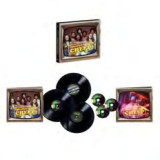
In den frühen 70er Jahren war Fernsehen ein wichtiges Mittel, um Musiker in den eigenen vier Wänden bekannt zu machen. Frank Zappa, der mit seiner Tournee-Lichtshow und seinem Bühnenaufbau voll ausgestattet war, versuchte, Videomaterial für seine eigene Fernsehproduktion aufzunehmen, um es den großen Sendern anzubieten. Genau wie bei den Dreharbeiten zu The Roxy Performances Monate zuvor gab es technische Probleme, die letztendlich dazu führten, dass das Filmmaterial beiseite gelegt wurde. 50 Jahre später, mit den Fortschritten bei den Bearbeitungswerkzeugen für die Nachbearbeitung, präsentieren wir ”Cheaper Than Cheep”. Dieses neue 2-stündige Konzertprogramm bietet klassische Auftritte der Mothers-Besetzung von 1974, direkt von den neu restaurierten Original-Audio- und Videoband-Mastern aus dem Archiv. Die offzielle Zappa-Veröffentlichung Nr. 130 erscheint in einer speziellen, limitierten Super Deluxe-Edition mit dem remasterten Konzertvideo und brandneuem Dolby Atmos, 5.1 Surround sowie Stereo-Mix auf einer Blu-ray, dem Stereo-Soundtrack auf 2 CDs und 3 LPs auf 180 Gramm schwarzem Vinyl, einem ausführlichen Booklet mit seltenen, bisher unveröffentlichten Bildern und Linernotes von Ruth Underwood und Joe Travers, alles in einem ausziehbaren Schuber verpackt. Weitere Formate sind eine komplette 2-CD + Blu-ray und ein eigenständiger Soundtrack auf 3 LPs auf 180 Gramm schwarzem Vinyl
In den frühen 70er Jahren war Fernsehen ein wichtiges Mittel, um Musiker in den eigenen vier Wänden bekannt zu machen. Frank Zappa, der mit seiner Tournee-Lichtshow und seinem Bühnenaufbau voll ausgestattet war, versuchte, Videomaterial für seine eigene Fernsehproduktion aufzunehmen, um es den großen Sendern anzubieten. Genau wie bei den Dreharbeiten zu The Roxy Performances Monate zuvor gab es technische Probleme, die letztendlich dazu führten, dass das Filmmaterial beiseite gelegt wurde. 50 Jahre später, mit den Fortschritten bei den Bearbeitungswerkzeugen für die Nachbearbeitung, präsentieren wir ”Cheaper Than Cheep”. Dieses neue 2-stündige Konzertprogramm bietet klassische Auftritte der Mothers-Besetzung von 1974, direkt von den neu restaurierten Original-Audio- und Videoband-Mastern aus dem Archiv. Die offzielle Zappa-Veröffentlichung Nr. 130 erscheint in einer speziellen, limitierten Super Deluxe-Edition mit dem remasterten Konzertvideo und brandneuem Dolby Atmos, 5.1 Surround sowie Stereo-Mix auf einer Blu-ray, dem Stereo-Soundtrack auf 2 CDs und 3 LPs auf 180 Gramm schwarzem Vinyl, einem ausführlichen Booklet mit seltenen, bisher unveröffentlichten Bildern und Linernotes von Ruth Underwood und Joe Travers, alles in einem ausziehbaren Schuber verpackt. Weitere Formate sind eine komplette 2-CD + Blu-ray und ein eigenständiger Soundtrack auf 3 LPs auf 180 Gramm schwarzem Vinyl
Parisian producer Bassam lands on somewhere… with a deep, hypnotic EP rooted in mental grooves. Three originals designed for intimate dancefloors, topped off with a remix from Voigtmann. No need to say more!
out of Stock
Last delivered 11 months ago available to reorder, subject to availability
Mixed by master Fred Frith and released in Japan in 1985, this is Mizutama Shobodan’s sophomore album. Another dangerous ride with the fearless Polka Dots Fire Brigade and a further step into the Japanese dreamland.
»Mizutama Shobodan were a force of nature – powerful and original and unapologetic. I saw them live before I heard the first record and was very impressed. I liked the way the group interacted, it was a very good atmosphere between everybody. I really liked the contrasting sounds and styles of Kamura and Tenko, two very different kinds of voices that really worked well together.« (Fred Frith)
Originally released in 1981, this is Mizutama Shobodan's legendary debut album. A wild theatrical mix of avant-post-punk material worked out by one of the most uncompromising women’s brigades ever. An outstanding document from ›another‹ Japan!
»Mizutama Shobodan were a force of nature – powerful and original and unapologetic. I saw them live before I heard the first record and was very impressed. I liked the way the group interacted, it was a very good atmosphere between everybody. I really liked the contrasting sounds and styles of Kamura and Tenko, two very different kinds of voices that really worked well together.« (Fred Frith)
Once again, Riba left everyone bewildered with a work that, on its own, gave early substance to what would eventually be known as roc català, of which Riba may well have been its most authentic representative. The album was recorded in the winter of 1975 with the help of the same group of musicians who had accompanied him a few months earlier at a concert at Zeleste to debut new songs: a mix of Valencian musicians from bands like Paranoia Dea and guitarist Eduardo Bort's group. "Electròccid àccid alquimístic xoc" marks a shift in Pau Riba's sound-now electrified and fully embracing rock with nods to Lou Reed, Ray Davies, and Kevin Ayers, but the core of "Electròccid_" is defined by Riba's own authorship. With lyrics that veer from poetic to absurdly ironic, Riba explores themes like the moon, the stars, death, love, women, the devil, and the bourgeoisie-fueling the originality that made him such a unique artist. It's striking how naturally and effortlessly Riba incorporated the Catalan language into the rock idiom-and vice versa. First vinyl reissue in over four decades!
This is an album made during a crucial period in South Africa’s history during which there was a palpable feeling of a slow turning towards the collapse of the apartheid state side by side with an increasingly well-organised culture of resistance through the formation of the United Democratic Front (UDF) and various affiliated bodies. However, as a result, there was increased pushback from the state security establishment, a turning to dirty tricks and the formation of hit squads whose members murdered and tortured many of our friends and created chaos throughout South Africa as well as neighbouring countries.
This album is situated in this political environment however it took advantage of the new do-it-yourself music technologies available at that time. Technologies that made it possible to make and release records without interference from traditional record company executives. Two musician friends of mine pooled their resources after their respective bands had broken up. Ivan Kadey (National Wake) and Lloyd Ross (Radio Rats) built an 8-track recording studio control room and fitted it out in a second hand caravan and called it Shifty. They parked it in a garage attached to the only house left in a demolished and derelict mining village near Soweto on the outskirts of Johannesburg.
All the work on this album was completed there, mainly after hours and mostly alone where I enjoyed an exhilarating freedom to develop a whole new set of musical skills and ideas, incorporating my love of a wide range of music I’d grown up with. Influences of 1970s progressive/kraut/and psychedelic rock combined with mbaqanga bass styles, early reggae/dub and Indian tabla rhythms. Stockhausen, early Zappa and Holgar Czukay were radio text and shredding influences, and Chris Cutler’s band Henry Cow & Art Bears helped me see a way to political expression. Mostly though was the exciting post-punk and no-wave music coming through to us from Europe and America: bands like This Heat, the Mekons, Raincoats, Sonic Youth and Pere Ubu were immensely important to me as was my reading from the period: J.M.Coetzee’s first 3 novels are strong influences on Free State Fence; the stark landscape, superstition, ritual, and sexual repression are in many of his settings. JG Ballard was a constant presence throughout that period, especially whilst living in such a surreal environment, surrounded by mine dumps, but mostly I think the whole French post-modern philosophical movement—Derrida, Foucault and of course, Baudrillard’s Simulacra and Simulation—set out a new sense of possibilities, possible ways to express oneself, ways to think, and ways to try and analyse the political intersection of public and private life. Most important at that time was the influence of sound recordings I had made and experiences garnered from working as a sound recordist on documentary films. These financed my work and later the studio and were consistent employment throughout the 1980s. Film work also enabled me to experience much of South Africa that was hidden from most. The track Independence Day is a good example; drawn from some time spent in the rural homeland of Venda. This then was the first full length Kalahari Surfers album, completed in summer of 1984 it was taken to EMI pressing plant but rejected by the cutting engineer as being ""political, pornographic and anti religious"". Chris Cutler at Recommended Records took up the challenge and released the album through his label. He wrote the original liner note
Named after a (US) West Coast grocery store chain, The Whitefronts started out in 1982 as a quartet of art and theater students attending UCSB. The band quickly mutated into a sextet. In 1984, they moved north to establish themselves as part of the SF DIY culture. Live shows usually consisted of open jams drawing from what the band was obsessing about at the time—free jazz, The Velvet Underground, Caribbean music, improv noise—as well as their own unheralded genres that popped in and out of existence like subatomic particles. Shows with local bands like Slovenly, Camper Van Beethoven, Caroliner Rainbow, Vomit Launch, Barnacle Choir and Barbara Manning provide some context as to their eccentric position within the indie scene of the era.
In 1985, the band released their sole LP, Roast Belief, on their own Bogden label. This was an ambitious attempt to document the various ideas that were happening live. Though practically unknown today, it’s an extraordinary record—a mid-80s classic serving up eclectic derangement on a par with contemporaries like the Butthole Surfers, Meat Puppets, Sun City Girls, Tuxedomoon and Eugene Chadbourne.
The Mamo Waves LP was compiled from recordings made between 1982-1987. As with Roast Belief LP, it’s a mind-melting jumble of the genres explored by Whitefronts throughout their existence. It was originally supposed to be released by Camper Van’s Pitch-A-Tent imprint, as a couple of WF members were touring with CBV in 1987, but the release fell through the cracks when CBV was airlifted to Virgin Records in 1988. Today, it’s clear that Mamo Waves belongs to the same 1980s Californian sub-underground aesthetic that nurtured mythical 80s bands like Departmentstore Santas and Prominent Disturbance. It’s a real WTF m.o. that still sounds like the future.
Atlantic Records is thrilled to announce F1 The Album - the supercharged companion album to Apple Original Films and Warner Bros. Pictures’ high-octane, action-packed film F1, starring Brad Pitt. From the label that brought you the award-winning, blockbuster soundtracks Barbie The Album, Twisters: The Album, The Greatest Showman, Suicide Squad and more, F1 The Album is driven by brand new tracks from an exhilirating lineup of superstar artists.
Unreleased electronic / jazz / madness from two titans of jazz and experimentation: JOHN SURMAN and KARIN KROG.
I could now write a load of blown up puffery about how amazing this is, but everyone does that, and a lot of the time it’s all a load of bollocks. But basically this was sent to me by Karin / John when I asked if they had anything hanging about that had not been released. This came through and blew my tiny mind. Like something from prime Annette Peacock “Pony” period. Here is what John Surman said…
John Surman writes:
Back in 2012/13 there had been some talk about a big futuristic open air urban dance/theatre production for about 80/100 actors/dancers with lasers and all kinds of lighting effects on different stages. I was invited to get involved and, together with Ben and Karin, we eventually decided to get to work on some ideas. I think that the original plan was that in performance there would be a mixture of live music and electronica.
Not altogether surprisingly, bearing in mind the complexity of the project, it never moved forward and developed into anything more than an interesting idea. It was probably over ambitious & I guess the funding never came through.
The only information I that I can find relating to the production refers to two silent movies made in 1927/1928 by the filmmaker Eugene Deslaw, entitled `La Marche Des Machines´ and `Les Nuits Électriques.These were clearly intended to act as inspiration for the project.
After months turned into years it became obvious that the project was going nowhere, and so the recorded music laid around gathering dust until Johnny Trunk asked Karin if she had any interesting music that he might be interested in releasing. One thing led to another and so, finally, Electric Element found a home!
For anyone interested in the equipment used this will have to be an approximation since the memory might be playing tricks. Karin was probably using a Yamaha Rex50 f/x unit, a Roland VT-3 Voice Transformer and an Oberheim Ring Modulator. I was playing Bass Clarinet and Contrabass Clarinet through various f/x units together with a Yamaha WX5 wind synth. All the instruments and voice were also processed through Ben´s equipment. After writing this I asked Ben for his recollections and he came up with the following:
John, Karin and I created this music in 2 or 3 days in the winter of 2013 at their studio in Oslo, Norway. I followed up with another 2 or 3 days of mixing, editing and post-processing . We kept a collaborative, improvisational and free-form approach to the sessions. I grew up immersed in music such as Cloudline Blue, the 1979 duo album of Krog/Surman, and this felt like a similar approach. I have mixed sound for many of their live duo concerts and I would use effects and electronics as an
accompaniment and counterpoint to the performed music. The relation of organic and artificial sound sources in music has always fascinated. In this case, I used some contemporary digital signal processing to introduce my own aesthetic into the conversation, in particular using granular synthesis to recombine small 'clouds' of sound into alternate forms. Some of the software tools I used included Ableton Live, Max/MSP and Reaktor.
out of Stock
Last delivered 14 months ago available to reorder, subject to availability
The Godfather of Hardcore, Marc Acardipane, needs no introduction. His outstanding releases over the past 30 years speak for themselves. He has been instrumental in helping to create electronic music history, with countless well-known productions which have been unsurpassed by any other artist of this calibre. His timeless masterpieces have been and always will be heard at hardcore raves spanning the circumference of the Planet. With "9 Is A Classic", "Slaves To The Rave", "Pitch-Hiker", "Stereo Murder" and "We Have Arrived", just to name a few, he clearly proves who's the boss. "The Most Famous Unknown" is a well compiled collection of Marc's music, which showcases a mere portion of what he has composed and produced since the early nineties! The vinyl and digital selection of "The Most Famous Unknown" features remixes by Body Sushi a.k.a. VTSS & Randomer, Dasha Rush, Gabber Eleganza feat. Delirio, Jasss, Kilbourne, Minimum Syndicat, Nina Kraviz, Perc, Solid Blake, Stranger, Umwelt and VTSS, which all deliver excellent interpretations of tracks they have chosen to revamp. All original tracks have been re-mastered to the highest possible standard of quality.
out of Stock
Last delivered 5 months ago available to reorder, subject to availability
The sixth studio album by the British rock group, originally released in 1971. Produced between touring commitments and widely regarded as a notable progression from their previous work, the band devised a series of novel recording and writing experiments, which also inspired the album's signature track “Echoes”.
out of Stock
Last delivered 3 months ago available to reorder, subject to availability
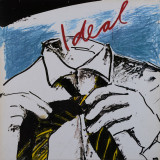
Am 27. Juni erscheint das selbstbetitelte Ideal-Debütalbum von 1980 in einer neu abgemischten Version. Für den „2025 Mix“ wurden die originalen Mehrspurbänder digitalisiert und von Moritz Enders (u.a. Kraftklub, Casper) und Annette Humpe neu abgemischt. Das Ergebnis klingt verblüffend direkt, greifbar und gegenwärtig – als wäre die Berliner Band gerade erst ins Studio gestiegen.
Der Clou: Für den neuen Mix kam ausschließlich Technik zum Einsatz, die bereits 1980 zur Verfügung stand. Der Sound ist also nicht einfach nur neu – sondern neu gedacht im Geist der alten Zeit. „Ideal (2025 Mix)“ ist nicht bloß ein nostalgischer Rückblick, sondern ein eindrucksvolles Update: Songs wie „Berlin“, „Blaue Augen“ oder „Hundsgemein“ wirken heute so kompromisslos, radikal und relevant wie eh und je.
Civilistjävel! x Mayssa Jallad’s ‘Marjaa: The Battle of the Hotels (Versions)’ is a radical response to Mayssa Jallad’s 2023 original LP, a lyrical account of epochal events in Beirut at the dawn of Lebanon's civil war. ‘…(Versions)’ sees Civilistjävel! (aka Swedish producer Tomas Bodén) apply a stripped, dub methodology to Mayssa's rich stems, refracting the Arabic source through the hazy prism of Northern European electronica. Retaining ‘Marjaa…’s deep spatial framing and vaporous, shifting nature, traces are lifted and set down in a new landscape: a ghost of a ghost. Informed by Tomas' singular strand of ambient, minimalist, dub techno, ‘… (Versions)’ recalls the reductive, shimmering pulse of pioneering Berlin-based practitioners Basic Channel/Chain Reaction, but with the parameters stretched into the ether. Where versions typically focus on a rhythm, here the anchor is the tone and texture of Mayssa’s voice, around which a new world has been constructed. Disembodied and liminal, it conjures an eerie panorama that feels like a postscript to the original, further emphasizing the geopolitical events that have had such devastating effect in Mayssa’s homeland of Lebanon since that record’s release. ‘Marjaa…’ (tr. ‘reference’) combined Mayssa Jallad’s two main vocations: music and urban research/architectural history. The album was co-written with Fadi Tabbal and based on Mayssa's Historic Preservation master's thesis (‘Beirut’s Civil War Hotel District: Preserving the World’s First High-Rise Urban Battlefield’). The thesis examined a 5-month conflict that took place within Beirut's skyscraper-laden luxury hotel district of Minet El Husn near the start of the Lebanese Civil War. Addressing a post-war generation who have never been taught this difficult history, ‘Marjaa…’ was an attempt to process trauma, and “a call to protest for the renewal, rather than the recycling of the political class that once destroyed the country and holds us, to this day, hostage of its violence.” Often perceived as a mysterious, shadowy presence, Civilistjävel! has come increasingly to the fore in recent years through a consistently dazzling stream of records, released both anonymously and via Fergus Jones’ FELT imprint, often appearing with scant information and tracks for the most part untitled. Having featured tracks from ‘Marjaa…’ on mixes, and included the album in his picks of 2023, in early 2024 Tomas asked Mayssa to provide vocals for a track on his album ‘Brödföda’. Mayssa remembers, “Tomas asked me to choose one of the tracks he was working on. I was in Boston at the time, so I took a walk and chose a track. I wrote the lyrics at the public park, wondering if I was the only one around that was losing sleep over the genocide in Palestine and the war in South Lebanon. I went back to the apartment and recorded the vocals on my phone, while listening to the track on headphones. Tomas reworked it with the voice and sent it back. I liked it immediately.” Despite the geographical distance from Beirut to Uppsala, Sweden, where Tomas resides, Mayssa’s contribution sounds very much at home in Civilistjävel!’s atmospheric, contemplative sound-world. Tomas’ request was reciprocated by Mayssa soon after, resulting in the spectral, glassy ambience of ‘Etel, Kharita (Version)’. This was followed by an invitation to work on more tracks, which Tomas immediately embraced, intensively jamming out versions live to two-track tape in downtime between travelling. If not entirely dissimilar to his regular working practice, the immediacy of it was unusual. Much was improvised live with just a keyboard (not tethered to a grid), and a restricted set-up that largely forbade later edits - only the rhythm tracks are programmed. A sharp conceptual thinker and composer, Tomas takes creative liberties with Mayssa’s songs in a way that is deeply felt and sympathetically aligned, whilst unashamedly outside of the original context of the record. The voice is leaned into as an instrument, without the clear, specific details of language, and this axis provides an uncertain, amorphous footing - structure is often suggested or hinted at, before disappearing or collapsing into fog, and folding back into the message within the song. A somewhat unprecedented source for an album of versions, even those familiar with ‘Marjaa: The Battle of the Hotels’ may at points struggle to hear the songs these versions are rebuilt from, despite the vocal narratives remaining virtually intact. The light has shifted; eroded buildings are foregrounded; fragments of memories appear in chiaroscuro. Signs and signifiers have been replaced. Shorn of the original's warm guitar, ‘Baynana (Version)’ feels like an ominous visitation, the sun no longer visible. ‘Holiday Inn (March 21 to 29) (Version)’ is a molten, clattering invocation. The beat-less tracks nod towards the cold, otherworldly sound-scaping of late '90s isolationism. More propulsive and embodied, ‘Holiday Inn (January to March) (Version)’ and ‘Kharita (Dub)’ are strobing, iridescent techno - lithe, shifting and mutating with almost implausible finesse. A stunning addition to Civilistjävel!’s growing catalogue, ‘…(Versions)’ is a luminous counterpoint to ‘Marjaa…’, and a welcome reminder of how incredible that record remains.
out of Stock
Last delivered 15 months ago available to reorder, subject to availability
Snorkel Records proudly presents the third release in its 12'' single series: Samme Gamle Ulla by Olefonken. 'Ulla' is the Norwegian word for wool, and this record is woven from studio dust and soft synths. Wrap yourself in it before it unravels!
out of Stock
Last delivered 14 months ago available to reorder, subject to availability
The Advent a.k.a. Cisco Ferreira has a firm footing in quality techno DJs' bags - as well as in dance music history - and today we announce a special treat for the heads: Paraiso is releasing three never before heard tracks, rescued from a DAT lost sometime in the 90s. Titled 'Passado Distante' - you probably guessed it, it means Distant Past - we're talking about a trio of no-frills yet creative and highly energetic technoid ammunition. Classics that never were but now are given a new chance to grace our dancefloors. Opening this record, 'Driven' gifts our ears with syncopated claps and percussion while relentless rushes of hi hats and snares create a steady rhythmic core, creating a funky as hell piece that has the original spirit of techno inscribed in it. Things remain fast-paced and to the bone in the following track 'Circulate', a rolling bassline supporting snare rolls and a cheeky, minimalistic bleep reminiscent of sci-fi worlds. Dense yet concise, like techno bangers ought to. Closing this triad is the irresistibly rhythmic 'Tres Trax', a geeky but powerful closing act that shows Cisco's early wide-eyed aura, blending complex percussion and a bassline so soaked in swing it will have your hips drawing rave sigils as they naturally learn the groove. Dubby details add mystery to this incredibly imaginative Detroit-tinged wonky banger. Cisco did it again.
out of Stock
Last delivered 3 months ago available to reorder, subject to availability
One of the biggest tunes of 2011 gets a reload on Hotflush with a brand new remix from house legend Mr. G.
Hotflush label boss Scuba was a dubstep exile in Berlin running parties at Berghain in 2011, following the release of his landmark album Triangulation the previous year. The SCB project had been launched as a platform for his productions outside of the 140 realm, anticipating a stylistic move that would make a serious impact on the dance scene at large.
‘Loss’ was released on Aus Music that March, proceeded to destroy dancefloors across the globe, and ended the year at number 7 in RA’s ‘Top Tracks of 2011’. In 2025, it retains the unique combination of minimal elegance and trance power that gave it such impact all those years ago.
UK house mastermind Mr. G steps up with a trademark remix - uncompromising in groove and structure, guaranteed to do the business on the floor.
And to round off the package, a previously unreleased version of the original b-side, FutureUnknown is included. The ‘Voxattack’ made many appearances in the Scuba DJ set at the time and qualifies for ‘sought-after lost dub’ status.
out of Stock
Last delivered 8 months ago available to reorder, subject to availability
A. Noelita - Sambalanca
Quirky, upbeat samba, originally released in 1973 on Copacabana. Organ and horn lines bubble under the drum groove and percussion.
Taken from her only LP 'Quando Me Sinto Só' released in 1975. Sought after and expensive in it's original form.
AA. Doris Monteiro - E Isso Ai
The instantly recognisable, original version of the classic and much covered 'E Isso Ai'. Beautiful laid back samba/MPB, drenched in horns and percussion.
Taken from her 1971 Odeon LP.
This is the second time the hugely prolific Doris Monteiro has featured in our Brazil 45's series; previously with 'Se Vocé Quiser Mas Sem Bronquear' on number 9.
Wonderwheel is happy to present the very first pressing of Nickodemus' longtime classic "Sun People", pressed on translucent yellow vinyl. Originally released in 2009 by Thievery Corporation's Eighteenth Street Lounge label, "Sun People" was built with songs made for people who love the sun, sunshine and brighter days to come. Appropriate, of course, as Nickodemus has made his mark soundtracking NYC summers with his massively popular Turntables On The Hudson live events as well as with 20 consecutive years touring the World. The songs were inspired by various people Nickodemus met and places he's been, along with his collective feelings of optimism. It's these positive sonic vibes from all over the globe that Nickodemus matches with collaborators hailing from destinations including Guinea, Colombia, Puerto Rico, Brazil, Romania, India, Turkey, United Kingdom and New York City. These are the Sun People.As songs like "N'dini" "Sun Children" & "The Love Feeling" continue to kept parties dancing until today, "Calle Sol" & "Gira Do Sol" are being discovered by new fans & playlists today. As Jason Bentley, former Music Director at KCRW once said, "Sun People reflects a rich musicality, while infectious rhythms keep the party live. Nickodemus truly knows
no borders on this global dancefloor."Wonderwheel recordings is happy to keep the fire burning with this special limited color vinyl reissue out on June 21st, 2024.
a 01: Sun People (Intro) feat. Ismael Kouyaté
b 02: Sun Children (Original Mix) [feat. The Real Live Show]
out of Stock
Last delivered 15 months ago available to reorder, subject to availability