Long, long overdue reissue of this gem from the depths of The Skaters dreamweaving dimension, released as a limited tape through Spencer Clark's Pacific City imprint back in 2008. Comprising a period of extreme and vital activity for both Clark as Monopoly Child Star Searchers and Black Joker and his kindred spirit James Ferraro under his own name - 'Marble Surf' or 'Discovery' - and a myriad of identities like Liquid Metal or Edward Flex, this split finds these intrepid explorers on each side of a scrying mirror.
Conjuring the Angel Snake entity as a vessel for unlocking the unconscious, Ferraro takes up the A-side with hypnotic wooden percussion sustaining queasy tape processed keyboard lines that intertwine amidst a growing haze of hiss. About halfway through the digression an announcer boombox voice cuts up the scenery for a serpentine dance around the discarded remnants of civilisations past and future. Clark's Monopoly Child rides a beaming synth and muffled percussion accents on his trademarked keyboard thrills, all ascending and descending runs brimming on the horizon, not quite here, not quite out of reach, fading out to a galloping murk smeared by hallucinatory flute-like sounds and portamento accents that float in harmonic suspension.
Truly visionary and arresting stuff from these true purveyors of the netherworld, due to be rediscovered in these times of poor half-reassessments of the given past. It was never a dream, it was always a dream.
out of Stock
Last delivered 12 months ago available to reorder, subject to availability
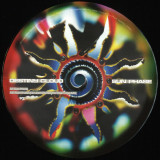
"Kindred spirits and loyal soldiers on the frontlines of the dub war Detroit's 2Lanes and Los Angeles' Cromie link up to present to the world, Destiny Cloud. With a project name inspired by a mystical vacant storefront in Cromie's neighborhood of Altadena (still standing after the fires, bless), the guys formed like a storm after being intro'd by a notorious LA promoter and hotboy producer matchmaker. Funnily enough, the first session was foiled by a missing cable, so it wasn't until the sexy summer of 2023 that the cloud seeds that went on to become Sun Phase/Moon Phase were planted. From the jump, their vision was lucid and their objective collective: lock in at the stu(s) to make the most jiggy, psychedelic, tripped out club shit they could muster. Fast forward to today, Destiny Cloud is proud to bring you the latest missive on 2Lanes' Auto Shop imprint.
On the A side, Sun Phase sets it off with searing stabs from the hands of session killer Ji Hoon on a heavenly Jupiter-8 (sorry not sorry, the real thing does sound better) before a bassline straight off the Adriatic's Argonaughty comes in to funk up the flow over a bed swung hi-hats and drum circle conga lines the Wickedest west coast house heads can appreciate (no hippy shit, but we ARE on Hipp-E's dick). A keep-it-simple-stupid *muah' organ line plays nice with a gang of embellishments to take this one through its duration (Joey pressed record and said "ooh-wah" into the vocoder; no lie, I was there). With his Toxic Love remix, NYC upstart DJ John Brooklyn injects the tune with the highest grade octane to up the revs. The aforementioned organ becomes a timeless trance lead, and new pipes are inserted reminding us all that house music is forever.
Day turns to night on the B Side with Moon Phase, where booming kicks let you know off the rip that this is some real deal late night trunk funk. We're talking dualities here y'all; Cromie's deep-as-the-Pacific bassline meets Joey's frozen-lake-cold Detroit stabs as the drums speak in tongues with those on the other side of the slab. Reverb ghosts and rhythmic acid have this one veering more psychedelic without losing the jiggy factor, while diving proggy synths will have the Global Underground saying, "yea this is our shit, for real." With a run time that allows for maximum fun time, the ambient outro gives you a kiss on the forehead to put that ass to sleep. The iconic DJ Miss Parker takes the wheel on the remix, taking this one straight down the Tunnel with new-school/true-school Tenaglia-isms that wouldn't sound out of place in 2000, 2005 or 2025.
Like all the work we do, this one's a team effort. Salar Ansari put's his deft touch on the mixdowns and Jack Anderson blesses the center of both sides of the disc. Out mid-May, just in time for when things start heating up
out of Stock
Last delivered 16 months ago available to reorder, subject to availability
Beyond the Bridge proudly presents the latest EP from Dutch sonic architect Spekki Webu, titled "Neural Network," set to release on April 15, 2025. As the founder of Mirror Zone, Webu masterfully conjures a spectral world where time collapses and frequencies bend, inviting listeners on a mind-expanding journey through sound. His ritualistic compositions transcend conventional boundaries, merging past, present, and future into a singular, fluid moment. The eight-track EP delves into an abstract landscape of high-intensity frequencies and textural flux. Webu's sonic manipulations challenge linearity, evoking cyclical movements that oscillate between chaos and order. Each track serves as a kinetic force, pulsating with raw energy and enveloping the listener in immersive sonic architecture. The release also features two transformative remixes from Beyond the Bridge label head K.O.P. 32 and acclaimed producer Feral, each expanding the boundaries of interpretation into new dimensions. credits releases April 15, 2025 All tracks written, produced, and mixed by Spekki Webu at Into The Unknown in The Hague. Additional production by Feral and K.O.P. 32. Mastering by K.O.P. 32 at Pacific Sound Network in Seoul. Visuals by Anton Braun. ? Beyond the Bridge 2025.
out of Stock
Last delivered 13 months ago available to reorder, subject to availability
Orchid Mantis, by Michelle Helene Mackenzie and Stefan Maier, is a work that draws its inspiration from the history of the Sanzhi Pod City, in northern Taiwan. Sanzhi Pod City was built from 1978 onwards, made up of buildings constructed from assemblages of `pods' inspired by the futuro houses of Finnish architect Matti Suuronen. The project was abandoned in 1980, following a number of accidents during construction and persistent rumours that the site was haunted. However, this wasteland of a city has allowed insects to proliferate, in particular five species of orchid mantis. It is this strange environment, made up of utopian buildings, proliferating insects and vegetation reclaiming the site, that serves as the imaginary space for Michelle Helene Mackenzie and Stefan Maier's music, a music of carefully designed pace and progression, drawing, through resonance and stridulation, subtle sonic materials that guide and accompany us into multiple worlds with admirable ease and grace. Breach, by American composer Olivia Block, engages in a dialogue between field recordings and synthesised sounds, creating a vibrant plea for wild spaces that face an ever-growing threat to their survival from human activities. The work is based on recordings collected in the San Ignacio lagoon in the Mexican part of Southern California. This lagoon is known as a breeding ground for eastern Pacific grey whales. With the help of precise electronics, the music unfolds like a drift, depicting the subjective soundscape of whales caught up in the noise of the Anthropocene. The composer uses otoacoustic emissions in particular, representing the sound saturation caused by humans in the habitat of these large marine mammals. Going beyond a merely descriptive dimension, Olivia Block manages to transcend her subject to offer a fascinating musical form that engages the listener in a constantly renewed way.
Dateline: April 10, 1970. Setting: The storied Fillmore West in San Francisco, CA. Context: Miles Davis, three days removed from his first session for Jack Johnson and, with newly recruited soprano saxophonist Steve Grossman in tow, opening shows for countercultural heroes the Grateful Dead on the latter’s home turf. Result: The initial rumblings of a thrilling era in which Davis and his cohorts would again upend jazz and popular conceptions of the genre with music steeped in groove, improvisation, and hang-on-for-your-life adventurousness. All captured on Black Beauty: Miles Davis at Fillmore West.
Mastered at MoFi’s California studio, pressed at Fidelity Record Pressing in California, and housed in a Stoughton gatefold jacket, Mobile Fidelity's numbered-edition 180g 33RPM 2LP set helps bring what went down that spring evening in Bill Graham’s venue to your listening room with exceptional clarity, balance, and presence. Originally only released in Japan in 1973 and unavailable in the United States until the late ‘90s on compact disc, this marks the first time Black Beauty has been issued on domestic vinyl. The wait is worth it.
Benefitting from quiet surfaces and excellent definition, these LPs present the band’s livewire energy and torrential storm of notes with captivating dynamics, pacing, and fullness. At its core, this audiophile reissue takes you into the walls of sound erected by a band learning on-the-fly the sheer power, will, and breadth of the electric jazz Davis was orchestrating and realizing, on the spot, would reach rock audiences that until that point had only a faint awareness of his mad-scientist experimentation. The sense of release and reach conveyed by these carefully restored records make it clear the veteran bandleader was in the process of a permanent shift that he’d chase for the next five years.
Given Davis was only a few months away from releasing the pioneering double album Bitches Brew, it shouldn’t come as a surprise that much of the fare here adheres to similar explorative approaches. Turbulent rhythms, provocative trumpet passages, and rich, saturated tonal colors that seemingly splash against a blank canvas take precedence over any traditional attempts at organization and melody. Davis and Co. intentionally play everything on a line with the bandleader signaling changes with his horn via coded phrases. The group speaks a common language — with each member having gone to achieve iconic status for their career contributions and technical prowess.
In the company of Grossman, Chick Corea (piano), Dave Holland (bass), Jack DeJohnette (drums), and Airto Moreira (percussion), Davis constructs themes around “Directions,” “Miles Runs the Voodoo Down,” “It’s About That Time,” the title track to Bitches Brew, and more from his then most-recent studio works and the in-progress Jack Johnson. His farewell to the popular standards that for nearly two decades remained a part of his repertoire arrive via a brief dalliance with “I Fall in Love Too Easily,” a shortened albeit aggressive “Masqualero,” and the “Theme” finale of “Spanish Key.” Initially, Black Beauty lacked specific track listings due to Davis’ increasing frustration with listeners over-analyzing his music.
In retrospect, it’s difficult to blame anyone for wanting to view what’s on display here with the aural equivalent of a magnifying glass. Leaning in rock directions, yet maintaining an ear for spaciousness and solos, Black Beauty survives as a snapshot of a thrilling moment amid a transitory period in which evolution came fast and furious. Just two months later, Davis would add another instrumentalist to the lineup in the form of organist Keith Jarrett, and the perpetually restless visionary would blast off to a more atmospheric and arguably more chaotic universe.
Consider, then, this live document a bridge to that galaxy and a breathtaking example of the possibilities of jazz itself.
For a project which made its debut in 2024 with next to no fanfare nor hype, rush2theUnknown managed to capture the attention and the imagination of a number of notable DJs across genres, tempos and timezones in their debut year. From legendary chillers Kruder & Dorfmeister picking up on the more Japanese VGM influenced side of their music, techno DJs like Courtesy, Anastassia Kristensen and Nastia drawn towards their more celestial-tinged breakbeat offerings and key support coming in from many trailblazers past and present of the genres that shaped the duo thirty years back. Support from artists and DJs around the world saw rush2theUnknown's music aired across Kool FM, Rinse FM, NTS, BBC Radio One, and thanks to impassioned support from punky-reggae icon Don Letts, multiple spins on the Rebel Dreads legendary BBC Radio 6 show.
With the foundation laid rush2theUnknown return to Diskotopia with the "Yugawara" EP.
Early support for the Yugawara EP has already seen responses from and tracks from the EP played by DJs like Machinedrum, DJ Flight, Addison Groove, dBridge, Gyrofield, Joakim, I:Cube, Courtesy, Cici, Sakura Tsuruta and more in clubs and on radio like NTS, Kool FM, Rinse FM and BBC Radio One, and BBC 6 Music.
Born from a journey out of Tokyo to the seaside town of Yugawara in the northeastern end of Izu Peninsula, the EP channels the energy, spirit and mathematically impossible coincidences that seem to come with each adventure the duo has in that part of Japan. Each morning the duo would leave their makeshift studio and wander across the hills of Yugawara. Be it a random encounter, a conversation or mental picture sparked by the visual scenery before them, new tracks came to life each day. As with their Diskotopia debut, each EP is a mix of the myriad influences the duo have accumulated since their teenage years living on outer ends of the Pacific Ocean.
From the technicolour aqua-jungle of "View From Fuua" which bursts with Logical Progression era Good Looking Records exo-planet optimism, through to the EPs closer, "Zuio-ji" a track that owes as much of a debt to the ancient Japanese court music of gagaku, as it does the 1960s soundtrack work of composer Toru Takemitsu and the jidaigeki infused breakbeat experiments of a mid 90s Rupert Parkes. Shades, tones and hues plucked from CD-ROM era "Visual Scenes" 80s CM Music and the techno-animism of synth-heavy anime soundtracks can be found on the EPs more VGM-leaning excursions "光のトンネル" and "夜明けの真鶴岬" whereas tracks like "Physical Reality" continue the question posed on their debut:What would a breakbeat tradition look and sound like, had it been forged a billion light years away?
By the mid-1970s, trumpeter Dennis Mpale was a consummate musician with an auspicious resume that located him at all the key turning points in the evolution of modern South African jazz. In his mid-20s, he led the trumpet section of Chris McGregor’s Castle Lager Big Band and participated in the ensemble’s landmark 1963 album Jazz/The African Sound. 1968 saw him recording I Remember Nick with The Soul Giants, which joined a wave of notable late-1960s releases, including The Mankunku Quartet’s Yakhal' Inkomo and The Chris Schilder Quintet’s Spring, that ignited the ambitions of South African jazz artists and producers in the 1970s. In 1975, Mpale co-founded the “rock jazz” ensemble Roots, inaugurating the era of jazz fusion in South Africa and opening the door for Pacific Express and Spirits Rejoice.
By 1977, Mpale had earned the right to an album of his own and, having participated in the 1975 recording of Abdullah Ibrahim’s African Herbs, turned to producer Rashid Vally of the As-Shams/The Sun label for his solo debut. Vally financed the project and seized an opportunity to license it to the local subsidiary of a major international label. As such, Our Boys Are Doing It was issued in South Africa on the Mercury label in 1977. Featuring saxophone heavyweight Kippie Moketsi, the album was a response to the global direction taken by trumpeter Hugh Masekela on The Boy's Doin' It in 1975. In contrast, seeped in the bump jive style of popular urban township music, Our Boys Are Doing It was a manifesto for an authentic, exuberant, homegrown variety of South African jazz.
Carrying on their longstanding dedication to the seminal output of Merzbow, Urashima returns with what is unquestionably their most ambitious release to date: “Collection 001-010”, a deluxe, 10 LP vinyl box set limited to 299 copies, gathering together the entirety of the project’s first ten releases, originally released in 1981. Encountering the band in its early incarnation of the duo of Masami Akita and Kiyoshi Mizutani, raw, exposed and bristling with energy, foreshadowing numerous trajectories they would follow over the coming years, these astounding full lengths - the majority of which have never been released on vinyl - come housed in a beautifully produced, deluxe wooden box, with each LP in its own individual sleeve reproducing the original artwork, and a LP-sized 32-page book containing reproductions of artworls and collages by Masami Akita, an interview conducted by Jim O'Rourke, and liner notes penned by Lasse Marhaug, Thurston Moore, and Akita himself, amounting to what is unquestionably one of the most historically significant releases we’re likely to encounter in 2025.
Deluxe Edition of 299 copies, remastered from the original analog tapes by Masami Akita, each LP comes in its individual sleeve reproducing the original artwork, also includes a LP-sized 32-page book. ** Since its founding during the late 2000s, the Italian imprint, Urashima, has become a definitive voice in the landscape of noise. Bringing forth beautiful limited edition releases, they’ve sculpted a singular vision of one of the most vibrant and revolutionary bodies of experimental sound to have graced the globe. Among the many projects that they have supported over the decades, there has been an undeniable dedication to the output of the seminal Japanese noise outfit, Merzbow, making a significant amount of the project’s out of print back catalog available across a range of formats. Now they return with what is arguably their most stunning and ambitious release dedicated to the project to date: “Collection 001-010”, gathering the entirety of Merzbow’s first ten releases, largely privately released by the band on cassette across 1981, in a deluxe, 10 LP vinyl box set. Representing what is effectively ground zero in Japanese noise and collectively amounting to some of the most sought after releases ever produced within that movement, Urashima’s truly beautiful collection comes fully remastered by Masami Akita himself from the original tapes, presenting all but a small number in their first ever vinyl pressings, with each LP housed in its own individual sleeve reproducing the original artwork, alongside a LP-sized 32-page book containing reproductions of artworks and collages by Masami Akita, an interview conducted by Jim O'Rourke, and liner notes penned by Lasse Marhaug, Thurston Moore and Akita himself. Towering with energy and groundbreaking creative vision, within the realms of noise and experimental music, releases don’t get more monumental or historically important than this!
Merzbow came roaring onto the Tokyo scene in 1979, and remains, to this day, one of the most prolific and aggressively forward-thinking projects in experimental music. Eventually becoming the solo vehicle for the efforts of Masami Akita, in its earliest incarnation the project was the duo of Akita and Kiyoshi Mizutani, taking their name from German artist Kurt Schwitters' pre-war architectural assemblage, The Cathedral of Erotic Misery or Merzbau, and quickly set out to challenge entrenched notions of what music could be. Embracing technology and the machine, even in its earliest iterations, Merzbow pushed toward new territories of the extreme, arriving at a space of pure, unadulterated sonic onslaught that has continued, for over 40 years, to set the pace for the entire genre of noise, and has remained one of the movement’s most important, definitive voices, continuously laying the groundwork for countless artists who have followed in its wake.
When dealing with historical gestures, there’s an invertible aura surrounding original line-ups and early statements, and rightfully so. It is often within a band’s debut that we catch the purest glimpse of the raw energy and creative ferment that made them what they are. This is certainly the case when regarding the coveted early releases of Merzbow, capturing the emergence of the project in its form as the duo of Masami Akita and Kiyoshi Mizutani as they helped set the blue print from the then emerging movement of Japanese noise. Over the course of its nearly five decades of activity, Merzbow has always been noted for how prolific and ambitious the project is. This was no less the case in the very beginning. While they were active for roughly two years prior, in 1981 alone they issued ten self-released cassettes numerically titled “Collection 001-010”, albums which have both individually and collectively become holy grails in the realms of noise, with only two - “Collection 007” and “Collection 009” - ever receiving vinyl reissues prior to now.
As Lasse Marhaug deftly articulates in the newly commissioned liner notes for “Collection 001-010”, despite having been recorded in different location across a span of time, the sum total of Merzbow’s first ten releases might be best regarded as a single release to be listened to in the same, durational sitting, with the material standing well apart from what most came to expect from Merzbow, while foreshadowing numerous trajectories the project would take over the coming years. Not only do these recordings feature a vast array of instrumentation - tapes, acoustic and electric guitar, violin, drums, voice, recorder, organ, found sounds, clarinet, homemade and prepared instruments, a vast arsenal of effects and electronics, and piano, to only begin to scratch the surface - the majority of which would disappear from the project’s active sources of sound generation over the subsequent years, but there is a slow pacing and raw sense of openness and exposure that reveals strong connections to the avant-garde improvisations of groups like AMM, Musica Elettronica Viva, and Gruppo di Improvvisazione Nuova Consonanza, the psychedelia of groups like Taj Mahal Travellers and Flower Traveling band (both of whom Akita mentions having seen in youth within his interview with Jim O’Rourke), and rock in general - albeit in fully abstracted forms - unspooling as brittle, pointillistic, textural, raw and abrasive forms, that occasionally flirts with unexpected tonal sensibilities. As Marhaug describes it in his excellent liner notes: «Sonically, “Collection” sounds more sparse and stripped. It’s dry sounding, up-front, no reverb, and there’s less heavy low-end grime and thin on the signature frequency sweeps. Viewed in a 1981 context, musically, it’s more akin to what the LAFMS (Los Angeles Free Music Society) pool of artists were doing at that time than what was happening in industrial music... There’s a strong playfulness throughout, like the sound objects are being explored for the first time, without neither restraint nor hurry. Events are allowed to be fully examined before the music moves on, or simply cuts off. To a large degree, the music on “Collection” feels acoustic in nature, although a Electro-Harmonix ring-modulator features prominently throughout.»
Easily described as a rarely encountered revelation into the original and earlier documented studio sound of Merzbow, “Collection 001-010” collectively amounts to an engrossing sonic journey in its own right, while also allowing for important, often overlooked connections drawn from numerous other creative wellsprings, notably free jazz, underground rock, the output of European and Japanese avant-garde music, as well as Dada, Fluxus, and Mail Art, much of which, beyond the illumination made possible by the sounds, Jim O’Rourke’s fantastic interview with Akita, published in the booklet, further explores, offering great insights into the origins of Merzbow and the thinking behind the project, as well as aspects of the earliest days of Japanese noise.
ver the years, Andreas O. Hirsch has shaped a distinctive sound, exploring the possibilities of the electro-acoustic instruments he const- ructs. The Carbophone as well as the Electrified Palm Leaf are plucked instruments akin to the African Kalimba or Mbira. In combination with effects and loops, Hirsch creates an experimen- tal space, influenced by early electronics, Asian and African music as well as the possibilities of editing and collage. The majority of the pieces on The Salamander Treaty were made using the Carbophone Jr., a small traveling version of his original Carbophone which was the basis of the previously released Early Carbophonics. Shaped by the joy of discovery, the eight tracks traverse peculiar worlds of sound, carried by a warm downbeat and analogue vibe. Alongside the Car- bophone Jr., other instruments come into play: a vibrato-soaked guitar leads through the slowly evolving ‘Rise’, marked by a recurring Shepard tone and sounds made by striking the bars of an antique wall clock. In the straightforward yet sub-aquatic ‘Te- atime Unlimited’, a pitch-shifted Morse key wanders erratically in the background. Tape-delayed har- monicas serve as a flying carpet for ‘Drifting Newts’, and rubber bands make their melodic-rhythmical appearance through ‘Back Door Minimal’.
The Salamander Treaty refers to War with the Newts, a prophetic and black-humoured science fiction novel by Karel Čapek from 1936, which tells the story of the rise of the salamanders, who become in- creasingly intelligent and eventually begin to compete with mankind. The album is a pacifist response to this dark scenario: Hirsch’s salamanders prefer to hang out under the stars (‘Drifting Newts’), drink tea (‘Tea Time Unlimited’) and — as illustrated on the back cover — write conspiratorial-pacifist demands instead of calling for war (e.g., ‘Teaoism International’, ‘White Lilies’, ‘For Congress’). In image and word, the album invites looking at the term ‘treaty’, which phonetically contains the words ‘tree’ and ‘tea’, as a friendly reminder that the drafting of every treaty and agreement on this planet should be accompanied by a peaceful spirit.
Music, mix and artwork by Andreas Oskar Hirsch. Mastered by Volker Hennes. Pressed on BioVinyl by Optimal, who state that their manufacturing process reduces CO2 emissions by approximately 90% for the PVC component. 12“ LP, coloured sleeve, download code included,
Just imagine heat wave of the night falling gently on the coastline and being chased away by the breeze of the Pacific. Through abandoned warehouse area you are following the distant sound and speeding up your pace excited and positive. The sound is getting thicker and louder. Yes, you are sure it is Highkin' and his friends are throwing another unforgettable party tonight...
The third STUDIO CLUB release presents Highkin' (Marble, Irenic) a dynamic force in Southern California's party scene and a rising Moscow club star Belogorodski.
The record is imbued with love for classic deep house music, exclusive private parties vibe and that special authentic magic they entail.
out of Stock
Last delivered 16 months ago available to reorder, subject to availability
Lance Ferguson (of The Bamboos, Menagerie and lately, The Ferguson Rogers Process) releases a newly scored soundtrack for the 1981 French film L'ocean de toi.
The romantic thriller was the debut film by enigmatic French director Leroi Alarie, long thought lost forever, but recently a 35mm print was unearthed that he has agreed to release after many requests and much negotiation.
Ahead of its planned restoration and subsequent re-release, Ferguson was asked to compose all-new music for the film personally by Alarie (now aged 69), as the original score was never to the auteur's liking - cobbled together at the time with a patchwork of sound library pieces imposed upon him by the film's producers in order to save money. He was in so much conflict with the producers throughout the shooting and editing of the film that upon completion he took the only existing finished print and refused to have it released.
Ferguson's score is a collection of languid, dreamy (mainly) instrumental Funk pieces that evoke the hazy, sun-kissed atmosphere of the film. Conceived and imagined to suit the aesthetic of the era, but with an inevitable twist of "la modernité". It's a fitting match for this new addition to the canon of early '80s European arthouse cinema, thankfully rescued from obscurity for 21st-century audiences to finally enjoy.
out of Stock
Last delivered 12 months ago available to reorder, subject to availability
Every so often an album of such deceptive genius, of such aesthetic clarity, comes across our desk and transfixes us. Thought Leadership's III Of Pentacles is one such work of art. It's an instant classic and glides into the pantheon of timeless guitar-soul totems. Originally out on cassette only, we present the first ever vinyl issue. It's a hideously limited pressing of 300 for the world, so don't sleep on this.
Thought Leadership has already garnered big support from such tastemakers as Ruf Dug, Jason Boardman, Nathan Gregory Wilkins, J Walk, Evan Woodward, Justin Robertson and Heavenly's Jeff Barrett. The first time we heard III Of Pentacles, we nearly wept at the thought that something so beautiful, so bursting with real hope, could even exist in this brutal world. To quote the Quietus, "imagine if Stockport was situated somewhere along the Pacific Coast Highway rather than the M60, and you’ll have some idea of the coordinates to the post-industrial, sunburnt dream space opened up here."
So, who is Thought Leadership? What do we know about them? They reside in Stockport and are obsessed with ethereal guitar records. That’s about it. That and these X ideas shared with you, the listener.
Captured on a multitrack recorder in a terraced house in Stockport, this is as DIY as it gets. Glaringly obvious is a love for classic Factory and early 4AD. Perhaps it is the proximity to the River Mersey where the ideas arrived, and there being but three miles between where this and the Durutti Column’s classic “LC” was recorded, as the two operate across a familiar aural plain. Be it geographic or otherwise, limited by a true economy of means, namely guitar, pedals and drum machine, the fruit borne from these humble tools has been indelibly shaped by the perma-gloom that hangs low over the Manchester and Stockport environs.
Ushered in on 808 kicks, “I” opens the record as a beautiful Sketch for Stockport; a chiming maj7 chord dripping in chorus and delay sets us on our way. The Vini Reilly comparisons are unavoidable. “II” is all John McGeoch, with its trippy goth-psyche arpeggiated pattern cascading across the stereo image. Do those drums swing? But goths don’t swing?! They do here. We’re treated to a bit of crunch on the lead guitar part and some really lush reverb. We even step forth into shoegaze territory, albeit briefly, for the middle eight. “III”, a firm Be With favourite, continues the dreamy psyche leanings of the previous track, with an even bigger melody this time. We’re hearing The Teardrop Explodes on quaaludes here. A proto-dream pop cut soaked in melancholy. But watch out! The coda finds Johnny Marr has gotten into the ‘ludes and gatecrashed the final bars with some incredibly ignorant B minor pentatonic noodling.
“IV” ditches the drum machine for the first in a suite of three beatless electric guitar duets. The first of these semi-improvised rubato ideas is a striking departure from the earlier playful pieces, coming over emo and moody. Greyscale sulking for Stratocaster. Sign us up. “V” contains some really lyrical phrasing; a gorgeous conversation between two guitars. Real Stopfordian Primitive; meditative, crude, rain-soaked. We cycle through the same feels, then end on an alluring chord that breaks the pattern. Sometimes thoughts are like this. “VI” creeps in all plaintive, then a huge reverberating descending guitar line comes tumbling in like something off those classic Dif Juz 12”s. There’s some Maurice Deebank in there too, for sure, and the coda nods to early Meat Puppets.
“VII” rounds out the A Side, and succinctly presents a summary of all ideas explored thus far on our journey. The drum machine is back, this time with some wispy delay, before both guitars enter together playing interlocking lines. As we start, we end, with the delayed 808 guiding us out.
Opening Side B, “VIII” sees us embark on the other side of our journey as we slow down and space out. The drum machine is here, but the guitars are different now. Think Sensations Fix or Göttsching at his most peeled out. Drones, ambient drifts of broken chords and distorted lead lines all swirl round the mix. Side B is one for headphones for sure. “IX” is almost too exquisite for words. A New Age Mixolydian voyage through the cosmos. If you’re unmoved by the end you’ve probably got no pulse. We were left blunted ineffable by this one, such is the smudged elegance radiating from this idea. All hail the Thought Leader.
“X” is a full circle moment, and a fitting end. If you’ve not already elsewhere across the platter, you will be getting heavy Robin Guthrie vibes from this piece. Like the rest of Side B, this improvised jam sticks within a framework of related chords but the celestial energies channelled might invite us to wander “outside”, especially when the Tubescreamer is engaged.
RIYL Durutti Coulmn, Cocteau Twins, Dif Juz, Sensations Fix, Spike and adjacent guitar musicks – but, ultimately, this is just its own thing; such is the strength of ideas presented. "It’s good music to chill out to." (??)
Be With is honoured to present the first ever vinyl release of III Of Pentacles, carefully remastered by Be With's engineer Simon Francisco to ensure it sounds better than ever after its initial tape release. Cicely Balston's expert skills have made sure nothing is lost in the cut whilst the records have been pressed to the highest possible standard at Record Industry, in Holland. The original tape cover artwork, so crucial to Thought Leadership's striking visual aesthetic, has been rejigged for vinyl issue here at Be With. Its stark presentation befits the music contained within. They inform us that they shuffled their tarot deck to ask what the album should be called and the card you see on the cover popped out. The III Of Pentacles tarot card represents teamwork, shared vision and the ability to achieve goals through collaboration. We like to think Thought Leadership and Be With have nailed this one.
out of Stock
Last delivered 18 months ago available to reorder, subject to availability
A little-known tenor saxophonist deserving of wider recognition, Teddy Edwards made two Pacific Jazz albums including 1960’s Sunset Eyes, which was a showcase for his rich, powerful sound and featured a cast of musicians including pianist Joe Castro, bassist Leroy Vinnegar, drummer Billy Higgins, and others. This mono Tone Poet Vinyl Edition was produced by Joe Harley, mastered by Kevin Gray from the original analog master tapes, pressed on 180g vinyl at RTI, and packaged in a deluxe tip-on jacket.
Summertime Whiteout is a debut Bleach Cult album - the quirky ambient pop record that
fantasizes about 1960s surf culture and romanticizes the neverending dilemmas of teen
life. It is all about raw imperfections and beautiful spontaneity, captured live on a
modular synthesizer, often relying on single takes and instinctive executions of tracks
that leave little to no room for extensive tweaking and post-processing. Recorded in the
living room at night it shies away from sophistication and complexity instead employing
rough, rock and roll inspired ideas. Raw drifting analog sequences, pulsating textures
and polychromatic vocals. No guitars or drum machines, however.
Pacific Coliseum (aka Jamison Isaak) also known as Teen Daze releases his new album : ‘Voice Wave’ ; his first release since 2020’s ‘How’s Life’. The winner of the Juno Awards for Electronic Album of the Year 2023 presents a new work even more immersive than before. Across 12 tracks, the album weaves through a kaleidoscope of different genres and sounds, all with Isaak's characteristic warm production.
‘Voice Wave’ is the new album from Pacific Coliseum (aka Jamison Isaak) also known as Teen Daze, his first release since 2020's, How's Life. Across 33 minutes, the album weaves through a kaleidoscope of different genres and sounds, all with Isaak's characteristic warm production. The album features collaborations with balearic legend Ruf Dug and Italian party starters, Eternal Love. Influenced by his love of All Things Balearic, the theme of the album is succinctly summed up in the repeated phrase of the track, "Understanding": "Let go of what you're feeling." Let go, and let the sounds of Voice Wave crash over you.
out of Stock
Last delivered 18 months ago available to reorder, subject to availability
"Night Sketches" is the follow-up to French pop duet Papooz's first album "Green Juice". The album spawned single release 'Ann Wants To Dance' (alongside a video directed by French artist & musician SoKo), which has since clocked over 12 million streams online and counting.
After selling out both Moth Club & The Sebright Arms, Papooz headlined Scala in London in December 2018. Produced by Adrien Durand of Bon Voyage Organisation, Night Sketches finds Papooz perfecting their gift for wonky, exotic pop balanced with surreal, character-driven lyricism.
"We had this romantic idea of capturing the essence of night life: its stories, its suspicious characters, its highs & lows and put them into pop songs." Whilst Night Sketches continues to keep Papooz' tongue firmly in cheek, there's real precision at play in Armand Cottin and Ulysse Penicaut's assimilation of soft rock, jazz and Brazilian music, leavened with an unmistakably British sense of humour (those lyrics sung in English are not by chance).
It's hard to imagine El León Pardo, a loyal advocate of some of the most advanced projects in which folklore is the road map and the destination itself, without his kuisi. It's hard to see him with his hands free. Always holding on to that ancestral instrument, that pre-Colombian flute that survived the conquest and has become a symbol of resistance, overcoming the ravages of time, the imposition of ideologies, dogmas and religions. Despite all that, the kuisi continues with its liberating sound, the power of its cry, its invitation to dance, its sound a cure and a blessing. That's why it leads the way in this Viaje Sideral ("Space Voyage"), an astral journey in which the kuisi is the vehicle and the life force of the rhythm. Viaje Sideral feels like floating eternally in the infinite cosmos. This second long player from El León Pardo is inspired by humanity's relationship with the stars, escaping to mythical planes and led into a trance by Caribbean percussions, analog synths, deep bass, electric guitars and the hypnotic vibrations of the kuisis and trumpets that complete the soundtrack of this voyage. Through these nine songs, El León Pardo continues to create a sound of his own, evolving in his intention to pay tribute to the psychedelia of the tropical world of the Caribbean in the 1970s and 80s, but this time also taking as reference artists like Terry Riley, Kraftwerk and Mad Professor, including the roots of ambient and electronic music with the characteristic sound of the kuisi, an encounter of dreamlike and astral sounds, with the music of the bandas pelayeras of the tropics and figures like Pedro Laza and Juan Lara. In this new universe the Cartagena trumpeter dialogs with the past, processing the ideas that have emerged over the years and morphed into his personal search that gives an identity to his ideas, nurtured by figures like producer Diego Gómez (Llorona Records, Discos Pacífico, Cerrero) who awoke his interest in electronic instruments, Edson Velandia and kuisi maestros like Juan Carlos Medrano and Fredy Arrieta. In his sound there is a particular feature, one that contains histories of personal experiences, accompanied by the kuisi, including ancient Zenú flutes dating from between 600 and 800 AD and which helped create the atmosphere of "Invocación." "Viaje Sideral," the song that gives the album its name, was born from a dream in which two stars speed towards the earth and an imminent collision. As the record continues, the stellar connection becomes clear with songs like "Urmah" with Edson Velandia, inspired by an article about extra-terrestrial races and how the Urmah were a race of hominid felines, the greatest geneticists of the universe; and "Cumbia espacial," featuring rapping from N. Hardem, seeking to create that aura of immensity and consciousness of the infinity of the universe.
Surf Trash, die aus Lake Macquarie stammen und im australischen Newcastle leben, machen melodischen Surf-Pop-Punk, der laut aufgedreht grossartig klingt, wenn man im Auto des Kumpels auf dem Weg zurück zum Strand fährt. Ihr von Jack Nigro (The Terrys, Pacific Avenue, Rum Jungle) koproduziertes Debütalbum ist voller Hooks, Melodien, gewaltiger Gitarrensoli und Mitsing-Refrains. Sie haben bereits zwei US-Tours absolviert und erregten viel Aufmerksamkeit.
"Surf Trash sind hier und im Ausland gerade der absolute Hammer und das zu Recht." – Claire Mooney, triplej (US)
Aunes is a rare solo album from peripatetic Australian cellist-composer-performer Judith Hamann, presenting six pieces recorded across several years and countries. Developing the collage techniques and expanded sound palettes heard on their previous releases, Aunes makes use of synthesizers, organ, voice and location recordings alongside the dazzlingly pure, enveloping tones of Hamann's cello. The record takes its name from an old French unit of measurement for fabric, varying around the country and from material to material. Unlike the platinum metre bar deposited in the National Archives after the Revolution as an immovable standard, an aune of silk differed from an aune of linen: the measure could not be separated from the material. In much the same way, in these six pieces_which Hamann thinks of as `songs'_formal aspects such as tuning, pacing, melodic shape and timbre are not abstractions applied universally to musical material but are inextricable from the instruments and sounds used, even from the places and communities in which the music was made. Audible location sound embeds the music in its place of making, as in the delicate duet for church organ and wordless singing `schloss, night', where shuffles and cluttering in the reverberant church space form a phantom accompaniment, gradually displaced by a uneasy shimmer of wavering tones from half-opened organ stops. `Casa Di Riposo, Gesu' Redentore' documents a walk up a hill to an outdoor mass in Chiusure, layering voices near and far with footsteps, insects and other incidental sounds. Like in the work of Moniek Darge or Luc Ferrari, location recordings are folded on themselves in space and time, their documentary function dislocated to dreamlike effect. On other pieces, it is the emphatic presence of the performing body that grounds the music, whether in the intimate fragility of Hamann's softly sung and hummed vocal tones or the clothing that rustles across a microphone on the opening `by the line'. The idea of a music inextricable from its material conditions is perhaps most strikingly communicated on the album's briefest piece `bruststärke (lung song)', composed from layered whistling recorded while Hamann suffered through an asthma flare up, the results halfway between field recordings of an imaginary aviary and the audiopoems of Henri Chopin. More than any of Hamann's previous solo works, a strong melodic sensibility runs through Aunes, even when, like on `seventeen fabrics of measure', the music hangs together by the merest thread. At other points, Hamann's love of pop music is more obvious: the rich synth harmonies of `by the line' could almost be a melting fragment of a backing track from Hounds of Love. The expansive closing piece `neither from nor toward' exemplifies the highly personal musical language that Hamann has developed in recent years through constant solo performance (and a rigorous discipline of instrumental practice), pairing two overdubbed voices with the boundless depth and harmonic richness of just-intoned cello notes, calling up Ockegham or Linda Caitlin Smith in its elegiac slow motion arcs. Hamann's most personal work yet, Aunes arrives in a striking sleeve reproducing a section of a painting made from sewn pieces of dyed wool by Wilder Alison, a friend and fellow resident at Akademie Schloss Solitude, one of the temporary homes where much of this music was recorded.
At the start of the 60s, a new wave of gospel-influenced jazz started to emerge, with hits such as Art Blakey & The Jazz Messengers' "Moanin'" and Cannonball Adderley's "Work Song" epitomizing this evolution in the genre. The terms "soul jazz" and "funky jazz" were coined as a way to describe this new sound that was making an impact in the US and also on the other sides of the Atlantic and Pacific oceans.
In 1964, Ray Charles made his first visit to Japan. Then, in 1968, Martha & The Vandellas and Stevie Wonder set foot in the country, followed by Sam & Dave in 1969, Ike & Tina Turner in 1970, and B.B. King in 1971. The TV show "Soul Train" also began airing in Japan in the early 1970s. A watershed moment happened in 1973 when Sammy Davis Jr. was cast in a TV commercial for Suntory whisky — and the influence of the US Black entertainment world had really landed, with soul, jazz, and funk artists becoming household names.
Nippon Columbia played a pivotal role during this turning point. The company had contracts with Buddah Records and Blue Thumb Records, releasing notable works by artists such as Gladys Knight & The Pips, Curtis Mayfield, The Crusaders, and The Pointer Sisters. At the same time, the label was also releasing several Japanese soul, jazz, and funk projects under the lead of music director Jiro Inagaki. Inagaki, a saxophonist who began his professional career in the early 1950s, honed his skills at U.S. military camps, where he shared his love of music with the Black servicemen. In the 1960s, he played with drummer Hideo Shiraki's band, which was widely considered to be Japan's representative group of the funky jazz movement. Later, Inagaki went on to pursue more cutting-edge sounds with his Soul Media project, including being a pioneering figure in the "jazz rock" genre. By working closely with Inagaki and his various musical projects, Nippon Columbia really placed the company at the center of an exciting and important period in Japanese music.
In 1965, Nippon Columbia opened a recording studio in Tokyo's Akasaka neighborhood. Akasaka was also home to the first ever discotheque in Japan, the legendary MUGEN, which ran from 1968 to 1987 and where many acts performed, including Con Funk Shun, the Bar-Kays, Ike & Tina Turner, B.B. King, Sam & Dave, Three Degrees, and Edwin Starr, as well as many local Japanese singers and musicians. This melting pot of creativity in the area led to the recording of many singles and albums by Japanese artists that were infused with the sounds of soul and funk. Most of these recordings were not available outside of Japan and remain rare and unknown musical gems. The selection you are holding in your hands is an explosive collection of 10 essential tracks released by the legendary Nippon Columbia label between 1969 and 1977, capturing the raw, unapparelled energy that was flowing through the air of the Akasaka streets at this electrifying time. Enjoy!
---
180GWALP07 - Manufactured and distributed by 180g.
out of Stock
Last delivered 17 days ago available to reorder, subject to availability
Pacific Rhythm is honoured to share the debut self-titled EP from Inner Flight, a duo comprised of Cooper Saver and Chris Macintyre. Inner Flight began as a long-distance collaboration during 2020 inspired by rural Canadian landscapes, natural beauty, and a myriad of musical fluencies spanning The Second Summer of Love, Andrew Weatherall, early Factory Records, and the deeper corners of the 4AD catalog.
It has since grown into an introspective and sometimes ecstatic body of work that weʼre elated to share with the world. Elevate your state of being with this idyllic soundscape from two of North Americaʼs finest vibe practitioners.
out of Stock
Last delivered 18 months ago available to reorder, subject to availability
Portland-based ambient architect and far afield sound technician Graintable, aka James Cooke returns with his debut outing on Music To Watch Seeds Grow By and his fourth in the R$N stable; 'Blue Flax'. Following his acclaimed and sold out cassette releases 'Herons', 'Universal Ash' and ‘The Rain In The Trees’ on Ransom Note Records, this new collection sees Cooke delving deeper into the intersection of natural processes and liminal organic electronics.
'Blue Flax', the resilient flowering plant celebrated for its delicate blue blooms and medicinal applications, is native to the Pacific Northwest - the region Cooke calls home. This plant has long grown on the ancestral lands of the Wasco, Klickitat, Warm Springs, Cayuse, and Umatilla tribes. Its connection to this landscape underscores the album’s themes, weaving together ten intricate ambient pieces that reflect the plant's dual nature of part healer, part object of wonder. Recorded during the transitional hours of dawn and dusk in his Portland studio, Cooke’s soundscapes capture both the meditative aspects of watching plants grow and the gradual transformation of organic matter into usable forms. The centrepiece of the album Cerulian FIelds, reminds of the early morning light, those inspiring hours before the rest of the world wakes and the first shoots break through the soil into the new dawn. It’s a beautiful crystallisation of what is Cooke’s most comprehensive collection of meditative compositions to date.
For fans of: Steve Roach, Alessandro Cortini, Suzanne Ciani, Davis Galvin
Early support including: Courtesy, Laurent Garnier, Massimiliano Pagliara, DJ Harvey, Domenic Capello
out of Stock
Last delivered 19 months ago available to reorder, subject to availability
Live experiments recorded by Varg in Hebbershålet 2012-2013
Remastered from tape by Giuseppe Tillieci at EnissLab, Rome
Artwork by Arvid Wretman
Originally released on Periferin in 2013
northernelectronics.se
Sincere dysphoria is a disarming tonic, and 'Skaeliptom' is steeped in it, if not fortified by it. Quietly appearing on the Periferin label in 2013, Varg's debut recording presents with grave intent filtered through a pacifying melancholic haze. A remastered version now arrives on Northern Electronics.
Originally disclosed on cassette with a ziplocked excerpt of a cindered church, 'Skaeliptom' is a depressive tour of Varg's early experiments. As if bleached unconscious by northern winters, his touch is delicate and remote. Each track is gently struck into motion by a cadaverous reverb that prefigures the bare ensemble of instruments Varg employs. Militantly dejected, the short tether of melody to be found on 'Skaeliptom' is a brilliant funerary bloom that undoes corporeal restraints and authorises us to withdraw.
out of Stock
Last delivered 16 months ago available to reorder, subject to availability
South African Modern Soul/Jazz-Funk - Originally released in 1979, Cape Town – Re-mastered by Simbad
First time re-issued on vinyl, “Expressions” is the 3rd album from one of the greatest South African bands ever, I named Pacific Express. Now think Stevie Wonder and Weather Report, then take a serious established local band, and you have here a “Cape Town version” with their own talents. Between Modern soul and Jazz-Funk, no doubts, this record is a gem!!! Fred Spider*
“This name evokes awe and admiration in equal measure among musicians across the country. They became a crucible where budding local musicians built their reputations before going on to become recording artists, band leaders, and musical legends (like Jonathan Butler did on Expressions*).
The greatest Pacific Express legacy, apart from the memorable music they made and recorded, was their role in helping establish the distinctive sounds of South African music generally and Cape Town jazz in particular. When Producer Tully McCully wanted straight, solid drumming for the Expressions album, Momple delivered the groove, swing, and drive for a funky album.” Michael Britton
Artwork by Fred Spider – Graphist designer by Graeme Arendse
Vocals, Guitar: Jonathan Butler, Bass: Paul Abrahams
Drums, Percussion: Jack Momple, Vocals, Percussion: Zayn Adams, Keyboards, Trumpet, Arranged By String: Tony Cedras, Guest, Saxophone: Barney Rachabaney, Guest, Trumpet: Stompie Manana,
Executive-Producer: Paddy Lee Thorp, Producer: Tully McCully
out of Stock
Last delivered 19 months ago available to reorder, subject to availability
Few sounds transcend time and space quite like the driving pulse of Afrobeat, and few artists, for that matter, have defined their own domains quite as profoundly as Tony Allen—the very beat of Afrobeat itself. In 2011, Allen recorded one of his inimitable rhythmic dialogues as part of the Afrobeat Makers Series for the Parisian imprint Comet Records. Charged with the same fervour for uninhibited expression that defined his trailblazing career, Tony Allen’s drumming, free from convention and charting its own course, emanates a cadenced stream of consciousness that speaks its own truth.
If Allen’s language was his beat, then on this record, La BOA—La Bogotá Orquesta Afrobeat—becomes his latest and most fitting interlocutor. What began as a tribute—a song named after Allen—now feels like the prelude to a deeper dialogue in a meeting that seems more like fate than mere happenstance.
Led by producer Daniel Michel, the ever-evolving band has spent over ten years embodying the fluid, transformative spirit of Afrobeat, imprinting it with their distinctly Colombian sensibilities. From Casa Mambo in Bogotá, Michel’s Mambo Negro Records has become a cornerstone of Colombia’s underground scene championing Afro-Colombian and independent music throughout that time.
Across this LP, Allen’s recordings lay down the canvas upon which La BOA paints its own vision of Afrobeat—raw and expansive, locking step with his drum tracks while building around the unmistakable blueprint of their Colombian rhythms: exuding Caribbean beat, rolling with Pacific groove, and, above all, shaped by the rarefied air of the Andean melting pot that is Bogotá. What ensues is an enduring conversation that crosses eras, borders, even life and death—a celebration of the passing of the baton and the boundless nature of Afrobeat as a genre that refuses to settle. Where the beat of Lagos meets the brass of Bogotá, so too La BOA meets Tony Allen.
out of Stock
Last delivered 18 months ago available to reorder, subject to availability
Exploring late-night, after-hours meditations on sound; ‘Everything Above The Sky (Astral Travelling with Luke Una)’ is a new compilation by the titular DJ, promoter and enigmatic cultural curator. Off the back of the E Soul Cultura phenomena, this compilation comes at a timely point in Luke’s rich career as he soars the heights of playing all over the world. Avoiding any chance of his sound being pigeonholed, Luke has put together a tracklist of songs and music that have a transcendental feel, after coming off the grid, going back to source, outside the city walls .
Music has long been believed to aid out of body experiences and many of us have searched long and hard for a combination of those elusive ingredients that might alleviate some of the monotony of everyday life, our daily routines and obligations, and those things that seem to block us from the spirit of the universe. In this collection, Luke selects music with all the right ingredients in just the right quantities, allowing the listener to engage in an esoteric journey of enlightenment through sound. Being a prolific collector of music, Luke initially delivered enough tracks to compile several compilations, making the licensing process the biggest effort to date for the label. The music moves softly and slowly, never becoming too intrusive, exemplifying the wonderful elevating properties of simple songs played from the heart.
Luke’s Everything Above The Sky manifesto reads, “Astral Travelling in the meadowlands with acid folk, spiritual jazz, around midnight hocus pocus, cosmic psychedelic soul, magical spellbound whirling swirling love songs, Brazilian ballads of light into machine soul gospel utopia dreaming, Balearic bossa, Outer Space ancient African drum, the breath of trees, escaping the big bad modern world, gathering round winter fires, walking amongst the bracken in Padley Gorge in late summer twilight, overlooking the Hope Valley, escaping ego, detaching and finally letting go amongst the stars with the slowly floating people. It’s beautiful beyond. Everything above the Sky”.
Beginning his career as an original Sheffield house young blood in the mid 1980s, Luke’s move to Manchester and partnership with Justin Crawford saw the birth of Electric Chair, a cornerstone cult night in the UK underground club scene. Then came Electric Elephant, a Croatian festival paying homage to their wild eclecticism from Balearic to Brazilian to É Soul, house, disco and techno. Luke’s much loved, long-running Homoelectric night and more recently Homobloc sell out festival for 10,000 souls has been at the forefront of Manchester’s LGBTQ+ cultural landscape. Luke’s Friday evening show on Worldwide FM captured imaginations and became a cult four-hour must-listen monthly journey for fans all over the world. Today, Luke remains, as ever, at the forefront of a changing milieu, pairing the momentous legacy of Manchester’s 80s and 90s scene with the delivery of what today’s club communities need to get down.
Space Ghost is excited to announce the release of Dream Tool, a four track 12” EP produced by Space Ghost himself. Dream Tool offers up four spacious house tunes exploring Space Ghost’s signature style of dance music. Each track is equipped with groovin’ drums, atmospheric pads, catchy piano melodies, and bouncy basslines. Dream Tool is the debut release of Space Ghost’s new label, Peace World Records.
With the launch of Peace World Records, Space Ghost aims to harness his passion for music to create a unique platform for like-minded artists in the Bay Area and beyond. Since moving to Oakland in 2009, Space Ghost has been a consistent fixture in the Bay Area music scene, DJing regularly and refining his production skills. For Space Ghost, honing his craft and creating enduring, high-quality art is essential, making the establishment of his new label a natural progression in his artistic journey.
Space Ghost has garnered an international following over the years by steadily dropping a diverse array of LPs and EPs. He has collaborated with Danish label Tartelet Records for multiple projects and has also put out music with acclaimed labels such as Apron Records, Pacific Rhythm, and PPU. Across his releases, Space Ghost’s production style weaves between ambient and dance music, drawing inspiration from the underground scenes of the '80s and '90s while adding a contemporary touch.
The launch of Peace World Records and its debut release, Dream Tool, marks Space Ghost’s inaugural step towards his goal at a full-time music career. Embodying his journey, this debut release truly is his Dream Tool.
out of Stock
Last delivered 19 months ago available to reorder, subject to availability
Taking our time has become a sort of ESP modus operandi, often proving that when variables are left to cook long enough—relationships, styles, politics, moments in culture—we may collectively yield a more considered result. Once in a 'Blue Moon', we set sights on a record that conducts some strange voodoo, some rare combination of elements that commands our entire being. Entering our atmosphere with a concise 6-track debut, dub technician Brendon Moeller has brought us exactly that. Although we’ve long been admirers Brendon’s work, separated by only a few degrees—he and ESP’s Lovefingers are the same age and shared a decade of salad days in New York City—it took another decade before enough courage was mustered to suggest we actually work together. Our reticence has seen Brendon’s aesthetic and palette evolve over the years, and the label has simultaneously sculpted a tone of its own, but now we’re more than proud to finally marry his highly refined output with our, let’s say, “deliberate” appetite. 'Blue Moon' touches everywhere Brendon has been as an artist—from the obtuse corners of ambient to IDM, dub techno to liquid drones and bass—yet the vocabulary is honed and succinct, relying on a very intentional handful of expressions. This is almost an exercise in restraint, all 6 tracks are delivered from a disciplined and committed point-of-view, but what we find most captivating is the exploration that this allows in terms of depth, texture, fluidity and pacing. There is a complexity hidden in plain sight that begs to be studied, a comfort that allows us to slip inside like a warm bath, an addictive tingling sensation that we must prolong indefinitely. Even as we write this testimonial, the album is going on a fourth repeat and we languish the intervening silence between tracks. This is being under the spell of Brendon’s 'Blue Moon'.
out of Stock
Last delivered 11 months ago available to reorder, subject to availability
Bronze, Silver & Brass swing in horns blazing with their electrifying second 7" vinyl single on Timmion Records. "Renard's Groove" and "Brass In Motion" expand the musical range that can be distilled from a brass band mixed with guitar and funky drums. You are in for a cinematic ride through funk, soul, and jazz-inspired terrain. On the A-side, "Renard's Groove" delivers fast-paced, library soundtrack style funk. Driven by a tight guitar riff and solid breakbeat drums, this instrumental gem stages a high-speed chase though the grimy alleyways of a nameless 1970s metropolis. Flipping the record reveals the B-side, "Brass In Motion", a mellow mid-tempo instrumental that once again tips its hat towards the golden age of independent jazz funk. While maintaining the funky soundtrack mood, its lyrical chorus and unhurried pacing make "Brass In Motion" a perfect pairing for the frenetic energy of its counterpart. With their second release, Bronze, Silver & Brass continue offering fresh sounds for those who have an ear for uncomplicated funky instrumentals. The digital package of the group's singles comes with a digital only bonus track "Boondocks", that reveals another sweaty street funk workout for getting your dance on.
out of Stock
Last delivered 20 months ago available to reorder, subject to availability
Although many a vibe has shifted since the days of dubbing NNF001 one at a time on the floor of a Koreatown bachelor apartment in February of 2004, using stolen photocopies and tie-dyeing J-cards with wine, the label’s essential premise has not. Then, as now, the vision was to elevate and enshrine outsiders, foragers, hidden gems, and hybrid sounds on cheap tapes or affordable records, to be savoured and shared in the here and now. 399 catalogue titles later, the centre still holds.
To toast the label’s 20th anniversary and 400th release, we commissioned a gold roll call of alumni and affiliates: Alley Of The Sun. Named in homage to the Malibu mystic music fountainhead, skewed through a smoggy sideways lens, the 16-song, 90-minute, double LP suite spans every shade of NNF’s Pacific palette: rainforest ceremony, skyway motorik, Tascam rapture, silhouette shoegaze, basement vapour, astral ascension, jazz shadows, 5th world tropics, lucid dream drone, desert quests, prophecy electronics, ritual wreckage.
Equal parts snapshot, tapestry, and time capsule, the compilation reflects the breadth of NNF’s two-decade exploration and evolution, from simple soil to a sea of dunes. True undergrounds have no set sound or fixed polarity, only flashes of transient magic and forking paths, to be cherished and championed for as long as the candle lasts.
out of Stock
Last delivered 20 months ago available to reorder, subject to availability
Freedom Sound, the 1961 debut by The Jazz Crusaders, began a prolific and successful decade-long association with Pacific Jazz. The Houston, Texas founded band featuring Stix Hooper, Joe Sample, Wayne Henderson, Wilton Felder, and Jimmy Bond blended jazz aspirations with R&B roots to create an enticing sound. This stereo Tone Poet Vinyl Edition was produced by Joe Harley, mastered by Kevin Gray from the original analog master tapes, pressed on 180g vinyl at RTI, and packaged in a deluxe tip-on jacket.
'Pacific Rhythm returns with a slight deviation from the Vancouver sound to explore transmissions from the Eastern corners of Canada. Four introspective yet club forward dance tracks from one of Canada's finest producers (and a remix from his flatmate) are the result. Have a listen, we think you'll like it!'
out of Stock
Last delivered 21 days ago available to reorder, subject to availability
Pacific Rhythm returns with a heady new offering entitled the “Deep Hows EP" from NYC based Producer and DJ, Arsenii under his Bliss Street Queens moniker. The EP effortlessly trips through the cosmic and psychedelic sounds of the hazy and hopeful 1990's in a refreshing and modern style, all while shining a light on Arsenii’s undeniable ear for rhythm, energy, and feeling on the dance floor.
This one can carry you from the chill-out room to the main stage and is an essential pick-up for all of the Interesting Audio enthusiasts out there looking for machine funk of the highest caliber!
out of Stock
Last delivered 17 months ago available to reorder, subject to availability
“Other Phases Of Sleep” is Amsterdam based artist Kennedy’s first excursion beyond his ever-consistent imprint “Dream Machine”. On this EP he further explores the ethos behind his creative process he describes as - "a series of thoughts, sensations and sounds occurring from a person's mind, translated by machines."
The EP calls to mind the effervescent and driving energy of early Metroplex material while also paying homage to the Vancouver Sound and the optimistic vibe of the early 90s. Playful, sophisticated, and life-affirming dance music for those looking to uplift their mind, body, and soul.
Pacific Rhythm alumni Space Ghost rounds out the EP with a masterful remix of “Asleep” that slows the energy down to a crawl and leans into his love of UK Street Soul and cosmic flourishes.
out of Stock
Last delivered 8 months ago available to reorder, subject to availability
Pedro The Lion Covers “B” By Lync. Lync “B” Original Version On The Flip Side. One-Time Retail Pressing Limited To 450 Copies. Pressed On Opaque Purple Vinyl, Includes Download Coupon. The early ‘90s Olympia trio Lync harnessed the same raw energy and passionate discord of the era’s San Diego and DC chapters of post-hardcore while building their songs on the foundation of the Pacific Northwest indie rock scene’s clever hooks and sophisticated melodies. In celebration of the recent reissue of Lync’s sole LP, These Are Not Fall Colors, singer-songwriter David Bazan has re-envisioned the album opener “B” under his Pedro the Lion moniker, stripping away the celebratory distortion and riotous clamor of the original for a hushed acoustic rendition in line with Bazan’s most austere slow-core moments. Paired together as a 7” single on Suicide Squeeze Records, these two versions of “B” highlight the multifaceted power of the original song, with Pedro the Lion’s version elevating its fundamental melodic weight, idiosyncratic chord structure, and poetic power, and the original Lync version reminding us how their distinctive brand of expressive dissonance and adrenalized execution transformed their cerebral pop songs into jagged masterpieces of the post-Nevermind punk underground
The first vinyl release by the Melbourne Soul / Funk trailblazers The Bamboos in over a year since their 'This Is How You Do It' album and UK / EU tour (which included two sold out nights at London's iconic Jazz Café) is something that guitarist / bandleader Lance Ferguson has wanted to do for many years: a Christmas EP!
This limited edition 7" comes in custom printed knitted Christmas sleeve that will rival even the most garish seasonal woollen jumper.
A side "Wrapt In A Beau" is classic Sweet Soul Bamboos style, recalling fan favourites such as "I Don't Wanna Stop" and "Golden Ticket", with a perfect vocal by The Antipodean Queen Of Soul, Kylie Auldist.
On the flip is the string drenched Funk instrumental "The Bells Of Holly Hill", which kicks off with a crisp breakbeat plus sleigh bells intro.
Paid promo service to Soul / Funk DJs w/wide for radio, club and online incl presenters on key radio stations such as BBC6, FIP France, KCRW.
LANCE FERGUSON "I'm never going to make an Xmas track without putting some sleigh bells in the mix, and you should see some of my yuletide knitwear...but for everyone who celebrates Christmas in the Southern Hemisphere it's something that falls right in the middle of Summer, flying in the face of much of that iconic festive imagery.
With these songs we thought we'd lean into some of those unique things that make a sun-drenched, snow-less festive season special."
Previous Bamboos seven inch pressings sold out straight away, so don't sleep on this.
out of Stock
Last delivered 22 months ago available to reorder, subject to availability
Developing on the trance-induction and brainwave entrainment techniques explored on the first Ethernet album 144 Pulsations of Light, Opus 2 moves into deeper, more introspective and emotive territory. A stronger focus on melody and harmonic structure results in pieces that almost approach, but never quite arrive at, traditional song forms, while still leaving much to the imagination of the listener, evading mental categorization and revealing new sonic experiences with each listen.
The bulk of recording took place during the darkest months of winter in the Pacific Northwest, between late-night shifts providing technical support for hospital operating rooms. The pieces on the album each formed gradually and spontaneously during extended improvised sonic meditations as part of the composer’s own trancework (or self-hypnosis) practice, this in an effort to remove specific compositional intention from the process, instead just allowing them to “happen".
If 144 Pulsations… was about expansion of awareness and opening to the light that surrounds us, Opus 2 is intended to induce inner contemplation and internalized focus on the light within us. It is also a statement on the gradual darkening and inexorable decay of our modern world, and the need to look within to find true support and sustenance from one’s own energetic source. Patience and perseverance.
Strangelove's personal Inventory of NZ 1980's odd pop; 'Kiwi Animals' recasts the local charts in a parallel universe of misfit melodics, gonzo-tronics & strange waves. Channelling South Pacific voodoo and edge of world melancholia, the album highlights electronic tangents from iconic NZ groups Blam Blam Blam & Headless Chickens. It dredges the cassette revelations of art avante-gardists' Drone & Kim Blackburn, alongside bittersweet moments from Rupert & Norma O'Malley. There's the infectious minimal wave of Ballare and a reprised electro-boogie dance suite (?!) from Tom Ludvigson & Graeme Gash. The furthest depths of Flying Nun's catalog are also plundered- a brilliant earworm from Stiff Herbert and a mysterious "Roger" Knox birthday promo. Mining disparate seams of a local indie label awakening, the various tangents of 'Kiwi Animals' congeal with a future/primitive sensibility and an underlying Antipodean mischievousness…
out of Stock
Last delivered 6 years ago available to reorder, subject to availability