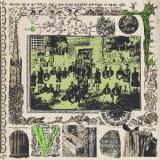
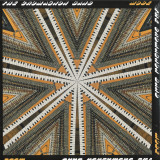
Gap Mangione's monumentally influential Diana In The Autumn Wind. AKA BEWITH200LP. And, without question, Be With's White Whale.
They said it could never be done. And with good reason.
We've spent the past 12 years trying to license this legendary 1968 recording from Gap and, after much work, it's finally here. Remarkably, this is the first ever vinyl reissue of Gap Mangione's Diana In The Autumn Wind, produced with the full and extensive participation of Gap. An exceedingly rare album, it's been coveted by funk, soul, jazz and hip-hop sample fiends for decades.
It's unarguably *the* most sought after album for J Dilla / Madlib sample collectors. It has also been brilliantly sampled by A Tribe Called Quest, Large Professor, Ghostface Killah, Kendrick Lamar and Talib Kweli.
But this record is so much more than a sample-spotters curio. It's solid gold throughout. Bursting with killer funky-jazz grooves and tracks adorned with warm electric piano, the release is notable for featuring some extremely significant players at the very outset of their careers; Tony Levin, at 21, whose superb playing on both acoustic and electric bass was the harmonic mainstay of the trio and Steve Gadd, at 23, one of the greatest drummers of his generation.
With acceptable copies of this holy grail changing hands for $400, to call this reissue "much-needed" underplays just how vital it is. Gap's story is told in his words alongside rare photos across a sumptuously designed 2-page insert and, to augment this deluxe edition further, its all wrapped up in a beautiful, no-expense-spared luxury tip-on sleeve, as per the original hens-teeth release. And, while we're talking packaging, just take a look at that cover - a work of art in and of itself.
The tracks are short but complex, with that extraordinary rhythm section backing the beautiful piano, organ and electric piano work of Gap. It's like the best ever library funk breaks record you never heard - but all your favourite golden age rap producers were all over it, long ago. It's a stunning blend of the vibrant, driving music of the Gap Mangione Trio coupled with the sensitive composition and superb orchestration of Gap's legendary brother, Chuck Mangione, who helmed an amalgam of seemingly disparate elements – rock, big band jazz, solo improvisation and "classical" music - into a spectacularly cohesive whole that has aged wonderfully well. As Gap himself notes in the liners, "with this group I was able to explore and add new and exciting elements from rock, Brazilian and then-current pop music."
Opener "Boy With Toys" triumphantly swaggers out the gate, all big band horns, flutes and dextrous organ work. The synthesis of everything going on is nothing short of stunning. When one wise YouTube commentator called this tune "old school superhero music", Gap agreed. Rap luminaries did, too, amongst them Talib Kweli, who rapped over DJ Scratch's chopped up intro for "Shock Body" on his Quality album back in 2002.
You've barely recovered from that incredibly affecting opener when you get hit over the head with the exquisite title-track. And now you see how two of the greatest beats of all time emerged from one single track produced nearly 50 years earlier. Unforgettably utilised by Dilla for Slum Village's heartbreakingly good "Fall In Love" and then Madlib for his "Official" beat for Dilla to rap over, on the Jaylib record. Regardless of the records it went on to spawn, this is just a staggering tune in its own right. Be beguiled by the flutes and the flutter tonguing, the counter-melody from the trombones, the soprano sax solo. All of it. Simply beautiful.
The questing organ and horn workout "Long Hair Soulful" deserves a lot more attention, overshadowed somewhat by the opening two monsters but no less fantastic. It swings, it grooves and Gadd and Levin truly cook. Up next, Gap's wonderfully percussive, mellifluously piano-heavy cover of "Yesterday" by some fellas called The Beatles. It's a subtly arresting gem. "The XIth Commandment" is damn fine, with thick, gorgeous electric piano and snappy drum work underpinning chaotic soundtracky horns. To close out the side, "St. Thomas" showcases the "fourth" member of the Gap Mangione Trio, conga drummer Dhui Mandingo. Having performed with the Trio since 1965, Dhui‘s African-based and jazz-latin-influenced style amazed listeners and its way to hear why.
Opening the B-Side, standard "You're Nobody Till Somebody Loves You" breezes along in the late-night jazz club fashion before things get super deep with the outstanding and - up to now - un-sampled "Pond With Swans". It's simply heavenly, and how its moody, melancholic intro has yet to be pilfered is anybody's guess. It oscillates between gentle, sombre movements and bombastic grooves, equally hypnotic and joyous. The rendition of "You Are My Sunshine" is yet another showcase for Gap's virtuoso playing and Gadd's mastery of the pocket. Indeed Gadd's drumming on "Free Again" is nothing short of neck-SNAPPING! Ghostface took it for not one but two "Iron's Theme" tracks across his seminal Supreme Clientele. It's got that Galt MacDermot "Coffee Cold" feel. Suuuuuper cool. The frantic "Dream On Little Dreamer" hurtles along and must've surely had the whole room absolutely swinging from the chandeliers back in Rochester in the late 60s. The album closes with the magnificent Graduate Medley, featuring memorable renditions of "Scarborough Fair", "The Sounds of Silence" and "Mrs. Robinson". The warm electric piano lines of the former were sampled by The Ummah (Dilla again!) for Tribe's "Pad & Pen" from their reappraised final album, The Love Movement, as well as by Large Professor on his much-loved "The LP (For My People)".
Under the watchful eye - and extremely attentive ears - of Gap Mangione himself, the audio for Diana In The Autumn Wind has been carefully remastered by Be With regular Simon Francis, with a few much needed tweaks here and there, according to the artist's wishes. At the prestigious Abbey Road Studios, Cicely Balston's expert skills have made sure nothing is lost in the cut whilst the records have been pressed to the highest possible standard at the always stellar Record Industry in Holland. The artwork restoration has taken place here at Be With HQ and has that drop-dead gorgeous cover artwork popping like new. Buy on sight!
quête:page 19
- If | You All Get To Heaven
- If | You Let Me Stay
- Wishing | Well
- I'll | Never Turn My Back On You (Father's Words)
- Dance | Little Sister
- Seven | More Days
- Let's | Go Forward
- Rain
- Sign | Your Name
- As | Yet Untitled
- Who's | Loving You
- Declaration | Neither Fish Nor Flesh
- I | Have Faith In These Desolate Times
- It | Feels Good To Love Someone Like You
- To | Know Someone Deeply Is To Know Someone Softly
- I'll | Be Alright
- Billy | Don't Fall
- This | Side Of Love
- Attracted | To You
- Roly | Poly
- You | Will Pay Tomorrow
- I | Don't Want To Bring Your Gods Down
- And I Need To Be With Someone Tonight
- Welcome | To My Monasteryo
- She | Kissed Me
- Do | You Love Me Like You Say?
- Baby | Let Me Share My Love
- Delicate
- Neon | Messiah
- Penelope | Please
- Wet | Your Lips
- Turn | The Page
- Castilian | Blue
- T | I.t.s. / F&J
- Are | You Happy?
- Succumb | To Me
- I | Still Love You
- Seasons
- Let | Her Down Easy
- Vibrator
- Supermodel | Sandwich
- Holding | On To You
- Read | My Lips (I Dig Your Scene)
- Undeniably
- We | Don't Have That Much Time Together
- C | Y.f.m.l.a.y?
- If | You Go Before Me
- Surrender
- Ttd's | Recurring Dream
- Supermodel | Sandwich W/Cheese
- Resurrection
- It's | Been Said
Original[155,88 €]
Introducing The Hard Line is available on translucent green vinyl
Neither Fish, Nor Flesh is available on red coloured vinyl
Symphony Or Damn is available on gold coloured vinyl
Vibrator is available on blue coloured vinyl
JUST 400 AVAILABLE IN UK!!
180 gram audiophile vinyl, Newly remastered audio, processed at Artone Studio, approved by Sananda Maitreya
Anti-static black poly lined inner sleeves, Deluxe heavyweight sleeves on uncoated paper
All 4 albums include separate inserts with brand new introduction liner notes written by Sananda Maitreya
Box set is a limited edition, Hype sticker
Sananda Maitreya proudly announces “JUVENILIA : The Columbia Years”, a meticulously curated 4-LP box set bringing together
his first four groundbreaking albums, originally released between 1987 and 1995 Introducing the Hardline, Neither Fish Nor Flesh, Symphony or Damn, and Vibrator.
Set for release on February 6th, 2026, JUVENILIA mark the first time these iconic works have been remastered and presented together on
premium 180-gram vinyl, complete with restored artwork and new liner notes by Sananda.
Produced in collaboration with Sony Music UK, Music On Vinyl and Treehouse Publishing, “Sananda Maitreya’s JUVENILIA : The Columbia Years”,
pays tribute to a pivotal creative era that helped redefine the sound and spirit of modern soul, pop, and rock in the late 1980s and 1990s.
REPRESSED !
Patrick Keel is a multi-instrumentalist, composer, producer, and performer. The Pool was his solo project, the sum of fifteen years of experience in live bands, studios, and home recording. Patrick was heavily influenced by the radio of the early and mid 1960's in Dallas. The British bands and Black soul of the era gave him a distinct style, and shaped his musical attitude. The New Wave/Punk/D.I.Y. attitudes of the late 1970s inspired him to express himself in a new way. 1980 saw the release of "Pool One," a sixty minute home-produced cassette. "Pool Two" followed in 1981, which received much praise and little distribution. In 1982 he released a 5-song self-titled vinyl EP of tight, skeletal, synthetic dance music.
In 1983, 'Dance It Down/Jamaica Running' 12' EP was released on Moment Productions. Based on response from D.J.'s in New York and the Bronx, Patrick went back in the studio and remixed two songs from the self-titled EP for rapping, scratching and break dancing. "Jamaica Resting" was sped-up, extended, and reconfigured as "Jamaica Running". The whirlpool synth-strut of 'Dance It Down' came out of the studio as 'Dance In Dub', with a heavier kick and extended dub outro. These spacious versions were optimal for DJ play, slotting regularly in sets at hip clubs like Danceteria. For this reissue we've added two bonus European remixes from the 1984 12' of 'Dance It Down/Jamaica Running', released on Nunk records from Belgium. Both songs employ the use of a Boss DR-55, Korg MS-20, Korg PolySix, and a Prophet 5, and were mixed on a 16- track Ampex recorder. The Pool's spartan, self-assured songs are experiments you can dance to.
All songs have been remastered for vinyl by George Horn at Fantasy Studios in Berkeley. The record comes housed in a newly designed jacket by Eloise Leigh, updating the magenta and blue grid and Pool logo of the Moment Productions release. Each copy includes a 12-page booklet with a never seen before photos, press clippings and notes.
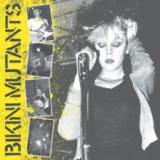
It’s taken Sealed records more than five years to put this release together but finally it’s here. The one and only Bikini Mutants. The Bikini Mutants were from Yeovil, Somerset and part of the All the Madmen world. In their short life as a band they recorded two demos at Monitor Studios, Milborne Port in Somerset in 1982. Let's Mutate collects these two demos on one LP, along with a 20 page booklet featuring photos, lyrics, reviews, interviews and much more. The band played mostly in Yeovil and the West Country along with the Mob and the Review, and even though they were part of the West Country anarcho scene, the sound was a mix of scratchy post punk and indie pop. Members of the band went on to be in My Bloody Valentine and the Chesterfields. The songs are intricate, delicate and engaging with the drums and bass locked in, the fuzzed out guitar weaving on top and Christine Cole’s angelic voice taking each song to pop heaven. Think a mix of Girls at our Best, Au Pairs and the Marine Girls.
- If | You All Get To Heaven
- If | You Let Me Stay
- Wishing | Well
- I'll | Never Turn My Back On You (Father's Words)
- Dance | Little Sister
- Seven | More Days
- Let's | Go Forward
- Rain
- Sign | Your Name
- As | Yet Untitled
- Who's | Loving You
- Declaration | Neither Fish Nor Flesh
- I | Have Faith In These Desolate Times
- It | Feels Good To Love Someone Like You
- To | Know Someone Deeply Is To Know Someone Softly
- I'll | Be Alright
- Billy | Don't Fall
- This | Side Of Love
- Attracted | To You
- Roly | Poly
- You | Will Pay Tomorrow
- I | Don't Want To Bring Your Gods Down
- And I Need To Be With Someone Tonight
- Welcome | To My Monasteryo
- She | Kissed Me
- Do | You Love Me Like You Say?
- Baby | Let Me Share My Love
- Delicate
- Neon | Messiah
- Penelope | Please
- Wet | Your Lips
- Turn | The Page
- Castilian | Blue
- T | I.t.s. / F&J
- Are | You Happy?
- Succumb | To Me
- I | Still Love You
- Seasons
- Let | Her Down Easy
- Vibrator
- Supermodel | Sandwich
- Holding | On To You
- Read | My Lips (I Dig Your Scene)
- Undeniably
- We | Don't Have That Much Time Together
- C | Y.f.m.l.a.y?
- If | You Go Before Me
- Surrender
- Ttd's | Recurring Dream
- Supermodel | Sandwich W/Cheese
- Resurrection
- It's | Been Said
Damaged Box[107,56 €]
Introducing The Hard Line is available on translucent green vinyl
Neither Fish, Nor Flesh is available on red coloured vinyl
Symphony Or Damn is available on gold coloured vinyl
Vibrator is available on blue coloured vinyl
JUST 400 AVAILABLE IN UK!!
180 gram audiophile vinyl, Newly remastered audio, processed at Artone Studio, approved by Sananda Maitreya
Anti-static black poly lined inner sleeves, Deluxe heavyweight sleeves on uncoated paper
All 4 albums include separate inserts with brand new introduction liner notes written by Sananda Maitreya
Box set is a limited edition, Hype sticker
Sananda Maitreya proudly announces “JUVENILIA : The Columbia Years”, a meticulously curated 4-LP box set bringing together
his first four groundbreaking albums, originally released between 1987 and 1995 Introducing the Hardline, Neither Fish Nor Flesh, Symphony or Damn, and Vibrator.
Set for release on February 6th, 2026, JUVENILIA mark the first time these iconic works have been remastered and presented together on
premium 180-gram vinyl, complete with restored artwork and new liner notes by Sananda.
Produced in collaboration with Sony Music UK, Music On Vinyl and Treehouse Publishing, “Sananda Maitreya’s JUVENILIA : The Columbia Years”,
pays tribute to a pivotal creative era that helped redefine the sound and spirit of modern soul, pop, and rock in the late 1980s and 1990s.
2026 Repress
- Linen Paper, Foil Printed Box Set
- Includes 6 Double LPs + 1 Single LP, 13 Discs In Total
- All LPs Pressed on Coloured Vinyl
-Each Disc is Housed in a Printed Inner with PMS Print, Finished with Spot Gloss Printing. Each Sleeve Features an Abstract of the Original Album’s Artwork
- Also included are a 4 page Insert + Poster
Skintone Edition commemorates the singular talent of this music pioneer with the re-release of all of his albums released via his own Skintone label.
Over a 20 year period Yokota released 30 albums and countless 12s under a variety of aliases, across more than a dozen pre-eminent labels. Yokota received domestic and international acclaim as a house and techno DJ and producer throughout the nineties. Part of the vanguard of the Tokyo scene, his influential release Acid Mt. Fuji inspires techno artists to this day.
In 1998 though, at the height of his success, he established his Skintone imprint, which came to eclipse all of his previous achievements. Skintone shone a light on the diverse new directions in which his creativity had blown, from delicate, cyclical tape-loop meditations to neo-classical compositions. It also gave him the autonomy to combine his visual and music-making practices and, importantly, to create at his own pace. The label was a great success and his experiments proved foundational in the global 00s ambient canon.
Skintone Edition will be available as 2 box sets - the first volume coincides with the 10th anniversary of Yokota’s untimely death and the 30th year of Lo Recordings. All music has been fully re-mastered. This edition is presented with the generous assistance of the Yokota family.
Albums Included:
Magic Thread 1998
Image 1983-1998 [1998]
Sakura [1999]
Grinning Cat [2001]
Will [2001]
The Boy and the Tree [2002]
Laputa [2003]
- A1: Underground Up
- A2: Jour De Sortie
- A3: Hip Hop (Feat. Degom)
- A4: Dans Mon Secteur
- A5: Appel À La Resistance (Feat. Olivier Besancenot) (Interlude)
- B1: On Te Voit
- B2: On N On (Feat. Nathy Boss)
- B3: Complexe
- B4: Faut S' Lever
- C1: I Got Kimfu On My Track (Interlude)
- C2: Mon Rôle (Feat. Oxmo Puccino)
- C3: Mamy…. (Feat. Nicoletta)
- C4: Champagne
- D1: Affamé
- D2: Je Paie Pas (Feat. Fdy Phénomen)
- D3: Egomaniac (Interlude)
- D4: Jour De Sortie (Kimfu Remix)
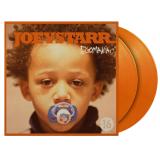
JoeyStarr is the co-founder of the famous French rap duo Suprême NTM. Originally starting out as breakdancers and graffiti writers, the duo is known for representing the perspective of minorities residing in the underprivileged neighbourhoods of Paris and beyond through dark, gritty, politically-conscious lyrics. Despite achieving record sales with their four albums, they split in 1998.
After a few detours away from the music business, in 2006 JoeyStarr dropped his first solo album. Egomaniac, released in 2011, is his second album and includes some high-profile collaborations; on "Mamy..." he works together with Nicoletta on a rework of her 1971 hit single "Mamy Blue" and the interlude "Appel À La Resistance" features a speech by leading left-wing politician Olivier Besancenot. After its initial release, the vinyl edition went out of print so we're happy we can finally make it available again.
Egomaniac is available as 15th anniversary edition of 1000 individually numbered copies on orange vinyl and includes an 8-page booklet.
- A1: Sunday In The Park With George
- A2: No Life
- A3: Color And Light
- A4: Gossip
- B1: The Day Off
- B2: Everbody Loves Louis
- B3: Finishing The Hat
- B4: We Do Not Belong Together
- C1: Beautiful
- C2: Sunday
- C3: It's Hot Up Here
- C4: Chromolume #7 / Putting It Together
- D1: Children And Art
- D2: Lesson #8
- D3: Move On
- D4: Sunday
- D5: Putting It Together
- D6: Sunday
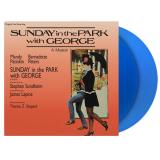
Sunday in the Park with George presents the music from the original 1984 Broadway production of Stephen Sondheim and James Lapine’s acclaimed musical. Recorded shortly after the show’s premiere, the album features the original cast performing Sondheim’s layered score, inspired by Georges Seurat’s painting "A Sunday Afternoon on the Island of La Grande Jatte".
The cast of the musical is led by Mandy Patinkin and Bernadette Peters, whose performances tell a story about art, love, and artistic legacy across two time periods. The recording includes notable songs such as “Sunday,” “Finishing the Hat,” and “Move On.” Winner of the Pulitzer Prize for Drama, Sunday in the Park with George is widely regarded as one of Sondheim’s most distinctive works. Produced by Thomas Z. Shepard, the recording won the 1984 Grammy Award for Best Cast Show Album.
The soundtrack of Sunday in the Park with George is available as a limited edition on blue vinyl and includes a 4-page booklet. The 2LP is packaged in a deluxe sleeve with linen laminate finish.
- A1: Round About Midnight 05:14
- A2: Evidence 03:04
- A3: Smoke Gets In Your Eyes 03:23
- A4: Well You Needn't 03:24
- B1: Reflections 05:01
- B2: We See 02:34
- B3: Eronel 02:32
- B4: Off Minor 02:31
It happens very rarely that you can praise a records without any reservations, this is the case here!!!
A lot of ink has flowed across the page since the Vogue/Swing release (1955) of that founding solo record. The repertoire was made up of pieces that Thelonious was playing in New York over that period, but in trio or with a quartet, here his music shows nakedness, i should say crudeness, whisch is completely overwhelming. It is a balck and white photograph of what is happening inside Monk's head; its sharpness is enthralling, as everyone has known for more than sixty years.
We enter the world of one of the most original artists. Monk, at 37, is at the peak of his art.
- 1: Akashia No Ame Ga Yamu Toki
- 2: Meiko No Yume Wa Yoru Hiraku
- 3: Onna Kokoro No Uta
- 4: Ginza No Cho
- 5: Shinjuku Blues
- 6: Kasbah No Onna
- 7: Tokyo Nagare Mono
- 8: Uramachi Jinsei
- 9: Sake Wa Namida Ka Tameiki Ka
- 10: Otoko No Junjo
- 11: Ame No Yatai
- 12: Shiretoko Ryojo
Wewantsounds is delighted to continue its extensive reissue program of Meiko Kaji"s early discography, originally released by Teichiku Records in Japan between 1972 and 1974. The Quentin Tarantino muse-famous for her starring roles in Lady Snowblood and Stray Cat Rock-was also a gifted singer. Otoko Onna Kokoro No Aika is another collection of superb cinematic songs featuring Kaji"s signature mix of Japanese Pop and Groove, backed by lush, atmospheric orchestrations. This includes her rendition of "Tokyo Nagare Mono," the theme song for Seijun Suzuki"s cult 1966 film Tokyo Drifter. This reissue features the original artwork, an OBI strip, and a four-page insert with new liner notes by Hashim Kotaro Bharoocha, who interviewed Meiko Kaji for the occasion.
Black Vinyl[38,03 €]
Die hochgeschätzten Euro-Metal-Pioniere Oz wurden ursprünglich 1977 in der kleinen finnischen Stadt Nakilla gegründet. Die Band bestand aus Mark Ruffneck (bürgerlicher Name Pekka Mark) am Schlagzeug, Sänger Ape De Martini (Eero Hämäläinen), Bassist Tauno Vajavaara sowie Kario Elo an der Gitarre.
Fünf Jahre nach ihrer Gründung legten Oz ihr Debütalbum vor. Mit Krachern wie “Saturday Night”, “Capricorn Man” oder dem schlüpfrigen “Second-Hand Lady” avancierten Oz schnell zur HM-Band Nummer eins in Skandinavien.
In der Folge zog man nach Stockholm um, wo 1983 der gefeierte Zweitling »Fire In The Brain« entstand. Die Platte enthielt höchst energetische Heavy-Metal-Hymnen wie “Fortune”, “Megalomaniac” oder “Gambler”. Der kanadische Journalist Martin Popoff verteilte in seinem »Collector’s Guide To Heavy Metal« 9 von 10 Punkten und schrieb: »Fire In The Brain« ist eine düstere, fast depressiv wirkende Platte, die den Hörer wie ein Güterzug trifft. Es ist ein sehr europäisch klingendes Werk – vom apokalyptisch anmutenden ‘Searchlights’ über das zähflüssige ‘Black Candles’ bis hin zum gewaltigen Titelsong werden absolut keine Gefangenen genommen.“
High Roller Records, silver vinyl, ltd 450, 425gsm heavy cardboard cover with 5mm spine, lyric sheet, 12 page booklet, poster
300 pages, 175 x 129mm paperback book w/ french flaps.
DINTE mint their short run book publishing imprint, The End books, with this vast collection of flyers for dances, clashes and blues parties from across the UK between the early 1970s and mid 1990s. Comes complete with intro by David Katz (People Funny Boy: The Genius of Lee 'Scratch' Perry, Solid Foundation: An Oral History of Reggae) and outro by Kevin Le Gendre (Don't Stop the Carnival: Black British Music, Children of the Ghetto: Black Music in Britain). Colour scans sit alongside scuzzy photocopies amassed over several years with the assistance of multiple archivists. The material presented in A Night to Remember is not just valuable musical history, but the story of a community and a culture that revolutionised sound culture in the UK.
"The flyers collected in A Night To Remember speak to the burgeoning sound system underground that flourished in Britain in the 1970s, 80s and early 90s. There are held events on hallowed ground as well as lesser-known sets. Flyers for house parties remind that shebeens remained an important feature of social life in black communities and the many sound clash and cup clash events emphasise the rivalry and camaraderie that has always been at the heart of the culture, as friends go head-to-head with their dub plates, vying for that definitive crown. Dances featuring guest appearances by name-brand artists such as Sugar Minott, Lone Ranger, Barrington Levy and Admiral Bailey, as well as sound systems such as Jack Ruby, King Jammies, Ray Symbolic, Arrows, Black Scorpio and Metro Media remind how closely the local sound systems remained to their Jamaican roots, even as sounds such as Saxon, Unity, Java and Diamonds carved out a distinctly British niche. All hail the enduring sound systems of Britain – long may they reign!" — David Katz
- A1: Titanic Suite
- B1: An Irish Party In Third Class - Gaelic Storm
- B2: Alexander's Ragtime Band - I. Salonisti
- B3: The Portrait - James Horner
- B4: Jack Dawson's Luck
- C1: A Building Panic
- C2: Nearer My God To Thee - I. Salonisti
- C3: Come Josephine, In My Flying Machine - Máire Brennan
- C4: Lament
- C5: A Shore Never Reached
- D1: My Heart Will Go On (With Dialogue From The Film) - Celine Dion
- D2: Nearer My God To Thee - Eileen Ivers
- D3: Epilogue - The Deep And Timeless Sea
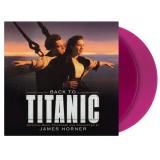
Back to Titanic is the second soundtrack album released for the ultimate classic film Titanic. Composer James Horner created a new suite of light and dark music to represent "the soul” of his original score. The inspiration used in composing the original soundtrack formed the basis for the new pieces Horner developed for this album. It features a piano solo performed by James Horner in “The Portrait” and newly recorded suites by the London Symphony Orchestra and the Choristers of King's College.
The first highlight is the opening 19-minute suite, "Titanic Suite", which captures the essence of the film. The other major suite is the final track, titled “Epilogue - The Deep and Timeless Sea”. James Horner returns to the main Titanic theme in a subtle way, honoring the losses of the disaster.
The soundtrack of Back to Titanic is available as a limited edition of 1500 individually numbered copies on violet vinyl. The records are packaged in a deluxe sleeve finished with linen laminate and includes a 4-page booklet with liner notes by director James Cameron.
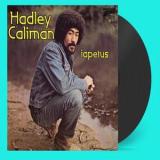
- 1: Watercress
- 2: Ambivalence
- 3: Dee's Glee
- 4: Iapetus
- 5: Quadrivium
- 6: Green Eyes
Wewantsounds continues its reissue program of Bob Shad"s cult jazz label, Mainstream Records, with Hadley Caliman"s superb 1972 album, Iapetus. Recorded in LA and featuring a heavyweight lineup of West Coast players including Todd Cochran, Woody "Sonship" Theus, Luis Gasca, and Victor Pantoja, the majority of the album was composed by Todd Cochran (aka Bayeté) soon after he had composed Bobby Hutcherson"s Blue Note classic, Head On. A true hidden treasure, it is reissued here on vinyl for the first time since 1971, featuring its original gatefold artwork with rare first-generation photos. This edition comes with newly remastered audio and a two-page insert with exclusive liner notes by Todd Cochran, reflecting on Hadley Caliman and the making of the album.
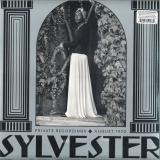
Disco legend Sylvester comes to Dark Entries with Private Recordings: August 1970, an intimate collection of vintage jazz, blues, and gospel. While Sylvester is best known for his chart-topping collaborations with producer Patrick Cowley, such as “You Make Me Feel (Mighty Real),” this release reveals his passion for the sounds of the 30s and 40s. In 1970 a 22-year-old Sylvester had moved to San Francisco and found himself involved with the Cockettes, the infamous psychedelic performance art troupe. Among this milieu was Peter Mintun, a pianist and record collector living in a commune devoted to retro culture. According to Mintun, “We were like hippies who lived in the twenties. We lived in a house that didn’t have anything modern in it. Nothing in it was made after World War II.” Mintun and Sylvester bonded over their love of Black singers of yore and were allotted a slot during Cockettes performances reviving the music of the Prohibition Era. One afternoon, Sylvester and Mintun recorded a number of their shared favorites using a high-end microphone a friend had acquired. Private Recordings features 9 songs from this session, including standards like “Stormy Weather,” “Happy Days Are Here Again,” and “God Bless the Child.” Sylvester’s unmistakable falsetto brings depth and a dash of camp to these familiar tunes. The recordings are casual and intimate, even capturing banter between Sylvester and Mintun; their brief rendition of “When My Dreamboat Comes Home” has the duo working out a melody in real time. In addition to their sonic explorations of decades past, Sylvester and Mintun also staged photographic shoots in vintage couture. Private Recordings comes with a 16-page booklet on firm cardstock featuring images from these never-before-seen shoots as well as liner notes from Mintun detailing his friendship with Sylvester and their experiences recording. All this is housed in a metallic silver sleeve designed by Eloise Leigh featuring a 1920’s Art Deco aesthetic. The record will be released on September 6th which would have been Sylvester’s 76th birthday, and all proceeds from Private Recordings will go to the two charities that Sylvester left his royalties after his death: Project Open Hand and PRC (formerly AIDS Emergency Fund). This essential release documents the earliest known recordings from one of disco’s greatest talents.
- A1: Monsters
- A2: Alien Point Of View
- A3: Cardinal Newman
- A4: Fat Cow
- A5: Nothing To Hide
- A6: People Like You
- A7: Regress For You
- A8: Christian Lovers
- A9: Exorcism
- B1: Bathroom Sluts
- B2: Pie On A Ledge
- B3: Push, Push, Push
- B4: Alice's Song
- B5: Praise The Lord
- B6: My Mommy's Chest
- B7: Slave
- B8: Poets (Early Version)
- B9: Pretty Vacant
- C1: Miscarriage
- C2: Scandinavian Dilemma
- C3: Poets
- C4: Confession
- C5: She Works For Safeway
- C6: Bible Stories
- D2: Green Tile Floor
- D3: Bathroom Sluts (Demo)
- D4: Waterpiss
- D5: Baby Face
- D6: Berlin Red Head
- C7: Dyptheria
- D1: Castration
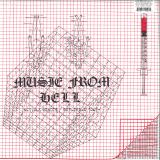
Nervous Gender’s legendary synthpunk LP Music From Hell burbles up from infernal depths to resurface on Dark Entries. Confrontational, unhinged, and unabashedly queer, Music from Hell is an unholy grail for fans of the strangest underbellies of post-punk, minimal synth, and early industrial music, and is presented here newly remastered and on expanded double LP.
Nervous Gender (de)formed in LA in 1978 at the hands of Phranc, Gerardo Velaquez, Edward Stapleton, and Michael Ochoa. Phranc, the androgynous embodiment of the band’s name, left in 1980. Following her departure, a wide cast of LA freaks would find themselves drawn into the band’s orbit, including Alice Bag of the Bags, Paul Roessler of the Screamers, the Germs’ Don Bolles, and an 8-year old drummer named Sven Pfeiffer. In 1980, Nervous Gender appeared on the seminal Live at Target compilation alongside Factrix, uns, and Flipper. With the band’s notoriety cemented, Music from Hell followed in 1981 on Subterranean Records (as no LA label would touch this material).
Side A, dubbed “Martyr Complex”, presents a more punk-forward sound with live drum salvos and slabs of aggressive synth. These twitchy, unsettling shockers ooze with the kind of snotty misanthropy that will endear them to fans of the Screamers or Crass.
Side B, known as “Beelzebub Youth”, is a live performance the band labeled "an electronic bruto-canto dissertation on the banality of spiritual transcendence." Mutant melodies cede way to synthesized clangs, whirs, bleeps, manipulated tapes, and howls of despair.
In addition to all the material from the original LP, we’re treated to a full disc of the band’s demos, the material from the Live at Target compilation, and early live recordings. Included are unrecognizable covers of Carly Simon and Lou Reed, and the Sex Pistols that are so despairingly skewed they fall into the void. This reissue of Music From Hell includes a 36 page lyric booklet, foldout poster, and gatefold sleeve with photos, flyers, and news-clippings designed by Eloise Leigh. Tackling taboo issues like sexual kinks, mental illness, drug use, and childhood molestation, Music From Hell is still surprising – even shocking - over 40 years after the album’s release. Nervous Gender stand as one of the most genuinely anti-establishment outfits in underground music, a colossal fuck you to social norms from religious strictures to gender essentialism.
- A1: Sunrise
- A2: Bryce
- A3: Arches
- A4: Totem
- A5: Waters And Geysirs
- A6: Indian Summer
- A7: Opening
- B1: Cpu
- B2: Soft Edge
- B3: Las Vegas
- B4: Rhythm Score
- B5: Space Shuttle
- B6: Disco Funk
Once again Trunk Records comes through with an album of sublime 1980s new age synthwave
music from an artist and library company you have never heard of.
With most Trunk LPs we write the story about how Jonny came across the music. And yes, this LP is no different...over to Jonny…
“My first encounter with Peter Patzer was when I was writing and researching the updated and fully expanded version of The Music Library Book, published by Fuel. The initial book - called The Music Library, was the first ever overview of library music and the wild, unpredictable graphic art of their sleeves. It was first published in 2005 and featured about 400 sleeves and about 120 library companies over 200+ pages. The book was based on over a decade of intense library LP collecting by myself and a handful of other geeky weirdos and made for fascinating and revealing reading and looking. It was a great education for many entering this odd, hidden musical world for the first time. The book quickly sold out.
A few years later the price of the original book had gone bananas. But the geeky weirdos like me had all carried on voraciously consuming and collecting library music so I strongly felt the first book could easily be doubled in size with new info, new sleeves and many newly discovered lost library companies. Which is exactly what I set about doing. The Music Library expanded edition came out in 2015. You have to realise here that The Music Library book was very much a first - until its unexpected arrival (and even the arrival of the much larger expanded edition) there was no published survey, accessible catalogue or anything about international library music. It was still an odd old world shrouded in some historical mystery - even the internet had not really caught up. And I was still finding unusual British one-off library LPs, more unusual Italian library diversions, hidden French funky things and then I finally found Peter Patzer. From Germany.
Hidden away in a very obscure music library corner. All on his own.Peter was unusual in that he was an artist and musician who made his own music and issued it all on his own library, called Crea Music, based out of Bremen in North Germany. Over a series of eight whitevinyl LPs produced in the 1980s Peter Patzer created synth heavy experiments for possible use in film, TV, video and anything else coming along. All his LPs had the same simple red, white and blue sleeve and a typed name and number. Across the eight LPs Peter goes to musical space, creates post-disco funk,travels to Vegas, goes all geological and more.
The eight Peter Patzer / Crea Music LPs are as follows:
01 - Puddy’s Bus 02 - Straight Line 03 - Pos-Attractions 04 - Patterns 05 - Canyons 06 - MIls Maniac 07 - Classic Themes 08 - Formation 17
This is a compilation of some of the music featured across those eight LPs, and yes, it was initially
licensed a few years ago but I held it back as I wasn’t sure people were quite ready for the plugged-inway out drifting 1980s electro sound of Peter Patzer with his synth washes, rhythms and chords. Or maybe I wasn’t ready. Anyway it’s here now... and if this sells out there could be another Peter Patzer LPbut with all his longer 7 minute compositions which there wasn’t room for here.
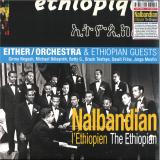
The Éthiopiques series returns! Essential archive recordings from an extremely fruitful period in Ethiopian music.
Before “Swinging Addis” took over the world, there was Moussié Nerses Nalbandian — the Armenian-born composer who shaped modern Ethiopian music. Mentor, arranger, and pioneer, he laid the foundations of Ethio-jazz.
This Éthiopiques volume revives his forgotten legacy, recorded live by Either/ Orchestra First issue ever with new exclusive photos and in depth liner 8-page insert.
“Ethiopian jazzmen are the best musicians that we have seen so far in Africa.
They really are promising handlers of jazz instruments.”
Wilbur De Paris
(1959, after a concert in Addis Ababa)
አዲስ፡ዘመን። *Addis zèmèn* **A new era.**
The time is the mid-1950s and early 1960s, just before "Swinging Addis" bloomed – or rather boomed – onto the scene. Brass instruments are still dominant, but the advent of the electric guitar, and the very first electronic organs, are just around the corner. Rock’n'Roll, R’n’B, Soul and the Twist have not yet barged their way in. Addis Ababa is steeped in the big band atmosphere of the post-war era, with Glenn Miller's *In the* *Mood* as its world-wide theme song, neck and neck with the Latin craze that was in vogue at the same period. Life has become enjoyable once again, with the return of peace after the terrible Italian Fascist invasion of Ethiopia (1935-1941). The redeployment of modern music is part and parcel of the postwar reconstruction. *Addis zèmèn* – a new era – is the watchword of the postwar period, just as it was all across war-torn Europe.
The generation who were the young parents of baby boomers** were the first to enjoy this musical renaissance, before the baby boomers themselves took over and forever super-charged the soundtrack of the final days of imperial reign. Music is Ethiopia's most popular art form, and very often serves as the best barometer for the upsurge of energy that is critical for reconstruction. Whether it be jazz in Saint-Germain-des-Prés or the *zazous* who revolutionised both jazz and French *chanson* after the *Libération*, be it Madrid's post-Franco Movida, or Dada, the Surrealists and *les années folles* that followed World War I, the periods just after mourning and hardship always give rise to brighter and more tuneful tomorrows. Addis Ababa, as the country's capital, and the epicentre of change, was no exception to this vital rule.
**Two generations of Nalbandian musicians**
Nersès Nalbandian belonged to a family of Armenian exiles, who had moved to Ethiopia in the mid-1920s. The uncle Kevork arrived along with the fabled "*Arba Lidjotch*", the** "*40 Kids*", young Armenian orphans and musicians that the Ras Tafari had recruited when he visited Jerusalem in 1924, intending to turn their brass band into the official imperial band. If Kevork Nalbandian was the one who first opened the way of modernism, pushing innovation so far as to invent musical theatre, it was his nephew Nersès who would go on to become, from the 1940s and until his death in 1977, a pivotal figure of modern Ethiopian music and of the heights it. Going all the way back to the 1950s. Nothing less. And it is Nersès who is largely to thank for the brassy colours that so greatly contributed to the international renown of Ethiopian groove. While the younger generations today venture timidly into the genealogy of their country's modern music, often losing their way amidst a distinctly xenophobic historiographical complacency, many survivors of the imperial period are still around to bear witness and pay tribute to the essential role that "Moussié Nersès" played in the rise of Abyssinia's musical modernity.
Given the year of his birth (15 March 1915), no one knows for sure if Nersès Nalbandian was born in Aintab, today Gaziantep (Turkiye/former Ottoman Empire) or on the other side of the border in Alep, Syria... What is certain is that his family, like the entire Armenian community, was amongst the victims of the genocide perpetrated by the Turks. Alep, the place of safety – today in ruins.
Before Nersès then, there was uncle Kevork (1887-1963). For a quarter of a century, he was a whirlwind of activity in music teaching and theatrical innovation. *Guèbrè Mariam le Gondaré* (የጎንደሬ ገብረ ማርያም አጥቶ ማግኘት, 1926 EC=1934) is his most famous creation. This play included "ten Ethiopian songs" — a totally innovative approach. According to his autobiographical notes, preserved by the Nalbandian family, Kevork indicates that he composed some 50 such pieces over the course of his career. This shows just how much he understood, very early on, the critical importance of song as Ethiopia's crowning artistic form. Indeed, for Ethiopian listeners, the most important thing is the lyrics, with all their multifarious mischief, far more than a strong melody, sophisticated arrangements or even an exceptional voice. (This is also why Ethiopians by and large, and beginning with the artists and producers themselves, believed for a long time — and wrongly — that their music could not possibly be exported, and could never win over audiences abroad, who did not speak the country's languages).
Last but not least, one of Kevork's major contributions remains composing Ethiopia's first national anthem – with lyrics by Yoftahé Negussié.
Nersès Nalbandian moved to Ethiopia at the end of the 1930s, at the behest of his ground-breaking uncle. Proficient in many instruments (pretty much everything but the drums), conductor, choir director, composer, arranger, adapter, creator, piano tuner, purveyor of rented pianos,... he was above all an energetic and influential teacher. From 1946 onwards, thanks to Kevork's connexion, Nersès was appointed musical director of the Addis Ababa Municipality Band. In just a few years, Nersès transformed it into the first truly modern ensemble, thanks to the quality of his teaching, his choice of repertoire, and the sophistication of his arrangements. It was this group that would go on to become the orchestra of the Haile Selassie Theatre shortly after its inauguration in 1955, which was a major celebration of the Emperor's jubilee, marking the 25th anniversary of his on-again-off-again reign.
At some point or other in his long career, Nersès Nalbandian had a hand in the creation of just about every institutional band (Municipality Band, Police Orchestra, Imperial Bodyguard Band, Army Band, Yared Music School…), but it was with the Haile Selassie Theatre – today the National Theatre – that his abilities were most on display, up until his death in 1977. To this must be added the development of choral singing in Ethiopia, hitherto unknown, and a sort of secret garden dedicated to the memory of Armenian sacred music, and brought together in two thick, unpublished volumes. Shortly before his death (November 13, 1977), he was appointed to lead the impressive Ethiopian delegation at Festac in Lagos, Nigeria (January-February 1977).
His status as a stateless foreigner regularly excluded him from the most senior positions, in spite of the respect he commanded (and commands to this day) from the musicians of his era. Naturally gifted and largely self-taught, Nerses was tirelessly curious about new musical developments, drawing inspiration from the very first imported records, and especially from listening intensely to the musical programmes broadcast over short-wave radio – BBC *First*. A prolific composer and arranger, he was constantly mindful of formalising and integrating Ethiopian parameters (specific “musical modes”, pentatonic scale, and the dominance of ternary rhythms) into his “modernisation” of the musical culture, rather than trying to over-westernise it. It even seems very probable that *Moussié* Nerses made a decisive contribution to the development of tighter music-teaching methods, in order to revitalise musical education during this period of prodigious cultural ferment. Flying in the face of all the historiographical and musicological evidence, it is taken as sacrosanct dogma that the four musical modes or chords officially recognised today, the *qǝñǝt* or *qiñit* (ቅኝት), are every bit as millennial as Ethiopia itself. It would appear however that some streamlining of these chords actually took place in around 1960. It was only from this time onward that music teaching was structured around these four fundamental musical modes and chords: *Ambassel*, *Bati*, *Tezeta* and *Antchi Hoyé*. A historical and musical “details” that is, apparently, difficult to swallow, especially if that should honour a *foreigner*. Modern Ethiopian music has Nersès to thank for many of its standards and, to this day, it is not unusual for the National Radio to broadcast thunderous oldies that bear unmistakable traces of his outrageously groovy touch.
DJ Nobu: A Japanese artist who was inspired by Jeff Mill's performance at Liquid Room and has become a world widely known DJ.
Masakazu Hiroishi: A project manager of "Live at Liquid Room" at Sony Music Japan n 1995
Images are taken from the video shot in 1995: the quality is rough per the artist's intention.
212 pages, Softcover, A4 (210x300mm) x 17mm spine, 950gr, English
Visual Documentary: Jeff Mills at Liquid Room, Tokyo filmed on Saturday, October 28, 1995 (135pages)
Interviews: Jeff Mills / DJ Nobu / Masakazu Hiroishi (60pages)
- A1: Shahrokh - Man Va Tou ("Me And You")
- A2: Shahram Shabpareh, Shohreh Solati - Ghesmat ("Fate")
- A3: Farzin - Eshgheh Man ("My Love")
- B1: Aldoush - Vay Az In Del ("Woe To This Heart")
- B2: Fataneh - Mola Mamad Jan ("Mola Mamad Jan")
- B3: Ebi - Kolbeh Man ("My Cottage")
- C1: Sattar - Khaak (
- C2: Susan Roshan - Nazanin ("Sweetheart")
- C3: Delaram - Gharibeh ("Stranger")
- D1: Black Cats - Rhythm Of Love
- D2: Leila Forouhar - Hamsafar ("Fellow Traveler")
- D3: Hassan Shojaee - Nazi Joon ("Dear Sweetheart")
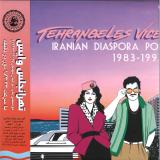
Discotchari is delighted to release a first-of-its-kind various artists compilation: Tehrangeles Vice (Iranian
Diaspora Pop 1983–1993), fully licensed from Taraneh Enterprises. The album is a groundbreaking exposé of
the vibrant subcultural hub of Tehrangeles (portmanteau of Tehran + Los Angeles), and the action–packed, true
story of the Iranian diaspora music industry. Featuring 12 tracks remastered by award–winning Osiris Studio,
lyrics and translations to all featured songs, original cassette covers, a 20+ page album note booklet by Dr.
Farzaneh Hemmasi and more! Sprawling from Westwood to Glendale across the San Fernando Valley, the
Tehrangeles scene was cultivated by the same producers and artists who industrialized the “golden age” of
entertainment in pre–revolution Iran and fled from the 1979 Islamic Revolution along with millions of Iranian
citizens. Through music and visual media, Iranian producers and artists working out of Tehrangeles have
engaged in what the Iranian government calls a “cultural attack” against the Islamic Republic for over 40 years.
The album title Tehrangeles Vice underscores the illicit nature and daring circumstances from which
Tehrangeles pop music was born and compares its legacy within Persian media to one of the most significant
crime–drama TV shows of all time. In the same manner that Miami Vice and its aesthetics had a dynamic
impact on sonic, visual and cultural trends in the United States and around the world, Tehrangeles media was a
shock to the systems of Islamic Republic ideology and Iranian expatriate communities. Listening to these songs
in hindsight, the contribution of Tehrangeles can be better understood as a triumphant effort to preserve Iranian
identity by realizing it in conjunction with prevailing music genres of the ‘80s and ‘90s, and to rebel against the
oppressive regime of the Islamic Republic of Iran through the most seductive of means: dance music.
g C1. Sattar - Khaak ("Home Land")
- A1: Barbarella - Barbarella (The Irresistible Force Remix)
- A2: Spacetime Continuum - Fluresence
- A3: Nightmares On Wax - Nights Interlude
- B1: Insides - Skinned Clean
- B2: Global Communication - Incidental Harmony
- C1: Caustic Window - Cordialatron
- C2: Keiichi Suzuki - Satellite Serenade (Trans Asian Express Mix)
- D1: Tranquility Bass - Cantamilla (Bomb Pop)
- D2: Golden Girls - Kinetic (Morley’s Apollo Remix)
- D3: No-Man - Days In The Trees - Reich
2025 Repress
“In stark contrast to the stress-makingly staccato assault of your average 'ardcore rave, Telepathic Fish was a wombeldelic sound-and-light bath"
Simon Reynolds (Energy Flash: A Journey Through Rave Music And Dance Culture)
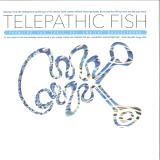
The first-ever illustrated compendium recounting the seminal underground South London ambient party that surfaced at the axis through which the likes of Ninja Tune, Warp and Rising High flowed. Telepathic Fish shared fertile waters with Megatripolis and The Big Chill, moving the early 90s London back room chill-out space into the kaleidoscopic spotlight.
Documenting the sights and sounds of South London’s seminal Telepathic Fish ambient parties. Hosted by Chantal Passamonte (aka Mira Calix - RIP), David Vallade, Mario Aguera and Kevin Foakes (aka DJ Food) - collectively named Openmind. With the help of Mixmaster Morris (The Irresistible Force) and Matt Black (Coldcut), they put on some of the earliest chill out events in London.
Rooted deep in the heart of the electronic underground they started DJing and decorating house parties or squats with mind-blowing installations and wholly idiosyncratic design, hosting the likes of Aphex Twin, Andrea Parker and Tony Morley (The Leaf Label). Within a year they were playing VIP after shows for the likes of Orbital and illegal New Year’s gatherings at the disused Roundhouse whilst guesting on Coldcut’s Solid Steel radio show on London’s KISS FM.
Whilst collaborations with legendary club nights such as Megatripolis saw them share bills with Autechre, Higher Intelligence Agency, Scanner and Global Communication, they also created their own ambient fanzine - Mindfood – to document the scene evolving around them. A 20-page history of their parties is included in the release, richly illustrated with personal photos, artwork and memorabilia from their adventures between 1992-95. The gatefold sleeve also features their Telepathic Fish logo, mirroring an original T-shirt design they sold in Ambient Soho, a record shop three of the four worked in at different times.
The selections featured here are all personal favourites that were played at the Telepathic Fish parties during the 90s. Picked and arranged by Mario, David and Kevin who combed their collections for key pieces they associate with the time and Chantal’s music tastes. Over a hundred tracks were selected, totalling nearly 11 hours of playing time, before being whittled down to the essentials by the trio, forming a snapshot of their world back in the day.
KEY POINTS:
* Features long deleted and hard to find tracks by Caustic Window (Richard D. James aka Aphex Twin), Tranquility Bass, Spacetime Continuum and Global Communication (Mark Pritchard and Tom Middleton).
• Pressed on DJ friendly double black vinyl
• Includes A 20-page history of their parties is included in the release, richly illustrated with unseen personal photos, artwork and memorabilia from the Telepathic Fish crew’s adventures between 1992-95, as well as detailed liner notes courtesy of founding members Mario Ageura and Kevin Foakes.
• Cover includes horizontal obi sticker with quote from Simon Reynolds' book Energy Flash: A Journey Through Rave Music And Dance Culture, describing the Telepathic Fish parties' place in the dance music landscape.
• Lacquer cut by Beau Thomas at Ten Eight Seven Mastering
- 1: When The Night Falls
- 2: I'm Rowed Out
- 3: The Immediate Pleasure
- 4: My Degeneration
- 5: Man With Money
- 6: You're Too Muc
- 7: Good Day Sunshine
- 8: Please Don't Cry
- 9: When The Night Falls (Demo)
- 10: I'm Rowed Out (Demo)
- 11: The Immediate Pleasure (Demo)
- 12: My Degeneration (Alternate Version)
- 13: Radio London Jingle
- 14: The Pupils - Route 66
- 15: Shakin' All Over
- 16: When The Night Falls (Demo 2)
Retrospective of British mod / fReakBeat / pop-aRt heroes the eYes including all their cult classic 45s (“When the night falls”, “i’m RoWed out”, “MY degeneRation”...) plus cool rare tRacks souRced fRoM demos and acetates.
foRmed in london in 1964, the eYes took the earlY feedback experiments and pop aRt iMage of bands like the Who one step further. the band wore dyed parkas in various pastel colouRs and bRightly colouRed rugBY shiRts with huge eye symBols on the chest.
theiR raw, eneRgetic sound and distinctive stYle comBined aggRessive, fuzz-dRiven guitaR riffs with catchy melodies and a Youthful defiance that captuRed the eneRgy of the london mod scene. theiR music bRidged rawness fReakBeat with the eMeRging psYchedelic sound that would dominate the latteR half of the decade.
tracks like the feedback-laden “When the night falls” oR the fuzzed-out “you’re too Much” sounded YeaRs ahead of its time and they would influence the mod, garage revival and indie / shoegaze scene of the folloWing decades.
the eYes only released a handful of singles betWeen 1965 and 1966. theY disBanded in 1967 and unfortunatelY they never released a full album during their shoRt lifespan. heRe it is!
*ReMastered sound / *eight-page color insert with liner notes by paul “smiler” andeRson and rare photos / memorabilia / *doWnload card
- 1: Cat’s In The Cradle
- 2: I Wanna Learn A Love Song
- 3: Shooting Star
- 4: 30,000 Pounds Of Bananas
- 5: She Sings Songs Without Words
- 6: What Made America Famous?
- 7: Vacancy
- 8: Halfway To Heaven
- 9: Six String Orchestra
How enduring is the signature song from Harry Chapin’s Verities & Balderdash? So timeless that it became the subject of a 2025 documentary in which artists from multiple generations weigh in on its impact on their lives and craft. “Cat’s in the Cradle” doubtlessly remains the main event on the singer-songwriter’s 1974 album. The legendary opening track also serves as a guidepost for the bold personal and social material that follows — as well as the gorgeous folk-rock arrangements that underpin the New York native’s most commercially successful work.
Sourced from the original master tapes, pressed at Fidelity Record Pressing, housed in a Stoughton jacket complete with a four-page insert, and strictly limited to 3,000 numbered copies, Mobile Fidelity’s 180g 33RPM LP of Verities & Balderdash presents Chapin’s fourth full-length in audiophile quality for the first time on vinyl. Captured during a golden era for sonics and production, the Top 5 effort features remarkable tonal balance, instrumental separation, and organic naturalism. Those valued aspects come into supreme focus on this reissue, which plays with dead-quiet surfaces and a low noise floor.
The newfound clarity, openness, and imaging underscore the lasting appeal of Chapin’s tender deliveries, soulful timbre, and careful phrasing. Every word comes across with incredible realism, while his underrated guitar playing occupies its own distinctive space. Also notable: The extension of the tasteful string accents; airiness of the backing vocals; depth and shape of the spare bass lines; and width and depth of the soundstaging. When on “Six String Orchestra” Chapin calls out names of instruments, they appear like magic, the band performing feet from you. Chapin has never sounded so lifelike on record.
Certified double platinum, Verities & Balderdash resonated with the times and public. “Cat’s in the Cradle” reached No. 1 on the chart on its way to being inducted into the Grammy Hall of Fame. The romantic ballad “I Wanna Learn a Love Song” flirted with the Top 40 and wrapped listeners in the equivalent of a cozy blanket. The record’s other single, the mini-epic “What Made America Famous?,” helped establish Chapin as one of the country’s most incisive and insightful commentators.
Verities & Balderdash teems with situational devices and topical matters. Chapin observes everything from the polarization of the nation to changes in moral standards and cultural priorities. He investigates pressing themes without ever turning preachy or elevating himself above the matters at hand. On “Halfway to Heaven,” whose coda races to the finish and ranks as the most urgent moment on the record, Chapin inhabits the mind of his frustrated protagonist akin to an eagle-eyed novelist.
Conveying emotions that range from melancholic to carefree, Chapin is as much of a singer as a storyteller. He assumes the voice of multiple characters within a single narrative. During the quirky “30,000 Pounds of Bananas,” a tale based on a delivery-truck accident in 1965, Chapin alters his delivery, pronunciation, and diction to become an old man reflecting on the mishap and mess. The tempo, too, adjusts to match the speed of the vehicle Chapin describes.
Adorned with timely laugh tracks to reinforce the bittersweet humor, the stripped-down “Six String Orchestra” takes everything up another notch, with Chapin intentionally missing guitar notes or playing a broken passage to illustrate the failures of the hopeful protagonist who doesn’t have what’s required to make it as an artist.
Chapin, of course, did not have any such problem. The lynchpin of a career cut short by a tragic traffic incident, Verities & Balderdash is Exhibit A of the savvy craft, feeling, and perspective he lent to American music.
- A1: Kajagoogoo - Kajagoogoo (Instrumental)
- A2: Simple Minds - Don't You (Forget About Me)
- A3: Orchestral Manoeuvres In The Dark - If You Leave
- A4: Oingo Boingo - Weird Science
- A5: Furniture - Brilliant Mind
- A6: Dave Wakeling - She’s Having A Baby
- B1: The Flowerpot Men - Beat City
- B2: The Psychedelic Furs - Pretty In Pink
- B3: Flesh For Lulu - I Go Crazy
- B4: Dr. Calculus - Full Of Love
- B5: Lick The Tins - Can't Help Falling In Love
- B6: Steve Earle & The Dukes - Six Days On The Road (A
- C1: Kirsty Maccoll - You Just Haven't Earned It Yet Bab
- C2: Suzanne Vega & Joe Jackson - Left Of Center
- C3: Pete Shelley - Do Anything (Soundtrack Version)
- C4: Carmel - It's All In The Game
- C5: The Dream Academy - Power To Believe (Instrume
- C6: Kate Bush - This Woman's Work
- D1: The Beat - March Of The Swivelheads (Rotating He
- D2: Nick Heyward - When It Started To Begin
- D3: Orchestral Manoeuvres In The Dark - Tesla Girls
- D4: Big Audio Dynamite - Bad
- D5: Killing Joke - Eighties
- D6: The Specials - Little Bitch
- E1: Gene Loves Jezebel - Desire (Come And Get It) (Us
- E2: Flesh For Lulu - Slide
- E3: Love And Rockets - Haunted When The Minutes Dr
- E4: Sigue Sigue Sputnik - Love Missile F1-11 (Ultraviole
- E5: Lords Of The New Church - Method To My Madnes
- F1: The Jesus And Mary Chain - The Hardest Walk (Sing
- F2: Echo & The Bunnymen - Bring On The Dancing Hor
- F3: General Public - Tenderness
- F4: The Blue Room - I'm Afraid
- F5: Belouis Some - Round, Round
- F6: Thompson Twins - If You Were Here
- F7: The Dream Academy - Please, Please, Please Let M
- G1: Yello - Oh Yeah
- G2: Book Of Love - Modigliani (Lost In Your Eyes)
- G3: Otis Redding - Try A Little Tenderness
- G4: Patti Smith - Gloria In Excelsis Deo
- G5: Westworld - Ba-Na-Na-Bam-Boo
- G6: Divinyls - Ring Me Up
- G7: Topper Headon - Drummin' Man
2LP Edition[87,35 €]
Demon Music group in conjunction with the Hughes family are proud to present the first official compilation of music
from the movies of legendary filmmaker John Hughes, covering the classic eighties period 1983 – 1989.
For anyone growing up in the 1980s, the films of John Hughes are some of the most iconic of the decade and have
created a lasting cultural impact still felt and referenced across TV, film and music. As well as the characters and
stories created in these iconic movies, what made John Hughes’ movies different from the rest was the symbiotic
relationship between scene and music. Whether Cameron Frye staring at the painting in Ferris Bueller’s Day Off set to
The Dream Academy’s “Please, Please, Please Let Me Get What I Want (Instrumental)”, Duckie and Andie from Pretty
In Pink at prom set to Orchestral Manoeuvres In The Dark’s “If You Leave”, or even Neal and Del’s classic “Those aren’t
pillows” scene from Planes, Trains and Automobiles set to Emmylou Harris’ “Back In Baby’s Arms”.
“Music was a huge part of filmmaking for him, it was a thing he seemed to like the most.” Matthew Broderick
Curated by John Hughes’ music supervisor Tarquin Gotch, this 6LP vinyl boxset includes 73 tracks from the movies
National Lampoon’s Vacation, Sixteen Candles, The Breakfast Club, Weird Science, Pretty In Pink, Ferris Bueller’s Day
Off, Some Kind Of Wonderful, Planes, Trains And Automobiles, She’s Having A Baby, The Great Outdoors and Uncle
Buck.
“Back when we were working on these movie soundtracks, the best way to send music around the world was the
cassette, by Fedex. We sent John cassettes of newly released music, of demos, of just finished mixes (and in return he
would send VHS videos of the scenes that needed music).” Tarquin Gotch
The films of John Hughes spawned many classic tracks, some licensed for the films, some commission specifically, and
many going on to become huge international hits from acts such as Simple Minds, Kate Bush, Furniture, Yello, and
The Psychedelic Furs.
“It serves as a reminder not just to the musicians he championed in the 1980s, but to how intensely his search for
music expanded beyond this era. Until his final days, he was still collecting outrageous amounts of music from around
the world, galaxies removed from the New Romantic and new wave sounds that, to many, still define him.” James
Hughes
Also includes an extensive 24-page booklet including memories from Matthew Broderick, James Hughes, Tarquin
Gotch, Ron Payne, plus track-by-track sleeve notes.
“John said he only made movies so he could choose what music to put in them, so as his success at the Box Office
grew, and thus his power with the studios, the number of tracks in his films, by up and coming UK bands, steadily
grew.” Tarquin Gotch
Billy Idol - "Catch My Fall" (From The 1987 Movie 'Some Kind Of Wonderful')
The Association - "Cherish" (From The 1986 Movie 'Pretty In Pink')
Penguin Cafe Orchestra - "Music For A Found Harmonium" (From The 1988 Movie 'She's Having A Baby')
Zapp - "Radio People" (From The 1986 Movie 'Ferris Bueller's Day Off')
Blue Room - "Cry Like This" (From The 1987 Movie 'Some Kind Of Wonderful')
Ray Charles - "Mess Around" (From The 1987 Movie 'Planes, Trains & Automobiles')
Joe Turner - "Lipstick, Powder & Paint" (From The 1989 Movie 'Uncle Buck')
Darlene Love - " (Today I Met) The Boy I'm Gonna Marry" (From The 1984 Movie 'Sixteen Candles')
Marvin Gaye - "How Sweet It Is (To Be Loved By You)" (From The 1988 Movie 'She's Having A Baby')
Perry Como/Mitchell Ayres & His Orchestra/The Ray Charles Singers - "Juke Box Baby" (From The 1989 Movie 'Uncle Buck')
The Chordettes - "Mr Sandman" (From The 1989 Movie 'Uncle Buck')
Ray Anthony & His Orchestra - "The Peter Gunn Theme" (From The 1984 Movie 'Sixteen Candles')
Lindsey Buckingham - "Holiday Road" (From The 1983 Movie 'National Lampoon's Vacation')
Emmylou Harris - "Back In Baby's Arms" (From The 1987 Movie 'Planes, Trains & Automobiles')
Hugh Harris - "Rhythm Of Life" (From The 1989 Movie 'Uncle Buck')
Spandau Ballet - "True" (From The 1984 Movie 'Sixteen Candles')
Propaganda - "Abuse" (From The 1987 Movie 'Some Kind Of Wonderful')
The Dream Academy - "The Edge Of Forever" (From The 1986 Movie 'Ferris Bueller's Day Off')
Yello - "Lost Again" (From The 1987 Movie 'Planes, Trains & Automobiles')
Bryan Ferry - "Crazy Love" (From The 1988 Movie 'She's Having A Baby')
The Rave-Ups - "Positively Lost Me" (From The 1986 Movie 'Pretty In Pink')
Los Lobos - "Don't Worry Baby" (From The 1985 Movie 'Weird Science')
Steve Earle - "Continental Trailways Blues" (From The 1987 Movie 'Planes, Trains & Automobiles')
The Revillos - "Rev Up" (From The 1984 Movie 'Sixteen Candles')
Boston - "More Than A Feeling" (From The 1988 Movie 'She's Having A Baby')
Balaam & The Angel - "I'll Show You Something Special" (From The 1987 Movie 'Planes, Trains & Automobiles')
The Rave-Ups - "Rave Up/Shut Up" (From The 1986 Movie 'Pretty In Pink')
Pop Will Eat Itself - "Beaver Patrol" (From The 1988 Movie 'The Great Outdoors')
The Vapors - "Turning Japanese" (From The 1984 Movie 'Sixteen Candles')
Silicon Teens - "Red River Rock" (From The 1987 Movie 'Planes, Trains & Automobiles')
out
FIRST-EVER VINYL RELEASE OF CULT 1980 CASSETTE-ONLY ALBUM BY EGYPTIAN SINGER NAGAT EL SAGHIRA, CURATED AND ANNOTATED BY DISCO ARABESQUO. INCLUDES PRODUCTION BY EGYPTIAN FUNK LEGEND HANY SHENOUDA
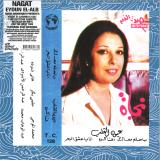
Following the highly-acclaimed "Sharayet El Disco" compilation, Wewantsounds is delighted to team up with Disco Arabesquo for the reissue of Nagat El Seghira's cult 1980 album "Eyoun El Alb"
Originally released only on cassette on the Egyptian label Soutelphan, the album has since become a sought-after classic on the Arabic groove scene and this is the first time it is released on vinyl. Consisting of four tracks, the album features two tracks produced by Hany Shenouda whose group Al Massrieen is a reference on the Arabic disco funk scene.
Remastered for vinyl by Colorsound Studio in Paris, the album features the original cassette artwork plus a two page colour insert featuring liner notes by Disco Arabesquo.
When it comes to Arabic Divas, Oum Kalthoum, Fairuz and Warda usually take the lead in the poll list. But in her native Egypt, singer Nagat Al Saghira comes very close to this triumvirate. Born in Cairo in 1938, Nagat began singing when she was still a child gaining her stage name "El-Saghira" ("the young one") at this occasion as she started giving concerts at the age of seven, pushed by her father, the famed calligrapher Muhamad Hosny (Nagat's half-sister is the renowned actress Soad Hosny).
Nagat quickly rose to fame in the late forties and became an essential part of classic period of Arabic music, interpreting songs by such titans as Mohamed Abdel Wahab, Baligh Hamdy and Kamal Al Taweel. She also sang the works of Syrian poet Nizar Qabbani whom she introduced to a mainstream audience. Nagat started singing shorter songs but then upgraded to longer ones, often performing/recording them live as it was the trend in the 60s and 70s.
One such song is "Eyoun El Alb" ("Eyes of the Heart") which makes up the whole of Side 1 of the original cassette. Written by Mohamed El Mougy and Abd al-Rahman al-Abdouni, Eyoun El Alb is a love song made up of several distinct sections enhancing Nagat's hypnotic singing, accompanied by a percussion-heavy, traditional Egyptian orchestra.
Side 2 is the "diggers" groovier side featuring two floaters,"Bahlam Ma'ak" ("I Dream with You") and "Ana Basha El Bahr" ("I Adore The Sea") produced by cult Egyptian musician and producer Hany Shenouda, whose albums with his group Al Massrieen are highly sought after on the Arabic funk and Disco scene. One Al Massrieen track features on the "Sharayet el Disco" set compiled by Disco Arabesquo who notes that "Hany Shenouda had made waves with his new musical style that weaved in western funk and disco sounds into Egyptian music"
Both tracks feature an infectious slow-burning groove and incorporate funk influences with fat bass and lines of synth and clavinet that adds a funky tone to Nagat's soft singing. The third track "Fakra" ("Do You Remember") brings the best of both world with a syncopated rhythm and arrangements that are slightly more traditional than the Shenouda-produced tracks.
Originally released in Egypt on Cassette in 1980 on the venerable Soutlephan label, the album is now making its vinyl debut on Wewantsounds annotated by Disco Arabesquo and remastered for vinyl by Colorsound Studio in Paris for the joy of Arabic funk and Global beats worldwide.
Wewantsounds is delighted to reissue Charles Kynard"s 1972 cult classic Woga, recorded in Los Angeles for Mainstream Records and featuring top-tier musicians Chuck Rainey, Paul Humphrey, Arthur Adams, and George Bohanon. Produced by Bob Shad, the album stands as one of the label"s funkiest releases, showcasing Kynard"s signature Hammond organ grooves. Woga is reissued here on vinyl for the first time since its original release, complete with its original gatefold artwork using first-generation session photos. This edition also includes the bonus track "Smiling Faces Sometimes" and comes with newly remastered audio plus a two-page insert featuring new liner notes by Kevin Le Gendre.
- A1: Kajagoogoo - Kajagoogoo (Instrumental)
- A2: Simple Minds - Don't You (Forget About Me)
- A3: Orchestral Manoeuvres In The Dark - If You Leave
- A4: Oingo Boingo - Weird Science
- A5: Furniture - Brilliant Mind
- A6: Dave Wakeling - She’s Having A Baby
- B1: The Flowerpot Men - Beat City
- B2: The Psychedelic Furs - Pretty In Pink
- B3: Flesh For Lulu - I Go Crazy
- B4: Dr. Calculus - Full Of Love
- B5: Lick The Tins - Can't Help Falling In Love
- B6: Steve Earle & The Dukes - Six Days On The Road (A
- C1: Kirsty Maccoll - You Just Haven't Earned It Yet Bab
- C2: Suzanne Vega & Joe Jackson - Left Of Center
- C3: Pete Shelley - Do Anything (Soundtrack Version)
- C4: Carmel - It's All In The Game
- C5: The Dream Academy - Power To Believe (Instrume
- C6: Kate Bush - This Woman's Work
- D1: The Beat - March Of The Swivelheads (Rotating He
- D2: Nick Heyward - When It Started To Begin
- D3: Orchestral Manoeuvres In The Dark - Tesla Girls
- D4: Big Audio Dynamite - Bad
- D5: Killing Joke - Eighties
- D6: The Specials - Little Bitch
- F2: Echo & The Bunnymen - Bring On The Dancing Hor
- F3: General Public - Tenderness
- F4: The Blue Room - I'm Afraid
- F5: Belouis Some - Round, Round
- F6: Thompson Twins - If You Were Here
- F7: The Dream Academy - Please, Please, Please Let M
- G1: Yello - Oh Yeah
- G2: Book Of Love - Modigliani (Lost In Your Eyes)
- G3: Otis Redding - Try A Little Tenderness
- G4: Patti Smith - Gloria In Excelsis Deo
- G5: Westworld - Ba-Na-Na-Bam-Boo
- G6: Divinyls - Ring Me Up
- G7: Topper Headon - Drummin' Man
- E1: Gene Loves Jezebel - Desire (Come And Get It) (Us
- E2: Flesh For Lulu - Slide
- E3: Love And Rockets - Haunted When The Minutes Dr
- E4: Sigue Sigue Sputnik - Love Missile F1-11 (Ultraviole
- E5: Lords Of The New Church - Method To My Madnes
- F1: The Jesus And Mary Chain - The Hardest Walk (Sing
6LP Edition[79,79 €]
Demon Music group in conjunction with the Hughes family are proud to present the first official compilation of music
from the movies of legendary filmmaker John Hughes, covering the classic eighties period 1983 – 1989.
For anyone growing up in the 1980s, the films of John Hughes are some of the most iconic of the decade and have
created a lasting cultural impact still felt and referenced across TV, film and music. As well as the characters and
stories created in these iconic movies, what made John Hughes’ movies different from the rest was the symbiotic
relationship between scene and music. Whether Cameron Frye staring at the painting in Ferris Bueller’s Day Off set to
The Dream Academy’s “Please, Please, Please Let Me Get What I Want (Instrumental)”, Duckie and Andie from Pretty
In Pink at prom set to Orchestral Manoeuvres In The Dark’s “If You Leave”, or even Neal and Del’s classic “Those aren’t
pillows” scene from Planes, Trains and Automobiles set to Emmylou Harris’ “Back In Baby’s Arms”.
“Music was a huge part of filmmaking for him, it was a thing he seemed to like the most.” Matthew Broderick
Curated by John Hughes’ music supervisor Tarquin Gotch, this 6LP vinyl boxset includes 73 tracks from the movies
National Lampoon’s Vacation, Sixteen Candles, The Breakfast Club, Weird Science, Pretty In Pink, Ferris Bueller’s Day
Off, Some Kind Of Wonderful, Planes, Trains And Automobiles, She’s Having A Baby, The Great Outdoors and Uncle
Buck.
“Back when we were working on these movie soundtracks, the best way to send music around the world was the
cassette, by Fedex. We sent John cassettes of newly released music, of demos, of just finished mixes (and in return he
would send VHS videos of the scenes that needed music).” Tarquin Gotch
The films of John Hughes spawned many classic tracks, some licensed for the films, some commission specifically, and
many going on to become huge international hits from acts such as Simple Minds, Kate Bush, Furniture, Yello, and
The Psychedelic Furs.
“It serves as a reminder not just to the musicians he championed in the 1980s, but to how intensely his search for
music expanded beyond this era. Until his final days, he was still collecting outrageous amounts of music from around
the world, galaxies removed from the New Romantic and new wave sounds that, to many, still define him.” James
Hughes
Also includes an extensive 24-page booklet including memories from Matthew Broderick, James Hughes, Tarquin
Gotch, Ron Payne, plus track-by-track sleeve notes.
“John said he only made movies so he could choose what music to put in them, so as his success at the Box Office
grew, and thus his power with the studios, the number of tracks in his films, by up and coming UK bands, steadily
grew.” Tarquin Gotch
Music For Pleasure is the 1997 debut studio album by Monaco, a side project of New Order bassist Peter Hook. When New Order went on a hiatus after 1993’s Republic, Hook took the group’s sound and spirit with him and founded Monaco together with David Potts. Hook’s distinctive pulsating bass lines united New Order’s marriage of post-punk and pop, creating an identity so recognizable that Monaco’s first single, “What Do You Want From Me?”, was often mistaken for a New Order track. Upon its release, the album hit #11 on the UK album charts and sold more than 500.000 copies worldwide Music For Pleasure is for the first time available as an expanded edition featuring 6 bonus tracks, including remixes by Joey Negro and Farley & Heller. The 2LP Music For Pleasure (Expanded Edition) is available as a limited edition of 2.000 copies on orange coloured vinyl, housed in a gatefold sleeve, and includes a 4-page booklet.
Back in 1995 Section 47 released their final EP on their own Terra Records. Three jungle/drum & bass tracks that became highly sought after (which is obviously why we approached them!). This is probably the rarest record we have released as only 50 white labels came out back in 1995.
There were two EPs prior to this one if you collectors want to dig those out plus the chaps have recently put out a new album, a collection of released and unreleased tracks from 30 years ago which you can find on their Bandcamp page.
- A1: Korogi ‘73 - Fushigi Song
- A2: Yas-Kaz - Hei (Theme Of Shikioni)
- A3: Yoichiro Yoshikawa - Tassili N'ajjer
- A4: Norihiro Tsuru - Farsighted Person
- B1: Geinoh Yamashirogumi - Theme Of Kaneda
- B2: Yoichiro Yoshikawa - Fiesta Del Fuego
- B3: Columbia Orchestra - Heart Beats / Theme For Andrew Glesgow
- B4: Kan Ogasawara - Gishin Anki
LP vinyl only release + 4 page liner notes (comes with hype sticker)
The percussive new age soundtracks of '80s and early '90s Japanese TV, anime and manga built alternative worlds and pushed boundaries in the process.
When Japanese composer Yas-Kaz left Tokyo for Bali in the mid 1970s he had little idea of how influential his trip would become. In studying the storied art of gamelan, the jazz and avant-garde percussionist opened a door to a world of sound and rhythm left behind by the West. The music he and his contemporaries made would become known as new age. It also happened to soundtrack the golden era of anime.
Awash with money and with the prerogative to entertain the burgeoning middle classes, anime in the 1980s experienced a creative and commercial boom. Not constricted by generic expectations, production houses such as the now renowned Studio Ghibli were able to experiment liberally with both form and content. And with it came the space for composers to be similarly adventurous.
TV, Anime & Manga New Age Soundtracks 1984-1993 charts this moment across eight tracks spanning classics of the genre and previously unknown rarities. The collection brings together music that found kinship in electronic and acoustic instrumentation, often combining spiritual or environmental themes with percussive, varied and highly refined syncopations of non-Western musical traditions.
Among them is ‘Kaneda’ by Geinoh Yamashirogumi, the shape-shifting group of self-styled musicians, anthropologists and computer scientists that masterminded the soundtrack to game-changing dystopian anime Akira - and with whom the sound, tuning and breakneck speed of Balinese gamelan has become indelibly entwined.
Reflecting the desires of the era to reach beyond Japan’s borders, many of the soundtracks featured were commissioned for narratives set in distant lands or alternative worlds. There’s violinist and composer Norihiro Tsuru’s ‘Farsighted Person’, written for The Heroic Legend of Arslān, set in ancient Persia; Yas-Kaz’s own ‘Hei (Theme of Shikioni)’, for period sci-fi manga & anime series Peacock King - Spirit Warrior; and two tracks - Tassili N’Ajjer and Fiesta Del Fuego - from Yoichiro Yoshikawa’s soundtrack to NHK’s proto-Planet Earth series The Miracle Planet.
Such was the variety and quality of the music produced, if there is a guiding principle to the tracks collected here it is a sense of escapism and adventure that came with the confluence of modern electronic instruments and a fascination with percussive traditions.
Elsewhere, pioneering children’s TV composer Chumei Watanabe’s ‘Fushigi Song’ (performed by a vocal group Korogi ‘72) offers a trippy and infectious groove with sonic similarities to Don Cherry’s ‘Brown Rice’; little-known jazz-funk library group Columbia Orchestra showcase the best of Tokyo’s session musicians on ‘Hearts Beats - Theme for Andrew Glasgow’; before lawyer-turned-composer Kan Ogasawara closes out the compilation with a dramatic flourish on ‘Gishin Anki’.
Following on from Time Capsule’s acclaimed deep-dive into the world of manga & anime synth-pop in 2022, this vinyl only collection is set to broaden and diversify an understanding of how soundtracks shaped the sound of new age music in Japan for a generation.
Curators: Kay Suzuki, Rintaro Sekizuka (Vinyl Delivery Service)
Artwork: Tu-yang
- A1: Harleys & Indians (Riders In The Sky)
- A2: Crash! Boom! Bang!
- A3: Fireworks
- A4: Run To You
- B1: Sleeping In My Car
- B2: Vulnerable
- B3: The First Girl On The Moon
- B4: Place Your Love
- B5: I Love The Sound Of Crashing Guitars
- C1: What’s She Like?
- C2: Do You Wanna Go The Whole Way?
- C3: Lies
- C4: I’m Sorry
- C5: Love Is All (Shine Your Light On Me)
- D1: Go To Sleep
- D2: Almost Unreal
- D3: Crazy About You
- D4: See Me
Crash! Boom! Bang! 30-year anniversary celebrated with a unique special edition: a double album in black and white vinyl with 18 tracks and an 8-page booklet.
30 years ago, Roxette released their fifth album "Crash! Boom! Bang!", including a stream of hit singles like "Sleeping In My Car", the title track, "Fireworks", "Run To You" and "Vulnerable". The album would sell more than five million copies and was followed by their second World Tour, which saw them perform for over a million people, including the second performance ever by an international act in China.
“Roxette were among the three most played artists on American radio during 1989, 1990 and 1991, and we were on top of the charts all over the world. So, it's no wonder we felt pretty confident when it was time to record the new album”, Per Gessle says. “Having had that kind of success made us feel that we had a perfect opportunity to stretch out into new directions. To show slightly different sides of what Roxette could be. And I still think "Crash! Boom! Bang" is our best album”. Crash! Boom! Bang! saw chart success upon release, No. 1 in Sweden, No. 2 in Germany and No. 3 in Australia and the UK.
Roxette – Marie Fredriksson and Per Gessle – came out of Sweden in the late 80’s. Their game was pop, their mission to conquer the world. With 33 chart-busting singles and total record sales exceeding 75 million, it seems safe to say “mission accomplished”.
5/5 LEAD TWO-PAGE REVIEW IN MOJO: “SHACK'S SONGWRITING HERO'S ROMANTIC , OPIATED FOLK DREAM, RESTORED AND AUGMENTED WITH A COMPANION ALBUM OF UNHEARD SONGS.
5/5 LEAD TWO-PAGE REVIEW IN Q MAGAZINE: “SCOUSE CULT HERO'S MAGICAL MOMENT REVISITED. THAT THESE ARE SONGS THAT FEEL A LITTLE MORE TRANSCENDENT WITH EVERY PASSING YEAR IS NO MERE CONJECTURE.”
9/10 IN UNCUT : “ANDMOREAGAIN! A LOVE-LORN MASTERPIECE AND ITS LONG-LOST SIBLING”
SUNDAY TIMES 'MUST-HAVE REISSUE' “ONE OF THE 1990'S GREAT LOST ALBUMS..MORE REDOLENT OF SUMMER-OF-LOVE SAN FRANCISCO THAN BRITPOP MERSEYSIDE...A CLASSIC...
Music for dancefloors when the night turns uncanny.
Vyvyan is Bonar Bradberry’s solo project stripping club music to its core while expressing a deep love for dance music culture. His 2022 debut album, Y, balanced rough-edged percussion with warped melodies. "Waterslide EP" pushes this sound further with Gallegos stepping in to remix the monumental title track.
Bradberry is also known for his work as one half of the Leeds-based duo PBR Streetgang.
- A1: Boul Di Tagale
- A2: Né La Thiass
- A3: Ndogal
- B1: Set
- B2: Cheikh Ibra Fall
- B3: Bamba Sunu Goorgui
- B4: Guiss Guiss
A limited reissue of Cheikh Lô's classic debut album Né La Thiass. Produced by Youssou N'Dour in Dakar in 1995. Cheikh ranks the album as his favourite release.
Available for the frst tme on vinyl, with new artwork and mastered from the original cassete mixes. Includes 2 bonus fully artworked postcards.
180g heavyweight. 16 page colour booklet. Download code included. Cheikh will be touring internatonally throughout 2018.
The efect on frst hearing is positvely spine-tngling - and it
gets beter with every play.'
THE TIMES
- A1: Groupies & Goofies
- A2: Count Money (Feat Bossman Dlow)
- A3: Rubberband Man
- A4: Shy Kid
- A5: I Need Some Motivation
- B1: Wavy Navy University (Feat. Veeze)
- B2: Watching My Page
- B3: Delusional (Feat. Hunxho)
- B4: Cherish (Feat. Dj Esco)
- B5: Stuck In My Ways (Feat. King Hendrick$)
- C1: Nights Like This
- C2: 2 For 6 (Feat G Herbo)
The Kid That Did is the fourth studio album from acclaimed rapper and Detroit staple, Babyface Ray. Known for his effortless, conversational flow and sharp wordplay, Ray has been building momentum over the past few years, and his latest project promises to be another milestone in his career.
Following the success of 2022’s FACE, which reached #3 on Apple Music’s all-genre chart and earned praise from outlets like Billboard and Complex, and MOB, which featured collaborations with heavyweights like Lil Durk and Blxst, Ray’s new work showcases an artist at the peak of his game. His recent singles “Green Carpet,” “Money On My Mind,” and “Understand” each pulled in over 1.5 million streams in their first week, setting the stage for The Kid That Did to be his biggest release yet.
Fresh off a label deal with EMPIRE and riding the success of his first RIAA-certified gold record, Babyface Ray’s influence continues to grow. After a sold-out tour and major appearances, including a performance on Jimmy Fallon and being named to XXL’s 2022 Freshman Class, Ray is ready to take things to the next level with The Kid That Did.
With his signature Detroit sound and an impressive lineup of collaborators including Bossman Dlow, Peezy, Fabolous, G Herbo, DJ ESCO & more, The Kid That Did is set up to be a defining moment for Ray as he solidifies his place in modern hip-hop.
Parade Ground has always been the duo of brothers Jean-Marc and Pierre Pauly from Brussels, Belgium formed in 1981. Taking cues from Post-Punk, Coldwave, Dada and Surrealism, Parade Ground channeled suffering, tension and rage through pulsing synthesizers, skeletal guitar, severe bass and Jean-Marc’s expressive vocals as the most melodic and emotional instrument. The Golden Years is an 11-song, career-spanning collection of Parade Ground’s long out-of-print 7” and 12” singles as well as rare compilation tracks from the pioneers of electronic body music created during 1982-1988.
Parade Ground first appeared on the Nationale Rockmeeting LP in 1982, striking straight to the heart with the passionate plea “I Shut My Eyes.” Later that year the brothers met Daniel B. and Patrick Codenys of Front 242 beginning a collaborative partnership that continues to present day. In 1983 they released their debut 3-song 7” EP Moan On The Sly on the New Dance label, musically a hybrid of Joy Division and Fad Gadget. 1984 brought further explorations into the world of electronic body music with the 3-song Man In A Trance EP and 2 tracks on the live concert compilation Mask Promotion both records released on Front 242's Mask Music label. The following year the single Took Advantage/Moral Support 12” was released incorporating then, state-of-the-art modular synthesizers programmed by Daniel B. and back-up vocals from Flo Sullivan (A Formal Sigh, Shiny Two Shiny). Then in 1987 the brothers collaborated with Colin Newman of British post-punk band Wire, who produced and lent his vocals, guitars and keyboards to two songs ("Moans"/"Action Replay") while Daniel B. produced flipside "Gold Rush" on the Dual Perspective EP that stands alongside 80s anthems from Tears for Fears, Modern English, Echo & The Bunnymen. Finally in 1988 their debut album Cut Up was released on Play It Again Sam Records and featured the singles Strange World and Hollywood. In 1993 the brothers wrote and composed the vocals on two Front 242 albums Up Evil and Off. After 15 years of silence the boys released their second album Rosary in 2007 and continue to write new material and tour with their extensive catalog of dark dance classics. Each LP includes a 6-page press kit with lyrics, discography, photos and liner notes by Daniel B. of Front 242. The history of Belgian electronic music would not be complete without a trip through “The Golden Years” of Parade Ground.
The first-ever vinyl reissue of the classic 1986 debut album from perennial pop icon and pin-up Samantha Fox. The only British female solo artist to score three Top Ten hits on both sides of the Atlantic in the 1980s, Samantha made her name as the nation’s favourite Page Three girl before launching an enviable music career.
Touch Me features four hit singles: the international smash ‘Touch Me (I Want Your Body)’ (#3 UK and #4 US), ‘Do Ya Do Ya (Wanna Please Me)’ (#10 UK), ‘Hold On Tight’ and ‘I’m All You Need’. Immediately establishing Samantha’s signature pop-rock sound, on its original release the album hit #17 in the UK, going silver, before reaching #24 in the US with a gold certification. Pressed on striking black vinyl with white and pink splatters to complement the original aesthetic, this edition boasts painstakingly rebuilt artwork and a newly designed inner bag featuring full lyrics. A strictly limited-edition picture disc is also available. Touch Me is reissued alongside Samantha’s self-titled second album and 1989’s I Wanna Have Some Fun.
- A1: Edges (Christian Wolff)
- A2: Six For The New Time (Pauline Oliveros)
- B1: Having Never Written A Note For Percussion
- B2: Six (John Cage)
- B3: +- (Takehisa Kosugi)
- B4: Voice Piece For Soprano (Yoko Ono)
- B5: Piece Enfantine
- B6: Four 6
- C1: Treatise (Page 183)
- D1: Six (4Th Take)
- D2: Burdocks
- D3: Piano Piece #13 (Carpenter's Piece)
- D4: Pendulum Music (Steve Reich)
"Goodbye 20th Century", a double album originally released in 1999, features versions of pieces by avant-garde composers such as John Cage, Yoko Ono, Steve Reich and Christian Wolff played by Sonic Youth and various collaborators such as Christian Marclay, William Winant, Wharton Tiers and Takehisa Kosugi.
- A1: Jezebel
- A2: Parce Que
- A3: Les Deux Gitares
- A4: Je M'voyais Déjà
- A5: Il Faut Savoir
- A6: Les Comédiens
- A7: La Mamma
- A8: Sa Jeunesse Entre Ses Mains
- A9: Et Pourtant
- B1: For Me Formidable
- B2: Sur Ma Vie
- B3: A Ma Fille
- B4: Que C'est Triste Venise
- B5: Une Enfant
- B6: Hier Encore
- B7: Au Printemps Tu Reviendras
- B8: La Bohème
- B9: Paris Au Mois D'août
- C1: Tout S'en Va
- C2: Emmenez-Moi
- C3: Le Cabotin
- C4: Non Je N'ai Rien Oublié
- C5: Mourir D'aimer
- C6: Les Plaisirs Démodés
- D1: Comme Ils Disent
- D2: A Ma Femme
- D3: Tous Les Visages De L'amour
- D4: Mes Emmerdes
- D5: J'ai Vu Paris
- D6: Toi Et Moi
- D7: Je T'aime Aime
- E1: Avec Un Brin De Nostalgie
- E2: Tomorrow Is My Turn
- E3: How Sad Venice Can Be
- E4: The Old Fashioned Way
- E5: The I Love You' Song
- E6: She
- E7: Yesterday When I Was Young
- E8: I'll Be There
- F1: La Légende De Stenka Razine (With Les Compagnons De La Chanson)
- F2: Je Voyage (With Katia Aznavour)
- F3: Il Faut Savoir (With Johnny Hallyday)
- F4: Young At Heart (With Frank Sinatra)
- F5: J'aime Paris Au Mois De Mai (With Zaz)
- F6: Ave Maria
Collected by Charles Aznavour is a wonderful collection of hits and classics by the French chansonnier, that touches your soul at every moment. It’s an overview of his work during the sixties, seventies and duets with Johnny Hallyday on “Il Faut Savoir” and with Frank Sinatra “Young At Heart”. Also his English versions of “How Sad Venice Can Be”, “The Old Fashioned Way”, “She” and four more English songs are included on this deluxe Trifold 3LP album.
In the early 1950s a man of short stature attempts to win over his audience. With a hoarse voice he delivers songs that do not catch on. People jeer at him. Tomatoes fly through the air. The Frenchman with Armenian roots slinks off the stage, but does not quit. Ironically, the song that makes him a household name is the song in which he recalls his agonising trial. The audience reacted indifferently when Charles Aznavour decided to try out his new song on stage. But when he went on to greet the audience for one final time they all stood and gave him a thundering standing ovation.
In the sixties, hits and classics succeed one another. Nobody is bothered any more by his husky voice, by his small stature or his rugged characterful face. The croony “For Me Formidable” (1963), the heart breaking “Et Pourtant” (1963) and the nostalgic “Hier Encore” (1964) confirm his standing as a fan favourite. “La Bohème” (1965) and “Emmenez-moi” (1967) turn Aznavour into a superstar. In “La Bohème”, there are impressionist painters strolling in the shadows of the Sacré-Coeur, the compelling “Comme Ils Dissent” (1972) is the first chanson after Vichy France to overtly endorse homo sexuality and in the present “France Of La Manif Pour Tous” (the movement that opposes gay marriage), does it again to sound particularly topical. “Camarade” (1977) was about the nomenklatura, the ruling elite in the Soviet Union and is a social and historical topic. “Avec Un Brin De Nostalgie” is an Aznavour grand cru, maybe even the best he has made over the last thirty years.
Charles Aznavour Collected is available as a limited pressing of 1000 individually numbered copies on gold vinyl. The package includes a 4-page booklet with liner notes and photos.
- A1: Bleu Nuit - Spanish Harlem
- A2: Sepia - Stress
- A3: Bleu Nuit - En Bas De Chez Toi (Live)
- A4: Les Espions - Casse-Tête Jungle
- A5: Avel Nevez - Naufrage (Partie 1)
- B1: Claude Robert Hit Orchestra - Dance The Disco Sound
- B2: Marie-Ange Cousin - Molle Ouate
- B3: Quai 21 - Music Man
- B4: Maderson - Tourne La Page
This compilation features tracks released between 1978 and 1988 in Western France.
Through this compilation, we strove to highlight a little-known regional scene, characteristic of the diverse and sometimes opposing music movements of the 80s. Through this musical journey across the Brittany, Normandy, and Pays-de-la-Loire regions, we sought to showcase a resolutely indie aesthetic, sometimes conceived in some of France’s most unusual studios, such as a bunker and a caravan.
We’ve found it difficult to make attribute an established, well-defined genre to some of the tracks featured on this compilation. They draw, each in their own way, from the rock scene that dominated the 80s in France, from countercultures, from American stars who shone on the country’s radio stations and in its record stores, and even from local folk music.
While one could hear an harmony across the tracks featured on Le Grand Ouest, channeling this manifold energy onto a record required extensive research through the Brittany, Normandy, and Pays de la Loire regions’ discographies. Over the three years since the release of Le Grand Sud-Est, we have meticulously researched the references of artists, musicians, studios, labels, and publishers from each region. We sought to trace each artist to identify and listen to all their works from that period, and, when possible, collect unreleased recordings, left as demo cassettes on the artists' dusty shelves.
The synthesis of this research, presented here under the title Le Grand Ouest, hopes to remind us of the timelessness of the indie scene in our country, through the lens of the 80s Western France’s scene. Whereas Le Grand Sud-Est exhibited the funkiest sides of the Provençale and Rhône-Alpes scene, Le Grand Ouest leans towards a more mellow, introverted music, an expression of groups of friends united by the joy of playing together.
The first 500 copies of the record come with an extensive booklet with unpublished photos, press clippings, and texts for each track.
- A1: The Guiding Stars - Been Dipped In The Water
- A2: The Religious Five Quartet - Let Me Lean On You
- A3: The Butlerairs - He's So Good To Me
- A4: Eastern Star Chorale - Until You Try Jesus
- A5: The Sensational Bells Of Joy - Lord Take My Hand
- A6: Green Street Baptist Church Youth Choir - He's All Right
- A7: The Singing Son Of Zion - Steal Away
- B1: The Gospel Voices Of Soul - Woke Up This Morning
- B2: The Gospel Motivators - Trust Him
- B3: Joe Thomas - I Feel Like Pressing My Way
- B4: The Indiana Wonders - Thank You Jesus
- B5: The Webster Singers - Stay By Our Side
- B6: Rev Eddie James And Family - Jesus Will Fix It
- C1: The Solomonaires - Come Out Of The Wilderness
- C2: The Antioch Majestic Voices - Peace Until My Soul
- C3: Rev Thomas N. Pride - He Knows It All
- C4: The Ecclesiastics - He Made A Way For Me
- C5: The Gospel Descendents - Jesus Is All I Need To Get By
- C6: The Gospel Chanteurs - Lord Don't Leave Me
- C7: Newburg Radio Chorus - Calvary
- D1: Cleo K Joiner Iii And The Metropolitan Comm. Choir - Spirit Of The Living God
- D2: Jimmy Ellis And The Riverview Spiritual Singers - I've Come A Long, Long Way
- D3: Rev Charles E. Kirby - Lord You Been Good To Me
- D4: The Golden Crowns - We Are Trying
- D5: Indiana Community Choir - Lord Don't Move That Mountain
- D6: God's Girls - My Time Ain't Long
Hardcover Book which includes a 208-page book documenting Louisville's rich Black Gospel music legacy and access to a comprehensive digital archive.
In the mid-20th century, Louisville gospel music was occasionally recorded when members of the local gospel community pressed 45rpm records and LPs, and released them through grassroots record labels such as Sensational Sounds, Grace, Blessed, and D.J.S. Over the years, a substantial body of work was produced in our city, but those recordings are in danger of being lost forever.
The Louisville Story Program has been working with dozens of people in the local gospel music community to locate, digitize, and preserve hundreds of these recordings and to develop a book that documents and honors the legacies of the people and communities that produced them.
For decades, the passion, hard work, and support of countless people across dozens of Black church communities in Louisville have nurtured and sustained a rich gospel music ecosystem. This music has served as a central part of people's religious practice and as an expression of Black pride, joy, affirmation, love, dignity, determination, and hope. This legacy continues to this day.
With support from The Owsley Brown II Family Foundation and Owsley Brown III Philanthropic Foundation, LSP has partnered with members of the gospel community and a local advisory group of local gospel historians and luminaries:
To locate, clean, and digitize gospel records of local artists released by small local labels
To accompany the local Black gospel music community in developing a 4 CD box set that includes a 200+ page hardcover book with first-person documentation of their rich history
To create an accompanying double LP featuring 26 of those songs
To create and maintain a public-facing digital archive of 1,000 songs and 1,000 photographs
To celebrate the final release with a large concert at the Brown Theatre (September 28, 2024)
- A1: Ozzobia - Ndi Oma
- A2: Sammy Obot - Edue Ukot Akpa Itong
- A3: Eppi Fanio - Farofa Dancer
- B1: Etiene T Boy - Jealousy
- B2: Ayo Manuel - Do Good (Dub)
- B3: Feladey - Experience
- C1: Chimex G Udensity And His Afrikan Band - Okpoko Na Azo Eze (Edit)
- C2: I S.c.a.c. Band - Igbo Nwe Egwu (Edit)
- C3: Jeje - Jeje
- D1: Dizzy K - Omoge
- D2: Blackman Akeeb Kareem - Oya A (Eje Kajo)
- D3: Jimi Solanke - Owo Orisa Ancestral Respects
- E1: Soki Ohale - Wumaya Awuma
- E2: Jap Band & Feladey - Japadodo
- E3: Pal Sagie - Esan
- F1: Mannix Okonkwo - Ka Anyi Gbaa Egwu
- F2: Sonny Okosuns - Highlife (Dub)
- F3: Wura Fadaka Band - Eyo
Soundway Records presents a collection of Nigerian music chronicling a time when drum machines, synthesisers, imported pop, reggae, disco and soul collided with highlife, juju and cultural music. The late 70s saw a period of political turbulence and prompted change across the country. Following suit, musicians and producers entered a period of experimentation, adaptation, modification and innovation, using new technology to renew and refresh cultural traditions.
Nigerians formed their own unique approach to the limitless creativity these new instruments offered, to reveal a distinct sound which would dominate local airwaves for the decade to come. Nigeria Special Volume 3 celebrates the rich diversity of culture and musical styles of the nation, showcasing eighteen tracks across various genres which laid foundations for the innovation of Afrobeats artists of today. Triple Vinyl gatefold LP compiled by Miles Cleret and Jeremy Spellacey, includes a large 8 page booklet with detailed liner notes, record scans and never-seen-before photos.
Releasing as a vinyl 45, Bad Night is the lead offering from The Cromagnon Band's new album Mode. This is the band's second LP and the first of theirs to be released on BBE Music. Mode itself is an album of cinematic and psychedelic dark Funk tinged and tinted with Nordic psych/jazz, classical, boom-bap Hip-Hop breaks and riff heavy rock. Bad Night is backed with Quadrant, a stand alone track that won't be on the album, thus making the vinyl single release a unique addition to the music lover's record collection. That said, these are are two tracks which give both a genuine flavour of the forthcoming album as well as the band's own musical influences and heritage as instrumentalists and producers. The Cromagnon Band's recording technique of taking breaks, riffs and melodies from favourite tracks and then improvising from there with completely live jam sessions in the studio allows them to record in their distinct and trademark 'reverse engineering' style. The trio of Drummer Tom Watt, Bassist Lenny Walker and multi-instrumentalist Bert Page work by making music as a team, playing for hours and united by a love of Hip-Hop breaks and psychedelic Jazz/Rock/Funk and classical music. They choose to record only instrumentals which allows space for Bert to weave intricate soundscape with Fender Rhodes, Moog, Sax and Clarinet over the beats and breaks they have written from their improvised jams. Bad Night b/w Quadrant are the lead releases from The Cromagnon Band's new album Mode. They will be released as a 7" vinyl and digitally.
- A1: Roni Size, Reprazent - Heroes (Kruder's Long Loose Boss
- A2: Alex Reece - Jazz Master (K&D Session Tm)
- B1: Bomb The Bass - Bug Powder Dust (K&D Session Tm)
- B2: Lamb - Trans Fatty Acid (K&D Session Tm)
- C1: Count Basic - Speechless (Drum 'N' Bass)
- C2: Rockers Hi-Fi - Going Under (K&D Session Tm)
- D1: Depeche Mode - Useless (K&D Session Tm)
- D2: Count Basic - Gotta Jazz (Richard Dorfmeister Remix)
- E1: Aphrodelics - Rollin' On Chrome (Wild Motherfucker Dub)
- E2: Knowtoryus - The Revenge Of The Bomberclad Joint (K&D S
- F1: Rainer Trüby Trio - Donaueschingen (Peter Kruder's Remix
- G1: David Holmes - Gone Ft Sarah Cracknell (K&D Session Tm
- G2: Sofa Surfers - Sofa Rockers (Richard Dorfmeister Remix)
- H1: Mama Oliver - Eastwest (Stoned Together)
- H2: Bomb The Bass - Bug Powder Dust (Dub)
- H3: Kruder & Dorfmeister - Boogie Woogie
- I1: Sin - Where Shall I Turn (K&D Session Tm Vol
- I2: Bone Thugs-N-Harmony
- I3: Kruder & Dorfmeister - Lexicon
- J1: Knowtoryus - Bomberclad Joint (K&D Session Tm)
- J2: Rockers Hi-Fi - Going Under (Evil Love & Insanity Dub)
- J3: Strange Cargo - Million Town (K&D Session Tm)
- K1: Count Basic - Speechless (Peter Kruder Vocal Mix)
- K2: Lewis Taylor - Lucky (Kruder & Dorfmeister Suicide Mix)
- L2: Ufo - L O.v.e. (K&D Session Tm)
- L3: Lewis Taylor - Lucky (Kruder & Dorfmeister Reprise Mix)
- K3: Roni Size - Heroes (Peter Kruder Powercut Mix)
- L1: Madonna - Nothing Really Matters (Kruder & Dorfmeister
Normal[58,78 €]
Occasionally an album comes along that seems to capture the mood of the time. "The K&D Sessions" was one. In the late 1990s no afterparty, smoking session or languid Sunday afternoon was complete without Kruder & Dorfmeister blasting from the Bang & Olufsen. Now approaching it"s 25th anniversary the lore around this iconic release, steeped in a silvery cloud of smoke, retains a star quality which only shines brighter as time hurtles on. With the original having sold well over a million copies by this point in time, it"s hard to imagine a mix or remix compilation being able to inform a movement like "The K&D Sessions" has. To celebrate this monumental milestone, we"ve created a limited boxset in 6LP and 3CD of "The K&D Sessions", mastered and cut by LA luminary Bernie Grundman for a luxurious listening experience, with newly designed inner sleeves using unseen photos from the original photo shoot. Inserted in the box is a forty-page booklet containing multitudes more never before seen photos from the same shoot and notes which recount humorous tales surrounding the duo and the people who spent time with them in this epoch. Included on the 6th LP is their legendary 11 minute shimmering remix of Madonna"s "Nothing Really Matters". The 6th LP also contains Peter Kruder"s Powercut Mix of Roni Size"s "Heroes" and K&D"s remix of U.F.O, "L.O.V.E.". In addition there are two cerebral alternate remixes of Lewis Taylor, one being completely dubbed and the other the using the vocal line for this beautiful gem, "Lucky" and a special remix of "Speechless" by Count Basic. These have been staples in K&D"s sets and now take their rightful place collected in the canon of "The Sessions".
- A1: Basement 5 - Silicon Chip
- A2: Disconnection - Bali Ha'i (Us Discomix)
- A3: A Certain Ratio - Shake Up
- A4: 23 Skidoo - Language
- B1: Pil - Home Is Where The Heart Is
- B2: Mark Stewart And The Maffia - Jerusalem
- B3: The Unknown Cases - Masimbabele (The Original Version)
- B4: Allez Allez - She's Stirring Up (Dub)
- C1: Animal Magic - Standard Man
- C2: Lifetones - Distance No Object
- C3: Snakefinger - I Gave Myself To You
- C4: Startled Insects - Overrzoom
- D1: Maximum Joy - Silent Street / Silent Dub
- D2: African Headcharge - Throw It Away
- D3: Ep-4 - Tide Gauge
- D4: 400 Blows - Declaration Of Intent
(incl 40p fanzine written by Matt Annis with photographs by Simon Pyke and Ian Brodie) Postpunk Theory is a meticulously curated compilation by the legendary Tony Thorpe, known for his work with The Moody Boys, 400 Blows, and The KLF. These classic tracks were played at parties by Thorpe at the time, making them his personal classics. The compilation features 16 rare and sought-after tracks from the post-punk era, including works by Mark Stewart and The Maffia, Basement 5, 23 Skidoo and more.
Defining post-punk is no easy task. While punk was defined by a raw, rebellious simplicity, post-punk (1978-1986) expanded into a diverse array of sounds and ideas. It maintained punk's independent spirit but embraced experimentation, incorporating influences from various musical and cultural traditions, resulting in a movement far more eclectic and fragmented than its predecessor.
At its core, post-punk broke away from traditional rock structures, blending genres like industrial, goth, and punk-funk with emerging dance music cultures. This era's spirit of innovation and defiance against musical norms continues to inspire, making post-punk a pivotal moment in music history that defies easy categorization.
Tony Thorpe presents Postpunk Theory - Alpha ? is a meticulously curated compilation by the legendary Tony Thorpe, known for his work with The Moody Boys, 400 Blows, and The KLF. These classic tracks were played at parties by Thorpe at the time, making them his personal classics. The compilation features 16 rare and sought-after tracks from the post-punk era, including works by Mark Stewart and The Maffia, Basement 5, 23 Skidoo, African Headcharge, and more.
Growing up in a vibrant musical environment in South London, Thorpe was deeply influenced by the eclectic sounds around him, from jazz-funk to Brit-Funk, and later, the post-punk records he discovered. As Thorpe recalls, "Post-punk was a mishmash of different cultures and ideas. Out of post-punk came dance music culture. That period was the most creative time because the culture was in its experimental phase." This compilation captures that innovative spirit, offering a glimpse into the era that shaped Thorpe's musical journey.
The album comes as a limited 2xLP set, accompanied by an extensive 40-page fanzine. The fanzine, written by Matt Annis (Join The Future), dives deep into the post-punk movement, offering insight and context enriched with striking photographs by Simon Pyke and Ian Brodie.
In July 2019, eleven years after Jay-Z became the first hip-hop artist to headline Glastonbury, Stormzy became the first English rapper to follow suit. Wearing a customised stab-proof vest designed by Banksy, the South London rapper delivered an explosive performance and finished by thanking the “legends for paving the way,” name-checking Wiley, Dizzee Rascal, and Giggs. Despite how unlikely it seemed for decades, UK rap was now firmly a part of pop music and the greater hip-hop canon.
Rich, nuanced, and often misunderstood, the history of UK rap is a story of music that refused to stand still. Factoring in socioeconomics, gender, identity, music industry disruption, and innovation, What Do You Call It? charts the artform’s first four decades, beginning when rap landed on our island in the early 1980s. Shaped by sound system culture, inspired by punk, and accelerated by rave, it has evolved from Britcore, UK hip-hop, and trip-hop of the late twentieth century to garage, grime, and drill.
Through cultural theory, historical research, and original interviews with key figures and collaborators in the UK rap scene, from pioneers like Malcolm McLaren, Soul II Soul, Tricky, Roots Manuva, and Roll Deep to modern artists like Dave, CASISDEAD, Little Simz, Loyle Carner, and Skengdo x AM, adds a rich human dimension to the UK rap story — one that helped change British music and culture forever.
“A long overdue exploration of rap music in the UK and its longstanding – albeit overlooked – legacy and influence. In an era when UK rappers dominate the charts, star in major movies and TV shows and front huge advertising campaigns for multi-national corporations, Kane traces back the arduous journey from maligned sub-culture to celebrated mascot of neoliberal capitalism.” Jehst
“David Kane writes with a deft touch and possesses a disarming and deeply insightful interview style. Sparking life, humour, and sorrow across every page of more than three decades of UK rap history.” Charlie Dark MBE
“Kane builds bridges in a rich musical universe full of heroes and villains—and plot twists. With an inimitable style, he merges culture high and low to bring new meaning to the music. What Do You Call It? is a landmark tome for UK rap music.” Brian DiGenti, Wax Poetics
“A mind rich in ideas” Stanley Ledbetter, The New Yorker
- A1: Flore
- B1: John Iii
- B2: Us
- C1: Just-Test
- D1: We The Blessed
- E1: Mother Africa
- F1: Sweet Evil Miss" Kisianga
- F2: Virginia
- G1: C Marianne Alicia
- G2: Dr Oliver W. Lancaster
- H1: Palm Sunday
- H2: Prima - Mr A.a
- I1: Keno - Exactement
- I2: Providence Baptiste Church
- J1: Just Test
- J2: Work And Pray
- J3: Rib Crib I
- K1: Rib Crib Ii
- K2: Loving Kindness
- K3: Dogtown
- L1: Love Always
Souffle Continu records presents Byard Lancaster – The Complete Palm Recordings 1973-1974, the definitive package of Philadelphia-born jazz wizard Byard Lancaster including his 4 legendary albums released on Jef Gilson’s Palm Records in the 1970s, Us, Mother Africa, Exactement and Funny Funky Rib Crib, along with the first ever standalone edition of Love Always, a fifteen minute modal jazz beauty plus a 20 page booklet with rare photos and in-depth article about Byard Lancaster’s Parisian years by Pierre Crépon.
At the beginning of the 1960s, at the Berklee College of Music, Byard Lancaster met some feisty friends: Sonny Sharrock, Dave Burrell and Ted Daniel. It is easy to see why he rapidly became involved in free jazz. Once he was settled in New York, he appeared on Sunny Murray Quintet, recorded under the leadership of the drum crazy colleague of Albert Ayler.
In 1968, the saxophonist and flutist recorded his first album under his own name: It’s Not Up To Us. The following year he came to Paris in the wake of... Sunny Murray. He would come back to France in 1971 (again with Murray) and in 1973 (without Murray for a change). This is when he met Jef Gilson, the pianist and producer who encouraged him to record under his own name again. On Palm Records (Gilson’s label), he would release four albums: Us, Mother Africa, Exactement and Funny Funky Rib Crib.
“Us”, the first of the four records was recorded on November 24th, 1973 with Sylvin Marc on electric bass (a Fender... Lancaster?) and the evergreen Steve McCall on drums.
On the album, the trio works from the John Coltrane model; free jazz shook up by the timely contributions of the bassist, followed by a mesmerizing atmospheric music. Then, Lancaster delivers a sinuous solo path, which is a reminder of his unique tone. On the album’s companion single, the trio launches into great black music of a different genre which would lead the clairvoyant François Tusques to claim that Byard Lancaster is an “authentic representative of soul/free jazz”, to sum up this is Great Black Music! A few months after recording “Us”, Lancaster recorded “Mother Africa” along with Clint Jackson III, a trumpeter, partner of Khan Jamal or Noah Howard on other recordings.
On march 8th, 1974, Lancaster and Jackson headed up a group composed of Jean-François Catoire (electric and double bass), Keno Speller (percussion) and Jonathan Dickinson (drums). Together, they create an immediate impression. From the first seconds of “We The Blessed”, they develop a free jazz which rapidly abandons any virulence under the effect of blues and soul based interventions. When Gilson’s composition “Mother Africa” begins, listeners are transported into the studio, listening to the musicians setting up: chatting and joking... Then comes the melody: a dozen or so notes of a repeated theme which is accelerated and deformed according to their whims... The jazz played by the association Byard Lancaster / Clint Jackson III is rare: creative AND recreational. “We the blessed”, is apt listening to this again today!
The recording of “Exactement” required two sessions in the studio: February 1st and May 18th 1974 – in between the two dates, Lancaster recorded, alongside Clint Jackson, the excellent Mother Africa.
Two names appear on the cover of “Exactement”: Lancaster (Byard) and Speller (Keno). Byard Lancaster wanted to be precise, moving regularly from one instrument to another: first on piano, which was the first instrument he learned. On “Sweet Evil Miss Kisianga”, his inspiration is first and foremost Coltrane (even if leaning more towards Alice than John), this announces the storm to follow.
It is Lancaster’s horn-playing which really stands out: on alto (the sound of which is transformed by an octavoice on one track, "Dr. Oliver W. Lancaster") or soprano saxophones, as well as on flute or bass clarinet, the musician walks a tightrope making the most of all the risks he takes. Using the full register of his instruments, he has fun with the possibilities.
Then, Lancaster invokes or evokes Ornette Coleman, Eric Dolphy and even Prokofiev, before going into a danse alongside Keno Speller on percussion. Above all, he has a unique sound. Byard Lancaster, on whatever instrument he plays and by continually seeking, always ends up hitting the right note... ends up by playing exactement the note he had to play.
“Funny Funky Rib Crib” is an unforgettable recording (made up of several sessions dating from the middle of 1974) of creative jazz overwhelmed by funk and soul. If Lancaster had already made successful albums in the same genre – notably New Horizons, under the name Sounds Of Liberation which he co-led with Khan Jamal –, this one is an homage to James Brown and Sammy Davis enjoying the company of a host of guests including François Tusques (electric piano), Clint Jackson III (trumpet), François Nyombo (guitar), Joseph Traindl (trombone)...
Funny Funky Rib Crib’s cover is a three-quarter profile portrait of the saxophonist (who can also be heard on flute, piano and even vocals), however, on the record, it is the whole group, inspired and frenetic, that tests the melodies of “Just Test”, “Dogtown” or “Rib Crib” – the two versions of which display leader Lancaster’s art of nuance. On both sides of the album, the group also moves into a calmer groove, infused by blues and soul, “Work And Pray” and “Loving Kindness” are meditative tracks where listeners can lay back and relax before asking for more: Funny Funky Rib Crib!
The magnificent “Love Always” was originally released on the fourth (and last) volume of the Jef Gilson Anthology series released in 1975.
Recorded on 8th March 1974, it is a beautiful 15-minute-long modal jazz piece. Four notes from the bass (the relentless Jean-François Catoire, who makes up the rhythm section alongside drummer Jonathan Dickinson and percussionist Keno Speller), and the group is up and running!
On piano, Gilson shows the subtle tact of a sideman, leaving the lions’ share of the place to the horns. This allows us to hear the trumpet of Clint Jackson III and the alto (which sometimes sounds almost flute-like) of Byard Lancaster each staking their claim in a long hallucinatory march which moves from moments of direct exaltation to profoundly sensitive collective playing. And if further proof was required of the confidence that Byard Lancaster and Jef Gilson inspire, “Love Always” provides it on this one sided release exclusive to the box set.
Since we finally brought Countdown into the Acid Jazz orbit
four years ago, we have released a series of excellent records,
all tied to our own Ed Piller’s roots in the mod scene. After all,
Ed originally founded the label (with Maxine Forte and Terry
Rawlings), as an offshoot of Stiff Records, against the backdrop
of the mod revival of the early ‘80s.
Something that we have been looking to do for a while is launch
a special series of Countdown 7” singles, looking back at the
original Mod classics of the 1960s – and the time is now!
The first release is from the Fleur De Lys – who we have been
working with for some time – pairing their 1965 cover of Pete
Townshend’s ‘Circles’, with the first-time single release of their
cover of The Temptations’ ‘You’ve Got To Earn It’.
The band emerged from the vibrant Southampton scene with a
love of Soul and R&B, and were signed to the Immediate label
by Tony Calder, who had connections on the South Coast. Their
first single was ‘Moondreams’ (produced by Jimmy Page no
less), before their incendiary take on ‘Circles’ – a number
originally slated as The Who’s follow up to ‘My Generation’,
before getting caught up in legal matters. The Fleur De Lys
version remains one of the finest slices of the Pop Art Mod
sound, and is as fresh today as it was then. Originally released
to take advantage of The Who’s misfortunes, it was rushreleased and failed to chart. It proved to be their final release on
Immediate, before they signed with Frank Fenter.
‘You’ve Got To Earn It’ is from a tantalising, lost session from
1966 (which also included takes of The Impressions ‘Amen’ and
Don Covay’s ‘Sookie Sookie’). All that survived from the
session was an acetate of this amazing cut, found by group
member Gordon Haskell, from which this cut derives. We
originally released it as the title track of the first Fleur De Lys
compilation on Acid Jazz in 2013. It has never before been
available on 7” vinyl.
2024 repress
“The doors are where the windows should be, and the windows are where the doors should be”. If you had been in one of the more open minded all night raves in the early 90s you are likely more than familiar with Earth Leakage Trip’s ‘No Idea’.
You could write several pages about the 'Psychotronic EP' and still not nail it as well as Discogs user covert_operative's description of 'urban, British psychedelic music.' The Acid House narrative is all about ecstasy, but for many, especially outside of London, there was a lot of LSD involved. Things were edgier, too, with parties in derelict, liminal spaces. By the time this record came out in 1991, the rave was properly diverging from its house music beginnings.
The Psychotronic EP was the first release on the legendary Moving Shadow label. Its lead track 'No Idea' is both the perfect entry point to the catalogue and something of an outlier. Neil Sanford had been writing music for a few years before playing some demos to Rob Playford in his car outside a nightclub in Wood Green. Simon Carter got involved, and the pair went to Playford's studio to manifest the madness they'd been sketching with rudimentary gear.
'No Idea's use of samples was wholly inspired and far more surreal than so many of the dark-side tracks that were to follow it. A friend of Neil's had given him a record called 'Happy Monsters' and the lead track, 'Adventures in the Land of Ooog,' lent the unforgettable children's vocals. Neil initially had his doubts. Had they gone too far? However, while working on the track, Rob Playford's girlfriend ran in shouting, "you HAVE to use that!" And so it came to be.
As a footnote, the track did prove to be strong medicine, with at least one documented account of a promoter having to be talked down by his friends after hearing it when psychedelically altered.
The Psychotronic EP is a truly visionary piece of work, standing poised on the edge of the rave's burgeoning future and entirely outside it. As such, it's never not been a cool record, as appealing to lysergic adventurers as it is to house heads, hardcore ravers, or experimental music pioneers. And it has now been lovingly reissued by Blank Mind, for which I'm eternally grateful, seeing as my copy is battered beyond belief.
Written by Piers Harrison
Remastered by Graeme at the Exchange
Licensed with permission from Moving Shadow
Played by Autechre, Colin Dale, Colin Faver, Orbital
Strong limited Box set contains: 3x 190g 12Inch / 1x 1000g/sqm Box with UV Spot Finish / 2x Screen printed Slipmat / 1x 24 Pages booklet / 1x A2 Poster / Stickerset / Heavy Underground Resistance and Detroit infected electro anthems! Die Gestalten! Made by a completely unknown source out of nowhere. vinyl only! No promotion, no digital, no social media, no faces, no games!
repressed !
Regular Offcial Authorised Vinyl Version, Original Soundtrack, 350g Sleeve, Black Inner, Sticker, 12 140g Vinyl - The first ever OFFICIAL vinyl release of the soundtrack for Mamoru Oshii's legendary science fiction anime film GHOST IN THE SHELL (1995). - LP cut from the original master reels at Emil Berliner Studios, official Ghost in the Shell artwork
We Release Whatever The Fuck We Want Records is thrilled and honored to announce the first ever official vinyl pressing of the soundtrack for Mamoru Oshii's critically acclaimed and all around legendary science fiction anime film GHOST IN THE SHELL (1995), adapted from Masamune Shirow's groundbreaking manga series of the same name. Cut from the original master reels at Emil Berliner Studios (formerly the in-house recording department of renowned classical record label Deutsche Grammophon), the album comes as a LP accompanied by a bonus one-sided 7 housed in official Ghost in the Shell artwork sleeve with silver gilt printing and a Japanese obi, and contains extensive 24-page liner notes. The haunting score is composed by Kenji Kawai, one of Japan's most celebrated soundtrack composers, alongside Joe Hisaishi and Ryichi Sakamoto, whose work includes Hideo Nakata's Ring (1998) and Ring 2 (1999), Death Note (2006), Hong Kong films Seven Swords by Tsui Hark (2005) and Ip Man by Wilson Yip (2008), and countless others. Kawai's compositions see ancient harmonies and percussions uncannily mesh with synthesized sounds of the modern world to convey a sumptuous balance between folklore tradition and futuristic outlook. For its iconic main theme 'Making of Cyborg", Kawai had a choir chant a wedding song in ancient Japanese following Bulgarian folk harmonies, setting the standard for a time
Hannah Nicholson and David Page are London based boat dwellers who have cruised the river Thames whilst writing, playing and self-producing their debut album. Named after their boat Ederlezi it became their muse, refuge and recording studio during 2023.
Ederlezi have taken inspiration from the classic songwriting of the 1960s. Hannah is influenced by songwriters such as Scott Walker, Jackson Browne, Joni Mitchell and is always looking for a story. David is influenced by the guitar based Rock'n'roll of the 50s, the psychedelic 60s and the bass styles of Serge Gainsbourg with some prog rock mixed in.
David is the bass player in The Pretenders and has worked with Jonathan Jeremiah, Young Gun Silver Fox, Rio 18, His Lordship, Nell Bryden, Edwyn Collins, The Black Pumas as a guitarist, bass player, singer and collaborator touring extensively around the world. Hannah is a solo artist in her own right, a prominent troubadour and songwriter on the London Folk scene. She has also worked with Hannah Williams & The Affirmations, Ellie Goulding, Gary Barlow, Jonathan Jeremiah and Nell Bryden as a backing singer and instrumentalist.
Ozone were a group on Motown between 1980 and 1983. They were put together by Charles Alexander Glenn from Nashville where he had a band The Endeavors. He then brough his best musicians to Los Angeles where Billy Preston recommended to Motown they become the touring band for Teena Marie. They also played for Luther Vandross and then recorded five albums for Motown. “(Our Hearts) Will Always Shine, also credited as “Our Hearts (Will Always Shine)” on Motown has become a timeless and in demand modern soul record, copies of the 7” original now commanding in excess of £300. It has a Gene Page (of Barry White fame) string arrangement and is produced by the group with Michael Stokes (Creative Source, Enchantment, Magic Lady, LTD, Active Force etc)
Reverse board tip on with silver pantone print. The first ever reissue of Dorothy Carter's 1978 folk/psych/drone masterpiece. A truly unique album in Dorothy's catalog of otherwise traditional psaltery folk music, Waillee Waillee's essence sits in the confluence of Dorothy's mastery of the dulcimer; its shimmering notes fully enmeshed with the tremulous, cavernous drones of Bob Rutman's bowed steel cello. The core of this album, Dorothy's only with a full band, lies in the contradiction of traditional psych-folk idioms and the minimal avant-garde, referencing Henry Flynt and Laraaji as much as Karen Dalton. This LP version includes 12 page booklet with unpublished manuscripts, drawings, photographs, and songbooks of the songs from the album, as well as extended liner notes from friends and family of Dorothy Carter, including notable musicians such as Laraaji, Bob Rutman, and Alexander Hacke (of Einstürzende Neubauten). Drops soon - a joint release between Palto Flats & Putojefe Records.
Dorothy Carter was many things - a virtuoso player, storyteller, historian of Celtic and Appalachian folk music, avid lifelong busker, avant-garde musician, and itinerant troubadour, laying a framework for music that existed both within and outside of standard folk idioms - never better represented than on her 1978 masterwork, Waillee Waillee. Underscored by Bob Rutman’s cavernous bowing of the steel cello, the richness of Waillee Waillee’s sound produces an album unlike any other in her discography. In particular, its two side-ending pieces, “Summer Rhapsody” and “Tree of Life,’’ glide with the shimmering filigree of hammered dulcimer and Dorothy Carter’s ephemeral voice floating over Rutman’s droning buzz of the steel cello. The elements of these two tracks suggest something akin to a transcendental Appalachian raga or whirling cosmic folk music, an effortless combination that serves to add additional substance to the remaining tracks on the album.
The title track is one of her most enduring compositions, often performed in stripped down versions throughout her career, and one of her sole recordings featuring a full band, with the contrapuntal interplay of tremulous flute, vibrating steel cello, bass and drums. Lyrically and tonally, her voice would never sound as stirring and refi ned as on this, her most outwardly accessible song.
She counted musical colleagues as diverse as Constance Demby, Einstürzende Neubauten and Laraaji, as well as her lifelong artistic partner and friend Bob Rutman, whose imprint is felt throughout the grooves of this record. The master tapes for this recording were fortuitously discovered in Rutman’s Berlin studio, many, many years later. As recounted in Laraaji’s contribution to the liner notes, Dorothy was “someone who really influenced my early zither exploration and vocabulary and inspired my shift toward hammered zither performance and recording,” after encountering him busking on the sidewalk one day in the 1970s. Later, when living in Berlin in the early 1990s, Dorothy would begin work on manuscripts detailing the history of the dulcimer family and providing extensive sheet music, selected material of which is reproduced in the twelve page booklet included with this release. Dorothy would find later success touring and performing in the late 90s with the ensemble Mediæval Bæbes, which she led with British musician Katherine Blake, playing a prominent role on their first four albums.
Labi Siffre burst onto the UK’s blossoming singer-songwriter scene with his debut album in 1970, alongside contemporaries like Elton John, Bill Fay and Mike D’Abo. Featuring early hit “Make My Day” and
“A Little More Line”, the album was arranged and produced by Ian Green, noted 60s hit arranger.
This half-speed master edition is presented in its original sleeve, pressed on 180 gram heavyweight black vinyl, featuring an obi strip, and housed in a poly-lined inner sleeve, with all the lyrics and credits
on a new 4-page insert, as well as annotation by Alan Robinson based on a 2015 interview with Labi Siffre himself.
This new edition has been expertly mastered by Barry Grint at AIR Mastering from the original stereo tapes using precision half-speed mastering. Half-speed mastering is a vinyl cutting technique that
improves groove accuracy and transient information creating an incredibly detailed stereo image with a natural high frequency response.
Effortlessly dismantling the barriers between R&B, soul, funk, disco and jazz sounds, MF Robots present long player ‘Break The Wall’, on BBE Music. Astonishing musicianship, pristine production and top-tier songwriting, ‘Break The Wall’ immediately calls to mind those iconic American rhythm sections of the 70s and 80s. The music is energising, uplifting and the potent result of a highly accomplished musical partnership maturing, growing and hitting their stride together in lock-step. Jan Kincaid and Dawn Joseph met as members of one of the UK’s most successful Acid Jazz bands, which influenced Mark Ronson, D’Angelo, Jamiroquai, Erykah Badu and The Roots to name a few. Founding the Brand New Heavies was an important chapter for Jan, but once he and vocalist and songwriting partner Dawn began working together, the chemistry was instant and irresistible. It was time to turn the page, and soon MF Robots was born. “When we made our first album, we didn’t have a band as such. We basically made a lot of the record at home and called on other musicians as and when we needed them. Our sound was developing organically, and when we finally released the record to great critical acclaim, it was time to get out on the road,” says Jan. “We put together a band of like-minded young musicians, playing intimate gigs and big festivals all over Europe and beyond, growing tight as a unit, so that when it came time to think about making this, our second album, we knew we had an extra level of musicianship full of personality that could realise our vision.” Inviting band members Alex Montaque (keys), Naz Adamson (bass), Mark Beaney (guitar), Jack Birchwood (trumpet), Ben Treacher (sax) to improvise and contribute their own ideas over song-sketches laid out by Jan and Dawn gives ‘Break The Wall’ a special sense of off-the-cuff brilliance. Even on the polished final product you can detect a collaborative, fluid and unhurried approach to production that’s all-too rare these days. There’s guest performances from bassist Gail Ann Dorsey (‘The Love It Takes’, ‘Make Me Happy’) and guitarist Cory Wong ('Shine', 'Make Me Happy'), the former a top-flight session player who’s collaborated with Lenny Kravitz and David Bowie among others, the latter a member of the incredible Vulfpeck collective and an accomplished solo artist in his own right.
- A1: Here Lies Love Feat. Florence Welch (Florence & The Machine)
- A2: Every Drop Of Rain Feat. Candie Payne & St. Vincent
- A3: You'll Be Taken Care Of Feat. Tori Amos
- A4: The Rose Of Tacloban Eat. Martha Wainwright
- A5: A Perfect Hand Feat. Steve Earle
- B1: Eleven Days Feat Cyndi Lauper
- B2: When She Passed By Feat. Allison Moorer
- B3: Walk Like A Woman Feat. Charmaine Clamor
- B4: Don't You Agree? Feat. Róisín Murphy
- B5: Pretty Face Feat. Camille
- B6: Ladies In Blue Feat. Theresa Andersson
- C1: Dancing Together Feat Sharon Jones
- C2: How Are You? Feat. Nellie Mckay
- C3: Men Will Do Anything Feat. Alice Russell
- C4: The Whole Man Feat. Kate Pierson
- C5: Never So Big Feat. Sia
- C6: Please Don't Feat. Santi White
- D1: American Troglodyte
- D2: Solano Avenue Feat. Nicole Atkins
- D3: Order 1081 Feat. Natalie Merchant
- D4: Seven Years Feat. Shara Worden (My Brightest Diamond)
- D5: Why Don't You Love Me? Feat. Tori Amos & Cyndi Lauper
David Byrne & Fatboy Slim’s acclaimed 2010 album Here Lies Love receives its first-ever vinyl release to coincide with a new production opening on Broadway this summer. Here Lies Love is a double-disc song cycle – improbably poignant, decidedly surreal, surprisingly thought provoking – about the rise and fall of the Philippines' notorious Imelda Marcos. It was conceived by David Byrne; composed by Byrne and DJ/recording artist Fatboy Slim, AKA Norman Cook; and performed by a dream cast drawn from the worlds of indie rock, alt country, R&B and pop. Byrne's taste in collaborators is as imaginative as it is impeccable, including Cyndi Lauper (who recounts, to lighthearted disco beats, Imelda's courtship with Ferdinand Marcos), Steve Earle (as the power-hungry Ferdinand), Dap-Kings vocalist Sharon Jones (recalling Imelda's introduction into New York society) and Natalie Merchant (as spurned Imelda confidante Estrella, anticipating the onset of martial law). Along with vocals turns from such stars as Tori Amos and the B-52's Kate Pierson, Byrne works with rising indie rockers St. Vincent and My Brightest Diamond; New York chanteuses Nellie McKay and Martha Wainwright; and dance-music divas Róisín Murphy and Santigold. Byrne himself appears as the voice of imperialistic America on ‘American Troglodyte’, a send-up that wouldn't have seemed out of places in Talking Heads' True Stories.
Byrne originally envisioned this as a musical theatre piece, to be mounted in disco and nightclub settings, reflecting the globe-trotting Marcos' taste for such velvet-roped spots as Studio 54 and Regine's. In 2006, he performed work-in-progress versions to enthusiastic audiences at New York City's Carnegie Hall and the Adelaide Festival in Australia. While plans for a US theatrical production continued to evolve, he delivered this unique recording. The award-winning theatrical production eventually premiered at The Public Theater in New York in 2013, travelled to London’s National Theater for a sold-out run (2014–15), and was remounted at the Seattle Repertory Theater (2017).
Here Lies Love has an effervescent disco feel, redolent of Fatboy Slim's own dance-floor anthems, with warm undercurrents of the Latin rhythms that have percolated through Byrne's recent solo work. The sunny arrangements act in counterpoint to the reality of the Marcos' increasingly repressive regime, reflecting the imagined inner life of the glamour-obsessed Imelda. Explains Byrne, "For me, the darker side of the excesses are, for the most part, a matter of record. A lot of the audience is going to come with that knowledge already. What's more of a challenge is to get inside the head of the person who was behind all of that, and understand what made them tick." Byrne offers no judgment and avoids the obvious – there is no mention of Imelda's infamous shoe collection.
Many of Byrne's lyrics are, astonishingly enough, constructed from actual Imelda quotes, including the project's title, the words that Imelda, now returned to the Philippines from US-assisted exile in Hawaii, would like to have inscribed on her gravestone. In addition to his new liner note, Byrne illustrates the story with archival photos. In a detailed preface, he reveals what drew him to this subject and the bumpy route he took to launch the project and, ultimately, record this album. The booklet is indeed a page-turner, just as Here Lies Love is a wonderfully old-school album that rewards start-to-finish listening. Once again, Byrne – beloved as musician, thinker and bicyclist-about-town – reveals the breadth and singularity of his vision.
The new production of Here Lies Love will premiere at the Broadway Theatre in New York City. Performances begin June 17, ahead of an official opening night on July 20. Tony Award winner Alex Timbers (direction) and Olivier Award nominee Annie-B Parson (choreography) reunite with Byrne (concept, music, and lyrics) and Fatboy Slim (music) to bring Here Lies Love to Broadway, continuing a ten-plus year collaboration on the project. Tom Gandey and J Pardo contribute additional music. Here Lies Love is produced on Broadway by Hal Luftig, Patrick Catullo, Diana DiMenna for Plate Spinner Productions, Clint Ramos, and Jose Antonio Vargas. The staging at the Broadway Theatre will transform the venue’s traditional proscenium floor space into a dance club environment, where audiences will stand and move with the actors. A wide variety of standing and seating options will be available throughout the theatre’s reconstructed space. The producers of Here Lies Love said, “As a team of binational American producers – Filipinos among us – we are thrilled to bring Here Lies Love to Broadway! We welcome everyone to experience this singularly exuberant piece of theatre. The history of the Philippines is inseparable from the history of the United States, and as both evolve, we cannot think of a more appropriate time to stage this show. See you on the dance floor!”
David Byrne’s recent works include the launch of Reasons to be Cheerful, an online magazine focused on solutions-oriented stories about problems being solved all over the world (2019); Joan of Arc: Into the Fire, a theatrical exploration of the historical heroine that premiered at the Public Theater in New York (2017); The Institute Presents: NEUROSOCIETY, a series of interactive environments created in conjunction with PACE Arts + Technology that question human perception and bias (2016); Contemporary Color, an event inspired by the American folk tradition of color guard and performed at Brooklyn’s Barclays Center and Toronto’s Air Canada Centre (2015); Here Lies Love; Love This Giant, a studio album and worldwide tour created with St. Vincent (2012); and How Music Works, a book about the history, experience, and social aspects of music (2012).
Byrne curated Southbank Centre’s annual Meltdown festival in London in 2015. A co-founder of the group Talking Heads (1976–88), he has released eight studio albums as a solo artist and worked on multiple other projects, including collaborations with Brian Eno, Twyla Tharp, Robert Wilson, and Jonathan Demme, among others. He also founded the highly respected record label Luaka Bop. Recognition of Byrne’s various works include Obies, Drama Desk, Lortel, and Evening Standard awards for Here Lies Love; an Oscar, Grammy, and Golden Globe for the soundtrack to Bernardo Bertolucci’s The Last Emperor; and induction into the Rock and Roll Hall of Fame with Talking Heads. Byrne’s work as a visual artist has been published and exhibited since his college days, including photography, filmmaking, and writing. He lives in New York City. In addition to 2019’s cast album for American Utopia on Broadway, Nonesuch has released eight other David Byrne records since 2003, including 2018’s American Utopia studio album and two versions of his musical Here Lies Love.
q C6. Please Don't feat. Santi White Santigold
- A1: Hugh Godfrey - Mad World
- A2: Johnny Moore - Skavling Johnny
- A3: Bongo Man & The Skatalites - Marcus Garvey
- A4: The Clarendonians - Rudie Bam Bam
- A5: Jackie Opel - Old Rocking Chair
- B1: The Wailers - Climb The Ladder
- B2: Jackie Mittoo - Jump For Joy
- B3: Lee Perry - Gumma
- B4: Soul Brothers - Freedom Sounds
- C1: The Wailers - Climb The Ladder
- C2: Jackie Mittoo - Jump For Joy
- C3: Lee Perry - Gumma
- C4: Soul Brothers - Freedom Sounds
- D1: Joe Higgs & Roy Wilson - There's A Reward
- D2: The Skatalites - Timothy
- D3: The Ethiopians - Live Good
- D4: Don Drummond - Green Island
- D5: The Wailers - Mr Talkative
Repress!
A blistering collection of ska tunes from Clement 'Sir Coxsone' Dodd's legendary Studio One Records, Jamaica's foundation label of reggae music. Featuring classic cuts from the originators of Ska - The Skatalites, The Wailers, Lee Perry - alongside a heavy dose of superb rarities from the might vaults of 13 Brentford Road - pure Ska Fever !
Soul Jazz Records new Studio One Ska Fever returns back to the early 1960s when Ska was the soundtrack to Jamaica's Independence and Sir Coxsone ruled the land and The Skatalites and Studio One were creating history on a daily basis with an endless stream of blistering, scorching classic tunes.
This album includes an incredible line-up of only the finest artists in reggae music, including Roland Alphonso, The Gaylads, The Ethiopians, Don Drummond, Jackie Opel and many more. An all-star cast from Studio One, as Chris Blackwell famously noted, the 'University of Reggae'.
The accompanying booklet contains extensive sleeve-notes from Studio One historian Rob Chapman (author of Never Grow Old and Downbeat Special), with information on musicians, tracks, label scans and more. Soul Jazz Records' Studio One Ska Fever is released in
CD- jewel case, 24-page booklet with card slipcase, as well as a heavyweight double-vinyl edition in deluxe strong gatefold sleeve (with full sleeve notes).
Back in 2011 when I was tentatively looking for a second release for my fledging record label Clay Pipe Music, I stumbled upon a mysterious MySpace page by a group called ‘Tyneham House’, the page was decorated with artwork by Rena Gardiner (who was unknown to me at that time) and the music was an otherworldly mix of field recordings, Mellotron and acoustic guitar. It turned out that Tyneham was promised to Glen Johnson’s Second Language label, so I offered to do the artwork, and in January 2012 the two labels co-released it on tape and CD in a cardboard box with a handmade booklet of my illustrations.
In 2016 Clay Pipe reissued it on 10” vinyl, in an edition of just 300, which has since become sort after. The new 2023 pressing is on blue and transparent marbled vinyl, with a reverse board cover and inner sleeve, and the booklet of illustrations has been given a complete redesign. Frances Castle 2023
The pastoral, wistful yet ineffably disquieting music of Tyneham House is made by artists who wish to remain anonymous here, save for their eponymous title. The musicians are happy, however, to let it be known that these recordings have been around for some years (many of them complied from old cassettes) and that they take inspiration from the 1960s/’70s/’80s work of the Children’s Film Foundation – a body who really ought to have made a film about this mysterious West Country curio. At least now we have its endlessly poignant soundtrack.
The small village of Tyneham, on the beautiful Isle of Purbeck, in Dorset, was once a thriving little community – that is until the British Government requisitioned it for training manoeuvres and other ‘strategic purposes’ in the run up to WWII. This was supposed to be a temporary measure, but the area remained in military possession long after hostilities had ceased, causing distress among former inhabitants, many of whom were farmed out to prefabs in nearby Wareham and Swanage.
Tyneham was characterised by its red telephone box, a tiny parade of shops – Post Office Row – and a grand country pile which stood about half a mile away from the village: Tyneham House. The army removed the building’s oak panelling and ornate decorative details and promptly set about using it for target practice. So great was the shame expressed locally about the damage inflicted upon one of Dorset’s grandest houses that the powers that be decided to grow a copse around the remains of the structure to give the impression that it was no longer there. Despite this, a substantial part of the structure remains intact, including its Saxon hall.
Land access around Tyneham was opened up in the 1970s, but admission to the house remains strictly verboten. Those who’ve been found around the premises, especially anyone wielding a camera, have felt the full weight of military trespass law. Tyneham today is regarded as a nature reserve by some – as a national embarrassment by others. It’s still a political hot potato, in Dorset at least.
- A1: David
- A2: Loquillo Feat Caramelo De Cuba
- A3: Guajiro Italiano Feat Dany Noel
- A4: Georgina’s Rumba Feat Jorge Pardo
- A5: Las Olas Del Ma Feat Aroa Fernández
- B1: El Miramar Feat Kilino Y Joni Jiménez
- B2: Twanguero Gitano Feat Rafita De Madrid
- B3: Acacias Feat Alain Pérez
- B4: Tema De Vero, Cami Y Coni Feat Ismael Maitin
- B5: La Media Naranja Feat Frederlyn Mayora
Georgina's Rumba is a magnum opus in the field of latin music in the broadest sense. Gabriele Deiana Sardinian guitarist, composer, arranger, producer and lyricist brings together 36 musicians for this work, including the winners of the Latin Grammy 2021 Alain Perez and Ivan "Melon" Lewis. 15 Cubans, 12 Spanish gypsies, 5 Spanish and 3 Venezuelans give life to a musical biographical journey that ranges from latin jazz to bolero, salsa, flamenco-jazz, tropical, nordic
argentine style, son montuno and modern flamenco.
The record also features former members of the Paco de Lucia sextet including Jorge Pardo and Carles Benavent. The best of the best of each genre. The vinyl format is gatefold and contains a 6 pages insert 30cm x 30cm with photos and the history of the album.
A true and fascinating novel in that began in 1992. The cover is a hand-painted watercolor by the illustrator Gianluigi Concas and contains an encrypted rebus that can be solved by reading the novel in the insert.
In the words of Bill Brewster - DJ History
‘At the turn of the 1990s, there were few more successful New York house producers than Victor Simonelli. Under a dizzying array of aliases – Solution, NY’s Finest, Groove Committee, Critical Rhythm and Cloud 9 being amongst the better-known – the Brooklyn-born DJ/producer delivered a string of underground club hits during the city’s early ’90s house boom.’
BTG presents “Victor Simonelli: The Early Years Vol 1” a collectors edition double Vinyl release - 2 X 12’s in each Vol
Launching the first Behind The Groove collectors edition vinyl series is New York’s finest Victor Simonelli with ‘The Early Years Vol 1 & 2’ double Vinyl releases. Featuring seminal house tracks such as Cloud 9’s ‘Do You Want Me’, Solution’s ‘Feel So Right’, Instant Exposure’s ‘Wanna Be With You’ and rare mixes of Raiana Page and EZ-AL, this collection brings together classic and rare Victor Simonelli cuts that reflect the early raw energy and buzz of the New York House scene. With ‘Vol 2” scheduled to follow shortly after, this is the most comprehensive collection of rare Simonelli cuts that firmly establishes his esteemed role in 90s House Music as well as introducing new fans to his inimitable sound.
Victor Simonelli is one of the early kings of NYC sampling In house music. The real deal - Victor danced at the legendary David Mancuso’s Loft sessions and developed a serious appreciation for good music. He interned for Arthur Baker at his renown Shakedown Studios (where Arthur worked with the iconic Afrika Bambatta on the seminal dance floor ’Planet Rock’ track) and went on to release hugely influential releases on seminal NYC labels 4th Floor and Nu Groove. Victor’s music was championed by the hugely celebrated iconic House Music DJ pioneers, Larry Levan and Tony Humphries at Paradise Garage & Zanzibar/WBLS/Kiss FM respectively.
Revered as a New York house heavyweight and prolific producer since the turn of the 1990s, Victor Simonelli grew up in Brooklyn, NYC, nurtured by a music loving family, with an avid record collecting father who also worked as a local party DJ. He took music lessons in piano, drums, guitar and bass, before discovering his first love, tuning into NY’s Radio Mix Shows on WBLS, WKTU and WRKS,98.7 Kiss FM) where he discovered the art of mixing and in his own words, ’I just simply got lost in the music’.
Graduating from NYC’s Centre For Media Arts, Victor got an internship in the legendary producer, Arthur Baker’s Shakedown Studios. Soon graduating to editing, mixing and then producing he worked for artists David Bowie, Quincy Jones, Debbie Harry, Sinead O’Connor and Talking Heads. Teaming up with fellow NYC producer Lenny Dee to become the Brooklyn Funk Essentials, they released records ‘Critical Rhythm’ and ‘Subliminal Aurra’ on 4th Floor before Victor went solo as Groove Committee releasing the classic ‘I Want You To Know’ on the legendary Nu Groove Records. Paradise Garage legend, Larry Levan broke ‘I Want You To Know’ rocking 2 copies on his last tour of Japan whilst King of NY House Music,Tony Humphries broke Victor’s new ‘Feels So Right’ across New York on his WBLS/Kiss FM Mastermix show and at his legendary Zanzibar club sessions. It was only a matter of time before Victor’s name became synonymous with quality House music ensuring a worldwide platform for his productions.
In the early 90s alongside his own productions, Victor Simonelli worked on high profile projects, including James Brown’s album, “Love Overdue” BeBe and CeCe Winans single featuring Mavis Staples “I’ll Take You There” and Quincy Jones’ “I’ll Be Good To You” featuring Chaka Khan and the legendary Ray Charles. Never straying too far from his clubland roots, Victor worked with Danny Tenaglia on his classic “The Harmonica Track”.
DJ gigs across the world started flooding in and Victor found himself recording for a dizzying array of labels including Tribal America, Sub-Urban, Bassline, King Street Sounds and Vibe, under a wide range of aliases. He also produced, wrote and remixed for artists such Nile Rodgers (Chic), Afrika Baambata, Hall & Oates, Frankie Knuckles, Kerri Chandler, Madonna and Michael Jackson. Famed for his own productions “It’s So Good” by Creative Force, “I Know A Place” as Sound Of One - the first release on Roger Sanchez One Records -, “Dirty Games” as well as the “Street Players Vol 1 EP”, Victor went on to set up Suburban Records with Tommy Musto and Bassline Records with two other partners. Notable releases on this label include “Do You Feel Me”, Connie Harvey’s gospel inspired, “Thank You Lord”, Urban Blues Project’s “Deliver Me”, Colonel Abrams “Not Gonna Let”, and Mone’s “Better Way”. Never ceasing to produce, DJ, run his own label and host radio shows like Groove Lift, Victor has worked with virtually every NYC producer and has nurtured a next generation talents including Angel Moraes, Jazz ‘N’ Groove, Urban Blues Project, Harlem Hustlers, Jay Jay and Julius Papp. Victor’s releases have also been used on M&S’s “Salsoul Nuggett” hit and Eddie Amador’s underground smash ‘House Music’.
In the late 90’s Victor launched his new Westside Productions, notable for the “Latin Impressions 1 & 2” releases, opened up a studio in Italy as he found himself increasingly working in Europe and now divides his time between New York and Italy. Suffice to say his unique sound of uplifting and spiritual music has kept him at the forefront of House Music and he is credited as one of its leading exponents with his string of classic releases and remixes.
Behind the Groove, branches out from its digital platform to embark on a programme of releases from the iconic pioneer producers of House Music. Esteemed for their high quality features and mixes that continue to explore, celebrate and venerate the contributions of highly respected, scene-shaping Labels, Artists, DJs and Special Events, BTG seeks to bring these talents and tales to the attention of the wider community. Unlocking the stories surrounding the pivotal roles they played and continue to play today in shaping the underground music scene we have come to know and love.
BTG presents “Victor Simonelli: The Early Years Vol 1” a collectors edition double Vinyl release, released on May 12th 2023. ‘Vol 2” follows on May 26th 2023 . These releases are the most comprehensive collection of rare Victor Simonelli cuts that firmly establish his esteemed role in 90s House Music and introduces new fans to his carefree sound.
- A1: Dogs - Je Suis Une Calamite
- A2: The Barracudas - Toutes Les Nuits
- A3: The Kids Are Alright
- A4: Le Supermarche
- A5: Behind Your Sunglasses
- A6: Pas La Peine
- A7: Le Garcon De New York
- A8: You Can't Sit Down
- A9: Malhabile
- B1: With A Boy Like You
- B2: Nicolas
- B3: Teach Me How To Shimmy
- B4: Boy From New York City
- B5: C'est Embetant
- B6: Velomoteur
- B7: Jen Ferais Bien Mon Quarte-Heure
- B8: Down At Lulu's (Feat Les Calamites)
- B9: Down In The Boondocks (Feat Les Calamites)
18 track compilation of cult '80s French rock band Les Calamités,
includes their biggest hit "Vélomoteur" and tracks with the bands the
Dogs and The Barracudas Available as a digipak CD with 36-page booklet and vinyl with 8 page booklet and download code, with liner notes in French and English. Wouldn't it do them justice to rid Les Calamités (literally "the calamities") of the embarrassing phrase "girl band", durably stuck to their skins and plaited skirts? It's nothing but a pink puffy cloud obscuring their true importance as a "band" full stop, as well as their fleeting though mind-bending trajectory. In just a few months after going on stage with a handful of original songs recorded here and there, they became, from Dijon to Rouen, Paris to Toulouse, Bordeaux to Strasbourg, the darlings of an uncompromising rockers' demanding scene. Tolerated by some, maybe, they were also consecrated, certainly (should they have needed the accolade). The trade-off was a succession of quick and distinctive verse-choruses for which the adjectives "fresh" and "light" seemed to have been invented again.
They delivered just as many covers, which gave an idea of the origins of their songwriting: one foot in the fifties (on the dancefloor), the other in the sixties (in the garage). All of this leading to their final hit, a successful incursion in the top sales with a popular song for everyone to hum at ease, from seaside campsites to the cool kids of the capital.
Everything the Calamités touched, with their classy, rigorous, casual ways - plus just enough amused detachment - turned into gold.
Supergrass’ hugely successful third album reached #3 in the UK album Charts and #13 US Billboard Heatseekers Chartin 1999 and has amassed over 300,000 sales in the UK alone since its release.
Released as 1LP black heavyweight vinyl, 1LP neon orange vinyl and 2CD.
This 2022 re-issue has been fully remastered from original sources and includes the hit singles ‘Pumping On Your Stereo’ (UK #11), ‘Moving’ (UK #9), ‘Mary’ (UK #36).
The 2CD is a 4 panel digipack with 16 page booklet featuring rare band photos and new sleeve notes.
By acclaimed journalist Charles Shaar Murray
Disc 1: remastered album, Disc 2: rare / demo tracks, alternate, live versions and 4 new track remixes (2 of which done by John Leckie). Includes several previously unreleased tracks and versions. Tracklist compiled by Supergrass..
Album remastered by original producer John Cornfield, with Supergrass bassist Mick Quinn.
Restored original artwork with newly inspired inner bag artwork from original 90s promo singles. Lovingly crafted by Supergrass.
- A1: Öspiel - Bee Spleen
- A2: Tahl - Kuvira Kombat
- B1: Anetha - How Would They Know
- B2: Drazzit - You Will Respect Me
- B3: Paul Copping - Ghost
- C1: 74185# - Pink Kink
- C2: Gutkein - Ver5
- D1: Mac Declos - Trust Your Eyes
- D2: Elise Massoni - Tourmaline
- D3: Voiski - Rotator
- E1: Nebuchadnezzar - Link My Pager
- E2: Valerie Ace - Creep Repellent
- F1: Nui R - Intimate Rumblings
- F2: Luca Eck - Separated, Yet Alive
- F3: Boo - Air Is My Element
- G1: Peachlyfe - Effeminate Pastimes
- G2: Onleash - Popppers Delight
- H1: Ida Engehardt - Cutecore
- H2: Schacke - Fashion Chronic
On July 15, 2022, Anetha will release her second seismic compilation on her label Mama told ya entitled MTY-TERRE «Contre tout, toutes et tous, la terre demeure», just one year after MTY-EAU «L’eau repousse les feux agressifs». Through earth element, the compilation comes up with the collaboration of 19 artists - 19 tracks, divided into 4 vinyls: Ane- tha has brought together a generation of young electronic music artists from around the world to get their hands dirty and produce some solid gems.
NEIL ARDLEY – KALEIDOSCOPE OF RAINBOWS The Definitive 2LP Reissue of a Landmark in British Jazz Fusion
Analogue October Records proudly presents the long-awaited reissue of Kaleidoscope of Rainbows, Neil Ardley’s 1976 masterpiece, originally released on Gull Records. Produced by Neil Ardley and recorded at London’s famed Morgan Studios, the sessions were engineered and mixed by Martin Levan, capturing one of the most ambitious and beloved works in British jazz. Following the acclaimed reissues of Courtney Pine’s Journey to the Urge Within (AOR-001-ST) and Neil Ardley’s Harmony of the Spheres (AOR-002-ST)—both praised by the audiophile press including The Tracking Angle—this third release confirms Analogue October as one of today’s most meticulous and exciting reissue labels.
A Suite of Sound and Colour
Commissioned for the 1975 Camden Jazz Festival, Kaleidoscope of Rainbows is structured as a seven-part suite, each movement reflecting a colour of the spectrum. Ardley’s composition weaves together jazz improvisation, progressive rock energy, and orchestral elegance in one of the most imaginative British jazz recordings of the era. Featuring Ian Carr, Barbara Thompson, Tony Coe, Trevor Tomkins, and Geoff Castle, the album is a who’s who of the UK’s vibrant 1970s jazz scene.
Cut at Abbey Road, Pressed at Record Industry
For this definitive edition, Analogue October worked directly from the original Gull master tapes. Mastering was entrusted to Miles Showell at Abbey Road Studios, using his renowned half-speed process to extract every detail and dynamic from Ardley’s score. To give the music the headroom it deserves, the reissue has been expanded to a deluxe 2LP set, pressed on the highest-quality vinyl at Record Industry in Haarlem, Netherlands. The result is a presentation that finally does justice to the scope and brilliance of Ardley’s vision.
Deluxe Package – Restored from the Source
The artwork has been meticulously restored from the original film elements, ensuring a sleeve of unmatched vibrancy and fidelity. Inside, a 12-page booklet printed on heavyweight card features an in-depth essay on Neil Ardley and the making of Kaleidoscope of Rainbows, written by Jazzwise magazine editor Mike Flynn, alongside rare photographs from the period.
Curated and Produced by Craig Crane
As with every Analogue October release, Kaleidoscope of Rainbows has been curated and produced by label founder Craig Crane with a collector’s eye for detail and a deep respect for the music’s legacy. This reissue is not only the definitive vinyl edition of one of the great British jazz fusion albums—it also continues the label’s mission to restore and celebrate the most vital recordings of the era.
Neil Ardley’s Kaleidoscope of Rainbows—vivid, expansive, and timeless—returns as the essential edition for audiophiles and jazz lovers alike.
Retail-ready product description (short form):
Produced by Neil Ardley and recorded in 1976 at London’s Morgan Studios, engineered and mixed by Martin Levan, Kaleidoscope of Rainbows is a cornerstone of British jazz fusion. This definitive 2LP reissue, mastered at Abbey Road by Miles Showell from the original Gull master tapes and pressed at Record Industry (NL), finally gives the music the dynamic headroom it deserves. The deluxe edition includes restored artwork and a 12-page booklet featuring an in-depth essay by Jazzwise editor Mike Flynn.
SILENCER's merciless emotional firestorm "Death – Pierce Me" is one of the few albums truly deserving the designation ‘cult’. From humble beginnings in the extreme underground, it rose to become a widely acclaimed masterpiece with a massive following.
To celebrate the album’s 20th anniversary, Lupus Lounge reissues this pioneering depressive metal milestone in lavish editions worthy of its legacy. "Death – Pierce Me" will be available as a 48-page hardcover CD book edition including a bonus track, and as part of a complete box set featuring a gatefold vinyl edition, a 12" version of SILENCER’s 1998 demo, and additional bonus materials.
When SILENCER released their sole full-length album under the same title as their 1998 demo, the time seemed ripe for an emotionally devastating strain of black metal incorporating doom elements and expressing bleak emotions of bereavement, loneliness, and despair. This emerging subgenre became known as ‘depressive black metal’, sometimes more extremely labeled ‘depressive suicidal black metal’.
Around 1998, this movement coalesced around Swedish acts SILENCER and SHINING, alongside Quebec’s MALVERY and US band XASTHUR, drawing influence from earlier pioneers such as Norway’s STRID and Germany’s BETHLEHEM.
While SHINING gained notoriety, SILENCER faded into obscurity, surrounded by rumor and legend. With only one historical interview, no live performances, and no follow-up album, the band became mythic. Through word of mouth alone, "Death – Pierce Me" continued to grow in stature, culminating in an IMPALA Silver Award in 2021 for 20,000 verified European sales.
- A1: What's Goin On In Brazil
- A2: The Mysterious Man
- A3: Flying Carousel
- A4: Double Trouble Theme (Bossanova)
- A5: A Guy With It's Pretty Girls
- A6: Double Trouble Theme (Jazz)
- B1: Hear It Tonight
- B2: Double Trouble Theme (Samba)
- B3: Mississipi Dream
- B4: Quica Theme
- B5: The Mysterious Man
- B6: Flute Rhythm
- B7: Double Trouble Theme
This expanded edition presents the soundtrack with previously unreleased material not included on the original vinyl release, offering a more complete overview of Micalizzi’s work. The package is further enhanced by an 8-page full-color booklet featuring original artwork, extensive liner notes on the film, direction, and score by journalist Fabio Babini, as well as a personal contribution from Franco Micalizzi himself.
Composed by Maestro Franco Micalizzi for the cult 1984 film Non C’è Due Senza Quattro, starring the iconic duo Bud Spencer & Terence Hill in a rare fourfold role, this soundtrack captures the playful spirit and global flair of the film.
Micalizzi delivers a vibrant and rhythm-driven score, infused with warm Latin influences, breezy melodies, and an unmistakable sense of lightness. The result is a richly entertaining listening experience that perfectly mirrors the film’s humor, energy, and escapist charm.
A joyful and sun-soaked addition to any collection, this release stands as both a nostalgic tribute and a testament to Micalizzi’s enduring legacy in Italian cinema soundtracks—best enjoyed, perhaps, with a well-mixed cocktail in hand.
©℗ 1984 – Beat Records Company. Reissued by Holy Basil Records under license by Beat Records.
After their recent LP Mirages (Kraak Records, 2025) with French turntablist Guilhem’All, the group continues to explore collaborations with artists and instruments from diverse musical traditions. Building on decades of uncompromising acoustic exploration, Razen delves deeper into their practice with five improvisational pieces that unfold slowly in time and space. The duo’s radical core - Brecht Ameel and Kim Delcour - finds in Van der Harst a longtime kindred spirit, united by the impact of sound, intonation, and the sheer joy of playing.
To be released on April 24 via VIERNULVIER Records, the artwork for Stained Glass Starling was created by American visual artist Robert Beatty (Oneohtrix Point Never, Christina Vantzou, The Weeknd, Tame Impala). The physical release comes with a 16-page booklet including artwork and an interview.
A long-standing artistic kinship lies at the heart of this project, with first encounters dating back to the early 2000s in Belgian musical improv theatre. Van der Harst’s lifelong experience in improvised music and music theatre, spanning back to the 1980s, combined with a vast arsenal of rare and historical instruments, opens new tonal territories within the Razen universe.
These explorations are not incidental: his family roots in the former Dutch East Indies — through his great-grandfather — provide a quiet backdrop to his enduring affinity for Asian musical traditions. Instruments such as erhu, Javanese kacapi, and others introduce timbres
that bring the music its most pronounced Asian inflections to date.
Yet despite this shift in colour, the underlying ethos remains unmistakably Razen. Working from sound rather than form, the ensemble approaches music as painters approach a canvas: adding layers, contrasts and shades with care. There is no soloist’s ego here; all voices are equal, echoing principles found in gamelan traditions.
Over the decades, Razen and Dick Van der Harst have crossed paths repeatedly, notably through cult theatre productions by Belgian theatre maker Eric De Volder, including Zwarte vogels in de bomen (2002) and Huis der Verborgen Muziekjes I–II (2000–2006). Recording an albumtogether had long been a shared aspiration — a wish that crystallised after a 2024 concert at Concertzaal Miry in Ghent, part of the Ruiskamer series by VIERNULVIER Art Centre.
- Orchestral | Manoeuvres In The Dark - Telegraph
- Blancmange | - That’s Love, That It Is
- China | Crisis - Tragedy And Mystery
- Adam | Ant - Strip
- Divine | - Love Reaction
- Yello | - I Love You
- Talk | Talk - My Foolish Friend
- Japan | - Canton
- Fun | Boy Three – The More I See (The Less I Believe)
- Tracie | – Give It Some Emotion
- The | Teardrop Explodes - You Disappear From View
- Xtc | - Love On A Farmboy's Wages
- The | Stranglers - Midnight Summer Dream
- The | Kinks - Don’t Forget To Dance
- Mari | Wilson - Cry Me A Rive
- Bauhaus | - Lagartija Nick
- Marc | And The Mambas - Black Heart
- The | Glove - Like An Animal
- Freur | - Doot Doot
- The | B-52'S - Song For A Future Generation
- Wall | Of Voodoo - Mexican Radio
- Joe | Jackson - Breaking Us In Two
- Oliver | Cheatham - Get Down Saturday Night
- Rockers | Revenge - The Harder They Come
- Freeez | - Pop Goes My Love
- Malcolm | Mclaren - Soweto
- Culture | Club - I'll Tumble 4 Ya
- The | Belle Stars - Indian Summer
- Level | 42 - Out Of Sight Out Of Mind
- Daryl | Hall & John Oates - One On One
- Sparks | & Jane Wiedlin - Cool Places
- The | Romantics - Talking In Your Sleep
- The | Fixx - Saved By Zero
- The | Motels - Suddenly Last Summer
- Modern | English - I Melt With You
- Missing | Persons - Walking In L A
- Naked | Eyes - Always Something There To Remind Me
- Taco | – Puttin On The Ritz
- Electric | Light Orchestra - Secret Messages
- Men | At Work - Overkill
- Pat | Benatar - Little Too Late
- Journey | - Separate Ways (Worlds Apart)
- Styx | - Mr Roboto
- Giorgio | Moroder & Joe Esposito - Lady, Lady
- Stephen | Bishop - It Might Be You
The Vault: 1984[24,16 €]
The year that NOW’s story began, and where we started our ‘Yearbook’ series back in 2021. An incredible year in Pop music, and a fabulous selection of the years’ hits have featured on that first ‘Yearbook’, and on the ‘80-84 Final’ as part of our appreciation of 1983. Those tracks were generally the bigger hits of the year, with their Chart achievement a factor in their inclusion. However, that’s not the whole story, and our celebration of 1983 wouldn’t be complete without shining a light on some of the year’s singles that have been compiled much less frequently over the past 40 years. Welcome to the THE VAULT for 1983…Some of the tracks were Top 40 hits, some missed the Chart completely, and some were huge in the U.S. and not in the U.K. – but all are part of the wonderful Pop story of 1983. Released as 80 tracks across 4-CDs, available as a standard 4CD and as a a special edition 4CD in ‘hardback book’ packaging featuring a 28-page track by track guide, original singles artwork and a quiz and 45 tracks across 3-LPs, pressed on stunning translucent red vinyl -
A4 paperback, 120 pages
The second in our series of book relaunches is one of the original books on The Jam ( the first being The Sex Pistols
Retrospective ).
The Jam one of the most important British groups of all time, crashed on the scene with the Punk Explosion, but soon found their own niche. Charting consistently from 1977’s `In The City’ debut to 1982’s `Beat Surrender’ single.
The book details the groups worldwide releases with over 200 colour and black and white illustrations, The Jam 7” worldide release chart and a detailed timeline of the bands history and list of gigs and appearances up to the bands split in 1982.
The Jam are one of the UK’s most loved bands and have been surely missed but more importantly not forgotten.
The Jam were very much a vinyl orientated phenomenon that consisted of great artwork. So sit back and enjoy their story through their releases around the world.
Over 200 pictures of rare and deleted releases throughout the world
Plus history of the band and list of gigs and appearances.
Author: Agent Provocateur
Weight: 550gm
Height: 297mm
Width: 210mm
Depth: 10mm
The new issue of Disco Pogo features 20 pages on Prince’s influence on electronic music marking 10 years since his passing.
Our other two cover stars are Warp’s Nightmares on Wax, who is celebrating 30 years since his classic album ‘Smokers Delight’ having just sold out The Royal Albert Hall, and TOMORA who are a new duo made up of Tom from The Chemical Brothers and Scandi pop star Aurora.
Plus features on The Durutti Column, Wendy Carlos’ ‘Clockwork Orange’ soundtrack, Burial, Lorraine James, DJ Hell, DJ Shadow, Hot Chip’s Alexis Taylor, Speedy J, Tiga and much more!
194 pages of quality music journalism by the world’s best music writers plus beautiful photography and design in a quality print magazine.
The new issue of Disco Pogo features 20 pages on Prince’s influence on electronic music marking 10 years since his passing.
Our other two cover stars are Warp’s Nightmares on Wax, who is celebrating 30 years since his classic album ‘Smokers Delight’, and TOMORA who are a new duo made up of Tom from The Chemical Brothers and Scandi pop star Aurora.
Plus features on The Durutti Column, Wendy Carlos’ ‘Clockwork Orange’ soundtrack, Burial, Lorraine James, DJ Hell, DJ Shadow, Hot Chip’s Alexis Taylor, Speedy J, Tiga and much more!
194 pages of quality music journalism by the world’s best music writers plus beautiful photography and design in a quality print magazine.
66 pages, 175 x 129mm paperback w/ litho printed cover & french flaps.
The second outing for our short run book publishing imprint, The End books, takes the form of a reprint of Spanish Cante Jondo and Its Origin in Sindhi Music, originally published in Spanish in 1955 under the name Cante Jondo: Su Origen y Evolución and later in this English translation.
Aziz Balouch here presents his theory on the roots of flamenco's 'deep song' in modern-day Pakistan, a cultural journey that mimics the routes of his own life, having been brought up among the Islamic mysticism and devotional songs of Sindh before travelling to Gibraltar in the early 1930s and becoming transfixed with the cante jondo across the border in southern Spain. Positing this concept through personal accounts rather than solid theoretical backing, this text provides a valuable account of an extraordinary existence that crossed remarkable geographical, musical, and spiritual boundaries. Issued here with a new introduction from anthropologist of sound, the senses and Islam, Stefan Williamson Fa.
"It would be easy to place Balouch on the fringes, as an eccentric footnote in flamenco history. But that misses the shape of his life and work. He was a figure who moved intuitively across boundaries that our present categories of nation, genre, discipline tend to fix in place. His work predates the founding of the academic discipline of ethnomusicology, the global circuits of world music, and the marketplace logic of fusion projects by decades. He was not an ethnographer or a proto–world musician, but someone for whom the deep song of Andalusia and the devotional song of the subcontinent resonated along the same fault lines of feeling, and who spent his life trying to trace them.
This book is one of the few surviving traces of that attempt. To read it now is to encounter a perspective that resists tidy narratives of influence or origin, despite its title and what he claims to do. It stands instead as evidence of an idiosyncratic musical imagination, one that relied less on proof than on listening, and on the belief that certain echoes carry farther than history can easily explain."
— Stefan Williamson Fa
- A1: Firkit Americana Show - Seeb Alby
- A2: Al Massrieen - Afifa El Hawa
- A3: Firkit Hany Shenoda - Lounga 85
- A4: Mostafa El Sakka - Rezq El Ein
- A5: Hamid El Shaeri - Ouda
- B1: Firkit El Pharana - Ya Habiby
- B2: Omar Fathy - Beteghdaby
- B3: Ammar El Sherei - Souq
- B4: Medhat Saleh - El Milionerat
- B5: Aida El Ayoubi - Asfour
- B6: Ahmed Adaweya - Little Up
Wewantsounds is delighted to release Ayam El Disco, a new selection of Egyptian 1980s disco and boogie cassette tracks curated by Egyptian DJ Disco Arabesquo, following his highly acclaimed Sharayet El Disco. Most tracks make their vinyl debut in this set. A journey through the funky sounds of 1980s Egypt, Ayam El Disco ("Disco Days") features Ammar El Sherei, Al Massrieen, and other underground artists from Cairo's vibrant cassette culture. The audio has been remastered for vinyl by David Hachour at Colorsound Studio in Paris, and the LP features artwork by Egyptian graphic designer Heba Tarek, along with a 2-page insert showcasing the original cassette artwork and insightful liner notes by Moataz Rageb.
The London based singer and keyboard player Dominic Appleton, known since the early eighties for his musical activity in the post punk/dream pop band Breathless, and perhaps even more for his vocal contributions to the legendary This Mortal Coil project on 4AD, joins forces with the Milanese producer and sound artist Matteo Uggeri, active from 1993 behind several projects spanning from industrial to post-rock and ambient soundscapes, known for collaborating with artists such as Maurizio Bianchi, Nocturnal Emissions, Controlled Bleeding, De Fabriek, OvO, Giuseppe Ielasi, Lau Nau, Giulio Aldinucci and many more.
Starlight Assembly’s first album, “Starlight and Still Air”, was released in 2021 by the American label Beacon Sound. In Italy the album received amazing reviews in all four of the main music monthlies. It was album of the month in Blow Up and Rockerilla ran a four page interview. Several articles and reviews were made, including a special issue on Foxy Digitalis by Brad Rose.
A remix project was launched afterwards, including old and new friends and fans of the two S.A. members: among the others, Robin Rimbaud/Scanner, Auscultation, Gabriel Saloman (Yellow Swans), Patricia Wolf, Insides, Julia Sabra with Fadi Tabbal, Sawako and Pan American.
The new album, “There Will Be Fireworks”, continues the duo’s complex cross-genres approach to music by melding Uggeri’s intricate musical textures with Appleton’s sweet and melancholic melodies, in this case even supported by the haunting guitars of Gary Mundy (in Breathless as well but also in Ramleh and Broken Flag’s label manager). The tracks on this album are more songlike, the journey more cohesive, with the artists playing more to one another’s strengths. The mastering will be done by Martin Bowes/Attrition, making it even more powerful and clean for its publication on Silentes (ex-Amplexus), historic italian label well known for releases by Rod Modell, Gigi Masin, Dirk Serries, Eraldo Bernocchi, Merzbow, Fabio Orsi and the latest releases by AUBE and much more.
1) WAIT FOR THE WORLD
2) TIME
3) THIS DESERT
4) ALL THE LOVE THE STANDS BESIDE US
5) MOTH TO THE FLAME
6) FRICTION
7) SYMPHONY IN MELANCHOLY
8) THE NOT DEAD
9) RELIEF
+
10) THERE WILL BE FIREWORKS (ghost track)
The new issue of Disco Pogo features 20 pages on Prince’s influence on electronic music marking 10 years since his passing.
Our other two cover stars are Warp’s Nightmares on Wax, who is celebrating 30 years since his classic album ‘Smokers Delight’ having just sold out The Royal Albert Hall, and TOMORA who are a new duo made up of Tom from The Chemical Brothers and Scandi pop star Aurora.
Plus features on The Durutti Column, Wendy Carlos’ ‘Clockwork Orange’ soundtrack, Burial, Lorraine James, DJ Hell, DJ
Shadow, Hot Chip’s Alexis Taylor, Speedy J, Tiga and much more!
194 pages of quality music journalism by the world’s best music writers plus beautiful photography and design in a quality print magazine.
6 LPS, DVD, 40 PAGE BOOK, CASSETTE
AND FIGURINE USB DRIVE
Endless Pain
(Swirl vinyl with original artwork & inner sleeve)
Pleasure To Kill
(Splatter vinyl with original artwork & inner sleeve)
Terrible Certainty
(Splatter vinyl with original artwork & inner lyric sleeve)
Extreme Aggression
(Half/half vinyl with original artwork & inner lyric sleeve)
Coma Of Souls
(Splatter vinyl with original artwork & inner lyric sleeve)
Renewal
(Swirl vinyl with original artwork & inner lyric sleeve)
Some Pain Will Last DVD
Containing ‘From The Vault’ mini documentary, plus two previously unreleased audio live concerts and an Andy Sneap remix of Live In East Berlin 1990.
Formed in Essen, Germany in 1984, Kreator are arguably the most influential and successful European thrash metal band ever, like many of their European speed metal brethren, Kreator fused Metallica's thrash innovations with Venom's proto-black metal imagery. Often credited with helping pioneer death metal and black metal by containing several elements of what was to become those genres. The band has achieved worldwide sales of over two million units for combined sales of all their albums, making them one of the best-selling German thrash metal bands of all time. The band’s style has changed several times over the years, from a Venom-inspired speed metal sound, later moving in to thrash metal, and including a period of transitioning from thrash to industrial metal and gothic metal throughout the 1990s. In the early 2000s, Kreator returned to their classic thrash sound, which has continued to the present. Their last studio album ‘Gods Of Violence’ charted top twenty in ten countries, including a number one slot in their home country of Germany.
(Vinyl LP with obi strip and 4-page insert, pressed and printed in Japan) The legendary soundtrack of the Captain Future anime is finally getting its long awaited vinyl reissue
Composed by Yuji Ohno, renowned for his work on the Lupin the Third soundtrack, this masterpiece delivers a unique “Space × Jazz × Funk” approach, creating an unparalleled galactic groove. From the fiercely funky slap bass of “Beyond Andromeda”, to the spacey, mellow Rhodes on “Good Night, Future Men”, the iconic tracks that colored this cosmic adventure are back in all their glory
This is a must have for fans of anime, jazz-funk, rare groove, and synth sounds.
- A1: Everybody Ready?!
- A2: Earn The Crown
- A3: A Song For The Outcast
- A4: Minus Celsius
- A5: Pigs For Swine
- A6: One Sound
- A7: Say When
- A8: Year By Year
- A9: Friends
- A10: Be Myself And I
- A11: You Tell Me You Love Me You Lie
Backyard Babies was formed in 1987 in Nässjö and can by rights be called Sweden’s most influential glam punk act. Between 1994 and 2019 they released eight studio albums of which Stockholm Syndrome is their fifth. Here we have another collection of bangers brought to you by the babies with reckless abandon. This time they invited a whole slew of guest musicians such as the Ramones, Danko Jones, The Cardigans, Turbonegro, and The Hellacopters, elevating the whole affair to another level with no signs of stopping. This is the first time the album is available again on vinyl since ten years and features the songs "Minus Celsius", "A Song for the Outcast", and "Everybody Ready?!". Stockholm Syndrome is available as a limited edition of 1000 individually numbered copies on crystal clear & black marbled vinyl and includes a 4-page booklet with lyrics.
- African Sunrise
- The Last Day
- Portrait Of Vivian
- Blue Moses
- African Sunrise
- The Last Day
- Portrait Of Vivian
- Blue Moses
- African Cookbook
- Hi Fly
- Blues For Strayhorn/Portrait Of F.e. Weston
- African Sunrise
- Congolese Children
- C- Jam Blues
- African Cookbook
- Hi Fly
- Blues For Strayhorn
- Portrait Of F.e. Weston
- African Sunrise
- Congolese Children
- C-Jam Blues
- Hi Fly
- Blue Moses
- Caravan
- Hi Fly
- Blue Monk
- St Thomas
- Blues Moses
- Hi Fly
- Blue Moses
- Caravan
- Hi Fly
- Blue Monk
- St Thomas
- Blue Moses
The box set includes:
Randy Weston & African Rhythm Orchestra - Brooklyn Acadamy Of Music 1985
(180g gatefold LP / CD)
Randy Weston Big Band - Montreux Jazz Festival 1985 (180g gatefold 2LP / CD)
Randy Weston & Monty Alexander - Montreux, Zaragoza, Ratatuelle Jazz Festivals
1988 (180g gatefold 2LP / CD)
4-page LP sized booklet
liner notes by producer Jacques Muyal
hand signed by Jacques Muyal
embedded brass med
Soundwriters maps a hidden chapter of postwar music history. Sixty two rare and overlooked releases by Indonesian diaspora artists recorded in the Netherlands and Suriname, from soul and funk to reggae and pop. Built from deep archive work and crate digging, this book traces how migration shaped sound, scenes, and record culture between 1969 and 1989.
An homage to the unsung heroes of the underground and deserved recognition for the diaspora pioneers.
Michiel Sekan (Amsterdam, 2025)
Soundwriters: The Incomplete Guide to Indonesian Diaspora Music (1969–1989) is a book and catalogue devoted to artists whose work shaped the cultural life of postcolonial Netherlands, yet rarely entered official archives.
Written by Michiel Sekan with additional research by Harry “Munir” Septiandry, the book combines historical analysis with personal reflection. Essays move between migration histories, colonial legacies, family memory, and music culture. At its core sits a catalogue of sixty two releases that document the range of sounds created by Indo-European, Moluccan, Papuan, Javanese Surinamese, Peranakan, and broader Indonesian diaspora communities.
Soul, funk, pop, reggae, rock, and protest songs appear side by side. Together they form an aural record of resistance, adaptation, and creativity across continents.
Printed in Jakarta and published by Jiwa Jiwa in three languages, Dutch, English, and Indonesian, Soundwriters positions music as both archive and testimony. It asks how sound preserves stories when written records fall short, and how listening can reconnect personal memory with shared history.
The project extends beyond the page through exhibitions, listening rooms, documentaries, and public programs in the Netherlands and Indonesia.
SHORT ABOUT THE AUTHOR
Michiel Sekan is an Amsterdam based DJ, curator, and multidisciplinary artist. Through his platform Jiwa Jiwa he researches and presents music from the Indonesian archipelago and diaspora across radio, exhibitions, publishing, and club culture. His work links record collecting with archival study and personal history. Soundwriters is his first book.
1. Special remarks: 116 pages A5 format, risograph printing with thread binding, exposed spine
2. GENRE/S: Poetry/Art/Photography
3. SHORT INFO:
Period Music is a research process involving Susanna Gonzo, Merma Suelo, Tuce Alba, Elizabeth Gallon Droste, Agnese Menguzzato, and Farah Hazim. The six artists aim to attune to the different temporalities experienced through our bodies, drawing from multiple meanings of period – from the menstrual cycle to musical repetitions and astronomical revolutions.
r'tu
A central meaning of the Sanskrit word for ritual, r'tu, is menstruation, the original ritual. The root of r'tu is in arithmetic and rhythm1.
1Judy Grahn, Blood, Bread, and Roses: How Menstruation Created the World (Boston: Beacon Press, 1993), 45.Period Music has been staying with essential matters on how we listen to time and rhythms in our bodies and in the world. Questioning the tempo of everyday life in an accelerated system like that of modern society, the group has opened up co-creation spaces to listen to embodied memories.
Through dialogue, improvisation and jam sessions, the six artists attuned to each other’s processes, composing music, word scores and drawings – ultimately sounding together.
This work embodies other notions of community through archetypes, embracing the impermanence that reveals the countless rhythms of life. Period Music speaks of friendship and connection, and invites you to take on a journey of interconnectedness between our rhythms and the broader social structures influencing our lives.
The project emerges from conversations that began in Berlin in the fall of 2023, including a one-week residency at Atelier Josepha in Ahrenshoop by the Baltic Sea in April 2024. The first physical iteration of this project will consist of a book and a vinyl. The album features looping improvisational compositions encoded with messages about multiple temporalities. The accompanying book gathers poetic memories, letters, photographs, symbols, and drawings that emerged during the process
- A1: Orchestral Manoeuvres In The Dark– Telegraph
- A2: Blancmange– That's Love, That It Is
- A3: China Crisis– Tragedy And Mystery
- A4: Adam Ant– Strip
- A5: Divine– Love Reaction
- A6: Yello – I Love You
- A7: Talk Talk– My Foolish Friend
- A8: Japan– Canton (Live)
- B1: Fun Boy Three– The More I See (The Less I Believe)
- B2: Tracie*– Give It Some Emotion
- B3: The Teardrop Explodes– You Disappear From View
- B4: Xtc– Love On A Farmboy's Wages
- B5: The Stranglers– Midnight Summer Dream
- B6: The Kinks– Don't Forget To Dance
- B7: Mari Wilson– Cry Me A River
- C1: Bauhaus– Lagartija Nick
- C2: Marc And The Mambas– Black Heart
- C3: The Glove– Like An Animal
- C4: Freur– Doot Doot
- C5: The B-52'S– Song For A Future Generation
- C6: Wall Of Voodoo– Mexican Radio
- C7: Joe Jackson– Breaking Us In Two
- D1: Oliver Cheatham– Get Down Saturday Night
- D2: Rockers Revenge– The Harder They Come
- D3: Freeez– Pop Goes My Love
- D4: Malcolm Mclaren– Soweto
- D5: Culture Club– I'll Tumble 4 Ya
- D6: The Belle Stars– Indian Summer
- D7: Level 42– Out Of Sight Out Of Mind
- D8: Daryl Hall & John Oates– One On One
- E1: Sparks & Jane Wiedlin– Cool Places
- E2: The Romantics– Talking In Your Sleep
- E3: The Fixx– Saved By Zero
- E4: The Motels– Suddenly Last Summer
- E5: Modern English– I Melt With You
- E6: Missing Persons– Walking In L A
- E7: Naked Eyes– Always Something There To Remind Me
- E8: Taco– Puttin' On The Ritz
- F1: Electric Light Orchestra– Secret Messages
- F2: Men At Work– Overkill
- F3: Pat Benatar– Little Too Late
- F4: Journey– Separate Ways (Worlds Apart)
- F5: Styx– Mr Roboto
- F6: Giorgio Moroder & Joe Esposito– Lady, Lady
- F7: Stephen Bishop– It Might Be You
Celebrating the first year of ‘NOW That’s What I Call Music’ – 1983. ‘Now Yearbook’ presents a stellar selection of 1983’s biggest and best hits… 80 huge chart hits from the year, alongside enduring and well-loved classics on 4 CDs. 1983 saw British artists achieving unprecedented success across the world with ‘Every Breath You Take’ from The Police being the year’s biggest seller in the U.S., and ‘Karma Chameleon’ from Culture Club being the top seller in the U.K. Breakthrough acts, achieving their first big hits – all here – include a staggering line-up of future superstars: U2, Eurythmics, Wham!, Paul Young, The Style Council, Marillion and Thompson Twins, to name a few..' Released on a LTD 4CD SET: This will be a limited run of 5000 4CD units housed in ‘hard-back book’ packaging and featuring a 28-page booklet that includes an overview of the chart music of 1983, a track by track guide including chart stats and fun facts, a selection of original picture sleeves and a quiz. 2CD Standard set and also a limited edition of 3000 units, pressed on 3LP translucent red vinyl...
- A1: Heartbreak Hotel
- A2: My Baby Left Me
- A3: Blue Suede Shoes
- A4: So Glad You're Mine
- A5: Tutti Frutti
- A6: One-Sided Love Affair
- A7: Love Me
- A8: Anyplace Is Paradise
- A9: Paralyzed
- A10: Ready Teddy
- A11: Too Much
- A12: Hound Dog
- B1: Anyway You Want Me (That's How I Will Be)
- B2: Don't Be Cruel
- B3: Lawdy, Miss Clawdy
- B4: Shake, Rattle And Roll (Alternate Take 8)
- B5: I Want You, I Need You, I Love You
- B6: Rip It Up
- B7: Heartbreak Hotel (Alternate Take 5)
- B8: I Got A Woman
- B9: I Was The One
- B10: Money Honey
After being out of print for a good number of years, we are making 15 titles out of our Elvis Presley back catalogue available again between August 2025 and February 2026. Each title will see two different editions: one on regular-coloured vinyl and one very limited on mix-coloured, marbled vinyl, both housed in deluxe sleeves with a linen look and feel.
Elvis 56 is a compilation originally released in 1996 containing 22 of Elvis' best tracks from his first year at RCA: five singles with five B-sides, five songs from his debut and six from his second LP plus a previously unreleased alternate take of "Heartbreak Hotel". That means we see "Hound Dog", "Don't Be Cruel", "Blue Suede Shoes"; quintessential tunes that cemented Presley's status as a true rock and roll icon.
Elvis 56 is available as a limited edition of 2500 individually numbered copies on clear & black marble vinyl and includes a 4-page booklet.
- A1: I Just Can't Help Believin
- A2: Twenty Days And Twenty Nights
- A3: How The Web Was Woven
- A4: Patch It Up
- A5: Mary In The Morning
- B1: You Don't Have To Say You Love Me
- B2: You've Lost That Loving Feeling
- B3: I've Lost You
- B4: Just Pretend
- B5: Stranger In The Crowd
- C1: The Next Step Is Love
- C2: Bridge Over Troubled Water
- C3: I've Lost You (Single Version)
- C4: The Next Step Is Love (Single Version)
- C5: You Don't Have To Say You Love Me (Single Version)
- C6: Patch It Up (Single Version)
- D1: How The Web Was Woven (Take 1)
- D2: I've Lost You (Take 1)
- D3: You Don't Have To Say You Love Me (Take 2)
- D4: Patch It Up (Take 1)
- D5: Bridge Over Troubled Water (Take 1)
- E1: That's All Right
- E2: I Got A Woman
- E3: Hound Dog
- F1: I've Lost You
- F2: I Just Can't Help Believin
- F3: Patch It Up
- F4: Twenty Days And Twenty Nights
- F5: You've Lost That Lovin' Feelin
- F6: Polk Salad Annie
- F7: Introductions
- F8: Blue Suede Shoes
- F9: You Don't Have To Say You Love Me
- F10: Bridge Over Troubled Water
- F11: Suspicious Minds
- F12: Can't Help Falling In Love
- E4: Heartbreak Hotel
- E5: Love Me Tender
After being out of print for a good number of years, we are making 15 titles out of our Elvis Presley back catalogue available again between August 2025 and February 2026. Each title will see two different editions: one on regular-coloured vinyl and one very limited on mix-coloured, marbled vinyl, both housed in deluxe sleeves with a linen look and feel.
That’s The Way It Is is Elvis’ 12th studio album, consisting of eight studio tracks recorded at the RCA studios in Nashville and four songs performed live at The International Hotel in Las Vegas. It accompanied the theatrical release of the eponymous documentary film, although it is not generally considered a soundtrack album.
Added to this definitive 4LP legacy edition are four single sides from the period and a selection of fly-on-the-wall outtakes from the June Nashville sessions that produced the majority of tracks for the LP. Disc 3 and 4 feature the first complete release of a concert from Elvis’ 1970 "Summer Season” recorded on August 12. The 20-page booklet features an insightful essay, photos and memorabilia.
That’s The Way It Is (Legacy Edition) is available as a limited edition of 500 individually numbered copies on yellow and black marble vinyl.
332 page paperback
Size: 13,7 x 20,8 x 3,0 cm
Label Text:
"Trance has been the flagship for electronic music across the globe during the nineties and early zeroes. The sound’s trademark optimistic and euphoric aspects has brought some of the most compelling musical pieces of its time, and undoubtedly had a significant influence on future electronic music to come. Yet, its historical significance has been highly overlooked. Hypnotised is the first encyclopaedia to cover the global trance movement during its most prolific years. The 332-page book spans a near-complete discography of supposedly essential albums, labels and releases, alongside exclusive photos and in-depth interviews with influential artists and label owners."
This double LP of instrumental Hindustani, Carnatic and folk 78rpm shellac records from India comes with a full color 12-page insert of gramophone record ephemera, shops, labels, manufacturing details and graphics. The LPs feature over 25 artists recorded between 1904 and 1959 playing a panoply of instruments: jalatarang, dilruba, sarod, clarionet, pakhawaj, violin, been, kazoo, shehnai, tabla, sarangi, sitar, vina and more.
Artists include Imdad Khan (the first sitarist ever recorded), Ahmedjan Thirkhawa, Bundu Khan, Amir Hussain, Allauddin Khan (who taught Ravi Shankar), and others both forgotten and revered.
The Indian classical instrumental tradition is one of incredible proficiency and expressiveness using instruments and techniques created over generations that seem to perfectly and uniquely compliment Indian culture, landscape and tradition. Sympathetic strings resonate inside sitars and sarangis to manifest shimmering reverberant spiritual spaces; horns, reeds and flutes extend the range, volume and melodic inventiveness of the voice; a mind-boggling array of elaborately turned percussion instruments allow for rhythms as complex or as simple as the flowing Ganges river. Classical music in India was perhaps at its height during the 78rpm period as the Raj era was ending and the world was globalizing.
2-LP gatefold with 12 page full-color booklet insert - features never reissued recordings and is the long-anticipated follow up to the Indian Talking Machine book/CD (Sublime Frequencies 099), which was also produced by Robert Millis from his collection of 78rpm records and ephemera.
- Theme ~ Kaasama No Uta
- Kagami Jigoku
- Haru
- Kinu No Michi
- Hito No Inai Shima
- Nemuri No Kuni
- Tenshi No Youni
- Hyouryuu Sen
- Mikkou
Wewantsounds is delighted to continue its Yoshiko Sai reissue program with the release of "Mikkou", the Japanese singer-songwriter"s 2nd album released in 1976 on Black Records. The album, produced by ace arranger Isamu Haruna, keeps the same formula as "Mangekyou" with Yoshiko Sai"s beautiful songs and dreamy vocals over cool funky arrangements, this time featuring legendary guitarist Masayoshi Takanaka. This is the first time "Mikkou" is widely available outside of Japan, with remastered audio, original artwork and a 4 page insert including new liner notes by Hashim Kotaro Bharoocha who interviewed Yoshiko Sai for this special occasion.
- 01: Ellipse For Bluejay
- 02: Solace Stone Somewhere
- 03: Bent City I
- 04: Ethan Dreams Two People
- 05: Ever Surprised Blue Eyes
- 06: Bent City Ii
- 07: Vision At 1000 Centigrade
- 08: Lizard-Watcher&Apos;S Theme
- 09: Wave Your Moonlight Hat For The Snowfall Train
- 10: Bent City Iii (Alternate Take)
Uno Loop presents the first-ever licensed reissue of Phil Yost's Bent City (1967), a rare Takoma Records title and a landmark of jazz-folk-psych experimentation. Long out of print and previously unavailable digitally, Bent City has gained strong early support with airplay on BBC Radio, Worldwide FM, KCRW, and WFMU, alongside praise from Bandcamp Daily and Aquarium Drunkard. Yost's cult following - particularly within spiritual jazz, American Primitive, and experimental ambient and folk communities -positions this reissue as a high-interest archival title with strong cross-genre appeal.
This edition is fully authorized by the Phil Yost Estate and Concord Records and pressed in a limited run, packaged with an 8-page archival booklet featuring previously unseen photographs, biographical notes, and original research on the enigmatic Bay Area musician. Bent City is the first release in a broader, multi-title restoration of Yost's catalog, with three additional albums to follow (at minimum), including Fog-Hat Ramble (1968), Touchwood's Dream (1970) and Yost's unreleased Sunflower Sojourn - creating a sustained narrative for continued retail engagement. With growing press attention, renewed visibility among collectors, and its unique place in Takoma and outsider jazz-adjacent history, Bent City is a standout catalog builder for stores specializing in jazz, experimental, ambient, and private-press reissues.
- El Regreso
- El Encuentro
- Turbación
- La Mirada
- Sandía
- Indiferencia
- Conversación
- El Beso
- Fama
- Lluvia
- Nocturno
- Golondrinas
- Maga
- Otoño
- En La Esquina
La Margarita (1994) is an unforgettable collaboration between iconic Uruguayan musician Jaime Roos and legendary writer and playwright Mauricio Rosencof. Blending the rich musical traditions of Uruguay-candombe, murga, tango, and milonga-with elements of folk and rock, as he is known for, Roos sets to music a cycle of sonnets that tell a tender, naive love story. These poems were written by Rosencof under harrowing conditions during his imprisonment by the Uruguayan dictatorship in the 1970s. Includes 16-page booklet. Jaime Roos and Mauricio Rosencof are two of Uruguay's most beloved and influential artists. Roos, a groundbreaking musician, redefined Uruguayan music in the 1980s with his signature fusion of deep-rooted local rhythms and cosmopolitan flair. Rosencof, a celebrated writer and playwright who emerged in the early 1960s, was also a prominent figure in the historic Tupamaros guerrilla movement. Their paths converged in 1987, when Roos composed the score for Rosencof's play El Regreso del Gran Tuleque. During this collaboration, Roos discovered a series of sonnets Rosencof had written while imprisoned under Uruguay's brutal dictatorship. Held in solitary confinement for over eleven years, Rosencof composed these poems as a lifeline-scribbled on cigarette papers and hidden in the hems of clothes his family collected for laundering. Against all odds, both the author and his poems survived. The sonnets tell a delicate, moving love story set in 1950s Montevideo. Roos, inspired and captivated, rose to the challenge of transforming them into music. The result was La Margarita-a groundbreaking project in which Roos masterfully fused Uruguay's rich musical traditions-candombe, murga, tango, and milonga-with elements of folk and rock, creating a deeply evocative set of songs as only he could deliver. Beyond its beautiful music, La Margarita stands as a testament to resilience, creativity, and the enduring power of love and art.
The Byrds' Greatest Hits is the first greatest hits album by American rock band The Byrds and was released in August 1967. It is the top-selling album in The Byrds' catalogue as it provides a summary of The Byrds' history during Gene Clark and David Crosby's tenure with the band and also functions as a survey of the group's hit singles from 1965 to 1967, a period when the band had its greatest amount of success on the singles chart. From classics such as “Mr. Tambourine Man”, “Turn! Turn! Turn! (To Everything There Is A Season)” and “Eight Miles High” these are chiming timeless songs that will fill your heart with warmth.
The Byrd's Greatest Hits is part of the Groove Classics collection and now available against a fair, budget-friendly price.
"Punk Rock Mexican Flyer 1990 – 2000 is a collection of “La Banda Rock” concert & music event flyers collected in Mexico City by Hector Mosko.
“La Banda Rock“ refers to the underground rock movement that emerged in the late 1970s in Mexico City in response to political repression & censorship.
Driven by rebellious youth, this raw, DIY culture represented the voice of the working-class in CDMX, reflecting their social struggles.
Format : 17×17,5cm
100 pages
- Mighty Idy #1
- Bad Attitude
- Baby Boom
- Out Of Our Tree
- From Home
- Shirt Loop (Not Recorded For Sire Lp)
- Boy From Nowhere (Not Recorded For Sire Lp)
- When I Get Off (Not Recorded For Sire Lp)/Destroyer
- He's Waitin' (Not Recorded For Sire Lp)
- Do Not Enter
- I Don't Know When To Stop (Not Recorded For Sire Lp)
- Mighty Idy #2
*13 ripping songs totalling 33 minutes from the original 20-song 65 minute master reel tapes, recorded in early February 1978 for producers Flo & Eddie, the night before DMZ (the raw-assed pre-Lyres outfit that never made it!) spent 3 days trapped by a blizzard recording their Sire album. **4 page insert with info, pics and Rick Coraccio's ultra-detailed journal on how it all went down! ***LP includes DOWNLOAD CODE Kapital Ink zine: "In the annals of R&R history, as far as local American rock'n'roll scenes go, Boston is hardly ever looked upon in the same shining light as, say, NY, Detroit, San Francisco or even Austin or Seattle. Unlike those other towns, there's never even been a definitive book about the scene. Maybe it's because Boston is a perennial hard-luck place (just witness the Red Sox) with a serious New York inferiority complex hanging over its head. Boston is ignored by the industry at large, despite the fact that the city has spawned countless heavyweights in both a commercial (Aerosmith, Boston, the Cars) and aesthetic (Modern Lovers, Real Kids, Mission Of Burma) (Crypt editor note: and DMZ!! and LYRES!!) sense. Boston was the first US city to directly reflect the influence of the Velvet Underground, as epitomized by the Modern Lovers, who've proven to be almost as influential in their own right. Fast forward to the days of hardcore, and Boston was one of the pre-eminent strongholds of shave-head mania, shoring up its rep as an angry, intolerant New England outpost. Naturally the town has produced more than its share of local legends: Willie Alexander (who actually was in the Velvet Underground, albeit when the band was on its Lou Reed-less last legs); Jonathan Richman (geekus supremus no small thing considering the subsequent indie hordes, to whom he's a savior); and most of all, the great Real Kids, (Crypt editor note: and DMZ!! and LYRES!!) who could've been the equivalent of the MC5, Stooges or Flamin' Groovies in the annals of American rock if it hadn't been for a series of bad breaks but let's not get into that because it'll only reinforce Boston's eternal self-pitying plight. The fact is, the scene in Boston was more or less built by a string of bands who are so organically-interconnected that it seems like an act of God."
20 page book with gold foiled cover, featuring photographs from 1960s in and around Sunderland.
Romeo’s Fall is an original score for voice by artist and composer EXLRUTH (Ruth Hughes), a new work traversing romance and romanticism in a post-industrial North East England. Performed by countertenor Nik Rawlings with accompanying double bass from Caius Williams.
Informed by congregation, community and euphoria, exploring the meeting points of contemporary dance music cultures, traditional hymnal form, and the sonic appropriation and influence of regional industry, influenced by the legacy of the New Monkey. Addressing alternative trajectories of communion; on dancefloors (Makina) versus the nuclear act of togetherness within an industrial Northern landscape (classical/hymnal form).
This book features images taken from recently developed family super8, taken in and around Sunderland - 1960's onwards.
Bert At the BBC is a comprehensive collection of Jansch’s appearances at the BBC, featuring over eight hours of rare and unreleased recordings, including live-on-air spots, studio sessions and full concerts straight from the BBC vaults, delving further into this legendary performer’s canon. Bert Jansch was the very essence of folk music, providing inspiration for everyone from Paul Simon and Neil Young to Led Zeppelin and countless folk revivalists. This unparalleled limited-edition compendium is available as a 4xLP and 8xCD set, housed in a coffee-table book set with a lavish 40-page book tracing the recordings from Bert’s earliest moments at the BBC. It includes interviews and insights from Lauren Laverne, Jools Holland, Johnny Marr, Jacqui McShee, Bob Harris, Bernard Butler, Mark Radcliffe and many more. Twenty broadcasters, producers and collaborators contribute at length to the booklet, with great affection for this gentle, maverick genius. Bert’s BBC legacy remains the most significant and exciting untapped reservoir of his music. The undeniable advantage of recordings made for broadcast is that they were, by their nature, created for public consumption and, barring live-on-air appearances – which might go well or go badly, but were going out either way – were explicitly signed-off by the artist as representations of his art that were good enough to be heard. The set is compiled by Colin Harper, author of Dazzling Stranger: Bert Jansch and the British folk and blues revival (Bloomsbury, 2000), who contributes detailed liner notes to the package. The release is mastered by IFTA award-winning engineer Cormac O’Kane. The vinyl release features 48 tracks on LP and is accompanied by a download card with over six hours of extras spanning 1966–2009, including BBC4’s St Luke’s concert (2003), and a complete Queen’s Hall, Edinburgh concert (2004) for BBC Radio Scotland. It is also available as a special 8xCD set containing all 147 tracks and encased within a coffee-table book. Bert Jansch At The BBC is an epic and enduring trail, 45 years in the making. “He was that rarity, a musician who really did deserve to be regarded as a legend.” The Guardian // “As a guitar player there was no one like him. He was jazz and blues and folk but there was a whole world in there that was just him, esoteric”
- A1: Robert Pico - Le Chien Fidèle
- A2: Annie Girardot - La Femme Faux Cils
- A3: Spauv Georges - Je Suis L'état
- A4: Zoé - Zoé
- A5: Jacques Da Sylva - Fou
- A6: Valentin - Je Suis Un Vagabond
- A7: Jacques Malia - Histoire De Gitan
- A8: Bernard Jamet - Raison Legale
- B1: Jean-Pierre Lebort - Barbara Au Chapeau Rose
- B2: Les Concentrés - Fils De Dégénérés
- B3: Les Missiles - Publicité
- B4: Hegessipe - Le Credi D'hegessipe
- B5: Marechalement Votre - Ethero Disco
- B6: Mamlouk - Decollez Les
- B7: Mozaique - L'amour Nu
- B8: Jean-Marc Garrigues - Je Dis Non
- B9: Penuel - Astronef 328
The journey through French-speaking pop archives continues with this fifth volume, packed with fuzz, gimmicks, and dissent. Far from the charts, the selected tracks display a great creative freedom, often backed by corrosive humor. Welcome to the surprising, kaleidoscopic, and colorful world of the late sixties and early seventies, Wizzz!
Born in Montauban, Robert Pico stumbled into music by chance when he met René Vaneste, then artistic director at Pathé-Marconi. René brought him to Paris to record his first 45 RPM EP in 1964. A year later, Pierre Perret introduced him to Vogue, where he recorded his second album with Claude Nougaro’s orchestra. Sylvie Vartan then introduced him to RCA, where he recorded four singles, including the astonishing "Chien Fidèle," a track backed by a hair-rising fuzz guitar. Alongside his solo career, he also composed for other artists like Alain Delon (the song was recorded but remains unreleased), Magali Noël, Bourvil, and Georges Guétary. In the Paris of the sixties, he mingled with Mireille Darc, Elsa Martinelli, Marie Laforêt, France Gall, Françoise Hardy, Petula Clark, Régine, Dani, Serge Gainsbourg, Joe Dassin, Franck Fernandel, Charles Level, and Roland Vincent. Despite his efforts and winning a Grand Prix Sacem for his final record, Robert Pico didn’t achieve the expected success in show business and decided to leave Paris and return to the Southwest, where he devoted himself to writing. He is the author of 23 books (including Delon et Compagnie, Jean-Marc Savary Editions 2025, a memoir about his youth and his many encounters). Today, he is relieved to never have become a celebrity and devotes himself to his work with passion.
In 1969, the Franco-Italian movie Erotissimo was released, directed by Gérard Pirès (who later directed Taxi in 1998, written and produced by Luc Besson). This pop comedy features Annie Girardot, Jean Yanne, Francis Blanche, Serge Gainsbourg, Nicole Croisille, Jacques Martin, and Patrick Topaloff. The soundtrack was written by Michel Polnareff and William Sheller, with lyrics by Jean-Lou Dabadie. "La Femme Faux-cils," performed by Annie Girardot. It recounts the feelings of a rich CEO's wife who seeks to develop her sex appeal under the influence of advertisement and magazines. Groovy, sparkling and light, this track, with ITS lush arrangements humorously critiques consumer society and feminine beauty standards.
“Je suis l’Etat” (1967) is the flagship track of the first EP by singer-songwriter Spauv Georges, aka Georges Larriaga, better known as Jim Larriaga (1941-2022). Born into a family of bakers, the young man was initially planning to become a hairdresser when he discovered English-speaking music through Elvis Presley and the Beatles. After this revelation, he decided he would become a songwriter and gave himself five years to succeed. He recorded his first two EP’s independently for RCA under the pseudonym Spauv Georges; meaning “that poor George”, a nickname given to him by the mother of her friend Jean-Pierre Prévotat (future drummer of the Players, Triangle, or Johnny Hallyday). Portraying a depressed and eccentric young man, Spauv Georges created corrosive and amusing songs that didn’t reach a wide audience, despite a TV appearance with Jean-Christophe Averty.
Supported by his loyal friend and fellow songwriter Jean-Max Rivière, Georges Larriaga met the future singer Carlos in the early '70s, then Sylvie Vartan’s assistant. He wrote songs for Carlos, including the popular "La vie est belle," "Y’a des indiens partout," and "La cantine", which went onto become a huge hit in 1972. He also composed for Claude François (“Anne-Marie”, 1971), Charlotte Julian (“Fleur de province”, 1972), helped launch child singer Roméo (who sold 4 million records), and later wrote the hit "Pas besoin d’éducation sexuelle" (1975) for the young Julie Bataille. In 1971, Jim recorded an album for Disc'Az: “L’univers étrange et fou de Jim Larriaga”, which featured pop gems like “La maison de mon père”.
The story of the song "Zoé" began when Pierre Dorsay, artistic director at Vogue Records, asked Swiss singer and musician Pierre Alain to write a song for a new female singer. The inspiration came when he realized that Zoé (the artist's name) was also the name of France's first atomic battery, created in 1948, which consisted of uranium oxide immersed in heavy water! The lyrics reflect a bubbling energy that must be handled with caution, while the instrumentation echoes this atomic theme, notably with the use of a theremin.
Zoé’s career lasted only as long as a single 45 RPM, but it seems Christine Fontane was the vocalist behind this pseudonym, who is known for several EPs, a good "popcorn" album in 1964, and a handful of children’s singles in the '70s. Regardless, the photograph on the cover is of a different girl entirely.
Later, Pierre Alain continued his career, writing songs for himself, Marie Laforêt, Danièle Licari, Alice Dona, Arlette Zola (3rd place in Eurovision 1982), and achieving multiple gold and platinum records in Canada. Also an inventor with several patents, president of the Romande Academy, and head of the French Alliance in Geneva, he now composes atonal music, books, and poetry. Moreover, he is also the host of "Les Mardis de Pierre Alain" at "Le P'tit Music'Hohl" in Geneva.
Filled with oriental choruses and fuzz guitar, "Fou" is from Jacques Da Sylva's only EP released by Vogue in 1967. Despite the quality of this recording, all traces of this singer disappear after this first effort.
Valentin is a baroque pop singer born in Belgium. He is the songwriter and composer of most of the tracks on his three singles released in the late 60s in Canada. A legend says that he reincarnated himself as Jacky Valentin during the 1970s for a rock'n'roll revival career in Belgium, but his older brother sadly debunked this story. Valentin's first two singles were arranged by Claude Rogen, a Parisian session pianist who had come to Canada to promote the song “Mister A Gogo”, a cover of David Bowie’s “Laughing Gnome”, adapted by singer Delphine, his wife at the time. Far from his usual network, Claude Rogen arranged music for Polydor, including the arrangements for “Je suis un vagabond” in 1969, a jerk tune with string arrangements and a furious optimism.
Jacques Malia wrote, composed, and recorded his only 45 EP for Festival in 1966. “Histoire de gitan” is an incredible beat track with bohemian scat that tells the story of a gypsy musician who came to Paris to make it in the Music-Hall, to no avail. The hero of the song and its author probably shared a similar fate, as Jacques Malia faded into anonymity after this remarkable attempt.
Bernard Jamet recorded two EPs for Barclay in the late sixties and co-wrote several songs with Christine Pilzer, Pascal Danel, and prolific songwriters Michel Delancray and Mya Simile. The track “Raison Légale” (1968), his masterpiece, immerses the listener in a courtroom right when a murderer is being judged, with jerk rhythm and free arrangements. A unique, paranoid, judicial, and psychedelic oddity.
Jean-Pierre Lebrot-Millers started his career in show business in 1967 as a singer and songwriter for the Philips label. After three singles, he wrote several songs of a new kind with his friend Pierre Halioche, in the midst of the sexual liberation movement and the democratization of drugs. With provocative lyrics, “Les filles du hasard” and “Barbara au Chapeau Rose” were released on a Philips singles in 1968. The character of Barbara was inspired by a queen of Parisian nightlife during the psychedelic years: model Charlotte Martin, who dated Eric Clapton from 1965 to 1968, then Jimmy Page from 1970 to 1983. Jean-Claude Petit’s arrangements, with a table-filled intro, soul brass, and Hendrixian guitar, emphasize the flamboyance of a hedonistic and sexy character, whose dog is named Junkie because “Junkie est un nom exquis”! The track was recorded live in three takes with a full orchestra.
Upon its release, the record was censored by Europe 1 and RTL due to its references to drug use. Jean-Pierre Lebrot was then banned from the airwaves and later dismissed by his record label. He changed his artist name to Jean-Pierre Millers, while his companion Pierre Halioche became D. Dolby for a new dreamy composition, “Chilla”, which Jean-Pierre produced himself with arrangements by Jean Musy. Once again, the song was immediately censored everywhere. After this setback, he decided to stop singing and started taking on odd jobs to support his Swedish wife and their son until the day he met Jean-Pierre Martin, then production manager at Decca, who had worked with Manu Dibango. Martin offered Jean-Pierre Lebrot-Millers, then employed at Rank Xerox, the position of artistic director at Decca. He accepted and became, a year later, promotion director (radio, press, TV). He worked on Julio Iglesias’s first album for Decca, which became a massive hit and allowed him to meet Claude Carrère. The latter asked him to write new songs and find their performers, much like a “talent scout.” It’s through him that Jean-Pierre discovered Julie Pietri and Corinne Hermès. He composed “Ma Pompadour” for Ringo, Sheila’s husband, and took the microphone again for the syncope hit “Rendez-Vous” in 1982.
That same year, Jean-Pierre Lebrot-Millers tried to release a track for which he had heavily gone into debt: “Si la vie est un cadeau”. Having recorded it in London, he presented it to numerous professionals, all of whom refused to get involved. The same thing happened with Antenne 2 and the Sacem when he proposed the song as France’s entry for Eurovision. He then met Haïm Saban, who was producing cartoon soundtracks and had just launched the Goldorak theme song. Saban, having listened to the song, declared it had the potential to become a hit. He sent Jean-Pierre and Corinne Hermès to meet the CEO of the Luxembourg radio and television network. The latter received them, asked to hear a verse and chorus a cappella in his office, and immediately hired them to represent Luxembourg at Eurovision 1983. They reworked the arrangements and recorded a new version with Haïm Saban as co-producer. The song ended up winning Eurovision 1983, a great comeback for our hero. He continued producing and hung out with the band Nacash in Belgium when a couple came to introduce their daughter for an impromptu audition in a hotel room. The girl sang “Les démons de minuit” while dancing to a radio cassette. Impressed, he had her take singing lessons for a year and composed a song for her (for which he had the melody and title, but no lyrics). This required him to go on the hunt for a lyricist, who ended up being Guy Carlier. They recorded the song, which was initially a ballad, at Bernard Estardy’s CBE studio, and gave the singer a new name: Melody. They showed the song around their industry network without success. Later, Estardy called Jean-Pierre to suggest changing the rhythm and making it pop-rock. Orlando, Dalida’s brother, liked the result and decided to co-produce the track. “Y’a pas que les grands qui rêvent » became a classic hit. The song has since been covered by Juliette Armanet (as a ballad, like the original) and Valentina.
Born into an aristocratic Breton family, Hervé Mettais-Cartier worked as a DJ at Queen Kiss, a nightclub in Poitiers, where he formed the band Les Concentrés with Michel (an actor) and Christian (a radio technician). Together, they created a repertoire of whimsical songs (“Ma bique est morte”, “J’suis un salaud”, “Fils de dégénéré”...) that they performed on stage dressed in white (in homage to “concentrated milk”). They performed at Bliboquet and Olympia in 1968 for the 10th edition of the “Relais de la chanson Française” organized by L’Humanité-Dimanche and Nous les Garçons et les Filles, sponsored by Pepsi Cola. Winners in the author-composer category, alongside Danish singer Dorte, their visibility allowed them to record a 45, and appear on television in Jean-Christophe Averty’s show. The A-side of the disc features Bruno le ravageur, a casatchok dedicated to Bruno Caquatrix, the director of Olympia, nicknamed in the song “Coq Atroce” or “croque-actrices”. The B-side is dedicated to “Fils de dégénéré”, a quirky tribute to Hervé's aristocratic roots, mixing absurdity with sophisticated vocal harmonies.
After Les Concentrés, Hervé Mettais-Cartier formed the duo La Paire et sa Bêtise with his friend Olivier Robert. They performed in Parisian cabarets and toured with Pierre Vassiliu. In the late 1970s, Hervé began a solo career. He recorded two albums for the Motors label in 1978 and 1979, which did not achieve their anticipated success due to lack of promotion. In 1980, he met Bernadette, with whom he started a family and created a “Chansons à voir” (songs to see) show that he performed until his death at the end of 2024.
Publicité comes from the final EP by the Missiles (Ducretet Thomson, 1966), a disc that also includes “La (nouvelle) guerre de cent ans”, featured on Volume 4 of our Wizzz! series. Please refer to the booklet for the story of the band.
“He’s 1.82 meters tall, 28 years old, weighs 135 kg, is black and Belgian”: this is the description of singer Hegesippe on the back of his sole single (Decca, 1967). He appears on the album cover wearing a Greek toga, like a hippie gag – we are at the end of the year 1967. In “Le crédo d’Hegesippe”, this former bodyguard of Antoine and the Charlots plays the delightful card of the thick brute converted to Flower-Power and non-violence, with arrangements by Jean-Daniel Mercier, aka Paul Mille.
“Ethéro-disco” was released on a promotional record for clients of the Maréchal company (Liège, Belgium) for the New Year 1979. Over a funky rhythm, celebrity impersonations (Brigitte Bardot, Jacques Dutronc, Fernandel…) deliver an enigmatic text about pharmaceutical products like ether, bismuth, and aspartate. The track was composed by Dan Sarravah (responsible for Joanna's “Hold-up inusité” featured on Wizzz! Volume 3) and Tony Talado, who was also a singer (one 45 in 1967), songwriter (with over a dozen credits between 1964 and 1985 in various styles from surf music to disco), author (Devenez Végétarien, Dricot Editions, 1985), ad designer, and psychologist.
Décollez-les is on the A-side of Mamlouk's only single, a pseudonym for Marsel Hurten, who is known for his work on several EPs in the late sixties, as well as composing music for Hervé Vilard’s “Capri, c’est fini”, Claude Channes' “La Haine”, Annie Philippe’s “On m’a toujours dit”, and Nancy Holloway’s “Panne de Cœur”.
This strange song, with Afrobeat horns and absurd dialogues between a chef and his kitchen staff, is the result of a collaboration between Marsel Hurten and one of his neighbors, a photographer from Pavillon-sous-Bois (93), where the musician settled after returning from the Algerian War. A music video was shot to promote the record.
Marsel Hurten was born in Tourcoing (59) into a musical family. At a young age, he joined the brass band founded by his grandfather, playing the piston before studying trumpet at the conservatory, as well as teaching himself how to play the guitar. As an orchestra musician, he toured in France, Belgium, Germany, and England. He released a series of solo 45’s between 1965 and 1968 for the DMF and Az labels before stopping recording to focus on working for other artists (Gilles Olivier, Noëlle Cordier…).
“L’amour nu” (Vogue, 1971) is the work of the short-lived Belgian band Mozaïque. The track, written by singer Jacques Albin, closely resembles another of his compositions, “Carré Blanc”, which he recorded in 1969 for Disc’AZ.
Represented by the Lumi Son micro-label based in Marignane (Côte d'Azur), Jean-Marc Garrigues released two 45 RPMs in the late sixties, defending the French jerk sound. The song “Je dis Non” is a short, joyful ode to youth, pop music, and rebellion.
Songwriter and performer Jacques Penuel released three singles. The first one, “Astronef 328” (Fontana, 1969), features a dizzying series of chords punctuated by sound effects, a sci-fi story, and arrangements by Jean-Claude Vannier.
We would like to sincerely thank Pierre Alain, Moon Blaha, Marsel Hurten, Bastien Larriaga, Jean-Pierre Lebrot-Millers, Bernadette Mettais-Cartier, Robert Pico, Olivier Robert, Claude Rogen, Micky Segura.
Ace Records are delighted to reissue one of Parliament’s classic LPs, “Funkentelechy Vs. The Placebo Syndrome”. The album got to #2 in Billboard’s R&B chart and #13 on the Billboard Top 200 album chart.
Originally released in 1977, “Funkentelechy” found George Clinton and his crew on top form. Although best known for featuring their smash club hit ‘Flash Light’, every track on the album shines from ‘Bop Gun’ to ‘Wizard Of Finance’.
Ace are always known for going the extra mile and this reissue is not only pressed on 180gm vinyl but comes with the 8-page comic book that also graced the original issue.
There is no downstroke on this upstroke. This is the one.
- 1: Who You Been Talking To?
- 2: A-Train Lady
- 3: Thirty Dollars
- 4: Painted In A Corner
- 5: Let It Go Now
- 6: Midnight Mambo
- 7: Little Asia
- 8: What Is So Wonderful?
- 9: We Both Talk Too Much
- 10: Losing
- 11: Now That I Found You
Brooklyn-born David Forman was steeped in soul music and Brill Building songcraft in the early 1970s while earning his living as a Hollywood set builder. He developed a soul singing style through his friendship with Aaron Neville, with whom he used to sing and jam on his apartment rooftop. He met Jack Nitzsche through his work on the 1972 film Greaser’s Palace (for which Nitzsche created the soundtrack) and later asked Nitzsche to produce this album. Forman’s original record deal with Davis was shepherded by the critic Stephen Holden of Rolling Stone and later the New York Times, and later by Paul Nelson, also of Rolling Stone.Fun fact about Forman: He was an assistant to Phillip Petit on his daring tight rope walk between the twin towers in 1974. And Forman later became a jingle writer and wrote and sang the famous Tums theme song (“Tum tum-tum-tum, TUUUUMS."This release features remastered audio, a plethora of archival photos, and a 24-page booklet with a 5500-word essay from noted journalist and producer Joe Hagan, a staff writer at Vanity Fair and producer of the 2022 compilation 'Earl's Closet' for Light In The Attic. Hagan is also fully committed to promoting the release through his network of key media gatekeepers, as well as his personal connections with legendary musicians, writers, and other cultural tastemakers.
Nur drei Monate nach der Aufnahme seines vielversprechenden Blue-Note-Debüts ”Page One” kehrte der
Tenorsaxofonist Joe Henderson im September 1963 in das Studio von Rudy Van Gelder zurück, um mit
“Our Thing” sein zweites Album für das Label einzuspielen. Darauf stellte er einmal mehr seine tiefe
Verbundenheit mit dem Trompeter Kenny Dorham unter Beweis. Wie auf dem vorangegangenen Album
teilt das Duo, das von einer außergewöhnlichen Rhythmusgruppe begleitet wird, die Kompositionen unter
sich auf und gibt solistisch ganz klar den Ton an.
B&W Photobook collection about 1998/2001.
Free parties in Paris (mainly) and Groningen, and some others...
meanwhile, Livia Saavedra, the photographer, initiated many ways... Women rights, refugees... Making no noise... Doin' it.
The idea was not to make a book when she took these argentic pictures.
This project is a gathering cleaner to her.
And for some of us it's a good way to remember. Without a word needed...
----------------------------------------------
Enjoy those 110 pages and enjoy a story that cannot be written... and photographied !
24cmx24cm / 110 Page
Niveau Zero Edition
Preface by Lionel Pourtau.
2LP, 180gm vinyl, “Impex Style” Heavy Duty Outer Sleeve w/Flap, Sealed with Analogue October Records Sticker, Hype Sticker
Abbey Road Half speed master from the original tapes
380 gsm Invercote G Sleeve 300 gsm 12 page insert
4.5/5 RECOMMENDED / Editors Choice in Jazzwise magazine
‘And much as audiophiles will savour the tech achievement of this re-issue, the point is the Kaleidoscope of Rainbows
remains joyous, optimistic music that embraces difference and divergence. It needs celebrating not as a revived fossil but as a timeless artwork. Enjoy. And enjoy again’
RIYL Ian Carr / Nucleus / Weather Report / Clips and Art: https://we.tl/t-PfY9QXSjlt
NEIL ARDLEY – KALEIDOSCOPE OF RAINBOWS The Definitive 2LP Reissue of a Landmark in British Jazz Fusion
Analogue October Records proudly presents the long-awaited reissue of Kaleidoscope of Rainbows, Neil Ardley’s 1976 masterpiece, originally released on Gull Records. Produced by Neil Ardley and recorded at London’s famed Morgan Studios, the sessions were engineered and mixed by Martin Levan, capturing one of the most ambitious and beloved works in British jazz. Following the acclaimed reissues of Courtney Pine’s Journey to the Urge Within (AOR-001-ST) and Neil Ardley’s Harmony of the Spheres (AOR-002-ST)—both praised by the audiophile press including The Tracking Angle—this third release confirms Analogue October as one of today’s most meticulous and exciting reissue labels.
A Suite of Sound and Colour
Commissioned for the 1975 Camden Jazz Festival, Kaleidoscope of Rainbows is structured as a seven-part suite, each movement reflecting a colour of the spectrum. Ardley’s composition weaves together jazz improvisation, progressive rock energy, and orchestral elegance in one of the most imaginative British jazz recordings of the era. Featuring Ian Carr, Barbara Thompson, Tony Coe, Trevor Tomkins, and Geoff Castle, the album is a who’s who of the UK’s vibrant 1970s jazz scene.
Cut at Abbey Road, Pressed at Record Industry
For this definitive edition, Analogue October worked directly from the original Gull master tapes. Mastering was entrusted to Miles Showell at Abbey Road Studios, using his renowned half-speed process to extract every detail and dynamic from Ardley’s score. To give the music the headroom it deserves, the reissue has been expanded to a deluxe 2LP set, pressed on the highest-quality vinyl at Record Industry in Haarlem, Netherlands. The result is a presentation that finally does justice to the scope and brilliance of Ardley’s vision.
Deluxe Package – Restored from the Source
The artwork has been meticulously restored from the original film elements, ensuring a sleeve of unmatched vibrancy and fidelity. Inside, a 12-page booklet printed on heavyweight card features an in-depth essay on Neil Ardley and the making of Kaleidoscope of Rainbows, written by Jazzwise magazine editor Mike Flynn, alongside rare photographs from the period.
Curated and Produced by Craig Crane
As with every Analogue October release, Kaleidoscope of Rainbows has been curated and produced by label founder Craig Crane with a collector’s eye for detail and a deep respect for the music’s legacy. This reissue is not only the definitive vinyl edition of one of the great British jazz fusion albums—it also continues the label’s mission to restore and celebrate the most vital recordings of the era.
Neil Ardley’s Kaleidoscope of Rainbows—vivid, expansive, and timeless—returns as the essential edition for audiophiles and jazz lovers alike.
Retail-ready product description (short form):
Produced by Neil Ardley and recorded in 1976 at London’s Morgan Studios, engineered and mixed by Martin Levan, Kaleidoscope of Rainbows is a cornerstone of British jazz fusion. This definitive 2LP reissue, mastered at Abbey Road by Miles Showell from the original Gull master tapes and pressed at Record Industry (NL), finally gives the music the dynamic headroom it deserves. The deluxe edition includes restored artwork and a 12-page booklet featuring an in-depth essay by Jazzwise editor Mike Flynn.
To mark the 50th Anniversary of Punk and The Sex Pistols we have relaunched one of the original books on The Sex Pistols. The book details the groups worldwide releases with over 200 colour and black and white illustrations. A detailed timeline of the bands history and list of gigs and appearances up to their initial demise in 1978. The story has not changed since this books first release. The Sex Pistols are the last great Rock `n’ Roll band that signified change. Never before or since has music, art, youth and social statement peaked at the same time. The Sex Pistols were very much a vinyl orientated phenomenon that consisted great artwork. So sit back and enjoy their story through their releases around the world. 96 pages Over 200 pictures of rare and deleted releases throughout the world Plus history of the band and list of gigs and appearances.
Freedom, Rhythm and Sound showcases the stunning graphic works of independently published jazz record cover designs in the 1960s, 70s, 80s and beyond, from radical jazz musicians such as Sun Ra, John Coltrane, Pharoah Sanders, The Art Ensemble of Chicago and others. This second Freedom, Rhythm and Sound book is a new ‘chapter’, featuring hundreds more unique, rare and beautiful jazz record cover designs.
This book documents the continued development in jazz as African-American artists set out on new journeys to enlightenment, heading out into Europe at the end of the 1960s. The artwork of these (often self-produced) record cover designs during this era reflected their radical agenda, spiritual awareness and singular search for musical and personal freedoms. From raw, DIY aesthetics to lyrical and poetic illustrations, sometimes containing futuristic worlds and ancient landscapes, the designs are always bold, strikingly graphic, and most importantly capture the spirit of the music, giving them a unique beauty. The book also includes sections on African-American poets and writers, Civil Rights and Black Power Movement leaders (Martin Luther King, Malcolm X) and early musical pioneers (Yusef Lateef, Max Roach, Art Blakey and others), all of which helped influence and shape the world of radical and spiritual jazz from the 1960s and onwards to its rebirth today. Since the 1980s, Gilles Peterson has been a pivotal figure in the club scene, renowned for his genre-defying approach to music with jazz at its core. As one of the UK’s most iconic DJs, he has spent over 40 years shaping music trends as a radio presenter, club DJ, producer, and festival curator.
He hosts a flagship show on BBC Radio 6 Music and, in 2016, launched Worldwide FM. He is founder of the Worldwide Festival in the South of France and We Out Here festival in the UK. He runs the label Brownswood Recordings, dedicated to discovering and promoting new talent and bringing fresh voices to the global stage. Stuart Baker founded Soul Jazz Records in 1992. For more than 30 years the record company has released over 500 records covering a genre-defying array of non-mainstream musical worlds – Jazz, Reggae, Punk, Latin, Brazilian, Disco, African, Gospel, Acid House and more.
In 2017, part of Stuart Baker’s jazz record collection (much of which appears in Freedom, Rhythm and Sound) was featured and displayed as part of the Soul of a Nation: Art in the Age of Black Power exhibition at Tate Modern in London, and subsequently at The Broad in Los Angeles (2019) and Brooklyn Museum (2019). Soul Jazz Books launched in 2007, a similarly diverse and critically acclaimed publishing house with graphic art, culture and photography titles that include ‘Voguing and The House Ballroom Scene of New York’, ‘Dancehall – The Rise of Jamaican Dancehall Culture’, ‘Yo! The Early Days of Hip-Hop’, ‘Freedom, Rhythm and Sound – Revolutionary Jazz Cover Art 1965-83’, ‘Punk 45 – The Singles Cover Art of Punk 1976-80’ and others. Reviews of the first Freedom, Rhythm and Sound: “A remarkable book” The New Yorker “If there can be such a thing as a revolutionary coffee table book, Freedom Rhythm & Sound is it―a chance to wallow in the Afrocentric visual language of the non-mainstream black jazz vinyl of this extraordinary fertile and creative period.” Eye “Like the uncompromising music they represent, all the covers broadcast a sense of bold, brazen ideology” Pitchfork “A definitive account of a complex passage of cultural upheaval.” The Independent “For decades, no one was sure how to refer to this extraordinary music.
Calling it ‘fire music’ does justice to its incandescent spirit, still burning from the pages of a book that preserves the memory of a special time.” The Guardian “These sleeves are the original independent legacy to America’s premier art form – Jazz. In terms of African-American cultural expression they are part of a long line of thought that was charged in the 1960s by John Coltrane, Martin Luther King, Ornette Coleman, Malcolm X and others” The Wire “A hefty compendium of radical jazz cover art” Mojo
- A1: Biguine Willy - Biguine
- A2: Oh Esto Y De Irvaba Cumabo - Mambo Espagnol
- A3: Saoco - Charanga Cubain
- A4: En Guantánomo - Son Montuno
- A5: A M. Decantonio - Son Montuno
- A6: No Me Persigas - Cha Cha Cubain
- B1: Mama Egée - Rumba Lingala
- B2: Vivo Africa - Rumba Lingala
- B3: Ngonga Ebeti - Rumba Lingala
- B4: Minge Rumba Fiesta - Rumba Lingala
- B5: Matulekele - Folklore
- B6: Mitele Ngo Mama - Rumba Lingala
- C1: African Negra - Cha Cha Cha Indubil-Lingala
- C2: Rithmo Ya Suka - Cha Cha Lingala
- C3: Seis Linda Cubana - Son Cubain
- C4: Mi Amor - Cha Cha Cha Espagnol
- C5: Sabrosito - Cha Cha Cha Indubil Lingala
- C6: Nadie No Puede - Cha Cha Espagnol
- D1: Nella Negrita - Bolero Lingala
- D2: Arsene Diongue - Bolero Lingala
- D3: Liliane Yo Nsomi - Bolero Lingala
- D4: Yve Ya Fabien - Bolero Lingala
- D5: Tu Te Rappelles - Bolero Français
- D6: L’edera - Bolero Italien
'The creation of the band African Fiesta, founded in 1963 by three well-known musicians, Nicolas Kasanda, Tabu Ley Rochereau and Roger Izeidi, and the contributions of the VITA label, established by Roger Izeidi, occupy an exciting chapter in the history of Congolese popular music. During the mid-1960s, African Fiesta consistently reached the top of the hit parade. The band, which back in the day positioned itself as a competitor to a current called ‘Fiesta Cubana’, breathed new life into Congolese Rumba, continuing the tradition of the African Jazz school started by Joseph Kabasele.
'The VITA label, with African Fiesta as their sole provider, besides four songs of Eduardo De Veracruz Vinagre et Son Orchestre, ran between May 1963 and early 1966. It created a spectacular legacy and back catalog full of tasteful sentiments and sensual melodies, deeply rooted in the Afro-Latin sound.
'This new compilation offers a few of the classic African Fiesta songs and complements them with an eclectic and original selection, divided into four thematic sides: Showcase, Rumba Lingala, Cha Cha Cha & Bolero. This double LP album comes with a 16-page booklet featuring the history of VITA and African Fiesta, song commentary by Congolese journalist Herman Bangi Bayo, and a written catalog of the VITA label. The heirs of Roger Izeidi kindly gave permission in Kinshasa to release this album of African Fiesta on Planet Ilunga.'
- 11: Symphonie Égyptienne
- 12: Dhikr / Requiem / Golgotha
- 01: Ikhtitaf Fi Assaraya – &Quot; L&Apos;Enlèvement Au Sérail &Quot; (Mozart / Traditionnel)
- 02: Double Quatuor En Fa K. 496 – Pour Clarinette, Violon, Alto, Violoncelle, Arghul, Rababa, Kawala, Tabla, Doff Et Sagat (Mozart)
- 03: Lamma Bada Yatathanna / Symphonie N°40 (Mozart / Traditionnel)
- 04: Mahdiyat – &Quot; Berceuses &Quot; (Mozart / Traditionnel)
- 05: Concerto Pour Oud Et Piano N°23 (Mozart)
- 06: Hamilu Lhawa Tahibou / Aria De Papageno N°20 (Mozart)
- 07: Yaman Hawa / Thamos Roi D&Apos;Égypte (Mozart / Traditionnel)
- 08: Mawwall (Traditionnel)
- 09: Double Quatuor En Mi Bémol K. 374 – Pour Clarinette, Violon, Alto, Violoncelle, Arghul, Rababa, Kawala, Tabla, Doff Et Sagat (Mozart)
- 10: Ouazat Al Kahira – &Quot; L&Apos;Oie Du Caire &Quot;
Halfway between the West and the East, Mozart l'Égyptien was born from the idea of producer Hugues de Courson and Ahmed El Magghrabi to create a dialogue between Mozart's work and the richness of Egyptian music. Released in 1997, this album became an essential reference in the history of musical fusion, enjoying worldwide success. It is now available for the first time on double vinyl, accompanied by a 4-page bilingual booklet (English/French) recounting the genesis and history of this unique project.
AVAILABLE FOR THE FIRST TIME ON VINYL ● 4-PAGE BOOKLETAVAILABLE FOR THE FIRST TIME ON VINYL ● 4-PAGE BOOKLETAVAILABLE FOR THE FIRST TIME ON VINYL ● 4-PAGE BOOKLET
AVAILABLE FOR THE FIRST TIME ON VINYL ● 4-PAGE BOOKLET
j 10. Ouazat al Kahira – " L'Oie du Caire " [Mozart]
[k] 11. Symphonie égyptienne [Mozart]
[Mozart / Traditionnel]
- My Former Self
- Your Aura
- The Animal In You
- Black Heart
- Narcissus
- Gloomy Sunday
- Vision
- In My Room
- The Bulls
- Près Des Ramparts De Sévill
- Catch A Fallen Star
- Your Love Is A Lesion
- Torment
- Empty Eyes
- Untitled
- Angels
- Caroline Says
- First Time
- Jacky
The complete recordings of the legendary Marc And The Mambas run of three live performances given at The Duke Of York's Theatre in London's West End in 1983. Restored from the original VHS tape recordings made by the late Peter 'Sleazy' Christopherson (Throbbing Gristle, Coil), these remain the only recordings that exist of Marc And The Mambas performing live. Originally released in 2012 on Marc Almond's (Soft Cell) own Strike Force Entertainment label as a CD/DVD set (long sold out), this edition, presented on vinyl for the first time, contains the 17 tracks from the SFE CD release, expanded to include the two bonus DVD-only tracks: 'Près Des Ramparts De Séville' and 'Jacky'. Completely remastered for vinyl by Martin Bowes (The Cage Studios). A combination of the chanson and torch songs which he still sings today, over piano, strings and woodwind-accompanied compositions. "It's quite a spectacle, especially when Almond hits his sweet spot of sinister lyrics, declared pompously over a droned string arrangement... Early signs of the full-on showtune and classical rearrangements that make up Almond's current albums are evident"(Record Collector). Presented on heavyweight double vinyl in a deluxe glossy gatefold sleeve featuring the extensive reminiscence by Marc Almond himself from the 2012 release. Also included is a reproduction of the 16-page programme printed for the three concerts in 1983. The stunning cover painting by Val Denham is exclusive to this release.
- 05: Mabo Maboe (Traditionnel) + Gigue De La Quatrième Suite En Mi Bémol Majeur Pour Violoncelle
- 06: Bombé (Extrait) + Ruht Wohl, Ihr Heiligen Gebeine
- 08: Mamoudo Na Sakka Baya Boudouma Ncombi (Traditionnel) + Prélude N°14 Bwv 883
- 12: Okoukoué (Traditionnel) + Cantate 147
- 01: Cantate 147 (Extrait)
- 02: Sankanda (Traditionnel) + Lasset Uns Den Nicht Zerteilen
- 03: Mayingo (Traditionnel) + Fugue Sur Mayingo
- 04: Herr, Unser Herrscher (Passion Selon St. Jean, Chorus N°1)
- 07: Pepa Nzac Gnon Ma (Traditionnel) + Prélude De La Partita Pour Violon N°3
- 09: Agnus Dei (Messe En Si, Bwv 232)
- 10: Ikokou (Traditionnel)
- 11: Inongo (Traditionnel) + Invention À Trois Voix N°3 En Ré Majeur Bwv 789
- 13: Was Mir Behagt, Ist Nur Die Muntre Jagd (Chorus Dit &Quot; La Chasse &Quot;)
- 14: Cantate 7, Jésus Que Ma Joie Demeure
Combining Bach with traditional Gabonese music, Lambarena pays tribute to Albert Schweitzer, a doctor and musician who settled in Lambaréné in 1913. Conceived by Hughes de Courson and Pierre Akendengué, this extraordinary project brings together more than 250 artists and blends organ, baroque choirs, and African percussion in a musical celebration of rare intensity. A true timeless classic, it is now available for the first time on double vinyl, accompanied by a 4-page bilingual booklet (English/French) recounting the history of this unique album.
b 02: Sankanda (traditionnel) + Lasset uns den nicht zerteilen [Passion selon St. Jean]
[e] 05: Mabo Maboe (traditionnel) + Gigue de la quatrième suite en mi bémol majeur pour violoncelle [extrait]
[f] 06: Bombé (extrait) + Ruht wohl, ihr heiligen Gebeine [Passion selon St. Jean, mouv. 62]
[h] 08: Mamoudo Na Sakka Baya Boudouma Ncombi (traditionnel) + Prélude n°14 BWV 883 [extrait]
[l] 12: Okoukoué (traditionnel) + Cantate 147 [extraits]
For his last solo record ‘Through a Room’, Bill Nace shifted his usual saturated guitar sound and added tapes, hurdy gurdy, doughnut pipe, bird calls and the mysterious Japanese taishōgoto. Setting up for the final night of his three day residency at OTO with only the taishōgoto soundchecked, Nace hoped that Parker would arrive with his small soprano as its opposite. “I’ve been interested in state change, you know, playing until there’s a shift in time.” Known for his development of multiphonics to produce a constantly shifting pattern, Evan Parker has evolved an instantly recognizable sound - his work the soprano most distinct. Happily, it was the soprano Evan brought with him and as soon as the two start to play they entwine - taking off in a double helix of keys and reed primed for endless reconfiguration. Space warps under the velocity of playing, the pitch rising unrelentingly. It felt like unending lift off in the room, sheer energy until the last note makes remember your feet have been on the floor the whole time. Total time bending shredding.
–
"They had never played together before. They had never even met each other before this springtime 2024 concert at London’s Café Oto.
Evan Parker, circular breathing maestro of the saxophone, a legend in the universe that is Free Improvisation since the late 1960s and Bill Nace, one of the most intriguing experimental “noise” guitarists of the 1990s/2000s underground scene.
For those of us who have been enamored by the live and documented work of both these gents, this Café Oto duo was a must-hear event. It could have gone anywhere musically and that would have been totally fine. Particularly with Evan having a history of being thrown into a variety of challenging collaborations throughout his career, employing the learned elegance of trust in his own sensitivity to listening, responding, leading, following, sparring, intertwining, dialoguing, creating in the instant and, essentially, dignifying the non-hierarchical grace of chance.
The aesthetics of socialist consideration in Evan Parker’s playing, in his community of expanded and personal technique, for a younger player such as Bill Nace, strikes an exemplary model. This notion of respect would be entirely the reason Nace, when offered a residency at the most critical “new music” room in England, would request to play in duo with Parker.
Bill Nace came to prominence mostly during the apex of experimental music activity in and around Western Massachusetts in the early days of the aughts, with a focus on visual art and free improvisation guitar action. He could be found in the daytime hours, his head hanging down over a notepad, penning fine-tuned illustrations and abstract line drawings, while in the evenings he’d be attending any number of basement noise gigs, many of which he’d be participating in. His guitar style came across as being informed as much as by the physicality of his writing utensils in friction to the page as it was to his hearing and redefining of radical recordings ranging anywhere from the Black Unity Group to Black Flag.
Utilizing various metal files and other small cylindrical objects Bill would allow his guitar and amplifier to be in tandem with the improvisatory movements of his body as the instrument balanced, intentionally and, at times, precariously, upon his lap. The performances came across thrilling and daring and they would be mostly in the context of venues nothing more than a low-ceilinged damp and dank New England basement, a clutch of people hanging onto rusty pipes or sitting up on dilapidated washer/dryer machines, the shards of Bill’s “file guitar” sounds ringing out like the most alive music on Earth.
By the time Bill reached Café Oto in early 2024 he had relocated to Philadelphia all the while releasing a succession of collaborative LPs on his Open Mouth label to present his developing progression of solo and collaborative work. He also would find himself considerably engaged with playing the electric taishōgoto, a keyboard-activated string instrument from Japan which can exist as a one, two, four, five, or six string oblong sound object. Bill’s approach to the taishōgoto would not be too unlike his approach to the traditional electric guitar, though no outboard implements such as files, sticks, and rocks are utilized. The similarity would lie wholly with Bill’s full immersion of high velocity action-playing where, with the taishōgoto, an electric drone beauty occurs. The flurry of sonics and resultant harmonics emanating from the amplifier (which Bill opts to dial into with borderline loud-as fuck volume settings) furthers the meta-mantra properties of the instrument in an astounding display of drone dynamism.
This sound world of Bill’s two-stringed taishōgoto on this Café Oto night worked beautifully with Evan Parker’s improvisatory saxophone conceptions. The duology achieved instant lift off at ground zero only to find it’s eventual finale as if it were organically ordained. Time seemingly morphed from its ancient human construct of control, rendered inconsequential to the torrential transcendence of the room wildly activated by the magic resonance of the multi-directional pan-spatial sonance of the music as if it were some beatific blessing. It was one of those nights where art as a liberating force of spirit gifted the listeners with an offering of exaltation and joy. It was entirely mystical and mind blowing. A night of Total Music."
Thurston Moore, London, 2025
- 01: Grotesque (Chapter 2)
- 02: Duo + 1
- 03: Night Out (Theme From Early Snow In Munich)
- 04: Paraphrase Sw (Theme For Stevie Wonder)
- 05: Feat. Zdenka Kovacicek - Peep Show (Theme From Early Snow In Munich)
- 06: Love Experiment (End Credits From Whatever You Can Spare)
- 07: Video Games (Theme From Early Snow In Munich)
- 08: Whatever You Can Spare (Orchestral Version)
- 09: Early Snow In Munich (Opening Credits)
- 10: The Forrest Date (Theme From Whatever You Can Spare)
- 11: The Graduates (Theme From The Graduates)
- 12: Oberhausen (Theme From Way To Your Neighbour)
- 13: Winter's Wish (Theme From Winter's Wish)
A new release from Fox & His Friends Records, Chapters (Screen & Stage Dancefloor Jazz from Yugoslavia 1971-1984) by Ozren Depolo brings to light a trove of previously unreleased music spanning more than a decade of his work in film, theater and television. This gatefold audiophile 180g LP, including a 12-page booklet with archival photos and detailed liner notes, offers for the first time a full album composed exclusively of Depolo's own authorship, drawn from master tapes held in private and institutional archives. Mastering and cutting was done by Frank Merritt from The Carvery Ozren Depolo rarely pursued opportunities to record original material, in part due to a general lack of interest among local publishers in jazz discography. Yet he was more than a gifted composer: he was also an accomplished saxophonist, clarinettist, flutist, pianist, arranger and occasionally, a jazz journalist who contributed articles to specialized programs on Radio Zagreb. Depolo also played in international big bands alongside jazz greats such as Clark Terry, Oliver Nelson and Gerry Mulligan, as well as in formations led by Bosko Petrovic, including the Nonconvertible All Stars and the B.P. Convention Big Band. He was a member of ensembles including The Alfi Kabiljo Orchestra, The Dragutin Diklic Ensemble, Jugoslovenska Pop Selekcija, The Stipica Kalogjera Octet, Vaclav Zahradnik & His East All Stars Band and the Zagreb Jazz Quintet. As both composer and arranger, he produced a significant body of work for large jazz orchestras and small ensembles. He was deeply engaged in jazz improvisation and avant-garde classical music, recording numerous chamber pieces for saxophone. A long-standing member of Acezantez, Zagreb's renowned contemporary music ensemble, he also collaborated with international figures such as Ted Curson, John Lewis, Johnny Griffin, Art Farmer, Leo Wright, Art Taylor, Slide Hampton and Lucky Thompson. This selection also includes his collaboration with Igor Savin and jazz vocalist Zdenka Kovacicek who were played on Karl Lagerfeld's fashion shows. The release demonstrates how Depolo was able to shift fluidly between idioms: from driving big-band passages to intimate chamber-like arrangements, from funk-tinged motifs to lyrical, impressionistic soundscapes. This stylistic breadth, always anchored in his deep jazz and funk sensibility, gave his music an adaptability perfectly suited to the hybrid world of stage and screen. The LP highlights that versatility while also presenting the coherence of his artistic voice, one that had gone unrecognized precisely because it was dispersed across so many contexts.
- Stand In Line
- Find My Way
- Word Up!
- Don't Say It's Over
- The Only One
- Something Worthwhile
- Seems Like I'm Losing You
- Crying Over You
- One Reason
- Vicious Heart
Fresh from the success of 2024"s "Hombres", "Gun" continue their comeback with this revitalised edition of Swagger. Originally released in 1994, the album featured their hit single "Word Up", a cover of the Cameo"s pop song that they transformed into their own tongue-in-cheek hard rock banger which charted all over Europe and went to the top 10 in the UK. The Deluxe Double CD package contains a 24 page booklet with brand new liner notes written by Joel McIver featuring an interview with Dante (vocals) and Giuliani "Jools" Gizzi (guitar), plus archive photos from the original singles. The Green Vinyl version features renewed and replicated cover art, and contains an 8 page insert with brand new liner notes written by Joel McIver featuring an interview with Dante (vocals) and Giuliani "Jools" Gizzi (guitar), plus archive photos from the original singles.
- A1: Dreamer
- A2: I Can’t Change
- A3: Going Home
- A4: Precious Burden
- A5: People
- B1: Bitter Kind
- B2: Oh Dear
- B3: Stand By
- B4: Happier Man
- C1: Leaving
- C2: Nostalgia
- C3: So Long (Aranjuez Version)
- C4: Gone With The Madness
- C5: Fade
- D1: To Know You
- D2: Always You (Ten Years Later)
- D3: Got To Stop
- D4: Our Love
With no musical background and without ever having performed in public, Zelmani rose to the top of the charts in 1995
with her self-titled debut album. Until now, she has released up to fifteen albums and was described as Sweden's answer to
Norah Jones. In 2005 she released A Decade Of Dreams 1995-2005, a compilation album featuring both fan favourites and her
personal favourite tracks of the decade.
This double LP features 18 tracks including “Going Home” and “Dreamer” and eventually reached #2 in the Swedish album charts.
1995-2005 A Decade of Dreams is available as a limited edition of 1000 individually numbered copies on crystal clear vinyl and includes a 4-page booklet with photos and notes about the songs.
- A1: L'intro
- A2: Look At You (Live)
- A3: Earn The Crown (Live)
- A4: Payback (Live)
- A5: Heaven 2.9 (Live)
- A6: Powderhead (Live)
- A7: A Song For The Outcast (Live)
- A8: The Clash (Live)
- A9: One Sound (Live)
- B1: Made Me Madman (Live)
- B2: U.f.o. Romeo (Live)
- B3: Year By Year (Live)
- B4: Highlights (Live)
- B5: Star War (Live)
- B6: Brand New Hate (Live)
- B7: Minus Celsius (Live)
Backyard Babies was formed in 1987 in Nässjö and can by rights be called Sweden’s most influential glam punk act. Between 1994 and 2019
they released eight studio albums of which both Making Enemies Is Good and Stockholm Syndrome won them a Swedish Grammy.
In 2005 they released their only live album, recorded at La Maroquinerie on May 6 2004, and features blistering, turbocharged renditions
of album hits such as "Minus Celsius", "Earn the Crown", and "Brand New Hate". The chops of guitarist Dregen (of The Hellacopters fame)
propel the whole thing forward with reckless abandon while singer Nicke Borg keeps riling up the crowd in between songs,
adding to the immediacy of a tightly recorded live album. This edition comes with a 4-page booklet containing concert photos.
Live Live In Paris is now available on vinyl for the first time as a 20th anniversary edition of 666 individually numbered copies on yellow & black marbled vinyl.
Wewantsounds is delighted to announce the release of Akiko Yano"s cult 1979 album 7 O"Clock in Tokyo, recorded live in September 1978 at a pivotal moment in Japanese music history, just as Yellow Magic Orchestra was about to take the world by storm (Yano would tour the world with the group in 1979). Featuring a very funky Yano performance accompanied by Haruomi Hosono, Ryuichi Sakamoto and Yukihiro Takahashi, plus Tatsuro Yamashita and Minako Yoshida, the album is presented outside Japan for the first time, with remastered audio, original artwork, and a four-page insert including new liner notes by Paul Bowler.
- You're So Cool
- All In A Day's Work
- Guerilla Warfare
- Joyful Sounds
- Above The Gun
- 4: Hours
- In A Metal Box
- No Emotion
- Inhibitions Run Wild
- Looking For The Hotel 10 Shoot It Down
- 12: Xu
- Saunty Sly Chic
- Why Me
- No Time
- Everything
- Won't Have To See You
- Inja
- Every Five Minutes
- A Cappella
- Beyond Explanation
- Learning Disco
- Echo Loop
- He Dreamed About The Corner
- Don't Turn Back
- America Today
- Don't Put Me In A Guillotine
- Kill The Unborn
Due to demand (and that we zero copies of their vinyl studio album left, and only a few of their live vinyl album), we've compiled all the tracks from both (and more - see below), we're reissuing them both on a 2xCD with a 24-page booklet. Before Suicide had really made it to the West Coast, Grey Factor were working in a similar realm - early post-punk, a little before punk (as such) and proto-industrial music. Here's what the band has to say: The future is tricky - and while we may have been left behind, this is our attempt to catch up with it. We offer a double CD capturing everything we've ever recorded. The Future Arrives Without You includes the previously released vinyl LPs - 1979-1980 A.D. Complete Studio Recordings and A Peak In The Signal: Live 1979-1980_plus a few surprises, including our first new studio tracks in 45 years. Both songs are covers, Wire's 12XU and Campag Velocet's Sauntry Sly Chic, and nine more lost studio tracks. 12XU was a jolt of pure adrenaline_two minutes of perfection from one of the era's best bands, a huge influence on us. Sauntry Sly Chic, from a group few remember but we never forgot, had one of the most infectious grooves we had ever heard. We also loved their lead singer's live getup: a cycling helmet and fencing gear. Perfection. These tracks inspired us to head back into the studio after four decades away. On A Peak In The Signal, we've added nine unreleased pieces we call the In-Betweens. Created out of necessity in 1979-1980, pre-recorded and played between our live performances, these sonic interludes filled the dead space while we reprogrammed our temperamental analogue synths between songs. Absurd, experimental, audience favourites.
- 1: Urchins
- 2: Is It A Kind Of Dream?
- 3: Avenbury Organist
- 4: Half Moon
- 5: The Bitter Withy
- 6: He's Found It
- 7: Spooks!
- 8: Cold Lazarus
- 9: Black Vaughan
- 10: In Flanders, Again
- 11: Buried Treasure
- 12: Sin Eater
- 13: Ariconium
- 14: Lost To The Plough
Autodidactic musicologist and sample collagist U turned his archival eye on the melting pot of ‘80s post-punk with his debut ‘Life Isn’t A Fountain?’ EP for Lex. He follows up with an experimental exploration of regional identity with ARCHENFIELD, a deeply personal collection of ambient music and found sound that examines the relationship between geographical space and aural histories.
To construct this record U mined a wealth of recorded material relevant to the area. With a nod to traditional music, he takes samples from these records and creates beautifully atmospheric sound pieces that are often mixed with painstakingly researched snippets to create a stirring reflection on local history and broader themes of how we interact, or even fail to interact, with English folklore today.
Pressed on 180g vinyl, the album comes with a 24-page visual companion that expands on its themes and folk stories through imagery and narrative, echoing the album’s soundscape. : The Caretaker, Oneohtrix Point Never, JG Bie1berkopf, Maxime Denuc, Leon Vynehall
Bilders new album, Neverlasting is a mix of psychic adventures, hard psychedelia and commentary with a bite. Bilders have always sung outliers with a heap of empathy—exploitation of migrants, unmitigated killing and the state of our depleted planet. This album maintains an analog feel with technical finesse as it casts a cold eye on uses and abuses of power in the higher echelons. It is pure Bilders. Surprise collaborations bring in fresh tangents of colour and emotional edge. “We are the Neverlasting renter-squatters of Earth exhausted”. The band is once again the voice/guitar of Bill Direen, bass of Matt Swanson and near everything else by Alex McManus, with guesting by former Bilders. It’s the same lineup as last year’s acclaimed Dustbin of Empathy, released by Grapefruit and Sophomore Lounge, and the first ‘core’ Bilders lineup to remain constant for more than one album. The new compatibility shows. It’s an album that builds on current strengths. Notable guestings include Athens Georgia lights Claire Horne of 1980s BBQ Killers, and Curtiss Pernice, guitarist of heavy vanguard Porn Orchard, with a snook-in from experimental and electronic prince Todd Gerber. Two never-released tunes by vintage Bilders (Stu Page and Greig Bainbridge) sit perfectly with the new material. This is quite simply the strongest Bilders album ever.
- A1: Mis-Shapes 3 47
- A2: Pencil Skirt 3 11
- A3: Common People 5 51
- B1: I Spy 5 55
- B2: Disco 2000 4 34
- B3: Live Bed Show 3 29
- C1: Something Changed 3 19
- C2: Sorted For E’s & Wizz 3 40
- C3: F.e.e.l.i.n.g.c.a.l.l.e.d.l.o.v.e. 6 01
- D1: Underwear 4 06
- D2: Monday Morning 4 18
- D3: Bar Italia 3 44
- E1: Common People Drone Intro 3 28
- E2: Do You Remember The First Time? 4 00
- E3: Razzmatazz 4 44
- E4: Monday Morning 5 16
- F1: Underwear 5 17
- F2: Sorted For E’s & Wizz 4 34
- F3: Disco 2000 5 45
- F4: Joyriders 4 03
- G1: Acrylic Afternoons 6 01
- G2: Mis-Shapes 4 23
- G3: Pink Glove 5 09
- H1: Babies 6 41
- H2: Common People 7 33
Different Class (originally released October 30, 1995) is Pulp's most successful album, achieving multi-platinum sales and international acclaim, winning the 1996 Mercury Music Prize and debuting at #1 on the UK Album Chart. It also produced four Top Ten singles, including ‘Common People’. Four months prior to the release of the album, the band headlined the Pyramid Stage at Glastonbury Festival on Saturday 24 June. To celebrate the 30th anniversary of what is widely regarded as one of the best records of the era, this legendary Glastonbury performance, the audio wholly restored and released here for the first time, has been paired with the remastered album (each cut over 2 LPs) and is released as a deluxe 4LP boxset.
The audio has been remastered/mastered by Geoff Pesche at Abbey Road, overseen by Jarvis Cocker and Mark Webber, and is presented in a sturdy slipcase with a comprehensive, 28-page booklet featuring extensive notes from new interviews with the band members, plus previously unseen images from photographers Rankin and Donald Milne (who took the photos for the original release) and the band’s own archives. The original ‘aperture’ sleeve design, which invited purchasers to “Choose your own front cover”, came with six double- sided inserts/art cards of alternative cover images depicting cardboard cutouts of the band members in a variety of situations.
This has been fully recreated and a 12” by 12” poster featuring miniatures of the cutouts themselves is also included.
- A1: Free Now
- A2: I Wouldn't Speak For Him
- A3: All About You
- A4: For You (Feat. Daniel Lemma)
- A5: My Daughter
- B1: I Love You
- B2: If You're Still A Dreamer
- B3: Story Of Us
- B4: Churchbell
- B5: My Soul Remembers
Swedish singer-songwriter Sophie Zelmani had no musical background whatsoever but managed to rise to the top of the charts with her debut album in 1995.
Zelmani continued to record many albums and has released 13 full-length studio albums so far. Her ninth album Soul was originally released in 2011
and features the duet “For You” with Ethiopian-born, Swedish-based musician Daniel Lemma. Expect a versatile collection of songs blending classic acoustic folk with modern pop sensibilities.
Soul is available as a limited edition of 750 copies on crystal clear vinyl and includes a 4-page booklet with lyrics.
Furthering the passionate exploration of cinema that has guided her two previous LPs - 2017’s ‘Fassbinder Wunderkammer’ and 2020’s ‘I Should Have Been a Gardener’ - the Milanese guitarist/composer, Alessandra Novaga, returns to Die Schachtel with ‘The Artistic Image Is Always a Miracle’, two sides off shimmering, tense compositions – culminating as one of her most creatively ambitious and conceptually rich outings to date – freely inspired by the life and work of the Russian director Andrej Tarkovsky and the music of Johann Sebastian Bach.
Classically trained at the Musik Akademie in Basel, Switzerland, over the last decade Alessandra Novaga has emerged as one of the leading figures within northern Italy’s thriving new, experimental, and improvised music scene, rendering striking solo efforts, in addition to collaborations with Loren Connors, Stefano Pilia, Elliott Sharp, Nicola Ratti, Paula Matthusen, Sandro Mussida, Kid Millions, Travis Just, Francesco Gagliardi, and others. Remarkably ambitious and forward thinking, her approach to the guitar embarks upon a relentless deconstruction and rethinking of her instrument’s unique properties through distinct applications of structure, resonance, space, and tone, creating in a deeply personal and emotive music, seeking narrative and meaning within the abstractions of sound.
In 2017, with the LP, ‘Fassbinder Wunderkammer’, issued by Setola Di Maiale, Novaga embarked upon the exploration of her love of film. Having begun with Rainer Werner Fassbinder, this was followed in 2020 by Die Schachtel’s release of ‘I Should Have Been a Gardener’, a deeply intimate mediation on the life and work of Derek Jarman. Rather than focusing on a fixed point of inspiration or a single film to work from, these pieces achieve a form of abstract portraiture, distilling elements drawn from these filmmaker’s life and work into ambient networks of texture and tonality. ‘The Artistic Image Is Always a Miracle”’ freely inspired by the Russian director Andrej Tarkovsky and the music of Johann Sebastian Bach, finds Novaga radically expanding her sonic palette within this approach.
The seeds of ‘The Artistic Image Is Always a Miracle’ can be traced to a conversation that Novaga had with Alan Licht (contained in the highly regarded Common Tones: Selected interviews with artists and musicians 1995–2020, Blank Forms, 2021), relating to the connections between music and cinema, which led her to consider Andrej Tarkovsky’s use of Bach's music within a symbiotic framework: how the music illuminates the imagism of the films, and the film illuminates new dimensions of the music. Slowly developing over the subsequent years, the resulting album comprises six individual works, some of which draw directly upon pieces of Bach’s music that Tarkovsky used in his films – specifically 'Erbarme dich, Mein Gott', 'Das alte Jahr vergangen ist', and 'Ich ruf zu dir, Herr Jesu Christ' - while others draw upon the sensibilities and moods evoked in the imagination by the director’s films.
As a point of departure and illumination into the process and spirit that underscored the creation of the album, Novaga points toward a passage in Tarkovsky’s "Sculpting in Time”:
“Art is born and takes hold wherever there is a timeless and insatiable longing for the spiritual, for the ideal: that longing which draws people to art. Modern art has taken a wrong turn in abandoning the search for the meaning of existence in order to affirm the value of the individual for its own sake. What purports to be art begins to look like an eccentric occupation for suspect characters who maintain that any personalized action is of intrinsic value simply as a display of self-will. But in artistic creation the personality does not assert itself, it serves another, higher and communal idea.”
‘The Artistic Image Is Always a Miracle’ can be understood as a realisation of the collectivism of which Tarkovsky speaks, in the service of something far beyond the expression of self. Encountering Novaga moving into fairly uncharted waters, three of the album’s pieces incorporate the human voice we encounter the voices of others: that of the poet Arsenij Tarkovsky, the director’s father; a singer from Bach’s ‘Erbarme dich, Mein Gott’, capturing a broadcast in an underground parking lot, and Novaga’s own, rendering the melody from Bach’s “Ich ruf zu dir, Herr Jesu Christ”. Roughly alternating between solo excursions on guitar and bristling electroacoustic pieces, over the course of the album’s two sides Novaga weaves one of her most abstract and ambitious bodies of recordings to date, shifting between the complex tonal mediations generated by the six strings of her instrument, and phycological densities activated by the expanded pallet of sonority made possible by the tactics and approaches of musique concrète.
An immersive, deeply engaging meeting of beauty and melancholy within a labyrinth of voices and ideas, ‘The Artistic Image Is Always a Miracle’ transfigures the life and work of Andrej Tarkovski – one of the greatest auteurs in the history of cinema – into a singular, experimental statement of collective truth. Belonging to recent, ambitious stream of contemporary new music releases on Die Schachtel that’s already included Novaga’s ‘I Should Have Been a Gardener’, Stefano Pilia’s ‘Spiralis Aurea’, Jim O'Rourke & Giovanni Di Domenico’ ‘Immanent In Nervous Activity’, Claudio Rocchetti’s ‘Labirinto Verticale’, and Damāvand’s ‘As Long As You Come To My Garden’, among others, ‘The Artistic Image Is Always a Miracle’ is available on as a limited edition of 300 dark turquoise vinyl LPs released on June 21, 2024. The LP, designed by Bruno Stucchi / dinamomilano, comes with an 8-pages insert illuminated by Alessandra’s text as well as the lovely and intense photographs of Matilde Piazzi.
Returning with its final instalments, Die Schachtel's Decay Music series extends its explorations of inspired contemporary experimental efforts of the ambient, ethereal, and emotively abstract with Luigi Turra and Elio Martusciello’s “Liminale” and Sergio Armaroli and David Toop’s “And I Entered Into Sleep”, two astounding electroacoustic gestures of blurred space and time, plumbing complexity of meaning bound to sonority. Creatively groundbreaking and inspired, radically rethinking the terms of what ambient music can be perceived to be, they stand among the most striking efforts to appear within the series to date.
Reconfiguring the notion of bridge building on a multitude of terms, it feels fitting that the tenth and final installment of Die Schachtel’s Decay Music series, Sergio Armaroli and David Toop’s “And I Entered Into Sleep”, was co-created by an artist whose work featured in the first suite of LPs issued by Brian Eno’s Obscure Records in 1975, the groundwork toward which Decay Music’s own efforts nod. Since that auspicious debut, “New and Rediscovered Musical Instruments” — his split with Max Eastley — David Toop has been regarded as a pioneer in British experimental and improvised music: a sonic voyager who has continuously challenged the sources and materiality of sound through rigorously thoughtful performances, a vast catalog of recordings, and a steady flow of highly influential texts. Be it as a member of Alterations, his group breaking group with Peter Cusack, Terry Day, and Steve Beresford that ran between 1977 to 1986, or through is noteworthy work with artists like Rie Nakajima, Thurston Moore, Paul Burwell, Rhodri Davies, Lee Patterson, Ryuichi Sakamoto, Akio Suzuki, Elaine Mitchener, and numerous others, collaboration has always played a central role within Toop’s singular practice, but few can claim the sprawling sense of beauty and intimacy that’s achieved by “And I Entered Into Sleep”, his first recorded outing with Sergio Armaroli.
A composer, percussionist, vibraphonist, and multidisciplinary artist, Armaroli has been issuing radical and forward-thinking musical gestures for decades, working as one of Italy’s most noteworthy interpreters of composer’s like Giacinto Scelsi, John Cage, Franco Evangelisti, Giancarlo Schiaffini, and Walter Branchi, as both a solo performer and member of the highly regarded Rib Trio, as well as forging a singular practice as a composer, intertwining his efforts as a painter, concrete percussionist, fragmentary poet and sound artist, within a total art, rooted “within the language of jazz and improvisation” as an “extension of the concept of art”. Like Toop, Armaroli’s career has been populated by many collaborators, notably with Riccardo Sinigaglia, Alvin Curran, and Walter Prati, among others, setting the stage for a remarkable meeting between the pair.
Featuring Armaroli on vibraphone and prepared vibraphone and Toop on electronics, “And I Entered Into Sleep” is “a sonic journey, a Proustian suggestion à la Recherche, into the unconscious between electronic and acoustic sounds”. Using a bell that sounds at the beginning of Proust’s “À la Recherché du Temps Perdu”, which reappears more than 3,000 pages later — signaling a transition of phases, as well an auditory trigger of memory — as a departure point, as an association to the percussive vibraphone pulses that thread the album’s two sides, the pair weave a striking interior world of immersive psychological depth. Feeling almost subaquatic at times, like captured glimpses of rumbling, shadowy ecosystems lost within murky ambiences, before washing ashore in a series of pointillistic, highly detailed alien landscapes of the mind, each artist’s markedly different sound-sources, and treatment of the subsequent material elements, dance in abstract grace, incorporating subtle nods to minimalism, free jazz, and musique concrète within its seamless total form of sparse texture and tone.
Easily one of the most striking and memorable releases by either artist to appear in recent years, Sergio Armaroli and David Toop’s “And I Entered Into Sleep” traverses uncharted realms at the borders of literary reference, sound art, ambience and abstraction through delicately musical sounds, revealing new depths at every turn. Issued as the tenth and final album in Die Schachtel’s Decay Music series, highlighting inspired contemporary experimental efforts of the ambient, ethereal, and emotively abstract.
- Il Pleut
- Le Beau Cancer
- Il Se Passe Des Choses
- Une Fois Mais Pas Deux
- L'homme Objet
- Éternelle
- Blanche Neige
- Comme Rimbaud
- Dommage Que Tu Sois Mort
- Je Suis Inadaptée
- Cet Enfant Que Je T'avais Fait
- Une Fois Mais Pas Deux - Demo
- Éternelle - Demo
- Il Se Passe Des Choses - Demo
- Comme Rimbaud - Demo
- Il Pleut - Demo
- Blanche Neige - Demo
- L'homme Objet - Demo
- Dommage Que Tu Sois Mort - Demo
- Le Beau Cancer - Instrumental
- Une Fois Mais Pas Deux - Instrumental
- Comme Rimbaud - Instrumental
- Il Se Passe Des Choses - Instrumental
- Je Suis Inadaptée - Instrumental
- Dommage Que Tu Sois Mort - Instrumental
- Il Pleut - Niok Version
Wewantsounds is delighted to reissue French pop icon Brigitte Fontaine"s landmark 1968 album Brigitte Fontaine Est Folle, originally released on the cult label Saravah and arranged by Jean-Claude Vannier. This special 2-LP edition, approved by the artist, features the original album, newly remastered from the original tapes, along with a second LP of demos, instrumentals, and a live rendition of "Il Pleut" recorded for France Inter/ORTF. The release also includes a 20-page bilingual booklet with introductions by journalist Jeremy Allen and Stereolab"s Laetitia Sadier, essays by Brigitte Fontaine"s biographer Benoît Mouchart and Benjamin Barouh, plus full lyrics and rare archival photos.
- A1: Shake And Shout (2.44)
- A2: Going To A Go Go (2.43)
- A3: Don’t Look Down (2.37)
- A4: Lost In The Night (Mack The Knife) (3.45)
- A5: One Way World (3.18)
- A6: New Dance (4.57)
- A7: Sound Of Confusion (Highest Chart Position 45 – 1980) (2.55) Total 23:12
- B1: Time For Action (Highest Chart Position 13 – 1979) (2.31)
- B2: Let Your Heart Dance (Highest Chart Position 32 – 1979) (2.51)
- B3: My World (Highest Chart Position 16 – 1980) (5.46)
- B4: Glory Boys (3.41)
- B5: I’m Not Free (But I’m Cheap) (6.34)
- B6: When The Show Is Over (4.07) Total 25:46
- A1: In A Room
- A2: Trust In Time
- A3: You've Gotta Look Up
- A4: If You're Thinking Of Me
- B1: Ain't No Longer Asking
- B2: Good Enough
- B3: Found You
- C1: Prey For Drinking
- C2: Jack The Lad
- C3: Long Life
- D1: One Of These Rivers
- D2: U.k.r.i.p
- D3: Homegrown
Released in 1996 at the height of Britpop’s cultural takeover, Free Peace Sweet saw Dodgy break into the mainstream with a sun-drenched sound that set them apart from their more angst-ridden peers. Bursting with optimism, melody, and a touch of psychedelic sparkle, the album became the band’s biggest commercial success. Its lead single, "Good Enough", was a bona fide anthem, climbing to No. 4 on the UK Singles Chart—Dodgy’s highest-charting track to date. Follow-ups "In a Room" and "If You're Thinking of Me" also struck a chord with listeners, hitting No. 12 and No. 11, respectively. Even "Found You", the album’s final single, secured a strong No. 19 spot, solidifying the band’s chart credentials. Free Peace Sweet reached No. 7 at the UK Albums Chart and later achieved certified platinum. Dodgy's Free Peace Sweet includes a 4-page booklet.
An ode to the vinyl legacy of Sonic Boom and J Spaceman, this full-colour book chronicles the Spacemen 3 releases between 1986 to 2024.
Dedicated to the musicians, engineers, producers, graphic artists, photographers, and the many independent (and bootleg) labels who shaped their journey.
With high-quality photographs of LPs, 12"s, 10"s, and 7"s from across the globe, this is the definitive visual archive for fans and collectors alike.
Includes an exclusive interview with Sonic Boom.
Book spec –
Binding: Paperback
Cover: 300gsm
Cover Finish: Matt
Insides: Colour
Paper Stock: 120gsm
Pages: 234
David Bowie 6. I Can’t Give Everything Away (2002 - 2016) is the sixth in a series of box sets spanning Bowie’s career from 1969. The eighteen-piece vinyl box set is named after the closing track on ★ (BLACKSTAR), Bowie’s final studio album. The box sets include newly remastered versions (except ★ and No Plan), with input from David’s co-producer Tony Visconti.
Exclusive to each of the box sets are Montreux Jazz Festival and Re:Call 6. The former was recorded on the 18th of July 2002 at the prestigious Montreux Jazz Festival and among the 31 tracks features a full performance bar one song of one of Bowie’s most revered albums, Low.
Re:Call 6 features 41 non-album / alternative versions / b-sides and soundtrack songs, including tracks never previously available on vinyl.
An accompanying 84 page book features previously unseen notes, drawings and handwritten lyrics from Bowie and photos by Sukita (who took the set’s cover shot), Jimmy King, Frank W. Ockenfels 3, Markus Klinko, Mark ‘Blammo’ Adams and more as well as memorabilia, technical notes about the albums from co-producer Tony Visconti and design notes from Jonathan Barnbrook.
18 LP Box Set:
84-page hardback book
Heathen (Remastered) (1LP)
Montreux Jazz Festival (4LP) (Previously unreleased)*
Reality (Remastered) (1LP)
A Reality Tour (Remastered & Re-sequenced) (3LP)
The Next Day (Remastered) (2LP)
The Next Day Extra (Remastered) (1LP)
★ (Blackstar) (1LP)
No Plan (1LP)
Re:Call 6 (Non-album singles, edits, single versions, b-sides and soundtrack music) (Remastered) (4LP)*
- A1: Heatstrokes
- A2: Bedside Radio
- A3: Come On
- A4: Streamer
- A5: Shy Kidside
- B1: Tokyo Nights
- B2: Lady Double Dealer
- B3: Fire
- B4: No Way
- B5: Back Seat Rock'n Roll
Includes 4-page booklet
Featuring "Heartstrokes" and "Bedside Radio"
Quadruple platinum certified album
Limited edition of 666 numbered copies on blue coloured vinyl
Metal Rendez-Vous is the fourth studio album by Swiss hard rock/heavy metal band Krokus, originally released in 1980. It marked the debut of vocalist
Marc Storace and became the band's international breakthrough. The album features energetic, riff-driven songs such as “Heatstrokes,” “Bedside Radio,” and
“Tokyo Nights,” blending classic hard rock with the rising heavy metal sound of the early 80s.
The album was a commercial success, reaching four times platinum certiciation in Switzerland. “Heatstrokes” hit No. 1 on the British Heavy Metal Charts, while “Bedside Radio”
received international airplay, helping the band build a strong following across Europe and North America.
Metal Rendez-Vous is available as a limited edition of 666 numbered copies on blue coloured vinyl and includes an original 4-page booklet with lyrics.
Spandau Ballet, one of the most influential bands in British music, announce the release of their definitive early years collection, "Everything Is Now – Vol 1: 1978-1982" - a comprehensive 9-disc box set featuring their groundbreaking first two albums alongside a wealth of previously unavailable material. It includes a beautiful 44 page book with original photos from fellow Blitz Kid Graham Smith and new commentary from the whole band.
Released September 12th on Parlophone, this meticulously curated collection captures the band's origins and meteoric rise from Blitz Club favourites to chart-topping innovators. The set includes their seminal albums "Journeys To Glory" (1981) and "Diamond" (1982) on vinyl, plus six CDs of singles, remixes, BBC sessions, demos, and a Blu-ray of Dolby Atmos mixes, videos and rare live footage.
This collection showcases the band's evolution through their formative and revolutionary period, from the electronic-infused new wave of early singles like "To Cut A Long Story Short" and "The Freeze" to the funk-influenced sophistication of "Chant No. 1" and "Instinction." They were simply the most cutting edge, futuristic band in the world, at the centre of a creative scene that defined the 1980s.
This box set features all the band's early classics including "To Cut A Long Story Short," "Chant No. 1," "Muscle Bound," "Paint Me Down," “Instinction” and "She Loved Like Diamond," and presents multiple versions of tracks that trace their development from initial demos to extended 12" club mixes.
The Blu-ray component includes Dolby Atmos and stereo remixes by acclaimed producer Steven Wilson, alongside original music videos, BBC TV appearances and the complete 56-minute concert from New York's Underground Club in 1981.
"Everything Is Now – Vol 1: 1978-1982" stands as the definitive document of Spandau Ballet's revolutionary early period, when they helped define the sound and style of a generation.
CD1: Journeys To Glory Era Singles, Remixes & Versions
CD2: Diamond Era Singles, Remixes & Versions
CD3: Diamond – 12” Singles Box Set
CD4: BBC Session 1981 / BBC In Concert Bournemouth 1982
CD5: BBC In Concert Paris Theatre 1982
CD6: Demos
Blu-Ray (Disc 7): Dolby Atmos, Promos & Extras
LP1 (Disc 8): Journeys To Glory
LP2 (Disc 9): Diamond
Author: Mal-One & The Glam Collective
Title: ROXY MUSIC – Then Out Of The Blue – 1971-1976 A CHRONOLOGY
Format: A5 - 232 Page Hardback Book
Who? What? Why? Where? When?
Roxy Music - Then Out Of the Blue… tells the story of the bands career, giving dates and a timeline to their events. The birth of Roxy Music just before 1971 upto 1976 including Bryan Ferry's early solo career.
A Who? What? Why? Where? When? Chronology of all their dates, places and times.
“I’ve got a favourite songwriter and band in England called Roxy Music with a character called Bryan Ferry who I think is probably spearheading some of the best music that has come out of England in years.” David Bowie.
“That was a band that broke so many barriers. They were poncy, pontificating, absurd, over melodramatic and absolutely adorably excellent.” John Lydon - Sex Pistols / Public Image Limited.
- Beauty Of The Beast
- Wait For The Blackout
- Absinthe
- History Of The World
- Life Goes On
- Smash It Up
- I Just Can't Be Happy Today
- Shadow Of Love
- Limit Club
- The Dog
- Disco Man
- Nature's Dark Passion
12-song PINOT NOIR RED VINYL LP, limited to 500 Copies! Not many people realise that The Damned have produced a fine array of songs with melodic, harmonic and rhythmic sophistication; with a depth of imagination and atmosphere. They spearheaded British punk, and yet diverse musical influences went into the crucible: UK and US psychedelia, Canterbury prog rock, and even classical and filmic musical influences abound. Now, with the return of drummer Rat Scabies the line-up is the same as that which produced many of these songs - with Monty on keys. Monty Oxymoron has played keyboards with The Damned since 1996, has written songs for the band, and played with Captain Sensible and Dr Space Toad before that. He is a retired psychiatric nurse and trained in art psychotherapy. Monty is keen on "free improvisation" and plays in and around Brighton where he lives. Monty has an almost impossibly eclectic collation of his music on Bandcamp, his YouTube channel, and shares ideas on various subjects on his Substack page (under his "real" name: Laurence Burrow.)
[artist]CAMPER VAN BEETHOVEN [/artist]
TELEPHONE FREE LANDSLIDE VICTORY (40TH ANNIVERSARY EDITION)
- The Day That Lassie Went To The Moon
- Border Ska
- Wasted
- Yanqui Go Home
- Oh No!
- 9: Of Disks
- Payed Vacation: Greece
- Where The Hell Is Bill?
- Vladivostock
- Skinhead Stomp
- Tina
- Take The Skinheads Bowling
- Mao Reminisces About His Days In Southern China
- I Don't See You
- Balalaika Gap
- Opi Rides Again - Club Med Sucks
- Ambiguity Song
To celebrate the 40th Anniversary of Camper Van Beethoven"s groundbreaking debut "Telephone Free Landslide Victory", the CD album is being reissued in a deluxe edition featuring a previously unreleased 11 track demo recorded in 1983 plus B-sides and rarities. It also includes a 16-page booklet and sleevenotes from Victor Krummenacher. The LP is being reissued on dark green vinyl, with an alternative dark green cover to match. Featuring the cult classic "Take the Skinheads Bowling", the album showcases Camper Van Beethoven"s unique blend of folk, punk, ska, and absurdist wit. Beloved for its playful, offbeat charm and eclectic instrumentation, "Telephone Free Landslide Victory" cemented the band"s status as pioneers of alternative music.
Obsolete is the third studio album by American industrial metal band Fear Factory, released in 1998. It was produced by Fear Factory, Greg Reely and Rhys Fulber, the latter of whom wrote, arranged and performed all of the album's keyboard parts, and this was the band's first full album to feature bassist Christian Olde Wolbers.
Musically, the album saw Fear Factory experiment with their sound and it was the band's first fully fledged concept album. Obsolete revolves around a story penned by vocalist Burton C. Bell, "Conception 5", set in the year 2076 where machines have taken over mankind.
Obsolete would break Fear Factory into the mainstream and remains their highest selling album.
Obsolete is available as a limited numbered edition of 3000 copies on crystal clear & black marbled vinyl and contains a 4 page booklet
- Watch The Water
- The Way Of The World
- Coombe House
- Wash What You Eat
- Like When
- Basic Everyday Life
- Hold Onto I.d
Recorded from late 1996 through early 1997, Hold Onto I.D., The Shadow Ring's fourth album, marks the apogee of the trio's experimental rock epoch - their last record clinging to their factitious bandness before they let all song and structure go awash in sonic malaise for their final run of releases on Swill Radio. The surrealist dreams of City Lights and Put the Music in Its Coffin give way to pseudo-expressionistic lyrics mired in the banality and bleakness of the everyday, set against the backdrop of the Coombe House (as pictured on the album's cover). While Hold Onto I.D. is the group's most overtly autobiographical release to date, Lambkin's lyrics obfuscate his expressionist tendencies filtering them through the codes and languages of officialdom, linking the "inner self" with documents of the state_identification cards, National Insurance numbers, and British passport numbers. Having moved out of their parents' homes and into the top floor of the famed Coombe House, Graham Lambkin and Darren Harris set out to rework material drafted over the previous year, aided by Tim Goss, still safely in residence at the "Valebrook Inn." While the familiar sounds of Harris's deadpan recitation and Lambkin's electric guitar, amateurishly strummed, dominate the album, the emotive interludes of Goss's keyboards populate the record along with of home-cooked tape experiments and dime-store concrète. Originally released on CD and supported by a US tour with friends Scott Foust and Karla Borecky's Idea Fire Company, Hold Onto I.D. is perhaps the band's best-known and most accessible album. (The Shadow Ring's sole representative on a streaming platform, it was once acknowledged by the Guardian as one of "the 101 strangest records on Spotify.") Offered here for the first time on vinyl, Hold Onto I.D. is an essential album for both completists and the uninitiated alike. Throughout their legendary, decade-long run, the Shadow Ring were an enigmatic force on the international musical sub-underground. Before their disbandment in 2002, this shambolic rock outfit, formed by a group of rowdy teenagers in southeast England, left behind a mighty run of eight LPs, a handful of 7"s, and a spate of raucous live shows and cryptic zine appearances on both sides of the Atlantic, all which have bolstered their enduring word-of-mouth mystique. Beginning in 2023 with the first-ever vinyl pressing of the self-released pre-Shadow Ring tape The Cat & Bells Club (1992), Blank Forms Editions has been conducting a systematic retrospective of the storied group. Wax-Work Echoes and Hold Onto I.D. are the latest releases in a multiyear reissue effort that includes several LPs, a comprehensive CD box set, and a nearly five-hundred-page book.
Originally conceived as a compilation of outtakes and live recordings from The Shadow Ring's 1995 stateside tour, Wax-Work Echoes takes its name from the first line of "Put the Music in Its Coffin," the title track of the group's breakthrough release. Lambkin abandons the bitsand- bobs approach, advancing the Shadow Ring concept with entirely original material that builds on the unit's self-mythologizing lyrics, celebrates the clicking of horse hooves, ponders on the sociability of rats and mice, and warns of the dangers of poultry. The first Shadow Ring album to officially include Tim Goss in the main lineup, Wax- Work Echoes reveals the group in its final and lasting form, awash in the outer bounds of atmospheric exploration, with Lambkin's familiar wry and morbid lyricism and the stripped-down angularity of amateurishly detuned guitars fully intact. While Klaus Canterbury and Tony Clark seem all but forgotten, and the shrugged off S. Fritz is listed on the liner notes as performing only "when required," Lambkin did solicit contributions from outside the inner circle. A bit of "Mambo Twist," lifted from a tape of unreleased Vitamin B12 material sent to Lambkin by Alasdair Willis, found its way into "V.E.R.M.I.N.," while an extended epistle contribution from Richard Youngs (and, technically, Brian Lavelle) would be employed in the second half of "Catching Sight/Of Passing Things." Released on CD in 1996 for Bruce Russell's newly minted Corpus Hermeticum, Wax-Work Echoes was recorded concurrently with intense rehearsal periods, in anticipation of the forthcoming "Rose Watson Tour," and was supported by a celebratory fanzine media blitz. The album seemingly absorbs the frenetic excess of the band's transatlantic travels; Wax-Work Echoes channels the trio's wilder instincts into an unresolved catharsis, not yet free of frustration or restlessness. Out of print for almost three decades and available here for the first time ever on long-playing disc, Wax-Work Echoes is a classic from the outer eddies of The Shadow Ring's sound, a must-have for any aficionado's collection: "A window slides, glass slips from frame / And canvas carcass breathes again." Throughout their legendary, decade-long run, the Shadow Ring were an enigmatic force on the international musical sub-underground. Before their disbandment in 2002, this shambolic rock outfit, formed by a group of rowdy teenagers in southeast England, left behind a mighty run of eight LPs, a handful of 7"s, and a spate of raucous live shows and cryptic zine appearances on both sides of the Atlantic, all which have bolstered their enduring word-of-mouth mystique. Beginning in 2023 with the first-ever vinyl pressing of the self-released pre-Shadow Ring tape The Cat & Bells Club (1992), Blank Forms Editions has been conducting a systematic retrospective of the storied group. Wax-Work Echoes and Hold Onto I.D. are the latest releases in a multiyear reissue effort that includes several LPs, a comprehensive CD box set, and a nearly five-hundred-page book.
- In The Beginning
- Demolition
- Reality Of Living In A Construction Site
- Water Song
- Steel I-Beams
- Taking Out The Trash
- The First Dinner
- The New Neighbors
- House For Sale
- And Now The Memory
LP comes with 24 page 8.5x11 full color booklet. In the blurred and memorial hallways of bygone time, to remember is to wander between the rooms of our own experiences, to appear and disappear, like a play of overlapping shadows. In music set drifting through the architecture of his own memories, Moses Brown weaves a story that oscillates between the past and the present, like a mason turning over stones to reconstruct his childhood home in this beautiful and disquieting soundtrack to growing up. On Stone Upon Stone, Moses' first solo LP attributed to his given name after several releases under the brilliant and despondent "Peace de Resistance" moniker, he moves sidelong into the realm of soundtracks with this score to the construction of his childhood home in a story spanning 1993-2023. Laid out in lush and provocative minimalist instrumentals, the album unfolds a story about the planning, partial construction, and dissolution of a home in constant state of becoming through the lens of its only child, coming of age under flux. Influenced by the approach of friends and collaborators Straw Man Army's OST to Charles Darwin's Voyage of the Beagle, Stone Upon Stone was originally intended as a soundtrack to a novel of the same name by Wieslaw Mysliwski, an epic set in Poland about a family's construction of a mausoleum. Struck by the story's parallels with his own family's project, he got the idea to complete the work as a personal narrative. Created from layers of different mellotron voices then separated, re-amplified, and recorded as if they were a sitting chamber orchestra, the music eerily blurs the line between human and synthetic, giving way to something akin to a memory with it's blurriness of fact and fiction. In the same spirit of association, this record is certainly influenced by other minimalists working within the confines of "soundtrack", like Philip Glass' North Star and the film work of Michael Nyman. But Brown's soundtrack works within its own peculiar depth of field, living in the listener's imagination, thriving in its own sense of loneliness, aspiration, and confusion that only childhood can evoke. Listeners will feel the entropy of aging in Stone Upon Stone, like a memoir in cascading tones, that sets it apart from so much else in DIY music, and rewards with repeated listens. For Fans of Philip Glass, Kali Malone, Julius Eastman, Mica Levi, Roedelius.
- 1: The Doomsday Book
- 2: Jaded Apostles
- 3: A Million Random Digits
- 4: Lie Without A Liar
- 5: The Ghost Within
- 6: The Dragonfly Queen
- 7: How To Avoid Huge Ships
- 8: Bus Lines
- 9: Lost In The Grand Scheme
- 10: Like Summer Tempests Came His Tears
- 11: Sound Of The Silk
…And You Will Know Us By The Trail Of Dead (also known as Trail Of Dead) is an American alternative rock band best known for their wild, energetic live shows. The chief members of the band are Jason Reece and Conrad Keely, who alternate between drumming, guitar and lead vocals, both on recordings and live shows. Since their formation in 1994, they have released ten studio albums, including the 2014 IX. The album features favourites “The Ghost Within” and “The Doomsday Book” amongst others. During the time of these recordings, the band also featured Autry Fulbright II on bass and vocals and Jamie Miller on drums and guitar. IX is available as a limited edition of 500 numbered copies on pink marbled vinyl and includes a 4-page booklet.
- I'm A Streaker Baby
- Bowlegged Woman
- No Better Time Than Now
- The Same One
- This Is My Prayer
- You Made Me Suffer
- Gimmie Some Of Yours
- Women's Lib
- Bring It Down Front
- I Sayed That
- It's A Dream
- Is It Because I'm Black (Instrumental)
- Baby Watcha' Doing
- Detroit Blues
- Goose Walk
- Young Blood
- I Learned My Lesson
- California Lady
2xLP+Book. Black & White Splatter vinyl. Between 1975-77, Chicago's southside nightclubs were experiencing dark times. The after-hours routine may have been on the up, but the sound of urban blues was on its way down, getting funkier, heavier, picking up a Zeppelin echo from the British rock scene that had raided its larder. Thankfully, lightening came by way of a lanky white guy skulking from club to club with a camera and strobe light. Chicago photographer Michael Abramson hit Perv's House, Pepper's Hideout, The High Chaparral, The Patio Lounge, and The Showcase Lounge nightly, not to capture the artists on stage but instead popping off a half-dozen rolls every night exclusively on the seldom photographed crowd. Light: On The South Side gathers more than 100 beautiful black and white Abramson images, as Numero shines its own light on yet another dark corner of the musical past. The 132-page hardback book features not just these photos, but an extended and wildly colorful ephemera section, plus an essay by British novelist and Numero fan Nick Hornby. Housed in a gorgeous slipcase with the 12X12 monograph is the 2LP set Pepper's Jukebox, a 17-track compilation of Chicago blues in transition, as heard from both the stage and the Wurlitzer.
- 1: Home Of The Brave
- 2: Georgia Song
- 3: Country Tune
- 4: Gossamer Wings
- 5: Our Lives Are Shaped By What We Love
- 6: Wondrous Castles
- 7: Battened Ships
- 8: Sunny California Woman
- 9: Black Top Island (Of The West)
- 10: Broken Road
Motown’s L.A.-based Mowest label lasted less than two years, but managed in that short time to release some of the most adventurous music the company ever put out. And probably the most intrepid—and nowadays, adored—Mowest release of them all was the 1992 self-titled release from Odyssey. This one-off brought elite West Coast sessionmen like Wrecking Crew mainstay Don Peake, one-time Chicago member Donnie Dacus, and arranger/orchestrator extraordinaire Gene Page together with a bunch of West Coast hippie rockers (as Peake says, “We were invited to lunch, introduced to some nice people and told we were going to form a band”).
The happy result was a record that has appeared on more deejay turntables than you can count, a one-of-a-kind blend of funky Motown bottom with a spacy sensibility and sound that fits right in next to, say, the latest Khruangbin album on your psychedelic chill playlist even as it activates your 5th Dimension sunshine pop endorphins. The single “Our Lives Are Shaped by What We Love” is probably the pick to click, but the whole album is a total vibe. We’re reissuing Odyssey for the first time ever in the U.S. (the Japanese have long been all over this album) in blue-green “ocean spray” vinyl, complete with original album art including the lyric insert. Remastered for the format by Mike Milchner at Sonic Vision, and pressed at Gotta Groove Records for superior sound. A must!
Five sisters Jacqueline, Lyn, Pat, Rae and Gennie Jackson were from Compton, California. “I Believe In Miracles” was written and originally recorded by Mark Capanni. The musical tracks were the work of the late Gene Page (string arranger for Barry White). The vocals were produced by Pete Moore of the famous Smokey Robinson & The Miracles along with Bobby Taylor, who also had a group called Bobby Taylor & The Vancouvers. “When I Believe In Miracles was first released in 1973 the sisters were nominated for best new vocal group for the Black Image Awards and best new female artist by Record World Magazine in 1974-1975 which was announced on Soul Train an aired Feb. 22, 1975. However the song did not take off until the UK ‘rare groove’ scene of the 80s, after which an extended version was created which appears for the first here time on 7”
- 1: Never An Absolution
- 2: Distant Memories
- 3: Southampton
- 4: Rose
- 5: Leaving Port
- 6: Take Her To Sea, Mr. Murdoch
- 7: Hard To Starboard
- 8: Unable To Stay, Unwilling To Leave
- 9: The Sinking
- 1: Death Of Titanic
- 2: A Promise Kept
- 3: A Life So Changed
- 4: An Ocean Of Memories
- 5: My Heart Will Go On (Love Theme From Titanic)
- 6: Hymn To The Sea
Titanic is a 1997 American epic romance-disaster film directed, written, co-produced, and co-edited by James Cameron. The movie stars Leonardo DiCaprio and Kate Winslet as members of different social classes who fall in love aboard the ship during its fateful maiden voyage.
Upon its release on December 19, 1997, Titanic achieved critical and commercial success. Nominated for fourteen Academy Awards, it tied with All About Eve (1950) for the most Oscar nominations and won eleven, including the awards for Best Picture and Best Director, tying Ben Hur (1959) for the most Oscars won by a single film. With an initial worldwide gross of over $1.84 billion, Titanic was the first film to reach the billion-dollar mark.
Titanic is available as a 25th anniversary edition of 10,000 individually numbered copies on silver & black marbled vinyl and includes an 8-page booklet, XL fold-out poster and a print replica of the historical newspaper front page. The 2 LPs are housed in a deluxe heavyweight gatefold sleeve with alu-brush finish and metallic embossing.
The discovery of Doris Dennison's score represents a genuine musicological breakthrough—what once would have been "a tree falling in the woods" thirty years ago now holds the potential to render "a thunderous clap in our minds." While researching Anna Halprin's lesser-known collaborators, scholar Tom Welsh uncovered the archives of AA Leath, one of Halprin's principal dancers. Buried within these materials was Dennison's handwritten score for Earth Interval, dated May 1956. Born in Saskatchewan, Canada, in 1908, and raised near Seattle, Dennison (1908-2009) encountered John Cage while teaching Dalcroze eurythmics at the Cornish College of the Arts. She joined Cage's earliest percussion quartet—alongside Margaret Jansen, the composer and his wife Xenia—in the group widely regarded as having performed the first complete concert of percussion music in the United States. This historic December 1938 concert was followed by tours and the landmark May 1941 performance at the California Club, comprising Cage and Lou Harrison's Double Music, the premiere of Cage's Third Construction, and Harrison's 13th Simfony.
As Bradford Bailey observes in his extensive liner notes, Earth Interval demonstrates "an extraordinary balance of elements that imbues the piece with a sense of clarity, directness, and constraint that is both distinct and ahead of its time." The work's most remarkable innovation lies in its approach to extended techniques, particularly Dennison's notation for the central movement: "In 2nd movement, 1st player lowers + raises a gong into a tub of water while beating." This technique, absorbed from Cage's experimental vocabulary, generates what Bailey describes as "fields of acoustic abstraction that bend and warp time through sustained resonances, beat, and space." The temporal sophistication of these manipulations anticipated Karlheinz Stockhausen's Mikrophonie I (1964) and Annea Lockwood's water-based sound investigations by over a decade. After joining Mills College as dance accompanist, Dennison maintained crucial connections to the Bay Area's experimental scene, collaborating with figures like Merce Cunningham and programming Cage's music throughout the 1950s.
Comprising three movements—Land Form, Air Tide, and Earth Play—Earth Interval is scored for recorder, drums, gongs, maracas, muted gongs, and bowl gongs. In total, the piece is just under eight minutes: "a fleeting glimmer of moment in time, a life spent at the cutting edge, and a singular creative vision that packs a powerful punch." When viewed in historical context, placed in contrast to roughly contemporaneous avant-garde percussion works by Cage, Harrison, Louis Thomas Hardin (Moondog), and Harry Partch, or important precursors like Edgard Varèse's Ionisation (1931) and Henry Cowell's Ostinato Pianissimo (1934), it's clear that Dennison was following her own path. Earth Interval is not derivative. It is a precursor to what was yet to come, alluding to developments of avant-garde and experimental music that wouldn't begin to appear on the cultural landscape until the 1970s and '80s, with the emergence of Post-Minimalism and more idiosyncratic artists and ensembles like Midori Takada, Ros Bandt, Peter Giger, Frank Perry, Christopher Tree, Michael Ranta, Gamelan Son of Lion, and Niagara.
This recording by Chicago's Third Coast Percussion, captured in March 2022, represents the first complete documentation of this pioneering work. The ensemble's interpretation reveals the piece's remarkable contemporaneity while maintaining its historical specificity. Where Cage, Harrison, and Partch employed "self-consciously off-kilter polyrhythms," Dennison's rhythmic sensibility anticipates minimalist developments by nearly a decade, yet integrates "forceful rests, as well as sharp shifts in sonic character, tempo, and meter, that break the momentum and breathe a sense of life into the piece's structure." This positions her work closer to Post-Minimalism decades before its emergence. The architectural approach demonstrates Dennison's understanding that "the composer almost entirely disappears" in favor of phenomenological listening experience, creating what might be called an egoless music that places its realities and meaning entirely in the ear of the beholder. The present recording, realized by Chicago's distinguished Third Coast Percussion ensemble, represents a significant achievement in experimental music scholarship and performance practice. As specialists in the Cage tradition and contemporary percussion repertoire, Third Coast Percussion approached Earth Interval with the historical sensitivity and technical precision required to illuminate Dennison's subtle compositional innovations. The March 2022 recording sessions, engineered by Colin Campbell, capture both the work's intimate chamber music qualities and its bold exploration of extended techniques. The ensemble's interpretation reveals the piece's remarkable contemporaneity—its ability to speak directly to current musical concerns while maintaining its historical specificity.
This recording serves multiple scholarly functions: it provides the first complete documentation of Dennison's compositional voice, offers insight into the broader network of experimental music practitioners surrounding Cage and Harrison, and demonstrates the sophisticated level of compositional thinking that was occurring within the Bay Area's dance-music collaborations of the 1950s. The work's emphasis on phenomenological listening—what might be called an "egoless" approach to musical experience—places it within a lineage of American experimental music that prioritizes perceptual process over compositional personality. The work's original obscurity—limited to AA Leath's performances at venues like the 1957 Pacific Coast Arts Festival at Reed College—paradoxically allowed it to remain "entirely on its own terms," free from the constraints of historical categorization. Drawing on Jacques Derrida's Archive Fever, the argument emerges that "the archive can acknowledge, celebrate, and resurrect" overlooked voices, transforming our understanding of experimental music history. The present Blume edition, featuring Third Coast Percussion's authoritative interpretation, includes a lavishly illustrated 16-page booklet designed by Bruno Stucchi / dinamomilano, containing complete scholarly apparatus, historical photographs, and detailed production notes. This recording enables "cross-temporal intersectionality," allowing Dennison to "belong to a newly formed and more dynamic understanding of the present and past," demonstrating how forgotten voices can reshape entire historical narratives when given proper scholarly attention and performance advocacy.
Close The App, Make The Ting is a collection of ideas shared by Elijah that began in July 2021, as the Covid 19 lockdowns were ending in the UK. They started as simple notes questioning what the music and creative scenes would look like after being shut down for 18 months shared regularly on Instagram, then developed into a multimedia project that spanned visual installations, an album with grime MC Jammz, a club night and a lecture series that toured the world.
Close The App, Make The Ting: Transformative Prompts for the Modern Artist brings together the best of the ideas and the projects they inspired. This book is for anyone producing or thinking of producing creative work, that needs something outside of ‘advice’, these are evergreen artistic prompts that will inspire new ways of approaching being an artist in the 2020s.
The book is 25cm x 25 cm, and the 144 pages are printed on premium heavyweight paper.
118 pages * no ads * Pure Prince Content! - new High Quality paper version. (Originally printed in 2018)
Wax Poetics Issue 67 contains interviews and write-ups on a slew of Prince's albums, including 1978's For You, 1986's Parade, 1987's Sign "O" the Times, 1988's Lovesexy, 1991's Diamonds and Pearls, and 1995's The Gold Experience—with interviews from engineer Chris Moon, manager Owen Husney, engineer Susan Rogers, producer/engineer David Z, poet Ingrid Chavez, tour manager Alan Leeds, dancer Cat Glover, saxophonist Eric Leeds, guitarist and bandleader Levi Seacer Jr., engineer Michael Koppelman, trombonist Michael B. Nelson, and keyboardist Tommy Barbarella.
Issue 67 also includes standalone interviews with Jill Jones, Andre Cymone, and members of the Revolution: Doctor Fink, Bobby Z., Brown Mark, and Wendy & Lisa.
- 1: Mayfair - St Sound Techniques Session – March 968
- 2: Time Has Told Me - 1St Sound Techniques Session – March 1968
- 3: Man In A Shed- 1St Sound Techniques Session – March 1968
- 4: Fruit Tree - 1St Sound Techniques Session – March 1968
- 5: Saturday Sun - 1St Sound Techniques Session – March 1968
- 6: Strange Face - 1St Sound Techniques Session – March 198
- 7: Strange Face – Rough Mix With Guide Vocal – September 1968
- 8: Day Is Done – Take 5 – April 196
- 9: Day Is Done – Take 2 – November 168
- 10: Day Is Done – Take 7 – April 1969
- 11: Man In A Shed – Take 1 – May 1968
- 12: My Love Left With The Rain – Cambridge, Lent Term 1968
- 1: Blossom – Cambridge, Lent Term 968
- 2: Instrumental – Cambridge, Lent Term 1968
- 3: Made To Love Magic – Cambridge, Lent Term 1968
- 4: Mickey’s Tune – Cambridge, Lent Term 1968
- 5: The Thoughts Of Mary Jane – Cambridge, Lent Term 1968
- 6: Day Is Done – Cambridge, Lent Term 198
- 7: Time Has Told Me – Cambridge, Lent Term 1968
- 8: Three Hours – Take 2 – November 196
- 9: Time Has Told Me – Take 4 – November 168
- 10: Strange Face – Take 1 – November 1968
- 11: Saturday Sun – Take 1 – November 1968
- 12: Fruit Tree – Take 4 – November 1968
- 3: Mayfair – Take 5 – January 1969
- 4: River Man – Take 1 – January 1969
- 5: Way To Blue – Cambridge – Winter 1968
- 6: The Thoughts Of Mary Jane – Take 2 – April 199
- 7: Saturday Sun – Take 1 Into Take 2 – April 1969
- 8: River Man – Take 2 – April 1969
- 1: Time Has Told Me
- 2: River Man
- 3: Three Hours
- 4: Way To Blue
- 5: Day Is Done
- 6: Cello Song
- 7: The Thoughts Of Mary Jane
- 8: Man In A Shed
- 9: Fruit Tree
- 10: Saturday Sun
- 1: Time Of No Reply – Take 3 Into Take 4 – December 968
- 2: Cello Song – Take 4 – January 1969
The Making Of Five Leaves Left tells the story of how Nick Drake’s debut album ‘Five Leaves Left’ came to be released in 1969. This Nick Drake Estate authorised 4LP edition comprises over 30 previously unheard outtakes from the sessions, compiled across three discs. The final disc to complete the package is the original Joe Boyd produced album. The whole set has been mastered by John Wood. Accompanied by a 60 page book printed on special textured paper stock, written by Neil Storey in collaboration with Richard Morton-Jack, complete with full track recording details, charts and recording history. This Nick Drake Estate authorised 4CD edition comprises over 30 previously unheard outtakes from the sessions, compiled across three discs. The final disc to complete the package is the original Joe Boyd produced album. The whole set has been mastered by John Wood.
Accompanied by a 60 page book printed on special textured paper stock, written by Neil Storey in collaboration with Richard Morton-Jack, complete with full track recording details, charts and recording history.
- Personality Crisis
- Looking For A Kiss
- Vietnamese Baby
- Lonely Planet Boy
- Frankenstein (Orig.)
- Trash
- Bad Girl
- Subway Train
- Pills
- Private World
- Jet Boy
The extroverted blend of attitude, energy, and ostentatiousness that spills from the New York Dolls’ self-titled debut can be seen in full view on the album cover. Depicting the quintet in its hallmark flash-and-trash apparel and in drag appearance, the 1973 album scared away a considerable amount of potential listeners while capturing the attention of a sizable audience that recognized the band for what it was: zeitgeist pioneers who helped develop the punk and glam rock movements.
Named by Rolling Stone the 301st Greatest Album of All Time and by Mojo the 49th greatest album of all time, New York Dolls receives long-overdue audiophile treatment on Mobile Fidelity’s numbered-edition 180g 45RPM 2LP set. Sourced from the original master tapes, pressed at Fidelity Record Pressing in California, and housed in a Stoughton gatefold jacket, this collectible version marks the first time the group’s career-making statement is available to be experienced in audiophile quality.
Far from harboring the crude elements that became associated with the punk scene, New York Dolls benefits from keen production overseen by none other than Todd Rundgren. Though more accustomed to working far higher-caliber musicians, Rundgren — taken by the New York Dolls’ charisma and cool, if not their instrumental approach — fully understood the ensemble’s aesthetic. He captured what went down at New York City’s Record Plant with an astute blend of live-on-the-floor feel, raw authenticity, and professional acumen.
On Mobile Fidelity’s definitive-sounding reissue, you can hear those facets as well as key details, dynamics, and textures with previously unimaginable insight. Rundgren preserved generous degrees of grit, grime, and grease while bestowing the raucous music with elevated levels of separation, solidity, and impact every landmark recording deserves. His vision extends to introducing choice accents — barroom piano notes, Moog synthesizer passages, Buddy Bowser’s honking saxophones — that add to the songs’ appeal without interfering with the primary architecture.
Afforded extra groove space on this pressing, the tenor, presentation, and attack of both vocalist David Johansen and now-iconic guitarists Johnny Thunders and Sylvain Sylvain come across with stunning vibrancy and vitality. The New York Dolls often seem headed off the rails and into the red, but somehow, the strut, swagger, and sloppiness — and the associated sleaze and scruff, scrape and snarl, frenzy and feverishness those characteristics entail — remain together as a whole that shakes its collective fist at the frustrations, isolation, disarray, and disillusionment of youth chaos and urban decay.
Kicking off its debut with “Personality Crisis,” cited by Rolling Stone as one of the 500 Greatest Songs of All Time, the band makes obvious its grasp of alienation, deviance, displacement, and suburban disaffection — as well as its capacity to play hanging-by-a-thread boogie, noisy rock ‘n’ roll, and Brill Building-inspired pop. The lipstick-kissed New York Dolls possesses traits many of its harsher predecessors would overlook: joyfulness and melody, topped with a knack for knowing how and where to take a song inside of three-and-a-half minutes.
Dive and dash with the belligerent “Looking for a Kiss”; stomp your feet and clap your hands to the big choruses of “Jet Boy”; surrender to the demands and provocations of the coded “Vietnamese Baby”; decide whether “Bad Girl” yearns to explode or implode. It’s one of several tunes here that allude to the world coming to end. Of course, that doesn’t mean there isn’t time for a fling before everything burns. “There’s no place I gotta go,” yowls Johansen. And he means it.
Adorned with tonal crunch, glitter, and gristle, New York Dolls takes pride in its brashness and brattiness. The rambunctious effort, which earned the band the distinction of being voted both “Best New Group of the Year” and “Worst New Group of the Year” in the pages of Creem, displays knowing reverence for the blues without calling attention to the style. The folk-laden “Lonely Planet Boy” is nothing if not a collision of heart-on-the-sleeve emotions and the desire in the face of challenges to maintain a tough-skinned exterior. An interpretation of Bo Diddley’s “Pills,” complete with shivering harmonica and clattering rhythms, announces there’s no cure for what infects this band. It’s that contagious. And how.
His deliveries gushing with campy fun, playful irreverence, and sheer decadence, Johansen doubles as the equivalent of an open fire hydrant that spouts at will. He’s at once tender and vicious, serious and tongue-in-cheek. On arguably his finest hour on the album, Johansen’s phrasing, passion, and lyrical ambiguity alone turn “Trash” into an insistent glam-rock gem whose echoing harmonies and girl-group references stamp it a pop classic.
Too much, too soon? Only for those averse to some of the finest rock ‘n’ roll ever put on tape.
- A1: Positive Vibration
- A2: Roots, Rock, Reggae
- B1: Johnny Was
- B2: Cry To Me
- B3: Want More
- C1: Crazy Baldhead
- C2: Who The Cap Fit
- D1: Night Shift
- D2: War
- D3: Rat Race
Bob Marley & The Wailers' Rastaman Vibration Analogue Productions' UHQR, the pinnacle of high-quality vinyl! 45 RPM 2LP Ultra High Quality Record release limited to 4,500 copies Mastered from the original tapes by Ryan K. Smith at Sterling Sound Pressed on 180-gram at Quality Record Pressings using Clarity Vinyl® Includes "12 x 12" 8-page booklet featuring new liner notes by musician and Marley biographer Leroy Jodie Pierson (APO Records Direct-To-Disc AAPO 005), plus exclusive photos by Kim-Gottlieb Walker Purest possible pressing and most visually stunning presentation and packaging!
When Rastaman Vibration was first released in America in 1976 it did what some in the music industry considered nearly impossible at the time. It took Bob Marley into the Top Ten alongside disco records and corporate rock, points out Rolling Stone, which rates the album 4 stars. Despite the good cheer of the title track and the upbeat "Roots, Rock, Reggae," Rastaman Vibration contains some of Marley's most intense images of oppression, paranoia and despair. Tracks such as "Who the Cap Fit," "Crazy Baldhead" and "War" are offered by the Wailers with dire urgency as Marley's brutal visions are echoed by his own church choir, the I-Threes.
More than four decades later, neither Marley's music nor his message has lost its sting. Now, Analogue Productions presents perfection — Rastaman Vibration cut at 45 RPM in UHQR format on 180-gram 2LP Clarity Vinyl. This Ultra High Quality Record release will be limited to 4,500 copies, with gold foil individually numbered jackets. For Bob Marley, 1975 was a triumphant year. The singer's Natty Dread album featured one of his strongest batches of original material (the first compiled after the departure of Peter Tosh and Bunny Wailer) and delivered Top 40 hit "No Woman No Cry." The follow-up Live set, a document of Marley's appearance at London's Lyceum, found the singer conquering England as well. Upon completing the tour, Marley and his band returned to Jamaica, laying down the tracks for Rastaman Vibration (1976) at legendary studios run by Harry Johnson and Joe Gibbs.
At the mixing board for the sessions were Sylvan Morris and Errol Thompson, Jamaican engineers of the highest caliber. Of the material on Rastaman Vibration, "War," for one, remains one of the most stunning statements of the singer's career. Though it is essentially a straight reading of one of Haile Selassie's speeches, Marley phrases the text exquisitely to fit a musical setting, a quiet intensity lying just below the surface. Equally strong are the likes of "Rat Race,""'Crazy Baldhead," and "Want More."
These songs are tempered by buoyant, lighthearted material like "Cry to Me," "Night Shift," and "Positive Vibration." Not quite as strong as some of the love songs Marley would score hits with on subsequent albums, "Cry to Me" seems like an obvious choice for a single and remains underrated. This UHQR is remastered at 45 RPM by Sterling Sound's Ryan K. Smith from the original analog master tapes. Each UHQR will be pressed at Acoustic Sounds' industry-leading pressing plant Quality Record Pressings (QRP) using hand-selected Clarity Vinyl® with attention paid to every single detail. These records will feature the same flat profile that helped to make the original UHQR so desirable. From the lead-in groove to the run-out groove, there is no pitch to the profile, allowing the customer's stylus to play truly perpendicular to the grooves from edge to center.
Clarity Vinyl allows for the purest possible pressing and the most visually stunning presentation. Every UHQR will be hand inspected upon pressing completion, and only the truly flawless will be allowed to go to market. Each UHQR will be packaged in a custom clamshell box and will include a booklet detailing the entire process of making a UHQR along with a hand-signed certificate of inspection. This will be a truly deluxe, collectible product. In addition to the UHQR booklet the package will contain a 8-page 12" x 12" booklet containing new liner notes by musican and Marley biographer Leroy Jodie Pierson as well as exclusive photos by Kim-Gottlieb Walker. Pierson is a past performer for Blues Masters at the Crossroads, the two-night historic blues festival at Blue Heaven Studios in Salina, Kansas. He's also recorded a Direct-To-Disc blues album for APO Records. (AAPO 005) Rastaman Vibration — now a landmark production on 180-gram 45 RPM Analogue Productions UHQR Clarity Vinyl!
- 1: Ready To Go
- 2: Bloke
- 3: Bitch
- 4: Get Off
- 5: Picture Me
- 6: Drop Dead Gorgeous
- 7: Out Of The Darkness
- 8: Wrapp
- 9: Don't You Ever
- 10: Holly
- 11: Ready To Go (Original Mix)
Republica is the debut studio album by English band Republica, originally released in 1996. Three singles were released from the album: "Bloke", "Ready to Go" and "Drop Dead Gorgeous", with the last two being huge hits. Upon its release, Republica received generally positive reviews from music critics and was a commercial success. It peaked at #4 on the UK Albums chart and was also successful in other countries, including Germany, The Netherlands and New Zealand. BuzzFeed listed "Ready To Go" at #37 in their list of the 101 Greatest Dance Songs Of The '90s in 2017. The song is featured in dozens of commercials, movies, and series, including Baywatch, Captain Marvel, Malcolm in the Middle, Queer As Folk. Fun fact, "Ready to Go" is also the theme song for the Top Thrill Dragster roller coaster at Cedar Point in Ohio. Republica is available as a limited edition of 1000 individually numbered copies on flaming coloured vinyl and includes a 4-page booklet with lyrics and pictures.
- Twilight Winter
- Cocaine
- Universe
- Rolling
- Spanish Feeling
- The Annexe
- Bleak House
- Track Four
# 1st official vinyl reissue in over 30 years # sourced from tape # 8 page color bboklet with large-format hotos and full liner notes # band members' stories told at last // Universe was a Welsh rock band formed in the late 1960s, marrying progressive and blues musical elements with a powerful sound. Guitarist Steve Finn, bassist John Healen, and drummer Rob Reynolds formed the nucleus of the band, initially playing under the name Deep Blue Centre, then Spoonfull, rehearsing a set that included covers and originals influenced by acts like Cream, John Mayall, and Jimi Hendrix. By 1970, they had become Universe, the name reflecting the expansive ambition of their evolving music. Universe became known for their stellar live performances, playing countless gigs across Wales and well beyond. They shared stages with acts such as Jethro Tull, Yes, and Graham Bond, while also enduring a character-building but arduous tour of Hamburg and Norway. The constant touring polished their sound and inspired original material such as "Twilight Winter" and "A Woman's Shape." In 1971, the band recorded an album and a single, both self-titled, in Norway; these recordings later became prized finds among collectors. Though Universe's time was brief, their music endures as a fascinating chapter of the underground rock scene in Wales. With Steve Finn's ongoing solo work and the reissue of their recordings, Universe holds a unique place in early '70s rock history.
- A1: I’m On The Wrong Side
- A2: Step In Time
- A3: Drucilla Penny
- A4: Strip Club
- A5: Dominance And Submission
- A. G.h.m
- A7: Someone Wants You Dead
- B1: Lock Yr. Room
- B2: Me And What Army
- B3: Straw Man
- B4: Acupuncture
- B5: Squirm Test
- B6: Stones Of Judgement
- B7: Owl Business
- B8: Blow The Smoke Away
"World of Pooh immensely brightened the dark corners of San Francisco, California during the years 1983-1990, with their most recognized guise being the MMF trio that existed & thrived during the years 1986-1990. This is the lineup you’ll hear documented on this exceptional collection of 45s, compilation tracks and assorted ephemera. The band has ranged from being a footnote for some (“is that the band Barbara Manning was once in?”) to a fondly-regarded memory for others (“the Land of Thirst album is a forgotten classic”) to a turnstile, door-opening band for still others — like me. They arrived in my life as they were slowly exiting theirs, and I eagerly attended a half-dozen shows of theirs circa 1989-90 around San Francisco moments after I moved there. They were instantly my favorite local band, one I was instantly duty-bound to see whenever & wherever they played. Their jagged and discombobulated take on underground pop music was exceptionally fertile, feral and fetching, and it served as a personal gateway drug that flowered my own appreciation for many different kinds of subtle musical tension.
I also spent at least five glorious years watching Jay Paget, who drummed for World of Pooh and later the Thinking Fellers Union Local 282, ply his rhythmic trade with much aplomb. He was always a steady hand behind the musical wheel of innovative bands who often threatened to careen off course. And I’ll admit to an untoward admiration of (and fascination with) World of Pooh founder, guitarist and singer Brandan Kearney from the moment I met the guy. Not only was he exceptionally friendly and welcoming to a carpetbagging interloper quickly trying to horn in on his scene (me), he was at once one of the most quick-witted, self-deprecating, highly intelligent & musically conversant people I’d ever met. Everything he and his band were doing, along with the mind-boggling DIY gunk he was pushing through his record label, Nuf Sed, and via his multiple other bands (among them: Caroliner & Archipelago Brewing Company, with several more to follow), made me extremely curious and not a tiny bit jealous about these wiser, weirder and musically more daring freaks who were making art, love & war in the relatively grittier & non-gentrified San Francisco of the day.
What I’ve learned in the 35 years since the band broke up is just how highly regarded they were (and remain) by not only those who saw them, but by a now-considerably larger group of humans who’ve subsequently heard & loved their records. I know that their place in the late 1980s was a small but special one, and I’ve seen plenty of online clamoring for more, more, more about this ephemeral and poorly-documented band. And rightly, here it is, lovingly assembled: their two hard-to-come-by 45s, a handful of comp tracks, and a quartet of phenomenal songs just coming to light for the first time, including that Half Japanese cover that dimly existed in my memory as a live song they naturally pulled off with sangfroid, from a time and space when we were all a little younger. - Jay Hinman"
Wewantsounds is delighted to continue its Algerian music reissue program with the release of Freh Khodja's sought-after 1975 LP, Ken Andy Habib. Recorded in Paris with Les Flammes, a group of immigrant musicians, the album is now reissued for the first time. Selected by Paris-based DJ Cheb Gero, who recently compiled the Sweet Rebels Rai set and curated the Abranis LP release for Wewantsounds, Ken Andi Habib is a masterful blend of Arabic music, jazz, Carribean/Latin grooves and funk. Featuring original artwork, audio remastered by Colorsound Studio, and a two-page insert with new liner notes (French/English) by Algerian journalist Rabah Mezouane.
Recital presents a new double album of rarely heard Robert Ashley compositions performed by baritone singer Thomas Buckner.
“(Robert Ashley) turned speech into music” - Alvin Lucier.
In the 1960s, Robert Ashley pioneered the American avant garde with the ONCE Group and festivals, before irrefutably changing the face of American opera later in the 20th century. Buckner, in addition to running the fabulous 1750 Arch record label in the 1970s and 80s, is a noted baritone who has collaborated for decades with the likes of Roscoe Mitchell, Annea Lockwood, and the late Noah Creshevsky, amongst countless others.
The title of the album, Spontaneous Musical Invention, refers to Ashley’s method of instructing the singer to do what he called “spontaneous musical invention based on the declamation of the text.” A vocal practice that Thomas Buckner perfected over the 33 years that he collaborated with Ashley. First performing in Ashley’s 1984 opera Atalanta (Acts of God), Buckner continued on as an integral performer in the ensemble until Ashley’s death in 2014.
The album is composed of two halves, the first is a new rendering of Ashley’s second opera Atalanta (Acts of God). Robert Ashley wrote about ten hours of music for the opera Atalanta, divided into three acts: ‘Max', for the surrealist artist Max Ernst; ‘Willard', for the composer’s uncle, Willard Reynolds, a great story teller; and ‘Bud', for Bud Powell, the great jazz pianist and composer. One is invited to construct a version using any material from these ten hours. Over the years they worked together, Thomas Buckner commissioned three reworkings of arias from Atalanta that he could perform in concert: the ‘Odalisque' aria from Max, 'The Mystery of the River' from ‘Willard', & 'The Producer Speaks' from ‘Bud'. So this first section of the album is one of many possible versions of Atalanta, albeit in strikingly different versions from the originals.
The second section of the album is dubbed Occasional Pieces, and holds two unpublished Ashley works. ‘When Famous Last Words Fail You' & 'World War III Just the Highlights' are not from any Ashley opera. However, each is highly dramatic and theatrical. They were written as standalone pieces for Thomas Buckner. Buckner’s distinct vocal cadence projects the sharp wit and wry storytelling of Ashley’s librettos.
A portion of the record was recorded live at Roulette in Brooklyn, NY, at an intimate memorial concert held for Robert Ashley in 2014. Spontaneous Musical Invention, in essence, functions as a tribute to both exceptional artists, and to their decades of collaboration.
Vinyl edition comes with a 24 page 12” x 8.5” booklet of Ashley librettos, scores, & program notes, with an introduction by Alvin Lucier.
California mail-order mystic Master Wilburn Burchette was first known from his ads, hidden in the back pages of Fate Magazine, Beyond Reality, and Gnostica News. On his 1972 sophomore album, Burchette channels dreamy early music, druid folk, electric fingerstyle, psychedelic balladry, and new age ontology to create a visionary guitar technique all his own. This faithful reproduction includes the original 12-page full color instruction book for the secret method of piercing the psychic heart.
Black Vinyl[14,08 €]
Imagine having a song go viral for 17 years - without even knowing it. That's exactly what happened to the German 1980s band FEX. And this isn't just any song - it's The Most Mysterious Song on the Internet, a track that puzzled music detectives for decades before finally being identified in November 2024. Now, it has been officially released - twice.
The Story in Brief:
Sometime around 1984, a song was broadcasted on NDR Radio. The name of the song was Subways Of Your Mind - only found out 40 years later in November 2024. Back then, a listener recorded the NDR show on cassette, a common practice at the time. Decades later, the tape resurfaced, but while most songs from the recording were identified, one remained an enigma. On March 18, 2007, the track was uploaded to the internet in an attempt to uncover its origins. Due to its now-iconic opening lyric, it was tentatively titled Like The Wind. Over time, the mystery deepened, and the song was given a nickname: The Most Mysterious Song - or simply TMMS.
Starting in 2019, a dedicated Reddit group, TheMysteriousSong, now boasting over 63,000 members, took up the search. They meticulously documented every lead, hoping to solve the riddle of the song's origins. Then, in 2024, the breakthrough: Reddit user marjin1412 reached out to musician Michael Hädrich after discovering a reference to his band FEX in an old newspaper article. Hädrich, FEX's keyboardist, provided a recording from an old demo cassette which included an alternative version of the song. On November 4, 2024, the mystery was officially solved: FEX was the band, Subways Of Your Mind was the title.
What Happened Next:
Since then, FEX has released two singles - both featuring Subways Of Your Mind - through the Berlin-based independent label The Outer Edge. First, the demo cassette version was pressed onto vinyl, as the original NDR radio recording remained lost (see EDGE-028). The Remastered Demo Mix single instantly topped Bandcamp's global charts, holding the #1 spot for several days. By then, it was clear: this was more than just an internet curiosity. A real fanbase had formed. Enthusiastic comments on the sales page ranged from "best post-punk song to ever exist" to "FEX themselves (are) perhaps the most underrated musicians of all time."
But the story didn't end there. A higher-quality version of the NDR radio recording was rediscovered in late december, remastered, and now sent for a second vinyl pressing: the TMMS Version. This new vinyl 7" is backed with Talking Hands another great and unissued song that was found on the demo cassette.
Fame Comes with a Price
Suddenly, time isn't standing still for FEX. The band had to come to terms with the fact that they had become Lostwave super stars. A FEX fan club quickly formed on Reddit, fan-hosted FEX parties are popping up, and the internet is demanding more - an album, merchandise, live performances. But how does a band prepare for a comeback after a 40-year hiatus?
For now, FEX is carefully considering their next steps. Their demo cassette contains six songs - and a few other recordings have resurfaced which probably could be restored and compiled. But foremost, a brand new re-recording of Subways Of Your Mind is in progress.
One thing is certain: The Most Mysterious Song will continue its unstoppable journey around the world. Don't miss this (second) chance to own a piece of music history!
Over the past near-decade, Lancashire's medieval metal phenomenon WYTCH HAZEL have been honing an uncommonly wholesome, rustic and devotional brand of timewarped hard rock that's all their own, with 2016's Prelude and 2018's II: Sojourn summoning to mind fevered images of Robin Hood and his Merry Men grooving to Jethro Tull and Thin Lizzy. Yet within moments of pressing play on their third LP, III: Pentecost, the musty mystical minstrelsy takes a back seat in favour of a rich, sumptuous, anthemic late-night drivetime vibe, passionately embracing the most high-end smash-hit classic rock and metal circa its late 1970s heyday. "I thought I put a lot into the second album, but this album has been an absolute obsession," stresses the band leader, Colin Hendra. "Every aspect had to be as good as possible. We've gone back and forth, Ed was tinkering with it for months on end. There's quadruple tracking going on with the rhythm parts, then we've doubled, tripled and quadrupled all our lead parts to get that richness and fullness of sound, all meticulously planned with pages and pages of organisational notes. It wasn't just `get in the studio and see how it goes!'" he laughs. "One day I did 14 hours of vocal recording. All vocals are double-tracked, I can't express how much hard work that is. The last album feels like a breeze compared to what we've done with this - and I don't plan on ramping it down!" Musically there are gorgeous self-professed touches of Black Sabbath, Blue Öyster Cult, AC/DC and early Scorpions_"With the soloing I was trying to go for Michael Schenker" beams Colin_while the scampering headbanger I Will Not initially took a nod from Angel Witch, who Hendra was helping out on second guitar back in 2015 when the track was composed, before studio treatment made it sound "a lot more Wytch Hazelly". But perhaps the most lateral comparison is to a band from the opposite spiritual realm, with Archangel an explicit homage to Swedish faux-Satanic devil cult Ghost. "I find them fascinating, Ghost; musically great, the songwriting is spot-on," enthuses the frontman. "We share an intrinsic connection, with Bad Omen honcho Will Palmer being the person who discovered us both. "Music is created for all, it's a common grace for everyone," he affirms, "which is why the music that shows the glory of God the most, in my opinion, is not music created by Christians. It's Black Sabbath!"
- A1: A Story Which Fell From The Sky
- A2: Foggy London
- A3: A Familiar Corner Of Town
- A4: Professor Moriarty
- A5: An Energetic Boy
- A6: A Story Which Fell From The Sky (Instrumental)
- A7: Basking In The Sunset
- A8: Dance Of The River Thames (Instrumental)
- B1: Wrapped In Your Heart
- B2: The Constant Chase
- B3: Hotbed Of Evil
- B4: Scotland Yard Patrol Car
- B5: Crystal Memory (Dance Of The River Thames, Instrumental)
- B6: Running Around In Search Of A Clue
- B7: The Blue Sky Is Our World
- B8: Dance Of The River Thames
- C1: Prologue
- C2: Act 1
- C3: The Blue Ruby
- C4: Act 2
- C5: The Hideout
- C6: Dinner - Pursuit
- C7: Good-Bye Sweet Heart
- D1: Treasure Under The Sea
- D4: Airship
- D5: Submarine
- D6: Epilogue
- D7: The Adventurous Alibi
- D2: The Beginning
- D3: Battleship
Sherlock Hound is the animated series from the masterpiece directed by Hayao Miyazaki and coproduced by TMS Entertainment and RAI, wich was broadcasted for the first time in 1984. The series was a success and remains to this day one a beloved classic in the world of Japanese animation.
To celebrate the recent 40th anniversary of the series, we are pleased to offer this sublime edition with its 2 discs gathering the soundtracks from the TV series and for the initial animated film (The Blue Ruby & Underwater Treasure), completed by a 8-page booklet, illustrated with beautiful artworks.
The soundtrack to the animated series was composed by Kentarô Haneda (well known for his work on the Space Adventure Cobra series) and includes the two signature songs performed by Da Capo. The anime film soundtrack is the work of Kunio Muramatsu, and also includes two songs performed by Haruko Kuwana. Immerse yourself in the fascinating atmosphere of this cult 80s anime!
Wewantsounds is delighted to reissue another Warda classic from the 70s, We Malo, originally recorded in 1975 by the legendary Arabic Diva who has sampled by Jay-Z and J Dilla. The album blends traditional Arabic music with 1970s grooves, showcasing Warda's distinct vocal style. She is accompanied by a full-sized orchestra, updating the classy traditional sound with modern instruments (electric guitar, organ). We Malo was penned by composer Baligh Hamdi. This reissue features newly remastered audio, original cassette artwork and a two-page insert with a new introduction by Mario Choueiry from the Institut du Monde Arabe
The 2018 live performance captured on Carlos Niño & Miguel Atwood-Ferguson’s Chicago Waves marked another beautiful turning point for International Anthem. The set was recorded at our then HQ, Co-Prosperity, the day after Niño and Ferguson performed as part of Makaya McCraven’s Universal Beings ensemble to celebrate the release of his album by the same name and recreate their contributions to the music on the record’s “LA Side”.
The release of the recording as the Chicago Waves album at the height of the COVID-19 Pandemic drove home the unmistakable sound of togetherness audible in its grooves in a way that only a society trapped in their houses for a year can truly understand. But as that year fades further into the rearview mirror, Chicago Waves still maintains its power. It’s not a mystery—this is what togetherness sounds like.
The IA11 Edition LP features our IARC 2025 obi strip, plus a new 16-page 11x11" insert booklet with additional photos and extensive new liner notes by IARC co-founder Scott McNiece.
- A1: I Lost A True Love
- B1: This Thing Called Love
Danny Wagner wirkte wie ein Rock- oder Country-Künstler und lieferte 1968 auf Imperial das hervorragende Soul-Album "The Kindred Soul Of Danny Wagner" mit frühen Streicherarrangements von Gene Page ab. Daraus erscheinen nun zwei Klassiker direkt hintereinander auf einer 7". "I Lost A True Love" ist ein gefragtes, basslastiges Northern Soul-Meisterwerk. Ebenso beeindruckend und noch nie vorher auf 7" erschienen ist "This Thing Called Love" auf der Flip.