But Only After You Have Suffered is a densely layered and deeply personal new work from multidisciplinary artist, composer, percussionist & producer Jamire Williams. Conceived as a spiritual, autobiographical artistic statement, Jamire applies sound collage practice to modern jazz composition, beat production, MC/vocalist features, and his uniquely impressionistic drumming style - making an album as akin to minimalist painting as an art-house film soundtrack or a classic hip-hop mixtape. A "self-reflective, almost testimonial work" that swiftly cycles across a vast spectrum of styles, it's the culmination of his five-year musical journey to the outer reaches of his own sound. It's the album he has always wanted to make.
out of Stock
Last delivered 4 years ago available to reorder, subject to availability
Tartelet has a knack for uncovering virtuosic, off-kilter electronic music. Max Graef—born, bred and still holding it down in Berlin's Prenzlauer Berg—is their latest artist in this mold. Though adventurous dance music is thick on the ground in the German capital, Graef's 2013 run of singles, cropping up on Graef's own Box aus Holz, plus Melbourne Deepcast, The Gym, Heist and Tartelet, continually surprised, infusing worn-in house with manic energy and acrobatic elasticity. Where many of his peers make languid, self-consciously laid-back tunes, Graef makes brilliantly restless ones. Dropping the needle on one of his EPs, you nearly expect it to pop right off again.
Rivers of the Red Planet, Graef's first full-length and Tartelet's latest album project, takes all that wildness and refines, expands, updates and scrambles it. It's as ambitious and deviously entertaining a record as you'll hear in 2014, the fulfillment of Graef's desire to make anything but another contemporary house music album. At any given moment, Rivers of the Red Planet feels like it could have been recorded through the smoke at a jazz club in the booth at a techno club 30 years from now or inside an MPC stocked with crusty dollar-bin samples. (We'd guess the staff at Graef's beloved OYE Records in Berlin will have a difficult time settling on which section to file it in.) If it sounds sampled, it's a testament to Graef's natural musicianship and production prowess —the record is heavy on sounds he played himself, from drums and Rhodes to fat synth melodies wrung out of an old Crumar Performer water-damaged to perfection. For vocals, Graef enlisted Nigerian singer Wayne Snow, whose rugged soulfulness makes him a natural pairing. On cuts like "Drums Of Death" and "Speed Metal Jesus," the club- readiness of his EPs lives on. But Rivers of the Red Planet may be most at home in your living room, with a good bottle of red and a roaring fire's crackles mixing with the pops and hiss of the vinyl—a playful listen that sinks in, burrowing deep and getting you all warm and gooey on the inside.
out of Stock
Last delivered 4 years ago available to reorder, subject to availability
For their 9th release Slam City Jams welcomes the fabulous Manuel Darquart to the family!
After brilliant releases on imprints like Wolf Music or Coastal Haze and recently getting remixed by the Italo-House legend Don Carlos, we are happy to have the duo on the label with their „Down 2 Dance“ EP. Originally from New Zealand but now living in London, Manuel Darquart bless us with a record full of balearic bliss, backed with a dope remix by Tech Support.
We are kicking things off with the title track, a deep, yet uplifting Italo-House tune: „Down 2 Dance“ is full of sweet chords, perfectly cheesy sax stabs and this catchy vocal cuts we just can’t get out of our head. On „Cultivating Yucca“ Manuel Darquart maintains the Italian vibe but
gets even more balearic with warm pads, some muted trumpets and of course: The slight sound of the ocean.
On the flip things get interesting with „Prince Of The Rinse“: Distorted 808s paired with a funky lead that builds up steadily and finally dissolves into a wonderful synth solo. A tune that reminds of the early Funkineven on Apron Records. To round this record off, we invited
Londons finest Tech Support to give the title track his remix treatment: He added his signature 80s sound to the original and perfecftly stripped back the tune to its essentials, with gated snare drums and little synth blips. What more can you ask for?!
out of Stock
Last delivered 2 years ago available to reorder, subject to availability
On Top Records is extremely proud to welcome back Smasher with his sophomore album, ‘Vibes In Motion’. due for release the 16/07/2021
Following the release of his debut album ‘Locked In Locked On' in 2020 which featured in numerous 'Album of the Year' lists Smasher has spent the past year offering a high level of consistency among a time which has been very difficult for creatives.
With live shows stopping to a halt Smasher has taken this opportunity with both hands building a home studio to sustain creativity a very important factor for an individual who has a burning passion to create music, he has used the time productively “Vibes In Motion” is 51 minutes of future classic British UKG encompassing Hip Hop, Grime, RnB, 2 step Garage all blended together seamlessly to bring a fresh approach to a genre he has gone extremely hard for. As with previous material, the album is produced by Smasher himself collaborating with long time friend Aaron Greenwood bringing his soulful smoothed-out keys and backing vocals the pair have a great working relationship which spans over a decade which can be heard through out the record.
Smashers journey began with a love for late 90’s UK Garage collecting vinyls from record shops and dj’ing on pirate radio, which lead him to Hip Hop, RnB, Reggae, Soul and many different uk underground music styles, followed by decades of producing records for some pinnacle uk artists most recent production credit for “Ghetts” on the critically acclaimed ‘Conflict Of Interest’ album charting at number 2 in the uk albums chart, Giggs - Landlord album, Klashnekoff - Iona to name a few, Smasher is a producer who can deliver a very high level of production no matter the genre. Over the past 2 years Smasher has gained props far and wide: from Todd Edwards to DJ EZ releasing a record under his Nuvolve imprint, to guest mix for MBE clothes designer Wale Adeyemi, comedy UKG faves Kurupt fm posting his “lockdown freestyle challenge” Numerous guest shows & live streams for Rinse fm, Kiss fm, Phaze Transition & Mind Charity, limited vinyl run presses to collaborating with Capo Lee & Ayo beats for film soundtrack “Against All Odds”
Since releasing “Locked In Locked On” the feedback for the project was so greatly received i knew how i wanted to approach this next album and with plenty of time on my hands to experiment i wanted to include more collaboration, a lot of the link ups came together organically.
I feel you get a nice balance of some new school artists like Local, Solo Jane & Hotch mixed with some UKG generals like MC Neat, Mighty Moe, Preshus, Creed & Troublesome and original “Knightz of the round table” member Luckie Luciano, i always feel a duty to pay homage but i also want to evolve the sound and take it to the next level.
Since march 2020 its been a tuff time for people i feel like there are some hidden messages in the album it leans towards the underdogs of this world and at times i feel like that but there is always this burning desire inside me to want to do better hopefully that comes across for the listener.
Already with a dedicated fan base and support from tastemaking DJs such as DJ EZ, Conducta (Kiwi Records), Toddla T (Radio 1), Heartless Crew (1xtra), Majestic (Kiss), Scott Garcia (kiss), Smokey Bubblin B (Rinse fm), DJ Redhot (Rinse fm), Dj Cartier, DJ Spoony, Artful Dodger, MattJam Lamont (Rinse fm) Shosh (Kiss Fm) Rudekid (Kiss fm) Ricky Chalrie & Melvin (BBC Radio 1) amongst others from the burgeoning UK Garage scene,
The Smasher sound especially in UKG has brought a well needed fresh flava to a genre which has had very few full album offerings, with that said its time to share “Vibes In Motion” with the universe, This will solidify Smasher as an artist in every sense of the word and undoubtedly concrete him as one of the UK’s finest talents.
out of Stock
Last delivered 4 years ago available to reorder, subject to availability
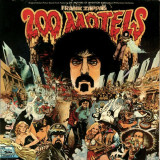
Frank Zappa’s “200 Motels” was a miraculous feat, a cinematic collision of the venerated musician and composer’s kaleidoscopic musical and visual worlds that brought together Zappa and his band, The Mothers, Ringo Starr as Zappa – as “a large dwarf” – Keith Moon as a perverted nun, Pamela Des Barres in her acting debut, noted thespian Theodore Bikel, the Royal Philharmonic Orchestra, and an incredible assortment of characters (both on screen and off) for a “surrealistic documentary” about the bizarre life of a touring musician. In celebration of “200 Motels” golden anniversary, Zappa Records, UMC and MGM have assembled a definitive Super Deluxe six-disc box set of the beloved, yet hard to find, soundtrack for release on November 19. Fully authorized by the Zappa Trust and produced by Ahmet Zappa and Zappa Vaultmeister Joe Travers, the monstrous 200 Motels 50th Anniversary Edition brings together the original soundtrack, newly remastered by Bernie Grundman at Bernie Grundman Mastering, along with a staggering amount of unreleased and rare material unearthed from FZ’s Vault, including original demos, studio outtakes, work mixes, interviews and movie ads, along with newly discovered dialog reels, revealing an early audio edit of the film. Also included is a wealth of never-before-heard audio documentary material surrounding the project. The six-disc set will be housed in a 64-page hardcover book in a handsome 12” x 12” slipcase. The packaging replicates the original booklet updated with revealing new liner notes from Pamela Des Barres, Ruth Underwood and Joe Travers, as well as Patrick Pending’s essay from the 1997 reissue, and is chock full of motion picture artwork, stills and images, from the film and its making, many which have never been seen before. This must-have collector’s release will also include a custom “200 Motels” keychain and Do-No-Disturb motel door hanger and a full-size replica of the original movie poster. Years in the making, all the audio was meticulously identified and transferred over several years as Travers dug through the Vault to create a new high resolution 96K/24B digital patchwork stereo master from the original analog tapes. The Vault material was mastered by John Polito in 2021. The remastered 200 Motels soundtrack will also be reissued on vinyl as a 2LP pressed on 180-gram black vinyl and on a 2CD format - both will include a smaller version of the movie poster.
The Ethiopians are one of the great vocal groups to come out of Jamaica. Singing songs of life and times as they found them, themes that resonated with the people of the Island that made them such a treasured group. Lenard Dillon (b. 9 December, 1942, Port Antonio, Jamaica) the founding member of the Ethiopians began his singing career at Clement 'Coxonne' Dodd's Studio One. Initially he recorded under the name of Jack Sparrow, and backed by the Wailers, cutting 'Ice Water' and 'Suffering In The Land'. Under The Wailers encouragement, he went on to form his
own vocal group. Recruiting singers Stephan Taylor (b.1944, Portland, Jamaica) and Aston 'Charlie' Morris to become The Ethiopians. They cut 'Live Good', 'Why You Gonna Leave Me Now' and 'Owe Me No Pay Me'. Although receiving favourable response, Aston Morris decided to leave the band and the remaining pair carried on and cut 'I'm A Free
Man' and 'Don Dead Already' and 'For You'. On meeting contract builder Leebert Robertson who had recently returned to live in Jamaica, ashad he wanted to get into the music business, a session was booked for Treasure Isle Studios. The session produced their seminal 'Train To Skaville' track, which became an immediate hit in Jamaica and in the UK, when in 1967 it reached number 40 in the charts. They also cut 'Engine 54', which became the title of their debut album. Its
follow up 'I Need You / Do It Sweet', did not fare so well and the band moved over to Sonia Pottinger's stable, where they cut 'The Whip / Cool It Amigo' which revived their fortunes and proved another big hit for the band. Two more hits followed 'Stay Loose Mama' and 'The World Goes Ska', after which the band decided to return to a trio, adding
Melvin 'Mellow' Reid to the line up. The band now hit another run of successes with producer JJ Johnson 'Everything Crash, 'Gun Man', 'Hong Kong Flu' and 'The Selah'. Many hits followed leading the band to work with a variety of Jamaican producers. Such tracks as 'I Want To Be a Better Man, ' Conquering Lion', 'Fire A Mus Mus' Tail', and the timeless 'Reggae Hit The Town' to name a few. Two albums 'Reggae Power' (1969) and 'Woman Capture Man' (1970), pulled a lot of these tunes together. Sadly Taylor was killed in 1975 after been struck by a van in a road accident. Dillon returned to Port Antonio till 1977, when he was persuaded to return to Treasure Isle studios with producer Niney The
Observer and cut the Rasta based album 'Slave Call'. Additional members who joined for this album were Bro Fatty, Bro Ewing, Bro T, Mello and Hychi Dread. An album that showed all the Ethiopians magic had not been lost.
For this release we have included the full 'Slave Call' set, 'Ethiopian National Anthem', 'Slave Call', 'Guilty Conscience', 'Hurry On', 'Mus Follow Babylon'(on CD Edition), 'Train To Skaville (1977 version, on CD Edition), 'Culture', 'Obeah Book', 'Let It Be' and 'I Love Jah'. Alongside some of the bands early hits including the original version of 'Train To Skaville', 'Engine 54', the great and poignant 'Everything Crash', 'Reggae Hit The Town' and 'The Selah'. An interesting set to remind us what a great group the Ethiopians really were.
out of Stock
Last delivered 3 years ago available to reorder, subject to availability
Following the highly acclaimed Obsolete EP and remixes on RFR records earlier this year, DJ Schwa is returning as WD-40 Trax with his new studio collaborator Jan Pos. The 5 track EP rediscovers the energy of the noughties tribal techno as peaking stormers topped by a dose of proper acid psychedelia contrasting with blazing grooves crafted for easy dancing.
Attention: WD-40 Multi Use Product contains petroleum distillates and should be handled with care.
out of Stock
Last delivered 4 years ago available to reorder, subject to availability
Swedish group Roxette celebrates the 30th Anniversary of their third album “Joyride”, following the band’s spectacular global breakthrough with “Look Sharp!” in 1989. The 30th Anniversary of ”Joyride” will be celebrated with the release of a 4-album vinyl and a 3-CD box, containing the original release as well as previously unreleased or hard-to-get material, that paints a fuller picture of a unique time in pop history. A richly illustrated 32 page booklet tells the story.
Joyride” was the album that was supposed to cement Roxette’s new-found status as a global hit-makers. Which indeed it did. On May 1, the title track zoomed all the way up to #1 position on the Billboard Hot 100 chart – setting a record no Scandinavian group or artist has yet been able to break, helping to make “Joyride” a 11+ million seller.
Twelve of the songs are previously unreleased, among them the first recording of ”Hotblooded”, which originally was meant to be the album’s opening track until ”Joyride” knocked it down a notch, giving the album and the upcoming “Join the Joyride” World Tour its name. The “Joyride” box set also offers a chance to hear two previously unreleased demos of songs originally released by Per’s former group Gyllene Tider, who in 1984 tried to break the international market with the album “Heartland Café”.
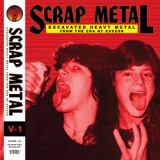
By now you’re probably familiar with our wildly popular Brown Acid series of rare, lost and unreleased proto-metal and stoner rock singles from the 60s-70s. In the endless pursuit of those glorious gems, we often uncover equally brilliant rarities from the late-70s to late-80s Golden Age of Heavy Metal that also just must be heard, but they don’t fit the series’ aesthetic. Scrap Metal, Volume 1 collects some of the greatest unknown and lost Heavy Metal tracks, long buried beneath the avalanche of the era’s classic output.
We all know the old adage that history is told by the winners. But sometimes the losers tell the best stories. And while none of these bands found fame and fortune, this artifact and the volumes to come are testament to the enduring power of heavy music. You can hear the blood, sweat and beers that went into each of these singles. The recordings may be low budget, but the inspiration and talent is immutable. Not only are the amps turned up to 11, the boyish sexual innuendo is cranked to 69. You can hear the convergence of influences — NWOBHM, thrash, glam metal, doom, etc — colliding at once as the era birthed a wellspring of subgenres.
Many of these singles are self-released and were thus limited to a small run of copies. Those that remain are hoarded by collectors and sold for exorbitant amounts. We’ve collected the best of the best for you here. As with Brown Acid, all of these tracks are licensed legitimately and the artists all get paid. Because it’s the right thing to do.
LINER NOTES:
Rapid Tears launch this series with the perfect christening. The Toronto, ON quintet’s 1981 single “Headbang” is such the pinnacle of heavy metal madness that it almost sounds like a spoof. There’s also enough of the rapid-fire sputum that inspired Metallica to bang the head that doesn’t, as such, engage in said practice, to be found on the band’s sole full length Honestly. But “Headbang” is a straightforward glammy anthem for the ages.
Air Raid’s “69 In A 55” may be lyrically so sophomoric that it’s actually pretty clever, but this 1983 Bay Area power metal single is loaded with sleek Judas Priest riffs and interwoven melodies that are downright sublime. The band’s sole release, the 2-song Rock Force 7” features a curious band photo in which 3 band members — dolled up in Crüe makeup and leather — are sexually menacing the lead singer/guitarist tied to a bed. Another low budget highlight is when singer/guitarist Tommy “Thrasher” Merry imitates a delay effect on his vocals as he sings, “tonight!...tonight...night.”
Hades’ “Girls Will Be Girls” has a real demo cassette feel to its vastly uneven mix, but the energy to the performance makes this an undeniable keeper. The long running Paramus, NJ quintet’s 1982 2- song debut 7” titled Deliver Us From Evil features this blistering thrasher dominated by shimmering leads and confident vocals that show why the band went on to near-fame on Metal Blade Records.
Resless don’t need no T to prove that they’ve got “The Power” with this 1984 driving mid-tempo rocker in the vein of Mötley Crüe and Ratt. The River Vale, NJ quartet’s tight crunch wails all over Bon Jovi posers but it’s the band’s unique and subtle deployment of background vocals that gives this rager its staying power.
Pittsburgh, the Steel City, is home to Don Cappa, a band that pays tribute to the burgh, the metal, and the awesomeness of both with “Steel City Metal.” Their lone single, issued in 1987 with only 300 copies released, sounds like the work of some serious steel driving men, with a drummer who might’ve forgotten to wear a hard hat one too many times on the construction site.
The Beast has more of a punk feel to their aggressive “Enemy Ace” track from the 4-song Power Metal EP from 1983 — something like Dr. Know meets D.O.A. But their look, artwork and lyrics all prove that Heavy Metal is where their hearts lie. And this hook filled monster delivers repeated lines like, “I command them all in my lofty realm,” with commendable conviction.
Dead Silence from Denver, Colorado, debuting in 1984 is not to be confused with Dead Silence from Denver, Colorado, who also debuted in 1984. The former a workman’s hard rock bar band, the latter a political peace punk band and neither knowing of the other’s existence throughout their tenure. The pre-internet days were a marvel, indeed.This Dead Silence spits out a slick, Nugent tinged rocker called “Can’t Stop” about life on the road.
The Danger Zone is, by all accounts, not the place to be. And, Hazardous Waste of Boston, MA saw fit to add their two cents on the matter with this 1986 single that combines Van Halen’s flashy musicianship with NWOBHM aggression that sounds so awesome it teeters on itself entering the “Danger Zone.”
Czar’s heavy, doomy “Iron Curtain” single from 1982 hearkens to the sleazy sounds of Saint Vitus and Pentagram with its cranked up DOD Distortion pedal in a Peavey combo amp guitar tone and meaty, barking vocals. The upstate NY quintet only issued this 2-song single, but its driving rhythm, nosedive whammy-bar guitar solos and comparatively mature Cold War subject matter show they had real potential.
Not much is known about Real Steel’s majestic “Viking Queen” from 1987, other than it rocks hard and the 7” 45 sells for upwards of a grand on the collectors market. The Flint, Michigan band recorded at the home studio of local radio personality Bill Lamb, who primarily released Christian Gospel recordings. So, perhaps the band was struck down by a bolt of lightning shortly after this rare single’s release. Whatever the case may be, it’s a must have for fans of classic metal mayhem.
All illustrations and paintings, and the story, are by Rosie Lowe and Duval Timothy.
Inspired by the music from the album Son.
Limited pressing
Full colour
32 pages perfectly bound
Hand painted fore-edge
Uncoated 350gsm cover (softback) and recycled uncoated 190gsm paper
Custom size 120 x 150 cm (small enough to put in your pocket but not tiny)
Maddie Jay has always had a fixation with taking things apart, examining every tiny piece, and putting them back together in her own way. In fact, in her teens, she tore out all the electronics of her first bass guitar in her parent’s garage, in order to re-paint it neon yellow, green and pink. This fascination with restructuring didn’t end with gear. For years, she has been taking apart music itself, and studying every facet of songwriting, melody and production, in order to patch it back together into her own colorful, quirky package.
This approach in life has brought her from her tiny hometown in northern British Columbia, Canada, to studying bass in Boston, and then to Los Angeles to pursue a career as a “hired gun.” After a year of travelling and supporting artists all around the globe, she was finding more satisfaction on her days off, producing on her laptop. Fast forward to 2020, and Maddie’s first EP “Mood Swings” has gained over 2 million streams on Spotify, and she has a feature on Grammy winning artist RAC’s LP “BOY.”
"‘Arise, Dan Sartain, Arise’, the latest studio album by America’s infamous rock ‘n’ roll troubadour Dan Sartain, will be released by One Little Independent Records. Made up of thirteen wickedly wisecracking, vintage surf-rock bangers, this concise and classic record incorporates everything that’s made Dan Sartain the genres favourite underdog over the last two decades.
Seeped in obsidian black humour with tracks like ‘Glasses Houses’, ‘Rooster In The Henhouse’ and ‘I Heard Laughing’ ruthlessly calling out those who would slight him while also riding the hard line of self-awareness, the biting witticism of these tracks pair wonderfully with the playful tone of Sartain’s slick-back dark doo-wop. Elsewhere on the likes of ‘True Love’ and ‘Fires and Floods’ the crooner gets a chance to flex his punk muscles, pushing the guitars further into distorted territory taking the late 50s garage-rock influence via the late 70s in much the same way The Ramones and The Damned did. But we’re transported right back again when Sartain slows down for ballad standouts such as ‘Kisses In The Morning’ and ‘Personal Injury Law’. Throughout ‘Arise, Dan Sartain, Arise’ searing surf guitars intertwine with beautifully haunted organ jabs, with rhythms pulled straight from saloon bars way out west, and cheeky wink-to-the-camera lyrical whimsy."
No other pairing in the history of Darkwave ever matched the unfettered creativity, resolve, and DIY attitude from the collaboration between the two creative minds that compromise Lebanon Hanover.
The meeting of the Swiss musician Larissa Georgiou, aka Larissa Iceglass and British artist William Maybelline a decade ago in the latter’s hometown of Sunderland in the UK, was a monumental occasion, reverberating throughout the European music scene and even across the Atlantic.
Lebanon Hanover would emerge from the peak of the world-wide minimal wave revival, with their 2011 split 7-inch record with La Fete Triste issued as the catalog debut of Europe’s most ubiquitous Techno-Industrial EBM labels, Aufnahme + Wiedergabe
With Berlin as their new physical home, William and Larissa would soon, however, join the Fabrika Records family. From here, they would go on to release two full-length albums through the Athens based label, starting in early 2012 with their winter debut LP The World Is Getting Colder, and it’s All Hallows Eve follow up Why Not Just Be Solo.
It was Lebanon Hanover’s 2013 third studio outing Tomb for Two that would go on to cement the duo’s legacy, with the album’s single “Gallow Dance” becoming a post-punk anthem for the times, with artwork became the band’s defacto logo. Not only that, the song “Sadness is Rebellion”, also featured on the album, became the band’s official Mantra.
Two years would pass before the release of 2015’s critically acclaimed fourth record, “Besides the Abyss”. In the intervening years, William and Larissa, initially a couple, would find other partners, and relocate to Athens.
Meanwhile, Lebanon Hanover as a live act would expand rapidly in popularity, exceeding capacity during their performances at Wave Gotik Treffen in Leipzig, and performing sold-out shows across Europe and the UK.
With the playful Babes of the 80s maxi-single released in the interim, three years would pass before the next record from Lebanon Hanover, with 2018’s Let Them Be Alien, the band’s fifth studio album.
At the dawn of the global pandemic, where dystopian nightmares that were only ever seen before within the pages of books and flashes of silver screen celluloid, has become a daily reality, a new kind of darkness envelops the world. It was at this Lebanon Hanover returned, sharing a glimmer of hope with the single “The Last Thing,” the duo’s first song from their forthcoming sixth studio album Sci-Fi Sky.
Spanning an epic journey across ten tracks that wander through industrial landscapes, and ascend beyond the atmospheric aether, Sci Fi Sky is Lebanon Hanover’s most cohesive artistic statement to date. With their icy hearts on their sleeves, this is the culmination of a decade’s worth of musical creativity radiating from the minds of both Iceglass and Maybelline, and altogether an otherworldly beacon of hope in a time of sheer darkness.
out of Stock
Last delivered 4 years ago available to reorder, subject to availability
Prodigal son of the ESP Institute, Juan Ramos, rises from the cesspool of a world gone mad with 'Agua Del Cenote', his fifth release with the label. Whilst many artists are following their inner light to bring us some much needed joy amidst these rotten times, Juan (being the little shit that he is) follows an inner demon and delivers listeners and dancers a demented clusterfuck of sadistic chaos. The title track opens with what sounds like a butane torch and we metaphorically freebase into oblivion. Our perception of reality unravels, writhing in abrasive textures smeared across a low-slung, mid-tempo erotic thump. Everything feels blurry and distant, as if we’re swimming through an underground aquatic tunnel, in a panic, searching for an invisible band of spirits whose tune summons us into certain annihilation. Following this is a remix from a decorated lord of 20th Century electronics, Harald Grosskopf AKA The Synthesist. Harald wipes away grit and lethargy to reveal elements hidden deep within the mix as well as softens Juan’s sense of terror by building up to an optimistic layer of added synth. We’d love to offer some relief with the balance of the EP, however, the remaining two tracks paint complimentary hues in the same cerebral palette. 'Let It Go (Freaks Only)' veers closely to House in terms of tempo and gestalt, utilizing a vocal sample from Third Generation (Kerri Chandler) and a healthy dose of sub bass, but Juan hardly apologizes for his masochistic tendencies and certainly never relents into an uplifting mood. Closing the EP, Juan serves an antidote of sorts with 'Cuko', as if suggesting a way out of the swamp, but leaves it up to the listener’s intuition to not only see the carrot, but actually follow it into the light, thus completing the quest.
out of Stock
Last delivered 3 years ago available to reorder, subject to availability
Léonie Pernet's second album Le Cirque de Consolation, to be released November 19th on InFiné & CryBaby, inhabits a world where borders dissolve and everyone makes their own unique and singular utopia. Hereby, the record questions the links between pop music, African cultures and electronic music, neo-classical music or the role of voice, whether human or synthetic. Sophomore albums can be a painful process for an artist - how refreshing it is to hear one so decidedly optimistic.
Textextext - (add your write up)
The sought after whirlwind of French Pop that exploded onto the scene with her debut "Crave", Leonie Pernet, returns with her second album, "Le Circque de Consolation", a sort of double negative of her first. While the yearning that sat at the center of "Crave"might not have been resolved, the young multi-instrumentalist and singer has found a new perspective - a more open and positive outlook on her own life and work. Perhaps telling, then, that the title was the first element of the album to exist: as it is and has always been a journey of personal (and collective) consolation first, a musical confrontation with the self.
"This record parallels my life's journey," confirms Léonie, "it reflects what has happened in my life since 'Crave' came out and how I feel today. There's still a lot of melancholy, but a lot more sunshine and light. In four years, I've become sober, which has saved me; I've worked a lot on my voice, which is a part of a desire to speak, to address my audience more directly, and also a more pronounced pop desire." In line with her new-found "openness", Leonie invites another musician into her creative process for the first time on "Le Cirque de Consolation": Jean Sylvain le Gouic, who lended his coproduction and perspective to her, while Leonie still plays almost all instruments herself with an astounding prowess.
Leonie's voice oozes with a new-found self-confidence and takes center stage amidst eclectic, distinctively fun and open-minded production. Sometimes she sings in English, mostly in French: "I worked a lot on my voice," confirms Léonie, "I didn't dare to sing before, neither live, nor on record, nor in the studio." Surrounding her astounding, intoxicating voice are forays into any direction imaginable: from harsh, experimental electronics to the more sombre, organic and quiet moments - and everywhere, there is the vision of Africa, (also Middle East) it's many sonic gifts and cultures.
Leonie has found a universal utopia that she craves for - a musical, cultural amalgamation that is decidedly non-western, political and poetic, rooted in self-discovery and the connection with other humans: African and oriental percussion, synthesizers, drum-machines; Léonie mixes genres and instruments with ease and precision. The French novelist and philosopher Édouard Glissant - whose work and writing had a big influence on Pernet - coined the term "Creolization ", the "bringing together of several cultures or at least several elements of distinct cultures, in one part of the world, resulting in new data, totally unpredictable in relation to the sum or the simple synthesis of these elements."
From "Hard Billy ", a techno-influenced rebellious anthem, to "Les Chants de Maldoror," a club and dance song propelled forward by feverish derboukas, to the deeply moving "A rebours" and its Afro-electronic rock. Léonie Pernet inhabits a world where borders dissolve and everyone makes their own unique and singular utopia. Hereby, the record questions the links between pop music, African cultures and electronic music (Intérieur Négro), neo-classical music (Le Cirque de consolation, Dandelion), or the place of the voice, whether human or synthetic as in the atmospheric "Vowel". Sophomore albums can be a painful process for an artist - how refreshing it is to hear one so decidedly optimistic.
out of Stock
Last delivered 4 years ago available to reorder, subject to availability
Swallow this: Part 4 of the Running Back various artists series here and as always, there is no long reading needed: 5 tracks by 5 different producers with different backgrounds and experiences. All somehow fit together and paint a bigger picture between remodeled deep house techniques and floor mechanics.
Yungruzt feat Eluize opens the dance with the emo-house poem Starlight. The young man managed to deliver a transcendental masterpiece that is best used for coming up - or down, if you will. A Human Connection is being made next by Baldo. Imagined and made for high times, the Barcelona mainstay applies a tried and tested formula isn’t failing here either: 303 morse codes, break beats and an on going automated voice message do the trick. The man like 9th House goes back to the deep with the yearning and beautifully composed piece Ara, while Tiger & Woods co-author Delphi trades the boogie and disco tropes for heartfelt piano house. Last but not least, new talent Signal Mute pushes it over the finishing line with another tearjerker. Shared joy is double joy!
out of Stock
Last delivered 3 years ago available to reorder, subject to availability
In pairing words with art, the ESP Institute often does everything journalists hate. We drown the reader in hyperbole, abstractions as opposed to didactic or literal depictions, and paint the press release with superlatives that construct an existential struggle around the art and its conditions. To articulate our reasoning behind collaborating with the artist, or the synergy between their work and our catalogue, is sometimes so challenging that crossing that finish line is achingly delayed. Patrick Conway’s 2xLP 'Cellular Housekeeping', his fourth release with the label, is one of these works so monumentally exciting for us that we’ve strained over how to deliver with honor his art unto the masses. After the initial hurdle of visual representation (in this case handled with gusto by artist Hassan Rahim), how do we directly and intentionally talk about the art we deeply love, when in reality we’re largely guided by instinct? We explore many angles, often failing along the way, until finding a final click in the combination that unlocks the floodgates. With Patrick’s album, that elusive impetus revealed itself in a literary gem that both symbolized his aggressive, melancholic, romantic, and bleak overtones, as well as synchronized his work and our task with a metaphor so grand it justified putting these words to paper. In the deeply British poem of despair and hope, 'Comus: A Mask Presented at Ludlow Castle', John Milton immortalized the classic idiom of the “silver lining”, and we find comfort in this transaction between struggle and what the poet considered divine intervention. Our bout of procrastination that brewed a cloud over the art may too tout a silver lining, the time that’s elapsed clearing a path for the album to exist in its rightful place, as opposed to fighting for a voice at an overcrowded table. In hindsight, this final hurdle might have only existed because without it, there is no glory, no resolution, but as all the pieces click and we collectively cross the finish line, Patrick Conway’s once captive 'Cellular Housekeeping' is now truly released.
out of Stock
Last delivered 4 years ago available to reorder, subject to availability
When we think of the phrase Bonded By Blood, we think of two things: a brotherhood that is meant to outlast the trials of war, pain, and time... and the almighty EXODUS. With a bond forged in youth and decades-old friendship, the undisputed masters of thrash metal return with their eleventh studio album: PERSONA NON GRATA. Literally translating to “an unwelcome” or “unacceptable” person, PERSONA NON GRATA touches on themes of modern societal disgust and degradation. “The people that disgust you - cut ‘em out like cancer,” explains guitarist Gary Holt. “Who is that person? It could be anybody. That’s up to the listener. Who is ‘Persona Non Grata’ to them?”
For decades, EXODUS has impressed us with the ability to attract opposing factions to their music because of its intensity and versatility. A track like “The Beatings Will Continue Until Morale Improves” was inspired by the riots both in theme, and sound. “Without seeming insensitive to the riots, the song is tongue in cheek about what the people beating on the rioters were expecting to happen. Did you think you would beat a smile onto their face? At 3 minutes in length, it’s probably the shortest EXODUS song we’ve ever done. It gets in, gets out, and is just crushing,” describes Holt. While most of the songs do run on the shorter side, this album also comes equipped with crushing, epic tracks.
Whether it’s the music industry gossip sites, or the big players like CNN and FOX, we’re all aware of how news outlets love to set little rat traps; “Clickbait” discusses their methods of picking things out of context to grab your attention, add to their page views, and increase their revenue all while riling up your emotions. “It’s all journalistic dishonesty,” explains Holt, “it’s a modern-day version of Al Capone’s vault, everyone tunes in, and then there’s NOTHING.“ Evenly balanced with extraordinary speed and tremendous, catchy choruses, “Clickbait” is a song that explodes with vigorous energy. “As heavy as this album is, and it’s heavy as fuck, if times were different and there was still metal radio, this song, and probably over half the album, has single capabilities.”
Sitting as the second to last song on the album, “The Fires of Division” keeps PERSONA NON GRATA strong all the way through. “This album doesn’t operate on the normal parameters,” describes Holt, “we didn’t frontload this one, it’s strong right through to the end. It’s supposed to be a musical journey as the songs segway together.”
For the third time in the band’s history, EXODUS returned to Swedish artist Par Olofsson to create the album artwork PERSONA NON GRATA. “After this album, I feel like we probably won’t work with anyone else again, Par just gets it,” states Holt. A three-faced, winged creature sits atop a bloody pile of diseased and rotting humans as they scream in pain and reach their hands up desperately towards the beast. Undead riot cops beat mercilessly, and senselessly upon this pile of the dying and the world is red with fresh, sopping blood. “Is it an angel, a demon? Is the world being created or destroyed,” asks Holt, “you don’t really know.”
EXODUS don’t fall into the usual recording slump that most bands get stuck in. Gathering at Tom Hunting’s house up in the mountains, they avoided the need to book studio time or adhere to a certain schedule. “At first it was just Tom, myself, a half stack, and a drum kit; we call it jam camp. We lived there. We built the studio, we immersed ourselves in it. Number one, because we still enjoy each other’s company enough to do it. When we’re not actively rehearsing or recording, we’re still sitting there talking about the songs, working on them, plucking on acoustics until things really work,” explains Holt, “we’re not settling.” Working from three home-built studios, the band recorded PERSONA NON GRATA themselves with the help of Andy Sneap on mixing and mastering and with Steve Lagudi at the helm of engineering.
“As a band, I’m super grateful. I’ve seen a lot of things around the world and we’re still a band that loves each other, have each other’s back, and we genuinely like to hang out with each other,” explains Holt. “Take it how you will, but I’m this band’s biggest fan. We write songs that are designed to make us feel fired up - that’s why it’s still heavy.”
When we think of the phrase Bonded By Blood, we think of two things: a brotherhood that is meant to outlast the trials of war, pain, and time... and the almighty EXODUS. With a bond forged in youth and decades-old friendship, the undisputed masters of thrash metal return with their eleventh studio album: PERSONA NON GRATA. Literally translating to “an unwelcome” or “unacceptable” person, PERSONA NON GRATA touches on themes of modern societal disgust and degradation. “The people that disgust you - cut ‘em out like cancer,” explains guitarist Gary Holt. “Who is that person? It could be anybody. That’s up to the listener. Who is ‘Persona Non Grata’ to them?”
For decades, EXODUS has impressed us with the ability to attract opposing factions to their music because of its intensity and versatility. A track like “The Beatings Will Continue Until Morale Improves” was inspired by the riots both in theme, and sound. “Without seeming insensitive to the riots, the song is tongue in cheek about what the people beating on the rioters were expecting to happen. Did you think you would beat a smile onto their face? At 3 minutes in length, it’s probably the shortest EXODUS song we’ve ever done. It gets in, gets out, and is just crushing,” describes Holt. While most of the songs do run on the shorter side, this album also comes equipped with crushing, epic tracks.
Whether it’s the music industry gossip sites, or the big players like CNN and FOX, we’re all aware of how news outlets love to set little rat traps; “Clickbait” discusses their methods of picking things out of context to grab your attention, add to their page views, and increase their revenue all while riling up your emotions. “It’s all journalistic dishonesty,” explains Holt, “it’s a modern-day version of Al Capone’s vault, everyone tunes in, and then there’s NOTHING.“ Evenly balanced with extraordinary speed and tremendous, catchy choruses, “Clickbait” is a song that explodes with vigorous energy. “As heavy as this album is, and it’s heavy as fuck, if times were different and there was still metal radio, this song, and probably over half the album, has single capabilities.”
Sitting as the second to last song on the album, “The Fires of Division” keeps PERSONA NON GRATA strong all the way through. “This album doesn’t operate on the normal parameters,” describes Holt, “we didn’t frontload this one, it’s strong right through to the end. It’s supposed to be a musical journey as the songs segway together.”
For the third time in the band’s history, EXODUS returned to Swedish artist Par Olofsson to create the album artwork PERSONA NON GRATA. “After this album, I feel like we probably won’t work with anyone else again, Par just gets it,” states Holt. A three-faced, winged creature sits atop a bloody pile of diseased and rotting humans as they scream in pain and reach their hands up desperately towards the beast. Undead riot cops beat mercilessly, and senselessly upon this pile of the dying and the world is red with fresh, sopping blood. “Is it an angel, a demon? Is the world being created or destroyed,” asks Holt, “you don’t really know.”
EXODUS don’t fall into the usual recording slump that most bands get stuck in. Gathering at Tom Hunting’s house up in the mountains, they avoided the need to book studio time or adhere to a certain schedule. “At first it was just Tom, myself, a half stack, and a drum kit; we call it jam camp. We lived there. We built the studio, we immersed ourselves in it. Number one, because we still enjoy each other’s company enough to do it. When we’re not actively rehearsing or recording, we’re still sitting there talking about the songs, working on them, plucking on acoustics until things really work,” explains Holt, “we’re not settling.” Working from three home-built studios, the band recorded PERSONA NON GRATA themselves with the help of Andy Sneap on mixing and mastering and with Steve Lagudi at the helm of engineering.
“As a band, I’m super grateful. I’ve seen a lot of things around the world and we’re still a band that loves each other, have each other’s back, and we genuinely like to hang out with each other,” explains Holt. “Take it how you will, but I’m this band’s biggest fan. We write songs that are designed to make us feel fired up - that’s why it’s still heavy.”
1. Some records hit you with an instant impression of timeless brilliance, and Low Life’s Dogging is one of those records, what the wise call “an instant classic”. 2. From Squats to Lots: The Agony and the XTC of Low Life is more like their second album Downer Edn (read Edition), a little more withdrawn, a little more textured. Complex. Rich. Which is to say: you’re going to need some time with it. 3. Some show, some grow. Low Life have done both. This one is a grower. Spend some time with this one. It’s got that nuanced flavour. Don’t guzzle. Sip. Savour. 4. Sip it, and sense the recurring brilliance of Mitch Tolman’s lyrics, exploring the usual territory of gutter life, lad life, punk life, low life. The dirge. Disgust and shame in white Australia. Council housing, bills piled to the neck, substance abuse and rehabilitation, the fallen lads and lasses who stood too close to the flame, loss and loneliness, from squats to lots. Un-Australian gutter symphony. 5. There is a celebration of resilience and that’s a central theme of this record and a time like ours needs a record like Agony & XTC. Low times are coming through, but if you’re low they won’t get to you. 6. Iggy Pop’s Bowie produced studio rock masterpieces ‘The Idiot’ and ‘Lust For Life’ are important reference points to the 3rd album sounds of Low Life. Here comes success! 7. ‘The Agony and Ecstasy’ is a 1985 novel by Irving Stone about the life of Italian Renaissance painter Michelangelo. Stone wrote another novel about the single eared painter Vincent Van Gogh called ‘Lust For Life’. This synchronicity hit me. 8. Iggy and the Stooges are a pretty safe reference for Low Life (and all good rock music). Iggy and the Stooges are a low life’s Michelangelo, but solo Iggy like Lust for Life is a better reference for this particular incarnation of Low Life, which is to say they are studio rock albums. 9. Bowie later referred to this period of his life as profoundly nihilistic. But Iggy looked at it as the period of his life that saved him from an early grave. This confrontation is Low life lore. 10. Let’s stick to this, because there’s something about this era of Bowie that makes sense with Low Life’s new album, particularly Low. One should never miss the Low in our new album from Low Life. Producer and studio boss Mickey Grossman has the ear for the Low, and he has carved out a little statue of David right here. 11. Mickey’s ears are recording, mixing and producing the best of Sydney, most notably the Oily Boys Cro Memory Grin. A great companion record to this one. Use Agony & XTC AFTER Oily Boys. Not on an empty stomach, and don’t try to operate heavy machinery (bobcat, bulldozer etc). 12. The relationship between Low Life and Sydney hardcore should not be understated, but it also shouldn’t guide how to listen to Agony & XTC. This is not austere, disciplined music. 13. Think, like, if Poison Idea were given the kind of studio time and budget as Happy Mondays. You wouldn’t play it to a teenager. It’s not for children. This is a mature flavour, one for the adults who have had to contend with failure and hardship, medical bills and disappointed family members, betrayed lovers and worrisome growths, police brutality and tooth decay, humiliating bowels and collapsed septums, detoxing and drying out, for those who have seen themselves as corrupted and putrid and unloveable, for those who endure all of this and aren’t willing to lie down and cop it sweet: Low Life are still here and they ain’t going nowhere. NOTES ON HOW NOT TO LISTEN TO AGONY AND XTC OF LOW LIFE: 1. Don’t think of shoe-gaze. It suggests a safe passage to 90’s reminiscences, a vogue style of our time, but nothing to do with Low Life style. Low Life style is always of its time. The content changes. Agony & XTC shares weight of records like My Bloody Valentine’s Loveless and Slowdive’s Kebab, records that were laboured on after the songs were recorded, songs that were written as they were recorded. 2. We can call these “studio albums” as opposed to albums built in the heat of live performance. Studio albums from the 90’s are called shoe-gaze by some journalist nerds, but we know better than to use words like this. 3. Studio albums are excessive and, at the same time, so empty. Agony & XTC, Loveless, Kebab, Rumours: excessive! And empty. This is not to suggest this is Low Lite, some throwback, soft. A band like Low Life can make an overproduced studio rock album without having to use the word shoe-gaze. So, don’t think studio albums mean anything especially 90’s. Don’t look back. 4. Let’s lose these distasteful labels, like “shoe-gaze”, “rehab rock”, “stab”, “guitar OD overdrive”, “western Sydney wonder”. They can fade out. A low life was once referred to as a vagabond. Who uses this term today? Nobody. Language can murder. Words can die. Kill ‘em all! - Daniel 'DX' Stewart, Melbourne, 2021.
Ten years after its release, the reissue of this fabulous Matt Elliott record seemed essential to us since it was eagerly expected! It is undoubtedly the most dramatic sequel to the songs trilogy being outstanding for its darkness, from which he has progressively turned away. The Songs Trilogy is over, A new chapter entitled 'The Broken Man' is about to open and is the most delicate of Elliott's albums to date. The angry noise has all but abated, making way for more fragile melodies and a more subtle approach to intensity to immerse the listener. Ideally listened to in total darkness to discover the hope hidden deep within the guitars, voice, choirs, bells, ethereal trumpets, the howl of the dog beneath the skin, in the sincerity of the music. Inspired by the ghosts of European folk music, the voice often resigned but always expressive. Always finding new ways of working, Elliott collaborated with Katia Labeque who interpreted an improvisation of his that became the backbone of one of the central epic pieces on this album 'If Anyone Ever Tells Me That it is Better to Have Loved and Lost Than to Have Never Loved At All I Will Stab Them in the Face'. 'Dust Flesh and Bones', another of the epic pieces on this album, is perhaps Elliott's most beautiful and moving work to date, simple in it's form but emotionally profound. 'The Pain that's Yet to Come' hints at a new almost psychedelic era to come. 'The Broken Man' is an album to be discovered gradually over many listens, and with each one a new depth is surrendered until one can appreciate the panorama in it's entirety. Each track is an invitation to explore one mans analysis of his own descent reflecting the frustrations and sadness that touch us all at some point. Mixed by Yann Tiersen this album is a bridge between the more acoustic work of 'Songs' and the more electronic, ethereal work of Third Eye Foundation. It is finely balanced in the centre of Matt's musical universe.
When we think of the phrase Bonded By Blood, we think of two things: a brotherhood that is meant to outlast the trials of war, pain, and time... and the almighty EXODUS. With a bond forged in youth and decades-old friendship, the undisputed masters of thrash metal return with their eleventh studio album: PERSONA NON GRATA. Literally translating to “an unwelcome” or “unacceptable” person, PERSONA NON GRATA touches on themes of modern societal disgust and degradation. “The people that disgust you - cut ‘em out like cancer,” explains guitarist Gary Holt. “Who is that person? It could be anybody. That’s up to the listener. Who is ‘Persona Non Grata’ to them?”
For decades, EXODUS has impressed us with the ability to attract opposing factions to their music because of its intensity and versatility. A track like “The Beatings Will Continue Until Morale Improves” was inspired by the riots both in theme, and sound. “Without seeming insensitive to the riots, the song is tongue in cheek about what the people beating on the rioters were expecting to happen. Did you think you would beat a smile onto their face? At 3 minutes in length, it’s probably the shortest EXODUS song we’ve ever done. It gets in, gets out, and is just crushing,” describes Holt. While most of the songs do run on the shorter side, this album also comes equipped with crushing, epic tracks.
Whether it’s the music industry gossip sites, or the big players like CNN and FOX, we’re all aware of how news outlets love to set little rat traps; “Clickbait” discusses their methods of picking things out of context to grab your attention, add to their page views, and increase their revenue all while riling up your emotions. “It’s all journalistic dishonesty,” explains Holt, “it’s a modern-day version of Al Capone’s vault, everyone tunes in, and then there’s NOTHING.“ Evenly balanced with extraordinary speed and tremendous, catchy choruses, “Clickbait” is a song that explodes with vigorous energy. “As heavy as this album is, and it’s heavy as fuck, if times were different and there was still metal radio, this song, and probably over half the album, has single capabilities.”
Sitting as the second to last song on the album, “The Fires of Division” keeps PERSONA NON GRATA strong all the way through. “This album doesn’t operate on the normal parameters,” describes Holt, “we didn’t frontload this one, it’s strong right through to the end. It’s supposed to be a musical journey as the songs segway together.”
For the third time in the band’s history, EXODUS returned to Swedish artist Par Olofsson to create the album artwork PERSONA NON GRATA. “After this album, I feel like we probably won’t work with anyone else again, Par just gets it,” states Holt. A three-faced, winged creature sits atop a bloody pile of diseased and rotting humans as they scream in pain and reach their hands up desperately towards the beast. Undead riot cops beat mercilessly, and senselessly upon this pile of the dying and the world is red with fresh, sopping blood. “Is it an angel, a demon? Is the world being created or destroyed,” asks Holt, “you don’t really know.”
EXODUS don’t fall into the usual recording slump that most bands get stuck in. Gathering at Tom Hunting’s house up in the mountains, they avoided the need to book studio time or adhere to a certain schedule. “At first it was just Tom, myself, a half stack, and a drum kit; we call it jam camp. We lived there. We built the studio, we immersed ourselves in it. Number one, because we still enjoy each other’s company enough to do it. When we’re not actively rehearsing or recording, we’re still sitting there talking about the songs, working on them, plucking on acoustics until things really work,” explains Holt, “we’re not settling.” Working from three home-built studios, the band recorded PERSONA NON GRATA themselves with the help of Andy Sneap on mixing and mastering and with Steve Lagudi at the helm of engineering.
“As a band, I’m super grateful. I’ve seen a lot of things around the world and we’re still a band that loves each other, have each other’s back, and we genuinely like to hang out with each other,” explains Holt. “Take it how you will, but I’m this band’s biggest fan. We write songs that are designed to make us feel fired up - that’s why it’s still heavy.”
Harlem River marks the solo debut of songwriter Kevin Morby. Known for his work as the singer/guitarist for the Brooklyn band The Babies and bassist for Woods, the Kansas City native and new Los Angeles resident, calls the record “an homage to New York City”, his adopted home for the past five years. Harlem River features eight interweaving tales of tragedy and misfortune; a series of desperate characters playing out their dramas with the city as backdrop. A departure from some of the signature sounds of his better known projects, Morby’s songs glisten with a haunting intimacy and while he maintains that the songs are stories about other people, it’s hard not to feel a piece of him in each one; a half-imagined, half-painfully personal world of lost love, addiction, violence and prayers for the departed. The album was recorded in Los Angeles in February and March of ‘13 with producer Rob Barbato who recorded the Babies second album “Our House on the Hill” and whose guitar and bass work figure prominently on Harlem River. The album also features drummer Justin Sullivan (the Babies) as well as contributions from Will Canzoneri, Tim Presley (White Fence), Dan Iead and Cate Le Bon.
Shovel Knight began as a modest, yet highly promising Kickstarter project in March 2013. Billed as “a groundbreaking love letter to 8 bits!” by Indie developer Yacht Club Games, this 2D side-scrolling platform game released in June 2014 to universal praise and accolades.
Fans and industry professionals praised Shovel Knight for its charming retro-2D visuals, humorous story, fun characters and strong gameplay design, which all came together to offer a game that is nostalgic yet very modern. The efforts of Yacht Club Games paid off when Shovel Knight was won the prestigious “Best Independent Game” award at The Game Awards 2014. The game’s chiptune soundtrack, composed by Jake Kaufman and Manami Matsumae, is integral to the game’s modern-retro identity and has been similarly praised for its outstanding arrangements, memorable melodies and strong technical composition. This definitive soundtrack contains all music from the original Shovel Knight game released in June 2014, with a vinyl tracklist crafted by Jake Kaufman himself. The package cover and inner-gatefold have been designed exclusively for the soundtrack by Hitoshi Ariga; an interview with co-composer Manami Matsumae; and character artwork from the game.
Returning to continue Shall Not Fade's Season Series with a second LP, Joe Newham serves up harmonious and glimmering jazz infusions under his Gavinco moniker. The Brighton-based producer saw success with his Dumont LP earlier this year, and fans will recognise his smooth composition immediately on Beriza.
"West Horizon" begins the record, an expansive slow burner with haunting vocals, leaving room for a club beat that sets the tone going forward. Field recordings feature prominently on the title track, a laid back style which evokes tropical heat and lazy evenings, easing you into "Savoy's" dance floor grooves complemented by syncopated hand percussion. Hints of sax and strings provide the ear candy on
"Momento", a gentle poolside jazz exploration. "Like This" is punchier, tight funk riffs contrasting discordant piano bits which swirl to an uptempo rhythm. "Creative Times" centres its flute melodies while the rumble of sub bass slowly swells into a perfect pairing of dance music and jazz. The closing track continues this energy.
Hypnotic sax solos and sparkling piano arps take the record to a hazey, housey end.
out of Stock
Last delivered 2 years ago available to reorder, subject to availability
In 1976, KISS dropped the bombshell on the world being DESTROYER, an album that originally received resistancefrom fans due to the band exploring a new sound and has long become the quintessential and all-time best selling KISS studio album. Exploding with concert staples and KISS Army favorites like “Detroit Rock City,” “Shout It OutLoud,” and “God Of Thunder” – the album’s new sounds came from the softer side of songs like “Do You Love Me?,”and songs heavy with orchestral arrangements including “Great Expectations” and their surprise hit single “Beth.”
Third Man Records is proud to announce the 20th anniversary expanded edition of Kelley Stoltz’s defining album Antique Glow, due November 19, 2021. The announcement is heralded by the release of bonus track "Too Beck". Limited-edition "rainy nights" UK exclusive vinyl will be available on release day.
Originally self-released in minuscule vinyl-only quantities in 2001, Antique Glow has served not only as a template for the length of Kelley Stoltz’s twenty-plus year career, but has also served as a compass for other Anglophile, TASCAM 388 home recording acolytes. Original copies featured Stoltz’s clever, wry and fanciful hand-painted adornments overtop reclaimed thrift store LP jackets, Third Man’s release here utilizes some of those original unused images for a die-cut sleeve that ultimately gives the listener six different possible album covers.
The songs are by-and-large masterpieces of bedroom pop magic. From the whispering “Here Comes the Sun”-adjacent acoustic underpinnings of album opener “Perpetual Night” through the fuzz-threaded leads of “Are You Electric?” Stoltz’s inspirations are impeccable and clear. Sixties Davies British Invasion through 80’s British Bunnymen post-punk, with appropriate off-shoots into West Coast American pop-psych, Velvets-indebted hooliganism and Drake/CSNY acoustic attenuations, the end result is pure joy.
On the expanded version, standout tracks previously relegated to an Australian tour-only CD (like the breathlessly cinematic “Old Pictures”) see their first-ever vinyl and digital release while there’s an additional 10 songs from the Antique Glow-era seeing their first ever release in any format. The cutting room floor quality here is second-to-none, Stoltz clearly gifted with the curse of writing too many indelible songs, so the newly released “Too Beck” (originally cast off by Kelley because he thought “it sounded too much like Beck”) and “Umbrella” stand firm as some of the best, most timeless music Stoltz has ever released... a full two decades after he recorded them!
Restlessly awakening from the depths of a feverish slumber, doomed heavy metal masters KHEMMIS return to reveal their fourth full length studio album, DECEIVER, arriving via Nuclear Blast Records in November 2021. Six tracks of desolate, soul-awakening heaviness encapsulate a project that has been nearly three years in the making. With a title that reflects the internal struggles that many of us battle in our daily lives, DECEIVER is a ferociously honest and appetizingly raw piece of musical artistry.
The first single LIVING PYRE signifies far more than just the beginning of another musical endeavour for the band; it is a substantial benchmark for emotional struggle and growth. “When it comes to my own mental health, when I’m in a bad place, I can’t access the part of me that creates art. After reaching that understanding of myself, the bulk of this song came out in one sitting. I was feeling stable. I was feeling hopeful–even though so much outside in the world was not exactly inspiring. All of us needed a reason to feel a glimmer of hope,” recounts Hutcherson. With a big, quintessentially KHEMMIS chorus embellished by a swampy sorrow, this song incorporates familiar elements of the band’s sound with a touch of Swedish death metal in its latter half. “The reason that this was the song that came first lyrically was because I was juggling all the things that were happening with the inside and outside world intersecting. All the lyrics for me feel very ‘of the time.’ So much was happening in this world, and they were just my efforts to contend with it,” explains Pendergast. “Like Ben, this was a breakthrough moment for me. Once I got the song out, it allowed me to write other songs for the album. It’s less about the fire metaphor implied by the title than about the fact that in order to escape fire you have to find water. You find the deepest, darkest cavern…you just want to stay there forever. It slowly fills up and you eventually drown.”
HOUSE OF CADMUS was another deeply collaborative writing effort between all three members of KHEMMIS. “I thought the opening riff had this cool almost-swing to it...but evil,” recalls drummer Zach Coleman. “I was drawn to the atmosphere of that first riff, and it felt like it needed to be a song that was dark the whole way through. Ben and I discussed getting some New Orleans-style sounds somewhere on the album, and I think this is where we were able to sneak some in to tie together other aspects of the song.”
“I knew that I wanted the lead guitar line in the second half of the song to tie two very different parts together,” explains Hutcherson, “but the idea was all really abstract until we were in a room together. It wasn't until we jammed out that big funeral/death doom bridge and the slow, sad coda that we found out what we wanted that lead line to be: memorable and emotive. It was a very honest musical moment together.” The writing and recording processes of HOUSE OF CADMUS were so emotionally driven that even producer Dave Otero of Flatline Audio (Cephalic Carnage, Cattle Decapitation, Act Of Defiance) encountered his own deeply personal and intense connection with the song. “With the lyric turn at the end, I was inspired by Dave’s imagery,” says Pendergast. “This idea of a person leaving some important part of themselves behind as they float away and leave the thing they love on the shore. The sound of this song is like a lighthouse beam cutting through the fog in a dark night on the ocean.”
While the lyrical themes of DECEIVER;sorrow, pain, longing for hope, will no doubt be familiar to longtime fans, these six songs display a broader collection of musical influences than on any other KHEMMIS record to date. “It being our 4th album, especially after the transition between the last two albums, it felt really freeing. We felt that we could really do anything on this record,” explains Coleman. “There’s a lot here that we’ve never done before,” adds Pendergast. “In some areas it gets darkly psychedelic. I think we found a cool way to mutate things using transitions that feel really natural. There is a subtle symmetry between the first and last songs which is one of the things that makes listening to the full album a satisfying holistic experience. It builds from almost nothing, becomes very dark, and then you slowly crawl out of that lowest circle of hell.” KHEMMIS’s DECEIVER is a beautiful, musically ambitious journey from beginning to end drenched in impassioned melody and complex, unrestrained variations of sonic savagery adorned with chilling, intensely tragic cover art by frequent collaborator Sam Turner.
Restlessly awakening from the depths of a feverish slumber, doomed heavy metal masters KHEMMIS return to reveal their fourth full length studio album, DECEIVER, arriving via Nuclear Blast Records in November 2021. Six tracks of desolate, soul-awakening heaviness encapsulate a project that has been nearly three years in the making. With a title that reflects the internal struggles that many of us battle in our daily lives, DECEIVER is a ferociously honest and appetizingly raw piece of musical artistry.
The first single LIVING PYRE signifies far more than just the beginning of another musical endeavour for the band; it is a substantial benchmark for emotional struggle and growth. “When it comes to my own mental health, when I’m in a bad place, I can’t access the part of me that creates art. After reaching that understanding of myself, the bulk of this song came out in one sitting. I was feeling stable. I was feeling hopeful–even though so much outside in the world was not exactly inspiring. All of us needed a reason to feel a glimmer of hope,” recounts Hutcherson. With a big, quintessentially KHEMMIS chorus embellished by a swampy sorrow, this song incorporates familiar elements of the band’s sound with a touch of Swedish death metal in its latter half. “The reason that this was the song that came first lyrically was because I was juggling all the things that were happening with the inside and outside world intersecting. All the lyrics for me feel very ‘of the time.’ So much was happening in this world, and they were just my efforts to contend with it,” explains Pendergast. “Like Ben, this was a breakthrough moment for me. Once I got the song out, it allowed me to write other songs for the album. It’s less about the fire metaphor implied by the title than about the fact that in order to escape fire you have to find water. You find the deepest, darkest cavern…you just want to stay there forever. It slowly fills up and you eventually drown.”
HOUSE OF CADMUS was another deeply collaborative writing effort between all three members of KHEMMIS. “I thought the opening riff had this cool almost-swing to it...but evil,” recalls drummer Zach Coleman. “I was drawn to the atmosphere of that first riff, and it felt like it needed to be a song that was dark the whole way through. Ben and I discussed getting some New Orleans-style sounds somewhere on the album, and I think this is where we were able to sneak some in to tie together other aspects of the song.”
“I knew that I wanted the lead guitar line in the second half of the song to tie two very different parts together,” explains Hutcherson, “but the idea was all really abstract until we were in a room together. It wasn't until we jammed out that big funeral/death doom bridge and the slow, sad coda that we found out what we wanted that lead line to be: memorable and emotive. It was a very honest musical moment together.” The writing and recording processes of HOUSE OF CADMUS were so emotionally driven that even producer Dave Otero of Flatline Audio (Cephalic Carnage, Cattle Decapitation, Act Of Defiance) encountered his own deeply personal and intense connection with the song. “With the lyric turn at the end, I was inspired by Dave’s imagery,” says Pendergast. “This idea of a person leaving some important part of themselves behind as they float away and leave the thing they love on the shore. The sound of this song is like a lighthouse beam cutting through the fog in a dark night on the ocean.”
While the lyrical themes of DECEIVER;sorrow, pain, longing for hope, will no doubt be familiar to longtime fans, these six songs display a broader collection of musical influences than on any other KHEMMIS record to date. “It being our 4th album, especially after the transition between the last two albums, it felt really freeing. We felt that we could really do anything on this record,” explains Coleman. “There’s a lot here that we’ve never done before,” adds Pendergast. “In some areas it gets darkly psychedelic. I think we found a cool way to mutate things using transitions that feel really natural. There is a subtle symmetry between the first and last songs which is one of the things that makes listening to the full album a satisfying holistic experience. It builds from almost nothing, becomes very dark, and then you slowly crawl out of that lowest circle of hell.” KHEMMIS’s DECEIVER is a beautiful, musically ambitious journey from beginning to end drenched in impassioned melody and complex, unrestrained variations of sonic savagery adorned with chilling, intensely tragic cover art by frequent collaborator Sam Turner.
SPICE singer Ross Farrar speaks of the band’s ambition to forge a sort of aesthetic patois: a mode of expression as strikingly regional as it is recognizable. Last year’s self-titled debut, released in the depths of the pandemic, fully achieved this goal, distilling decades of North Bay punk and post-hardcore into an urgent, artful set of emotive unrest. Their latest single, A Better Treatment b/w Everyone Gets In, further refines the group’s singular mix of weathered melody and abrasive poetics, equal parts bracing, bruised, and cryptic.
“A Better Treatment” began as a song about a friend who died but through the turmoil of collaboration transformed into something more macroscopic and opaque, blurring the boundary between hopeful and defeated (“I thought loving someone would cure my self-hatred”). Bass and drums build against walls of guitar while the violin threads its own melancholy within the noise; Farrar is blunt about the intention: “The violin is an instrument of death you know.”
“Everyone Gets In” is both poppier and more pained, an anthem for angst aging into the reverie of regret: “We lose our strength / along the way / we lose each other / the funeral sways.” The tempo sways too, gradually slowing to an anxious crawl before finally revving back into a storm of shimmering guitar and splashing drums, fighting against the dying of the light. It’s music of raw truths and
rejected pedestals, storied but unswerving, a revolt against the great regress: “and my / my time is spent / adoring seasons / that I / I never should’ve.”
SPICE singer Ross Farrar speaks of the band’s ambition to forge a sort of aesthetic patois: a mode of expression as strikingly regional as it is recognizable. Last year’s self-titled debut, released in the depths of the pandemic, fully achieved this goal, distilling decades of North Bay punk and post-hardcore into an urgent, artful set of emotive unrest. Their latest single, A Better Treatment b/w Everyone Gets In, further refines the group’s singular mix of weathered melody and abrasive poetics, equal parts bracing, bruised, and cryptic.
“A Better Treatment” began as a song about a friend who died but through the turmoil of collaboration transformed into something more macroscopic and opaque, blurring the boundary between hopeful and defeated (“I thought loving someone would cure my self-hatred”). Bass and drums build against walls of guitar while the violin threads its own melancholy within the noise; Farrar is blunt about the intention: “The violin is an instrument of death you know.”
“Everyone Gets In” is both poppier and more pained, an anthem for angst aging into the reverie of regret: “We lose our strength / along the way / we lose each other / the funeral sways.” The tempo sways too, gradually slowing to an anxious crawl before finally revving back into a storm of shimmering guitar and splashing drums, fighting against the dying of the light. It’s music of raw truths and
rejected pedestals, storied but unswerving, a revolt against the great regress: “and my / my time is spent / adoring seasons / that I / I never should’ve.”
Ltd White vinyl LP w/ printed inner sleeve lyric insert (1000 copies ww)! Emma Ruth Rundle's forthcoming Engine of Hell is stark, intimate, and unflinching. For anyone that's endured trauma and grief, there's a beautiful solace in hearing Rundle articulate and humanize that particular type of pain not only with her words, but with her particular mysterious language of melody and timbre. The album captures a moment where a masterful songwriter strips away all flourishes and embellishments in order to make every note and word hit with maximum impact, leaving little to hide behind. "I really wanted to capture imperfection and the vulnerability of my humanity," Rundle says of the album's sonic approach. "Here are some very personal songs; here are my memories; here is me teetering on the very edge of sanity dipping my toe into the outer reaches of space and I'm taking you with me and it's very fucked up and imperfect.'" Emma Ruth Rundle has always been a multifaceted musician, equally capable of dreamy abstraction (as heard on her album Electric Guitar: One), maximalist textural explorations (see her work in Marriages, Red Sparowes, Nocturnes or collaborations with Chelsea Wolfe and Thou), and the classic singer-songwriter tradition (exemplified by Some Heavy Ocean). But on Engine of Hell, Rundle has opted to forego the full-band arrangements of her previous albums in favor of the austerity of a lone piano or guitar and her voice, which creates a kind of intimacy, as if we're sitting beside Rundle on a bench, or perhaps even playing the songs ourselves. It's an extremely up-close and personal confessional with a focus on the rich subtleties and timbre of Rundle's graceful performances. "For me this album is the end of an era to the end of a decade of making records. Things DO have to change and have changed for me since I finished recording it." In essence, Engine of Hell signifies a major turning point for Rundle as both an artist and as a person. The catharsis of this type of songwriting has effectively served its purpose, and to continue ruminating on the past going forward is less of a healing process and more like picking at a scab and refusing to let it heal. This may help explain why Rundle is less than enthusiastic about divulging the details about her muses, but it doesn't alter the fact that these songs served a purpose in their creation, and that they may continue to bring comfort to others.
Flashes of light rarely burn for long. Bush Tetras exploded into
New York in 1979 and flamed out just a few years later. Yet
somehow this lightning-quick band have risen from their own
ashes again and again for four decades. The spark that ignited
Bush Tetras tapped into a deep grid of power, fuelled by
guitarist Pat Place, singer Cynthia Sley and drummer Dee Pop.
That chemistry is palpable on ‘Rhythm and Paranoia: The Best
of Bush Tetras’, which features 30 tracks across 2CDs in a 4-
panel digipack / 29 songs across 3LPs pressed onto 180gram
vinyl in a rigid lift-off box with lift ribbon, remastered by Carl
Saff, plus a 40-page (2CD) / 46-page (3LP) book with neverbefore-seen photos, an original essay on the band by Marc
Masters and micro essays by Sonic Youth’s Thurston Moore,
R&B legend Nona Hendryx, The Clash’s Topper Headon and
more.
From the band’s earliest recordings to their current, vital-asever incarnation, ‘Rhythm and Paranoia’ - for the first time ever
- showcases their unique, influential and body-shaking meld of
rock, punk, funk, reggae and more in one cohesive, immersive
and meticulously constructed box set.
“Coupled with ‘Too Many Creeps’’ dancey arrangement, Sley’s
monotonous tone signaled that within the Tetras’ newly staked
safe space, misogyny wasn’t a threat: it was just a boring,
predictable damper on the party. Like the rest of their peers, this
band was over it.” - Pitchfork (The History of Feminist Punk in
33 Songs)
“The Bush Tetras are a national treasure” - VICE
“Renowned at the dawn of the eighties for pairing the disjoined
guitar skronk of the inaccessible No Wave scene with
irrepressible, funk-infused rhythms, the Bush Tetras were
remarkably influential without ever really receiving their due” -
The New Yorker
“Bush Tetras bridge the gap between the Ramones and Sonic
Youth.” - NY Post
Electronic musician Xopher Davidson will release ‘Lux Perpetua’ this year via Daydream Library Series. A noted protége of Maryanne Amacher, Xopher recorded these two tracks in 2020 utilizing vintage synths within the beloved music studios of Mills College in Oakland, California. Xopher builds his experiments in electronic sound from a basis in painting, photography, and film, and through an interest in electronic circuits going back to building radios and homemade circuits as a kid. He has built and explored the sound world of a homebrew modular synthesizer comprised of surplus laboratory equipment: various oscillators, pulse generators, filters and an 'analog computer. He has released 4 albums as ANTIMATTER : ‘Transfixion’, ‘Antimatter Vs. Antimatter’, ‘Our Lady of the Skies’, and ‘Reset’. As an audio engineer, Davidson has worked on projects composed / performed by: the League of Automatic Composers, John Cage, Marcel Duchamp, Subtropic, Diamanda Galas, Kid 606, DJ Rupture, Darwin's Bitch, Once 11, Mix MasterMike, Hans Grusel, Phoenecia, Jonah Sharp, We, Zbigniew Karkowski, and Iannis Xenakis
There are records with empathy, records which are your friends and then there's the others... There might be little difference between them, a certain "je ne sais quoi", an "almost nothing but still something" which makes the difference between almost pointless and vital records. Despite, or rather thanks to his cynical despair, Matt Elliott's music never holds up a moralizing mirror to us - on the contrary, it creates a compassionate dialogue with listeners like the rhythm of two steps that synchronize to become as one. In 2016, Matt Elliot brought out his seventh solo album The Calm Before whose obscure title is neither exactly threatening nor comforting... the calm before what? Before the storm for sure but maybe also before the great record, the immediate classic we felt might be coming for a long time in the dual discography of the Bristol-born artist working under his own name and his electronic alias Third Eye Foundation. The elegant details and perspectives of Little Lost Soul (2000) already hinted at the upcoming masterpiece from the English singer-songwriter. The Mess We Made (2003) was Matt Elliott's first solo album and portrayed a universe in a kind of flight towards Balkan horizons made up of visceral despair. With the Songs trilogy, he put aside the electronic side of his work to continue working with a minimalist, stark and lucid style of writing. The Broken Man (2012) was full of tears and long laments sometimes carried by Katia Labèque's piano on a record which painted new shades of grey. On this record Matt began working with the producer, arranger and multi-instrumentalist David Chalmin (La Terre Invisible) who has kept on collaborating with the Bristol-born singer since then. Their partnership continued on Only Myocardial Infection Can Break Your Heart (2013) and The Calm Before (2016). Stéphane Grégoire is the head of the Ici D'Ailleurs label which has accompanied Matt Elliott since 2005 and perhaps he describes this album the best: "This new record by Matt is without a doubt his best album to date, a record that takes him into another dimension where he fully asserts himself as a songwriter and singer of the calibre of artists like Bill Callahan, Leonard Cohen or Johnny Cash." Matt Elliott's other records all seemed like empathic links between each other. Farewell To All We Know is an instant classic based on the sensitive piano and superb arrangements of David Chalmin, the sensitive cello of Gaspar Claus, the subtle bass of Jeff Hallam (who has also played with Dominique A and John Parish). There is a clear form of alchemy in all of this and still we find Matt Elliott's usual atmospheres and scenery, the same Eastern European folk music, long songs that take time to settle over time. Everything is the same but also is transfigured. By making his music stark and purifying and redefining the subject matter, Matt Elliott's work became so much more delicate. However this work is never frail nor really turned in on himself and thus becomes like a vital tune that vibrates and unfolds. The opening song Farewell To All We Know seems torn between the fear of what tomorrow may bring, inevitability and hope for the future in a permanent and progressive dramatic tension expressed by his Spanish guitar, the impressionist style piano and Matt's voice teetering on the edge of whispers. A funereal tribute to endless twilights and the dawns we all dream of seeing. There are touches of Leonard Cohen from Songs from a Room or Thanks For The Dance in The Day After That with Gaspar Claus's counterpoint cello. There is no spirit of resignation in Matt Elliott's work - life's path has to be followed against all odds. We have to follow the river's flow to reach the immense ocean and its infinite freedom. The haunted instrumental Guidance Is Internal harks back to the atmospheres of Howling Songs (2008) with its guitar parts full of scansions and muted threats. The music is transcendental but never seems afraid of the risk of falling. This is also what Bye Now tells us with its quasi-obsolete simplicity and sunburst melancholy reminiscent of the work of Luiz Bonfá, Bill Evans on Peace Piece or laidback crooners of the 50s. In Farewell To All We Know, Matt Elliott incessantly alternates between the dual desires to face up to the world or to protect himself from it. Hating The Player, Hating The Game is a lucid statement about the dullness of our daily lives sometimes, our right to get out of the game and no longer want to be part of it. Matt Elliott is tender but spares no one, particularly himself. Aboulia speaks of the tiredness of living and of looming death while Crisis Apparition says that there is always a time for reconstruction after chaos. This is like initially wearying wandering in the ruins of Aleppo with the slow dilution of the melody into a hallucinated drone. However the smell of great fires always fades and the earth always regenerates. Matt Elliott seems to suggest that the survival instinct is stronger than any cold winds could ever be. Matt Elliott never sings of certainties and prefers possibilities. Possibly the worst is over? Maybe... Maybe the storm has passed and devastated everything, now we just have to rebuild and live again. Farewell To All We Know shows us the distance that still needs to be walked and he walks next to you - right next to you, he is the friend who doesn't spare you the truth like all true friends really do.
Following March’s 9696 Dream mixtape and July’s Flex Time EP, this new album sees 96 Back shine the spotlight on his own vocals for the first time, at points (such as on lead single ‘9 To Find 6’) operating fully in the realms of experimental pop. At other times, such as on ‘Teach Me Tenderness’ and ‘Feel Hard’, 96 Back stretches and processes his vocals to almost breaking point, while album closer ‘Melt You’ sees him duet with past collaborator Iceboy Violet, ending Love Letters on a sombre but romantic note. That’s not to say Love Letters is fully removed from the dancefloor, however: tracks like ‘Don’t Die’ and ‘Love Compact’ are precision-tooled for the club, while the likes of ‘Felzin’ and ‘Vibrant Colours’ continue to explore the intricate but emotive electronics that 96 Back has been so successful with in the past. More varied and vivid than any of 96 Back’s releases to date, Love Letters feels like a coming of age moment. It casts its net incredibly wide at points, and it’s an album full of ambition, but it meets every challenge it sets itself — as affecting in its quieter, tender moments as during its dramatic peaks. In 96 Back’s words: “This is a record I feel like I’ve been trying to write for years, it feels like the most accurate body of work to match the ideas in my mind. Trying to project a lot of the records I hold very dear to me through this lens, interpreting how they sound to me and merging them with ideas of finding the drama and excitement in the full spectrum of emotions on the tip of my tongue, that’s what ended up being Love Letters, Nine Through Six.”
Both noted for strikingly forward-thinking bodies of solo work dating back to the 1990s, the duo of Andrew Pekler & Giuseppe Ielasi - collaborators for the better part of a decade - reemerge with 'Palimpsests’, their first outing with Shelter Press. Built from deconstructed layers of texture, tone, and arrhythmic percussiveness, the album’s 2 sides distill 6 years of work into 9 splintered, airy reimaginings of minimalism - each surprising, creatively rigorous, and startlingly beautiful - that rest at the outer reaches of contemporary electroacoustic practice and musique concrète.
Based in Berlin and Milan respectively, Andrew Pekler and Giuseppe Ielasi have individually carved singular paths across numerous disciplines within experimental music for more than 20 years, each deploying sampling, synthesis, and acoustic sources to weave their own, distinct worlds of sonorous abstraction. Brought together by years of friendship and a shared devotion to layered texture and complex, fractured structure, the pair first joined their creative energies in 2013, a collaboration that culminated as the LP, ‘Holiday For Sampler’, issued by Planam.
'Palimpsests’, the duo’s second outing, draws its material from a series of improvisations made by the Pekler and Ielasi in Milan during 2015. Over the ensuing six years, those recordings would undergo various transformations - cut, reworked, sampled, and added to by each artist, working at geographic distance between Berlin, Kyoto and Monza - before culminating, like the album’s title suggests, as a unique manifestation of musical palimpsest; “an object reused and altered, while still bearing visible traces of its earlier form”.
With each of the album’s compositions nodding toward a city with which Pekler and Ielasi hold biographical connections, 'Palimpsests’ constructs sound as poetic metaphor; a series of ghosts - traces of memory, image, and action - cut and reassembled, in cycling permutations, before been set into action at a glacial pace with layered, transparent forms.
Defined by remarkable restraint and pointillistic precision, across the album’s two sides Pekler and Ielasi weave the fractured remnants of their sessions - reduced to glitches and warbling fragments of texture and tonality - into pulsing expanses of spatial ambiance that defy imagism, blur the boundaries between the synthetic and organic - reducing their sources to a series of unknowns - recast the boundaries of electroacoustic practice on markedly singular terms.
Shelter Press is thrilled to present 'Palimpsests’, another brilliant outing from the duo of Andrew Pekler and Giuseppe Ielasi. Issued in a limited edition of 500 copies on black vinyl, with artworks on printed inner and outer sleeves by Traianos Pakioufakis.
The second selection from Toko's 2021 collection again sees label mainstay Si Brad man the controls on the sublime and soulful 'Avenue 6 (Is This Real Life?)'.
Incorporating the crisp rhythms, heavyweight subs & swelling pads which are such a Toko trademark, Brad brings the bliss to this sensual house heater, enlisting Azeem's emotive vocal tones for an extra helping of soul.
The label enlist hometown hero Crooked Man for the B side business here, and the Techno hero obliges with a pair of ferocious speaker tweaking reshapes.
Dark and cavernous, the 'Real Crooked' mix combines wall shaking bass, jacking drums and bloodless riffs into a smoke and strobe stomper, repurposing Azeem's vocal as a haunting refrain.
The dance floor paranoia continues on the 'Crooked Girl, Crooked Boy' mix, a sparse and dissociative take on the original equipped with demented dub FX and some serious bass weight.
An anthem in its original form, and a main room monster on the remix tip. Toko are back.
out of Stock
Last delivered 80 days ago available to reorder, subject to availability