- 2026 repress -
SHDW & Obscure Shape launch new label Mutual Rytm with powerful eight-track V/A "Federation Of Rytm I", featuring VIL & Cravo, Lars Huismann, Grindvik and more.
Favourites for many within today's modern techno landscape, Stuttgart-based pairing Marco Blasi and Luigi Urban, aka SHDW & Obscure Shape, continue to grow their profile and position as artists leading the current new wave of techno. Having launched their first label From Another Mind in 2014, releasing material from themselves alongside remixes from the likes of Rodhad, James Ruskin and Dax J, early December welcomes the arrival of a new project and a second imprint to the fold, Mutual Rytm.
Showcasing a new dimension of techno and electronic music, celebrating originality and innovation by combining timeless cuts from the past with cutting edge sounds of the present and the future, the label will serve as a breeding ground for new artists alongside established talent and legends from the scene. Opening the imprint in style, the label bosses head up the first-ever release and the first V/A "Federation Of Rytm I" as they welcome a selection of new and established talent.
"Since the beginning of the global pandemic, we have been diving deep into the roots of our music and working on the aesthetics of our sound. That's when we realized that now is the right time to start a new project which differs from FAM, in both musical and artistic direction. The project will showcase a new dimension that aims to channel the authentic perspectives of both established and up-and-coming talents. With our new label, we want to give all artists the opportunity of musical freedom and expression of their versatility as producers. It is an honour to accompany the young artists on their careers, to see them grow and to help them in their development as musicians." - SHDW & Obscure Shape
The duos rolling opener "Conquest Of Paradise" quickly sets the tone and builds to reveal a classy and slick offering, combining rich stabs with tough drums and sharp hats, while Invexis keeps the tempo high as he weaves escalating synths and pacy kicks across "Elektronenwind". VIL & Cravo combine on the jacking and lively "Apolonia Loop", as eerie synths work amongst warped vocals across a tweaked out peak-time effort, before Alarico keeps the energy levels up throughout the relentless funk of "I'm Into You".
The second half of the package sees Lars Huismann enter the fray with the no-nonsense, snaking grooves of "Hyper Dub", with Nicolas Vogler's "Sauva Bite" fusing hypnotic tones with straight regimented claps for an intense yet playful ride through sounds and sonics. "Your Dry Lips" switches up the aesthetic as Grindvik journeys down a wormhole of metallic percussion and warping low-ends, before closing the show with authority via Stigmata's grinding and menacing offering "Gestas".
quête:pan various artists
- A1: Sotiria Bellou - A Cloudy Dawn
- A2: Stavros Tzouanakos - I Am Crying Inconsolably
- A3: Kostas Roukounas - Shooting Dice
- A4: Rosa Eskenazi - I'm A Drug Addict
- A5: M Vasiliadou - Mother I Became Sick
- A6: Stelios Kazantzidis - You Ruined My Youth
- B1: Giorgia Blana - I Am A Sinner
- B2: Stelios Perpiniadis - My Body Is Wasting Away
- B3: Kyriakos Agorides & Nana Greka - Dense & Dark Clouds
- B4: Vangelis Perpiniadis - Weep For Me My Friend
- B5: Panayotis Tsoros - Doudou
- B6: Stelios Kazantzidis - The Good Ones Die Young
Death Is Not The End follow up their early 2020 tape The Sun Is Setting on the World with a further collection of hardcore rebetika recordings from the 1930s through to late '50s. More songs of sorrow, poverty, loss and the end of the world.
The Fuga compilation returns to Token with its seventh installment by a fresh batch of artists emphasizing the cryptic sound of the Belgian record label. The V/A displays urgency as its focal point, expanding and contracting its acoustic space throughout to channel instability. With eight contributions, Fuga VII sifts through nail biting arpeggios, frenzied percussion, and obscure ambiance to recalibrate techno's current soundscape.
Opening the compilation is contemporary techno mainstay Rene Wise with his debut contribution to the record label 'Rough Rider'. In this A1, Wise plays to his strengths by blending deep techno influences with hyper-focused rhythmic work. With a hint of tribalism, he conjures up synthwork from far off to whip motion into heavy drum patterns. Following this first track, STIPP and Sandrien take control in presenting 'Corrie', a sequence-forward groover that slides through drum programing to streamline rhythm. A shrill pad comes in at the halfway mark, completely lifting the energy of 'Corrie' to strain the track's obscurity with an ethereal counterweight. The brief passage of these kinds of elements provides a lot of dynamic to what would otherwise be a powerfully straightforward piece. Diving deeper, Red Rooms unveils 'Limited Sensory' as the next chapter of the compilation. Always swift and exact, the German artist continues to push into the ultra immersive with a web of elements that whiz by for a peaktime lock in. Cold in attitude, Red Rooms tunnels through 'Limited Sensory' with quick drumsand far-off percussive hits that rumble through the track. Stepping up afterwards is Lindsey Herbert with 'Oscillations in Space' - an appropriately named recording that experiments with mania as a tool for the dancefloor. Fast and spiraling, Herbert keeps her hands on the arpeggio's filter to contain tension through thunderous reverb transitions, balancing panic with pace. AgainstMe then stretches out the followup with the commanding 'Phase Shift' to double down on weight. Textural intimidation and stomping percussion is given the space it needs to perform on heavy weight sound systems, making it an austere middle point for Fuga. MAL HOMBRE then guides the listener to more elastic sound design in 'Critical Velocity', in a most appropriate Token fashion. Snowballing in intensity halfway through, MAL HOMBRE pushes the cutoff of his melody and programs snare rolls for vintage craze through the second section. Bells clash with ringing hats to fly the track along its course without looking back or letting go. Conor Wall takes control with 'The Strategy' that focuses on pace rather than melody, weaponizing metallic texture for a deep dancefloor experience. The ambiance does a lot of story telling here, marking breaks and riding through drops to provide grit to an already substantial record. This leads us to the final contribution in Fuga VII - 'Ad Libitum'. Here, Porteix emphasizes the conclusion of the compilation with mystery. The synths slither around pulsating rhythm, creating uninterrupted motion throughout the track's entirety. Porteix draws the curtains on an inquisitive note, keeping the suspense high until the next Fuga compilation comes around.
Foxbam Inc is building up a fine head of early steam and after featuring the likes of LFO's Gez Varley and Mark Archer, that looks set to continue into 2026 with this latest various artists EP. It's a white knuckle ride through panel beating techno fervour, starting with Foxtrot's 'Tartam Tripper', which could be called paint stripper, it's that caustic. Collision lays down flat, hard, distorted drums on 'Plop Projekt', Egebamyasi offers up a stuttering, bass-driven club take on an unmistakable 80s electronic classic and Minimum Syndicat's 'Tunnel Chase' is a slower, darker, more foreboding closer that carries serious weight and a soot-black atmosphere from which there is no escape.
The fifteenth release from electro label Gladio Operations once again brings us a multi-artist format, featuring new faces and a distinctly Spanish flavour.
This EP opens with the return of producer Cycloplex, with his characteristic minimalist sound.
This track, titled ‘EP01-A’, once again showcases his powerful and aggressive bass lines.
From Gerona comes one of the new and talented artists on the Spanish electro scene. David Pasajero makes his debut on Gladio Operations with ‘Dislektro’, a fluid journey of melodies and warm textures infused with acidic touches.
On the B-side we find Barcelona producer Dark Vektor, who needs no introduction, as he is one of the Spanish icons of electro sound. This artist also makes his debut on the label with ‘Te Voy A Dar Ahhhhh’, a dizzying track with suspenseful melodies and a powerful bass line that will keep you on the dance floor no matter what.
The Spanish duo Slit Observers is another of the label’s new faces and treats us to this vibrant track titled ‘Green Machine’, where we encounter dark passages with a perfect dose of acid and embellished with subtle vocoders.
The EP closes with a collaboration between German producers Intergalactic Noize Commander and Elektrotechnik, the latter an artist who has released music previously. ‘Informationen’ is a rough track, created in the most hidden German bunkers, featuring arpeggios and robust bass lines that dominate throughout the whole track, accompanied by gloomy vocals.
- 1: Clive Zanda - Ogun
- 2: Michael Boothman's Family Tree - Tabu
- 3: Lancelot Layne - Umbawa
- 4: Andre Tanker - River Come Down
- 5: Black Truth Rhythm Band - Save D Musician
- 6: Art De Coteau - Kerieka Woman
- 7: Mansa Musa - Beat The Drum
- 8: Sensational Roots - Calypso Zest
- 9: Frends - Mystery Music
- 10: Abdul Malik De Coteau - More Weight
Kaiso Power is a collection of rare jazz, calypso and percussive gems from Trinidad and Tobago from the revolutionary generation of the 1970s, bringing radical new political vision and reclaiming ancient spiritual consciousness through music. At the dawn of the 70s a shift was taking place all around the world. The streets of Port of Spain thronged with Black Power marches, trade union demonstrations and Carnival protest bands - one epicentre in a growing global exchange of ideologies and strategies among Pan Africanist circles in Jamaica, Guyana, London, New York, Montreal, Lagos, Accra and beyond. And when the meetings were over, the revolution moved to the cramped secret dance halls, the Carnival fetes, the steelband yards. The music always had a sharp edge. Searing commentary has always been part of the various types of music in Trinidad, and in the absence of lyrics, the defiant use of the drum maintains the resistance, as well as the re-framing of the playing of European instruments to the needs of the message. Lancelot Layne, Delano Abdul Malik De Coteau, Andre Tanker, Clive Zanda, Mansa Musa were more than artists, they were teachers, community workers and advocates for justice. These recordings are as raw as an all-night Carnival jam, the horns loud, the percussion ringing out, the bass dripping with joy and rebellion. Under the modern influences is a solid rhythm, an unbroken connection to Africa, the songs and keys and cadences brought across the middle passage. These songs are a peep into the untapped treasures of a revolutionary generation, looking at the world with fresh eyes and believing that music was a central part of the mission to build consciousness and regain confidence.
For this Voices edition we unite producers across the techno panorama with different backgrounds in producing and playing music.
The theme of this series is to find your voice, to express your voice as well as listening to others.
Menous opening track "Meguri" carries an atmospheric, floating feeling, followed by an joyful and playful approach by Mary Yuzovskaya with "Late AM". Then there is the spoken words (vinyl only), in the mothertongue of each Artist, on the A and B side to be explored.
The B side opens with "Oya", a track by Sarah Wreath exploring soundscapes and hypnotizing elements. The final track "Ash" by Laima Adelaide unfolds a colder atmosphere and groove.
The artwork by Yeliz Kilicaslan encapsulates this vinyl in a textured envelope.
- A1: Anaëlle Latchimy - Mwin Le Pi Mwin Minm
- A2: Jako Maron - -20.9985,55.3042
- A3: Agnesca - -21.2806,55.3406
- A4: M.baba - -21.0584,55.5441
- A5: Anaëlle Latchimy - Mon Fanmte
- B1: Anaëlle Latchimy - Lo Mo
- B2: Kobald - -21.1513,55.4678
- B3: Boogzbrown - -20.8869,55.8063
- B4: Pangar - -21.2915,55.8063
- B5: Anaëlle Latchimy - Nena In Tras
6 places. 6 artists.
The first compilation by Stima Records is a trip to La Réunion island.
Music & Poetry.
Unusual electronic sounds & rhythms, pulling their roots in local tradition and global bass music.
Switch on the GPS et let yourself go...
Repress
A new various artists included selected musicians and representatives of the Ukrainian underground scene, residents of the Kyiv Closer club, founders of Odessa DSK Port and Kharkiv Trance Pandemic Krew. Strong limited, must have.
Proud to present you our third RETROFUTUR compilation, including 6 tracks by our most regular artists.
Endrik Schroeder opens the ball with the pure warehouse banger “Automated” ! The track’s sonic intensity never falters, driven by a relentless rhythmic structure and saturated synthetic textures. The modulated layers and the syncopated break recreate the visceral urgency worthy of the underground raves of the 90s.
With “Happy End,” Brandski distils a contagious euphoria, designed to set the dancefloor ablaze with collective joy. A leading figure of the Italian-French new wave, he creates a track as jubilant as it is unstoppable, where rhythmic mastery flirts with festive instinct. An invitation to luminous abandon: arms raised, shared smiles, communion guaranteed.
With “Eldorado” John Lord Fonda reaffirms his status as a key ambassador of French techno on the international scene. The track unfolds a relentless, extremely tense groove, where darkness becomes driving tension. A rigorous, almost martial sound signature, serving an uncompromising vision.
“White Light” by Panthera is a polished track that transports us on a euphoric journey. The heavy, incisive kick blends with atmospheric layers and heady arpeggios, creating a constant tension that culminates in thunderous drops. The whole thing is supported by a deep, vibrant bassline, typical of the 90s rave scene.
Once again, Berlin’s My Secret Playground stands out as the architect of a muscular German nu-disco, flirting with the boundaries of techno. “Don’t Panic” combines percussive pulses and dark tension, while distilling subtle reminiscences of the disco aesthetic. A masterful sonic hybrid, between retro hedonism and contemporary intensity.
Club Mayz delivers a masterful closing performance with “Tonight I Have To Hide”, an electro track fueled by the raw heritage of Detroit techno and the dark textures of EBM. The track combines dramatic tension and synthetic precision in a nocturnal and introspective aesthetic.
RedNilo is an Italian-Moroccan duo composed of Reda Zine and Danilo Mineo, two musicians based in Bologna linked by a deep passion
for world music, particularly African music. Their ongoing and tireless musical exploration has led them to collaborate for over a decade
on numerous artistic and recording projects. Their new album, eponymously titled RedNilo, features six tracks characterized by a sound
reminiscent of Gnawa, Hassani, Tuareg, and experimental rock. The psychedelic, raspy riffs of the electric guitar, the repetitive rhythms
of the percussion, and the rhythmic-melodic lines of the guembri represent and evoke their journey. The resulting sound material is the
culmination of their journey and their encounters with masters, artists, griots, artisans, and instrument makers in the Draa Valley in
southeastern Morocco, bringing together the two musicians' urban and experimental backgrounds and souls. The album's artwork was
designed by Moroccan artist Aali Wica, initiator and mentor of their spiritual and artistic journey to the southern African continent,
across the long black snake.
Réda Zine, a musician and documentary filmmaker born in 1977 in Casablanca, launched his musical career in the 1990s, contributing
to L'Boulevard, Africa's largest independent festival. Raised in the Casablanca medina, he was introduced to Gnawa music by various
Maallems. After studying at the Paris 3 Sorbonne University, he founded Café Mira, a project that has performed at several international
events.
From 2011 to 2014, Zine was artistic director for Creative Commons (Middle East and North Africa), where he won the #CC10 Korea
award in 2012 with the project "It will be Wonderful," which brought together musicians from over 12 countries. He has also been
involved in exhibitions on music and censorship, participating in events in major cities such as Paris, Buenos Aires, and Seoul. In Italy,
he continued his musical research with the Hardonik project and was part of the Afrobeat group Voodoo Sound Club, recording the
album Mamy Wata. Zine collaborates with artists such as Seun Kuti and has initiated educational activities related to Gnawa music,
contributing to initiatives such as the African Symphony Laboratory for improvisers. He is the co-founder of Fawda, a Gnawa-based
project, and is part of the Gnawa Rumi collective, which explores the music of the Moroccan diaspora in Italy. He directed the documentary "The Long Road to the Hall of Fame" about Public Enemy, which won an award at the Pan African Film Festival in 2015.
Danilo Mineo graduated as a national educator from the AMMnationalscholl music academy in Milan, with a thesis entitled "Afro-Cuban
Music and the Rhythm Section." Over the years, he has attended workshops and masterclasses with international artists and masters
of percussion and drums, including Horacio El Negro Hernandez, Airto Moreira, Trilok Gurtu, Luis Agudo, Arto Tuncboyaciyan, Dudu
Tucci, Dom Famularo, Karl Potter, Rodney Barreto, and Eno Zangoun, exploring the rhythmic language of various musical genres and
styles.
In addition to publishing several educational manuals for percussionists, music critics consider him a versatile percussionist, active in
various musical productions and recordings: Mop Mop, Fawda, Guglielmo Pagnozzi "Voodoo Sound Club," Fabrizio Puglisi "Guantanamo," Panaemiliana, The Mixtapers, and many others, with whom he has performed at numerous national and international music festivals (in Europe and Africa). As a percussionist and side man he has recorded numerous albums and collaborated with Italian and
international artists including: Giancarlo Schiaffini, Gianluca Petrella, Roy Paci, Roberto Freak Antoni, Famoudou Konate, Melaku Belay, Baba Sissoko, Kalifa Kone, Jamal Ouassini, Deda, Dj Lugi, Bioshi.
SEVEN is proud to release their second Various Artists compilation on double 12" Clear Vinyl and Cassette. Again the label introduces 7 new artists to the label including a production debut by Carmen Electro who releases her first ever track plus music from Berghain / Panorama bar DJ's Zombies in Miami, Byron Yeates and Pink Concrete.
- 01: Leela Chitnis, Ashok Kumar & Chorus - Chal Chal Re Naujawan
- 02: Zohra Ambala - Ankhiyan Milake
- 03: Shamshad Begum - Ek Kali Nazon Ki Pali
- 04: Ashok Kumar & Sitara - Jalja Jalja Patange
- 05: Noor Jehan - Badnam Mohabbat Kaun Kare
- 06: Noor Jehan, Kalyani, Sohrabai &Amp; Chorus - Aahen Na Bharin Shikve Na Kiye
- 07: Suman Kalyanpur & Shamshad Begum - Dil Gaya To Gaya
- 08: Roshanara Begum - Desh Ki Pur Kaif
- 09: Ameerbai - Ghar Ghar Mein Diwali Hai
- 10: Raj Kumari - Pardesi Ghar Aaja
- 11: Noor Jehan & Surendra - Aawaz De Kahan Hai
- 12: H Khan Mastana - Panghat Pe Ek Chhabili
- 13: K L. Saigal - Hat Gai Lo Kaali Ghata
- 14: Suraiya - Chale Dil Ki Duniya
- 15: Parul Ghosh & Suresh - Tum Ko Mubarak Ho
Death Is Not The End release a second part collecting pre-partition film music, compiled by Gary Sullivan of Bodega Pop.
As the 1940s began, South Asian cinema entered a transformative phase. Playback singing, still a new idea in the previous decade, quickly became standard practice. Actors no longer had to sing, and singers no longer had to act, opening the door to a wave of dedicated vocal talent that redefined the sound of the industry.
Voices like Noor Jehan, Shamshad Begum, and Suraiya rose to prominence, becoming household names across the subcontinent. Behind them, composers like Naushad, Anil Biswas, and Ghulam Haider were expanding the sonic palette of film music, blending ragas with Western orchestration, folk tunes with jazz-era instrumentation. Harmoniums, sarangis, violins, accordions, and clarinets filled out increasingly complex arrangements, while ghazals and qawwalis continued to influence mood and structure.
Although the post-Partition years are often considered to be Bollywood's "Golden Age," thanks to filmmakers like Raj Kapoor, Bimal Roy, and Guru Dutt, the music started its peak just before the divide. By 1947, Naushad and others were producing some of the most emotionally rich and musically intricate work in the industry's history, compositions that would prove challenging to surpass in the decades that followed.
Yet this high point came during a time of immense upheaval. The Second World War, the Bengal famine, and the crumbling of colonial rule all loomed large. Film songs often reflected the uncertainty, sometimes mournful, sometimes romantic, sometimes defiant. And when the Partition finally came, it fractured the world that had created this music. Artists became refugees, studios were split, and careers were thrown into flux. Noor Jehan, who would go on to become Pakistan's most iconic singer, recorded many of her most beloved songs in Bombay. Khursheed, another major star, faded from public life after migrating. K.L. Saigal, a towering figure of the 1930s and '40s, died in Lahore just months before the split.
This collection spans those final years before Partition, a time of creative flowering and looming catastrophe. Like Part 1, these songs were sourced from immigrant-run music shops in New York and New Jersey. They are fragments of a vanishing world, each one a snapshot of the art, longing, and resilience that defined this extraordinary era.
- A1: Carlo - Campo Y Playa
- A2: Vsan - Hidden Thought
- B1: Melos - Berlin Melos (Falta Hielo Mix)
- B2: Criminal Issues - Bala Perdida
- C1: Silverlining - Recognitia (4 4 Vocal Mix)
- C2: Calabasa - Phonk Amoroso
- D1: Juaan & Mateo Dufour - Golasso
- D2: The Cap Boy - Chusky
- E1: Alvaro Medina - One Million Dolar
- E2: Jnjs & Ageless - Car Wash
- F1: Apua & Stipo - Rudolfscrime
- F2: Sisto - Way 2 Mendoza
- F3: Dj Gamba - Poesia Cibernética(Feat Lourene)
- G1: Natebytheway - Janicelikesice
- G2: Hearthug - Robot Muy Triste
- H1: Pan-J It's Too Late
- H2: Look Perry - Days Of Glory
DIAS DE CAMPO RECORDS 2025 4X LP — VARIOUS ARTISTS — DDC008 - AMIGOS 002 SPECIAL EDITION is finally here.
Four records, Seventeen tracks, 108 minutes. This is the finest curation we've shaped so far.
Carlo, Vsan, Melos, Pau Perez, Criminal Issues, Silverlining, Calabasa, Juaan, Mateo Dufour,
The Cap Boy, Alvaro Medina, Jnjs, Ageless, Apua, Stipo, Sisto, DJ Gamba, Lourene, Natebytheway, HearThuG, Pan-J and Look Perry.
Play it loud - or let it find you. AMIGOS - COMUNIDAD - FAMILIA.
Sincerly theBasement team.
- A1: Boston 168 - Feeling You (06 00)
- A2: Tigerhead - Alice Trough A Looking Glass (04 31)
- A3: Sina Xx - Rock This Place (04 24)
- B1: Endlec - Panther (05 47)
- B2: Theo Nasa - Sex & Acid Pleasure (04 02)
- B3: Shaleen - Vernalagnia (04 56)
- C1: Öspiel - Bygone (04 36)
- C2: Raho - Panic On Acid (04 32)
- C3: Diana May - Just Shut The F__K Up (04 28)
- D1: (Krtm) - Küss Mich Jetzt (04:05)
- D2: Vuuduu - Vuuduu - Snax (04 35)
- D3: Madwoman - Chaos Theory (04 46)
BPitch präsentiert die nächste Ausgabe ihrer WE ARE NOT ALONE Compilation-Reihe - ein vielfältiges Paket mit Sounds, die den Geist der WE ARE NOT ALONE-Partys widerspiegeln und einen Einblick in eine Szene von Künstlern geben, die sich dem Underground verschrieben haben. WE ARE NOT ALONE pt. 8 bietet zwölf unverzichtbare Tracks für DJs, Raver und Musikfans, die eine breite Palette an Genres abdecken und dabei nie den Dancefloor aus den Augen verlieren. Die neue Compilation spannt die Fäden zwischen den Genres und dokumentiert mit der gewohnten Qualität des Berliner Labels das nächste Kapitel in seinem stetig wachsenden Beitrag zur Kultur.
WE ARE NOT ALONE pt. 8 zeigt, dass das Label keine Pläne hat, die Hitze zu drosseln, mit einer weiteren Runde reinstem Hedonismus für die Ewigkeit.
BPitch present the next iteration of their WE ARE NOT ALONE compilation series - a diverse package of sounds reflecting the spirit of the WE ARE NOT ALONE parties, and offering a glimpse into a community of artists that have committed themselves to the underground.
Touching on a wide range of genres whilst never losing sight of the dancefloor, WE ARE NOT ALONE pt.8 offers twelve essential cuts for DJs, ravers, and music heads alike. Tying the threads between genres, and with the mark of quality expected from the Berlin label, this new compilation documents the next chapter in its ever-growing contribution to the culture.
Returning to the label appearances on both BPitch and its accompanying label UFO Inc. - Turin-based duo Boston 168 open the club doors with a masterful fusion of trance build-ups and stripped back pointillism on ‘Feeling You’. Another member of the BPitch roster having just released an EP on the label, Tigerhead steps up with heavy kickdrums and uncanny pads on the aptly-titled ‘Alice Through The Looking Glass’. Stepping into more minimal territory, Sina XX - founding member of the Paris rave collective Subtyl - offers a warm, bouncing cut that teeters between the dark and euphoric with a masterful balance. Taking a swift 180 into the darkest industrial spaces, Endlec serves up a gritty percussive workout on the formidable ‘Panther’.
Theo Nasa - a South London-based purveyor of weird, melodramatic techno - moves into hazier spaces on ‘Sex and Acid Pleasure’, an eccentric dose of acid for the senses. Shaleen - a resident of the WE ARE NOT ALONE event series - continues into the warmth with a headspin of analogue sounds and modular experimentalism with ‘Vernalagnia’. Öspiel, the French-Korean producer and label head known for his cinematic sounds weaves together angular rhythms underpinned by a strong sense of minimalism. In hot pursuit, Puglia’s Raho comes through with a cyclone of bouncing kicks and harsh leads.
Diana May, a Berlin-staple and resident at KitKat offers us a welcoming spiral on ‘Just Shut The F*** Up’. Plunging into deep industrial caverns, KRTM ’s ‘Küss Mich Jetzt’ is a pounding glitch of hardcore techno for the biggest speakers. VUUDUU’s ‘SNAXX’ shifts the speed up a gear with an expansive gothic rave banger. Rounding things off is madwoman’s ‘Chaos Theory’, a sparse but unrelenting cut of atmospheric techno from deep inside a warehouse.
WE ARE NOT ALONE pt.8 shows the label have no plans on lowering the heat in 2024, with another round of pure hedonism for the ages.
j d1 | KRTM - Küss Mich Jetzt (04 05)
TAMIZDAT Records, the forward-thinking, club-driven stem of MixCult Records, returns with its third vinyl release — Panacea EP TMZ003, a potent compilation of cutting-edge Tech House crafted by rising prodigies: Caputi, Osman Öz & SUBMINIMAL, Dawn Gab and Nikdo.
Designed for the dancefloor yet rich in sonic nuance, Panacea EP strikes a delicate balance between raw bassline power and refined beauty. Each track showcases an evolutive approach to club music — immersive, rhythmic, and brimming with personality. The artists push boundaries while maintaining an irresistible groove that keeps the body moving and the mind engaged.
TAMIZDAT carves its own lane within the MixCult universe, channeling dub techno aesthetics into a club-forward format that feels both current and timeless. This EP is a declaration of intent: sleek, bold, and undeniably danceable.
Whether you're spinning late-night sets or deep-diving into thoughtful listening, Panacea EP delivers on all fronts. Don’t miss out on this essential slice of modern club culture — get your hands on TMZ003 VA – Panacea EP and feel the pulse of the future.
MixCult Records unveils TAMIZDAT, which in Russian TAM means “there” (as a reference of an aboard, western location), and IZDAT means “to publish”. It was the name for banned books and magazines published "there", that is, abroad.
Limited edition.
After a groundbreaking year of pushing the underground scene to new depths—literally—by hosting secret parties in tunnels and under bridges, The Underground Pulse is set to drop its debut vinyl release: TUP001 VA. Curated from a year’s worth of raw, unfiltered sounds, TUP001 VA is a showcase of some of the finest underground producers.
This release brings together the unique styles of Minority Retort, Javier Carballo, Giuseppe Angeloro, and Vloon—artists who’ve made waves on our dance floors and beyond. Each track is a nod to the raw, immersive energy that defines The Underground Pulse, making this release an essential piece for any true vinyl collector and underground music connoisseur.
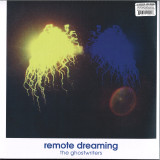
"A landmark in 80s experimental ambient music - previously tape-only, here released for the first time on vinyl, spread across a double LP with five additional tracks, four of which were previously unreleased. Remote Dreaming has been freshly remastered and includes an insert with photos and liner notes.
Dark Entries summons Philadelphia synthesizer scribes The Ghostwriters to rouse their ambient masterwork Remote Dreaming. The late Buchla maestro Charles Cohen and multi-instrumentalist Jeff Cain joined up in 1971 to craft electroacoustic chaos as Anomali, later renaming themselves The Ghostwriters.
Their collaborations with choreographers and visual media artists led to their singular style, straddling improvisation and composition, the oneiric and the immediate. Following their debut album, Objects in Mirrors Are Closer Than They Appear, they were approached by ambient outlet Mu-Pysch. Remote Dreaming would take shape in various studios over nine months. Jeff Cain's instruments on this project included electric and acoustic pianos, the Juno 106 synthesizer, and a Mirage sampler, while Charles Cohen used his signature Buchla 200 Series Electronic Musical Instrument. A stark departure from the tightly wound first LP, Remote Dreaming shows the duo unfurling with soothing pianos and psychoacoustic textures, its somnambulant drones just skirting the edges of the uncanny. Although ignored in its time, Remote Dreaming is now heralded as a landmark in 80s experimental ambient music.
Proceeds will be donated to SOSA (Safe from Online Sex Abuse), a nonprofit that combats online child sex abuse and trafficking"
It is on dark and sweaty dance floors that we get inspired, connect and leave our differences away to live in the present. With this compilation of music pressed in two parts and written by a set of artists from very diverse horizons, it is Polychrome’s perspective on the rave that we want to share. One where sound and light are the only points of reference, opening the space for liberating experiences.
The dance floor is also a space of self-reflection. The A-side is catered by two artists from one of our favorite collectives, De Lichting. With “A Reflection”, RDS opens up and shares a beautifully crafted house gem, providing for a soft and introspective yet groovy “eyes closed” dance. Nathan Kofi takes on the A2 with his unique deep house sound, layering sweet and cinematic synth sounds over an Afro-induced drum sequencing, creating a warm sonic envelope. On the B-side, James Free mixes acid synthesis, roaring bass line, and breaks to create a progressive and subtly melodic dance floor track, one that leaves you positively triggered. With the final track of the record, Rotterdam’s Mata Disk offers a glowing light over polyrhythms and very electronic noises, offering this body of work a deserved radiating curtain close.
This is the second appearance on our Various Artists catalog for both Berlin-based acts, featuring individual and collaborative tracks from the artists.
Infamous for their industrial/EBM-leaning techno signature sound, Unhuman (Manos Simotas) and New Frames (Mathis Mootz/The Panacea/Squaremeter and David Frisch) join forces to elevate their production style even further.
Dancefloor killers for heads of diverse tastes, featuring one solo track from each artist per side, along with three complementary collaborative compositions. Side A showcases New Frames' fresh-sounding crossover of industrial and dubstep with the track "Dubplate", accompanied by the hard-hitting collaborative stompers "Commander" and "3rd Eye Cataract".
On the flip side, Unhuman delivers his own broken beat-industrial techno beast, "Cerberus", while the release concludes with the final collaborative techno track, "New Force".
Industrial techno heat brought to you by long standing specialists of the genre!
Immerse yourself in pulsating beats and refined taste with our latest Vinyl "Veinylpower." Featuring artists such as Monika Ross, Adine Frost, Ema Remedi, and Anaid, the musical journey spans from Deep House to Garage.
The design crafted by artist Kristina Supernova making your electronic music experience even more immersive.
For every record sold, a portion will be donated to SLOWODI - Solidarity with Women in Need, offering support to women facing challenging situations.
"Veinylpower" marks Veinyl Berlin's third groundbreaking release, celebrating women, the diversity of electronic music, and contributing to a meaningful cause.
Fate is a funny old thing. One day in 2011, DJ/producer Tom Trago found himself sharing a train journey with Steven Van Lummel, a DIY musician, artist and co-founder of PIP, an underground nightclub and cultural hub in The Hague. Over the course of a rambling, open-ended conversation, the idea of making music together came up; a few weeks later, Trago travelled to van Lummel’s place – a former industrial unit that was now home to a rotating cast of artists and musicians – and didn’t leave for a month.
Cossetted away from the outside world in van Lummel’s loft, with multi-instrumentalists Janneke Nijhuijs and Wieger Hoogendorp joining them to create a musical four-piece, MEGA WEGA was born. Over the course of four weeks, the quartet embarked on an almost continuous creative session punctuated only by impromptu parties and mixing sessions. Life-long bonds were made and over 70 tracks recorded before the mundanity of day-to-day life came calling.
For one reason or another, the project never saw the light of day, with tracks sat gathering dust on hard drives for the best part of a decade. During the madness and loneliness of the COVID-19 pandemic, Trago rediscovered the tracks. Delighted by what he heard, a collective decision was made to add finishing touches and release the resultant album on van Lummel’s PIP Records imprint. Further instruments and vocals were added over two days at Hoogendorp’s studio, before mutual friend Tom Ruig got on board to mix the album.
So, what can you expect from Haunted, Mega Wega’s debut album? First and foremost, it’s the sound of pure creative expression – the distillation of a freewheeling, no-holds-barred, spontaneous musical journey variously inspired by the do-it-yourself ethos of musical counterculture, shared inspirations and influences, epic jam sessions, distant stars (Wega, sometimes known as Fidis or ‘the harp star’, is one of the brightest in the night sky), imaginary journeys across dusty deserts, and the comradeship of four new friends.
Enchanting and alluring, it’s an album that gleefully denies lazy categorization and ploughs its own eclectic, atmospheric musical furrow in vivid sonic detail. It’s a collective exploration of heady musical eclecticism unified by saucer-eyed vocals, low-slung bass, loose-limbed beats, sweaty percussion workouts and hazy electric piano motifs.
Haunted begins with the woozy and hallucinatory slow-burn soundscape of ‘Get Things Done’ – an effects laden shuffle akin to lying flat on your back tripping under an intense desert sun – and ends with the creepy, mind-mangling post-punk funk of ‘Brain Carpaccio’; in between, you’ll find spaced-out, low-tempo lo-fi soul (‘Move Around’, ‘Haunted’), tactile synth-powered boogie revivalism (‘Make Me Work’), deep and off-kilter opioid jazz (‘Copenhagen’), intoxicating psychedelia (‘Last Night on Earth’), piano-laden dream-pop epics (‘Shake Or Fall’), and Latin-infused, percussion-powered hedonism (‘Chopping Heads’).
Born out of spontaneous collaboration and immersive, almost endless recording sessions, Haunted is an album shot through with imagination and boundless energy, captured for posterity by four friends and collaborators at the top of their game.
- A1: Evol - The Dark Dreamquest (Intro)
- A2: Corvus Neblus - Forever I Shalt Dwell In Ravenloft
- A3: Asmorod - Fiat Abyssus (Second Chapter)
- A4: Vindalv - Swærþ Stimma (Excerpt)
- B1: Apeiron - Pan's Journey To The Cosmic Void
- B2: Secret Stairways - Lammas Tide
- C1: Dolch - Tumulus
- C2: Endoki Forest - Ii
- C3: Lunar Womb - Night Towers
- C4: Maelifell - La Dame Du Lac
- D1: Kadotus 609 - The Summoning Through Crimson
- D2: Neptune Towers - To Cold Void Desolation
In the early 1990s, a handful of black metal artists were enticed by the possibility of conjuring new fantastical worlds from the deep isolation of their home setups. Rather than the dense metal sound of their existing projects, this new direction would be centred around intimate synth soundscapes: forlorn organs and otherworldly MIDI theatrics.
The music on ASCEND is predominantly from self-produced, self-distributed releases, typically manufactured in small numbers. Though some artists producing this style of music, most notably Mortiis and Burzum, gained wider recognition outside underground circles, it is only in recent years that the sound and its influence has really been appreciated. This is particularly the case with the late Matthew Davis and his recently reappraised Secret Stairways project, whose song ‘Lammas Tide’ (from the 1997 Enchantment of the Ring album) appears on ASCEND. A simple home recording on a Yamaha KX-W392 manages to be both elegant and tortured, ambiguously devotional and recalling latter years Popol Vuh.
This battle between dark and light is a constant thread through ASCEND, with simple minimal synth lines that can be both delicate and menacing. Compilation opener ‘The Dark Dreamquest’ from Italian black metal group Evol is loaded with occult warning, and Finnish act Kadotus 609’s ‘The Summoning Through Crimson’ is languid, twisted and dark. In spite of the darkness, several pieces of the music on ASCEND have formal similarities with the sometimes saccharine new age music that rose to prominence in that era: but to a rougher, darker ends. The closing song from Darkthrone icon (and past NTS radio host) Fenriz, under his Neptune Towers pseudonym, pulls us further out, with ‘To Cold Void Desolation’ — an astral synth project, akin to ’70s kosmische muzik masters Harmonia.
The gentler side can often amplify an uncannily sinister edge, heard in German act Dolch’s ‘Tumulus’, where orc marching horns contrast against delicate rompler harps and softly whispered chanting. It hammers home a deep loneliness and detachment constant throughout ASCEND, made possible by these unusual contrasts, both unsettling and otherworldly.
This year marks 3 years of Needs.
From humble beginnings in 2017, the label has since gone on to release tracks from some of our favourite artists in the scene, curated events with essential charities and initiatives, and in the process raised over L10,000.
To mark this special occasion we're back where it all started, raising money and awareness for mental health. October 10th marks World Mental Health Day and this year's theme set by theAWorld Federation for Mental Health is suicide prevention. To recognise and promote this occasion we've brought along another all-star cast to help us spread the message far and wide.
Needs 008 is a double vinyl compilation which features the talents of Shanti Celeste, OCB, Michelle, Bobby., Peder Mannerfelt, Yu Su, Adam Pits and DJ Sports.
Stay tuned to the Needs channels during our birthday month for regular updates, plus panels and artist features.
We'd also like to take this opportunity to say a big thank you to everyone that has supported us this far: especially Juno Records, For The Record PR, all artists that have kindly donated their music, and of course the music lovers, dancers and forward thinkers that have supported us on this wonderful journey <3
2020 sees Jazz & Milk celebrating its 15th anniversary! Since 2005 the label, founded by Dusty, offers an experimental playground for international artists that share a passion for organic and soulful dance music. Many legendary club nights and over 30 releases later, Jazz & Milk has become a household name amongst the eclectic music imprints. The focus has always been to transcend genres, including a broad spectrum of styles ranging from jazz, soul, brazil, afrobeat to house, broken beat and electronic music.
For this very special occasion, the label presents six exclusive tracks by the likes of Steve Spacek, Àbáse, Sam Irl, Feater, Bongani GiveThanks and Moe Fabrik - the club focused collaborative moniker of Wayne Snow, Ziggy Zeitgeist and StyleBoi 92.
With this compilation project, Jazz & Milk is not only celebrating an illustrious 15 years of operation. The label also wants to take the opportunity to highlight the importance of 'community', at a time when racism, greed, injustice and a deadly pandemic are jeopardizing our ability to harmoniously exist with one another.
Peace, Love & (Comm)Unity!
The sixth and final part of Eel Behaviour is here. Opening up with the pacy, acid-tinged power of Panmella Calix's "Tip", you could be forgiven for thinking that this dancefloor destroyer out of Scandinavia was made in the mid-nineties (and you could be right!). Suneel Shark's "Blunt But Fair" got lost in the Irish Sea many times before we finally reeled in the DAT on a fishing trip close to Portmarnock. The Arctic Ocean resident sprung out of the water on this one, in naturally fast and slippery style.
On the flip, French techno supremo Zadig delivers an acid-rave-breakbeat combo on "Red Eye", recalling the early era of labels like UR, Missile and Synewave, and creating a massive bomb in the process. That then brings us to Jon Hussey, who wraps up the record with an expert slice of bubbling, trippy acid. "Engine Brood" and its hypnotic properties transport us to another dimension, and the end stop on our Eel Behaviour journey. As ever, artwork is from Adult Art Club's Jonny Costello, with this one coming on clear vinyl.
- A1: Lions Love (John Roberts Remix)
- A2: Island In The Sky (Recondite Remix)
- B1: Dream Yourself Awake (Solomun Remix)
- B2: Island In The Sky (Efdemin Dub)
- C1: Dream Yourself Awake (Shinedoe Remix)
- C2: Frau Im Mond, Sterne Laufen (Alva Noto Remodel)
- D1: Dream Yourself Awake (Solomun Dreamversion)
- D2: Frau Im Mond, Sterne Laufen (Sprenger And Ambarchi Remix)
- A1: Les Masques - Il Faut Tenir (1969)
- A2: Isabelle Aubret - Casa Forte (1971)
- A3: Christianne Legrand - Hlm Et Ciné Roman (1972)
- A4: Jean Constantin - Pas Tant D'chichi Ponpon (1972)
- A5: Billy Nencioli & Baden Powell - Si Rien Ne Va (1969)
- B1-: Marpessa Dawn - Le Petit Cuica (1963)
- B2: Jean-Pierre Sabar - Vai Vai (1974)
- B3: Sophia Loren - De Jour En Jour (1963)
- B4: Isabelle - Jusqu’à La Tombée Du Jour (1969)
- B5: Sylvia Fels - Corto Maltesse (1974)
- C1: Frank Gérard - Comme Une Samba (1972)
- C2: Ann Sorel - La Poupée Des Favellas (1971)
- C3: Charles Level - Un Enfant Café Au Lait (1971)
- C4: Andrea Parisy - Les Mains Qui Font Du Bien (1970)
- C5: Audrey Arno - Quand Jean-Paul Rentrera (1969)
- C6: Aldo Frank - T’as Vu Ce Printemps (1970)
- D1: Christianne Legrand - Cent Mille Poissons Dans Ton Filet (1972)
- D2: Clarinha - Lemenja (1970)
- D3: Hit Parade Des Enfants - Aquarela (1976)
- D4: Jean-Pierre Lang - Tendresse (1965)
- D5: Magalie Noël - Une Énorme Samba (1970)
- D6: Françoise Legrand - La Lune
Ever since the late 1950s bossa-nova revolution, Brazil’s influence on French music has been undeniable. Pierre Barouh, Georges Moustaki and a vast array of lesser known artists, all made the Musica Popular Brasileira (MPB) an axis of promotion at the service of a cool and metaphysical, modern and mixed Brazilian lifestyle. Some were seduced by the poetic languors of the bossa, some were looking for fun, and others just loved the American hybridization of jazz-bossa, jazz-samba.
What is bossa nova? One of its creators, Joao Gilberto said: "Its style, cadence, everything is samba. At the very start, we didn't call it bossa nova, we sang a little samba made up of a single note - Samba de uma nota so .... The discussion around the origins of bossa nova is therefore useless”. It is nevertheless useful to remember that these magnificent Brazilian songs, which the guitarist describes as samba, were shifted and balanced around improbable chords. "I like things that lean, the in-betweens that limp with grace," said Pierre Barrouh, quoting Jean Cocteau.
With emotion, arrangements for violin and supple guitar licks, bossa nova rapidly changed. A transformation that can be heard in the Tchic, tchic, French Bossa Nova 1963-1974 compilation, the result of a cultural reappropriation, which traveled through the United States and supplemented itself in France.
A musical revolution that has remained significant, bossa nova was born in Rio. From 1956 to 1961, Brazil lived through its golden years. In five years, the country had invented its modernist style. Elected president in 1956, Juscelino Kubitschek de Oliveira, an elegant man with a broad forehead, brandished a promising slogan: "Fifty years of progress in five years". He quickly got to work. Not worried about increasing debt, he launched the project for a new federal capital, Brasilia, designed by the communist architect Oscar Niemeyer. Volkswagen opened state-of-the-art factories and created the “fusquinha”, the Beetle. In Rio, the Vespa made its first appearance. The Arpoador Surf Club crew run into the “girl” from Ipanema, Helô Pinheiro - the tanned garota ("chick"), between a flower and mermaid, who at 17 walked by the Veloso bar, where the fiery author and composer, Tom Jobim and Vinicius de Moraes, were getting drunk on whiskey. From then on, bossa symbolized cool.
In 1958, Joao Gilberto recorded Chega de Saudade, which the directors of Philips denied, calling it "music for fagots". The marketing director, who believed in it, secretly pressed 3000 78-inch vinyls and distributed them at schools around Rio, creating a tidal wave.
American jazzmen then took over. In particular, trumpeter Dizzy Gillespie and guitarist Charlie Byrd. In November 1962, the Brazilian Ministry of Foreign Affairs funded a "Bossa-Nova" concert at Carnegie Hall in New York, inviting the genre’s pioneers. Unprepared, the show soon turned to disaster. But the troupe was invited to the White House by Jackie Kennedy. The first lady loved "the new beat" and in particular Maria Ninguem, a song by Carlos Lyra, later covered by Brigitte Bardot.
In Brazil, the 1964 military coup quickly ended this euphoria. The destructive atmosphere that ensued pushed many Brazilian musicians to leave, if not to exile. Thus, Tom Jobim, Sergio Mendes and Joao Gilberto arrived to the United States. In New York, Joao Gilberto met saxophonist Stan Getz. At the time, he was married to the Bahianese Astrud Weinert Gilberto, who had a German father. She had never sung before, but she knew how to speak English. Getz therefore asked her to replace her husband on The Girl From Ipanema. The Getz/Gilberto record with Tom Jobim on piano, was released in March 1964. Phil Ramone, the "pope of pop" was in charge of sound.
Bossa nova arrived in Paris through the classic “guitar-voice” channel (Pierre Barouh, Baden Powell, Moustaki…) But France loved jazz and Paris had already welcomed its American contributors. All these good people were to pass through Saint-Germain-des-Prés. The cabaret l'Escale became the Mecca of Latin American sound where one could find Pierre Barrouh and his friends, such as the Camara Trio, samba-jazz aces, whose only record was published by the Saravah label. With a band strangely called Les Masques (a band that included Nicole Croisille and Pierre Vassiliu, among others), the Camara Trio recorded an interesting Brazilian Sound, including the track Il faut tenir which is present on this tasty compilation of rarities.
Other enlightened musicians can also be found on the compilation, such as Jean-Pierre Sabar (songwriter for Hardy, Auffray, Leforestier ...) and the French pop rock organist Balthazar. In 1975, Sabar recorded Aurinkoinen Musiikkimatka on a Finnish label, which featured the crazy Vai, Vai, included on this record. We are now following the footsteps of Brazilian electronic musicians such as Sergio Mendes, Eumir Deodato or Marcos Valle who created funk and disco sounds on their keyboards and synthesizers. A style that influenced Véronique Sanson when she wrote Jusqu’à la Tombée de la nuit in 1969 for Isabelle de Funès, the niece of Louis and a great friend of Michel Berger - Sanson did end up singing this track on her 1992 Sans Regret record.
The pinnacle of exoticism and travel, Sylvia Fels’ Corto Maltese includes bongos, sea mist and ocean sounds. The title was taken from Jacky Chalard’s concept album written in 1974, Je suis vivant, mais j’ai peur (I am alive, but I am scared), based on Gilbert Deflez’s science fiction novel.
However, bossa nova extended the scope of popularity. "In the 1970s, I was a fan of Sergio Mendes, Getz / Gilberto. I fell in love with this music that I knew because I had been an orchestral singer, " explained Isabelle Aubret, who in 1971 delivered a composite record of covers by the very funky Jorge Ben, Orfeu Negro, Tom Jobim, Vinicius de Morais and Jean Ferrat. "I recorded this album for Meys Records in Paris, far from Brazil, with wonderful musicians, François Raubert, Roland Vincent, Alain Goraguer...". The latter wrote the arrangements for Casa Forte, a very percussive title borrowed from Edu Lobo, one of the initiators of the bossa who spent time in California. "Jazz and bossa came together and produced very rhythmic music. I love singing, it allows me to dream, to have fun, to feel a high on stage, and these songs brought me joy, made me swing, my singing felt like a dance.”
The world tours of French singers and their desire for the tropics, often brought them to Rio with its hills, forests, caipirinhas and tanned bodies. There are surprises though, like this Iemenja (Iemenja is the goddess of the sea in the Afro-Brazilian candomblé religion). Not unlike the composer and musician Jean-Pierre Lang, based in Sao Paulo, Claire Chevalier taught Brazil to Brazil. In 1970, the singer and painter published a 45-inch vinyl, Mon mari et mes amants (My husband and my lovers), under the improbable pseudonym of Clarinha (little Claire). She was then living in Rio, with her husband, Joël Leibovitz, who founded a band called Azimuth, and who owned a record label specialized in "sambas enredos" songs for samba school parades.
For its B side, she asked Pierre Perret to come up with lyrics for a song composed by Carlos Imperial: "Oh goddess of the sea, o goddess Iemenja, I bring a white rose to adorn your long hair ..." . "Perret came to see us, and we had fun, remembers Joël Leibovitz. We wrote Lemenja for fun, we recorded it at the Havaí studio, behind the Central do Brasil the central station. Erlon Chaves, the arranger who worked with Elis Regina, joined us" adding his share of Afro-Brazilian percussions and funky brass to the mix.
There is a common misunderstanding in Franco-Brazilian history: that bossa, admittedly hedonistic, is perceived as funny, even though the poets who wrote the texts are often philosophizing on the human condition. Its French interpreters pull it towards a carnival inspired universe, far removed from its fundamental essence. Thus, Jean Constantin covered the famous Samba da minha terra, an ode to the art of samba written by the classic Bahian composer Dorival Caymmi, renaming it with the enticing title of Pas tant de tchi tchi pompon: "On your pier there is no tchi tchi / when you arch your back, you know everything is alright ”(lyrics by Gérard Calvi). This expedited bossa aims for the absurd, but retains a certain elegance.
Indeed, Jean Constantin was not an idiot, the rather large man had a huge mustache and liked fantasy, (Les pantoufles à papa, Le pacha, inspired by cha-cha-cha-cha, salsa and jazz) but he was also the lyricist of Mon manège à moi interpreted by Edith Piaf, the composer of Mon Truc en plume by Zizi Jeanmaire and the soundtrack of François Truffaut’s 400 Blows. Le Poulpe, published in 1970, from which this bossa is extract, was arranged by Jean-Claude Vannier, an accomplice of Serge Gainsbourg’s Melody Nelson. In short: "There is enough of samba / By looking at the parasol / Because my poor cabeza / Is going to die in the sun".
Even the American actress Marpessa Down, who was at the heart of the bossa nova revolution with her role as Euridyce in Marcel Camus’ film Orfeu Negro, winner of the 1959 Cannes Palme d'or, fed the clichée with Je voudrais parler au petit cuica - "Tell me how you manage to always make people want to dance / It's true, I must admit that I cannot resist your magic" - in consequence, once can hear the cuica, a little drum inherited from the Bantu.
But bossa nova had many angles. Societal, of course, pushing actresses who were symbols of women's liberation like Brigitte Bardot, Jeanne Moreau, or Sophia Loren to engage in the exercise of accelerated bossa. In February of 1963, Sophia Loren made a record in French in Rome, Je ne t'aime plus, featuring the song De jour en jour, a bossa written by two Italians, Armando Trovajoli and Tino Fornai, which was released a little later by Barclay. Bossa accompanied the 1960s, a decade of moral liberation. Ann Sorel, who interpreted La Poupée des favellas, caused a sensation with L’amour à plusieurs, a provocative song written by Frédéric Bottom and Jean-Claude Vannier. As for the actress Andrea Parisy, she displayed her bourgeois cheekiness in Marcel Carné's Les Tricheurs before interpreting Les mains qui font du bien. And Magalie Noël, the friend of Boris Vian, who sung Johnny fais-moi mal, was hired to sing Une énorme Samba, composed by Alain Goraguer (arranger to Gainsbourg, Bobby Lapointe and Jean Ferrat) with lyrics by Frédéric Botton.
But in the end, of what wood is bossa nova made of? The answer is given by Christianne Legrand, daughter of Raymond the conductor, and sister to Michel the composer: "With me, with jà" - jà means "immediately" in Portuguese. In 1972, the singer, an expert in vocal jazz and a member of the Double Six, published Le Brésil de Christianne Legrand. Two songs included on the Tchic Tchic compilation that demonstrate how bossa, jazz, funk, rock, etc. work like a swiss army knife: the music is used to denounce broken systems, or miracles, HLM et ciné roman, Cent mille poissons dans ton filet, two songs from the O Cafona soundtrack, a successful telenovela broadcast, at the time in black and white, on TV Globo. The first was adapted in French by the fighter and friend of the Legrand tribe, Agnès Varda. The second is content with a play on words, jostling them into a summer fun.
Véronique Mortaigne
A cocktail of rebellious queer vocal fragments, deceptive percussive granules and swaying hammered vibrations, upsammy and Valentina Magaletti's first collaboration trembles with suspense. The seeds of 'Seismo' were sown following a commission from Amsterdam's Rijksmuseum to soundtrack an exhibition of work from the Museum Boijmans van Beuningen in Rotterdam and the duo didn't want to approach their collaboration flippantly. So, wandering the museum's maze of rooms, they recorded various improvised percussive sounds with their arsenal of microphones, using the space to inform various rhythms and textures that were sculpted later into electroacoustic vignettes. This was just the starting point, though; as Magaletti and upsammy began performing together, the project evolved and 'Seismo' began to take shape. The duo had struck on a salient aesthetic concept, using mostly digital and acoustic mallet instruments to blur the boundary between their roles and create friction between the synthetic and the authentic. And the finished record is a phantasmagoric push-and-pull between its various conflicting elements: harmony and dissonance, randomness and predictability, openness and constraint. 'Seismo' isn't the first time that upsammy has studied her environment in search of revelation. On her acclaimed second album, 2024's 'Germ in a Population of Buildings', the Amsterdam-based DJ, producer and multidisciplinary artist erected her complex, unorthodox rhythms and eerie melodies around a modernist frame of field recordings collected in various cityscapes, countering heavyweight basslines with subtle, microscopic sounds. London-based Italian vanguard Magaletti, meanwhile, has applied her unique logic to innumerable projects at this point, working with everyone from batida icon Nídia and hardcore-dub outfit Moin to French writer Fanny Chiarello and British bass scientist Shackleton. For years she's approached the drums with criticism, attempting to challenge any preconceptions, something that's most visible on 2020's 'A Queer Anthology of Drums'. And both artists' thoughtful perspectives are welded together seamlessly on 'Seismo', a dizzying suite of eight eccentric statements that's fragile but never insecure, gauzy but not indistinct. An unnerving sense of space characterizes 'It Comes to an End' as Magaletti's in situ improvisations herald for upsammy's microscopic glitches and chiming pitch-bent melodies. It's almost unbalancing to witness the track's impossible dimensionality, the interplay between reverberant marimba hits and bone-dry synths, or percussion that's been recorded and processed in consciously different settings. A new architecture emerges in the sound itself that the two artists scan and explore meticulously, testing its boundaries with undulating hybridized rhythms on the invigorating 'Superimposed' and offsetting the powdery drums with liquified smacks and alien voices. The duo's vibrations are knotted with piano flourishes on 'Hyperlocalize', balanced with artificial clanks and clangs that disappear into the track's sonorous atmosphere, replaced by whispers and half-hallucinated insectoid chirps. 'Seismo' is an album that feeds off the energy generated by its juxtapositions: the tension and anticipation that's melted by rapid, hyperactive movement and the finely drawn rhythms disrupted by a layer of indistinct, barely perceptible microsounds. It's a collaboration that sounds like two minds challenging each other but not wrestling, each peering from their own distinct vantage point and imagining a third landscape shaped by optimistic, queer vibrations.
- A1: Fkj - Ylang Ylang
- A2: Nightbirds - U&I
- A3: Dabeull - I Can’t Stop (Feat. Reva De Vito)
- A4: Kartell - All In (Feat Che Lingo)
- A5: Cherokee - Don’t Matter (Feat. Darianna Everett)
- B1: Darius - Espoir
- B2: Didi Han - Wake Up
- B3: Wayne Snow - Nina
- B4: Dune X Crayon - Slowdiving (Feat. Lossapardo)
- B5: Fkj - Vibin Out With (((O)))
- C1: Kartell - All I Have (Feat. J-Rican)
- C2: Darius - Cherie (Feat. Darianna Everett)
- C3: Cezaire - The Answer (Feat. Adele)
- C4: Dune X Crayon - Blue Window
- C5: Karma Kid - Like Im On Fire (Kartell Remix)
- D1: Cezaire - Nirvana (Feat. Leven Kali)
- D2: Crayon - After The Tone
- D3: Zimmer - Wildflowers (Feat. Panama)
- D4: Katu - Home Is Not A Place (Feat. Chester Watson & Solv)
- D5: Kartell - Space Odyssey
To celebrate over ten years of groove and sonic elegance, Roche Musique presents its “BEST OF” compilation, available exclusively on vinyl. A handpicked selection of 20 essential tracks tracing the label’s DNA — a refined blend of modern soul, nuanced electronics, and timeless groove.
Featuring the label’s cornerstone artists — FKJ, Darius, Kartell, Zimmer, Cezaire, Crayon, Dabeull, Lossapardo — alongside acclaimed collaborators such as Reva De Vito, Darianna Everett, Ayelle, Leven Kali, Panama, Chester Watson, Sølv, and more. From “Vibin’ Out” to “Espoir”, through “Wildflowers” and “I Can’t Stop”, this compilation captures the very essence of Roche’s sound: warm, heartfelt, and endlessly groovy. A pure analog listening experience designed for true music lovers and vinyl collectors — every groove telling the story of a decade of passion and sound.
2025 Reissue.
Münchenbuchsee, a suburb of Bern, Switzerland. Stephan Eicher is the youngest of three children. His father, a radio and TV repairman, is also a jazz violinist and a sound tinkerer in his spare time. In the family home's converted fallout shelter turned studio, Mr. Eicher experiments with homemade sequencers, tortures handcrafted drum machines, and abuses reel-to-reel tape recorders—all under the fascinated gaze of young Stephan.
The boy quickly develops a musical curiosity, exploring sound through various experiments and wanderings. Alongside his younger brother Martin, Stephan crafts audio plays on a homemade multi-track recorder (essentially several cassette decks hooked together!), which they write, record, add sound effects to, and perform for family and friends. Just a couple of nice kids, really...
Then comes 1972, and Lou Reed's Transformer album changes everything for the Eicher kids. For 13-year-old Stephan, it's a revelation—especially "Vicious", the opening track, which he plays on repeat for months. He convinces his father to buy him an electric guitar. Not stopping there, his father also builds him a tube amp using an old radio.
Then comes adolescence. A rough one. Stephan leaves home at 16 and moves to Zurich. With obvious artistic talent, he persuades his art teacher to help him get into F+F, a radical, alternative art school—despite his young age. Accepted, he starts learning video techniques, determined to become a filmmaker.
At F+F, Stephan organizes Dada-style happenings and concerts with a group of friends known as the Noise Boys. Among them: one of his teachers on bass, Veit Stauffer on drums (who would later found ReR/Recommended Records), his girlfriend Sacha on vocals, and Stephan on guitar. In one of their early performances, they release a remote-controlled mouse covered in dull razor blades into the audience to create panic and chaos. Keeping with this aggressive, confrontational spirit, they once played a concert while wearing headphones blasting Tristan and Isolde, trying to perform their own songs simultaneously—to maximize the cacophony. The goal was always the same: clear the room.
Their “songs,” if you can call them that, followed suit. Take "Hungeriges Afrika", for instance—performed entirely with power drills and some drum feedback.
To make ends meet, Stephan returns to Bern on weekends to work as a waiter at the Spex Club, the city’s main punk venue. On September 16, 1980, during a show by proto-electro group Starter, the police raid the club and arrest everyone. Stephan, who manages to avoid arrest, seizes the opportunity to “borrow” Starter’s gear left behind. He suddenly finds himself in possession of a Roland Promars synth, a Korg MS20, and a gorgeous CR78 drum machine, which he runs through a Big Muff distortion pedal to get that perfect gritty sound.
He then sets out to reinterpret some Noise Boys tracks, reworking them during impromptu sessions recorded on a dictaphone (yes, a dictaphone—now the lo-fi sound makes more sense, doesn’t it?). He ironically titles the resulting cassette "Stephan Eicher spielt Noise Boys" ("Stephan Eicher plays Noise Boys"). This gem features seven tracks, which are the ones reissued here.
Back in Zurich, he visits his friends Andrew Moore and Robert Vogel, who have a DIY cassette duplication setup. They make 25 copies of Stephan Eicher spielt Noise Boys for Stephan and his friends. Robert encourages him to visit Urs Steiger of Off Course Records and play him the tape.
Without much hope, Stephan shows up at Urs’s office. But Urs is instantly hooked and suggests releasing a 7” single. Due to space constraints, they reluctantly drop two of the seven tracks ("Hungeriges Afrika" and "One Second"). As for the musical score featured on the cover—it was randomly chosen and remains a mystery to this day. Calling all music theory nerds!
The 7-inch is pressed in 750 copies and released in the first week of December 1980—a date Stephan remembers well, as it’s the same week John Lennon was killed. Smartly, Urs sends a promo copy to François Murner, Switzerland’s answer to John Peel, who hosts a show on alternative station Sounds. Murner falls in love with the record and starts giving it airtime. To Stephan’s surprise, sales follow—and people actually seem interested in his music.
Even this modest underground success scares Stephan a bit. He stops making music for a year and moves to Bologna, where he works as a programmer at Radio Città, a feminist radio station.
Meanwhile, Stephan’s younger brother Martin, who’s also involved in the punk scene, joins the band Glueams as a singer and guitarist. Glueams, named after the fanzine run by two of its members (drummer Marco Repetto and bassist GT), eventually rebrands as Grauzone. Stephan is invited to their shows to project hacked Super 8 visuals live on stage.
Urs Steiger, now working on a compilation titled Swiss Wave – The Album, asks Grauzone to contribute alongside bands like Liliput, Jack and the Rippers, The Sick, and Ladyshave (Fall 1980).
For the album, Martin tasks Stephan with producing their recording sessions. Under Stephan's artistic direction, two tracks emerge: "Raum" and "Eisbär". During "Eisbär", Martin plays a minimalist bass line borrowed from post-punk band The Feelies (just an open string). Drummer Marco Repetto struggles to keep time. Later that evening, unhappy with the takes, Stephan builds a four-bar drum loop from a ¼-inch tape and uses it instead of the flawed original. He then adds bleepy synths and wind sounds to complete the track’s icy vibe before handing it over to Urs.
The Swiss Wave – The Album compilation is released quietly at first, but things snowball thanks to "Eisbär", which eventually becomes a smash hit—selling over 600,000 singles.
Meanwhile, Stephan plays in a rockabilly band called SMUV (named after Switzerland’s social security agency) and begins producing artists, including the debut album of Starter (1981), which includes a more pop-oriented version of "Minijupe".
By early 1982, Stephan starts spending time with the post-punk girl band Liliput (formerly Kleenex). They’re older than him, and he happily drives them around in his Renault Major, acting as their roadie.
By 1983, Grauzone—signed to the major label EMI, which turned out to be a misstep—is falling apart. Stephan begins to pivot toward a more mainstream pop sound with his debut solo album Les Chansons Bleues.
But that... is already another story.
This double LP of instrumental Hindustani, Carnatic and folk 78rpm shellac records from India comes with a full color 12-page insert of gramophone record ephemera, shops, labels, manufacturing details and graphics. The LPs feature over 25 artists recorded between 1904 and 1959 playing a panoply of instruments: jalatarang, dilruba, sarod, clarionet, pakhawaj, violin, been, kazoo, shehnai, tabla, sarangi, sitar, vina and more.
Artists include Imdad Khan (the first sitarist ever recorded), Ahmedjan Thirkhawa, Bundu Khan, Amir Hussain, Allauddin Khan (who taught Ravi Shankar), and others both forgotten and revered.
The Indian classical instrumental tradition is one of incredible proficiency and expressiveness using instruments and techniques created over generations that seem to perfectly and uniquely compliment Indian culture, landscape and tradition. Sympathetic strings resonate inside sitars and sarangis to manifest shimmering reverberant spiritual spaces; horns, reeds and flutes extend the range, volume and melodic inventiveness of the voice; a mind-boggling array of elaborately turned percussion instruments allow for rhythms as complex or as simple as the flowing Ganges river. Classical music in India was perhaps at its height during the 78rpm period as the Raj era was ending and the world was globalizing.
2-LP gatefold with 12 page full-color booklet insert - features never reissued recordings and is the long-anticipated follow up to the Indian Talking Machine book/CD (Sublime Frequencies 099), which was also produced by Robert Millis from his collection of 78rpm records and ephemera.
- Cumbia Ma
- Cumbiambera
- Mi Sendero
- Amores Conmigo
- Cumbia De Valledupar
- Dame Un Besito Manuela
- Yolanda
- El Clarn De La Montaña
- Cumbia Pachanga
- Tiburn Con Pelo
- Cumbia Panormica
- La Tormenta
- Satans
- Leobigilda
- Suéltale La Trenza
- Cumbia Bogotana
- La Amanecedora
- El Indio Fiestero
- La Serrana
- Cumbia Que Me Alegras
- La Democracia
- Cumbia Marina
- Cuando Te Vayas
- Sal Con Limn
- El Mundo Se Va A Acaba
- Cumbia Casino
- La Palma
- Cumbia Continental
After digging deep into the overwhelming archives of Discos Fuentes, Codiscos and Discos MAG in our previous volumes, this fourth instalment in the series "Cumbia Cumbia Cumbia!!!" comprises 28 Colombian cumbia bangers for the dance floor from the deep vaults of Discos Tropical, all of them originally released between 1960 and 1984. The historical origins of cumbia are nebulous and imprecise. The mythology surrounding it suggests an ancient past when Amerindian, African and European musical sounds were mixed together. Discos Tropical was a Barranquilla-based label founded in the mid-1940s by Luis Emilio Fortou Pereira, a visionary who helped define Colombian dancing habits and tastes from the previous century. Until the late '50s, most cumbias were orchestral-based. However, even though formats and styles diversified from the following decade onward, these highly popular big bands spectacularly defined the sound of Discos Tropical and livened up the most cosmopolitan dances in the major coastal cities. After the mid-'60s, the big bands gradually fell into decline, but the popular demand for tropical music did not. Facing this situation, the major record companies created smaller-format groups with one particular feature: they mixed accordion music with brass bands. This new volume of "Cumbia Cumbia Cumbia!!!" combines well-known classics and rarities that are difficult to find in their original formats. An invitation to enjoy and be amazed, above and beyond ethnographic and academic concerns. Double Vinylalbum
- A1: Robert Pico - Le Chien Fidèle
- A2: Annie Girardot - La Femme Faux Cils
- A3: Spauv Georges - Je Suis L'état
- A4: Zoé - Zoé
- A5: Jacques Da Sylva - Fou
- A6: Valentin - Je Suis Un Vagabond
- A7: Jacques Malia - Histoire De Gitan
- A8: Bernard Jamet - Raison Legale
- B1: Jean-Pierre Lebort - Barbara Au Chapeau Rose
- B2: Les Concentrés - Fils De Dégénérés
- B3: Les Missiles - Publicité
- B4: Hegessipe - Le Credi D'hegessipe
- B5: Marechalement Votre - Ethero Disco
- B6: Mamlouk - Decollez Les
- B7: Mozaique - L'amour Nu
- B8: Jean-Marc Garrigues - Je Dis Non
- B9: Penuel - Astronef 328
The journey through French-speaking pop archives continues with this fifth volume, packed with fuzz, gimmicks, and dissent. Far from the charts, the selected tracks display a great creative freedom, often backed by corrosive humor. Welcome to the surprising, kaleidoscopic, and colorful world of the late sixties and early seventies, Wizzz!
Born in Montauban, Robert Pico stumbled into music by chance when he met René Vaneste, then artistic director at Pathé-Marconi. René brought him to Paris to record his first 45 RPM EP in 1964. A year later, Pierre Perret introduced him to Vogue, where he recorded his second album with Claude Nougaro’s orchestra. Sylvie Vartan then introduced him to RCA, where he recorded four singles, including the astonishing "Chien Fidèle," a track backed by a hair-rising fuzz guitar. Alongside his solo career, he also composed for other artists like Alain Delon (the song was recorded but remains unreleased), Magali Noël, Bourvil, and Georges Guétary. In the Paris of the sixties, he mingled with Mireille Darc, Elsa Martinelli, Marie Laforêt, France Gall, Françoise Hardy, Petula Clark, Régine, Dani, Serge Gainsbourg, Joe Dassin, Franck Fernandel, Charles Level, and Roland Vincent. Despite his efforts and winning a Grand Prix Sacem for his final record, Robert Pico didn’t achieve the expected success in show business and decided to leave Paris and return to the Southwest, where he devoted himself to writing. He is the author of 23 books (including Delon et Compagnie, Jean-Marc Savary Editions 2025, a memoir about his youth and his many encounters). Today, he is relieved to never have become a celebrity and devotes himself to his work with passion.
In 1969, the Franco-Italian movie Erotissimo was released, directed by Gérard Pirès (who later directed Taxi in 1998, written and produced by Luc Besson). This pop comedy features Annie Girardot, Jean Yanne, Francis Blanche, Serge Gainsbourg, Nicole Croisille, Jacques Martin, and Patrick Topaloff. The soundtrack was written by Michel Polnareff and William Sheller, with lyrics by Jean-Lou Dabadie. "La Femme Faux-cils," performed by Annie Girardot. It recounts the feelings of a rich CEO's wife who seeks to develop her sex appeal under the influence of advertisement and magazines. Groovy, sparkling and light, this track, with ITS lush arrangements humorously critiques consumer society and feminine beauty standards.
“Je suis l’Etat” (1967) is the flagship track of the first EP by singer-songwriter Spauv Georges, aka Georges Larriaga, better known as Jim Larriaga (1941-2022). Born into a family of bakers, the young man was initially planning to become a hairdresser when he discovered English-speaking music through Elvis Presley and the Beatles. After this revelation, he decided he would become a songwriter and gave himself five years to succeed. He recorded his first two EP’s independently for RCA under the pseudonym Spauv Georges; meaning “that poor George”, a nickname given to him by the mother of her friend Jean-Pierre Prévotat (future drummer of the Players, Triangle, or Johnny Hallyday). Portraying a depressed and eccentric young man, Spauv Georges created corrosive and amusing songs that didn’t reach a wide audience, despite a TV appearance with Jean-Christophe Averty.
Supported by his loyal friend and fellow songwriter Jean-Max Rivière, Georges Larriaga met the future singer Carlos in the early '70s, then Sylvie Vartan’s assistant. He wrote songs for Carlos, including the popular "La vie est belle," "Y’a des indiens partout," and "La cantine", which went onto become a huge hit in 1972. He also composed for Claude François (“Anne-Marie”, 1971), Charlotte Julian (“Fleur de province”, 1972), helped launch child singer Roméo (who sold 4 million records), and later wrote the hit "Pas besoin d’éducation sexuelle" (1975) for the young Julie Bataille. In 1971, Jim recorded an album for Disc'Az: “L’univers étrange et fou de Jim Larriaga”, which featured pop gems like “La maison de mon père”.
The story of the song "Zoé" began when Pierre Dorsay, artistic director at Vogue Records, asked Swiss singer and musician Pierre Alain to write a song for a new female singer. The inspiration came when he realized that Zoé (the artist's name) was also the name of France's first atomic battery, created in 1948, which consisted of uranium oxide immersed in heavy water! The lyrics reflect a bubbling energy that must be handled with caution, while the instrumentation echoes this atomic theme, notably with the use of a theremin.
Zoé’s career lasted only as long as a single 45 RPM, but it seems Christine Fontane was the vocalist behind this pseudonym, who is known for several EPs, a good "popcorn" album in 1964, and a handful of children’s singles in the '70s. Regardless, the photograph on the cover is of a different girl entirely.
Later, Pierre Alain continued his career, writing songs for himself, Marie Laforêt, Danièle Licari, Alice Dona, Arlette Zola (3rd place in Eurovision 1982), and achieving multiple gold and platinum records in Canada. Also an inventor with several patents, president of the Romande Academy, and head of the French Alliance in Geneva, he now composes atonal music, books, and poetry. Moreover, he is also the host of "Les Mardis de Pierre Alain" at "Le P'tit Music'Hohl" in Geneva.
Filled with oriental choruses and fuzz guitar, "Fou" is from Jacques Da Sylva's only EP released by Vogue in 1967. Despite the quality of this recording, all traces of this singer disappear after this first effort.
Valentin is a baroque pop singer born in Belgium. He is the songwriter and composer of most of the tracks on his three singles released in the late 60s in Canada. A legend says that he reincarnated himself as Jacky Valentin during the 1970s for a rock'n'roll revival career in Belgium, but his older brother sadly debunked this story. Valentin's first two singles were arranged by Claude Rogen, a Parisian session pianist who had come to Canada to promote the song “Mister A Gogo”, a cover of David Bowie’s “Laughing Gnome”, adapted by singer Delphine, his wife at the time. Far from his usual network, Claude Rogen arranged music for Polydor, including the arrangements for “Je suis un vagabond” in 1969, a jerk tune with string arrangements and a furious optimism.
Jacques Malia wrote, composed, and recorded his only 45 EP for Festival in 1966. “Histoire de gitan” is an incredible beat track with bohemian scat that tells the story of a gypsy musician who came to Paris to make it in the Music-Hall, to no avail. The hero of the song and its author probably shared a similar fate, as Jacques Malia faded into anonymity after this remarkable attempt.
Bernard Jamet recorded two EPs for Barclay in the late sixties and co-wrote several songs with Christine Pilzer, Pascal Danel, and prolific songwriters Michel Delancray and Mya Simile. The track “Raison Légale” (1968), his masterpiece, immerses the listener in a courtroom right when a murderer is being judged, with jerk rhythm and free arrangements. A unique, paranoid, judicial, and psychedelic oddity.
Jean-Pierre Lebrot-Millers started his career in show business in 1967 as a singer and songwriter for the Philips label. After three singles, he wrote several songs of a new kind with his friend Pierre Halioche, in the midst of the sexual liberation movement and the democratization of drugs. With provocative lyrics, “Les filles du hasard” and “Barbara au Chapeau Rose” were released on a Philips singles in 1968. The character of Barbara was inspired by a queen of Parisian nightlife during the psychedelic years: model Charlotte Martin, who dated Eric Clapton from 1965 to 1968, then Jimmy Page from 1970 to 1983. Jean-Claude Petit’s arrangements, with a table-filled intro, soul brass, and Hendrixian guitar, emphasize the flamboyance of a hedonistic and sexy character, whose dog is named Junkie because “Junkie est un nom exquis”! The track was recorded live in three takes with a full orchestra.
Upon its release, the record was censored by Europe 1 and RTL due to its references to drug use. Jean-Pierre Lebrot was then banned from the airwaves and later dismissed by his record label. He changed his artist name to Jean-Pierre Millers, while his companion Pierre Halioche became D. Dolby for a new dreamy composition, “Chilla”, which Jean-Pierre produced himself with arrangements by Jean Musy. Once again, the song was immediately censored everywhere. After this setback, he decided to stop singing and started taking on odd jobs to support his Swedish wife and their son until the day he met Jean-Pierre Martin, then production manager at Decca, who had worked with Manu Dibango. Martin offered Jean-Pierre Lebrot-Millers, then employed at Rank Xerox, the position of artistic director at Decca. He accepted and became, a year later, promotion director (radio, press, TV). He worked on Julio Iglesias’s first album for Decca, which became a massive hit and allowed him to meet Claude Carrère. The latter asked him to write new songs and find their performers, much like a “talent scout.” It’s through him that Jean-Pierre discovered Julie Pietri and Corinne Hermès. He composed “Ma Pompadour” for Ringo, Sheila’s husband, and took the microphone again for the syncope hit “Rendez-Vous” in 1982.
That same year, Jean-Pierre Lebrot-Millers tried to release a track for which he had heavily gone into debt: “Si la vie est un cadeau”. Having recorded it in London, he presented it to numerous professionals, all of whom refused to get involved. The same thing happened with Antenne 2 and the Sacem when he proposed the song as France’s entry for Eurovision. He then met Haïm Saban, who was producing cartoon soundtracks and had just launched the Goldorak theme song. Saban, having listened to the song, declared it had the potential to become a hit. He sent Jean-Pierre and Corinne Hermès to meet the CEO of the Luxembourg radio and television network. The latter received them, asked to hear a verse and chorus a cappella in his office, and immediately hired them to represent Luxembourg at Eurovision 1983. They reworked the arrangements and recorded a new version with Haïm Saban as co-producer. The song ended up winning Eurovision 1983, a great comeback for our hero. He continued producing and hung out with the band Nacash in Belgium when a couple came to introduce their daughter for an impromptu audition in a hotel room. The girl sang “Les démons de minuit” while dancing to a radio cassette. Impressed, he had her take singing lessons for a year and composed a song for her (for which he had the melody and title, but no lyrics). This required him to go on the hunt for a lyricist, who ended up being Guy Carlier. They recorded the song, which was initially a ballad, at Bernard Estardy’s CBE studio, and gave the singer a new name: Melody. They showed the song around their industry network without success. Later, Estardy called Jean-Pierre to suggest changing the rhythm and making it pop-rock. Orlando, Dalida’s brother, liked the result and decided to co-produce the track. “Y’a pas que les grands qui rêvent » became a classic hit. The song has since been covered by Juliette Armanet (as a ballad, like the original) and Valentina.
Born into an aristocratic Breton family, Hervé Mettais-Cartier worked as a DJ at Queen Kiss, a nightclub in Poitiers, where he formed the band Les Concentrés with Michel (an actor) and Christian (a radio technician). Together, they created a repertoire of whimsical songs (“Ma bique est morte”, “J’suis un salaud”, “Fils de dégénéré”...) that they performed on stage dressed in white (in homage to “concentrated milk”). They performed at Bliboquet and Olympia in 1968 for the 10th edition of the “Relais de la chanson Française” organized by L’Humanité-Dimanche and Nous les Garçons et les Filles, sponsored by Pepsi Cola. Winners in the author-composer category, alongside Danish singer Dorte, their visibility allowed them to record a 45, and appear on television in Jean-Christophe Averty’s show. The A-side of the disc features Bruno le ravageur, a casatchok dedicated to Bruno Caquatrix, the director of Olympia, nicknamed in the song “Coq Atroce” or “croque-actrices”. The B-side is dedicated to “Fils de dégénéré”, a quirky tribute to Hervé's aristocratic roots, mixing absurdity with sophisticated vocal harmonies.
After Les Concentrés, Hervé Mettais-Cartier formed the duo La Paire et sa Bêtise with his friend Olivier Robert. They performed in Parisian cabarets and toured with Pierre Vassiliu. In the late 1970s, Hervé began a solo career. He recorded two albums for the Motors label in 1978 and 1979, which did not achieve their anticipated success due to lack of promotion. In 1980, he met Bernadette, with whom he started a family and created a “Chansons à voir” (songs to see) show that he performed until his death at the end of 2024.
Publicité comes from the final EP by the Missiles (Ducretet Thomson, 1966), a disc that also includes “La (nouvelle) guerre de cent ans”, featured on Volume 4 of our Wizzz! series. Please refer to the booklet for the story of the band.
“He’s 1.82 meters tall, 28 years old, weighs 135 kg, is black and Belgian”: this is the description of singer Hegesippe on the back of his sole single (Decca, 1967). He appears on the album cover wearing a Greek toga, like a hippie gag – we are at the end of the year 1967. In “Le crédo d’Hegesippe”, this former bodyguard of Antoine and the Charlots plays the delightful card of the thick brute converted to Flower-Power and non-violence, with arrangements by Jean-Daniel Mercier, aka Paul Mille.
“Ethéro-disco” was released on a promotional record for clients of the Maréchal company (Liège, Belgium) for the New Year 1979. Over a funky rhythm, celebrity impersonations (Brigitte Bardot, Jacques Dutronc, Fernandel…) deliver an enigmatic text about pharmaceutical products like ether, bismuth, and aspartate. The track was composed by Dan Sarravah (responsible for Joanna's “Hold-up inusité” featured on Wizzz! Volume 3) and Tony Talado, who was also a singer (one 45 in 1967), songwriter (with over a dozen credits between 1964 and 1985 in various styles from surf music to disco), author (Devenez Végétarien, Dricot Editions, 1985), ad designer, and psychologist.
Décollez-les is on the A-side of Mamlouk's only single, a pseudonym for Marsel Hurten, who is known for his work on several EPs in the late sixties, as well as composing music for Hervé Vilard’s “Capri, c’est fini”, Claude Channes' “La Haine”, Annie Philippe’s “On m’a toujours dit”, and Nancy Holloway’s “Panne de Cœur”.
This strange song, with Afrobeat horns and absurd dialogues between a chef and his kitchen staff, is the result of a collaboration between Marsel Hurten and one of his neighbors, a photographer from Pavillon-sous-Bois (93), where the musician settled after returning from the Algerian War. A music video was shot to promote the record.
Marsel Hurten was born in Tourcoing (59) into a musical family. At a young age, he joined the brass band founded by his grandfather, playing the piston before studying trumpet at the conservatory, as well as teaching himself how to play the guitar. As an orchestra musician, he toured in France, Belgium, Germany, and England. He released a series of solo 45’s between 1965 and 1968 for the DMF and Az labels before stopping recording to focus on working for other artists (Gilles Olivier, Noëlle Cordier…).
“L’amour nu” (Vogue, 1971) is the work of the short-lived Belgian band Mozaïque. The track, written by singer Jacques Albin, closely resembles another of his compositions, “Carré Blanc”, which he recorded in 1969 for Disc’AZ.
Represented by the Lumi Son micro-label based in Marignane (Côte d'Azur), Jean-Marc Garrigues released two 45 RPMs in the late sixties, defending the French jerk sound. The song “Je dis Non” is a short, joyful ode to youth, pop music, and rebellion.
Songwriter and performer Jacques Penuel released three singles. The first one, “Astronef 328” (Fontana, 1969), features a dizzying series of chords punctuated by sound effects, a sci-fi story, and arrangements by Jean-Claude Vannier.
We would like to sincerely thank Pierre Alain, Moon Blaha, Marsel Hurten, Bastien Larriaga, Jean-Pierre Lebrot-Millers, Bernadette Mettais-Cartier, Robert Pico, Olivier Robert, Claude Rogen, Micky Segura.

- A1: Fugee X Thaehan - The Storyteller
- A2: Tah. X Gatz2Gatz - Witches’ Den
- A3: Elaz X Ariel T - Treats Or Beats
- A4: Lucid Keys - Le Chaudron
- A5: Dosi - Crimson Clown
- B1: Pbdr - Bubble Trouble
- B2: Thaehan X Vimef - Whispers In The Walls
- B3: Fred Paci X Tosso - Vampire Night
- B4: Solar Body - Goosebumps
- B5: Xander. X Philip Somber X Luqęt - Pumpkin Moon
- C1: Goson X Softy - Ghost Nap
- C2: Myceliumbug - Cursed Carousel
- C3: Luqęt X Strong.al& - Muffled Spirits
- C4: Dani Catalá X Fool Parsley - Noche De Espíritus
- C5: Prithvi X Eva Gomi Tenshi - Ghost Valley
- D1: No Spirit X Fool Parsley X Odd Panda - Insidious
- D2: Dani Catalá X Flowray X Kiabits - Memory Lane
- D3: The Fox X Fugee - The Watchmaker
- D4: Klemsis - Spooky Dream
- D5: Towerz X Nadav Cohen - Aynac Rac
The night is restless, the streets eerily silent... only distant echoes and haunting rhythms fill the air. Halloween 2025 drags you deep into the atmosphere of a world forever changed.
As shadows lengthen and whispers grow louder, the familiar coziness of Lofi Girl’s room takes a darker turn. This 20-track compilation gathers artists from across the globe to conjure chilling melodies and spectral beats, the perfect soundtrack for the spooky season. Press play, and lose yourself in a soundtrack where the undead roam and even the walls seem to listen.
- A1: The Windmills Of Your Mind / Vivian Buczek
- A2: A Cottage For Sale / Moon Haewon With Tsuyoshi Yamamoto
- A3: Embraceable You / Caity Gyorgy
- A4: The Look Of Love / Denise Donatelli
- A5: April In Paris / April Varner
- A6: Blame It On My Youth / Cajsa Zerhouni
- B1: The Thrill Is Gone / Carme Canela & Joan Monné
- B2: (Sittin' On) The Dock Of The Bay / Inger Marie
- B3: They Long To Be Close To You / Diana Panton
- B4: From This Moment On / Naama Gheber
- B5: Fragile / Sacha
- B6: I Get Along Without You Very Well / Clare Tea
Vocals are the starting point of all music and the source of connection with listeners.
This exquisite female vocal compilation features a lineup exclusive to Terashima Records, from hidden gems to promising young vocalists.
"Jazz is about enjoying the music, not the improvisation," and "buying for the beautiful album cover is recommended," Terashima has long advocated.
Enjoy a moment of enchantment with his unique vocal style. Yasukuni Terashima has carefully selected great voices, great sounds, and great songs, providing a l
uxurious listening experience. Enjoy this vocal compilation while driving, relaxing, or enjoying a drink. It's also recommended as a way to learn about the current
state of contemporary jazz vocals. The "For Jazz Vocal Fans Only" series, featuring carefully selected female vocalists from a lineup exclusive to Terashima Records,
from hidden gems to promising young singers, has received such positive feedback that the eighth installment is now available on limited-edition vinyl!
It also includes tracks by MOON, who recently made waves with Tsuyoshi Yamamoto, as well as Katie George and Diana Panton, who are popular in Japan.
- A1: Dave & Omar - Starlight
- A2: Jayenne - Love Walked In The Room (Feat Gina Carey)
- B1: Foreal People - Raise A Blaze (Feat Xan Blacq)
- B2: Mistura - Want Me Back (Feat Jemini)
- C1: Dave Lee - Taste My Love (Feat Billy Valentine)
- C2: Mistura - If You Ever Need Somebody (Feat Tiffany T'zelle)
- C3: The Sunburst Band - Face The Love (Feat Angela Johnson)
- D1: Raw Essence - Do It Again (Feat Lifford)
- D2: Dave Lee - Power Of The Mind (Feat Billy Valentine - Power Trip Mix)
- D3: The Sunburst Band - Let's Do It In Style
- E1: Harold Melvin & The Bluenotes - Don't Leave Me This Way (Dave Lee Philly World Mix)
- F1: Kokomo - Use Your Imagination (Dave Lee Re-Imagined Mix)
The follow up to his 2017 album, Produced With Love II is a collection of brand new songs from one of the UK's most longstanding, respected and fiercely independent artists. In a flash-in-the-pan industry like music, Dave Lee's career is notable for both its longevity and consistency. As a record producer and remixer, DJ and curator, he's now clocked up well over 30 years and, if such things existed, would be nailed on for a carriage clock for long service to add to the numerous hits and landmarks he's enjoyed over a storied career. His latest album, Produced With Love II, continues the work he started with 2017's superb collection. Incorporating aspects of house, soul and disco and crafted with the attention to detail you'd expect from someone of Lee's heritage and calibre, Produced With Love II comprises 12 brand new songs and will arrive in June 2022. The writing process has always remained the same and Dave has always preferred to work face-to-face with artists whenever possible - albeit with a few enforced remote sessions due to the pandemic.
Babau is the pantropical project of Artetetra founders Matteo Pennesi and Luigi Monteanni in which a fascination with exotica, world music 2.0 and field recordings meets the compositional and improvisational techniques of computer music. Their latest work, the album »Stock Fantasy Zone«, was recently released on Discrepant and they have been nominated Shape artists 2023. The duo has participated in various Italian and non-Italian festivals such as Fusion, Club to Club, Nextones, Outernational Days, Camp Cosmic and Saturnalia.
»Flatland Explorations« is an ever-growing collection of completely improvised attempts at mapping the surface and irregular shapes of Babau's sonic flatland by means of audio manipulations and digital sorceries. Joining live recordings with studio material and field recordings, the duo crafts its unique sound made of granular illusions, midi extravaganza, wind instruments' acrobacies, and vocal calembours. The results have been remarkably described as 'the sound of a continent moving, ethnicities, animals, plants and mineral included.

Out of the stack, the flatland has no boundaries.