Cerca:par t one

Generi
Tutto
Flaer - Preludes LP

Flaer

Preludes LP

12inchODA01FT
ODDA Recordings
24.04.2026

Artist and multi-instrumentalist Flaer looks to the landscape to explore pastoral melancholy on debut release, Preludes. It is released in a second edition black vinyl, with an alternate cover artwork.

Ensconced in his family home in rural Leicestershire in the early months of 2020, painter and musician Realf Heygate (b. 1994) picked up his childhood cello for the first time in several years and began to play. Setting himself parameters to only record onto 4-track tape with acoustic instruments – cello, piano and acoustic guitar – he assembled a suite of instrumental compositions that form the basis of Preludes, his debut album as Flaer and the inaugural release on Odda Recordings.

Channelling the tension and unease between the pastoral idyll of the English countryside and the darkness which lurks beneath the surface, the mini-album draws inspiration from the analogue aesthetic of 1970s folk horror films, weaving field recordings of birdsong, church bells and the natural environment into chimerical melodies that reflect on Heygate’s childhood experiences of rural England.

“It was really important not to isolate the sound from its environment,” he explains, describing the compositional and recording process as “site-specific”. Developed over a series of intuitive musical enquiries, the mini-album’s uncanny quality emerges from combining raw demo takes with overdubs of almost orchestral grandeur.

Heygate points to the final track as indicative of the work as a whole: “‘Follow’ really is the mantra for the release and embodies the practical approach I was taking to music making: not to force the music but see where it takes you.”

As a painter, Heygate’s practice takes artefacts through sequences of reproduction that embrace the fluctuating materiality of the copy. Since obtaining a degree in Fine Art from Central Saint Martins in 2017, he has exhibited solo at Peter von Kant and Springseason galleries in London, and has participated in group shows at Saatchi Gallery, Cob Gallery and Senesi Contemporanea.

Describing his artistic practice as one of self-erasure, music instead provides Heygate with a more personal and autobiographical outlet. Where the two worlds combine is on Preludes’ striking artwork, which features paintings of 13th century stone carvings from the font of the church in the town where he grew up.

Speaking to a time where people were connected to the land in a more profound way, each symbol is assigned to a track on the album, which Heygate likens to giving them a title.

“To add that one juxtaposition might open a whole new interpretation or language that might be hard to find otherwise,” he explains.“Over time it might reveal itself to you, which is why I'm excited about it being released. To throw them out there and see what comes of it.”

pre-ordina ora24.04.2026

dovrebbe essere pubblicato su 24.04.2026

24,58
ErikM & Pierre Bastien - Observations

ErikM & Pierre Bastien

Observations

12inchSR587V
Sub Rosa
24.04.2026

With one exception, this disc is a recording of a concert given at the Ateliers Claus in Brussels in March 2024. It was preceded by three short hours of improvisation the day before and the day before that, during which ErikM and I made a series of careful observations of each other's playing. It must be said that neither of us had skimped on transporting a few cases, the contents of which would have allowed us to play several concerts in a row without ever repeating ourselves. Erik had brought his turntables to Brussels, as well as sophisticated electronic machines, accompanied by a virtually infinite sound bank. For my part, I had both a mechanical orchestra and a range of acoustic instruments at my disposal. In two sessions, we eliminated the superfluous and the ineffective. On the evening of the concert, it was through close observation-of each sound, each direction taken by one or the other, each intention, each break-that we composed this record in the moment: vigilant and scrutinising, like the pairs of eyes on the cover of this album.

pre-ordina ora24.04.2026

dovrebbe essere pubblicato su 24.04.2026

21,43
RAZEN - STAINED GLASS STARLING LP

After their recent LP Mirages (Kraak Records, 2025) with French turntablist Guilhem’All, the group continues to explore collaborations with artists and instruments from diverse musical traditions. Building on decades of uncompromising acoustic exploration, Razen delves deeper into their practice with five improvisational pieces that unfold slowly in time and space. The duo’s radical core - Brecht Ameel and Kim Delcour - finds in Van der Harst a longtime kindred spirit, united by the impact of sound, intonation, and the sheer joy of playing.

To be released on April 24 via VIERNULVIER Records, the artwork for Stained Glass Starling was created by American visual artist Robert Beatty (Oneohtrix Point Never, Christina Vantzou, The Weeknd, Tame Impala). The physical release comes with a 16-page booklet including artwork and an interview.

A long-standing artistic kinship lies at the heart of this project, with first encounters dating back to the early 2000s in Belgian musical improv theatre. Van der Harst’s lifelong experience in improvised music and music theatre, spanning back to the 1980s, combined with a vast arsenal of rare and historical instruments, opens new tonal territories within the Razen universe.

These explorations are not incidental: his family roots in the former Dutch East Indies — through his great-grandfather — provide a quiet backdrop to his enduring affinity for Asian musical traditions. Instruments such as erhu, Javanese kacapi, and others introduce timbres
that bring the music its most pronounced Asian inflections to date.

Yet despite this shift in colour, the underlying ethos remains unmistakably Razen. Working from sound rather than form, the ensemble approaches music as painters approach a canvas: adding layers, contrasts and shades with care. There is no soloist’s ego here; all voices are equal, echoing principles found in gamelan traditions.

Over the decades, Razen and Dick Van der Harst have crossed paths repeatedly, notably through cult theatre productions by Belgian theatre maker Eric De Volder, including Zwarte vogels in de bomen (2002) and Huis der Verborgen Muziekjes I–II (2000–2006). Recording an albumtogether had long been a shared aspiration — a wish that crystallised after a 2024 concert at Concertzaal Miry in Ghent, part of the Ruiskamer series by VIERNULVIER Art Centre.

pre-ordina ora24.04.2026

dovrebbe essere pubblicato su 24.04.2026

21,64
PPJ - Joker
  • A1: Me Pega
  • A2: Tem Carnaval
  • A3: Sexy Doce
  • B1: Coeur
  • B2: Então Tá Bem
  • B3: Para Ser Feliz
  • B4: Tô Nem Aí

Fresh from releasing projects on Method 808 and Future Classic, landing a huge collaboration with Chloé Caillet, and delivering an official remix for Fatboy Slim, PPJ are entering a new chapter in full force. Their expansive take on global street sounds, ranging from neoperreo to Miami bass, gets a cool re-coating.

Led by the magnetic vocalist Páula, with production from Povoa (individually supported by Four Tet, Ben UFO, and Barry Can't Swim, with recent releases on Live From Earth), the duo operates in maximalist mode: playful, sensual, and slightly unhinged.PPJ’s new era, JOKER, embraces a figure that appears everywhere from card decks to carnival culture as a symbol that mirrors their own DNA: funny, eerie, seductive, unpredictable. The EP leans further into club territory, but rather than polishing their edges, PPJ amplify them.

At the emotional core of the record sits “Coeur,” co-produced with Chloé Caillet. It begins with an MPB-tinged foundation flirting with bossa nova. It’s unmistakably Brazilian, bathed in sunset hues before being sped up and twisted into a dance-floor-ready electronic form. The groove shimmers with tension: warm percussion, elastic basslines, and Páula’s voice hovering between intimacy and tease. It feels like a remix of itself, romantic, but slightly untrustworthy.

If “Coeur” glows, “To Nem Ai” is a slow burner. A very deep and downtempo house cut, it unfolds slowly, almost luxuriously, guided by sensual vocals that feel whispered directly into the ear of the listener. A hypnotizing piano sample that feels like a late-night confession. It’s the kind of record that transforms a dancefloor into something tactile.

Elsewhere, “Me Pega” is a high-energy reinterpretation of the tech-house sounds from Santa Catarina, one of southern Brazil’s most feverish party states, twisted and accelerated for ferocious impact. Drawing direct inspiration from Sarro, a raw and vibrant Brazilian street dance, the track captures physical intensity in its purest form: sweat, bass pressure, collective release.

Its counterpart, “Tem Carnaval” channels Páula’s vivid storytelling into a thunderous ode to Rio’s carnival spirit, euphoric, chaotic, cinematic landed just in time for this year’s celebrations.

On “Sexy Doce,” rugged electroclash melodies collide with unexpected references. “It was inspired by Budots, which is dance music from the streets in the Philippines,” Povoa explains. “Then we mixed it with Páula’s Brazilian vocals. Baile funk is similarly from the streets, so there is a connection.” The result is raw yet futuristic, a cross-continental flirtation that feels both underground and explosive.

With this new EP, PPJ make music like they’re tuning into a dozen pirate frequencies at once. Pirate radio from Rio to Berlin to Manila intercepting fragments of street culture, sensuality, and chaos, and stitching them into something deliriously cohesive.
JOKER doesn’t just nod to club culture. It challenges it, twists expectation and leaves a lasting impression.

pre-ordina ora24.04.2026

dovrebbe essere pubblicato su 24.04.2026

20,97
Metric - Romanticize the Dive
  • 1: Victim Of Luck
  • 2: Wild Rut
  • 3: Time Is A Bomb
  • 4: Crush Forever
  • 5: Tremolo
  • 6: Moral Compass
  • 7: As If You're Here
  • 8: Loyal
  • 9: Antigravity
  • 10: Clouds To Break
  • 11: Leave You On A High
disponibile anche

Metallic Silver Vinyl[28,15 €]


Metric’s relentless pursuit of timeless songwriting and fiercely independent ethos have cemented their place as one of the most essential and ahead-of-the-curve bands of the last two decades. The trailblazing Toronto outfit was founded by songwriting and production partners Emily Haines and Jimmy Shaw, along with bandmates Joshua Winstead and Joules Scott Key. Though both were also founding members of the influential and sprawling Canadian indie rock outfit Broken Social Scene, Metric was always the top priority, and shortly after they met and cemented their mission, they left Toronto for New York in search of like-minded artists. There, they found themselves at the center of the city’s burgeoning indie sleaze scene alongside bands like LCD Soundsystem, The Strokes, TV On the Radio, Yeah Yeah Yeahs, Interpol.

Their 10th studio album Romanticize The Dive harkens back to the free spirit of that era, kicking off with Haines nostalgically imploring the listener to “let me take you back, it was the start of something...” before pulling back the curtain on a band that has consistently stayed true to each other and their ethics for decades. In a tribute to lifelong friendship, the album also reunites the dream team behind their 2009 breakout album Fantasies at Electric Lady Studios in New York. All at once a heartfelt reflection on their history, a celebratory gift to those who have been along for the ride, and an outstretched hand to new fans, Romanticize The Dive is another testament to the band’s unwavering love for each other and their insatiable desire to push themselves as artists.

pre-ordina ora24.04.2026

dovrebbe essere pubblicato su 24.04.2026

23,49
The 1975 - Being Funny In A Foreign Language
  • 1: The 975
  • 2: Happiness
  • 3: Looking For Somebody (To Love)
  • 4: Part Of The Band
  • 5: Oh Caroline
  • 6: I’m In Love With You
  • 7: All I Need To Hear
  • 8: Wintering
  • 9: Human Too
  • 10: About You
  • 11: When We Are Together

'The 1975 return new album, ‘Being Funny In A Foreign Language’, which will be released on 14th October via Dirty Hit.

The band’s fifth studio album was written by Matthew Healy & George Daniel and recorded at Real World Studios in Wiltshire, United Kingdom and Electric Lady Studios in New York.

Formed in Manchester in 2002, The 1975 have established themselves as one of the defining bands of their generation with their distinctive aesthetic, ardent fanbase and unique sonic approach.

The band’s previous album, 2020’s ‘Notes On A Conditional Form’, became their fourth consecutive No. 1 album in the UK. The band were named NME’s ‘Band of the Decade’ in 2020 after being crowned ‘Best Group’ at the BRIT Awards in both 2017 & 2019. Their third studio album, ‘A Brief Inquiry Into Online Relationships’, also won ‘Mastercard British Album of the Year’ at the 2019 ceremony.

pre-ordina ora24.04.2026

dovrebbe essere pubblicato su 24.04.2026

22,48
Niklas Paschburg - L'Ècho De Bretagne LP
  • 01: Paimpol
  • 02: Marché
  • 03: Le Port
  • 04: À La Maison
  • 05: La Vie Lente
  • 06: Bandes
  • 07: Adieu

A century-old grand piano, a secluded house surrounded by the greenery of Brittany, no internet connection, and a reel-to-reel recorder.L'Écho de Bretagne, the new EP by Niklas Paschburg, set for release from fall 2025 via Nettwerk Music Group, is a solo piano record as essential as it is intense. An album made of silences, space, slowness. A music that doesn't chase impact, but truth.

the album release is march 26th - 2026.

If his previous work, Mexican Alps (2025), marked the first time the German composer and producer created an ambient-electronic album without his instrument of choice, the piano, L'Écho de Bretagne emerges as a direct response to that absence. "It was exactly the lack of piano that brought about the need for this new record, which instead puts that instrument, so vital to me, at the very center, stripping everything else away," Niklas explains.

Born in 1994, Paschburg has shaped over the years a musical path deeply connected to travel, nature, and introspection. From his debutTuur Mang Welten(2016) toOceanic(2018),Svalbard(2020),Panta Rhei(2023), and the aforementionedMexican Alps— alongside soundtracks, remixes, and collaborations with artists like RY X, Hania Rani, Ásgeir, and Bryan Senti — his sound bridges neoclassical, electronic, ambient, and pop-driven composition.

WithL'Écho de Bretagne, the Hamburg-born, Berlin-based musician continues his exploration by seeking solitude in nature, much like he did onSvalbard, but this time with an even more radical choice: disconnecting completely from the internet, and switching off both computer and smartphone for a while, in order to fully immerse himself in his new music. "I rented an old cottage in Paimpol, Brittany, where I knew there was a grand piano," he recounts. "When I got there, I discovered that not only was the piano more than a hundred years old, but it was also of an unknown brand, never restored, and quite difficult to play. But that gave it a unique character, and I didn't give up. Sure, it was an instrument left to its own fate, I couldn't play anything too fast. But how fascinating was that? I'm convinced that setting limits, instead of giving yourself total freedom when composing, can become an extraordinary source of inspiration."

As for the decision to temporarily detach from a life that demands we stay constantly connected, Niklas describes it as both a creative and human experiment. "I had my laptop and phone with me, just in case, but I kept them turned off. That choice made me wantL'Écho de Bretagneto be a fully analog work, even in how it was recorded." A way of clearing the mind. "I don't think I've ever been as calm as I was during those days in Paimpol. Even though I was working on a very specific project and didn't have much time, that period was more relaxing than any vacation."

Not that it was free of hiccups. "I'd borrowed a reel-to-reel recorder small enough to travel with me, but after recording a session on the piano, I realized it wasn't working properly, the sound was distorted, full of crackles. I got worried, because I wasn't near any big city where I could find a technician. Luckily, I figured out the problem was the old tape reels I had brought along. That was the only time I had to go online, to order new ones. But it was just for a moment. I shut everything off again right after." At that point, Niklas was waiting for the new tapes to arrive. He found out, completely by chance, from a local UPS courier that they had been delivered to a nearby village. "Since my phone was off, I couldn't track the shipment. So one day I asked this delivery guy, who didn't know anything about it. But from that point on, we'd see each other daily and talk… That's what being disconnected also means: reconnecting with people around you, even strangers. It was thanks to that courier that I found out where the tapes had ended up. And he even helped me get them back, writing directions for me on a scrap of paper."

But there's another element that makes this new EP unique.L'Écho de Bretagnewas recorded entirely live; its tracks are all improvised, complete with their imperfections. This approach leads to a sound that is pure, profoundly organic, and deeply authentic, intentionally preserved to give the listener the feeling of a live performance happening in their own living room. The touch of fingers on the keys, the breath of the wood, the tension of the vibrating string, all become part of the music. There is no construction, only expression. "Even now, when I listen back to it, I feel that moment I gave myself to step away from everything: from reality, from words, from noise." The result is a collection of suspended melodies and atmospheres, reflecting a state of the soul. A refuge from the rush of time. A pause from the world.

pre-ordina ora24.04.2026

dovrebbe essere pubblicato su 24.04.2026

25,00
Dry Socket - Self Defense Techniques LP

Dry Socket is a politically charged hardcore band from Portland, Oregon, known for blistering performances and emotionally uncompromising songwriting. Rooted in the raw aggression of classic hardcore, their sound channels the urgency of early Ceremony, G.L.O.S.S., and Negative Approach while carving out a distinctly modern, inclusive space within the genre, one where anger, grief, and survival are not just themes, but lived realities.

Their music confronts systems of violence, coercion, and control with unflinching honesty, creating room to be unapologetically furious, vulnerable, and alive at the same time. Every riff lands like a strike; every lyric feels torn from experience rather than abstraction.

Since forming, Dry Socket has toured extensively across the U.S., Europe, and Mexico, sharing stages with Gorilla Biscuits, The Hope Conspiracy, Torso, and more.

Their latest record, Self Defense Techniques, centers on survival under constant pressure. Inspired by the practice of dehorning rhinos to protect them from poachers, removing a vital part of the animal in order to keep it alive, the album examines the compromises people are forced to make to endure a hostile world. Horns are tools for protection, communication, care, and identity. To survive, so many of us are taught to remove our own.

Across the record, Dry Socket interrogates life inside systems that demand silence, obedience, and self-erasure. Songs wrestle with exhaustion, spiritual betrayal, and economic violence, oscillating between fury and grief. Self Defense Techniques isn’t about triumph, it’s about endurance, documenting the cost of staying alive while refusing the lie that softness is weakness or that silence is peace

pre-ordina ora24.04.2026

dovrebbe essere pubblicato su 24.04.2026

26,85
MOHAMMAD REZA MORTAZAVI - NEXUS

MOHAMMAD REZA MORTAZAVI

NEXUS

12inchLTNCLP34
Latency
23.04.2026

Latency presents Nexus, the new solo album by virtuoso Iranian percussionist Mohammad Reza Mortazavi, out October 4 on vinyl and digital. Covert art by Jordan Belson.

Mohammad Reza Mortazavi (b. 1979, Iran) is known for his groundbreaking work with the tombak and daf, traditional Persian drums that he has radically redefined through new playing techniques and extended vocabulary. Mortazavi began playing the tombak at the age of six. By nine, he had already outpaced his teacher and won Iran’s national tombak competition - a distinction he would earn six more times. By his early twenties, he was widely regarded as one of the foremost players of the instrument. Since then, his music has continued to evolve, embracing new forms and vocabularies beyond tradition.

Following his acclaimed 2019 release Ritme Jaavdanegi, Nexus marks Mortazavi’s return to Latency with a full-length album recorded entirely in Berlin. The record introduces new elements into his sound: voice, effects, and treatments never before used in his discography. These experiments serve not as departures but as further extensions of his ongoing exploration of rhythm, resonance, and transformation. The album opens with Zendegi (“Life”), a piece inspired by the chant “Woman, Life, Freedom.” Mortazavi broke down its underlying rhythm and used it to build a new compositional structure, offered as a gesture to his homeland and beyond. Nexus refers to a point of connection or intersection, a meeting place where different energies, times, and spaces converge and transform.

non in magazzino

Ordina ora e ordineremo l'articolo per te presso il nostro fornitore.

21,81

Last In: 28 days ago
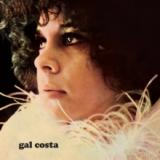
GAL COSTA - Gal Costa (1969) LP
  • A1: Não Identificado (Caetano Veloso)
  • A2: Sebastiana (Rosil Cavalcanti)
  • A3: Lost In The Paradise (Caetano Veloso)
  • A4: Namorinho De Portão (Tom Zé)
  • A5: Saudosismo (Caetano Veloso)
  • A6: Se Você Pensa (Roberto Carlos-Erasmo Carlos)
  • B1: Vou Recomeçar (Roberto Carlos-Erasmo Carlos)
  • B2: Divino, Maravilhoso (Caetano Veloso-Gilberto Gil)
  • B3: Que Pena (Êle Já Não Gosta De Mim) (Jorge Ben)
  • B4: Baby (Caetano Veloso)
  • B5: A Coisa Mais Linda Que Existe (Gilberto Gil-Torquato Neto)
  • B6: Deus É O Amor (Jorge Ben)

Gal Costa’s 1969 self-titled album stands as one of the
boldest statements of the Tropicália movement. Blending
psychedelic rock, experimental arrangements, and Brazilian
popular music with fearless originality, the album showcases
Costa’s powerful, expressive voice at its most adventurous.
Featuring contributions from major Tropicália figures such as
Caetano Veloso and Gilberto Gil, its mix of sweetness and
sonic daring helped redefine contemporary Brazilian music,
cementing Gal Costa as a groundbreaking and influential artist.

non in magazzino

Ordina ora e ordineremo l'articolo per te presso il nostro fornitore.

17,02

Last In: 29 days ago
Various - NOW Yearbook – THE VAULT: 1983
  • Orchestral | Manoeuvres In The Dark - Telegraph
  • Blancmange | - That’s Love, That It Is
  • China | Crisis - Tragedy And Mystery
  • Adam | Ant - Strip
  • Divine | - Love Reaction
  • Yello | - I Love You
  • Talk | Talk - My Foolish Friend
  • Japan | - Canton
  • Fun | Boy Three – The More I See (The Less I Believe)
  • Tracie | – Give It Some Emotion
  • The | Teardrop Explodes - You Disappear From View
  • Xtc | - Love On A Farmboy's Wages
  • The | Stranglers - Midnight Summer Dream
  • The | Kinks - Don’t Forget To Dance
  • Mari | Wilson - Cry Me A Rive
  • Bauhaus | - Lagartija Nick
  • Marc | And The Mambas - Black Heart
  • The | Glove - Like An Animal
  • Freur | - Doot Doot
  • The | B-52'S - Song For A Future Generation
  • Wall | Of Voodoo - Mexican Radio
  • Joe | Jackson - Breaking Us In Two
  • Oliver | Cheatham - Get Down Saturday Night
  • Rockers | Revenge - The Harder They Come
  • Freeez | - Pop Goes My Love
  • Malcolm | Mclaren - Soweto
  • Culture | Club - I'll Tumble 4 Ya
  • The | Belle Stars - Indian Summer
  • Level | 42 - Out Of Sight Out Of Mind
  • Daryl | Hall & John Oates - One On One
  • Sparks | & Jane Wiedlin - Cool Places
  • The | Romantics - Talking In Your Sleep
  • The | Fixx - Saved By Zero
  • The | Motels - Suddenly Last Summer
  • Modern | English - I Melt With You
  • Missing | Persons - Walking In L A
  • Naked | Eyes - Always Something There To Remind Me
  • Taco | – Puttin On The Ritz
  • Electric | Light Orchestra - Secret Messages
  • Men | At Work - Overkill
  • Pat | Benatar - Little Too Late
  • Journey | - Separate Ways (Worlds Apart)
  • Styx | - Mr Roboto
  • Giorgio | Moroder & Joe Esposito - Lady, Lady
  • Stephen | Bishop - It Might Be You
disponibile anche

The Vault: 1984[24,16 €]


The year that NOW’s story began, and where we started our ‘Yearbook’ series back in 2021. An incredible year in Pop music, and a fabulous selection of the years’ hits have featured on that first ‘Yearbook’, and on the ‘80-84 Final’ as part of our appreciation of 1983. Those tracks were generally the bigger hits of the year, with their Chart achievement a factor in their inclusion. However, that’s not the whole story, and our celebration of 1983 wouldn’t be complete without shining a light on some of the year’s singles that have been compiled much less frequently over the past 40 years. Welcome to the THE VAULT for 1983…Some of the tracks were Top 40 hits, some missed the Chart completely, and some were huge in the U.S. and not in the U.K. – but all are part of the wonderful Pop story of 1983. Released as 80 tracks across 4-CDs, available as a standard 4CD and as a a special edition 4CD in ‘hardback book’ packaging featuring a 28-page track by track guide, original singles artwork and a quiz and 45 tracks across 3-LPs, pressed on stunning translucent red vinyl -

non in magazzino

Ordina ora e ordineremo l'articolo per te presso il nostro fornitore.

24,16

Last In: 30 days ago
jazzbois - Still Blunted LP

Having established themselves as one of the leading live bands in Europe, grooving to improvised jazz motifs and hip-hop beats, Budapest trio Jazzbois return with their fourth LP, Still Blunted, which sees them touch base with their beat-tape roots.

Now situated in the heart of Buda at their new studio above a club, the Hungarian trio of Bencze Molnár (Rhodes/synth), Viktor Sági (bass) and Tamás Czirják (drums) take a more considered approach to Still Blunted and offer a snapshot into the jams, sessions, and shows they have played over the past year. Still Blunted was released after the band performed at the legendary Montreux Jazz Festival in 2024 summer, but before they sold out The Jazz Cafe, London, and three more venues (Paris, Antwerp, Utrecht) on their album release tour in October 2024.

non in magazzino

Ordina ora e ordineremo l'articolo per te presso il nostro fornitore.

25,63

Last In: 30 days ago
ARYA - PRONTO

ARYA

PRONTO

12inchSGH00021
Irma Records
20.04.2026
  • A1: Piano Terra (Intro) – 01:02
  • A2: Ricordati Di Me – 01:29
  • A3: Sono In Un Van – 03:11
  • A4: Onda Feat. Lauryyn – 03:07
  • A5: Attesa (Skit) – 01:19
  • A6: 10 Days Feat. Sup Nasa – 02:47
  • A7: Avevo Un Sogno – 03:18
  • B1: Ideal – 02:15
  • B2: No Answer (Skit) – 00:58
  • B3: La Noche En Que Te Fuiste – 03:29
  • B4: Della Morte E Della Grazia – 02:28
  • B5: Ikyk – 04:10
  • B6: Calma – 02:22
  • B7: Ultimo Piano (Outro) – 00:53

"PRONTO" is the debut album by ARYA, an Italian-Venezuelan artist who grew up in Milan. ARYA arrives with this first full-length album after the EPs
Peace of Mind (2021) and Punto Zero (2023), collaborations (Mahmood, Venerus, Ghemon, Dardust, Calibro35, and many others), and an intense live
activity, which have made her one of the most interesting voices on the Italian neo-soul/R&B scene.
Born from a personal journey of therapy and awareness, "PRONTO" takes shape as a concept album, transforming the emotional investigation into a
coherent and layered musical narrative. The title captures the meaning of the project: "Pronto" is a word that crosses all the languages present on the
album—Italian, English, and Spanish—taking on different meanings ("subito," "presto"), and is also the first word uttered in the intro. A term that introduces the listener to a space of availability, anticipation, and presence.
The entire album was produced by Claudio La Rocca (Sup Nasa), a key figure in building the project's sonic identity. Giuseppe Seccia, Matteo D'Ignazi,
Martina Tedesco, Tiziano Codoro, Stefano De Vivo, and Giulia Gentile also contributed to the album, recording the instrumental parts and contributing
to the arrangements and production of some tracks.
With "PRONTO," ARYA takes the listener on a journey through different levels of her emotional history, until the elevator starts moving again and leaves room for a new possibility of balance.
ARYA (AryaDelgado) is an Italian-Venezuelan artist born in Milan in 1994. Daughter of salsa singer Orlando Watussi, she grew up surrounded by music
and quickly developed a sensibility that blends Latin roots, nu-soul, and contemporary R&B, with a strong focus on the emotional and narrative dimensions of her writing. In 2021, she released her debut EP, Peace of Mind, followed in 2023 by Punto Zero. These releases attracted press attention
and led to collaborations with artists such as Mahmood, Venerus, Ghemon, Dardust, and Calibro35. Over the years, she has consolidated an increasingly recognizable presence, alternating songwriting, solo production, and an intense live schedule in Italy and abroad. In 2024, she accompanied Mahmood on tour and released the single, "Si Potesse Tornare." In 2025, La Noche En Que Te Fuiste and Onda were released, songs that marked the
beginning of a new artistic chapter and anticipated the release of “PRONTO,” her debut album, released in February 2026. An intimate and layered
work, which focuses on vulnerability as a language and confirms ARYA as one of the most personal and aware voices of the new Italian soul scene.

pre-ordina ora20.04.2026

dovrebbe essere pubblicato su 20.04.2026

24,33
GOBLIN - The Singles Collection 1975-1979 LP
  • Profondo Rosso
  • Death Dies
  • Roller
  • Chi? - Parte Uno
  • Chi? - Parte Due
  • Suspiria
  • Blind Concert
  • Un Ragazzo D’argento
  • Opera Magnifica
  • Yell
  • Amo Non Amo
  • Funky Top

FOLLOWING THE SUCCESS OF “THE OTHER HELL”, GOBLIN ARE BACK FOR RECORD STORE DAY 2026 WITH AN EXCLUSIVE COMPILATION OF SINGLES RELEASED BETWEEN 1975 AND 1979!

For the very first time on vinyl, this compilation gathers together all the singles released by Goblin during their golden era between 1975 and 1979, a journey that begins with the explosive, legendary debut Profondo Rosso, a true chart phenomenon of its time, and reaches the rare Amo Non Amo, passing through unforgettable milestones of Italian film music and progressive rock.

The collection opens with Profondo Rosso and Death Dies, taken from the soundtrack of Dario Argento’s masterpiece that catapulted Goblin to fame, blending dark atmospheres, virtuosity, and a unique sense of cinematic tension. It continues with Roller and Snip Snap, drawn from the instrumental album Roller (1976), a record not tied to any film, yet considered a cult cornerstone of Italian progressive music for its intricate structures and expressive power.

Chi? and Chi? - Parte Seconda follow; two tracks originally composed as the theme for a 1976 RAI television show, which saw Goblin bring their unmistakable sound to a different medium, experimenting within a shorter, punchier format.

Next comes Suspiria with its haunting counterpart Blind Concert, from the soundtrack of Argento’s 1977 horror classic. This remains one of Goblin’s most iconic and unsettling works, where music becomes an active narrative force: hypnotic, percussive, and filled with eerie vocal layers that made it a cornerstone of horror soundtracks worldwide.

From Il Fantastico Viaggio del Bagarozzo Mark (1978) come Un Ragazzo d’Argento and Opera Magnifica, two tracks that highlight the band’s more conceptual and visionary side, a move away from cinema toward a self-contained narrative and progressive experimentation.

The single Yell stands as another late-decade gem. Originally composed as the opening theme for the RAI television series “Sette storie per non dormire” (1978), it captures Goblin’s ability to merge rock energy with electronic pulse, proving their versatility far beyond the horror realm.

The compilation closes with Amo Non Amo and Funky Top, taken from the soundtrack of the 1979 film Amo Non Amo, one of the group’s lesser-known but fascinating cinematic works.

Far more than a simple anthology, The Singles Collection 1975–1979 maps the evolution of Goblin’s sound, from the worldwide success of Profondo Rosso to their most mature and experimental phase. It finally restores to vinyl a body of work that had long been scattered across rare 45 rpm releases, offering fans and collectors a complete, vivid portrait of one of Italy’s most inventive and influential musical ensembles.

pre-ordina ora18.04.2026

dovrebbe essere pubblicato su 18.04.2026

36,93
Keith Tippett - At The BBC 1969-70 (LP)
  • A1: Portishead Suite - 1. First Generation
  • A2: Second Generation
  • A3: Third Generation
  • B4: Charles Fox Speaks
  • B1: Hail Conquering Hero
  • B2: Five After Dawn
  • B3: Green & Orange Night Park

Keith Tippett was just twenty-one when his group recorded the first of these sets for BBC’s Jazz Workshop on May 21st 1969, three months before the recording of his first album, You Are Here – I Am There. Featured on Side One is the three-part “Portishead Suite,” which presents three stylistically different musical portraits of three generations of the Somerset town. The first is comparatively gentle and flowing but the second portrait is more insistent, its 5/4 tempo bringing to mind themes heard on early King Crimson albums. The third portrait has something of the Caribbean in its playful rhythms. “Hail Conquering Hero” can be heard on Side Two, and is described by Tippett as ‘a jazz study of war.’ None of these compositions have ever appeared officially in any form. Also included on Side Two are two tracks from Tippett’s August 1970 session for BBC Top Gear that was advertised as by Keith Tippett & Heavy Friends.
Keith Tippett – piano; Mark Charig – cornet; Nick Evans – trombone; Elton Dean – alto; Gill Lyons – bass; Alan Jackson – drums. Sleevenotes by Duncan Heining

pre-ordina ora18.04.2026

dovrebbe essere pubblicato su 18.04.2026

20,13
Various - Soho Scene ’63 Vol 2: Jazz Goes Mod LP
  • A1: Dick Morrissey Quartet - Bang!
  • A2: Emcee Five - Mike's Dilemma
  • A3: Michael Garrick Quintet - Vishnu
  • A4: Vic Lewis & His Bossa Nova All Stars - Last Minute Bossa Nova
  • A5: Johnny Burch Octet - Early In The Morning
  • B1: Pony Poindexter - 4-11-44
  • B2: Terrell Prude - Princess
  • B3: Johnny Hartsman - Soppin
  • B4: Eddie Kochak & Hakki Obadia - Jazz In Port Said
  • B5: Charles Kynard With Clifford Scott - Where's It At
  • B6: Gene Ammons - Jungle Soul

Compare the best of British jazz circa 1963 with American sounds from labels such as Prestige, Tangerine and World Pacific. This album captures the period when rhythm and blues is emerging as the dominant club sound, forcing Soho jazz clubs to change their music policy in order to survive. On the British side, you’ve got Ronnie Scott’s arrangement of Last Minute Bossa Nova; Bang!, taken from Dick Morrissey Quartet’s first session for the BBC’s World Service, recorded around the time of the release of their first album Have You Heard? The version here is take two. You can hear take one along with the rest of the eleven-track session on R&B18 Jazz For Moderns.
Early In The Morning is a Ginger Baker/Jack Bruce arrangement of the traditional work song realized as a repeated blues riff, and is the first ever recording that is recognizably British Blues. Graham Bond features on alto sax along with Bruce and Baker together as members of the Johnny Burch Octet heard playing live at a BBC staff party from March 1963. Side Two features Jazz Stateside, such as West Coast guitarist Johnny Hartsman, Gene Ammons veering into proto jazz-funk on Jungle Soul, aka Ca' Purange plus a couple of top notch Hammond workouts from Terrell Prude and Charles Kynard.

pre-ordina ora18.04.2026

dovrebbe essere pubblicato su 18.04.2026

22,65
Various - Tchic Tchic: French Bossa Nova 1963-1974  Colored Edition LP 2x12"
  • A1: Les Masques - Il Faut Tenir (1969)
  • A2: Isabelle Aubret - Casa Forte (1971)
  • A3: Christianne Legrand - Hlm Et Ciné Roman (1972)
  • A4: Jean Constantin - Pas Tant D'chichi Ponpon (1972)
  • A5: Billy Nencioli & Baden Powell - Si Rien Ne Va (1969)
  • B1-: Marpessa Dawn - Le Petit Cuica (1963)
  • B2: Jean-Pierre Sabar - Vai Vai (1974)
  • B3: Sophia Loren - De Jour En Jour (1963)
  • B4: Isabelle - Jusqu’à La Tombée Du Jour (1969)
  • B5: Sylvia Fels - Corto Maltesse (1974)
  • C1: Frank Gérard - Comme Une Samba (1972)
  • C2: Ann Sorel - La Poupée Des Favellas (1971)
  • C3: Charles Level - Un Enfant Café Au Lait (1971)
  • C4: Andrea Parisy - Les Mains Qui Font Du Bien (1970)
  • C5: Audrey Arno - Quand Jean-Paul Rentrera (1969)
  • C6: Aldo Frank - T’as Vu Ce Printemps (1970)
  • D1: Christianne Legrand - Cent Mille Poissons Dans Ton Filet (1972)
  • D2: Clarinha - Lemenja (1970)
  • D3: Hit Parade Des Enfants - Aquarela (1976)
  • D4: Jean-Pierre Lang - Tendresse (1965)
  • D5: Magalie Noël - Une Énorme Samba (1970)
  • D6: Françoise Legrand - La Lune

Ever since the late 1950s bossa-nova revolution, Brazil’s influence on French music has been undeniable. Pierre Barouh, Georges Moustaki and a vast array of lesser known artists, all made the Musica Popular Brasileira (MPB) an axis of promotion at the service of a cool and metaphysical, modern and mixed Brazilian lifestyle. Some were seduced by the poetic languors of the bossa, some were looking for fun, and others just loved the American hybridization of jazz-bossa, jazz-samba.


What is bossa nova? One of its creators, Joao Gilberto said: "Its style, cadence, everything is samba. At the very start, we didn't call it bossa nova, we sang a little samba made up of a single note - Samba de uma nota so .... The discussion around the origins of bossa nova is therefore useless”. It is nevertheless useful to remember that these magnificent Brazilian songs, which the guitarist describes as samba, were shifted and balanced around improbable chords. "I like things that lean, the in-betweens that limp with grace," said Pierre Barrouh, quoting Jean Cocteau.


With emotion, arrangements for violin and supple guitar licks, bossa nova rapidly changed. A transformation that can be heard in the Tchic, tchic, French Bossa Nova 1963-1974 compilation, the result of a cultural reappropriation, which traveled through the United States and supplemented itself in France.

A musical revolution that has remained significant, bossa nova was born in Rio. From 1956 to 1961, Brazil lived through its golden years. In five years, the country had invented its modernist style. Elected president in 1956, Juscelino Kubitschek de Oliveira, an elegant man with a broad forehead, brandished a promising slogan: "Fifty years of progress in five years". He quickly got to work. Not worried about increasing debt, he launched the project for a new federal capital, Brasilia, designed by the communist architect Oscar Niemeyer. Volkswagen opened state-of-the-art factories and created the “fusquinha”, the Beetle. In Rio, the Vespa made its first appearance. The Arpoador Surf Club crew run into the “girl” from Ipanema, Helô Pinheiro - the tanned garota ("chick"), between a flower and mermaid, who at 17 walked by the Veloso bar, where the fiery author and composer, Tom Jobim and Vinicius de Moraes, were getting drunk on whiskey. From then on, bossa symbolized cool.

In 1958, Joao Gilberto recorded Chega de Saudade, which the directors of Philips denied, calling it "music for fagots". The marketing director, who believed in it, secretly pressed 3000 78-inch vinyls and distributed them at schools around Rio, creating a tidal wave.

American jazzmen then took over. In particular, trumpeter Dizzy Gillespie and guitarist Charlie Byrd. In November 1962, the Brazilian Ministry of Foreign Affairs funded a "Bossa-Nova" concert at Carnegie Hall in New York, inviting the genre’s pioneers. Unprepared, the show soon turned to disaster. But the troupe was invited to the White House by Jackie Kennedy. The first lady loved "the new beat" and in particular Maria Ninguem, a song by Carlos Lyra, later covered by Brigitte Bardot.

In Brazil, the 1964 military coup quickly ended this euphoria. The destructive atmosphere that ensued pushed many Brazilian musicians to leave, if not to exile. Thus, Tom Jobim, Sergio Mendes and Joao Gilberto arrived to the United States. In New York, Joao Gilberto met saxophonist Stan Getz. At the time, he was married to the Bahianese Astrud Weinert Gilberto, who had a German father. She had never sung before, but she knew how to speak English. Getz therefore asked her to replace her husband on The Girl From Ipanema. The Getz/Gilberto record with Tom Jobim on piano, was released in March 1964. Phil Ramone, the "pope of pop" was in charge of sound.

Bossa nova arrived in Paris through the classic “guitar-voice” channel (Pierre Barouh, Baden Powell, Moustaki…) But France loved jazz and Paris had already welcomed its American contributors. All these good people were to pass through Saint-Germain-des-Prés. The cabaret l'Escale became the Mecca of Latin American sound where one could find Pierre Barrouh and his friends, such as the Camara Trio, samba-jazz aces, whose only record was published by the Saravah label. With a band strangely called Les Masques (a band that included Nicole Croisille and Pierre Vassiliu, among others), the Camara Trio recorded an interesting Brazilian Sound, including the track Il faut tenir which is present on this tasty compilation of rarities.

Other enlightened musicians can also be found on the compilation, such as Jean-Pierre Sabar (songwriter for Hardy, Auffray, Leforestier ...) and the French pop rock organist Balthazar. In 1975, Sabar recorded Aurinkoinen Musiikkimatka on a Finnish label, which featured the crazy Vai, Vai, included on this record. We are now following the footsteps of Brazilian electronic musicians such as Sergio Mendes, Eumir Deodato or Marcos Valle who created funk and disco sounds on their keyboards and synthesizers. A style that influenced Véronique Sanson when she wrote Jusqu’à la Tombée de la nuit in 1969 for Isabelle de Funès, the niece of Louis and a great friend of Michel Berger - Sanson did end up singing this track on her 1992 Sans Regret record.


The pinnacle of exoticism and travel, Sylvia Fels’ Corto Maltese includes bongos, sea mist and ocean sounds. The title was taken from Jacky Chalard’s concept album written in 1974, Je suis vivant, mais j’ai peur (I am alive, but I am scared), based on Gilbert Deflez’s science fiction novel.


However, bossa nova extended the scope of popularity. "In the 1970s, I was a fan of Sergio Mendes, Getz / Gilberto. I fell in love with this music that I knew because I had been an orchestral singer, " explained Isabelle Aubret, who in 1971 delivered a composite record of covers by the very funky Jorge Ben, Orfeu Negro, Tom Jobim, Vinicius de Morais and Jean Ferrat. "I recorded this album for Meys Records in Paris, far from Brazil, with wonderful musicians, François Raubert, Roland Vincent, Alain Goraguer...". The latter wrote the arrangements for Casa Forte, a very percussive title borrowed from Edu Lobo, one of the initiators of the bossa who spent time in California. "Jazz and bossa came together and produced very rhythmic music. I love singing, it allows me to dream, to have fun, to feel a high on stage, and these songs brought me joy, made me swing, my singing felt like a dance.”


The world tours of French singers and their desire for the tropics, often brought them to Rio with its hills, forests, caipirinhas and tanned bodies. There are surprises though, like this Iemenja (Iemenja is the goddess of the sea in the Afro-Brazilian candomblé religion). Not unlike the composer and musician Jean-Pierre Lang, based in Sao Paulo, Claire Chevalier taught Brazil to Brazil. In 1970, the singer and painter published a 45-inch vinyl, Mon mari et mes amants (My husband and my lovers), under the improbable pseudonym of Clarinha (little Claire). She was then living in Rio, with her husband, Joël Leibovitz, who founded a band called Azimuth, and who owned a record label specialized in "sambas enredos" songs for samba school parades.


For its B side, she asked Pierre Perret to come up with lyrics for a song composed by Carlos Imperial: "Oh goddess of the sea, o goddess Iemenja, I bring a white rose to adorn your long hair ..." . "Perret came to see us, and we had fun, remembers Joël Leibovitz. We wrote Lemenja for fun, we recorded it at the Havaí studio, behind the Central do Brasil the central station. Erlon Chaves, the arranger who worked with Elis Regina, joined us" adding his share of Afro-Brazilian percussions and funky brass to the mix.

There is a common misunderstanding in Franco-Brazilian history: that bossa, admittedly hedonistic, is perceived as funny, even though the poets who wrote the texts are often philosophizing on the human condition. Its French interpreters pull it towards a carnival inspired universe, far removed from its fundamental essence. Thus, Jean Constantin covered the famous Samba da minha terra, an ode to the art of samba written by the classic Bahian composer Dorival Caymmi, renaming it with the enticing title of Pas tant de tchi tchi pompon: "On your pier there is no tchi tchi / when you arch your back, you know everything is alright ”(lyrics by Gérard Calvi). This expedited bossa aims for the absurd, but retains a certain elegance.

Indeed, Jean Constantin was not an idiot, the rather large man had a huge mustache and liked fantasy, (Les pantoufles à papa, Le pacha, inspired by cha-cha-cha-cha, salsa and jazz) but he was also the lyricist of Mon manège à moi interpreted by Edith Piaf, the composer of Mon Truc en plume by Zizi Jeanmaire and the soundtrack of François Truffaut’s 400 Blows. Le Poulpe, published in 1970, from which this bossa is extract, was arranged by Jean-Claude Vannier, an accomplice of Serge Gainsbourg’s Melody Nelson. In short: "There is enough of samba / By looking at the parasol / Because my poor cabeza / Is going to die in the sun".

Even the American actress Marpessa Down, who was at the heart of the bossa nova revolution with her role as Euridyce in Marcel Camus’ film Orfeu Negro, winner of the 1959 Cannes Palme d'or, fed the clichée with Je voudrais parler au petit cuica - "Tell me how you manage to always make people want to dance / It's true, I must admit that I cannot resist your magic" - in consequence, once can hear the cuica, a little drum inherited from the Bantu.


But bossa nova had many angles. Societal, of course, pushing actresses who were symbols of women's liberation like Brigitte Bardot, Jeanne Moreau, or Sophia Loren to engage in the exercise of accelerated bossa. In February of 1963, Sophia Loren made a record in French in Rome, Je ne t'aime plus, featuring the song De jour en jour, a bossa written by two Italians, Armando Trovajoli and Tino Fornai, which was released a little later by Barclay. Bossa accompanied the 1960s, a decade of moral liberation. Ann Sorel, who interpreted La Poupée des favellas, caused a sensation with L’amour à plusieurs, a provocative song written by Frédéric Bottom and Jean-Claude Vannier. As for the actress Andrea Parisy, she displayed her bourgeois cheekiness in Marcel Carné's Les Tricheurs before interpreting Les mains qui font du bien. And Magalie Noël, the friend of Boris Vian, who sung Johnny fais-moi mal, was hired to sing Une énorme Samba, composed by Alain Goraguer (arranger to Gainsbourg, Bobby Lapointe and Jean Ferrat) with lyrics by Frédéric Botton.

But in the end, of what wood is bossa nova made of? The answer is given by Christianne Legrand, daughter of Raymond the conductor, and sister to Michel the composer: "With me, with jà" - jà means "immediately" in Portuguese. In 1972, the singer, an expert in vocal jazz and a member of the Double Six, published Le Brésil de Christianne Legrand. Two songs included on the Tchic Tchic compilation that demonstrate how bossa, jazz, funk, rock, etc. work like a swiss army knife: the music is used to denounce broken systems, or miracles, HLM et ciné roman, Cent mille poissons dans ton filet, two songs from the O Cafona soundtrack, a successful telenovela broadcast, at the time in black and white, on TV Globo. The first was adapted in French by the fighter and friend of the Legrand tribe, Agnès Varda. The second is content with a play on words, jostling them into a summer fun.


Véronique Mortaigne
pre-ordina ora17.04.2026

dovrebbe essere pubblicato su 17.04.2026

27,31
Edith Piaf - Essential LP
  • Non, Je Ne Regrette Rien
  • La Foule
  • L'accordeoniste
  • La Goualante Du Pauvre Jean
  • Les Trois Cloches
  • Un Etranger
  • Les Mots D'amour
  • Sous Le Ciel De Paris
  • Hymne A L'amour
  • La Vie En Rose
  • Milord
  • Mon Dieu
  • Bravo Pour Le Clown!
  • C'est L'amour
  • Cri Du Coeur
  • Je Hais Les Dimanches
  • Le Chevalier De Paris
  • Padam, Padam

This 18- track selection spans Edith Piaf' s career from the years 1946 to 1961. It includes all of her big hits, such as 'La Vie en rose', 'Non, je ne regrette rien', 'Hymne a l'amour', 'Milord', 'La Foule', 'L'Accordeoniste', and 'Padam Padam', among many others. Regarded as France's national chanteuse, singer songwrite, and actress Edith Piaf (1915-1963), also became one of the country's greatest international stars. Her music was often autobiographical with her songs reflecting her own personal life. Piaf's specialties were the chanson and torch ballads, particularly those of love, loss, and sorrow.


[q] Le Chevalier De Paris [aka Les Pommiers Doux]

pre-ordina ora17.04.2026

dovrebbe essere pubblicato su 17.04.2026

21,64
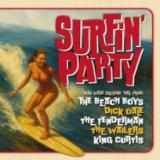
Various - Surfin' Party LP

Various

Surfin' Party LP

12inchVPL90179
Vinyl Passion
17.04.2026
  • The Beach Boys - Surfin' Safari
  • Duane Eddy His Twangy Guitar And The Rebels - Ramrod
  • Johnny & The Hurricanes - Crossfire
  • The Fireballs - Bulldog
  • The Marketts - Surfer's Stomp
  • The Fenderman - Torture
  • Joe Jones - California Sun
  • The Gamblers - Moon Dawg!
  • The Ventures - Lullaby Of The Leaves
  • Dick Dale - Surf Beat
  • The Tornadoes - Bustin' Surfboards
  • Belairs - Mr. Moto
  • Johnny Bond - Hot Rod Lincoln
  • Dick Dale - Peppermint Man
  • Ritche Valens - La Bamba
  • Surfmen - El Toro
  • The Champs - Tequila
  • The Wailers - Tall Cool One
  • King Curtis And The Noble Knights - Beach Party
  • The Beach Boys - Surfin

Featuring iconics like The Beach Boys, Dick Dale, Ritchie Valens, The Wailers , The Champs ... and many more! Whether you're a crate digger, surf rock purist, or just vibin' for summer, this LP is your sonic wave to a vintage beach party. Catch it before it's gone

pre-ordina ora17.04.2026

dovrebbe essere pubblicato su 17.04.2026

20,13
Christina Kubisch - TUNING

Christina Kubisch

TUNING

12inchFAIT-41LP
Faitiche
17.04.2026

Faitiche welcomes a new artist: Christina Kubisch belongs to the first generation of sound artists. Her practice ranges from performances, concerts, to works with video and visual art, but she is best known for her sound installations and electro-acoustic compositions.

TUNING brings together three pieces by Christina Kubisch from different periods of her oeuvre. What they have in common is the way they transform sound phenomena originally considered “non-music” into compositions.

Jan Jelinek: Gaming in Silence (2024) is the most recent work on this compilation. It’s a collage of electromagnetic waves, voice, and abstract sound textures. How did this combination come about?

Christina Kubisch: Gaming was commissioned as a fixed-media composition for the Sound Dome at ZKM Karlsruhe. Since Resonances: The Electromagnetic Bodies Project (2005), I’ve been making recordings in the old and new server rooms at the ZKM and in their permanent collection of historical computer games. Computer games like Asteroids (Atari, 1979) and Poly-Play (VEB Polytechnik, 1986) have specially generated analogue electromagnetic waves that interest me in particular on account of their density, rhythms and textures. I originally studied painting and to me the work of composition often feels like painting an abstract picture. I alter my source material as little as possible, layering and overlapping until a distinctive sound space emerges. In recent pieces, I sometimes combine magnetic waves with field recordings or live instruments. In Gaming it’s my recording of a Chinese song about silence.

JJ: Two persons walking through a street in Madrid (2004) is a recording from your Electrical Walks series. Here we should give a brief explanation of one of your best known works: participants in an Electrical Walk move through public spaces wearing prepared headphones that allow them to receive electromagnetic waves from their surroundings – for example from security gates, ATMs or neon signs. They discover a situation that normally is inaudible to the human ear and they can actively shape it by choreographing their movements. I really admire this piece, not least because there’s no clear dividing line between participants and artist. What exactly do we hear in Two persons walking through a street in Madrid (2004)?

CK: With this early work, I wanted to understand what is heard by people participating in an Electrical Walk in the same place but moving in different ways. The Spanish composer Miguel Alvarez-Fernàndez and I set off from opposite ends of a major shopping street in Madrid, met briefly in the middle, and then continued to the end. We both recorded our walks and I then layered them over one another. You might call it a work of electromagnetic conceptualism.

JJ: Diapason (2009 version) is an installation that plays a composition based on sounds from fifteen tuning forks. This setting is audible in the recording: there’s no dramatic arc, no beginning or end – instead, it recalls a piece of aleatoric music focussing on the decay phase. How did you come to make this work and could you tell us something about your compositional method?

CK: Diapason is part of a series of three pieces that deal with “non-instruments” or instruments that no longer exist: electrical mine bells used to send signals to the workers underground; a historical glass harmonica originally used for medicinal purposes; and tuning forks that were used by doctors to test people’s hearing. All of these methods are no longer in use. The sound of the tuning forks, audible only if held close to the ear, was recorded at the electronic studio at Berlin’s Technical University in such a way that even their decay remained audible. The frequencies range between 64 and 2048 Hertz and they can be adjusted at micro-intervals using small movable weights. The sequence and the duration of the pauses are dictated by chance and were not defined in advance. The 2009 version was created for an installation in the historic Holy Cross Church (Korskirken) in Bergen. Visitors could enter and leave the space at any time, deciding for themselves where and for how long they wished to listen to the sounds played back over an array of small loudspeakers placed on the floor of the apse.

Credits:

Gaming in Silence: commission of the ZKM/Hertzlab, Karlsruhe 2023
elektronic sound processing: Tom Thiel
sound engineering and mixing: Eckehard Güther

Diapason: produced at Elektronisches Studio of TU Berlin
rearrangement: Eckehard Güther

Christina Kubisch, published by Edition Christina Kubisch / Random Musick Publishing

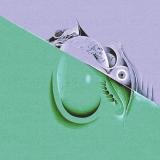
image front: Transitionen 2021 by C. Kubisch, sonagrams of electronic waves (courtesy: Galerie Mazzoli Berlin)
image back: Diapason Tuning Fork, property of Folkmar Hein, Photo: Archiv Christina Kubisch

design by Tim Tetzner
mastered by Giuseppe Ielasi
Thanks to Miguel Álvarez-Fernández, Folkmar Hein, Dominik Kautz and Mario Mazzoli

pre-ordina ora17.04.2026

dovrebbe essere pubblicato su 17.04.2026

27,31
Articoli per pagina:
N/ABPM
Vinyl