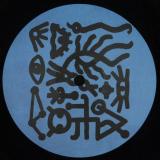
"After being praised as one of the best releases of 2025 by multiple platforms, the highly praised debut album from Obeka lands on vinyl via YUKU.
The rhythmic dynamics and emotive attitudes of A World No More captures the density of soundsystem culture in Obeka's ancestral roots. YUKU presents the Bermudians debut album capturing a Neo-Colonial dystopia, protest and Afro-Futurism hyperextended through decaying sonic structures of a dark past and its grievances which very much exist today.
Growing into adulthood within the walls of British and European Colonial systems meant the disconnection and lostness in a new country hid me from the world at a young age. Unlike London's vast and culturally engaging migrant communities, the industrial milling town of Stockport introduced a coldness towards people from other countries I experienced in my first year after relocating from Bermuda. I couldn't understand why. Whether cold words thrown towards me or actions upon other people who look like me, it has shown to be a dooming societal virus with no cure. The most comfort was found through what was familiar - drums and rhythmic spirituality of my homeland. It was a safe-haven, a place to empty the anger and confusion. It's been 15 years since relocating and as my sound evolved, it seems classism, racism, oppression and civil control of ethnic peoples has become worse - even now more legalised and normalised. Ogun (a powerful Yoruba deity associated with anger, justice and war) acts as the opening sequence of the record and its symbolism. Using distorted bass frequencies and dissected Regga-Dub immersed in live-sampled ghostly voices of the lost ones. This sonic exercising is also applied in Drillaman - a stampede of industrial framework and metallic instruments wielded over moody Dancehall MC'ing, magnifying two parallel worlds in cocooned evolution. The resurrection of Transatlantic African cultures and identity have never been silenced, rather carried elsewhere through trade routes of enslavement, which was pivotal when composing and completing the album upon returning home to the Caribbean for the first time ever. After reconnecting with my heritage my blurred vision of what's wrong in the world became so clear. Guidance in empty plains seek truth throughout the pain - A statement of finding oneself expressed on the poetic closing track A World No More.
On Fawohodie (A West African Adinkra symbol that represents independence, freedom, and emancipation stamped on the album cover) the motive and atmosphere begins to change. Afro-Caribbean idealism which refers to the philosophical concept that emphasizes the interconnectedness of individuals and the importance of community, often contrasting with Western individualism, begins to take shape in a new universe. We can co-exist. The track framework uses machine-led software forming frequencies we have no control over, then manipulated through decomposing soundscapes, scattered hand-drums and human-made weapons of control - exposing the hidden disparity that's been carried over generations whilst balancing hopeful and musical foundations towards equality and peace. On Pressure and Kuduro! the writing direction attempts to wake people up. Not settling for a composed approach like in past projects, quite the opposite. A call for native sonic awareness, dismantled vocals of protests, eroded percussion using chains, gears and motorised harmonies sculpted in challenging abstract behaviors far outside my comfort zone. A direct abrasiveness and weight I want people to feel, whilst finding hope and solace through enchanting choirs and hypnotic basslines in complete synchrony.
"Purity in sound manifests when you least expect it. The smallest memory or feeling grows from a seed into a sonic language that you, and only you can interpret and release back into the world." "
Cerca:parallel sound
Embark on a one-of-a-kind sonic journey through four electronic worlds.
Each side of the vinyl delivers its own distinctive vibe—hypnotic beats, immersive textures, soaring soundscapes, and driving percussive energy. every track transports you to a new dimension, all tied together by one unmistakable sonic identity.
In the late 1980s, Klaus Wiese (Popol Vuh) deepened his connection with Tibetan culture. The result is a series of works solely dedicated to the universal purity of the Singing Bowls. Uranus, perhaps the most rigorous of these, is an intense meditation on the trans-personal sphere of the VI chackra. The music becomes like a single harmonic chant, the reflection of a constant flow of divine light, which transforms the psyche and dilates the secret passages of the heart. In the galaxy of pure sound, the accumulated overtones offer the intrepid listener the access to a prismatic, fluoriscence-rich consciousness. The ego thus becomes the sonorous composer of itself, of the vital circle flooded with beneficial acoustic vibrations. In this sense, Uranus, originally published on tape (Aquamarin Verlag/1988), also marks a parallel with the same research by Henry Wolff & Nancy Hennings or Nada Himalaya's Deuter.
Parallelle & Nicolas Masseyeff return to Crosstown Rebels with dynamic new EP, ‘Shake It Out’. The trio deliver their third collaborative release on the label on 18th July 2025, backed by a standout remix from Airrica.
Following their acclaimed collaborations ‘Renegade’ in 2023 and ‘Surrender’ in 2024, Parallelle and Nicolas Masseyeff return to Damian Lazarus’ Crosstown Rebels with a third instalment of their evolving partnership on the imprint. Titled ‘Shake It Out’, the release arrives in the heart of summer and showcases two original productions from the Dutch-French trio, alongside a vibrant remix from US rising star Airrica.
Dutch brothers Parallelle and French mainstay Masseyeff share a deep-rooted musical connection, honed across years of collaboration and a shared love for expressive, forward-thinking electronic music. With past releases on labels such as DGTL, Systematic, Rose Avenue, and Masseyeff ’s own Diversions Music, the trio have built a sound that’s rich in detail and driven by emotion, combining analog warmth, live instrumentation, and club-ready energy in equal measure.
A fusion of sharp production and live sensibility, ‘Shake It Out’ leads with layered drums, psychedelic stabs and a commanding vocal that urges listeners into motion. On the B-side, ‘Everything’ delivers a more stripped-back and introspective mood, with hazy textures and wonky sonics for the late hours. Joining the package is Airrica, making her return to Crosstown following 2024’s ‘Hi Speed Lover’. Her rework of ‘Shake It Out’ adds a new dimension to the original, dialling up the energy with crisp percussion, pulsing acid-dipped low-ends, and warped vocal treatments that inject a driving twist into the hypnotic groove.
SMØR&BRØD – Ørigins marks a double debut: the first-ever vinyl release on Waswotsch and the powerful entry of Geneva’s SMØR&BRØD. Rooted in sound system culture, this EP delivers raw, live-recorded techno with a dubwise twist and infectious energy. Expect four unpredictable, analogdriven tracks that hit hard and stay playful.
Facta returns to Wisdom Teeth with ‘GULP’: a zippy, hi-def mini-album full of scrambled vocals, blown-out basslines, dripping synths and spring-loaded grooves that together map out his playfully psychedelic corner of contemporary club music. Written in a quick creative burst in late 2024, the record brings together a range of the producer’s distinct creative strands into a sharp, cohesive whole. Sitting snugly within the stylistic niche carved out by his A&Ring and DJ sets (alongside label co-founder K-LONE), we hear the influence of 00’s minimal, tech house, UK soundsystem music, ambient electronica, dub and more rubbing shoulders in a way that feels effortless and personal. Many of the tracks began life as sketches penned on the road - dotting between festivals, European club shows, and on tour in Japan - and so the record carries with it a sense of movement and forward momentum, and feels populated by voices, memories, people and places.
The Londoner’s characteristic approach to sound design and genre interplay are on full display here. Generative vocal hooks melt and warp into strange fluid forms, while synths stretch, detune, bend and dissolve into space before snapping back into shape again. Keyboards mirror human vocal formants, forming melodies that feel at once organic and alien. Basslines warp and distort, as if being re-moulded out of different synthetic properties.
Across the record there’s a commitment to expressing simple or familiar ideas in new and unexpected ways, whilst experimentations and innovations are presented clearly and intuitively. Cherished genre references are lovingly deployed as personal touchstones across the record - bleeping minimal- and tech-house; breakbeat dubstep and funky; Chicago house; dub techno - yet sounds and influences are combined and meshed in unexpected ways. Each track is tightly engineered and reduced down to its key elements, which are then manipulated, flipped, warped and pushed to breaking point. As is typical of Facta’s music, uncanny contrasts are worked throughout the music in unexpected ways. Warm, balmy moods come laced with seams of tension or uncertainty, whilst the record’s darker moments are handled with a light, playful touch.
With 15 years experience writing, DJing and A&Ring under his belt, ‘GULP’ is testament to Facta’s love of creation and curation - of seeking out, absorbing, experimenting, and channeling new sounds to create your own sonic world. A record borne of playful experimentation and happy accidents, ‘GULP’ shines bright with a simple, pure energy - a testament to writing quickly and intuitively and, above all else, enjoying the process.
The album’s artwork features photography by award-winning Boston-based photographer, Pelle Cass, whose complex time-lapse composites present hyperreal yet impossible tableaus of seemingly simple everyday scenes - an approach that parallels the record’s blurring of the familiar and the unfamiliar. Cass’s work has been widely exhibited, collected, and published, including solo shows at Gallery Kayafas, Boston, the Photographic Resource Center, Boston, and the Houston Center for Photography, and in collections such as the Fogg Art Museum, the Peabody Essex Museum, and the Museum of Fine Arts, Houston. He was twice a Critical Mass Top 50 photographer and has received two fellowships from Yaddo and one from the Berkshire Taconic Foundation.
- A1: Downtown Club Owner
- A2: Hot And Steamy Sweatpants
- A3: No Need To Thank Meme
- A4: Second Rate Quality Good Stuff
- A5: Look What The Dog Bought In
- B1: Shakin Cat Stevens
- B2: Farmer Had A Farm Song Crazy Dog Lady
- B3: Ukulele House Of Worship Aka Casino Place
- B4: This Town Is Big Enough For You Two
- B5: Less Is More For My Baby
- B6: Unexpected Money Transfer
With Schokolino Choco Loco, Icelandic duo Stilluppsteypa brings a warped dispatch from the outside fringes of experimental sound--part valium-drenched dreamscape, part dadaistic radio hallucination. Like a nocturnal transmission from a parallel universe, the record drifts and mutates through layers of joyous abstraction, laced with a deadpan sense of humour, while at the same time it is strangely sensitive. This LP is less a collection of tracks than a slow-motion joyride through Stilluppsteypa's singular sonic universe--so hypnotic and absurd, it ends up warming your heart.
** Cassette release
""A Synonym for Repetition" weaves together a tapestry of parallels, all intricately linked to Japan. The project initiates with a collaboration with a Tokyo-based musician, which ultimately fails to materialise during Jason Kolar’s recent visit to the country.
From an original approach that has to mutate in its starting phase, the record was conceived from the beginning to embody a sincere homage to Ryuichi Sakamoto, also a Tokyo native. Shaping ideas within the context of a city with a vibrant soundscape, through an exploration where tradition and modernity intersect in an ongoing quest for correspondences.
Yet, the barriers of language and cultural disparity emerge, casting a veil over the perceived connections and rendering them more projection than reality. This dynamic delineates the space observed from an external perspective, perpetually distant from true understanding, framing it in the fields of imagination, both Japan and Sakamoto. Nonetheless, Kolar tries to pay an honest ode to the artist and its scenic background, with all the implications and contradictions of this kind of process, even with the risk of falling into clichés, pastiches, and Eurocentric bias.
Connecting it to ‘vertical listening’ rather than to an obvious tribute exercise, he has morphed his sound to a synthetic and midi approach, aiming to set an ironically fictitious stage, one that resembles something, but it’s not really it."
180 G. BLACK VINYL WITH LINER NOTES IN CREOLE, FRENCH, ENGLISH
Originally released in 1979, "Spiritual Sound" lives up to its name, a soaring, triumphant album, six tracks of spirit magic from Guadeloupe.
Telluric, intense, terribly alive, the gwoka drums of Guadeloupe carry the identity of a painful and fervent island. Marked forever by the crime of slavery, Guadeloupe's créolité cherishes the ka drums and their natural environment: the low-pitched boula drum with male goatskin, the high-pitched soloist makè drum with female goatskin, the chacha, ti bwa, triangle, calabash and other percussion instruments that surround them, and the voices - the fiery, proud, timbred, urgent voices of the gwoka.
This album is also a legend for its voices: in his then dazzling youth, singer Lukuber Séjor was one of the first gwoka artists to largely feminize the chorus of répondè, who converse with his text delivered in a straight and powerful voice.
And everything here sets new standards. In 1979, Mizik Filamonik - Spiritual Sound proclaimed a spiritual patriotism of ferocious intensity. The album by Lukuber Séjor - whose spelling alone is a battle - sets out to give Guadeloupe the intangible weapons of self-respect and self-knowledge, through a singular practice of traditional music.
The genesis of gwoka music is less straightforward than one might imagine... The drums performed the servile task of accompanying the work of slaves in the fields and during the “corvées” imposed by the administration, before being freely practiced by the common people after the abolition of 1848. At the heart of the conviviality of the Guadeloupeans furthest from the cities - geographically and socially - the gwoka drums come out for carnival, funeral wakes and neighborhood celebrations, but also during strikes, fits of anger and armed vigils of the riots and revolts that have punctuated the island's history. For generations, governors of the colony and then the prefects of the overseas department of Guadeloupe have been viewing the gwoka as a potential for turbulence and a threat to public order.
But as the Beatlesmania, “chanson engagée” and rock revolutions unfolded in Europe, young people turned to the drums of mizik a vié nèg (“bad negro music”, in Creole), which Guadeloupeans had learned to despise by following the “assimilation” process advocated by the school system and most of the political class. At the end of the sixties, in a Guadeloupe mourning the deadly repression of the May 1967 social movement, they played traditional music, refusing to wrap it up in tourist prettiness and madras folk costumes. Instinctively, they played a rough and contemporary gwoka, led by the incendiary Guy Konkèt. This was the era of decisive 45 rpm records such as Robert Loyson's Kann a la richès, which brought to light the fieriest words of union rallies.
At his home in Sainte-Anne, Lukuber Séjor played with flautist Olivier Vamur and his brother Claude Vamur, who cobbled together a drum kit from tin crockery and became, a few years later, the most influential drummer in Kassav'.
These were the years of the Bumidom program, when young Guadeloupeans were encouraged to emigrate to mainland France. At the age of twenty, Lukuber Séjor embarked on the liner Irpinia, disembarking at Le Havre and taking the train to the Gare Saint-Lazare - the route taken by thousands of young West Indians who went on to study or looked for work, all the while trying to maintain a link with their homeland. In this case, it's at the Antony university residence, where Lukuber played the drum and participated in a thousand gwoka updates and aggiornamentos, while exile reinforced the need for a spiritual link with the native land.
In 1978, Guy Konkèt played at the Salle Wagram, a historic event for West Indian music. After serving as répondè - i.e. backing vocalist - on one of his home-recorded albums, Lukuber joined his live band. Little by little, he became one of the key artists on a circuit parallel to French show business. At a student party in Caen, he met a young woman from Martinique who, at the time, was more motivated by her ambitions as a visual artist than by her vocation as a musician. Her name was Jocelyne Béroard and, a few years before she plunged into the Kassav' adventure and became the greatest West Indian singer of her generation, she designed the cover of Lukuber Séjor's LP.
This ambition was obvious and imposed its will. A more or less regular band was formed, with Roger Raspail, Rudy Mompière and Éric Danquin on ka drums, Claude Vamur on ti bwa, Olivier Vamur and Françoise Lancréot on flutes and Annick Noël on keyboards. Lukuber Séjor is set on wanting to extend the gwoka palette to other instruments, as the jazz-rock revolution opens a thousand new doors. Annick Noël will play a wide range of timbres and textures on electric piano and synthesizer. Another novelty: the répondè are two men and two women, Roger Raspail, Olivier Vamur, Françoise Lancréot and Maryann Mathéus ...
Mizik Filamonik - Spiritual Sound is a self-production in which the singer and leader sank all his savings, allowing him no more than a single day in the studio. The first side is more of a musical manifesto, with the first two tracks, Éritage and Penn é plézi, being instrumentals. The third, Son, forcefully celebrates the need for Guadeloupeans to connect with the gwoka. In fact, Jocelyne Béroard's cover shows a tambouyé in the shadow of a cloudy sky, against which a radiant sun is rising and whose light will soon flood the entire landscape. The silhouette and face of this man strongly evoke the immense Vélo, master of the ka, rejected at the time on the fringes of society.
The second side of the LP is surprising. Formally, three tracks are explicitly linked like the three parts of a triptych. Primyé voyaj evokes the appalling tribulation of Africans deported as slaves to Guadeloupe; dézyèm voyaj speaks of the Bumidom program and the economic, political and social forces driving young Guadeloupeans towards the mirage of prosperity in France; twazyèm voyaj closes the cycle with the emigrants' return from Europe after years away from their island...
This gwoka, obsessed with the need to save Guadeloupe spiritually, appeals far beyond the politicized audience. Mizik Filamonik - Spiritual Sound instantly became a classic, although Lukuber Séjor never really made a career for himself as a musician.
After all, the album was released in 1980, with no promotional resources in France or Guadeloupe - and therefore no concerts. The thirty-two-year-old author, composer and performer made his own third trip back to Guadeloupe. He set up a small woodworking business, which he lost in Hurricane Hugo in 1989. His other activity, teaching in a medical-educational institute, became the core of his professional life. He continued to be an active campaigner - a campaigner for the Creole language, a campaigner for the reawakening of identity, a campaigner for special education, a campaigner for a thousand causes that he ignited with his generous and perceptive enthusiasm, such as the defense of breadfruit fries...
The echoes of his 1979 album have not died down. Of course, the use of Penn é plézi as the theme tune for Radio Guadeloupe's funeral notices from 1980 to 1992 kept him in the collective memory, but he continues to sing and compose sporadically, as with his all-female
vocal group Vwapoulouéka... Still convinced that music is a means of liberating the spirit, he continues the journey of a young man eager to deploy the power of Creole music and language.
Bertrand Dicale
- A1: Translation 1 12" Original
- A2: Translation 2 Papsico
- B1: Translation 3 The Lovers
- B2: Translation 4 Wooden Ships
- C1: Translation 5 The Great Marmalade Mama In The Sky
- C2: Translation 6 Requiem
- D1: Translation 7 Things Change Like The Patterns And Shades That Fall From The Sun
- D2: Translation 8 The Big Blue
Neuauflage des 2001er "Translations"-Samplers der visionären The Future Sound Of London, auf dem sie ihren bahnbrechenden Überklassiker "Papua New Guinea" auf einen mitreissenden Trip durch exotische Welten und Paralleluniversen nehmen. Knapp 10 Jahre nach dessen Original-Veröffentlichung 1992 kombinieren FSOL ihr Frühwerk mit ihren neu entwickelten Inkarnationen. Die Vielfältigkeit des 1990er Techno/Electronica-Genres auf einem Klassikeralbum.
Mita Gami & EREZ join forces for collaboration ‘Where’s My Voice?’ Uniting the rich sounds of Tel Aviv and NYC via Los Angeles, Mita Gami and EREZ combine again for their latest collaboration, ‘Where’s My Voice?’. Marking their first collaborative appearance on Damian Lazarus’ esteemed Crosstown Rebels, the single follows their previous work together on Borders Of Light while welcoming EREZ to the label for the first time.
A mainstay within Tel Aviv’s thriving scene, Mita Gami returns to Crosstown Rebels following his acclaimed remix of Parallelle & Nicolas Masseyeff’s ‘Renegade’ alongside Adam Ten. With prior releases on labels such as Diynamic, REALM and his own Maccabi House imprint, he continues to showcase his artistry while pushing boundaries. Meanwhile, EREZ, an artist known for seamlessly blending her mesmerising vocals and intricate production, makes her label debut after recent standout material on Get Physical Music and Discotexas.
‘Where’s My Voice?’ is a driving composition that pairs EREZ’s intoxicating vocals with hypnotic rhythms. A journey through tension and release, the track builds a captivating and trippy atmosphere that showcases the duo’s ability to craft evocative trips for the late hours. On the flip, Brussels-based DJ/producer and Sanctuary Music founder Samer Soltan adds his own take and steers the original into deeper territory, guided by commanding stabs, brooding melodies and intricate textures.
Mita Gami’s artistic vision extends far beyond the studio, curating ‘Sunrise Kingdom’ at Midburn Festival and performing on global stages such as The Brooklyn Mirage, Lightning in a Bottle Festival, and Hï Ibiza. Similarly, EREZ’s dynamic live performances—effortlessly transitioning between instruments—have earned her spots at Coachella, Outside Lands, and The Brooklyn Mirage. With ‘Where’s My Voice?’, the pair explore sound, emotion, and rhythm, adding to their places as innovating talents in the electronic music sphere.
Cumulating tens of millions of streams with hits like ‘Jump up Pon It’, ‘Heal Them’ or ‘Supanova’, BROTHER CULTURE is a true icon of the global reggae and dub scene. As one of the UK’s most influential voices, his career has spanned decades, earning him legendary status and a devoted following worldwide.
Now, Brother Culture joins forces with Swiss reggae powerhouse THE 18TH PARALLEL to deliver ‘Ghetto Man’, a commanding anthem of social emancipation. This track blends Brother Culture’s unmistakable lyrical prowess with The 18th Parallel’s hardcore roots-driven sound, creating a powerful call to rise above adversity and fight for justice. Brother Culture’s reputation as a trailblazer in reggae and dub shines through in every verse, while The 18th Parallel cements their place as a leading force in modern roots music. Together, they’ve crafted a track that resonates deeply, speaking to both the struggles and the strength of communities worldwide.
Adding to the magic is the presence of Paolo Baldini DubFiles on the mix, turning the song into a sound system killer with his dub effects. A true mix lesson that connects with reggae enthusiasts and newcomers alike.
Beijing-based artist/producer Howie Lee interprets Tibetan Buddhist chants on his new album 'At The Drolma Wesel-Ling Monastery', the follow up to 2021's critically acclaimed 'Birdy Island'.
Recorded over two weeks at Drolma Wesel-Ling Monastery in the mountains of north-eastern Tibet, Beijing-based multi-disciplinary artist/producer, Howie Lee combines Tibetan Vajrayana Buddhist singing with Kode9-channeling bass/footwork science, glitched-out hyper-rhythms and sampled Chinese-Tibetan instrumentation for his latest album on Mais Um.
Invited to contribute and interpret chant recordings from the sound archive of monastery founder and master, Tuga Rinpoche's self-built recording studio, Howie Lee connects parallels in electronic music, deep meditation and devotional chanting to present eight reconstructed, IDM-warpedVajrayanamantras, journaling the beginnings of his journey into buddhism, and to continue Lee's career-long threading of ancient, cross-generational practice, modern Chinese history and experimental club-futurism.
Nomada Records welcomes proudly one of the greatests and finest south america producers; Based in SAO PAULO (BRAZIL); Pedro Zopelar has built a distinguished reputation as a producer in the electronic worldwide scene under his alterego “ZOPELAR” and parallel projects such as “MY GIRLFRIEND” “SPHYNX” and “L’HOMME STATUE”. He has released and edited music on big labels such as APRON, TARTALET RECORDS, SOUL CLAP RECORDS, MOTHER TONGHE, ROYAL OAK, SELVA DISCOS, AXE TRAXX, TECHNO HOUSE CONNOISSEURS and many others.
“HORIZONTE EP” is a five track release where We can enjoy is unique synth funk and deep disco boogie soulful house sound. The A-SIDE starts with “HORIZONTE” an uplifting house track with a flowing chord progression, lush pads and addictive bleep melodies. “LET IT LIVE” is a heavyweight deep House track which is ready to smash dancefloors with its meaningful saxophone solo. On the flip ZOPELAR opens with “PURE HEART” a melancholic and deep synth jazzy house track which is perfect for closing or starting a set at 6 AM. The B-Side Closes with “VENUS” and “SERENA FEAT. PR.A.DO” two surreal balearic summer house tracks where We can experience the musical richness and warmth from zopelar’s compositions
- A1: Killer Line (Opening Titles) Feat Adam Evald
- A2: Put Love Into Your Heart Feat Adam Evald & Jimi Tenor
- A3: The Sound Of Love Feat Hard Ton
- A4: Love Myself But I Can’t Make It Love
- B1: Footsteps Feat Alina Royz
- B2: In The Countryside Feat Lena Tronina
- B3: I Can Make My Happiest Life Feat Celebrine & Mutafrukt
- B4: Vacation Song
- B5: Reka Feat Moral Kiosk
- C1: Blue Plastic Bag In The Sea Of Green Feat Mutafrukt
- C2: Wasted Feat Mutafrukt
- C3: Before Music Dies Feat Hard Ton & Mutafrukt
- C4: Absent Ascent Feat Lovvlovver
- D1: Sleeping With Tv On
- D2: Over The Rainbow Feat Celebrine
- D3: Shorespotting Feat Adam Evald
- D4: Lovers (End Credits) Feat Kito Jempere Band
yellow vinyl 180g[23,95 €]
From a club-friendly chrysalid onto deploying his wings as a full fledged pop artist in recent years, Saint Petersburgs Kito Jempere has enjoyed a journey unlike any other and his newest album, Part Time Chaos Part Time Calmness live-documents the chameleonic changes / game-changing paradox experienced this year between his life both as a musician and as a family man.
Better known for his work as a house producer which has earned him accolades from prominent dance music outlets throughout well over a decade of intense work both into and outwith the limelights, Kito has for all that never been focussed on writing solely discoid material, throwing as much effort over the years into multi-faceted parallel ventures, far and apart from strictly dance floor-oriented functionality. Yet, from this partition between various projects and mindsets, this is through a radical shift towards downtempo pop and out of the 4x4 loop that Kito got to fully assert himself as a musician, embracing the rejoicing variety of tone and mood of his tender loves, secret and not. The movie Ive never made but have the soundtrack for, Part Time Chaos Part Time Calmness is the fruit of change as much as change itself. A return to the simple means of his young self, his old trusty guitar from his late teens serving as the backbone to Killer Line and Love Myself But I Cant Make It Love, and the natural development to last years Green Monster, which
initiated these deep tectonic movements in Kitos approach to his art, PTCPTC is an intimate trip down the kaleidoscope of his present life. Joined up by an impressive cast of artists, including Jimi Tenor, Adam Evald and Hard Ton, Kito didnt just bin his old persona, he took it back to where it belongs. From the low-slung emotional folk of the opener, Killer Line, to the eerie flamenco-jazz hybrid Before Music Dies. via the broken soulfulness of Put Love Into Your Heart and anthemic 80s balearic breaks meets coastal synthwave vibe of Sounds of Love, the album pulsates with a refreshingly genre-unbound vision. To the naive, laid-back sonic bokeh of Footsteps,
succeeds the left-of-centre cinematic narrative of In The Countryside, which includes some fun nods to fictional brands taken from Tarantinos imaginarium (Red Apple cigarettes) or other movies like High Fidelity, after Nick Hornbys eponymous novel.
Freed from gridlocked programming and impersonal tropes, PTCPTC showcases a wide array of songs, beats, grooves old and new, some dating back to 2018 and improvised sessions with his 9-people Kito Jempere Band, all of which were finished within the same timeframe and with this all-inclusive momentum in mind. Through the epic synths of Absent Ascent. in revamping the universal classic Over The Rainbow with Celebrine, on the appeasing ballad Shorespotting feat. Evald or in the waves-ready closing cut Lovers, Jempere tells a tale of hard-earned emancipation and life-affirming freedom.
You’re NEXUS 21, central to the dizzy zeitgeist of the 1991 adrenaline rammed UK House Music juggernaut, and you have just recorded a masterpiece of an album MIND MACHINES.
DON’T DO IT LIKE THAT - somehow even though your record label love the album it does not get released.
DO IT LIKE THIS - it finally gets issued now.
When Mark Archer and Chris Peat flew back from a seminal recording session at Kevin Saunderson’s KMS Studio in Detroit there was a palpable feel of excitement. Instead of merely paying homage to their Techno forerunners, they were now creating their own just as innovative waveforms.
In the can was a gem - DON’T DO IT LIKE THIS, DO IT LIKE THAT. Motor City songstress Donna Black had unconsciously seemed to add Ma to the start of her name and her recorded in the dark vocals helped conjure up an almost Madonna and a drum machine meets Techno hybrid. This it was agreed could be a huge breakthrough single which - preceded by strategically released set up tracks - would build up Nexus 21’s surely inevitable rise to glory. And the release of the MIND MACHINES album. But it never happened. Instead one day Mark and Chris burst into Network’s Birmingham office excitedly brandishing no less than 8 new recordings infused with a propulsive Rave energy flash compared to their more cerebral Nexus 21 work. The label agreed that the new tracks should be released under a new artist name and an initial suggestion. Alien 8 replaced by Altern 8. What was planned as temporary dalliance became a long term relationship. You all know the score - Altern 8 became surf riders supreme on the rave tsunami, not just music makers but myth creators. The plan has been to run Nexus 21 and Altern 8 parallel, a kind of schizophrenic experiment by two men, a drum machine and a mad for it record company. History shows that Altern 8 became too DOMIN 8 and the lovingly recorded Nexus 21 album was left on the proverbial shelf (actually a box in Birmingham)
So now MIND MACHINES finally meets the World. First thing that screams out that it hasn’t half aged well. Obviously it is a wet dream for the anoraks of electronica, that goes without saying. But above and beyond the history lesson of how 2 young UK techno mad kids got the dots from Detroit and deconstructed them to create something very British the music they created, sometimes naive but frequently knowledgeable, sounds .. well just great.
The four Detroit recordings - NEXODUS, TOGETHER, DON’T DO IT LIKE THAT, DO IT LIKE THIS and EVERYTHING (NO STATUES) - variously feature contributions from Motor City luminaries Marc Kinchen and Anthony Shakir.
Only two of the twelve recordings were properly released in 1990/1991 with two more making it on a withdrawn white label 12 inch at the time. Three of the tracks, including a live recording at London’s Brain Club that has been retrieved from a DAT that was thought to have disappeared, are previously unreleased. And as well as two previously unreleased much altered versions of Nexus 21 gems there is the legendary much tougher mix of the duo’s signature techno treasure Self Hypnosis.
NEXUS 21
LOST AND NOW FOUND
- A1: Summer Overture
- A2: Party
- A3: Coney Island Dreaming
- A4: Party
- A5: Chocolate Charms
- A6: Ghosts Of Things To Come
- A7: Dreams
- A8: Tense
- A9: Dr. Pill
- A10: High On Life
- A11: Ghosts
- A12: Crimin' & Dealin
- A13: Hope Overture
- A14: Tense
- A15: Bialy & Lox Conga
- B1: Cleaning Apartment
- B2: Ghosts-Falling
- B3: Dreams
- B4: Arnold
- B5: Marion Barfs
- B6: Supermarket Sweep
- B7: Dreams
- B8: Sara Goldfarb Has Left The Building
- B9: Bugs Got A Devilish Grin Conga
- C5: The Beginning Of The End
- C6: Ghosts Of A Future Lost
- C7: Meltdown
- C8: Lux Aeterna
- C9: Coney Island Low
- D1: Purple In The Morning, Blue In The Afternoon, Orange In The Evening, Green At Night
- D2: 30 Days To Revolutionize Your Life!!! 1-900-976-Juice
- C1: Winter Overture
- C2: Southern Hospitality
- C3: Fear
- C4: Full Tense
To coincide with its 20th anniversary, Clint Mansell's haunting score to Darren Aronofsky's 2000 film, Requiem for a Dream, performed by Kronos Quartet, returns to vinyl. This was Mansell’s second of several collaborations with Aronofsky, following 1997’s π, and features arrangements by David Lang of Bang on a Can. The film stars Academy Award-winner Ellen Burstyn, Jared Leto, Jennifer Connelly and Marlon Wayans, and was adapted from the 1978 novel by Hubert Selby, Jr. (Last Exit to Brooklyn), who also wrote the screenplay with Aronofsky. Set on the rusted mean streets of Coney Island, Brooklyn, Requiem for a Dream tells the parallel stories of four people pursuing their dreams of better lives. The reissue features the original soundtrack, plus two bonus tracks.
Clint Mansell, a musician, composer, and founding member of the band Pop Will Eat Itself, first worked with Darren Aronofsky on the score for his 1998 film π. Also released by Nonesuch are Mansell’s scores for Aronofsky's The Fountain (2006), nominated for a Golden Globe, and Noah (2014). His other scores include The Wrestler (2008), Moon (2009), Black Swan (2010), Filth (2013), Stoker (2013), High Rise (2016), for which he received an Ivor Novello nomination, and Loving Vincent (2017).
For more than 40 years, San Francisco’s Kronos Quartet – David Harrington (violin), John Sherba (violin), Hank Dutt (viola), and Sunny Yang (cello) – has combined a spirit of fearless exploration with a commitment to continually re-imagining the string quartet experience. In the process, Kronos has become one of the world’s most celebrated and influential ensembles, performing thousands of concerts, releasing more than 50 recordings, collaborating with many of the world’s most eclectic composers and performers, and commissioning over 850 works and arrangements for string quartet. A Grammy winner, Kronos is also the only recipient of both the Polar Music Prize and the Avery Fisher Prize. Most recently, in 2019, Nonesuch released Kronos’s ground-breaking collaboration with composer Terry Riley, Sun Rings, and, in 2017, Folk Songs, featuring Sam Amidon, Olivia Chaney, Rhiannon Giddens and Natalie Merchant.
Two And Half Records returns with the third Release!
We are thrilled to announce the release of our new V.A., Each artist brings their own unique style, resulting in six tracks that are distinctly different from each other.
French producer Akyki, opens the DANCE with a wicked funky beat and catchy sounds. His music is a real injection of good vibe.
Cene & Esqueena, this Italian duo continues to make us dance with energetic Synths, captured during a live jamming. Every note is a pure groove feeling.
The young french talent HRM concludes the DANCE side with edgy electro sounds and seductive vocals, perfect to spice up the dancefloor.
Alex Vincent, German producer opens the LISTEN side with a mix of gentle electro sounds and IDM influences, sweetened by warmly snuggly melodies. A deep journey of sound to be shared intensely.
Jonny3snareS live performer from the UK, invites us to “escape” into a parallel dimension with his magical music, Synths and Drums run hand in hand harmonizing perfectly.
Foreign Sequence, from France, concludes with an IDM track with full and powerful sounds enlivened by delicate acid melodies. It is the perfect ending that encapsulates all the emotions of this EP in one track.
Roberto Musci, born in Milan in 1956, studied guitar, music and electronic instruments. From 1974 to 1985 he traveled the world studying African, Indian, Arabic and Oriental music, recording ethnic music “in the field,” studying and collecting ethnic musical instruments from all over the world. His self-produced debut album, “The Loa of Music,” is a seminal work of staggering originality and extraordinary beauty in which field recordings, musique concrète, electronics, synthesis and instrumentation are interwoven, drawing on the countless musics from around the world that he has recorded. The subsequent “Water messages on desert sand,” composed with Giovanni Venosta, was nominated for a Grammy in the UK in 1987. In the 1980s and 1990s he broadcast ethnic and electronic-experimental music from Rai and Radio Popolare radio stations. He has also composed and played music for videos, commercials, dance, poetry, theater, composed soundtracks and accompanied silent films live. From 1980 to the present, he has played with many Italian and European musicians: Giovanni Venosta, Claudio Gabbiani, Walter Prati, Giorgio Magnanensi, Massimo Cavallaro, Massimo Mariani, Moni Ovadia, Roberto Zorzi, Chris Cutler, Jon Rose David Moss, Steve Piccolo, Elliott Sharp, Keith Tippett and the Third Ear Band.
The theme of travel, ethnicities and mysticism are a pivotal point in this new album of his as well, demonstrating once again how music needs absolutely no sharp lines of demarcation. The music is one.
It goes from the search for deep meanings in a time spent in a Hindu monastery (Ashram) listening to mantras and studying Buddhist philosophy (The Principle Of Things) to space explorations and human settlements on the Moon or Mars wondering how man will live and what he will bring to the new worlds imagining that Sufism, an Islamic mystical religion, will accompany him in the discovery of new worlds (Derviches On Mars). In Goodbye Monsters, harmony and peace are sought. Memories Of A Piano Player is a tribute to Keith Tippett, a great pianist (King Crimson , Centipede, Mujician) with whom he played in several concerts and with whom I spent evenings talking about music, food and Italian wine. Quantum State focuses on how quantum mechanics is creating a revolution in the way of thinking and dividing reality into infinite Parallel Worlds. Panthalassa is the vast ocean that surrounded Pangea and blends South American marimba music and traditional Chinese music. Burn The Shadows is a tribute to the fascinating Indonesian shadow theater, from the stories told and the atmosphere created during the long plays told in the sacred Indian texts of Ramayana or Mahabharata. Shadows are also more or less pleasant memories to which one is attached, and to burn them is still to move on with one's life.
Torajan Funeral Chant: The Toraja are a people living in Sulawesi (Indonesia) who have a special worship of the dead. Funerals are festivals that last several days, the corpses are protected by Tau-Tau (small dolls that watch over cemeteries), and over the years, they exhume the corpses of their relatives and keep them in their homes with them for a time to remember them.
The experimentation goes all the way to modern Artificial Intelligence that 'interrogated' to create something new by inserting conflicting inputs joins them together but nonsensically creating interesting insights; hence A.I. In Confusion. Pangea, named after the continent that contained all the land that emerged between 540 and 200 million years ago, in the Paleozoic and Mesozoic periods, imagined as inhabited by man without divisions created by borders, wars, religions or ethnic groups, is also a tribute to Steve Reich, one of the fathers and a great musician of minimal music. Prophecies, a reading of sacred texts and religious songs from evangelical sects in the United States filtered into granular synthesis with percussion music from South India, closes.
- A1: Jamais
- A2: (((Stup Lore))) (Antidote Remix)
- A3: Raggalloween (La Chanson Pour Halloween)
- A4: L A.r
- A5: L`truc Xplosiff (Version Grand Jd)
- A6: Stup Virus (Toxic)
- B1: Esprits Frappeurs (2018 C T.)
- B2: La Menuiserie 2031
- B3: Sauvé Par L`arpegiator (Spa)
- B4: Sinode Pibouin (Insurrection-Non-Violente)
- B5: Crou Anthem (Version Grand Jd)
- B6: Le Spleen Des Petits (Faubourg Souffrant)
- C1: Haterz Killah 2024
- C2: Bordel (2004 C T.)
- C3: 4577 Tribute (13Ème Section)
- C4: Etranges Phénomènes (The Chase)
- C5: Laudela (1994 C T.)
- C6: Croucrou Terror (Poltergeist)
- C7: Déjà Tout Petit (1995 C T.)
- D1: Psycho Girl (Fr)
- D2: Chèvrefeuille (2016 C T.)
- D3: Flip Klub
- D4: L`truc Xplosiff (Hrk)
- D5: La Formule Magique (Version Bombecs)
- D6: Boosters
- D7: Empires Of The Sun
Take cover! It's impossible to get rid of the now legendary Stupeflip Crou (="crew"). Like a two-taste chewing-gum that's been stuck under your trainers since 1994, King Ju is back in force with Sons2ouf!!, an album meticulously selected from hundreds of unreleased tracks and alternative versions accumulated over the years. Always on the fringes of a bloated Game, Ju takes us on a tour of his strange cabinet of curiosities. Far from being a simple collection of sounds, the album is a real creation in its own right in the Stup discography. 'Mock-ups are often better than the final sound, like a sketch that's always more alive than a finished painting,' he explains. Here we find that first draft, bits of stuff not yet digested by the industry. Some of the nuggets are antediluvian, but they sound extremely lively, as if they had been written the day before. In Stupeflip's parallel world, time doesn't exist. We find the themes dear to Crou: childhood, rage, non- violence, the passage of time, a passion for music and nostalgia. As usual, the beat is cut with a meticulous flow, there's no time to take a breath, the Stup just does what it wants, churning out one bullet after another in a fusion of genres and styles that's as distinctive as ever. Specially dedicated to aficionados, the album celebrates 30 years of Le Crou! The Holy Grail for every Stup fan!