M.C.’s/How Many Miles? is the follow-up solo single and arrival proper of MC D. With DJ Fusion once again handling production and scratch duties, this extended player is no less uncompromising than its predecessor. Benefitting a full release with the now iconic Mendoza green labels, it cemented the young MC in the annals of UK rap history. MC D (aka Darren James) cut one more record for Mendoza as part of his Silent Eclipse project before moving on to future collaborations with the likes of The Principle (Caveman), Deckwrecka, Rodney P and Skinnyman. M.C.’s/How Many Miles? is ranked amongst Mark McDonald’s Top 100 UK rap records in the essential Megablast book published in 2024.
Suche:part one
Between electronic shadows and cinematic textures, this new album from QUENUM draws its influences from the likes of Massive Attack, Archive, and Burial. Started and produced in London, it reflects a change of time — both in the climate and within.
This project represents a personal and artistic turning point for QUENUM. He wanted to experiment with new ideas, not necessarily music for the club. The album was created in close collaboration with his son Zac, a talented musician who contributed both as a singer and instrumentalist on several tracks. They shared wonderful moments creating this album together.
He also worked hand in hand with his long-time friend Christophe Calpini, who played a key role in mixing and in developing the textures and atmospheres that shape the album’s sound. The result is an intimate, personal, and timeless journey, deeply rooted in the now.
Quenum elaborates: “The idea for my album was born during Covid in London, when concerts, museums, and social activities suddenly stopped. To cope, I started running daily and spending hours in the studio creating music. In our garden cabin I worked alongside my son Zac who was practicing piano, preparing for his entry into Trinity Laban Conservatoire. He listened to my tracks, and eventually contributed vocals with his ex-partner on two songs, ‘Blue Sky’ and ‘Never Like Before’. The album’s dark atmosphere reflects that period. Once it was complete, I asked my longtime friend Christophe Calpini to handle arrangements and mixing.”
A true pioneer of electronic music, QUENUM has been shaping the global techno and house scene for over two decades. One of his most celebrated tracks, “Orange Mistake”, co-produced with Luciano in 2001, became a turning point in his career. The success of this collaboration led them to launch the legendary Cadenza label, which rapidly grew into one of the most recognisable and respected imprints in the scene, known for its vital releases and unforgettable parties worldwide.
Over the years, QUENUM has continued to explore new creative paths and refine his artistic identity, constantly reinventing his sound while maintaining his unique musical signature. His insatiable curiosity and openness to new influences have kept him consistently in demand, from intimate underground venues to the world’s most respected festivals and clubs.
Bézier ripples their way back to Dark Entries with Decompose, an LP of doomed spa music. Multi-instrumentalist Robert Yang has made numerous appearances on Dark Entries for more than a decade, with releases spanning the stylistic gamut from hi-NRG disco floor-fillers to lush ambient epics. Decompose, Bézier’s second LP, is perhaps his most introspective work yet. It is an album almost ten years in the making, a deep investigation of life, loss, and the struggle of knowing oneself. If one were to pull a tarot deck for this album it would be the Nine of Swords. The album honors the lives of the fallen victims of Pulse Nightclub. It honors lives lost or suffering through the ongoing genocide in Gaza. The title track takes the form of a Buddhist chant, a brooding synth-driven meditation that scales steadily until breaking into John Carpenter-esque arpeggios halfway through. Tracks like “Egg,” “Marionette,” and “A Fading Citadel Atop Black Sand Bluffs” build on this soundworld, one in which intricate melodies and cavernous reverb induce in the listener feelings of both claustrophobia and free-fall. The album’s dancefloor-leaning moments, like “Codebreaking” and “Split a Path Towards the Thicket” are spartan, tunnel-vision techno tracks speeding towards ego-death. Decompose chronicles Yang’s journey to find peace with himself, as a gay Asian American. During this process, they learned to “repot” long-lost parts of their identity so they could grow forth in wholesome fashion. The sleeve for Decompose was designed by Eloise Shir-Juen Leigh, and features a photograph by Frankie Casillo of Robert laying on a bed of rocks in savasana pose, resembling an ascetic, evocative of the monastic vibes of the record.
And another new volume of the Meeting Of The Minds series is here, with 4 new collaborations I've done with other producers in the jungle scene!
"Casual Loop" is a collaboration that me & Submerse started working on in 2023 but it was another one of the tracks that I had lost due to my computer being stolen in early 2024, & I hadn't fully backed up everything I had done for a few months, including this track. This meant I had to re-do a lot of the work I had done with what Submerse had started but I was lucky enough to get it near identical to how it was sounding and ready for release. Submerse has been on Future Retro London a few times, with his EP release (FR033) & a track featured on the atmospheric VA EP (FR049) that came out late last year, I'm a huge fan of his musicality & his melodies, which made this track really fun to work on, even with all the obstacles faced!
My first interaction with Quaad goes way back to 2013, when he asked me for a guest mix for a radio show called The After Party that was on C89.5FM in Seattle (which is still up on my SoundCloud for anyone curious) and then before he started his current label (Heavy Sounds), he had started a label with Wetman called Vivid Recordings, which he was sending me the releases on (but I think in standard fashion, I kept forgetting to check them!). But it wasn't until 2022 when me & Dwarde played in Seattle with him and I saw his live Amiga set where he was playing a lot of his own music, & from then on, I was better aware of what he was doing & I got to hang out with him & know him a bit better, which is when I then fully started following what he was doing. Then eventually, we ended up doing a track together (he also uses FL Studio, just like me) and "Judge Dredd" is the end result of that.
Samurai Breaks is also someone that I've known of for a long time but didn't really properly connect with until recent years where I saw what he was doing with his label Super Sonic Booty Bangers, which also does events in Sheffield which I played for in 2024. It was quite an interesting collab because I don't think many people would have necessarily expected our styles to really gel well together but I think we managed to hit a nice midpoint between his craziness & mine haha
Fixate is most likely another person that people would not have anticipated as someone that I would collaborate with, mainly because the style of tune people know him for is more tied with the footwork/halftime sound that became popular in the 2010s, as well as his output as 1/2 of dubstep duo Leftlow, but he has made some jungle in the past & I'm always down for the challenge of stepping outside of my comfort zone to work with people who are not mainly based in the newskool jungle scene but have an appreciation for it. I found out about him through the releases he had on Exit Records from 2015 onwards, plus he was also a part of Richie Brains (the project in 2016 involving many artists forming a loose collective) so I was aware of what he was doing but I properly got to know him from when I went bowling with him, Dwarde & LMajor back in 2022 and then he sent me something to work on early last year (another FL Studio producer btw!), which I took my sweet time in starting it but eventually got done & here we are! And for those wondering, the track title (May Contain Traces) alludes to me & Fixate's shared allergy towards nuts (although his is a lot more severe than mine), which was the only thing I could think of to name the track after when it came down to it!
- 1: When Hamlet Left Town 0:32
- 2: Radio Four 05:45
- 3 34: E 03:34
- 4: Solid Ground 0:25
- 5: Arc 04:37
- 6: Aelita 03:12
- 7: All Tomorrows Past Part Ii 04:26
- 8: Interlude 03:26
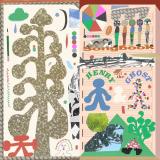
- 9: Henry & The Ghosts 03:22
- 1: Space Minor 03:22
- 2: Loop D 03:36
- 3: Tomorrows Past Part I 0:11
- 4: Modest Farewell 03:5
- 5: Nordlead 03:3
- 6: Momo 03:12
On his new album, Micha Acher rearranged compositions for bands such as Tied & Tickled Trio and Ms. John Soda from previous years.
Why are we interested in ghosts? What fascinates us about the eerie? According to cultural theorist Mark Fisher, the allure that the eerie possesses is not captured by the idea that we „enjoy what scares us“. It has, rather, to do with a fascination for the outside. For that which lies beyond standard perception, cognition or experience, as he writes in his book „The Weird and the Eerie“.
In fact, also none of the 15 pieces from Henry and the Ghost is really scary. On the contrary, they all feel strangely familiar. Like revenants or doppelgängers, which in fact they are. They have all been released before. But in a different form. In different line-ups. With different band projects such as Tied & Tickled Trio, The Notwist or the Alien Ensemble.
With the „Songbook“, Micha Acher's aim was, as he says, to find out how the familiar pieces sound in a chamber music instrumentation. Therefore he met with Theresa Loibl (bass clarinet, piano), Timm Kornelius (bassoon), Markus Rom (guitar, banjo, electronics) and Simon Popp (drums, percussion) in his living room for a musical séance in the summer of 2022. The séance lasted two days. Afterwards, Markus Rom (Oh No Noh), added some haunting electronical ideas.
The mood of most of the pieces is melancholic. There are surprising twists and siren-like melodies. Just as ghost stories should be. However, most of the songs sound very light-footed. With their feet in pop, folk, jazz and classical music. Pieces such as „Johanna“ with its wheezing harmonium and spooky piano, or the dreamy „Modest Farewell“ on the other hand have a cinematic flair. Immediately faces and scenes arise in the mind. But at the beginning, there is „Hamlet“. It starts with ghostly electronics and merges into a calm, almost classical guitar piece. Could it be that the ghost of Hamlet's father is hiding between the strings?
„34E“ begins with a banjo. Then the deep humming of Micha Achers sousaphone and the other brass instruments kick in. In the slow, solemn „Aelita“, the sousaphone starts a dialogue with a children's piano. With the banjo and the other wind instruments acting as mediators. The title of „All Tomorrow's Past“ brings Velvet Undergrounds „All Tomorrow's Parties“ to mind. Another ghost from the past. What connects the two pieces is free-floating percussion, which accompanies the sumptuous melodies.
„Arc“ takes us on an exhilarating voyage at sea, with the sousaphone providing powerful propulsion. Towards the end, things get quite turbulent. With the clarinet stirring up the water, before the sea calms down again. „Henry and the Ghost“ is characterised by a ghostly mood change between major and minor. In „Radio Four“ the banjo with its stoic chords keeps the lively brass section in check. „Solid Ground“ is imbued with melancholy. „Space Minor“ takes us into outer space, with the power of sousaphone and percussion.
„Tomorrows“ is filled with cautious optimism. And the concluding „Nordlead“ turns out to be a revenant of the instrumental „N.L.“ from The Notwist's legendary album „Shrink“ from 1998. In the new version, the piece sounds like a distant echo. One that also brings to mind how Micha Acher's music has evolved. Which new worlds he explored and opened up since the nineties. And yet Acher's signature is recognisable in every single note of this fascinating „Songbook“.
DJ Support: David Morales, Dimitri From Paris, Tedd Patterson, Dj Spen, Terry Hunter, Hector Romero, Dr Packer, Da Lukas, Sebb Junior, Jo Paciello, Shabi and many others.
The friendship between Sarah Jane Morris and Mario Biondi is the basis of this collaboration, born from the desire to pay homage to Roberta Flack. The idea, proposed by Sarah Jane, to reinterpret "Back Together Again" was born a few months before the death of the famous American singer. The original song, published in 1980 on the album "Roberta Flack Featuring Donny Hathaway", included the posthumous participation of Donny Hathaway, who died in 1979. Mario Biondi enthusiastically welcomed the proposal, and considering that the original song had a strong dance component, entrusted the production to Micky More & Andy Tee, one of the most important Soulful Disco House production teams on the contemporary world scene. The duo of DJs and producers from Ancona Italy have been at the top of the charts of digital dance stores for years. The package includes a fantastic DUB version of Jazz-N-Groove, Courtesy Of Brian Tappert & Marc Pomery, The legendary American Dance producers Duo. A MUST HAVE.
Maria is the debut album from renowned Brazilian electric bassist and composer Moyses Dos Santos. A homecoming for the London-based artist, Moyses’ debut reconnects him with his North-Eastern roots while assembling an international cast of collaborators including legendary Brazilian arranger Arthur Verocai, US trumpet sensation Theo Croker and London-based vocal star Lynda Dawn.
After relocating from Brazil to London in the early 2000s, Moyses dos Santos quickly became one of the capitals’ most in-demand players, sharing stages, studios, and writing credits with best-selling artists including Nile Rodgers, Janelle Monáe, Emile Sandé, Gregory Porter and Omar.
In 2022, Moyses toured with Brazilian jazz-funk legends Azymuth, completing the rhythm section alongside Brazilian drumming master Ivan "Mamão" Conti. "It felt like he was my wise Brazilian grandfather figure." Moyses recalls. "When you spend so many years working internationally, you unconsciously start to leave certain parts of yourself behind. Mamão encouraged me to reconnect with Brazilian music, and that's where this record really began."
Brazil’s North-east, where African, indigenous and European traditions collided and fused most intensely, produced a musical heritage unlike anything else on earth, Moyses dos Santos is a product of this syncretism. On Maria, named after his mother, Moyses brings the musical vocabularies of his youth to the fore. From the soul of the church band where he began to learn his trade as a musician, to the rolling batucadas – maractus, baiaos, sambas and frevos – which he played throughout his teenage years.
Drawing on the lineage of North American electric bass giants like George Duke, Jaco Pastorius, and Stanley Clarke, Moyses runs Brazilian musical traditions through jazz, funk, soul and disco: his sound charged with the cosmopolitan energy of London's contemporary jazz scene.
Lead single and album opener “Boa Viagem’ is joyous, carnivalesque dancefloor jazz: a timeless groove for the nightclub and street party alike. Calling directly to a higher power “Brazilian Spirit” is an astral-jazz phenomenon, featuring the transcendent trumpet playing of Grammy nominated Theo Croker. On “Saudade” Moyses calls upon iconic Brazilian maestro Arthur Verocai, whose signature string arrangements cascade around the divine vocals of ascendant London artist Lynda Dawn.
With impeccable style, charisma, warmth and virtuosity, Moyses steps forward with his stunning debut Maria: out on vinyl, LP, CD and digitally on the 12th June 2026.
As the so-called “Latin boom” becomes a new anchor for hard-swung club sounds, it is crucial to recognize that the region’s musical culture extends far beyond dembow edits and the pop-trap hybrids that have edged into the mainstream. Monterrey-born, New York City-based producer and DJ Delia Beatriz, aka Debit, returns to NAAFI with Potpourri, a generous and kinetic collection of dancefloor-oriented tracks filled with percussive flourishes, squelching 303 basslines, and rhythmic mutations that actively challenge the status quo. Rather than rebuilding “Latin sounds” as a fixed category, the album rethinks their internal logic, tracing the evolution of techno and house in cities like Detroit, Chicago, and New York alongside parallel innovations emerging in Mexico, Colombia, and across the wider Latin world. Positioned on the bridge between Mexico and the US, Potpourri does not seek synthesis as a gesture of smooth fusion, but as a site of disruption.
The album can be heard as a loose follow-up to System (2018), Debit’s NAAFI-released EP that expanded the sonic potential of tribal guarachero through triplet-driven rhythms, industrial pressure, and noisy reconstruction. Potpourri retains guaracha as a structural backbone while drawing further influence from veteran DJ and producer Javier Estrada—who also appeared on System—and particularly from his fast-paced, nonlinear style of mixing. That approach becomes a formal principle here: canonical structures are dismantled, repetition is avoided, and tracks evolve without sacrificing propulsion. Coming after the introspective temporal inquiry of Desaceleradas and the speculative historical acoustics of The Long Count, Potpourri arrives as a deliberate surge of energy. As Beatriz explains: “It’s a manifesto for rethinking form and sound in dance music. By stepping outside traditional structures and embracing the potpourri approach, I’m creating new meaning with familiar rhythms. I’ve also been applying this to my DJ sets, using it as a tool to break free from established norms and explore new narrative possibilities.”
Years in the making, Potpourri imagines an alternate timeline in which the psychedelic squelch of acid—echoing pioneers such as DJ Pierre and Mr. Fingers—and the dub-inflected atmospheres of Basic Channel entered into direct and sustained contact with Latin American club mutations. Those references are legible, but never merely quoted. Instead, they are folded into syncopated hi-hats, overdriven kicks, and unstable arrangements that absorb both the intensity of the parties Beatriz remembers from Monterrey and the abrasive edge she sharpened at DIY noise shows in New England. The result is unmistakably a dancefloor record—heard in tracks as forceful as “Pero like” and the peak-time pressure of “tuvesuerte”—but one saturated with grotesque, psychedelic atmospheres, where sounds dissolve into hoarse croaks, acidic smears, and anxiety-inducing growls. Here, the rave becomes not simply a site of release, but a platform for navigating identity, hybridity, and artistic formation across borders. Moving through peaks and ruptures, Potpourri reveals a party narrative that is not linear but multidimensional.
By folding together the fluidity of DJ culture, the experimental charge of acid, and the rhythmic vitality of guaracha, Potpourri proposes a space of formal and political innovation within Latin America’s rapidly expanding electronic music landscape. It is a record that refuses containment, pushing against the templates through which Latin electronic music is often consumed, and insisting instead on friction, instability, and transformation as generative conditions for the dancefloor.
- A1: Independent Woman (Part 1)
- B1: Independent Woman (Part 2)
Back on Celestial Echo Records with a true modern soul classic — Jan Jones “Independent Woman”, finally given the treatment it deserves.
A record that’s been circulating in DJ sets and collector circles for years, often via bootlegged pressings as the originals are incredibly rare, this is the first fully licensed reissue, presented properly and with both sides intact - something the bootleggers didn’t do.
A-side Part 1 delivers the track in its purest form — tight, uplifting, and driven by that unmistakable modern soul groove. On the flip, Part 2 stretches things out into a longer, more open version, letting the arrangement breathe and giving the dancefloor the 6 minutes it deserves.
Musically, it sits right in that sweet spot for us — rich vocals, warm keys, and a rhythm section that just grooves. It’s one of the ultimate modern soul tracks.
Licensed officially, as always. Celestial Echo is here to put proper soul records back into circulation — respectfully cut, properly pressed, and ready to play.
- A1: Super Boiro Band - So I Si Sa
- A2: Bembeya Jazz National - Armée Guinéenne
- A3: Kaloum Star - Maliba
- A4: Balla Et Ses Balladins - Nyo
- B1: Quintette Guinéenne - Douga
- B2: Le Simandou De Beyla - Festival
- B3: Horoya Band - Zoumana
- C1: Kaloum Star - Gbassikolo
- C2: Sombory Jazz De Fria - Nana
- C3: Syli Authentic - Fabara
- D1: Balla Et Ses Balladins - Paulette
- D2: 22 Band Kankan - Deny
On October 2 1958, after over 60 years of colonial rule, Guineans voted overwhelmingly for their independence, and Guinea was declared a Republic with Sékou Touré as President. Guinea was the first of West Africa’s Francophone colonies to gain independence. To free Guinea from its colonial legacy, president Touré sought to restore dignity to his nation and give cause for Guineans to take pride in their culture, history and newfound freedom. To achieve this, he instructed his government to implement new cultural policies that were intended to revitalise and celebrate indigenous culture. The focus of these new policies was on music.
In 1961, President Touré launched authenticité, the name of his new cultural policy for Guinea. One of its first acts was to assemble the best Guinean musicians into a new state-sponsored orchestras that were tasked with presenting traditional Guinean music in a new and modern style. All musicians in Guinea’s orchestras were officially designated as members of the public service. During the years of Sékou Touré’s presidency (1958 – 1984), the government’s cultural policy of authenticité was applied strictly to the creative arts. Guinea’s sole political party, the Parti Démocratique de Guinée exercised complete authority over artistic production. The scale of the Guinean government’s commitment and efforts to invigorate its indigenous musical cultures was unmatched in Africa, and it presented a clear contrast to the minimal endeavours undertaken by Guinea’s former colonial rulers.
From 1967 to 1983, Guinea’s government presented selections of songs from the Voix de la Révolution catalogue on its own recording label, Syliphone. These recordings were described as ‘the fruit of the revolution’. Syliphone was revolutionary in many aspects: it was the first recording label to feature traditional African musical instruments such as the kora and balafon within an orchestre setting; it was the first to present the traditional songs of the griots within an orchestre setting; and it was the first government-sponsored recording label of post-colonial Africa. Syliphone represented authenticité in action, and over 750 songs were released by the recording label on 12-inch and 7-inch vinyl discs. All are highly sought after by collectors worldwide.
This is the second of a two-volume release which presents a selection of the best songs from Guinea's Syliphone recording label. This volume focuses on recordings from the 1970s, when Guinea’s authenticité policy had transformed the nation's music through a network of over 30 orchestras, each representing their local region, and each presenting Guinean musical traditions alongside the influences of Cuban music, jazz and funk.
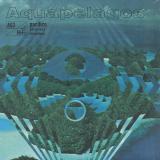
Presenting the third thematic volume on the “Aquapelagos" series - a collection of split LPs where selected artists offer their own take into water surrounded cultures and communities. After the initial release of the Anthology compilation Aquapelago in 2022 (Discrepant ,CREP91) and the split LP Atlantico by Lagoss & Banha da Cobra (Keroxen, KRXN027) as well as the direct collaboration LP Índico by Mike Cooper & Pierre Bastien we proudly introduce an the third volume in the series in the shape of no other than two inspiring artists, Vica Pacheco and Pak Yan Lau. Two different sound journeys inspired by the majestic and peaceful Pacific Ocean, the vastest, largest and deepest ocean of our planet.
Vica Pacheco’s composition takes a calm meditation approach where water flutes and synths brush shoulders to create a ever expanding mind journey whereas Pak Yan Lau’s ambitions Neo classical piece, The Ocean in Us, talks about that grand overwhelming feeling, that vast space deep under, on the bottom of the Pacific. Both compositions were recorded and created with the particular wet acoustics of the Tank in Santa Cruz de Tenerife in mind.
From Philip Hayward and Matt Hill’s liner notes: ‘’The Pacific is a complex space, comprising a third of the Earth’s surface. A cascade of islands runs along its eastern flank, down from the Kamchatka peninsula, through Japan, Taiwan, The Philippines, Melanesia and on to Australasia. In its watery heart the islands of Micronesia and Polynesia stretch across huge distances, north-east to the Hawaiian archipelago, south east to Rapa Nui and south west to Aotearoa and Chatham island. Closer to the shores of the Americas lie Tierra del Fuego, the Galapagos Islands, Haida Gwaii and the Aleutians. This is a space that resists easy characterisation. The Pacific laps the shores of Japan and Chile, the beaches of Australia’s East Coast and the cold, damp coasts of British Colombia and Alaska alike. Indeed, the space is so vast that it is a world in itself and one rarely navigated in its entirety. In this manner, strands of genres and the songs that reflect them are components in an intricate mesh of associations.‘’ Philip Hayward and Matt Hill, April 2022
Cindytalk has remained a majestic proposition over the decades, one marked by a continued process of disintegration and regeneration. Change has been a constant for Cindytalk, as has been the presence of the Scottish musician Cinder, who has fronted the project since the early '80s. The first Cindytalk albums embraced a dark theatricality of post-punk dissonance and abject rock deconstruction that coupled industrial dirges with Cinder's beatific vocals, these same vocals that were once plied to the earliest This Mortal Coil and Cocteau Twins recordings,forever binding Cinder to the 4AD lore. But even on those albums, Camouflage Heart and In This World, Cinder was pushing the band to embrace the studio as a tool for further abstraction of sodden drones, cobwebbed dark elegance, and decayed textures.
By the early aughts, Cinder had reimagined Cindytalk through the granular processes of digitalia with a handful of equally celebrated works of glitch-born expressionism for Editions Mego. Cinder explains that "those elements were growing roots under our sound and had started to organically change the shape of what we were doing. The fucked-up rock music was in retreat and the electro-acoustic abstractions were becoming apparent. Fast forward to the early part of the 21st Century and my first laptop. It seemed natural where I needed to begin that part of my new sonic journey. To further explore those and new territories. Sunset and Forever is intrinsically connected to what came before."
Sunset and Forever is a labyrinthine opus, one that returns to the themes of the sacred and profane that have rippled through all of Cindytalk's recordings, albeit in various guises. The opening track "Embers of Last Leaves" is a haunted piece of undulated, cyclical tones that entwine into a sorrowful chorale with Cinder's own voice. Thumps of electronic drum kicks and bass drops dot the apocalyptic menace of "Tower of the Sun" but serve not as a rhythmic grid, but as painterly noises that further disrupt and disturb the machined dissonance. A cinematic radioluminescence blooms from the tempered electronics within "For Those Eyes, Shadows Of Flowers." The finale "I See Her in Everywhere" bookends the opening number with a seemingly human chorus build from electronic tones cast in cathedral reverence. Sounds throughout may appear adjacent to those of Fennesz, Holly Herndon, or even Lovesliescrushing from time to time, but Sunset and Forever remains purely Cindytalk.
Cover designed by Chris Bigg, known for his iconic design work for 4AD. Mastered by James Plotkin.
The union of Antwerp synthesist David Edren and Tokyo minimalist Hiroki Takahashi is a fit so natural as to feel preordained. Both traffic in subtle shades of contemplative electronics, marked by patience, space, and poetic restraint. And both have rich histories of curation and collaboration – Edren in the duo Spirit & Form alongside Bent Von Bent, and Takahashi as proprietor of the Kankyō record shop, as well as one fourth of cosmic ambient quartet UNKNOWN ME. Mutual fans of one another’s work, they began sharing stems in the latter half of 2020, which slowly blossomed into a collection of multi-hued compositions inspired by notions of connectivity and impermanence, translated for east and west: Flow | 流れ.
Opener “Dusk Decorum | 黄昏 礼節” maps the mood of what’s to come, elegantly pirouetting and percolating through an expanding vista of looming stars and half-light horizons. Takahashi describes Edren’s arrangements as evoking “a strange feel, something we haven't heard much of before.” The sensation is one of “in-betweenness,” a restless current whispering beneath the beauty, like seasons seen in time-lapse footage: flickering but infinite, transience turned permanent. Takahashi’s signature sculpture garden tones plot spiral patterns over which Edren cascades dazzling pointillist synthesizer coloration. The pieces veer between delicate and dilated, micro and macro, their aperture forever softly in flux.
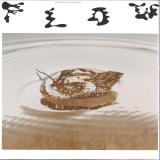
From the oscillating orchestral lullaby of “Stalactime | 鍾乳石時計” to the sweeping, sparkling dream sequence closer, “Shift Register | シフトレジスタ,” the album achieves the elusive goal of being more than the sum of its parts. This is music of rare air, elevated and amorphous, shimmering just out of reach. Though Edren and Takahashi have yet to cohabitate the same room in person (a fact that should be rectified soon by an astute festival booker), their palettes and poise are perfectly paired, twin fragilities woven into seven radiant and regenerative vibrational states. The cover design of a beatific, beaded leaf rippling on the surface of a hidden pond aptly captures the record’s muted majesty. Takahashi’s quiet pride is justified: “We are very happy with this time-consuming and carefully crafted work.”
RASTER MEDIA 30 YEARS ANNIVERSARY EDITION REPRESS / 180 G VINYL
Ich bin meine Maschine features remixes by Boys Noize, Function and AtomTM himself.
to underline this tryptic statement (and to demonstrate the diversity) of one of atom™'s compositions that appeared on his 2013 'HD' album, raster-noton now releases a vinyl ep featuring remixes by boys noize, function and atom™ himself. 'ich bin meine maschine', in an elaborate manner, illustrates uwe schmidt´s main musical concern - the exploration of electronics in pop music. inspired by a statement of the cybernetician heinz von foerster, atom™ constructed/generated a message that is playing around with a widely-cited kraftwerk quotation, turning 'ich bin eine maschine' into 'ich bin meine maschine' (i am my machine). besides the album version of 'ich bin meine machine,' the ep features some dominantly techno infuenced versions that perfectly connect the pop attitude of 'HD' with dancefoor functionality. the boys noize remix shows off alexander ridha´s deft skills for translating atom™´s futuristic pop into his own rough and driving electronic language. on the other hand, atom™'s 'linear remix' breaks down the original structure of the song and turns it into a reduced and much straighter, forward looking composition. function - one of techno's true underground heroes - provides a remix that is breathing the air of solid and hypnotic club music, in which just the essential elements are streamlined and ondensed into perfection. all 3 remixers adapt the track to their particular universe. by doing so, they prepare the 12' vinyl for its fnal destination - the club.
Already in its title, Plume Girl’s debut thoroughly lets things go and takes them in – all at once. “In the End We Begin” is the first solo full-length from Sowmya Somanath, a Hindustani classical singer/composer and half of alt-pop duo Felt Out. Plume Girl’s music takes inspiration from the semi-regular musical form of the rāga (translated as ‘tinting’), invoking mood and atmosphere, each rāga thought to have its own distinct nature and personality, brought to life through improvisation. String swells and Somanath’s searching vocalisations envelop every track’s own blissful chamber. Exploring imagined binaries along the way — eastern vs. western, traditional vs. experimental, acoustic vs. electronic, Sowmya sees music as a curious dialogue between divine Self and an invisible reality. Beneath the illusion of a chromatic world, there remains a blissful oneness.
Plume Girl’s songs sit between ambient Hindustani music and emotionally-encumbered pop. In front of backdrops comprising sundrenched drones or glitches, sketched out beats, and criss-crossing glissandi or flutes, Somanath both murmurs intimately and spirals upwards into soaring choruses. The lyrics ponder innermost thoughts, never more literally than on the blissful emo folk closing track: ‘In my heart I know / what’s in my heart / I know what’s in my…’
“When I began writing this music, I was fresh off of an experience that completely twisted my reality,” explains Somanath. It was the end of a years-long relationship, and the blossoming of a long-buried love hidden in plain sight: “a best friend of a decade, my musical partner, someone who had always seen me completely…At once, I felt grief and loss. At once, excitement and love.”
- A1: Late Flowering Lust (Phil Kieran Remix)
- A2: Beglammered (Justin Robertson's Deadstock 33S Remix)
- B1: Skwatch (Black Merlin?S Reel To Reel Remix)
- B2: Never There (Hardway Bros Remix)
- C1: Another Lonely City (Daniele Baldelli And Dj Rocca Remix)
- C2: Beglammered (Richard Sen Remix)
- D1: We Are The Axis (Scott Fraser Remix)
- D2: One Minute's Silence (Ivan Smagghe Remix)
Andrew Weatherall never wakes up in the morning and decides to start a new album that day. Instead, recording music is a continuous process usually working with different collaborators and seeing where the muse takes him. Somewhere down the line the rewards of a collaboration will coalesce into a body of work between thirty minutes and an hour long and he will put a call into the Rotters' team to say he has a new release ready to go.
We were visiting the studio catching up on new tracks in various states of readiness when he offered up some remixes of tracks from his recent "Ruled by Passion…" he'd been sent by fellow musicians. Tim Fairplay, Andrew's partner in The Asphodells, Sean Johnston from A Love From Outer Space and Scott Fraser live and work in the area and all popped in at various points.
Andrew's black book reads like the who's who of contemporary music but rather than plunder it for remixers he'd let drop the idea of a remix with friends and neighbours. These plus a couple a swaps with musical friends who were new to the concept of remixing, gave Andrew an hour of music he thoroughly enjoyed listening to.
It goes without saying none of the tracks are duds but our ears always prick up when Justin Robertson's take on "Beglammered" ups the heart rate or Daniel Avery's own unscrewing of "… the Axis" ruffles the neck hairs. We've stopped arguing in the office about which is the best track. They all are.
Lewis Taylor is a rising 20-something house head from Newcastle who shows off his chops on this new one from Ebullience. Ebullience is a good way of describing his take on tech and minimal, too. There is plenty of cheer in the lively synth work of opener 'Do You Wanna Come Party', to which the answer is yes, please, very much so. 'Satisfaction' has its head up in the clouds with more wispy cosmic synth motifs, zippy grooves and silky pads that are luminous and pure. 'Optimism' strikes that same balance between low-end oomph and celestial melodic charm - a fresh, future blend that is perfect for summer. 'Still Dreaming' closes with more mature melodies and accomplished arrangements that quietly buzz.
The Reflex has been busy of late and, though already a proven master of multi-track mixes and mash-ups, he keeps on reaching new heights with each new drop. This is one of several coming in quick succession and finds him dropping the final part of his label Discolidays' collaboration with the Zagora catalogue, which features tunes by Thomas Bangalter's pops, Daniel Vangarde. Here it is the Gibson Brothers' disco belter 'Heaven' that gets beefed up with bright strings and unrelenting drums, driving you to a place of sheer joy. A more obscure sound come son the flip with uptempo drums and sumptuous musicianship laid down by some of the best of the disco era in Paris.
2026 Repress
A mastermind when it comes to crafting quality electronic music across the house spectrum, expressing various shades of his vision, French DJ/producer Traumer has solidified himself as one of the country’s finest exports while his alias has become a home for heavily sought-after minimal-leaning house productions that journey through expansive textures and trademark percussion. After combining with Romanian favourite Cristi Cons early last year as part of the imprint’s collaborative ‘X Series’ and following a series of releases on his own gettraum label, the Parisian makes a highly-anticipated solo return to Enzo Siragusa’s FUSE as he unveils his latest four-track offering in the form of his ‘Nectar’ EP. The title track ‘Nectar’ heads up the package and brings a blend of snappy drum grooves and zippy synths beneath hooky female vocals as it builds into a rolling anthem, while ‘Lamerci’ gets dubby with crisp percussion shots guiding hazy stabs and deep grooves. On the flip, ‘First School’ strips things back and focuses on a snaking bassline and signature silky melodies, before closing on the interwoven textures and shimmering tones of B2 ‘Rodage’.