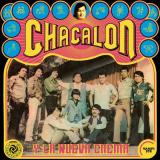
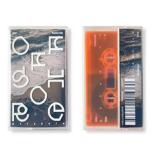
Tooflie's anonymous archivists return for another trip through the past, this time leaving geography behind for the unruly musical landscape of the 1980s. Four edits bring together the creme de la creme of Polish rock, Danish new wave, Soviet avant-garde and Georgian synth-pop, giving each source a fresh dancefloor angle while keeping what made the original so distinctive. A Balearic rework, an Hi-NRG treatment and two more leftfield interventions turn these unlikely archival finds into records that work just as well at home as they do on a larger system. The original records behind these edits are notoriously hard to find, making Tooflie 008 a rather useful detour for diggers and collectors, as well as anyone with a soft spot for overlooked musical oddities.
“The alarm had been sounding for so long that nobody remembered what it had been warning about. The protocol had become routine; every signal acknowledged, every command obeyed. Dreams were archived, memories rewritten, emotions reduced to corrupted fragments of data. The city continued to function with mechanical precision, while the last traces of humanity slowly dissolved into the noise.”
With Oblivion Protocol, The Relic continues his ongoing ARK series, once again excavating hidden layers of industrial hardcore’s past while transforming them into something unmistakably his own. Across six meticulously crafted tracks, echoes of classic hardcore attitude, doom-like heaviness and early industrial brutality surface before being reshaped into a bleak, contemporary vision. Nostalgia is never the destination; it provides fragments for reconstruction. The release constantly shifts in weight and momentum. Crushing mid-tempo passages give way to relentless bursts of energy, while distorted textures, commanding vocal samples and melodic fragments create an atmosphere that is as oppressive as it is immersive.
The archaeology continues, but the discoveries become increasingly unsettling: What once promised the future now echoes through abandoned systems, corrupted memories and hostile sonic environments.
Finnish-American guitarist Raoul Björkenheim and Norwegian drummer Paal Nilssen-Love join forces on their new album PING, released by We Jazz Records on 30th October on LP, CD and digital formats. Recorded in Helsinki, the album finds the seasoned duo firing on all cylinders and delivering a remarkable set of contemporary free music.
PING brings together nine excursions beyond “guitar + drums” and way beyond “free jazz”. That being said, those are still good touching points for the music that is wild, imaginative, raw, yet also at times delicate and introspective. Friends and collaborators for decades in groups such as the lauded Scorch Trio, Raoul and Paal have the history and the trust to create memorable and original improvised music that stuns and moves the curious listener.
Raoul Björkenheim (b. 1956) is a Finnish-American guitarist and composer who has been creating original music for the past four decades living in New York City and Helsinki, where he is presently based. Describing his on-going work as investigative guitarism, he is best known for an expressionistic and lyrical guitar style. Björkenheim’s eclectic discography numbers 50+ albums, ranging from ambient soundscapes to visceral free jazz, from duo to big band. His large-scale works for symphony orchestra have yet to be recorded, and he has also composed scores for over ten films and dance productions. Björkenheim has collaborated musically with Bill Laswell, Toshinori Kondo, William Parker, Mats Gustafsson, Hamid Drake, Ingebrigt Håker Flaten, Gerald Cleaver, Henry Kaiser, Lukas Ligeti, Morgan Ågren, Paul Schütze, Edward Vesala and Juhani Aaltonen, for the labels ECM, Rune Grammofon, Cuneiform, Tum Records and Long Song records. Björkenheim has been awarded various prizes including the Emma prize for best jazz recording of the year, and been nominated three times for the Nordic Music Award.
Paal Nilssen-Love (b. 1974) is a Norwegian drummer, composer, bandleader, and producer known for his central role in Scandinavian free jazz and improvised music. Since the mid- 1990s, he has appeared on more than 280 albums, including 70 released through his label, PNL Records. He has performed with influential groups including Atomic, The Thing, Peter Brötzmann’s Chicago Tentet, Scorch Trio, and Frode Gjerstad Trio, and collaborates regularly with artists such as, Ken Vandermark, Akira Sakata, Otomo Yoshihide, David Murray, Arto Lindsay and more. Paal Nilssen-Love’s fascination with traditional and experimental music has taken him around the world. Since his first visit to Ethiopia in 2009, he has built strong connections with musicians and artists in Addis Ababa, leading to collaborations, performances, teaching, and artist exchanges with Norway. Since his first trip to Brazil in 2013, he has returned regularly, developing collaborations with artists and musicians across the country. His musical explorations have also brought him to Tsugaru and Aomori in northern Japan, where he has developed an interest in the region’s traditional music. Nilssen-Love is also an active organizer and educator. He started both Oslo’s all-Ears festival, the Blow Out festival and FRAM Kunstfest, and has led workshops internationally and in Norway.
Repress of since last 2025 sold out box set. Ltd edition Gold vinyl, 4 X 140g LP Box set, 24pp booklet, DL card. or Ltd edition 4xCD Bookback. Trees classic albums, beautifully packaged as a four-disc anniversary edition includes 12" book with liner notes from founder member David Costa and comedian Stewart Lee - Features two new discs of alternate mixes, early demos, BBC session tracks and 2018 live recordings in London - Includes lost demos of 'Polly On The Shore' and 'Streets Of Derry' It's now over fifty years since Trees' formation and, although 'Acid Folk' has now become a sub-category in the lexicon of record dealers and music critics, and although founder member David Costa feels the original noughties reissue helped consolidate a gathering wave of curiosity, they themselves remain in the shadows. Earth's new Trees collection brings together both albums adding shiny alternate mixes of key tracks along with a selection of radio sessions and demos, all sounding brighter and cleaner than ever before. Trees first album, 'The Garden of Jane Delawney' (1970) snuggles nicely into contemporary nu-folkies' idea of the genre, and shares some of the pastoral-whimsy that characterised The Incredible String Band or Donovan, offset by some stunning interpretations of traditional material and Bias' own songs, which were somehow part of the tradition Trees had adopted. Readings of 'Lady Margaret', 'Glasgerion' and the old standard 'She Moved Thro' The Fair', and the extended fade of the group's own 'Road', presage the explosive instrumental duelling that would come to characterise the follow up album, 'On The Shore'. There's a definite shift between the records, the second being darker and more ambivalent. Here Trees don't tell you what to think. You're left to formulate your own response to this odd, opaque music. The 'Streets of Derry' session version leans into the brain vibrating drone-groove they somehow found at the traditional tune's centre. 'Polly On The Shore', another traditional tune, is one of the definitive moments of English folk rock. This special expansive collector's edition celebrates the bands 50th anniversary. "A beautiful hybrid, Trees found a unique space between intimate folk and freewheeling psychedelia. Musically ambitious yet brilliantly balanced, they have left an enduring legacy for those lucky enough to be in on the secret" - Edd Gibson, Friendly Fires
Originally, symptoms started out as a memoir chronicling Devin Daniels' mental health journey by way of the beat tape. "I made these beats in my worst mental health state of all time, like 2018 to 2023. In 2017, I had a experience in Boston and it gave me a schizoaffective reaction. I'm schizophrenic now. I've been hearing voices for the past almost 10 years. A terrible time, just really negative. Making beats is the kind of stuff that would just like cheer me up, you know, it would just make me forget about all that stuff." Devin has also been consistently working in the Los Angeles music scene as a bandleader and session musician, graduating from the Herbie Hancock Institute of Jazz Performance at UCLA, and going on to play in bands with the likes of Herbie Hancock, Joel Ross, Gerald Clayton, Miguel Atwood-Ferguson and more. Although Devin does not have social media, and thus currently might not have the name recognition as others in the wider music world, he is very respected and beloved in many circles of the Los Angeles music scene.
EPILOGUE is the culmination of more than four decades of music-making by Japanese composer, producer and multi-instrumentalist Ken-ichiro Isoda, an album in which environmental sound, electronics, contemporary classical composition and memory converge into a deeply personal late-career statement. Isoda moved through video-game music, film composition, classical production, Okinawan music, television and collaborative projects, continually developing an approach in which acoustic instrumentation, field recordings and electronics could coexist naturally.
His collaborative album Interwoven with aus, released through WRWTFWW, further demonstrated the openness of a musical philosophy Isoda describes as being rooted in fluctuation, imperfection and organic movement.
EPILOGUE brings those threads together while refusing to function simply as a retrospective. The album consists largely of older compositions that Isoda has returned to, reconstructed and reinterpreted from the perspective of the present.
Opening track “TANEKOMA” refers to the Izu Robin, a rare bird native to Hachijō-jima, the volcanic island where Isoda lives. Its song, recorded by Isoda in the mountains, becomes part of the composition itself. Placed at the beginning of the album, “TANEKOMA” becomes both document and prayer.
Elsewhere, “Circulation 2” develops from a work created around the relationship between forest, sea and the movement of water. Flutist Dogen Kinowaki replaces Isoda’s original piano melody with a performance that gives the piece a distinctly Japanese sense of place. Kinowaki also appears on a newly reimagined version of “Beach of the Pliocene”, one of Isoda’s most recognised compositions.“STEPS”, first composed for film in 2008, looks back toward the electronica of that period. For this definitive version, Tsutomu Sonoda of maya ongaku provides vocals, bringing new emotional and lyrical depth to a piece Isoda had wanted to properly complete for more than a decade.
The title track from Isoda’s 1991 New Age album “Yume no Sazanami” is similarly reconsidered. Originally recorded with a small chamber orchestra, the new arrangement replaces elements of the harp and cello with layers of nylon-string guitar performed by Tatsuro Murakami. Perhaps the album’s clearest meeting point between past and present is “WATERWAYS.”The mysterious European ambient artist Aiko Takahashi, transforming an abandoned demo into what is simultaneously the oldest and newest work on the album.
“A Flowering Tree,” written for film in 2013, is reconstructed around multi-tracked flute performances by Dogen Kinowaki. Isoda carries that association into his own arrangement, allowing the piece to function as another quiet meditation on memory, loss and hope.
The album closes with “EPILOGUE” —less a grand conclusion than a moment of acceptance. Isoda chose it as the album’s title piece to hold what he describes as the complex emotions that accompany the twilight of a life spent making music. EPILOGUE is not simply a look back. It is the sound of older music continuing to move, change and breathe in the present: a lifetime of ideas distilled into Isoda’s own form of pure music, shaped by memory, collaboration, nature and the world immediately outside his home on Hachijō-jima.
Prolific British multi-instrumentalist William Dorey makes music emphasising traditional means of recording under the Skinshape moniker, referencing influences ranging from Ennio Morricone to The Beatles, and a variety of genres including but not limited to retro funk, soul, reggae, psychedelic rock, African music and folk. Far from carrying an anything goes attitude, Dorey's is an evocative melting pot moulded in an orderly fashion, creating output that keeps categorisation open-ended. Whilst tackling a busy tour schedule over the past 18 months, Skinshape has continued to find time to make music in his studio based in North London. The latest endeavour is titled Chapman's Pool - named after a bay on the Jurassic coast in Dorset, located walking distance from where Dorey grew up. Chapman's Pool carries a sense that Skinshape is reconnecting with the sound which formed his musical identity, drawing inspiration from spaghetti westerns, trip-hop, `60s+'70s Ethiopian Jazz, '80s South African bubble gum and so on, all while the multiple years of recording, songwriting and production experience are clearly audible.
" Ascending Signs Records proudly presents its third release, featuring a very special guest: Stephan Laubner, aka STL.
One of the most distinctive voices of the past two decades, STL continues his quest for sound with a new chapter, "Sign of Life".
The EP delivers four bulletproof tunes, once again showcasing STL's unmistakable style, pushing the boundaries of abstract/experimental house, dub, techno and downtempo with a raw, personal and intense sound."
Nawak Gold, orchestré magnifiquement par Leeroy et KTR ! Pour cet EP, chacun des deux artistes nous offre deux morceaux, pour un voyage musical qui traverse plusieurs styles.
Sur la première face, place à la Techno, Hardtechno et Hardstyle, avec deux tracks aux grosses énergies. La deuxième face bascule ensuite vers le Hardcore, avec un morceau plus poussé et un autre plus lent.
Un EP riche et varié, qui passe d’un style à l’autre tout en gardant cette même envie de vous en mettre plein les oreilles !
Un grand merci encore une fois à Leeroy et KTR pour leur confiance et pour ce magnifique projet.
Phren, the first collaborative work by Marta Salogni and Stefano Pilia, emerges as a layered and articulated sound-hymn-dialogue between Stefano’s abstract guitar work and Marta’s manipulation of tape machines. Conceived alongside the imagined space created by Sarah Mazzetti for the Opale series, a project by Maple Death Records and Canicola edizioni, the album becomes a form-shifting composition where memory itself is continuously transformed through resonance, repetition and reconfiguration.
Here, sound is not preserved as an object of the past, but treated as a living material: something capable of carrying traces, absorbing new meanings and generating unfamiliar voices.
The album develops from a simple yet constantly shifting principle: a sound is set in motion and then passed through a series of interconnected systems where it is delayed, altered and returned in another form. Stefano Pilia’s guitar travels through a complex chain of modular processes, composed of different stages of preamplification and filtering, before entering a tape echo system that introduces further layers of repetition, resonance and spatial displacement. These signals are then absorbed into Marta Salogni’s Revox tape machines, where additional lines of delay, modulation and environmental transformation reshape the material once again.
The resulting music is not a dialogue between two instruments, but a shared system — a living architecture in which a single signal moves simultaneously through parallel and serial pathways, gathering traces of each passage. Sound becomes a material in constant motion: a gesture becomes an echo, the echo becomes a new gesture, and the distinction between origin and reflection gradually begins to dissolve.
Gi Gi describes his process as “dubwise sampledelia.” It begins with fragments and ends somewhere else entirely, destabilizing its source material until it stops pointing backward. A borrowed sound, looped and bent, eventually forgets where it came from; it stops referencing anything but itself.
This liquid sensibility shaped his earlier work, music that hovered between drift and propulsion, suggesting the dance floor without fully stepping onto it. Presence was implied, edges stayed soft. The center was always there, but diffused like mist on a screen.
With In Lieu, that center comes into focus. Half written in Texas, half in Australia, the shift isn’t simply geographic, but internal. The record moves with a coiled, anticipatory energy; the drums arrive with more force and the bass organizes the room instead of melting into it. It's dense with the feeling of more bodies in the frame. Textures still smear and refract, but they move around a clearer axis.
Where past records circled their core, these inhabit it, pulling closer to the body. “Some Of” and “Arque” lean into low-end pressure without abandoning his instinct for drift. "Pink Dirt" circles around mechanical drums and dizzying vocal chops, head-down and visceral. Elsewhere, voices gain newfound contour, materializing in “Downswept” with intimate musings and nearly forming a lead vocal on the title track before dissolving again.
In Lieu moves with a newfound confidence, compressing inward, sounding closer to the source of its own pulse.
It all started with a small party in 2006. Peter Invasion simply wanted to create a home for his band. That small party grew into something bigger, and eventually Riotvan became a record label in 2012 — a home for many different people, all brought together by a shared love for music and art. When Panthera Krause joined the journey in 2017, Riotvan evolved once again, adding a new perspective and another creative force to what it had become. The journey began 240 months ago — or, for those too lazy to do the math, 20 years. A lot has happened since then, but one thing has never changed: the passion. People have come, gone, and stayed. And here we are, celebrating 240 months of Riotvan with our friends, our loved ones, and ourselves. To mark the occasion, we're hitting the road on tour and have put together an extended edition of our Familiar Faces series. It's a colorful collection of music that brings together everything we love and everything that makes sense to us. It couldn't represent the Riotvan spirit any better. We'll definitely see each other somewhere along the way. Here's to the next 240 months.
Farid Boudinar alias F.E.X. and Olivier Romero are two solid producers and friends since the 2000’s. Along side the stylist Kanten and Dj Lowris, they decide tu put together forces and passion into one project, one love, the music that makes us live.
Italian duo Ivan Iacobucci & Stella Fiore, now based in Berlin, make their debut on Griffé with the captivating "Ode Al Sole" EP. Following two acclaimed releases on the legendary Perlon and their own imprint, Klopfgeist Records, the pair return after a two-year hiatus.
Inspired by the many journeys Ivan and Stella have taken across the globe over the past two years, Ode Al Sole reflects a rich fusion of influences from Latin America and Africa, seamlessly intertwined with raw, forward-thinking electronic sounds of our times.
The EP is infused with hypnotic vocal elements that create a deep, trippy atmosphere, making each track both immersive and emotionally resonant.
Curses' dark, romantic take on electronic music is often linked to EBM, new beat, synth-pop, and the offshoots in between - but, as the artist states, it's feelings, not genres, that motivate his music. Especially the underground and its niche sounds, brimming with collective energy, drive and passion, make for a major impetus. It's no coincidence that he's drawn to the era when man turned to the machine, as a collaborative force, and a new kind of liveliness, timelessness, emerged. In Curses' practice, this synergy translates into an enticing mix of synthesisers and voices, electronic drums and guitars. Nostalgia operates as an influence rather than a motive, though: despite its affinities with the past, his music is stridently contemporary and idiosyncratic. On the "Perfect High" EP, this approach is rendered in a resolutely dancefloor-oriented selection. It's rich in detail and constantly evolving; each time a new element appears, it's treated with such delight and care that you could imagine the track to flit off and turn it into the main theme. This doesn't happen, however, as the sense of cohesion and momentum is paramount: there's a relentless forward drive that keeps engagement tight from start to finish. The detuned, chorus-heavy leads of title track "Perfect High" and the clockwork-tinged percussion of "Weapon Of Time" jell with lustrous hooks. The ominous choirs on "Dare To Dream" and the proto rolling-and-scratching squelches of "Killer Instinct" similarly fall into place. Bravado never stands in the way of flow. Everything is kept in check by gated R-50 rhythms, and in the vocal department, Curses finds the sweet spot between his own voice and a slew of off-kilter samples. On closer "Blasted" NYC royalty Andi joins for a slab of synth-driven groove. It's shiny and sensuous, like patent leather - a perfect distillation of club music channeled through pop aesthetics, and thus a right coda for ALT028.
We are very happy and honored to present you Ricardo Villalobos on his own RAWAX series!
You will find here past & present releases from the Mastermind, starting with the 25 Years Anniversary edition of "808 The Bassqueen", formerly released on LoFi Stereo.
Special thanks goes out here to Christian Rindermann aka C-Rock!
After releasing their first LP on PPU under the name of CEEOFUNK, Spaced Out Knew and Orion Westbrook are releasing a brand new 6-track EP entitled "Friends, Love, Freak."
Watch out: an "unidentified sonic object" is heading your way!
It’s a funky anomaly that pays tribute to 80's grooves while asserting a fresh style all its own—decidedly "offbeat." The sound blends unique touches of cosmic soul-funk and European 80's synth-pop influences with a "DIY" approach, sitting somewhere between "disco-not-disco" and unconventional grooves.
Vocals are performed in Italian, French, and English, featuring the excellent Ghostape, Lydie Gaga, Marius Cyrilou, and Chérie Bibi. Themes include love, desire, and bonds of brotherhood...
On the menu: fat slap-bass lines, funky guitars, smooth electric piano, sparkling analog synths / Solina String Machine, and on top, an abundance of Casio SK-1 synth and lo-fi sampling gadgets.
The vibe oscillates between boundless energy and laid-back grooves, all served up with a non-conformist freshness and a touch of originality that can be read "between the lines."
CHIWAX CLASSIC EDITION prouldy presents Boo Williams - Lost Of Time.
This fantastic release from 1995 came originally out on legendary Relief Records.
The 2026 version contains a new mastering.
Don't feed the Discogs Sharks!
Dive into the ultra deep field with the fourth release by Alphawaves.
A0910EP showcases Alphawaves' characteristic ability to fuse the organic and the synthetic into a cohesive, hypnotic whole. Across two tracks, a subtle but insistent surge of energy powers both dancefloors and hi-fidelity systems. Dubby and repetitive yet undeniably playful, a sound that feels both intimate and expansive. A sonic space rooted in past, present, and future, echoing far beyond the moment.
Sometimes things go quickly. After meeting Canadian artist Pascale Project early this year (twice in one month) on the same dancefloor of a crusty underground club in Neukolln, we sent this Berlin-based DJ and producer a short appreciation email to show curiosity and interest in her unreleased music. Our hope was to listen to it and maybe just maybe start a record-release project. Pascale sent back quickly, and she shared some fantastic club music with us. We had separate listens to the full playlist, and, funnily/coincidentally, we chose the same 4 tracks as highlights from the big playlist. One week later, Pascale emailed us back, mentioning the tracks she would feel/see/love to be released on the label, and they were the exact same ones we had naturally and unanimously chosen. Stars aligned for sure. Having long been active in the Montreal music scene, Pascale absorbed the essence of all her different experiences and years of training and creating, and then let it all start Sparkling into the 22nd Basic Moves release entitled "Watch EP". The record is based on the concept of losing and breaking things up, and eventually finding it all back. Reflecting hope in between the fog of life. It is clever modern underground club music rooted in the textures and energies of the golden days of progressive house, breakbeats and (real!) tech-house. These 4 tracks reflect an artist who expresses herself honestly, fully understands how to creatively arrange and produce club music, and never loses sight of the dancefloor, as she is often found on that dancefloor herself. Dive in and let us know what you think of it. We are stoked to play out and vibe on these tunes for real!
Plus Plus Traxx is here and we open things up with the label’s main guy, Louie Fresco, and his bass-heavy track "###" (Pound-Pound-Pound).
A track that feels like it was made by a mad A.I. on shrooms inside a lab on a remote alien spaceship. Breaks weaving through glitchy sounds and creepy leads make this tune a certified secret weapon for those DJs who truly dare to break the mold and play outside the trendy shit.
Next up, we got a banger of a collab between CHKLTE and San Dee, who met inside the 16bit realm and cooked up a trippy minimal late night heater that feels like you're creeping through the Doom and Duke Nukem corridors, a tune that will definitely be making the after-hours rounds around the world.
Coming up on the B-side, we got none other than Harry Wills under his Brazen alias, doing what Harry does: dope basslines, intricate drum work, unique creativity, and overall trippy madness. 135 bpms of brazen dopeness.
And if you want more fuel in your engine, here comes Gojnea76, who turns the track "Passive Aggressive" on its head and literally kicks the “passive” out of the equation, delivering a bomb of a remix that will definitely be traveling in many great DJs’ record bags for years to come.
This is Freaky Friends Vol.1
Kokoroko today announce Tempos Difíceis Sempre Passam, a new remix EP reimagining tracks from their acclaimed album Tuff Times Never Last through the lens of some of Brazil's most exciting contemporary artists.
Translating the album's title into Portuguese, Tempos Difíceis Sempre Passam reflects both the enduring message at the heart of the original record and the creative dialogue between Kokoroko's expansive musical world and Brazil's rich, genre-defying music scene. The four-track collection brings together a handpicked group of artists whose individual approaches blur the boundaries between a variety of genres and contemporary Brazilian sounds.
To be released digitally and on limited vinyl, the EP also sees the return of acclaimed artist Luci Pina, whose artwork for Tuff Times Never Last is reimagined for this new chapter, creating a visual thread between the original album and its Brazilian counterpart.
Leading the announcement is Never Lost (Luedji Luna Remix), available now on all digital platforms. The celebrated Brazilian singer-songwriter brings her unmistakable warmth and emotive vocal sensibility to the track, offering a beautifully understated reinterpretation that deepens the song's themes of hope, resilience and togetherness.
Completing the EP are three further remixes from across Brazil's vibrant musical landscape. Onome of Kokoroko joins forces with acclaimed guitarist Nyron Higor for a richly textured rework of Da Du Dah, while producer Aleh Ferreira delivers a rhythm-driven reinterpretation of the same track. Closing the collection, Bruno Berle transforms Closer To Me with his signature blend of intimate songwriting, Brazilian groove and experimental pop sensibilities.
Together, the remixes offer fresh perspectives on Tuff Times Never Last, extending the album's spirit of optimism while celebrating the creative connections between London and Brazil.
Kokoroko today announce Tempos Difíceis Sempre Passam, a new remix EP reimagining tracks from their acclaimed album Tuff Times Never Last through the lens of some of Brazil's most exciting contemporary artists.
Translating the album's title into Portuguese, Tempos Difíceis Sempre Passam reflects both the enduring message at the heart of the original record and the creative dialogue between Kokoroko's expansive musical world and Brazil's rich, genre-defying music scene. The four-track collection brings together a handpicked group of artists whose individual approaches blur the boundaries between a variety of genres and contemporary Brazilian sounds.
To be released digitally and on limited vinyl, the EP also sees the return of acclaimed artist Luci Pina, whose artwork for Tuff Times Never Last is reimagined for this new chapter, creating a visual thread between the original album and its Brazilian counterpart.
Leading the announcement is Never Lost (Luedji Luna Remix), available now on all digital platforms. The celebrated Brazilian singer-songwriter brings her unmistakable warmth and emotive vocal sensibility to the track, offering a beautifully understated reinterpretation that deepens the song's themes of hope, resilience and togetherness.
Completing the EP are three further remixes from across Brazil's vibrant musical landscape. Onome of Kokoroko joins forces with acclaimed guitarist Nyron Higor for a richly textured rework of Da Du Dah, while producer Aleh Ferreira delivers a rhythm-driven reinterpretation of the same track. Closing the collection, Bruno Berle transforms Closer To Me with his signature blend of intimate songwriting, Brazilian groove and experimental pop sensibilities.
Together, the remixes offer fresh perspectives on Tuff Times Never Last, extending the album's spirit of optimism while celebrating the creative connections between London and Brazil.
Electronic music legends Soft Cell release ‘Out Come The Freaks’, the very first single from singer Marc Almond and multi-instrumentalist and producer Dave Ball’s final album ‘Danceteria’. Download and stream the track, featuring vocals from the late Dave Ball and special guest vocals from Nona Hendryx.
‘Out Come The Freaks’ is a cover of Was (Not Was)’s mutant disco classic and sends Soft Cell into prime disco territory, conjuring the hedonist spirit of early 80s Manhattan and a Danceteria floor filler spun by DJ Mark Kamins. There couldn’t be a more fitting alternative disco banger to pull back the curtain with and beckon you into the world of ‘Danceteria’. The final album is a homage to the legendary nightclub where young Marc and Dave would party until the small hours after the recording sessions for their seminal 1981 debut ‘Non-Stop Erotic Cabaret’. The final flourish of glitter to Soft Cell’s ‘Out Come The Freaks’ comes courtesy of guest vocals from Nona Hendryx, the iconic singer, one third of Labelle of ‘Lady Marmalade’ fame, and producer of Lisa Lisa and Bush Tetras.
This is the very first material to be released from ‘Danceteria’, Soft Cell’s forthcoming sixth and final album. It is also the first time new music has been released since the sad, untimely passing of Dave Ball in October 2025. Almond led the tributes, describing Ball as a “brilliant musical genius” and the world’s media hailing Dave as an electronic music pioneer. Dave finished ‘Danceteria’ very close to his passing and it is in full tribute to him that the album release goes ahead as planned. More details are to follow very soon about the release date.
You'd be hard pressed to name a song with the driving, emotional intensity and raw energy of the Hamilton Movement's anthemic ode to heartbreak, "She's Gone." Issued as the B-Side of the band's 1976 single "We're Gonna Party," and distributed in and around Indianapolis, there is no evidence the song garnered significant attention upon release—yet over the past fifty years it has amased a cult of devotees across the globe. But while interest in the group's music remains strong, little information has surfaced about the Hamilton Movement's history, and until now, there have been no official reissues of their work. This collection presents the band's discography, alongside previously unreleased music discovered on tape; it is the Indianapolis soul album that should-have-been.
The keys to the Hamilton Movement's mystery can be found in central Indiana, where promoter Dick Melvin has lived the past few decades, in a rural suburb of Indianapolis, amidst forests and cornfields. Melvin served as the group's manager throughout their entire existence, but his involvement extended far beyond typical managerial duties. He co-wrote and co-arranged the band's music; he produced and released their recordings on his Look Out label. Dick is also the band's archivist. His home is filled with boxes of demo sessions, live tapes, contracts, posters, and promotional photos documenting his work with the Hamilton Movement. He entrusted his archive to Now-Again's care and they've assembled this album under his watch. Dick's story, and the story of his band, are presented in an extensive, oversized booklet with Dick's rarely-seen photos and ephemera and words by Now-Again's Egon and Naptown historian Kylie Long.
In collaborating with iconic vocalists Matthew K. Heafy (Trivium), Josh Middleton (Sylosis) and Anthony Lucero (Cult Leader), Burner take a striking step forward to claim new territory while consolidating their extreme and unique sound into the heaviest and bleakest incarnation of their craft yet. Vocalist Harry Nott elaborates on the themes behind the new album: "If It All Returns To Nothing looked outwards to the world's chaos throughout history, No One Is Coming To Save Us instead looks inwards at its proposed cause; humanity's violent, animalistic nature, begging us for change. This is an album about human behaviour: that people create endless cycles of violence by repeating the mistakes of the past, forging a brutal history that we fail to learn from. But, at the same time, the album is about questioning whether we can ever get past those sins and repetitions. This is a record that is mournful as much as it is angry and engaged. It longs to bitterly recall the moments of greatness and sacrifice in our shared history that created the better world we currently destroy. It longs to look back at these moments for inspiration and optimism, at a time where it feels like hope is running thin. The album is also a struggle for hope, not just that humanity can overcome hatred and violence, but that we can look back on our greatest moments and take courage to build a better world. No One Is Coming To Save Us reflects this duality in its title: that no one will come to save us from the violence and tragedy we create as part of our humanity. But it also proposes that it's up to us to change - to overcome a violent human nature and usher in a better tomorrow."
Uyama Hiroto, one of the most important artists behind Nujabes works, released his debut album 'a son of the sun' on 2LP after 12 years.
Uyama Hiroto provided "Letter From Yokosuka" for Nujabes "metaphorical music" released in 2003 and was featured on the title track of "modal soul" released in 2005.
A son of the sun" was released in 2008 and continues to fascinate many listeners to this day.
Deluxe LP features 140g virgin vinyl; heavy-duty board jacket, artwork by Art Rosenbaum + DL. RIYL: Bob Dylan, John Prine, Townes Van Zandt, Ry Cooder, Michael Chapman, Michael Hurley, The Youngbloods & Bonnie “Prince” Billy. Jake Xerxes Fussell’s 4th album finds the acclaimed folksong interpreter, guitarist, and singer navigating fresh sonic and compositional landscapes on the most conceptually focused, breathtakingly rendered, and enigmatically poignant record of his wondrous catalog. Produced by James Elkington and featuring formidable players both familiar (Casey Toll, Libby Rodenbough) and new (Joe Westerlund, Bonnie “Prince” Billy), it includes Jake’s first original compositions; atmospheric arrangements with pedal steel, horns, and strings. One of the most striking and strangely moving moments on Jake Xerxes Fussell’s gorgeous Good and Green Again an album, his fourth and most recent, replete with such dazzling moments arrives at its very end, with the brief words to the final song “Washington.” “General Washington/Noblest of men/His house, his horse, his cherry tree, and him,” Fussell sings, after a hushed introductory passage in which his trademark percussively fingerpicked Telecaster converses lacily with James Elkington’s parlor piano. That’s the entire lyrical content of the song, which proceeds to float away on orchestral clouds of French horn, trumpet, and strings, until it simply stops, suddenly evaporating, vanishing with no fade or trace, no resolution to its sorrowful minor-key chord progression, just silence and stillness and stark presidential absence. It feels like the end of a film, or the cold departure of a ghost, and is unlike anything else Jake has recorded. In all his work Jake humanizes his material with his own profound curatorial and interpretive gifts, unmooring stories and melodies from their specific eras and origins and setting them adrift in our own waterways. The robust burr of his voice, which periodically melts and catches at a particularly tender turn of phrase, and the swung rhythmic undertow of exquisite, seemingly effortless guitar-playing here he plays more acoustic than ever before pull new valences of meaning from ostensibly antique songs and subjects. On Good and Green Again, Jake not only ventures beyond his established mastery of songcatching and songmaking into songwriting, but likewise navigates fresh sonic and compositional landscapes, going green with lusher, more atmospheric and ambitious arrangements. The result is the most conceptually focused, breathtakingly rendered, and enigmatically poignant record of his wondrous catalog. It’s also his most deliberately premeditated album, representing his fruitful return to a producer partnership after two self-produced projects, What in the Natural World (2017) and Out of Sight (2019) (William Tyler produced his friend’s self-titled 2015 debut.) This time James Elkington produced and played a panoply of instruments, bringing to Jake’s arcane song choices his own peerless sense of harmony and orchestration, balance and dramatic tension. The pair enlisted a group of formidable players including regular bandmembers Casey Toll (Mt. Moriah, Nathan Bowles) on upright bass, Libby Rodenbough (Mipso) on strings, and Nathan Golub on pedal steel. They were joined by welcome newcomers Joe Westerlund (Megafaun, Califone) on drums, Joseph Decosimo on fiddle, Anna Jacobson on brass, and veteran collaborator and avowed Fussell fan Bonnie “Prince” Billy, who contributes additional vocals. Album opener “Love Farewell” (featuring some beautiful singing by Bonnie “Prince” Billy), an elliptical tale of the folly of war, set to the world’s most heartbreaking goodbye march for a lover left behind. “Carriebelle” and “Breast of Glass” each similarly concerns, in its own way, romantic love and leavings. All three songs highlight Jacobson’s diaphanous, understated brass parts, tying them together in a true lover’s knot. “Rolling Mills Are Burning Down,” with its distant keening strings and capacious sense of space, observes and mourns the loss of work and community in the wake of elemental disaster. Nine-minute tour de force “The Golden Willow Tree,” the sole explicitly narrative song herein, is a hypnotic, minimalist rendering of a tragic maritime ballad about scuttling an enemy ship in exchange for wealth and glory and a captain’s inevitable betrayal. “Fussell is creating his own legacy within the long lineage of traditional folk musicians and storytellers that have come before him.” The New York Times // “So elegant … It’s relaxing in the way that pondering a Zen koan is relaxing, and sweet in the way that the wounded, honey-voiced blues of Mississippi John Hurt are sweet.” Pitchfork // “Music that resides at the seams of Appalachia and the cosmos.”
Based between Brussels and Berlin, Golden Hours is comprised of past and present members of Gang Of Four, The Brian Jonestown Massacre, Tricky, The Fuzztones and The Third Sound, to name just a few. A band with mileage and stories, they trade in rock’n’roll missives that are at times dark, tense and hypnotic, at others sweaty, relentless and danceable. Made up of Hákon Adalsteinsson (Guitar/Vocals), Rodrigo Fuentealba Palavacino (Guitar), Tobias Humble (Drums/Vocals) and Wim Janssens (Bass/Keys/Vocals), Golden Hours’ self-titled debut album is due for release March 31st 2023 on Fuzz Club Records. Wim says of the project and its incoming debut: “The musical backgrounds of each member are pretty broad but somehow when we come together there’s a pretty clear definition of what our music should sound like. There’s a beautiful friction between the noise we produce and the love for melody that seems to overtake at just the right moment. There never seems to be a lack of ideas when we come together. In silent agreement, every idea gets tried and will be further developed into a song or skipped in a heartbeat. No time is wasted. It all happens pretty automatically
Music from Tokyo / New York serves as the 2024 sequel to his previous release, Music for Joshua Tree. This conceptual album is divided into Side A (Tokyo) and Side B (New York), utilizing field recordings captured in each location. The ceramic images featured on LP jacket is the work of Namiko Ishikawa (NamipotNYC).
On this record, he incorporates Ambient, Downtempo, Trip-hop, and Dub—bringing to life the specific sounds currently resonating in his mind and his original roots.
Since the pandemic, he has been traveling and capturing "environmental sounds" through field recordings, which served as the primary inspiration for this record. Side A features tracks inspired by the atmosphere of Tokyo, including recordings from streets, parks near his home in Japan. Side B explores New York, incorporating the sounds of Brooklyn and Manhattan, as well as the chirping of insects recorded in the New York mountains.
While the album remains centered on analog synthesizers and vinyl samples, he has introduced analog drum machines and glitch noise to craft the groove. Unlike his previous work, this release brings prominent bass lines and added more Dub elements to the forefront. His primary focus for this project was expressing a sense of "space" and "air" through the meticulous use of reverb and delay.
Throughout the album, he invites the listener to imagine the unique "local atmosphere" he experienced during his travels.
Father Hervé and son Louis return as FRONTMASCHINE with “Rühren”, their most accomplished and refined work to date. United by a shared passion for the rawest and most uncompromising forms of EBM, the duo continues to explore the essence of body music while pushing their sound to a new level of maturity.
On “Rühren”, cold, almost chilling polyphonic synthesizer melodies intertwine with their classic relentless drum programming that sits somewhere between the militant precision of DAF and the mechanical drive of the “Commando days” of Front 242. Every track is built around pure functionality: no unnecessary ornamentation, no concessions—just stripped-down, commanding rhythms designed to move bodies.
This is an exceptionally DJ-friendly record. Each cut is crafted for maximum impact on the dancefloor, making “Rühren” an essential tool and a true secret weapon for any DJ devoted to uncompromising body music. Martial, hypnotic and brutally effective, FRONTMASCHINE once again prove that the most direct approach is often the most powerful.
“When the flesh gets cut off the soul, it’s not the end.”
More than forty years after hardCORPS emerged from a Brixton basement, ‘Metal & Flesh’ returns in a new expanded edition on double vinyl and CD, newly remastered with the full involvement of surviving members Rob Doran and Clive Pierce. Born from the collision of punk, analogue synthesisers, sequencers, disco, reggae and experimental studio techniques, hardCORPS created electronic music that was as physical and emotional as it was mechanical. The arrival of French vocalist Regine Fetet gave the group its defining identity, placing her raw, uncompromising voice against the dense machinery of Hugh Ashton, Clive Pierce and Rob Doran. Working mainly with a Roland System 100, several Roland MC4 sequencers and later an additional MC500 and Atari ST 1040 computers, etc. pp., hardCORPS always transformed limitations, accidents, distortion and human imperfection into part of the music itself. Although rooted in the early 1980s, ‘Metal & Flesh’ refuses easy nostalgia, retaining the tension, space and character that made hardCORPS unlike their contemporaries. Yet, shall we eventually mention Kraftwerk, maybe let’s quote Ian Shirley from Record Collector magazine: „’Je Suis Passée‘ was not only a love letter to Kraftwerk but penned with such verve, passion and precision that Ralf and Florian probably would have accepted a blind date at a Düsseldorf cocktail bar (…).“ And as Martin Rushent famously said in 1990: “Hard Corps were ignored in their time. Perhaps it is the burden of the adventurous and the innovative to be ignored in their time, which is sad. Don’t ignore them now.”
This new edition has been carefully remastered to preserve that character and dynamics rather than simply making the recordings louder or more ‘modern’, while the artwork has likewise been developed to reflect the band’s original identity. Metal & Flesh’ is not merely an artefact of the 1980s, but a rare and fiercely individual document of four people discovering what happens when human instinct and machines collide.
Remastered by Martin Bowes. Graphic design by hard CORPS and Steve Lippert.
Gatefold sleeve gloss lamination, printed inner sleeves with lyrics, two double-sided hand-numbered.
Twelve years have passed since TWINS NATALIA’s debut album, “Destiny Room”, but Dave, Marc and Steve have never really stopped working on new ideas and projects, including the release of a mini-album from Marc’s solo project SHIBUYA STATION. This featured their first collaboration with Greek artist KRIISTAL ANN (also known from PARADOX OBSCUR), who provided the vocals for the track “Madness”. This led to Anna being invited by TWINS NATALIA to perform lead vocals on their cover version of KNOW’s “Knights of Pleasure”. The results were so pleasing that, from then on, Anna was persistently ’pestered’ to work on a TWINS NATALIA EP, which slowly morphed into a complete album entitled “I Died On Mars”. The album is a journey through electronic soundscapes and pure, dark ’80s minimal synth-pop, full of melancholia, haunting melodies, elaborate synth sound design and sequencing, ranging from neat to gnarly, and, of course, KRIISTAL ANN’s charismatic voice icing the cake.
“I Died On Mars” presents us with further surprises: TWINS NATALIA version of “The Dagger In Me” by ’80s Greek post-punk legends THE HANDS OF CAIN, as well as “A Different Hum” by PARADOX OBSCUR, a song that surely needs no further introduction. Anna has not shied away from specially re-recording the vocals for this version, while both versions have been given some distinctly Twins Natalia-specific additions and treatments. Furthermore, Anna has contributed her own composition “Find Me I A Fantasy”, so you’re in for a treat or two, for sure.
Mastering by Nikolas Haldoupis at SoundCave Studios Athens.
Graphic design by Steve Lippert with some original photography by Kriistal Ann.
2027 marks two decades since musician and producer Paul ‘Mudd’ Murphy struck out on his own and launched Claremont 56, a label initially dedicated to “music by Mudd and friends” and named after the house he grew up in. To celebrate its 20th anniversary, Murphy has assembled the label’s first ever decades-spanning vinyl retrospective: a six-LP re-mastered collection bringing together key cuts, cult classics, personal favourites, hard-to-find gems and inspired remixes from across the catalogue.
Unlike the label’s previous 10th anniversary box set, which focused on unreleased material and never-before-heard remixes, 20 Years of Claremont 56 traces the musical story of the imprint to date. Across six records, it showcases the distinctive Claremont 56 sound in all its many forms: acoustic, electric and electronic instrumentation, Balearic sunshine, krautrock grooves, folk-inflected psychedelia, slow-burning chuggers and deeply considered dancefloor music.
The set comes housed in a custom box featuring cover art by long-term label illustrator Mark Warrington. Inside are six slabs of vinyl across three gatefold sleeves, accompanied by liner notes from music journalist and author Matt Anniss, Murphy himself, and many of the artists whose music features in the collection.
The journey begins with a selection of formative late-noughties releases, including Mudd & Pollard’s chugging, picturesque ‘Villa Stavros’, the folksy beauty of Smith & Mudd’s ‘Shulme’ and Murphy’s exotic reworking of Ahmed Fakroun’s ‘Drago’. From there, the collection moves freely through deep cuts, overlooked gems, album highlights and some of the most inspired remixes in the label’s catalogue.
Among those remixes is Murphy’s own über-Balearic rework of Zee Erf’s cover of ‘Southern Freeez’, a mix dedicated to his partner Emma; an extraordinary 22-minute, Manuel Göttsching-meets-ambient-dub revision of Smith & Mudd’s ‘Vegetable Square’ by friends-of-the-family Idjut Boys; Larry Heard’s typically deep and immersive house treatment of Jack Cutter’s ‘Serpent Strut’; and Quiet Village’s ambient-house ‘deep space dub’ of Mudd’s ‘Spielplatz’. Also included are lesser-celebrated but no less rewarding reworks by Recloose, Jex Opolis, Felix Dickinson and Deep88.
The collection represents every corner of Claremont 56’s self-contained musical universe, from the Murphy-assembled in-house collectives Hillside, Paqua and Bison - whose members famously included the late Holger Czukay and his life partner Ursula, to long-serving label artists such as Almunia and Hear & Now, as well as later additions and artists who took some of their first steps on the label through its much-loved Claremont Editions compilations.
That means the deeply cosmic krautrock of Bambi Davidson, the folk-meets-Americana of Torn Sail and the samba-electrofunk of Jpye sit alongside baggy Balearic sing-alongs such as Bel’s ‘Ready To Die’ and Sillyboy’s Ghost Relatives’ ‘In a Small Place’, recent high-profile guest releases such as Chaz Jankel’s ‘Rhumba Jam’, and string-laden ambient pieces such as Four Hands’ wonderful ‘Hizou’.
Packed with classic cuts, formative gems and overlooked treats, 20 Years of Claremont 56 is not only a fabulous label retrospective, but also an essential collection of timeless music from a label whose output has remained distinctive and unique for two decades.
BERG AUDIO is happy to welcome back one of our favorite producers, Havantepe. In the past few years, the Turkish artist’s output has become rare, greatly increasing our excitement to finally share these masterfully crafted pieces on the label. The release includes a superb collaboration with Christopher Ledger, and a remix from one of Romania’s key artists, Cristi Cons – Artwork by Juli Jah.
Following the events of Pussy Disco (SCCD 021) ...
The nights in Hong Kong did not remain a secret for long. Word spread silently through the feline world, and the gatherings grew until the music no longer belonged to a single hidden basement. The cats had found something of their own.
Their new destination became Macau. Long after midnight, when the casino floors fall silent and the roulette wheels come to rest, they emerge from hidden passages and forgotten service corridors to throw their own secret parties. The gaming tables become dance floors.
The remixes played during these nights were all commissioned by the legendary feline Primadonna Disco Queen Beast (PDQB), reimagining tracks from the original Pussy Disco album. The most celebrated DJ cats perform with nothing but their claws, tracing the grooves like perfectly balanced styli. Their oversized ears become living loudspeakers, carrying every microscopic detail through the vast halls.
Before dawn, the music fades. The cats disappear without a sound, leaving the roulette tables exactly as they found them. When the first employees arrive, there is no sign that anything happened during the night.
Over the years, PDQB commissioned countless remixes of tracks from Pussy Disco. The eleven collected on this double vinyl were all played during the legendary Sunrise Sessions - the final hours before daybreak, when the parties reached their absolute peak. These are the remixes the cats returned to again and again, making them the undisputed classics of Macau's underground feline nightlife.
While there have been countless performances, recordings and releases of Glass's works, this is the first time that an entire album is devoted to new studio recordings of his original film scores. Over the past decades Philip Glass has become a household name in contemporary music thanks to his prolific activity and output across many music genres, including operas, concertos, symphonies and music for theatre. He has also systematically sought out collaborations with musicians and artists from all over the world. Due to his highly idiosyncratic and distinctive style, the American composer has been considered one of the frontrunners of minimalism in music, even though he himself regards his work rather as music with repetitive structures, in a continual search to integrate harmony, melody and rhythm into a single musical expression. In 2025 he received the World Soundtrack Lifetime Achievement Award for his contribution to the art of film music.
A limited 45, lifting two of the most transportive moments from Manifest, the fifth studio album from BALTHVS, and pressing them together on a standalone 7". "Eternal Flow" closes Side A of the LP, a slow-building groove that became the lead single of the album campaign. "Pale Blue Dot" opens Side B, a meditation on smallness and the cosmos that stretches out over nearly five minutes.
BALTHVS is the Colombian trio of guitarist and producer Balthazar Aguirre, bassist Johanna Mercuriana, and drummer Santiago Lizcano. Over five years the band has amassed more than 140 million streams, performed in over 26 countries, earned a Libera Awards nomination, and appeared at Electric Forest, Austin City Limits, Outside Lands, Lollapalooza, Jam Cruise, and SXSW Sydney. Manifest, out 10/9/2026, marks their most adventurous work to date, reaching past psychedelic rock into drum and bass, Ethio-jazz, and trip hop.
This 7" is a collector's companion to that album, not a reissue of it. Both sides are drawn from the LP sequence and paired here as a standalone 45 for the shops and the heads who chase the format. Limited to 300 copies worldwide. The band supports the release with a US fall tour running October 8 through 25.
Who would expect that a new Krautrock release on Macadam Mambo would come from a Japanese band called Heavenphetamine?! The duo/couple have been touring all over Europe in the past two years, and started to build a serious fan base, as every performance they deliver is leaving an imperishable memory. This is on a date in Belgrade at Karmakoma that they met with Sacha. They had this album recorded and auto-release on tape but not on vinyl, and it came completely naturally to decide to release it as a LP on Macadam Mambo. The tracks on the album are new versions a bit different from the tape, let’s say a bit more mature and minimal than from the first ones recorded and give the feeling of listening to a masterpiece in the genre. It can be dark and profound but also enough light to bring back this little sun that has trouble to shine in the winter. This album has been highly influenced by their experience with the war in Ukraine, and the friendship they made there, where it has been recorded, and it express this mix of emotions due to the feeling of exasperation and the hope to see someday this conflict come to an end and the relief of the peace…
MCRV019 – VA – Phase Drift. Passage is a graceful and emotionally nuanced four-track journey through modern deep tech house. Blending reimagined echoes of early 2000s deep sounds with forward-thinking production, the release moves between moods and textures with surgical control and quiet sophistication. It’s an EP that balances warmth and restraint, melancholy and motion — built for selectors who appreciate finely tuned emotional arcs.
A1. Stephano Franca – Arriving opens with a fluid, introspective piece. Gentle and melancholic, it glides with cinematic poise, drawing listeners into a state of suspended reflection.
A2. Dot – Distance Call introduces a percussive, tribal undercurrent — earthy and grounded, yet full of bounce. It energizes the space while maintaining depth and groove.
Flipping over, B1. Reenday – Last Call (Nicolas Barnes Remix) brings a refined sense of cold elegance. Dubby and atmospheric, it’s a minimalist piece that evokes distance and stillness — a cool breath in the night.
Closing the release, B2. Jeronimo Watson – On The Prowl is a deep tech gem — emotive, seductive, and sharply detailed. With a slow-burning energy, it brings the record to a confident and composed close.
From Brazilian talent Stephano Franca to Dot and Nicolas Barnes, two of the label’s most precise and consistent producers, and rising standout Reenday, a finalist of the ANTS: NEXT GEN Artist Program 2025, this release represents the current essence of MixCult. It is sealed by the distinct touch of Jeronimo Watson, whose Los Angeles–rooted sound closes the circle with style.
Phase Drift. Passage is not just a collection of tracks — it’s a refined toolkit for navigating emotional shifts and dancefloor narratives, framed by elegance and intention.
Available in the following Territories: Wordwide minus Japan & Korea
NOTON is pleased to announce12 Conversations, a collaborative album by Ryuichi Sakamoto and Alva Noto to be released on 18 September 2026.
The partnership between the legendary musician and composer Ryuichi Sakamoto and the German artist Carsten Nicolai (aka Alva Noto) has produced some of the most distinctive and enduring works in contemporary electroacoustic music. Beginning with Vrioon in 2002, the artists spent more than two decades fusing and expanding their disciplines, with Sakamoto's evocative, sustain-drenched piano compositions finding their counterpart in Nicolai's skilful and sensitive electronic detailing.
Each successive project further deepened their artistic dialogue: from the five studio albums of the V.I.R.U.S. series (Vrioon, Insen, Revep, Utp_ with Ensemble Modern, and Summvs), to their score for Alejandro G. Iñárritu's The Revenant; Glass (2017), a wholly improvised performance inside Philip Johnson's iconic Connecticut landmark, in which the pair fixed contact microphones to the glass walls, playing the architecture itself as an instrument; and Two (2019), a document of their live performance at the Sydney Opera House.
Across these works, their distinct approaches achieved a rare synthesis, a brilliantly sustained dialogue between piano and electronics, Sakamoto's warmth and melodic finesse meeting Nicolai's abstract electronic formalism to invoke a mesmeric quietude as deeply satisfying in its melodic resolutions as in the merger of its filmic romanticism and meditative subtlety.
12 Conversations brings together musical exchanges recorded in November and December 2022. Rooted in the same creative period that gave rise to Sakamoto's final solo album 12, these recordings were not originally intended as a standalone release. It was only after the completion of 12 that Sakamoto and Nicolai decided to present these exchanges as a work in their own right.
The album reflects the vitality and curiosity that defined more than two decades of shared inspiration: fluid, exploratory, and forward-looking. Created with openness and trust, it captures a creative process in constant transformation - sounds expanding, altering, and evolving through attentive listening.
Conceived as the continuation of an artistic dialogue extending beyond the physical, 12 Conversations honours Sakamoto's wish that these encounters should exist beyond the archive, offering an enduring testament to one of contemporary music's most revered collaborations.
Carsten Nicolai writes:
"A heavy breath can be heard in the recordings. Yet this work is not about remembrance but continuation, vitality, curiosity, and the spirit of experimentation that shaped an artistic relationship over decades.
The twelve pieces we exchanged in November and December 2022 possess extraordinary density: sounds expanded, altered, recontextualized. Initially, every intervention felt almost inappropriate. Yet this was part of our openness and trust: adding, shifting and radically yet softly transforming.
Even in these final exchanges, plans for future projects continued to take shape, mindful of finite yet firmly believing in the power of new ideas. We chose the name Conversations, which has become a space of memory and vision, where past, present and future intertwine.
For a long time, releasing this music seemed impossible. The loss felt too sudden, and the emotional connection too profound. As time passed, it became clear that these twelve musical encounters should have life outside the archive. To honor Ryuichi's wish, these pieces are now being released as the continuation of a dialogue that extends beyond the physical."
The first single, Conversation 3, will be released on Tuesday, July 14, 2026. The second single, Conversation 6, will be be released on Wednesday, August 26, 2026.
12 Conversations will be available worldwide on vinyl, CD and digitally. A Japanese edition will be available on Ryuichi Sakamoto's commons.
This is Acid – for the deep, driving, uplifting after-hours. It's also a pure Acid remedy, sorely needed to elevate today's Techno dancefloors. With absolutely hands-in-the-air stabs, the Moon Creator EP nods to the best of the '90s Dutch club scene, while always staying true to the Acid game with its continuous double-303 sequencing. Swedish trio The Sysop – aka Pascal Mayet, Jonas Månsson, and Erik Jäähalli (of Börft Records) – present a beautifully melodic EP. In the right hands, this will impress dancers with their eyes closed.
A DJ, producer and significant figure in contemporary electronic music, Marcel Dettmann steps forward to contribute to Running Back’s ongoing Mastermix series. Whereas previous editions of Mastermix have taken an ear to the sound of lapsed, legendary clubs such as Wild Pitch and Front, Dettmann’s curation deftly captures the man himself in ongoing perpetual motion, raiding the vault for his own precision-tooled edits, long-employed on dancefloors to devastating effect. Alongside a continuous mix, this release arrives as a 3LP gatefold, and as a limited edition cassette.
Closely associated with Berlin’s techno landscape, Dettmann was born and raised in the former GDR, then later immersed in the bleary-eyed counter cultural landscape of post-unification Berlin. Initially oriented by post-punk, industrial and new-wave music, Dettmann has been DJing since 1993, always expanding and perfecting his repertoire. He later began working behind the counter at the city’s tastemaking rave boutique Hard Wax, and a decade after he first dropped a needle, became (and remains) resident at notable local nightspot Berghain/Panorama Bar, where his instincts have helped sculpt the signature sound of both main dancefloors.
Of course, you’re probably not asking, “Who is Marcel Dettmann?” More importantly, you might want to know; just what treats has he gifted us here? The trip begins with a simple pitch-shift skywards, transforming Identified Patient’s creeping ‘The Female Medical College of Pennsylvania’ into a peak-time freakout, before an alternate take on Toctronic’s ‘Bis uns das Licht vertreibt’ emerges from the vaults for the first time. Dating from 1995, and one of Dettmann’s all-time favourites, Cristian Vogel’s ‘Untitled’ clambers back into the box with respectable cuts, while John Bender’s ‘Victims of A Victimless Crime’ kicks off the flip sporting a new arrangement, transporting us back to the foundations of a confident, stripped-back sound.
A few subtle edits to Clark’s perilously funky ‘Dirty Pixie’ takes us to Dettmann’s remix of Junior Boys. Produced in 2010, it transposes the Canadian duo’s sophisticated pop with our curator in his minimal prime, and has since become an irresistible prize for high-minded diggers. The same can be said for Experimental Products’ explosive proto-electro anthem ‘Who Is Kip Jones?’, empowered from pricey Discogs purgatory with just the slightest of tweaks. It’s deservedly sandwiched between the guiding influences of Chicago and Detroit in the form of Mutant Beat Dance’s raw ‘The Human Factor’ and a shimmering new version of previous solo production ‘Water’, featuring close friend and Ostgut Ton ally, Ryan Elliot.
The second half of the Mastermix seamlessly connects the mechanical past and digital present of EBM and industrial in the dance, with Dettmann’s instincts as a guiding hand. Severed Heads’ iconic ‘We Have Come To Bless This House’ emerges with mere nips and tucks, while Nitzer Ebb’s ‘Shame’ is significantly reimagined as a highwire act of rhythm and tension, setting up a sensual second take on a 2017 remix of ‘Limbo’ from Swiss synth heroes, Yello.
Core musical memories are shaken and stirred with a context-shifting take on Frank Duval’s emotional classic ‘Ogon’, while Ian North’s ‘Sex Lust You’ and Ford Proco’s notable Coil collaboration ‘Expansion Naranja’ effectively throb with only minor adjustments, respectfully imagined as “shadow versions”. Meanwhile, a simple breakbeat lifts Albert Kuningas’s ‘Astraalprojektio’ in the direction of wide-eyed dancefloors, while a fresh take on K-Alexi Shelby’s ‘Season of The Real’ inexplicably emerges somehow even funkier than before.
The conclusion of the compilation leads back to Das Tier from the prolific experimentalist Conrad Schnitzler, whose swirling synths and hypnotic vocals are duly tightened by Dettmann, but only as he puts it, “in conversation with the original.” Concluding three discs and thirty years of commitment to the dancefloor, this Mastermix not only offers us the opportunity to eavesdrop on this endless exchange, but to gain some sought-after material for our own record collections.
The chart-topping, multi-Platinum and Ivor Novello-winning Passenger returns with a new album ‘Wild Love’. Passenger - real name Mike Rosenberg - was inspired by recently (and unexpectedly) becoming a husband and father. ‘Wild Love’ captures the whirlwind of emotions as their relationship developed - the excitement, the upheaval, the trepidation and the joy. Passenger says, “Going from a working relationship to a romantic one is scary. The older you get, the more of the spikier sides of love you’ve seen. Things go sour for all sorts of reasons and with someone so close, the stakes are so much higher. ‘Wild Love’ is the title track because it sums up the theme of the album. Do you give in to your doubts and do nothing, or do you face your fears and go for it? I wrote the song as I was realising that the choice was obvious.” While the ‘Wild Love’ album charts the couple’s personal experiences - taking the plunge, cherished early memories together, the realisation that this new love could be one that lasts - the single ‘It Was Gonna Be You’ is an outlier from a previous chapter in his life, a story of discovering that relationships can rapidly unravel. It is set to a classic Passenger sound of bright, buoyant melody coloured with flourishes of piano and Americana-tinged guitar twangs. The uplifting, energised atmosphere of the ‘Wild Love’ album opens with its most direct moment, the infectious ode-to-change of the live favourite ‘Boomerang’. The title track and centrepiece ‘Wild Love’ will also be familiar from shows, a delicate piano-based country song which taps into the elation and fear that came as the couple’s relationship took shape. There are sonic surprises too, such as the way in which the frisky ‘Caution To The Wind’ draws on both ‘70s Elton John and the insistent keys of Bruce Hornsby and the Range’s ‘The Way It Is’, or the ‘80s synth embellishments on ‘Lightning Strikes’. A rare cover is also included with his take on Taylor Swift’s ‘Willow’, the song that soundtracked the couple’s blossoming love.
The chart-topping, multi-Platinum and Ivor Novello-winning Passenger returns with a new album ‘Wild Love’. Passenger - real name Mike Rosenberg - was inspired by recently (and unexpectedly) becoming a husband and father. ‘Wild Love’ captures the whirlwind of emotions as their relationship developed - the excitement, the upheaval, the trepidation and the joy. Passenger says, “Going from a working relationship to a romantic one is scary. The older you get, the more of the spikier sides of love you’ve seen. Things go sour for all sorts of reasons and with someone so close, the stakes are so much higher. ‘Wild Love’ is the title track because it sums up the theme of the album. Do you give in to your doubts and do nothing, or do you face your fears and go for it? I wrote the song as I was realising that the choice was obvious.” While the ‘Wild Love’ album charts the couple’s personal experiences - taking the plunge, cherished early memories together, the realisation that this new love could be one that lasts - the single ‘It Was Gonna Be You’ is an outlier from a previous chapter in his life, a story of discovering that relationships can rapidly unravel. It is set to a classic Passenger sound of bright, buoyant melody coloured with flourishes of piano and Americana-tinged guitar twangs. The uplifting, energised atmosphere of the ‘Wild Love’ album opens with its most direct moment, the infectious ode-to-change of the live favourite ‘Boomerang’. The title track and centrepiece ‘Wild Love’ will also be familiar from shows, a delicate piano-based country song which taps into the elation and fear that came as the couple’s relationship took shape. There are sonic surprises too, such as the way in which the frisky ‘Caution To The Wind’ draws on both ‘70s Elton John and the insistent keys of Bruce Hornsby and the Range’s ‘The Way It Is’, or the ‘80s synth embellishments on ‘Lightning Strikes’. A rare cover is also included with his take on Taylor Swift’s ‘Willow’, the song that soundtracked the couple’s blossoming love.
Intersecting sharpness and passion. An innovative work born from the collision of two rare and extraordinary talents.
On one side was Hiroshi Suzuki, a trombonist in such demand that people said, “If you want to record a good work, secure his schedule.” On the other hand was Masahiko Togashi, a drummer who rose to prominence at a young age and dominated the jazz world, from modern jazz to free jazz. The collision of these two personalities and talents created a new current in the Japanese jazz scene. From "Castle Cats," which moves between jazz rock and free jazz, to "Suzu No Uta," where Yuji Ohno’s piano spins a beautiful melody amid the sound of bells falling like rain, and "Passion," where each musician cuts in with sharp intensity, the entire work is filled with creativity and passion. Recorded in 1969, this is said to be the first work in Japan in which new jazz and free jazz were recorded and released as an album. From this turning point, Japanese jazz began to move in a major way.
The 2018 album Igor Stravinsky’s The Soldier’s Tale is the adaptation by Roger Waters (co-founder of Pink Floyd) on the 1918 same-titled theatrical work. Waters recorded this version with members of the Bridgehampton Chamber Music Festival at Bridgehampton Presbyterian Church.
The original theatre work is one “to be read, played, and danced” by three actors (the soldier, the devil, and a narrator) and dancers, accompanied by a septet of instruments. The libretto relates the parable of a soldier who trades his fiddle to the devil in return for unlimited economic gain. The music is scored for a septet of violin, double bass, clarinet, bassoon, cornet or trumpet), trombone, and percussion. The libretto is adapted by Roger Waters from the translation by Michael Flanders and Kitty Black, based on the original text by Charles-Ferdinand Ramus.
The Soldier's Tale is available as a limited edition of 1000 individually numbered copies on green vinyl and comes in a gatefold sleeve with linen laminate finish. The vinyl package includes a 4-page booklet with lyrics and pictures.
California-based couple Allie Schulz and Alex Pasternak are Florecer, a producer and vocalist combo who draw on the energy that having their daughters gave them. 'Babies' and 'energy giving' are not often heard in the same sentence together, given the demands newly born small people often have on parents' time and sleep, but judging by these sounds, this pair have been fully inspired. The title cut is tropical and dub and kosmiche all collide into an undulating rhythm that's bright and demanding of your attention. Coyote dubs it into a more smooth affair and then 'What I Knew' rides world dub with steel drums. 'Running Behind' slows to a deep, soft plod with whimsical vocals this time, and Chris Coco turns up the reverb for a lovely, sleepy dub of his own.
The eye of the storm: welcome to Tornado Wallace's debut album! The accumulation of about four years of work, with tracks written in Berlin and Melbourne, 'Lonely Planet' is nothing like you may have expected from the Australian expat. No stranger to fans and followers of ESP Institute, Beats in Space and Music From Memory's sister Label Second Circle, Tornado Wallace's strain of releases so far merged functionality with a musical playfulness that led him to find himself as one of the producer's behind José Padilla's International Feel album. Here, he leaves the needs of the dance floor behind in order to create a magical mystery tour de trance into his and our inner jungle. How about some references New Age sounds meet new wave melodies, Grace Jones runs into the Dire Straits at Compass Point, while a Korg Mini Pops and a Roland CR78 make amends for Sly & Robbie's absence, Michael Mann pictures Joseph Conrad's 'Heart of Darkness', Robert Rauschenberg tries his luck at naturalism and an imagined Wally Badarou echoes through all of it. Sandwiched between the title track and the yearning beauty of the album's final point 'Healing Feeling', you get all of that as well as collaborations with and contributions of NO ZU, David Hischfelder and the voice of Sui Zhen on 'Today', who would easily make Anna Domino take her proverbial hat off. Tornado Wallace created an album that supersedes the requirements and expectations of a debut. Like a lost Island Records or a never released Made to Measure album, 'Lonely Planet' soundtracks notions and ideas that recall the nostalgic future in the past as much as it looks ahead.
Scott Fagan’s new album Soon, 55 years in the making, revives songs from his lost 1971 Broadway rock opera.
Alongside songwriting partner Joe Kookoolis, Fagan conceived and wrote the rock opera, an age-old story of an artist forced to make a devil’s bargain between their principles and success, intending it to be the follow-up to his classic 1968 debut, South Atlantic Blues. But fate intervened. The production (which starred Fagan and a young Richard Gere) closed early, the album was shelved, never to be recorded or heard. Until now.
Recorded over seven days in July 2025 at the hallowed Sam Phillips Recording Service in Memphis with a crack rhythm section, the thirteen songs on Soon illustrate Fagan’s extraordinary facility and range as a singer and songwriter of great sensitivity, passion, and humour.
From its rousing gospel opener (“Let The World Begin Again”), through fiery, protest songs (“Faces Names and Places”, “Straight”), and tender-hearted ballads (“Child of Sympathy”, “To Touch the Sky”), the album is by turns, uplifting, mournful, righteous, giddy, soulful (title track, “Soon), and anthemic (closer, “Please Be Well”). This feels like an album of lost classics waiting to be rediscovered.
Scott Fagan has been waiting a long time for the world to hear these songs. The long, long wait is over, Soon.
Limen brings together two artists whose musical paths converge around a shared sensitivity to listening, resonance, and the evocative power of sound.
Recorded at Ritmo e Blu Studio during a five-day residency between spring and summer 2025, the album emerged from a series of spontaneous encounters free from predetermined structures. The pieces preserve their original form, retaining the immediacy and temporal flow of the dialogues as they first unfolded.
Subsequent interventions were conceived not as revisions, but as an exploration of the open spaces already present within the recordings—deepening what remained unspoken and extending resonances without altering the music's natural evolution.
The title, derived from the Latin word for “threshold,” reflects the nature of the project itself: a place of passage between improvisation and composition, silence and vibration, memory and imagination. Limen inhabits a suspended territory where listening becomes an experience of openness, presence, and transformation.
---
Lino Capra Vaccina
Lino Capra Vaccina is one of the most distinctive voices in Italian experimental music. A percussionist, composer, and pioneer of minimalist and meditative sound practices, he first emerged in the early 1970s as a founding member of the influential group Aktuala, whose visionary fusion of ancient traditions, improvisation, and contemporary research anticipated what would later become known as world music.
Over a career spanning more than five decades, Vaccina has cultivated a unique artistic language centred on vibration, resonance, and the transformative power of sound. His landmark 1978 album Antico Adagio remains a touchstone of European minimalism, while his collaborations have included figures such as Franco Battiato, Juri Camisasca, Markus Stockhausen, Keith Tippett, Paolo Tofani, and many others.
Whether working with percussion, piano, electronics, or voice, Vaccina's music seeks a state of suspension and contemplation. His compositions unfold as immersive sonic environments whereancient echoes and contemporary sensibilities meet, inviting listeners into an experience that is at once intimate, spiritual, and timeless.
---
Luca Formentini
Luca Formentini is an Italian composer, sound artist, and improviser whose work unfolds at the intersection of experimentation, atmosphere, and deep listening. Active since the late 1990s, he has developed a highly personal language in which guitar, voice, field recordings, and electroacoustic processes become tools for exploring memory, perception, and the expressive potential of sound itself.
His music resists easy categorization, moving freely between ambient, contemporary composition, improvisation, and sound art. Throughout his career he has released numerous solo works and collaborated with a wide range of internationally acclaimed musicians, including Holger Czukay, Robert Rich, Markus Stockhausen, Steve Jansen, Theo Travis and Steve Lawson.His recordings have appeared on labels across Europe, Asia, Australia, and the United States.
Rooted in a practice of attentive listening and sonic exploration, Formentini creates evocative musical landscapes that invite reflection rather than certainty, opening spaces where silence, texture, and resonance become as meaningful as melody itself.
After a five-year hiatus, JKS makes a triumphant return to the iconic French label Molekul with a highly anticipated solo EP. Leading the release is the standout track, The Cult, a testament to JKSs evolution while staying true to the essence of his sound.
Built for the club, The Cult channels an undeniable sense of power through its driving rhythms and immersive energy. The tracks tribal undertones create an
almost ritualistic atmosphere, pulling dancers into its pulsating core. With expertly layered textures and a commanding structure, The Cult keeps the momentum
unrelenting from start to finish.
True to his roots, The Cult brings a distinct old-school vibe, laced with a plurality of influences that have defined his sound since the beginning. Its a journey through raw rhythm and immersive layers, a bridge between past and present, aimed squarely at making people move.
Faitiche presents the debut solo album by cellist, sound artist, and composer Topu Lyo: “quiet scenes from tokyo” brings together sixteen miniatures for solo cello and tape echo that oscillate between abstracts drones and rhythmic pizzicato sketches – all recorded at Topu’s Tokyo apartment. The constant traffic noise from a nearby highway has become an accompanying soundtrack for his compositions and can be heard on the recordings. Topu’s playing is marked by a distinctive idiom oriented more towards abstract electronic studio effects than classical technique.
The artist spoke to Jan Jelinek about his work:
JJ: A solo cello album may seem like an odd fit for a label that has to date released only music that is electronic in the broadest sense. But I think “quiet scenes from tokyo” complements the Faitiche repertoire exceptionally well. Its sixteen miniatures showcase the cello in all its complexity: the bowed passages sometimes recall a tape feedback drone; the pizzicato playing conjures up the percussion recordings of Moondog; and the abstract textures might be mistaken for the product of a granular sampler rather than rapid finger work on the cello. I’m constantly surprised by just how rich and varied this album is – without ever losing the charm of its sketch-like quality. Could you say a few words about the making of your album – first of all, from a rather technical perspective: what production tools did you use, and why?
TL: My production tools were very sparse. Just a solo cello and my Roland 301 Space Echo, which I only used at the end, running everything through it during mixing, tape only. After years of working with electronics, pedals, and synthesizers, moving to Tokyo pushed me toward minimizing my setup. But my aesthetics shifted too, toward simplicity. I wanted to strip everything back to just the acoustic cello and see how far I could push it — replicating some of my favorite electronic effects through extended technique: slow portamento, LFOs, filters, detune, noise. I’d also been listening to a cassette of ocean sounds for years. When I moved to Tokyo I was horrified to find myself living directly across from a freeway. Eventually the freeway started sounding almost identical to the ocean — and that ended up playing a prominent part in the recording.
JJ: That’s super interesting: mimicking electronic production as a compositional idea for the cello! You say the sound of the freeway is crucial to the album: I, too, tend to interpret steady traffic noise as a positive soundscape – do we hear the freeway on the album? I can also hear other field recordings, for example on “a street car with announcements”. Can you say a bit about how these field recordings influence your playing?
TL: Yes, you can hear the freeway on the album! The freeway is most prominent in “old trees in lonely spring”, “yuyake koyake”, and “the moon” (you can clearly hear individual cars). When I first began recording I had my balcony door shut tightly, but after a while I began leaning into the highway sound and slowly opening the door little by little to control the amount of noise. “streetcar with announcements” was a moment I was recording and a car passed by making announcements in the background. I loved how it sounded! Same thing with “yuyake koyake”, and later I realized that every day at 5pm the same song plays to mark sunset, telling children it’s time to go home. Having this bedrock of sound puts less pressure on me to put music on top or to play more notes.
JJ: It’s astonishing how much this differs from what I’d imagined: I’d been picturing peaceful landscape recordings, but had never thought of a freeway. Which goes to show how open to interpretation traffic noises are. So the room by the freeway had a major influence on the album – how are you going to perform it live?
TL: The contrast between the freeway and the beautiful landscape in my head couldn’t have been starker. I too was imagining a beautiful landscape in which to create the album, but somehow it still worked out. I've been going back and forth a lot on live shows and I think the most honest way is to have it the most stripped down. I was thinking of using traffic samples etc., but I think the duet really comes from the background sounds from every unique venue/environment. So as it stands, I’ll just be doing acoustic solo cello.
Nashville’s Jess Kerber focuses on the profound resonances of simple moments, pairing delicate acoustic guitar lines with her rich and captivating tenor. The World Is Dark, but I Want It to Be Funny, her second LP for Felte, is a deeply affecting collection of homespun poetry and natural artistry that finds the artists reflecting on personal history, the emotional intricacies of relationships, and the value of cosmic perspective. She explains,“These songs come from a space of feeling a little left behind, so a lot of the album is about realizing and accepting impermanence, and learning how to be good to yourself and to others.”
Opening with “Familiar Strangers”, Kerber gets to the heart of her greatest talents: fluid fingerpicking, emotive vocal cadences, feather-light touches of piano, and subtle harmonies. “Louisiana Song” positions a lyrical chain of childhood recollections up against the literal rising waters that will one day submerge a cherished place: “I think about being southern / and the sand on the gulf coast / When I think about returning / I am wading in a graveyard”.
Throughout The World Is Dark, Kerber navigates an emotional tightrope, fully aware of the ills of the world while trying to find connections and peaceful corners. Even with all their nuances and challenges, she suggests, our relationships are essential to staying grounded, even when we lose them. “Much of my writing is about facing the struggles head-on, balancing what you need to do to survive while remaining true to yourself,” she says. There are echoes of influences like Joni Mitchell, Gillian Welch, and Lomelda, though Kerber injects her own unique wit, wonder, and humility into every passage, allowing the listener into her head for a spell while quietly taking up residence in theirs.
Twisted Teens - alias Caspian Halliwell und RJ Santos - gab es vor ihrem Debüt-LP aus dem Jahr 2024, das heute als The Orange Album bekannt ist, eigentlich gar nicht. Das Duo hatte unter dem Radar und abseits der Öffentlichkeit Musik von Cajun/Country bis hin zu Anarcho-Folk gemacht und dabei ein Leben als Nomaden geführt. Twisted Teens entstanden aus einem pandemiebedingten Inspirationsschub, der sie zusammenbrachte, um in passender Lo-Fi-Manier in Caspians Haus in New Orleans aufzunehmen. Ihr erstes Album wurde schnell zu einem modernen Klassiker des eingängigen, warmen Rocks, der Blues, Folk und Punk zu einer rohen und unwiderstehlichen Mischung vereint. Das Duo meldete sich 2026 stark zurück mit Blame the Clown - das sofort von Pitchfork und Paste begeistert gelobt wurde - und anschließend mit dem ebenso gefeierten Florida Water Blues, einer absurden Betrachtung ihrer Streifzüge rund um die Welt. Ihr drittes fesselndes und perfekt schräges Album aus dem Jahr 2026 ist eine Saga über Herzschmerz und verborgene Triumphe namens The Holy Cross Tigers. Die Songs sind Hymnen der Sehnsucht und unzähliger Enttäuschungen, angeheizt von allem Möglichen - von einer brutalen Trennung bis hin zu verräterischen Ex-Freunden. Trotz all dieser Leiden strahlt The Holy Cross Tigers eine gewisse Leuchtkraft aus, ein Gefühl von reflektiertem Licht, das sich gegen die Traurigkeit stemmt. Man kann sich sofort damit identifizieren - es fühlt sich an, als würden ein paar Freunde die Lasten des Lebens miteinander teilen, mit seltsamen und ekstatischen Ergebnissen, weil sie nach ihren eigenen Regeln handeln. Es ist eine übersteuerte Übertragung vom Rand des Herzschmerzes, einem Ort, an dem selbst die Glücklichen schon waren und von dem sie hoffentlich zurückgekehrt sind.
Twisted Teens - alias Caspian Halliwell und RJ Santos - gab es vor ihrem Debüt-LP aus dem Jahr 2024, das heute als The Orange Album bekannt ist, eigentlich gar nicht. Das Duo hatte unter dem Radar und abseits der Öffentlichkeit Musik von Cajun/Country bis hin zu Anarcho-Folk gemacht und dabei ein Leben als Nomaden geführt. Twisted Teens entstanden aus einem pandemiebedingten Inspirationsschub, der sie zusammenbrachte, um in passender Lo-Fi-Manier in Caspians Haus in New Orleans aufzunehmen. Ihr erstes Album wurde schnell zu einem modernen Klassiker des eingängigen, warmen Rocks, der Blues, Folk und Punk zu einer rohen und unwiderstehlichen Mischung vereint. Das Duo meldete sich 2026 stark zurück mit Blame the Clown - das sofort von Pitchfork und Paste begeistert gelobt wurde - und anschließend mit dem ebenso gefeierten Florida Water Blues, einer absurden Betrachtung ihrer Streifzüge rund um die Welt. Ihr drittes fesselndes und perfekt schräges Album aus dem Jahr 2026 ist eine Saga über Herzschmerz und verborgene Triumphe namens The Holy Cross Tigers. Die Songs sind Hymnen der Sehnsucht und unzähliger Enttäuschungen, angeheizt von allem Möglichen - von einer brutalen Trennung bis hin zu verräterischen Ex-Freunden. Trotz all dieser Leiden strahlt The Holy Cross Tigers eine gewisse Leuchtkraft aus, ein Gefühl von reflektiertem Licht, das sich gegen die Traurigkeit stemmt. Man kann sich sofort damit identifizieren - es fühlt sich an, als würden ein paar Freunde die Lasten des Lebens miteinander teilen, mit seltsamen und ekstatischen Ergebnissen, weil sie nach ihren eigenen Regeln handeln. Es ist eine übersteuerte Übertragung vom Rand des Herzschmerzes, einem Ort, an dem selbst die Glücklichen schon waren und von dem sie hoffentlich zurückgekehrt sind.
TAR049 Krist - Tar 49 - TH Tar Hallow You've been exploring. You found the works of a conceptual, self-referential recording. A piece that fits directly into time; micro grooves who loop within a zero-time window. Time passes, but no real-world time has elapsed yet. All is made out of flashing, green or white lights. A1 - Krist - Abstract Life A2 - Krist - The White Light B1 - Krist - Outro B2 - Krist - Polaris B3 - Krist - The Green Light
A quiet intensity permeates Chantal Michelle’s music, like a veiled flame. Even at its most spare and delicate, an undulating tension unsettles the ear through wavering microtonal interference and uncanny spatial juxtaposition. She takes seriously the mandate of the composer to foster new relationships between various types of sounds, bringing together disparate field recordings, instrumental stems, and the sounds of circuitry in unheard configurations. Resolution is elusive, in its place a sense of oblong cyclicality and prickly uncertainty. When the veil is pulled back, we find more depth, more complexity, and more mystery.
Unit of Heart, Michelle’s second album of 2026, presents two interrelated pieces that highlight diverging compositional modes. Here she brings in two key collaborators: Patrick Shiroishi, who contributes flutes and saxophones throughout, and poet Funto Omojola, whose words and voice bookend the title composition. Both compositions unfold gradually, but where the album’s a-side “Sudden Oceans” presents a minimal tonal palette focused entirely on the subtle grain of wind instruments, “Unit of Heart” proceeds linearly, moving through passages of synthesizer, environmental recordings, and full-cheeked wails of saxophone. Both encourage a state of focused listening as the scope of the music deepens and widens.
“Sudden Oceans” allows the listener to hover in rippling currents of air, breath overlapping breath in a shimmering patchwork. All flutes and saxophones on the piece are played by Shiroishi, which are molded by Michelle into a pattern that resembles the flow of tidal waters, surging and receding moment to moment as the tonal density increases. Expansive and recursive, it reflects both the restorative awe and eerie disquiet of encountering the sublime. The first and last sounds we hear are the gentle rush of unmediated breath as Shiroishi connects and disconnects from his flute.
Michelle’s skill at presenting the familiar as preternatural comes to the fore on “Unit of Heart, ” one of her most ambitious works. Omojola’s voice begins with a melody that could be a lullaby, but as it’s bounced around the stereo field it takes on a haunted quality. Their poem, reprinted on the LP’s inner sleeve, hints at a similar type of transformation: “I mean this is where our mouth turns saliva into spears only a throat can recognize. ” Pads of downy synthesizer billow and are subsumed by a discordant ringing. The climactic section features atonal electronics and field recordings, first of water and then the evening call of insects, processed in such a way to transform them into pulsating bursts of noise. What we think we know about the world, what is elemental, can change with even the slightest adjustment of the lens.
With “Rides Again Again And Again” US born and London resident singer, songwriter, producer, arranger und multi-instrumentalist extraordinaire Shawn Lee releases the third part in a series of very personal albums.
“Returning to my ‘Rides Again’ project feels like a home coming of sorts-familiar yet completely different from how I remembered it,” Shawn Lee says. “This time out it felt really fresh and freewheeling. Discovering things which were already there but somehow had remained hidden just out of sight. The genius of JJ Cale provided a lot of inspiration for this album. I had to pay tribute with the song ‘JJ’ in his honour. I also wrote a song for my dad called ‘Helluva Way’ who sadly passed while I was finishing the album. Multiple US tours last year with Young Gun Silver Fox informed lyrics on several tunes particularly ‘Hot Food’ and ‘Plastic Forks and Paper Plates’. The latter features a motley cast of characters on the ‘hell yeahs and the outro sing -a-long. My wife Kiren, Andy ‘Young Gun’ Platts, his wife Jodie and daughter Frankie plus all the live members of YGSF band, Ederlezi, as well as Smith & Liddle and our tour manager Claire Darling all contributed to the cause on ‘Plastic Forks’. Songs about Evel Knievel, my dog Carla, Tacos and Abilene Kansas round out the album as-well as a few instrumentals to boot. Three albums into the ‘Rides Again’ trilogy and I feel like I’m just getting started. So saddle up partners and join me on this musical ride!”
Swiss saxophonist Gilles Torrent may have been initially smitten by the sounds of US jazz giants like Coltrane, Shepp and Sanders, but as he’s developed and matured he’s cast his creative net much wider. After teaching himself the sax at 21 he spent the next 11 years studying the concepts and innovations of Coltrane before moving on to take the next logical step - exploring and soaking up the many styles music from around the world, and incorporating them into his Coltranesque vision of jazz.
Atestament to that workis the opening theme,‘La Longue Traversée Du Désert’whereTorrent directs an impressive ensemble of musicians – known collectively as World Jazz Sound - on a global trip from the plains of Africa to the pastures of England and even the mountains of his homeland Switzerland. Tracks like ‘Osso Varourn Ta Sidhera’, which pairs Beuna Vista-style Cuban rhythms with Grappelli-esque violin, or the transcendental calm of ‘Fridhia Mou’, complete with dainty harp and sultry Indian female vocal part, see the ensemble immersing themselves in the traditions and atmospheres of a panorama of different cultures, joining the dots between them all and gathering them up into one cohesive whole.
From the ancient and traditional – their effortlessly swung take on ‘Scarborough Fair’ for example – to the inspired but unconventional use of yodelling on ‘Chant des Alpes’, eventually giving way to a sensational modalworkout, this is an album full of widescreen freshness, surprises and, above all, the joy of discovery and experimentation. Originally released onCD in 2010, the sheer overwhelming beauty of the music withinhas compelled us at Jazzman to deliver these sanctified sounds onaudiophile standard 180g vinyl, for all to enjoy.
2x180g LPs featuring 8 tracks in total, housed in a single sleeve + download code.
Zwei neue Songs von Thee Headcoats in einem passend an die Smiths angelehnten Cover! Die A-Seite ist aus ihrer kommenden LP "Children Of The Sect" und die B-Seite exklusiv auf dieser Veröffentlichung. Wir haben mit Billy Childish über die Single gesprochen_ Frage: "Hat dir irgendetwas an den Smiths gefallen?" Antwort: "Ja. Les Dawsons Version von ,Girlfriend in a Coma" (ich glaube, das ist der richtige Titel). Eigentlich habe ich sie gehasst, aber sie hatten ein paar ganz ordentliche Songtitel. Ihr Gitarrist kam mal auf mich zu und sprach mich an, als wir mit Modest Mouse in der Albert Hall mit unserer 100-Watt-PA spielten - er war sehr nett." Frage: "Auf dem Cover ist ein Bild von Dave Davies zu sehen. Was gefällt dir an den Kinks am besten? Hast du Ray oder Dave jemals getroffen?" Antwort: "Ich bin in den 1960er Jahren mit den Kinks aufgewachsen, zusammen mit den Stones, den Beatles, Bob Dylan und Jimi Hendrix. Als ich 1977 gefragt wurde, ob ich bei den Pop Rivets singen wolle, schlug ich vor, dass wir ,Hippy Hippy Shake", ,Wild Thing" und ,You Really Got Me" spielen sollten - Was mir an den Kinks am besten gefällt? Ich mag die R&B-Kinks? Daves Gitarrenspiel, und wir alle stehen total auf den tollen Schlagzeuger und Bassisten, und natürlich schreibt Ray gute Songs - also: Was gibt's da nicht zu lieben? Abgesehen von einer ganzen Menge. Ich habe noch nie einen echten Kink persönlich getroffen, aber wir kannten ein Mädchen, das sie im Rochester Odeon spielen sah. Sie und ihre Freunde baten Dave um ein Autogramm, und er jagte sie schreiend den Star Hill hinauf, wobei sein kleiner Stolz und seine Freude heraushingen."
Released in 2018 this extremely limited four track 7" EP is the only physical release by the Indonesian producer and local harsh experimental music pioneer Tembok Kamar Dinding Sekolah who unfortunately passed away only a few weeks prior to his actual vinyl debut on the underground imprint that is Flop Beat Disk.
Therefore this posthumous and highly limited to 120 copies pressing remains the only glimpse into his sonic world, seemingly formed and developed in a place rather isolated from the rest of the electronic music scene, a four track release spanning an arc from haunted Unformatted Techno to Rhythm Industrial x TechnoJazz amalgamations as well as bass heavy Broken Techno fusion and ethereal, hyperdecaying IDM x Glitch realms. This is for the most adventurous and headstrong amongst the DJs only.
Never officially distributed before this is the first time ever this unrecognized gem is available to a wider audience, albeit in highly limited quantities.
Celestial Echo Records presents Nathaniel Best – Set Your House In Order, an incredible gospel soul LP from 1986, finally back in circulation.
Originally released on Spirit Records of Nevada, the album is very much of its time in the best way — gospel music with drum machines, warm synths and basslines that push it right into modern soul and boogie territory. Nathaniel Best’s voice carries the whole record with real conviction, joined by group vocals and arrangements that give the album that rich, uplifting 80s gospel soul sound.
For us, the standouts are clear. “Call Him” is the boogie dancer — bright, driving and full of movement, the kind of gospel cut that sits perfectly in a modern soul or boogie set. The title track, “Set Your House In Order”, is something else entirely: a beautiful downtempo soul glider, deep and heartfelt, with that slow-burning quality that makes the whole LP feel so special.
Those two tracks tell the story, but the magic runs through the whole record. Scattered across the album are these amazing slower gospel soul moments, balanced with enough groove and lift to keep it moving. It’s not just a one-tracker, it’s a proper LP with feeling, range and a sound that collectors have been chasing for years.
Best’s musical story runs deep. He grew up around gospel, recorded from a young age, played piano in church, sang with the Love Center Choir under Bishop Walter Hawkins, and later worked with names including The O’Jays and The Fairfield Four.
Original copies have always been hard to come by, and the album has built a serious reputation with gospel, soul and boogie collectors over the years.
Celestial Echo Records presents Nathaniel Best – Set Your House In Order, an incredible gospel soul LP from 1986, finally back in circulation.
Originally released on Spirit Records of Nevada, the album is very much of its time in the best way — gospel music with drum machines, warm synths and basslines that push it right into modern soul and boogie territory. Nathaniel Best’s voice carries the whole record with real conviction, joined by group vocals and arrangements that give the album that rich, uplifting 80s gospel soul sound.
For us, the standouts are clear. “Call Him” is the boogie dancer — bright, driving and full of movement, the kind of gospel cut that sits perfectly in a modern soul or boogie set. The title track, “Set Your House In Order”, is something else entirely: a beautiful downtempo soul glider, deep and heartfelt, with that slow-burning quality that makes the whole LP feel so special.
Those two tracks tell the story, but the magic runs through the whole record. Scattered across the album are these amazing slower gospel soul moments, balanced with enough groove and lift to keep it moving. It’s not just a one-tracker, it’s a proper LP with feeling, range and a sound that collectors have been chasing for years.
Best’s musical story runs deep. He grew up around gospel, recorded from a young age, played piano in church, sang with the Love Center Choir under Bishop Walter Hawkins, and later worked with names including The O’Jays and The Fairfield Four.
Original copies have always been hard to come by, and the album has built a serious reputation with gospel, soul and boogie collectors over the years.
Hope & Sorrow turns 20: Wax Tailor announces a limited collector's edition in Orange & Black Marbled double vinyls.
Twenty years ago, Wax Tailor released Hope & Sorrow, his second album. Following the success of Tales of the Forgotten Melodies, this new record confirmed and amplified a trajectory already well underway. Gold record certification, a world tour, an Indie Music Award in the United States, and a nomination at the Victoires de la Musique in the "Best Electronic Artist" category: Hope & Sorrow would firmly establish his singular world, blending trip-hop, finely cut samples, and cinematic arrangements, far beyond French borders.
Two decades later, Hope & Sorrow has lost none of its power. To celebrate this anniversary, Wax Tailor unveils a limited collector's edition on double gatefold vinyl, crafted both for those who have followed the album since its release and for those discovering it today.
An opportunity to revisit a pivotal record in his discography, one that played a major role in establishing Wax Tailor on the international stage.
This 1981 album marks the debut of the most revered and iconic figure in Peruvian chicha: Chacalón. His music combines fuzz- and wah-wah-drenched distorted electric guitars with tropical percussion and even elements of huayno. This passion for electric guitars also fueled his admiration for the British band Cream -- and, of course, Eric Clapton -- which ultimately inspired the name of his band: La Nueva Crema.
His songs speak to the working classes who migrated from rural areas to the major cities in search of better employment opportunities and portray the hardships they faced. The lyrics tell stories of heartbreak, drunken nights amid everyday struggles, and marginalization -- common experiences in the poorer communities of Peru. Chacalón became a cult figure among the most disadvantaged sectors of Peruvian society, a devotion that remains strong years after his death. The album is essential listening for anyone interested in psychedelic cumbia and the roots of Peruvian chicha. This reissue preserves the album's original artwork as it appeared on Discos Horóscopo and includes liner notes by genre expert Víctor Zela (La cumbia de mis viejos).
DJ Support: Vladimir Ivkovic, Calm, LefTo, Dawn Again, Dream Chimney, Alexis Le-Tan, Afterlife, Sofa Elsewhere, Kreggo, Froid Dub, Johan Blende, Sean Johnston, Fabio De Luca, Dr. Rob, Leo Mas, Mark Broadbent, Patch, Stefano Tucci, DJ Nova
Three years after dropping Rapido Super studio on Hell Yeah, Caramel 3000 has slowed things down even further for his new eight-track LP, Super Tempra. This playful work gets stranger but even more inviting than ever with his signature OB-6 synth and the Eurorack modular, oodles of springy reverb, delayed balafon and scattered spoken-words. Caramel 3000 splits his time between the muddy waters of the Barene, south of the Venice Lagoon, and the dim light of a studio in Anderlecht. When not cruising in his sun-bleached wooden boat, he cherishes in the little light that reaches him at his shelter in Anderlecht. Renata and Piero, the couple on the artwork, once passed through that studio. This irregular sonic fusion of this EP came out of that visit. It's a fantastical collage that dissolves the boundaries between devotion and daydream with syrupy choir voices and fragments of Nancy Fraser lectures drifting in and out like the plot of a half- remembered hallucination. Quotes from legendary Italian singer Ornella Vanoni, children’s percussion and mystic melodies are looped and modulated into slow-burning psych - outs.
After the ancient sci-fi dub of the opener, 'Corsa Nudi' pairs the occult with the primitive, 'Arena Deriva' melts to watery droplets and glacial waves, and 'Acqua Tofana' is polyrhythmic tribalism from another dimension. 'Lente Virtus' marries melodic innocence to trippy humid density and 'Soft-shell Crab' is a woozy kaleidoscope with the happy accidents left in. 'Cacciatore di Frodo' is a haunting apparition from the deep and 'Vittoria Foresta' suspends you between the earthly and the otherworldly. Super Tempra is half the speed but twice the depth and full of wonder.
Bosco Sacro is an Italian quartet formed in 2020 by Paolo Monti (The Star Pillow, DAIMON), Giulia Parin Zecchin (Julinko), Luca Scotti, and Francesco Vara (both formerly of Tristan da Cunha, with Vara also active in Altaj).
Inspired by the sublime and restorative power of nature and its landscapes, and driven by a shared belief in music as a healing and liberating force, Bosco Sacro create immersive soundscapes where dreamlike atmospheres, slow-moving rhythms, and spiritual depth converge. Their music draws from ambient, doom, and trip-hop, transforming these influences into a deeply personal and evocative sonic language.
Ihabit, their second studio album is a captivating exercise in sonic existentialism and a bold departure from their previous release, Gem. Composed entirely live in their rehearsal room and recorded over seven days with producer Lorenzo Stecconi, the album captures a raw, collective energy. Across eight interconnected tracks, the band crafts a modern ritual of ego dissolution and rebirth, weaving a diverse sonic tapestry where the crushing weight of doom and slowcore meets the weightless beauty of dreamgaze, ambient, and trip-hop.
BOSCO SACRO are:
Paolo Monti – guitar
Giulia Parin Zecchin – vocals, lyrics
Francesco Vara – guitar
Luca Scotti– Drums
Coming from deep within the city that brought us Master P’s legendary No Limit Dynasty and Lil Boosie comes an artist who uniquely encapsulates the crossing point between lowslung Hip Hop and forward thinking, emotive electronic music. 22-year-old New Orlean’s based Suicideyear AKA James Prudhomme brings his own Southern Gothic perspective to the table with new album ‘Color The Weather,’ set for release on July 6th via LuckyMe. Although not his debut album per se - 2015’s ‘Japan’ on OneOhTrix Point Never's Software label was a collection of previously released beats – ‘Color The Weather’ represents the first time Suicideyear has specifically sought to create a complete body of work, further developing different textures and sounds that were hinted on last year’s critically acclaimed ‘Hate Songs’ EP. Within these tracks lie the ghosts of Prudhomme’s past - a difficult childhood truncated in his teens by his family home burning down. When he left Baton Rouge for his new home in New Orleans he found himself further entrenched in the Southern Rap scene whilst he soaked up the avant-garde electronic music he found online. Balancing his tender instrumentation alongside some of the tightest drum programming in the game - these tracks twist and turn - new elements are built and destroyed constantly encompassing a huge emotional range. On the records’ two vocal features he expounds on this innovative and ambitious duality – Domino Records own Georgia filling the track with longing and hope whilst Prudhomme deconstructs the track around her. The Casey MQ featured ‘Said and Done’ goes further - the last third of the track slowing to a codeine induced haze paying a nod to the Chopped and Screwed sound of James youth. “Color The Weather is about the ability to build or form security after trauma/betrayal & building personal coping mechanisms to get through said traumas. Doing what it takes to control your life when powers are working against it. The total resilience of the human spirit.” James Prudhomme
Australian psychedelic rock band Druid Fluids return with Pareidolia, an ambitious second album exploring perception, superstition and the human instinct to find meaning in patterns, whether real or imagined.
Written and recorded in Adelaide at songwriter and producer Jamie Andrew’s home studio, Pareidolia unfolds across ten expansive and immersive tracks that push the possibilities of psychedelic music. Released by Australia's Third Eye Stimuli Records, the album arrives as a 2LP vinyl exclusive that includes a D-Side with bonus tracks taken from the recording sessions.
Psych-rock and melodic pop collide with krautrock rhythms, cinematic dreamscapes, classically inspired arrangements and experimental production. No two songs inhabit quite the same world, and the album never lingers in one room for long.
Influenced by the inventive songwriting of The Beatles, The Beach Boys and Frank Zappa, the atmospheric sophistication of AIR and contemporary psychedelia from Tame Impala, King Gizzard and Melody’s Echo Chamber, Druid Fluids balance vintage warmth with a distinctly modern sense of possibility.
Pareidolia is hypnotic, intimate and surreal. Melodies twist and reform, rhythms circle back upon themselves and subtle motifs appear like half-recognised symbols. Its labyrinthine passages and dream-logic imagery invite listeners into an immersive space where clarity and confusion remain in constant negotiation.
Pareidolia follows the band’s acclaimed 2023 debut, Then, Now, Again & Again, whose first vinyl pressing sold out worldwide. Since then, Druid Fluids have toured Europe and shared stages with The Brian Jonestown Massacre, Wolfmother, Psychedelic Porn Crumpets, The Murlocs and Amyl and the Sniffers.
Immersive, melodic and wonderfully unpredictable, Pareidolia is a psychedelic masterpiece that rewards repeat listening, revealing new details and hidden connections with every spin.
Almost four decades in the making, Dave Seaman’s very first artist album ‘Mirrorball Sleaze’ has finally been completed and will arrive on Selador on November 6th. Featuring a heady mix of both new and old recordings, all created, revised and / or re-purposed especially for this project, this assemblage represents the best of Dave’s sprawling oeuvre, joining the dots between the some of his most celebrated past glories right up to the present day, where he remains on the frontline of electronic club music. A culmination of a life lived and breathed in the trenches of acid house.
This limited vinyl edition will feature all 11 tracks especially segued together, split into two flowing listening pieces across sides A and B. After a long and storied vocation in music, his own artist album was the one itch Dave has long wanted to scratch. And now, at long last, it has arrived - a sultry, shimmering beauty, by turns deep and euphoric. A career milestone.
Almost four decades in the making, Dave Seaman’s very first artist album ‘Mirrorball Sleaze’ has finally been completed and will arrive on Selador on November 6th. Featuring a heady mix of both new and old recordings, all created, revised and / or re-purposed especially for this project, this assemblage represents the best of Dave’s sprawling oeuvre, joining the dots between the some of his most celebrated past glories right up to the present day, where he remains on the frontline of electronic club music. A culmination of a life lived and breathed in the trenches of acid house.
This limited vinyl edition will feature all 11 tracks especially segued together, split into two flowing listening pieces across sides A and B. After a long and storied vocation in music, his own artist album was the one itch Dave has long wanted to scratch. And now, at long last, it has arrived - a sultry, shimmering beauty, by turns deep and euphoric. A career milestone.
Rekombinant is the solo project of Rome based composer and sound artist Alfonso Montagnese. Blending electroacoustic composition, analogue electronics, magnetic tape and sound design, his work explores the physical qualities of sound, embracing imperfection, transformation and degradation as expressive compositional tools.
Borrowing its title from the physical principle of parity symmetry, the album is less interested in scientific theory than in the possibility that an identity may endure even after profound change. Sound is treated as matter, it is stretched, reflected, saturated, compressed and displaced, yet never entirely separated from its origin.
Magnetic tape is the medium through which this question unfolds. Magnetic tape does not preserve sound faithfully, it reshapes the sound. It compresses, saturates, colours and gradually erodes it, producing not a copy but another state of the same material. Every recording becomes both document and transformation.
Most of the instruments used throughout the album were selected from more recent generations of electronic equipment compared to previous works. Their character is not defined by nostalgia, but by their functional and sonic qualities: instruments chosen for how they behave under pressure.
The album consists of fourteen compositions, each one approaching sound as a material in continuous state of alteration and was conceived within what feels like a new Middle Ages, one that is still unfolding. An era marked by increasing fragmentation, uncertainty and the erosion of shared cultural references. The music does not illustrate this condition; it absorbs and inhabits it.
Throughout these fourteen pieces, sound continuously changes its appearance without abandoning its identity. What remains after every inversion, every saturation and every layer of magnetic degradation is not certainty, but persistence.
Parity Symmetry is Conserved is ultimately an exploration of that persistence: the fragile possibility that memory, identity and human experience may continue to exist, even after passing through irreversible transformation.
Forty years of cassette releases, pressed for the first time on vinyl
First of two instalments exploring the previously unreleased sonic archives of one of Poland’s most enigmatic
living artists - with its first volume focused on his deep listening practice and spiritual reverie (recorded 1990–2013)
The last time Andrzej Dudek-Dürer took a banknote bearing the face of the Polish anarchist Jarosław Dąbrowski from his pocket to trade it for a pair of shoes was in 1969. He bought them for 120zł - the equivalent of 100€ today - and never replaced them since then. Only rebuilt them, year after year, drawing a needle and thread through the leather each time it split, closing one wound before the next one opened. It became a ritual of precision, stitching a record of another year into their soles.
That same year, in Wrocław, he arrived at a conclusion that would recalibrate everything that followed. Convinced he was the reincarnation of Albrecht Dürer, he adopted the surname Dudek-Dürer, stopped cutting his hair and began wearing the same garments every day. It was the first ritual of many, though he wouldn't have called it that yet. Look closely enough, over the decades, and it is always the same gesture, returning in different material: hair growing in a single unbroken strand, a needle drawing thread through leather, sitar strings pulled taut across a neck he built with his own hands and magnetic tape spooling forward inside the cassette boxes stacked against his walls.
None of this began in a vacuum. Dudek-Dürer emerged from the Wrocław neo-avant-garde, in a Polish art world where an exhibition could be cancelled overnight by the stroke of a censor's pen. In 1973, his exhibition Auto-crucifixion was shut down by the state, and for a time he found himself blocked from exhibiting his own art at all - the one force in his life that ever came close to cutting the thread.
He seemed to experience it differently. In 1974, after long, patient research into sitar craftsmanship, he built his first prototype with his brother, a knowledgeable luthier. In 1978, in a smoked-out jazz club, he took his first steps into sound recording with the unreleased album Jazz From Underground with his first band. By 1979, recognition started to travel further than he could.
Turning toward Far-Eastern philosophy, meditation and the idea of reincarnation was another language of freedom for him. It was a way of claiming an inner territory the state could not reach, a border it could not close. Mail Art served a parallel function, reaching further out: in a country that restricted travel and expression, sending and receiving art through the postal system became an act of quiet rebellion.
The body, in his understanding, is only an envelope readied for constant transformation. From this came Metaphysical Telepathy: during the years he could not leave Poland, he treated that confinement as a rehearsal room, sending his mind out ahead on the same thread his body would later follow. Living Sculpture grew from the same root with performances of stillness beside static art objects, until the boundary between the object and the man beside it simply dissolved. Camera Meditation extended the same instinct into photography: a shutter click flattening three dimensions into two so that a single instant could be held forever. Inspired by the pioneers of self-portrait photography like Robert Cornelius, he used it to document time itself, and kept explaining to me: "You know. This is not about vanity. This is about observing time passing.”
The isolation did not end suddenly. It ended the way his own philosophy had already predicted it would, from the inside first. Mail Art quietly solved the problem politics couldn't. Correspondence built during years of confinement slowly worked its way through doors the state itself had kept locked. Contacts made through folded paper and stamps became invitations. Ultimately, invitations became passports.
In 1983 he made his first trip outside Poland, to Germany, in search of the audio technology he couldn’t get his hands on before. In 1985, he was invited by the Indian embassy in Poland to give a sitar concert on an instrument he had spent a decade patiently stringing together - half sitar, half tanpura, built from patience and determination. After the collapse of the People's Republic of Poland, the travels kept unspooling: South Korea, then Mexico, then Australia, Canada, New Zealand, Singapore, Japan and the United States - each stop leaving behind its own small knot of tape, tied off and carried home.
In the decades since, recognition arrived at the same unhurried pace: he conducted workshops at UC Berkeley, served as vice-president for artistic affairs of the Union of Polish Art Photographers and the Union of Polish Visual Artists between 2010 and 2014 and received the Bronze Medal for Merit to Culture - Gloria Artis. His visual work gradually entered collections including the National Museums of Warsaw, the Stedelijk Museum, Tate Modern, MoMA and the Venice Biennale. His musical practice, by contrast, never found that kind of room - left to circulate quietly, sharing his cassette tapes directly, waiting for someone willing to follow it further.
It took months before I could find a way to reach Andrzej Dudek-Dürer - his presence online is very close to nonexistent. Surprisingly, LinkedIn turned out to be the only door still open, a faintly absurd irony given everything else about him. I packed the strict minimum for a three-day trip and an empty notebook and made my way to Wrocław. His headquarters sits in the neighbourhood of Grabyszyn: a two-storey pre-war house that has belonged to his family for generations. The man who opened the door was long-haired, long-bearded, in his trademark leather shoes and patched jeans. We sat in his living room, in front of a computer where decades of recordings sat organised in cryptically named files, surrounded by books and objects that had arrived one layer at a time, leaving room for only two chairs in the middle. His shoes sat by the door, rebuilt so many times they had become their own quiet sculpture. Cassette tapes filled boxes against the walls, almost unlabelled, each one a spool of thread holding decades of sound that had never once been asked for, until now.
I listened for hours: meditating in front of strangers on the porch of a Seoul temple until the tourists stopped taking photos and simply waited with him; a stand-off with border guards at the US–Mexico crossing over an instrument they couldn't identify and didn't trust; a session with the Stockhausen family that he still, decades later, describes like it happened last week. All of it interrupted, occasionally, by the smell of soup boiling and fresh bread warming on the ceramic stove. After two days, it felt like being handed the end of a very long thread and asked, gently, to keep following it. I left with a USB drive holding his full discography, signed with his unmistakable signature.
Astral Meditations From A Living Statue is a length of that thread, drawn out from the boxes stacked against his walls - recordings gathered from different rooms, different countries, different decades. This first record breathes slowly: incense-thick, meditative, built for stillness. A cutting-edge séance in outer space where machines learn how to dream.
It begins with the neo-classical improvisations of Andrzej, space-delayed, recorded at Klub Muzyki i Literatury in Wrocław in 2002. 'When..So' opens the curtains with a deep-rooted meditation accompanied by slow-decaying piano figures illuminated by a candle-lit spirit gathering.
Los Angeles, 1990: a dormant villa, a grand piano, the voice of Bonnie Barnett. 'Exception' is captured in a single room, in a single afternoon - voice and keys circling each other, neither one leading, until the silence between the notes starts to feel like the instrument.
'The Meta...' and 'Tired Of...', recorded at Studio Morandi in Ponte Nossa, Italy, in 1992, settle into a sitar drone built entirely from patience - overtones stacking and beating against each other, strung by a man who never once set foot in India. 'Mastery Of...' follows, recorded the same year at Studio Suski in Łomianki, pushing that same hum further still, until pitch dissolves into a spectral reverie. 'Transcendental Sound', from 2000, closes the first record in a slow bath of celestial frequency - better heard beside the shores of the Odra river.
More than fifty years after deciding that a life could become an artwork, Andrzej Dudek-Dürer continues to inhabit that decision. His shoes keep wearing thin against the earth's crust. His hair keeps growing, one strand at a time. His cassette tapes keep spooling in the dark of their boxes.
Now the thread finds its last shape: a single unbroken groove, spiralling inward from the outer edge to the label at the centre. Never cut - the way nothing else in his life ever was. Drop the needle and it will find that groove and follow it, the same way a needle once followed leather, once followed a border it couldn't cross, once followed string into an instrument that didn't exist until he built it. This record is the other end of a thread that has been travelling for fifty years. For the length of both sides, it rests here, in your hands. This is a timeless proof that the Lord of the New Age was never lost."
![Unknown Artist - Tooflie Edits 008 [Hand Stamped,Colored Vinyl]](https://www.deejay.de/images/l/9/5/1270195.jpg)