Bell Gardens combines the musical visions of Kenneth James Gibson (formerly of Furry Things, now recording as
*Bell Gardens' origins began arguably as more of an experiment than the duo's current 'experimental' projects - McBride's drone- and string-laden ambient symphonies, and Gibson's ventures in dub and minimalist techno - as they sought to manifest their mutual reverence for folk, psychedelia and chamber pop in a traditional band structure without cannibalising any particular past genre. Bell Gardens' sound is less reliant on effects and studio trickery than the pairs' independent guises, laying bare as it does vocals and live instruments with emotional sincerity, and presenting songs imbued with an almost pastoral or gospel simplicity and timelessness.
Slow Dawns for Lost Conclusions was again recorded mostly at home studios, but additionally the band made use of a friend's desert cabin in Wonder Valley, California, and it seems this willingness to retreat from the city has lent an expansiveness to the tracks, in particular the spacious, ceremonial 'Silent Prayer' (written in a snowbound mountain cabin in Idyllwild, C.A.) and the crepuscular 'She's Stuck in an Endless Loop of Her Decline' (mapped out under the stars in the desert).
While the addition of strings (contributed by Lauren Chipman of The Rentals and The Section Quartet) and trumpet (Stewart Cole of Edward Sharpe and The Magnetic Zeros) provides a double rainbow of tonal textures throughout, the nine tracks of Slow Dawns for Lost Conclusions are united by an understated elegance belying the newly expanded, communal effort in the studio: each instrument earns its place, nothing is overwrought or conspicuous. Moreover, it is McBride and Gibson's artistry in building stirring soundscapes from the barest of materials in their other guises that lends such assurance and sophistication to these arrangements.
The band is a result of the complimentary cross-pollination of Gibson and McBride's musical tastes - borne from a late-night conversation between the two that grew wings - and it is the universality of the sentiments and their restrained, reflective approach to writing and recording that allows the music to simultaneously straddle the past and the present. The music avoids pastiche, its pedal steel, sleigh bells and harmonies giving a nod to the ghosts of musical genres past, but never overriding or distracting from the emotional content of the sum of its parts.
The album ends with the glorious 'Take Us Away' - one of the first demos Gibson gave McBride when he was on tour with Stars of the Lid - neatly bringing their work to date full circle and exemplifying the band's mindfulness of their own serendipitous beginnings: the dawning of an auspicious, unique musical force.
Bell Gardens - Take Us Away -
Harmonies alert!! Actually, this is rather lovely. Slow-tempo, just the right side of 'twee' and packed full of strings, as if Air and Midlake had been taking balloon trips over the mid-West and sprinkling good-vibes dust across the land. From L.A. and subconsciously plugged into the '60s dream-pop scene, taking in a little bit of Mercury Rev and Brendan Perry en route, stopping off at Pearls Before Swine and Big Star's house for inspiration, before getting stoned with '70s era Brian Eno and Harold Budd.
Suche:pastiche
Few producers age into deep house with this level of ease. From Switzerland, Shaka's latest EP feels authentic and lived-in rather than retro while drawing on 90s jazz-inflected house without leaning on pastiche. The opener main vocal mix drifts in on flutes, soft keys and Eve's voice, setting a loose, late-night mood that favours feel over flash. The instrumental flute version pares things back, letting swing and detail breathe. Flip it and 'As If Eternity Belonged To Us', featuring Cate Acupar, locks into a warmer, early-2000s pulse, while 'Life Is Brighter With You' cools the room with sax, piano and patient restraint. Dancefloor-ready but also nice and reflective.
- 01: La Supériorité Du Nombre
- 02: Magnitude 6.3
- 03: Manivelles
- 04: Rentrer À La Maison
- 05: Henri
- 06: Les Histoires Véritables De Gözen Et Marie
- 07: Une Grande Tragédie Polonaise
- 08: Sans Toi
- 09: Symposium
Following their 2024 debut „La Grande Accumulation“ Anadol (Gözen Atila) and Marie Klock return with „Manivelles“.
Hailed by The Quietus as a duo that pushes each other to "greater heights of oddness" the pair produces an undefinable mix of folk, kraut, and pop nested inside expansive organ-based arrangements. The album‘s nine tracks emerged from intensive improvisations in Paris and Istanbul, brought to life with an odd mix of tools: from Prophet-5 and Jupiter-6 synths to mechanical Pianet clatter and even a salad spinner repurposed as a drone.
Klock‘s French lyrics navigate the miniature and the cosmic, exploring the small tragedies of everyday life - botched holiday gatherings, lingering heartbreak or the absence of a loved one.
Born from a moment of catharsis during an Istanbul earthquake that ended a period of writer‘s block, the record draws its material from lived experience and a lasting friendship.
Its title „Manivelles“ - meaning "cranks" - hints at the musical partners creative penchant for generating songs through friction and playful contradictions. From the shouted pastiche of "Symposium" to the sparse synth pulses of "Une Grande Tragédie Polonaise", it‘s an album with a wonderfully wonky heart that sounds like faint signals from a beautifully failing transmitter.
- 1: Sigil To Ruin
- 2: Capture/Release
- 3: Through Zero
- 4: Strata
- 5: Sight Unseen
- 6: Blighted Age
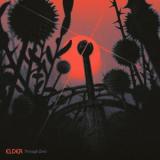
Two decades into their existence, Elder remain an anomaly in the heavy underground - a band with the ability to absorb and shed influences from a myriad of genres without falling into pastiche or losing their identity. Their new album Through Zero is a reaffirmation of their commitment to pushing boundaries and cements their status as leaders in heavy psychedelic rock. Elder has long since mastered crushing riffs, melodic jaunts, progressive patterns, hypnotic grooves and ethereal atmosphere along their path of music-making in the past twenty years. On Through Zero, Elder takes these years of experience and forms possibly their most immediate and engaging record to date, while allowing seeds from outside the sphere of rock music to take root and bloom within their progressive framework. Listeners will find familiar elements of new textures, sequences, and sounds alongside Elder"s iconic take on heavy rock. As always, every spin reveals new details. Recorded in Berlin across several months between tours in 2025, Through Zero is the first album which the band not only produced but also comixed together with longtime collaborator Richard Behrens. The album sounds more like a full extension of the band"s creative intentions than ever before.
After a series of successful outings alongside sidekicks Ofofo and Zongamin, studio wizard MYTRON turns in his debut solo full-length for Multi Culti World Records. With contributions on Invisible Inc, Calypso, Bongo Joe, Kalahari Oyster Cult, LYO, Codek Records and Earthly Measures, Mytron has carved out a name for himself in a carefully-curated left-field quadrant of the indie-dance galaxy. Tuning his oscillators to myriad sounds — from dub and disco to krautrock — the London-based producer perhaps most notably channels the pristine compositional style of Kraftwerk. While most apparent in the use of vocoder, there’s a consistent efficiency of arrangement that recalls the man-machine in effervescent, idealistic fashion. Mytron manages to keep it simple, funky and musical — whimsical tunes that bop along with analog grit, wilderness, and wonk. There’s a warmth and wit that shine through every synth line, an understated confidence that speaks of years spent tangled in wires and waveforms, with an inclusive sonic eclecticism that flattens hierarchies between genres, geographies, and generations. Each influence is invited to the table, treated not as pastiche but invited to dine and dance in a space where kosmische dub disco and Afro rhythms can coexist without borders. The sleeve design echoes this philosophy: video-feedback patterns hinting at our modern screens, both portals and filters — coloured, distorted intermediaries through which we perceive the world. In the trippiest sense, the record is both reflection and refraction — a sonic mirror held up to an interconnected, glitchy reality. Tailored equally for DJ use and home-listening head trip, the album is meticulous, mischievous and merry.
BanBanTonTon review:
On Mytron’s debut long-player for Multi Culti groovy 21st Century leftfield house gear collides with Daniele Baldelli and Beppe Loda’s hugely influential `80s afro / cosmic. The 9 tracks are chunky, chugging and full of funky, funny noises. Old school B-lines mixing with eccentric electronics. Spinning, spiralling sounds.
Sugar is an electro-pop, vocoder confection, cut from the same sonic cloth as cult classics like Codek’s Tam Tam. Created from tough trap drums, splashing effects and a mutant Giorgio Moroder bass arpeggio. The title track, Propellor, pits Kraftwerk-esque hardware harmonised vocals against a bongo loop and a whistling hook. Playground has simian shrieks surround tumbling tom-toms. Highway Maintenance adds kosmische synths to a dance of woodblocks and buzzing bottom end. Keep On Dubbing is an organ-led, clip clopping percussive canter.
Tracks such as Speaker Can Talk, shot through with disco lasers blasts and recalling Curt Cress’ Dschung Tek, also lift the tempo up, but the bulk of the music here is a mid-tempo, techno drum circle. Squelchy sequences gurgling in and out of programmed percussion. On Quasar, spiky acid edges in and slowly takes over.
Key references that come to mind are Baldelli’s own turn-of-the-2000s Cosmic Sound Project productions, and Wolf Müller’s scene shaking sides on Themes For Great Cites, from around a decade later.
Yeong Die would typically be described as DJ, musician, or “experimental” composer, but in reality she is a sculptor. Between the rapidly disintegrating boundaries of composition and sound design, her work employs a hunting and gathering of intangible material—bursts of memory, fragments of liminal space, interstitial banalities—materializing as boundless expressions that evade genre constructs. As an integral presence among Seoul’s most forward thinking sound artists, Yeong is in a constant uphill battle rejecting the reverence that so quickly creeps in and infects contemporary craft, that relegates even the most audacious attempts of her peers to pigeon-hole pastiche. Given this style-agnostic starting line, her ESP Institute debut 'Uncapturable' exudes non-urgency, an unfettered pace that allows breathing room, affording the listener freedom to mentally isolate and explore elements without fear of missing a “bigger picture.” There is a warm and welcoming feeling that invites repetitive, even studied listening. While half the work is somewhat singular in presentation—'1km', 'Like Your Flaw', or 'Burnt'—there are moments of meticulous complexity—'Morning Rum Punch' (featuring vocals by Cifika) and 'Did' (featuring a smattering of spoken words by icecream drum), both underground Korean peer artists. These moments feel more of like an acute focus on execution that compliments the overall shape of the album, rather than a dynamic contrast. Cifika’s vocals, in particular, command the listener’s periphery in a playful and refreshing way, exaggerating negative space and in-between moments that not only the paint an arresting stereo field but a remarkable sense of depth, not easily achieved without production sorcery. It is, without a doubt, these beautiful fleeting moments that we describe as 'Uncapturable'.
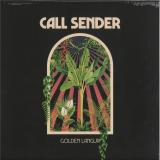
Call Sender is the collaborative brainchild that unites the talents of Paul Elliott, a versatile multi-instrumentalist, composer, producer, and recording engineer from Suffolk/UK and Michael Reed, a multi-talented instrumentalist, recording engineer, and drummer residing in the Bay Area/USA. Despite working together for the past four years, the pair are yet to meet in person!
After connecting on social media over their love of drum breaks and vintage reverbs Elliott and Reed fostered their creative partnership by bouncing recordings back and forth via email and this virtual collaboration resulted in their first album, the jazz-funk inspired “Lost To The Storm” (Tru Thoughts, 2023). With four singles from the album gaining radio play and becoming a favourite for tastemakers and DJs, the pair began work on the follow up “Golden Langur”. With this new record, the aim was to retain their signature Call Sender sound, a heady mix of B-movie soundtracks, classic library music and psychedelic funk and soul, but also introduce elements of lo-fi soul as well as collaborating with some of their talented friends as featured artists.
These features include fantastic instrumental contributions from the incomparable funkmaster Shawn Lee (Ping Pong Orchestra/Young Gun Silver Fox) on “Brainforests” and the legendary JJ Whitefield (Poets Of Rhythm/Whitefield Brothers) who kicks ass in two tempos on “Two Tails”. Not to mention the silky-smooth vocals from the Bay Area’s Andre Cruz, vocal duet from Lucid Paradise that is reminiscent of Gil Scott Heron and Paul Elliott’s seven year old son Buddy drops a vocal on the future B-boy classic “Rainbow”. Together Call Sender has an old-school vintage foundation with a modern perspective. Influenced by iconic acts such as Klaus Weiss, Miles Davis and Nino Nardini and with a hip and funky sonic aesthetic, Call Sender’s music is nostalgic without being pastiche, has a sense of travelling at its core, having been recorded in different parts of the globe, while never hesitating on the direction of the music.
Different Rooms is the sophomore album by Jeremiah Chiu & Marta Sofia Honer. The followup to their critically acclaimed Recordings from the Aland Islands, this collection extends the path of pastiche forged by their debut: quietly multi-rhythmic, modular-trance-meets-processed-and-unprocessed-chamber strings, bewitching and bewildering field recordings-all knitted tightly, an LA patchwork.
There’s a particular magic that happens when seasoned producers with global roots come together under a shared ethos - not for hype, but for connection. That’s precisely what MISINGO represents. A cross-continental studio experiment born out of Covid-era isolation, the group spans hemispheres and histories: Yorkshire's Doorly, L.A. legend Gary Richards (aka Destructo), and Australian duo Colour Castle. Their debut offering, Give You Love, lands via UK House Music institution Hard Times Records, and it’s as emotionally resonant as it is built for the floor.
Anchored by a slow-burning acid line and moody, immersive synthwork, 'Give You Love' carries the DNA of classic house without feeling like pastiche. DJ Rae’s smokey vocal, recorded in Doorly’s Ibiza studio, sets the tone - raw, intimate, immediate. Gene Farris enters with a gravelly, magnetic counterpoint, flipping the call-and-response into something spiritual. It’s a record that feels both new and deeply lived-in, a jam session from afar that somehow lands with unity and purpose.
For the remix suite, Hard Times dig into family ties and deliver a heavyweight lineup that spans generations of dance music lineage.
First up, DJ Pierre, the Phuture pioneer himself, brings a Wild Pitch revision that is pure summer sleaze and shimmer. Glistening keys, kinetic snares, and a syrup-thick bassline collide in a mix that’s tailor-made for golden-hour sets and open-air systems.
DJ Romain brings that New York swing. All velvet chords, stabbing pianos, and organ swells that spiral skyward. It’s gospel-house energy that doesn’t need to shout to be heard, a reminder that soul still moves the dancefloor.
Closing out the package is Charles Lavine of Soul Clap fame, whose Boston-bred funk sensibility steers things into new territory. He strips back the mix, lets Rae’s vocal ride the groove, and injects a subtle bounce that turns heads and hips in equal measure.
With 'Give You Love', MISINGO and Hard Times haven’t just released a single, they’ve bottled a moment: one born of distance, stitched together with soul, and destined for collective release on dancefloors worldwide.
** Cassette release
""A Synonym for Repetition" weaves together a tapestry of parallels, all intricately linked to Japan. The project initiates with a collaboration with a Tokyo-based musician, which ultimately fails to materialise during Jason Kolar’s recent visit to the country.
From an original approach that has to mutate in its starting phase, the record was conceived from the beginning to embody a sincere homage to Ryuichi Sakamoto, also a Tokyo native. Shaping ideas within the context of a city with a vibrant soundscape, through an exploration where tradition and modernity intersect in an ongoing quest for correspondences.
Yet, the barriers of language and cultural disparity emerge, casting a veil over the perceived connections and rendering them more projection than reality. This dynamic delineates the space observed from an external perspective, perpetually distant from true understanding, framing it in the fields of imagination, both Japan and Sakamoto. Nonetheless, Kolar tries to pay an honest ode to the artist and its scenic background, with all the implications and contradictions of this kind of process, even with the risk of falling into clichés, pastiches, and Eurocentric bias.
Connecting it to ‘vertical listening’ rather than to an obvious tribute exercise, he has morphed his sound to a synthetic and midi approach, aiming to set an ironically fictitious stage, one that resembles something, but it’s not really it."
Repress!
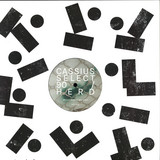
Next up on Accidental Jnr are 2 club ready tracks from Sydney producer Cassius Select that straddle genres somewhere between techno, bassline and hardcore. 90 is a gurgling brutal post-dubstep wobble fest at a house tempo whilst HERD offers up Select's trademark idiosyncratic vocal snippets wrapped up in most broken and shuffled of techno rhythm. Cassius Select lives in the undefined sonic boroughs of the hardcore continuum. His first EP explored the grittier end of techno under Australian label Hunter Gatherer followed by a 12" of unstable rhythm workouts under DJ Haus' UTTU label. The Toronto native is hell bent on inciting movement in the most unorthodox ways. Sonics crush genre-defining sounds into a pastiche of cryptic one liners and side eyes. Drums that invoke an impossible sense of swing and momentum. Most importantly Select's sound defines itself on the mission to deconstruct the world around him,to level out the playing field so everyone can have a bite. This year, Select joins with UK imprint Accidental Jr. to release a two-track fury of sound that snarls with every grimace.
Influential industrial pioneers Skinny Puppy welcomed audiences into the embrace of the seminal Too Dark Park in 1990. One of the band’s most influential records, it includes “Tormentor,” “Spasmolytic,” and more. In addition to praise from Vice and many more, Metal Hammer fittingly named it one of the “10 Best Industrial Albums,” and Spin summed it up best as a “return to the bloodbath.” A menacing and massive pastiche of H.P. Lovecraft-style cosmic horror, addiction, mental disarray, and the disintegration of nature, Too Dark Park remains a cataclysmic and chaotic classic through and through. Now available on vinyl for the first time in 30 years to celebrate the 35th anniversary since relea. Legends of electronic industrial music. Restored to original art on classic black vinyl. “10 best industrial albums - metal hammer”
Quoth is proud to present its second EP of spectral dance music, following Coralie’s 'Barney’s Maze'.
Coming from the third mind of Pearl River Sound and The Horn, two artists with illustrious solo back catalogues, the 'Top Shelf Material EP' is a kaleidoscopic trip into the timeless psychedelia of UK rave music. Highly referential, but never pastiche, the sound world draws from IDM, mutant hardcore stylings, grime, 80s fantasy, and pulp cinema.
‘What the fuck?’ moments of full throttle breakbeat pressure are counter-poised with the liminal robot romanticism of heart-rendingly detuned electronica. Eschewing refinement and polish for raw sensibility, the 'Top Shelf Material EP' is emotive and propulsive, playful and tragic, wistful and optimistic. We couldn't recommend it more.
- 1: Ragebait
- 2: Love's Underrated
- 3: Greed Battalion
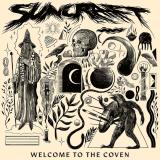
- 4: Welcome To The Coven
- 5: Wizards Of The Anger Magic
- 6: Charlatan Killer
- 7: High On Silence
- 8: Forgotten Goddess
RED VINYL[23,11 €]
Suncraft is an underground rock band from Oslo, Norway. After appearing on the scene with their debut in 2021, they"ve ratcheted up their sound a notch in every conceivable way with their furious and fun new album Welcome To The Coven. Formed in Oslo in 2017, Suncraft built their early identity on mid-tempo stoner rock, but Welcome to the Coven shows the band has broadened their foundation significantly. The album channels classic rock swagger, punk urgency, and flashes of blackened intensity without settling into pastiche or genre collage - think Turbonegro meets Venom with the odd helping of blast beats thrown in and you"re on your way. The album"s eight tracks move fluidly between heavy riffing, hook-forward choruses and sudden shifts in mood, giving the record a restless, forward thinking character that keeps its 40-minute runtime lean and engaging. Welcome To The Coven is a confident step forward for a promising band which emphasizes their sharpened songwriting and willingness to push beyond scene expectations. The album is available on red or black vinyl from Norwegian purveyors of heavy rock label All Good Clean Records.
What's the point of the howl of string to speaker, the hammering of stick-on skin? Is it transcendence, elevating the human spirit by catharsis in sound? Or is it summoning chaos, a purgatory in which to bask in all that’s unclean, the better to feel alive?
Why not both? Because that’s what’s on offer on Diet Of Worms, the second Rocket release by The Shits, Leeds via Newcastle’s titans of disgust and deliverance. This is a feast for the senses in the worst way possible - primal rock boiled down to its essence and flung full in your face. Using repetition, tortured vocal invective and heads-down intensity as blunt instruments, these eight tracks are an unprecedented torrent of acidic salvation. Whilst lurking somewhere on the decadence-destruction axis between the nihilism of prime Stooges and the bloody blackout of Braimbombs, Diet Of Worms is possessed of a legitimately uncompromising hostility that both elevates and debases it to co-ordinates unknown.
There are revelations here in the riffage and the rancour, even if they are the kind that occur in the bleary miasma of the lock-in, or witnessing the streetlight blur of the subsequent stagger home. Even more single-minded and remorseless than the band’s Rocket debut ‘You’re A Mess’, this is a record that demands full immersion. Whether it’s ‘Then You’re Dead’ hammering on a pulverising garage-stinking riff until it begs for mercy, or ‘Change My Ways’, whose Creedence-In-Hell swagger and lurch is that of abjection transmuted into joy, this is psychedelia forcibly removed from its comfort zone of pastiche, and thrust into a bad-trip realm of the vivid and nightmarish.
But rarely has the process of making beauty and horror indivisible seemed like so much fun. If Werner Herzog was right, and the only harmony in the universe is that of overwhelming and collective murder, then The Shits are the true music of the spheres.
Ben is a Detroit-based producer who makes up half of Symptoms of Love, along with BPT records alum Ryan Spencer. He here brings us a 4 tracker of the absolute highest order. It both sounds like music that no one else is making, while also sounding like a pastiche of everything that you've ever liked in the past. The magic formula baby!!!!!!! Shall we walk thru the music together?
BPT founder and music's #1 man Jeremy Castillo has described the EP absolutely brilliantly as such: "YMO style dissonant electro with a Detroit touch on the a side, with pitched down Patrick Cowley psychedelic Macarena on the B-side.
The A1 and title track is an incredible statement of intent from Ben - it really does sound like if Hosono grew up in Detroit listening to Electrifying Mojo. It's an absolute blast of sunlight coming through your headphones. Press play and watch your vitamin D levels rise baby!!!
A2 cut "Music Remembers" is a groovy joy ride reminiscent of Galaxy II Galaxy, complete with re-pitched vocal chops and 808 claps galore. This will hit SO hard on a spring day if you live in a city currently blanketed in snow.
On the flip, B1 "Whose Water" will be a big hit with anyone who dug Dam Funk's Garret project. Introspective downtempo synth fans rejoice!!! And we wrap a stellar outing with B2's "New Sun" - a propulsive Cosmic workout that will open up any dancefloor. The psychedelic Macarena is right baby!!!
Collecting Orders For 2025 Repress
Ruff n’ ready torque collides with the nocturnal as Argentinian donny JUAAN enters the fray.
A properly intoxicating melange of boisterous, straight-for-the-jugular biz and late-night seduction. Four distinct, durable traxxx tailor-made for the witching hour. Icily moody with a bit of menace and dread about it. It’s also very slick, optimised and fine-tuned for maximum dancefloor impact.
Critics often highlight his ‘90s-indebted approach, and while those influences remain ever-present, this one has more in common with dancefloor styles prevalent a decade prior. Shades of darkwave, Detroit In Effect and the nascent years of Chi-Town house depending on the track, but never do we run the risk of falling into pastiche.
Pure forward momentum with a decidedly mean streak coursing throughout. Plenty of sci-fi flourish, funked-out where it counts. Flush with dystopian romance and a decent dose of weirdo flex.
Quintessentially Kalahari.
- A1: Waiting For The Sign (Feat Lispector)
- A2: Patch 1985
- A3: Count To 10 (Feat Domotic)
- A4: Godbot
- A5: Skyway
- A6: Le Robot Gentilhomme
- B1: Ufo (Feat Lispector)
- B2: Cosmic Battle
- B3: Olympus
- B4: Shoppers On The Run
- B5: Postcard (Feat Kumisolo)
- B6: Melchiator
Emile Sornin has a robot in his life. It's not love, but it's not friendship either, and Forever Pavot is releasing an album documenting the affair on Born Bad. After a bunch of bold pop studio albums and a small stack of soundtracks, Emile needed a break. To put an end to it, he embarked with handyman extraordinaire Jonas Euvremer on the manufacture of an automaton destined to make his musician’s life easier. Melchior, who gave his name to the record, has the face of a ventriloquist's dummy, two plastic left hands, preppy clothes and a primitive logic circuit. This goodie two-shoes cousin of Bender’s is supposed to be doing the interviews and deal with socials for Emile. The plan worked admirably : Melchior is a perfect cover-boy, and his very existence has put our man back to work.
They set a path for phat electronic ventures (and by the way, mostly english-speaking). Sub- continental bass & massive drums, heavy-footed and unabashed : as much appreciated as unexpected. The half-android shares songwriting credits and vocal parts vocoded to perfection. Not a jealous lad, Melchior makes way for a guest of choice on “UFO” and “Waiting for the sign” : Lispector. Julie Margat sings and collaborated on the lyrics for these two bangers that provide a lot of context (robot angst is real). Kumisolo, our favorite Japanese « it » girl in Paris, also sent her “Postcard”, more vapour than song, unreal musical cotton candy of arrangements.
Domotic, who mixes and co-produces, gives a nice spin to “Count to 10”, a hip-hop/kraut crossover with a BEAK> flavour. The Forever Pavot, once a big-band, will be touring as a bass/ drums/keys & vocals trio, with Melchior as guest.
Record after record, Emile Sornin has become an increasingly literate musical illiterate. When needed, his music can still become a thicket of ancient and modern finds. « Le robot gentilhomme », a skillful pastiche of baroque composer Jean-Baptiste Lully, would stand a few rounds against Wendy Carlos. His love for oldies also shines through “Skyway”, a nod to the late Pierre Arvay, France’s Colonel Sanders of library music nuggets.
Forever Pavot may have gone wild, but remains indebted vis-à-vis the golden age of film music. Forebears deluxe Ennio Morricone & François de Roubaix make Hitchcock-style cameos: discreet appearances that you’ll watch out for (those syncopated cascades of syllables at the end of « UFO », and I guess we can indulge with some clavichord/ondioline Victoria sponge). His new flirt is all but a toxic relationship. « Melchior, Vol. 1 »: the robo-bromance is not over yet.
- A1: Floodbound
- A2: Cure Your Ills
- A3: ? | I'm No Good Without You
- A4: For A While
- A5: Golden Vanity
- A6: Rainmaker, Sunseeker
- B1: The House On The Hill
- B2: Ruby Red
- B3: She Never Sleeps
- B4: The Hanging Stars
- B5: Hang Me High
- B6: Crippled Shining Blues
- B7: Running Waters Wide
*Long overdue reissue of the first album by The Hanging Stars to coincide with their tour support slot with Edwyn Collins – initial 300 copies come with 12 x 12 print*
“In late-Sixties California, the Byrds and Flying Burrito Brothers combined traditional country music with hippy rock to great success. The influence lingered and whatever cultural relevance it has this is a delightful, transporting listen” – The Times 4/5
London-based psych-folk outfit The Hanging Stars re-release their much-loved debut album Over the Silvery Lake on Crimson Crow. Blending folk pastoralism with swampy 60s Americana, they sound like the missing link between the California desert sun and the grey skies of London Town. The album was recorded between LA, Nashville and Walthamstow, with each of these vastly different places leaving an indelible mark on the songs.
Now signed to the Loose Records label and fronted by London-based songwriter, singer and guitarist Richard Olson (The See See, Eighteenth Day of May), The Hanging Stars are essentially a loose collective of people who weave together a blissed-out psychedelic tapestry. The rest of the core band is made up of Sam Ferman on bass and Paulie Cobra on drums, Horse on pedal steel and Patrick Ralla on banjo, guitar. They jam rather than write and hang out rather than rehearse, harnessing a kind of tipsy euphoria resplendent with luscious arrangements and glorious vocal harmonies.
During 2015, prior to this album’s original release the band released two critically acclaimed singles via The Great Pop Supplement (both of which also appear on the album). “Golden Vanity” was premiered by The Line of Best Fit who said; “you'd be forgiven for thinking you'd just unearthed a rare deep cut from the late 60s/early 70s boom of psychedelia infused Americana” and “The House on The Hill” was described by The Guardian as; "a hazy, desert-dream of a song, nicely sharpened with steely-eyed guitars, Mersey-laced harmonies and just a whiff of the Gun Club”.
There are a number of allusions to nature and the weather on the album, borne in part out of the contrasting surroundings in which it was produced. The band’s fascination with Americana led them to record some of the material Stateside, laying down some of the parts at Battle Tapes Studios in Nashville (Lambchop, Paperhead), as well as at Vision Quest Studios in Los Angeles with Rob Campanella. His work with The Quarter After, The Brian Jonestown Massacre, Beachwood Sparks The Tyde, and GospelbeacH was a perfect match to capture their sound and they even had San Franciscan legend Chrystof Certik step in on lead guitar for a couple of tracks.
Following the LA recordings, a trip to the Californian desert provided the core notion of what they wanted to produce - a shard of light that they clung on to whilst recording the rest of the album in the significantly more rain-soaked atmosphere of Walthamstow, London, under the watchful eye of Brian O'Shaughnessy at Bark Studios (The Clientele, Comet Gain). As the band explained at the time: “Ultimately we hope you can hear both the sand and the rain in this record.”
The Hanging Stars place themselves firmly as part of a long folk tradition encompassing European and North American influences – as a continuation rather than a pastiche of these styles. This is the sound of a band really coming in to their own, fully formed and in no doubt of their vision. With Over the Silvery Lake they succeeded in producing a record, which has the country, blues and folk traditions at its heart.
- The Vice Yard
- Junk Man Feat. Cyril Neville
- Love Will See Us Through Feat. Pimps Of Joytime
- The Truth Feat. Kelly Finnigan
- This One Time Feat. Jesse Wagner
- Delightful Feat. Masauko Chipembre
- Jawbone
- Party People Feat. Pimps Of Joytime
- This Space Feat. Black Shakespeare
- The Way
Connection is the new ten song LP from Los Angeles powerhouse Orgone featuring collaborations with Cyril Neville, Kelly Finnigan, Pimps of Joytime, and more. The album is the inaugural release on 3 Palm Records, distributed by Colemine Records and Secretly Distribution. A spiritual follow up to fan favorite Bacano, Connection is gritty, lean, and tight soul and funk at its best. It explores the invisible threads that bind us all, spiritually, emotionally, and artistically. Much like the collage that adorns the cover, this hard hitting collection of songs illuminates the essence of Orgone: a musical pastiche of different vocalists, heavy riffs, vintage production, and a core rhythm section that never disappoints. The synergy created in these songs demonstrates that the whole is truly greater than the sum of all the individual parts and players.
Soundtrack work suits Thomas Dolby, who here turns in a variety of musical settings for a
computer animation video that include everything from moody electronic instrumentals and dance tracks to a ‘30s pop pastiche complete with horn section. Five of the nine tracks have vocals, two of which are contributed by Dr. Fiorella Terenzi. Dolby himself sings, raps. The Gate to the Mind’s Eye demonstrates Dolby’s continuing inventiveness.
Not quite as quirky as the Wireless album, not as moody as Flat Earth, not as wacky as Aliens Ate My Buick, but it has Dolby written all over it.
The Gate To The Mind’s Eye is for the first time available on vinyl as a limited edition of 750 individually numbered copies on silver coloured vinyl and contains an insert.
Celebrated Blues artist Patrick Sweany returns with his much-anticipated new record Baby, It’s Late.
Utilizing ace players from two of his Nashville side-projects (the 50s/60s era Blues combo Tiger Beats, and the Soul/Funk quartet Super Felon), Baby, It's Late is a pastiche of Sweany's wide-ranging influences and history, incorporating Classic Rock, Soul, Country and, of course, a massive dose of vintage Blues.
Sweany produced the record himself - a first in his storied career.
After roughly 15 years out of the game, Marc Kushin makes a highly anticipated return with his Ely Muff project - a label favourite since its inception - debuting proper on Love Love with 4 tracker 'Human Nature'. Kushin's proto-tekno take on the early breakcore sound was a stand-out of a particularly noisy strain of hardcore which emerged in the UK in the late 90s and early 00s, releasing on the likes of Headfuk, One Inch Punch, Deathchant, as well as Kushin's own labels Kinky Stump and Dead Pig, run alongside longtime collaborator Tantrum.
Unpretentious, unserious and completely unapologetic, 'Human Nature' features four tracks of brutal hardcore spiral tekno, distorted and mangled but retaining groove and swagger. The EP features two re-released classics from Kushin's back catalogue: the pumped-up pirate radio pastiche of 'Hold Tite The P, No Need For London' and the feedback-laden blunt lobotomy of 'Automatic Predator', two decades on from their original releases in 2005 on Capsule Core and One Inch Punch. Complementing them are tracks 'Human Nature' and 'Cycle Dirty', previously unreleased spasmoid gems from the same era, unearthed and seeing the light of day for the first time.
All four tracks have been lovingly (re)mastered by Love Love's own Ben Pest for a maximal sonic experience, shining a light on this criminally overlooked corner of UK rave heritage.
- 1: Coyote
- 2: Amelia
- 3: Furry Sings The Blues
- 4: A Strange Boy
- 5: Hejira
- 6: Song For Sharon
- 7: Black Crow
- 8: Blue Motel Room
- 9: Refuge Of The Roads
Mobile Fidelity's UltraDisc One-Step 180g 45RPM 2LP Set Plays with Authoritative Tonality, Airiness, and Clarity:
Pressed on MoFi SuperVinyl and Strictly Limited to
3,000 Numbered Copies
1/4” / 15 IPS Dolby A analogue master to DSD 256 to analogue console to lathe
Joni Mitchell is the only artist who could’ve made Hejira. The legendary singer-songwriter said as much when discussing the album decades after its release. Yet that fact seemed obvious from the moment the gold-certified effort streeted in fall 1976. An adventurous travelogue, probing narrative, and offbeat homage to freedom, Hejira remains an inimitable entry in the catalog of recorded music — a spare, gorgeous, meditative series of sonic vignettes comprised of floating harmonic pop, cool jazz, soft rock, and sensitive vocal elements that beckon feelings of motion, discovery, and self-examination.
Sourced from the original analog master tapes, pressed at Fidelity Record Pressing on MoFi SuperVinyl, and strictly limited to 3,000 numbered copies, Mobile Fidelity's UltraDisc One-Step 180g 45RPM 2LP set presents the record ranked the 133rd Greatest of All Time by Rolling Stone with definitive detail, richness, accuracy, and directness. Marking the first time the revered LP has received audiophile treatment, it's one of six iconic 1970s Mitchell records Mobile Fidelity is reissuing on vinyl and SACD.
Playing with a virtually nonexistent noise floor, dead-quiet surfaces, and superior groove definition, this collectible reissue reproduces in enveloping fashion the tones, textures, and craftsmanship that help Hejira function as the equivalent of a liberating trip down an open road with nothing but blue sky, natural landscape, and fresh air in the immediate vicinity. Passages bloom, carry, decay as they do amid an acoustically optimized environment. Soundstages extend far, wide, and deep, with black backgrounds and pinpoint images adding to the realism.
The reference-grade immediacy, airiness, and presence put in transparent perspective Mitchell’s dense strings of words, stream-of-conscious-like phrasing, and unhurried albeit forward momentum. Likewise, the instrumental contributions of her A-list support musicians — a cast that includes L.A. Express members John Guerin, Max Bennett and Tom Scott, plus Neil Young, Victor Feldman, and Abe Most — emerges with breathtaking clarity and dimensionality.
While Mitchell, whose intimate vocals and abstract guitar parts center everything, Mobile Fidelity's restoration of Hejira further reveals the visionary breadth of guitarist Larry Carlton and bassist Jaco Pastorius. Though heard on only four tracks, Pastorius' fretless bass epitomizes the fluid, subtle, flexible, roomy, and shape-shifting characteristics of songs that often appear to transpire out of nowhere akin to the formation of a puffy cumulus cloud overhead. In sync with Mitchell’s voice, Pastorius’ fusion hovers and floats, suspended in a fog you want to deeply inhale. The "grace notes" Mitchell desired on Hejira can now be heard in full. Ditto the luxurious tapestries of alinear lines, fills, and supplements unreeled on Carlton’s six-string.
Visually, the packaging of this UD1S set complements its identity as the copy to own. Housed in a deluxe slipcase, the LPs come in foil-stamped jackets with faithful-to-the-original graphics. This version is for listeners who desire to become immersed in everything about Hejira, including the unforgettable album cover — a pastiche of 14 different photos Mitchell used a Camera Lucida to assemble into one image that’s anchored by a portrait of her in a stoic pose — and the interior shots of Mitchell skating on a frozen Wisconsin lake wearing a pair of black skates, black shirt, and fur cape.
The notion of skating, feeling an awakening wind whipping against your face, and losing yourself to the surroundings are extremely apt for Hejira, which Mitchell wrote after a sequence of trips and relationships prompted her to reflect on the complicated conflicts between independence and marriage, success and satisfaction, duty and desire — and, more specifically, “the cost of being a woman.” The Canadian native delved into such themes before. But never as she does on Hejira, whose liberating, running-away aura doubles as another of Mitchell’s rejections of tradition as well as a suggestion of a better alternative.
At once observational and personal, expansive and insular, cheerful and poignant, Hejira spans a sea of human conditions, emotions, and circumstances. It addresses drifting, isolation, pleasure, place, time, and surroundings with strikingly poetic discourse matched with music that, save for the crooned ballad “Blue Motel Room,” forgoes conventional structures and choruses.
The jazz-based arrangements, marked by scaled-down percussion and all manner of bent, rounded, and unsettled notes, hint that Mitchell has no exact destination in mind. Excursions such as the moody “Furry Sings the Blues,” funky “Coyote” and edgy “Black Crow” throw open previously locked doors to possibility and journey. They signal it’s time for a welcome departure from norms and the past, one that leads to a heightened sense of clarity and perspective. Or, as Mitchell said upon choosing the album title, it’s time for “leaving the dream, no blame.”
There’s a reason they call it deep House. On 'The New Jersey' EP, DJ Romain doesn’t just nod to his roots, he digs into them, scooping out a warm, rhythmic core that pulses with sweat, memory, and reverence. This is not a revival or a pastiche; it’s a love letter etched in drum machines and delay, from a producer who’s lived the lineage.
A fixture of late-’90s NYC dance floors, Romain cut his teeth in the city’s thumping underbelly, learning from the likes of Todd Terry and later carving his own signature into the genre’s sidewalk. Across these four freshly cut tracks, Romain channels the same urgency that once drove dance crews, celebrities, and nightlifers alike into motion, and still does.
Lead track “Hello New York” is a no-nonsense DJ tool, a serrated slice of big room energy built around snapping snares, a jackhammer kick, and a spoken word vocal that bristles with pride and uplift. “Put more cut in your strut… pride in your stride” - it’s part mantra, part mission statement. “But It’s Alright” flips the vibe, conjuring up basement jazz sessions through dusky chords and a muted, plucked bassline that slinks like a late-night subway ride.
On “Check Your Pockets,” the energy turns inward and abstract, a woozy, psychedelic House jam that feels like dancing through a heatwave haze. He wraps the record with “Deep Inferno,” a peak-time burner full of sticky Afro-funk polyrhythms, clashing vocal chops, and steam-pressure percussion. It’s unhinged, hypnotic, and gloriously raw.
Having revisited his archive with ‘The Lost D.A.T.S.' series, Romain returns to Hard Times not as a nostalgia act but as a flamekeeper - still innovating, still sweating, still firmly on the floor. The New Jersey EP is a love letter, yes, but it’s also a reminder: House never left. It just got deeper.
- A1: Echoes Of Earth
- A2: Ancestral Machines
- A3: Abandoned Satellites
- A4: The Great Bell
- B1: Beneath The Dunes
- B2: The Ghosts Of The Black Drift
- B3: The Infinite
- B4: The Last Transmission
The Sorcerers' latest long player lands in perfect time for the summer, offering a further progression into their unique take on Ethio-inspired jazz. Other Worlds and Habitats is, of course, released on ATA Records and is blessed with the analogue recording and painstakingly loving production we have come to expect from this boutique studio. This, The Sorcerers eagerly anticipated fourth LP, follows on from the success of I Too Am A Stranger, a record which garnered praise from BBC Radio 2’s Jamie Cullum, “I love this, this is so good!”, Ethio-jazz legend Mulatu Astatke, “I like the grooves, and it is good to see The Sorcerers interpret Ethio jazz in their own unique way”, and Nightmares on Wax, “This sounds great! Love the way it's recorded”.
Never ones to stop moving forward, and ever vigilant to avoid the realm of pastiche, The Sorcerers see the Ethiopique sound as a building block for their natural progression as a group, but a block that sits at the base of a much larger, ever expanding, structure, The addition of keyboardist Johnny Richards, whose use of the Jen 73 piano, Mellotron and Farfisa Compact Duo, alongside the core members of the group, has opened some exciting doors for The Sorcerers, fusing the future looking optimism of the late 60s and 70s (when artists began to experiment with the new electronic technology and synthesisers becoming more readily available) and more traditional sounds. Taking inspiration from Ethiopian keyboardist Hailu Mergia and Nigerian musician William Onyeabor, Other Worlds and Habitats, as the name suggests, showcases The Sorcerers' shift to a new, and deeply exciting, musical landscape.
The Sorcerers’ Other Worlds and Habitats is a natural progression in the world they have created for themselves. Richer for shared experiences, and accepting the rise of the machines, they prove that while their journey is always going forward, there are many different paths to take.
Different Rooms is the sophomore album by Jeremiah Chiu & Marta Sofia Honer. The followup to their critically acclaimed Recordings from the Aland Islands, this collection extends the path of pastiche forged by their debut: quietly multi-rhythmic, modular-trance-meets-processed-and-unprocessed-chamber strings, bewitching and bewildering field recordings-all knitted tightly, an LA patchwork.
Gavin Vanaelst runs the space Aboli Bibelot in Antwerp where exhibitions and musical performances can happen side to side with dealings in centuries-old furniture and unique pieces of folk art or volkskunst. Gavin makes music under the aliases DJ Charme, Kassett and So Sorry. This is the first album under his birth name. Takeaway Loops cycles back to the days when Gavin was working as a courier for .
is a food delivery company. Their couriers - ehm, brand ambassadors, as the company prefers to call them - dressed in bright orange, they race their bikes around the city. They deliver meals and groceries for all sorts. Thanks to them, the privileged can stay tucked in their private spaces. Interaction between the two groups - the privileged and the brand ambassadors - is mostly kept to the bare minimum. And sparse communications are often driven by annoyances - “my Coke is warm because you kept it too close to the French Fries.” And on the streets the general public dis-approaches the brand ambassadors with pity. We tell our peers: “That’s not a good job,” and “stay away from the Sharing Economy.” Because, you know, in our capitalistic dollhouse we all stand our grounds and play our parts wholeheartedly.
During his shifts for , Gavin recorded location sounds on his phone at fast food restaurants while waiting on the orders he had to pick up and deliver. Later in his home studio Gavin added piano and electronics to this source material. The result: a gloomy soundtrack for a shadow world. Seven songs in evening blue with a bright orange glare.
A few years ago, our favorite Belgian publishing house Het Balanseer released Seizoenarbeid by Heike Geissler (available in English trough Semiotext(e)). Geissler writes about her job at Amazon in Leipzig. Because her writing and freelance work did not pay the bills any longer, she was forced towards this underprivileged shadow-world of unwanted jobs. Seizoenarbeid shed a light on freedom in an unfree world. A monument of ‘we are all in this, but not together’. Takeaway Loops gives us a similar peak in a world that is at the same time so visible, but then also very veiled for many. A world that we prefer to use, yet that most of us prefer not to see - a world that we don’t like to enter.
Last year at Harbourland subway station in Kobe i was mesmerized by its sound design, created by Hiroshi Yoshimura. For each part of the subway station he composed a short phrase. While walking trough the station, a full composition grows in your head. The looping melodies guide you trough a microworld. Trough a blue world of commuters, of the homeless, of the lonely, of the fast paced, of the tourist. Gavin creates a similar effect with Takeaway Loops. The tonality somehow corresponds to Yoshimura’s work. Yet instead of being guided trough a building, we are now taken to the after dark. You feel the concrete evening heat of the city. You hear the rain. Stiff fingers during cold winters’ nights. You are alone on the bike, cruising. Your maps app telling you where to go. You just left the fake leather bench of the well-lit pastiche interior of a fast food restaurant.
Next order, number ECN44! Please wait outside, sir?
Visionary art-pop duo Faux Real (a.k.a. Los Angeles-based Franco-American brothers Virgile and Elliott Arndt) release their debut album "Faux Ever" on City Slang.
Faux Real’s long-awaited debut album "Faux Ever" is a self-described “11-piece symphony for head-banging and longing,” the album sees the fraternal duo continuing to play on the outskirts of language and sound, exploring themes of heartbreak, labor, and the home with harmonies and humor, playful beats, and en franglais. Recorded between Paris, New York, London, Los Angeles, and Provence, "Faux Ever" thrusts Faux Real’s sultry, surreal, and unclassifiable sound towards a glossier pop horizon, an existential sonic pastiche with a glistening digital sheen. "Faux Ever" also includes such certified bangers as the bold, glitchy, and infectious “Rent Free” and the acclaimed “Faux Maux,” both available everywhere already alongside self-directed official music videos streaming now on YouTube. Known far and wide for their DIY, Iggy Pop-meets-Eurodance live performances, Faux Real are building anticipation for "Faux Ever" with international shows in the UK/EU and US.
Format: 140g Crystal Clear Vinyl
About Faux Real:
Elliott and Virgile Arndt founded Faux Real in 2018, blending post-punk, glam rock, and a taste for pop grandeur, fashioning a truly inimitable musical experience. From their increasingly accomplished studio output to mesmerizing, unprecedented live performances, Faux Real invite the audience to join them an enthralling post-realist expedition through contemporary pop culture with razor-edged satire, inspired boy band choreography, and a charged sensuality that has fast earned them a fervent fan following that includes among their number such iconic stars as Duran Duran, Beck, Paramore, Metronomy, and Wet Leg. Now, with the imminent arrival of Faux Ever, Faux Real continue to gleefully ignore boundaries and barriers, assuring the journey is as exhilarating as the ultimate destination.
DJ Support: DJ Sabo, Gordon Invisible Inc, Ground Chill Mountain, Roe Deers, Thomas Von Party, Vidis
Multi Culti serve up a full-length treat from Peruvian artist Aristidez. Cofounder of Lima-based party collective Casa Locasa and the non-profit label Behua Icara (translated as Healing Rhythms), in support of indigenous culture, Aristidez has recently relocated to Berlin. With releases on Calypso, Disque-Discos, and Kebrada, as well as remixes for Amplio Espectro, Ida Sound, Discos Aquelarre, Rotten City Files, and Playground Records, Aristidez has quietly made a name for himself with a growing catalog of low-key dance tracks that have been championed by the likes of Matias Aguayo, Andrew Weatherall (RIP), and Inigo Vontier, to name a few. With an emphasis on the hypnotic power of rhythm, Aristidez channels indigenous influences in subtle fashion, alluding to visionary experience without resorting to pastiche or obvious tropes. There are freaky tribal rhythms but no shaman samples, just expertly produced tracks than reveal an expansive set of electronic influences that range across tempos and decades, from breaky 90s rave, 80s proto-trance, cult dub, downtempo and more. It’s listenable, danceable, heady and kaleidoscopic stuff that should stand the test of time.
Isik Kural returns with Moon in Gemini, a luminous scrapbook of slow-flowing narratives couched in intuitive and symbolic storytelling. Bending a playful take on environmental music to the folk song form, Isik's vocals coo atop pastoral field notes, airy chamber instrumentation and archival recordings culled from a curious musical life. A tender pastiche coalesces across the suite of Moon in Gemini's fourteen pieces, and Isik invites the listener to daydream as-deep-as-possible. "The songs on Moon in Gemini don't mind being slower or taking their time to reach the listener," says Isik, who wanted the title to speak to the album's dreamy, liminal nature. "I enjoyed how the phrase could be used to describe an object, a time or a place simultaneously," he explains. Similarly and subsequently, these songs contain a multiplicity of sonic artifacts, moments and spaces that span Isik's rich musical career to date. With the bulk of the album realized between Amasya, Turkey and Isik's current home in Glasgow, in both domestic and studio recording environments, additional tracks unearthed from his personal recording archive lend their lush patina. The record emerged as a fertile space to reimagine a handful of previously unreleased songs and unfinished ideas spanning the past fifteen years of his life and work, including streetside sounds documented while growing up in Turkey and recordings made while studying music engineering in Miami, Helsinki and Glasgow. Looking to the more recent past, Isik found himself wanting to build upon some of the methodologies and textures explored on his 2022 album in february, seeking a newly intimate, vocal-forward sound. He points to the track "film festival" from that album as a door through which to enter Moon in Gemini, where sample-based arrangements are presented in the context of asymmetrical "build ups and progressions" and ambience and vocals intertwine. Inspired in part by listening to iconic, if not sometimes misunderstood, singers such as Nina Simone, Aldous Harding and Ed Droste of Grizzly Bear, Isik aimed to carve out a new space for his voice on Moon in Gemini, experimenting with novel recording and mixing techniques. Captured at his aunt's farmhouse in Amasya during an extended three week recording session, we find Isik's vocal high in the mix, front-and-center and on newly expressive terms. As a songwriter, Isik is an intuitive and playful lyricist who allows his deep love of literature to flow through his off-kilter texts. Here, echoes of Silvina Ocampo's poem "Dialogues of the Silence" reverberate from the margins of "Most Beautiful Imaginary Dialogues". Likewise, Elliott Smith and Virgina Astley shapeshift through "Behind the Flowerpots," some lines of which were based on misheard lyrics from Smith's "Stickman" and Astley's "Some Small Hope." Attuned to the magic of happy coincidences, other unexpected "themes and connections between tracks flourished" during the recording process, resulting in some songs being more "thematically and lyrically connected to each other compared to previous records." The duos "Prelude" and "Interlude" as well as "Grown One Iota" and "After a Rain" explore connected stories, while "Almost a Ghost" and "Behind the Flowerpots" serendipitously emerged out of a conversation with Stephanie "Spefy" Roxanne Ward, whose balmy vocals heard highlighting in february return and call out to Isik's in sweet dialogue. Plumbing these new potentials of structure and songwriting, Isik also developed a taste for an expanded sonic palette, one enriched by the lulling undertones of live woodwinds and strings. The resulting collaborations with flutist Tenzin Stephen, harpist Kirstin McCarlie and clarinet player Giulia Tamborino envelop the record in an altogether "dreamier sound," swaying pastel and awash in lunar light. Moon in Gemini, brimming with natural imagery and lullaby-inflected tones, tunes into states of being where the wonder filled sound of everyday is heard and felt, perfectly imperfect in its poetry; where the invisible steps forward; where dauntless ghosts wait around every corner and play enriches the soul; where bird song fills sun-soaked afternoons and carries us on its wings into each enchanted evening. Isik Kural's Moon in Gemini will be released on vinyl, Japanese import CD, and digital editions on September 6, 2024. On behalf of Isik and RVNG, a portion of the proceeds from this release will benefit Mor Çaty Women's Shelter Foundation, whose social work at their solidarity centers and shelters supports women building lives unhindered by gender-based discrimination and male violence under free and equal conditions.
A1 - String Theory
Senses arrives on Curvature in epic form, String Theory opening with a memorable pad melody before the track bursts into life with a stunning amen workout - edited and chopped impeccably with finely honed skills from a storied history in drum & bass. A subtly pleasant female vocal graces the track in the breakdown as a cacophony of melodies dance around in the mix, before the amens rip back to the forefront in style.
A2 - Cosmic Telemetry
Continuing a fine exploration of sounds of yesteryear, Cosmic Telemetry showcases a delicately jazzy vibe with breaks that hark back to classics such as Planetary Funk Alert, modernised with an atmospheric twist. Rolling out with a plethora of familiar samples and keys as synths elevate and rise in the backdrop, Cosmic Telemetry is an elegant pastiche for the ears and the dancefloor alike.
AA1 - Papillon
Clean old school breaks introduce Papillon, an earthy track with deep room-filling bass underpinning tight analogue drums, playfully decorated with an assortment of wavy synths, horns and flutes, plinky melodies and delicious female vocal samples in the breakdown before Senses subtly edits the breaks as a voice declares "I'm all yours" to synths pitching up and down at will to great effect.
AA2 - Past Lives
Closing the EP on an intensely atmospheric tip, Past Lives is full of heavily reminiscent rhythms from the classic 90s atmospheric era with sharp drum samples and ethereal synthwork that transport you to a nostalgic dreamscape, seamlessly blending the past and the present with classic 808 basslines and fluid, harmonious strings that perfectly complement the dramatic, all-encompassing padwork.
Words by Chris Hayes (Spatial / Red Mist)
"Learn To Die is a bold new step for a group of musicians, artists, and writers that has at least nominally been considered a punk band. A stylistic overhaul. For those who have been following along, it’ll carry some surprises. Slender began over a decade ago as a semi-improvisational cassette recording project, a casual collaboration between a few friends that was initially documented by two self-titled cassette-only releases released in 2014 and 2015 respectively, now both unavailable and out of print. Most fans, however, will know Slender for their two most recent releases, Walled Garden (2017) and Time On Earth (2019), both released on the tastemaking London art-punk label La Vida Es Un Mus. "Their prior work has earned them comparisons to anarcho-punks Crass and The Snipers, lo-fi flagbearers Swell Maps and Pink Reason, and artrockers Cromagnon and Amon Düül. Here, however, such comparisons feel largely unfounded and the band feels somewhat peerless. Moments of artpunk brutalism, lo-fi experimentalism, and kosmiche detours grace the fabric of Learn To Die, but the album reaches for more than pastiche. Teasing the rarified worlds of chamber music and musique concrete, Slender manages something intangible and strange. A vocoded voice intones multi-lingual poems alongside tinny guitars and sampled strings and flutes. Three chord janglepunk anthems arise suddenly out of a cosmic mist crafted by analogue synths reciting the poetry of machines. The album moves in ways reminiscent of works by artists as varied and singular as Nobukazu Takemura, Chuquimamani-Condori, Coil, and Robert Wyatt, but it doesn’t necessarily occupy the same realm as any of them.” – Leah B. Levinson
- A1: The Urinals - I'm A Bug (1.11)
- A2: The Normals - Almost Ready (2.20)
- A3: The Angry Samoans - Right Side Of My Mind (2.08)
- A4: Nervous Eaters - Just Head (1.59)
- A5: The Nubs - Job (1.48)
- A6: The Controllers - Neutron Bomb (2.05)
- A7: Electric Eels - Agitated (2.10)
- B1: The Randoms - Let's Get Rid Of New York (2.43)
- B2: The Bizarros - Ice Age (5.03)
- B3: Iggy Pop And The Stooges - Gimme Some Skin (2.44)
- B4: Tuxedomoon - Joeboy The Electronic Ghost (2.58)
- C1: X_X - You're Full Of Shit (2.02)
- C2: Flamin' Groovies - Dog Meat (4.04)
- C3: The Deadbeats - Kill The Hippies (2.04)
- C4: Theoretical Girls - U.s. Millie (3.03)
- C5: The Skunks - Earthquake Shake (2.48)
- D1: Crash Course In Science - Cakes In The Home (1.31)
- D2: The Pagans - Not Now No Way (2.44)
- D3: Pastiche - Flash Of The Moment (3.54)
- D4: The Lewd - Kill Yourself (2.07)
- D5: The Heartbreakers - Chinese Rocks (2.55)
Soul Jazz Records’ new 10th anniversary one-off limited-edition heavyweight special-edition orange coloured vinyl pressing (+ download code) exclusively for Record Store Day 2024 of their long out of print Punk 45: Kill the Hippies! Kill Yourself! Soul Jazz Records’ debut Punk 45 album charts the rise of underground punk across the United States of America in the years 1973-1980. This album is fully remastered, relicensed with new tracks exclusively for RSD 24 and includes new tracks from Iggy & The Stooges, Nervous Eaters, The Angry Samoans and more!
The Punk 45 album features a collection of seminal, classic, obscure and rare punk and proto-punk 45 singles from the likes of Electric Eels, The Pagans, The Deadbeats, The Randoms, The Lewd and many more - a lightning-rod journey across the states of America - Cleveland, Detroit, Los Angeles, Akron, New Orleans, Philadelphia – tracing the rise of punk music in these various towns and cities. The album comes complete with extensive text, biographies on each of the bands, exclusive photos and original record artwork.
Total Reality is the sound of a group in constant forward motion, finding new sounds and new ways to express their joy and catharsis in making music together. On album opener 'Slug' the band sing ‘I’m feeling like a slug so I gotta visit the doctor’, and though reliably tongue-in-cheek you get the feeling they mean it - the members using Dr Sure’s Unusual Practice as a vessel to lift each other up while unpacking the collective fatigue of life in late-capitalist society. “A mood like that, you're apt to stay in it, not dial your way out. Despair like that, about total reality, is self-perpetuating." - Philip K Dick On their third LP Total Reality - a title ripped from the classic sci-fi novel ‘Do Androids Dream of Electric Sheep?’ - Dr Sure's Unusual Practice tackle lofty issues through a hopeful lense, avoiding the often cynical pastiche of modern punk music. Total Reality touches on varied influences - proto-punk to post-punk, new wave to no wave, krautrock to trip-hop - to concieve something fresh and inspired. Beginning in 2018 as a solo project, here Dougal Shaw is joined by an ever-expanding collective. In addition to a core band (Jake Suriano, Miranda Holt, Tali Harding-Hone, Mathias Dowle) the new record features contributions from Jack McCullagh (Cracodile), Stu Patterson (The Empty Threats/Placement), Alannah Sawyer (Babyccino/Mouseatouille), as well as Shaw’s partner Alivia Lester, and baby Blue - who also adorns the album cover. An almost polar approach to the band’s acclaimed second LP ‘Remember The Future? Vol. 2 & 1’, which was tracked live in a recording studio, Shaw refers to Total Reality as a ‘collage album’. There are pieces of pandemic-era demo’s; drum machines coexisting with a live-tracked rhythm section; fresh collaborations; layers of guitars, synths, horns and percussion; collected field recordings and samples - all cut and glued in Shaw’s home studio to realise an expansive and colourful record.
FYEAR is a Montréal-based ensemble led by composer Jason Sharp and poet/writer Kaie Kellough that fuses spoken word into genre-bending compositions for electronics, two voices, two drummers, and processed saxophone, pedal steel guitar, and violins. FYEAR incorporates drone, out-jazz, post-classical, ambient metal, avant-rock, and modular synthesis in a sonic and stylistic palette the opposite of collage or pastiche: the FYEAR ensemble integrates a unique and unified sound/aesthetic while traversing adventurous and variegated terrain. Kellough’s poetic materiality conveys acute political-existential themes, alternating between declarative, meditative, and cut-up/semiotic manifestations. This self-titled debut album is a supremely innovative 40-minute multi-movement work; an ardent mission statement that mines the interzone where Saul Williams, Moor Mother/Irreversible Entanglements, Shabazz Palaces, Zulu, Angel Bat Dawid, Damon Locks/Black Monument Ensemble, Shabaka Hutchings, and Matana Roberts are all iconoclastic neighbours. FYEAR melds improvisation and composition, traditional notation and graphic scoring, electronic and acoustic instrumentation, lucid recitation and abstract vocalization, balancing intensive structure with an expansive sense of exploration. Through several years of collaboration, development, workshops, commissions and performances conducted by Sharp and Kellough, their wordsound practice has culminated in this nine-piece group which also features poet/writer/activist Tawhida Tanya Evanson (present director of the Banff Centre Spoken Word program) violinists Josh Zubot and Jesse Zubot (Tanya Tagaq, Darius Jones, Joshua Hyslop), pedal steel player Joe Grass (Tim Hecker, Patrick Watson), drummers Stefan Schneider (Bell Orchestre) and Tommy Crane (The Mingus Big Band, Aaron Parks), with live visual typographics from Kevin Yuen-Kit Lo, who also designs the album art. Propelled by the vocal interactions of Kellough and Evanson, FYEAR interrogates our present and future post-capitalist polycrisis, invoking collective anxieties, emotions, and critiques. FYEAR re-poetizes our constructed, manipulated social/conceptual realities, re-inscribing questions about the future by setting them to a wildly dynamic and evocative temporal soundtrack: Who does it belong to? How will it be shared? How do we project a collective future into the contested challenges of climate change, global migration, wealth gaps, safety/precarity, identity/affinity, segmentation / segregation, all our seemingly irreconcilable histories and forward visions for the world we dream to inhabit
Das lauteste Rock/Fusion-Instrumental-Power-Trio der Welt beschert uns ihr erstes Konzeptalbum: In DUCK flieht der Protagonist, eine Ente, vor einem Pinguinpolizisten nach New York, wo Aufreger und Gefahren auf ihn warten. Die Aristocrats - Guthrie Govan/Gitarre, Bryan Beller/Bass, Marco Minnemann/Schlagzeug - haben ein kaleidoskopisches musikalisches Universum erschaffen, in dem sie sowohl typische Genre-Pastiches als auch einfallsreiche neue Arrangements erforschen - einige davon überraschend gefühlvoll und sensibel -, um die Geschichte zu ihrem rasanten Ende zu führen. Und während ihre offensichtliche Virtuosität und die ihr innewohnende Absurdität wie immer vorhanden sind, wird sie nun in der bisher ambitioniertesten kompositorischen und klanglichen Produktion der Band eingesetzt. Die abwechslungsreiche Musik begleitet den Protagonisten von der Ente in einem Großstadt-Tanzclub ("Aristoclub") über den gewaltsamen Rauswurf aus einer Spelunke ("Hey, Where's MY Drink Package") bis hin zum düsteren Thema für seinen Pinguin-Verfolger ("Sgt. Rockhopper") und endet schließlich mit dem actiongeladenen Balkan-Fusion-Finale "This Is Not Scrotum", bei dem der Geiger Rusanda Panfili (Hans Zimmer Live) als seltener Aristocrats-Album-Spezialgast auftritt. Duck ist das erste neue Studioalbum der Aristocrats seit fünf Jahren und wurde und mit einem Original-Artwork von Lance Myers (Space Jam) versehen. Und es ist klar, dass die ARISTOCRATS ihre kollektive Kunstfertigkeit auf ein völlig neues, wenn auch absurdes, Niveau gebracht haben. Als Standard CD, CD Deluxe Package in Box mit USB-Stick mit Stunden an Bonus-Material, Schlüsselanhänger und mehr sowie Dopple-Vinyl-LP erhältlich!
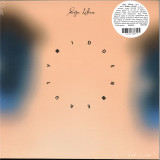
Sign Libra's third album Hidden Beauty is an intimate voyage through feminine nature, guided by the arts of subtext, musical collage, and mysterious allusions. Elegantly arranged, enigmatic, and mischievous, Hidden Beauty seeks to "release the invisible and bring fragility to the surface." From the rainforests of Closer to the Equator (Sounds of the Dawn, 2016 / Antinote, 2018) to the surreal lunar landscape of Sea to Sea (RVNG Intl., 2020), Agata Melnikova, the Latvian musician behind the Sign Libra symbol, has developed a signature blend of evocative composition with lyricless, ethereal vocalizing. Hidden Beauty attends to a closer space than her first two albums, a playfully layered pastiche of refined references, drawing musical inspiration from the assortment of Erik Satie, the early work of Mylène Farmer and Laurent Boutonnat, and 90s R&B. The first inklings of Hidden Beauty arrived in 2019, with the basic contours of the album sculpted in 2020 and early 2021. Like Sea to Sea, Hidden Beauty was invented as a solitary creative effort, but this time under uniquely hermetic impositions. Tethered to the world only by screen, the artist sought inspiration from an unlikely array of activities: new, unorthodox approaches at composing, learning French, a virtual pedagogical practice, and plenty of jubilant dancing in her flat, sunglasses on, to 90s dance music. Hidden Beauty moves inward from the distant spaciousness of Sea to Sea in favor of a "chamber-like" sound, reflecting the intimate environs of its creation. Balancing the New Age balletic resonance of Closer to the Equator and the cosmic-dancerly tracks of Sea to Sea, Hidden Beauty combines deft, postmodern arrangements with popular, contemporary suggestions. The reverb drenching her previous recordings is sponged up in the songs of Hidden Beauty, giving the exercises contained within a feeling of presence, and closeness. And always Agata's crystalline vocal furnishings, less a lead vocal than a first instrument, the ever-returning counterpoint in a beatific swirl. The other hidden elements of this work are plenty, and perhaps best left concealed for the listener's enjoyment. Or perhaps they are hidden in plain sight and sound, depending on what the puzzle pieces reveal to your imagination. Sign Libra's Hidden Beauty will be released in vinyl, Japanese import CD, and digital editions on November 3, 2023. A portion of the proceeds from this release will benefit Coral Guardian, a non-governmental organization working internationally and with local communities to protect coral ecosystems.