Pursuing their explorations of international Funk and Disco music, Favorite Recordings and Bruno "Patchworks" Hovart present us Voilaaa. With this first 2 tracks single revealing the Afro-Disco inspiration of this new experience, Favorite also expands its new series of Disco 12inch singles recently launched with several fine reissues.
Under the imprint of the label and after their long years of collaboration in the achievement of projects such as The Dynamics, Mr President, Mr Day, Patchworks Galactic Project, or Taggy Matcher, the insatiable French producer therefore returns to his first love and specialty, Disco music, staring this time at the African and Caribbean influences.
Indeed, as everywhere in the 70s and 80s, Funk and Disco movements were extremely influential in these regions, and in most cases, the combination of the festive, yet sometime futile nature of Disco, and the instinctive, deep, sometimes rough nature of African music, sounds like a perfect balance. Aiming to respect this energy and specific sound, Patchworks quickly began producing a few tracks, Using his unique and ruling beats and bass lines as foundations, this time he dresses all with guitars, keyboards and brass distorted with vintage and DIY effects pedals and boxes.
Surrounded by a very dynamic music scene, where there is no shortage of artists with African origins, Patchworks decided to work with local singers, even if it means to accompany them on unusual musical paths. A more than successful bet with a result surprising of authenticity, as it's unveiled by these first two titles alongside Sir Jean and Pat Kalla, both from a musical background as rich than different.
With an album planned for the end of the year, that promises to be as explosive and magnetic, Patchworks and Favorite Recordings make a strike again... Voilaaa tout (Thaaat's all)!!
Поиск:pat rich
Все
- A1: Sunlight Zone
- A2: Clarion-Clipperton Zone
- A3: Oreison
- B1: Twilight Zone
- B2: Fracture
- B3: Abyss
- B4: Polymetallic Nodule
- B5: Hadal
- B6: Sunlight Zone (Strings Version) *
Laurel Halo returns with an album of original soundtrack music, composed for the film Midnight Zone by visual artist Julian Charrière. Following the path of a drifting Fresnel lighthouse lens as it descends through the Clarion-Clipperton Fracture Zone — a remote abyssal plain in the Pacific Ocean, rich in rare metals and increasingly targeted for deep-sea mining — the film traces a descent into one of Earth’s last untouched ecosystems.
Charrière’s film reveals the deep not as void, but as a luminous biome teeming with fragile life: bioluminescent creatures, swirling schools of fish, and elusive predators. The suspended lens becomes an abyssal campfire, attracting species caught in the tides of uncertainty, their futures hanging in the balance.
Echoing this tension, Halo’s compositions evoke a sensory freefall, where gravity falters and light and sound flicker in uncertain rhythms. Midnight Zone is a sonic drift through the space between what we seek to extract, fail to understand, and must protect.
Halo’s score evokes the life that exists beyond our physical airbound capacity. The material features long, subtle passages of electro-acoustic ambient, drone and sound design, slowly flowing and unfolding with rich detail. The music, composed largely on a Montage 8 synthesizer and Yamaha TransAcoustic piano at the Yamaha studios in New York City, possesses an uncanny quality: that of synthetic waveforms being amplified and sung through the stringboard of the physical body of the TransAcoustic piano. Combined with stacks of violin and viol da gamba, the music on Midnight Zone possesses trace elements of a human hand in an otherwise sunken landscape. Patient, submerged, and alive. The album will be the third on Halo’s imprint, Awe.
The film is central to Charrière’s current solo exhibition Midnight Zone. The exhibition engages with underwater ecologies, exploring the complexity of water as an elemental medium affected by anthropogenic degradation. Reflecting upon its flow and materiality, profundity and politics, its mundane and sacral dimensions, the solo show acts as a kaleidoscope, inviting us to dive deep.
- Honey
- The Smoke
- Division
- Bury Me
- Limits
- Love You Better
- River Rise
- Believe In The Devil
- Outgrowing
Ora Cogans Musik ist wie Alchemie: teils Instinkt, teils Ritual und immer aus den Ecken entstanden, wo das Leben am intensivsten ist. ,Hard Hearted Woman", ihr Debüt bei Sacred Bones, ist wie ein Zauber für alle, die in einer immer härter werdenden Welt wild bleiben wollen. Mit einer Mischung aus eindringlichem Folk, Psych Rock und einem Hauch von Country schafft Cogan eine Welt, in der Katharsis üppig, geheimnisvoll und lebenswichtig ist. Geschrieben im ,Twin Peaks"-ähnlichen Nanaimo, British Columbia, entstand ,Hard Hearted Woman" aus einer Mischung aus kalten Wasserbädern, langen Schwimmrunden im Fluss, nächtlichen Gesprächen mit Freunden über Kunst und Politik und langen Autofahrten durch die ländliche Landschaft von Lillooet, um ihre Patin zu besuchen. Sie nahm das Album mit ihrer geliebten Band und Gästen aus der Country- und Experimentalmusikszene zusammen mit David Parry (Loving) im Dream Club in Victoria, British Columbia, sowie in ihrem Studio in Nanaimo und aus der Ferne mit Tom Deis auf. Das Ergebnis ist ein Album, das wie etwas aus Rauch und Meerwasser geglänzt ist - intim, schimmernd und ebenso von Witz wie von Trauer geprägt. Es ist eine wirbelnde, juwelenfarbene Ode an alle Engel und Dämonen. Das Album beginnt mit ,Honey", einem langsam aufblühenden, brennenden Song, der auf warmen Streichern und lockeren, treibenden Percussions aufgebaut ist. Cogans Stimme ist ruhig, rauchig und tröstlich und richtet sich an die ,hartgesottene Frau", die das Album prägt. Der Song, der als Reaktion auf die Anti-Trans-Gesetzgebung geschrieben wurde, strahlt Widerstandsfähigkeit aus, ohne jemals seine Zärtlichkeit zu verlieren. ,The Smoke" steigt auf einem hypnotischen Rhythmus empor, der an JJ Cale erinnert, während er die Form auseinanderzieht. Es ist ein Groove für die Endzeit, in dem Congas, Shaker, geknackte Gitarren und geisterhaft verwitterte Texturen aufeinanderprallen, während Cogan die dunkleren Ecken unserer gemeinsamen Menschlichkeit durchforstet. In ,Division" hallt ihre Stimme durch eine karge, hallende Landschaft. Der Song baut sich auf wie eine Leuchtrakete in der Nacht, ein Plädoyer gegen die betäubende Grausamkeit, die heutzutage zur Routine geworden ist. ,Hard Hearted Woman" ist ein Werk der Hingabe an das Geheimnisvolle, an die Gemeinschaft, an die seltsame Kraft, in einer zerbrochenen Welt Kunst zu schaffen. ,Das ist der wichtigste Teil, die Magie", sagt Cogan. Trotz seines Titels geht es in Hard Hearted Woman nicht darum, sich zu verschließen, sondern um Härte als Widerstandsfähigkeit. Es ist die Hülle, die wir uns zulegen, damit unser menschlichstes, zerbrechlichstes Selbst überleben kann. Es ist ein Album für alle, die versuchen, offen zu bleiben, auch wenn die Welt das unmöglich erscheinen lässt.
- Greensleves
- Borderick
- Light Blue
- Dive
- Impromptune
- Saturn
- Stronger Than Pride
- A House Is Not A Home
- A Nod To The High Priest
- Why?
Recorded spontaneously in a single afternoon, the album captures an unguarded musical conversation between two of the most compelling voices of their generation. Born in Brixton and now based in Harlem, Ruben Fox has emerged as a major presence on the international jazz scene, renowned for the depth of his sound, the emotional clarity of his ballad playing, and a voice rooted in tradition while speaking firmly in the present. His work follows collaborations with artists including Wynton Marsalis, Barry Harris, Roy Hargrove, Jon Batiste, and George Coleman, and builds on the critical acclaim of his 2021 debut Introducing Ruben Fox.
Micah Thomas is one of the most celebrated pianists of his generation, praised for a style that is both restlessly inventive and deeply grounded in the history of the music. A Jerome L. Greene Fellow and Juilliard alumnus, Thomas has worked extensively with Immanuel Wilkins, Joshua Redman, Ambrose Akinmusire, and Billy Drummond, and has been recognised by DownBeat, Jazz Magazine, and The New York City Jazz Record as a defining contemporary voice. Fox and Thomas first developed their musical relationship while studying at Juilliard, where they regularly played duo sets. In Two Minds was recorded on a whim at Chris Pattishall's apartment in Washington Heights, with no rehearsal, no edits, and no agenda beyond mutual respect, listening, and shared musical values. Over three hours, the pair simply showed up and played.
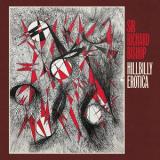
The result is an intimate, conversational record that foregrounds generosity, empathy, and deep musical listening. Sparse, direct, and emotionally rich, In Two Minds offers a rare document of two artists meeting in real time, balancing history, intellect, warmth, and spontaneity.
Making a welcome return nine years on from his last outing on Dekmantel, Makam offers up a generous helping of wayward grooves that take his curious spirit even further into unmarked territory. With a strong dub sensibility grounding his rich tapestry of percussion and instrumentation, Guy Blanken follows his own path to arrive at an album that embodies house music as a launchpad for experimentation.
Blanken says himself he was determined to approach his first Makam productions in years from a place of total freedom — "It's not a single direction, but rather a landscape of sounds, moments, and textures. TARP feels like a new beginning, a free project that just had to happen naturally." The steady pulse of the club remains a guiding principle boldly manifested on heads down roller 'Static Shade', but even in the lilting organic loops and tumbling percussion of 'Forgive' there is a funkiness that's beholden to continuous movement.
At times the direct thump of 4/4 disco juts out as a call to dance, not least on 'Flying Birds' and 'La Tuna', but elsewhere the rhythms are more slippery. 'Dub In Loen' plots a delicate path through dub techno and 'Lummel Spirit' casts off into pattering Balearic bliss. The pervasive dub mood of the record comes to the fore on expertly crafted stepper 'Diagonal Rain' and crooked album opener 'Clear Skies'. 'Jackie B' lands as a love letter to quintessential deep house, and yet still there's a left-of-centre charm that gives the track a personality that is pure Makam.
Exuding warmth and imagination at every turn, TARP is the perfect example of how to make a groove-oriented album a rich home listening experience. There are ample moments primed for the spectacle of the dancefloor, but the mellow hue and broad sweep of approaches make Makam's welcome return utterly compelling from end to end.
- Punkrock Lebensberatungstermin
- Der Demagogische Wandel
- Kiezblock (Feat. Chris Kotze)
- Wenn Ich Mal Groß Bin
- Auf Der Suche
- Weißt Du Noch
- Plattensammlung
- Swipe Leben
- Streit Mit Dings Gpt
- Wassereis
White Vinyl[22,48 €]
ULI SAILOR -> File under: Punkrock am KlavierNach über 30 Jahren auf Bühnen zwischen Punkkeller und Festivalhauptbühne bringt Uli Sailor nun sein erstes Piano Solo-Album heraus. ,Besser Anders" ist das Ergebnis von zwei Jahren intensiver Arbeit - zehn Songs voller Energie, Melancholie und Haltung. Produziert wurde das Album halb in Berlin von Thies Neu, halb in Köln von Tobias Röger (Wohlstandskinder, Udo Lindenberg, Slime).Musikalisch schlägt Uli eine Brücke zwischen Indie-Rock und Punk, bleibt dabei aber weit entfernt von weichgespültem Pop. Klavier, Cello und Gesang treffen auf kantige Arrangements und Texte, die irgendwo zwischen Tagtraum und Knochenfabrik liegen - poetisch, wütend, reflektiert. Themen wie Gentrifizierung, digitale Entfremdung und die unerschütterliche Liebe zum Punk ziehen sich durchs ganze Werk.,Besser Anders" ist ein Album gegen die Austauschbarkeit. Kein KI-Produkt, keine Routine - sondern Handarbeit, Schweiß und Herzblut. Uli zeigt, dass Punkrock auch mit Klaviertasten funktionieren kann, solange man das richtige Maß an Wut, Humor und Zärtlichkeit mitbringt.Patrick Reerink (GUTS PIE EARSHOT) sorgt auf dem Album für die Cello-Parts. ,Kiezblock" entsteht gemeinsam mit Chris Kotze (KOTZREIZ), unterstützt von Totze Trippi (BEATSTEAKS) am Bass und einem Chor von Freund*innen - unter anderem Dead End Kids, Berlin Blackouts, Von.Orten und Töff Malstroem. In ,Der demagogische Wandel" greift Guido Donot (DONOTS) zur Gitarre und setzt ein Solo, das hängen bleibt. Das macht ,Besser Anders" zu mehr als einem einsamen Solo-Projekt, sondern ein kollektives Statement mit Haltung.Mittel-Version (2600 Zeichen)Sommer 2025: In einem Berliner Proberaum sitzt ein Mensch und macht das, was er am liebsten tut - Musik. Dieser Mensch heißt Uli Breitbach, besser bekannt als Uli Sailor. Seit über 30 Jahren ist er kreativer Arbeiter, mal euphorisch, mal verzweifelt, und nach zwei Jahren intensiver Arbeit erscheint nun sein erstes Solo-Album: ,Besser Anders".Was wie eine klassische Musikerbiografie klingt, steht im Kontrast zur Gegenwart. Während Künstliche Intelligenz längst komplette Bands ersetzt, bleibt Uli Sailors Musik das Gegenteil davon: handgemacht, ehrlich, mit hörbarem Herzblut. Uli geht auf die 50 zu und bringt sein Debüt erst jetzt heraus - nach Jahrzehnten als Teil verschiedenster Bands wie den Skatepunks D-SAILORS, den Indierockern TUSQ und der legendären Deutschpunkband TERRORGRUPPE.Nach deren Ende wagte Uli ein ungewöhnliches Experiment: Punksongs seiner Jugend auf dem Klavier - unterstützt von Cello. Was zunächst abwegig klang, traf einen Nerv. Seine Konzerte führten ihn in kleine Clubs ebenso wie auf große Bühnen - vom Sisyphos über Rock am Ring bis zur Volksbühne. Egal ob Punkkneipe oder Festival: Uli Sailor funktioniert überall.2024 folgte die EP ,Für immer jung", fünf eigene Songs zwischen Wut und Sentimentalität, die von Kritikern durchweg gelobt wurden. Jetzt also das Album. ,Besser Anders", das am 27. Februar 2026 erscheint - zehn Songs, produziert zur Hälfte von Thies Neu (SHIRLEY HOLMES, DYSE, DEAD END KIDS) in Berlin und von Tobias Röger (WOHLSTANDSKINDER, SLIME, UDO LINDENBERG) in Köln.Musikalisch wagt Uli den Schritt vom Piano-Punkrock hin zu einem Mix aus Indie und Punk, ohne dabei seine Haltung zu verlieren. ,Sellout?", mögen manche rufen. ,Hört doch erst einmal rein", wäre die passende Antwort. Denn ,Besser Anders" ist weit entfernt von weichgespültem Befindlichkeits-Pop. Die Texte bewegen sich zwischen Tagtraum und Knochenfabrik, kraftvoll, poetisch und differenziert. Uli Sailor benennt Missstände, bleibt aber empathisch, reflektiert und wirkt nie platt. Es ist ein vielseitiges, eigenständiges Album mit Songs über Gentrifizierung, digitale Abhängigkeit, verblühende Liebe und die unerschütterliche Kraft des Punk.Patrick Reerink von GUTS PIE EARSHOT steuerte die Cello-Parts bei. Mit Chris Kotze (KOTZREIZ) entstand eine gemeinsam geschriebene Anti-Gentrifizierungshymne, unterstützt von Totze Trippi (BEATSTEAKS) am Bass und einem Backgroundchor, der sich gewaschen hat: Mitglieder von Berlin Blackouts, Dead End Kids, Von.Orten und Töff Malstroem. Bei ,Der demagogische Wandel" wiederum griff Guido Donot (DONOTS) zur Gitarre und setzte ein Solo, das man so schnell nicht vergisst. ,Besser Anders" ist damit weit mehr als ein Solo-Album - es ist ein Gemeinschaftswerk mit Haltung.Vielleicht wird Uli Sailor keine Millionen Klicks erzielen. Aber das ist gut so. Dieses Album ist kein Algorithmusprodukt, sondern das Ergebnis ehrlicher Handarbeit, Leidenschaft und einer großen Liebe zur Musik. Punkrock bleibt hier der rote Faden - anders, besser, echt.
- Open Sea
- Bill Gates
- Open Heart
- Strong Suit
- Harbours
- Pourlavie
- Summer Solistice
- Swarm Of Birds
- Truly
rot/schwarzes Marble Vinyl. Offensichtlich parkverliebt_ eine musikgewordene Parksituation: Du schlenderst langsam durch das zerbrechliche Idyll inmitten der Stadt, die Luft ist kalt und klar, die Arme hinter dem Rücken verschränkt. Hochgewachsene Bäume spannen den Raum auf, gedämpfter Stadtlärm mischt sich mit dem Rascheln der Blätter, mehr oder weniger verwirrte Tiere sehen aufmerksam in Deine Richtung. Du setzt Dich auf eine Parkbank, hältst inne und fängst an Dich darüber zu freuen, wie schön das alles eigentlich ist. ParkWalkers emopop/slowcore sound ist bestimmt durch zwei cleane Gitarren (Hannes & Nicola), eindringliche Basslinien (Arnaud), entspannte Drums (Armin) und der warmen Stimme von Nicola. Melodien, die hängen bleiben, in meist klassischer Songstruktur. Die lieben 90er oder Nullerjahre lassen grüßen, vielleicht fällt einem American Football, Snow Patrol ein oder fühlt sich an Death Cab for Cutie und Weakerthans erinnert. ParkWalker haben sich 2018 gefunden, und leben verteilt in Berlin, Stuttgart und Karlsruhe. Klar in der DIY-Szene verwurzelt haben sie viele Stunden auf Bühnen im In-und Ausland mit verschiedenen Formationen verbracht, u.a. Tidal Sleep. Nach ihrem Debüt "Distant Phenomena" im Jahr 2021 ist für Herbst 2025 das zweite Album "The Extra Mile" bei This Charming Records geplant. Das Album wurde in den RAMA Studios aufgenommen und von Christian Bethge (z.B. Messer) produziert und gemastert
“From Birmingham and centred around the extraordinary songwriting talent of James and Patrick Roberts – initially as The Sea Urchins and since 1993 as Delta – they’ve only just got round to releasing their debut album, Slippin’ Out. It is a work of some beauty”. 9/10 NME ALBUM OF THE MONTH, 2000
“It’s classicist for sure, shot through with the influence of The Beatles, Byrds and Buffalo Springfield. In James’ downright beautiful closing ballad ‘I Want You’ one can also discern the school of ambitious English balladry that peaked in about 1968: The Casuals, Love Affair, Barry Ryan. The impression of accomplished old-schoolery is only furthered by the dizzying string arrangements penned by Louis Clark Jnr, son and namesake of the one-time orchestral chief of Electric Light Orchestra” – Mojo lead review, 2000
Having ended the 90s with the spirited ‘Laughing Mostly’ compilation of singles and demos (Guardian Album Of The Week) Delta finally released their debut studio album of twelve songs in the summer of 2000 on the Dishy Recordings label. Accepting that this might be their sole studio album the band threw everything at these recordings allowing it to exist in its own sphere, unbothered by their contemporary generation and disregarding the idea of even releasing a single.
Recorded at DEP International there was a notable difference to the scruffier, looser charm of their 1990s recordings, a tighter focus developed by having the experienced Lenny Franchi mixing the LP with them. Lenny had been working with a number of Island artists including My Bloody Valentine and Tricky so knew his way around a desk. There was also the question of budget (a few months passed between recording and mixing whilst funds were raised) so every day counted. Ultimately though you can hear the joy in the recordings, even amongst the melancholy and angst. As James recently recalled in an interview in Shindig! Magazine: “It was such a big deal for us. It’s one of my fondest memories doing that record. Everyone was happy. If there’s anything that I’d stand by, I think it would be that”
Louis Clark Jr joined the band towards the end of the ‘90s and brought a classically-trained element to the recordings particularly with his string arrangements. For ‘Cuckoo’, ‘I Want You’ and the prophetic ‘We Come Back’ Louis brought in eight players from the Birmingham Conservatoire; the baroque style is partly why the record often receives comparisons to Love’s ‘Forever Changes’.
On release ‘Slippin’ Out’ was a big favourite with writers at the NME, Mojo and The Guardian again and before long the band were signed to Mercury/Universal for their second studio album ‘Hard Light’, a far more expensive and expansive love affair. It was a temporary palatial home where things quietly fell apart again, but that’s another chapter.
“If long-term memory is nothing more than selective editing and only pop’s most weighty visceral works are built to last then it’s quite possible that in 50 years the Britpop era will be best recollected for the two bands it ostracised. Earlier this year we met Shack and thought their story of mercurial brilliance indicated the biggest music biz oversight of the 90s. We were wrong because we hadn’t met Delta yet. This is richer and more engrossing than anything by Shack”
Tori thanks: Mark & Tash, Mom, Dad & all the family, Irene. Mollie & Dave Ward & Arminda & Beene. Johnnie & Chelsea, Ahmet, Val, Ron, Craig. Vicky, Patti, Linda, Sharon, Laura, Andrea, Kris, Bonnie, Lee Anne, Danny, Jason, Rick, Steve, Andi, Bob, Nikke, Fran and all at Atlantic, Christian. Elyse, Matthew, Peter, Carla, Stella, Nisha & all at East West, Carol Kinzel at CAA, Mike Dewdney at ITB, Dave Brock at Rima Travel UK, Mog at Warners UK, Richard Bates, Tim Shaxon at HHB, Tony Larkin at TI. Audio, Steve Trim at Stirling Syco, John & Heather & all at SSE, Jason Ogarro at Macwarehouse, Neil at Neve, Su & Bruce at Digidesign US. John Philip Shenale - vintage keyboard finder, James Naylor at Corney & Barrow and a special thanks to David Slade. Hugs to Lesley Chilkes, Cim Mahoney & Bernice Brobbery - The Glam Squad. The Bude Contingent: Cliff "The Fish' Bowden, Super Debs & Adam at Martian, Thea & Dana, Hayley & Emily, Ros, The Falcon Hotel, Mick & Pearl and Phil and Jody, Stolichnaya & Van Nelle. And finally to all the musicians.
Zeitlose Eleganz: Klassik trifft Lounge – die ultimative Klavier-Entspannung
Diese LP interpretiert klassische Meisterwerke als raffinierten Lounge-Soundtrack neu und verbindet die zeitlose Romantik der Vergangenheit nahtlos mit der kontemplativen Ruhe der Gegenwart.
Von Debussys schimmerndem „Clair de lune” und der stillen Tiefe des langsamen Satzes aus Beethovens „Pathétique” über die introspektive Wärme von Brahms' "Intermezzo" bis hin zu Griegs „Notturno” fließt die Auswahl wie ein Late-Night-Gespräch. Populäre neoklassische Komponisten wie Joep Beving, Max Richter, Ludovico Einaudi, Jóhann Jóhannsson und Yann Tiersen steuern ihre hypnotischen, filmischen Texturen bei und schaffen eine Stimmung, die sowohl zutiefst entspannend als auch intellektuell fesselnd ist.
Malena Zavala is an Argentinian-born, London-based artist, producer, and filmmaker, known for crafting ethereal, genre-blending music that navigates the space between her Latin heritage and her British upbringing. With the forthcoming album If This Life Could Start Again set for release on 30 January 2026 on Paraná Records, Zavala presents her most intimate, cohesive, and accomplished work to date, marking a significant evolution in her artistic journey.
With her new album, Malena creates an atmospheric dream pop world, weaving singer-songwriter intimacy with synth pop, Argentine folk, indiepop, rock and experimental music, threaded together by her blissful vocals and dreamy guitar work. Gorgeously warm and vivid, If This Life Could Start Again charts the journey from pain to acceptance, mapping out the non-linear nature of healing through a sonic landscape. Each song embodies a distinct emotion within that journey, from grief and chaos to feeling lost, seeking refuge, finding confidence, and finally acceptance and letting go. Drawing on her Argentinian roots, Malena uses the Andes mountains as both a visual and thematic anchor – the difficult climb towards higher ground becomes a metaphor for healing, whilst being lost at rock bottom reflects the darkest moments of the journey.
Completely composed and performed by Malena herself, the album was recorded in Girona’s L’Empordà countryside in Spain with producer Luke Smith. As a professional producer and audio engineer, this was Malena’s first time relinquishing production control – an intimate creative shift that allowed their shared vision to shape the album’s rich, enveloping sound.
However, Zavala’s career to date has been a testament to self-sufficient artistry. Her critically acclaimed debut, Aliso (2018), was written, recorded, and produced alone in her parents’ garage, which honed her dreamy bedroom pop sound. The album, praised by The Guardian for its “gently warped and beguilingly melancholy guitar pop,” ****, immediately catapulted her from DIY beginnings to prestigious stages, supporting acts like Lord Huron at London’s Roundhouse and Men I Trust at Village Underground and subsequently continuing on their UK/EU tours. Later with standout performances at Latitude, Green Man, and All Points East. Her consistent radio support from key influencers including BBC Radio 6 Music, BBC Radio 1's Huw Stephens, and Steve Lamacq has solidified her presence on the airwaves.
Her second album, La Yarará (2020), saw Zavala delve deeper into her roots, exploring Latin traditions like Cumbia and Bolero. This exploration of identity continues powerfully on the new album, but with a newfound lyrical depth and sonic confidence. The new album, If This Life Could Start Again, is a raw and transformative eight-track journey that maps the emotional landscape of healing. Written after a period of personal upheaval, the album traverses themes of grief, hereditary trauma, and self-discovery. The record’s narrative is structured like a mountain ascent. A challenging climb through varied emotional terrain, posing the central question: “Will you join the journey?” Sonically, this journey mirrors the non-linear path to acceptance, evolving from acoustic folk and synth-pop to funk-infused rhythms and rock anthems.
As a formidable live performer, Zavala has built a robust touring profile across the UK and Europe. She will embark on an extensive tour in February and March 2026 to support the album, with dates spanning major cities from London and Glasgow to Berlin, Paris, and Barcelona.
With If This Life Could Start Again, Malena Zavala fully realizes her artistic vision as a self-taught producer to an autonomous artist commanding her career through Paraná Records whilst reflecting the vast landscapes of her heritage and affirming her place as a compelling and evolving voice in contemporary music.
From the Guts of Essaira claims space in body and time. It follows the path announced with the single ‘Dramla / Xirxe’, expanding its tensions and guiding them towards a more layered, conscious expressive form. It is an album to be listened to without respite, allowing the sonic material to dilate.
The tracks move across a punkstrial terrain rich in synths held in constant tension; sharp guitars and industrial rhythms alternate drive with suspension. The vocals, multiple and layered, do not seek centrality but co‑presence: they enter, disappear, pursue one another, dig deep and steer the listening through zones of friction and release.
The album is released during a period of widespread instability and reflects that mood. The ten pieces construct a compact journey, with darkness and urgency alternating with more rarefied, introspective moments. Nothing is accidental: every segment is functional, every tension is permitted to resonate until the end. From the Guts of Essaira is a physical, visceral record; it works by accumulation and subtraction, strengthened by the fracture between control and abandonment. It breathes, listens, spreads.
- El Regreso
- El Encuentro
- Turbación
- La Mirada
- Sandía
- Indiferencia
- Conversación
- El Beso
- Fama
- Lluvia
- Nocturno
- Golondrinas
- Maga
- Otoño
- En La Esquina
La Margarita (1994) is an unforgettable collaboration between iconic Uruguayan musician Jaime Roos and legendary writer and playwright Mauricio Rosencof. Blending the rich musical traditions of Uruguay-candombe, murga, tango, and milonga-with elements of folk and rock, as he is known for, Roos sets to music a cycle of sonnets that tell a tender, naive love story. These poems were written by Rosencof under harrowing conditions during his imprisonment by the Uruguayan dictatorship in the 1970s. Includes 16-page booklet. Jaime Roos and Mauricio Rosencof are two of Uruguay's most beloved and influential artists. Roos, a groundbreaking musician, redefined Uruguayan music in the 1980s with his signature fusion of deep-rooted local rhythms and cosmopolitan flair. Rosencof, a celebrated writer and playwright who emerged in the early 1960s, was also a prominent figure in the historic Tupamaros guerrilla movement. Their paths converged in 1987, when Roos composed the score for Rosencof's play El Regreso del Gran Tuleque. During this collaboration, Roos discovered a series of sonnets Rosencof had written while imprisoned under Uruguay's brutal dictatorship. Held in solitary confinement for over eleven years, Rosencof composed these poems as a lifeline-scribbled on cigarette papers and hidden in the hems of clothes his family collected for laundering. Against all odds, both the author and his poems survived. The sonnets tell a delicate, moving love story set in 1950s Montevideo. Roos, inspired and captivated, rose to the challenge of transforming them into music. The result was La Margarita-a groundbreaking project in which Roos masterfully fused Uruguay's rich musical traditions-candombe, murga, tango, and milonga-with elements of folk and rock, creating a deeply evocative set of songs as only he could deliver. Beyond its beautiful music, La Margarita stands as a testament to resilience, creativity, and the enduring power of love and art.
- A1: Enter
- A2: Patrice
- A3: Glorious Road Feat. Awon, Dj Craim
- A4: Ghost Dogs
- A5: Neve Feat. Lauryyn
- B1: Hydra
- B2: Never Too Much Feat. Awon
- B3: Vega
- B4: Supervillains Feat. Pasquale Mirra
- B5: Over
Kolosso, a sacrilegious mix of 808, Tap, Drill, and Bastard Jazz.
Founded in 2023 under the guidance of multi-instrumentalist and producer Davide "Kidd" Angelica (who has previously worked with Inoki,
Deda, Voodoo Sound Club, and others), the group brings together some of the most visionary musicians in Bologna's underground scene.
Their music explores the chaos of contemporary life, intertwining urban sounds and jazz languages in a continuous exploration of new sonic
perspectives and narrative horizons. The result is powerful and powerful live performances, complemented by rich, layered, and meticulously
crafted album productions.
OVER is the conclusion of Phase 1 of the Kolosso project: extensive underground work, in the studio and on stage, seeking a point of collision
between jazz and urban sounds, trap, drill, and grime. Worlds seemingly distant but united by a common drive: to transform the chaos of the
present into language.
OVER is an attempt to go beyond: beyond the patterns of composition, beyond the rules of production. A huge sonic puzzle constructed with
patience, instinct, and perseverance.
OVER is the raw power of a musical collective condensed into an album. A tamed energy, yes, but still radioactive, like uranium: unstable,
dense, alive.
Featuring: DJ Craim, Awon, Lauryyn, Pasquale Mirra
CREDITS
Davide Angelica: compositions, guitar, samples
Salvatore Lauriola: bass
Giuseppe Allotta: drums
Gioacchino Allotta: keyboards, synth
Gabriele Polimeni: trumpet
Federico Califano: alto sax
Matteo Diego Scarcella: tenor sax, flute
Jacopo Trapani: compositions, recordings, mixing
Francesco Brini: mastering
- 1: When The Cold Wind Blows
- 2: The Death Of Me
- 3: Different Kinda Woman
- 4: If I Was King
- 5: Shakedown
- 6: Fire And The Flame
- 7: I'm Ready
- 8: Paralyzed
- 9: Carry On
- 10: Battered And Bruised
- 11: What The Future Holds
BLACK SWAN Return with Third Album “Paralyzed” — A Masterclass in Melodic Hard Rock Robin McAuley (McAuley Schenker Group), Reb Beach (Winger, Whitesnake), Jeff Pilson (Foreigner, The End Machine, ex-Dokken), and Matt Starr (Ace Frehley, Mr. Big) — collectively known as BLACK SWAN — are back with their explosive third album, Paralyzed. Following the critical acclaim of their previous releases, the supergroup once again delivers a powerful statement in modern hard rock. With all songs written and composed by McAuley, Pilson, and Beach, and expertly produced by Pilson, Paralyzed showcases Black Swan at their peak performance — offering a dynamic mix of towering vocals, razor-sharp riffs, and hook-laden melodies. The band’s chemistry continues to shine, elevating their songwriting and musical delivery to new heights.
Tracked at Pilson’s Los Angeles studio, the album reflects the tight-knit synergy among its members. McAuley’s commanding vocals remain as ageless, while the instrumentalists deliver with precision and fire. Much like its predecessors, the new record is a testament to the individual and collective talents of these seasoned musicians. Far from being a patchwork of their previous bands, BLACK SWAN has firmly carved out its own identity. Paralyzed is fresh, heavy, and melodically rich — a cohesive and compelling album that feels both classic and contemporary. Building upon the blueprint laid by their debut, Shake the World, the band expands their sonic universe. The result is a record that not only meets but surpasses expectations, cementing BLACK SWAN as a formidable force in the modern hard rock scene. Whether you’ve followed these legendary musicians since the heyday of '80s rock or you’re just now discovering their magic, Paralyzed is essential listening — a masterclass in melodic hard rock delivered by artists who continue to defy time and expectations.
- 1: Backside
- 2: Chernobyl Picnic
Dark Crystal Vinyl[36,93 €]
includes unearthed fragments of Bladder Flask by Richard Rupenus, circa ’80s, The paths of Nurse With Wound and Bladder Flask first crossed in 1980 and the following year Bladder Flask’s debut album One Day I Was So Sad That The Corners Of My Mouth Met & Everybody Thought I Was Whistling (Orgel Fesper Music) was distributed by United Dairies. Following the aborted project for a second Bladder Flask album, scheduled for 1981, some forty years later, Richard Rupenus approached Steven Stapleton to use fragments of old recordings he’d unearthed from “Bladder Flask”, an invitation that Stapleton accepted, and rather than simply remixing or reworking existing Bladder Flask tracks, Steve Stapleton and Andrew Liles have succeeded in reinforcing Nurse With Wound and Bladder Flask’s sense of the absurd in this new opus “Backside”.
Brooklyn based baritone saxophonist Jonah Parzen-Johnson presents his new work "Imagine Giving Up" on Helsinki's We Jazz Records. The album, to be released on 17th January of 2020 sees Parzen-Johnson move into new domains of sound as he uncovers newfound energy and pulse in his music.
In addition to the sonically rich analog synth elements that accompany his earlier solo saxophone work, Jonah has layered heavily sound designed samples of his own saxophone to create truly one of a kind percussive snaps, reverberant basses, and warbling leads. At it's core, the music remains deeply devoted to almost vocal sounding melodic lines and patiently developed compositional ideas.
A compact set of 6 originals, "Imagine Giving Up" is Jonah Parzen-Johnson's most ambitious album yet. While taking a step away from the previous world of "ambient jazz", his new music stems from the use of drone-like sounds for baritone saxophone, a style which is uniquely his own. Electronics are blended in for good measure, creating a coherent vision of abstract jazz with depth. As with all of Parzen-Johnson's releases, the music comes with a deeper narrative which he will continually explore in live performance.
The manifesto for the album reads as follows: "Only a few people can really start over. Everyone else is left to struggle down the path they were assigned. The option to give up, to choose your own path, is power, and, hopefully, a call to action: take a risk to help someone." "Imagine Giving Up" by Jonah Parzen-Johnson, will be available via 'We Jazz Records' on violet and black vinyl versions, CD and digitally.
- 1: I’m Signed To Lex Now I’m Up
- 2: You Know My Love Language Right?
- 3: Flewed Out, All Expenses Is Paid For
- 4: Tia Mowry (The Rich Tt)
- 5: Butter Leather Weather
- 6: Drunk Nights In Edgewood (Imysm)
- 7: 360 Photo Booth
- 8: I’m Getting Too Famous (This Time Last Year) Https://Www.youtube.com/Watch?V=Qrleygqbins
- 9: Okay, I Know Who My Twin Flame Is
- 10: Bedford Avenue (Skit)
- 11: So You Really Don’t Miss Me?
- 12: Let Me Reflect / Uber From O’hare
- 13: Texting This Fine Shit For A Month
- 14: Instagram Highlights
- 15: Nah, You’re Mad Extra Https://Www.youtube.com/Watch?V=Toxadunvris
- 16: King Of Charlotte (I Feel Like Trolling)
- 17: Lord Jah-M
Colour vinyl[32,14 €]
“My auntie asked me what’s my path?” spits Lord Jah-Monte Ogbon on his debut from the celebrated Lex Records. The lyric relatably references the cross roads he’s at in his current life, especially as someone right on the cusp of rap stardom. “Recently I’ve been thinking more and more about what comes next in my life,” the artist reveals.
It’s fair to say Ogbon’s Lex LP features less of the sh*t-talking court jester of old. Instead, there’s more of an imperfect man re-examining past mistakes so he can avoid any future forks in the road. There’s a particular focus on overcoming heartbreak, inspiring Ogbon to admit he’s haunted by an ex so badly he now needs to call up the Ghostbusters for assistance.
Since emerging in the late 2010s, Lord Jah-Monte Ogbon has consistently lit up America’s underground rap scene and this is thanks to a refreshingly honest writing style. Amid the exquisitely wavy strings of 2021’s The Missing Link / The Sneaky Link, for example, he rapped: “Everyone thinks they’re player, until their bitch doesn’t come home.” Biting and snappy, the nasally vocals carry the playful verve of comedian Richard Pryor bravely excavating personal Demons to solicit giggles.
All this brash, wry Redman-inspired storytelling continues on the new project. Its first single is titled I’m Signed to Lex, Now I’m Up – a name that mirrors what a big moment releasing a project on the label that once housed MF DOOM represents for Lord Jah-Monte Ogbon’s legacy. “I’m really driven by being able to level up and give my family more financial freedom,” he hopes.
And, if auntie asked what his path was right now, what exactly would the rapper say? Lord Jah-Monte Ogbon concludes: “Auntie: this rapping thing feels like it’s finally about to pay off!”
- Blink
- Waiting Game
- Telling Me
- Lonely Rose
- Sweet Time
- Tides
- Like This
- What Would I Do
- Without Her Loving You
- Missing Out
- Resting Blues
British singer-songwriter Lucy Kitt unveils her highly anticipated second album, Telling Me, a deeply personal collection that shifts focus from introspection to storytelling, capturing the lives and struggles of those closest to her. Drawing from her love of 70’s Laurel Canyon folk, 90’s indie rock, and country music, Kitt crafts narratives that blend her own experiences with compassionate observations of loved ones. Based on a raw acoustic “three chords and the truth” style of songwriting that ripples throughout, the album expands with full-band arrangements that give a huge range and richness to the sound.
Though influenced by American musical traditions, the Essex-native maintains her distinctive voice and authenticity, ensuring the music remains unmistakably her own. Following her 2018 debut Stand By, this new record represents a more mature approach to songwriting, written during her early 30s and completed in the 2021 lockdown – a storybook of songs capturing that moment in time.
Musically, Telling Me showcases Kitt's stripped-down acoustic foundations, while incorporating fuller arrangements that blend her love of Nick Drake, Bob Dylan, Gram Parsons, Joni Mitchell and Joan Baez, with music she loved as a teenager such as The Lemonheads and Veruca Salt. The album features collaborations with an impressive roster of musicians, including Jay Starkey on drums, Nashville-based pedal steel virtuoso Spencer Cullum, Treetop Flyer’s Sam Beer and longtime collaborator Pat Kenneally on drums and piano.
Recorded between 2021-2023 at London's Lightship 95 studio at Trinity Buoy Wharf, the album was co-produced and engineered by Dave Holmes, with some musicians contributing remotely from Nashville and London.
Kitt's commitment to authenticity extends to every aspect of the album, from the down-to-earth, home-based album artwork which represents her life right now as a musician and a working mum, with all the wonderful chaos that comes along with it. Also her decision to maintain her natural accent throughout her vocals. "I have always retained my authentic self in my songs," she explains. "Always singing with my own accent, despite the influences of all the bands and artists over the years."
Kitt has been songwriting and performing for over 20 years, starting in a riot grrl band in her teens in her hometown of Romford, Essex, before evolving into the thoughtful folk storyteller she is today. A semi-finalist at the BBC Young Folk Awards in the early 2000s, she has performed at major festivals including Glastonbury and Cambridge Folk Festival, building a reputation for intimate, lyrically-focused performances.
Telling Me is a resplendent collection of songs, capturing the human experience with great empathy, honesty and musical sophistication that has become Lucy Kitt's signature.
After Differently (released in 2024), The Tighters (Roots Reggae) are back with a
new showcase album: Lovely Love — a celebration of unity, spirituality, love, and
freedom.
Side A brings together the vocal versions, while Side B features the dubs. The album was mixed and dubbed by Roberto Sánchez at A-Lone Ark Muzik Studio (Spain) and mastered on tape by Dr Charty at Bat Records Studio (France).
Recorded at Jah Jazz Studio with Julien “Yout” Barker, Lovely Love captures all
the spontaneity and strength of the band.
The album unfolds like a spiritual and emotional journey: from the meditative
Countryside to the love song Lovely Love, and the radiant Worship the Sun. The high point comes with Africa Will Rise, a true freedom anthem performed by the legendary Jamaican duo Keith & Tex (on the Lovely Love riddim).
After their acclaimed collaborations with Oku Onuora (Balance) and Jah Myhrakle
(He is Haile) in 2025, The Tighters continue their path with this new opus, asserting
their identity within the international reggae scene.
A sincere album, blending rich musicality with a powerful, deeply relevant message.
„Zuversicht“, das jetzt erscheinende fünfzehnte Album des laut Crescendo „klanggenialen Trompeters und Ausnahmekomponisten“ Nils Wülker, strahlt die Lebensenergie des Titels aus – in vielfacher, wunderbarer Hinsicht. Die elf Eigenkompositionen, eingespielt im Quartett mit den Jazz-Stars Aaron Parks (Grammy-Gewinner an der Seite von Terence Blanchard oder Joshua Redman) am Piano, Linda May Han Oh am Kontrabass (Grammy-Gewinnerin, u.a. mit Pat Metheny oder Kenny Barron zu hören) und dem laut Jazz Magazine „Drummer seiner Generation“ Greg Hutchinson, drängen den ECHO-Gewinner und Top Ten-Jazzer Nils Wülker bewusst aus seiner Komfortzone in eine schöne, neue Klangwelt. Wülkers Personalsound ist eindringlich und unverkennbar, das Ergebnis dennoch überraschend. Gemeinsam haben die Vier in nur dreieinhalb Tagen voll gemeinschaftlicher Schaffenskraft in den legendären Hansa Studios in Berlin (U2, David Bowie, Depeche Mode u.a.) ein Album geschaffen, das gleichermaßen zeitgemäß wie richtungsweisend ist – und in seinen starken Melodien und dem sagenhaften Interplay voll Zuversicht.
Das Resultat spricht für sich: „Zuversicht“ ist ein sehr organisches, in jeder Note lebendiges Album, dem die Kompositionen des Leaders in Kombination mit der kreativen Zusammenarbeit der drei weiteren Bandmitglieder enorme Größe und Eleganz verschaffen, eine immer wieder überwältigende Energie. Auch live auf Tour wird die Besetzung des Albums zu erleben sein – mit Nils Wülker an der Seite von Linda May Han Oh, Greg Hutchinson und anfangs, aufgrund von Termingründen, mit keinem Geringeren als Omer Klein am Piano. Gute Gelegenheiten, Nils Wülkers spontan entwickelte neue Stücke und die traditionsreiche, moderne Klangwelt dieser Musik unmittelbar zu erleben.
Barry Walker Jr. is a pedal steel player and guitarist whose roots in Americana, Country and Folk traditions influence his melding of minimalism, ambient and spiritual music. The Portland-based instrumentalist is also a member of the Rose City Band, known for his gorgeous phrasing and deft interplay with guitarist Ripley Johnson. On Paleo Sol, Walker demonstrates his singular voice as a pedal steel player and composer. Evoking the American western ranges and basins, the album embodies a longer, geologic view of time that patiently marvels at the ripples of change throughout lifetimes and ages. Walker is joined on Paleo Sol by drummer Rob Smith (Rhytion, Pigeons) and bassist and Mouth Painter bandmate Jason Willmon (Fruited Planes). Paleo Sol"s tranquil landscapes glide, built on warm finger-picked guitar figures and pedal steel swells coupled with deft percussion and bass touches by Smith and Willmon respectively. The trio plays with exceptional fluidity either completing each others phrasing or working together to build momentum. Smith notes: "The drums are not keeping time as much as evidencing its elasticity, mixing into the other instruments, changing phase states." Every gesture on the album is rich with intention, moving with grace and playing with timbre and time.
- A1: Robert Pico - Le Chien Fidèle
- A2: Annie Girardot - La Femme Faux Cils
- A3: Spauv Georges - Je Suis L'état
- A4: Zoé - Zoé
- A5: Jacques Da Sylva - Fou
- A6: Valentin - Je Suis Un Vagabond
- A7: Jacques Malia - Histoire De Gitan
- A8: Bernard Jamet - Raison Legale
- B1: Jean-Pierre Lebort - Barbara Au Chapeau Rose
- B2: Les Concentrés - Fils De Dégénérés
- B3: Les Missiles - Publicité
- B4: Hegessipe - Le Credi D'hegessipe
- B5: Marechalement Votre - Ethero Disco
- B6: Mamlouk - Decollez Les
- B7: Mozaique - L'amour Nu
- B8: Jean-Marc Garrigues - Je Dis Non
- B9: Penuel - Astronef 328
The journey through French-speaking pop archives continues with this fifth volume, packed with fuzz, gimmicks, and dissent. Far from the charts, the selected tracks display a great creative freedom, often backed by corrosive humor. Welcome to the surprising, kaleidoscopic, and colorful world of the late sixties and early seventies, Wizzz!
Born in Montauban, Robert Pico stumbled into music by chance when he met René Vaneste, then artistic director at Pathé-Marconi. René brought him to Paris to record his first 45 RPM EP in 1964. A year later, Pierre Perret introduced him to Vogue, where he recorded his second album with Claude Nougaro’s orchestra. Sylvie Vartan then introduced him to RCA, where he recorded four singles, including the astonishing "Chien Fidèle," a track backed by a hair-rising fuzz guitar. Alongside his solo career, he also composed for other artists like Alain Delon (the song was recorded but remains unreleased), Magali Noël, Bourvil, and Georges Guétary. In the Paris of the sixties, he mingled with Mireille Darc, Elsa Martinelli, Marie Laforêt, France Gall, Françoise Hardy, Petula Clark, Régine, Dani, Serge Gainsbourg, Joe Dassin, Franck Fernandel, Charles Level, and Roland Vincent. Despite his efforts and winning a Grand Prix Sacem for his final record, Robert Pico didn’t achieve the expected success in show business and decided to leave Paris and return to the Southwest, where he devoted himself to writing. He is the author of 23 books (including Delon et Compagnie, Jean-Marc Savary Editions 2025, a memoir about his youth and his many encounters). Today, he is relieved to never have become a celebrity and devotes himself to his work with passion.
In 1969, the Franco-Italian movie Erotissimo was released, directed by Gérard Pirès (who later directed Taxi in 1998, written and produced by Luc Besson). This pop comedy features Annie Girardot, Jean Yanne, Francis Blanche, Serge Gainsbourg, Nicole Croisille, Jacques Martin, and Patrick Topaloff. The soundtrack was written by Michel Polnareff and William Sheller, with lyrics by Jean-Lou Dabadie. "La Femme Faux-cils," performed by Annie Girardot. It recounts the feelings of a rich CEO's wife who seeks to develop her sex appeal under the influence of advertisement and magazines. Groovy, sparkling and light, this track, with ITS lush arrangements humorously critiques consumer society and feminine beauty standards.
“Je suis l’Etat” (1967) is the flagship track of the first EP by singer-songwriter Spauv Georges, aka Georges Larriaga, better known as Jim Larriaga (1941-2022). Born into a family of bakers, the young man was initially planning to become a hairdresser when he discovered English-speaking music through Elvis Presley and the Beatles. After this revelation, he decided he would become a songwriter and gave himself five years to succeed. He recorded his first two EP’s independently for RCA under the pseudonym Spauv Georges; meaning “that poor George”, a nickname given to him by the mother of her friend Jean-Pierre Prévotat (future drummer of the Players, Triangle, or Johnny Hallyday). Portraying a depressed and eccentric young man, Spauv Georges created corrosive and amusing songs that didn’t reach a wide audience, despite a TV appearance with Jean-Christophe Averty.
Supported by his loyal friend and fellow songwriter Jean-Max Rivière, Georges Larriaga met the future singer Carlos in the early '70s, then Sylvie Vartan’s assistant. He wrote songs for Carlos, including the popular "La vie est belle," "Y’a des indiens partout," and "La cantine", which went onto become a huge hit in 1972. He also composed for Claude François (“Anne-Marie”, 1971), Charlotte Julian (“Fleur de province”, 1972), helped launch child singer Roméo (who sold 4 million records), and later wrote the hit "Pas besoin d’éducation sexuelle" (1975) for the young Julie Bataille. In 1971, Jim recorded an album for Disc'Az: “L’univers étrange et fou de Jim Larriaga”, which featured pop gems like “La maison de mon père”.
The story of the song "Zoé" began when Pierre Dorsay, artistic director at Vogue Records, asked Swiss singer and musician Pierre Alain to write a song for a new female singer. The inspiration came when he realized that Zoé (the artist's name) was also the name of France's first atomic battery, created in 1948, which consisted of uranium oxide immersed in heavy water! The lyrics reflect a bubbling energy that must be handled with caution, while the instrumentation echoes this atomic theme, notably with the use of a theremin.
Zoé’s career lasted only as long as a single 45 RPM, but it seems Christine Fontane was the vocalist behind this pseudonym, who is known for several EPs, a good "popcorn" album in 1964, and a handful of children’s singles in the '70s. Regardless, the photograph on the cover is of a different girl entirely.
Later, Pierre Alain continued his career, writing songs for himself, Marie Laforêt, Danièle Licari, Alice Dona, Arlette Zola (3rd place in Eurovision 1982), and achieving multiple gold and platinum records in Canada. Also an inventor with several patents, president of the Romande Academy, and head of the French Alliance in Geneva, he now composes atonal music, books, and poetry. Moreover, he is also the host of "Les Mardis de Pierre Alain" at "Le P'tit Music'Hohl" in Geneva.
Filled with oriental choruses and fuzz guitar, "Fou" is from Jacques Da Sylva's only EP released by Vogue in 1967. Despite the quality of this recording, all traces of this singer disappear after this first effort.
Valentin is a baroque pop singer born in Belgium. He is the songwriter and composer of most of the tracks on his three singles released in the late 60s in Canada. A legend says that he reincarnated himself as Jacky Valentin during the 1970s for a rock'n'roll revival career in Belgium, but his older brother sadly debunked this story. Valentin's first two singles were arranged by Claude Rogen, a Parisian session pianist who had come to Canada to promote the song “Mister A Gogo”, a cover of David Bowie’s “Laughing Gnome”, adapted by singer Delphine, his wife at the time. Far from his usual network, Claude Rogen arranged music for Polydor, including the arrangements for “Je suis un vagabond” in 1969, a jerk tune with string arrangements and a furious optimism.
Jacques Malia wrote, composed, and recorded his only 45 EP for Festival in 1966. “Histoire de gitan” is an incredible beat track with bohemian scat that tells the story of a gypsy musician who came to Paris to make it in the Music-Hall, to no avail. The hero of the song and its author probably shared a similar fate, as Jacques Malia faded into anonymity after this remarkable attempt.
Bernard Jamet recorded two EPs for Barclay in the late sixties and co-wrote several songs with Christine Pilzer, Pascal Danel, and prolific songwriters Michel Delancray and Mya Simile. The track “Raison Légale” (1968), his masterpiece, immerses the listener in a courtroom right when a murderer is being judged, with jerk rhythm and free arrangements. A unique, paranoid, judicial, and psychedelic oddity.
Jean-Pierre Lebrot-Millers started his career in show business in 1967 as a singer and songwriter for the Philips label. After three singles, he wrote several songs of a new kind with his friend Pierre Halioche, in the midst of the sexual liberation movement and the democratization of drugs. With provocative lyrics, “Les filles du hasard” and “Barbara au Chapeau Rose” were released on a Philips singles in 1968. The character of Barbara was inspired by a queen of Parisian nightlife during the psychedelic years: model Charlotte Martin, who dated Eric Clapton from 1965 to 1968, then Jimmy Page from 1970 to 1983. Jean-Claude Petit’s arrangements, with a table-filled intro, soul brass, and Hendrixian guitar, emphasize the flamboyance of a hedonistic and sexy character, whose dog is named Junkie because “Junkie est un nom exquis”! The track was recorded live in three takes with a full orchestra.
Upon its release, the record was censored by Europe 1 and RTL due to its references to drug use. Jean-Pierre Lebrot was then banned from the airwaves and later dismissed by his record label. He changed his artist name to Jean-Pierre Millers, while his companion Pierre Halioche became D. Dolby for a new dreamy composition, “Chilla”, which Jean-Pierre produced himself with arrangements by Jean Musy. Once again, the song was immediately censored everywhere. After this setback, he decided to stop singing and started taking on odd jobs to support his Swedish wife and their son until the day he met Jean-Pierre Martin, then production manager at Decca, who had worked with Manu Dibango. Martin offered Jean-Pierre Lebrot-Millers, then employed at Rank Xerox, the position of artistic director at Decca. He accepted and became, a year later, promotion director (radio, press, TV). He worked on Julio Iglesias’s first album for Decca, which became a massive hit and allowed him to meet Claude Carrère. The latter asked him to write new songs and find their performers, much like a “talent scout.” It’s through him that Jean-Pierre discovered Julie Pietri and Corinne Hermès. He composed “Ma Pompadour” for Ringo, Sheila’s husband, and took the microphone again for the syncope hit “Rendez-Vous” in 1982.
That same year, Jean-Pierre Lebrot-Millers tried to release a track for which he had heavily gone into debt: “Si la vie est un cadeau”. Having recorded it in London, he presented it to numerous professionals, all of whom refused to get involved. The same thing happened with Antenne 2 and the Sacem when he proposed the song as France’s entry for Eurovision. He then met Haïm Saban, who was producing cartoon soundtracks and had just launched the Goldorak theme song. Saban, having listened to the song, declared it had the potential to become a hit. He sent Jean-Pierre and Corinne Hermès to meet the CEO of the Luxembourg radio and television network. The latter received them, asked to hear a verse and chorus a cappella in his office, and immediately hired them to represent Luxembourg at Eurovision 1983. They reworked the arrangements and recorded a new version with Haïm Saban as co-producer. The song ended up winning Eurovision 1983, a great comeback for our hero. He continued producing and hung out with the band Nacash in Belgium when a couple came to introduce their daughter for an impromptu audition in a hotel room. The girl sang “Les démons de minuit” while dancing to a radio cassette. Impressed, he had her take singing lessons for a year and composed a song for her (for which he had the melody and title, but no lyrics). This required him to go on the hunt for a lyricist, who ended up being Guy Carlier. They recorded the song, which was initially a ballad, at Bernard Estardy’s CBE studio, and gave the singer a new name: Melody. They showed the song around their industry network without success. Later, Estardy called Jean-Pierre to suggest changing the rhythm and making it pop-rock. Orlando, Dalida’s brother, liked the result and decided to co-produce the track. “Y’a pas que les grands qui rêvent » became a classic hit. The song has since been covered by Juliette Armanet (as a ballad, like the original) and Valentina.
Born into an aristocratic Breton family, Hervé Mettais-Cartier worked as a DJ at Queen Kiss, a nightclub in Poitiers, where he formed the band Les Concentrés with Michel (an actor) and Christian (a radio technician). Together, they created a repertoire of whimsical songs (“Ma bique est morte”, “J’suis un salaud”, “Fils de dégénéré”...) that they performed on stage dressed in white (in homage to “concentrated milk”). They performed at Bliboquet and Olympia in 1968 for the 10th edition of the “Relais de la chanson Française” organized by L’Humanité-Dimanche and Nous les Garçons et les Filles, sponsored by Pepsi Cola. Winners in the author-composer category, alongside Danish singer Dorte, their visibility allowed them to record a 45, and appear on television in Jean-Christophe Averty’s show. The A-side of the disc features Bruno le ravageur, a casatchok dedicated to Bruno Caquatrix, the director of Olympia, nicknamed in the song “Coq Atroce” or “croque-actrices”. The B-side is dedicated to “Fils de dégénéré”, a quirky tribute to Hervé's aristocratic roots, mixing absurdity with sophisticated vocal harmonies.
After Les Concentrés, Hervé Mettais-Cartier formed the duo La Paire et sa Bêtise with his friend Olivier Robert. They performed in Parisian cabarets and toured with Pierre Vassiliu. In the late 1970s, Hervé began a solo career. He recorded two albums for the Motors label in 1978 and 1979, which did not achieve their anticipated success due to lack of promotion. In 1980, he met Bernadette, with whom he started a family and created a “Chansons à voir” (songs to see) show that he performed until his death at the end of 2024.
Publicité comes from the final EP by the Missiles (Ducretet Thomson, 1966), a disc that also includes “La (nouvelle) guerre de cent ans”, featured on Volume 4 of our Wizzz! series. Please refer to the booklet for the story of the band.
“He’s 1.82 meters tall, 28 years old, weighs 135 kg, is black and Belgian”: this is the description of singer Hegesippe on the back of his sole single (Decca, 1967). He appears on the album cover wearing a Greek toga, like a hippie gag – we are at the end of the year 1967. In “Le crédo d’Hegesippe”, this former bodyguard of Antoine and the Charlots plays the delightful card of the thick brute converted to Flower-Power and non-violence, with arrangements by Jean-Daniel Mercier, aka Paul Mille.
“Ethéro-disco” was released on a promotional record for clients of the Maréchal company (Liège, Belgium) for the New Year 1979. Over a funky rhythm, celebrity impersonations (Brigitte Bardot, Jacques Dutronc, Fernandel…) deliver an enigmatic text about pharmaceutical products like ether, bismuth, and aspartate. The track was composed by Dan Sarravah (responsible for Joanna's “Hold-up inusité” featured on Wizzz! Volume 3) and Tony Talado, who was also a singer (one 45 in 1967), songwriter (with over a dozen credits between 1964 and 1985 in various styles from surf music to disco), author (Devenez Végétarien, Dricot Editions, 1985), ad designer, and psychologist.
Décollez-les is on the A-side of Mamlouk's only single, a pseudonym for Marsel Hurten, who is known for his work on several EPs in the late sixties, as well as composing music for Hervé Vilard’s “Capri, c’est fini”, Claude Channes' “La Haine”, Annie Philippe’s “On m’a toujours dit”, and Nancy Holloway’s “Panne de Cœur”.
This strange song, with Afrobeat horns and absurd dialogues between a chef and his kitchen staff, is the result of a collaboration between Marsel Hurten and one of his neighbors, a photographer from Pavillon-sous-Bois (93), where the musician settled after returning from the Algerian War. A music video was shot to promote the record.
Marsel Hurten was born in Tourcoing (59) into a musical family. At a young age, he joined the brass band founded by his grandfather, playing the piston before studying trumpet at the conservatory, as well as teaching himself how to play the guitar. As an orchestra musician, he toured in France, Belgium, Germany, and England. He released a series of solo 45’s between 1965 and 1968 for the DMF and Az labels before stopping recording to focus on working for other artists (Gilles Olivier, Noëlle Cordier…).
“L’amour nu” (Vogue, 1971) is the work of the short-lived Belgian band Mozaïque. The track, written by singer Jacques Albin, closely resembles another of his compositions, “Carré Blanc”, which he recorded in 1969 for Disc’AZ.
Represented by the Lumi Son micro-label based in Marignane (Côte d'Azur), Jean-Marc Garrigues released two 45 RPMs in the late sixties, defending the French jerk sound. The song “Je dis Non” is a short, joyful ode to youth, pop music, and rebellion.
Songwriter and performer Jacques Penuel released three singles. The first one, “Astronef 328” (Fontana, 1969), features a dizzying series of chords punctuated by sound effects, a sci-fi story, and arrangements by Jean-Claude Vannier.
We would like to sincerely thank Pierre Alain, Moon Blaha, Marsel Hurten, Bastien Larriaga, Jean-Pierre Lebrot-Millers, Bernadette Mettais-Cartier, Robert Pico, Olivier Robert, Claude Rogen, Micky Segura.
When Brazilian producer, songwriter, and multi-instrumentalist Diogo Strausz arrived in France, he already carried an impressive legacy. Known for his collaborations with the New York label Razor-N-Tape and for producing Brazilian legends such as Gal Costa and Marília Mendonça—whose tracks have gathered millions of streams worldwide—Strausz quickly made a name for himself among an international audience. His productions have also been remixed by acclaimed artists like Yuksek and Ron Trent, further cementing his global reach.
After two critically acclaimed releases on the French label Goutte d’Or Records (Flight of Sagittarius, 2022, and Samba From Outer Space, 2024), Diogo Strausz now naturally joins Favorite Recordings for a new chapter in his musical journey.
On this new album, Strausz pays tribute to the golden era of Brazilian Disco-Funk from the late 1970s and early 1980s, drawing inspiration from visionary producers Robson Jorge and Lincoln Olivetti. The result is an organic, ambitious, and deeply groovy record that celebrates both the vibrant dance culture and the rich musical heritage of Brazil.
Faithful to Favorite Recordings’ analog spirit, the album was crafted using vintage studio gear, capturing the warmth and depth of classic recordings reminiscent of the legendary Estúdios da Sigla sessions in Rio de Janeiro.
The explosive track “Ele é Artista”, featuring Bruno “Patchworks” Hovart (Voilaaa, Mr. President, João Selva, Uptown Funk Empire), is a standout moment—a dancefloor-ready bomb that channels the joyful energy and irresistible funk of modern tropical productions.
With its sun-drenched grooves, jazz-funk sophistication, and boogie flair, this album confirms Diogo Strausz as a master at blending timeless Brazilian soul with contemporary elegance.
- Champagne
- Detox Baby
- Calling
- Dancing In America
- Freak Show
- Your Name
- Good Friends To Go
- Danger Paradise
- Geschichte Schreiben
- Echoes
- One More Time
- Bon Voyage
Mit Calling melden sich The Busters eindrucksvoll zurück - neun Musiker, ein Album, das kollektive Kreativität hörbar macht. Entstanden in zwei Studios - den atmosphärischen Waldstudios bei Berlin und "Der Raum" in Waltrop - verbindet Calling emotionale Tiefe mit musikalischer Klarheit und der typischen Leichtigkeit der Band. Die Songs entstehen basisdemokratisch, ohne Hierarchie - aus Vertrauen, Präzision und Spielfreude. Das Ergebnis: ein Album voller Dynamik, Wärme und Atmosphäre. Man hört den Raum, die Luft, das Miteinander. Statt digitaler Perfektion steht das Gefühl im Vordergrund. Highlights wie der Titeltrack "Calling", das melancholisch-leichte "Champagne", das bissige "Freak Show" oder das hoffnungsvolle "Geschichte schreiben" zeigen die Band in ihrer ganzen Bandbreite - nachdenklich, ironisch, berührend. Live entfaltet sich die volle Kraft: The Busters gehören seit über 35 Jahren zu den besten Live-Bands Deutschlands. Calling fängt diese Energie ein - als klingendes Abbild einer Band, die weiß, wer sie ist, und trotzdem immer wieder neu aufbricht. With Calling, The Busters make a powerful return - nine musicians, one shared language, and an album that showcases the vibrancy of collective creativity. Recorded between two studios - the atmospheric Waldstudios near Berlin and "Der Raum" in Waltrop - Calling blends emotional depth with musical clarity and the band"s signature ease. No mastermind, no hierarchy - just a democratic process built on trust, precision, and joy. The result is an album rich in dynamics, warmth, and atmosphere. You hear the room, the air, the connection. Feeling takes precedence over digital perfection. Tracks like the floating opener "Calling," the subtly melancholic "Champagne," the biting "Freak Show," and the uplifting "Geschichte schreiben" reveal the band"s full emotional range - thoughtful, ironic, and deeply human. On stage, The Busters truly shine: with over 35 years of live experience, they are one of Germany"s most seasoned and beloved live acts. Calling captures that energy - a sonic reflection of a band that knows who they are, yet continues to explore new paths.
- Heartsick
- Ordinary People
- The Devil We Know
- In The House Of Denial
- Infinite Sadness
- Payback From God
- Yours To Bury
- Perfect Things
- Letters To Insomnia
- Perfect Blue
- Running The Fear Of It Dry
- Ataraxia
NEW MISERABLE EXPERIENCE are a Philadelphia-rooted collective that reshapes heavy-music rigour into expansive, melody-forward songs through alternative synth-rock. What started as a file-trading collaboration between vocalist/bassist David Grossman (ex- ROSETTA) and multi-instrumentalist Joshua Mahesh Kost expanded into a full band that now includes ROSETTA drummer Bruce "B.J." McMurtrie Jr., technical-metal bassist Brett Bamberger (REVOCATION), and guitarist Brody Uttley (RIVERS OF NIHIL). The group forgoes technical exhibitionism in favour of mood and melody, composing introspective songs designed to reward close listening. Across the twelve tightly arranged tracks of 3rd album "Gild The Lily", the band pares its palette to essential elements: clear melodies, precise dynamics, and richly textured production. The album trades overt bombast for craft, building emotional weight through small gestures and patient arrangements rather than moments of spectacle. "We started saying `infinite sadness' as a bit of a catch phrase with the last album. I think that sums up the vibe of the album and project overall. We are very much in the `sadboi' world with Jeff Buckley, Puma Blue, Radiohead, Deftones, The Black Queen", says Grossman. Sonically, `Gild the Lily' combines alternative synth rock with chorus-tinted guitars, and a rhythm section that alternates between taut propulsion and roomy, reverb-soaked space. The arrangements both electronic and instrumental negotiates smooth and slick danceability alongside sinister edges. The band's aesthetic is one of deliberate economy: textures are chosen to serve mood and narrative rather than technical exhibitionism, and arrangements reveal their depth across repeated listens. Slick, sorrowful and cinematic in atmosphere, `Gild the Lily' is an eclectic collection that can not only groove in vibe and inspire movement, but also pierce to the nerve in ethereal lamentation. RIYL Crosses * Black Queen * Ulver * Vowws * Rosetta * Revocation * Rivers of Nihil
Futura Resistenza is pleased to present the latest release from the prolific, restlessly creative composer-performer Anthony Pateras, two side-long pieces - one performed by Callum G'Froerer on double-bell trumpet, the other sung by Clara La Licata - in which soloists are accompanied by numerous pre-recorded tracks of their own instrument or voice, creating acoustic halls of mirrors where the distinction between live performer and recorded accompaniment becomes difficult to perceive. Palimpsest Geometry (2020) for double-bell trumpet & tape works with rapidly pulsed single trumpet notes, at brisk tempos that hover at the perceptual threshold between rhythm and tremolo. The interaction between different rates of pulse produces skittering echoes, as if G'Froerer's layers of trumpets were really a single sound bouncing around the sonic space. There Is A Danger Only Our Mistakes Are New (2021) for voice & tape goes to work on a see-sawing two-note melodic cell, insistently transposed and transposed again, hummed or sung with open vowels, contracting to a semitone and expanding to a minor third. More than anything in the canon of Western art music, the piece calls up the criss-crossing repeated figures of Inuit vocal games or the interlocking repetitions of Banda-Linda music, where rhythmic and harmonic displacements of repeated motifs fuse together individual parts into the illusion of an impossibly rich and multi-faceted unitary sonic organism. Essentially homogeneous in texture yet built up from constantly changing details, broadly static yet always moving and shifting, these pieces exemplify Pateras' recent work while also pushing it into a new, strikingly immediate direction. Here, form grows organically out of the material itself; the results are sparkling, immersive, and quietly uncompromising. (Francis Plagne)
Don Cherry, armed with a voracious musical appetite and boundless imagination, first made a name for himself - though not always fully understood - alongside Ornette Coleman, playing trumpet or cornet. In Los Angeles and then New York, he stood at the heart of a revolutionary approach to improvisation based on melody rather than harmony, later baptized "Free Jazz," the final structural development of American jazz. Over time, he became a champion of improbable fusions - gradually integrating into his style a whole array of "exotic" instruments, and more importantly, the cultures from which they originated. Among them: India, Brazil, Africa, Indonesia, and even China. The time had come for the emergence of "world music": in hindsight, a patchwork rich in imagination and seduction, but once the novelty wore off, often lacking in substance.
In Don Cherry's case, however, the commitment ran deep - tied to his personal engagement with a global vision of art and the human condition. Ustad Ahmed Latif Khan, from the Delhi gharana (a musical lineage), was part of a new generation of accompanists - percussionists, sarangi players, flutists, etc. - who had extended both the technical and conceptual possibilities of their predecessors to gain recognition as soloists and soon to venture onto the international scene. Among them, Latif stood out for his taste for irregular, highly syncopated rhythmic patterns - rich in variety and originality. Don and Latif had never met before the recording session, but the two quickly recognised one another as kindred spirits - calm, focused... and full of laughter. Don clearly knew what he wanted to create, and nothing seemed to pose a challenge for Latif, who grasped the American's intentions immediately, warmed up his fingers at astonishing speed, and with his perfect pitch, naturally took on the role of tuning Don's diverse instrument collection to match whatever was found in the studio - from concert piano and Hammond B3 organ to chromatic orchestral timpani.
Auf dem vierten Album von Chrystia Cabral als SPELLLING verwandelt die Künstlerin aus der Bay Area ihr gefeiertes Avant-Pop-Projekt in einen Spiegel. Cabrals Texte auf „Portrait of My Heart“ befassen sich mit Liebe, Intimität, Angst und Entfremdung und tauschen den allegorischen Ansatz vieler ihrer früheren Werke gegen einen Blick in ihr menschliches Herz. Die thematische Unverblümtheit des Albums spiegelt sich in den Arrangements wider und macht es zum bisher schärfsten und direktesten SPELLLING-Album. Vom düsteren Minimalismus ihrer frühesten Musik über den üppig orchestrierten Prog-Pop von „The Turning Wheel“ aus dem Jahr 2021 bis hin zu diesem neuen energiegeladenen Ausdruck ihres kreativen Geistes hat Cabral immer wieder bewiesen, dass SPELLLING alles sein kann, was sie braucht. Der Titeltrack mit seinem treibenden Drum-Groove und dem hymnischen Refrain von „I don't belong here“ ist die stärkste Verkörperung der Hinwendung des Albums zu emotionaler Direktheit. Sobald sich die Hauptmelodie herauskristallisiert hatte, nutzte Cabral den Song als Werkzeug, um ihre Ängste als Performerin zu verarbeiten, und entschied sich für eine straffere, rockigere Komposition. Diese Transformation spiegelt die allgemeine Verlagerung des Albums in Richtung Energie und Unmittelbarkeit wider, die von der Kernband Wyatt Overson (Gitarre), Patrick Shelley (Schlagzeug) und Giulio Xavier Cetto (Bass) vorangetrieben wird, deren Zusammenarbeit neue Konturen des SPELLLING-Sounds offenbart. Cabral schreibt und demontiert immer noch alleine, aber die Präsentation der Songs für „Portrait of My Heart“ vor ihren Bandkollegen hat ihr geholfen, die späteren lebendigen, organischen Formen zu entdecken. Das gilt auch für die Zusammenarbeit mit einem Produzententrio: Drew Vandenberg, der Tontechniker von „The Turning Wheel“, Rob Bisel, der mit SZA zusammenarbeitet, und Psymun, der Produzent von Yves Tumor. Wichtige Gastbeiträge prägen das Album zusätzlich. Chaz Bear (Toro y Moi) liefert SPELLLINGs erstes Duett auf „Mount Analogue“, Turnstile-Gitarrist Pat McCrory verwandelt Cabrals ursprüngliches Piano-Demo für „Alibi“ in die knackige, rifflastige Version, die auf dem Album zu hören ist, während Braxton Marcellous von Zulu „Drain“ seine schlammige Wucht verleiht. Diese Teile fügen sich nicht nur nahtlos in das Album ein, sie fühlen sich wie ein integraler Bestandteil seines Universums an. Letztendlich ist Portrait of My Heart jedoch niemandes Platte, sondern die von Cabral. Sie zieht furchtlos den Vorhang über Teile ihrer selbst zurück, die sie in SPELLLING noch nie gezeigt hat - ihre Gefühle als Außenseiterin, ihre übermäßig vorsichtige Art, die Art und Weise, wie sie sich rücksichtslos in intime Beziehungen stürzen kann, um sie dann genauso schnell wieder abzubrechen. „Es ist wie ein offenes Tagebuch all dieser Empfindungen“, sagt sie.
- A1: Permafrost
- B1: Mass Production
THE ART GRAY NOIZZ QUINTET is spearheaded by twisted Australian guitar legend STU-ART GRAY, most notoriously known as STU SPASM of LUBRICATED GOAT, CRUNT, SALAMANDER JIM, and THE BEASTS OF BOURBON. Adding another crazed chapter to an already solidly sordid musical history, THE ART GRAY NOIZZ QUINTET stars some of the finest scoundrels of the New York City underground scene - SKELETON BOY of WOMAN on two-string bass, NIKKI D'AGOSTINO on sax, and veteran drummer RICH HUTCHINS of LIVE SKULL providing the savage, swinging beat. A rotating roulette of characters swagger into the second guitar slot as needed, each showcasing their particular specialty - twang, treble, or atmosphere. Stuart Gray's wayward path through the flashpoints of noise, grunge, and swamp-rock history is well-represented in the Quintet's sound - chaos with a cinematic edge. Sharing stages with kindred spirits such as THE SCIENTISTS and MUDHONEY got the attention of audiences early on. Their recordings and incendiary gigs throughout the New York scene and beyond soon caught the eye of the infamous LYDIA LUNCH, and it was only a matter of time before a new collaboration was born . . . Now, THE ART GRAY NOIZZ QUINTET collide with the queen of no wave LYDIA LUNCH on a new two-fisted ten-inch single . . . Melting the MAGAZINE classic "PERMAFROST", and grinding out an apocalyptic version of IGGY POP's "MASS PRODUCTION". Only on IN THE RED RECORDS! "Speaking of noise, that’s kind of Stu Spasm’s thing — from LUBRICATED GOAT in the late 1980s, to his current project, THE ART GRAY NOIZZ QUINTET. This elder statesman of clamor hasn’t lost his touch." - THE NEW YORK TIMES
- Bloom
- The Fall
THE FALL CLEAR VINYL ED[24,79 €]
Bruit's sound is a tectonic collision of raw noise and patient, cinematic structure: layers of metallic percussion, low-end rumbles and fractured melodic fragments that creep, accumulate and then converge. Balancing soaring melancholy and industrial grit with meticulous dynamics, they turn long-form pieces into physical architectures where silence, resonance and sudden force are equally important. In this reissue of their staggering debut EP `Monolith', Bruit give us the opportunity to rediscover their first ever release, the completely self-produced and recorded record that defined their direction and introduced their world-shattering sound. `Monolith' is an epic portrayal at the centre of the human experience, the band's use of melancholia, industrial textures reimagined through patient dynamics, sculpted resonances, and a singular attention to momentum gives listeners access deep and power terrains. `Monolith' is the first expression of Bruit's exploration of material sound and human scale. Building on the dense palette of integrity and compositional mastery, Bruit interrogates what long-form composition can hold: memory, pressure, and a cinematic coalescence. Bruit's sound captures the exorbitant nature of the times, the outrageousness of humanity at a moment in time that is grotesque in scale and overwhelming in scope. Two long tracks for FOR FANS OF Hans Zimmer * Nils Frahm * Godspeed You! Black Emperor * Balmorhea * Max Richter * Olafur Arnalds * A Silver Mount Zion * Boards Of Canada
- A1: (Part I)
- B1: Prelude (Part Ii)
- B2: Maiysha
- C1: Interlude
- C2: Theme From Jack Johnson
The capstone of Miles Davis’ electric period, Agharta reigns as a funk-rock fireball — a blazing comet streaked energy and elan, a fearless organism feasting on adventure and freedom, a seven-headed Godzilla stomping its way through Osaka, Japan. Recorded on February 1, 1975 at Osaka Festival Hall at the first of a two-show stand, the double album offers an endless abundance of surprises and shifts — as well as a road-proven ensemble whose chemistry and abilities equal that of any of Davis’ celebrated bands. If the true measure of jazz is the capacity to adapt to the moment and challenge perception, Agharta is consummate.
Sourced from the original master tapes, housed in a Stoughton gatefold jacket, and pressed at Fidelity Record Pressing in California, Mobile Fidelity’s numbered-edition 180g 33RPM 2LP set of this epic live release presents it in audiophile sound on a domestic pressing for the first time. Offering greater degrees of separation, detail, and richness than the compressed CD editions and more clarity, openness, and presence than older vinyl copies, this version of the 1975 release helps bring the concert stage to your home. Just make sure your turntable and speakers are up to the challenge of Davis and Co.’s explosive performances — and producing the decibels they demand.
Teeming with vibrant colors, tones, and pace, Mobile Fidelity’s reissue captures the hear-it-to-believe-it flow, sweep, and moodiness of the music. Though the group honors looseness and freedom with religious verve, the specificity and scale rendered by this remaster allows you to detect methods behind the alleged madness that are often otherwise harder to discern. This insight extends to the understated changes in volume, harmonics, and phrasings. In many ways, you can listen as Davis himself did that early February evening as he helped coordinate the overall direction and decided on whether to blow his wah-wah-wired trumpet or take a turn on the organ.
Tellingly, Agharta would likely never have been made if not for Davis’ ventures overseas and, specifically, to the Land of the Rising Sun. Having for years faced a backlash on his native soil for his choices to experiment and blow past all known borders, Davis was welcomed with open arms in Japan. The concert documented on Agharta — as well as the day’s later show, captured on the equally exciting Pangea — stemmed from a sold-out three-week tour that would ultimately mark Davis’ final public appearances for years, as he soon settled into semi-retirement and nursed the wounds connected to an unprecedented stretch of restless and relentless output.
For all the band-fueled merit of Agharta — and there’s plenty, given the cast of saxophonist Sonny Fortune, bassist Michael Henderson, drummer Al Foster, percussionist James Mtume, and guitarists Reggie Lucas and Pete Cosey seemingly blasts off to outer space and travels distant galaxies by the time this minimally edited record runs its course — Davis’ own playing often remains overlooked. As critics Richard Cook and Brian Morton observed, it is “often fantastically subtle, creating surges and ebbs in a harmonically static line, allowing him to build huge melismatic variations on a single note.” He attacks like a man on a mission, out to prove naysayers wrong and bent on trailblazing another new path forward. Convention and skeptics be damned.
Noisy and furious, dark and discordant, abstract and off-balance, radical and intense, abrasive and atmospheric, strangely beautiful and hypnotically eccentric: Agharta evades simple description, and refuses to be pinned down in any established category — rock, jazz, punk, ambient, prog, avante-garde, or otherwise. Shot through with trench-deep grooves, screaming riffs, scalding solos, and free-improv leads, its cosmic thrust comes on as the equivalent of an animated pointillist painting comprised of millions of textured dots, dashes, and dabs that hold your attention so raptly you want to revisit the ideas again and again.
Always steps ahead of everyone else, Davis knew what he was doing even when Agharta debuted in Japan before later hitting U.S. markets. Though “Maiysha” and “Theme from Jack Johnson” are identified in the track listing, the record contains a number of uncredited references to other Davis works, including a nod to “So What.” This decision to bypass labels only adds to the art of the reveal — the rare black magic in which Agharta expertly deals.
- Ceremonie Du Piment Piment
- Les Mains Dor Ek Bernard Lavilliers
- Demerd Azot With That Ek Maya Kamaty
- Gourmandises Amoureuses
- Melancolie Ek Rosemary Standley
- Les Promesses
- Fais Bouger Ton Boule Ek Rene Lacaille Mouss Hakim Amokrane
- Labsence Ek Rosemary Standley
- Epopee Meteque
- Afrodiziak
- Testosterone Ek Fixi Dje Baleti
- Apparu Ek Nellyla
Bonbon Vodou’s third album (Épopée métèque), created by Oriane Lacaille and JereM Boucris, follows the paths of exile with lush orchestration and lyrics in French, Creole, and Gascon.
The bonbon piment (a spicy Réunionese fritter) is deceptive. Beneath its harmless appearance lies a fiery kick that can jolt you into clarity. Bonbon Vodou operates the same way. While the duo's musical influences sway between the Indian Ocean and the Mediterranean Sea, a sharp edge cuts through the tenderness of their graceful songs, often carried by the rhythms of maloya. This contrast gives depth to their third album, Épopée métèque, which takes us on journeys of exile—both across land and sea.
Oriane Lacaille is the daughter of accordionist René Lacaille, a key figure in the revival of Réunionese music in the 1970s, who has lived in mainland France for five decades. JereM Boucris’s father, from a Tunisian Jewish family, was 14 when he arrived in France at the end of the colonial protectorate. Their lives are interwoven with these paternal exiles, which they continue to explore and unravel, alongside the broader, universal stories of migrants fleeing poverty, persecution, and war.
The duo is now joined by a vibrant trio—Piment Piment (Juliette Minvielle, Roland Seilhes, and Yann-Lou Bertrand)—bringing a rich orchestration featuring guitars, flutes, brass, roulèr, kayamb, jaw harp… all set to lyrics in French, Creole, and Gascon. Their voices are joined by numerous guests, including Mouss and Hakim, Rosemary Standley, and Bernard Lavilliers. This playful yet poignant album explores themes of life and death—radiant but aware—seemingly echoing Camus: “There is no sun without shadow, and one must know the night.”
Some things are just too good to be hidden from view. That's certainly the case with Things To Think About, the first album from Dutch electronic music legend Steve Rachmad's lesser-known Sterac Electronics project.
.
Rachmad first rose to prominence in the late 1990s, spearheading a surge in Dutch techno that was heavily inspired by the futurist intent and machine soul of Detroit. Since then, he has continued to successfully explore a wide range of dancefloor-centric electronic styles under a dizzying array of aliases.
It's a while, though, since the public has been treated to a heavy dose of Sterac Electronics material. He first established the alias at the turn of the millennium, primarily as an outlet for hardware-driven electro music shot through with funk and soul.
A handful of highly regarded 12' singles were released on Music Man and Interpersonal XP, before Rachmad began focusing on other projects. When inspiration struck, he returned to the project, jamming out tracks using a mighty collection of vintage synthesizers and drum machines.
Recently, Rachmad and Tom Trago decided to revisit the Sterac Electronics archive, discovering a killer collection of cuts created at different points over the course of the last 15 years.
Now 9 of those spellbinding hardware jams have been gathered together for the first time on Things To Think About, a warm, rich and evocative collection of electro-fuelled workouts that giddily pay tribute to the music of Rachmad's youth.
From the thrusting, synth-driven machine funk of Original Pattern' and mutant electrofunk revivalism of Game Changers', to the baggy West Coast boogie of Metratron' and intergalactic hustle of Archetype' (which sounds like Cybotron covering the 1988 version of The KLF's What Time Is Love'), Things To Think About is an lesson in the emotion-rich, mood enhancing possibilities of spontaneous hardware jams.
The highlights don't stop there, either. Check, for example, the crystalline synthesizer melodies, body popping drum hits and spacey chords of Tuning Into Frequencies' and the breezy humidity of opener Altruistic Endeavor'.
Like the rest of the tracks on the album, they feel timeless, as if they could have been made at any point during the last three decades. From Steve Rachmad, we wouldn't expect anything less.
Things To Think About will be released as a limited-edition double album, preceded by a 12' single featuring another previously unheard gem from the vaults.
New York-based Patrick Sullivan AKA P-Sol has a terrific track record when it comes to refined re-edits and classy, sample-rich mash-ups. Even so, his latest effort, delivered on a tidy and must-check seven-inch, is particularly potent. On the A-side, he takes us into immersive, seductive and ultra-deep territory via the mid-tempo house headiness of 'Everybody' - a kind of 'quiet storm goes deep house' affair featuring warming electric piano chords, heady bass and selected vocal samples from a soulful classic. On 'Walk Away', he provides a warming, percussion-rich new take on R&B classic 'Don't Walk Away', adding her familiar vocals to a head-nodding instrumental full of mazy solos, rubbery bass guitar and handclap-heavy beats.
- 1: Here Comes The Sun
- 2: To Give All Your Love Away
- 3: Younger Men Grow Older
- 4: Girls Don't Run Away
- 5: End Of The Seasons
- 6: Nobody Knows
- 7: Some Will Wait
- 8: Patient Lady
- 9: Missing Train
- 10: Alarm Clock
- 11: Military Madness
Recorded amidst the Vietnam War's turmoil and the tragic Kent State shootings of 1970, Alarm Clock was Havens' urgent wake- up call to a generation - a powerful warning against an overreaching government. This reissue includes two never- before- released tracks: ' Nobody Knows', recorded during the same sessions, and a deeply moving rendition of Graham Nash's 'Military Madness'. A testament to Havens' artistic integrity and commitment to social justice, Alarm Clock remains a timeless masterpiece. "Alarm Clock was just as the title suggested: a warning. It was also one of the few times I have used a song's title to name one of my albums.
Alarm Clock was being made in the context of the Vietnam War that was still raging. Four students protesting the war had been shot dead in May 1970 on the Kent State University campus in Ohio. Large crowds were gathering in many cities, pleading for the end to America's involvement, but the administration did not care about anything the public seemed to feel. The war would go on, regardless of public sentiment. We were seeing our government step way over bounds. Alarm Clock felt like a warning to awaken." - Richie Havens
The inimitable Richard Youngs returns to Black Truffle with this third full-length for the label, Hidden. Like CXXI and Modern Sorrow, Hidden unfolds across two side-long pieces at once eminently listenable and possessed of the ‘bloody-minded’ dedication to ‘having an idea and sticking with it’ that Youngs himself has identified as one of the key qualities of his work.
At the core of both pieces are rapid, randomised arpeggios generated with a Moog Grandmother, hypnotic patterns that wouldn’t be out of place on a Berlin School classic. Alongside these arpeggios, across the seventeen minutes of the first side-long piece Youngs builds an airy structure of shakers, synthetic handclaps and a brief, repeated sample, impossible to identify but sounding like a glitched foghorn. Over the top we hear his unmistakable voice, repeating single syllables—Ha, Ho—with a slow delay, something like a lonely one-man-band take on Anthony Moore’s Pieces from the Cloudland Ballroom or a more musical elaboration of the hypnotically overlapping delayed phonemes of Anton Bruhin’s Rotomotor. Like much of Youngs' work, the arrangement of sounds is sparse, each layer punctuated by spaces that allow others to shine through, in a way that seems to have more to do with dub or early hip-hop than high-brow models of musical reductionism.
On the flipside, the arpeggios return, now accompanied by ringing, filtered guitar chords and long flute tones. The use of a similar ground layer across the two pieces with strikingly different overdubs calls up Youngs' first solo record, the classic Advent, reminding us of how consistent ‘theme and variations’ is as an approach in his enormous body of work. Joined by handclaps and a chiming sound, the piece almost feels like it is about to achieve dance-floor lift-off at times, only for the percussion to disappear and leave the listener once again floating among the guitar and flute, now joined by occasional cut-off vocal snippets, like a radio turned quickly on and off. The suspension of these disparate elements over the steady foundation of the Moog arpeggios might remind some listeners of the free-form studio explorations of Moebius & Plank and Holger Czukay or even give a nod to Youngs’ formative encounter with Cabaret Voltaire.
Like some of Youngs’ much-loved work with Simon Wickham-Smith, Hidden approaches relatively familiar sounds and instruments from skewed angles, delighting in loose structures of interaction that border on gleeful incoherence while remaining outwardly beautiful. Coming up to almost four decades of persistent activity, like little else in contemporary music Youngs’ work beams with the simple joys of exploration and experiment.