
Поиск:patterns
Стили
Все
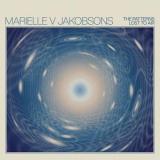
- Warm Spring
- Everything Lost Remains
- The Salt Rounds
- Without You Inside Time
- Insistence
- Before The Air Remembers
- Silently Spinning Around You
Marielle V Jakobsons has cultivated a signature voice molded by minimalist, ambient and spiritual traditions. Her recordings, from her early work with Date Palms, to the ongoing work with Chuck Johnson in Saariselka, and most definitively with The Patterns Lost to Air, show Jakobsons to be an exceptionally skillful sound sculptor, a musician who knows the value of patience and control. An artist able to derive maximum impact from her chosen sound elements, the album"s layout is shaped by three primary voices of violin, Fender Rhodes, and Moog Matriarch and was recorded in 2024 in the studio Jakobsons built in Oakland, California.
7
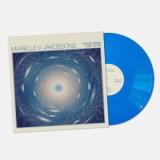
Marielle V Jakobsons has cultivated a signature voice molded by minimalist, ambient and spiritual traditions. Her recordings, from her early work with Date Palms, to the ongoing work with Chuck Johnson in Saariselka, and most definitively with The Patterns Lost to Air, show Jakobsons to be an exceptionally skillful sound sculptor, a musician who knows the value of patience and control. An artist able to derive maximum impact from her chosen sound elements, the album"s layout is shaped by three primary voices of violin, Fender Rhodes, and Moog Matriarch and was recorded in 2024 in the studio Jakobsons built in Oakland, California.

также имеющийся в продаже
Color vinyl[31,72 €]

After releasing my 300 DEGREES - "Naujas" album on Little Beat Different label, I wanted to continue the theme of making an acid-techno album, but taking out all the main elements like kick and other drum sounds, yet leaving the groove going, making it in to ambient. I have been falling asleep to this album many times my self. This sound became special to me and thanks to all of you, who have bought my previous tape and vinyl releases, it enabled me to fund and release this album on vinyl.

5
Pleasure Patterns has teamed up with the intricate minds of Ahni, INVERNO, No Police, & Submarine FM to produce a cunty cut of modern queer life which stays true to an undeniably classic sound. The record draws on Tunisian grooves, Reggae drum samples, & the energy of resistance.
Synthesised with field recordings from a kitchen, a jewellery box & an airport in Bengaluru, this 100% FLINTA* produced record is a truly trans-genre gem.
Inspired by the sounds & styles of Detroit Techno, Classic Deep House, & 90s Tribal Rhythms, Pleasure Pattern's debut release includes a tea-spoon of Acid, a pinch of Pop, & at least one cup of cunt.

Aura Sonora return with a second release to follow up the fantastic first one, this time it brings together two meticulous studio craftsmen, DYL & Tammo Hesselink. Their Moire Patterns EP kicks off with 'Pattern 1', a deep and rhythmic slice of rubbery techno that rides broken beats with atmospheric pulses up top. 'Pattern 2 slows down to a predatory crawl with icy pads making fro a dystopian vibe then 'Pattern 3' brings a sense of mystic tribal ritual deep in some futuristic jungle and 'Pattern 4' closes down with more fantastically crafted, dubby, broken rhythms that are topped with organic percussion and almost impossible not to move to. Pure rhythm science brilliance.

A double pack from Mammo, six tracks digging deep. General Patterns is the first time he’s released a record outside of his own constellation of labels and identities. Something new.
You can file this one under (dub) techno too if you like. Linked to the music he’s made as Puddlerunner last year in some ways, or the texture of tracks like Variable. It was compiled with Short Span following the completion of intense work on the ambient album Landmarks under his given name, and quickly brought together an extended set of stripped back, patient, wonderfully rewarding sound. Really beautiful. Some mossy earthy texture, some starlit night skies.
Mastered by Miles.
Art from The Designers Republic. The beginning of a new visual series and system for Short Span.

South African producer Cool Affair returns to Cataleya with an innovative track that blends genres effortlessly. Motoric Patterns is a real hypnotic groover, with sweet keys and vocal harmonies. The sound is somewhere between Broken Beat, Downtempo and even Deep House. Keyboard wizard and Broken Beat pioneer Kaidi Tatham provides a fantastic remix. His version features classic fractured beats and soul kissed touches. Tatham even adds an extra vocal hook. Motoric Patterns is a singular winner!
Founded by Robbie Redway and psychedelic researchers Mathieu Seynaeve and WaiFung Tsang, UK-based 'United Freedom Collective' has grown into a network of artists including Jordan Stephens, Falle Nioke, Eliza Shaddad, Labdi, William Rees and Facesoul. Originally conceived around psychedelic therapy sessions, online yoga and breathwork channels, the musical scope has expanded on each of the four EPs released on Maribou State's 'Dama Dama' label, and here continues with their debut on Multi Culti. This time Robbie takes the lead on production and sole vocal duties on all five tracks, presenting a range of influences and style. Lead single 'Between Memories' blends tropes of ecstatic dance with uplifting vocal piano house, somehow making flutes fit in with Detroit strings to epic, hands-in-the-air effect.' Title track ‘Bright Patterns’ bridges the gap between Jungle, Jai Paul, and Jamiroquai, a fusion of funky filtered disco-house and electroclash with side-chained pop vocal hooks. ’El Yo’ smooths things out, a dope, laid back groove with a measured reflection on psychedelic healing and the perils of spiritual bypassing. ‘Higher Drums’ warms things back up for the dancefloor with trumpet, afro-latin percussion, and flute flourishes. Finally, ‘Moonshine’ is a soaring, Amapiano-inflected post-desert-house ballad. Influenced, in their words, 'by birds, trees, Buddhism, yoga, headless way meditations, Jungian analysis, Zen Taoism, Chinese plant medicines, indigeneity, Amazonian and psychedelic cultures, icaros and world healing traditions,' the music is eclectic, ranging from afro-inspired jazz to Chinese folk, psych-rock to dub and dance music, an ambitious and inclusive range, collabs that extend well beyond the borders of western musical traditions. Their sound was described by Clash Magazine as an 'aural mosaic that glitters with colour and potential,' and while the sheen of the production and precision of the arrangements might seem a departure from Multi Culti's left-field endeavours, the psychedelic idealism and global connectivity make it a natural fit with the open-ended ethos of the label. Having already had radio support from KEXP, BBC6 Music (Laverne, Ravenscroft, Charles, Nemone, Letts), Jazz FM and Worldwide FM (Gilles Peterson), with a live show that sold out Dalston Curve Garde and The Waiting Room as well as supporting Maribou State for their recent comeback show at Islington Assembly Hall in London the collective's future is looking exceptionally bright.

Classic free jazz album reissued for the first time since the 70s. Old-style gatefold sleeve LP, with liner notes by Ed Hazell.
Noah Howard, an alto saxophonist and composer, was known for weaving intricate and innovative musical patterns, often likening his work to "sound paintings." His 1971 album Patterns, the first LP he self-produced on his Altsax label, stands as a testament to his experimental and spiritual approach to music. In interviews, Howard frequently used visual terms like "patterns" and "shapes" to describe his compositions, emphasizing the importance of melody and structure even in highly improvisational settings. For Howard, patterns and melodies were essential to guiding listeners through his explorations without alienating them, maintaining a balance between innovation and accessibility. Howard's quest for an original sound was deeply influenced by jazz greats like Charlie Parker, Ornette Coleman, and Jackie McLean. While he admired these legends, Howard avoided imitation, striving instead to develop his own distinct voice. His sound was unmistakably his own, and he felt a deep obligation to carry the jazz tradition forward through personal expression, not by mimicking others. His music was also rooted in spirituality, a legacy he traced to his upbringing in the Black Baptist Church. He believed jazz had always contained a spiritual essence, from Louis Armstrong to John Coltrane, and his work aimed to channel this cosmic, spiritual energy.
Patterns was recorded in the Netherlands during Howard's second stint in Europe, where he found a more open, less racially charged environment compared to the U.S. For the album, Howard collaborated with Dutch musicians such as Misha Mengelberg (piano), Han Bennink (drums), and Earl Freeman (bass). Despite the challenges faced by guitarist Jaap Schoonhoven, who felt out of place in the session, the album came together as a powerful mix of blues, jazz, and classical elements.
The music on Patterns is a high-energy fusion of American free jazz and Dutch improvisation. Howard's saxophone work alternates between leading with passionate, lyrical lines and blending into the collective improvisation. The album’s dynamic interplay, particularly between Mengelberg’s dissonant piano clusters and Bennink’s thunderous drumming, creates a vivid "sound painting" full of contrasting forms and colors. Patterns remains one of Howard’s most unique and celebrated recordings, showcasing his visionary approach to jazz.


также имеющийся в продаже
Zoetrope vinyl[40,29 €]

A1 - Tensor
Opening with an earworm minimal old school melody which lives long in the mind, Tensor sees JLM Productions kick off his latest Spatial EP in style, flexing his versatility in the genre with an exquisite Hot Pants break pattern in delightfully laid back fashion. Showcasing sublime filtering techniques, a lush 808 bassline and a nominal usage of kicks, Tensor lives long in the memory - and rightfully so.
A2 - Pseudovector
A real treat in store for fans of clean, edited breaks as JLM Productions immediately drops the crispest assortment of drum samples which will delight the ear and the feet in equal measure. Pseudovector is a real treat for the senses with an immense high note melody punctuating the track as the breaks build and build, adding layers of punchy detail which combine beautifully with cymbals, bongos and gentle atmospherics.
AA1 - Helios Drift
A more laid back piece that harks back to a special bygone age of slower atmospherics - as is Spatial's speciality - Helios Drift offers a feast of breakbeats with distinctive tribal maracas jubilantly shaping a unique vibe. Soothing padwork provides an elegant backdrop to the beats with rolled chords and sci fi melodies draped throughout, deconstructing towards a polished outro to this memorable mid-set breather.
AA2 - Wavefunction
Instant rolling 2-step vibes unfold as Wavefunction sees JLM Productions close the EP in style with a track which won't fail to move the discerning dancefloor. Immense 80's synthwave vibes tell a tale of cyber dystopia, highly evocative notes washing harmoniously with the breakbeats while a superb bassline solo in the breakdown invites contemplation from the audience before the beat rolls on to a reflective conclusion.
Words by Chris Hayes (Spatial / Red Mist)

Repress!
** Now available on vinyl* Steve Reich remains one of the most important figures in
20th century music. Though he studied at the prestigious
arts institutions Julliard and Mills College, by the mid-
1960s Reich set about dismantling the very orthodoxy that
he had been trained in. Forming a new musical language
based on repetitive processes, Reich became established
as part of the so-called 'Big Four' of New York minimalists
(along with La Monte Young, Terry Riley and Philip
Glass). Reich's influence can easily be seen today in both
the classical world and contemporary pop music.
'Four Organs' is the ultimate minimalist composition.
Performed by Reich, Glass, Art Murphy and Steve Chambers,
four identical Farfisa organs strike a single chord and
gradually lengthen each note to produce polyrhythms between
the players. Anchored by Jon Gibson's stoicallysteady
pulse on maracas, the piece deconstructs its opening
burst to a sustained mass of sound - stretching the tones to
create (in Reich's words) 'slow-motion music.'
Inspired by Reich's early training on drums, 'Phase Patterns'
treats the keyboards like tuned percussion instruments:
a basic rhythm pattern is played in unison and almost imperceptibly increases tempo to move out-of-sync.
Each progressive cycle emphasizes unique figures that are
not generated by an individual alone, but rather emerge
from the communal expression of the group.
Originally released on Shandar in 1971, Four Organs /
Phase Patterns is one of most highly regarded avant-garde
recordings in the past 45 years. This CD release features
cover photography by artist Michael Snow and is recommended
for fans of Neu!, Glenn Branca and Tim Hecker.

Steve Reich remains one of the most important figures in 20th century music. As part of the so-called "Big Four" of New York minimalists (along with La Monte Young, Terry Riley and Philip Glass), Reich influenced both the classical world and contemporary pop music.
Back in print ! Steve Reich remains one of the most important figures in 20th century music. Though he studied at the prestigious arts institutions Julliard and Mills College, by the mid-1960s Reich set about dismantling the very orthodoxy that he had been trained in. Forming a new musical language based on repetitive processes, Reich became established as part of the so-called "Big Four" of New York minimalists (along with La Monte Young, Terry Riley and Philip Glass). Reich's influence can easily be seen today in both the classical world and contemporary pop music."Four Organs" is the ultimate minimalist composition. Performed by Reich, Glass, Art Murphy and Steve Chambers, four identical Farfisa organs strike a single chord and gradually lengthen each note to produce polyrhythms between the players. Anchored by Jon Gibson's stoically-steady pulse on maracas, the piece deconstructs its opening burst to a sustained mass of sound – stretching the tones to create (in Reich's words) "slow-motion music."
Inspired by Reich's early training on drums, "Phase Patterns" treats the keyboards like tuned percussion instruments: a basic rhythm pattern is played in unison and almost imperceptibly increases tempo to move out-of-sync. Each progressive cycle emphasizes unique figures that are not generated by an individual alone, but rather emerge from the communal expression of the group. Originally released on Shandar in 1971, Four Organs / Phase Patterns is one of the most highly regarded avant-garde recordings of the past 50 years. This first-time vinyl reissue features cover photography by artist Michael Snow and is recommended for fans of Neu!, Glenn Branca and Tim Hecker.
