For fans of Dead and Company, Digital Tape Machine, and Jazz Improvisation! Chicago native and Guitar prodigy, Marcus Rezak has connected with GRAMMY-award-winner Paul Nelson (Johnny Winter) to produce his next body of work entitled Guitar Head, a blues-oriented album that melds his prestige in the jam, improvisation, and songwriting world with his roots that hail from the “Home of the Blues.” Rezak is joined by fellow stalwarts on today's scene Ray Paczkowski (Trey Anastasio Band), Adrian Tramontano (Twiddle & Kung Fu), and Chris DeAngelis (Kung Fu & The Machine) throughout the album, and Little Feat's saxophonist, Erik Lawrence joins the ensemble for four tracks. Guitar Head comes highly anticipated as Marcus’ best work to date. With a outstanding team in place and properly coordinated merchandise, performances, and promotion. This album will bring Marcus to the top, once again, as one of the nations most prominent guitarists and composers.
LP reissue of Collective Calls, the first duo LP from Evan Parker and percussionist Paul Lytton. Mythically alluded to as ‘An Improvised Urban Psychodrama In Eight Parts”, Collective Calls utilises electronics, pre-records and homemade instruments to wryly in/act self investigation. Having just recorded the cliff jumping Music Improvisation Company with Derek Bailey, Christine Jeffrey, Hugh Davies and Jamie Muir, Parker was at the point where he was thinking, ‘what’s the next thing?’ On Collective Calls, only the 5th release to appear on the newly minted Incus label, percussionist Paul Lytton arrives with an arsenal of sound making sources to push Parker into ever new territory. Recorded in the loft of The Standard Essenco Co on Southwark Street by Bob Woolford (Topography of the Lungs, AMM The Crypt), Collective Calls has more in common with noise or music concrete than with jazz; sitting comfortably alongside Italian messrs Gruppo di Improvvisazione Nuova Consonanza or the husband-wife duo of Anima Sound. According to Martin Davidson, it was a Folkways record that Lytton was obsessed with around the time of this release - Sounds of the Junkyard - its track titles like “Steel Saw Cutting Channel Iron in Two Places” working to give you a good idea of the atmosphere of Collective Calls. Paul Lytton had encountered the use of electronics in music in 1968 when he was invited to play drums on the recording of An Electric Storm by White Noise (along with David Vorhaus, Delia Derbyshire and Brian Hodgson). He had seen Hugh Davies using contact mics in the Music Improvisation Company, and soon set about assembling a Dexion frame akin to drummer John Stevens’, except that his own was armed with several single-coil electric guitar pickups, long wires and strings with connected foot-pedals to modulate pitch. Influenced as much by Stockhausen, Cage and David Tudor as he was by Max Roach and Milford Graves, Lytton’s percussion is abstract, expressionist and at times totally mutant. Sometimes rolling extremely fast, then screeching almost backwards over feedback, Lytton gives Parker room to play some of his weirdest work. Parker is listed as performing both saxophones, but also his own home made assemblages, including one dubbed the ‘Dopplerphone’ - a length of soft rubber tubing (activated by a saxophone mouthpiece and manipulated to alter the rate of airflow) attached to a longer length of clear plastic tubing (whirled around the head whilst being played) ending in a plastic funnel. Thickening the brew even more, Parker would also add a cassette recorder, on which he would play back collected sounds and previous recordings of the duo. Imagining the set up in a 70s loft, it’s an assemblage more akin to what today's free ears might see at a Sholto Dobie show, spread out on the floor of the Hundred Years Gallery, the shadow of Penultimate Press lurking in the corner. It’s a testament to Parker’s shape shifting sound - the ever present link to birdsong being at its most warped here - terrifically free and unfussy, wild and loose from any of the dogma that might come in later Brit-prov years
How does one express the bone-chilling loneliness of having lost the love of his or her mate, even as the relationship continues in the present tense? We would venture to say that “Element Of Love”, the inaugural 45 on S’plat Records, and the record debut of vocalist Gervis Myles, pretty well answers the question. The song and the performances elevate this record well beyond many efforts which seem to get lost in the mannerisms of soul, but ultimately miss the point. Gervis Myles tears into the song, which has the feeling of a scorching King Records hard soul lament from, say, 1960. He moans, shouts, unleashes falsetto outbursts, and hits ever more impossibly high non-falsetto notes as the song goes on. Bootsy Collins commented: “Y’all takin’ me back while moving forward. I love the way you funkin’ with me!” The band, which we call “Suite Crude Revue”, consists in this instance of Andrew Spadofora on saxophone, whose solo work on the record contributes considerably to its searing intensity, John Paul Simons (upright bass), Bryan Rogers (piano), Dave Schoepke (drums) and Daniel Zelonky on guitar. The B side, “I’m Thirsty,” is a rhythm and blues stomp about drinking away “woman problems.” Standout piano work from Rogers and a blistering solo by Spadafora, in addition to the raw vocal performance, make one want to …. drink! Written, arranged, and produced by Daniel Zelonky (aka Low Res).
Another of the albums that Prestige would issue several years after it was recorded, Bahia is drawn from a couple of sessions that the iconic tenor saxophonist recorded for the label in the late 1950s, during a time in which he was exploring different genres with various players, including pianist Red Garland, bassist Paul Chambers, plus drummers Jimmy Cobb and Art Taylor. The album has plenty of Trane hallmarks in the saxophone lead, and there is noteworthy contribution from trumpeter Wilbur Harden on ‘My Ideal’ and Freddie Hubbard on ‘Something I Dreamed Last Night.’ This is simply a great Coltrane listening experience.
180g virgin vinyl pressing, limited edition of 750 copies only - the complete album + 4 bonus tracks A husky-voiced singer, Jane Fielding (1935-2000) only recorded two albums, her career ending after getting married and retiring from the music scene. 'Embers Glow', her second and last LP, finds Fielding (who was just twenty-one at the time) accompanied by pianist Kenny Drew and his quintet of all- star musicians, including saxophonist Joe Maini and bassist Paul Chambers
The debut album of soul singer, Maiiah is also the third full-length by Hamburg collective, Angels of Libra, following on from the success of their collaboration with Irish singer, Nathan Johnston.
Maiiah is a singer with roots in the Balkans but residing in Düsseldorf, the city of the legendary Unique Club and the label of the same name. Soul left its mark on her early on, and when she met Hamburg producer, musician and composer Dennis Rux (Hamburg Spinners/Yeah! Yeah! Yeah! Studios) during the pandemic, the two realized they shared a similar musical vision. Their common love of soul music and old rhythm & blues brought them together, and they started recording music together in Hamburg with the Angels of Libra. Lo and behold, their first single together "Obey" got into rotation at tastemaker station Radioeins and confirmed them as a winning team.
Following in the footsteps of many a classic soul tune, second single, "No No No (I'm So Broke)" is a social critique and commentary. In it Maiiah literally wears her heart on her sleeve, as she sings about the back- breaking job she was working at the time and the poor earnings as a hotel service employee.
But naturally life has more to offer than just work and so a large part of the songs on this record revolve around love. Maiiah gives her own spin to the classic "I'm A Good Woman", which the spirited singer has performed live many times. The story goes that the late DJ and Unique Records label owner Henry Storch sent Maiiah the original song by Barbara Lynn to comfort her after a heavy heartbreak. The song thus holds a very important place in Maiiah's heart, and it was released as the third advance single, recorded during her tour with Nathan Johnston at Bekegg Studios in Rastede, Lower Saxony.
With Dennis Rux at her side and the powerful arrangements of the Angels of Libra, Maiiah has found the right partners for her personal debut. On "Kava" & "Plenty of Life", Hamburg's jack-of-all-trades Carsten Meyer aka Erobique is featured as a guest on the keyboards, so here the rhythm section of the Hamburg Spinners comes together again. The love for old soul, rhythm & blues and the analog sound of the sixties is also fully expressed on this album. The longings and deep feelings in Maiiah's lyrics are carefully picked up musically, whether as a classic R&B song as in "Please Come Home" or in boogaloo party mode as in the Croatian-sung "Kava", the fourth single. "Plenty of Life" is a song for self-cheering and a call to open up to the beautiful sides of life despite all adversity. In "I wanna go", on the other hand, Maiiah longs for her Croatian homeland. The crowning finale of the album is the intense "Infinity" about life's phases and the recurring ups and downs as the essence of human existence.
The ingredients of Maiiah and the Angels of Libra's recipe are authentic lyrics, to the point arrangements, tight horns, rousing background vocals and the spirit of the golden age of soul music, as it was shaped by labels like Motown and Stax. Recorded in part with original equipment from the 50s. Producer Dennis Rux says, "We wanted to create a record that people would go dance to at the Komet" (a neighborhood club on St. Pauli in Hamburg, the band's second home). The joint album combines the Hamburg soul of the Angels of Libra with the passion of Maiiah, who can fully live out her temperament on the mic.
Coral Red Vinyl. Frank Zappa was instrumental in getting former Mothers Of Invention member Lowell George and his new band, Little Feat, featuring Roy Estrada, RIchie Hayward and Billy Payne, a contract with Warner Bros. Records. The eponymous first album delivered to Warner Bros. was recorded mostly in August and September 1970, and was released in January 1971. Despite good reviews of their sophomore effort, lack of commercial success led to the band splitting up, with Estrada leaving to join Captain Beefheart's Magic Band. In 1972 Little Feat reformed, with bassist Kenny Gradney replacing Estrada. The band also added a second guitarist in Paul Barrere, who had known George since they attended Hollywood High School in California, and percussionist Sam Clayton (brother of session singer Merry Clayton and the brother-in-law of the jazz saxophonist Curtis Amy) and as a result the band was expanded from a quartet to a sextet. This new lineup radically altered the band's sound, leaning toward New Orleans funk. The group went on to record 'Dixie Chicken' (1973) - one of the band's most popular albums, which incorporated New Orleans musical influences and styles - as well as 'Feats Don't Fail Me Now' (1974), which was a studio-recorded attempt to capture some of the energy of their live shows. This recording was made in between the 'Dixie Chicken' and 'Feats Don't Fail Me Now' albums. Recorded live in Denver on July 20, 1973 at Ebbet's Field.
Coral Red Vinyl. Frank Zappa was instrumental in getting former Mothers Of Invention member Lowell George and his new band, Little Feat, featuring Roy Estrada, RIchie Hayward and Billy Payne, a contract with Warner Bros. Records. The eponymous first album delivered to Warner Bros. was recorded mostly in August and September 1970, and was released in January 1971. Despite good reviews of their sophomore effort, lack of commercial success led to the band splitting up, with Estrada leaving to join Captain Beefheart's Magic Band. In 1972 Little Feat reformed, with bassist Kenny Gradney replacing Estrada. The band also added a second guitarist in Paul Barrere, who had known George since they attended Hollywood High School in California, and percussionist Sam Clayton (brother of session singer Merry Clayton and the brother-in-law of the jazz saxophonist Curtis Amy) and as a result the band was expanded from a quartet to a sextet. This new lineup radically altered the band's sound, leaning toward New Orleans funk. The group went on to record 'Dixie Chicken' (1973) - one of the band's most popular albums, which incorporated New Orleans musical influences and styles - as well as 'Feats Don't Fail Me Now' (1974), which was a studio-recorded attempt to capture some of the energy of their live shows. This recording was made in between the 'Dixie Chicken' and 'Feats Don't Fail Me Now' albums. Recorded live in Denver on July 20, 1973 at Ebbet's Field.
Kompakt unveils the third volume of Jörg Burger’s Velvet Desert Music compilation series, dedicated to music that hits the sweet spot between the cinematic, the (pop) ambient, and the psychedelic. With Velvet Desert Music Vol. 3, Burger and his friends wander afar, taking trips away from, or adjacent to, the dancefloor that’s acted so long as the crucible for the Kompakt aesthetic. Like its predecessors, it’s a gorgeous, lambent collection of late-night mood music.
Because it’s such a broad church, Velvet Desert Music admits all kinds of new experiences, as well, with Burger looking for music that "leads out of the desert into the velvet universe". Indeed, of all the volumes in the series, this third instalment feels closest to an album made by a true collective. The roster has changed, with new contributors Flug 8 and Seb Martel, both with his trio Las Ondas Marteles and with Chocolate Genius and Zsela as La Finca, joining regulars The Novotones, Mount Obsidian, The Golden Bug, Paulor and Sascha Funke.
Burger himself reappears, too, alongside Fritz Ackermann (of The Novotones), Max Würden and Thore Pfeiffer, in The Velvet Circle. Their contributions are pure lush life electronica: “Our Tribe” hitches a ride with a low-slung groove, flickering psychedelic reels of acoustic guitar traipsing across moody bass and taffeta layers of drone; their opening remix of Flug 8’s “Puerto Rico” gently introduces the album with softly tangling electronic tones, while guitars, drenched in reverb, pirouette in the background. A Mount Obsidian remix of “Sacrosanct” by Burger’s The Black Frame -project is a swirling treat for the ears.
La Finca’s electronics and voice miniature, “What Clouds Say”, is a masterclass in poetic restraint; Martel’s “Dark Mambo”, remixed by Burger, is one of the collection’s big surprises, for it indeed does what the title says, a drifting, surrealist take on the mambo form, full of pensive chords, rich with unrequited longing, a breathy saxophone whispering under the song’s sly rhythmic carriage.
Elsewhere, The Novotones chime in with a slyly propulsive, Krautrock-esque charmer, “Liberty Bell”, and the guitar-led tone-drift of “Valley of Oblivion”; Paulor’s “The Last Coke in the Desert” is a chiming, lilting dreamscape; Mount Obsidian are joined by vocalist Charlotte Jestaedt for two modern takes on early-hours art song, “Marole” and “Fade”; Sascha Funke’s “Mathias Rust” is a lavish dancefloor dream, vocal samples drifting through the song as it slowly envelops the listener in its opulent radiance.
This is just a taste of the rich pleasures of Velvet Desert Music Vol. 3, a triumph of a compilation that takes the psychedelic visions of its predecessors and looks for the desert within, a dusty kiss, a road-movie hallucination flickering on the listener’s eyelids, a cinematic projection from deep inside the mind.
out of Stock
Last delivered 16 months ago available to reorder, subject to availability
This 1970 album see master saxophonist Stan Getz cover hits of the day, with Beatles producer George Martin at the controls. Getz tries his hand at songs by Paul Simon, Bacharach-David, a heartfelt take on Joni Mitchell’s “Both Sides Now” and Graham’s Nash title track. This Verve By Request title is pressed on 180-gram vinyl at Third Man in Detroit.
Beograd (Belgrade in Serbian) is a four-piece Serbian electronic band, formed in the capital of the former Yugoslavia in 1980. Influenced by bands such as Kraftwerk, Depeche Mode, Ultravox and Human League, it played a role pioneer on the Yugoslav synth-pop scene. Their first studio album, Remek Depo, was released in late 1982 on cassette and early 1983 on vinyl by public label PGP RTB. It was a huge media success, released at the time of the effervescence of Belgrade's alternative scene, a vibrant underground movement of avant-garde artists and musicians that included leading bands such as Sarlo Akrobata, Ekatarina Velika, Idoli, Electricni Orgazam, etc. Unfortunately, the band disbanded shortly after the album's release. The album contains politically provocative lyrics for the time. Produced by Saša Habić, it stands out for the quality of its guest musicians - timpanist Borislav "Bora Longa" Pavićević, avant-garde saxophonist Paul Pignon and veteran jazz trumpeter Stjepko Gut - who contributed to its soulful side. , creating a unique combination of hot and cold.
My ZEITGEIST. (in the words of The Legendary Tigerman)
Musically, I tried to follow the path left behind by early modular synths explorers like Suzanne Ciani or Wendy Carlos, mixing it with the raw & powerful energy of early punk explorers like The Cramps, Suicide or The Sonics (my teenage heroes!) and the orchestral universe of people like Lee Hazlewood or Scott Walker, looking back at the past while keeping an eye out for the future.
Zeitgeist is also the point where my work as a soundtrack composer meets my life as a punk Rock’n’roller.
The Legendary Tigerman is the artistic name of Portuguese musician and composer Paulo Furtado. With a solid career stemming from the DIY movement and characterized by the reinvention of genres such as blues, rock, and garage rock, while always maintaining a punk attitude, The Tigerman's recognition is founded on a galloping international career, marked by the release of the iconic album "Naked Blues" in 2001. In a few years, he goes from a cult artist to a reference name and with the acclaimed "Femina" (2009), he writes his name in the pantheon of the most creative rock made in Europe.
With "True" (2014) and "Misfit" (2018), he consolidated his position in the international rock scene with two albums that explore the dense soundscapes of a rock 'n' roll that moves away from common places. Live, the unstoppable and infernal rock machine, consisting of Paulo Furtado on vocals and guitar, Filipe Rocha on bass, Mike Ghost on drums, and Cabrita on saxophone, makes concerts unpredictable and explosive, exactly as expected from a rock 'n' roll act.
The success of The Legendary Tigerman goes beyond the borders of Portugal, thanks to tours in various countries in Europe, Asia, and Latin America. In addition to his work on stage, Paulo Furtado has become notable for his prominent career in theater, cinema, soundtrack creation, photography, and film direction.
Focused on being a catalyst for unique and authentic music, The Legendary Tigerman is one of the main European rock names, renewing himself with creativity and innovation with each album. In 2023, there will be a new album, featuring more ethereal and intimate sounds alongside rock 'n' roll, but always keeping it punk.
'New World Artifacts' is the debut album from Rouen, France-based group Unschooling, arriving following their 2021 'Random Acts of Total Control' EP and 2019's 'Defensive Designs' tape. Out October 6th via Bad Vibrations, it's a collection of lo-fi post-punk clocking in at 30 minutes, underscored with subtle pop melodies and structures but never far away from bouts of chaotic no-wave dissonance. Here, Unschooling claim loud and clear their desire to return to a sound which is less calibrated, less obvious. As they themselves write, "New World Artifacts is an ode to the unexpected, a tribute to many art rock bands who are always where you least expect them." Already heralded as one of the most exciting up-and-comers in the new school of post-punk revivalists, having spent the last couple of years playing to busy crowds and festival fields across the continent, 'New World Artifacts' might just mark them out as the best in class. The Unschooling quintet, as referred to on the album's collage artwork, is made up of Vincent Fevrier (Vocals/Guitar), Damien Tebbal (Bass), Paul Morvant (Guitar), Marc Lebreuilly (Guitar/Synth) and Thomas Fromager (Drums). Although their music might revel in discord, it is a calculated one. The musicianship is complex and meticulous, hardened by their time spent together playing on the road. For 'New World Artifacts', additional musicians were also brought in to expand the sound in new ways, including saxophonists Levi Gillis (The Dip, Beat Connection) and Emeline Morisset (Les Agamemnonz), and Kyleen King (Stephen Malkmus & The Jicks, My Morning Jacket) on strings. Pressing Info: 180g blue vinyl, limited to 300 hand-numbered copies ww, download card included.
'New World Artifacts' is the debut album from Rouen, France-based group Unschooling, arriving following their 2021 'Random Acts of Total Control' EP and 2019's 'Defensive Designs' tape. Out October 6th via Bad Vibrations, it's a collection of lo-fi post-punk clocking in at 30 minutes, underscored with subtle pop melodies and structures but never far away from bouts of chaotic no-wave dissonance. Here, Unschooling claim loud and clear their desire to return to a sound which is less calibrated, less obvious. As they themselves write, "New World Artifacts is an ode to the unexpected, a tribute to many art rock bands who are always where you least expect them." Already heralded as one of the most exciting up-and-comers in the new school of post-punk revivalists, having spent the last couple of years playing to busy crowds and festival fields across the continent, 'New World Artifacts' might just mark them out as the best in class. The Unschooling quintet, as referred to on the album's collage artwork, is made up of Vincent Fevrier (Vocals/Guitar), Damien Tebbal (Bass), Paul Morvant (Guitar), Marc Lebreuilly (Guitar/Synth) and Thomas Fromager (Drums). Although their music might revel in discord, it is a calculated one. The musicianship is complex and meticulous, hardened by their time spent together playing on the road. For 'New World Artifacts', additional musicians were also brought in to expand the sound in new ways, including saxophonists Levi Gillis (The Dip, Beat Connection) and Emeline Morisset (Les Agamemnonz), and Kyleen King (Stephen Malkmus & The Jicks, My Morning Jacket) on strings. Pressing Info: 180g blue vinyl, limited to 300 hand-numbered copies ww, download card included.
Miles Davis is regarded to be one of the most influential and acclaimed figures in the history of jazz and 20th-century music. Quiet Nights is the fourth and last studio album that Davis collaborated on with Gil Evans. The 1963 release took inspiration from the bossa nova genre that rose to popularity during the time.
Quiet Nights is a mix of situations and sources: Brazilian folk (“Prenda Minha”, titled “Song #2” on the album), Spanish classical (“Adelita” by guitar pioneer Francisco Tárrega, here called “Song #1”), and a few ballads, including one that stands out from the rest of the big band album: “Summer Night,” a quintet take featuring Miles playing muted then open trumpet and the start of a new band: tenor saxophonist George Coleman, pianist Victor Feldman, bassist Ron Carter, and drummer Frank Butler.
The album was produced by Teo Macero. Some of the additional performers on this album include Paul Chambers, Bill Barber, Steve Lacy, Jimmy Cobb, Willie Bobo, and George Coleman amongst others.
Le Magnifique is a cult film. Many a viewer has memorized the lines of this character, whose role was tailor-made for Jean-Paul Belmondo. In the year of our Lord 1973, Belmondo reunited with director Philippe de Broca, a pair who, decades before the Jean Dujardin version of OSS 117, were unknowingly making meta cinema. The film's soundtrack, by Claude Bolling, successfully navigates between the first and second degree, without ever sinking into the clumsiness of "fantasy music". For the record, Claude Bolling is none other than the chief composer of the all-female group Les Parisiennes and of some 100 film scores, including Borsalino, which is certainly the best-known. Above all, he is a genius of French jazz, whose talent makes his music sound relaxed and familiar, even when you're listening to it for the first Tme. From the very first track on the album, "TaQana", postcard images of Mexico spring to mind. Claude Bolling plays with the codes of film music without ever losing a certain communicaTve jubilaTon. With the soundtrack to Le Magnifique, Claude Bolling equals the Anglo-Saxon masters of the easy-jazz pop genre, such as Henri Mancini. Fans of jerks to dance to at the ambassador's parTes will be delighted by the composiTon "Pop Mod". Even today, those who invented the term "lounge core" would go out of their way to own an original Claude Bolling vinyl. Thanks to Claude Bolling and his original French Touch, before thedays of Dimitri From Paris and Bob Sinclar who, if they hadn't been able to take advantage of this musical and cinema to graphic heritage, wouldn't have had anything to sample.
Critics often complain that small-group sessions comprised of members of the Duke Ellington Orchestra are somewhat disappointing; this is definitely not the case with this session led by Clark Terry, recorded during a 1959 tour of Europe in the final month of the trumpeter’s almost eight-year tenure with the band. Fellow Ellington sidemen Paul Gonsalves, Jimmy Woode, and Sam Woodyard are present, along with Raymond Fol at the piano. Terry was one of the most gifted trumpeters to grace the Ellington band and he blossoms when he has more opportunities to solo in a small group setting like this one. Gonsalves proves to be the perfect foil for Terry as they trade lines on several of the numbers. Unlike many dates led by Ellington veterans, this one doesn’t rely heavily on songs from the vast Ellington songbook; instead, Terry includes only ‘Satin Doll’, a Monk’s tune, one by Babs Gonzales and three of his own compositions, with ‘Serenade to a Bus Seat’ (a remake of his upbeat instrumental interpretation of the hectic life of a touring musician) proving to be the most memorable.
This studio date was recorded for French Decca label and was almost impossible to find until now.
Clark Terry (Trumpet)
Paul Gonsalves (Tenor saxophone)
Raymond Fol (Piano)
Jimmy Woode (Bass)
G. T. Hogan (Drums)
Miles Davis created just one studio album with his original sextet: Milestones. And he made every moment count. Pairing with Cannonball Adderley, John Coltrane, Red Garland, Paul Chambers, and Philly Joe Jones, Davis not only laid the groundwork for the modalism that immediately followed but tailored a genuine modern-jazz masterwork laden with performances among the most explosive of his distinguished career. Sandwiched between the more famous 'Round About Midnight and the epochal Kind of Blue, Milestones remains a seminal work of art.
Sourced from the original master tapes and pressed on dead-quiet SuperVinyl, Mobile Fidelity's numbered-edition 180g LP grants each musician their own space amid broad soundstages. Afforded the benefits of a nearly non-existent noise floor and supreme groove definition, this vinyl reissue doubles as a time machine back to the February-March 1958 recording sessions.
Colors, shapes, and dimensions appear in the manner that resembles what you'd glean from behind a studio control room's window. Davis' burnished trumpet is rendered in three-dimensional perspective and seemingly coaxes the band to play with unburdened zest. Coltrane's trademark saxophone teems with lifelike tonality and images with specificity; his solos work in tandem with and against the driving rhythms. Garland's swaggering piano lines? Visualize the keys as he hits full stride, the chords and fills slithering around skeletal frameworks.
Inducted into the Grammy Hall of Fame and selected as a "Core Collection" record by the Penguin Guide to Jazz, Milestones is as famous for its title track – widely considered ground zero for modalism and bolstered by Jones' hallmark "Philly Lick" rim shot – as the players that produced it. The launching pad for many of Davis' improvisational flights, the album teases the explorations Coltrane would soon chase. Davis' own solo work broaches territories that far exceed what he had done in his bop-rooted past. Every song is a highlight.
Take the bravado "Dr. Jackle," featuring a hot-foot pace and bebop strains, or "Sid's Ahead," which continues the album's blues theme while juggling edgy harmonics and inside-out structures. On "Billy Boy," distinguished with an arco bass solo from Chambers, Garland gets a turn in the spotlight and channels the openness practised by one of his heroes, Ahmad Jamal. Even more instructive is the band's reading of Dizzy Gillespie's "Two Bass Hit." Three years removed from the version Davis and company recorded for the trumpeter's Columbia debut, this interpretation demonstrates the extent to which the group had jelled in a relatively short amount of time.
Then there's "Straight, No Chaser," the definitive rendition of Thelonious Monk's signature piece. Coltrane's marbled playing pulls at the tune's borders, Adderley takes liberty with solos, and Davis dances around his mates, at one point quoting "When the Saints Go Marching In" while demonstrating his knowledge of tradition and casting an eye towards the future.
About that future. Garland already had one foot out the door during the Milestones sessions to the extent Davis spells him on "Sid's Ahead." Jones would stick around for a bit longer but soon plot his exit. History proves Davis navigated the changes with visionary aplomb. Yet the chemistry, excitement, and beauty the sextet achieves on Milestones cannot be overstated. This reissue helps put the album in proper perspective – and presents the music the fidelity it deserves.
Mike Cooper wrote his final songwriter record, a suite of gloaming glam-rock anthems performed with a spiritual jazz trio, while living on the Costa Tropical of Granada, Spain, an era when he was considering retiring from music altogether. A chance encounter and a last-ditch record deal convinced him to make one last album, which he recorded in 1974 at Pathway Studios in London, with “The Greatest Rock and Roll Band in the World,” featuring the inventive South African jazz rhythm section of Louis Moholo and Harry Miller with UK saxophonist Mike Osborne. This first-ever reissue includes a bonus CD of Milan Live Acoustic 2018, a previously unreleased solo set that represents Cooper’s return, after forty-four years pursuing free improvisation and electronics, to a new, deconstructed approach to singing, steel guitar, and songcraft. The deluxe LP+CD edition also features a six-panel insert with additional artwork and an essay by the artist about both records. The deluxe 2xCD gatefold edition features an eight-panel version of the same insert. In the wake of his magisterial triptych of early 1970s avant-folk-rock records Trout Steel (1970), Places I Know (1971), and The Machine Gun Co. (1972) the British songwriter, guitarist, and fledgling improviser Mike Cooper retreated to the Costa Tropical of Granada, Spain. With no prospects for touring or recording again, his fiery band the Machine Gun Co. had disintegrated. Cooper sets the scene in his liner notes of the first-ever reissue of his unjustly forgotten next album Life and Death in Paradise (1974): No one came running with offers of fame and riches, and we fell apart, and I left the country and headed for the beach, disillusioned and a bit disorientated musically. I went to Almuñécar in Andalusia, a place I had been going since 1969, because a painter friend from Reading, Rowland Fade who made the collage in the gatefold of my earlier album Trout Steel had moved there in 1968. It was in this synthetic coastal “paradise,” unmoored and adrift, considering retiring from music altogether, that he began tentatively writing new songs. A chance encounter with producer Tony Hall, who offered Cooper a last-ditch record deal on Hall’s nascent Fresh Air label, convinced him to make one last album with the stipulation that he could assemble what he called “The Greatest Rock and Roll Band in the World.” I told Tony that I would do it if I could hire some of my South African jazz musician friends that I had used on my Pye/Dawn albums and some friends from Reading that I still knew and admired. I called up Harry Miller, Louis Moholo, and Mike Osborne, who were in fact a trio at the time … and several local Reading heroes, including the singer-songwriter Terry Clarke. The result, recorded live with minimal overdubbing at Pathway Studios in London, was Life and Death in Paradise, an utterly singular suite of gloaming glam-rock anthems performed with a spiritual jazz trio comprising the inventive South African jazz rhythm section of Moholo and Miller with UK saxophonist Osborne. Unlike anything else in Cooper’s extensive catalog. Fresh Air fizzled, and Life and Death became Cooper’s final record as a songwriter, having pushed the form as far as he could. Drifting north from Spain back to the UK, he fell into the scene of the London Musicians Collective (LMC) including Paul Burwell, David Toop, and saxophonist Lol Coxhill, Cooper’s bandmate in the Recedents and fully embraced free improvisation. He was still, however, interested in singing and lyrics, so, influenced by Tom Phillips, William Burroughs, and Brion Gysin, he began experimenting with text collage and cut-up techniques, arriving at his own hybrid compositional strategy for improvisatory songs. The previously unreleased solo set Milan Live Acoustic 2018 represents Cooper’s return, after more than four decades pursuing free improvisation and electronics, to a new, deconstructed approach to singing, lap steel guitar, and songcraft. Presented here together with Life and Death in Paradise, the two records provide fascinating bookends to Mike Cooper’s long, mercurial, and pioneering practice as a songmaker.
Die Apart Demos wurden zwischen 1980 und 1984 in verschiedenen Kellern und professionellen Studios in Chicago aufgenommen und dokumentieren 12 intime und reduzierte Skizzen, Demos und unveröffentlichte Tracks von Andre Gibson und der Universal Togetherness Band, als sie sich auf ihre Solokarrieren zubewegten. Von tief empfundenen Huldigungen an die Liebenden, die von einem seidigen Fender Rhodes verziert werden, bis hin zu Disco-Party-Startern über spirituelle Dankbarkeit - Andre Gibson lässt uns in sein Herz blicken und bringt am Ende alles zusammen. Die Universal Togetherness Band aus Chicago, verband in ihrem eklektischen Sound Funk-, Soul-, Disco-, Jazz-, Rock- und New-Wave-Einflüsse mit intelligenten und fantasievollen Texten. 1978 gegründet und geleitet von Andre Gibson, mit seinem Bruder Arnold Gibson (Schlagzeug, Bass), dem ehemaligen Colorvision-Mitglied Fred Misher (Bass, Hintergrundgesang) und Freds Bruder Leslie Misher (Leadgitarre), während Andre die Keyboards, das Vibraphon und den Leadgesang übernahm. Obwohl die Gruppe mehrere Jahre lang in den Clubs von Chicago auftrat und gelegentlich größere Auftritte absolvierte (vor allem als Vorgruppe von Peter Gabriel), hatte sie Mühe, ein größeres Publikum für ihre anspruchsvolle R&B-Melange zu finden. Zwischen 1979 und 1982 nahm die Band Dutzende von Sessions auf, die Gibsons weitreichende Vision als Komponist und Bandleader dokumentierten. Während Gibsons Zeit am Columbia College kamen Paul Hanover (Mundharmonika und Klavier) und Louis Sanford (Schlagzeug) zu den ursprünglichen vier Multiinstrumentalisten hinzu. Nachdem sich die ursprüngliche Besetzung der Universal Togetherness Band schließlich Mitte der 1980er auflöste, nahm Andre Gibson weiterhin mit einer Besetzung mit Frank Alexander (Schlagzeug), Allen Burroughs (Gitarre), Art Love (Bass) und Michael Young (Saxophon) auf. 2015 veröffentlichte Numero Group eine erste Zusammenstellung mit unveröffentlichten Aufnahmen mit dem schlichten Titel Universal Togetherness Band.
out of Stock
Last delivered 3 years ago available to reorder, subject to availability
Die Apart Demos wurden zwischen 1980 und 1984 in verschiedenen Kellern und professionellen Studios in Chicago aufgenommen und dokumentieren 12 intime und reduzierte Skizzen, Demos und unveröffentlichte Tracks von Andre Gibson und der Universal Togetherness Band, als sie sich auf ihre Solokarrieren zubewegten. Von tief empfundenen Huldigungen an die Liebenden, die von einem seidigen Fender Rhodes verziert werden, bis hin zu Disco-Party-Startern über spirituelle Dankbarkeit - Andre Gibson lässt uns in sein Herz blicken und bringt am Ende alles zusammen. Die Universal Togetherness Band aus Chicago, verband in ihrem eklektischen Sound Funk-, Soul-, Disco-, Jazz-, Rock- und New-Wave-Einflüsse mit intelligenten und fantasievollen Texten. 1978 gegründet und geleitet von Andre Gibson, mit seinem Bruder Arnold Gibson (Schlagzeug, Bass), dem ehemaligen Colorvision-Mitglied Fred Misher (Bass, Hintergrundgesang) und Freds Bruder Leslie Misher (Leadgitarre), während Andre die Keyboards, das Vibraphon und den Leadgesang übernahm. Obwohl die Gruppe mehrere Jahre lang in den Clubs von Chicago auftrat und gelegentlich größere Auftritte absolvierte (vor allem als Vorgruppe von Peter Gabriel), hatte sie Mühe, ein größeres Publikum für ihre anspruchsvolle R&B-Melange zu finden. Zwischen 1979 und 1982 nahm die Band Dutzende von Sessions auf, die Gibsons weitreichende Vision als Komponist und Bandleader dokumentierten. Während Gibsons Zeit am Columbia College kamen Paul Hanover (Mundharmonika und Klavier) und Louis Sanford (Schlagzeug) zu den ursprünglichen vier Multiinstrumentalisten hinzu. Nachdem sich die ursprüngliche Besetzung der Universal Togetherness Band schließlich Mitte der 1980er auflöste, nahm Andre Gibson weiterhin mit einer Besetzung mit Frank Alexander (Schlagzeug), Allen Burroughs (Gitarre), Art Love (Bass) und Michael Young (Saxophon) auf. 2015 veröffentlichte Numero Group eine erste Zusammenstellung mit unveröffentlichten Aufnahmen mit dem schlichten Titel Universal Togetherness Band.
Valentine Lover Red Vinyl. Die Apart Demos wurden zwischen 1980 und 1984 in verschiedenen Kellern und professionellen Studios in Chicago aufgenommen und dokumentieren 12 intime und reduzierte Skizzen, Demos und unveröffentlichte Tracks von Andre Gibson und der Universal Togetherness Band, als sie sich auf ihre Solokarrieren zubewegten. Von tief empfundenen Huldigungen an die Liebenden, die von einem seidigen Fender Rhodes verziert werden, bis hin zu Disco-Party-Startern über spirituelle Dankbarkeit - Andre Gibson lässt uns in sein Herz blicken und bringt am Ende alles zusammen. Die Universal Togetherness Band aus Chicago, verband in ihrem eklektischen Sound Funk-, Soul-, Disco-, Jazz-, Rock- und New-Wave-Einflüsse mit intelligenten und fantasievollen Texten. 1978 gegründet und geleitet von Andre Gibson, mit seinem Bruder Arnold Gibson (Schlagzeug, Bass), dem ehemaligen Colorvision-Mitglied Fred Misher (Bass, Hintergrundgesang) und Freds Bruder Leslie Misher (Leadgitarre), während Andre die Keyboards, das Vibraphon und den Leadgesang übernahm. Obwohl die Gruppe mehrere Jahre lang in den Clubs von Chicago auftrat und gelegentlich größere Auftritte absolvierte (vor allem als Vorgruppe von Peter Gabriel), hatte sie Mühe, ein größeres Publikum für ihre anspruchsvolle R&B-Melange zu finden. Zwischen 1979 und 1982 nahm die Band Dutzende von Sessions auf, die Gibsons weitreichende Vision als Komponist und Bandleader dokumentierten. Während Gibsons Zeit am Columbia College kamen Paul Hanover (Mundharmonika und Klavier) und Louis Sanford (Schlagzeug) zu den ursprünglichen vier Multiinstrumentalisten hinzu. Nachdem sich die ursprüngliche Besetzung der Universal Togetherness Band schließlich Mitte der 1980er auflöste, nahm Andre Gibson weiterhin mit einer Besetzung mit Frank Alexander (Schlagzeug), Allen Burroughs (Gitarre), Art Love (Bass) und Michael Young (Saxophon) auf. 2015 veröffentlichte Numero Group eine erste Zusammenstellung mit unveröffentlichten Aufnahmen mit dem schlichten Titel Universal Togetherness Band.
A certified maestro of his time, king of Cool Jazz with a penchant for unusual time signatures, Dave Brubeck is as prolific as they come. For their third release, Major Keys lovingly remaster and reissue three of his key pieces as The Dave Brubeck Quartet including the instantly recognisable ‘Take Five’ on 180g vinyl in a Major Keys sleeve.
On the A side one of the most famous jazz pieces of all time. Released in 1959 as part of the Quartet’s Time Out LP, which become the first jazz album to sell more than a million copies with the ‘Take Five’ single also taking that that coveted spot whilst going on to become the best-selling jazz single of all time. Accolades aside, it’s an intricate, absorbing and elating piece of jazz history, with one of the most recognisable melodies ever to be written. Timeless genius written by the quartet’s saxophonist Paul Desmond and performed by Dave Brubeck, Paul, Joe Morello and Eugene Wright, reissued for a new generation of listeners.
The B side sees ever more experimentation from the quartet, with the time signatures Dave heard on the streets of Istanbul providing the inspiration that gave birth to the lead track from Time Out - ‘Blue Rondo a la Turk’. As cool and complex as they get, stirring up those meters like a slick Manhattan. Rounding off the package, American jazz singer Carmen McRae’s 1962 vocal version of ‘Take Five’ gives an extra dose of sophistication to proceedings. All in all, a must have for any discerning music lover.
out of Stock
Last delivered 6 months ago available to reorder, subject to availability
Svart Records proudly presents Sonny Rollins with the Heikki Sarmanto trio, in an extremely rare live performance at Finland Festival in the summer of 1972. Available for the first time, fifty years after it was initially recorded, this incredible show features Sarmanto on the Fender Rhodes electric piano, his brother Pekka Sarmanto on bass and Esko Rosnell on drums. Legend of American Jazz, “Saxophone Colossus” Sonny Rollins hand picked Heikki Sarmanto and his Finnish trio for this night of improvisation and mutual respect that culminated in years of collaboration after. The music conjured throughout this live extravaganza is everything a Jazz aficionado could have hoped for, with extensive improvisations and incredible soloing by the musicians. Two standards and one original by Rollins, which last between sixteen and twenty-four minutes, illustrate both the quartet’s vibe and supreme virtuosity. Taking place at the magnificent Finlandia Hall, an architectural marvel, which was completed only a few months earlier, and recorded by the YLE (The Finnish Broadcasting Company), this legendary concert has been expertly mastered by Pauli Saastamoinen at the infamous Finnvox Studios in 2022 to perfectly highlight the magic that was in the air all those years ago. Rollins seems to be especially in high spirits throughout the show and his powerful and expressive playing, full of humor, is simply marvelous. He even manages to quote some hints of Jean Sibelius’ “Finlandia” tone poem as a tribute to the venue. Through our tireless efforts at Svart Records to preserve our musical culture, you can now be re-introduced to an important piece in the jigsaw of Finnish Jazz history, immortalised on double vinyl gatefold and CD and both limited to only 1000 copies.
Ultramarine are an English electronic music duo, formed in 1989 by Ian Cooper and Paul Hammond.
Cooper and Hammond first worked together in the band A Primary Industry during the mid-1980s. Following the split of that band, they formed Ultramarine and released their debut album 'Folk' in April 1990 on seminal Belgian label Les Disques du Crépuscule. The duo found critical acclaim with their second long player, 'Every Man And Woman Is A Star', initially released in 1991. Over the next decade or so, they recorded two John Peel sessions, collaborated with Robert Wyatt, toured the States with Orbital, then Europe with Björk. After a hiatus, they began recording again in Ian's home studio, overlooking the Blackwater Estuary in Essex.
The moods and movements of this English estuary can be heard running through the duo's stunning and deeply intriguing new album 'Send and Return'.
Flowing and mutating as it transitions from an Essex river into the open sea, the Blackwater Estuary, north of London, inspired this beguiling collection of hypnotic jazz, itching electronica and softly dazzling ambient shapes.
For the 6-track album, Paul and Ian hired a Thames sailing barge moored on the estuary for one day and recorded below deck in the ship's downstairs wooden saloon; the idea was originally inspired by seeing Robin Williamson of The Incredible String Band perform on a similar barge.
The duo were joined by jazz musician Greg Heath and accomplished percussionist Ric Elsworth for the day, who added stunning saxophones, alto flute, percussion and vibraphone to the mix. It's a contemplative, ambient record with gentle jazz inflections and softly pulsing electronica.
out of Stock
Last delivered 3 years ago available to reorder, subject to availability
Deprived of sanity, Paul Régimbeau aka Mondkopf found new territories of expression with »Spring Stories«, a collection of post-rapture moods full of glorious chaos, ready to absorb and re-ignite all that is worn.
As a phoenix raising from the ashes, »Spring Stories« captures the earth in full bloom. Darkness & Insanity looses it´s grips as the roots and fresh leaves creates a slow dance towards the sun. Similarly sine-wave drones move around exploding electric guitar improvisations as new light beams on shadow cast corners. The album feels like a 60ies jam set in the post-world psychedelic underground. Heavy, absurd, beautiful and ready to sooth burnt out, depleted minds. Paul has citied that he´s affected as much by folk improvisors such as Master Wilburn Burchette & Robbie Basho as well as the doom drone of giants Earth & Sunn O))). Spring Stories invokes on these, while feeling like a personal blow-out, coming right from the core. Touching and grand, like spring itself.
The album also features Frederic D. Oberland on two tracks playing variously Duduk & Alto Saxophone. Lastly, The Necks drummer Tony Buck shakes & rattles all over the final - and seriously epic - piece “Continuation”, as the world aligns while the sun rises over its near-dead shape.
out of Stock
Last delivered 12 months ago available to reorder, subject to availability
São Paulo-based carnival collective and brass band combine retro horns with cumbia, baile funk, jazz, Michael Jackson & more
A Espetacular Charanga do França started as a political act, part of a recent movement which has seen the people of São Paulo reclaim their streets, turning their city into a revelation of Brazilian carnival. The group takes equal inspiration from the powerful charanga horn and percussion bands that stir the crowds at Brazilian football matches, and the expertly-arranged sounds of 60s
samba, finding that sweet spot between musicianship and music that makes you lose your shit. And they do it with humour, clear as day in their covers of Michael Jackson and pagode pop hits, and the baile funk and Balkan rhythms that sneak their way in to the tunes.
Since forming in 2013 the group have become an iconic staple of São Paulo’s revived carnival, generating crowds 15,000 strong. Though COVID-19 put a stop to them hitting the streets this year, in 2020 they made their way to carnival with over 60 brass players and 30 percussionists, declaring their bloco an anti-fascist zone, their reply to a political climate in Brazil that is suffocating human rights, culture and any hope for equality.
“I like to think that Charanga is an oasis in the middle of all the shit that we live, where you don't have to be worried about who you are, what are your preferences, whether you can be comfortable. If you want to parade with us wearing a tea towel you can, you won't be harassed. And it's also about music, it's about listening to music. We do this thing the whole year, we rehearse all year, we do too much so that people can just get crazy and not care about the music.” Thiago França
The group is the brainchild of saxophonist Thiago França, best known as a founding member of Afro-punk explorers Metá-Metá, and one of São Paulo’s most in-demand horn men, with credits on influential albums by Criolo, Elza Soares, Céu and Lucas Santtana. A
out of Stock
Last delivered 3 years ago available to reorder, subject to availability
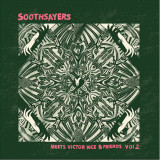
“On new album, Brixton’s dub/jazz/Afrobeat stalwarts Soothsayers offer 11 emotive instrumentals, their sonic textures afforded greater depth through the input of some of São Paulo’s finest musicians, including Criolo’s drummer, Bruno Buarque, and renowned guitarist/soundtrack composer Joao Erbetta of production team Capitão Monga. Led by the distinctive melodies of saxophonist Idris Rahman and trumpeter Robin Hopcraft, and supported by various colleagues in the UK and Brazil, the instrumentally-charged music is balm for the soul in these challenging times and the absence of vocal distractions allow the listener to fully absorb the group’s superb musicianship; there are 11 hefty companion dubs too, expertly crafted by the renowned producer and dub remixer, Victor Rice, resulting in what is easily the unit’s most instrumentally compelling release to date. ........David Katz”
It’s been 43 years since the release of The Selecter’s seminal debut album Too Much Pressure and while it still inspires and resonates today, their new studio album Human Algebra keeps the fire burning with a stellar collection of hard-hitting tracks in the band’s own inimitable style. Human Algebra, released April 21st, is a word from the wise – from questioning ‘fake news’ (“Big Little Lies”), to pointing the finger at keyboard warriors (“Armchair Guevara”), and the scourge of knife crime (“Human Algebra”). Human relationships are also touched upon (“Boxing Clever”), along with a touching tribute to the late great Ranking Roger from The Beat (“Parade The Crown”).
As ever, The Selecter are led by their iconic frontwoman Pauline Black OBE and co-fronted by original member Arthur ‘Gaps’ Hendrickson with original drummer Charley ‘Aitch’ Bembridge. Human Algebra is produced by Neil Pyzer, who also contributes Sax, Guitar and keyboards. The rest of the band feature John Robertson on Guitar, Lee Horsley on organ and Andy Pearson on bass duties.
Jamaican-born trumpeter Dizzy Reece was a fixture of the London jazz scene before moving to New York City in 1959 where he recorded his excellent album Star Bright, a hidden gem in the Blue Note catalog featuring a first-rate hard bop quintet with Hank Mobley on tenor saxophone, Wynton Kelly on piano, Paul Chambers on bass & Art Taylor on drums.
This Blue Note Classic Vinyl Edition is stereo, all-analog, mastered by Kevin Gray from the original master tapes, and pressed on 180g vinyl at Optimal.
"Redefining Element 78" presents a new work by British pianist-composer Rebecca Nash - a distinct musical voice with a deep musical identity. The music emerged following Nash"s encounter with the writings of legendary New York alto saxophonist John O"Gallagher, who joins her on the album, alongside guitarist Jamie Leeming, trumpeter Nick Malcolm, bassist Paul Michael and drummer Matt Fisher. Electronics are provided by Nick Walters and Chris Mapp.
Dwight Trible announces new album “Ancient Future” out 17th March via Gearbox Records + Shares new single “Truth” Album features special guests Kamasi Washington, Georgia Anne Muldrow, Greg Paul, Megashia Jackson, G. E. Stinson, André Gouché, John Beasley, and Rene Fisher Today, the inimitable jazz vocalist, activist, and nominal godfather of the LA jazz scene, Dwight Trible, returns with the announcement of his new album “Ancient Future”. Out 17th March via London jazz aficionados and analog specialists Gearbox Records, the new record follows his critically acclaimed album “Mothership”, which was released in 2019 and saw him collaborate with the likes of Kamasi Washington, Mark de Clive-Lowe, Miguel Atwood-Fergus, and more. On “Ancient Future”, Trible collaborates once again with Kamasi Washington (saxophone), as well as lauded LA multi-instrumentalist, Georgia Anne Muldrow (vocals), who is signed to Brianfeeder and has previously worked with the likes of Madlib, Denzel Curry, Mos Def, Blood Orange, and Brittany Howard. Elsewhere, the record also features Grammy nominated pianist, John Beasley; Kamaal Williams touring drummer Greg Paul; gospel bassist André Gouché; percussionist and backing vocalist, Megashia Jackson; LA guitarist G. E. Stinson; and percussionist Rene Fisher.
Perennial jazz stars Chet Baker and Bill Evans rarely recorded together and this 2LP set, including a bonus track, represents all of their collaborative sessions.
By the time the music was taped, Chet was already known as much for his singing as for his trumpet playing, but all of the performances here are entirely instrumental. After cutting these sides Baker and Evans would go their separate ways and these recordings remain the only testimony of their subtle and elegant musical
interactions.
Chet Baker trumpet
Bill Evans piano
First album of the self-titled band ‘Sheikhs Shikhats & B’net Chaabi’, to be released in March 2023.
‘Sheikhs Shikhats & B'net Chaabi’ is a colorful and exuberant ensemble led by Laïla Amezian. Through this project, Laïla wants to pay tribute to the shikhats and ghanayats, female singers who fought for freedom of expression in 19th century Morocco through popular songs. She surrounds herself with Laurent Blondiau for the musical direction and 16 other renowned musicians and vocalists, including jazz saxophonist Toine Thys, tubist Michel Massot, trumpeter Pauline Leblond, young trombonist Nabou Claerhout and female singer-percussionists of the Sultanats B'net Chaabi.
The release of the album is accompanied by a concert tour in Antwerp, Brussels, Leuven and Rotterdam (NL), amongst others. Want a taste of their exciting mix of jazz, urban ethno and traditional Moroccan songs? They will drop a first single online on the 23rd of November 2022. Expect alluring melodies, enchanting vocals, breathtaking brass instruments and an explosive chaabi groove!
Finnish bassist Antti Lötjönen returns in February 2023 with his second Quintet East album on We Jazz Records. With Verneri Pohjola on trumpet, Mikko Innanen and Jussi Kannaste on saxes, and Joonas Riippa on drums, Quintet East is a hard-hitting ensemble of Helsinki scene A-listers. The new release sees the quintet work with Lötjönen's inspired new music with remarkable spirit, spreading out on a quest for new sounds and ideas, and returning to base with a fresh batch of acoustic creative music, wild to the bone even when sounding completely in control.
Circus/Citadel is essentially a coherent album, rather than a series of loosely connected compositions. There's plenty of diversity within Lötjönen's compositions and the band's dynamics, yet it all flows into one effortlessly, creating a suite of sorts, even outside of the title composition which consists of three parts. During the course of the album, the quintet often gets together in smaller formations: in trios and duos of different combinations of the players. The music breathes and maintains its energy at all times, leaving plenty of headroom for the all-out quintet "attacks" when needed. It all comes together in a shape that feels unified and cyclical, leaving the listener hungry for repeated listens in order to get deeper into the many layers found within.
Antti Lötjönen says:
"These compositions vary in terms of form and density, with each player having enough room to re-invent and expand on the music within the pieces. I wrote this music over a relatively brief time span. This, I think, is something you can also hear on the album, as the temporal closeness of the ideas brings with it a certain kind of unity. The world we live in sometimes feels like and absurd circus, from which you need to get away from to get new ideas and energy. Everyone needs their citadel, whatever it may be. This pairing of the two words Circus/Citadel is inspired by a poem by the Romanian-born German-language poet Paul Celan (1920–1970)."
Circus/Citadel is released by We Jazz Records on 24 February, 2023, as white and black vinyl editions, on CD and digitally. The artwork displays a freeform graphic score of the music by We Jazz artistic director and designer Matti Nives. The vinyl versions are housed in heavy duty tip-on sleeve with silver-embossed lettering, and the CD comes in a matte digisleeve with silver-embossed lettering. Antti Lötjönen Quintet East performs live in Finland in January and February.
Finnish bassist Antti Lötjönen returns in February 2023 with his second Quintet East album on We Jazz Records. With Verneri Pohjola on trumpet, Mikko Innanen and Jussi Kannaste on saxes, and Joonas Riippa on drums, Quintet East is a hard-hitting ensemble of Helsinki scene A-listers. The new release sees the quintet work with Lötjönen's inspired new music with remarkable spirit, spreading out on a quest for new sounds and ideas, and returning to base with a fresh batch of acoustic creative music, wild to the bone even when sounding completely in control.
Circus/Citadel is essentially a coherent album, rather than a series of loosely connected compositions. There's plenty of diversity within Lötjönen's compositions and the band's dynamics, yet it all flows into one effortlessly, creating a suite of sorts, even outside of the title composition which consists of three parts. During the course of the album, the quintet often gets together in smaller formations: in trios and duos of different combinations of the players. The music breathes and maintains its energy at all times, leaving plenty of headroom for the all-out quintet "attacks" when needed. It all comes together in a shape that feels unified and cyclical, leaving the listener hungry for repeated listens in order to get deeper into the many layers found within.
Antti Lötjönen says:
"These compositions vary in terms of form and density, with each player having enough room to re-invent and expand on the music within the pieces. I wrote this music over a relatively brief time span. This, I think, is something you can also hear on the album, as the temporal closeness of the ideas brings with it a certain kind of unity. The world we live in sometimes feels like and absurd circus, from which you need to get away from to get new ideas and energy. Everyone needs their citadel, whatever it may be. This pairing of the two words Circus/Citadel is inspired by a poem by the Romanian-born German-language poet Paul Celan (1920–1970)."
Circus/Citadel is released by We Jazz Records on 24 February, 2023, as white and black vinyl editions, on CD and digitally. The artwork displays a freeform graphic score of the music by We Jazz artistic director and designer Matti Nives. The vinyl versions are housed in heavy duty tip-on sleeve with silver-embossed lettering, and the CD comes in a matte digisleeve with silver-embossed lettering. Antti Lötjönen Quintet East performs live in Finland in January and February.
Initial LP copies pressed on opaque red vinyl! As its name suggested, the intimate and sultry Cuntry Covers Vol. 1 was always going to have a follow-up. Led by the brooding vocals of Bria Salmena, Cuntry Covers Vol. 2 is every bit as potent as its predecessor whose noir-inflected alternative country-rock stood in sharp contrast to the singer's commanding delivery as leader of post-punk revivalists FRIGS. Debuting the project in 2021, the languid, reverb-drenched Cuntry Covers Vol. 1 saw her artfully collaborating with multi-instrumentalist Duncan Hay Jennings and reimagining a carefully picked collection of Americana anthems. Vol. 2 pushes the envelope further and harder. Encompassing feverish takes on tracks by Gillian Welch, Paula Cole, Mary Margaret O'Hara, Robert Lester Folsom, Glenn Campbell - by way of Nick Cave - and the late, great Loretta Lynn, Bria's deliciously dark approach shimmers through these six startling songs. Created during a break from Salmena and Jennings' work in Orville Peck's world-conquering backing band, Vol. 2 was recorded directly after Peck's second album and Bria's US tour supporting Wolf Alice. Embracing contrast, the sunny circumstances in which Vol. 1 was made were flipped on their head. Instead of a bucolic barn in the Canadian countryside, they recorded the new tracks in chilly Toronto, huddled together in their tiny makeshift home studio, with Jennings at the controls. They enlisted the help of local Toronto musicians Lucas Savatti (FRIGS), Simone Baril (US Girls, The Highest Order, Darlene Shrugg, Partner), Andrew Manktelow, and frequent collaborator Jaime Rae McCuaig. While Vol. 1 was Bria's attempt at subverting country music's conservative roots and primarily white and heterosexual agenda, here the emphasis was on experimentation. While Vol. 2 might be less personal, it's just as idiosyncratic, with half of the reversions staying true to the originals and others taken to a different universe entirely. Building on the tried-and-true/bold-and-new duality of Cuntry Covers' first offering, Vol. 2 delivers a deeper dive into the duo's brilliant alchemy of traditional and contemporary reinterpretations. The added experimental flourishes, from dizzying electronica and pulsing bass to sax-driven soul, take Bria's new EP into previously uncharted territory, signalling a thrilling new step in Bria's adventurous evolution.
Music For Dreams signal the summer with the debut LP from Ibizan royalty DJ Pippi & Willie Graff, released digitally on May 27th with the physical version following on the 8th July. The latest bounty from the Danish label’s long and fruitful relationship with the White Isle, Follow Your Dreams is a twelve plate tapas packed with the assorted styles and flavours of the Balearic sound - a complex blend delivered with a warmth, feeling and tone which bring it all together as a whole.
Collaborating on and off over the past fifteen years, with resulting singles gracing the likes of Compost, Leng and Archipelago, DJ Pippi and Willie Graff posses a unique combination of Balearic heritage; one an Italian export who helped originate the sound and style of the genre through his legendary DJ sets at the likes of Pacha and KU in the eighties, the other a trailblazing talent born on the island, who started his residency at Pacha in summer 2000 at the tender age of 17. Their intergenerational entente speaks to Pippi’s unyielding passion for sonic progression and the musical maturity of Graff, as well as a shared love of the soulful side.
out of Stock
Last delivered 3 years ago available to reorder, subject to availability
Originally released in 2012, the second album by the São Paulo-born composer Rodrigo Campos marks a turning point in both lyrical and aesthetic inspiration. “Bahia Fantástica” is the result of the absorption of a then recent influence of soul music (especially Curtis Mayfield) and is in the middle of this path marked by an unlikely geography in the lyrical part (São Mateus, Bahia, Japan) and by an expansion of sound ( from samba to the indefinable, with a passage through black American music).
The album turns ten years old in 2022 and exudes vitality. The soul reference takes on a different aroma when it passes through the filter of the composer and his band – formed by Kiko Dinucci on guitar, Marcelo Cabral on bass, Maurício Fleury on keyboards, Maurício Takara on drums and Thiago França on sax: it has Brazilian sauce, hints of afrobeat and a very particular seasoning. The lyrics bear the artist's mark: they project scenes in the listener's imagination and design the characters and environments with their own style of subjective chronicle. Bahia is both imaginary and intimate in Rodrigo Campos’s music.
out of Stock
Last delivered 3 years ago available to reorder, subject to availability