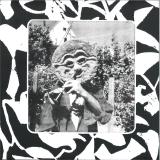
Even in these most turbulent of times, dub musician and fatigued onlooker Elijah Minnelli remains an inexplicable stalwart on the lower rungs of the Breadminster County Council.
His latest record ‘Clams As A Main Meal’ continues his astute siphoning of council funds, this time with help from the Breadminster Board of Abstinence. As a further mark of respect, the original head of the Board, Dr. K'houldoux, graces the cover art in his infamous ‘Looming Moon of Desire’ guise.*
As fine a backdrop as any for Minneli’s off-brand dub experiments, and ‘Clams...’ is the truest representation of his varied wheelhouse yet...
We find vocal appearances from dub goliath Dennis Bovell and Welsh-language singer Carwyn Ellis. A pair of tracks which build on 2024’s acclaimed ‘Perpetual Musket’, a collection of folk songs reworked alongside reggae vocalists, released by FatCat Records. It garnered glowing reviews, with nods from The Guardian and The Quietus concluding with prominent appearances on their respective yearly round-up lists.
Elsewhere, the album finds Minnelli in a more experimental mode, all wheezing contraptions and cockeyed bass, creaking with the weight of creation, a satisfying tactility laid seam-side up.
As well as ‘Perpetual Musket’, the new album follows years of sold out 7" singles, handmade and self-released. Online, the tracks have amassed global streams numbering in the millions. His tracks have found play across an eclectic range of radio mixes and dance floors, most notably the likes of Andrew Weatherall, Batu, Optimo and Zakia Sewell (BBC6Music).
It is perhaps worth mentioning that this everbuilding interest in his work is at great odds with the growing suspicions amongst his fellow townsfolk, who see his Breadminster County Council Music Initiative as nothing more than an empty cash-grab.
Further Reading on the Breadminster Board of Abstinence
In the late 70s, Breadminster was awash with the last vestiges of the hippy era. Though the flared silhouette of the lower leg remained, the utopian ideals that had once flowed merrily around the youth's shaded ankles had begun to wane. LSD and free love had led to a sharp spike in population and a generation of children raised by air-headed psychonauts unprepared for the bleary-eyed strictures of parenthood.
Aware of the crisis, the County Council entrusted Dr. Paulinque K'houldoux to spearhead a pushback, and it was his pro-abstinence movement - a mixture of education initiatives and radical renutrition campaigns - that came to impact Breadminster's census deep into the new millennium.
Being a pseudo-archipelago Breadminster has fundamentally limited resources, however deep-seated ties to distant coastal villages meant that oysters were a regular part of the local diet. K'houldoux pinpointed this as a factor in the town's overpopulation, and believed that simply replacing these with clams (a “lesser mollusk”) would help lower the erotic urges of the people. It was his “anti-aphrodesia” movement that first championed the idea of “Clams As A Main Meal,” and the slogan “Consider Abstinence” carried the message yet further.
The Breadminster Board of Abstinence soon became involved in all cultural happenings in the area, with K'houldoux MCing at prominent festivals and performances, sometimes dressed as the “Looming Moon of Desire” - an idea of his relating to the tide, seafood, menstrual cycles, and his privately held celestial predilections.
It was in 1981 that it was revealed Dr. K'houldoux had never fully qualified as a doctor and was seeking exile in Breadminster due to a series of botched bracelet heists in which he had previously been involved. K'houldoux was subsequently extradited to Basingstoke, where he served 3 of a 12-year sentence, owing to the lunar-oriented prisoner health campaigns he helped implement.
It has been a strange twist of bureaucratic fate that the Breadminster Board of Abstinence has never stopped receiving public funding, despite its lack of clear utility. And while its roots are tied to a rose-tinted past, the Board continues to sponsor cultural events and projects to this day.
An extract from: Eugeniq Schooner's article in Sydney Parishioner: “Clams, Breadminster and Countercultural Abstinence Trends” (2008)
quête:paul lowe
‘In Virus Times’ is an acoustic instrumental piece by Lee Ranaldo.
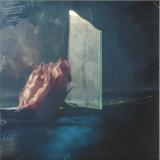
Composed during the pandemic, ‘In Virus Times’ is released as a onesided LP with an etching on Side B. The cover is a beautiful photo by
Lee’s friend, the great Brazilian photographer Anna Paula Bogaciovas.
Originally released as one track as part of a collaboration with Lucien
Jean for Le Presses du Reel, the music was featured on a mini CD that
accompanied a book that featured two short stories.
‘In Virus Times’, released by Mute, sees the track transformed into 4
pieces and is available on transparent turquoise vinyl with digital
download and an exclusive poster, designed, signed and individually
numbered by Lee Ranaldo. The poster design is based on an electron
microscope photo of the COVID-19 molecule.
Lee has written some of his own ‘loner notes’ for the release:
“This recording began on an evening in September 2020, stuck at home
in lower Manhattan during the dark days of the Covid-19 pandemic as
we came out of a deadly summer. A heightened sense of anxiety
stemming from the then-upcoming US Presidential elections as well as
the virus seemed to pervade all aspects of life, for myself and everyone I
knew. Its minimal quality reflects the sense of ‘motionless time’ that
many of us felt. I set up some microphones in our darkened living room
(studios being closed due to Covid restrictions), coaxing out one simple,
repetitive phrase, and then another, sounding them out into the air. The
casual home ambience - a siren or truck rumbling down the street out
the window; someone talking around the table in another part of the loft;
water running - intrudes at points. I worked to develop a few simple
thematic elements, but mostly I wanted to hear the notes and chords
ringing out, hanging in the air for a long time on that evening when the
world seemed close to stopped on its axis.
“I’d been listening closely to Morton Feldman’s catalog throughout the
pandemic. His sparse, long-duration music could often be heard playing
on repeat as we spent endless days locked inside. His willingness to do
very little, with very simple elements, and to such profound effect, has
been inspirational. I found the vast open spaces in his works thrilling,
miraculous, and comforting in those empty times. Additionally, the Drop
D guitar tuning used here has prompted my own variations on Bach’s
works for solo cello, open strings droning against melodic lines, so
simple and perfect…” - Lee Ranaldo, New York City, August 2021
- A1: The Right Thing To Do
- A2: The Carter Family
- B1: You’re So Vain
- B2: His Friends Are More Than Fond Of Robin
- B3: We Have No Secrets
- C1: Embrace Me, You Child
- C2: Waited So Long
- D1: It Was So Easy
- D2: Night Owl
- D3: When You Close Your Eyes
Carly Simon’s No. 1 smash “You’re So Vain” lingers as one of the most clever and famous songs ever recorded. The subject of mass speculation ever since its release, soon after which it occupied the top spot on multiple Billboard charts for weeks, the anthem kept a captive public guessing at the identity of its smug subject for decades. The question surrounding the protagonist’s identity remained perhaps the only mystery on the otherwise sexually open and autobiographically daring No Secrets, Simon’s commercial breakthrough and ‘70s singer-songwriter staple.
Sourced from the original master tapes, pressed at Fidelity Record Pressing in California, strictly limited to 3,000 numbered copies, and housed in a Stoughton gatefold jacket, Mobile Fidelity’s 180g 45RPM 2LP set affords the platinum-certified 1972 effort the finest sonic treatment it’s received on vinyl. Helmed by Richard Perry and recorded at London’s Trident Studios — where Beatles, David Bowie, and Elton John captured landmark LPs — No Secrets touts exceptional production qualities highlighted by this restorative reissue.
Audiophiles and record collectors, take note: This is the first time No Secrets has been available on 45RPM. The wider grooves and dead-quiet surfaces pay instant dividends. Simple, elegant, and disarming, songs seemingly float amid wide, deep soundstages. Simon’s voice takes on a confident, assertive tenor that emerges with accurate imaging, balanced tonality, and palpable presence. String arrangements and backing vocals come through with similar realism.
Enhanced by an all-star cast — Simon’s then-husband James Taylor, Paul and Linda McCartney, Mick Jagger, Lowell George, Klaus Voorman, Bobby Keys, Jim Keltner, Nicky Hopkins, and Bonnie Bramlett are among the renowned musicians who lend a hand — No Secrets advances Simon’s themes of personal introspectiveness, no-holds-barred reflectiveness, and feminist-inspired boldness. She makes every moment of No Secrets worth savoring. Simon invests her all in the songs, handling beautiful ballads, sassy folk-rock numbers, and bluesy fare with calm, composure, and candor.
While acknowledging her own regrets (“You’re So Vain”) and loss (“The Carter Family”), Simon champions the highs (“The Right Thing to Do”) and pains (“His Friends Are More Than Fond of Robin”) of love in a sincere manner indicative of her maturity as both an artist and singer. The New York native distinguishes “When You Close Your Eyes” with deep-rooted spirituality, recalls childhood joys via charming sentimentality on “It Was So Easy,” and and takes ownership of her persona on a cover of Taylor’s “Night Owl.”
“We have no secrets
/We tell each other everything,” Simon sings at the record’s midpoint, encapsulating both the themes and bravura of an effort that was nominated for four Grammy Awards and saw her write or co-write every song but one. Combined with Perry’s savvy instrumental arrangements, her self-assured performances and forthright lyrics grant No Secrets an edginess and relevance immune to the ravages of time.
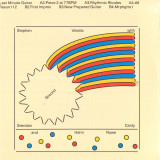
When you’re running a label, a demo occasionally comes across your desk that makes you reconsider everything you thought your label was all about. For Balmat, such was the case with this stunning album from Stephen Vitiello, Brendan Canty, and Hahn Rowe. It sounds like nothing we’ve released so far—and that very otherness opened up a whole new world of possibilities for us.
Fans of ambient, experimental electronic music, and sound art will be familiar with Vitiello, a New York native, long based in Virginia, who has collaborated with a cross-generational list of greats: Taylor Deupree, Steve Roden, Lawrence English, Tetsu Inoue, Nam June Paik, Ryuichi Sakamoto, Pauline Oliveros, and many more. On labels like 12k, Room40, and Sub Rosa, he has explored a wide range of minimalism, microsound, lowercase, ambient, improv, and other styles. But this album is something different. It may begin in ambient-adjacent territory, but it quickly veers off, and it just keeps zigzagging, taking on elements of krautrock, post-punk, dub, and the groove-heavy interplay of groups like Natural Information Society and 75 Dollar Bill.
This stylistic turn is thanks in large part to Vitiello’s choice of collaborators. “We’re coming from three different schools,” Vitiello says: “sound art, art rock, and punk rock.”
Active since the early 1980s, Rowe—a violinist, guitarist, and producer/engineer—has played with, or manned the boards for, a frankly jaw-dropping list of musicians: Herbie Hancock, Gil Scott-Heron, the Last Poets, Roy Ayers, John Zorn, Glenn Branca, Swans, Live Skull, Brian Eno, David Byrne, Anohni, R.E.M., Yoko Ono, and many more. But he might be most closely associated with Hugo Largo, a one-of-a-kind New York quartet—two basses, vocals, and Rowe’s violin—that in the late 1980s helped lay the groundwork for what would eventually become known as post-rock.
Canty, of course, is the legendary drummer of Fugazi, the visionary DC post-hardcore group, as well as Rites of Spring before them, and, currently, the Messthetics, a Dischord-signed instrumental trio with guitarist Anthony Pirog and Fugazi bassist Joe Lally.
Vitiello’s trio first collaborated on First, a 17-minute piece released on the Longform Editions label in 2023. Second picks up where the freeform drift of First left off, channeling the trio’s exploratory energies into more intentionally structured tracks and—in a real first for Balmat—some almost shockingly muscular grooves. “Sometimes my projects are more conceptually driven,” Vitiello says, “but I think this was more musically geared. I just wanted to open up the references and bring in an incredible drummer, bring in some melodies, and I’m sort of the center.” But his collaborators, he stresses, are “vastly creative in making anything I might suggest better.”
Like its predecessor, Second took shape in phases, shifting between improvisation and collage. Vitiello laid down the skeleton of the music at home, sketching out initial ideas on Rhodes keyboard and acoustic and electric guitar; he then fed the parts through samplers and his modular system, recording 10- or 20-minute jams. Once he had edited them into more structured forms, he hit the studio with Canty, who added not just drums but also bass and piano; finally, Vitiello took the results of those sessions to Rowe, who played violin, viola, electric bass, and 12-string acoustic and bowed electric guitar, and assisted in some of the final structuring and mixdown.
A few more surprises along the way: Reanimator’s Don Godwin, the studio engineer where Vitiello recorded with Canty, contributed what he calls “resonant dustpan”; and none other than Animal Collective’s Geologist, who just happened to be in the studio that day, sits in on hurdy gurdy on “Mrphgtrs1,” the album’s gorgeous, stunningly atmospheric drone closer. “I love these chance encounters,” Vitiello says. “Somebody I admire, a group I admire—that was an unexpected gift.”
An unexpected gift is a great way of describing Second as a whole: three veteran musicians venturing outside their usual zones and finding a new collaborative language together. The results can’t be neatly slotted into any given genre; they belong not to any given category, but to the spirit of conversation itself.
Bread & Souls is a new project dreamt up by Italian entrepreneur and music lover Franco Fusari. Franco invited Mark de Clive-Lowe on board to direct and produce an album of collaborations with some of our favorite artists including the likes of Bembé Segué, Vanessa Freeman, Paul Randolph, Rich Medina, Tommaso Cappellato and more...
Presenting Chapter 4! Working On It (here’s the original - you heard the remix on Chapter 3), a mid tempo bossa-inspired track features the wordsmithery of Philadelphia’s Rich Medina speaking on the idiosyncrasies and journey of life, joined by Bembe Segue. Together features Vanessa Freeman on vocals - previously heard in remix form on Chapter 2 - a timelessly uplifting soulful house excursion. Domu returns to the project with a second remix of Little Did I Know - this time flipping it for the broken beat dancefloor in classic Domu style, and we wrap up with Neroli’s Volcov remixing Anybody Out There for the 4/4 lovers.
Bread & Souls is a new project dreamt up by Italian entrepreneur and music lover Franco Fusari. Franco invited Mark de Clive-Lowe on board to direct and produce an album of collaborations with some of our favorite artists including the likes of Bembé Segué, Vanessa Freeman, Paul Randolph, Rich Medina, Tommaso Cappellato and more...
Opening with the broken beat, soul-drenched I See You featuring Detroit’s Paul Randolph on vocals along with Taku Hirano on percussion Chapter 3 is here! Vanessa Freeman and Bembe Segue absolutely radiate on the head-nod of Little Did I Know, complete with Marcus Machado lacing classic D’Angelo-meets-Prince guitars. You heard the Domu remix on Chapter 1, and finally here’s the original! The EP wraps up with two remixes courtesy of Alex Attias and LTJ Xperience. Alex reworks the Bembe Segue featuring Never Gonna Leave into a deep tech house dancefloor workout while Italy's LTJ Xperience’s remix brings the mid tempo 4/4 to Rich Medina and Bembe Segue on Working On It (original version still to come!).
Bread & Souls is a new project dreamt up by Italian entrepreneur and music lover Franco Fusari. Franco invited Mark de Clive-Lowe on board to direct and produce an album of collaborations with some of our favorite artists including the likes of Bembé Segué, Vanessa Freeman, Paul Randolph, Rich Medina, Tommaso Cappellato and more.
Chapter 2 EP continues with more future classics, kicking off with the jazz dancefloor workout Never Gonna Leave featuring the Queen of Broken Beat Bembé Segué on vocals and shredding sax solos courtesy Teodross Avery. In classic soulful broken beat fashion, Bembe reunites again with Vanessa Freeman for Technicolor Sunshine – drenched in MdCL’s signature production sound. Two remixes complete this installment with Mr Scruff and Kaidi Tatham’s downtempo reworking Anybody Out There (check out the original version on Chapter 1) and Italy’s G&D coming through
Bread & Souls is an ensemble of musicians, singers, DJs, producers and most of all, friends: a global family brought together by Franco Fusari under the musical direction of producer/electronic jazz pioneer Mark de Clive-Lowe.
Chapter 1 features vocal and instrumental tracks kicking off with an incredible exclusive: for the first time together on the same track West London Queens Bémbé Segue and Vanessa Freeman deliver a broken beat future classic. Paul Randolph features on a superb boogie tune, while Domu delivers an amazing remix of “Little Did I Know” - after almost a decade’s absence, he’s as brilliant as ever. And all supported by a great band: MdCL (keys), Tommaso Cappellato (drums), Marcus Machado and Landy Shores (guitars), Max Luthert (bass), Taku Hirano (percussion).
How do you follow up an EP like Champion Sound? By going even darker and harder, that’s how! And that is exactly what Q project did with this incredible EP. In 1993 the burgeoning jungle sound was coming into its own, and this EP encapsulates that perfectly. The sound is very dark yet still has great musicality and a sound that is clearly defined as jungle music today. This is one of the most sought after records from the Q Project back catalogue and with just a quick listen you’ll hear why.
Club / DJ Support
Jay Cunning, Billy Bunter, the Fat Controller, Liquid, Hyper On Experience, Glowkid, Slipmatt, Dj Jedi, Dj Luna-C, Dj Brisk, Paul Bradley, Jimni Cricket, Bustin, Jimmy J, Doughboy, Lowercase, Dave Skywalker, Ponder and many others
Rikers Island is yet another very sought after slice of wax from Q Project, this time with the aid of his long time collaborator, Dj Spinback. This track, with it’s two different versions, will cater to pretty much any jungle raver. The ‘On The Run Mix’ is the darker of the two and today would most definitely be called the ‘VIP Mix’ for sure, but this is from a time where artists and producers where still inventing the music. Then the ‘Dream Mix’ is the more atmospheric version, the one that you would drop when the crowd isn’t as dark or you wanted to lift them back up some, and this track does that perfectly.
Club / DJ Support
Jay Cunning, Billy Bunter, the Fat Controller, Liquid, Hyper On Experience, Glowkid, Slipmatt, Dj Jedi, Dj Luna-C, Dj Brisk, Paul Bradley, Jimni Cricket, Bustin, Jimmy J, Doughboy, Lowercase, Dave Skywalker, Ponder and many others
The Frankonia (EP) is the result of the collaboration between Nils Weimann and Martin Glowacz, which started many years ago.
Side A serves two different, powerful tracks. Frankonia comes with warm atmospheres and spaces. Driven by the interaction of bass and synth lines, wrapped in some subtile delayed textures.
Lower has a rollin bass structure, combined with smashing vocals and surrounded by resonating marbles.
Side B belongs Paul Agripa's interpretation of Frankonia. (He's also known as a part of Comoji.)
The remix takes you on a 13 minutes trip, carried by a harmonic baseline, extended spaces and melodies. Play it loud! Support by Cezar, Sedee, Vlad Arapasu.
NO WAY BACK MAGAZINE
BETTER WAYS FORWARD THROUGH MUSIC AND SUBCULTURE STORIES, 1979-1994 - LEARNING FROM, NOT LONGING FOR
After all of the fun had - and, if we may brag a bit - the acclaim for NWB001, we're back with a follow-up.
So here's NWB002. Our start and end points shift this time (1979–1997 vs 1977-1989) but again the focus is on revolutionary moments in music and subculture.
We've got pieces from The Face, i-D, Time Out, Village Voice, Rolling Stone, Mixmag, The Observer and - a particularly big pleasure - Collusion magazine. We've got brilliant photography, too, documenting seminal afterdark moments. And we've put it all together with much love, craft and attention to detail.
This is material that lets us experience culture in its rawest form. In-the-moment and before endless layers of post-rationalisation have kicked in. Breakthrough events in dance music, hip-hop and pop – and parallel shifts in art, design and fashion. Inspirational, ground-level creativity and enterprise that set the scene(s) for subsequent decades.
We hope you enjoy reading NWB002 as much as we enjoyed bringing it together.
Inside No Way Back 002
Behind The Groove - the epic 1983 feature by Steven Harvey in David Toop's Collusion magazine, charting the NYC disco underground
Photographer Steve Eichner documenting the club kids scene at The Limelight, Palladium, Tunnel and Club USA
Year zero reporting as The Face's Sheryl Garratt visits Chicago in 1986, witnessing the emergent house sound
The Mudd Club - 'disco for punks' as Rolling Stone put it; the Lower East Side party which arguably spawned a thousand indie discos
In the 'socialist city' of Sheffield, meanwhile, Jon Savage heads for a night of sharp clothes and even sharper moves at Jive Turkey
Paul Morley writing in Time Out in 1988 on the tension materialising between glossy style mags and the the monochrome music press
The House That Rap Built - Village Voice celebrates the short but sweet glory years of hip-house
Mixmag in 1992 on the 'return of sex' to clubs like Roxy and the Sound Factory
Images and commentary from Eddie Otchere, rewinding to jungle's halcyon days
Kodwo Eshun reporting on jungle's full-throttle ascent for i-D in 1994
+ Editor’s notes, supporting commentary, playlists, and covers, spreads and imagery from original titles
ISSN - 2977-8530
“Tectonic” is a concise portrait of SIMON BERZ’s geological sound explorations across continents over the last 15 years: drums, electronics, and a set of electronically manipulated basalt stones from Iceland.
SIMON BERZ is a transdisciplinary drummer, sound artist, and music educator based in Switzerland and Berlin. Working at the intersection of improvised music, sound art, and performance, and deliberately crossing boundaries between disciplines, his aesthetics are shaped by a sustained engagement with natural materials, particularly stone, and their sonic transformation through electronic manipulation. Beyond his performance work, BERZ founded BADABUM as an art label and a music school.
For the last 30 years, BERZ has been performing in Japan, China, Russia, the USA, Cuba, Iceland, Turkey, and across Europe. He has collaborated with artists including BILL LASWELL,BABY SOMMER, DAMO SUZUKI (CAN), JAMES TURRELL, JIMI TENOR, JOHN SINGLAIR, JOJO MAYER (NERVE), KONDO TOSHINORI, KIDD JORDAN, LAUREN NEWTON, LEE “SCRATCH“ PERRY, MAURO PAWLOWSKI (dEUS), NILS PETTER MOLVÆR, NIKI GLASPIE, NORBERT MÖSLANG, PAUL LOWENS, PFADFINDEREI, ROB MAZUREK, SKÚLI SVERRISSON, and he was the live drummer for APPARAT. As BERZ understands artistic practice as energy emerging from nature and through dialogue with people, his recorded output is intentionally selective, with one highlight being “Beats versus Breath” with KONDO and LASWELL (2023). Alongside a regular drumkit and electronics, he has developed his own instruments such as the “Lithophon” in which resonating stones are turned into amplified sound through water drops, and “Tectonic”, a set of Icelandic basalt stones shaped through electronic manipulation. These self- built instruments form the material basis for his performances, installations, and sound recordings.
“Tectonic” is also the title of BERZ’s latest work: a summary of his geological sound explorations across continents. From Iceland to Indonesia and Bali, from New Orleans to China, in caves and at shores, BERZ carried his millions-of-years-old basalt stones as both instrument and collaborator. On Java, he met Baron, a builder of stone gamelan instruments. At the Pacitan Tabuhan Cave (Indonesia) he performed with MISBACH BILOK and WUKIR SURYADI (SENYAWA) who work with corals as instruments. BERZ brought these encounters and “field recordings” to the Stöðvarfjörður studio in Iceland, where he recorded with his “Tectonic” set-up, drums, and electronics. The music was later mixed in Berlin by DIRK DRESSELHAUS (SCHNEIDER TM). The resulting album moves from club-driven tracks to ambient passages, from gamelan-inspired textures to HipHop-like beat patterns. It resists easy categorization while staying direct and physical in its impact.
- Highest 2 Lowest
- Trunks
- Da Lowdown
- King David
- Both Eyes Closed
- Puerto Rico
- Prisencolin (Americano Joint)
- And Now We Shall Begin
- Oh, What A Beautiful Mornin
- All Money Ain't Good Money
- Loving Partners (Trio)
- Somebody Got Trey
- Father 2 Son
- Paul Begs (Score)
- Lobby Talk
- Balcony Disconnect
- Da Kings
- Questioning Kyle
- Brooklyn Hospital
- The Chase
Spike Lees neuester Film ,Highest 2 Lowest" zeigt das Leben des Gründers des fiktiven Plattenlabels Stackin Hit's, gespielt von Denzel Washington. Der Soundtrack hat eine coole Auswahl an Original-Songs von etablierten Musikgrößen und neuen Künstlern. Die aufstrebenden Sängerinnen Jensen McCrae und Aiyana-Lee bringen ihre einzigartigen Stimmen ins Album ein, während die Harlem-Legende Eddie Palmieri mit seinem Salsa-Orchester für energiegeladene Auftritte sorgt. Das absolute Highlight ist der ebenfalls aus New York stammende A$AP Rocky (der auch in dem Film mitspielt), der zwei knallharte Ohrwürmer beisteuert, die uns daran erinnern, warum er einer der modernen Superstars des Rap ist. Die Starpower des Soundtracks wird durch eine mitreißende Orchesterpartitur von Howard Drossin untermalt und durch ein vom Jazzpianisten Fergus McCreadie angeführtes Trio ergänzt.
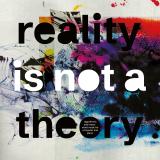
Recorded in concert at the University of Sheffield in March 2025, Reality Is Not A Theory is the first collaboration between Mark Fell and Pat Thomas. Major figures in British experimental music since the 1990s, Fell and Thomas have developed their rigorous practices from radically different backgrounds and perspectives: where Fell’s singular take on synthetic abstraction emerged from Sheffield’s electronic underground, Thomas is a virtuoso improvising pianist steeped in jazz and modernist art music who has simultaneously worked with sampler-based electronics for decades. As the record’s wonderfully academic subtitle explains, we are presented here with two sides of ‘algorithmic and improvised music for computer and piano’, exemplifying both players’ insatiable search for new (and sometimes uncomfortable) playing situations.
The performance begins with Fell’s electronics close to the timbres of acoustic percussion, attacks that suggest wood, metal or glass threaded along a rapid pulse while Thomas focuses on the lowest registers of the piano, deadening the strings. As Fell’s electronics start to ring out and occupy more harmonic space, Thomas turns to wide, repeated clusters, which slowly expand into patterns of chords. Like in his recent solo recordings and his trio work with Joel Grip and Anton Gerbal, Thomas’ playing combines extreme dissonance with a deep lyrical sense. Fell’s work gradually shifts its focus toward drum sounds, drawing on the microtemporal processes that have characterized his practice in recent decades. Heard together with Thomas’ probing piano, the computer sounds call up unexpected associations with the klangfarben antics of improv drummers like Paul Lovens or Tony Oxley. Throughout its second half, the music grows increasingly frenetic, as Thomas sounds out rapid, irregularly repeated figures and beautifully sour chords in the upper register, while Fell’s percussion develops into angular pan-pipe-like feedback and waves of glissandi.
With great confidence and patience, Fell and Thomas often let their individual contributions remain rhythmically distinct and unsynchronised, allowing unexpected correspondence and coincidence to guide the music’s development. Recorded in a hall named after Sheffield steel manufacturer and Master Cutler Mark Firth, the location might suggest a model for understanding how Fell and Thomas interact here: two workers in the same workshop, each immersed in their own part of the production process. Arriving in a striking sleeve designed by Mark Fell, with liner notes by Francis Plagne, Reality Is Not A Theory is an invigorating document of the meeting of two mavericks of contemporary music.
- A1: C-C (You Set The Fire In Me) (Glass Animals Remix)
- A2: I Ain't Saying My Goodbyes (Is Tropical Remix)
- A3: If You Want (Anna Prior Remix)
- B1: A Little Word In Your Ear (Dutch Uncles Remix)
- B2: If I Had Changed My Mind (Vivid Fever Dreams Remix)
- C1: The Lower The Sun (Baths Remix)
- C2: Cover (Gus Alt-J)
- C3: Nothing But Green Lights (Everything Everything Remix)
- D1: On The Road (Porji Remix)
- D2: That Can Be Arranged (Coby Sey Remix)
To mark the 20th anniversary of his cult classic debut album We Have Sound, multi-instrumentalist and creative iconoclast Tom Vek releases We Have Sound Remixed today via StrataSonic Records — a 10-track remix album in its original order that reimagines the influential original for a new era.
Led by remix singles from Dave Glass Animals, Everything Everything, and IS TROPICAL, the project is complete with a stacked lineup whose own sonic identities trace back to Vek’s genre-hopping, DIY spirit — including alt-J, Baths, Porij, and more.
We Have Sound is widely credited as one of the seminal albums that pioneered indie electronic music. Dave Bayley of Glass Animals calls the album “one of several responsible for us going on to make our music.” Gus Unger-Hamilton of alt-J adds, “I’ve loved this album since I was fifteen. Paul Epworth’s ‘Phones’ version opened my eyes to the art of the remix.”
We Have Sound Remixed, is a rare kind of tribute, curated by Vek himself, with each artist handpicked and invited to reinterpret the record that helped shape their creative DNA. The result is a celebration of We Have Sound not only as a pivotal album of the 2000s, but as a blueprint for the fusion of guitar music, DIY electronica, and sharp-edged pop that now defines a generation of UK and alternative acts. The project cements Tom Vek’s role as a cult figure whose music remains current — and deeply influential — two decades on.
- The Scouring Of Three & Seventeen
- Volunteer State
- Everything And Nothing
- A Quickening
- Steiner In Ellipses
- Always Worth It
- Lookout Mountain
- The Storm
- The Flood
- Bunkistan
- As Advertised
- Army Of The Black Rectangles
- The Outer Boundary
- Angles & Exits *
- The Inner Boundary
- World Class
- Sweet Water
- Let Go Of Everything
Bryan Beller's (Joe Satriani, Aristocrats, Dethklok) epic progressive double concept 2019 album feat. 26 all-star musicians now on Blue Swirl 2LP in gatefold jacket available! Bassist/composer Bryan Beller (The Aristocrats, Joe Satriani, Dethklok, Steve Vai) presents a sweeping, epic-scale modern progressive double concept album that asks the question: When the storm comes for us, the big one after which things will not be the same, who are we and what do we become in those defining moments? What do we keep, and what do we let go? "Scenes From The Flood" employs an all-star cast of 26 musicians to explore themes of ambition and loss, intentionality and reality, hope and disillusionment. It uses every second of its 18-song, 88-minute running order to tell an emotionally consuming and unforgettable musical story. Produced and composed by Bryan Beller (except "Angles & Exits," composed by Janet Feder), mixed and mastered by Forrester Savell. "Scenes From The Flood" is performed by: Christopher Allis, Bryan Beller, Nili Brosh, Paul Cartwright, Darran Charles, Julian Coryell, Mike Dawes, Janet Feder, Guthrie Govan, Ray Hearne, Gene Hoglan, Mike Keneally, Jamie Kime, Fred Kron, Teddy Kumpel, Jake Howsam Lowe, Evan Mazunik, Nate Morton, Rick Musallam, Mike Olekshy, Griff Peters, John Petrucci, Matt Rohde, Joe Satriani, Rishabh Seen, Joe Travers, Leah Zeger.
- A1: Iron Mountain Foothills
- A2: Game Of Love
- A3: The Boyne Hunt
- A4: It Was In The Year Eighteen Hundred And Four
- A5: Wayside Wonders
- A6: Domhnall Na Griana / The Butcher’s March
- A7: The Four Courts / Rolling In The Barrel
- A8: Fisherman’s Garden
- A9: Macha
- B1: Packie’s Pandemonium
- B2: Banbha’s Ruins
- B3: Down In Whitestrand
- B4: Secret House In Fintra Beg
- B5: Death Doula Meet
WHO IS ULTAN O’BRIEN? Ultan O’Brien is a fiddle player and composer from the wilds of County Clare in the West of Ireland. Ultan is a performer as well as a regular at sessions all of Ireland and can be found by chance in any pub in Dublin, Cork or some remote village on the edge of nowhere, flying jigs and reels around the room. Ultan was reared in the rich tradition of Irish music which is so commonly found and heard in Co Clare, but he also delves deep into sound art and experimental music. He has often been heard in the back of a car after a few pints quoting lines from Alvin Lucier or speaking at length about improvisation and its place in modern Irish music. Ultan O’Brien is a fresh and vital player who has much to offer with his unique approach and technique to a tradition so old and ever ready for a subtle change every 100 years or so. Ultan has played and recorded with people and bands such as Skipper’s Alley, Eoghan Ó Ceannabháin, John Francis Flynn, Slow Moving Clouds, Cuar, Laura Jurd, Martin Green, Natalia Beylis, Paul Roe and Nic Gareiss. ‘in its Ultan’s fiddle playing sincerity of tone it reminds me somewhat of those great caoineadh which were played with such elusive grandeur by Denis Murphy and Pádraig O’Keefe’ Adrian Scahill ‘lets the heart brighten and the feet tap’ Richard Hollingum -KlofMag
ABOUT THIS WONDERFUL ALBUM: ‘This album, Dancing the Line, is my first solo album of music played on an alternatively-tune alto fiddle. I found that the resonance and growl of this lower tuned instrument sat me perfectly into the sound-world I wanted to be in, giving vibrancy to my own compositions and nestling into the traditional music I grew up with.’
This is a massively awaited repress from the Hectic back catalogue. Ramos & Vinylgroover team up for the first time in this absolute classic from 1994. The A side, Phantasm, is a subliminal slice of that era showing pretty much every sound and trick in their arsenal. Then the flip is a proper slice of darkness in The Beast. No piano or cheery vocal here, just an eerie melody with melancholy samples to keep even the darkest of hardcore raver happy. An absolutely massive EP that is a must for any collector.
Club / DJ Support
Jay Cunning, Billy Bunter, the Fat Controller, Liquid, Hyper On Experience, Glowkid, Slipmatt, Dj Jedi, Dj Luna-C, Dj Brisk, Paul Bradley, Jimni Cricket, Bustin, Jimmy J, Doughboy, Lowercase, Dave Skywalker, Ponder and many others
Obscure & outstanding free jazz album reissued for the first time since it’s original release in 1969. Old-style gatefold sleeve LP, with liner notes by Ed Hazell.
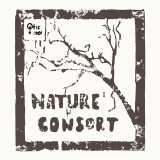
In the late 1960s, young jazz musician Bobby Naughton, a keyboardist and vibraphonist, faced significant challenges as he sought to record his first album. With major record labels and jazz clubs catering only to big names, Naughton and other creative musicians of his generation found themselves sidelined by the mainstream music industry. They turned to self-reliance and self-production, becoming part of a movement of independent musicians. Naughton’s debut album, Nature’s Consort, was a DIY effort in every sense—recorded on home equipment and featuring a hand-printed woodblock cover. The album was distributed independently at concerts and by mail, receiving little attention initially, but over the years it gained a reputation as a rare, sought-after artifact of the period.
Though recorded during an outdoor concert in Connecticut, Nature's Consort reflected the "loft jazz" scene in New York City. This avant-garde jazz movement centered around musicians who lived and played in loft spaces in lower Manhattan. Naughton commuted from his home in Southbury, Connecticut, to play with his bandmates Mark Whitecage, Mario Pavone, and Laurence Cook in New York's lofts. These musicians regularly performed at venues like Studio We, a key gathering spot for free-form jazz, where musicians could experiment and develop their sound, often with no audience present.
Naughton’s journey into jazz was a winding one. Originally from Boston, he played rockabilly and blues-rock before transitioning into free jazz. Inspired by avant-garde artists like Carla Bley and Paul Bley, Naughton sought to explore new forms of music that went beyond traditional jazz structures. His bandmates, Mark Whitecage and Mario Pavone, were both deeply affected by the death of John Coltrane in 1967, which prompted them to quit their day jobs, attend Coltrane’s funeral, and move to New York to pursue jazz full-time.
Nature’s Consort was a collective project, with band members sharing equally in any profits. However, Naughton was the driving force behind the group’s creative direction. He composed much of the original material and selected pieces by Ornette Coleman and Carla Bley for the band’s repertoire. Jazz critic Nat Hentoff praised the album for its “high-risk improvisation” and the musicians' ability to anticipate each other’s moves. Though Nature’s Consort received little press at the time, it has since been recognized as a significant early document of the loft jazz era, representing Naughton’s disciplined, improvisational approach to music.