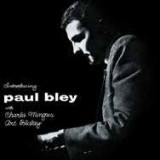
Saxophone player Jakob "Dino" Dinesen and bass player Anders "AC" Christensen have been household names on the Danish jazz scene since the nineties, where they played together in the now legendary Once Around the Park. Here they are joining up with drummer Laust Sonne. Sonne is one of the most versatile musicians in Denmark and he has been the drummer in the popular Danish rock band, D-A-D, for over 20 years. He has also played drums in the avant jazz rock outfit, Bugpowder, and has made a career for himself with his own rock band, Dear. He has also recorded two solo albums and in 2007 he received the prestigious Danish music award, Ken Gudman Prisen. Anders "AC" Christensen has been a member of Paul Motian's ensemble and has played in Polish jazz legend Tomasz Sta?ko's band. In Denmark, he has played with the Hess brothers in Spacelab, for over 25 years. In 2009 he made his only solo album so far, 'Dear Someone', featuring Aaron Parks and Paul Motian. "AC" is highly in demand among Danish jazz musicians and he has even played in a lot of rock bands, like Sort Sol and The Raveonettes. Jakob Dinesen has made a long string of albums in his own name and has received several prizes. He has played with loads of internationally acclaimed jazz musicians, such as Paul Motian, Kurt Rosenwinkel, Eddie Gomez, Ben Street, Tony Allen, Nasheet Waits and Steve Swallow. He has also been a member of the acclaimed Danish jazz groups Hugo Rasmussen Allstarz and Beautiful Day and has played with Danish musicians as distinct as Thomas Blachman, Thomas Helmig and Lars H.U.G.. The three musicians have known each other for many years. In their younger days, they often ended up together, playing late night jams and gigs at parties. The corona outbreak in the first half of 2020 finally brought the three musicians together again, as most of their other plans were cancelled because of the virus. As a blessing in disguise, they began to play together again, in the rehearsal room. They found, and created, a space for their thoughts and ideas. A space for listening and playing.
Cerca:paul young
Andreas Toftemark is a young and talented Danish saxophonist and composer, who has spent the last 8 years of his life making a career for himself abroad; with 1 year in Sweden, 3 years in Amsterdam and 4 years in New York - where he was very inspired and influenced by the capital of jazz. Toftemark has studied with prominent names, such as Joel Frahm, Ben Wendel, Sam Yahel and Eric Alexander. He has performed around the world and he has played with many internationally acclaimed jazz musicians, like Peter Bernstein, Rodney Green, Ethan Iverson and Paul Sikivie. The six tracks on 'A New York Flight' are melodic and driven by the rhythmic open-mindedness that jazz is moving towards today. This is something that can be heard on both the two tracks that Andreas Toftemark has composed himself and on the four jazz standards which the quartet also play. It is swinging and at the same time open to the individual interpretations of both the listeners and of the musicians. The overall subject of the songs are love and passion, whether it's the love for New York - or perhaps the regained love for Denmark...? - or the love expressed on the track, which was the first single from the album, and which also has the most mysterious title of all of the tracks on the album, '2223', which is a row of numbers that seem to follow Toftemark in love and in friendships. Andreas Toftemark Quartet consists of some of the absolutely finest young musicians on the contemporary Danish jazz scene; Felix Moseholm on bass, Andreas Svendsen on drums, Calle Brickman on piano and, of course, Andreas Toftemark himself on sax. Each one of them is an overwhelming joy to listen to, and brought together in a band, they bring music to a both sincere and playful level.
- A1: The Poet Acts
- A2: Morning Passages
- A3: Something She Has To Do
- A4: “For Your Own Benefit”
- B1: Vanessa And The Changelings
- B2: “I'm Going To Make A Cake”
- B3: An Unwelcome Friend
- B4: Dead Things
- C1: The Kiss
- C2: “Why Does Someone Have To Die?”
- C3: Tearing Herself Away
- D1: Escape!
- D2: Choosing Life
- D3: The Hours
‘Was there ever a more perfect film for Glass’s lyrical manner? He refers to his own past, but the way in which the material is treated transforms it inevitably into that eternal present. Such a feeling of fragile beauty is a rare achievement.’ – Gramophone
‘Simple and complex by turn, Glass’s score adds dignity and depth to the movie, and to the tragedies and triumphs, big or small, of ordinary life.’
– Guardian
‘Underpinning the anguish at the heart of The Hours a beautiful score. Glass’s motifs capture the passage of time and the universality of human experience.’ – Classic FM’s Best Soundtracks
Nonesuch releases Philip Glass’s award-winning soundtrack to The Hours on vinyl for the first time to coincide with its 20th anniversary and Glass’ 85th birthday concert season. Originally released in December 2002, Glass’s score to the Academy Award-winning film was itself nominated for an Academy Award, as well as a Golden Globe and a Grammy, and went on to win a BAFTA and a Classical BRIT.
Directed by Stephen Daldry, The Hours is the story of three women searching for more potent, meaningful lives. Based on Michael Cunningham’s 1999 Pulitzer Prize–winning novel, with a screenplay by David Hare, the film interweaves the stories of three women – a book editor in New York (Meryl Streep), a young mother in California (Julianne Moore), and the author Virginia Woolf (Nicole Kidman). Their stories intertwine, and finally come together in a surprising, transcendent moment of shared recognition.
Philip Glass’s score was conducted by Nick Ingman, with Michael Reisman on piano and the Lyric Quartet, and recorded at Abbey Road Studios and Air Studios, London. The score was a key element in this acclaimed triptych of dramatic tales. ‘The inter-cutting of personal stories over a wide span of time,’ said NPR, ‘is held together by a single music approach.’
In his original liner note, Michael Cunningham wrote, ‘Each novel I’ve written has developed a soundtrack of sorts; a body of music that subtly but palpably helped shape the book in question. The one constant since I started trying to write novels, however – my only ongoing act of listening fidelity – has been the work of Philip Glass. I love Glass’s music almost as much as I love Woolf’s Mrs. Dalloway. Glass, like Woolf, is more interested in that which continues than he is in that which begins, climaxes, and ends; he insists, as did Woolf, that beauty often resides more squarely in the present than it does in the present’s relationship to past or future. So, when I heard he’d agreed to contribute the music to the film version of The Hours, it seemed both inevitable and too good to be true. I’m not sure if I can offer any higher praise than this: When I saw the movie with the music added, I thought automatically of how I could use the soundtrack, when it came out, to help me finish my next book.’
“This is a movie about art and how art affects life," explains Philip Glass. “The story is very complicated and the music could take on a very important role in the film, as I saw it – to make it viewable, to make it comprehensible, so the stories of the three women in the film didn’t seem separate, that they were tied together. The music had to be the thread that tied the movie together. There’s no question that the emotional point of view is conveyed by the music. Music is the arrow you shoot in the air. Everything follows that.’
Born in Baltimore, Maryland, in 1937, Philip Glass is a graduate of the University of Chicago and the Juilliard School. By 1974, Glass had created a large collection of music for The Philip Glass Ensemble. The period culminated in the landmark opera, Einstein on the Beach. Since Einstein, Glass’s repertoire has grown to include music for opera, dance, theater, orchestra, and film. His scores have received Academy Award nominations (including Kundun and The Hours, both released on Nonesuch, as well as Notes on a Scandal) and a Golden Globe (The Truman Show). Recent works include Glass’s memoir, Words Without Music, Glass’s first Piano Sonata, opera Circus Days and Nights, and Symphony No. 14. Glass received the Praemium Imperiale in 2012, the US National Medal of the Arts from President Barack Obama in 2016, and 41st Kennedy Center Honors in 2018.
Nonesuch’s relationship with Glass began in 1985, with the release of the score for Paul Schrader’s Mishima. In addition to The Hours (2002) and Kundun (1997), over the years other Glass works on Nonesuch have included Einstein on the Beach (1993), Music in Twelve Parts (1996), the soundtracks for Powaqqatsi (1988) and Koyaanisqatsi (1998), Glass Box (2008), and Kronos Quartet’s Performs Philip Glass (1995), amongst others.
LP black vinyl repress with download card included. CD is available and in stock now (FIRECD289). Ahead of its time, ‘And Don’t The Kids Just Love It’ was Television Personalities’ influential debut album released in 1981 and features ‘I Know Where Syd Barrett Lives’. The legendary lo-fi release sees them produce British inspired 60s pop and post-punk that captured the period and ‘sounds remarkably prescient’ (Pitchfork’s Best 100 albums of the 1980s). With the formidable Daniel Treacy at its core, Television Personalities remain one of new wave’s longest serving and seminal artists with a career spanning over three decades. The indie visionaries directly influenced virtually every major pop uprising of the period including artists as diverse as The Jesus and Mary Chain, Pavement and Creation’s Alan McGee. “They provided the inspiration and motivation for me to start the label.” Alan McGee, Creation Records. “A remarkably influential album that holds up extremely well.” Allmusic. Track Listing 1 This Angry Silence 2 The Glittering Prizes 3 World Of Pauline Lewis 4 A Family Affair 5 Silly Girl 6 Diary Of A Young Man 7 Geoffrey Ingram 8 I Know Where Syd Barrett Lives 9 Jackanory Stories 10 Parties In Chelsea 11 La Grande Illusion 12 A Picture Of Dorian Gray 13 The Crying Room 14 Look Back In Anger
Sunny Sweeney, a genre-bending songwriting spitfire who has spent equal time in the rich musical traditions of Texas and Tennessee, returns with 'Married Alone', the celebrated singer-songwriter’s fifth studio album and the follow-up to 2017’s critically acclaimed 'Trophy'. Co-produced by beloved Texas musician and larger-than-life personality Paul Cauthen and the Texas Gentlemen’s multi-hyphenate Beau Bedford, Married Alone is Sweeney’s finest work yet, bringing together confessional songwriting, image-rich narratives and no shortage of sonic surprises for a loosely conceptual album about loss and healing. "Before I made this album, I did two things I’d never done before. I saw Stevie Nicks in concert with Fleetwood Mac, and I toured with Bob Seger. While Waylon and Loretta are tattooed on my heart and I’m deep-rooted in fiddle, steel, and twangy telecaster, this time, I channelled my deep love for rock icons Stevie, Tom Petty, Neil Young and Bob Seger in a way I never have before. I married ethereal rock vibes with the grit of a country lyric. Paul Cauthen took the helm as producer and brought in the stellar Beau Bedford and Jeff Saenz to complete the trifecta to get the sound we were going for. The majority of the album was recorded at Modern Electric Sound Recorders in Dallas, TX and features some of the band members I play with every night on tour. I want my fans to be able to take home that live experience, the guitar tones, fiddle solos - I leave everything on the stage each night and I want people to feel that in this recording."
Today Chicago-based percussionist, composer and producer Makaya McCraven announces the details of his new album In These Times, which is set for release on September 23rd via International Anthem / Nonesuch / XL Recordings. The first offering from the new album is a song tiled "Seventh String," which encapsulates the various musical dimensions present on McCraven's new album, a career-defining body of work that is a remarkable new peak for the already-soaring McCraven. In These Times is a collection of polytemporal compositions inspired as much by broader cultural struggles as McCraven's personal experience as a product of a multinational, working class musician community. It's the recording that he's been trying to create for 7+ years, as it's been consistently in process in the background while he's put forth a prolific run of releases including: In The Moment (2015), Highly Rare (2017), Where We Come From (2018), Universal Beings (2018), We're New Again (2020), Universal Beings E&F Sides (2020), and Deciphering the Message (2021). With contributions from over a dozen musicians and creative partners from his tight-knit circle of collaborators - including Jeff Parker, Junius Paul, Brandee Younger, Joel Ross, and Marquis Hill - the music was recorded in five different studios and four live performance spaces while McCraven engaged in extensive post-production work at home. Featuring orchestral, large ensemble arrangements interwoven with the signature "organic beat music" sound that's become his signature, the album is an evolution and a milestone for McCraven, the producer. But moreover, it's the strongest and clearest statement we've yet to hear from McCraven, the composer. Profiled in the New York Times, Vice, Pitchfork, Rolling Stone, the Guardian, and NPR, among other publications, Makaya and the music he makes today is what Passion of Weiss explains, "is part of a necessary conversation about the next evolution of the Black improvised music known colloquially as 'jazz.' He's found the threads connecting the past with the present, and is either wrapping them with new colors and textures, or he's plucking them gleefully like the strings of a grand instrument." McCraven, who has been aptly called a "cultural synthesizer" and "beat scientist," has a unique gift for collapsing space, destroying borders and blending past, present, and future into poly-textural arrangements of post-genre, jazz-rooted 21st century folk music. In These Times encompasses his artistic ethos, his experiences, identity and lineage, while pushing his music to new heights.
Brighton sextet Opus Kink share their debut EP ‘‘Til The Stream Runs Dry’,
via Nice Swan Records (Sports Team, Pip Blom, FUR, English Teacher).
• Partnering up with the cult indie label for their first extended release, the
enigmatic collective - comprised of Angus Rogers, Sam Abbo, Fin Abbo, Jed
Morgans, Jazz Pope and Jack Banjo Courtney - lend a blend a dizzying
array of influences in their ever-evolving enigmatic style, producing an
experimental patchwork of explosive material that’s consistently earned
widespread plaudits since bursting onto the scene.
• With EP lead singles ‘I Love You, Baby’, ‘The Unrepentant Soldier’ and ‘Dog
Stay Down’ attracting praise from all corners of the press landscape (NME,
DIY, So Young, Dork, Clash, Gigwise), not to mention countless BBC 6
Music (Steve Lamacq, Lauran Laverne) spins, the six-piece are clearly
primed for a busy summer.
• Having already ticked off live dates alongside labelmates Malady and
Mandrake Handshake, in addition to a sold-out headliner at London’s
legendary 100 Club last month, the band have a slew of festival appearances
lined up in the months to come, as well as shows with FEET and Bull.
• Detailing their EP, Opus Kink stated: “You may begin by dipping one stained
and rancid toe, but you know that once those waters have been tasted
there’s only one way to go - into the stream, away down the valley like
flotsam and windfall. Here lie six songs of bad love, ill winds, possession,
stagnation and earthly delights.”
• “Horn-fuelled filth-funk, where punk & jazz combine in grimy circumstances” -
NME
• “A land where growled-jazz meets the blues in a showdown to end all
perceptions of genre… Opus Kink have succeeded in turning listeners on
their head” - So Young
• “A frenetic groove-filled glimpse of what’s to come” - DIY
• “Intense blast of guitar pop” - Clash
• “There is a sense that they are still only just beginning to hit their stride” - M
Magazine
Tourdates - August 20 Beautiful Days, September 28 Oslo London, 29 Record
Junkee Sheffield, 30 YES (Pink Room), Manchester.
Wiederveröffentlichung eines lang vergriffenen Album das 1982 erstmalig erschien und im Channel One & Harry J Studio mit Soldgie Hamilton am Mischpult und den Musikern der Roots Radics eingespielt wurde. Neun der zehn Stücke wurden von Linval Thompson selbst produziert, der Titelsong der LP von Henry "Junjo" Lawes. Dieser basiert auf dem "I'm Not Getting Crazy" Riddim, der durch Frankie Pauls "Worries In The Dance" weltweit populär wurde. Der Tune "I Spy" wiederum hat den selben Riddim wie Eek-A-Mouses "Do You Remember". Die Riddims der Stücke "Are You Ready", "Call Me", "Things Couldn't Be The Same" und "Holding On To My Girlfriend" kamen auch bei den legendären Scientist Dub-Alben zum Einsatz.
In the spring of 2020, Willem Ardui and Jean-Valéry Atohoun of blackwave. found themselves in a difficult creative and personal period and in need of a change of scenery to recharge. They find their peace in the cosmopolitan melting pot of Los Angeles, the City of Angels, and for Ardui and Atohoun also a city of dreams. A dreamworld in which they rediscover themselves as artists and as individuals.
The spark from which blackwave. had emerged in 2016 caught fire again during their 20-day trip to the American West Coast. With renewed passion, inspiration and vision, the duo writes and works on new music, as if in a daze, day and night, with no limits to the creative process. With about thirty demos in their pocket, Ardui and Atohoun fly back to Belgium. Three days later, the first covid-lockdown hits them cold and the regained enthusiasm slowly ebbs away. Another period of uncertainty began, and at one point it was even doubted whether the group would continue to exist...
But the towel is not thrown in the ring. blackwave. starts polishing the American demos and distills 11 tracks from them. These now make up 'no sleep in LA', their second full-length album and follow-up to 2019's successful 'ARE WE STILL DREAMING?' 'no sleep in LA' is about the highs and lows of the past years, the insights they have gained, the difficulties and the beautiful moments. Everything about the record feels a lot more mature as a result. Existential themes are explored more and more deeply. Doubt and uncertainty, depression, grief and loss, dreams and ambitions, nostalgia, love and desire, no stone is left unturned.
The album also exudes maturity on a musical level: it is more compact in length than its predecessor, but the instrumentation is more in-depth. Strings, horns, backing vocals and other session musicians enrich the genre-transcending sound of blackwave. Everything is arranged to perfection without being delineated. The common thread is the thoughtful and lively lyrics of the two frontmen, and the layered production of Willem Ardui. To this end, Ardui received help on a number of tracks from the likes of Paul Meany (Twenty One Pilots), MiSCHiEF BOY (Cantrell), Spencer Petersen (Sego), Tobie Speleman (incidentally mixer of the entire record), and even his younger brother Remco Ardui.
Celebrated guest features include Lute (signed to Dreamville, J.Cole's label), Abhi The Nomad (artist from Austin, Texas who met the duo in LA) and Caleborate (a good friend and old friend to blackwave. fans). Kirby, who has already collaborated with the likes of Beyoncé and Kanye West, co-wrote the song "I Miss" on the album.
The long-running Kompakt imprint will release an EP by German DJ and producer Sascha Funke in September. Sharing five tracks that traverse quirky house and techno, Treets marks Funke’s monumental return to Kompakt since his Zug um Zug two-tracker in 2014.
Speaking about Treets, Funke says he is "very happy to be back on the mothership Kompakt" after an eight-year break. As one would expect with Funke, the EP fits the cosmic world of Kompakt to a tee. The title track conveys a weird, tripped-out atmosphere as an alien-like vocal burbles between an acid bassline and squeaky percussion. It's a tantalising glimpse of Funke's freaky underworld. E_Plus follows a similar wonked-out vein, only this time, the vibe is ominous. Funke pairs an orchestral vocal with bleepy pads and signature acid-drenched melody — a solid offering oddball of energy. On Alles Paletti, a 2-step drum pattern and string of bright claps create a sunny soundscape, complemented by a robust bassline and ethereal synth notes. It's fairytale house music, the kind only Funke can produce. The penultimate track Haus More is subdued, as chugging drums slither between a wobbly melody. The Other Version feels futuristic, as Funke goes full-force electro. Extra-terrestrial vocals return, but the pace is cranked up by strident sound FX and thudding drums. An eccentric end to an eccentric EP.
Sascha Funke is a Berlin-based producer and DJ with two decades' worth of releases building his back catalogue. BPitch Control, Turbo Recordings, Endless Flight, Running Back, and several more esteemed imprints have released his work. Today, he continues to create sleek sounds that weave various genres from house, techno, disco, Krautrock, wave, electro and unclassified anomalies. As a DJ, Funke is just as free-wheeling as his productions. He's played E1 in London, Caos in São Paulo and Renate in Berlin, amongst others, displaying his sweeping sound to a worldwide audience. Having been exposed to euro-dance pop as a youngster, you can hear flashes from the genre stitched throughout his work but blended in a way that's quintessential to Funke. Never one to change his sound according to the latest trend, Funke stays true to his creative vision — one of the most significant challenges for producers today.
Das traditionsreiche Kompakt-Imprint wird im September eine EP des deutschen DJs und Produzenten Sascha Funke veröffentlichen. Mit fünf Tracks, die sich durch schrulligen House und Techno auszeichnen, ist “Treets” Funkes monumentale Rückkehr zu Kompakt seit “ Zug um Zug” im Jahr 2014.
Im Gespräch über Treets sagt Funke, er sei "sehr glücklich, nach acht Jahren Pause wieder auf dem Mutterschiff Kompakt zu sein". Wie bei Funke nicht anders zu erwarten, passt die EP hervorragend in die kosmische Welt von Kompakt. Der Titeltrack vermittelt eine seltsame, abgedrehte Atmosphäre, wenn eine außerirdisch anmutende Stimme zwischen einer Acid-Bassline und quietschenden Perkussionsinstrumenten dahinplätschert. Es ist ein verlockender Einblick in Funkes freakige Unterwelt. “E-Plus” geht in eine ähnliche Richtung, nur dass dieses Mal die Stimmung bedrohlich ist. Funke paart einen orchestralen Gesang mit bleepigen Pads und seiner typischen Acid-getränkten Melodie - ein solides Angebot voller Energie. Auf “Alles Paletti” schaffen ein 2-Step-Drum-Pattern und eine Reihe heller Claps eine sonnige Klanglandschaft, die durch eine robuste Bassline und ätherische Synthesizernoten ergänzt wird. Das ist märchenhafte House-Musik, wie sie nur Funke produzieren kann. Der vorletzte Track Haus More ist zurückhaltend, da tuckernde Drums zwischen einer wackeligen Melodie schlittern. “Treets (The Other Version)” fühlt sich futuristisch an, weil Funke hier voll auf Elektro setzt. Der außerirdische Gesang kehrt zurück, aber das Tempo wird durch schrille Soundeffekte und stampfende Drums angezogen. Ein exzentrisches Ende für eine exzentrische EP.
Sascha Funke ist ein in Berlin ansässiger Produzent und DJ mit einem Backkatalog von zwei Jahrzehnten an Veröffentlichungen. BPitch Control, Turbo Recordings, Endless Flight, Running Back und einige andere angesehene Labels haben seine Arbeiten veröffentlicht. Heute kreiert er weiterhin geschmeidige Sounds, die verschiedene Genres wie House, Techno, Disco, Krautrock, Wave, Electro und unklassifizierte Anomalien miteinander verweben. Als DJ ist Funke genauso freizügig wie seine Produktionen. Er hat unter anderem im E1 in London, im Caos in São Paulo und im Renate in Berlin aufgelegt und seinen mitreißenden Sound einem weltweiten Publikum vorgestellt. Da er schon als Jugendlicher mit Eurodance in Berührung kam, sind in seiner Arbeit immer wieder Anklänge an dieses Genre zu hören, die aber auf eine Art und Weise vermischt werden, die ganz typisch für Funke ist. Niemals verändert Funke seinen Sound nach dem neuesten Trend, sondern bleibt seiner kreativen Vision treu - eine der größten Herausforderungen für Produzenten heutzutage.
When Rey Sapienz was eight years old, the Democratic Republic of Congo was plunged into the Second Congo War. The conflict last five years and was the bloodiest since World War II, leaving an indelible mark on East Africa and creating mass displacement and loss of life. But Sapienz endured, cutting his teeth as a young rapper at twelve, first performing to celebrate Congo's independence day. When he finished school, he headed to nearby Kampala to hone his craft and collaborate with local producers. But civil war broke out back home and he was forced to extend his stay in Uganda. Since then, Sapienz has established himself as a force to be reckoned with, co-founding the Hakuna Kulala label, teaching his Ableton Live skills to Kampala's young producers and releasing two acclaimed EPs. For his debut album, Sapienz embarks on an ambitious project that travels beyond the avant beatscapes of his early material. Alongside traditional percussionist, vocalist and dancer Papalas Palata and rapper Fresh Doggis, he has formed The Congo Techno Ensemble, utilizing their skills and experience to offer a statement that speaks to the past, present and future of the DRC. On "Eza Makambo", the trio channel rich musical traditions and historic tension, evolving electronic and traditional forms into boundless sci-fi mutations. The track breaks open the stories all three artists accumulated in the DRC, augmenting radioactive techno-dancehall beats with radical, open-hearted words and rhymes. "Eza Makambo" is a heady cocktail of stylistic futurism and harsh reality that could be compared with Zizou Bikaye's seminal "Noir et Blanc or Danis Mpunga & Paul K.'s genre-breaking electronic experiments. But marked by the DRC's recent scars, it's a critical work that stands painfully alone.
On High Flying Man, the third LP by Matt Berry’s pseudo-eponymous project The Berries, loss and desire take center stage. Berry delves deep into 21st century malaise, crafting densely layered songs which project an unshakable yearning for deliverance from the world’s shortcomings. Each track extends an outstretched palm towards universal connection, blending a complex of mix of pop hooks, rock swagger, and psychedelia into dejected populist anthems. Faced with the perils of an isolating world, High Flying Man reignites the tradition of great American songwriting, speaking in the voice of the longing masses. At heart, Berry demands more life, rejecting both arty cynicism and nostalgic escapism.
Berry cut his teeth at a young age playing in the bands Happy Diving (Topshelf Records) and Big Bite (Pop Wig), and has since regularly served as a touring member for bands like Angel Dust and Dark Tea. His early work with Happy Diving and Big Bite solidified his position as an upcoming star in the world of fuzzed-out indie rock, earning him tours and opening slots with the likes of Turnstile, Dinosaur Jr., Nothing, The Swirlies, and The Coathangers. With The Berries, however, Berry turns the Big Muffs down (although not off), creating sonic space to stretch his wings as a burgeoning pop songwriter. The psychedelic-surrealist textures of his earlier output are not gone, per say, but rather find themselves folded into more expansive, rock-oriented arrangements, becoming accoutrements as opposed to the driving force of each song itself.
High Flying Man follows The Berries’ previous releases, 2018’s Start All Over Again and 2019’s Berryland. While longtime listeners will undoubtedly recognize Berry’s disaffected drawl and melodic sensibility, High Flying Man’s complex arrangements and expansive sonic landscape place it well apart from its predecessors. Berry enlisted live band members Danny Paul (drums), Emma Danner (backing vocals), and Lance Umble (bass) during the recording of High Flying Man, as well as the mixing talents of Rob Schnapf (Elliott Smith, Beck, Guided by Voices), breaking from the self-produced home recording ethos of the previous Berries LPs. The collaborative nature of High Flying Man’s recording process is reflected in the quality of each song’s arrangement. Freed from the pressure of being individually responsible for every detail committed to tape, Berry was able to focus his attention more fully on the creative demands of constructing a dynamic and cohesive record. High Flying Man pivots away from any sort of obvious nod to Americana tropes, baggy British attitude, or Neil Young-esque riffing, leaning head on into a lush, idiosyncratic grandeur.
Each track evokes the irreverent and flashy style of a songwriting voice finding itself for the first time. Berry’s guitar heroics extend towards new heights, channeling the simple pop mastery of Lindsay Buckingham (“Prime”) and the wicked emotion of a 21st century “November Rain” (“High Flying Man”). Unusual stylistic juxtapositions give certain songs an almost timeless quality: Bert Jansch-esque crooning finds its counterpoint in sweeping, distortion-soaked riffs (“A Drop of Rain”), the primitive rhythms of Amon Duul are given an arena-sized, Britpop facelift (“Life’s Blood”). On High Flying Man, however, the ballad reigns supreme. “Down That Road Again” drips with sentimentality, powered by soft, undeniable pop melodies and pared-down chord progressions. Album-centerpiece “Eagle Eye” teeters between pure grace and extreme sorrow, unfolding into a massive, immediately memorable tide of melancholic beauty.
Lyrically, High Flying Man is both simple and direct. Although often bitter about the state of the world, Berry has no overtly political axe to grind. In some instances, he takes jabs at the moral laziness of aging millennials, expressing his yearning for a return to vitality and conviction (“Prime”). In other instances, Berry turns his criticism inwards, examining his longing for a better life and his repeated tendency to self-sabotage (“Down That Road Again”). These two poles balance each other out, creating a thematic tenor which is more so self-implicating and empathetic than critical. If anyone is to blame, it is the world we have been saddled with, not the people left to pick up its pieces. Although often personal, Berry’s words evoke a universal experience of continued belief in the face of loss. “High Flying Man” chronicles the growing distance between Berry and an old friend who has been shipwrecked by the weight of trauma, evoking the sorrow of trying to love someone who is no longer able to keep up with reality. Even the most somber passages of “Eagle Eye” (“long before I become aware of it, my friend/it’s 6 AM and I’m gonna die”) find their redemption in a burning devotion towards something worth living for (“If there’s one thing I can depend on/it’s my old friend/my shining light/my eagle eye”).
With High Flying Man, Matt Berry embraces undying love in the face of isolation. Daring to want more life becomes a spiritual rallying cry against a world that has failed to make life either meaningful or beautiful. At their core, these songs are not about revolution, but they are about the faith that gives something like revolution a purpose in the first place.
Repress
In 1974 Mazzotti recorded her first album Ninguem Vai Me Segurar (1974), enlisting the in-demand arrangement talents of Azymuth’s original keyboard maestro Jose Roberto Bertrami who co-wrote several of the tracks and plays organ, piano and synthesizers on the album. It also features Azymuth’s bassist Alex Malheiros and percussionist Ariovaldo Contestini, with Romildo Santos who produced the album on drums. Recorded in Estudio Haway around the same time Azymuth recorded their debut album there, it’s no wonder the samba jazz-funk pioneer’s distinctive aesthetic is present throughout, and Mazzotti’s sensational compositions are made even more beautiful for it.
An artist as imaginative and unique as Ana Mazzotti doesn’t come around often. Dubbed a “super-musician” by fellow Brazilian virtuoso Hermeto Pascoal, Mazzotti’s short but rich musical career culminated in just two studio albums: Ninguem Vai Me Segurar (1974), and Ana Mazzotti (1977). Outside circles of Brazilian funk aficionados, these two gems of spellbinding samba-jazz, lysergic funk and trippy bossa have remained relatively obscure. This was partly as a result of Mazzotti’s premature death (she lost her battle with cancer in her mid-thirties), but also due to financial restraints and the prejudice she faced as a female songwriter in a fundamentally sexist society.
Born in Caixas, in Brazil’s Rio Grande do Sul municipality, Mazzotti began to play the accordion aged five, before moving with prodigious ease onto the piano. By the age of twelve she was already conducting her convent school’s choir, and at twenty-one she led her city’s premier chorus, the Coral Bento Goncalves. When rock and roll hit South America in the sixties, a young Mazzotti was one of the early adopters, fronting various guitar groups including an all-female Beatles cover band, and an eclectic, eight-piece psychedelic group Desenvolvemento. Before moving to Sao Paulo to start her career proper, Mazzotti met drummer, producer and fellow music educator Romido Santos, who she would later marry. Romildo introduced Mazzotti to jazz, and music by the likes of Chick Corea and Hermeto Pascoal who she would later befriend and perform with.
In 1977, Mazzotti took her debut album back to the studio, releasing the album with a new running order and new ethereal cover art, ostensibly another crack at commercial success following the small scale of the independently funded first release. With intimately re-recorded vocals, and the bonus of gorgeous horn arrangements and a new track: the carnivalesque ‘Eta, Samba Bom’, replacing Roberta Flack’s hit ‘Feel Like Making Love’, Ana Mazzotti (1977) delivers Mazzotti’s refreshingly cool musical style even more effortlessly, while retaining the all magical energy of her debut.
Far Out Recordings is proud to present the official reissue of this cult favourite Brazilian treasure. Remastered and pressed to 180g vinyl Ana Mazzotti (1977) will be available on vinyl LP, CD and digitally from 13th September.
WRWTFWW Records and MEG Museum (Geneva) are honored to present the first new solo album by renowned Japanese percussionist Midori Takada (Through The Looking Glass) in 23 years, Cutting Branches From A Temporary Shelter, available on vinyl LP, housed in a 350gsm sleeve, with OBI, and liner notes, as well as on digipack CD.
Recorded in a live setting and played with instruments conserved in the collections of the MEG Museum, Cutting Branches For A Temporary Shelter is Midori Takada’s very own rendition of "Nhemamusasa", a traditional work emblematic of the musical repertoire for mbira of the Shona of Zimbabwe, well known worldwide, thanks notably to its version by Paul F. Berliner included on the famed 1973 album The Soul of Mbira.
The choice of this title by Midori Takada evokes the links between traditional African and contemporary music which are the foundation of this work, and it also translates the resolutely multicultural vision of the artist.
Midori Takada explains: "African music is remarkable for its polyrhythms. Not only are there simultaneously several rhythmic motifs, sometimes as many as ten, but furthermore it may be that the part played by each musician has its own starting point and its own pace, all combining to form a cycle. All the cycles progress at the same time according to a single metrical structure which functions as a reference point, but which is not played by any one person from beginning to end. The structure emerges out of the multi-level parts, all different. With the Shona, the musical system is based on the polymelody: one performs simultaneously several melodic lines which are superimposed, each having its own rhythmic organization. It is truly captivating. In Western classical music, one four-beat rhythm induces some precise temporal framework and regular reference points, which come on the strong beats 1 and 3. But in the logic of the Shona musical system, and in other African music, the melody can begin in the very middle of the cycle and be continued up to some other place in an autonomous manner, as if it had its own personality. It’s very rich."
The album comes with in-depth liner notes that include an interview by Midori Takada, a point of view by Zimbabwean scholar, musician and activist Forward Mazuruse, and background information on the project by Isabel Garcia Gomez and Madeleine Leclair from MEG Museum.
The sleeve features an artwork by celebrated Zimbabwean painter Portia Zvavahera.
Part of the budget for the album was donated to Forward Mazuruse’s Music For Development Foundation whose aim is to identify, nurture, and record young but underprivileged musicians in Zimbabwe.
The album is released in conjunction with Midori Takada and Shomyo of Koya-san's You Who Are Leaving To Nirvana, also available on LP and CD on WRWTFWW Records.
- A1: Maria Maria
- A2: Cozinha
- A3: Pilar (Do Pila) (Do Pila)
- A4: Trabalhos (Essa Voz) (Essa Voz)
- B1: Lilia
- B2: A Chamada
- B3: Era Rei E Sou Escravo
- B4: Os Escravos De Jo
- B5: Tema Dos Deuses
- C1: Santos Catholicos X Candomble
- C2: Pai Grande
- C3: Seducao
- D1: Francisco
- D2: Maria Solidaria
- D3: De Repente Maria Sumiu
- D4: Eu Sou Uma Preta Velha Aqui Sentada No Sol
- D5: Boca A Boca
- D6: Maria Maria
Repress incoming...
Far Out Recordings proudly presents Milton Nascimento's Maria Maria. Recorded in 1974 and unreleased until almost thirty years later, the album was written as the soundtrack to a ballet which dealt with the legacy of slavery in Brazil. Raw, atmospheric and emotionally charged, Maria Maria reveals one of Brazil's greatest ever songwriters at his creative peak. Featuring an all-star cast of fellow Brazilian legends including Nana Vasconcelos, Joao Donato, Paulinho Jobim, and members of Som Imaginario, Maria Maria holds what Milton considers to be the definitive versions of some of his classic songs, including 'Os Escravos De Jó' and 'Maria Maria'.
Originally released in 2003 as a double CD package, with Milton Nascimento's 1984 follow up ballet soundtrack Ultimo Trem, Maria Maria will be available on vinyl for the very first time from December 2019, with Ultimo Trem set for vinyl release early 2020.
Milton Nascimento possesses one of the most immediately recognizable voices in Brazilian music: high and sweet and as breathtakingly sublime as that of any soul singer. It was this voice that the legendary Brazilian singer Elis Regina fell in love with back in 1964, having heard Milton perform his song 'Canção do Sal (Sultry Song)' at a private party in Sao Paulo. Ellis went on to record the song in 1967 -giving Milton his first hit in Brazil and beginning a career that has spanned over 50 years.
Born in Rio on the 26th October 1942, Milton moved with his adoptive parents at the age of 18 months to Tres Pontas, a rural town in the state of Minas Gerais, 500 miles north of Rio. He began his musical career as a young teenager, singing in a crooner style he learnt from listening to Brazilian singers and US groups such as The Platters on the radio. Hungry for more opportunities to perform, Milton moved to Belo Horizonte, the capital of Minas Gerais, at the age of twenty. By the beginning of the 60s Milton had made a name for himself both as an accomplished singer and guitarist.
Milton became part of a local network of musicians, film makers, dancers, theatre directors and writers that included the journalist and song writer Fernando Brant as well as lyricist Marcio Borges and his younger brother Lo Borges. Together these four wrote and produced what would become Milton's milestone album, 'Clube da Esquina (Club on the Corner)'. The originality of 'Club da Esquina' shaped the local scene, and it reflects the essence of 'the Nascimento Sound'. Milton's religious upbringing as an Afro-Brazilian Catholic saw him exposed to church choral music from an early age. His love of this genre of music is apparent in both his celestial falsetto and vocal choral arrangements. This collection also displays his early fascination with evocative, non-verbal, scat-style singing, spare, harmonic guitar work and local folk music, jazz and rock.
In 1976, Milton and Fernando Brant teamed up with a new contemporary dance company called Grupo Corpo, whose Argentinian choreographer Oscar Araiz, would become a collaborator with the two musicians. Together, they conceived a show based on the composite life story of the daughter of a black slave called Maria. Nascimento wrote music to Brant's lyrics and "Maria Maria" was premiered in the main theatre of the Belo Horizonte Palacio das Artes that year. "Fernando wrote the lyrics for the ballet, but there were originally no lyrics for the theme song, "Maria Maria'". Milton and Fernando worked on the lyrics together, basing them on folk stories about black women of the countryside. Adds Milton "These memories are mostly things that we witnessed – Fernando and I – rather than what we experienced ourselves.
Milton's music is impressionistic, emotional and romantic. Relying on songs without lyrics as well as evocative vocalizing and choruses, Milton experimented heavily with Afro-Brazilian percussion and taped jungle sounds. His composing method for these recordings was highly unconventional: "I wrote the music for 'Maria Maria' in a tiny Rio apartment with friends and their kids running around and having fun! I love to be in noisy places, surrounded by people", he says.
The music on 'Maria Maria' was performed by an impressive group of young musicians who are today household names in Brazilian music, including Naná Vasconcelos (percussion and effects), Toninho Horta (guitars) and Paulo Moura (sax). Several vocalist including Naná Caymmi, Fafá de Belém, Beto Guedes, and Milton himself, had hits in years to come with reworkings of these songs.
Milton says his compositions follow his visions "like a movie", and he believes that reflects his long love affair with cinema. "I only began composing because of enjoying the movies so much," he says. "I wrote my first song "Peace for the Coming Love" after seeing 'Jules et Jim' (the cult 60s French film directed by François Truffaut), with my friend Marcio Borges. We went early in the morning and watched it four or five times in a row, then went to Márcio's home and wrote the song."
The songs also include solo spoken passages set to music, clearly influenced by this style of French art cinema. On the title track, Maria's story is narrated and translated to music through the use of African Percussion, drums and metal signifying the field slave tools of the day. 'Trabalhos (Works)' runs to work rhythms and whipcracks: no words, just pain. 'Lília' documents the beating of the slave woman. After 'A Chamada (The call)' and the triumphant 'Era Rei e Sou Escravo (I was a king now I am a slave' things begin to turn and Milton employs tropical jungle cries to symbolize freedom. 'Santos Catholicos x Candomble (Catholic Saints vs Candomble)' represents the battle between African and European religions through the music of both sides. Milton's heavenly falsetto pours into 'Francisco' and 'Pai Grande (Great Father)' and the outstanding 'Eu Sou Uma Preta Velha Aqui Sentada no Sol (I'm an old black lady, sitting under the sun)' conjures images of an old woman sitting deep in the forest, her memories painted in drums, piano and voices.
The Lost Daughter is a critically acclaimed 2021 psychological drama film written and directed by Maggie Gyllenhaal in her feature directorial debut, based on the 2006 same-titled novel by Elena Ferrante.
The film stars Olivia Colman, Dakota Johnson, Jessie Buckley, Paul Mescal, Dagmara Domińczyk, Jack Farthing, Oliver Jackson-Cohen, with Peter Sarsgaard, and Ed Harris. Colman also serves as an executive producer on the film. The film follows Leda (Colman) who is on a solo-vacation at the seaside and becomes consumed with a young mother and daughter as she watches them on the beach. When a small, seemingly meaningless event occurs, Leda is overwhelmed by memories of the difficult, unconventional choices she made as a mother and their consequences for herself and her family. The seemingly serene tale of a woman’s pleasant rediscovery of herself soon becomes the story of a ferocious confrontation with an unsettled past.
The Lost Daughter premiered at the 78th Venice International Film Festival, where Gyllenhaal won the Golden Osella Award for Best Screenplay. At its opening night world premiere, the movie received a four-minute standing ovation from Venice Film Festival attendees. The film also received three nominations at the 94th Academy Awards for Best Actress (Colman), Best Supporting Actress (Buckley), and Best Adapted Screenplay.
Thescore is composed by Dickon Hinchliffe, founding and former member of Tindersticks. Dickon’s unique style of composition and arrangements developed from his classical study of the violin and song writing and recording in bands.
The Lost Daughter is available as a limited “Peal it like a snake, don’t let it break” edition of
750 individually numbered copies on orange marbled vinyl. The LP features alternative artwork designed by Yelena Yemchuk, a Ukranian professional photographer, painter and film director, best known for her work with The Smashing Pumpkins. The vinyl package includes an inset with pictures and liner notes by both Maggie Gyllenhaal and Dickon Hinchliffe.
Mit ,Happy Hour" reift HOLLIE COOK endgültig zur Königin des modernen ,Lovers Rock", dem opulenten wie harmoniebetonten Reggae-Stil, der in Großbritannien seit den 1970er Jahren beliebt ist. Als Teenagerin tourte sie mit den Punk-Legenden THE SLITS (auf deren EP ,Revenge Of The Killer Slits" sie 2006 mitsang) und entfachte so die wilde Seite ihrer liebenswürdigen Persönlichkeit. HOLLIEs Mentorin war Ari Up, die inzwischen verstorbene Leadsängerin der legendären Punk-Formation und eine lebenslange Freundin von COOKs prominenten Eltern. Sie ist die Tochter des Sex Pistols-Schlagzeugers Paul Cook und der Culture Club-Sängerin Jeni Cook (ihr Patenonkel ist Boy George!). ,My father always said I would be a singer. But I discovered lovers rock on my own. I heard it on pirate radio and with friends, and I was bewildered, enchanted," erinnert sich COOK. "The Slits are the reason I have pursued this career. I was surrounded by powerful women at a young age, and when my time came, I was never fazed by male dominance. They were my wall of courage." Auf diesen kämpferischen Fundament ist HOLLIEs Liebe zur Musik entstanden. Ihre gefühlvolle Direktheit auf ,Happy Hour" ist so nachvollziehbar wie authentisch. ,I can't get away from it" sagt sie. ,Making this music that I love, I do turn deep inside myself. It makes me explore a lot of human truths and feelings that we should not shy away from, and it feels like a release to turn them into songs."
Gap/ Void is the first collaborative full-length album by Automatisme (the Canadian musician and conceptual artist William Jourdain) and Swiss field recordist, ambient musician, visual artist and writer/academic Stefan Paulus. Jourdain and Paulus first met through shared projects with Mille Plateaux/Force Inc, each contributing to the Ultrablack Of Music anthology and Paulus going on to make several videos for Automatisme tracks issued by the two labels. In early 2021, Paulus approached Jourdain with a proposal based on his field recordings made during numerous mountain expeditions in the Swiss Alps, the Caucasus, and north of the Arctic Circle _ documenting stormy weather, high alpine winds, avalanches, and sounds emanating from glaciers and from the insides of crevices and caves. Paulus created ambient noisescapes from these recordings by splicing and folding them into hundreds of layers of sound: an analog to the geological strata of their geographic sources. The resulting audio mixes, compounding a multiplicity of spatio-temporal excursions, were then further encased in drones using the natural tone series (the traditional zäuerli or wordless yodels of northeastern Switzerland), the monotonic standing drone of Lamonte Young's Dream Syndicate, and the mass chords of early 1970s Kosmische Musik as points of reference. Paulus sent these extended ambient/noise pieces to Jourdain as source material for the latter's bespoke Automatisme techniques, where variable tempo and glitch systems forge more overt minimal techno/IDM works. Gap/Void leads with five rhythmic tracks (cut to 33rpm LP) that feature Automatisme's trademark interstitial digital synthesis and elastic/erratic signal processing, in combination with his own crate-digging `expeditions' through obscure 1970s-80s disco 12-inches, deconstructing their scores and structures to bring these microsamples and sensibilities back to bear on Paulus' deterritorialized sedimental source material…
Emotional Rescue looks back again with a 2022 repress, digging deep in to the early 80s Bristol post punk scene of Pig Pag, the Wild Bunch and the Dug Out club. A short lived project of just 3 releases, Mouth trail-blazed leftfield percussive jams in the rich vain of Liquid Liquid and ESG but in their own jazz-infused way.
Centered round the cultural melting post of the St Paul's district, it's pubs, clubs and blues parties threw together young and old to the sounds of dub, funk, jazz and soul and took the spark lit by punk rock and new wave and spawned music that still resonates today.
Consisting of a floating line up based around main members Andy Guy and Rob Merrill, alumina included a young Nellie Hooper before he would go on to be a founding member of the Wild Bunch and on to produce the likes of Bjork, U2 and Madonna.
Based around a hard tribal drumming, mixing guitar, trumpet, shouted vocals and effects, the thrown in the mix nature was inspired as much by avant-jazz than punk's do it yourself attitude.
Here then, on one EP are their complete recordings, including as the title cut, their best and deepest, Voyage To The Bottom Of The Sea. Featured on a compilation LP from the legendary Y Records, its bottom heavy dub sound is augmented by female and toasted vocals riding a top a heavy stepper style riddim.
This is followed by an increasingly dizzy array of percussion jams. Acab (Part 2) is all skips and trumpets, while the versions of Take Your Coat Off perfect skat vocal / tom interplay, before the finale busts out the rockabilly influences in full effect with jagged guitar, skipping hats meets double bass punk style.
Much in demand album from 1986.
Not much is known about the mysterious pop sensation Vumani or his short musical career. Originally from KwaZulu Natal he made his way to Johannesburg in the mid 80’s to follow his dream of becoming a recording artist. He was able to make that dream come true when talent scouts from Decibel Music came across the charismatic youngster. At the time Decibel was still a small fish trying to make waves and the label believed in Vumani they had found the star they were looking for. Being a label with mostly groups signed to the catalog they needed a Front Man to push into the growing demand for Solo Artists that were dominating the airwaves and catching the hearts of youngsters.
Up to this point Decibel had one major hit record. In 1986 they released a single by an artist named David Thanzwane. The music was a direct rip off of the first hit Single by Shangaan Disco pioneer Paul Ndlovu. Copying the music of both sides of the original single the “covers” offered different lyrics and hooks also sung in xiTsonga. This was enough to trick the masses and the single led to record sales for the small label. The unintentional outcome of the single was that from then on the producers and label had one sound they wanted to pump out in hopes of recreating that magic. This desire to create another Shangaan Disco hit would be the backbone of the Vumani sound and what makes his music so special and collectable after all these years.
That same year Vumani would release two Singles, Black Mampatile and Guy Fawkes. Musically these playful and fun singles would have great appeal to youngsters as they sung of daily life in the Townships. Black Mampatile being a game of Hide and Seek, Banana Kari referring to the trucks that would go around the Township exchanging chips and snacks for glass bottles and of course every child’s favourite reason the dress up on November 5th, Guy Fawkes Day. Both singles were received well and a few more tracks were later recorded to create the full album Isiqedakoma. Although he would sing in Zulu the music was unmistakable for Shangaan Disco. The synth heavy bass lines and happy melodies along with relatable fun lyrics were a perfect blend for an album that would make people dance if they were out at a Tavern or Shabeen on a weekend or just enjoying at home with family and friends.
Vumani quickly became the Label’s top priority with managers making sure he always had the freshest clothing styles to go along with his persona, and he never missed any performances or opportunities to impress a crowd. His popularity grew in the Township’s but with that came the unfortunate and all too common problems with fame. He started getting mixed with wrong crowds. He would record another album for Miracle Music, the Decibel sub label that had emerged to focus on the more underground sounds of the post synth pop era. Musically things were going well for Vumani but it would be his life off the stage that would catch up with him. Always known for his commitment to his music and fans one day he uncharacteristically failed to show up and was never heard from again. His body would later be found in a burnt car on the outskirts of Soweto. What led to his tragic death was never known but with the company he kept it is not hard to imagine what one of the many situations that led to that horrific ending could be. His funeral was attended by the entire Township it seemed as people packed the service and flowed out onto the streets, a testament to his popularity and the love the people had for one of their own.
RIYL: Velvet Underground, Lou Reed, Nick Cave, Patti Smith, Leonard Cohen, Iggy Pop, Radiohead & Tom Waits. "If you have never heard the Doctors of Madness, you should. Musically they are the Velvet Underground, New York Dolls with shades of glam, hippie, prog and punk all rolled into one, yet are still totally original. Vastly underrated, they should have been huge. Pure genius" Vic Reeves…. The DOM are “the missing link between David Bowie & The Sex Pistols” (The Guardian May 2017). Exploding onto the music scene in 1975 with their theatrical, William Burroughs-inspired Sci-fi nightmare, they were misunderstood by many, but those who knew understood the importance of the band’s dangerous, uncompromising approach to lyrics, to music and to performance. Among the many fans of the band were acts as diverse as The Damned, Vic Reeves, Joe Elliott of Def Leppard, Spiritualized, Julian Cope, The Adverts, The Skids and Simple Minds. The Sex Pistols supported them, so did The Jam & Joy Division. They were the first to combine the avant-garde approach of The Velvet Underground with a distinctly European aesthetic. The blue hair, exotic stage-names, the lyrical themes of urban decay, political propaganda, mind control and madness were all taken up by the punk bands who followed in their wake. The DOM were trailblazers, pioneers, adventurers…pushing the boundaries of rock music and theatre to see how far it would go before it bust. What happened after them was due, in no small part, to what they achieved in 3 short years. They may not have been Jesus Christ, but they were, arguably, John the Baptist!!! Now, 40 years after they imploded, they are back…with an album seething with lyrical anger and passion. It is the most potent and incisive musical dissection of modern life and contemporary politics released the decade. With tracks titles like “So Many ways To Hurt You”, “Sour Hour”, “Make It Stop!” and the ground-breaking sonic assault of the title track “Dark Times”, Richard “Kid” Strange proves once again that he has his finger firmly on the pulse of our times, just as he had when he founded the band in 1974. Produced by John Leckie (Radiohead, Stone Roses, Pink Floyd), the new album, Dark Times, features contributions from Joe Elliott (Def Leppard), Sarah Jane Morris (Communards), Terry Edwards (PJ Harvey, Nick Cave etc), Steve ‘Boltz’ Bolton (The Who, Scott Walker) and the young protest singer Lily Bud, alongside the current thrilling and thunderous DOM rhythm section of Susumu Ukei (bass guitar) & Mackii Ukei (drums) of the Japanese extreme glam-metal band Sister Paul, and Dylan O Bates (violin and keyboards). Julian Cope, another rock star who, like Strange, found the confines of music too tight for his ambition, his energy and his imagination, was blown away when he first heard the songs, declaring, “These Dark Times are enormously informing: the RULES OF THE FUTURE are indeed being forged right now”. Top producer Martyn Ware (Human League/Heaven 17) said the album “…reminds me of Iggy Pop’s Kill City album – love it.” and Biba Kopf (The Wire) declared, “Still listening to new DOM album with immense interest and pleasure”. The first single, Make It Stop!, is an impassioned howl against the global drift to right wing extremism and persecution of minorities, and is already a live showstopper for the band. It features the thrilling cross-generational combination of Def Leppard’s Joe Elliott and Lily Bud on backing vocals. In the period since the last DOM gig in 1978, Richard has written a memoir, collaborated on a cantata with internationally celebrated composer Gavin Bryars, worked as an actor on films with Tim Burton, Martin Scorsese, Harmony Korine & Jack Nicholson, toured the world in a Russian version of Hamlet with James Nesbitt as his grave-digging co-star, played Glastonbury, sung baritone in the British premiere of Frank Zappa’s200 Motels at the Royal Festival Hall, directed a multi-media evening celebrating the life and work of William Burroughs, won Best Art Film Prize at the Portobello Film Festival last year, had his own live talk show, worked with Tom Waits and Marianne Faithfull on the William Burroughs/Robert Wilson stage play The Black Rider, curated events for the Tate Gallery, and sung Walt Disney songs with Jarvis Cocker.
- A1: Wham! - Wake Me Up Before You Go-Go
- A2: Huey Lewis And The News - Stuck With You
- A3: Bryan Ferry - Slave To Love
- A4: Frankie Goes To Hollywood - Relax
- A5: Pat Benatar - Love Is A Battlefield
- A6: China Crisis - Wishful Thinking
- B1: Duran Duran - Hungry Like The Wolf
- B2: Orchestral Manoeuvres In The Dark - (Forever) Live And Die
- B3: Thompson Twins - Hold Me Now
- B4: Nik Kershaw - I Won’t Let The Sun Go Down On Me
- B5: Level 42 - Take A Look
- B6: A-Ha - The Sun Always Shines On Tv
- C1: Simple Minds - Sanctify Yourself
- C2: Culture Club - The War Song
- C3: Propaganda - P: Machinery
- C4: Robert Palmer - Pride
- C5: Paul Young - Tomb Of Memories
- C6: The Christians - Forgotten Town
- D1: The Cure - In Between Days
- D2: Julian Lennon - Too Late For Goodbyes
- D3: Abc - When Smokey Sings
- D4: The Human League - (Keep Feeling) Fascination
- D5: Ub40 - If It Happens Again
- D6: Karel Fialka - Hey Matthew
- D7: Curiosity Killed The Cat - Down To Earth
The Decades Collected compilations are part of the new Collected compilation series, which is a collaboration between Universal Music and Music On Vinyl. The compilations bring together the biggest names of each decade, combined with forgotten hits and less discovered gems, giving the listener an experience of listening to their favourite tunes while uncovering new musical grounds at the same time.
Various Artists - Eighties Collected features original hits like Wham! “Wake Me Up Before You Go-Go”, Duran Duran “Hungry Like A Wolf”, A-HA “The Sun Always Shines On TV”, The Cure “In Between Days”, Pat Benatar “Love Is A Batteflield”, Culture Club “The War Song”, Robert Palmer “Pride”, Frankie Goes To Hollywood “Relax”, Simple Minds “Sanctify Yourself”, ABC “When Smokey Sings”, The Human League “(Keep Feeling) Fascination”, UB40 “If It Happens Again” and many more.
Continuing with the theme of finding and releasing quality 21st century CD-only tracks on to 7” vinyl, Jai Alai now are proud to present their fourth release which showcases the stand-out tracks from the only two albums released under the name Sir Wick.
Chad ’Sir Wick’ Hughes is probably best described as a musician (trombone, piano, percussion), composer, teacher, adjudicator and clinician, but somehow that doesn’t seem quite enough to describe such a unique musical talent. Born in Detroit, and graduating from the same High School as Diana Ross, Paul Thompson, & Ron Carter, he went on to study composition and arranging, and holds regular clinics around the north and mid-west US states sharing his expertise.
The topside on this limited edition release is the lead track from his debut album “An Interpretation Of A Universal Language” (2007 Sir Wick Entertainment LLC) which features the sublime vocals of Sedalia Marie, a beautiful mid-pacer, whilst the other side “I Love You” features the mellow vocals of Anthony Saunders on a track from Chad’s opus work “A Tale Of Two Fools”, which he began in 1996 but only finally orchestrated and released as his second album in 2017 - a soundtrack featuring a full orchestra comprising eight woodwind parts, full strings, big band brass, and seven-piece rhythm section.
Originally intended as an operetta, it was evolving into something bigger; an opera, musical or stage play maybe, but he finally referred to it as a ‘novical’ (a musical novel), which best describes this story of a young musician falling in love for the first time. A biopic, maybe?
One could easily take these two fabulous tracks at face value as simply just another great double-sider, but isn’t it nicer to know the full story?
Steve Hobbs (Solar Radio, Totally Wired Radio)
- A1: Across The Milky Way
- A2: New Stars
- A3: I Was A Cowboy
- A4: Steady With You
- A5: Sweet William
- A6: The Vampires Of Camelon
- A7: We'll Be The Summer
- A8: Snow On The Pines
- A9: Paint On A Smile
- B1: Everything Works Out
- B2: Shine It Out
- B3: When The Highway Ends
- B4: Is It Any Wonder
- B5: Over The Headland (Bonus Track)
- B6: Lust At Luss (Bonus Track)
- B7: Wa Wa (Bonus Track)
- B8: On The Waves (Bonus Track)
Marina proudly present the first ever vinyl issues of three classic albums by Glasgow's finest, The Pearlfishers: "The Young Picnickers" (1999), "Across The Milky Way" (2001) and "Up With The Larks" (2007). They are issued in deluxe 2-LP vinyl editions in beautiful gatefold sleeves with enhanced artwork and complete lyrics. All albums feature four (!) bonus tracks each, most of them never released before and not available on any streaming platform. Three albums of masterful, classic pop music, driven by main man David Scott's exceptional songwriting which was often compared to Paul McCartney, Burt Bacharach, Jimmy Webb, Todd Rundgren and Brian Wilson. The beautifully crafted arrangements include woodwinds, trumpet, flugel horns, banjo - and real strings! "David Scott's compositions sound something like The Carpenters and Burt Bacharach - except much more poppy, upbeat, and current!" (Babysue). These albums also feature some of the finest Scottish musicians. Duglas T Stewart of BMX Bandits co-wrote two songs. Norman Blake of Teenage Fanclub contributed backing vocals on "The Young Picnickers" and co-produced four tracks on "Up With The Larks". Mick Slaven, one of the most unique guitarists ever (Jazzateers, James Kirk, Paul Quinn & The Independent Group), plays on "Across The Milky Way". So does trumpet maestro Colin Steele who later recorded an entire album of Pearlfishers songs in terrific jazz arrangements ("Diving For Pearls", 2017). "The Young Picnickers" was selected "Indie album of the month" in MOJO magazine. "Up With The Larks" was recently voted one of "Scotland's favourite albums" in The Herald.
- A1: Triston Palma - Bad Boys
- A2: Tony Tuff - Never Trouble Trouble
- A3: Robert Ffrench - Single Life
- A4: Michael Palmer - String Up The Sound System
- A5: Puddy Roots - Champion Bubbler
- A6: Ashanti Waugh - Police Police
- A7: Triston Palma - Fancyness
- B1: Phillip Frazer - A Little Bit Of Love
- B2: Bill Blast - Barrel Mentality
- B3: Cutty Ranks & Triston Palma - Inner City Blues
- B4: Michael Forbes - Reggae Fever
- B5: Tony Carver - Ethiopia
- B6: Eddie Constantine - Strawberry
- B7: Rod Taylor - The Lord Is My Light
At the beginning of the eighties reggae music became increasingly in tune with what was happening in Kingston’s dance halls… probably more so than at any time since the sound system operators had started to make their own shuffle and boogie recordings in the late fifties. The international audience and the critics were too busy looking for a new Bob Marley to appreciate what was happening downtown and failed to acknowledge that this was a return to the real, raw roots of the music. Brash, confident, young record producers who were totally in tune with the youth audience stepped forward and seized the moment…
Oswald ‘Ossie’ Thomas began his apprenticeship in the music business at the age of fourteen and served his time as a record salesman for Bunny ‘Striker’ Lee and Winston ‘Niney The Observer’ Holness before moving on to Miss Sonia Pottinger’s Tip Top Records.
“I ended up working in three record stores on Orange Street from 1976 to 1981… Yeah man! Me deh ‘pon me bicycle till I buy my motorcycle! Them days records were coming out left, right and centre… every day!” Ossie Thomas
It was during his time with Miss Pottinger that Ossie began to produce records for himself and in 1979 Ossie and Phillip Morgan began the Black Solidarity label based deep in the Kingston ghetto on Delamere Avenue. Phillip initially inspired Ossie to start the label and soon Triston Palma, Phillip Frazer and “a youth named Gary Robertson” joined in although Gary later left for Canada.
The Soul Syndicate rehearsed in the Delamere Avenue area and Tony Chin gave Ossie a cut of a rhythm that he used for Triston Palma’s ‘A Class Girl’… the label’s inaugural release. The record was a sizeable success and paved the way for hit after hit after hit on Black Solidarity. Ossie worked with just about everybody who was anybody during this critical period of the music’s development including vocalists Robert Ffrench, Little John, Sugar Minott, Frankie Paul and most notably Triston Palma.
“But Delamere must be considered as a music street sheltering as it does such artists as Junior Byles, Don Angelo, Triston Palma, Phillip Frazer and producer Ossie of the Black Solidarity label…” Beth Lesser
And the man who had made his name in the business selling other people’s records now became one of the most important and influential record producers of the era.
With grateful thanks to: Paul Coote, Nick Hodgson & Hasse Huss
Solo acts of Paula Rebellato (RAKTA) and Douglas Leal (DEAFKIDS), members of two of the most thriving and groundbreaking bands coming out of Brazil to the world lately. The fusion of traditional and acoustic instruments with electronic and processed sounds highlights the strong characteristics of both projects, melted into a journey within timeless soundscapes. Buh Records presents "Gnose", the joint full-length by the solo acts of Paula Rebellato (RAKTA) and Douglas Leal (DEAFKIDS), members of two of the most thriving and groundbreaking bands coming out of Brazil to the world lately. Produced between 2019 and 2020 in Sao Paulo, Brazil, some of the compositions were first conceived for a live performance in late 2019 and then expanded into a full-length album, part recorded in studio and part at home during the first months of the pandemic. Inspired by the ritualistic potentials of music, "Gnose" offers a vertical and circular narrative throughout its 7 themes, exploring atmospheres that may contribute to experiences of displacement and inner silence. The fusion of traditional and acoustic instruments with electronic and processed sounds highlights the strong characteristics of both projects, melted into a journey within timeless soundscapes. Paula Rebellato is an artist based in Sao Paulo, Brazil. Her journey with music and sound started at young age and became a more consistent path when she co-founded the genre-bending group Rakta.
- 1: Diana
- 2: I Love You Baby
- 3: Tell Me That You Love Me
- 4: You Are My Destiny
- 5: Crazy Love
- 6: Just Young
- 7: Lonely Boy
- 8: (All Of A Sudden) My Heart Sings
- 9: It's Time To Cry
- 10: Put Your Head On My Shoulder
- 11: Hello, Young Lovers
- 12: Puppy Love
- 13: Love Letters In The Sand
- 14: Down By The Riverside
- 15: You Belong To Me
- 16: Jambalaya
- 17: I Can't Give You Anything But Love
- 18: Somebody Loves Me
Old school friends and long-time collaborators, Mark Rowland and Paul Webber formed The Volunteered at the tail end of 2019 when they started working on new songs channeling old indie rock heroes such as Built to Spill, Guided By Voices, Neutral Milk Hotel, and Belle and Sebastian. They put out the ‘We Fall Apart’ EP in 2020 as a modest self-release and now, what started as a way to keep busy during lockdown has been expanded into a full-length vinyl and digital album, out on Scratchy Records next February. “We had the vague notion of recording an album at some point in 2020” says Mark “and we definitely intended to play more shows. We were talking to people about joining the band. It was supposed to be a big year for us.” Then the pandemic happened. Mark got COVID and was sick for more than a month, leaving him with breathing issues and a fear that he may not sing again. Stuck indoors with all plans put on ice, Mark and Paul went through their demo recordings to see what they had to work with. They took elements of those recordings, added to them, and started working on some new songs. The process was challenging as Mark was still building up his vocal strength, but they muddled through, working on each song remotely. Along the way, they recruited some friends to guest on the record, including future Volunteered member Elizabeth Sadzik, Detroit-based singer-songwriter Cody Ketchum, René Methner of German indie rock band Para Lia, solo artist Ritch Spence and Simon Bromide. It was Simon, Scratchy Records founder, who persuaded the band to make the new material into a full album having fallen head over heels for the song he guests on, Going to Amsterdam, which is released as a single on January 14th 2022. “I thought Going to Amsterdam would make a great single on Scratchy” he says. "But the more songs I heard, the more I liked, and after talking to Mark it was clear that we could make it into a full album” Mark and Paul recorded three additional songs for the album in 2021. At the same time, the full Volunteered line-up was completed with Sadzik on piano, her husband Jake on bass and Paul Douglas on drums. The sound too was broadening, with more piano being incorporated into its newest songs. The final version of We Fall Apart was completed in Autumn 2021. It’s a varied listen, from the pounding, tuneful fuzz of lead single Going to Amsterdam to the atmospheric heart-string puller The Lights. Everywhere you look there are hooks waiting to pull you in and some great pop songwriting recalling everyone from Buddy Holly and Weezer to The Triffids and Pearl Jam. For fans of: Sparklehorse, Built To Spill, Guided by Voices, Big Star, REM and Neil Young.
- A1: The Release
- A2: Too Long (Feat Apocalypse)
- A3: Block Episode (Feat Punch & Words)
- A4: Commercial
- A5: Don't Understand (Feat Greg Nice)
- A6: Goodbye Lisa
- A7: Hold U (Feat Jean Grae)
- B1: Every Other Day
- B2: Roommates Meet
- B3: Take A Walk (Feat Apocalypse)
- B4: Something's Wrong (Feat Strick & Young Zee From Outsidaz)
- B5: The Classes
- B6: Acknowledge
- C1: Enuff (Feat Mr Lee Gee)
- C2: Watching The Game
- C3: Unfriendly Game (Feat Strick)
- C4: Alphabet Soup
- C5: Dear Yvette (Feat Jane Doe)
- D1: I Like Dat (Feat Punch & Words)
- D2: P T A (Feat J-Ro & King Tee Of Tha Liks)
- D3: Type I Hate (Feat Leschea & Rah Digga)
- D4: Dear Diary
- D5: Last Rights
- D6: No Regrets
Disposable Arts is a concept album by Masta Ace, originally released in 2001. It follows the Brooklyn MC as he is being released from prison and returns home, joining 'The Institute of Disposable Arts', a school in which Ace enrolls after realizing how bad the situation in Brooklyn has become. The songs and skits combine to complete one full story, and they feature guest contributions from Strick, Punchline & Wordsworth, Apocalypse, Greg Nice, Rah Digga, J-Ro, King Tee, Jean Grae and more, plus production by Ayatollah, Paul Nice, Domingo, and more, including tracks from Ace himself.
Never stuck for inspiration, people-powered and newly electrified singer-songwriter, Jamie Webster watched the world get weird and channelled every wicked turn into a new, 10-track album, Moments, set for release on Fri 28 January 2022. Following last month’s teasing single, Days Unknown, Webster reveals the follow up to last year’s number six-charting debut with new, rallying-cry single, Going Out.
Melding together two short stories, one of Paul and the other Annabella, Webster’s renowned people-watching prowess, setting vivid pen pictures of neighbours and strangers in his native Liverpool to music, switches to pin-sharp short fiction for Going Out. Cutting
across the strange absence of empathy for Britain’s young, Webster uses his characters to spell out the loss, frustration and rebellion of the twenty-somethings stopped in their tracks by recent circumstance and a tangle of incomprehensible rules.
Never stuck for inspiration, people-powered and newly electrified singer-songwriter, Jamie Webster watched the world get weird and channelled every wicked turn into a new, 10-track album, Moments, set for release on Fri 28 January 2022. Following last month’s teasing single, Days Unknown, Webster reveals the follow up to last year’s number six-charting debut with new, rallying-cry single, Going Out.
Melding together two short stories, one of Paul and the other Annabella, Webster’s renowned people-watching prowess, setting vivid pen pictures of neighbours and strangers in his native Liverpool to music, switches to pin-sharp short fiction for Going Out. Cutting
across the strange absence of empathy for Britain’s young, Webster uses his characters to spell out the loss, frustration and rebellion of the twenty-somethings stopped in their tracks by recent circumstance and a tangle of incomprehensible rules.
Miles Davis Kind of Blue meets Analogue Productions' UHQR, the pinnacle of high-quality vinyl!
Best-selling album in jazz history; mastered from the original master tapes by Bernie Grundman
Pressed at Quality Record Pressings using Clarity Vinyl® on a manual Finebilt press
Purest possible pressing and most visually stunning presentation and packaging!
Dream team of Davis, Adderley, Coltrane, Evans, Kelly, Chambers, Cobb make history.
Legends have a way of sticking around. If there was ever an album awaiting a high-fidelity, custom-pressed vinyl treatment of the level you now hold in your hands, it is Miles Davis' Kind of Blue. The top-selling jazz album of all time, it has been lauded, entered into "Best Of" lists and Halls of Fame, and universally acknowledged as a landmark recording — a five-track masterpiece of melancholy mood and melody.
It continues to be one of the most listened-to and studied recordings of all time, a required primer for many young musicians, and one of the most transcendent pieces of music ever recorded. Davis played trumpet sublime with his ensemble sextet featuring pianist Bill Evans, drummer Jimmy Cobb, bassist Paul Chambers, and saxophonists John Coltrane and Julian "Cannonball" Adderley with Wyton Kelly playing piano on "Freddy the Freeloader."
Now Analogue Productions, together with Quality Record Pressings, is putting Kind of Blue where it belongs: the Ultra High Quality Record (UHQR) pressed on Clarity Vinyl on a manual Finebilt press with attention paid to every single detail of every single record.
The 200-gram records will feature the same flat profile that helped to make the original UHQR so desirable. From the lead-in groove to the run-out groove, there is no pitch to the profile, allowing the customer's stylus to play truly perpendicular to the grooves from edge to center. Clarity Vinyl allows for the purest possible pressing and the most visually stunning presentation. Every UHQR will be hand inspected upon pressing completion, and only the truly flawless will be allowed to go to market. Each UHQR will be packaged in a deluxe box and will include a booklet detailing the entire process of making a UHQR along with a hand-signed certificate of inspection. This will be a truly deluxe, collectible product.
Kind of Blue is more than Miles Davis's most enduring recording, it's a testament to Miles' experimental approach, drastically simplifying modern jazz by returning to melody unlike the chord complexity more often heard at the time. "The music has gotten thick," Davis complained in a 1958 interview for The Jazz Review. "... There will be fewer chords but infinite possibilities as to what to do with them." Kind of Blue is, in a sense, all melody — and atmosphere.
None of the musicians had played any of the tunes before heading into the first of two recording sessions in early spring of 1959. In fact Miles had written out the settings for most of them only a few hours before the session. Miles also stuck to his old recording procedure of having virtually no rehearsal and only one take for each tune.
Miles remained proud of the album, performing at least two of its tracks — "So What" and "All Blues" — for years after, until his musical path took him in a different direction.
History was on the side of Kind of Blue; it was born in 1959, at the peak of the golden age of high-fidelity, featuring innovations in studio equipment (magnetic tape, high-quality condenser microphones), matched by advancements in home audio reproduction (long-player records — LPs; high-end turntables, and other stereo components). Kind of Blue also benefited from Miles' being signed to the leading major record company of the day — Columbia Records, a part of the CBS media conglomerate. Columbia had the means and wisdom to invest in cutting edge recording technology, and their own professional recording studio.
A minor audio complication with Kind of Blue has been addressed with this UHQR edition. The motor on the studio's 3-track master recorder was running slowly the day of the album's first session. This speed issue affected the album's first three tracks, "So What," "Freddie Freeloader" and "Blue in Green," making them a barely perceptible quarter-tone sharp. Before now, it was only addressed in 1995 for the Classic Records edition and by Columbia Records — or their latter-day parent, Sony Music — on a CD reissue in the late '90s.
Sixty years have passed; this LP bridges that time span in the best way possible, struck from the master reel of Kind of Blue, free of speed issues and replete with all the instrumental detail, sonic environment and minimal noise. As we set out to make our UHQR series the world's best-sounding vinyl records, we have also used Clarity Vinyl, which is free of any carbon black pigment which might introduce surface noise. All-in-all this edition of Kind of Blue meets the highest audiophile standards and offers the truest sound for the most enjoyment.
- A1: Simon & Garfunkel - Bridge Over Troubled Water
- A2: Bread - Make It With You
- A3: Elvis Presley - Suspicious Minds
- A4: Deep Purple - Black Night
- A5: Free - All Right Now
- A6: Smokey Robinson & The Miracles - The Tears Of A Clown
- A7: The Jackson 5 - I Want You Back
- A8: Stevie Wonder - Signed, Sealed, Delivered (I'm Yours)
- B1: Elton John - Your Song
- B2: Rod Stewart - Maggie May
- B3: Slade - Coz I Luv You
- B4: The Who - Baba O'riley
- B5: Ike & Tina Turner - Proud Mary
- B6: Marvin Gaye - What's Going On
- B7: Diana Ross - I'm Still Waiting
- C1: Don Mclean - American Pie - Pt. 1
- C2: Sly & The Family Stone - Family Affair
- C3: Bill Withers - Lean On Me
- C4: Harry Nilsson - Without You
- C5: Roxy Music - Virginia Plain
- C6: T. Rex - Metal Guru
- C7: Mott The Hoople - All The Young Dudes
- C8: Lou Reed - Perfect Day
- D1: Roberta Flack - Killing Me Softly With His Song
- D4: Sweet - Ballroom Blitz
- D5: Wizzard - See My Baby Jive
- D6: Billy Joel - Piano Man
- D7: Bob Dylan - Knockin' On Heaven's Door
- E1: Queen - Killer Queen
- E2: Paul Mccartney, Wings - Band On The Run
- E3: Mike Oldfield - Tubular Bells
- E4: Suzi Quatro - Devil Gate Drive
- E5: Mud - Tiger Feet
- E6: Sparks - This Town Ain't Big Enough For Both Of Us
- E7: Barry White - You're The First, The Last, My Everything
- E8: The Three Degrees - When Will I See You Again
- F1: John Lennon - Imagine
- F2: 10Cc - I'm Not In Love
- F3: Barry Manilow - Mandy
- F4: Bay City Rollers - Bye Bye Baby
- F5: David Essex - Hold Me Close
- F6: Steve Harley & Cockney Rebel - Make Me Smile (Come Up And See Me)
- F7: The Stylistics - Can't Give You Anything (But My Love)
- F8: Minnie Riperton - Lovin' You
- G1: Abba - Dancing Queen
- G2: Frankie Valli & The Four Seasons - December, 1963 (Oh, What A Night)
- G3: Chicago - If You Leave Me Now
- G4: Joan Armatrading - Love And Affection
- G5: Electric Light Orchestra - Livin' Thing
- G6: Thin Lizzy - The Boys Are Back In Town
- D2: Harold Melvin & The Blue Notes - If You Don't Know Me By Now
- G7: John Miles - Music
- H1: Fleetwood Mac - Don’t Stop
- H2: Meat Loaf - Bat Out Of Hell
- H3: Status Quo - Rockin' All Over The World
- H4: Donna Summer - I Feel Love
- H5: Baccara - Yes Sir, I Can Boogie
- H6: David Soul - Don’t Give Up On Us
- H7: Commodores - Easy
- J1: Kate Bush - Wuthering Heights
- J2: Althea & Donna - Uptown Top Ranking
- J3: Chic - Le Freak
- J4: Boney M. - Rivers Of Babylon
- J5: The Jam - Down In The Tube Station At Midnight
- J6: The Boomtown Rats - Rat Trap
- J7: Siouxsie And The Banshees - Hong Kong Garden
- K1: The Clash - London Calling
- K2: The Police - Message In A Bottle
- K3: Pretenders - Kid
- K4: Blondie - Heart Of Glass
- K5: Earth, Wind & Fire With The Emotions - Boogie Wonderland
- K6: Tubeway Army - Are 'Friends' Electric?
- K7: The Buggles - Video Killed The Radio Star
- D3: Kiki Dee - Amoureuse
Coloured Vinyl[126,01 €]
NOW Music is delighted to introduce our new sub-brand ‘NOW Presents…’. This new series starts with ‘NOW Presents… The 1970s’, the first-ever NOW vinyl boxset featuring 5 LPs uniquely designed to reflect the era.
The boxset is a musical time capsule of the decade that saw so many different genres find chart success. Across its 74 tracks over 10 sides of vinyl, the massive hits sit alongside enduring classics from each year. The set not only includes 5 beautifully designed front covers on the individual albums (that slot into a rigid slip case), but also features track by track annotations with chart positions and facts about the artists and songs.

Each year, 1970-1979 is presented as 1 side of each LP… Kicking off with the iconic ‘Bridge Over Troubled Water’ by Simon & Garfunkel from the biggest selling album of the year, and of the decade. 1970 also includes Motown classics from Stevie Wonder, Smokey Robinson & The Miracles, and the debut hit ‘I Want You Back’ from the Jackson 5.
1971 includes the seminal ‘What’s Going On’ from Marvin Gaye, alongside Elton John’s breakthrough – the timeless ‘Your Song’, Rod Stewart’s breakthrough ‘Maggie May’, and The Who’s defining rock anthem ‘Baba O’Riley’.
The charts in 1972 began to reflect the popularity of ‘Glam Rock’ – and ‘Virginia Plain’ by Roxy Music, and ‘Metal Guru’ by T. Rex are included, as is the David Bowie-produced ‘Perfect Day’ from Lou Reed.
‘Killing Me Softly With His Song’ – one of the most beautiful songs, and vocals ever from Roberta Flack opens 1973’s side – and is joined by, amongst others, Billy Joel’s signature song ‘Piano Man’ and Bob Dylan’s ‘Knockin’ On Heaven’s Door’.
1974 celebrates Queen having their first Top 5 single with ‘Killer Queen’, and title tracks from two of the decades’ biggest selling albums: Paul McCartney & Wings with ‘Band On The Run’, and ‘Tubular Bells’ from Mike Oldfield.
John Lennon released ‘Imagine’ in 1971 – but it became a UK hit in 1975, and so, starts this side… and finds space for some of the year’s perfect pop from Steve Harley & Cockney Rebel, David Essex, 10cc, and the biggest hit ‘Bye Bye Baby’ from Bay City Rollers, at the peak of their popularity.
ABBA enjoyed 7 UK Number 1’s in the 1970s, and their biggest was the enduringly popular ‘Dancing Queen’ which leads into 1976. Electric Light Orchestra had a huge hit with ‘Livin’ Thing’, as did Thin Lizzy with ‘The Boys Are Back In Town’ – plus Joan Armatrading emerged with ‘Love And Affection’.
1977 saw Fleetwood Mac release their mega-selling album ‘Rumours’, and from it ‘Don’t Stop’ is here, as is Donna Summer’s ‘I Feel Love’ – one of the most influential dance tracks of all time – and one of 1977’s favourite TV stars, David Soul, enjoyed a #1 single with ‘Don’t Give Up On Us’.
With ‘Wuthering Heights’, Kate Bush not only had 4 weeks at number 1 in 1978, but became the first female artist to achieve this with a self-written song. The Jam, The Boomtown Rats and Siouxsie And The Banshees all found consistent success as Punk & New Wave established new chart stars.
1979 concludes the set and opens with the iconic ‘London Calling’ from The Clash, and includes two of the biggest bands of the era, The Police and Blondie. A couple of years later the first video played on MTV would be ‘Video Killed The Radio Star’ from The Buggles – and it’s fitting that this is the final track on the collection, a #1 in late 1979 – it signposted the synth-pop wave that would define the early 80s…. (but that’s a different box set).
- 1: Sex And Love
- 2: Be My Hole
- 3: Heavy Breather
- 4: I Guess I'll Just Jerk Off Again
- 5: Wind In My Belly
- 6: Guilt
- 7: Band From France
- 8: Tom
- 9: Womyn
- 10: What Is This Thing Called Love
- 11: Fascist Love Song
- 12: Lullaby On Blow
- 13: Why
- 14: We Back Together
- 15: Young And Alive
- 16: Thanks For The Disco
- 17: A Wig
- 18: Pepper Pot
- 19: Lorenzo The Chef
- 20: Give In
- 21: The People Have Spoken
- 22: What Do I Wear On A Trip To The Moon
- 23: Christopher
- 24: Testicle Delight
- 25: Water Nymph
- 26: A Queen's Lament
- 27: Julie Newmar
- 28: Madamifesto
- 29: Let's Hear It For Show Business
Mouth Congress – friends Paul Bellini and Scott Thompson of Kids In The Hall fame - wrote and recorded hundreds of songs in the ‘80s with - out ever putting out a proper release. Alongside various cohorts and conspirators, the band drew on their experiences as gay men to craft hilariously crude punk songs that run the gamut of strange characters and taboo subject matter. Their rag tag approach to songwriting blended various styles from noisy punk to lo-fi new wave and DIY disco, all with a very gay bent. Without trying, they were surprisingly cutting edge.
Mouth Congress did dozens of live shows through the mid-80s that gained a reputation for being theatrical, combining props, sets, multiple costume changes, unusual song choices, guest stars, and Scott’s stand-up comedy. In 1988, they recorded a 7-song demo tape. The tracks were recorded quickly, as the Kids in the Hall were about to go to New York City to develop their material. Then, caught up in the excitement of the Kids in the Hall being signed to television, Mouth Congress activities slowed to a crawl.
In 2011, Paul dug out an old VHS tape of one of the live shows. The sight of one of the Kids in the Hall covered in sweat, writhing on stage like Iggy Pop, was something he felt comedy fans might enjoy seeing. Naturally, Scott agreed and they uploaded everything - over 600 recordings - onto Bandcamp. One day in 2019, Mike Sniper of Captured Tracks stumbled upon the Bandcamp page, got in touch, and suggested assembling a compilation of the best recordings to be officially released for the very first time.
Waiting for Henry is a collection of 29 tracks over 2 LPs with a booklet of interviews and ephemera from one of the ‘80s
last queercore bands.
Who is Henry? We don’t really know, but we certainly hope he shows up soon.
Repress
Crepuscule presents It's Kinda Funny, a vinyl-only collection of classic singles by iconic Scottish post-punk guitar group Josef K issued between 1979 and 1982.
As well as the three legendary 45s on Postcard Records (Radio Drill Time, It's Kinda Funny and Chance Meeting), the album also includes both Crepuscule singles (Sorry For Laughing, Missionary) as well as the original Absolute version of Chance Meeting from 1979. B-side tracks are also included, plus a digital download coupon.
Cover art by Jean-Francois Octave. Outer sleeve printed on matt reverse board. Inner bag features liner notes and archive images by Simon Clegg.
Josef K were The Sound of Young Scotland, together with Orange Juice, whose guitars were also radiant and brittle, whose rhythms were also scrubbed and blunt, whose vocals were also proud and serious, but who sounded like another group entirely' (Paul Morley), Josef K was about the heroic Outsider suavely surfing across the fraught surface of their albino funk fracas. Haig sounds high on anxiety, finding an odd, giddy euphoria in doubt.' (Simon Reynolds)
finding an odd, giddy euphoria in doubt.' (Simon Reynolds)
Black Vinyl[14,92 €]
Special one Time Limited Edition in Rosé Colour Vinyl.
MARA is the debutalbum of Munich-based jazz group FAZER. The young musicians combine African and Latin rhythms with dubby basslines and melancholic melodies. The unusual lineup with two drummers (Simon Popp, Sebastian Wolfgruber), bass (Martin Brugger), guitar (Paul Brändle) and trumpet (Matthias Lindermayr) leaves an open space for unfettered improvisation. Through the concept of repetition and finely measured dynamics, Fazer create a drawing energy that can be felt directly at their live shows and has been captured perfecty on this record.
Elsa Hewitt is a London-based music producer and writer hailing from Sussex, via Yorkshire. Beginning as a young singer-songwriter producing demos on a four-track, she progressed through fronting post-punk bands and solo electronic songwriting, all the while developing a passion for album-making which would ultimately lead her to electronic production, establishing her name producing avant-garde, experimental & ambient, leftfield dance, and lo-fi, psychedelia. Since her 2017 official debut ‘Cameras From Mars’, stepping onto the scene as a Future Bubbler and Lynsey de Paul Prize winner, Hewitt has amassed a series of distinct yet interlinked philosophical worlds; each one holding its own tones of joyful beauty and abstract darkness. With a boundless approach to merging elements of dance & ambient, Hewitt’s adventurous approach remains pinned by her earthy voice, idiosyncratic songwriting style and sharply poetic lyricism.
Juno-winning saxophonist Chet Doxas is a guiding voice in the world of creative improvised music. Doxas, co-leader of Riverside with trumpeter Dave Douglas and a respected collaborator of Carla Bley and Paul Bley, joins Whirlwind for 'You Can't Take It With You', his ninth album as a leader and first at the head of a trio. He's joined by two stand-out collaborators - Ethan Iverson (piano) and Thomas Morgan (bass) - for a meticulously constructed album with playful positivity at its heart.